
A comfortable backyard can feel surprisingly intimate when the seating, lighting, and planting are scaled correctly. The best cozy backyard ideas do not require a large garden or an expensive renovation. A 10 by 12 foot patio can support a genuine outdoor retreat when every piece has a purpose.
These cozy backyard ideas focus on practical furniture, shade, warm lighting, outdoor rugs, fire features, and container plants. You will also find renter-friendly options that avoid permanent construction. For smaller gardens, these cozy backyard ideas show how to create defined zones without making the space feel crowded.
Teak Conversation Nook
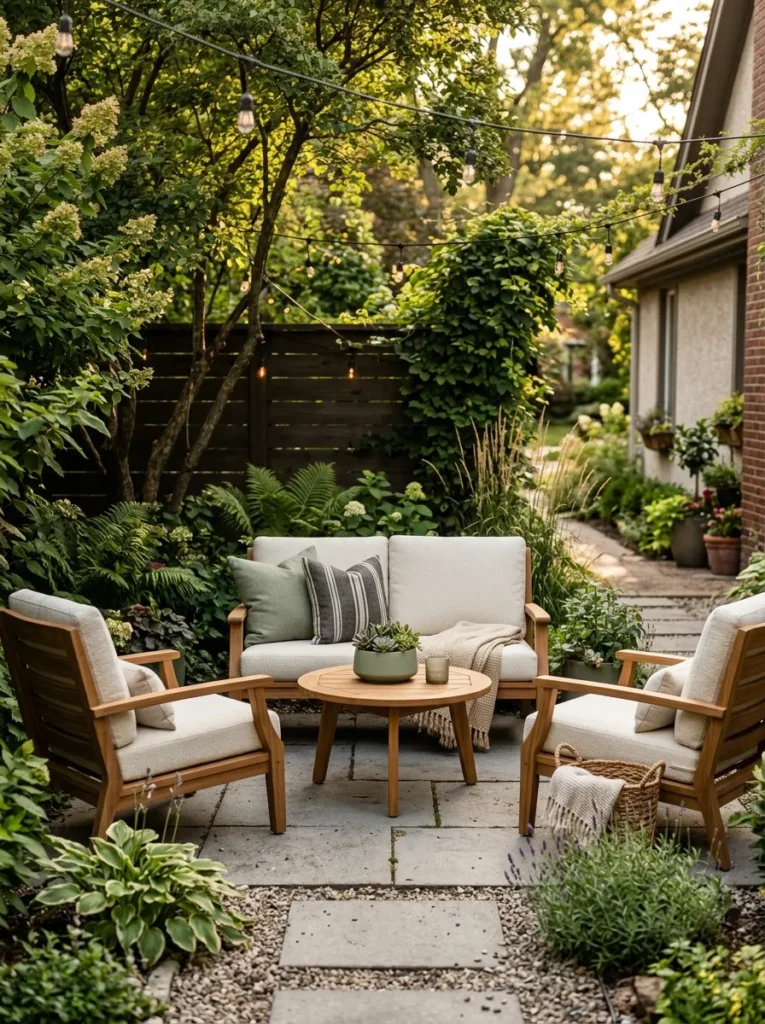
- Creates a defined seating zone without consuming the entire patio.
- Teak withstands outdoor exposure with relatively little maintenance.
- Separate chairs make conversation more flexible for two to four people.
- Neutral upholstery works with changing seasonal accessories.
A teak loveseat measuring about 55 to 65 inches wide works well on a compact patio, while two chairs around 28 inches wide each leave approximately 30 inches of circulation space. Choose a coffee table between 30 and 36 inches in diameter, with at least 16 inches between the table edge and seating. Use cushions made from solution-dyed acrylic or another outdoor performance fabric, and avoid untreated indoor upholstery because trapped moisture can encourage mildew and fabric deterioration.
Choosing weather-resistant materials is essential for a truly cozy backyard — explore our outdoor furniture ideas for the most durable and stylish seating options for any outdoor setup
This setup suits homeowners and renters who want an outdoor living space that feels intentional without requiring structural work. Teak furniture develops a silver-gray patina naturally, although a teak sealer can preserve its original honey tone. Keep the seating at least 12 inches from planting beds so leaves and irrigation spray do not constantly wet the cushions. Among practical cozy backyard ideas, this one is especially useful for morning coffee, evening conversation, and quiet reading.
Pro Tip: Place a 16 to 18 inch outdoor side table beside each primary seat so drinks and phones stay within easy reach without overcrowding the coffee table.
Eucalyptus Lounge Chairs
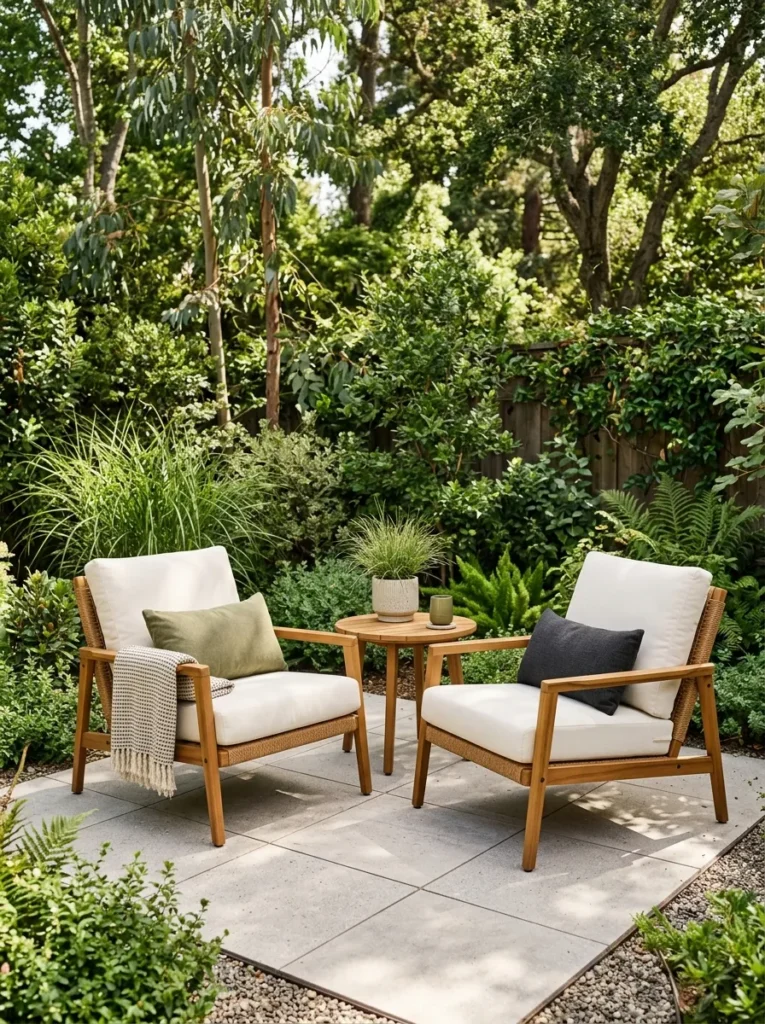
- Eucalyptus provides a warm wood look at a generally accessible price point.
- Adjustable lounge chairs support reading, sunbathing, and afternoon naps.
- Compact profiles preserve valuable walking space.
- Coordinated cushions add comfort without visually filling the patio.
Choose lounge chairs approximately 26 to 30 inches wide and 32 to 36 inches deep, leaving at least 24 inches between adjacent chairs for comfortable movement. Select eucalyptus with exterior-grade oil or a manufacturer-rated protective finish, and use stainless steel or powder-coated aluminum hardware to reduce corrosion. A side table around 18 inches wide is enough for a drink and book, while 20 to 24 inch seat heights work comfortably for most adults. Avoid placing untreated wood directly on damp soil because repeated moisture exposure can accelerate staining and decay.
These chairs are ideal for a backyard retreat where individual relaxation matters more than large-scale entertaining. They also pair well with patio furniture made from powder-coated aluminum or HDPE wicker, giving you freedom to mix materials without making the space look like a matching furniture set. Add a washable outdoor cushion in a warm neutral shade for a simple, comfortable finish. This is one of the more adaptable cozy backyard ideas because the chairs can be rearranged as your needs change.
Pro Tip: Keep the front legs of each chair at least 18 inches from the edge of the patio so the chair remains visually anchored while preserving a clear path behind it.
Cozy Backyard Ideas with Firelight
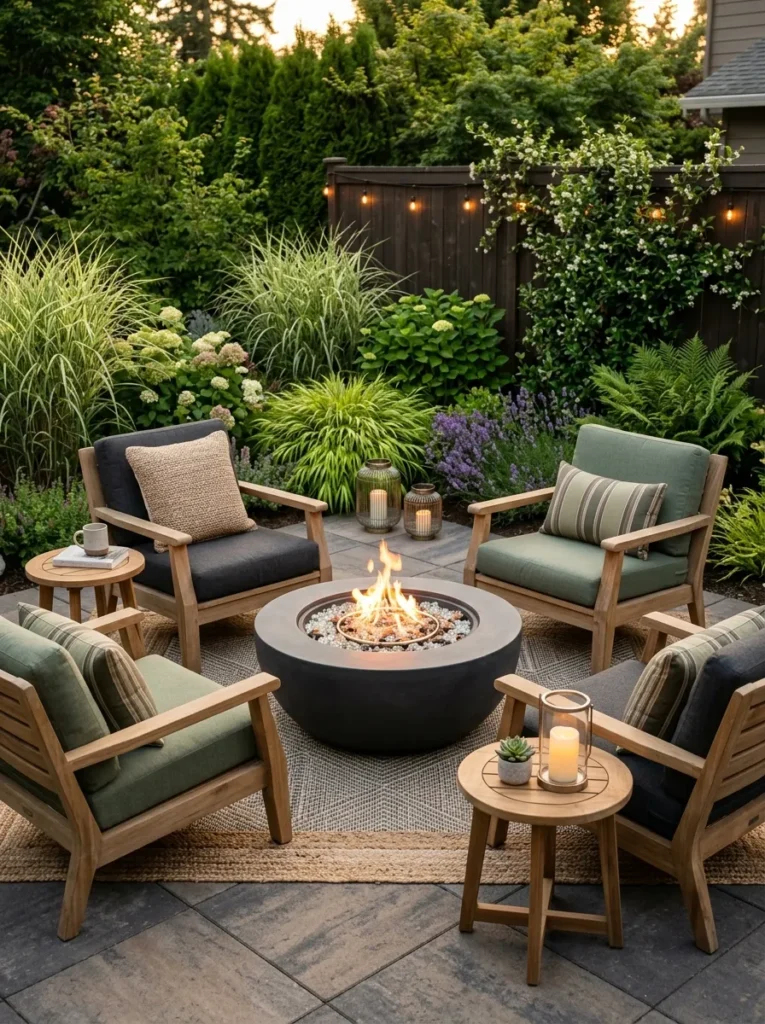
- Firelight creates a natural focal point after sunset.
- Four seats provide a practical conversation arrangement.
- A round fire feature encourages people to face one another.
- Warm materials prevent a hardscape-heavy patio from feeling cold.
Position a fire pit at least 10 feet from any house, shed, fence, pergola, or other structure, and check local fire regulations before installation. For a comfortable four-seat arrangement, choose a fire pit around 30 to 36 inches in diameter and maintain approximately 30 to 36 inches between the fire pit edge and each chair. Use noncombustible pavers or concrete beneath the feature, with a level surface extending at least 24 inches beyond the seating zone. Avoid placing a wood-burning fire pit beneath a low roof or directly beside combustible fencing because sparks and radiant heat create unnecessary hazards.
The right lighting turns any fire pit area into a magical evening retreat — explore our fire pit lighting ideas for stunning ambiance setups that make every cozy backyard night unforgettable
Gas fire pits suit many homeowners who want quick ignition and predictable heat, while portable propane models can work particularly well for renters. Add weatherproof textiles in charcoal, oatmeal, or muted olive to soften the harder surfaces around the fire feature. These cozy backyard ideas work especially well when firelight becomes the brightest visual point, so surrounding lighting should remain warm and relatively low. Keep a suitable fire extinguisher or water source accessible according to the type of fire feature you install.
Pro Tip: For a four-person seating circle, mark a 10 foot minimum safety boundary on the patio before purchasing the fire pit. This simple layout test can reveal clearance problems before installation.
Cedar Pergola Retreat
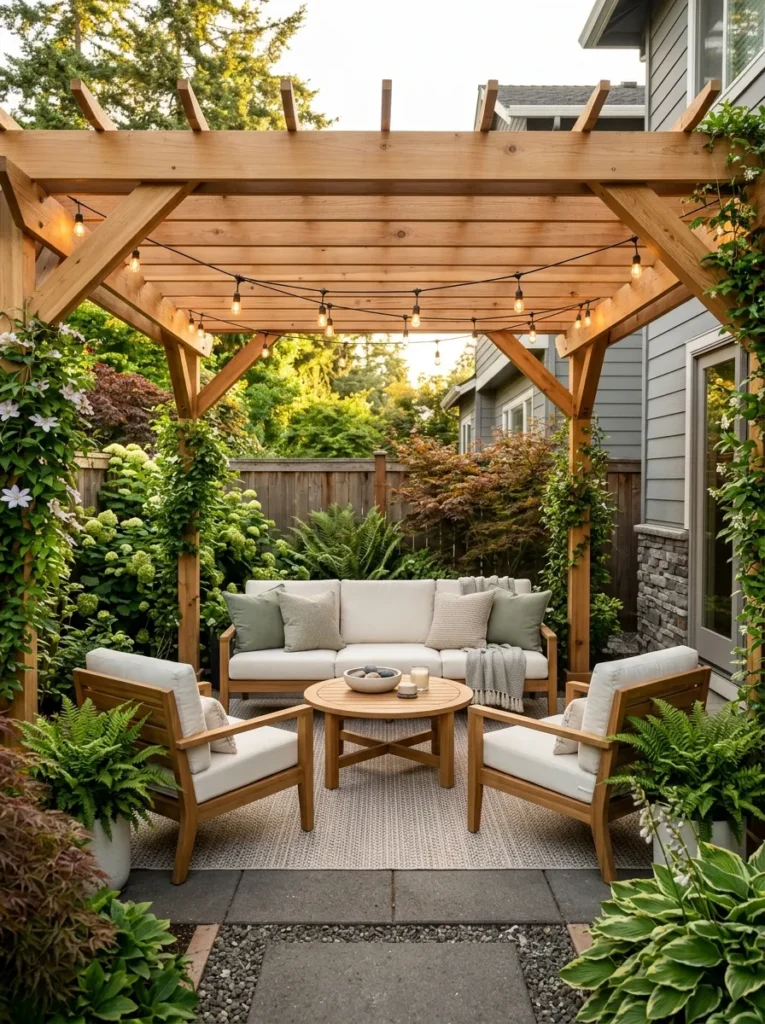
- A pergola visually defines the lounge without fully enclosing it.
- Cedar adds natural warmth and architectural character.
- The overhead structure creates a strong framework for lighting and plants.
- A larger footprint accommodates multiple seating positions comfortably.
For dining, plan for a pergola at least 10 by 12 feet, while a 12 by 16 foot structure provides better proportions for lounging furniture. Use structural posts sized according to local code and engineering requirements, commonly 6 by 6 inches for substantial residential pergolas, with footings sized for the soil and local conditions. Keep at least 7 feet of clear headroom above finished paving, and use exterior-rated fasteners such as stainless steel or hot-dipped galvanized hardware. Avoid attaching a pergola to a house wall without checking structural requirements, because the connection must safely handle wind and roof or shade loads.
A cedar pergola suits homeowners who want a dedicated backyard retreat with a stronger sense of enclosure. It also provides a framework for climbing plants, outdoor curtains, or string lights without relying on nearby trees. For a softer outdoor living space, combine cedar with teak furniture and weather-resistant textiles in cream, olive, or terracotta. Among the most effective cozy backyard ideas, a pergola works because it gives the furniture a visual ceiling while keeping the sides open to fresh air and greenery.
Pro Tip: Before construction, place painter’s tape on the paving to outline the proposed 10 by 12 or 12 by 16 foot footprint. Check door swings, property boundaries, overhead branches, and walking paths before ordering materials.
Wicker Seating Corner
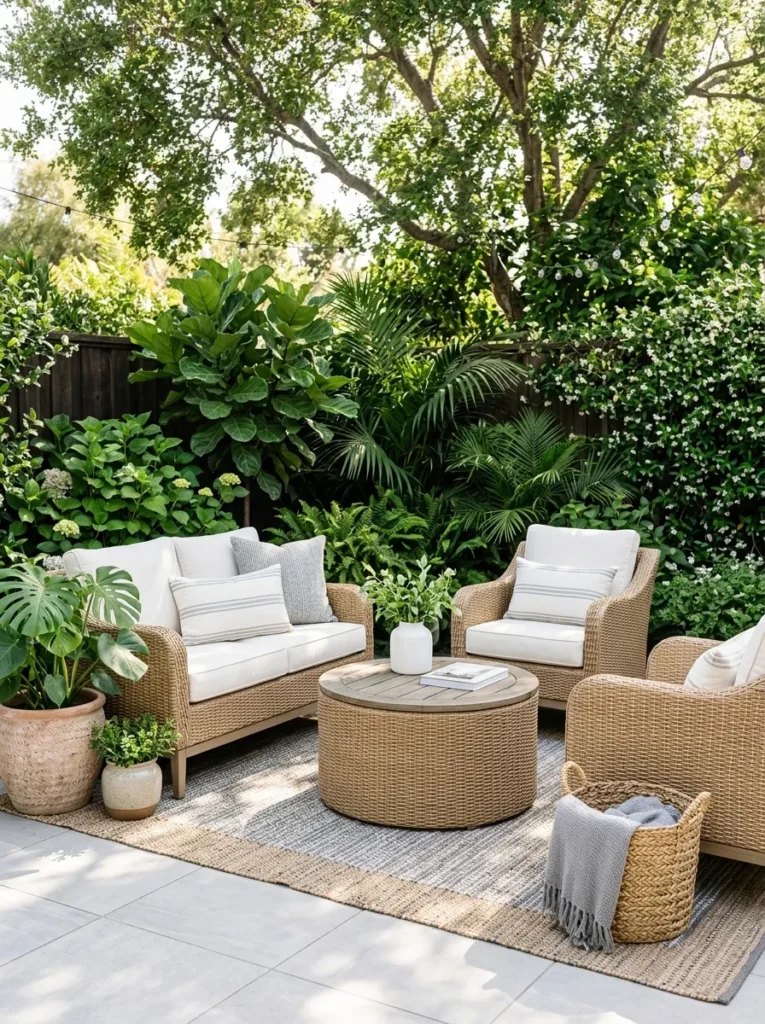
- HDPE wicker handles outdoor moisture better than many natural wicker products.
- A compact seating arrangement works in modest patios and gardens.
- Powder-coated aluminum frames reduce rust concerns.
- Neutral wicker complements both contemporary and cottage landscaping.
Look for HDPE wicker wrapped around powder-coated aluminum frames, with seat widths around 24 to 28 inches and chair depths around 28 to 32 inches. Allow at least 30 inches for a primary walking route and approximately 16 to 18 inches between seating and a coffee table. Choose cushions with quick-drying foam where possible, especially in damp climates, and select removable covers with concealed zippers. Avoid untreated natural wicker in fully exposed areas because repeated rain and ultraviolet exposure can shorten its useful life.
This arrangement suits renters who want comfortable patio furniture without permanent construction, as well as homeowners creating a flexible outdoor entertaining zone. HDPE wicker has the woven texture people associate with traditional garden furniture while offering better resistance to moisture and sunlight. Add one outdoor rug beneath the central group to visually connect separate chairs. These cozy backyard ideas become more practical when every furniture piece can be moved easily for cleaning, storage, or seasonal changes.
Pro Tip: Choose a rug that extends at least 18 inches beyond the seating area on all sides. This keeps chair legs visually connected and reduces the chance of furniture sitting awkwardly on bare paving.
Layered Outdoor Textiles
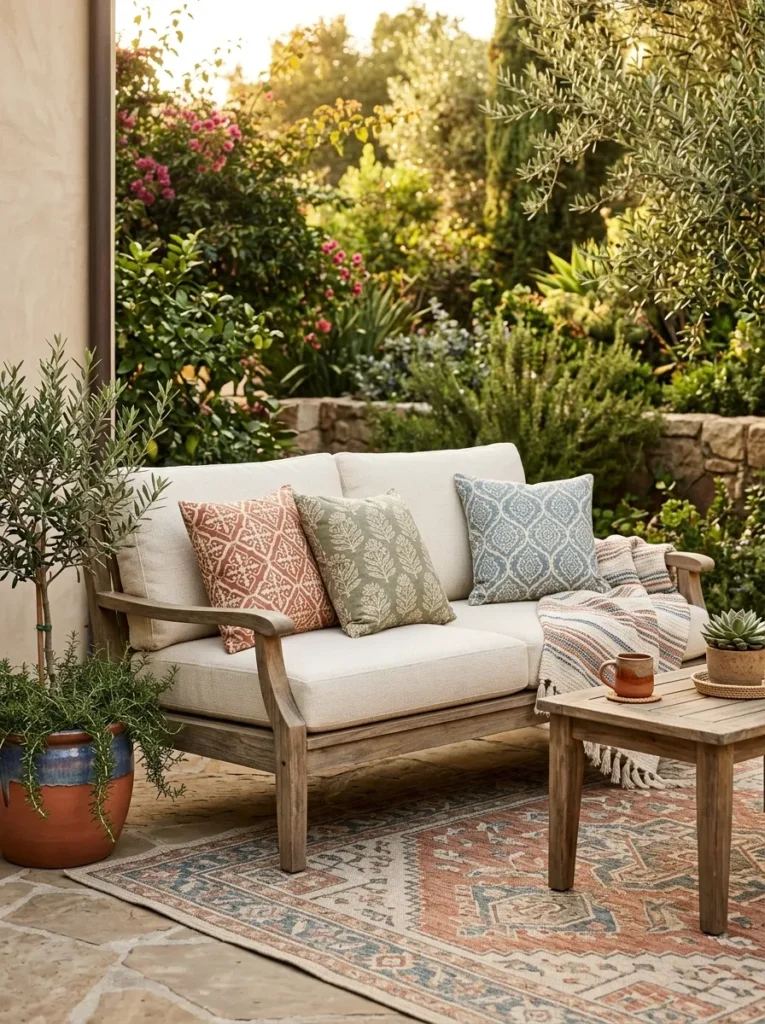
- Textiles introduce softness without permanent construction.
- Layered patterns make simple furniture feel more finished.
- Performance fabrics are easier to clean after outdoor use.
- Seasonal covers allow quick style changes without replacing furniture.
For a 10 by 12 foot patio, use an outdoor rug approximately 8 by 10 feet when the seating arrangement allows, following the rule that the rug should extend 18 inches beyond the seating area. Select solution-dyed acrylic cushions for strong color retention and polypropylene rugs for easy cleaning, with cushion thickness around 4 to 6 inches for everyday lounging. Keep at least two coordinated colors across cushions, throws, and rugs so the arrangement feels intentional. Avoid using indoor cotton throws or absorbent rugs outside because they retain moisture and can develop mildew.
Textile layering is especially useful when your existing outdoor furniture is functional but visually plain. Choose a simple fall or summer color palette, then swap two or three cushion covers rather than replacing the entire seating group. Weatherproof textiles also help make a patio feel more like an extension of the home’s interior. For renters, this is among the easiest cozy backyard ideas because nearly everything can be removed and packed away when the lease ends.
Pro Tip: Limit a compact patio to three main textile patterns: one large-scale pattern, one small-scale pattern, and one solid. Keep the largest pattern on the rug or largest cushions to prevent visual clutter.
Dining Under String Lights
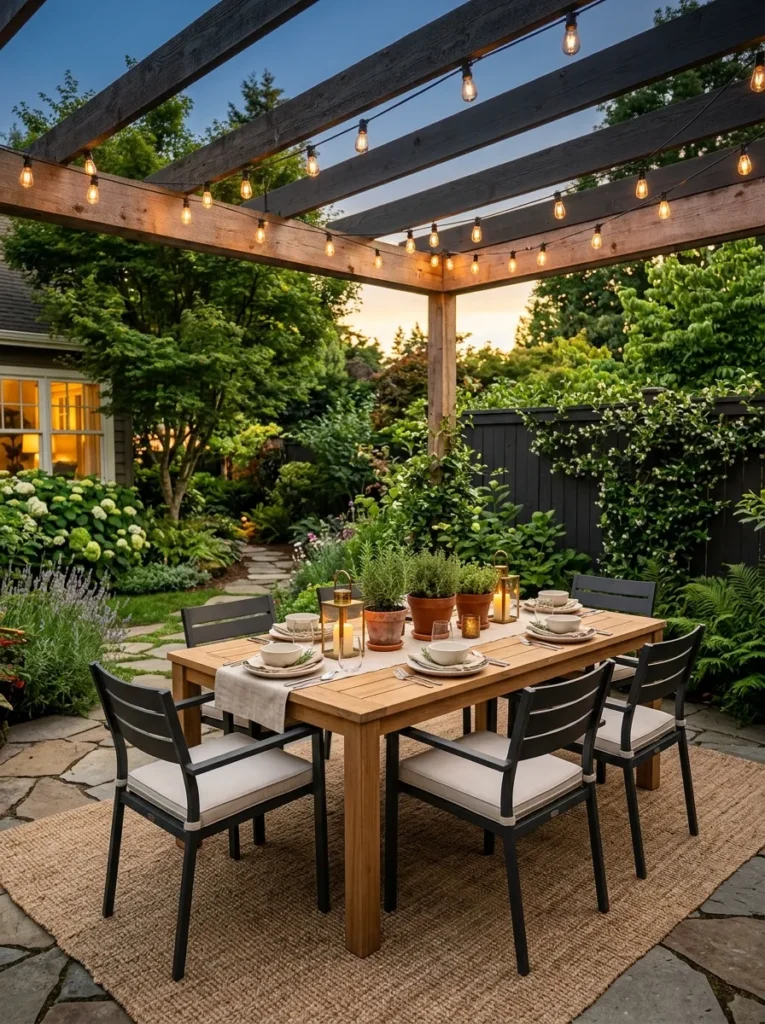
- Overhead lighting gives an outdoor dining area a defined focal point.
- Warm illumination makes evening meals feel more intimate.
- A durable table supports frequent outdoor entertaining.
- The lighting can be installed without major electrical construction when using suitable exterior products.
Use a 60 to 72 inch dining table for four to six people, with at least 36 inches of clearance around the table for chair movement. Install exposed string lighting approximately 8 to 10 feet above the finished surface, using a 48-foot strand to provide enough length for a typical compact dining zone. Choose exterior lighting rated at least IP65 when fixtures are exposed directly to weather, and use outdoor-rated mounting hardware and power connections. Avoid hanging lights from weak tree branches or improvised hooks because wind movement can damage cables and connections.
String light dining is just the beginning of great outdoor entertaining — explore our outdoor entertaining ideas for more inspiration on hosting memorable gatherings in your backyard.
Teak dining tables provide natural durability, while powder-coated aluminum chairs offer lighter weight and easy maintenance. Use warm white bulbs around 2200K to 2700K for a softer evening atmosphere that resembles traditional incandescent light. These cozy backyard ideas are particularly useful for homeowners who enjoy outdoor entertaining because the dining zone can serve breakfast in daylight and dinner after sunset. Keep the table surface relatively simple so the overhead lighting remains the main atmospheric element.
Pro Tip: Test the lighting at night before permanently securing the strand. A mounting height of about 9 feet often gives a comfortable balance between useful illumination and a relaxed canopy effect.
Built-In Bench Seating
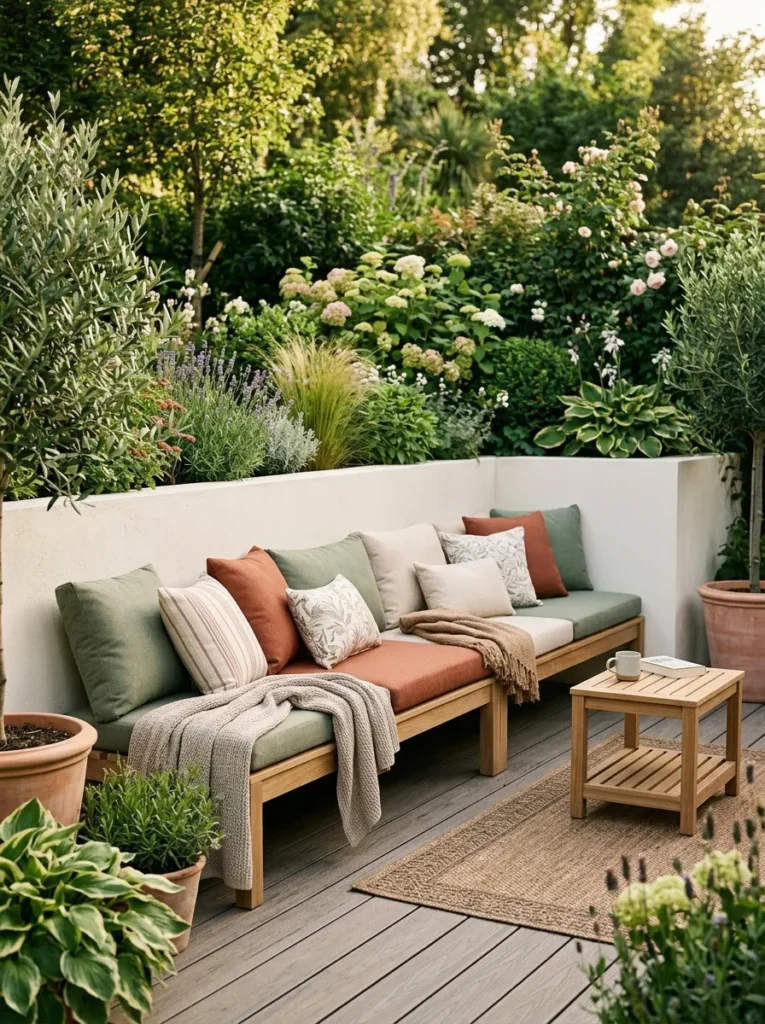
- Converts an unused wall edge into practical seating.
- Provides more seating without the footprint of several armchairs.
- Built-in construction creates a strong visual boundary for the patio.
- Removable cushions make seasonal maintenance easier.
Build the seat approximately 17 to 19 inches above the finished paving, with a seat depth of 18 to 22 inches for comfortable upright lounging. A 60 to 72 inch bench can seat two or three adults, while a 5 to 6 inch outdoor cushion provides useful padding without making the seat excessively deep. Use exterior-grade cedar, treated timber, composite decking, or masonry designed for outdoor exposure, and provide drainage gaps of about 1/4 inch where timber construction requires them. Avoid trapping untreated wood against masonry because persistent moisture can accelerate rot and discoloration.
Built-in seating works particularly well in narrow gardens where freestanding furniture would reduce circulation. It also gives renters inspiration for a similar look using a freestanding storage bench rather than permanent construction. Add two or three weatherproof cushions in coordinated shades to create a relaxed backyard retreat without filling every available corner. A storage bench can also hide blankets, cushions, and gardening accessories when the weather changes.
Pro Tip: Before building, mock up the seat height with stacked outdoor cushions on a temporary bench. Aim for roughly 18 inches from paving to the top of the finished cushion for comfortable everyday seating.
Container Garden Privacy
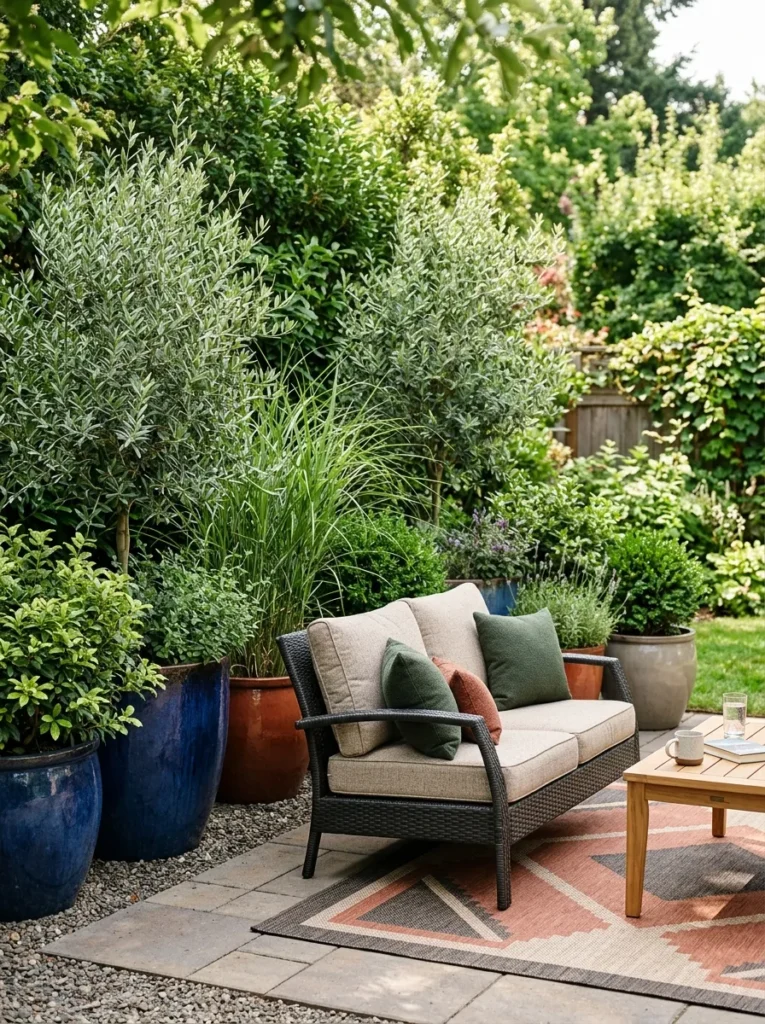
- Creates privacy without constructing a permanent fence.
- Containers can be rearranged as plants mature.
- Different plant heights add depth to a compact garden.
- Greenery softens hard patio surfaces and furniture edges.
Use containers at least 18 to 24 inches in diameter for larger screening plants, with approximately 18 to 24 inches between containers so foliage has room to develop. Position taller plants toward the property boundary and keep lower pots closer to the seating area, creating a layered screen rather than a solid wall. Choose frost-resistant containers in colder climates and install drainage holes of roughly 1/2 inch or larger according to the planter design. Avoid placing large containers directly against timber fencing because trapped moisture can stain or deteriorate the fence surface.
Container gardening is particularly useful for renters because pots provide patio privacy without permanent changes to the property. Evergreen shrubs, ornamental grasses, dwarf bamboo varieties where locally appropriate, and compact trees can all contribute height and texture. These cozy backyard ideas work best when the planting screen leaves some gaps, allowing light and air to pass through rather than creating a dense barrier. Group containers in odd numbers and repeat one or two pot finishes to keep the arrangement visually cohesive.
Pro Tip: Place the tallest container about 24 inches behind the seating line, then stagger shorter plants toward the front. This creates privacy while preserving usable seating space.
Small Cozy Backyard Ideas
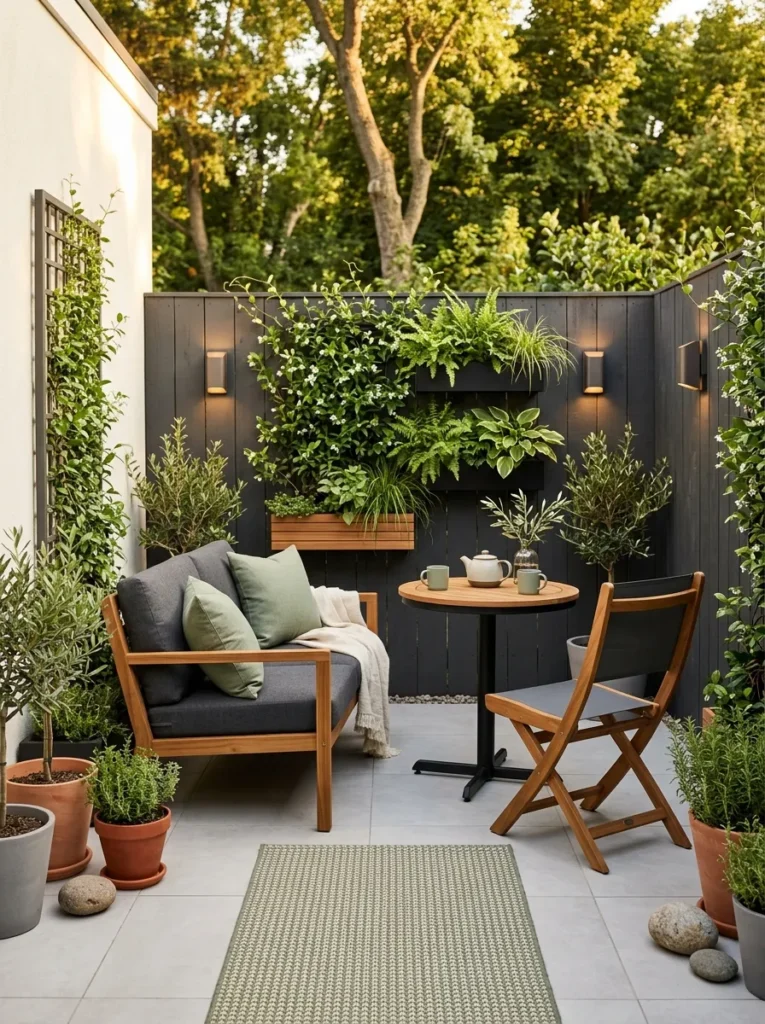
- Uses vertical space instead of consuming valuable floor area.
- A two-seat arrangement leaves room for circulation.
- Folding furniture makes the garden easier to adapt.
- A restrained palette keeps a small patio visually open.
For an 8 by 10 foot backyard, prioritize furniture no deeper than about 28 inches and maintain a circulation path of at least 30 inches where possible. A 24 to 30 inch round bistro table provides enough surface for two people without creating sharp corners in a tight layout, while wall-mounted planters can add greenery without taking floor space. Use a narrow outdoor rug that extends at least 18 inches beyond the main seating footprint, and choose lightweight furniture that can be moved for cleaning. Avoid filling every corner with pots, tables, and accessories because visual congestion makes a small garden feel even smaller.
Small backyards can still feel incredibly cozy and inviting — explore our small patio decor ideas for clever space-maximizing tips that work in any compact outdoor area
The most effective cozy backyard ideas for compact spaces rely on multifunctional pieces. A storage bench can provide seating and hold cushions, while folding chairs can be brought out when guests arrive. Vertical container gardening, climbing plants, and wall-mounted lighting draw attention upward and make the space feel taller. This approach also works for renters because freestanding planters, removable lighting, and portable furniture can create a strong sense of place without permanent alterations.
Pro Tip: Measure the entire patio before shopping and reserve one 30-inch-wide circulation route from the entrance to the seating area. Buy furniture only after that path is marked on the ground.
Weatherproof Reading Corner
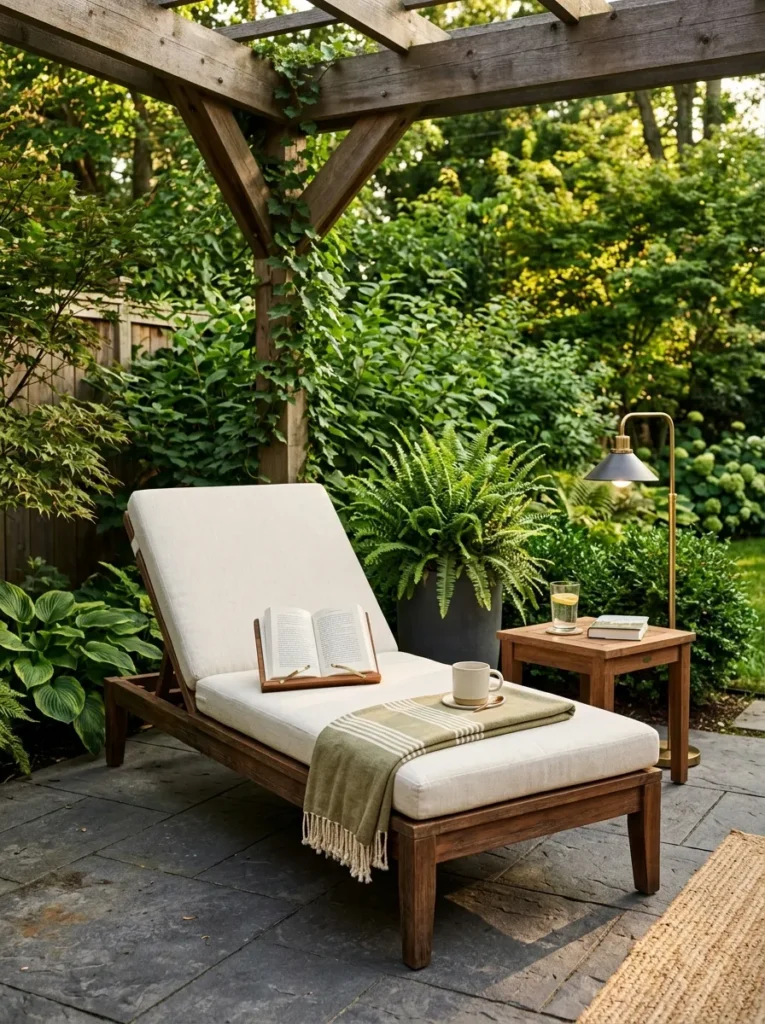
- Gives the backyard a dedicated purpose beyond entertaining.
- A single lounge chair needs very little floor space.
- Side lighting makes evening reading more comfortable.
- Plants provide a natural visual buffer from surrounding activity.
Choose a lounge chair about 28 to 32 inches wide and 32 to 38 inches deep, with a seat height around 16 to 19 inches for comfortable access. Pair it with an 18 to 22 inch side table and leave at least 24 inches of clear space around the chair for easy movement. Use a weather-resistant cushion with quick-drying foam and select an outdoor lamp or wall fixture rated at least IP65 when directly exposed to rain. Avoid using indoor floor lamps or extension cords not specifically rated for outdoor conditions because moisture can create serious electrical hazards.
A dedicated reading corner suits people who want a quieter backyard retreat rather than a large entertaining setup. Position the chair where nearby planting provides privacy, but keep enough open sky for daylight. Weather-resistant furniture and textiles allow the area to remain ready for use instead of requiring constant setup and removal. One comfortable chair, a useful side table, and a small plant collection can create an effective outdoor living space without a major budget.
Pro Tip: Test your reading position at the time of day you normally use it. Keep the chair out of direct glare from low afternoon sun, and position a small side table within 8 to 12 inches of the armrest.
Outdoor Rug Anchoring
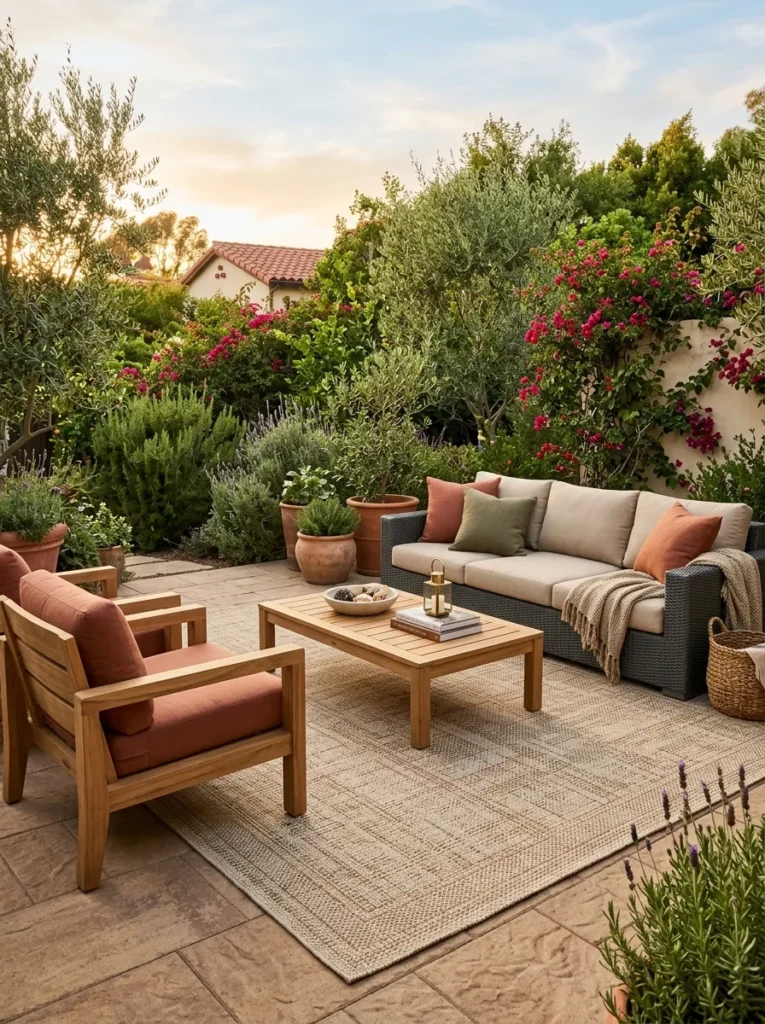
- Visually connects separate furniture pieces into one zone.
- Adds softness to stone, concrete, or porcelain paving.
- Introduces color and pattern without permanent changes.
- Helps define where relaxing or entertaining happens.
Choose an outdoor rug that extends at least 18 inches beyond the seating area, with an 8 by 10 foot rug often working well beneath a compact sofa and two chairs. Select polypropylene or another outdoor-rated fiber with UV resistance, and check that the backing allows adequate airflow over the paving. A rug pad designed for exterior use can reduce slipping on smooth surfaces, while a low-pile construction makes chair movement easier. Avoid indoor rugs outdoors because they can retain water, fade quickly, and encourage mildew in damp conditions.
An outdoor rug is one of the simplest ways to make an outdoor living space feel connected to the architecture of the home. Choose a pattern that repeats one or two colors already present in your cushions or planters rather than introducing several unrelated shades. This creates a more deliberate look without requiring a complete furniture replacement. Among practical cozy backyard ideas, rug placement has a particularly strong visual impact because it defines the seating zone from ground level upward.
Pro Tip: Center the rug beneath the coffee table and place the front legs of every main seating piece on it. If the rug is too small to reach those legs, choose the next available size rather than forcing the furniture inward.
Covered Hammock Hideaway
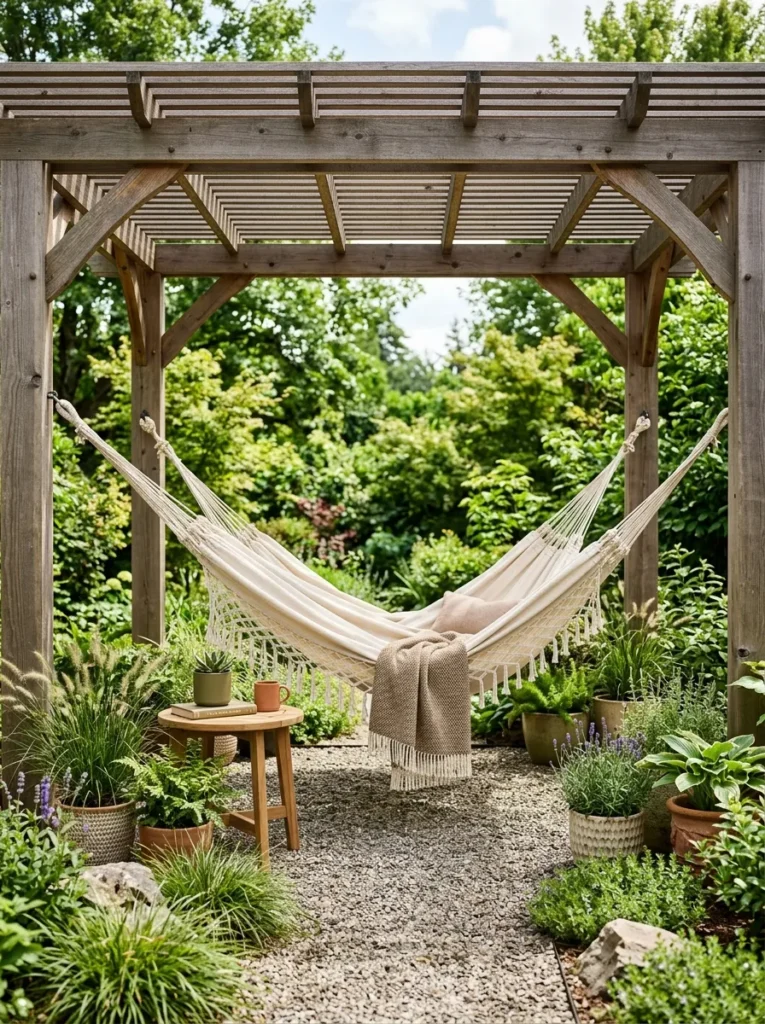
- Provides a dedicated place for reclining and napping.
- Uses a narrow footprint compared with conventional lounge furniture.
- Shade improves comfort during hotter parts of the day.
- The relaxed shape adds a softer element to structured patios.
Install a hammock using manufacturer-approved hardware and supports capable of carrying the intended load, with the hammock center typically positioned around 16 to 24 inches above the ground when occupied. Allow a clear zone extending at least 24 inches around the hammock’s sides and check the manufacturer’s recommended suspension distance, often around 10 to 14 feet. For freestanding supports, use properly engineered posts and footings appropriate to local soil and wind conditions. Avoid attaching a hammock to trees with damaged bark, weak limbs, or insufficient trunk diameter because failure can cause serious injury.
A covered hammock hideaway works especially well for people who want a backyard retreat focused on relaxation rather than entertaining. Weather-resistant fabric in cream, charcoal, or muted green complements natural planting without dominating the garden. Pair the hammock with a small teak or powder-coated aluminum table for drinks, books, or sunscreen. These cozy backyard ideas also suit renters when a freestanding hammock stand replaces permanent posts.
Pro Tip: Before installing a hammock, lie in it at home and measure the occupied length and lowest point. Use those measurements to confirm that the backyard has enough clearance before purchasing a stand or mounting hardware.
Warm Patio Lighting
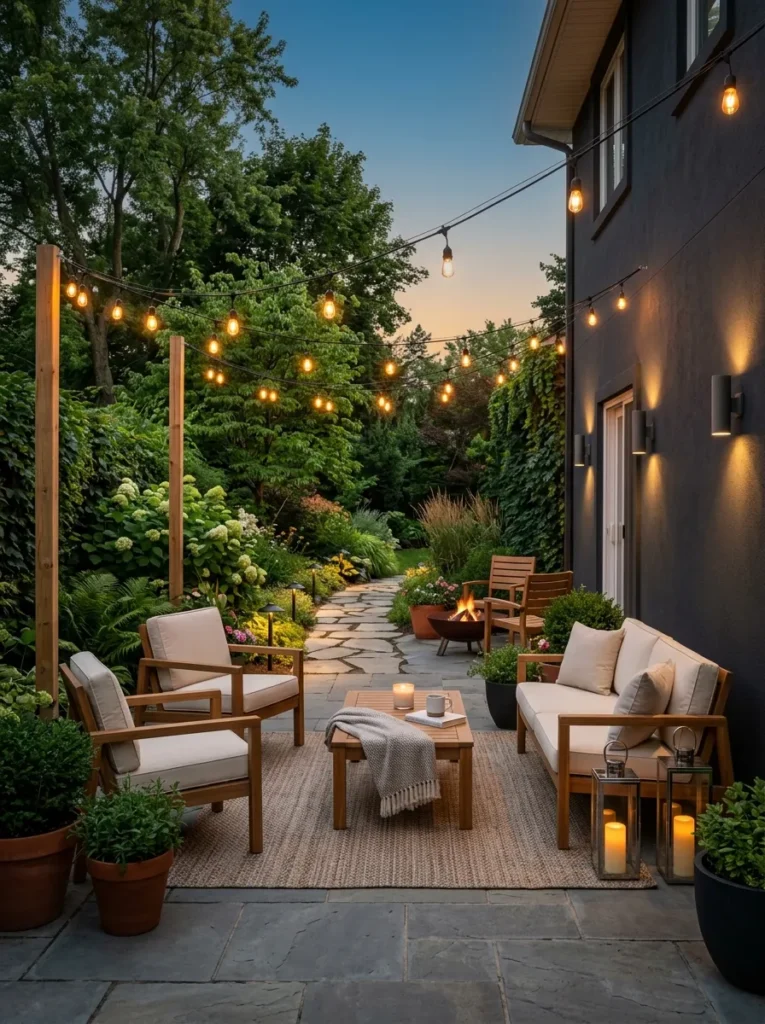
- Multiple low-intensity light sources create depth after sunset.
- Warm color temperature makes outdoor seating feel more comfortable.
- Path lighting improves visibility without flooding the entire yard.
- Layered lighting highlights plants, architecture, and furniture separately.
Use warm bulbs around 2200K to 2700K for seating areas, with exposed fixtures rated at least IP65 where required by their location and installation instructions. A 48-foot string light strand installed at approximately 8 to 10 feet high can define a compact patio, while path lights around 12 to 18 inches high provide subtle guidance along walkways. Keep low-voltage landscape fixtures approximately 6 to 10 feet apart depending on their beam spread, and use outdoor-rated transformers and connections. Avoid placing bright cool-white floodlights directly beside seating because excessive glare can make a relaxing space feel more like a work area.
Layered lighting is one of the most useful cozy backyard ideas because it allows different parts of the garden to serve different purposes after dark. Use brighter light near steps and entrances, softer illumination around seating, and gentle accent light near plants. This creates visual depth while allowing you to keep the overall brightness modest. A carefully planned lighting scheme can also extend outdoor entertaining into cooler evenings without making the backyard feel overlit.
Pro Tip: Switch off half the fixtures after installation and compare the atmosphere. If you can still see furniture edges and walking routes safely, keep the lower lighting level because softer illumination usually feels more relaxing.
Vertical Herb Garden
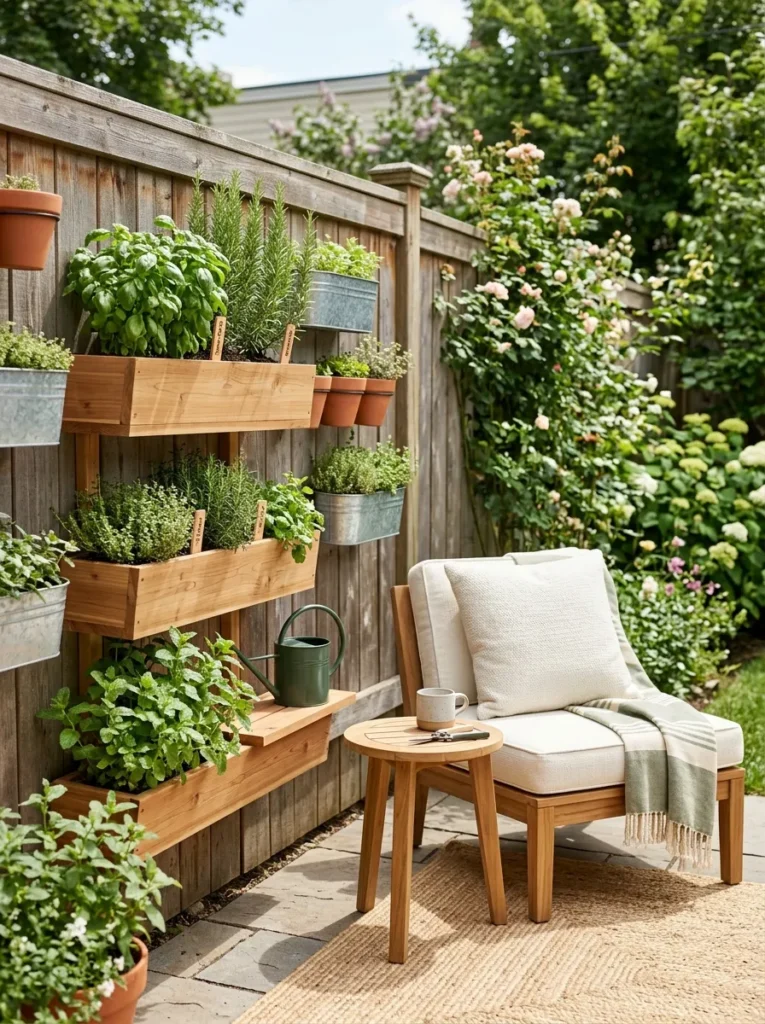
- Uses vertical space while keeping the patio floor open.
- Fresh herbs add fragrance and practical value.
- Tiered planting creates visual height around low furniture.
- Small containers can be rearranged as the seasons change.
Mount vertical planters securely to a wall or freestanding frame, keeping individual containers approximately 8 to 12 inches wide for common herbs. Leave about 6 to 12 inches between tiers so plants receive adequate light and can be watered without damaging lower foliage. Use containers with drainage holes of at least 1/4 inch and place a drip tray or suitable drainage system beneath indoor-facing surfaces. Avoid mounting heavy saturated soil directly to a lightweight fence panel because wet containers can weigh substantially more than their dry weight.
A vertical herb garden is particularly useful for homeowners and renters who want edible planting without sacrificing valuable seating space. Rosemary, thyme, oregano, sage, and chives generally work well in sunny positions, while mint is best kept in its own container because it spreads aggressively. The greenery also adds texture to an outdoor living space and gives guests something useful to interact with during outdoor entertaining. Keep the garden close enough to the kitchen entrance that harvesting remains convenient rather than becoming a chore.
Pro Tip: Place sun-loving herbs where they receive at least 6 hours of direct sunlight daily, and keep mint in a separate 8 to 10 inch pot to prevent it from overtaking neighboring plants.
Natural Stone Fire Pit
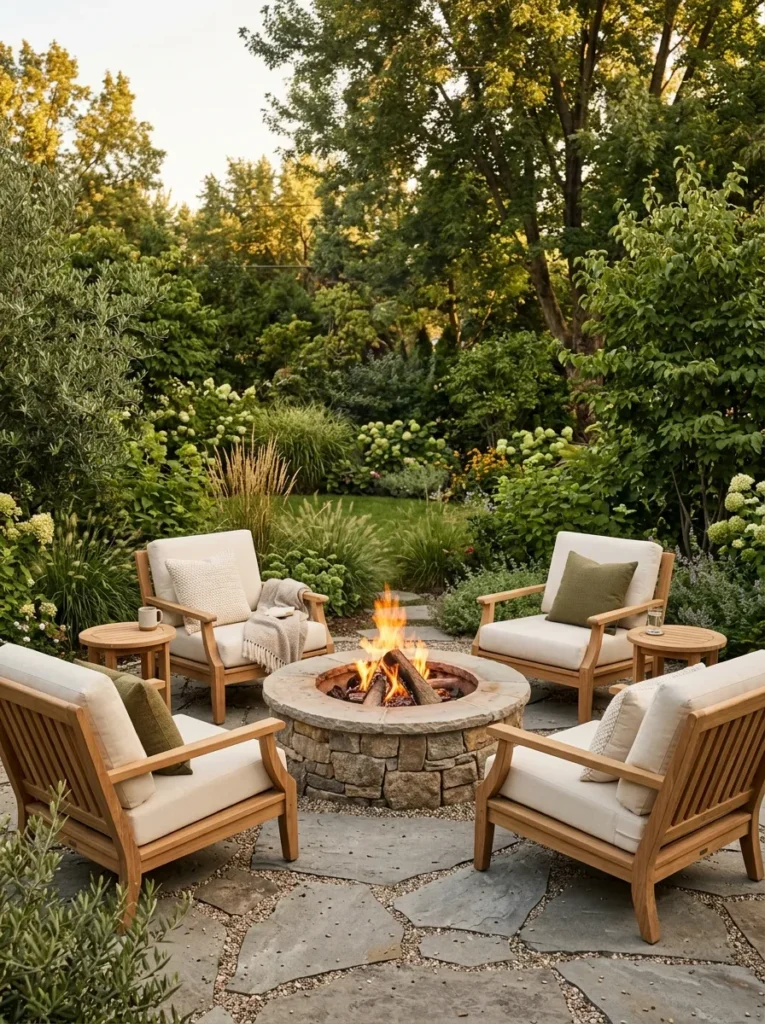
- Natural stone connects the fire feature to the surrounding garden.
- A round arrangement encourages face-to-face conversation.
- Gravel and masonry provide a practical noncombustible surface.
- Teak seating balances the visual weight of the stone.
Choose a fire pit approximately 30 to 36 inches in diameter and place it on a stable noncombustible surface with sufficient drainage. Maintain at least 10 feet of clearance from structures, fences, sheds, overhanging combustible materials, and other hazards, while following local regulations and manufacturer requirements. Keep seating approximately 30 to 36 inches from the outer edge of the fire feature and provide a clear route away from the seating area. Avoid placing decorative mulch immediately around a wood-burning fire pit because stray embers can ignite dry organic material.
Natural stone gives a backyard retreat a more grounded appearance than highly polished manufactured finishes, especially when paired with gravel, planting, and weathered timber. Teak chairs provide comfortable seating while remaining durable in outdoor conditions, and cream performance cushions prevent the area from becoming visually heavy. These cozy backyard ideas are most successful when the fire pit remains the focal point and surrounding accessories stay restrained. Always follow the specific operating, ventilation, fuel, and clearance requirements supplied with the fire feature.
Pro Tip: Create a temporary 10 foot clearance circle using garden stakes and string before installation. This makes it easier to identify nearby branches, fences, furniture, or structures that could violate the required safety zone.
Screened Garden Lounge
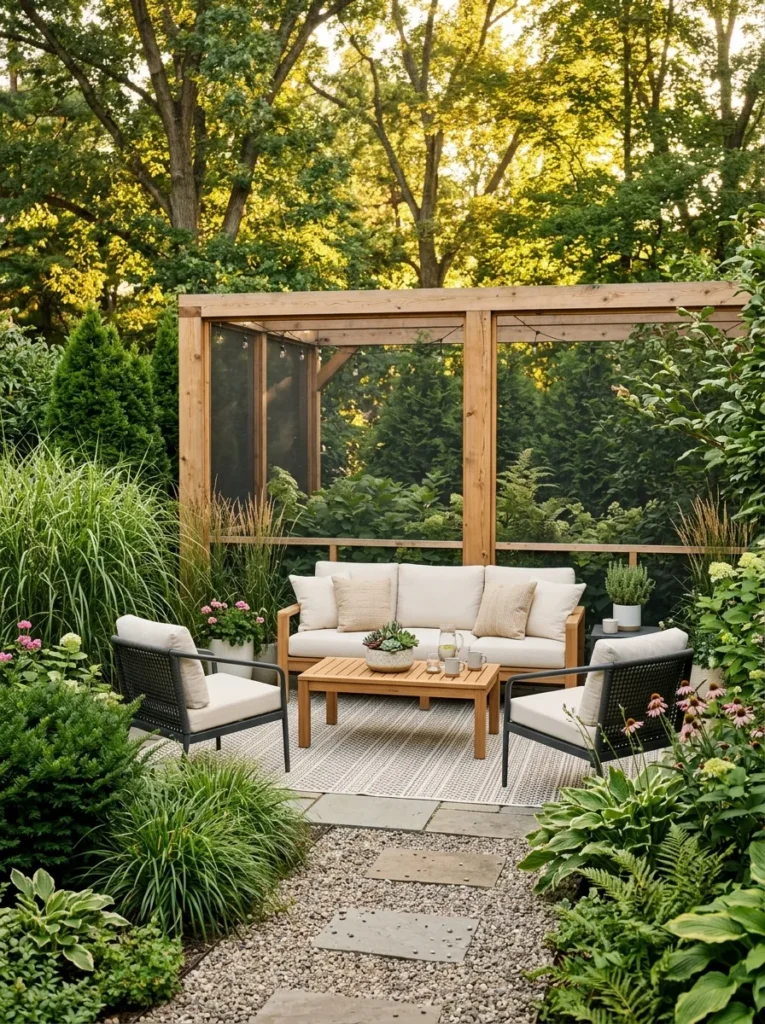
- Creates visual separation from neighbors and busy streets.
- Layered planting feels softer than a solid privacy wall.
- A dedicated lounge becomes more comfortable for long stays.
- Mixed plant heights add depth to a compact garden.
Build or position screening so the main visual barrier begins around 5 to 6 feet above the seating surface, while maintaining required property setbacks and local fence regulations. Use shrubs spaced approximately 18 to 24 inches apart where the plant variety supports that spacing, and combine them with taller grasses or trellis plants for layered coverage. Keep at least 24 inches between dense planting and timber or metal furniture to allow airflow and maintenance access. Avoid planting aggressive root systems immediately beside paving or foundations because mature roots can lift surfaces or interfere with drainage.
Privacy is the foundation of a truly relaxing backyard — explore our privacy fence ideas for beautiful screening solutions that create a secluded outdoor retreat
A screened garden lounge works particularly well when outdoor privacy is more important than maximizing the number of seats. Teak, eucalyptus, powder-coated aluminum, and HDPE wicker all provide practical options for the furniture, while evergreen planting can maintain structure through much of the year. The planting should frame the seating rather than completely hide it, allowing sunlight and airflow to reach the lounge. For an intimate backyard retreat, this approach creates the feeling of a separate room without fully enclosing the garden.
Pro Tip: Stand at the exact eye level of someone sitting in the main chair, then mark the points where neighboring windows or pathways are visible. Screen only those sightlines instead of covering the entire boundary.
Cozy Backyard Ideas for Renters
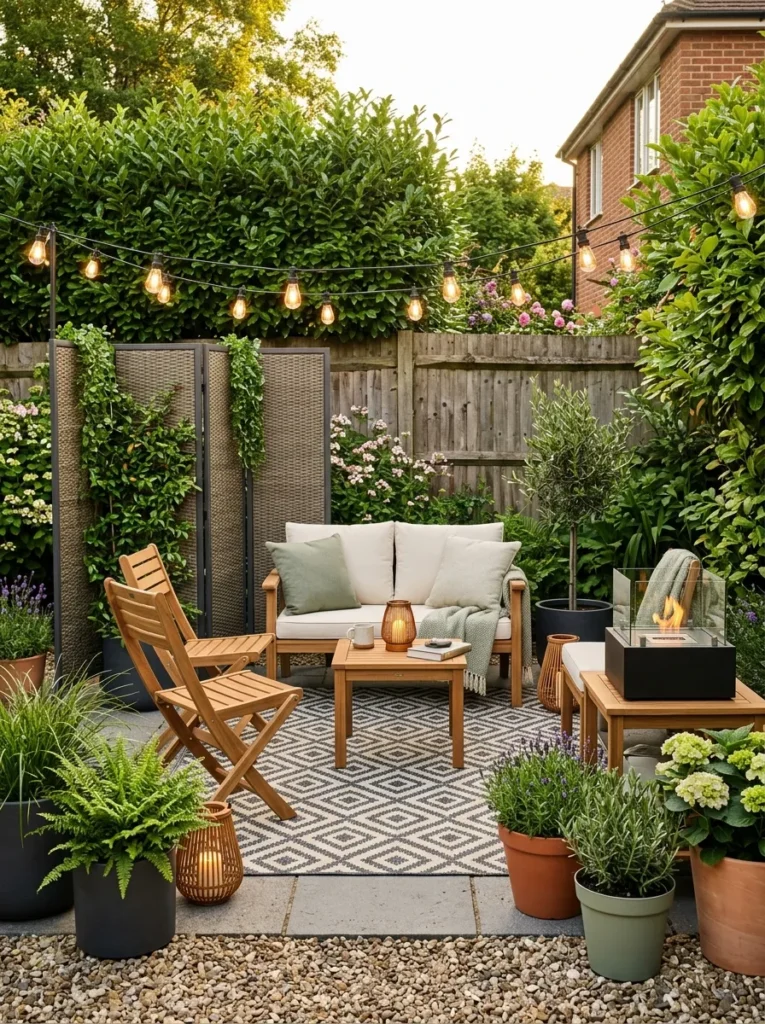
- Avoids permanent construction and major property alterations.
- Freestanding furniture can move with the renter.
- Container planting provides privacy without digging beds.
- Portable accessories allow the layout to change easily.
Use freestanding furniture with footprints that leave at least 30 inches for the main circulation route, and choose containers approximately 18 to 24 inches in diameter for larger privacy plants. A removable outdoor rug should extend at least 18 inches beyond the seating area, while portable lighting should use exterior-rated equipment with at least IP65 protection when exposed to weather. Keep any portable fire feature at least 10 feet from structures and follow its manufacturer requirements and local regulations. Avoid drilling into masonry, attaching heavy fixtures to fences, or installing permanent electrical connections without written permission from the property owner.
The most useful cozy backyard ideas for renters focus on pieces that can be packed, moved, or rearranged without leaving significant alterations behind. Teak seating, HDPE wicker, powder-coated aluminum, folding furniture, container plants, and removable rugs offer plenty of flexibility. A freestanding privacy screen can create a visual boundary while a portable lantern adds evening warmth. This approach gives renters many of the benefits of a permanent backyard design while preserving the option to restore the property when moving.
Pro Tip: Photograph the yard before installing anything and keep receipts, product instructions, and mounting details in one folder. This makes it easier to restore the space accurately when the tenancy ends.
Portable Privacy Screens
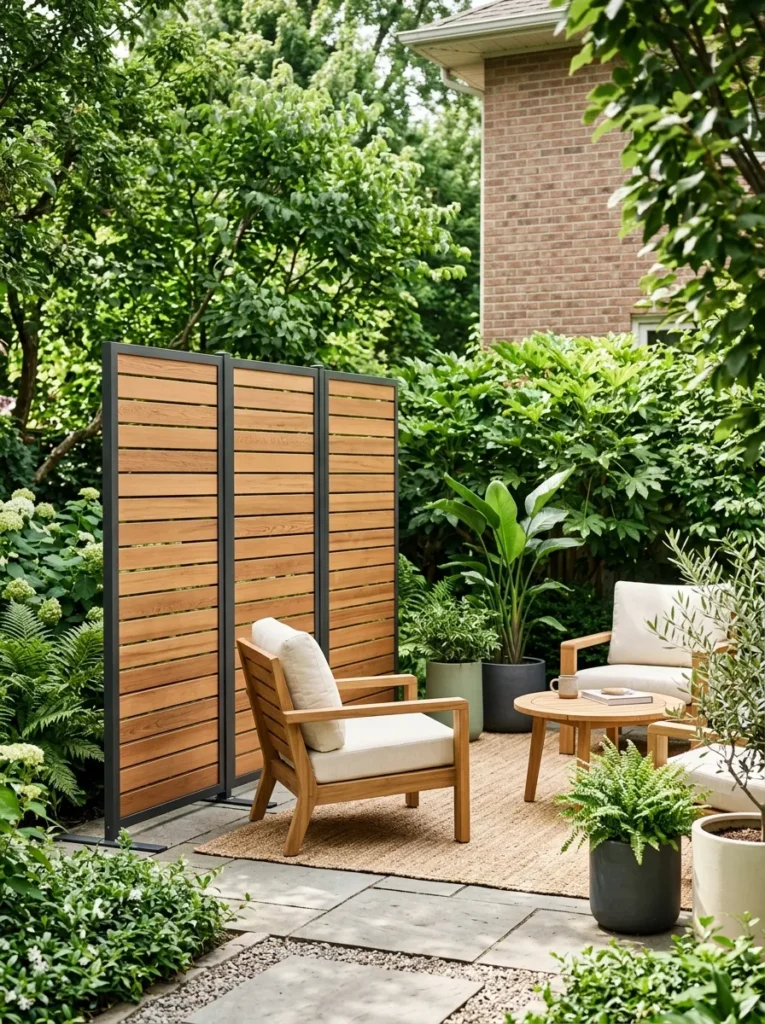
- Provides privacy exactly where it is needed.
- Freestanding panels are useful for renters.
- Slatted designs allow some airflow and daylight.
- Panels can divide a large garden into separate zones.
Choose privacy panels around 5 to 6 feet high and approximately 24 to 36 inches wide per section, depending on the manufacturer’s design. A three-panel screen can cover roughly 6 to 9 feet while remaining more manageable than one large rigid panel. Secure lightweight panels with weighted bases or manufacturer-approved anchors, especially in windy locations, and maintain at least 18 to 24 inches between adjacent containers. Avoid placing unsecured screens near fire features or in exposed windy areas because panels can become unstable or act as sails.
Portable screens can create a quiet reading area, conceal storage, or separate dining from lounging without changing the property’s permanent structure. Cedar and powder-coated aluminum both provide useful outdoor durability, while climbing plants in containers can soften a rigid screen over time. These cozy backyard ideas are particularly effective in overlooked urban gardens where privacy is needed only in one specific direction. Choose a screen with some visual permeability so the boundary feels like a garden feature rather than a solid wall.
Pro Tip: Position the screen at a slight angle instead of perfectly parallel to the property boundary. A 10 to 15 degree angle can block a direct sightline while making the seating area feel more enclosed.
Cottage Garden Seating
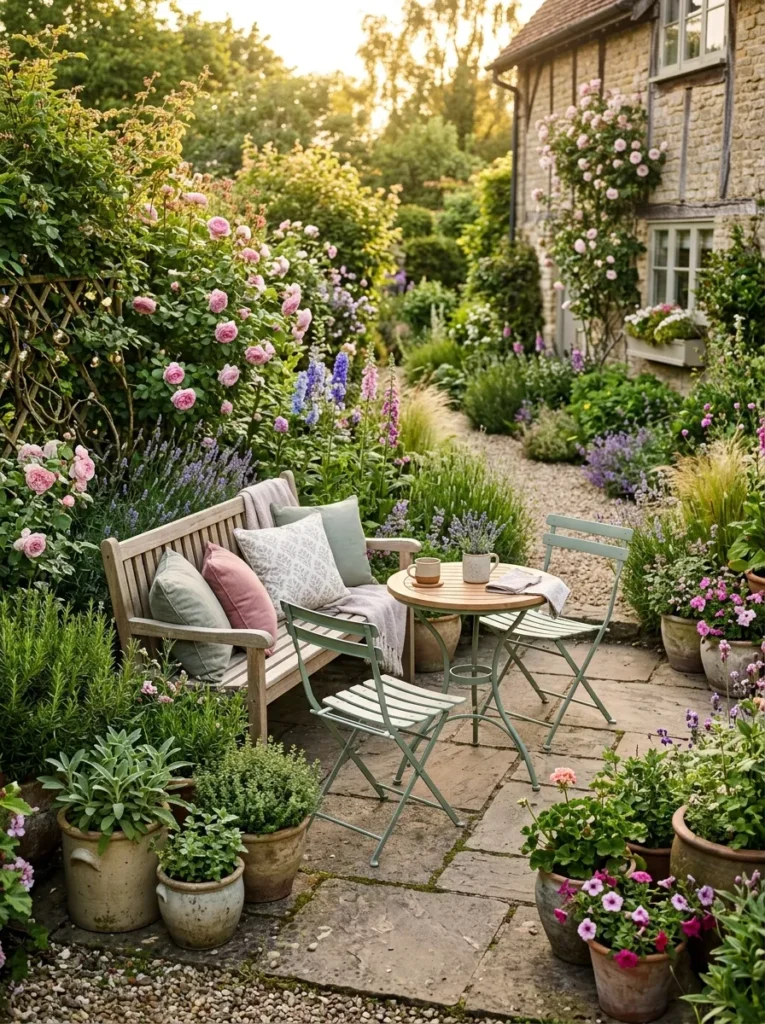
- Flowering plants make the seating feel integrated with the garden.
- Informal planting softens hard patio edges.
- A small table and three seats suit intimate conversations.
- Natural materials complement cottage-style landscaping.
Place the primary bench approximately 17 to 19 inches above the finished paving, and allow at least 30 inches of clear space in front for comfortable movement. Choose a 36 to 42 inch round bistro table for two to four people, leaving roughly 36 inches around the table for chair access. Space larger containers about 18 to 24 inches apart where plant maturity allows, and group flowers in clusters rather than scattering individual pots throughout the yard. Avoid planting species with mature widths that exceed their available bed space because overcrowding quickly reduces airflow and increases maintenance.
Cozy seating works beautifully beyond the backyard too — explore our front porch seating ideas for more comfortable and stylish outdoor seating inspiration
A cottage garden seating area suits homeowners who prefer a softer alternative to highly structured patios. Teak benches, flowering perennials, herbs, and informal planting create a backyard retreat that feels established rather than newly installed. Keep the hardscape relatively simple and let the plants provide most of the color, using outdoor cushions in cream, dusty rose, or muted sage as supporting accents. One of the most practical cozy backyard ideas here is to repeat the same flower color near the seating and along the garden edge, which visually connects the two zones.
Pro Tip: Choose three dominant plant colors and repeat them at least three times around the seating area. Repetition creates cohesion without requiring a large collection of unrelated plants.
Low-Maintenance Lounge Zone
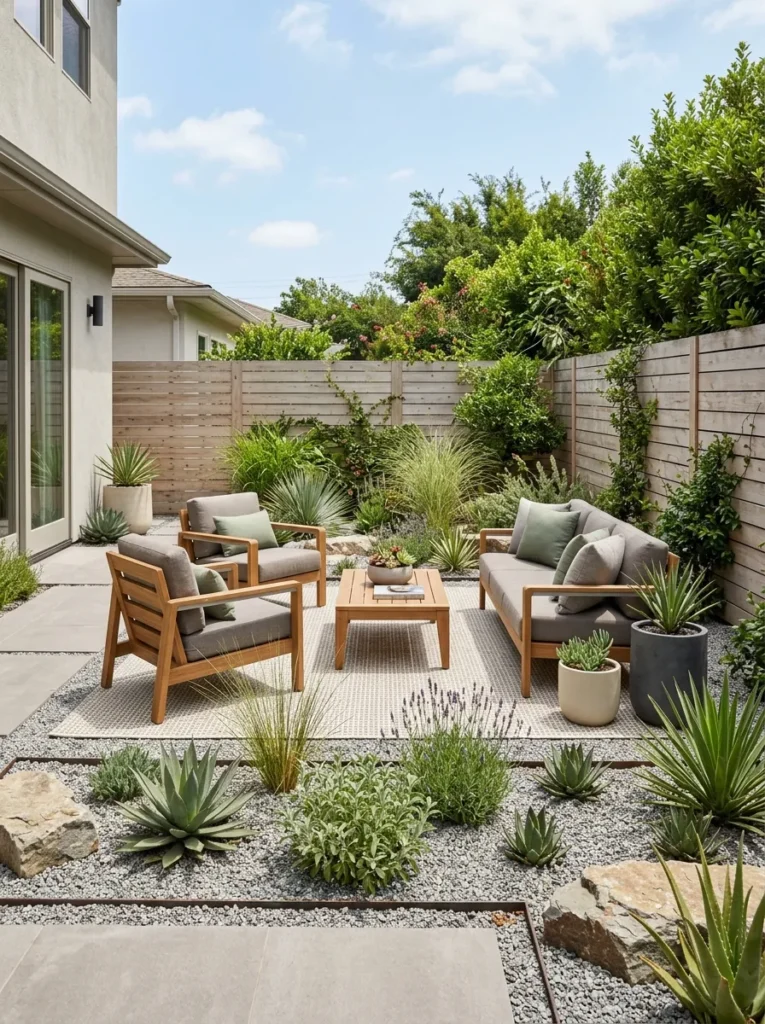
- Durable materials reduce frequent replacement and upkeep.
- Gravel and selected plants can reduce lawn maintenance.
- A defined lounge zone keeps the garden functional and tidy.
- Simple furniture arrangements make cleaning easier.
Choose outdoor furniture made from teak, eucalyptus, powder-coated aluminum, or HDPE wicker, depending on the desired appearance and maintenance level. Keep at least 30 inches of circulation space around primary seating and use an outdoor rug that extends 18 inches beyond the seating footprint when the patio layout permits. Group drought-tolerant containers approximately 18 to 24 inches apart where mature plant sizes allow, and use a well-draining gravel base appropriate to the local climate. Avoid choosing plants solely because they are drought-tolerant, since species still need to match local winter temperatures, soil conditions, and available sunlight.
A low-maintenance lounge zone is ideal for homeowners who want an attractive backyard without spending every weekend watering, pruning, and moving furniture. Durable materials can remain outdoors longer, while gravel, porcelain pavers, and appropriately selected plants simplify routine care. Keep cushions in a deck box or weatherproof storage bench when severe weather is expected, even when the fabric is rated for outdoor use. The best cozy backyard ideas balance comfort with realistic maintenance, so the finished space remains enjoyable rather than becoming another household task.
Pro Tip: Before buying plants, make a simple maintenance list for watering, pruning, cleaning, and seasonal storage. If the projected routine takes more than one short weekly session, simplify the planting or furniture arrangement.
People also ask
What are the best cozy backyard ideas for a small space?
The best cozy backyard ideas for small spaces prioritize scale, circulation, and multifunctional furniture. Start with a loveseat or two compact chairs, then reserve at least 30 inches for the main walking route. Use vertical planters instead of numerous floor pots, and choose a round table around 24 to 30 inches wide. An outdoor rug extending 18 inches beyond the seating can visually define the area without making the patio feel crowded.
How can I make my backyard feel cozy on a budget?
Start with existing furniture before buying new pieces. Add two or three weather-resistant cushions, an outdoor rug, and warm lighting to create an immediate improvement. A 48-foot string-light strand installed 8 to 10 feet high can define a seating zone, while container plants spaced 18 to 24 inches apart can provide color and privacy. Look for secondhand teak, eucalyptus, or powder-coated aluminum furniture, then replace worn cushions instead of the entire set.
Which cozy backyard ideas work best for renters?
The most practical cozy backyard ideas for renters are portable and leave the property unchanged. Use freestanding privacy screens, container gardens, folding chairs, teak or HDPE wicker furniture, removable outdoor rugs, and portable lighting. Choose planters with drainage trays where necessary, and keep a 30-inch circulation route through the space. Avoid drilling into walls, permanently attaching fixtures, or installing built-in structures unless the property owner gives written permission.
How much clearance does a backyard fire pit need?
A fire pit should generally be positioned at least 10 feet from structures, fences, sheds, and other combustible features, but local regulations and the manufacturer’s instructions may require more space. Provide a stable noncombustible surface and keep seating approximately 30 to 36 inches from the fire pit edge. Check local fire restrictions before installation, particularly for wood-burning models. Never place a fire pit beneath a low roof or close to dry vegetation.
What outdoor materials require the least maintenance?
Teak, eucalyptus with an appropriate exterior finish, powder-coated aluminum, and HDPE wicker are practical choices for outdoor furniture. Teak can weather naturally to silver-gray, while powder-coated aluminum resists rust when the coating remains intact. HDPE wicker provides a woven appearance with good moisture resistance. For textiles, choose solution-dyed acrylic or other outdoor-rated performance fabrics. Store cushions during severe weather and clean furniture regularly according to the manufacturer’s care instructions.
Conclusion
The most successful cozy backyard ideas start with three priorities: comfortable furniture, layered lighting, and clear functional zones. Choose durable materials such as teak, eucalyptus, powder-coated aluminum, or HDPE wicker, then add weather-resistant textiles and greenery at a manageable scale. For safety, remember the 10-foot fire pit clearance, 8 to 10 foot string-light height, and 18-inch rug extension around seating. For more outdoor inspiration, set the mood with fire pit lighting ideas, choose durable seating with outdoor furniture ideas, create seclusion with privacy fence ideas, and maximize small spaces with small patio decor ideas
Your first action should be measuring the patio and marking a 30-inch circulation route before buying anything. From there, choose one seating zone and build around it using the cozy backyard ideas that best fit your space, climate, and lifestyle. Save this to your Pinterest boards so you can refer back to it!

Welcome to Homely Crafter! I am Muhammad Israr, the founder of Homely Crafter, bringing 4+ years of hands-on interior design and renovation experience to practical, budget-friendly home decor ideas for every room. Let’s decorate together!