
The first cold snap of October does the same thing to every front porch: the light slants lower, leaves gather in the corners of the steps, and a bare door suddenly looks like it skipped the season entirely.
This collection of fall door hangers ideas for autumn 2026 rounds up 22 welcoming designs, from grapevine wreaths to lantern hangers, each with exact measurements, material specs and hanging hardware guidance. Every idea includes what to avoid and which porch conditions it suits, so your first project lands on the door instead of in the return pile.
You will learn what size hanger fits a standard 36 inch door, which materials survive rain and wind, and which hanging methods leave zero damage. Pick the design that matches your porch, check the measurements, and hang it this weekend.
Classic Fall Door Hangers Ideas for Autumn 2026

Why This Works:
- Grapevine bases weigh only 2 to 3 pounds yet hold wired-on accents securely through wind
- White mini pumpkins read as neutral, so the wreath works from September through Thanksgiving
- The open twig texture lets the door color show through, which keeps the look light instead of bulky
- Raffia and eucalyptus cost little and refresh easily if one season wears them out
A 24 inch grapevine wreath suits a standard 36 inch entry door, leaving about 6 inches of breathing room on each side, which matches the common guidance of sizing a wreath at roughly two-thirds of the door width. Hang it so the center sits 57 to 60 inches from the porch floor, the same eye-level standard galleries use for art. Choose an over-the-door hook rated for at least 10 pounds even though the finished wreath weighs under 5, because wind gusts multiply the load. Avoid thin wire hooks that dig into weatherstripping; a padded bracket protects the seal and keeps drafts out. Faux mini pumpkins in the 2 to 3 inch range last the whole season, while real ones soften within 2 weeks of outdoor temperature swings.
This classic style belongs on traditional and colonial exteriors, where the natural browns echo wood trim and brick. The usual pitfall here is wiring the pumpkins too loosely, which lets them spin and face backward after the first windy night; two anchor wires per pumpkin solve it. Expect one downside: grapevine drops small twig bits on the porch for the first week, so plan one sweep after hanging. White pumpkins can yellow in strong afternoon sun, so porches with western exposure do better under a covered overhang or with a UV-protectant spray.
Twig Wreath Hanger

Why This Works:
- Dried orange slices add translucent color that glows when backlit by morning sun
- Cinnamon sticks bring scent without any artificial fragrance plug
- Bare twigs suit minimalist porches that find full wreaths too heavy
- Every element composts at season end, so there is nothing to store
Build on an 18 to 20 inch birch twig base, which runs lighter than grapevine at roughly 1.5 pounds before decorating. Slice oranges 1/4 inch thick and dry them at 200 degrees Fahrenheit for 2 to 3 hours, flipping once, until the edges curl but the centers stay intact. Bundle cinnamon sticks in groups of 4 to 6 with floral wire, not hot glue, because glue softens above 90 degrees on a sun-facing door. Avoid hanging this design on an uncovered door in rainy climates; dried fruit absorbs moisture and grows mold within 48 hours of a soaking rain. Hang it under a porch roof with at least a 3 foot overhang for protection.
In a rental, skip nails entirely and use a 5 pound rated adhesive door hook, which removes cleanly in spring. Scandinavian and modern farmhouse porches carry this best, where restraint reads as intentional. The trade-off is fragility: birch twigs snap if the wreath takes a direct hit from a slamming storm door, so mount it on the main door rather than a glass storm door that swings. Test the scent strength of your cinnamon bundle indoors before you buy; grocery-store sticks vary, and weak ones disappoint.
Burlap Pumpkin Sign

Why This Works:
- A flat sign hangs flush, so it never bangs against the door in wind
- Burlap texture hides dust and minor stains better than painted wood
- The rectangular shape fills the narrow wall strip beside a door with sidelights
- Rope hangers adjust in seconds if the sign hangs crooked
A 12 by 18 inch burlap panel fits the typical 8 to 10 inch wide wall strip beside a front door without crowding the trim. Use 10-ounce burlap rather than the loose 5-ounce craft grade; the tighter weave holds a stenciled pumpkin shape crisp through a season of humidity. Hang it from 1/4 inch jute rope looped through brass grommets set 1 inch from each top corner. Avoid unsealed burlap in rainy regions; untreated fibers sag and develop mildew spots after two or three soakings, so brush on one coat of outdoor fabric sealant. Wrought-iron hooks rated for 5 pounds give plenty of margin for a sign that weighs under 2.
Renters especially appreciate this one, since one small hook hole in mortar or siding is easy to patch. The trap to avoid is stenciling with interior acrylic paint, which fades to a chalky ghost of itself within a month of UV exposure; exterior craft paint holds color roughly twice as long. The downside is texture: burlap snags on rough brick during hanging, so mount the hook first, then lift the sign onto it rather than sliding it. On craftsman and cottage exteriors, this sign reads best, where natural fibers match wood and stone.
Corn Husk Swag
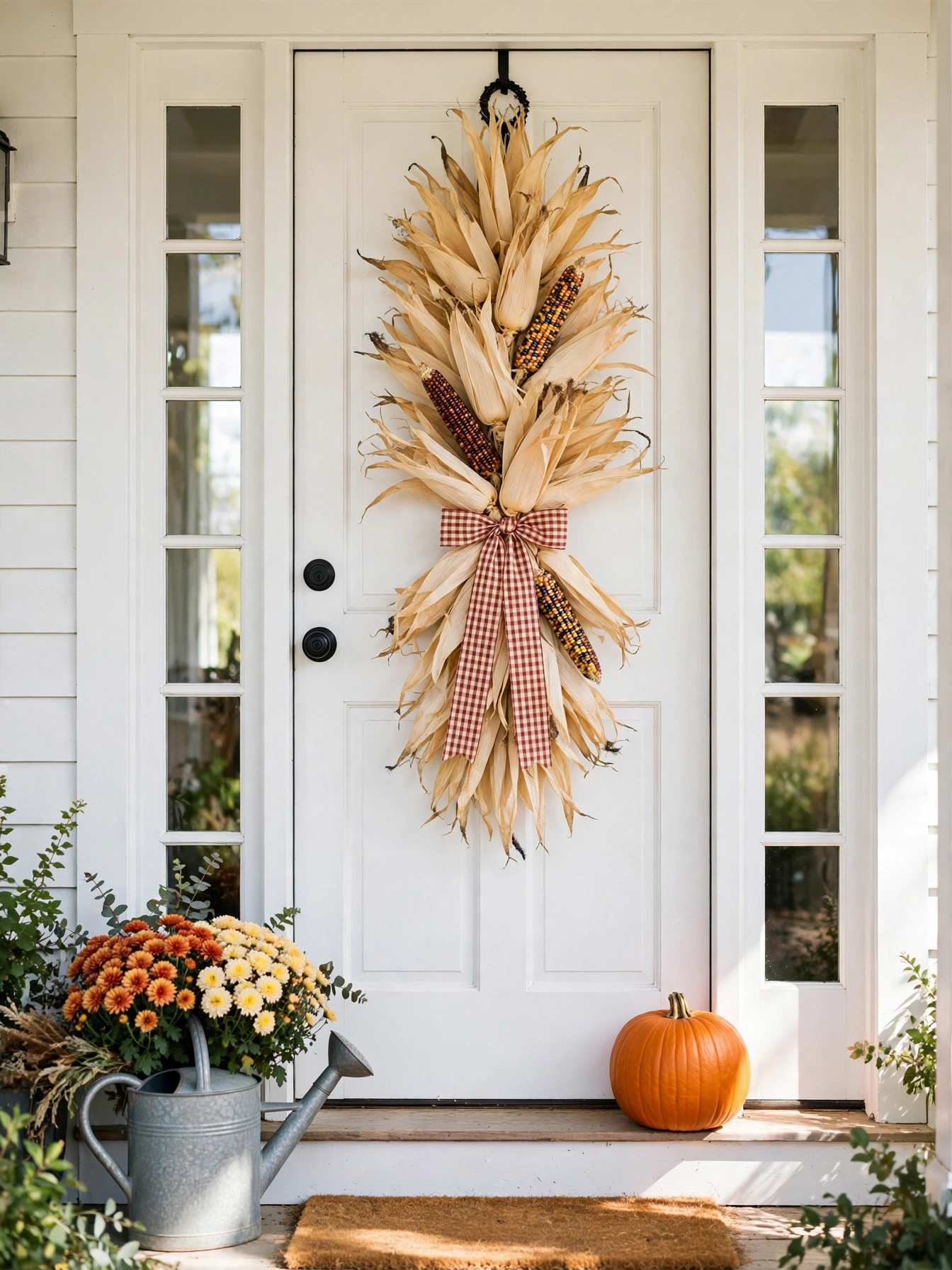
Why This Works:
- The vertical shape suits tall, narrow doors where round wreaths look lost
- Dried corn brings authentic harvest color for under 20 dollars in materials
- Gingham ribbon ties the swag to classic farmhouse textiles
- It hangs flat, so screen doors and storm doors still close over it
Make the swag 30 to 36 inches long so it fills the upper two-thirds of a standard 80 inch door without blocking the peephole or handle. Layer 25 to 30 dried husks over a 12 inch wire swag frame, wiring each husk at the top third so the bottoms flare naturally. Tie the waist with 2.5 inch wired gingham ribbon, which holds a bow shape far better than flat grosgrain. Avoid placing this swag where lawn sprinklers hit the door; repeated soaking turns husks mushy and they tear within a week. Dried ornamental corn cobs wired in groups of 3 add weight at the bottom, which keeps the swag hanging straight in wind.
A quick dry-fit answers the key question here: check your door clearance, since a swag thicker than 4 inches can catch on a storm door frame, so keep the wired profile slim at the top. Farmhouse and country-style homes are the natural backdrop, especially ones with white or cream doors where the golden husks pop. Lifespan is the weak point; corn husks are a one-season material and turn brittle enough to crumble by December. Where the porch is fully exposed, expect to replace the ribbon yearly since red gingham fades fastest of the common patterns.
Mini Chalkboard Sign

Why This Works:
- A chalkboard message swaps in seconds, so one hanger covers Halloween through Thanksgiving
- The small 8 by 10 inch size suits apartment doors and narrow entries
- Doodle-style leaves keep it charming without needing real artistic skill
- Hanging from the knocker means zero holes in the door
Keep the framed board no larger than 8 by 10 inches; anything bigger overwhelms a standard door knocker and swings in wind. Door knockers typically support 2 to 3 pounds of hanging weight, so keep the finished sign under 1.5 pounds including the frame. Use liquid chalk markers rather than traditional chalk; they write opaque in one pass and wipe off with a damp cloth, while real chalk dusts off in the first rain. Avoid heavy solid-wood frames on a knocker mount; the leverage of a swinging 3 pound frame can loosen the knocker screws within a season. A 6 inch jute loop keeps the board hanging straight instead of twisting.
If you rent, this is the lowest-commitment option on this list, since the knocker carries everything and the door stays untouched. First, check whether your knocker is decorative-only; some modern knockers are glued trim that cannot bear weight, and a 1.5 pound sign will pop them off. The limitation is weather: even sealed chalkboards streak in driving rain, so this pick belongs on covered porches. The doodle style ages better than careful lettering, which shows every wobble.
Lantern Door Hanger

Why This Works:
- A glowing lantern reads beautifully at dusk, when most guests actually arrive
- The bracket lifts the lantern off the door, so glass never scratches the finish
- LED candles give flame look with zero fire risk on a wooden door
- One lantern anchors the whole porch, reducing the need for extra decor
Choose a lantern 10 to 12 inches tall; smaller ones disappear on a full-size door, while oversized 16 inch models swing hard in wind. Mount it on a curved bracket rated for at least 5 pounds, secured to the door with two screws into solid wood or a no-drill over-door arm. Use an LED pillar candle with a built-in dusk timer set for 6 hours; it lights itself at sunset and saves roughly 1,800 hours of battery fiddling per season. Avoid real flame candles in any door lantern; fire-safety guidance from the National Fire Protection Association warns against open flames near entryways, and a swinging door is the worst place for one. If your porch needs a wired fixture instead of battery, hire a licensed electrician rather than tapping into existing doorbell wiring yourself.
On an exposed porch, this suits homes without a covered entry, since the lantern’s roof sheds rain that would ruin fabric hangers. A common mistake is hanging the lantern from the door knocker; the swinging motion shatters glass panels within weeks. Upkeep is the catch: even long-life LEDs need fresh batteries every 4 to 6 weeks of nightly use. When installing this in a household with small kids, hang the lantern above their reach, at least 48 inches from the porch floor.
Eucalyptus Ring Hanger
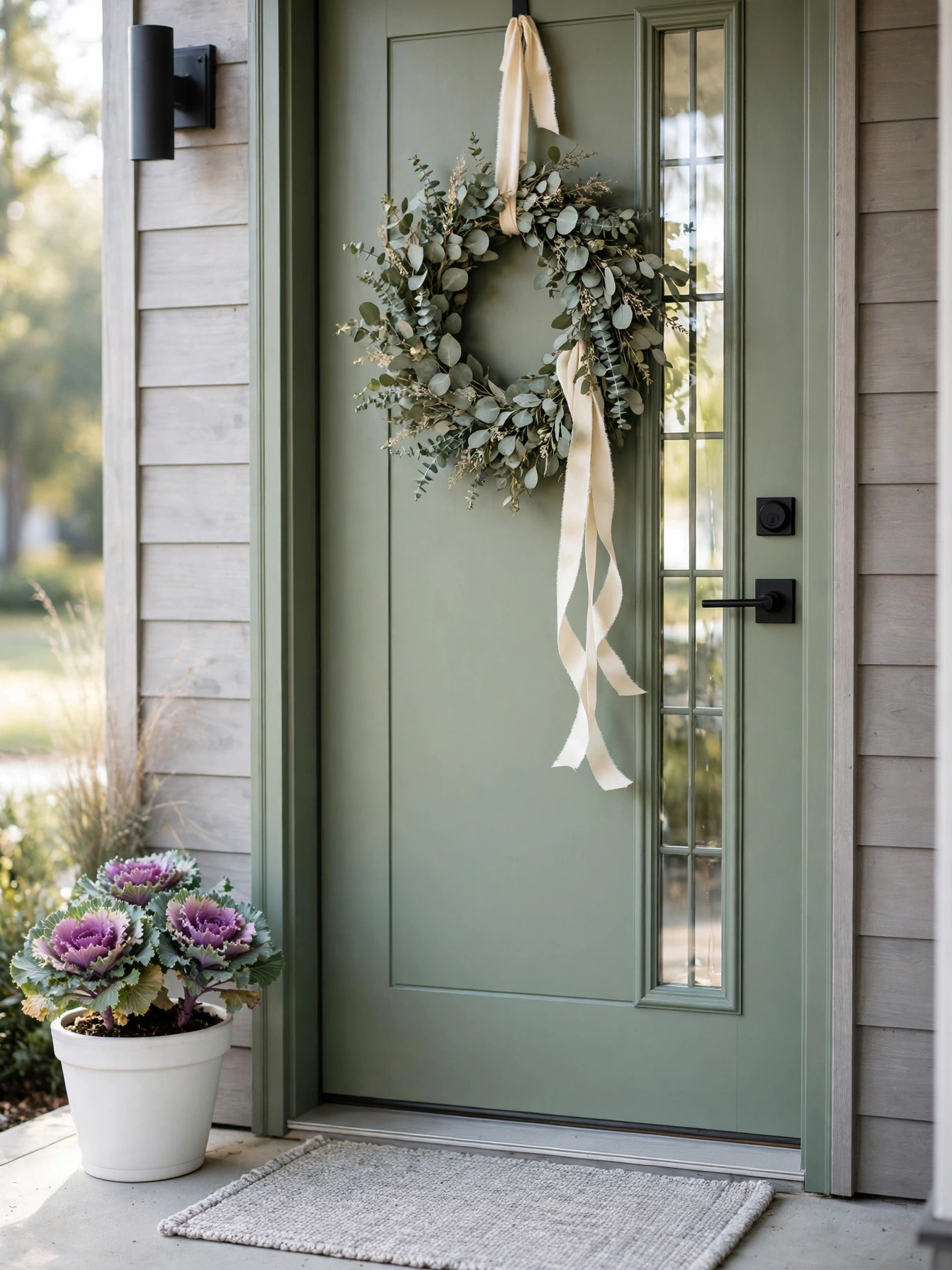
Why This Works:
- Preserved eucalyptus keeps its silvery color for 3 to 4 months without watering
- The simple ring shape suits modern doors that reject fussy traditional wreaths
- A long ribbon tail adds movement and fills vertical space cheaply
- The light scent reads as fresh rather than perfumed
Use a 16 to 18 inch wire ring as the base; preserved eucalyptus stems wire on easily and the finished ring weighs under 2 pounds. Preserved stems cost roughly twice what fresh ones do, but fresh eucalyptus drops its leaves within 2 weeks outdoors while preserved holds for a full season. Let the cream ribbon trail 18 to 24 inches below the ring and cut the ends in a dovetail; the asymmetry looks deliberate rather than unfinished. Avoid hanging eucalyptus where it brushes against the door constantly; the friction strips leaves and leaves green smudges on light paint. A flat-backed adhesive hook holds the ring without a nail hole.
A detail worth getting right: buy preserved, not dried, eucalyptus; dried goes brittle and shatters, while preserved stays flexible through temperature swings. This suits modern and transitional homes, especially sage, gray and white doors where the silvery leaves blend tonally. Sun is the enemy here: 6-plus hours of direct sun bleaches the silver to a dull tan by late October. A north-facing or covered porch keeps this ring handsome into December.
Plaid Ribbon Wreath
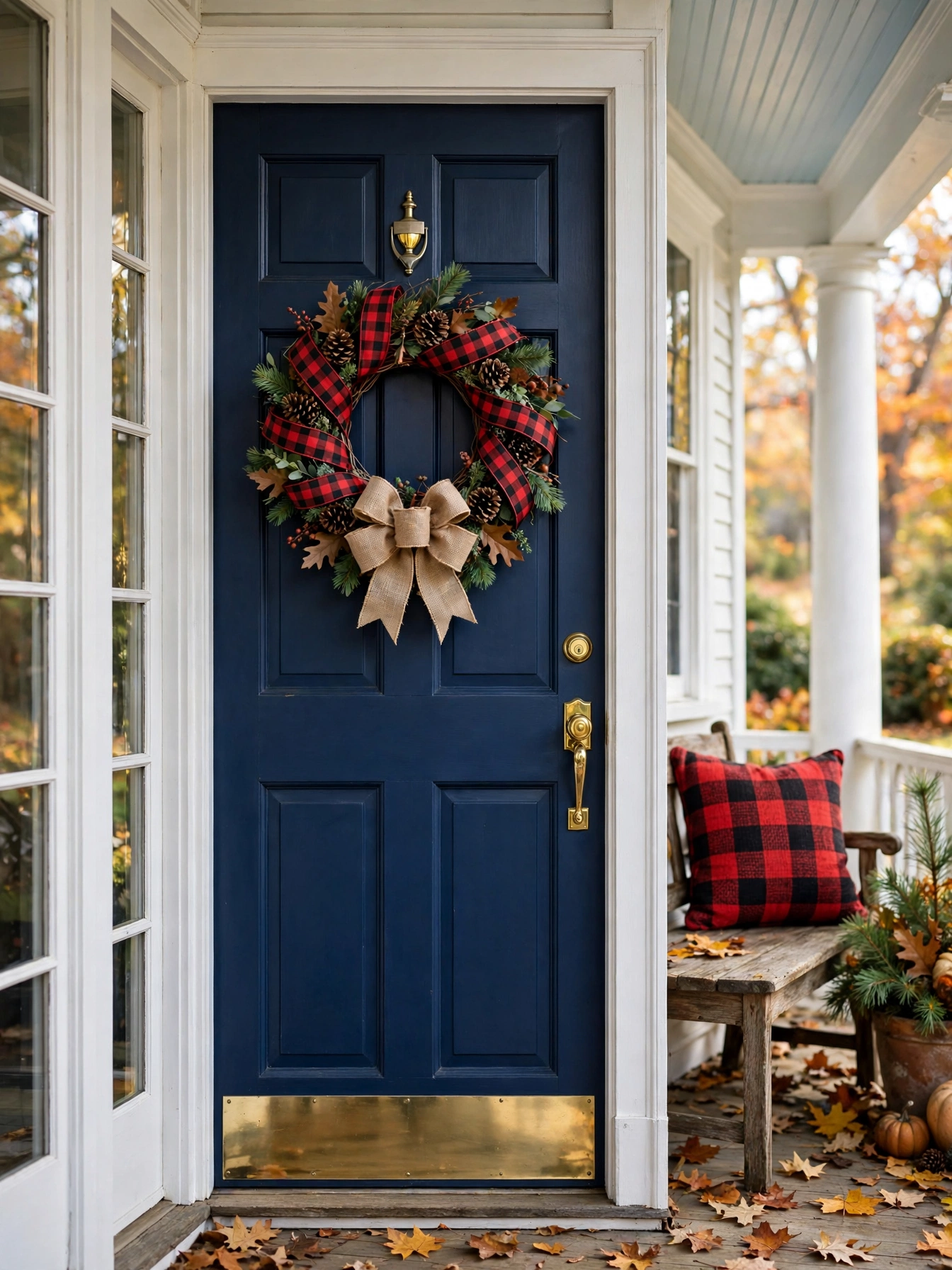
Why This Works:
- Buffalo plaid reads instantly as fall without a single pumpkin
- Wired ribbon holds loops through wind that flattens flat ribbon
- The tight weave hides the wire frame completely for a full look
- Red and black pair with almost any door color except bright red
Start with an 18 inch wire wreath frame and one 10 yard roll of 2.5 inch wired buffalo plaid ribbon; that combination yields a full 22 inch finished wreath. Weave the ribbon through the frame wires in 6 inch loops, securing each with a 4 inch piece of floral wire twisted tight at the back. Add pinecones in the 2 to 3 inch range, wired rather than glued, so they survive rain that softens hot glue in under an hour. Avoid thin unwired satin ribbon; it collapses into limp streamers after the first damp night. Hang the finished wreath, which weighs 3 to 4 pounds, from an over-door hook rated for 10 pounds.
Test this on a colonial, craftsman or lodge-style home first; the plaid pattern fights with ultra-modern minimalist exteriors. Homeowners who have tried this find that the wreath looks fuller after a week, as the wired loops relax into place. Fading is the compromise: red plaid bleaches to pinkish tones after about 6 weeks of direct southern sun, so rotate it to a shadier door mid-season if yours bakes. This is one of the most forgiving wreaths to make, since imperfect loops still read as rustic.
Wheat Sheaf Door Hanger
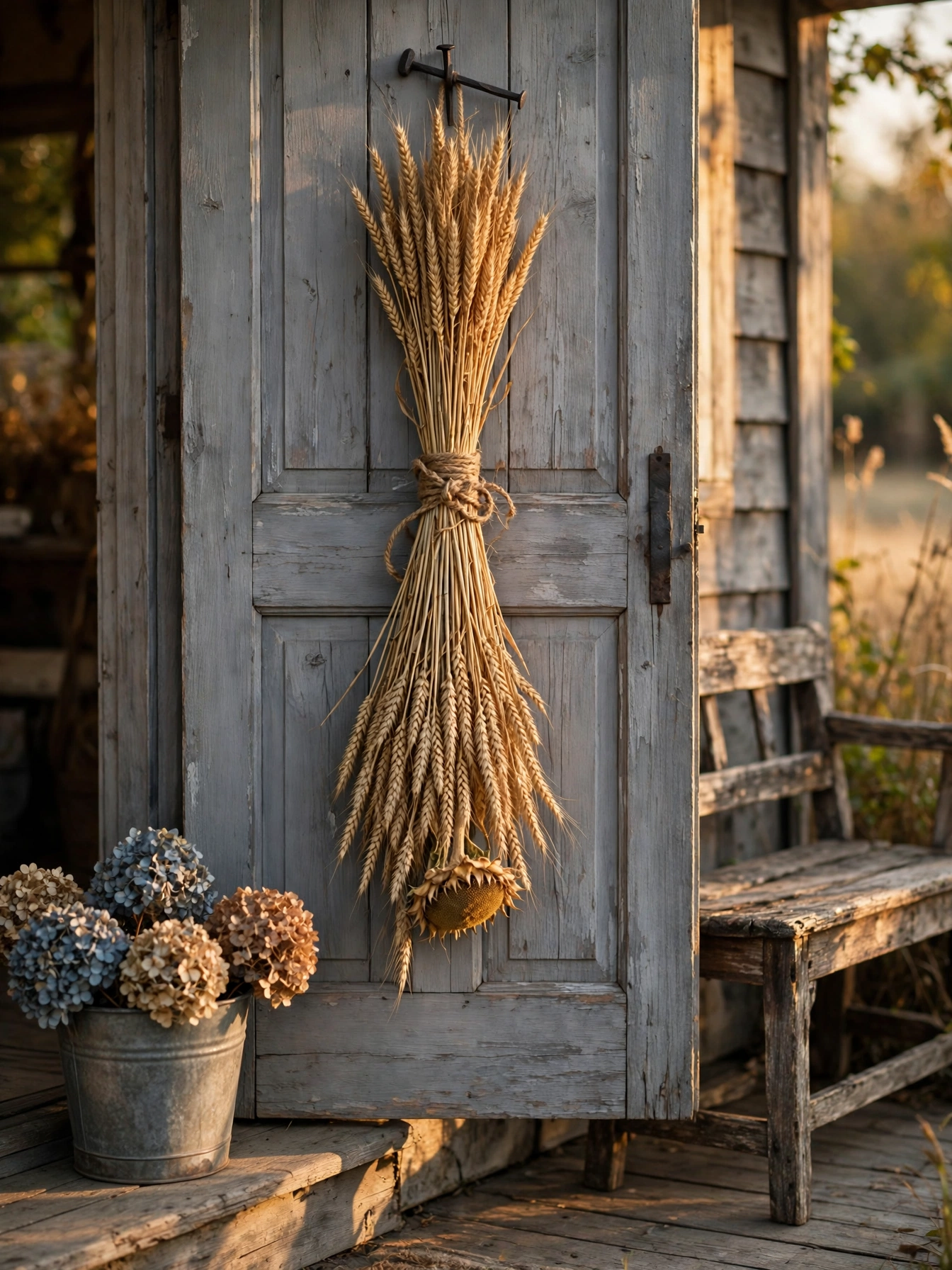
Why This Works:
- A vertical bundle costs under 15 dollars and takes 10 minutes to assemble
- Wheat reads as harvest without the bulk of a full wreath
- The slim profile never interferes with storm doors or handles
- Twine and wheat compost fully when the season ends
Gather 30 to 40 wheat stalks into a bundle 24 to 30 inches tall, which suits the upper panel of a standard door without crowding the handle zone. Bind the stalks at two points, 6 inches from the top and 10 inches from the bottom, with natural jute twine wrapped 5 to 6 times and knotted tight. Wire one dried sunflower head, 4 to 5 inches across, into the front of the bundle at the upper binding point for a focal accent. Avoid storing wheat bundles in a garage or shed before hanging; the grain heads attract mice, and one chewed bundle ruins the silhouette. Hang from a single sturdy nail or a 3 pound adhesive hook, since the finished bundle weighs barely 1 pound.
Farmhouse, rustic and cottage exteriors suit this best, where simplicity is the whole point. The error that ruins most wheat bundles is hanging them where the door gets direct sprinkler spray; wet wheat sprouts mold spots within days and the stalks go limp. Shedding is the nuisance: wheat drops fine chaff for the first few days, so give the bundle a firm shake outdoors before hanging. For renters, the single-hook mount and 1 pound weight make this the easiest damage-free option after the chalkboard sign.
Amber Glass Sconce
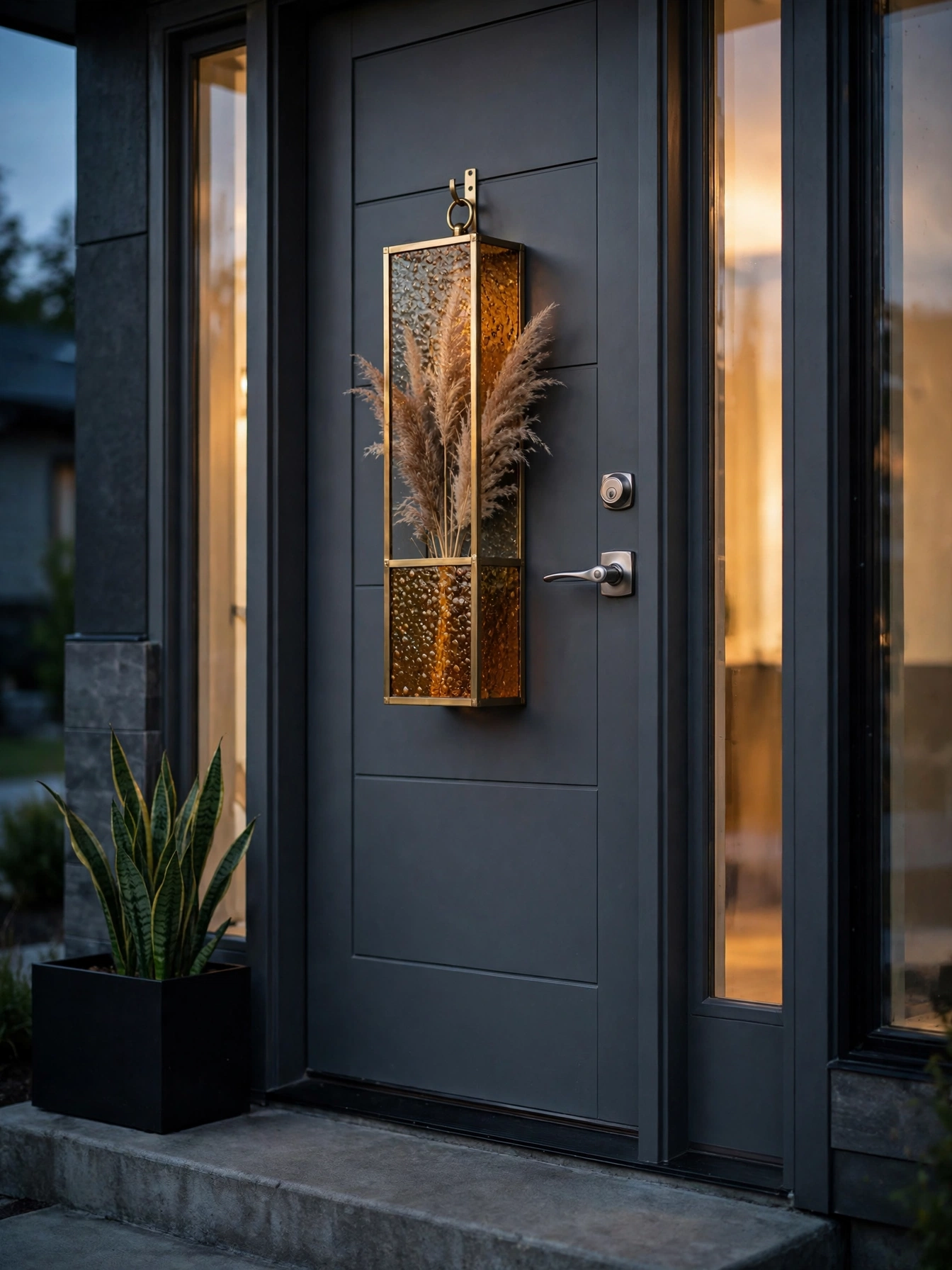
Why This Works:
- Amber glass throws a warm glow that flatters every skin tone at the door
- The sconce form looks built-in, like a deliberate architectural choice
- Solar inserts charge by day and glow at night with zero wiring
- Dried grasses inside need no water and never wilt
Size the sconce 6 to 9 inches wide and 10 to 12 inches tall; that scale reads clearly on a 36 inch door without overwhelming it. Pick a solar LED insert with a panel that gets at least 6 hours of direct sun, or the light dies by 9 PM on short October days. Mount with a no-drill adhesive bracket rated for 7.5 pounds if your door is steel; drilling a steel door voids most manufacturer warranties and invites rust at every hole. Avoid glass sconces on doors that slam hard; even tempered panels chip at the corners over time. Battery inserts with a dusk sensor are the reliable backup for shaded porches.
When installing this in a modern or transitional home, match the sconce metal to your existing hardware finish for a cohesive look. One specification matters most here: seeded glass hides dust and water spots far better than clear glass, which shows every fingerprint. Light output is the constraint; these are accent glows, not security lighting, so keep your real porch light too. The solar insert needs its panel wiped monthly, since one dusty autumn can cut charging by a third.
Harvest Basket Hanger
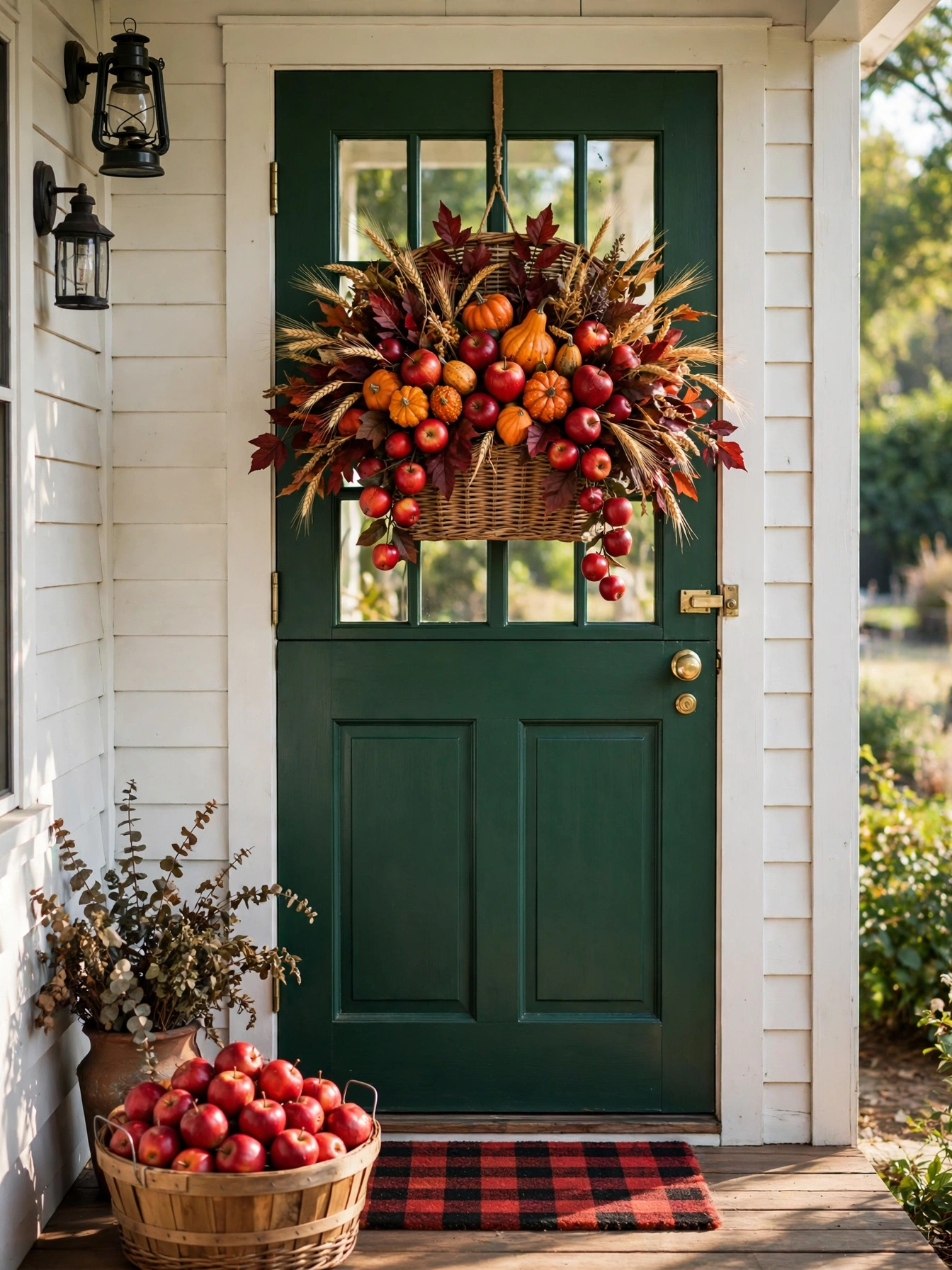
Why This Works:
- A basket holds three-dimensional abundance no flat wreath can match
- Faux fruit looks convincing at door distance and lasts for years
- The flat back sits flush, so the basket never swings or bangs
- One basket replaces a wreath, a sign and a swag in a single purchase
Pick a flat-back basket 12 to 14 inches wide; round baskets roll and never hang straight. Expect the finished arrangement to weigh 4 to 6 pounds once loaded, so use an over-door hook rated for at least 15 pounds rather than a suction cup. Wire each apple and gourd to the basket rim with 3 inch floral wire picks; glue alone pops off when October temperature swings flex the wicker. Avoid real produce in the basket; fresh apples rot within 10 days outdoors and attract wasps, while quality faux fruit lasts 5-plus seasons. Line the basket with a scrap of burlap to hide foam and wire mechanics.
This suits farmhouse and country homes best, where abundance is the aesthetic. Homeowners who have tried this find that burgundy leaves photograph better than bright orange ones against green doors. Weight creep is the trap; every added gourd tempts you, and past 8 pounds the door closer strains. Check the basket’s hang angle on your door before committing; shallow baskets tip their contents forward on doors that get direct wind. No other style on this list earns as many compliments.
Timeless Fall Door Hangers Ideas for Autumn 2026
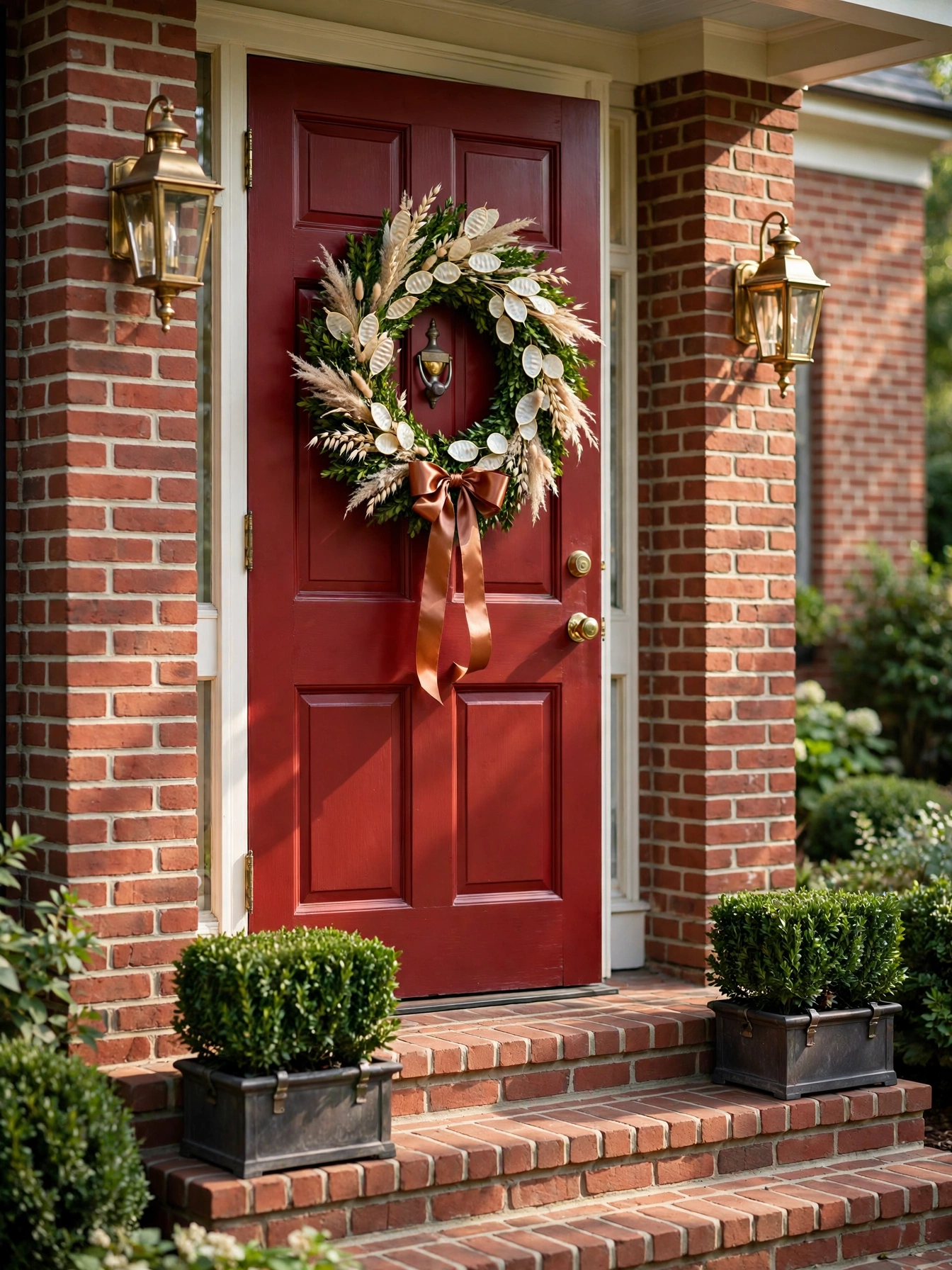
Why This Works:
- Boxwood reads as classic in September and still looks right at Thanksgiving
- The cream and copper palette follows the 60-30-10 color rule for a balanced look
- Preserved greens outlast fresh ones by months with no watering
- A ribbon bow refreshes the whole wreath next season for a few dollars
Build around a 20 to 22 inch preserved boxwood wreath, which holds its deep green for 6 to 9 months indoors or out. Follow the designer 60-30-10 rule: 60 percent boxwood green as the dominant field, 30 percent cream lunaria and grasses as secondary texture, 10 percent copper ribbon as the accent. Hang the wreath center at 57 to 60 inches from the porch floor, the standard eye-level height. Tie the bow from 1.5 inch copper satin ribbon with 5 inch loops; narrower ribbon disappears on a 22 inch wreath. Avoid fresh boxwood for outdoor use; it bronzes and drops leaves within 3 weeks of frost, while preserved stays put.
In practice, traditional, colonial and Georgian homes are the right setting, where restraint signals quality. The typical slip-up is centering the wreath on the door slab instead of the visible door area; on doors with large glass inserts, center on the solid lower panel. Price is the hurdle: preserved boxwood costs 2 to 3 times more than a grapevine base, though it lasts 3 times longer. Hold the copper ribbon against your door color in daylight before you buy; copper glows against red and navy but washes out on orange-toned wood stains.
Metal Leaf Monogram
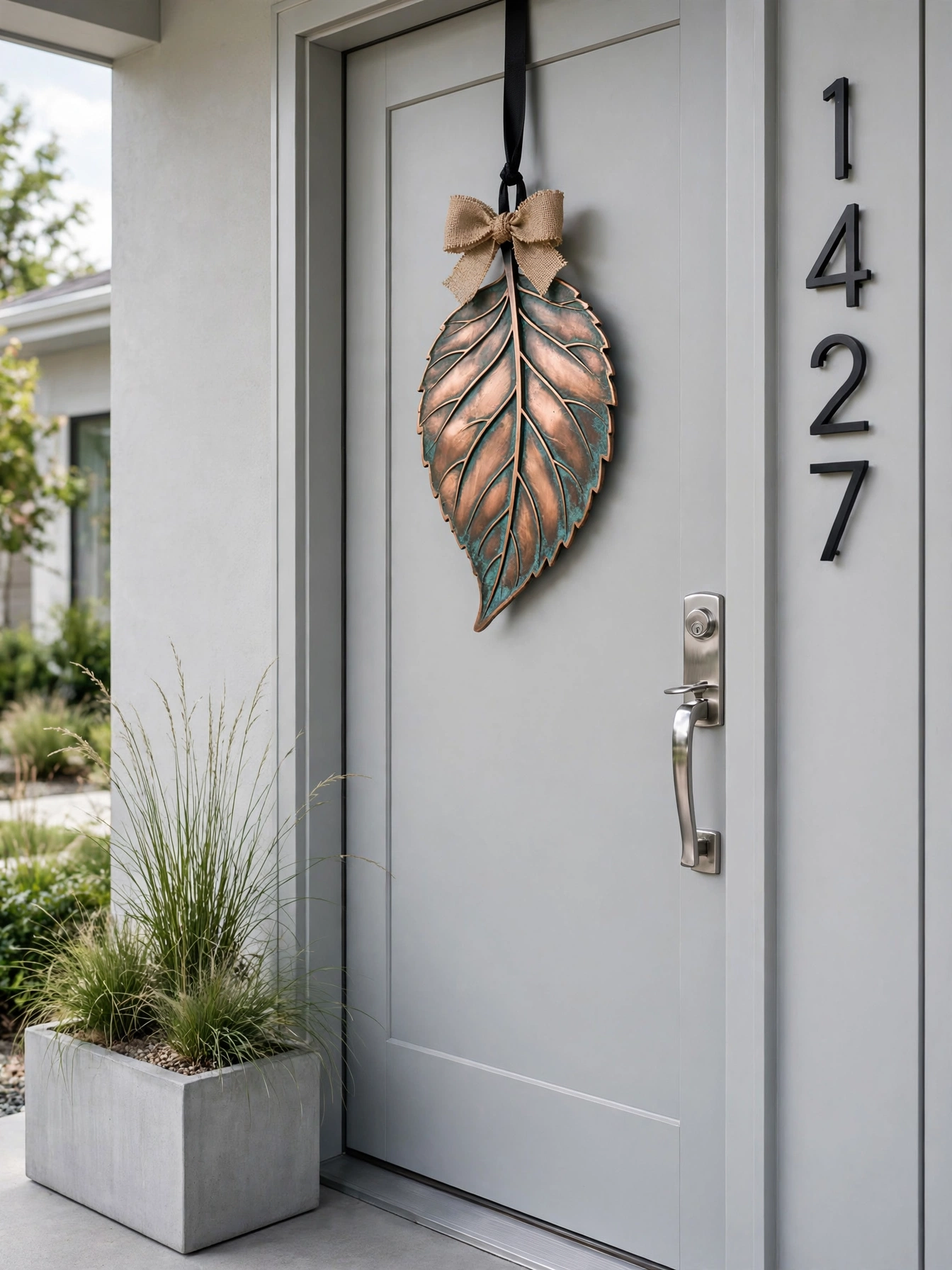
Why This Works:
- A monogram makes a mass-produced door feel custom for under 40 dollars
- Powder-coated metal survives rain that destroys paper and fabric monograms
- The leaf shape keeps it seasonal without screaming Halloween
- At 1 to 2 pounds it hangs from almost any hook or magnet
Order a laser-cut monogram 12 to 14 inches tall; smaller letters blur into illegibility from the sidewalk. Choose powder-coated steel over raw metal; the coating resists rust for 3 to 5 years outdoors, while untreated steel spots within one rainy month. For steel doors, use two 30 pound rated neodymium magnets on the back instead of drilling; they hold firm and remove without a trace. Avoid hanging metal monograms with thin craft ribbon; the cut edges saw through ribbon in a season, so use 1.5 inch grosgrain or a short chain. Seal any exposed cut edges with clear lacquer to block the patina from streaking the door.
For renters in modern homes, the magnet mount is the standout feature here. The first thing to check before purchasing is your door material; magnets grip steel doors only, and fiberglass or wood doors need an over-door hook instead. Style range is the boundary: monograms suit traditional-to-modern homes but clash with rustic log or adobe exteriors. In real homes, the copper finish pairs best with black, gray and navy doors, where the metal reads as jewelry rather than clutter.
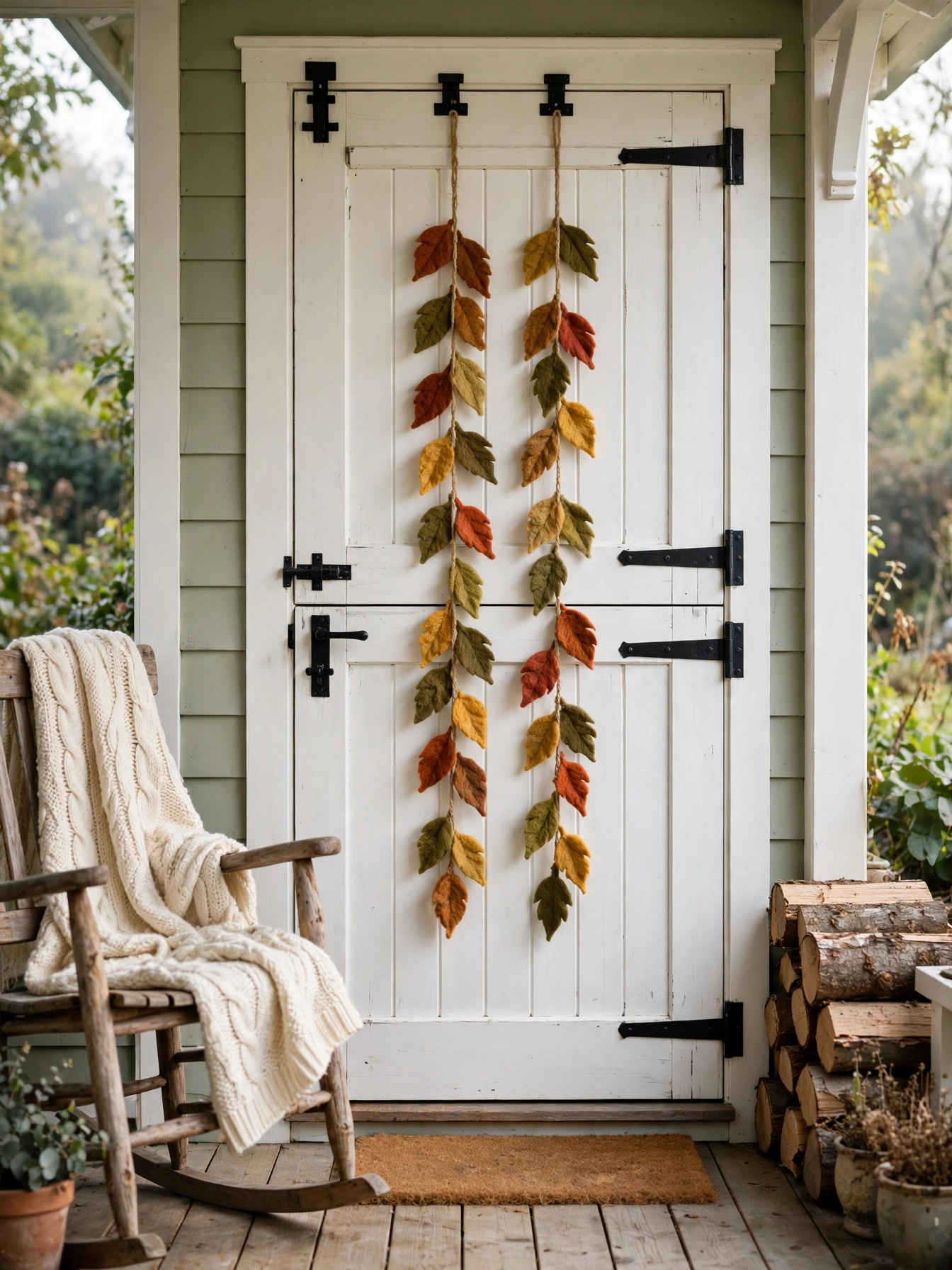
Wool Felt Garland
Why This Works:
- Felt leaves never wilt, fade or drop, so the garland looks identical in December
- The vertical drape suits Dutch doors and doors with large glass panels
- Wool felt muffles sound, so it never rattles or bangs in wind
- Hand-cut shapes make every garland one of a kind
Snip leaves 3 to 4 inches long from 3mm wool felt; thinner craft felt curls and looks cheap within weeks. String two strands, each 5 to 6 feet long, on natural cotton twine, spacing leaves 4 inches apart with a wooden bead between every third leaf. Hang the strands from a single over-door hook so they drape 30 to 36 inches down the door face. Avoid wool felt on fully exposed doors in rainy climates; wool absorbs water, stretches the twine and takes 2 days to dry, so keep this one under a porch roof. A 2 pound finished weight means even a basic adhesive hook holds it.
Cottage, craftsman and Scandinavian homes welcome this one, where handmade texture fits right in. On an exposed porch, bring the garland inside during heavy storms; 10 minutes of effort saves a season of sogginess. Maintenance is the price of admission: felt pills and collects dust, so roll it with a lint roller monthly. Before buying, test felt quality by tugging a corner; real wool felt resists tearing, while acrylic felt pulls apart like paper.
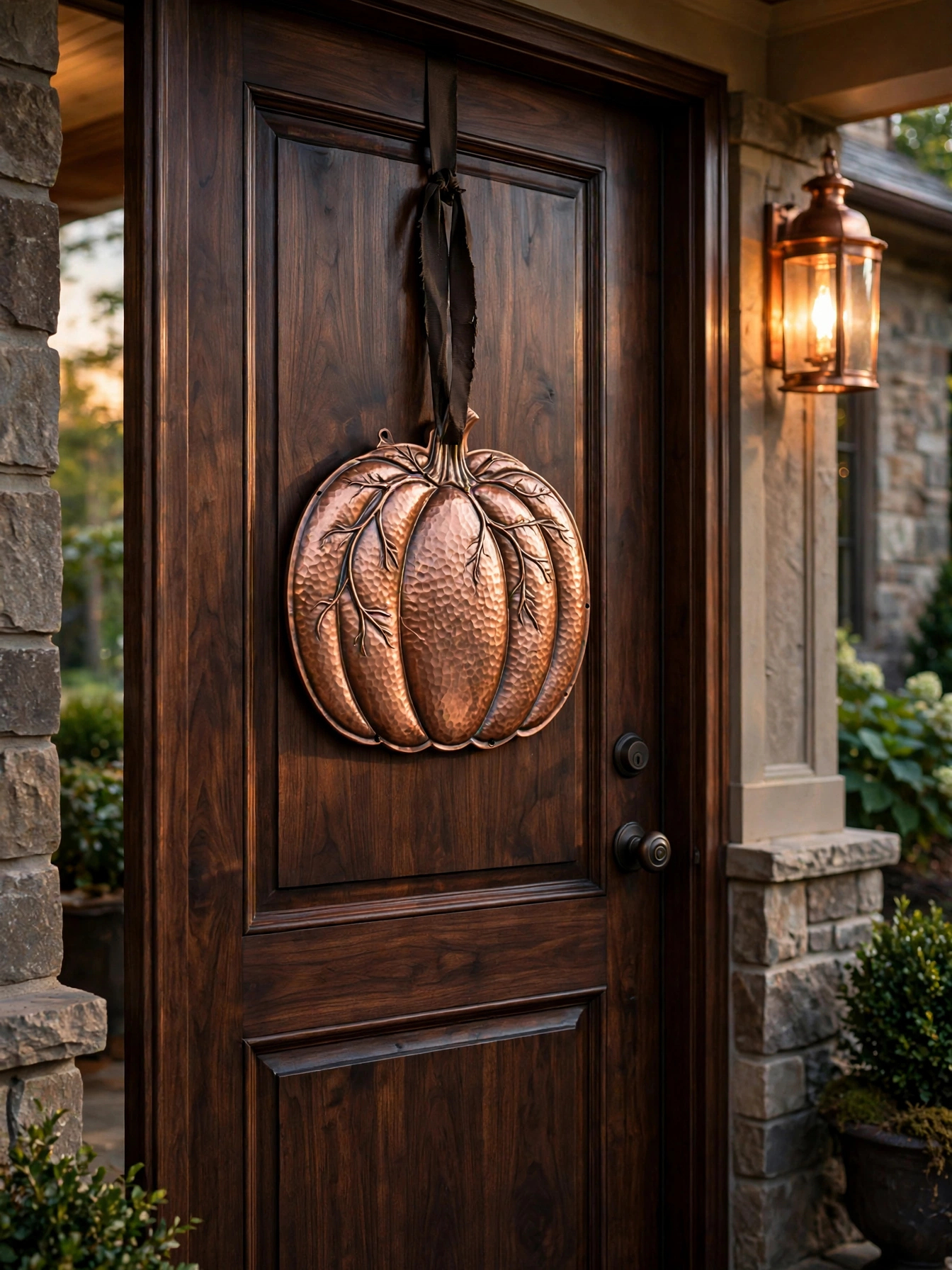
Copper Pumpkin Plaque
Why This Works:
- Hammered copper catches light differently from every angle, so it never looks flat
- The pumpkin shape is unmistakably fall without any carved-face kitsch
- Metal plaques outlast every fabric or foliage option on this list
- One strong piece suits doors that already have busy architecture
Choose a plaque 10 to 12 inches wide; that scale suits a 36 inch door while leaving the hardware zone clear. Hang it from a 3 inch wide bronze ribbon loop rather than a nail, which protects the door finish and lets the plaque sit flat. Decide on the finish before buying: clear-lacquered copper keeps its shine for 2 to 3 years, while unsealed copper develops a brown patina within 6 months of outdoor air. Avoid abrasive cleaners on hammered copper; they flatten the texture that makes the piece special, so dust with a dry microfiber cloth only. The finished plaque weighs 2 to 3 pounds, well within any standard hook rating.
Traditional and Mediterranean exteriors suit this best, where metalwork already appears in lanterns and railings. The fastest way to ruin the finish is hanging copper where sprinklers hit it daily; mineral spots etch in and need professional polishing to remove. Cost is the barrier: hand-hammered pieces run 60 to 120 dollars, roughly triple a good wreath. Measure the ribbon length before you buy so the plaque center lands at 57 to 60 inches, the standard eye-level height.
Scarecrow Door Greeter

Why This Works:
- Kids light up at a friendly face on the door, which makes it a family favorite
- The folk style fills the gap between cute and spooky for early October
- Soft construction means it never scratches or dents the door
- At 14 to 18 inches it suits doors where full wreaths feel too formal
Pick a figure 14 to 18 inches tall with a flat back; round stuffed shapes roll and hang crooked. Check that the face uses sewn or painted features, not glued buttons, since glue fails after a few 40-degree nights. Hang it from a peg-style hook or a short twine loop no longer than 4 inches; longer loops let the figure spin in wind until the face points backward. Avoid placing it where the door swings into a wall or railing; a slammed scarecrow loses its hat and stuffing fast. The whole figure weighs under 1 pound, so even a suction hook holds it on glass.
Families with young kids, and farmhouse or cottage exteriors, get the most from this one. In a home with a motion-sensor light, hang the figure clear of the sensor’s 10 foot detection cone, or every breeze triggers the light all night. Style range narrows the audience: folk scarecrows clash with modern, minimalist and formal colonial exteriors. Most homes retire this hanger after Halloween, so treat it as a 6-week guest rather than a full-season piece.
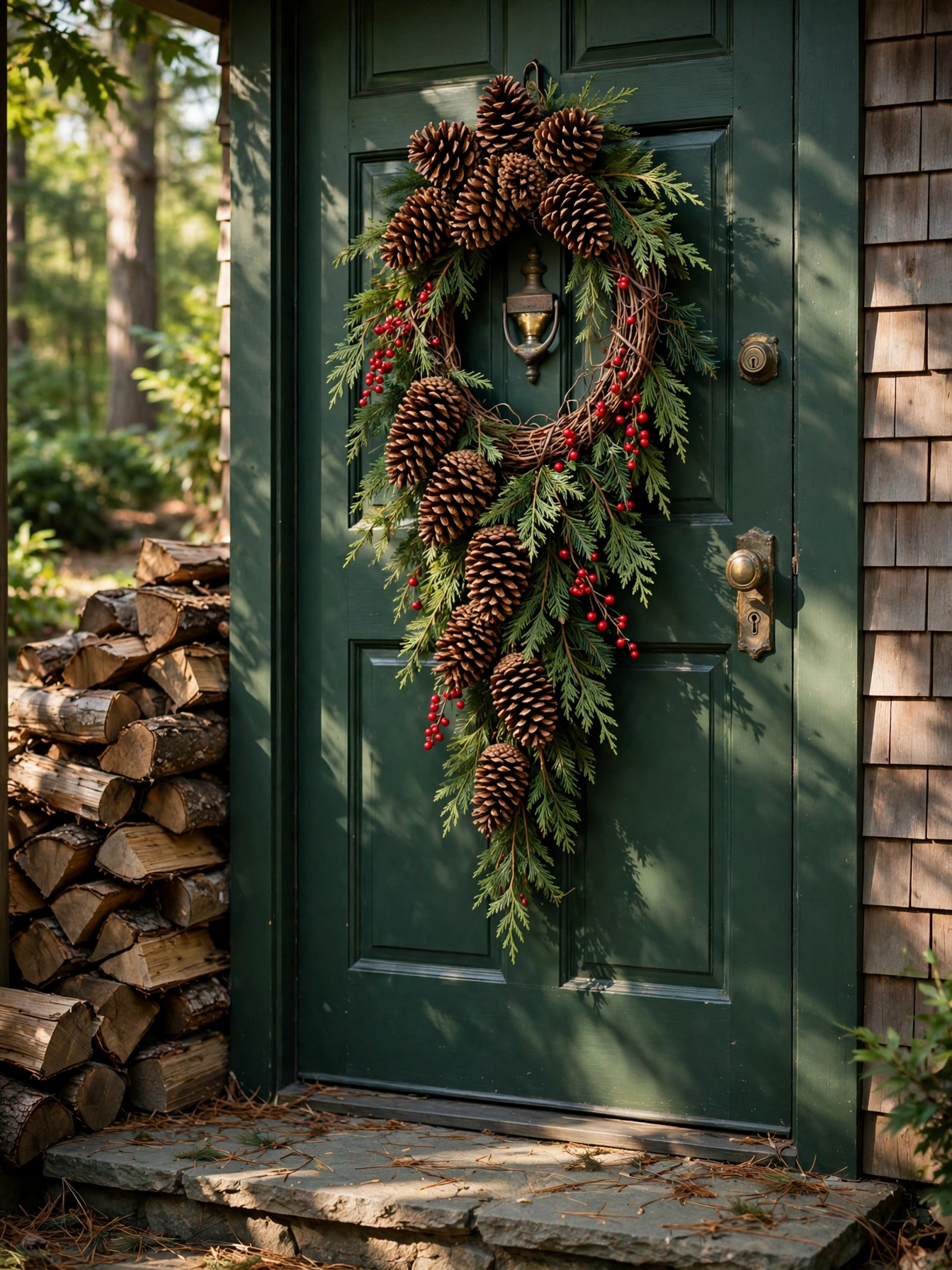
Pinecone Cluster Swag
Why This Works:
- Oversized pinecones give lodge-scale presence for the price of a walk in the woods
- Cedar adds fresh scent that survives 3 to 4 weeks outdoors
- The cascading shape draws the eye down, balancing tall doors
- Wire construction shrugs off wind that shreds glued crafts
Bake gathered pinecones at 200 degrees Fahrenheit for 1 hour before wiring; the heat kills hidden insects and opens the scales into their full shape. Shape the cascade 28 to 34 inches long on a 14 inch grapevine base, wiring 8 to 12 cones of 3 to 5 inches with 6 inch floral wire stems. Tuck cedar sprigs 8 to 10 inches long between the cones, refreshing them once mid-season when the scent fades. Avoid fresh cedar against light-colored doors; the sap and pollen leave sticky amber streaks, so seal cut ends or use preserved sprigs. The finished swag weighs 4 to 5 pounds, so choose a hook rated for 12 pounds or more.
A detail worth getting right: wire each cone through the bottom scales rather than around the middle, or gravity slowly works them loose. Lodge, cabin and craftsman homes are the natural setting, especially doors in wooded lots where the materials echo the setting. Sap and shedding are the mess to expect; cedar drops needles for two weeks and cones shed scales, so sweep the porch after hanging. After fall, this swag transitions to winter beautifully by swapping the berries for a plaid bow.
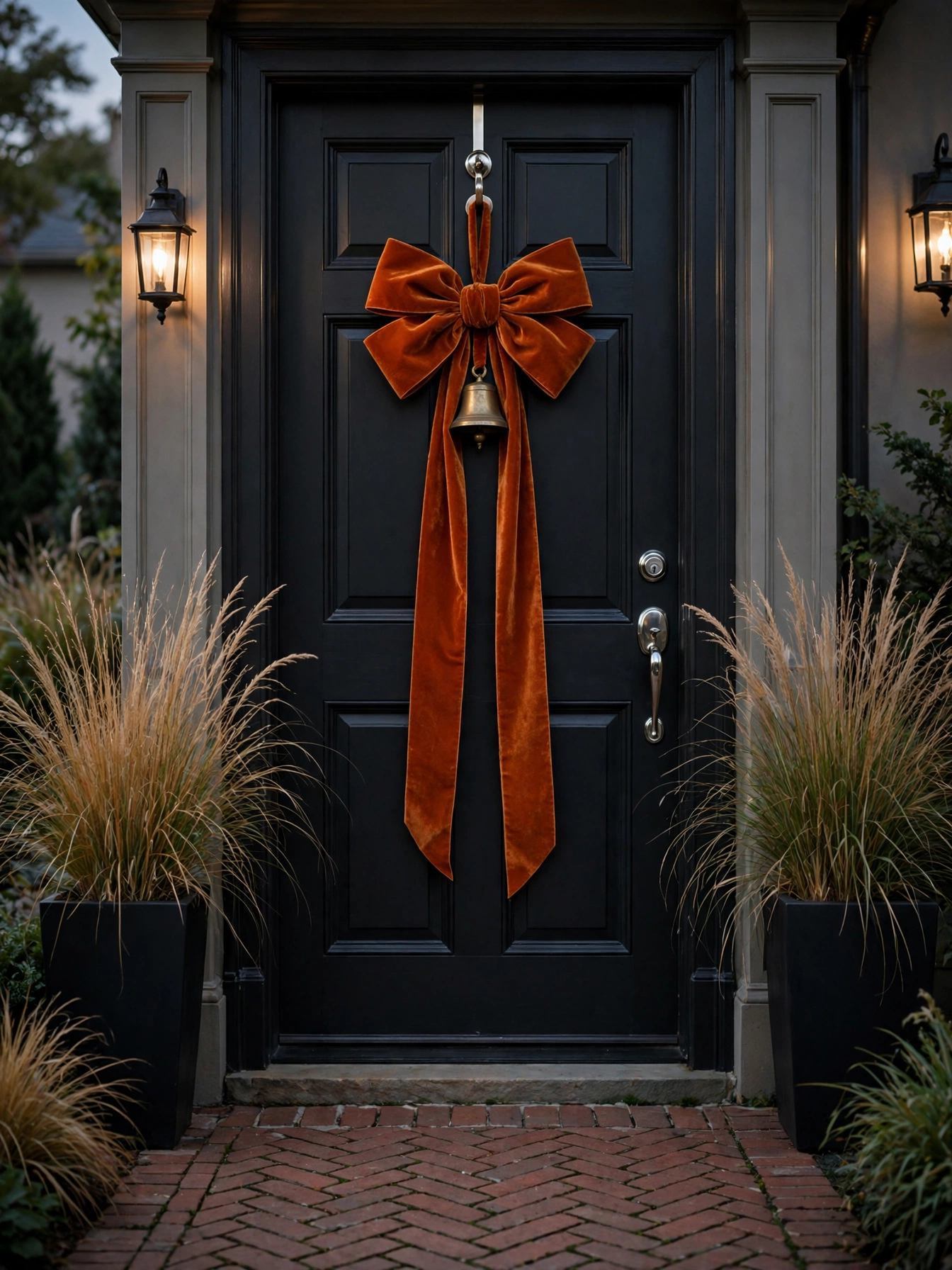
Velvet Ribbon Hanger
Why This Works:
- A single oversized bow makes a confident statement with zero clutter
- Velvet absorbs light, giving depth that shiny satin cannot match
- The brass bell adds a gentle chime when the door moves
- Streamers fill vertical space on tall doors without extra purchases
Cut the bow from 4 inch wide cotton velvet ribbon; narrower ribbon looks skimpy at door scale. Form loops 10 to 12 inches across and let two streamers trail 24 to 30 inches, cutting the ends in a sharp dovetail. Hang the bow from a padded over-door hook so the ribbon never touches the door finish; velvet dye can transfer to light paint in heat. Avoid velvet on uncovered doors; rain spots cotton velvet permanently, so this is a covered-porch design only. The finished hanger weighs under 8 ounces, which means even a basic 2 pound hook is plenty.
Elegant traditional and transitional homes are the right backdrop, where less is more. Seasoned fall decorators note that burnt orange works from September through Thanksgiving, while burgundy reads more late-season. Maintenance is the ongoing chore: velvet crushes where the door brushes it, so keep the bow clear of the swing path of any storm door. The bell charms guests but can annoy light sleepers if the door rattles at night; a felt pad behind the bow silences it.
Gilded Acorn Wreath
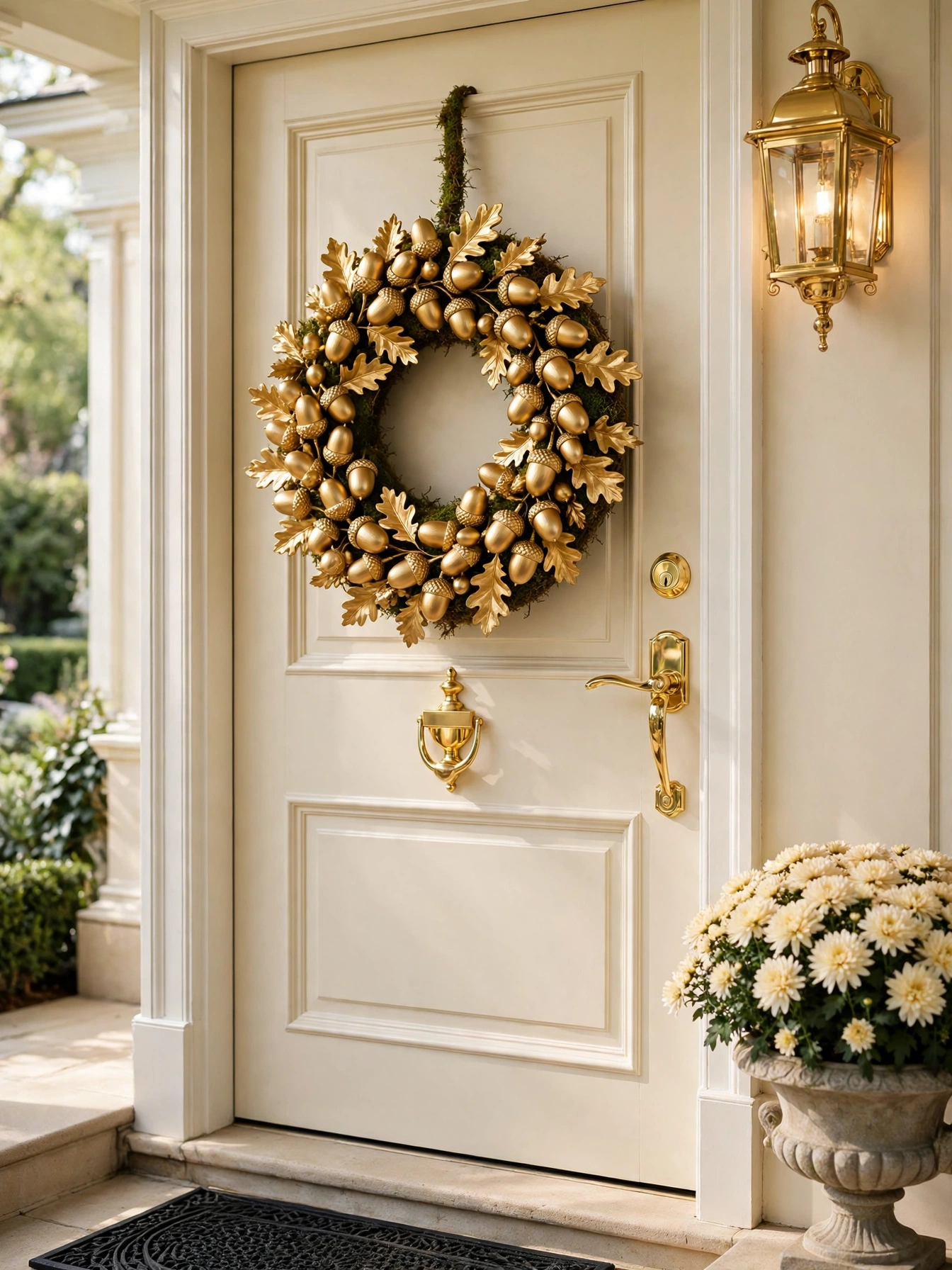
Why This Works:
- Metallic gold catches even weak October sun and glows at dusk
- Real acorns give authentic texture no molded plastic can copy
- The moss base hides every wire and glue point for a clean finish
- Gold bridges fall and holiday seasons, stretching the investment
Start with a 16 inch foam wreath base wrapped in sheet moss; the moss grips hot glue better than bare foam. Paint 60 to 80 acorns with two thin coats of metallic craft paint rather than one thick coat, which obscures the cap detail. Wire the largest acorns on first with 3 inch picks, then fill gaps with oak leaves and smaller nuts. Avoid hanging this wreath in full afternoon sun; metallic paint chalks and dulls after about 8 weeks of strong UV. The finished wreath weighs 5 to 7 pounds, so use an over-door hook rated for at least 15 pounds.
Confirm your door’s weight tolerance first; older hollow-core doors flex under 7 pound wreaths on single hooks. Traditional, glam and French-country homes carry this well, where metallics already appear in hardware and lighting. Labor is the real cost: painting 80 acorns takes a full afternoon, so this is a crafter’s project, not a quick buy. The gold reads festive rather than gaudy as long as the door color stays neutral.
Harvest Moon Sign
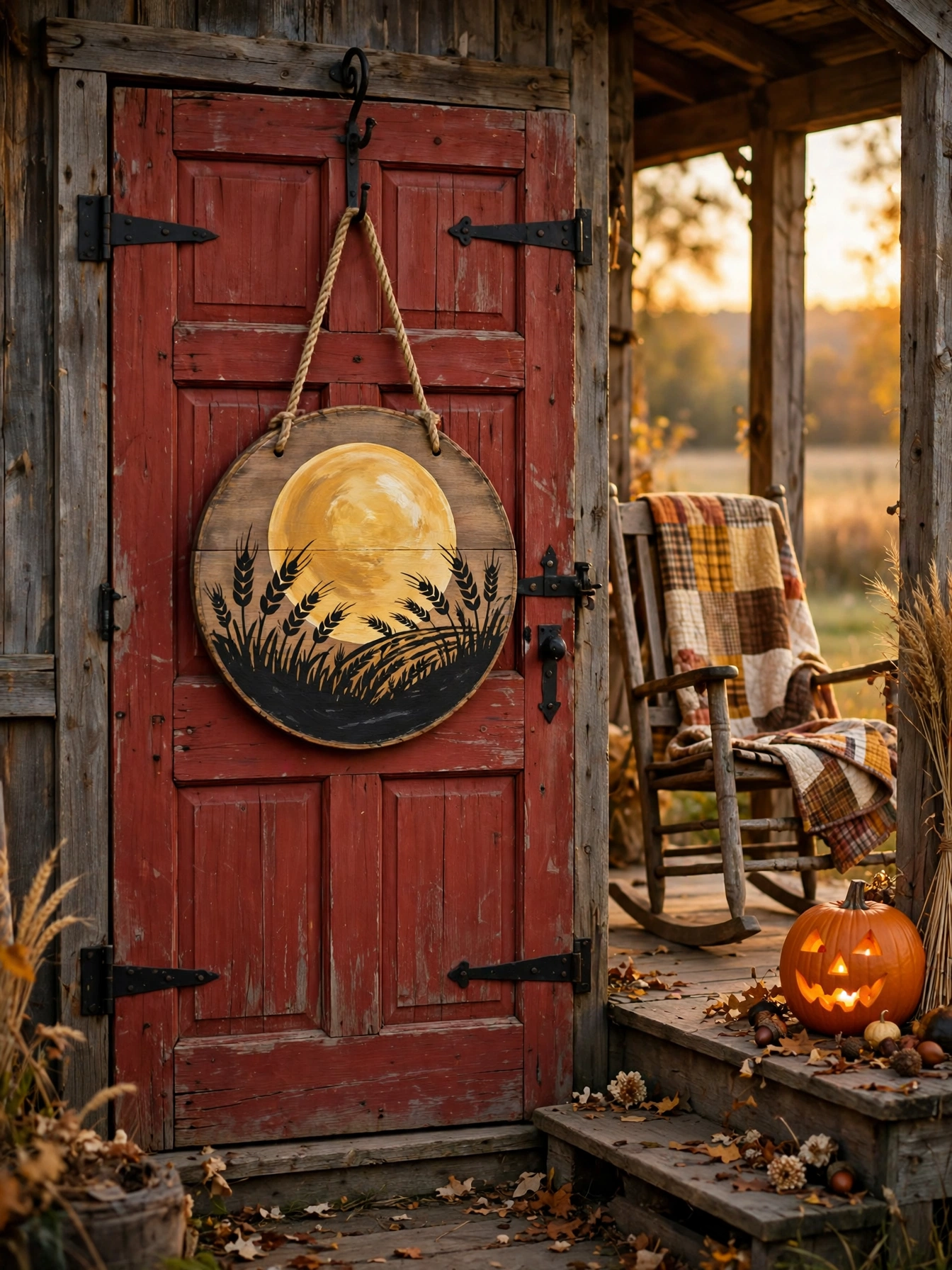
Why This Works:
- The harvest moon motif is pure October without any Halloween imagery
- A round sign breaks up the rectangle-on-rectangle look of doors and trim
- Painted wood signs survive seasons that kill paper and fabric versions
- The folk-art style suits porches where fine art would feel stiff
Cut or buy a round pine sign 18 inches in diameter and 3/4 inch thick; thinner boards warp within one wet season. Paint with exterior acrylics and seal with two coats of spar urethane, sanding lightly with 220-grit between coats for adhesion. Hang from 1/2 inch manila rope through two drilled holes set 2 inches from the top edge, knotted on the back. Avoid MDF or hardboard signs for outdoor use; the fibers swell and crumble after three or four rains, while solid pine lasts years. The finished sign weighs 3 to 4 pounds, an easy load for any iron hook.
In practice, farmhouse, country and lodge homes are the sweet spot, especially barn-red or forest-green doors where the golden moon pops. A common mistake is hanging the sign with the rope too long; more than 6 inches of drop lets it spin and face the wall in wind. Taste is the dividing line: folk-art moons divide opinion, and sleek modern exteriors reject them outright. Check the sign’s colors against your door in daylight before committing; gold paint turns muddy against orange-toned stains.
Sunflower Door Spray
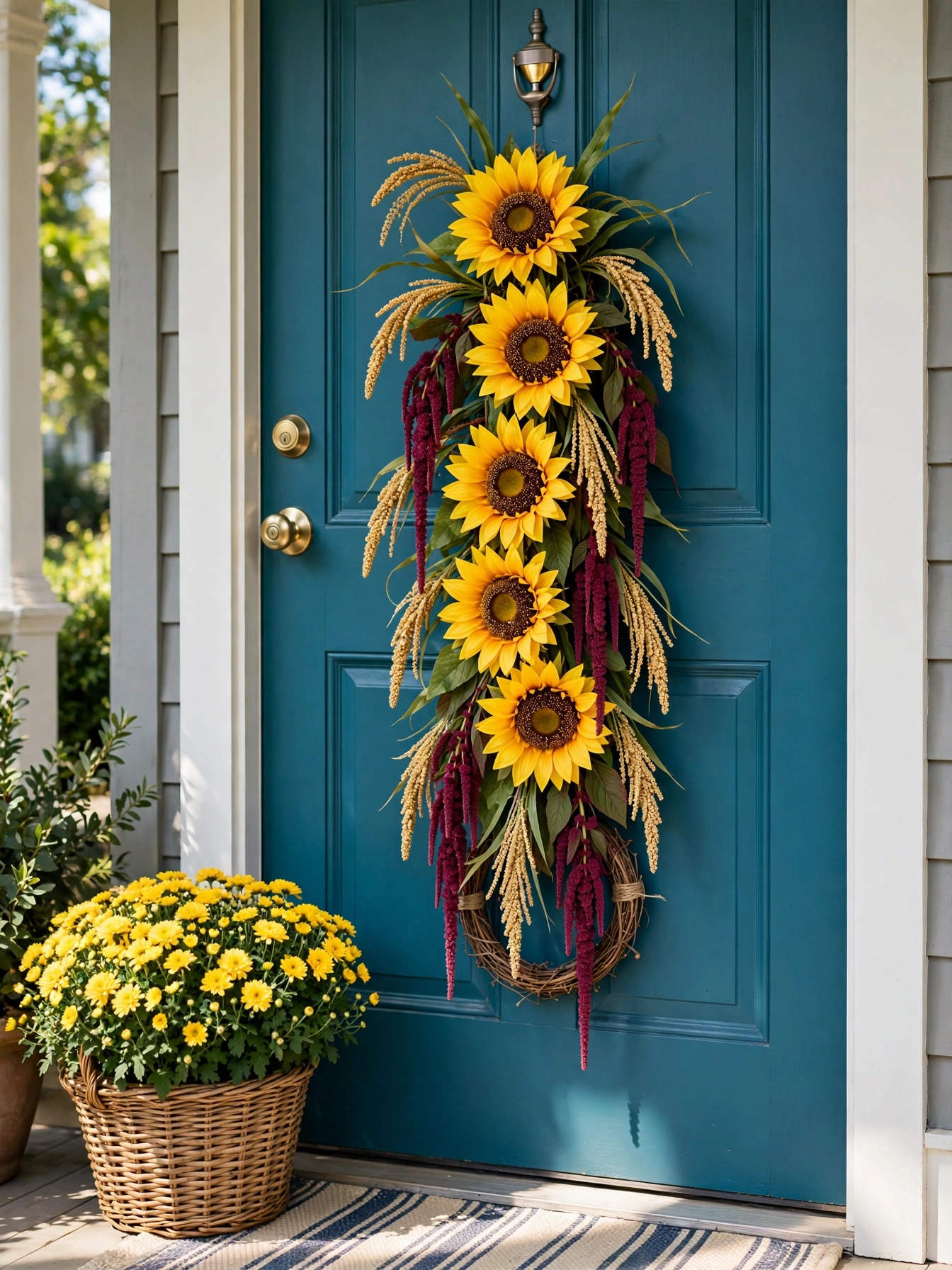
Why This Works:
- Sunflowers read as happy from the street, boosting curb appeal instantly
- The tall spray suits narrow doors where wide wreaths crowd the sidelights
- Faux blooms keep their color through rain that ruins real ones in days
- One spray costs less than a pre-made wreath of the same height
Wire 5 large faux sunflowers, 6 to 8 inches across, to a 12 inch grapevine base, fanning them from 10 o’clock to 2 o’clock for a natural spray shape. Add dried millet sprays 18 to 24 inches long behind the blooms for height, keeping the total arrangement 36 to 40 inches tall. Counter the top-heavy design by wiring a 1 pound flat fishing weight behind the base; without it the spray tips forward in wind. Avoid real sunflowers outdoors; their heavy heads droop within 3 days and drop petals across the porch. Hang from an over-door hook rated for 10 pounds, since the finished spray weighs about 4.
Cottage, farmhouse and eclectic homes welcome the bold color here. The first thing to check before purchasing is peephole clearance; a 40 inch spray can block the viewer on doors under 80 inches tall. Wind is the vulnerability: tall sprays act as sails, so this pick belongs on sheltered porches, not open hilltop entries. The teal-and-yellow contrast photographs beautifully, which matters if you sell or rent the home.
Modern Fall Door Hangers Ideas for Autumn 2026

Why This Works:
- Negative space makes this the only hanger that suits ultra-modern doors
- The black hoop echoes modern hardware for a coordinated look
- Five stems and one pumpkin keep the design under 25 dollars
- Dried pampas lasts the whole season with zero care
Go with a matte-black metal hoop 14 inches in diameter; larger hoops dwarf the sparse styling this look depends on. Wire 5 to 7 pampas stems, 24 to 30 inches long, in a tight cluster at the lower right of the hoop, keeping the top two-thirds empty by design. Add one 4 inch beige velvet pumpkin at the cluster base to anchor the composition with a soft shape. Avoid plastic hoops; they flex and the pampas slowly slides to the bottom, while rigid metal holds the arrangement for months. The finished hanger weighs under 2 pounds, so a simple adhesive hook works on any door material.
Apartment dwellers in modern buildings finally get a fall hanger that suits the architecture. The finishing touch matters: trim the pampas plumes to staggered lengths, 4 inches apart, or the cluster reads as one blunt blob. Taste splits the room here; minimalists love it and maximalists find it unfinished, so know your household. Before buying, test the hoop against your door color; black metal disappears on black doors, where a brass hoop works better.
FAQs
What are the best fall door hangers ideas for autumn 2026 for a windy porch?
Stick with low-profile, wired designs like grapevine wreaths or metal plaques, and hang them from an over-door hook rated for at least 15 pounds. According to The Spruce, securing the bottom of a wreath with clear fishing line to a second hook stops most wind spin. Avoid tall sprays and lightweight fabric on gusty porches.
What size door hanger fits a standard front door?
For a standard 36 inch wide, 80 inch tall door, pick a wreath 22 to 26 inches in diameter and center it 57 to 60 inches from the porch floor. Flat signs work best at 12 by 18 inches, and vertical swags at 30 to 36 inches long. These proportions follow the common half-to-two-thirds door width guideline used across door hardware sizing.
How do I hang a door hanger without damaging the door?
Use an over-the-door hook rated for your hanger’s weight, magnetic hangers rated at 30 pounds each for steel doors, or adhesive strips rated up to 7.5 pounds for renters. Padded hooks protect weatherstripping and finishes. Skip nails and screws on steel and fiberglass doors, since every hole risks rust and voids most manufacturer warranties.
How much should I budget for fall door hangers ideas for autumn 2026?
DIY designs like wheat bundles and felt garlands cost 15 to 30 dollars in materials, quality ready-made wreaths run 40 to 75 dollars, and artisan metal or preserved boxwood pieces reach 90 to 150 dollars. Spend more on the hanger hardware than the decor itself; a 12 dollar hook protects a 200 dollar door finish.
How do I weatherproof a fall door hanger?
Better Homes and Gardens recommends sealing outdoor wood and fabric decor with exterior-grade sealant before the rainy season. Apply two coats of spar urethane to painted signs and one coat of UV-protectant spray to wreaths and dried materials. Bring velvet, chalkboard and paper pieces inside during heavy rain, and store everything dry over winter.
Conclusion
These 22 fall door hangers ideas for autumn 2026 prove that a great entry needs only three things: the right size for your door, materials matched to your porch exposure, and hardware that protects the finish. Measure your 36 inch door first, pick weatherproof materials for open porches, and hang the center at eye level.
Your first action is simple: measure your door width today, then choose the hanger above that fits both the size and your porch conditions. Follow HomelyCrafter on Pinterest for more seasonal styling ideas. Save this to your Pinterest boards so you can refer back to it!

Muhammad Israr is a home decor enthusiast and the writer behind Homely Crafter. He spends his days researching paint colors, layouts and budget-friendly styling ideas, then breaks them down into practical, easy-to-follow guides so you can decorate with confidence.