
When the first cool mornings of September arrive, every bare window box on the street suddenly looks like a missed opportunity. A well planted fall window box costs less than 65 dollars to build, yet from the curb it reads like a professional landscape install. These 23 fall window boxes for autumn 2026 cover every style from rustic cedar to modern black metal, with exact box sizes, plant spacing and costs for each one.
You will learn which box materials survive a wet fall, how many plants each box size actually needs, which fall flowers handle frost and which do not, and how to water and maintain each design through November. Every idea includes real measurements and an honest note on its limitations.
Whether you have one small kitchen window or a full row of street facing windows, there is a design here that fits your house, your budget and your climate zone. Start with the idea that matches your siding and sun exposure, then adapt the plant list to what your local garden center stocks.
Cedar Mums and Kale
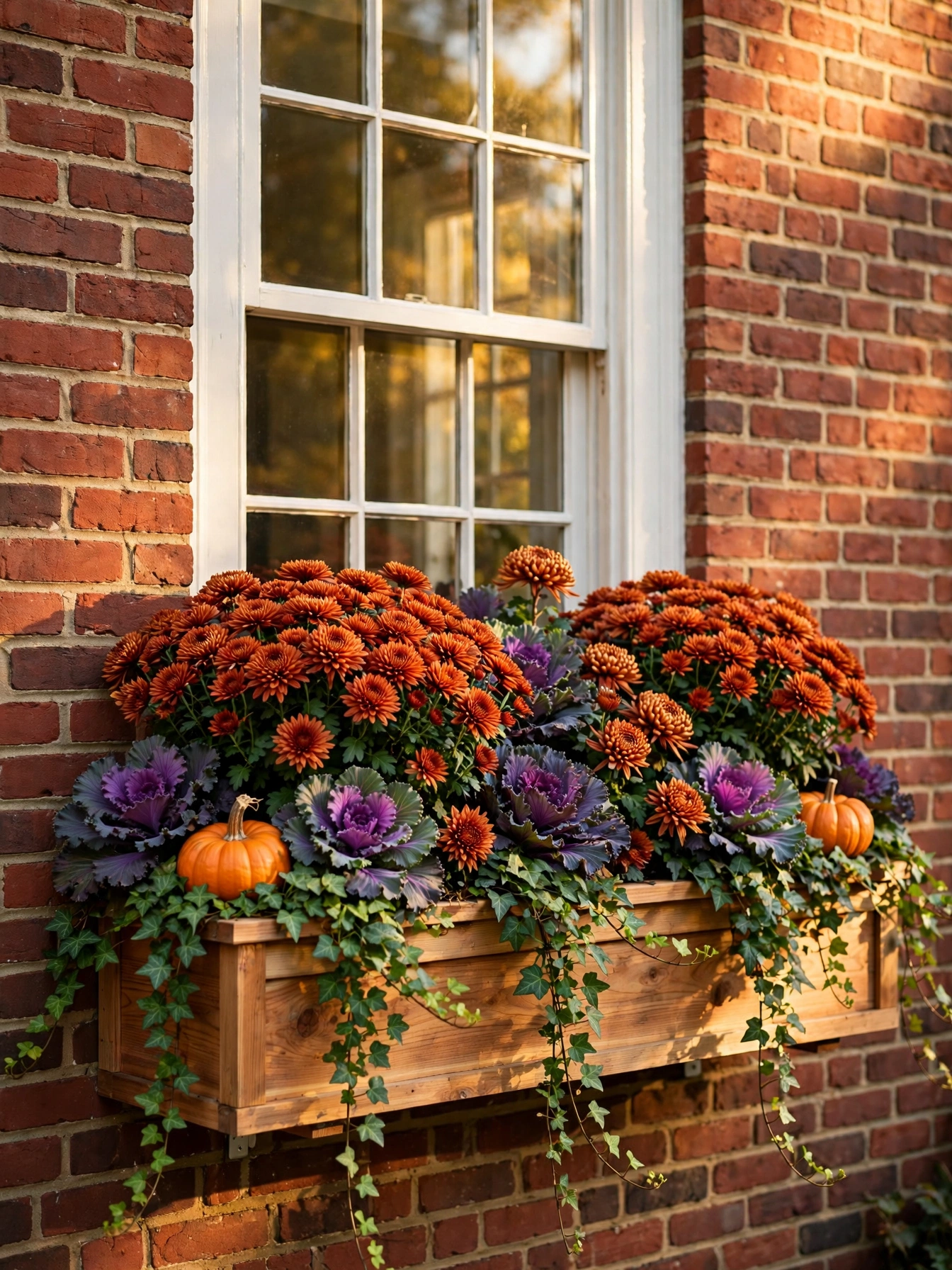
Why This Works:
- Cedar naturally resists rot for 3 to 5 seasons without paint
- Mums and kale peak at the same time in October
- The orange and purple pairing reads clearly from 30 feet away
- Both plants handle light frost down to 28 degrees
A standard 36 by 8 by 8 inch cedar box holds about 1.5 cubic feet of potting mix, enough for five 6 inch mum pots and three 4 inch kale starts spaced 6 inches apart. Drill four half inch drainage holes in the base and mount the box on brackets rated for at least 50 pounds, since a freshly watered box can weigh 45 pounds. Avoid boxes with no drainage holes, because trapped water rots mum roots within two weeks. Better Homes and Gardens advises choosing containers with drainage first and looks second, since even the prettiest box fails without it.
If this is your first window box, start with a 24 inch box on a ground floor window where watering and deadheading take minutes instead of a ladder trip. Mums bloom for 4 to 6 weeks when you deadhead spent flowers every few days, while ornamental kale keeps its color into November. This pairing suits busy homeowners who want big color from a single planting session in late September. The honest limitation is late heat: planting while daytime highs still sit above 80 degrees pushes mums to open fast and fade within 2 weeks.
Classic Fall Window Boxes
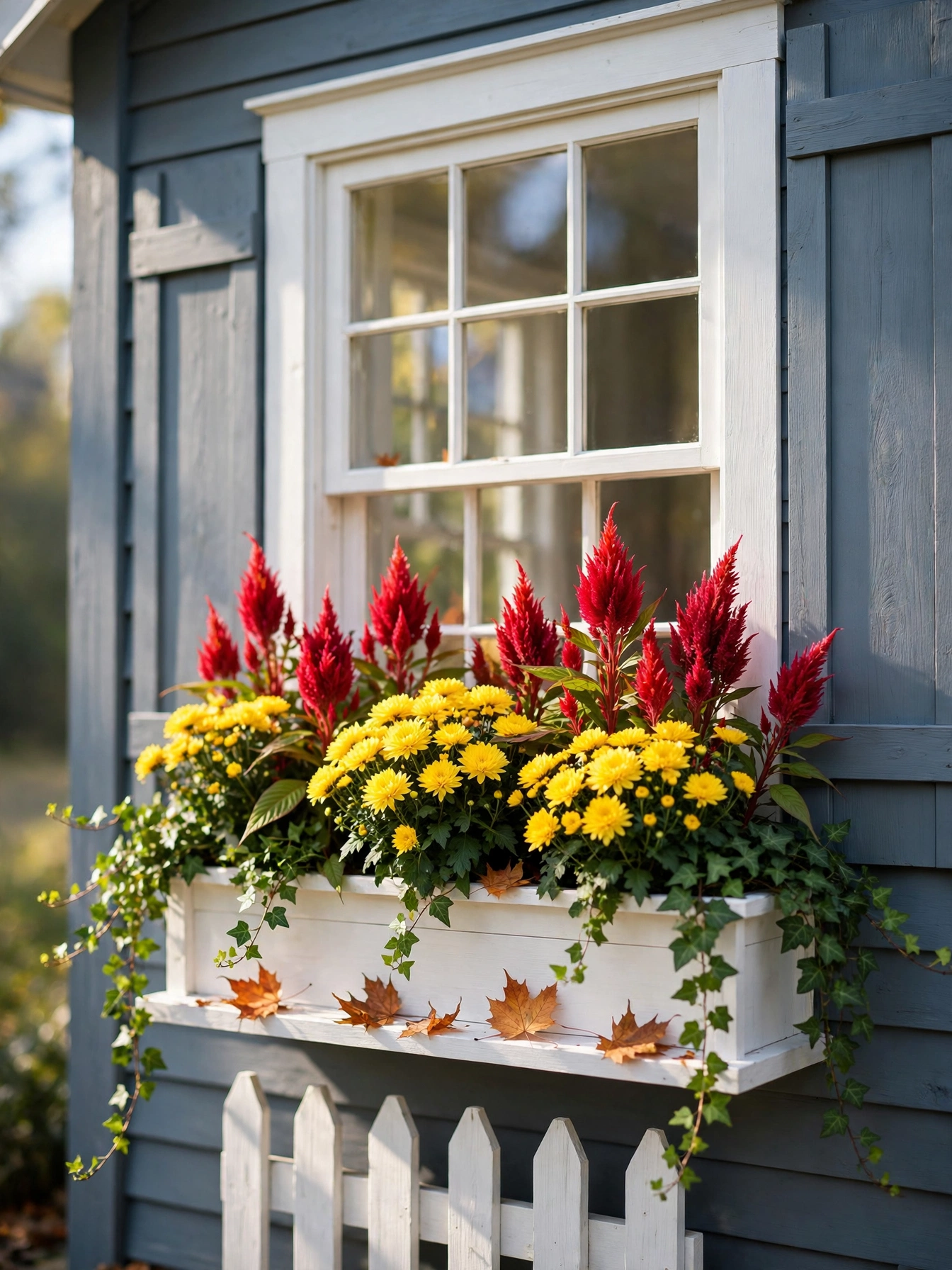
Why This Works:
- The mum, celosia and ivy trio is the best selling fall container mix at garden centers for a reason
- Yellow and red blooms stay visible from the street at 40 feet
- Trailing ivy softens the box edge and hides the container
- All three plants share the same watering schedule
A 30 inch box fits most standard 36 inch windows with a 3 inch margin on each side for brackets. Use a rot resistant wood or powder coated metal box 8 inches deep, since 6 inches of soil is the minimum for mums to root well. Space plants 5 to 6 inches apart and fill gaps with potting mix, not garden soil, which compacts in containers. Avoid crowding more than 8 plants into a 30 inch box, because poor airflow invites powdery mildew within 3 weeks.
A common mistake is buying mums already in full bloom; buds that are just showing color last 3 to 4 weeks longer in the box. For classic fall window boxes for autumn 2026, choose one tall thriller, three mid-height fillers and two trailing spillers per 30 inches of box. This works best for traditional homes where the landscaping is already formal and symmetrical. The trade off is that ivy needs trimming every 10 days or it covers the blooms.
Black Pumpkin Planter
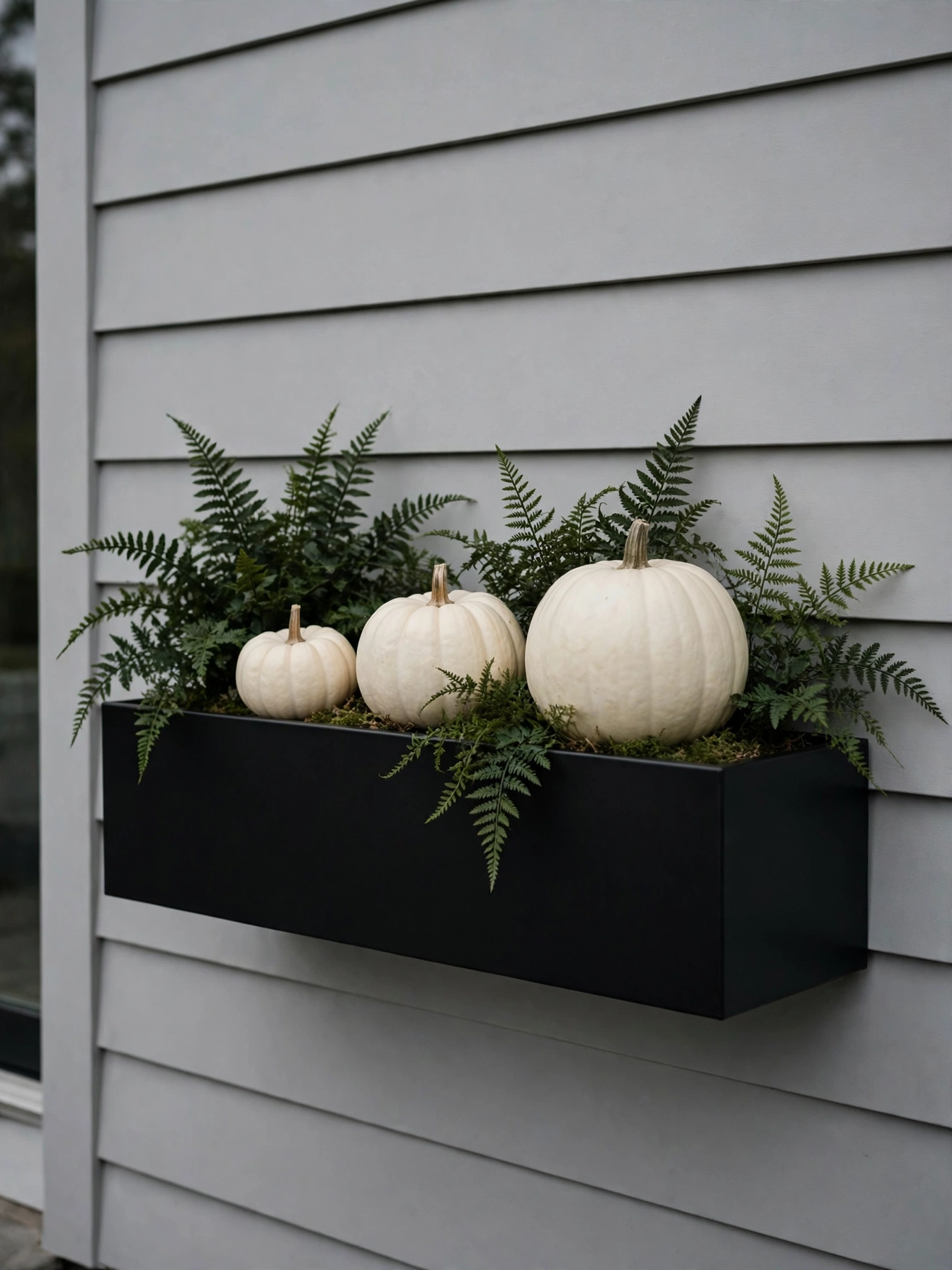
Why This Works:
- Matte black recedes visually so the plants and pumpkins take the focus
- Metal boxes last 7 to 10 years with a rust resistant coating
- White pumpkins pop against black with almost no extra planting needed
- Dark boxes warm the soil, which extends root growth by 2 to 3 weeks
Choose a powder coated steel or aluminum box at least 8 inches deep, because bare metal thinner than 20 gauge dents when a planted box weighs 40 pounds. White baby boomer pumpkins weigh 1 to 2 pounds each, so place only 2 to 3 in a 24 inch box to keep the total load under 35 pounds. Avoid uncoated steel, which rusts through in a single wet season. Drill drainage holes and add a half inch layer of gravel before the soil so water never sits against the metal base.
In real homes, black boxes look best on light colored siding where the contrast frames the window like a picture. Ideal for modern and farmhouse exteriors that already use black window trim or hardware. The catch is heat absorption: on south facing walls the soil can hit 90 degrees on sunny October afternoons, so water daily and mulch the surface with 1 inch of shredded bark. Ferns fill the gaps fast and cost about 8 dollars per 6 inch pot.
Ornamental Cabbage Trio
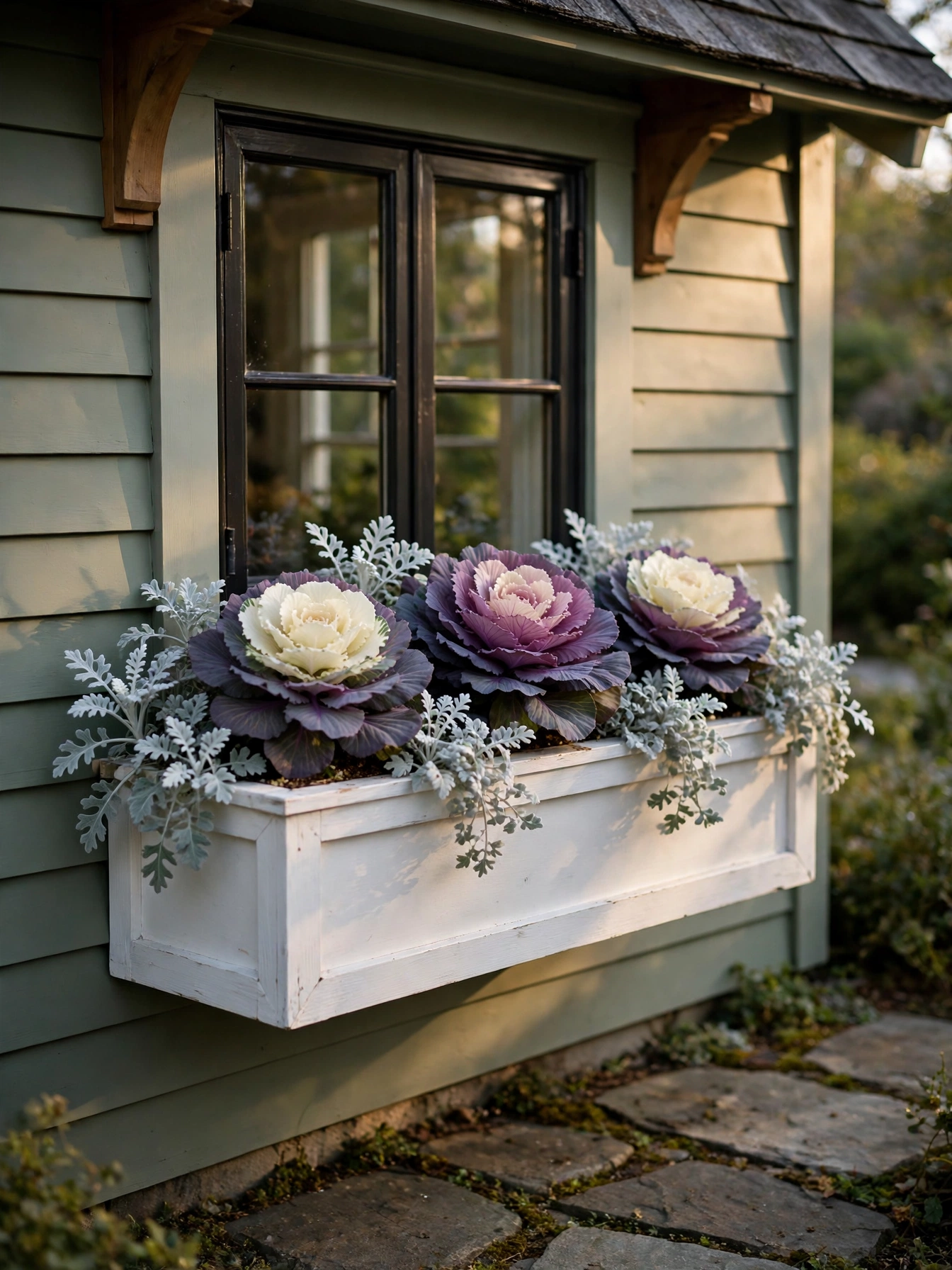
Why This Works:
- Cabbage rosettes grow 10 to 12 inches wide and fill a box fast
- Their color deepens after the first light frost
- Three plants in a 24 inch box look intentional, not sparse
- They outlast mums by 3 to 4 weeks in cold zones
Plant ornamental cabbage 10 to 12 inches apart so the outer leaves have room to spread without overlapping. A 24 by 8 inch box fits exactly three 6 inch nursery pots, which is why garden designers call this the rule of three. Avoid planting them deeper than the nursery soil line, because buried stems rot in wet fall weather. Cabbage prefers soil pH between 6.0 and 7.0, so skip unamended garden soil and use a bagged potting mix.
Homeowners who have tried this find that cabbage looks plain in September and spectacular in November once frost paints the centers pink and purple. Best suited to shaded north facing windows where mums refuse to bloom well. The trade off is texture: cabbage alone can look flat, so tuck dusty miller or trailing pansies around the edges. Slugs love cabbage, so check the undersides of leaves once a week.
White Box Grasses
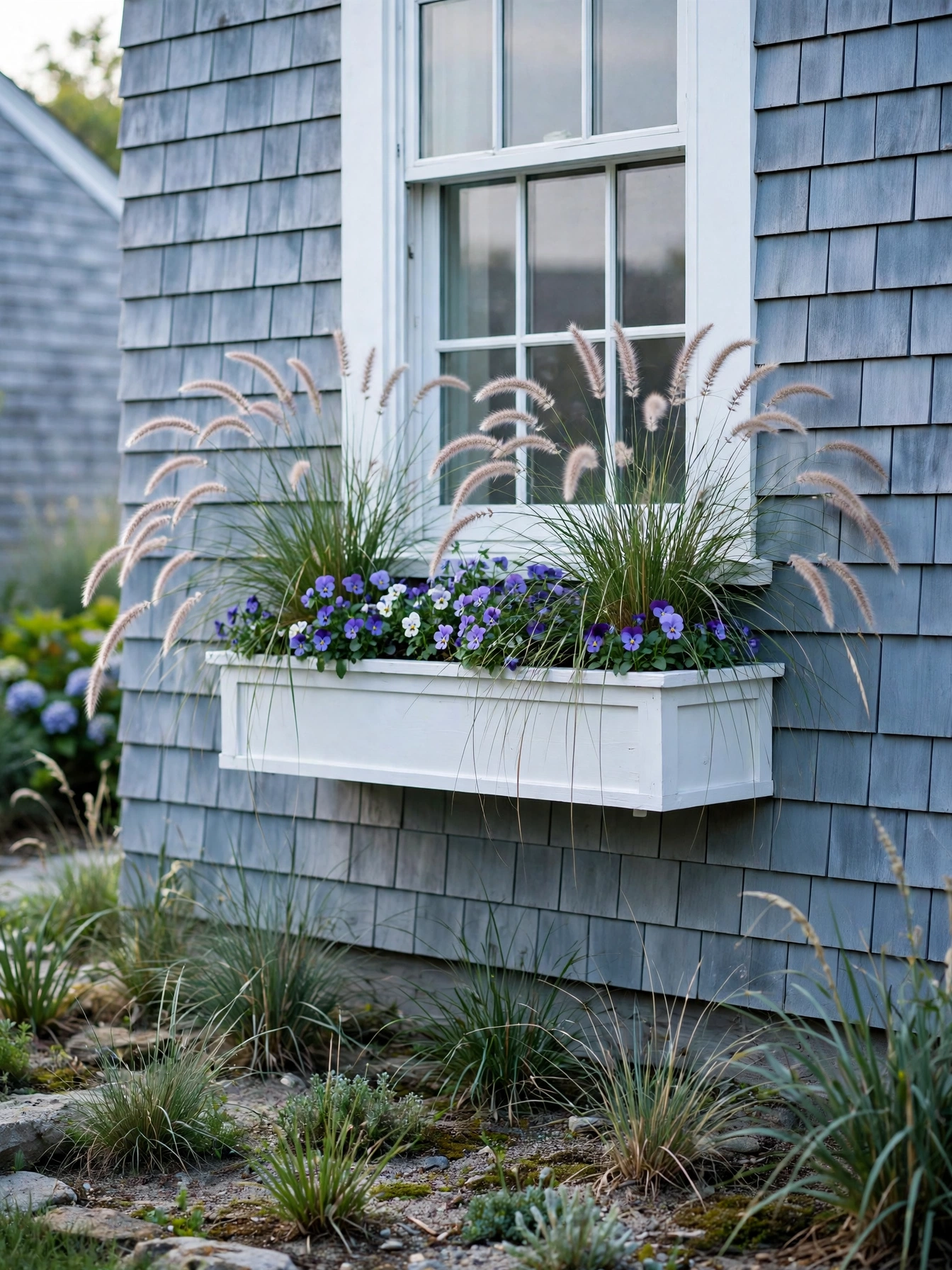
Why This Works:
- Fountain grass plumes add 18 to 24 inches of height without weight
- White boxes reflect light and brighten shaded windows
- Grasses need almost no deadheading through fall
- One grass per 12 inches of box is the right density
Pick dwarf fountain grass varieties that top out at 24 inches, because full size grasses reach 4 feet and block the window. A 36 inch white vinyl or painted wood box needs 3 grasses spaced 12 inches apart, underplanted with 6 inch pansy pots in front. Avoid pampas grass in window boxes, since its sharp blades and 6 foot height overwhelm any window. Vinyl boxes rated for minus 20 degrees will not crack in a hard freeze, unlike thin plastic.
The first thing to check before ordering is your sun exposure, because ornamental grasses need at least 6 hours of direct sun to plume well. Perfect for coastal and cottage homes where a breezy, natural look fits the architecture. The downside is late season flopping: by November, plumes can lean after heavy rain, so cut the grasses back to 6 inches and tuck in evergreen sprigs for winter.
Copper Pot Accents
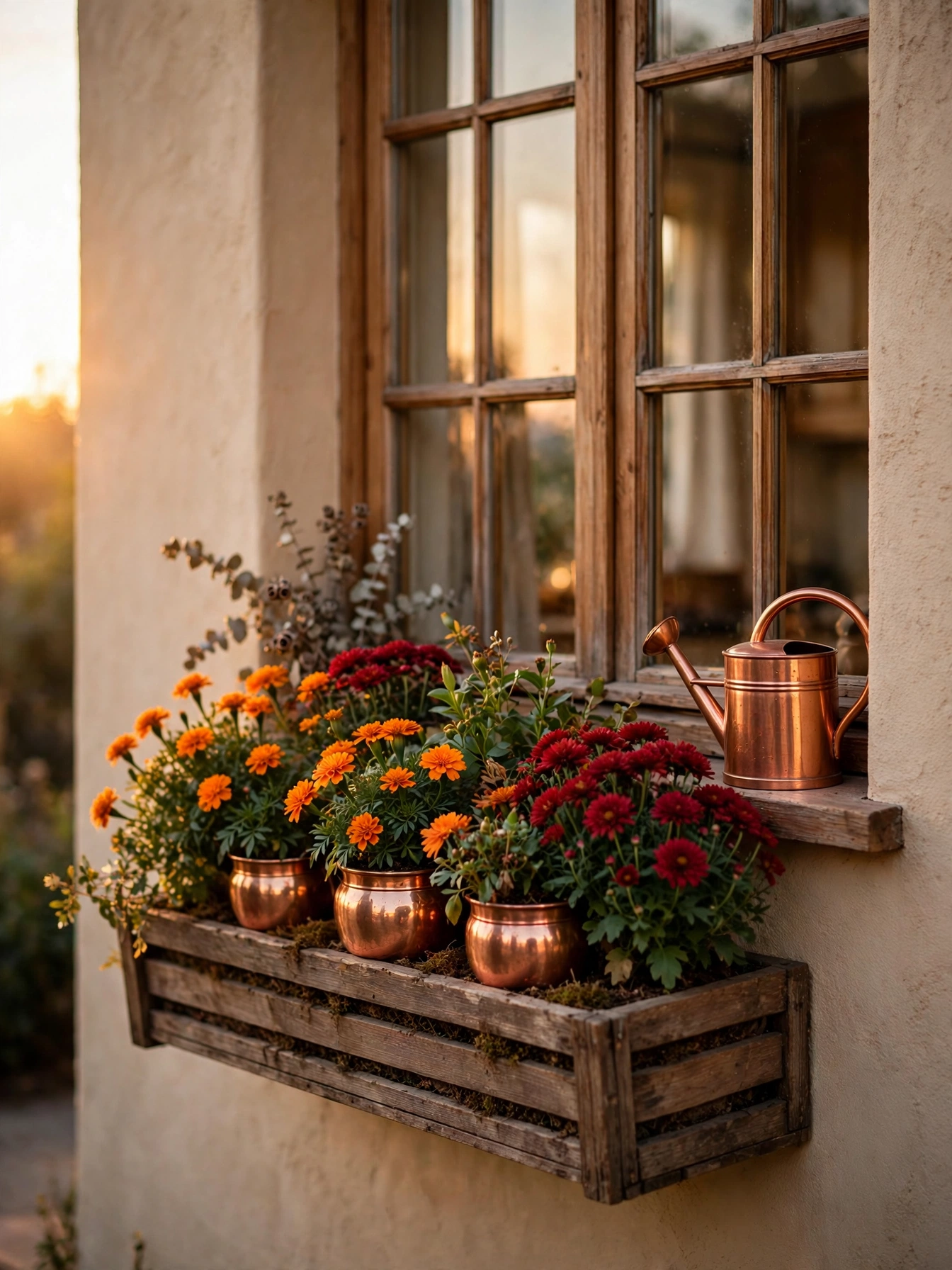
Why This Works:
- Small copper pots catch afternoon light and glow against orange blooms
- Copper develops a natural patina that suits fall palettes
- 4 inch pots nestle between plants without extra soil
- Real copper lasts decades and moves indoors for winter
Use 4 inch solid copper pots as accents, not planters, and nestle them into the soil between mum clumps. Real copper costs 12 to 18 dollars per 4 inch pot, while copper finished plastic costs 4 to 6 dollars and looks identical from 10 feet away. Avoid planting directly in copper without drainage, since copper ions in standing water can damage roots. Set pots at a slight tilt so rain drains out of the top opening.
Before buying, test the look by holding a copper toned object against your siding in afternoon light; copper glows against blue and gray but disappears against red brick. A good fit for homeowners who love metallic accents but do not want a full metal box. One trade-off is cost: outfitting a 36 inch box with real copper can add 60 dollars, so many gardeners use two real pots at the front and skip the rest.
Heirloom Gourd Display
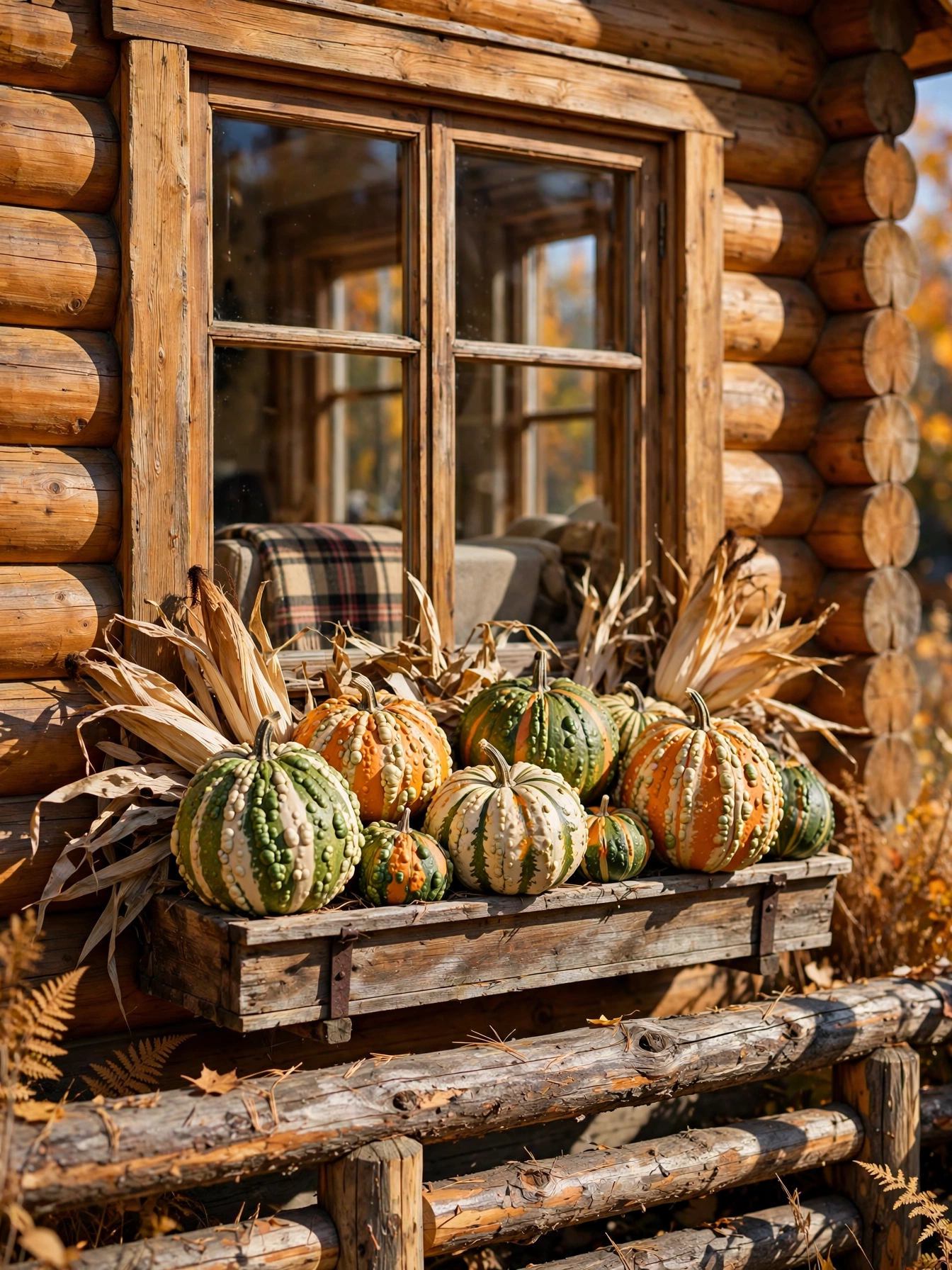
Why This Works:
- Warty and striped gourds add texture no flower can match
- Gourds need zero water and last 8 to 12 weeks outdoors
- Mixing 3 shapes in odd numbers looks professionally styled
- Dried corn husks behind gourds add 2 feet of free height
Choose gourds 3 to 6 inches long so they sit naturally among plants instead of dominating the box. Place the heaviest gourd in the center back and arrange smaller ones toward the front in a triangle, which is the classic designer layout. Avoid gourds with soft spots or cracks, because one rotting gourd spreads mold to its neighbors within days. Set gourds on top of the soil, not buried, and rotate them every 2 weeks so no side stays damp.
When planting for a north facing window, gourds carry the whole design since flowers bloom weakly in shade. A natural fit for rustic cabins and farmhouses where a harvest look feels authentic. The caveat is weight: six 1 pound gourds plus soil can push a 24 inch box past 30 pounds, so confirm your brackets are rated for 50 pounds. The Spruce notes that hard shelled gourds cured in a dry spot last months longer than fresh ones.
Burgundy Coleus Drama
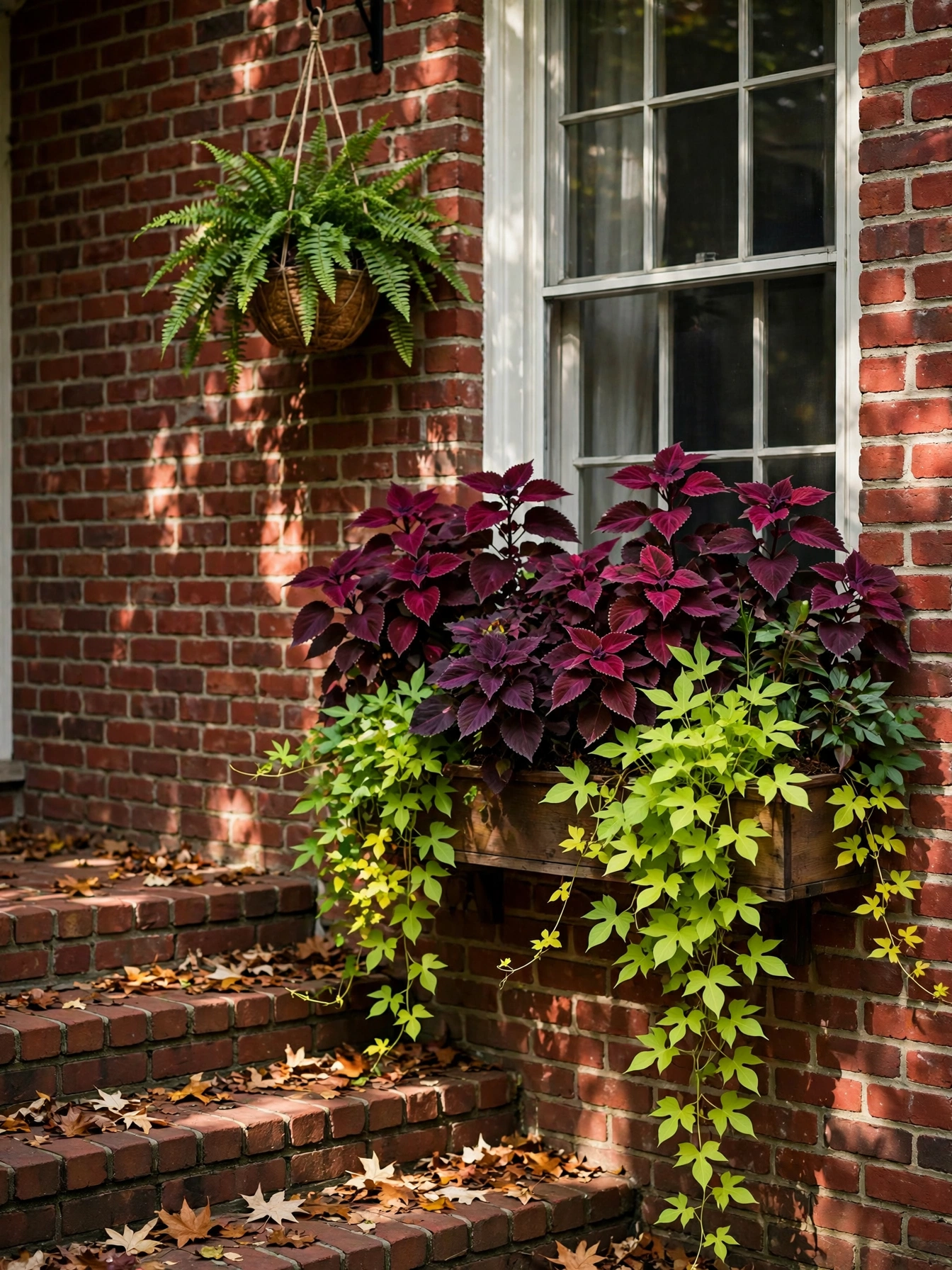
Why This Works:
- Burgundy coleus holds its color in both sun and shade
- Chartreuse sweet potato vine makes burgundy look richer by contrast
- Coleus grows 4 to 6 inches per week in warm September weather
- Pinching the tips doubles the bushiness in 2 weeks
Space coleus 8 inches apart because each plant spreads 12 inches wide by October. A 30 inch box fits four coleus with two sweet potato vines trailing over the front edge. Avoid letting coleus flower, since blooming signals the plant to stop producing leaves; pinch flower spikes the day they appear. Coleus stops growing when nights drop below 50 degrees, so this design peaks in September and early October.
A practical trick that holds up on real houses is planting coleus in front of a dark window box, which makes the burgundy leaves look almost black red. Great for shaded porches and north facing windows where most fall flowers sulk. A drawback is frost: coleus blackens at 32 degrees overnight, so plan to swap it for kale after the first hard freeze. Take 4 inch cuttings in early October to root indoors for next year.
Hay Bale Accents

Why This Works:
- Mini hay bales cost 3 to 5 dollars and instantly say harvest
- A 6 inch bale fits perfectly in a standard 8 inch deep box
- Straw texture contrasts beautifully with smooth pumpkin skins
- Bales double as risers to lift small pumpkins to bloom height
Use decorative mini bales measuring about 6 by 4 by 4 inches, sold at craft stores each fall. Set one bale at each end of a 36 inch box and plant mums in the 24 inch middle section. Avoid full size bales, which weigh 40 to 50 pounds and crush a window box. Wrap the bale bottoms in landscape fabric so straw does not clog the drainage holes.
Gardeners who replant window boxes every fall report that hay bales look best for the first 6 weeks, then start shedding straw in wind. Well suited to farmhouse and country homes where a harvest theme feels natural. The compromise is moisture: bales sitting in wet soil grow mold within 3 weeks, so rest them on a 1 inch bed of gravel. Replace bales each season since last year’s straw is usually flattened and dusty.
Corn Stalk Framing
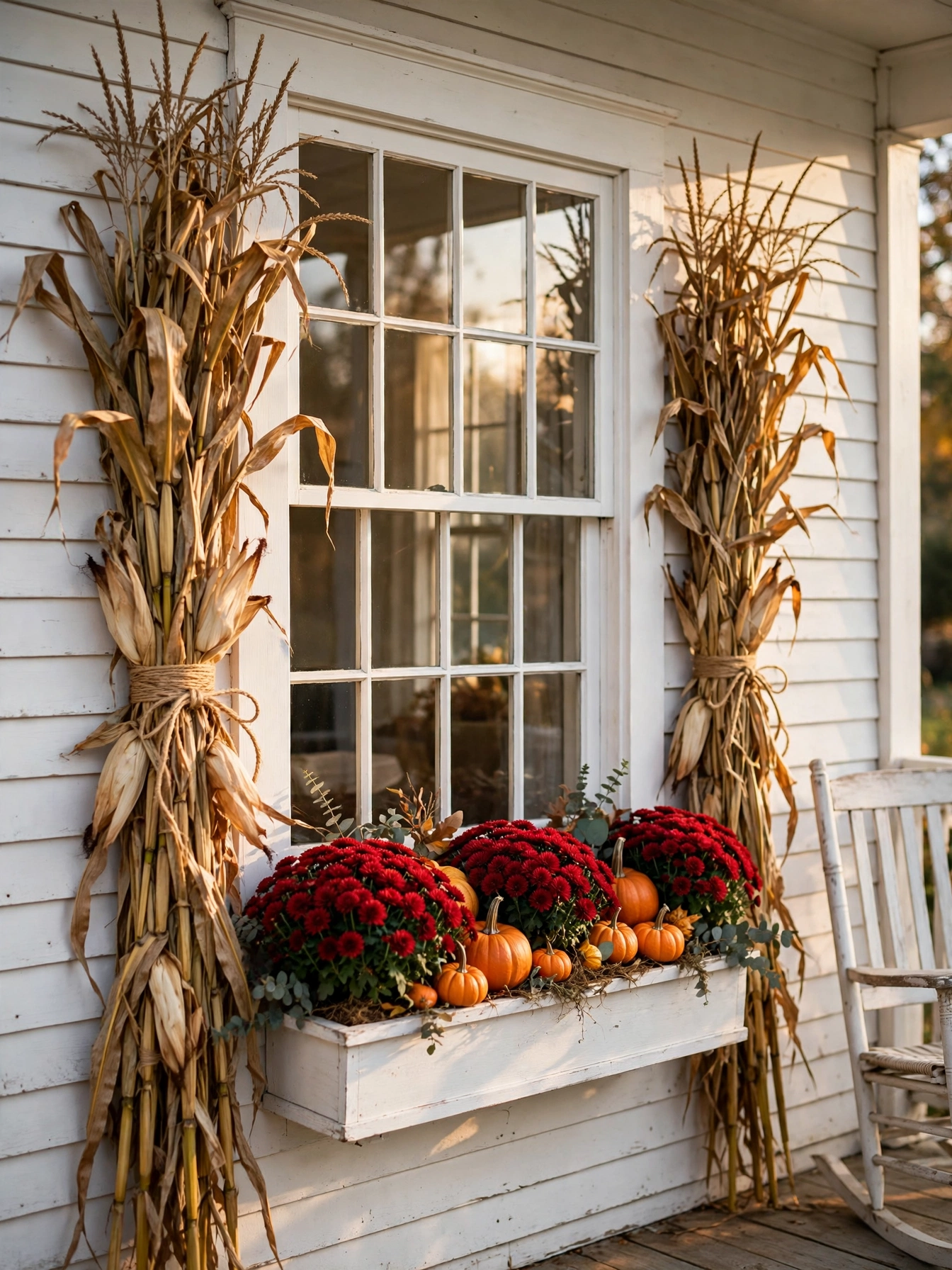
Why This Works:
- Bundles of dried corn stalks frame a window for under 15 dollars
- 6 foot stalks draw the eye up and make windows look taller
- Twine tied bundles survive wind better than loose stalks
- Stalks last the whole season with zero maintenance
Buy bundles of 8 to 12 dried stalks, each 5 to 6 feet tall, from farm stands for 10 to 15 dollars per bundle. Tie one bundle to each side of the window with natural jute twine, securing the twine to the box brackets or a 2 inch screw eye in the trim. Avoid nailing directly into window frames, which voids warranties and invites rot. Cut the bundle bottoms flat so they sit stable in the box soil or in a weighted 6 inch pot beside the box.
When mounting this on a second story window, have a helper hold the bundle while you tie it off, because a 6 foot bundle catches wind like a sail. This works best for tall, narrow windows that need vertical emphasis. The weak point is placement near heat: keep dried stalks at least 10 feet from grills or outdoor fireplaces. For brick or stone trim, use a masonry bit with plastic anchors, but stop if the mortar crumbles and switch to adhesive mounted brackets rated for 20 pounds instead.
Pansy Underplanting
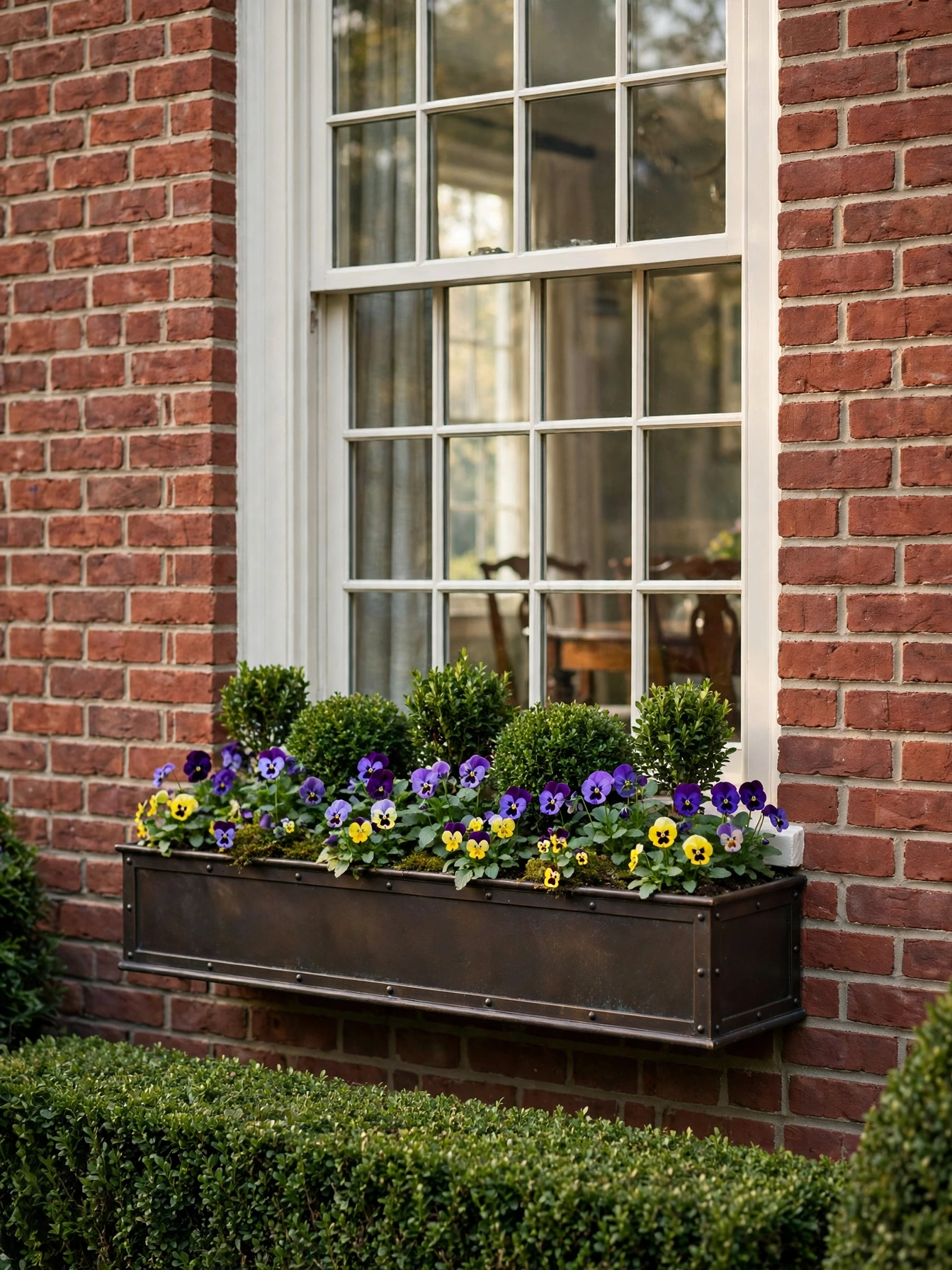
Why This Works:
- Pansies bloom through light frosts down to 26 degrees
- Underplanting fills the front edge so no soil shows
- Purple and yellow pansies echo mums and kale above
- One 6 pack of pansies costs 4 to 6 dollars
Tuck 4 inch pansy pots every 6 inches along the front edge of the box, in front of taller mums or boxwood. Pansies need soil that drains fast, so mix 1 part perlite into every 3 parts potting mix. Avoid burying the pansy crowns, because stems planted too deep rot within 10 days. Deadhead faded blooms every 5 to 7 days to keep new flowers coming for 8 weeks.
A common mistake is planting pansies in early September heat, when 85 degree days stall their blooming for weeks. Wait until daytime highs settle below 75 degrees for the strongest show. Ideal for gardeners who want flowers still blooming at Thanksgiving. One honest drawback is legginess: by late November, pansy stems stretch, so shear the whole planting back by one third to force a fresh flush.
Rustic Fall Window Boxes
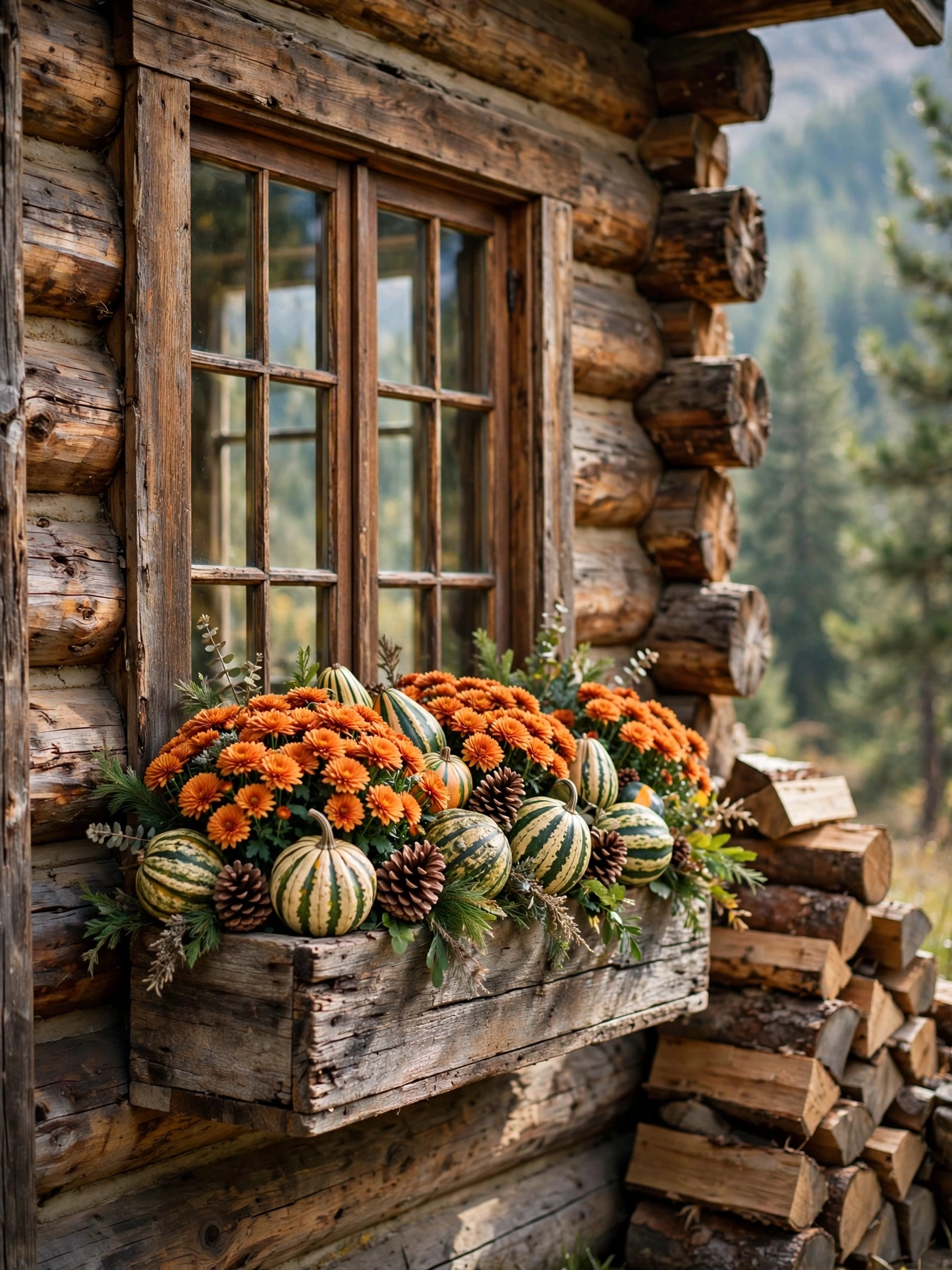
Why This Works:
- Reclaimed wood brings instant age and character
- Pinecones and gourds cost nothing if gathered locally
- Rough textures photograph beautifully in low fall light
- A weathered box hides soil stains and water marks
Build or buy a rustic box from 1 inch thick reclaimed barn wood, because boards thinner than three quarter inch warp after one wet season. A 36 inch box needs two coats of exterior wood sealer on all six sides, including the bottom, to reach a 4 to 5 year lifespan. Avoid pressure treated lumber made before 2004, which may contain arsenic based preservatives unsafe for any planting. Line the inside with a 6 mil plastic sheet punched with drainage slits so the wood never sits in wet soil. For rustic fall window boxes for autumn 2026, gather pinecones 3 to 5 inches long and nestle them among the plants for free texture.
In real homes, rustic boxes look most convincing on cabins, cottages and farmhouses where weathered wood matches the architecture. Best suited to anyone who prefers gathered and handmade over store bought. The catch is weight: reclaimed 1 inch boards make a 36 inch box weigh 12 pounds empty, so use brackets rated for 75 pounds. Check gathered pinecones for sap and insects by baking them at 200 degrees for 30 minutes before use.
Sedum and Succulents
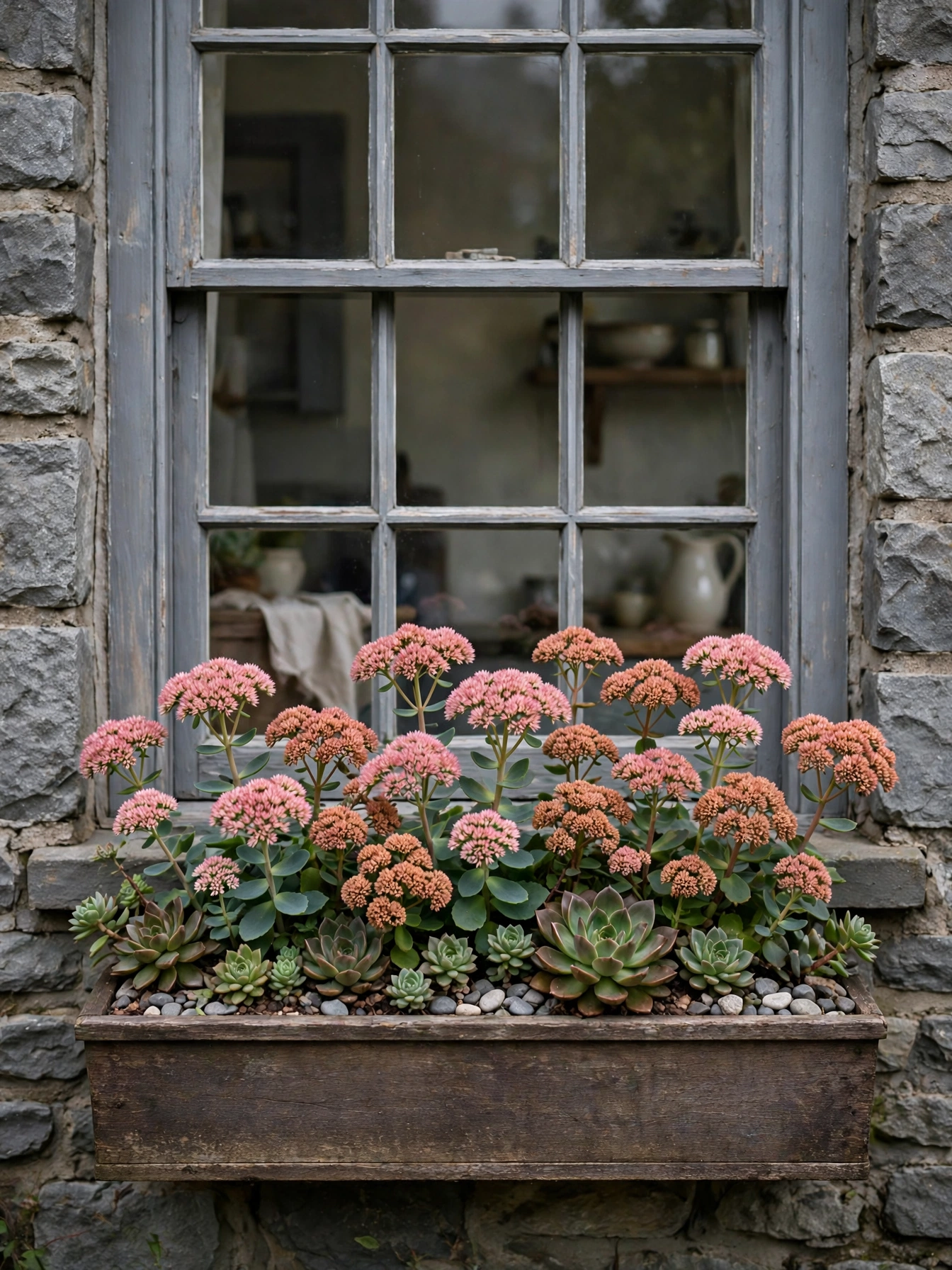
Why This Works:
- Autumn Joy sedum shifts from pink to copper through fall
- Hardy hens and chicks survive winter in the box
- Succulents need water only every 10 to 14 days
- This is the lowest maintenance fall box of all 23
Plant Autumn Joy sedum 12 inches apart, since each clump spreads 18 inches wide by October. Use a gritty cactus mix amended with 1 part coarse sand to 2 parts potting soil, because sedum rots in moisture holding mixes. Avoid regular potting soil, which stays wet for days and kills succulent roots within 3 weeks. A 6 inch deep box is plenty, since sedum roots stay shallow.
Homeowners who have tried this find that sedum looks sparse in September and magnificent by late October when the flower heads turn copper. Perfect for forgetful waterers and south facing windows that bake other plants. The downside is height: sedum tops out at 24 inches, so add a dried branch or tall grass behind it for vertical interest. Leave the dried flower heads standing through winter for structure.
Woven Basket Liner
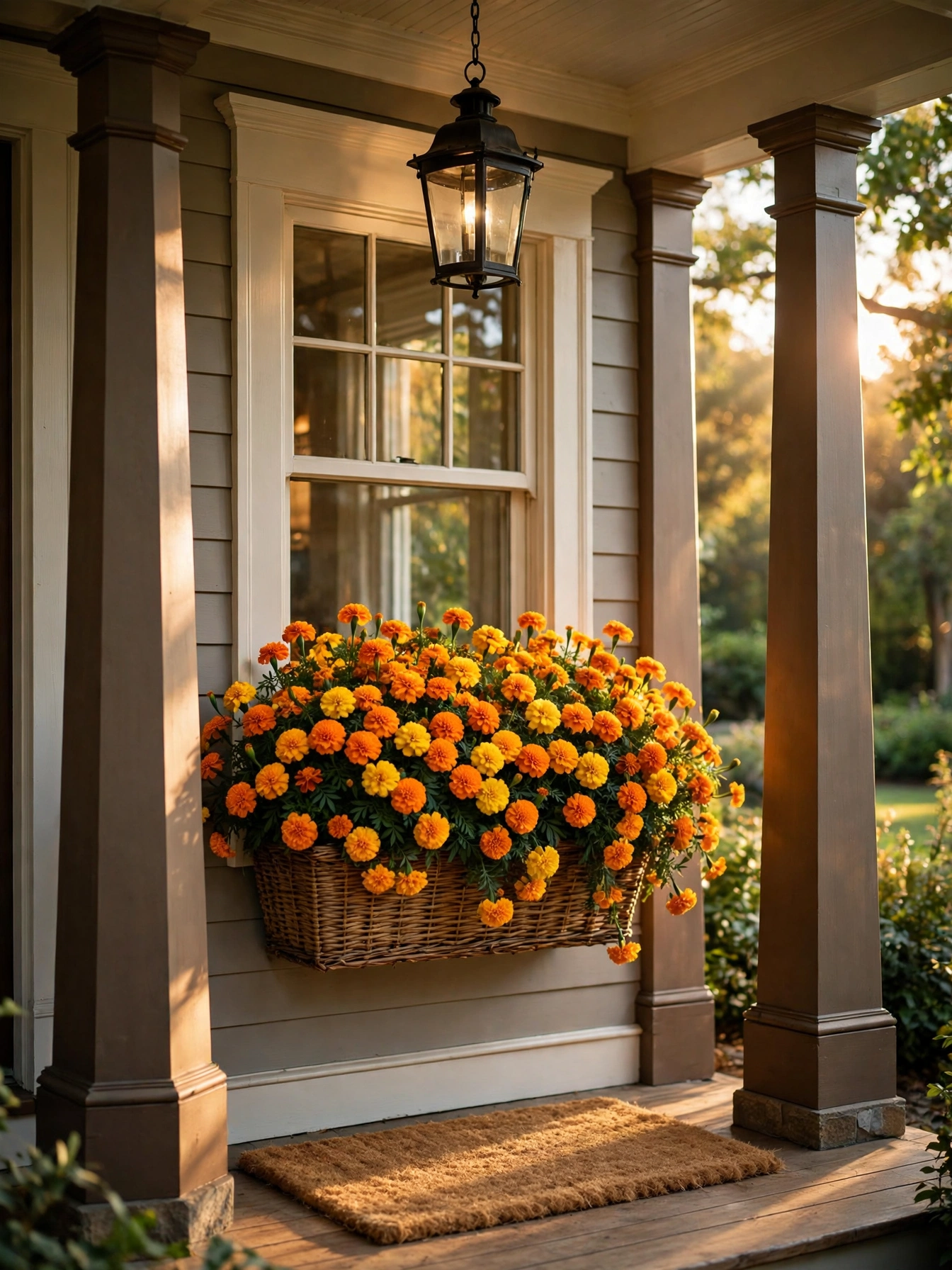
Why This Works:
- A willow liner adds craft texture a plain box lacks
- Liners lift out for easy replanting each season
- Marigolds in orange and gold match the weave tones
- Coconut fiber liners hold moisture 2 days longer than bare wood
Buy a willow or rattan liner sized 2 inches smaller than your box interior so it drops in without forcing. Standard liners come 24, 30 and 36 inches long and 7 inches deep. Avoid liners without a plastic inner layer, because water seeps through the weave and stains siding below. Set the liner on 1 inch feet or small stones so air circulates underneath and the base dries between waterings.
Before buying, test the liner fit with a cardboard template cut to the box interior; returns on natural liners are rarely accepted. A good fit for craftsman and cottage homes where natural materials dominate. One trade-off is lifespan: willow liners last 2 seasons outdoors before the weave loosens. Store the liner indoors over winter to add a third season.
Dried Wheat Bundles
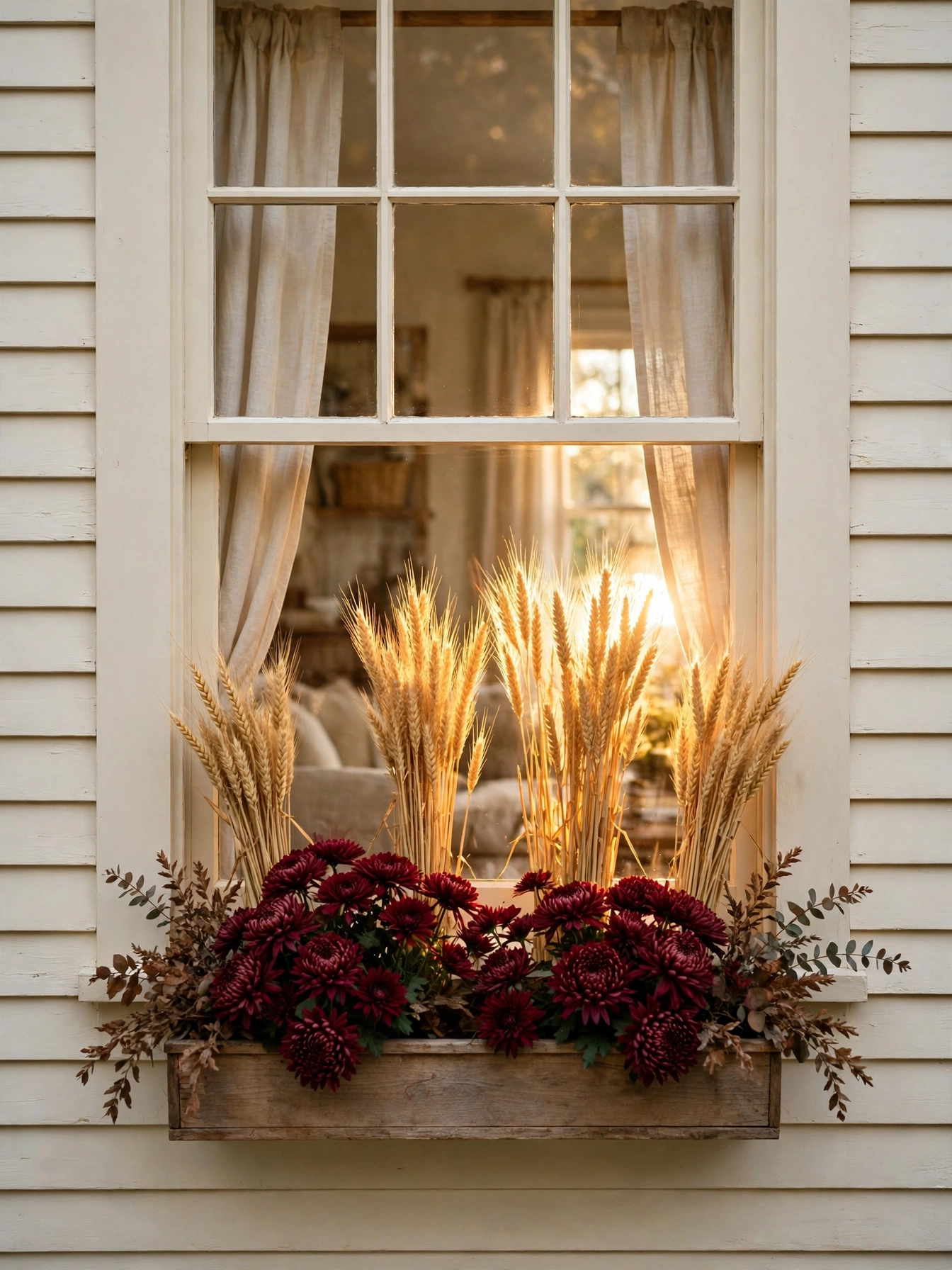
Why This Works:
- Wheat bundles add 30 inches of golden height for about 8 dollars
- Their vertical lines contrast with mounding mums
- Dried wheat needs no water and never wilts
- Bundles pull out in seconds when you switch to winter greens
Push 6 to 8 dried wheat stems into the soil at the back of the box, spacing them 4 inches apart. Bundle stems with a rubber band 6 inches from the base so they stand as one unit in wind. Avoid placing wheat where it blocks more than half the window, since 30 inch stems plus a 24 inch window leaves little glass visible. Trim stems to staggered heights between 24 and 30 inches for a natural look.
The first thing to check before ordering is whether anyone in the house has a grass pollen allergy, because dried wheat sheds fine dust when handled. A natural fit for minimalist gardeners who want height without another plant to water. The caveat is brittleness: wheat stems snap in strong wind, so keep a few spare stems indoors. Replace the bundles if they start shedding heavily, usually after 8 weeks outdoors.
Amaranthus Cascade
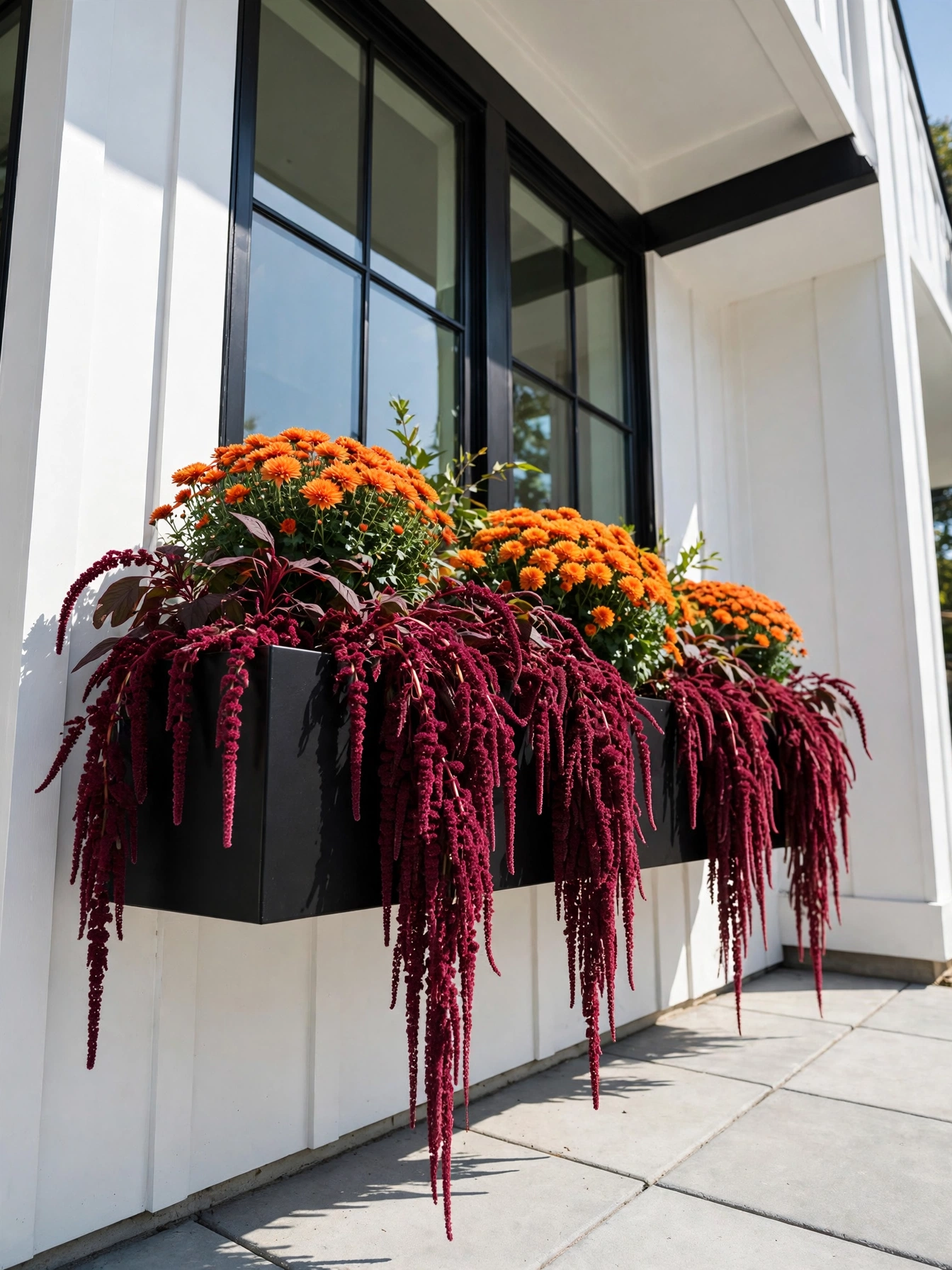
Why This Works:
- Trailing amaranthus spills 24 to 36 inches over the box edge
- Burgundy tassels glow when backlit by afternoon sun
- One plant per 12 inches of box gives full coverage
- Tassels dry on the plant for lasting texture
Plant trailing amaranthus 12 inches apart along the front edge so the tassels cascade without tangling. Each plant sends ropes 24 to 36 inches long by late October. Avoid the upright grain varieties, which grow 5 feet tall and look weedy in a box. Amaranthus needs full sun, at least 6 hours daily, or the tassels stay short and green instead of burgundy.
When planting for a north facing window, skip amaranthus entirely and choose trailing ivy, because shade grown amaranthus never colors up. Great for modern homes where a dramatic spill of color softens hard architecture. A drawback is self seeding: amaranthus drops hundreds of seeds, so deadhead the tassels before they dry fully if you dislike volunteers next spring.
Terra Cotta Warmth
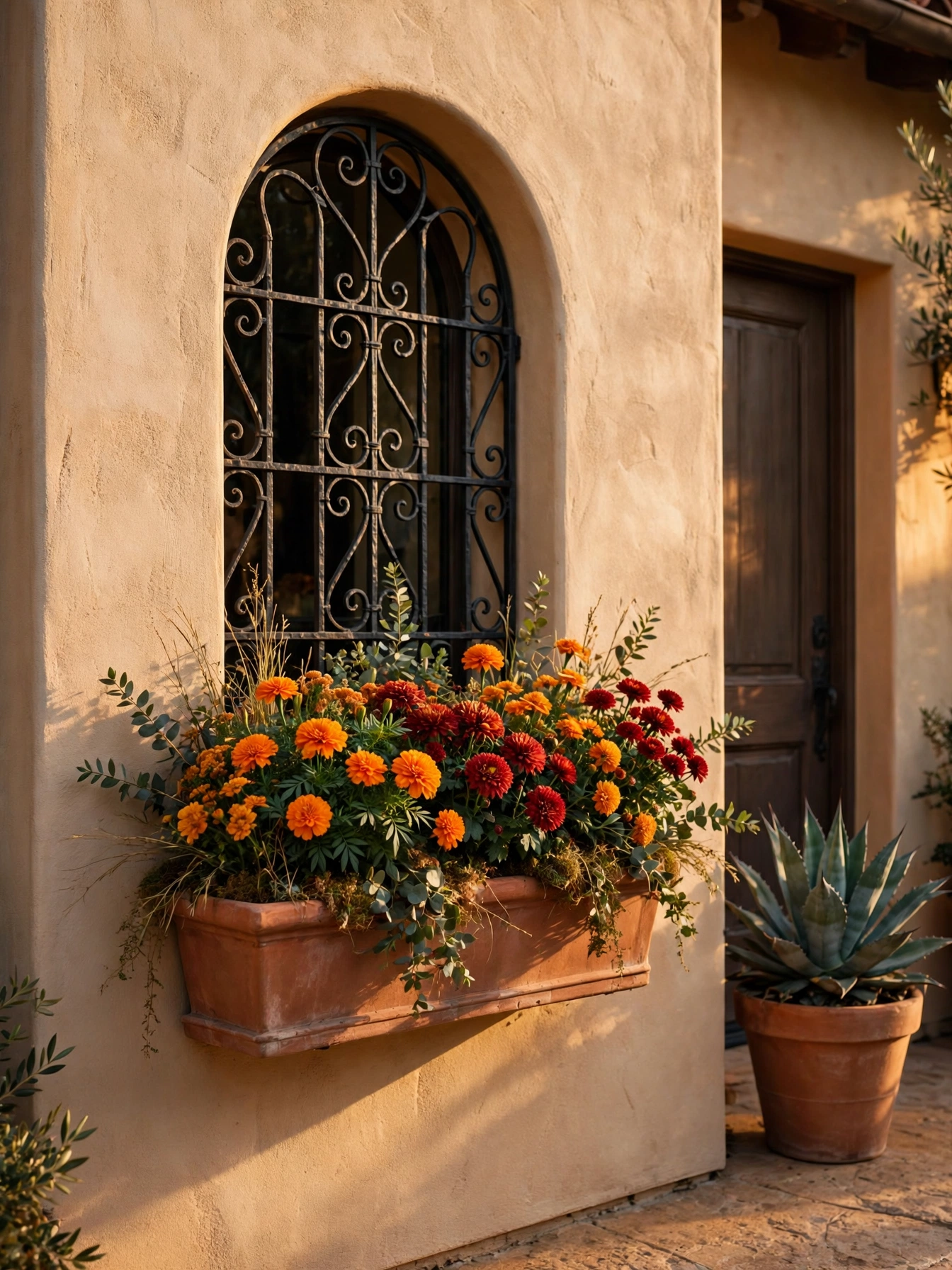
Why This Works:
- Terra cotta tones echo brick, clay roofs and fall leaves
- Unglazed style pots breathe, which prevents root rot
- Warm colors make north facing windows feel sunnier
- A 24 inch box costs 25 to 40 dollars in this style
Choose a fiberglass box with a terra cotta finish rather than real clay, because real terra cotta cracks below 25 degrees. Fiberglass boxes weigh 6 to 8 pounds empty versus 20 pounds for clay, which matters on older siding. Avoid dark glazed ceramic boxes outdoors, since trapped moisture behind the glaze causes freeze cracking. Fill with orange marigolds and red mums spaced 6 inches apart for a monochromatic warm scheme.
A practical trick that holds up on real houses is matching the box tone to the roof or brick so the whole facade feels coordinated. Well suited to Mediterranean, Spanish and southwestern style homes. The compromise is fading: fiberglass finishes chalk after 2 to 3 summers of UV, so apply a UV protectant spray each spring. Marigolds bloom until a hard freeze and cost about 5 dollars per 6 pack.
Frost-Ready Kale Edge
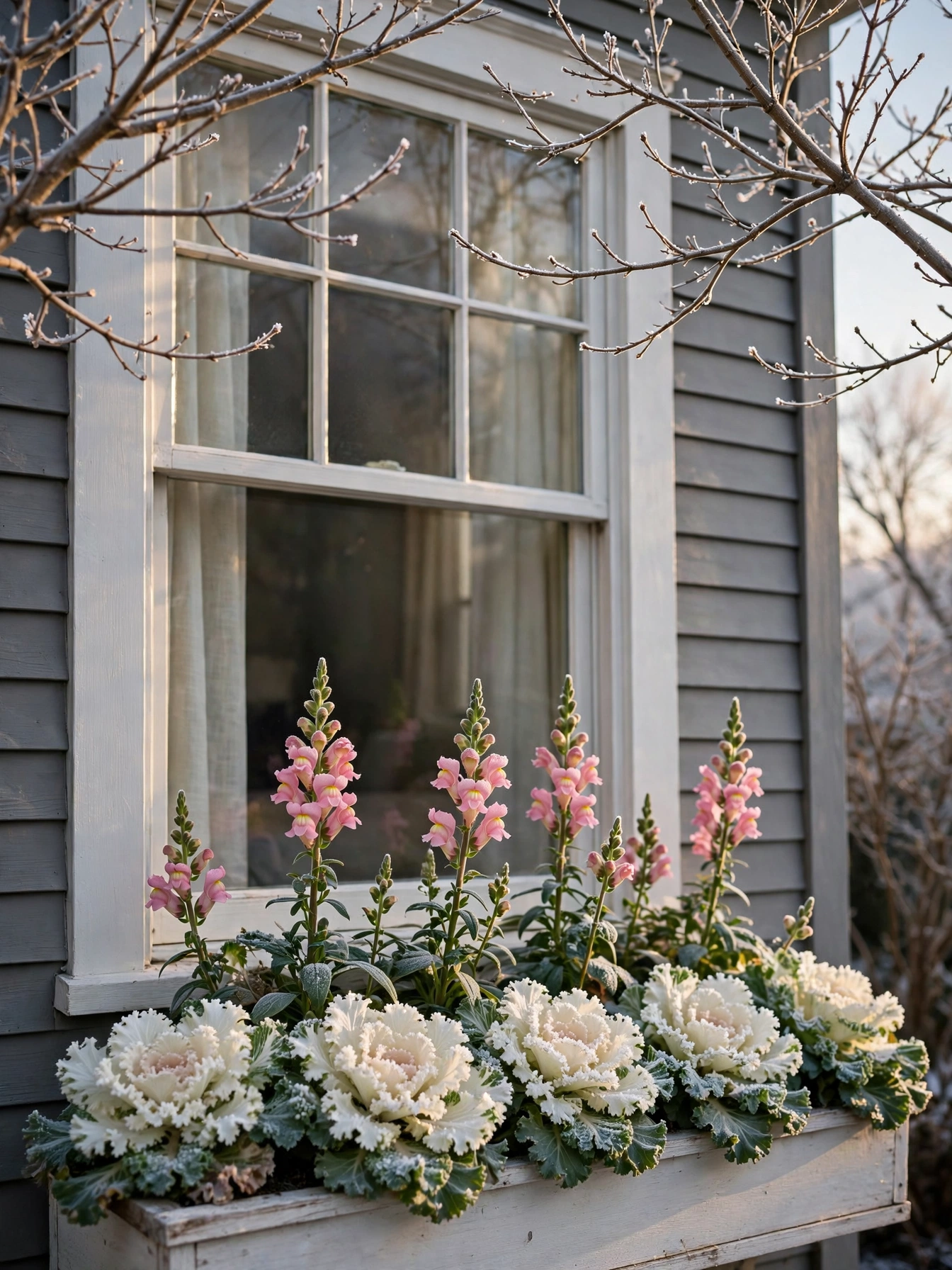
Why This Works:
- Ornamental kale survives down to 20 degrees
- White kale edges glow under porch lights at night
- Kale color intensifies with every frost
- This box still looks good at Thanksgiving
Edge the front of the box with white ornamental kale spaced 8 inches apart, planting them 1 inch deeper than the nursery pot to anchor against wind. Behind them, plant pink snapdragons 6 inches apart for height through October. Avoid fertilizing after October 1, because soft new growth is the first thing frost kills. Kale needs at least 4 hours of sun to develop its white centers.
If this is your first window box, start with this frost proof formula, because it forgives missed waterings and late planting. This works best for cold climate gardeners in zones 5 and 6 who watch other fall plants die in October. The weak point is size: kale rosettes reach 12 inches wide and can crowd neighbors, so give each plant its full 8 inches. Snapdragons fade after the first hard freeze, but the kale carries on alone.
Berry Branch Picks
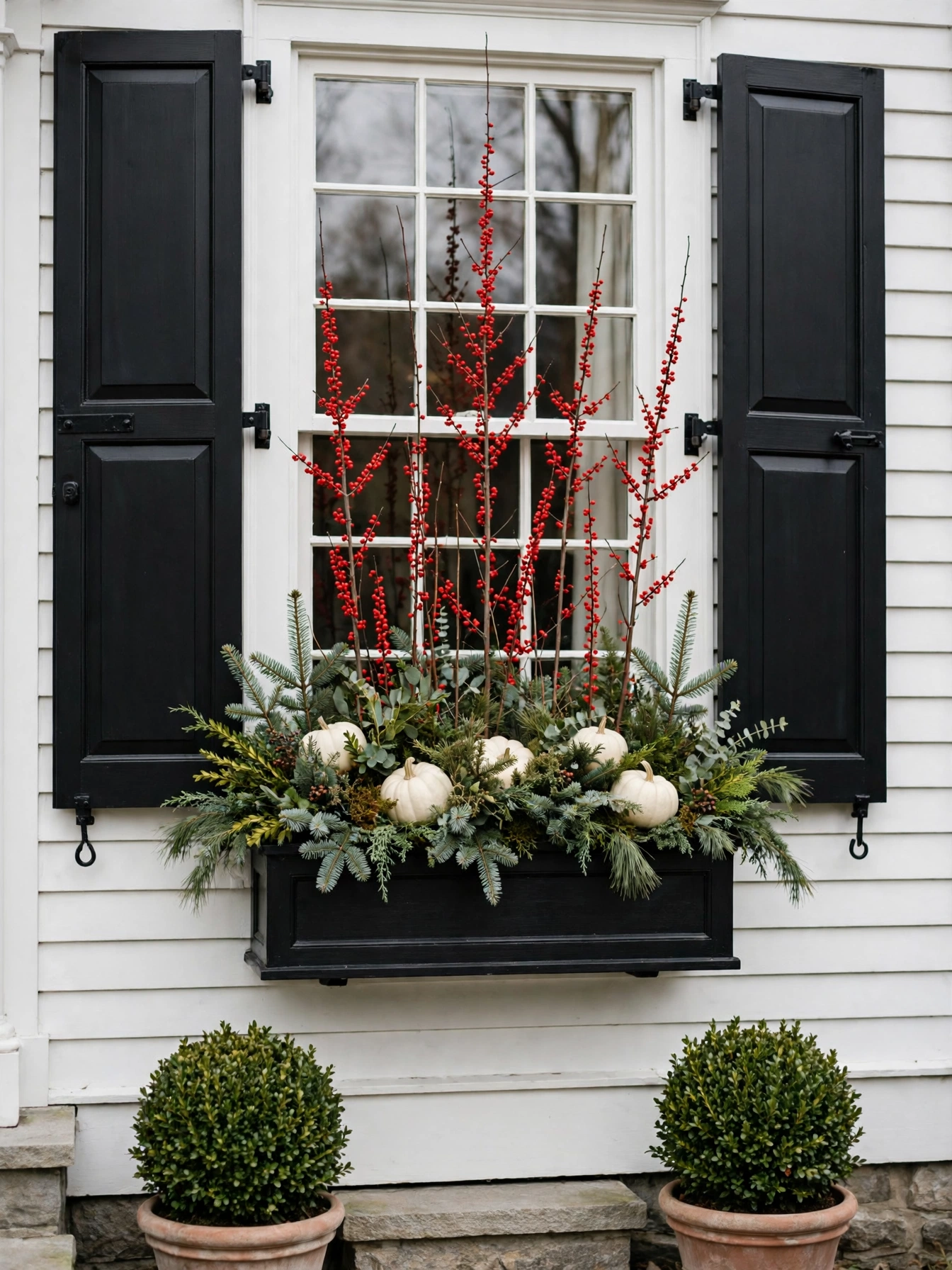
Why This Works:
- Winterberry branches hold red berries for 8 weeks
- Branches add 18 to 24 inches of height with zero watering
- Red berries pop against evergreen sprigs
- Picks swap in and out as the season changes
Push 5 to 7 winterberry stems 18 to 24 inches tall into the soil at the back of the box. Real winterberry costs 3 to 5 dollars per stem at florists, while quality faux stems cost 6 to 8 dollars and last for years. Avoid placing berry branches where cats or dogs can reach them, since winterberry berries are mildly toxic if eaten. Anchor tall stems with a 6 inch piece of floral foam buried in the soil.
Gardeners who replant window boxes every fall report that berry branches are the fastest way to refresh a tired October box for November. Ideal for traditional homes where classic red and green feels right. One honest drawback is berry drop: real berries fall after 6 to 8 weeks, so sweep the sill below the box weekly. Pair with evergreen sprigs for a design that carries straight into December.
Lantern Lit Boxes
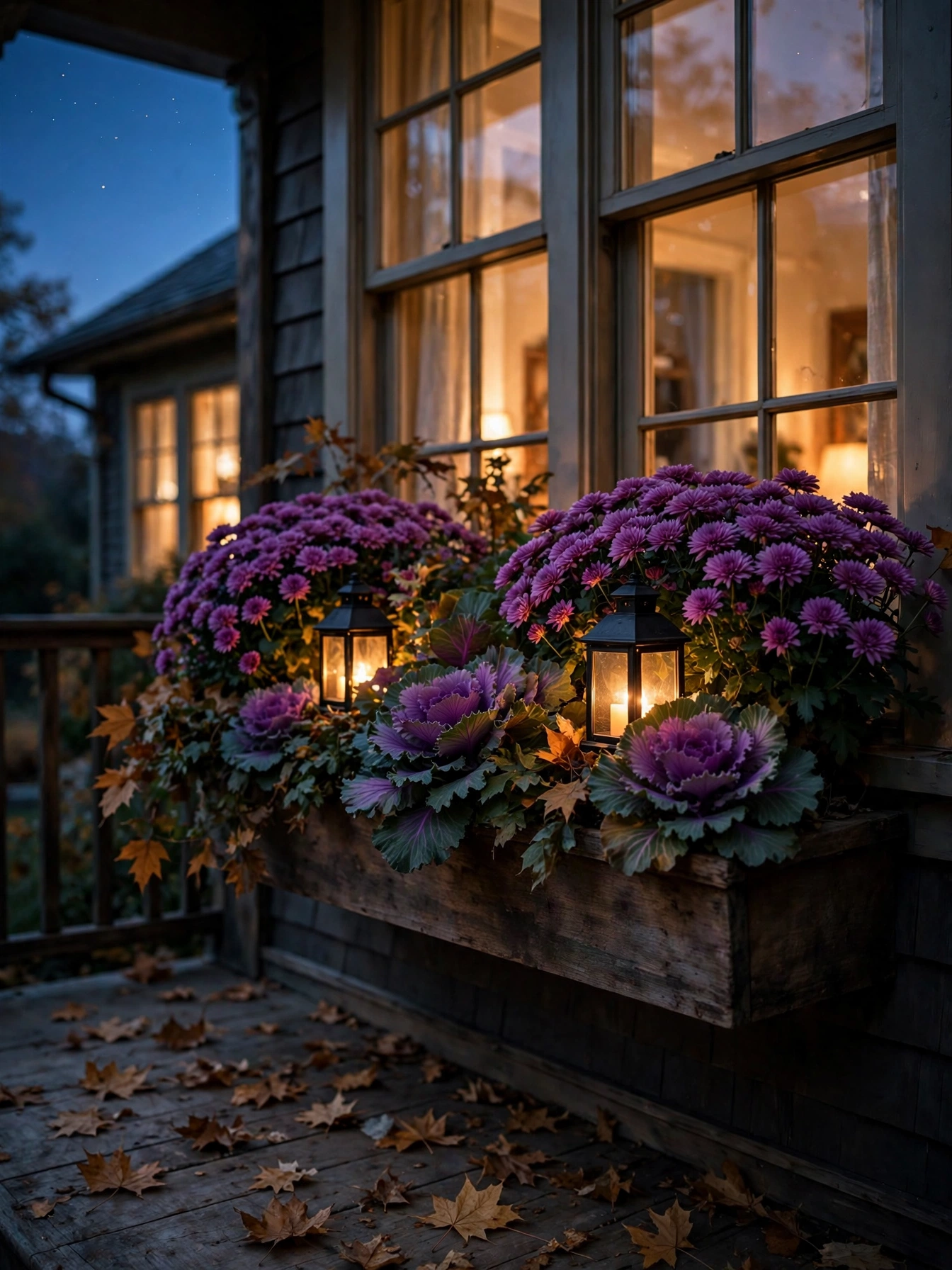
Why This Works:
- Two small lanterns make a window box glow after dark
- Battery candles with timers run 6 hours nightly for months
- Warm 2700K light flatters fall colors
- Lanterns lift out for daytime storage
Choose lanterns 6 to 8 inches tall so they sit below the top of the tallest plants. Battery operated LED candles with built in timers cost 8 to 12 dollars each and run 6 hours per night for about 3 months on one set of batteries. Avoid real flame candles in a planted box, because dry leaves and an open flame are a fire risk. Set each lantern on a flat stone so it stays level in the soil.
When mounting this on a second story window, choose the timer function over a remote, since you cannot reach the lantern nightly. Best suited to anyone whose house looks dark and flat after sunset in October. The catch is brightness: one candle per lantern reads as a glow, not task lighting, which is exactly the mood you want. If you ever want hardwired exterior outlets for real landscape lighting, hire a licensed electrician, since outdoor circuits need GFCI protection and weatherproof boxes.
Cottage Fall Window Boxes
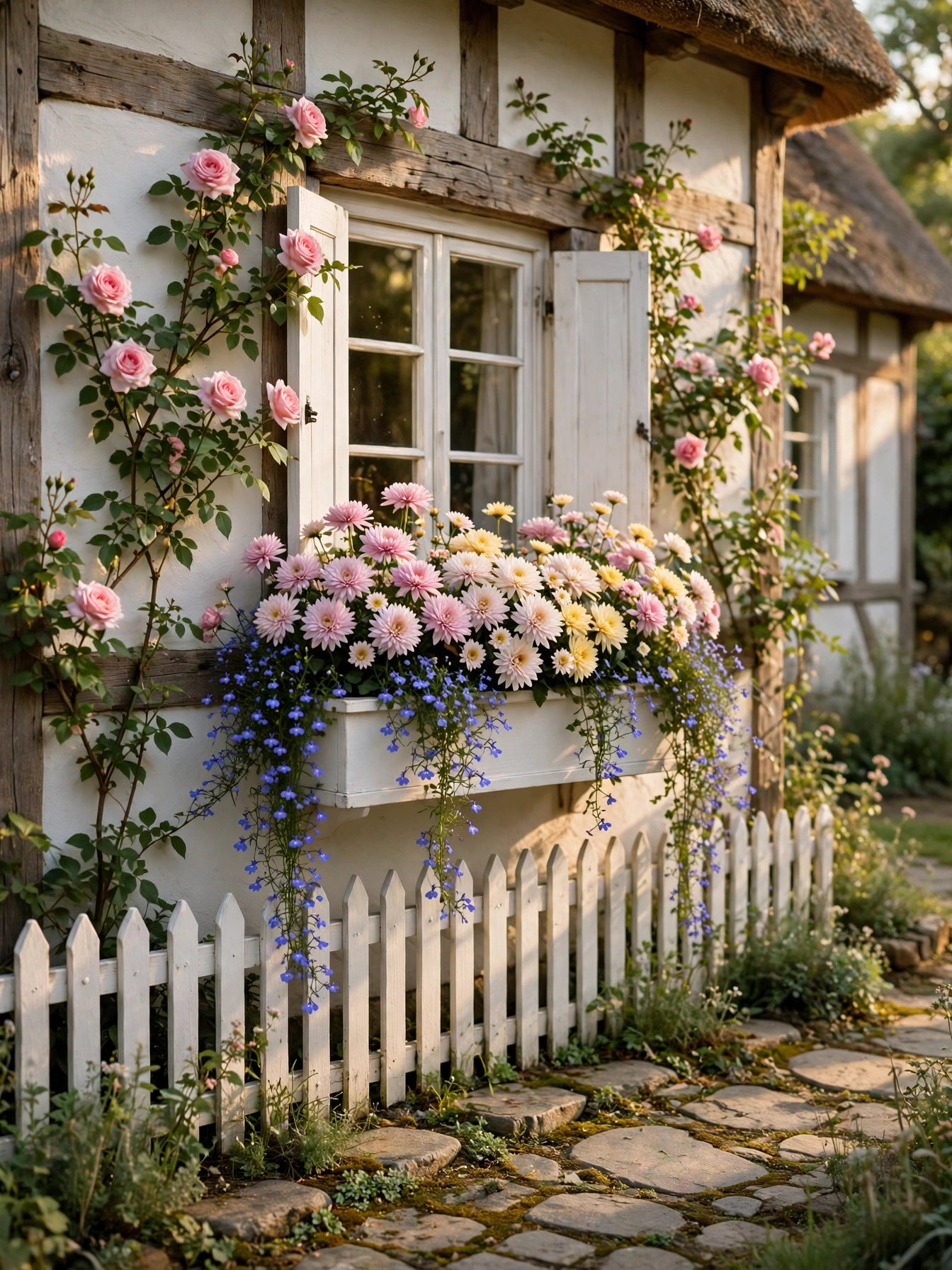
Why This Works:
- Mixed pastel mums soften the typical bold fall palette
- Trailing lobelia spills gently over cottage style boxes
- Pink, cream and soft yellow suit white picket fences
- This is the friendliest, least formal design of the 23
A 30 inch white painted wood box suits cottage style best, sealed with exterior paint rated for 5 years. Plant pastel mums 6 inches apart with blue lobelia trailing over the front edge. Avoid dark bronze or black boxes here, because they fight the light cottage mood. Cottage fall window boxes for autumn 2026 look best with 7 to 9 plants per 30 inches, slightly fuller than formal designs, since abundance is the whole point of cottage style.
Before drilling into siding or trim, hold the empty box against the window and step back to the curb to check the height; the box top should sit 2 to 4 inches below the sill. Perfect for cottages, bungalows and anyone who finds traditional fall colors too loud. The downside is lobelia’s chill sensitivity: it fades at the first frost, so plan a kale swap for November. Water every 2 days, because full plantings in small boxes dry fast.
Evergreen Transition Mix
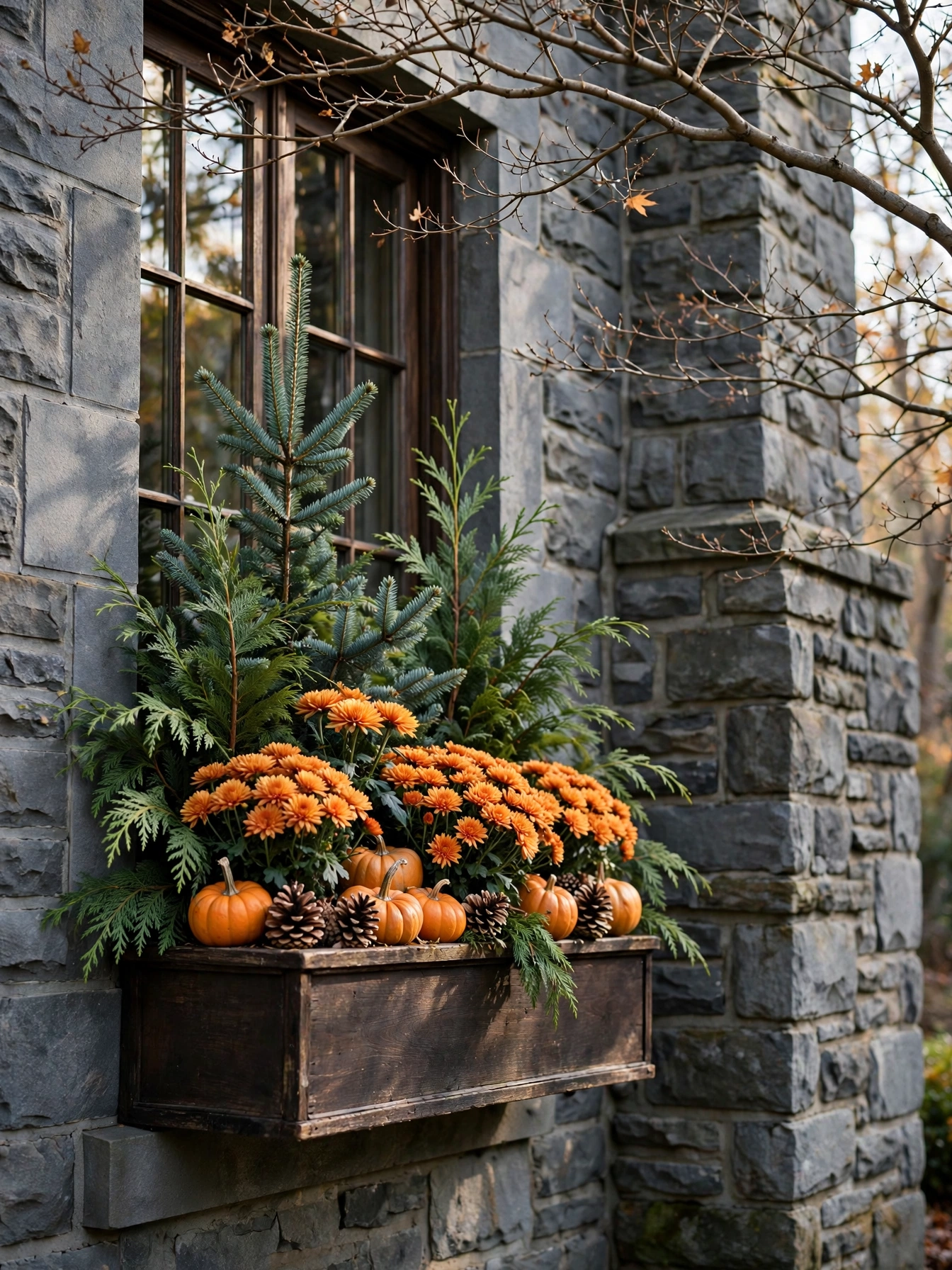
Why This Works:
- Evergreen sprigs carry the box from fall into winter
- Pinecones and mini pumpkins bridge both seasons
- One planting covers October through December
- No replanting needed at Thanksgiving
Push 12 to 18 inch evergreen sprigs of fir, pine or cedar into the soil at the back of the box, spacing them 6 inches apart. In front, keep the fall mums and add pinecones 3 to 5 inches long. Avoid fresh cut sprigs longer than 18 inches, because they dry out and droop within 3 weeks. Mist the evergreens once a week to slow needle drop.
On windy exposures, wire the evergreen sprigs to a 12 inch bamboo stake pushed into the soil so gusts do not topple them. A good fit for busy homeowners who want one planting to last three months. One trade-off is the awkward middle: by late October the mums fade while the evergreens still look sparse, so add fresh mini pumpkins to fill the gap. Total cost runs 45 to 70 dollars per 36 inch box.
Mini Pumpkin Runners
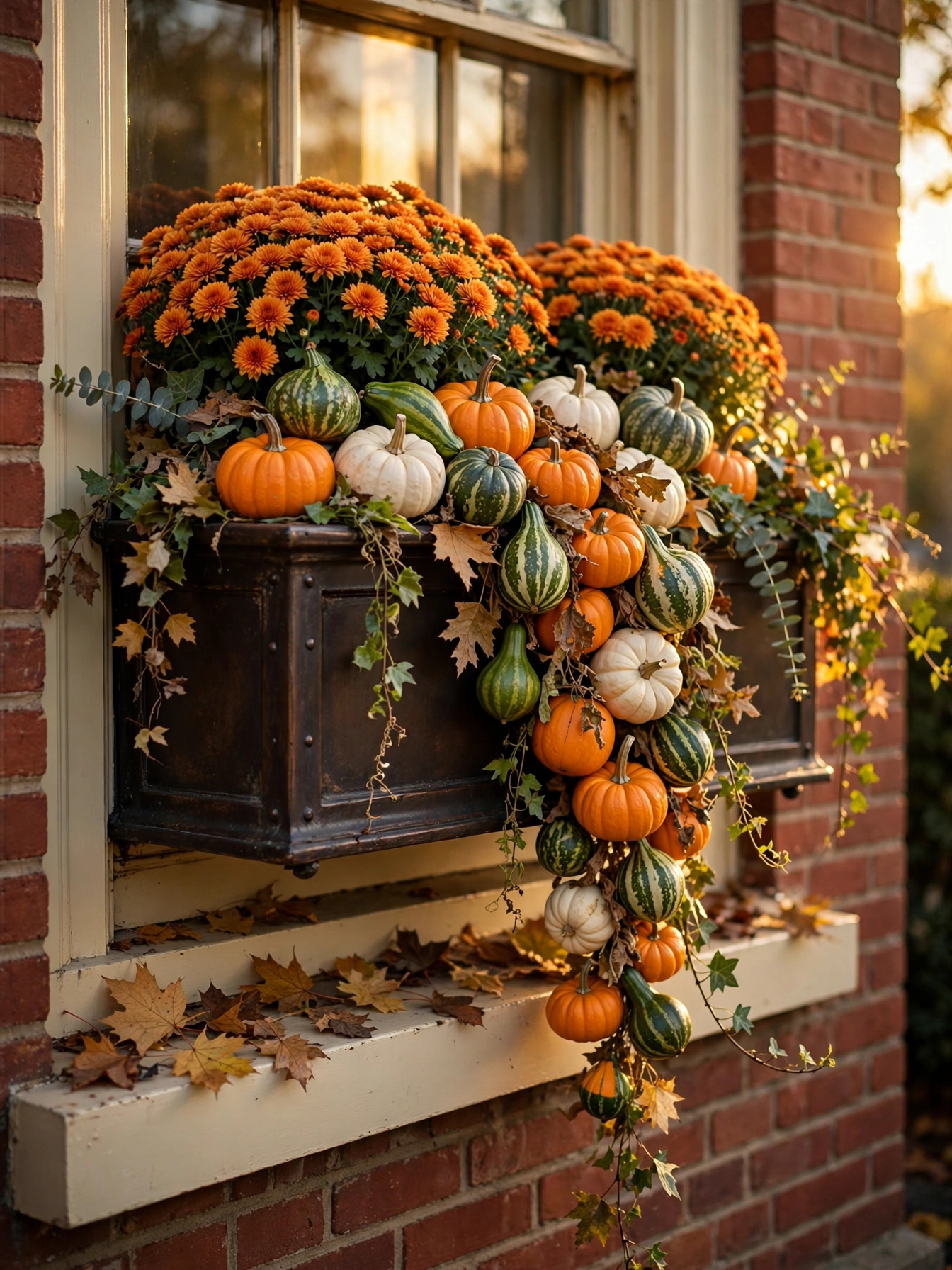
Why This Works:
- Trailing mini pumpkins spill over the edge like a harvest waterfall
- Gourds in 3 sizes look more natural than one size
- This design needs the fewest actual flowers
- Kids love helping arrange the pumpkins
Choose a deep 10 inch box, because stacked pumpkins need the extra 2 inches of soil depth for stability. Arrange pumpkins 2 to 4 inches wide in clusters of three, letting a few trail over the front edge. Avoid pumpkins wider than 4 inches, since their weight cracks stems and tips the arrangement. A 36 inch box holds 12 to 15 mini pumpkins comfortably without crowding the 5 mum plants behind them.
Renters can get the same look without drilling by using no drill vinyl siding hooks rated for 15 pounds per pair on a lightweight 24 inch box. A natural fit for families who want maximum fall impact with minimum planting skill. The caveat is squirrels: in some neighborhoods, pumpkins get chewed within days, so spray them with a cayenne based repellent. Check pumpkins weekly and remove any that soften.
FAQs
What should I plant in fall window boxes for autumn 2026?
Plant mums, ornamental kale, pansies and ornamental cabbage, which all thrive in 50 to 65 degree fall weather. Add mini pumpkins and gourds for texture that needs no water. Better Homes and Gardens recommends planting 6 weeks before the first hard frost so roots establish before the cold arrives.
How big should a window box be for a standard window?
Size the box 4 to 6 inches narrower than the window trim, usually 24 to 36 inches wide for standard windows. Keep it 8 to 10 inches deep so roots have room. Mount brackets every 24 inches and confirm they are rated for at least 50 pounds per pair.
How often should I water fall window box plants?
Water every 2 to 3 days in September, dropping to once a week by November as growth slows. Check the top 1 inch of soil and water only when it feels dry. The Spruce notes that overwatering kills more fall containers than frost, so drainage holes matter more than water.
Will fall window boxes for autumn survive a light frost?
Most fall plants handle light frosts down to 28 degrees without damage. Ornamental kale and cabbage survive to 20 degrees, while coleus blackens at 32. Cover tender boxes with a frost cloth on nights below 30 degrees to gain about 4 degrees of protection.
How much does it cost to plant a fall window box?
A 24 inch box costs 25 to 40 dollars in plants, while a 36 inch box runs 45 to 70 dollars. Add 20 to 35 dollars for the box itself if buying new. Reusing last year’s box and gathering pinecones locally can cut the total below 30 dollars.
Conclusion
Fall window boxes for autumn 2026 come down to three decisions: a box 8 to 10 inches deep with real drainage, plants matched to your sun and frost dates, and one vertical accent for height. Start this weekend by measuring your window trim and buying a 24 or 36 inch box rated for 50 pounds. Plant mums and kale 6 inches apart, water every 2 to 3 days, and your windows will carry the whole street’s fall color. Follow HomelyCrafter on Pinterest for more ideas. Save this to your Pinterest boards so you can refer back to it!

Muhammad Israr is a home decor enthusiast and the writer behind Homely Crafter. He spends his days researching paint colors, layouts and budget-friendly styling ideas, then breaks them down into practical, easy-to-follow guides so you can decorate with confidence.