
Craft stores devote a full aisle to wreath-making every September for a simple reason: nothing else dresses a 36-inch door in ten minutes flat. A wreath fixes a bare door fast, and it does more visual work per square inch than any other fall decoration you own. These fall wreath ideas for autumn 2026 give you twenty complete designs with exact sizes, materials and real costs, so you can hang one before the weekend is over.
You’ll learn how to size a wreath for standard 32, 36 and 42 inch doors, which bases survive rain and full sun, what each design costs from budget to premium, and which hanging hardware actually holds. Every idea includes measurements you can take straight to the craft store, plus the mistakes worth skipping.
Some of these take fifteen minutes with a glue gun, and others are ready-made designs worth buying outright. Either way, start with the measuring tape, not the shopping cart.
Mini Pumpkin Grapevine

Why This Works:
- Mini pumpkins give instant harvest color without the weight of full-size gourds.
- The open grapevine base lets your door color show through, so it suits dark and light doors.
- Dried orange slices add a handmade touch that costs under 5 dollars.
- Everything is reusable next fall if you build it with faux pumpkins.
Start with a 20 to 24 inch grapevine base, which follows the standard retail guideline of choosing a wreath about two-thirds the width of a 36 inch front door. Wire 8 to 12 mini faux pumpkins, each 2 to 3 inches wide, onto the base with 22-gauge floral wire instead of hot glue alone, because glue joints fail when October nights swing 30 degrees colder than the afternoon. Weave in 6 to 8 dried wheat stems and 4 to 5 dried orange slices for texture. Avoid real mini pumpkins on outdoor doors, since they soften and rot within 2 to 3 weeks of rain and attract fruit flies. The finished wreath weighs under 3 pounds, so a standard over-door hook rated for 5 to 10 pounds holds it easily.
In real homes, this is the wreath renters and first-time decorators reach for, because it looks expensive while costing 25 to 45 dollars in craft-store materials against 60 to 90 dollars for a comparable ready-made version. It suits farmhouse, traditional and cottage porches, and the neutral grapevine base carries you from September through Thanksgiving. The honest limitation is wind: on an exposed porch, wired pumpkins can loosen, so check the wires after the first big storm. A common mistake is pushing every pumpkin to the front face; leave about 20 percent of the grapevine visible so the design can breathe. Before buying, hold one pumpkin against your door in daylight, because burnt orange can clash badly with a red door.
Eucalyptus Hoop Wreath

Why This Works:
- The thin hoop silhouette looks modern against the fuller, heavier wreaths on most streets.
- Eucalyptus dries in place and keeps its shape for months with zero maintenance.
- One material plus one ribbon keeps the supply list to two store stops.
- The silvery green tone flatters sage, gray, navy and black doors.
Use a 14 to 19 inch gold metal hoop and 8 to 12 stems of preserved or fresh eucalyptus, each 18 to 24 inches long, wired to the bottom two-thirds of the ring with 24-gauge floral wire. Finish with 2 yards of 1.5 inch satin ribbon tied in a simple bow. Preserved eucalyptus holds its color for 12 to 24 months, while fresh stems fade to tan within 3 to 4 weeks, so preserved is the better buy at only 3 to 5 dollars more per bunch. Avoid fresh eucalyptus on rainy porches, because trapped moisture turns the leaves spotty with mold in 5 to 7 days. Compared with a full foliage wreath, the hoop style uses about half the greenery, which is why the DIY cost stays between 18 and 30 dollars.
The first thing to check before buying is your porch exposure, because this simple design shows every flaw. It suits modern, Scandinavian and minimalist homes where a big harvest wreath would feel out of place, and apartment dwellers like it because the whole thing weighs under 1 pound and hangs from a single adhesive hook. The honest limitation is scent: the fresh eucalyptus smell fades within 2 weeks even though the leaves still look fine. One pitfall is wiring the greenery all the way around the hoop; leaving the top third bare metal is what gives this style its airy look. Test the bow color against your door first, since champagne ribbon disappears against a cream door.
Burlap Ruffle Wreath

Why This Works:
- The ruffled texture reads rich and full from the street, even in a single neutral color.
- Burlap costs a fraction of faux florals: one wreath needs about 12 dollars of ribbon.
- The neutral base accepts any accent color, so you can restyle it for Thanksgiving or Christmas.
- It photographs beautifully for anyone documenting their autumn door decor.
Start with a 14 inch wire wreath frame and 10 to 15 yards of 4 inch burlap ribbon, scrunching the ribbon through each wire section and securing it with a pipe cleaner every 3 inches. The finished wreath puffs out to 20 to 22 inches wide and 5 to 6 inches deep, so confirm your storm door has at least 7 inches of clearance before you build. Tuck in 12 to 15 fabric maple leaves and a 2.5 inch plaid bow at the top. Avoid hanging burlap on damp, unventilated porches, because the natural fibers grow mildew spots within 2 weeks of constant humidity. Compared with deco mesh, real burlap frays more but looks far less shiny and artificial in daylight. Budget 20 to 35 dollars total, and keep the wreath 12 inches from any open-flame candle or lantern, since burlap is more flammable than synthetic mesh.
A common mistake with burlap is cutting the ribbon into short strips, which creates a choppy finish; one continuous length gives the smoothest ruffle. This works best for rustic, farmhouse and country-style homes, and it is forgiving for beginners because uneven scrunching still looks intentional. The trade-off is longevity: expect 1 to 2 seasons before the burlap fades and frays, while a grapevine base would last 5 years. Before buying, test a ribbon scrap with a spray of water and let it dry, because cheap burlap can bleed brown dye onto a light-colored door. If your porch faces the weather, choose a covered spot or bring this one inside after rain.
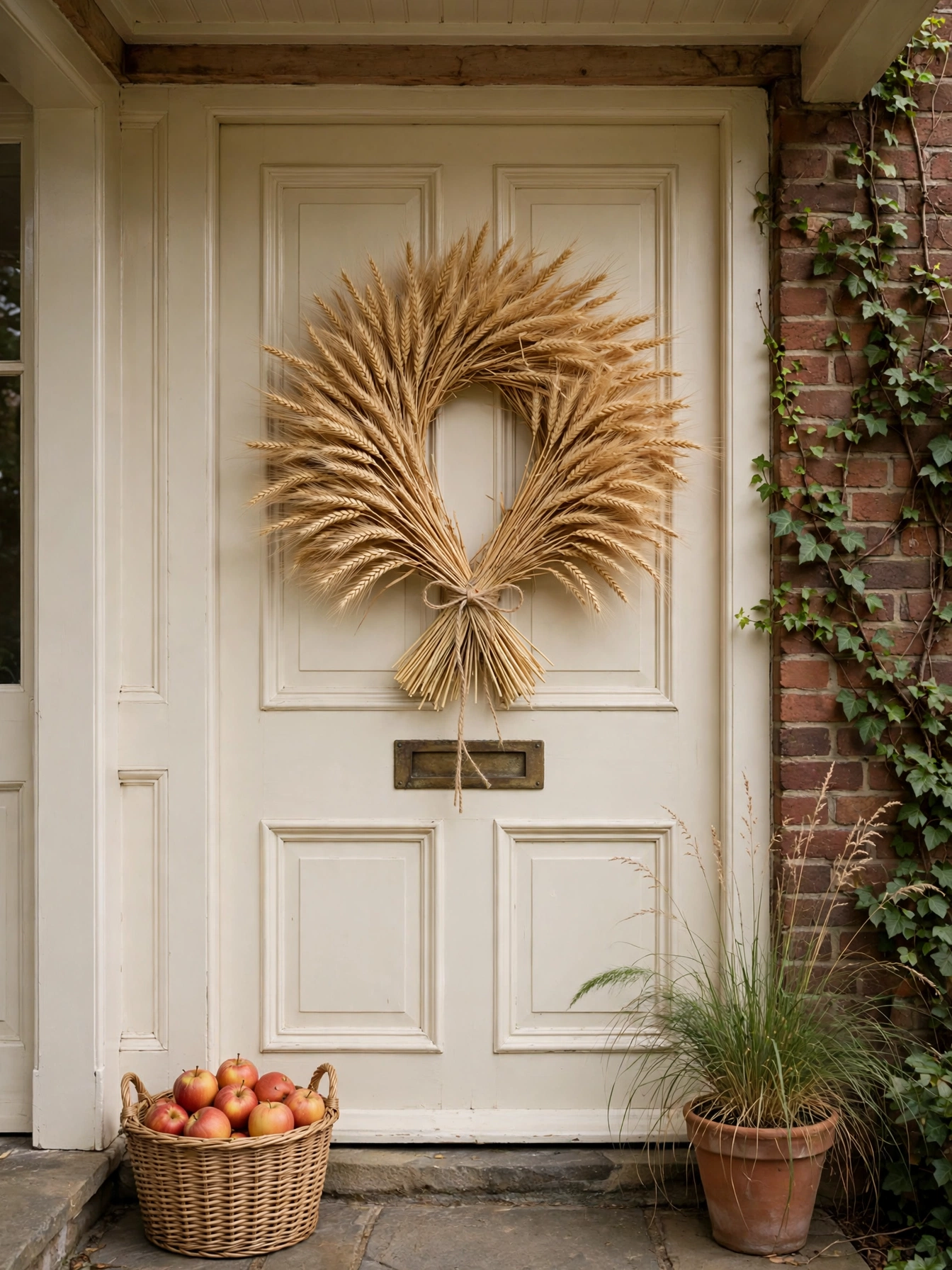
Dried Wheat Wreath
Why This Works:
- A single material in repetition looks intentional and high-end, not sparse.
- Wheat is one of the cheapest dried florals: a full wreath costs under 25 dollars.
- The golden tone glows against white, cream and black doors alike.
- It transitions from early fall straight through Thanksgiving without looking tired.
Bundle 50 to 70 dried wheat stems into groups of 8 to 10, and wire each bundle to a 12 inch straw wreath form with 24-gauge floral wire, overlapping the heads so no straw shows. The finished piece measures 16 to 18 inches across and weighs about 2 pounds. Keep this wreath under a covered porch or indoors, because direct rain breaks wheat stems down within 1 to 2 storms. Compared with preserved grasses, real dried wheat is cheaper but more brittle, so handle the finished wreath by the straw base, never by the wheat heads. The Spruce notes that dried grasses keep their color best away from direct sun, and this wreath proves it: shaded porches keep the gold tone for a full season.
Homeowners who have tried this find that it draws more compliments than wreaths costing three times as much, largely because the simplicity stands out. It suits minimalist, modern farmhouse and European-inspired homes, and it works beautifully as indoor autumn door decor on a pantry or mudroom door. The downside is fragility: wheat sheds grains when bumped, so keep it away from high-traffic doors used by kids and dogs. A frequent error is buying bleached white wheat for a “modern” look; the bleach weakens the stems and they snap during wiring. When shopping, check that the wheat heads are fully dry and papery, not green at the stem, or they will mold in storage.
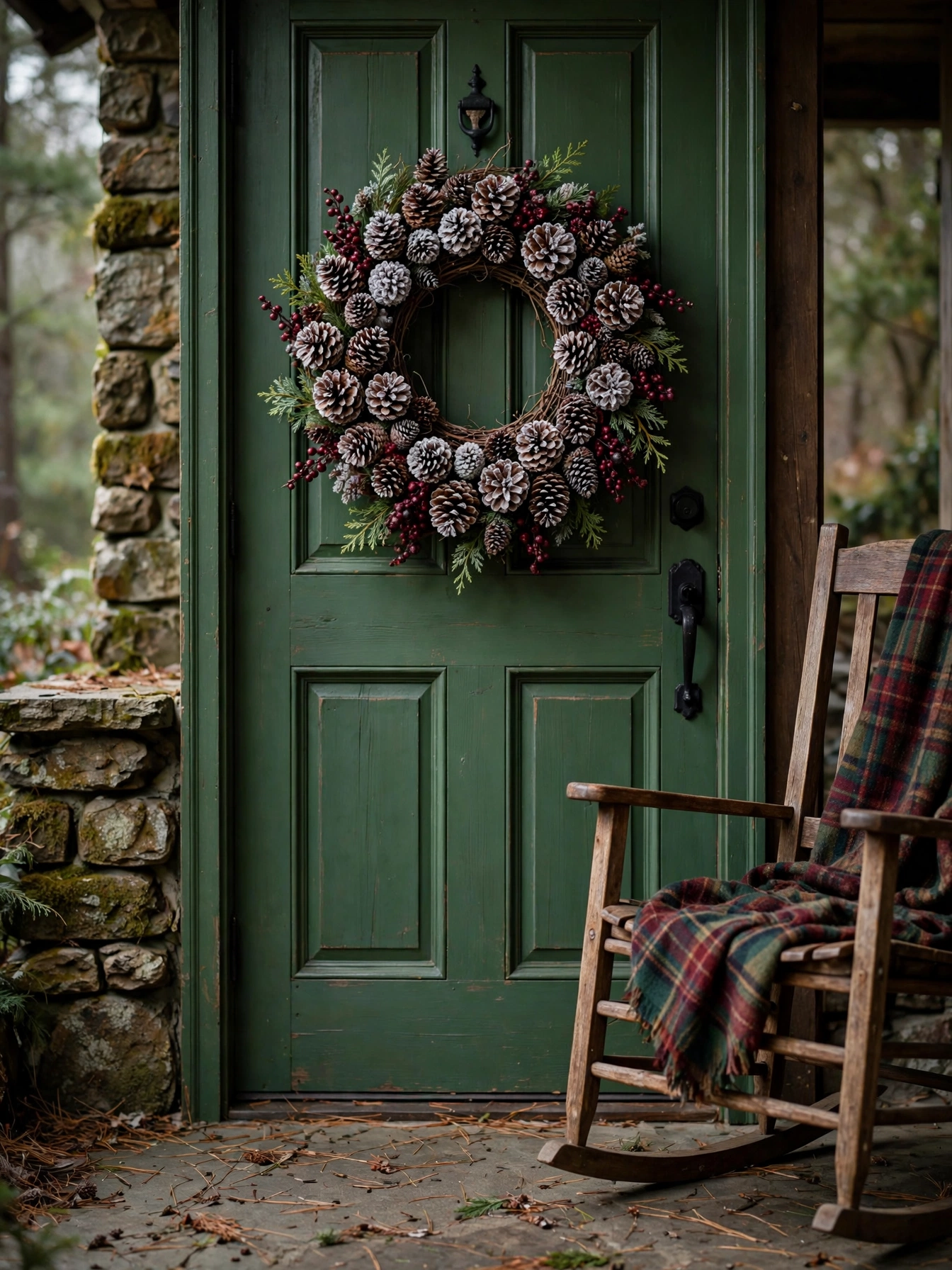
Pinecone Cluster Wreath
Why This Works:
- Pinecones are free if you forage them, making this the cheapest wreath on the list.
- The mix of sizes and the frosted tips create depth that flat faux wreaths lack.
- It survives rain, snow and wind better than almost any other natural design.
- The woodland look carries from October straight through winter with a ribbon swap.
Gather 40 to 60 pinecones in 2 to 4 inch sizes, and attach them to an 18 inch grapevine base using both hot glue and 22-gauge floral wire, because glue alone pops off when the wreath flexes in wind. Tuck in 6 to 8 burgundy berry sprigs and a few cedar sprigs to fill gaps. The finished wreath weighs 3 to 4 pounds, so use an over-door hanger or wall hook rated for at least 10 pounds, not a lightweight adhesive hook. Avoid spray-painting pinecones with water-based craft paint unless you seal them afterward, because the paint peels in sheets after the first rain. Compared with frosted retail pinecones at 1 to 2 dollars each, foraged cones cost nothing but an afternoon walk; a foraged wreath runs 10 to 20 dollars in wire and glue versus 40 to 60 dollars store-bought.
When installing this on a covered or exposed porch, check the back of the grapevine for flat spots so it hangs flush instead of tilting forward. It suits lodge, rustic and traditional homes, and families with kids love the foraging trip that starts the project. The catch is sap: fresh cones can weep sticky sap for the first week, so bake foraged cones at 200 degrees Fahrenheit for 1 hour first, which also kills any hidden insects. The usual error is using only large cones, which leaves visible gaps; mixing 2, 3 and 4 inch cones gives the fullest coverage. When buying retail cones, compare the per-cone price against a bag of mixed craft cones, which is usually half the cost.
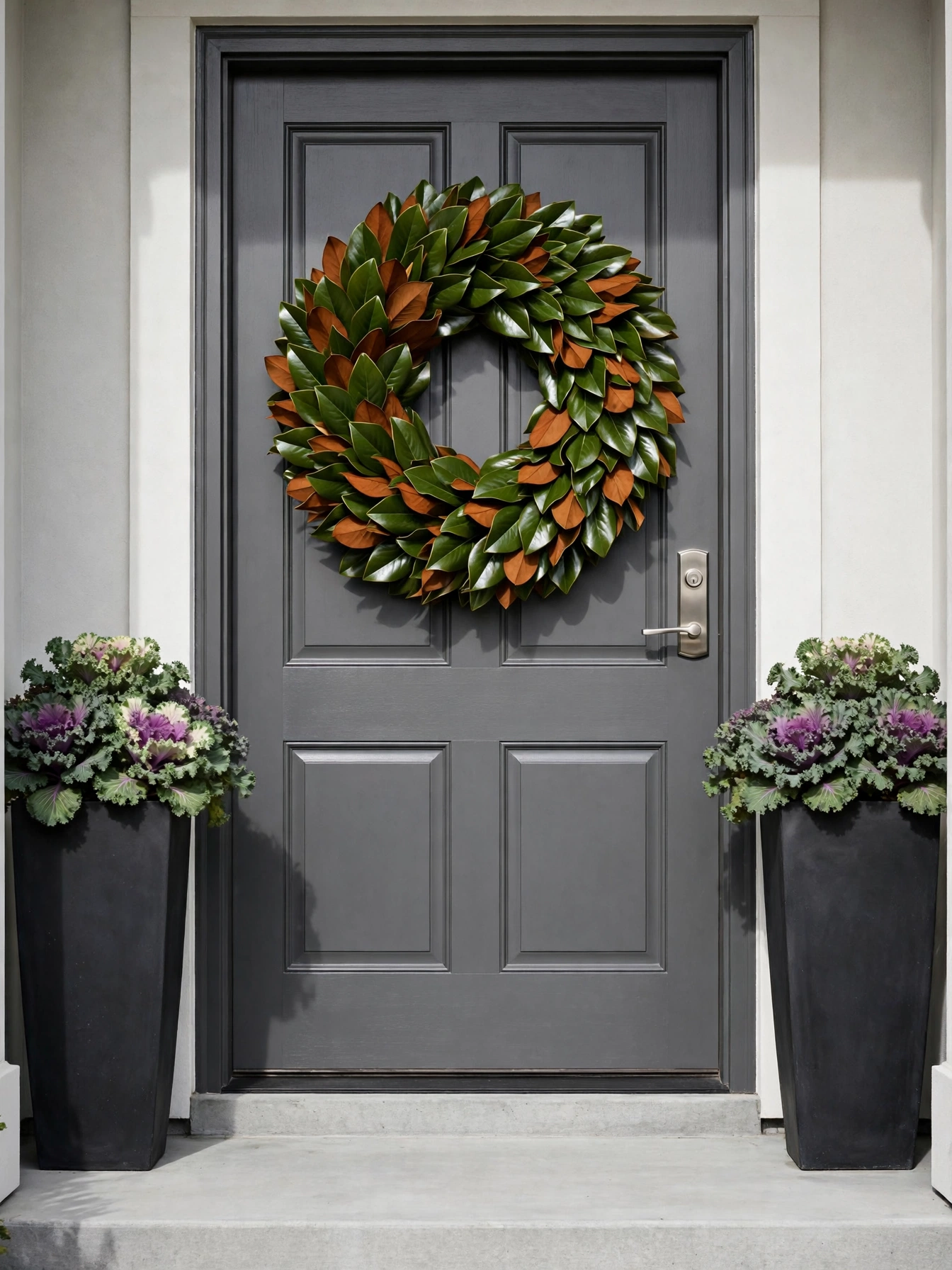
Magnolia Leaf Wreath
Why This Works:
- The two-tone leaves look expensive and catch light from every angle.
- Preserved magnolia lasts 2 to 3 years, far longer than most natural wreaths.
- The simple circle needs no bow or extras, so styling decisions are minimal.
- It reads formal enough for a front door yet warm enough for fall.
Layer 60 to 80 preserved magnolia leaves, each 4 to 6 inches long, onto a 24 inch straw wreath form using 2 inch floral U-pins, overlapping each row by half so no straw shows. Work in the same direction around the circle for a uniform finish. Preserved leaves cost 50 to 80 dollars per wreath in materials, while fresh magnolia branches brown and curl within 2 weeks, so preserved is the only sensible choice for a door. Avoid hanging this wreath in direct afternoon sun, because UV fades the glossy green to dull olive in 3 to 4 weeks. Compared with a mixed-foliage wreath, the single-material magnolia design takes less design skill but more patience: plan 2 to 3 hours of pinning.
Before ordering preserved leaves, test one leaf against your door color, because the coppery undersides can clash with warm red doors. Ideal for Southern traditional, transitional and formal homes, and it is the wreath designers reach for when a client wants one purchase that lasts multiple seasons. The honest limitation is price: quality preserved leaves are not cheap, and cheap dyed leaves shed color in rain. If you want a 36 inch statement version custom built, hiring a local florist for the design work is money well spent; expect 150 to 200 dollars for a professional large magnolia wreath. The classic error is pinning leaves flat against the base, which looks lifeless; angle each leaf outward about 30 degrees for natural dimension.
Fall Wreath Ideas 2026

Why This Works:
- This is the all-rounder: it matches every fall porch style from farmhouse to colonial.
- Mixed faux foliage looks full from the street, where simpler wreaths can disappear.
- Faux materials mean it looks identical on day 60 as on day 1.
- The plaid bow is swappable, so one wreath serves Halloween through Thanksgiving.
Build on a 22 inch grapevine base with 3 to 4 mixed faux foliage picks, 6 to 8 orange berry sprays at 8 to 10 inches long, and 5 to 7 mini faux pumpkins in cream and orange. Tie a full bow from 3 yards of 2.5 inch plaid ribbon at the top. These fall wreath ideas for autumn 2026 work best when the wreath spans about two-thirds of a 36 inch door, roughly 22 to 24 inches of finished width. Avoid covering more than 80 percent of the grapevine, because a completely stuffed wreath loses the natural texture that makes the style work. Compared with premade harvest wreaths at 70 to 110 dollars, the DIY version costs 40 to 60 dollars and lets you control the color mix. Total weight stays near 4 pounds, so a 10-pound-rated hanger is plenty.
A practical rule for harvest-style wreaths is to step back 10 feet after every few additions; what looks sparse up close often looks perfect from the sidewalk. Best suited to just about any home, which is why it is the default recommendation for anyone buying their first serious fall wreath. The trade-off is storage: a full 24 inch harvest wreath needs a proper 26 to 30 inch wreath box, not a garbage bag, or the foliage crushes. Mixing warm and cool tones, like teal pumpkins with rust leaves, is a frequent error that fights the classic harvest palette. At the store, check the leaf color in natural light, because store lighting makes cheap orange plastic look richer than it is.
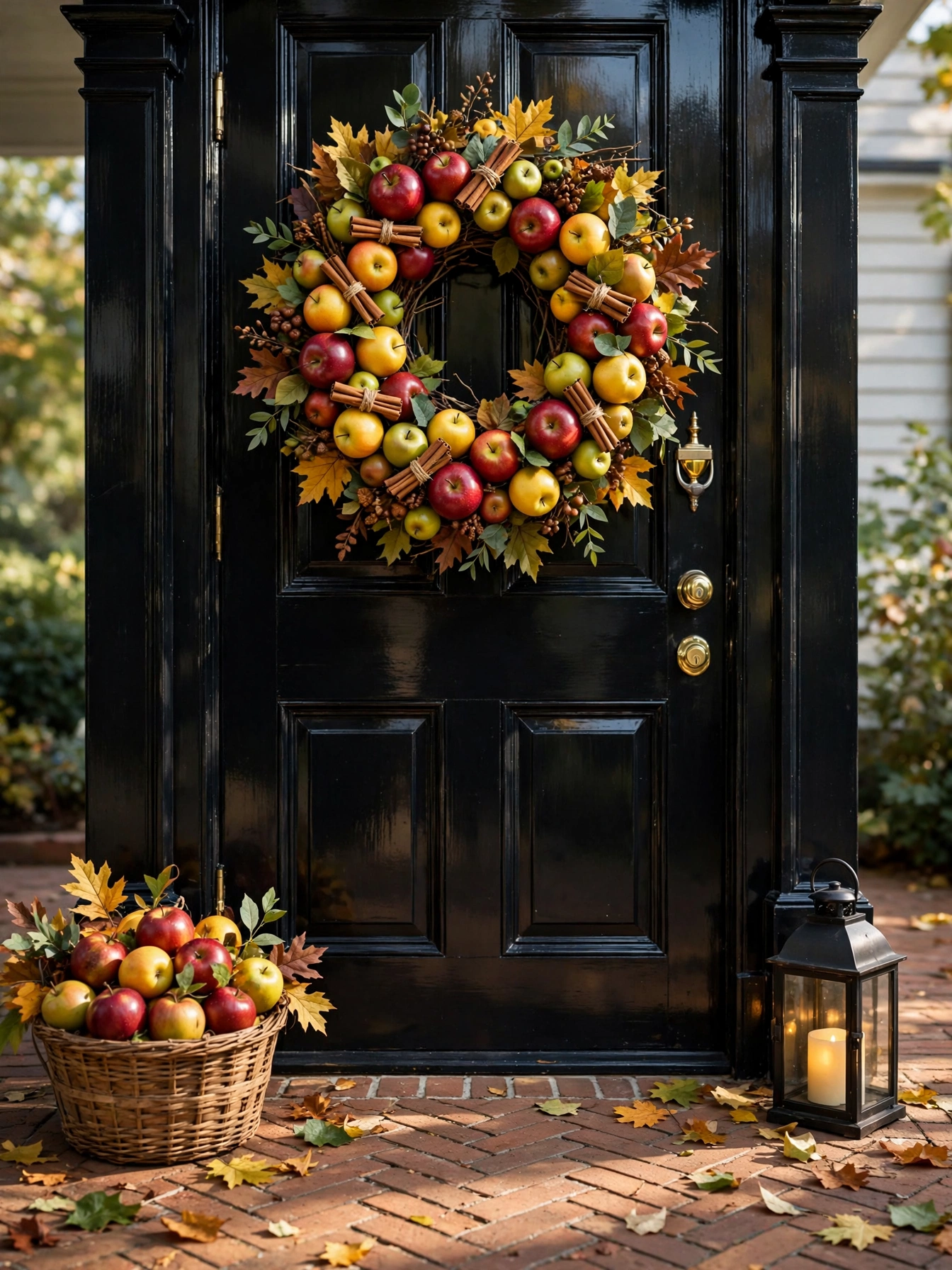
Heirloom Apple Wreath
Why This Works:
- Real-looking apples give orchard-fresh color that no flower can match in October.
- The cinnamon bundles add scent, which makes guests notice the wreath before they see it.
- Dense fruit coverage looks abundant and expensive from the curb.
- It doubles as Thanksgiving decor with zero changes.
Cover an 18 inch foam wreath form with 12 to 15 faux apples, each about 2.5 inches in diameter, pushing a 3 inch piece of 20-gauge wire through each apple and into the foam for a hold that hot glue alone cannot match. Tuck 6 bundles of 4 inch cinnamon sticks and a few faux leaves into the gaps. The finished wreath weighs 4 to 5 pounds, so skip adhesive hooks and use a metal over-door hanger rated for 10 pounds or a sturdy nail. Avoid real apples entirely: they rot within 3 to 4 days outdoors and draw wasps to your front door. Compared with a grapevine base, foam grips wired fruit far more securely, which matters when each apple weighs 3 to 4 ounces. Budget 35 to 55 dollars DIY against 75 to 120 dollars retail.
If your porch gets full afternoon sun, choose deeper red and green apples over pale yellow ones, because light colors show dust faster. Perfect for colonial, cottage and farmhouse homes, especially anywhere near apple country where the theme feels authentic. The weak point is weight distribution: hang it slightly high and check after a week, because fruit wreaths can develop a forward tilt as wires settle. The error most beginners make is spacing apples evenly like polka dots; cluster them in groups of 2 to 3 for a natural orchard look. In the store, squeeze the faux apples, because hollow thin-walled ones dent permanently while solid foam-filled ones survive storage.
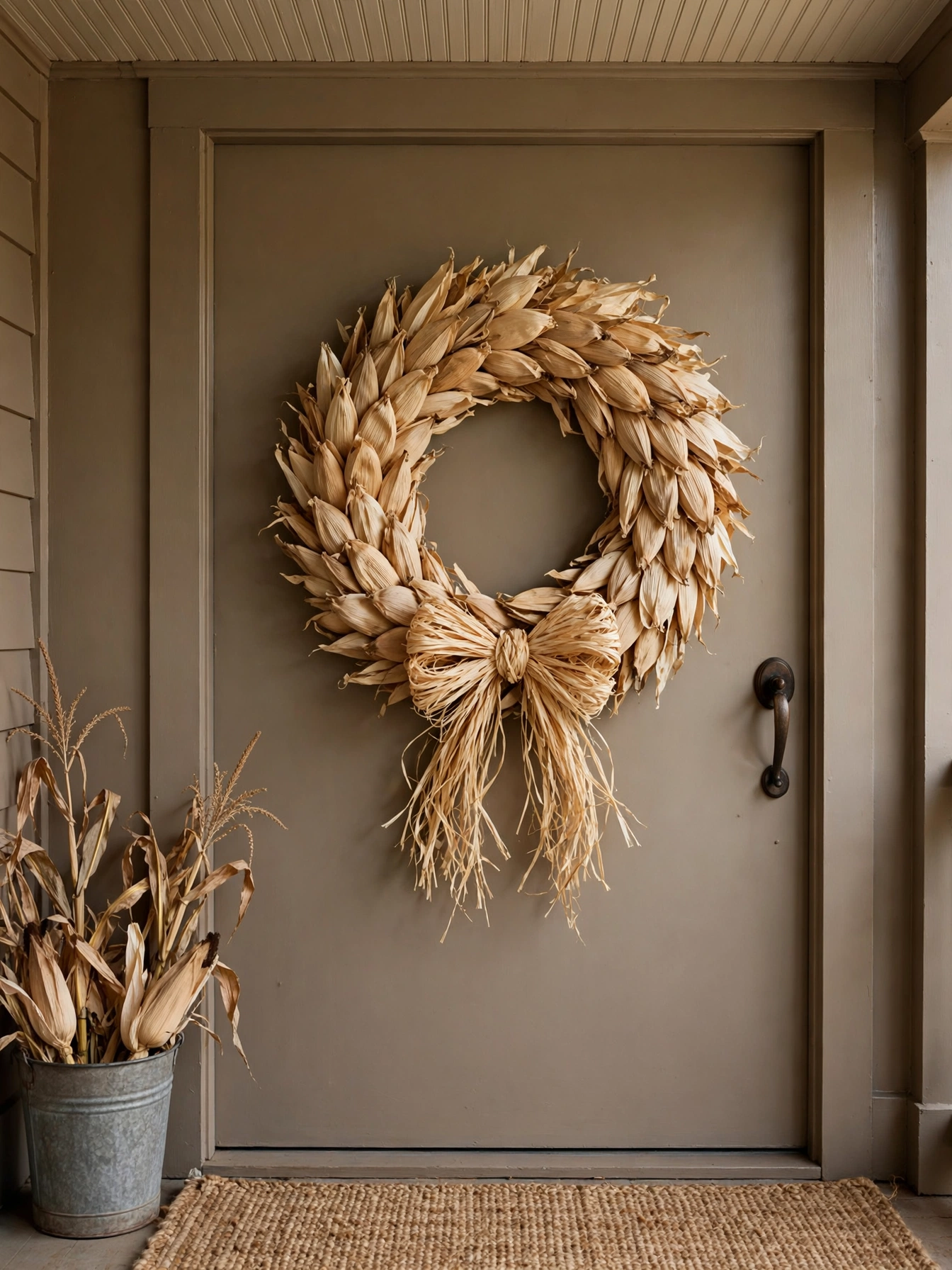
Corn Husk Wreath
Why This Works:
- The layered husk texture looks like a craft-fair showpiece, not a store-bought wreath.
- Corn husks cost almost nothing: a full wreath needs one 8 dollar bag.
- The neutral palette works with any door color, including tricky reds and greens.
- It is a genuinely fun weekend project, done in about 2 hours.
Soak 30 to 40 dried corn husks in warm water for 20 minutes to make them pliable, then layer them in overlapping rows around a 12 inch foam wreath form, pinning each with a 1.5 inch floral pin and letting them dry 24 hours before hanging. The finished wreath measures 18 to 20 inches across. Keep it on a covered porch or indoors: wind shreds dried husks, and rain turns them to mush in a single storm. Compared with a raffia wreath, corn husk gives a broader, more architectural texture, though raffia survives weather better. Total cost runs 12 to 20 dollars, making it the best value handmade option on this list.
Renters like this option because it is cheap, light at under 2 pounds, and hangs from a basic adhesive hook with no door damage. It suits rustic, farmhouse and Southwestern-style homes, and it looks right at home on a kitchen or pantry door indoors too. Weather is the hard limit here: this is a covered-porch-or-indoor wreath, full stop. Skipping the soak is the classic beginner error; dry husks crack and split when you try to curve them around the form. Check the bag for mold spots before you buy, because damp-stored husks carry mildew that spreads once layered. Let each layer dry fully, or trapped moisture rots the foam base from inside.
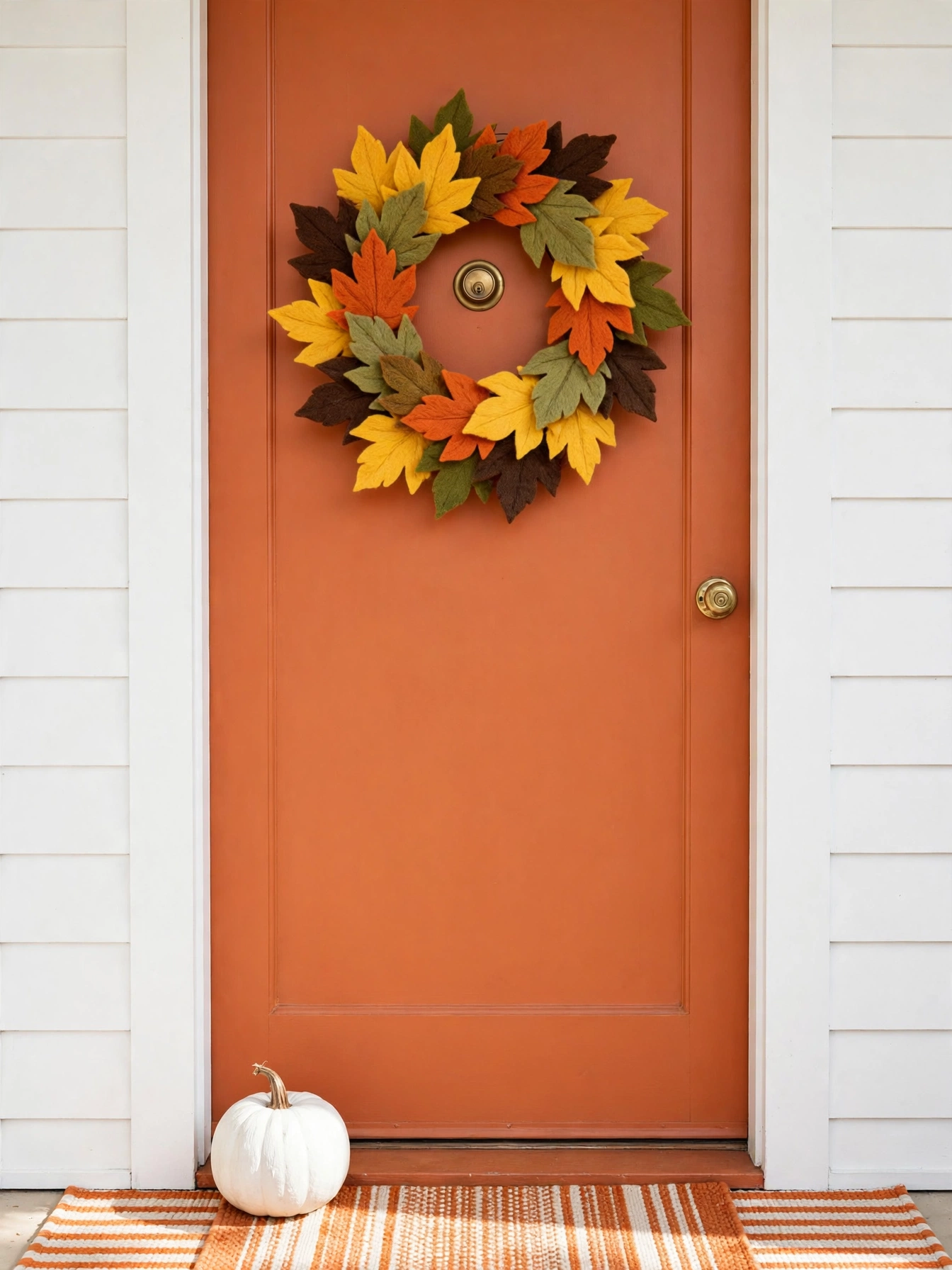
Felt Leaf Wreath
Why This Works:
- Felt never wilts, fades or sheds, so it looks perfect all season with zero care.
- The matte texture photographs beautifully and looks modern, not childish.
- It is the safest wreath for homes with toddlers: nothing pokes, breaks or molds.
- Every leaf is customizable, so your wreath matches your exact color scheme.
Cut 40 to 50 leaves, each 3 to 4 inches long, from 6 to 8 sheets of 9 by 12 inch wool-blend felt, and attach them to a 12 inch straw or foam form with low-temperature hot glue, overlapping rows by half. The finished wreath measures 16 to 18 inches and weighs about 1.5 pounds. Choose wool or wool-blend felt over cheap acrylic craft felt: acrylic pills and thins within one season, while wool felt holds its edge for 3 to 5 years of reuse. Avoid high-temperature glue guns, because the heat melts felt fibers and leaves shiny spots. Compared with a foliage wreath at 40 dollars plus, this one costs 15 to 25 dollars and takes 2 to 3 relaxed hours to assemble.
Homeowners who have tried this find that kids love helping cut the leaves, which makes it a genuine family project rather than a solo chore. It suits modern, playful and Scandinavian-inspired homes, and it works indoors on a bedroom or playroom door where natural wreaths would shed. The downside is rain: felt absorbs water and takes days to dry, so keep it on a covered porch or inside. A common mistake is cutting all leaves the same size; mixing 3 and 4 inch leaves in a 60-40 ratio looks far more natural. Check the blend on the label before you buy, and aim for at least 35 percent wool content for durability.
Acorn Cap Wreath

Why This Works:
- The mosaic texture stops visitors mid-step: nobody has seen one before.
- Acorn caps are free for the gathering and weigh almost nothing.
- The all-brown palette works with literally any door color.
- It is a genuine conversation piece that looks far more expensive than it is.
Glue 300 to 400 acorn caps in tight overlapping rows onto a 10 to 12 inch straw wreath form with hot glue, working in small 3 inch sections so the glue does not cool before the caps set. The finished wreath measures 14 to 16 inches across and weighs under 2 pounds. Plan 6 to 8 hours of gluing over two evenings; this is a slow-craft project, not a quick one. Never use whole acorns without baking them at 200 degrees Fahrenheit for 1 hour first, because unheated acorns can harbor weevils that hatch indoors. Compared with a whole-acorn wreath, the cap mosaic lies flatter against the door and survives handling better, since caps have no heavy nut to pull loose. Material cost is 8 to 15 dollars in glue sticks and a form.
Measure twice before starting, because the small 10 inch form looks lost on a 42 inch double door; scale up to a 14 inch form for wide doors. A good fit for craft lovers, cottage homes and anyone who wants a truly one-of-a-kind piece. The catch is time: at roughly 50 caps per hour, this is the slowest wreath on the list, and rushing shows in the gaps. It is also an indoor or covered-porch piece, since rain loosens hot glue over time. Watch out for mixing cap sizes randomly; sorting caps into small, medium and large bowls first gives a visibly neater mosaic. Keep it indoors and it lasts 5 years or more.
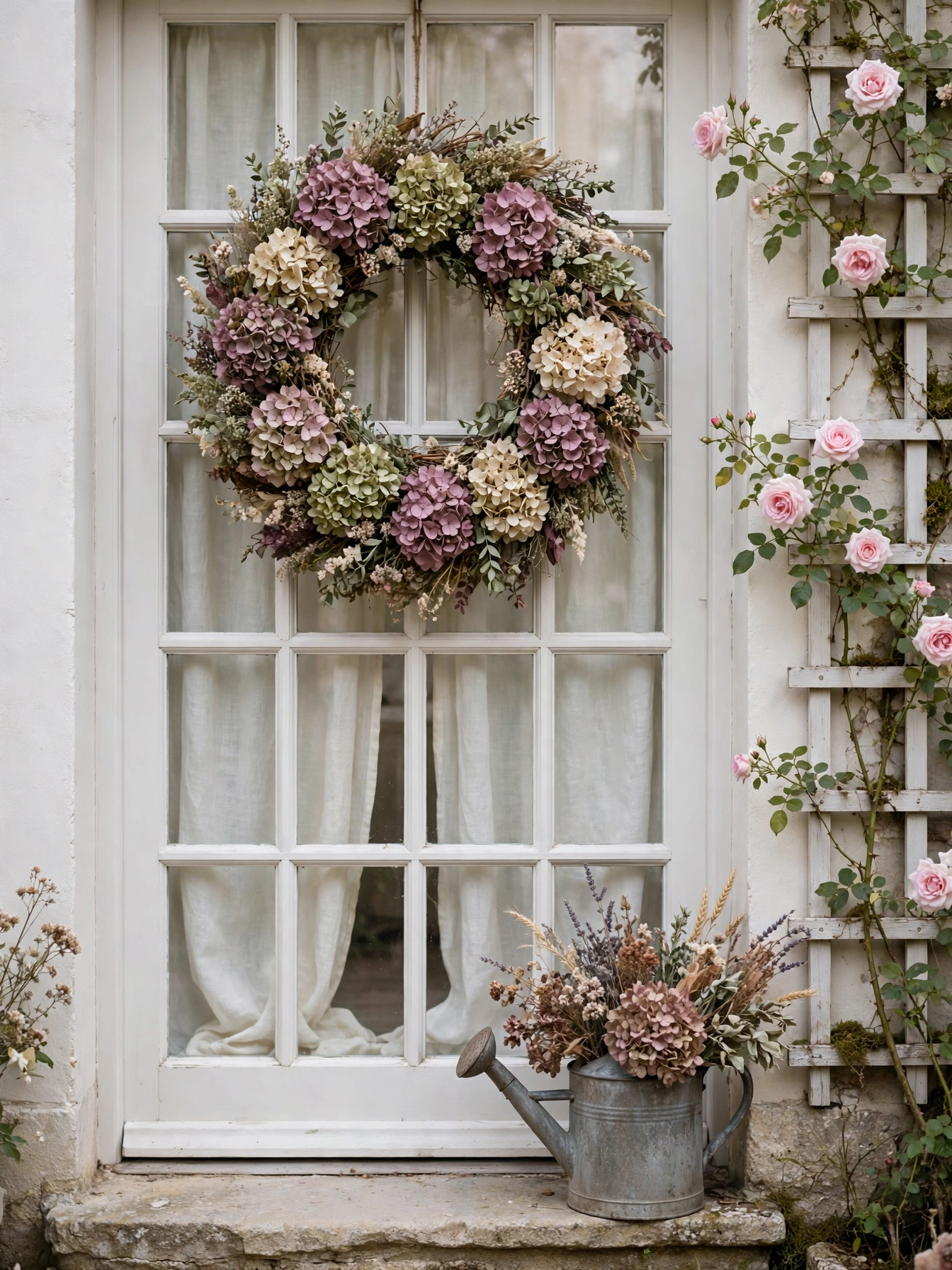
Dried Hydrangea Wreath
Why This Works:
- Dried hydrangeas give a full, lush look with zero arranging skill required.
- The muted mauve and sage palette is the most elegant color story on this list.
- Each bloom is 5 to 6 inches wide, so 10 heads cover a whole wreath fast.
- It smells faintly sweet and looks beautiful from both sides of a glass door.
Cluster 10 to 12 dried hydrangea heads onto an 18 inch straw wreath form, securing each with a 4 inch piece of 22-gauge wire pushed through the stem end plus a dab of hot glue. The finished wreath measures 20 to 22 inches and weighs about 2.5 pounds. Keep it completely dry: humidity and rain splash turn the papery blooms brown within days, so this is a covered-porch or indoor wreath. Compared with silk hydrangeas, dried blooms cost half as much at 30 to 50 dollars total and look more authentic, but silk survives weather that would ruin dried flowers. Handle the finished wreath by the straw base only, because the blooms shatter if squeezed.
On a north-facing door that stays damp, choose silk over dried, no matter how pretty the dried version looks in photos. A natural fit for French country, shabby chic and romantic traditional homes, and it is lovely on an interior door where guests see it up close. The honest limitation is fragility: one drop onto a hard porch floor can shatter a third of the blooms. Many first-timers buy hydrangeas dried at peak color; blooms cut slightly past prime hold their shape far better. Gently squeeze a bloom before you commit: it should feel papery and crisp, not soft, which signals incomplete drying and future mold.
Copper Sunflower Wreath

Why This Works:
- Sunflower heads are the largest natural wreath element, so 7 heads fill a whole wreath.
- The golden yellow pops against white, black, navy and gray doors from down the street.
- Copper ribbon adds a metallic accent that catches afternoon light beautifully.
- It is unapologetically cheerful, which suits the early-fall mood perfectly.
Wire 7 to 9 dried sunflower heads, each 4 to 6 inches across, onto an 18 inch wire wreath frame with 20-gauge floral wire, then tuck dried wheat sprigs between the heads and tie two 18 inch streamers of 1.5 inch copper ribbon at the bottom. The finished wreath spans 20 to 22 inches and weighs about 2 pounds. Keep the copper ribbon dry, because rain tarnishes the metallic finish within one season; the sunflower heads themselves handle light weather fine. Compared with faux sunflowers at 4 to 6 dollars per head, dried heads cost 1 to 2 dollars each at farm stands in September, bringing the total to 20 to 35 dollars. Hang it where it gets morning sun, which makes the gold petals glow.
Centering every sunflower face-forward like a clock is the usual error; angling 2 or 3 heads slightly sideways creates natural depth. Great for farmhouse, country and cheerful traditional homes, and it is a favorite for homes with kids because the big blooms read clearly even to small eyes. The trade-off is petal drop: dried sunflowers shed petals for the first week, so hang it over an easy-to-sweep porch, not above an indoor rug. Inspect the back of each flower head before paying; soft backs mean the head will mold within 2 weeks. Choose heads with tight, intact centers for the longest display life.
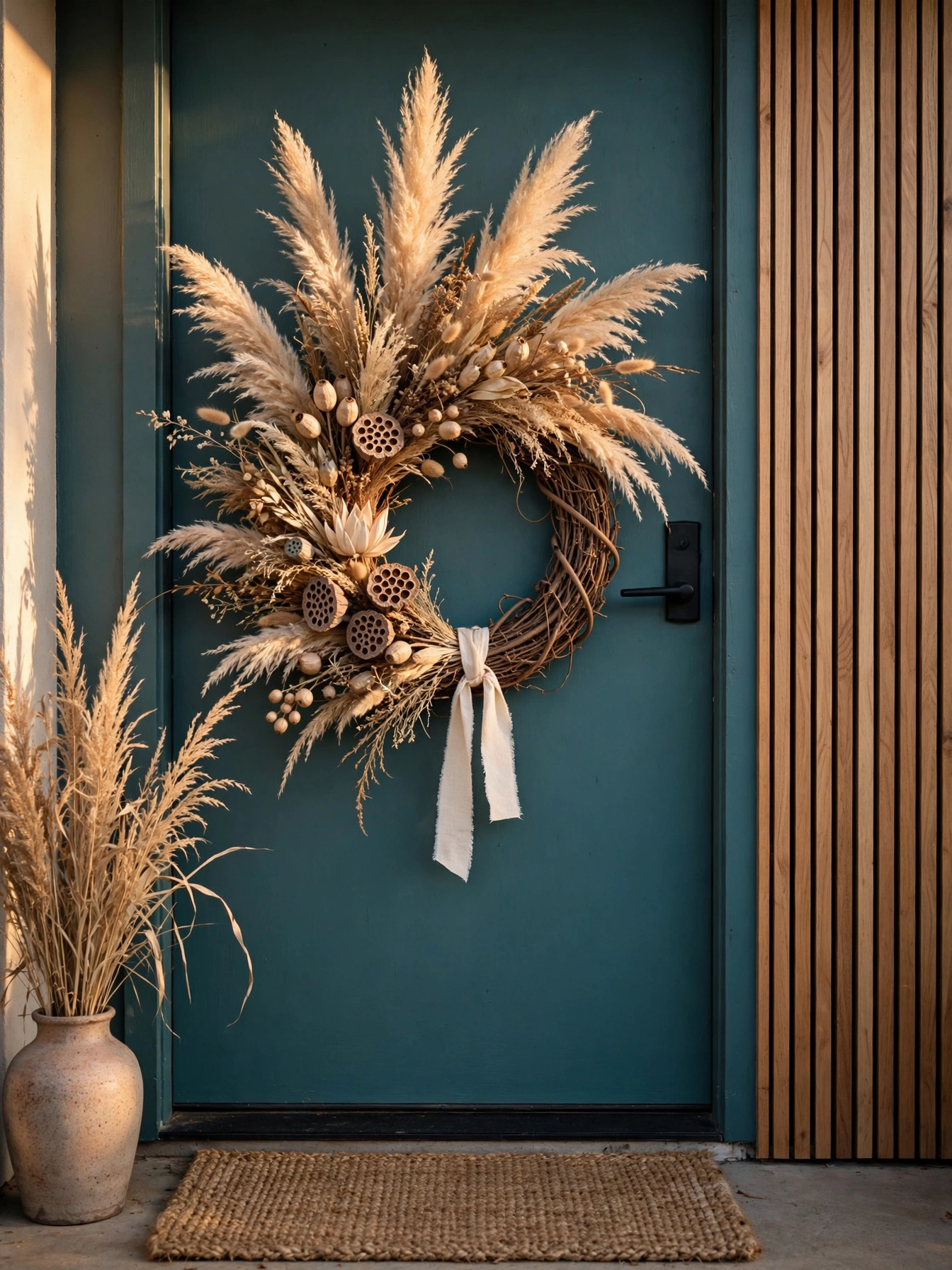
Grapevine Fall Wreath Ideas
Why This Works:
- The tall grasses give this wreath a 30 inch vertical presence that standard wreaths lack.
- The all-neutral palette works with bold door colors like teal that fight orange decor.
- Every element is dried, so the whole piece lasts the full season outdoors.
- The wild silhouette looks designer-made but assembles in under an hour.
Start with a thick 24 inch grapevine base and wire 8 to 10 pampas grass plumes, each 12 to 18 inches tall, into the top half so they fan upward like a crown. Add 5 to 6 dried lotus pods and a handful of beige seed pods around the lower two-thirds, and finish with a simple cream linen bow. These grapevine fall wreath ideas for autumn 2026 suit covered and exposed porches alike, since every material tolerates weather. Keep the wreath 10 feet from grills, fire pits and open-flame lanterns, because pampas plumes are highly flammable. Compared with a spray-painted grapevine, the natural finish ages gracefully instead of chipping. Total cost runs 30 to 50 dollars, and the whole piece weighs about 3 pounds.
Before buying dried grasses, check the plume fullness by shaking the bundle gently; sparse plumes never fluff up, no matter how you arrange them. Well suited to modern organic, bohemian and Japandi-inspired homes where a traditional orange harvest wreath would feel loud. The caveat is shedding: pampas drops fine fibers for the first 2 weeks, so avoid hanging it above outdoor dining furniture. A practical test before you commit is holding one plume against your door at arm’s length; the beige-on-teal contrast should read clearly from 15 feet away. If your household has grass allergies, choose preserved grasses labeled low-shed, or keep this one outdoors only.
Velvet Pumpkin Wreath

Why This Works:
- Velvet pumpkins look expensive because the fabric catches light like real pumpkin skin.
- The jewel tones (plum, sage, burnt orange) feel current without chasing trends.
- Tight clustering hides the base completely, giving a lush professional finish.
- These wreaths last 5 years or more, making the higher cost a genuine investment.
Pack 8 to 10 velvet pumpkins, each 3 to 4 inches wide, tightly onto a 20 inch foam wreath form with hot glue, nesting them so no foam shows and mixing the four colors evenly. Add a few silk leaves deep in the gaps for shadow. The finished wreath measures 22 to 24 inches and weighs 3 to 4 pounds. Keep it out of direct afternoon sun, because velvet fades noticeably within 4 to 6 weeks of strong UV. Compared with real pumpkins that last one season, velvet pumpkins cost 6 to 12 dollars each but return every fall for years; a DIY velvet wreath runs 60 to 120 dollars against 120 to 180 dollars retail. A 10-pound-rated hanger handles the weight with margin to spare.
When hanging anything heavier than 3 pounds on a fiberglass or steel door, use an over-door hook rather than adhesive, because temperature swings weaken adhesive bonds on metal surfaces. This works best for transitional, modern and luxe farmhouse homes where the decor leans polished rather than rustic. The drawback is rain: velvet absorbs water and dries slowly, so this is a covered-porch wreath despite its sturdy build. Buying pumpkins all in one color is the usual error; the four-tone mix is what gives the design its depth. Check the pumpkin stems before you buy: real-feeling dried stems look far better than plastic ones and cost the same.
Olive Branch Wreath
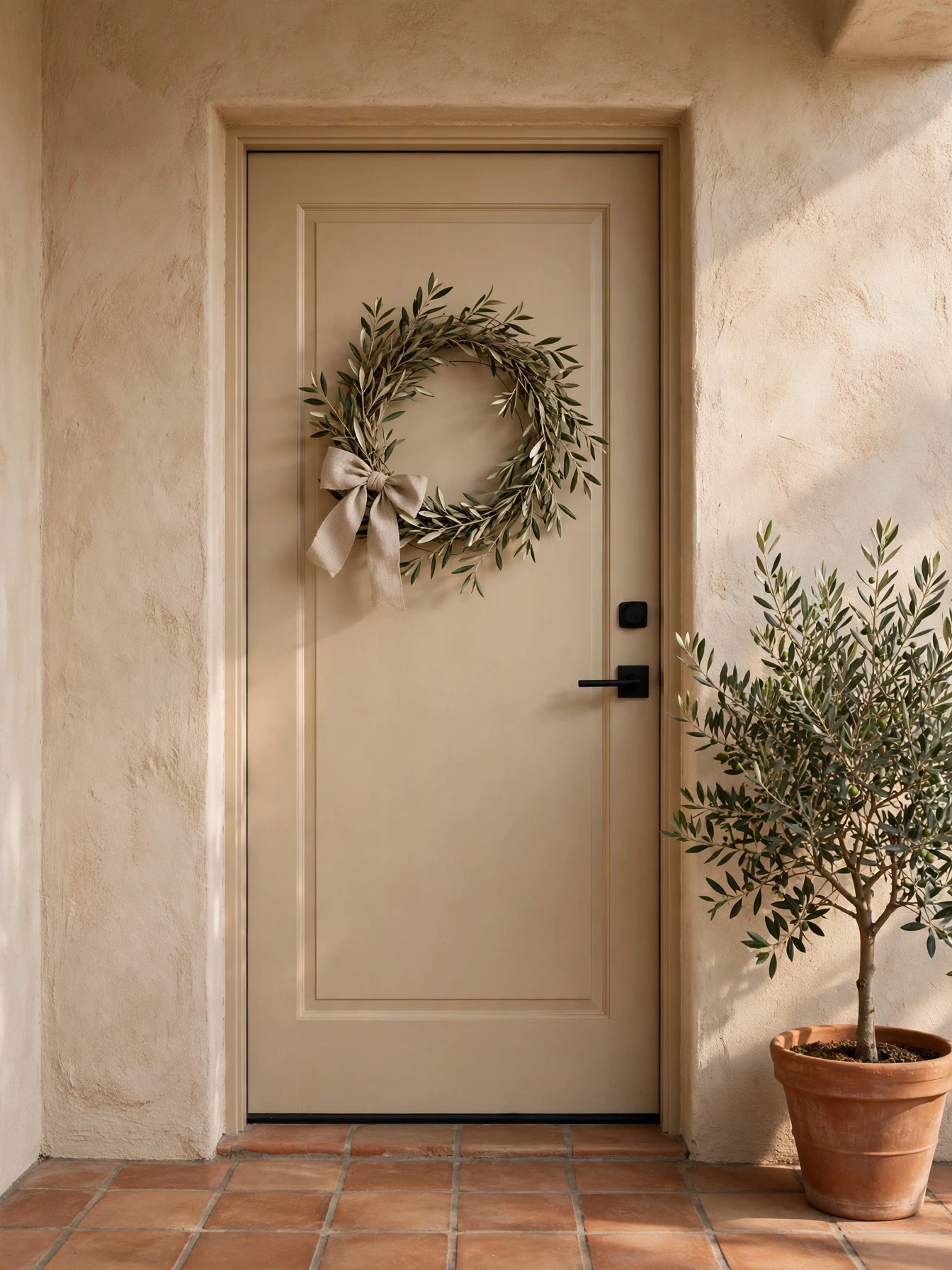
Why This Works:
- Olive branches bring a quiet European feel that orange-heavy wreaths cannot.
- The silvery green works year-round, so it never looks stored past its season.
- A single material means assembly takes 30 minutes with no design decisions.
- It complements stone, stucco and brick exteriors beautifully.
Wire 6 to 8 dried olive branches, each 24 to 30 inches long, around a 19 inch thin wire frame with 24-gauge floral wire, overlapping the stems and letting the leafy ends fan naturally. Tie a simple 2 inch natural linen bow at the lower side. The finished wreath measures 22 to 24 inches and weighs under 2 pounds. Keep it sheltered from strong wind, because dried olive leaves shed when whipped around; a covered porch is ideal. Compared with eucalyptus, olive has a more muted, gray-green tone that suits Mediterranean and modern homes better than the brighter silver of eucalyptus. Total cost runs 25 to 40 dollars for preserved branches, and the wreath lasts 1 to 2 years indoors or on a covered porch.
In real homes, olive branches work best where the architecture already leans warm and minimal: stucco, limestone and white brick exteriors. It suits Mediterranean, modern organic and California-casual homes, and it transitions into winter with a simple ribbon swap. The weak point is leaf drop: expect some shedding in the first month, so hang it where fallen leaves will not annoy you. A practical test before you commit is to gently shake a branch in the store; heavy immediate leaf drop means the batch is old. Confirm the branches are preserved, not merely dried, before you buy, because merely dried olive turns brittle and brown within weeks.
Cinnamon Berry Wreath

Why This Works:
- The cinnamon scent greets visitors before they even see the wreath.
- Orange berries give bright color that reads clearly in evening porch light.
- It is one of the few wreaths that engages two senses, which guests remember.
- The warm palette flatters brown, black and green doors especially.
Tie 8 bundles of cinnamon sticks, 3 sticks of 4 inch length per bundle, with natural twine and wire them evenly around a 16 inch grapevine base. Add 6 sprays of orange berries at 10 to 12 inches long and a few dried apple slices between the bundles. The real cinnamon scent lasts 4 to 6 weeks outdoors, longer on a covered porch. Keep the wreath away from heat vents and direct sun, which bake the aromatic oils out of the sticks in days. Compared with scented faux cinnamon, real sticks cost about the same at 1 dollar per bundle but smell authentic instead of perfumey. Total cost runs 20 to 35 dollars, and the wreath weighs about 2.5 pounds.
A practical test before you commit is to hold a cinnamon bundle 6 inches from your nose; strong, sweet bark scent means fresh stock, while a faint dusty smell means old inventory. Ideal for cozy traditional, cottage and farmhouse homes, and it is a natural fit for households that love baking-season smells. The trade-off is scent fade: after 6 weeks it becomes a visual wreath only, so plan a mid-season refresh. Steer clear of craft-store “cinnamon” scented pinecones in place of real sticks; the artificial scent turns chemical in heat. Check that the berry color is dyed through, not surface-painted, or rain will streak white patches.
Moss Ring Wreath
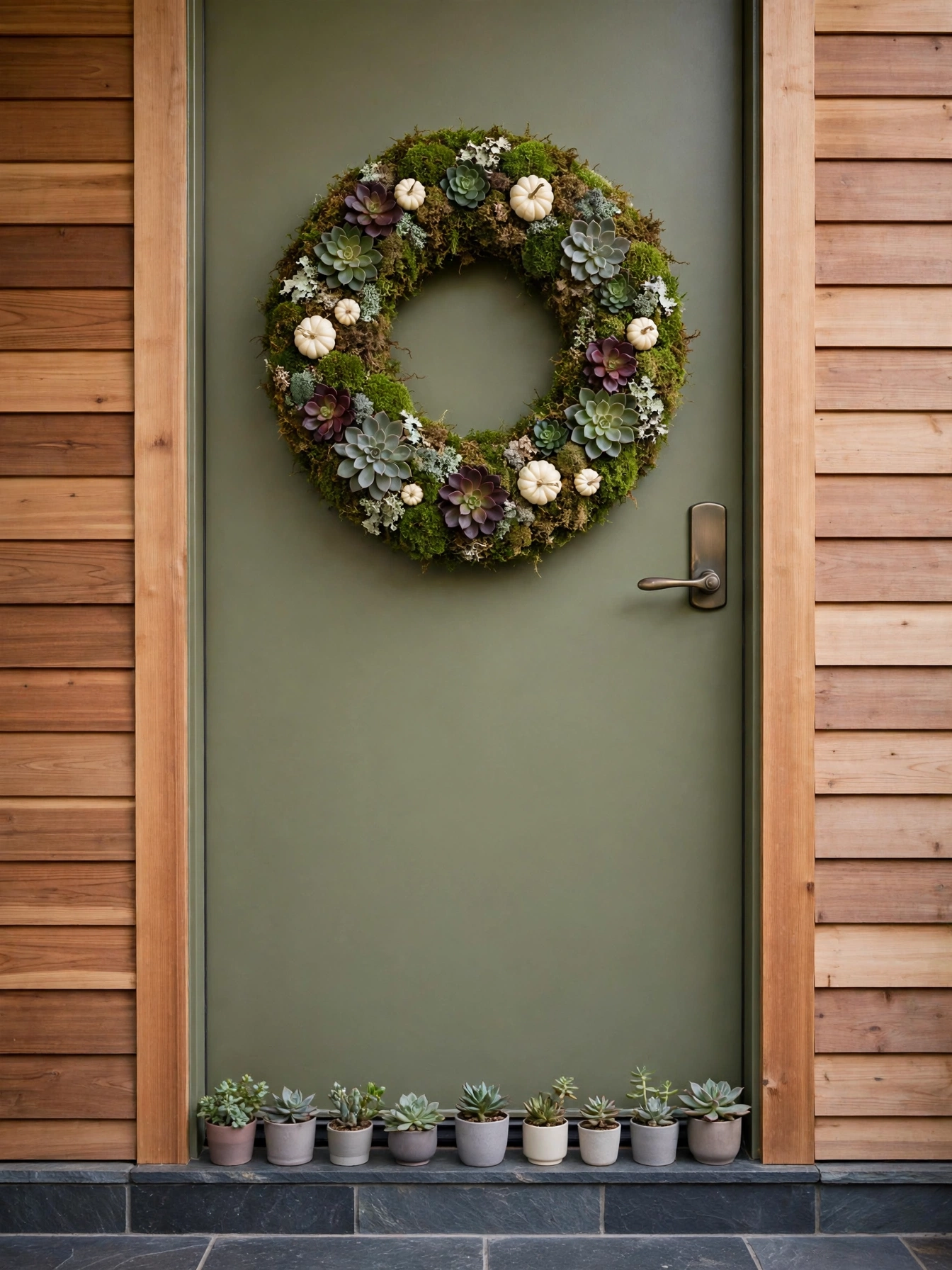
Why This Works:
- The living-moss look brings a garden feel to the front door in October.
- Faux succulents mean zero watering and zero frost damage.
- The green-on-green palette stands out among orange-heavy neighbor wreaths.
- It works from September through spring with small seasonal tweaks.
Pack one 2-quart bag of damp sphagnum moss tightly around a 14 inch wire wreath frame, securing it with 22-gauge floral wire wrapped every 2 inches until no wire shows. Press 8 to 10 faux succulents, each 2 to 3 inches wide, into the moss along with 4 to 5 mini white faux pumpkins and bits of preserved lichen. The finished wreath measures 16 to 18 inches and weighs about 3 pounds damp, 2 pounds dry. Use faux succulents, not real ones: real succulents die below 40 degrees Fahrenheit, which October nights regularly hit. Compared with a living wreath that needs weekly misting, the moss-and-faux version needs no water at all. Total cost runs 25 to 45 dollars.
The first thing to check before purchasing is your door’s sun exposure, because even faux succulents fade in harsh afternoon sun within a season. Best suited to modern, botanical and minimalist homes, and plant lovers adore it because it scratches the gardening itch in fall. The compromise is the moss itself: it slowly compacts and thins over 2 to 3 months, so plan to fluff and patch it mid-season. Soaking the moss dripping wet before packing is the classic error; damp, not wet, is the target, or the wire frame rusts. Choose long-fiber sphagnum over milled moss when you buy, because the long fibers grip the frame far better.
Pheasant Feather Wreath
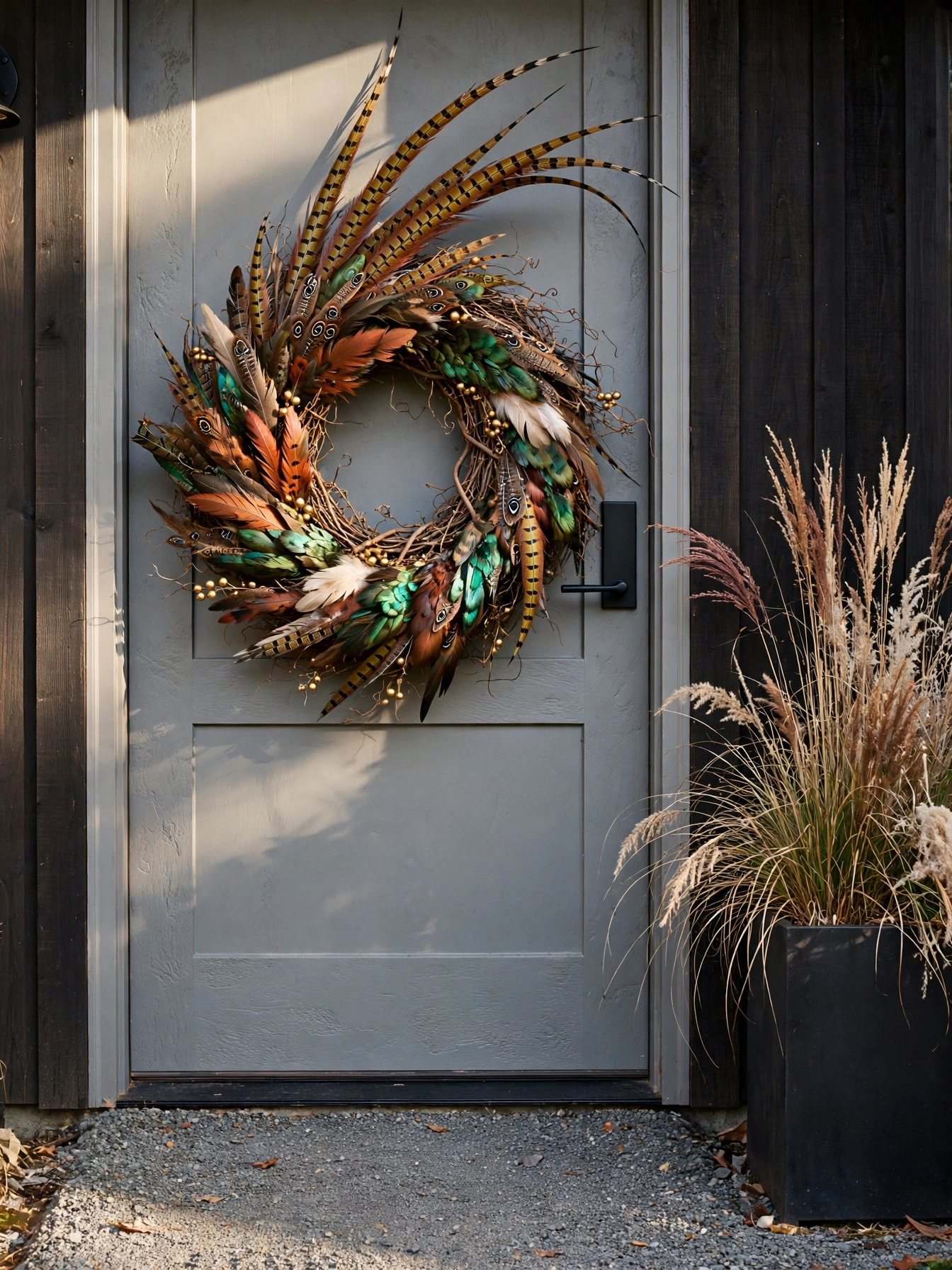
Why This Works:
- Feathers catch light and move slightly in breeze, so the wreath feels alive.
- The copper and bronze tones are pure October with zero orange plastic.
- No two feather wreaths look alike, which craft lovers prize.
- It photographs like a boutique piece worth three times its cost.
Layer 12 to 18 pheasant body feathers, each 6 to 8 inches long, around an 18 inch grapevine base with hot glue, overlapping them like shingles, then add 4 to 6 tail feathers at 20 to 24 inches long sweeping upward from the top. Tuck small gold berry picks deep between the feathers for sparkle. The finished wreath spans 22 to 26 inches tall and weighs under 2 pounds. Keep it on a covered porch: damp feathers clump and lose their shape, and a soaked feather wreath takes days to recover. Compared with foliage wreaths, feathers need gentler handling but reward it with unmatched texture. Total cost runs 35 to 55 dollars for quality feathers.
If your street gets strong autumn winds, choose a sheltered door for this one, because gusts tangle long tail feathers permanently. Perfect for rustic luxe, lodge and eclectic homes where bold texture fits the style. The honest limitation is longevity: expect 1 to 2 good seasons before the feathers look tired, while a grapevine base would last a decade. A practical rule is to buy 20 percent more feathers than you think you need; the extras cover mistakes and thin spots. Check feather quality before you buy by running one between your fingers; it should feel smooth and spring back, not brittle or broken. Avoid dyed feathers in unnatural colors, which cheapen the look instantly.
Autumn 2026 Wreath Ideas
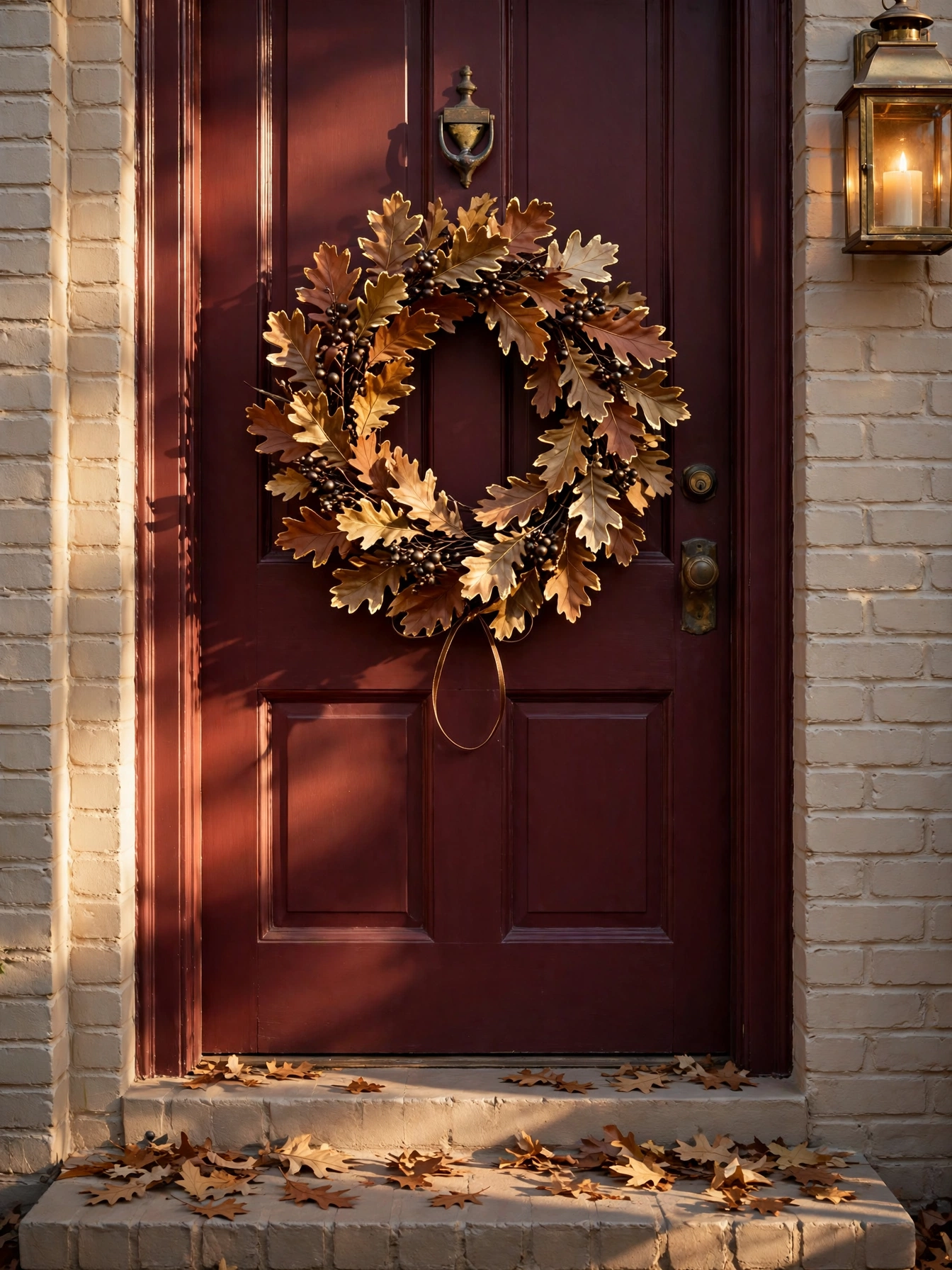
Why This Works:
- The gilded leaf edges catch low autumn sun and glow at golden hour.
- Oak leaves are sturdier than maple, so the wreath keeps its shape all season.
- The bronze and gold palette feels festive enough for Thanksgiving dinner guests.
- It is the most photogenic wreath on this list for anyone sharing their porch online.
Wire 50 to 60 preserved oak leaves around a 22 inch wire frame with 24-gauge floral wire, then dust the outer leaf edges lightly with gold spray paint from 14 inches away for a gilded effect. Add dark bronze berry picks deep in the foliage. These autumn 2026 wreath ideas for fall doors work best at 22 to 24 inches on a standard 36 inch door. Keep the spray can moving and use one light coat: heavy paint makes preserved leaves brittle and they crack within weeks. Compared with fresh-cut oak branches, which curl and brown in 5 to 7 days, preserved leaves hold color for the full 8 to 10 week season. Total cost runs 40 to 65 dollars.
Before finalizing this choice, test the gold finish on 3 spare leaves and view them in evening light, because some gold sprays read brassy-yellow instead of antique gold. A good fit for traditional, classic and elegant homes, and it is the right pick when your Thanksgiving guests will photograph the entryway. One trade-off is the paint step: it adds fumes and drying time, so spray outdoors and let the wreath cure 24 hours before hanging. Gilding every leaf is the one error to avoid; gilding only the outer third gives a sun-kissed effect while the inner leaves stay natural. Confirm the leaves are real preserved oak, not plastic, by checking for natural vein texture.
FAQs
What size wreath should I buy for these fall wreath ideas for autumn 2026?
For a standard 36 inch front door, choose a finished wreath 22 to 24 inches wide, following the two-thirds rule recommended by Better Homes and Gardens. A 32 inch door suits 20 to 22 inches, and 42 inch double doors can carry 26 to 28 inches.
How long will a natural fall wreath last on my porch?
Dried designs like wheat and grasses last 4 to 8 weeks outdoors, while preserved leaves and eucalyptus hold 1 to 2 full seasons. Fresh greenery fades within 2 to 3 weeks, and faux wreaths last 3 to 5 years. A covered porch can double the life of any natural wreath.
How do I keep squirrels from chewing my wreath?
Spray the wreath with a cayenne pepper deterrent every 7 to 10 days and after every rain, focusing on fruit or nut elements. Bring food-based wreaths indoors at night during October. Pinecone, feather and faux designs get chewed far less than apple or corn ones.
Which fall wreath ideas for autumn 2026 hold up best in rain?
Grapevine, pinecone and faux-foliage wreaths handle rain best, while wheat, corn husk and paper designs fall apart after 1 to 2 storms. Better Homes and Gardens advises keeping dried-floral designs under covered porches. For a fully exposed door, choose sealed or synthetic materials.
How should I store my wreath after fall?
Use a rigid wreath storage box 2 to 4 inches wider than your wreath, typically 24 to 30 inches, with acid-free tissue padding delicate areas. Store it flat in a cool, dry closet, never in an attic that tops 120 degrees Fahrenheit, since heat softens hot glue joints.
Conclusion
These fall wreath ideas for autumn 2026 prove you do not need a big budget for a polished porch. Measure your door first, match your materials to your weather, and hang the center at 57 inches for a balanced, professional look. Your first step is simple: grab a tape measure tonight, note your door width, then pick the design from this list that fits it best. Follow HomelyCrafter on Pinterest for more seasonal ideas. Save this to your Pinterest boards so you can refer back to it!

Muhammad Israr is a home decor enthusiast and the writer behind Homely Crafter. He spends his days researching paint colors, layouts and budget-friendly styling ideas, then breaks them down into practical, easy-to-follow guides so you can decorate with confidence.
1 thought on “20 Graceful Fall Wreath Ideas to Make for Autumn 2026”