
This collection of fall outdoor decor ideas for autumn 2026 rounds up 23 beautiful designs, from stacked pumpkin planters to lantern-lit pathways, each with exact measurements, material grades and weatherproofing guidance. Every idea includes what to avoid and which yard conditions it suits, so your Saturday project ends up on the porch instead of back in the garage.
You will learn how to size planters for a standard 4 by 6 foot porch, which materials survive rain and the first hard frost, and how to light a path without an electrician. Pick the design that fits your exposure, check the measurements, and style it this weekend.
Stacked Pumpkin Planters

Why This Works:
- The vertical stack turns one 18 inch planter into a 36 inch tall statement
- Mixing white, orange and green heirloom varieties adds designer-level color contrast
- Planter soil stabilizes the stack so wind cannot topple it
- Swap one tier for mums and the look refreshes in minutes
Choose a frost-proof glazed ceramic or thick-walled terracotta planter 16 to 20 inches wide and at least 14 inches deep; thin plastic pots crack when October nights dip below 32 degrees. Fill the bottom third with potting soil, then nest a 10 to 12 inch pumpkin into the soil so it sits level, followed by 7 to 8 inch and 4 to 5 inch tiers. Each pumpkin should differ by at least 3 inches in diameter or the stack reads as a lumpy column instead of a taper. Avoid balancing pumpkins on bare rims without soil; a 12 pound pumpkin shifts in wind and the whole tower slides, while packed soil locks the base in place. Terracotta rated for freeze-thaw cycles costs 25 to 45 dollars and outlasts the 12 dollar big-box version by years.
This suits front steps, flanking garage doors and porch corners where floor space is tight but height is available. A common mistake during installation is using perfectly round grocery-store pumpkins; heirloom varieties with flatter poles sit far more stable. The limitation is weight: a finished planter can top 60 pounds, so place it before filling rather than dragging it across a painted porch. Expect the bottom pumpkin to soften first where it touches damp soil, so check weekly and rotate tiers if one goes mushy.
Lantern-Lit Stone Pathways

Why This Works:
- Light at ankle height guides feet without the glare of overhead floods
- Lanterns spaced 6 feet apart create rhythm instead of a runway effect
- LED pillars give flame look with zero fire risk near dry leaves
- The whole setup runs on batteries, so no wiring or electrician needed
Use 10 to 12 inch tall metal lanterns with tempered glass panels; glass thinner than 2 millimeters shatters in the first hard frost, while tempered panels flex through freeze-thaw cycles. Space lanterns 5 to 6 feet apart on alternating sides of the path, set 12 inches back from the walking edge so a stray foot cannot kick one. Choose LED pillar candles with built-in dusk sensors and 6-hour timers; a set of 3 high-capacity D batteries runs about 60 nights at 4 hours per night. Avoid real flame candles in path lanterns; the National Fire Protection Association advises against open flames near walkways, and a tipped lantern in dry October leaves is a genuine hazard. If your design calls for new wired fixtures instead of battery lanterns, hire a licensed electrician rather than extending an existing circuit yourself.
Long driveways and garden paths through planting beds benefit most, where the glow doubles as wayfinding. The first thing to check before purchasing is your local leaf load; lanterns under a heavy-drop maple need their glass wiped every 3 to 4 days or the glow dims behind a film of debris. The trade-off is brightness: even the best LED pillars read as accent light, not security lighting, so pair them with one existing porch light. Battery cost is the quiet expense; rechargeable D cells pay for themselves within one season of nightly use.
Harvest Porch Garland
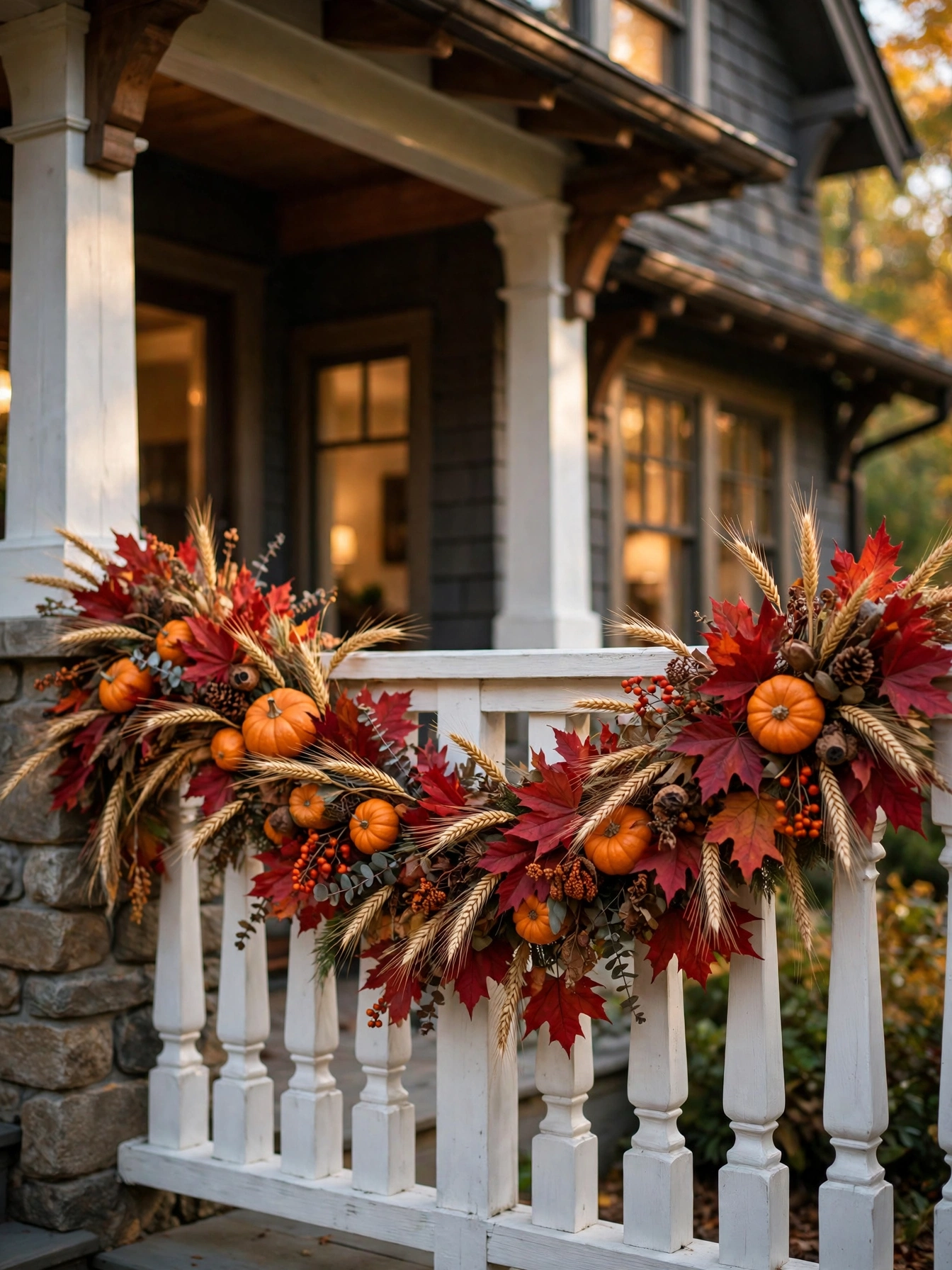
Why This Works:
- A 6 foot garland dresses an entire railing for under 35 dollars in materials
- Draping over the rail uses gravity, so almost no fasteners are needed
- Mixing leaf picks with wheat and pods adds texture variety in one pass
- The swag shape photographs beautifully from the street
Buy or build a garland 6 feet long and at least 8 inches thick; thinner 4 inch garlands look sparse on a standard 36 inch tall porch railing. If building, start with a faux leaf base and wire in 15 to 20 picks per foot: maple leaf sprays, wheat bundles and 3 inch faux pumpkins wired with 4 inch floral wire stems. Drape the garland so it sags 8 to 10 inches between attachment points spaced 24 inches apart, securing each point with a 5 pound rated adhesive hook or zip tie. Avoid real-leaf garlands on exposed railings; fresh leaves brown and drop within 5 days of wind and sun, while UV-rated faux holds color all season. Faux garlands with a 3-year UV rating cost 30 to 60 dollars and survive 2 to 3 seasons outdoors.
Porch railings, fence tops and stair handrails are the natural homes for this look. In real homes, this approach works best when the garland tails hang 18 to 24 inches down at each end rather than stopping flush; the tails give the finished drape a deliberate, styled feel. The limitation is wind: on unsheltered second-floor balconies, even wired garlands shift, so add one extra anchor per 18 inches there. Squirrels are the wildcard; they chew faux pumpkins, so hang the garland above 4 feet where they roam less.
Cornstalk Door Frames

Why This Works:
- Vertical 7 foot stalks make an 80 inch door look grander without any construction
- Dried corn costs a fraction of a matching pair of topiaries
- The golden tan color pairs with every door paint shade
- Bundles store flat against a garage wall all winter
Buy bundles 6 to 7 feet tall with at least 8 stalks per bundle; thinner bundles read as broomsticks from the street. Stand each bundle against the door trim and tie at three heights, 18 inches, 42 inches and 66 inches from the ground, with 1/4 inch jute twine wrapped 4 times and knotted tight. Lean the tops 4 to 6 inches outward from the trim so the silhouette flares instead of hugging the wall. Avoid placing cornstalks where the lawn sprinkler hits them daily; wet stalks develop black mold spots within 10 days and shed kernels across the porch. Tie a 2.5 inch wired plaid ribbon bow at the middle binding for a finished look that costs under 5 dollars.
Farmhouse, colonial and craftsman entries carry this best, where the rustic texture echoes wood and stone. Homeowners who have tried this find that fresh-cut stalks from a farm stand outlast the dried bundles from craft stores by about 3 weeks, since they start the season with more moisture. The honest limitation is lifespan: even dry-stored stalks snap and shed after one season, so budget 15 to 25 dollars yearly for replacements. Check your door clearance first; bundles thicker than 8 inches can block a storm door from opening fully.
Mum-Filled Wooden Crates
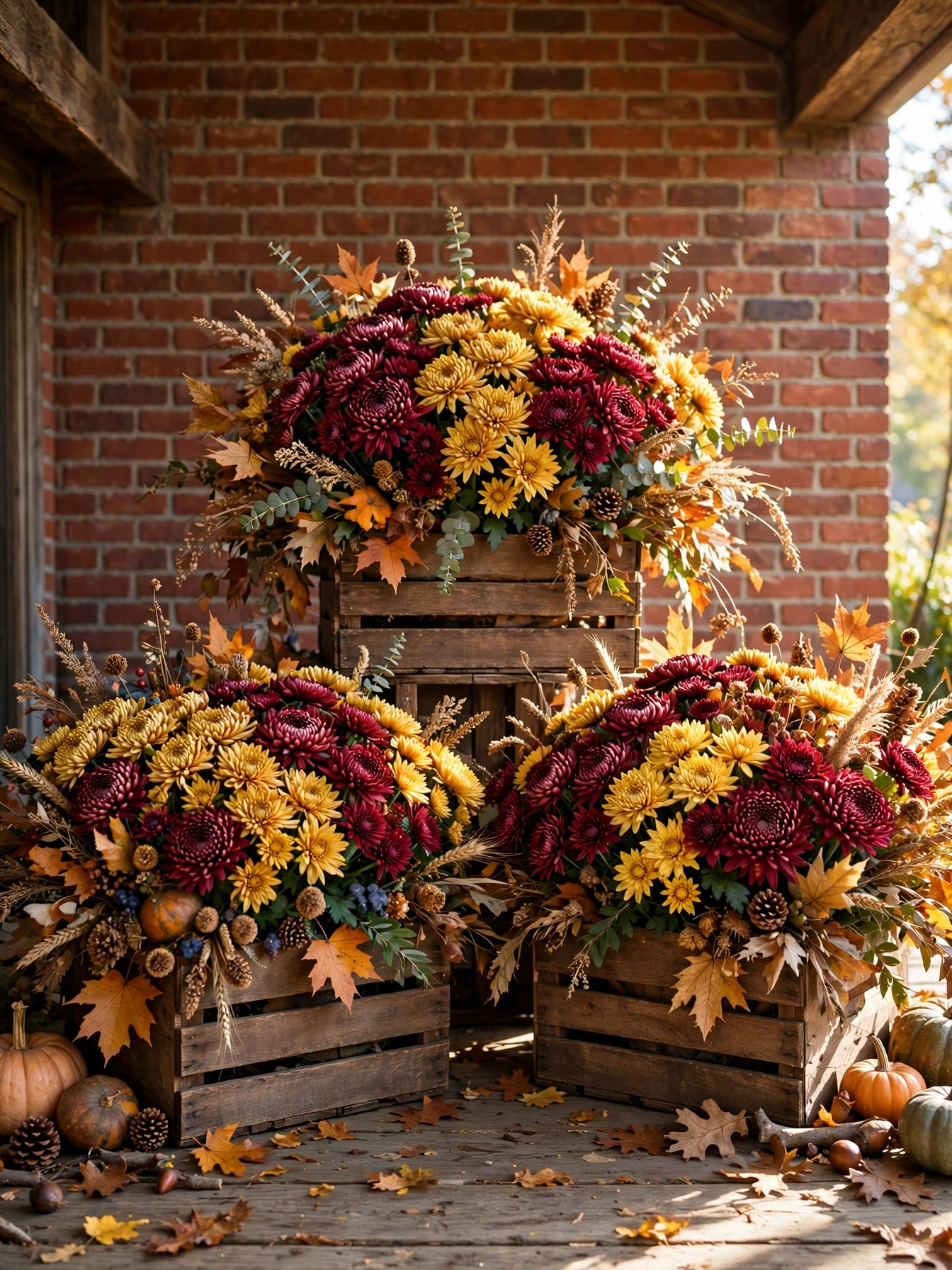
Why This Works:
- Crates lift mums 12 inches off cold concrete, which extends bloom life
- Grouped in threes, crates create a triangle composition the eye reads as styled
- Burgundy and gold mums cover the full fall palette in two plants
- The crate itself becomes decor, not just a container
Use solid wood crates 14 by 18 inches and at least 10 inches deep; slatted craft crates from dollar stores collapse under a watered 10 inch mum within 2 weeks. Line each crate with a 3 mil plastic liner punched with six 1/2 inch drainage holes, then set one 10 inch potted mum per crate so the nursery pot hides inside. Better Homes and Gardens recommends planting or placing mums 6 weeks before the first expected frost so roots establish; container mums bought in full bloom in early October typically hold color 4 to 6 weeks with daily watering. Avoid letting crates sit in standing water; wood in constant contact with wet concrete rots through in a single season, so set crates on 1 inch pot feet. Water every morning, about 32 ounces per 10 inch mum, since container mums dry out far faster than bed-planted ones.
Front steps, porch corners and flanking garage doors suit this grouping best. A common mistake is buying mums already past peak; choose plants with more tight buds than open flowers and you get 3 extra weeks of color. The trade-off is maintenance: mums are thirsty, and missing 2 days of watering in a warm October collapses the blooms. After the first hard frost, usually below 28 degrees, the display is done; compost the plants and store the crates dry.
Copper Fire Bowl Corner

Why This Works:
- A real fire extends patio season 6 to 8 weeks past the first frost
- Copper develops a rich patina that looks better every year
- One 30 inch bowl warms a 10 foot seating circle comfortably
- The bowl doubles as a sculptural focal point when unlit
Choose a 26 to 32 inch diameter copper bowl on a stable 4-leg base; bowls under 24 inches throw too little heat for a real seating group, while 36 inch models need two people to move. Set it on a non-combustible surface like pavers or gravel, keeping 10 feet of clearance from the house, fences and overhanging branches, which matches standard fire-safety guidance. Burn only seasoned hardwood with under 20 percent moisture; wet wood smokes heavily and coats the copper interior with creosote. Avoid placing a fire bowl on a wood deck, even with a heat shield; wind-blown embers find the gaps, and composite decking melts at temperatures a wood fire easily exceeds. A quality copper bowl runs 150 to 300 dollars, roughly double a steel one, but it will not rust through in 3 seasons like steel does.
Back patios and side yards with seating for 4 to 6 people get the most use from this investment. In practice, families use the bowl 2 to 3 evenings per week through October and November, which makes the cost per use lower than it first appears. The honest limitation is smoke: even dry hardwood smokes on startup, so downwind neighbors and open windows matter. Check local burn ordinances first; many suburbs restrict open fires to bowls with spark screens, a 40 to 60 dollar add-on worth buying.
Hay Bale Lounge Corner

Why This Works:
- Two 36 inch bales create instant seating for 4 guests at almost no cost
- The golden straw color is the single most harvest-coded material there is
- Bales double as a display base for pumpkins and lanterns
- A plaid blanket over the top turns scratchy straw into a real seat
Use standard two-string bales 14 by 18 by 36 inches, which seat one adult comfortably at a 14 inch height; the 18 inch three-string bales sit too high for a relaxed perch. Arrange two bales in an L shape against the porch wall, then top each with a 36 by 18 inch outdoor cushion at least 3 inches thick, since straw pokes through anything thinner. Drape a 50 by 60 inch plaid throw over each bale, tucking 6 inches under the front edge so it stays put in wind. Avoid uncovered bales in open yards; as noted in the opening design, a single soaking rain can add 40-plus pounds of water weight and start mold within a week, so this idea belongs under a roof overhang or covered porch. Real bales cost 8 to 15 dollars each at farm stands, while faux 24 inch bales run 40 to 60 dollars but survive rain.
Covered porches, carports and barn-adjacent patios are the right settings; exposed lawns are not. Homeowners who have tried this find that guests genuinely sit on the bales for the first hour of any gathering, then migrate to real chairs, so treat it as overflow seating rather than the main event. The limitation is shedding: straw drops constantly for the first week, so sweep daily or lay a 6 by 8 foot outdoor rug underneath. At season end, real bales compost beautifully into garden beds, which makes the 15 dollar price a soil amendment, not waste.
Plaid Throw Bench

Why This Works:
- One 50 by 60 inch throw restyles an existing bench for under 30 dollars
- Buffalo plaid reads as fall instantly without a single pumpkin
- The bench becomes a photo spot guests actually use
- Throws come inside nightly, so weather never ruins them
Start with a bench 42 to 48 inches wide; narrower benches look swallowed by a full-size throw, while 60 inch benches need two throws layered. Fold the 50 by 60 inch throw into thirds lengthwise and drape it over the backrest so 18 inches hang down the front and the rest pools on the seat. Add two 16 inch square outdoor pillows in rust and mustard, choosing covers with a 300D polyester rating or better for real weather resistance. Avoid cotton throws outdoors; one dew-heavy morning leaves them damp until noon and they mildew within 2 weeks, while acrylic-blend throws dry in under an hour. Bring the throw inside each evening; the 30-second habit keeps a 25 dollar throw looking new all season.
Front porches with existing benches, porch swings and built-in seating get the fastest win here. A detail worth getting right: anchor the throw with two 1 inch upholstery pins at the backrest so October gusts do not send it into the yard. The trade-off is daily effort; this is a fair-weather styling, not a set-and-forget one. On the plus side, the same throw moves indoors to the sofa in December, so the cost serves two seasons.
Wicker Basket Pumpkins
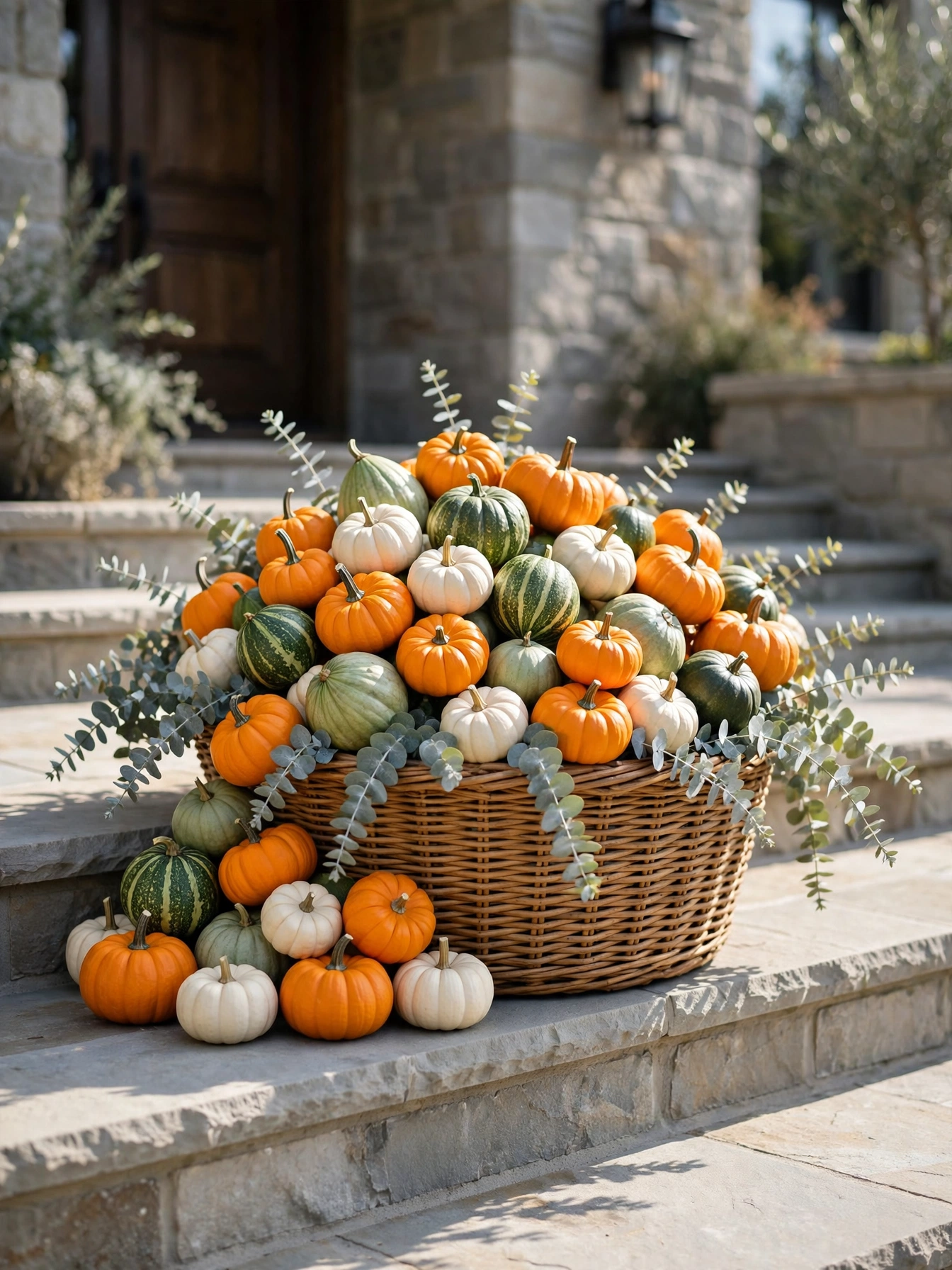
Why This Works:
- The basket corrals 12 to 15 mini pumpkins into one tidy composition
- Wicker texture contrasts beautifully with smooth pumpkin skins
- Raised sides keep pumpkins from rolling down the steps
- The basket works year-round for firewood and blankets after fall
Choose a round wicker basket 18 to 22 inches wide and 12 to 14 inches deep; shallower baskets spill their load at the first bump, while narrower ones fit only 6 to 8 minis. Line the bottom with a 2 inch layer of straw or excelsior so the 2 to 4 inch pumpkins nestle instead of rolling. Fill with 12 to 15 mini pumpkins and gourds in mixed colors, placing the 4 inch ones at the bottom and the 2 inch ones on top for a mounded look. Avoid unsealed wicker in rainy spots; untreated rattan absorbs water and the weave loosens within a month, so choose a basket with a lacquered finish or brush on one coat of outdoor sealer. Sturdy lidded storage baskets in this size run 30 to 50 dollars and genuinely last for years of seasonal use.
Porch steps, entry landings and beside-the-door floor spots suit this best, where the low profile never blocks the walkway. Before finalizing this choice, test the basket for wobble on your steps; an 18 inch basket on a 10 inch deep step needs the back third resting against the riser. The limitation is capacity: one basket reads as an accent, not a display, so pair it with a taller element like cornstalks. Squirrels love mini pumpkins, so a covered porch keeps the arrangement intact about twice as long.
Amber Glass Sconces

Why This Works:
- Amber glass throws a 2700K-style warm glow that flatters every entry
- Wall-mounted sconces free up floor space on narrow porches
- Solar inserts charge by day and glow 6 to 8 hours with zero wiring
- The glow makes house numbers readable for evening visitors
Mount sconces 66 to 72 inches from the porch floor, centered on the trim 8 to 12 inches from each side of the door; lower mounting blinds visitors, higher mounting wastes the glow on the ceiling. Choose sconces 12 to 16 inches tall with real amber glass, not amber-tinted plastic, which clouds after one season of UV. For solar models, pick panels rated at least 2 watts with 2000mAh batteries; smaller cells fade by midnight in October’s shorter days. Avoid screwing sconces into vinyl siding without a mounting block; the siding warps around the screws within a year, while a 30 dollar cedar mounting block keeps the surface flat. Quality solar amber sconces run 35 to 60 dollars per pair.
Narrow porches and entries without existing wired fixtures benefit most. The first thing to check before purchasing is sun exposure on the mounting wall; north-facing walls in October may give the solar panel only 3 to 4 hours of direct sun, which cuts glow time in half. The trade-off is output: solar sconces are ambiance, not task lighting, so keep one real porch light for keys and locks. In real homes, wiping the solar panel monthly with a damp cloth restores about 20 percent of lost brightness.
Warm Firelight Fall Outdoor Decor Ideas for Autumn 2026

Why This Works:
- Firelight plus string lights creates two light layers, which reads as designed, not improvised
- A seating circle around fire naturally becomes the evening gathering default
- Warm 2200K tones make October nights feel 10 degrees cozier
- The setup works from early fall straight through the holidays
Hang one 48 foot string of shatterproof LED globe lights overhead, spanning 12 to 15 feet between two anchor points at 9 to 10 feet high; the catenary sag should dip 18 to 24 inches at center for a natural drape. Choose commercial-grade strands rated for outdoor use with IP44 or better sealing, since indoor strands corrode at the sockets within one wet month. Arrange 4 to 6 chairs in a 10 to 12 foot diameter circle around the fire feature, leaving 36 inches of walkway behind each chair for safe movement. Avoid draping lights over the fire bowl itself; radiant heat melts even outdoor-rated insulation within a season, so keep strands at least 6 feet horizontally from any flame. A 48 foot commercial strand costs 40 to 70 dollars, roughly double the big-box version, and the sockets survive 3-plus seasons.
Backyards with an existing fire feature get the fastest transformation here. Homeowners who have tried this find that the light circle gets used 3 to 4 nights a week in October, far more than the unlit patio did in August. The limitation is wind: on exposed lots, string lights sway and the constant motion shortens bulb life, so add a center support cable on runs over 20 feet. HGTV’s outdoor living guidance consistently favors layered lighting over a single bright fixture, and this two-layer setup is exactly that principle in practice.
Gourd Tiered Plant Stand

Why This Works:
- Three tiers triple the display area of the same 2 square feet of porch
- The stair-step shape lets every gourd show instead of hiding behind others
- A plant stand reads as furniture, which elevates the whole display
- It converts back to spring seedlings in March, so it never sits idle
Use a 3-tier stand 36 inches tall with shelves 24, 18 and 12 inches wide from bottom to top; the graduated widths keep the silhouette stable and top-heavy wobble away. Choose powder-coated steel or cedar rated for outdoor use; raw pine stands warp within 6 weeks of October rain. Style the bottom shelf with 6 to 8 inch gourds and a 10 inch pumpkin, the middle with 4 to 5 inch minis and dried wheat, and the top with a single 6 inch statement gourd plus trailing faux ivy. Avoid loading one side only; a stand with 15 pounds on the left and 3 on the right tips in the first strong gust, so distribute weight evenly and keep the heaviest pieces lowest. Sturdy 3-tier cedar stands run 60 to 90 dollars and genuinely last a decade.
Small porches and apartment balconies where floor space is precious suit this best. In practice, this works well beside the front door where visitors see the full height at once. The trade-off is weather exposure: gourds on the top shelf take the full brunt of rain, so rotate them weekly with the sheltered bottom tier. The Spruce notes that elevating decor off wet surfaces is the single biggest factor in outdoor display longevity, and a tiered stand does exactly that for every piece.
Sunflower Mailbox Swag
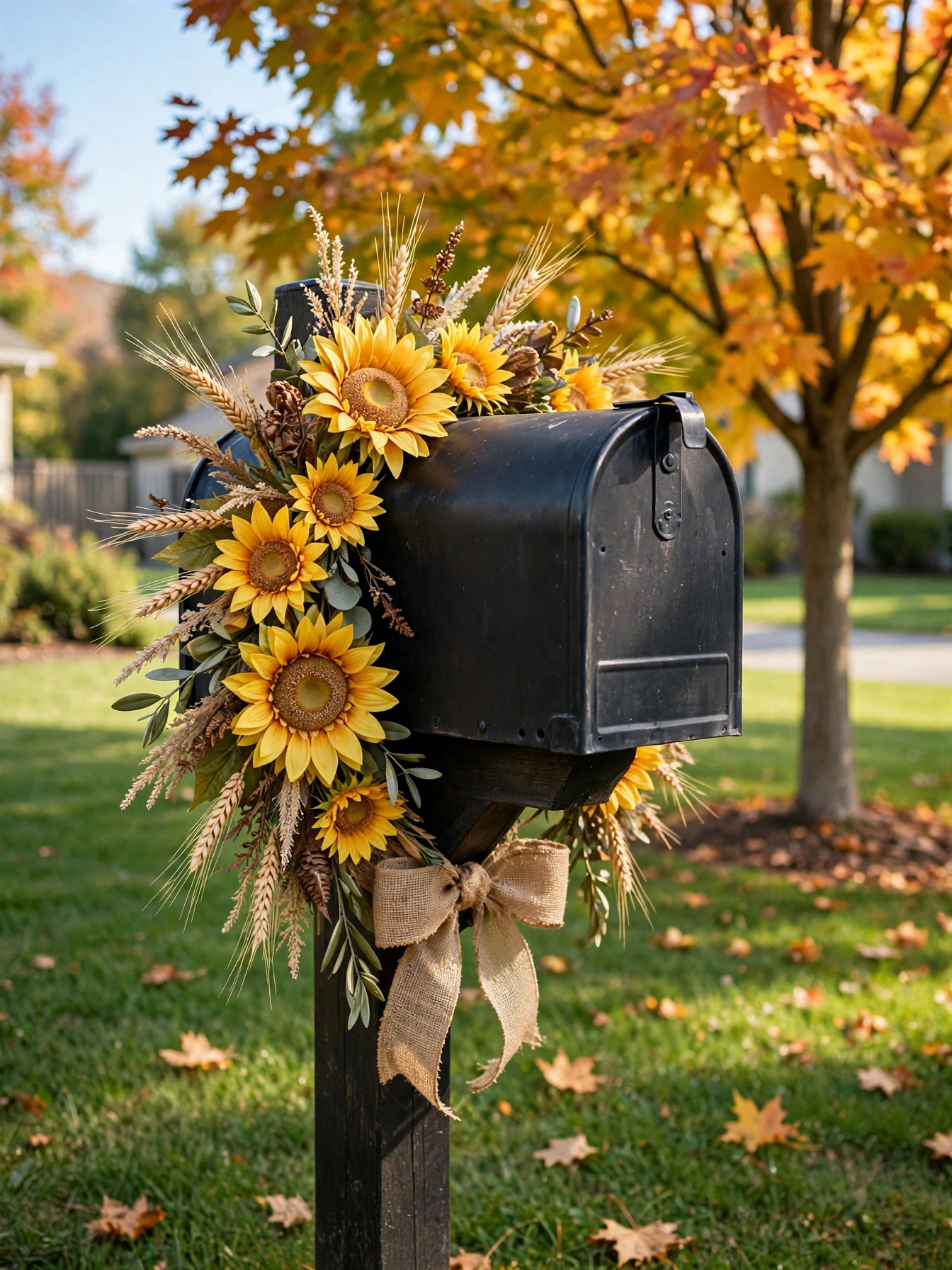
Why This Works:
- The mailbox is the first decor touch visitors and mail carriers see
- A 24 inch swag costs under 20 dollars and takes 15 minutes
- Sunflowers read as happy from 50 feet away, boosting curb appeal
- Burlap ribbon ties the swag to the rest of the porch styling
Build the swag 20 to 24 inches long on a 12 inch wire base, wiring 5 faux sunflowers 5 to 6 inches across in a fan from 10 o’clock to 2 o’clock. Add dried wheat sprays 14 to 18 inches long behind the blooms for height, and finish with a 2.5 inch wired burlap bow at the center binding. Mount it on the mailbox post with two 8 inch zip ties, not the mailbox itself, so the carrier’s door still opens fully. Avoid real sunflowers on the mailbox; their heavy 6 inch heads droop within 4 days and drop petals across the sidewalk. Keep the swag clear of the mailbox door swing by 3 inches on all sides, and check that house numbers stay readable from the street.
Suburban streets with sidewalk mailboxes get the most curb-appeal payoff. A common mistake is wiring the swag too loosely; mailboxes vibrate every time the door slams, and a loose swag slides to the ground within a week. The limitation is exposure: a street-side mailbox takes full sun, rain and road spray, so expect faux sunflowers to fade a season faster than porch-sheltered ones. On the plus side, the swag swaps to evergreen in December with the same zip ties.
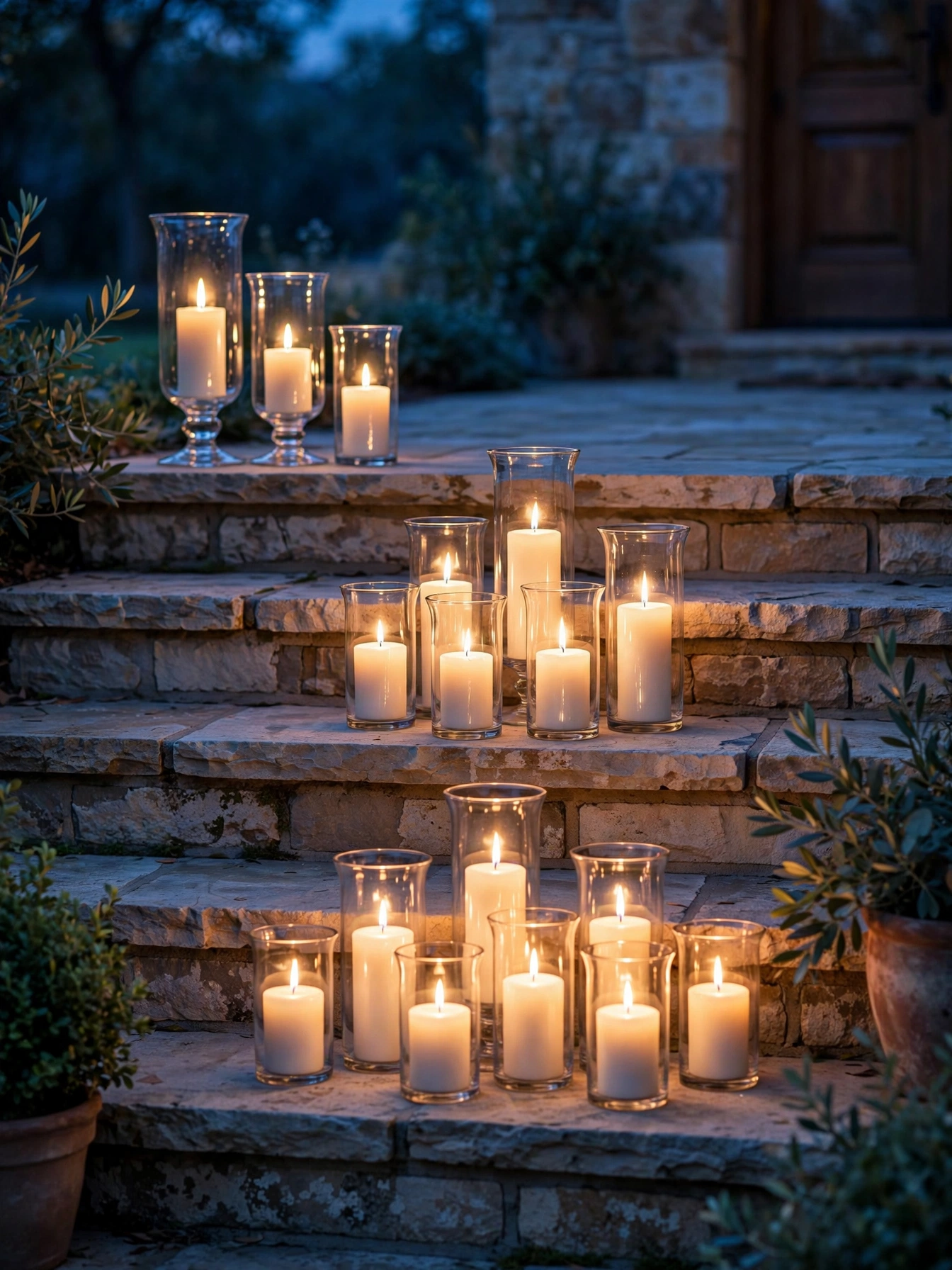
Windproof Candle Clusters
Why This Works:
- Hurricane glass shields flames from gusts up to 25 miles per hour
- Odd-numbered clusters of 3 or 5 look styled, not lined up
- Varying heights from 8 to 14 inches creates a skyline effect
- Real flame gives a flicker no LED fully copies
Use hurricane holders 8, 11 and 14 inches tall with glass at least 3 millimeters thick; thinner glass cracks when a cold October wind hits a hot surface. Place 3 inch diameter pillar candles inside, leaving 2 inches of glass above the flame so wind cannot reach it directly. Group in clusters of 3 or 5 on a 16 inch round metal tray, which catches wax and lets you move the whole cluster inside in seconds. Avoid tall taper candles in hurricanes; the flame sits too close to the glass top, soot builds up within 2 hours, and the blackened glass kills the glow. Never leave real-flame clusters burning unattended, and keep them 3 feet from cornstalks, hay and other dry decor.
Sheltered porch corners and covered steps suit real flame best, where the roof blocks the worst gusts. Homeowners who have tried this find that the clusters get lit 4 to 5 evenings a week in October, mostly for the 30 minutes after dinner when the porch is actually used. The trade-off is supervision: real candles demand attention, so switch to LED pillars inside the same hurricanes on nights you will not be outside. Glass cleaning is the chore; a vinegar wipe every 2 weeks keeps the panes clear.
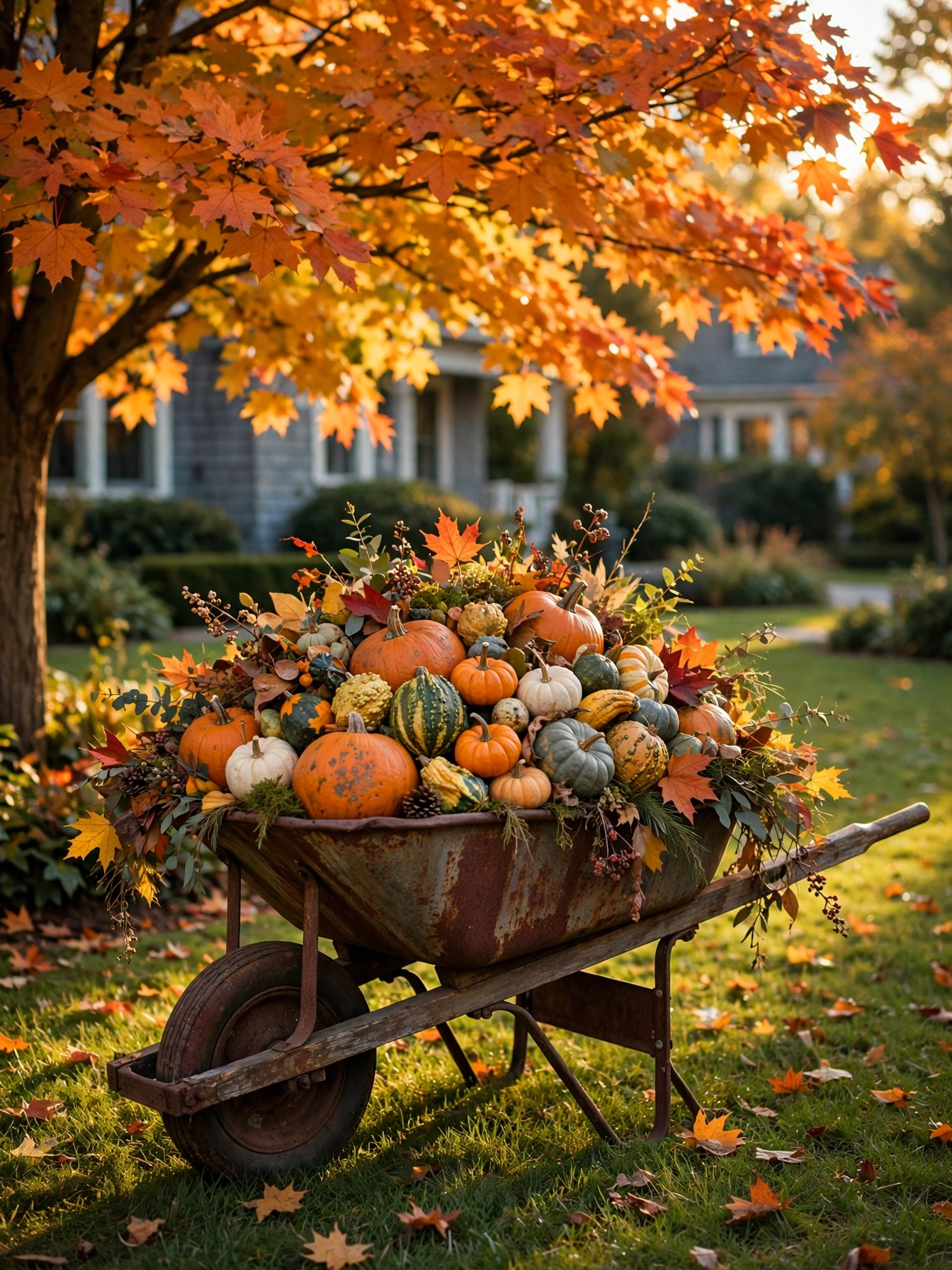
Vintage Wheelbarrow Display
Why This Works:
- A wheelbarrow holds 8 to 10 pumpkins in one photogenic mound
- The aged metal and wood add authentic patina no new decor can fake
- It works in the yard, not just on the porch, spreading decor wider
- Wheels make it movable, so you can chase the best light or angle
Find a steel or wooden wheelbarrow with a 4 to 6 cubic foot bed; smaller garden carts look lost in a yard, while contractor-grade 8 cubic foot models overwhelm a residential lot. Line the bed with landscape fabric, then mound 8 to 10 pumpkins from 4 to 12 inches, largest at the bottom, and tuck dried foliage and 3 to 4 wheat bundles into the gaps. Park it 6 to 10 feet from the front walk at a 30-degree angle so the mound faces approaching visitors. Avoid wheelbarrows with rusted-through beds; rain pools in the low spots and the pumpkins sitting in water rot within 2 weeks, so drill four 1/2 inch drainage holes if the bed holds water. Vintage wheelbarrows run 40 to 80 dollars at flea markets, and the display itself costs only the pumpkins.
Front yards with visible lawn space between the walk and the street get the most impact. The first thing to check before purchasing is wheel condition; a flat tire makes the barrow a permanent fixture, so inflate or replace the tube first. The limitation is weight: a loaded barrow tops 120 pounds, so position it before filling. In real homes, this display draws the most compliments of any single yard piece, but it also draws squirrels, so expect to replace 1 or 2 nibbled pumpkins mid-season.
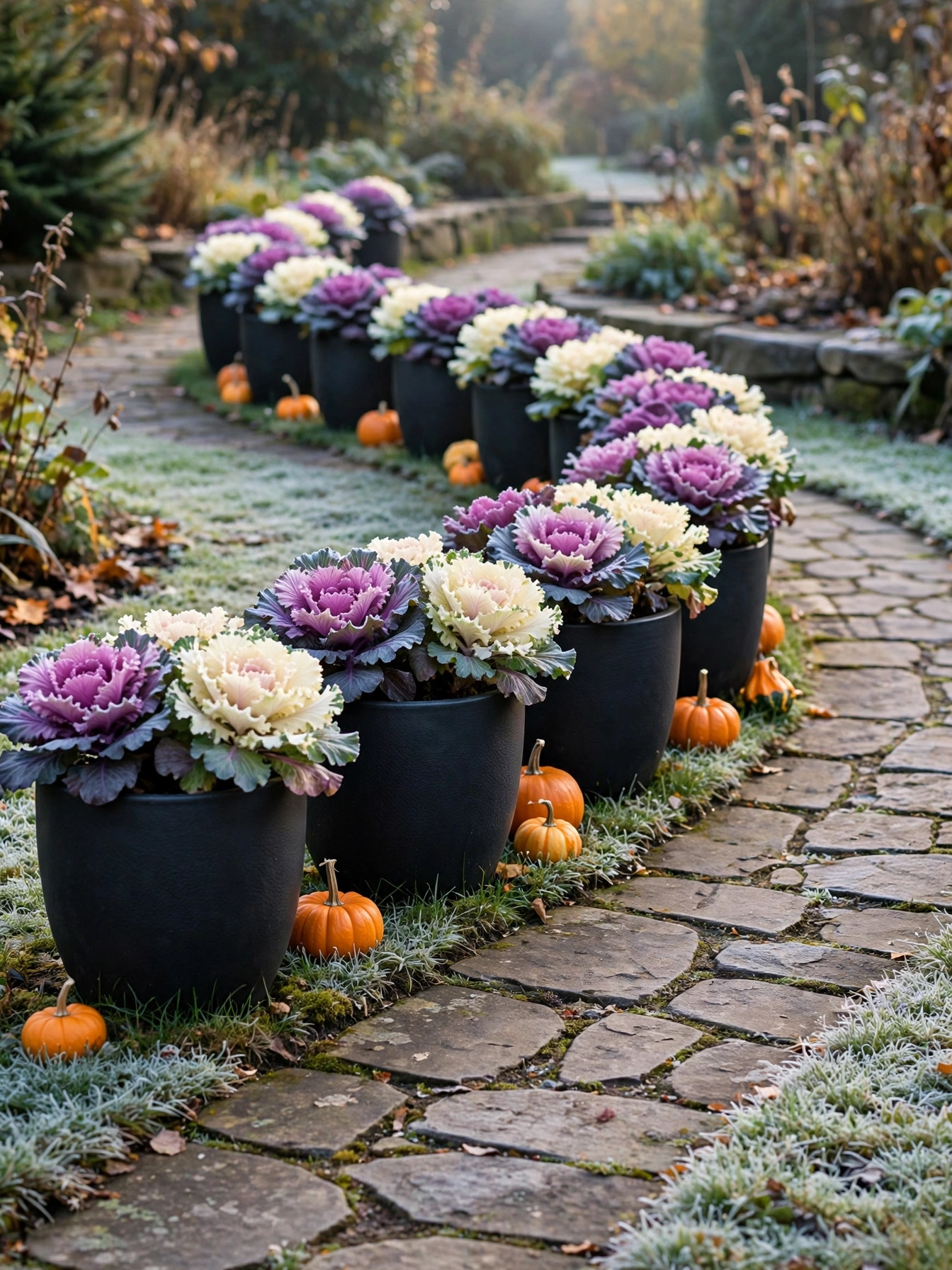
Potted Ornamental Kale
Why This Works:
- Kale colors intensify after frost, peaking exactly when mums fade
- It survives dips to 20 degrees, outlasting nearly every fall flower
- The ruffled texture contrasts with smooth pumpkins nearby
- One 10 inch pot costs under 12 dollars and needs almost no care
Plant ornamental kale in 10 to 12 inch pots with standard potting mix, one plant per pot, spacing the crown 1 inch above the soil line to prevent stem rot. Place pots 18 to 24 inches apart along walkways or steps for a rhythmic border. Water 16 to 24 ounces per pot twice a week; kale tolerates drought better than mums but sulks in constantly soggy soil. Avoid fertilizing after early October; late nitrogen pushes soft new growth that the first hard frost kills, while hardened plants sail through 25-degree nights. Better Homes and Gardens notes that cool-season ornamentals like kale and cabbage are among the few plants that look better after light frosts, which makes them the backbone of late-fall containers.
Walkway borders, step flanks and porch corners in cold climates suit kale best. Homeowners who have tried this find that kale carries the display alone through November after the pumpkins soften and the mums brown. The trade-off is the cabbage family look; some people see dinner, not decor, so pair kale with grasses or lanterns to keep it ornamental. Aphids love kale in warm Octobers, so check leaf undersides weekly and blast them off with a hose.
Rustic Twig Archway

Why This Works:
- An archway turns an ordinary path into a destination moment
- Birch bark stays bright white for years with zero maintenance
- Hanging 3 inch mini pumpkins at varied heights adds playful motion
- It frames the front door view from the street like a picture
Build or buy an arch 7 feet tall and 4 feet wide; narrower arches force tall visitors to duck, while wider ones lose the tunnel effect. Anchor each leg 12 inches deep in soil or in 18 inch planters weighted with 40 pounds of gravel, since a 7 foot arch catches wind like a sail. Weave faux fall leaf garlands through the twigs, wiring 2 to 3 inch mini pumpkins to hang at 5, 5.5 and 6 foot heights with 6 inch jute loops. Avoid real vine arches for this; green wood shrinks as it dries and the joints loosen within a month, while kiln-dried birch holds its shape for years. A quality birch arch costs 120 to 200 dollars, which stings until you divide it by 5-plus seasons of use.
Garden path entrances and the transition from driveway to walkway suit an archway best. The first thing to check before purchasing is your wind exposure; on open corner lots, add a third anchor point with a ground screw on each side. The limitation is commitment: this is the most permanent-feeling piece in the collection, so be sure about the location before anchoring. In real homes, the arch becomes the default photo backdrop for every fall gathering, which is a feature, not a bug.
Scarecrow Garden Sentinel

Why This Works:
- A 5 foot scarecrow gives the yard a personality no planter can match
- Kids remember it, which makes your house the favorite on the street
- Handmade details like a stitched smile read as crafted, not store-bought
- It anchors a pumpkin patch display and gives it a story
Build the figure 4.5 to 5.5 feet tall on a 6 foot wooden stake driven 18 inches into the ground; shorter figures disappear behind 12 inch pumpkins, while taller ones tip in wind. Stuff a plaid flannel shirt and overalls with 2 to 3 pounds of straw, not newspaper, which turns to pulp in the first rain. Tie the arms to a 4 foot crossbar with jute twine at the shoulders, and set a straw hat 10 to 12 inches wide on the burlap head. Avoid placing the scarecrow where sprinklers hit it nightly; soaked straw doubles the weight and the saturated figure leans within 2 weeks. A handmade scarecrow costs 20 to 35 dollars in thrifted clothes and straw, versus 60 to 90 for a convincing ready-made one.
Vegetable gardens, pumpkin patches and side yards visible from the street suit a scarecrow best. In practice, the figure lasts the full season if the clothes come in during heavy storms; 10 minutes of effort saves the whole build. The trade-off is taste: scarecrows divide households, so check with everyone before committing the front yard. The honest limitation is weather; even well-built figures look tired by late November, so plan the takedown with the rest of the fall decor.
Solar Stake Light Borders

Why This Works:
- A defined light border makes garden beds look intentional after dark
- Stakes install in minutes with no tools and no wiring
- Warm white 2700K light flatters fall colors better than cool white
- The whole border costs less than one wired fixture
Choose stake lights 12 to 16 inches tall with 2700K warm white LEDs; cool 5000K stakes make pumpkins look ghastly and clash with every other warm element. Space stakes 3 to 4 feet apart along the bed edge, pushing each 6 inches into the soil so the head clears mulch by 8 inches. Pick models with 600mAh or larger batteries and monocrystalline panels; cheaper polycrystalline panels with 300mAh cells fade by 9 PM in October. Avoid placing stakes where the mower or edger reaches; one season of string-trimmer hits snaps the plastic housings, so set them 6 inches inside the bed edge. A set of 10 quality warm-white stakes runs 30 to 50 dollars.
Garden bed edges, walkway borders and the perimeter of pumpkin displays suit stake borders best. Before finalizing this choice, test one stake in the actual spot for 3 nights; shade from a fence or shrub can cut charging to 2 hours of glow. The limitation is October’s short days: even good stakes give 5 to 6 hours, not all night, so they outline the evening, not the whole night. The Spruce recommends wiping solar panels monthly, and a damp cloth pass restores roughly a fifth of lost brightness.
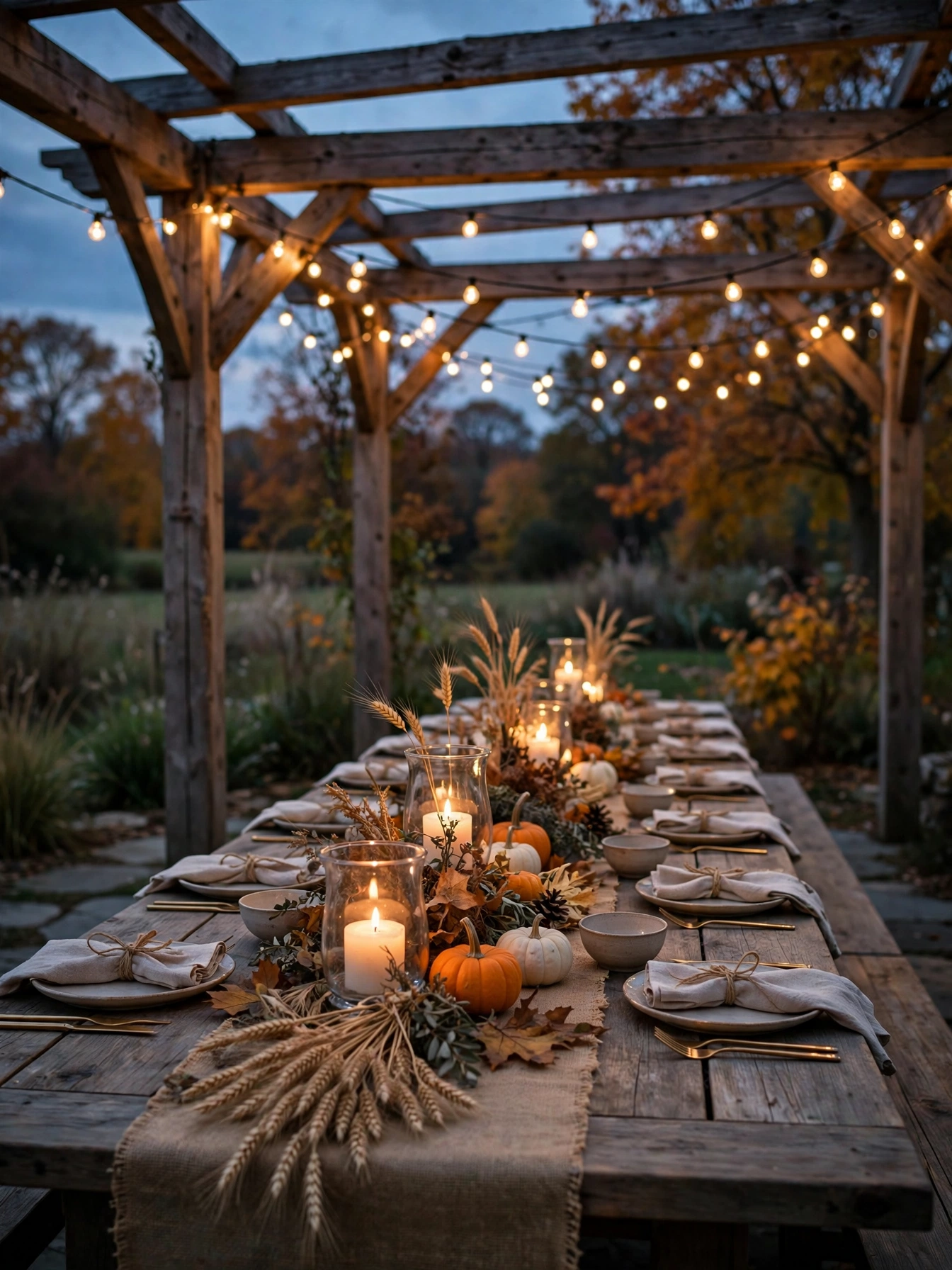
Harvest Table Under Pergola
Why This Works:
- A styled table turns the pergola into an outdoor dining room for fall gatherings
- The 8 foot runner of pumpkins and wheat costs less than a floral centerpiece
- Candlelight under the pergola beams feels magical after sunset
- Everything lifts off in 10 minutes when rain threatens
Use a 6 to 8 foot farmhouse or folding table; 4 foot tables cannot hold both a runner and place settings, while 10 foot tables dominate a standard 12 by 12 foot pergola. Lay a 12 inch wide burlap runner down the center, then place 4 to 6 inch pumpkins every 12 inches, tucking dried wheat and eucalyptus between them. Add three 10 inch LED pillar candles in glass hurricanes, spaced 24 inches apart, for windproof glow. Avoid real taper candles under a pergola; a gust tips the flame into the runner, and burlap ignites faster than most people expect, so flameless is the only safe choice here. A folding 6 foot table runs 60 to 90 dollars, and the full styling adds 40 to 60 more.
Backyard pergolas, covered patios and deck dining areas suit this best, especially for households that host Thanksgiving outdoors. Homeowners who have tried this find that the table gets used for every October weekend meal once it is styled; the decor is the invitation. The trade-off is weather watching: this styling survives dew but not rain, so keep a 10 by 12 foot tarp handy for sudden showers. The honest limitation is temperature; below 50 degrees, even a styled table sits empty without a nearby heat source.
Pumpkin-Lined Driveway

Why This Works:
- A lined driveway guides guests from the street to the door like a red carpet
- Alternating pumpkins and lanterns creates rhythm at 8 foot intervals
- The display reads from a moving car, which most porch decor does not
- Everything lifts in minutes on trash day or before a storm
Place 12 to 16 pumpkins, 8 to 12 inches in diameter, on alternating sides of the driveway every 6 to 8 feet, starting 10 feet back from the curb. Tuck a 10 inch LED lantern between every second pumpkin so the line alternates pumpkin, pumpkin, lantern down the drive. Use LED candles only along driveways; real flames beside parked cars and dry grass are a needless risk, and most municipalities prohibit open flames near roadways. Avoid pumpkins smaller than 6 inches here; minis vanish against asphalt from a car window, while 10 inch pumpkins read clearly at 25 miles per hour. Budget 60 to 100 dollars for pumpkins plus 40 to 60 for reusable lanterns.
Long driveways of 40 feet or more get the full red-carpet effect; short urban drives suit a 4-pumpkin version flanking the walk instead. Homeowners who have tried this find that delivery drivers comment on it constantly, which tells you the visibility works. The limitation is traffic: on busy streets, exhaust and kicked-up grit coat the pumpkins, so wipe them weekly. The honest trade-off is the takedown; 16 pumpkins take 30 minutes to clear, so plan it for the same weekend you winterize the yard.
Lasting Frost-Ready Fall Outdoor Decor Ideas for Autumn 2026

Why This Works:
- Evergreen, berries and pinecones sail through frosts that kill mums and pumpkins
- Stone and fiberglass urns survive freeze-thaw cycles for a decade or more
- The arrangement transitions to winter with one swap of the fall picks
- Zero watering and zero maintenance after the initial styling
Choose fiberglass or cast-stone urns 20 to 24 inches tall with a 16 to 18 inch mouth; thin ceramic urns crack in the first hard freeze, while fiberglass flexes through dozens of cycles. Fill with a 12 inch foam or soil base, then insert 24 to 30 inch evergreen branches, 5 to 7 per urn, fanning them outward for fullness. Tuck in 3 to 4 faux berry picks and 6 to 8 pinecones wired to 4 inch picks, finishing with one 2.5 inch plaid bow. Avoid real berries in reach of pets; many ornamental berries are toxic to dogs, so faux keeps the display worry-free. Quality fiberglass urns run 60 to 110 dollars per pair and genuinely last 10-plus years outdoors.
Cold-climate porches where October nights regularly dip below 28 degrees need this approach most. In real homes, these urns are the last fall decor standing, often looking fresh into December when everything else is composted. The trade-off is the upfront cost; 200 dollars of urns and greens stings compared to 30 dollars of mums. But the per-season math favors urns within 3 years, and the zero-maintenance factor through busy November weeks is worth real money to working households.
Glowing Pumpkin Topiary Pair

Why This Works:
- A matched pair flanking the door doubles the visual impact and makes the whole entry feel intentional instead of random
- Each topiary stands 5 to 6 feet tall, which reads clearly from the street where most neighbors actually see your porch
- Warm white LED string lights woven through the stack glow through the gaps between pumpkins at dusk
- Faux pumpkins on sealed wood posts survive rain and wind without rotting, so the pair lasts from early October through Thanksgiving
Set a 1.5 inch diameter, 4 foot tall wooden dowel into a 16 to 18 inch square urn, anchoring it with a half bag of quick-set concrete so the tall stack cannot wobble. Drill a 2 inch hole through the center of three faux pumpkins with a hole saw and slide them onto the post: a 12 to 14 inch base, a 9 to 10 inch middle, and a 6 to 7 inch topper. Wrap one 50-count warm white LED string light around each stack, tucking the battery box inside the bottom pumpkin. Expect to spend 45 to 70 dollars per topiary using craft store pumpkins. Skip real pumpkins for this build; they soften within two weeks and the whole tower will lean and collapse under its own weight.
This suits front doors, porch corners, and garage flanks where a vertical accent balances a wide horizontal porch. The most common mistake is an uneven pair, so buy pumpkins from the same batch to keep color and size matched. On exposed windy porches, hide a 10 pound sandbag inside each urn as ballast. If the spot gets full afternoon sun, choose UV-rated faux pumpkins, or the orange will fade to a chalky peach by November.
Pro Tip: Plug the lights into a dusk-to-dawn timer so the pair glows every evening without you ever touching a switch.
FAQs
What are the best fall outdoor decor ideas for autumn 2026 for a windy yard?
Choose low, heavy pieces like 18 inch planters filled with soil, wired garlands anchored every 18 inches, and lanterns staked with 6 inch landscape staples. According to The Spruce, securing decor at two points stops most wind damage. Skip tall cornstalks and lightweight fabric on exposed lots.
How do I keep porch pumpkins from rotting?
Set pumpkins on dry surfaces, never bare concrete, and rub petroleum jelly on cut stems to seal moisture. Wipe them with a 1 to 10 bleach-water solution to kill surface mold spores. Bring them under cover during week-long rains, and expect 4 to 6 weeks of life in October weather.
How much should I budget for fall outdoor decor ideas for autumn 2026?
A full porch makeover runs 120 to 200 dollars using farm-stand pumpkins, 10 dollar mums and DIY garlands. Mid-range styling with a 150 dollar copper fire bowl and quality lanterns reaches 300 to 450 dollars. Reusable pieces like planters and arches amortize the cost over 3 to 5 seasons.
What outdoor lighting is safest for fall decor?
Solar stake lights and battery LED lanterns are the safest choices, with zero wiring and no open flame. Better Homes and Gardens recommends keeping any real flame 3 feet from dry decor like cornstalks and hay. Use outdoor-rated strands with IP44 sealing, and plug them into a GFCI outlet.
When should I put out fall outdoor decor?
Start the weekend after Labor Day for mums and planters, since they need 6 weeks before the first frost to establish. Add pumpkins and cornstalks in late September when nights drop below 60 degrees; heat above 75 softens pumpkins fast. Take it all in after Thanksgiving weekend.
Conclusion
These 23 fall outdoor decor ideas for autumn 2026 prove that a stunning yard needs only three things: pieces sized to your space, materials matched to your weather, and lighting that works after dark. Measure your porch first, choose frost-tough materials for exposed spots, and anchor everything against October wind.
Your first step is simple: walk your yard at 6 PM tonight and notice where the eye lands, then start with the one idea above that fills that exact spot. Follow HomelyCrafter on Pinterest for more seasonal styling ideas. Save this to your Pinterest boards so you can refer back to it!

Muhammad Israr is a home decor enthusiast and the writer behind Homely Crafter. He spends his days researching paint colors, layouts and budget-friendly styling ideas, then breaks them down into practical, easy-to-follow guides so you can decorate with confidence.
3 thoughts on “23 Beautiful Golden Harvest Fall Outdoor Decor 2026”