
By mid October, the bedroom starts working a double shift. It has to unwind you at 10 PM and coax you out of bed on dark, chilly mornings, and a room still dressed for summer cannot do either job well. These fall bedroom decor ideas for autumn 2026 lean into warm maple tones, layered textiles, and low golden light, the combination that makes a bedroom feel like a retreat instead of just a room with a bed.
A Blissful Nest’s fall home guide recommends starting with bedding: a chunky knit throw at the foot of the bed and velvet euro shams in a deep jewel tone deliver the biggest seasonal shift for the least money. That advice shapes this guide. Every idea below comes with real measurements, material picks, honest price ranges, and the trade-offs nobody mentions in styled photos.
You will find 20 specific ideas, each with its own styled photo, covering the headboard wall, nightstands, windows, lighting, and storage. Start with one zone, the bed itself, then add layers over a weekend. Nothing here requires painting a wall or buying new furniture.
Warm Maple Headboard for Fall Bedrooms
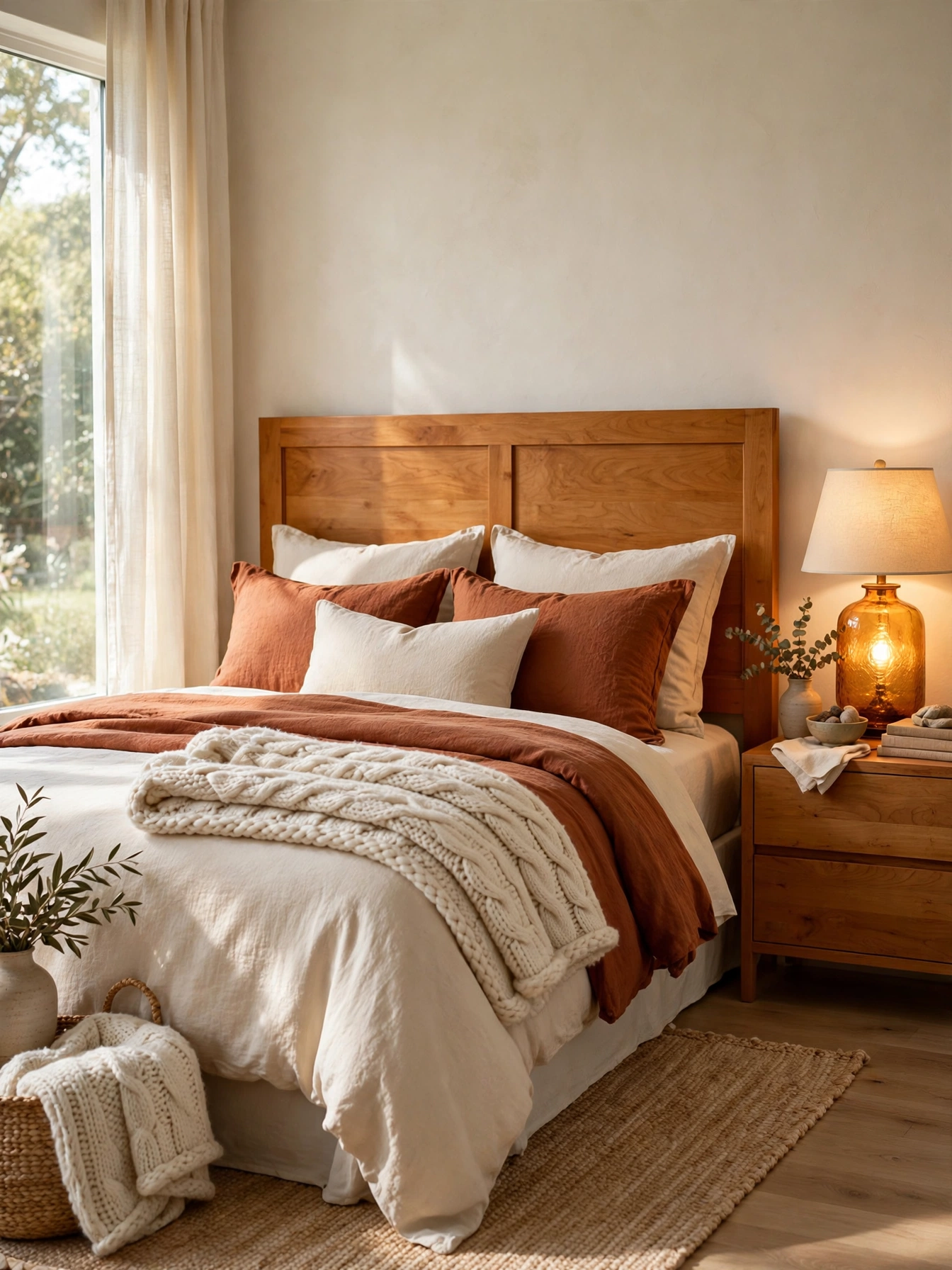
Why This Works:
- Maple’s honey tone reads warm without the redness of cherry or the darkness of walnut
- A 54 to 60 inch tall headboard fills the wall behind a queen bed proportionally
- Solid wood headboards run 180 to 450 dollars, far less than a full bed frame swap
- The warm wood lets you keep summer’s white sheets and still feel seasonal
Choose a headboard 2 to 4 inches wider than your mattress on each side, so a 60 inch queen mattress pairs with a 64 to 68 inch headboard. Mount it to the wall with a French cleat rated for at least 100 pounds, or bolt it directly to the bed frame rails for a rattle-free fit. Avoid headboards under 48 inches tall with thick pillow stacks, because 20 inches of pillows will swallow a short headboard completely and the proportions look off. Keep the finish in the honey to amber range, since gray-washed maple reads more coastal than autumnal. Sand between coats if you are staining it yourself, and allow 72 hours of cure time before leaning pillows against it.
In my research across furniture reviews and design guides, solid maple headboards consistently outlast upholstered ones for seasonal decorating, because the wood accepts any textile palette you throw at it. The honest limitation is weight: a solid maple queen headboard weighs 45 to 70 pounds, so this is a two-person install and a poor pick for renters who cannot drill. Upholstered or slipcovered headboards suit renters better, though they collect dust and need vacuuming every 2 weeks. If your bed sits against a window wall, skip the tall headboard and style the wall above a low 36 inch panel instead.
Amber Maple Leaf Garland
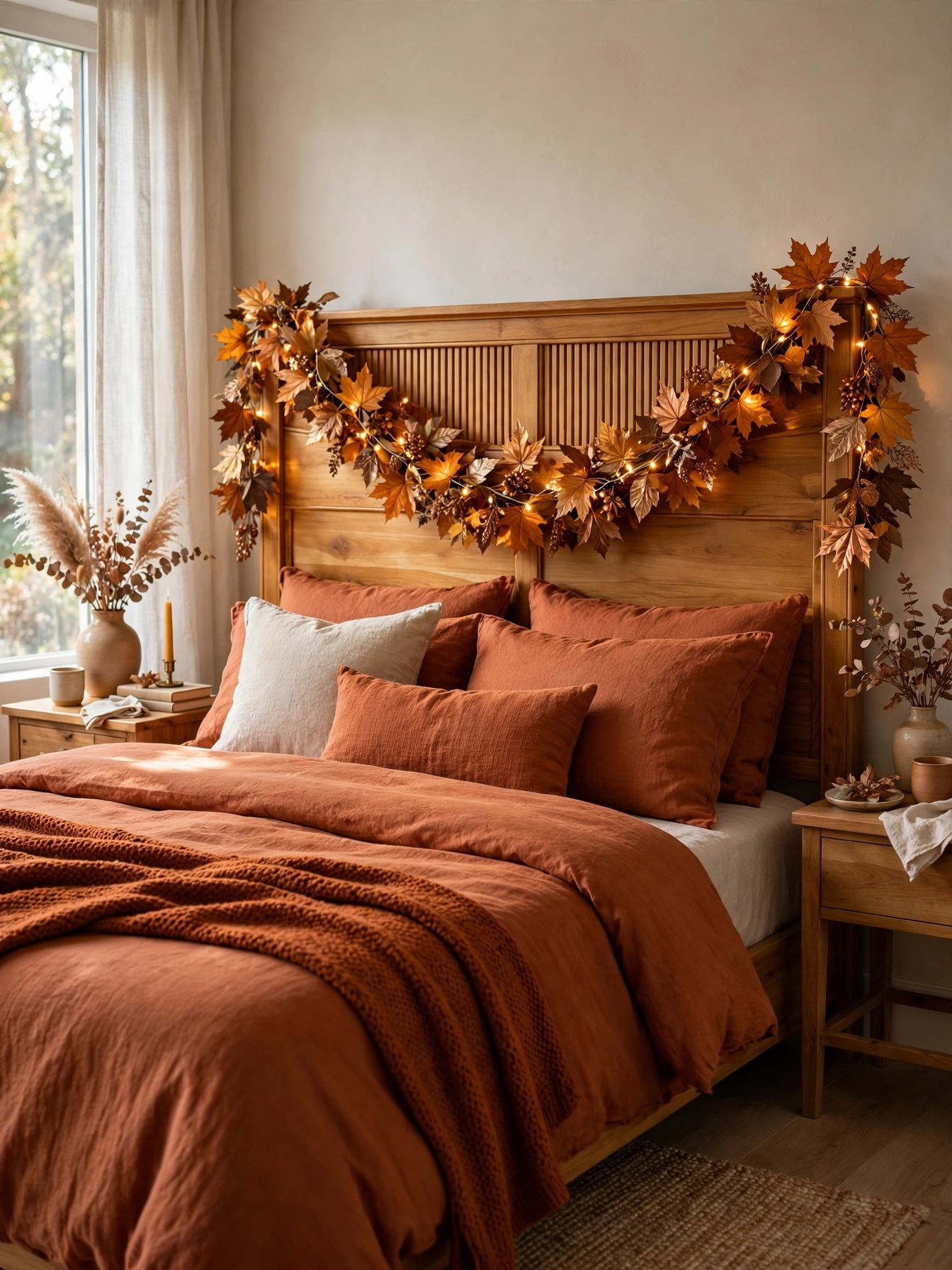
Why This Works:
- One 6 foot garland transforms the headboard wall for 12 to 25 dollars
- Amber and copper leaf tones echo the maple wood without matching it exactly
- Faux leaves never shed, so no daily sweeping around the bed
- Installs in under 10 minutes with two removable hooks
Drape the garland in a single swag with a center drop of 10 to 14 inches, anchoring each end with a small removable hook rated for 3 pounds. Choose garlands with wired stems at least 72 inches long so the swag does not pull taut across a 64 inch headboard. Avoid real preserved leaves above the bed, because they shed fragments onto pillows for weeks and the pieces are unpleasant to find in bedding. Keep the garland 4 to 6 inches above the top pillow line so it reads as decor, not clutter. Fluff each leaf cluster after hanging, since packed garlands look flat until the leaves are separated.
Reader reviews of faux maple garlands consistently praise the ones with varied leaf sizes, while single-size strands read cheap in photos. The trade-off is dust: garlands above a bed collect it quickly, so plan a monthly shake-out outdoors. Homes with cats should skip dangling garlands at pillow height, since batting paws will win that fight. Store the garland loosely coiled in a 24 inch garment bag between seasons to keep the wired shape.
Chunky Knit Throw Layers
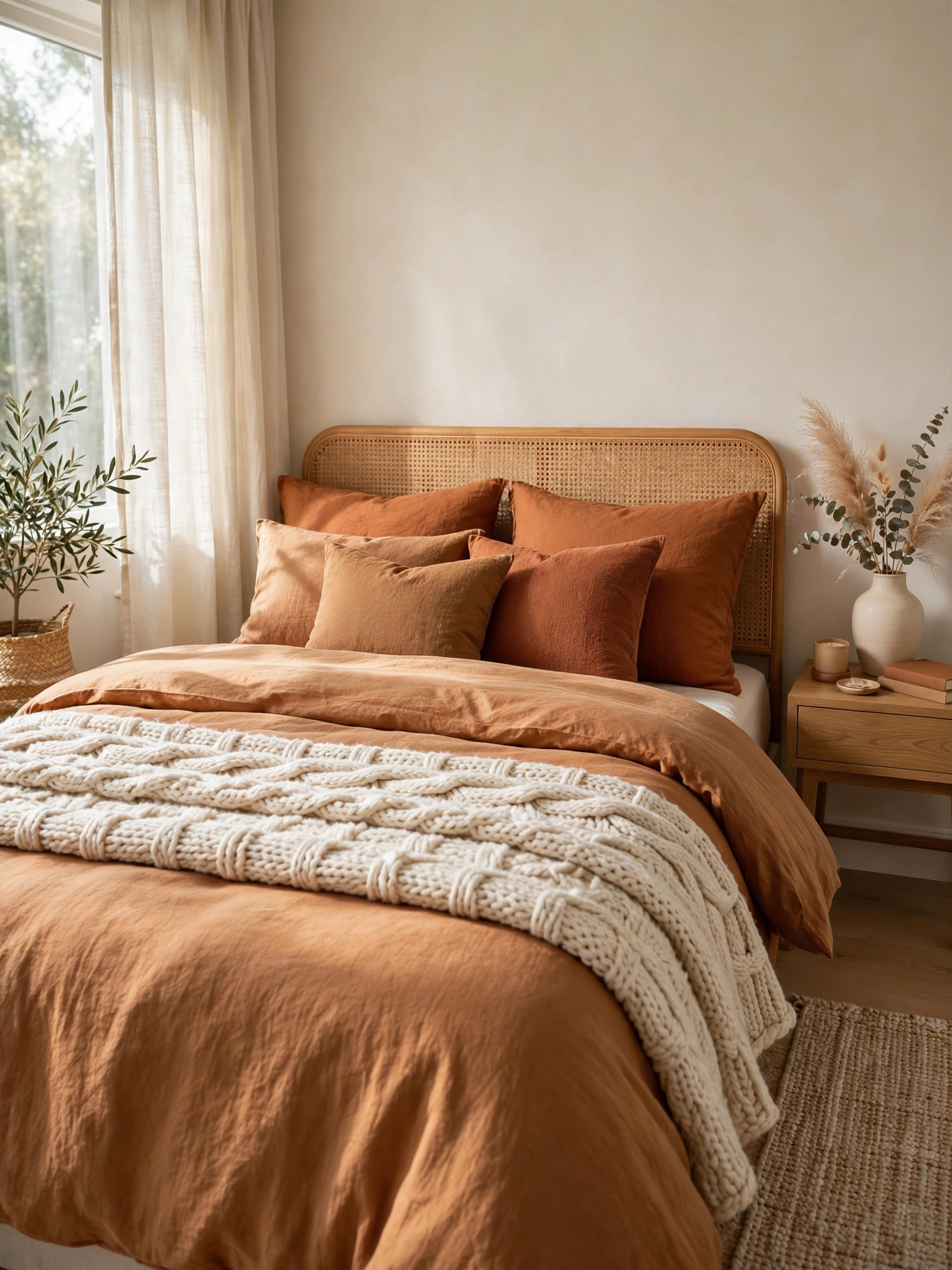
Why This Works:
- A single 50 by 60 inch throw adds visible fall texture in 30 seconds
- Chunky knits run 35 to 80 dollars, the cheapest high-impact update in this guide
- Folded at the foot, it adds warmth without trapping heat under the covers
- Cream, oatmeal, and caramel knits pair with every fall palette
Fold the throw in thirds lengthwise to a 16 to 20 inch wide band, then lay it across the foot of the bed about 12 inches up from the bottom edge. Choose a knit with a tight enough weave that toes do not poke through; loosely crocheted throws snag on everything. Avoid throws heavier than 5 pounds on a made bed, because the extra weight drags the duvet down and wrinkles the styling within hours. Machine-washable acrylic blends suit households with pets, while cotton chenille knits feel softer but pill after 8 to 10 washes. Keep one throw per bed, since two competing knits look bulky rather than layered.
In product reviews, the most loved throws are the ones heavy enough to stay put but light enough to actually use on chilly evenings. The honest limitation is shedding: budget acrylic throws shed fibers for the first 3 to 4 washes, so wash before styling. Homes with long-haired pets will be lint-rolling a chunky knit weekly. If you run hot at night, keep the throw folded at the foot rather than across the middle, where it becomes a heat trap.
Plaid Flannel Duvet Set
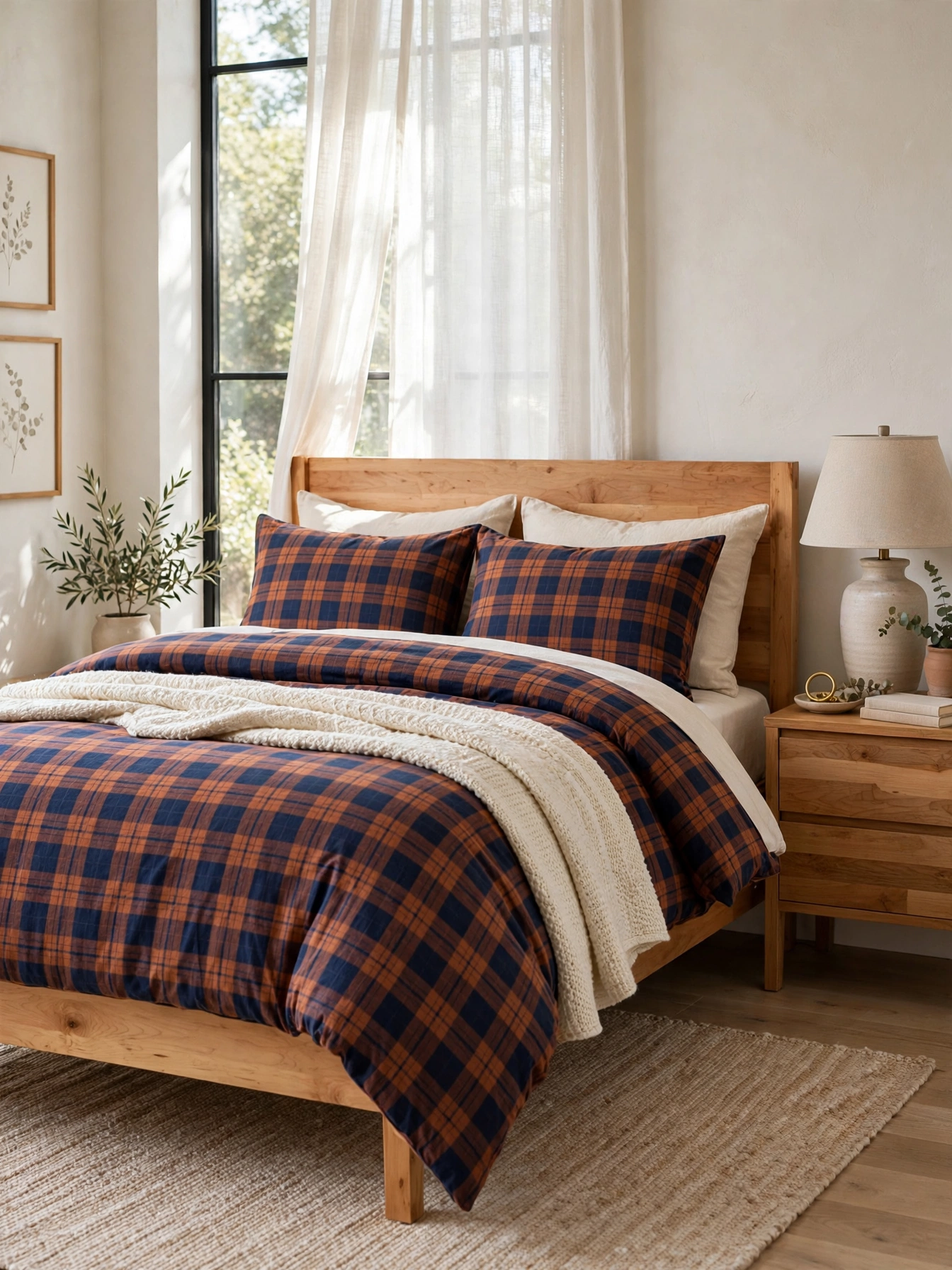
Why This Works:
- Flannel’s brushed surface feels instantly warmer than percale on first touch
- A queen flannel duvet set costs 60 to 120 dollars and anchors the whole palette
- Plaid in rust, caramel, and cream ties maple wood tones together
- One swap changes the room more than any other single textile
Look for flannel with a fabric weight of at least 170 GSM, since lighter flannels pill within a month and feel thin by December. Choose a duvet cover with interior corner ties and buy a duvet insert 2 inches larger than the cover on each side for a full, plush look. Avoid all-over large-scale plaids in rooms under 120 square feet, because a bold 6 inch repeat can overwhelm a small bedroom and make the bed look bigger than the room. Wash flannel inside out in cold water and skip the dryer sheet, which coats the brushed fibers and reduces softness over time. Expect 2 to 3 percent shrinkage on the first wash, so buy the cover slightly generous.
Design guides consistently rank flannel as the top fall bedding swap, and sleepers who run cold report the biggest comfort jump from this single change. The trade-off is warmth regulation: flannel plus a heavy duvet overheats warm sleepers, so pair it with a lightweight summer-weight insert if you sleep hot. Pet owners should know that flannel grabs pet hair more aggressively than sateen, which means weekly lint rolling. Keep the summer duvet cover stored in a breathable cotton bag, not plastic, to avoid mustiness by spring.
Velvet Euro Sham Mix

Why This Works:
- Velvet catches lamplight in a way flat cotton never does, adding evening richness
- Two 26 by 26 inch euro shams cost 25 to 50 dollars as a pair
- Deep rust, ochre, and forest green read unmistakably autumnal
- Shams swap in seconds, so this is the lowest-effort idea here
Stand the euro shams upright against the headboard, then layer standard sleeping pillows in front at a slight angle for a styled 3-deep arrangement. Choose cotton velvet over polyester velvet when the budget allows, since cotton velvet resists the shiny crushed patches that cheap polyester develops within a season. Avoid placing velvet shams where you actually sleep on them nightly, because body oils flatten the pile and leave permanent dull spots in 4 to 6 weeks. Brush the pile upward with a soft clothes brush monthly to keep the color even. Keep sham inserts 2 inches larger than the covers so the corners stay sharp.
In my research, interior stylists treat euro shams as the fastest seasonal signal in a bedroom, and jewel-toned velvet photographs especially well in warm lamplight. The honest limitation is maintenance: velvet shows every speck of lint and pet hair, so keep a lint roller in the nightstand drawer. Homes with cats that knead bedding will destroy velvet pile quickly; a textured linen sham survives claws far better. Rotate which sham faces forward weekly so wear stays even.
Pumpkin Nightstand Vignette
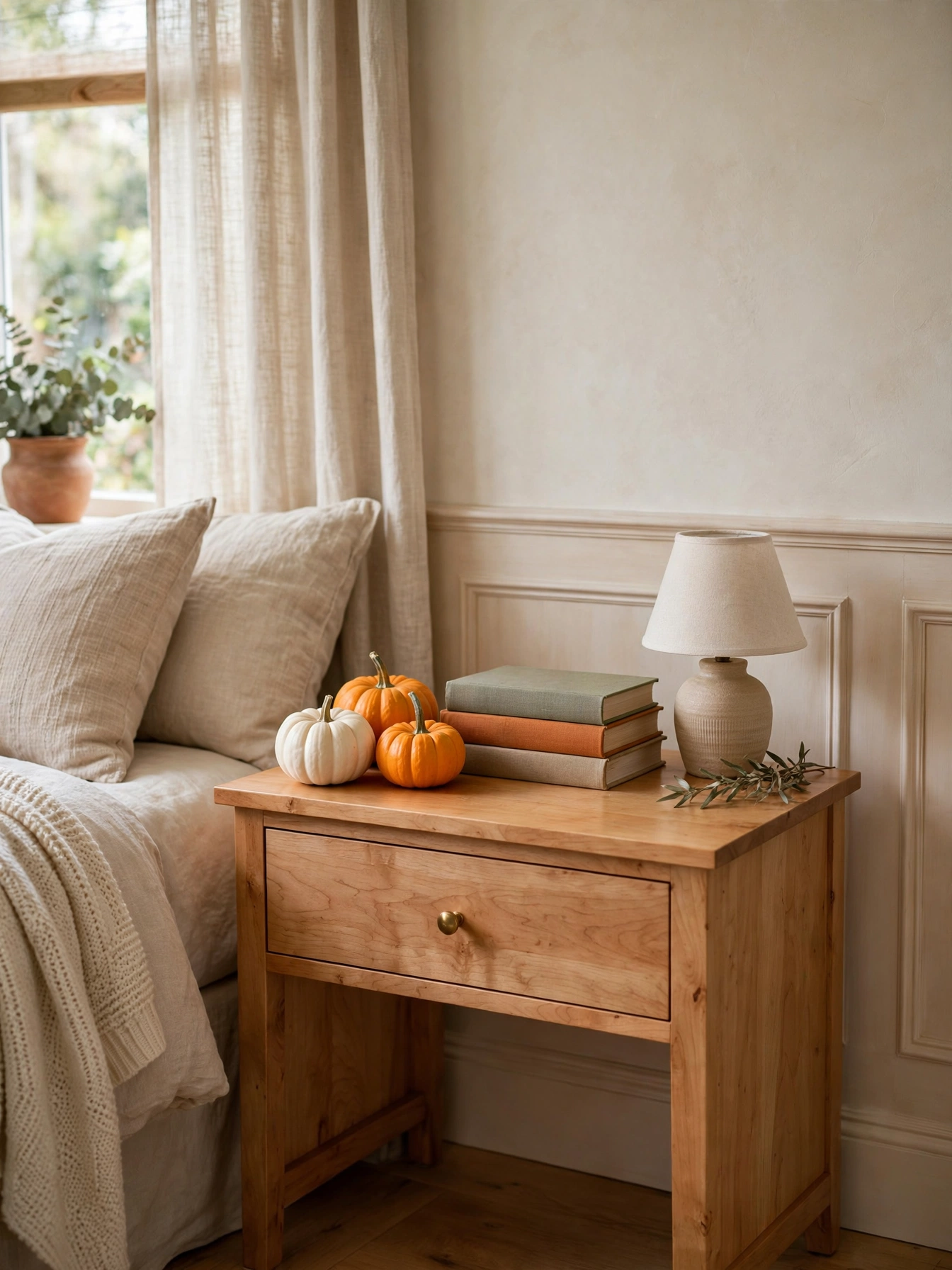
Why This Works:
- Nightstands are seen up close every night, so small seasonal details pay off
- Three mini pumpkins cost 3 to 9 dollars and last 6 to 8 weeks indoors
- White pumpkins suit modern bedrooms; orange suits traditional ones
- Keeps the seasonal decor at arm’s reach where you actually enjoy it
Group pumpkins in odd numbers, 3 or 5, with heights varying by 2 to 4 inches between pieces for a natural, collected look. Keep the vignette within a 12 inch wide zone on the nightstand so the lamp base, a book, and your phone still fit comfortably. Avoid real pumpkins directly against lamp bases that run hot, because sustained warmth softens the skin and shortens their 6 to 8 week life. Wipe real pumpkins with a 1 to 10 vinegar water solution before styling to slow mold at the stem. Faux pumpkins in the 4 to 6 inch range suit anyone who wants zero maintenance.
Reader photos of styled nightstands show that the three-pumpkin cluster is the sweet spot, while a single pumpkin looks sparse and five crowd a standard 20 inch nightstand. The limitation is surface space: nightstands under 18 inches wide cannot hold a vignette plus a lamp, so choose one or the other. Real pumpkins eventually soften, so check them weekly and compost any that give. For a longer-lived option, ceramic pumpkins in the 15 to 30 dollar range last for years and need only dusting.
Amber Glass Table Lamp

Why This Works:
- Amber glass tints the light itself, warming the whole bedside zone
- Table lamps in amber glass run 40 to 90 dollars, less than rewiring anything
- A 24 to 28 inch lamp height suits standard 24 to 26 inch nightstands
- The warm glow flatters maple wood and makes white bedding look creamy
Size the lamp so the bottom of the shade sits at roughly your shoulder height when you are sitting up in bed, which usually means a 26 to 30 inch total height on a 24 inch nightstand. Choose LED bulbs at 2700K and 800 lumens for reading-worthy light that still feels warm. Avoid placing the lamp within 6 inches of the nightstand edge, since a bumped lamp on a small table is the most common bedroom breakage. Check that the harp and finial fit the shade before buying, because mismatched hardware tilts shades and looks sloppy. If you love a vintage amber lamp that needs rewiring, hire a licensed electrician; most charge 75 to 150 dollars per lamp, and bedroom wiring is not a learn-as-you-go project.
Lighting designers consistently recommend warm 2700K light for bedrooms, and amber glass delivers that tone even with a neutral bulb. The trade-off is brightness: amber glass absorbs 15 to 20 percent of light output, so size the bulb up one step from what you would use in a clear glass lamp. Homes with small nightstands should consider a wall-mounted plug-in sconce instead, which frees the full 20 inch surface. Keep a spare bulb in the closet, since 2700K LEDs in the right base size sell out every fall.
Maple Toned Accent Rug
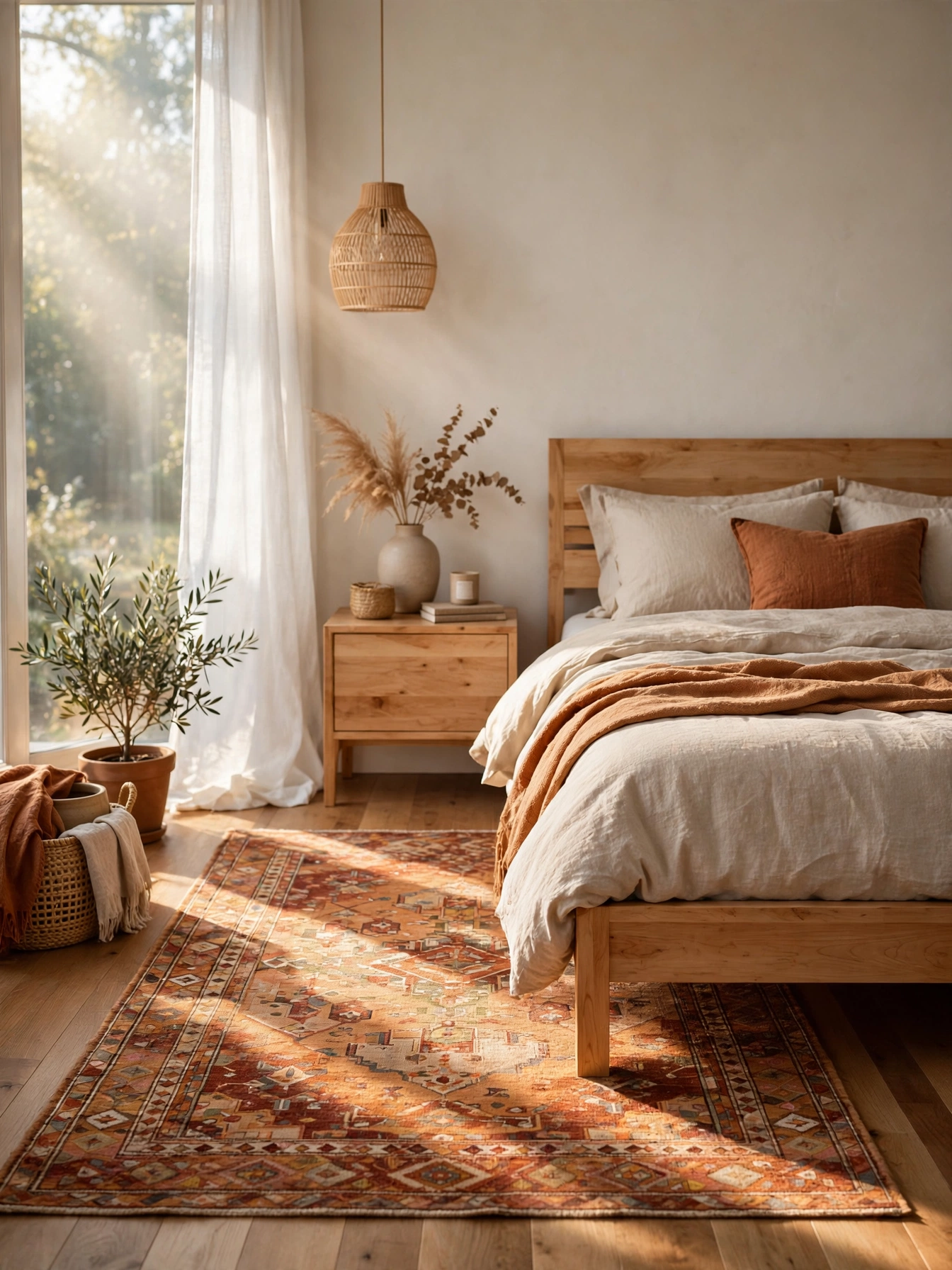
Why This Works:
- Bare floors feel 5 to 10 degrees colder underfoot on October mornings
- A 5 by 8 foot bedroom rug costs 80 to 200 dollars in wool blends
- Caramel and rust patterns tie the rug to maple furniture tones
- Rugs absorb sound, making the bedroom noticeably quieter
Size the rug to extend 18 to 24 inches beyond each side of the bed, so a queen bed needs at least a 5 by 8 foot rug placed with the top third under the bed. Choose a low pile under 0.5 inches so doors clear it and the vacuum does not choke. Avoid placing the rug’s edge in a doorway swing path, because the door will catch and curl the corner within weeks. Use a rug pad 2 inches smaller than the rug on all sides, which adds cushioning and stops sliding on hardwood. Vacuum weekly with the beater bar off for wool rugs to prevent fuzzing.
In flooring guides, the bedroom rug is consistently called the best comfort-per-dollar upgrade, and readers report the morning footstep difference immediately. The honest limitation is cleaning: light caramel rugs show every speck, so medium-tone patterns with variation hide traffic best. Homes with shedding pets will vacuum a bedroom rug twice weekly in fall. If the budget is tight, two 2 by 3 foot runners, one on each side of the bed, deliver 80 percent of the comfort for under 60 dollars.
Woven Basket Blanket Storage
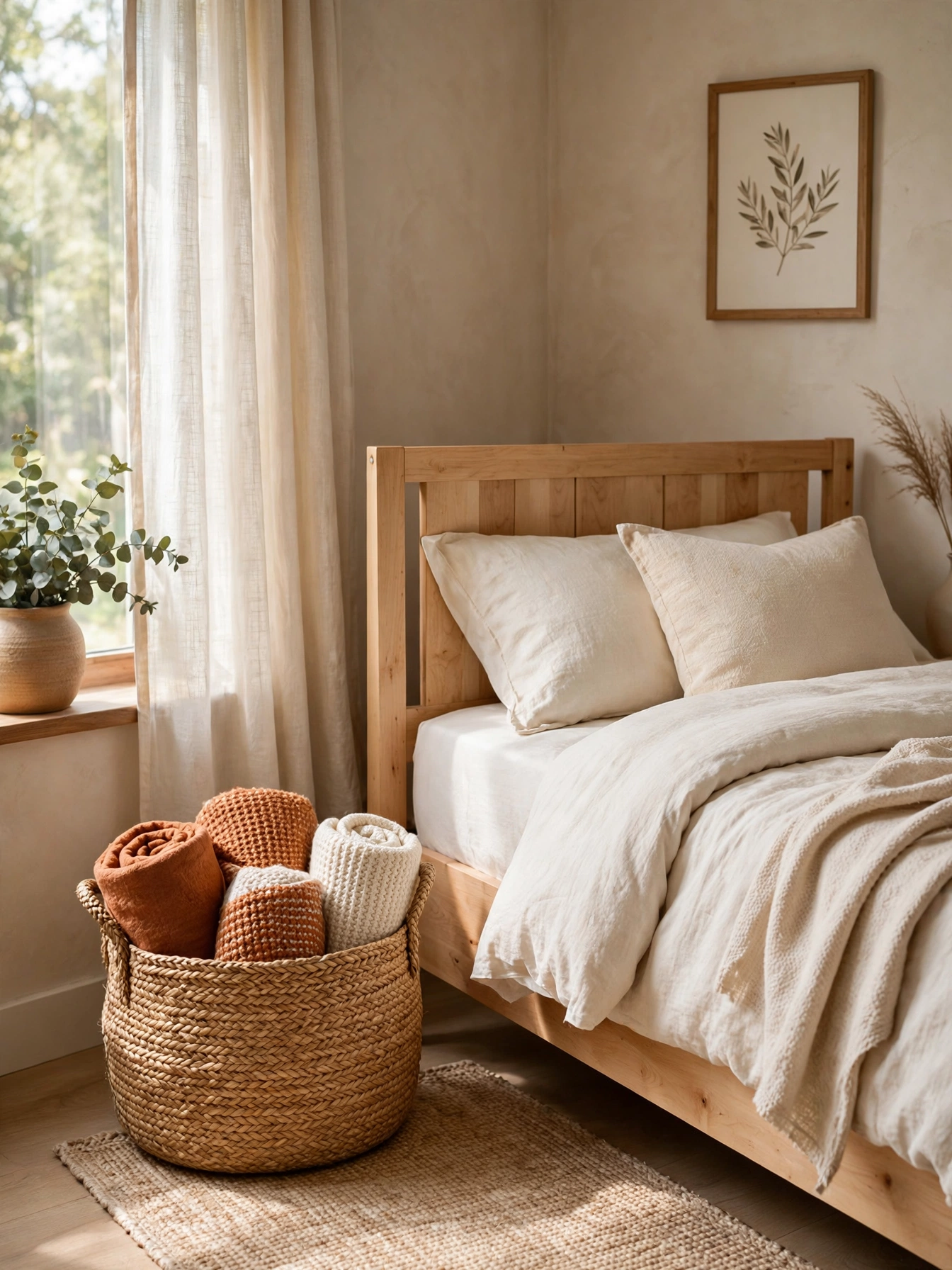
Why This Works:
- Fall means extra blankets, and they need a home that is not the floor
- Large woven baskets cost 30 to 70 dollars and hold 3 to 4 folded throws
- Natural seagrass texture adds the organic layer styled bedrooms need
- Rolls or folds out of sight in seconds when guests arrive
Choose a basket at least 20 inches in diameter and 18 inches tall so folded throws fit without cramming, which wrinkles them permanently. Roll throws instead of folding when the basket is deep, since rolled blankets show their colors and are easier to grab. Avoid placing the basket within 12 inches of a heating vent, because direct hot air dries out natural fibers and fades dyed throws unevenly. Line the basket with a cotton laundry bag if you are storing freshly washed blankets, which keeps them smelling clean for months. Keep the basket 24 inches from walkways so it never becomes a shin-height obstacle at night.
Storage stylists recommend the basket approach because it keeps seasonal textiles visible and inviting rather than buried in a closet. The trade-off is dust: open baskets collect it on the top throw, so rotate which throw sits on top monthly. Woven baskets with handles suit anyone who moves blankets between the bedroom and living room. The limitation is capacity: one basket holds the throws, but spare duvets still need closet shelf space in a 60 liter vacuum bag.
Dried Wheat Bedside Bouquet
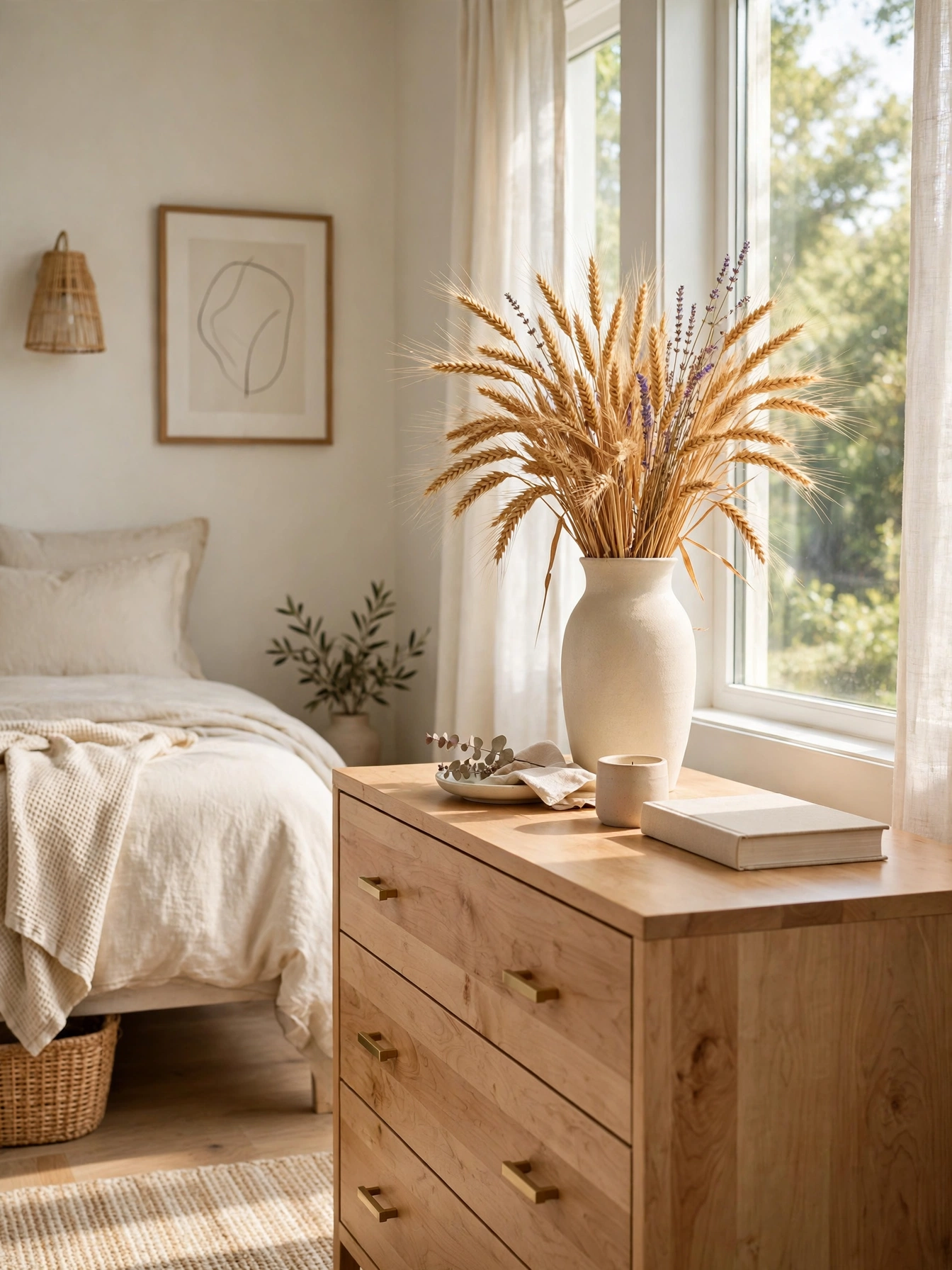
Why This Works:
- Wheat’s golden tone is the exact color of October fields, instantly seasonal
- Three bundles cost 10 to 20 dollars and last the full season, often longer
- Tall 24 to 30 inch stems add height to low dressers and nightstands
- Zero water, zero wilting, zero weekly maintenance
Use a vase with a narrow 3 to 4 inch opening so 20 to 30 stems stand upright without splaying, and keep the total arrangement 1.5 times the vase height for balanced proportions. Choose a vase weighing at least 3 pounds when the stems are tall, since top-heavy arrangements tip in a draft. Avoid placing dried wheat within 3 feet of a frequently opened window on windy days, because gusts scatter chaff across the room. Trim stems at an angle in 2 inch increments until the height looks right, and secure the bundle with twine 4 inches below the vase rim. Keep dried botanicals away from direct afternoon sun, which bleaches the gold to straw within 6 weeks.
Floral designers note that wheat is one of the few dried stems that looks intentional rather than leftover, thanks to its structured seed heads. The honest limitation is mess: wheat sheds fine chaff for the first 2 weeks, so shake bundles outdoors before bringing them in. Anyone with grass pollen sensitivities should keep dried wheat out of the bedroom entirely and use dried eucalyptus instead. When the season ends, wheat bundles store flat in a garment bag and reuse well for 2 to 3 years.
Flameless Cinnamon Candle Cluster

Why This Works:
- Candlelight warmth with zero fire risk in the room where you sleep
- Three flameless pillars with timers cost 20 to 40 dollars as a set
- Cinnamon and clove scents read as fall without any visual clutter
- Built-in 6 hour timers mean they glow every evening automatically
Group pillars at heights of 4, 6, and 8 inches on a 14 by 10 inch wooden tray, keeping the tallest candle toward the back for a tiered look. Choose flameless candles with a warm 2200K flicker effect rather than steady glow, since the flicker reads convincingly real from 8 feet away. Avoid real candles in the bedroom entirely: the National Fire Protection Association advises against burning candles where people may fall asleep, and notes that more than one third of home candle fires start in the bedroom. Place the tray on a dresser at least 24 inches from the bed’s edge so sleeves and bedding never brush it. Replace batteries every 6 to 8 weeks of nightly use, and keep a spare set in the nightstand.
In safety reviews, flameless candles are consistently recommended as the bedroom-safe alternative, and the timer function is the feature owners praise most. The honest limitation is scent: flameless candles cannot scent a room, so pair them with a reed diffuser if fragrance matters to you. Cheap flameless pillars with cool white LEDs look obviously fake; warm-toned ones cost 5 to 10 dollars more and are worth it. Real wax-coated flameless pillars feel authentic to the touch and photograph better than plastic ones.
Fall Botanical Wall Art
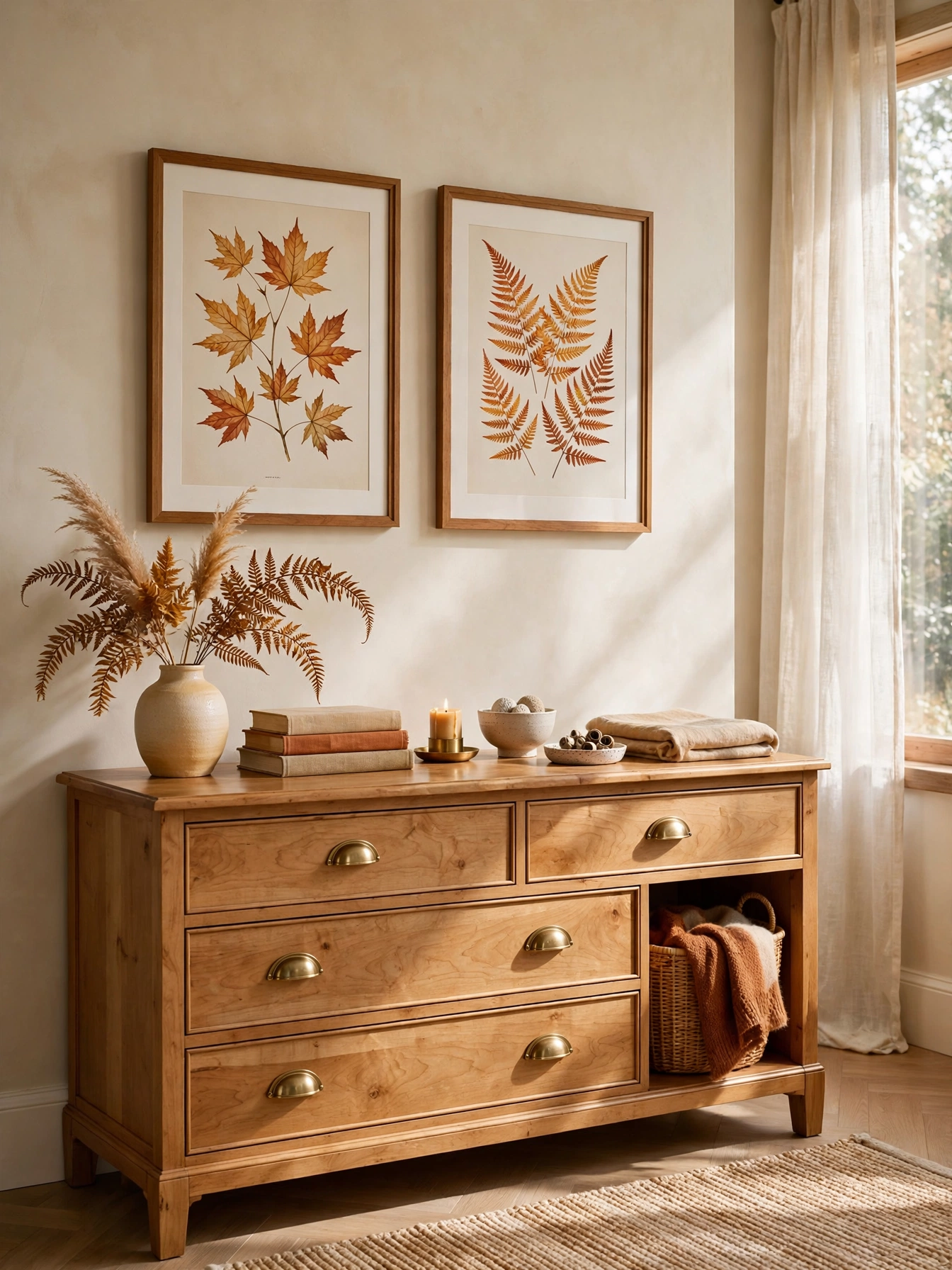
Why This Works:
- Art is the fastest way to change a wall’s season without paint
- Printable botanical art costs 5 to 15 dollars; framed sets run 40 to 90 dollars
- Maple leaf and fern prints in ochre and rust suit the warm maple theme
- Two matching frames create symmetry that calms a bedroom visually
Hang art with the center of the piece 57 to 60 inches from the floor, the gallery standard that suits most viewing heights. For a pair above a 48 inch dresser, keep 2 to 3 inches between frames and 6 to 8 inches of space above the dresser surface. Avoid hanging heavy framed art with a single nail in drywall, since a 10 pound frame will eventually pull free; use two anchored hooks rated for 25 pounds each. Choose frames in warm wood or antique brass rather than black, because dark frames can feel harsh against fall’s soft palette. If you print at home, use matte heavyweight paper at 200 GSM or higher so the prints do not curl in bedroom humidity.
Art consultants note that botanical prints are the most forgiving seasonal swap, since they suit every style from modern to farmhouse. The limitation is scale: prints under 11 by 14 inches disappear on walls wider than 8 feet, so measure before buying. Renters should use removable hanging strips rated for the frame weight, and keep a spare set for rehanging. When fall ends, the frames stay up year round and only the prints change, which makes this a 10 dollar seasonal habit.
Rust Linen Curtain Panels
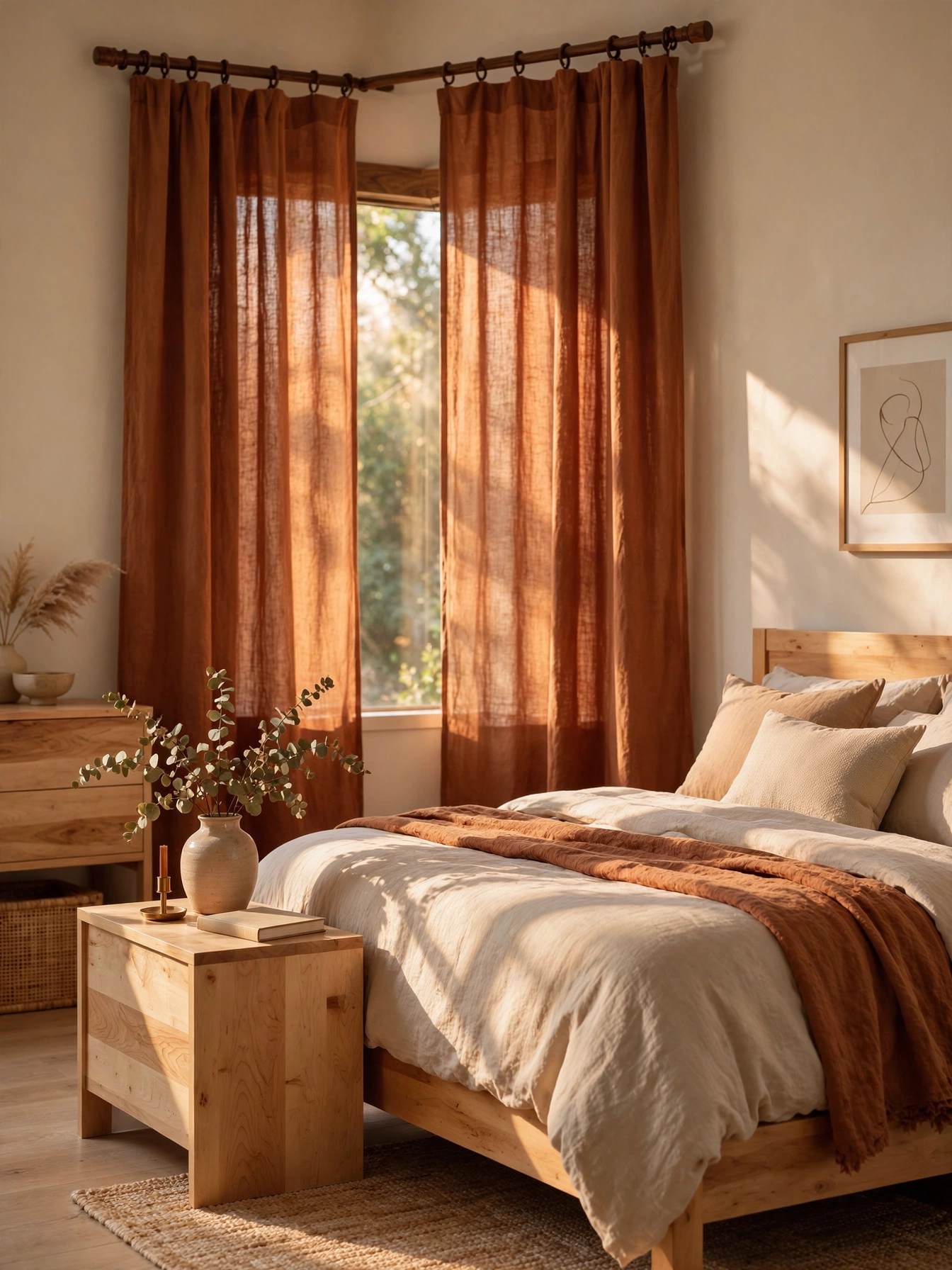
Why This Works:
- Curtains are the largest textile in most bedrooms after the bedding
- Two 52 by 84 inch linen panels cost 50 to 110 dollars
- Rust linen filters daylight into a warm golden tone all afternoon
- Heavier fall curtains also cut drafts from older windows noticeably
Mount the rod 4 to 6 inches above the window frame and extend it 8 to 12 inches beyond each side, so the panels stack on the wall and the full window shows when open. Choose panels 1.5 to 2 times the window width for proper fullness; a 48 inch window needs two 52 inch panels minimum. Avoid curtains that pool more than 2 inches on the floor in bedrooms, because the extra fabric collects dust and trips bare feet at night. Linen wrinkles naturally, so embrace the relaxed look or choose a linen blend with 20 percent cotton for fewer creases. Wash panels before hanging, since linen shrinks 3 to 5 percent on first wash.
Window treatment guides consistently rank curtain swaps as the second biggest seasonal impact after bedding, and rust tones test especially well against maple furniture. The trade-off is light: rust linen in a medium weight blocks 40 to 50 percent of daylight, which darkens north-facing bedrooms significantly. Sheer summer curtains should be stored rolled, not folded, to avoid permanent crease lines. If you need darkness for sleep, add a separate blackout roller behind the linen panels rather than buying heavy lined curtains.
Fall Bedroom Reading Corner Chair

Why This Works:
- A dedicated reading spot makes the bedroom feel like a suite, not just a sleep space
- A 30 inch wide armchair fits corners as small as 4 by 4 feet
- Caramel leather or rust bouclé chairs run 150 to 400 dollars secondhand to new
- One chair plus a 12 dollar throw creates the coziest 16 square feet in the house
Place the chair at a 45 degree angle in the corner, 18 to 24 inches from each wall, with a 16 to 18 inch side table within arm’s reach. Choose a chair with a seat height of 17 to 19 inches and a seat depth of 20 to 22 inches for comfortable reading posture. Avoid oversized 40 inch wide chairs in bedrooms under 150 square feet, because they swallow the corner and block closet doors. Add a floor lamp with the shade bottom at 48 to 52 inches from the floor, positioned 12 inches behind the chair’s shoulder, for proper reading light. Keep a 30 inch clear path from the chair to the bed so the corner never traps you at night.
In small-space design guides, the reading corner is the most requested bedroom upgrade, and owners report using it far more than expected through fall and winter. The honest limitation is discipline: an unused reading chair becomes a clothing chair within 2 weeks, so commit to the habit or skip the idea. Leather chairs suit homes without cats, while performance fabric survives claws and coffee spills. Secondhand chairs in the 75 to 150 dollar range are plentiful, but check the frame for wobble before buying.
Warm Fairy Light Canopy

Why This Works:
- Overhead string lights create the softest, most flattering bedroom light possible
- Two 33 foot strands cost 15 to 30 dollars total
- Warm 2700K lights echo candlelight without any flame
- Dimmable strands let you shift from reading bright to sleepy dim
Drape two 33 foot strands in loose swags from removable ceiling hooks placed 24 to 36 inches apart, keeping the lowest point of the swag at least 7 feet from the floor. Choose copper wire strands with 100 LEDs each, since copper wire disappears against ceilings and the dense LED count avoids spotty gaps. Avoid stapling or nailing light strands, because damaged wire insulation is a genuine fire risk; removable adhesive hooks rated for 1 pound each are the safe choice. Keep strands 12 inches from fabric canopies and curtains, and never run them under bedding or rugs where heat builds up. Plug strands into a timer so they switch off automatically after 4 to 6 hours.
Lighting reviewers consistently rate copper wire fairy lights as the best value in bedroom lighting, and the canopy arrangement photographs beautifully. The limitation is longevity: budget strands last 1 to 2 seasons of nightly use before sections dim, so buy a spare strand. Battery-operated strands suit renters but need fresh batteries every 3 to 4 weeks; plug-in strands with a 10 foot lead cord are more reliable. If anyone in the home is sensitive to light while sleeping, keep the canopy over the foot of the bed rather than above the pillows.
Maple Stained Floating Shelves
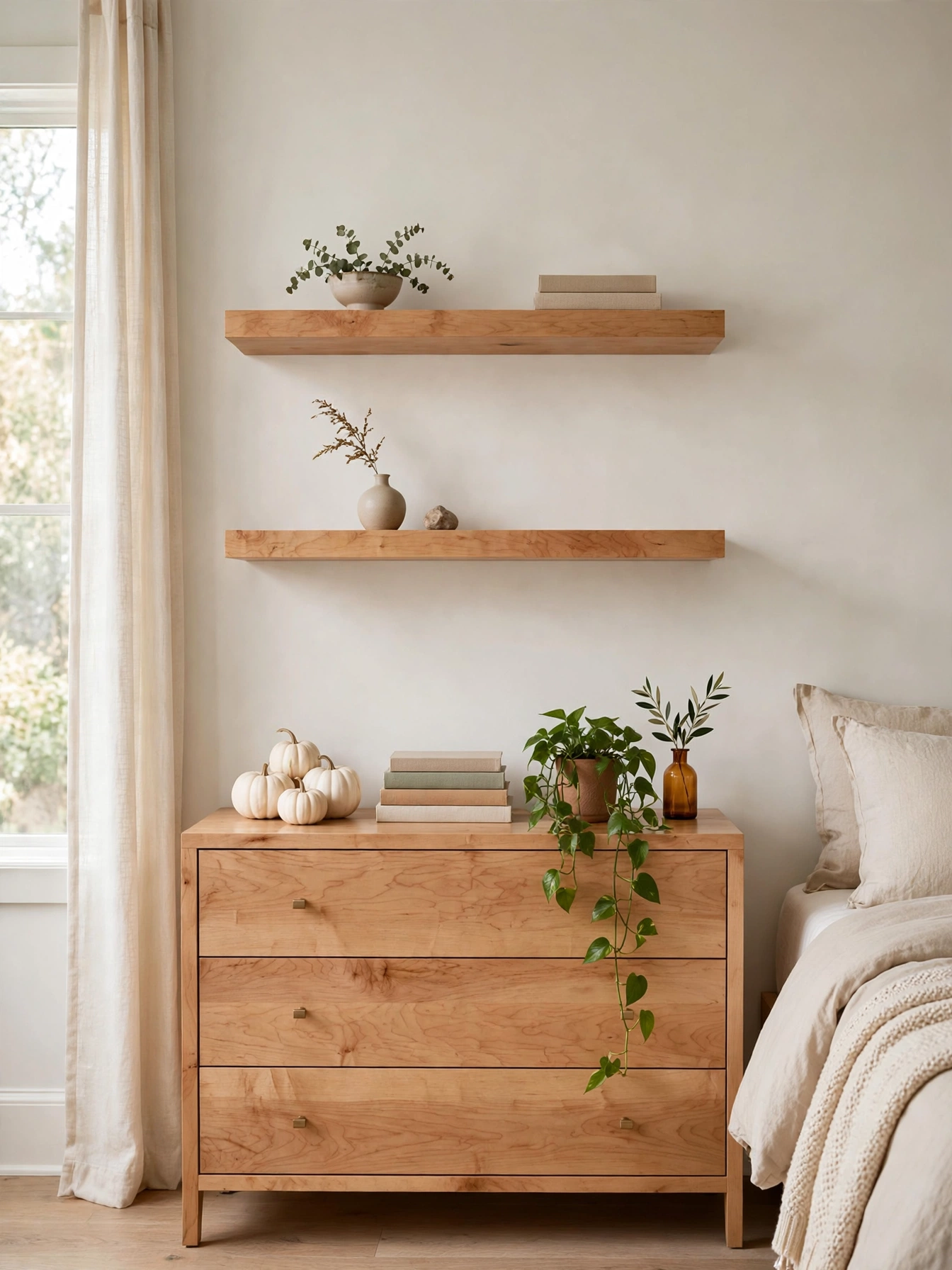
Why This Works:
- Shelves add display space without any floor footprint
- Two 36 inch maple shelves cost 40 to 80 dollars with brackets
- The warm stain ties into headboards and nightstands
- Seasonal styling swaps take 10 minutes per shelf
Mount shelves into wall studs with brackets rated for 50 pounds per shelf, since books plus decor add up faster than expected. Space two shelves 14 to 18 inches apart vertically, with the lower shelf 48 to 54 inches from the floor above a dresser. Avoid mounting shelves directly above pillows or the head of the bed, because even well-secured shelves make sleepers uneasy and falling objects land badly. Keep shelf styling to the back 8 inches of each 10 inch deep shelf so nothing creeps toward the edge. Use a stud finder rather than guessing, since drywall anchors alone fail under book weight within a year.
Shelf styling guides recommend the rule of thirds: group items in threes with varied heights for a collected look. The trade-off is dust: open shelves in bedrooms need wiping every 3 to 4 weeks. Renters should choose shelves rated for adhesive mounting under 15 pounds total, though these hold only light decor. If your walls are plaster rather than drywall, pre-drill with a masonry bit to avoid cracking.
Fall Scent Diffuser Station
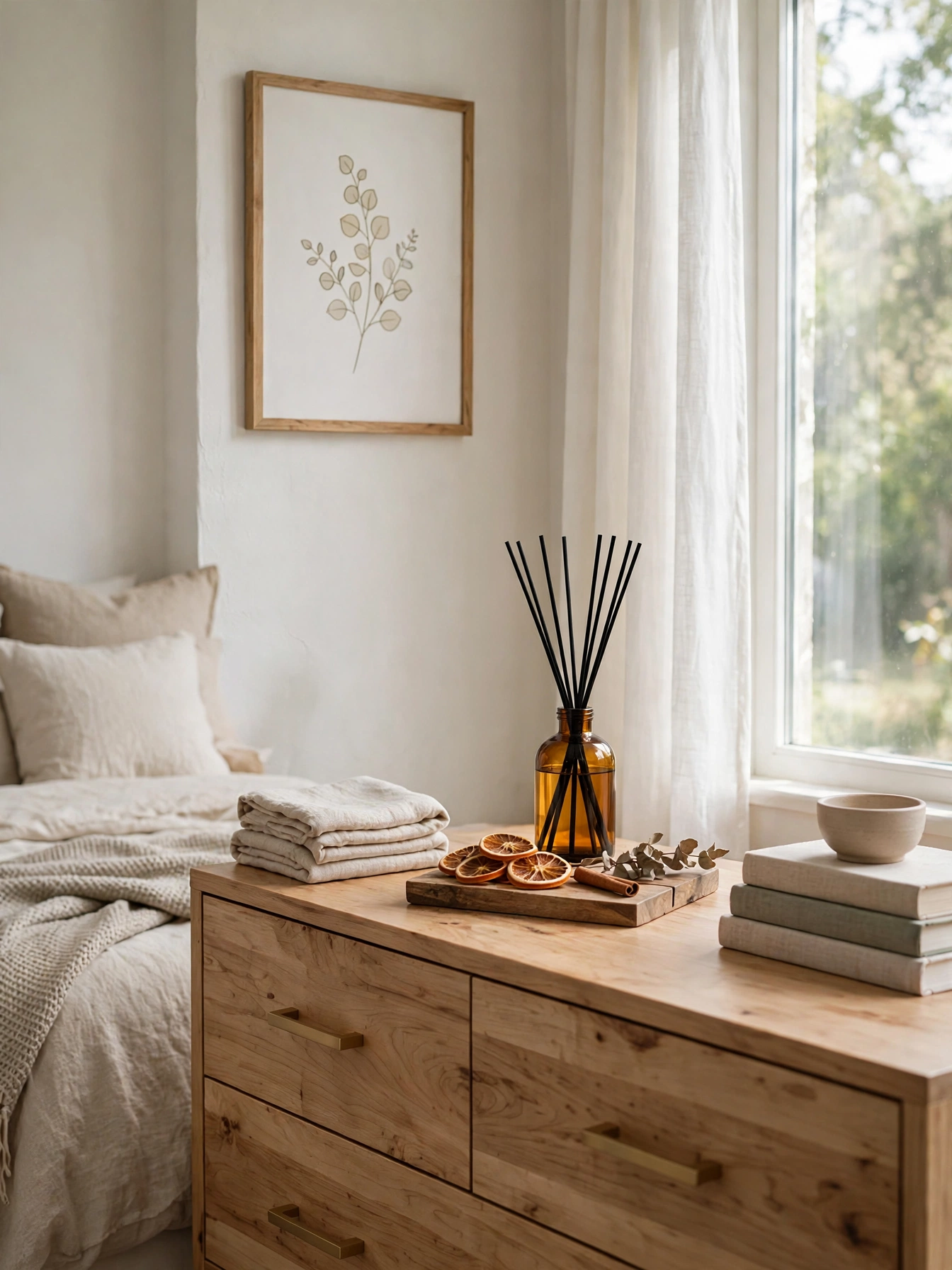
Why This Works:
- Scent shapes how cozy a bedroom feels more than any visual detail
- Reed diffuser sets cost 20 to 45 dollars and last 3 to 4 months
- Apple, cedar, and clove blends read as fall without overpowering
- Flameless scent is the safe bedroom choice around bedding
Place the diffuser on a tray at least 12 inches from the bed’s edge, since reeds can drip oil that stains sheets permanently. Choose a 6 to 8 ounce diffuser with 8 to 10 reeds for a standard 150 square foot bedroom; smaller 3 ounce sets fade within 3 weeks in larger rooms. Avoid placing diffusers on painted nightstands without a tray, because the carrier oil damages paint and varnish within days of a spill. Flip the reeds every 2 weeks to refresh the scent throw, and replace reeds monthly since saturated reeds stop wicking. Keep diffusers away from direct sun, which evaporates the oil twice as fast.
Fragrance reviewers consistently rate reed diffusers as the best bedroom option, since they scent continuously without heat or flame. The honest limitation is subtlety: diffusers will not fill a large bedroom the way a candle does, so position one within 6 feet of the bed for the best effect. Homes with cats should check that the fragrance oil is pet-safe, since some essential oils irritate cats. If the scent feels weak after a month, the reeds are spent rather than the oil being gone.
Harvest Pillow Arrangement for Fall Bedrooms

Why This Works:
- Pillows are the jewelry of the bed: small, swappable, high impact
- Three 18 by 18 inch harvest covers cost 20 to 45 dollars total
- Rust, mustard, and cream patterns bridge summer bedding to fall
- Covers store flat, so the seasonal swap needs one drawer of space
Build the arrangement back to front: euro shams against the headboard, sleeping pillows next, then 2 to 3 decorative 18 by 18 inch pillows in front. Mix one pattern, one texture, and one solid across the decorative pillows, since three patterns compete and three solids look flat. Avoid decorative pillows with beading or sequins on a bed you actually sleep in, because the embellishments scratch skin and snag sheets within days. Choose removable covers with hidden zippers for washing, and buy inserts 2 inches larger than the covers for a full look. Limit decorative pillows to 5 total on a queen bed, since more than that turns bedtime into a nightly stacking chore.
Textile stylists recommend the odd-number rule for decorative pillows, and reader photos confirm that three beats two or four visually. The trade-off is nightly effort: every decorative pillow must be removed before sleep and replaced in the morning, which takes 2 minutes daily. Households that will not maintain that routine should stick to two decorative pillows maximum. Store off-season covers in a labeled 12 by 16 inch zip bag so next fall’s swap takes minutes.
Plaid Throw Pillow Trio

Why This Works:
- A window seat or bench is dead space without pillows to invite sitting
- Three coordinating plaid covers cost 18 to 40 dollars
- Rust, cream, and forest plaids layer without matching exactly
- Pillows make a window seat usable through the chilly months
Choose 16 by 16 inch or 18 by 18 inch pillows for a window seat, since larger 20 inch pillows overwhelm a standard 18 inch deep seat. Vary the plaid scales: one large 4 inch repeat, one medium 2 inch repeat, and one mini check keeps the trio interesting. Avoid placing light cream pillows on a window seat that gets direct rain-adjacent condensation, because moisture spots show permanently on pale fabric. Add a 1 inch thick seat cushion underneath if the seat is bare wood, since nobody lingers on a hard cold bench. Rotate the pillows weekly so sun fading stays even across the set.
Window seat stylists note that pillows are what convert a pretty ledge into a used reading spot, especially once October light turns golden. The limitation is depth: seats under 16 inches deep cannot hold pillows plus a seated person comfortably. Homes without a window seat can use the same trio on a bedroom bench or the reading corner chair. Washable covers are non-negotiable near windows, where dust and condensation soil fabric faster.
Golden Hour Mirror Placement

Why This Works:
- A mirror opposite or beside a window doubles October’s low golden light
- Round 24 to 30 inch brass mirrors cost 50 to 120 dollars
- Reflected warm light makes the whole room glow at sunset
- Brass frames echo amber and maple tones elsewhere in the room
Hang the mirror on the wall adjacent to the window, not directly opposite, so it catches the light at an angle and bounces it deeper into the room. Position the mirror’s center 57 to 60 inches from the floor, and keep it 24 to 36 inches from the window wall for the best light angle. Avoid placing mirrors where they reflect clutter like laundry piles or open closets, because doubled mess reads twice as chaotic. Choose a mirror weighing under 15 pounds for simple two-hook hanging, since heavier mirrors need wall anchors and precise leveling. Tilt the mirror 2 to 3 degrees downward if it hangs above eye level to catch the bed rather than the ceiling.
Lighting designers call this the cheapest daylight upgrade in a bedroom, and the effect peaks in October when the sun sits low. The trade-off is glare: a poorly angled mirror throws a bright stripe across the bed at 5 PM, so test the placement with a handheld mirror before drilling. Brass frames need only an occasional wipe, while black frames show every dust speck. In bedrooms with no good window wall, a mirror behind the amber lamp doubles the lamplight instead.
FAQs
What are the best fall bedroom decor ideas for autumn 2026 on a budget?
Start with textiles, which deliver the biggest change per dollar. A Blissful Nest recommends a chunky knit throw and velvet euro shams in deep jewel tones as the highest impact bedroom update. The pair costs 60 to 110 dollars total and takes 20 minutes to style.
How do I layer bedding for fall without overheating at night?
Use a lightweight duvet insert under the fall cover, and fold the heavy throw at the foot of the bed instead of across the middle. Cotton and linen layers breathe far better than polyester. Keep one layer removable so you can adjust when the bedroom warms past 68 degrees overnight.
Which fall bedroom decor ideas for autumn 2026 work in small bedrooms?
Focus on the bed and one wall, since those carry the whole room. Swap the duvet cover, add two velvet shams, and hang one botanical print above the dresser. Skip the reading chair and floor basket in rooms under 120 square feet, where every extra piece crowds the walkways.
Are real candles safe in a fall bedroom?
The National Fire Protection Association advises against burning candles in bedrooms or anywhere people may fall asleep. More than one third of home candle fires start in the bedroom, according to NFPA data reported by the Seattle Fire Department. Use flameless candles with timers for the same glow.
When should I switch my bedroom decor back after fall?
Keep the warm layers through November, then swap the fall-specific pieces in early December. Store the pumpkin vignette and garland first, since those read as autumn-only. The chunky knit throw, amber lamp, and maple accents work straight through winter without looking out of season.
Conclusion
The warmest fall bedrooms are not the ones with the most decor. They are the rooms where every layer earns its place: the maple tones ground the palette, the textiles invite touch, and the lighting flatters everything at 9 PM. Start with the bedding, since that single swap changes the room more than any other.
Your top three takeaways: layer textiles before adding objects, keep real flames out of the bedroom, and size rugs and art to the room so nothing crowds the space. These fall bedroom decor ideas for autumn 2026 work best when you add them one zone at a time through October.
This weekend, pick one idea and try it: fold a chunky knit throw across the foot of the bed and see how the room shifts. Follow HomelyCrafter on Pinterest for more seasonal ideas. Save this to your Pinterest boards so you can refer back to it!

Muhammad Israr is a home decor enthusiast and the writer behind Homely Crafter. He spends his days researching paint colors, layouts and budget-friendly styling ideas, then breaks them down into practical, easy-to-follow guides so you can decorate with confidence.