
Nobody photographs the sideboard at a fall dinner; every phone points at the table. That makes the dining table the highest-stakes surface in the house from October through Thanksgiving, and also the most fun to style. These fall table decor ideas for autumn 2026 lean into cabin chic: warm wood, plaid wool, brass and copper, and candlelight that makes even a Tuesday dinner feel like an occasion.
Cabin style works because it is honest about materials. Real wood, real wool, and dried botanicals age gracefully and never look try-hard, which matters on a table that also has to survive gravy boats and elbows. Every idea below includes real measurements, material picks, price ranges, and the trade-offs that styled photos leave out.
You will find 22 specific ideas, each with its own styled photo, covering runners, centerpieces, place settings, lighting, and the seating around the table. Start with the runner and one low centerpiece, then layer outward. Nothing here requires a new table or chairs.
Cabin Log Slice Chargers
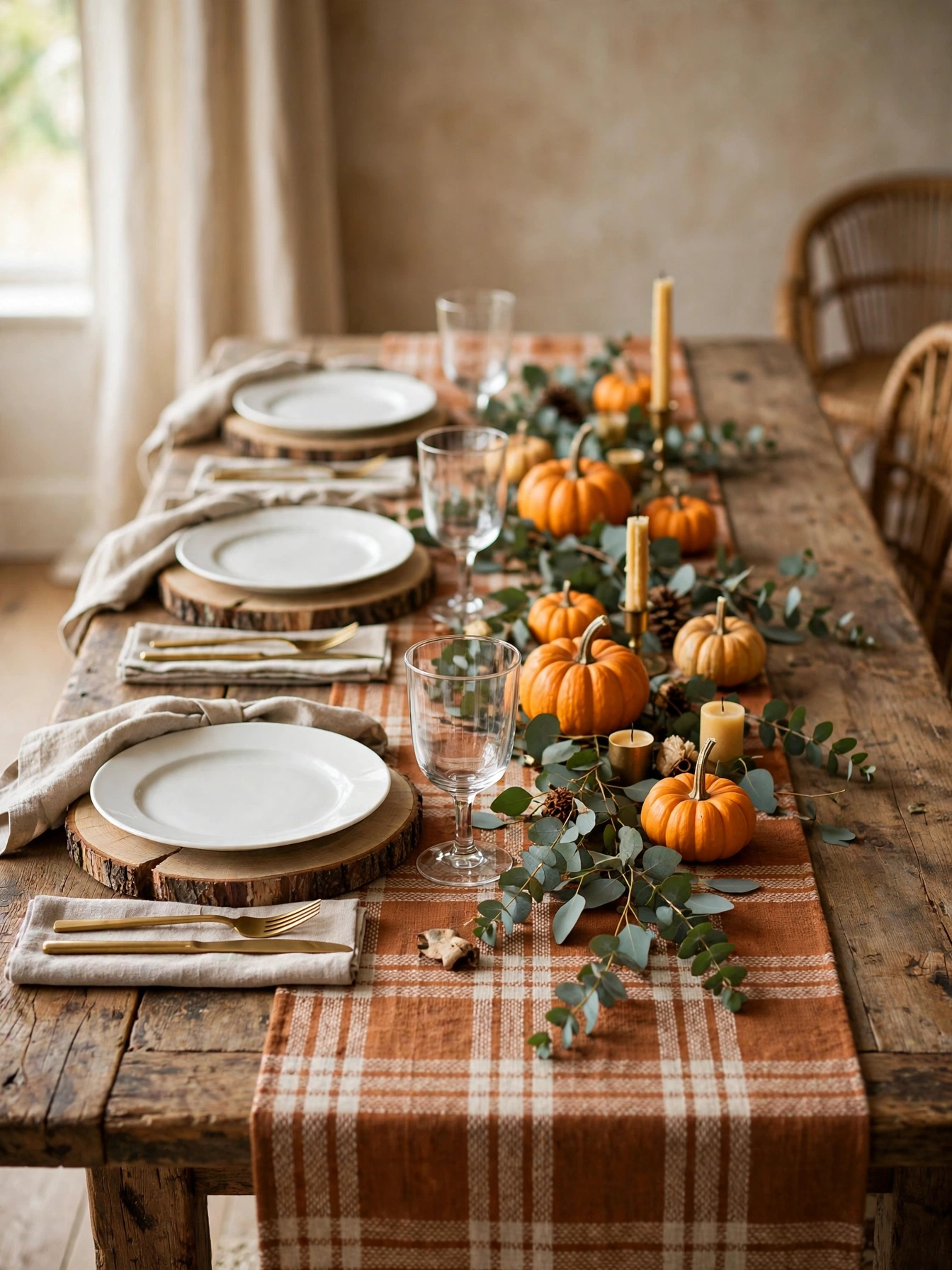
Why This Works:
- Log slices bring real bark texture to the table for 2 to 4 dollars each
- 12 to 13 inch slices fit under standard 10.5 inch dinner plates
- The raw wood edge reads instantly cabin chic with zero styling skill
- Sealed slices wipe clean and reuse for years of fall dinners
Choose slices 0.75 to 1 inch thick so they sit stable and do not rock under plates, and sand the top face smooth to 120 grit so plates sit flat. Seal all surfaces with 2 to 3 coats of food-safe mineral oil or butcher block conditioner, since unsealed wood absorbs gravy stains permanently. Avoid slices with deep bark crevices at the place setting, because food crumbs lodge in the bark and the chargers look dirty after one meal. Keep slices 1 inch smaller than your placemats if you use them, so the wood edge shows. Buy 2 extra beyond your place count, since one always develops a crack by year three.
Table stylists consistently rank chargers as the fastest way to make a table look finished, and wood slices are the most forgiving option for beginners. The honest limitation is weight: a 13 inch oak slice weighs 3 to 4 pounds, so setting the table becomes a workout for 8 or more guests. Lighter acacia slices at half the weight suit larger gatherings. Bark-edge slices shed tiny bark flakes for the first season, so shake them outdoors before each use.
Pinecone Table Runner
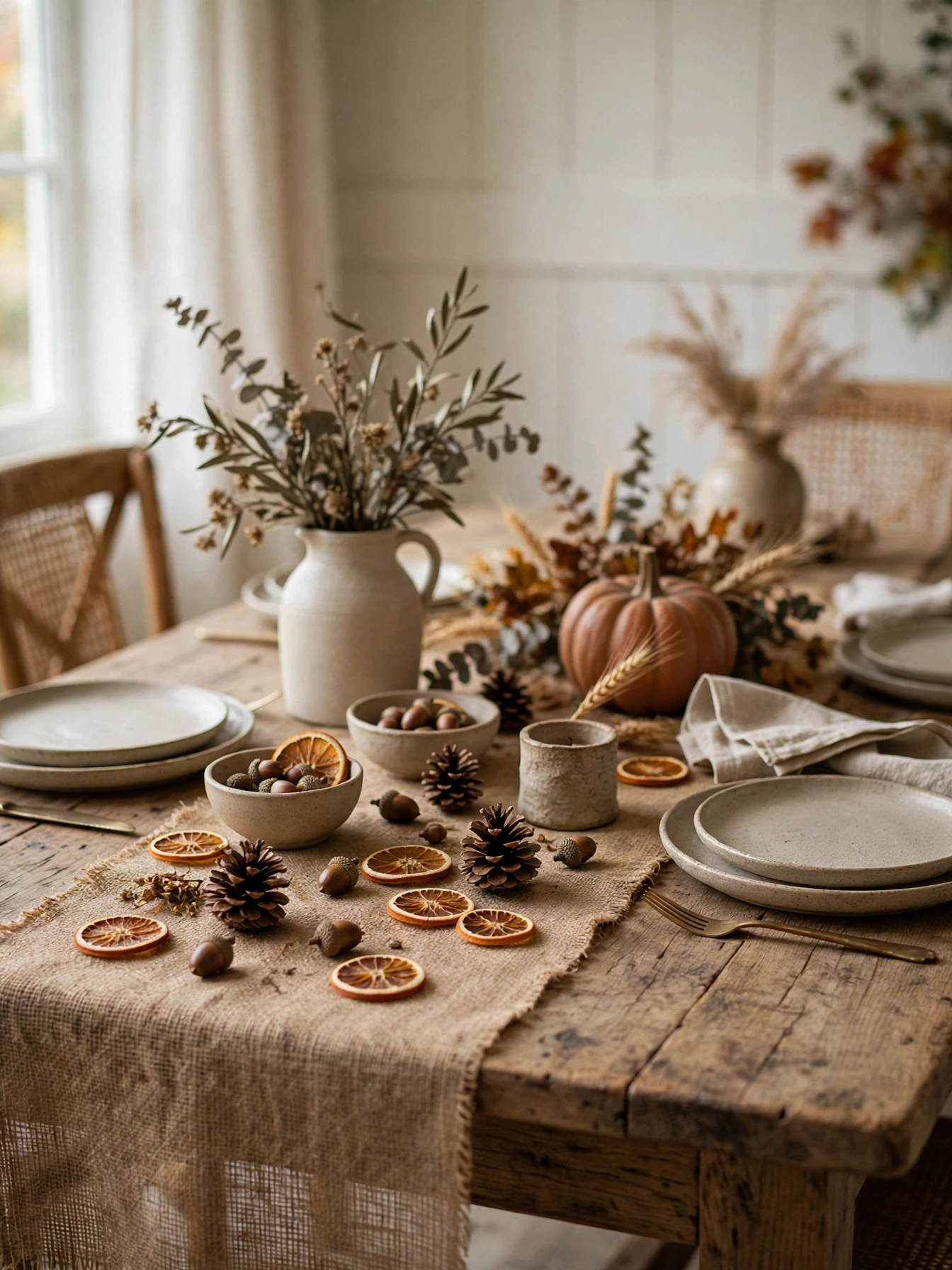
Why This Works:
- Pinecones are free in most neighborhoods and read unmistakably autumnal
- A 14 by 72 inch burlap runner costs 12 to 20 dollars as the base
- Scattered botanicals need no arranging skill, just an even hand
- The whole runner lifts off in one piece when dinner is served
Start with a runner 12 inches longer than the table on each end for a proper 24 inch total overhang, or 72 inches for a standard 6 foot table. Scatter 15 to 25 pinecones in varied sizes along the runner, keeping them 3 inches from the table edge so elbows do not send them flying. Avoid placing pinecones where serving dishes land, since wobbly dishes on round cones spill; keep a clear 18 inch landing zone at each end for platters. Bake collected pinecones at 200 degrees for 45 minutes on a foil-lined tray to kill insects before bringing them indoors. Shake them outdoors first to drop loose seeds.
In my research across seasonal styling guides, the scattered-botanical runner is the most recommended beginner centerpiece because it cannot really fail. The trade-off is practicality: pinecones migrate during meals and end up on the floor, so expect to re-scatter after every dinner. Homes with toddlers should skip small pinecones at table edge height, since they fit in curious mouths. Faux pinecones in the 1 to 2 dollar range eliminate the baking step and never shed sap.
Faux Antler Centerpiece Bowl
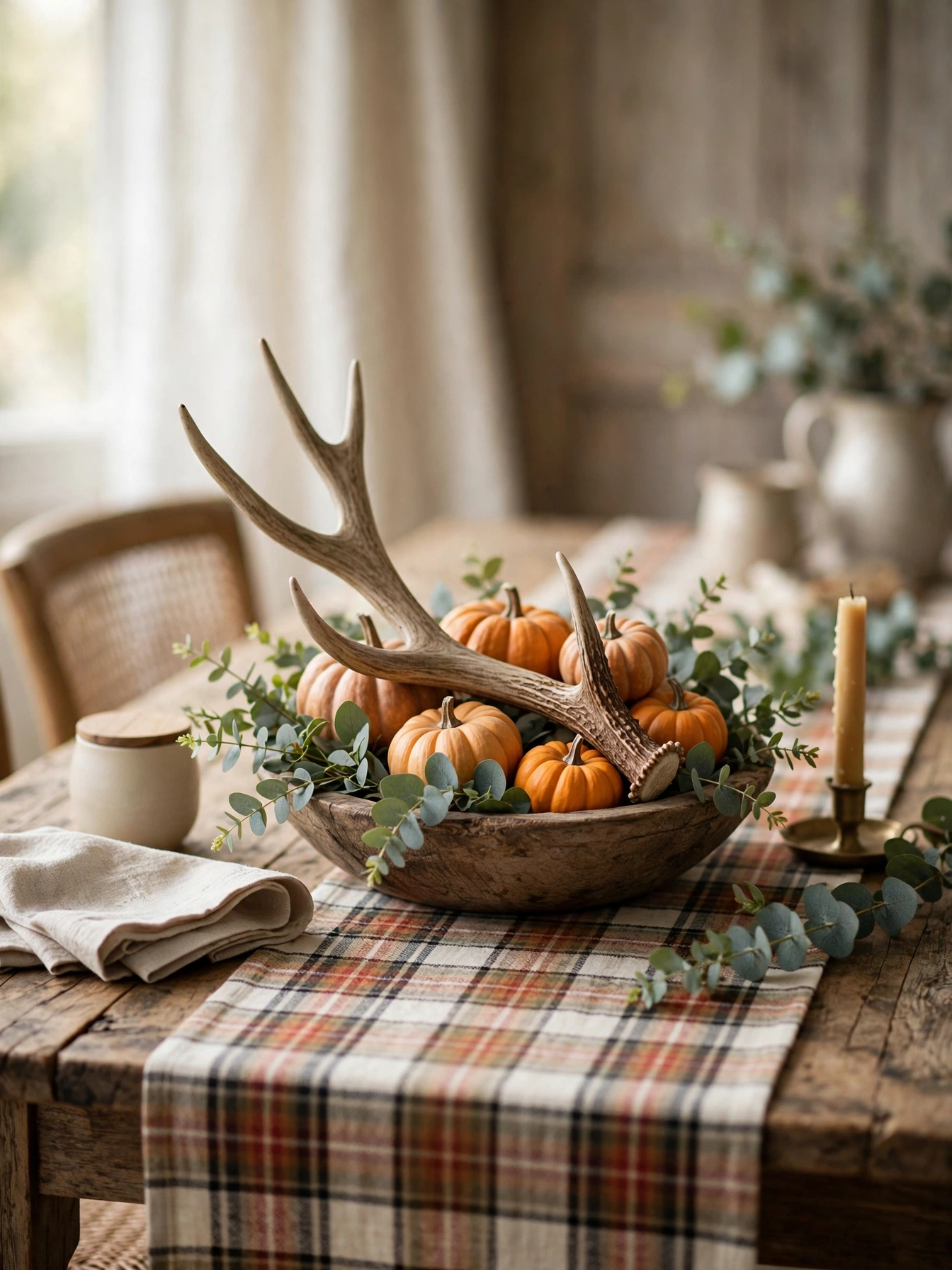
Why This Works:
- Antlers are the single most cabin-coded object you can put on a table
- Faux antler sheds cost 25 to 60 dollars and need no special care
- A low dough bowl keeps the whole arrangement under 12 inches tall
- The sculptural shape adds height interest without blocking conversation
Choose a faux antler 14 to 20 inches long, which suits a standard 36 to 42 inch wide dining table without overwhelming it. Nestle it in a 20 to 24 inch dough bowl filled with mini pumpkins and eucalyptus to anchor it visually. Avoid real antlers unless you verify the source, since shed antlers should be naturally dropped, not harvested, and untreated real antlers carry a distinct barn odor indoors. Keep the arrangement’s highest point under 14 inches so sightlines stay open across the table. Dust the antler monthly with a dry cloth, since the textured surface grabs dust visibly.
Design guides treat faux antlers as the ethical cabin staple, and resin casts have become convincingly detailed in the 40 dollar plus range. The limitation is style fit: antlers look wrong in modern minimalist dining rooms, where they read as a costume piece. They suit rustic, farmhouse, and lodge styles best. If the full antler feels bold, a single small shed tucked into a pumpkin bowl gives the nod without the commitment.
Plaid Tablecloth Layering
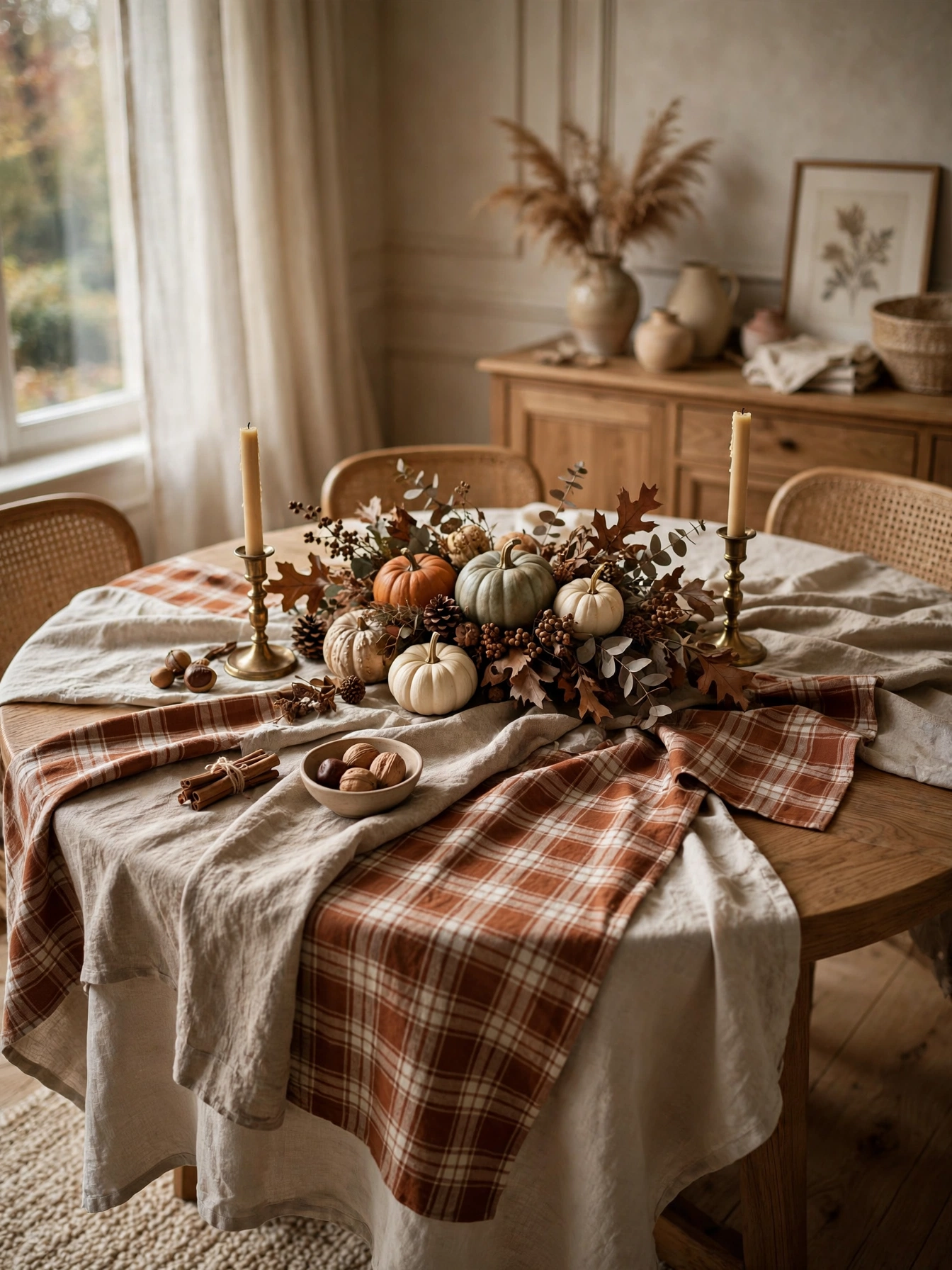
Why This Works:
- Two layered cloths add the depth that single tablecloths lack
- A 70 inch round plaid cloth costs 25 to 45 dollars
- Plaid in rust and cream hides the small stains that plain cloths show
- Layering lets you mix a good linen base with an affordable seasonal top
Size the base cloth for a 10 to 12 inch drop on each side, then layer a smaller plaid cloth or runner over the center, leaving 12 to 18 inches of the base visible as a border. Choose machine-washable cotton or polyester blends for the top layer, since the top cloth takes all the spills. Avoid floor-length drops on tables used daily, because chair legs catch the fabric and yank place settings; a 10 inch drop is the practical maximum. Iron the plaid layer while slightly damp for crisp fold lines that read intentional. Keep a stain treatment stick in the sideboard drawer, since plaid hides stains visually but the fabric still needs prompt treatment.
Textile stylists recommend layering as the easiest way to make rental or worn tables look deliberate, and the double cloth also muffles dish clatter noticeably. The trade-off is laundry: two cloths double the wash load, and plaid cotton wrinkles aggressively out of the dryer. Pull the top cloth promptly and fold it to minimize ironing. For households that eat at the table daily, a washable plaid runner over a wipeable wood table is the lower-maintenance version.
Mason Jar Lantern Trio
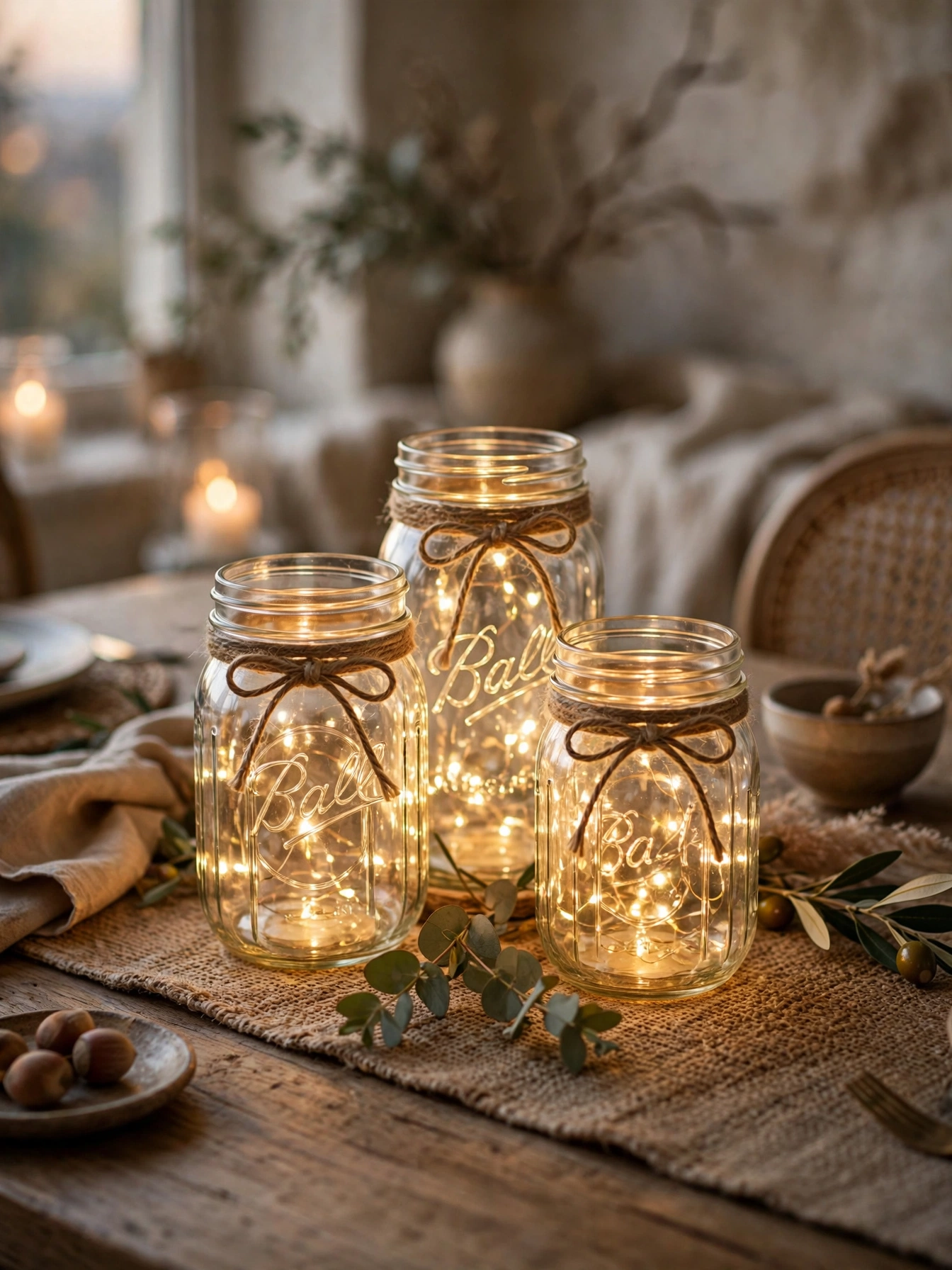
Why This Works:
- Mason jars plus fairy lights are the definition of affordable cabin glow
- Three quart jars, lids off, cost under 15 dollars total
- Warm LED strands inside each jar create firefly-like light
- At 7 inches tall, the trio never blocks a single sightline
Use wide-mouth quart jars 7 inches tall, coiling one 10 foot, 30 LED warm white strand inside each jar for even glow. Wrap the jar necks with jute twine in 3 to 4 loops, tied in a simple bow, to hide the threaded rim. Avoid real tea lights inside closed jars, since the glass traps heat and the flame gutters within 20 minutes; LED strands are the safe and better-looking choice. Space the three jars 6 to 8 inches apart down the table center so they read as a group, not a row. Keep jars 12 inches from the table edge where sleeves catch them.
Lighting reviewers consistently praise jar lanterns as the best dollar-per-glow in table decor, and guests always ask about them. The limitation is battery life: each strand needs 3 AA batteries replaced every 3 to 4 weeks of nightly use, so buy rechargeables. Timer-function strands that run 6 hours nightly solve the forgetting problem. If you want hardwired sconces above the sideboard instead, hire a licensed electrician; most charge 100 to 200 dollars per fixture, and dining room wiring is worth doing right.
Birch Bark Candle Holders
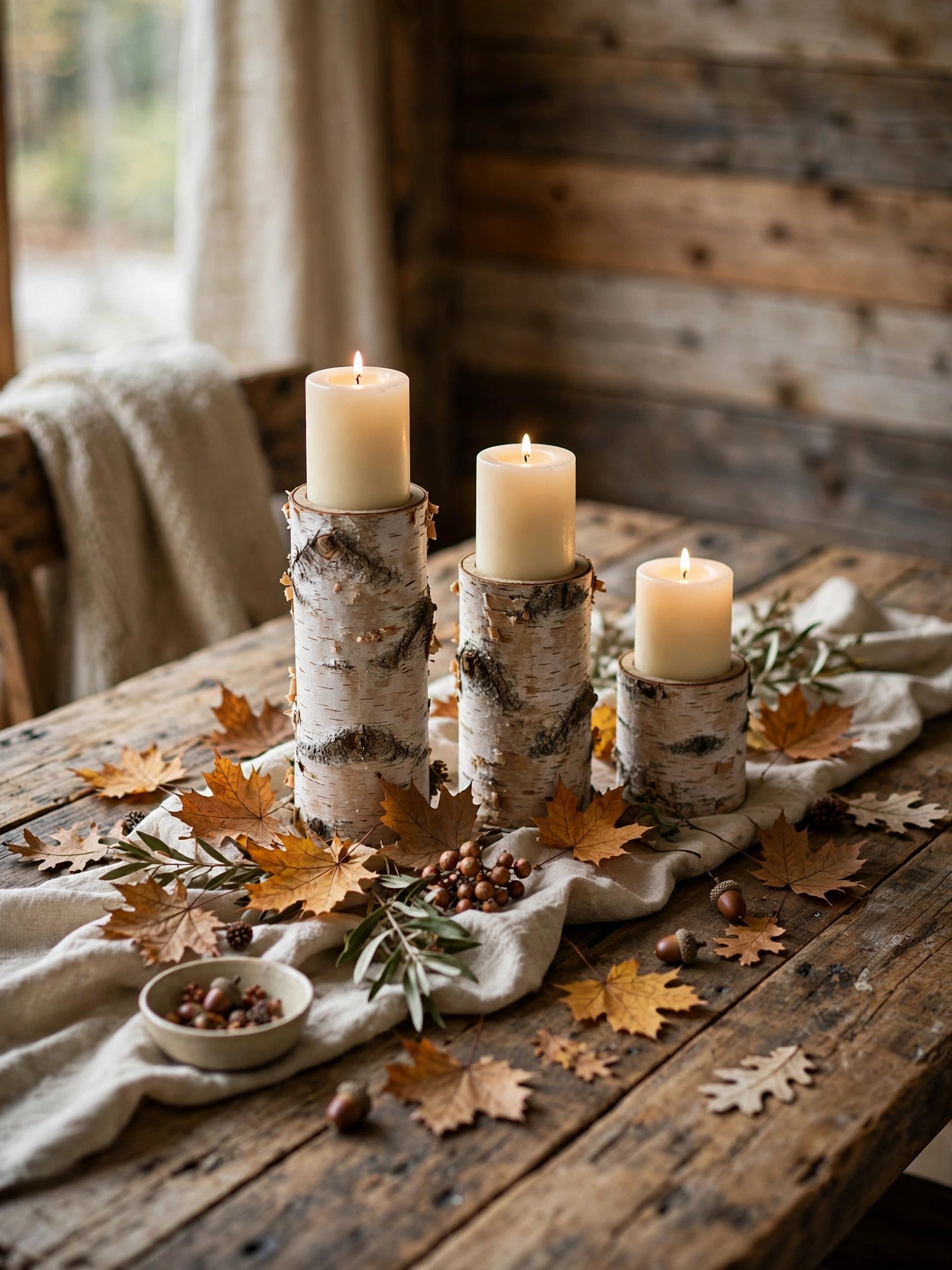
Why This Works:
- Birch bark’s white and gray pattern is nature’s own cabin wallpaper
- A set of three bark holders costs 18 to 35 dollars
- The pale bark brightens tables that lean heavy on dark wood
- Pillar candles in bark sleeves look custom for very little money
Choose holders 4, 6, and 8 inches tall for a graduated trio, each fitted with a flameless or real pillar 2 inches narrower than the holder opening. If you burn real candles, the Los Angeles Fire Department requires the flame to stay at least 6 inches from fresh foliage and 12 inches from dry foliage or other combustibles, so keep all dried decor well clear of the holders. Avoid bark holders with loose peeling layers near real flames, since curled bark edges catch quickly; flameless pillars eliminate the risk entirely. Keep holders on a tray rather than directly on the tablecloth, because wax drips stain fabric permanently. Dust bark monthly, since the textured surface shows dust in raking light.
In cabin styling guides, birch bark is the most recommended natural material after wood itself, and it pairs beautifully with both plaid and linen. The honest limitation is fragility: thin bark sleeves crack if squeezed, so handle them by the base. Faux birch-patterned holders in the 12 to 20 dollar range survive handling better and look convincing from 3 feet away. Store bark holders in their original box between seasons to prevent crushing.
Autumn Leaf Place Cards
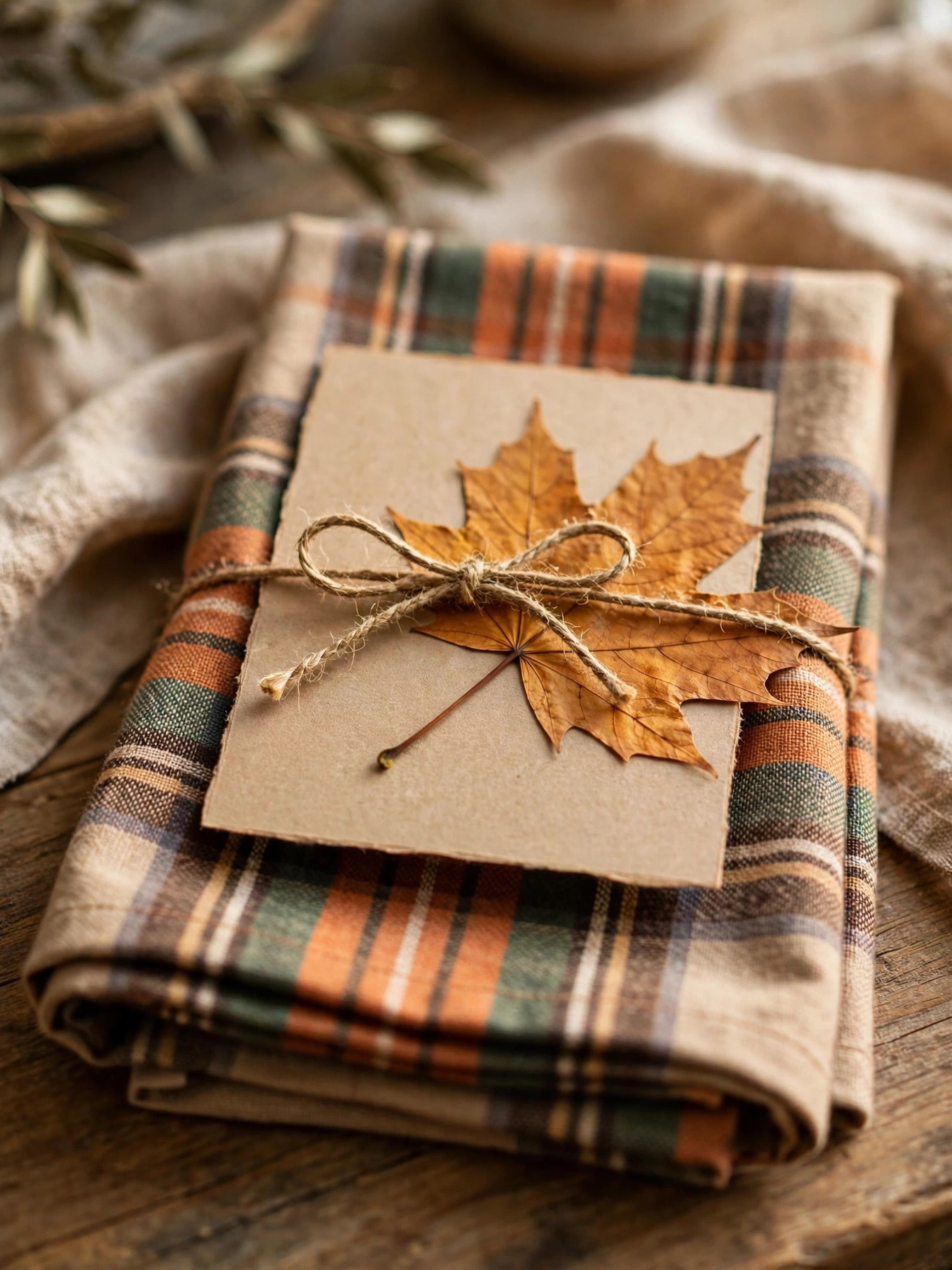
Why This Works:
- Place cards make even a family dinner feel like an event
- Kraft tags and twine cost under 8 dollars for a set of 12
- Real pressed maple leaves make each card one of a kind
- Guests take them home, so the detail doubles as a favor
Press maple leaves between book pages for 7 to 10 days until fully flat, choosing leaves 3 to 4 inches wide that hold a 2 by 3 inch kraft tag. Write names with a brown fine-tip marker, which reads better on kraft than black ink. Avoid fresh unpressed leaves as card holders, because they curl within 6 hours and drop the tag on the floor. Attach each tag to its leaf with 8 inches of twine through a punched hole, and lean the leaf against a small pumpkin or a folded napkin at each setting. Make 2 extras, since leaves tear and guest lists change.
Entertaining guides consistently say place cards are the detail guests remember, and the leaf version costs nearly nothing. The trade-off is lead time: pressing takes over a week, so this is a plan-ahead project, not a day-of craft. Faux pressed leaves in the 6 to 10 dollar range skip the wait and never crumble. For weeknight dinners, skip the names and use the leaf-and-tag as a simple napkin decoration instead.
Woodland Acorn Scatter
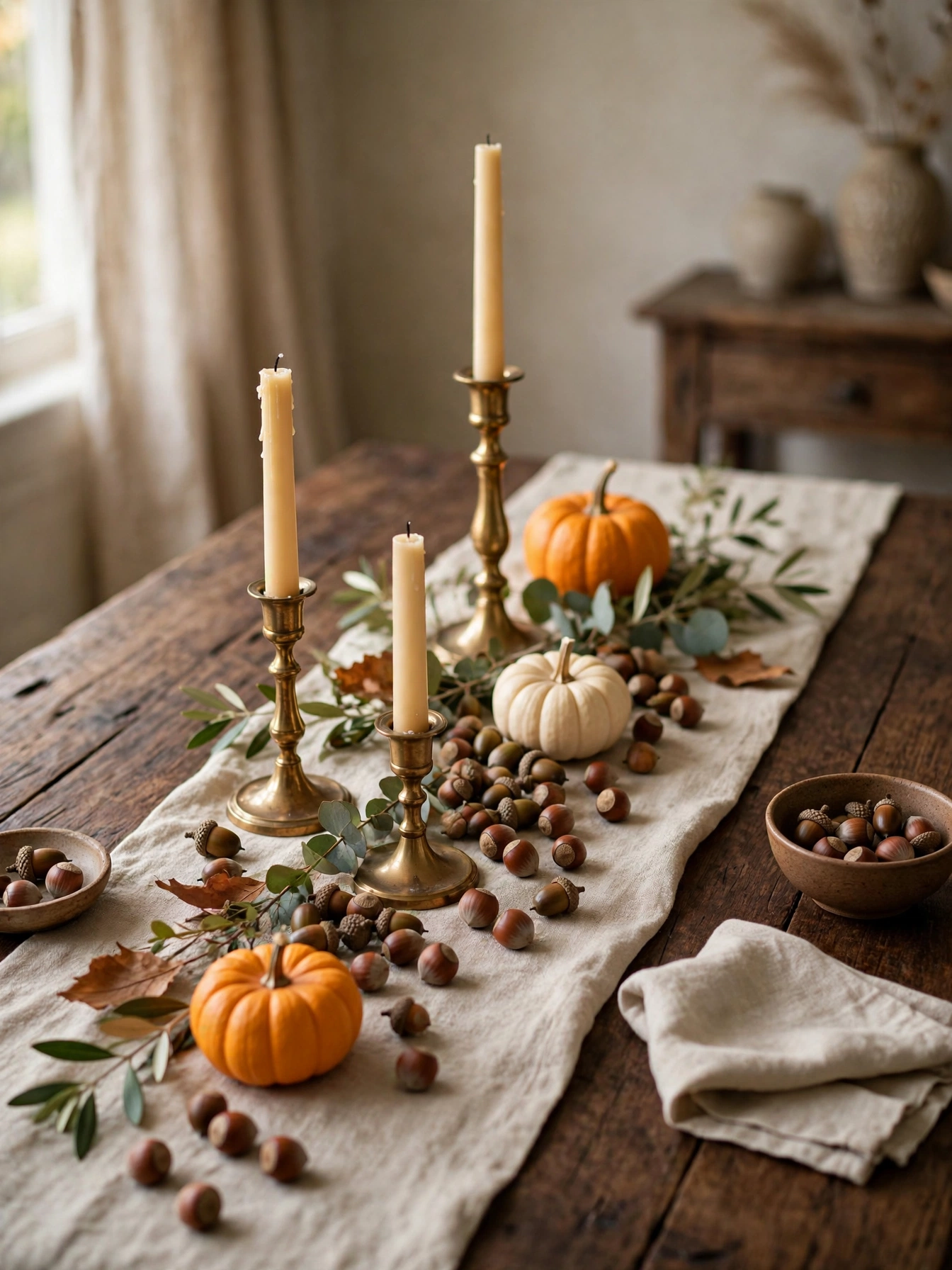
Why This Works:
- Acorns are the smallest, cheapest woodland detail with outsized charm
- A bag of 50 faux acorns costs 8 to 15 dollars
- Scattered nuts fill the gaps between larger centerpiece pieces
- The brown tones bridge wood chargers and brass candlesticks
Scatter 30 to 50 acorns loosely down the table center, keeping them 4 inches from plate edges so they do not roll into dinner. Mix real and faux acorns if you like, but bake real ones at 200 degrees for 30 minutes first to evict weevils. Avoid acorn scatter on tables where toddlers eat, since acorns are a genuine choking hazard at 1 inch size. Keep the scatter clear of candle flames by 12 inches minimum, since dried caps are surprisingly flammable. Store faux acorns in a zip bag between seasons; real ones last one season before the caps loosen.
Stylists use the scatter technique to make sparse centerpieces look abundant, and it works on every table length. The limitation is cleanup: acorns roll into every crevice and you will find them until spring. A runner with a slightly textured weave slows the rolling noticeably. Homes with dogs should skip real acorns, since some dogs chew them and acorns are not kind to stomachs.
Flannel Napkin Fold for Fall Tables
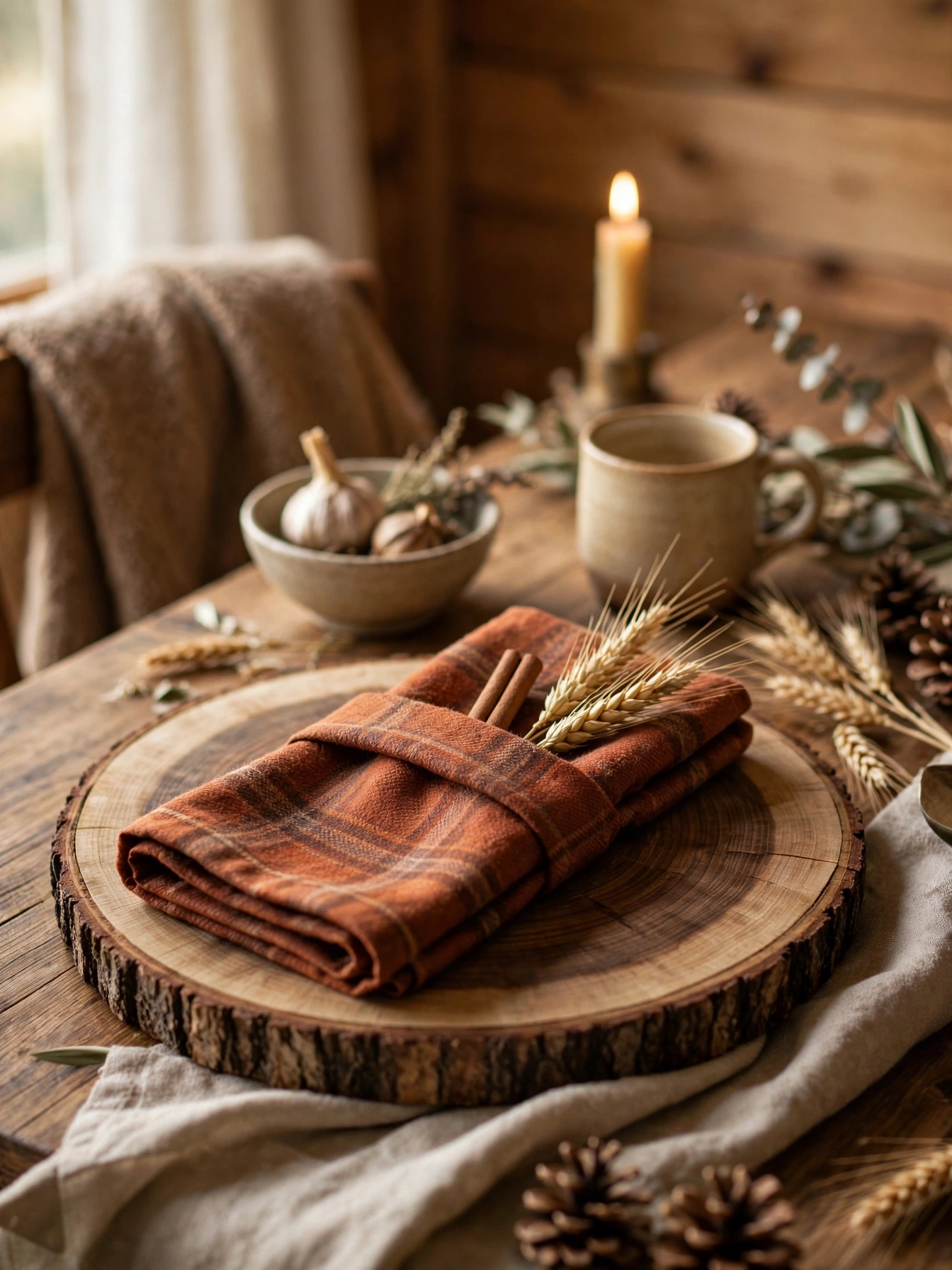
Why This Works:
- Napkins are the most-handled textile at the table, so fall fabric matters
- Eight flannel napkins cost 20 to 35 dollars as a set
- A simple pocket fold holds flatware and a cinnamon stick elegantly
- Flannel’s weight keeps napkins in laps, unlike slippery polyester
Fold 18 by 18 inch napkins into a simple pocket: fold in half, then fold the top layer’s corner down to form the pocket, which takes 30 seconds per napkin once practiced. Tuck a 4 inch cinnamon stick and a sprig of dried wheat into each pocket for a fragrant, photogenic detail. Avoid intricate origami folds with flannel, because the thick fabric refuses crisp creases and looks lumpy; simple folds suit flannel best. Wash napkins before first use, since new flannel sheds lint onto dark clothing. Iron the pocket fold’s top edge only for a clean line without flattening the whole napkin.
Table setting guides rank the pocket fold as the best effort-to-elegance ratio, and flannel’s texture hides the fold’s imperfections. The trade-off is bulk: flannel napkins take twice the drawer space of cotton ones, so store them rolled. Cinnamon sticks in the pocket scent the napkin subtly for one dinner, then lose strength; replace them for each special meal. Keep one spare napkin per 6 guests, since flannel stains show on the rust tones.
Copper Mug Table Settings
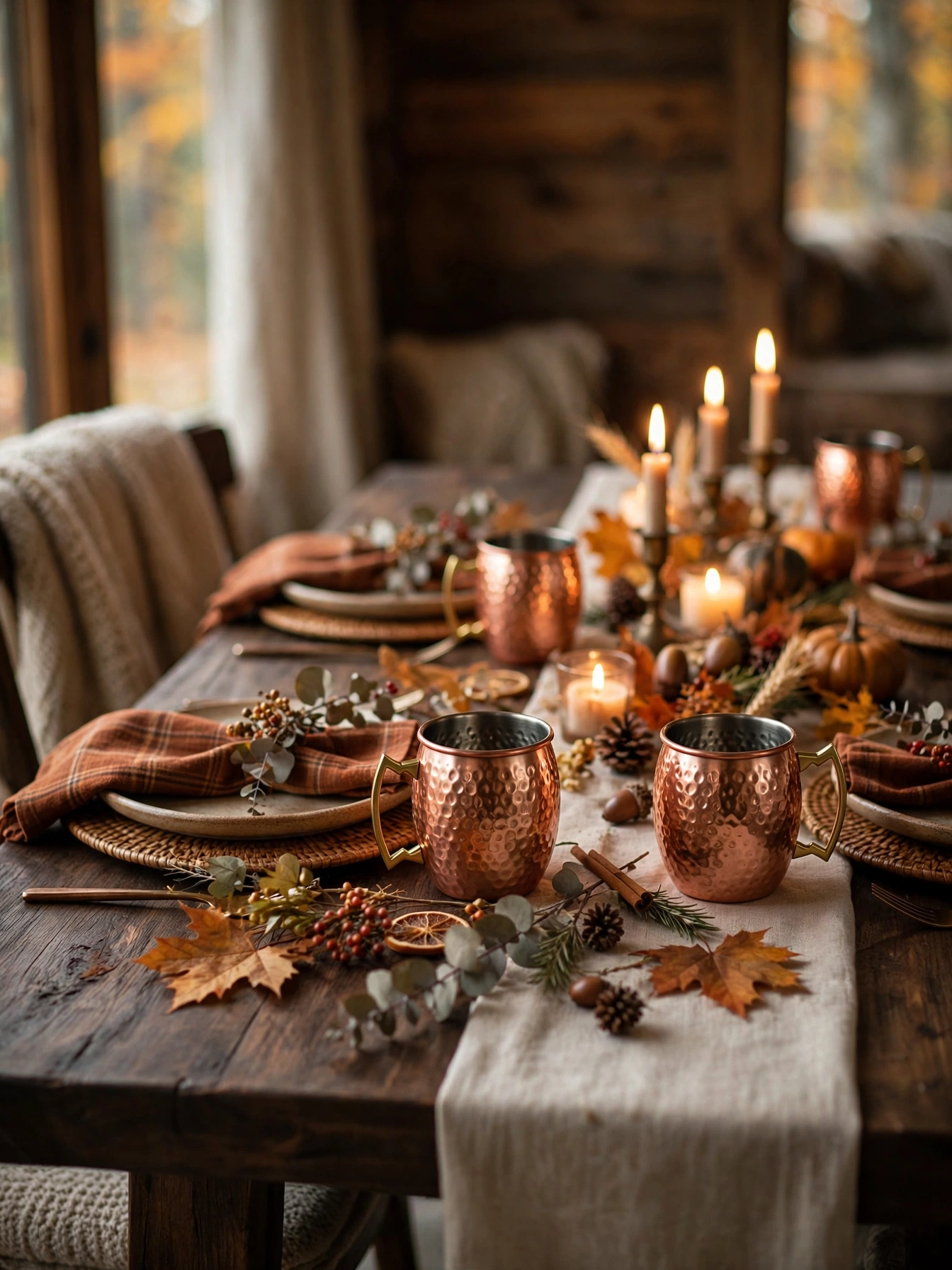
Why This Works:
- Copper’s warm gleam is the metal equivalent of firelight
- Hammered copper mugs cost 15 to 30 dollars each in sets of 4
- One mug per setting adds shine without a full flatware upgrade
- Moscow mule style mugs double as actual drinkware all season
Place one 16 ounce copper mug at the top right of each setting, angled with the handle at 2 o’clock for a uniform look. Choose solid copper or heavy copper-plated mugs at least 1 millimeter thick, since thin plating dents within weeks of use. Avoid serving acidic drinks like citrus cocktails in unlined copper mugs, since acid reacts with bare copper; lined mugs with stainless interiors solve this completely. Hand wash copper with mild soap and dry immediately, because dishwasher heat and detergent dull the finish permanently. Polish with a 1 to 1 vinegar and salt paste twice a season to keep the hammered texture bright.
Barware reviewers consistently rate copper mugs as the best-looking seasonal drinkware, and they photograph beautifully in warm light. The honest limitation is maintenance: unlacquered copper develops patina from handling, which some love and others hate. Lacquered mugs keep their shine but cannot go in the dishwasher either. For a lower-maintenance version, copper-toned stainless mugs at 8 to 12 dollars each give the look with none of the polishing.
Dried Corn Husk Bundle
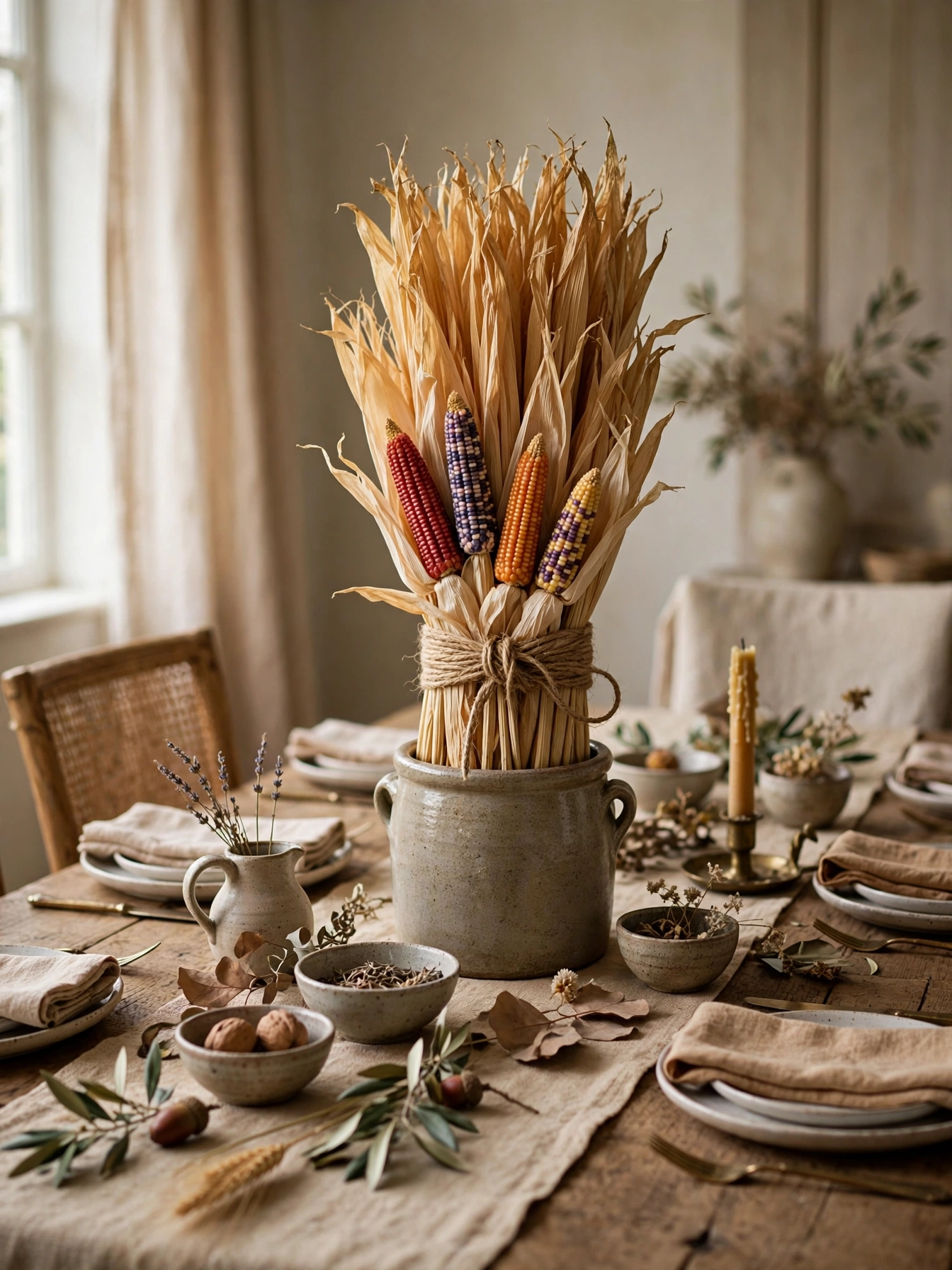
Why This Works:
- Corn husks are pure harvest iconography, straight from the field
- A bundle of 12 husks costs 10 to 18 dollars at craft stores
- The 24 to 30 inch height suits sideboards and table ends
- Golden tan husks complement every fall palette without effort
Stand 10 to 12 husks upright in a 6 inch wide stoneware crock, fanning them 360 degrees for fullness, and tie the bundle with twine 8 inches from the base. Choose husks at least 24 inches long so the arrangement clears 18 inches above the table for proper presence. Avoid placing husk bundles in the center of dining tables used for meals, because the 30 inch height blocks conversation; they belong on sideboards or table ends. Keep husks 12 inches from any candle flame, since dried husks ignite readily. Mist very brittle husks lightly with water 2 hours before styling to make them pliable.
Harvest decor guides rank corn husks among the most authentic fall materials, and they cost a fraction of floral arrangements. The limitation is shedding: husks drop fine fibers for the first week, so shake them outdoors before styling. Homes with corn allergies should skip this one entirely and use dried wheat instead. Stored upright in a dry closet, husk bundles reuse for 2 to 3 seasons.
Mini Pumpkin Fall Table Place Settings
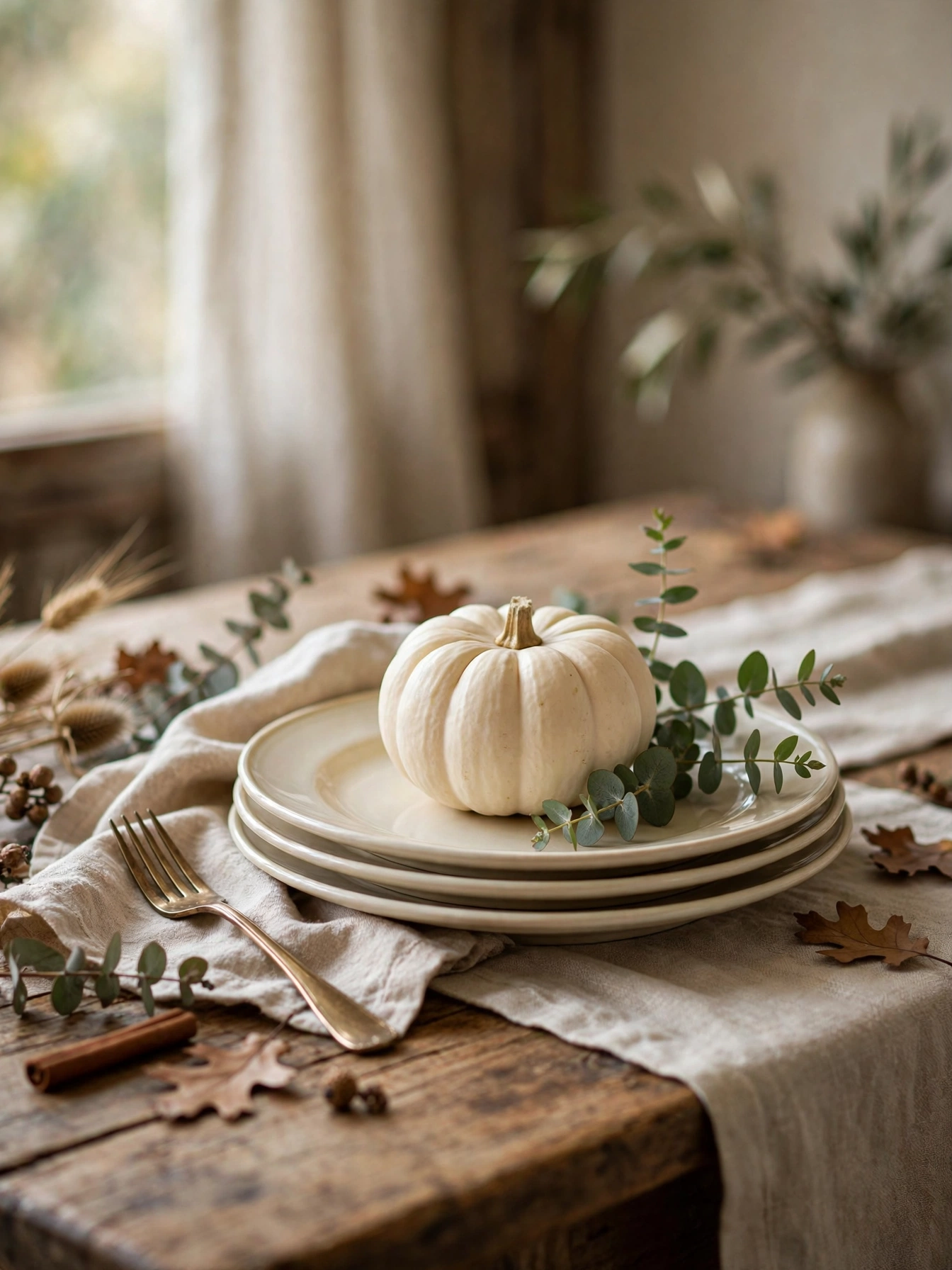
Why This Works:
- One pumpkin per plate is the simplest place setting upgrade in this guide
- Mini pumpkins cost 1 to 3 dollars each at grocery stores in October
- White pumpkins suit elegant tables; orange suits casual ones
- Guests take them home, so cleanup doubles as favors
Choose pumpkins 2.5 to 3.5 inches wide so they sit stable on a dinner plate without toppling into the salad fork. Tuck a 4 inch eucalyptus sprig under each pumpkin for color contrast and a subtle scent. Avoid stacking pumpkins on plates before guests sit down if dinner runs late, because the weight can warp delicate charger rims over 2 hours; set them out 30 minutes before seating instead. Wipe each pumpkin with a damp cloth before placing, since grocery pumpkins carry field dust. Buy 2 extra per 8 guests, since one always has a soft spot you miss at the store.
Entertaining stylists call the single-pumpkin setting the highest charm-per-dollar in fall tablescaping, and reader photos prove it works on every table style. The trade-off is timing: real pumpkins last 6 to 8 weeks, so buy them the week of the event, not a month ahead. Faux mini pumpkins at 2 to 4 dollars each eliminate the timing pressure and reuse yearly. For a personal touch, write guest names on the pumpkins with a gold paint pen.
Warm Maple Serving Board
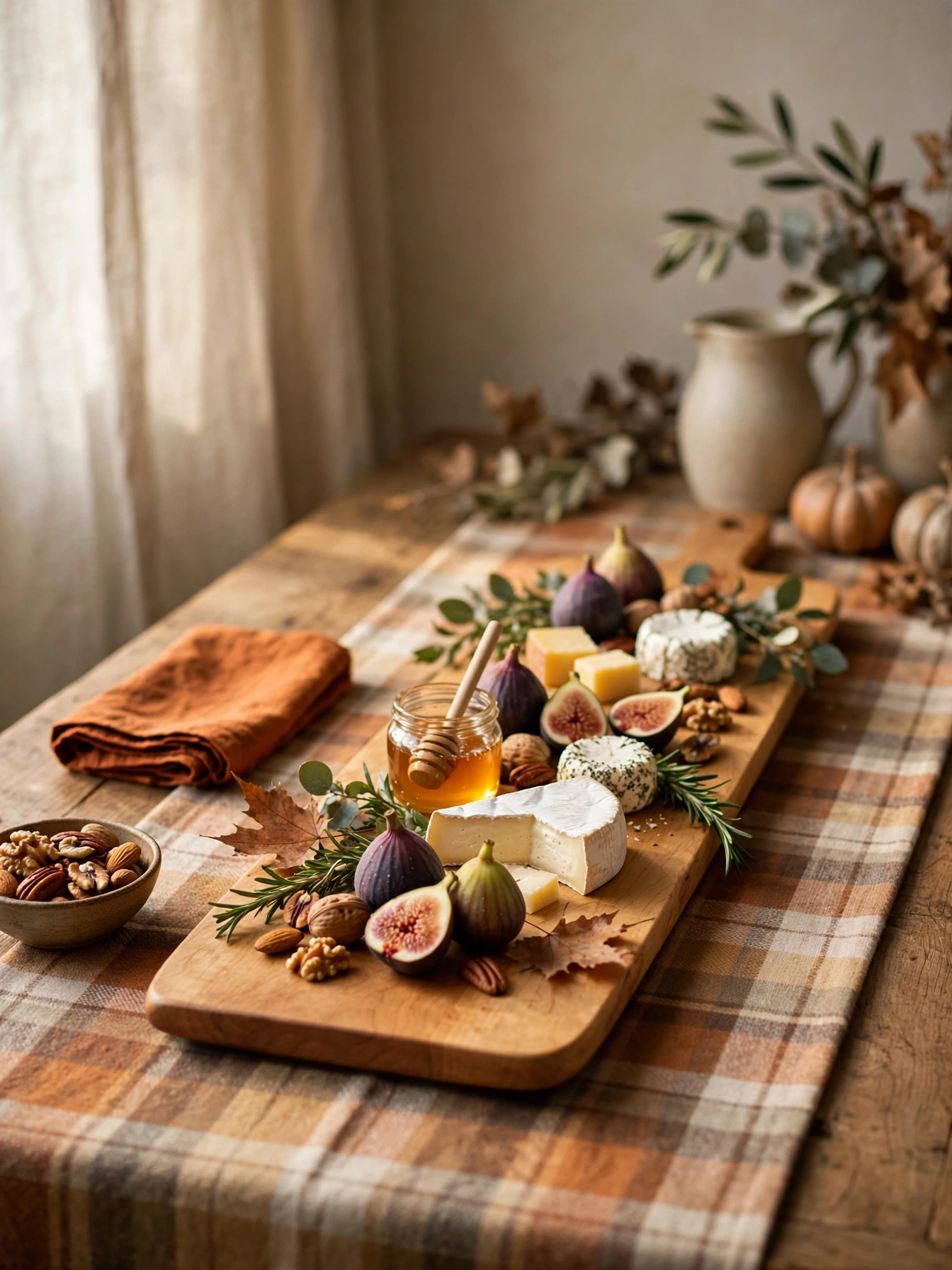
Why This Works:
- A serving board turns appetizers into decor before dinner starts
- Maple boards 24 by 12 inches cost 35 to 70 dollars
- The warm wood tone ties every other wooden element together
- Boards work for cheese now and as a centerpiece base later
Choose a board at least 24 inches long and 12 inches wide so it holds a real spread without crowding; smaller 18 inch boards suit couples, not crowds. Oil the board with food-safe mineral oil monthly during heavy use season, since dry maple cracks along the grain within a year of neglect. Avoid soaking the board or putting it in the dishwasher, because the heat and water warp it permanently within 3 washes. Keep the board’s styled arrangement under 10 inches tall so it does not fight the centerpiece for attention. Store boards vertically in a 14 inch slot to save cabinet space.
Food stylists consistently recommend the board-first approach for fall entertaining, since a full board looks abundant with minimal effort. The limitation is single-purpose cost: a 50 dollar board that only appears at Thanksgiving is poor value, so use it weekly for cheese nights. End-grain boards resist knife marks better but cost twice as much; edge-grain suits serving perfectly. If the board will double as decor, choose one with a leather hanging loop for wall storage.
Evergreen Sprig Garland Runner
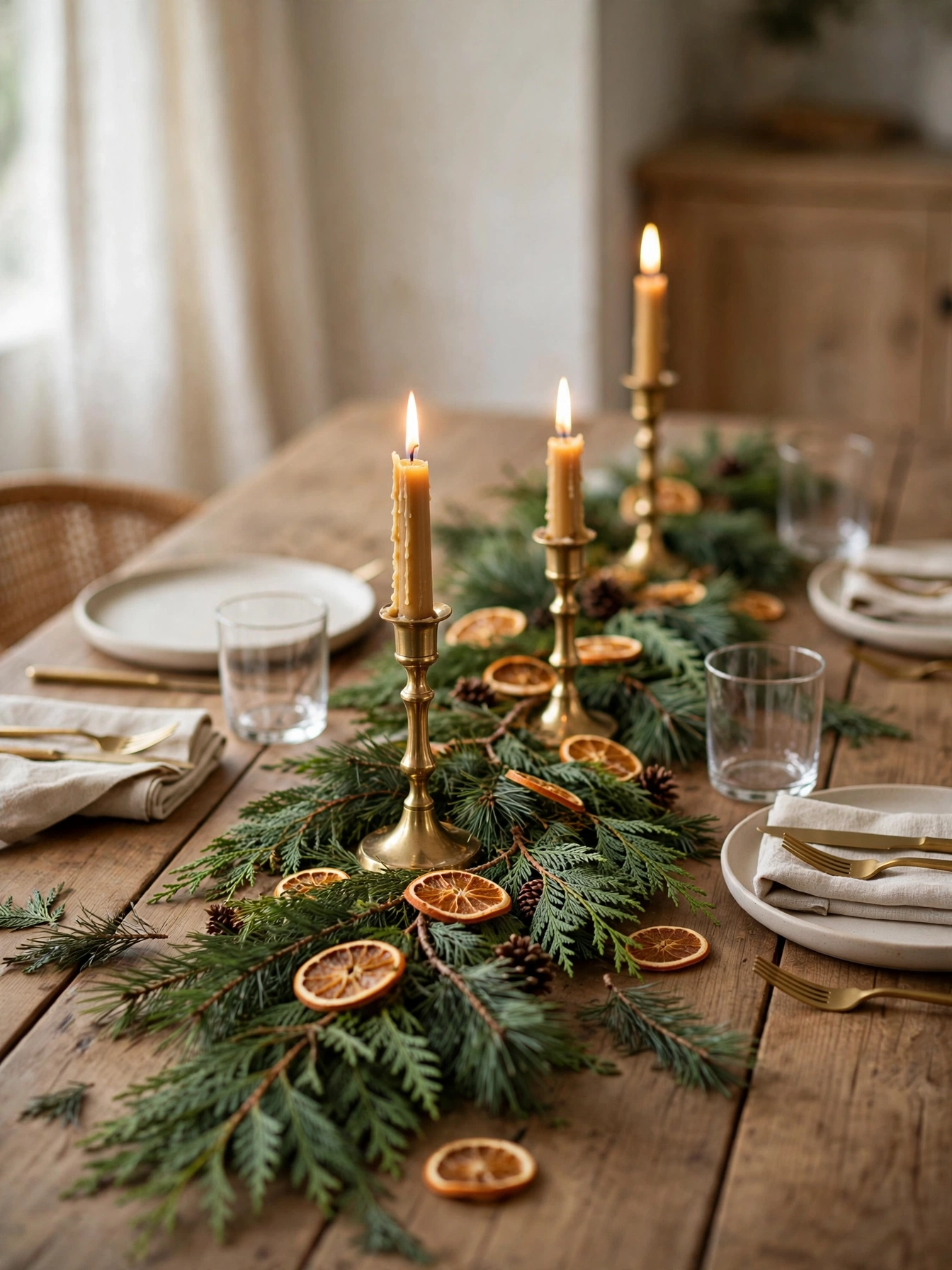
Why This Works:
- Fresh evergreen brings the forest-floor scent that defines cabin chic
- Cedar and pine bundles cost 15 to 30 dollars for a 6 foot table
- The deep green contrasts beautifully with orange and rust accents
- Laid flat, the garland stays under 6 inches tall for clear sightlines
Lay 8 to 10 cedar and pine bundles overlapping down the table center, stems facing the same direction, for a 6 foot garland that takes 20 minutes. Tuck the cut ends under the next bundle to hide them, and mist the garland lightly once after styling. Avoid fresh evergreen within 6 inches of real candle flames, since the Los Angeles Fire Department requires flames to stay clear of fresh foliage and dried needles ignite fast; use flameless candles in the garland instead. Keep the garland 3 inches from plate edges so needles do not land in food. Replace fresh garlands every 10 to 14 days, since dried cedar drops needles constantly after 2 weeks.
Floral designers rate the flat-laid garland as the most forgiving fresh arrangement, since there is no vase mechanics to fail. The trade-off is lifespan: fresh garlands are a 2 week commitment, not a seasonal one. Faux cedar garlands at 25 to 45 dollars last for years and need only fluffing, though they lack the scent. For the scent without the upkeep, tuck 3 fresh sprigs into a faux garland base.
Candlelit Lantern Cluster
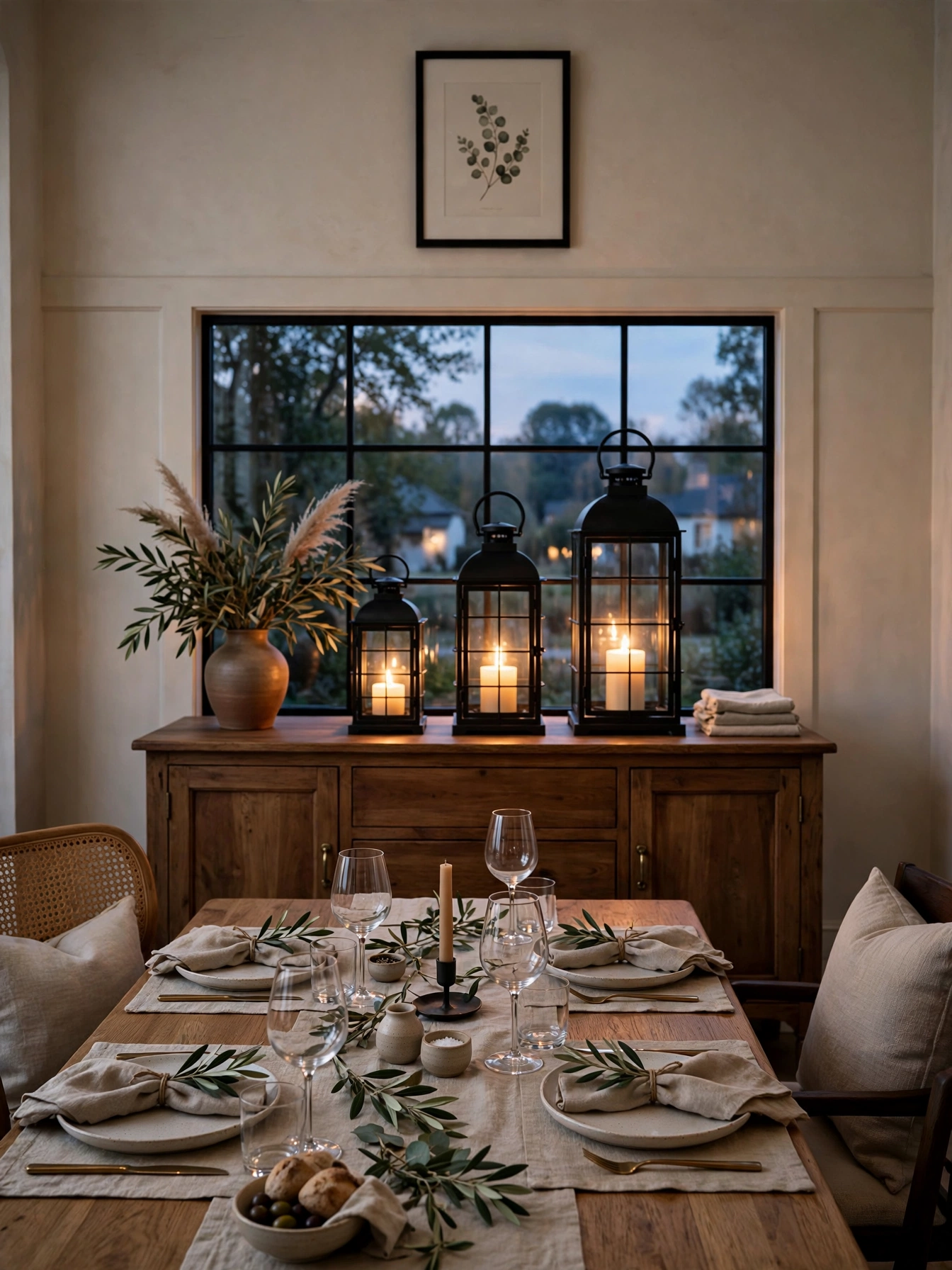
Why This Works:
- Lanterns corral candlelight into sculptural groups with presence
- Three metal lanterns cost 40 to 90 dollars as a graduated set
- The glass panels protect flames from drafts near windows
- At sideboard height, lanterns light the whole dining zone
Group lanterns 10, 14, and 18 inches tall on the sideboard, spacing them 8 to 12 inches apart so each reads individually. Use flameless pillars inside, since real flames in enclosed lanterns soot the glass within 3 evenings and the heat stresses the metal joints. Avoid placing lanterns on the dining table itself in sets of three, because they eat 24 inches of serving space; the sideboard is their natural home. Keep lantern glass clean with a vinegar wipe monthly, since dusty glass dims the glow noticeably. Choose lanterns with hinged doors rather than lift-off tops for easier candle access.
Lighting stylists recommend lantern clusters as the dining room’s evening anchor, and the graduated heights photograph beautifully. The limitation is scale: lanterns under 10 inches tall disappear on a 36 inch high sideboard, so measure before buying. Battery pillars with remote controls solve the reaching problem for the tallest lantern. If the sideboard sits near a window, black lanterns silhouette dramatically at dusk.
Buffalo Check Table Runner
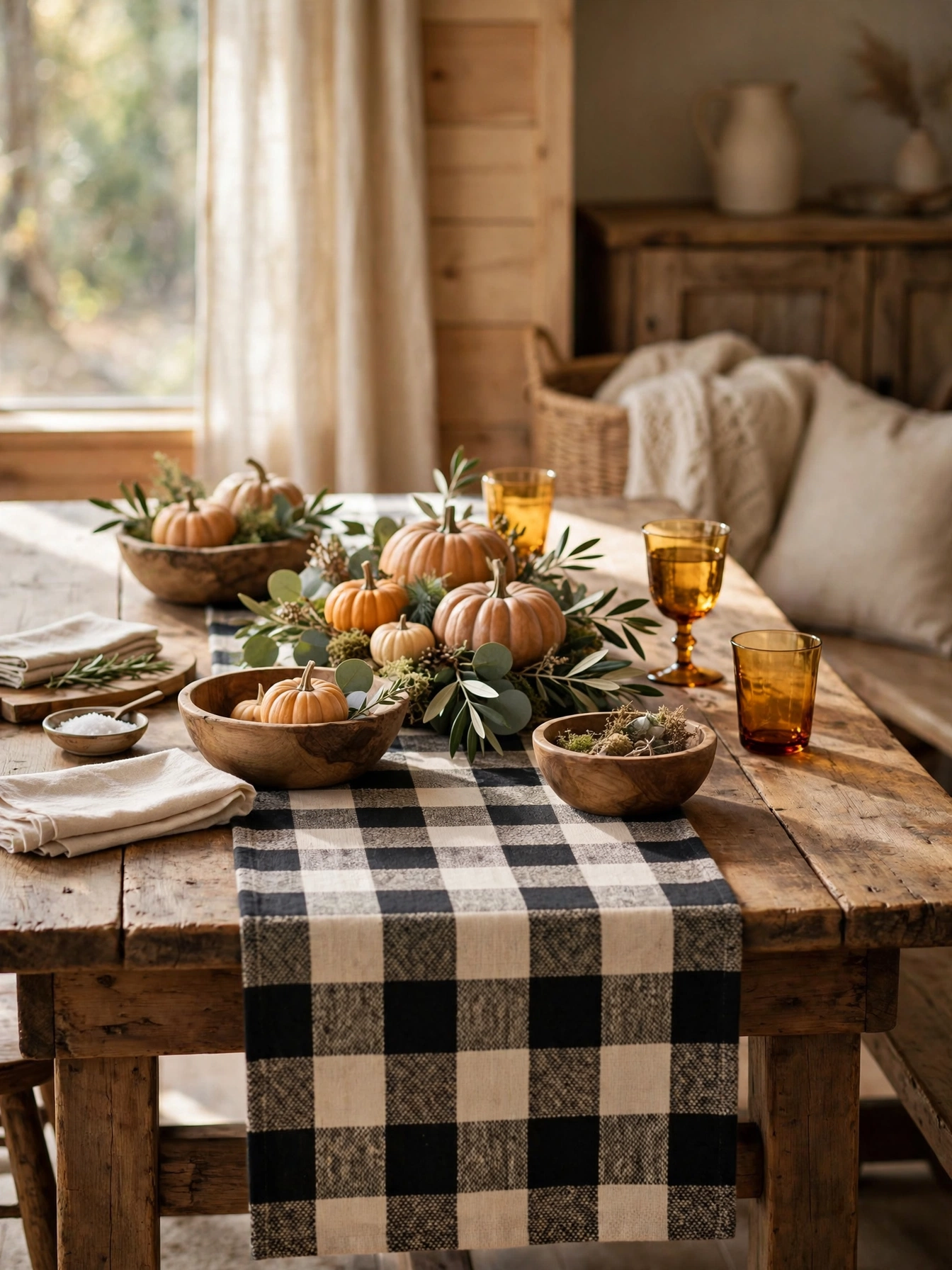
Why This Works:
- Buffalo check is the unofficial official pattern of cabin style
- A 14 by 90 inch runner costs 15 to 30 dollars
- The bold check anchors busy centerpieces instead of competing
- Black and cream works from October straight through winter
Choose a runner 12 inches longer than the table on each end, so a 72 inch table needs a 96 inch runner for a proper drape. Layer the buffalo check over a solid natural linen cloth to soften the bold pattern and add texture. Avoid buffalo check in red and black for fall tables, since that combo reads Christmas by mid-November; black and cream or brown and cream stays seasonal longer. Wash the runner before first use, since dark checks bleed slightly on the first wash. Iron the center crease out while damp, or the fold line shows down the whole table.
Pattern guides consistently rank buffalo check as the highest-contrast fall textile, which is both its strength and its risk. The trade-off is dominance: the check will be the first thing anyone notices, so keep the centerpiece simple and low. In small dining rooms, a 14 inch wide runner suits 36 inch tables better than wider ones that crowd the settings. Store the runner rolled around a cardboard tube to prevent permanent creases.
Wood Slice Tiered Stand
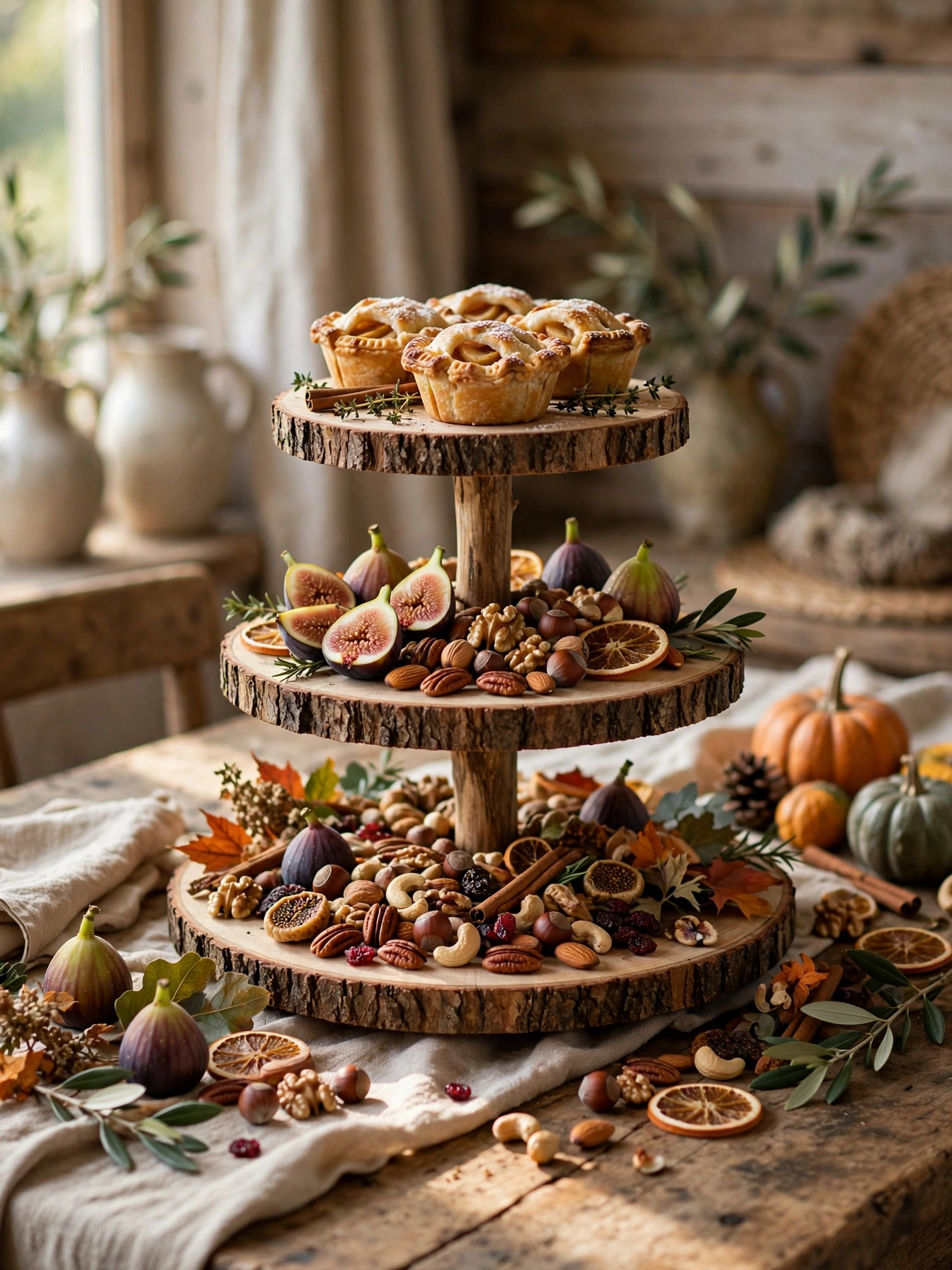
Why This Works:
- A tiered stand turns dessert into the centerpiece itself
- Wood slice tiered stands cost 30 to 65 dollars
- Three levels display 2 to 3 times more in the same footprint
- Edible centerpieces need no storage after the party
Choose a stand with 10, 8, and 6 inch tiers spaced 7 to 8 inches apart vertically, so mini pies and figs fit without squashing. Load the heaviest items on the bottom tier, since a top-heavy stand tips when bumped; the base should weigh at least 3 pounds. Avoid placing the stand in the table’s center if guests need to pass dishes across, because a 20 inch tall stand blocks the handoff; position it 18 inches off-center instead. Line each tier with a 10 inch parchment round for easy cleanup. Disassemble and store the tiers nested to save cabinet space.
Entertaining guides rank the edible centerpiece as the smartest party investment, since it decorates and serves simultaneously. The limitation is height: at 20 inches tall, the stand blocks sightlines, so reserve it for dessert time rather than the full meal. A two-tier version at 14 inches tall suits the dinner table better. Check that the center pole tightens firmly, since wobbly tiers spill at the worst moments.
Harvest Fruit Bowl Centerpiece
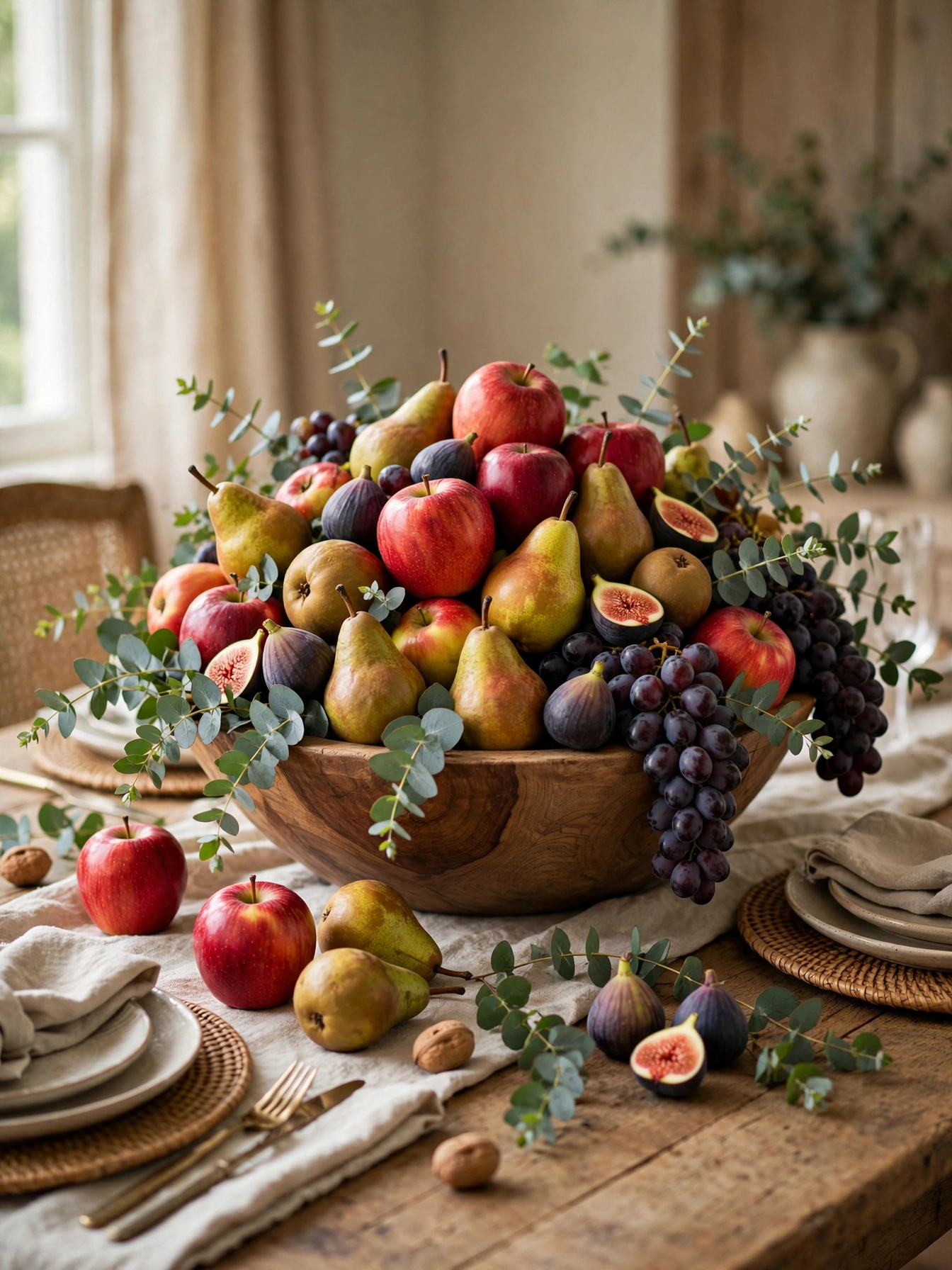
Why This Works:
- Real fruit is the original centerpiece, beautiful and edible
- A 14 inch wooden bowl plus fruit costs 25 to 45 dollars total
- Apples and pears last 2 to 3 weeks as decor with weekly checks
- The deep reds and golds need no arranging to look abundant
Fill a 12 to 14 inch wide, 5 to 6 inch deep bowl with 3 to 4 pounds of firm fruit, layering larger apples at the base and figs and grapes on top. Choose fruit with unblemished skin, since one soft spot spreads mold to the whole bowl within 4 days. Avoid bananas in the mix, because they ripen everything around them twice as fast with ethylene gas. Check the bowl every 3 days and remove any softening piece immediately. Keep the bowl 12 inches from candle flames, since fruit sugars are not flammable but the wooden bowl is.
Food stylists have used the harvest bowl for centuries because abundance photographs itself, and it suits every table style. The trade-off is waste risk: fruit bought for decor often goes uneaten, so plan to cook or eat it within 2 weeks. Faux fruit at 20 to 35 dollars for a bowl’s worth eliminates the schedule pressure entirely. For the freshest look longest, refrigerate the fruit overnight and style the bowl 1 hour before guests arrive.
Cozy Throw Draped Bench
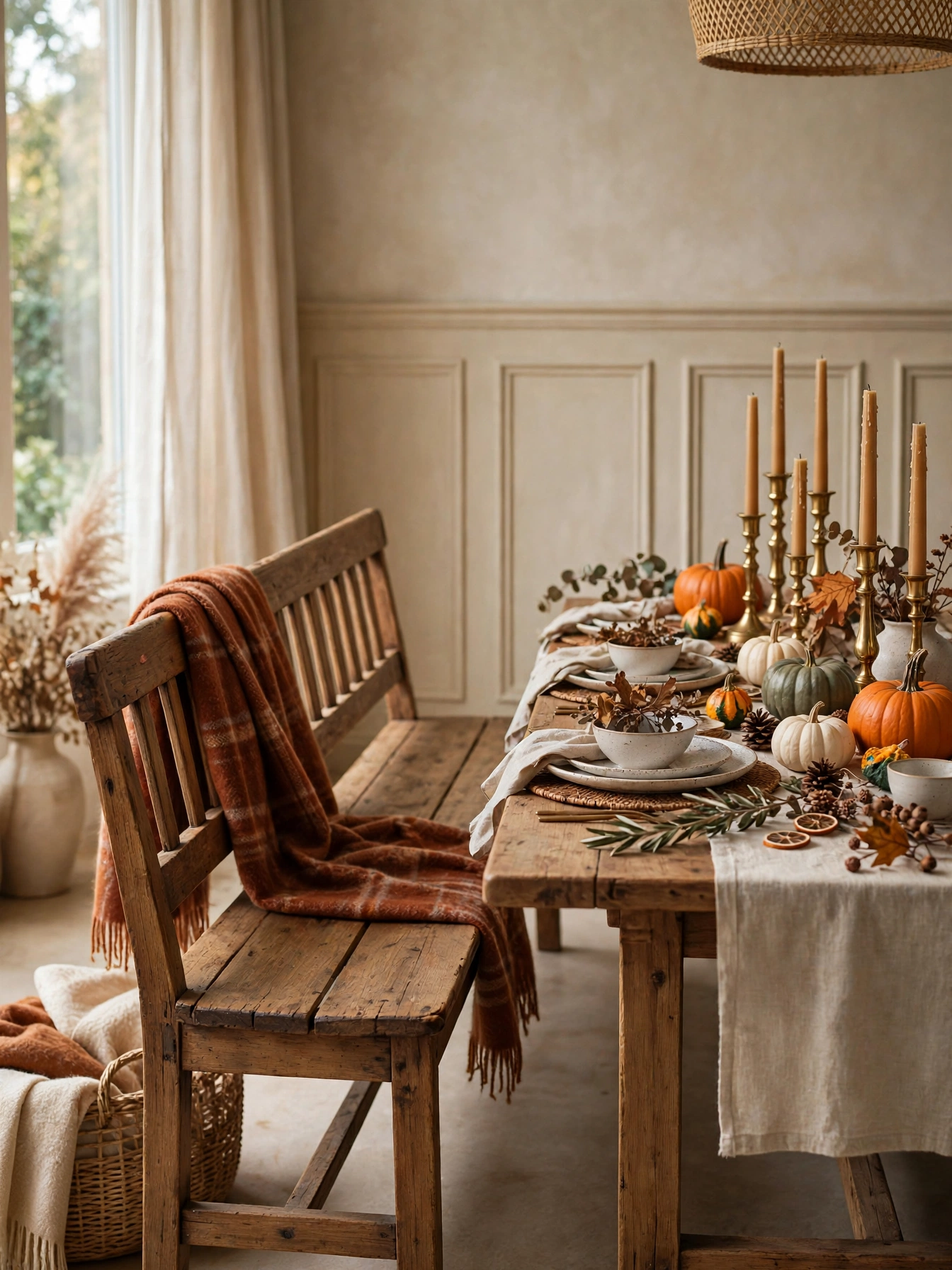
Why This Works:
- Benches seat more guests than chairs and style beautifully
- A 50 by 60 inch plaid wool throw costs 35 to 70 dollars
- The draped throw softens hard bench seating visually and literally
- Guests actually use the throw when the evening turns chilly
Drape the throw over the bench back or fold it in thirds along the seat, keeping 6 inches of bench visible at each end so it reads as styling, not storage. Choose a wool or wool-blend throw for drape and warmth; acrylic throws slide off bench backs within an hour. Avoid throws longer than 60 inches on a standard 48 inch bench, because pooling fabric catches on chair legs and drags on the floor. Secure the drape with two hidden safety pins at the back if the bench sees heavy use. Keep the throw 12 inches from candle flames on the table, since wool smolders rather than flaring but still damages.
Seating stylists recommend the bench-plus-throw combo as the coziest dining setup, and it photographs like a lodge dining room. The limitation is comfort honesty: a throw does not fix a genuinely uncomfortable bench, so add a 2 inch seat cushion underneath for real dinners. Wool throws need airing, not washing, after most uses; wash only twice a season. If the bench is backless, fold the throw along the seat instead of draping.
Vintage Brass Candelabra

Why This Works:
- A candelabra brings old-lodge grandeur for the price of a pizza
- Vintage brass candelabras cost 25 to 60 dollars at thrift and antique stores
- Three tapers at staggered heights create the classic candlelight triangle
- Brass patina suits fall’s warm metals better than polished silver
Choose a candelabra 12 to 16 inches tall with a base at least 6 inches wide so it cannot tip; top-heavy vintage pieces are the main risk. Fit 10 to 12 inch tapers, keeping the flame at least 12 inches below any pendant light or shelf above. Burn tapers no more than 2 hours at a stretch, since longer burns drip excessively and overheat the sockets. Avoid placing the candelabra within 24 inches of the table edge, since sleeves catch tall tapers easily; the table center is the only safe zone. Use a drip protector ring under each taper, because brass cleanup from pooled wax takes 30 minutes of picking.
Antique dealers consistently call the brass candelabra the best value in vintage table decor, and the patina only improves with age. The honest limitation is upkeep: brass tarnishes and needs polishing twice a season to stay golden, or embrace the dark aged look permanently. Wobbly vintage arms are common, so test stability in the store before buying. For households with young children, flameless tapers with a remote give the silhouette with none of the worry.
Pine Bough Napkin Rings
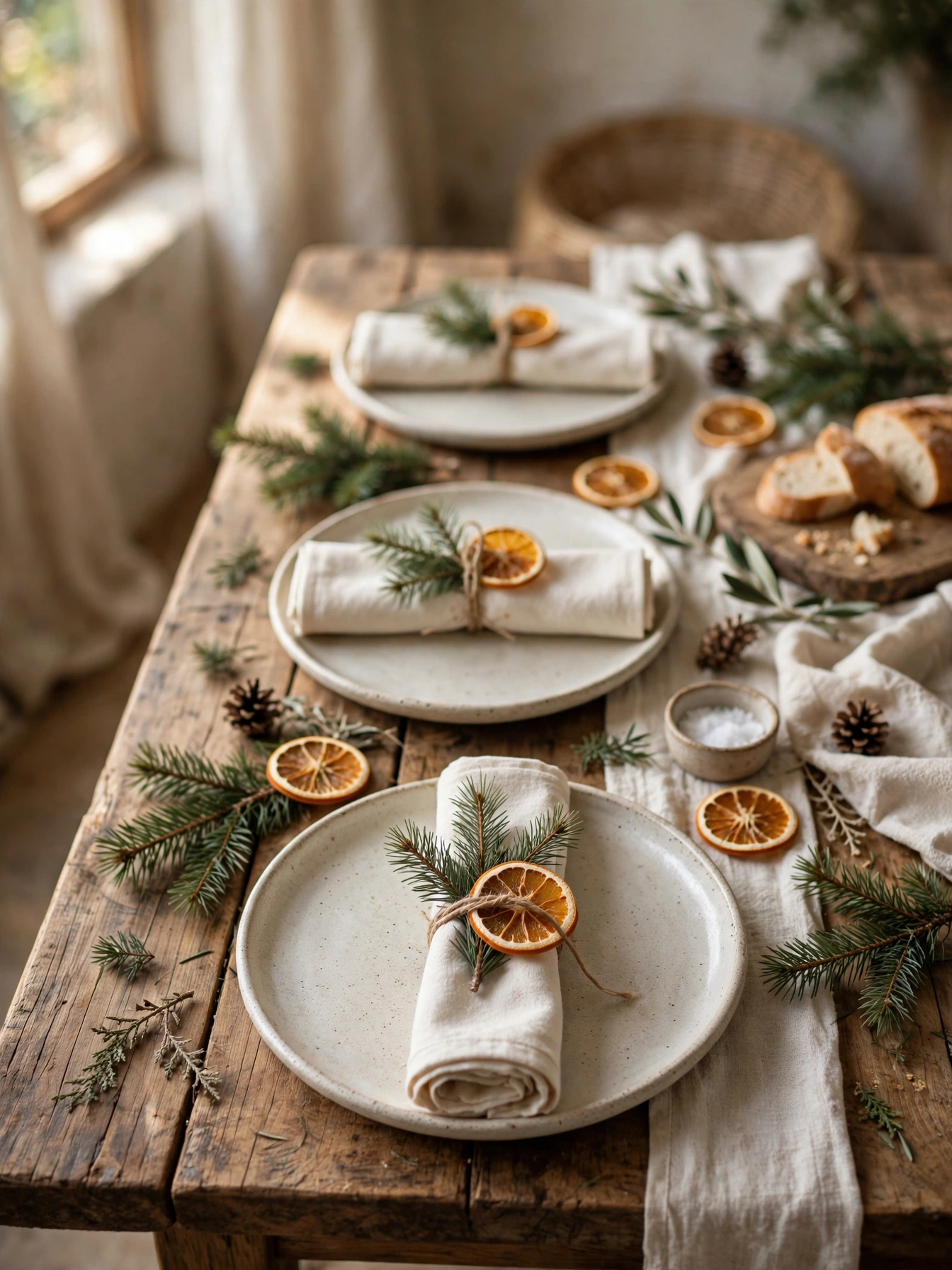
Why This Works:
- Napkin rings are the jewelry of the place setting, small but noticed
- Twine rings with pine boughs cost under 10 dollars for 8 settings
- The fresh pine scent hits guests the moment they sit down
- Rings work with any napkin color, so they reuse across seasons
Cut 10 inch lengths of jute twine and tie each into a 2.5 inch diameter loop, then tuck a 5 inch pine bough and a 3 inch cinnamon stick through the knot. Slide each ring over a napkin rolled to a 2 inch diameter cylinder, keeping the bough facing outward. Avoid fresh pine boughs cut more than 3 days ahead, since they droop and drop needles; cut them the morning of the dinner. Keep the rings 12 inches from real candle flames, because dried twine and needles catch quickly. Store unused twine rings flat in a zip bag; they reuse for 2 to 3 seasons.
Table stylists recommend the natural napkin ring as the easiest place-setting upgrade, and the pine version scents the whole table. The trade-off is freshness: this is a day-of project, not a make-ahead one. Faux pine picks at 1 to 2 dollars each eliminate the schedule pressure and look fine at table distance. For the scent without the upkeep, use dried cedar sprigs, which hold their shape for weeks.
Cabin Chic Fall Table Dessert Display
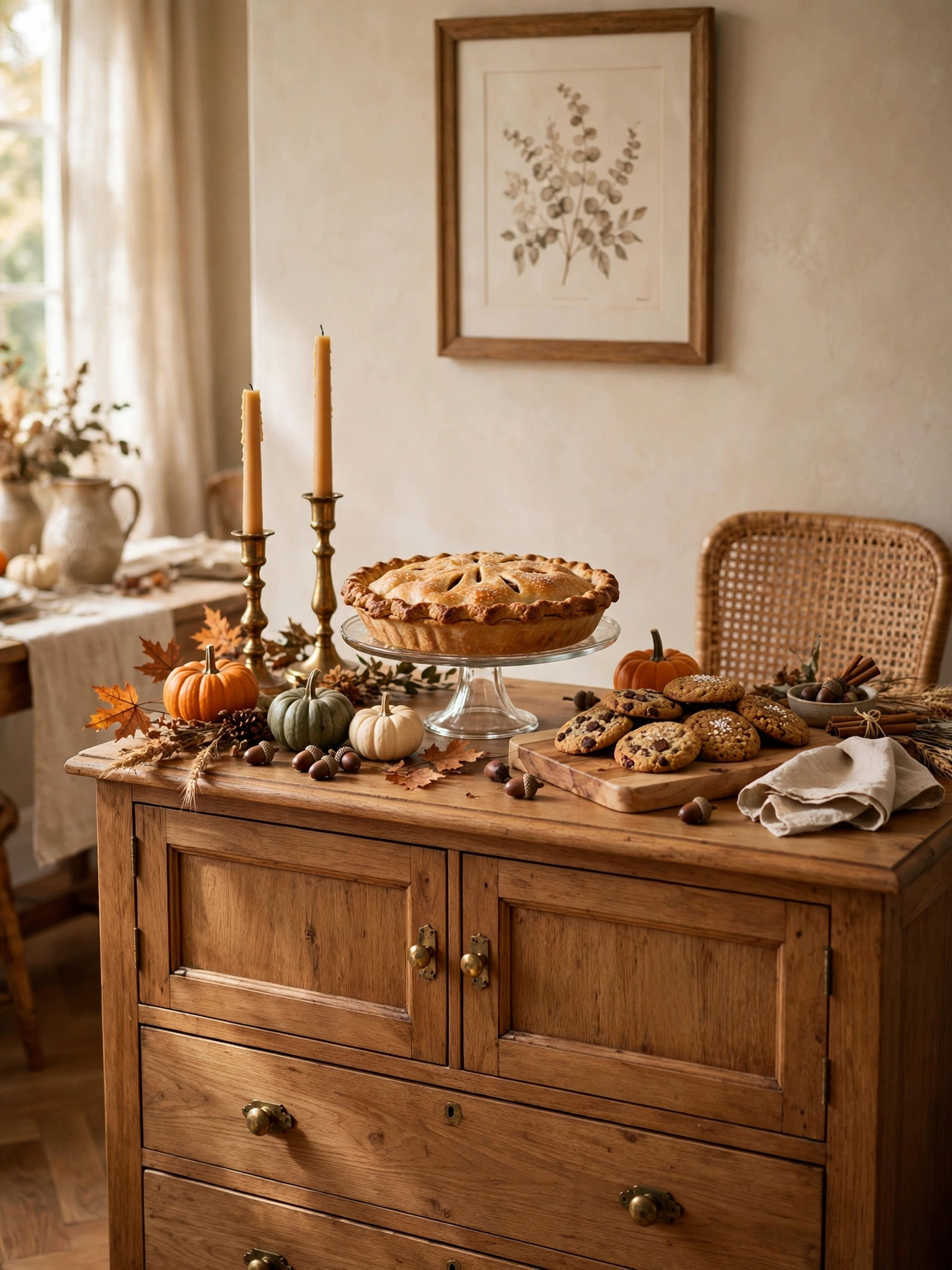
Why This Works:
- A styled dessert sideboard extends the table’s magic beyond the meal
- Cake stands and boards you own do the work, so cost is near zero
- Varying heights from 4 to 14 inches create a professional display
- Guests serve themselves, which keeps the host at the table
Arrange the sideboard in thirds: a 12 inch cake stand with pie on the left, a 10 inch board with cookies in the center, and brass candlesticks on the right. Keep the tallest element under 16 inches so the display does not block the dining room’s sightlines. Avoid placing hot dishes directly on wood sideboards, since a 400 degree pie dish scorches varnish in minutes; use cork trivets under everything hot. Leave 18 inches of clear sideboard at one end for stacking used plates during service. Style the display 1 hour before dessert, not before dinner, so the sweets stay fresh.
Entertaining guides consistently rank the dessert sideboard as the highest-impact party move, since guests gather around it naturally. The limitation is space: sideboards under 48 inches wide cannot hold a real dessert spread plus candlesticks, so edit ruthlessly. A bar cart at 30 inches wide works as a smaller alternative. Keep serving utensils with each dish, since guests will not ask and the pie will sit untouched without a server.
FAQs
What are the easiest fall table decor ideas for autumn 2026 for beginners?
Start with a runner, a low centerpiece, and cloth napkins, which need no skill to arrange. A burlap runner, a dough bowl of mini pumpkins, and plaid napkins cost 45 to 75 dollars total. Keep the centerpiece under 14 inches tall so guests can see across the table.
How tall should a fall table centerpiece be?
Keep centerpieces 12 to 14 inches tall or lower so sightlines stay open across a 30 inch wide table. Taller arrangements force guests to peer around them. If you love height, use a single tall element at one end and keep the middle low.
Which fall table decor ideas for autumn 2026 are safest with real candles?
The Los Angeles Fire Department requires candle flames to stay at least 6 inches from fresh foliage and 12 inches from dry foliage or other combustibles in table centerpieces. Use sturdy holders on a noncombustible tray, and keep candles 24 inches from the table edge.
Should I use real or flameless candles on a fall table?
The National Fire Protection Association considers flameless candles the safest choice, and notes December is the peak month for home candle fires. More than half of candle fires start when combustibles sit too close to the flame. Flameless pillars with timers give the glow with none of the risk.
What is a realistic budget for a full fall table setup?
A full fall table setup runs 120 to 200 dollars if you buy the runner, centerpiece bowl, candles, and napkins new. Most homes already own a wooden tray, which cuts the cost nearly in half. Buy reusable bases first, then spend under 30 dollars on fresh accents.
Conclusion
The most inviting fall tables are not the most decorated ones. They are the tables where every piece earns its place: the wood grounds the look, the textiles soften it, and the candlelight does the rest. Start with the runner and one low centerpiece, then build outward through October.
Your top three takeaways: keep centerpieces low enough for conversation, keep flames clear of dried foliage, and invest in reusable bases before seasonal accents. These fall table decor ideas for autumn 2026 work best when the table stays usable for real meals, not just photos.
This week, pick one idea and try it: lay a plaid runner and set a dough bowl of mini pumpkins down the center. Follow HomelyCrafter on Pinterest for more seasonal ideas. Save this to your Pinterest boards so you can refer back to it!

Muhammad Israr is a home decor enthusiast and the writer behind Homely Crafter. He spends his days researching paint colors, layouts and budget-friendly styling ideas, then breaks them down into practical, easy-to-follow guides so you can decorate with confidence.