
What actually separates a room that feels expensive from one that simply looks expensive? It is almost never the price tag on the sofa. It is the weight of real stone under your fingertips, the density of a well-made fabric, and the way lamplight moves across a polished surface at seven in the evening. Those details register before you can name them.
In this guide to luxury living room decor ideas, you will find 24 specific upgrades, from bookmatched marble and hand-knotted silk rugs to layered lighting plans. Each one includes exact measurements, material grades, honest price ranges, and what to avoid, so you can spend where it shows and skip where it does not.
Every idea below explains why it works, who it suits, and when a professional is worth calling. Read through, pick the three that fit your room and your budget, and start there.
Marble Coffee Tables
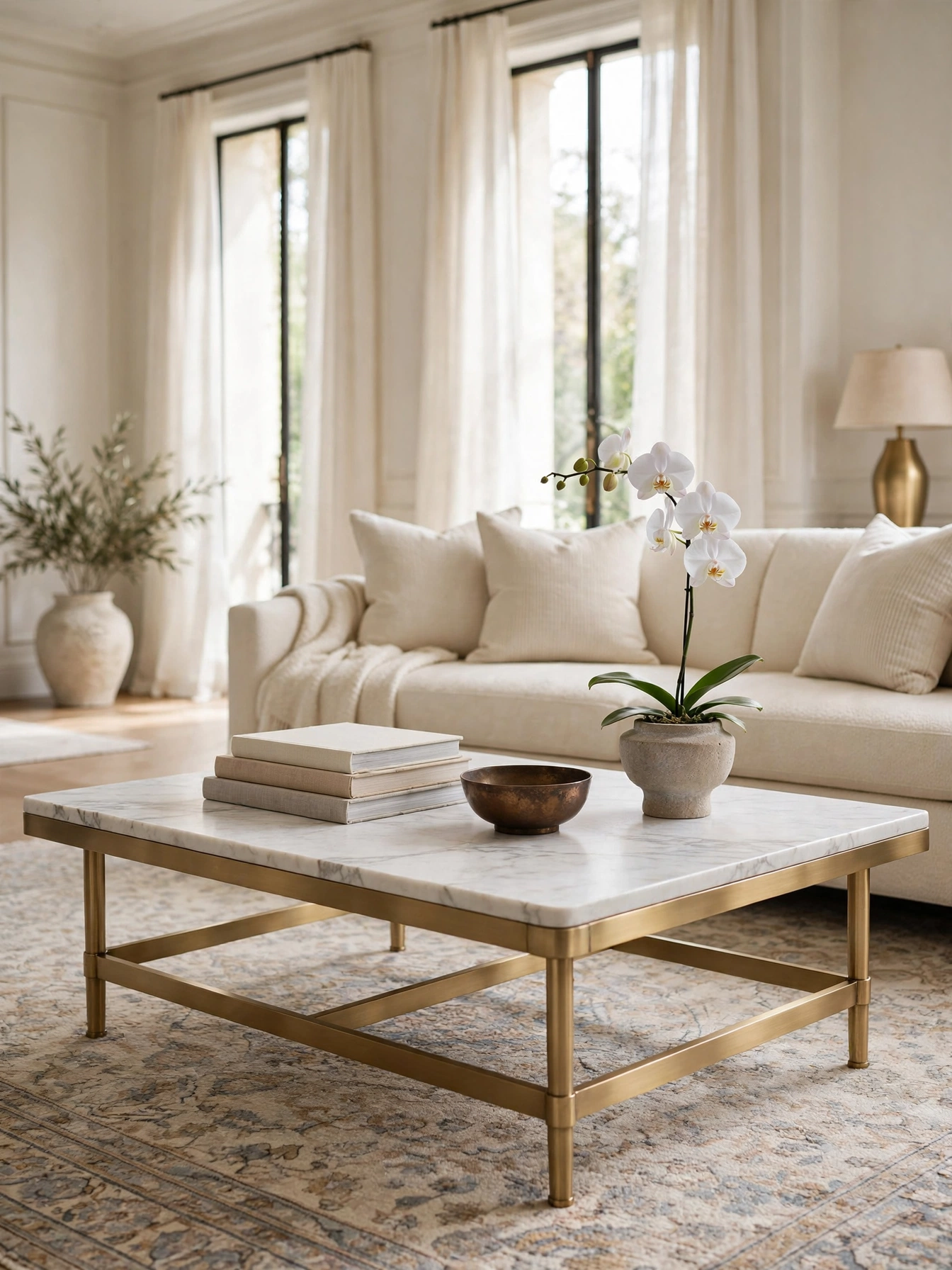
Why This Works:
- A solid stone top gives the room visual weight that veneer or printed tops cannot imitate.
- Honed Carrara or Calacatta keeps the look soft and matte, which reads more current than high gloss.
- At 16 to 18 inches high, a marble table aligns perfectly with standard sofa seat heights.
- One genuine stone piece raises the perceived quality of everything placed on it.
Choose a top between 48 and 60 inches long and at least 1.25 inches thick so the stone feels substantial rather than slab-like. Honed finishes hide etching better than polished ones, which matters because lemon, wine, and tomato all mark marble within minutes. Expect a finished table to weigh 120 to 200 pounds, so check that your rug pad and flooring can take a concentrated load, and plan the delivery route through doorways that are at least 32 inches wide. Reseal the surface every 12 months with an impregnating sealer, and budget 800 to 3,500 dollars depending on stone grade and base material.
This idea suits formal or semi-formal living rooms where the coffee table is a focal point rather than a footrest. Families with small children should think twice, since chips at the edge are costly to repair and cold stone invites climbing. Versus travertine, marble offers finer veining and a cooler tone, while quartz gives you stain resistance at the cost of authenticity. If the full price stings, a marble-top side table delivers most of the effect for a third of the cost.
Pro Tip: Ask the fabricator for a mitered edge on a 1.25-inch top, which makes it read as a full 2.5-inch slab for about 15 percent more than a flat edge.
Velvet Channel Sofas

Why This Works:
- Vertical channel stitching adds rhythm and structure that flat upholstery lacks.
- Cotton velvet catches light differently from every angle, giving the sofa a living, dimensional surface.
- A 38 to 42 inch depth keeps the proportions generous without swallowing a standard room.
- Jewel tones like emerald and sapphire signal luxury instantly, even in a simple silhouette.
Look for velvet rated at 40,000 or more double rubs on the Martindale scale, which is the industry benchmark for upholstery durability, and choose cotton or cotton-blend velvet over polyester for a richer hand. Seat height should sit between 17 and 19 inches, matching most coffee tables and keeping feet flat on the floor. Channels typically run 4 to 6 inches wide; narrower channels feel tailored, wider ones feel retro. A quality three-seater in this style runs 2,500 to 6,000 dollars, with custom sizes adding 20 to 30 percent.
Channel sofas suit readers and loungers who want comfort with a tailored profile, since the stitching keeps cushions from looking sloppy. Pet owners should note that velvet shows claw marks more than tight-weave linen, though it releases pet hair easily with a lint roller. Against a tufted Chesterfield, channels are easier to vacuum and less fussy to style. Rotate the seat cushions monthly to keep the pile wearing evenly.
Pro Tip: Brush the velvet weekly with a soft clothes brush in one direction; it takes 3 minutes and keeps the pile from developing shiny pressure patches.
Brass Floor Lamps

Why This Works:
- Unlacquered brass develops a patina that makes the lamp look collected rather than purchased.
- An arc or pharmacy profile throws light exactly where reading happens, at seated eye level.
- Warm metal finishes reflect lamplight softly, doubling the glow without a second bulb.
- One sculptural lamp can anchor an empty corner that furniture alone cannot fix.
Position the shade or head 60 to 66 inches from the floor so light lands at eye level for a seated reader, and choose arc lamps with a reach of 36 to 48 inches to clear a standard sofa depth. Fit a 2700K LED bulb at 800 to 1100 lumens for a warm, functional reading pool, and put the lamp on a dimmer so the same corner shifts from task light to evening ambience. The American Lighting Association recommends three layers of light per room, and a floor lamp is the easiest way to add the missing middle layer. Expect to spend 300 to 1,200 dollars for solid brass construction rather than plated steel.
Brass floor lamps suit renters and commitment-phobes because they deliver impact with zero installation. In very small rooms, a slim pharmacy lamp with a 10-inch base tucks behind a chair where an arc cannot fit. Relative to chrome, brass hides fingerprints and reads warmer under 2700K light. Avoid placing any floor lamp where its cord crosses a walkway; route it along baseboards with adhesive clips.
Pro Tip: If the brass is lacquered, it will stay shiny; if unlacquered, expect visible patina within 6 to 12 months, which most designers consider the desirable outcome.
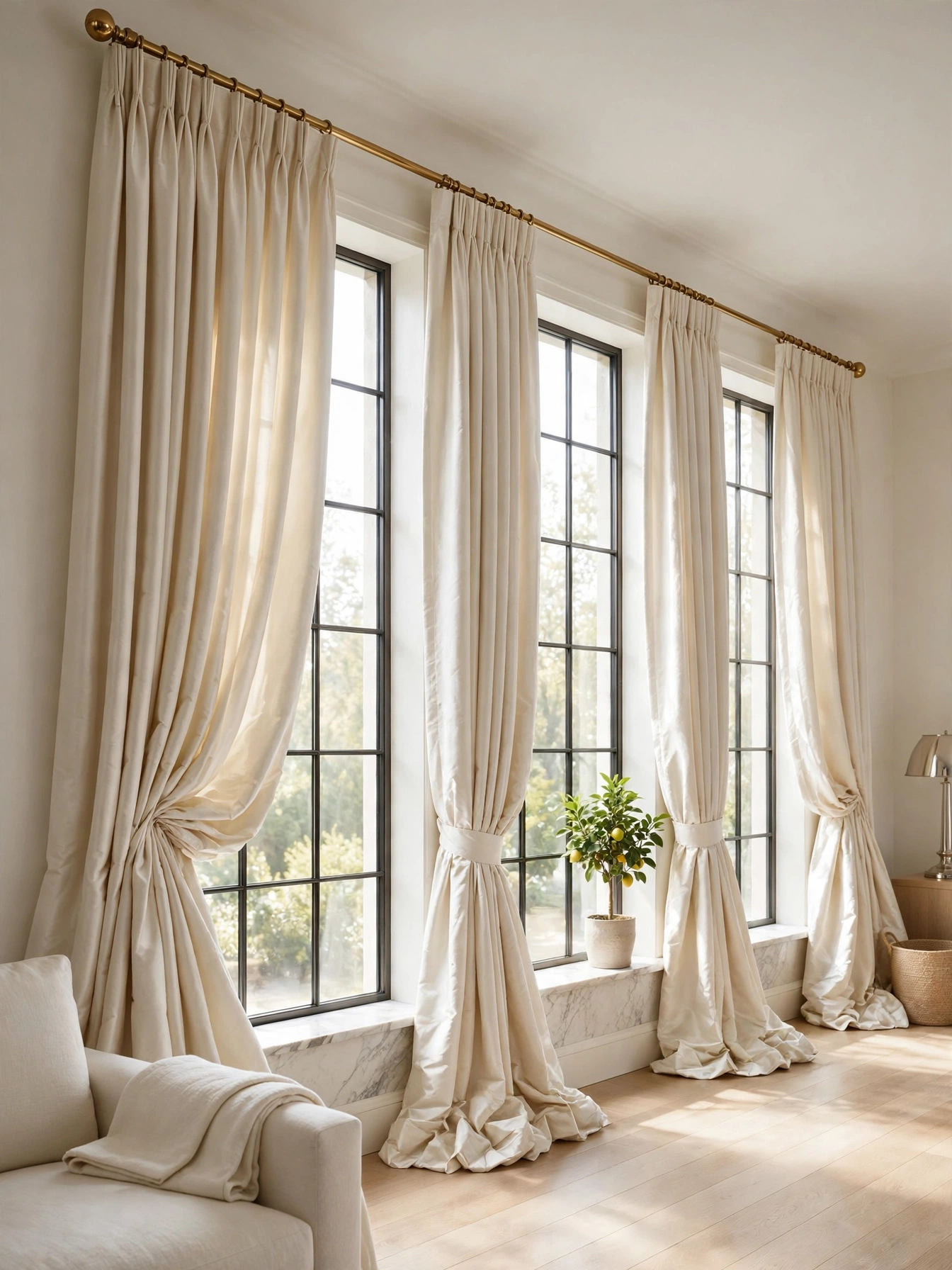
Silk Window Drapes
Why This Works:
- Real silk has a luminosity that polyester imitations cannot reproduce, especially in daylight.
- Floor-length panels draw the eye upward, making standard 8-foot ceilings feel taller.
- Interlining adds body and insulation, so drapes hang in clean folds instead of limp sheets.
- Neutral silk in ivory or champagne works with every future furniture change.
Hang the rod 4 to 6 inches above the window frame, extending it 8 to 12 inches beyond each side so the panels clear the glass fully when open. Panels should measure 2 to 2.5 times the rod width in fabric for proper fullness, and the hem should just kiss the floor or puddle 2 to 3 inches for a formal look. Always interline silk, and add a blackout lining if the room doubles as a media space. Custom silk drapes run 150 to 400 dollars per panel installed, roughly triple the cost of ready-made polyester.
Silk drapes suit rooms with good natural light, where the fabric’s sheen becomes part of the daytime decor. They are a poor choice for south-facing windows without lining, since direct sun rots silk within 2 to 3 years; in that case, choose a silk-look linen blend. In contrast to velvet drapes, silk feels lighter and more formal but insulates less. Dry clean only, and never machine wash.
Pro Tip: Train new drapes by tying them loosely in folds with fabric sashes for 72 hours; the folds will hold their shape for months afterward.
Onyx Accent Walls

Why This Works:
- Backlit onyx glows from within, creating a focal wall no paint or wallpaper can match.
- The stone’s natural veining means no two installations look alike.
- A single accent wall delivers drama while the remaining walls stay calm and neutral.
- At night, a backlit wall becomes the room’s light source and its art at once.
Use onyx panels 3/4 inch thick mounted 2 to 3 inches off the wall, with 2700K to 3000K LED strips behind them on a dimmer for an even glow. A 10 by 8 foot feature wall needs roughly 30 to 40 linear feet of LED strip and a driver rated 20 percent above the calculated wattage. Material alone runs 80 to 150 dollars per square foot installed, putting a full wall between 6,000 and 12,000 dollars. Seal the stone with a color-enhancing impregnator, since onyx is softer than granite at 3 to 4 on the Mohs scale.
This treatment suits large, open living rooms where one wall can carry the drama without crowding the space. In rooms under 200 square feet it can overwhelm, so consider a backlit onyx niche or fireplace surround instead. Stacked against backlit alabaster, onyx offers bolder patterning at a higher price. Keep the rest of the palette quiet; competing statement pieces dilute the effect.
Pro Tip: View your exact slabs backlit at the stone yard before cutting; veining looks 30 to 40 percent more dramatic lit from behind than under showroom spots.
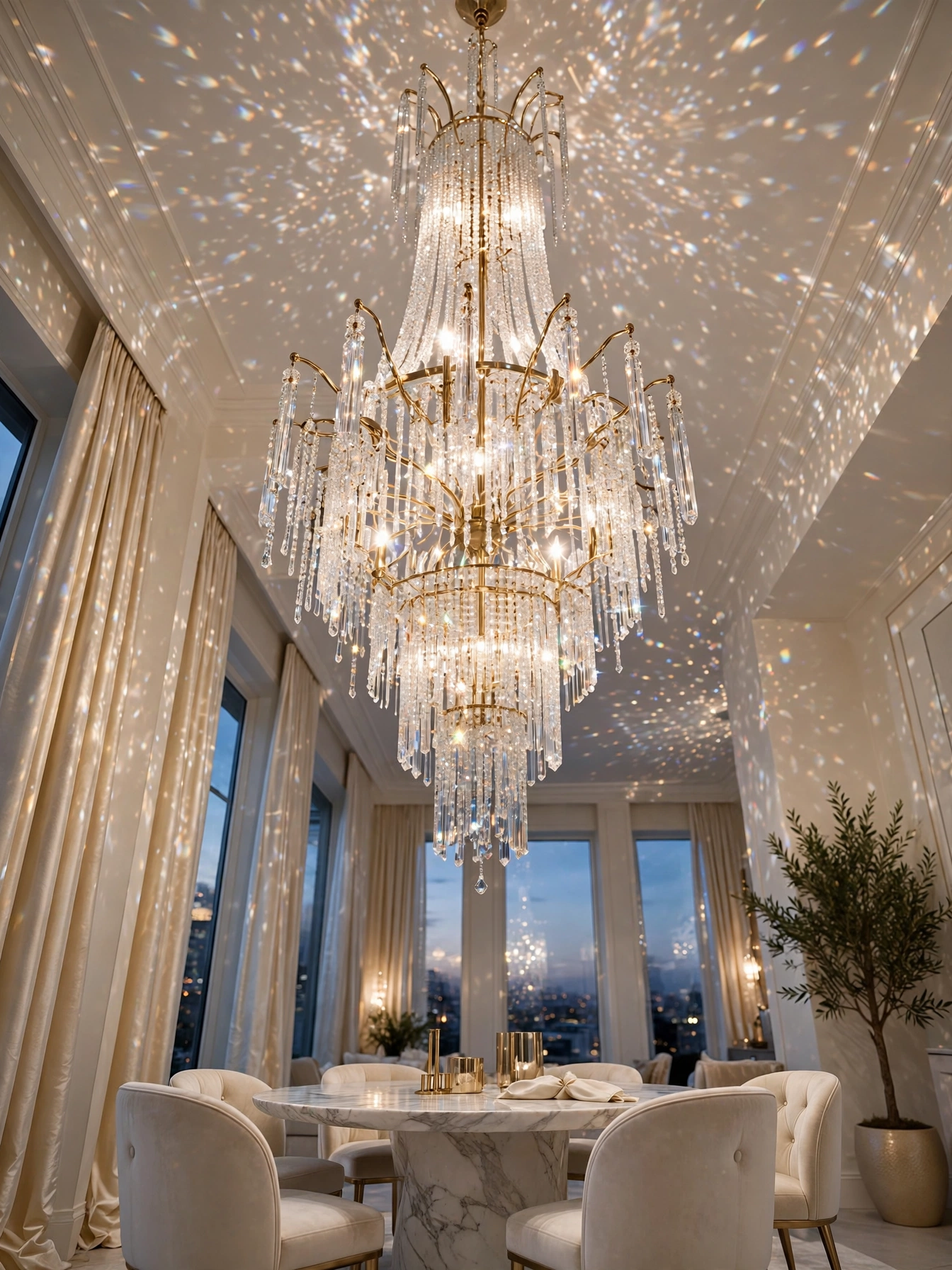
Crystal Chandelier Statements
Why This Works:
- A chandelier pulls the eye up, giving rooms with plain ceilings an instant centerpiece.
- Faceted crystal scatters light into moving patterns that flat fixtures cannot produce.
- Modern crystal designs read sculptural even when switched off during the day.
- One overhead statement frees table and floor surfaces from competing lamps.
Size the fixture by adding the room’s length and width in feet; the total in inches is your target diameter, so a 14 by 16 foot room wants a 30-inch chandelier. Hang the bottom of the fixture 30 to 36 inches above a coffee table, or at least 84 inches above the floor in a walkway. Crystal strands need dusting every 3 to 4 months with a microfiber mitt, and full fixture weight often exceeds 50 pounds. When to hire a professional: a licensed electrician must install a fan-rated junction box and a dedicated circuit for any fixture over 50 pounds or any new ceiling wiring, which typically costs 200 to 500 dollars.
Chandeliers suit rooms with ceilings 9 feet or higher, where the fixture can hang low enough to be seen without blocking sightlines. In 8-foot rooms, choose a semi-flush crystal design under 14 inches tall instead. Put beside a drum pendant, crystal gives more sparkle but demands more cleaning. Put the chandelier on its own dimmer so it can shift from bright entertaining light to a low evening glow.
Pro Tip: Choose K9 crystal over plastic or glass beads; K9 has a refractive index near 1.55, which is what produces the rainbow scatter that cheap substitutes miss.
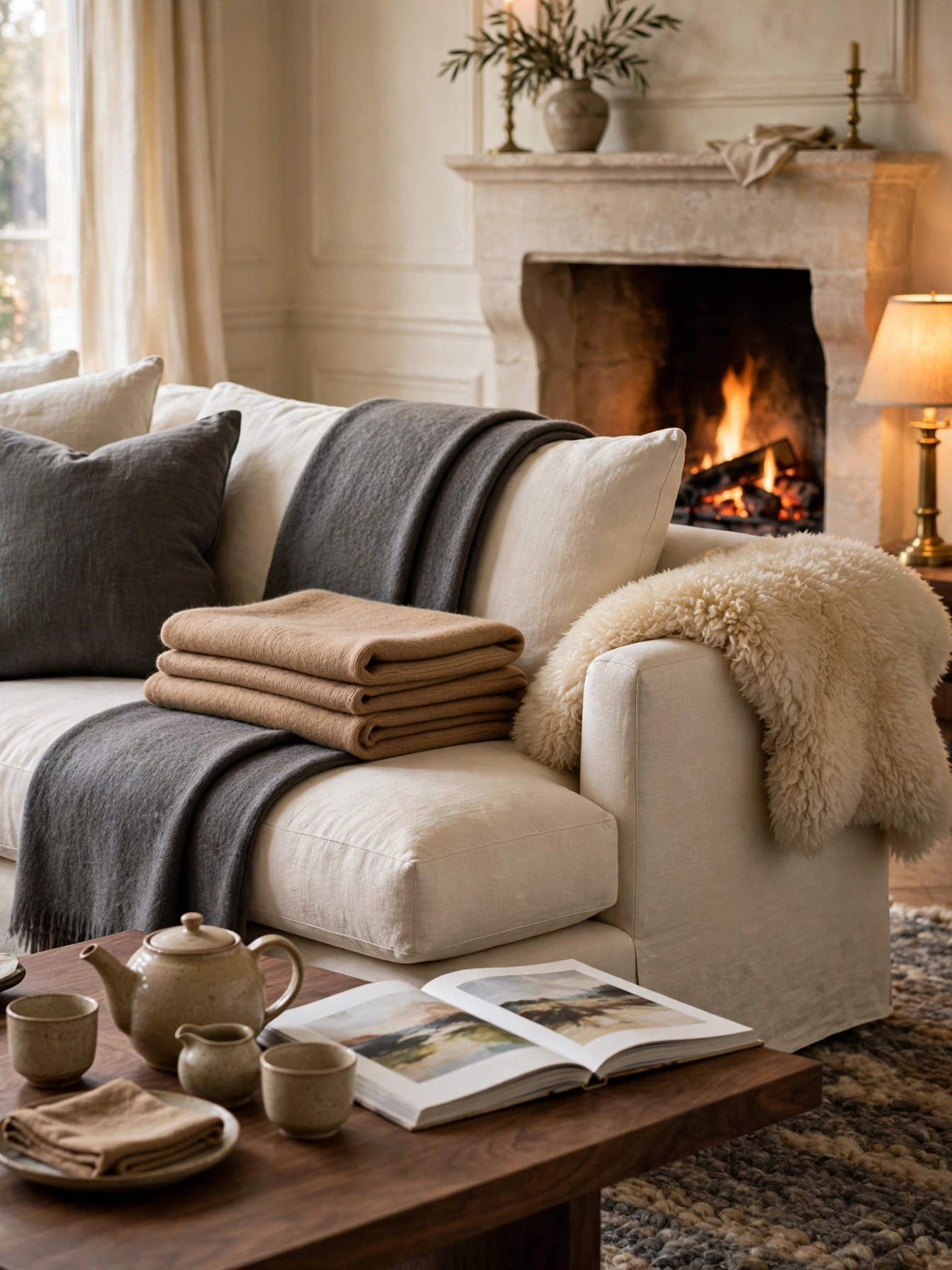
Cashmere Throw Layers
Why This Works:
- Cashmere drapes with a fluidity that makes even a simple sofa look styled.
- A 50 by 70 inch throw covers two seated people, which is the practical luxury standard.
- Layering two contrasting throws adds depth without adding furniture.
- Natural fibers regulate temperature, so the throw gets used instead of just displayed.
Look for 100 percent cashmere or a cashmere-merino blend with a tight, even weave; pure cashmere throws in the 50 by 70 inch range run 200 to 600 dollars. Fold the throw in thirds lengthwise before draping so it shows a clean 16-inch band of color rather than a crumpled pile. Wash by hand in cold water with a wool-safe detergent, and dry flat to avoid stretching the knit. Store folded with cedar blocks, since moth larvae can destroy a cashmere throw in a single season.
Cashmere layers suit anyone who wants luxury they can touch daily, especially in reading corners and on chaise ends. Households with shedding pets may prefer a washable merino throw at half the price, since cashmere and lint rollers are constant companions. When measured against chunky knit acrylics, cashmere looks refined rather than rustic and lasts decades with care. Buy one great throw instead of three mediocre ones.
Pro Tip: De-pill with a cashmere comb every 8 to 12 weeks; 5 minutes of combing restores the surface and prevents pills from matting into the weave.
Luxury Living Room Decor Ideas With Layered Lighting

Why This Works:
- A layered plan with ambient, task, and accent light makes the same room work for parties and quiet nights.
- Recessed 4-inch cans on dimmers give even, shadow-free general light.
- Picture lights and LED strips add the gallery glow that makes art and stone look expensive.
- Consistent 2700K color temperature across all fixtures keeps the room feeling cohesive.
Space 4-inch recessed cans 4 to 6 feet apart and 2 to 3 feet from walls for even coverage without hot spots, aiming for roughly 20 lumens per square foot of ambient light. Add task lighting at 300 to 500 lux for reading spots and accent lighting at 3 to 5 times the ambient level on art and architectural features. Keep every bulb at 2700K with a CRI of 90 or higher so wood, fabric, and skin tones render accurately. A full layered retrofit for a 300-square-foot living room runs 1,500 to 4,000 dollars including dimmers and an electrician.
Layered lighting suits every living room, but it pays off most in rooms used for both entertaining and relaxing. The honest trade-off is complexity: three switch locations or a smart system beat a single wall switch, but they cost more and need planning before drywall goes up. Set against relying on one ceiling fixture, layers eliminate the interrogation-room glare of a single overhead source. The Spruce recommends testing bulb temperatures at night before committing, since daylight showrooms mislead.
Pro Tip: Put accent lights on a separate dimmer set to 30 percent for evenings; art lit at low levels reads as luxury while saving roughly 70 percent of the accent lighting energy.
Walnut Burl Consoles

Why This Works:
- Burl veneer has a swirling grain that functions as natural artwork on the furniture itself.
- A 60 to 72 inch console fills the dead space behind a sofa or along a bare wall.
- Dark walnut grounds light-colored rooms and adds the contrast luxury spaces need.
- Bookmatched burl doors make even a storage piece feel like a gallery object.
Choose consoles 30 to 34 inches high so the top aligns with sofa backs and window sills, and allow 2 to 3 inches of clearance from walls for cord management. Real burl veneer over hardwood runs 1,200 to 3,500 dollars, while printed burl-look laminate costs a tenth but fools no one up close. Check that doors close on soft-close hinges and that the veneer is sealed with at least two coats of lacquer, since burl is prone to checking. Keep the console out of direct sun, which fades walnut noticeably within 18 months.
Burl consoles suit collectors and anyone who needs closed storage that still looks like furniture rather than cabinetry. In narrow rooms, pick a 14-inch-deep model instead of the standard 18 inches to preserve walkway clearance of at least 30 inches. Versus plain walnut, burl costs 40 to 60 percent more but delivers ten times the visual interest. Style the top with restraint: three objects maximum, varying heights by at least 6 inches.
Pro Tip: Run your fingertip across the veneer in the store; genuine burl has subtle ridges and grain shifts, while printed laminate feels perfectly flat and repeats its pattern every 12 inches.
Persian Silk Rugs
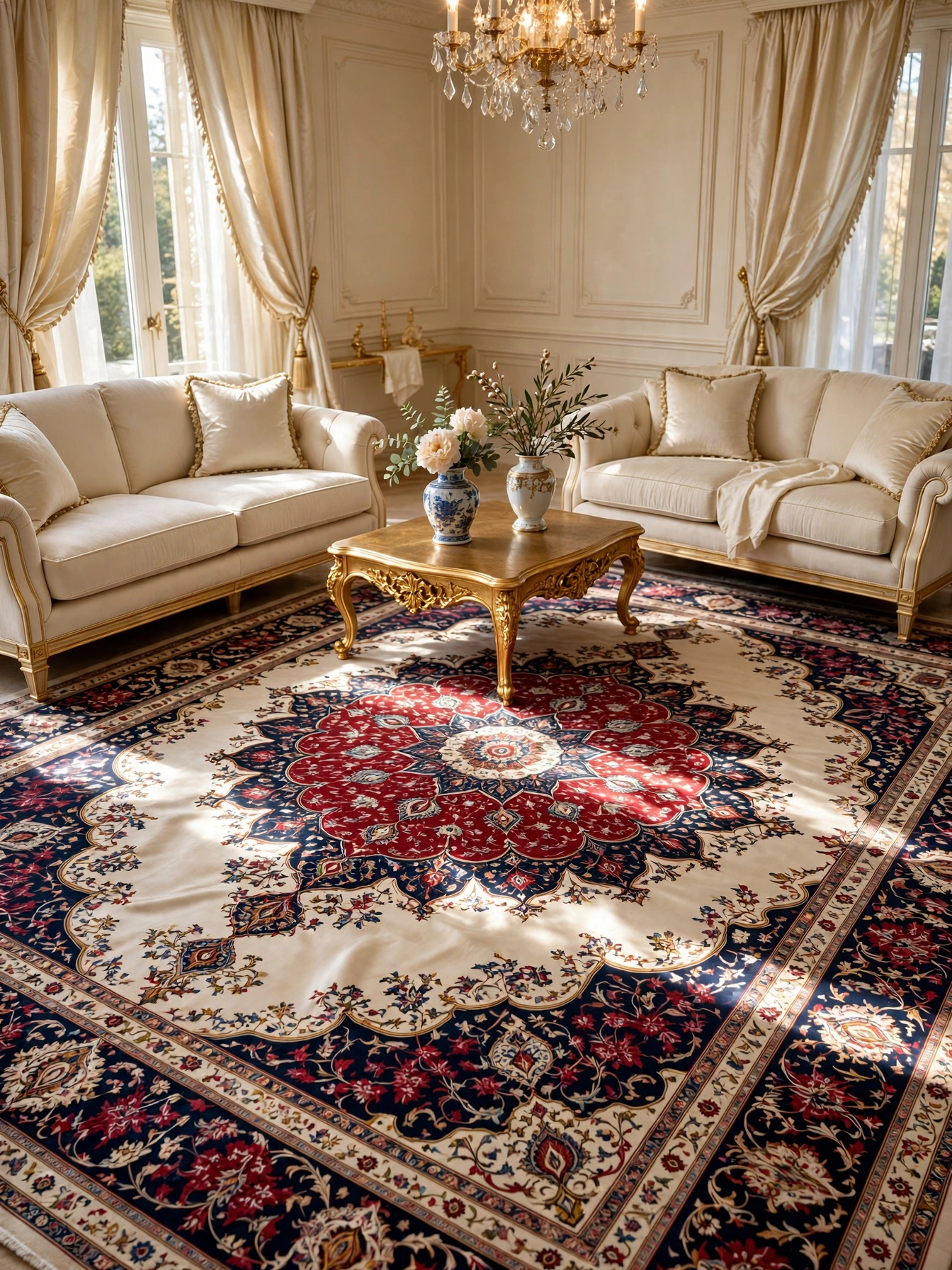
Why This Works:
- Hand-knotted silk reflects light with a sheen that wool rugs cannot achieve.
- Knot counts of 300 or more per square inch allow the fine detail of true Persian patterns.
- A 9 by 12 foot rug anchors a full seating group with all front legs on the rug.
- Genuine pieces appreciate or hold value, unlike machine-made rugs that depreciate immediately.
Measure your seating area first: front legs of all sofas and chairs should rest on the rug, which usually means 8 by 10 feet for a standard three-seat arrangement or 9 by 12 for larger groups. Authentic hand-knotted silk rugs start around 2,000 dollars for a 4 by 6 and climb past 15,000 for room-size pieces, with knot density and dye quality driving the price. Use a 1/4-inch felt rug pad to prevent sliding and to protect both the rug and the floor. Rotate the rug 180 degrees once a year to even out sun and traffic wear.
Silk rugs suit low-traffic formal living rooms and households without large dogs, since silk crushes under heavy, constant foot traffic. Wool-silk blends offer 80 percent of the sheen at half the price and survive family life better. Against a machine-made “Persian-style” rug, the hand-knotted original has an irregular, lively pattern and a fringe that is part of the warp, not sewn on. Buy from dealers who allow a 48-hour home trial.
Pro Tip: Flip a corner and count knots in one square inch with a ruler; under 150 KPSI at a “silk” price is a red flag worth walking away from.
Gilded Mirror Walls
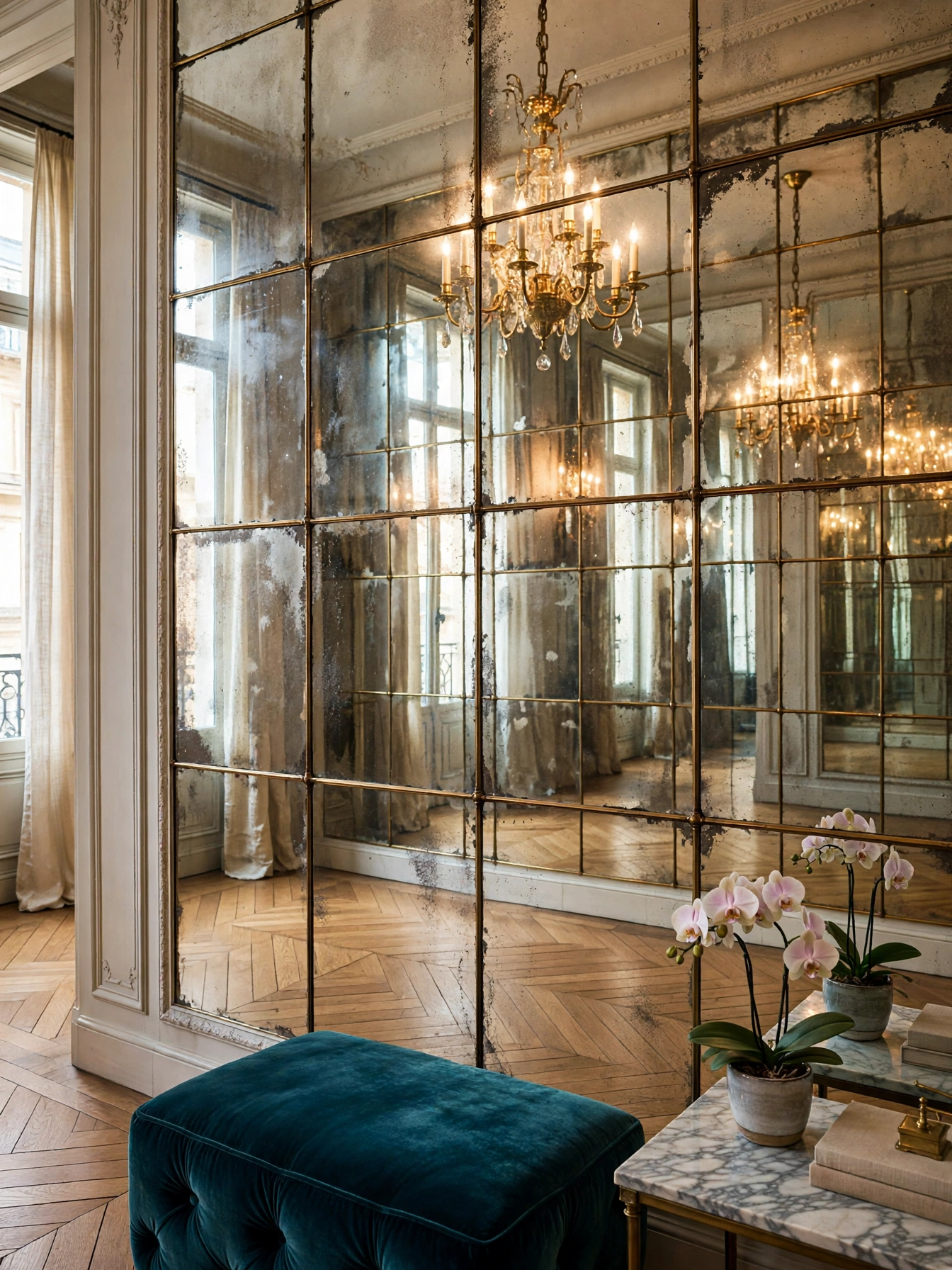
Why This Works:
- Mirrored panels double perceived square footage, the oldest luxury trick in small grand rooms.
- Antiqued or smoked glass avoids the harsh gym-mirror look of plain silvered panels.
- A gilded frame grid adds architecture to flat drywall without any construction.
- Reflected lamplight brightens the room after dark with zero extra fixtures.
Use 1/4-inch mirror panels cut 24 to 36 inches wide, separated by 1-inch brass or wood mullions for a paneled effect. Hang the center of the arrangement at 57 to 60 inches, the standard gallery height that suits both standing and seated sightlines. Antiqued mirror costs 25 to 45 dollars per square foot installed, roughly double plain mirror, because each panel is hand-distressed. Secure panels with mirror mastic plus mechanical clips, since adhesive alone can fail as temperatures swing.
Mirror walls suit dark or narrow living rooms that need borrowed light and depth. Avoid placing them where they reflect clutter, a television, or a direct view of the kitchen mess, since mirrors double whatever they face. Relative to a single large framed mirror, a paneled wall feels architectural rather than decorative. Keep the frames’ finish consistent with other metals in the room within one tone family.
Pro Tip: Mock up the layout with painter’s tape on the wall for 48 hours; live with the reflection angles at different times of day before ordering a single panel.
Top-Grain Leather Club Chairs

Why This Works:
- Full-grain aniline leather develops a rich patina that improves with a decade of use.
- The low, deep profile at 28 to 30 inches high invites sinking in without towering over the sofa.
- Cognac and espresso tones warm up gray or neutral rooms instantly.
- A matched pair flanking a fireplace creates the most classic luxury vignette there is.
Insist on full-grain or top-grain leather; bonded leather peels within 2 to 3 years and corrected grain feels plasticky. A proper club chair measures 30 to 34 inches wide with a seat depth of 22 to 24 inches, and quality frames use kiln-dried hardwood with eight-way hand-tied springs. Expect 1,500 to 4,000 dollars per chair for full-grain aniline, with top-grain pigmented leather running 30 percent less. Condition the leather every 6 months and keep chairs at least 3 feet from heat sources to prevent drying and cracking.
Club chairs suit readers, conversational seating groups, and anyone who values furniture that ages gracefully. They are heavy, often 60 to 80 pounds each, so they work poorly in rooms that get rearranged monthly. In contrast to fabric accent chairs, leather wipes clean and resists odors but feels cold in winter until body heat warms it. Buy the best leather you can afford; the frame can be re-covered, but cheap leather cannot be upgraded.
Pro Tip: Press your thumbnail into an unseen edge; full-grain aniline shows a temporary dent that fades, while bonded leather shows a surface crack that does not.
Travertine Fireplace Surrounds
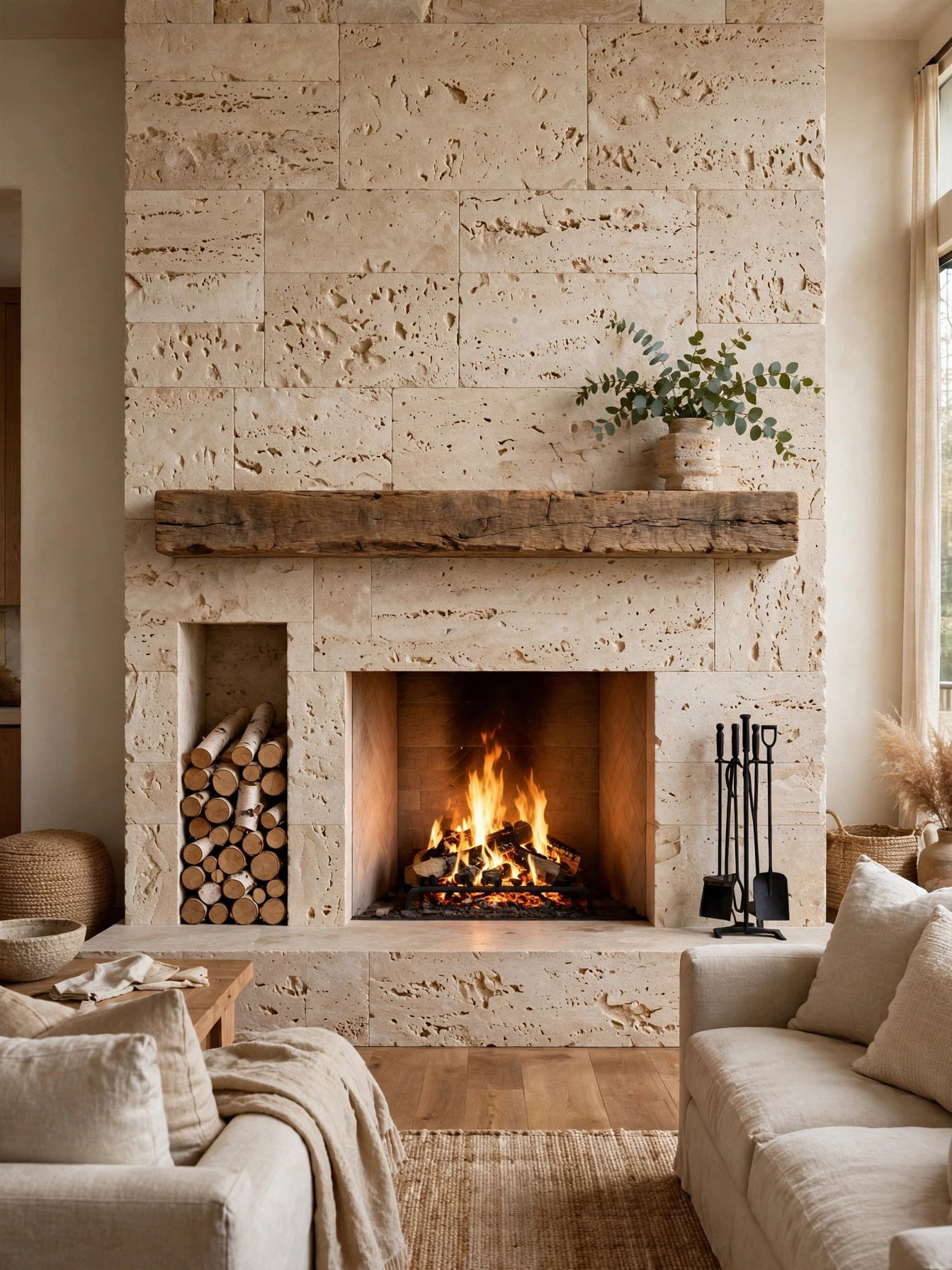
Why This Works:
- Travertine’s pitted texture adds organic warmth that polished marble cannot.
- A floor-to-ceiling surround turns the fireplace into architecture instead of an appliance.
- Honed travertine in warm ivory tones flatters both modern and traditional rooms.
- Natural stone holds and radiates gentle heat long after the fire dies down.
Run the stone from floor to ceiling, typically 8 to 10 feet, with a mantel shelf at 54 to 60 inches for comfortable styling and stocking clearance. Use 3/4-inch honed and filled travertine tiles, and keep a 6-inch noncombustible clearance around the firebox opening per most local codes. A full surround in travertine runs 3,000 to 8,000 dollars installed, depending on height and stone grade. Seal annually, and never use vinegar-based cleaners, which etch calcium-based stone on contact.
Travertine suits homes with existing warm neutrals, wood floors, or Mediterranean leanings. In ultra-modern rooms, a honed limestone or concrete surround may fit better than travertine’s rustic pits. Stacked against a painted wood mantel, stone costs 4 to 5 times more but becomes a permanent architectural feature. If the budget is tight, stone the surround and keep a simple wood mantel shelf.
Pro Tip: Ask for vein-cut travertine rather than cross-cut if you want linear drama; the linear veining reads more contemporary and hides soot smudges better.
Luxury Living Room Decor Ideas With Rich Fabrics

Why This Works:
- Mixing velvet, silk, linen, and bouclé in one palette creates tactile richness no single fabric can.
- High rub-count fabrics keep luxury pieces looking new through years of daily use.
- A restrained palette across varied textures reads expensive without shouting.
- Quality fabric upgrades pillows and throws first, the cheapest luxury entry point.
For upholstery, demand at least 30,000 double rubs; for drapery, 15,000 suffices since it takes no abrasion. Build the mix on a 60-30-10 formula: 60 percent a durable base like linen, 30 percent a mid texture like velvet, 10 percent a jewel accent like silk or mohair. Yardage for designer fabrics runs 40 to 150 dollars per yard, so reupholstering a standard sofa needs 12 to 16 yards plus 300 to 800 dollars in labor. Always order memo samples and live with them for a week in your actual light before committing.
A curated fabric story suits anyone refreshing a room without replacing furniture, since textiles change the feel fastest. Households with cats should avoid loosely woven bouclé, which snags, and choose tight chenille instead. Put beside buying all-new furniture, a fabric refresh costs 20 to 30 percent as much while delivering half the visual change. Houzz designers consistently rank textiles among the highest-impact, lowest-cost luxury upgrades.
Pro Tip: Photograph your fabric samples together under both daylight and 2700K lamplight; undertones shift dramatically, and the photo reveals clashes your eye excuses in person.
Alabaster Table Lamps
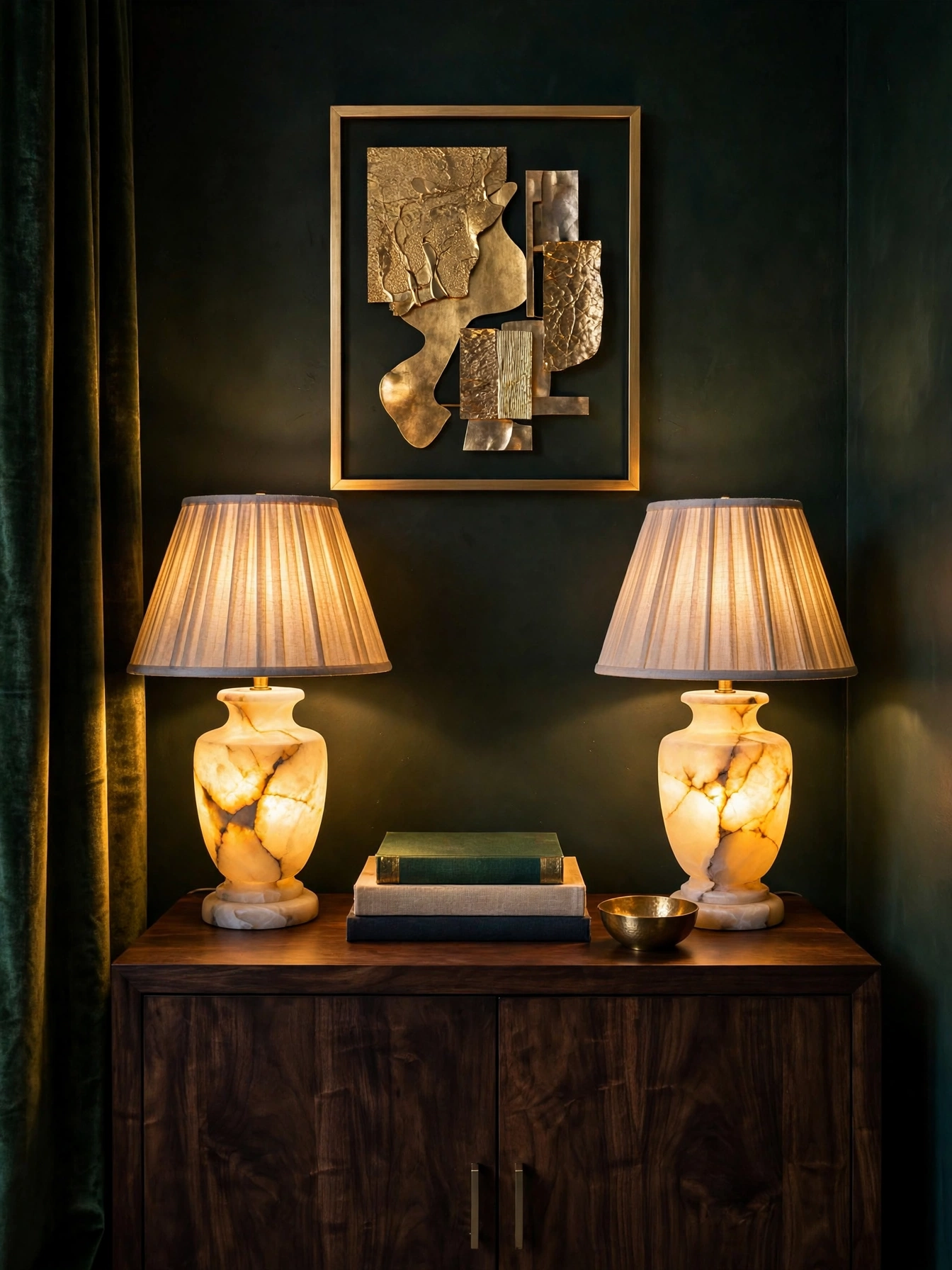
Why This Works:
- Backlit alabaster glows like candlelight, softening the whole corner it sits in.
- Each stone base has unique veining, so the lamp is genuinely one of a kind.
- At 24 to 30 inches tall, the scale suits console tables and large nightstand-style ends.
- The warm diffusion flatters skin tones better than any shade material.
Choose lamps 24 to 30 inches tall with the shade top at or just below eye level when seated nearby. Alabaster is translucent, so a 40 to 60 watt equivalent LED at 2700K inside the base creates the signature glow; make sure the stone is at least 1/2 inch thick to diffuse evenly without hot spots. Genuine alabaster lamps run 400 to 1,200 dollars a pair, with carved or turned profiles commanding the premium. Dust with a dry cloth only, since the stone is porous and water spots it.
Alabaster lamps suit bedrooms that open to living areas and formal sitting corners where ambience matters more than task light. They are not reading lamps; the diffused output tops out around 400 lumens, fine for mood but weak for print. When measured against ceramic lamps, alabaster costs more and weighs more, typically 8 to 12 pounds each, but no ceramic reproduces the glow. Use them in pairs for symmetry on a console.
Pro Tip: Hold a phone flashlight behind the stone in the store; even, honey-colored translucency means quality, while dark blotches mean uneven thickness.
Bookmatched Stone Panels
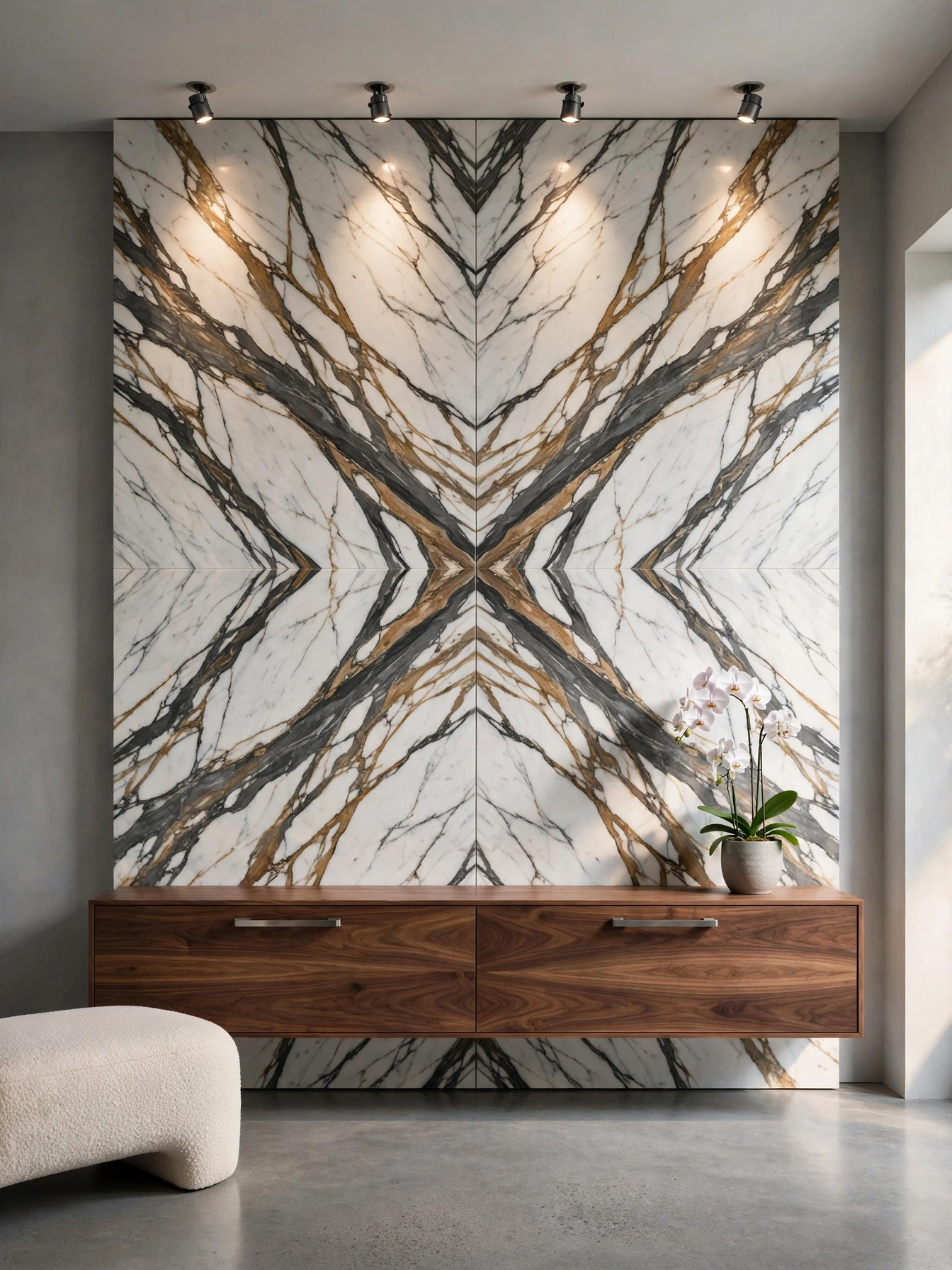
Why This Works:
- Bookmatching mirrors two sequential slabs, creating a symmetrical pattern like an open book.
- The mirror effect makes ordinary marble look like intentional, high-design art.
- A single bookmatched pair can carry an entire wall with no other decoration needed.
- Designers consider it the clearest signal of a no-compromise stone budget.
Bookmatching requires consecutive slabs from the same block, so order 20 percent extra material to allow for the mirror cut and waste. Panels are typically installed 3/4 inch thick with a 1/16 inch grout or epoxy joint for a near-seamless read. A bookmatched marble feature wall runs 100 to 200 dollars per square foot installed, roughly double single-slab work because of the selection and layout labor. Inspect the dry layout at the fabricator before installation; once cut, the mirror pairing cannot be rearranged.
Bookmatched panels suit entry walls, fireplace surrounds, and TV walls that need to look designed rather than decorated. In rental or short-term homes the investment rarely pays back, since stone is permanent. Set against large-format porcelain that mimics bookmatching, real stone offers depth and variation the print cannot fake at close range. The Spruce notes that natural stone remains one of the few materials that consistently appraises as a premium finish.
Pro Tip: Number the slabs at the yard with chalk in sequence; installers who mix up the order destroy the mirror effect and the premium you paid for it.
Champagne Bar Carts

Why This Works:
- A stocked bar cart signals hospitality, the emotional core of every luxury living room.
- Brass and glass construction keeps the piece light and reflective rather than bulky.
- At 30 to 36 inches wide, it tucks beside a sofa or floats as a room divider.
- Styling a cart costs little but photographs like a five-figure vignette.
Choose a cart 30 to 36 inches wide and 32 to 36 inches high with a locking caster set rated for at least 100 pounds when loaded. Stock it with 4 to 6 bottles, proper glassware for two drink types, and one sculptural object like a decanter or small plant. Solid brass carts run 400 to 1,200 dollars, while brass-plated steel starts around 150 dollars but chips at the edges within a year. Keep the top arrangement to 5 to 7 items in varied heights for a styled, not cluttered, look.
Bar carts suit entertainers and anyone with an awkward 3-foot gap in the floor plan. Non-drinkers can style the same cart as a coffee or tea station with equal effect. Contrasted with a built-in wet bar, a cart costs under 5 percent as much and moves wherever the party goes. Restock the styling seasonally; a dusty, unchanged cart reads as abandoned rather than luxurious.
Pro Tip: Line the lower shelf with a cut-to-fit mirror tile, about 12 dollars; it doubles the sparkle of glassware and hides shelf scratches.
Curved Boucle Seating
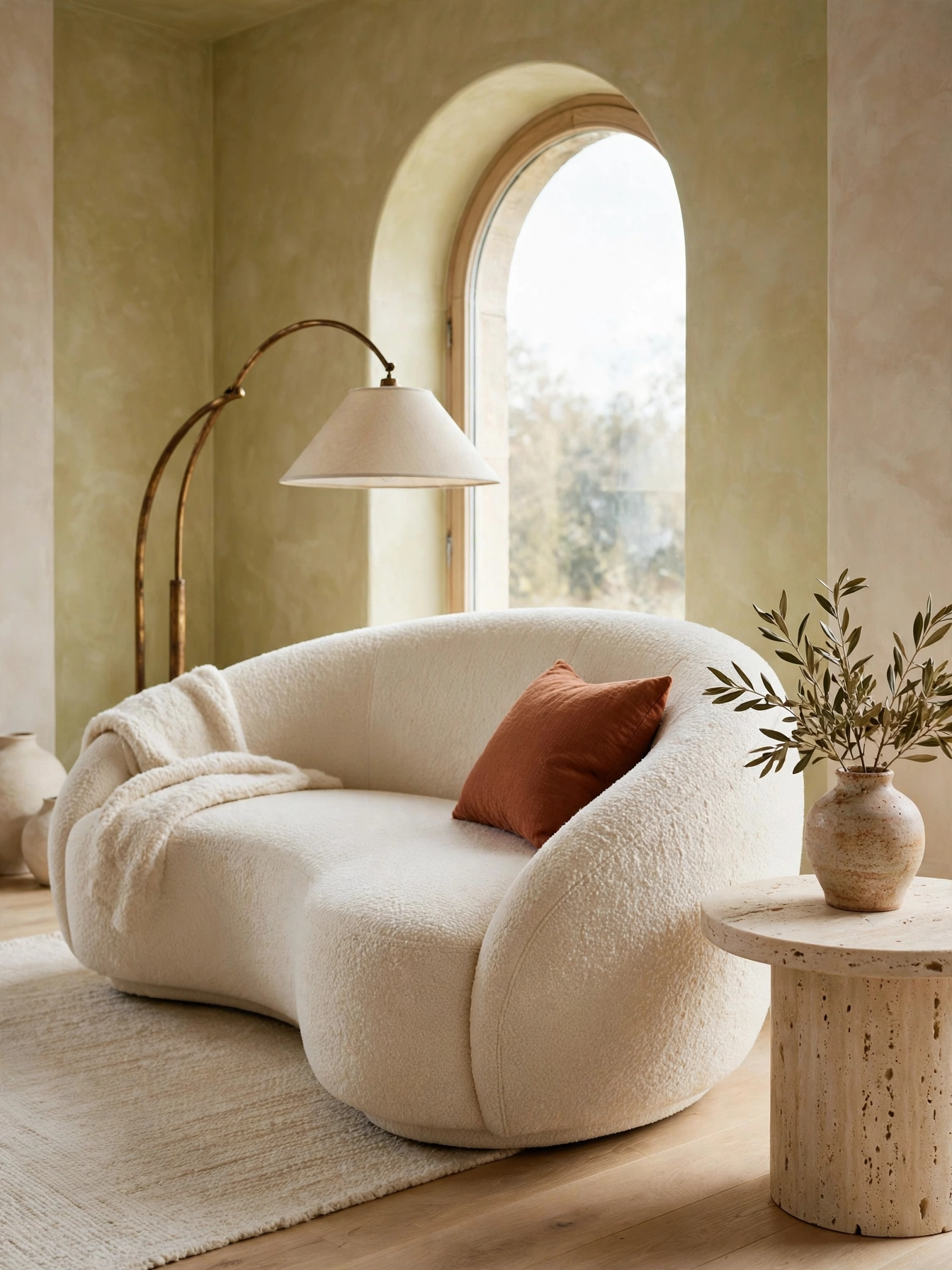
Why This Works:
- Curved silhouettes soften rooms dominated by rectangular sofas and screens.
- Bouclé’s nubby texture adds tactile interest that photographs beautifully for listings and feeds.
- A 40 to 48 inch curved loveseat creates conversation seating without a full second sofa.
- The sculptural shape works as art, so the piece earns its footprint twice.
Look for bouclé with a tight, even loop and a rub count above 30,000, since loose weaves pill and snag within months. Curved loveseats typically span 40 to 48 inches wide with a seat height of 16 to 18 inches, lower than standard sofas for a lounge feel. Quality pieces with hardwood frames run 1,800 to 4,500 dollars. Allow 36 inches of clearance in front for comfortable passage, since the curve pushes the visual bulk forward.
Curved bouclé suits modern and Japandi-leaning rooms where soft geometry is the theme. It is a poor match for traditional rooms full of straight, tailored lines, where the curve looks like a mistake. Weighed against a curved velvet piece, bouclé hides wear better but collects pet hair in its loops. Vacuum with an upholstery attachment monthly to keep the texture crisp.
Pro Tip: Test the curve by sitting with a book for 10 minutes in the showroom; some dramatic curves look great but force an awkward 15-degree twist in the spine.
Luxury Living Room Decor Ideas for Statement Ceilings

Why This Works:
- The ceiling is the largest untouched surface in most living rooms, and treating it changes everything.
- Coffered or tray details add architecture that makes 9-foot ceilings feel intentional.
- A soft metallic or plaster finish catches light and adds depth overhead.
- Guests notice a finished ceiling subconsciously, which is exactly why it reads as luxury.
Coffered grids typically use 6 to 8 inch deep beams on 4 to 6 foot centers, and the work runs 25 to 50 dollars per square foot installed. A simpler tray ceiling with one 12-inch step costs roughly half that. For a paint-only upgrade, a matte plaster or limewash in a tone 2 shades deeper than the walls adds depth for the price of a weekend. Keep ceiling fixtures in mind: coffers need planning around can lights, with at least 12 inches of clearance from beam edges.
Treated ceilings suit rooms where everything at eye level is already finished and the top third feels forgotten. In rooms under 8 feet, skip coffers and use paint or wallpaper, since depth eats headroom visually. Measured against an accent wall, a ceiling treatment surprises more because nobody expects it. Houzz data consistently shows ceiling details among the most-saved living room features.
Pro Tip: Paint the ceiling 50 percent lighter than the wall color, not white; pure white overhead creates a harsh lid effect that fights warm 2700K lighting.
Hand-Knotted Wool Rugs
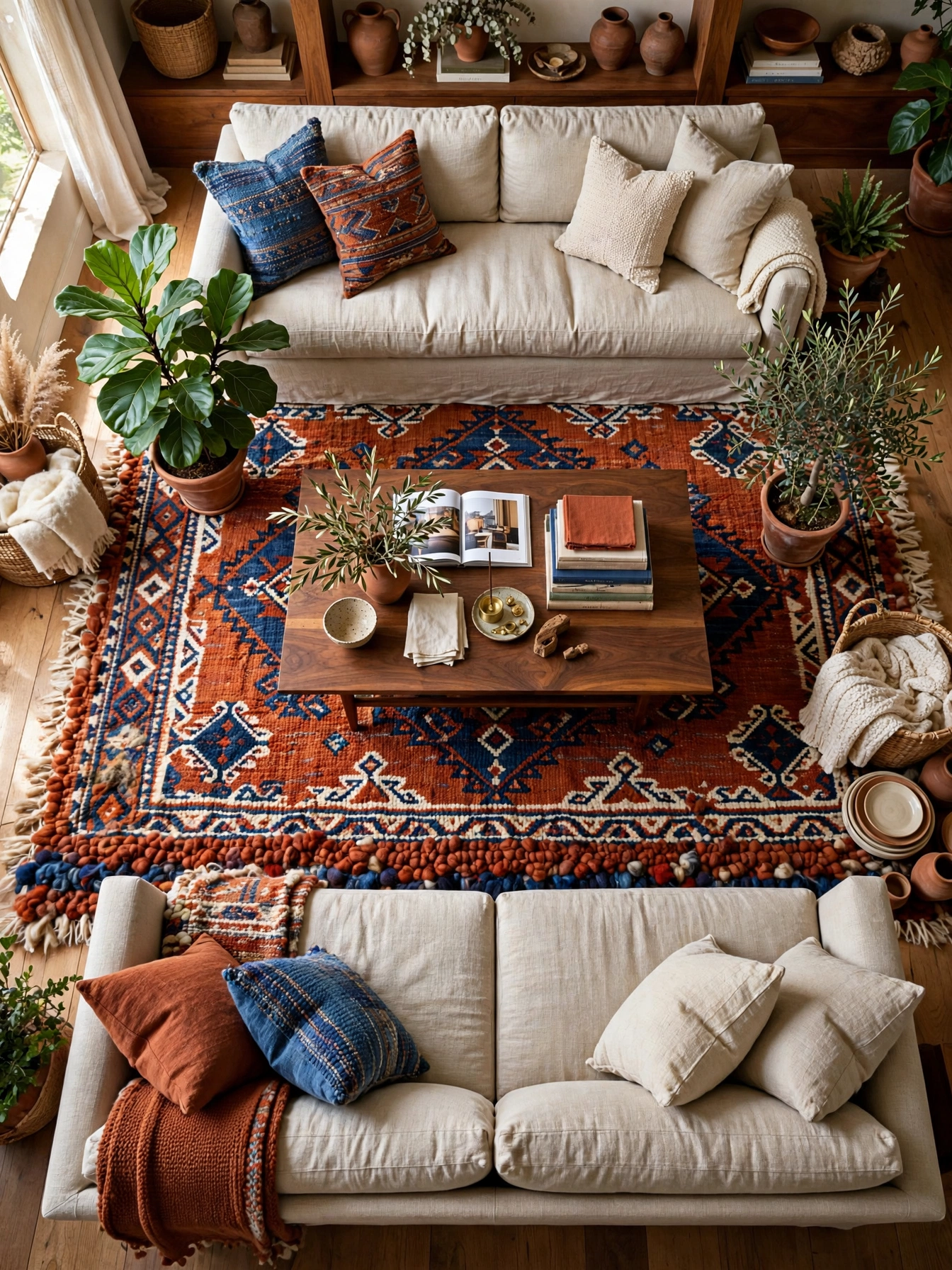
Why This Works:
- Hand-knotted wool lasts 30 to 50 years, making it the rare decor purchase that outlives trends.
- Natural lanolin in wool repels stains better than any synthetic fiber.
- A dense 100-knot-per-square-inch pile feels substantial underfoot and quiets the room.
- Vegetable-dyed wool ages into softer, richer tones instead of fading flat.
Size by the front-legs rule: all seating front legs on the rug, which means 8 by 10 feet minimum for most living rooms and 9 by 12 for sectionals. Quality hand-knotted wool rugs run 1,500 to 8,000 dollars at room size, with knot density and origin driving price. Use a 1/4 to 1/2 inch felt pad underneath for cushioning and floor protection. Vacuum weekly without a beater bar, and expect shedding for the first 6 to 12 months, which is normal for hand-knotted wool.
Wool rugs suit high-traffic family living rooms where durability matters as much as looks. Allergy sufferers should note that wool sheds fibers initially, though it traps allergens rather than circulating them. Side by side with silk, wool costs far less and survives daily life; compared with synthetics, it looks better at year ten instead of worse. Buy the largest size your room and budget allow.
Pro Tip: Bend the rug to expose the base of the pile; dense, upright knots that spring back signal quality, while sparse knots that stay flat mean a thin rug.
Sculptural Art Pedestals

Why This Works:
- A pedestal elevates a single object into a gallery moment, borrowing museum authority.
- At 36 to 48 inches tall, the display height matches natural standing sightlines.
- Stone or lacquered pedestals add vertical interest to rooms heavy on low furniture.
- One strong object styled alone reads more luxurious than a crowded shelf.
Choose pedestals 36 to 48 inches tall with a top surface at least 12 by 12 inches to hold the object securely. Travertine, black marble, or high-gloss lacquer pedestals run 300 to 1,500 dollars depending on material and height. Position the pedestal where it gets raking light from a nearby window or a dedicated picture light mounted 30 inches above. Anchor it against tipping if the household includes climbers; a 40-pound stone pedestal still topples under a determined toddler.
Pedestals suit art lovers with one special piece and minimalists who want impact without accumulation. They fail in high-traffic paths where a protruding corner becomes a shin hazard. Next to a gallery wall, a single pedestal moment feels calmer and more deliberate. Rotate the displayed object seasonally to keep the vignette feeling alive.
Pro Tip: Light the object from 30 degrees above and to one side; flat frontal light erases the shadows that give sculpture its three-dimensional presence.
Venetian Plaster Walls

Why This Works:
- Polished plaster has a depth and movement that flat paint cannot imitate.
- The lime-based finish is naturally mold-resistant and regulates humidity.
- A single plastered wall adds old-world craft to otherwise new construction.
- Subtle tonal variation hides the small wall imperfections paint would reveal.
Authentic Venetian plaster is applied in 3 to 5 thin layers with a steel trowel and burnished to a sheen, a process that takes a skilled applicator 2 to 3 days per wall. Professional application runs 10 to 25 dollars per square foot, so a 12 by 8 foot wall costs 1,000 to 2,400 dollars. The finish needs no sealing in living areas and wipes clean with a damp cloth. DIY kits exist at 100 to 200 dollars per wall, but the burnishing technique takes practice to look right.
Venetian plaster suits Mediterranean, transitional, and modern organic rooms where texture is the palette. In ultra-minimal spaces it can feel busy, so keep it to one wall. Holding it next to limewash paint, true plaster offers more depth and durability at roughly triple the cost. Sample a 2 by 2 foot board in your light before committing to a whole wall.
Pro Tip: Ask the applicator to leave you a small jar of the tinted plaster; chips repair invisibly with a dab, while mismatched touch-up paint never quite blends.
Antique French Armoires

Why This Works:
- A genuine 19th-century armoire brings a century of patina that reproductions cannot fake.
- At 80 to 90 inches tall, it gives a living room the vertical anchor flat walls need.
- Behind closed doors it hides media equipment, games, or bar supplies completely.
- Antique wood tones add the warmth that new furniture often lacks.
Look for dovetailed drawers, hand-cut joinery, and original hardware as signs of authenticity; genuine Louis Philippe or provincial armoires run 2,000 to 8,000 dollars depending on condition and provenance. Measure doorways and stairwells before buying, since these pieces are typically 24 to 28 inches deep and do not disassemble. Check for woodworm holes and musty smells, and budget 200 to 400 dollars for professional restoration of sticky doors or missing veneer. Keep the piece out of direct sun and away from radiators to prevent veneer lift.
Antique armoires suit traditional and eclectic rooms where one storied piece grounds newer furniture. They overwhelm minimalist spaces and fight with mid-century collections. Placing it beside a new reproduction, the antique costs similar money but holds value and carries character the copy lacks. Buy from reputable dealers who guarantee age; the market has many convincing fakes.
Pro Tip: Smell the interior before buying; a clean woody scent is fine, but a sharp chemical odor suggests the piece was recently fumigated for active infestation.
Smoked Glass Partitions

Why This Works:
- Smoked glass divides open plans while preserving light flow and sightlines.
- The bronze tint adds warmth that clear glass partitions lack.
- Ceiling-mounted tracks keep floors clear, so the division feels architectural, not temporary.
- A glass wall lets a reading corner or office share the living room’s luxury finishes.
Use 3/8-inch tempered smoked glass panels in a ceiling track rated for 150 pounds per panel, with floor guides only, no bottom track, for a clean look. Panels typically run 36 to 48 inches wide and floor-to-ceiling, and a three-panel system costs 2,500 to 6,000 dollars installed. Tempered glass is code-required for partitions, and any panel over 9 square feet must carry a tempering stamp. Clean with a squeegee and distilled water to avoid mineral spots on the tint.
Glass partitions suit open-plan living rooms that need zones without walls, especially for a home office corner. They offer zero sound privacy, so they fail as a substitute for a real door when noise matters. Up against open shelving dividers, glass blocks less light but also blocks less sound. Keep the track hardware in black or brass to match the room’s metal story.
Pro Tip: Add a 2-inch frosted band at 60-inch eye height if anyone walks the path daily; invisible glass edges cause collisions, and the band reads as a design detail.
FAQs
What defines luxury living room decor ideas in 2026?
Real materials, precise proportions, and layered lighting define the look this year. Think honed stone at 1.25 inches thick, velvet rated above 40,000 double rubs, and 2700K lighting with a CRI of 90 or higher. Luxury now reads as quiet quality and honest craftsmanship rather than visible logos or ornament.
How much should I budget for a luxury living room refresh?
A focused refresh with textiles, lighting, and one stone piece runs 3,000 to 8,000 dollars. A full room with custom upholstery, rugs, and architectural details lands between 15,000 and 40,000 dollars. Spend first on the rug and lighting; those two change the room’s feel the most.
Are luxury living room decor ideas worth it in a small space?
Yes, with editing. In rooms under 200 square feet, choose three investment pieces, a 5 by 8 foot rug, layered lighting, and one stone or brass accent. Oversized statement pieces crowd small rooms, so scale chandeliers to 20 to 24 inches and keep walkways at least 30 inches clear.
Which luxury materials are easiest to maintain?
Honed quartzite and top-grain pigmented leather top the easy-care list, resisting stains with simple wipe-downs. The Spruce ranks quartzite above marble for busy households because it resists etching from acids. Condition leather every 6 months, brush velvet weekly, and dry-clean silk, matching materials to your tolerance for upkeep.
How do I light a luxury living room properly?
Combine recessed cans spaced 4 to 6 feet apart, task lamps at 300 to 500 lux, and accent lights at 3 to 5 times ambient level. Keep every bulb at 2700K with CRI 90 or higher. The American Lighting Association recommends three layers per room, each on its own dimmer.
Conclusion
True luxury living room decor ideas come down to three things: honest materials like stone and full-grain leather, proportions measured in inches rather than guessed, and lighting layered at a warm 2700K. Start with the rug and the lighting plan, add one stone or brass statement, and let the textiles do the rest. Your first action is simple: measure your seating area tonight and order rug samples tomorrow. Follow HomelyCrafter on Pinterest for more ideas. Save this to your Pinterest boards so you can refer back to it!

Muhammad Israr is a home decor enthusiast and the writer behind Homely Crafter. He spends his days researching paint colors, layouts and budget-friendly styling ideas, then breaks them down into practical, easy-to-follow guides so you can decorate with confidence.