
When did your coffee table last earn a second glance? Most sit there holding remotes and dust, but the best coffee table decor ideas turn that surface into the room’s most photographed spot, using whole-table compositions that work on round, square, oval, and rectangular tables alike.
These 23 ideas cover the full styling toolkit: book stacks that add height, sculptural objects that hold attention, candle groupings that glow after dark, and the spacing rules that keep it all looking effortless. Every section includes exact dimensions, real price ranges, and honest notes on what suits your household.
Start by clearing your table completely, then build back with just three groups of objects. Pick the ideas that match your table’s shape, and style one surface today.
Oversized Art Books
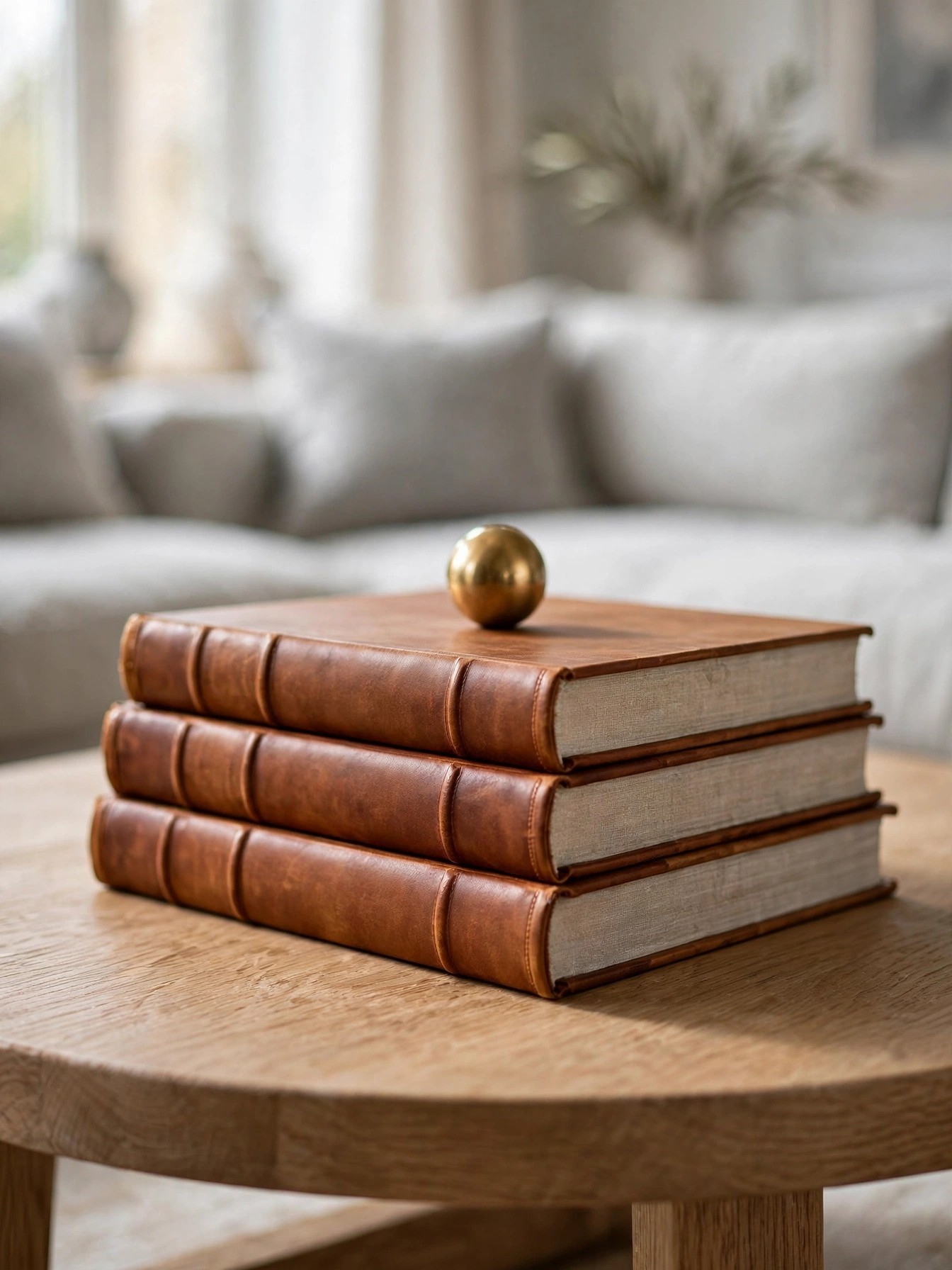
Why This Works:
- Oversized books add instant height and intellectual character.
- A stack of three creates a pedestal for one small object.
- Beautiful spines and covers work as decor even unopened.
- Books invite browsing, which makes guests linger.
Stack books from largest (12 by 15 inches) to smallest, keeping the total stack 4 to 6 inches tall so sightlines across the table stay open. Quality oversized art books cost $30 to $75 each, and thrifted volumes run $5 to $15 with equally handsome covers. Keep the stack to one side of the table, occupying no more than one third of the surface. Avoid glossy coffee-table books with busy covers in calm rooms, since the visual noise fights the styling. Versus a decorative box at the same price, books add personality and start conversations.
Readers and art lovers get the most from book styling. One drawback is dust: book stacks need a wipe every couple of weeks, and pages yellow in direct sun. Rotate the top book seasonally to keep the table feeling fresh. For the easiest high-impact styling, start with books.
Pro Tip: Remove dust jackets and style the cloth bindings, which look richer and more uniform.
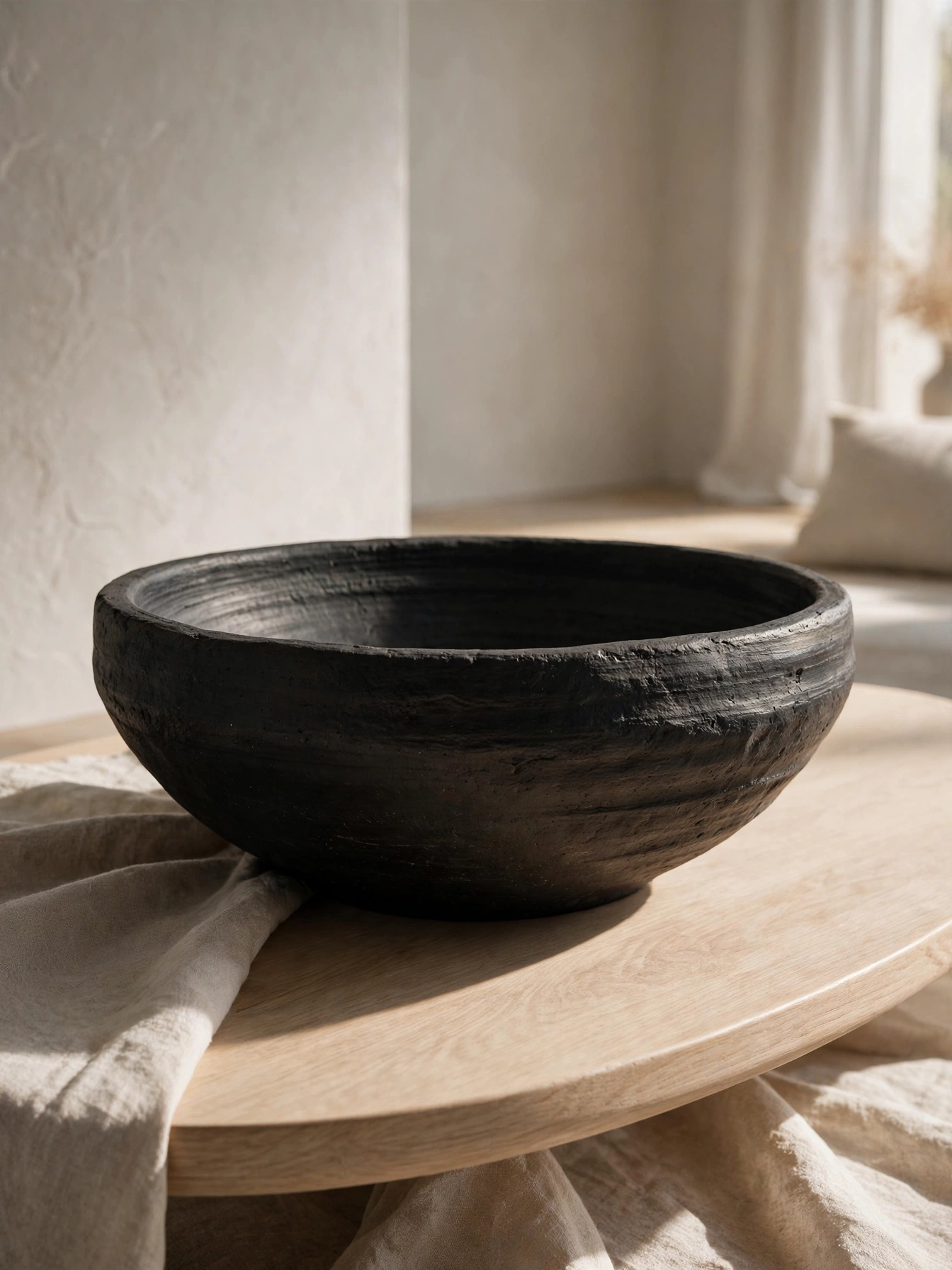
Sculptural Bowl Centerpiece
Why This Works:
- One sculptural bowl does the work of five small objects.
- An empty vessel reads as confident, not unfinished.
- Curved forms soften the hard rectangle of most tables.
- Handmade ceramics add the human touch minimal rooms need.
Choose a bowl 14 to 18 inches wide for standard 48-inch tables, keeping the footprint under one third of the surface. Hand-thrown stoneware bowls cost $60 to $200, while artisan statement pieces run $200 to $500. Center the bowl slightly off the table’s midpoint (about 2 inches) for a natural, unstaged feel. Avoid filling a sculptural bowl with potpourri or fake fruit, since clutter kills the form you paid for. Next to a floral arrangement, a bowl needs zero maintenance and never wilts.
Minimalists and anyone tired of dusting clusters should commit to one bowl. The constraint is scale judgment: too small looks lost, too large crowds the table. Measure the table first, then shop. As a single-object solution, the sculptural bowl is unbeatable.
Pro Tip: Flip the bowl seasonally: empty in summer, holding pinecones or ornaments in winter.
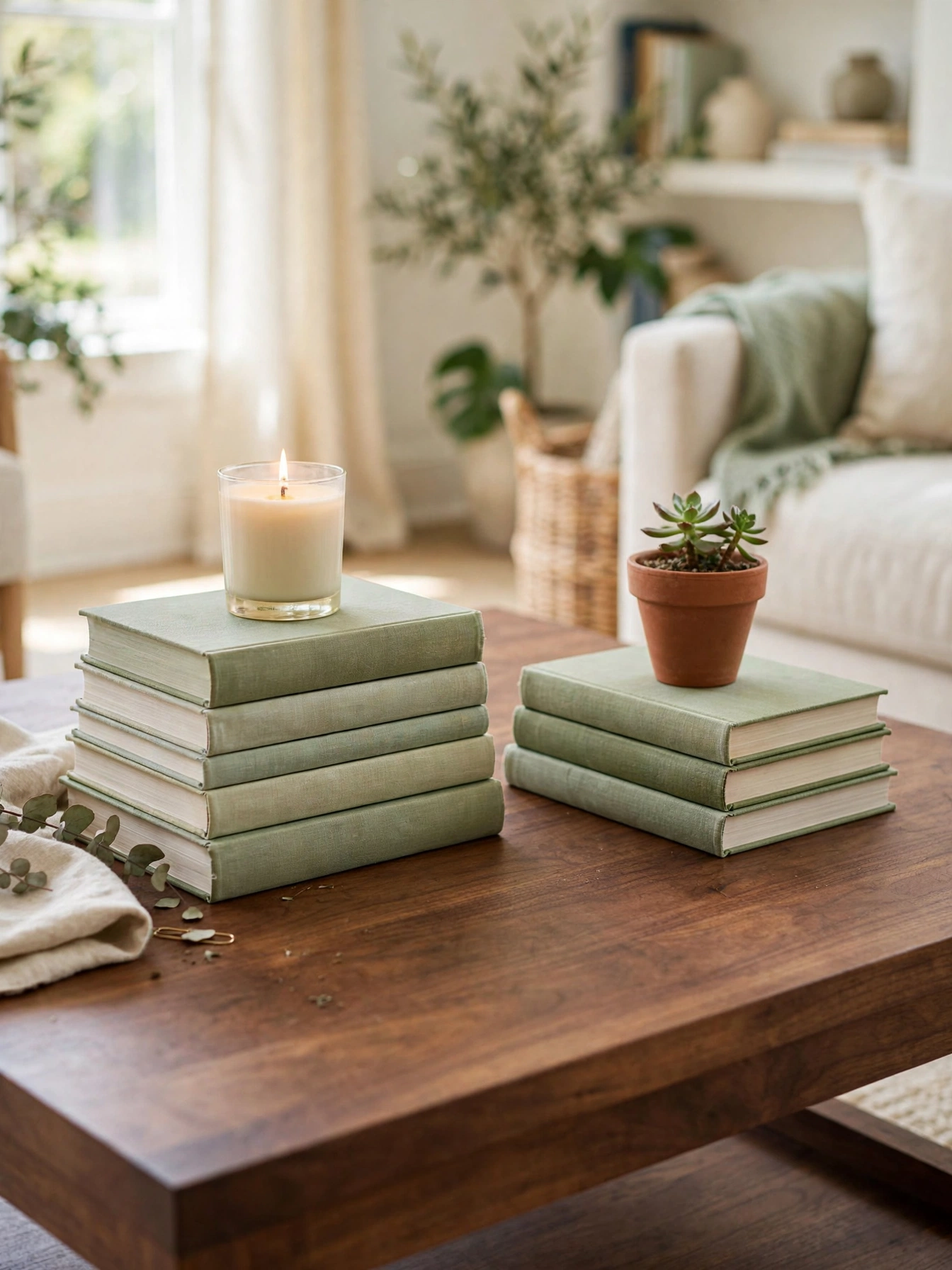
Tiered Book Stacks

Why This Works:
- Two heights create rhythm that a single stack cannot.
- Each stack becomes a mini-pedestal for a small treasure.
- Books in coordinating colors tie the table to the room.
- The arrangement survives daily life better than delicate objects.
Build one stack 7 to 9 inches tall and the second 4 to 6 inches, spacing them 10 to 14 inches apart on the diagonal. The Spruce recommends varying heights in tabletop styling, since the eye moves more naturally across uneven levels. Budget $40 to $100 for both stacks using a mix of new and thrifted books. Keep book colors within the room’s palette, turning the loudest spines inward. Avoid stacking more than 5 books per pile, because tall towers topple when someone sets down a mug. Compared with one large stack, two tiered stacks fill a square table far more gracefully.
Square and large rectangular tables suit tiered stacks best. The catch is surface loss: two stacks claim half the table, leaving less room for drinks. Households that actually use their table should keep one stack low and sturdy. For book lovers, this is the signature look.
Pro Tip: Place a felt pad under the bottom book to protect the table from grit on covers.
Candle Cluster Trio
Why This Works:
- Three flames turn an ordinary evening into an occasion.
- Glass hurricanes make real candles safe around books and throws.
- Varying heights (8, 11, 14 inches) create a natural cascade.
- Candlelight flatters every material on the table.
Group hurricanes in a tight triangle with 2 to 3 inches between them, keeping the tallest at the back from the main viewpoint. Glass hurricanes cost $15 to $45 each, and quality pillar candles ($8 to $20) burn 60 to 100 hours. Trim wicks to 1/4 inch before each lighting to prevent smoking and soot on the glass. Avoid placing lit candles within 12 inches of curtains, books, or dried botanicals. Stacked against a single candle, a trio multiplies the glow and reads as deliberate styling rather than an afterthought.
Evening entertainers get the most from candle clusters. The weak spot is attention: real flames should never burn unattended, so flameless LED pillars ($10 to $25 each) suit busy households. Keep a snuffer nearby, since blowing out pillars splatters wax. For instant atmosphere, light the trio.
Pro Tip: Freeze candles 2 hours before use to slow the burn and prevent dripping.
Fresh Coffee Table Decor Ideas
Why This Works:
- Fresh flowers are the quickest way to make coffee table decor ideas feel alive.
- Low, wide arrangements preserve conversation sightlines.
- Seasonal stems keep the table changing through the year.
- One arrangement scents and colors the whole seating area.
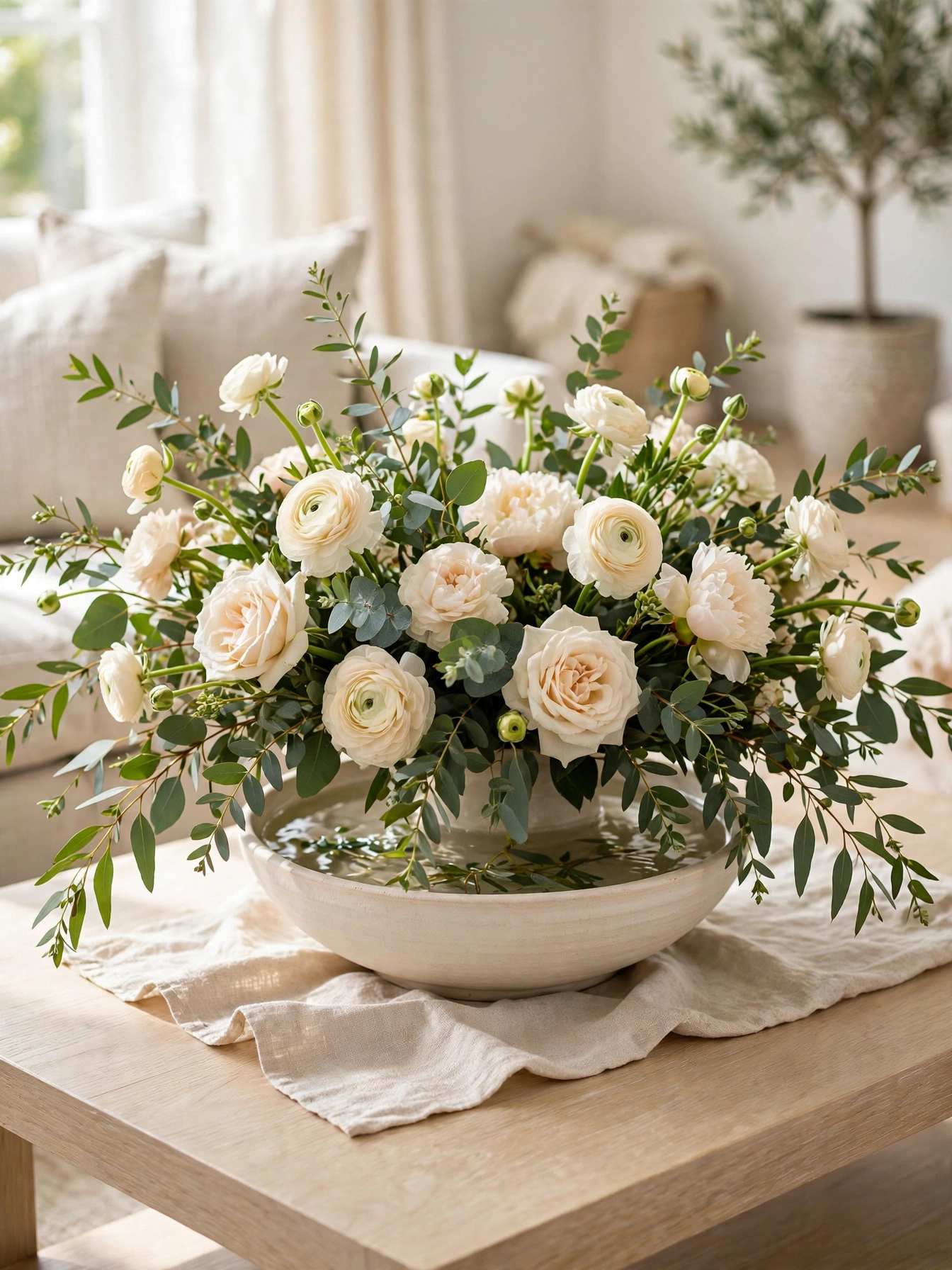
Keep arrangements under 12 inches tall so guests can see over them, and 16 to 20 inches wide for presence without crowding. A weekly market bouquet costs $10 to $25, while a florist arrangement runs $40 to $80. Recut stems at a 45-degree angle and change water every 2 days to extend life to 7 to 10 days. Avoid strongly scented lilies in small rooms, since the fragrance overwhelms the seating area. Compared with faux flowers, fresh stems cost more over a year but bring the life and scent that fakes cannot.
Hosts and anyone who loves fresh details should keep flowers on rotation. The downside is ongoing cost and care: $500-plus yearly for weekly bouquets. Stretch the budget with grocery eucalyptus ($5 a bunch, lasts 3 weeks) mixed with garden clippings. For living color, nothing beats the real thing.
Pro Tip: Buy flowers on Monday when markets restock, and condition them in deep water for 2 hours first.
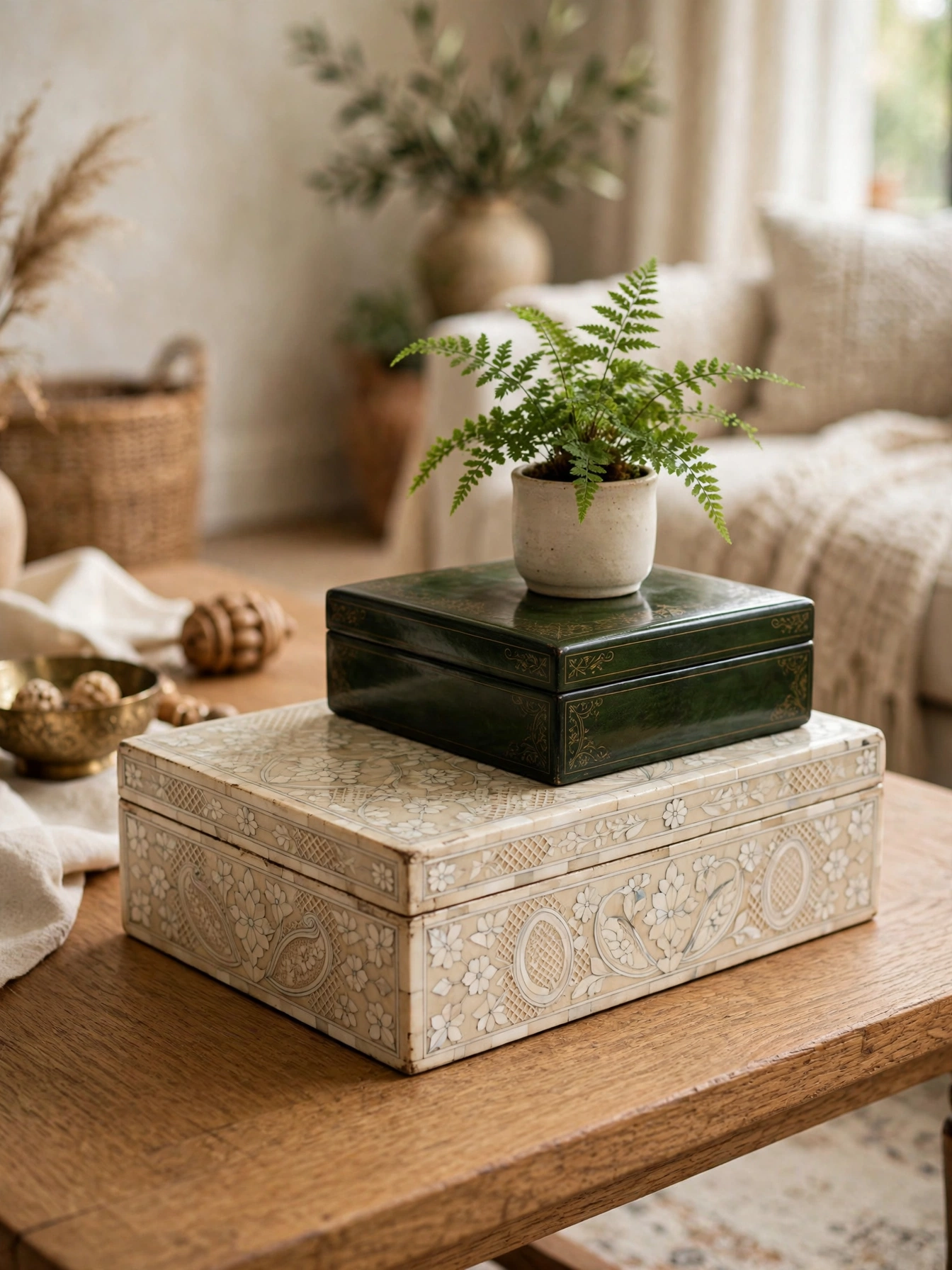
Decorative Box Layers
Why This Works:
- Pretty boxes hide remotes, coasters, and the clutter of real life.
- Stacked boxes add height with a smaller footprint than books.
- Bone inlay and lacquer bring pattern without any fabric.
- They look intentional closed, which is how they spend most days.
Stack two boxes (12 by 8 inches below, 8 by 6 above), offset by about 1 inch for a casual feel. Decorative boxes cost $25 to $90 each, and a stacked pair with a small plant on top stays under $200. Dedicate the lower box to remotes and the upper to coasters, so the styling earns its keep. Avoid boxes with fussy latches in daily-use spots, since nobody will close them properly. Compared with an open tray, lidded boxes hide mess completely, which matters in real households.
Anyone whose coffee table collects clutter needs lidded storage disguised as decor. The compromise is accessibility: buried remotes annoy, so keep the daily box lid light and easy. Choose boxes with flat lids, since domed lids cannot hold the plant or object on top. For beautiful hiding, boxes win.
Pro Tip: Line box interiors with felt to silence the clatter of remotes and coasters.
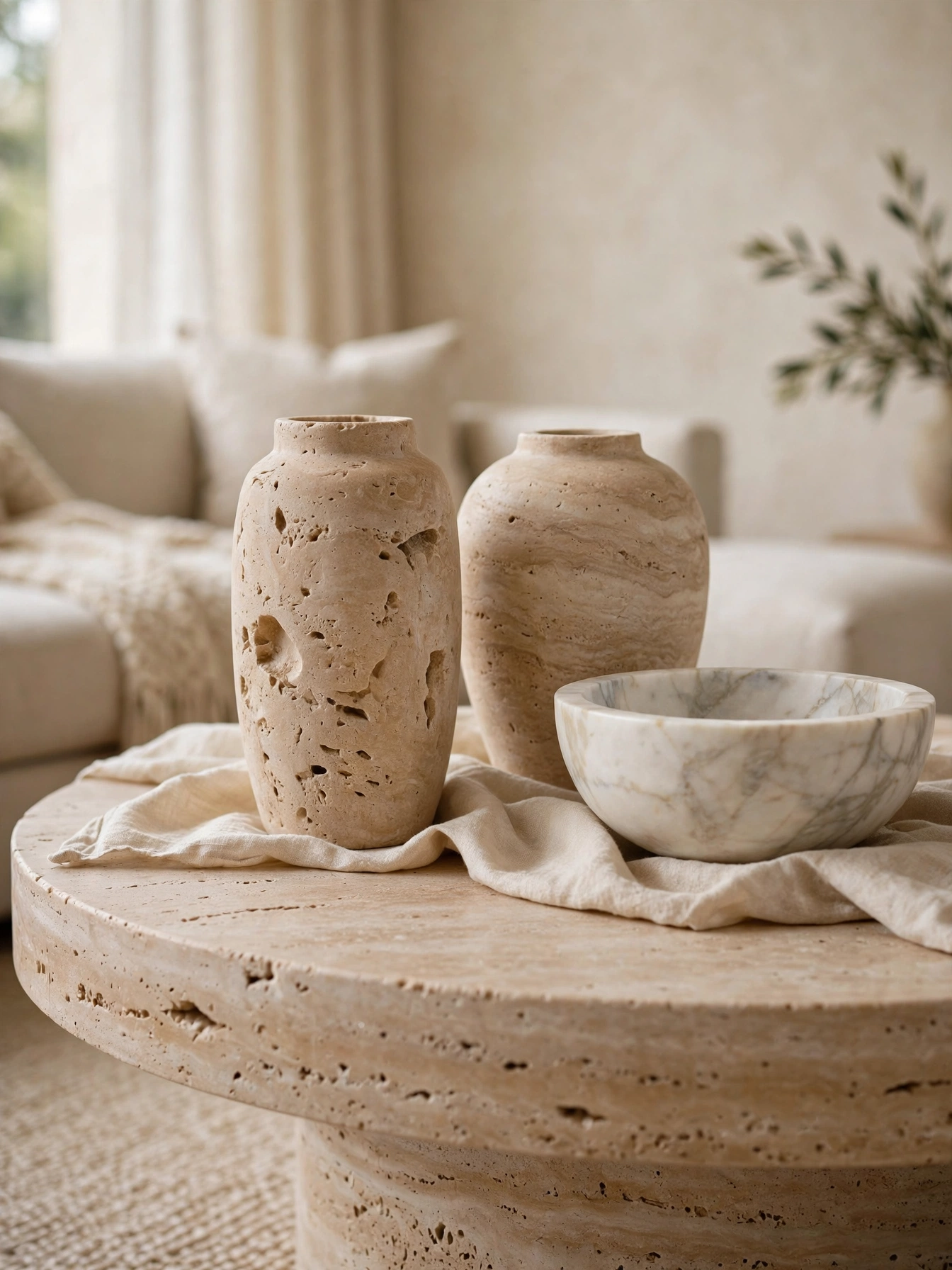
Stone Vessel Accents
Why This Works:
- Stone on stone creates a monolithic, gallery-like moment.
- Small vessels add weight and permanence to the table.
- Natural veining means no two arrangements look alike.
- Stone needs no watering, dusting, or replacing.
Group three vessels (5, 7, and 9 inches tall) in a loose triangle, keeping 3 to 4 inches between them. Small travertine and marble vessels cost $20 to $70 each, so the trio lands between $60 and $210. Seal stone vessels annually if they hold water or plants, since unsealed stone stains. Avoid placing heavy stone on glass-top tables without checking the weight rating, since concentrated loads can crack glass. Compared with ceramic at the same price, stone feels more substantial and ages more gracefully.
Modern and minimal homes wear stone groupings best. The shortfall is weight: a trio of stone vessels can exceed 10 pounds, so this styling suits sturdy tables. Keep one vessel empty and one holding a single stem for balance. For permanence and calm, stone delivers.
Pro Tip: Mix honed and polished finishes within the trio for subtle light play.
Seasonal Botanical Sprigs
Why This Works:
- One dramatic branch beats a fussy bouquet for modern tables.
- Eucalyptus lasts 3 weeks and scents the room gently.
- Tall sprigs add vertical interest flat tables lack.
- Seasonal branches (blossom, berry, pine) mark the year.
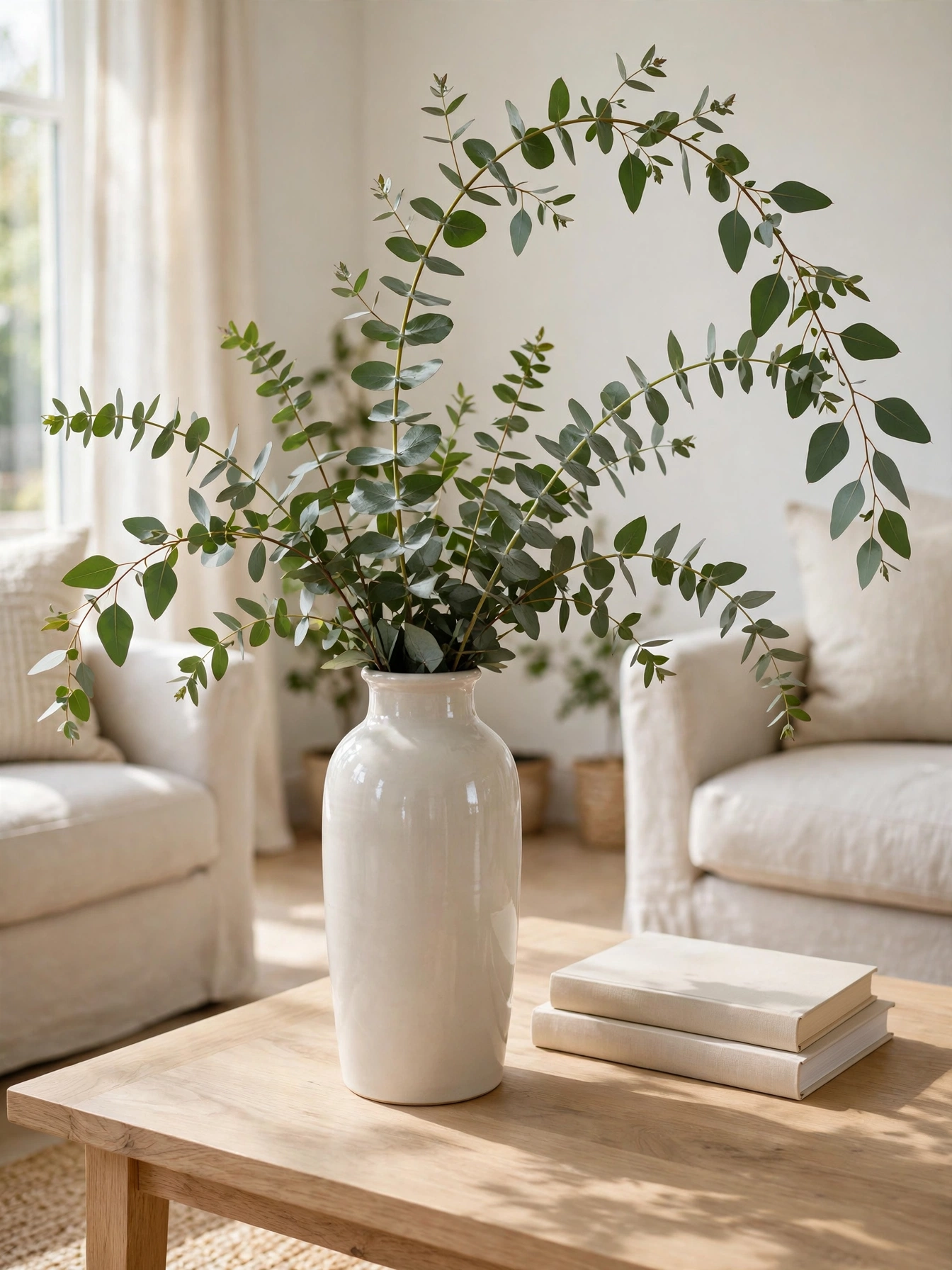
Choose a vase 12 to 16 inches tall with a narrow neck, which holds branches upright without a frog. A bunch of eucalyptus costs $5 to $12 and lasts 2 to 3 weeks, making this the cheapest fresh styling available. Keep branches under 30 inches total height so they do not overwhelm a standard 48-inch table. HGTV stylists often recommend a single botanical variety per vase, since mixed stems read as busy. Avoid placing tall branches where they block the TV sightline from low sofas. Compared with weekly flower bouquets, branches cost 80 percent less and last twice as long.
Budget-conscious stylists and minimalists should adopt the single-branch habit. The price you pay is simplicity’s risk: one branch in a wrong-scale vase looks sparse, so the vase-branch proportion matters. Dried branches (pampas, billy buttons) extend the idea to zero maintenance. For effortless height, go botanical.
Pro Tip: Smash woody stem ends with a hammer for 1 inch to double water uptake.
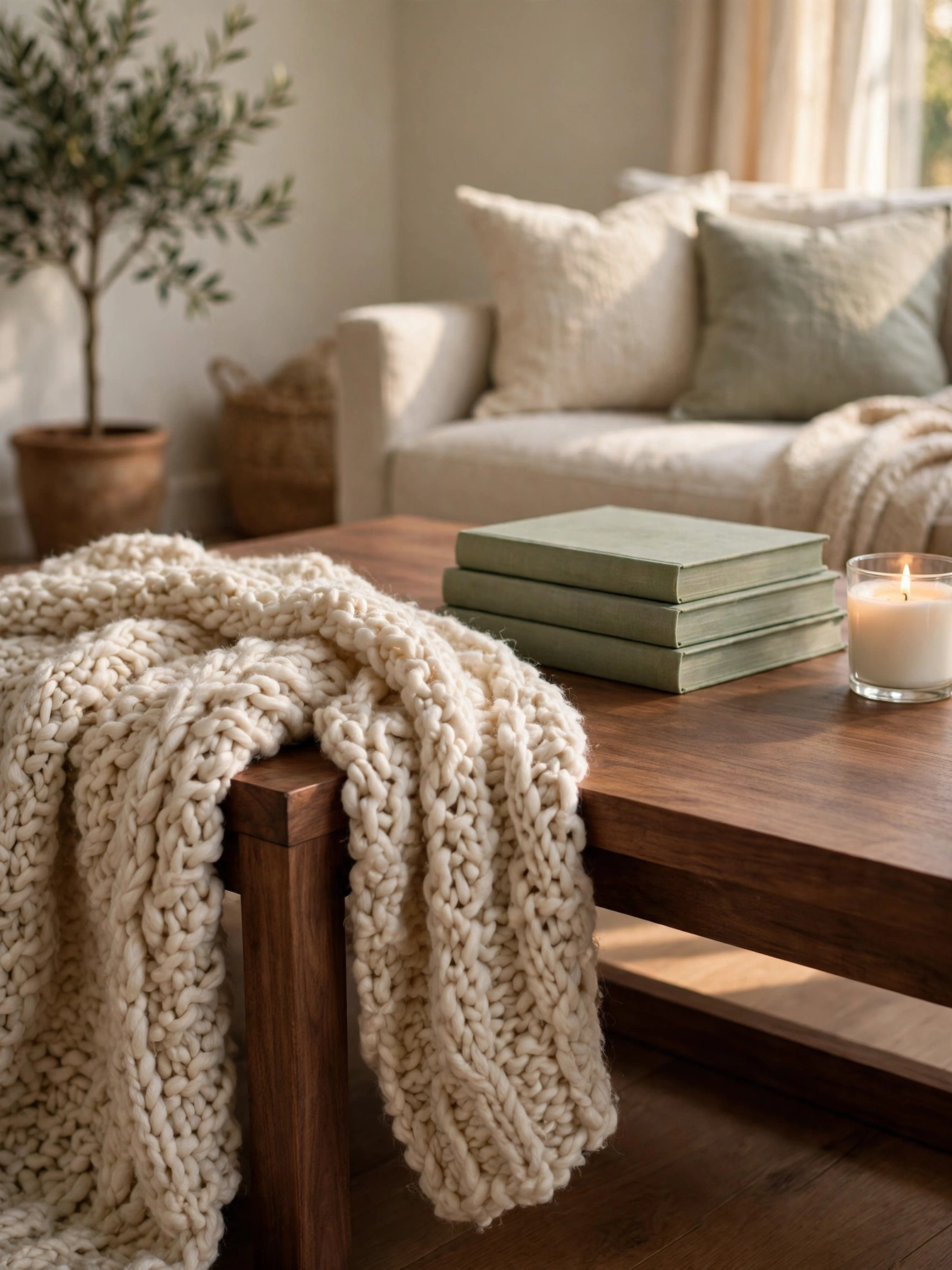
Textured Throw Drape
Why This Works:
- A draped throw softens the hardest surface in the room.
- Fabric on the table links it to the upholstery visually.
- The cascade adds movement that rigid objects lack.
- It signals comfort, inviting people to put their feet up.
Drape a throw 50 by 60 inches over one corner, letting 12 to 18 inches cascade over the edge. A chunky knit throw costs $60 to $150, and the styling takes 30 seconds. Keep the throw to one third of the table, leaving the rest clear for books and drinks. Avoid draping throws on glass-top tables, since the fabric slides and the effect reads as messy. In contrast to a table runner, a throw looks softer and doubles as an actual blanket on chilly evenings.
Cozy-style households get the most from a draped throw. The constraint is practicality: the throw will be grabbed for laps, so the styling is temporary by nature. Choose a washable knit, since table-edge throws collect crumbs. For softness with a purpose, drape away.
Pro Tip: Fold the throw in thirds lengthwise before draping for a controlled, narrow cascade.
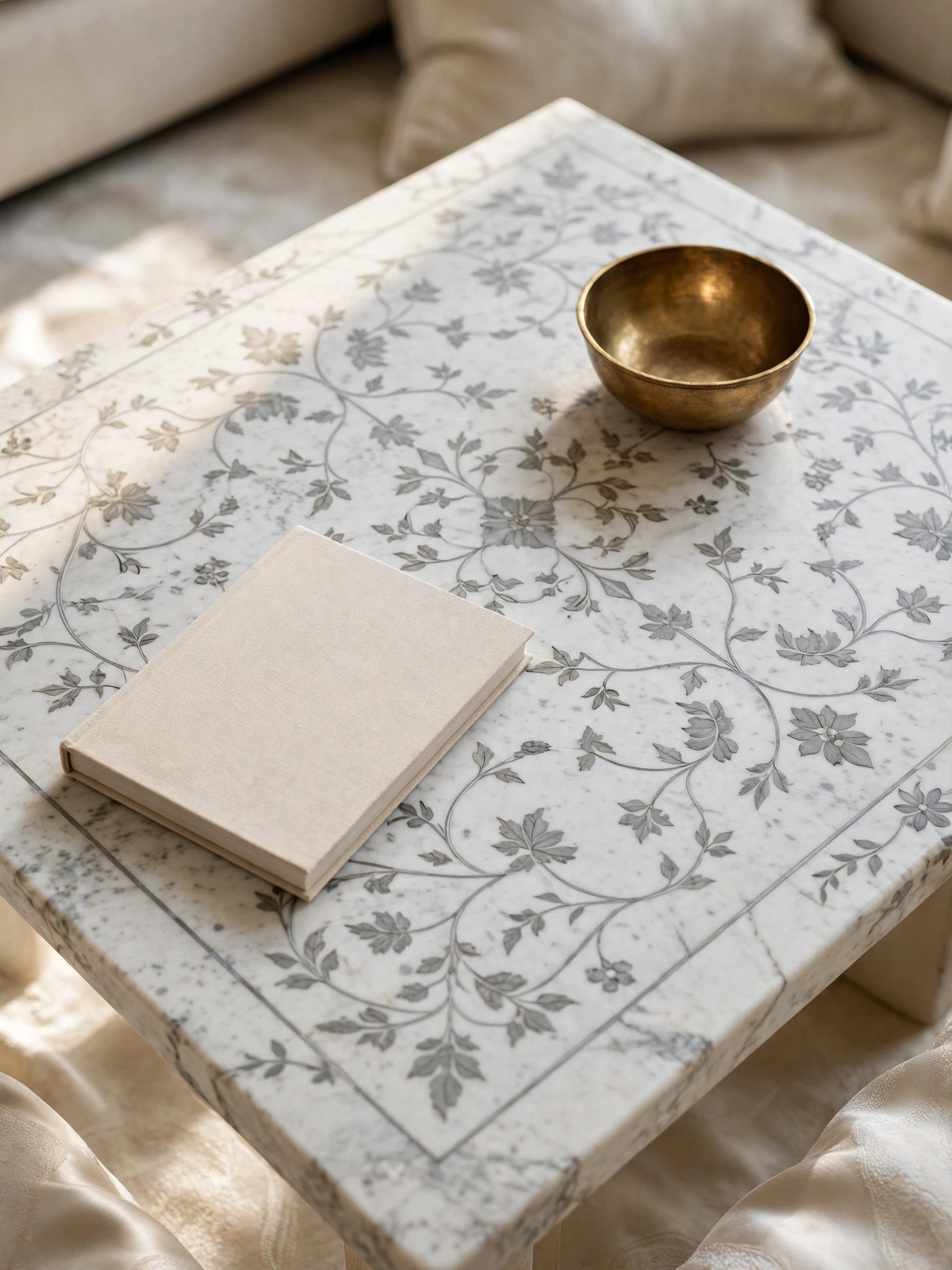
Marble Inlay Details
Why This Works:
- When the table itself is art, styling should whisper.
- Marble inlay adds pattern no accessory can match.
- Minimal objects let the craftsmanship star.
- A precious surface elevates everything placed on it.
Limit styling on inlay tables to two objects maximum, since the surface is the statement. Marble inlay coffee tables cost $800 to $3,000, and custom stone work runs higher. Seal the marble annually and use coasters religiously, because etching shows cruelly on polished stone. Houzz stone guides warn that acidic drinks (citrus, wine) etch marble in minutes. Avoid covering an inlay top with a large tray, which hides the very detail you paid for. Versus a plain wood table that needs styling help, an inlay table needs styling restraint.
Owners of statement tables should practice the art of less. What you give up is anxiety: every guest with a red wine glass is a threat. Keep a stack of beautiful coasters as part of the styling. When the table is the art, edit ruthlessly.
Pro Tip: Photograph the tabletop empty first, then add objects only where the pattern feels bare.
Vintage Brass Objects

Why This Works:
- Aged brass glows like nothing else under lamplight.
- Vintage pieces bring the patina new decor cannot fake.
- Small brass objects group beautifully without crowding.
- They bridge traditional and modern rooms effortlessly.
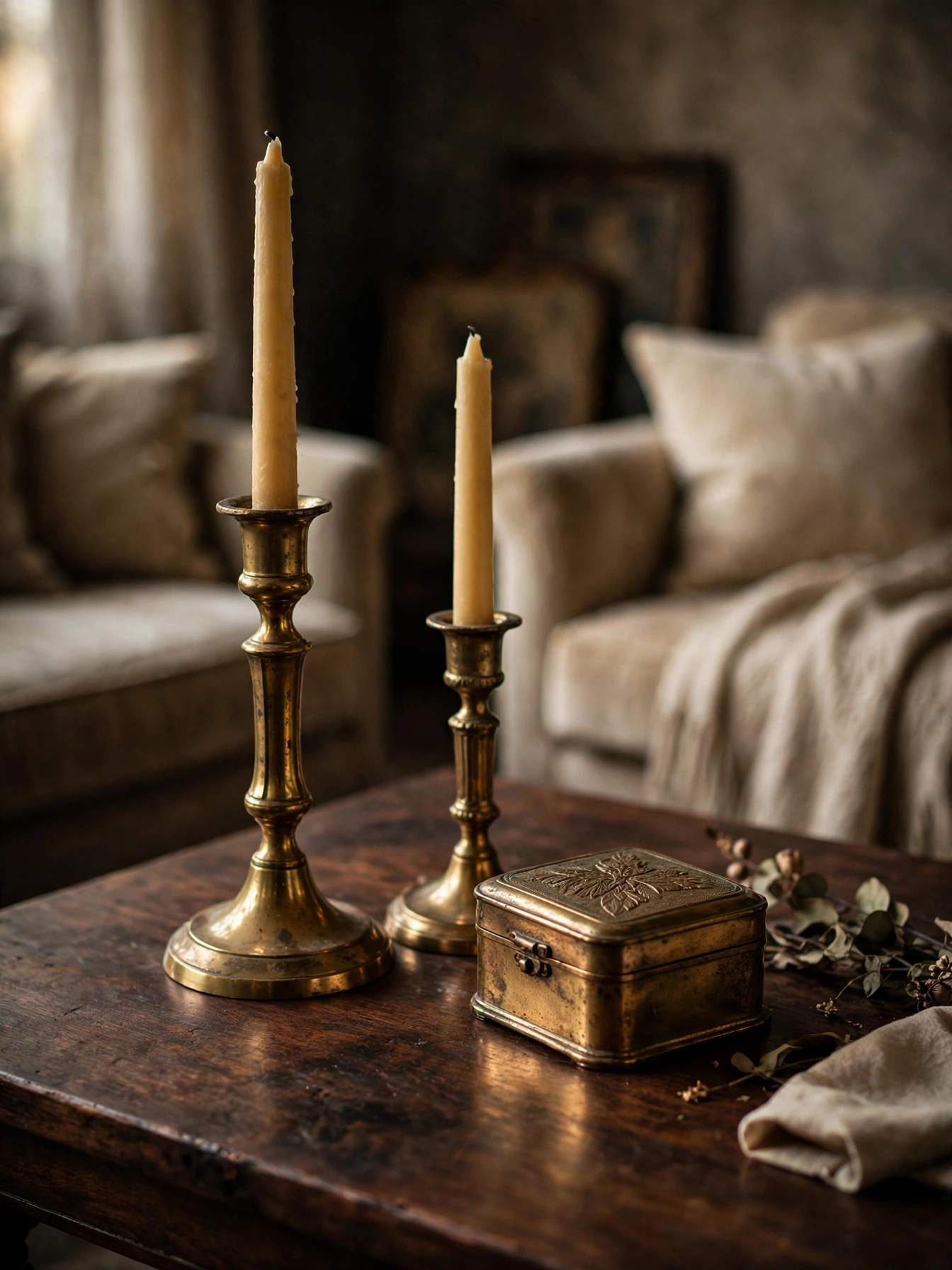
Hunt for solid brass (not plated) candlesticks 8 to 14 inches tall, checking weight as the tell for quality. Vintage brass pieces cost $15 to $60 each at flea markets and estate sales. Group three pieces of varying heights with 2 to 3 inches between them, keeping the tallest at the back. Avoid over-polishing antique brass, since the darkened patina in crevices is what gives it character. Compared with new brass-look decor, vintage solid brass costs less and looks richer.
Collectors and warm-style rooms get the most from vintage brass. The snag is maintenance: unlacquered brass tarnishes and needs polishing twice a year. Lacquered vintage pieces need only dusting but cannot develop deeper patina. For golden warmth with history, go vintage.
Pro Tip: Test with a magnet when buying, since solid brass is non-magnetic and plated steel sticks.
Colorful Coffee Table Decor Ideas
Why This Works:
- One color across five objects looks deliberate and designerly.
- Coffee table color stories turn random objects into a collection.
- Monochrome styling photographs beautifully for sharing.
- It is the easiest styling formula for beginners.
Gather 5 objects in one color family with heights from 6 to 14 inches, mixing materials (clay, glass, linen, wood) for texture. Building a color story from thrifted and owned pieces can cost under $100, while curated new pieces run $150 to $300. Keep every object within two shades of the lead color, since strays break the spell. Avoid choosing the color story from the objects you own, and instead pick it from the room’s palette first. Compared with mixed-color styling, a single-color story looks 10 times more intentional with the same effort.
Anyone overwhelmed by styling choices should start with one color. The weak spot is flexibility: the story needs editing when seasons change, though swapping one color for another takes minutes. Terracotta, sage, and sand are the most forgiving families. For instant cohesion, pick a color and commit.
Pro Tip: Photograph the table in black and white; if the objects blend tonally, the color story works.
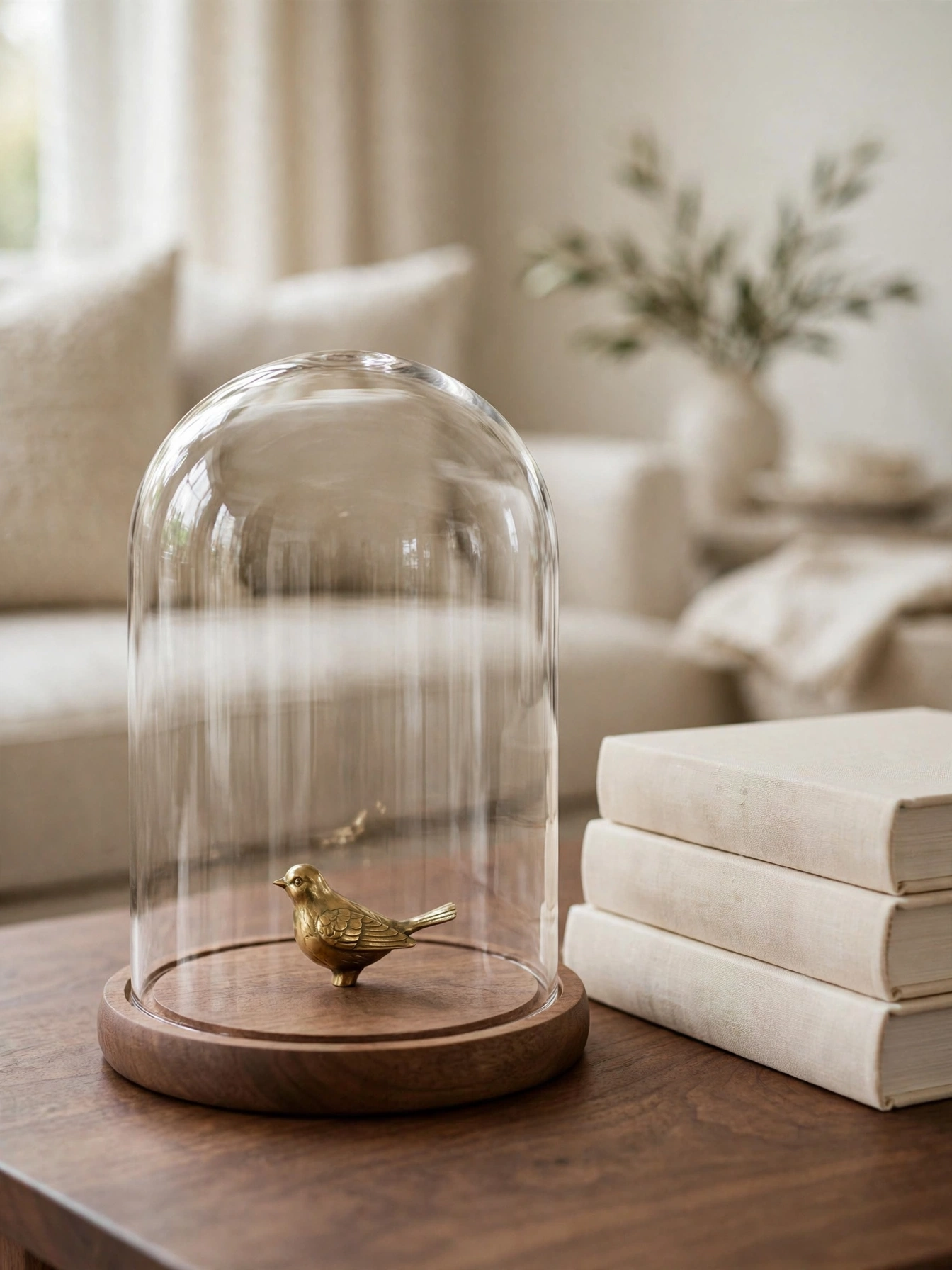
Glass Cloche Displays

Why This Works:
- A cloche turns any small object into a museum piece.
- Glass protects delicate items from dust and curious hands.
- The dome adds height without visual weight.
- It signals that the styling is finished and intentional.
Choose a cloche 8 to 12 inches tall with a wood or marble base, sized so the object inside fills two thirds of the dome. Glass cloches cost $25 to $80, and the object inside can be anything from a shell to a small sculpture. Keep the cloche to one per table, since two domes read as a science lab. Avoid placing cloches where direct sun hits them, because the glass magnifies light and can scorch surfaces. Compared with open display, a cloche keeps the object dust-free for months.
Anyone with one special small object should give it the cloche treatment. The flip side is the glass itself: it needs wiping every few weeks to stay invisible. Households with toddlers should place cloches toward the table’s center, out of grabbing range. For instant importance, dome it.
Pro Tip: Place the cloche on a stack of two books to gain 3 inches of height for free.
Woven Basket Bases
Why This Works:
- A basket beside the table extends the styling to the floor.
- Rolled throws stay reachable for chilly evenings.
- Woven texture warms up hard table surfaces.
- It hides the clutter that migrates to coffee tables.
Choose a seagrass or rope basket 14 to 18 inches wide, sized to the table’s scale. Large baskets cost $30 to $80, and rolled throws fill them better than folded ones. Tuck the basket beside the table, not under it, keeping 6 inches of clearance for feet. Avoid lidded baskets here, since the open top invites grabbing a throw. Beside a storage ottoman, a basket costs a third and adds natural texture.
Cozy households and throw collectors need this pairing. The snag is floor space: the basket needs 2 square feet beside the table. Keep the throw count to three, since overstuffed baskets spill. For warmth within reach, basket up.
Pro Tip: Roll throws with the patterned side out for a styled look even in storage.
Ceramic Vase Groupings

Why This Works:
- Handmade ceramics bring the human touch to any table.
- Three heights in one clay family look collected, not matched.
- Empty vases are sculpture; one stem makes them vessels.
- Studio pottery supports makers while styling beautifully.
Group vases at 7, 10, and 13 inches tall in related clay tones, keeping 2 to 3 inches between them. Handmade vases cost $30 to $120 each, so a trio runs $90 to $360. Leave two empty and put a single stem in the third, since all-filled trios read as busy. The Spruce highlights handmade ceramics as a top 2026 styling trend, noting their imperfect surfaces add warmth minimal rooms need. Avoid perfectly matched sets, because the charm is in the variation. Compared with one large vase, a trio fills the table more interestingly.
Pottery lovers and artisanal-style homes should build a vase collection slowly. One caveat is fragility: handmade stoneware chips, so keep the trio toward the table’s center. Buy from local makers when possible, since the story adds to the styling. For earthy elegance, group in threes.
Pro Tip: Turn each vase so its most interesting side faces the room’s main seat.
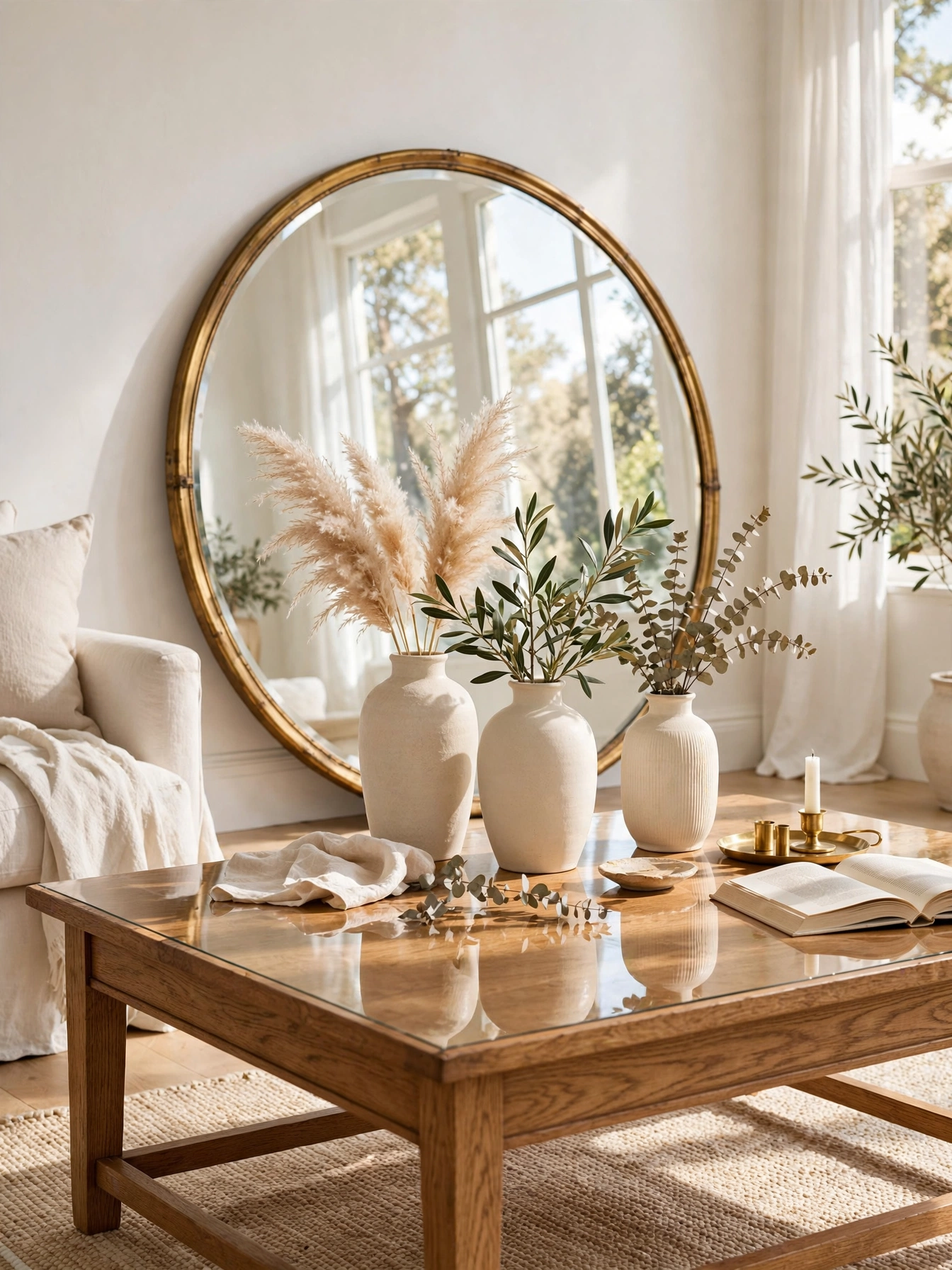
Round Mirror Layers
Why This Works:
- A leaning mirror doubles the tabletop visually.
- Reflections add light and depth behind the objects.
- The round shape echoes round tables or softens square ones.
- Mirrors make small living rooms feel significantly larger.
Choose a round mirror 24 to 30 inches wide, leaning it against the wall directly behind the table. Round mirrors cost $80 to $300 depending on frame quality. Keep the mirror’s bottom edge 2 to 3 inches behind the table’s back edge, so it reads as layered rather than floating. Hire a professional handyman to wall-mount mirrors over 20 pounds or in homes with plaster walls, since proper anchors matter. Avoid placing mirrors where they reflect clutter or the TV, because the reflection doubles the mess. Compared with wall art behind the table, a mirror adds light that art cannot.
Small or dark living rooms gain the most from a leaning mirror. The catch is maintenance: mirrors show every fingerprint and dust mote, needing weekly wiping. Keep the styling in front simple, since the mirror multiplies visual complexity. For light and space, lean a mirror.
Pro Tip: Angle the mirror 5 degrees forward so it reflects the styled tabletop, not the ceiling.
Framed Photo Stacks
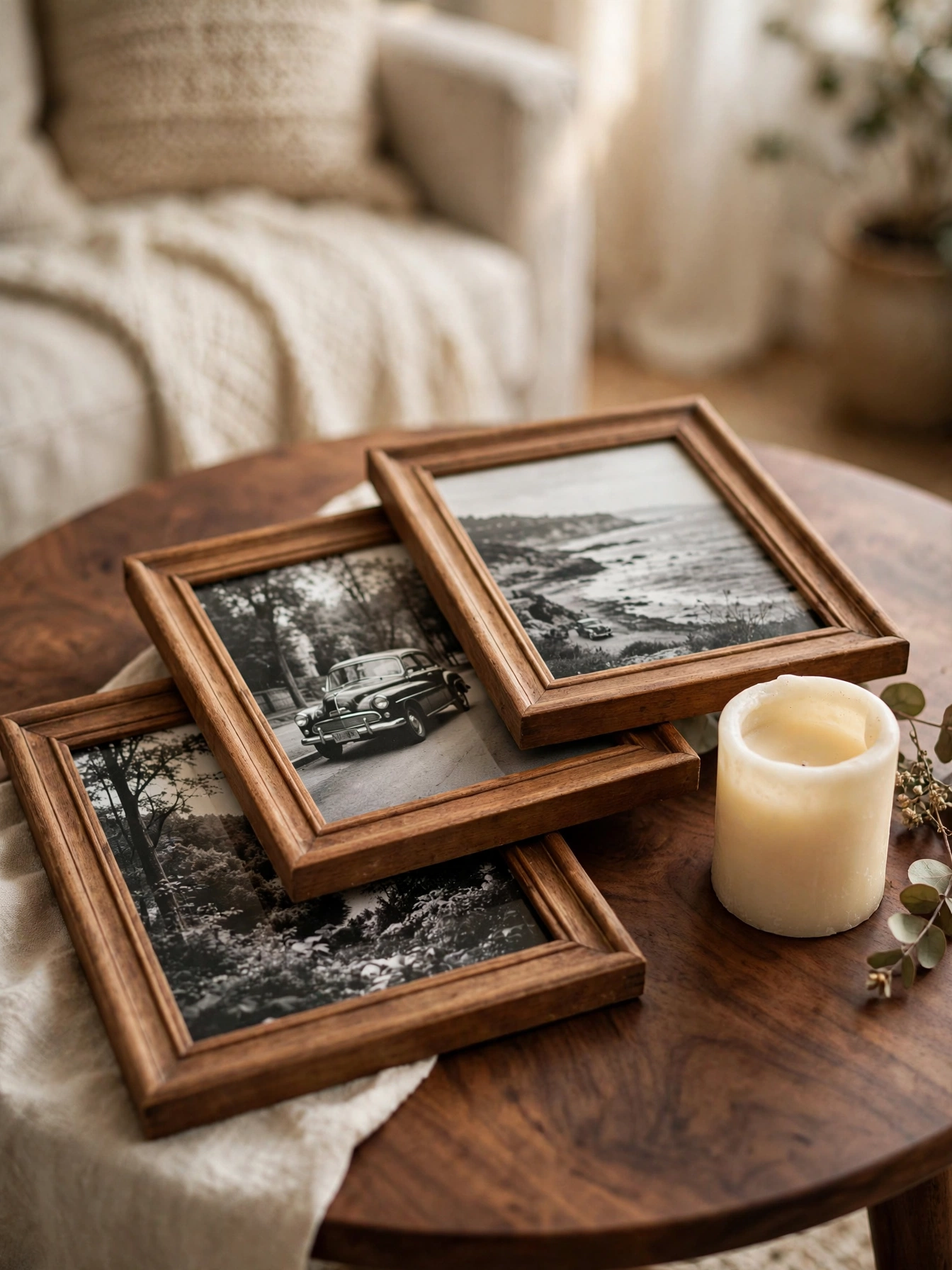
Why This Works:
- Personal photos make a styled table feel like home.
- Layered frames (not lined up) look collected and casual.
- Black and white prints keep the palette calm.
- Photos start the conversations guests remember.
Layer three frames (5 by 7 inches) overlapping at slight angles, with the front frame tilted against the others. Quality wood frames cost $12 to $35 each, and professional prints run $2 to $8. Print photos in black and white or sepia for a cohesive look, since mixed color prints clash. Avoid more than three frames on the table, because the surface starts reading as a mantel. Next to a single large frame, a layered trio feels more personal and takes less surface.
Families and sentimental stylists get the most from photo layering. The flip side is fading: direct sun bleaches prints within 2 years, so keep frames out of the sunbeam. Rotate photos seasonally to keep the table feeling current. For the personal touch, frame what you love.
Pro Tip: Use museum glass or UV-protective spray on prints near windows to slow fading.
Greenery Garland Swags
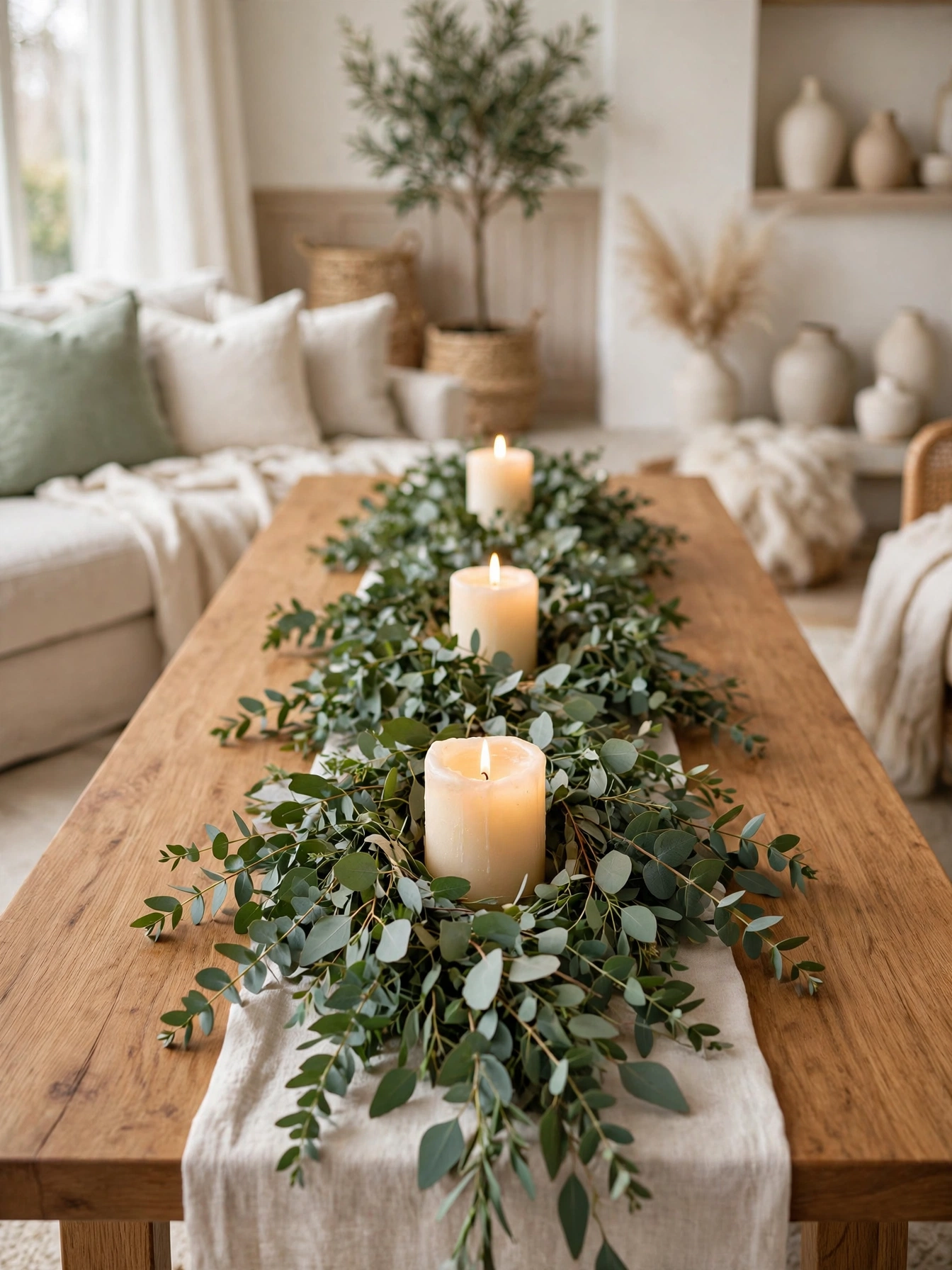
Why This Works:
- A garland turns a long table into a landscape.
- Greenery down the center leaves both ends free for use.
- Fresh garlands scent the room for weeks.
- The organic line softens the table’s hard geometry.
Size the garland to two thirds of the table’s length (a 40-inch garland for a 60-inch table), keeping it 6 to 8 inches wide. Fresh eucalyptus garlands cost $30 to $80 and last 2 to 4 weeks; faux versions run $25 to $60 and last years. Tuck candles into the garland with 6 inches of clearance from dry leaves. Avoid fresh garlands with shedding varieties (like cedar) on light upholstery nearby. Against a lone centerpiece, a garland fills a long table’s expanse far more naturally.
Long rectangular tables and holiday hosts get the most from garlands. The cost is maintenance: fresh garlands need misting every few days and drop leaves. Faux garlands suit the maintenance-averse but never smell right. For lush abundance, lay a garland.
Pro Tip: Mist the garland every 3 days and keep it out of direct sun to double its fresh life.
Coffee Table Symmetry Rules
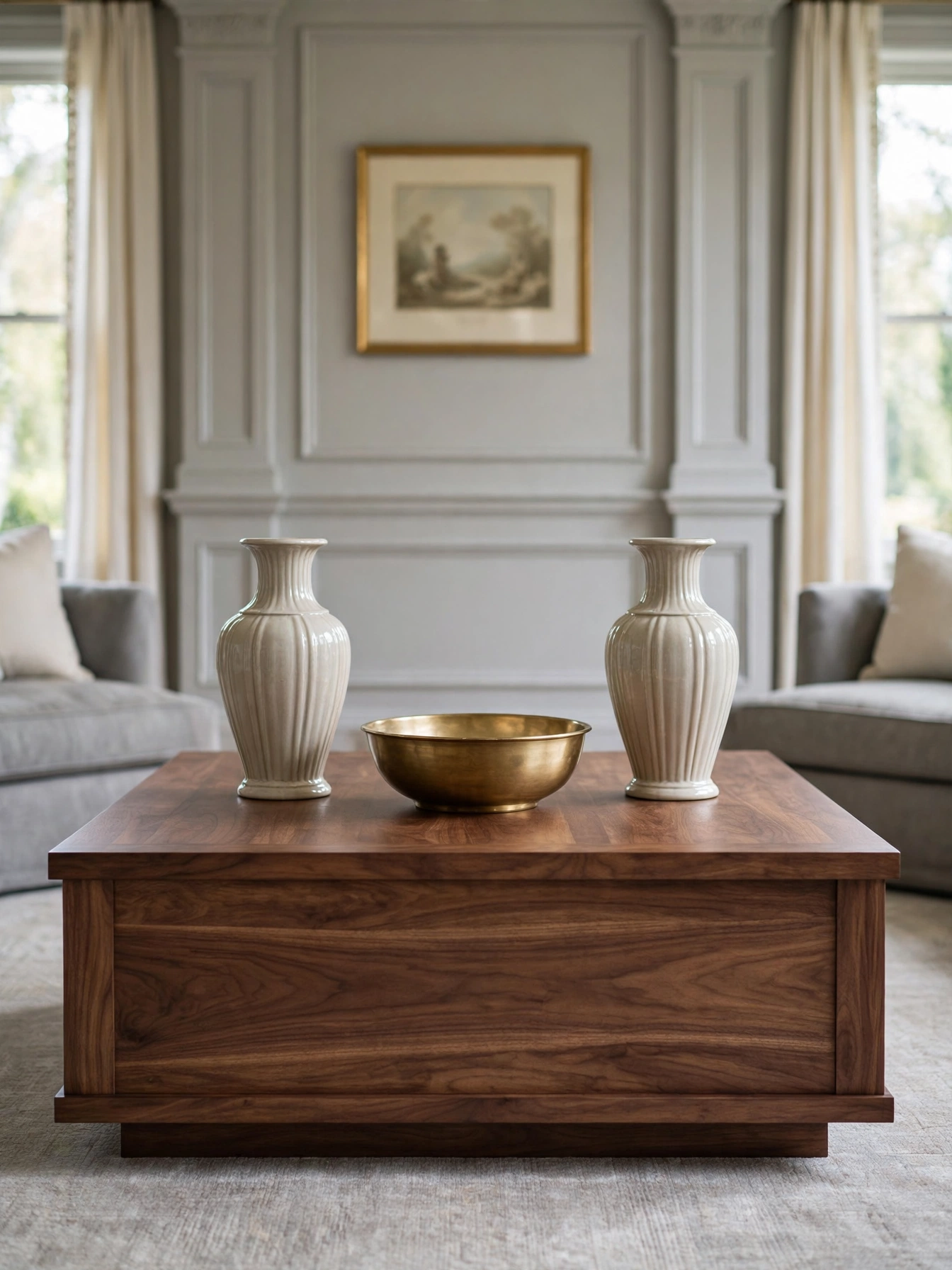
Why This Works:
- Symmetry is the easiest path to a table that looks styled.
- Matching pairs flanking a centerpiece need zero design skill.
- Coffee table symmetry rules calm visual chaos in busy rooms.
- The formula works on every table shape and style.
Place the centerpiece first (a bowl or stack 10 to 14 inches wide), then flank it with matching pairs 12 to 18 inches apart. Matching vases cost $30 to $80 per pair, making symmetry one of the cheapest styling formulas. Measure from the table’s center so pairs sit equidistant, since eyeballing creates the lopsided look symmetry is meant to fix. Avoid perfect symmetry in ultra-casual rooms, where it can read as stiff; offset one element by an inch for ease. Compared with asymmetric styling, symmetry is faster, cheaper, and nearly foolproof.
Beginners and anyone styling under time pressure should default to symmetry. One caveat is personality: pure symmetry can feel formal, so break it with one organic element (a sprig, a stone). Formal living rooms wear full symmetry best. For foolproof styling, mirror it.
Pro Tip: Use a tape measure from the table center, since even 1 inch of drift shows in photos.
Artful Coffee Table Decor Ideas
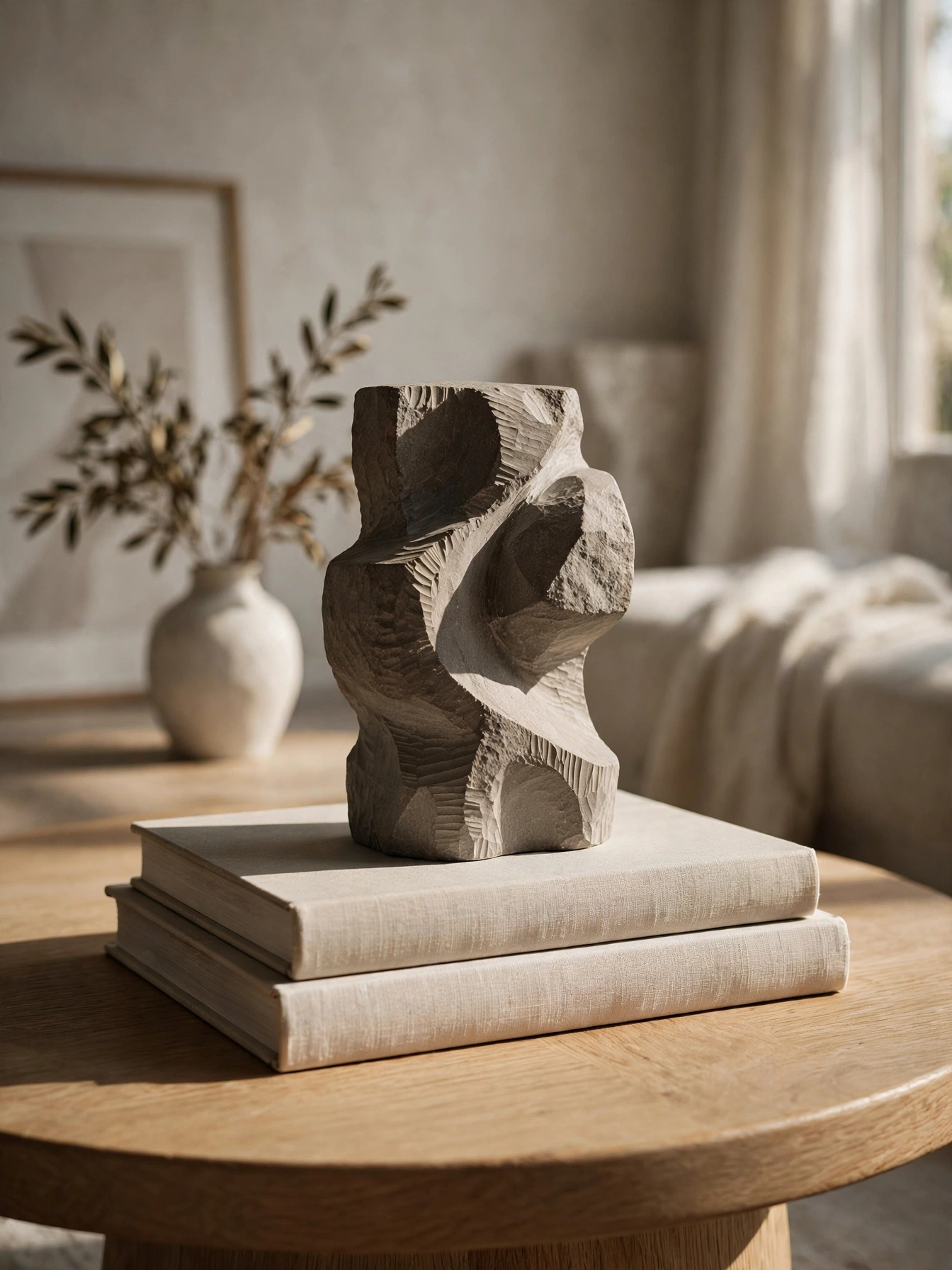
Why This Works:
- A small sculpture gives the table an art-gallery moment.
- Abstract forms invite touch and close looking.
- One sculptural piece anchors the whole arrangement.
- It expresses taste more personally than any decor object.
Choose sculptures 6 to 10 inches tall, giving them a book stack or small plinth for presence. Small stone or bronze sculptures cost $50 to $300 from galleries and makers. Give the sculpture 8 to 10 inches of breathing room on all sides, since crowding kills its impact. Houzz stylists note that a single art object elevates a tabletop more than any number of decorative accessories. Avoid resin knockoffs of famous sculptures, which read as cheap next to genuine pieces. Against a vase, a sculpture needs no flowers and never dates.
Art lovers get the most from a sculpture moment. The wrinkle is cost per inch: real sculpture is the priciest styling per square inch. Start with local art fairs, where small works run $50 to $150. For the gallery touch, sculpt it.
Pro Tip: Light the sculpture with a nearby picture light or lamp to give it gallery drama after dark.
Scented Candle Pairings
Why This Works:
- Scent is the invisible layer of great styling.
- Paired candles (one lit, one waiting) look abundant.
- Brass tools elevate candles from commodity to ritual.
- A tray corrals the grouping into one intentional moment.
Pair two candles in complementary scents (cedar with amber, for example), keeping them 4 to 6 inches apart on a 10-inch tray. Quality soy candles cost $20 to $45 each, and a brass snuffer and matchbox add $15 to $40. Burn candles for 1 to 2 hours per session so the wax pool reaches the edge, preventing tunneling. Avoid burning two strong scents at once in small rooms, since the mix turns muddy. Versus a reed diffuser, candles give the ritual of lighting plus stronger scent throw.
Scent lovers and ritual-minded stylists get the most from candle pairings. The rub is flame management: never leave burning candles unattended. Trim wicks to 1/4 inch for clean burns. For atmosphere you can smell, pair up.
Pro Tip: Match the candle scent to the season: citrus in spring, cedar in fall, pine in winter.
Natural Stone Coasters
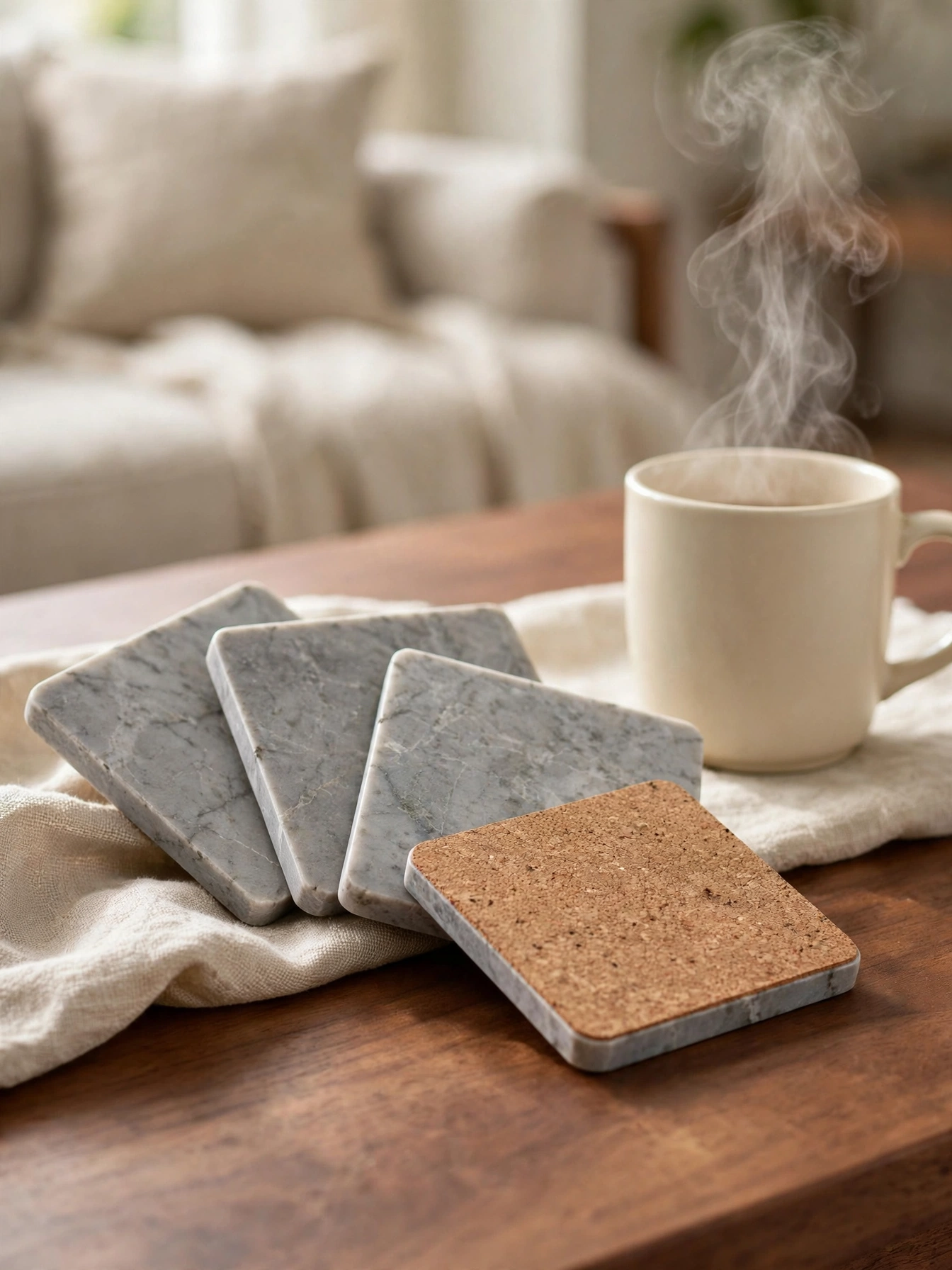
Why This Works:
- Beautiful coasters make protection part of the styling.
- Stone coasters absorb condensation that ruins wood tables.
- A fanned set looks styled even when doing its job.
- They are the most-used object on any real coffee table.
Choose stone coasters 4 inches square with cork backing, keeping a set of 4 to 6 on the table. Marble and agate coaster sets cost $20 to $60, lasting decades with basic care. Fan four coasters in an overlapping row near the table’s edge where guests naturally reach. Avoid coasters without backing on polished wood, since grit trapped underneath scratches. Compared with hiding coasters in a box, displaying them keeps them used, which is the point.
Anyone who actually drinks on their coffee table needs stone coasters visible. One drawback is weight: stone sets are heavy to move for cleaning. Wipe coasters monthly, since stone shows water spots. For protection that styles, fan them out.
Pro Tip: Keep two extra coasters in the side table drawer for when guests outnumber the set.
Minimalist Single Statement

Why This Works:
- One object on an empty table is the boldest styling choice.
- Negative space makes the single piece look museum-worthy.
- It keeps the table fully usable for real life.
- Restraint reads as confidence, not emptiness.
Choose one vessel 10 to 14 inches tall and center it with at least 15 inches of clear surface on every side. A striking single vessel costs $40 to $150, making this the cheapest idea on the list. Resist adding a second object for at least two weeks, since the urge to fill is the enemy of this look. The Spruce lists negative space as a key minimalist principle, noting that empty areas give the eye rest. Avoid tiny objects for this approach, because a small piece on a big table looks forgotten, not minimal. Compared with full styling, the single statement needs the most confidence and the least money.
Minimalists and busy households get the most from one-and-done styling. The wrinkle is nerve: guests may ask if you are “still decorating.” Own the restraint, since the empty surface is the luxury. For maximum calm, choose one and stop.
Pro Tip: Dust the empty surface weekly, since negative space shows every speck.
FAQs
What are the basic rules of coffee table decor ideas?
Work in odd-numbered groups, vary heights by at least 3 inches, and leave one third of the surface clear. The Spruce recommends the rule of three for tabletops, since grouped objects read as intentional. Keep arrangements under 12 inches tall so conversation sightlines stay open across the table.
How do I style a round coffee table differently?
Round tables suit a single central arrangement, since corners do not exist to anchor separate groups. Use one bowl, a book stack, or a candle trio at the center, keeping 12 inches of clear edge all around. Oval tables follow the same logic with a slightly elongated centerpiece.
Do coffee table decor ideas need to be expensive?
No, since thrifted books, branches, and candles style a table for under $100. The most expensive-looking tables often mix a $15 vintage find with a $40 candle. Houzz stylists note that editing matters more than spending: three well-chosen objects beat ten random ones at any budget.
How do I keep a styled coffee table practical?
Designate one third of the surface as the working zone for drinks and remotes, and style the other two thirds. Use coasters, lidded boxes for remotes, and sturdy objects that survive daily bumps. A styled table should survive real life, not just photographs.
How often should I restyle my coffee table?
Refresh small elements seasonally (every 3 months) and rethink the whole arrangement yearly. The American Lighting Association’s advice on dimmable lamps applies to tables too: adjustable candle and lamp light keeps the same styling feeling fresh after dark. A 15-minute seasonal swap prevents decor fatigue.
Conclusion
Great coffee table decor ideas come down to three moves: group objects in odd numbers with varied heights, leave breathing room so the table stays usable, and let one hero piece carry the composition. Start with the clear-the-table reset, since styling on a clean surface takes 15 minutes. Restyle seasonally with fresh branches, new candles, or a different color story to keep the table feeling alive. Your first action is simple: remove everything, keep your three favorite objects, and rebuild from there. Follow HomelyCrafter on Pinterest for more ideas. Save this to your Pinterest boards so you can refer back to it!

Muhammad Israr is a home decor enthusiast and the writer behind Homely Crafter. He spends his days researching paint colors, layouts and budget-friendly styling ideas, then breaks them down into practical, easy-to-follow guides so you can decorate with confidence.