
A 90-inch sofa can dominate a small living room, but the right corner layout can make the same footprint feel surprisingly balanced. Corner Sofa Designs work especially well because they use two walls efficiently while creating generous living room seating. The key is choosing the right depth, chaise direction, fabric, and clearance before buying.
In this, you will see practical layouts for different room sizes, including compact apartments, family spaces, and deeper lounging setups. Each option includes measurements, materials, color guidance, styling details, and mistakes to avoid. These corner sofa designs also show how a sectional sofa can define a room without making it feel crowded.
Classic L-Shaped Sofa
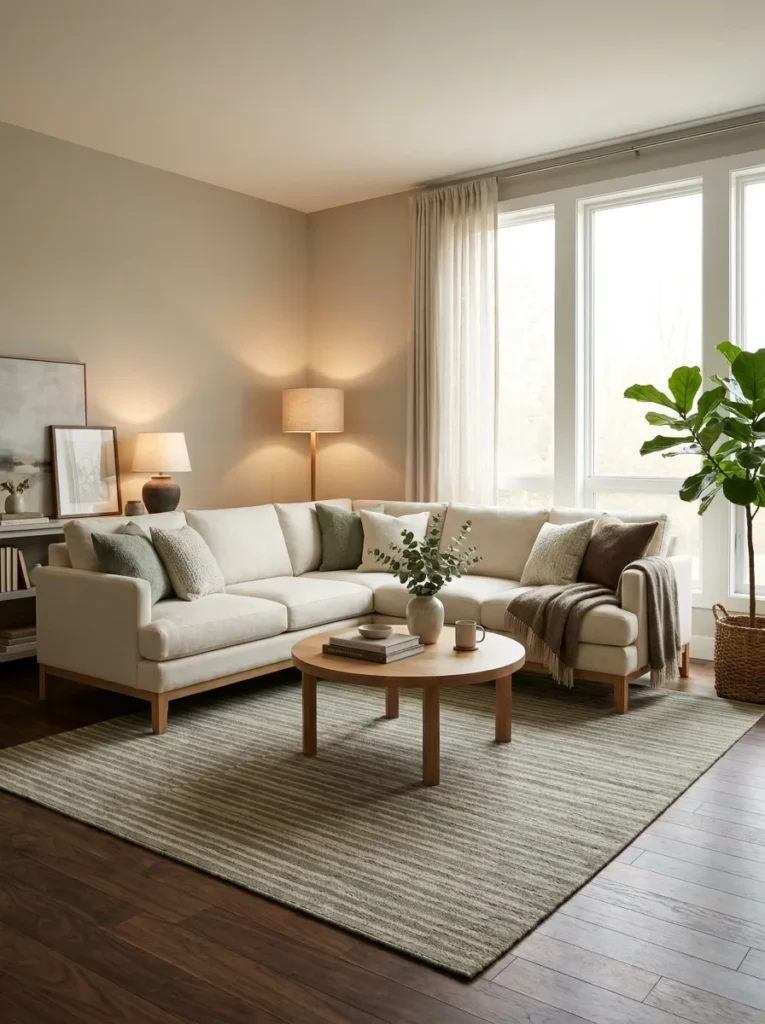
- Uses two walls efficiently without wasting the corner.
- Creates clear seating for four to five adults.
- Works with both traditional and modern furniture.
- Leaves the center open for comfortable circulation.
A standard L-shaped sofa should have a seat depth around 32 to 38 inches, with the chaise extending approximately 60 to 70 inches from the main frame. For a medium living room, an overall sofa length of 90 to 110 inches gives several adults comfortable seating without overwhelming the room. Choose a performance linen blend or tightly woven polyester for everyday durability, especially when the sofa receives heavy use. Keep at least 30 inches of walking space between the sofa and major furniture pathways. Avoid pushing the coffee table closer than 16 inches from the sofa because the seating area will feel cramped.
This layout suits homeowners who want dependable living room furniture with a timeless shape. A warm ivory sofa pairs naturally with walnut, oak, muted sage, and cream accessories. Place an 8 x 10 rug beneath the front legs of the sectional to visually connect the seating zone. A 16 to 18-inch-high coffee table keeps the proportions comfortable and accessible. This is one of the most adaptable corner sofa designs for family rooms because the L shape naturally encourages conversation without blocking the room’s center.
Pro Tip: Leave approximately 18 inches between the sofa and coffee table, then keep at least 30 inches for the main walking route around the seating area.
Compact Apartment Corner
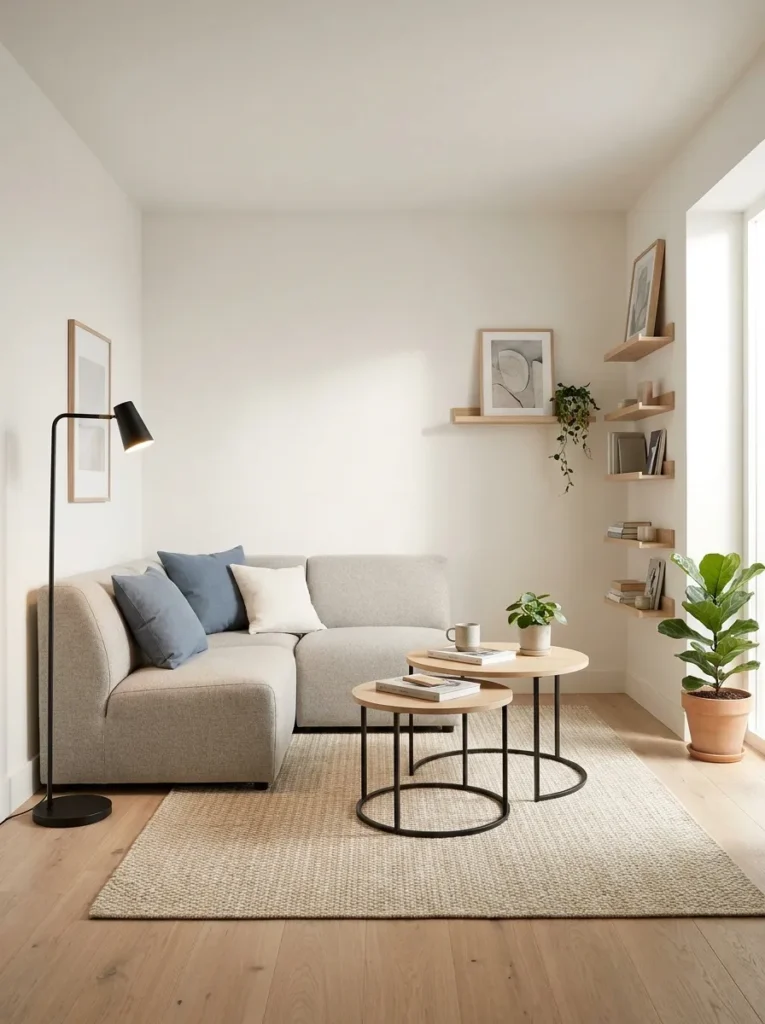
- Fits limited floor area without sacrificing seating.
- Keeps walking paths clear in compact apartments.
- Creates a defined seating zone.
- Makes a small room feel more organized.
For a 10 x 12 foot room, look for a compact sectional measuring roughly 75 to 88 inches wide with a chaise no deeper than 60 inches. A 32 to 35-inch sofa depth provides useful seating while preserving circulation space. Choose removable polyester or performance microfiber covers because they are easier to maintain in a smaller home. A 5 x 8 rug can anchor the front portion of the sofa without covering the entire floor. Avoid sofas deeper than 38 inches in this type of room because they can reduce the usable walkway to an uncomfortable width.
These corner sofa designs are particularly useful for renters who need maximum seating from a limited footprint. A pale greige sectional works beautifully with Scandinavian styling, especially alongside pale oak furniture and soft blue textiles. Use a pair of nesting tables instead of one large coffee table so the floor remains flexible when guests arrive. Keeping the room visually light also supports a more spacious small living room appearance.
Pro Tip: Before ordering, mark an 80 x 60-inch sofa footprint on the floor with painter’s tape and walk around it to confirm that at least 28 to 30 inches of circulation remains.
Modern Corner Sofa Designs
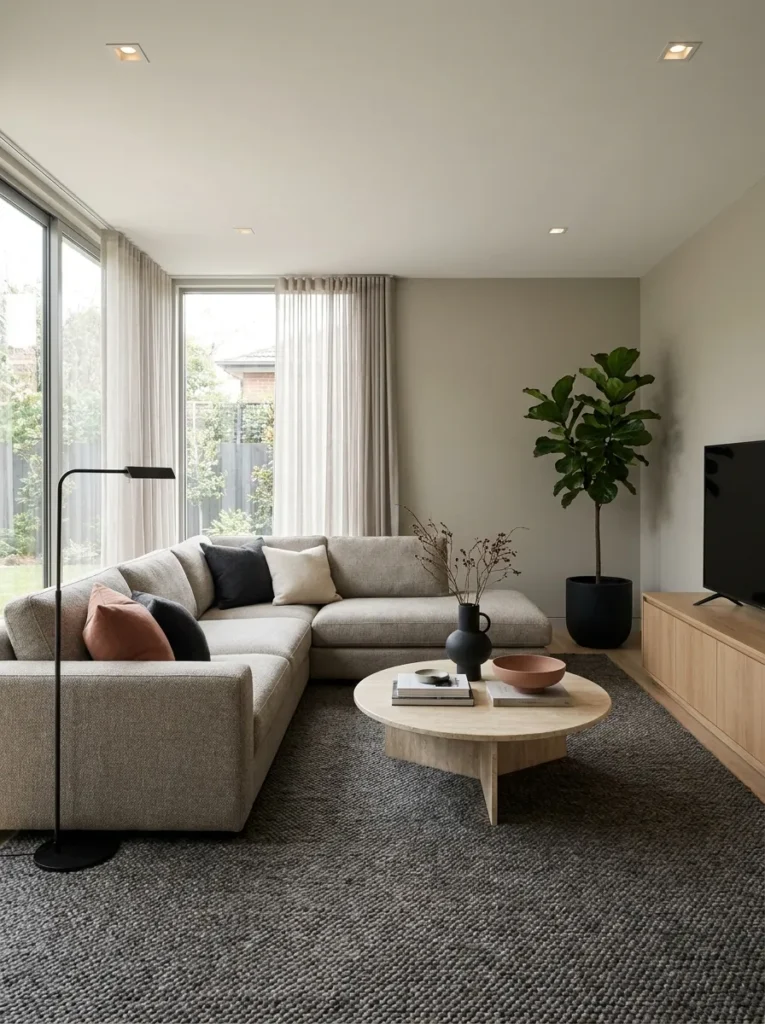
- Clean geometry gives the room a polished appearance.
- Neutral upholstery works with multiple accent colors.
- Low-profile construction visually reduces bulk.
- The corner arrangement defines an open seating zone.
A modern sectional looks most balanced when its main depth stays between 34 and 38 inches, while a deep chaise can reach 65 to 72 inches. For a 15 x 17 foot room, an overall length around 100 to 115 inches provides generous seating without consuming the entire wall. Choose kiln-dried hardwood framing and high-resilience foam around 2.0 to 2.5 pounds per cubic foot for better long-term support. Pair the sofa with a 16 to 18-inch-high coffee table, keeping approximately 18 inches of clearance around it. Avoid excessively low sofas if older adults regularly use the room because a seat height below 16 inches can make standing difficult.
Among contemporary corner sofa designs, this configuration works particularly well with open-plan homes where furniture needs to establish zones without walls. Warm greige upholstery provides a neutral foundation for charcoal cushions and terracotta accessories. A large 8 x 10 rug should sit beneath the front legs to connect the seating pieces visually. Add a 6-foot or taller floor plant near the unused corner to introduce height without adding another bulky furniture piece.
Pro Tip: Choose upholstery with a double-rub durability rating of at least 30,000 for a frequently used family room, and use removable covers when possible.
Curved Sectional Comfort
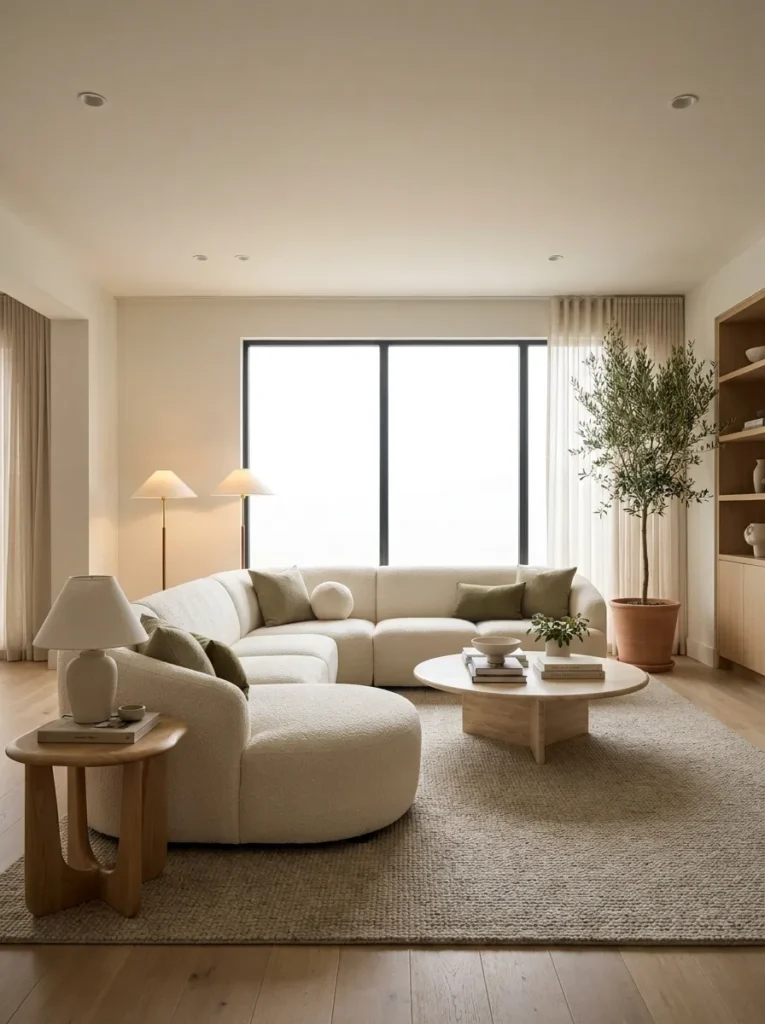
- Soft curves reduce the visual hardness of large furniture.
- Rounded forms encourage face-to-face conversation.
- Organic materials create a relaxed atmosphere.
- The design suits larger rooms with open circulation.
A curved sectional generally needs more floor clearance than a straight L-shaped sofa, so allow approximately 36 inches around its outer edge in major circulation zones. For a 16 x 18 foot room, a sofa around 105 to 120 inches wide can provide generous seating while leaving enough breathing room. Bouclé upholstery adds texture, but choose a tightly woven performance version if the sofa receives daily use. Pair it with a rounded coffee table around 16 to 18 inches high and 36 to 44 inches wide. Avoid placing a sharp rectangular table too close to the curved edge because the contrasting shapes can interrupt movement.
A round coffee table pairs beautifully with curved and L-shaped sectionals — explore our round coffee table decor ideas for the perfect centerpiece that complements any corner sofa design
Curved corner sofa designs suit homeowners who want a softer interpretation of a sectional sofa. Cream bouclé works especially well with an organic modern palette of sand, olive, oak, and travertine. A 9 x 12 rug is appropriate for a larger room and gives the curved furniture a stronger visual foundation. This setup is excellent for relaxed conversations, reading, and weekend lounging because everyone remains visually connected.
Pro Tip: Keep at least 18 inches between the curved sofa and coffee table, and choose a table with rounded edges when the main walkway passes beside the seating.
Neutral Linen Sectional
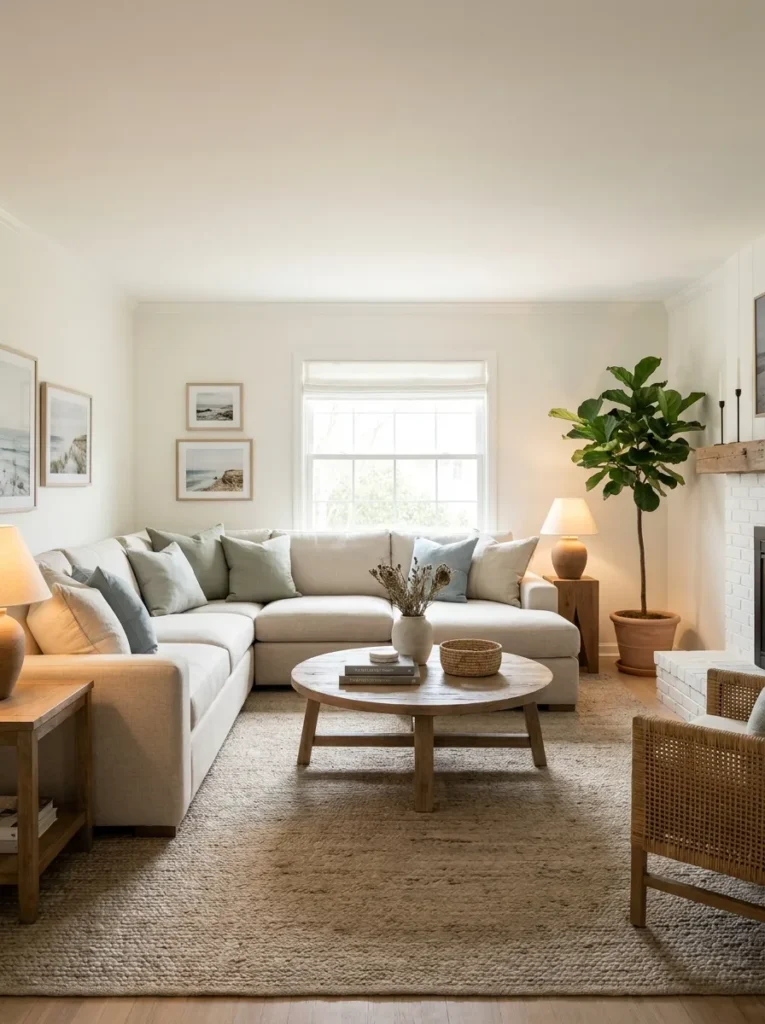
- Neutral linen creates a light visual foundation.
- Natural texture prevents pale rooms from looking flat.
- The palette works with coastal and transitional furniture.
- Removable covers simplify routine maintenance.
For daily seating, choose a linen blend containing approximately 30 to 50 percent synthetic fiber for improved resistance to wrinkles and abrasion. A 34 to 38-inch sofa depth offers comfortable support, while an 8 x 10 rug provides enough coverage for a medium-sized room. Keep the sofa seat height around 18 to 20 inches for easy everyday use. A solid oak coffee table around 42 to 48 inches long works well with a sectional of approximately 95 to 105 inches. Avoid untreated natural linen in high-traffic homes if frequent spills are likely because it can stain and wrinkle more easily.
A neutral or earthy sectional looks stunning in a layered boho living room — explore our boho living rooms for more texture-rich and eclectic styling inspiration
Neutral upholstery makes these corner sofa designs easy to update as seasons change. Oatmeal linen pairs naturally with jute, pale oak, muted sage, and soft blue, giving the room a relaxed, cozy living room character. Add two or three textured cushions rather than covering every seat with pillows. A tall plant beside the sectional also adds vertical interest while keeping the furniture arrangement simple.
Pro Tip: Look for performance linen rated for at least 20,000 double rubs, especially when the sectional will be used every day.
Deep Lounging Corner
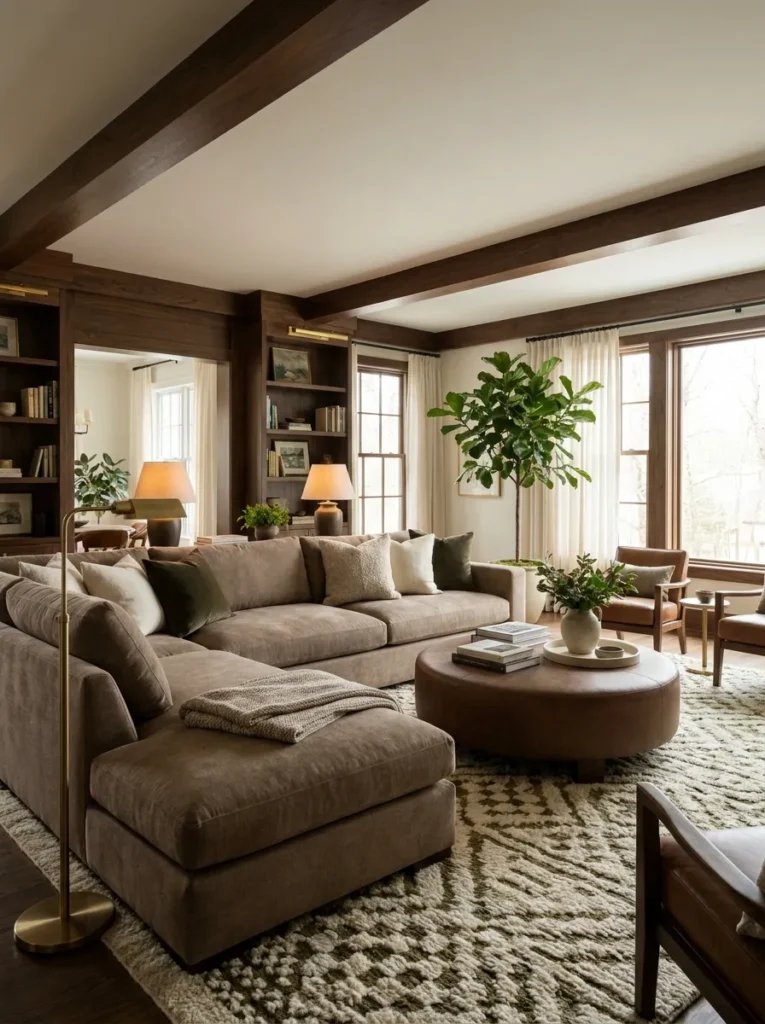
- Extra depth creates a relaxed lounging position.
- Generous proportions suit large family rooms.
- Soft chenille adds tactile comfort.
- The oversized shape makes the seating zone feel intentional.
Deep lounging sofas should generally measure at least 38 inches in depth, with premium lounging models reaching 40 to 44 inches. In an 18 x 20 foot room, an overall sectional length of 110 to 130 inches can work when the remaining circulation is planned carefully. Choose high-density foam with a supportive spring or webbed suspension system to prevent excessive sagging. Use a 9 x 12 rug and an 18-inch-high upholstered coffee table to maintain comfortable proportions. Avoid deep seating in narrow rooms because the extra 6 to 8 inches can significantly reduce usable floor space.
These corner sofa designs are best for homeowners who prioritize movie nights, reading, and relaxed weekend seating. Mushroom chenille gives the room warmth while walnut furniture and dark olive accents create depth. Keep the coffee table large enough for drinks and books, but leave roughly 18 inches between the table and sofa edge. This arrangement also works well as part of open-plan living, where the oversized sectional can visually anchor the lounge zone.
Pro Tip: For a sofa deeper than 40 inches, use lumbar cushions around 18 to 22 inches wide so the usable sitting depth does not feel excessive.
Leather Family Sectional
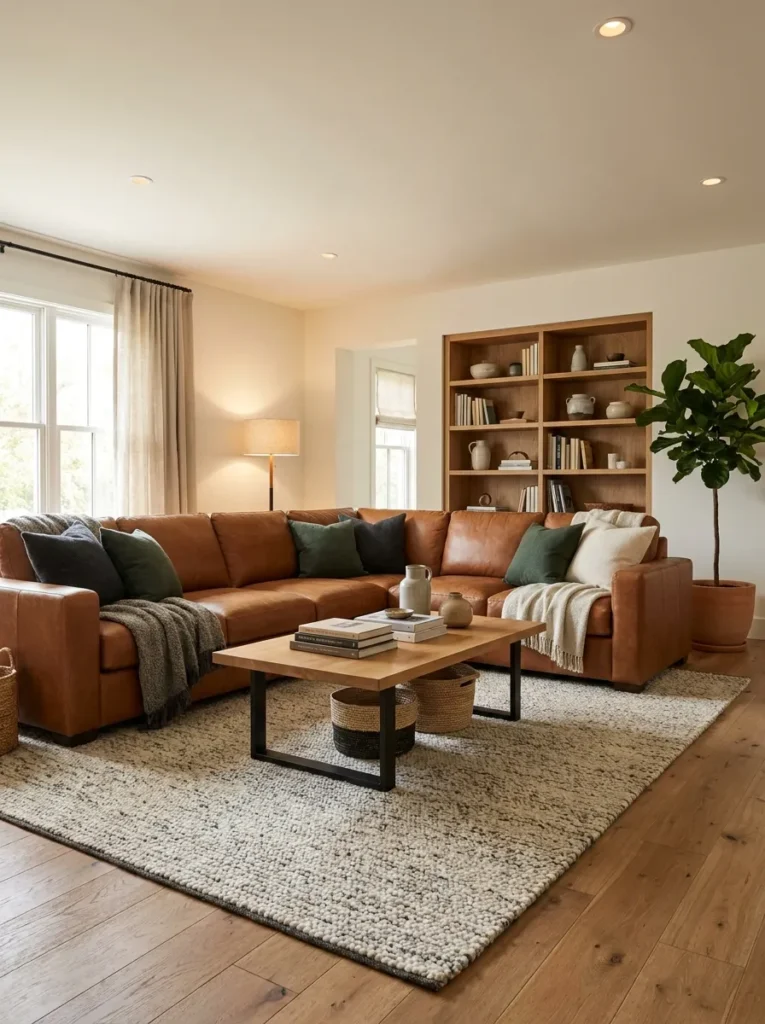
- Full-grain leather handles heavy everyday use.
- Cognac develops character as it ages.
- Easy-clean surfaces suit busy households.
- The sectional provides ample family seating.
A family-sized leather sectional should ideally use a kiln-dried hardwood frame and full-grain or top-grain leather with a seat depth between 34 and 38 inches. For a 17 x 19 foot room, approximately 105 to 120 inches of total sofa length provides comfortable seating for four to six adults. Allow 18 inches between the sofa and coffee table and at least 30 inches through the primary walking route. Use a 9 x 12 rug to anchor the larger arrangement. Avoid placing leather directly against a radiator or in intense south-facing sunlight because heat and prolonged UV exposure can dry or discolor the material.
Cognac leather works particularly well for living room seating because it develops a richer appearance rather than looking overly formal. Combine it with cream walls, natural oak, charcoal textiles, and forest green accents for a warm modern rustic palette. Leather is also practical for households that need quick cleanup after everyday spills. Keep accessories simple so the natural texture of the upholstery remains the main visual feature.
Pro Tip: Condition quality leather approximately every 6 to 12 months, following the upholstery manufacturer’s instructions, and test any product on a hidden area first.
Bouclé Soft Corner
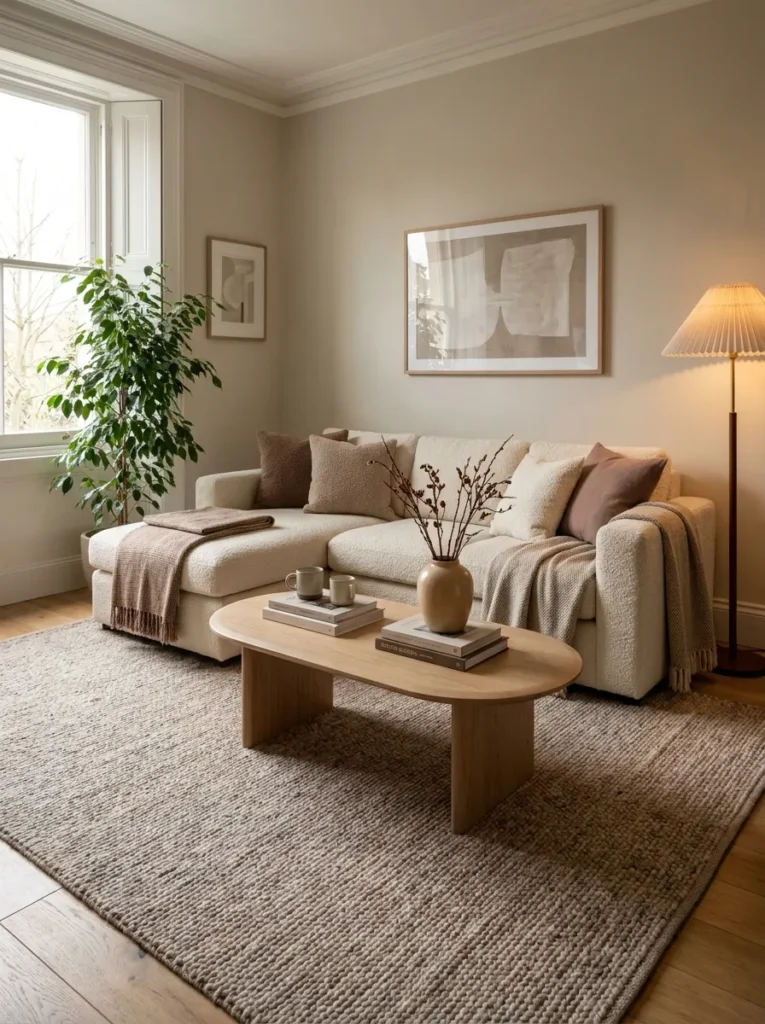
- Bouclé introduces texture without bold patterns.
- Ivory upholstery keeps the corner visually light.
- Compact proportions suit medium rooms.
- Soft curves make the seating feel inviting.
For a 13 x 15 foot room, select a bouclé sectional around 88 to 100 inches wide with a depth of approximately 34 to 37 inches. High-quality bouclé should have tightly secured loops and a durable backing, especially on frequently touched arms and seat cushions. An 8 x 10 wool rug gives the sofa enough visual support without making the room feel overloaded. Pair it with a 16 to 18-inch oval or round coffee table to soften the arrangement. Avoid loose-loop fabric in homes with pets that frequently scratch upholstery because the loops can catch and pull.
This is one of the softer corner sofa designs for homeowners who prefer tactile interiors without excessive decoration. Ivory bouclé pairs naturally with pale oak, warm beige, muted clay, and soft brown. Add a few cushions in different textures rather than several competing patterns. A 6-foot floor plant can balance the sofa’s low profile and create a more finished sofa styling arrangement.
Pro Tip: Use a fabric protection treatment approved specifically for bouclé, and vacuum the upholstery weekly with a soft brush attachment to prevent dust from settling between the loops.
Window-Facing Sectional
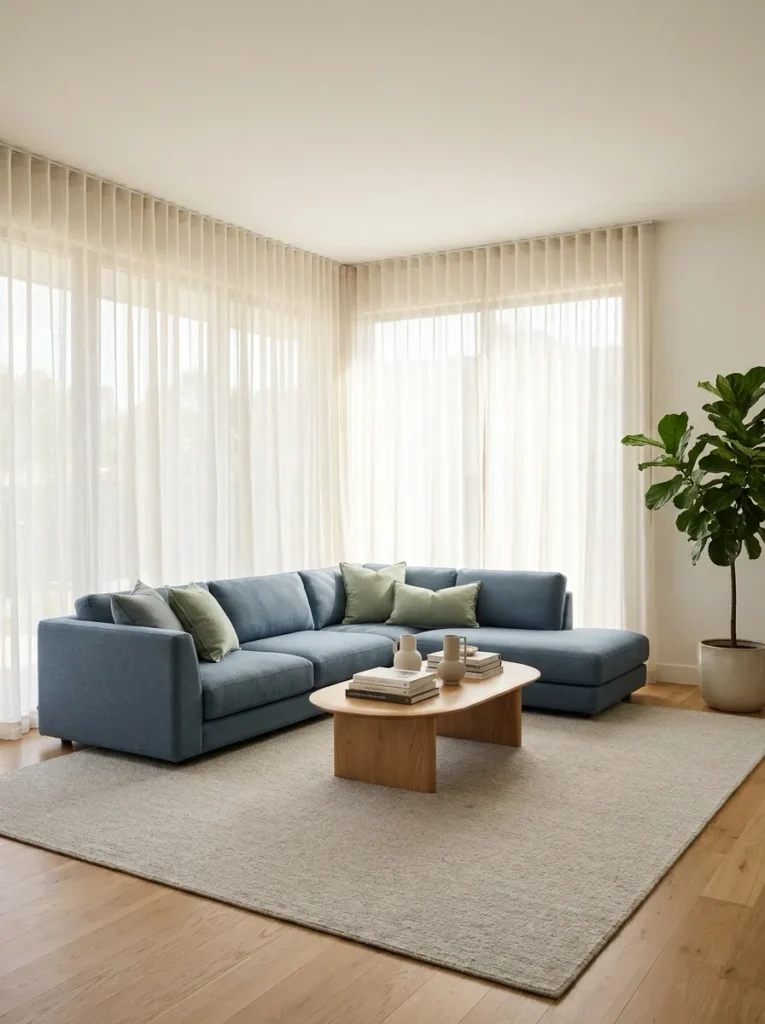
- Places seating where natural light can be enjoyed.
- Keeps the main window visually accessible.
- Creates a bright and open seating area.
- Works well with neutral furnishings.
Choose a sectional approximately 95 to 110 inches wide when the window wall measures at least 13 feet across. Keep the sofa depth between 32 and 36 inches if it sits close to the window zone, and leave at least 6 to 12 inches between the sofa back and curtains for ventilation and easy cleaning. Curtains should extend approximately 2 to 2.5 times the window width for a fuller appearance. Use an 8 x 10 rug and a 16 to 18-inch-high coffee table to establish balanced proportions. Avoid placing the sofa directly over a floor vent because blocked airflow can reduce heating and cooling efficiency.
Window-facing corner sofa designs make excellent use of daylight, particularly in rooms with large south- or west-facing windows. A warm greige sectional pairs well with oak, muted blue, and soft green accessories. Keep tall furniture away from the glass so the room retains its sense of openness. This arrangement is especially useful for reading, morning coffee, and relaxed conversations because natural light reaches the seating area throughout the day.
Pro Tip: Use sheer curtains inside the window zone and blackout-lined panels only where needed, keeping the curtain hardware several inches outside the window frame so the glass remains visually generous.
Small Room Corner
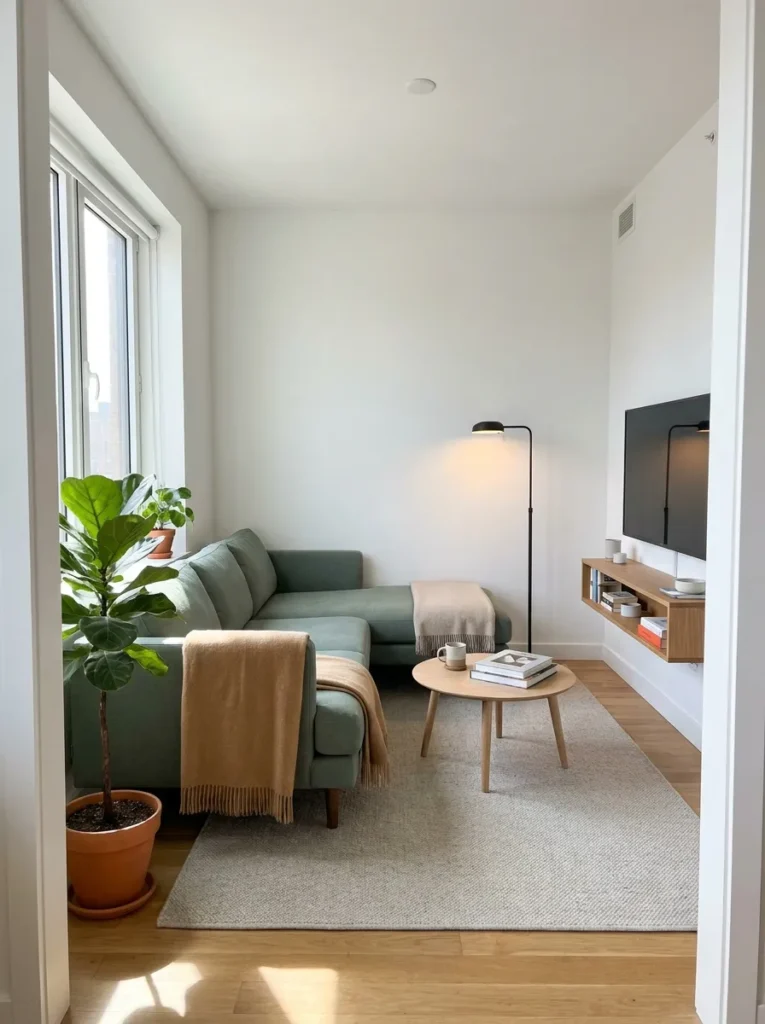
- Maximizes seating in a limited footprint.
- Keeps the central floor area visually open.
- Makes an awkward corner useful.
- Works particularly well for renters.
For an 11 x 13 foot room, select a sectional around 78 to 90 inches wide with a 32 to 35-inch depth. A chaise should ideally remain below 58 to 62 inches deep so it does not dominate the room. Use a 5 x 8 rug with at least the sofa’s front legs sitting on it, and keep approximately 16 to 18 inches between the sofa and coffee table. A 16-inch-high round table prevents sharp corners from interfering with narrow walkways. Avoid oversized rolled arms because they can consume 6 to 10 inches of usable seating width.
A corner sofa works beautifully in compact layouts when the room is properly planned — explore our small living room ideas 2026 for smart layout tips that make any small space feel open and functional.
These corner sofa designs are practical when every square foot matters. A compact L-shaped sofa can provide seating for three or four adults while leaving enough room for a narrow console or media unit. Pale upholstery, light oak, and soft green accessories support a spacious modern living room appearance. Renters can also create a polished arrangement without making permanent structural changes.
Pro Tip: Measure the elevator, doorway, hallway, and stairwell before ordering, and add at least 2 inches to the sofa’s narrowest delivery clearance requirement.
Scandinavian Corner Sofa Designs
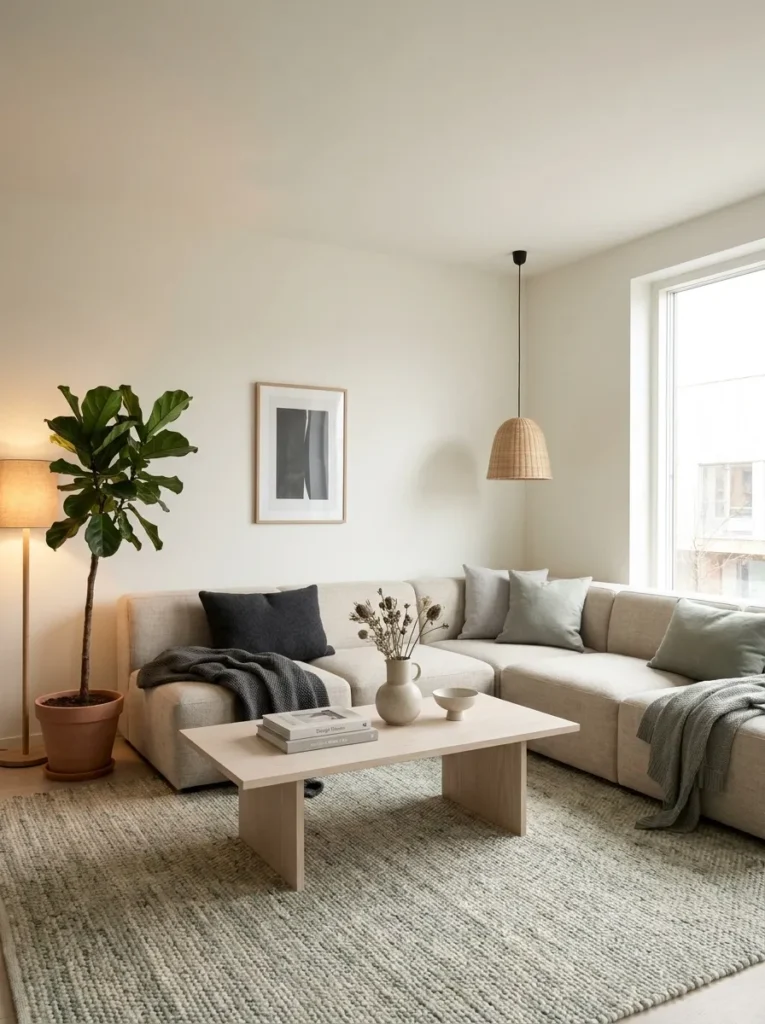
- Combines simple lines with practical comfort.
- Light materials prevent visual heaviness.
- Neutral colors make future updates easy.
- Works well in both houses and apartments.
A Scandinavian sectional should generally have a 32 to 36-inch depth and a seat height around 17 to 19 inches. For a 14 x 16 foot room, an 88 to 102-inch sofa provides comfortable seating without excessive bulk. Choose ash, oak, or birch legs approximately 4 to 6 inches high to create a lighter visual profile. Place an 8 x 10 wool rug beneath the seating area and select a coffee table around 16 to 18 inches high. Avoid excessive decorative trim, oversized cushions, or very dark upholstery because these details can undermine the clean proportions associated with Scandinavian furniture.
Among corner sofa designs, this style is especially useful for people who prefer uncluttered rooms. Oatmeal upholstery works beautifully with pale wood, muted sage, charcoal accents, and natural textiles. Keep decorative accessories limited to a few useful pieces, such as books, ceramics, and a large plant. This approach creates a comfortable, cozy living room without relying on excessive layers or visual clutter.
Pro Tip: Keep approximately 60 percent of the room’s visual palette in the dominant neutral tone, 30 percent in secondary wood and textile shades, and 10 percent in darker or brighter accents.
Warm Earth-Tone Sectional
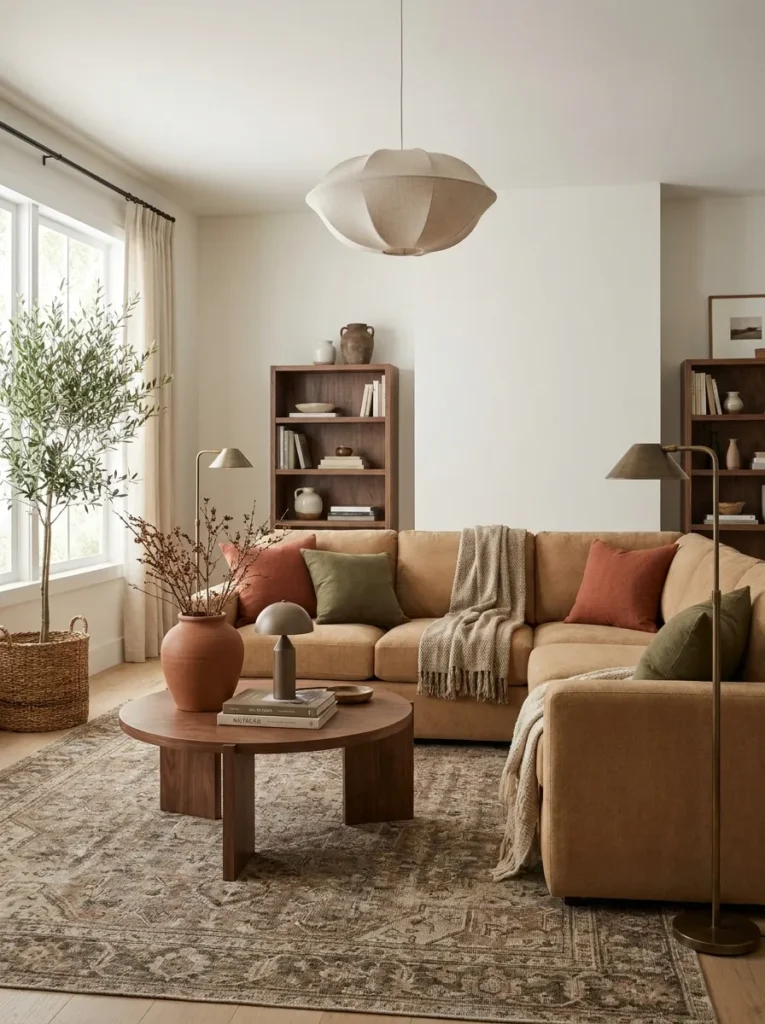
- Earth tones add warmth without excessive pattern.
- Rich textures make large sofas feel inviting.
- Walnut furniture complements warm upholstery.
- The palette works year-round.
For a 16 x 18 foot room, select a sectional around 100 to 115 inches wide with a 34 to 38-inch depth. Performance chenille is useful for frequent seating because its dense surface resists everyday wear better than delicate decorative fabrics. Use a 9 x 12 rug in cream, beige, or muted geometric patterns to support the larger furniture footprint. A coffee table approximately 44 to 50 inches long and 17 to 18 inches high provides useful surface area. Avoid combining more than three strong earth-tone colors because excessive saturation can make the room feel visually heavy.
Warm corner sofa designs work particularly well when the rest of the room has cooler architectural finishes. Camel upholstery can soften white walls while terracotta cushions and olive greenery introduce controlled color. Use walnut or medium oak furniture to reinforce the warmth, then add cream textiles to maintain balance. This palette is especially practical for households that want sofa styling that feels comfortable in every season.
Pro Tip: Keep the dominant sofa color around 60 percent of the seating palette, secondary tones around 30 percent, and stronger accents near 10 percent.
Navy Velvet Corner
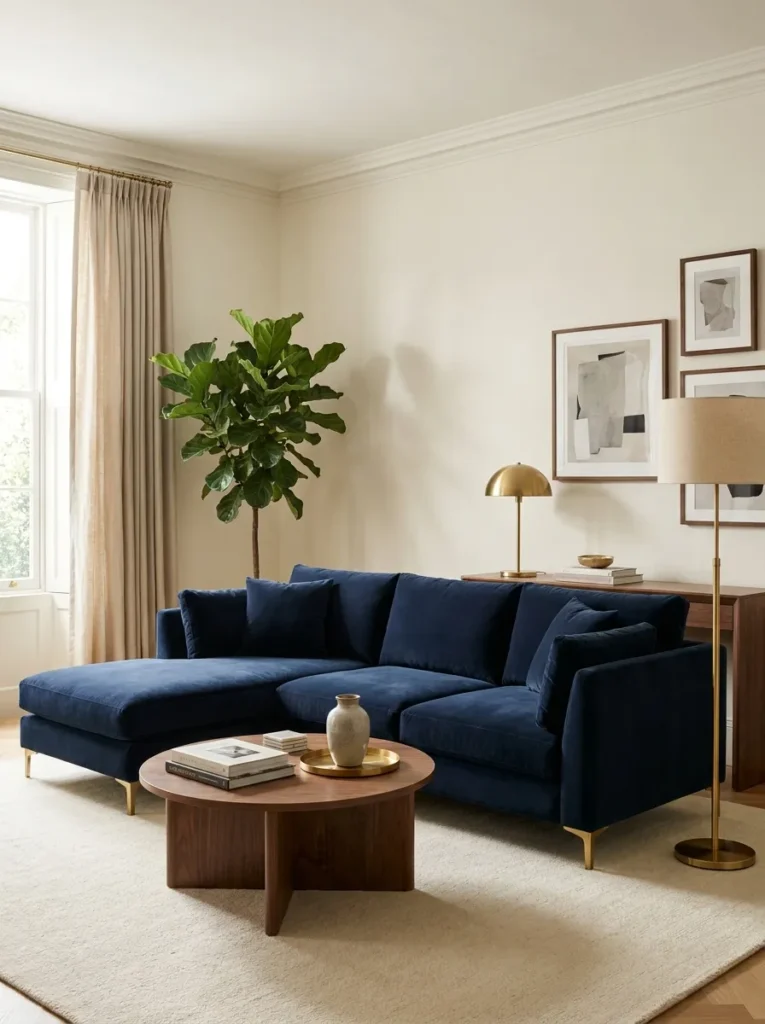
- Navy provides a strong visual anchor.
- Velvet adds texture and depth.
- Warm metals keep dark upholstery balanced.
- The color works with both classic and modern interiors.
A navy velvet sectional should ideally use performance velvet with a durable backing and a seat depth between 34 and 37 inches. For a 15 x 17 foot room, an overall length of 95 to 110 inches gives enough seating without overpowering the walls. Use an 8 x 10 rug in warm ivory or beige, positioned beneath the front portion of the sectional. A 16 to 18-inch-high walnut table maintains comfortable reach from the seats. Avoid placing dark velvet in direct, intense sunlight for long periods because prolonged UV exposure can gradually fade saturated colors.
A bold velvet corner sofa is just the beginning of a colorful living room — explore our colorful living room ideas for more vibrant styling inspiration that makes any space feel dynamic and inviting
Navy corner sofa designs suit rooms where the sofa needs to become a deliberate focal point. Pair deep navy with warm ivory walls, walnut furniture, brushed brass, and beige textiles. Keep artwork relatively simple so it does not compete with the rich upholstery. A tall leafy plant can soften the dark corner while adding natural texture and height.
Pro Tip: Choose performance velvet with a double-rub rating of at least 30,000 for a frequently used living room, and rotate removable cushions every few weeks for more even wear.
Open-Plan Sectional Layout
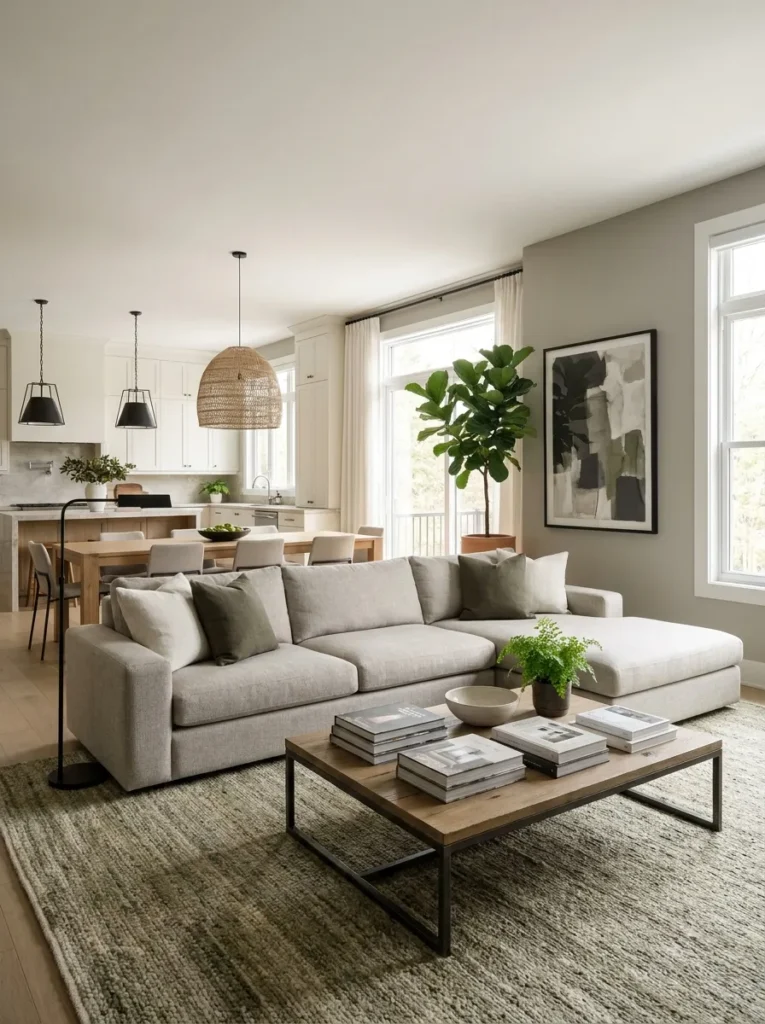
- Defines the living area without constructing walls.
- Creates a natural boundary between functional zones.
- Keeps the open floor plan visually connected.
- Provides generous seating for family and guests.
For a 20 x 24 foot open-plan room, a sectional around 110 to 130 inches long can create a strong visual boundary without closing the space. Keep the sofa depth between 34 and 38 inches and preserve at least 36 inches of circulation behind or beside the sectional where people regularly pass. A 9 x 12 rug should sit beneath the main seating area, while an 18-inch-high coffee table provides a practical center point. Use a console no deeper than 12 to 14 inches behind the sofa when additional storage is needed. Avoid placing the chaise directly across the main route between the kitchen and living area because it can create a daily traffic obstruction.
Open-plan corner sofa designs are useful because the back of the sectional can act as an architectural divider. The sofa visually separates the lounge from the kitchen while maintaining sightlines across the room. Use matching wood tones and repeat one accent color across the living and dining zones for stronger open-plan living cohesion. A large rug also helps establish where the seating zone begins and ends.
Pro Tip: Keep the primary walkway behind or beside the sectional at approximately 36 inches wide, and avoid reducing it below 30 inches in a high-traffic household.
Modular Corner Seating
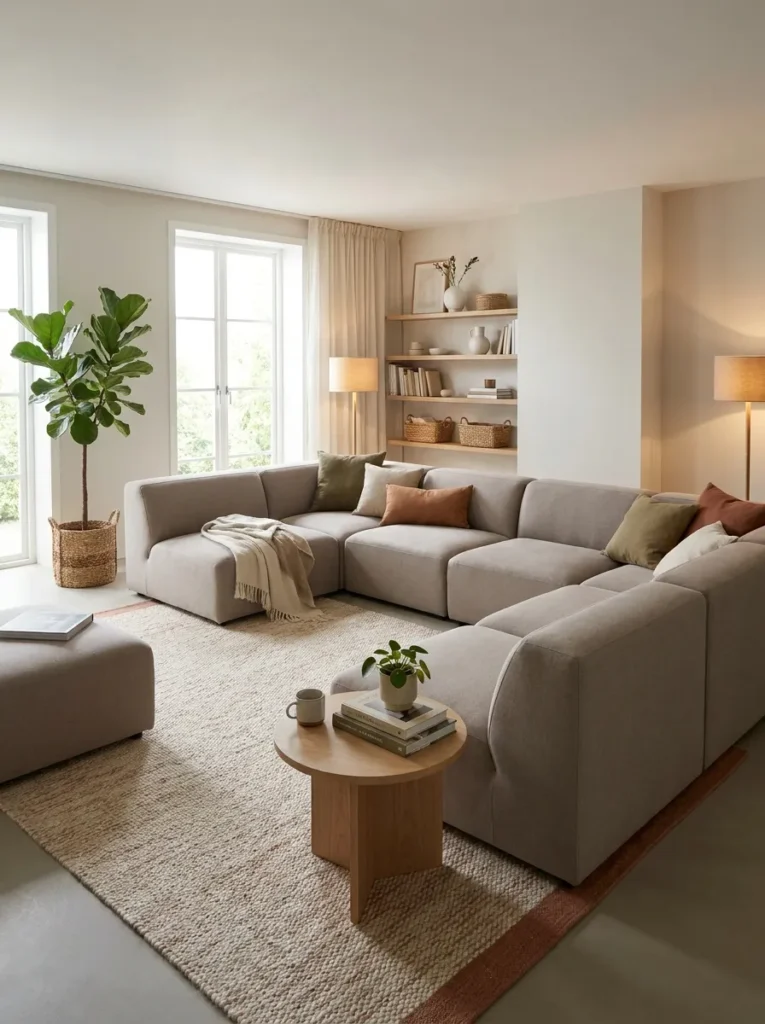
- Individual pieces can adapt to changing room needs.
- Extra ottomans create flexible seating.
- Modular sections simplify future rearrangement.
- The layout works well for growing households.
A modular sectional should use individual units approximately 30 to 36 inches wide, allowing several configurations within a 15 x 18 foot room. Keep the assembled sofa depth between 34 and 38 inches, while an ottoman around 24 to 30 inches square can provide additional seating or leg support. Choose connectors rated for repeated movement and a high-resilience foam core to maintain shape between rearrangements. An 8 x 10 rug provides a stable visual base for most medium-sized configurations. Avoid mixing modules from different manufacturers unless their seat heights and connector systems are specifically compatible.
Flexible corner sofa designs are especially helpful for renters or families who regularly rearrange furniture. You can separate one module into an occasional chair, shift the chaise direction, or add an ottoman when more guests arrive. Performance fabric in light taupe or cream gives the arrangement a versatile foundation, while rust and olive accents add personality. This type of modular sofa can also adapt if you move to a larger home later.
Pro Tip: Before purchasing, confirm that every module can pass through your narrowest doorway, and measure the assembled configuration plus at least 3 inches of clearance on each side.
Storage Chaise Sectional
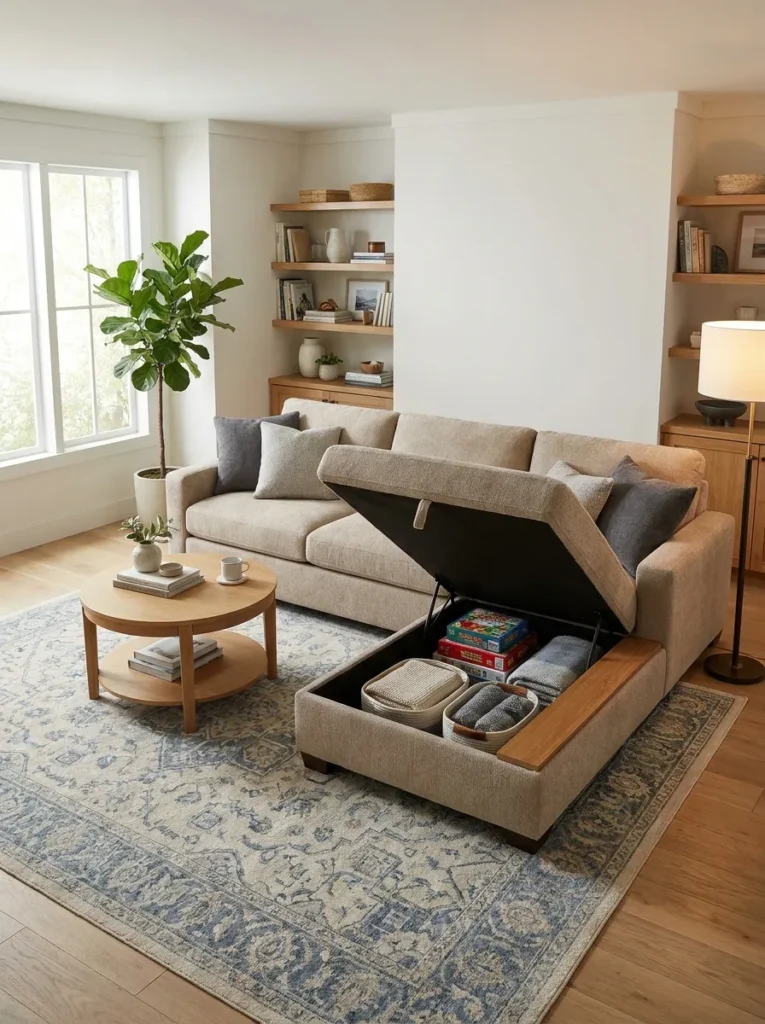
- Hidden storage reduces visible clutter.
- The chaise provides comfortable lounging.
- Useful for apartments with limited storage.
- Everyday items remain close to the seating area.
A storage chaise should provide an internal compartment at least 8 to 12 inches deep, with a properly supported hinged lid and ventilation where recommended by the manufacturer. For a 15 x 17 foot room, a sectional around 95 to 110 inches long and 34 to 38 inches deep provides a comfortable balance. Choose a performance chenille or tightly woven polyester exterior for frequent use, and pair it with an 8 x 10 rug. Keep approximately 18 inches between the chaise edge and the coffee table. Avoid storing damp blankets, food, or anything heavy enough to strain the hinge mechanism.
Practical corner sofa designs with built-in storage are ideal for homes where every cabinet and closet is already occupied. Use the chaise compartment for spare throws, children’s games, seasonal cushions, or extra pillows rather than everyday clutter. Warm beige upholstery keeps the room visually calm, while oak and muted blue accents add character. This arrangement works particularly well in an apartment or small living room where adding a separate storage cabinet would consume valuable floor space.
Pro Tip: Keep the storage compartment below roughly two-thirds full so blankets can be removed without forcing or damaging the lift mechanism.
Reclining Corner Sofa
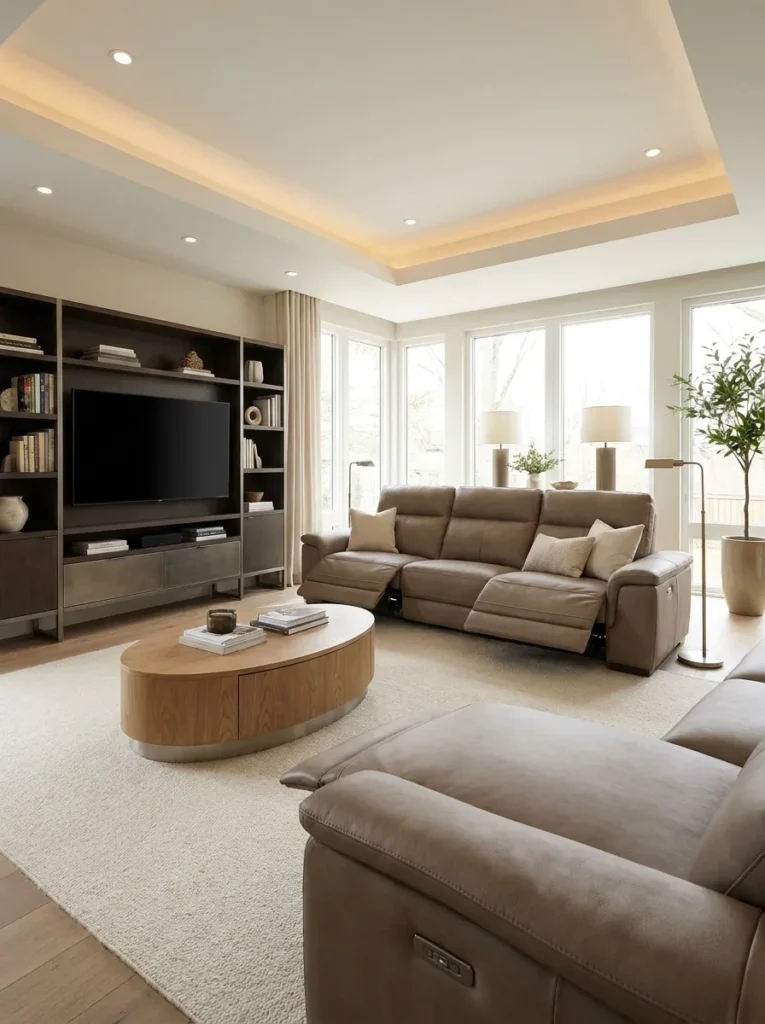
- Provides adjustable support for long viewing sessions.
- Combines family seating with relaxation features.
- Works well in dedicated media rooms.
- Keeps reclining hardware visually discreet.
A reclining sectional needs additional rear clearance because the back mechanism moves during use, so allow approximately 4 to 8 inches behind each reclining section according to the manufacturer’s specifications. A 38-inch or deeper overall sofa depth is common, while each reclining seat should have enough width to allow comfortable arm and shoulder movement. For an 18 x 20 foot room, a sectional around 110 to 125 inches wide can work comfortably with a 9 x 12 rug. Keep the coffee table 16 to 18 inches from the fixed sofa edge, but check that extended footrests do not collide with it. Avoid placing reclining sections directly against walls unless they are specifically designed for zero-clearance installation.
These corner sofa designs suit families who use the living room for television, gaming, reading, or extended lounging. Performance leather-look upholstery can handle regular use while remaining easier to wipe clean than many delicate fabrics. Choose warm taupe or dark brown with cream accessories to prevent the room from feeling overly heavy. This is one of the most practical forms of sectional sofa seating for households that value individual comfort settings.
Pro Tip: Test every reclining mechanism before purchase and check the manufacturer’s required wall clearance, because zero-wall and standard recliners need different installation distances.
Luxury Corner Sofa Designs
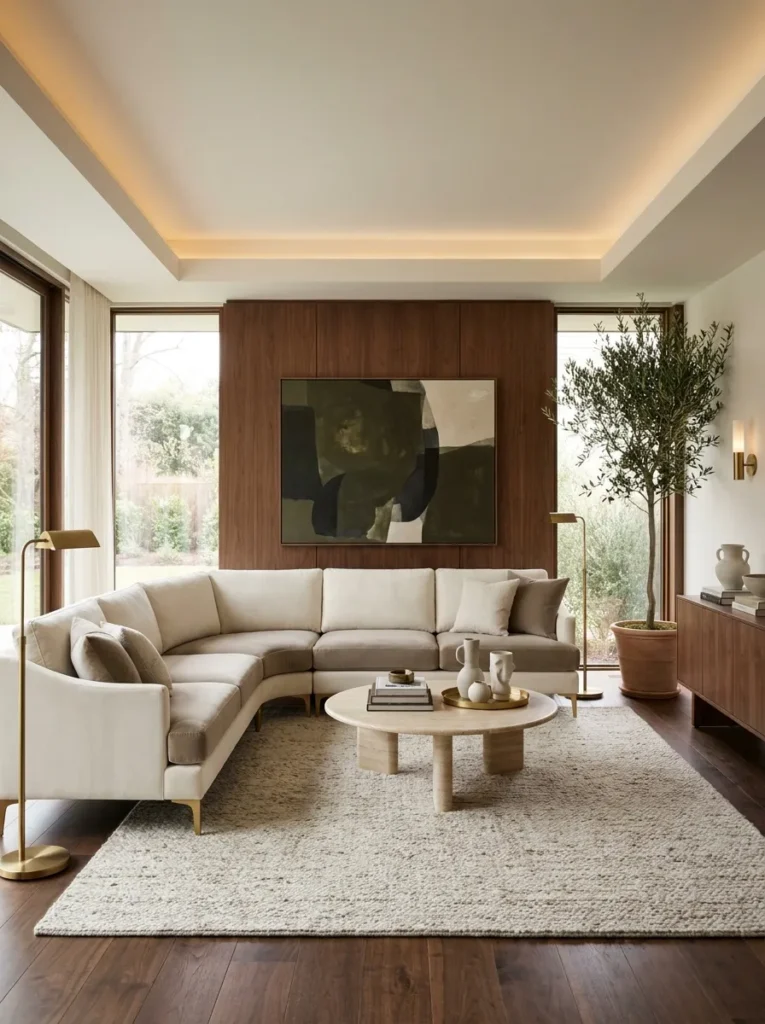
- Premium materials create a polished focal point.
- Generous proportions suit large rooms.
- Neutral upholstery allows sophisticated accessories.
- The layout balances comfort and formal presentation.
For a large living room, select a sectional approximately 110 to 135 inches wide with a 36 to 40-inch depth. A kiln-dried hardwood frame, high-resilience foam, reinforced corner joints, and durable upholstery are worthwhile specifications for a premium purchase. Use a 9 x 12 wool rug with the sectional’s front legs resting on the rug, then position an 18-inch-high travertine table in the center. Wall art should be centered around 57 to 60 inches from the floor to its visual midpoint. Avoid selecting luxury upholstery based only on appearance because delicate fabrics can perform poorly under everyday family use.
A luxury corner sofa deserves the right supporting pieces — explore our luxury sofa design ideas for more premium living room seating inspiration that elevates any space.
Luxury corner sofa designs do not need excessive decoration to look expensive. Ivory or mushroom upholstery creates a calm foundation, while walnut, travertine, brass, and deep olive introduce controlled contrast. Keep the accessory palette restrained and repeat the same metal or wood finish at least twice. This approach produces an elegant modern living room that still feels comfortable enough for everyday use.
Pro Tip: For a premium sectional, prioritize frame construction, cushion density, suspension, and fabric durability before paying extra for decorative details.
Green Velvet Statement
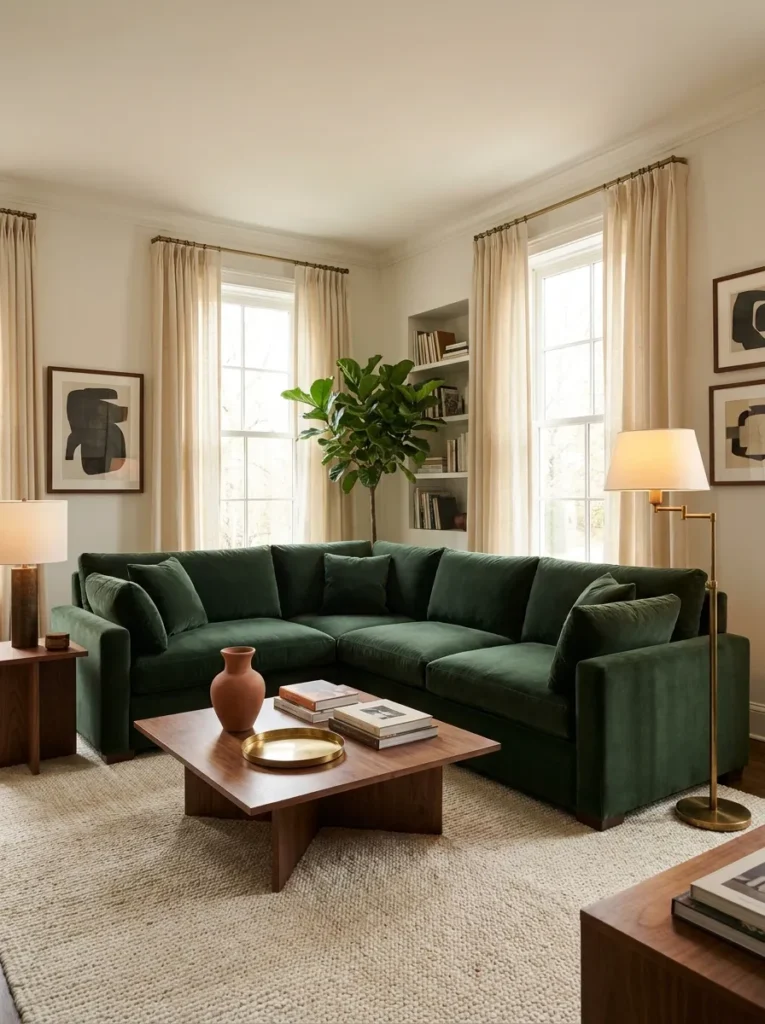
- Deep green adds personality without bright saturation.
- Velvet creates visual richness and tactile depth.
- Warm wood balances the strong upholstery color.
- The palette works with vintage and contemporary pieces.
A forest green sectional should generally measure between 34 and 38 inches deep, with an overall width around 95 to 110 inches for a 16 x 18 foot room. Performance velvet with a double-rub rating of at least 30,000 is preferable for daily use. Use an 8 x 10 rug in warm ivory or beige to create contrast beneath the dark upholstery, and select a coffee table around 16 to 18 inches high. Avoid combining forest green with several saturated jewel tones because too many strong colors can make the seating area feel visually crowded.
A corner sofa near a window creates the perfect spot for indoor greenery — explore our living room plants decor ideas for beautiful plant styling that pairs with any sectional.
Green corner sofa designs are useful when you want the sofa itself to establish the room’s personality. Forest green pairs naturally with walnut, aged brass, terracotta, and warm ivory. Keep walls and larger flooring elements relatively quiet so the upholstery remains the main focal point. A 6-foot indoor tree can introduce another layer of green while connecting the seating area to natural materials.
Pro Tip: Treat forest green as the main accent and keep roughly 60 percent of the surrounding palette neutral, 30 percent warm wood or secondary tones, and 10 percent terracotta or brass accents.
White Slipcovered Sectional
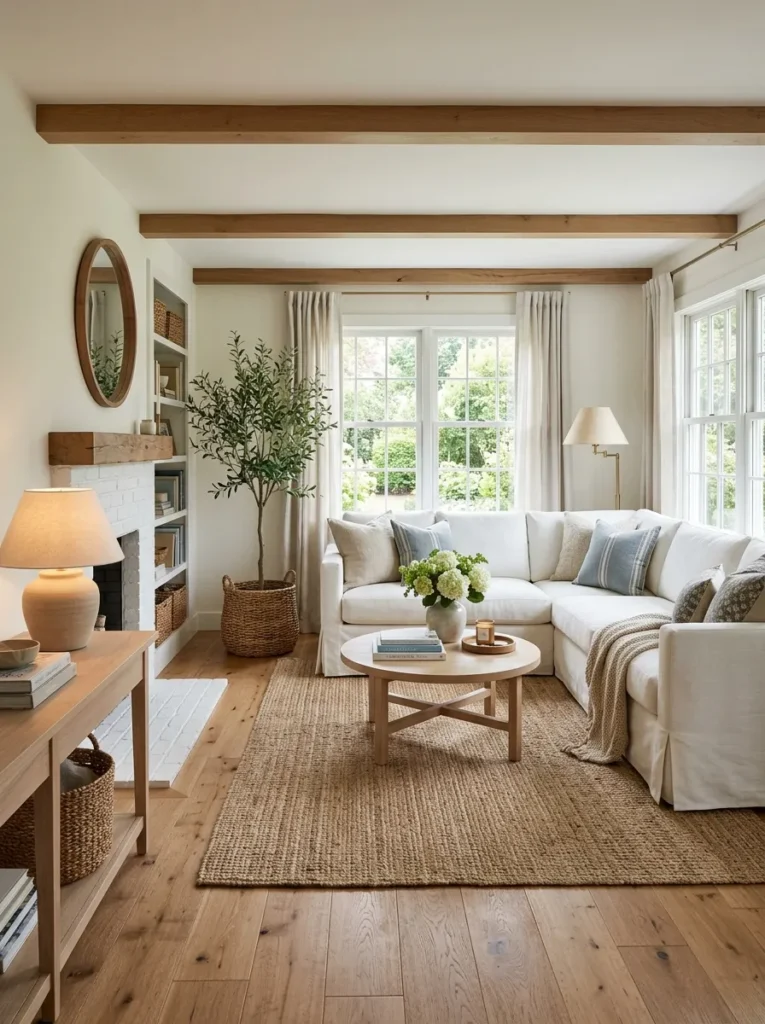
- Washable covers make white upholstery more practical.
- The pale color visually enlarges the seating zone.
- Loose styling feels relaxed rather than formal.
- Replacement covers can refresh the sofa later.
For everyday use, choose a sectional around 95 to 110 inches wide and 34 to 38 inches deep, with removable covers made from washable cotton, linen blends, or performance fabric. An 8 x 10 rug in jute or wool provides contrast beneath the light sofa, while a 17-inch-high oak coffee table keeps the center functional. Select tightly constructed cushion inserts that maintain their shape after washing. Avoid untested fabric protectors because some treatments can alter the color or washing instructions of slipcover material.
White corner sofa designs can work beautifully in family homes when maintenance is considered from the beginning. Removable covers make it easier to manage spills, seasonal cleaning, and everyday wear. Pair soft white with oatmeal, pale oak, dusty blue, and natural beige for a relaxed neutral sofa palette. Keep a spare set of covers available if the sofa receives heavy daily use.
Pro Tip: Buy an extra slipcover set at the same time as the sofa because fabric dye lots can vary between production runs, making a later replacement visibly different.
Black Frame Sectional
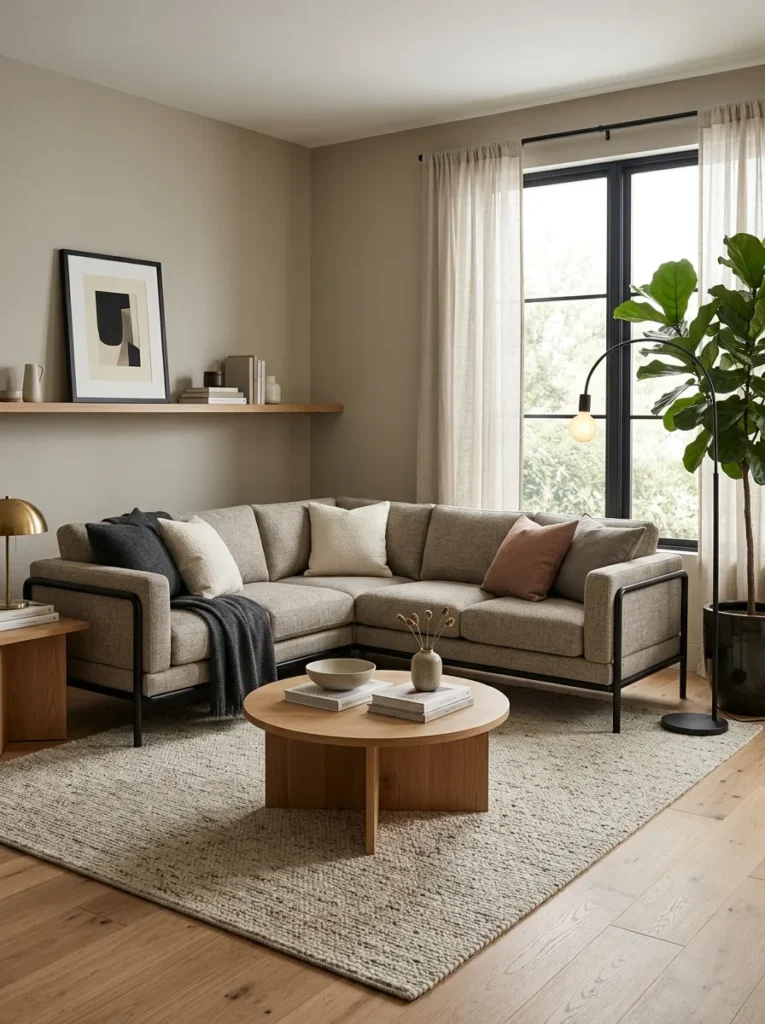
- The raised frame creates a lighter visual profile.
- Black metal adds architectural contrast.
- Open space beneath the sofa feels less bulky.
- Works well with modern and industrial interiors.
Choose a sectional with a powder-coated steel frame or sturdy black metal base, with a seat depth between 32 and 37 inches. For a 16 x 18 foot room, an overall width around 95 to 110 inches creates a balanced seating zone. The frame should support the sofa’s full weight without flexing, while a 4 to 6-inch clearance beneath the seat creates the intended elevated appearance. Use an 8 x 10 rug and a 16 to 18-inch coffee table to keep the furniture proportions consistent. Avoid very thin decorative frames that lack adequate structural support or have exposed sharp corners in high-traffic areas.
These corner sofa designs work particularly well when you want substantial seating without a visually heavy base. A warm greige sectional with a black frame can connect black lighting, window frames, and hardware throughout the room. Natural oak and cream accessories soften the contrast, while muted rust adds a controlled accent. The raised frame also makes more floor visible, which can help a medium-sized small living room feel less visually crowded.
Pro Tip: Check the frame’s weight rating and weld quality before buying, especially for households with several adults using the sectional every day.
FAQs
What are the best Corner Sofa Designs for small rooms?
The best Corner Sofa Designs for small rooms usually measure between 75 and 90 inches wide and 32 to 35 inches deep. Choose a compact chaise that extends no more than 58 to 62 inches into the room. A 5 x 8 rug can define the seating area without covering too much floor. Look for slim arms, raised legs, and light upholstery. Avoid deep sofas over 38 inches because they can restrict circulation in compact spaces.
How much space should I leave around a corner sofa?
Leave approximately 30 inches for the main walking path around a sofa, increasing this to 36 inches in busy areas. Keep roughly 16 to 18 inches between the sofa and coffee table for comfortable access. Curtains should have enough clearance to open freely, particularly when the sofa sits near a window. For deep seating, allow additional room in front of the chaise. Avoid placing furniture where it narrows a primary walkway below 28 inches.
Which Corner Sofa Designs work best for open-plan homes?
Open-plan living works especially well with L-shaped and modular sectionals because they naturally define the seating zone without requiring walls. For larger rooms, choose a sofa around 105 to 125 inches wide and pair it with a 9 x 12 rug. Position the sectional so its back separates the living area from the dining or kitchen zone. Keep at least 36 inches behind the sofa when that space serves as a main walkway.
Are modular sofa layouts practical for renters?
Yes, modular sofa layouts are particularly practical for renters because individual sections can be rearranged or moved to another home. Choose modules around 30 to 36 inches wide with a combined depth of 34 to 38 inches. Check the dimensions of every doorway, hallway, elevator, and staircase before purchasing. Performance fabric is also useful for frequent use. Avoid buying incompatible modules from different manufacturers because seat heights and connectors may not align correctly.
What color works best for a corner sectional?
Neutral colors such as warm ivory, oatmeal, greige, taupe, and mushroom are the easiest to style because they work with many flooring and wall colors. For a stronger focal point, forest green, navy, or cognac leather can create more visual character. Follow a 60 percent dominant color, 30 percent secondary shade, and 10 percent accent approach. Avoid choosing upholstery solely from a small fabric sample because lighting can significantly change how the color appears.
Conclusion
The right Corner Sofa Designs should fit your room before they fit your decorating style. Start by measuring the sofa footprint, doorway clearance, and primary walking routes. Next, choose a depth between 32 and 38 inches for everyday seating, or 38 inches and above for deeper lounging. For more living room inspiration, maximize your space with small living room ideas 2026, add premium styling with luxury sofa design ideas, complete the look with round coffee table decor ideas, and bring nature in with living room plants decor ideas
Finally, anchor the arrangement with the correct rug size, maintain 16 to 18 inches around the coffee table, and balance colors using a 60, 30, 10 ratio. Whether you prefer a compact sectional, modular layout, or luxury upholstery, these Corner Sofa Designs can make seating more useful and visually balanced. Your first action: mark your preferred sofa dimensions on the floor with painter’s tape before ordering. Save this to your Pinterest boards so you can refer back to it!

Welcome to Homely Crafter! I am Muhammad Israr, the founder of Homely Crafter, bringing 4+ years of hands-on interior design and renovation experience to practical, budget-friendly home decor ideas for every room. Let’s decorate together!