
Will your living room still look good in ten years, or will it date itself before the sofa is even broken in? That is the question these tranquil timeless living room ideas are built to answer. Instead of chasing whatever finish is trending this season, you will build your room on pieces, palettes and proportions that have looked right for decades and will keep looking right for decades more.
Below you get 21 ideas, each broken down with exact measurements, material guidance, real price ranges and honest trade-offs. You will learn which woods, fabrics and layouts age gracefully, how to layer neutrals so they feel calm instead of flat, and where a small spend today saves a costly redo later. Every idea is grounded in how real homes actually get used, not showroom fantasy.
Natural Oak Hardwood
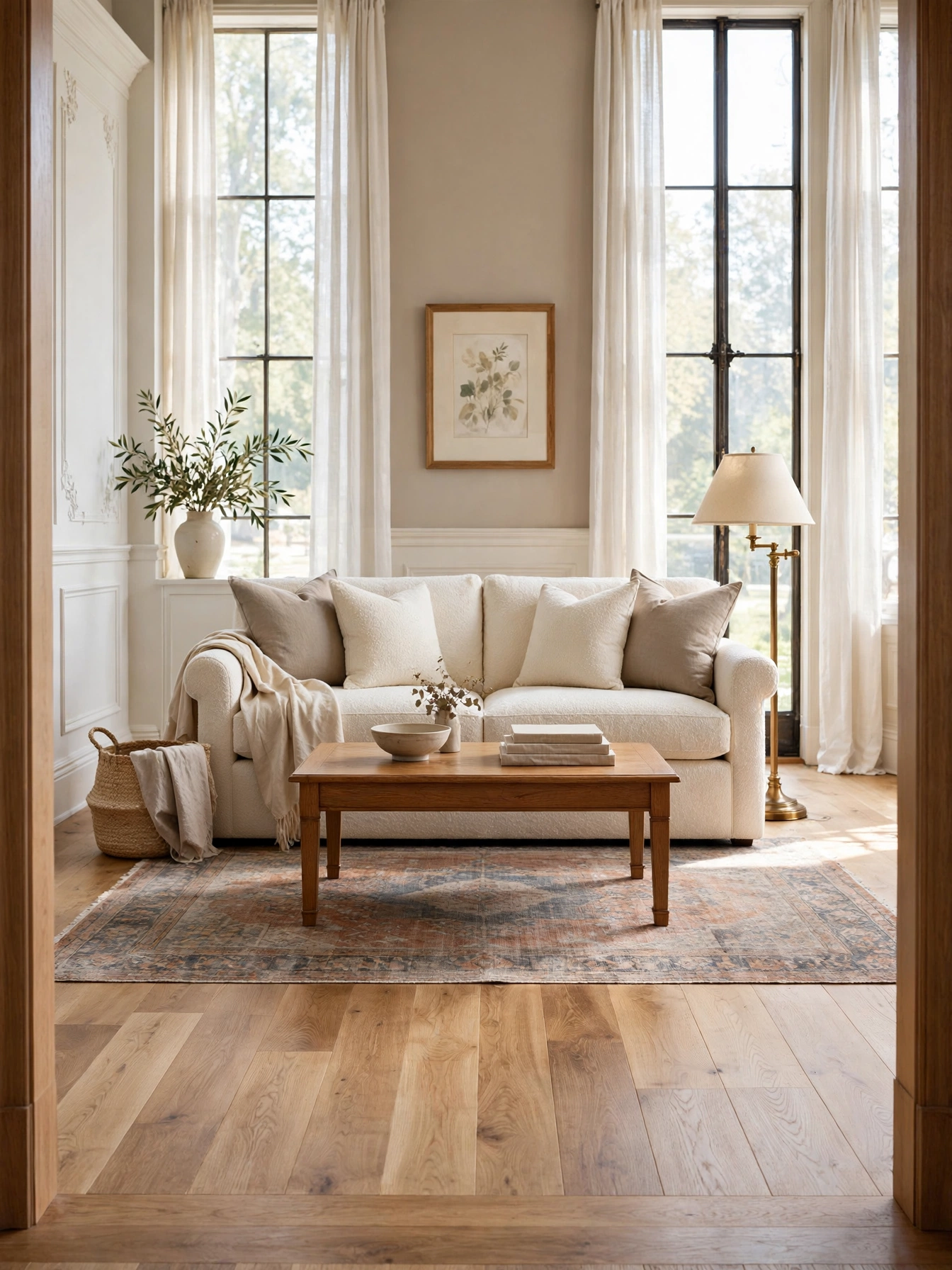
Why This Works:
- Oak floors have anchored living rooms since the early 1900s and never read as dated.
- A natural matte finish hides scratches far better than dark glossy stains.
- Wide planks (5 to 7 inches) make average rooms feel larger than narrow strips do.
- Oak takes a light sanding and recoat every 7 to 10 years, extending life to 50+ years.
Specify 3/4 inch solid white oak rather than 3/8 inch engineered if the budget allows, since solid can be refinished 4 to 6 times over its life versus 1 to 2 times for thin engineered wear layers. Choose a natural or light honey finish with a matte polyurethane or hardwax oil coating rated for 5 to 7 years of residential wear before a maintenance coat. Keep plank width at 5 to 7 inches for rooms under 300 square feet; wider 8 to 10 inch planks suit open plans above 400 square feet. Avoid orange-toned stains and high-gloss lacquers, because both amplify every footprint and date the room to a specific decade. Industry standard calls for a 3/4 inch expansion gap at all walls, hidden by 3.25 inch baseboards.
Solid oak suits households that plan to stay put for 10 years or more and want one floor investment, not three. It works beautifully in family homes because dents sand out and refinishing resets the surface. The honest trade-off is cost: installed solid oak runs $12 to $18 per square foot versus $7 to $11 for engineered and $3 to $5 for luxury vinyl plank. In very humid climates or concrete-slab homes, engineered oak over a moisture barrier is the safer pick despite the shorter refinish life. Mid option: site-finished engineered white oak at $9 to $12 per square foot gives the real-wood look with better moisture tolerance.
Pro Tip: Order 10% extra material for cuts and waste, and acclimate the boxes in the room for 72 hours before installation to prevent gapping.
Cream Boucle Sofa
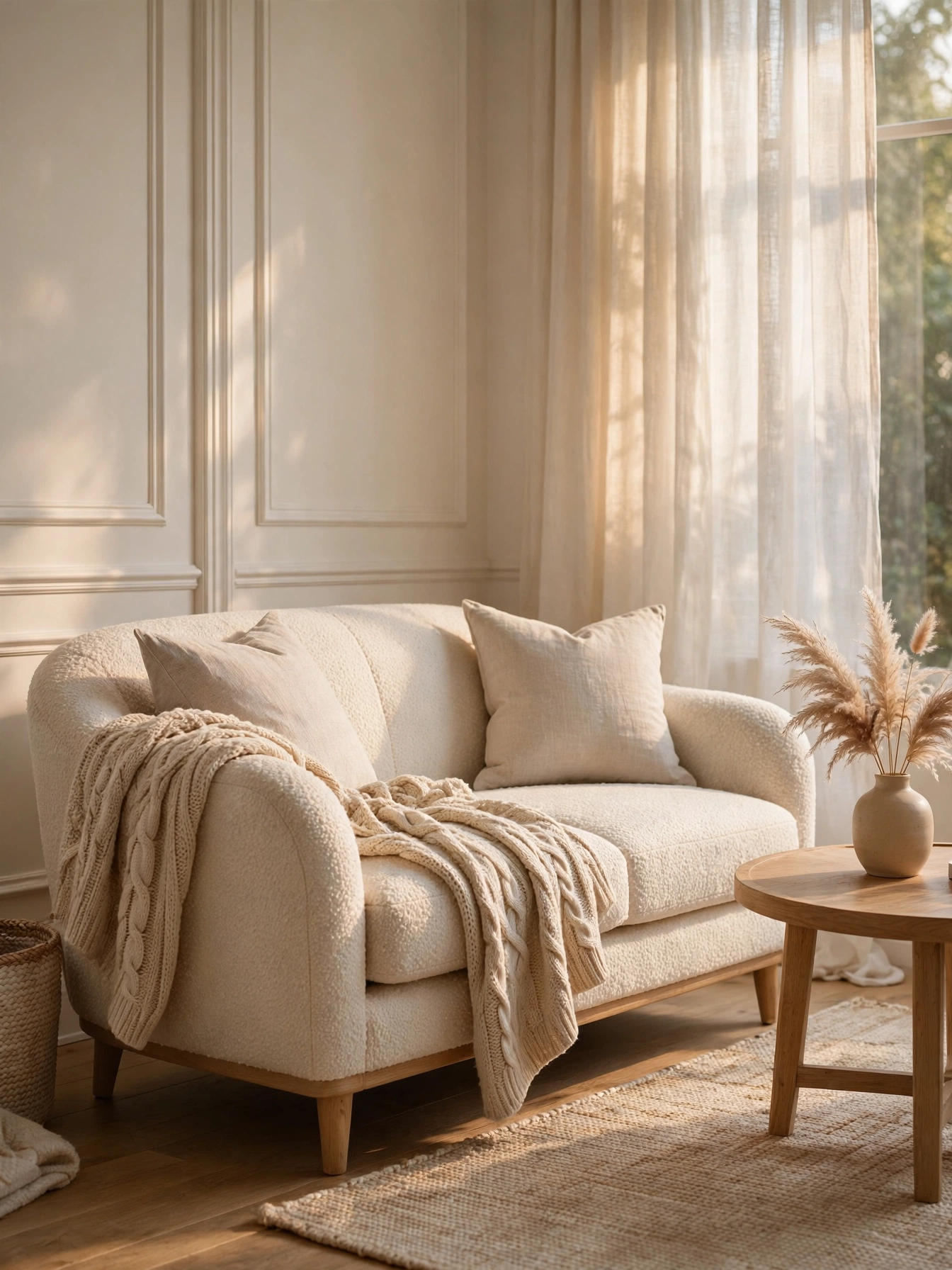
Why This Works:
- Boucle’s nubby texture adds depth without a single pattern, so it never clashes with future rugs.
- Cream and oatmeal tones have been the default sofa color of calm interiors for 40+ years.
- Rounded, low-profile arms read soft in the room and forgive bumps in family traffic lanes.
- A removable slipcover turns a 10-year sofa into a 15-year one with one wash.
Look for a sofa with a kiln-dried hardwood frame (oak or beech), corner blocks, and sinuous springs rated for at least 25,000 sit cycles, with cushions of 2.2 lb density foam wrapped in down blend. Seat depth of 22 to 24 inches and seat height of 17 to 19 inches fit the average adult comfortably; total width of 84 to 96 inches seats three without swallowing a 12-foot wall. Choose a performance boucle with a rub count (Martindale) of 30,000 or higher and a stain-resistant finish. Avoid cheap polyester boucle under $600: it pills within 18 months and the flat weave loses its texture. Industry standard: frames should carry at least a 5-year warranty.
This sofa suits readers, movie nights and anyone who wants a room that photographs calm. Households with toddlers or large dogs should insist on a washable slipcover in a slightly darker oatmeal; pure white without a cover will show every mark within a month. Budget pick: a $700 to $1,000 slipcovered boucle sofa from a mid-range retailer lasts 6 to 8 years. Premium: $2,200 to $3,500 from a made-to-order maker buys a 15-year frame and replaceable cushion covers. The honest trade-off is upkeep: textured cream fabric demands a handheld vacuum every 2 weeks.
Pro Tip: Buy two spare slipcovers at purchase time (about $120 each) so dye lots match when one is in the wash.
Persian Wool Rugs
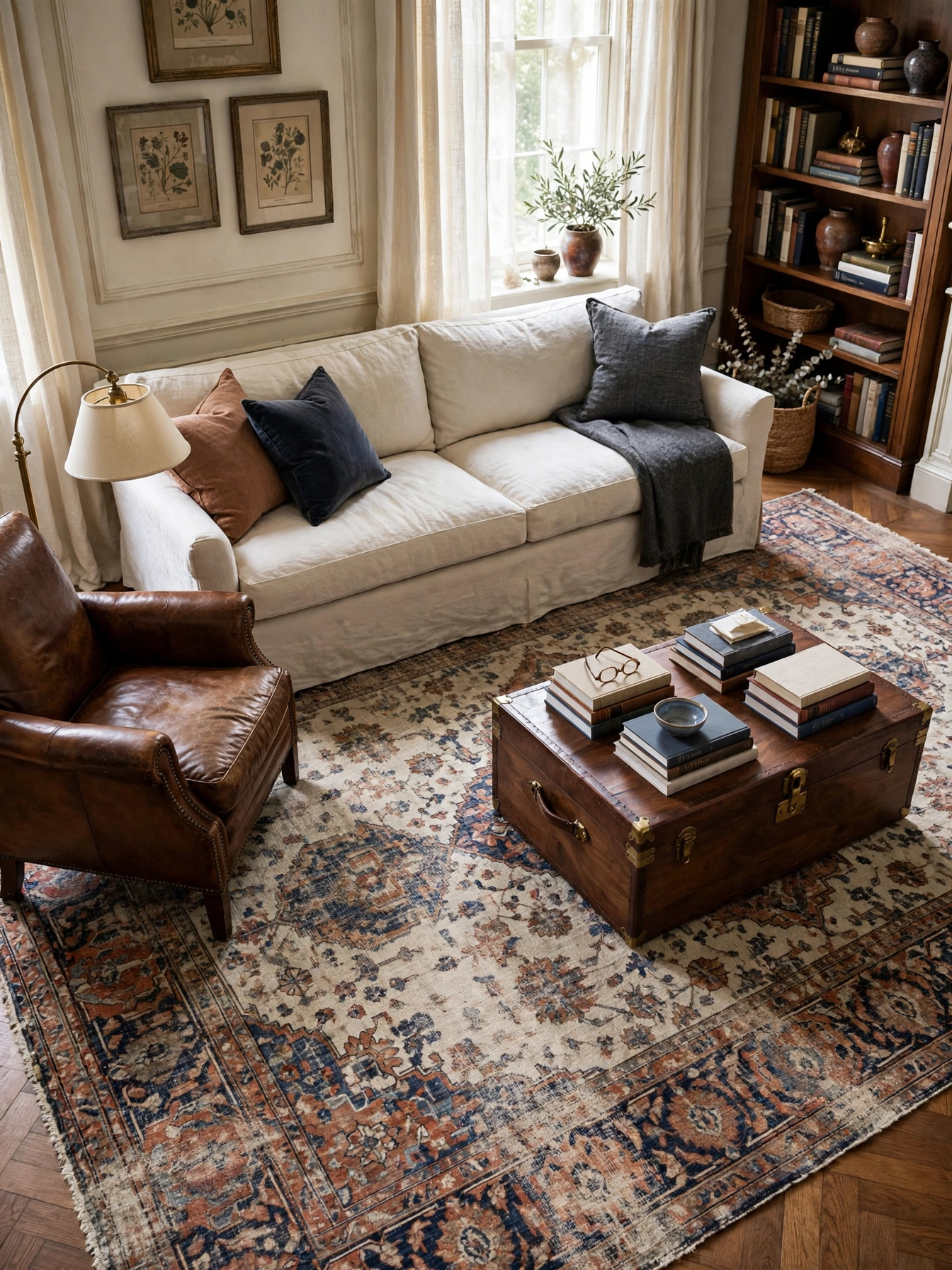
Why This Works:
- Hand-knotted Persian patterns have been made for centuries and never cycle in or out.
- The busy motif hides crumbs, pet hair and wear better than any solid rug.
- A quality wool rug lasts 30 to 50 years, outliving 3 to 4 trendy flatweaves.
- Muted vegetable-dye palettes harmonize with both warm and cool wall colors.
Size the rug so the front legs of every main seat sit on it: 8×10 ft for a standard sofa and two chairs, 9×12 ft for larger seating groups, and never smaller than 6×9 ft in a primary living room. Check knot density: 150 to 250 knots per square inch signals genuine hand knotting; under 100 KPSI usually means machine-made. Pile height of 0.4 to 0.6 inch is the sweet spot for door clearance and chair movement. Avoid synthetic “Persian-style” polypropylene if longevity matters: it mats flat in 2 to 3 years and cannot be repaired. Standard practice: pair every wool rug with a 1/4 inch felt rug pad to prevent creep and protect the floor.
Vintage and antique rugs suit anyone who wants character without committing to a color scheme; they read as art, not decor. Pet owners should choose low-pile tribal patterns in dark ground colors, which hide accidents and wear gracefully. Price reality: a real 8×10 hand-knotted wool rug costs $1,800 to $4,500 new, $600 to $1,500 for a good vintage piece. Budget route: hand-tufted wool at $400 to $800 lasts 8 to 12 years. Rotate the rug 180 degrees once a year so sunlight fades it evenly.
Pro Tip: Photograph the rug’s label and underside before delivery; knot count and origin are printed there and settle most authenticity questions.
Brass Table Lamps
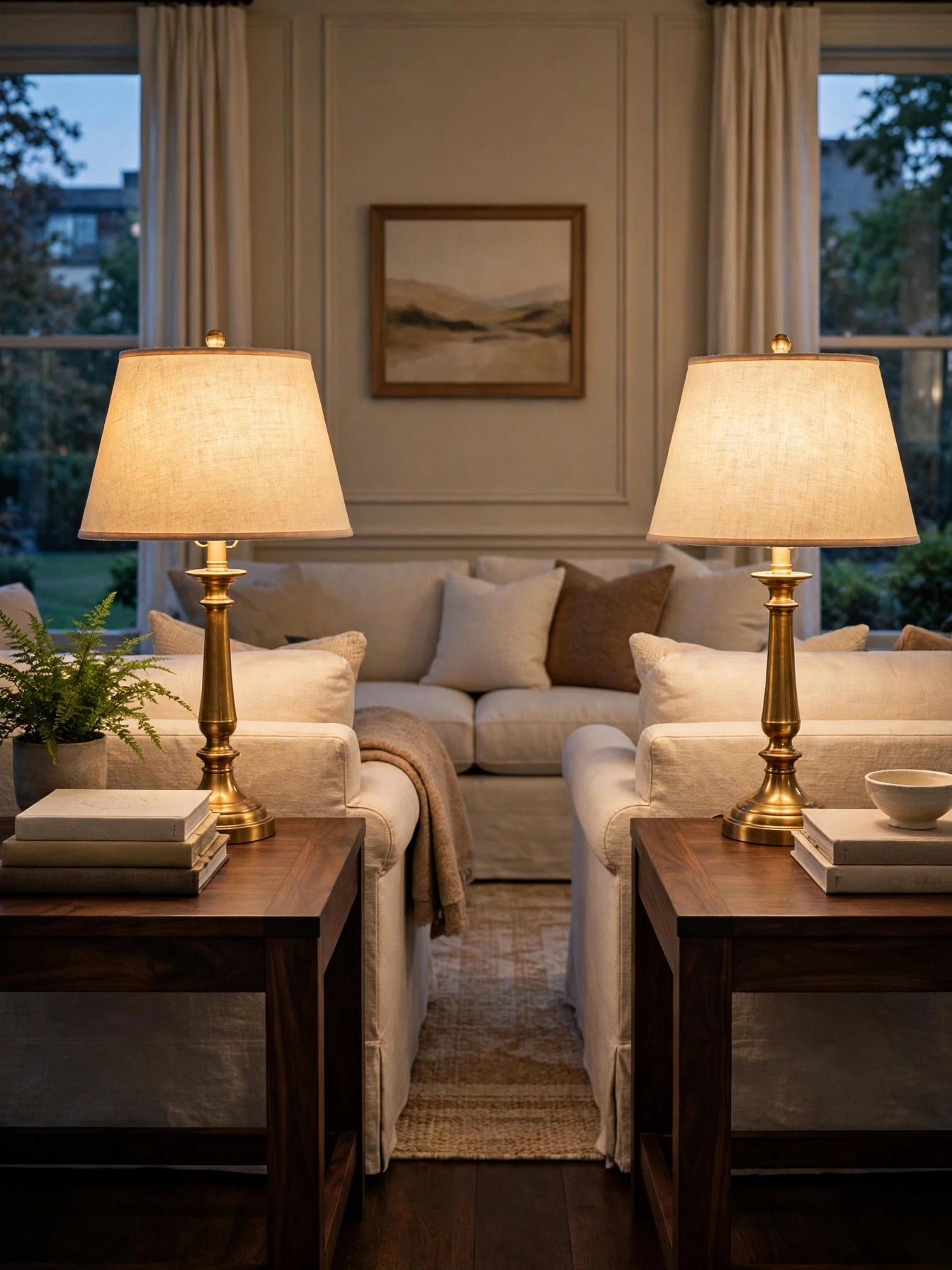
Why This Works:
- Unlacquered brass has cycled through every design era since the 1920s and always returns.
- A living finish develops a soft patina that hides fingerprints instead of showing them.
- Paired lamps flank a sofa symmetrically, the most classically balanced composition there is.
- Warm 2700K bulbs through linen shades flatter skin tones and wood finishes equally.
Buy solid brass, not brass-plated steel: hold a magnet to the base and it should not stick, and solid brass weighs 4 to 8 lbs per lamp. Shade sizing follows a simple rule: the shade’s bottom diameter should equal roughly 60% of the lamp’s total height, so a 28-inch lamp pairs with a 16 to 18 inch shade. Set the shade bottom 42 to 48 inches from the floor beside a reading seat for glare-free light. Avoid shades narrower than the lamp base (they look top-heavy) and LED bulbs above 3000K (they turn brass cold). The American Lighting Association recommends three light layers per living room; table lamps cover the task and ambient layers.
Brass lamps suit traditional and transitional rooms best, but they warm up minimalist spaces too. Renters get the same look with plug-in lamps, no wiring needed. Budget: $80 to $180 per pair at mid-range retailers in plated finishes that last 5 to 8 years. Premium: $350 to $700 each for solid unlacquered brass that patinas for decades. Trade-off: unlacquered brass darkens unevenly in the first year; polish yearly with a paste cleaner or embrace the aged look. When to hire a professional: an electrician is needed if you are adding new switched outlets for the lamps rather than using existing ones.
Pro Tip: Use 800-lumen dimmable LED bulbs (about 60-watt equivalent) with warm-dim technology so the light drops to candlelike 2200K at low settings.
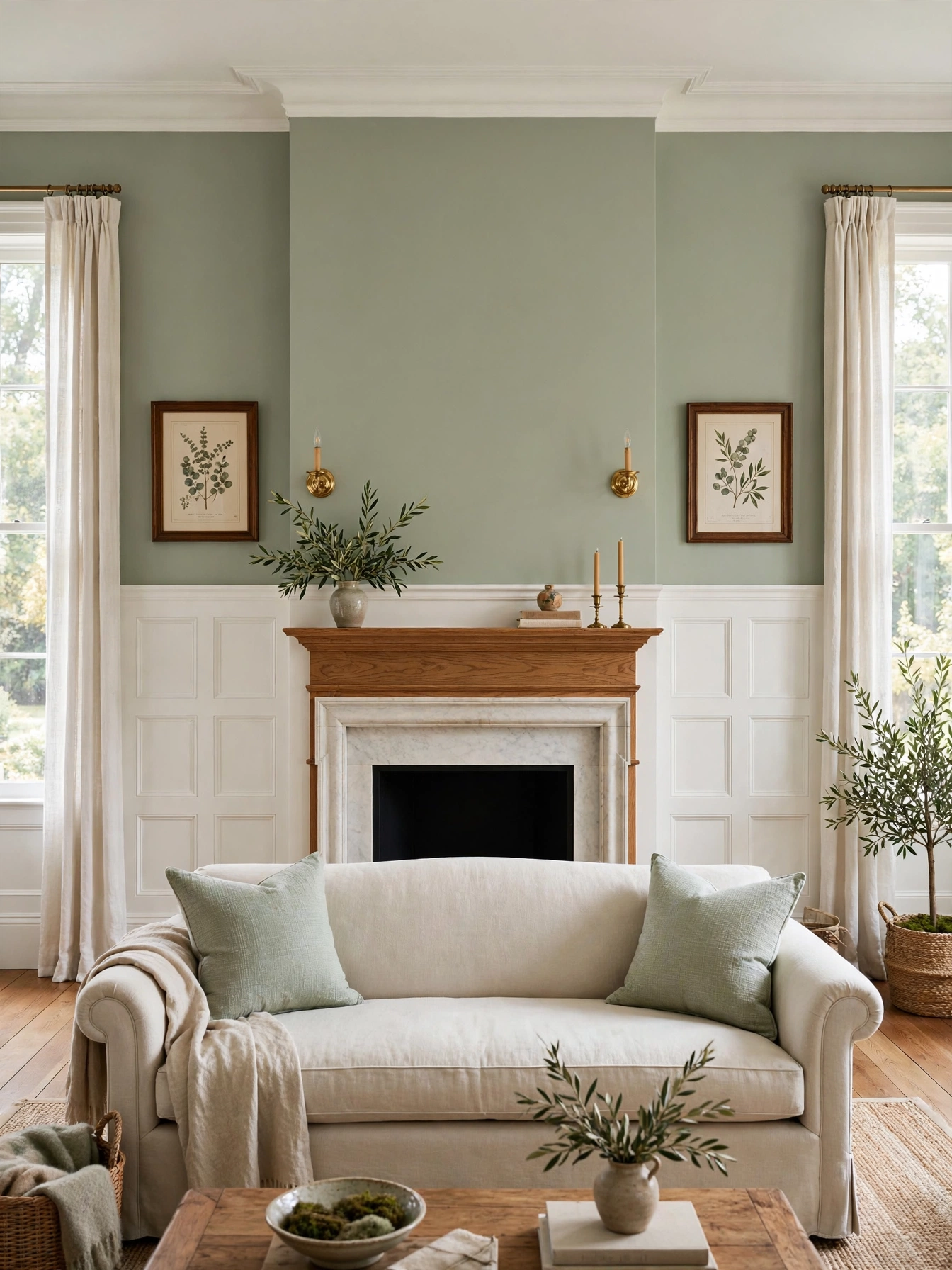
Wainscot Wall Panels
Why This Works:
- Panel molding has decorated walls since the 1600s and reads as architecture, not trend.
- It adds visual weight to plain drywall for the cost of trim and paint, not construction.
- The chair-rail line breaks tall walls into human-scale proportions.
- Painted semi-gloss panels wipe clean, a practical win in high-traffic living rooms.
Install the chair rail at 32 to 36 inches from the floor (one-third of a 9-foot wall is the classical proportion), using 2.5 to 3.5 inch wide molding with 1×3 or 1×4 vertical stiles spaced 16 to 24 inches apart. Use moisture-resistant MDF in dry rooms and poplar or PVC trim where humidity swings; paint with a scrubbable semi-gloss enamel, two coats minimum over primer. Avoid gluing panels over textured walls without skimming first, or edges will telegraph bumps within months. Standard practice: caulk every joint before painting, since seasonal wood movement opens hairline cracks each winter.
Wainscoting suits colonial, farmhouse and transitional homes, and it rescues flat builder-grade walls in newer houses. In rooms under 10 feet wide, keep the panel profile shallow (under 0.75 inch) so it does not eat visual space. Budget: DIY MDF wainscot runs $3 to $6 per linear foot; a carpenter charges $12 to $20 per linear foot installed and painted. Trade-off: it is a multi-weekend project for a full room, and removing it later means drywall repair. A single accent wall behind the sofa gives 80% of the effect for 25% of the effort.
Pro Tip: Paint the panels and wall above in the same color but different sheens (eggshell above, semi-gloss below) for a subtle tonal look that hides seams.
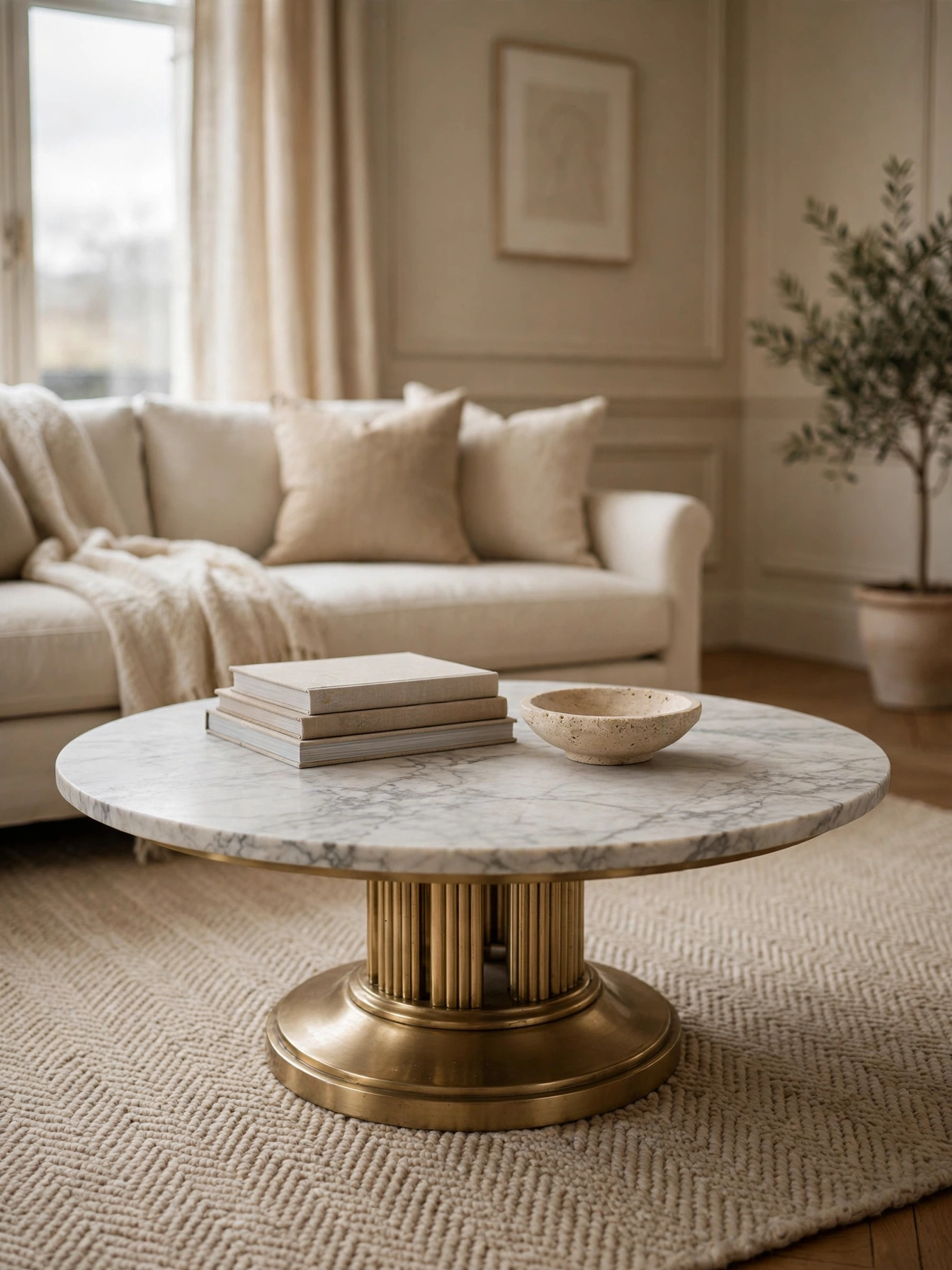
Marble Coffee Table
Why This Works:
- Marble has been the luxury surface of choice for 2,000 years; it does not date.
- A round top softens rooms full of rectangular furniture and improves traffic flow.
- Honed (matte) marble hides etching far better than polished finishes.
- One stone table anchors a whole seating group, so the rest can stay simple.
Choose a 36 to 42 inch diameter round top, 14 to 16 inches tall, which keeps it 1 to 2 inches below the sofa seat height for comfortable reach. Honed Carrara at 3/4 inch thickness weighs roughly 90 to 120 lbs, so confirm the base is rated for stone; a welded brass or steel base handles it, thin wood legs do not. Seal honed marble with an impregnating sealer every 12 months, since marble etches on contact with lemon, wine and vinegar. Avoid placing raw marble where kids eat daily without a tray habit, or the ring marks will multiply. Industry comparison: quartz looks similar and resists stains, but designers note it lacks marble’s depth and never develops the same character.
A marble coffee table suits formal-leaning living rooms and anyone who wants one investment piece. Families with very young children may prefer a marble-look quartz or a wood top for 5 years, then upgrade. Price: genuine Carrara coffee tables run $800 to $2,000; quartz versions cost $300 to $600; a marble top on a vintage brass base can be found for $250 to $450 secondhand. Trade-off: real marble demands coasters as a household rule, which not every family will keep.
Pro Tip: Keep a $15 marble polishing powder on hand; a 10-minute hand buff removes light etch marks that sealer cannot prevent.
Timeless Living Room Ideas
Why This Works:
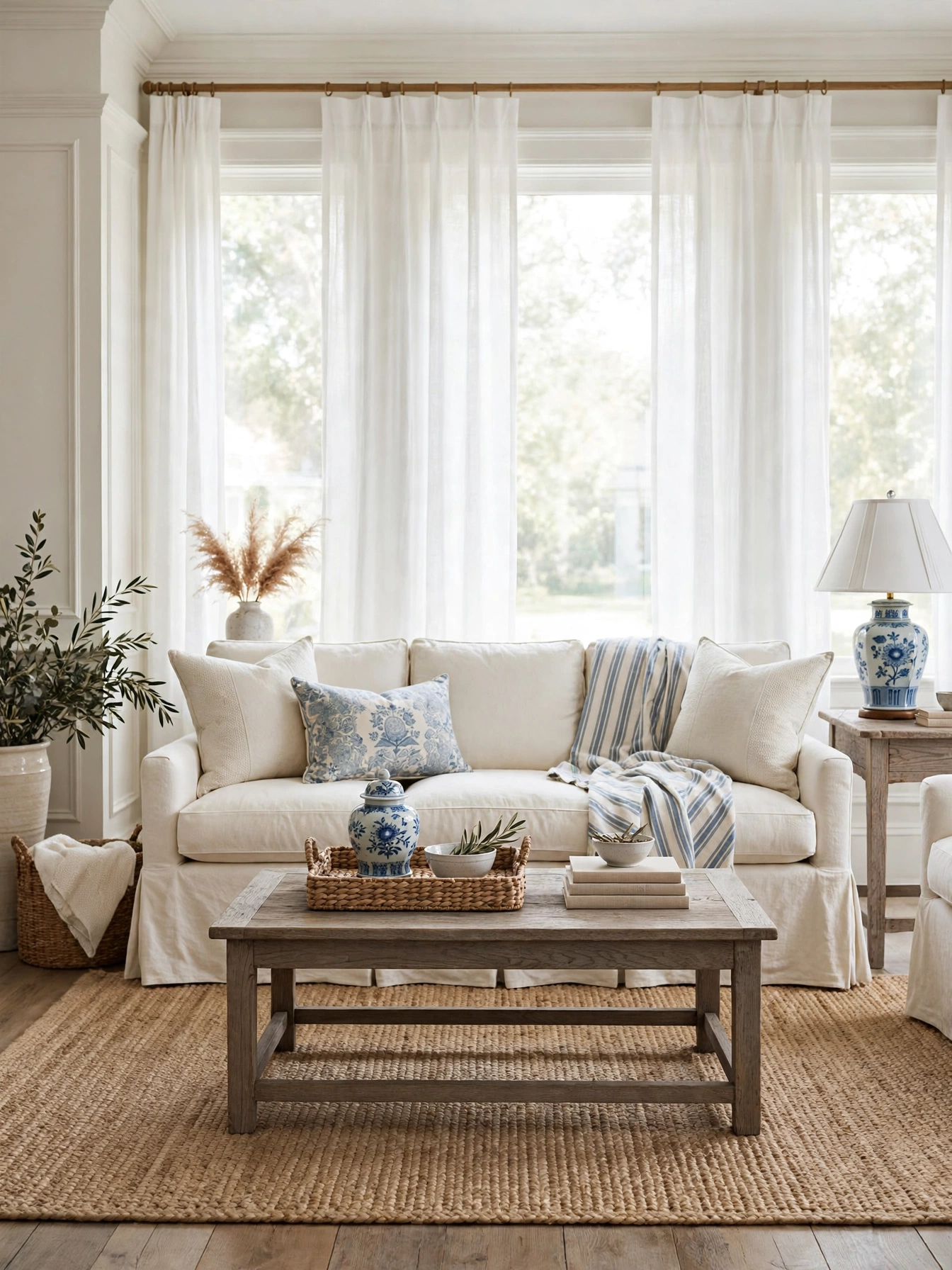
- Slipcovered seating is the original easy-care sofa, popular since the 1800s.
- A fresh cover costs $120 to $250, a fraction of reupholstering at $1,200+.
- Skirted bases hide legs and storage underneath, keeping the silhouette clean.
- Washed linen softens with every wash instead of wearing out.
Buy a slipcover made for your exact sofa model (brands like IKEA, Pottery Barn and Ballard Designs sell fitted replacements) or have one custom-sewn in 8 to 10 yards of washed Belgian linen for a standard 84-inch sofa. Choose medium-weight linen at 7 to 9 oz per square yard; lighter weights wrinkle beyond the relaxed look into sloppy. Wash in cold water and line-dry to 90% before putting the cover back on slightly damp, which smooths it as it finishes drying. Avoid dry-clean-only fabrics for a daily-use sofa: a $25 wash cycle you actually do beats a $60 dry-clean bill you skip. Standard sizing: the skirt should clear the floor by 0.5 to 1 inch to avoid dragging.
Slipcovers suit families with kids and pets better than any fixed upholstery, and they let you shift color seasonally for the price of one cover set. They are less ideal for very formal rooms where a tailored silhouette matters. Budget: ready-made covers $120 to $250; custom-sewn $600 to $1,200. Trade-off: a slightly rumpled look is part of the charm; if you demand crisp tailored lines, choose a tight-back sofa with a fitted (not loose) cover instead.
Pro Tip: Spray the finished cover with a fabric protector rated for 25 washes; reapply once a year to keep spills beading on the surface.
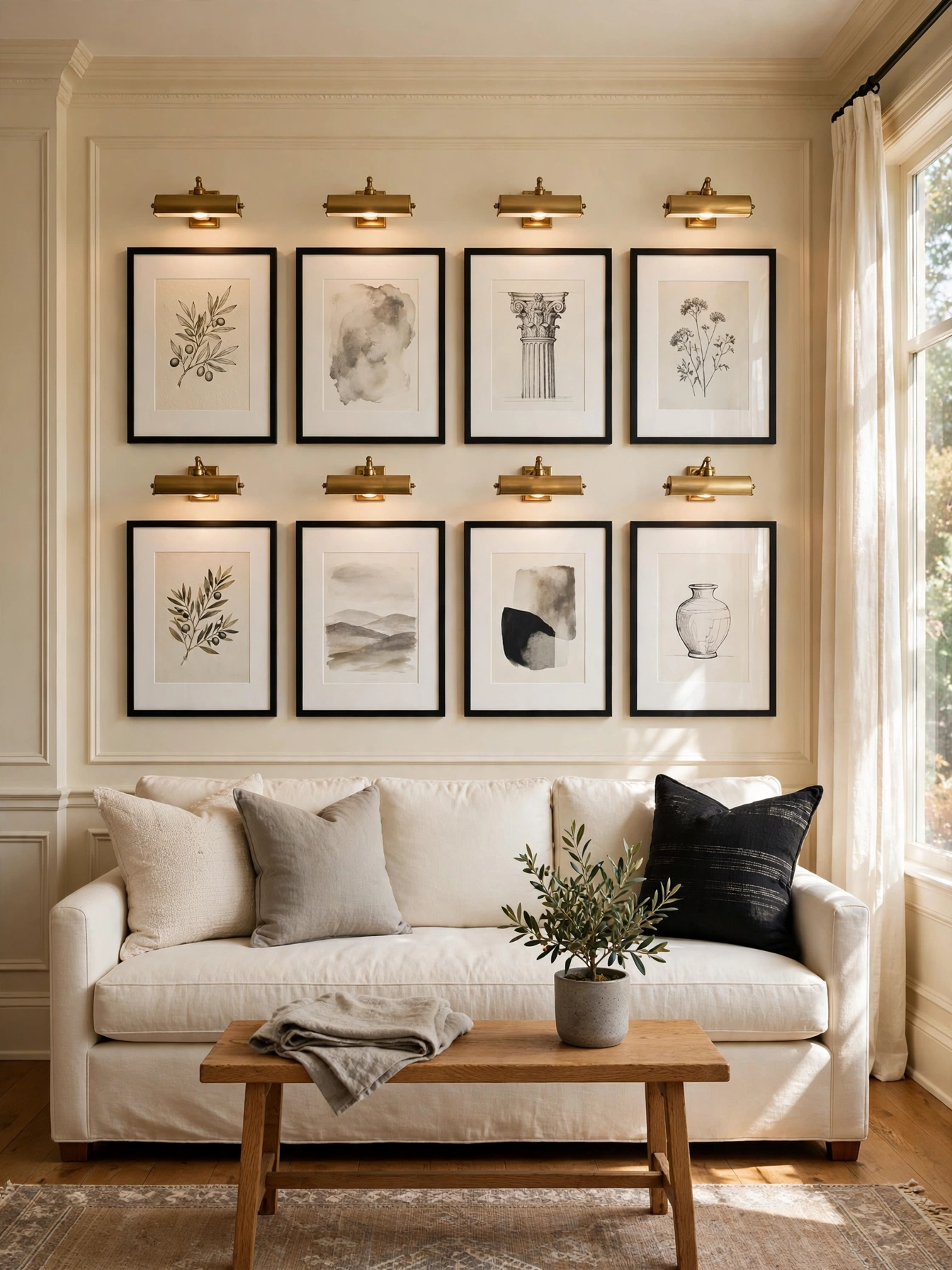
Gallery Wall Frames
Why This Works:
- Thin black frames are the neutral of wall art: they suit any print, forever.
- A gallery wall lets you swap art inside the frames as tastes change, not the frames.
- Clustered layouts have been hung in homes since Victorian times.
- Matching frames unify mismatched prints into one calm composition.
Choose frames 1 to 1.5 inches wide with a simple flat or beveled profile; ornate gold frames fight modern prints and date fast. Hang the center of the arrangement at 57 inches from the floor (gallery standard eye level), keeping 2 to 3 inches between frames for a tight collected look or 4 to 5 inches for an airier feel. Use acid-free mats 2 to 3 inches wide on pieces under 16×20 inches; larger pieces can skip mats. Avoid plastic “glass” that scratches and yellows within 2 years; real glass or museum acrylic protects art for decades. Standard hardware: D-rings with wall anchors rated for 2x the frame weight in drywall.
This suits anyone with a growing art collection or family photos they actually want to look at. Renters can use removable picture-hanging strips rated for up to 16 lbs per set, though heavy frames need real anchors. Budget: $8 to $20 per frame at big-box stores in standard sizes; custom framing runs $100 to $300 per piece. The downside is dusting: a 12-frame wall needs a 15-minute feather-duster pass monthly. Start with 6 to 9 frames and grow the wall over time rather than buying everything at once.
Pro Tip: Trace each frame on kraft paper, tape the templates to the wall, and live with the layout for 48 hours before driving a single nail.
Linen Draped Curtains
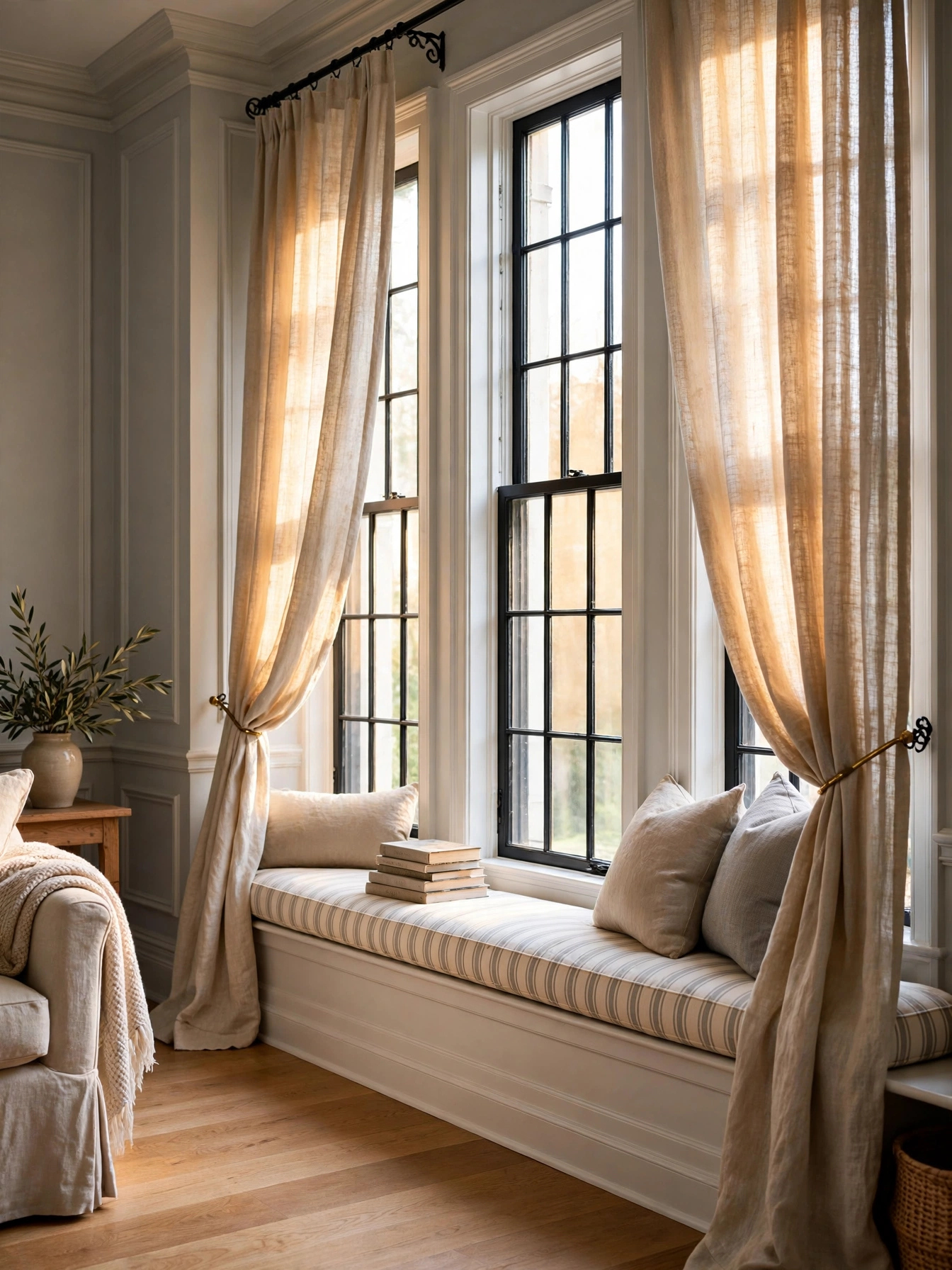
Why This Works:
- Natural linen wrinkles into softness instead of looking messy, a quality no synthetic matches.
- Floor-length panels have framed windows the same way for a century.
- The semi-sheer weave filters light beautifully while keeping daytime privacy.
- Neutral flax tones work with every wall color you will ever repaint.
Set the rod 4 to 6 inches above the window frame and make it 8 to 12 inches wider than the frame on each side, which makes windows look larger and lets panels stack off the glass. Panels should measure 2 to 2.5 times the window width for proper fullness; a 60-inch window needs two 75 to 90 inch panels. Hem them to kiss the floor or puddle 1 to 2 inches; avoid the awkward 2-inch hover above the floor that reads as a measuring mistake. Choose medium-weight linen (5.5 to 7 oz per square yard) with a lining if the room faces harsh afternoon sun, since unlined linen fades unevenly. Standard hardware: 1 to 1.25 inch diameter rods support linen without sagging at spans up to 72 inches.
Linen curtains suit anyone who wants softness without formality, and they are forgiving in homes with settling foundations because the drape hides crooked lines. They are not blackout curtains: if you need darkness, layer them over roller shades. Price: ready-made linen panels $60 to $150 per pair; custom $300 to $600 per pair. Trade-off: linen needs a steam pass after washing, and cat claws snag the weave, so pet owners may prefer a tighter cotton duck.
Pro Tip: Buy panels 6 inches longer than your measurement and hem at home; shrinkage of 3 to 5% on the first wash is normal for linen.
Leather Chesterfield Armchair

Why This Works:
- The Chesterfield silhouette dates to the 1700s and has never left furniture showrooms.
- Full-grain leather develops a patina that looks better at year 10 than year 1.
- Deep button tufting hides the creasing that makes smooth leather look tired.
- One cognac chair warms up an all-neutral room without any color commitment.
Demand full-grain aniline or semi-aniline leather (1.0 to 1.2 mm thick); bonded or “genuine” split leather peels within 3 to 5 years. A proper Chesterfield seat is 20 to 22 inches deep with rolled arms level with the back at 28 to 30 inches high, and the frame should be kiln-dried hardwood with 8-way hand-tied springs. Condition the leather every 6 months with a pH-balanced cream to prevent cracking; keep it 3+ feet from direct heat sources like radiators. Avoid placing aniline leather in direct sun, which fades cognac to orange-pink unevenly. Industry standard: quality leather furniture carries a 5-year frame and spring warranty.
This chair suits studies, reading corners and anyone who wants furniture with presence. It is a poor pick for homes with cats that scratch; leather and claws do not mix. Price: $1,500 to $3,500 for full-grain from reputable makers; $600 to $900 bonded-leather versions last 3 to 5 years and then peel. Trade-off: aniline leather shows scratches, which either charm you or drive you mad. Test your tolerance by visiting a showroom floor model first.
Pro Tip: Ask the retailer for the leather’s origin tannery; names like Conceria Walpier or Moore & Giles signal hides that age gracefully.
Timeless Living Room Ideas in Heritage Colors

Why This Works:
- Warm greige and soft white walls have been the safe classic choice for 30+ years.
- Neutral walls let you change rugs, art and pillows without ever repainting.
- One undertone carried through walls, trim and ceiling reads calm instead of choppy.
- Light neutrals bounce daylight deeper into the room, a free lighting upgrade.
Pick a warm greige with an LRV (Light Reflectance Value) between 55 and 65 for walls: bright enough to feel airy, dark enough to hide scuffs. Keep trim 2 to 3 shades lighter than the wall in the same undertone family; mixing warm walls with cool-white trim is the classic clash. Paint in eggshell for walls (washable, low sheen) and semi-gloss for trim, applying two coats over a tinted primer. Avoid colors with strong pink or yellow undertones in north-facing rooms, where cool light exaggerates them. The Spruce and other design references consistently recommend sampling: paint 2×2 ft test boards and observe them for 3 full days in your light before committing.
Neutral palettes suit anyone who redecorates with accessories rather than paint, and they photograph beautifully for resale listings. If you crave color, add it in pillows and art: repainting one accent wall costs $150 to $300, repainting a whole room costs $800 to $2,000. Budget: DIY a 15×18 ft room for $120 to $200 in paint; a pro charges $2 to $6 per square foot of floor area. Trade-off: all-neutral rooms need texture (linen, wool, wood) to avoid feeling flat, which the next ideas cover.
Pro Tip: Paint the ceiling the wall color at 50% strength in flat finish; it lowers the visual ceiling line just enough to feel cozy without repainting later.
Wooden Mantel Shelves
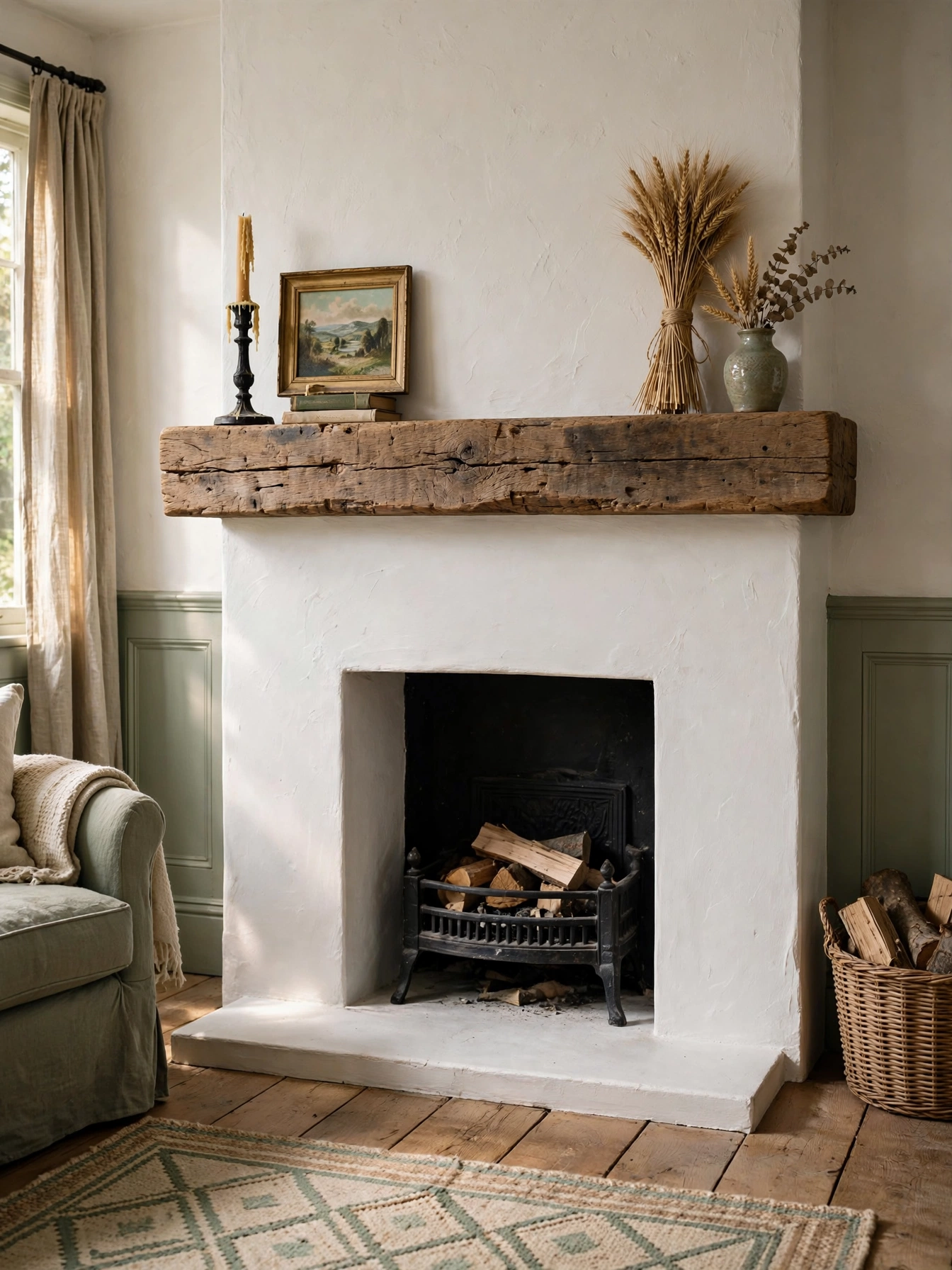
Why This Works:
- A chunky wood mantel is the fireplace detail that has never gone out of style.
- It creates a natural display ledge that updates with the seasons, not the trends.
- Reclaimed beams bring grain character no new lumber can fake.
- The horizontal line grounds tall fireplace walls and balances the room.
Size the mantel 6 to 8 inches deep and 4 to 6 inches thick, extending 6 to 12 inches beyond the firebox opening on each side; mount it 54 to 60 inches from the floor for comfortable display. Use a concealed steel bracket or lag bolts into studs rated for 3x the shelf’s loaded weight, since a 6-foot oak beam weighs 40 to 70 lbs before decor. Keep wood at least 12 inches above the firebox opening and 6 inches from the flue edge per most local fire codes. Avoid thin 2-inch “floating” mantels with heavy beams above them; they look underbuilt and sag. Standard practice: seal reclaimed wood with a matte polyurethane to stop dust from settling into the grain.
This suits homes with existing fireplaces that feel unfinished, and renters can fake it with a leaning mantel shelf. In homes without a fireplace, a mantel shelf on a plain wall still creates a focal point. Budget: a reclaimed beam mantel costs $150 to $400; a new oak beam $100 to $250; professional installation adds $200 to $400. Trade-off: beams can check and crack as they dry indoors; buy kiln-dried stock or accept small cracks as character.
Pro Tip: Hang a round mirror or one large piece of art 6 to 8 inches above the mantel; one statement beats a clutter of small frames.
Antique Brass Mirrors
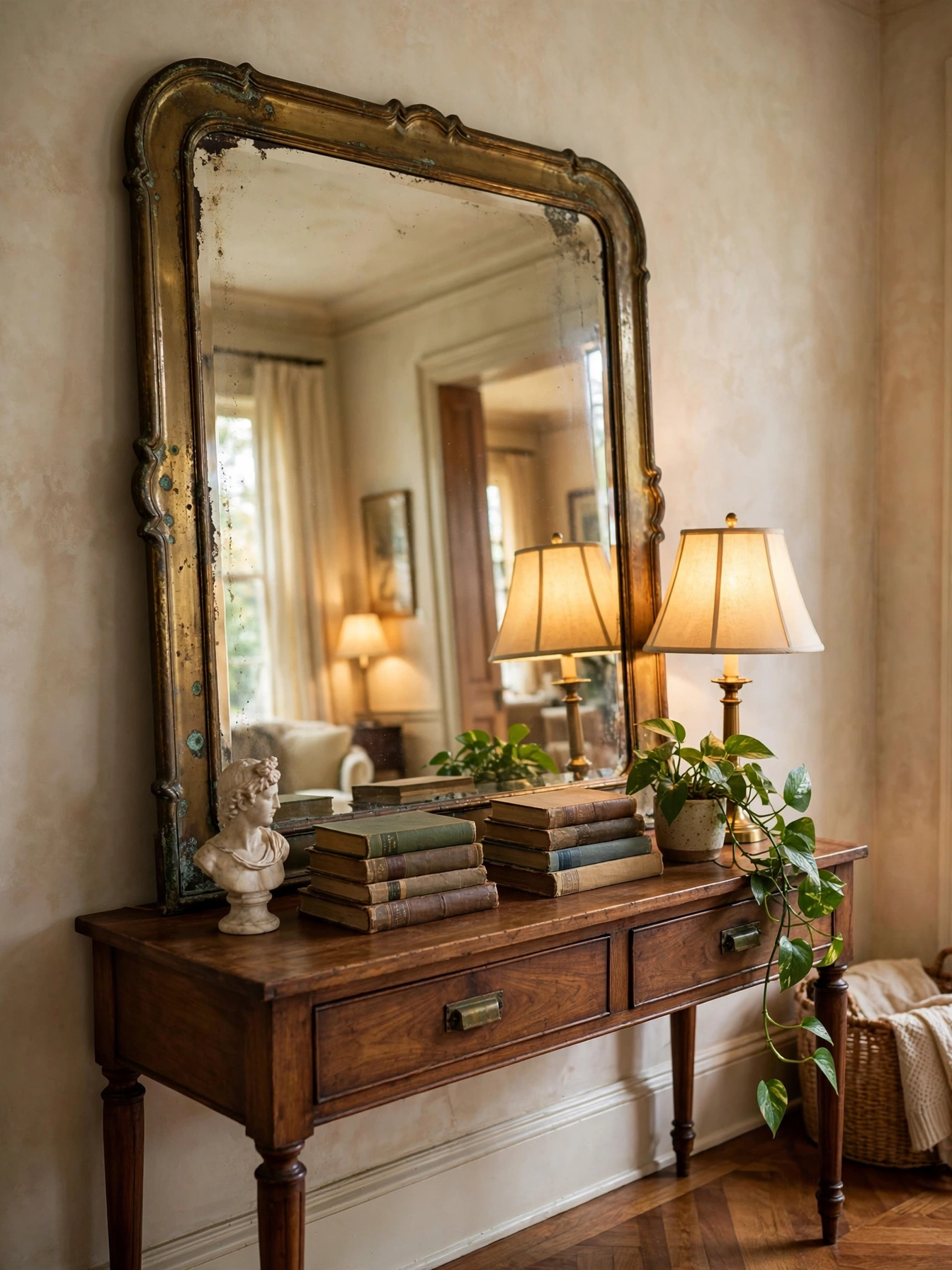
Why This Works:
- Mirrors have doubled light in living rooms since the 1700s; the trick never ages.
- Aged brass frames add warmth that plain black or silver frames cannot.
- One large mirror reads as art and architecture at once.
- It visually doubles a small room for the price of one purchase.
Hang the mirror opposite or adjacent to a window (never facing clutter), with its center at 57 to 60 inches from the floor. Size it generously: 36×48 inches minimum over a console, or a 30-inch round mirror over a small chest; undersized mirrors look like an afterthought. Antiqued brass should show hand-applied variation, not uniform gold spray; real aged finishes have dark recesses in the crevices. Avoid hanging heavy mirrors (30+ lbs) on drywall alone; use French cleats or toggle bolts rated for 4x the weight. Standard rule: the mirror should be 2/3 to 3/4 the width of the furniture below it.
This suits dark rooms, narrow rooms and anyone who wants instant light without new wiring. In very sunny rooms, angle the mirror to bounce light onto the ceiling, not into eyes. Budget: vintage brass mirrors $150 to $600 at antique shops; new antiqued-finish mirrors $120 to $400. Trade-off: large mirrors show dust and fingerprints, so a weekly glass wipe is part of the deal; use a microfiber cloth, never paper towels, to avoid scratches.
Pro Tip: Lean a 48-inch mirror on the mantel instead of hanging it; the casual lean reads collected and saves you drilling into masonry.
Timeless Living Room Ideas With Rich Textures
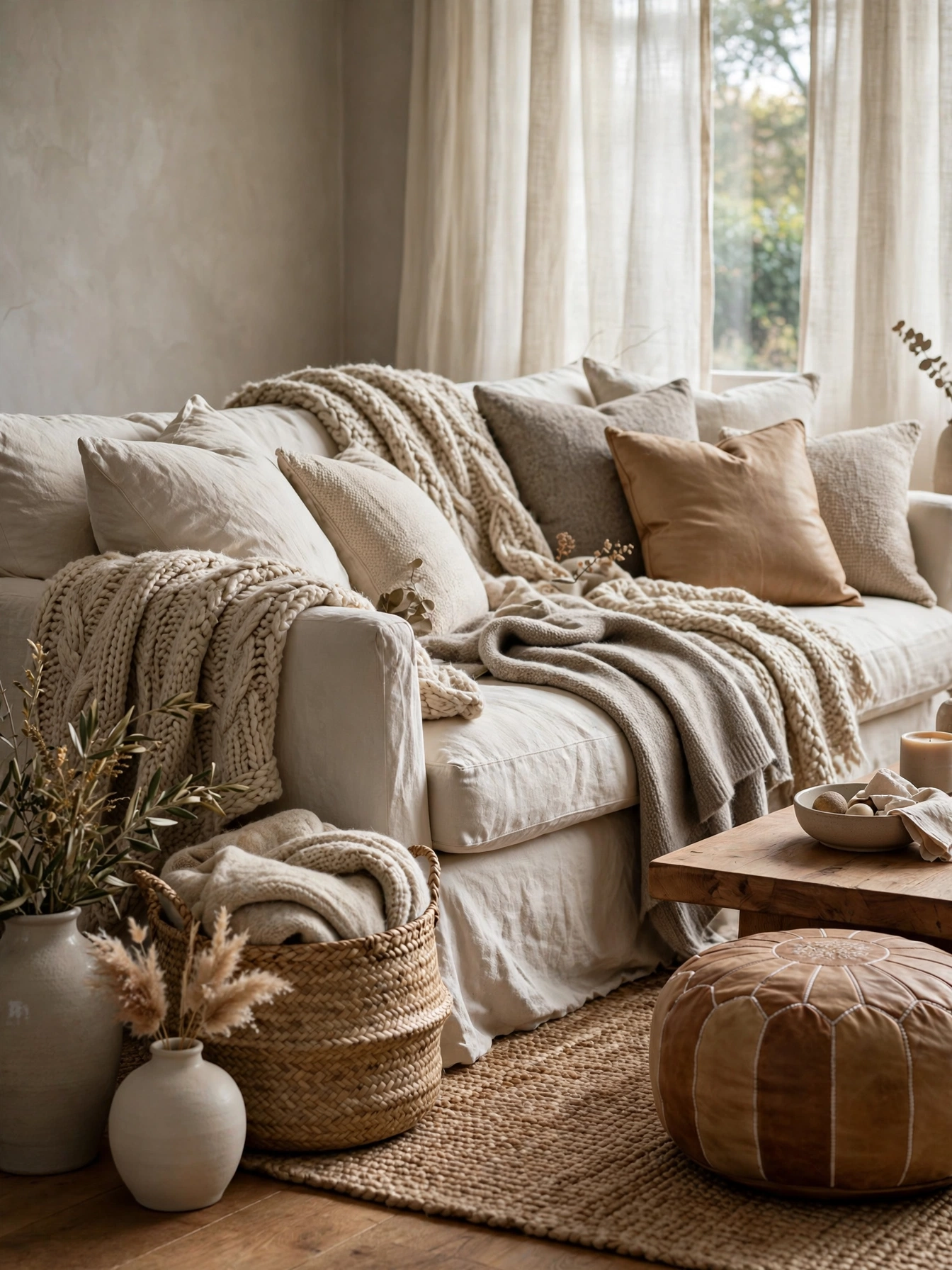
Why This Works:
- Texture is what makes neutral rooms feel rich instead of boring.
- Natural fibers (linen, wool, jute, leather) age into softness, synthetics age into wear.
- Layering 4 to 5 textures is the oldest designer trick for calm, expensive-looking rooms.
- Texture adds interest without a single color commitment.
Build the room on a base of 4 to 5 natural textures: smooth linen upholstery, nubby wool throws, rough jute rug, worn leather accents, matte ceramics. Keep the palette within 3 close neutrals so the textures, not colors, do the talking. Vary the scale: pair a chunky knit (large texture) with fine linen (small texture) so the eye has contrast. Avoid mixing more than one high-shine surface; two glossy finishes in a neutral room read cheap rather than luxe. Industry guidance from sources like The Spruce consistently frames texture layering as the difference between flat and finished neutral rooms.
This suits minimalists who find all-white rooms cold, and anyone decorating a rental where paint is off-limits. Allergy households should note wool and jute trap dust; vacuum upholstery attachments weekly and choose washable cotton throws instead. Budget: a full texture refresh (throws, pillows, rug pad swap) costs $300 to $700. Trade-off: natural fibers need more care than performance synthetics, but they look better at year 5, which is the whole point of timeless.
Pro Tip: Photograph the room in black and white; if it still looks interesting, your texture layering is working.
Built-In Book Shelves
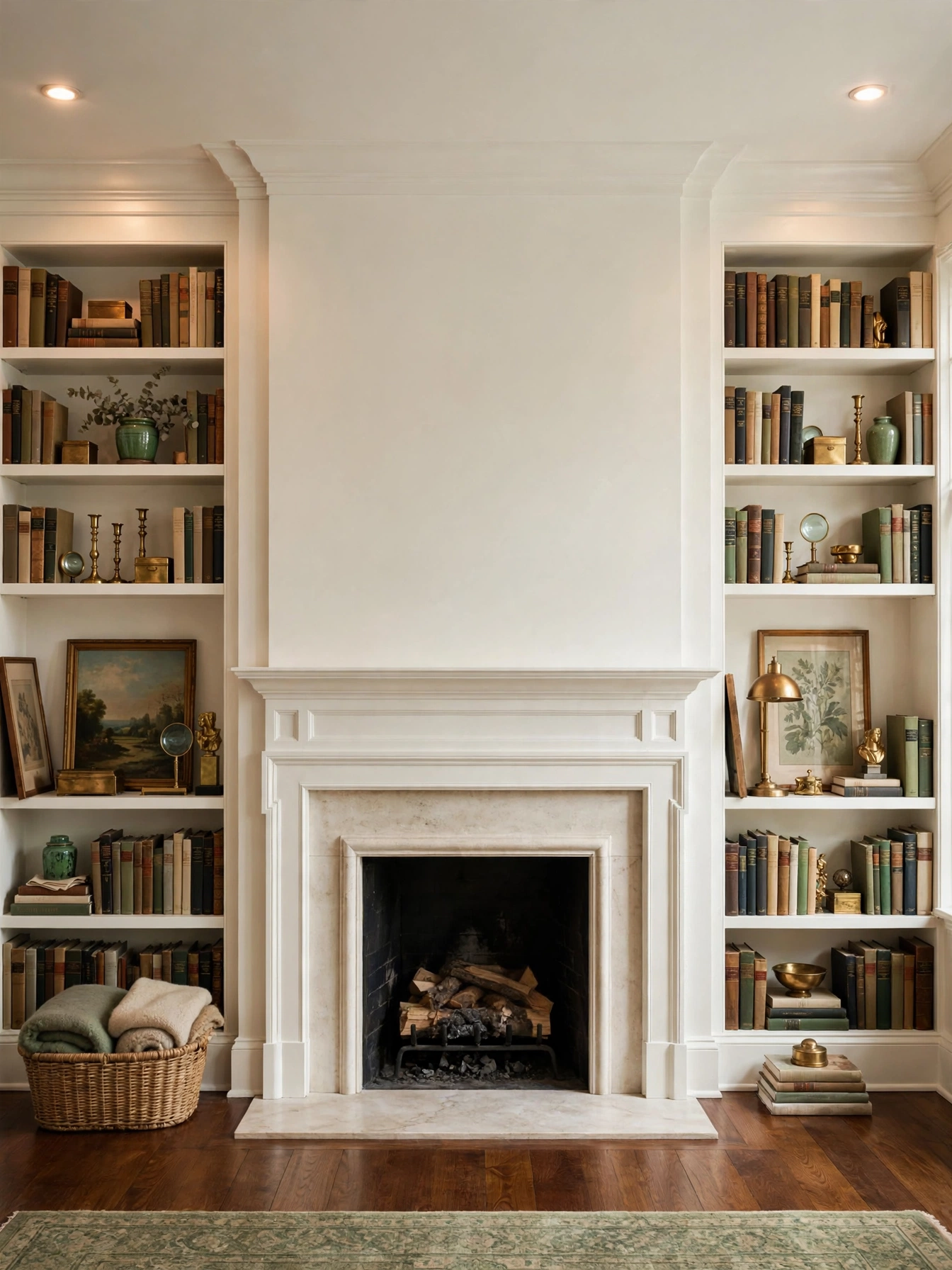
Why This Works:
- Built-ins read as architecture and have raised home values for generations.
- They turn dead wall space into storage that looks intentional, not added.
- Shelves styled with books never date the way open tech displays do.
- Symmetrical flanking bookcases are the classic fireplace composition.
Build shelves 10 to 12 inches deep for books (paperbacks need 8 inches, art books 12), with adjustable shelf spacing starting at 10 inches for novels and 14 inches for oversized volumes. Keep the total unit width proportional: each flanking bookcase should be 1/3 to 1/2 the fireplace width. Use 3/4 inch plywood or poplar with a 1.5 inch face frame to prevent sagging; shelves over 36 inches wide need a center support. Avoid building deeper than 14 inches or books get lost in shadow and dust. Standard practice: paint built-ins the trim color in semi-gloss so they read as one piece with the millwork.
Built-ins suit book lovers and anyone with an awkward alcove that freestanding furniture cannot fill. They are a poor fit for renters and for anyone who rearranges yearly. Budget: DIY painted built-ins $800 to $2,000 in materials; a carpenter charges $3,000 to $8,000 depending on size and finish. Trade-off: they are permanent, which is exactly why buyers love them and commitment-phobes fear them.
Pro Tip: Leave 20% of shelf space empty or loosely styled; packed shelves read as storage, breathing shelves read as design.
Wool Throw Blankets
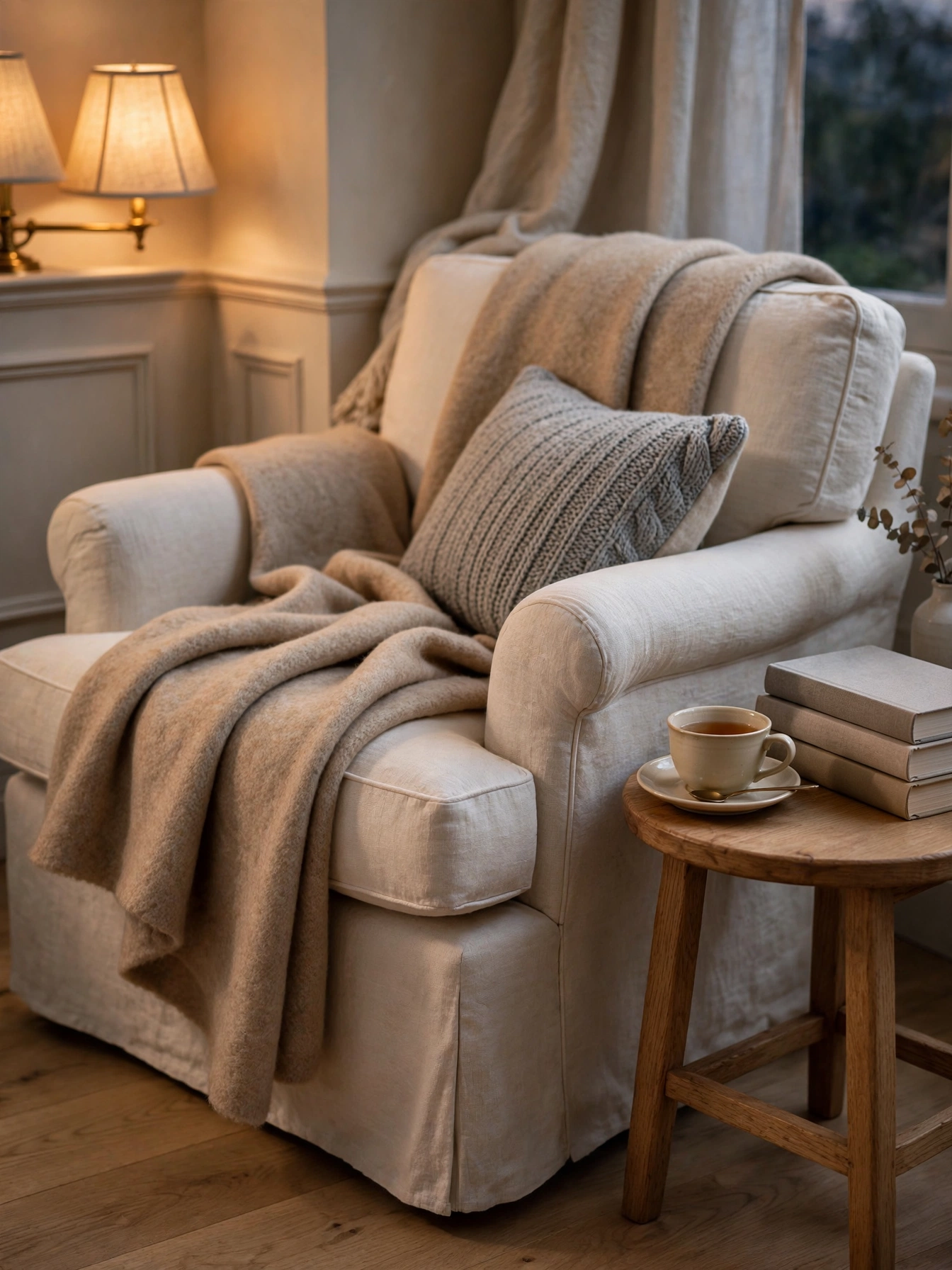
Why This Works:
- Wool throws have warmed laps and sofas for centuries without a redesign.
- A 50×60 inch throw is the classic size that drapes without swallowing furniture.
- Natural lanolin in wool resists odors, so throws stay fresh longer than synthetics.
- One throw in a heritage stripe or solid camel updates a whole sofa for under $100.
Choose 100% lambswool or merino at 380 to 450 GSM (grams per square meter) for a throw that drapes warmly without bulk; under 300 GSM feels thin and slides off. The classic throw size is 50×60 inches, large enough to cover a lap fully. Look for tightly woven edges or hand-twisted fringe, which signal quality construction that survives washing. Avoid “wool-like” acrylic throws if you want longevity: they pill within a year and generate static. Care standard: wash wool cold on gentle with wool detergent, then dry flat to prevent stretching.
This suits anyone who wants the fastest, cheapest room refresh: swap the throw, change the mood. Households with wool allergies should choose high-quality cotton or cashmere-blend throws instead. Budget: $40 to $90 for good lambswool; heritage brands run $150 to $250. Trade-off: real wool needs moth protection in storage; seal off-season throws in zip bags with cedar blocks.
Pro Tip: Drape the throw over one arm in a loose diagonal fold, not spread flat; the casual diagonal is what makes it look styled, not stored.
Shaker Cabinet Storage
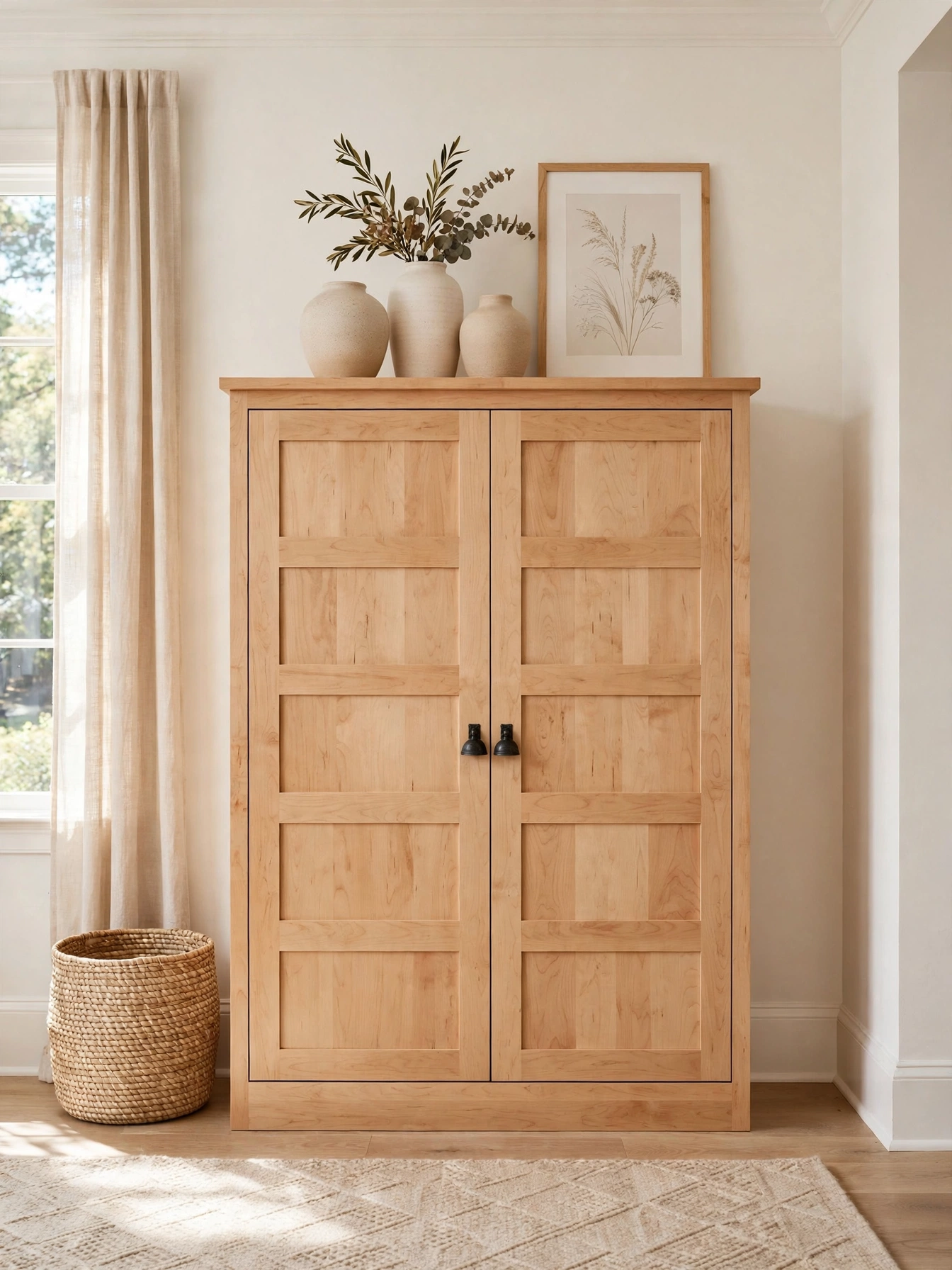
Why This Works:
- The Shaker five-panel door has been in production for 200 years unchanged.
- Its clean lines suit traditional and modern rooms equally, the rarest of qualities.
- Closed storage hides the clutter that dates a room faster than any style choice.
- Solid wood doors take paint beautifully, so the piece can be refinished, not replaced.
Buy solid maple or poplar cabinets with dovetailed drawers and soft-close hinges; a 36-inch-wide media cabinet should hold 75 to 100 lbs of equipment per shelf. Standard heights run 30 to 36 inches, deep enough at 16 to 18 inches for consoles and board games. Check door gaps: even 1/8 inch reveals all around signal quality joinery. Avoid thermofoil or MDF Shaker-look doors in sunny rooms; the vinyl wrap bubbles and peels within 5 years near heat. Industry standard: look for KCMA certification on cabinetry, which tests doors through 25,000 open-close cycles.
Shaker storage suits anyone drowning in remotes, chargers and board games, which is nearly everyone. It works in small rooms because closed fronts read as one calm plane. Budget: $400 to $900 for a solid-wood Shaker console; custom built-ins run $200 to $400 per linear foot. Trade-off: closed storage tempts you to stuff it; schedule a 20-minute declutter every 3 months or the inside becomes chaos behind a calm face.
Pro Tip: Swap standard knobs for unlacquered brass cup pulls ($6 to $12 each); the hardware upgrade makes a $500 cabinet read as $1,500.
Subtle Stripe Wallpaper
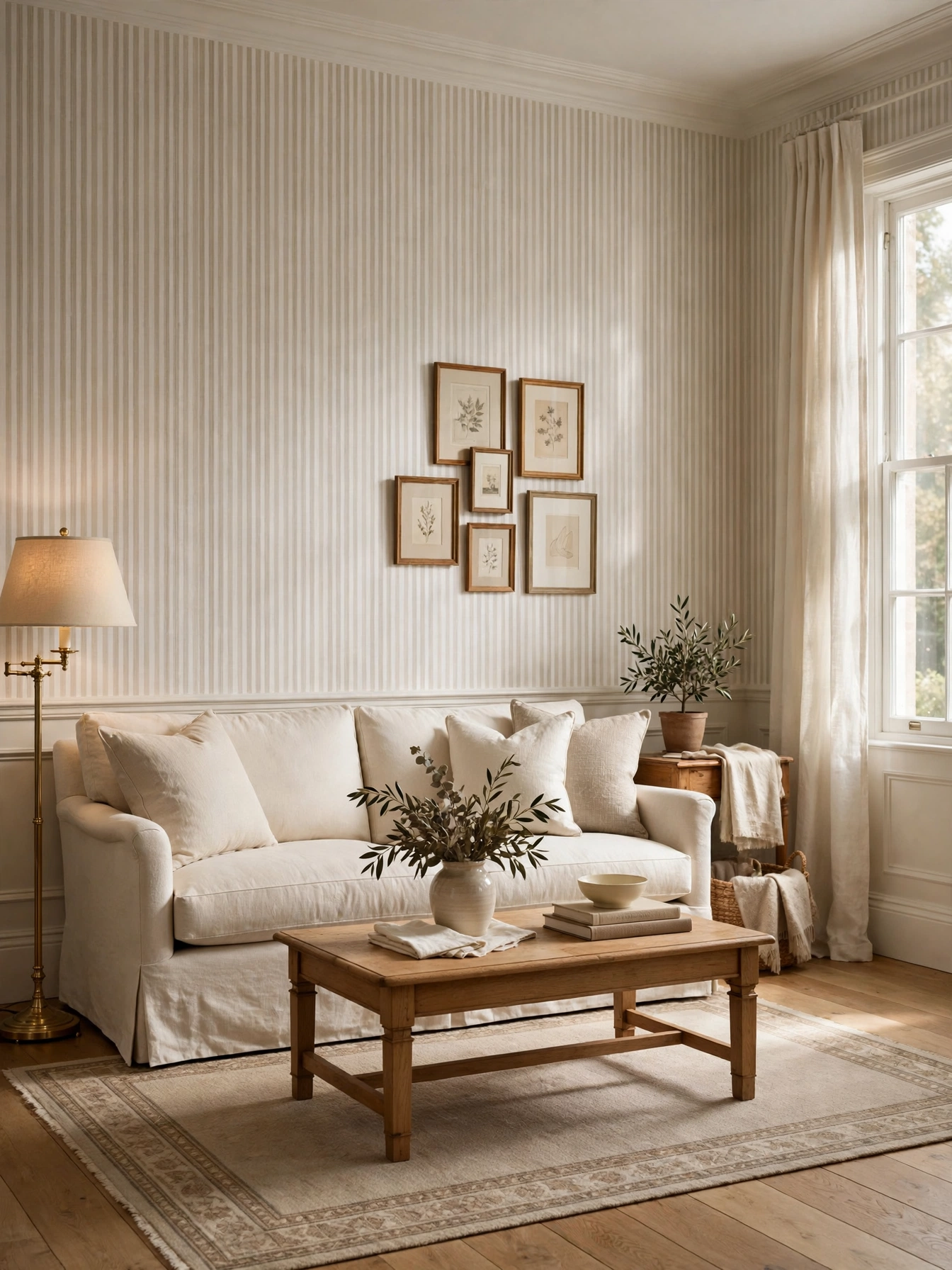
Why This Works:
- Tone-on-tone stripes have dressed walls since Regency England without dating.
- Vertical stripes lift low ceilings visually by 4 to 6 perceived inches.
- A subtle pattern adds architecture to rooms that cannot take panel molding.
- Neutral stripes never fight your art, rug or sofa the way bold prints do.
Choose non-woven wallpaper (paste-the-wall type) in stripes 2 to 4 inches wide with a tone-on-tone contrast of one shade; wider stripes suit rooms over 200 square feet. Order 15% extra for pattern matching, and check the repeat: a 21-inch repeat wastes more than a 10.5-inch repeat on short walls. Hang with the ceiling line as your guide, not the floor, since floors slope up to 1 inch across a room. Avoid vinyl-coated paper in favor of breathable non-woven; vinyl traps moisture and peels in humid climates. Standard: one double roll (about 56 square feet) covers a 10×8 ft wall after matching waste.
Striped wallpaper suits low-ceilinged rooms and renters can use the peel-and-stick version, which removes cleanly for 2 to 3 years. It is a poor choice behind busy gallery walls where pattern fights pattern. Budget: $60 to $150 per double roll for quality non-woven; professional hanging $4 to $8 per square foot. Trade-off: removing traditional paper later takes a steamer and a weekend; peel-and-stick avoids this but lasts only 3 to 5 years.
Pro Tip: Wallpaper one accent wall only; four striped walls can feel busy, while one reads as intentional architecture.
Ceramic Table Vessels
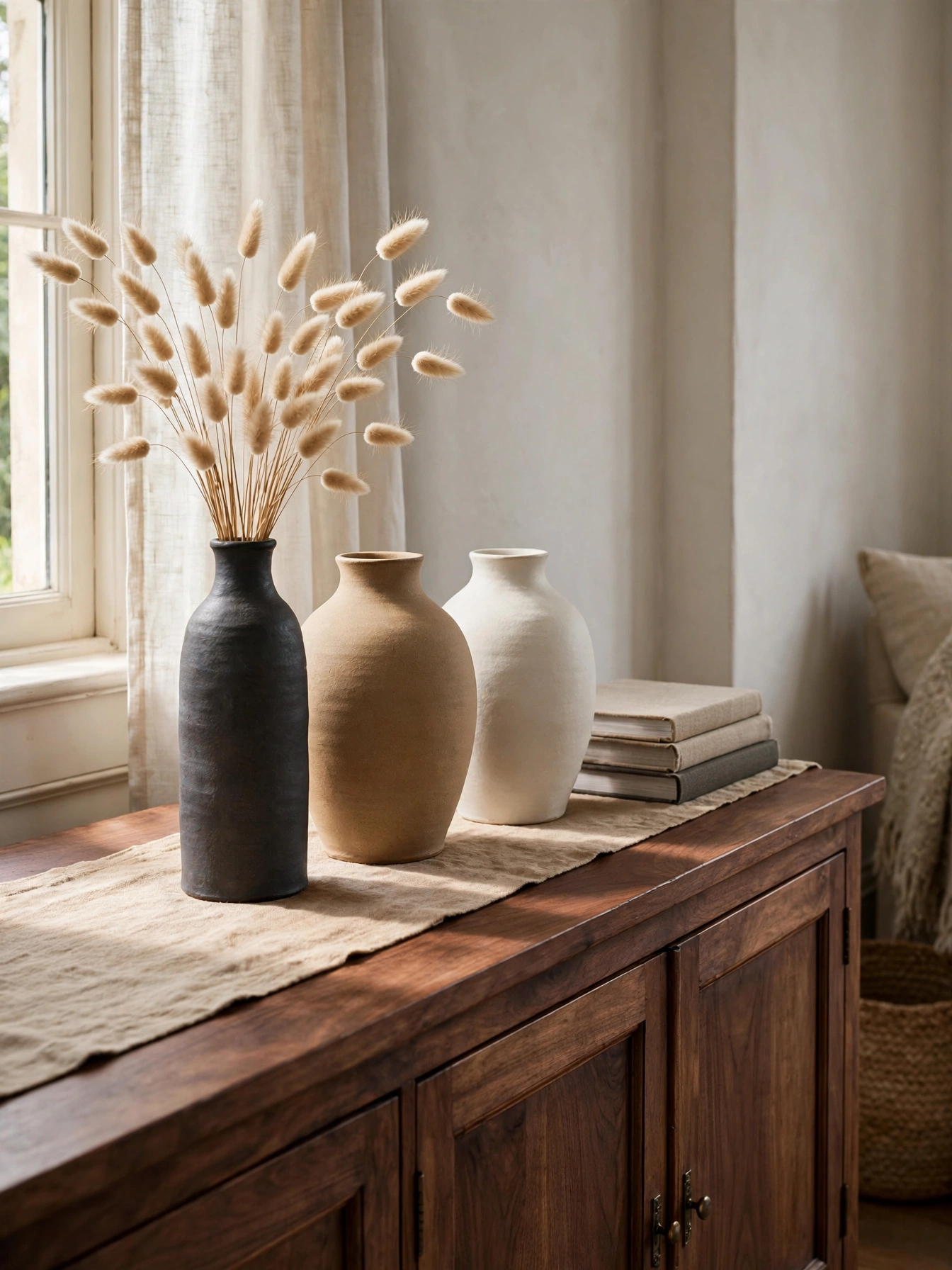
Why This Works:
- Handmade-look ceramics have styled shelves in every era; only the glaze colors shift.
- Grouping vessels in odd numbers (3 or 5) is the oldest styling rule there is.
- Matte glazes in neutral tones never compete with art or textiles.
- One $40 vase can make a $200 sideboard look collected and expensive.
Style vessels in groups of 3 or 5 with heights varying by at least 4 inches between the tallest and shortest; the tallest piece should be 1.5 to 2 times the shortest. Stick to 2 glaze families per shelf (matte white plus one earth tone) to keep the group calm. Genuine stoneware is noticeably heavy: a 12-inch vase should weigh 3 to 5 lbs. Avoid ultra-glossy ceramics in bright rooms; they throw harsh reflections and read as 1980s. Standard styling practice: keep 40 to 50% of shelf surface empty so vessels read as objects, not clutter.
Ceramics suit shelf stylists, sideboard tops and mantels; they are the lowest-commitment decor there is. Homes with toddlers should choose chunky, low-center-of-gravity pieces or wait 2 years. Budget: $15 to $50 per piece at home stores; studio pottery $60 to $180. Trade-off: cheap ceramics chip easily; check bases for felt pads and add them ($5 for a sheet of 20) to protect wood tops.
Pro Tip: Fill one vessel with tall dried stems 1.5 times the vase height; the vertical line draws the eye up and makes ceilings feel higher.
Arched Floor Lamp
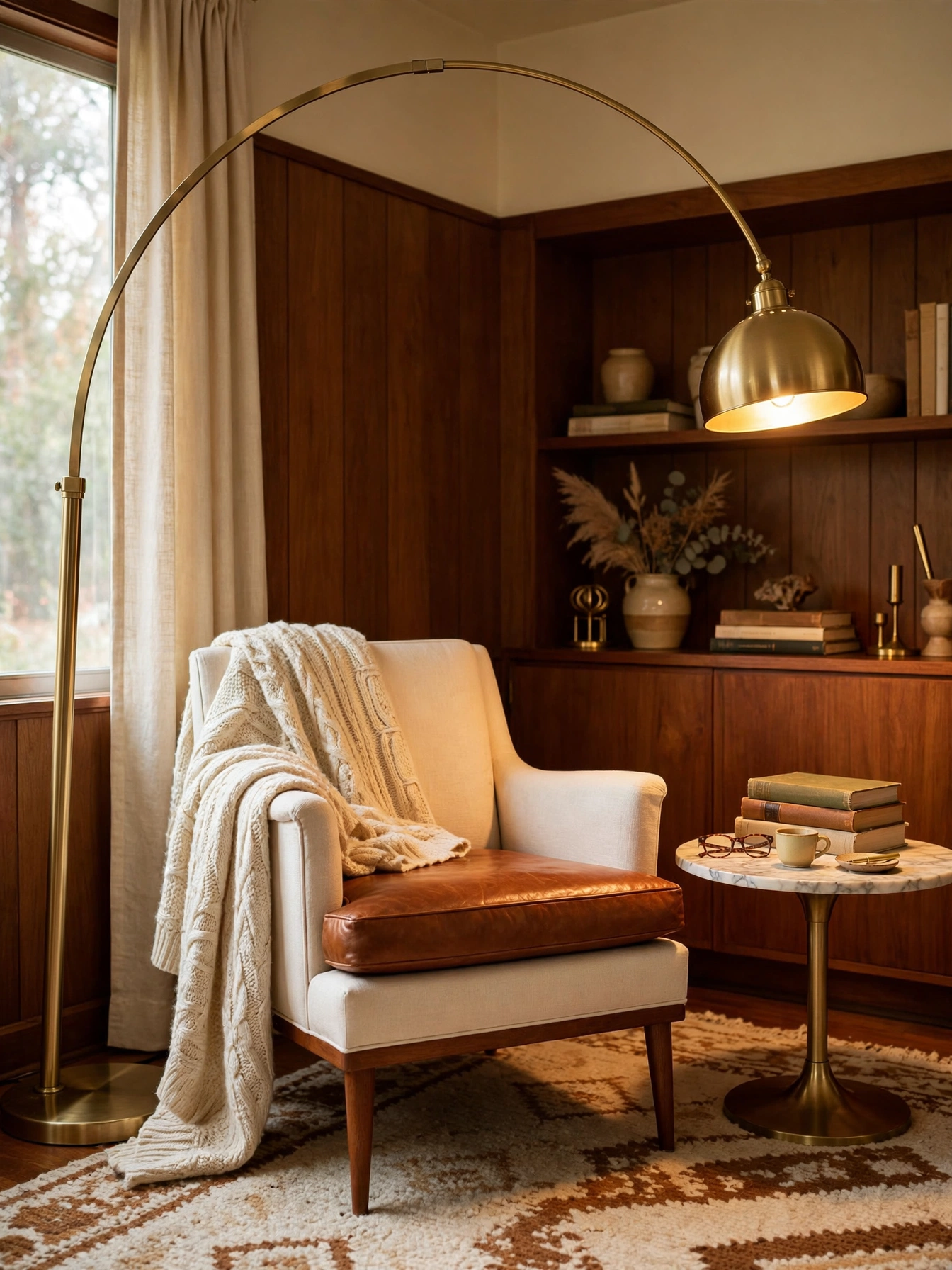
Why This Works:
- The arc lamp has been a design icon since the 1962 original and still looks current.
- It delivers overhead light exactly where you read, with zero ceiling wiring.
- The curve adds sculptural line to rooms full of straight furniture.
- A marble or steel base anchors it safely without bolting to the floor.
Choose an arc that reaches 66 to 78 inches high with a 36 to 48 inch reach, so the shade centers over the chair, not beside it. The base must weigh at least 40 lbs (genuine marble) to counterbalance the arm; lightweight 15-lb bases tip when bumped. Use a dimmable 800 to 1100 lumen bulb so the pool of light suits both reading and ambiance. Avoid placing arc lamps in main walkways: the base is a trip hazard in traffic lanes under 36 inches wide. Industry note: quality reproductions of the 1962 design retail for $300 to $600, while licensed originals exceed $2,000.
Arc lamps suit reading corners, renters and anyone who wants pendant light without an electrician. They overwhelm rooms under 120 square feet; a simple pharmacy lamp fits better there. Budget: $120 to $300 for decent reproductions; $600+ for heavy-base versions that actually stay put. Trade-off: the long arm collects dust and the shade sits high enough that bulb changes need a step stool.
Pro Tip: Run the cord under the rug to the nearest outlet with a flat cord cover ($12); visible cords ruin the sculptural line.
Olive Tree Greenery
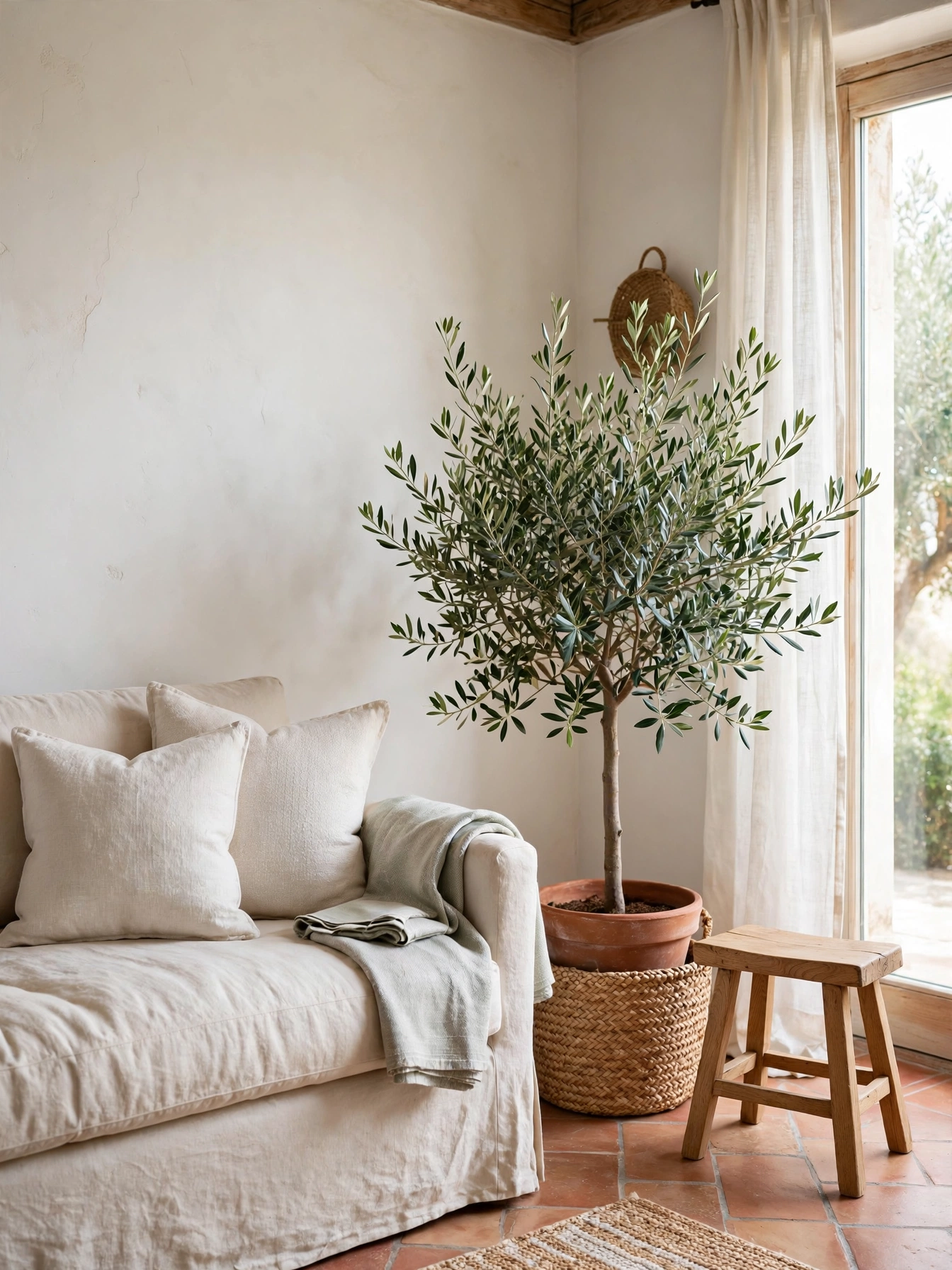
Why This Works:
- Living plants are the one decor element that has never had a trend cycle.
- Silvery olive foliage flatters every neutral palette without adding loud color.
- A 5 to 6 foot tree fills an empty corner better than any furniture piece.
- Real greenery softens hard architecture in a way objects cannot.
Buy a 4 to 6 foot olive tree in a 10 to 12 inch nursery pot, then slip it into a decorative terracotta or basket planter 2 inches wider. Olives need 6+ hours of bright indirect light; place within 3 feet of a south or west window and rotate a quarter turn monthly. Water deeply when the top 2 inches of soil are dry, roughly every 7 to 10 days, and ensure the pot has drainage holes. Avoid the common mistake of buying a 2-foot starter tree for a tall corner; it will look lost for 2 years while it grows. Standard indoor practice: wipe leaves with a damp cloth every 2 months so dust does not block photosynthesis.
Olive trees suit bright living rooms and anyone who wants height without furniture. Low-light rooms should choose a snake plant or ZZ plant instead; olives drop leaves fast in dim corners. Budget: $60 to $150 for a 4 to 6 foot tree at nurseries; designer planters add $40 to $120. Trade-off: real trees need consistent care, which is why faux olives ($80 to $200) exist; good faux reads fine from 6 feet away but never up close.
Pro Tip: Set the pot on a wheeled plant caddy ($15); you will actually rotate it monthly instead of skipping the chore.
FAQs
What are the best timeless living room ideas for a small space?
Start with light oak flooring, one cream sofa no deeper than 34 inches, and a 5×8 ft neutral rug. Add a 30-inch round mirror to double light, and paint walls warm white with LRV above 70. These five moves open up a 12×12 ft room fast, no structural work needed.
How much does a timeless living room makeover cost?
A cosmetic refresh (paint, rug, curtains, lighting, accessories) runs $2,000 to $5,000 for a 15×18 ft room using mid-range pieces. Adding a quality sofa and hardwood refinishing pushes the total to $8,000 to $15,000. According to Houzz renovation data, living rooms are among the highest-ROI spaces to update before resale.
Which timeless living room ideas add the most home value?
Real hardwood floors, built-in shelving and quality millwork like wainscoting consistently top buyer wish lists in National Association of Realtors remodeling reports. Fresh neutral paint in the $150 to $300 range returns the fastest visual payoff. Avoid over-personalized built-ins; classic shaker profiles appeal to the widest buyer pool.
Can a timeless living room still feel cozy, not cold?
Yes, and texture is the mechanism: layer 4 to 5 natural materials (linen, wool, jute, leather, wood) in one neutral palette. Add lighting at three heights, floor lamp, table lamp and one overhead, all at 2700K. The Spruce notes layered lighting does more for coziness than any single decor purchase.
How do I keep a neutral living room from looking boring?
Vary texture scale, mix matte and soft-sheen finishes, and add one living element like a 5-foot olive tree. Swap two pillow covers and one throw seasonally ($80 to $150 total). Keep one patinated piece, brass lamp or worn leather chair, so the room has a story.
Conclusion
Timeless living room ideas work because they are built on materials and proportions that outlast trends: solid oak underfoot, honest fabrics like linen and wool, classic millwork, and lighting that flatters people instead of impressing them. Your three biggest takeaways: invest in the permanent layers (floors, paint, built-ins), choose natural materials that age gracefully, and let texture do the talking in a calm palette. Your first action is simple: pick one idea from this list, measure your space tonight, and order the samples tomorrow. Follow HomelyCrafter on Pinterest for more ideas.
Save this to your Pinterest boards so you can refer back to it!

Muhammad Israr is a home decor enthusiast and the writer behind Homely Crafter. He spends his days researching paint colors, layouts and budget-friendly styling ideas, then breaks them down into practical, easy-to-follow guides so you can decorate with confidence.