
October is the hardest-working month your front porch will ever see: school pickups, package drop-offs, evening dog walks past your house, and in a few weeks a steady stream of trick-or-treaters judging every doorstep on the street. The porches that make people slow down are rarely the most expensive ones; they are the ones with layered light, something alive in the planters, and one clear focal point by the door.
These 23 fall front porch decor ideas for autumn 2026 give you exactly that, with real spacing numbers, weatherproof material picks, and honest budgets from 12 dollar doormat layers to 200 dollar full porch resets. HGTV designers often note that curb appeal starts at the entry, and a styled porch signals care to everyone from guests to delivery drivers.
You will get planter sizes, string light lengths, wind ratings for hanging pieces, what survives a rainy week and what does not, plus when a simple refresh beats a full overhaul. Walk out to your porch with a tape measure, because every idea here is sized for real 6 by 8 foot and 8 by 10 foot porches.
Symmetrical Mum Planters
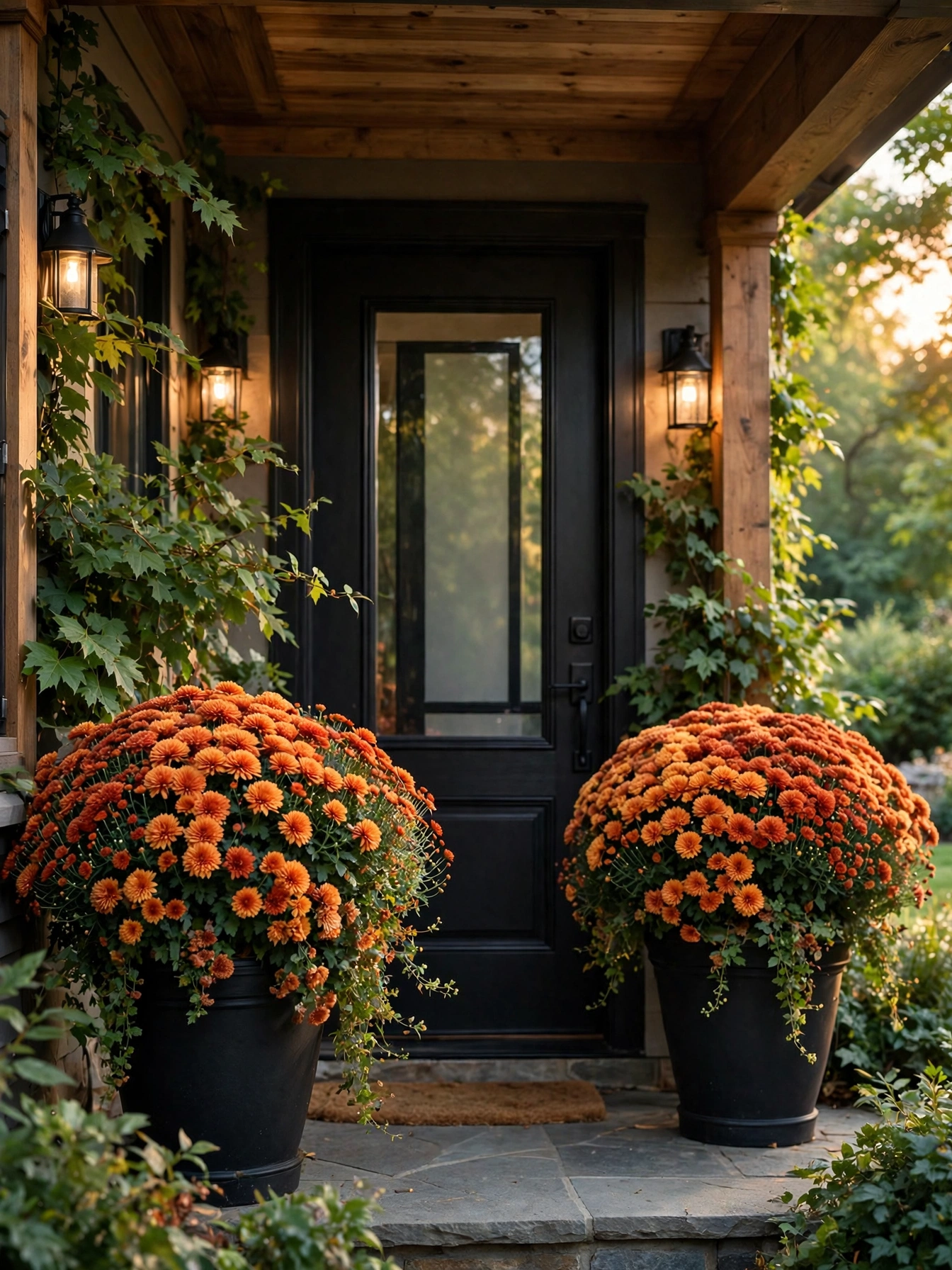
Why This Works:
- Matching 16 inch planters frame the door with instant formal balance
- Chrysanthemums bloom 4 to 6 weeks, covering all of October beautifully
- Orange, rust, and gold mums read as fall from 50 feet down the street
- Two 25 dollar mums cost less than one seasonal wreath
Choose 14 to 16 inch diameter planters so the root ball has 2 inches of soil on every side, and pick mums with tight buds rather than full blooms for 2 extra weeks of color. Water mums daily in the first week, since nursery pots dry out within 24 hours in October wind; a 16 inch planter needs roughly 1 gallon per watering. Avoid placing planters where they block the door swing, keeping a clear 32 inch path per residential code for egress. Deadhead spent blooms weekly to push new buds through early November.
Symmetrical mums suit every porch style from colonial to craftsman. The limitation is lifespan: even well-watered mums fade after 6 weeks, so this is a one-season purchase, not an investment. Compared with ornamental kale, mums give bigger color impact but need twice the water. If your porch faces south with full sun, choose the darkest red varieties, which hold color 10 days longer than pale yellows in strong light.
Layered Doormat Stack
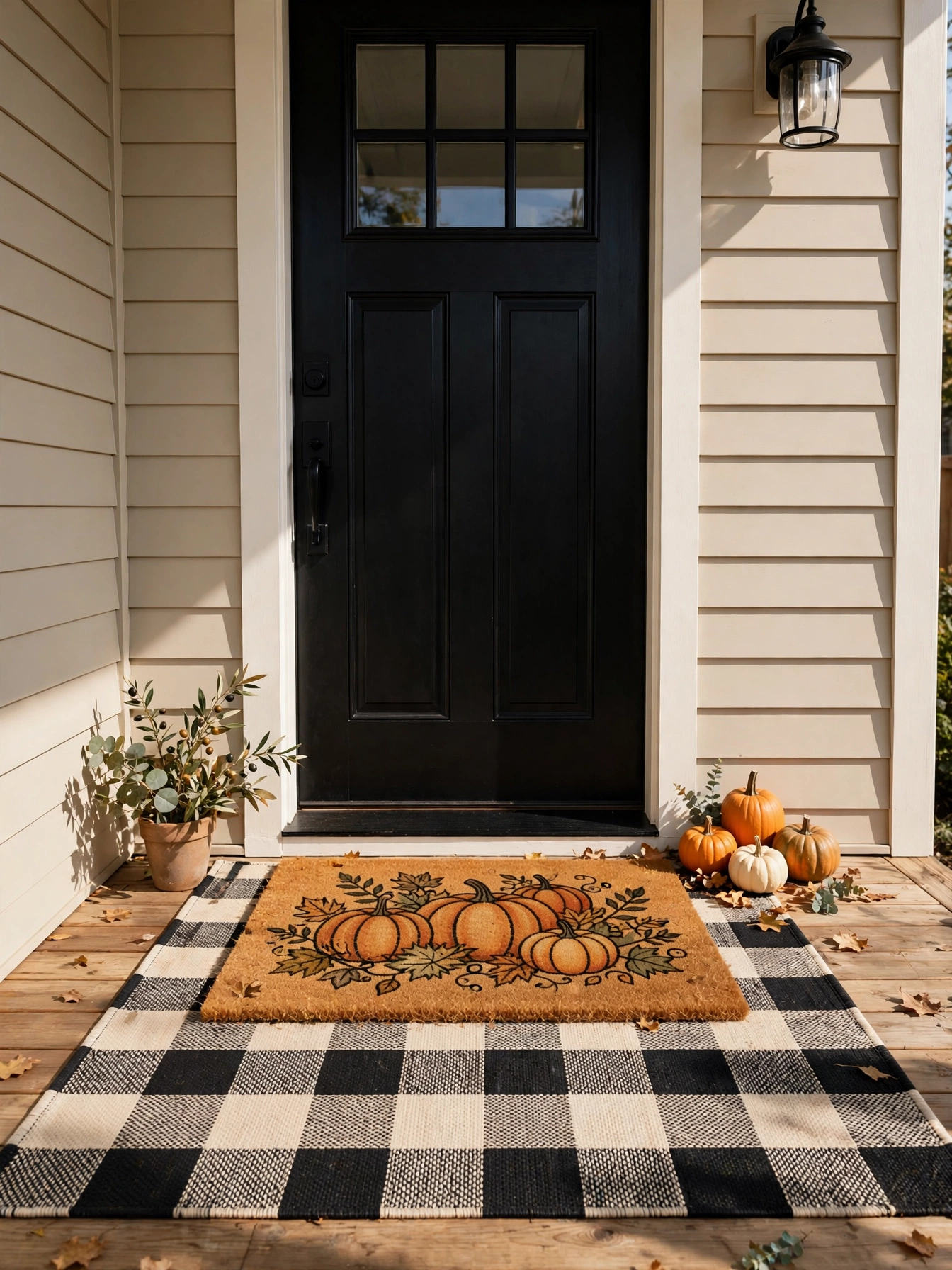
Why This Works:
- A 24 by 36 inch rug under an 18 by 30 inch mat creates boutique layering
- The double layer traps twice the dirt before it reaches your floors
- Total cost runs 12 to 35 dollars for a designer look
- Swapping the top mat seasonally refreshes the porch in 30 seconds
Layer a flat-weave 2 by 3 foot outdoor rug beneath a coir 18 by 30 inch doormat, offsetting the top mat 2 inches toward the door for a deliberate look. Choose polypropylene or recycled plastic rugs rated for outdoor use, since cotton and jute rot within 3 weeks of October rain. Avoid rubber-backed mats on painted porch floors, because trapped moisture lifts paint within one season; use open-weave coir that drains. Keep the stack under 1 inch total thickness so the door clears it, a common mistake that scrapes 200 dollar door bottoms.
Layered mats suit rentals and budget refreshes best. The trade-off is maintenance: the bottom rug needs shaking every 2 weeks or grit grinds into the fibers. Compared with a single large mat, layering looks styled rather than functional, but two pieces can shift in wind, so add rug tape rated for outdoor use. If your porch gets driving rain, skip the fabric topper and use a single coir mat that dries in hours.
Wicker Chair Throws
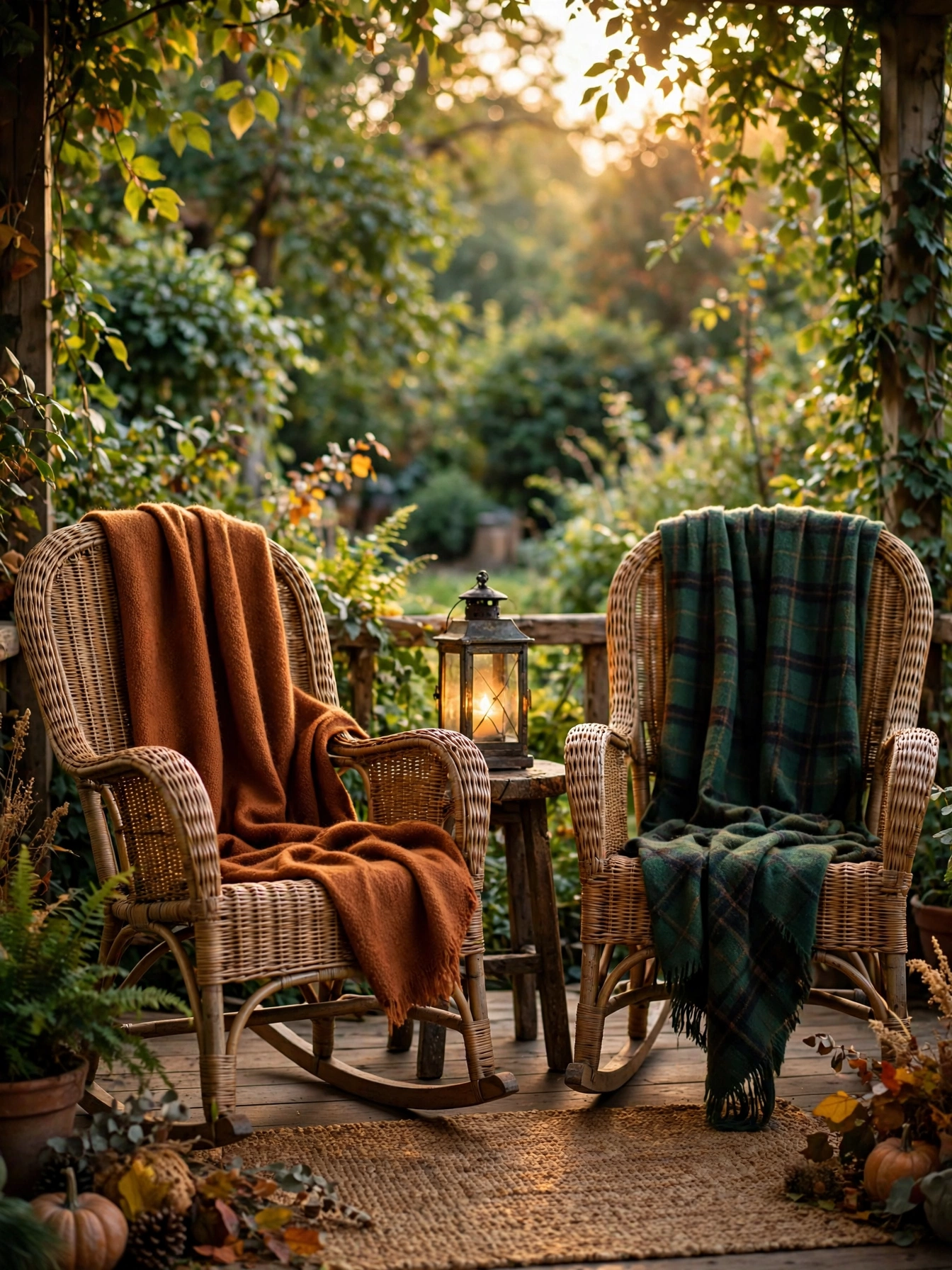
Why This Works:
- A draped throw turns empty porch chairs into an invitation to sit
- Plaid wool adds pattern without any permanent commitment
- Throws double as real warmth on 50 degree October evenings
- Two 30 dollar throws style a whole seating area
Drape 50 by 60 inch throws over chair backs with 20 inches hanging down the back and 14 inches on the seat, folding in thirds for a tailored look. Choose acrylic outdoor throws over wool for porches, since wool absorbs rain and takes 2 days to dry, while solution-dyed acrylic dries in 4 hours. Avoid white or cream throws on a porch, because they show dirt within a week; rust, forest, and charcoal hide a month of use. Secure throws with a discreet 6 inch bungee looped through the weave on windy porches.
Chair throws suit porches with existing seating that looks bare. The limitation is weather: even outdoor throws should come inside during week-long rain stretches to prevent mildew. Compared with new fall pillows, throws cost half as much and serve a real function. If your chairs are metal and cold to the touch, throws make them usable 4 weeks deeper into the season.
Copper Lantern Row
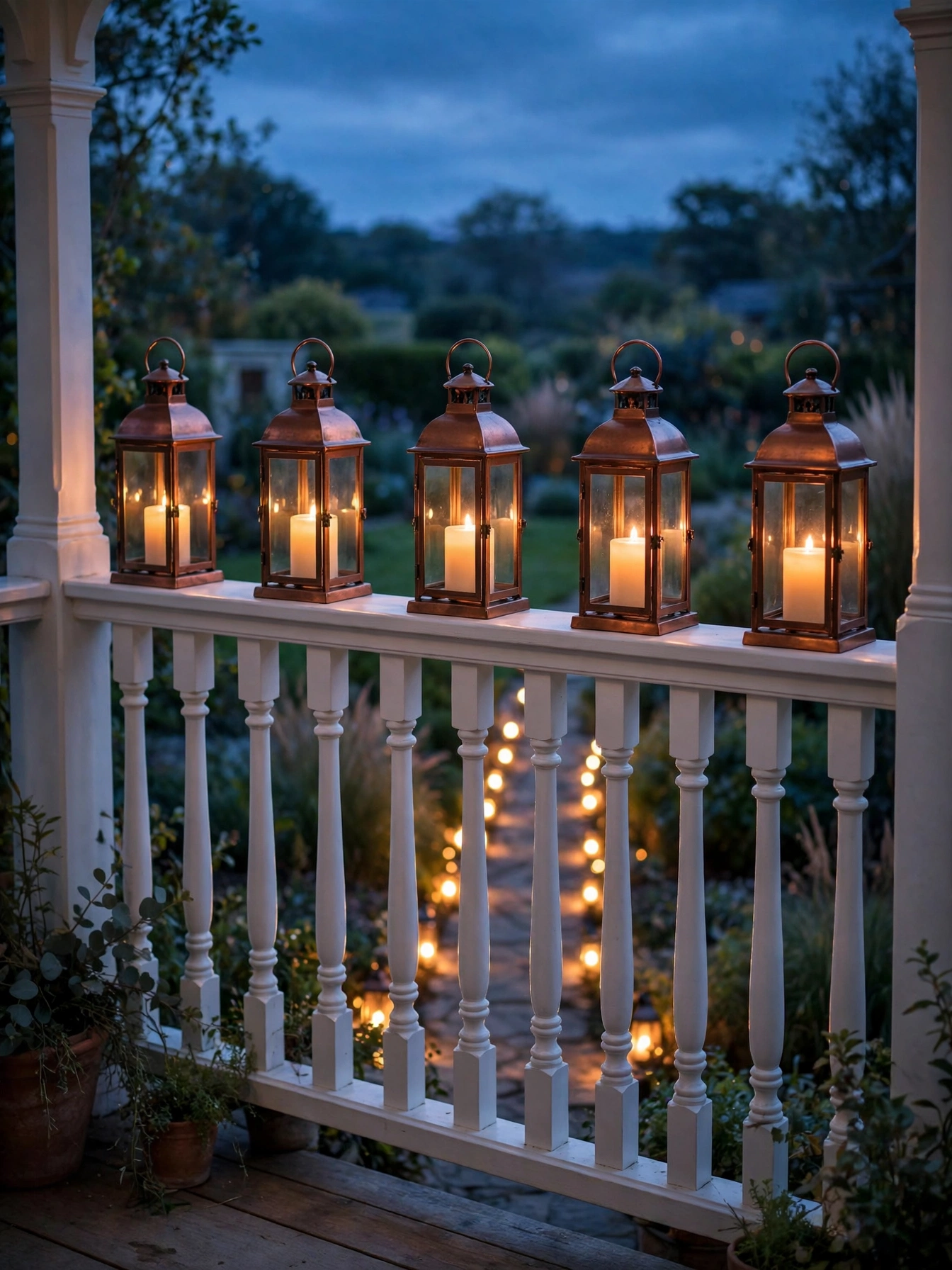
Why This Works:
- Five lanterns spaced 24 inches apart create a runway of warm light
- Copper finishes glow amber at dusk, doubling the fall color story
- Flameless candles with timers need zero daily attention
- A row reads intentional where a single lantern looks forgotten
Space 8 to 10 inch lanterns 24 inches apart on center along the railing or steps, using LED pillars with built-in dusk-to-dawn sensors at 12 to 20 dollars each. Choose metal or resin lanterns rated for outdoor use; indoor-only wood lanterns warp within 2 weeks of October humidity. Avoid real flames in a row formation, since wind gusts across a porch can topple lightweight lanterns and scatter flame. Anchor each lantern with a 2 pound sandbag inside the base on exposed porches, a trick that holds through 30 mph gusts.
Lantern rows suit long porches and wide steps where the repetition has room to breathe. The trade-off is cost: five quality outdoor lanterns run 100 to 150 dollars, so start with three and expand next year. Compared with string lights, lantern rows give warmer, lower light but need battery changes every 3 weeks at 6 hours nightly. If your porch faces the street, this is the single most noticed upgrade after dark.
Rustic Crate Pumpkins
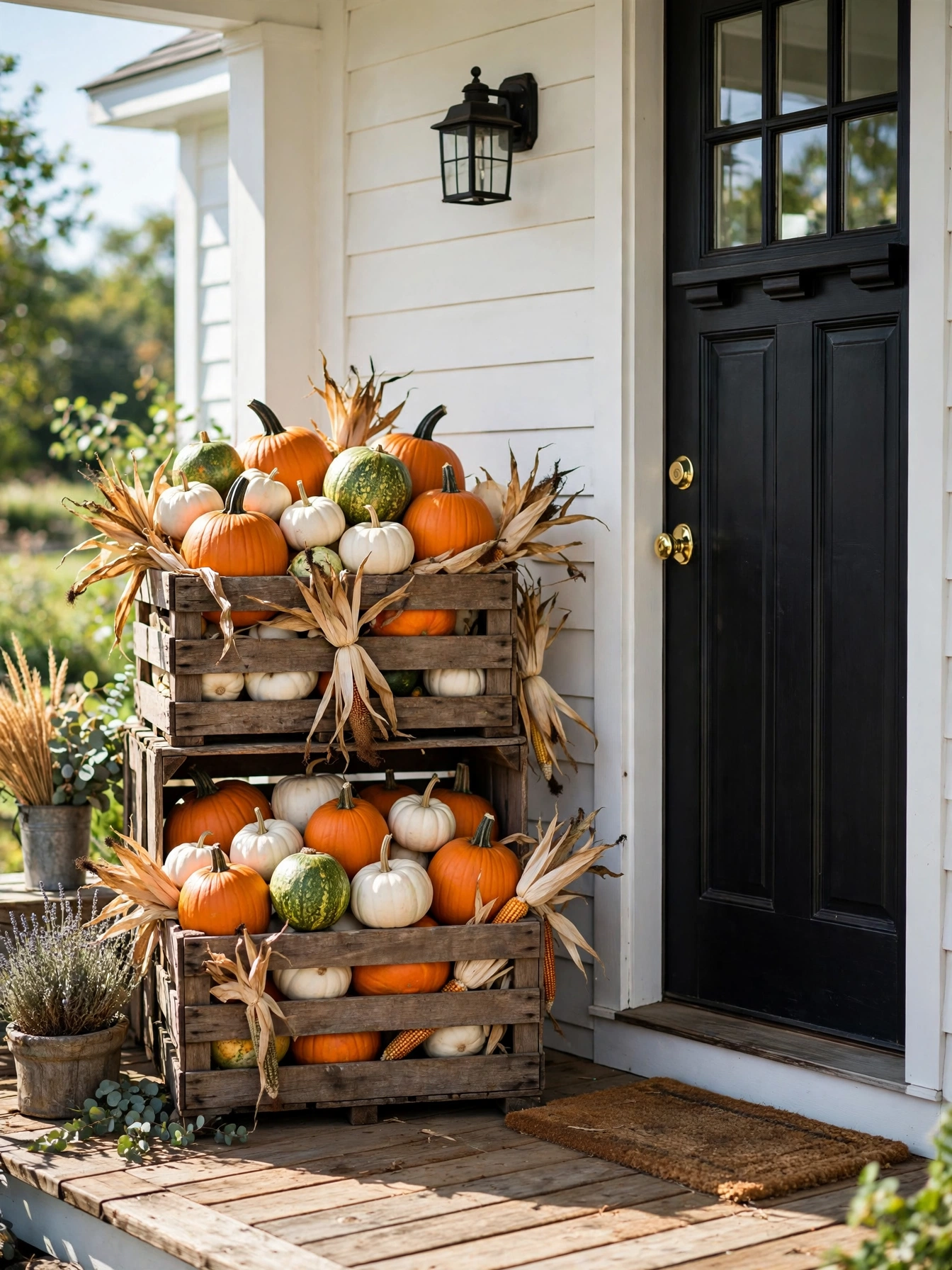
Why This Works:
- Stacked crates add 24 to 36 inches of height without new furniture
- Wooden crates cost 8 to 15 dollars each at craft and farm stores
- Pumpkins at varying heights look gathered, not placed
- Crates store flat after the season in a 4 inch stack
Stack two 18 inch cube crates with the top one rotated 90 degrees for stability, then fill with pumpkins from 6 to 12 inches in diameter. Choose real pumpkins with intact 2 inch stems, which last 6 to 8 weeks, over stemless ones that rot in 3. Avoid placing crates where they narrow the walkway below 36 inches, since delivery drivers and guests need clear passage. Seal crate wood with outdoor polyurethane if rain is frequent, because raw pine warps within 2 wet weeks.
Crate displays suit farmhouse and rustic porches with room to spare. The limitation is weight: two crates plus six pumpkins can exceed 60 pounds, so this is not for balconies with load limits. Compared with a pumpkin arch, crates cost 80 percent less and take 15 minutes to build. If theft is a concern on your street, use faux pumpkins for the display; quality fakes now cost 8 to 12 dollars and fool everyone past 10 feet.
Hanging Fern Baskets
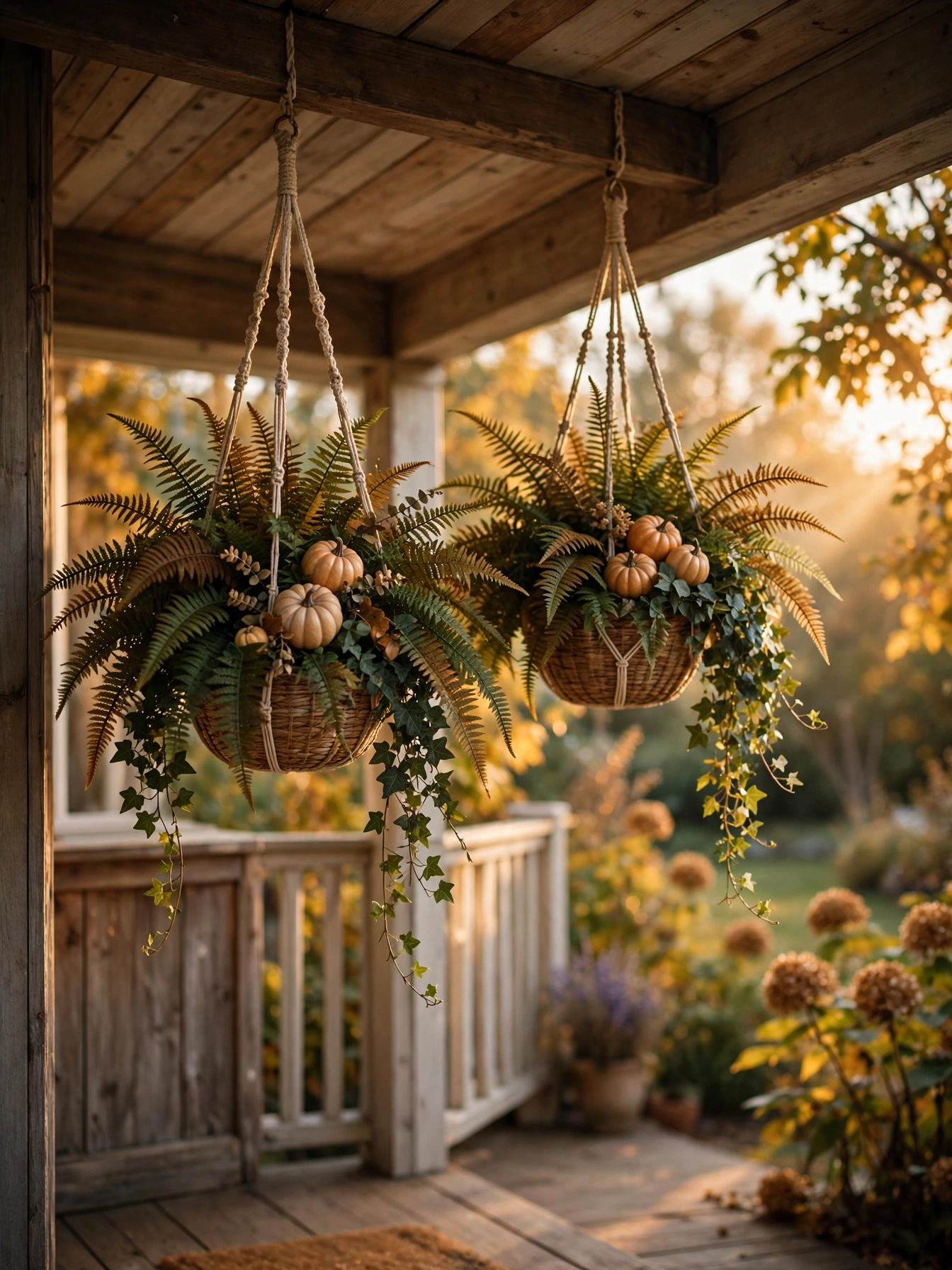
Why This Works:
- Hanging baskets fill the empty air space above porch railings
- Autumn ferns stay green 4 weeks longer than summer annuals
- Two 14 inch baskets cost 20 to 35 dollars total
- Eye-level greenery softens hard porch posts and beams
Hang 14 inch baskets from ceiling hooks rated for 25 pounds, since a watered basket weighs 12 to 18 pounds. Choose autumn fern or ornamental grasses over Boston ferns, which brown at the first 45 degree night. Avoid hanging baskets in the direct path of the door swing or where heads pass under 6 foot 8 inch clearance; mount them 12 inches inside the porch edge. Water every 2 to 3 days, because hanging baskets dry out twice as fast as ground planters in October wind.
Hanging baskets suit covered porches with sturdy beams. The limitation is the first hard frost: most ferns die below 32 degrees, so this is a September to late October display. Compared with hanging mums, ferns need less deadheading but give no flower color. If your porch ceiling is vinyl, use a clamp-style hook over the beam edge instead of drilling, which voids some warranties.
Classic Fall Front Porch Wreath
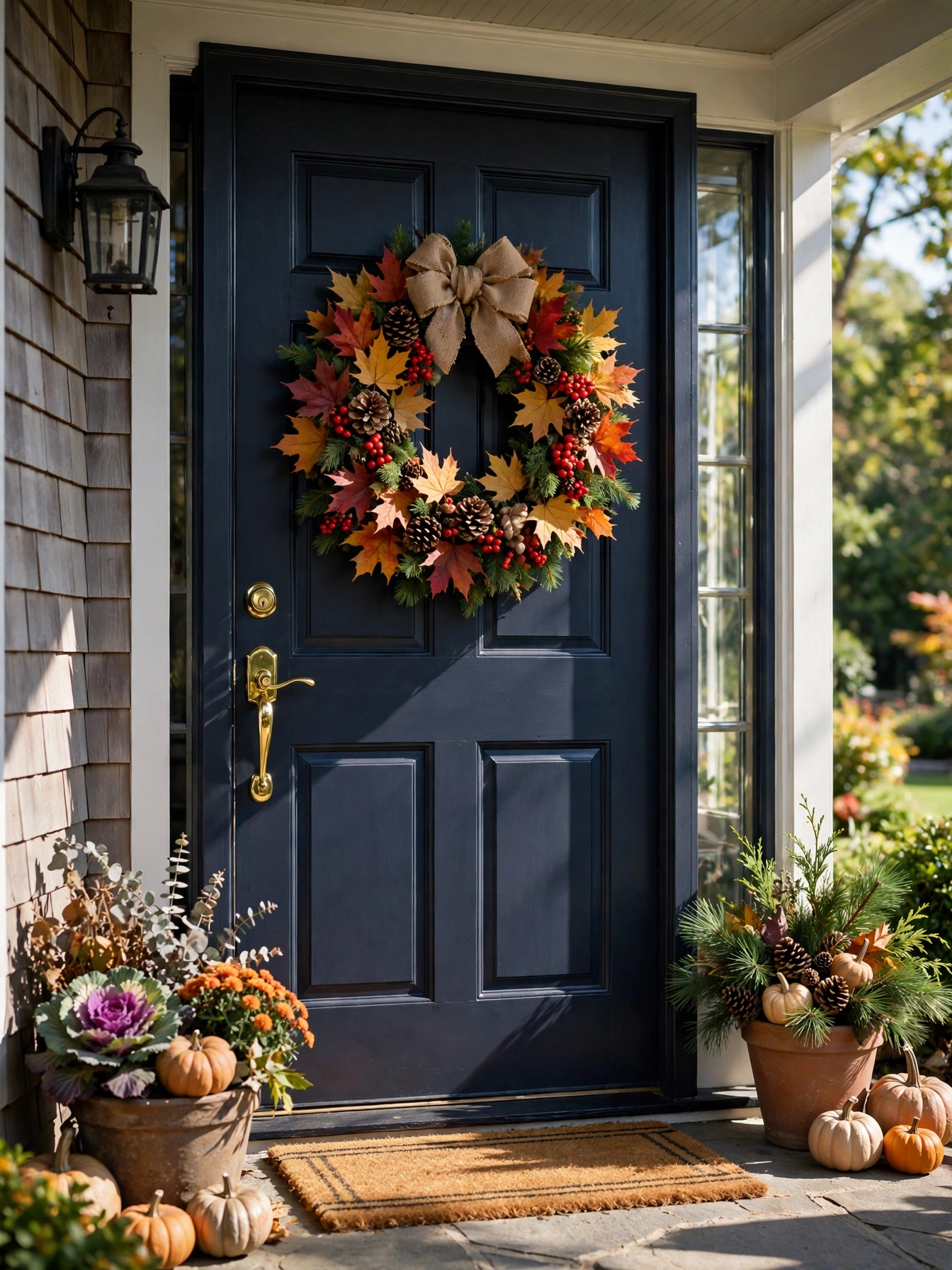
Why This Works:
- A 24 inch wreath fills a standard 36 inch door without overwhelming it
- One wreath delivers more curb appeal per dollar than any other single item
- Grapevine bases last 5 plus seasons with simple storage
- Berries and pinecones add texture flat leaf wreaths lack
Size the wreath to your door: 24 inches for a 36 inch door, 28 to 30 inches for 42 inch double doors. Hang with an over-door hook rated for 10 pounds or a 3M outdoor hook rated for 5 pounds on metal doors, positioning the center 60 inches from the porch floor. Avoid fresh wreaths on south-facing doors, since direct sun fades them in 2 weeks; faux wreaths in the 35 to 60 dollar range hold color all season. Fluff each branch outward at 45 degrees on arrival, because shipped wreaths compress to half their full 6 inch depth.
The classic fall front porch wreath is the non-negotiable anchor of fall front porch decor ideas for autumn 2026, suiting every house style. The trade-off with full faux wreaths is storage: a 24 inch wreath needs a 26 inch storage box to keep its shape. Compared with a swag, a wreath reads more formal and traditional. If your door has a window, choose a half-wreath or swag so the glass stays visible from inside.
String Light Canopy
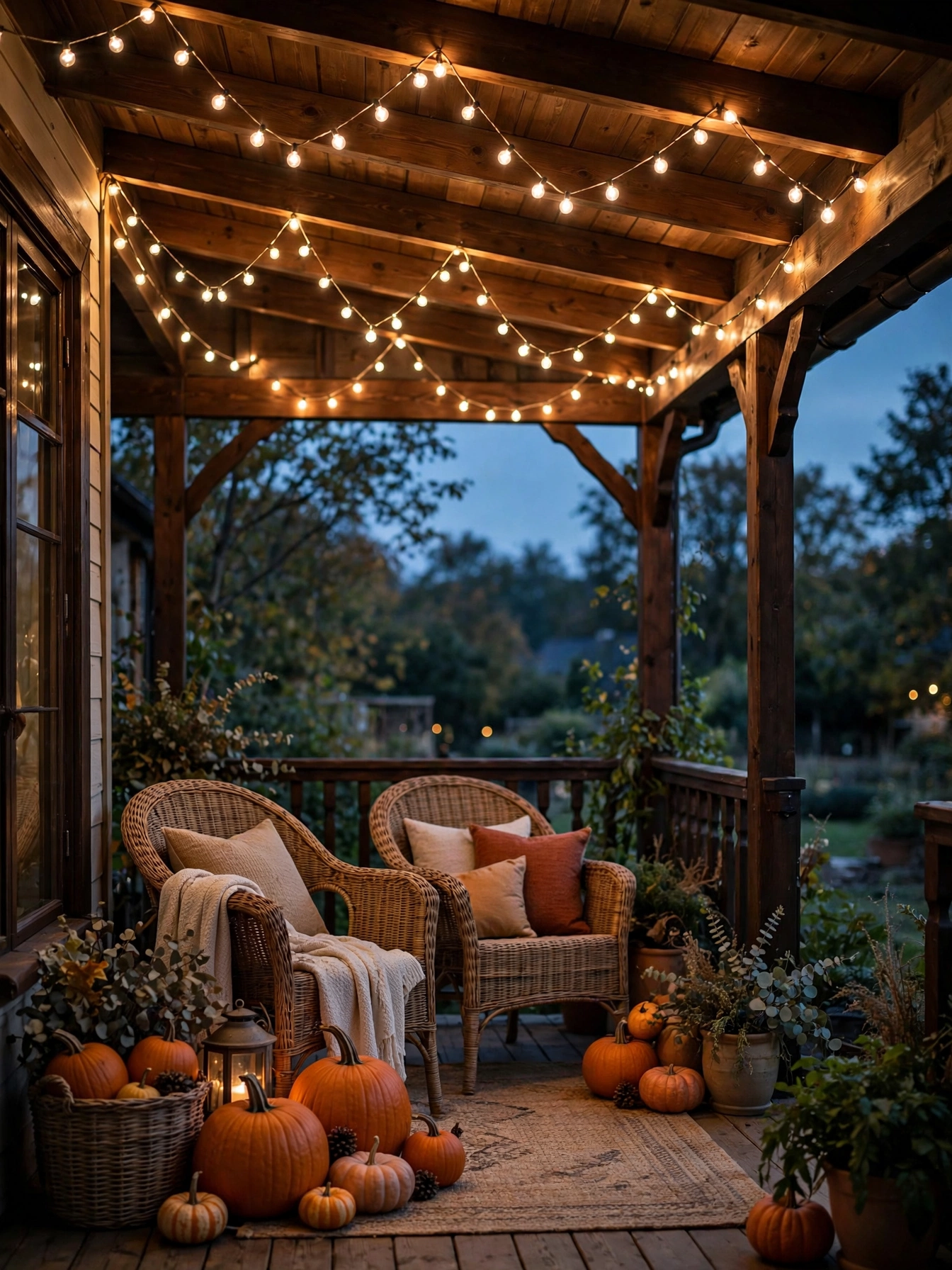
Why This Works:
- Zigzagged strands turn a dark porch into the warmest house on the block
- Two 48 foot strands cover an 8 by 10 foot porch completely
- 2700K LEDs cost 15 to 30 dollars per strand and sip electricity
- Overhead light flatters faces and makes evening sitting genuinely pleasant
Hang strands 8 to 10 feet high in a zigzag with 18 inch sag between anchor points, using outdoor-rated screw hooks every 4 feet. Choose IP65 rated strands for exposed porches, since IP44 handles mist but fails in driving rain. Avoid draping lights where the door or screen door swings, and keep bulbs 12 inches from dried corn stalks or fabric. The Spruce recommends LED cafe lights over incandescent for porches, because a 48 foot LED strand draws under 5 watts while incandescent draws 120 watts for the same length.
A light canopy suits evening sitters and anyone whose porch feels gloomy after 6 PM. The limitation is installation time: proper zigzag hanging takes 45 to 60 minutes with a ladder. Compared with lantern rows, a canopy gives brighter, more even light but less flickering charm. If your porch has no outlets, solar strands with 8 hour batteries work, but they dim by 40 percent on cloudy weeks.
Wooden Bench Styling
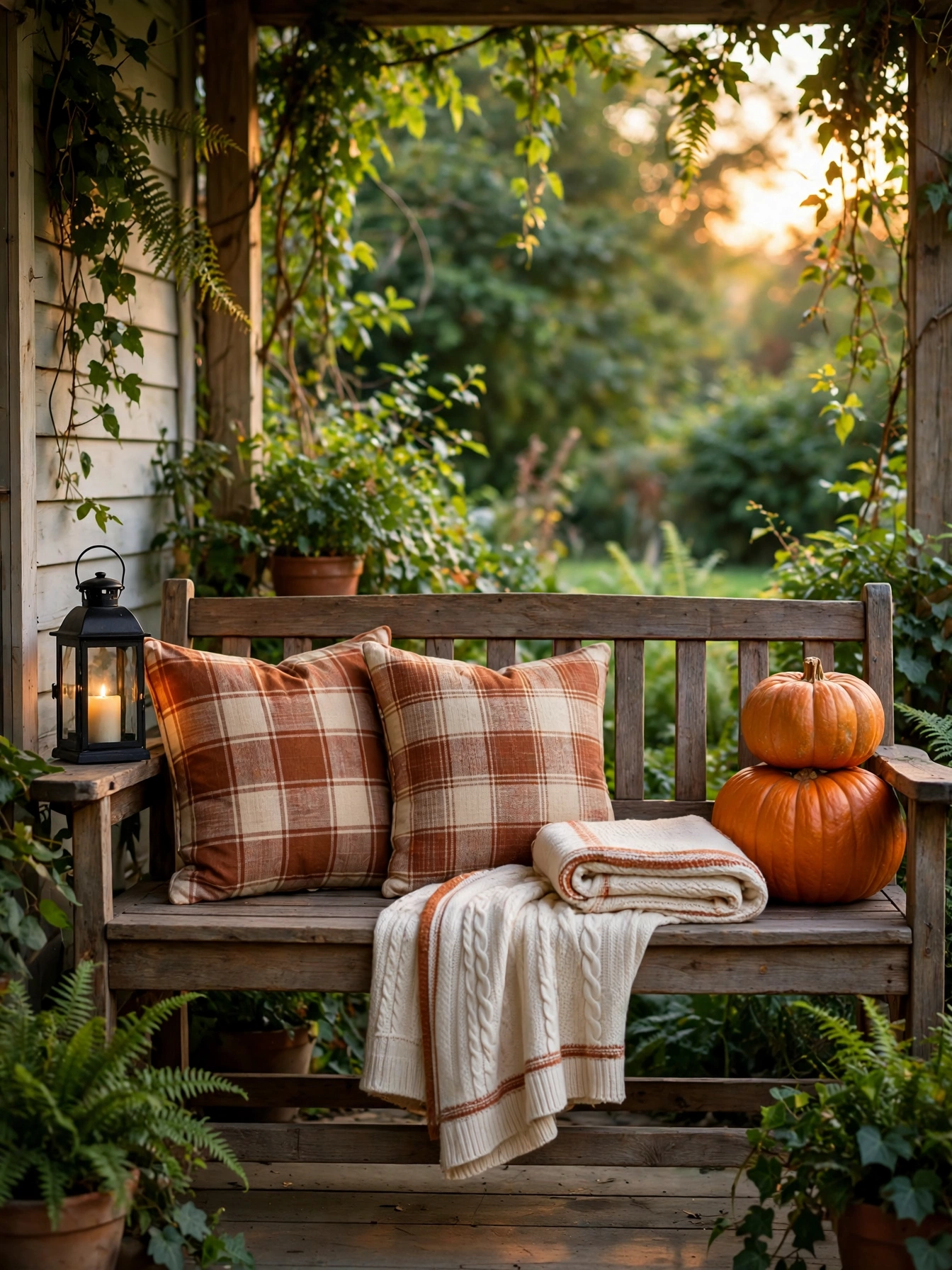
Why This Works:
- A 48 inch bench seats two and styles like a mini outdoor sofa
- Pillows and throws make hard wood inviting in 10 minutes
- Bench styling costs 40 to 80 dollars versus 300 for new furniture
- The flat seat doubles as a display shelf for pumpkins and lanterns
Choose a bench 42 to 48 inches long for a standard porch; under 36 inches seats only one adult comfortably. Use outdoor-rated 18 inch pillows with solution-dyed acrylic covers, which resist fading 3 times longer than polyester. Avoid placing the bench where it blocks more than half the walkway, keeping a 36 inch clear path to the door. Seal raw wood benches with spar urethane rated for exterior use, because October rain raises grain and splinters within one season on unfinished pine.
Bench styling suits narrow porches where full seating sets will not fit. The trade-off is comfort: a bench without cushions gets cold fast, so the pillows are functional, not just pretty. Compared with rocking chairs, a bench takes half the floor space but offers no motion. If your porch is uncovered, bring pillows inside during rain; even outdoor pillows mildew after 5 straight wet days.
Galvanized Bucket Mums
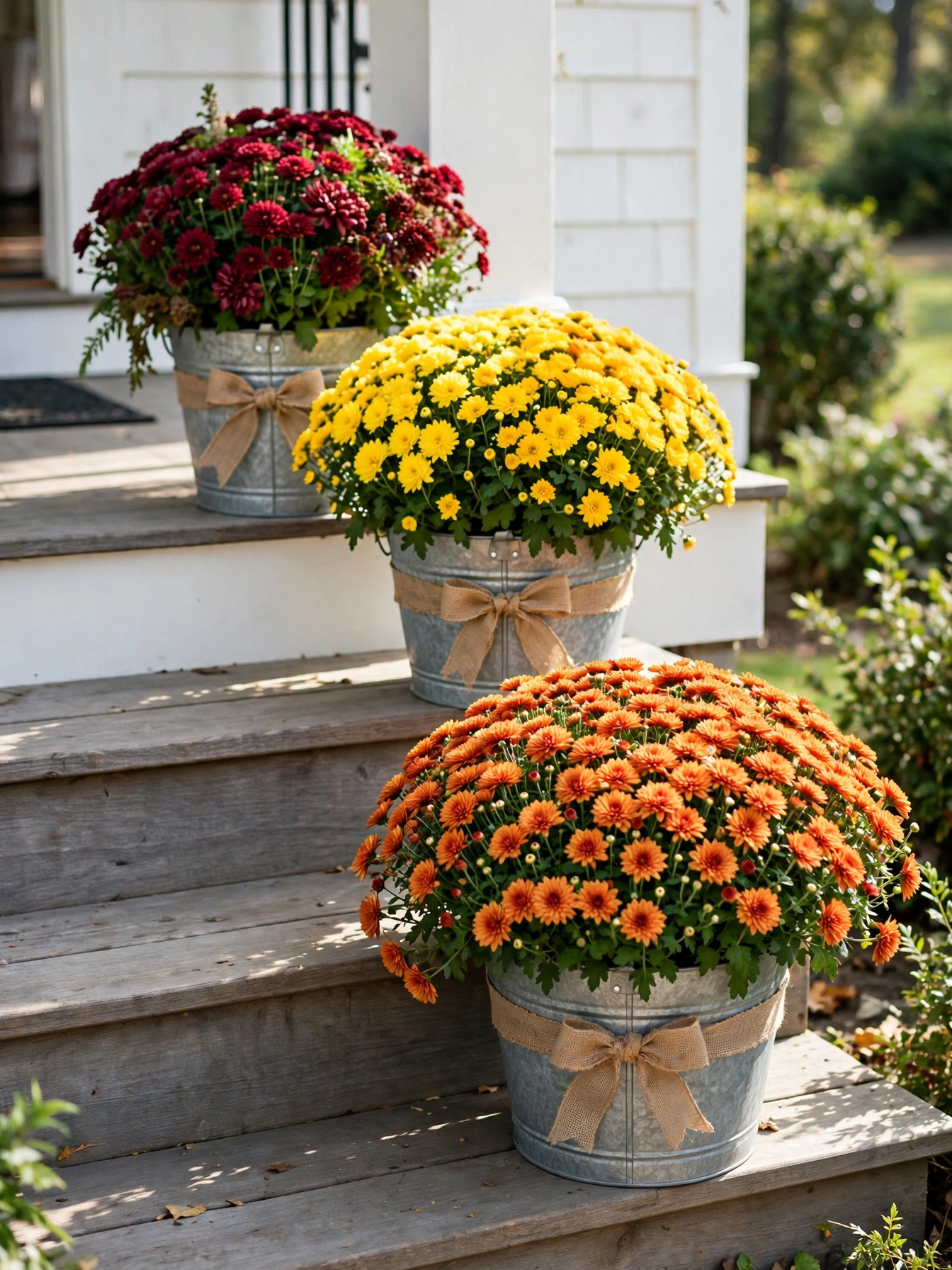
Why This Works:
- Metal buckets cost 8 to 14 dollars versus 25 for ceramic planters
- The industrial finish contrasts beautifully with soft mum blooms
- Buckets in 3 sizes create a graduated step display
- Handles make rearranging a one-hand job
Drill three half inch drainage holes in each bucket bottom, since mums drown in standing water within 5 days. Choose buckets 10, 12, and 14 inches tall for a stair-step effect on wide steps, keeping each at least 6 inches from the step edge to prevent tipping. Avoid unlined galvanized buckets for edible plantings, but for mums the zinc coating is perfectly fine. Line the inside with a 13 gallon trash bag with slits cut for drainage to slow rust, extending bucket life from 2 seasons to 5.
Bucket mums suit farmhouse, industrial, and budget porches. The limitation is heat: metal buckets warm soil 10 degrees above ambient in afternoon sun, so water morning and evening on warm October days. Compared with wooden crates, buckets are cheaper and lighter but less stable in wind; add 3 pounds of gravel at the base. If your steps are narrow, use one bucket per step landing instead of clustering.
Porch Swing Blankets
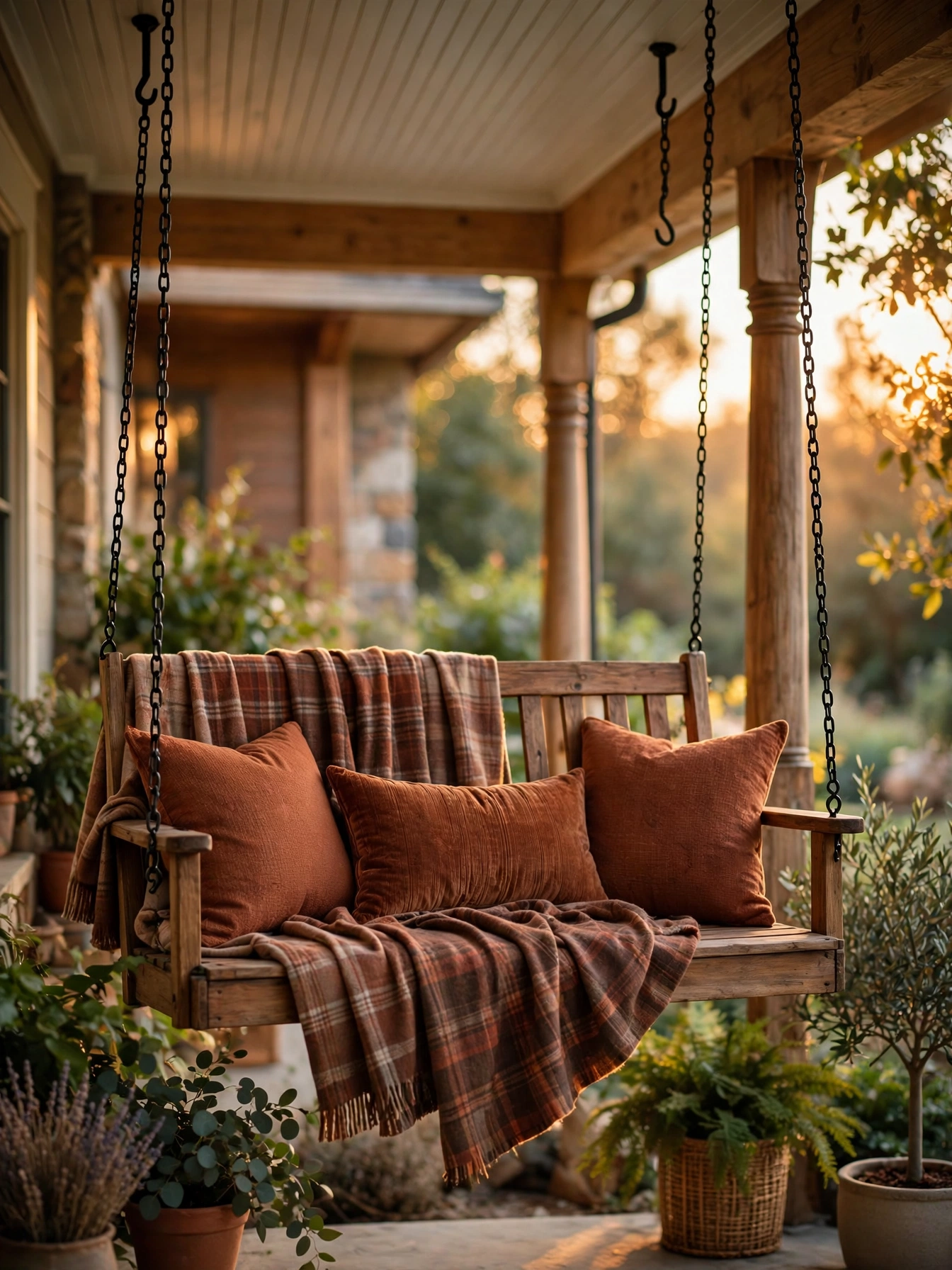
Why This Works:
- A styled swing becomes the porch focal point visible from the street
- Layered textiles add color without a single permanent change
- Two blankets and three pillows cost 60 to 100 dollars total
- Real warmth extends swing season 4 to 6 weeks into fall
Drape one 50 by 60 inch blanket across the swing seat and fold a second over the back rail, securing both with 8 inch bungee cords looped through grommets on windy days. Choose outdoor acrylic textiles rated to 500 hours of UV, since indoor fabrics fade 50 percent faster on a bright porch. Avoid draping anything that trails below the swing seat, because fabric catching under the swing is both a tripping and a tangling hazard. Check swing chains and hooks for rust each fall; a 200 pound rated swing needs hardware with zero corrosion before adding textile weight.
Swing blankets suit deep porches with existing swings. The limitation is motion: lightweight throws slide off a moving swing, so outdoor-rated heavier weaves work better. Compared with a bench, a swing is the porch showpiece but styles slower because everything must survive the sway. If your swing faces west, choose fade-resistant rust and brown tones that hide sun bleaching 2 seasons longer than navy.
Oversized Lantern Trio
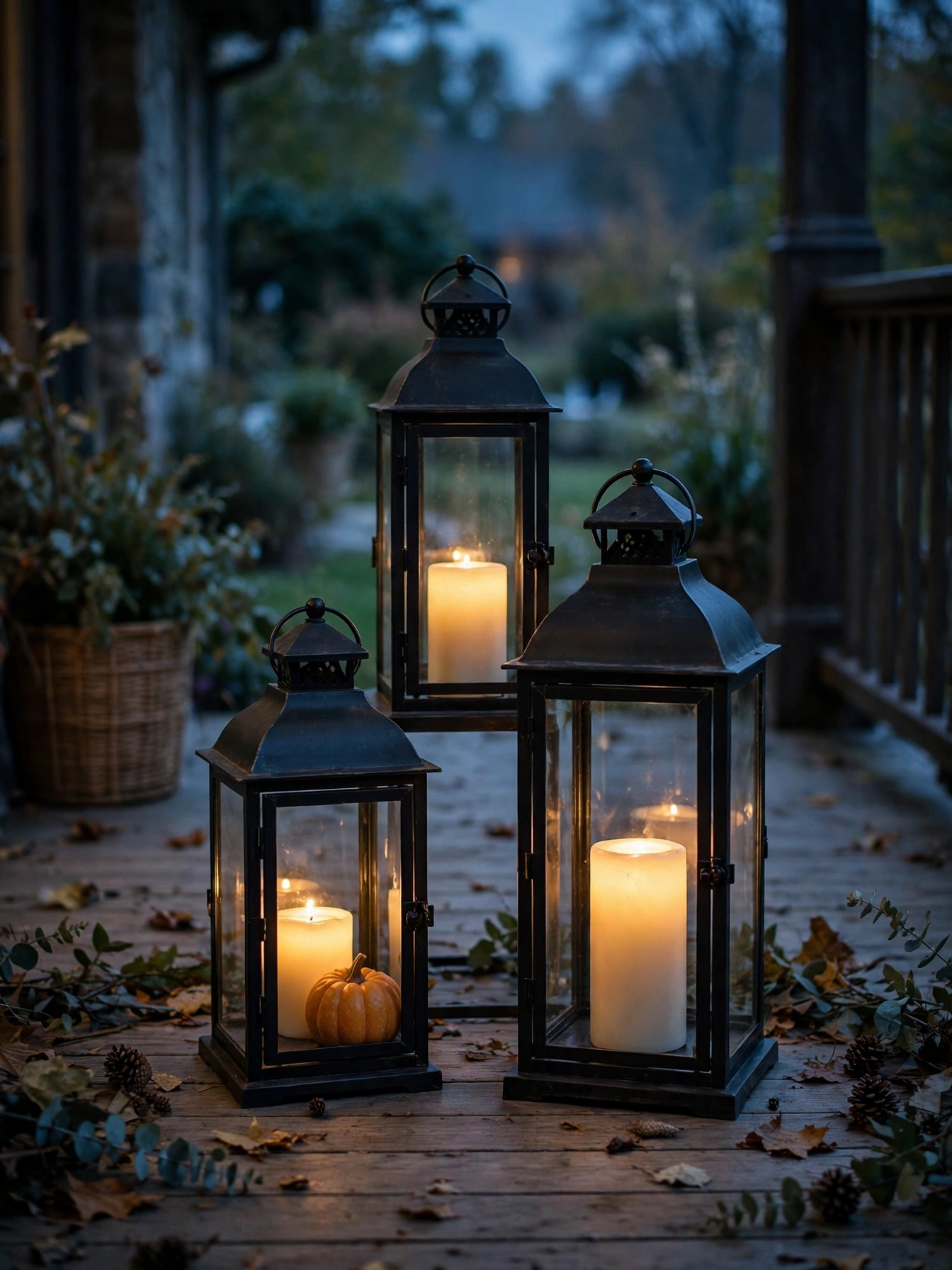
Why This Works:
- Lanterns at 18, 24, and 30 inches create dramatic vertical rhythm
- Black metal frames read crisp against warm fall colors
- One trio anchors a bare porch corner instantly
- Flameless candles inside mean zero fire worry near the house
Group lanterns in a tight triangle with 6 inches between each, tallest at the back, on a stable 24 inch square area of the porch floor. Choose resin or powder-coated steel rated for outdoor use; indoor wood lanterns swell and split after 3 weeks of damp October air. Avoid placing lanterns where the screen door swings or foot traffic passes within 12 inches, since a 30 inch lantern tips hard when kicked. Weigh each lantern with a 5 pound paver stone inside the base on windy corner porches.
Oversized lanterns suit large porches and tall entryways where small decor disappears. The trade-off is scale risk: on a 6 foot porch, a 30 inch lantern dominates, so cap heights at 24 inches for small spaces. Compared with pumpkin stacks, lanterns cost more upfront at 25 to 45 dollars each but last 5 plus years. If your porch is fully exposed, choose lanterns with tempered glass, which survives hail that shatters standard panes.
Autumn Front Porch Steps
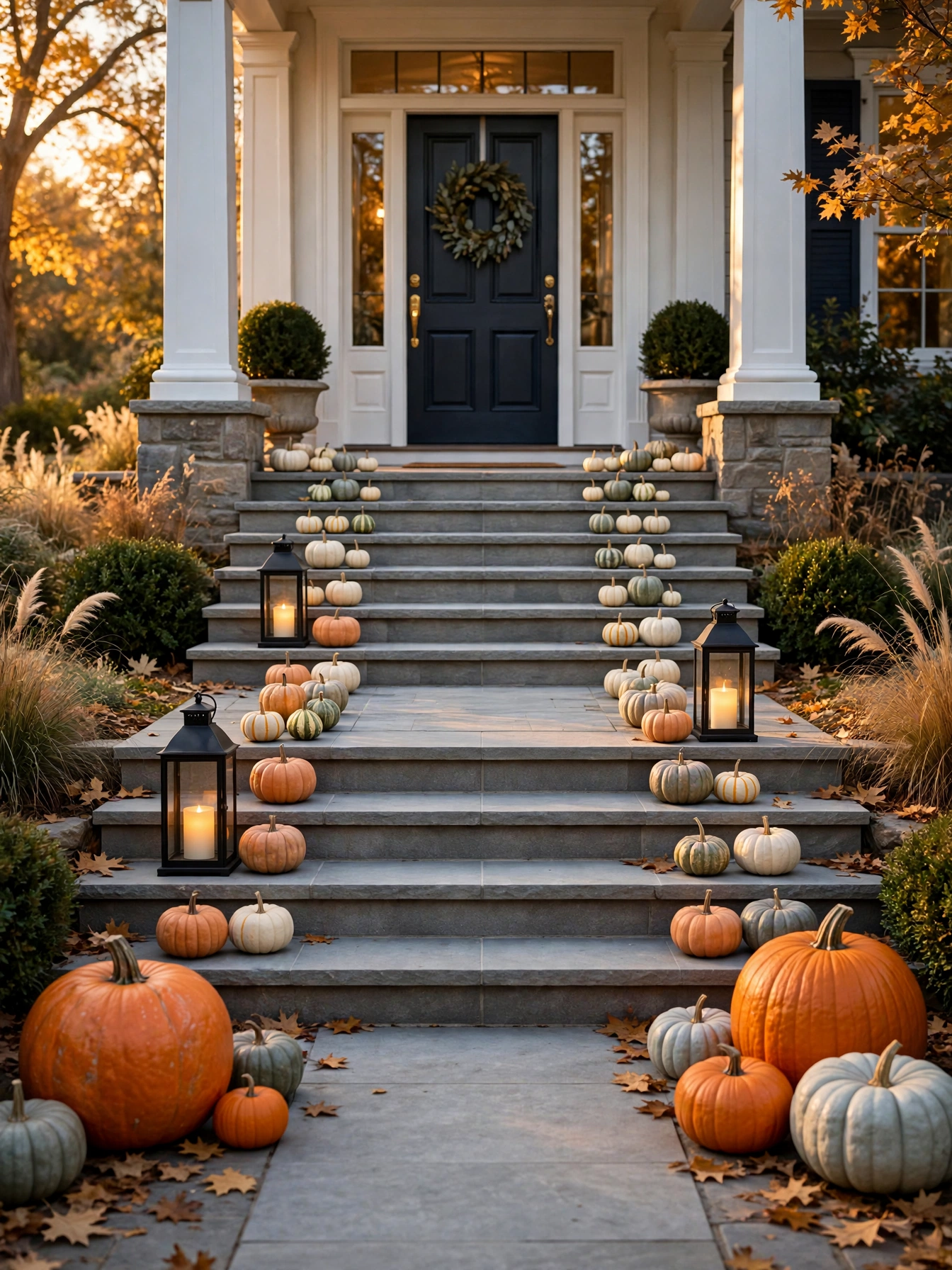
Why This Works:
- Styled steps create a grand entrance procession to the front door
- Graduated sizing from large at bottom to small at top guides the eye upward
- Steps offer free display space that costs nothing to use
- The display is visible from the street, doubling curb appeal
Place the largest 12 to 14 inch pumpkins on the bottom step and graduate down to 6 inch gourds at the top, keeping every item 8 inches from the step edge. Leave a clear 36 inch walking path up the center or one side, because blocked steps violate the spirit of residential egress guidance and annoy every visitor. Avoid real candles on steps, since wind extinguishes them and wax spills stain concrete; LED pillars at 10 dollars each are the step-safe choice. Alternate pumpkins with 10 inch lanterns every other step for light mixed with color.
Graduated step styling is the showpiece move of fall front porch decor ideas for autumn 2026, best for houses with 3 plus visible steps. The limitation is tripping: anything on steps demands discipline about the clear path, especially after dark. Compared with a single doorstep arrangement, full step styling takes 30 minutes longer but photographs 10 times better. If your steps are under 4 feet wide, style only one side and keep the other completely clear.
Rail Planter Boxes
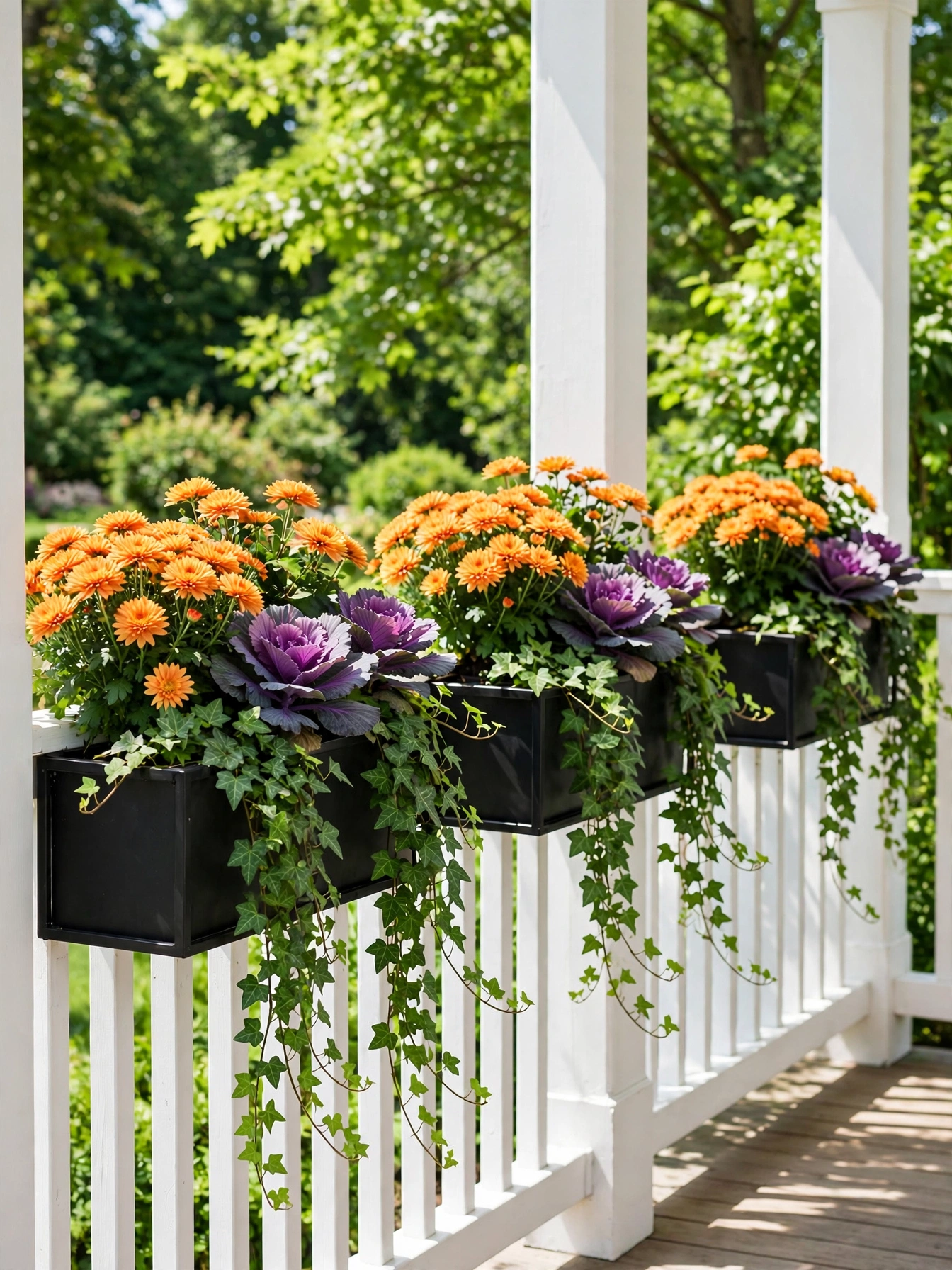
Why This Works:
- Planter boxes use railing space that otherwise sits completely empty
- A 36 inch box holds 5 to 7 plants for a lush professional look
- Boxes cost 20 to 40 dollars and mount with zero drilling
- Trailing ivy softens hard railing lines beautifully
Choose 30 to 36 inch boxes with adjustable brackets that grip 2 by 4 and 2 by 6 railings, verifying the bracket weight rating covers 30 pounds of wet soil. Plant mums and ornamental cabbage in front with trailing ivy at the edges, spacing plants 6 inches apart for full coverage. Avoid boxes on railings under 30 inches tall, since top-heavy planters raise the center of gravity and stress the brackets. Drill quarter inch drainage holes every 6 inches if the box lacks them, because soggy roots kill mums in 10 days.
Rail planters suit porches with long railings and limited floor space. The trade-off is watering: elevated boxes dry out a full day faster than ground planters, so check soil every morning. Compared with hanging baskets, rail boxes are easier to water and arrange but hold less soil depth. If your railing is composite, use felt-lined brackets to prevent scratching the cap rail.
Welcome Sign Post
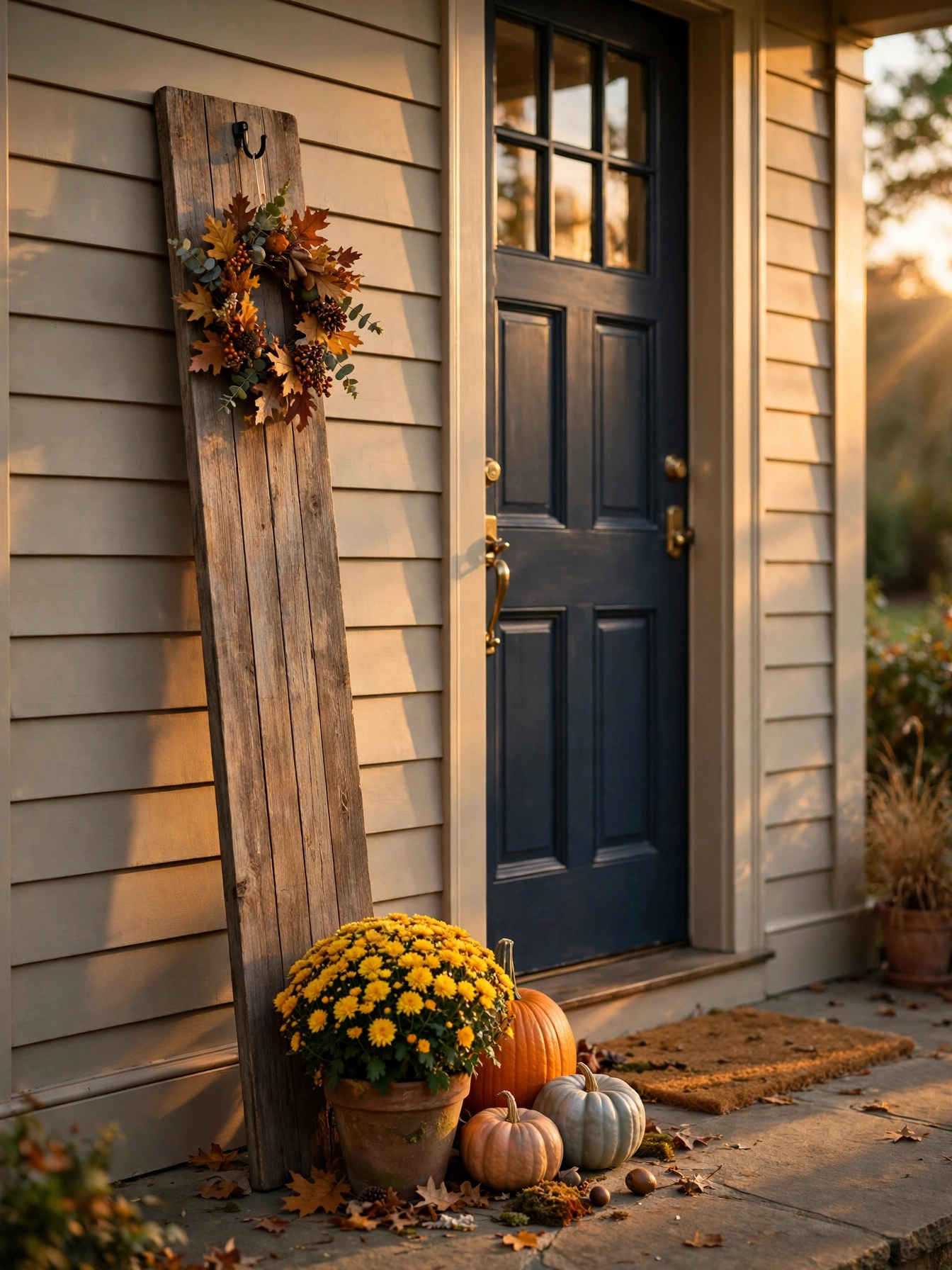
Why This Works:
- A 5 foot vertical sign adds height where porches lack it
- Reversible fall and winter designs cost 25 to 45 dollars for two seasons
- The sign personalizes a porch in a way plants cannot
- Leaning installation needs zero tools or hardware
Choose a 4 to 5 foot sign with 8 inch wide boards, leaning it at 75 degrees against the wall beside the door. Look for 1 inch thick pine or cedar; quarter inch craft boards warp within 2 weeks outdoors. Avoid placing the sign where it blocks the doorbell, house numbers, or the 32 inch clear path. Seal the base with outdoor polyurethane, because the bottom 6 inches wick porch water and rot first; Better Homes and Gardens recommends resealing outdoor wood signs yearly.
Welcome signs suit entry-focused porches and new homeowners wanting instant personality. The limitation is wind: a 5 foot sign is a sail, so wedge the base behind a 20 pound planter on exposed porches. Compared with a wreath, a sign gives more height but less seasonal flexibility unless it is double-sided. If your HOA restricts signage, check the rules first; some limit sign height to 3 feet.
Corn Stalk Columns
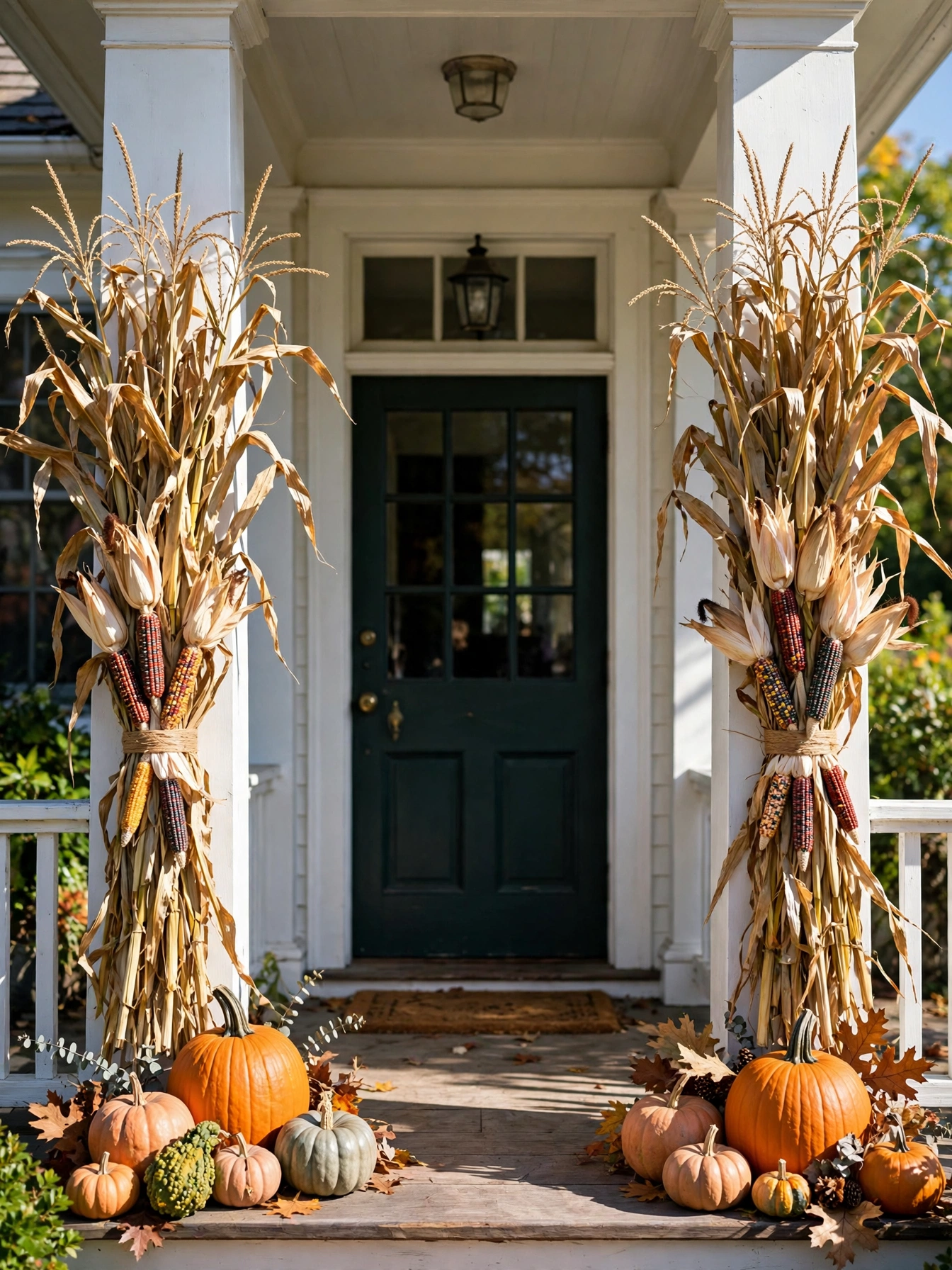
Why This Works:
- 6 to 8 foot stalks turn plain posts into harvest columns
- Bundles cost 6 to 12 dollars each at farm stands
- Vertical lines make a low porch roof feel taller
- Stalks frame the door like natural drapery
Bundle 8 to 12 stalks with jute twine at the top, middle, and bottom, then tie the bundle to the post with a separate 24 inch twine loop for easy removal. Choose stalks with husks intact, since bare stalks look skeletal rather than harvest-full. Avoid corn stalks on fully exposed porches in storm season, because 8 foot bundles catch wind like sails and can pull down light fixtures. Keep stalks 3 feet from any outdoor light fixture, since dried husks near hot bulbs are a genuine fire concern.
Corn stalks suit colonial, farmhouse, and craftsman porches with real posts. The limitation is weather: stalks shred in 40 mph winds and mildew after 2 weeks of rain. Compared with garlands on posts, stalks are cheaper and taller but far less durable. If your porch posts are square vinyl, wrap the twine over a felt pad to prevent scratching the finish.
Kale and Cabbage Pots
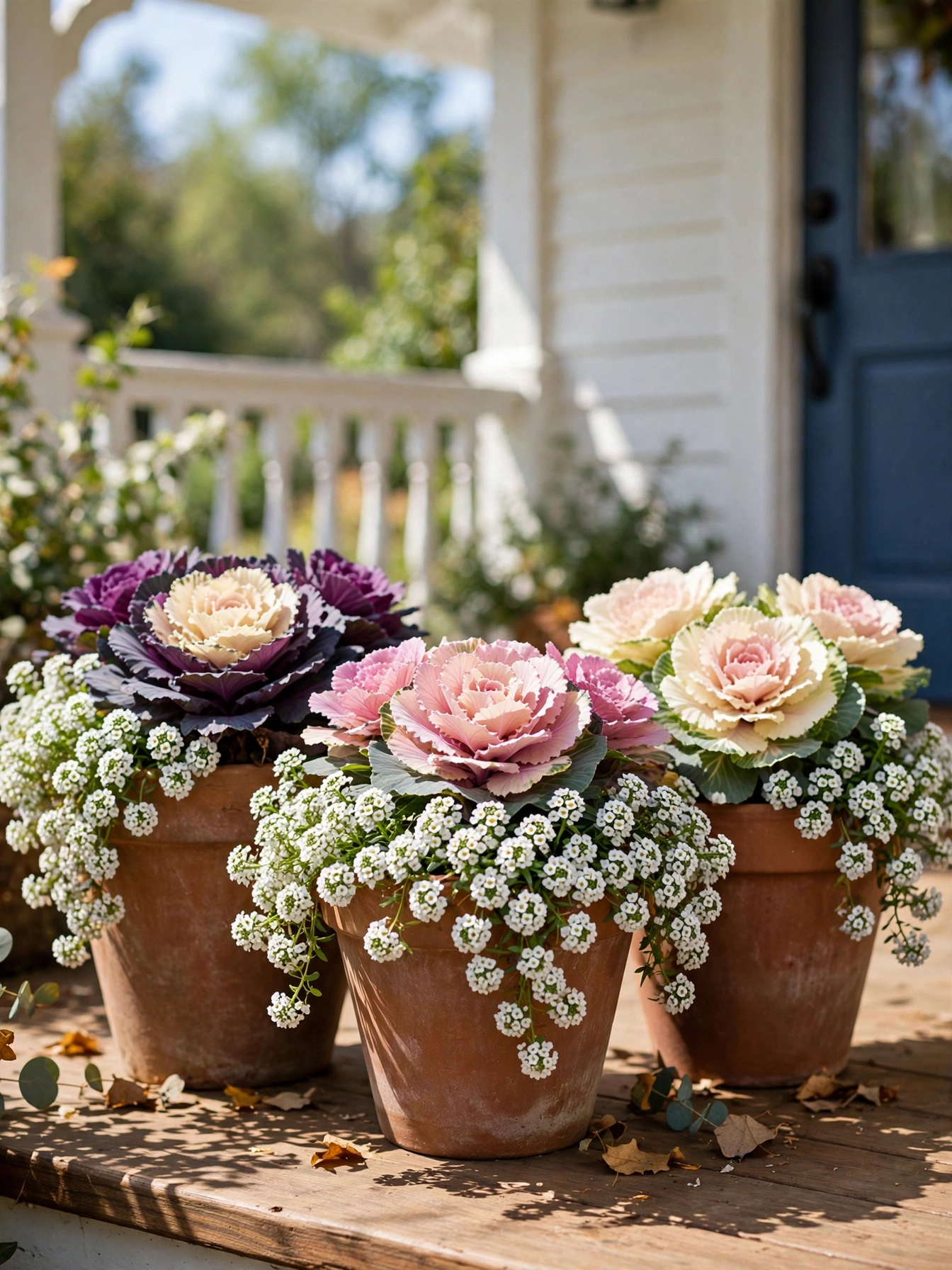
Why This Works:
- Ornamental kale thrives in cold that kills mums, lasting into December
- Purple, cream, and rose rosettes look like giant flowers from the street
- Plants cost 4 to 8 dollars each at garden centers
- Kale actually intensifies in color after the first light frost
Plant one 6 inch kale per 10 inch pot, or three per 16 inch planter, spacing rosettes 8 inches apart for full coverage. Choose plants with tight centers, since loose rosettes indicate age and will not fill out. Avoid overwatering: kale needs 1 inch per week, half what mums demand, and soggy soil rots the stem base in 7 days. Ornamental kale survives down to 20 degrees Fahrenheit, outlasting mums by a full month in most zones.
Kale pots suit gardeners who hate replanting and cold-climate porches. The trade-off is the cabbage smell: bruised leaves release sulfur odor, so handle gently when arranging. Compared with mums, kale gives longer season and less watering but subtler color. If aphids appear, a 3 second blast from the hose every 3 days controls them without chemicals.
Firewood Basket Nook
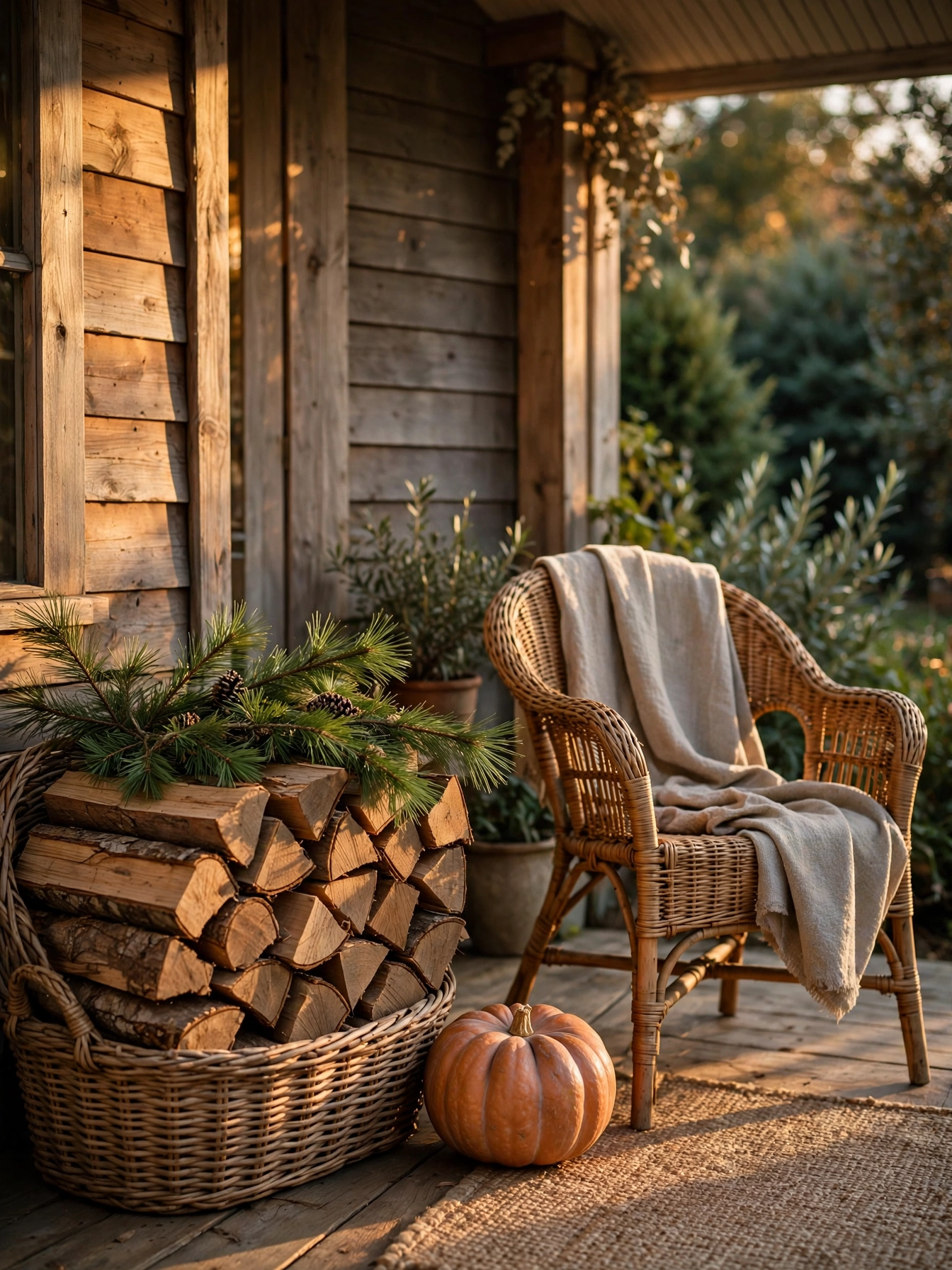
Why This Works:
- A full wood basket signals cozy fires ahead better than any sign
- Baskets cost 20 to 35 dollars and work indoors all winter
- Stacked logs add rustic texture no faux decor can imitate
- The nook fills dead porch corners with purpose
Choose a 20 inch diameter basket with handles rated for 40 pounds, since a full load of oak weighs 30 to 35 pounds. Stack split logs 14 to 16 inches long bark-side out for the tidiest look, keeping the top log 2 inches below the rim. Avoid storing firewood directly against house siding, because woodpiles harbor carpenter ants and termites; keep the basket 6 inches from the wall. Bring the basket under cover, since rain-soaked logs grow mold within 10 days and will not burn cleanly.
A firewood nook suits homes with real fireplaces and rustic porches. The limitation is pests: even clean-looking logs can carry insects indoors, so inspect each piece. Compared with a decorative log bundle from a craft store at 25 dollars, real firewood is free if you heat with wood but heavier and messier. If you never burn wood, use birch logs sold for decor; they stay clean and insect-free for 3 plus seasons.
Amber Glass Bottles

Why This Works:
- Amber glass glows like honey when backlit by afternoon sun
- Vintage bottles cost 2 to 6 dollars each at antique malls
- Grouped bottles in 3 heights create a jewelry-like display
- Glass needs zero maintenance beyond an occasional rinse
Group 5 to 7 bottles from 8 to 14 inches tall on a railing cap or windowsill, clustering odd numbers 3 inches apart. Choose genuine amber glass over painted clear glass, which chips and reveals clear spots within one season outdoors. Avoid placing bottles where they can roll: a 14 inch bottle falling 3 feet onto concrete shatters dangerously, so use museum putty on each base. Fill two bottles with dried wheat for height and leave the rest empty to catch light.
Amber bottles suit vintage, eclectic, and cottage porches. The trade-off is fragility: glass and porches with kids or dogs are a risky mix. Compared with ceramic vases, bottles are cheaper and glow prettier but break easier. If your porch gets full afternoon sun, the light show peaks between 3 and 5 PM, so position bottles on the west railing.
Outdoor Rug Anchor
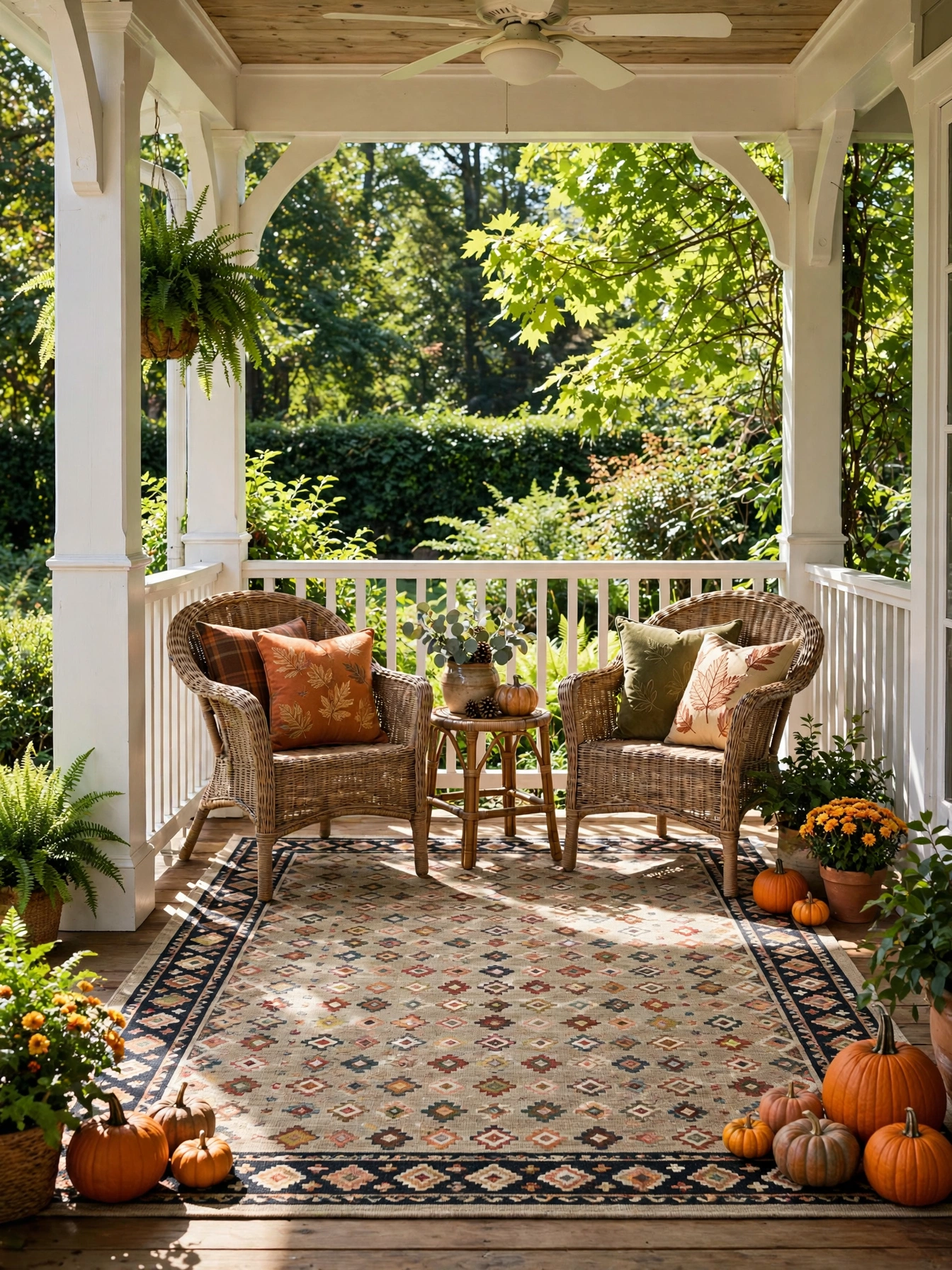
Why This Works:
- A 5 by 7 foot rug defines the seating zone like a room without walls
- Pattern underfoot adds the color layer bare porches lack
- Polypropylene rugs cost 40 to 90 dollars and hose clean
- The rug visually connects chairs, bench, and door into one composition
Size the rug to extend 18 inches beyond the seating area on all sides, so a 4 foot bench pairing needs at least a 5 by 7 foot rug. Choose polypropylene with a low quarter inch pile, because thick rugs trap water and take 3 days to dry after rain. Avoid placing rugs over uneven porch boards, since edges curl and become trip hazards within weeks; use outdoor rug tape on all four corners. Leave 6 inches between the rug edge and the door swing so the door never catches.
Rug anchors suit porches with defined seating areas. The limitation is moisture: even outdoor rugs mildew underneath after 3 weeks of damp weather, so lift and air the rug monthly. Compared with a bare porch, a rug adds warmth and noise softening but needs seasonal storage to last 3 plus years. If your porch floods in heavy rain, choose a reversible plastic rug that dries in 2 hours.
Vintage Milk Can Display

Why This Works:
- A 24 inch milk can adds antique height no planter can match
- Original cans cost 30 to 60 dollars at flea markets
- Dried sunflowers in the can reach 4 feet for dramatic scale
- The patinaed metal tells a story new decor cannot
Choose a 20 to 24 inch tall can with a stable 12 inch base diameter, since narrow-base cans tip in wind. Fill with dried sunflowers, wheat, and broom corn cut to 36 inches so stems rise 12 inches above the rim. Avoid placing the can where the door swing hits it; a 15 pound metal can dents door bottoms badly. Seal rust spots with clear matte sealer to stop orange runoff from staining the porch floor in rain.
Milk cans suit vintage, farmhouse, and eclectic porches. The trade-off is authenticity cost: real antique cans run 3 times the price of reproductions, though reproductions at 25 dollars look convincing past 6 feet. Compared with a tall planter, a milk can is narrower and quirkier but holds less soil. If the can has sharp interior edges, line it with a plastic pot before adding stems.
Solar Path Markers
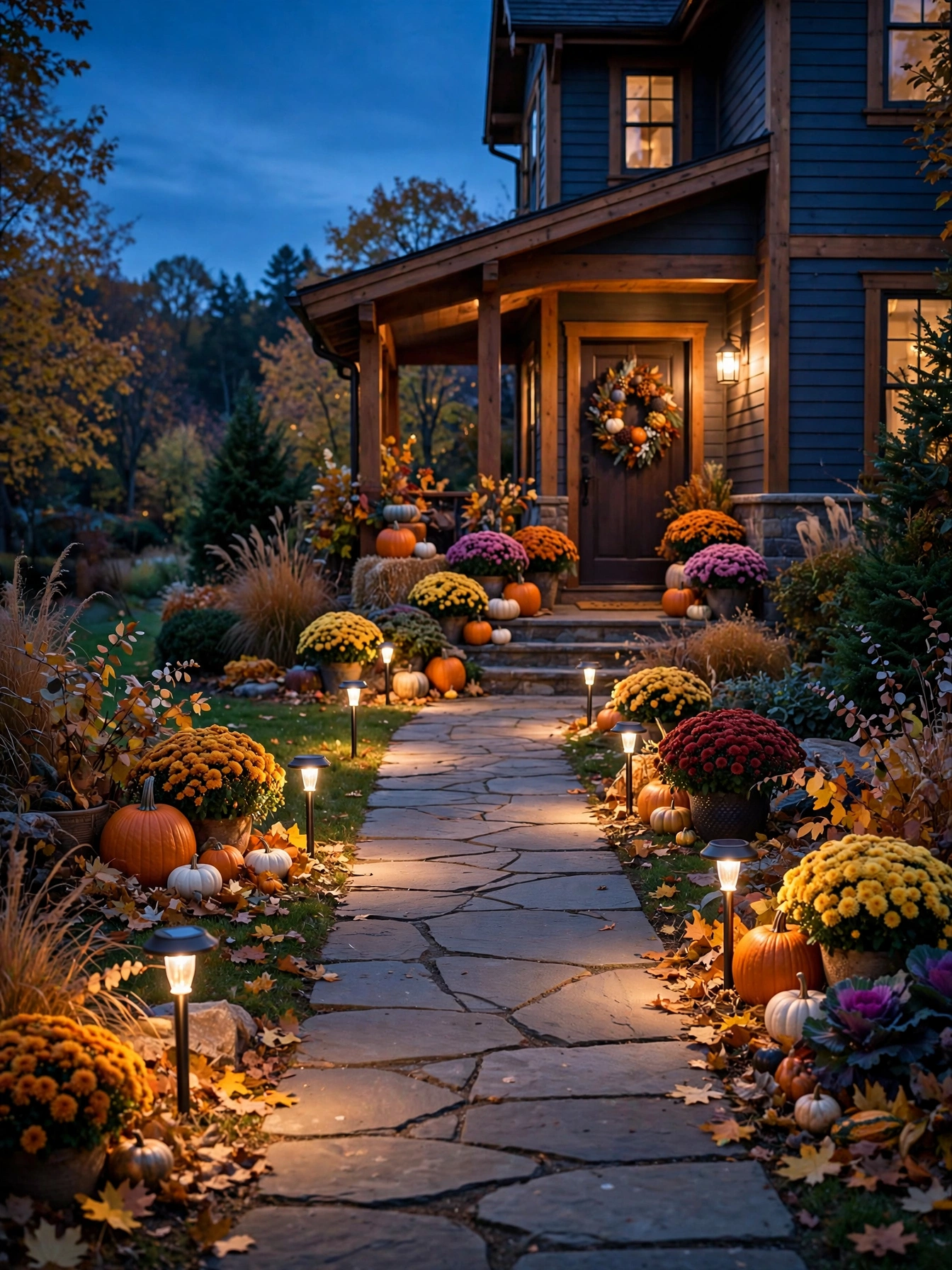
Why This Works:
- Lit markers guide guests safely up the walk after dark
- Solar lights cost 3 to 8 dollars each with zero wiring
- Warm white 2700K markers flatter fall decor instead of washing it out
- Stake installation takes 5 minutes per light with no tools
Space markers 6 to 8 feet apart along the walk, alternating sides for a natural rhythm, using lights with at least 10 lumens for real visibility. Choose metal-stake models over plastic, since plastic stakes snap in hard October soil within one season. Avoid placing solar markers in full shade, because they need 6 hours of direct sun for a full 8 hour night run; shaded markers die by 10 PM. Look for IP65 waterproof ratings, which survive the freeze-thaw cycles of late fall.
Solar markers suit walkways, driveways, and garden edges leading to the porch. The limitation is cloudy weeks: after 3 overcast days, runtime drops to 4 hours. Compared with wired low-voltage lighting, solar is free to run but dimmer and less reliable; wired systems cost 200 to 400 dollars installed by a licensed electrician. If your walk is the main trick-or-treat route, this is a safety upgrade as much as a decor one.
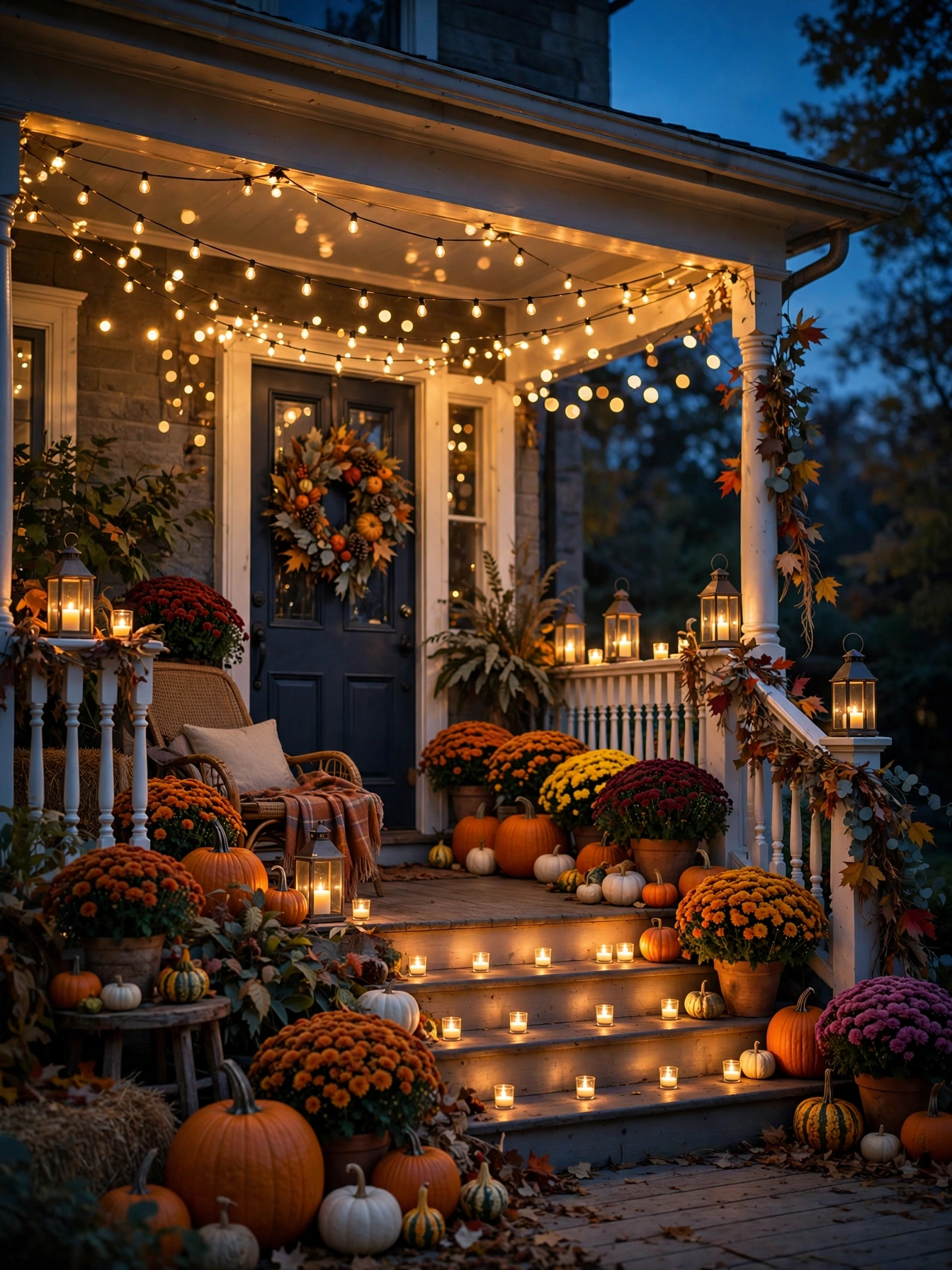
Harvest Evening Porch Glow
Why This Works:
- Combining lanterns, string lights, and candles creates 3 layers of light
- Layered light makes a porch feel 10 degrees warmer psychologically
- The full glow is the most photographed state of any fall porch
- Dusk is when neighbors and walkers actually see your work
Build the glow in three layers: overhead string lights at 8 feet, mid-level lanterns on railings and steps, and low tea lights in glass holders at the door. Use all 2700K warm white across every source, because mixed color temperatures look accidental and cheap. Avoid exceeding 800 total lumens on a small porch, since overlighting kills the cozy mood and annoys neighbors; dimmable strands solve this for 10 dollars more. Put every layer on timers set for dusk to 11 PM so the show runs itself.
The harvest evening glow is the finale of fall front porch decor ideas for autumn 2026, rewarding everyone who styled through the whole list. The trade-off is energy attention: three layers need three timer checks when daylight saving ends. Compared with a single porch light, layered glow uses marginally more power but transforms the street presence completely. If you entertain outdoors in October, this lighting makes 55 degree evenings feel inviting enough to linger.
FAQs
What are the best fall front porch decor ideas for autumn 2026 on a small budget?
Start with a layered doormat stack at 12 to 35 dollars, two 25 dollar mums in existing pots, and a 15 dollar string light strand. This 60 dollar trio transforms most porches. Add pumpkins from a farm stand at 3 to 8 dollars each for the finishing touch.
How do I keep porch decor from blowing away in October wind?
Anchor every lightweight piece: 2 pound sandbags inside lanterns, museum putty under bottles, and bungee cords on throws. Wind topples more porch displays than rain ruins, so weight beats hope every time. Bring fabric items inside when gusts exceed 35 mph.
Which fall front porch decor ideas for autumn 2026 survive heavy rain?
Choose polypropylene rugs, powder-coated metal lanterns, and IP65 rated lights, which all shrug off week-long rain. IP65 is an IEC rating meaning dust-tight and protected against water jets, a genuine rainproof pick. Elevate planters on 2 inch feet so pots drain instead of sitting in puddles.
When should I put up fall porch decor?
Most households decorate in the last week of September, giving 8 to 10 weeks through Thanksgiving. The Spruce suggests timing mums for tight buds in late September so blooms peak through October. Take down anything flammable near lights before the first hard freeze.
How much should a full fall porch refresh cost?
A complete refresh runs 100 to 200 dollars: 50 for plants, 40 for a rug, 30 for lights, and 30 for pumpkins. Reuse lanterns and crates yearly to cut future seasons to 60 dollars in fresh plants and produce. Quality faux pieces pay for themselves by year three.
Conclusion
These 23 fall front porch decor ideas for autumn 2026 come down to three habits. First, anchor the door with symmetry: matching planters or lanterns tell visitors they have arrived. Second, layer light at three heights, because dusk is when your porch does its real work. Third, choose weatherproof materials so October rain decorates nothing but your patience. First action: measure your porch and door tonight, then start with the doormat layer and mums. Follow HomelyCrafter on Pinterest for more ideas. Save this to your Pinterest boards so you can refer back to it!

Muhammad Israr is a home decor enthusiast and the writer behind Homely Crafter. He spends his days researching paint colors, layouts and budget-friendly styling ideas, then breaks them down into practical, easy-to-follow guides so you can decorate with confidence.
6 thoughts on “23 Elegant Amber Fall Front Porch Decor Ideas 2026”