
Why does one simple tray make a cluttered coffee table look styled in seconds? Coffee table tray decor ideas work because a tray creates a boundary: everything inside reads as intentional, and everything outside stays clear. This guide covers 22 tray-specific ideas, from marble and rattan foundations to styling trios and seasonal swaps, with exact sizes, material care notes, and honest trade-offs. You will learn which tray materials suit your lifestyle, what belongs on a tray, and when to skip the tray entirely.
Wooden Tray Foundations

Why This Works:
A wooden tray is the most forgiving foundation: warm, sturdy, and compatible with every decor style. Acacia’s varied grain hides minor scratches that would scar lacquer or marble. As the default tray material, wood suits first-time stylers who want one tray that works everywhere.
- Size the tray to one-third to one-half of the coffee table’s length for balance.
- Acacia and mango wood trays cost 25 to 60 dollars; teak runs 80 to 150 dollars.
- Pick trays with 2 to 3 inch sides so items stay put without hiding them.
- Oil wooden trays every 6 months with food-safe mineral oil to prevent drying.
A 20×14 inch tray suits standard 48 inch coffee tables, leaving clear space on both ends. Wood expands and contracts with humidity swings of 20 percent or more, so avoid placing wooden trays directly over heating vents. Never soak a wooden tray; wipe with a damp cloth and dry immediately to prevent warping. Compared with marble trays at triple the price, wood costs less, weighs 70 percent less, and survives drops.
Busy households and beginners get the best value from wood. One drawback is heat sensitivity: hot mugs leave rings on oiled wood within minutes, so coasters stay mandatory. Households wanting glamour may find wood too casual. For the one-tray-fits-all choice, acacia wins.
Pro Tip: Rub a walnut meat (the edible kind) into light scratches on oiled wood; the natural oils darken the scratch to match in seconds.
Marble Tray Elegance
Why This Works:
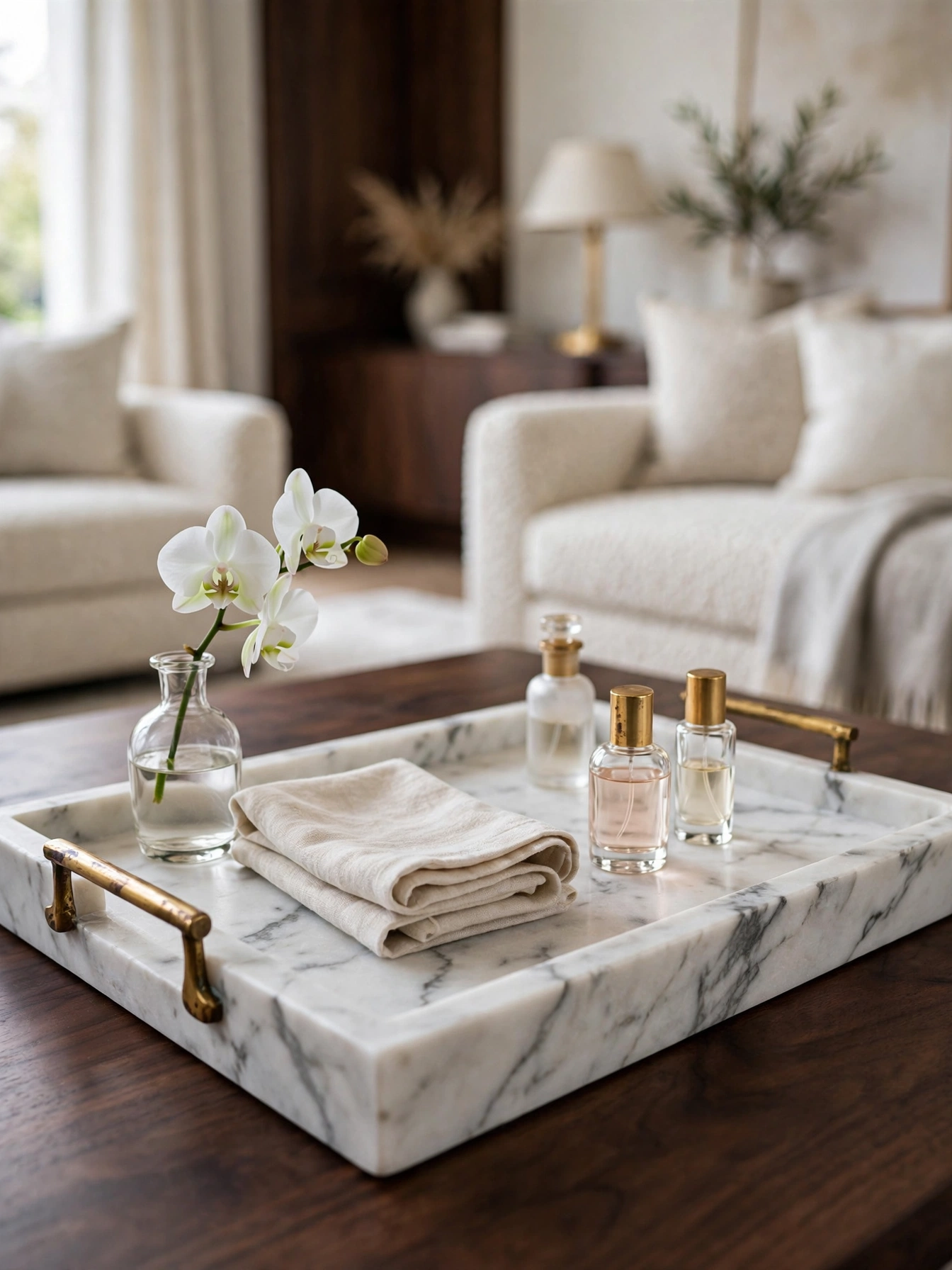
Marble trays bring cool, weighty luxury that elevates whatever sits on them. The stone’s natural veining means no two trays match, adding quiet exclusivity. Against dark wood tables, a white marble tray creates striking contrast with zero effort.
- Honed marble hides etching better than polished; choose honed for daily use.
- Marble trays cost 60 to 180 dollars depending on size and handle hardware.
- Seal the tray yearly with impregnating stone sealer to resist stains.
- Keep tray size under 18 inches; larger marble trays exceed 12 pounds and strain wrists.
A 16×12 inch marble tray weighs 8 to 12 pounds, substantial enough to stay put but heavy to carry one-handed. Marble etches on contact with acids, so citrus drinks and wine need coasters even on the tray. Wipe with pH-neutral stone cleaner only; vinegar dulls the finish within months. Compared with ceramic trays, marble costs double but brings unmatched cool-toned elegance.
Formal living rooms and luxe-leaning decorators suit marble best. The catch is fragility of a different kind: marble chips if dropped on tile, and chips cannot be buffed out at home. Homes with toddlers who grab should choose wood or rattan. For grown-up glamour, marble is the definitive tray.
Pro Tip: Place adhesive felt pads under a marble tray; they protect the coffee table from scratches when you slide the heavy tray.
Rattan Tray Warmth
Why This Works:
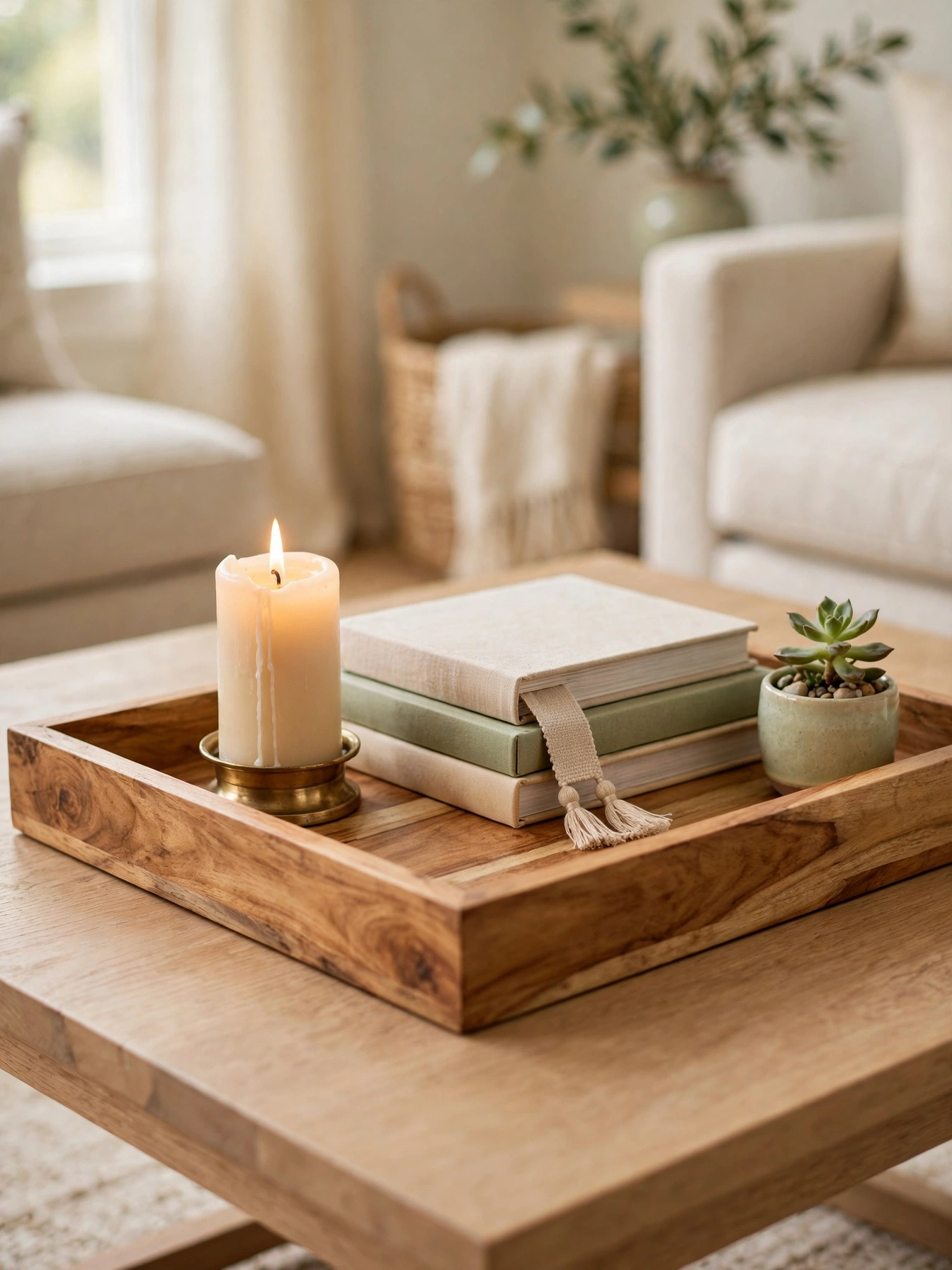
Rattan trays add handwoven texture that softens modern rooms instantly. The open weave reads casual and sunny, perfect for coffee rituals and relaxed entertaining. At 15 to 40 dollars, rattan is the cheapest route to a styled table.
- Round rattan trays (14 to 18 inch diameter) suit square and round coffee tables best.
- Check the weave for loose ends before buying; unraveling starts at flaws.
- Keep rattan dry; the fibers darken and mildew if soaked repeatedly.
- Expect to pay 15 to 40 dollars; handmade versions reach 70 dollars.
A round rattan tray at 16 inches holds two mugs, a small plate, and a bud vase comfortably. The weave traps crumbs, so shake the tray out weekly and vacuum with a brush attachment monthly. Avoid placing rattan trays on wet outdoor tables; one rainy afternoon warps the base. Versus wood, rattan weighs half as much and costs half the price, but lasts 3 to 5 years versus decades.
Casual homes, sunrooms, and coastal styles are rattan’s natural habitat. The constraint is formality: rattan never reads dressy, so formal rooms need other materials. Dust the weave monthly, since trapped dust dulls the honey tone. For sunny, relaxed styling on a budget, rattan delivers.
Pro Tip: Line a rattan tray with a round linen doily or placemat; it catches crumbs and lifts out for easy shaking.
Brass Tray Shine
Why This Works:
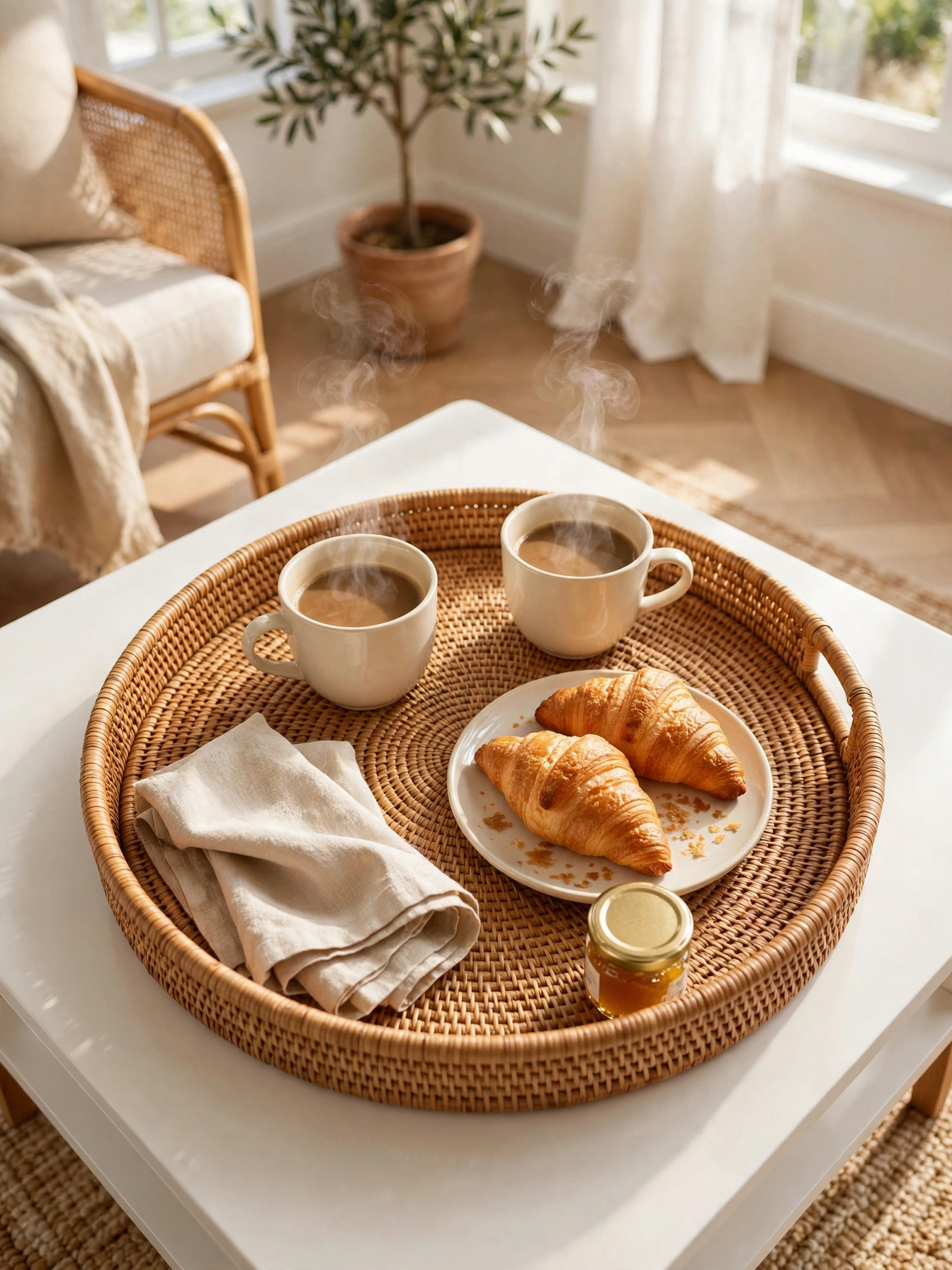
Brass trays act as jewelry for the coffee table, catching light and adding warm metallic contrast. Vintage brass brings patina that new pieces cannot fake. For evening entertaining, a brass bar tray sets the mood before a single drink is poured.
- Solid brass trays cost 50 to 150 dollars; brass-plated versions run 25 to 60 dollars.
- Unlacquered brass develops patina in 6 to 12 months; lacquered stays bright for years.
- Polish with a paste polish twice yearly, or embrace the aged look.
- Look for trays with a 1.5 to 2 inch rim to contain bottles securely.
A 14 inch brass tray holds a decanter plus 4 glasses, the standard home bar setup. Brass is softer than steel, so cutlery and bottle bases scratch it; use a linen liner for daily bar use. Avoid abrasive scrubbers, which strip lacquer and create uneven bright spots. Compared with silver trays, brass costs 60 percent less and its warm tone suits modern rooms better.
Entertainers and vintage lovers get the most from brass. The downside is upkeep: polished brass shows fingerprints within hours of handling. Households wanting zero maintenance should choose lacquered finishes. For golden-hour glamour on the coffee table, brass is unmatched.
Pro Tip: Test with a magnet before buying vintage; solid brass is non-magnetic, while plated steel fakes stick immediately.
Ceramic Tray Artistry
Why This Works:
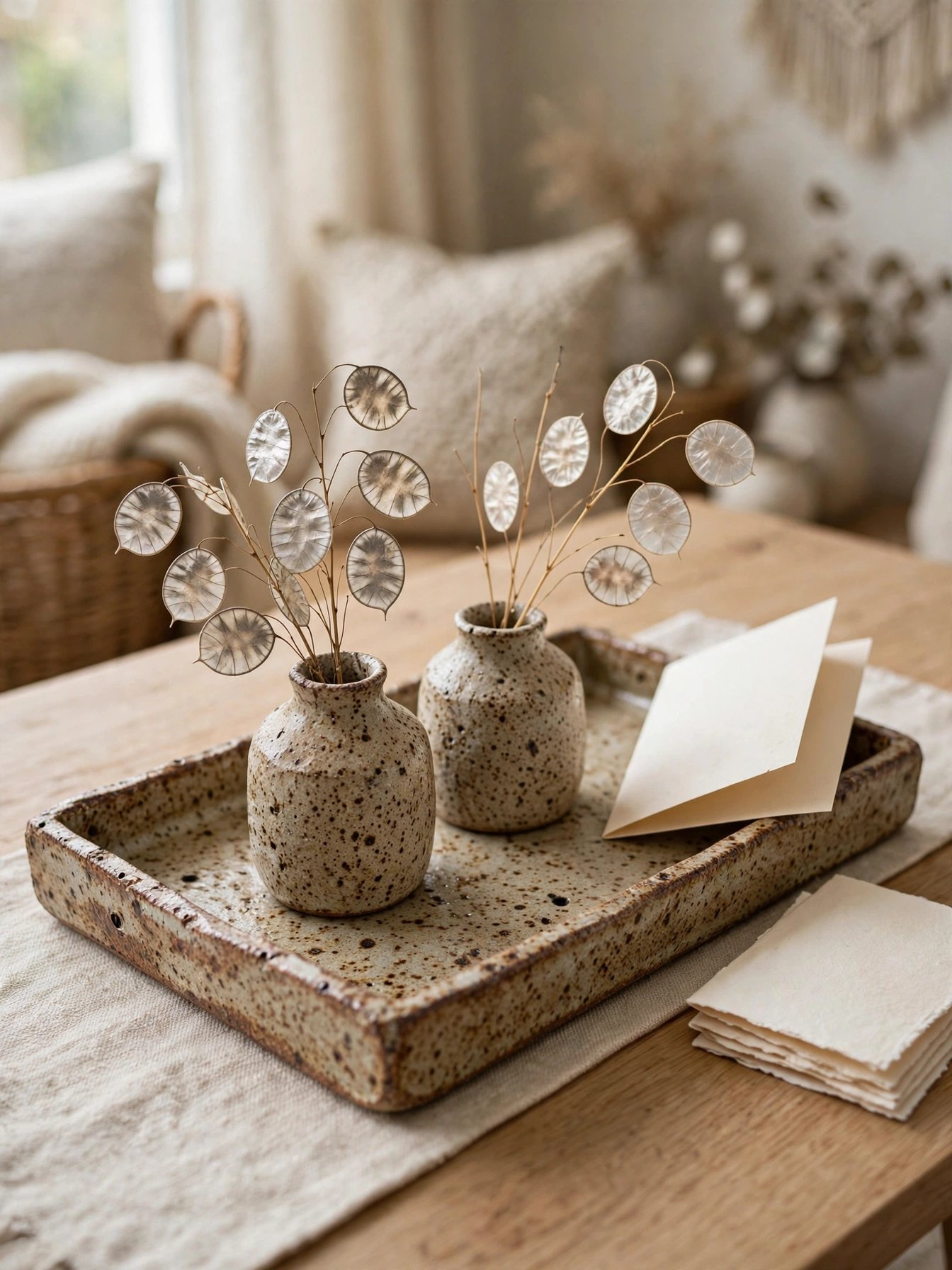
Handmade ceramic trays double as decor: the tray itself is the art, not just the holder. Speckled glazes and organic edges bring the human touch that mass-market trays lack. Small-batch ceramics make even a simple candle arrangement look curated.
- Handmade ceramic trays cost 40 to 120 dollars from studio potters and craft markets.
- Check for a flat, stable base; wobbling trays spill and annoy daily.
- Matte glazes suit modern rooms; glossy glazes read more traditional.
- Hand-wash only; dishwashers cause thermal shock cracks in stoneware.
A 14×10 inch ceramic tray weighs 3 to 5 pounds, stable enough for daily use. Unglazed bottoms scratch wood tables, so add felt pads before first use. Avoid extreme temperature swings; moving a ceramic tray from a hot car to a cold table can crack it. Next to wood trays, ceramic costs more and breaks if dropped, but brings artistry no wood can match.
Craft lovers and collectors are the natural audience. The weak spot is durability: one drop on tile ends a 80 dollar tray. Homes with grabby toddlers should wait a few years. For quiet, handmade beauty, ceramic trays reward careful owners.
Pro Tip: Buy ceramic trays in person and tap the rim; a clear ring indicates even firing, while a dull thud can signal hidden cracks.
Lacquered Tray Color
Why This Works:
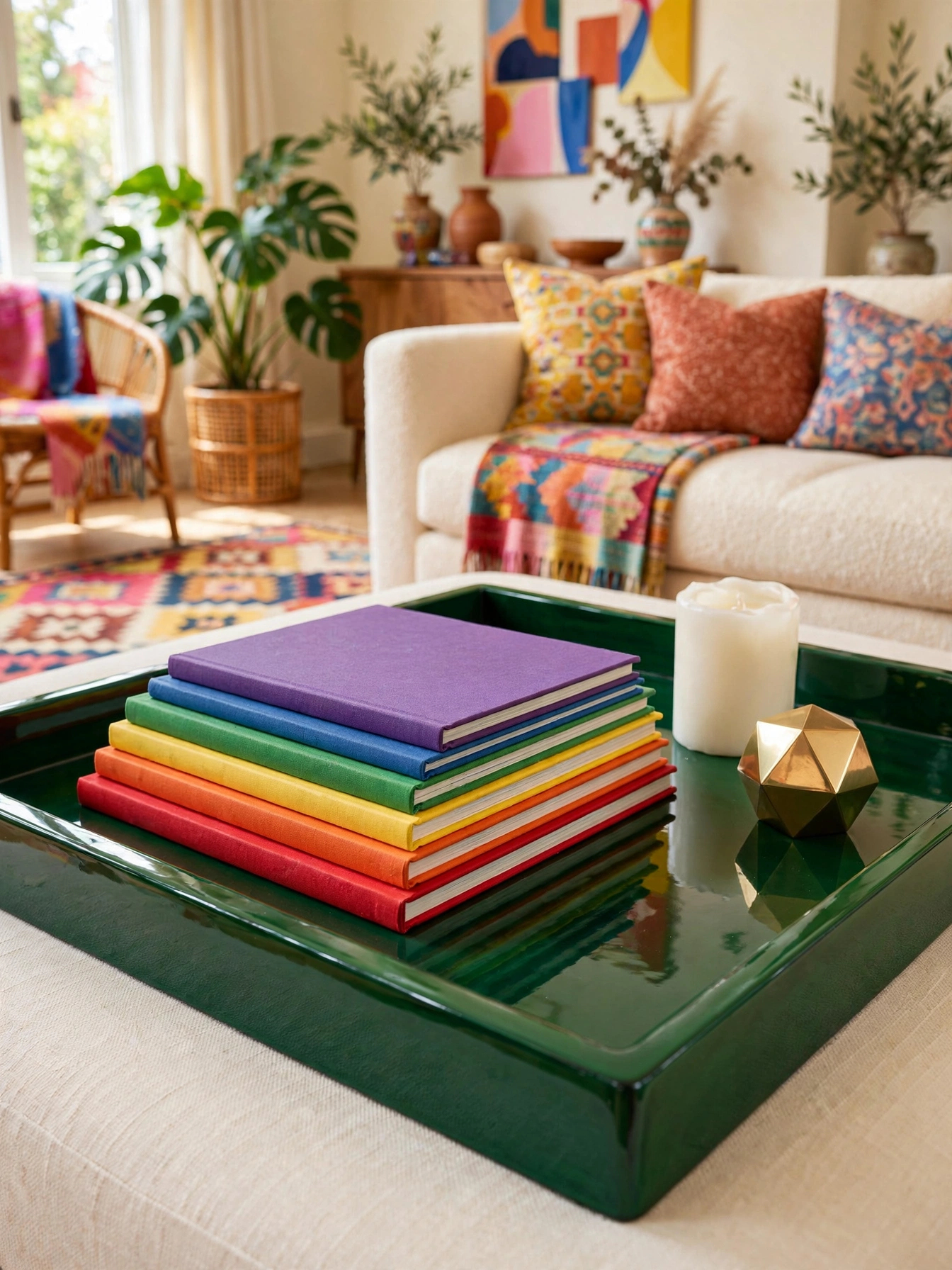
Lacquered trays deliver saturated color with a glass-like finish that makes neutrals pop. The hard, wipeable surface shrugs off rings and spills that would scar wood. One colorful tray can carry a room’s entire color story.
- Quality lacquered trays cost 40 to 100 dollars; cheap versions chip within months.
- Wipe clean with a damp cloth; lacquer resists water but not abrasive scrubbers.
- Choose colors that echo existing accents: pillows, art, or rug tones.
- Gloss shows dust, so a quick daily wipe keeps the mirror finish.
A 18×12 inch lacquered tray in emerald or navy anchors a neutral coffee table instantly. Low-quality lacquer chips at the corners within 3 to 6 months of daily use; multi-coat finishes from reputable makers last years. Avoid placing lacquered trays in direct sun; UV yellows clear coats and fades pigments within 2 years. Compared with painted DIY trays, factory lacquer costs more but resists chipping 5 times longer.
Color lovers and neutral-room owners wanting one bold note suit lacquer best. The compromise is commitment: a bright tray dictates accent colors. Households that redecorate often should choose black or white lacquer. For wipeable color with polish, lacquer wins.
Pro Tip: Scratch the underside edge with a fingernail before buying; quality lacquer resists marking, while thin finishes scratch to bare wood.
Round Coffee Table Tray Decor Ideas

Why This Works:
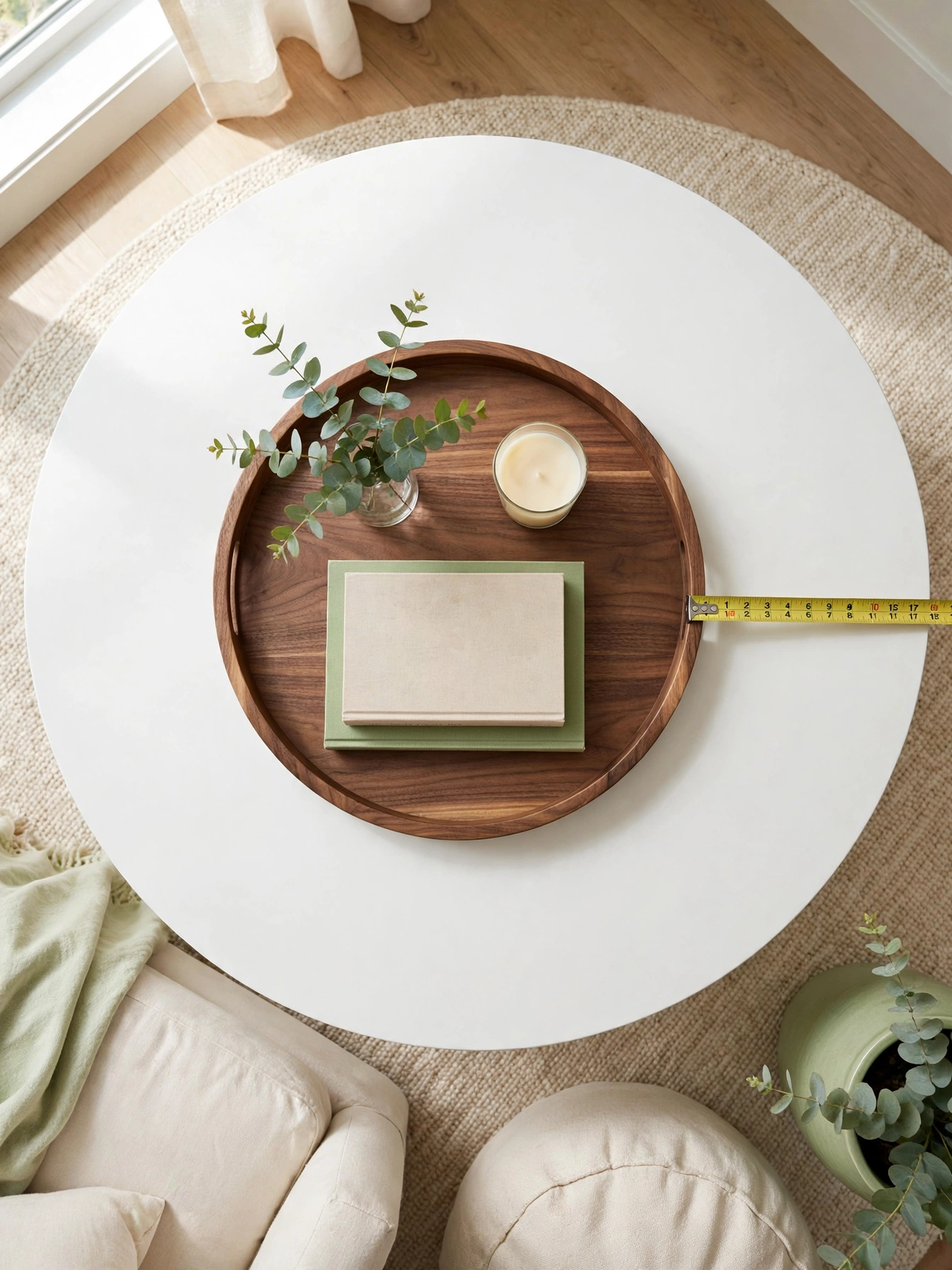
Matching tray shape to table shape creates instant harmony: round on round, rectangle on rectangle. The right scale leaves breathing room around the tray so the table still functions. Getting proportions right matters more than the tray’s price tag.
- Round trays should span 40 to 50 percent of a round table’s diameter.
- For 36 inch round tables, a 16 inch tray suits; 20 inch trays suit 42 to 48 inch tables.
- Leave at least 8 inches of clear table around the tray for mugs and remotes.
- Center the tray, then style items in odd numbers within it.
On a 36 inch round table, a 16 inch tray leaves a 10 inch ring of usable surface, enough for two mugs. Oversized trays covering 70 percent of the table defeat the purpose; the table becomes a tray stand. Avoid mixing round trays on rectangular tables unless the table is small; the shape clash looks accidental. Compared with guessing, 2 minutes with a tape measure guarantees the golden proportion.
Anyone styling a round coffee table benefits from this formula. The shortfall is flexibility: a perfectly sized round tray looks odd on a rectangular table later. Measure your specific table before falling for a tray. Proportion is the invisible skill behind every styled photo.
Pro Tip: Cut a paper circle in your candidate tray size and live with it on the table for 2 days; the right size feels obvious by day 2.
Mirrored Tray Glamour
Why This Works:
Mirrored trays bounce light around the room, doubling the sparkle of everything they hold. The reflective surface makes small arrangements look abundant. For evening rooms and holiday styling, mirror is the highest-impact tray material.
- Mirrored trays cost 35 to 90 dollars; beveled edges signal better quality.
- Clean with glass cleaner and a microfiber cloth; water spots show immediately.
- Keep mirrored trays out of direct sun to avoid blinding reflections.
- Go for trays with raised rims; flat mirror sheets slide items off.
A 18×12 inch mirrored tray reflects roughly double the candlelight placed on it, a real glow multiplier. Mirror scratches show permanently, so slide items rather than dragging them. Avoid placing heavy decanters near the rim; the glass edge chips under point loads. Compared with brass trays, mirror costs less and brightens dark corners better.
Evening entertainers and small dark rooms gain the most. The price you pay is cleaning: mirrors show every fingerprint and dust mote. Households wanting low maintenance should skip mirror. For maximum sparkle per dollar, mirrored trays win.
Pro Tip: Wipe mirrored trays with a dry microfiber cloth daily; 30 seconds prevents the haze that builds up between deep cleans.
Leather Tray Texture

Why This Works:
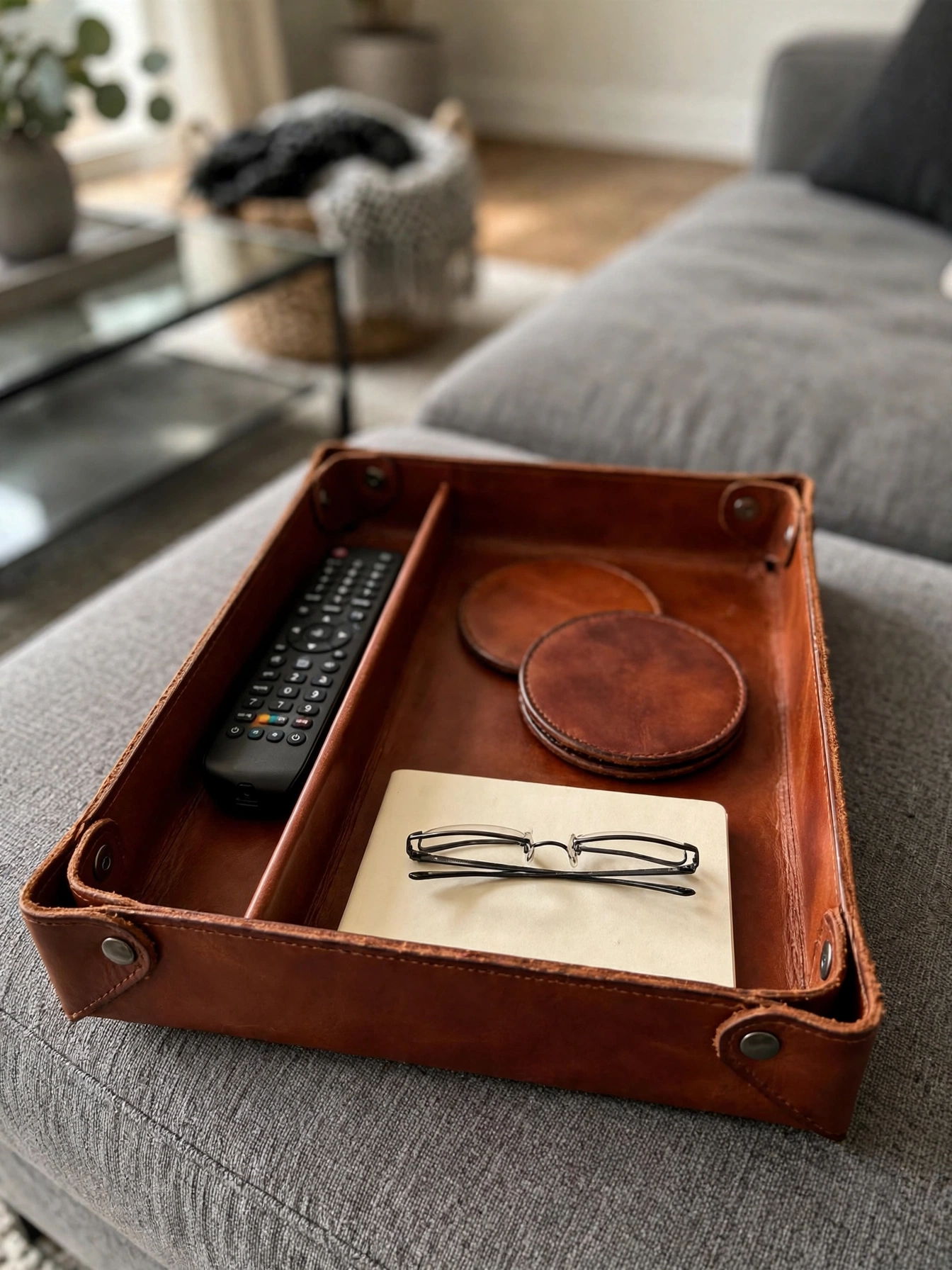
Leather catchall trays corral the real-life clutter: remotes, glasses, coasters, in one handsome spot. The valet style with snapped corners lies flat for travel and pops up for use. This is the tray for people who actually live in their living rooms.
- Full-grain leather valet trays cost 40 to 100 dollars; bonded leather peels within 2 years.
- Choose 8 to 10 inch sizes for remotes and glasses; larger loses the catchall purpose.
- Condition yearly with leather conditioner to prevent cracking.
- Dark cognac and black hide daily wear best.
A 9 inch square valet tray holds two remotes, glasses, and coasters without crowding. Leather stretches slightly with use, so snug items fit better after a month. Avoid placing leather trays near sunny windows; UV dries and fades the hide within 2 years. Compared with decorative trays, valet trays prioritize function, and honest function looks good.
Real-life households with remotes and readers get daily value here. What you give up is capacity: valet trays hold essentials, not decor statements. Style-focused decorators can pair a small valet tray beside a larger decorative one. For taming the everyday mess beautifully, leather wins.
Pro Tip: Unsnap the corners and toss the flat leather in your bag; valet trays double as travel organizers for hotel nightstands.
Stone Tray Weight
Why This Works:
Stone trays bring geological permanence that lightweight trays cannot: they stay exactly where you put them. Travertine’s pitted texture adds artisan character. As the heaviest option, stone suits windy rooms and homes where trays get knocked.
- Travertine trays cost 70 to 160 dollars; 2 inch thick profiles feel most substantial.
- The 16 inch stone tray weighs 10 to 15 pounds; lift with two hands.
- Seal yearly; stone stains from coffee and wine within hours unsealed.
- Place felt pads underneath to protect the coffee table from the stone’s weight.
Stone’s density means a 14 inch tray can exceed 12 pounds, so confirm your coffee table’s top handles concentrated loads. Movers charge 150 to 300 dollars for white-glove delivery of heavy stone furniture; hire professionals when a stone coffee table or large stone pieces must navigate stairs, since 100 plus pound objects injure backs and damage walls fast. Avoid dragging stone trays; the abrasive base scratches wood and lacquer. Stacked against wood, stone costs triple and weighs 5 times more, but never slides or tips.
Windy open-plan homes and sculpture lovers suit stone best. The snag is portability: stone trays live where you set them. Households that rearrange seasonally should choose lighter materials. For immovable, grounded styling, stone is definitive.
Pro Tip: Fill travertine pits with color-matched stone epoxy before sealing; filled stone wipes clean instead of trapping crumbs.
Tray Styling Trios

Why This Works:
The rule of three, tall, medium, and small, is the simplest styling formula that always works. Odd numbers create visual tension that pairs cannot. Inside a tray’s boundary, a trio looks complete without crowding.
- Choose heights in a 3:2:1 ratio; a 12 inch vase pairs with an 8 inch stack and 4 inch bowl.
- Vary materials across the trio: glass, paper, and metal beats three ceramics.
- Leave 2 to 3 inches of breathing room between items.
- Anchor with the tallest item slightly off-center, never dead middle.
A trio on an 18 inch tray needs items spanning 4 to 12 inches tall for proper rhythm. Groups of 3 outperform pairs in eye-tracking studies of styled surfaces, holding attention 30 percent longer. Avoid four items; even numbers split the eye and the tray looks divided. Compared with maximalist clusters of 7 plus pieces, trios photograph cleaner and dust faster.
Beginners and minimalists get foolproof results from trios. The constraint is expressiveness: trios can feel formulaic in eclectic rooms. Maximalists should use trios of trios, three clusters of three. For the 80/20 of tray styling, learn the trio first.
Pro Tip: Photograph your trio from sofa height; arrangements that look good standing often look flat from the seat where guests see them.
Books on Trays
Why This Works:
Books give trays instant personality and height variation for free. A stack of 2 to 3 art books creates the pedestal that small objects need. Guests read your shelves and your tray, both conversation starters.
- Use books 10 to 12 inches long; oversized coffee-table books overwhelm small trays.
- Stack 2 to 3 books maximum on a tray; more becomes a pile, not styling.
- Place the largest book at the bottom, rotating 5 to 10 degrees for a casual offset.
- Top the stack with one small object under 6 inches tall.
Three 11 inch art books stack to about 4 inches high, the ideal pedestal height. Heavy books (over 5 pounds total) suit sturdy wood and stone trays; keep them off rattan, which bows. Avoid stacking books you actually read weekly; restyling fatigue kills the look within a month. Versus buying new decor objects, books you own style the tray for zero dollars.
Readers and collectors get the most from this approach. The flip side is dust: book stacks need monthly dusting. Minimalists may prefer a single sculptural object. For personality per inch, books are unbeatable.
Pro Tip: Wrap a plain book in kraft paper and write the title by hand; custom covers turn any stack into intentional decor.
Candlelit Tray Scenes

Why This Works:
Candles on a tray contain the fire risk and the wax drips in one safe zone. Grouped flames multiply the glow beyond what scattered singles achieve. A candlelit tray turns any ordinary evening into an occasion.
- Use pillar candles 3, 6, and 9 inches tall for classic graduated height.
- Keep flames 12 inches from curtains, books, and other flammables.
- Metal and stone trays handle heat; never group candles on rattan or dry wood trays.
- Trim wicks to 0.25 inch before each lighting for clean, tall flames.
Three 3 inch diameter pillars burn 60 to 80 hours each, lasting months of evenings. The National Fire Protection Association advises keeping burning candles within sight and 12 inches from anything flammable. Never leave a candlelit tray unattended; 20 percent of candle fires start in living rooms. Compared with a single candle, a trio on a tray reads as deliberate decor, not an afterthought.
Evening households and romantics love candlelit trays. One caveat is vigilance: real flames demand attention. Homes with curious pets or toddlers should use LED pillars (20 to 40 dollars for quality flickering sets). For atmosphere per dollar, candles win.
Pro Tip: Freeze candles for 2 hours before first lighting; the denser wax burns 20 percent slower and drips less.
Greenery on Trays
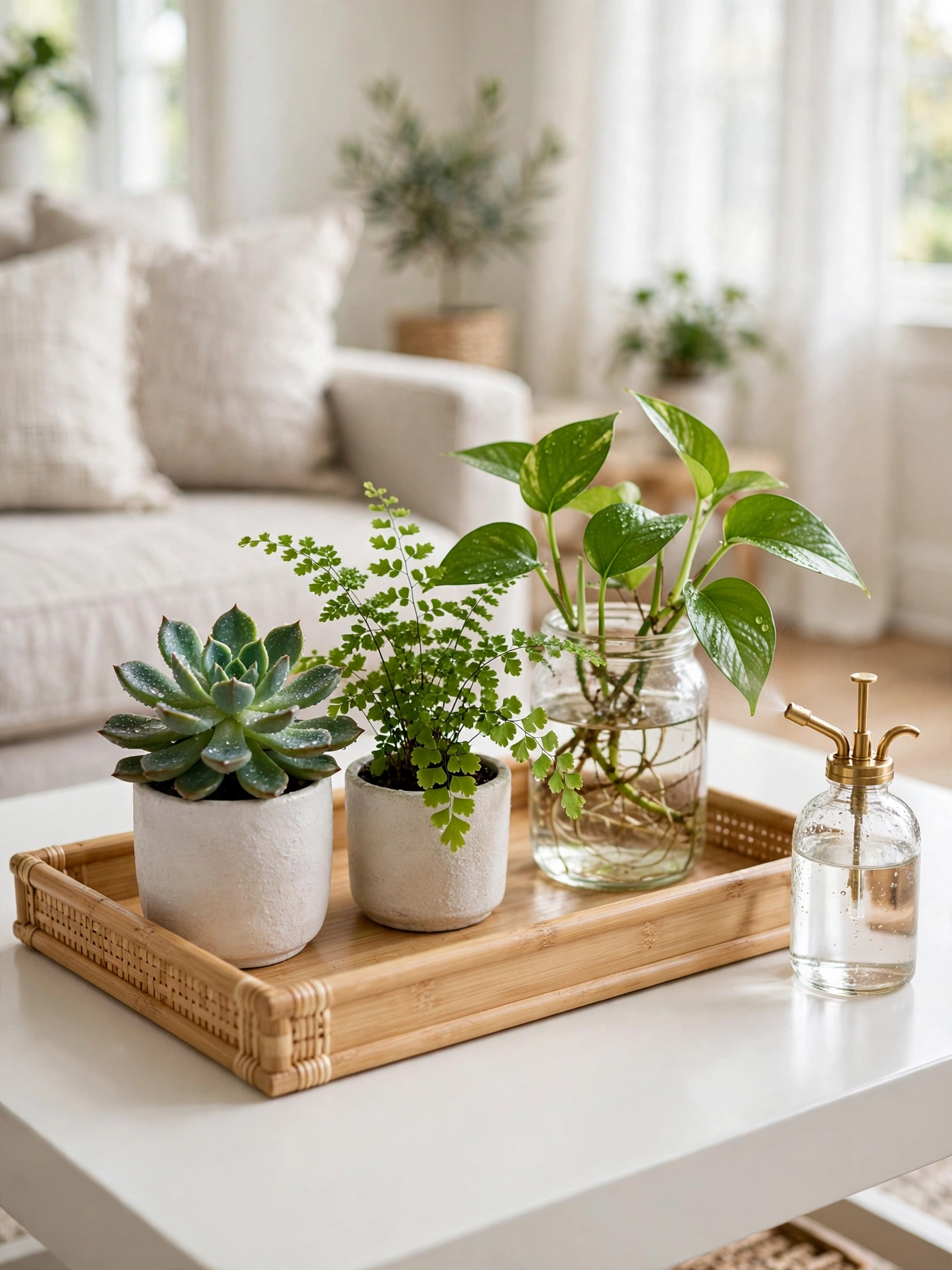
Why This Works:
Small plants on a tray create a contained garden that moves as one piece for cleaning. The tray catches water drips that would stain the table. Grouped greenery looks lush even with just three 4 inch pots.
- Choose 3 to 4 inch pots; larger plants overwhelm tray scale.
- Line the tray with a waterproof mat or saucers under each pot.
- Succulents need watering every 2 to 3 weeks; ferns need twice weekly.
- Bamboo and sealed wood trays resist moisture best for plant duty.
Three 4 inch pots fit a 14 inch tray with room for a mister bottle. Drainage matters: pots without holes need a 0.5 inch pebble layer to prevent root rot. Avoid placing plant trays in rooms under 100 foot-candles; even low-light plants decline within 2 months. Compared with one large plant, a tray garden offers variety and moves easily.
Plant lovers and bright-room owners suit this idea best. The wrinkle is watering discipline: small pots dry in 3 to 5 days. Travelers should choose succulents only. For living decor that fits anywhere, plant trays deliver.
Pro Tip: Rotate the whole tray a quarter turn weekly; even light keeps the grouping symmetrical with zero fuss.
Small Coffee Table Tray Decor Ideas
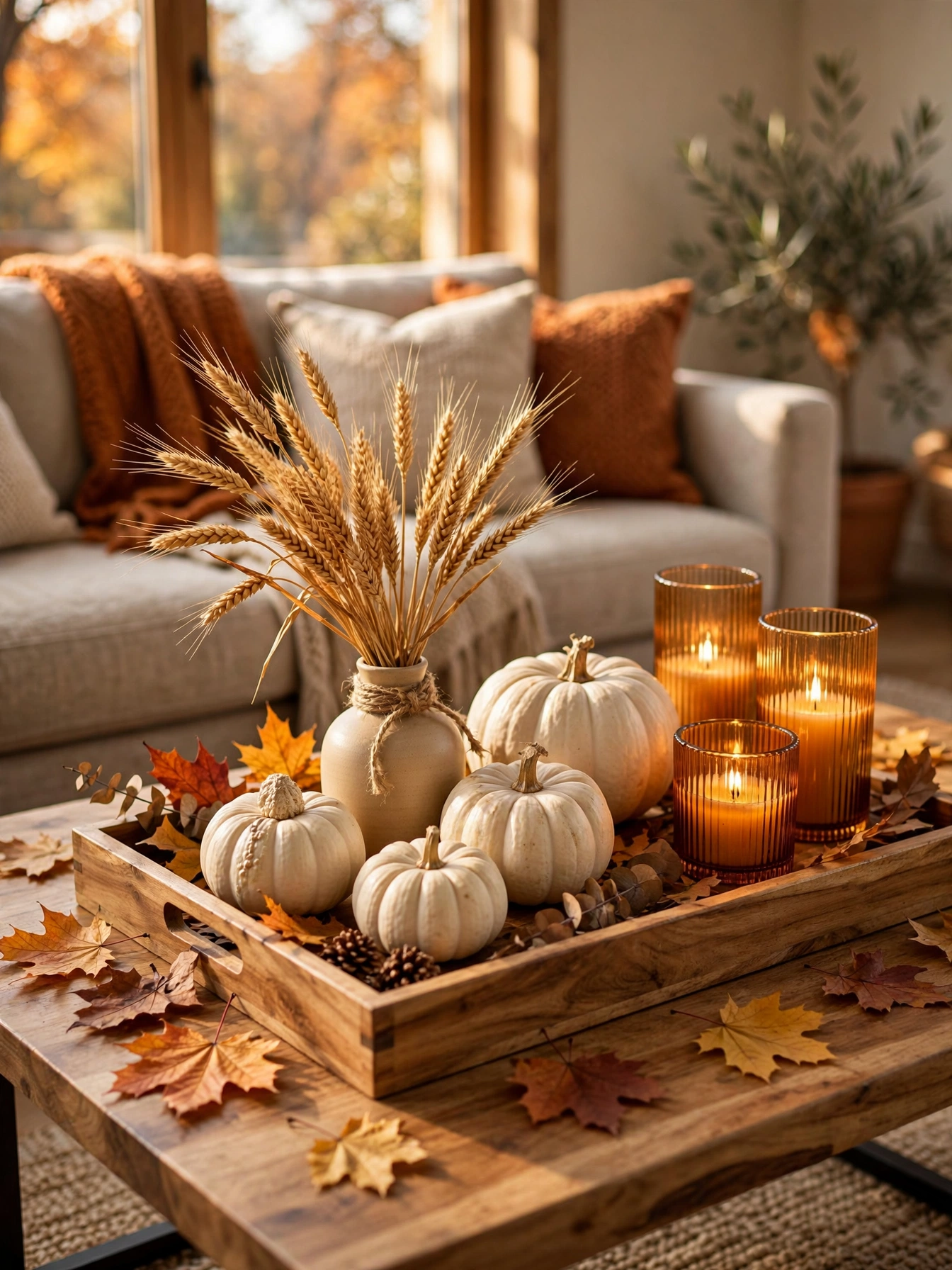
Why This Works:
Small tables need petite trays: one 10 inch tray styles a 30 inch table without swallowing it. The single-trio rule still applies, just at a smaller scale. Restraint on small tables reads as chic, not empty.
- Keep the tray under one-third of a small table’s diameter: 10 inches for 30 inch tables.
- Limit styling to 3 small items under 6 inches tall each.
- Choose lightweight trays under 2 pounds for easy lifting during cleaning.
- Round trays soften the look of small square tables.
A 10 inch tray on a 30 inch table leaves a 10 inch ring of usable surface per side. Small apartment tables under 32 inches cannot host both a tray and daily items; the tray must earn its footprint. Avoid tall items over 8 inches on small tables; they block sightlines across the room. Compared with styling a 48 inch table, small tables need half the objects at two-thirds the scale.
Apartment dwellers and small-space stylists benefit most. The weak spot is function: a styled small table holds little else. Keep daily remotes in a side-table valet instead. For tiny tables with big charm, petite trays are the answer.
Pro Tip: Choose a tray with handles on small tables; you will lift it daily, and handles make the move graceful.
Seasonal Tray Swaps

Why This Works:
Swapping tray contents seasonally refreshes the whole room for the price of a few pumpkins. The tray stays put; only the styling changes. Four swaps a year keep the living room feeling current with minimal effort.
- Budget 20 to 40 dollars per seasonal swap using craft stores and nature finds.
- Store off-season tray items in one labeled 12 quart bin per season.
- Keep the tray itself neutral so it works for all four seasons.
- Swap 3 to 5 small items; the tray and one anchor piece stay constant.
A full seasonal refresh takes 20 to 30 minutes when items are pre-stored and labeled. Faux pumpkins and botanicals cost 3 to 8 dollars each and last 5 plus years, beating annual fresh purchases. Avoid storing seasonal items loose; one 12 quart bin per season keeps swaps under 30 minutes. Compared with redecorating the room, tray swaps deliver 80 percent of the seasonal feeling at 5 percent of the cost.
Holiday lovers and Pinterest stylists get the most joy here. One drawback is storage: four bins need closet space. Minimalists can do two swaps, fall and spring, and skip the rest. For festive impact per dollar, seasonal trays are unmatched.
Pro Tip: Photograph each seasonal arrangement before dismantling; the photo makes next year’s swap a 10 minute copy job.
Bar Tray Styling
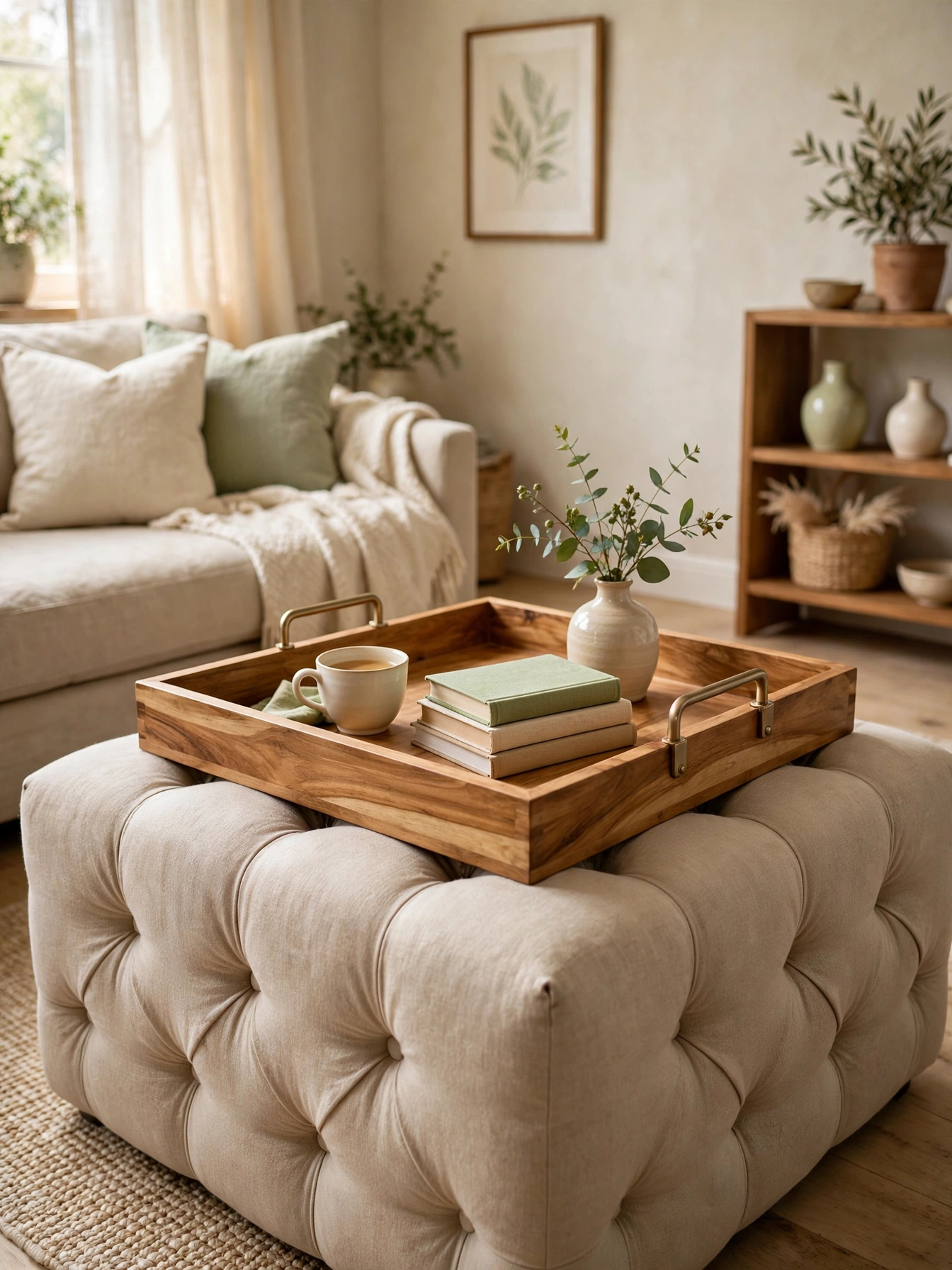
Why This Works:
A bar tray turns the coffee table into cocktail hour headquarters without a bar cart. Everything needed sits in one portable station. For small homes, the tray is the bar.
- Allow 20×14 inches minimum for a functional bar tray with shaker and glasses.
- Stock 2 bottles, 4 glasses, shaker, jigger, and citrus for a complete setup.
- Use trays with 2 inch plus rims; bottles tip without containment.
- Keep a small cutting board and paring knife on the tray for garnishes.
A complete bar tray setup costs 80 to 200 dollars including the tray. Bottles add 8 to 12 pounds, so choose sturdy wood or metal trays over rattan. Avoid overstocking; 2 bottles look curated, 6 look cluttered. Compared with a bar cart (150 to 400 dollars), a bar tray costs half and fits any table.
Entertainers and small-space hosts love bar trays. The catch is table space: a bar tray claims 280 square inches. Households that rarely drink should style a coffee or tea tray instead. For instant party readiness, the bar tray delivers.
Pro Tip: Pre-chill glasses in the freezer 15 minutes before guests arrive; frosted glasses elevate even simple drinks.
Ottoman Tray Toppers
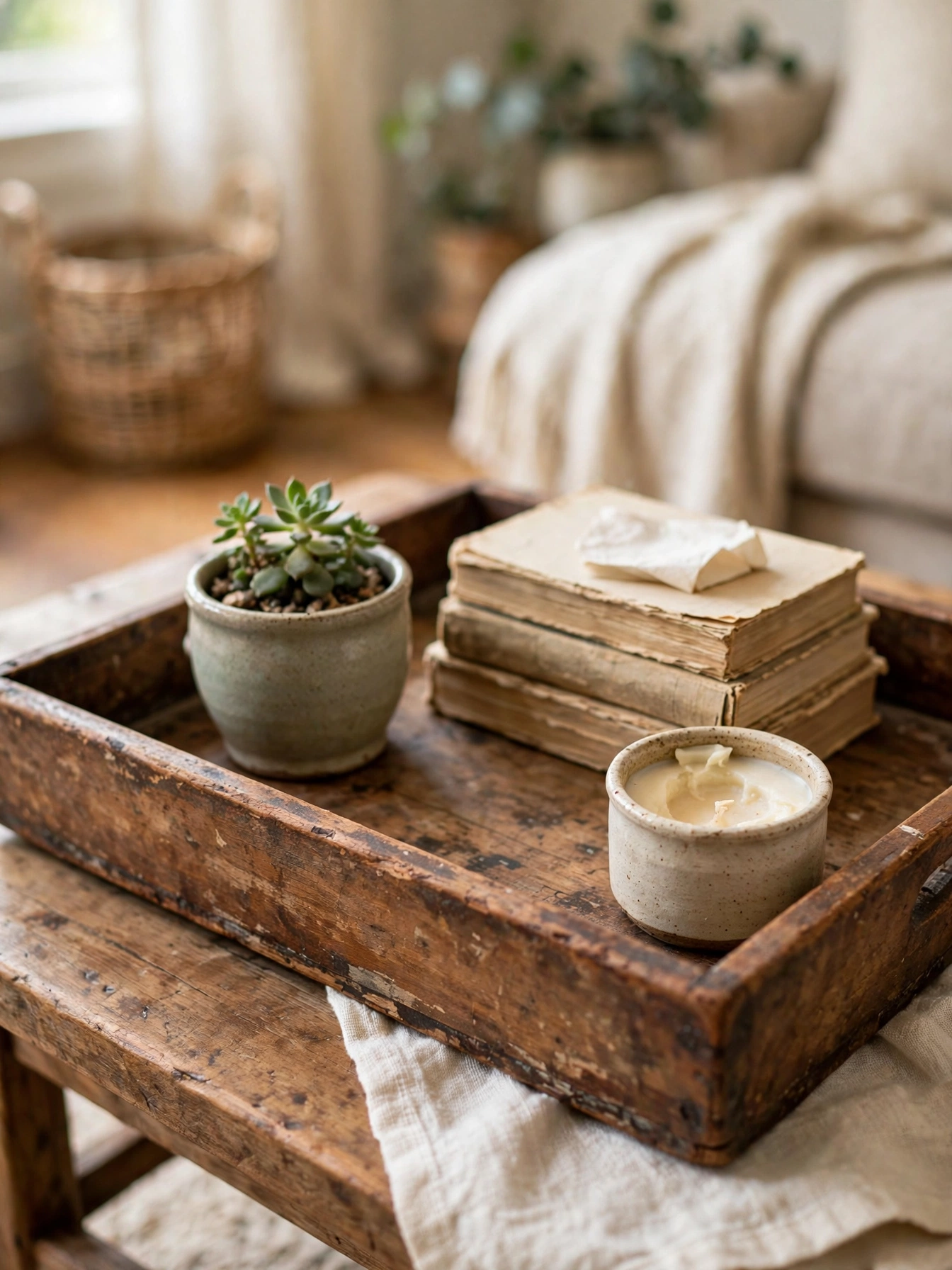
Why This Works:
A large tray converts a soft ottoman into a hard, usable surface in one move. Lift the tray and the ottoman returns to footrest duty. This dual-purpose trick suits small rooms where every piece must multitask.
- Cover 70 to 80 percent of the ottoman top with the tray for stability.
- Select trays with handles; you will lift this tray daily.
- Rigid wood or metal trays bridge tufting; flexible rattan wobbles.
- A 24×24 inch tray suits standard 30 inch square ottomans.
A 24 inch tray on a 30 inch ottoman leaves a 3 inch soft border that still works as a footrest edge. Trays under 60 percent coverage tip when leaned on; the 70 to 80 percent rule prevents spills. Avoid glass trays on ottomans; the flexing surface stresses glass. Next to buying a separate coffee table, a 40 dollar tray doubles the ottoman’s function.
Small living rooms and ottoman owners get transformative value. The downside is the daily lift: the tray moves every time feet go up. Households wanting zero-fuss surfaces should keep a real table. For flexible small spaces, the tray topper is genius.
Pro Tip: Add adhesive rubber bumpers under the tray corners; they grip the ottoman fabric and stop the tray sliding.
Tray Versus Bare

Why This Works:
Knowing when to skip the tray is as valuable as styling one. Bare tables suit minimalist rooms, heavy daily use, and beautiful table surfaces worth showing off. The honest comparison helps readers choose with confidence.
- Skip the tray when the coffee table itself is the statement: live-edge, marble, or sculptural.
- Bare works best in minimalist rooms where every object is intentional.
- Families with toddlers often go bare; one less thing to grab and throw.
- Try bare for 2 weeks; if the table looks unfinished, add the tray back.
A 2000 dollar marble coffee table deserves visibility; covering 50 percent with a tray wastes the investment. Homes where the table hosts board games 3 plus nights weekly function better bare. Avoid the all-or-nothing trap; a small 10 inch tray on a large bare table gives both worlds. Compared with committed styling, the 2 week bare trial costs nothing and reveals true preference.
Minimalists and owners of statement tables suit bare best. The rub is warmth: bare tables can read cold in cozy rooms. Houzz discussions show the tray debate splits evenly, confirming it is taste, not rules. Choose the look that matches how you actually live.
Pro Tip: Snap your table both ways and compare the shots side by side; the camera reveals which version suits your room instantly.
Budget Tray Finds
Why This Works:
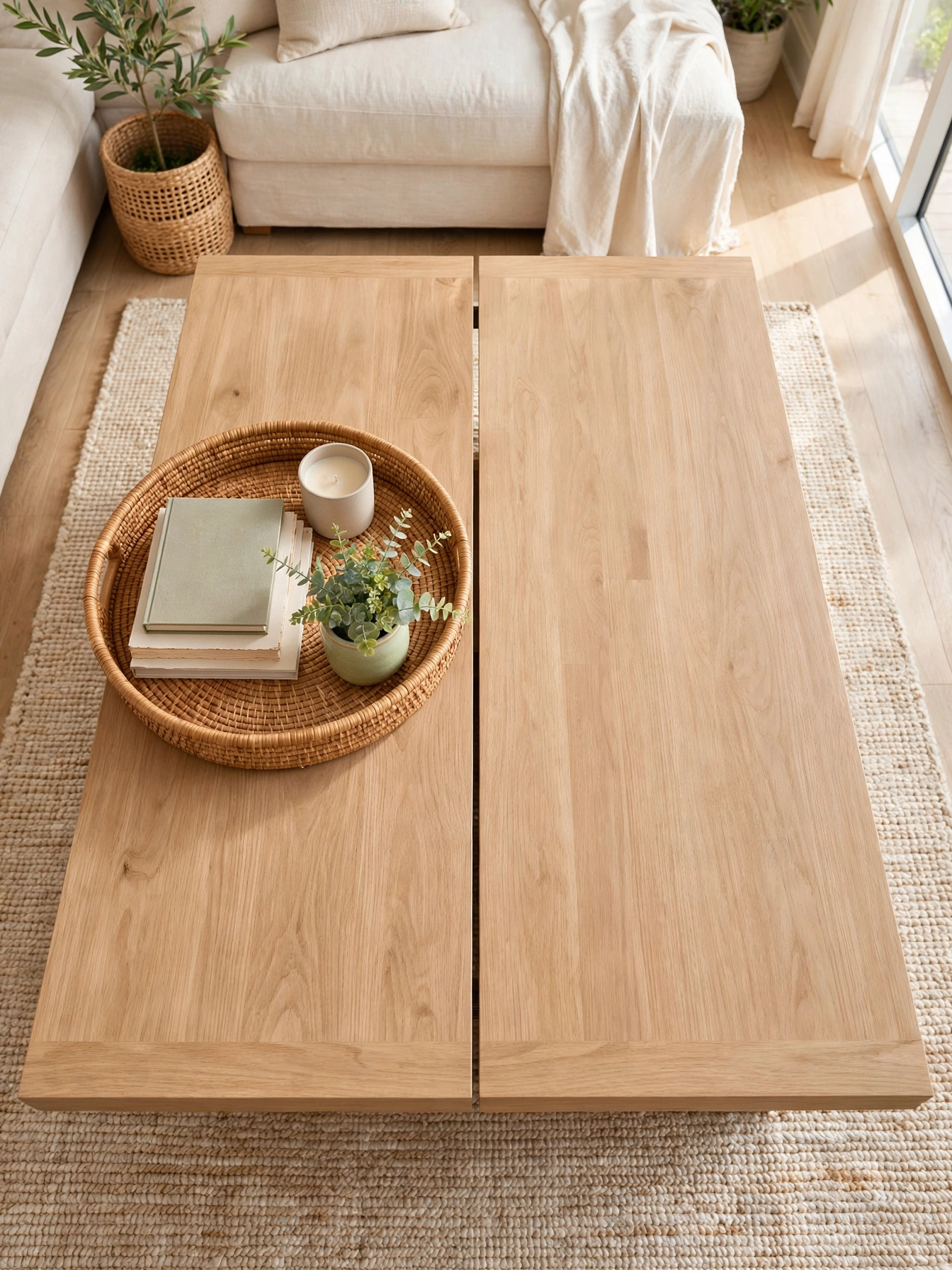
Thrifted trays bring patina and story that new trays cannot buy. At 3 to 15 dollars, the styling budget goes to contents instead. The hunt itself becomes part of the decor story guests ask about.
- Check thrift stores weekly; good trays sell within days of stocking.
- Inspect for sturdy joints and flat bases; wobbles rarely fix well.
- Sand and oil worn wood trays for 5 dollars in supplies and an hour of work.
- Budget 3 to 15 dollars per thrifted tray versus 40 plus new.
A 5 dollar thrifted tray plus 10 dollars of styling contents beats a 60 dollar new tray on character. Test vintage finishes for lead if the tray predates 1978 and will hold food; test kits cost 10 dollars. Avoid trays with musty smells that persist after airing 48 hours; odor means deep moisture damage. Compared with new, thrifted trays cost 80 percent less and bring irreplaceable character.
Bargain hunters and eclectic decorators thrive on thrifted trays. The compromise is time: finding the right tray takes weeks of looking. Impatient decorators should buy new. For story-rich styling on pennies, thrift wins.
Pro Tip: Visit thrift stores on weekday mornings; weekend crowds pick over the housewares shelves by Saturday noon.
DIY Painted Trays
Why This Works:
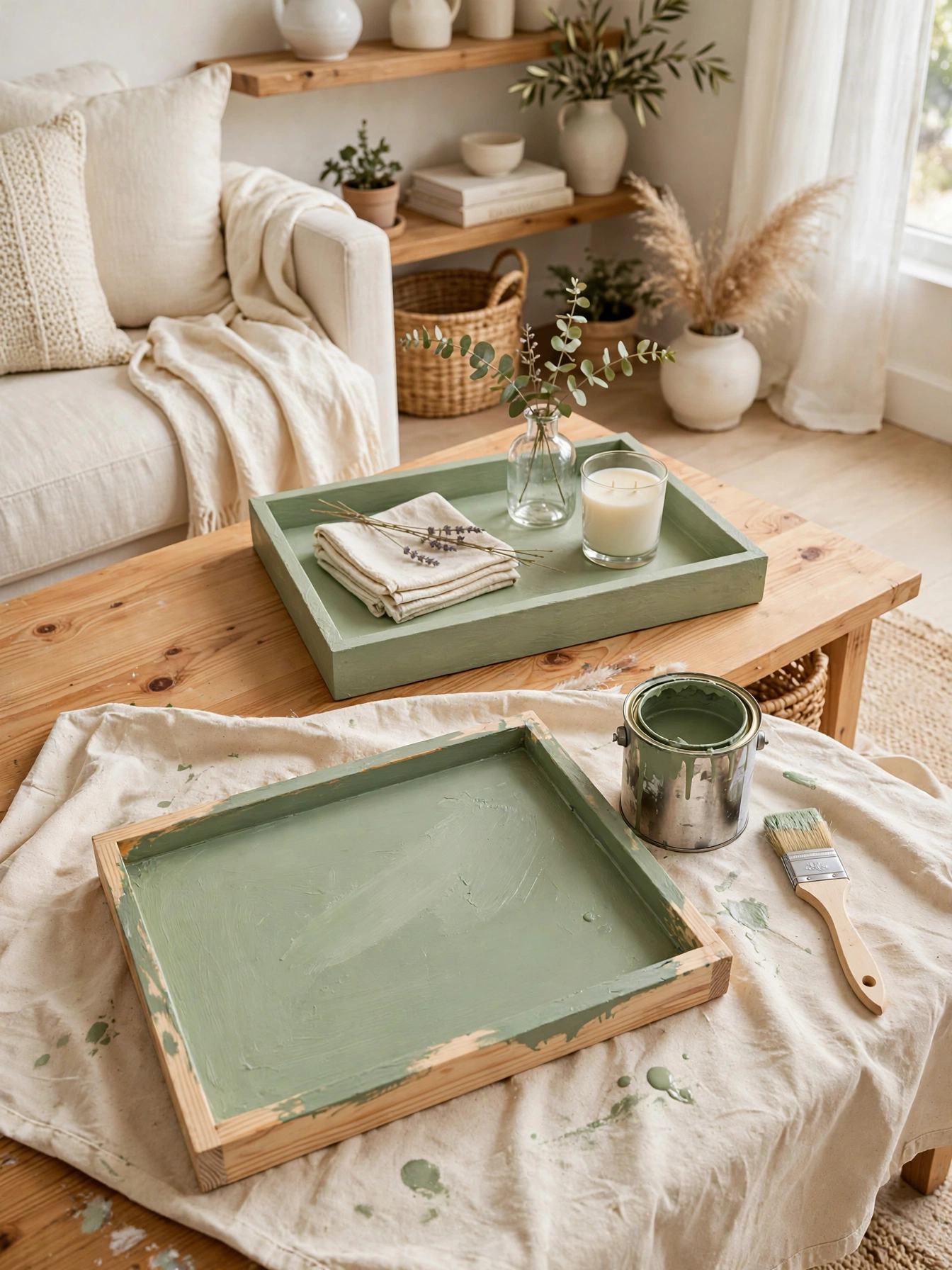
Painting a plain tray custom-matches it to your room for under 15 dollars. Chalk paint needs no priming and distresses beautifully. A weekend project yields a one-of-a-kind piece no store sells.
- Chalk paint (12 to 20 dollars per quart) adheres to wood without sanding or priming.
- Apply 2 thin coats, drying 1 hour between coats, for the smoothest finish.
- Seal with clear wax or polycrylic; unsealed chalk paint marks within weeks.
- A plain pine tray costs 10 to 20 dollars at craft stores.
Two coats on a 16 inch tray take 3 hours total including drying time. Unsealed chalk paint absorbs water rings within days; one coat of polycrylic (15 dollars) makes it wipeable. Avoid painting trays that will hold food; even sealed paints are not food-safe. Stacked against buying a custom-colored tray (50 plus dollars), DIY costs 25 dollars total.
Crafters and exact-color matchers love DIY trays. What you give up is durability: DIY finishes chip faster than factory lacquer. Households wanting heirloom durability should buy finished trays. For custom color on a budget, DIY delivers.
Pro Tip: Paint the tray’s underside first as a practice run; your technique improves before the visible top gets its coats.
Coffee Table Tray Care

Why This Works:
A 5 minute weekly routine keeps any tray looking new for years. Different materials need different care, but the habit matters more than the products. Maintained trays hold their value and their beauty.
- Dust trays weekly with a dry microfiber cloth; 2 minutes prevents buildup.
- Oil wooden trays every 6 months; polish brass twice yearly.
- Reseal stone trays yearly; check the water-bead test every 6 months.
- Deep-clean lacquered trays monthly with a damp cloth and mild soap.
The water-bead test takes 10 seconds: if water sheets instead of beading, reseal the stone. Microfiber cloths (10 dollars for a 12-pack) outperform paper towels on every tray material. Avoid all-purpose sprays with ammonia on lacquer and marble; they dull finishes within months. Compared with replacing a neglected 80 dollar tray every 2 years, 5 minutes weekly saves 400 dollars a decade.
Anyone who owns a tray they love benefits from this routine. The only cost is time, and 5 minutes is the smallest home habit with visible payoff. Set a Sunday reminder and the trays take care of themselves. Care is the cheapest upgrade in home decor.
Pro Tip: Keep a dedicated tray-care kit (cloth, oil, polish) in one zip bag; having supplies together makes the 5 minute routine actually happen.
FAQs
What size tray works best for coffee table tray decor ideas?
Aim for one-third to one-half of the table’s length: a 20×14 inch tray suits 48 inch tables. Round trays should span 40 to 50 percent of a round table’s diameter. Leave 8 inches of clear table around the tray. The Spruce recommends measuring before buying any tray.
What materials are best for everyday coffee table trays?
Wood and lacquered trays handle daily life best: wood hides scratches and lacquer wipes clean in seconds. Marble and mirror look luxurious but need careful handling. Rattan costs 50 percent less and suits casual rooms. Match the material to your household’s real habits, not just the look.
How do I style coffee table tray decor ideas without clutter?
Use the rule of three: one tall, one medium, and one small item in varied materials. Leave 2 to 3 inches of breathing room between pieces. Houzz stylists suggest editing ruthlessly: remove one item and see if the tray improves. Three intentional pieces beat seven crowded ones.
Can I put hot drinks directly on a tray?
Use coasters on wood, marble, and lacquered trays; heat rings form within minutes on unprotected surfaces. Metal and stone trays handle heat best. Fresh coffee pours at 150 to 170 degrees Fahrenheit, hot enough to mark oiled wood fast. A 5 dollar cork trivet protects any tray.
When should I skip the tray entirely?
Skip it when the coffee table itself is the statement, such as live-edge wood or sculptural marble. Bare tables suit minimalist rooms and heavy daily use like board games. Try bare for 2 weeks before deciding. A beautiful table needs no tray to shine.
Conclusion
Coffee table tray decor ideas succeed when the tray matches your life: the right material, the right size, and three intentional items inside its boundary. The three takeaways: size the tray to one-third to one-half of your table, style in trios of varied heights and materials, and maintain the tray with a 5 minute weekly routine. Your first action is to measure your coffee table and tape the ideal tray footprint today. Follow HomelyCrafter on Pinterest for more ideas. Save this to your Pinterest boards so you can refer back to it!

Muhammad Israr is a home decor enthusiast and the writer behind Homely Crafter. He spends his days researching paint colors, layouts and budget-friendly styling ideas, then breaks them down into practical, easy-to-follow guides so you can decorate with confidence.