
What is the first thing your guests actually notice when they walk through your front door? It is rarely the paint color or the flooring. It is the entry table, the first styled surface in their line of sight, usually standing within 8 to 10 feet of the doorway.
These 23 fall entry table decor ideas for autumn 2026 turn that small surface into a warm seasonal welcome, with exact measurements, real paint codes, and material names you can shop with confidence.
Every idea below lists why it works, what to avoid, and one specific pro tip with numbers. Pick the look that fits your space and start there.
Pumpkin Stack Console
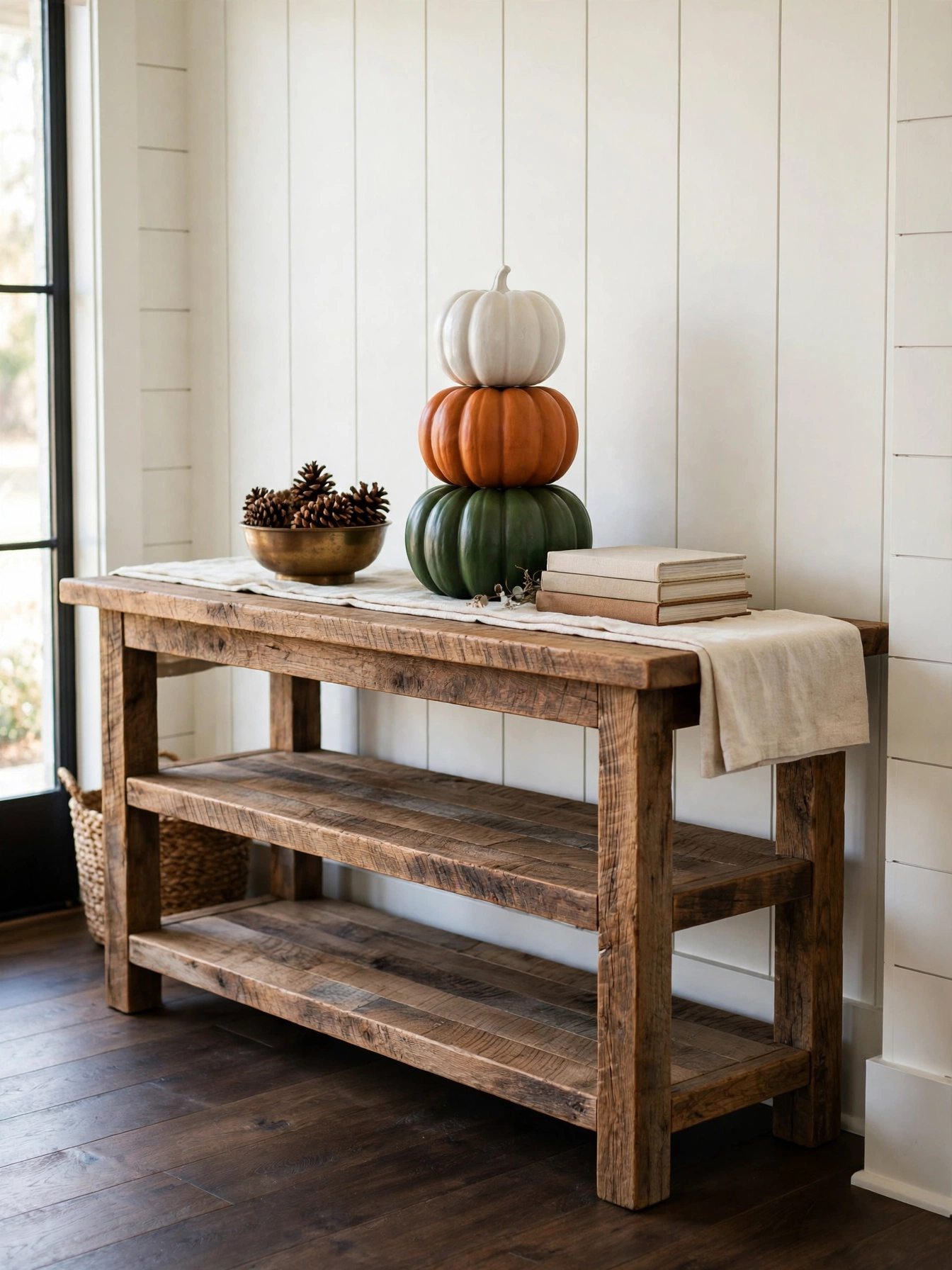
Why This Works:
- Stacked pumpkins use vertical space so a narrow console feels styled, not crowded.
- Three pumpkins read as one deliberate object instead of scattered clutter.
- Ceramic pumpkins last all season without rotting or attracting fruit flies.
- The odd-number grouping follows the classic rule of three in visual design.
Start with a console table 48 to 60 inches long and 12 to 14 inches deep; anything shallower can tip under stacked weight. Choose a base pumpkin 10 to 12 inches in diameter, a middle one 8 inches, and a top one 5 to 6 inches for a stable taper. Ceramic or resin pumpkins weighing 2 to 4 pounds each stay put in high-traffic entryways where real pumpkins shift and roll. Avoid stacking on glass-top consoles because point loads stress tempered glass; set the stack on a woven tray or wood slice at least 14 inches wide instead. Hang any art above so its center sits 57 to 60 inches from the floor, the standard gallery height that keeps the stack and artwork in balance.
In real homes, this look suits busy families best because ceramic pumpkins wipe clean and never soften. Shift the stack 12 inches off center and keep a clear 18-inch landing zone for keys and mail, since a centered stack blocks the path on working tables. One honest limitation: stacks taller than 30 inches can wobble if toddlers bump the table, so anchor the base pumpkin with museum putty. A simple seasonal refresh is swapping just the top pumpkin for a velvet one in November, which extends the look past Thanksgiving without buying a whole new set.
Garland Draped Mirror
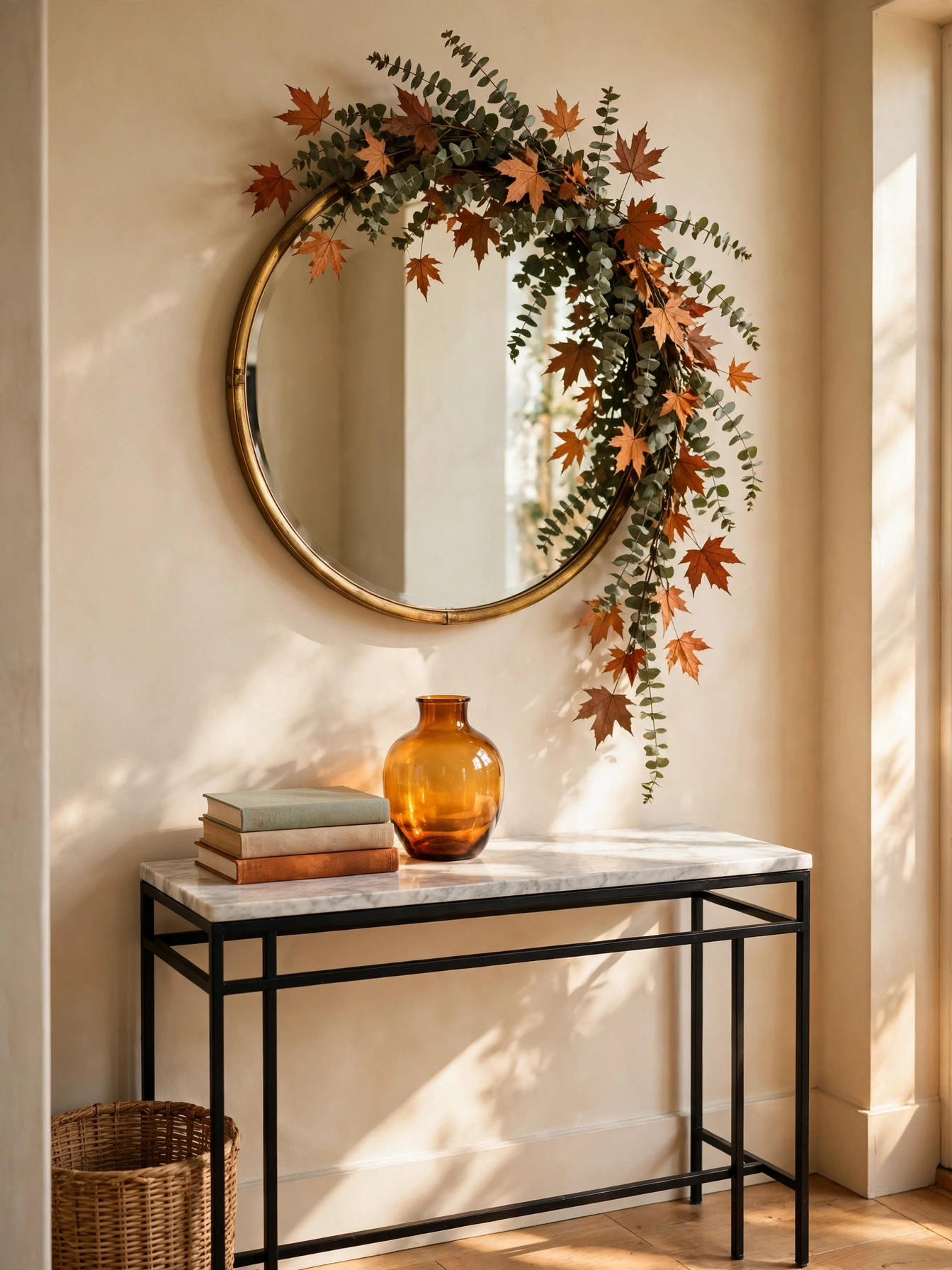
Why This Works:
- A mirror doubles light in a windowless entryway and makes the space feel larger.
- Garland softens the mirror’s hard edge and pulls autumn color up to eye level.
- Brass frames repeat the warm metals found in fall palettes for a pulled-together feel.
- The vertical drape draws the eye from table to wall, doubling the styled area.
Hang the mirror so its center sits 57 to 60 inches from the floor, the gallery standard most art installers recommend. Choose a garland 6 to 8 feet long so it drapes 12 to 18 inches down each side without touching the tabletop. Preserved eucalyptus garlands last 2 to 3 seasons versus 2 to 3 weeks for fresh, and they weigh under 2 pounds so standard picture hooks hold them. Avoid draping garland over beveled-edge mirrors because the leaves catch and chip the bevel; plain round or arched mirrors work better. Compare preserved versus faux: preserved strands cost 30 to 50 dollars and smell natural, while high-quality faux runs 20 to 35 dollars and survives storage better.
A common mistake is hanging the mirror too high, which cuts off the table’s reflection; keep 6 to 8 inches of wall space between the tabletop and the mirror’s bottom edge. This works best for renters well because one mirror plus garland needs only two small nail holes. The catch is dust: garland collects it fast in high-traffic foyers, so shake it out monthly. When to hire a professional: if you want a hardwired picture light above the mirror, hire a licensed electrician rather than splicing into existing wiring yourself.
Fall Entry Table Pumpkins
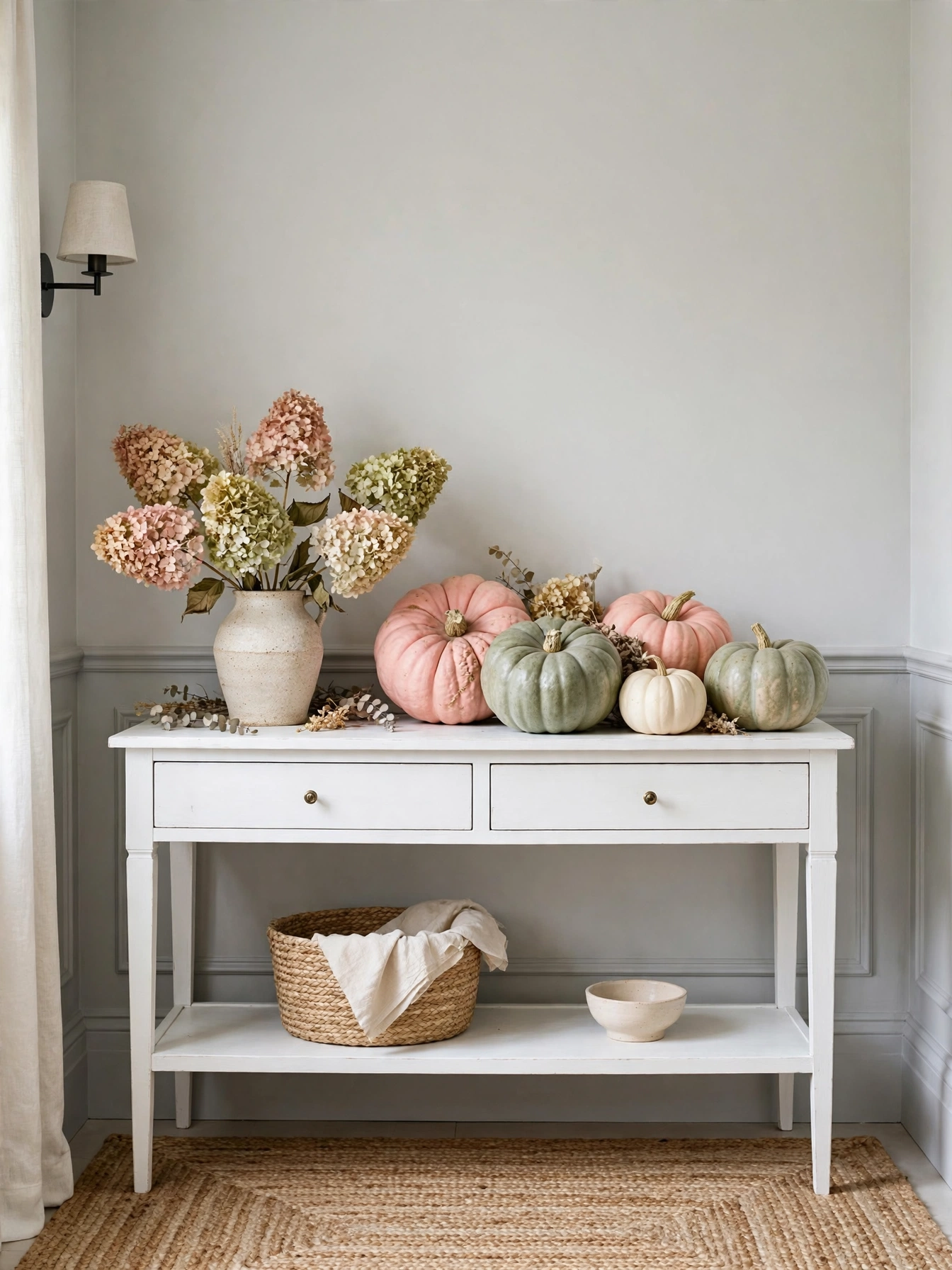
Why This Works:
- Mixing colors and sizes looks curated instead of matchy-matchy.
- Heirloom varieties like Cinderella and Jarrahdale add sculptural shapes.
- Five items keep the arrangement full without spilling past the table edges.
- Real pumpkins cost 4 to 8 dollars each at farm stands, keeping budgets low.
Cluster five pumpkins in three sizes: two at 8 to 9 inches, two at 5 to 6 inches, and one 4-inch accent. Set the group on a tray 18 to 24 inches wide to contain vines and dirt. Real pumpkins last 3 to 4 weeks indoors at 65 to 70 degrees, so buy them in two waves for coverage through November. Avoid placing real pumpkins on painted white tabletops without a tray because moisture rings stain paint within 48 hours; a sealed wood or metal tray prevents this. Compare real versus faux: real gives scent and texture for under 40 dollars total, while quality faux pumpkins run 60 to 90 dollars for five but reuse for years.
Among all fall entry table decor ideas, a mixed pumpkin cluster is the most forgiving for beginners because there is no wrong arrangement. Before buying, test each pumpkin’s stem by pressing gently; a soft stem means it will collapse within a week. Ideal for shoppers who love seasonal change since the whole cluster costs less than one large faux arrangement. The honest limitation is decay: check the bottoms weekly for soft spots, especially on light-colored tables.
Lantern Trio Glow
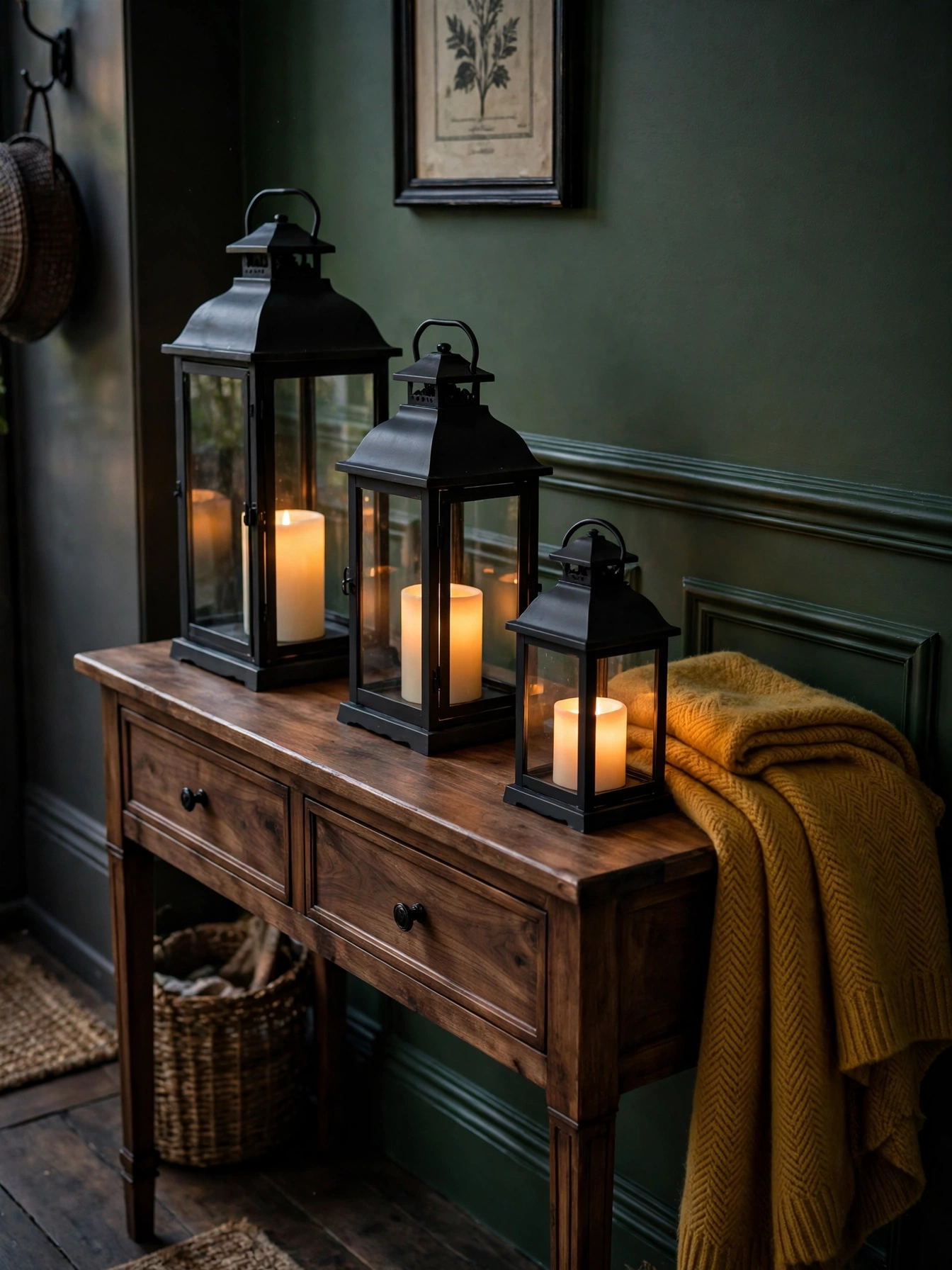
Why This Works:
- Three heights create a stepped silhouette that fills vertical space.
- Flameless candles give evening glow with zero fire risk near the front door.
- Black metal grounds lighter fall colors and works with any wall paint.
- Lanterns transition to winter with a simple candle swap in December.
Choose lanterns at 12, 9 and 6 inches tall, spaced 4 to 6 inches apart so the glow reads as one group. Use LED candles rated for 500 to 1,000 hours with a built-in 6-hour timer so they shut off overnight. Avoid real flame candles in entryways because coats, scarves and mail stack within inches; the National Fire Protection Association advises keeping open flames at least 12 inches from anything that can burn. Powder-coated steel lanterns resist rust better than painted wood in humid foyers near the door. Compare LED versus real flame: LEDs cost 8 to 15 dollars per candle and run for months, while real pillars need weekly replacement and constant attention.
When styling this in a narrow hallway, the trio suits anyone whose entryway doubles as a landing strip for bags and keys. Check the timer function before purchasing; cheap LEDs without timers burn through batteries in days. One limitation is brightness: a trio softly lights about 40 square feet, so keep your overhead light for task lighting. Warm-white LEDs at 2200K look convincingly like candlelight, while cool-white ones read as security lighting.
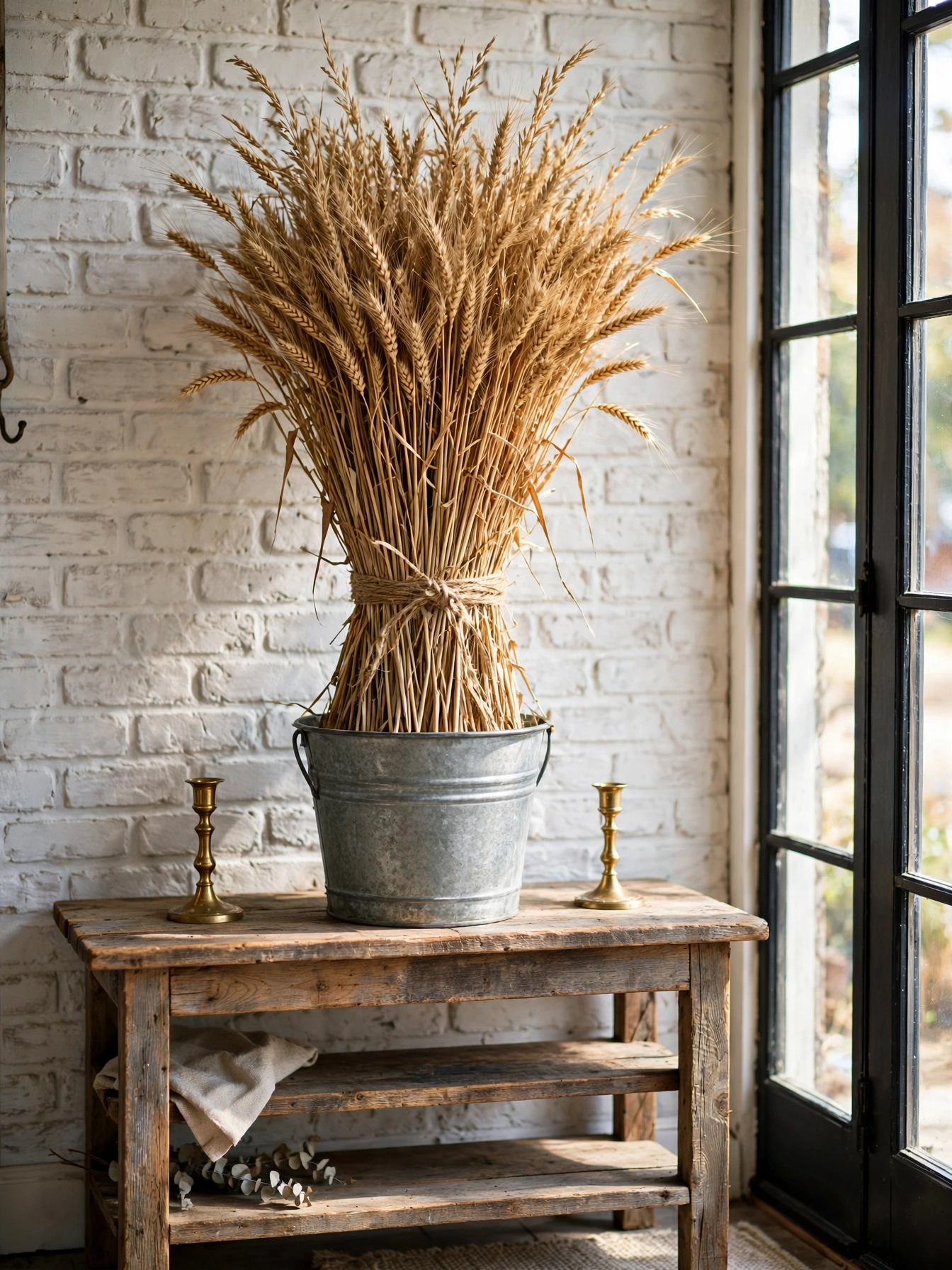
Dried Wheat Sheaves
Why This Works:
- 24-inch height fills the dead space between tabletop and mirror.
- Wheat costs 6 to 10 dollars per bundle and needs zero maintenance.
- Golden tones warm up cool gray and white entryways instantly.
- The bundle reads as one tall accent, keeping the tabletop tidy.
Pick a bundle 22 to 26 inches tall so it clears a standard 30-inch console by nearly a foot. Tie the bundle 8 inches from the bottom with jute twine rated for 50 pounds; it looks rustic and holds stems tight. Set the bucket 10 to 12 inches in diameter so the wheat fans to about 16 inches wide without tipping. Avoid placing dried wheat within 3 feet of a frequently slammed door because the shock sheds kernels across the floor daily. Compare wheat versus pampas grass: wheat runs 6 to 10 dollars and stays compact, while pampas costs 15 to 25 dollars and sheds far more.
The first thing to check before purchasing is stem length against your table height; the bundle should stand 8 to 10 inches above the tallest nearby object. Best suited to allergy-prone households better than fresh flowers since dried stems release almost no pollen. One setup error is leaving the plastic sleeve on the bundle, which flattens the stems; remove it and fan the stalks by hand. The downside is longevity: wheat looks crisp for one season, then fades to gray by spring, so compost and replace yearly.
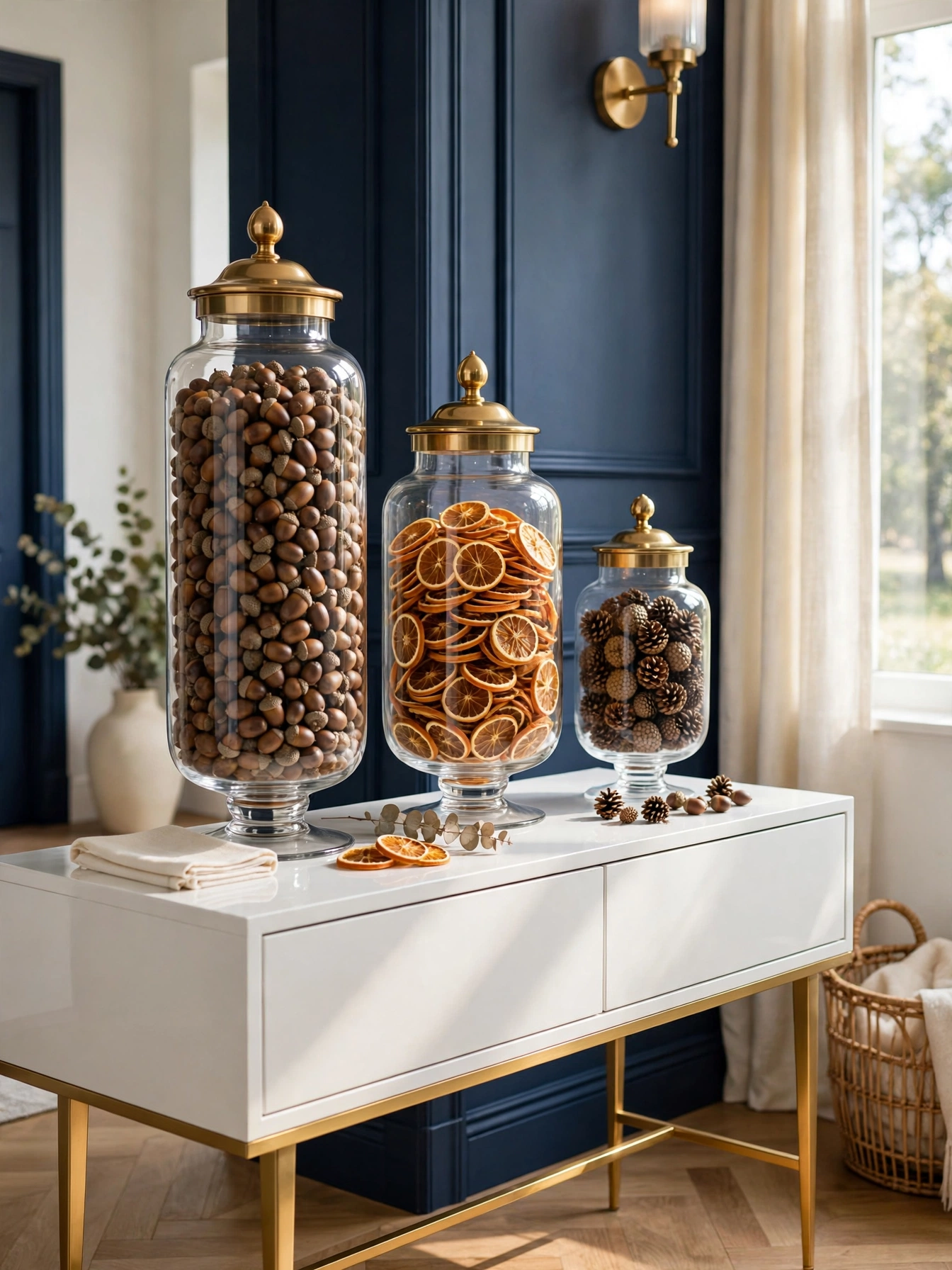
Apothecary Jar Harvest
Why This Works:
- Graduated heights create rhythm without any arranging skill.
- Glass shows texture and color while taking up almost no visual weight.
- Lidded jars keep fillers dust-free all season.
- The set costs under 50 dollars total using craft-store jars.
Buy jars at 14, 10 and 7 inches tall with lids; the classic apothecary shape has a 4 to 5 inch mouth for easy filling. Fill the tallest with acorns, the middle with dried orange slices, and the smallest with mini pinecones for color variation. Glass jars from craft stores run 12 to 20 dollars each, versus 30 to 45 dollars for vintage-style pieces at home boutiques. Avoid filling jars more than 85 percent full because packed fillers crush dried slices and look stuffed. Compare glass versus acrylic: glass shows color truer and resists scratches, while acrylic weighs half as much but clouds within a season of dusting.
Homeowners who have tried this find that three fillers in one palette read calm, while six mixed colors read chaotic; restraint is the whole trick. Perfect for renters and small spaces because the whole set fits on 24 inches of table. Check filler weight before filling: a 14-inch jar of acorns weighs about 3 pounds, fine for any console. One limitation: glass shows every fingerprint, so wipe the jars when you dust the table.
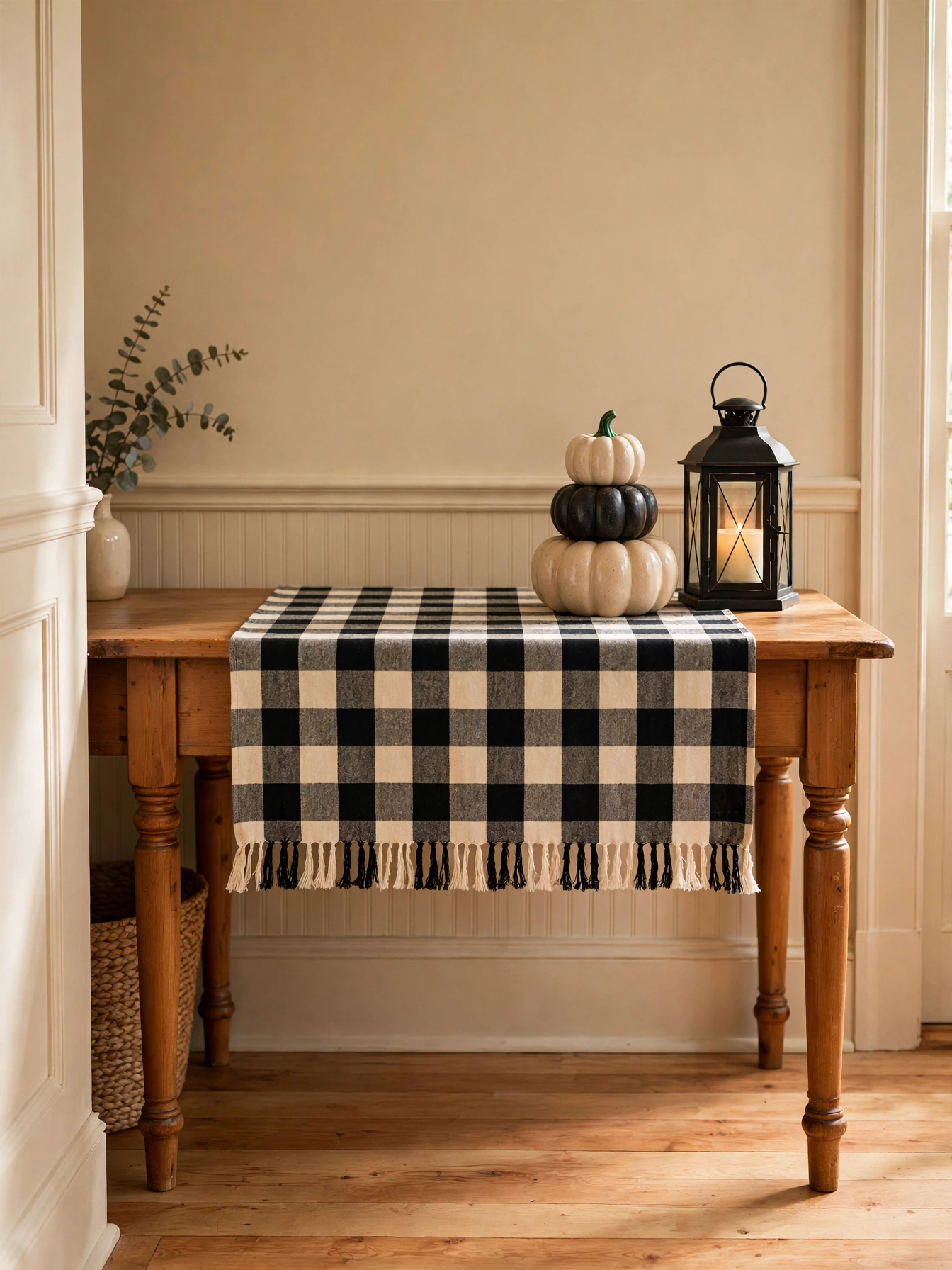
Plaid Runner Layer
Why This Works:
- A runner defines the styling zone on tables longer than 60 inches.
- Buffalo check reads instantly as fall without any other props.
- Cotton runners machine-wash, surviving key scratches and coffee rings.
- The pattern hides small stains that plain runners show.
Choose a runner 12 to 14 inches wide and 12 inches longer than the table, so 6 inches hang over each end. Cotton or cotton-linen blends at 150 to 200 GSM wash well and lie flat; lighter fabrics curl at the edges. Avoid polyester runners under 20 dollars because they shine under entryway lighting and read as cheap. Compare cotton versus burlap: cotton softens with washing and costs 15 to 30 dollars, while burlap gives texture but frays and sheds fibers onto dark floors.
In real entryways under 6 feet wide, a runner keeps the look grounded without adding bulk that narrows the walkway. Pair plaid with solid textures only; a second busy pattern fights the check and the table looks restless. A good fit for high-traffic entryways because a 25-dollar runner is cheap to replace when it wears out.
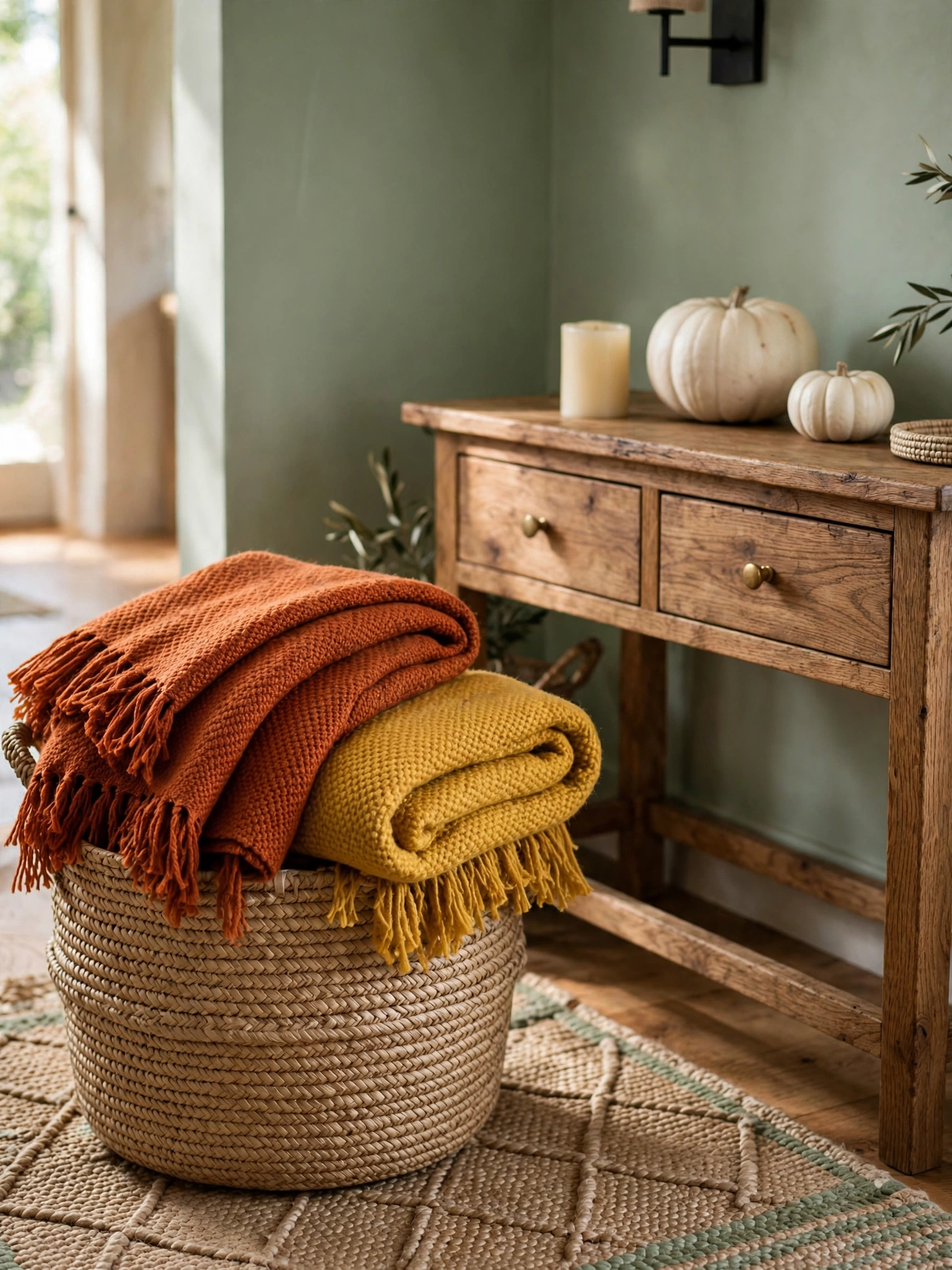
Woven Basket Throws
Why This Works:
- A basket beside the table adds softness that wood and metal lack.
- Throws within arm’s reach get used on chilly October evenings.
- Seagrass hides the basket’s contents so folds never look messy.
- The round basket shape contrasts nicely with a rectangular console.
Pick a basket 16 to 20 inches in diameter and 14 to 18 inches tall so folded throws peak just above the rim. Choose throws 50 by 60 inches in a wool blend; pure wool costs 60 to 90 dollars but pills less than acrylic at 20 to 35 dollars. Avoid placing the basket within 24 inches of a swinging door because the door will batter it daily. Compare seagrass versus wire baskets: seagrass hides clutter and costs 25 to 40 dollars, while wire looks airier but shows every fold.
A frequent styling error is stuffing throws in unfolded; loose throws look lumpy and spill over the rim. Fold each throw into thirds first for a neat fill. A natural fit for families because throws double as fort-building supplies on weekends. One trade-off is dust: throws in an open basket need a shake-out every two weeks in entryways.
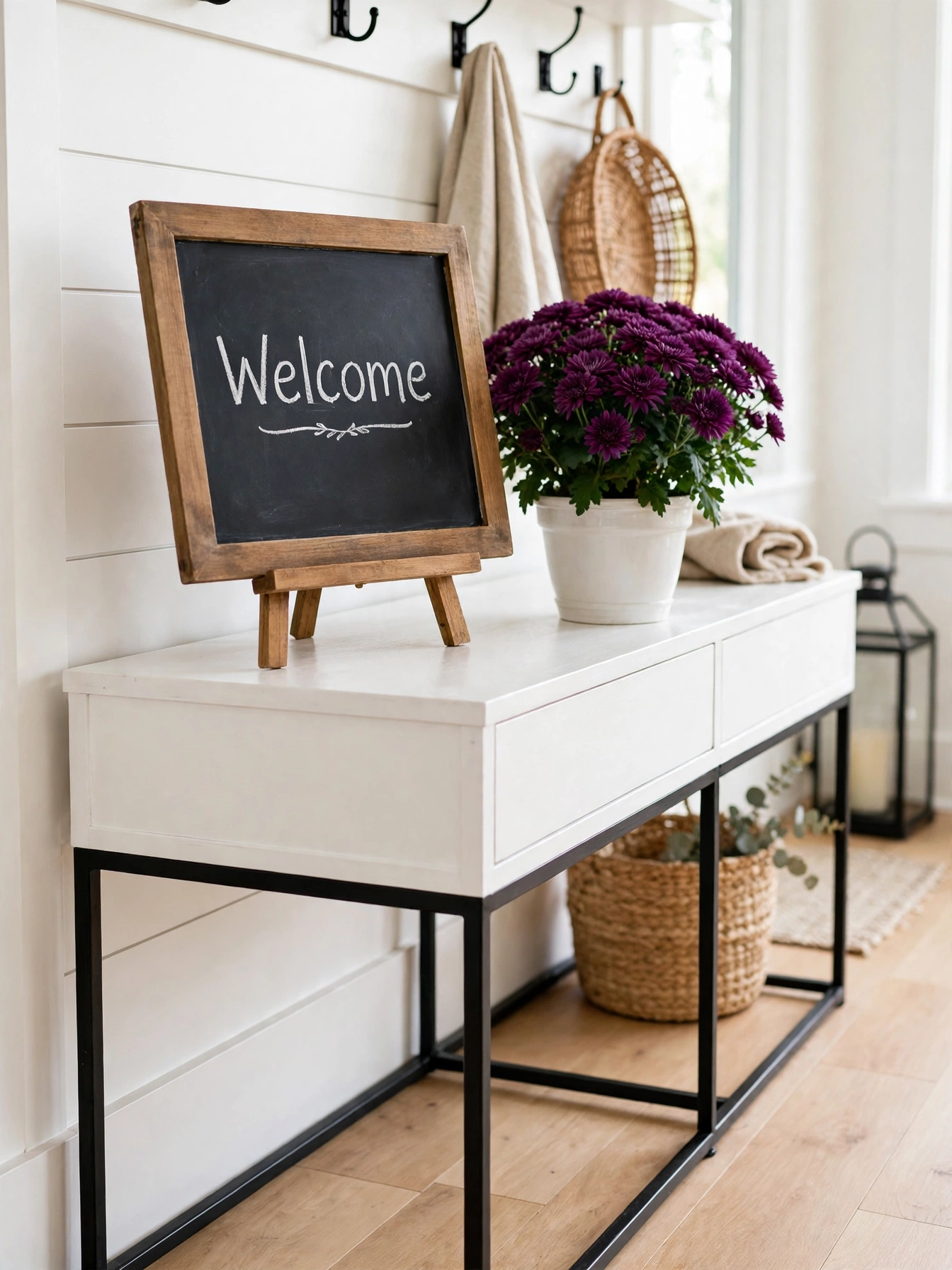
Mini Chalkboard Table Sign
Why This Works:
- A 10 by 12 inch sign adds a personal note without dominating the table.
- Chalkboard messages swap in seconds for holidays or guests’ names.
- The black frame echoes other dark accents like lanterns or mirror frames.
- Liquid chalk markers cost under 10 dollars and erase cleanly.
Choose a framed board 10 to 12 inches wide on a tabletop easel angled at 15 to 20 degrees for readability. Use liquid chalk markers, not dusty chalk sticks, because sticks smear on contact while markers cure in 5 minutes. Avoid boards larger than 14 inches on a console under 48 inches long because they crowd out every other accent. Compare framed versus unframed: framed boards cost 12 to 18 dollars and look finished, while raw boards at 6 to 10 dollars need a frame to avoid looking crafty.
Before committing to this look, measure your table’s depth; easels need 8 to 10 inches of depth to stand stable. Great for hosts who entertain often because the message changes per occasion. One writing mistake is using all caps, which reads as shouting; sentence case feels warmer. Keep the sign 12 inches from the table edge so guests leaning in to read do not knock it over.
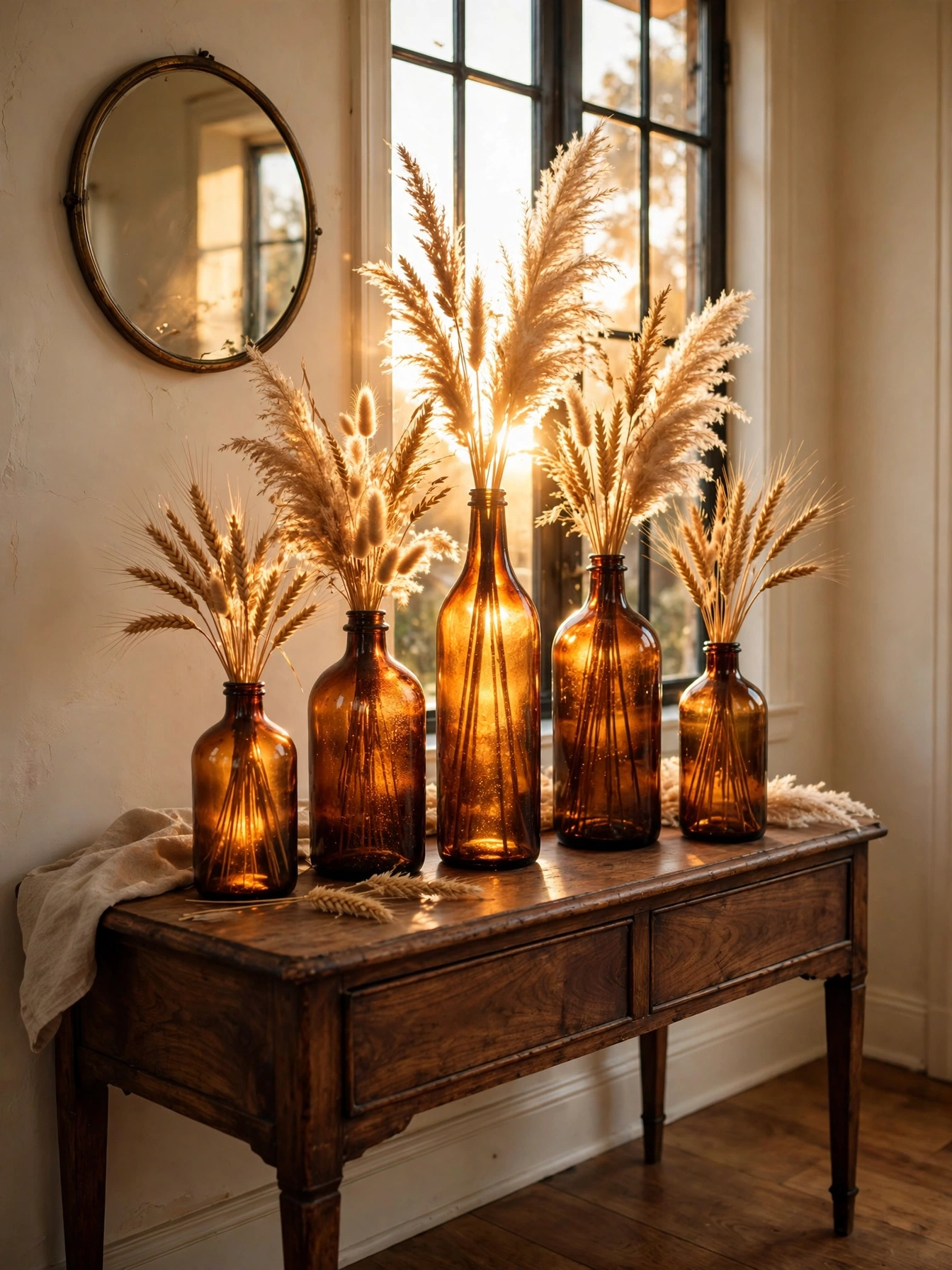
Amber Glass Bottles
Why This Works:
- Amber glass glows when backlit by entryway windows or lamps.
- Five bottles at varied heights fill 18 inches of table with one concept.
- Thrifted bottles cost 2 to 5 dollars each, making this the cheapest idea here.
- Glass survives falls better than ceramic on hard floors.
Gather bottles 6 to 14 inches tall in at least three different heights for a natural rhythm. Fill each with 3 to 5 dried stems cut 4 to 6 inches taller than the bottle mouth. Thrift stores sell amber bottles for 2 to 5 dollars; new sets run 20 to 35 dollars for five. Avoid placing tall bottles at the table’s front edge because a 14-inch bottle tips with a 2-pound lateral bump. Compare amber versus clear glass: amber hides stem water lines and dust, while clear shows every smudge.
When placing this near a front door that gets daily use, keep the bottles 8 inches back from the table’s front edge so bags and elbows never clip them. Well suited to narrow entryways because the cluster needs only 18 inches of width. Check stem height against your mirror before finalizing; stems should stop 6 inches below the mirror’s bottom edge. One limitation: amber glass fades in direct south-facing sun over two seasons, so rotate the display yearly.
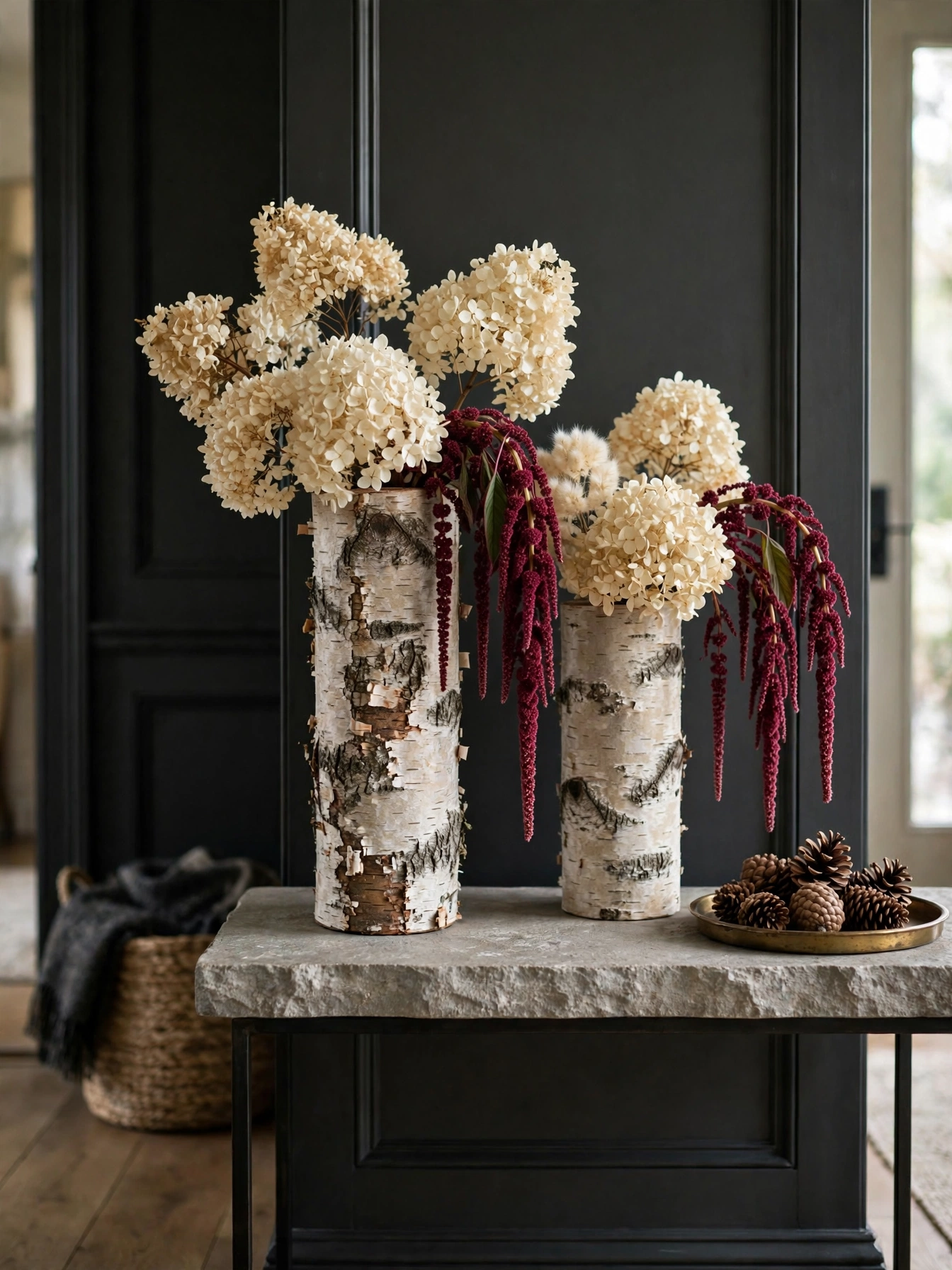
Birch Bark Vases
Why This Works:
- Birch bark adds white texture that brightens dark fall palettes.
- Two vases at different heights read as a set, not a pair of singles.
- Natural bark hides plastic nursery pots completely.
- The look pairs with both rustic and modern entryways.
Choose bark-wrapped vases 8 to 10 inches tall with glass or plastic liners so dried stems stay dry. Pair one 10-inch vase with one 8-inch vase, spaced 6 inches apart for breathing room. Real birch bark vases run 18 to 30 dollars each; bark-look ceramic copies cost 12 to 20 dollars and never peel. Avoid getting real bark wet because it darkens and curls within hours; dried stems only, no water. Compare real bark versus ceramic: real has unmatched texture but lasts 2 to 3 seasons, while ceramic lasts indefinitely but feels heavier at 3 to 4 pounds each.
The first thing to check is liner depth; stems need liners at least 5 inches deep to stand upright. This works best for homes with modern furniture because birch bridges rustic and contemporary. One pairing mistake is setting bark against more brown wood; the white bark needs contrast, so place it on dark or stone surfaces.
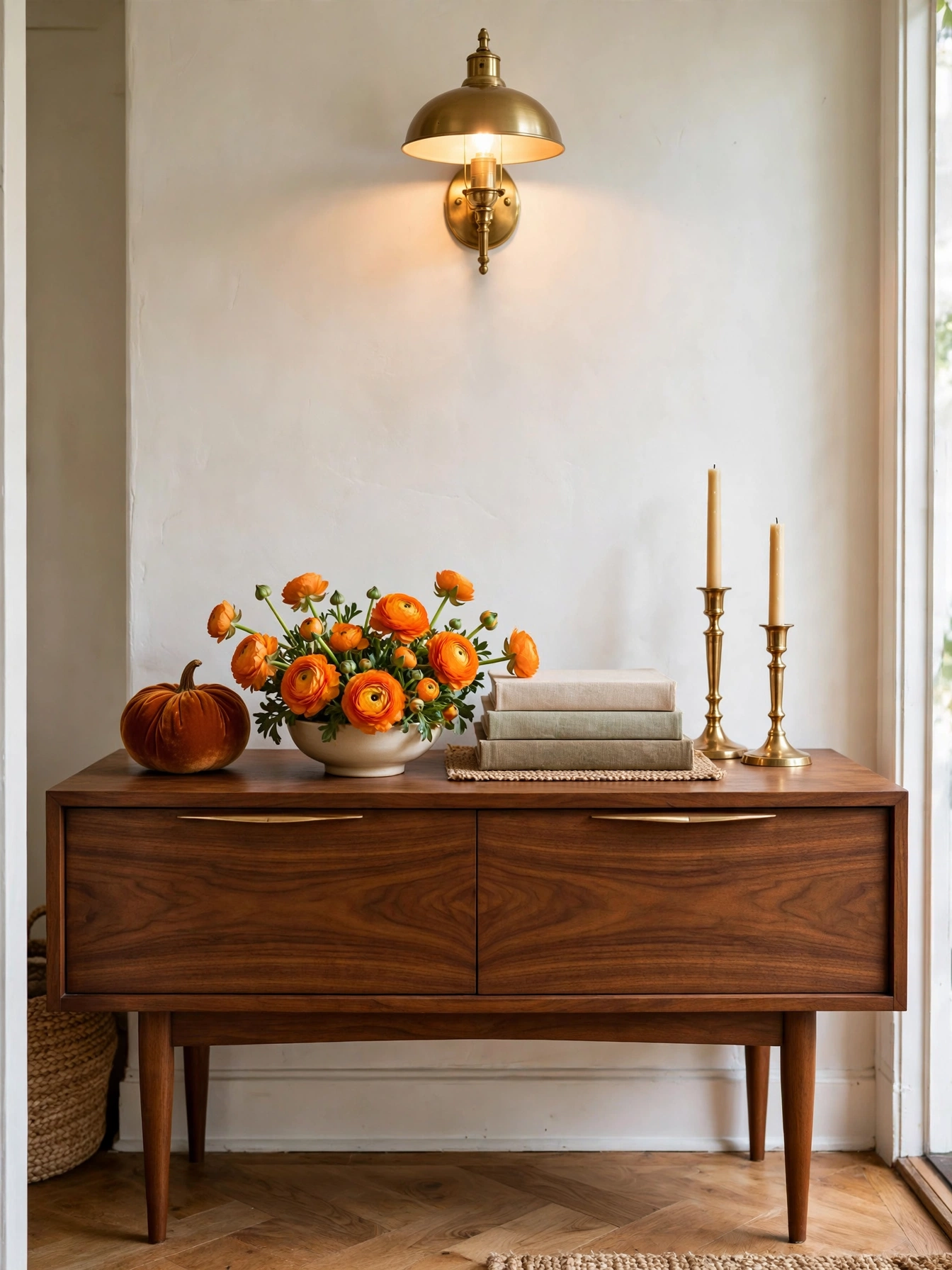
Autumn Entry Table Display
Why This Works:
- Layering three heights (low, medium, tall) creates a professional look.
- A low bowl of flowers anchors the center so the eye rests.
- Brass candlesticks add warm metal that repeats in fall palettes.
- Books lift small objects to eye level cheaply.
Build the display across 30 to 36 inches of a 48-inch console, leaving 6 inches clear on each end. Use a low bowl 10 to 12 inches wide for flowers, candlesticks 8 to 10 inches tall, and books stacked 3 to 4 inches high. A mid-century walnut console 14 inches deep holds this layout without crowding. Avoid candlesticks taller than 12 inches next to a mirror because the reflection doubles the visual clutter. Compare fresh versus dried flowers: fresh ranunculus costs 15 to 25 dollars weekly, while dried hydrangeas cost 12 dollars once for the season.
This layered autumn entry table display is the classic magazine look, and it follows one simple rule: odd numbers at three heights. In real homes with kids and pets, layered displays need a weekly 10-minute reset as items drift. The honest limitation is maintenance: this is not a set-and-forget look. Photograph the arrangement once; the photo helps you restore it after cleaning.
Corn Husk Bundle
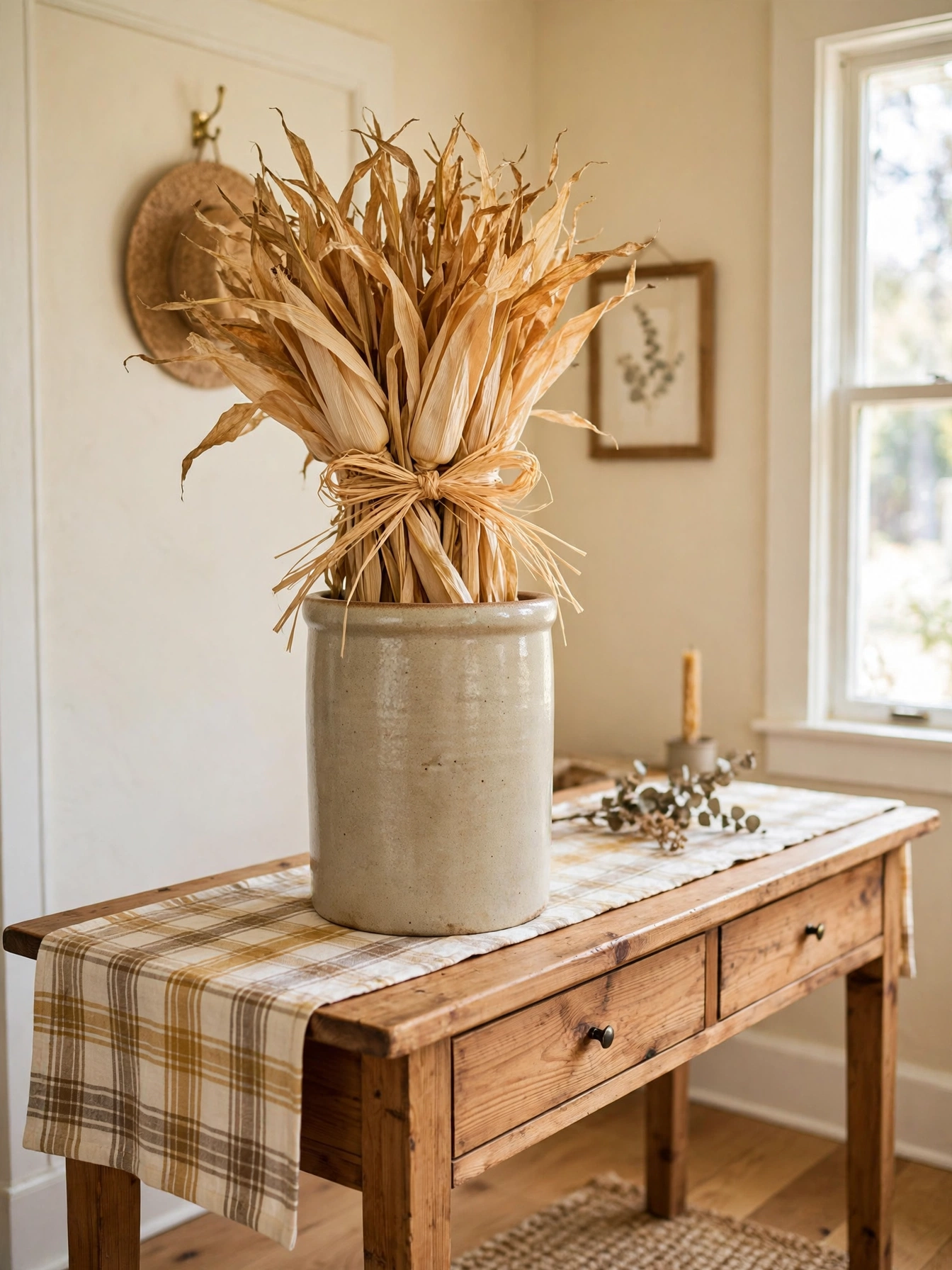
Why This Works:
- Corn husks bring genuine harvest texture for under 10 dollars.
- The tall bundle balances wide, low consoles.
- Raffia ties echo the natural theme without extra props.
- Husks compost fully at season’s end, leaving zero waste.
Stand 12 to 15 husks in a crock 10 to 12 inches tall and 8 inches wide so the bundle fans to 14 inches. Tie the bundle with raffia 6 inches below the top for a gathered look. Dried corn husks sell for 5 to 9 dollars per dozen at craft stores. Avoid placing husks near radiators or heating vents because they dry to brittleness and shatter within weeks at high heat. Compare corn husks versus wheat: husks fan wider and cost less, while wheat stands straighter and sheds fewer flakes.
In real homes, corn husks suit playful households because a knocked bundle costs pennies to rebuild. One crowding mistake is packing 20 stems into the crock; 12 stems fan beautifully while 20 look stuffed. The caveat is fragility: expect to replace 2 to 3 broken husks mid-season.
Acorn Bowl Fill
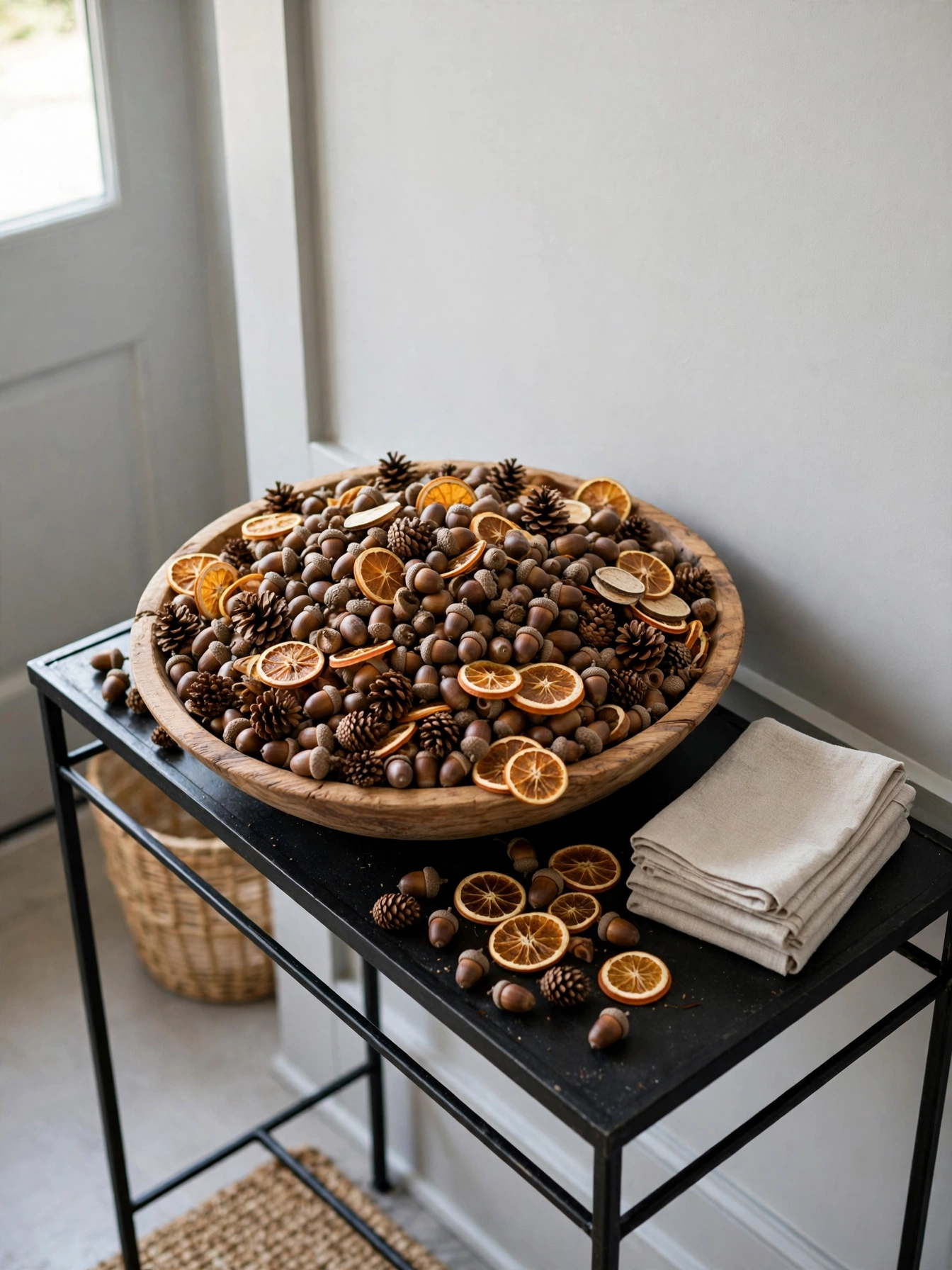
Why This Works:
- One bowl fills the center of the table with zero arranging skill.
- Natural fillers cost 8 to 12 dollars total from craft stores.
- The shallow bowl keeps sightlines open across the entryway.
- Fillers swap seasonally, so the bowl works year-round.
Choose a dough bowl 14 to 18 inches long and 4 to 5 inches deep; shallower bowls spill when bumped. Fill with 2 quarts of mixed acorns and pinecones, then tuck 8 to 10 dried orange slices around the edges. Mango wood bowls run 20 to 35 dollars and resist cracking better than pine. Avoid overfilling above the rim because entryway bumps scatter fillers across the floor; keep the fill 1 inch below the rim. Compare wood versus metal bowls: wood warms the look and costs less, while metal contains spills better but feels colder.
A common mistake is using only one filler type; three textures read rich while one reads plain. Check the bowl’s underside for felt pads before buying; bare wood scratches lacquered consoles within days. Ideal for minimalists who want fall color without fuss. The honest limitation is spillage: even a well-filled bowl loses a few acorns when the table gets bumped.
Velvet Pumpkin Trio
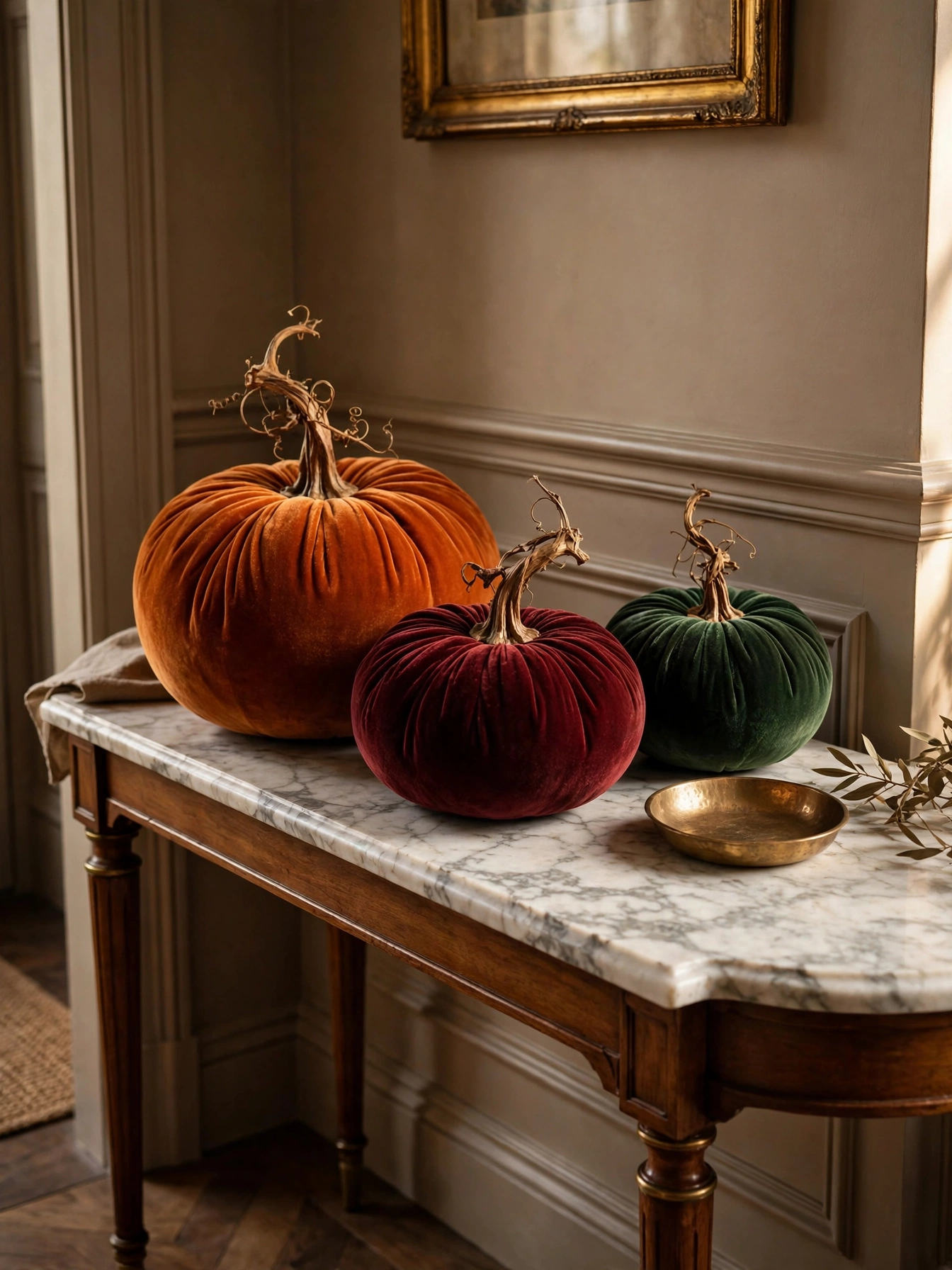
Why This Works:
- Velvet catches light and adds luxury for 10 to 18 dollars per pumpkin.
- Jewel tones look expensive against neutral walls.
- Real stems on top make each pumpkin look hand-finished.
- The trio stores flat in a single box for next year.
Pick pumpkins at 6, 5 and 4 inches in diameter with real dried stems 2 to 3 inches tall. Space them 3 to 4 inches apart on a tray 16 to 20 inches wide. Velvet pumpkins from home boutiques run 10 to 18 dollars each; handmade market versions cost 8 to 12 dollars. Avoid placing velvet pumpkins where rain blows in because the fabric spots permanently; keep them 36 inches from an uncovered door. Compare velvet versus ceramic: velvet feels softer and warmer, while ceramic resists moisture and lasts longer.
Before buying, test the velvet by brushing it against the grain; quality velvet springs back while cheap pile stays flat and shiny. Best suited to renters because nothing hangs on walls or needs tools. A drawback is cleaning: velvet shows dust, so lint-roll the pumpkins every two weeks.
Maple Leaf Strands
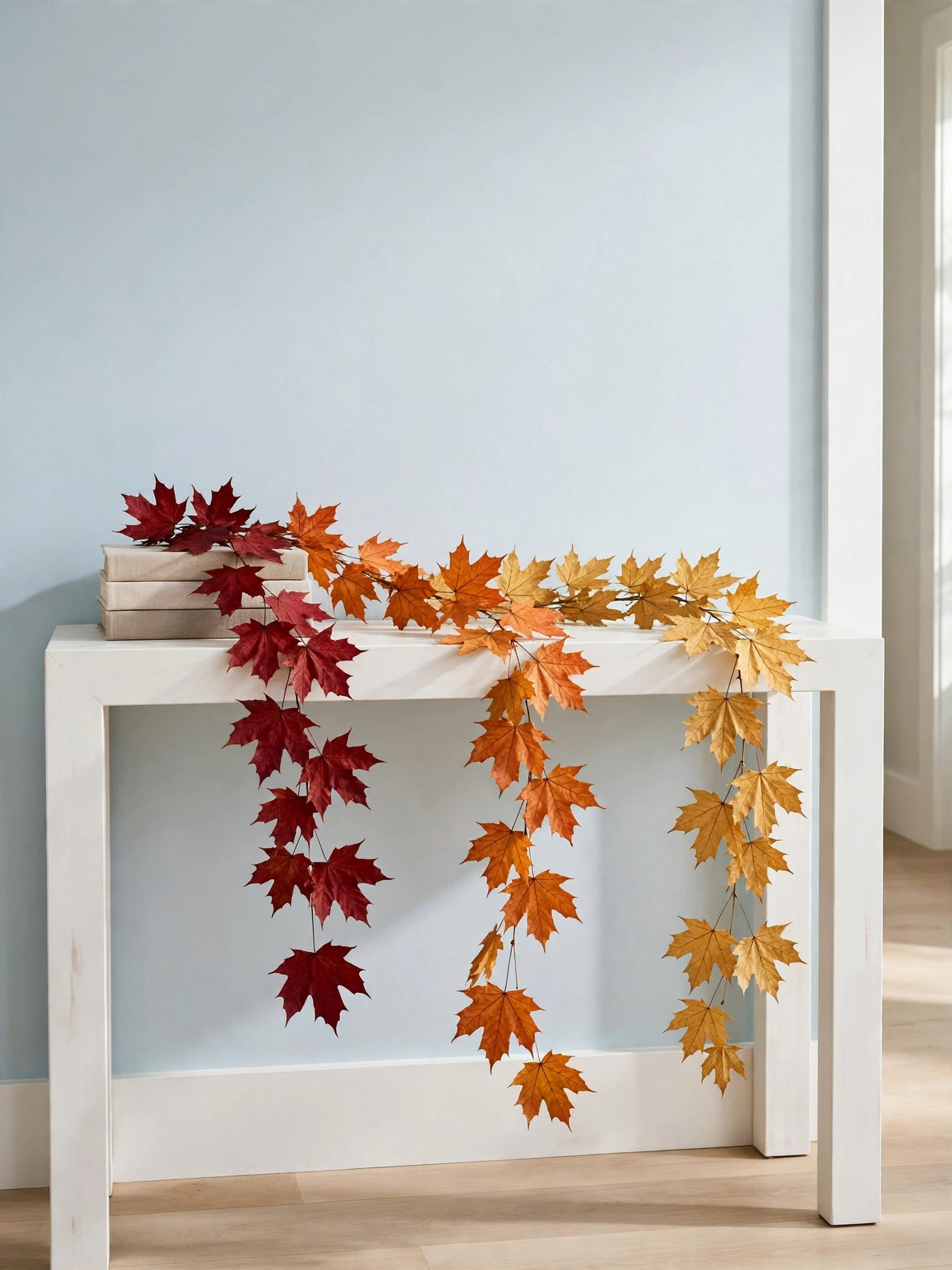
Why This Works:
- Trailing strands soften a table’s hard front edge beautifully.
- Preserved leaves hold color for 2 to 3 months without watering.
- Three strands cost 18 to 30 dollars total at craft stores.
- The look needs no vase, no water, and no arranging skill.
Drape three strands, each 5 to 6 feet long, so 12 to 18 inches trail over the front edge. Anchor one end under a book stack weighing at least 2 pounds so the strands stay put. Preserved maple strands cost 6 to 10 dollars each; faux versions run 4 to 8 dollars. Avoid letting strands hang below 24 inches from the floor because vacuum cleaners and feet snag them. Compare preserved versus faux leaves: preserved have natural variation and a matte finish, while faux look glossier and survive storage better.
When styling this in a narrow hallway, keep strands 18 inches from the door swing so they never catch. One strand looks sparse while three read lush, so do not skimp. Perfect for busy households because the strands need zero care for the whole season.
Rustic Crate Tower
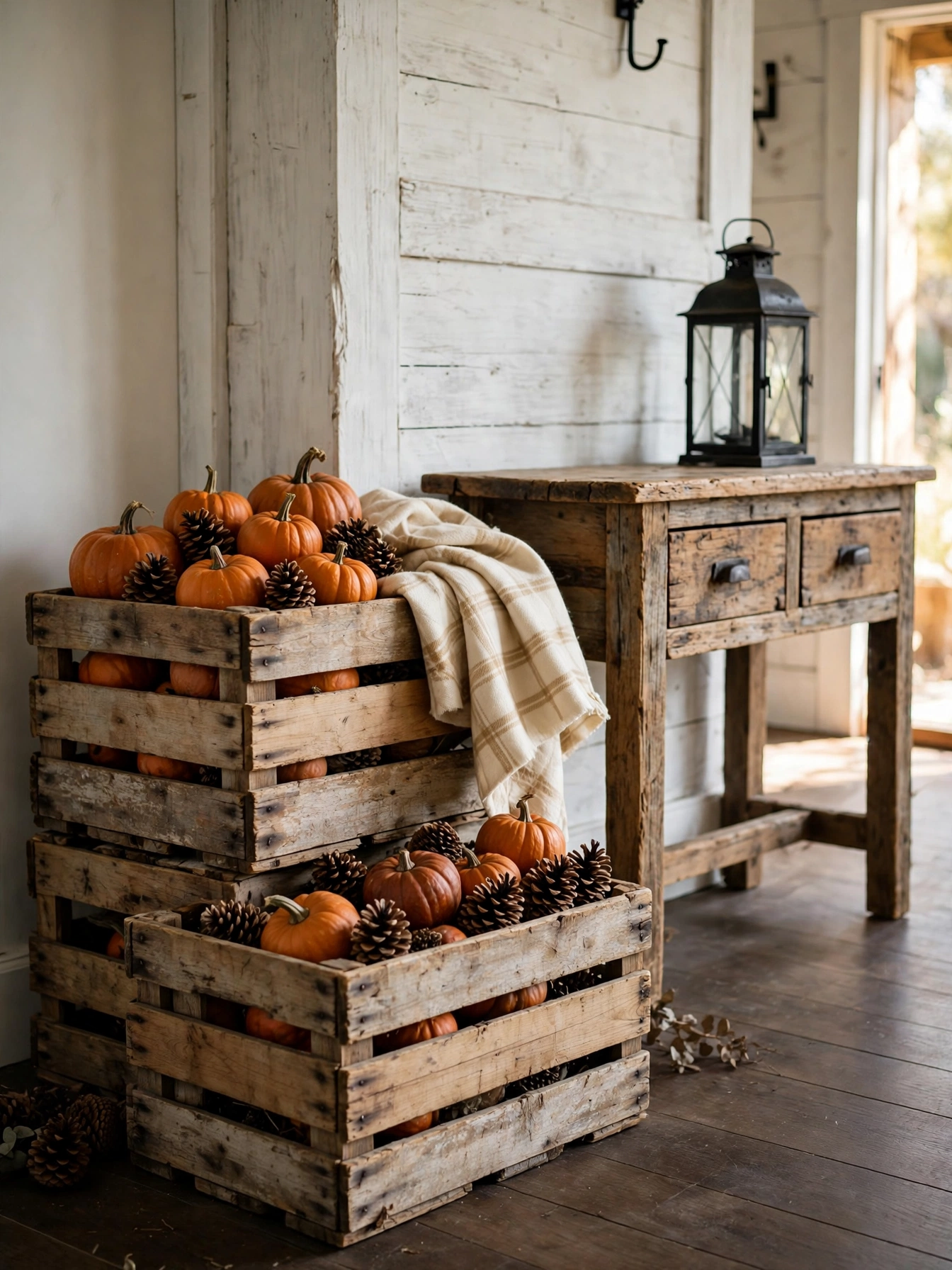
Why This Works:
- Stacked crates add 24 inches of vertical storage beside the table.
- The tower holds overflow items that would crowd the tabletop.
- Weathered wood crates cost 10 to 15 dollars each at craft stores.
- Crates unstack flat for storage after the season.
Stack two crates, each 12 by 12 by 12 inches, for a 24-inch tower beside a 30-inch console. Anchor the top crate to the bottom with two L-brackets rated for 25 pounds if the floor is uneven. Pine crates cost 10 to 15 dollars each; vintage apple crates run 20 to 30 dollars. Avoid stacking three crates high because the tower tips with a 5-pound lateral push; two is the safe maximum. Compare crates versus baskets: crates stack vertically and cost less, while baskets hold soft items better.
Start by checking before purchasing is floor space; the tower needs a 14 by 14 inch footprint beside the table. A good fit for entryways that need extra storage for scarves and dog leashes. The honest limitation is weight capacity: keep each crate under 15 pounds to avoid bowing the slats.
Mason Jar Candles
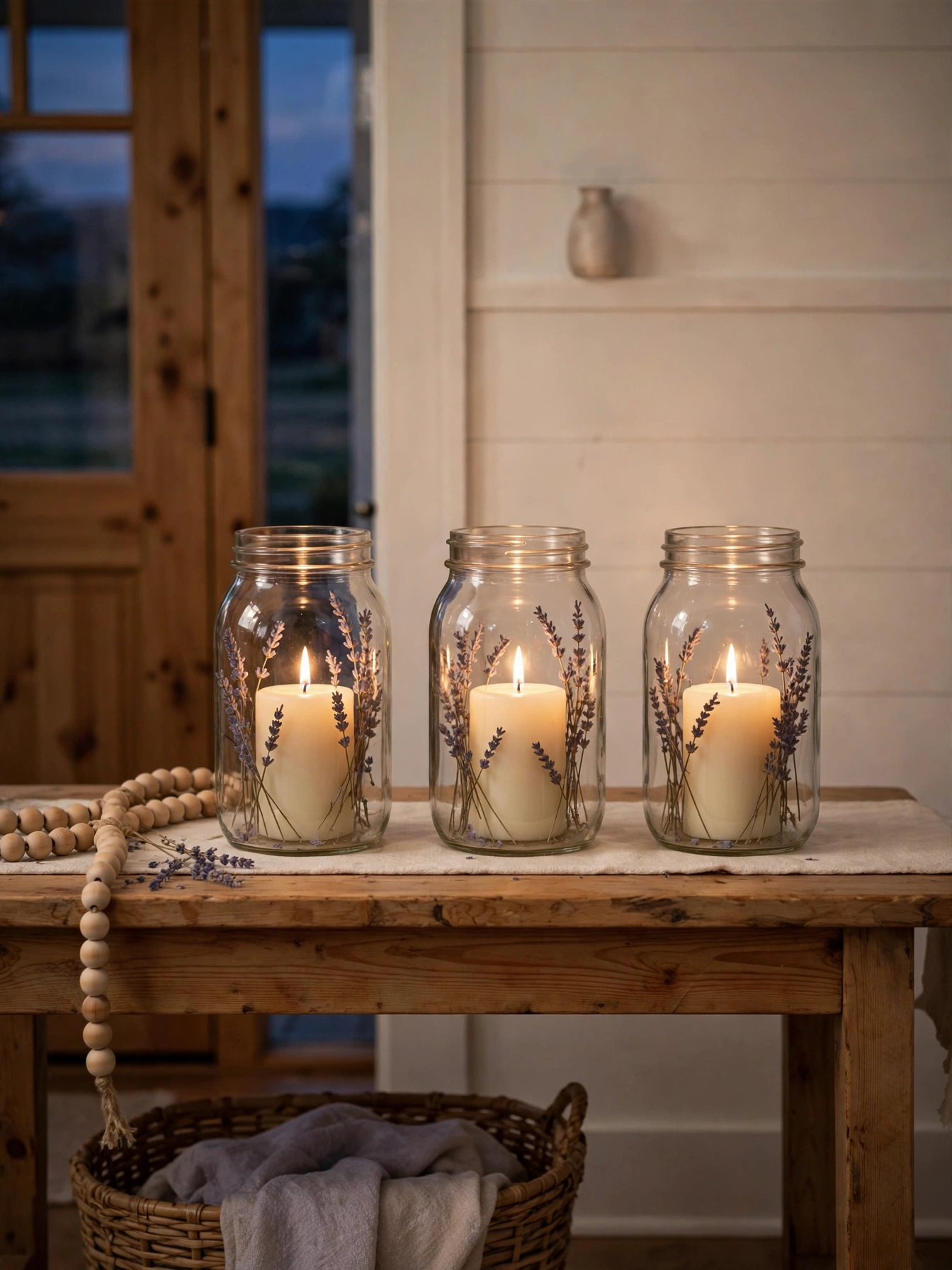
Why This Works:
- Quart jars cost 1 to 2 dollars each and hold standard 3-inch pillars.
- Lavender sprigs add scent without any flame near them.
- The trio fits 20 inches of table, perfect for small consoles.
- Jars wash and reuse for spring flowers after fall.
Use quart-size jars 7 inches tall with 3-inch diameter pillar candles inside. Choose soy pillars because they burn 40 to 50 hours versus 25 to 30 hours for paraffin at the same price. Keep candles 12 inches from any dried material, following National Fire Protection Association guidance on open flames. Avoid scented candles in jars with dried lavender because the mixed scents clash; use unscented pillars and let the lavender speak. Compare soy versus paraffin: soy burns cleaner with less soot on jar glass, while paraffin costs 20 percent less.
Homeowners who have tried this find that flameless LED pillars suit families with kids better; swap them in and keep the same jars. Check local lease rules before committing; some rental agreements ban open flames in hallways. The compromise is soot: real candles blacken jar rims within 10 burns, so wipe rims weekly.
Copper Tray Vignette
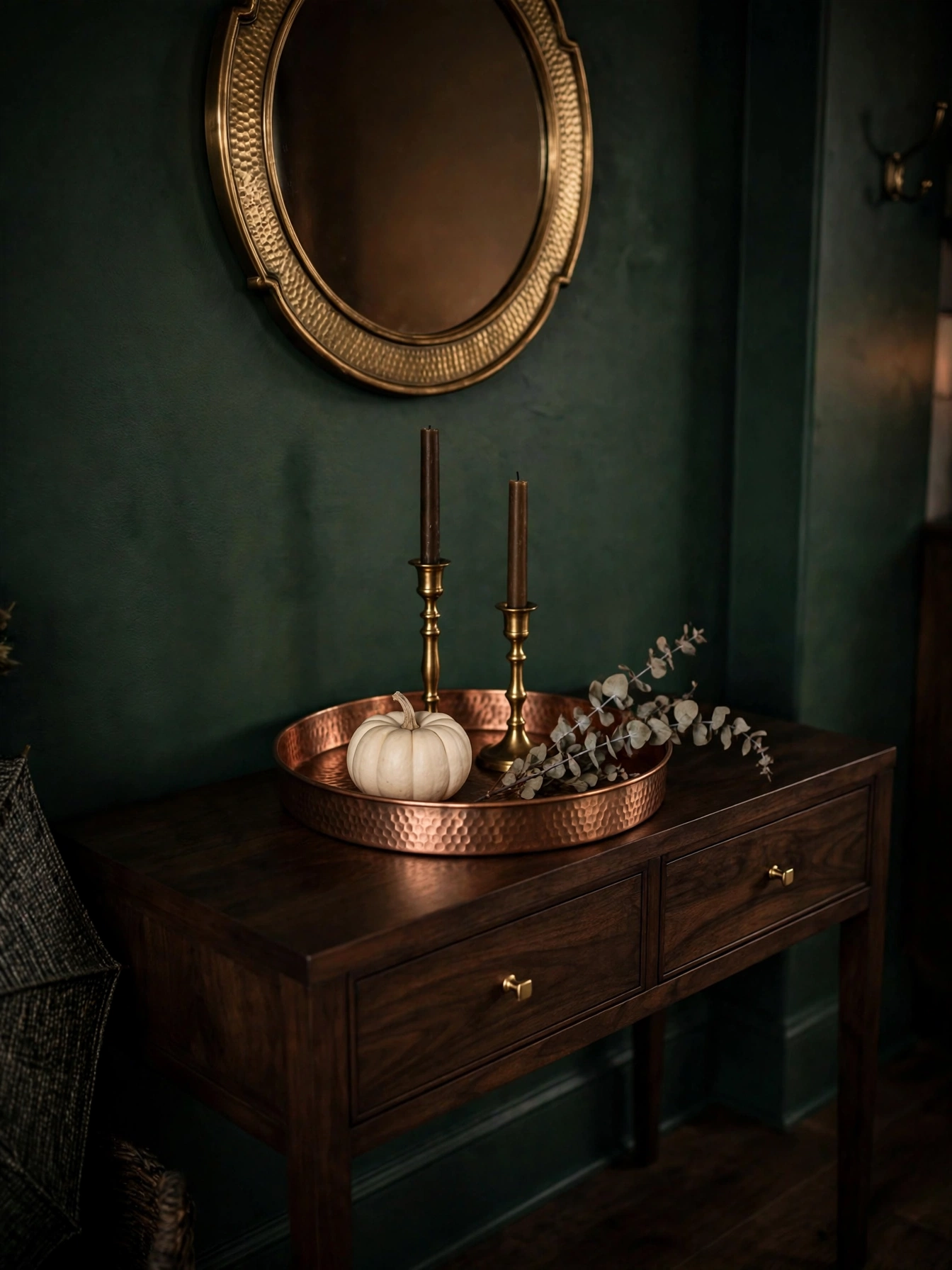
Why This Works:
- A tray corrals small items so the table never looks scattered.
- Hammered copper reflects warm light and glows at dusk.
- The 18-inch tray fits three objects in a perfect triangle.
- Copper develops a patina that looks better each year.
Choose a tray 16 to 18 inches in diameter with a 1-inch rim to contain items. Arrange three objects in a triangle: a 5-inch pumpkin, two 8-inch candlesticks, and one eucalyptus sprig. Hammered copper trays run 25 to 45 dollars; smooth copper costs 15 to 25 dollars but shows fingerprints. Avoid placing copper trays in direct sun because heat tarnishes the finish unevenly within weeks. Compare copper versus brass trays: copper reads warmer and more autumnal, while brass stays brighter longer.
In real entryways under 6 feet wide, a tray keeps small objects corralled where a full spread would feel cluttered. Set a cork pad under the tray on light wood tables; copper oxidizes and can leave green marks on pale finishes. One counting mistake is adding a fourth object; three items keep the triangle clean while four crowd it.
Fall Entry Table Lanterns
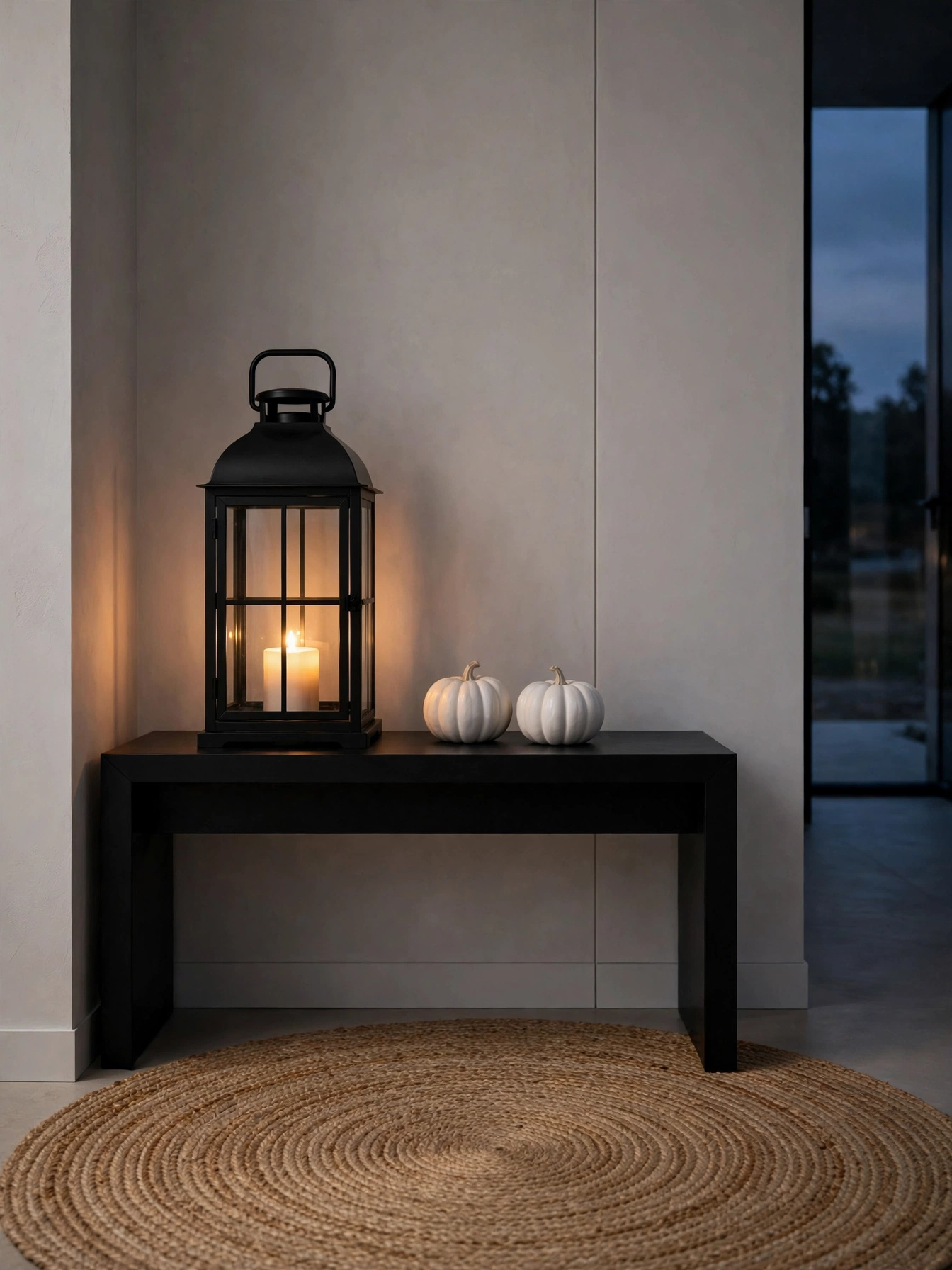
Why This Works:
- One oversized lantern anchors the table with a single bold move.
- The 20-inch height balances consoles up to 60 inches long.
- LED candles inside give glow without heat near the door.
- Black metal works with every fall color palette.
Choose one lantern 18 to 22 inches tall and 8 to 10 inches square; it should occupy no more than one third of the table’s length. Pair it with two 5-inch pumpkins placed 6 inches away for scale contrast. Oversized lanterns cost 30 to 55 dollars; the LED candle inside adds 8 to 12 dollars. Avoid lanterns with thin real-glass panels near doors that slam because vibration cracks them; look for 3-millimeter tempered panels. Compare metal versus wood lanterns: metal suits modern entryways and resists dents, while wood reads rustic but chips on corners.
Oversized lanterns are one of the most reliable fall entry table decor ideas for small spaces because one object does the work of five. Center the lantern and keep 12 inches clear on each side of tables under 48 inches long. A frequent styling error is pairing the lantern with more black; the look needs warm wood or cream nearby to avoid feeling heavy. The weak point is proportion: a 22-inch lantern overwhelms tables under 40 inches long, so scale down to 14 inches there.
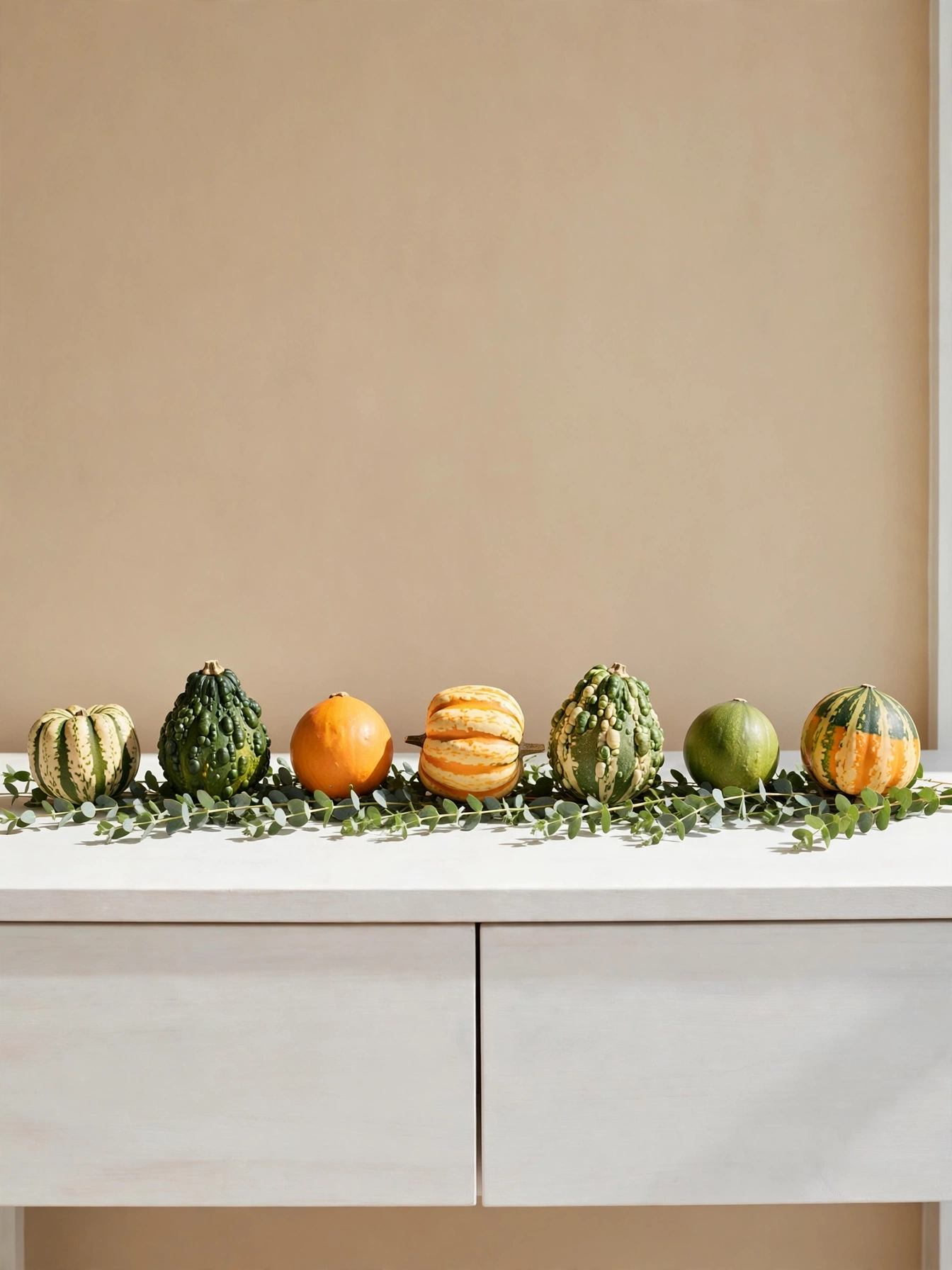
Mini Gourd Row
Why This Works:
- Seven mini gourds cost 5 to 8 dollars total at farm stands.
- The row spans 30 inches, filling long consoles evenly.
- Varied shapes keep the row interesting without any styling skill.
- Gourds last 6 to 8 weeks indoors, outliving pumpkins.
Line up seven gourds, each 2 to 4 inches, spaced 3 to 4 inches apart across 28 to 32 inches of table. Mix striped, warty and smooth varieties for texture contrast. Mini gourds sell for 5 to 8 dollars per half dozen at farm stands. Avoid gourds with soft spots because they collapse within days and stain surfaces; press each one firmly before buying. Compare gourds versus mini pumpkins: gourds offer wilder shapes and last 2 weeks longer, while mini pumpkins have classic color.
Before committing to this look, measure your table; the row needs 28 inches of clear length to breathe. A natural fit for homes with long walls because the row echoes the table’s length. One honest drawback is rolling: round gourds migrate, so set each on a 2-inch adhesive felt dot.
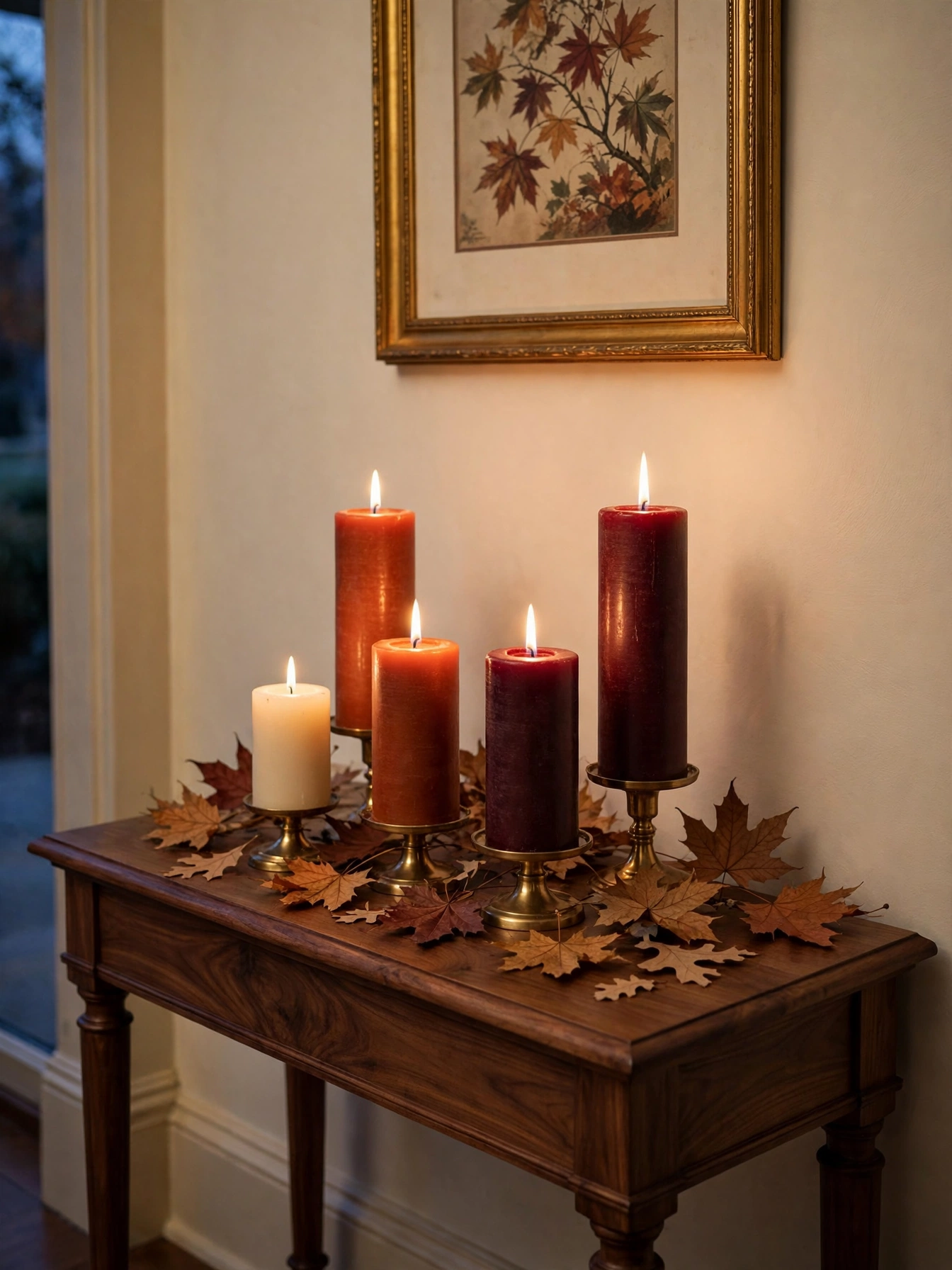
Harvest Candle Cluster
Why This Works:
- Five candles at varied heights create a warm focal point for under 30 dollars.
- Fall colors in candles read seasonal without any props.
- The cluster lights the entryway softly for evening arrivals.
- Brass holders lift candles and protect the table from wax.
Group five pillars from 3 to 8 inches tall, each on a brass holder 4 inches wide. Space candles 2 to 3 inches apart so flames never touch dried leaves nearby. Soy pillars cost 4 to 8 dollars each and burn 40 to 60 hours. Avoid clustering more than five candles because combined heat melts nearby wax and scorches leaves; five is the safe maximum. Keep every flame 12 inches from walls and dried materials, per National Fire Protection Association guidance. Compare soy versus beeswax: soy costs half as much, while beeswax burns 30 percent longer with a natural honey scent.
When placing this near a front door that gets daily use, burn the candles only when you are home; drafts from the door make flames dance and drip. One burning mistake is lighting all five for hours; burn them 2 hours at a time to prevent tunneling. The catch is wax drips: even dripless candles drip in drafts, so holders are mandatory near doors.
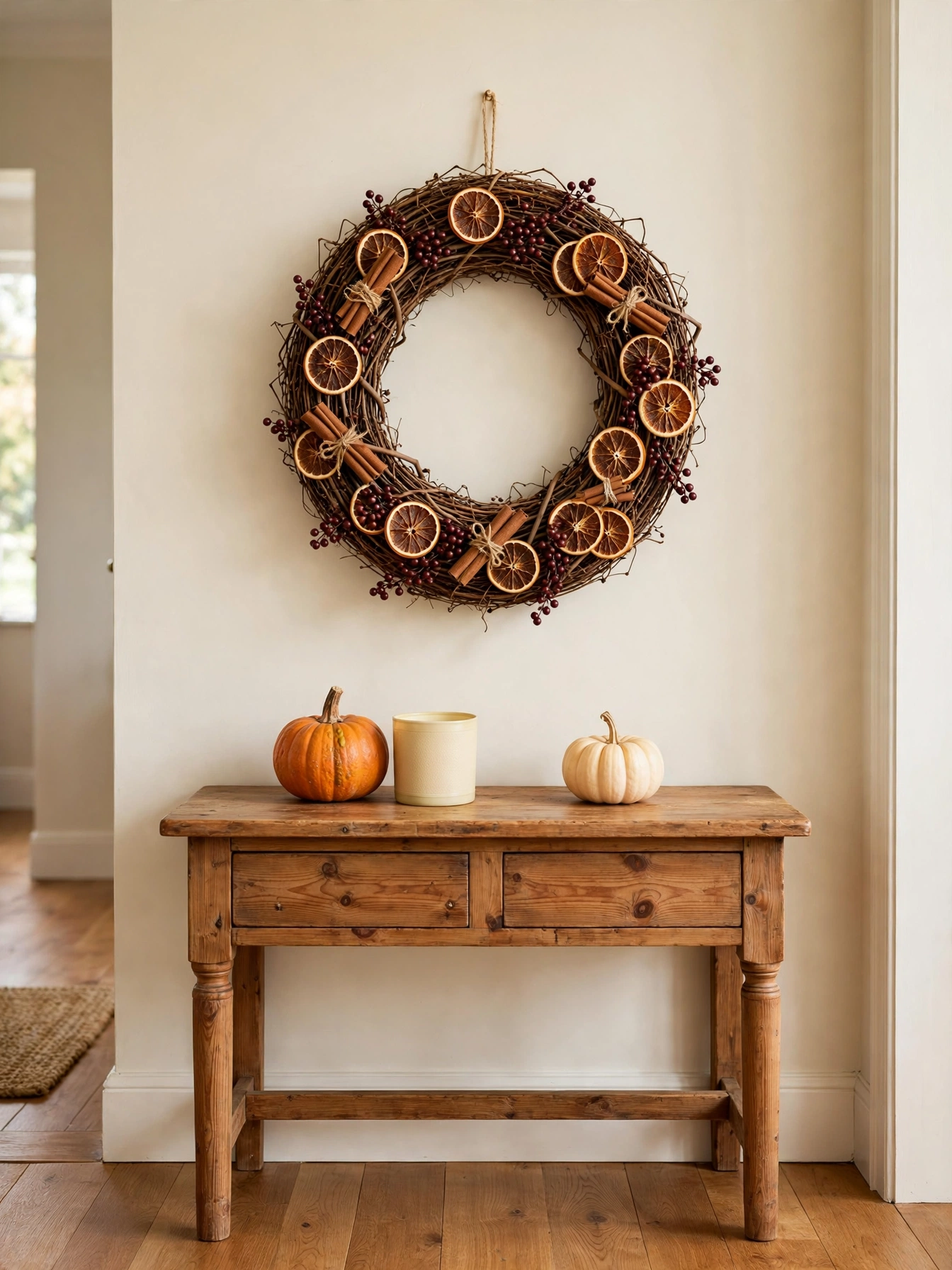
Wreath Above Table
Why This Works:
- A wreath fills the wall above the table, completing the vignette.
- Grapevine bases cost 15 to 25 dollars and last for years.
- Dried orange slices add color without wilting.
- One wreath balances a table up to 60 inches wide.
Hang a wreath 22 to 26 inches in diameter so it spans about half the table’s width. Center it 6 to 8 inches above the tallest tabletop item for breathing room. Grapevine wreaths run 15 to 25 dollars; pre-decorated fall wreaths cost 35 to 60 dollars. Use a nail or hook rated for 10 pounds because decorated wreaths weigh 4 to 6 pounds. Avoid suction-cup hooks on textured walls because they fail within days; use a proper hook. Compare grapevine versus foam bases: grapevine looks natural and holds picks firmly, while foam is lighter but crumbles after two seasons.
First verify is wall type; drywall needs an anchor rated for 10 pounds while plaster needs a masonry hook. Great for renters too because one small hole patches in minutes. The downside is scale: wreaths under 18 inches look lost above consoles wider than 48 inches.
FAQs
What are the best fall entry table decor ideas for autumn 2026 for a small entryway?
Start with one vertical accent like a 20-inch lantern or wheat bundle, plus a 16-inch tray grouping. Keep the styling zone to 24 inches of a 48-inch console. Small entryways need fewer, taller pieces; three well-chosen items beat ten small ones every time.
How wide should an entry table be for a standard hallway?
Choose a console 12 to 14 inches deep for hallways under 48 inches wide, leaving at least 36 inches of clear walkway as most residential building codes require. Tables 48 to 60 inches long suit most entryways. Measure your door swing first; the table must clear it by 4 inches.
How often should I refresh real pumpkins and gourds?
Check real pumpkins weekly and replace any with soft spots; most last 3 to 4 weeks indoors at 65 to 70 degrees. Buy in two waves, early October and late October, for full-season coverage. Wipe them with diluted vinegar to add about a week of life.
How much should I budget for fall entry table decor ideas for autumn 2026?
A full look costs 40 to 80 dollars using thrifted finds, or 120 to 200 dollars for boutique pieces. The National Fire Protection Association advises keeping candles 12 inches from dried materials, so choose 8 to 12 dollar LED candles. Reusable lanterns and jars spread their cost across years.
Can I use real candles on my entry table?
You can, but flameless LEDs are safer near doors where coats and mail pile up. If you burn real candles, trim wicks to one quarter inch and never leave them lit when you leave home. Keep every flame 12 inches from dried stems and fabric.
Conclusion
These fall entry table decor ideas for autumn 2026 prove that a small surface can make a big first impression. The three rules to remember: build in odd numbers, vary your heights, and leave breathing room on the table. Start today by measuring your console and clearing a 24-inch styling zone. Then add one anchor piece, like a lantern or pumpkin stack, before layering smaller accents. Swap one element each month and the entryway stays fresh through Thanksgiving. Follow HomelyCrafter on Pinterest for more ideas. Save this to your Pinterest boards so you can refer back to it!

Muhammad Israr is a home decor enthusiast and the writer behind Homely Crafter. He spends his days researching paint colors, layouts and budget-friendly styling ideas, then breaks them down into practical, easy-to-follow guides so you can decorate with confidence.