
When was the last time your living room made you breathe slower the moment you walked in? That exhale is not an accident. Decades of biophilic design research show that natural materials, daylight, and living greenery shift a room from visual noise to visual calm. These natural living room ideas lean on exactly that principle, using plants, jute, linen, reclaimed wood, and stone to build warmth you can feel. Nothing here asks you to gut the room or hire a crew. Across 22 ideas, you will find exact measurements, honest budgets from thrift to premium, and the trade-offs nobody mentions on Pinterest. Pick the three that fit your light, your square footage, and your patience for watering, and start there.
Living Wall Corner
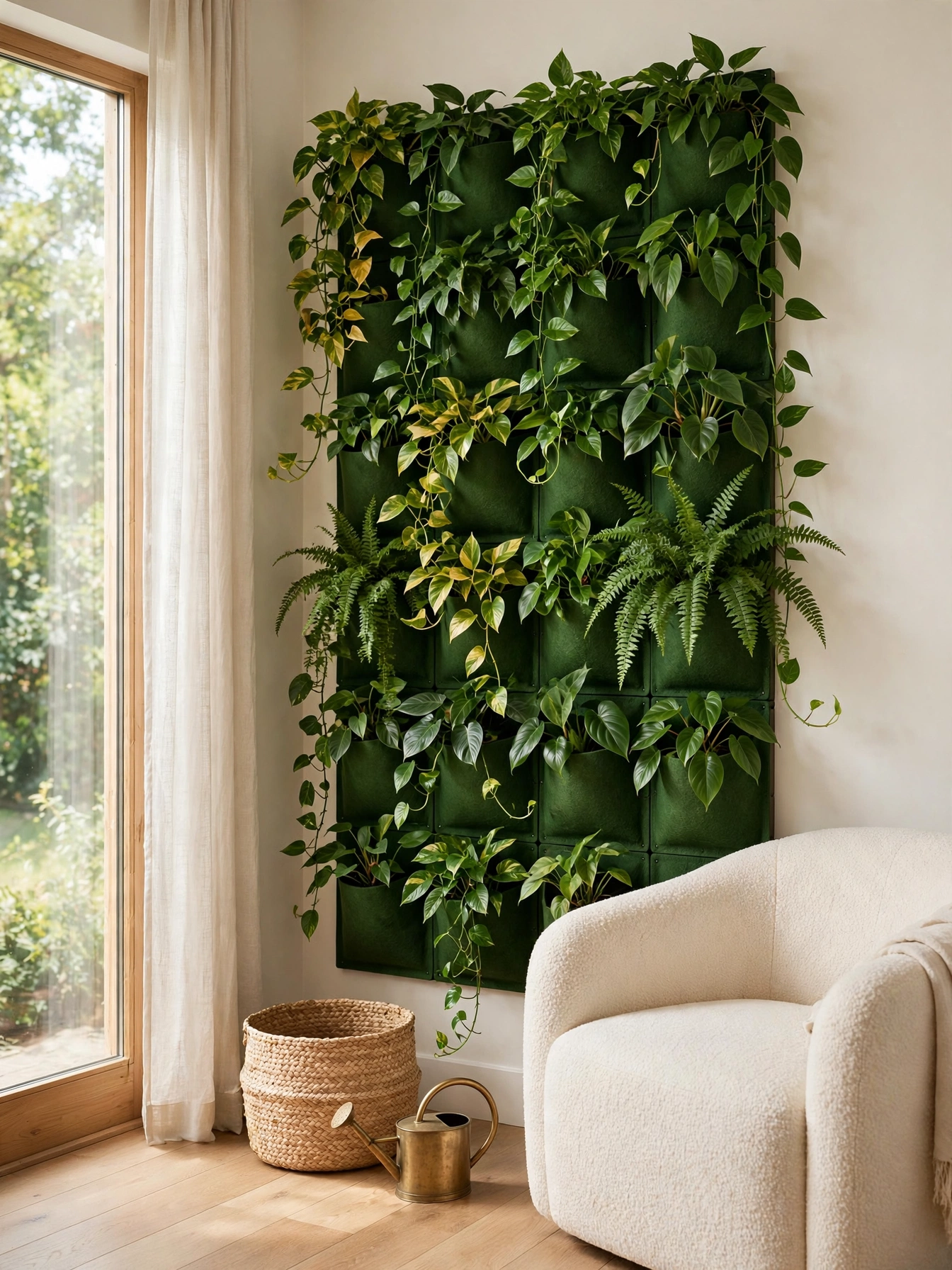
Why This Works:
- A vertical garden packs 24 square feet of greenery into 6 inches of floor depth
- Modular felt pockets weigh under 8 pounds per square foot when watered, safe for standard drywall anchors
- Ferns and pothos tolerate the 50 to 150 foot-candles typical of an interior corner
- One 4×6 foot panel visually raises a standard 8-foot ceiling by drawing the eye upward
Mount the panel frame on two horizontal 1×4 cleats screwed into studs, keeping the bottom edge 12 inches off the floor so a drip tray slides underneath. Budget options start around $120 for a 24-pocket felt system; mid-range modular trays with built-in reservoirs run $300 to $500; premium hydroponic walls with recirculating pumps reach $1,200. Felt pockets dry faster than plastic trays, so they suit forgetful waterers, while rigid trays hold moisture longer for thirsty ferns. The industry rule of thumb for indoor vertical gardens is one drip emitter or watering point per 4 square feet. Avoid south-facing corners without sheer curtains, because direct sun scorches shade-loving foliage within days.
Renters can hang a pocket system on two removable picture ledges rated for 30 pounds total, which leaves only small nail holes. Busy households do best with pothos, snake plants, and ZZ plants, since all three survive two weeks of neglect. The honest trade-off is maintenance: expect 20 minutes weekly for pruning and watering, plus a monthly check for pests in the lower pockets. Compared with a gallery wall of the same size, a living wall costs roughly twice as much but adds humidity and texture no frame can match. If the corner gets under 50 foot-candles, add a $40 full-spectrum grow bulb on a 12-hour timer instead of fighting nature.
Pro Tip: Number the back of each pocket 1 to 24 and keep a watering log on your phone; pockets 17 to 24 at the top dry 2 days faster than the bottom row.
Jute Rug Layers
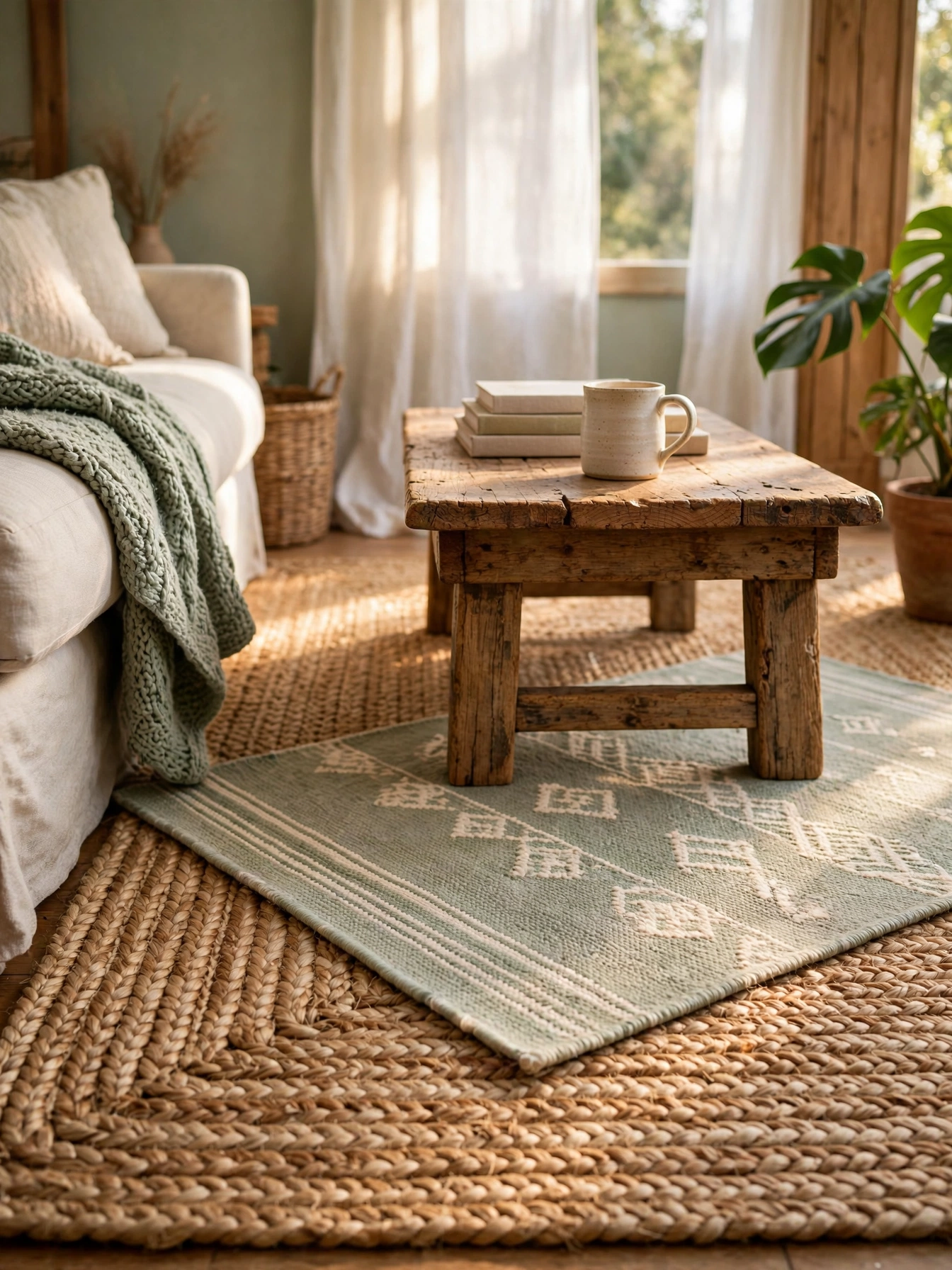
Why This Works:
- Layering a 5×7 jute base with a 3×5 flatweave top adds texture without the cost of a large wool rug
- Jute hides crumbs and pet hair far better than low-pile synthetics, cutting visible vacuuming to twice weekly
- The 1/2-inch total pile height lets doors swing freely, unlike 1-inch shags that jam
- Natural fiber tones bridge warm wood floors and cool gray sofas that otherwise clash
Choose a base rug that extends 18 inches beyond each side of the sofa and a top layer roughly 60 percent of the base size, offset 6 inches toward the coffee table. Budget braided jute starts near $80 for 5×7; hand-loomed mid-range pieces run $180 to $350; premium tightly woven jute with cotton backing reaches $600. Compared with wool, jute costs one-third as much but feels rougher under bare feet, so the softer top layer matters. Industry guidance for rug pads calls for 1/4-inch felt under natural fibers to prevent creep on hard floors. Avoid placing jute in damp entry-adjacent spots, because the fibers absorb moisture and develop musty odor within weeks.
Families with toddlers appreciate that jute survives spills better than its reputation suggests, as long as liquids are blotted within 10 minutes. Rotate both layers 180 degrees every 3 months to even out sun fading and foot traffic. The downside is shedding: expect visible fiber dust for the first 6 weeks, then it settles. Against a single synthetic rug, layering gives you two patterns to swap seasonally for the price of one mid-range piece. Keep a handheld vacuum nearby, since full-size vacuums with beater bars snag loose braids.
Pro Tip: Tape the top rug’s corners to the base with 2-inch rug tape; it stops curling for 6 months and peels off without residue.
Linen Slipcover Sofa
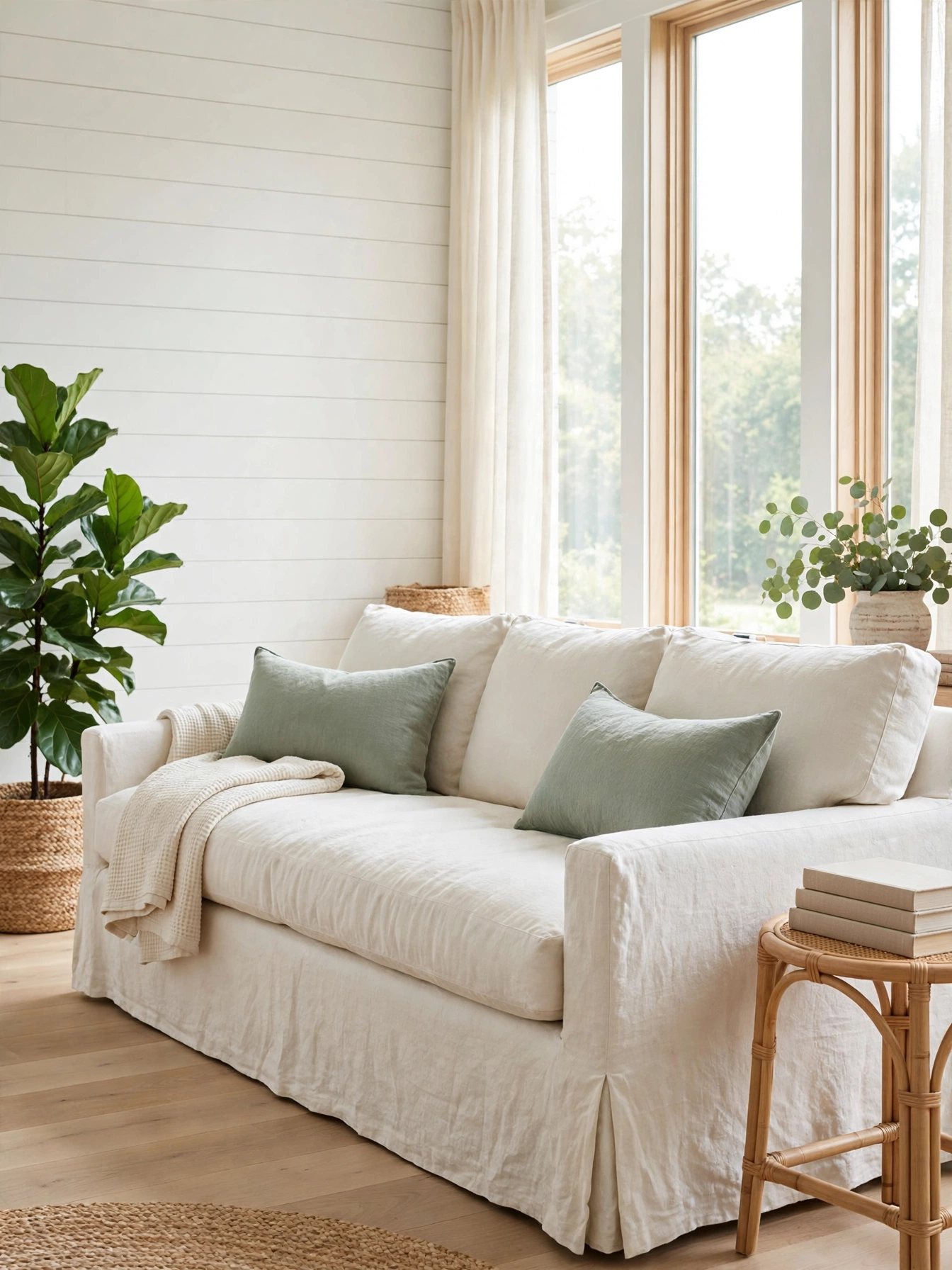
Why This Works:
- A washable slipcover removes in 10 minutes, so red wine and pet stains stop being emergencies
- Stonewashed linen softens with every wash, unlike cotton canvas that thins and pills
- The relaxed, slightly wrinkled drape hides the boxy frame of budget sofas worth hiding
- Ivory linen reflects roughly 30 percent more daylight than charcoal upholstery, brightening the whole room
Measure your sofa’s back height, arm width, and seat depth before ordering, since slipcovers sized for 84-inch sofas swim on 78-inch frames. Budget washed-linen covers start near $150; made-to-measure mid-range options run $400 to $700; premium Belgian linen with down-proof lining reaches $1,100. Compared with reupholstering, which starts at $1,500, a slipcover delivers 80 percent of the look for a fraction of the cost. Textile industry guidance rates upholstery linen at 20,000-plus double rubs, enough for daily family use. Avoid dark denim transfer by washing new jeans separately for the first month, because indigo rubs off on light linen fast.
Pet owners consistently rank slipcovers above performance fabrics, since a full wash beats spot-cleaning every time. Expect to re-tuck the skirt every 2 to 3 days in a house with kids who flop onto cushions. On the flip side, the look stays casual: linen never reads formal, so skip it if your room leans traditional. Against leather, linen breathes better in summer but stains easier, which is exactly what the washability solves. Keep a second cover in rotation so the sofa is never naked on laundry day.
Pro Tip: Wash in cold water with 1/2 cup white vinegar instead of fabric softener; it keeps the fibers supple for 50-plus washes.
Reclaimed Wood Table
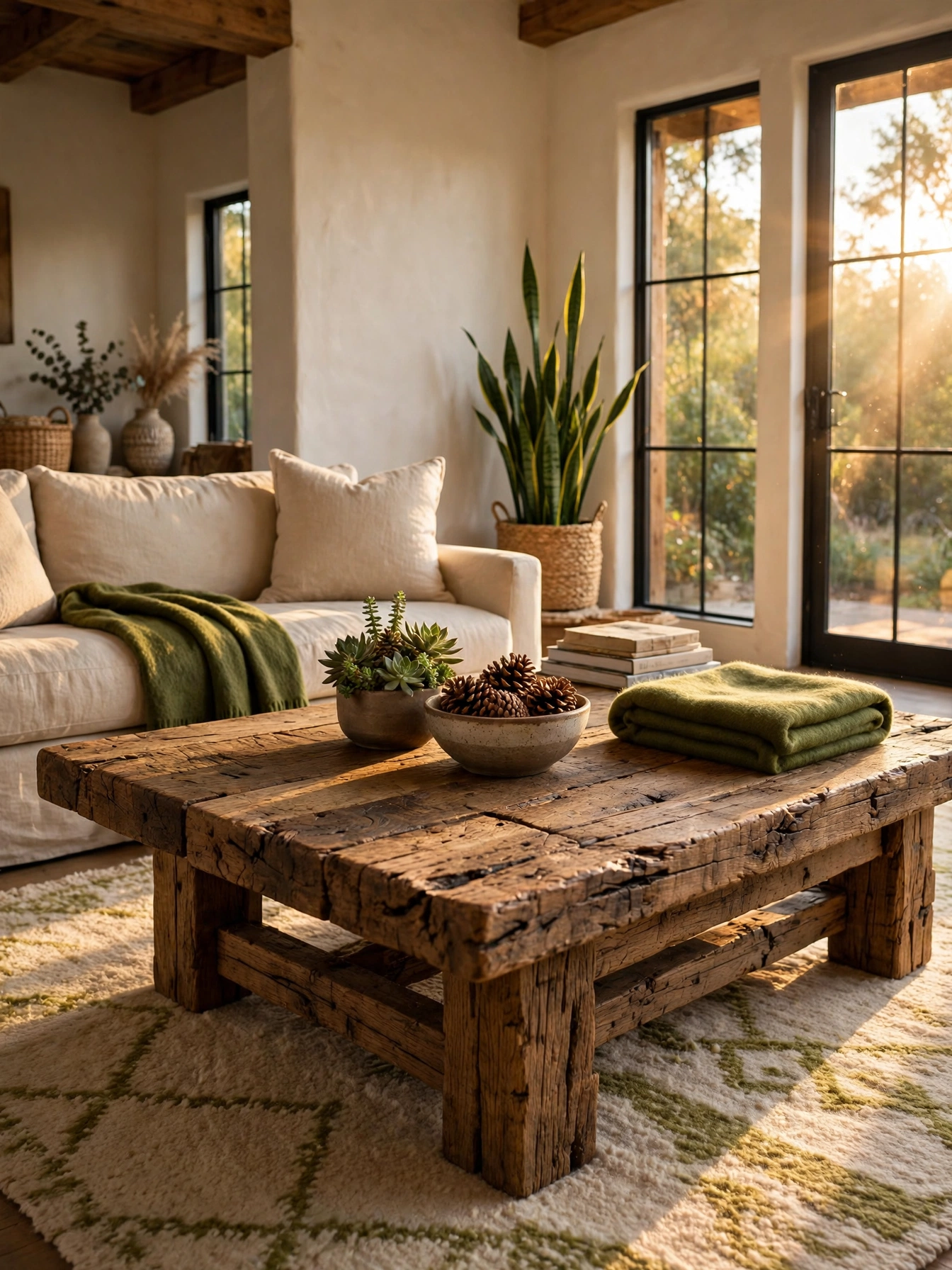
Why This Works:
- Reclaimed oak carries grain character that new lumber cannot fake, giving the room instant history
- A 48×24 inch top seats the standard 84-inch sofa correctly, leaving 18 inches of walkway on each side
- Old-growth timber is denser than new pine, so it resists dents from dropped remotes and mugs
- Each piece is one of a kind, which ends the matchy-matchy showroom look in one move
Look for tables 16 to 18 inches tall so the surface sits 1 to 2 inches below your sofa seat height. Budget reclaimed-look pine tables start near $200; genuine salvaged oak runs $500 to $900; premium single-slab pieces with butterfly joints reach $2,000. Compared with veneer-over-MDF, solid reclaimed wood can be sanded and refinished three or four times over its life. Furniture industry guidance rates a well-joined hardwood table for 25-plus years of daily use. Avoid pieces with active powder-post beetle holes, which look like fresh 1/16-inch pinholes with fine dust, because the insects spread to other wood.
Check stability by rocking the table on the showroom floor; genuine joinery should not wobble at all. The compromise is weight: a solid oak table can top 80 pounds, so plan its spot before delivery. Families love that scratches blend into the rustic finish instead of ruining it. Against glass-top tables, wood hides dust and fingerprints completely, trading sleekness for forgiveness. Seal the top with two coats of hardwax oil yearly if you set drinks down without coasters.
Pro Tip: Ask the seller for the wood’s origin story and keep the note; provenance adds resale value and gives guests a story worth retelling.
Stone Fireplace Accent
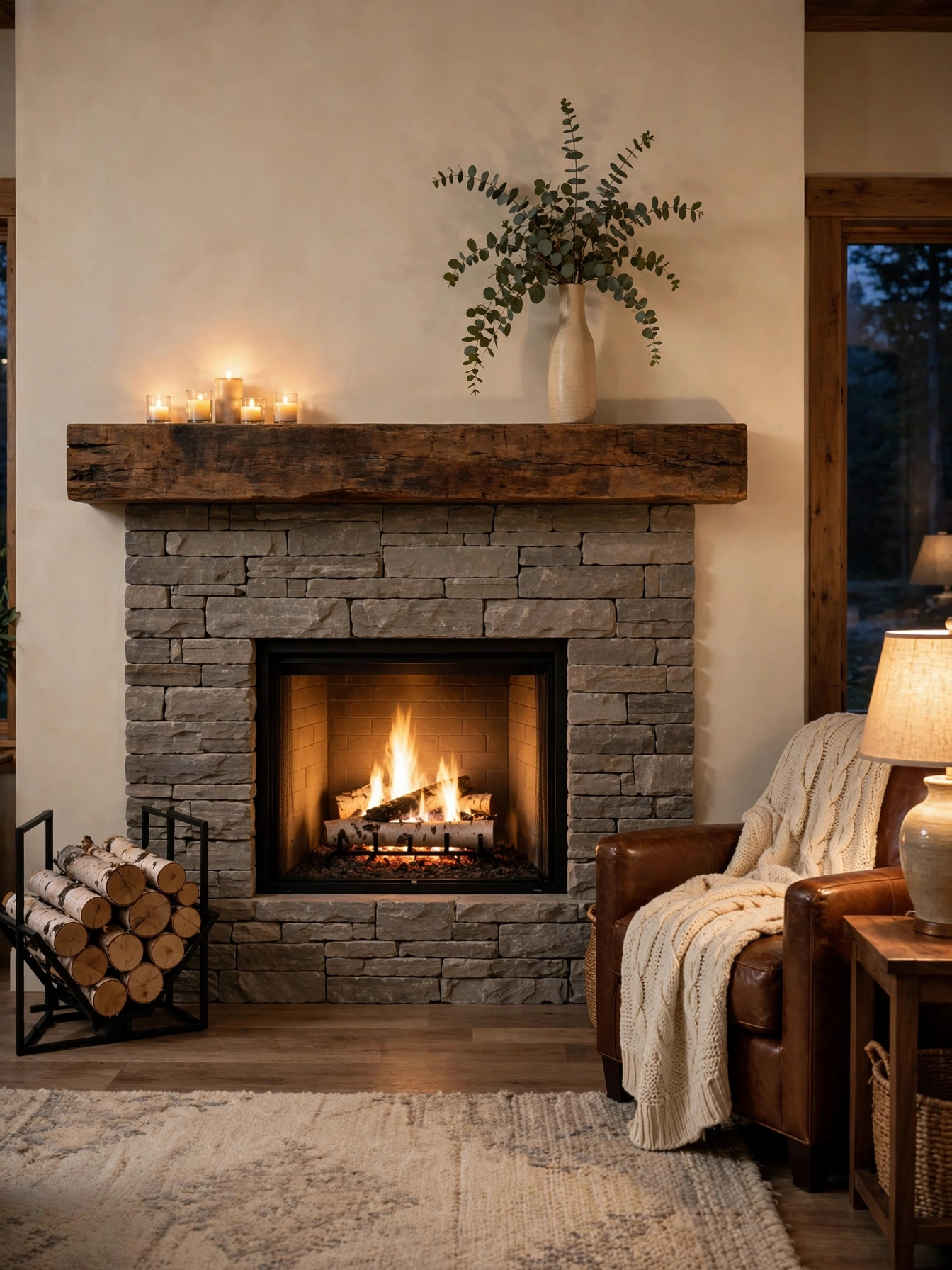
Why This Works:
- Ledger stone veneer weighs 8 to 12 pounds per square foot, light enough for standard wall framing
- The irregular texture breaks up the flat drywall box that makes most living rooms feel generic
- Stone stays visually interesting for decades, unlike painted accent walls that date in 5 years
- A floor-to-ceiling stone run makes 8-foot ceilings read a full foot taller
Plan the veneer to run 12 inches wider than the firebox on each side and stop 6 inches below the ceiling for a clean shadow line. Budget faux panels start near $8 per square foot; real ledger stone runs $15 to $30 installed; premium full-depth stone reaches $50 per square foot. Compared with tile, stone needs no grout lines to stain and hides soot far better. Masonry industry guidance calls for a non-combustible surround extending 12 inches beyond the firebox opening on working fireplaces. Hire a professional mason or structural engineer before mounting heavy stone, especially on walls you suspect are load-bearing, since a full wall of veneer can add 600-plus pounds. Avoid sealing with glossy finishes, which kill the matte mineral look that makes stone feel natural.
Renters can fake the effect with peel-and-stick stone-look panels at roughly $5 per square foot, removed with a hair dryer. One caveat is dust: textured stone collects it, so budget 10 minutes monthly with a soft brush attachment. Against a painted accent wall, stone costs five times more but never needs repainting. Keep the mantel styling minimal, since the stone is the art; three objects maximum lets the texture breathe.
Pro Tip: Run a strip of LED tape behind a floating mantel beam; the 2700K glow grazing down the stone doubles its texture at night.
Indoor Olive Tree
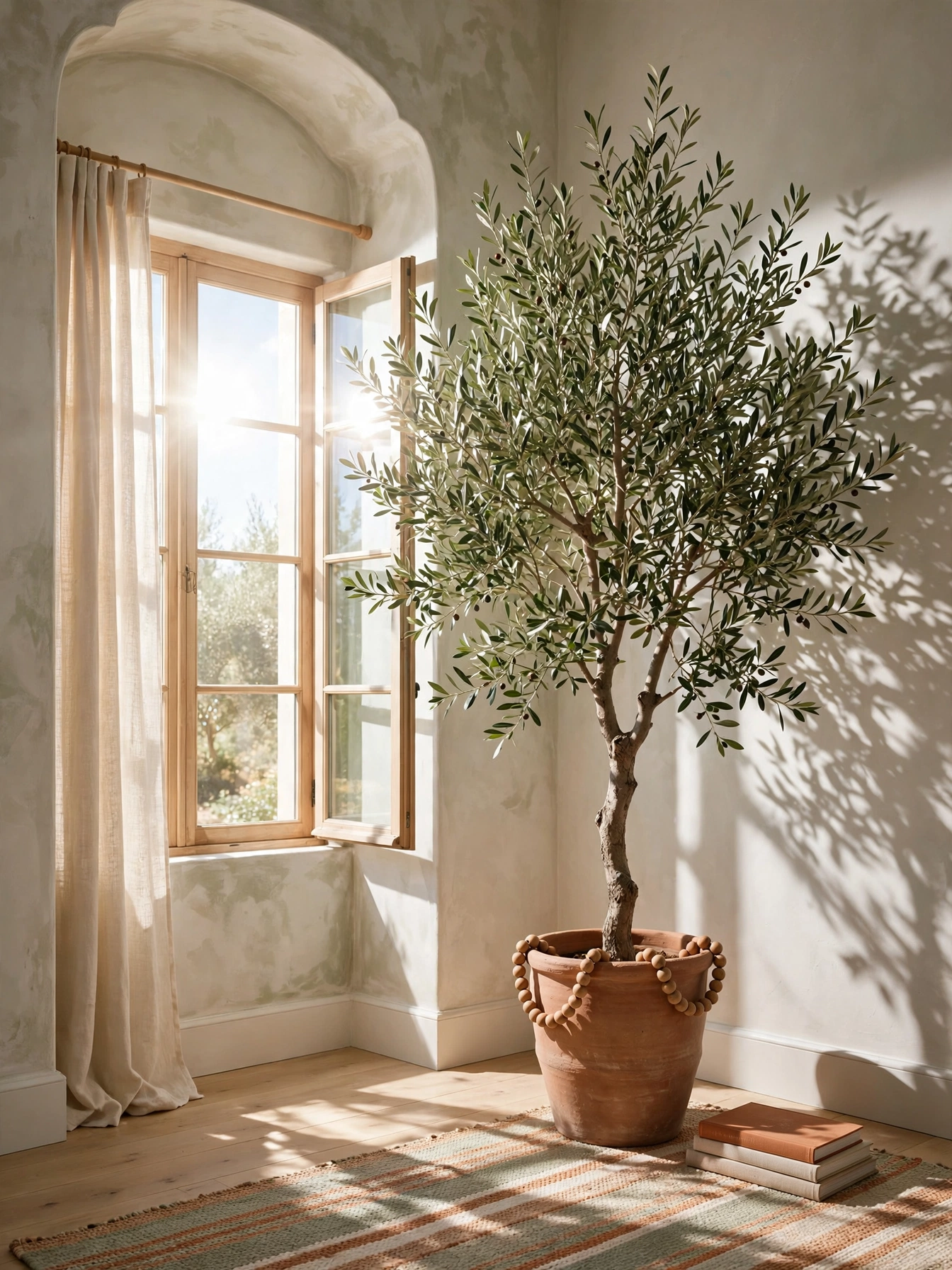
Why This Works:
- A 6-foot olive tree fills the dead corner beside windows better than any furniture piece
- Silvery-green foliage reads as neutral, pairing with both warm and cool palettes
- Olive trees tolerate the 30 to 40 percent humidity of heated homes without crisping
- One sculptural tree replaces three small plants, cutting watering chores by two-thirds
Give the tree 6-plus hours of direct sun and a 14 to 16 inch terracotta pot with one 1-inch drainage hole. Budget 3-foot nursery olives start near $60; 5 to 6 foot specimens run $180 to $350; mature 7-foot trees reach $600. Compared with fiddle-leaf figs, olives forgive missed waterings and bounce back from leaf drop within 3 weeks. Growers recommend letting the top 2 inches of soil dry between waterings for indoor olives. Avoid placing the pot where heating vents blow directly, because the hot dry air drops leaves within 10 days. Rotate the pot 90 degrees monthly so growth stays even.
Pet owners should note that olive leaves are generally considered non-toxic, unlike many trendy houseplants. Expect a 2-week sulk with some leaf drop after bringing it home; this is normal acclimation, not death. The catch is light hunger: below 4 hours of direct sun, olives go leggy and sad within 2 months. Against a faux tree, the real one costs more yearly in soil and fertilizer but rewards you with actual growth. Top-dress with 1 inch of fresh compost each spring to keep it vigorous.
Pro Tip: Water deeply until it runs from the drainage hole, then wait; olives prefer a 10-day drought rhythm over daily sips.
Greener Natural Living Room Ideas
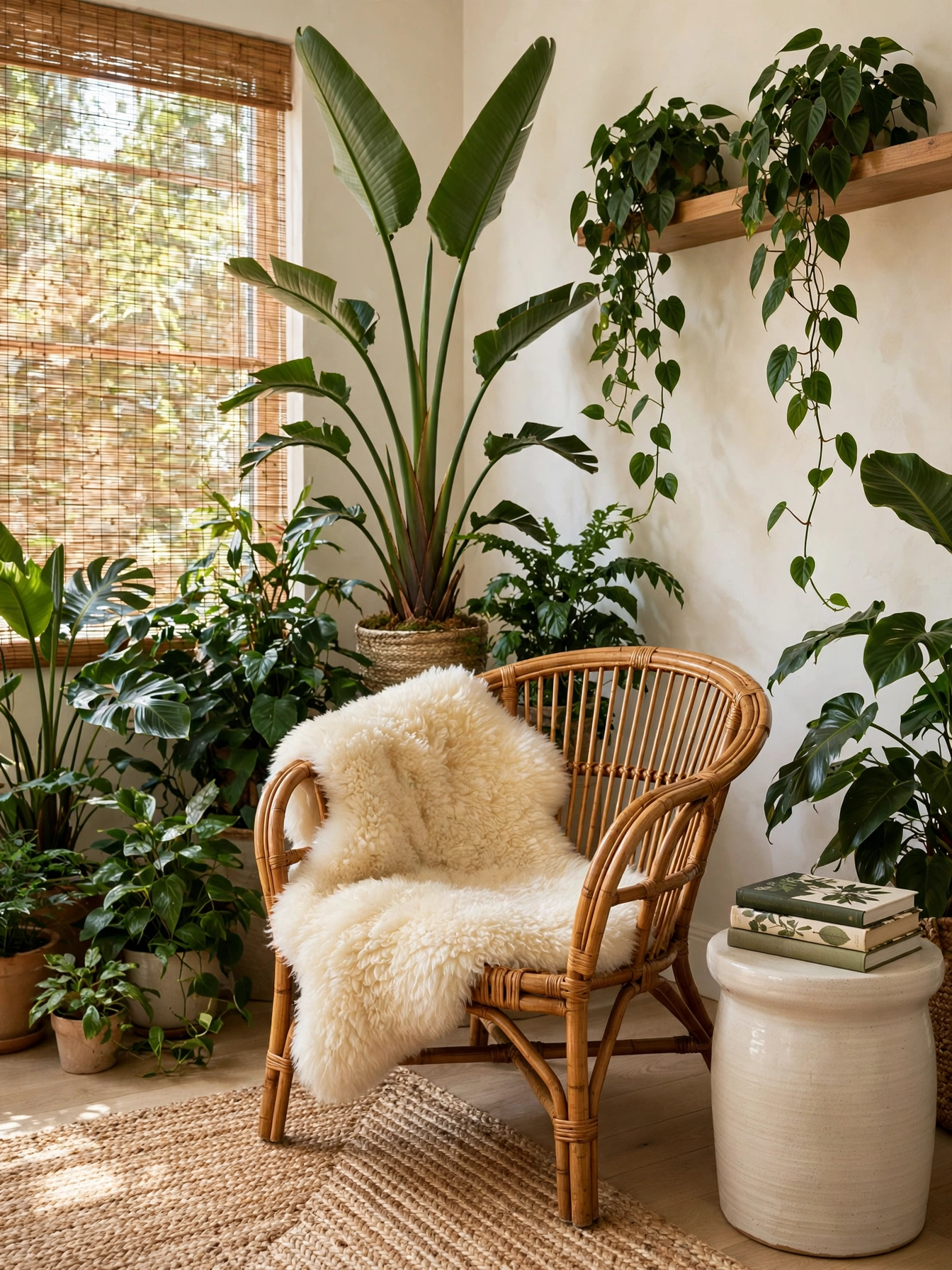
Why This Works:
- Bent rattan adds curved lines that soften rooms full of boxy sofas and rectangular tables
- The open weave keeps a reading corner visually light, unlike solid upholstered chairs that block sightlines
- Rattan frames weigh 12 to 18 pounds, so rearranging for parties takes one person
- A $25 sheepskin throw upgrades a $200 chair to look triple the price
Position the chair 24 inches from the wall with a 16-inch round side table at arm height, 22 to 24 inches. Budget rattan armchairs start near $180; hand-bent mid-range pieces run $350 to $600; premium plantation-grown rattan with tight weaving reaches $1,000. Compared with wicker, true rattan uses solid reed cores that flex without cracking, while wicker is a weave style that can hide weaker materials. Furniture industry guidance rates quality rattan frames for 15-plus years indoors away from direct sun. Avoid placing rattan within 3 feet of radiators, because dry heat shrinks the fibers and loosens joints within one season.
This corner suits readers who want a dedicated perch without committing floor space to a bulky recliner. What you sacrifice is seat comfort: add a 3-inch foam cushion, since bare rattan seats fatigue sitters after 45 minutes. Against an upholstered accent chair, rattan costs half as much and brings the nature texture upholstery cannot. Dust the weave monthly with a soft brush, because the crevices collect it fast. Pair with one tall plant behind and one trailing plant above for the layered jungle effect.
Pro Tip: Tighten loose cane bindings with a 1:3 mix of wood glue and water brushed into the joint; it re-hardens overnight.
Woven Fiber Baskets
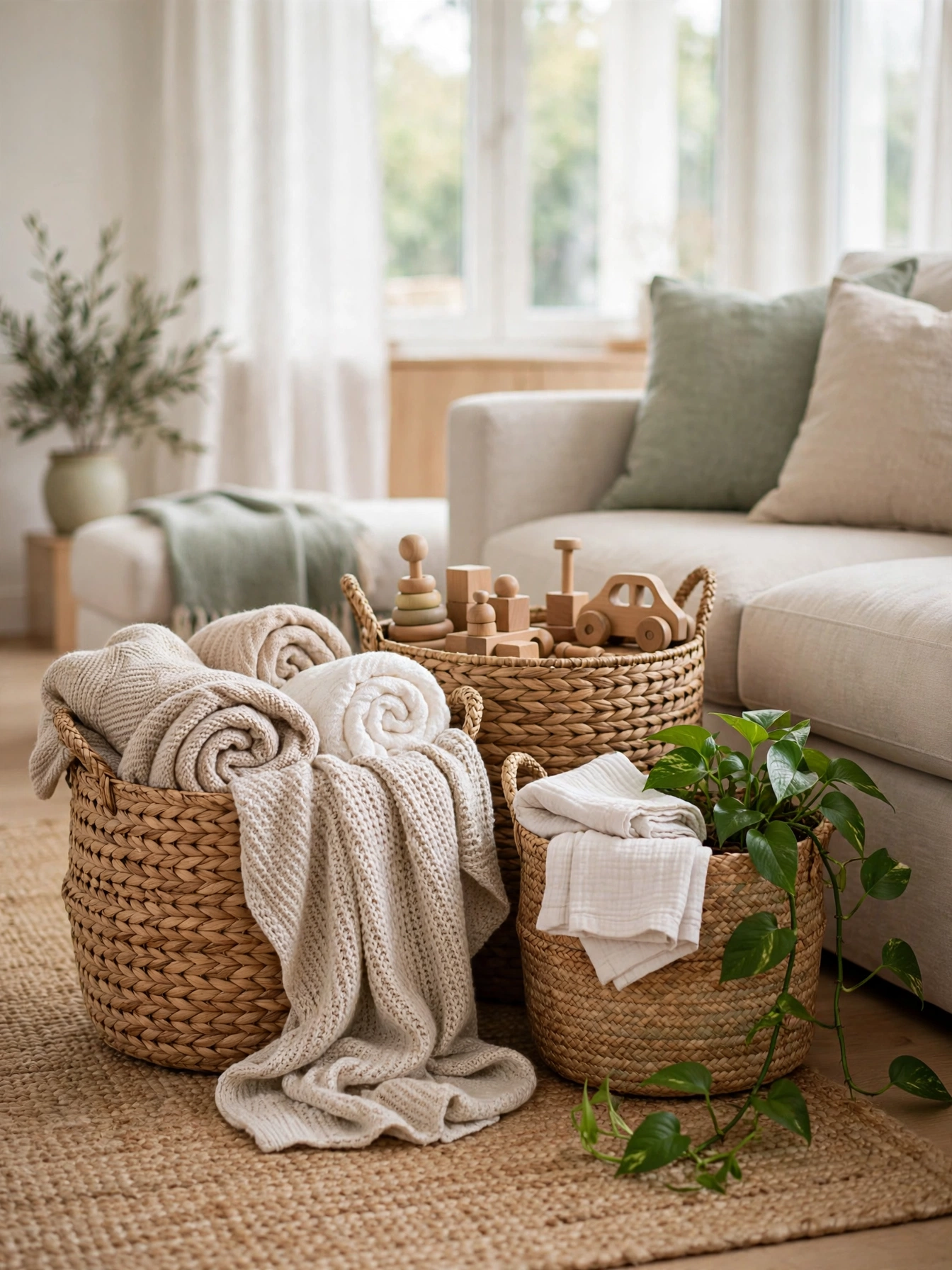
Why This Works:
- Three graduated baskets swallow the clutter that makes living rooms feel chaotic in 5 minutes flat
- Seagrass texture adds the nature layer at $15 per basket instead of $150 per decor object
- Open tops beat lidded storage for daily-use items, since nobody closes lids in real life
- Grouped in odd numbers, baskets read as intentional styling rather than a storage afterthought
Buy sizes that nest visually: 18-inch, 14-inch, and 10-inch diameters clustered within a 3-foot zone. Budget seagrass baskets start near $12; handwoven mid-range sets run $40 to $80; premium tightly woven fair-trade pieces reach $150. Compared with fabric bins, seagrass holds its shape for years and never looks sloppy. Storage industry guidance suggests one cubic foot of open storage per high-traffic seating zone to keep surfaces clear. Avoid the laundry-basket trap of buying one giant basket, because oversized vessels become junk magnets within a month.
Assign each basket a job: throws, toys, and the charging-cable tangle that migrates to every sofa. The wrinkle is dust on open tops, so shake throws outside monthly. Against plastic bins, woven baskets cost slightly more but display beautifully without a cabinet to hide them. Keep one basket empty on purpose; it gives guests a place to stash their things and keeps the system from overflowing. Wipe with a damp cloth quarterly, since seagrass dislikes soaking.
Pro Tip: Line the toy basket with a $5 cotton laundry bag; lift the whole bag to the kids’ room at bedtime in one move.
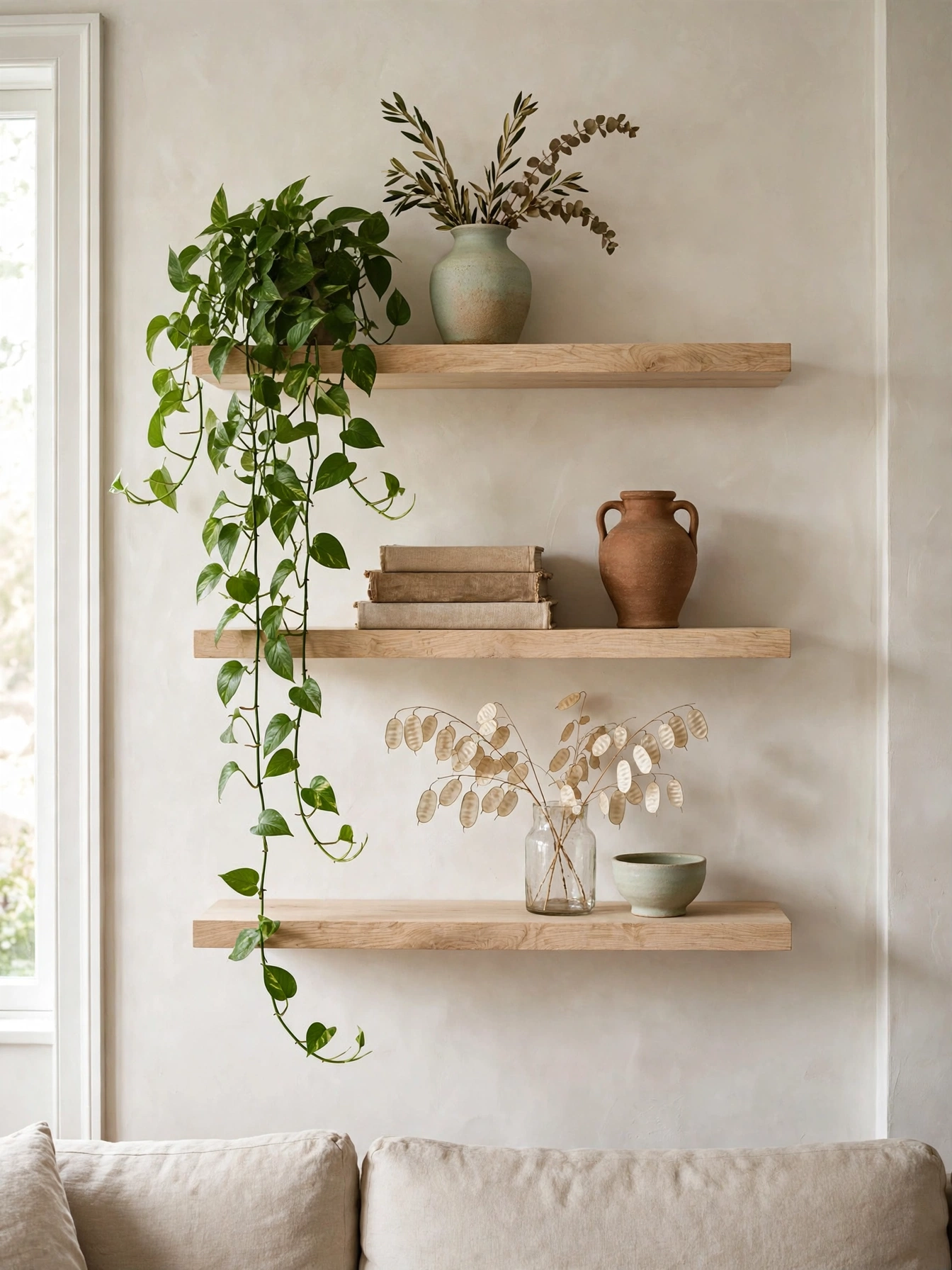
Untreated Oak Shelves
Why This Works:
- Raw oak shows honest grain that stained shelves sand away, giving the wall a crafted feel
- Floating brackets rated for 50 pounds per shelf hold books and ceramics with zero visible hardware
- Three 36-inch shelves display 15 to 20 objects without the visual weight of a bookcase
- Unfinished wood can be sanded and re-oiled in place, unlike lacquered shelves that chip
Mount shelves 14 to 16 inches apart vertically so trailing plants have room to spill. Budget pine floating shelves start near $25 each; solid oak mid-range runs $70 to $120; premium live-edge oak reaches $200 per shelf. Compared with painted MDF, real oak costs double but never shows the white edge chips that betray cheap shelving. Shelf-installation guidance calls for hitting at least two studs per 36-inch shelf with 3-inch lag screws. Avoid loading the front edge beyond the bracket line, because leverage multiplies the pull-out force threefold. Style with the 60-30-10 rule: 60 percent books, 30 percent plants, 10 percent objects.
Leave 30 percent of each shelf empty; breathing room is what separates styled from stuffed. The honest drawback is dusting: open shelves need a 5-minute weekly wipe that closed cabinets skip. Against a full bookcase, floating shelves cost less and keep small rooms feeling open. Oil raw oak once a year with food-safe mineral oil to prevent graying. Keep trailing plants in nursery pots set inside cachepots so watering never touches the wood.
Pro Tip: Photograph the shelf, then remove one item from the photo’s busiest spot; that single edit fixes 90 percent of cluttered styling.
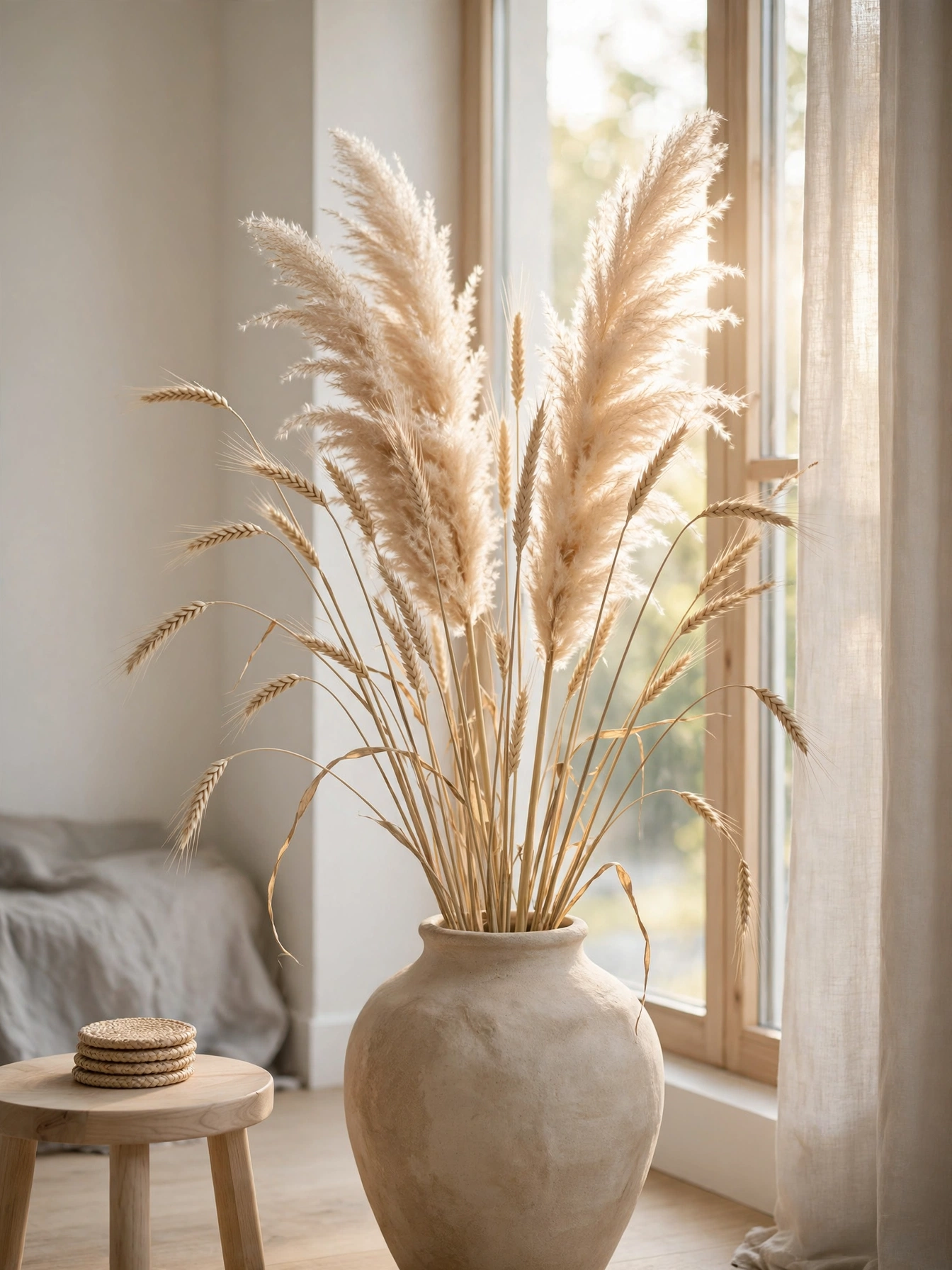
Dried Grass Stems
Why This Works:
- Dried stems cost $20 once and look good for 2 years, the cheapest tall styling in decorating
- Feathery plumes soften hard window corners where curtains would block precious light
- Zero water, zero light needs, so they thrive in the dark hallway corners that kill plants
- The vertical lines draw eyes up, adding perceived height to standard 8-foot ceilings
Choose stems 1.5 times your vase height: a 24-inch vase wants 36-inch plumes. Budget grocery-store bunches start near $12; florist-grade pampas runs $25 to $45; premium bleached and dyed designer stems reach $80. Compared with fresh flowers at $30 weekly, dried stems pay for themselves in under a month. Floral industry guidance suggests shaking new pampas outside and misting lightly with hairspray to cut shedding by half. Avoid humid bathrooms, because moisture makes plumes droop and mold within 6 weeks. Trim stems at an angle with sharp shears so they sit at varied heights, never a flat crew cut.
Allergy sufferers should note that pampas sheds fine particles for the first month, so shake it outdoors twice. Counterpoint: the stems are fragile, and one curious toddler can snap $40 of them in seconds, so place tall vases behind furniture. Against faux plants, dried grasses look far more natural in close-up photos. Refresh the arrangement yearly, since sun bleaches plumes to a uniform pale tone. Keep away from open fireplaces, because dried plumes ignite faster than newspaper.
Pro Tip: Spray the plumes outdoors with unscented hairspray from 12 inches away; shedding drops dramatically and the hold lasts 8 months.
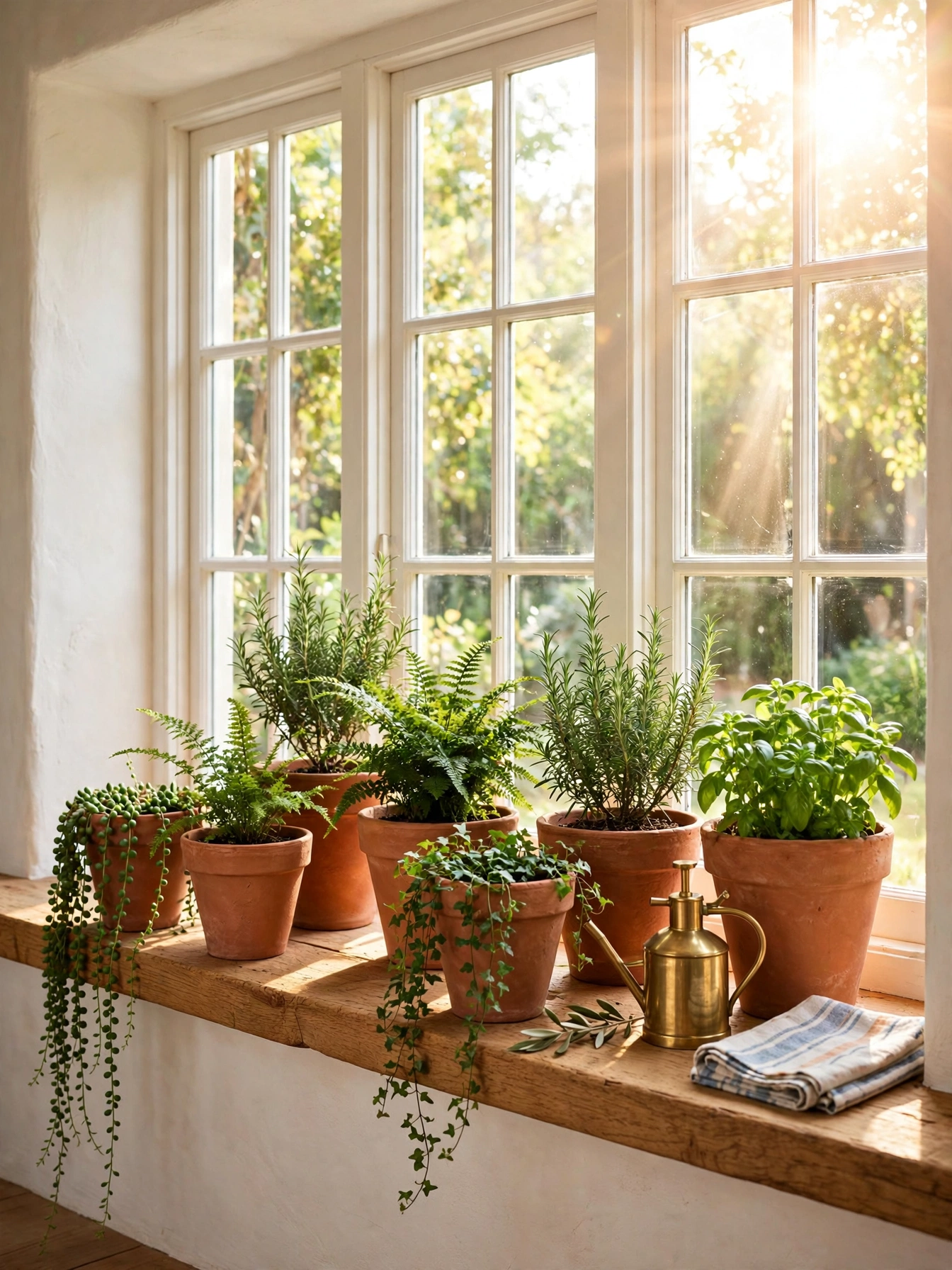
Terracotta Pot Cluster
Why This Works:
- Terracotta’s porous walls wick excess water away, cutting root rot in half for beginners
- One material in seven sizes reads as a collection, while mixed materials read as clutter
- The warm orange tone flatters green foliage the way a good frame flatters art
- A $60 cluster fills a 6-foot windowsill that would need $200 of decor objects
Group pots in odd numbers with 2-inch gaps, tallest at the back, following the florist’s triangle rule. Budget standard terracotta starts near $4 per pot; handmade mid-range pieces run $12 to $25; premium frost-proof Italian terracotta reaches $60. Compared with glazed ceramic, terracotta breathes better but dries out 2 days faster, so check soil twice weekly. Horticultural guidance rates terracotta ideal for Mediterranean herbs like rosemary and thyme that hate wet feet. Avoid saucer-less pots on wood sills, because the porous base weeps moisture rings within 48 hours. Soak new pots in water for 30 minutes before planting so they stop stealing moisture from the soil.
Windowsill gardens suit cooks who snip herbs daily and kids learning plant care. The price you pay is mineral crust: hard water leaves white rings on the rims within 3 months, scrubbed off with vinegar. Against a single large planter, clusters let you swap seasonal plants without redoing everything. Rotate pots 180 degrees every 2 weeks for even growth. Keep a folded towel under the lineup to catch drips and protect the sill paint.
Pro Tip: Rub the rims with a cut lemon once a month; the citric acid dissolves mineral crust without scratching the clay.
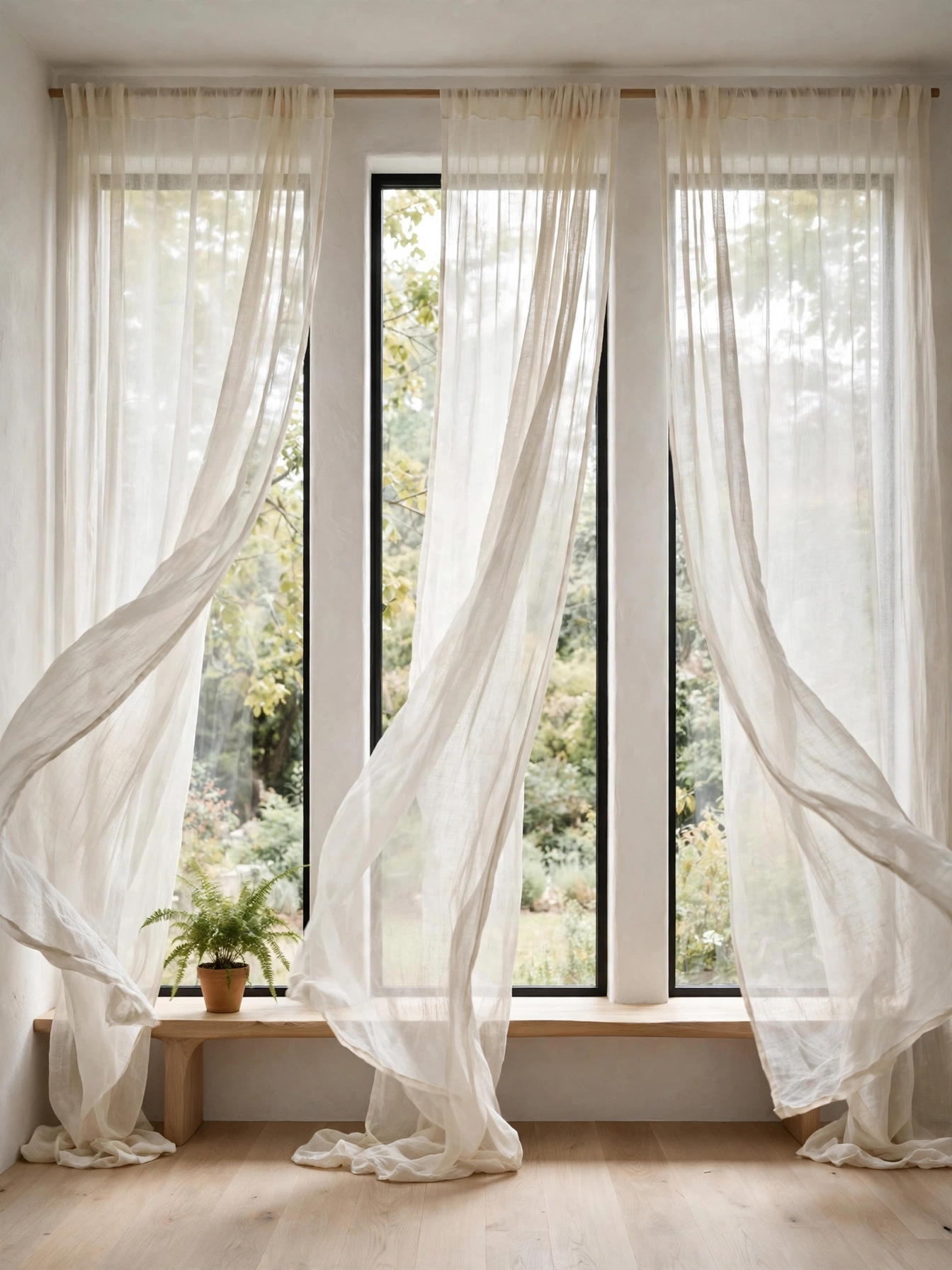
Sheer Linen Curtains
Why This Works:
- Sheer linen softens harsh sun into a gentle glow while the garden view stays fully visible
- Floor-pooling panels add 6 inches of perceived window height for the price of longer fabric
- Natural fibers breathe, so curtains never trap the musty smell synthetics develop
- One layer handles privacy by day, pairing with a $30 roller blind for night
Hang the rod 6 inches above the frame and 8 inches wider on each side so glass stays fully exposed. Budget sheer linen-look polyester starts near $25 per panel; real washed-linen mid-range runs $60 to $110; premium Belgian sheer linen reaches $200 per panel. Compared with blackout curtains, sheers preserve daylight that keeps plants alive and moods lifted. Window-treatment industry guidance recommends panels 1.5 to 2 times the window width for proper fullness. Avoid machine-drying linen curtains, because the heat shrinks panels up to 5 percent and ruins the pooling. Wash cold and hang damp to let gravity press out wrinkles.
Light sleepers should know sheers do nothing for streetlight glow, so layer them over existing blinds. The limitation is privacy after dark: with interior lights on, silhouettes show through, so plan the blind layer. Against heavy drapes, sheers cost one-third as much and make small rooms feel twice as airy. Steam wrinkles out in 10 minutes with a handheld steamer. Choose ivory over bright white, which glares in direct sun.
Pro Tip: Iron a 1-inch strip of fusible hem tape inside the bottom hem; the hidden weight makes linen hang straighter for years.
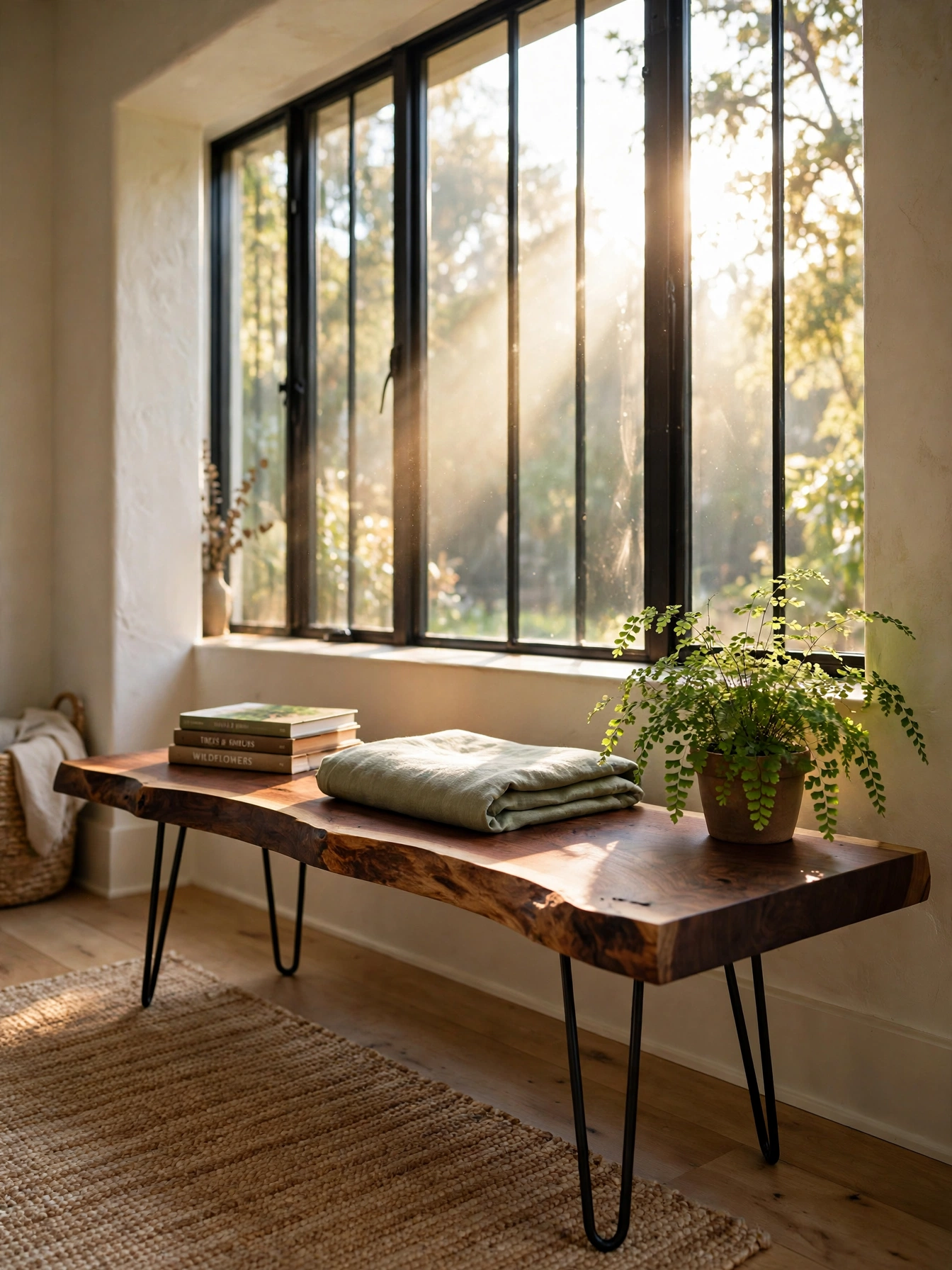
Live-Edge Bench
Why This Works:
- The wavy natural edge turns a simple bench into a sculptural focal point
- A 48-inch bench seats two for morning coffee without blocking window light
- Walnut’s deep tone grounds all-pale rooms that otherwise float away visually
- Hairpin legs keep the profile light, so the heavy slab never feels bulky
Choose slabs 12 to 14 inches deep and 2 inches thick to seat comfortably without tipping. Budget acacia live-edge benches start near $150; American walnut mid-range runs $400 to $700; premium book-matched slabs reach $1,500. Compared with upholstered benches, wood needs no stain-guard and ages gracefully. Woodworking guidance rates a 2-inch walnut slab with steel legs for 300-plus pounds of seated weight. Avoid placing live-edge pieces over heating vents, because the direct dry heat cracks the bark edge within two winters. Check that the slab was kiln-dried to 8 percent moisture, since air-dried wood keeps warping indoors.
Window nooks and entry-adjacent walls suit benches best, giving shoes-off seating and plant display in one. The downside is comfort: add a 2-inch linen cushion for sits longer than 20 minutes. Against a storage bench, the live-edge version holds nothing inside but looks like art doing it. Oil the top twice yearly with hardwax oil to keep the grain rich. Keep felt pads under the legs, because steel scratches wood floors fast.
Pro Tip: Sight down the slab edge in the store and pick the one with the most dramatic wave; subtle edges disappear once the bench is styled.
Easy Natural Living Room Ideas
Why This Works:
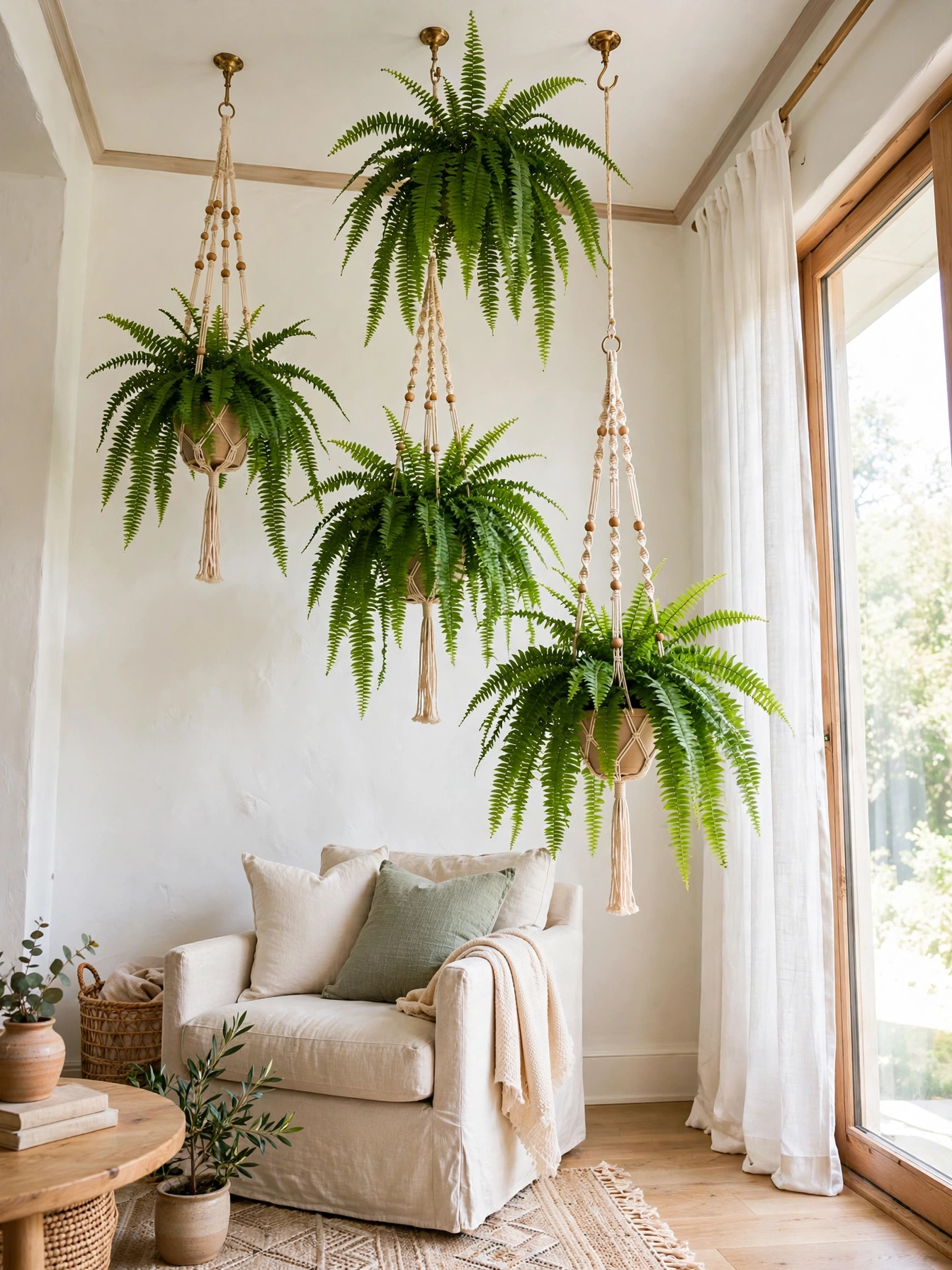
- Hanging plants claim zero floor space, the ultimate win for rooms under 200 square feet
- Staggered heights at 5, 6, and 7 feet create a canopy effect that makes ceilings feel taller
- Boston ferns thrive in the bright indirect light beside windows, needing no grow lights
- Macrame hangers cost $12 each and install with a single ceiling hook
Screw hooks into ceiling joists, never drywall alone, since a watered 10-inch fern weighs 15 pounds. Budget Boston ferns start near $15; large 12-inch specimens run $30 to $50; premium designer hangers reach $80. Compared with floor plants, hanging ferns stay safe from pets and toddlers automatically. Horticultural guidance for indoor ferns calls for 50 percent humidity, so mist every other day or group plants together. Avoid hanging directly over electronics or upholstery, because watering drips stain within minutes. Use a long-spout watering can and a plastic drip disk inside each hanger.
Apartment dwellers love that one hook leaves only a dime-sized hole to patch at move-out. On the flip side, watering logistics get old: lifting a 15-pound plant down weekly, so install a $10 pulley hook. Against wall-mounted planters, hanging versions move with the seasons to chase light. Trim brown fronds at the base monthly to keep the cascade full. Rotate each plant a quarter turn weekly for even growth.
Pro Tip: Slip a $3 plastic plant saucer inside the macrame above the pot rim; it catches every drip and stays invisible.
Wool Throw Layers
Why This Works:
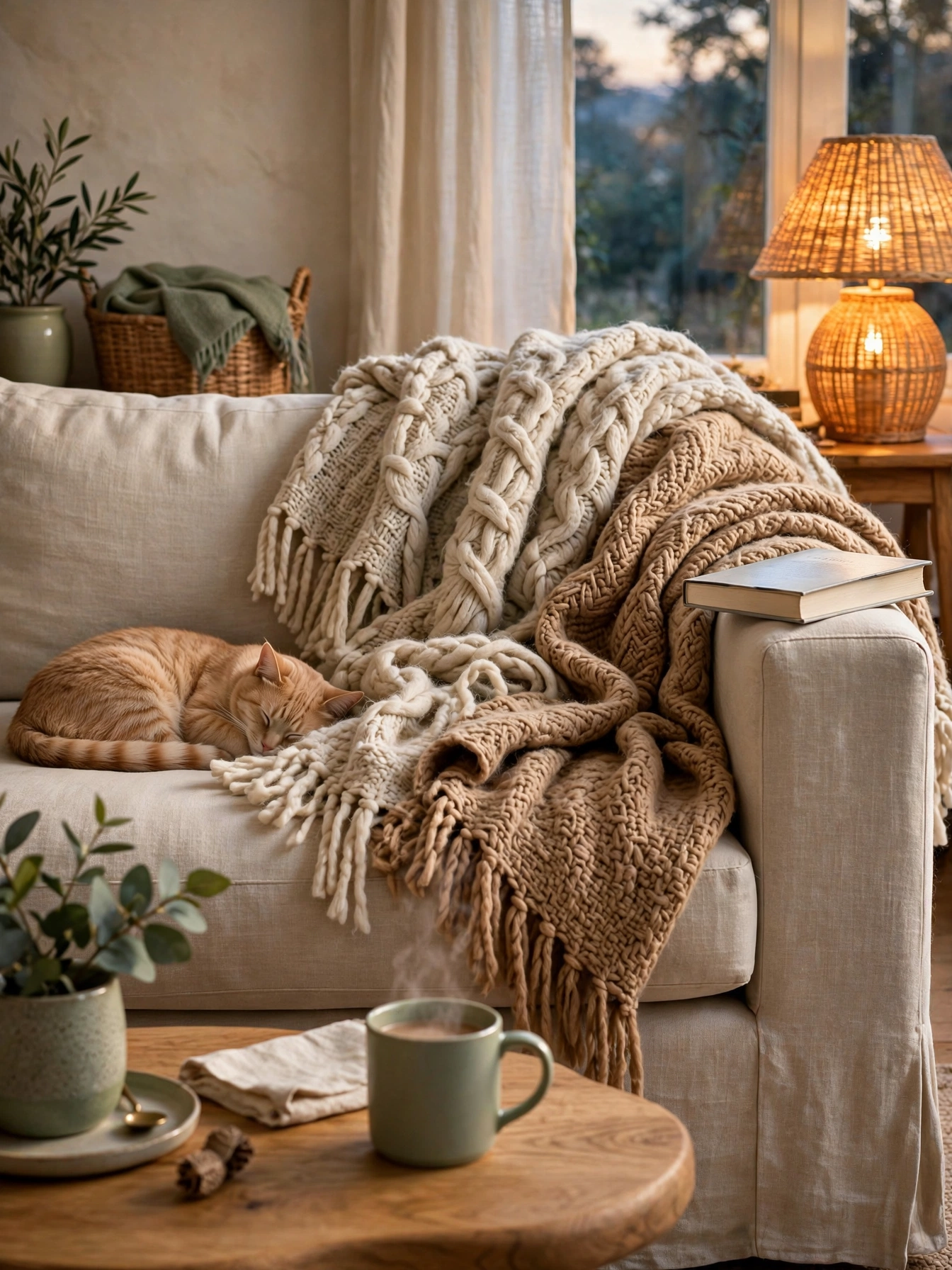
- Wool regulates temperature, warming laps in winter without overheating in spring
- Layered throws add the cozy texture that makes guests sink in and stay longer
- Natural lanolin in wool resists odors, so throws stay fresh between washes
- Draped throws hide the worn arm of a sofa you are not ready to replace
Choose 50×60 inch throws so they cover laps fully without dragging on the floor. Budget wool-blend throws start near $40; pure merino mid-range runs $90 to $160; premium hand-loomed lambswool reaches $300. Compared with acrylic, real wool costs triple but lasts 10 years instead of 2 and never pills into fuzz. Textile industry guidance rates wool at 30,000 double rubs, among the highest of natural fibers. Avoid hot water washing, because heat plus agitation felts wool into a stiff mat permanently. Wash cold with wool detergent and dry flat.
Households with shedding pets do well with patterned throws, since oatmeal solids show every hair. The compromise is moth risk: store off-season throws in sealed bags with cedar blocks. Against cotton throws, wool insulates better but feels scratchier to sensitive skin, so check the micron count under 21 for softness. Fold, never ball, to avoid permanent creases. Air throws outside quarterly; sunlight and breeze deodorize better than washing.
Pro Tip: Drape throws in a loose S-curve rather than folded rectangles; the casual fold looks styled instead of stored.
Bamboo Roman Shades
Why This Works:
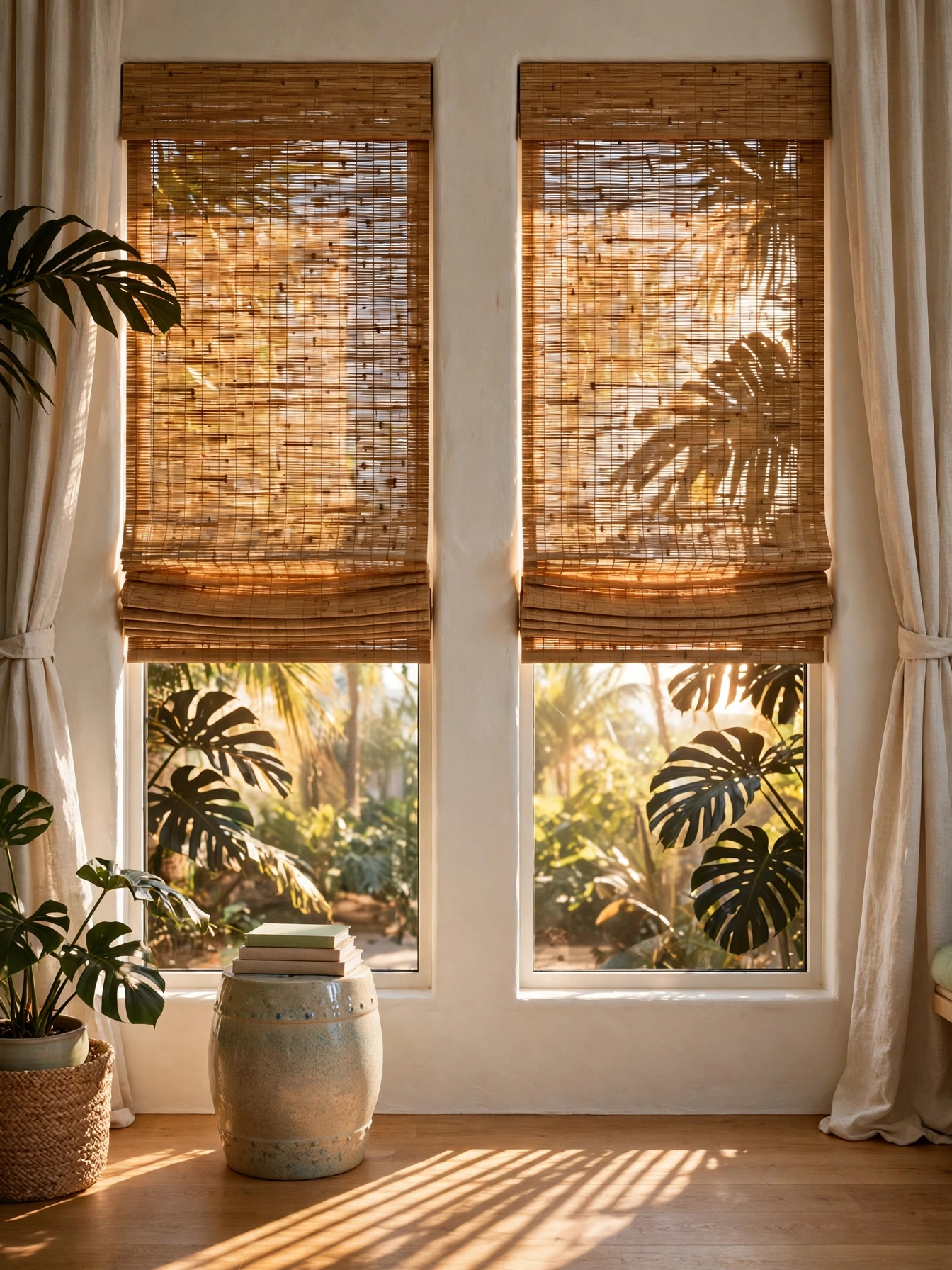
- Woven bamboo filters light into striped patterns that flat blinds cannot produce
- Roman shades mount inside the frame, keeping window trim visible and rooms feeling larger
- Bamboo is a grass that regrows in 3 to 5 years, among the most renewable shade materials
- Half-lowered shades give privacy while keeping the top half of the view open
Order inside-mount shades 1/2 inch narrower than the frame for smooth operation. Budget bamboo roll-ups start near $30 per window; corded roman mid-range runs $80 to $150; premium top-down-bottom-up lined versions reach $250. Compared with cellular shades, bamboo insulates less but brings far more texture. Window-covering industry guidance recommends cordless lifts in homes with children under 8, since cords pose a strangulation risk. Avoid unlined bamboo on street-facing windows at night, because interior lights turn the weave see-through. Choose a 6 to 8 millimeter weave: tighter weaves block more light but show less texture.
West-facing rooms benefit most, since bamboo tames harsh afternoon sun into warm stripes. One caveat is dust in the weave; vacuum with a brush attachment twice yearly. Against curtains alone, shades add the tailored layer that makes windows look finished. Pair with linen side panels for the full designer look. Wipe splatters immediately, because bamboo stains if liquids sit.
Pro Tip: Pick the light-filtering liner, not blackout; bamboo’s charm is the glow, and blackout lining kills it completely.
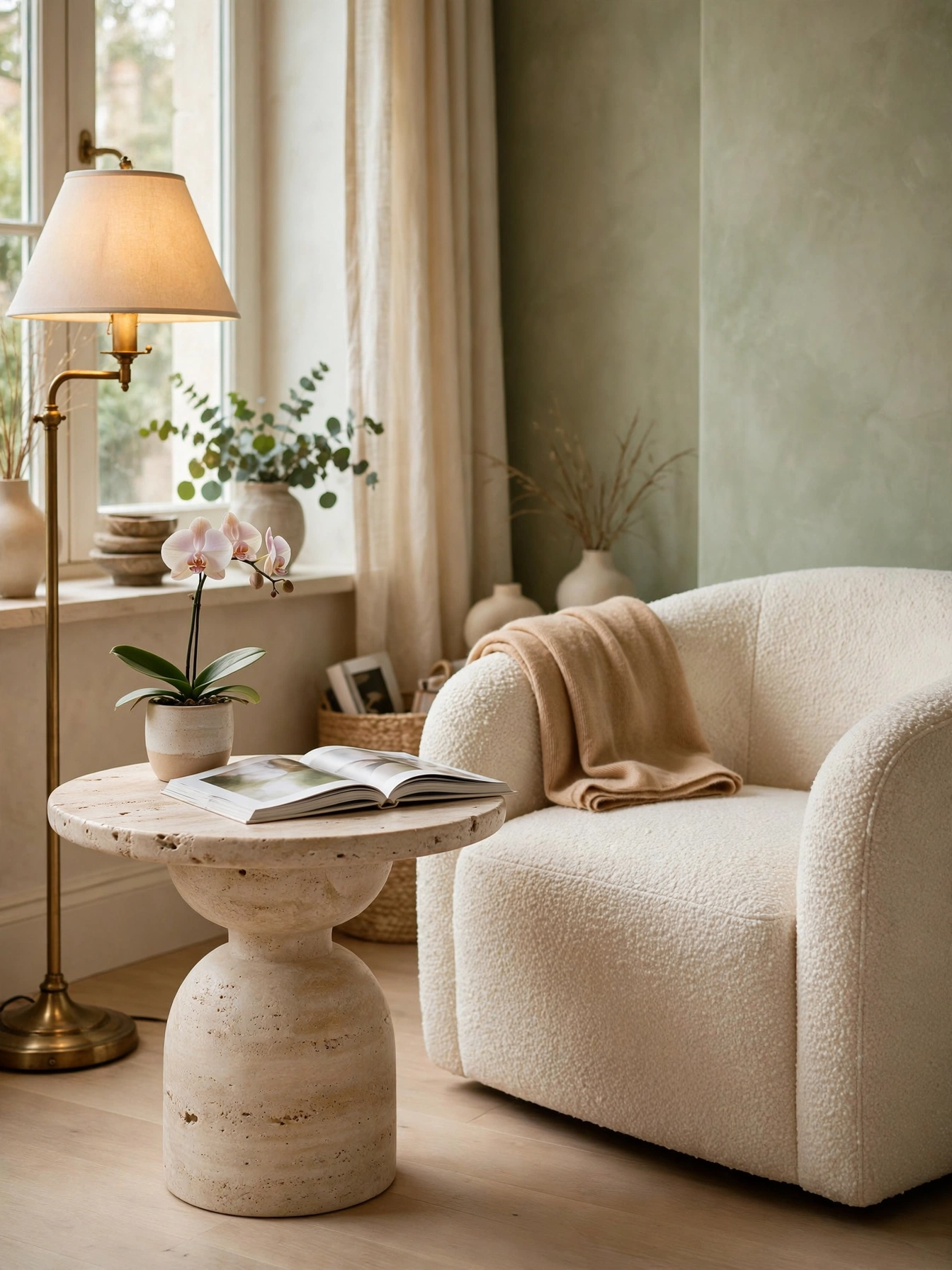
Travertine Side Table
Why This Works:
- Honed travertine brings the cool touch of real stone that wood and metal cannot imitate
- A 16-inch round top holds a lamp and book without crowding a small reading corner
- Natural pitting and veining make each table one of a kind, no two alike
- Stone’s visual weight anchors floaty boucle and linen upholstery beautifully
Choose tables 22 to 24 inches tall to sit level with chair arms. Budget travertine-look resin starts near $120; genuine honed travertine mid-range runs $300 to $550; premium solid-block carved pieces reach $1,200. Compared with marble, travertine costs half as much and its matte finish hides etch marks better. Stone industry guidance recommends sealing travertine yearly with penetrating sealer to resist coffee rings. Avoid placing hot mugs directly on unsealed stone, because thermal shock can craze the surface over time. The natural pits collect dust, so wipe weekly with a damp microfiber cloth.
Small reading corners suit stone side tables best, where their sculptural shape earns its footprint. The catch is weight: a solid travertine table can reach 40 pounds, so it stays where you put it. Against wooden side tables, stone reads more luxurious but chips if knocked hard. Use coasters religiously for the first year until the sealer fully cures. Pair with one warm material nearby, like boucle or wool, so the stone never feels cold visually.
Pro Tip: Fill the largest pits with clear stone epoxy before first use; it stops crumb buildup and keeps the top wipeable.
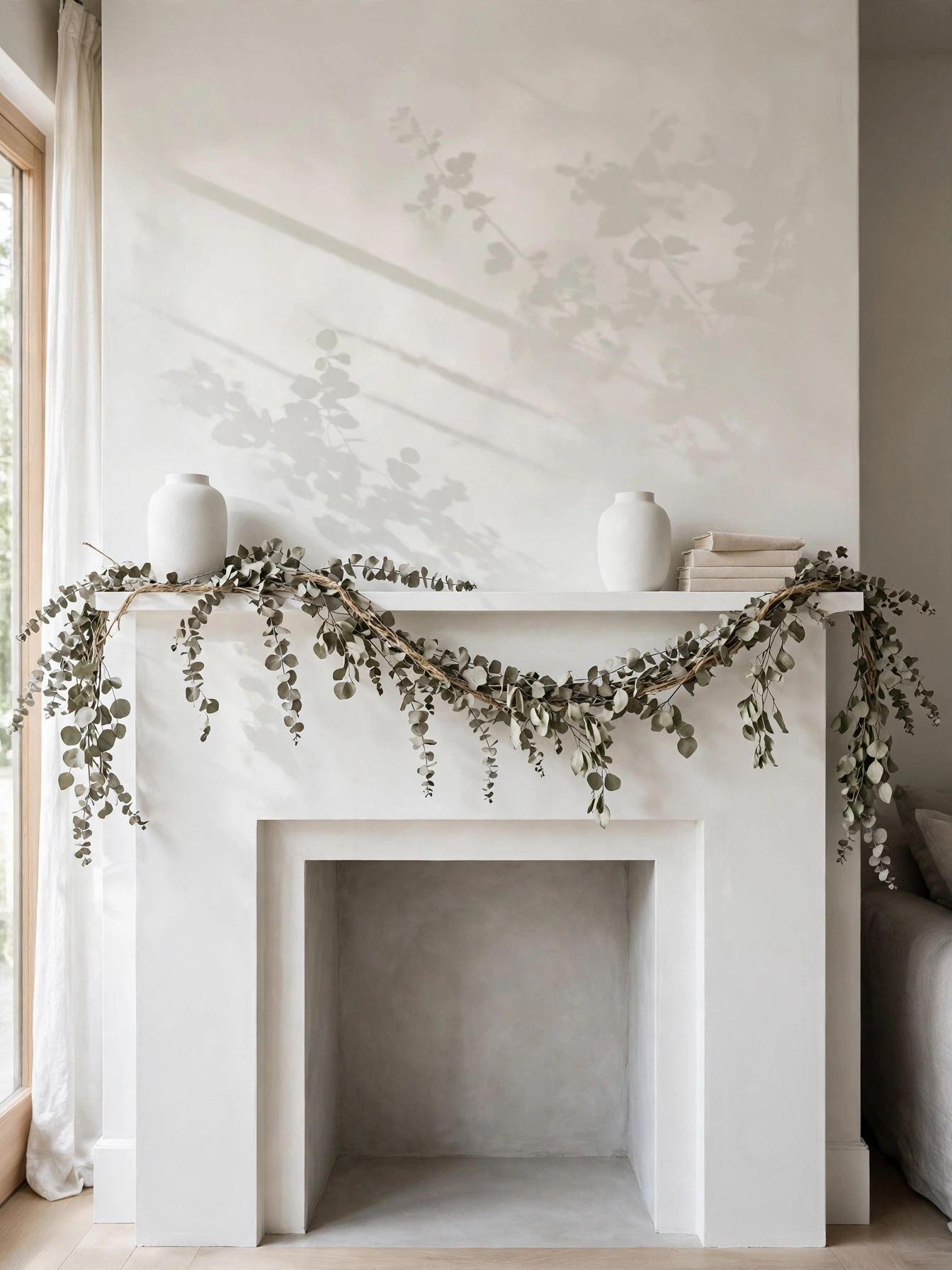
Eucalyptus Garland Strand
Why This Works:
- Dried eucalyptus keeps its silvery color for 12 months, outlasting every fresh garland
- The natural menthol scent gently freshens the room without plug-in fragrances
- An 8-foot garland costs $35 dried versus $90 fresh, and needs zero misting
- Silver-dollar leaves bridge modern and traditional mantels effortlessly
Wire three 3-foot bunches to a jute cord base, overlapping stems by 6 inches for fullness. Budget dried bunches start near $10 each; florist-grade silver dollar runs $18 to $30; premium preserved eucalyptus reaches $45 per bunch. Compared with faux garlands, dried eucalyptus looks real in close-up photos because it is real. Floral industry guidance suggests hanging dried garlands away from direct sun to prevent bleaching within 4 months. Avoid steamy rooms, because humidity rehydrates stems and invites mold. Fluff the garland monthly by gently shaking it outdoors.
Mantels, console tables, and stair rails all suit garlands, since the flexible base follows any line. What you sacrifice is durability: dried leaves shatter if handled roughly, so style it once and leave it. Against fresh garlands, dried lasts 10 times longer but never has that just-cut vibrancy. Keep away from open flames, because dried foliage ignites quickly. Store flat in a garment bag if you rotate it seasonally.
Pro Tip: Tuck two fresh eucalyptus sprigs into the dried garland before guests arrive; the scent reads fresh while the base stays everlasting.
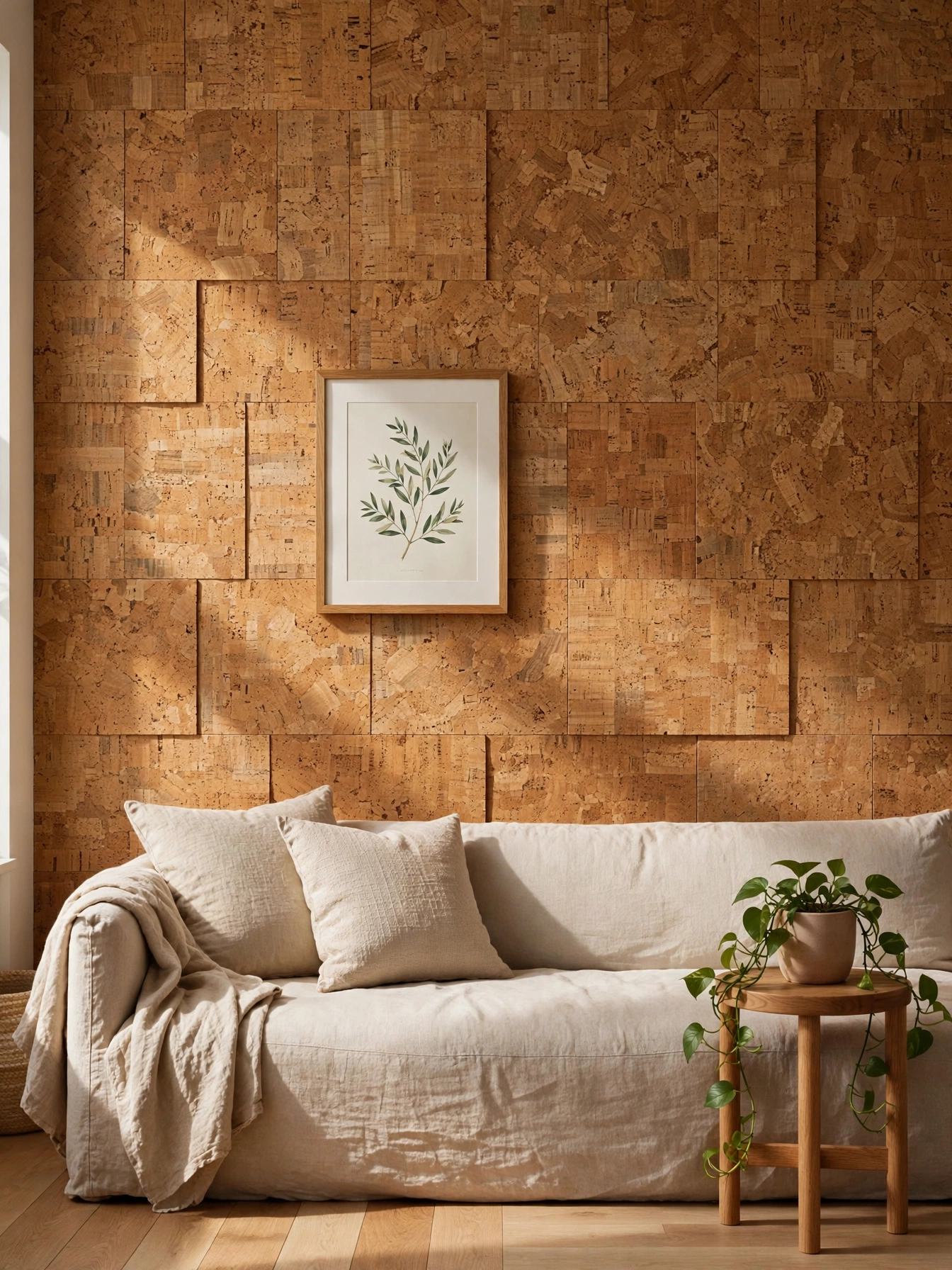
Cork Accent Panel
Why This Works:
- Cork tiles absorb sound, cutting living room echo by a noticeable margin in hard-floored rooms
- The honeyed tones warm up north-facing rooms that get cool gray daylight
- Peel-and-stick tiles install in an afternoon with no grout, no mess, no contractor
- Cork is harvested from bark without harming trees, regrowing every 9 years
Plan 12×12 inch tiles in a staggered brick pattern, ordering 10 percent extra for cuts. Budget peel-and-stick cork starts near $3 per square foot; mid-range 1/2-inch acoustic tiles run $6 to $9; premium dark smoked cork reaches $14. Compared with wood paneling, cork installs in one-third the time and insulates better. Acoustic guidance rates 1/2-inch cork at roughly 0.15 NRC, modest but real in echoey rooms. Avoid installing behind radiators, because sustained heat dries cork and loosens adhesive within two years. Seal with two coats of water-based polyurethane in kitchens or splash zones, though living rooms rarely need it.
Renters should test one tile’s removal first, since strong adhesives can pull paint. The wrinkle is denting: sharp furniture corners leave marks, so keep pieces 2 inches off the wall. Against painted accent walls, cork costs more but adds texture and sound softening paint cannot. Pin notes and photos directly into the cork with brass tacks for a living mood board. Wipe with a barely damp cloth, since soaking swells the tiles.
Pro Tip: Mix tiles from three different boxes as you install; factory shade variation disappears when the tones are shuffled.
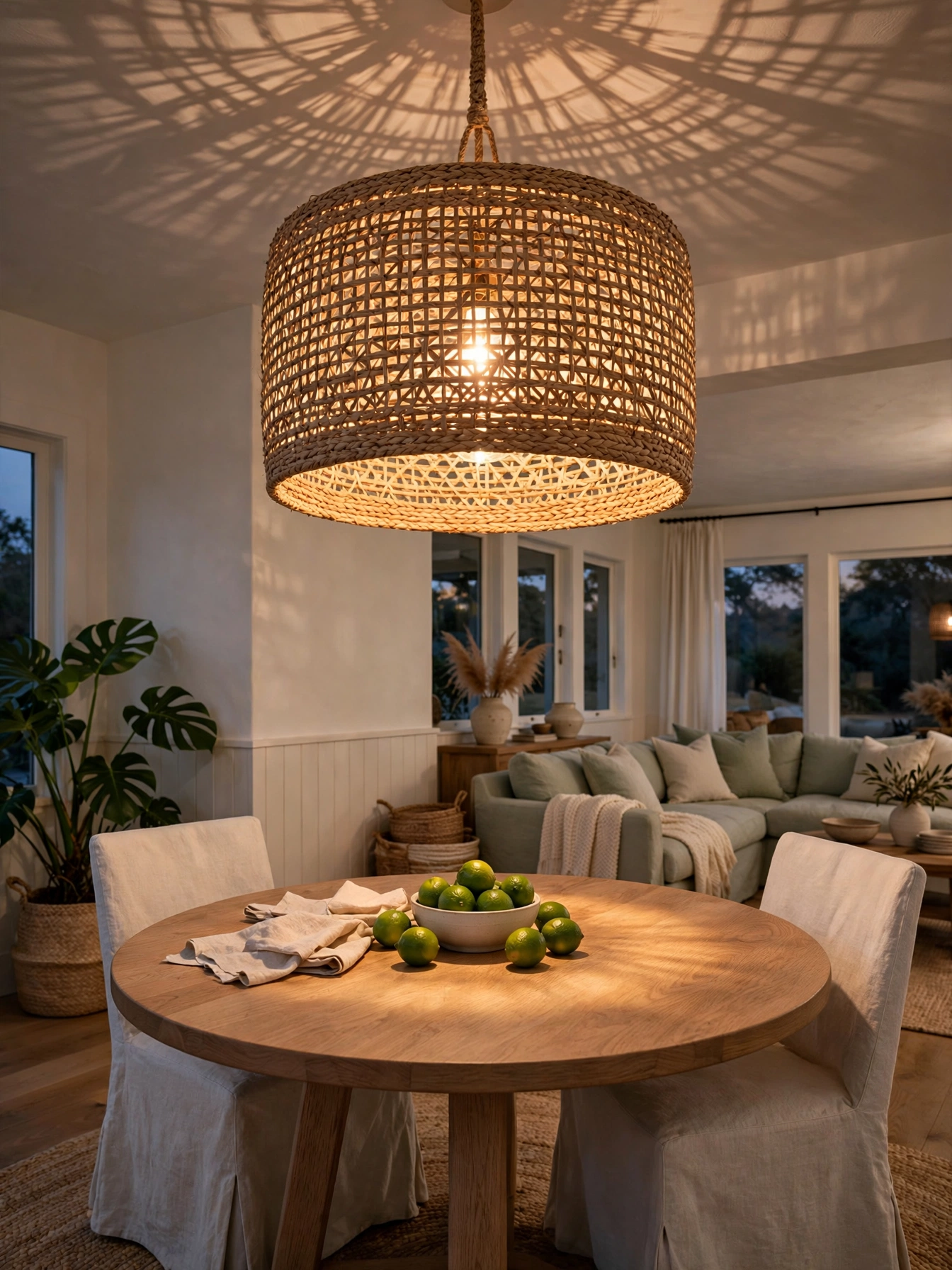
Natural Living Room Ideas Refresh
Why This Works:
- An oversized woven pendant becomes the room’s jewelry, no other ceiling decor needed
- The open weave throws patterned shadows that make plain ceilings interesting after dark
- Seagrass diffuses glare, so a bright bulb feels like candlelight instead of an interrogation
- One 24-inch pendant fills the visual void over tables that standard 16-inch shades leave
Hang the shade 30 to 34 inches above the table surface for glare-free dining light. Budget seagrass pendants start near $80; handwoven mid-range runs $180 to $320; premium large-scale artisan pieces reach $600. Compared with drum fabric shades, woven pendants cost about the same but add the nature texture fabric lacks. Lighting industry guidance calls for one statement pendant per 100 square feet of open living space. New circuits or moved junction boxes belong to a licensed electrician, since ceiling wiring is not a DIY first project. Avoid bulbs over 60-watt equivalent in enclosed weaves, because trapped heat shortens LED life.
Open-plan living rooms benefit most, since the pendant defines the table zone without walls. The honest drawback is dust on the weave; vacuum with a brush attachment every 3 months. Against recessed cans, a pendant adds the sculptural layer cans cannot. Use a dimmable 2700K bulb so evenings glow warm. Check the shade’s weight against your electrical box rating, since 24-inch weaves can reach 12 pounds.
Pro Tip: Put the pendant on a $15 plug-in dimmer if there is no wall dimmer; full brightness for tasks, low glow for evenings.
River Rock Terrarium
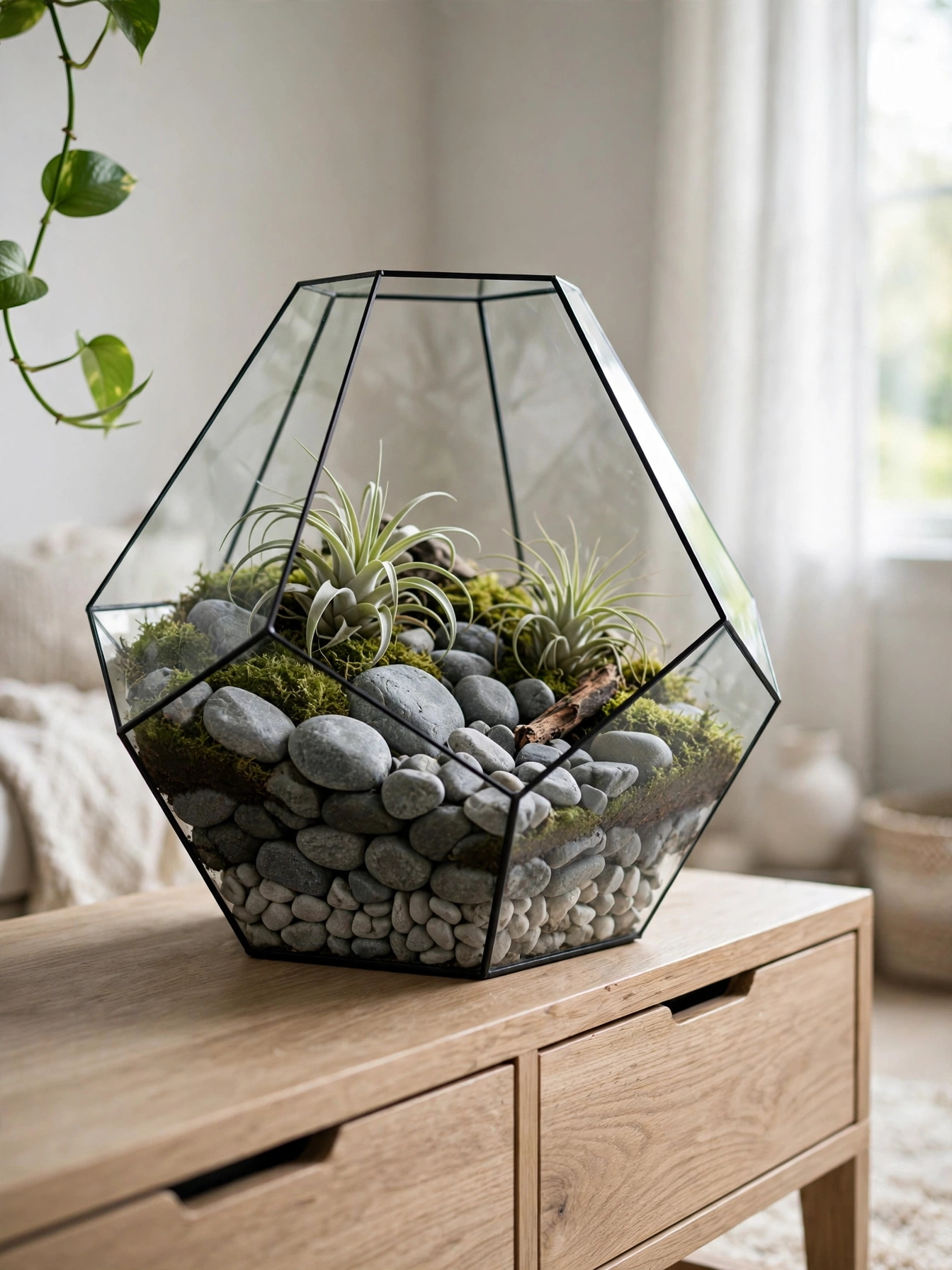
Why This Works:
- A terrarium delivers a whole landscape in 12 inches, perfect for console tables and shelves
- River rocks need zero care ever, unlike soil that compacts and needs replacing
- Air plants drink from weekly misting, so there is no pot, no soil, no mess
- The glass geometry catches light, doubling as a subtle prism on sunny mornings
Layer 2 inches of rocks, 1 inch of preserved moss, then nest air plants on top. Budget glass terrariums start near $25; mid-range geometric brass-frame versions run $50 to $90; premium hand-blown pieces reach $180. Compared with potted succulents, open terrariums with air plants need misting twice weekly instead of precise soil watering. Horticultural guidance for tillandsia calls for soaking 20 minutes weekly plus good air circulation to prevent rot. Avoid closed-lid terrariums for air plants, because trapped humidity rots their bases within 3 weeks. Place 3 to 6 feet from a bright window, never in direct midday sun that cooks the glass.
Frequent travelers love terrariums, since a month of neglect barely registers. Counterpoint: the glass needs frequent cleaning, since fingerprints show instantly, so keep microfiber nearby. Against a simple vase, a terrarium offers a tiny world to rearrange when boredom strikes. Mist in the morning so plants dry by night. Swap the moss yearly when it fades to keep the composition fresh.
Pro Tip: After the weekly soak, turn air plants upside down for 4 hours; trapped base water is the number one killer.
Cotton Dhurrie Runner
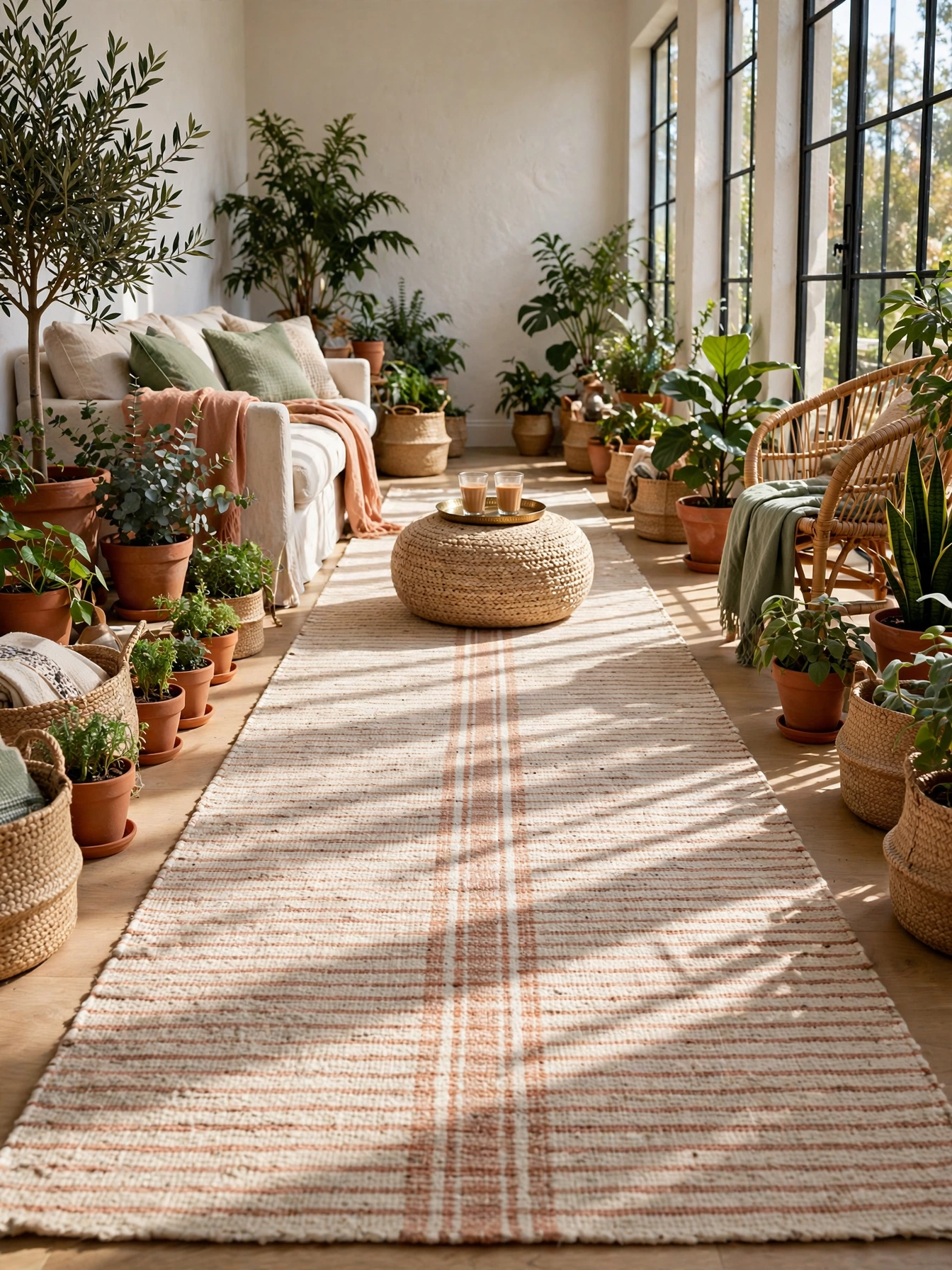
Why This Works:
- A runner visually connects two seating zones, making long rooms feel intentional
- Flatweave cotton is fully machine washable, the most practical rug fiber for busy homes
- The 1/4-inch profile slides under doors and low furniture without catching
- Handwoven stripes add pattern without the formality of Persian motifs
Choose a runner 8 to 12 inches narrower than your walkway so flooring frames it. Budget cotton dhurries start near $50 for 2.5×8; hand-loomed mid-range runs $120 to $220; premium vegetable-dyed pieces reach $400. Compared with wool runners, cotton costs one-third as much and washes at home instead of needing professional cleaning. Rug industry guidance recommends a non-slip pad under flatweaves on hard floors to prevent the 1-inch daily creep. Avoid placing dhurries in constantly damp spots, because cotton mildews faster than synthetics. Shake outdoors monthly instead of vacuuming aggressively, which loosens the weave.
Long narrow living rooms and hallway-adjacent spaces suit runners best. The price you pay is thinness: dhurries offer zero cushioning, so layer over a felt pad for comfort. Against jute runners, cotton feels softer underfoot and cleans easier. Rotate end-to-end every 6 months to even wear. Spot-clean spills immediately with cold water, since heat sets cotton stains permanently.
Pro Tip: Machine wash on cold with 1 cup of salt the first time; it locks in the vegetable dyes and stops stripe bleeding.
FAQs
What are the easiest natural living room ideas for a beginner?
Start with a woven basket trio, one large floor plant, and sheer linen curtains. The Spruce’s beginner decorating guides consistently recommend grouping plants in odd numbers and keeping first projects under $200 total. Water the plant weekly, mist it twice, and rotate the pot monthly for even growth.
How do I keep indoor plants alive in a low-light living room?
Choose snake plants, ZZ plants, or pothos, which survive at 50 foot-candles where ferns fail. Keep them within 6 feet of the brightest window, dust leaves monthly so they photosynthesize fully, and water only when the top 2 inches of soil feel dry.
Which natural materials in natural living room ideas hold up best with kids and pets?
Sealed reclaimed wood, indoor-outdoor jute blends, and linen slipcovers rated above 20,000 double rubs survive family life best. The Spruce notes that performance-grade natural fibers resist staining far better than their delicate reputation suggests. Avoid unsealed travertine and light wool around toddlers, since both stain within days.
How much should I budget for a nature-inspired living room refresh?
Plan $300 to $500 for a meaningful refresh: one 5×7 jute rug, three plants, baskets, and throws. Houzz’s project cost guides show most living room refreshes landing in this range before furniture. Spend 60 percent on the rug and plants, since they deliver the biggest visual change.
Do natural materials work in small living rooms?
Absolutely, since light-toned linen, jute, and pale oak reflect daylight instead of absorbing it. Hang plants instead of flooring them, choose a 24-inch round jute rug over a full-size one, and keep wood tones pale. Small rooms suit the natural look, because fewer, honest materials read calmer than busy patterns.
Conclusion
The thread through all 22 of these natural living room ideas is restraint: fewer materials, honest textures, and plants doing the decorative heavy lifting. Your three takeaways are simple. First, start with light and plants, since greenery transforms faster than any furniture swap. Second, pick one hero texture like reclaimed wood or stone and let everything else stay quiet. Third, buy washable and forgiving, because a natural room should invite bare feet and spilled tea, not tiptoeing. Your first action is the easiest one: bring home a single 6-foot olive tree or a trio of baskets this weekend and watch the room exhale. Follow HomelyCrafter on Pinterest for more ideas. Save this to your Pinterest boards so you can refer back to it!

Muhammad Israr is a home decor enthusiast and the writer behind Homely Crafter. He spends his days researching paint colors, layouts and budget-friendly styling ideas, then breaks them down into practical, easy-to-follow guides so you can decorate with confidence.