
Does your living room feel smaller every year even though the walls have not moved an inch? The culprit is rarely square footage. Designers who specialize in small spaces will tell you that perceived size comes from sightlines, light flow, and furniture that shows more floor, not from knocking down walls. These 23 tricks teach you how to make your living room look bigger using exactly those levers: mirrors that double windows, paint that lifts ceilings, and layouts that keep every sightline open. Each idea includes real measurements, honest budgets, and the trade-offs worth knowing. Grab a tape measure, pick your three biggest wins, and start this weekend.
Leggy Furniture Swap
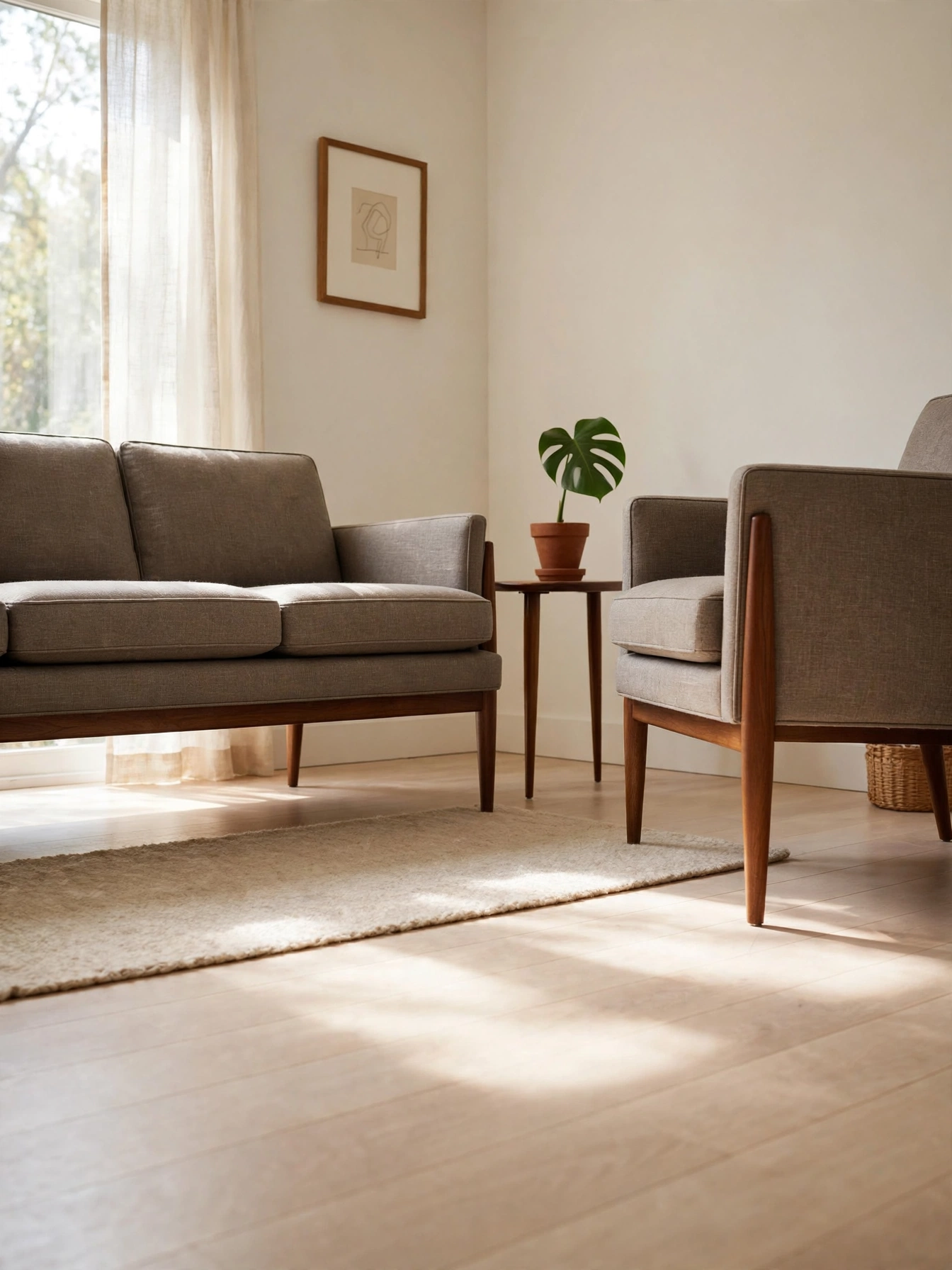
Why This Works:
- Visible floor under furniture tricks the eye into reading continuous square footage
- Legs 6 to 8 inches tall reveal enough floor to matter without looking spindly
- Light flows beneath pieces instead of pooling against boxy bases
- One sofa swap changes the room’s airiness more than any accessory
Target seating with at least 6 inches of clearance underneath, measured from floor to frame. Budget leggy sofas start near $600; mid-range with solid wood legs runs $1,200 to $2,000; high-end designer versions reach $4,000. Next to a skirted sofa that hides the floor, a leggy version can make the same 150-square-foot room feel 15 percent larger. Furniture guidance suggests the visible floor band should run unbroken along at least two walls. Avoid ultra-thin metal legs on heavy sectionals, because the visual mismatch reads unstable. Keep the under-sofa zone dust-free, since visible floor invites visible dust bunnies.
Small living rooms under 200 square feet gain the most from this single change. You give up hidden under-sofa storage, so replace it with one lidded ottoman. Versus buying all-new furniture, swapping just the sofa and one chair delivers 80 percent of the effect. Vacuum under pieces weekly with a flat attachment. Choose leg finishes that match your flooring tone for a seamless flow.
Pro Tip: Photograph the room before and after the swap from the doorway; the floor-gain difference shocks most people.
Glass Coffee Table
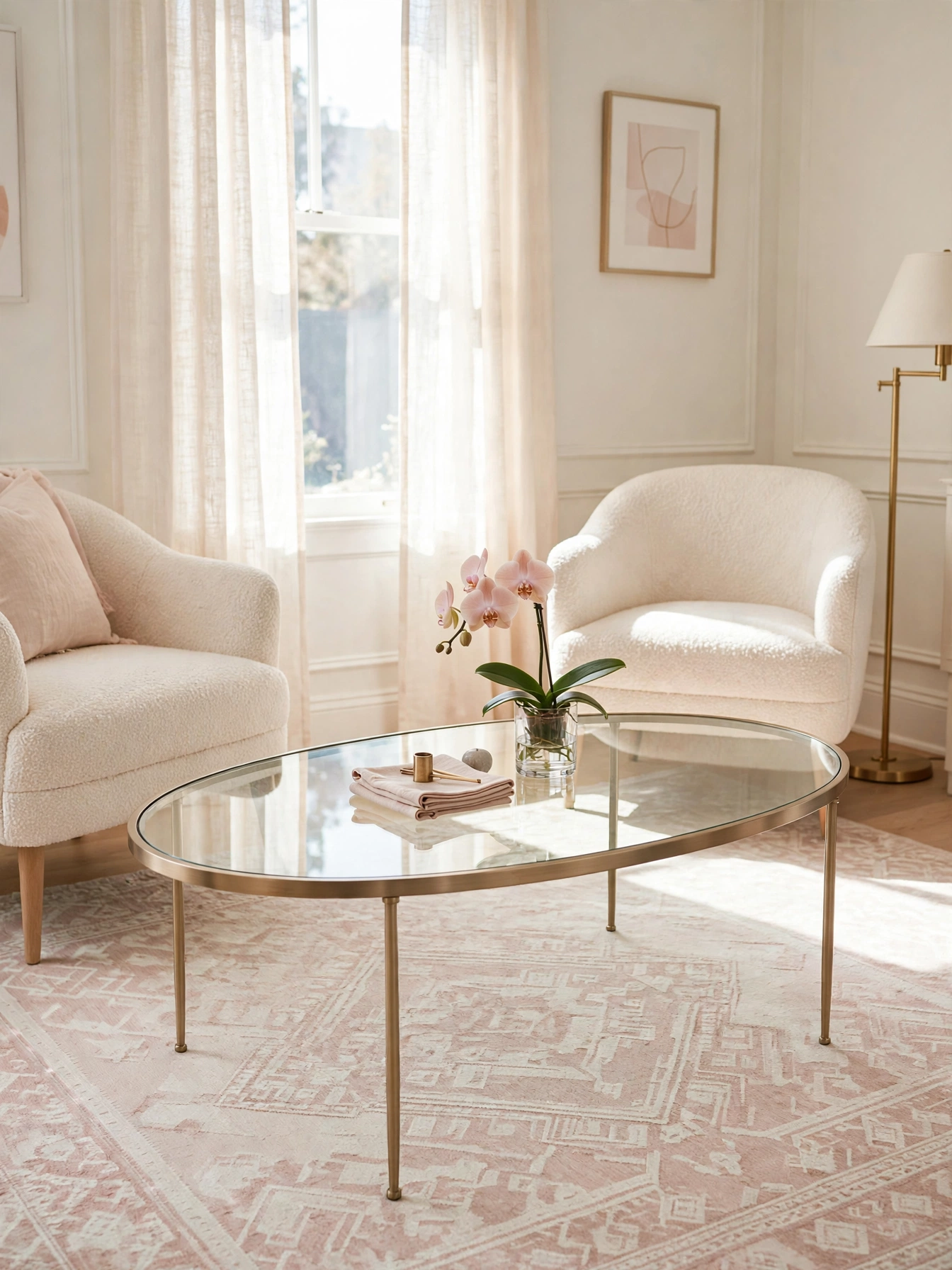
Why This Works:
- Glass visually disappears, so the rug pattern runs unbroken beneath it
- A 42-inch oval top seats four without the visual bulk of wood
- Light passes through instead of casting the heavy shadows solid tables make
- Transparent surfaces suit rooms where every sightline counts
Choose 3/8-inch tempered glass for the right balance of clarity and safety. Budget glass tables start near $150; brass-framed mid-range runs $300 to $550; designer showroom pieces reach $1,200. Versus a solid wood table of the same size, glass reveals roughly 6 extra square feet of visible rug. Safety guidance requires tempered glass, which crumbles into dull granules instead of shards. Avoid glass tops in homes with toddlers learning to walk, because hard transparent edges invite bumps. Keep the rug pattern bold underneath, since the table turns it into the room’s artwork.
Petite seating areas under 120 square feet suit glass best. The drawback is fingerprints: glass shows every touch, so keep microfiber cloths handy. Against acrylic tables, glass resists scratching far better but weighs three times more. Use coasters always, since heat rings etch cheap glass permanently. Round or oval shapes beat rectangles for traffic flow in tight rooms.
Pro Tip: Clean glass with a 1:1 water and white vinegar mix; it cuts smudges without the streaks commercial sprays leave.
Vertical Stripe Walls
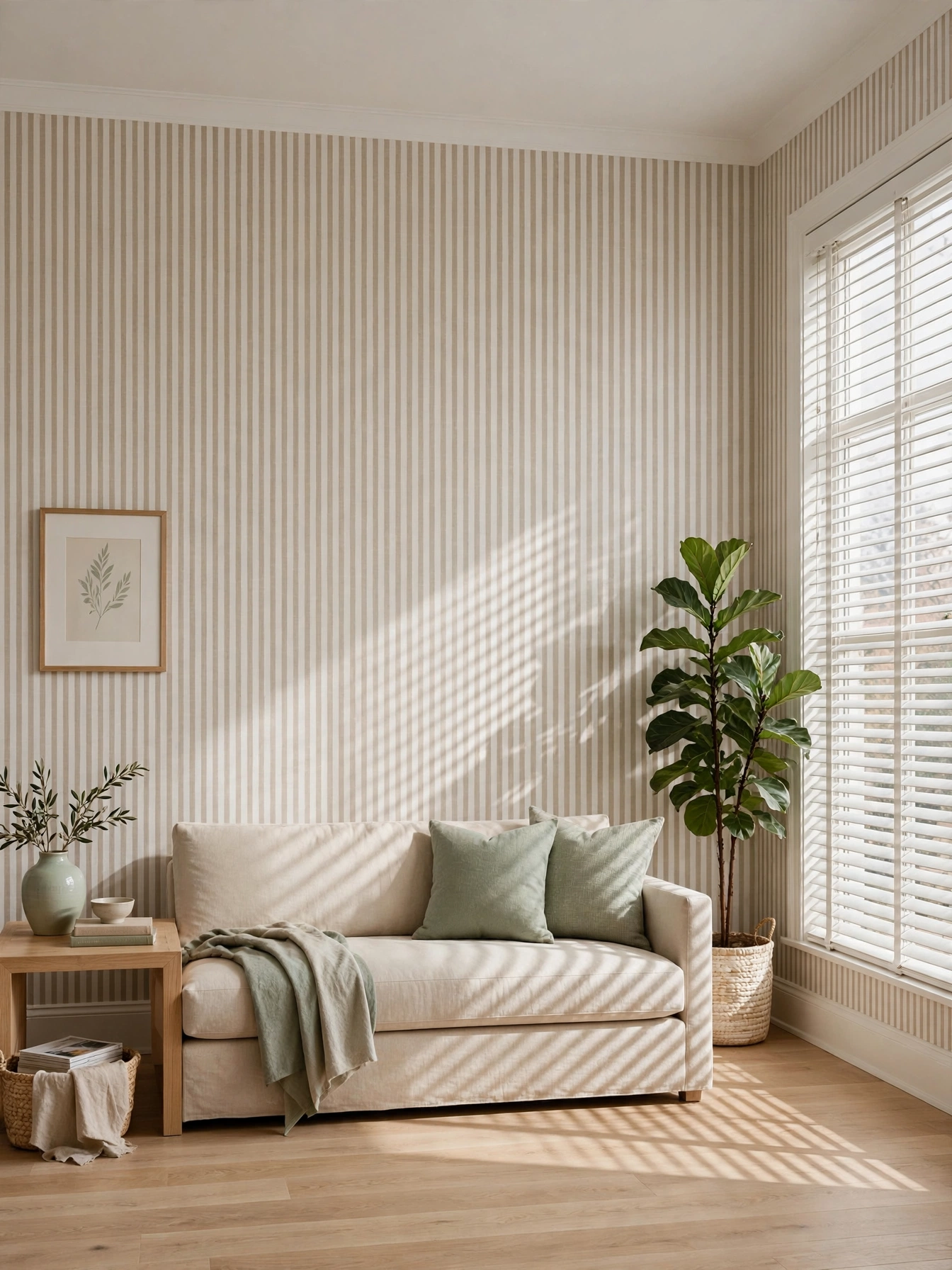
Why This Works:
- Vertical lines pull eyes upward, making 8-foot ceilings read closer to 9
- Tone-on-tone stripes add height without the busyness of bold patterns
- Two-inch stripes suit small rooms; wider stripes overwhelm them
- Wallpaper installs in a weekend and removes cleanly when tastes change
Choose stripes no wider than 3 inches in rooms under 200 square feet. Budget peel-and-stick striped wallpaper starts near $40 per roll; traditional mid-range runs $60 to $100; premium grasscloth stripes reach $200. Versus a flat painted wall, stripes add perceived height for about $150 total. Wallpaper guidance calls for one extra roll beyond the calculated need for pattern matching. Avoid high-contrast stripes in tiny rooms, because bold lines chop the space instead of lifting it. Hang the first strip perfectly plumb, since every other strip follows its lead.
Standard 8-foot-ceiling rooms gain the most vertical lift. Watch the pattern scale: stripes wider than 4 inches suit only large rooms. Against horizontal shiplap, vertical stripes lift while shiplap widens, so choose based on your room’s weakness. Keep furniture low so the stripes run uninterrupted. Pair with solid upholstery so patterns never compete.
Pro Tip: Run stripes inside a single alcove first as a test; the contained experiment shows the effect before you commit to four walls.
Monochrome Color Scheme
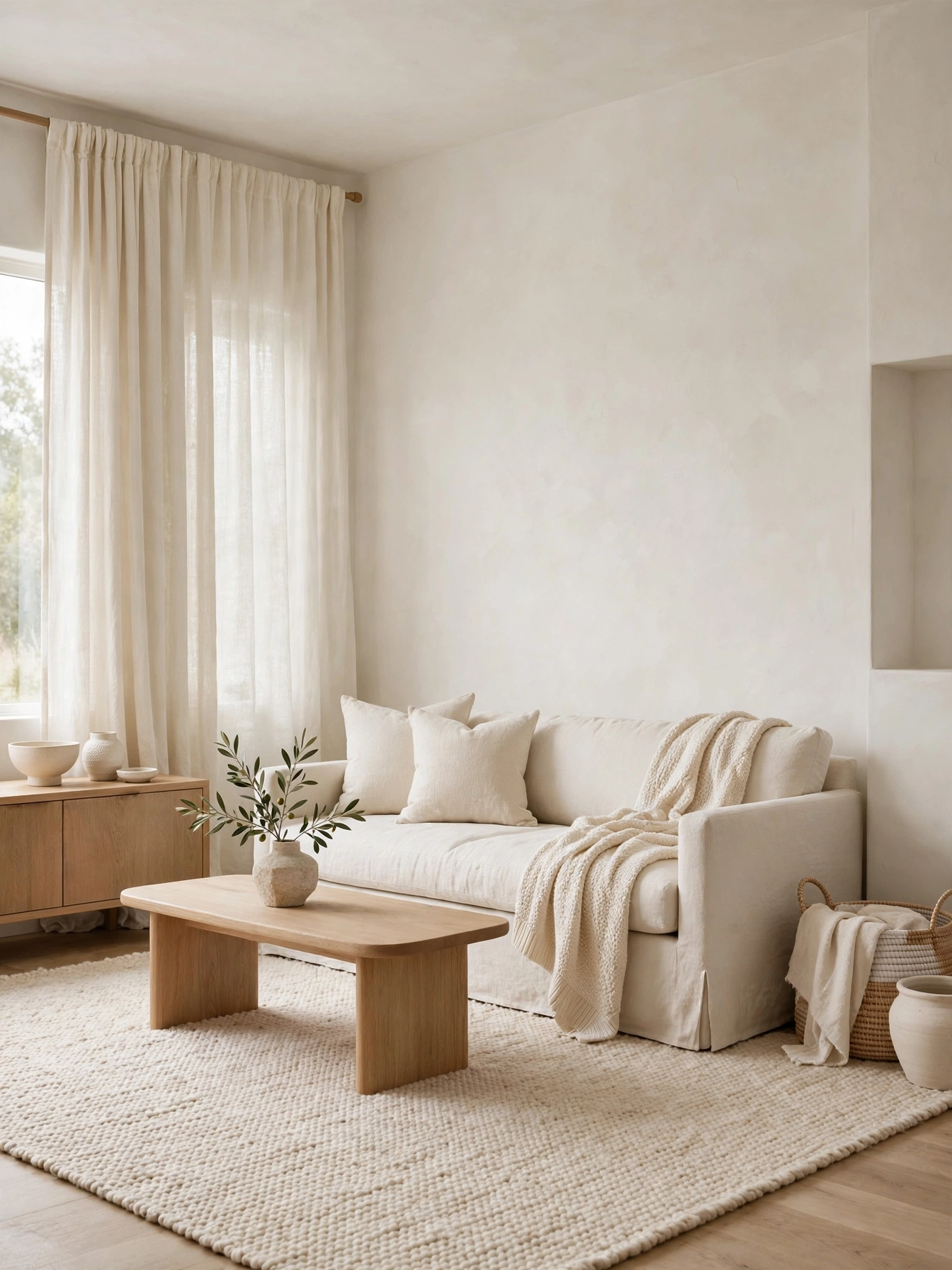
Why This Works:
- One color family erases visual boundaries, so walls, sofa, and rug read as one space
- Without contrast breaks, the eye travels wall to wall without stopping
- Texture variation keeps monochrome interesting: linen, wool, oak, ceramic
- A single-color room photographs larger than any multi-color scheme
Stay within two shades on the paint strip for walls, trim, and ceiling. Budget monochrome refreshes start near $200 in paint and textiles; mid-range with new upholstery runs $800 to $1,500; full designer tonal rooms reach $5,000. Versus a three-color room, monochrome removes the stop-start rhythm that chops small spaces. Color theory guidance suggests warm whites over cool ones in north-facing rooms to avoid a sterile feel. Avoid flat single-finish monochrome, because identical sheens look institutional. Mix matte walls, satin trim, and nubby textiles for depth.
Chopped-up rooms with many doorways suit monochrome best, since it unifies the chaos. That said, all-white rooms show every mark, so choose washable paint. Against bold accent walls, monochrome feels calmer but demands better texture layering. Add one natural element, like wood or a branch, to keep the room from feeling clinical. Keep lighting warm at 2700K for coziness.
Pro Tip: Paint the ceiling the exact wall color in flat finish; the disappearing ceiling line adds a full foot of perceived height.
Low-Profile Sofa

Why This Works:
- A 28-inch back keeps window light flowing over the sofa instead of blocking it
- Low profiles preserve long sightlines across the whole room
- Window walls stay visually open even with seating placed against them
- Modern low sofas suit the scale of apartments far better than deep recliners
Look for back heights under 30 inches and seat depths of 22 to 24 inches. Budget low-profile sofas start near $700; mid-range runs $1,400 to $2,200; top-tier designer models climb to $4,500. Versus a 36-inch-back traditional sofa, the low version reveals roughly 8 extra inches of window and wall. Furniture-scale guidance suggests sofa back height stay below half the window height for unblocked light. Avoid ultra-low 24-inch backs if anyone in the house needs back support, because comfort drops sharply. Test-sit for 15 minutes, since showroom perches lie about long-evening comfort.
Window-wall seating arrangements gain the most. The compromise is lounging: low backs suit upright sitting more than sprawling. Against a high-back sofa, the low profile trades sink-in comfort for airiness. Pair with a tall floor lamp behind one arm to balance the low horizontal line. Keep throw pillows minimal so the low line stays clean.
Pro Tip: Measure your current sofa back before shopping; most people overestimate how low 28 inches actually sits.
Curtain Rod Lift
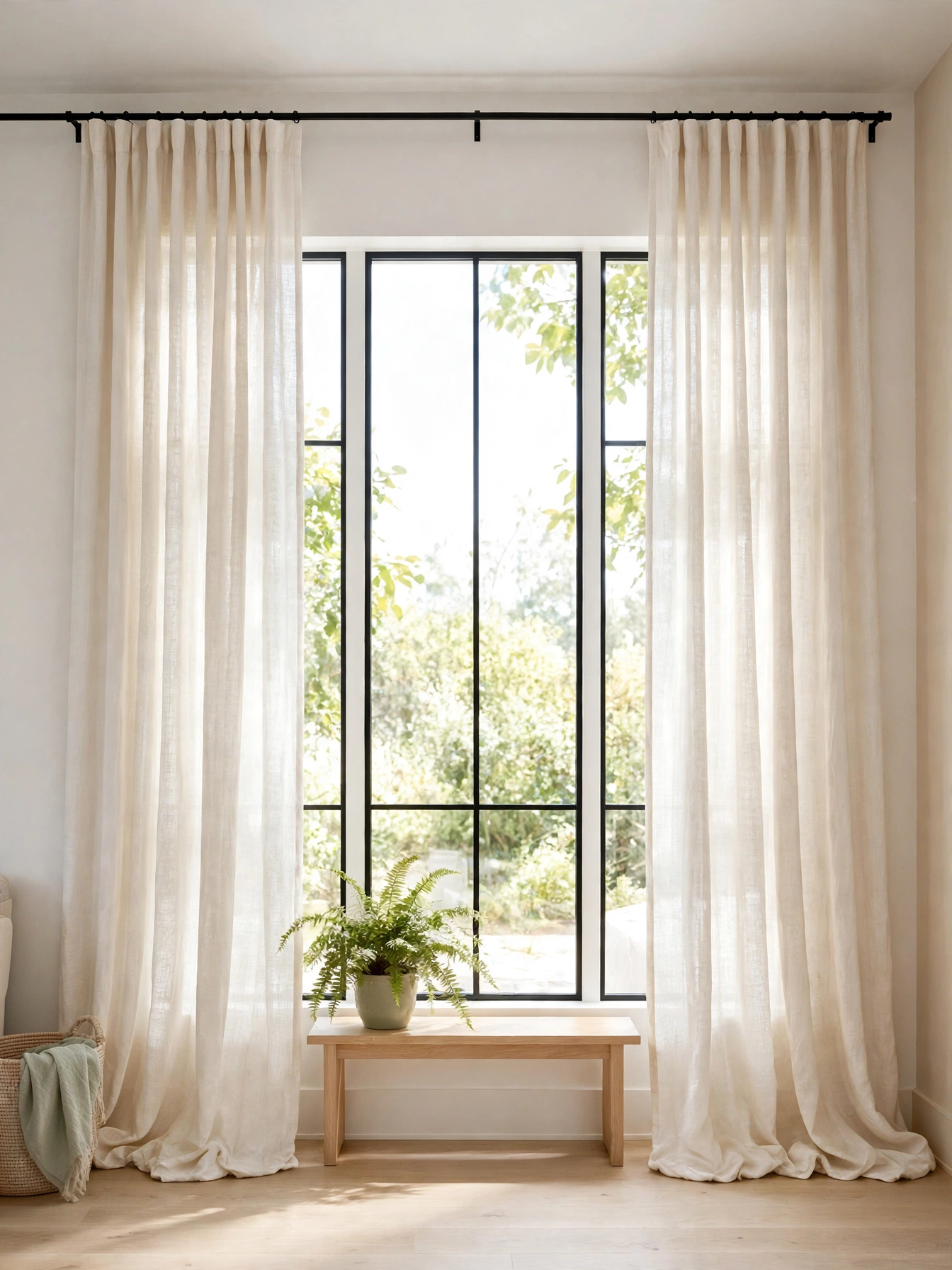
Why This Works:
- Mounting the rod 4 inches below the ceiling makes windows read floor-to-ceiling
- Extending the rod 10 inches past each side exposes full glass, maximizing light
- Long 108-inch panels draw the eye from floor to ceiling in one sweep
- The $60 rod-and-panel upgrade rivals a $2,000 window enlargement visually
Buy panels 1.5 times the window width and 4 inches longer than the floor measurement. Budget curtain panels start near $30 each; mid-range linen runs $60 to $110; premium custom reaches $250 per panel. Versus standard frame-mounted rods, a ceiling-height mount adds 12 to 18 inches of perceived window height. Window-treatment guidance recommends the rod sit 4 to 6 inches below the ceiling, never at the frame top. Avoid puddling more than 2 inches in high-traffic rooms, because fabric collects dust and trips feet. Iron panels before hanging so the full length reads crisp.
Short windows and low ceilings gain the most dramatic lift. Mind the dust: floor-length linen needs seasonal washing. Against blinds alone, full-height curtains add the vertical drama blinds cannot. Use a 1-inch diameter rod so long panels glide without sagging. Keep the panels pulled to the sides by day to frame the light.
Pro Tip: Use a stud finder and mount into studs or heavy anchors; 108-inch linen panels weigh enough to pull cheap anchors out.
Lucite Side Chairs

Why This Works:
- Transparent chairs seat two while occupying nearly zero visual space
- Light passes through the seats instead of stopping at them
- Ghost chairs tuck fully under tables when not in use
- The modern edge contrasts beautifully with warm traditional rooms
Choose one-piece molded polycarbonate rated for 250-plus pounds. Budget acrylic chairs start near $80 each; mid-range reinforced versions run $150 to $250; designer originals reach $500. Versus upholstered accent chairs, ghost chairs free up roughly 4 square feet of visual space each. Furniture guidance warns that cheap acrylic yellows within 2 years, so check UV stabilizers. Avoid placing acrylic in direct all-day sun, because heat softens low-grade plastic over time. Wipe with microfiber only, since paper towels scratch the surface permanently.
Conversation corners and desk-adjacent seats suit ghost chairs best. The honest drawback is comfort: hard acrylic suits 30-minute sits, not movie nights. Against wooden dining chairs, acrylic disappears visually but loses all warmth. Add a sheepskin pad for longer sits without ruining the effect. Keep them away from radiators, which warp the plastic.
Pro Tip: Position ghost chairs where daylight hits them; the refracted glow becomes a light feature, not just a seat.
How to Make Your Living Room Look Bigger With Mirrors
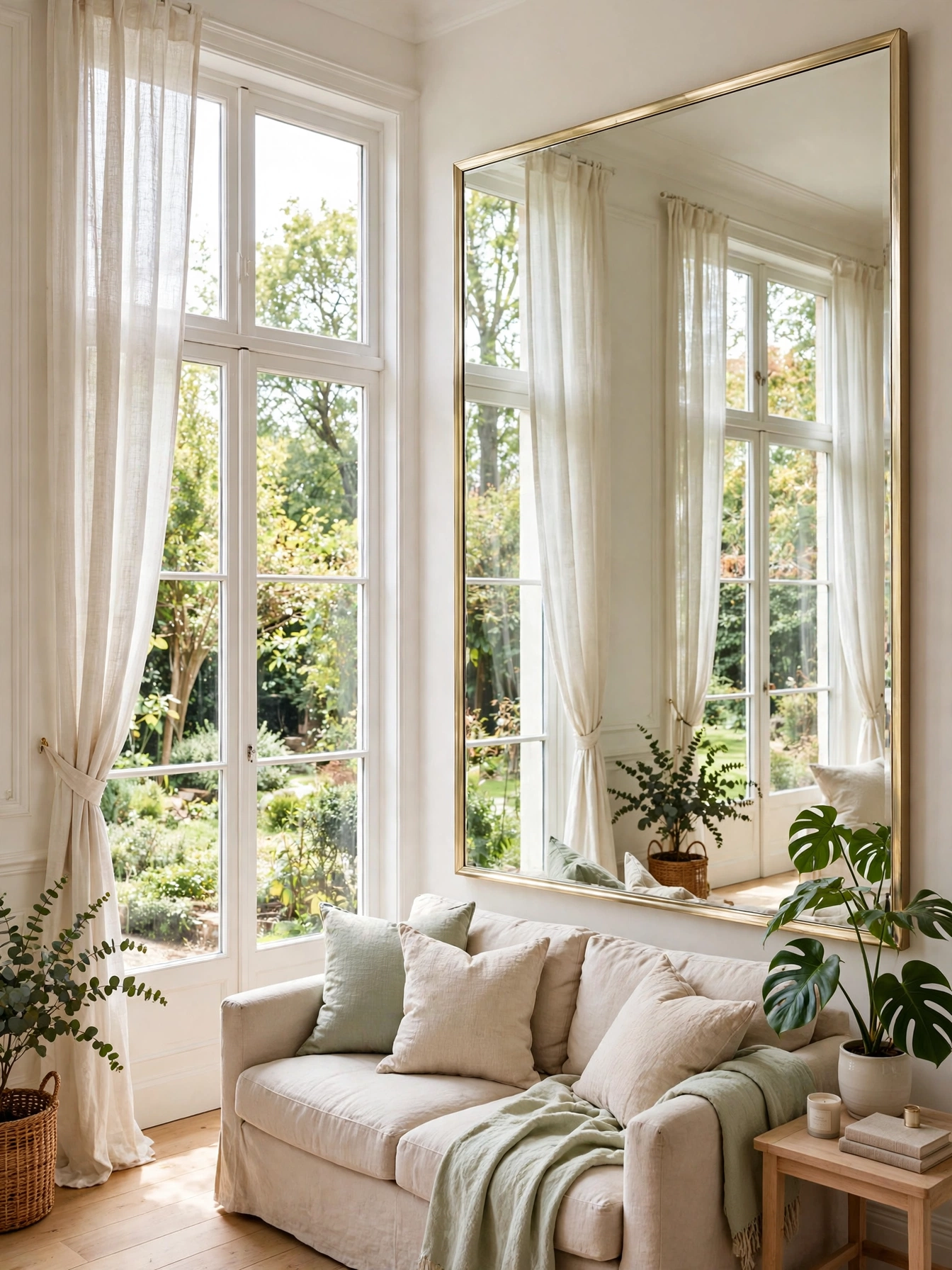
Why This Works:
- A mirror opposite the window effectively doubles the daylight entering the room
- The reflection adds perceived depth equal to the mirror’s distance from the window
- One 48×72 inch mirror outperforms three small mirrors for the expansion effect
- Reflected greenery brings the outdoors in without a single plant
Size the mirror to at least half the window width for a convincing double. Budget large mirrors start near $200; beveled mid-range runs $350 to $600; premium antique finishes reach $1,200. Versus a gallery wall of the same size, a mirror adds light while art only adds color. Mirror-hanging guidance rates French cleats for pieces over 40 pounds. Avoid angling the mirror toward clutter, because it doubles the mess along with the light. Hang the center at 57 inches so the reflection captures the window, not the ceiling.
Window-opposite walls in dark rooms gain the most. You lose wall art space, so keep one adjacent wall for frames. Against a second window, which few rooms have, a mirror is the only way to fake one. Secure with two cleats for earthquake safety. Clean the glass monthly, since smudges show doubled.
Pro Tip: Sit on the sofa and check the reflection sightline before hanging; the prettiest view should land at seated eye level.
Diagonal Rug Placement
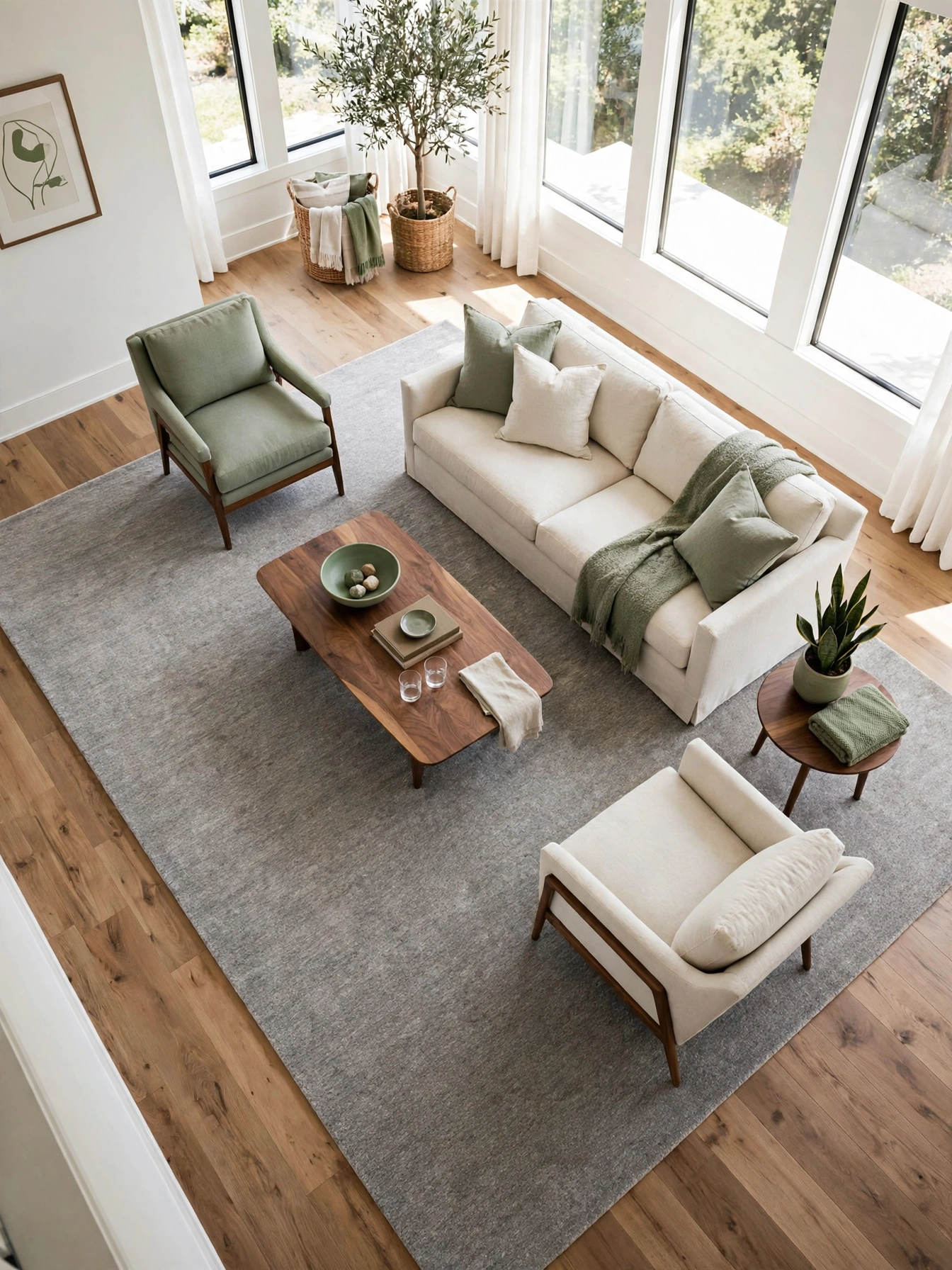
Why This Works:
- A diagonal rug stretches the eye along the room’s longest line, corner to corner
- The unexpected angle breaks the boxy grid that makes small rooms feel smaller
- An 8×10 rug on the diagonal covers the visual span of a 9×12 straight rug
- Zero cost: just rotate the rug you already own
Rotate the rug 30 to 45 degrees, keeping all front furniture legs on it. This trick costs nothing beyond 20 minutes of furniture shifting. Versus buying a larger rug, the diagonal placement gains 12 to 18 inches of perceived span free. Rug-layout guidance still calls for front legs of seating on the rug, even at an angle. Avoid diagonals in narrow galley rooms, where the angle fights the architecture. Anchor with a non-slip pad, since angled rugs creep faster than straight ones.
Square rooms gain the most, since the diagonal maximizes their longest dimension. Note the furniture challenge: angled rugs ask for angled furniture, so commit fully. Against a straight placement, the diagonal feels bolder but can complicate traffic paths. Try it for a week before deciding. Keep the pattern simple so the angle, not the print, leads.
Pro Tip: Photograph the room from the doorway in both orientations; the diagonal almost always wins in square rooms.
Wall-Mounted Shelving
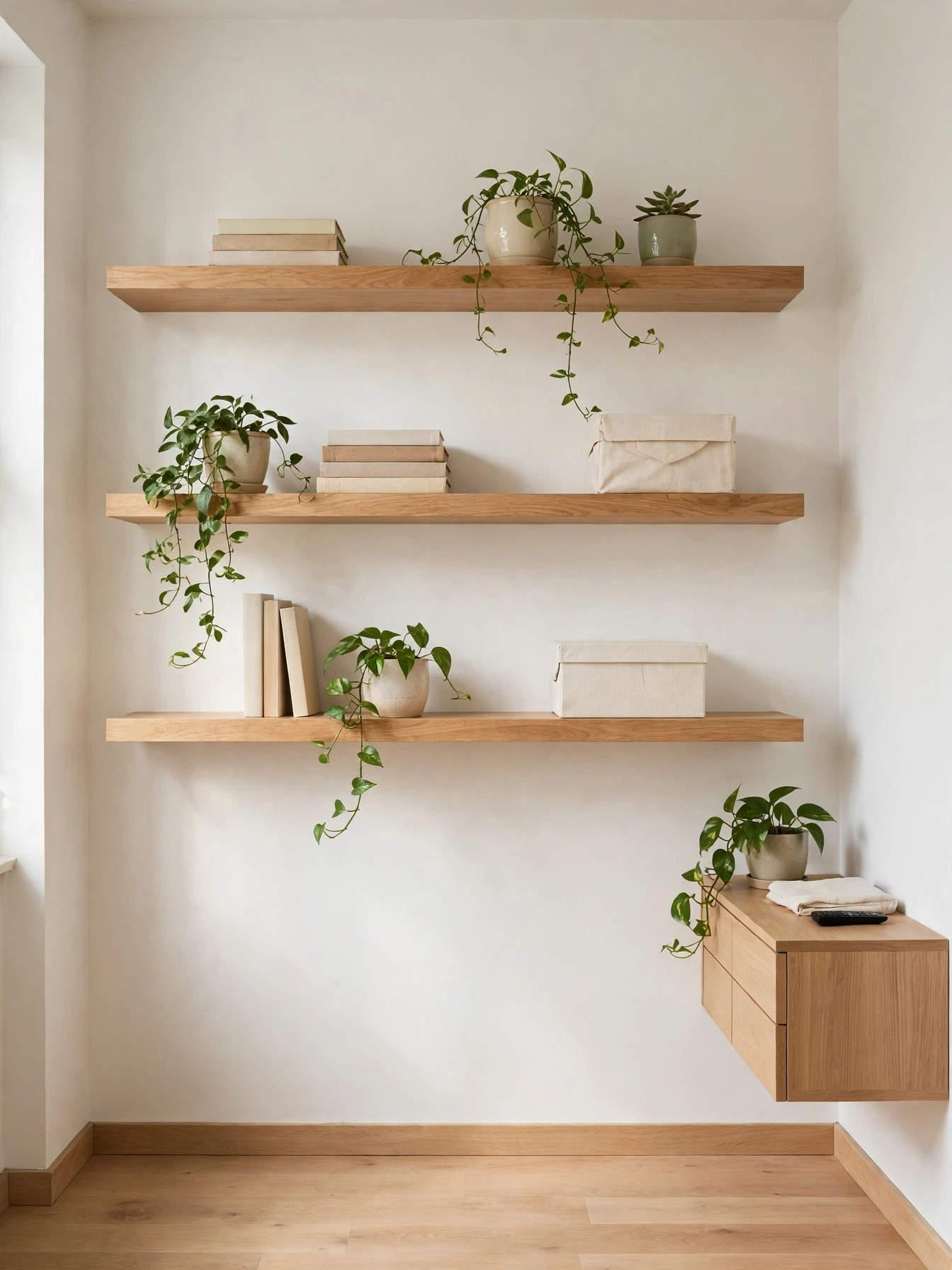
Why This Works:
- Floating shelves free the floor completely, unlike bookcases that eat 12 inches of depth
- Visible floor beneath storage reads as bonus square footage
- Three 48-inch shelves hold as much as a small bookcase with none of the bulk
- Wall-mounted pieces make cleaning underneath effortless
Mount the lowest shelf 18 inches off the floor and space the rest 14 inches apart. Floating shelves on a budget start near $25 each; solid oak mid-range costs $70 to $120; premium concealed-bracket models reach $200. Versus a 12-inch-deep bookcase, floating shelves return a full foot of floor depth. Shelf-mounting guidance calls for stud anchoring every 16 inches for book loads. Avoid overloading past the bracket rating, since sagging shelves scream cheap. Style with 30 percent empty space so the wall breathes.
Media walls and reading corners suit floating storage best. The price you pay is capacity: shelves hold less than closed cabinets. Against a full bookcase, floating shelves win on airiness but lose on hidden storage. Dust the shelf tops monthly. Keep heavy books on the lowest shelf for stability.
Pro Tip: Run a slim LED strip under the lowest shelf; the floor glow beneath makes the floating effect dramatic at night.
Recessed Light Wash
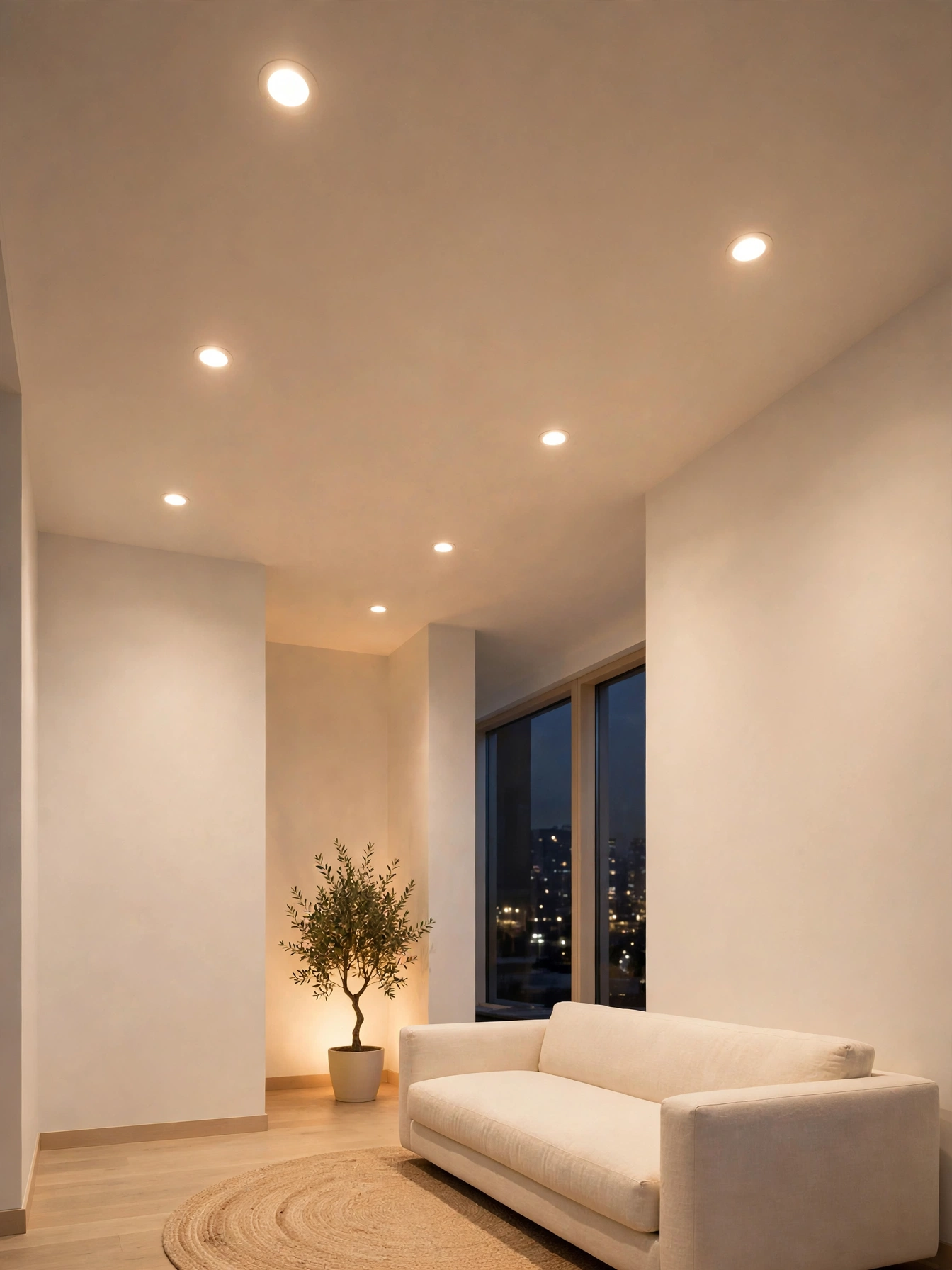
Why This Works:
- Recessed lights wash walls evenly, erasing the dark corners that shrink rooms
- Flush ceiling fixtures preserve every inch of headroom visually
- Wall-washing makes the room’s boundaries glow instead of receding into shadow
- Even light flatters the whole room, unlike one harsh overhead fixture
Space 4-inch cans 4 to 5 feet apart, 2 to 3 feet from walls for a proper wash. Budget retrofit LED cans start near $25 each; mid-range airtight IC-rated runs $45 to $80; pro installation reaches $200 per can. Versus a single pendant, six cans cost more but eliminate every shadow pocket. Lighting guidance from the American Lighting Association recommends layering ambient, task, and accent light rather than relying on one source. Hire a licensed electrician for recessed can installation, since cutting ceiling holes and running new circuits is not DIY work. Avoid spacing cans wider than 6 feet, because scalloped light pools look unintentional.
Low-ceiling rooms under 8 feet gain the most from flush lighting. Expect dust in the trims yearly, a quick wipe per can. Against track lighting, recessed cans disappear architecturally but cost five times more installed. Choose 3000K for living rooms, never harsh 5000K daylight. Put the cans on a dimmer so evenings stay cozy.
Pro Tip: Aim the two cans nearest the art wall 30 degrees toward it; free picture lighting without a single sconce.
Armless Accent Chairs
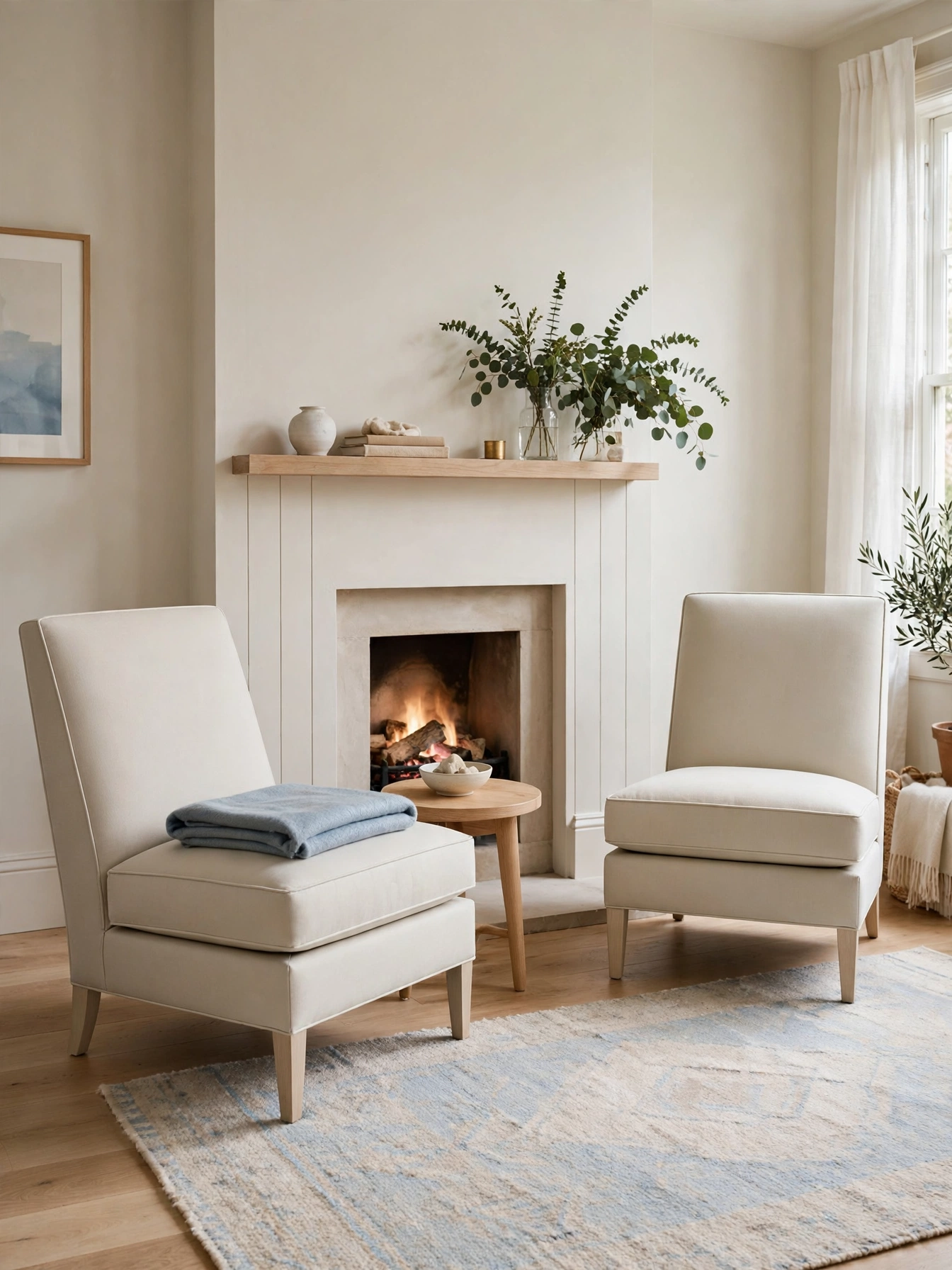
Why This Works:
- Armless chairs measure 24 inches wide versus 32 for armed versions, fitting tight spots
- No arms means no visual barriers between seats, keeping sightlines open
- Slipper chairs tuck fully under console tables when guests leave
- Pairs of small chairs flex better than one bulky loveseat
Look for seat widths of 22 to 24 inches and depths under 30 inches. Budget slipper chairs start near $180 each; mid-range performance fabric runs $350 to $600; designer-label pieces reach $1,200. Versus a 60-inch loveseat, two slipper chairs seat the same people in a more flexible footprint. Furniture-scale guidance suggests leaving 30 inches of walkway around seating groupings. Avoid armless chairs as primary TV seats, because long lounging wants arm support. Choose performance fabric rated above 30,000 double rubs for daily use.
Fireplace flanks and window nooks suit slipper chairs perfectly. The compromise is lounging comfort: no arms means no place to rest elbows. Against a loveseat, chairs win on flexibility but lose on sprawl-ability. Add a small lumbar pillow for back support. Keep the scale petite so the pair never overwhelms.
Pro Tip: Angle the pair 10 degrees toward each other; the slight turn invites conversation and softens the lineup.
Continuous Flooring Flow

Why This Works:
- Unbroken flooring merges rooms visually, so 300 square feet reads as one space
- Eliminating thresholds removes the stop lines that chop floor plans
- Planks running the long direction stretch the eye down the full length
- Pale oak reflects light, doubling the brightening effect
Run the same flooring through living room, hall, and dining without breaks. Budget luxury vinyl plank starts near $3 per square foot installed; engineered oak mid-range runs $8 to $12; solid hardwood reaches $15. Versus mixed flooring with transitions, continuous planks make adjacent rooms feel 20 percent larger. Flooring guidance recommends running planks parallel to the longest wall or main light source. Avoid dark stains in small open plans, because dark floors visually shrink every room they touch. Keep baseboards minimal and painted the wall color for a seamless edge.
Open-plan apartments gain the most from flooring continuity. The catch is cost: replacing all floors at once strains budgets, so plan it for the next flooring cycle. Against area rugs that define zones, bare continuous floors flow better but feel colder. Use rugs in matching tones to zone without breaking flow. Maintain the finish yearly so the whole expanse glows evenly.
Pro Tip: Remove old threshold strips and fill the gaps before the new floor goes in; even a 1-inch metal strip breaks the illusion.
Oversized Art Scale
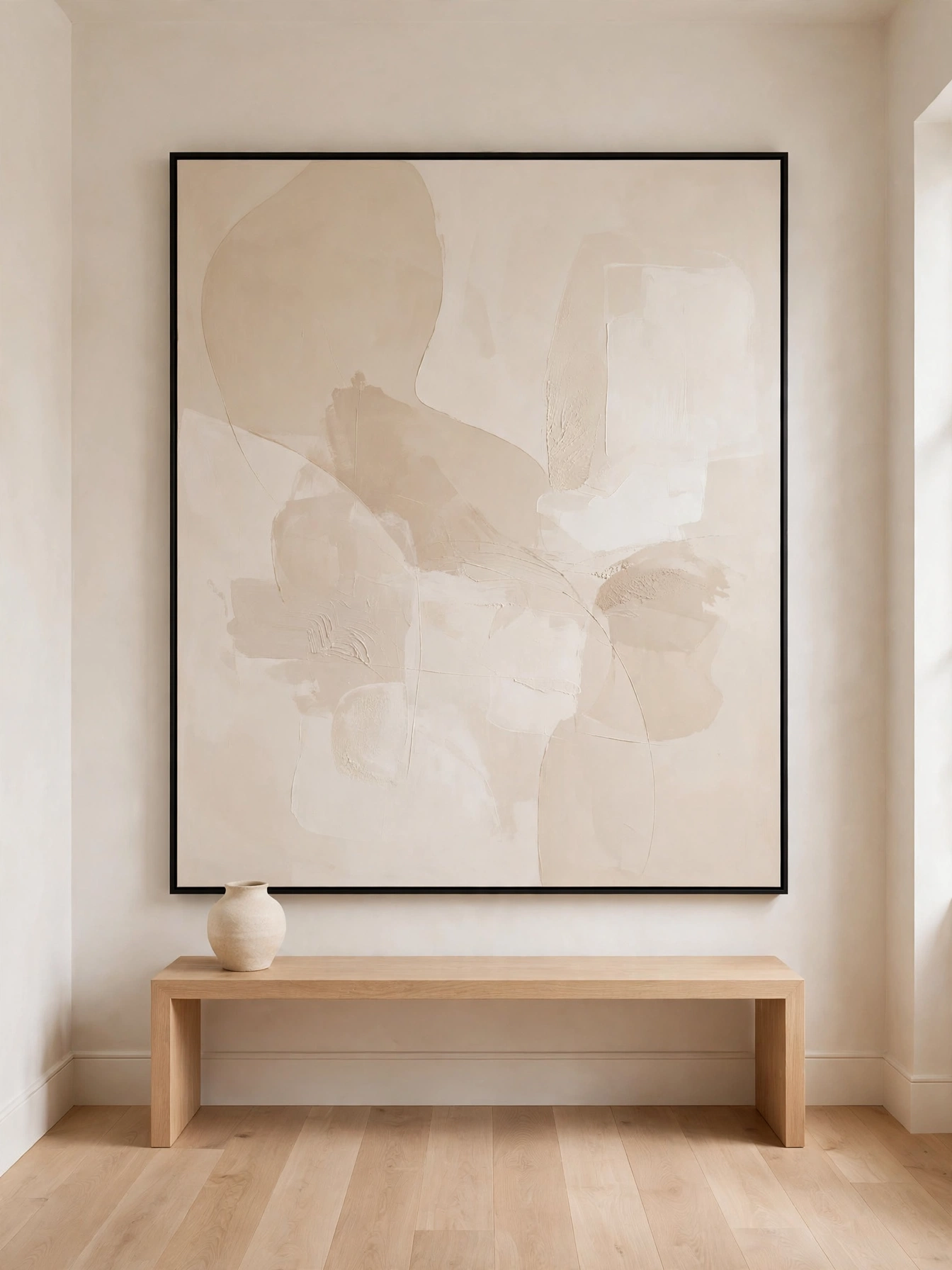
Why This Works:
- Counterintuitively, one huge piece makes small rooms feel grand, not cramped
- A single focal point stops the eye-chatter of many small objects
- Large art gives the wall a sense of intention that tiny frames cannot
- The 75-percent wall coverage reads as confidence, which reads as space
Size the canvas to cover 65 to 75 percent of the wall width. Budget large canvas prints start near $120; hand-painted mid-range runs $400 to $900; commissioned pieces reach $2,000. Versus a cluster of small frames, one oversized canvas costs similar but impacts triple. Art-scale guidance suggests going one size larger than feels safe in small rooms. Avoid timid 16×20 pieces on big walls, because they emphasize the wall’s emptiness. Hang the center at 57 inches regardless of size.
Small rooms with one strong wall suit oversized art best. On the flip side, the commitment is real: one dominant piece sets the room’s whole mood. Against a gallery wall, oversized art feels bolder but offers less storytelling variety. Choose abstract or landscape subjects that never tire. Keep surrounding decor minimal so the scale stays heroic.
Pro Tip: Tape the full outline on the wall for a week; if it still excites you on day seven, buy it.
How to Make Your Living Room Look Bigger With Paint
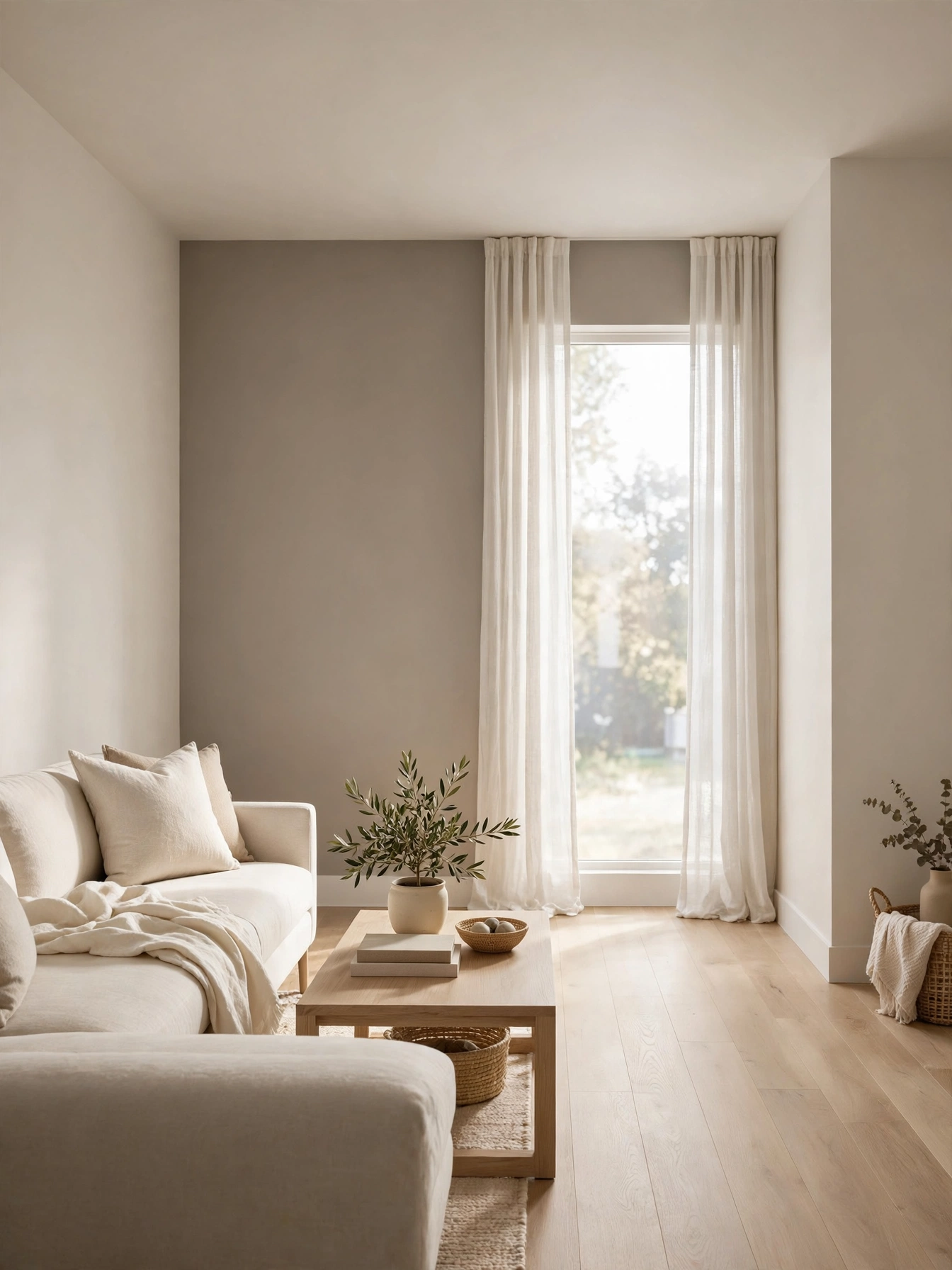
Why This Works:
- Pale walls reflect up to 80 percent of light, brightening every corner
- Painting the far wall one shade deeper creates receding depth, like a stage set
- Matching the ceiling to the walls erases the line where the room ends
- A $100 paint job delivers the highest space-per-dollar of any trick here
Choose whites with a light reflectance value above 85 for maximum bounce. Budget quality paint runs $45 per gallon; premium low-VOC reaches $75. Versus a dark accent wall, pale paint makes the same room feel 10 to 15 percent larger in daylight. Paint industry guidance recommends matte on walls and flat on ceilings to diffuse light softly. Avoid stark blue-white in north-facing rooms, because it reads cold and institutional. Test large swatches on all four walls, since the same color shifts with orientation.
Dark, chopped-up rooms gain the most from a full pale repaint. What you sacrifice is drama: pale rooms need texture to avoid blandness. Against bold color, light paint wins on spaciousness but demands better styling. Add contrast through wood tones and textiles. Keep trim one shade brighter than walls for crisp definition.
Pro Tip: Coat the insides of bookshelves in the wall color; disappearing shelf backs add inches of perceived depth.
Floating Media Console

Why This Works:
- A floating console frees 12 inches of floor along the whole media wall
- The underglow LED makes the unit appear to hover, doubling the lightness
- Wall-mounting removes the bulkiest furniture footprint in most living rooms
- Cables hide inside the wall or a slim raceway, erasing visual clutter
Mount a 60 to 72 inch console 10 to 14 inches off the floor, anchored into studs. Budget floating consoles start near $200; walnut mid-range runs $450 to $800; custom built-ins reach $2,500. Versus a floor-standing media unit, floating frees roughly 8 square feet of visible floor. Mounting guidance calls for a French cleat rated for triple the loaded weight. Avoid mounting on plaster-and-lath without proper anchors, because the weight pulls loose within months. Run cables through the wall or a paintable raceway for the clean look.
TV walls in small rooms suit floating consoles best. One caveat is the install effort: precise leveling takes patience. Against a traditional credenza, floating wins on airiness but offers less hidden storage. Add the LED strip on a remote dimmer for evening ambiance. Keep the top styled with three objects maximum.
Pro Tip: Mount the console first, then measure for the TV; the screen should float 8 inches above the console top.
Corner Reading Nook
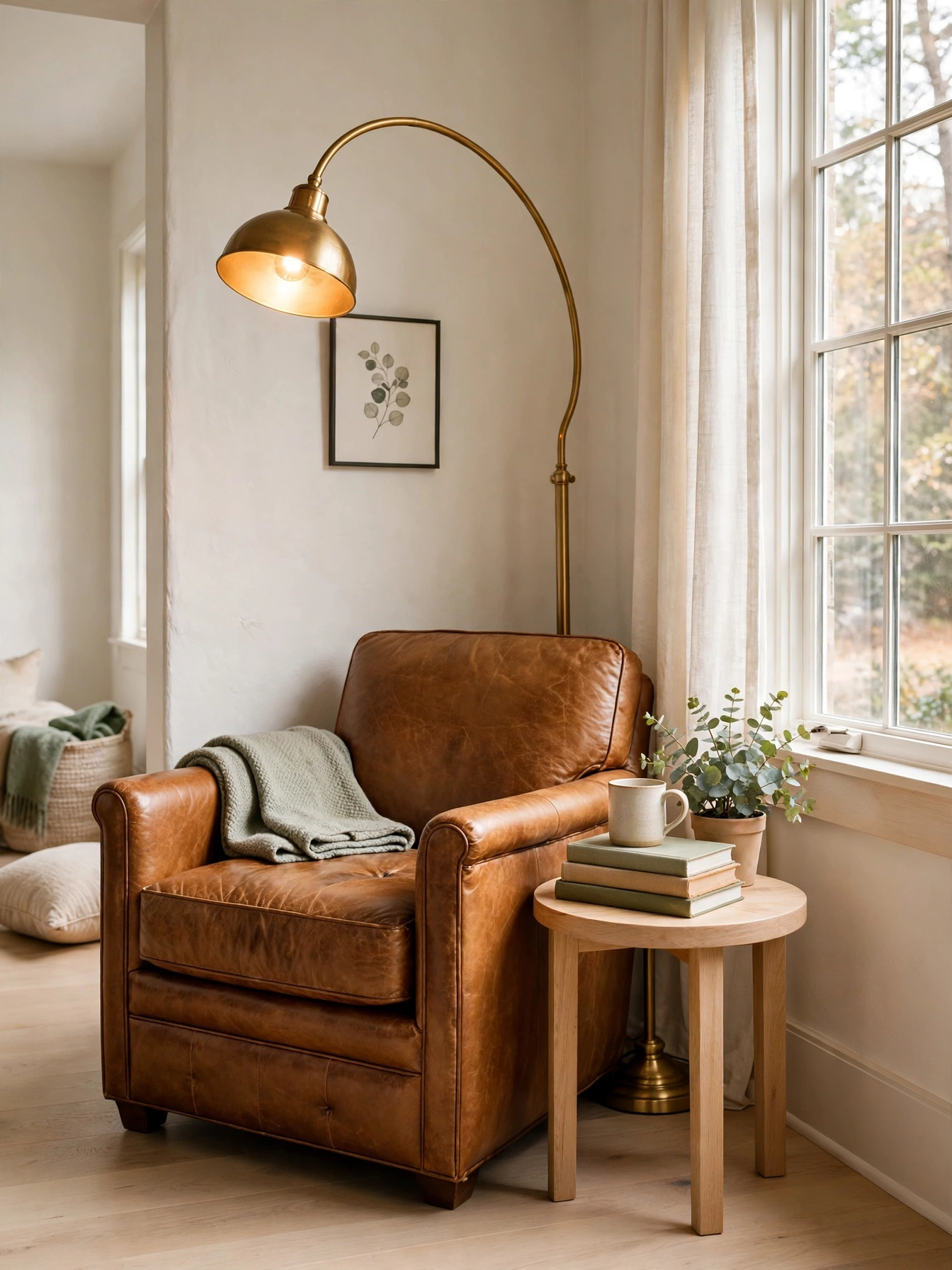
Why This Works:
- Activating dead corners makes the whole room feel used, and used rooms feel larger
- A 45-degree chair angle breaks the boxy furniture grid
- One purposeful nook adds function without adding floor footprint
- Layered corner lighting draws the eye into the room’s farthest point
Angle the chair 45 degrees with a 16-inch side table and a lamp behind. Budget nook setups start near $250; leather chair mid-range runs $600 to $1,100; boutique designer pieces top out at $2,000. Versus leaving the corner empty, a nook reclaims roughly 16 square feet of perceived space. Layout guidance suggests keeping 30 inches of clearance in front of the chair. Avoid pushing the chair flush into the corner, because 6 inches of breathing room looks intentional. Add a small rug to zone the nook within the larger room.
Window corners and fireplace-adjacent dead zones suit nooks best. The wrinkle is the single-purpose trap: style it for reading, not storage overflow. Against an empty corner, the nook wins on charm but needs weekly tidying. Keep books to one stack to avoid clutter creep. A throw and pillow make it the room’s most fought-over seat.
Pro Tip: Put the lamp on a smart plug with a sunset routine; the nook glows invitingly every evening automatically.
Slim Floor Lamp
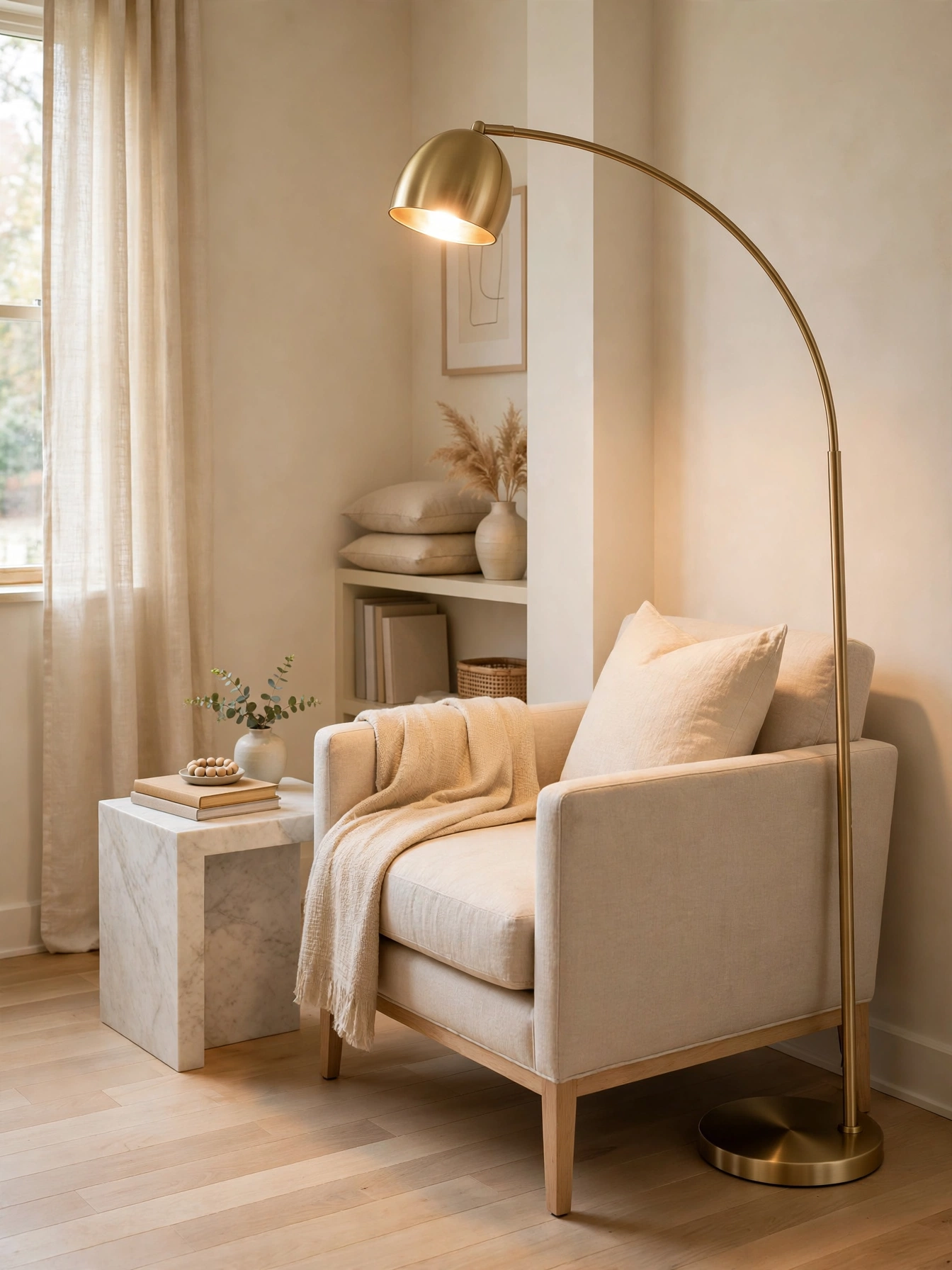
Why This Works:
- A 12-inch base tucks where chunky table lamps never fit
- The arc delivers light exactly where readers sit, no wasted spread
- Slim profiles keep vertical sightlines open, unlike bulky tripod lamps
- One arc lamp replaces both a floor lamp and a table lamp
Choose arc reaches of 4 to 5 feet so the head lands over the chair, not beside it. Budget arc lamps start near $90; mid-range brass runs $200 to $400; designer originals reach $1,200. Versus a table lamp that eats 2 square feet of table surface, an arc frees the whole table. Lighting guidance suggests positioning the bulb 40 inches above the seat for reading. Avoid top-heavy arcs without weighted bases, because a bump topples them onto laps. Check the base weight rating before buying for homes with kids.
Tight chair-and-table groupings suit arc lamps best. Mind the cord: run it under the rug to the nearest outlet. Against a chunky tripod lamp, the slim arc wins on footprint but costs more. Use a dimmable 2700K bulb for evening warmth. Keep the arc clear of ceiling fans by 24 inches.
Pro Tip: Tape the cord flat under the rug with gaffer tape; the invisible run survives vacuuming for years.
Open Sightline Paths

Why This Works:
- A clear 36-inch path lets the eye travel the room’s full length instantly
- Unblocked sightlines register as spaciousness before any decor does
- Door-to-window axes borrow the outdoor view as visual square footage
- This free rearrangement often beats $500 of new purchases
Keep main paths 30 to 36 inches wide, secondary paths 24 inches minimum. This costs nothing but an afternoon of furniture Tetris. Versus adding decor, clearing paths delivers the single biggest perceived-size gain designers cite. Layout guidance calls the door-to-window axis the room’s money sightline: never block it. Avoid floating furniture in the path’s center, since obstacles chop the view. Angle pieces 10 degrees off the path to soften the corridor feel.
Every small room benefits, regardless of style or budget. Watch the drift: paths clog with shoes and bags within days, so add a catch-all basket at the entry. Against a furniture-heavy layout, open paths feel emptier at first but calmer within a week. Photograph the path monthly to catch creeping clutter. Keep the window at the path’s end dressed simply so the view stays the reward.
Pro Tip: Lie on the floor at the doorway and sight down the path; anything blocking your view at 12 inches high needs moving.
Light Linen Upholstery

Why This Works:
- Pale upholstery reflects light instead of absorbing it like dark fabrics
- Seating that matches the walls visually dissolves into the room
- Light linen keeps the furniture’s visual weight near zero
- One pale palette across all seats unifies mismatched pieces
Choose oatmeal, ivory, or pale greige in washable linen or performance weave. Budget slipcovers start near $150 per piece; reupholstering mid-range runs $800 to $1,500; new pale sofas reach $2,500. Versus dark leather seating, pale linen makes the same arrangement feel 20 percent lighter. Fabric guidance rates performance linen above 25,000 double rubs for family durability. Avoid pure white in homes with dark-denim wearers, because indigo transfer shows within weeks. Wash slipcovers quarterly to keep the pale tone fresh.
Dark-furniture rooms gain the most dramatic lift from this swap. The honest drawback is maintenance: pale shows everything, so washability is non-negotiable. Against patterned upholstery, pale linen calms the room but needs texture layering. Add contrast through one darker wood tone nearby. Keep a stain stick in the side table drawer.
Pro Tip: Buy one extra yard of the upholstery fabric; future patch repairs on arms stay invisible.
Round Table Geometry
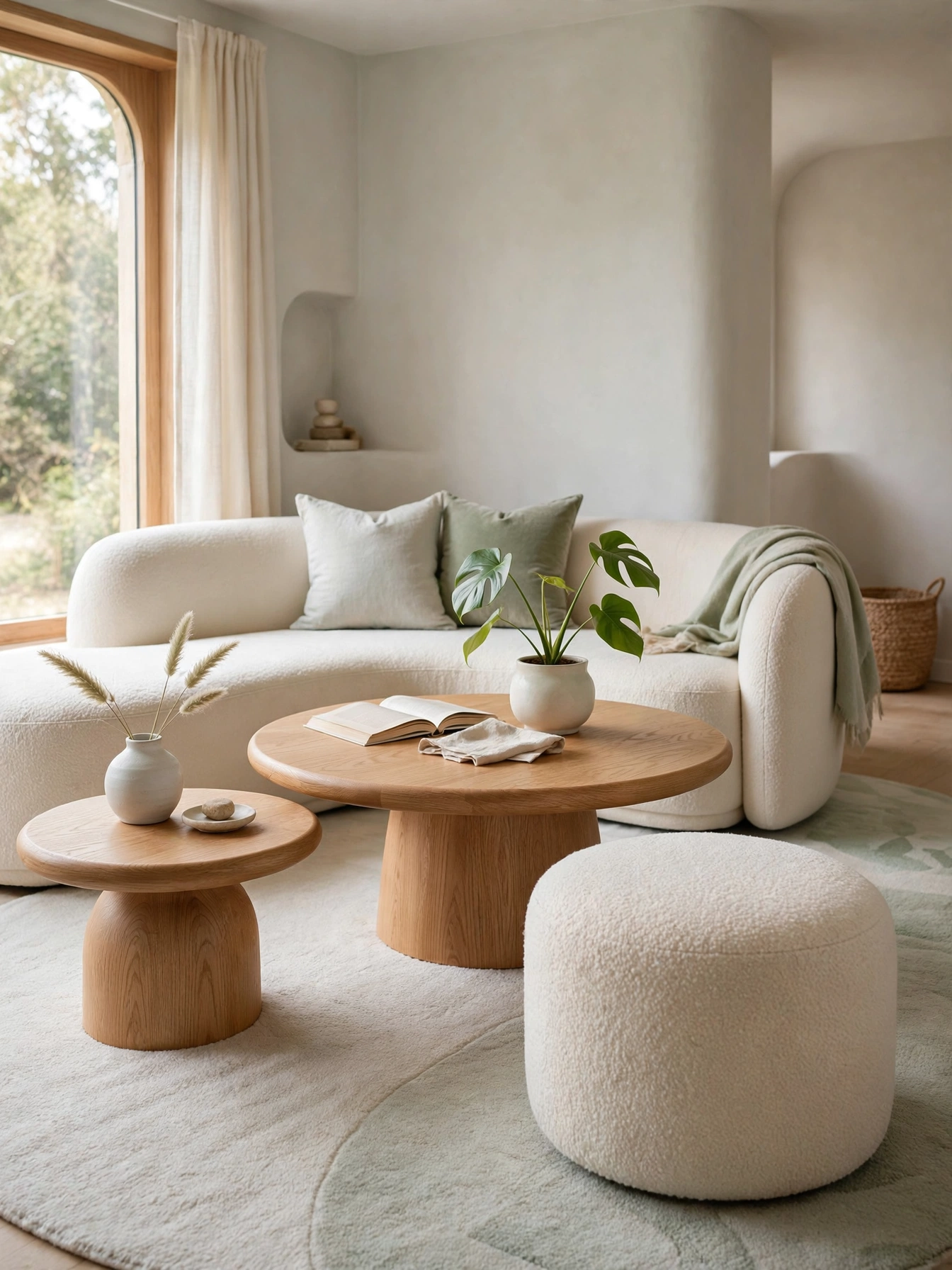
Why This Works:
- Round tables eliminate corner collision points in tight traffic zones
- Curves let people flow around furniture instead of detouring wide
- A 36-inch round seats four with a smaller footprint than a 48-inch rectangle
- Soft geometry contrasts the room’s box, making the box feel less rigid
Choose 30 to 36 inch rounds for coffee tables, 16 to 20 for side tables. Budget round tables start near $120; solid oak mid-range runs $300 to $600; designer-made pieces reach $1,200. Versus rectangular tables, rounds need 6 fewer inches of clearance on each side. Furniture-flow guidance suggests 18 inches between table edge and seating. Avoid oversized 48-inch rounds in rooms under 150 square feet, because the circle dominates. Center the round on the seating, not the room, for proper anchoring.
Tight seating clusters with heavy foot traffic suit rounds best. One caveat is the styling surface: rounds offer less usable top area than rectangles. Against a square ottoman, the round version moves easier and bruises fewer shins. Choose pedestal bases so chairs tuck fully underneath. Keep the rug round too for a fully flowing composition.
Pro Tip: Trace the table’s footprint in painter’s tape and walk around it for a day; shins will vote before your eyes do.
How to Make Your Living Room Look Bigger by Decluttering
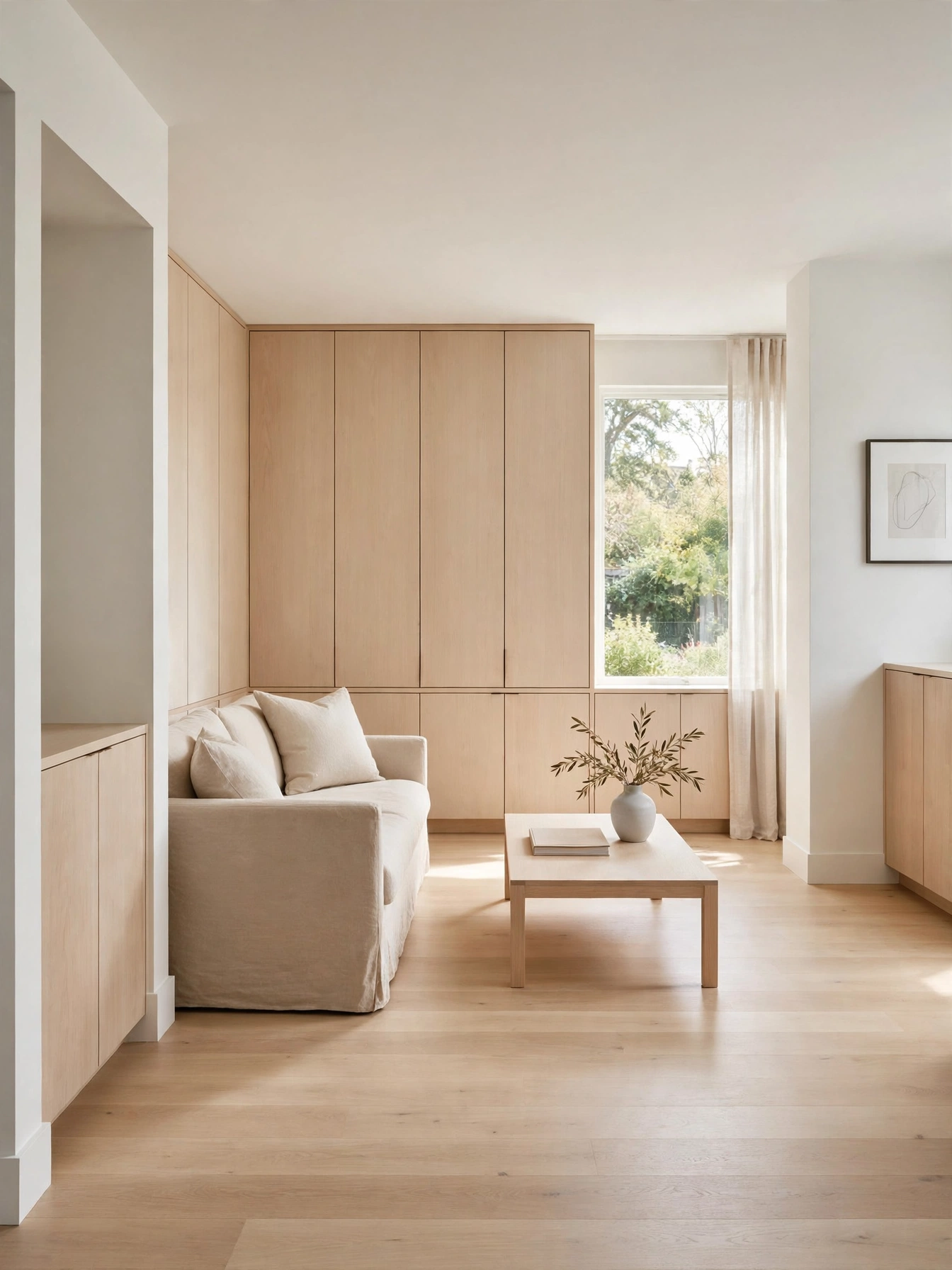
Why This Works:
- Every removed object gives the eye one less place to stop, so rooms read larger
- Clear surfaces reflect more light than cluttered ones
- Hidden storage keeps the edited look livable, not just photogenic
- Decluttering costs nothing and often outperforms new purchases
Apply the three-object rule: no surface holds more than three items. Budget lidded baskets start near $15; closed storage cabinets run $150 to $400; full custom built-ins reach $3,000. Versus buying bigger furniture, editing what you own frees perceived space free. Organizing guidance suggests the one-in-one-out rule to maintain the edited state. Avoid decorative storage that becomes clutter itself within months. Corral daily items, remotes, chargers, into one lidded box per zone.
Chronic clutterers gain the most from this one, though every small room benefits. Note the maintenance: edited rooms need a 10-minute nightly reset. Against a maximalist style, editing feels stark at first, so keep three beloved objects per surface. Photograph each surface when it looks perfect as a reset reference. Donate the box of discards within a week, before it creeps back.
Pro Tip: Set a phone timer for 20 minutes and declutter one surface; the visible win fuels the next twenty minutes.
High-Gloss Ceiling
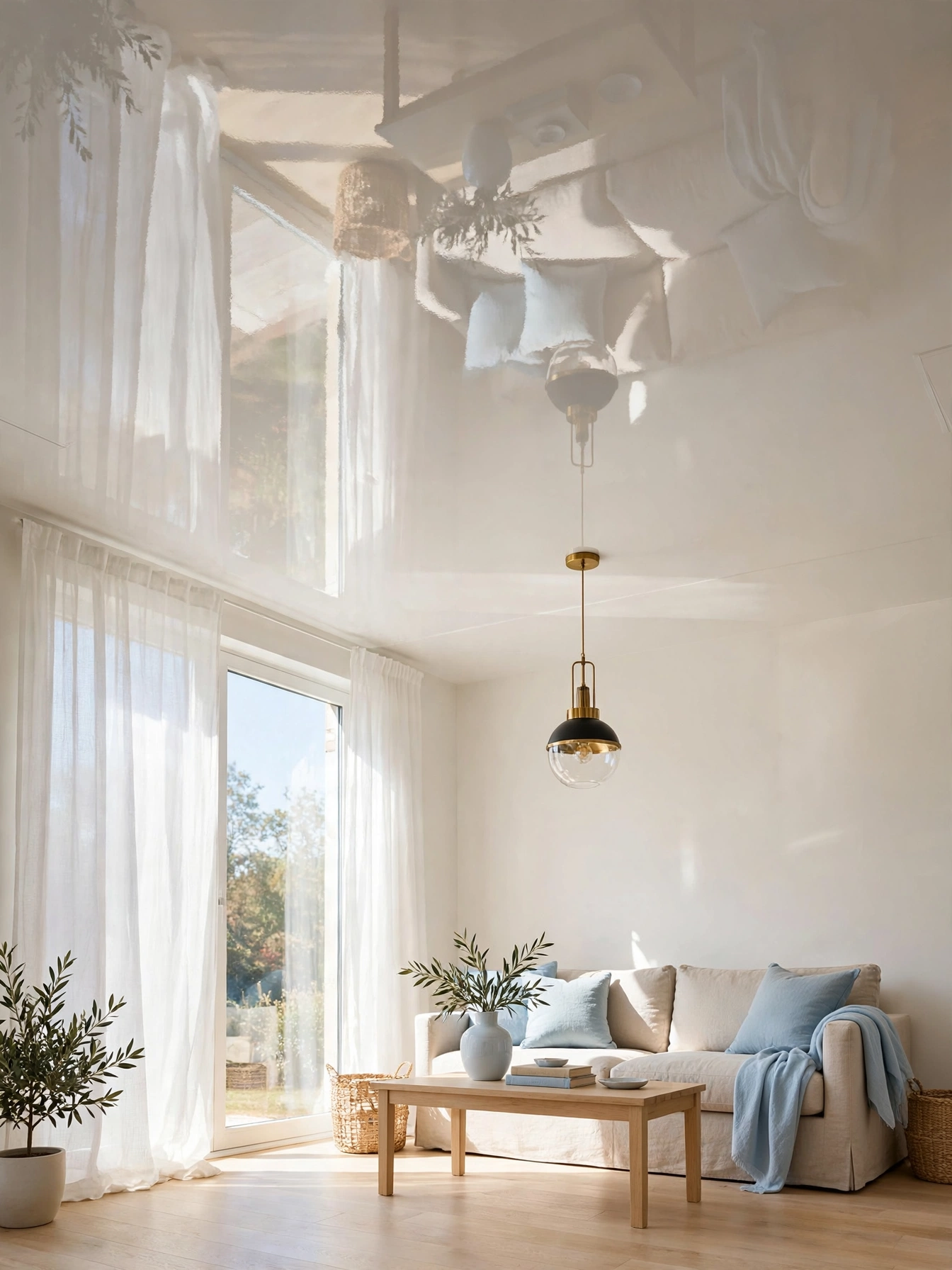
Why This Works:
- Glossy ceilings reflect up to 30 percent more light than flat finishes
- The soft reflection doubles the room’s brightness sources visually
- Light bouncing off the ceiling reaches the dark corners flat paint abandons
- One gallon of gloss paint transforms the most ignored surface in the home
Use high-gloss or semi-gloss paint specifically formulated for ceilings. Budget ceiling paint runs $35 per gallon; premium scrubbable gloss reaches $65. Versus a flat ceiling, gloss adds perceived height for about $50 total. Paint guidance warns that gloss highlights every imperfection, so skim-coat flaws first. Avoid gloss on textured popcorn ceilings, because the shine emphasizes every bump. Apply with a foam roller in thin coats to prevent drips.
Dark rooms with 8-foot ceilings gain the most ceiling lift. The price you pay is prep: ceilings need sanding and patching before gloss forgives nothing. Against a flat white ceiling, gloss feels dramatically brighter but shows flaws. Hire a painter for the prep if your ceiling is heavily textured. Keep walls matte so the ceiling stays the star.
Pro Tip: Paint the ceiling first in any room refresh; drips on unfinished walls wipe away, but wall drips on a gloss ceiling do not.
FAQs
What is the cheapest way to learn how to make your living room look bigger?
Start free: clear a 36-inch door-to-window path, rotate your rug diagonally, and declutter every surface to three objects. The Spruce’s small-space guides confirm that editing and rearranging beat buying in most rooms under 200 square feet. Add $60 high curtain rods next for the biggest paid win.
Do mirrors really make a small living room look larger?
Yes, when placed opposite windows, where one 48×72 inch mirror effectively doubles the daylight. Houzz’s lighting guides note that reflected light reaches corners the original window never touches. Keep the mirror’s center at 57 inches so the reflection captures the view, not the ceiling.
Which paint colors help when learning how to make your living room look bigger?
Choose whites with a light reflectance value above 85, plus one far wall a single shade deeper for receding depth. The Spruce recommends warm whites over stark blue-whites in north-facing rooms. Match the ceiling to the walls in flat finish to erase the boundary line.
How much should I budget for a full small-living-room expansion refresh?
Plan $400 to $900: paint, curtain rods with long panels, one large mirror, and hidden storage. Most of the 23 tricks here cost under $150 each, and six are completely free. Spend the biggest share on the mirror, since scale drives the expansion effect.
Can furniture arrangement alone make a room feel bigger?
Absolutely. Floating furniture 3 inches off walls, angling one chair 45 degrees, and keeping 30-inch walkways open transforms perception without spending. Photograph the room from the doorway before and after rearranging; the difference usually shocks first-timers within one afternoon.
Conclusion
Square footage is fixed, but perceived space is negotiable, and now you know how to make your living room look bigger without moving walls. Your three takeaways are simple. First, protect your sightlines: a clear 36-inch door-to-window path beats any purchase. Second, borrow light with mirrors and pale paint, since brightness reads as spaciousness. Third, show more floor with leggy, floating, and transparent pieces. Your first action is free: spend this afternoon clearing that door-to-window path and rotating your rug diagonally. Follow HomelyCrafter on Pinterest for more ideas. Save this to your Pinterest boards so you can refer back to it!

Muhammad Israr is a home decor enthusiast and the writer behind Homely Crafter. He spends his days researching paint colors, layouts and budget-friendly styling ideas, then breaks them down into practical, easy-to-follow guides so you can decorate with confidence.