
Your basement could become the coziest room in your home. With the right basement family room ideas, even a dark or unused lower level can feel warm, stylish, and full of life. This article is all about creating a basement space your family actually wants to use.
Whether you need a movie lounge, play area, game corner, homework zone, or guest-friendly retreat, these ideas will help you see what is possible. I’ve noticed that basements often feel forgotten until small design choices bring in comfort, light, and purpose. With cozy seating, smart storage, layered lighting, and inviting textures, you can turn an ordinary basement into a beautiful everyday gathering space worth saving for later.
Cozy Sectional Zone
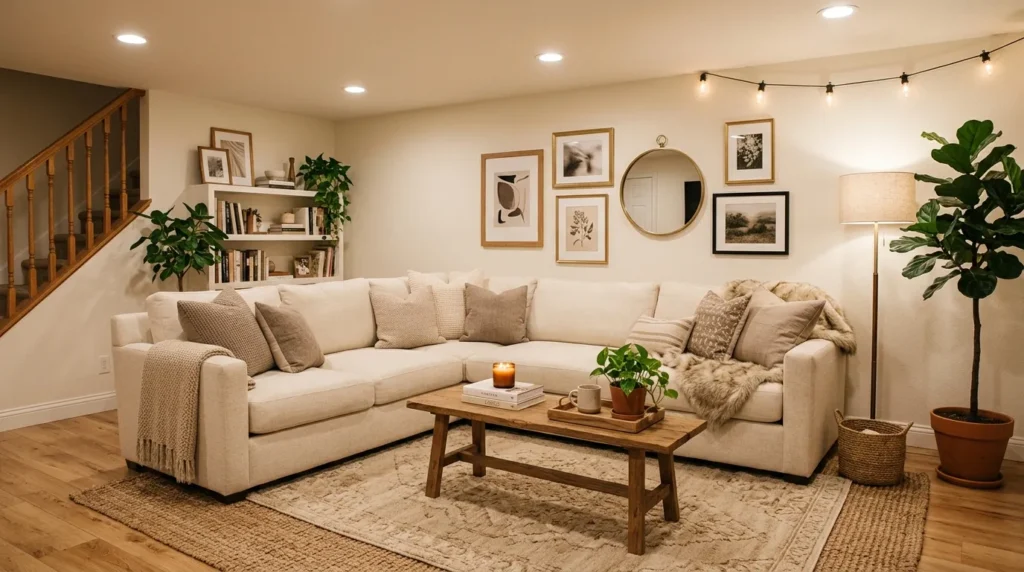
- A sectional instantly gives the room a welcoming, gather-around feeling.
- It makes movie nights, naps, and casual conversations feel more relaxed.
- Neutral fabrics keep the basement from feeling heavy or closed in.
- A large coffee table adds space for snacks, games, and everyday family use.
A big sectional can make a basement feel like the most loved room in the house. It creates one clear seating zone, which is especially helpful when the layout is open or awkward. Among the most practical basement family room ideas, this one works because it solves comfort and flow at the same time. Choose a sectional that fits the wall length without blocking walking space. Add washable pillows and a soft throw so the area feels polished but still easy for real family living, weekend guests, and quiet nights downstairs.
The right sofa can completely anchor a basement family room. Browse these luxury sofa design ideas for the perfect centerpiece
I’ve noticed that basement rooms often feel better when the furniture is slightly oversized but not crowded. A sectional helps fill the space with purpose instead of leaving empty corners that feel unfinished. Keep the color palette light if the ceiling is low, then add warmth through wood tables, woven baskets, or textured cushions. The result is a comfortable lounge that feels intentional, not like leftover furniture was moved downstairs. It also gives everyone a natural place to gather without needing too many separate chairs or bulky side pieces around the room.
Built-In Media Wall
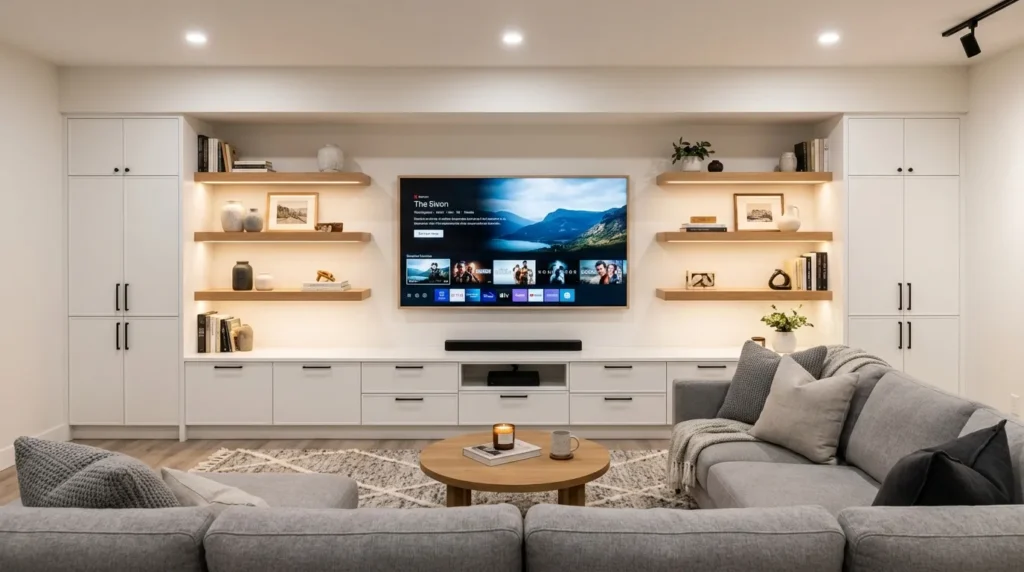
- Built-ins make a TV wall feel finished instead of temporary.
- Closed storage hides remotes, toys, blankets, and gaming gear.
- Open shelves create space for styling books, baskets, and family photos.
- Soft lighting around the wall adds a cozy evening glow.
A built-in media wall can turn a plain basement into a polished family hangout almost instantly. It gives the television a proper home while making the surrounding wall work harder for storage and display. This is especially useful downstairs, where extra blankets, board games, and electronics often collect. Use lower cabinets for hidden items and open shelves for decor that softens the technology. The finished look feels clean, balanced, and much more custom than a simple TV stand pushed against a wall in a multipurpose space that needs order overall.
That’s why many designers recommend mixing closed storage with a few styled shelves. Too much open shelving can look cluttered fast, especially in a room used by kids and guests. Keep the display simple with baskets, framed photos, pottery, and a small plant or two. Warm LED strips or picture lights can also brighten a basement without harsh overhead glare. The wall becomes both beautiful and practical, giving the room a strong focal point while keeping everyday mess easier to control after movie nights and family gatherings with friends.
Game Night Corner
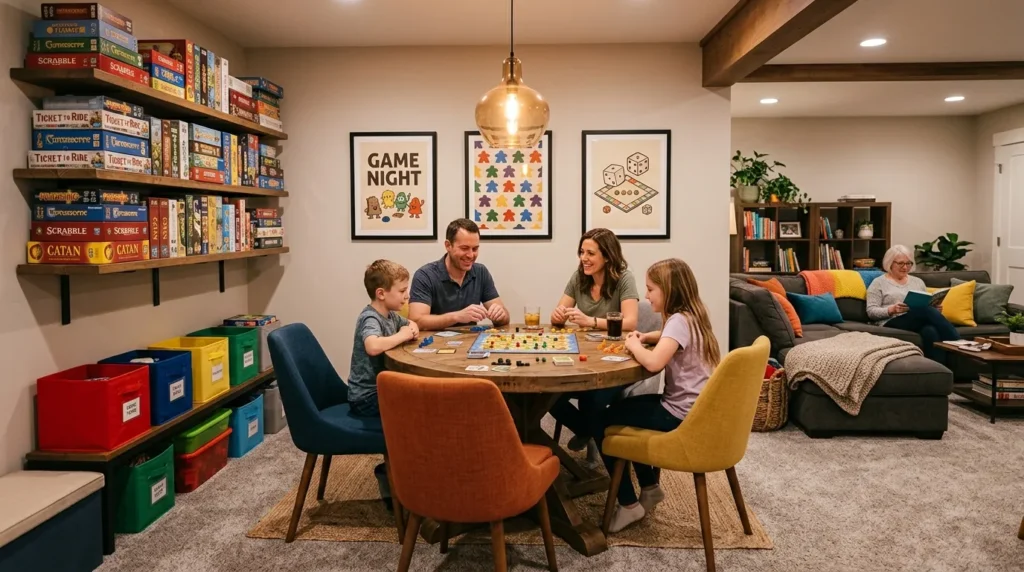
- A game corner gives the basement a clear purpose beyond watching TV.
- A round table keeps conversation and movement easy.
- Wall shelves make games visible, organized, and simple to grab.
- This setup works well for families, teens, and casual guests.
A dedicated game corner makes the basement feel more active, social, and full of life. Instead of games being stacked in a closet, they become part of the room’s personality. A small table and comfortable chairs can create a natural spot for cards, puzzles, homework, or snacks. I’ve seen this work well in many homes where the main floor feels too busy for relaxed play. It adds function without needing a large renovation, expensive custom furniture, or a completely separate recreation room for casual family nights together, naturally, every week.
The best part is how easily this idea can fit into an unused corner. Choose a table that matches the room scale, then add shelves or a cabinet nearby so everything stays within reach. Good lighting matters because basements can feel dim during evening activities. A warm pendant, small lamp, or wall sconce can make the corner feel inviting. When styled with baskets and a few colorful boxes, the space looks playful but still neat enough for a Pinterest-worthy family room that adults can enjoy too after dinner downstairs.
Layered Lighting Plan
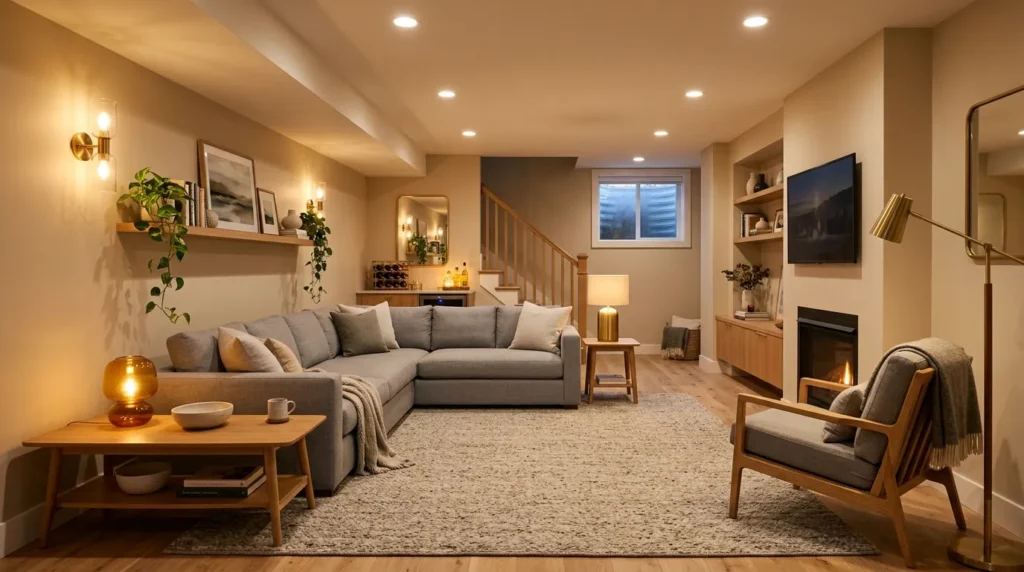
- Layered lighting helps remove the flat, shadowy feeling that basements often have.
- Different light sources make the room useful for movies, games, and reading.
- Warm bulbs create a softer and more welcoming atmosphere.
- Lamps and sconces add style without taking up much floor space.
Lighting can completely change how a basement feels, even before you replace furniture. One ceiling fixture usually leaves corners dark and makes the space feel lower than it really is. Layered lighting fixes that by adding brightness at different heights. Use recessed lights for general glow, lamps for comfort, and sconces for style. In my experience, warm white bulbs make the biggest difference because they soften concrete, drywall, and low ceilings, helping the room feel more like a cozy extension of the home instead of an afterthought quickly overall at night.
This idea also makes the room more flexible for everyday life. Brighten the space for cleaning, dim it for movies, or turn on one lamp for quiet reading. If your basement has limited natural light, choose reflective finishes like glass, pale wood, or light-colored walls to bounce the glow around. Add dimmers where possible so the mood can change easily. The result is a room that feels comfortable at all hours instead of only looking good when every light is turned on during family gatherings or weekend hosting downstairs.
Soft Carpet Lounge
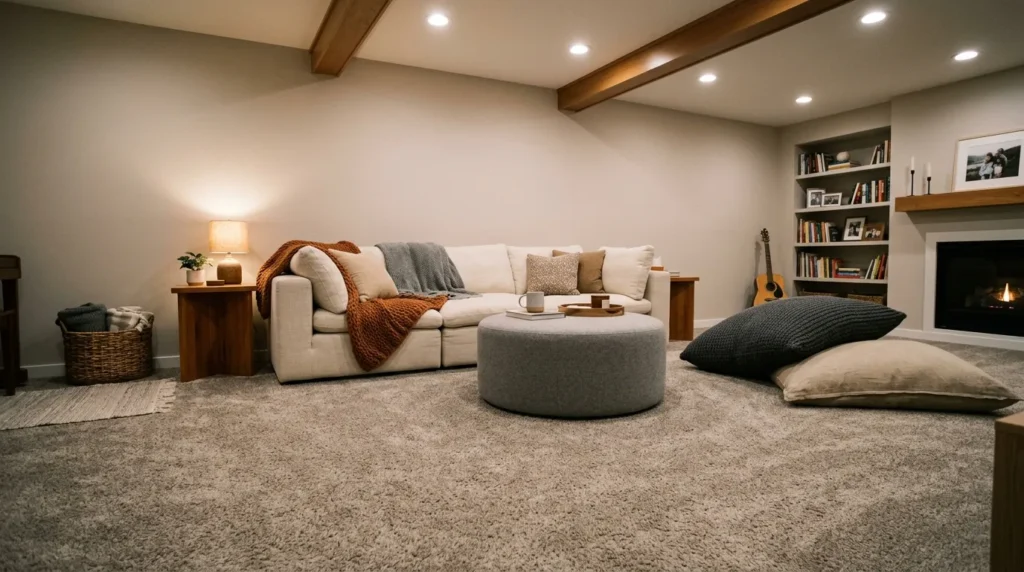
- Soft flooring makes a basement feel warmer and more comfortable underfoot.
- Carpet helps absorb sound from movies, games, and busy family evenings.
- A plush surface is great for kids who like sitting or playing on the floor.
- Layered pillows and throws make the lounge feel extra relaxed.
Soft carpet can make a downstairs family space feel instantly warmer, quieter, and more inviting. Many basements have hard surfaces that echo, which can make movie nights or playtime feel noisy. A plush carpet or large area rug helps absorb sound while adding comfort underfoot. It also creates a relaxed lounge feeling where kids can sprawl out, pets can nap, and adults can sit comfortably. Choose a durable, stain-resistant option in a medium neutral tone for beauty, warmth, and real-life practicality every day in a busy home, too, downstairs at night.
I’ve tried light rugs in busy family rooms, and they look beautiful until snacks, shoes, and daily use take over. That is why soft gray, oatmeal, taupe, or greige flooring often works better for a basement lounge. These shades brighten the room without showing every mark. Pair the floor with a low coffee table, washable throws, and rounded ottomans to keep the space casual. The whole room will feel softer, safer, and easier to enjoy during long weekends at home with kids, guests, and pets around comfortably daily without stress.
Kids Play Nook
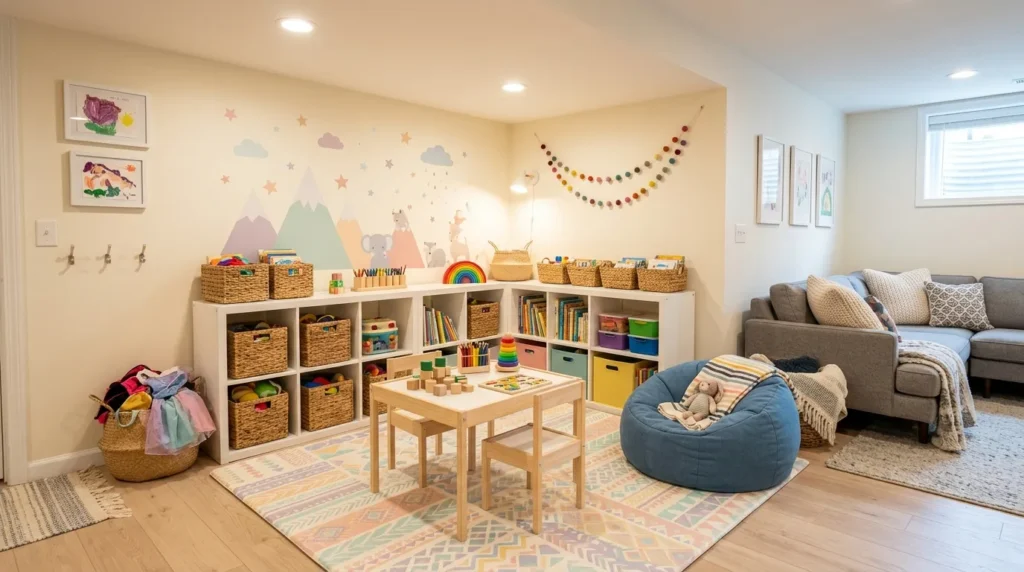
- A play nook keeps toys contained without hiding kids away from the family.
- Low shelves make cleanup easier and more realistic for children.
- Soft mats add comfort to cooler basement floors.
- Using baskets keeps the space looking tidy in photos and real life.
A kids’ play nook can make the basement feel more organized without taking away its grown-up style. The trick is giving children a clear zone that feels fun, visible, and easy to clean. Low shelves, soft bins, and a small table work better than one giant toy box because everything has a simple place. Parents can relax nearby while kids play independently. This setup is one of those family room upgrades that feels small at first but changes daily routines in a very practical way for everyone, daily downstairs after school.
If your basement connects to an entry zone, these mudroom decor ideas can help you create a stylish transition space that keeps the whole home organized.
Keep the colors connected to the rest of the room so the play area does not look random. Soft pastels, natural wood, cream baskets, or muted primary colors can feel playful without creating visual noise. Add a washable floor mat to protect against cold flooring and little spills. I’ve noticed that kids are more likely to clean up when storage is visible and reachable. The final result is cheerful, organized, and family-friendly, while still looking styled enough to share or save on Pinterest boards after a quick tidy first.
Snack Bar Setup
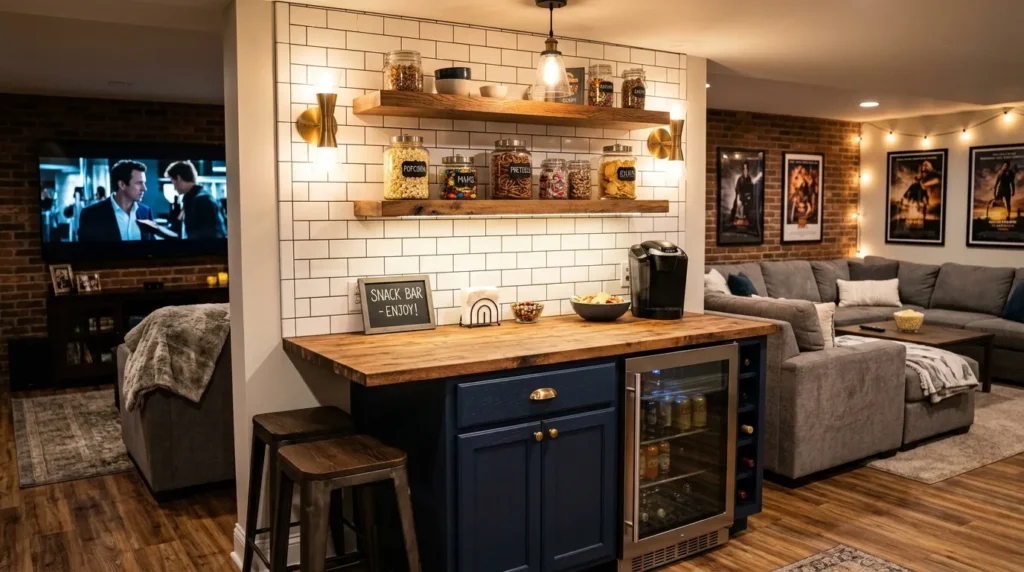
- A snack bar keeps drinks and treats close during movies or game nights.
- Small cabinets can hide paper goods, extra cups, and party supplies.
- Open shelves with jars add a fun Pinterest-style detail.
- This idea makes the basement feel more like a complete entertaining space.
A snack bar gives the basement that little wow factor everyone remembers. It makes the room feel more complete, especially for movie nights, sleepovers, or casual weekend gatherings. You do not need a full kitchen to make it work. A mini fridge, a slim cabinet, and a small countertop can handle drinks, popcorn, and simple treats. Among basement family room ideas, this one is especially useful because it adds both convenience and a sense of fun without taking over the whole layout in most homes, without overwhelming the space too.
Place the snack area near the seating zone, but not so close that people block the TV while grabbing drinks. A short wall, unused alcove, or space under the stairs can work beautifully. Choose finishes that match the rest of the room, such as wood shelves, black hardware, or a tile backsplash. Glass jars, trays, and labeled baskets make the setup feel styled instead of messy. The result is a cozy entertainment corner that makes staying downstairs feel easy, comfortable, and a little special for everyone during gatherings, too.
Fireplace Focal Point
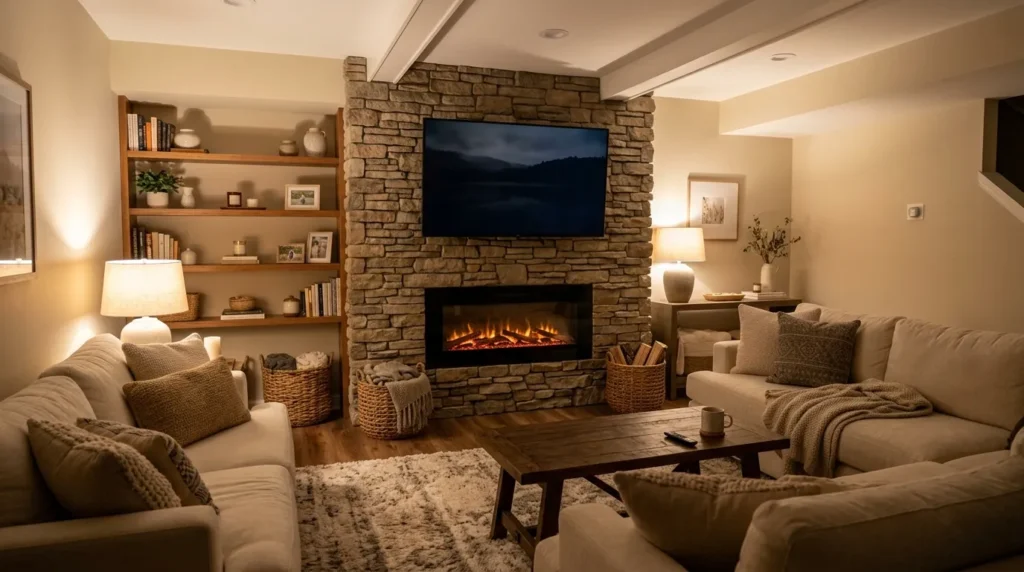
- A fireplace makes the basement feel warm, finished, and inviting.
- It creates a natural focal point for the seating arrangement.
- Electric fireplaces are easier to add than traditional built-ins.
- Stone, wood, or tile surrounds add texture and visual interest.
A fireplace can completely change the feeling of a basement family room. It adds warmth, comfort, and a cozy focal point that makes the space feel less like a lower level and more like a real living area. Even an electric fireplace can create that soft glow people love during movie nights or winter evenings. This idea works especially well when paired with a TV wall, built-in shelves, or a simple mantel styled with candles, artwork, and family photos for a layered, lived-in look.
In my experience, basements feel more welcoming when there is one strong visual anchor. A fireplace does that beautifully because it gives the room a clear center. Keep the seating arranged toward it so conversations, movies, and quiet evenings all feel natural. If the room is small, choose a slim wall-mounted electric fireplace. If the space is larger, a stone or wood surround can make it feel more custom. It is one of the most comforting basement family room ideas for creating a warm, stay-awhile atmosphere.
Under-Stairs Reading Nook
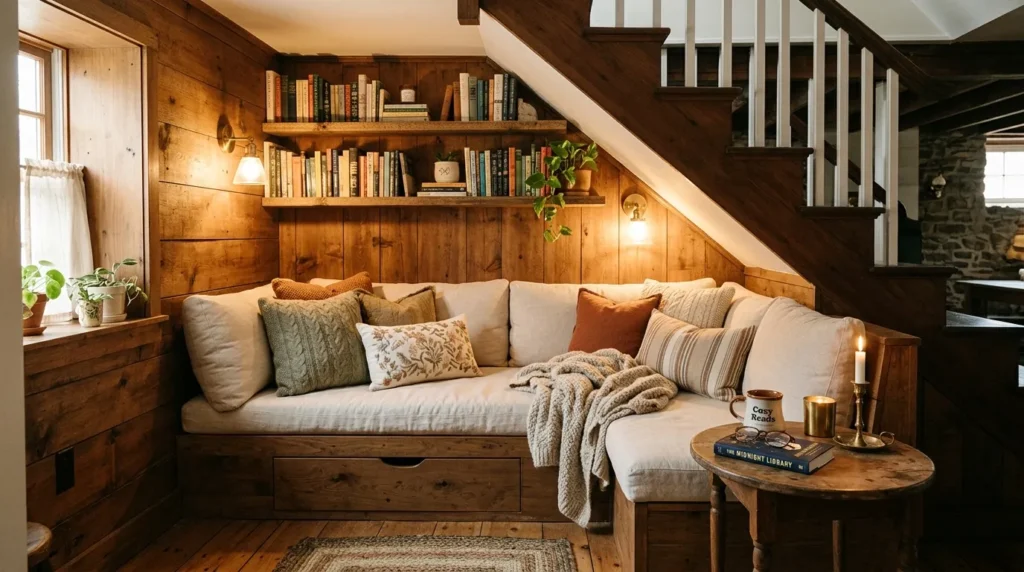
- An under-stairs nook uses space that often goes wasted.
- Built-in seating makes the basement feel more custom.
- Soft lighting turns the area into a cozy little retreat.
- Bookshelves add personality, warmth, and useful storage.
An under-stairs reading nook is a beautiful way to make a basement feel thoughtful and full of charm. Instead of leaving the space empty or using it for clutter, turn it into a small cozy escape. A bench cushion, a few pillows, and warm wall lighting can create a peaceful spot for reading, scrolling, or quiet time. This idea is especially helpful in family homes where everyone needs a little corner to relax without leaving the main room completely.
I’ve noticed that small tucked-away spaces often become the most loved areas in a home when they feel intentional. Keep the nook simple and comfortable. Use floating shelves for books, baskets for blankets, and a washable cushion if kids will use it often. A soft sconce or picture light can make the area feel warm without needing a lamp. The result is practical, Pinterest-worthy, and full of personality, especially in a basement that needs both function and cozy style.
Hidden Storage Wall
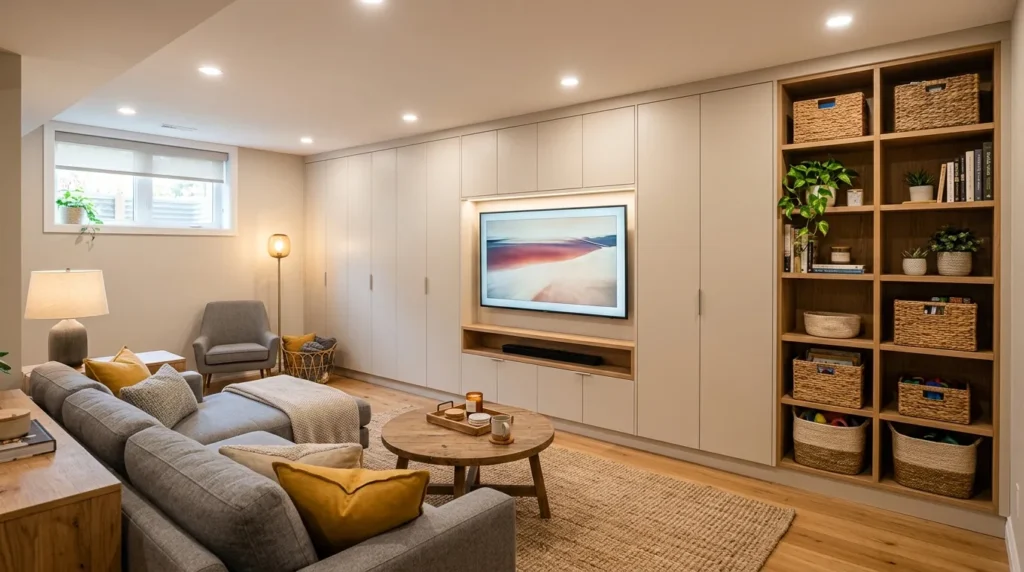
- Hidden storage keeps the basement looking calm and clean.
- Cabinets are perfect for toys, games, blankets, and seasonal items.
- A full storage wall can double as a beautiful design feature.
- Mixing cabinets with open shelves keeps the room from feeling too plain.
A hidden storage wall is one of the smartest ways to make a basement family room work for real life. Basements often collect everything from board games to extra pillows, kids’ toys, gaming consoles, and holiday decor. Without good storage, the room can quickly feel messy. Built-in cabinets or tall storage units help hide the clutter while keeping everything easy to reach. The space feels cleaner, calmer, and more finished, even when it is used every day.
If you love transforming underused spaces, these garage interior ideas show how any utility space can become stylish, organized, and fully functional.
This idea works best when the storage blends into the room instead of standing out too much. Choose cabinet colors that match the walls for a seamless look, or add natural wood shelves to warm things up. Use baskets, labeled bins, and closed drawers for items that do not need to be displayed. In my experience, family rooms stay neater when storage is easy and obvious. If cleanup feels simple, everyone is more likely to help keep the basement organized.
Movie Theater Feel
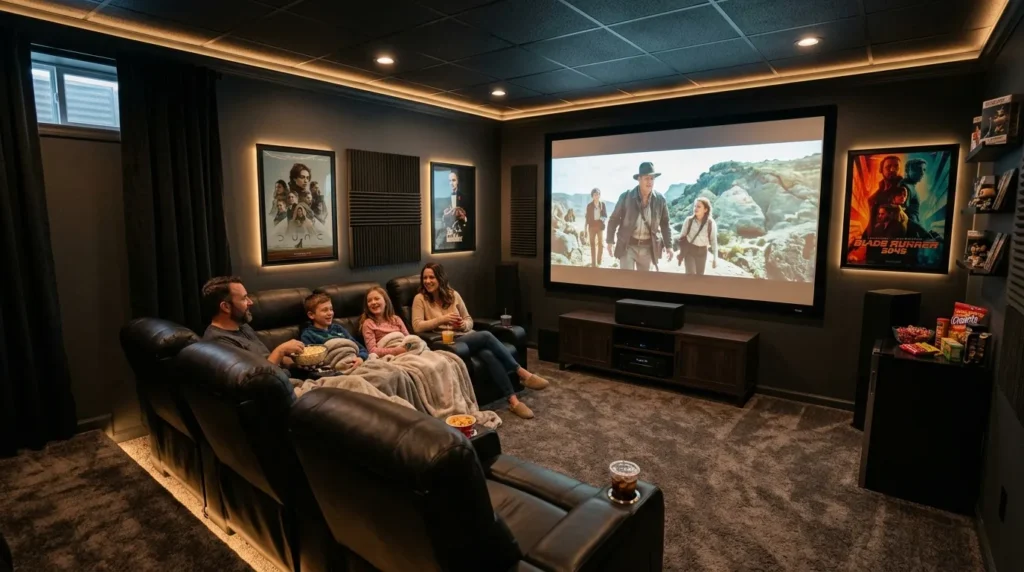
- A theater-style setup makes the basement perfect for movie nights.
- Darker walls help create a cozy cinema feeling.
- Soft seating and carpet improve comfort and sound.
- Dimmable lights make the room feel more immersive.
A movie theater feel is perfect for families who use the basement mainly for relaxing, watching films, or hosting weekend hangouts. You do not need a luxury theater room to make this work. A large TV or projector, comfortable seating, dimmable lights, and soft flooring can create the same cozy experience on a realistic budget. Darker wall colors can also make the screen stand out and help the room feel more intimate during evening movie nights.
The key is comfort. Choose seating that supports long watching sessions, then add blankets, side tables, and easy snack storage nearby. I’ve seen this work beautifully when families use layered lighting instead of one bright ceiling light. Wall sconces, LED strips, or small lamps can create that soft glow without distracting from the screen. This setup turns the basement into a true destination in the home, where everyone wants to gather at the end of the day.
Teen Hangout Area
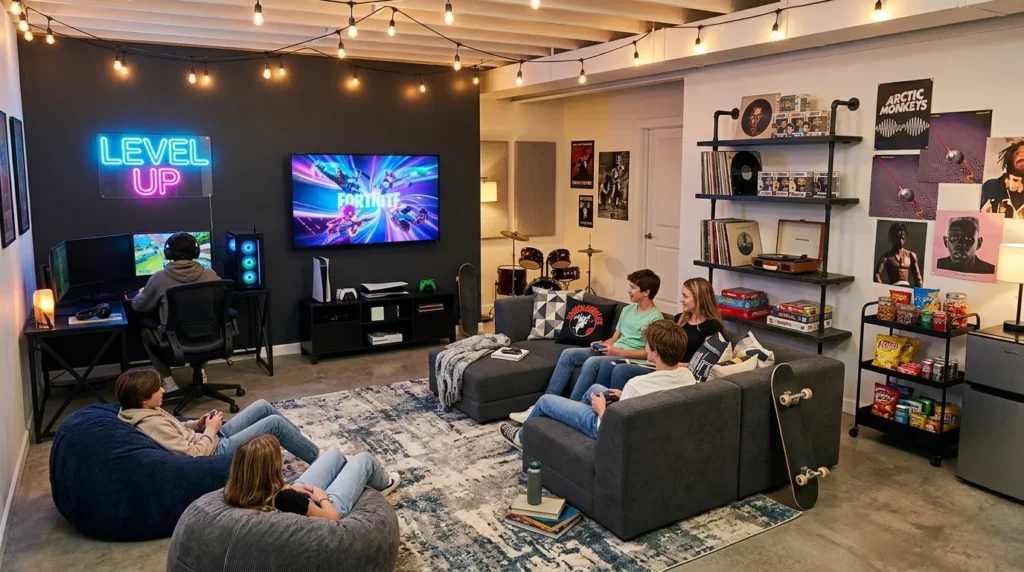
- A teen hangout gives older kids a space that feels like their own.
- Modular furniture keeps the layout flexible for friends and activities.
- A gaming or music zone adds personality and function.
- Durable fabrics make the space easier to maintain.
A teen hangout area can make the basement more useful as your family grows. Younger kids may need play mats and toy shelves, but teens usually want a relaxed place to watch shows, play games, listen to music, or hang out with friends. The best setup feels casual but still organized. A modular sofa, bean bags, a TV wall, and a small snack station can create a space they actually want to use without making the room feel messy.
Keep the design practical by choosing furniture that can handle daily use. Performance fabric, washable rugs, and sturdy storage make a big difference. Let the space have a little personality through posters, LED lights, framed art, or a fun wall sign. In my experience, teens enjoy a room more when it feels slightly separate from the main living area but still comfortable and welcoming. A basement is the perfect place to create that balance.
Open Family Layout
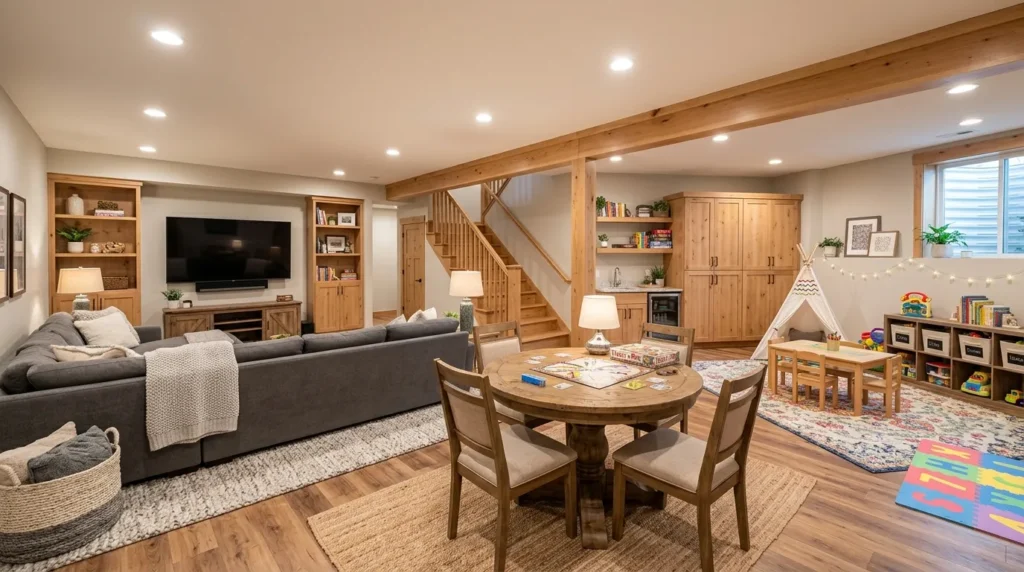
- An open layout helps the basement serve more than one purpose.
- Rugs can divide zones without building walls.
- Families can relax, play, watch TV, and gather in one shared area.
- Matching colors helps different zones feel connected.
An open family layout is ideal when your basement needs to do several jobs at once. One area can be for watching TV, another for games, and another for kids’ activities or reading. The trick is creating clear zones without making the room feel chopped up. Area rugs, furniture placement, lighting, and storage pieces can gently separate each function while keeping the whole space open, bright, and easy to move through.
The same layout principles that work in a living room work beautifully in a basement, too. Explore these small living room ideas 2026 for smart space planning inspiration.
This is one of the most flexible basement family room ideas because it grows with your household. A play zone can later become a homework corner, craft table, or teen lounge. A game table can work for puzzles, snacks, and casual work-from-home moments. Use one consistent color palette across the room so everything feels connected. Light walls, warm wood, and soft neutral fabrics can make even a large basement feel calm, cozy, and beautifully styled.
Warm Neutral Palette
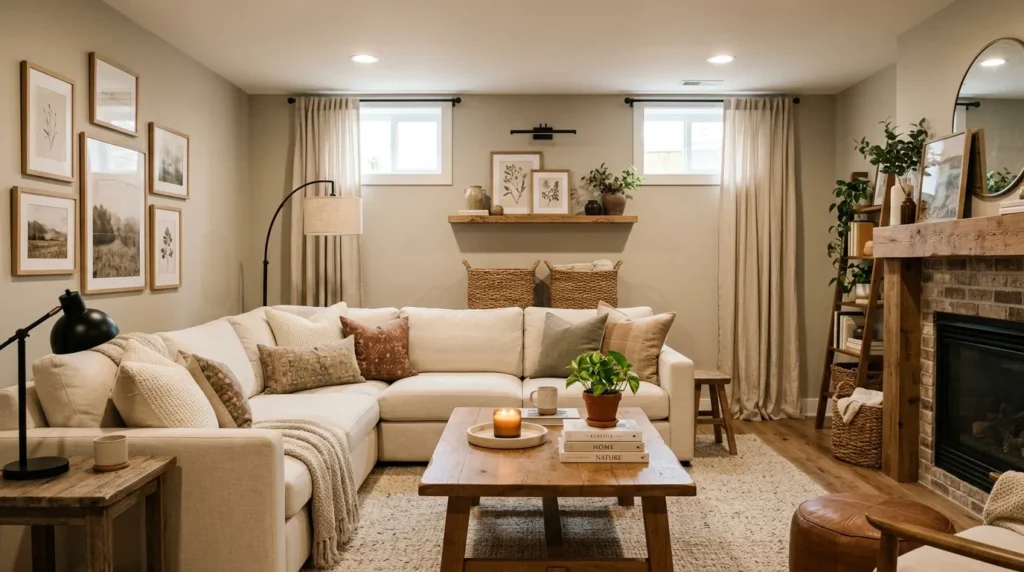
- Warm neutrals make a basement feel brighter and softer.
- Cream, beige, taupe, and greige help reflect limited light.
- Natural textures keep the room from feeling flat.
- This palette works with many decor styles and furniture pieces.
A warm neutral palette is a simple but powerful way to make a basement family room feel inviting. Since basements often have less natural light, heavy colors can sometimes make the space feel smaller or colder. Warm whites, soft beige, greige, oatmeal, and light taupe can brighten the room while still feeling cozy. These shades also create a calm background for sofas, rugs, baskets, artwork, and seasonal decor.
To keep neutral decor from feeling boring, focus on texture. Mix linen pillows, woven baskets, wood tables, chunky throws, soft rugs, and matte black accents. I’ve noticed that neutral rooms feel more expensive when they include several textures instead of too many colors. This approach is also beginner-friendly because it is easy to update over time. Add new pillows, art, or greenery whenever you want a fresh look without redesigning the whole basement.
Home Office Corner
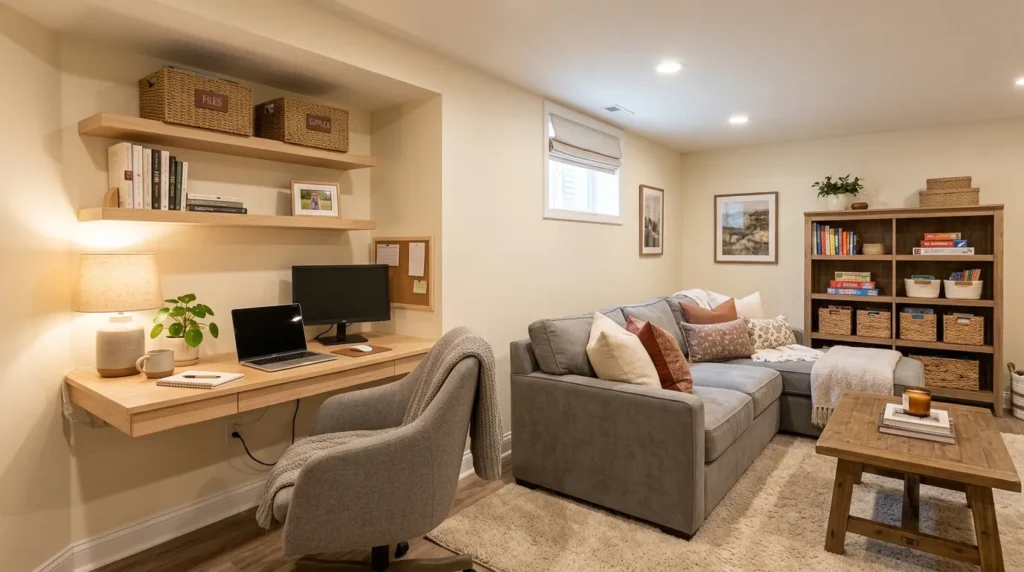
- A small desk corner makes the basement more useful during the day.
- Floating shelves keep work supplies neat without taking over the room.
- A warm lamp helps the area feel cozy instead of office-like.
- This setup works well for homework, bills, planning, or remote work.
A home office corner is a smart way to make a basement family room work harder without losing its cozy feeling. Many families need a small place for laptops, homework, paperwork, or quick planning, but not everyone has a separate office. A simple desk tucked along one wall can solve that problem beautifully. Keep the furniture light and minimal so the area blends with the rest of the room instead of feeling like a separate work zone.
In my experience, the best basement office corners are the ones that feel calm but not too formal. Add a comfortable chair, a small lamp, a tray for papers, and one or two shelves for supplies. If the basement is shared by the whole family, use baskets or closed boxes to hide clutter when work is done. This keeps the room looking relaxed for movie nights while still giving you a useful space for focused tasks during the day.
Craft and Homework Station
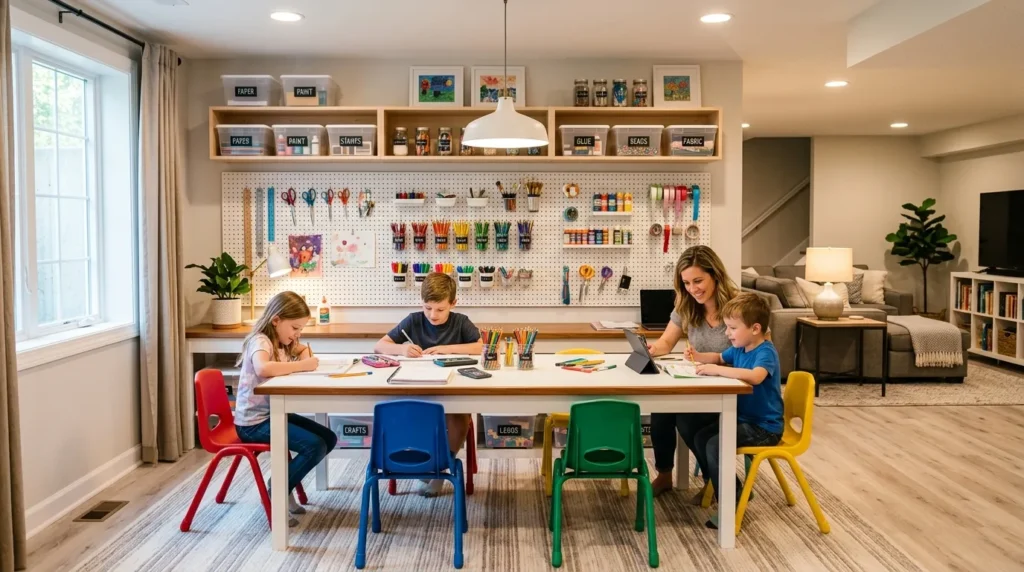
- A craft station gives kids and adults a place to create without mess spreading.
- Pegboards keep supplies visible, organized, and easy to reach.
- A long table works for homework, art projects, puzzles, and wrapping gifts.
- Labeled bins make cleanup faster and less stressful.
A craft and homework station is perfect for families who want the basement to feel useful, creative, and organized. Instead of using the kitchen table for every school project or art activity, this setup gives those tasks a proper home. A long table, a few chairs, and simple storage can create a practical zone for coloring, homework, scrapbooking, puzzles, or weekend crafts. It also helps contain supplies in one area, which makes everyday cleanup much easier.
I’ve noticed that creative spaces work best when everything has a clear place. Use jars for pencils, bins for paper, drawers for small supplies, and wall storage for items used often. Keep the surface as open as possible so the table is ready whenever someone wants to use it. This is one of those basement family room ideas that feels especially helpful for busy homes because it supports real routines while still looking bright, cheerful, and Pinterest-friendly.
Mini Gym Zone
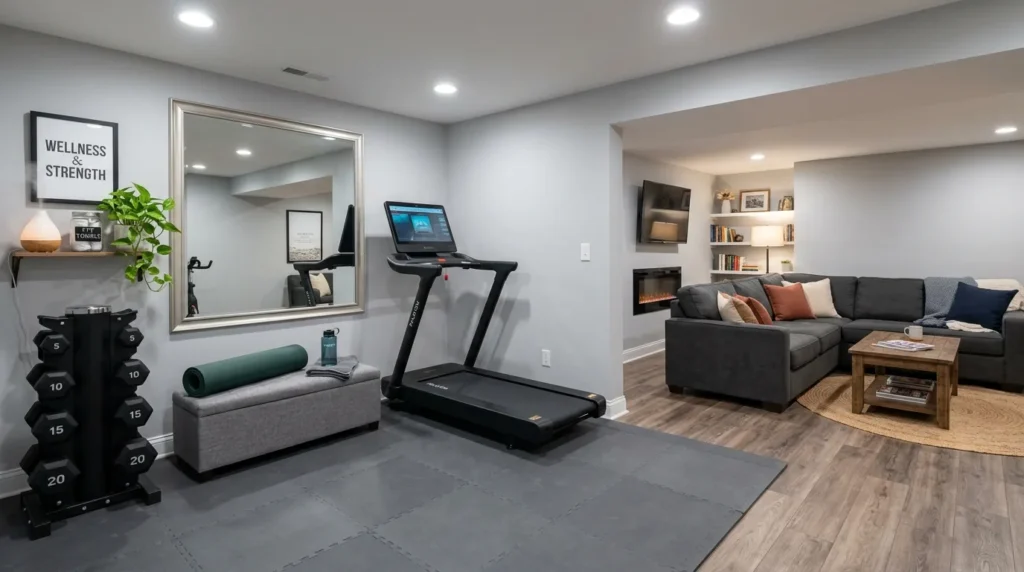
- A mini gym makes unused basement space more practical.
- Rubber flooring protects the floor and feels safer for workouts.
- A wall mirror helps the area feel brighter and more open.
- Compact storage keeps weights, mats, and bands from looking messy.
A mini gym zone can turn part of the basement into a useful wellness area without needing a full workout room. This works especially well if your family room is spacious or has an unused corner. A yoga mat, small weight rack, treadmill, or exercise bike can fit neatly when planned with care. The key is making the zone feel intentional, not like random workout equipment was dropped into the room.
Keep the setup simple and clean. Use a storage bench for resistance bands, towels, and smaller accessories. Add a mirror to reflect light and make the basement feel less closed in. In my experience, workout spaces are easier to use when they are visible but not cluttered. If the gym corner looks neat and inviting, you are more likely to actually use it. It also adds a daily function to the basement while keeping the main family area comfortable and stylish.
Guest Sleepover Setup
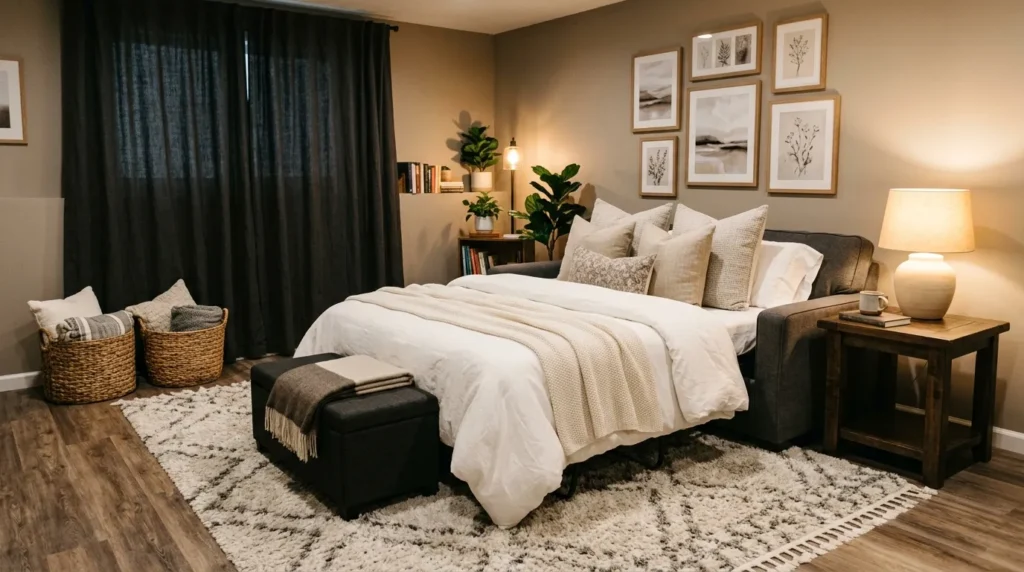
- A sleeper sofa makes the basement useful for overnight guests.
- Storage ottomans can hold extra blankets, pillows, and sheets.
- Blackout curtains help the space feel more private and restful.
- Soft lamps make the room feel welcoming at night.
A guest sleepover setup is a practical idea if your basement family room also needs to host visitors. You do not need a full guest bedroom to make people feel comfortable. A sleeper sofa, cozy bedding, a side table, and good lighting can turn the room into a restful overnight space when needed. This is especially helpful for family visits, kids’ sleepovers, or holiday weekends when the main bedrooms are already full.
The secret is keeping guest essentials close but hidden. Store extra sheets, pillows, and blankets inside an ottoman, cabinet, or labeled basket. Add blackout curtains if there are windows, and place a lamp near the sleeping area so guests do not have to rely on bright ceiling lights. I’ve seen this work beautifully in small homes where every room needs to serve more than one purpose. It makes the basement feel flexible, thoughtful, and ready for real life.
Wood Accent Wall
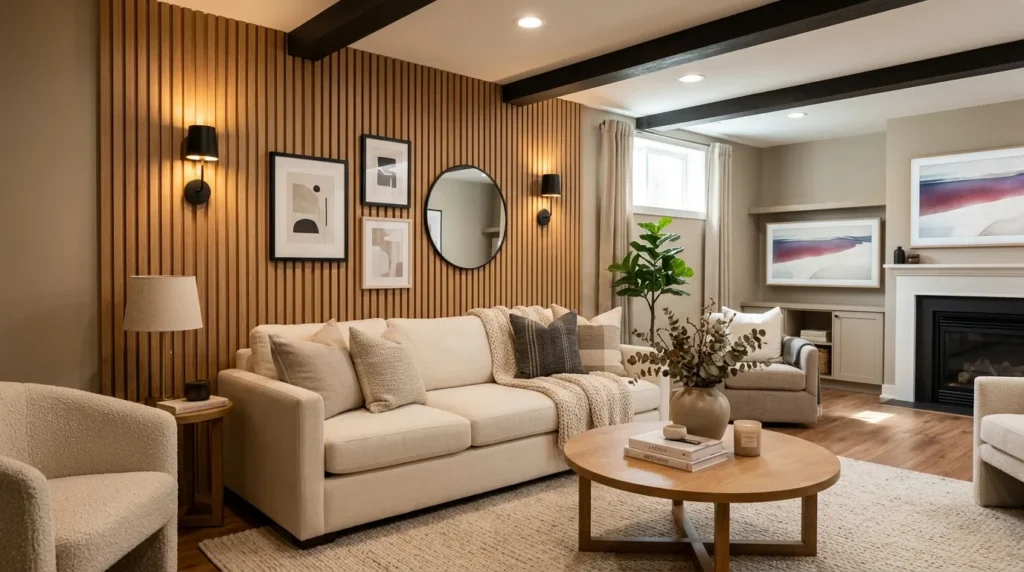
- A wood accent wall adds warmth to a basement instantly.
- Vertical slats can make low ceilings feel taller.
- Natural wood texture keeps neutral rooms from looking flat.
- It creates a beautiful backdrop for sofas, TVs, or reading corners.
A wood accent wall can make a basement family room feel custom, warm, and thoughtfully designed. Since basements can sometimes feel plain or cold, adding natural texture is a simple way to soften the space. A slat wall, board-and-batten design, or simple wood paneling can create a strong focal point without needing too much decor. It also photographs beautifully, which makes it perfect for Pinterest-style interiors.
Choose the wall carefully. Behind the sofa, around the TV, or near a reading nook are usually the best places. If the basement is small, keep the wood tone light or medium so the space does not feel heavy. In my experience, vertical lines work especially well in lower-ceiling rooms because they draw the eye upward. Pair the wall with soft fabrics, warm lighting, and simple artwork for a finished look that feels cozy but not cluttered.
Storage Ottoman Centerpiece
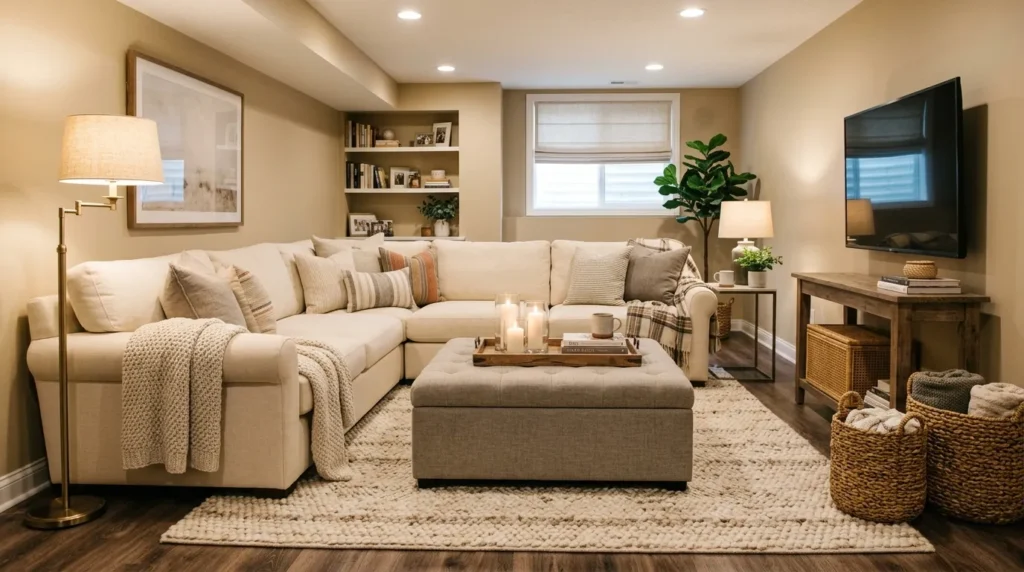
- A storage ottoman works as a table, footrest, and hidden storage piece.
- Soft edges are safer for kids than sharp coffee table corners.
- A tray keeps drinks, books, and decor organized on top.
- Hidden storage is perfect for blankets, toys, games, and remotes.
A storage ottoman is one of the easiest basement upgrades because it adds comfort and function at the same time. It can replace a traditional coffee table while offering a softer, more relaxed feeling. This is especially helpful in family spaces where kids play, people put their feet up, and blankets are often used. Choose a large upholstered ottoman that fits the seating area without blocking the walking path.
To keep it styled, place a tray on top for candles, books, coasters, or snacks. Inside, store everyday items that usually make the room look messy. I’ve tried this in casual living spaces, and it makes cleanup feel almost effortless. The room looks put together quickly, even after a busy evening. For basement family room ideas that feel both pretty and practical, a storage ottoman is a simple choice that works in almost every layout.
Bright White Refresh
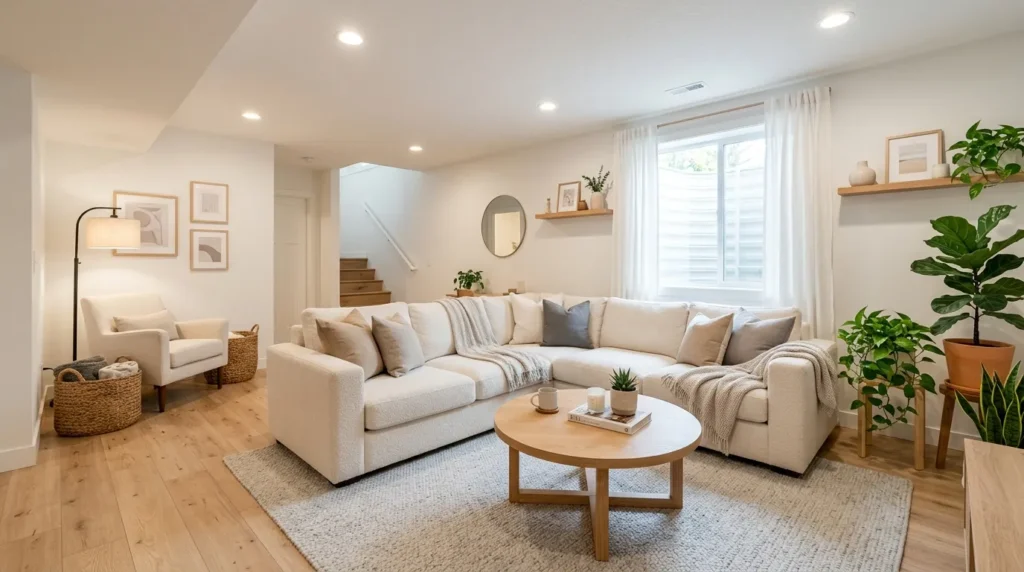
- White walls can make a basement feel cleaner, brighter, and more open.
- A white ceiling helps reduce the heavy feeling of a lower level.
- Light wood and warm textiles keep the space from feeling cold.
- Greenery adds freshness and life to the room.
A bright white refresh is a great option when your basement feels dark, dated, or heavy. Paint can make a huge difference, especially in rooms with limited natural light. Soft white walls and a white ceiling help bounce light around the space, making the room feel larger and more welcoming. The key is choosing a warm white instead of a stark one, so the basement still feels cozy and comfortable.
To keep the room from looking plain, add texture through rugs, pillows, baskets, wood furniture, and curtains. A few plants or realistic faux greenery can also make the space feel more alive. In my experience, basements look best when bright walls are balanced with warm, natural materials. This approach gives you a clean foundation that is easy to decorate, easy to update, and perfect for creating a fresh family room that feels open and inviting.
People also ask
How to design a basement family room?
Start with a cozy seating layout, layered lighting, soft flooring, and smart storage. Keep the colors light and warm so the basement feels open, comfortable, and family-friendly.
What should not be stored in a basement?
Avoid storing important papers, delicate fabrics, wood furniture, electronics, and anything that can be damaged by moisture, mold, or temperature changes.
Can a family room be in the basement?
Yes, a basement can make a great family room if it is dry, well-lit, comfortable, and properly arranged for relaxing, watching TV, playing games, or spending time together.
What is the best flooring for a family room in a basement?
Luxury vinyl plank, carpet tiles, engineered flooring, and moisture-resistant rugs are great choices because they are comfortable, durable, and better suited for basement conditions.
Conclusion
A basement does not have to feel cold, empty, or unfinished. With the right design choices, it can become a warm family room filled with comfort, function, and personality. These basement family room ideas show how simple updates like better lighting, cozy seating, storage, rugs, and creative zones can completely transform the space. For more interior inspiration, explore our garage interior ideas for functional upgrades, get layout tips from our small living room ideas 2026, and choose the perfect seating with our luxury sofa design ideas.
I’ve seen how even one thoughtful change can make a room feel more loved and useful. Save this post on Pinterest, try your favorite ideas at home, and share it with someone who wants to make their basement feel beautiful and welcoming.
Welcome to Homely Crafter! I am Muhammad Israr, the founder of Homely Crafter, bringing 4+ years of hands-on interior design and renovation experience to practical, budget-friendly home decor ideas for every room. Let’s decorate together!