
A kitchen can feel brighter, softer, and more welcoming with the right warm white kitchen ideas.
If your space feels cold, flat, or too plain, this style brings in the gentle glow your home may be missing. Warm white works beautifully in any kitchen size. Explore these small kitchen ideas 2026 to see how a bright palette can make compact spaces feel open and airy.
This article is about using creamy cabinets, soft lighting, natural wood, textured tile, brass accents, and cozy details to create a kitchen that feels fresh but never sterile. In my experience, the most beautiful light kitchens are not just white; they are layered with warmth, texture, and practical touches. These ideas will help you make your kitchen feel more open, calm, and inviting while still looking polished enough to save, share, and revisit for inspiration.
Cream Cabinet Glow
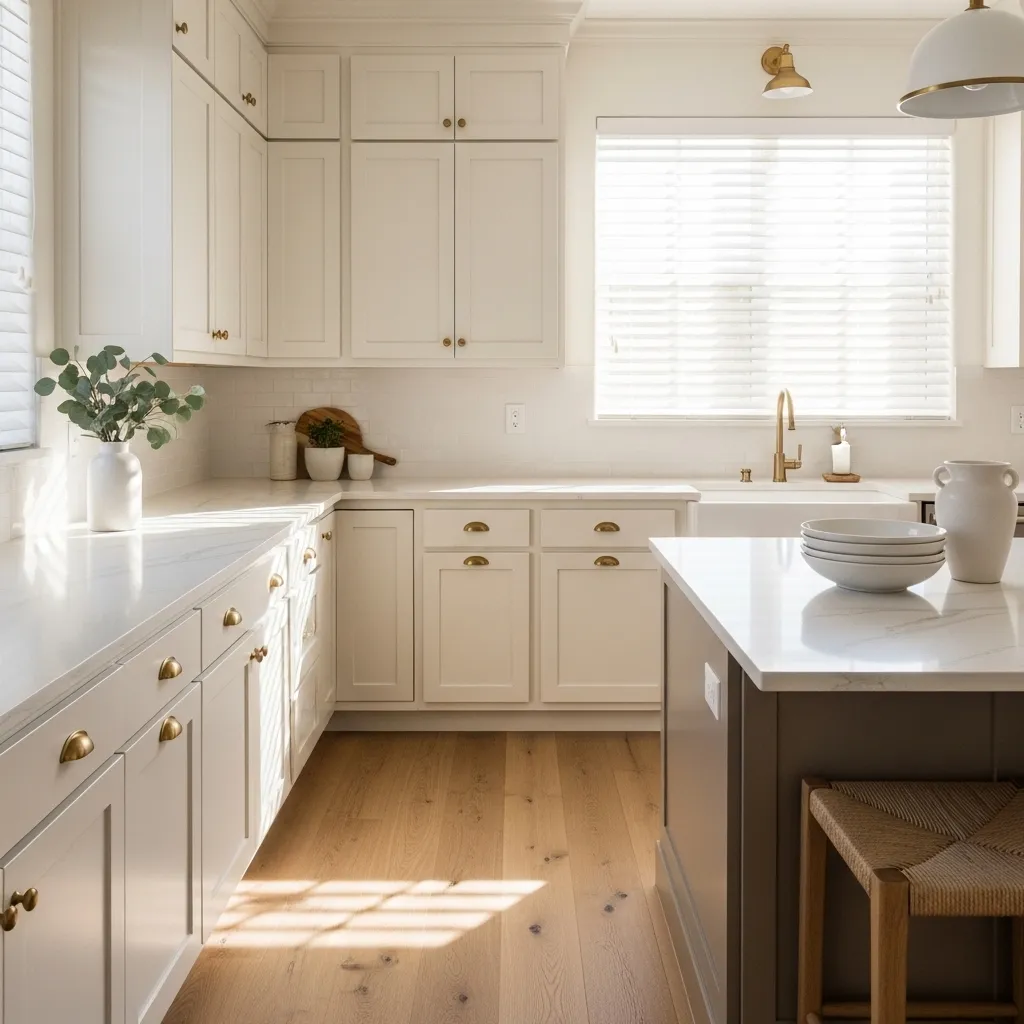
- Soft cream cabinets brighten the kitchen without feeling cold.
- This idea adds warmth while keeping the room clean and timeless.
- Light counters and pale floors help the whole space feel open.
- Brass or wood details keep the look from feeling too plain.
Creamy cabinets can instantly make a kitchen feel softer, brighter, and more welcoming without looking plain. This shade works beautifully because it reflects light gently, instead of creating the sharp glare that pure white sometimes brings. In real homes, especially kitchens with limited windows, a warm cabinet color can make the room feel open while still adding depth. Pairing cream cabinetry with simple counters, light flooring, and subtle hardware creates a calm base that feels timeless. I’ve noticed this look works especially well when homeowners want brightness but still crave a cozy, lived-in feeling.
The real charm comes from how easily cream cabinets blend with everyday kitchen details. Wooden stools, woven shades, ceramic bowls, and soft linen runners all look more intentional against this background. For anyone exploring warm white kitchen ideas, this is one of the easiest places to begin because cabinets shape the whole room. The finish can be matte, satin, or lightly glazed, depending on the mood you want. The result is a kitchen that feels clean, soft, and inviting, with enough warmth to avoid feeling cold, flat, or sterile overall.
Soft Marble Backsplash
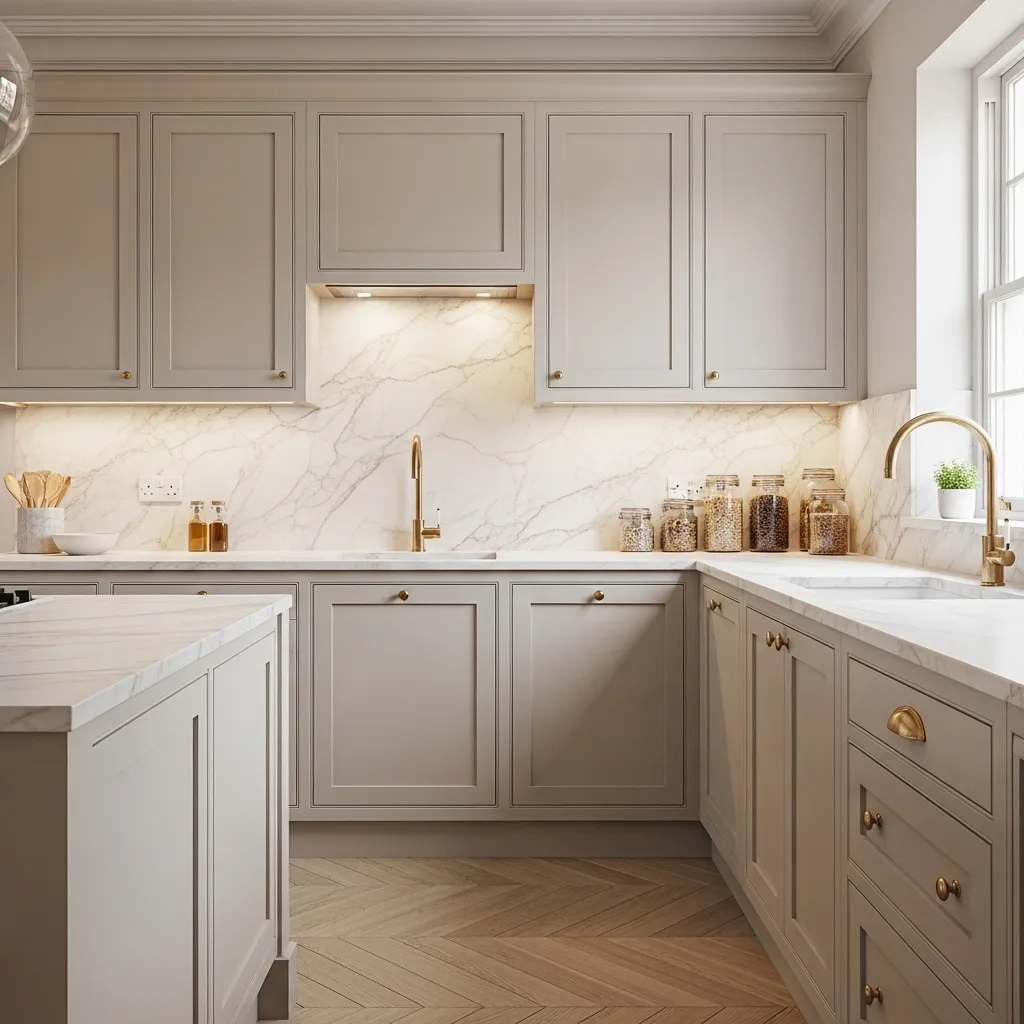
- Gentle veining adds movement without making the room feel busy.
- A marble-style surface makes simple cabinets look more elevated.
- Beige or taupe tones help the backsplash feel warm, not icy.
- This works beautifully behind a stove, sink, or open shelving area.
A soft marble backsplash can turn a simple kitchen wall into a quiet focal point. The gentle veining brings movement without overwhelming the room, which is especially helpful in kitchens that already have light cabinets and counters. Beige, taupe, or honey-toned marble patterns add just enough contrast to keep the space from looking flat. This idea works in both modern and traditional homes because the surface feels polished but still natural. I’ve seen this work well when paired with warm lighting, because the stone catches the glow and makes the whole kitchen feel more refined.
The best part is that a marble-inspired backsplash can look luxurious even in a small kitchen. You do not need a dramatic pattern or a full remodel to get the effect. A single wall behind the stove or sink can create a beautiful visual anchor. When the surrounding colors stay soft, the backsplash adds texture instead of clutter. It also makes everyday items, like a brass pot filler or a simple cutting board, feel styled. The final look is bright, clean, and slightly elevated, with a gentle warmth that photographs beautifully for Pinterest.
Warm Wood Accents
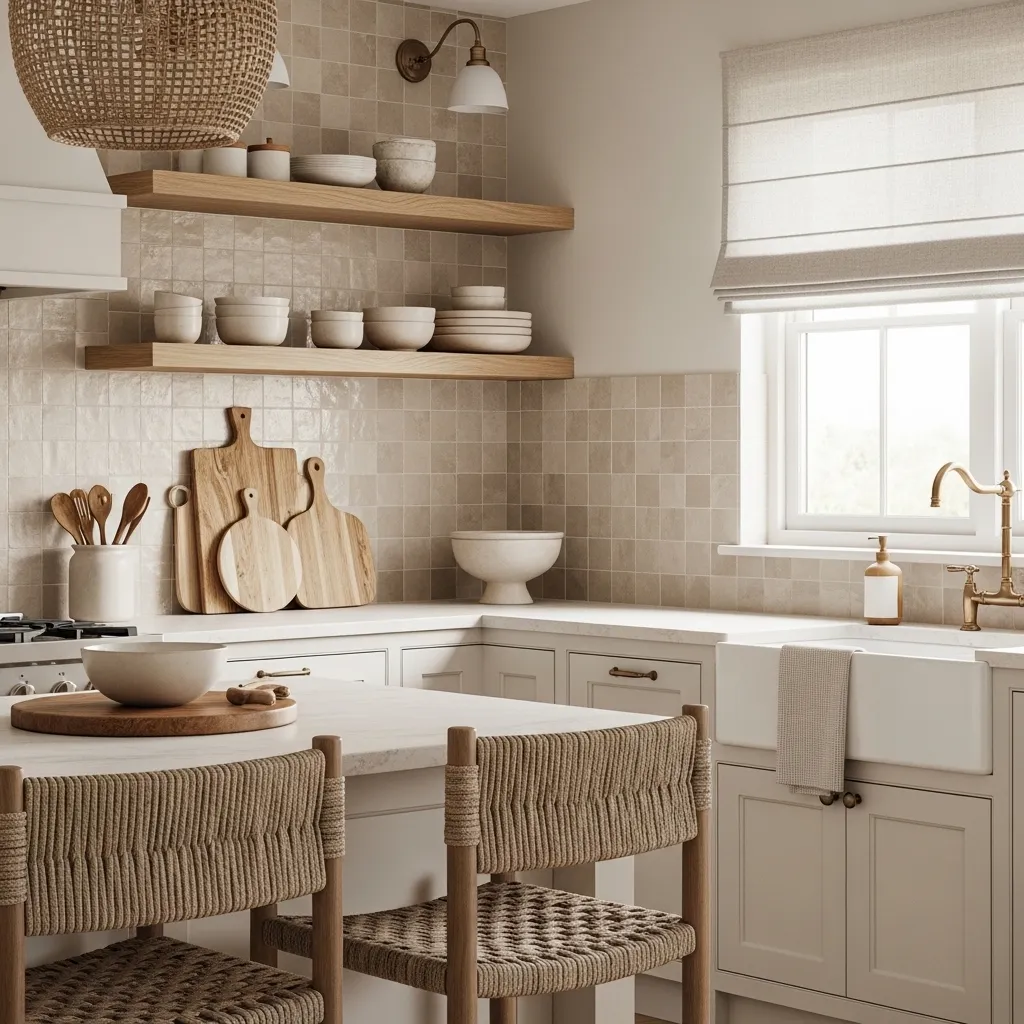
- Wood adds natural warmth to pale kitchen finishes.
- Small details like stools, shelves, or cutting boards can soften the room.
- Light oak keeps the look airy and fresh.
- Darker wood adds contrast if the kitchen needs more depth.
Warm wood accents are the secret to keeping a light kitchen from feeling too empty. A few oak shelves, wooden stools, or natural cutting boards can bring instant texture into a pale space. This matters because white and cream surfaces can sometimes feel unfinished when there is no visual grounding. Wood softens that effect and gives the kitchen a more collected, lived-in look. In my experience, even one wooden feature can change the mood, especially when it sits near cabinets, tile, or counters with a soft ivory tone nearby at home.
The easiest way to use this idea is to repeat wood in small, balanced moments. Try matching open shelves with stool legs, a fruit bowl, or a simple breadboard near the backsplash. This creates rhythm without making the room look overly decorated. Light oak feels airy, while walnut adds contrast and a richer mood. The result is a kitchen that still feels bright but has more personality and comfort. It also makes seasonal styling easier because greenery, candles, and ceramics naturally stand out against the warm wood details beautifully.
Brass Hardware Details
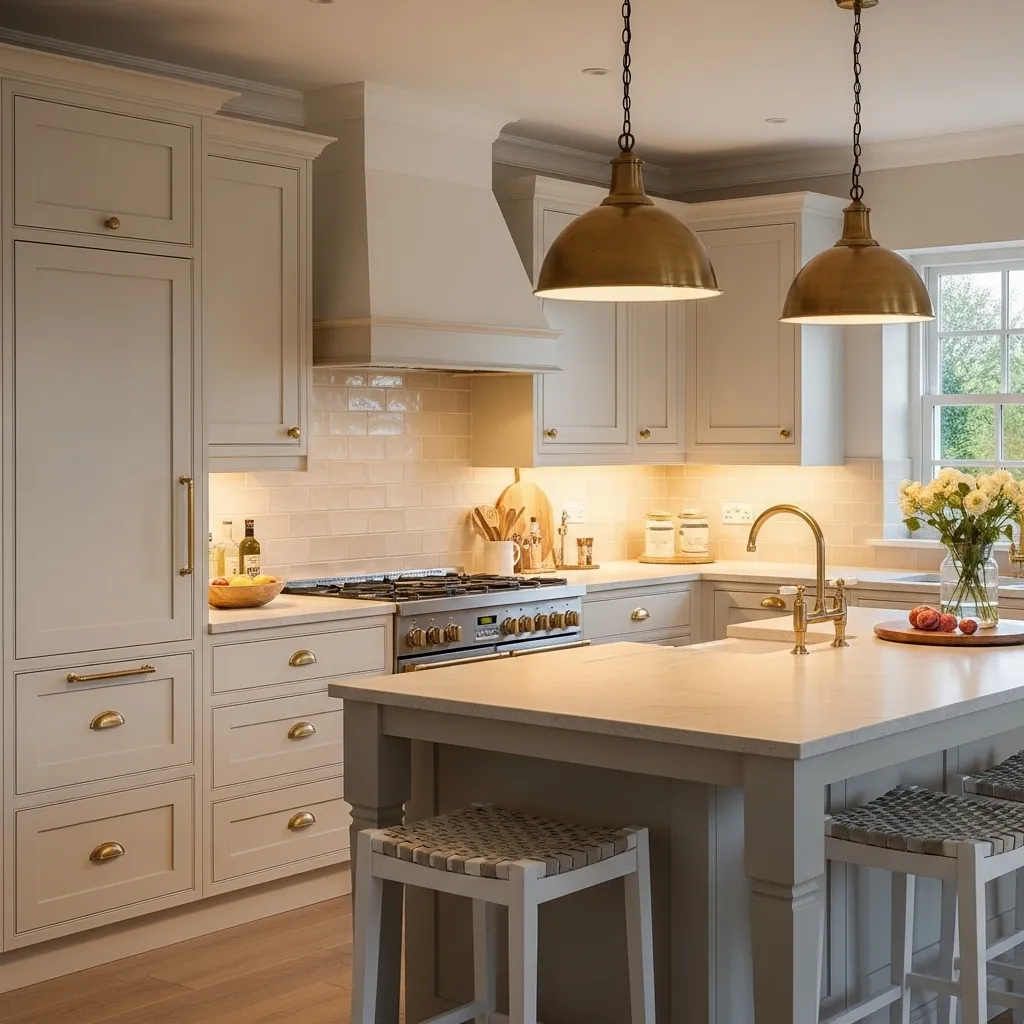
- Brass hardware adds warmth and polish in a small, affordable way.
- It pairs beautifully with cream, ivory, and soft white cabinets.
- Brushed finishes feel more timeless than overly shiny gold.
- Repeating brass in lighting or faucets makes the room feel cohesive.
Brass hardware adds a small glow that can completely change the feeling of pale cabinetry. It works because the metal brings warmth, shine, and definition without taking over the design. On cream or ivory cabinets, brass pulls look softer than black hardware and more noticeable than silver. This makes the kitchen feel finished, even when the rest of the room is simple. Many designers recommend using hardware as a low-effort upgrade because it gives cabinets personality while keeping the overall look clean, bright, and easy to live with daily in real homes.
Warm white pairs beautifully with rustic details. Explore our old farmhouse kitchen ideas for the perfect blend of cozy charm and bright elegance.
This idea is especially helpful when a kitchen feels nice but slightly unfinished. Swapping plain knobs for brushed brass, antique brass, or satin gold can make cabinets look more custom. The key is choosing a finish that feels warm rather than overly shiny. Repeating the metal on a faucet, pendant light, or shelf bracket creates a pulled-together result. Brass also photographs beautifully because it catches natural and artificial light in small highlights. The space instantly feels more polished, welcoming, and thoughtfully designed without needing a major renovation at all for most homeowners.
Buttery Island Centerpiece
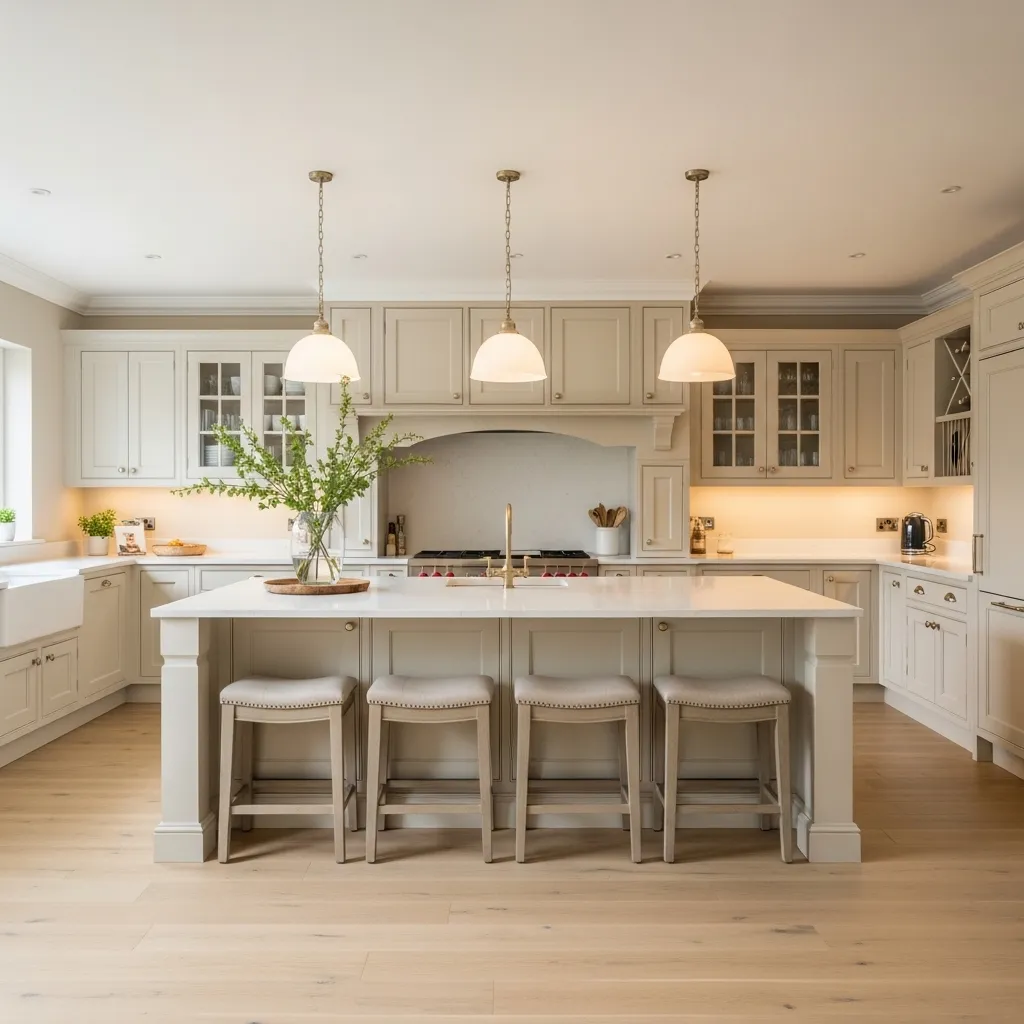
- A creamy island creates a soft focal point in the kitchen.
- It helps open-plan layouts feel more connected and welcoming.
- Beige stools and warm lighting make the island feel styled.
- This idea works well for family kitchens and everyday gathering spaces.
A buttery island can make the whole kitchen feel brighter while giving the room a gentle center point. Instead of choosing a stark white island, a soft creamy shade adds warmth and depth. This works well in open-plan homes because the island often connects the kitchen to the living area. A warm-toned island feels less clinical and more like a gathering place. It gives family members, guests, and everyday routines a clear visual anchor, which makes the room feel more organized, welcoming, and comfortable without adding extra visual clutter anywhere.
The island also gives you a chance to add texture through seating, lighting, and countertop choices. Beige stools, woven seats, rounded pendants, and pale stone surfaces all help the island feel styled but practical. I’ve noticed that softer island colors are easier to live with because crumbs, fingerprints, and daily wear are less visually harsh than on bright white surfaces. This makes the kitchen feel maintained, even on busy days. The final result is a bright, usable space that feels calm, family-friendly, and beautifully layered from every angle of the room.
Open Shelf Styling
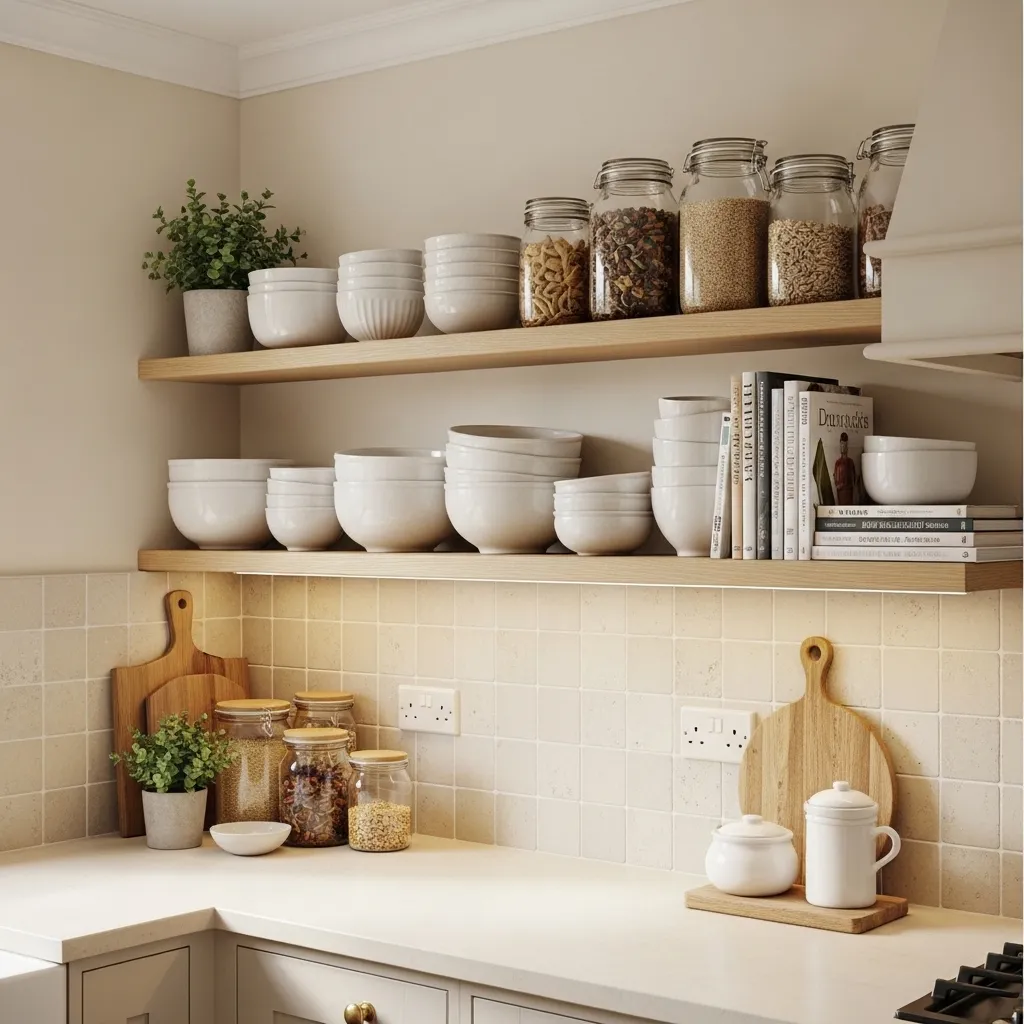
- Open shelves make a pale kitchen feel more personal.
- Cream dishes, glass jars, and small plants add gentle visual texture.
- This idea helps break up plain walls without making them heavy.
- Leaving space between items keeps the shelves looking calm.
Open shelves can make a warm white kitchen feel personal instead of overly perfect. They give you space to display the pieces you actually love, such as mugs, bowls, cookbooks, jars, or small plants. The trick is keeping the palette calm so the shelves look styled rather than crowded. Cream dishes, clear glass, light wood, and soft green accents work beautifully together. This setup adds visual interest to plain walls and helps the kitchen feel more relaxed, especially when closed upper cabinets would make the room feel heavy or boxed in.
A warm white kitchen looks best when it stays clutter-free. Browse our kitchen storage ideas for clever solutions that keep everything beautifully organized.
The most practical approach is to treat open shelving like a small display zone, not extra storage for everything. Choose items you use often, then leave breathing room between them. That space is what makes the shelves feel intentional and easy on the eyes. A pair of matching bowls, a leaning cutting board, and one trailing plant can be enough. This idea works especially well in smaller kitchens because it opens up the wall visually. The room feels lighter, more collected, and ready for everyday living without losing charm or everyday function.
Layered Pendant Lighting
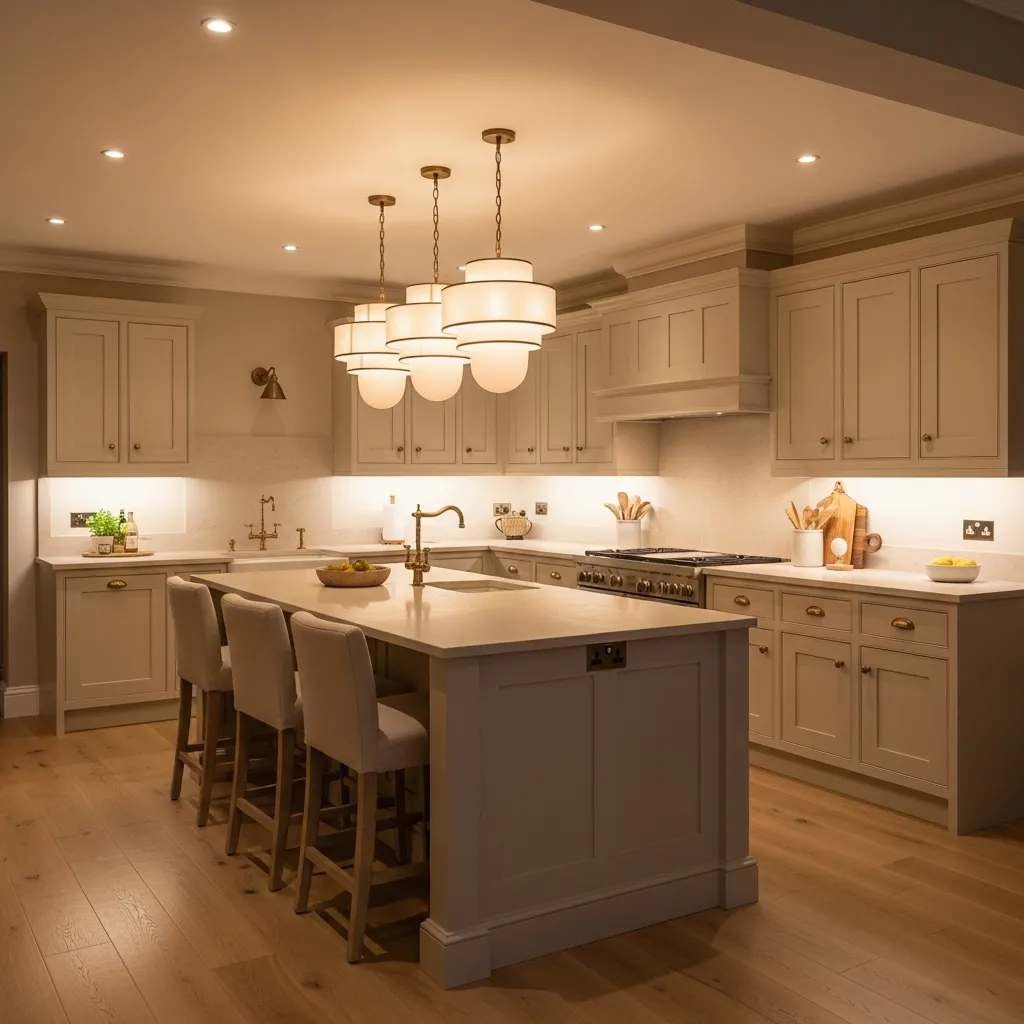
- Pendant lights add focus and warmth above the island.
- Layered lighting keeps the kitchen useful and beautiful at night.
- Warm bulbs make cream cabinets and brass accents glow softly.
- Combining task and ambient lighting creates a more finished space.
Layered pendant lighting can make a pale kitchen feel warm even after the sun goes down. One overhead fixture is rarely enough because kitchens need both function and atmosphere. Pendants over the island create focus, while recessed lights and under-cabinet strips keep work areas bright. This layered approach helps every surface look softer and more dimensional. It also prevents the room from feeling flat at night. When the bulbs have a warm temperature, the cabinets, counters, and metal finishes all glow in a way that feels cozy and inviting at night.
This lighting idea is especially useful in kitchens that look beautiful during the day but feel dull in the evening. Choose pendants that match the room’s style, such as glass globes, linen shades, or simple brass fixtures. Then add practical task lighting where chopping, cooking, and cleaning happen most. The goal is not to make the kitchen brighter everywhere, but to create layers of light in the right places. The result is a space that feels functional for real life and visually appealing for dinner, hosting, and quiet nights at home.
Textured Zellige Tile
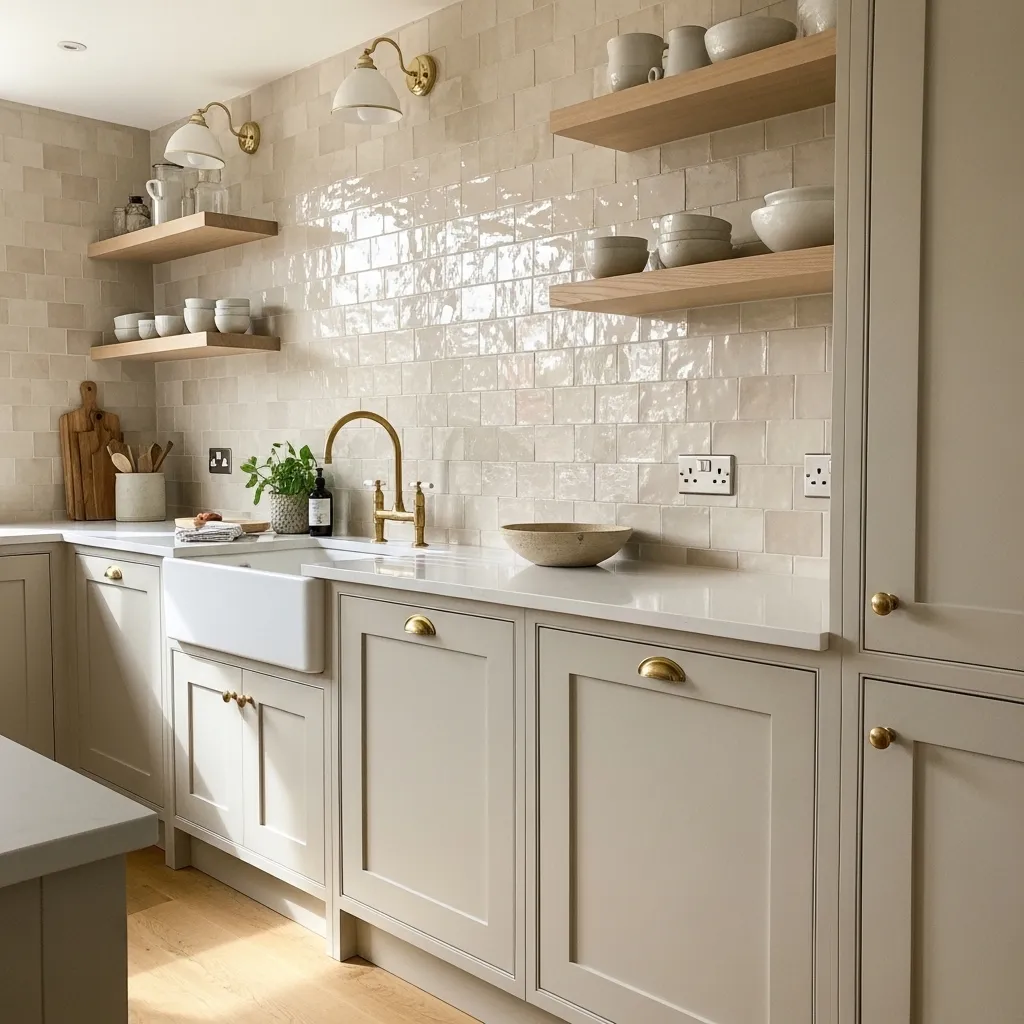
- Textured tile adds depth without making the kitchen feel crowded.
- The glossy surface reflects light in a soft, pretty way.
- Cream or beige tones keep the backsplash warm and natural.
- This is a great upgrade for plain cabinet walls.
Textured zellige tiles add handmade character to a light kitchen without stealing the whole scene. Their uneven surface catches light in tiny, beautiful ways, which gives the wall more movement than a flat tile. This works especially well behind a range or sink because those areas naturally draw the eye. Soft beige, ivory, or pearl-toned tiles keep the palette calm while still adding texture. I’ve noticed that kitchens with simple cabinetry often look more expensive when the backsplash has this kind of quiet, handcrafted detail. It feels custom, even when the layout is very simple.
The key is choosing a tile tone that feels warm rather than icy. A glossy white tile can sometimes look sharp, but a creamy zellige finish reflects light softly and feels more organic. Pair it with brass fixtures, wood shelves, or stone counters to build a layered neutral look. Because each tile has a slight variation, small marks and daily splashes are less noticeable than on perfectly flat surfaces. The result is a kitchen wall that feels bright, relaxed, and full of subtle personality without looking busy. It also photographs beautifully in natural daylight.
Creamy Stone Counters
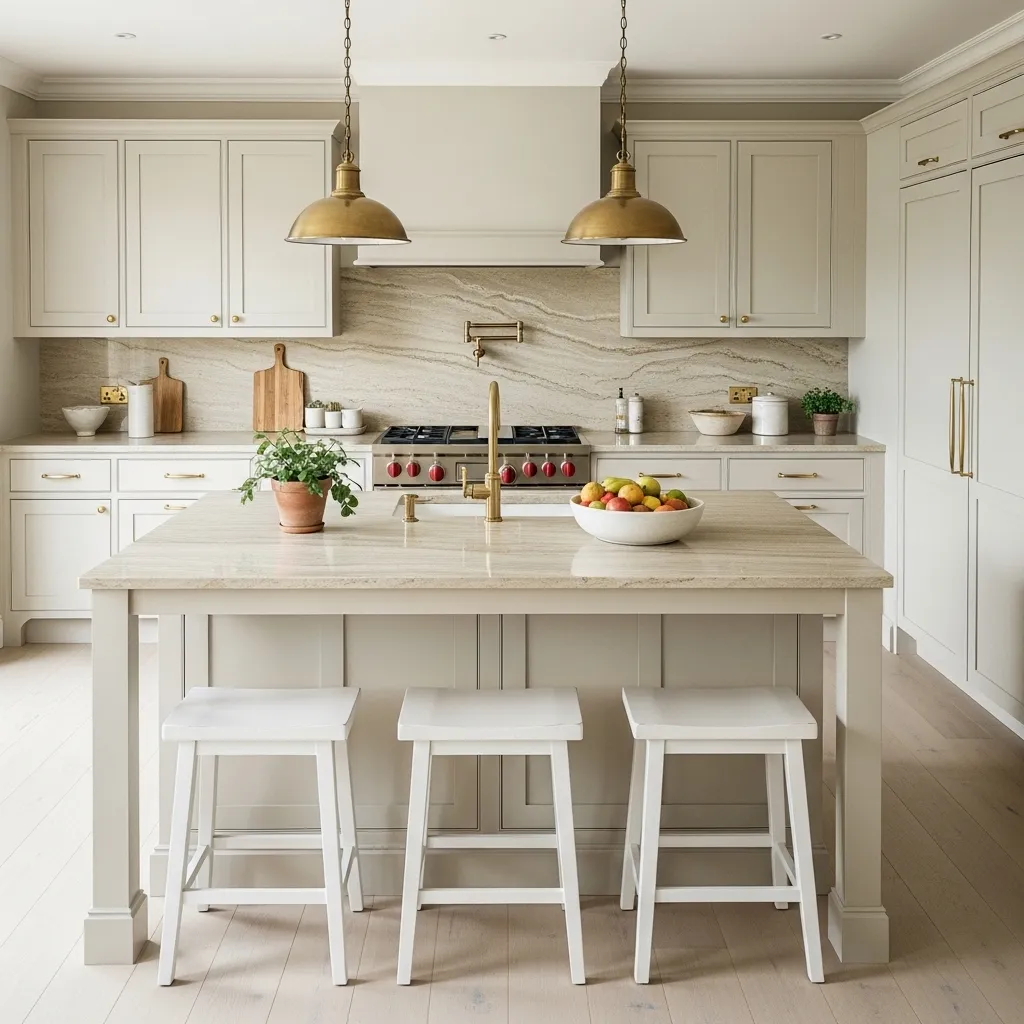
- Creamy counters keep the kitchen bright but not too stark.
- Gentle veining adds softness and natural movement.
- Slight patterning can hide tiny crumbs and daily marks.
- This idea works well with both modern and classic cabinets.
Creamy countertops can soften a kitchen instantly because they create a smooth, light-reflecting surface where daily life happens. A warm stone or quartz with gentle beige undertones feels cleaner than dark counters but less harsh than bright white. This balance matters in real homes, where counters need to look beautiful and handle cooking, coffee, snacks, and clutter. When the surface has faint veining or speckling, it adds depth while still keeping the kitchen airy. The whole room feels calmer, brighter, and easier to style. It also makes small appliances look less visually heavy.
This idea works beautifully with both painted cabinets and natural wood accents. A creamy counter can connect the island, backsplash, and flooring so the room feels more cohesive. It also gives simple decor pieces, like a vase, fruit bowl, or cutting board, a softer background. For busy kitchens, choosing a surface with slight patterning can be practical because crumbs and small marks do not stand out as quickly. The finished look feels polished but approachable, which is exactly what many homeowners want from a light, welcoming kitchen. It supports beauty and daily function together.
Linen Window Shades
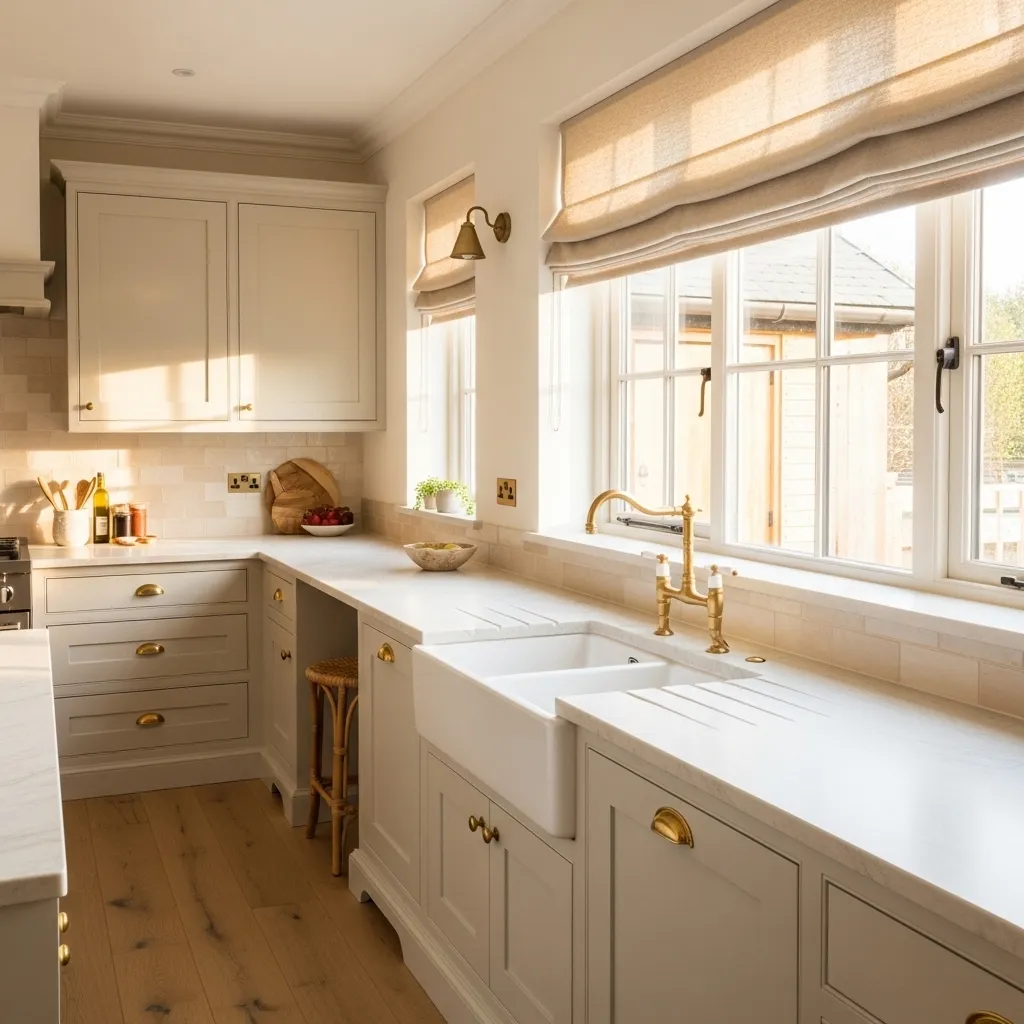
- Linen shades soften hard kitchen surfaces.
- They filter sunlight so the room feels warm, not harsh.
- Beige, flax, and ivory tones blend beautifully with pale cabinets.
- This small detail makes the kitchen feel more finished.
Linen window shades bring softness to a bright kitchen in a way hard finishes cannot. Kitchens are full of stone, tile, metal, and cabinetry, so adding fabric helps the room feel more comfortable. A natural linen shade filters sunlight gently, making cabinets and counters glow instead of glare. This is especially useful near breakfast areas or sinks where harsh light can feel uncomfortable. The look stays clean and simple, but the texture adds warmth, making the kitchen feel more relaxed and thoughtfully finished. It is a small touch with a surprisingly calming effect.
Choose shades in oatmeal, ivory, flax, or warm beige for the most natural result. These tones blend beautifully with pale cabinets while adding just enough contrast around the windows. Roman shades feel tailored, while woven linen panels feel breezier and more casual. In my experience, this small upgrade can make a kitchen feel less like a workspace and more like a room people want to linger in. It also helps frame outdoor views, soften window lines, and create a cozy Pinterest-ready finish. The whole space feels gentler during morning light.
White Oak Flooring
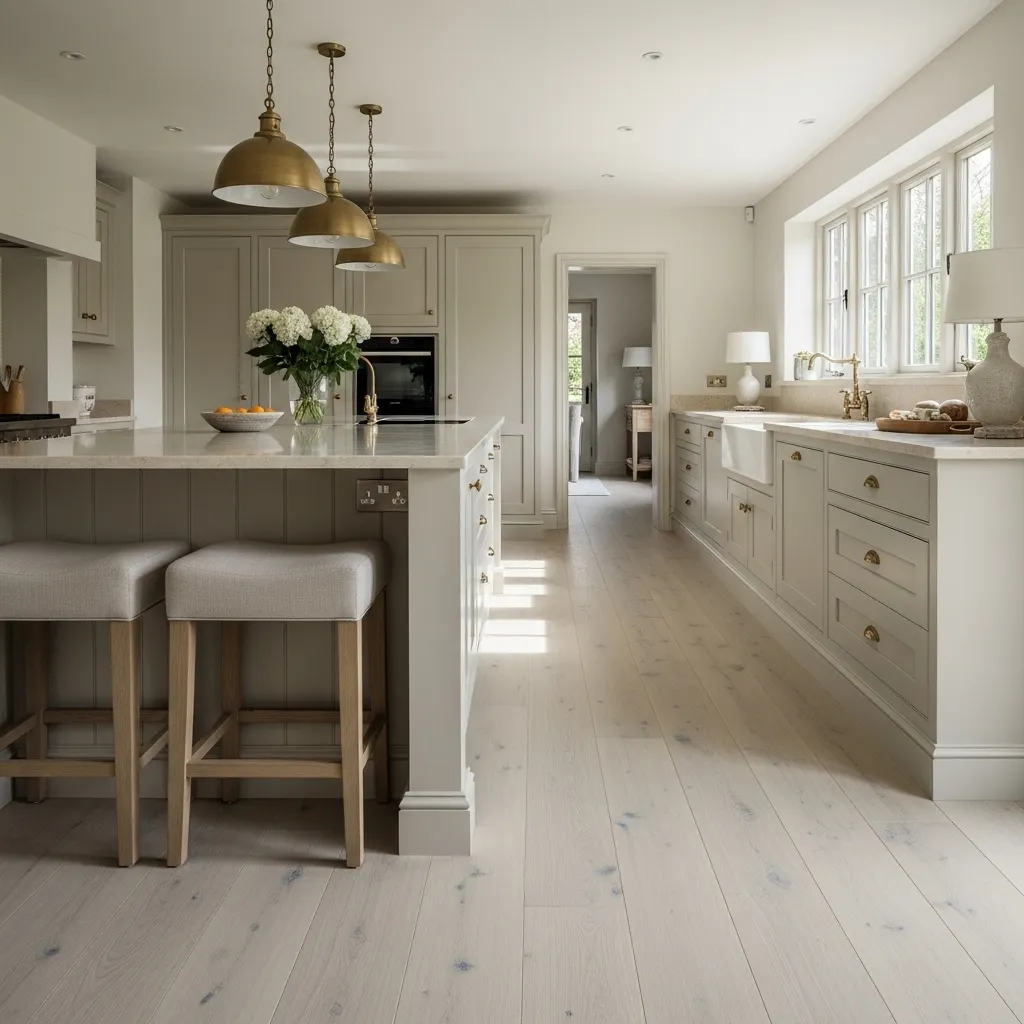
- White oak grounds the room with natural warmth.
- It keeps pale kitchens from feeling flat or unfinished.
- The visible grain adds texture without adding clutter.
- This flooring works well in open-plan homes.
White oak flooring gives a pale kitchen the grounding it needs to feel warm and balanced. Without a natural base, a light kitchen can sometimes feel too floating or unfinished. Oak brings gentle color, visible grain, and everyday durability, making it one of the most reliable choices for a bright neutral space. The warm undertone pairs beautifully with ivory cabinets, stone counters, and brass accents. It also helps the room feel connected to nearby living spaces, especially in open layouts. That natural flow makes the home feel more cohesive from every view.
The best part of white oak is that it can look modern, rustic, or classic depending on the finish. A matte finish feels relaxed and current, while wider planks create a more elevated look. If the kitchen already has lots of white surfaces, the floor adds contrast without feeling heavy. This is also a practical design move because natural wood tones hide minor dust and daily wear better than very dark floors. The final effect is bright, grounded, and easy to live with. It makes the kitchen feel complete from the ground up.
Arched Range Hood
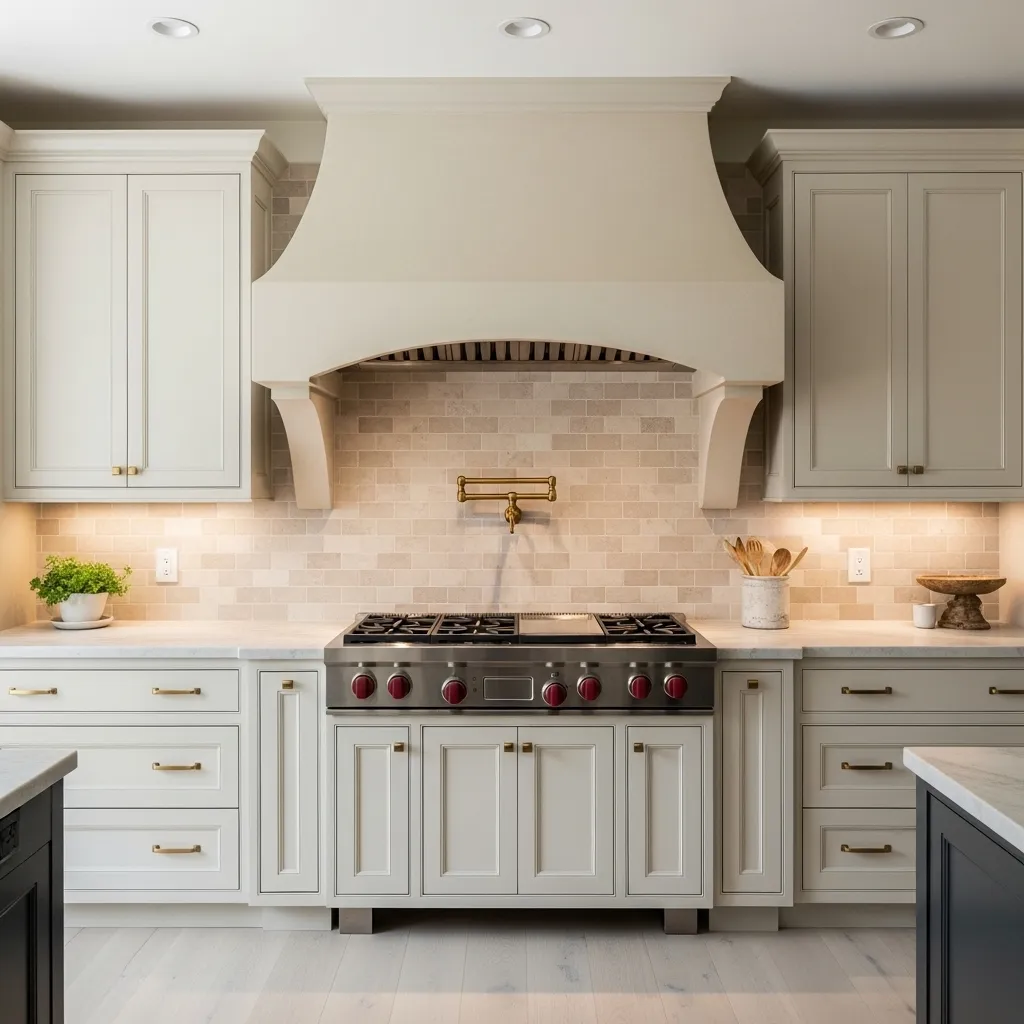
- An arched hood adds softness to straight cabinet lines.
- It creates a custom-looking focal point above the range.
- Matching the hood to the cabinets keeps the look calm.
- This detail works beautifully in classic and modern kitchens.
An arched range hood gives a light kitchen a soft architectural focal point. The curved shape breaks up straight cabinet lines and makes the cooking wall feel more custom. In a warm neutral palette, an arched hood can look elegant without becoming too formal. It works especially well with plaster, painted wood, or smooth drywall finishes because the surface blends naturally with nearby cabinetry. This idea adds structure to the kitchen while keeping the overall mood calm, airy, and inviting. It creates interest without relying on busy decor or heavy contrast.
This feature works best when the hood feels connected to the rest of the room. Matching it to cabinet color creates a seamless look, while adding subtle trim gives it more traditional character. Pairing the arch with a simple backsplash keeps the design balanced and prevents visual clutter. I’ve seen this detail transform basic cooking walls because it gives the eye one beautiful place to rest. The kitchen feels more designed, more graceful, and more memorable without needing bold color or dramatic pattern. It adds quiet elegance that lasts beautifully.
Cozy Breakfast Nook
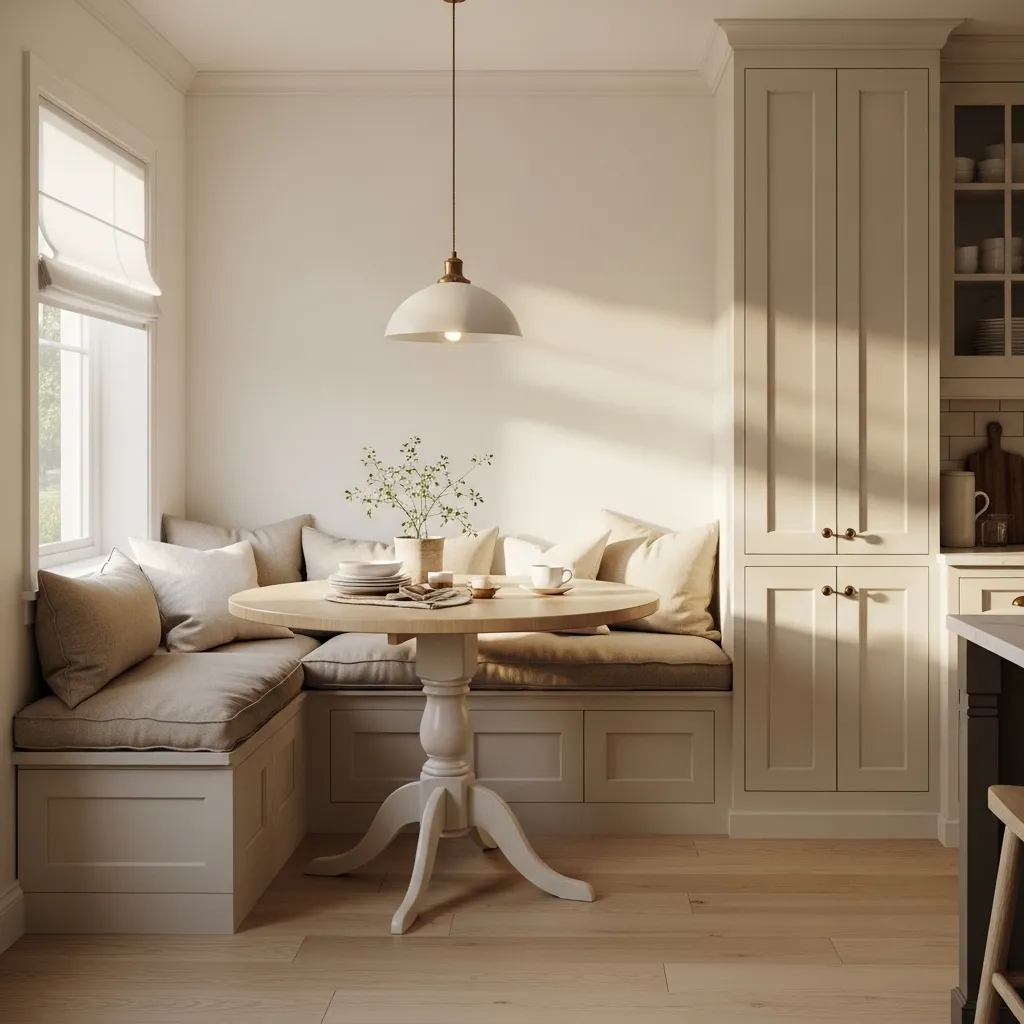
- A breakfast nook makes the kitchen feel more personal.
- It turns an unused corner into a daily gathering spot.
- Soft cushions and wood tones add comfort.
- This idea works well for coffee, meals, homework, or casual chats.
A cozy breakfast nook can make a bright kitchen feel more personal and lived-in. Instead of using every corner for storage, this idea creates a small place for coffee, meals, homework, or quiet morning routines. A built-in bench, round table, and soft cushions can turn an unused wall into a warm gathering spot. Light colors keep the nook from feeling cramped, while wood and fabric details add comfort. It gives the kitchen a relaxed rhythm beyond cooking and cleaning. This is where the room starts feeling truly welcoming every day.
This setup works especially well in homes where the kitchen is the busiest room. A small nook gives family members or guests a place to sit without standing in the cooking zone. Choose washable cushions, a sturdy table, and simple lighting so the space stays practical. Soft cream walls, pale upholstery, and natural wood help the nook blend into the kitchen rather than feel like a separate room. The result is charming, useful, and easy to imagine saving as inspiration. It turns an ordinary corner into a daily comfort spot.
Glass Cabinet Fronts
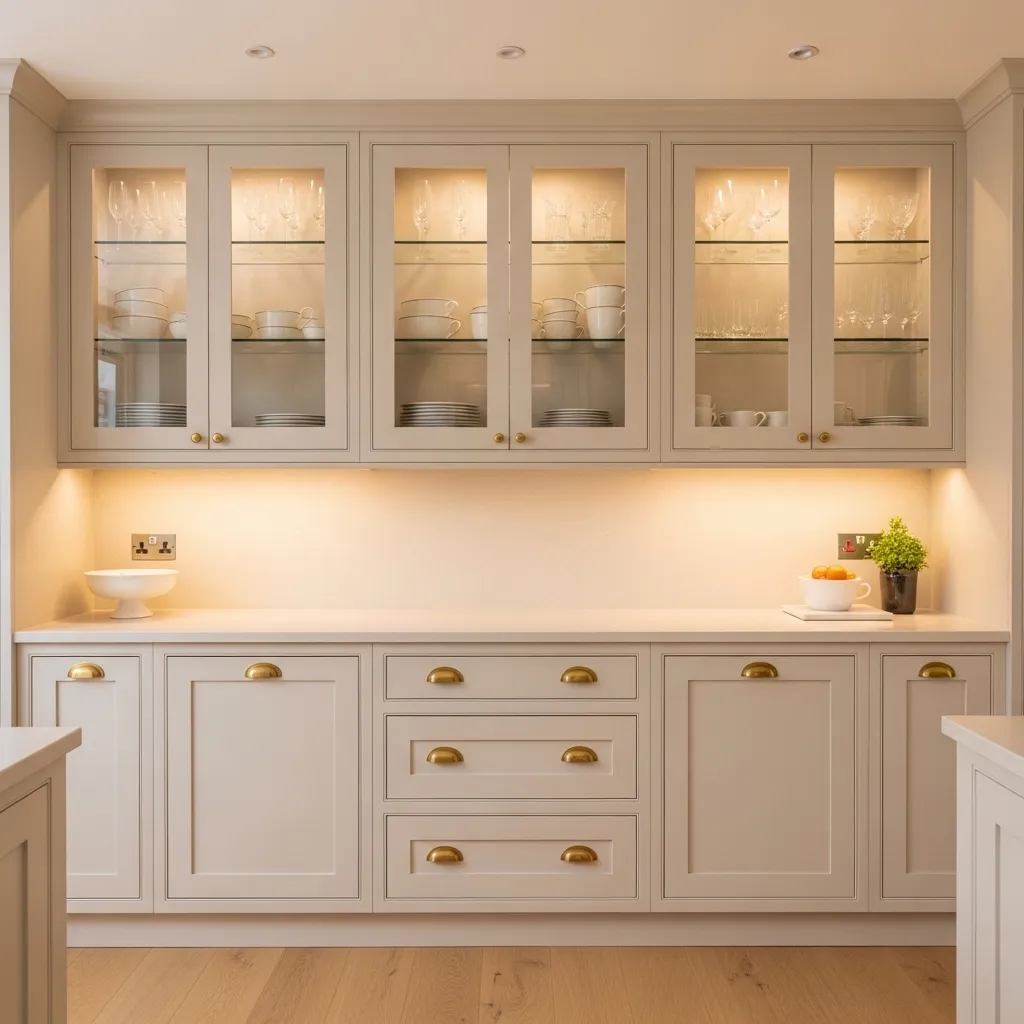
- Glass fronts make upper cabinets feel lighter.
- They give everyday dishes a pretty display moment.
- Ribbed or frosted glass can hide clutter while adding texture.
- Interior lighting creates a soft glow in the evening.
Glass cabinet fronts add lightness to a kitchen while giving everyday pieces a beautiful place to show. They work well when you want the openness of shelves but still need the protection of closed cabinets. Soft glass panels break up solid cabinetry and make the room feel less heavy, especially along upper walls. When styled with simple dishes, clear glasses, or cream bowls, the look feels calm and collected. This idea adds dimension without changing the main kitchen layout. It gives storage a more decorative and airy presence instantly today.
The trick is to keep what is behind the glass neat and intentional. You do not need perfect styling, but grouping similar colors helps the cabinets look peaceful. Frosted, ribbed, or clear glass each creates a different mood, from vintage charm to modern elegance. Interior cabinet lighting can make the glass glow at night, adding another layer of warmth. This detail gives the kitchen a refined finish while still keeping it practical for everyday dishes, serving pieces, and easy access. It balances display, storage, and softness beautifully every day.
Soft Beige Walls
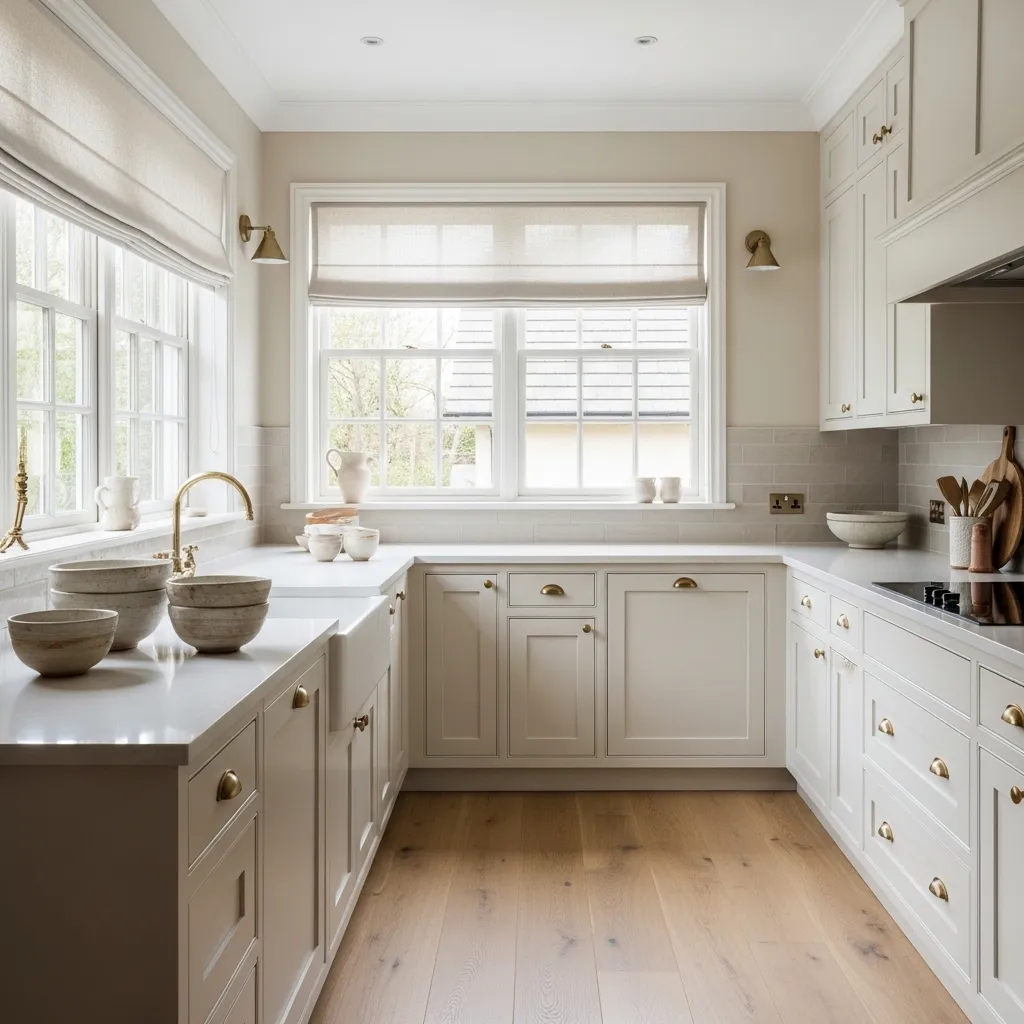
- Soft beige walls add warmth without making the kitchen dark.
- This idea helps plain white surfaces feel more layered.
- Beige tones connect cabinets, flooring, and counters beautifully.
- It works well when a kitchen feels bright but slightly cold.
Soft beige walls can make a bright kitchen feel warmer without changing the cabinets at all. This idea works because the wall color quietly supports every surface around it, from cream cabinetry to pale counters and wood floors. A flat white wall can sometimes feel unfinished, but a beige undertone adds softness and depth. It is especially helpful in kitchens with lots of natural light, where pure white may look too sharp. The room still feels clean and open, but the overall mood becomes calmer, warmer, and easier to live with.
The best beige tones for kitchens are gentle, not muddy or dark. Think soft sand, warm oatmeal, or pale greige that blends with stone, tile, and wood. This background lets brass hardware, linen shades, and ceramic decor stand out in a subtle way. In my experience, beige walls are useful when a kitchen feels almost right but lacks comfort. They create a quiet visual connection between different finishes. The result is a polished, cozy space that feels intentional without needing bold color, heavy pattern, or expensive structural changes at home.
Warm Underlighting
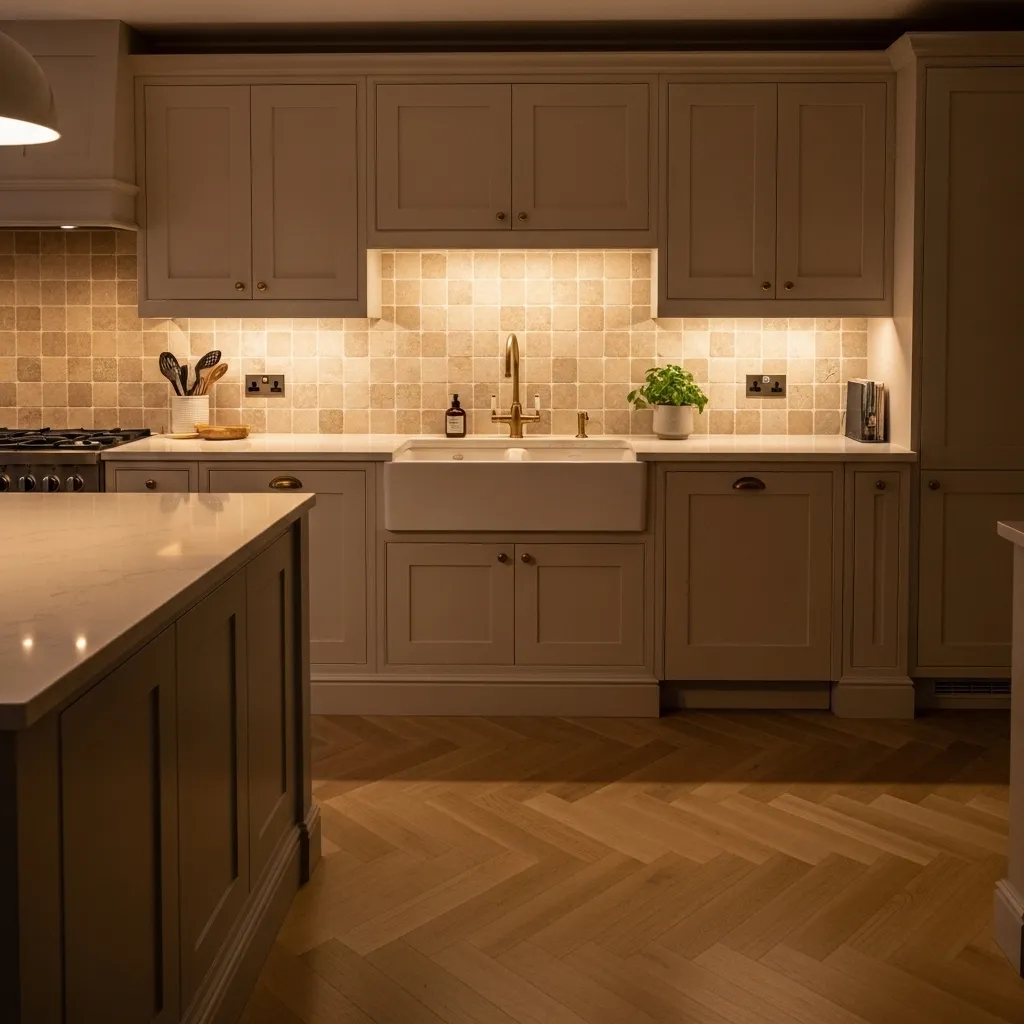
- Underlighting adds a cozy glow after sunset.
- It makes counters easier to use for cooking and cleaning.
- Warm light helps pale cabinets feel softer at night.
- This idea adds both beauty and practical function.
Warm underlighting can make a kitchen feel completely different in the evening. It adds a soft glow under cabinets, shelves, or toe kicks, giving the room more depth and comfort after daylight fades. This works especially well in light kitchens because pale surfaces reflect the glow beautifully. Instead of relying only on ceiling lights, underlighting creates a layered effect that feels softer and more welcoming. It also makes cooking, cleaning, and late-night snacks easier because important work zones stay clearly visible without making the whole room feel too bright or harsh.
The most effective underlighting feels hidden, not harsh. Choose warm bulbs or LED strips that sit neatly beneath cabinets, open shelves, or the island edge. This creates a gentle wash of light across tile, counters, and flooring. I’ve noticed this small upgrade often makes kitchens feel more expensive because it adds atmosphere and function at the same time. It also helps highlight beautiful textures, like zellige tile or stone counters. The finished look feels cozy, practical, and ready for both everyday cooking and quiet evening moments at home each night.
Creamy Pantry Wall
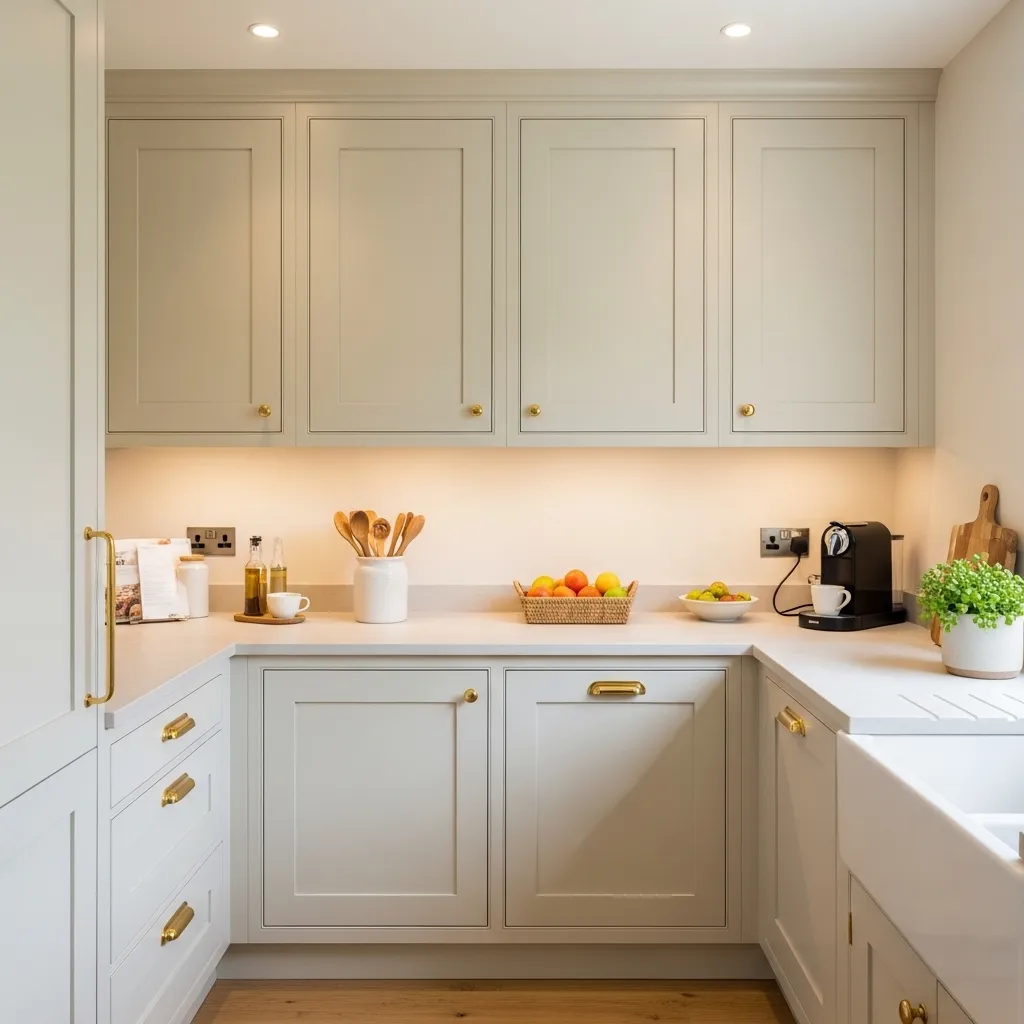
- A pantry wall hides clutter while keeping the kitchen bright.
- Creamy cabinet doors make storage feel elegant and seamless.
- This idea is great for small homes and busy family kitchens.
- Closed storage helps counters stay calm and clear.
A creamy pantry wall can turn storage into one of the prettiest parts of the kitchen. Tall cabinets in a soft ivory or almond tone keep the room bright while hiding clutter behind clean doors. This idea works well because it gives busy kitchens a calm, organized backdrop. Instead of open storage that can quickly feel messy, a full pantry wall creates visual order. It is especially useful for families, small homes, or anyone who needs more storage but still wants the kitchen to feel elegant and uncluttered every day.
The design becomes even stronger when the pantry wall blends with the rest of the cabinetry. Matching doors, simple hardware, and a smooth finish make the storage look built-in rather than bulky. Add brass pulls, small upper glass panels, or subtle trim if the space needs character. This kind of wall can hold dry goods, appliances, dishes, and cleaning items while keeping counters clear. That is why many designers recommend closed storage in high-use kitchens. The final result feels spacious, clean, and quietly luxurious without wasting vertical wall space at all.
Woven Bar Stools
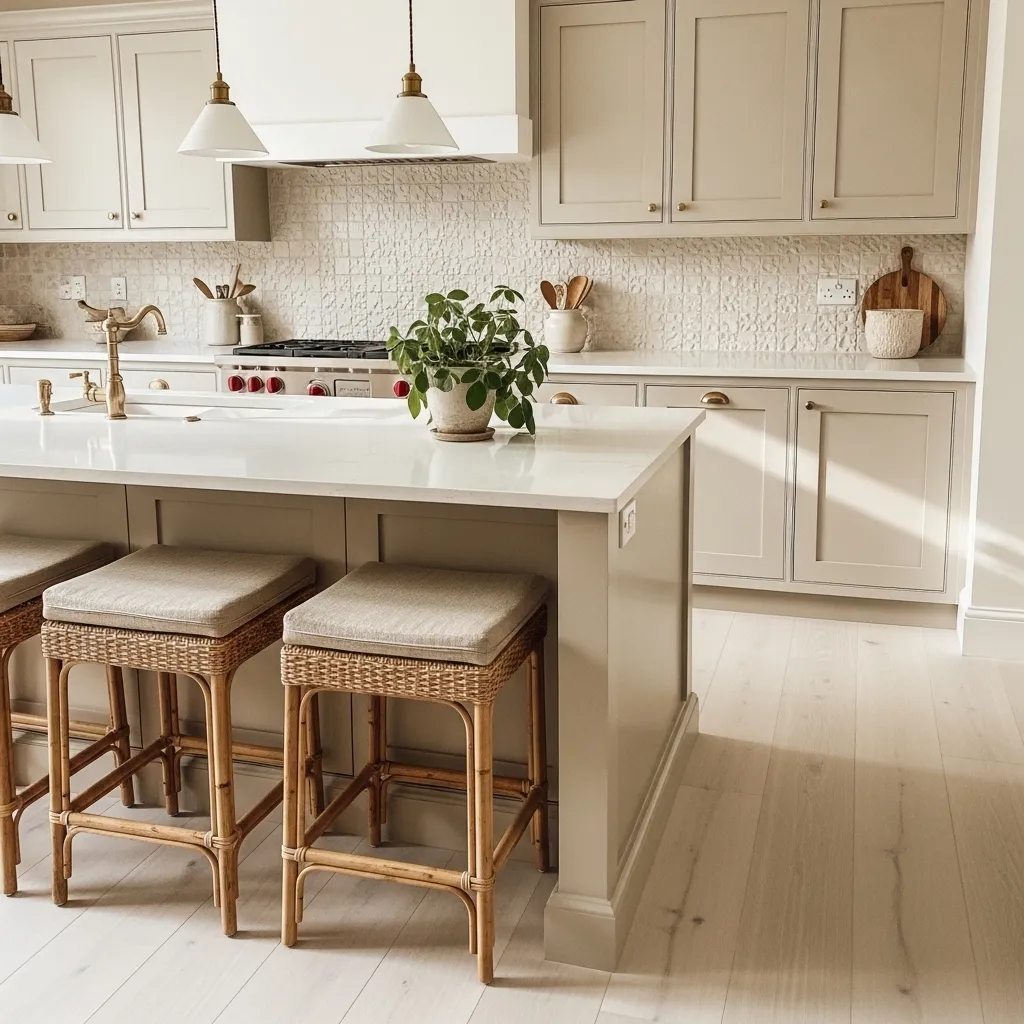
- Woven stools add texture without making the room feel busy.
- They soften stone, tile, metal, and cabinetry.
- Natural fibers make the island feel more welcoming.
- This idea works beautifully in open kitchen layouts.
Woven bar stools bring instant texture to a pale kitchen and make the island feel more inviting. Their natural fibers soften smooth cabinets, stone counters, and metal fixtures, which can otherwise feel too hard together. This idea works because stools sit at eye level when you enter many kitchens, so they influence the whole mood quickly. Cane, rattan, seagrass, or woven leather can all add warmth without overpowering the room. The kitchen stays bright, but the seating makes it feel more relaxed, comfortable, and ready for real daily life at home.
Warm white is one of the biggest kitchen trends right now. See what else is popular in our kitchen decor trends in 2026 guide.
The best stool choice depends on how the kitchen is used every day. Backless stools look clean and slide easily under the island, while stools with backs feel better for long conversations, homework, or casual meals. Choose warm wood legs, cream cushions, or woven seats to keep the palette soft. I’ve seen this work especially well in open kitchens because the stools connect the kitchen to nearby living spaces. The result is a space that feels styled, welcoming, and functional without adding clutter to the countertop or walkways around it.
Porcelain Apron Sink
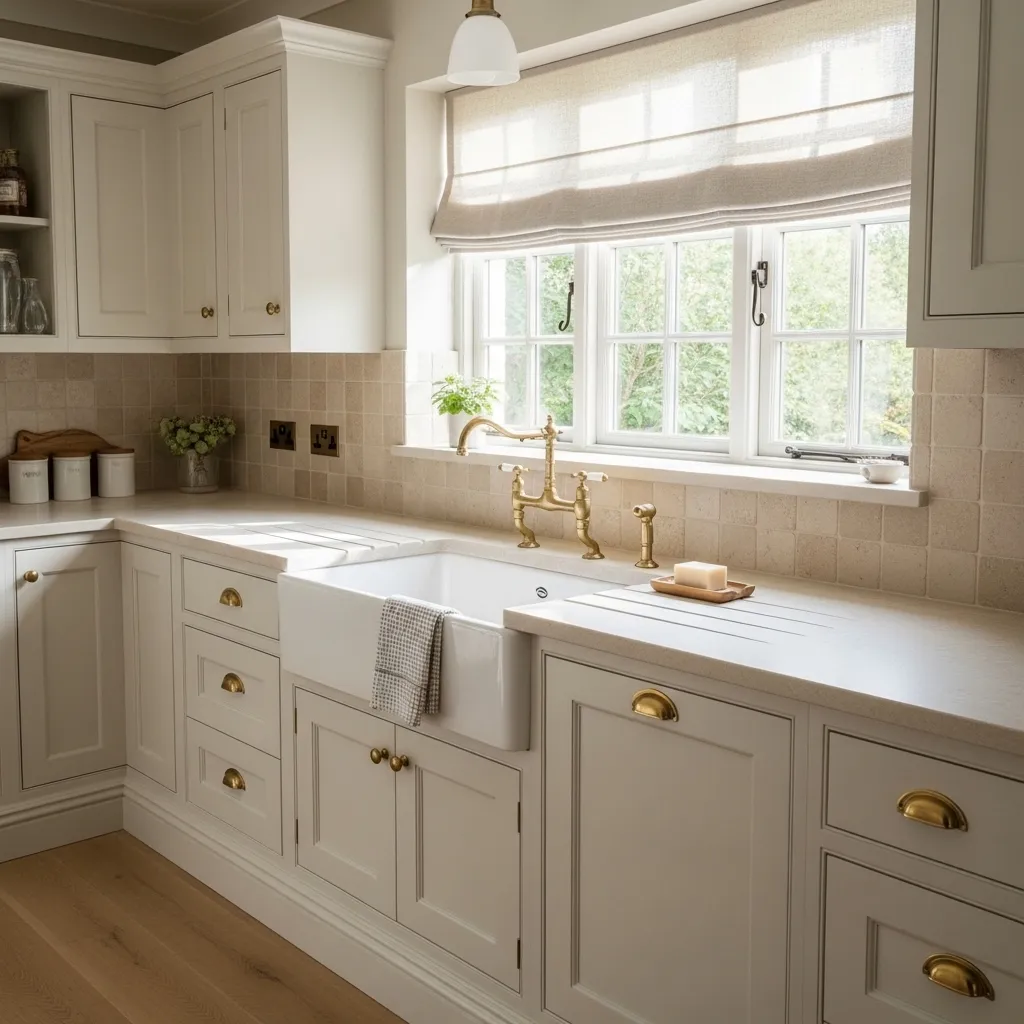
- A porcelain apron sink creates a classic focal point.
- The deep basin is useful for real cooking and cleanup.
- Brass or bronze faucets help the sink area feel warmer.
- This detail adds charm without needing bold color.
A porcelain apron sink gives a light kitchen a classic focal point with practical everyday charm. Its smooth white surface feels clean and timeless, while the exposed front adds character to the cabinet run. This idea works especially well in kitchens that need one strong detail without adding bold color. The sink naturally draws attention because it sits lower and wider than a standard basin. Paired with warm cabinets, brass fixtures, and pale counters, it creates a soft farmhouse-inspired look that still feels fresh and polished for today’s homes and apartments.
This type of sink is also useful for real cooking routines. The deep basin can handle large pots, baking trays, and messy prep days more comfortably than many smaller sinks. To keep the look warm, pair it with a brass or bronze faucet instead of cool chrome. A linen shade, small plant, or wooden soap tray nearby can make the sink area feel styled but still practical. The final result is a bright, hardworking zone that feels charming, useful, and visually grounded within the kitchen layout every single day at home.
Neutral Tile Floor
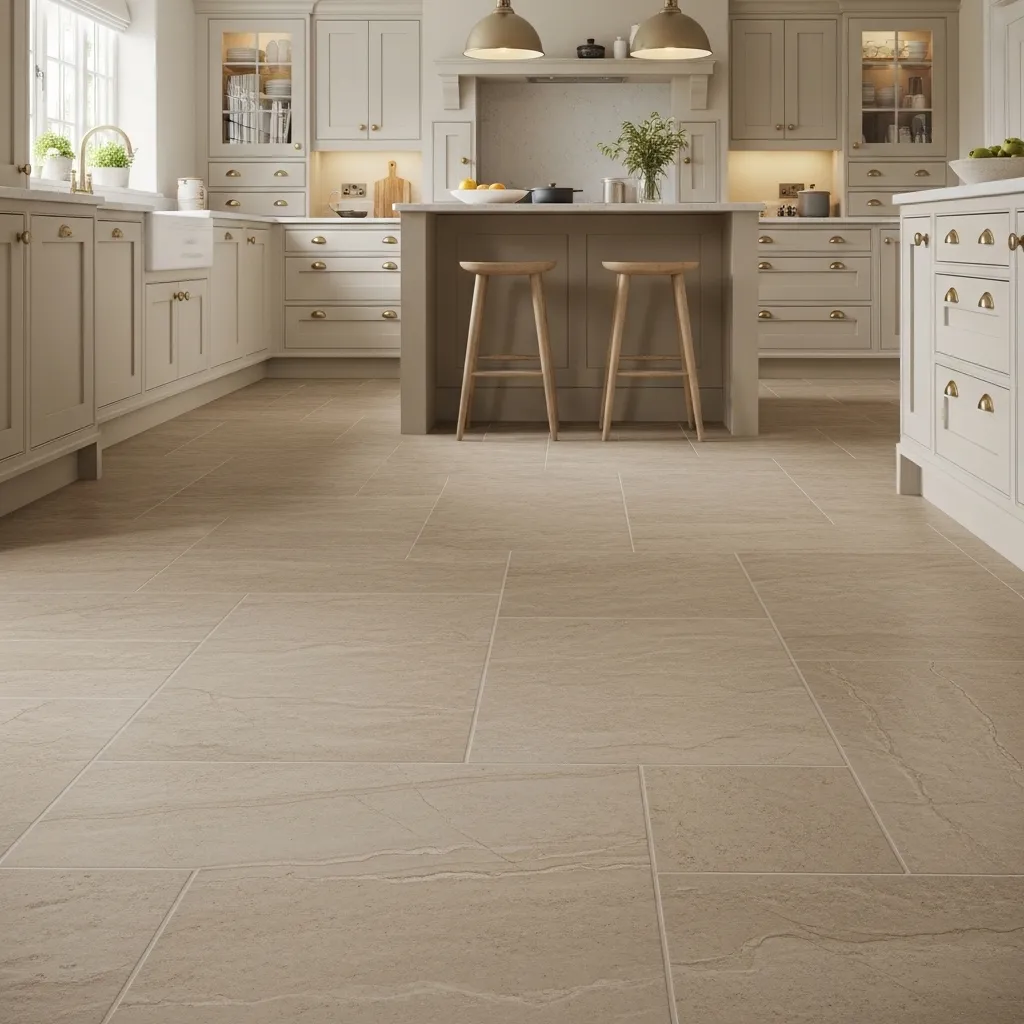
- Neutral tile gives the kitchen a durable, easy-clean foundation.
- Warm beige or stone-look finishes prevent the room from feeling cold.
- Large-format tiles can make the floor feel more open.
- Matte texture helps reduce glare and daily marks.
Neutral tile flooring can brighten a kitchen while giving it a durable foundation for daily life. This idea works well when wood floors are not practical or when the home needs an easy-clean surface. Warm beige, ivory, or stone-look tiles keep the space light without feeling cold. Large-format tiles create a smoother, more open effect, while patterned neutral tiles add personality underfoot. The floor becomes part of the design rather than just a background surface, helping the whole kitchen feel finished from top to bottom in a practical way for homeowners.
The secret is choosing tile with warmth, texture, or soft movement. A perfectly flat white tile can show every mark and feel too clinical, but a stone-inspired finish is much more forgiving. I’ve noticed matte tiles often feel better in family kitchens because they reduce glare and create a softer look. Pair them with cream cabinets, warm lighting, and wood accents for balance. The result is a kitchen that feels bright, grounded, and easy to maintain, with enough texture to look beautiful in everyday moments and Pinterest photos later, too.
Layered Decor Trays
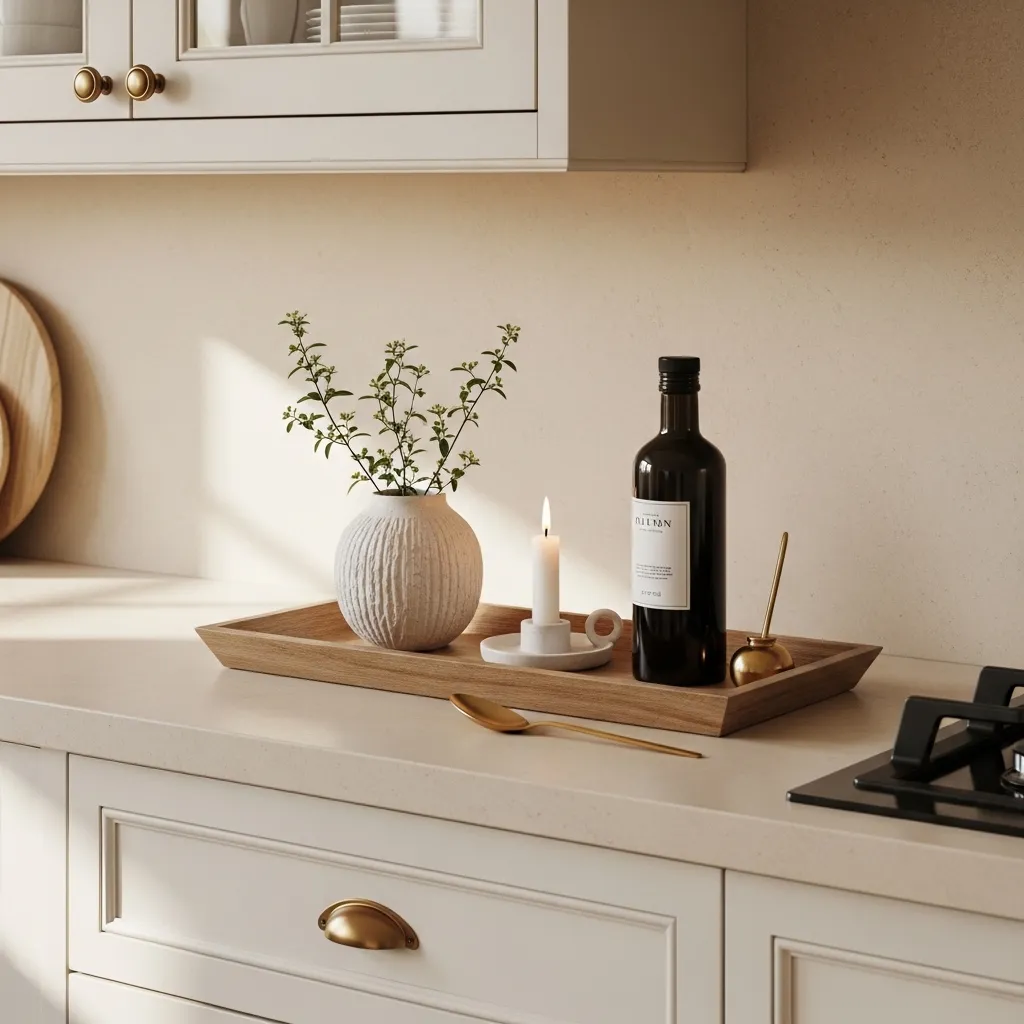
- A tray keeps small decor pieces from feeling scattered.
- It adds texture through wood, ceramic, stone, or brass.
- This idea is renter-friendly and easy to update.
- It makes counters feel styled while still staying practical.
Layered decor trays make counters look styled without creating scattered clutter. A simple tray can hold a candle, a small vase, an oil bottle, a salt cellar, or a wooden brush in one intentional spot. This works because grouped items look calmer than random pieces spread across the counter. In a light kitchen, a tray also adds texture and color through wood, stone, ceramic, or woven material. It helps the space feel lived-in and pretty while still leaving enough room for cooking, cleaning, and daily routines on busy family days at home.
The key is keeping the tray useful, not purely decorative. Place one near the stove for cooking essentials or near the sink for soap, lotion, and a small plant. Choose warm materials that connect with the rest of the kitchen, such as oak, travertine, brass, or ceramic. This small detail works especially well for renters or anyone avoiding big changes. The final look feels thoughtful and Pinterest-ready, but it still supports real life. Counters look cleaner, softer, and more complete with very little effort or extra cost over time.
Vintage Runner Rug
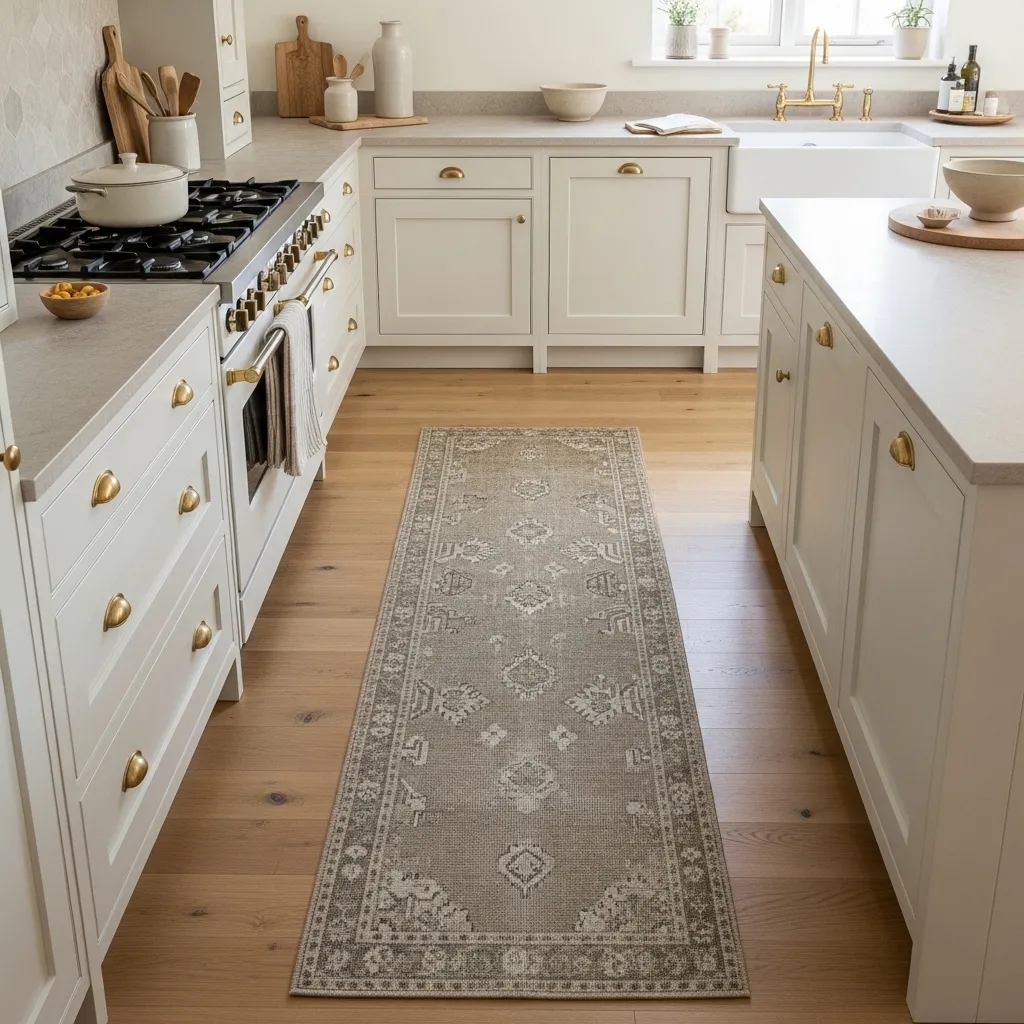
- A runner rug softens hard flooring and adds instant warmth.
- Muted patterns help the kitchen feel collected, not plain.
- It works beautifully in galley layouts or beside an island.
- Washable rugs are practical for spills, crumbs, and daily use.
A vintage runner rug can make a bright kitchen feel softer the moment you step inside. In rooms with pale cabinets, stone counters, and tile surfaces, the floor often needs texture to keep everything from feeling too polished. A faded beige, taupe, or muted clay rug adds pattern without overwhelming the calm palette. It also creates a natural path through galley kitchens, sink walls, or island walkways. This small layer brings comfort underfoot while making the entire space feel more styled, collected, and welcoming.
The best choice is a low-pile or washable runner that can handle real kitchen messes. I’ve noticed that muted vintage patterns hide crumbs and small stains better than solid light rugs, which makes them easier for everyday homes. Choose tones that repeat nearby finishes, such as brass, oak, cream, or soft beige. This helps the rug feel connected instead of random. The result is a kitchen that still feels bright and clean, but with more warmth, movement, and personality underfoot. It adds charm without needing renovation.
People also ask
How to make a white kitchen look warm?
Use creamy tones, wood accents, warm bulbs, brass hardware, woven textures, and soft beige decor to make a white kitchen feel cozy and inviting.
What is Joanna Gaines’ favorite kitchen color?
Joanna Gaines often uses soft, timeless shades like warm white, creamy neutrals, muted green, and deep blue to create cozy farmhouse-style kitchens.
Are warm white kitchen cabinets in style?
Yes, warm white kitchen cabinets are in style because they look softer than pure white and work beautifully with wood, stone, brass, and neutral decor.
What colors make a kitchen look expensive?
Cream, warm white, taupe, charcoal, deep green, navy, black, brass, and natural wood tones can make a kitchen feel elegant and high-end.
Conclusion
Warm white kitchens are all about balance: brightness, softness, texture, and comfort working together. With these warm white kitchen ideas, you can turn a plain room into a space that feels calm, timeless, and full of everyday beauty. For more kitchen inspiration, discover layout tips in our small kitchen ideas 2026 guide, add rustic charm with old farmhouse kitchen ideas, keep things tidy with our kitchen storage ideas, and stay on trend with our kitchen decor trends in 2026 collection.
Start with one simple change, like warmer lighting, brass hardware, a runner rug, or creamy cabinet tones, and build from there. I’ve seen how small updates like these can completely shift the mood of a home. Save this post on Pinterest, try your favorite idea, and share it with someone planning a cozy kitchen refresh.

Welcome to Homely Crafter! I am Muhammad Israr, the founder of Homely Crafter, bringing 4+ years of hands-on interior design and renovation experience to practical, budget-friendly home decor ideas for every room. Let’s decorate together!