
Mudroom locker ideas can completely change the way your entryway looks, feels, and functions.
Instead of shoes scattered by the door, coats piled on chairs, and bags landing wherever they fit, a smart locker setup gives every everyday item a beautiful place to belong. Lockers are just one part of a great mudroom. Explore our mudroom decor ideas guide for the complete styling picture, from flooring to wall details.
This article is filled with practical and stylish ways to create a mudroom that feels clean, welcoming, and easy to use. Whether you have a large entry, a narrow hallway, a laundry room corner, or a busy garage door drop zone, these ideas can help you design storage that actually works in real life. In my experience, the best mudrooms are not just pretty; they make daily routines smoother, faster, and less stressful.
Built-In Bench Lockers
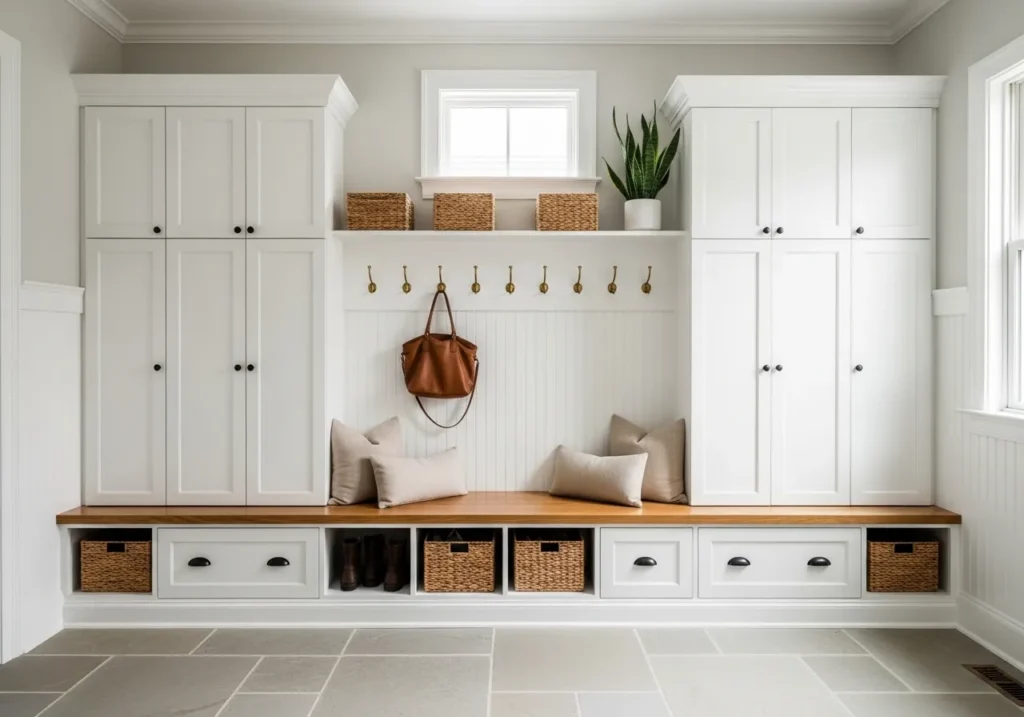
- Creates one clear drop zone for shoes, bags, coats, and daily gear.
- The bench makes changing shoes easier, especially for kids and busy mornings.
- Closed lower storage keeps clutter hidden while the open hooks stay easy to reach.
- Soft cushions and warm wood stop the built-ins from feeling too plain.
A built-in bench instantly makes a mudroom feel more intentional and finished. Instead of coats landing on chairs or shoes spreading across the floor, every item gets a clear place. This setup works beautifully for families because the bench supports quick shoe changes, while the locker-style sections keep backpacks, jackets, and hats separated. In my experience, even a narrow entry feels calmer when the storage is built around a simple sitting area. The visual result is clean, cozy, and practical without looking overly styled, expensive, crowded, or difficult to maintain.
This is one of the most useful mudroom locker ideas for homes that need both storage and comfort. The secret is balancing open and hidden spaces, so daily items stay accessible, but the room still looks neat. Add hooks at different heights, baskets underneath, and a washable cushion on top for softness. A light paint color can make the built-in unit feel airy, while wood accents add warmth. Readers will notice the space feels less chaotic, more welcoming, and much easier to reset at the end of the day after real family use.
White Shiplap Lockers
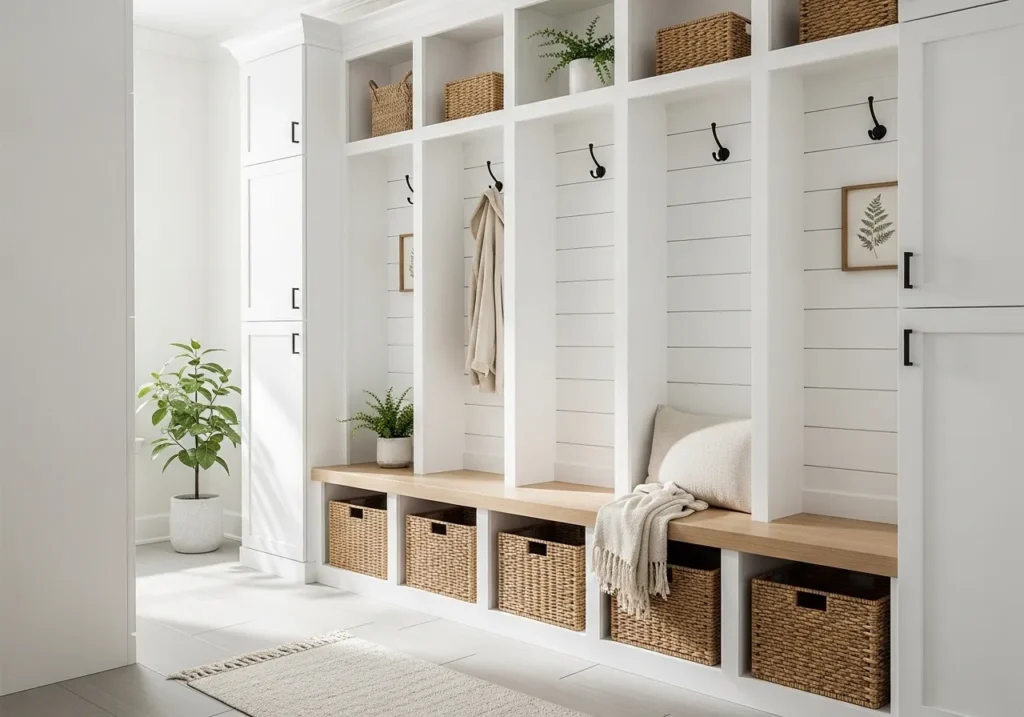
- Adds texture without making the room feel crowded.
- White walls brighten small or windowless mudrooms quickly.
- Black hooks give the setup a crisp, modern contrast.
- Works well with farmhouse, coastal, cottage, and modern home styles.
White shiplap gives a mudroom that clean, Pinterest-ready texture people love saving. It feels bright and relaxed, but it also hides small scuffs better than a totally flat wall. This idea works especially well behind lockers because the vertical or horizontal lines create structure around coats, bags, and baskets. I’ve noticed that white shiplap also makes darker hooks, wood benches, and woven bins stand out beautifully. The room feels fresh, layered, and organized without needing bold colors, costly trim, complicated styling, large artwork, busy patterns, or extra decorative pieces overall.
The best part about shiplap locker walls is how easily they adapt to different homes. Pair them with oak for a warm farmhouse look, black hardware for modern contrast, or rattan baskets for a softer cottage feel. Because the background is simple, seasonal decor also looks natural instead of messy. Add durable paint in a wipeable finish, especially near backpacks and shoes. The finished space feels brighter, cleaner, and more polished, while still being practical enough for everyday family routines, rainy days, school mornings, muddy boots, and quick entryway cleanups.
Wood Tone Cubbies
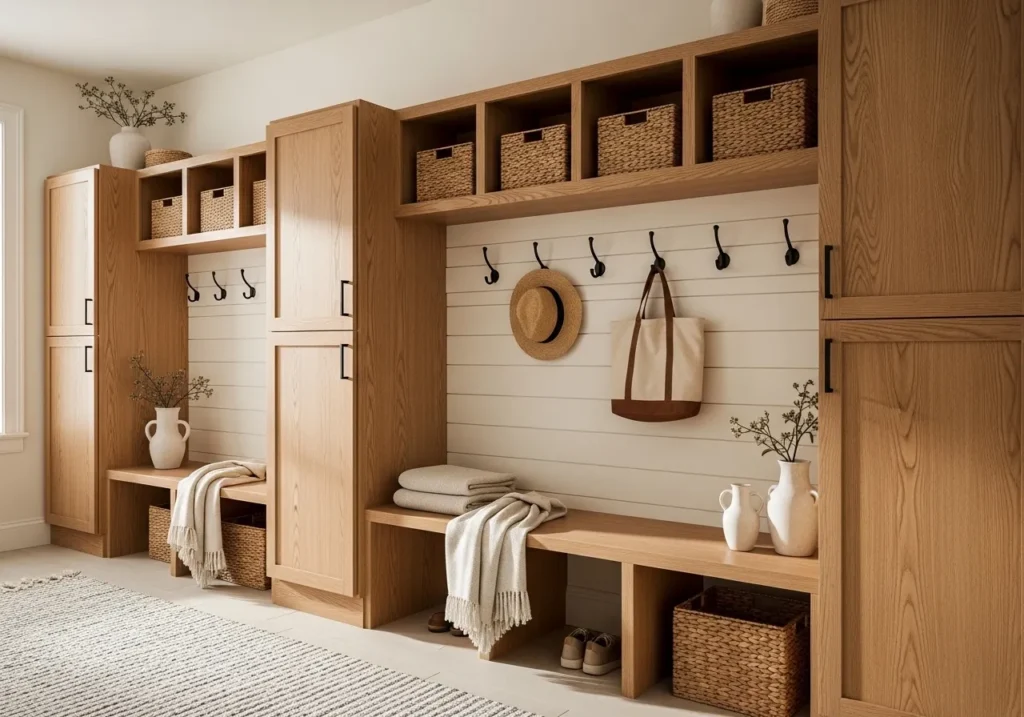
- Brings warmth and natural texture into an everyday storage area.
- Open cubbies make it easy to see where each item belongs.
- Wood tones soften white walls and make the room feel more custom.
- Perfect for adding a cozy, organic look without heavy decoration.
Natural wood cubbies can turn a basic mudroom into a warm and welcoming transition space. The open compartments make storage feel simple because shoes, bags, and folded accessories are easy to spot. This idea is especially helpful in homes where everyone needs a personal section, but closed doors feel too heavy. That’s why many designers recommend wood accents in hardworking rooms. They add richness, texture, and a custom look while still feeling relaxed enough for daily use, muddy shoes, school bags, pet supplies, sports gear, shopping totes, and weekend errands.
Wood tone locker cubbies work best when the surrounding palette stays soft and simple. Cream walls, light floors, black hooks, and woven bins let the grain become the main visual feature. Choose oak for a modern, airy feel, walnut for depth, or pine for a budget-friendly farmhouse look. Sealed wood is easier to wipe clean, which matters near muddy shoes and school bags. The finished room feels grounded and natural, with storage that looks intentional instead of purely functional, crowded, temporary, awkward, bulky, messy, unfinished, or added as an afterthought.
Black Metal Hooks
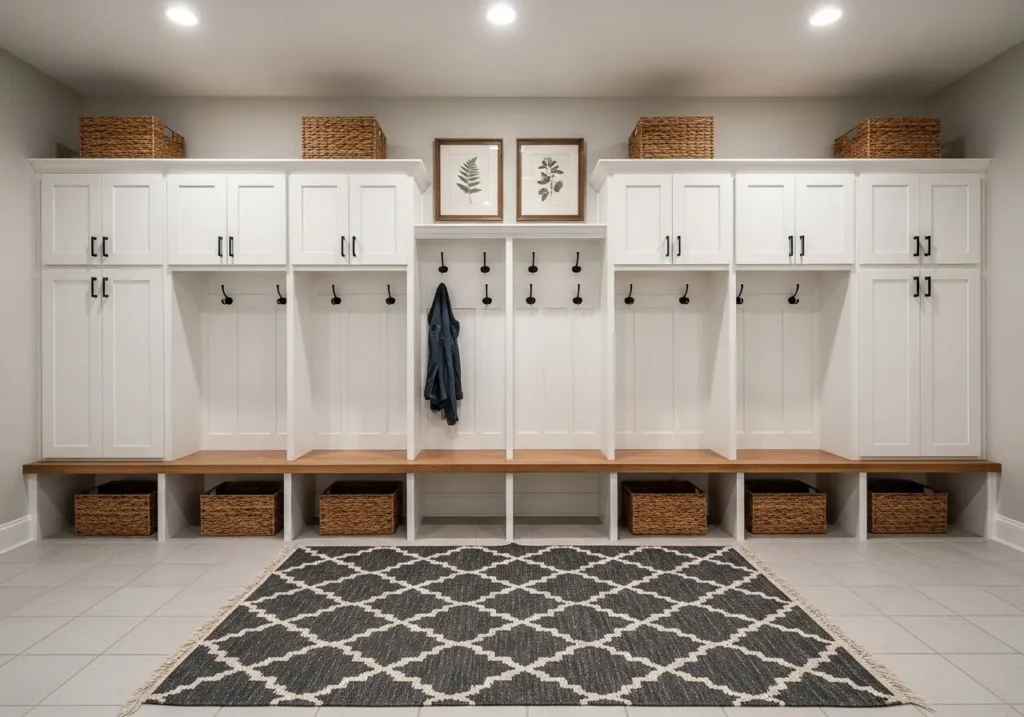
- Adds instant contrast to light walls and cabinetry.
- Makes coats, tote bags, and hats easy to grab on the way out.
- Small hardware changes can refresh the whole mudroom affordably.
- Works with modern farmhouse, industrial, and classic neutral styles.
Black metal hooks are a small detail that can completely sharpen a mudroom design. They create contrast, define each locker space, and make even simple white cabinetry feel more custom. This idea is perfect when the room already has good storage but needs a stronger visual character. I’ve seen this work well in many homes because hooks are affordable, easy to replace, and instantly practical. The darker finish also hides everyday wear better than lighter hardware, which is helpful in a busy entry used morning, afternoon, evening, and night daily now.
For the cleanest look, keep the hook style consistent across every section. Matte black hooks feel modern and calm, while curved iron hooks add a slightly vintage touch. Place them high enough for long coats but low enough for children if the space serves the whole family. Pair the hooks with a black-framed mirror, dark door hardware, or a patterned runner to repeat the accent color. The result feels balanced, useful, and visually stronger without needing a full renovation, custom cabinetry, new flooring, pricey decor, paintwork, or major layout change.
Basket Storage Lockers
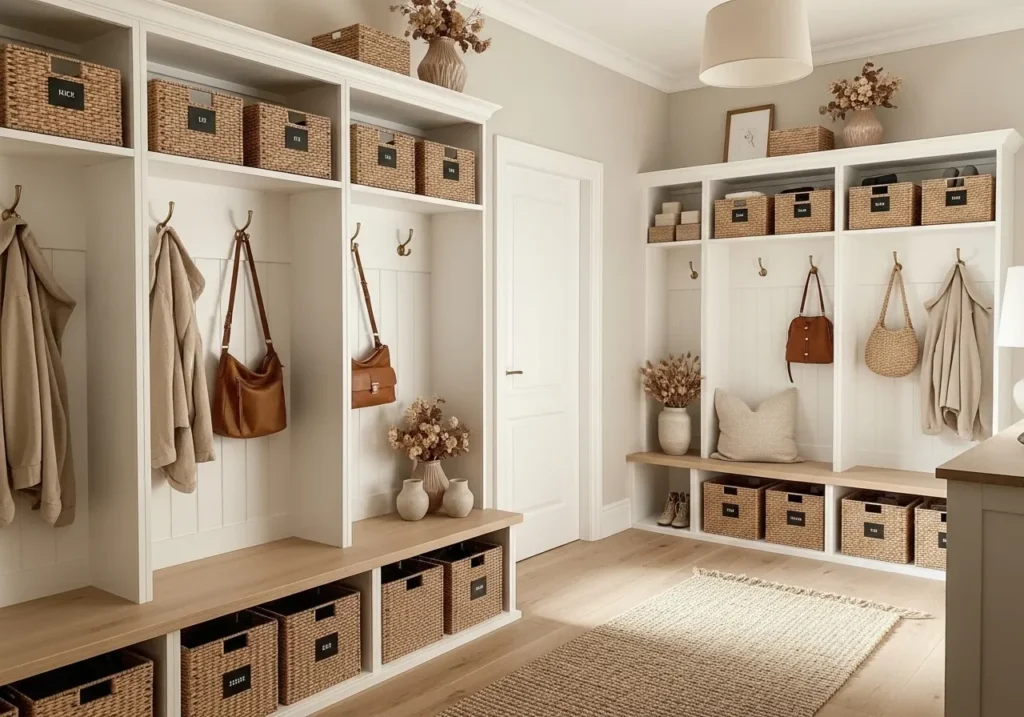
- Baskets hide small clutter while keeping essentials close.
- Great for gloves, scarves, pet leashes, sports items, and seasonal extras.
- Natural woven texture adds warmth to painted locker units.
- Labels help every family member return things to the right spot.
Basket storage makes mudroom lockers feel tidy without expecting everything to look perfect. Small items like gloves, sunglasses, dog leashes, and winter hats can disappear into one easy container instead of spreading across shelves. This is a realistic solution for busy households because baskets are forgiving, movable, and simple to update. In my experience, the best mudrooms are not the ones with zero clutter, but the ones with smart places to hide it. Woven baskets add texture while keeping the overall look soft, warm, relaxed, layered, natural, and inviting.
To make this idea work, choose baskets that fit the shelf depth closely so they do not look random or undersized. Use matching baskets for a polished look, or mix two natural tones for a relaxed, collected style. Add simple labels if several people share the same entry zone. Lower baskets can hold shoes or sports gear, while higher ones are better for seasonal accessories. The space will look more organized immediately, and daily cleanup becomes easier because every loose item has a clear home, visual purpose, and simple routine.
Family Name Labels
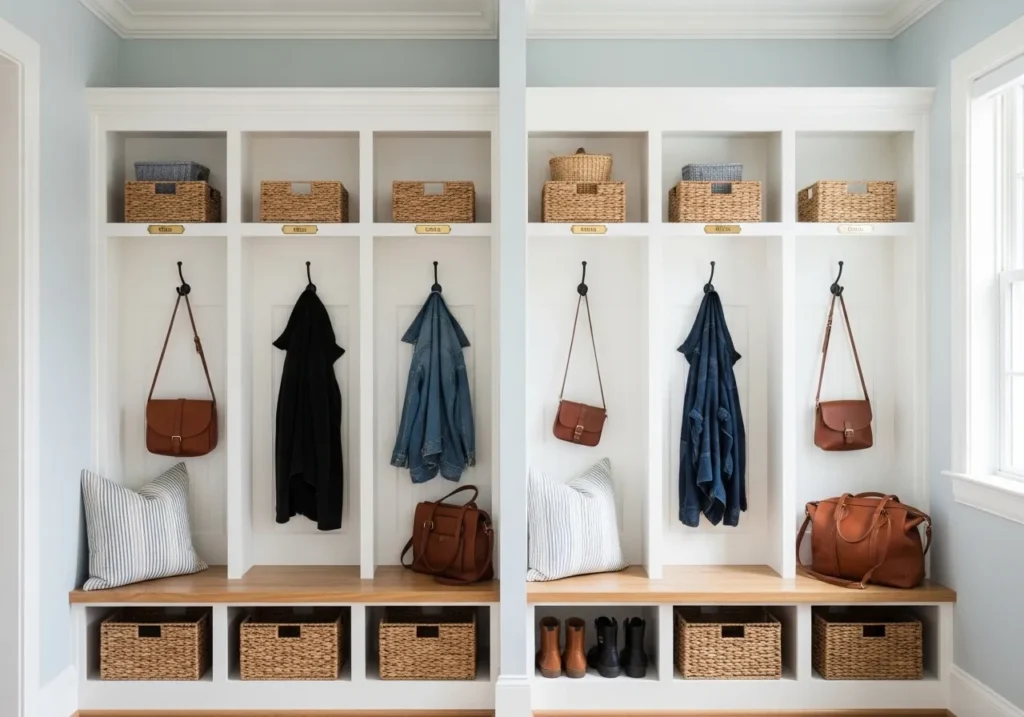
- Gives each person a clear and personal storage zone.
- Helps children understand where backpacks, shoes, and coats belong.
- Adds a custom detail that feels polished and thoughtful.
- Reduces mix-ups during school mornings, sports days, and busy exits.
Family name labels make a shared mudroom feel instantly more organized and personal. Instead of everyone using the nearest hook or basket, each person has a clear space for everyday things. This works especially well for school bags, jackets, sports gear, and shoes that often get mixed together. The idea feels simple, but it changes the way the room functions. A labeled locker system can make mornings smoother because children and adults both know exactly where to grab what they need before leaving the house each busy weekday morning.
The label style can also shape the mood of the mudroom. Brass name plates feel classic and polished, wooden tags feel warm and handmade, and black vinyl labels look clean and modern. Keep the lettering easy to read, especially if younger kids use the space. Place labels above hooks, on baskets, or at the top of each cubby section. The finished look feels more custom, while the daily routine becomes less frustrating because every family member has a defined landing spot for shoes, coats, bags, keys, hats, lunch boxes, and accessories.
Slim Hallway Lockers
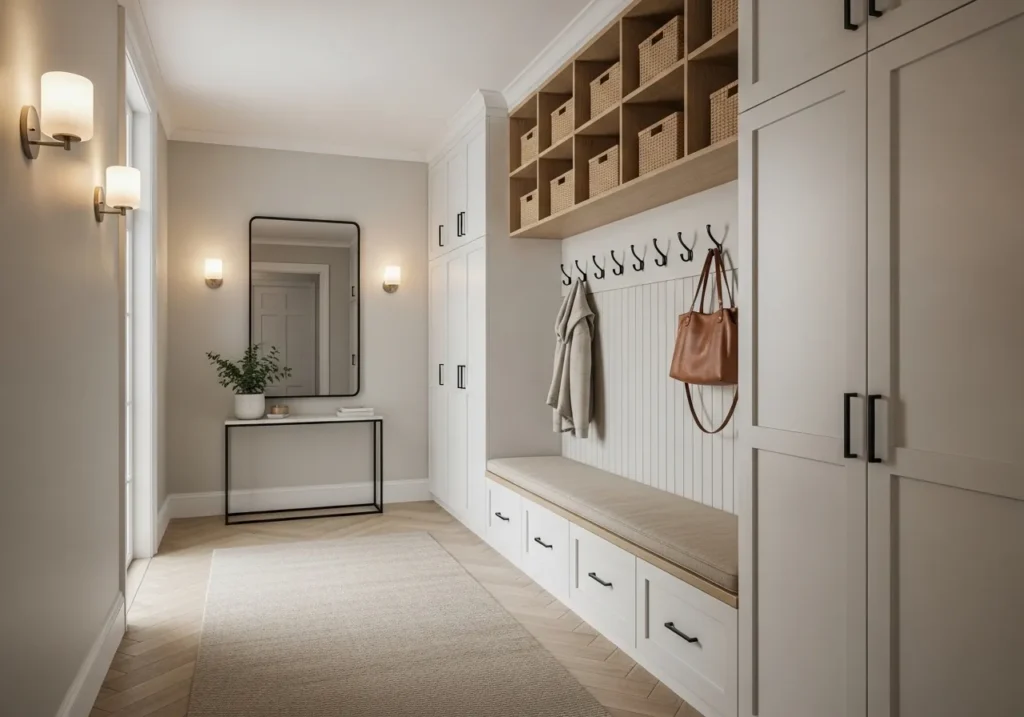
- Turns a narrow pass-through into useful storage.
- Shallow lockers keep the walkway open and easy to move through.
- Vertical storage makes the most of unused wall height.
- Light colors help the hallway feel wider and less crowded.
A slim hallway locker setup proves that mudroom storage does not need a large room. Even a narrow wall can become a hardworking drop zone when the design stays shallow, vertical, and visually light. This idea is helpful for homes with small entries, side doors, or garage hallways that collect shoes and bags. I’ve noticed that depth matters more than width in tight spaces. A few inches saved can keep the walkway comfortable while still giving every item a practical place to land after a busy day outside.
For this layout, choose narrow cabinets, open hooks, and upper cubbies instead of bulky deep storage. A slim bench can still work if it is kept simple and built close to the wall. Light paint, vertical paneling, and matching baskets help the hallway feel taller and cleaner. Avoid oversized decor that competes with movement through the space. The final result is a smart, space-saving entry zone that looks designed, not squeezed in, and keeps daily clutter from spreading into nearby rooms, doorways, corners, stairs, or visible living areas easily now.
Open Shelf Lockers
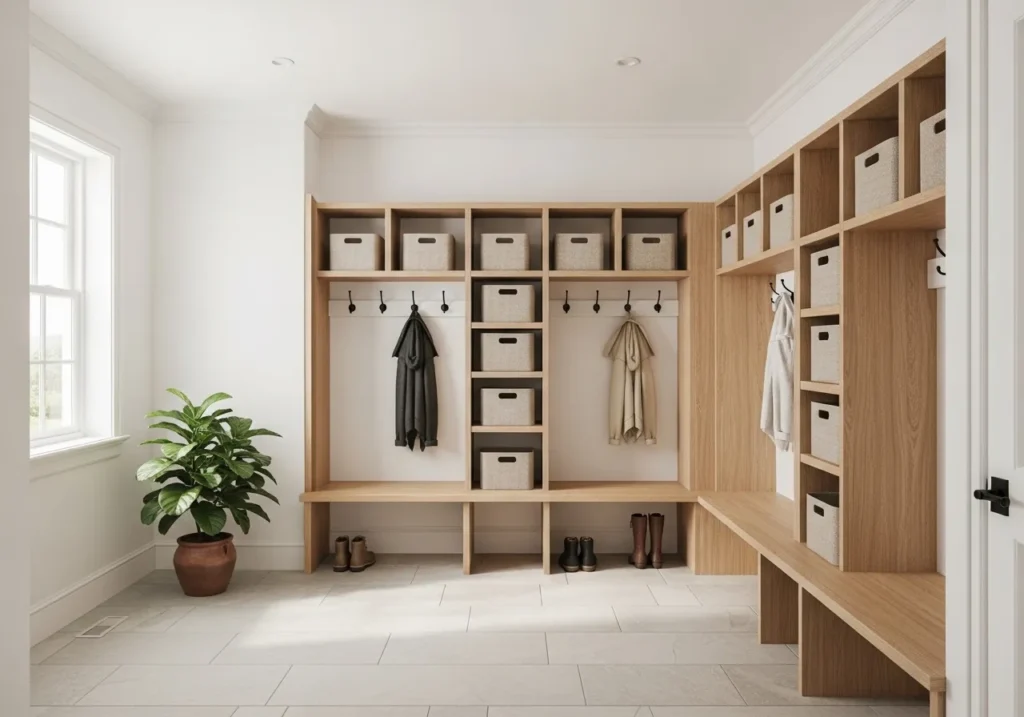
- Keeps everyday items visible, easy to grab, and easy to return.
- Open shelves make the mudroom feel lighter than closed cabinets.
- Great for styling baskets, folded accessories, and simple seasonal pieces.
- Works well when you want storage that feels airy, not boxed in.
Open shelf lockers create an airy mudroom that feels useful without looking heavy. They work well when you want quick access to daily items and do not want doors slowing down the routine. Shoes, bags, and folded accessories stay visible, which makes cleanup more direct. This setup is especially good for smaller homes because open shelves reflect more light and reduce visual weight. The key is editing what stays out, so the room looks intentional instead of becoming an open display of clutter every single busy day at home.
To keep open lockers attractive, use repetition and simple styling. Matching bins, folded scarves, neutral baskets, and a few hooks can make the shelves feel curated while still serving real life. Leave some space between items so the design can breathe. Durable materials matter too, because open shelving often collects dust, bags, and damp outdoor accessories. With a thoughtful layout, this style gives the mudroom a lighter, brighter feel while still offering the storage power needed for everyday shoes, coats, accessories, family gear, and essentials near the door daily.
Corner Locker Nook
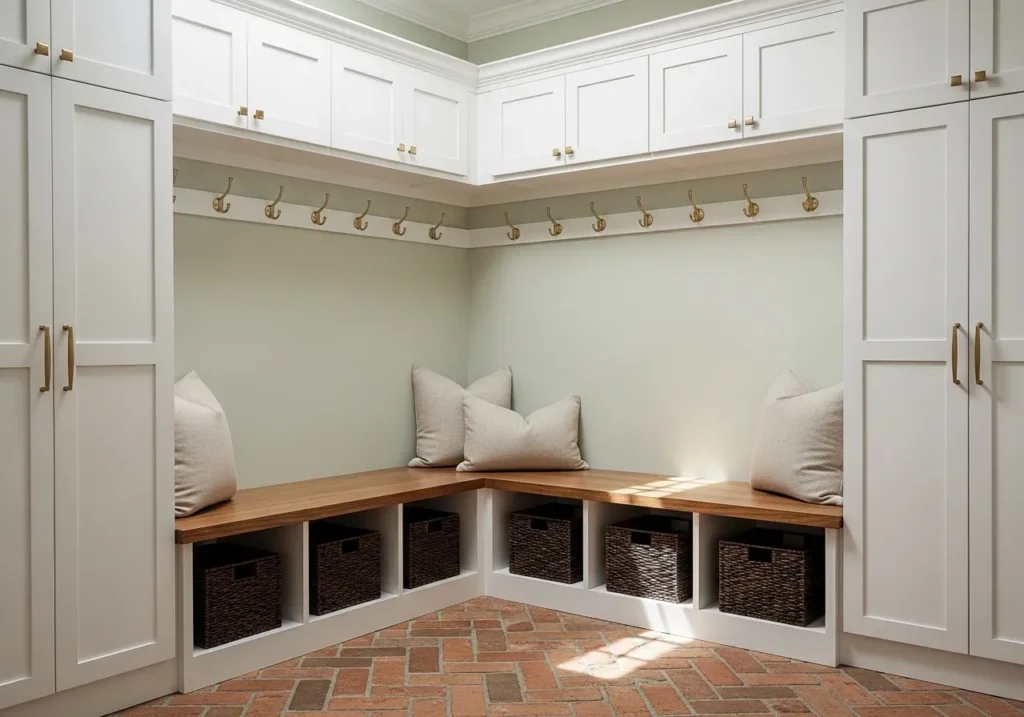
- Uses an awkward corner instead of leaving it empty.
- Creates storage without needing a full mudroom wall.
- L-shaped seating gives the space a cozy built-in feeling.
- Works beautifully near back doors, side entries, or laundry rooms.
A corner locker nook can make a forgotten entry space feel surprisingly valuable. Corners often collect random shoes, umbrellas, and tote bags because they lack a clear purpose. Turning that area into an L-shaped storage zone gives the room structure while keeping the design cozy. This setup works especially well in smaller homes where every wall matters. I’ve seen this work well near laundry doors and garage entries because it captures clutter before it moves farther inside. The result feels intentional, warm, and smart without needing a large footprint or major renovation.
To make the corner feel polished, keep the materials consistent on both sides of the L shape. A shared bench, matching hooks, and repeating baskets help the nook feel built-in instead of patched together. Add a cushion only if the space stays dry and easy to clean. Pale walls, brick flooring, or simple tile can make the corner feel charming rather than cramped. The biggest transformation is practical: bags, coats, and shoes finally have a landing zone, while the surrounding hallway stays open, cleaner, and easier to walk through daily.
Two-Tone Cabinets
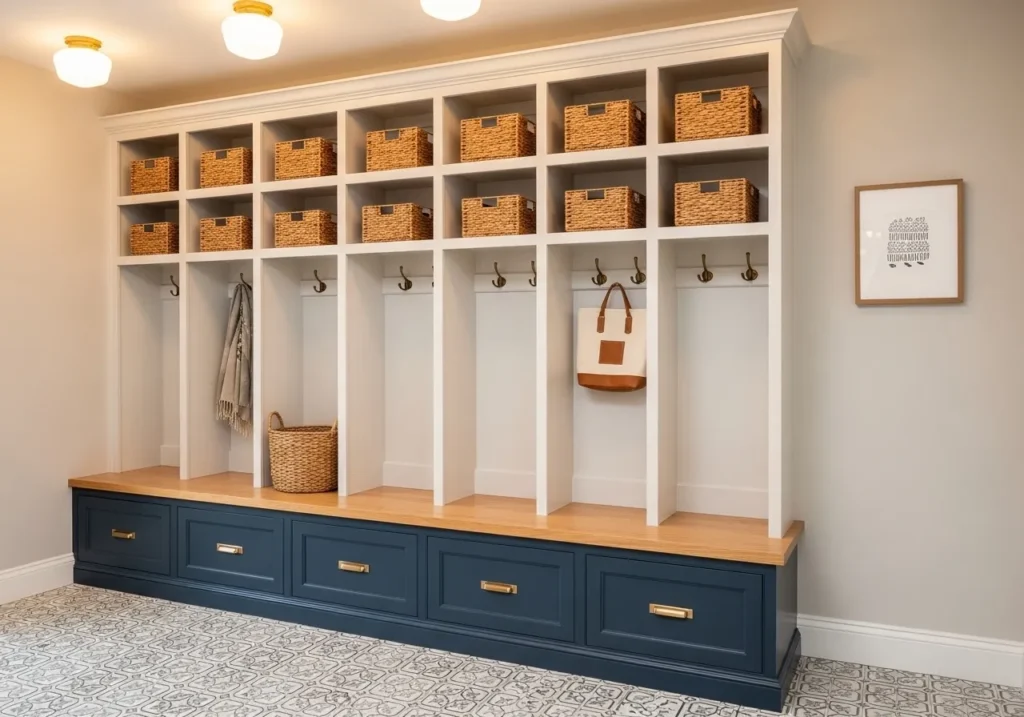
- Adds depth and contrast without overwhelming the space.
- Dark lower cabinetry helps disguise scuffs from shoes and bags.
- Light upper sections keep the room bright and open.
- Creates a designer look with a simple color change.
Two-tone cabinets bring instant personality to a hardworking mudroom. Instead of using one flat color from floor to ceiling, this idea adds contrast where it matters most. Darker lower storage grounds the room and handles daily wear beautifully, while lighter upper lockers keep everything feeling open. That balance is perfect for families who want a stylish space that still survives real life. In my experience, color blocking also makes built-ins look more expensive, even when the cabinet style is simple, modest, practical, and budget-conscious for everyday homes with active routines.
For more inspiration on connected utility spaces, check out our garage interior design ideas for storage solutions that pair beautifully with mudroom lockers.
The easiest way to use this idea is to keep the lower drawers or bench base in a deeper shade and the upper cubbies in white, cream, or soft gray. Navy, charcoal, sage, and warm taupe all work well near shoes and backpacks because they hide marks better than bright paint. Repeat the darker tone in a rug, door, or hook finish so the design feels connected. The finished mudroom looks layered, custom, and more polished while still giving every family item a useful home near the entry without extra clutter.
Tall Wall Storage
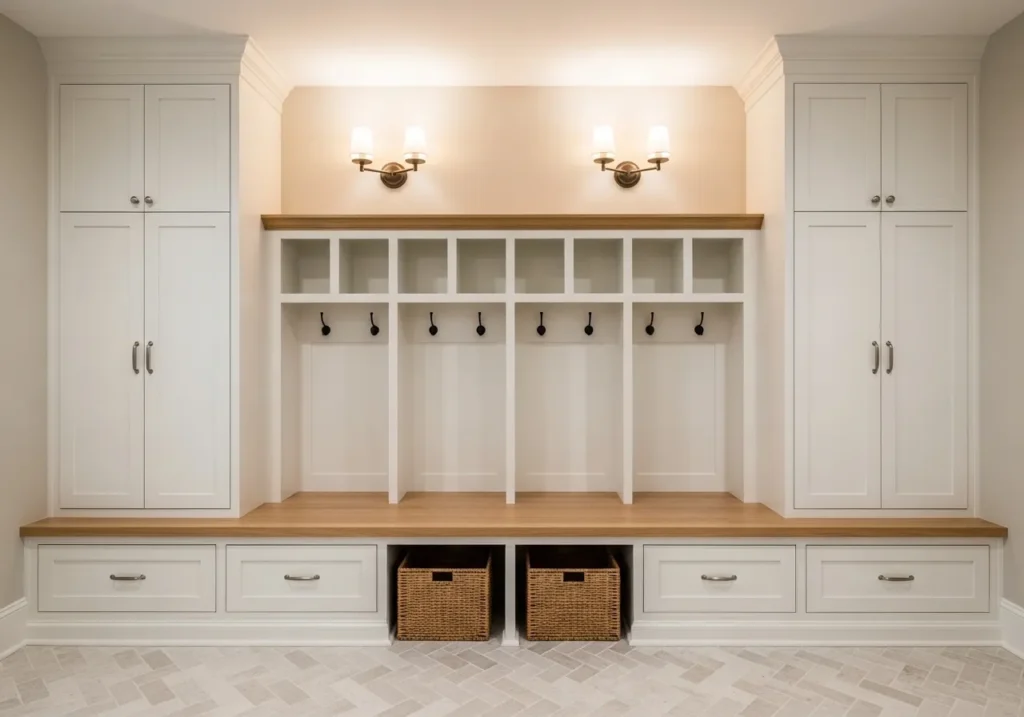
- Maximizes wall height for seasonal and everyday storage.
- Closed upper cabinets hide items that are not used daily.
- Lower drawers keep shoes and outdoor gear out of sight.
- Creates a clean, custom look for busy entry zones.
Tall wall storage makes a mudroom feel calm because clutter has fewer places to escape. Full-height lockers use the entire wall, which is especially helpful in homes with limited floor space. Everyday coats can stay at hook level, while seasonal items, extra bags, and rarely used gear move into upper cabinets. That’s why many designers recommend vertical storage for entry areas. It gives the room a finished built-in look and keeps visual mess off the floor, benches, doorways, and surrounding rooms during busy routines at home with less stress and searching.
This design works best when the layout separates daily items from long-term storage. Keep hooks, shoe drawers, and bench space easy to reach, then reserve the highest cabinets for winter accessories, picnic blankets, or backup supplies. Choose simple cabinet fronts if the wall is large, because too much detail can feel heavy. Soft lighting helps tall units feel welcoming instead of closed in. The visual result is sleek and organized, while the functional result is more storage without adding extra furniture or crowding the walkway near the door every day.
Pet Supply Locker
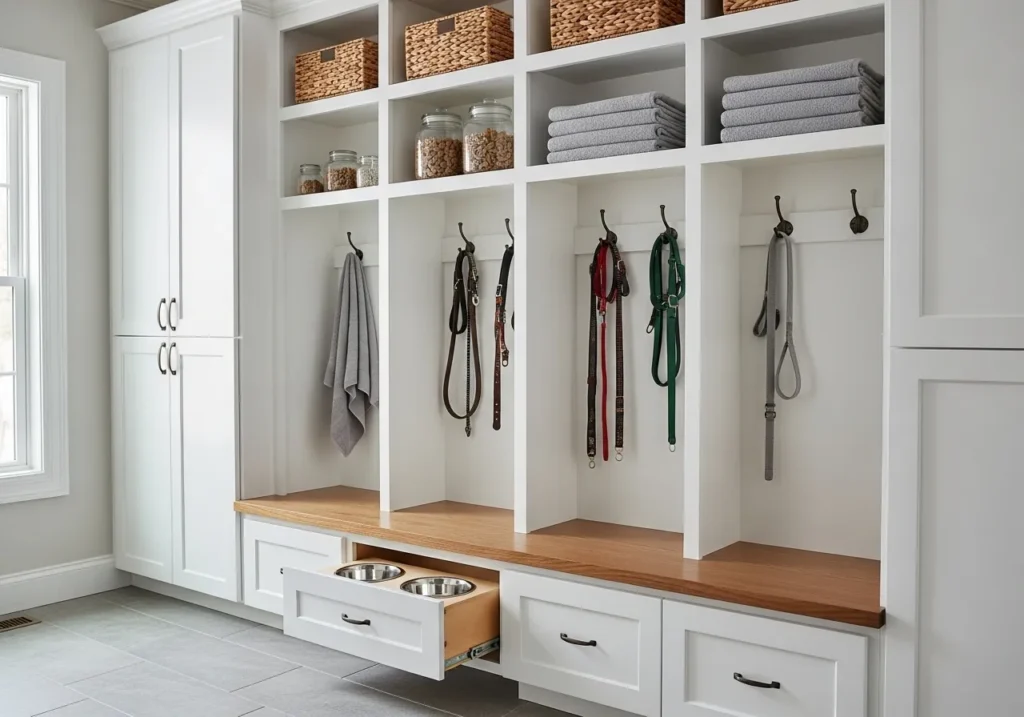
- Keeps leashes, treats, towels, and pet bags in one place.
- Helps reduce clutter near the back door after walks.
- Built-in bowls or drawers can make feeding areas look neater.
- Works well for homes with dogs, cats, or outdoor-loving pets.
A pet supply locker turns everyday pet clutter into something neat and easy to manage. Leashes, paw towels, waste bags, grooming brushes, and treats often end up scattered near the door. Giving them one dedicated section keeps the entry cleaner and makes walks faster. This idea works especially well beside a back door or garage entrance, where pets usually come in after rain or muddy play. I’ve noticed that even one lower basket for towels can make a mudroom feel more prepared and less chaotic after outdoor trips each time.
To make the setup practical, place leash hooks at a comfortable grabbing height and keep towels in a lower bin where they are easy to reach. A pull-out bowl drawer can look polished, but a simple mat with matching bowls also works. Use washable flooring and moisture-friendly materials, especially if pets come inside wet. Clear jars for treats, small labels, and a closed bin for supplies keep the area attractive. The space becomes more organized, while pet care feels smoother, cleaner, and built into the home every day with ease.
Pull-Out Shoe Drawers
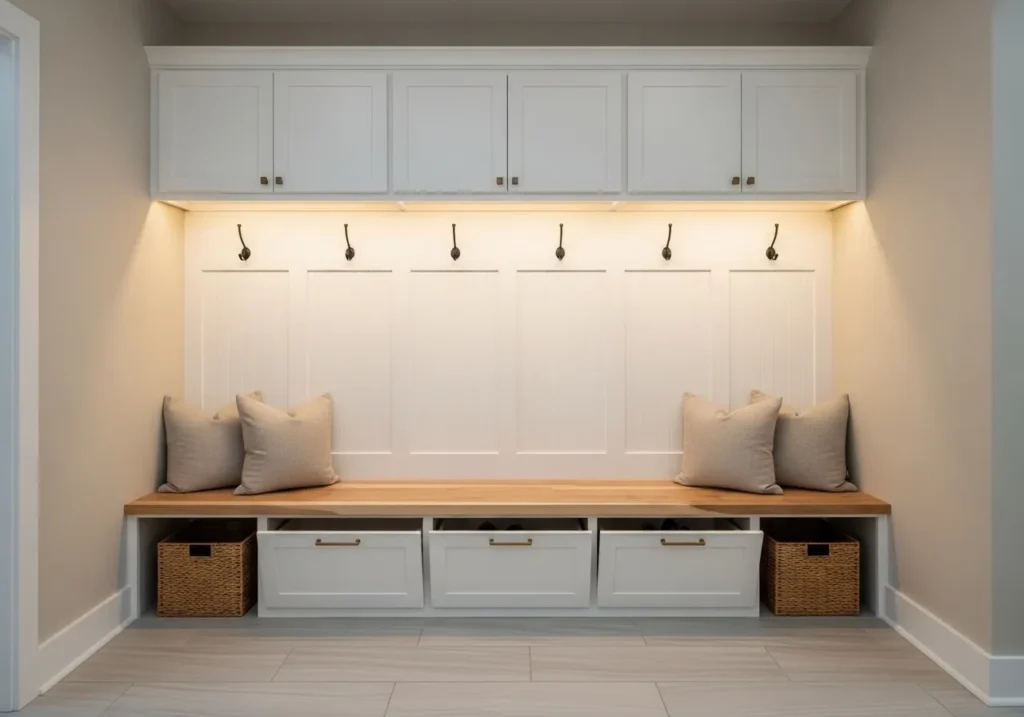
- Hides messy shoes while keeping them close to the door.
- Pull-out drawers make pairs easier to find quickly.
- Great for families who dislike open shoe piles.
- Keeps the bench area cleaner and more visually calm.
Pull-out shoe drawers solve one of the biggest mudroom problems: the shoe pile. Open shelves can look nice at first, but they often become messy when everyone is rushing in and out. Drawers hide that visual clutter while keeping shoes exactly where they are needed. This idea is especially helpful for families with school shoes, work shoes, sports sneakers, and seasonal boots. The space instantly feels calmer because the floor looks clearer, the bench feels usable, and the entry no longer looks overloaded with loose pairs after busy days.
For the best function, choose drawers with strong glides and enough ventilation for everyday footwear. Low drawers are easiest for children, while deeper sections can hold boots or bulky outdoor shoes. Add simple dividers if pairs tend to get mixed together. A wood bench above the drawers keeps the setup warm and practical, while painted fronts make everything look seamless. The visible change is huge: shoes disappear from the walking path, and the mudroom feels cleaner, safer, and more polished with very little daily effort from everyone for every person.
Upper Basket Cubbies
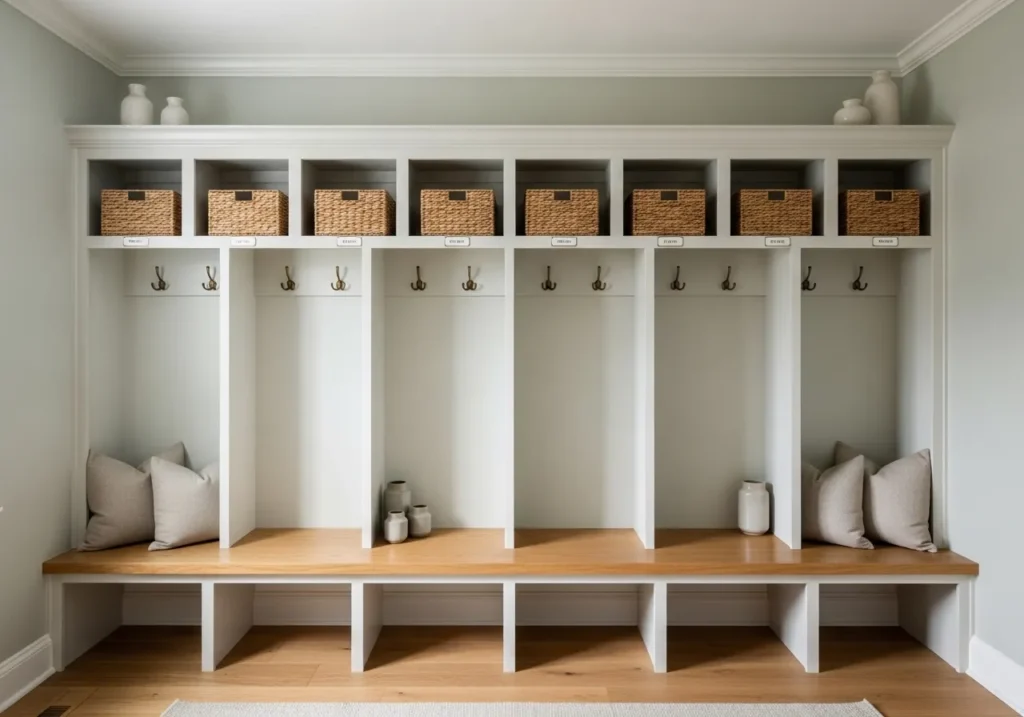
- Uses high storage for items that do not need daily access.
- Matching baskets create a clean and collected look.
- Keeps seasonal accessories off benches and floors.
- Adds texture to tall locker walls without making them busy.
Upper basket cubbies are perfect for making a mudroom look organized all the way up. The higher shelves often become wasted space, but baskets turn them into attractive storage for hats, gloves, scarves, sunscreen, or backup bags. This idea keeps small things from taking over the bench or hooks. It also creates a pleasing visual rhythm because the baskets repeat across the top of the lockers. The room feels taller, warmer, and more finished without adding heavy cabinet doors or complicated custom details to the design in real homes.
To keep upper cubbies useful, store items by season or category instead of filling baskets randomly. Labels can help, especially when several baskets look the same. Choose baskets with handles so they are easier to pull down safely. Natural woven textures work beautifully with white, gray, sage, or blue cabinetry because they soften the structure. This setup improves both style and function, giving the mudroom a clean layered look while keeping rarely used items hidden, reachable, and neatly contained above the everyday clutter zone near the door with less effort.
Arched Openings
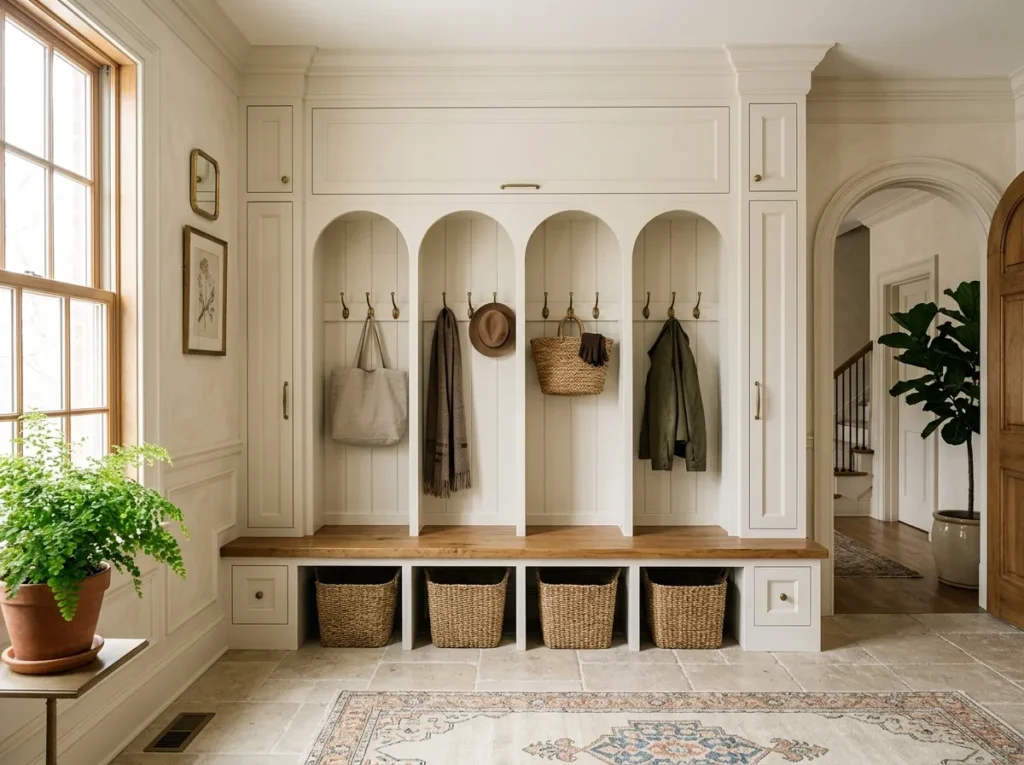
- Adds architectural detail to a simple mudroom wall.
- Softens the shape of tall lockers and built-in storage.
- Creates a custom, high-end look with a timeless feel.
- Works well in cottage, traditional, Mediterranean, and transitional homes.
Arched locker openings make a mudroom feel softer, more custom, and more architectural. Straight lines are practical, but arches add a gentle detail that immediately catches the eye. This idea works beautifully when the rest of the room stays simple, because the shape becomes the main design feature. It can elevate even a small entry area into something that feels planned and special. I’ve seen arched built-ins make utility spaces feel less like storage rooms and more like thoughtful extensions of the home with character and quiet visual interest daily.
The key is keeping the arch design clean and not overly decorative. Use simple hooks, natural baskets, and a smooth bench so the curved openings stay visually important. Soft whites, warm wood, limestone, and muted rugs pair beautifully with this style. Arches also help tall locker sections feel less boxy, which is useful in narrow or vertical spaces. The finished mudroom feels elegant but still hardworking, offering the same practical storage while adding charm, softness, and a memorable Pinterest-friendly detail readers will want to save again for future planning later.
Garage Entry Lockers
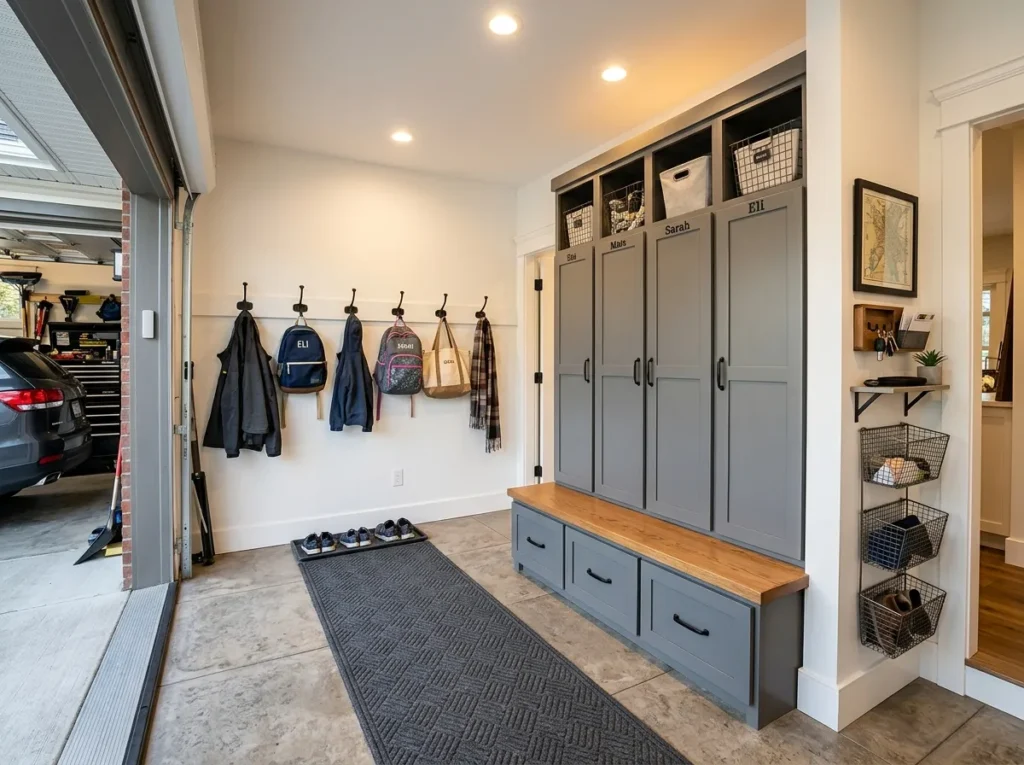
- Captures clutter before it reaches the main living areas.
- Durable finishes handle shoes, bags, tools, and outdoor gear.
- Perfect for homes where the garage is the daily entrance.
- Creates a smoother transition between car, home, and errands.
Garage entry lockers are a smart solution for homes where the front door is rarely used. Many families come in through the garage with groceries, school bags, work gear, and muddy shoes. Without a clear drop zone, that clutter quickly moves into the kitchen or hallway. A sturdy locker setup near the garage door keeps everything contained at the first point of entry. This makes the home feel cleaner right away and helps daily routines feel more organized, especially during busy mornings and after-school arrivals together and evening returns too.
If your mudroom connects to your garage, these garage interior ideas will help you create a seamless, organized transition between both spaces.
Because garage entries handle heavy use, choose materials that can take scuffs, moisture, and quick cleanups. Darker paint, washable tile, rubber-backed rugs, and strong hooks are all practical choices. Closed drawers can hide shoes, while open hooks keep coats and bags easy to grab. Add a small charging shelf or key tray if this is the household’s main entrance. The transformation is both visual and functional: the space feels purposeful, the mess stays controlled, and the rest of the home remains calmer throughout the day with less visual noise.
Laundry Room Lockers
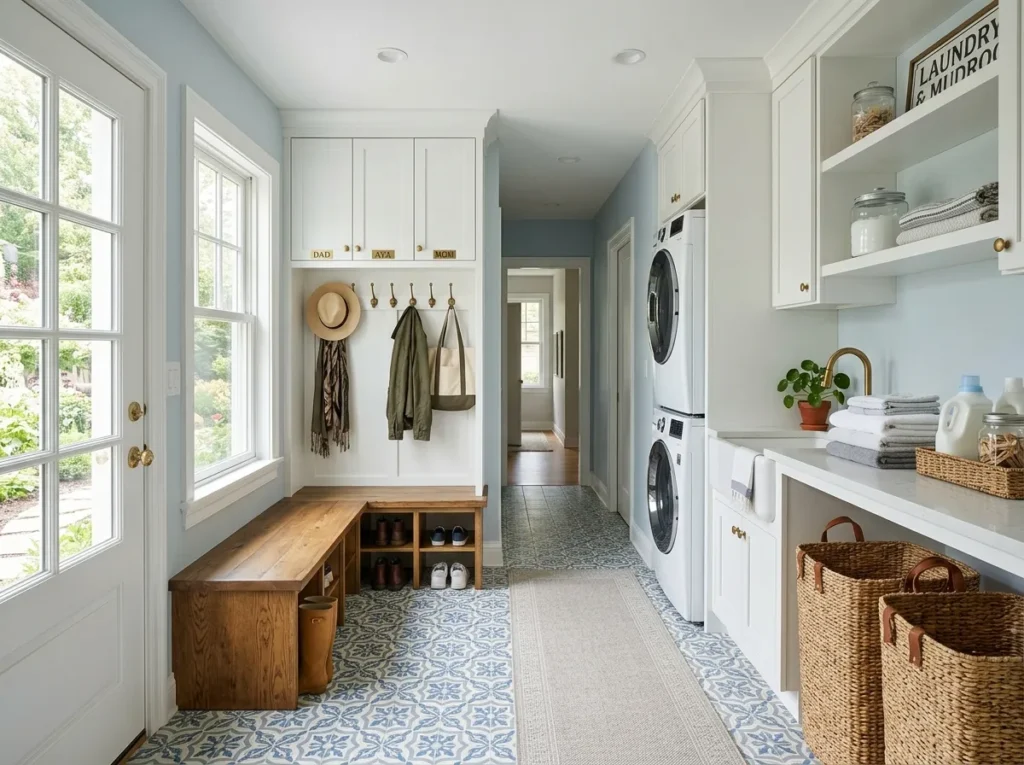
- Gives the laundry room a second purpose as an entry drop zone.
- Keeps coats, towels, bags, and cleaning items organized in one place.
- Works well for back doors, garage entries, and utility spaces.
- Soft colors and baskets help the room feel fresh, not purely functional.
Laundry room lockers are perfect when the same space handles cleaning, coats, and everyday drop-offs. Instead of treating the laundry area as only a chore zone, this setup gives it a second purpose without feeling messy. Hooks can hold jackets, shelves can hold baskets, and the bench can support shoes or folded towels. I’ve noticed this layout works especially well in homes where the back door opens near the washer and dryer. It keeps outdoor clutter, laundry supplies, and family essentials close together while still feeling organized and visually calm.
Once your entry is organized, focus on the rest of the home. These basement family room ideas show how to keep the rest of your lower level just as functional and stylish.
The best way to make this idea work is to separate laundry items from entry items. Keep detergent and cleaning supplies in closed cabinets, then leave hooks and cubbies for coats, bags, and shoes. A durable floor matters here because wet clothes, muddy shoes, and pet towels may all pass through the same area. Soft colors, woven baskets, and a wooden bench can stop the room from feeling too utilitarian. The result is a practical hybrid space that saves steps, reduces clutter, and makes daily routines feel easier every day.
Hidden Door Lockers
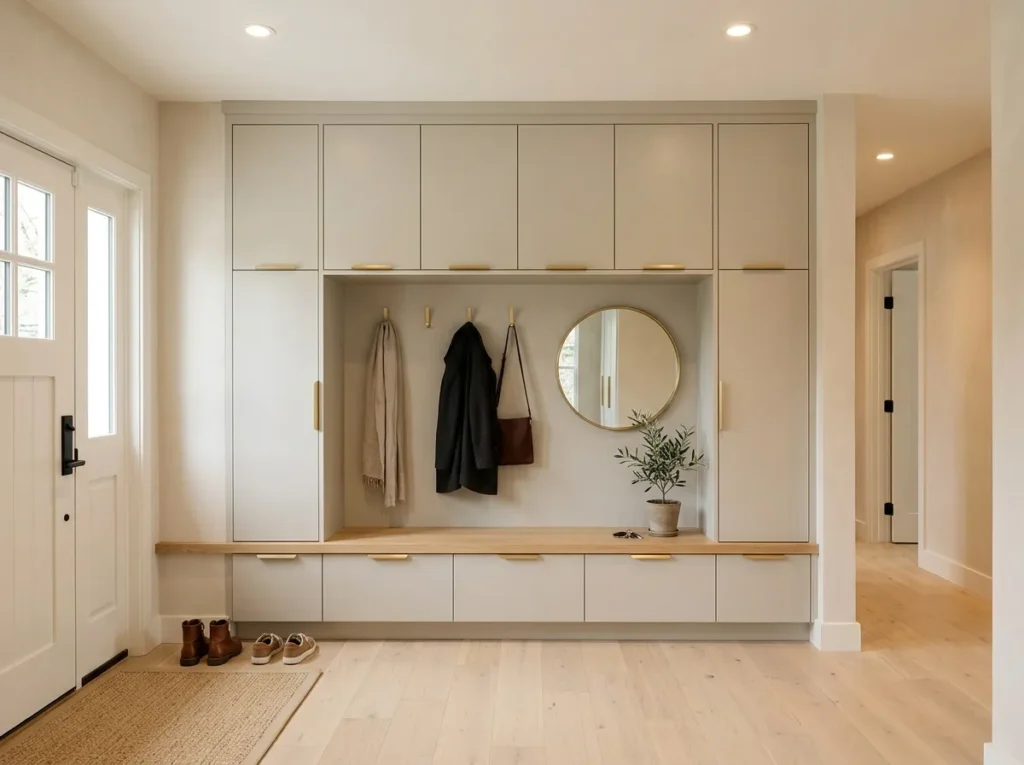
- Hides coats, bags, and shoes behind clean cabinet doors.
- Perfect for open-plan homes where visual clutter shows quickly.
- Gives the mudroom a polished, furniture-like appearance.
- Keeps everyday mess accessible but out of sight.
Hidden door lockers are ideal when you want storage without a busy visual look. Some homes need a mudroom zone, but the entry sits near a kitchen, hallway, or living space where open hooks can feel cluttered. Flat cabinet doors hide coats, shoes, and bags behind a cleaner wall of storage. This idea works beautifully for people who prefer a calm, minimal home but still need strong function. Once everything closes away, the room feels quieter, smoother, and much more polished than a traditional open locker wall near the entrance.
To keep hidden lockers practical, use simple interiors behind each door. Add hooks inside for jackets, shallow shelves for shoes, and small baskets for gloves or pet items. Push-latch doors can create a seamless look, while slim handles feel easier for families. Light neutral paint helps the storage blend into nearby walls, especially in open-plan homes. The biggest benefit is visual control. The entry can handle real-life mess during the day, then return to a clean, furniture-like appearance whenever the doors are closed after use again at night easily afterward.
Floating Bench Lockers
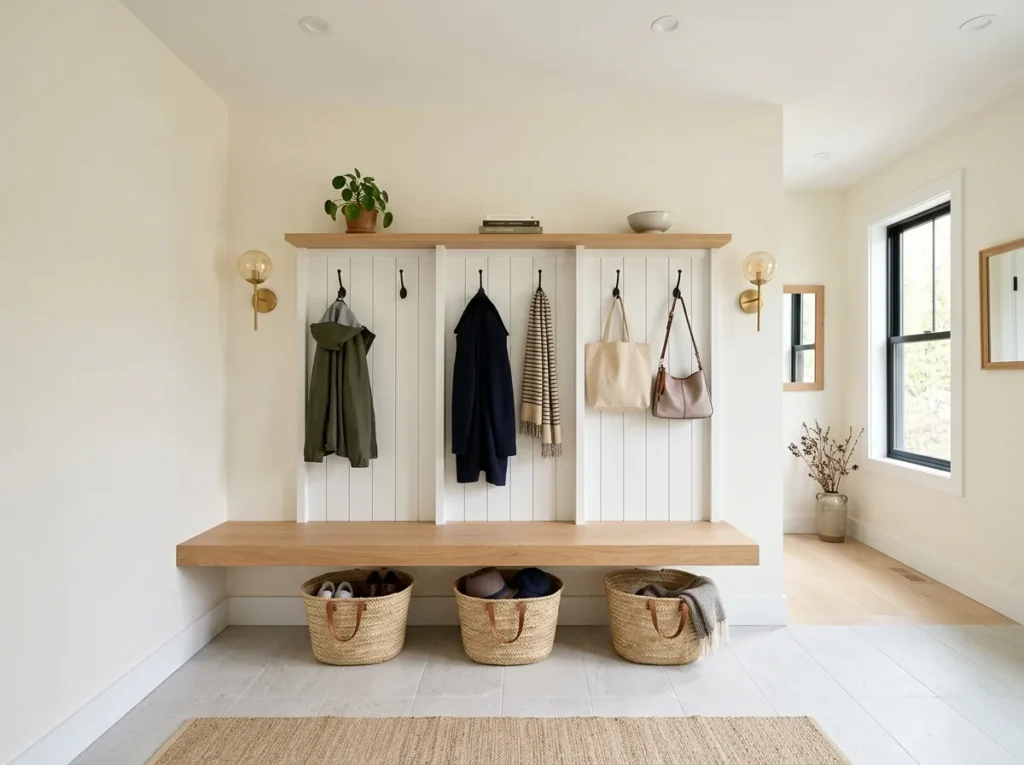
- Makes a small mudroom feel lighter and more open.
- Leaves floor space visible, which helps the room feel bigger.
- Makes cleaning underneath the bench much easier.
- Works beautifully with modern, Scandinavian, and minimalist styles.
A floating bench gives locker storage a lighter and more modern feeling. Because the bench does not sit directly on the floor, the whole area looks more open and easier to clean. This idea is especially useful in smaller mudrooms where bulky lower cabinets can make the space feel tight. Shoes can slide underneath, baskets can sit neatly below, and the wall still feels airy. I’ve seen this work well in modern homes that need storage but do not want the entry to feel heavy, crowded, or visually overloaded daily.
For the strongest design, pair a floating bench with vertical wall paneling, simple hooks, and a narrow upper shelf. Use strong brackets or a built-in support system so the bench feels secure for daily sitting. Wood adds warmth, while painted versions blend into the wall for a softer look. Keep the floor underneath tidy with a long boot tray or matching baskets. The result is clean, practical, and visually spacious, giving the mudroom a custom look without filling every inch with cabinetry or closed storage at all, inside beautifully too.
Kids Drop Zone
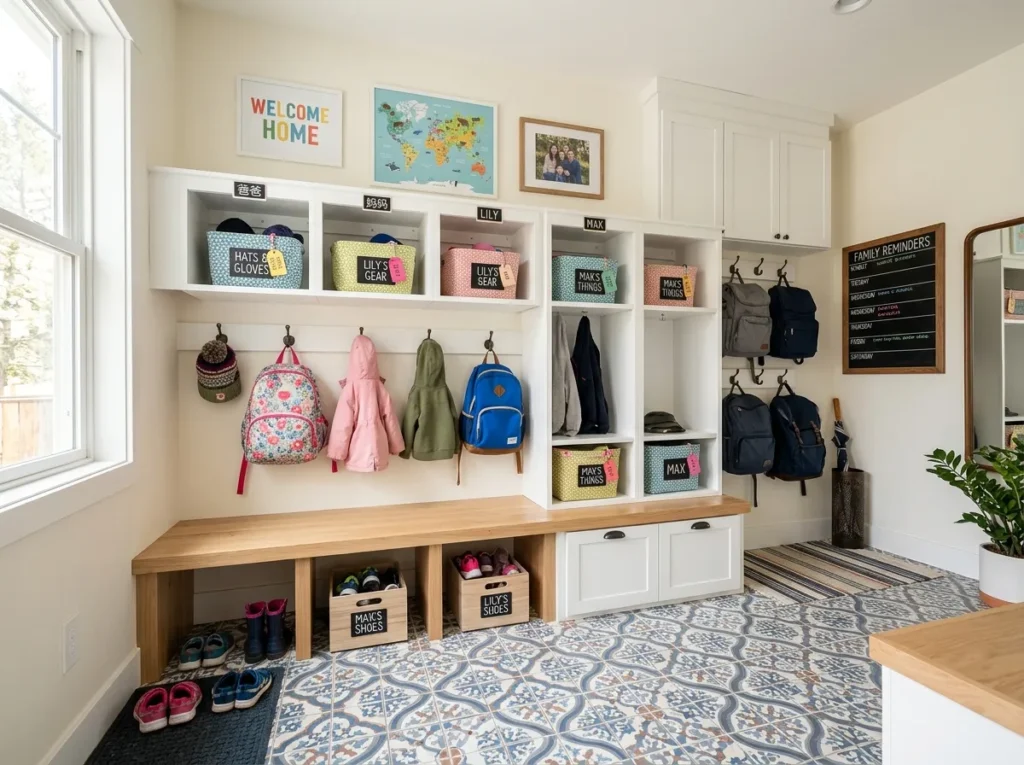
- Helps kids manage their own shoes, bags, and jackets.
- Low hooks make the setup easy for children to use.
- Labels reduce morning confusion and lost school items.
- Keeps the design practical without losing a cheerful look.
A kids’ drop zone can make school mornings and after-school cleanup much easier. Children need storage that is simple, reachable, and obvious, not perfectly styled or difficult to maintain. Low hooks, open cubbies, and labeled baskets help them know exactly where backpacks, jackets, lunch boxes, and shoes belong. This setup supports independence because kids can use it without asking for help. In my experience, the easier the system is to follow, the more likely everyone is to actually keep the mudroom organized through the week with less stress daily.
Design the space around real daily habits instead of a picture-perfect setup. Place hooks at child height, use durable baskets, and choose flooring that can handle sneakers, spills, and muddy footprints. Bright labels, small name tags, or color-coded bins can make the area feel fun without becoming chaotic. Keep the design simple enough to reset in two minutes. The visual result is cheerful and orderly, while the functional result is fewer lost shoes, fewer backpack piles, and a smoother routine before everyone heads out the door each morning.
Coastal Blue Lockers
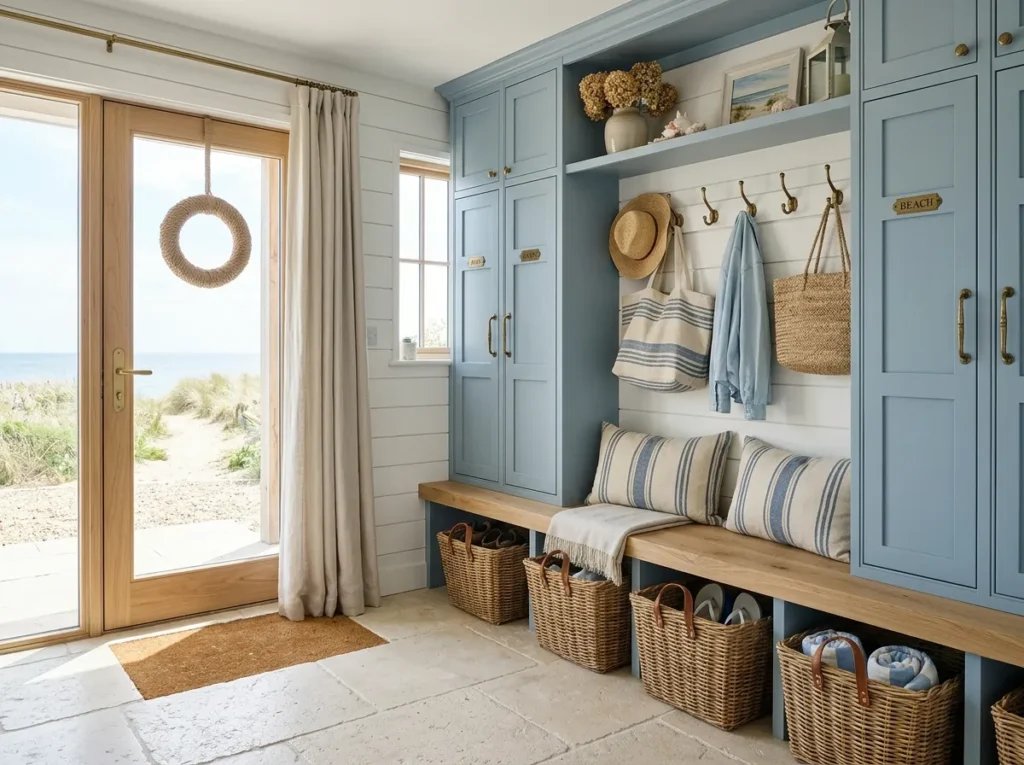
- Adds a calm, fresh color without feeling too bold.
- Pairs beautifully with white walls, rattan baskets, and wood accents.
- Gives the entry a light coastal or cottage-inspired mood.
- Makes storage feel decorative, not just practical.
Coastal blue lockers bring a fresh, breezy mood to an entry space. Soft blue cabinetry feels calm and welcoming, especially when paired with white walls, natural baskets, and light wood details. This color works well in beach houses, cottage-style homes, and any mudroom that needs a softer personality. It gives storage a decorative role instead of making it feel purely functional. The room instantly feels brighter, cleaner, and more relaxed, like a gentle transition between outdoor movement and indoor comfort after every arrival home with ease, daily indoors naturally now.
To keep the look polished, choose muted blue instead of overly bright shades. Dusty blue, slate blue, or pale coastal blue pairs beautifully with brass hooks, woven textures, striped cushions, and stone tile floors. White trim keeps the color crisp, while wood benches add warmth. This is one of those mudroom locker ideas that feels both stylish and practical when the palette stays balanced. The final space looks calm and collected, with storage that feels designed rather than simply installed for function near the door every day, inside daily too.
Sage Green Lockers
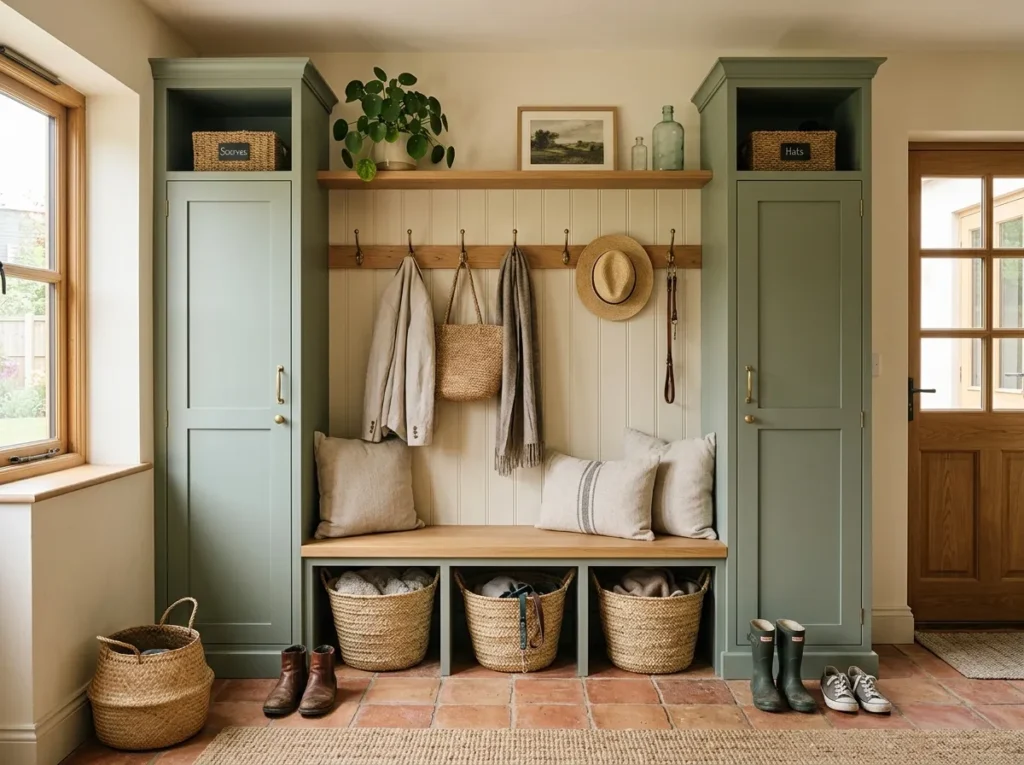
- Bring a soft, nature-inspired tone into a hardworking space.
- Hides small marks better than bright white cabinetry.
- Looks beautiful with oak, brass, cream, and stone textures.
- Adds personality while still feeling calm and timeless.
Sage green lockers add a soft, natural feeling to a hardworking mudroom. The color is gentle enough to feel neutral, but still gives the space more personality than plain white or gray. It pairs beautifully with oak benches, brass hooks, stone floors, and woven baskets. That’s why many designers recommend muted greens for utility areas. They bring calm and warmth without overwhelming the room. The finished look feels fresh, earthy, and welcoming, even when the space is packed with coats, shoes, bags, and everyday family gear after errands daily, too.
This shade works especially well when the mudroom connects to a kitchen, laundry room, or back entry. Sage feels clean but forgiving, so small scuffs and fingerprints are less noticeable than they would be on bright white paint. Use warm bulbs or natural light to keep the color from looking dull. Pair it with cream walls, black accents, or terracotta tile for extra depth. The result is a grounded storage area that feels organized, current, and peaceful while still being practical for heavy daily traffic at home year-round, too.
Boot Tray Base
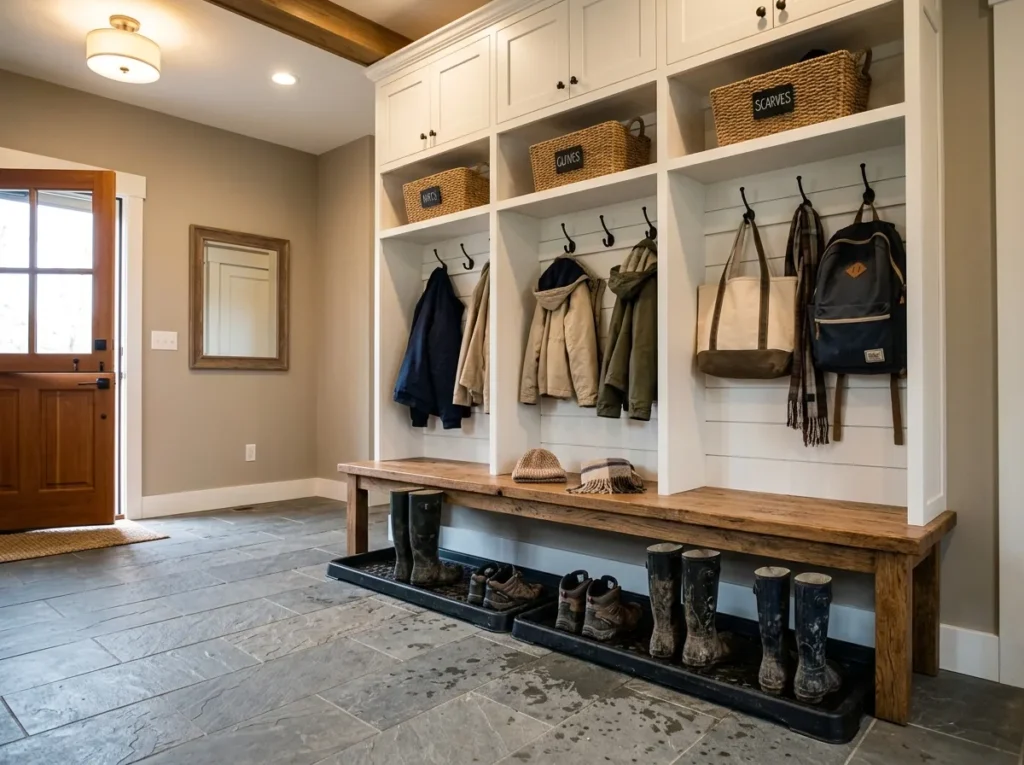
- Keeps wet boots and muddy shoes contained.
- Protects floors from dirt, water, and outdoor mess.
- Works especially well in rainy, snowy, or garden-loving homes.
- Makes the lower locker area more practical and easier to clean.
A boot tray base makes muddy shoes feel less like a problem and more like part of the plan. Instead of letting wet boots sit directly on the floor, the tray creates a contained zone under the lockers or bench. This idea is especially useful in rainy climates, snowy seasons, or homes with children and pets. It protects flooring while making cleanup easier. The mudroom looks more controlled because messy footwear has a defined place, rather than spreading dirt across the walkway or nearby rooms after coming inside daily.
Choose a tray that fits the full width of the locker base for the cleanest look. Rubber trays are practical and easy to rinse, while metal or stone-look trays can feel more polished. Add a small rack insert if shoes need airflow underneath. Keep the surrounding storage simple with hooks, baskets, and a wipeable bench cushion. The visual upgrade is subtle but powerful. The entry feels prepared for real life, and the floor stays cleaner after garden work, school pickup, errands, dog walks, and wet weather outside daily, too easily.
Minimal Wall Lockers
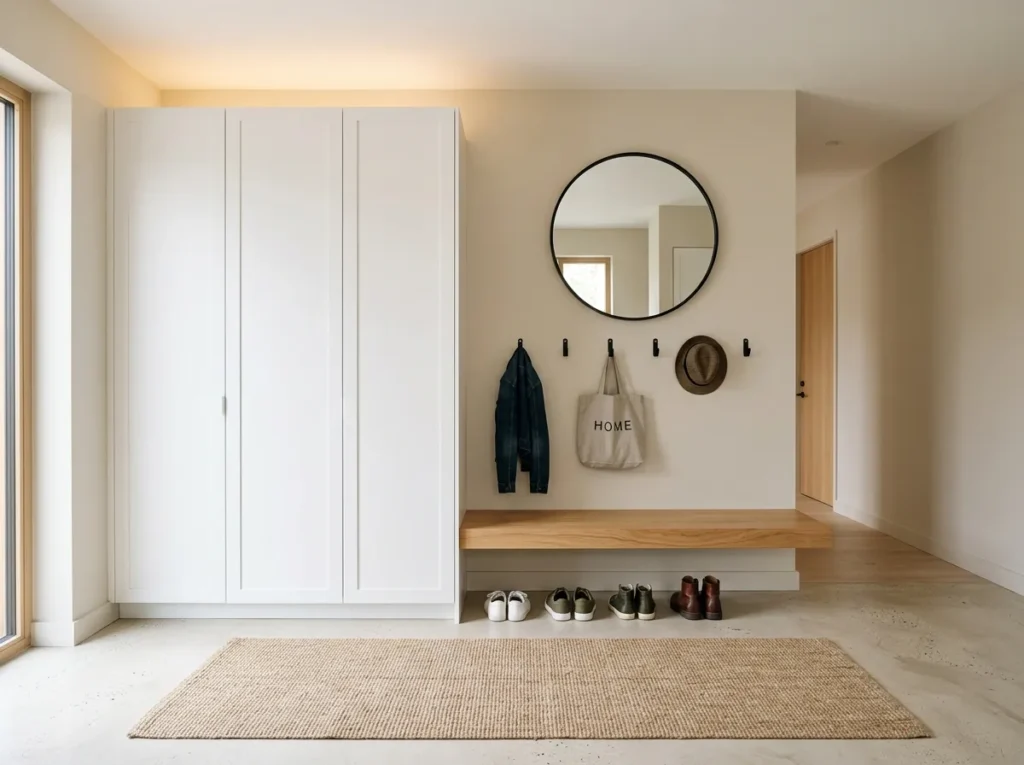
- Creates storage without making the room feel busy.
- Works well in small entries and open-plan living areas.
- Uses clean lines, simple colors, and practical materials.
- Gives the mudroom a calm, edited, clutter-free look.
Minimal wall lockers are perfect for homes that need organization but prefer a clean, quiet design. Instead of heavy built-ins, this idea uses simple vertical sections, streamlined hooks, and a restrained color palette. The look feels modern and uncluttered, which works especially well in small entries or open areas connected to living spaces. The storage is still useful, but it does not dominate the room. Every line feels intentional, making the mudroom look calm, edited, and easy to maintain day after day without extra styling or visual noise.
To create this style, choose flat cabinet fronts, hidden hardware, narrow benches, and matching baskets. Stick to two or three colors, such as white, oak, and black, so the design feels cohesive. Avoid too many decorative objects, as beauty comes from simplicity. A slim runner, one mirror, or a single plant is usually enough. The finished space feels breathable and organized, while still giving coats, shoes, and bags a clear home. It is a practical choice for anyone who wants function without visual clutter near the entry today too.
People also ask
What are mudroom lockers called?
Mudroom lockers are often called entryway lockers, storage cubbies, hall tree lockers, or built-in mudroom storage, depending on their design and features.
What are the latest mud room trends?
Current mudroom trends include two-tone cabinetry, hidden storage, sage green lockers, natural wood finishes, and personalized family organization zones.
How deep do mudroom lockers need to be?
Most mudroom lockers work well at 15–24 inches deep, providing enough space for coats, bags, shoes, and everyday essentials without overwhelming the room.
How much does it cost to build mudroom lockers?
Mudroom lockers can cost anywhere from $500 to $5,000+, depending on size, materials, customization, and whether they are DIY-built or professionally installed.
Conclusion
A well-designed mudroom can turn daily clutter into a calm, organized routine. These mudroom locker ideas show how simple details like benches, baskets, hooks, labels, colors, and hidden storage can make your entry feel more beautiful and easier to manage. For more home organization inspiration, explore our mudroom decor ideas, keep your garage just as tidy with garage interior ideas, and complete your home’s functional spaces with basement family room ideas.
I’ve seen how even one small change, like adding shoe drawers or family labels, can make a space feel instantly more useful. Save this post on Pinterest, try your favorite idea at home, and share it with someone who needs a little entryway organization inspiration.

Welcome to Homely Crafter! I am Muhammad Israr, the founder of Homely Crafter, bringing 4+ years of hands-on interior design and renovation experience to practical, budget-friendly home decor ideas for every room. Let’s decorate together!