
The real price of a beautiful fall home is not a lost weekend. It is about twelve minutes and three small moves: one pumpkin set on a stack of books, a plaid throw tossed over the sofa arm, and three candles grouped on the coffee table. That trio covers what stylists call the 80/20 of the season, the small visible changes that make an entire room read as autumn.
These simple fall decor ideas for autumn 2026 stay on that principle from start to finish. Every idea below is a quick swap, not a project: no ladders, no power tools, no storage bin excavation. You will get exact measurements, honest price ranges, and the small mistakes to avoid.
Pick any three that match your rooms, set a fifteen minute timer, and see how far simple can go.
Pumpkin Book Stack
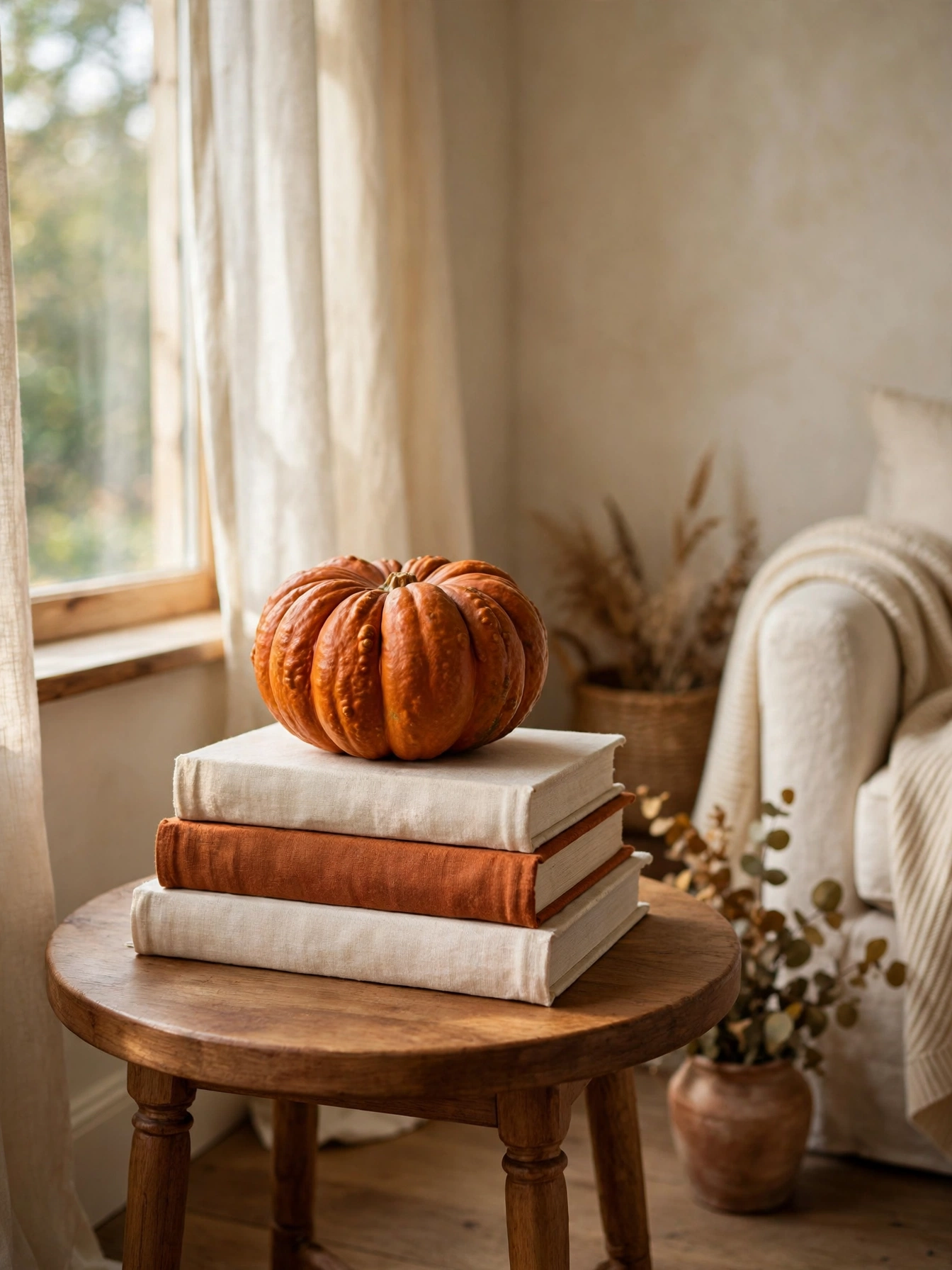
Why This Works:
- One 6 to 8 inch pumpkin adds instant seasonal weight with zero installation
- A book stack lifts the pumpkin to true eye level from the sofa
- Linen and cotton covers add texture that pairs with any fall palette
- The whole arrangement moves in one piece when you need the table
Stack 3 to 4 hardcover books so the pile stands 5 to 7 inches tall, choosing spines in rust, cream, or sage so the fall palette reads instantly. Top it with a single pumpkin 6 to 8 inches wide and no more than 4 pounds, which keeps the stack stable on a 14 to 18 inch wide side table. Leave at least 2 inches of book visible around the pumpkin base, because a pumpkin that overhangs the stack looks top heavy from across the room. Avoid real pumpkins with soft spots or stemless tops, since they start to weep within 5 days on indoor heat, while a sound pumpkin lasts 3 to 4 weeks at 68 to 72 degrees. The styling standard caps the arrangement at roughly two thirds of the table surface so the lamp or drink beside it still has room.
In real homes, this approach works best when the books already live in the room, because borrowed styling looks staged in photos. It suits renters and small spaces especially, since the whole arrangement lifts away in one motion on November 1 and costs under 12 dollars if the pumpkin is the only purchase. The honest limitation is height math: on a 24 inch side table next to a tall sofa, the pumpkin can disappear below the sightline, so add a fourth book or move it to a lower 20 inch table. Real pumpkins also leak if cut, so keep carving knives away from this display entirely. The trade off is simple: one pumpkin cannot carry a whole room, but it can anchor one corner in under two minutes.
Plaid Throw Swap

Why This Works:
- A 50 by 60 inch throw covers the arm and seat corner in one drape
- Plaid reads autumn instantly without a single pumpkin
- Wool and acrylic blends survive daily sofa use and washing
- The swap reverses in seconds when spring returns
Choose a throw 50 by 60 inches for a standard loveseat or 60 by 70 inches for a full 84 inch sofa, so the drape reaches 10 to 12 inches down the front without pooling on the floor. Fold it in thirds lengthwise to a 16 to 18 inch wide band, then lay it diagonally across one arm and tuck 4 inches of the end behind the seat cushion so it stays put through a movie night. Wool blend throws rated for machine washing hold their plaid pattern through 20 plus wash cycles, while 100 percent acrylic pills within the first 5 washes. Avoid throws narrower than 48 inches, because they slip off the arm and end up folded on the floor by evening. The 60-30-10 color rule still applies: if your room already has 10 percent rust or amber elsewhere, the throw ties the whole palette together.
A common mistake is draping the throw dead center on the sofa, which reads like a furniture cover instead of styling. Push it to one side, letting it land where someone would actually sit, and the casual look appears by itself. This suits households with kids and pets, since a washable throw protects the upholstery through muddy October weekends. The catch is static: acrylic throws cling to leggings and pet hair, so shake them outside twice a week. Budget reality is kind here: big box plaid throws run 15 to 25 dollars, mid range cotton wool blends 40 to 70 dollars, and genuine wool plaids 90 to 140 dollars.
Candle Cluster Trio
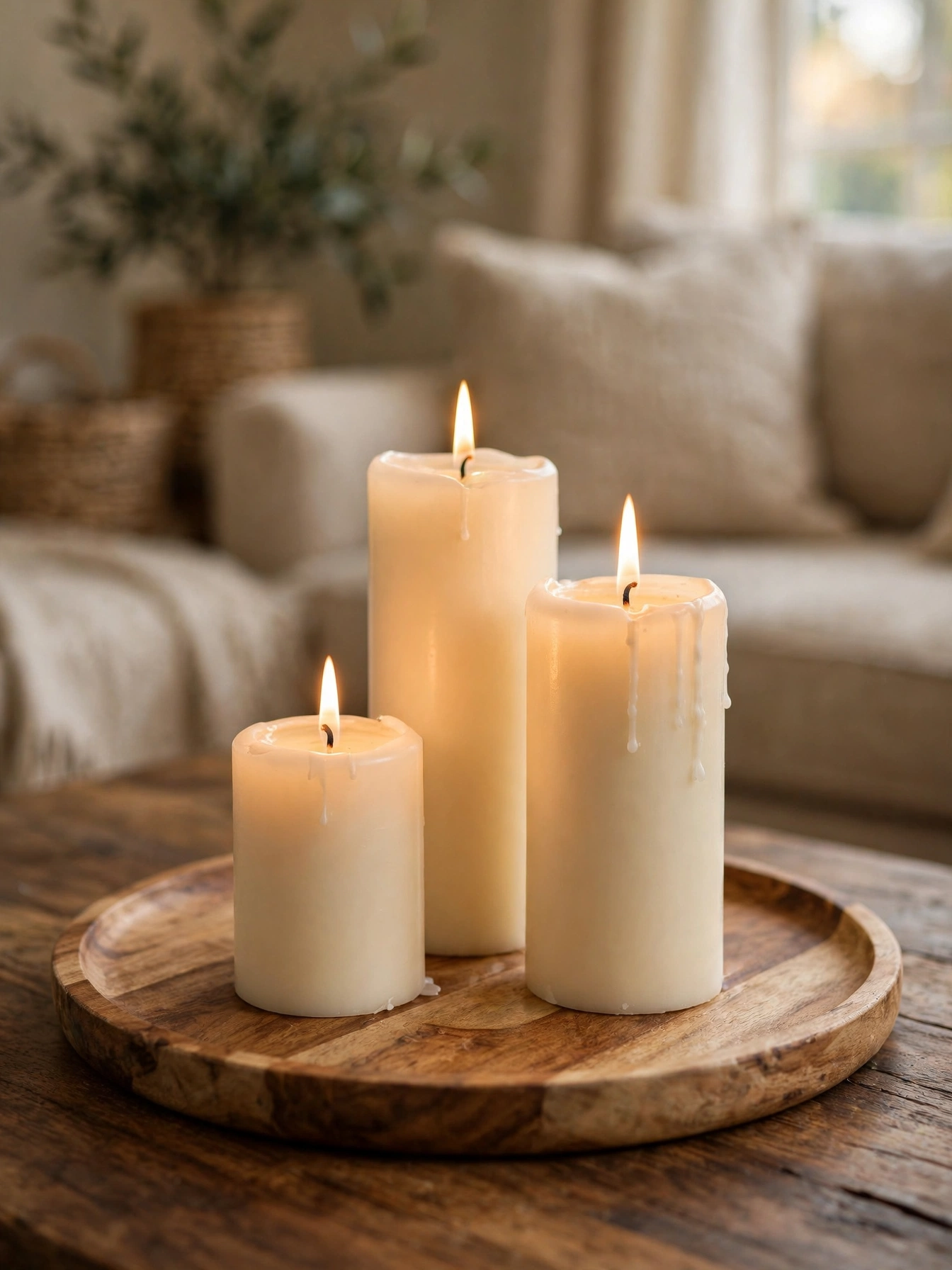
Why This Works:
- Odd numbered groupings look intentional, a rule professional stylists repeat often
- Three heights from 3 to 6 inches create a skyline on a flat table
- Unscented pillars burn cleanly around food and conversation
- Battery timers give the glow without a single open flame
Group 3 pillars at 3, 4, and 6 inches tall with a 3 inch diameter, setting them in a triangle 2 to 3 inches apart on a 12 to 14 inch tray or directly on the coffee table. A 3 by 6 inch pillar burns about 60 to 70 hours, while the 3 inch votive height lasts 20 to 25 hours, so stagger replacements and the cluster never goes dark mid season. Keep every flame at least 12 inches from curtains, books, or the throw you just swapped in, which matches the National Fire Protection Association guidance for open flames. Avoid scented candles in tight groupings, because three competing fragrances turn a 12 by 16 foot living room cloying within an hour. Use unscented pillars and let one cinnamon stick bundle nearby carry the scent instead.
The first thing to check before purchasing is whether your household includes curious toddlers or tail happy dogs. If so, choose flameless pillars with a 5 hour daily timer, which cost 18 to 30 dollars for a set of three and look convincing from 8 feet away. It suits evening heavy households best, since candlelight flatters faces in a way overhead bulbs never do. The honest trade off is maintenance: real pillars need wicks trimmed to one quarter inch before each lighting or they tunnel and smoke. If that chore sounds like work, the timer versions deliver the same 2700K warm glow with zero upkeep.
Dried Wheat Bundle
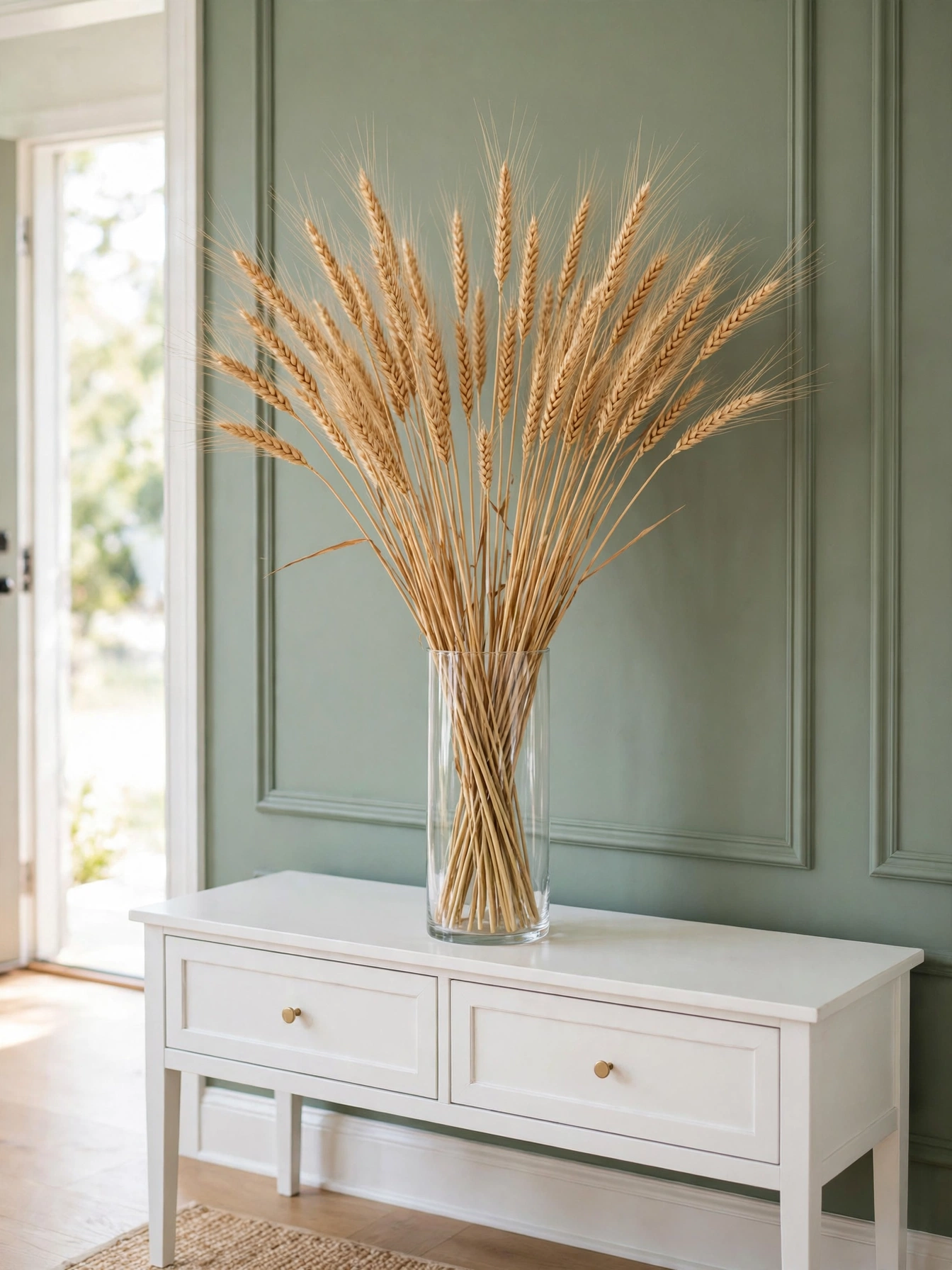
Why This Works:
- 20 to 30 stems fill a standard vase for under 10 dollars
- Wheat reads harvest season without Halloween overtones
- Dried stems last 2 to 3 years stored upright
- The golden tone warms rooms that lack natural sunlight
Buy a bundle of 20 to 30 wheat stems, each 24 to 30 inches long, and trim them so the finished arrangement stands 28 to 34 inches tall in a vase 10 to 12 inches high. A vase with a 4 to 5 inch mouth holds the bundle upright without splaying, while a narrow 2 inch neck forces the stems into an awkward parallel fan. Secure the stems with a 2 inch band of clear floral tape 3 inches below the wheat heads so the fan shape holds through the season. Avoid placing wheat within 12 inches of a working fireplace or radiator, because dried stalks ignite from radiant heat alone. The industry standard for dried arrangements is a one to two ratio: the arrangement should stand roughly twice the vase height for balanced proportions.
Before buying, test the bundle for shedding by tapping it gently over the store counter. Some bargain bundles drop half their grains in the first week and leave dust on every surface below. This suits allergy sensitive households, since dried wheat releases far less pollen than fresh fall florals. The downside is fragility: wheat heads snap if brushed by a passing sleeve, so keep the vase on a console or shelf rather than a dining table edge. Budget 8 to 12 dollars per bundle, and expect each bundle to serve 2 to 3 autumns if stored upright in a tall box.
Mini Gourd Bowl
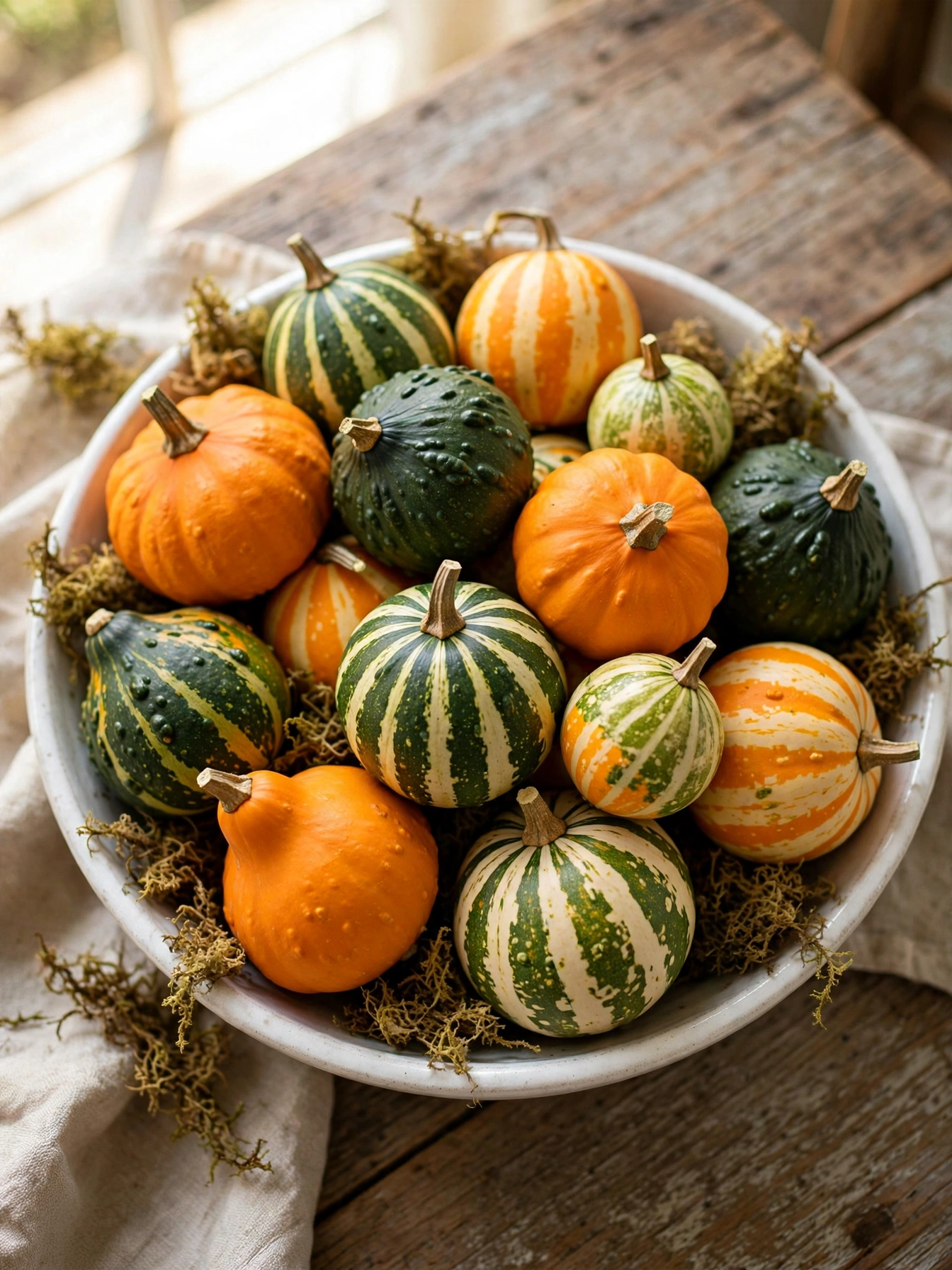
Why This Works:
- 12 to 15 mini gourds fill a 10 inch bowl edge to edge
- Mixed shapes and colors do the styling work for you
- Real gourds last 4 to 6 weeks at normal room temperature
- The bowl format suits renters, since it moves room to room
Fill a shallow bowl 10 to 12 inches across and 3 to 4 inches deep with 12 to 15 mini gourds, each 2 to 3 inches wide, mixing smooth, warty, striped, and solid varieties for contrast. Line the bowl with a 1 inch layer of dried moss or shredded paper first, which keeps the gourds from rolling and hides the bowl bottom between them. Real mini gourds last 4 to 6 weeks at 68 to 72 degrees, so buy them in the third week of September for a display that carries through Thanksgiving. Avoid washing gourds before display, because trapped moisture under the skin starts rot within 3 days, while a dry wipe keeps them sound. Faux gourds cost 1 to 3 dollars each versus 50 cents to 1 dollar for real ones at farm stands, so a full bowl of real gourds runs under 15 dollars.
When styling this on a dining table, keep the bowl center low, under 6 inches tall, so sightlines across the table stay open for conversation. It suits entertainers, since guests can lift the whole bowl aside in one motion when dinner is served. The honest limitation is scale: a 10 inch bowl disappears on a 72 inch dining table, so size the bowl to the surface or group two bowls 18 inches apart. If anyone in the house is tempted to eat them, know that ornamental gourds are not food safe and taste bitter enough to prove it.
Simple Fall Decor Swaps

Why This Works:
- Three swaps, pillows, throw, candle, refresh a room in 15 minutes
- Total cost stays under 60 dollars with big box finds
- Nothing gets nailed, taped, or glued to walls or furniture
- The formula repeats in every room of the house
Run this exact sequence: swap two throw pillows for rust or plaid covers, 18 by 18 inches for a standard sofa; drape a 50 by 60 inch throw over one arm; group three unscented pillars on the coffee table tray. Fifteen minutes total, and the room reads October from the doorway. Pillow covers with hidden zippers cost 8 to 15 dollars each, and the old inserts slide straight in, so no new inserts are needed. Avoid buying a whole new pillow set, because mismatched insert sizes make 18 inch covers look deflated while 20 inch covers bulge. The 60-30-10 rule keeps the swaps cohesive: let the throw carry the 10 percent accent color and keep pillows in the 30 percent secondary tone.
Homeowners who have tried this find that guests assume a full redecoration happened, which is the best return on fifteen minutes in home styling. It suits renters especially, since every item here travels to the next apartment in one laundry basket. One trade-off is honest: three swaps refresh the seating zone only, so a bare mantel or empty entryway still needs one of the other ideas on this list. Repeat the formula room by room on separate evenings and the whole house shifts season without a single weekend lost.
Rust Pillow Swap
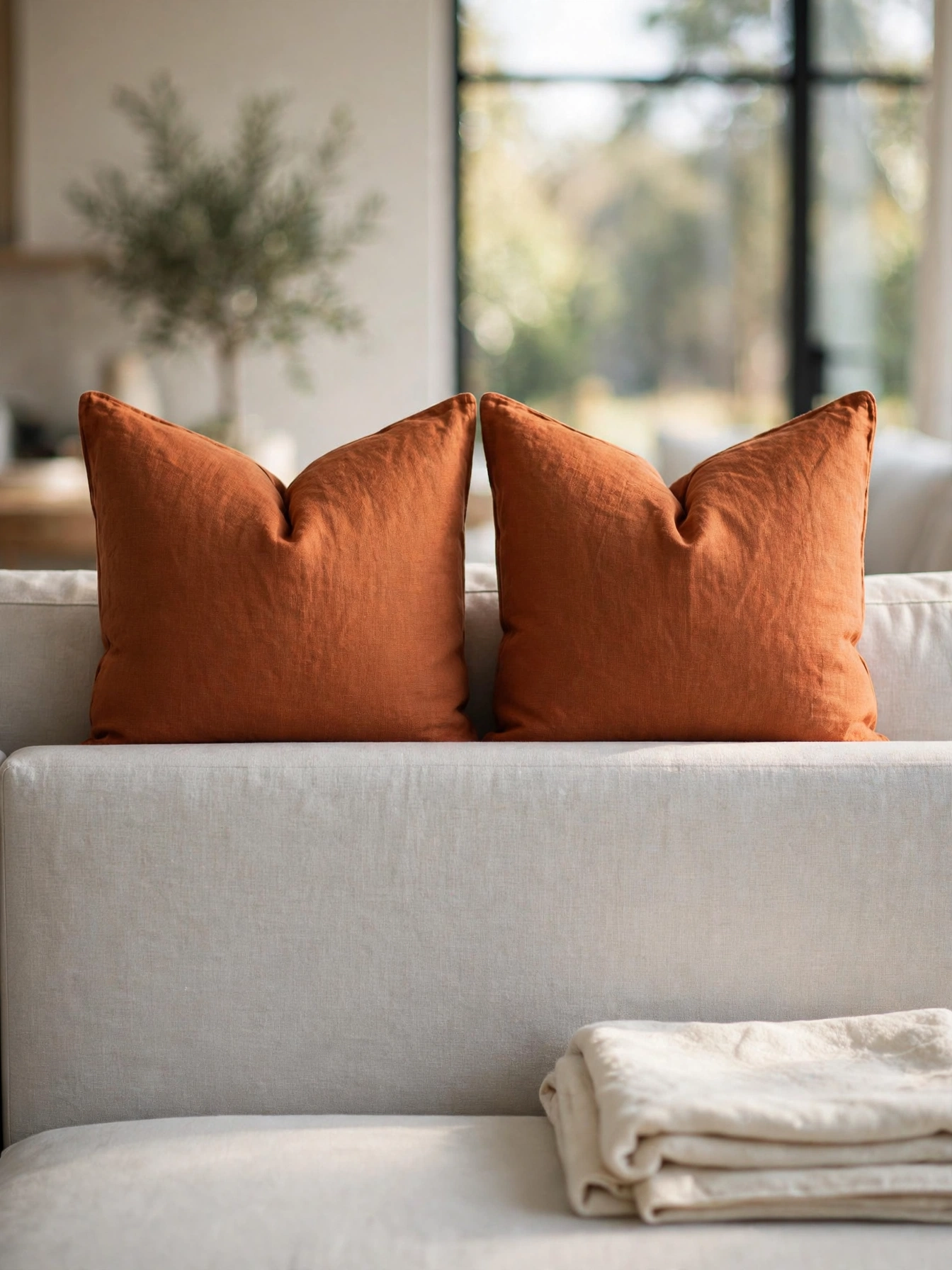
Why This Works:
- 18 by 18 inch covers fit the inserts most sofas already have
- Rust and burnt orange carry the fall palette without patterns
- Hidden zippers keep the look clean from every angle
- Covers store flat in a drawer, taking almost no space
Buy 18 by 18 inch covers for standard sofa pillows or 20 by 20 for oversized sectionals, matching the cover to an insert 2 inches larger, a 20 inch insert in an 18 inch cover, for a full tailored look. Linen and cotton canvas in rust, terracotta, or burnt orange run 8 to 15 dollars per cover, while velvet versions cost 18 to 30 dollars and photograph richer. Wash covers in cold water and line dry, because hot dryers shrink cotton covers a full inch and leave zippers rippled. Avoid covers with visible plastic zippers on the front edge, since the shine shows in every photo, and skip feather inserts if anyone has allergies, since down leaks through budget covers within weeks. The professional guideline for sofa styling is odd numbers: 3 pillows on a loveseat, 5 on a full sofa.
Renters who use this trick report that pillow covers are the highest impact per dollar swap in the entire seasonal playbook. It suits anyone whose sofa is neutral, since rust pops against gray, beige, and navy alike. The caveat is pattern fatigue: two seasons of the same rust pillows and the room stops reading festive, so rotate between rust, plaid, and cream each year. If your sofa is already warm toned, choose sage or deep green covers instead and let the throw carry the orange.
Eucalyptus Pitcher Sprigs
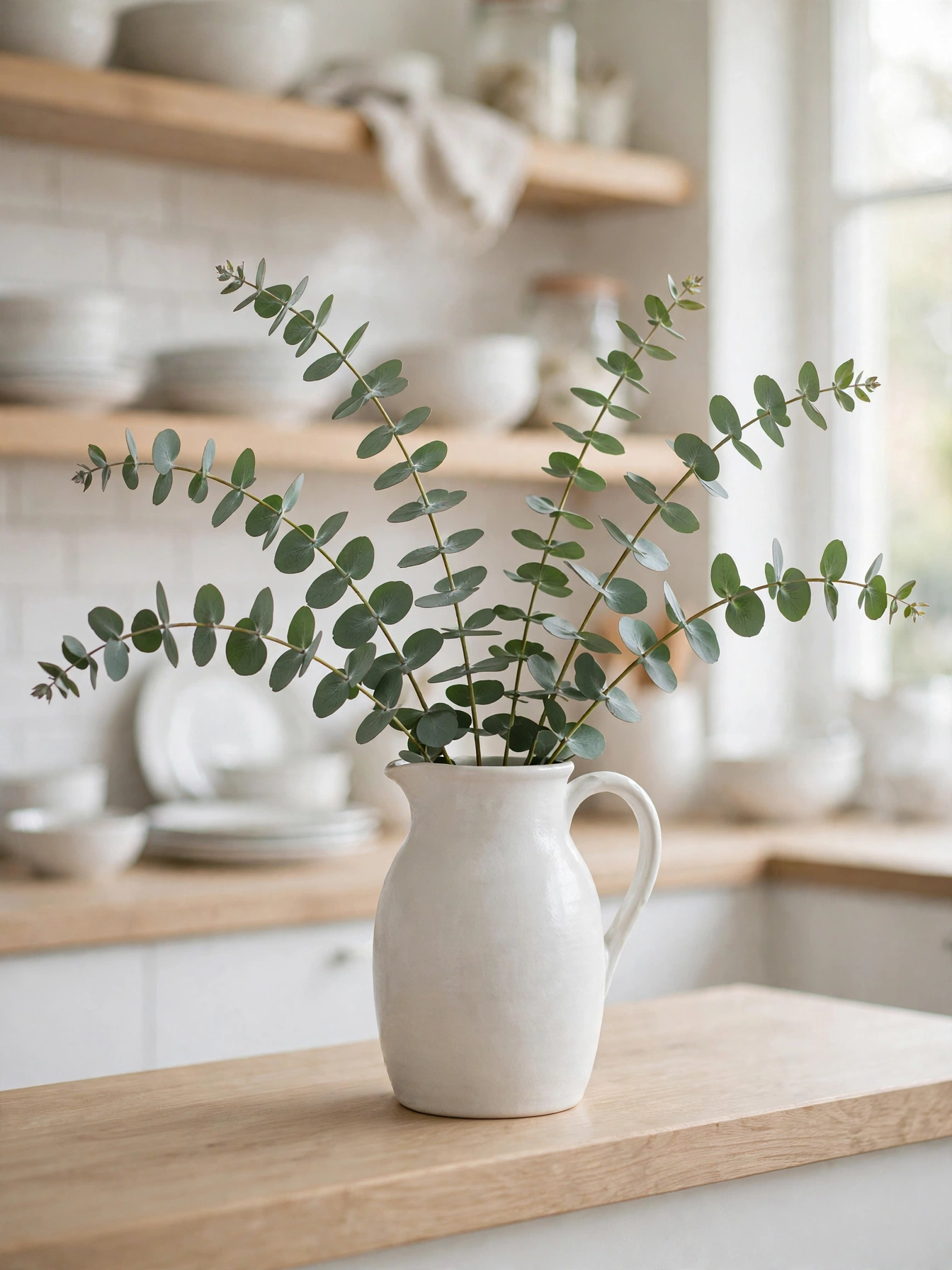
Why This Works:
- 5 to 7 preserved stems fill a 1 quart pitcher perfectly
- Silver dollar eucalyptus adds cool contrast to warm fall tones
- Preserved stems last 12 to 18 months without water
- A pitcher you already own becomes the vase for free
Place 5 to 7 preserved eucalyptus stems, each 20 to 24 inches long, in a ceramic or glass pitcher 8 to 10 inches tall with a 1 quart capacity. Trim the stems at a 45 degree angle so they fan naturally, with the tallest tips reaching 14 to 18 inches above the pitcher rim. Preserved eucalyptus costs 12 to 18 dollars per bunch of 10 stems, while fresh eucalyptus runs 6 to 10 dollars but dries and drops leaves within 3 weeks indoors. Avoid fresh eucalyptus near direct sun, because the oils fade and the leaves curl within 10 days on a bright windowsill. The styling standard here is restraint: eucalyptus is a filler, so let it trail and breathe rather than packing it tight like a bouquet.
In apartments, this works best when the pitcher already matches your kitchen or shelf, since the vessel does half the styling work. It suits small kitchens and open shelving, where one green accent breaks up rows of white dishes. The honest limitation is scent: preserved eucalyptus smells faintly of nothing, so if you want fragrance, add the cinnamon bundle from the later bundle idea nearby instead. Keep real eucalyptus away from cats and dogs, since the oils are mildly toxic to pets if chewed, and choose preserved over fresh in pet homes.
Pinecone Jar Fillers

Why This Works:
- Free pinecones beat 12 dollar craft store bags easily
- A 1 gallon jar holds 15 to 20 medium pinecones
- Cinnamon scented cones add fragrance for weeks
- Lidded jars keep dust off and look intentional
Fill a 1 gallon glass jar, roughly 10 inches tall with a 6 inch mouth, with 15 to 20 pinecones 3 to 5 inches long, layering the largest at the bottom. Bake gathered cones at 200 degrees for 45 minutes on a foil lined tray, which kills sap and tiny insects and opens the scales fully. Craft store bags of 20 unscented cones run 10 to 14 dollars, while cinnamon scented versions cost 14 to 18 dollars and hold fragrance for 6 to 8 weeks. Avoid sealing fresh unwashed cones in a lidded jar, because trapped moisture grows mold within 4 days. The practical standard is simple: any natural filler in a closed jar must be fully dry first, so let baked cones cool 2 hours before jarring.
The detail most people overlook is scale matching: 3 inch cones in a 10 inch jar look abundant, while the same cones in a 16 inch apothecary jar look lost and need 40 plus cones. It suits entryway consoles and bathrooms, where the lidded jar format keeps things tidy. A drawback is dust on open jars, so use lids or plan a monthly shake outside. For scent, Better Homes and Gardens has long suggested tucking a cinnamon stick among the cones rather than buying pre scented ones, which refreshes the fragrance for pennies.
Wooden Tray Centerpiece

Why This Works:
- A 16 by 12 inch tray corrals candles, gourds, and stems in one move
- Handles make the whole centerpiece portable for dinners
- Acacia and mango wood warm up white dining tables
- The tray format prevents wax and water rings on wood
Choose a rectangular tray 16 to 20 inches long and 10 to 12 inches wide with a 2 to 3 inch lip, sized to leave 12 inches of clear table on each end of a standard 72 inch dining table. Acacia trays run 25 to 45 dollars and resist heat rings better than pine, which stains within a month of candle use. Line the tray with a 14 by 10 inch piece of felt or a linen runner to stop items sliding and to protect the tray finish. Avoid trays without a lip for candle groupings, because a knocked pillar rolls straight onto the tablecloth. The dining standard from entertaining guides is clear: centerpieces must stay under 12 inches tall so guests can see each other across the table.
On a first attempt, aim for three elements only, one candle cluster, one small pumpkin, one stem bundle, since five elements on a 16 inch tray reads cluttered in photos. It suits hosts who entertain weekly, because the tray lifts off in one motion when dinner is served and returns just as fast. The honest limitation is table real estate: on a 48 inch round table, a 20 inch tray eats half the surface, so drop to a 12 inch round tray there. Oil the acacia twice a year with food safe mineral oil to keep the finish from drying.
Lantern Candle Glow

Why This Works:
- A 12 to 15 inch lantern anchors a console or hearth instantly
- Glass panels protect the flame from drafts and pets
- Battery candles with timers give 5 hours of glow nightly
- One lantern replaces a whole cluster of loose candles
Pick a lantern 12 to 15 inches tall with a 6 to 8 inch square base, sized so the candle inside sits at least 3 inches below the top vent for safe heat rise. Metal and glass lanterns run 20 to 40 dollars, while wood and rattan versions cost 30 to 55 dollars and suit farmhouse rooms. Use a 3 by 4 inch flameless pillar with a built in 5 hour timer inside, which costs 8 to 15 dollars and glows nightly without a single match. Avoid real candles in enclosed lanterns near curtains, because the glass magnifies heat and the top vent runs hot enough to scorch fabric within 6 inches. If you want wired plug in candles and your room lacks outlets, hire a licensed electrician to add one, since running extension cords under rugs is a fire risk the National Fire Protection Association specifically warns against.
When placing this on open shelving, keep 6 inches of clear space on all sides so the lantern reads as an object, not clutter. It suits entryways and hearths best, where one glowing lantern greets people at the door. The compromise is brightness: a single lantern lights mood, not a room, so pair it with the candle cluster trio from earlier for real illumination. In homes with cats, choose a lantern with a latched door, because a batted candle rolls and a latched panel contains it.
Leaf Garland Drape
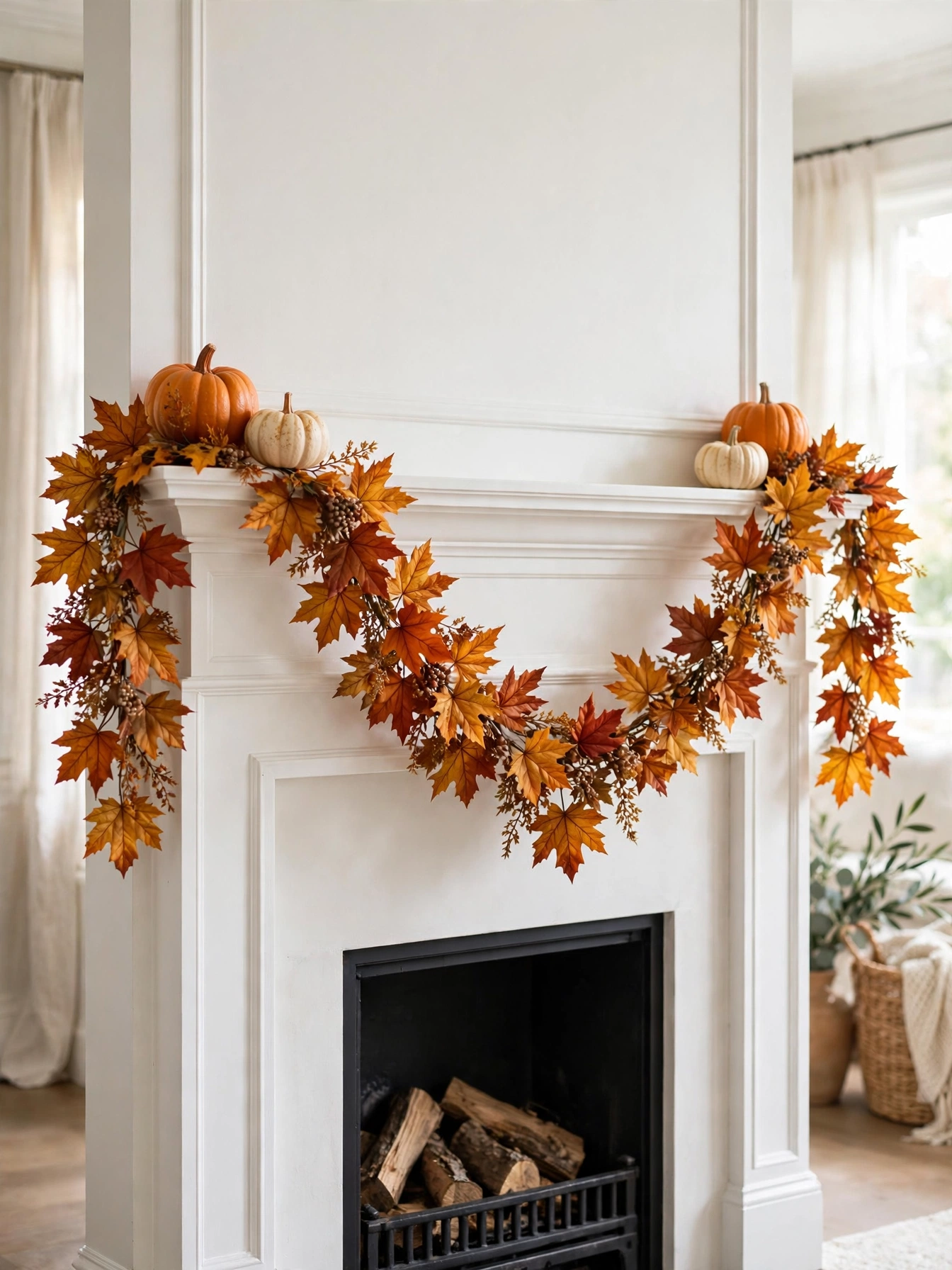
Why This Works:
- A 6 foot garland dresses a 48 to 60 inch console or mantel
- Faux maple leaves never wilt, fade, or drop
- The drape shape needs zero pins on most surfaces
- One garland works on mantels, consoles, and stair rails
Drape a 6 foot faux leaf garland so it dips 4 to 6 inches at center and rises at both ends, which suits consoles and mantels 48 to 72 inches wide. Quality garlands with 120 to 180 leaves cost 18 to 35 dollars, while thin 60 leaf versions look sparse and need doubling. Fluff each leaf cluster by bending the wire stems 1 inch apart, because packed flat garlands photograph as a single dark stripe. Avoid real leaf garlands indoors, since they dry and shatter within 4 days at 70 degrees, while faux versions last 5 plus seasons. The hanging guideline is gentle: use removable hooks rated for 2 pounds, since a 6 foot garland weighs under 1.5 pounds.
A good rule of thumb here is one garland per surface. Two garlands on one mantel tangle and read busy from 10 feet away. It suits renters, since removable hooks leave no marks and the garland coils into a 12 inch circle for storage. The honest limitation is realism up close: bargain garlands show plastic shine within 3 feet, so spend the extra 10 dollars on matte finish leaves. The Spruce notes that mixing two garland tones, amber and rust, looks more natural than a single flat color.
Amber Glass Vases

Why This Works:
- Amber glass glows like candlelight even empty
- A trio at 8, 10, and 12 inches suits any shelf depth
- Thrift stores price them at 3 to 8 dollars each
- The warm tone bridges brass and wood fixtures
Group three amber glass vases at 8, 10, and 12 inches tall on a shelf or console, spacing them 3 to 4 inches apart so each reads separately. Vintage amber glass runs 3 to 8 dollars per piece at thrift stores, while new sets of three cost 25 to 40 dollars. Fill the tallest with 5 to 7 dried stems, leave the middle empty, and put a tea light in the shortest, which creates a deliberate varied rhythm. Avoid placing amber glass in direct afternoon sun for months, because prolonged UV fades the color unevenly within two seasons. The display standard is odd numbers and varied heights, which the eye reads as curated rather than collected.
Seasoned thrifters know that amber glass hides in the brown glass section, so check there before paying new prices. It suits vintage and traditional rooms, where the warm glass ties to wood tones. The weak point is dust: textured glass shows a film within 3 weeks, so wipe with a dry microfiber cloth monthly. If your shelves are already warm toned, choose smoked gray glass instead and let the wheat bundle carry the amber.
Blanket Basket Display

Why This Works:
- A 16 to 20 inch basket holds 2 to 3 rolled throws
- Rolled blankets show pattern better than folded ones
- Seagrass and rattan add natural texture to corners
- The basket doubles as real blanket storage all winter
Choose an open weave basket 16 to 20 inches wide and 14 to 18 inches tall, sized to hold 2 to 3 throws rolled to 6 inch diameters. Roll each throw instead of folding, because rolls display 40 percent more pattern and pull out without unfolding the whole stack. Seagrass baskets run 20 to 35 dollars and hold their shape under 10 pounds of blankets, while fabric bins slump within a month. Avoid baskets with lids for this display, since the closed top hides the textiles that do the decorating. The placement guideline is the dead corner: beside the sofa arm, at the hearth, or at the foot of a reading chair, anywhere within arm’s reach of seating.
The cleanest results come when the basket holds two throws in the same palette, rust and cream or sage and amber. It suits families, since kids actually return blankets to an open basket, which keeps the living room tidy through the season. The honest limitation is size creep: a 24 inch basket in a small room eats floor space, so measure the corner before buying. HGTV has featured this trick in small space roundups for years, noting that visible textile storage beats a closed bin in rooms under 200 square feet.
Cinnamon Stick Bundles

Why This Works:
- 10 stick bundles cost under 5 dollars to make
- The scent carries 6 to 8 feet without a plug or flame
- Twine and a dried orange slice finish the look
- Bundles refresh candle clusters and trays instantly
Tie 8 to 10 cinnamon sticks, each 3 to 4 inches long, with natural twine wrapped 5 to 6 times and knotted, then tuck one dried orange slice behind the knot. A 1 pound bag of 3 inch cinnamon sticks costs 8 to 12 dollars and yields 6 to 8 bundles, which beats 6 dollar single bundles at craft stores. Place bundles on tray edges, inside candle clusters, or across napkin rings, anywhere within 6 to 8 feet of seating where the scent registers. Avoid placing bundles directly on a hot candle plate, because the sticks scorch above 150 degrees and smell burnt instead of sweet. The fragrance standard is subtle: cinnamon should be noticed when someone leans in, not when they enter the room.
The smartest order of operations is making all bundles in one 20 minute session, since the twine and scissors are already out. It suits scent sensitive households that find plug in fresheners overwhelming, because natural cinnamon reads gentle. One honest drawback is strength: in rooms over 300 square feet, one bundle fades into the background, so use three spaced 8 feet apart. Refresh the scent monthly by rolling each bundle between your palms for 10 seconds, which releases the oils again.
Simple Fall Decor Checklist
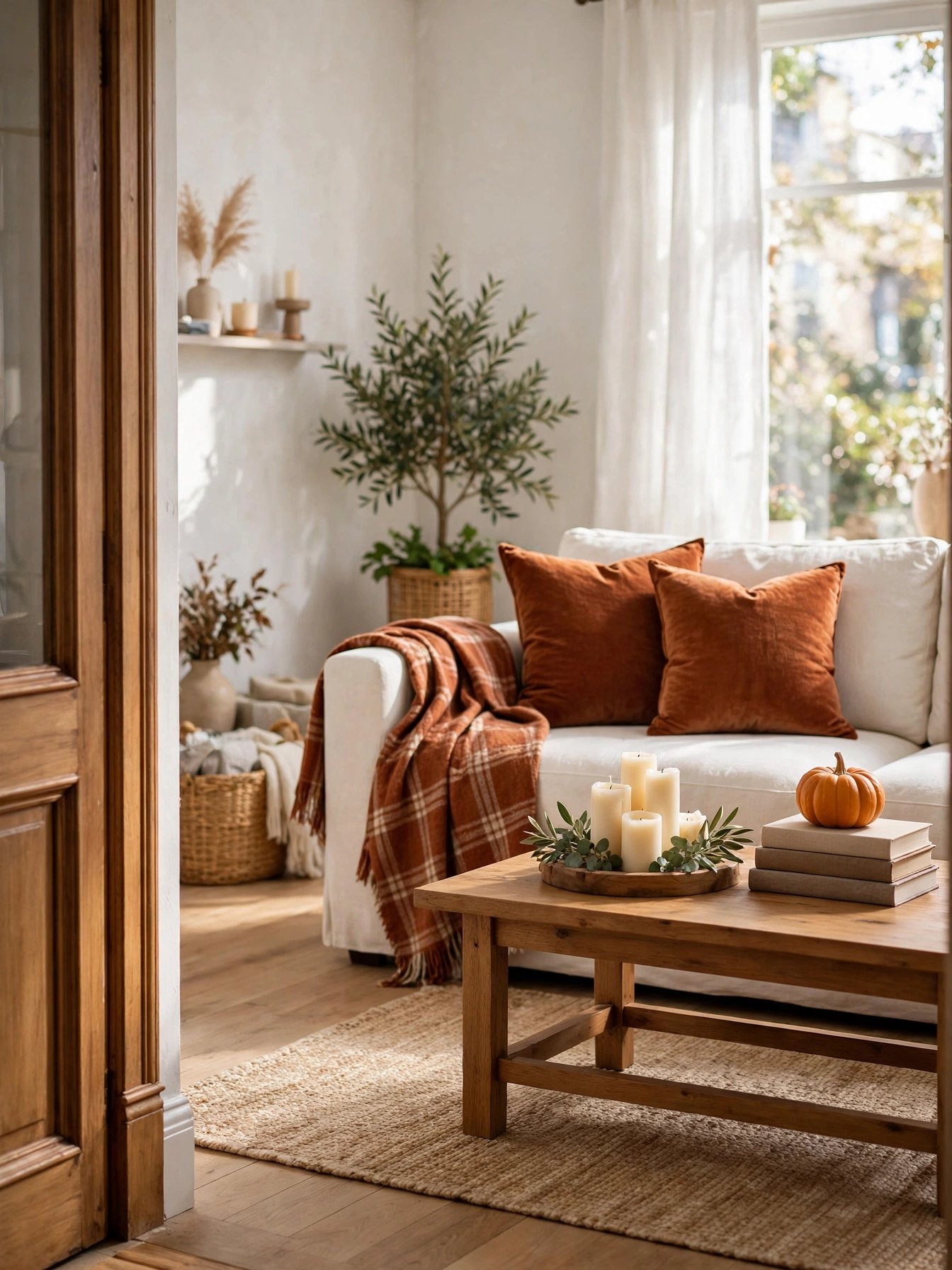
Why This Works:
- Ten minutes per room keeps the project from growing
- The checklist order, big to small, prevents rework
- Everything on it costs under 100 dollars total
- A written list survives year after year in the decor bin
Work this order in every room: textiles first, throw and pillows, 5 minutes; then the anchor, pumpkin stack or tray, 3 minutes; then light, candles or lantern, 2 minutes. Ten minutes per room means a 3 bedroom house finishes in about 40 minutes including the hallway. Print the list at 8.5 by 11 inches and check items with a dry erase marker on a laminated copy, which survives 5 plus seasons in a decor bin. Avoid starting with small accents, because styling tiny items first wastes 20 minutes that the big swaps would have covered. The professional guideline behind the order is visual weight: large soft goods change a room’s read from the doorway, while small objects only reward close inspection.
When running this in a busy family home, do it on a weeknight, since weekend sessions invite scope creep and half finished projects. It suits anyone who has bought fall decor for years and never quite deployed it, because the list turns a bin of items into finished rooms. The honest limitation is that a checklist cannot fix a room that needs decluttering first, so clear surfaces before you start. These simple fall decor ideas for autumn 2026 work best as a system, not a shopping list.
Dried Hydrangea Stems

Why This Works:
- 5 to 7 dried heads fill an 8 inch vase fully
- Muted mauve and sage tones suit modern fall palettes
- Dried hydrangeas last 2 to 3 years indoors
- One bunch divides across 2 to 3 small vases
Place 5 to 7 dried hydrangea heads, each 5 to 7 inches across, in a vase 8 to 10 inches tall with a 3 to 4 inch mouth, trimming stems to 16 to 20 inches. Dried bunches of 5 stems cost 12 to 20 dollars, while a single fresh hydrangea plant at 15 to 25 dollars dries into 6 to 8 usable heads if hung upside down for 3 weeks. Keep dried hydrangeas out of bathrooms, because steam above 60 percent humidity softens the petals within 2 weeks. Avoid dyed hydrangeas in bright colors, since the dye rubs off on light shelves and looks artificial next to real wheat. The arrangement guideline is breathing room: hydrangea heads should not touch each other, so the rounded shapes read individually.
The quiet advantage here is that the vase already exists on most shelves, so the 12 dollar bunch is the only new purchase. It suits modern and minimalist rooms, where the muted tones add season without visual noise. The catch is shedding: dried petals drop if the arrangement is bumped, so keep it on a shelf rather than a hallway console. If the heads look flat after storage, hold each one over steam from a kettle for 10 seconds, which plumps the petals back up.
Acorn Candle Tray
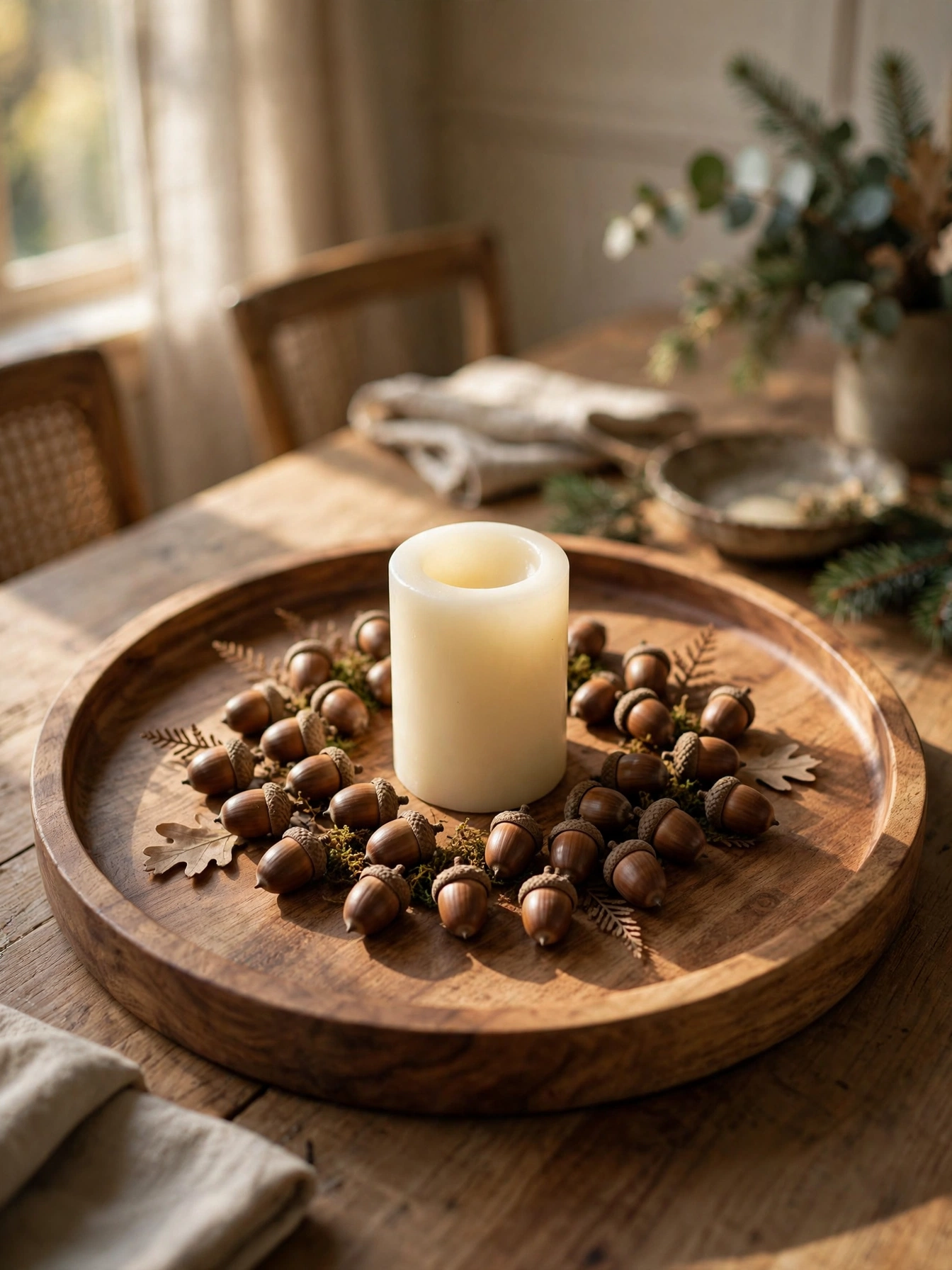
Why This Works:
- A 12 inch tray plus 20 acorns costs under 10 dollars
- Acorns fill gaps around a pillar candle naturally
- The woodland look suits rustic and cabin styles
- Everything stores in one bag after the season
Set a 3 by 4 inch pillar candle in the center of a round tray 10 to 12 inches across, then scatter 20 to 25 acorns, each about 1 inch long, around the base in a single layer. Bake gathered acorns at 175 degrees for 60 minutes, which kills weevils and dries the caps so they stop popping off. A tray of this size holds the candle with 3 to 4 inches of acorn border on all sides, which catches drips and looks intentional. Avoid plastic acorns mixed with real ones, because the shine difference shows within 2 feet and ruins the natural effect. The fire safety rule is firm: keep every acorn at least 2 inches from the flame and never let the candle burn below 2 inches, when the heat reaches the tray.
First timers tend to overfill the tray, which buries the candle base and looks like storage instead of styling. One loose layer is the whole trick. It suits cabin and rustic rooms, where the woodland texture feels native. The downside is pets: dogs chew acorns and the tannins upset stomachs, so use this only in pet free zones or switch to lidded pinecone jars instead. Real acorns last one season before the caps loosen, so gather fresh each September.
Cotton Boll Stems
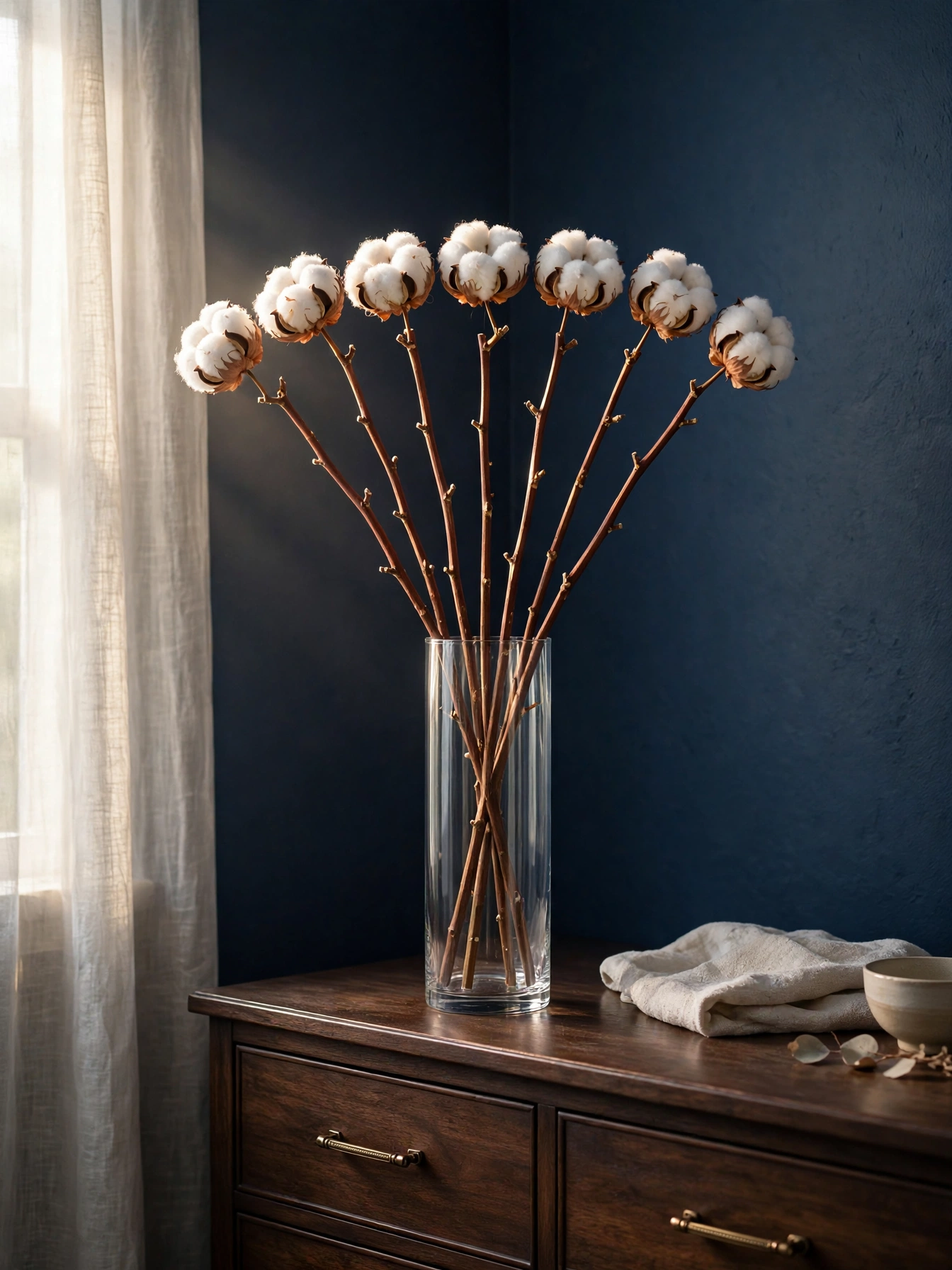
Why This Works:
- 6 to 8 stems fill a tall vase for under 12 dollars
- White bolls brighten dark fall corners instantly
- The neutral tone works with any palette in the house
- Stems last 3 to 4 years with basic care
Arrange 6 to 8 cotton stems, each 24 to 30 inches tall with 4 to 6 bolls, in a vase 12 to 14 inches high, fanning the stems 2 to 3 inches apart at the top. A bunch of 10 stems costs 8 to 14 dollars, and the finished arrangement should stand 30 to 36 inches tall for proper one to two proportion against the vase. Keep cotton 12 inches from open flames, since the bolls are highly flammable. Avoid the cheapest dyed cotton in brown or orange, because the dye looks flat next to real wheat and hydrangea. The styling note from farmhouse guides is contrast: cotton reads best against dark wood or colored walls, where the white pops.
Give one stem a gentle shake in the store before buying, since loose bolls shed fibers across the shelf within days. It suits dark hallways and north facing rooms, where the white bolls act like tiny reflectors. The honest limitation is dust: cotton grabs it visibly, so shake the stems outside monthly. In homes with severe cotton allergies this is a skip, and the eucalyptus pitcher idea is the safer green.
Wooden Bead Garland
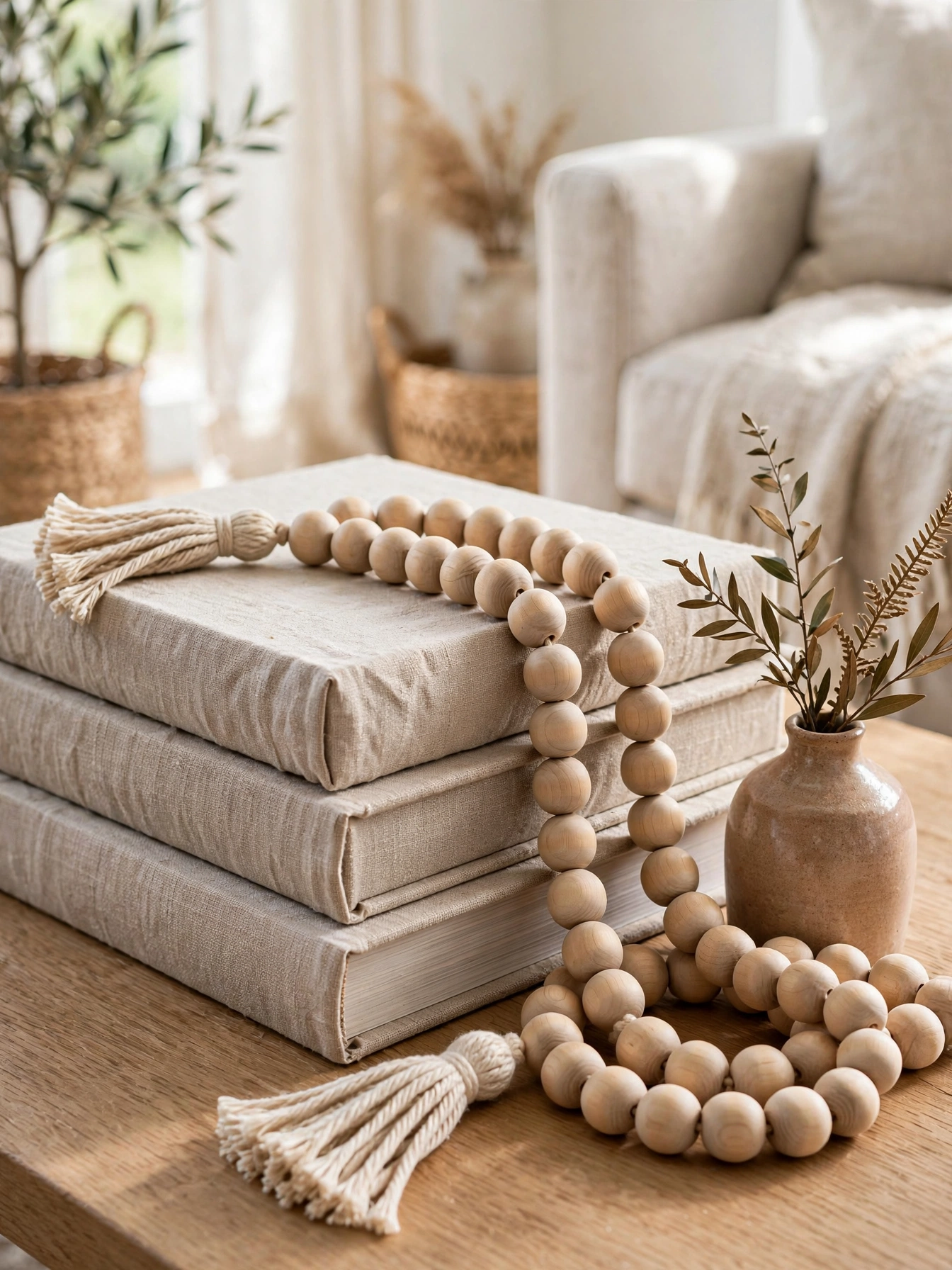
Why This Works:
- A 6 foot strand drapes across trays, mantels, and jars
- Natural wood beads suit every style from modern to farmhouse
- Tassels at the ends add a finished handmade look
- The strand coils into a 4 inch bundle for storage
Drape a 6 foot garland of 1 inch wooden beads with 3 inch tassels across a tray edge, mantel, or jar neck, letting 8 to 10 inches pool at one end for a casual finish. Natural unfinished beads run 10 to 16 dollars per strand, while stained walnut versions cost 14 to 22 dollars. String beads on cotton cord rather than elastic, because elastic stretches and sags within one season under the bead weight. Avoid beads under three quarter inch, since they read as jewelry rather than decor from 6 feet away. The layering guideline is one garland per vignette, because two strands tangle and compete.
Check the bead finish before you buy: unfinished beads take stain later if your palette changes, while pre stained ones do not. It suits layered styling, since the beads add texture without adding color. One trade-off is scale on large surfaces: a 6 foot strand disappears on a 72 inch mantel, so use two strands 12 inches apart there or pick the leaf garland idea instead. Wipe beads with a dry cloth yearly, since oils from hands darken unfinished wood unevenly.
Sunflower Stem Vase
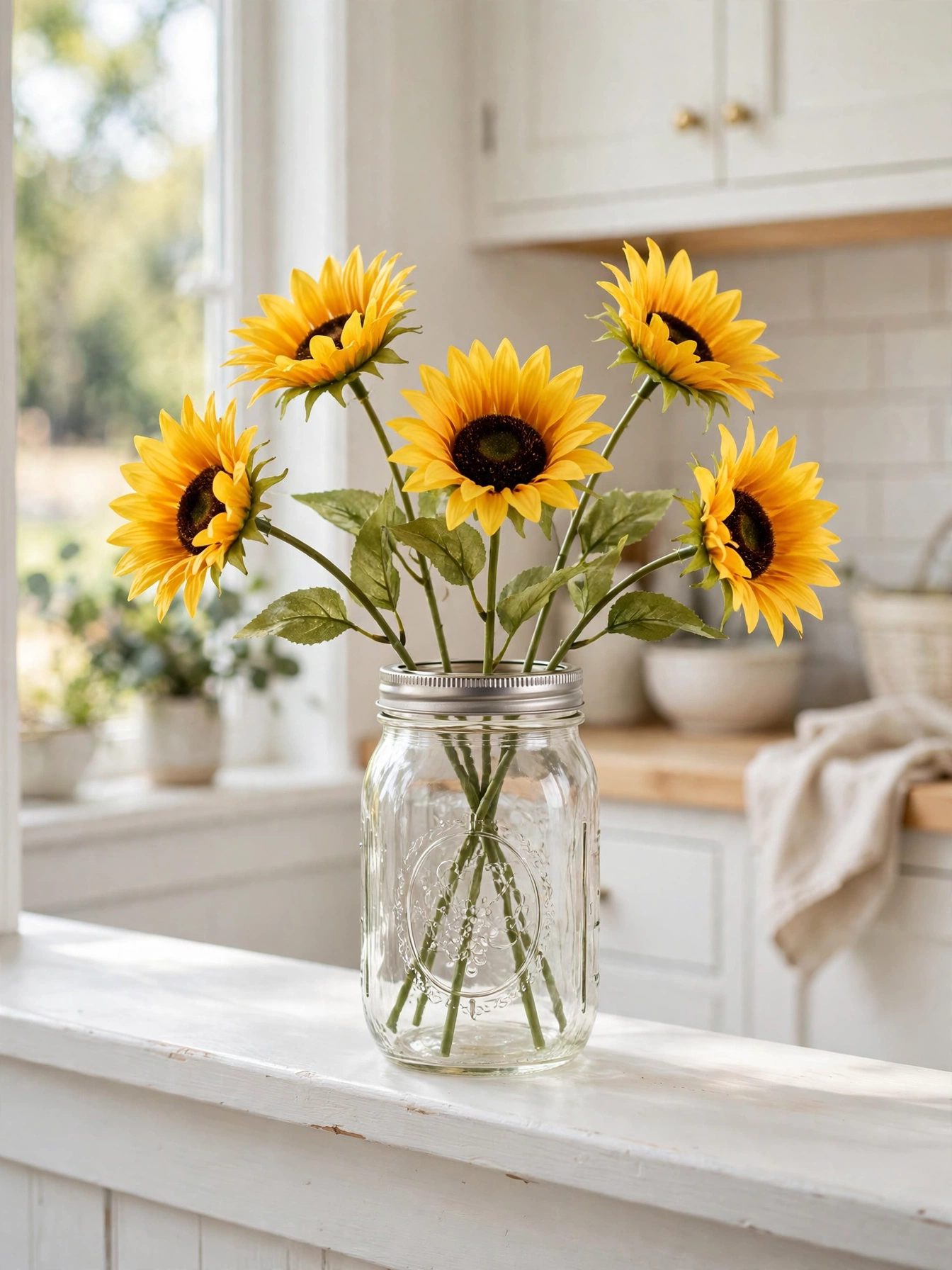
Why This Works:
- 5 faux sunflower stems cost 10 to 15 dollars total
- Yellow blooms are the fastest fall color signal
- Faux stems last 5 plus seasons with zero care
- One vase of sunflowers lifts a whole kitchen
Stand 5 faux sunflower stems, each 20 to 24 inches tall with 4 to 5 inch blooms, in a mason jar or vase 7 to 9 inches high, trimming stems so blooms sit 12 to 16 inches above the rim. Quality faux sunflowers with 3 layered petal rows cost 2 to 3 dollars per stem, while single row budget stems look flat within 3 feet. A 32 ounce mason jar holds 5 stems perfectly, since the 3 inch mouth grips them upright. Avoid real sunflowers for long displays, because they drop petals within 5 days and the stems cloud the water. The color guideline is sunny restraint: let the yellow be the only bright color in the vignette so it reads as an accent, not a clash.
Kitchen counters are the natural home for this idea, but keep the vase 18 inches from the stove, since heat wilts faux petals over weeks. It suits kitchens and breakfast nooks, where the yellow reads cheerful against morning light. The caveat is style range: sunflowers lean farmhouse, so in modern rooms choose the cotton stems idea instead. If the stems arrive bent from packaging, run a hair dryer on low 6 inches away for 30 seconds and straighten by hand.
Burlap Placemat Set

Why This Works:
- 6 burlap placemats cost 12 to 20 dollars per set
- The coarse texture reads harvest table instantly
- Placemats protect wood from hot dishes through the season
- They layer under chargers for a dressed up dinner
Lay 6 burlap placemats, each 13 by 19 inches, on a 72 inch table with 2 inches between settings and 1 inch overhang past the table edge. Natural jute burlap sets run 12 to 20 dollars, while bound edge versions cost 20 to 32 dollars and stop fraying. Shake placemats outside before first use, because loose jute fibers shed for the first 3 washes. Avoid burlap directly under wet glasses, since the weave wicks moisture and rings the table within an hour, and use coasters for drinks. The table setting standard is 24 inches of width per diner, so 13 inch placemats leave comfortable elbow room.
Keep the rest of the table simple on your first try, since burlap plus a centerpiece plus patterned napkins reads busy in photos. It suits anyone who hosts Thanksgiving, because the same set works from October through November. A drawback is shedding: burlap drops fibers for the first month, so skip it if anyone at the table has textile sensitivities. Machine wash cold and air dry, since dryers shrink jute a full inch.
FAQs
What are the best simple fall decor ideas for autumn 2026 on a small budget?
Start with the 15 minute trio: a 50 by 60 inch plaid throw, two 18 inch rust pillow covers, and three unscented pillars on a tray. Big box stores price the full set at 45 to 60 dollars, and every piece stores flat for next year. That trio refreshes the room guests see first.
When should I start decorating for fall?
Most households decorate in the third week of September, which gives 8 to 10 full weeks of enjoyment through Thanksgiving. Put textiles and faux pieces out first, then add real pumpkins in early October so they stay sound. Remove real produce within 3 days of softening.
How long do real pumpkins and gourds last indoors?
Sound pumpkins last 3 to 4 weeks at 68 to 72 degrees, while mini gourds hold 4 to 6 weeks. The Spruce recommends keeping real pumpkins in spots under 70 degrees and off direct heat to slow decay. Check stems and bottoms weekly, and compost any piece that softens.
How do I keep simple fall decor ideas for autumn 2026 safe around candles and heat?
Keep every flammable item, dried wheat, cotton, pinecones, at least 12 inches from open flames and heat vents, which matches National Fire Protection Association guidance. Use flameless candles inside lanterns and near dried arrangements. Never leave real candles burning unattended.
Can I reuse my fall decor next autumn?
Yes, with proper storage. Wrap amber glass in tissue, coil garlands into 12 inch loops, and store dried stems upright in tall boxes. Faux pumpkins and wheat last 3 to 5 seasons, while real gourds are single season. Label each bin by room to cut next year’s setup to 30 minutes.
Conclusion
These 22 simple fall decor ideas for autumn 2026 prove one thing: fall decorating is a 15 minute habit, not a weekend project. Start with the trio that changes a room fastest, a plaid throw, two rust pillows, and a candle cluster. Keep every swap inside the 60-30-10 color rule so rooms stay cohesive from the doorway. Buy real produce last, since pumpkins clock only 3 to 4 weeks indoors. First action tonight: drape one throw over your sofa arm and see the difference. Follow HomelyCrafter on Pinterest for more ideas. Save this to your Pinterest boards so you can refer back to it!

Muhammad Israr is a home decor enthusiast and the writer behind Homely Crafter. He spends his days researching paint colors, layouts and budget-friendly styling ideas, then breaks them down into practical, easy-to-follow guides so you can decorate with confidence.
2 thoughts on “22 Effortless Simple Fall Decor Ideas for Autumn 2026”