
Why does a branch cut from the yard look more like Christmas than anything in a box? Natural materials carry scent, texture, and small imperfections that make a room feel alive in December. This guide covers 25 natural christmas decor ideas 2026 with exact measurements, material lists, and practical steps you can follow at home.
Each idea uses things you can gather, dry, or buy inexpensively, such as cedar, holly, dried fruit, cotton stems, stone, linen, and jute. You will find lengths, counts, spacing, and drying times, plus clear notes on what to skip so the result stays fresh and safe.
Read the list from the top, or jump straight to the project that fits your mantel, table, or entry. Every section ends with one precise tip, so you can start with a single small display and build from there.
Fresh Cedar Garland Mantel
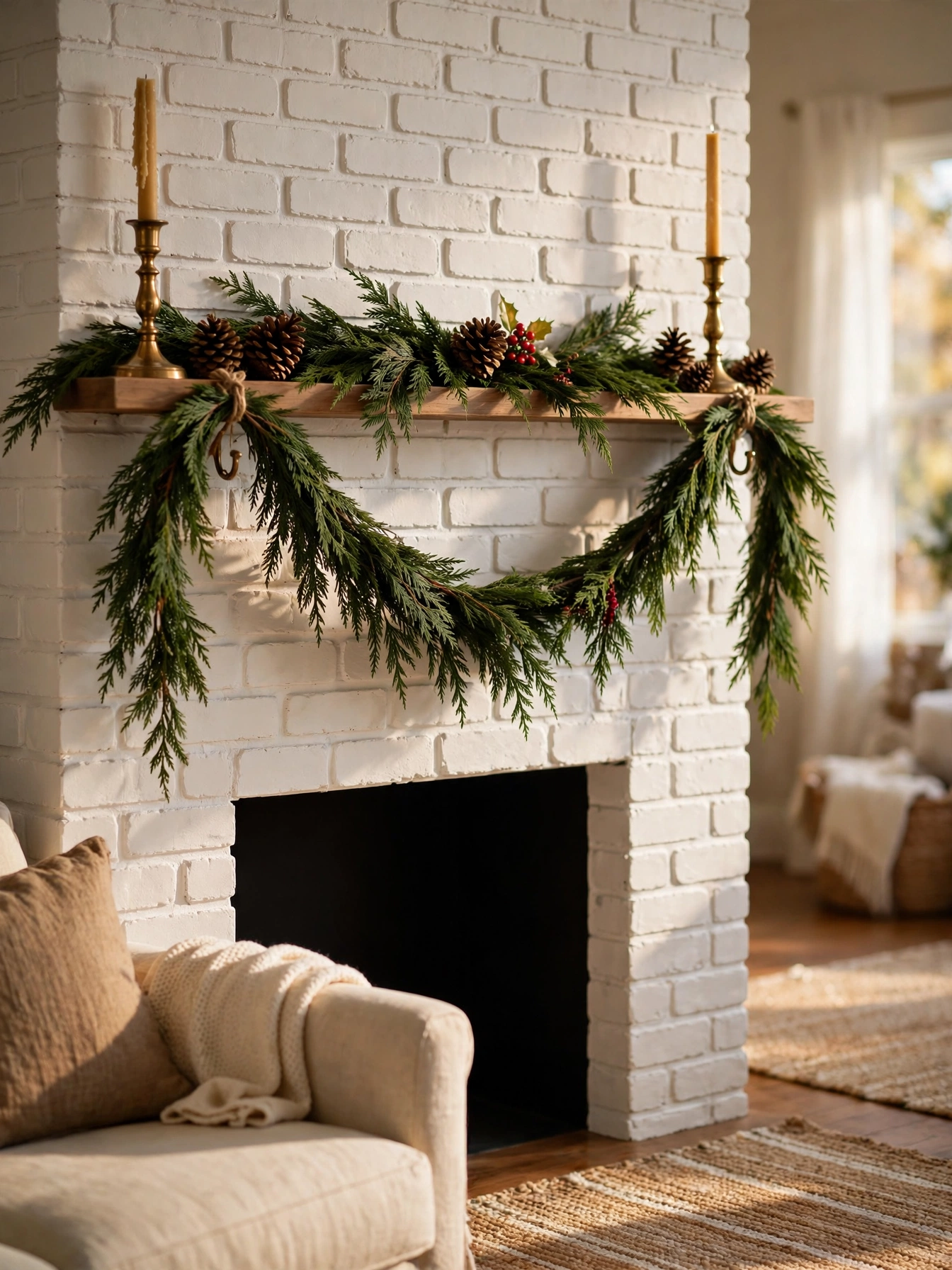
Why This Works:
- Fresh cedar gives scent and color that faux garland cannot match.
- The 10 inch swag dips create rhythm across a 6 foot mantel.
- Jute twine ties disappear into the foliage for a clean finish.
- Pinecones add weight and texture without extra cost.
A 6 foot mantel takes about 8 feet of fresh cedar garland when you allow 12 inches of drape on each end and 2 inches of overlap where lengths join. Secure the garland with 3 removable hooks spaced 24 inches apart, and wire each swag point so the dip holds at 10 inches. Skip garland that sheds heavily when shaken, since loose needles will drop on the hearth within a day. Fresh cedar holds color for about 14 days indoors, while dried cedar keeps shape longer but loses scent and turns brittle.
Homes with a working fireplace get the most from this piece because the scent fills the room each time the fire warms the air. The trade-off is upkeep, since fresh garland needs a light mist every 3 days and a check for dry tips near heat. Keep the lowest swag at least 12 inches above the firebox opening and never let branches touch a hot surface. A quick evening shake over a bin keeps fallen needles under control.
Pro Tip: Mist the garland with 4 ounces of water every 3 days and trim any brown tips with small scissors to extend freshness by 5 days.
Fresh Holly Table Runner
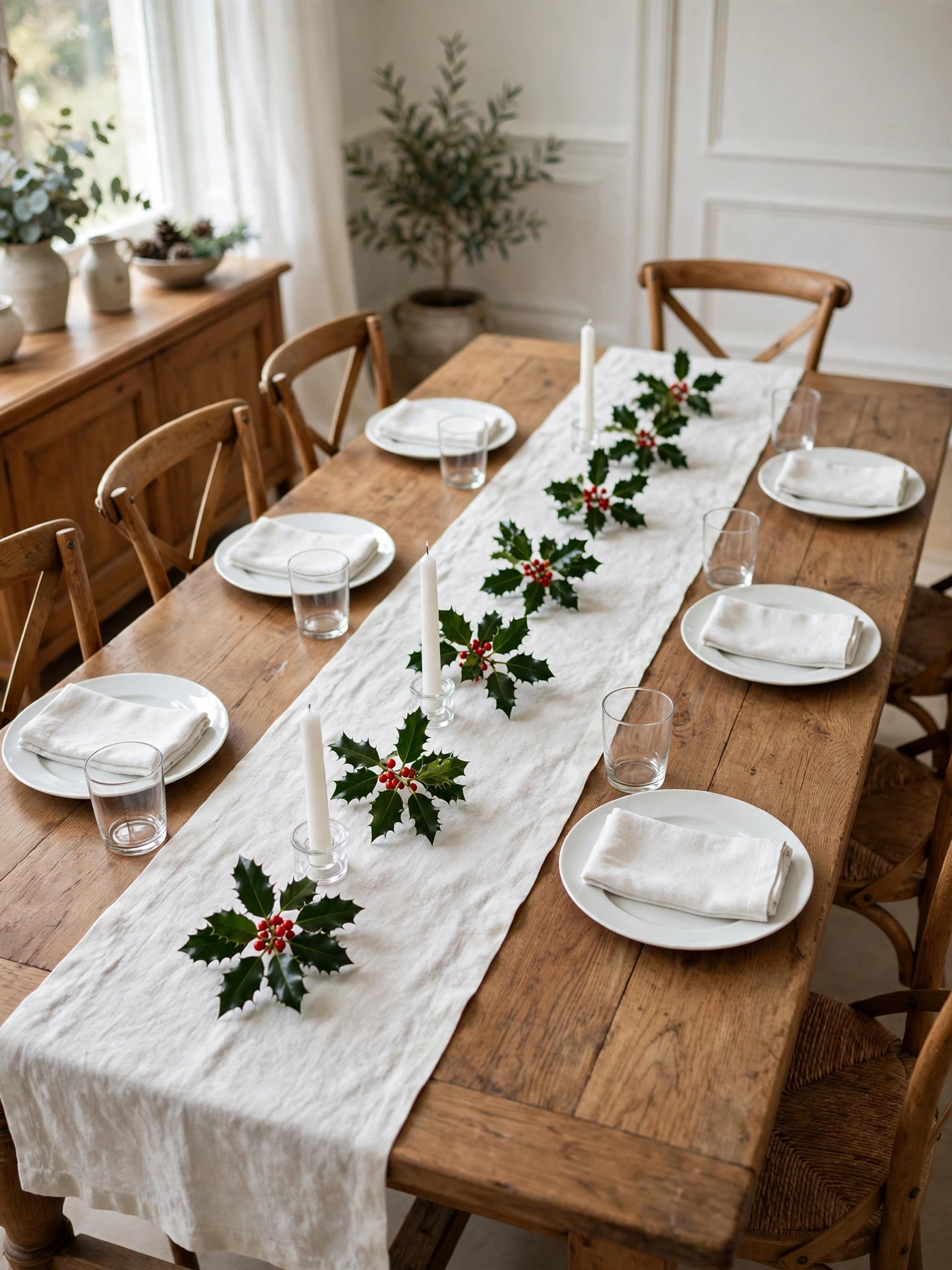
Why This Works:
- Glossy holly leaves catch light and read as festive without glitter.
- Red berries give color in small doses along a 72 inch table.
- The low profile keeps sight lines clear across the table.
- Fresh sprigs can be swapped in one at a time as they fade.
Lay a 72 inch linen runner down the center of a 6 person table and place 12 holly sprigs along it, each 8 inches long and spaced 6 inches apart. Tuck the stems under the runner edge so only leaves and berries show, and keep every sprig at least 12 inches from a lit candle. Leave out holly with soft or blackened berries, because those spoil fast and stain linen. Fresh holly stays glossy for about 7 days, while faux holly lasts all season but feels flat and lacks the leaf sheen.
Dinner hosts who like a classic table will enjoy how little effort this runner needs after the first layout. The limitation is handling, since holly leaves have sharp points that can scratch skin and snag fabric. Wear gloves while arranging and keep sprigs away from small children who might touch berries. A shallow tray under the runner protects wood from moisture on the first evening.
Pro Tip: Snip each holly stem at a 45 degree angle and stand it in water for 2 hours before arranging to add 2 days of gloss.
Dried Apple Slice Ornaments
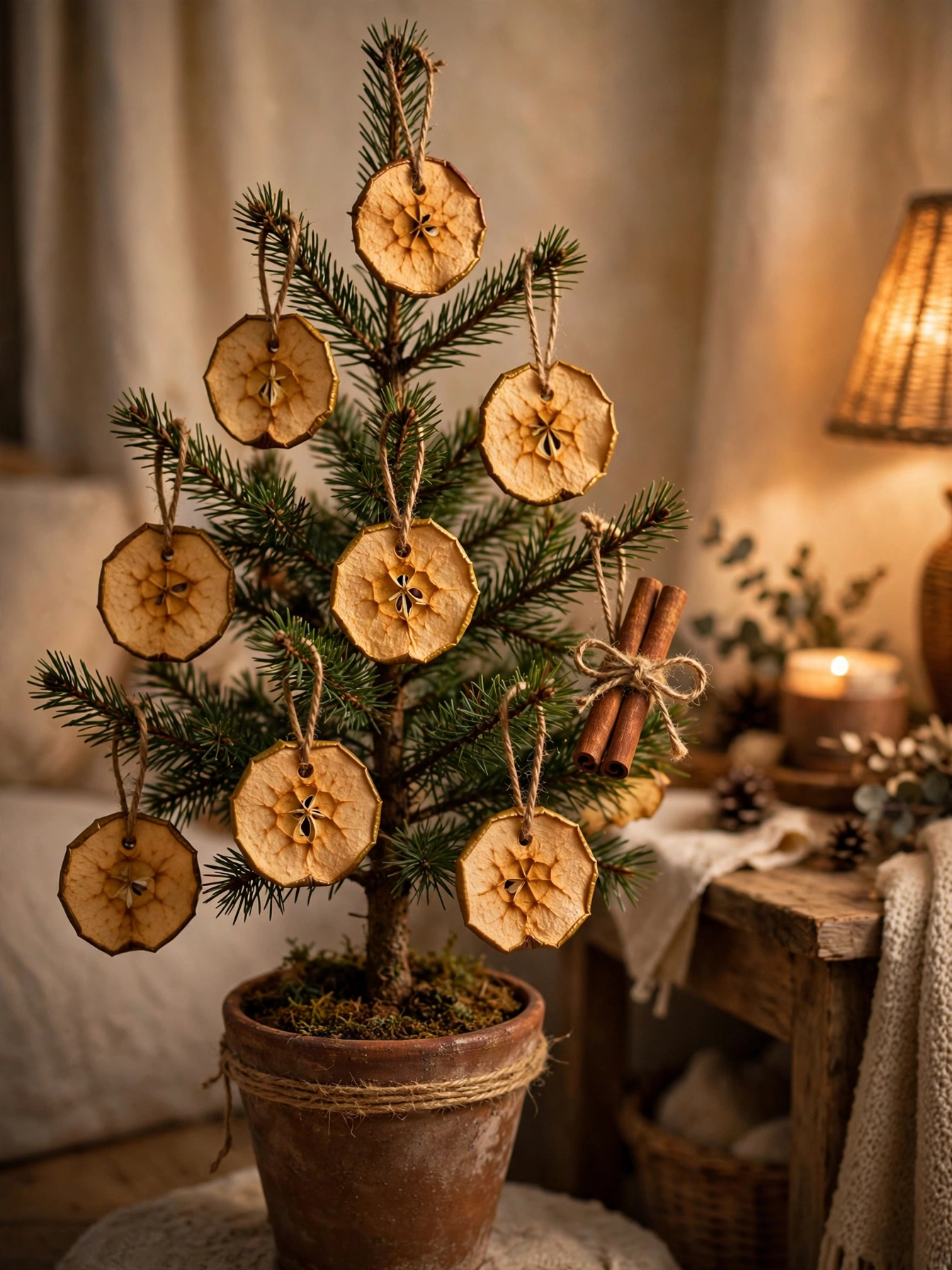
Why This Works:
- Thin apple slices dry flat and hang without weighing down small branches.
- The amber color warms a green tree without paint or plastic.
- Jute loops match wood and linen tones across the room.
- Each ornament costs only a few cents when made at home.
Slice 12 apples into rounds 1 quarter inch thick and dry them at 200 degrees Fahrenheit for 2 hours, turning once after an hour. Thread a 6 inch jute loop through a small hole near the edge of each slice, and hang 8 slices on a 3 foot tree with 4 inches between ornaments. Pass on slices thicker than 1 half inch, since thick slices stay soft in the center and can mold in storage. Oven drying gives even color in one afternoon, while air drying takes 5 days and often curls the edges.
Families with young children often favor these ornaments because the pieces are light, soft edged, and simple to replace. The downside is fragility, since a dropped slice can crack along the core line. Store extras flat in a paper bag with 2 silica packets to keep them dry through January. A light coat of clear beeswax on the face slows browning by several weeks.
Pro Tip: Brush each slice with 1 teaspoon of lemon juice before drying to keep the amber tone bright for 6 weeks.
Cedar Round Candle Holders

Why This Works:
- Three heights in a row create a natural focal point on a shelf.
- Cedar grain adds pattern without any paint or pattern paper.
- A stone tray catches wax and protects wood below.
- White candles keep the look calm against green foliage.
Cut 3 cedar rounds in diameters of 4, 5, and 6 inches, each 1 inch thick, and sand the top smooth with 120 grit paper. Set one 3 inch wide pillar candle on each round, leaving at least 2 inches of bare wood around the candle base for heat clearance. Do not place a candle directly on a round without a metal or glass dish, since wax and heat can scorch the wood. Kiln dried cedar resists cracking better than green cut rounds, which can split as they dry indoors.
Renters who want a woodland mantel without drilling or gluing will find this set easy to move and rearrange. The honest limit is candle safety, since wood and open flame must stay separated by a heatproof dish and constant attention. Never leave burning candles unattended, and keep each flame a full foot away from anything flammable, as fire-safety guidance advises. A battery candle gives the same glow with zero flame risk on busy evenings.
Pro Tip: Place a 3 inch metal candle plate under each pillar and trim wicks to 1 quarter inch before lighting for a steady flame.
Rosemary Sprig Place Cards

Why This Works:
- Rosemary smells fresh when guests sit down and brush the sprig.
- Kraft cards cost little and suit wood, linen, and stone tables.
- One sprig per place keeps the table uncluttered.
- Guests can take the sprig home as a small favor.
Tuck one 6 inch rosemary sprig behind each 3 inch by 2 inch kraft card and tie the pair with 8 inches of jute twine. Set the card at a slight angle on top of a folded napkin, with the sprig pointing toward the plate and 1 inch of card visible above the fold. Steer clear of rosemary that feels dry or drops needles when bent, because brittle sprigs shed onto plates. Fresh cut rosemary stays fragrant for 4 days in water, while dried rosemary keeps shape but loses most scent within a week.
Anyone setting a formal table will appreciate how this detail adds scent without a spray or diffuser. The catch is timing, since rosemary wilts fast in a heated dining room and looks tired after 6 hours. Arrange the cards within 1 hour of seating and keep spares in a damp towel nearby. A sprig tucked into a napkin ring holds moisture longer than one left flat on a plate.
Pro Tip: Cut rosemary the morning of dinner and store stems upright in 2 inches of cold water until 30 minutes before guests arrive.
Eucalyptus Stair Railing Swag
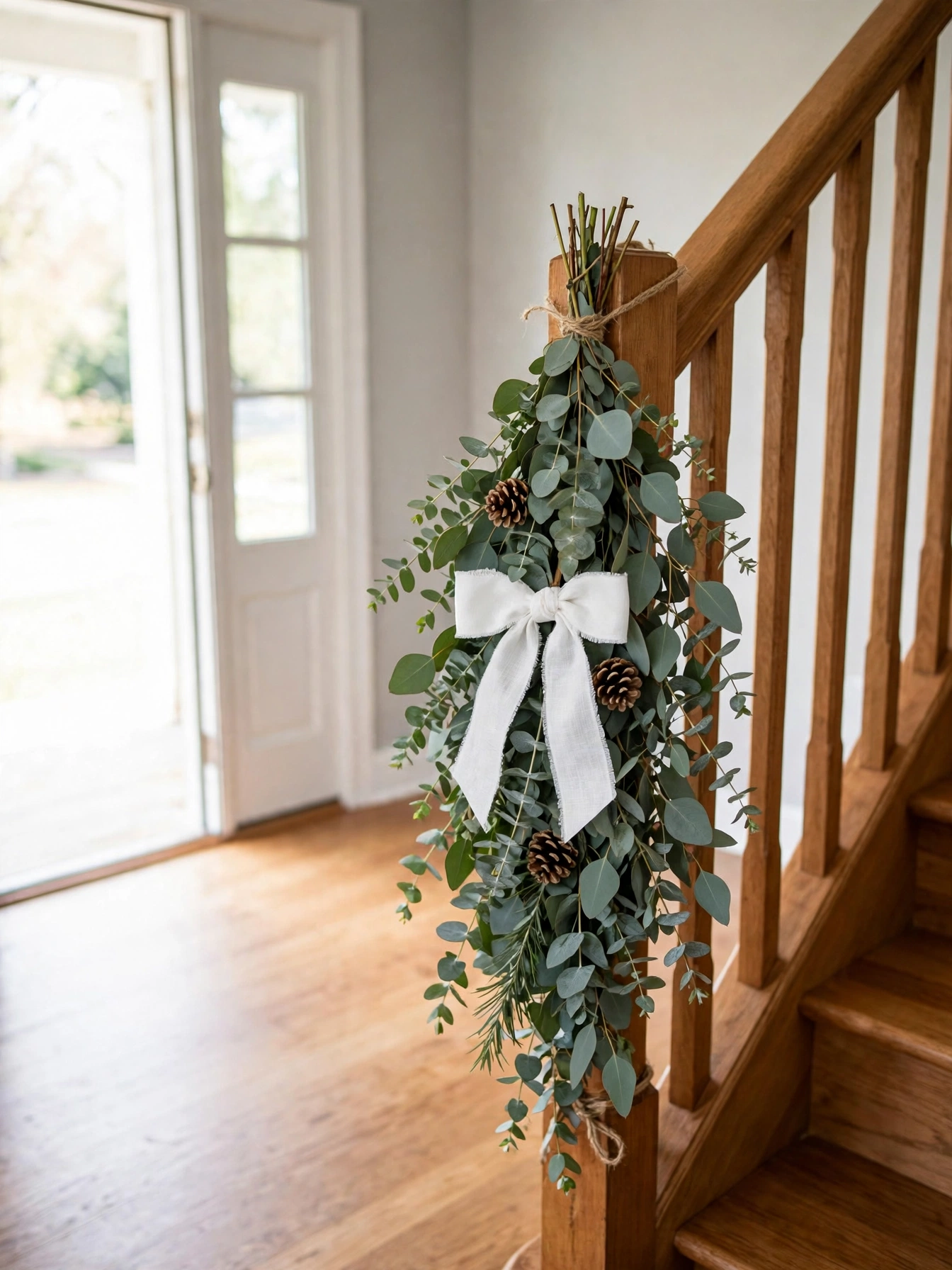
Why This Works:
- Silver green eucalyptus lightens dark wood railings in winter.
- A single swag reads as intentional without covering the whole rail.
- White ribbon keeps the look soft against brown wood.
- Pinecones add a woodland note at very low cost.
A 10 foot stair rail needs only one 36 inch swag at the newel post plus 2 small 12 inch bunches spaced 40 inches apart along the rail. Bundle 15 eucalyptus stems per swag, tie with 10 inches of jute, and fasten each bundle with 2 removable hooks so the rail finish stays unmarked. Hold off on wiring stems tightly against a painted rail, since trapped moisture can soften paint in 48 hours. Fresh eucalyptus keeps color for 10 days, while preserved eucalyptus stays pliable for months but costs about twice as much.
Two story entries benefit most from this accent because the swag draws the eye up without blocking the handrail. The drawback is shedding, since dry eucalyptus drops small round leaves onto steps after a week. Sweep the stairs every 2 days and keep the walkway clear of fallen leaves. A light shake outdoors before tying removes loose leaves at the start.
Pro Tip: Hang the swag 3 inches below the top rail so hands grip wood, not stems, and replace any stem that turns brown within 4 days.
Cranberry and Pine Table Runner

Why This Works:
- Red cranberries pop against dark wood without any dye.
- Pine branches give a full base that hides the runner edge.
- Clusters of 5 berries look gathered rather than scattered.
- Brass holders warm the red and green pairing.
Scatter 2 cups of fresh cranberries over 6 pine branches laid end to end along a 72 inch runner, grouping berries in clusters of 5 with 4 inches between groups. Keep the pine layer 4 inches wide and tuck stems under the runner so needles do not scratch plates. Keep away from cranberries that feel soft or wrinkled, since they stain linen and spoil within 2 days. Fresh cranberries hold shape for 5 days at room temperature, while frozen berries weep as they thaw and stain fabric.
Busy hosts favor this runner because it takes 20 minutes to lay out and needs no wiring or gluing. The limit is staining, since a crushed cranberry leaves a pink mark on light linen in seconds. Use a dark runner or a washable cloth under the berries and wipe spills at once. A tray under each candle holder catches wax before it reaches the pine.
Pro Tip: Rinse 2 cups of cranberries, pat dry on a towel for 15 minutes, and place them last so they stay glossy for 3 days.
Natural Christmas Decor Ideas 2026: Acorn and Walnut Vase Filler
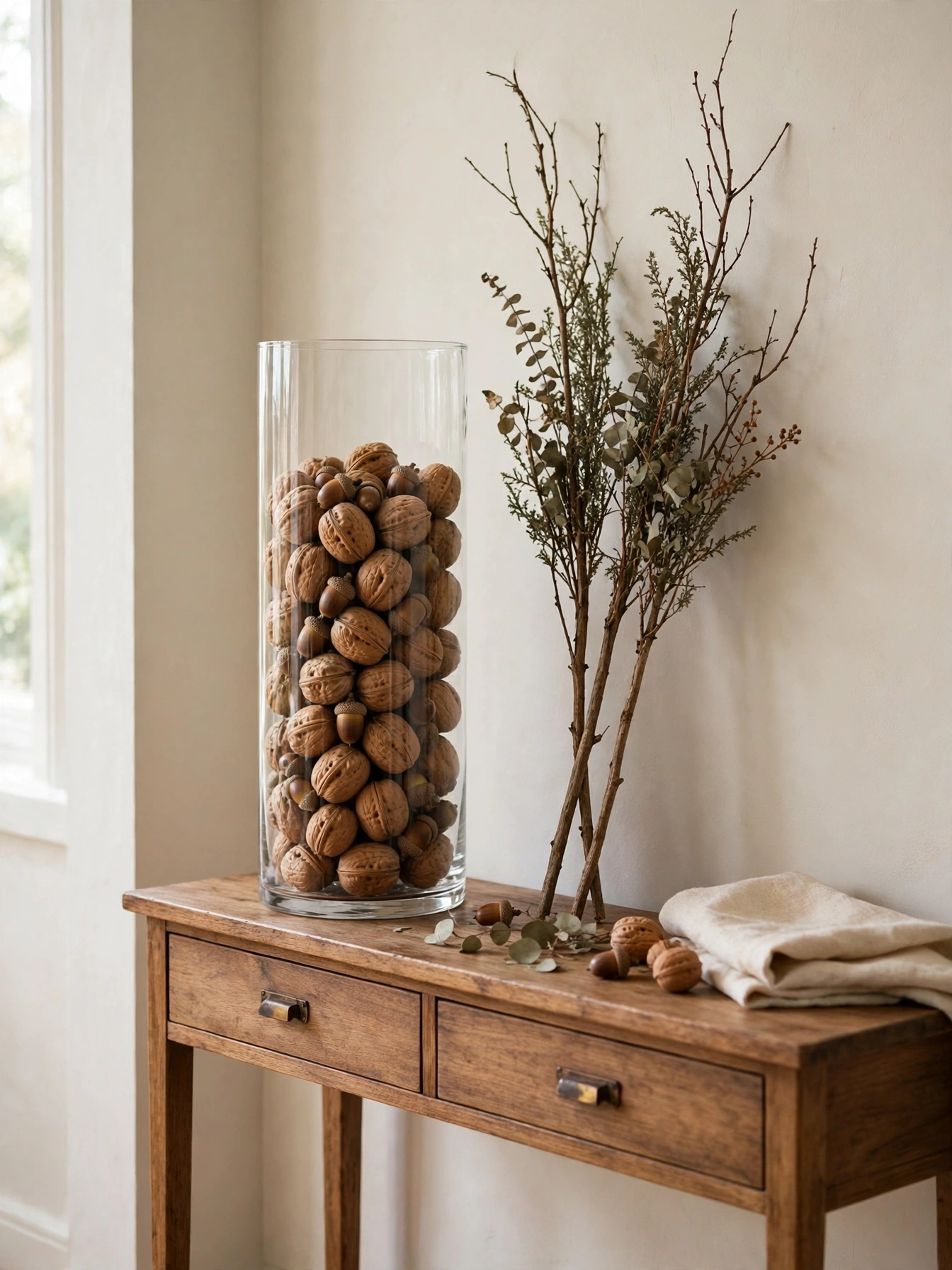
Why This Works:
- Acorns and walnuts add weight that holds tall branches steady.
- The mix of tan and brown tones suits wood and stone consoles.
- A clear vase shows the layers instead of hiding them.
- The filler can be reused for years without fading.
Fill a 10 inch wide glass vase with 4 cups of acorns and 2 cups of walnuts in shell, layering them to a depth of 10 inches inside a 14 inch vase. Push 3 dried branches 24 inches tall into the filler at slight angles, spacing them 2 inches apart at the base. Resist adding acorns with cracked caps or damp shells, since moisture invites mold inside a closed vase. Walnuts in shell stay stable for years, while shelled nuts go stale and attract pests within weeks.
Small living rooms gain from this piece because it adds height without taking much floor space. The downside is weight, since a full glass vase can reach 6 pounds and tip if bumped by a pet or child. Place it against a wall on a steady console and keep the base on a felt pad. A narrow vase with a 4 inch opening holds branches more firmly than a wide mouth vase.
Pro Tip: Bake acorns at 200 degrees Fahrenheit for 30 minutes and cool for 1 hour to kill insects before filling the vase.
Magnolia Leaf Placemats
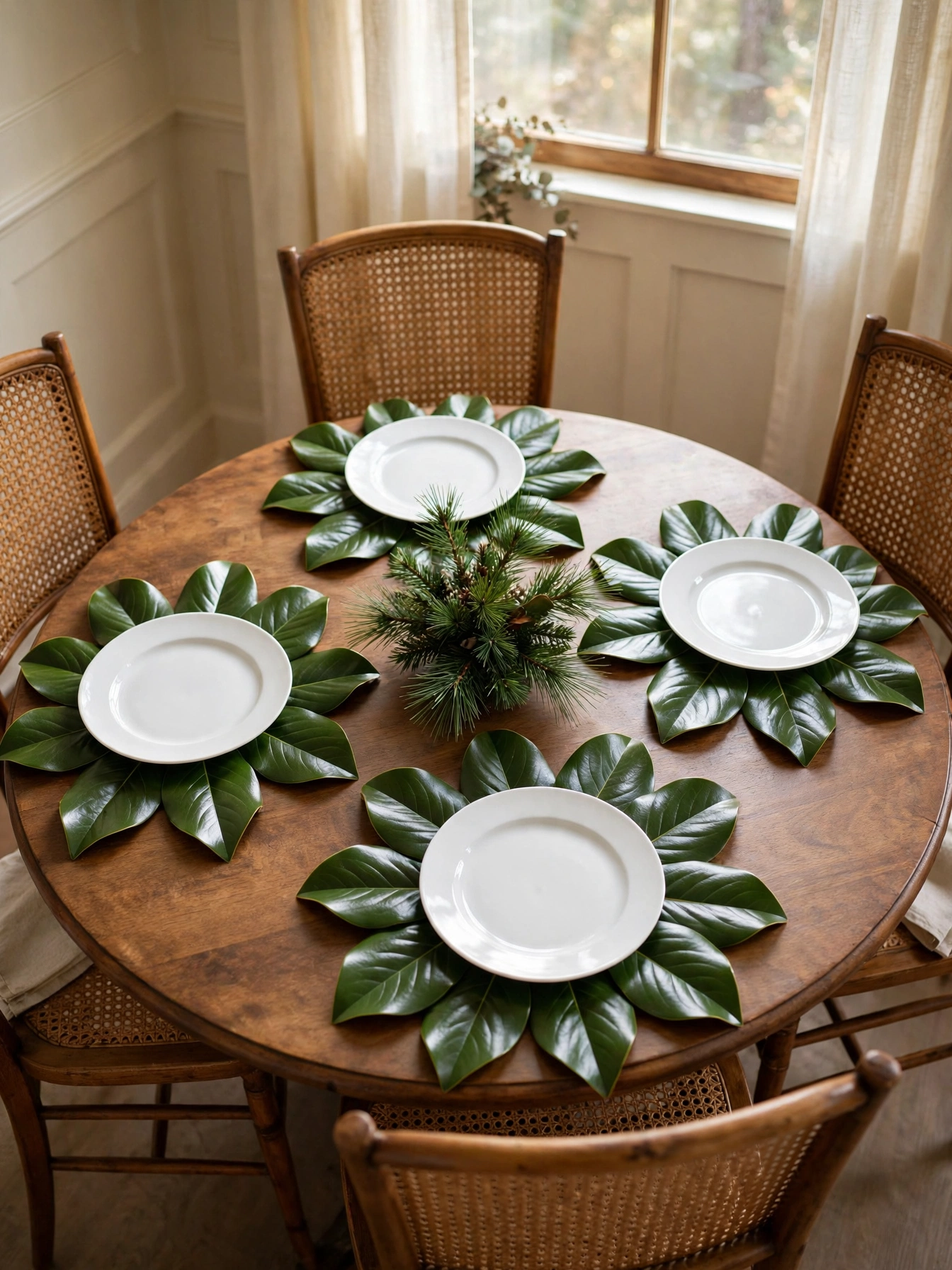
Why This Works:
- Glossy magnolia leaves look polished with zero paint.
- Overlapping leaves hide the table and protect it from heat.
- Brown leaf backs add contrast when one leaf flips.
- The mats compost after the season instead of filling a bin.
Press 8 magnolia leaves per placemat into an oval 14 inches wide by 10 inches deep, overlapping each leaf by 1 inch and taping stems on the underside. Lay 4 mats on a round table 48 inches across, leaving 2 inches between mats and 1 inch from the table edge. Pass on leaves with brown spots wider than 1 quarter inch, since spots spread and dull the gloss in 3 days. Fresh magnolia leaves stay glossy for 10 days, while preserved leaves last months but feel stiff and cost more per bunch.
Weeknight dinners feel a little more special with these mats because they add color without a tablecloth. The catch is curling, since leaf edges lift as they dry and can tilt a plate. Weigh each mat with a plate for 2 hours before guests arrive and replace any leaf that curls past 1 half inch. A thin cork sheet under the leaves keeps mats flat and protects wood.
Pro Tip: Wipe each leaf with a damp cloth, then press under a 5 pound book for 12 hours to flatten before taping.
Cork and Felt Leaf Coasters
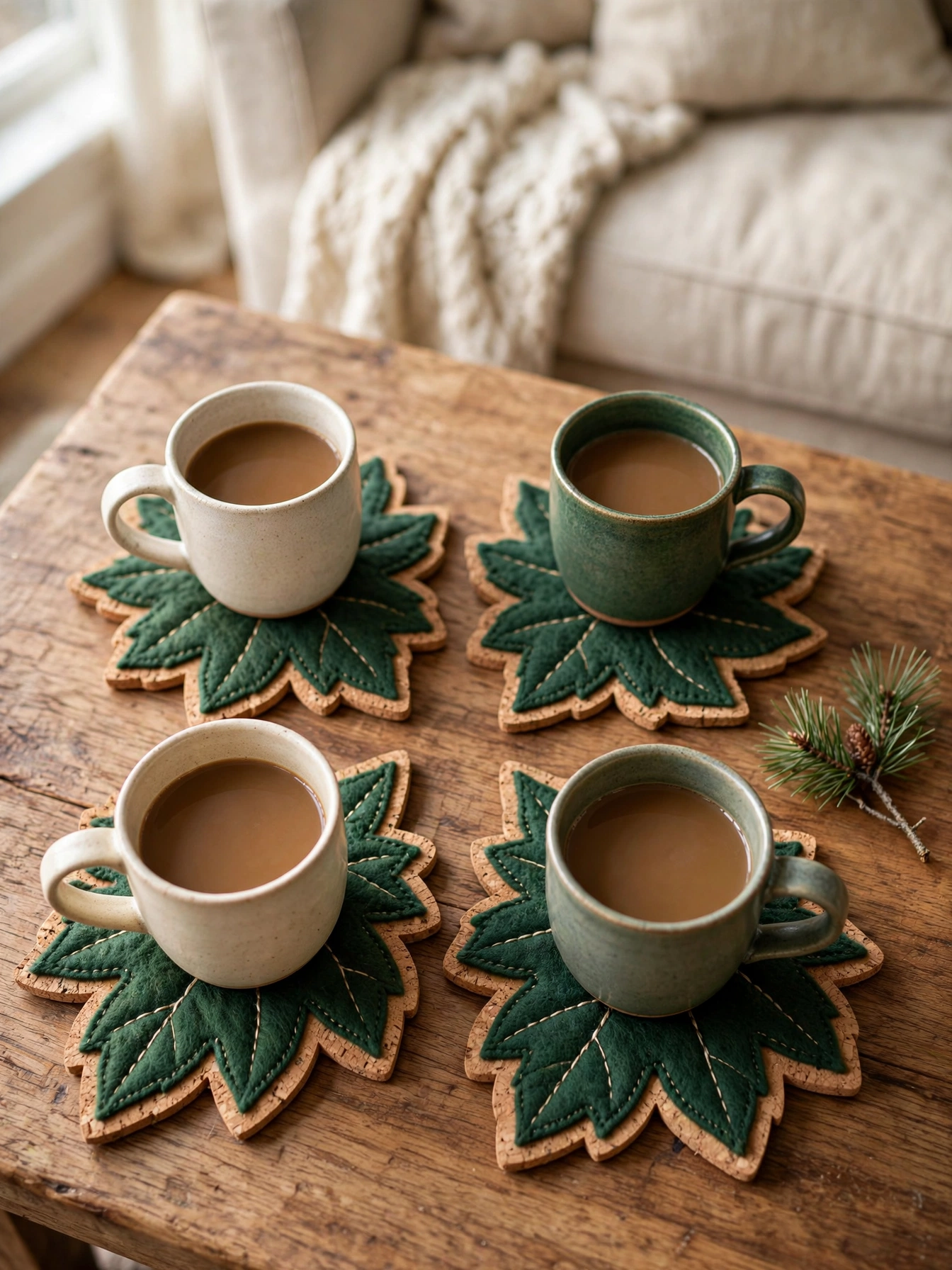
Why This Works:
- Cork absorbs condensation before it reaches wood.
- Felt backing stops coasters from sliding on a smooth table.
- Leaf shapes echo the season without holiday lettering.
- The set stores flat in a drawer after Christmas.
Cut 12 cork rounds 4 inches across and 1 quarter inch thick, then glue one felt leaf 3 inches long to the top of each round. Seal the cork edge with 2 thin coats of clear matte sealer, drying 1 hour between coats, and let the set cure for 24 hours. Do not soak cork coasters in water, since soaked cork swells and crumbles at the edges. Natural cork absorbs moisture and dries fast, while plastic coasters trap water and leave rings on wood.
Coffee tables in busy living rooms benefit from this set because it handles hot mugs and cold glasses in the same afternoon. The limitation is staining, since red wine and coffee can mark light felt if left overnight. Wipe spills within 5 minutes and keep a spare set of 4 coasters for guests. A dark green felt hides small marks better than cream felt.
Pro Tip: Cut felt leaves with a 3 inch template and glue with 1 drop of craft glue at the center so edges stay soft.
Fresh Boxwood Topiary Duo

Why This Works:
- Matched pairs frame a door and make an entry feel planned.
- Boxwood holds a round shape with light trimming.
- Terracotta pots add warmth against stone and wood.
- The duo moves indoors easily after the holidays.
Shape 2 boxwood forms into balls 12 inches across, set on stems 8 inches tall inside 10 inch terracotta pots filled with damp floral foam. Mist each ball with 2 ounces of water every 2 days and trim stray stems to 1 inch with small shears. Leave out boxwood with yellow patches, since yellowed stems drop leaves within days and weaken the shape. Fresh boxwood stays green for 3 weeks outdoors in cool weather, while faux topiary lasts years but lacks scent and leaf variation.
Entry consoles and porches gain structure from this pair because symmetry reads as tidy even when the rest of the porch stays simple. The upkeep is the trade-off, since fresh boxwood needs misting and a cool spot away from direct heat. Keep pots out of strong afternoon sun and bring them inside if nights fall below 20 degrees Fahrenheit. A saucer under each pot protects floors from drips.
Pro Tip: Soak floral foam for 20 minutes before inserting stems and check foam moisture every 2 days with a finger test.
Dried Lavender Bundle Ornaments
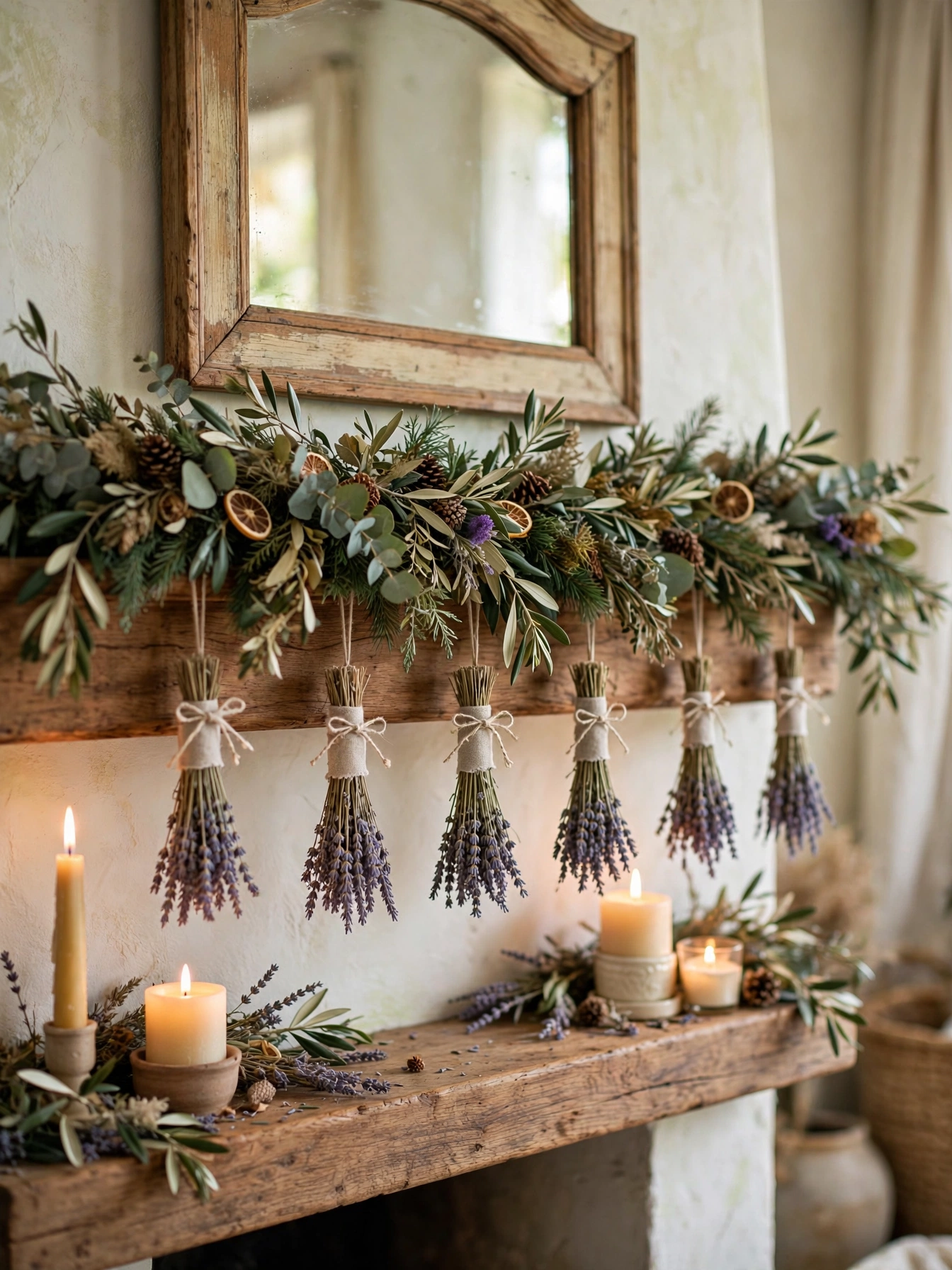
Why This Works:
- Lavender adds scent without a plug or spray.
- Small bundles hang well from garland, hooks, or branches.
- Purple buds contrast softly with green foliage.
- Bundles can be reused as drawer sachets in January.
Tie 10 lavender stems into each bundle, trim to 5 inches long, and secure with 12 inches of linen string wrapped 3 times around the stems. Hang 6 bundles from a mantel garland, spacing them 8 inches apart and keeping each bundle 12 inches from any candle flame. Skip stems with gray or musty buds, since damp lavender molds in storage and smells stale. Dried lavender keeps scent for 12 months in a closed jar, while fresh lavender fades in 2 weeks and drops buds fast.
Gift givers appreciate these bundles because they double as ornaments in December and sachets after the tree comes down. The downside is shedding, since dry buds fall when bundles are moved or brushed. Tie bundles tightly and hang them where guests will not brush past them. A small paper bag under each bundle catches loose buds during the first week.
Pro Tip: Roll each bundle gently between palms for 5 seconds before hanging to release scent without crushing buds.
Pussy Willow Branch Arrangement

Why This Works:
- Tall branches add height without blocking a window.
- Soft catkins catch light and feel gentle against hard furniture.
- A single vase keeps the look minimal and easy to dust.
- Branches last all season with no water.
Stand 5 willow stems 36 inches tall in a 12 inch ceramic vase weighted with 2 pounds of river stones. Fan the stems so the widest spread reaches 18 inches, and tie 3 small wooden ornaments to lower stems with 6 inch twine loops. Do not add water to the vase, since wet stems drop catkins and grow mold within a week. Dried willow holds catkins for 8 weeks, while fresh cut willow in water sprouts leaves and loses its winter look.
Corners that feel empty in December gain a focal point from this tall, light arrangement. The limit is fragility, since catkins crush easily if the vase sits in a high traffic path. Place the vase 12 inches from the wall in a corner and keep it away from doors that swing open. A heavier vase with a 6 inch base resists tipping better than a tall narrow vase.
Pro Tip: Spray stems once with a light coat of clear hairspray from 12 inches away to reduce shedding for 4 weeks.
Dried Herb Bundle Wall Display

Why This Works:
- Herb bundles bring kitchen scent into the decor itself.
- A straight row reads as tidy on an open wall.
- Wood hooks match counters and open shelves.
- Bundles can move to cooking use after the season.
Gather 3 herb bundles per hook, each 8 inches long, using 10 stems of rosemary, thyme, or sage tied with 10 inches of twine. Hang 5 bundles on hooks spaced 6 inches apart along a 36 inch wall strip, keeping the lowest bundle 18 inches above the counter. Steer clear of herbs stored in a damp spot, since moisture turns leaves dark and musty in days. Fully dried herbs keep color for 6 months, while partly dried herbs mold in 2 weeks in a closed kitchen.
Kitchens with open wall space suit this display because it fills a blank stretch without blocking counters. The catch is grease, since cooking steam coats leaves near a stove and dulls scent. Hang the row at least 36 inches from the stove and wipe the wall behind it weekly. A small shelf above the bundles keeps dust off the tops.
Pro Tip: Dry herbs upside down for 7 days in a dark room before tying, then hang with stems pointing up to slow leaf drop.
Wheat Sheaf Fireplace Bundle

Why This Works:
- Golden wheat warms gray stone without paint or lights.
- A single sheaf fills a large hearth corner fast.
- Twine ties match wood and basket tones.
- The bundle stores flat behind furniture after Christmas.
Bind 12 wheat stems into each of 3 small bunches, then bind the bunches into one sheaf 30 inches tall and 8 inches wide at the base. Tie the sheaf twice with jute, once 6 inches from the heads and once 12 inches from the base, and lean it at a 15 degree angle against the hearth. Keep the sheaf at least 36 inches from any open flame, since dried wheat catches fire fast. Dried wheat holds color for 12 months indoors, while fresh wheat heads shatter and drop grain within weeks.
Fireplaces that stay unlit through December suit this bundle because it fills the hearth without blocking the firebox. The trade-off is flammability, since dry wheat must stay well away from candles, sparks, and heaters. Never place the sheaf inside a firebox or on a mantel above a lit fire. A stone tile under the base stops loose grain from scattering on the hearth.
Pro Tip: Lean the sheaf against a 12 inch stone tile and brush loose grain into a bin once a week to keep the hearth tidy.
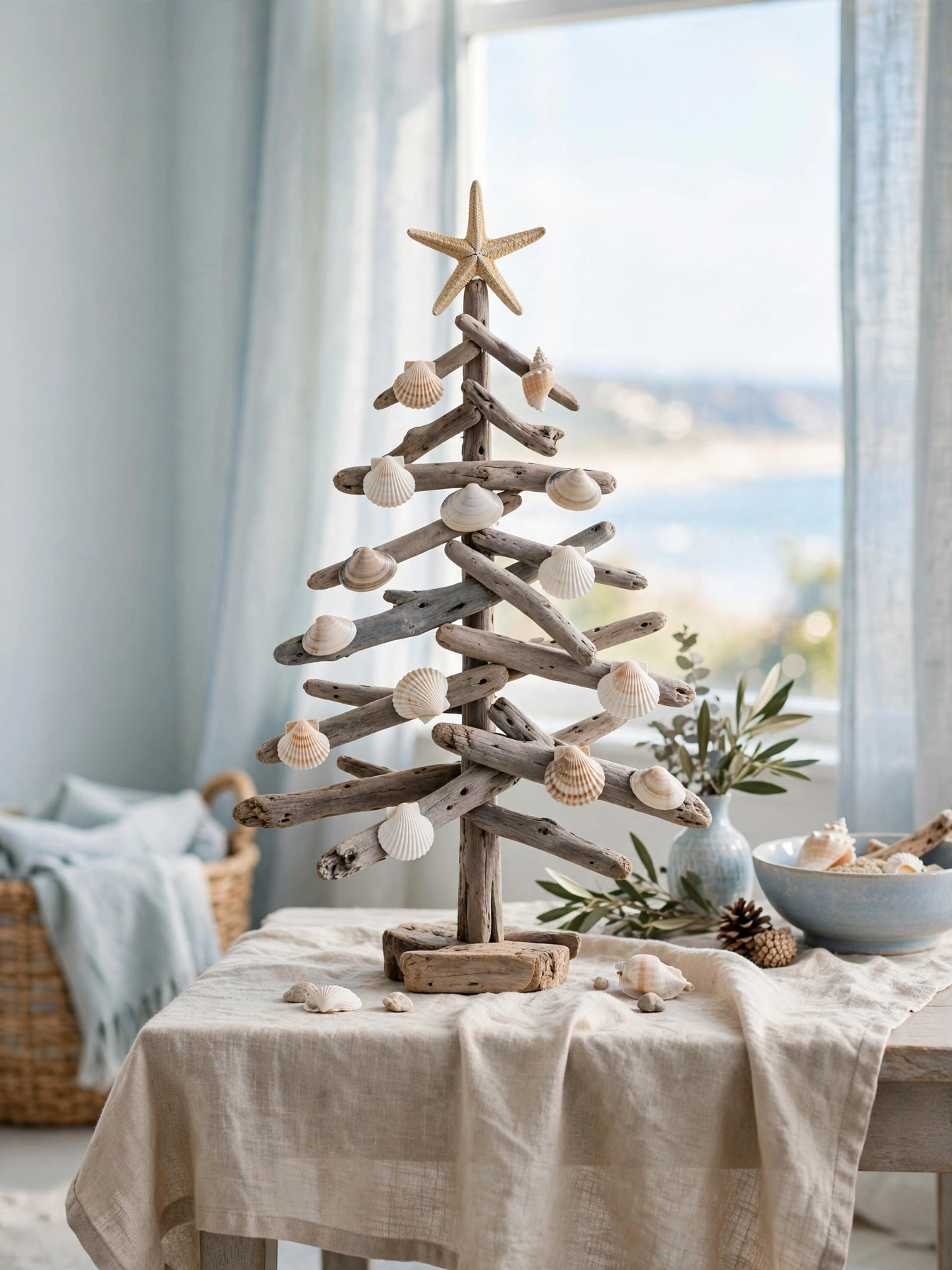
Seashell and Driftwood Tree
Why This Works:
- Driftwood and shells tell a coastal story without plastic ornaments.
- The 18 inch size fits side tables and shelves.
- Natural shell shapes vary, so no two trees look alike.
- The tree stores in one piece for next year.
Arrange 15 shells on a driftwood frame 18 inches tall and 10 inches wide, gluing each shell with a pea sized dot of hot glue and holding for 10 seconds. Build the frame from 5 driftwood pieces, longest at the base at 10 inches and shortest near the top at 3 inches, fixed to a wood base 6 inches square. Pass on shells with a strong beach odor, since unwashed shells can smell indoors for weeks. Washed and air dried shells stay odor free, while unwashed shells attract dust and smell when warmed by a lamp.
Coastal cottages and light filled rooms gain a second small tree from this project without buying a full evergreen. The downside is fragility, since shells can pop off if the tree is bumped or stored loosely. Pack the tree in tissue with 2 inches of padding on each side and keep it out of reach of small hands. A clear coat on the driftwood deepens color and holds small splinters down.
Pro Tip: Soak shells in warm soapy water for 30 minutes, rinse, and dry for 24 hours before gluing to remove sand and odor.
Moss and Fern Terrarium

Why This Works:
- A terrarium brings living green into a room with no tree.
- Glass keeps humidity steady for moss and ferns.
- The small size fits desks, shelves, and side tables.
- Pinecones add a seasonal note without lights.
Layer 2 inches of pebbles, 1 inch of charcoal, and 2 inches of moss inside a 12 inch wide glass terrarium, then tuck 3 small ferns into the moss with roots covered. Mist the inside with 3 ounces of water once a week and keep the terrarium in indirect light 3 feet from a window. Do not seal a terrarium with fresh ferns in direct sun, since trapped heat can reach 100 degrees Fahrenheit and wilt leaves in hours. Preserved moss needs no water and holds color, while live moss stays soft but needs weekly misting.
Bathrooms and bedrooms with indirect light suit this terrarium because it adds green without a large pot. The limit is moisture balance, since too much water clouds the glass and breeds mold in 7 days. Open the lid for 2 hours after misting and wipe condensation from the glass. A layer of charcoal under the moss filters odor and slows mold growth.
Pro Tip: Mist with 3 ounces of water on Sunday morning only and open the lid for 2 hours to keep moss green without mold.
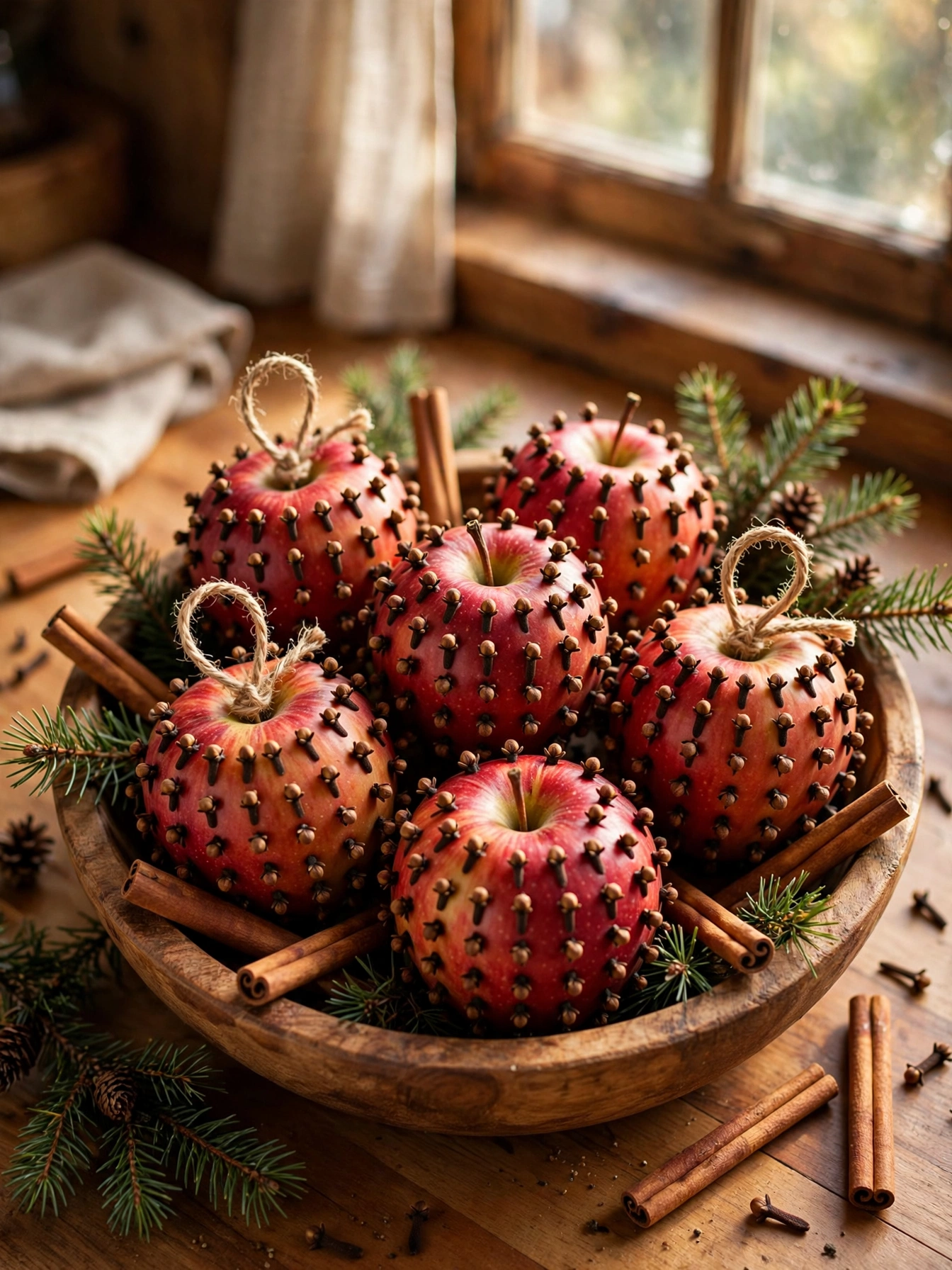
Natural Christmas Decor Ideas 2026: Apple and Clove Pomanders
Why This Works:
- Cloves release scent slowly as the apple dries.
- A bowl of pomanders fills a kitchen with fragrance fast.
- Red apples add color without paint or ribbon.
- The project needs only fruit, spice, and a toothpick.
Stud one medium apple 3 inches across with 40 whole cloves, spacing cloves 1 half inch apart and pushing each clove in to the head. Set 5 pomanders in a wood bowl 12 inches wide, tucking 3 cinnamon sticks and 2 pine sprigs between apples. Leave out apples with soft spots or bruises, since bruised fruit rots in 3 days and spreads mold to neighbors. Firm apples dry slowly over 3 weeks, while soft apples collapse and weep juice within days.
Kitchen counters and entry tables suit pomanders because guests notice the scent before they see the bowl. The downside is shrinkage, since apples lose about 30 percent of their size as they dry and can look wrinkled after 2 weeks. Start with firm apples and plan to replace the bowl after 14 days for the freshest look. A dusting of ground cinnamon over the bowl refreshes scent between batches.
Pro Tip: Poke each hole with a toothpick first, then press cloves in firmly so 40 cloves fit without splitting the apple skin.
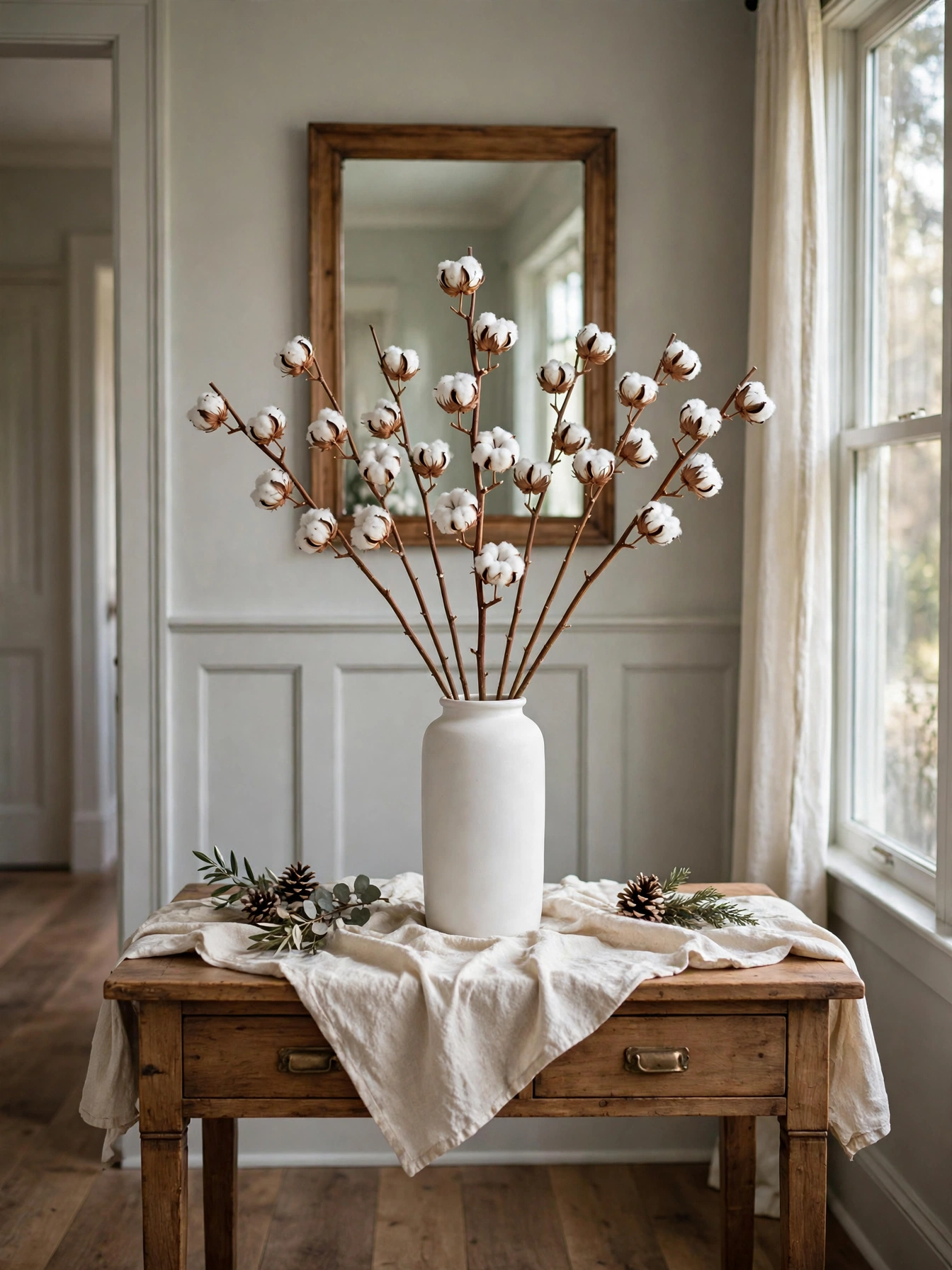
Cotton Boll Stem Vase
Why This Works:
- White cotton bolls brighten dark corners without lights.
- Tall stems add height to a narrow console.
- The soft texture contrasts with wood and ceramic.
- Stems store upright and reuse for years.
Place 7 cotton stems 30 inches tall in a 16 inch ceramic vase, fanning them to a width of 14 inches and trimming 2 stems to 26 inches for depth. Weigh the vase with 1 pound of stones if the console sits near a doorway, and keep stems 6 inches from the wall so bolls do not flatten. Resist pulling bolls apart to fluff them, since pulled fibers shed and thin the boll in one season. Dried cotton keeps shape for years, while fresh cotton bolls drop seeds and need cleaning before display.
Bedrooms with neutral bedding gain a soft winter accent from this vase because white cotton echoes linen and wool. The catch is dust, since cotton fibers trap dust in 2 weeks and look gray in bright light. Shake stems gently outdoors every 14 days and wipe the vase weekly. A vase with a 5 inch opening holds stems upright better than a wide bowl.
Pro Tip: Bend the lowest 2 inches of each stem at a slight angle to lock stems in place and stop them spinning in the vase.
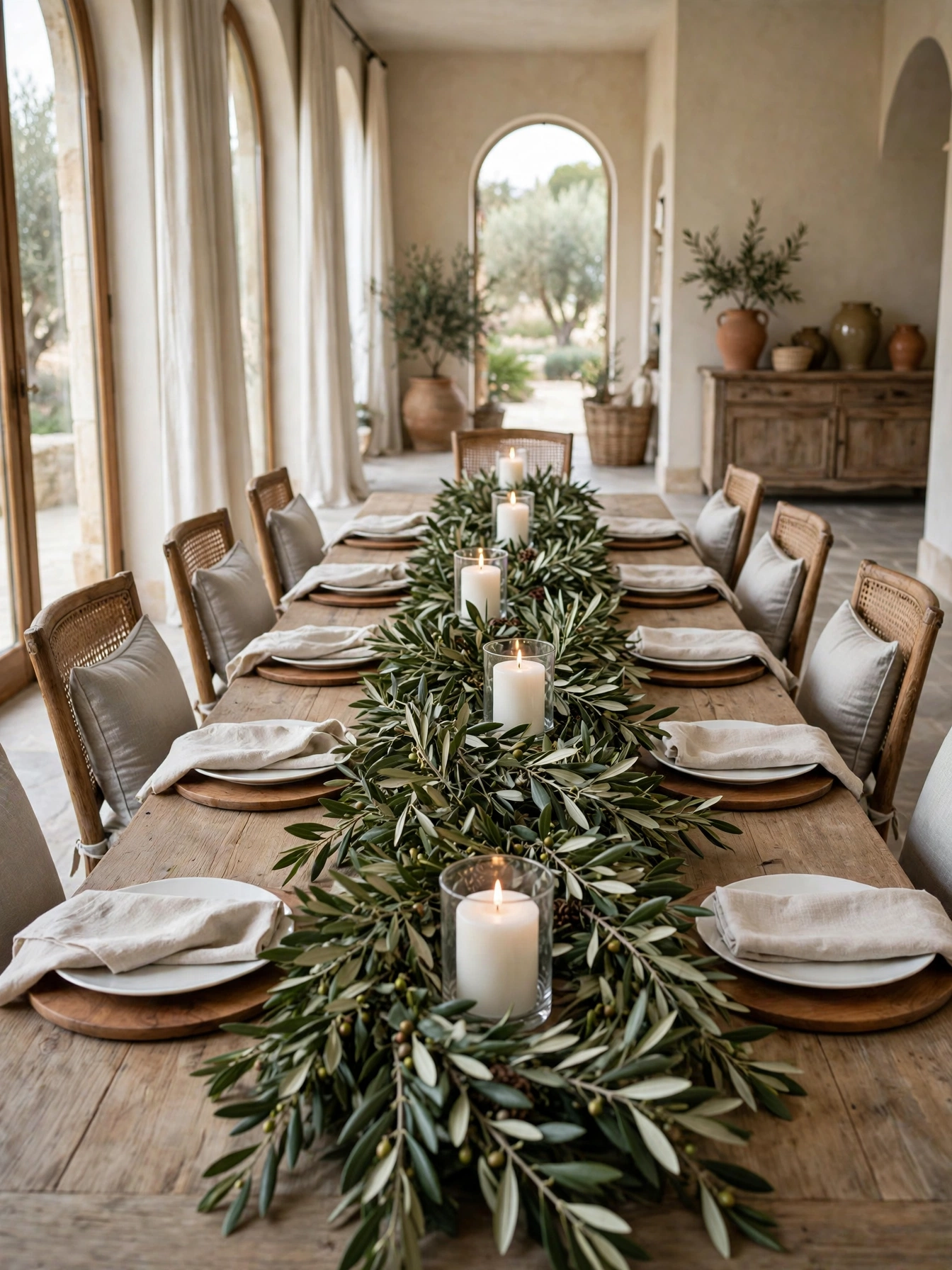
Olive Branch Table Swag
Why This Works:
- Olive branches bring a soft silver green that pairs with white dishes.
- A long swag fills a farmhouse table without a tall centerpiece.
- Small olives add texture without blocking conversation.
- The swag can be composted after the meal.
Drape one 8 foot olive swag made from 10 branches, each 24 inches long, down the center of a 72 inch table, overlapping branches by 4 inches. Secure joins with 6 inch twine ties and keep the swag 6 inches wide so plates still have 12 inches of space on each side. Keep away from branches with blackened leaves, since damaged olive leaves drop within a day and stain linen. Fresh olive branches stay green for 7 days, while dried olive branches keep shape but turn gray brown in 3 weeks.
Long farmhouse tables suit this swag because it follows the table length instead of crowding one center spot. The limit is leaf drop, since olive leaves fall as stems dry and land on plates during a long meal. Lay the swag within 2 hours of seating and keep a small brush nearby for quick cleanup. A linen runner under the branches catches fallen leaves and protects the table.
Pro Tip: Lay branches with leaves pointing outward from the center and overlap joins by 4 inches so no bare stem shows.
Dried Hydrangea Mantel Row

Why This Works:
- Dried hydrangeas give large soft blooms without watering.
- A row of small vases feels orderly on a long mantel.
- Muted blue and mauve tones suit winter light.
- The heads reuse for spring displays after Christmas.
Line 7 hydrangea heads, each 5 inches across, in 7 glass bud vases 6 inches tall along a 60 inch mantel, spacing vases 8 inches apart. Trim each stem to 4 inches and rest the head on the vase rim so the bloom sits 2 inches above the glass. Do not mist dried hydrangeas, since water softens petals and causes browning in 24 hours. Air dried hydrangeas keep color for 6 months, while silica dried heads hold a brighter tone but feel more brittle.
Wide mantels suit this row because the repeated vases fill length without one heavy arrangement. The downside is brittleness, since a bumped head shatters into small petals that scatter on the hearth. Keep vases 3 inches from the mantel edge and dust heads with a soft brush weekly. A small felt dot under each vase stops sliding on smooth stone.
Pro Tip: Cut stems to 4 inches and set each head low in a 6 inch vase so the bloom rests steady and will not tip forward.
Stone and Pine Window Sill Line

Why This Works:
- Stones anchor the display so pine does not slide.
- A sill line uses space that often stays empty.
- Gray stone cools the green pine in a pleasing way.
- The pieces wipe clean in seconds.
Set 5 stones, each 3 inches wide and 2 inches tall, along a 36 inch window sill, leaving 3 inches between stones and tucking one 10 inch pine sprig between each pair. Keep the line 1 inch from the glass so condensation does not soak pine needles, and wipe the sill dry each morning in cold weather. Steer clear of stones with sharp edges near a sink, since a dropped stone can chip porcelain in one fall. Smooth river stones stay stable and dry fast, while rough quarry stones hold water and can stain a painted sill.
Deep window sills suit this line because the display stays out of the work zone yet catches daylight. The catch is condensation, since winter windows drip and can rot pine in 4 days. Check the sill each morning and replace any sprig that feels damp. A narrow tray under the stones catches drips and lifts pine off wet paint.
Pro Tip: Wipe stones with a dry cloth each morning and swap pine sprigs every 5 days to keep the sill fresh through December.
Feather and Twig Mobile

Why This Works:
- Feathers move gently with air and catch light.
- Twigs keep the mobile light and easy to hang.
- Varied lengths create depth without bulk.
- The piece stores flat in tissue after the season.
Hang 9 feathers from an 18 inch twig crossbar, using linen thread in lengths of 6, 8, and 10 inches to stagger heights. Tie each feather with 2 knots and hang the mobile from a ceiling hook rated for 5 pounds, keeping the lowest feather 72 inches above the floor. Hold off on hanging the mobile over a crib or a child bed, since loose threads and small parts pose a safety risk. Natural feathers drift softly in air, while paper feathers stay stiff and tear at the fold.
Reading nooks and quiet corners gain gentle movement from this mobile because it turns with the slightest draft. The limit is tangling, since threads twist in a breeze and feathers can knot after a week. Hang the mobile away from vents and straighten threads every 3 days. A single ceiling hook in a joist holds the mobile more firmly than an adhesive hook.
Pro Tip: Space feathers 2 inches apart on the crossbar and use 3 thread lengths so no two feathers hang at the same height.
Pressed Leaf Window Panels
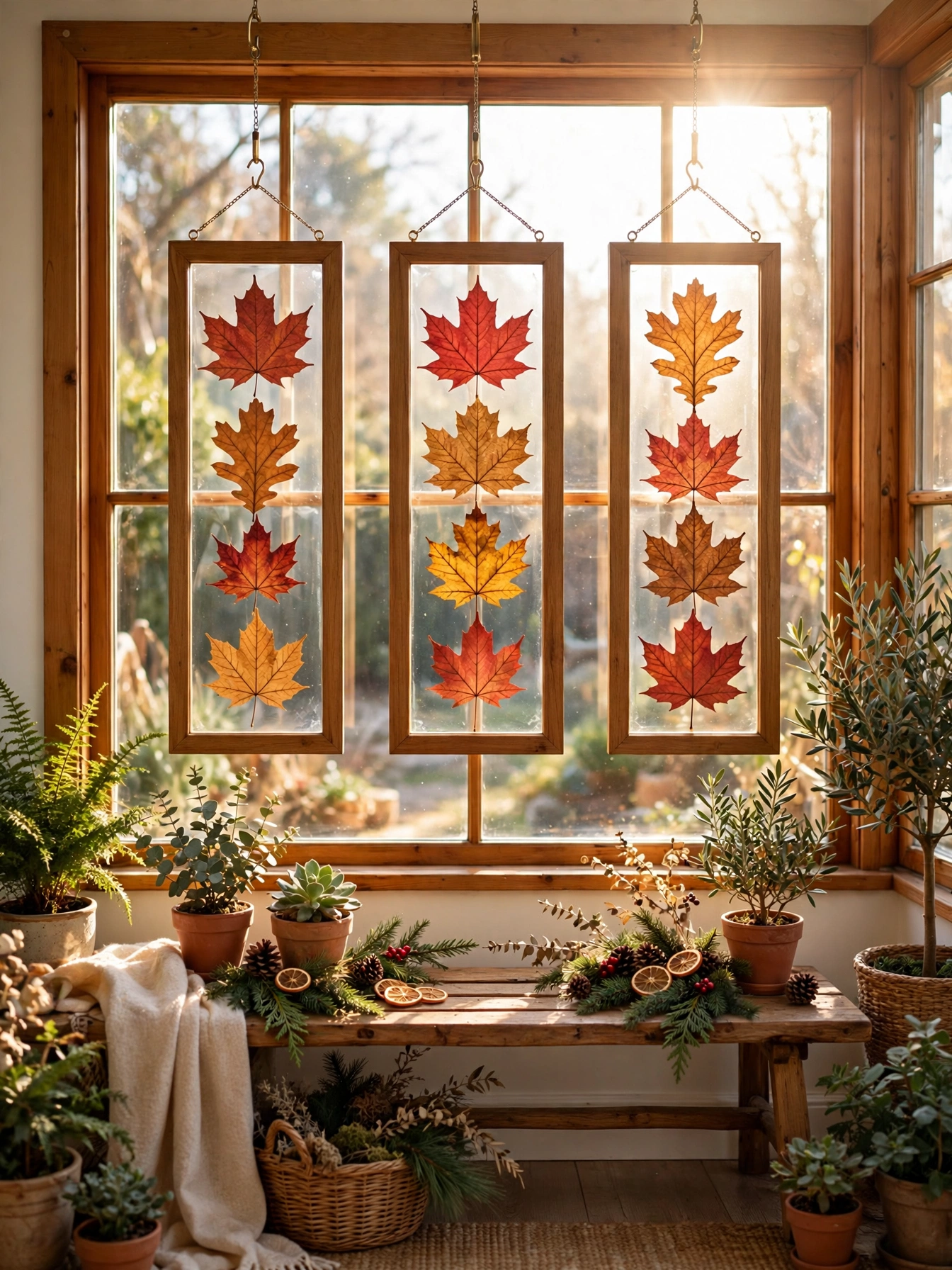
Why This Works:
- Sunlight turns pressed leaves into glowing color panels.
- Glass keeps fragile leaves flat and dust free.
- Three panels fill a window without blocking light.
- The panels lift off hooks in seconds for cleaning.
Press 12 leaves between book pages for 7 days, then place 4 leaves in each 10 inch by 14 inch glass panel with 1 inch between leaves. Seal each panel with clear tape around the edges and hang the 3 panels from hooks spaced 12 inches apart, keeping the lowest panel 6 inches above the sill. Pass on leaves thicker than 1 eighth inch, since thick leaves trap air and fog the glass. Pressed maple leaves hold color for 2 years indoors, while unpressed leaves curl and fade in 3 weeks.
South facing windows suit these panels because direct sun lights the leaves from behind each morning. The downside is fading, since strong sun bleaches red leaves to tan in 4 weeks. Hang panels on a window that gets morning sun only and rotate panels weekly for even color. A thin wood frame around each panel protects glass edges during handling.
Pro Tip: Press leaves for 7 full days under a 10 pound stack of books, then seal edges with clear tape to block moisture.
Raw Linen and Jute Table Setting

Why This Works:
- Raw linen wrinkles softly and looks relaxed, not messy.
- Jute adds texture that pairs with wood and stone.
- Stoneware plates ground the soft fabrics.
- Pine sprigs add scent at each place.
Fold one 108 inch raw linen cloth over a 72 inch table, letting 18 inches hang on each end, and center a 72 inch jute runner with 2 inches of linen showing on each side. Set 6 places with wood chargers 13 inches across, stoneware plates 10 inches across, and one 6 inch pine sprig on each plate. Do not iron raw linen flat, since pressing removes the soft texture that makes the fabric look natural. Raw linen softens with each wash, while synthetic linen stays stiff and shines under lights.
Hosts who prefer a relaxed table favor this setting because it looks finished without precise folding or matching dishes. The trade-off is wrinkling, since linen creases during dinner and shows spills more than dark fabric. Shake the cloth outdoors before setting and keep a damp cloth nearby for quick blots.
Pro Tip: Wash linen in cold water and air dry for 2 hours, then lay it on the table while still slightly damp to smooth large creases.
FAQs
How long do natural christmas decor ideas 2026 last indoors?
Most fresh pieces last 7 to 14 days, while dried pieces last 6 to 12 months with care. Mist fresh cedar every 3 days, replace cranberries after 5 days, and store dried herbs in a cool room at 65 degrees.
How do I keep fresh greenery from drying out too fast?
Keep fresh greenery away from heaters and direct sun, and mist lightly every 2 to 3 days. A room at 65 degrees with 40 percent humidity keeps cedar green for 14 days, while a hot room near 75 degrees dries it in 5 days.
Are natural christmas decor ideas 2026 safe around candles?
Yes, when you keep distance and use holders. Keep every burning candle a full 12 inches from anything flammable, and never leave a flame unattended near dried wheat, pine, or herbs.
What is the safest way to use lights with dried materials?
Use LED string lights that stay cool, and keep bulbs at least 3 inches from dried leaves or wheat. Choose Energy Star certified LED lights, check cords for damage, and switch lights off when you leave the room for safety.
How much should I budget for one natural display?
Most displays cost 8 to 25 dollars when you gather branches and reuse jars or trays. A cedar garland for a 6 foot mantel runs about 20 dollars, while a vase filler with acorns costs under 10 dollars.
Conclusion
These natural Christmas decor ideas 2026 prove that branches, fruit, stone, and linen can carry a whole season of decorating. Start with fresh greenery, add one dried project, and keep candles at a safe distance from anything that can burn. The three takeaways to remember are measure before you cut, choose fresh or dried materials for the right spot, and refresh small pieces weekly. Your first action is simple: gather one bundle of cedar or pine this week and dress your mantel or table. Follow HomelyCrafter on Pinterest for more ideas. Save this to your Pinterest boards so you can refer back to it!

Muhammad Israr is a home decor enthusiast and the writer behind Homely Crafter. He spends his days researching paint colors, layouts and budget-friendly styling ideas, then breaks them down into practical, easy-to-follow guides so you can decorate with confidence.