
What if your living room could feel like a warm cabin and a breezy shoreline at the same time? That is the promise of cozy coastal living room ideas: snug hygge textures and warm woods carrying just enough seaside character to feel fresh, never themed.
These 23 ideas show you how to layer chunky knits over weathered wood, choose warm metals that glow at dusk, and mix natural fibers so the room feels collected over years, not decorated in a weekend. Each section includes exact dimensions, material grades, honest price ranges, and the trade-offs worth knowing.
Whether you live minutes from the water or nowhere near it, this warm take on coastal style works in any home. Pick the textures your room is missing, start with the largest textile first, and let the layers build from there.
Nautical Chunky Throw Blankets
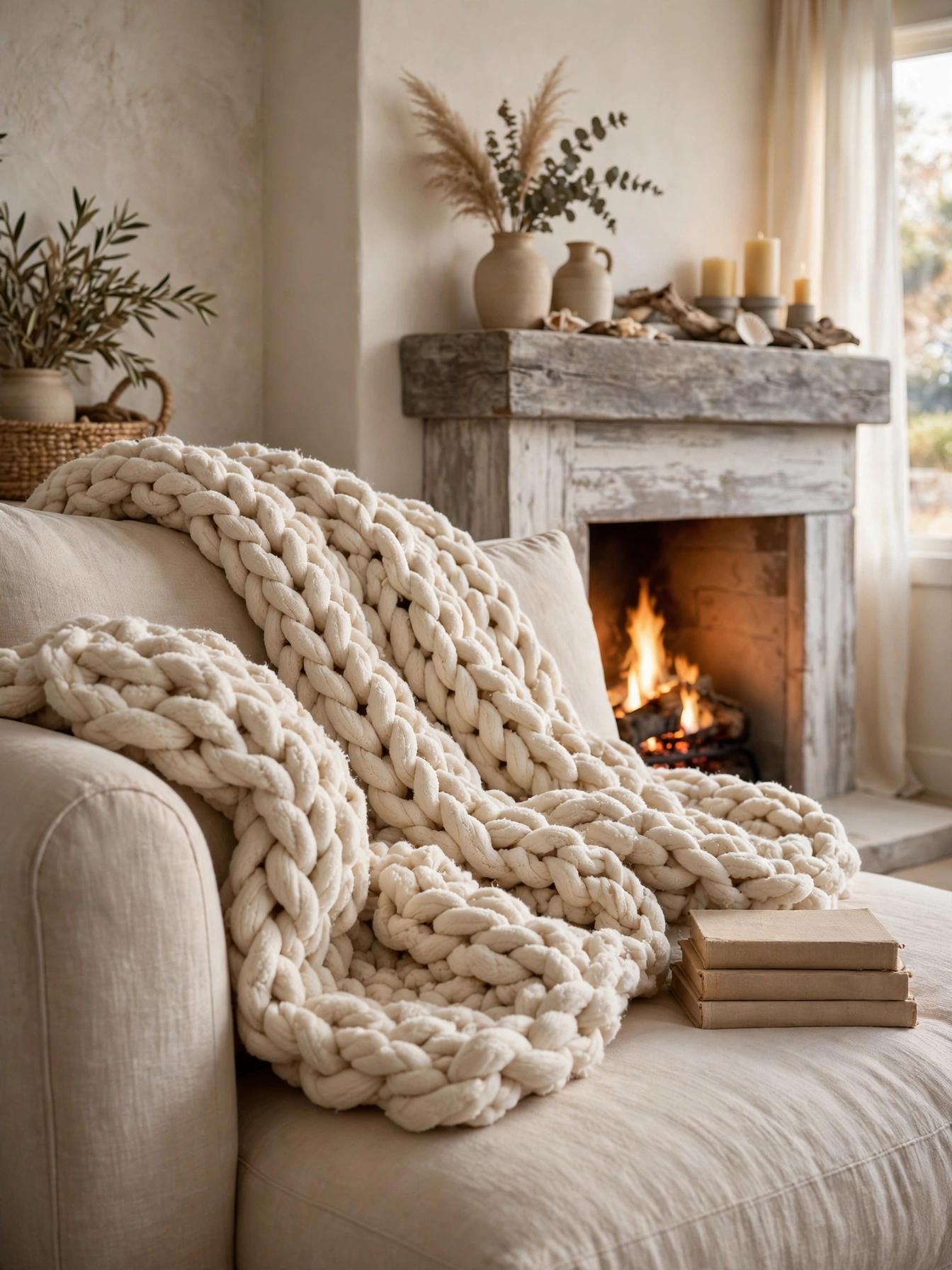
Why This Works:
- Oversized knits are the fastest visual shortcut to hygge comfort.
- Cream chenille adds warmth without introducing any new color.
- A heavy throw invites actual use, which makes rooms feel lived-in.
- One throw can restyle a sofa for under $100.
Choose a jumbo chenille or wool-blend throw measuring at least 50 by 60 inches, since smaller throws look skimpy on a full-size sofa. Quality chunky knits cost $60 to $150, while hand-knit merino versions run $200 to $400. Drape the throw diagonally across one corner of the sofa rather than folding it flat, because the casual cascade reads as inviting instead of staged. Avoid 100 percent acrylic jumbo knits, which pill within months and feel clammy against skin. Versus a new set of pillows, a single statement throw delivers more coziness per dollar than almost any other textile.
Anyone whose coastal room feels a bit stark will feel the difference the same evening. The honest trade-off is upkeep: jumbo knits snag on jewelry and pet claws, and chenille sheds lint for the first month. Homes with cats should choose tighter weaves over open loops. For instant warmth that photographs beautifully, nothing beats the big knit.
Pro Tip: Wash chunky knits in a mesh laundry bag on cold, then dry flat to keep the stitches even.
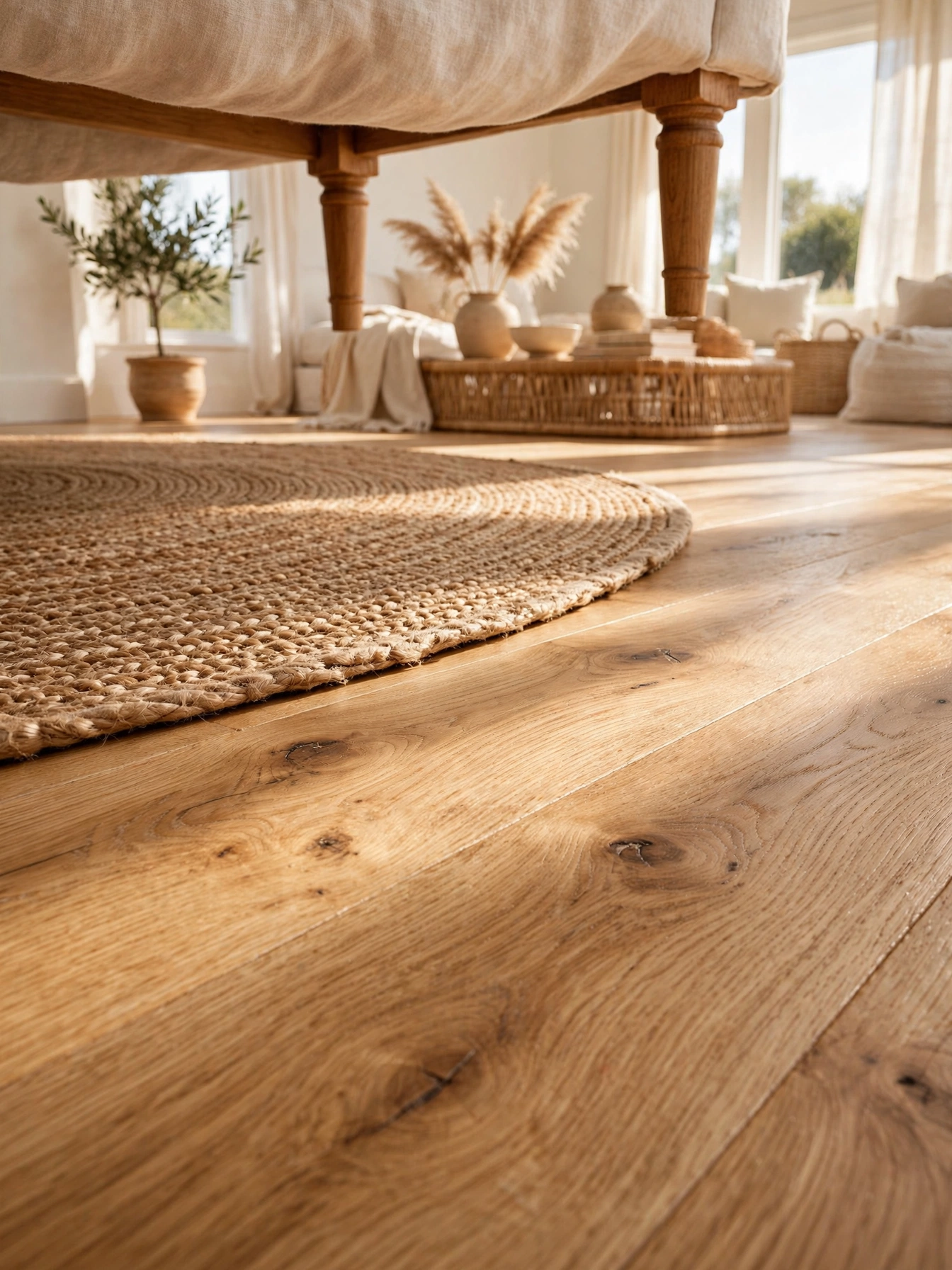
Warm Oak Flooring

Why This Works:
- Warm oak underfoot stops a coastal palette from feeling chilly.
- Wide planks make rooms look larger with fewer seam lines.
- Natural grain adds organic pattern no rug can replicate.
- Oak’s honey tone flatters both white walls and blue accents.
Select white oak planks 7 to 9 inches wide in a natural or lightly whitewashed finish, avoiding orange stains that fight coastal palettes. Engineered oak costs $6 to $12 per square foot installed, while solid runs $10 to $18, and a 300 square foot living room lands between $1,800 and $5,400. The National Wood Flooring Association recommends acclimating planks in the room for at least 72 hours before installation to prevent gapping. Avoid dark espresso stains in coastal rooms, since they absorb the light the style depends on. Compared with tile or luxury vinyl, real oak can be refinished 3 to 5 times, stretching its life to 50-plus years.
Homeowners planning to stay put get the best return from real wood. One drawback is moisture: oak and standing water are enemies, so entry mats and quick wipe-ups are mandatory. Beach-adjacent homes should choose engineered oak, whose layered core resists humidity swings better than solid. As a foundation, warm oak is the coziest floor a coastal room can have.
Pro Tip: Run planks toward the main window so daylight travels along the grain and stretches the room.
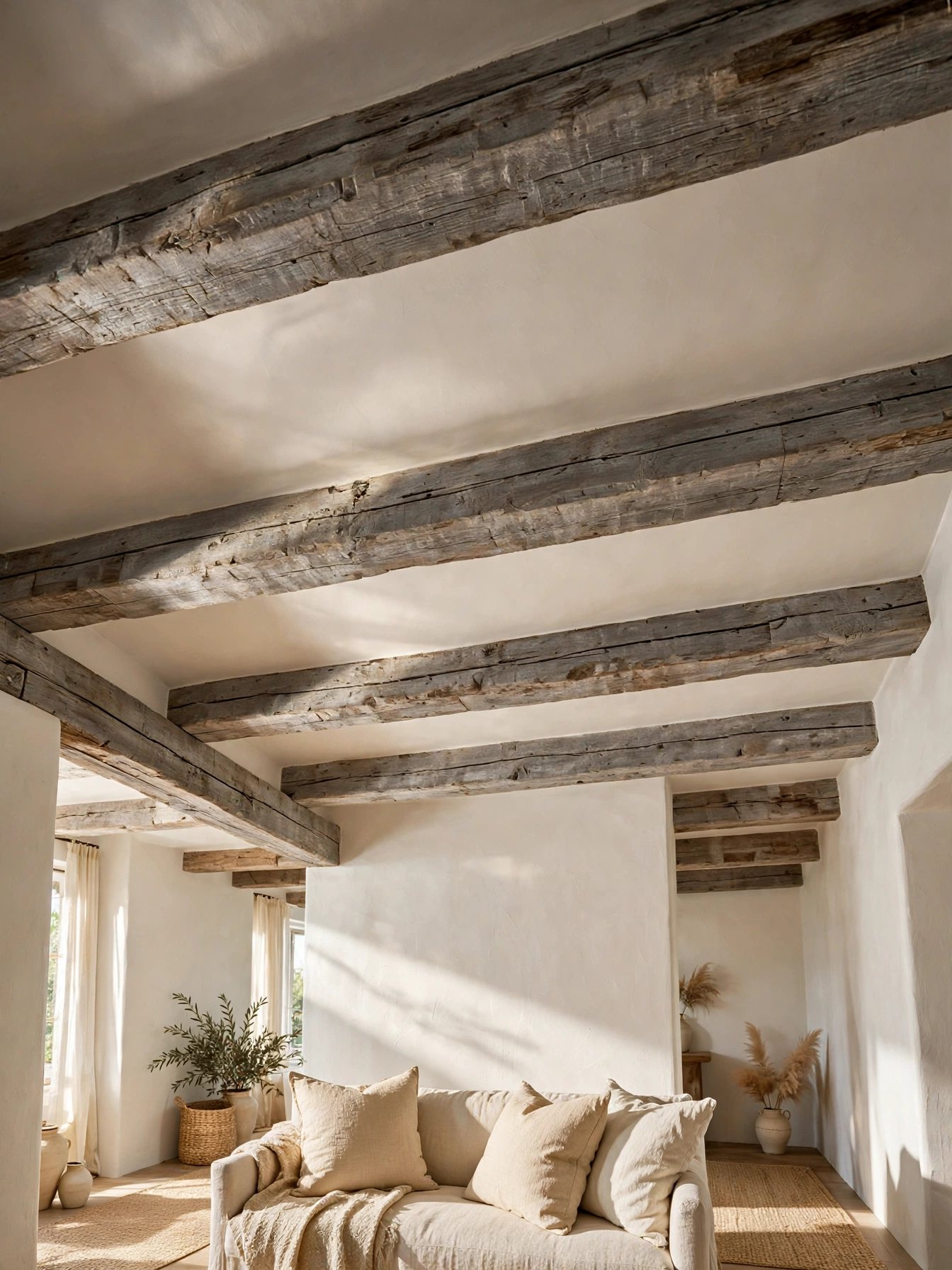
Reclaimed Beam Accents
Why This Works:
- Beams add architecture to flat ceilings without any construction mess.
- Weathered gray wood brings coastal character overhead, not just at eye level.
- Faux beams weigh little but look convincingly structural.
- They draw the eye up, making 8-foot ceilings feel taller.
Faux wood beams (typically 6 by 8 inches in cross-section) cost $15 to $30 per linear foot, so a 16-foot room with 4 beams runs $960 to $1,920 installed. Space beams 4 to 6 feet apart and keep them at least 7 feet 6 inches above the floor to preserve headroom. Real reclaimed beams weigh 15 to 30 pounds per foot and need structural assessment before mounting. Avoid staining beams darker than the floor, since a heavy dark ceiling presses down on a light coastal room. Versus a full ceiling redo, faux beams install in a day and remove cleanly if tastes change.
Rooms with plain flat ceilings gain the most drama from beams. What you give up is low maintenance: horizontal beams collect dust and need a long-handled duster quarterly. Low 8-foot ceilings should use slimmer 4 by 6 inch profiles so the room keeps breathing. For instant architectural character, beams are unmatched.
Pro Tip: Stain faux beams one shade lighter than your floor so the ceiling feels airy, not heavy.
Linen Slipcover Sofas
Why This Works:
- Slipcovered sofas are the defining silhouette of relaxed coastal style.
- Removable covers survive spills, pets, and sandy feet.
- Cream linen glows in daylight and softens every hard edge.
- The casual drape suits coastal ease better than tailored upholstery.
Pick a linen-cotton blend with at least 30,000 double rubs, the durability threshold upholstery specialists recommend for family seating. A quality slipcovered sofa (84 to 96 inches) costs $1,200 to $2,800, and a spare cover set adds $200 to $500. Wash covers in cold water and line-dry to avoid the 3 to 5 percent shrinkage hot dryers cause. Avoid pure white slipcovers in homes with dogs, since even washable fabric shows dye transfer from dark fur. Compared with fixed upholstery, slipcovers extend a sofa’s good-looking life by years, because the dirtiest part is replaceable.
Families, pet owners, and anyone near the beach get the most from washable seating. The catch is the look: slipcovers wrinkle, and tailoring purists will never love that. Embrace the rumple as the point, since fighting it with constant straightening defeats the style. For real-life coastal living, this is the practical luxury choice.
Pro Tip: Buy the spare cover set in the same dye lot at purchase, since later batches can vary slightly.
Cozy Coastal Living Room Ideas With a Reading Corner

Why This Works:
- A dedicated reading corner gives cozy coastal living room ideas a personal heart.
- One chair plus light plus books is all a nook needs.
- Corners are often wasted, so this adds function without new floor space.
- It creates the hygge moment guests always gravitate toward.
Allow a 48 by 48 inch footprint for the chair, a 14-inch side table, and a floor lamp, which fits almost any living room corner. A comfortable reading chair costs $400 to $1,200, and a swing-arm wall lamp ($80 to $200) frees the side table surface. Position the lamp so light falls over the reader’s shoulder from behind, the glare-free arrangement lighting designers recommend. Avoid placing the nook facing the TV, since the corner should feel like a retreat, not overflow seating. Stacked against a full library wall, a single nook delivers 80 percent of the cozy reading payoff in one corner.
Readers and introverts will claim this spot within days. The price you pay is territorial: the household’s biggest reader will colonize it, so households with two readers may need two corners. Keep the book selection small and rotating, since a stuffed shelf in a corner reads as clutter. As the soul of a cozy coastal room, this corner earns its floor space.
Pro Tip: Add a small lidded basket beside the chair for the current book, glasses, and a coaster.
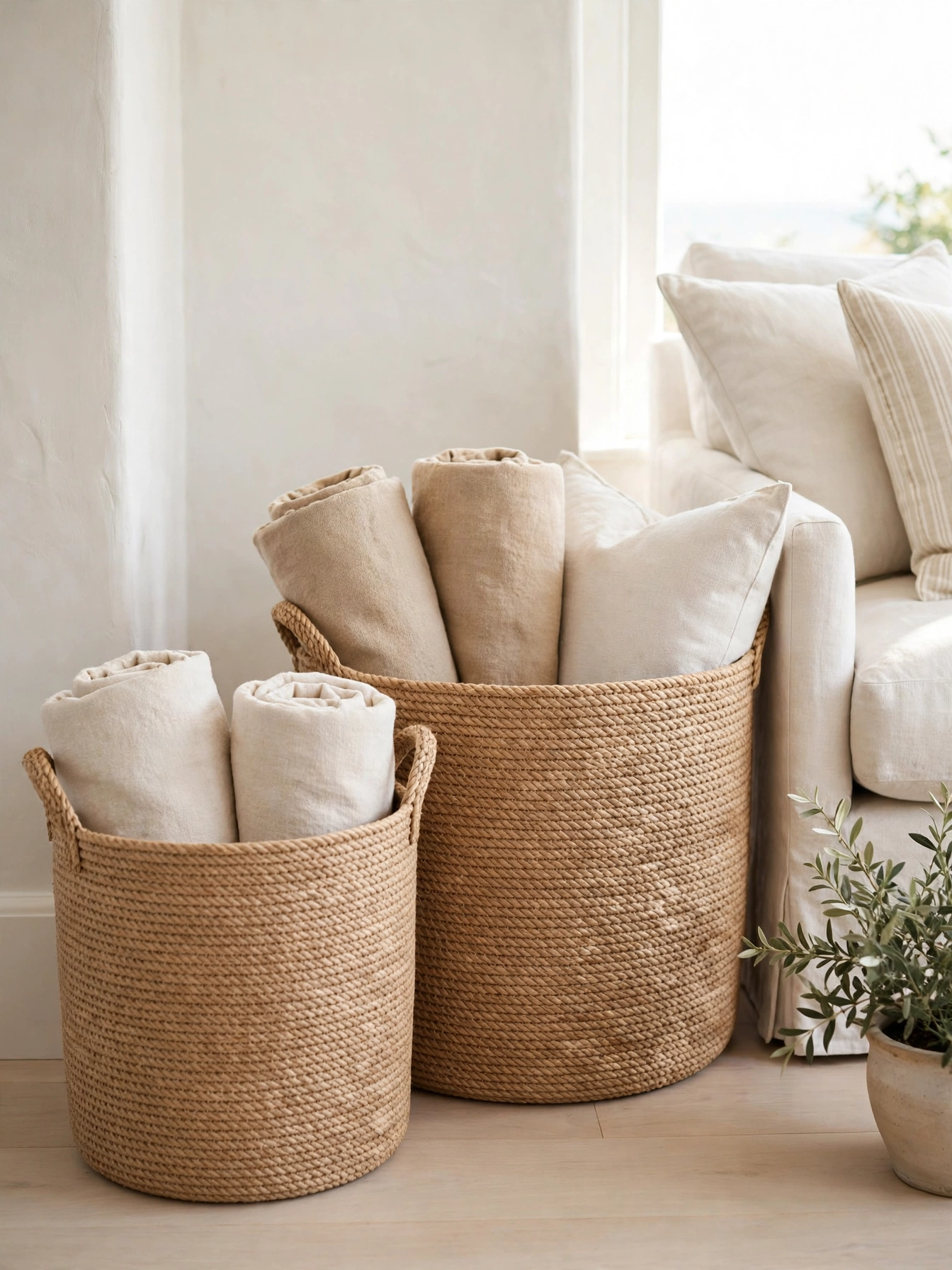
Rope Basket Storage
Why This Works:
- Rope baskets hide the clutter that kills cozy rooms.
- Their natural fiber texture reinforces the coastal story.
- Rolled throws stored upright look styled, not stuffed away.
- Baskets move easily, so storage flexes with the seasons.
Choose cotton rope baskets 18 to 24 inches wide with structured sides, which hold their shape when loaded. Large baskets cost $30 to $80 each, and two of them swallow a full season of throws and pillows. Roll throws instead of folding, since rolled textiles fill round baskets with 30 percent less wasted space. Avoid seagrass baskets for heavy blanket storage, because the weave stretches and slumps within a year. Compared with closed cabinets, open baskets keep cozy textiles visible and reachable, which means they actually get used.
Households drowning in throws (which is every cozy household) need these most. The downside is dust: open storage needs a shake-out every few months. Homes with moth concerns should add cedar rings to wool-filled baskets. As functional decor, rope baskets earn their corner twice over.
Pro Tip: Sort throws by weight, heaviest at the bottom, so the basket never topples when grabbed.
Sea Glass Decor Touches

Why This Works:
- Sea glass is coastal color in its most restrained form.
- Frosted surfaces catch light without any shine or glare.
- Small pieces let you test coastal color before committing.
- Grouped glass reads as a collection, not a theme-park souvenir.
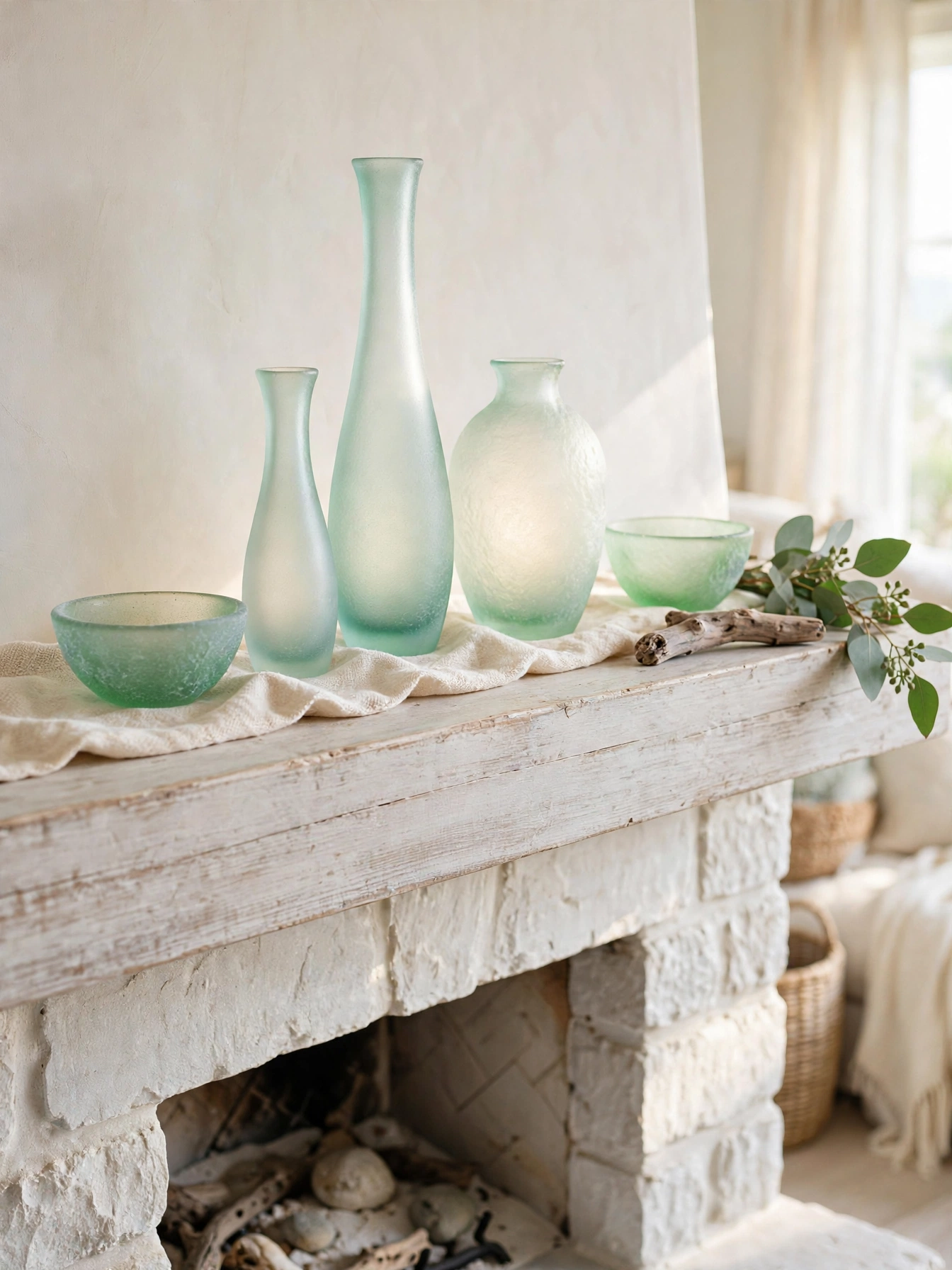
Group sea glass in odd numbers (3, 5, or 7 pieces) with heights varying by at least 2 inches between pieces, the classic styling ratio. Genuine sea glass vases cost $20 to $60 each, while quality frosted-glass lookalikes run $8 to $25. Keep the palette to two tones (seafoam and aqua, for example), since rainbow assortments read as craft-store. Avoid placing glass in direct afternoon sun on wood mantels, because focused light can scorch finishes over time. Compared with bold turquoise accessories, sea glass adds coastal color that stays calm and sophisticated.
Anyone nervous about coastal themes should start here, since sea glass whispers rather than shouts. What you give up is sturdiness: thin glass and households with toddlers need high shelves. Dust frosted glass monthly, since the texture shows film faster than smooth glass. As the jewelry of a coastal room, a little goes a long way.
Pro Tip: Place one piece where morning light hits it, since backlit sea glass glows like a lantern.
Plush Layered Rugs
Why This Works:
- Layering a plush rug over jute doubles the softness underfoot.
- Two rugs let you use a smaller expensive rug over a larger affordable one.
- The layered edge adds a tailored detail designers love.
- It visually zones the seating area in open plans.
Size the base jute rug 8 by 10 feet and the top wool rug 5 by 8, offset so 12 to 18 inches of jute shows on two sides. A quality jute 8 by 10 costs $200 to $500, while a 5 by 8 wool top rug runs $300 to $900, keeping the pair under $1,400. Use a thin rug pad under the jute only, since padding both layers creates a wobbly 2-inch sandwich. Avoid layering two thick rugs, because furniture legs sink unevenly and doors may not clear. Compared with one huge wool rug, the layered pair costs roughly half and adds more visual interest.
Barefoot households and open-plan living rooms gain the most from rug layering. Watch out for crumbs between layers: vacuum the top rug, then lift and shake the edge monthly. Jute hates moisture, so this combo suits living rooms, not entries. For plushness on a budget, layering wins.
Pro Tip: Rotate the top rug 180 degrees seasonally, since foot traffic patterns show faster on plush pile.
Driftwood Coffee Table
Why This Works:
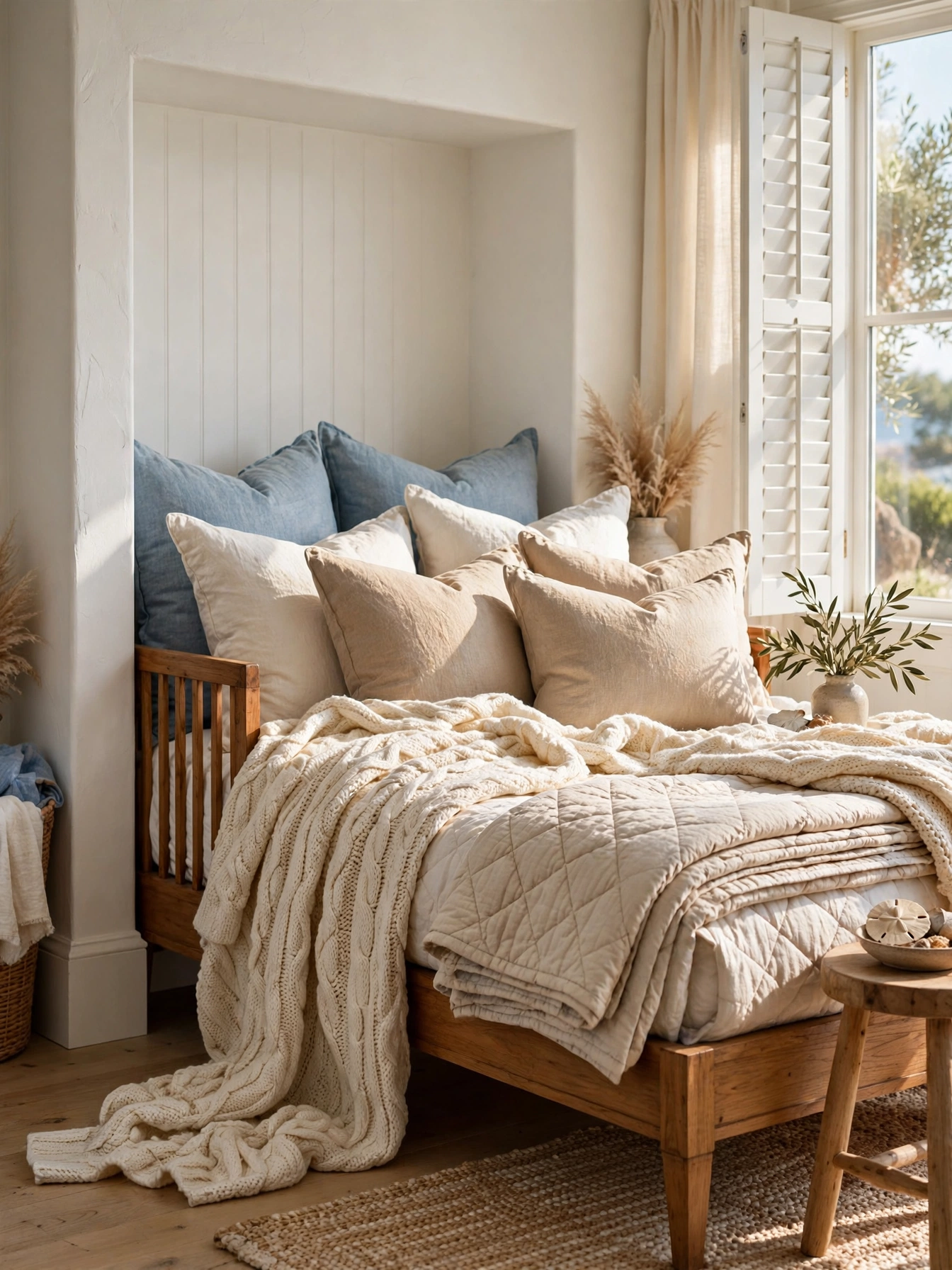
- A driftwood base is functional sculpture and a conversation piece.
- Weathered wood carries coastal history no new furniture can fake.
- The organic shape softens the room’s straight lines.
- Glass tops keep the visual weight light despite the solid base.
Look for kiln-dried driftwood or reclaimed root bases sealed with matte polyurethane, since unsealed pieces shed sand and splinters. Driftwood coffee tables (36 to 48 inches long) cost $500 to $1,800 depending on the uniqueness of the piece. Keep the table 14 to 18 inches from the sofa edge and choose a glass top at least 3/8 inch thick for safety. Avoid placing drinks directly on raw wood sections, because rings stain weathered finishes permanently. Stacked against a standard wood coffee table, driftwood costs more but becomes the room’s signature piece, the one guests ask about.
Collectors and anyone wanting a one-of-a-kind anchor should hunt for the right piece. The compromise is practicality: irregular shapes hold fewer objects and wobble on uneven floors, so check stability in person. Each piece is unique, which means no returns if the scale is wrong, so measure twice. For coastal character, nothing else comes close.
Pro Tip: Felt-pad the glass top’s contact points, since driftwood surfaces are never perfectly level.
Woven Jute Layers

Why This Works:
- Jute is the hardest-working natural fiber in coastal design.
- Woven pieces at three scales (rug, pouf, pendant) feel intentional.
- The golden tan tone warms up white-heavy rooms.
- Handwoven texture adds craft character mass-produced rooms lack.
Layer jute in three applications maximum per sightline, since more turns the room into a basket. Jute poufs (18 to 22 inches wide) cost $60 to $140 each, a woven pendant runs $100 to $300, and rugs were covered earlier. The Spruce lists jute among the best natural fibers for high-traffic living rooms, thanks to its tight weave and durability. Avoid jute in damp rooms, because the fiber absorbs moisture and can mildew. Compared with sisal, jute feels softer underfoot but shows stains more readily, so place it away from food zones.
Texture lovers and fans of handmade goods get the most from woven layers. One drawback is shedding: new jute sheds fibers for the first 2 to 3 months, so vacuum with suction only (no beater bar). Homes with wool allergies should note that jute is plant-based and hypoallergenic. For golden, touchable warmth, jute delivers.
Pro Tip: Spray jute rugs with a fabric protector before first use to buy time against spills.
Lantern Candle Clusters
Why This Works:
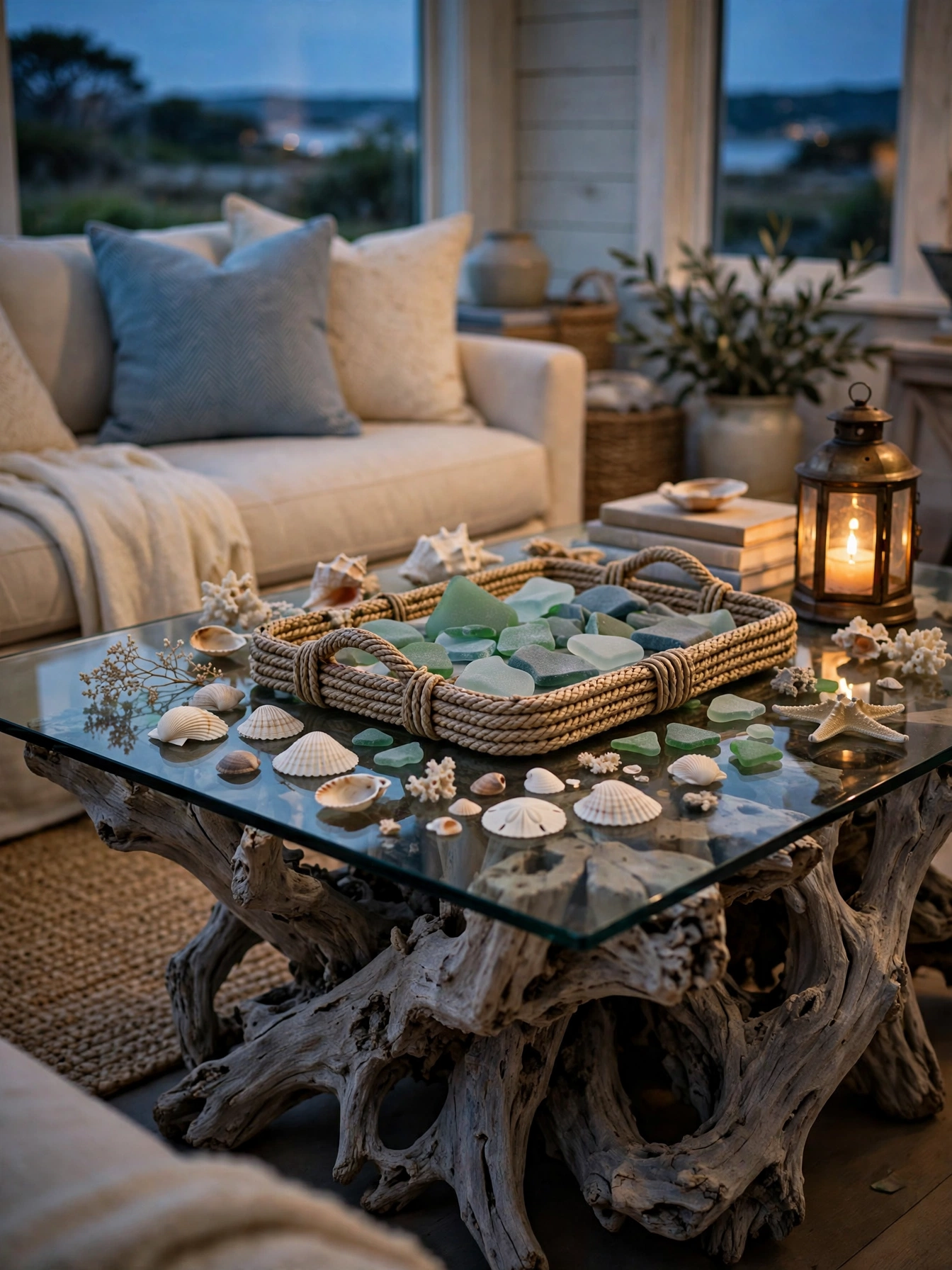
- Clustered lanterns create the flickering heart of a hygge room.
- Groups of three read as styled, while singles read as forgotten.
- Enclosed flames are safer than open candles around throws.
- Lantern light flatters every face and fabric in the room.
Cluster lanterns in heights of 10, 14, and 18 inches, keeping at least 4 inches between them for safe handling. Quality wood-and-glass lanterns cost $25 to $70 each, and flameless LED pillars ($10 to $25) give 500-plus hours per set of batteries. Place clusters on a tray or hearth at least 12 inches from curtains and throws. Avoid real flames in homes with toddlers or curious cats, since a toppled lantern is a genuine fire risk. In contrast to a single statement candle, a cluster multiplies the glow and becomes a deliberate focal point.
Evening loungers and anyone who loves candlelight get the most from lanterns. The flip side is maintenance: glass panels need wiping every few weeks, and LED candles need battery swaps twice a year. Real wax candles give the truest flicker but demand attention. For hygge on demand, lanterns are the switch.
Pro Tip: Set LED candles on built-in timers for 6 PM to 11 PM so the glow greets you daily.
Cozy Coastal Living Room Ideas With Layered Textiles
Why This Works:
- Deep textile layering is the signature move of cozy coastal living room ideas.
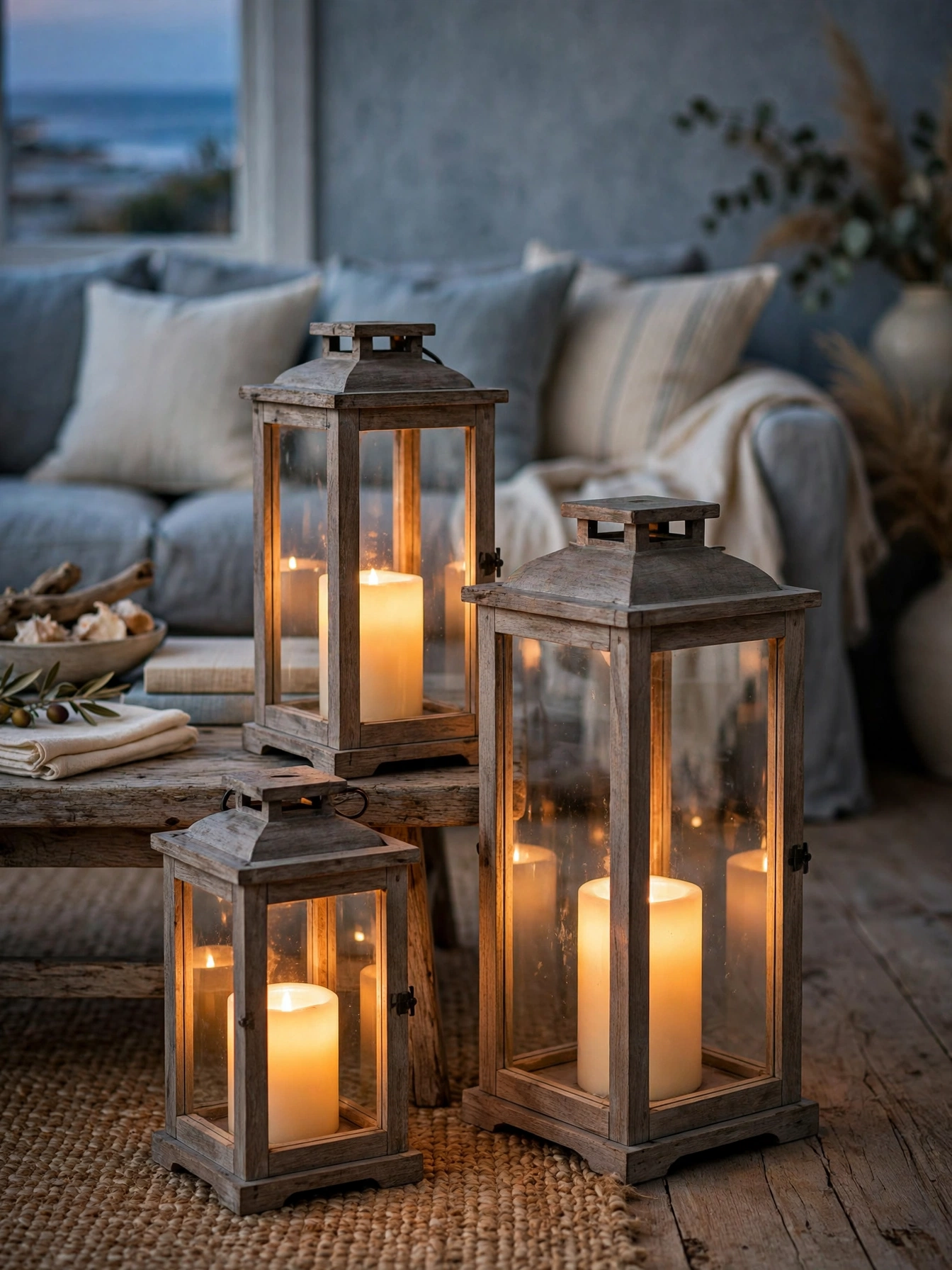
- Quilt plus knit plus linen gives three textures in one spot.
- A daybed doubles as guest sleeping without a guest room.
- Layers can be restyled in minutes for a fresh look.
Build the stack in this order: a flat quilt as the base, a folded knit across the middle third, and pillows three deep (two sleeping-size behind, three decorative in front). A cotton quilt (60 by 80 inches) costs $80 to $200, and the full layering set for a daybed runs $250 to $600. HGTV designers often cite textile layering as the quickest way to make a room feel finished, since soft goods fill visual gaps furniture leaves. Avoid exceeding 7 pillows on a daybed, because the pile starts looking like storage rather than styling. Compared with buying new furniture, re-layering textiles is the cheapest room transformation available.
Nesters and serial re-stylers thrive on layered textiles. One caveat is the daily upkeep: deep layers need a 5-minute reset each morning to look intentional. Households that hate making beds should cap the layers at three. For the coziest seat in the house, pile it on.
Pro Tip: Keep one basket nearby for the nightly throw-off, so mornings start tidy in seconds.
Warm Brass Fixtures
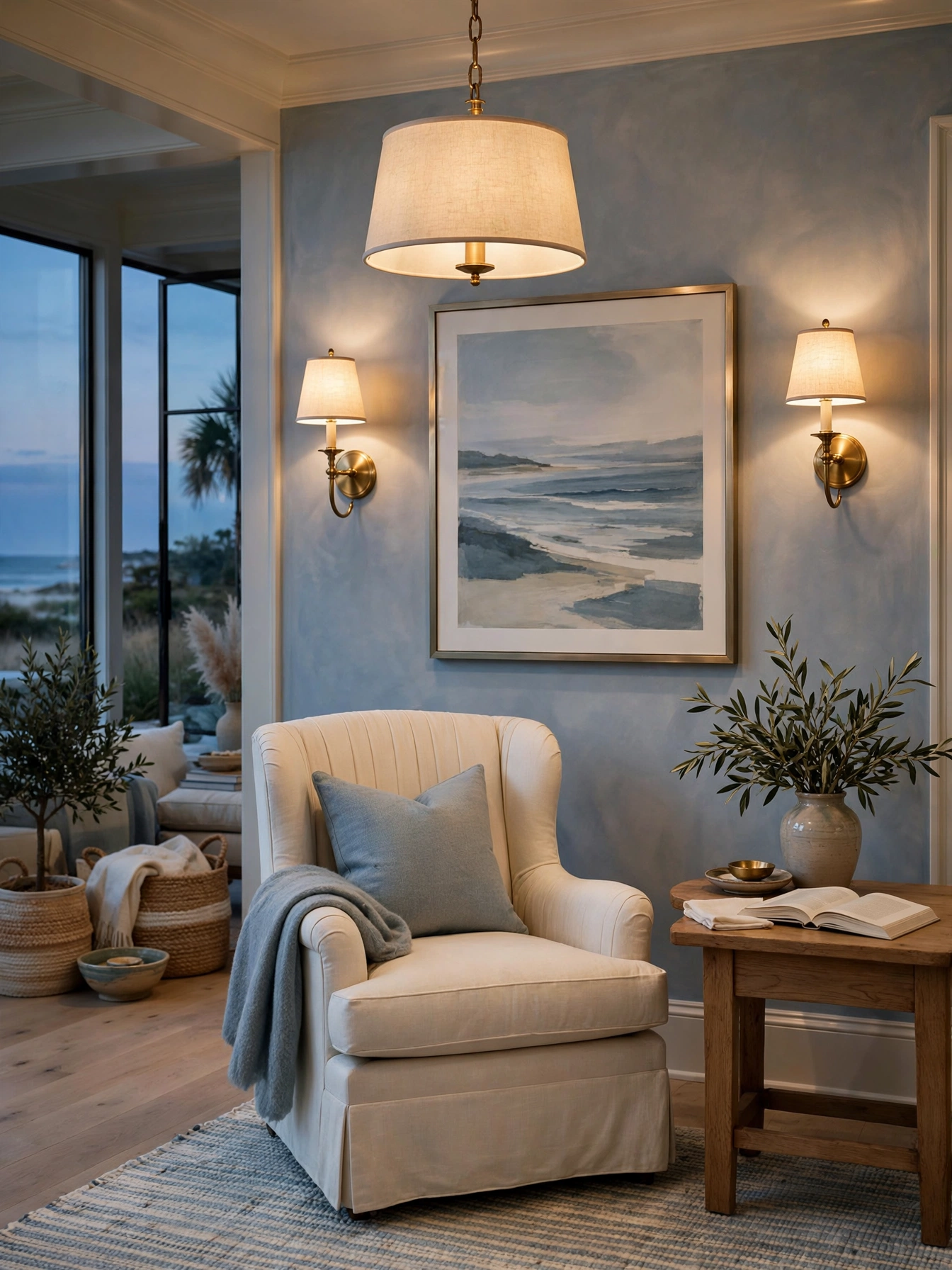
Why This Works:
- Brass glows like candlelight, warming every coastal blue nearby.
- Brushed finishes hide fingerprints better than polished brass.
- Warm metal is the jewelry that elevates casual coastal rooms.
- Fixtures stay with the house, adding long-term value.
Choose brushed or aged brass rather than polished, since the softer finish suits relaxed coastal rooms. Brass sconces cost $80 to $250 each, and a 14-inch brass pendant runs $150 to $400. Mount sconces 60 to 66 inches from the floor, flanking art or mirrors with 6 to 10 inches of clearance. Hire a licensed electrician for any hardwired fixture, since new boxes and circuits must meet electrical code. Avoid mixing brass with chrome in the same sightline, because the competing metals read as indecision. Compared with black fixtures, brass feels warmer and more traditional, while black reads more modern.
Anyone whose coastal room feels a bit cold or flat needs warm metal. One sacrifice is cost: quality brass fixtures run 30 to 50 percent more than basic alternatives. Lacquered brass needs only dusting, while unlacquered brass develops a patina some love and others hate, so choose intentionally. A little brass goes a long way.
Pro Tip: Repeat brass exactly three times (sconces plus one object) for a deliberate, collected feel.
Overstuffed Armchairs
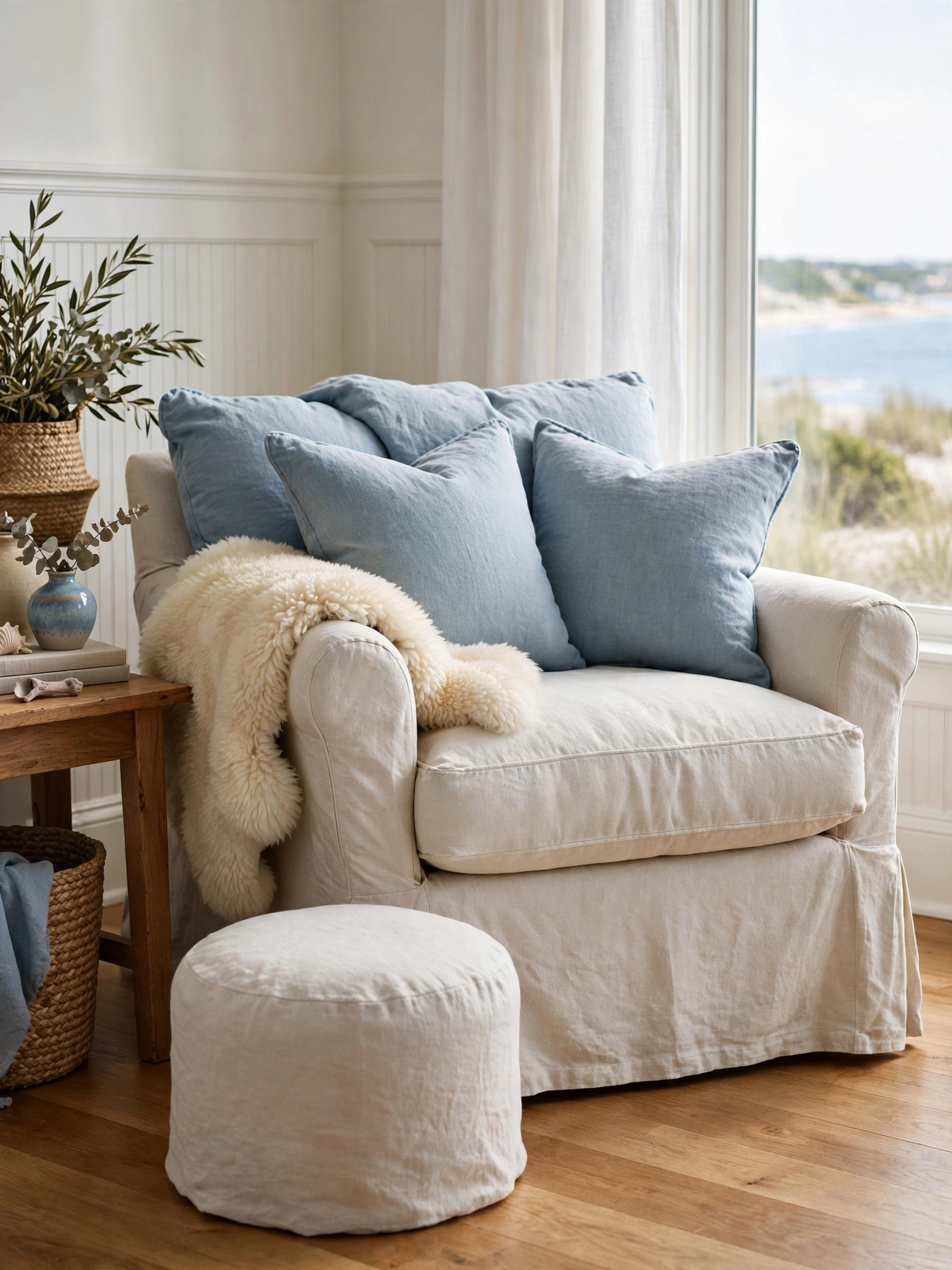
Why This Works:
- Deep seats are the physical definition of hygge comfort.
- Overstuffed chairs invite long sits, which is the point of a living room.
- Plump cushions soften the room’s geometry.
- One great chair beats two stiff ones for actual use.
Look for a seat depth of 24 to 26 inches (versus the standard 20 to 22) and down-blend or high-resilience foam wrapped in down alternative. Quality overstuffed chairs cost $700 to $1,800, and feather blends need plumping daily to keep their shape. Allow a 36 by 36 inch footprint plus 24 inches of legroom in front. Avoid all-down cushions in a main chair, since they flatten within hours and need constant fluffing. In contrast to a tailored club chair, overstuffed styles prioritize comfort over crisp lines, so match the chair to how you actually sit.
Serious loungers and nap-takers should prioritize this chair above all else. The catch is scale: deep chairs eat floor space and can overwhelm rooms under 150 square feet. Pair with a small ottoman rather than a second chair in tight rooms. For the best seat in the house, go deep.
Pro Tip: Sit-test for 15 minutes in the store, since showroom comfort fades fast on a too-firm frame.
Sheepskin Throw Accents
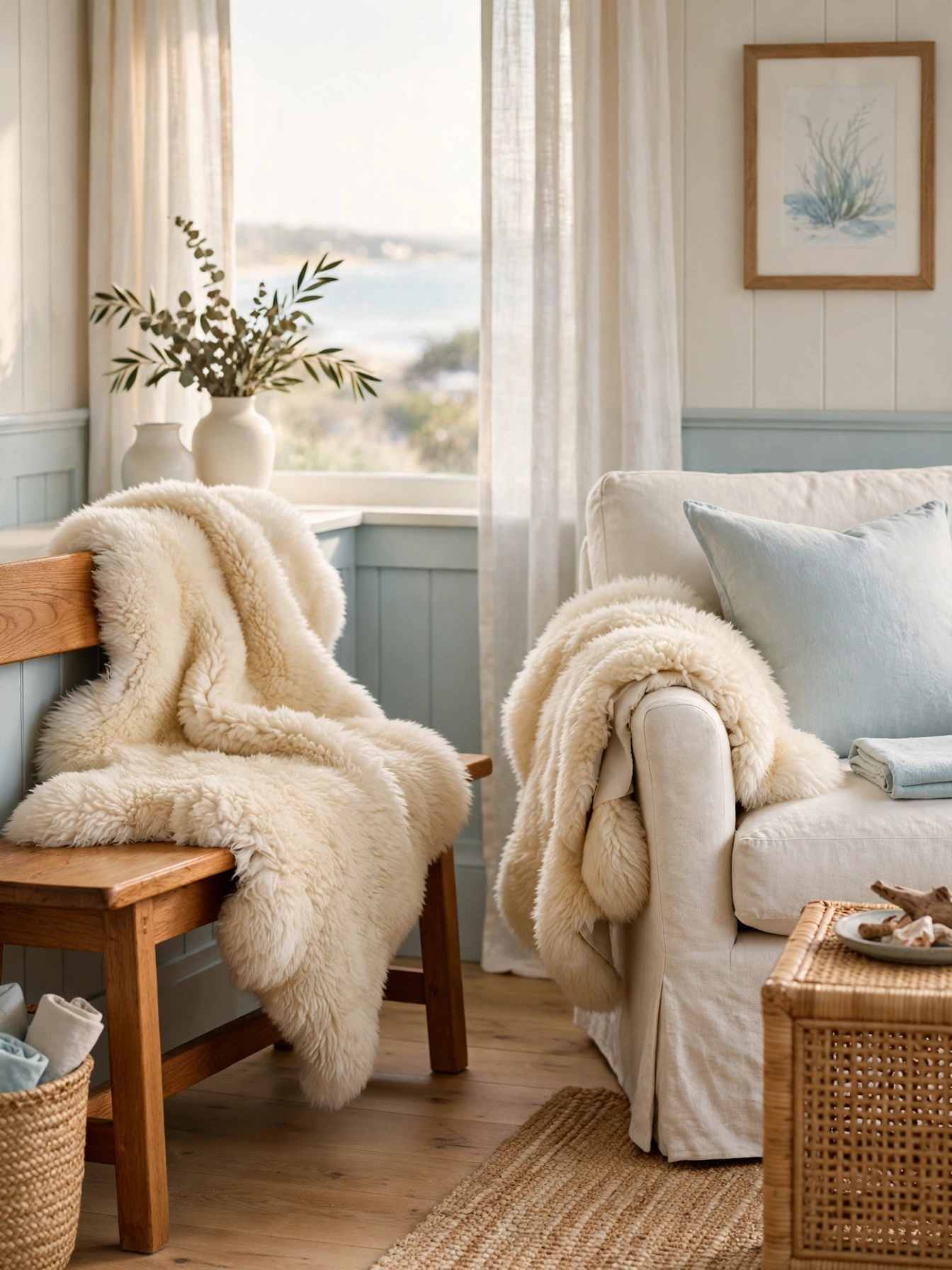
Why This Works:
- Sheepskin is the softest texture you can add to a room.
- Draped fur instantly Nordic-izes any chair or bench.
- It warms cold seating (wood benches, leather chairs) on contact.
- One hide styles two spots when cut or folded.
Buy genuine sheepskin (2 by 3 feet) for $50 to $120, since quality faux versions mat within a year. Drape over chair arms, bench seats, or the floor beside the bed, and shake outdoors monthly rather than washing. Keep sheepskins out of direct sun, because UV yellows the wool within 6 months. Avoid placing sheepskin on heated floors above 80 degrees, since sustained heat dries the hide. Next to a wool throw, sheepskin adds more visual softness per square foot, though throws cover more area for the money.
Texture lovers and cold-seat sufferers get the most from sheepskin. The flip side is ethics and care: genuine hide isn’t for everyone, and quality faux needs replacing yearly. Pet owners should know that cats adore sheepskin, which is either a feature or a problem. For instant softness, drape and done.
Pro Tip: Brush the wool monthly with a pet slicker brush to keep it fluffy and tangle-free.
Fireside Seating Nook
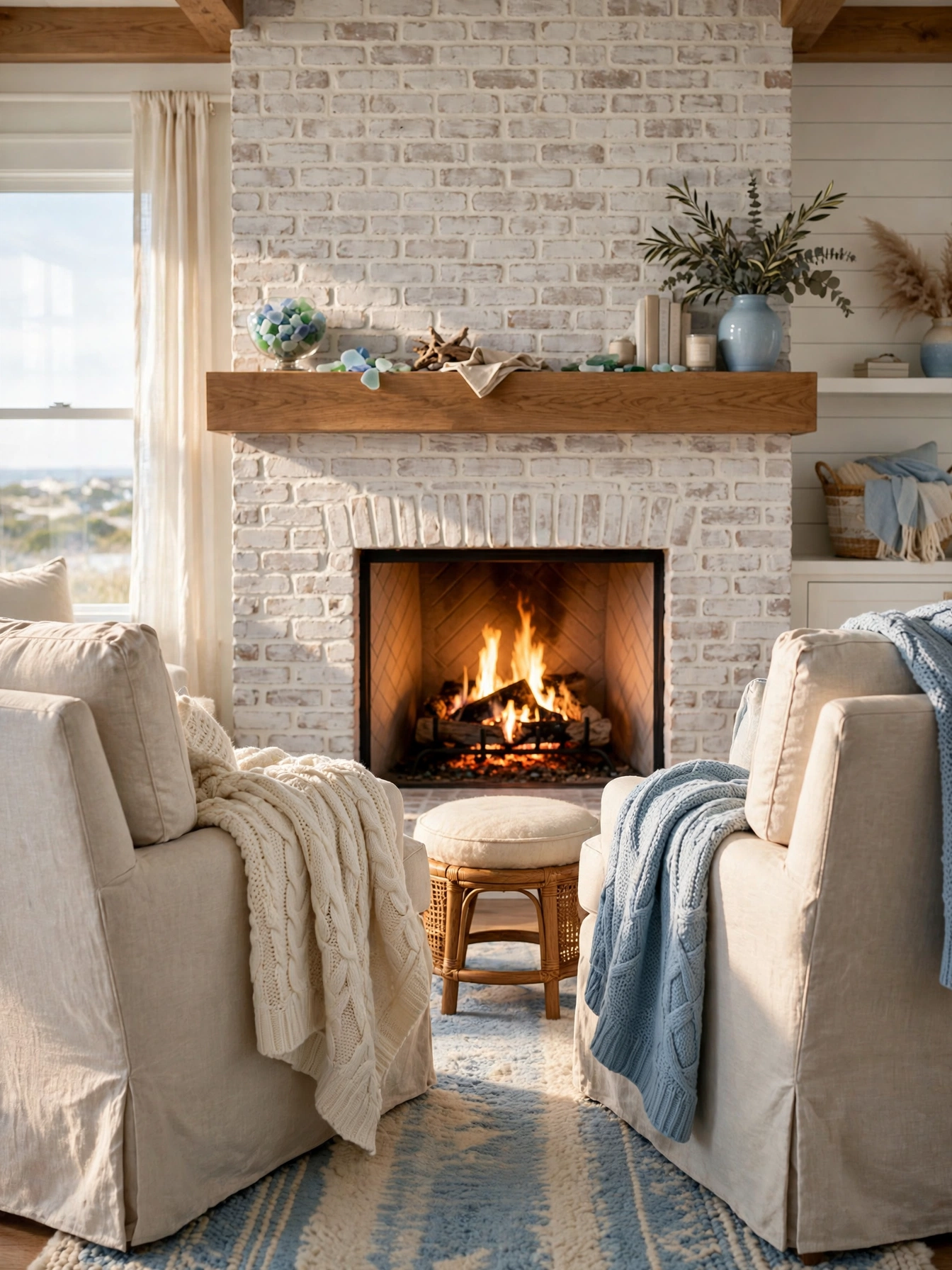
Why This Works:
- A fireplace is the original hygge technology, older than the word itself.
- Angled chairs create conversation, not TV-facing rows.
- Firelight makes every coastal texture look richer.
- The hearth becomes the room’s natural gathering point.
Angle two chairs 45 degrees toward the fire, keeping 36 to 48 inches between chair fronts and the hearth for safety and comfort. A gas fireplace insert costs $2,000 to $5,000 installed, while an electric insert with realistic flame runs $300 to $1,200 and needs only an outlet. Keep the mantel at least 12 inches above the firebox opening, per standard clearance codes. Avoid pushing seating closer than 36 inches to a real fire, since radiant heat damages upholstery over time. Next to a TV wall, a fireside arrangement encourages the face-to-face time that makes living rooms feel alive.
Homes with a real or insert fireplace should build the room around it. Watch out for the missing fireplace: this idea needs a $300-plus insert to exist. Electric inserts suit renters and condos, since they need no venting. Where fire glows, coziness follows.
Pro Tip: Add a firewood basket even for gas fireplaces, since the visual cue deepens the hygge effect.
Ocean Artwork Gallery
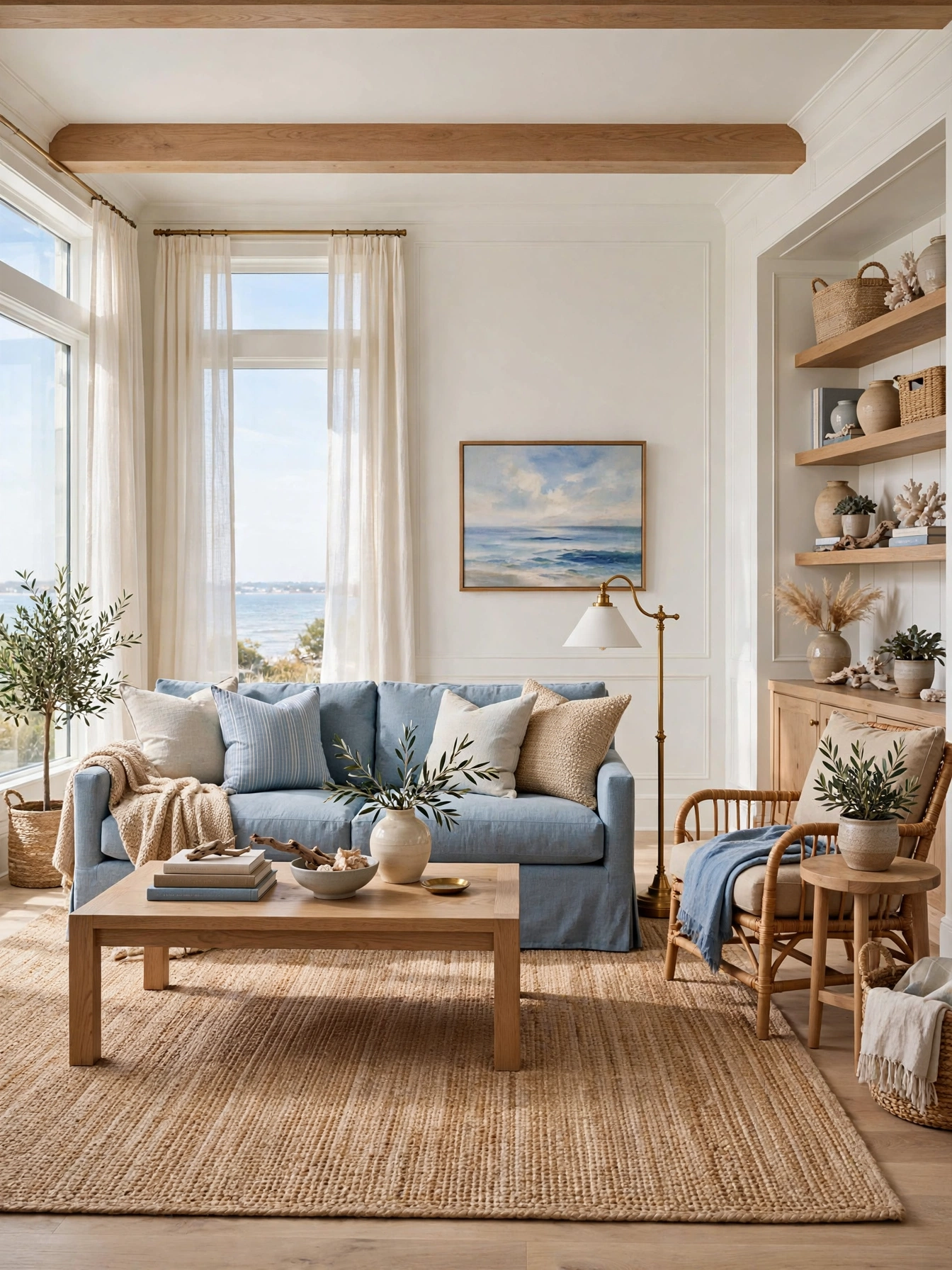
Why This Works:
- Ocean art delivers coastal character without a single seashell.
- A gallery wall fills large blank walls for less than one big canvas.
- Mixed frame sizes feel collected, not decorated.
- Art is the easiest element to swap when tastes evolve.
Hang the gallery with its center 57 to 60 inches off the floor, the museum standard, leaving 2 to 3 inches between frames. Six framed prints (11 by 14 to 24 by 36 inches) cost $150 to $600 total using ready-made frames. Keep all frames in one finish family (all warm wood, for example), since mixed finishes scatter the eye. Avoid hanging art higher than 66 inches at center, the most common gallery mistake, which disconnects art from furniture. Compared with one oversized canvas ($400-plus), a gallery gives more visual interest per dollar and fills the wall better.
Renters and art lovers get the most from gallery walls, since prints swap in minutes. The hidden cost is wall damage: six frames mean a dozen nail holes, so use picture-hanging strips in rentals. Stick to abstract seascapes and shoreline photography over literal beach scenes for a grown-up look. Curated walls make a house feel like a home.
Pro Tip: Lay the arrangement on the floor first and photograph it, then transfer the layout to the wall.
Natural Fiber Curtains

Why This Works:
- Woven shades filter light into patterns no fabric can make.
- The layered look (shade plus panel) reads as fully finished.
- Natural fibers keep the window treatment in the coastal story.
- Shades add privacy while panels add softness.
Choose woven wood shades (bamboo or matchstick) at 1/2-inch openness for filtered light, costing $80 to $200 per window. Mount linen side panels 4 to 6 inches above the frame and 8 to 12 inches wider per side, with panels 1.5 times the window width for fullness. Keep woven shades at least 3 inches from direct rain or sink splash, since natural fibers spot with water. Avoid blackout linings behind woven shades in living rooms, because the beautiful filtered light is the whole point. Compared with plantation shutters ($200 to $350 per window), the shade-plus-panel combo costs less and feels softer.
Sunny rooms gain the most magic from filtered light. One caveat is night privacy: woven shades alone show silhouettes, so add a privacy liner if the room faces the street. Dust woven shades with a microfiber duster monthly, since the texture traps dust. For light that dances, go natural.
Pro Tip: Choose cordless woven shades for a clean look and child safety in one move.
Cozy Coastal Living Room Ideas With a Warm Palette
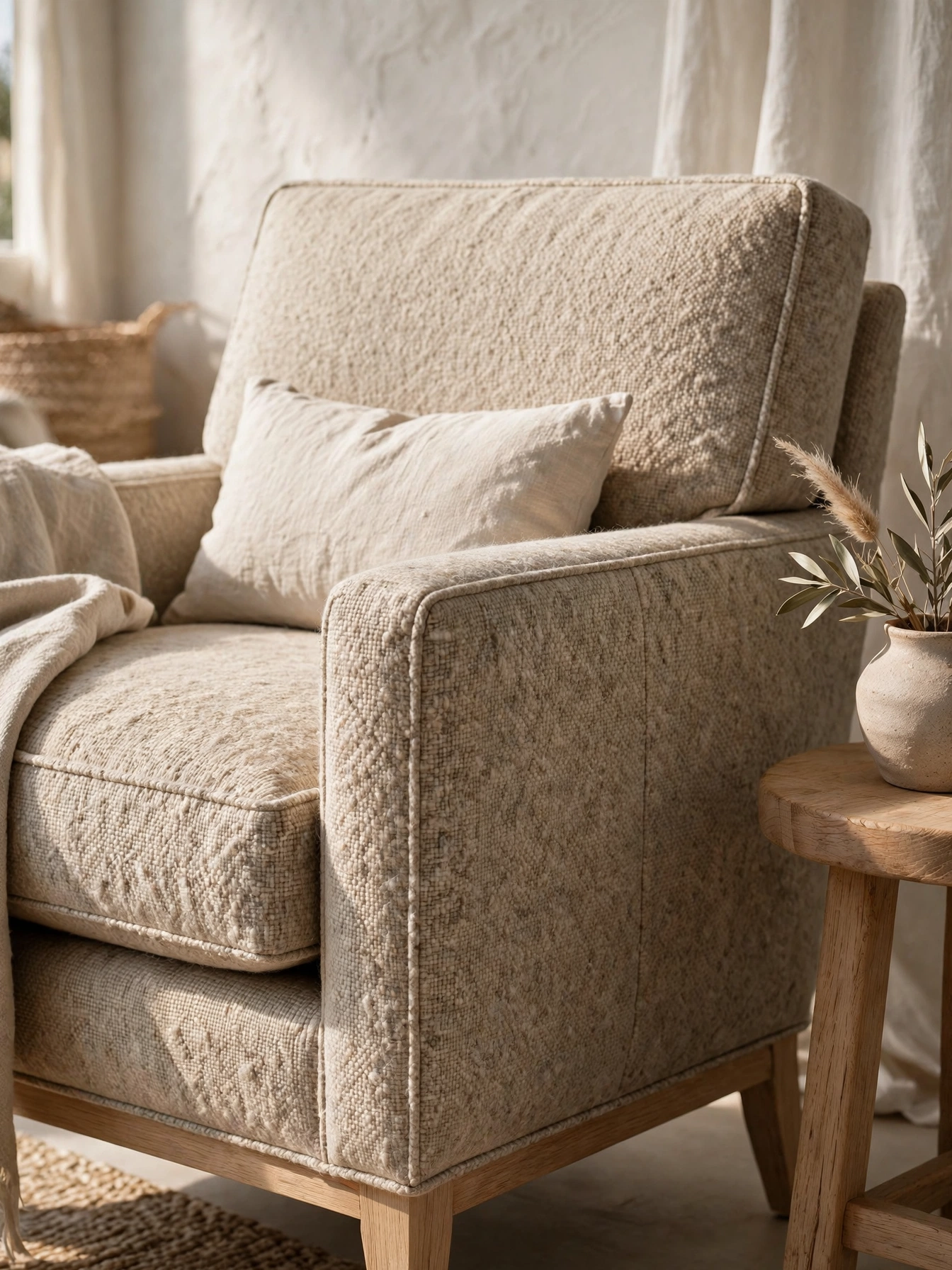
Why This Works:
- A defined palette is what separates cozy coastal living room ideas from random beach decor.
- Warm white plus soft blue plus sand plus wood covers every surface.
- Limiting the palette makes shopping decisions effortless.
- The restrained colors let textures carry the interest.
Work the 60-30-10 rule: 60 percent warm white and sand, 30 percent soft blue-gray, 10 percent warm wood and brass. Houzz design guides consistently recommend limiting living room palettes to 3 to 5 colors for a cohesive feel. Test the blue at 2700K lamplight before committing, since some grays turn muddy under warm bulbs. Avoid adding a sixth color (especially bright turquoise or coral), because restraint is what keeps this palette sophisticated. Compared with an all-white coastal room, the soft blue anchor adds the depth that makes the room feel designed rather than default.
Anyone starting a coastal room from scratch should lock this palette first. The price you pay is spontaneity: every future purchase must pass the palette test. Keep a phone photo of the palette for shopping trips. With the colors set, everything else falls into place.
Pro Tip: Paint one foam board per palette color and carry them when shopping for foolproof matching.
Wool Blend Upholstery
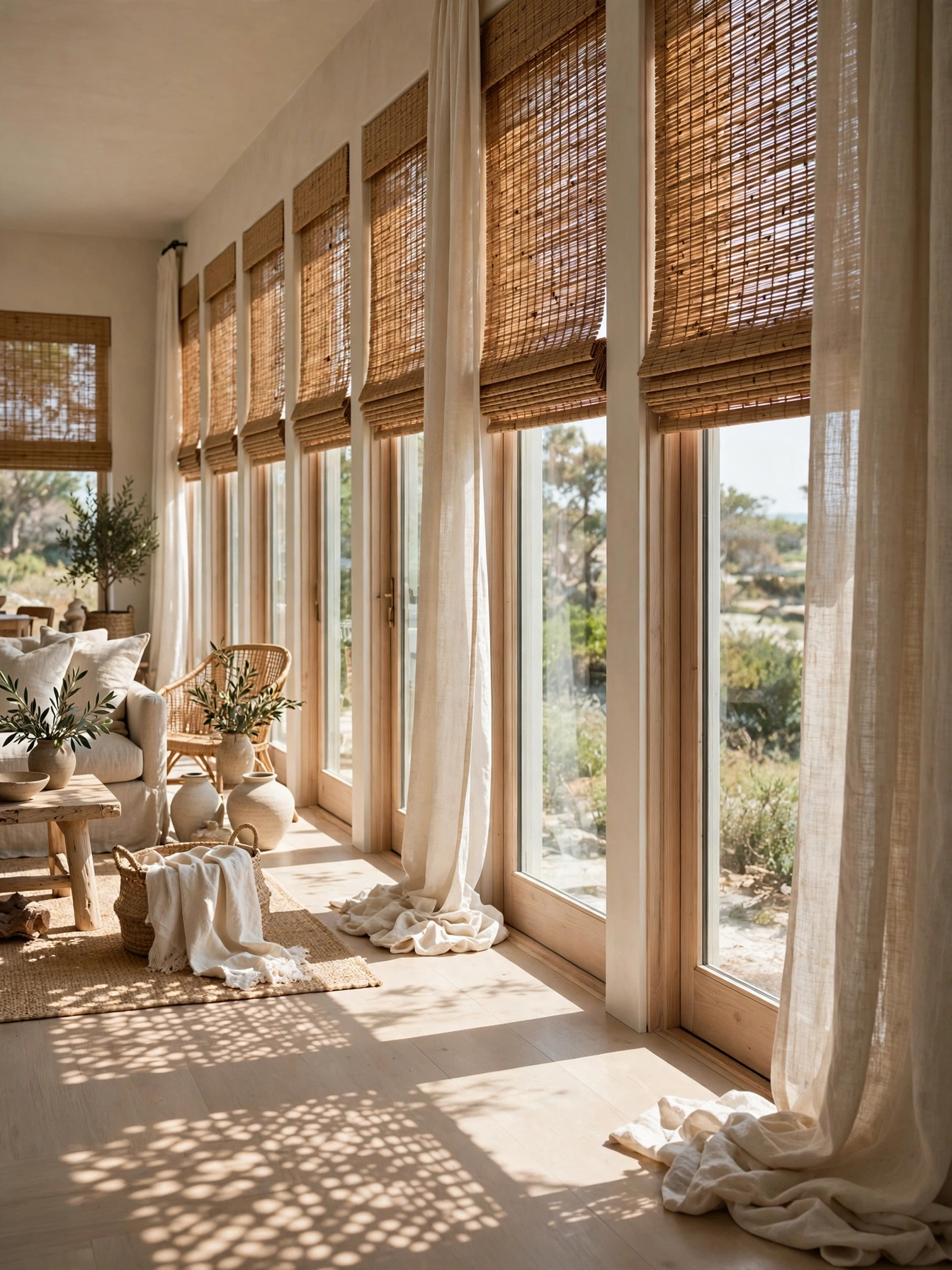
Why This Works:
- Wool upholstery brings natural warmth that synthetics cannot imitate.
- The visible weave adds craft character to tailored shapes.
- Wool resists wrinkles better than pure linen.
- Oatmeal tones bridge coastal blues and warm woods.
Choose a wool blend (60 to 80 percent wool mixed with nylon) rated above 40,000 double rubs, since pure wool pills under heavy use. Wool-blend armchairs cost $800 to $1,800, roughly 15 percent more than equivalent polyester. Vacuum monthly with an upholstery attachment, and address spills immediately, since wool absorbs liquid fast. Avoid placing wool upholstery in direct sun, because UV fades natural fibers unevenly within 2 years. Compared with linen, wool holds tailored lines better and resists wrinkles, though linen wins on washability.
Design lovers who want tailored coastal (not slipcovered casual) should choose wool. The downside is cleaning: wool needs professional care every 18 to 24 months at $100 to $200 per chair. Moth-prone homes should use cedar or lavender sachets nearby. For woven warmth with structure, wool delivers.
Pro Tip: Ask for a fabric sample and rub it 50 times with your palm; excessive pilling shows immediately.
Heirloom Wood Chest

Why This Works:
- An old chest brings the patina new furniture cannot manufacture.
- It doubles as hidden storage for throws and games.
- Warm antique wood deepens a pale coastal palette.
- One storied piece makes the whole room feel collected.
Hunt for solid pine or oak chests 30 to 40 inches wide, checking that lids open fully and hinges hold. Antique chests cost $150 to $600 at flea markets and estate sales, a fraction of reproduction prices. Place the chest as a side table or window bench, keeping 18 inches of clearance for the lid swing. Avoid chests with musty interiors, since the odor transfers to stored textiles and rarely leaves. Measured against a new storage ottoman, an antique chest adds character no factory can replicate, though it lacks the soft top for extra seating.
Vintage hunters and anyone craving soul in a new-build home should start here. The hidden cost is imperfection: expect scratches and wear, which are the point. Line the interior with cedar or acid-free paper before storing textiles. For instant history, nothing beats the real thing.
Pro Tip: Rub a walnut half over light scratches, since the natural oils darken them to match.
Soft Amber Lighting
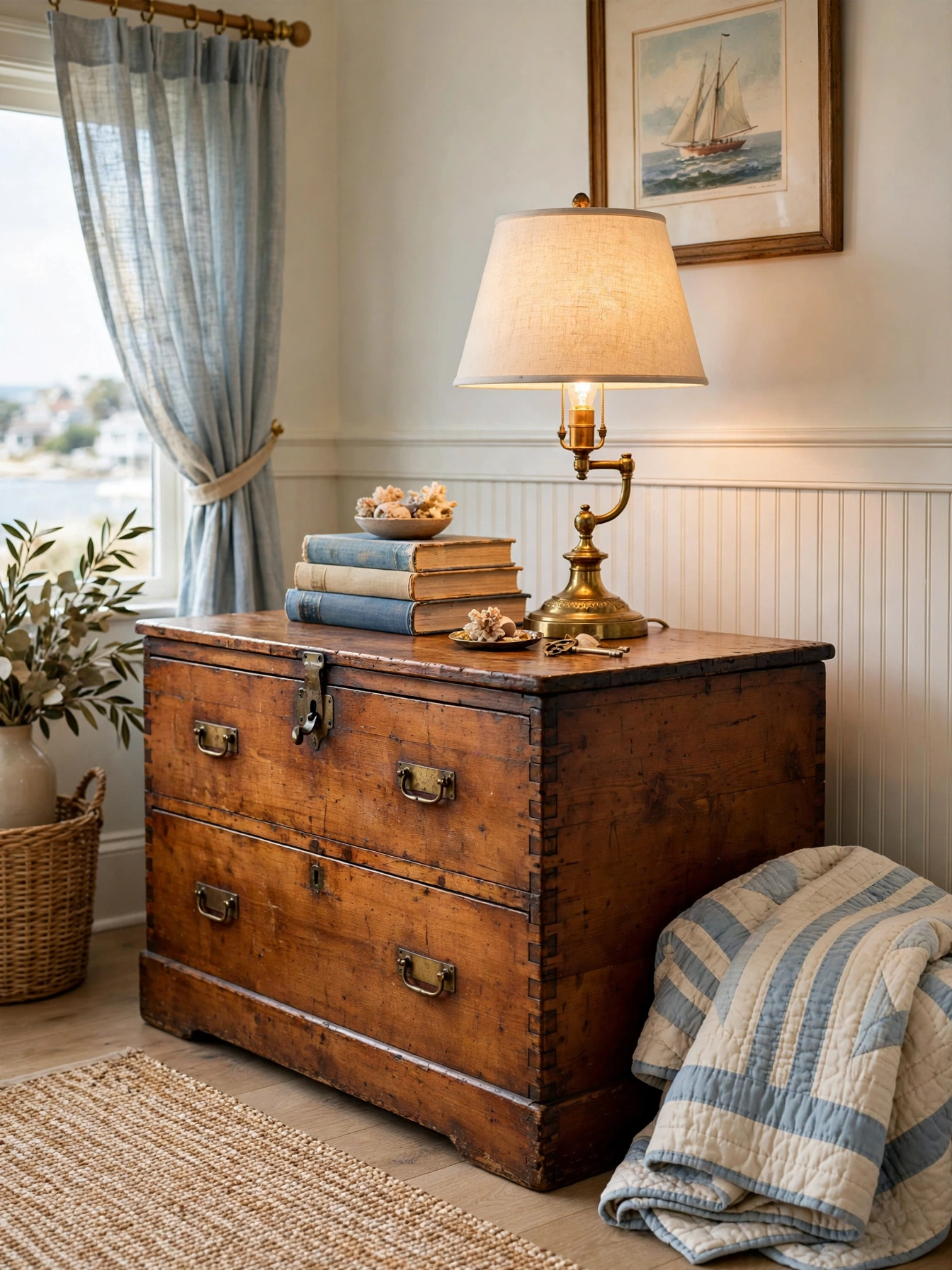
Why This Works:
- Amber light is the color of candlelight, campfires, and golden hour.
- 2700K bulbs make coastal blues look richer, not colder.
- Rattan lamp bases add natural texture even unlit.
- Warm light at dusk extends the room’s usable cozy hours.
Use 2700K LED bulbs at 800 lumens for living room lamps, dimmed to 40 to 60 percent in the evening for the amber effect. Rattan table lamps cost $70 to $180 each, and a full three-lamp scheme runs $250 to $600. The American Lighting Association recommends dimmers on living room lighting, since adjustable light suits both tasks and relaxation. Avoid 4000K-plus daylight bulbs in a cozy coastal room, because they bleach the warmth out of every textile. Compared with overhead-only lighting, layered amber lamps make the same room feel twice as inviting after dark.
Evening people and dusk lovers get the most from amber lighting. One sacrifice is task brightness: amber light is too dim for detailed work, so add one brighter reading lamp. Smart bulbs let one room shift from bright day mode to amber evening mode automatically. When the lamps glow, the day officially ends well.
Pro Tip: Put dusk lamps on smart plugs scheduled for sunset so the room never sits dark.
Layered Coastal Pillows

Why This Works:
- Pillows are the cheapest way to inject coastal color and pattern.
- Three patterns (stripe, solid, texture) in one palette look professional.
- Layered pillows make even a plain sofa look styled.
- They swap seasonally for under $150.
Follow the designer formula for a three-seat sofa: two 22-inch squares behind, two 20-inch in front, and one 14 by 22 inch lumbar centered. Quality linen pillow covers cost $20 to $45 each, with down-alternative inserts ($12 to $25) that hold shape better than cheap polyfill. Mix one stripe, one solid, and one texture, keeping all three inside the room’s palette. Avoid more than 7 pillows on a standard sofa, since the seating disappears under styling. Compared with reupholstering, a $150 pillow refresh delivers a visible style change in an afternoon.
Serial refreshers and renters get the most from pillow layering. Plan on a daily reset: styled pillows need 2 minutes of fluffing to look right. Down-alternative inserts keep their chop longer than feather. For maximum impact per dollar, start with pillows.
Pro Tip: Buy inserts 2 inches larger than the cover for a plump, professional fill.
FAQs
What makes cozy coastal living room ideas different from beachy decor?
Cozy coastal leans warm and hygge, with chunky knits, warm woods, and amber light, while beachy decor runs bright, surf-inspired, and literal. Keep the palette to warm white, soft blue, sand, and wood, choosing texture over themed objects. The Spruce notes that restraint separates sophisticated coastal rooms from themed ones.
Can I do cozy coastal without living near the ocean?
Absolutely, since the style is about feeling, not location. Warm woods, layered textiles, and soft blue-gray work in any climate, and landlocked homes often wear the palette best. Focus on the hygge layers (knits, sheepskin, lantern light) and let one or two coastal notes suggest the shore.
Do cozy coastal living room ideas suit small rooms?
Yes, with lighter woods and a tighter palette. Keep walls warm white, choose one blue anchor piece, and layer textiles rather than furniture. Houzz guides show that limited palettes make compact rooms feel larger, and a single reading corner delivers the hygge payoff without crowding the floor.
How much does a cozy coastal refresh cost?
A textile refresh (throw, pillows, rug layer) runs $400 to $900, while adding lighting and baskets lands between $800 and $1,600. New upholstery or flooring pushes past $3,000. Start with textiles and light, since they create most of the cozy feeling for the least money.
How do I keep a coastal room from looking like a theme?
Limit literal seaside objects to two or three, and let color and texture do the work. The American Lighting Association’s layered lighting advice applies here too: warm amber light reads cozy, while harsh white light reads staged. When in doubt, remove one themed object.
Conclusion
Cozy coastal living room ideas come down to three moves: layer snug hygge textiles over warm woods, keep the palette to warm white, soft blue, sand, and brass, and light everything in amber tones after dark. Keep literal seaside objects to two or three, letting color and texture carry the coastal story. Start with the biggest textile, since one chunky throw changes the room’s feeling in minutes. Your first action is simple: drape a knit throw, cluster three lanterns, and watch the room exhale. Follow HomelyCrafter on Pinterest for more ideas. Save this to your Pinterest boards so you can refer back to it!

Muhammad Israr is a home decor enthusiast and the writer behind Homely Crafter. He spends his days researching paint colors, layouts and budget-friendly styling ideas, then breaks them down into practical, easy-to-follow guides so you can decorate with confidence.