
How do you capture the soul of a ranch house without turning your living room into a Western movie set? That question sits at the heart of modern western living room ideas, a style that pairs the rugged materials of the frontier with the clean lines of contemporary design. Design editors at Houzz describe today’s rustic direction as quieter palettes and simpler silhouettes, letting leather, reclaimed wood, and stone carry the story. This guide walks you through 23 specific ideas, each with exact measurements, material grades, and pro tips, covering seating, lighting, textiles, fireplaces, and walls. You will get honest trade-offs, budget to premium price ranges, and clear guidance on what to skip.
Leather Club Chairs
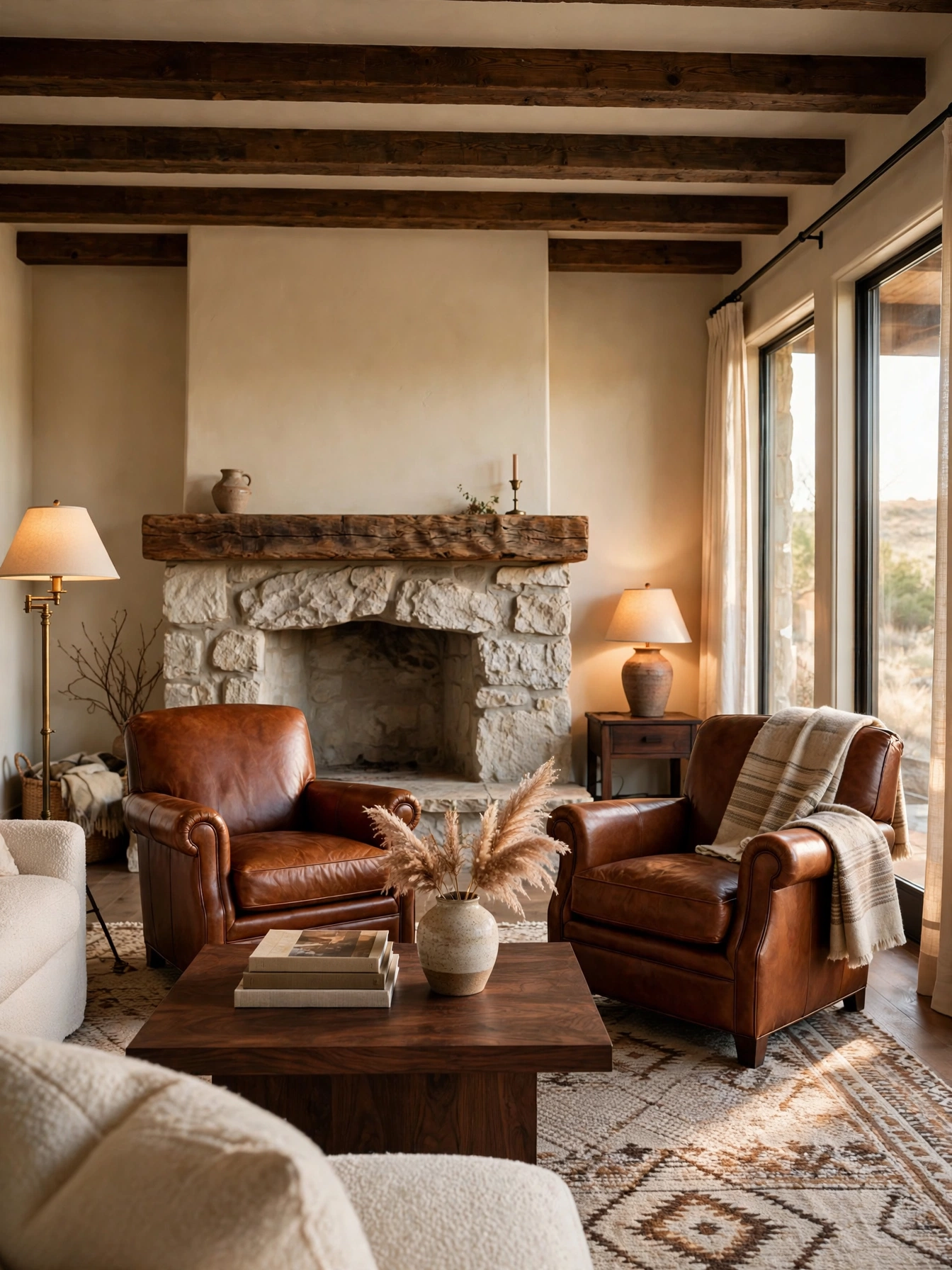
Why This Works:
- Full grain leather develops a rich patina that deepens the western story over time.
- Club chair proportions fit rooms from 12 by 14 feet up to open great rooms.
- Cognac tones warm up gray walls without clashing with modern artwork.
- A pair of chairs creates instant conversation seating for four people.
Choose full grain or top grain leather, which runs 1.2 to 1.4 millimeters thick, over bonded leather that peels within 3 years. Seat height should land between 17 and 19 inches, with an 18 inch seat depth for relaxed lounging. Keep 30 inches of walkway between the chairs and the coffee table, following standard living room clearance guidelines. Avoid placing leather within 2 feet of a direct heat vent, since repeated heat cycles dry and crack the hide. For comparison, top grain chairs cost 800 to 1500 dollars each, while bonded lookalikes sell for 250 to 400 dollars and rarely survive daily use.
Leather club chairs suit households with pets and kids because hair wipes off and scuffs buff out with conditioner. They anchor reading corners, flank fireplaces, and pair with both linen sofas and wood framed sectionals. The honest trade-off is temperature: leather feels cold in winter and sticky in summer unless the room stays near 70 degrees. Budget for a 25 dollar leather conditioner twice a year to keep the patina even and prevent cracking.
Pro Tip: Keep chairs at least 36 inches from south facing windows to slow sun fading, and condition the leather every 6 months with a pH neutral cream.
Reclaimed Barn Beams
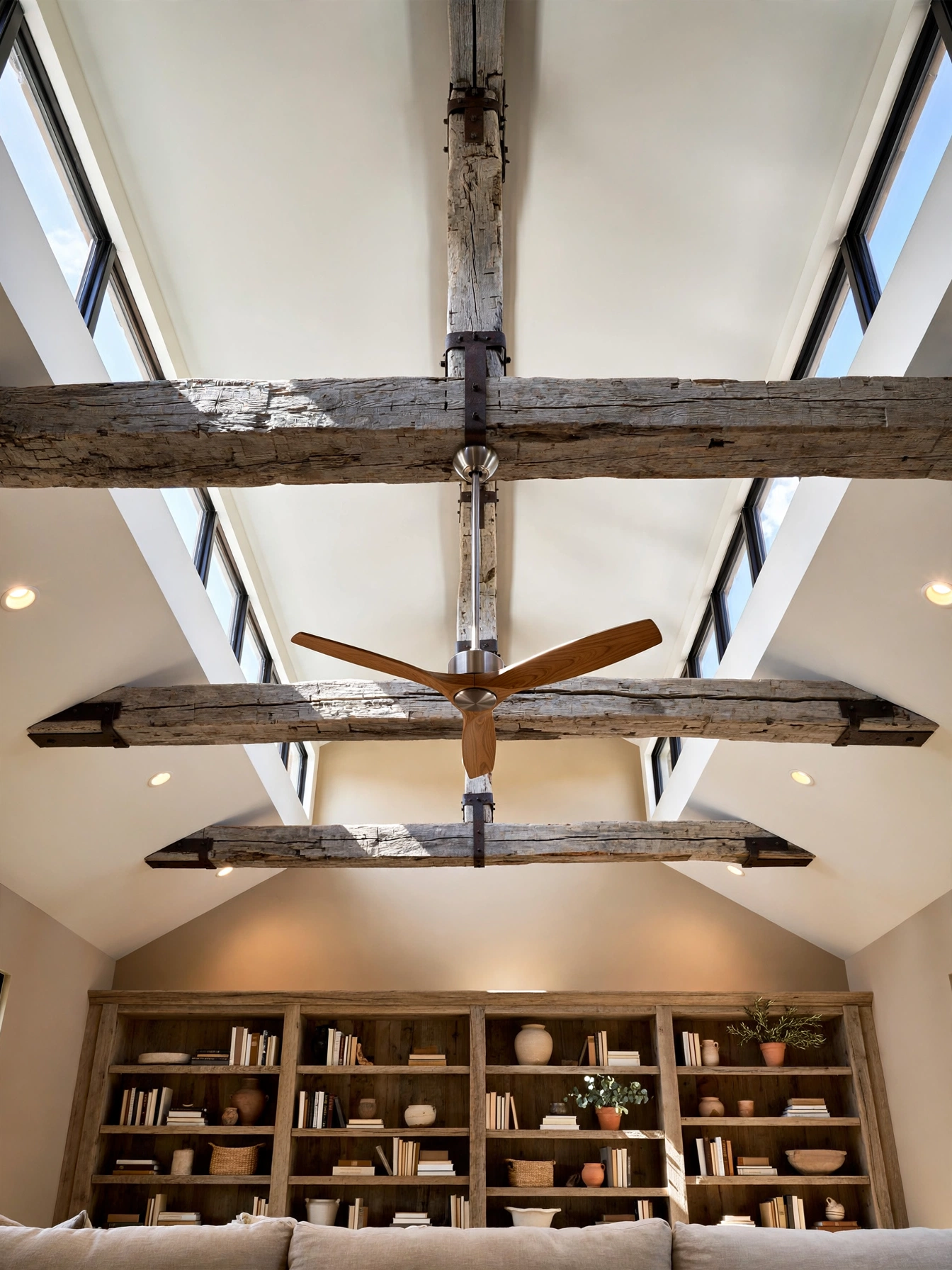
Why This Works:
- Beams add instant architecture to flat 8 foot ceilings.
- Weathered wood texture contrasts beautifully with smooth modern drywall.
- Faux options deliver the look at a third of the reclaimed price.
- Beams draw the eye upward, making modest rooms feel taller.
Real reclaimed beams typically measure 6 by 8 inches in cross section and weigh 15 to 25 pounds per linear foot, so spans over 12 feet need a structural check. Decorative faux beams run 4 to 6 inches deep and weigh under 3 pounds per foot, mounting to ceiling joists with lag bolts. Space beams 4 to 6 feet apart for a balanced rhythm, and keep them clear of recessed lights by at least 12 inches. Avoid staining new wood dark and calling it reclaimed; the color reads flat and fools nobody. Real beams cost 40 to 80 dollars per linear foot installed, while quality faux beams run 15 to 30 dollars.
Beams suit great rooms, vaulted ceilings, and open plan spaces where the ceiling is a big blank surface. They can overwhelm rooms under 10 feet wide, where the ceiling feels close already. One honest downside is inconsistency: no two reclaimed beams match, and some arrive with old nail holes or insect damage that needs sealing. If your ceiling structure is uncertain, a structural engineer should confirm load capacity before hanging anything heavy.
Pro Tip: Seal reclaimed beams with a matte water based polyurethane, 2 coats minimum, to stop dust shedding while keeping the weathered matte look.
Cowhide Area Rugs
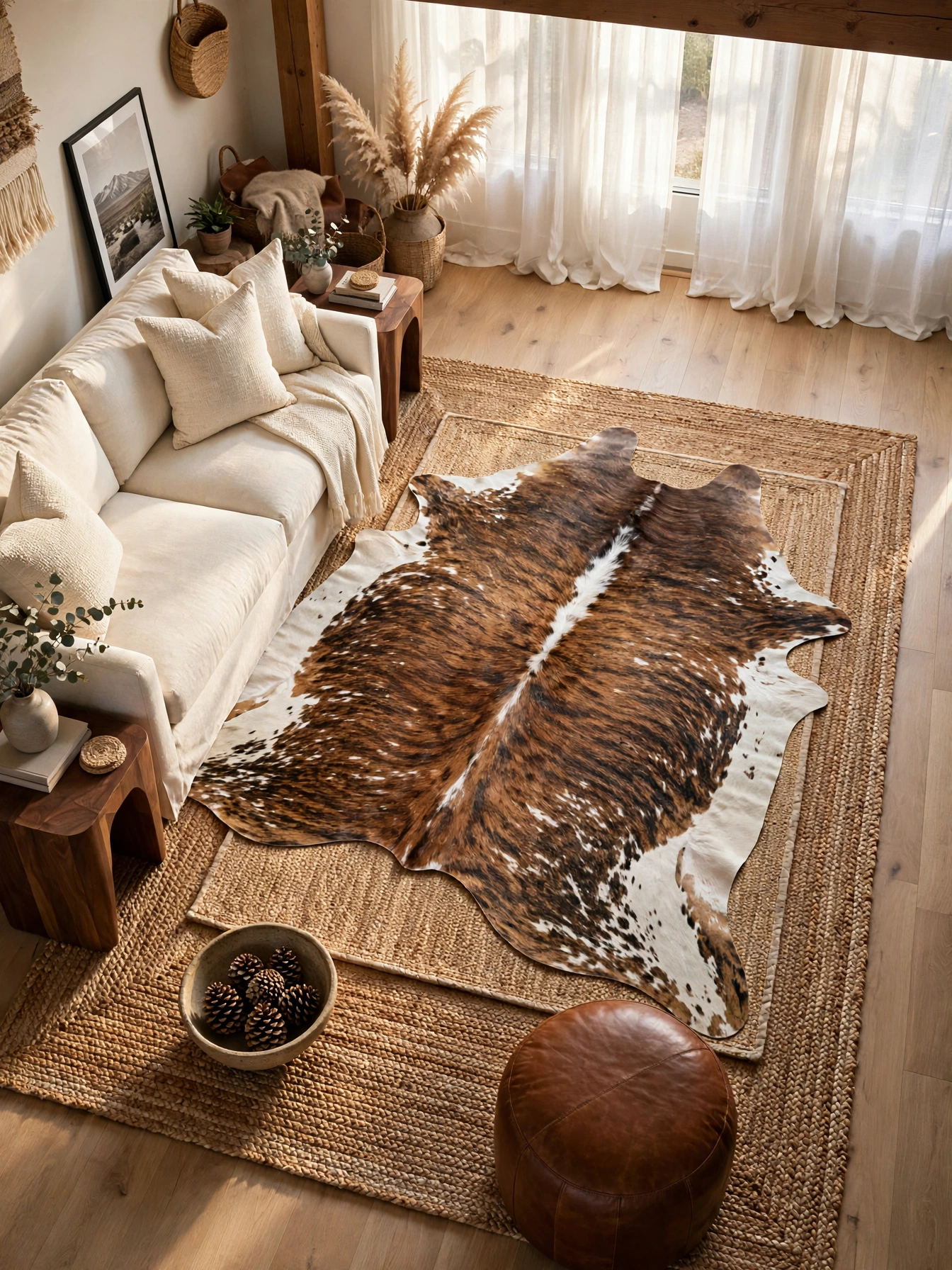
Why This Works:
- The organic shape breaks up the rectangle grid of sofas and tables.
- Brindle and tricolor patterns hide pet hair and everyday dirt.
- Cowhide sheds crumbs and dust, so it stays cleaner than wool.
- Layering over jute adds 2 inches of softness underfoot.
A standard cowhide measures about 6 by 8 feet, which suits seating areas up to 10 by 12 feet. Layer it over a flat weave rug that extends 10 to 12 inches beyond the hide on all sides for a finished look. Keep cowhide out of direct sprinkler style moisture and avoid steam mops, which warp the backing. Versus an 8 by 10 foot wool rug at 900 to 2000 dollars, a genuine cowhide costs 180 to 450 dollars, making it one of the cheapest ways to add western character. Faux printed versions sell for 60 to 120 dollars but crack along the print within 2 years.
Cowhide suits high traffic family rooms, ranch style homes, and anyone who hates vacuuming textured rugs. It slides on hard floors, so a 50 dollar felt and rubber rug pad underneath is non negotiable. The catch is thickness: at under a quarter inch, cowhide offers no cushioning on its own, which is why the jute layer matters. Rotate the hide every 6 months so sunlight fades it evenly.
Pro Tip: Shake cowhide rugs outside monthly and spot clean with a damp cloth and mild soap, never machine wash, and air dry flat away from heat.
Antler Chandeliers
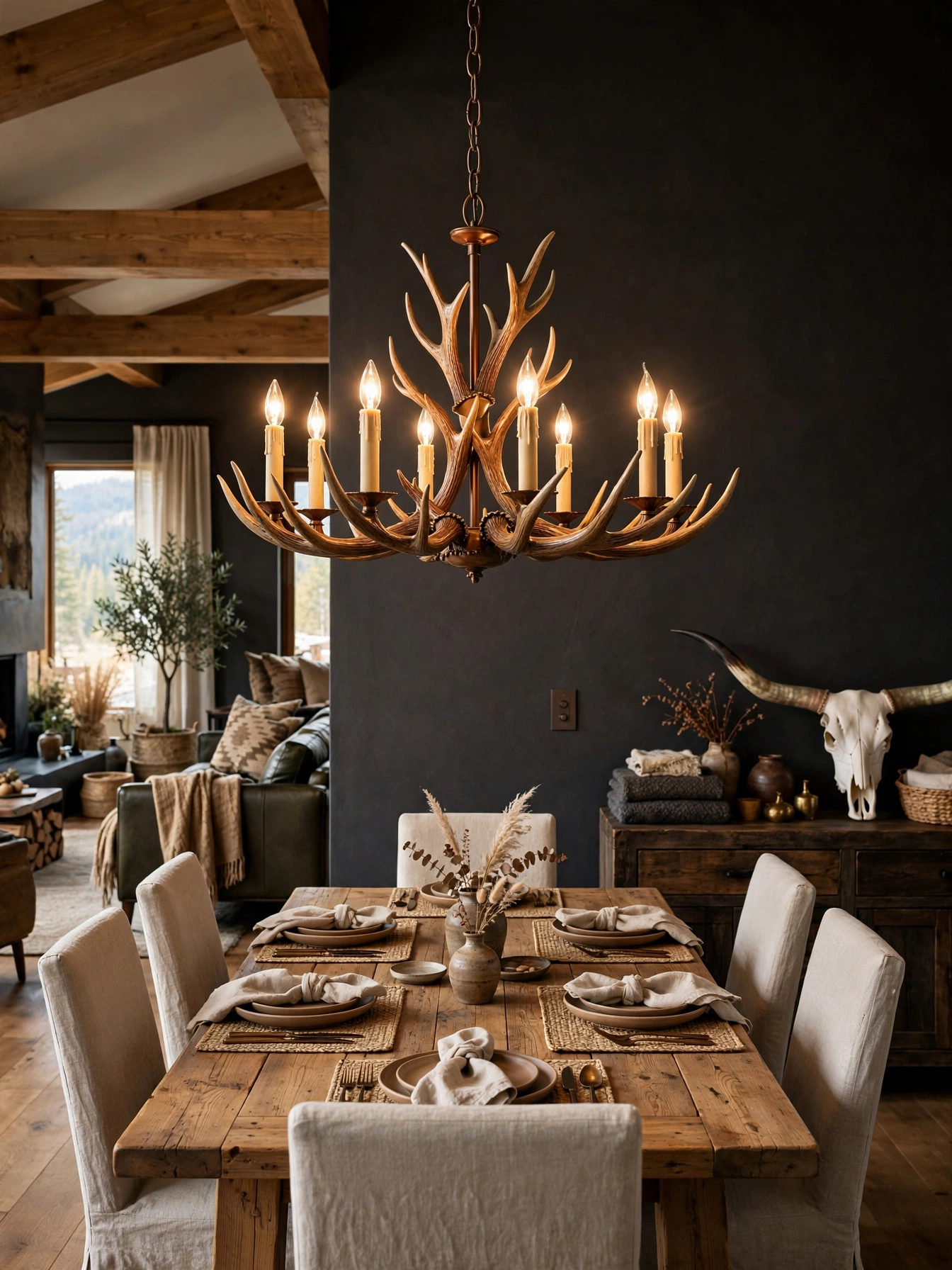
Why This Works:
- Antler forms read instantly as western without any kitsch.
- A chandelier fills the dead air above a dining table in open plans.
- Resin replicas weigh 60 percent less than real antler mounts.
- Eight candle bulbs give warm 2700 Kelvin light that flatters wood tones.
Hang the fixture so the bottom sits 30 to 36 inches above the tabletop, the standard dining clearance that keeps sightlines open. Fixtures with 6 to 10 lights suit tables 72 to 96 inches long; a 48 inch round table needs only 4 to 6 lights. Real antler chandeliers weigh 40 to 80 pounds and demand a fan rated ceiling box, while resin versions weigh 15 to 25 pounds. Adding a new circuit or moving a junction box is electrician work, so hire a licensed professional rather than tapping existing wiring yourself. Expect 400 to 900 dollars for quality resin and 1200 to 3000 dollars for genuine antler.
Antler chandeliers suit dining zones inside open living rooms, entry foyers with 10 foot plus ceilings, and lodge style great rooms. They overwhelm 8 foot ceilings, where the lowest tine can dip under 6 feet 6 inches and violate comfortable clearance. No choice is perfect: real antler sheds over time, since tines dry out and can crack in low humidity, so mist them lightly twice a year. Resin needs zero maintenance but can look plasticky up close, so keep it at least 7 feet off the floor.
Pro Tip: Install a 600 watt compatible dimmer switch, about 35 dollars, so the chandelier shifts from bright task light to a 20 percent glow for evenings.
Saddle Bar Stools
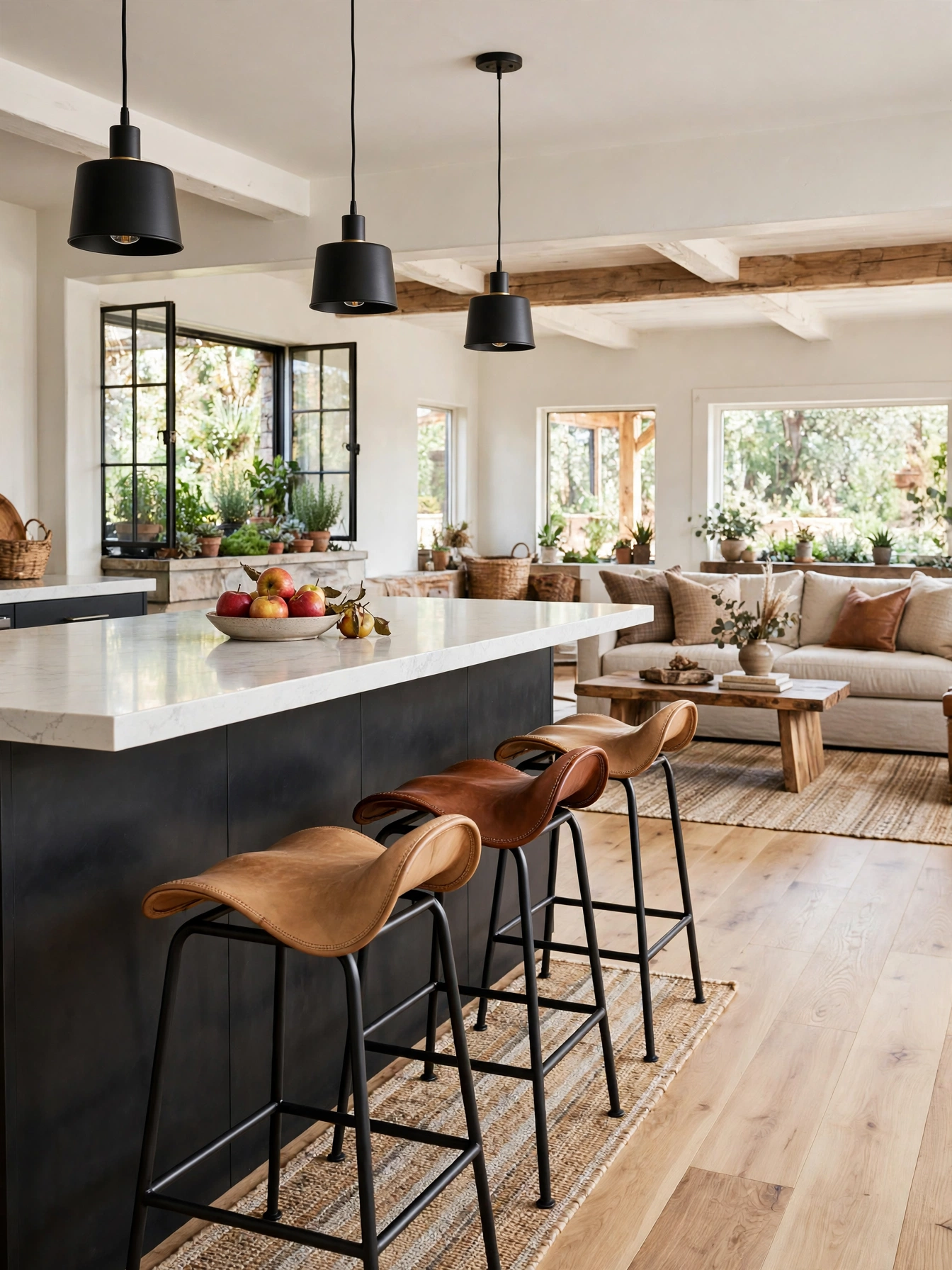
Why This Works:
- The saddle curve references ranch tack without costume drama.
- Backless stools tuck fully under 36 inch counters to save floor space.
- Leather seats wipe clean after meals, unlike fabric counter stools.
- Black metal frames tie into modern kitchen hardware finishes.
Match stool height to the counter: 24 to 26 inch seats for 36 inch counters, 30 inch seats for 42 inch bar height. Allow 24 inches of width per stool so elbows do not collide, which means a 72 inch island fits 3 stools. The saddle dip should be 2 to 3 inches deep; deeper scoops trap sitters and shallow ones feel flat. Avoid stools with no footrest, since dangling feet tire legs within 30 minutes. Leather saddle stools run 150 to 350 dollars each, while solid wood versions cost 90 to 200 dollars and need annual oiling.
Saddle stools suit open plan kitchens, breakfast bars, and homes where the island doubles as homework central. They offer zero back support, so they fail as long sit dining chairs for anyone with back trouble. Here is the compromise on backless designs: fine for 45 minute breakfasts, punishing for 3 hour dinner parties. Swivel bases add 40 to 80 dollars per stool and help kids climb up safely.
Pro Tip: Add 1 inch felt pads under each stool leg to protect wood floors, and leave 10 inches between the counter edge and the stool seat front for knee room.
Rawhide Lamp Shades

Why This Works:
- Rawhide diffuses light into a golden glow that flatters skin tones.
- The natural texture adds craft detail at a small scale.
- Shades fit standard harps, so no rewiring is needed.
- Honey tones echo leather furniture elsewhere in the room.
Size the shade to the lamp: the shade height should equal roughly 65 to 70 percent of the base height, and its bottom diameter should be 2 inches wider than the base on each side. A 20 inch tall lamp needs a 13 to 14 inch tall shade with a 16 inch bottom diameter. Use LED bulbs capped at 9 watts, since rawhide scorches above 140 degrees Fahrenheit near the bulb. Avoid drum shades on short buffet lamps; the proportions look squat. Genuine rawhide shades cost 60 to 140 dollars, while parchment lookalikes run 25 to 50 dollars and lack the laced edge detail.
Rawhide shades suit reading nooks, bedside tables, and console lamps where warm light matters most. They darken rooms slightly, cutting 10 to 15 percent of lumens versus white linen shades, so they fail in task heavy corners. The flip side is maintenance: rawhide attracts dust in its grain, so wipe it with a dry microfiber cloth every 2 months. Never use water, which spots the hide permanently.
Pro Tip: Choose a washer fitter shade for standard harps, and keep the bulb at least 3 inches from the shade wall to prevent heat discoloration.
Mesquite Wood Tables
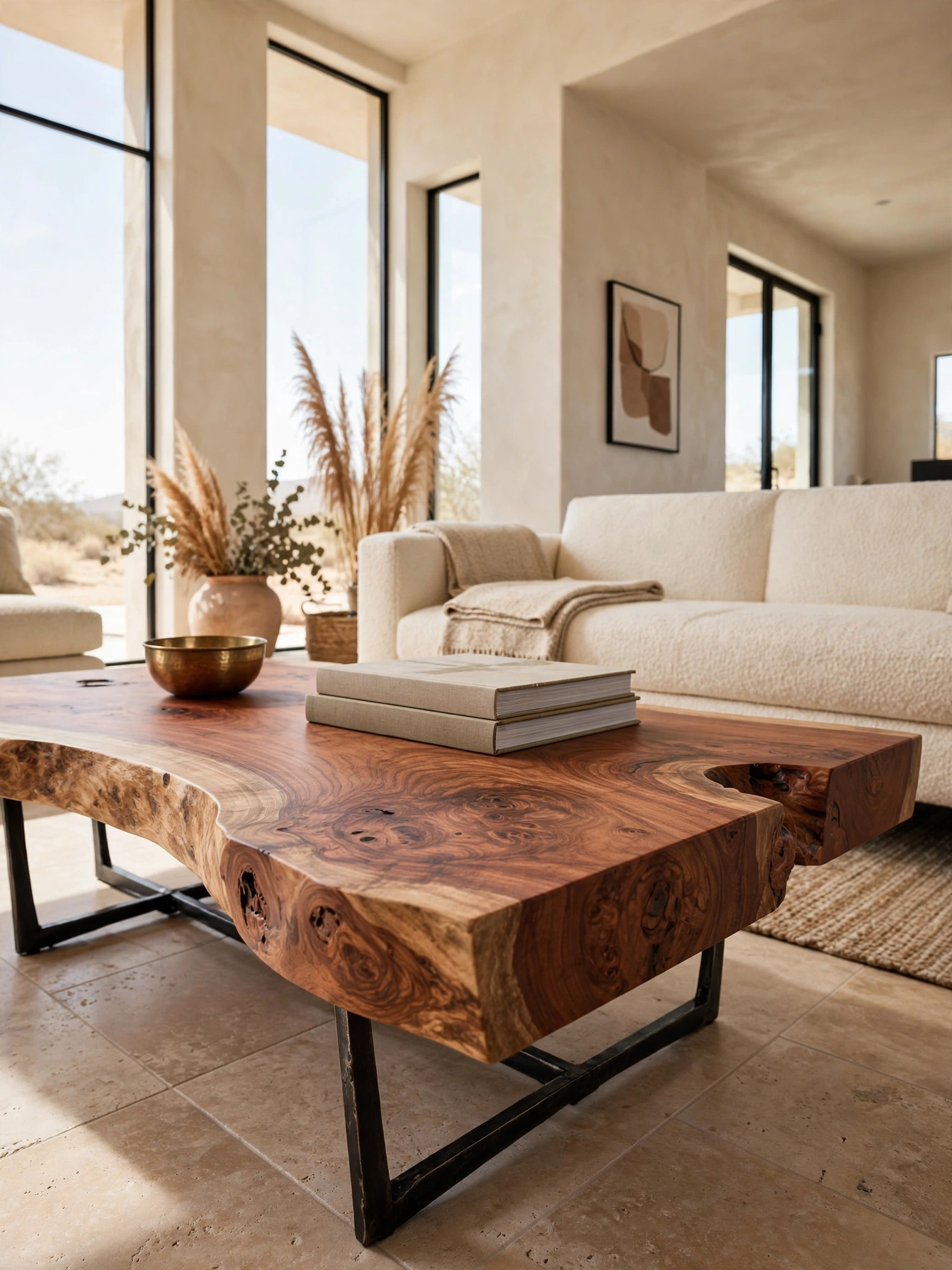
Why This Works:
- Mesquite grain is denser and more dramatic than oak or walnut.
- Live edge slabs make the coffee table the room’s sculpture.
- The reddish brown tone bridges leather and black metal finishes.
- Solid 2 inch slabs resist dents better than veneer tops.
Mesquite rates about 2345 on the Janka hardness scale, nearly double red oak at 1290, which means it shrugs off dropped remotes and toy trucks. Size the coffee table at two thirds the sofa length: a 84 inch sofa needs a 54 to 56 inch table, 16 to 18 inches tall, sitting 14 to 18 inches from the sofa front. Avoid placing hot mugs directly on oiled mesquite; heat rings penetrate oil finishes within minutes. Solid mesquite tables cost 900 to 2500 dollars depending on slab size, versus 300 to 700 dollars for acacia lookalikes that dent more easily.
Mesquite suits statement coffee tables, console tables, and dining tables in homes that want one hero piece. The reddish cast can clash with orange toned oak floors, so test a sample board first. Every choice has a cost, and here it is weight: a 2 inch slab top weighs 80 to 120 pounds, making the table a two person move forever. Oil the top every 12 months with food safe mineral oil to keep the grain saturated.
Pro Tip: Use cork or felt coasters, at least 4 inches wide, under every drink, and wipe spills within 10 minutes to protect the oil finish.
Modern Western Living Room Ideas: Leather Seating
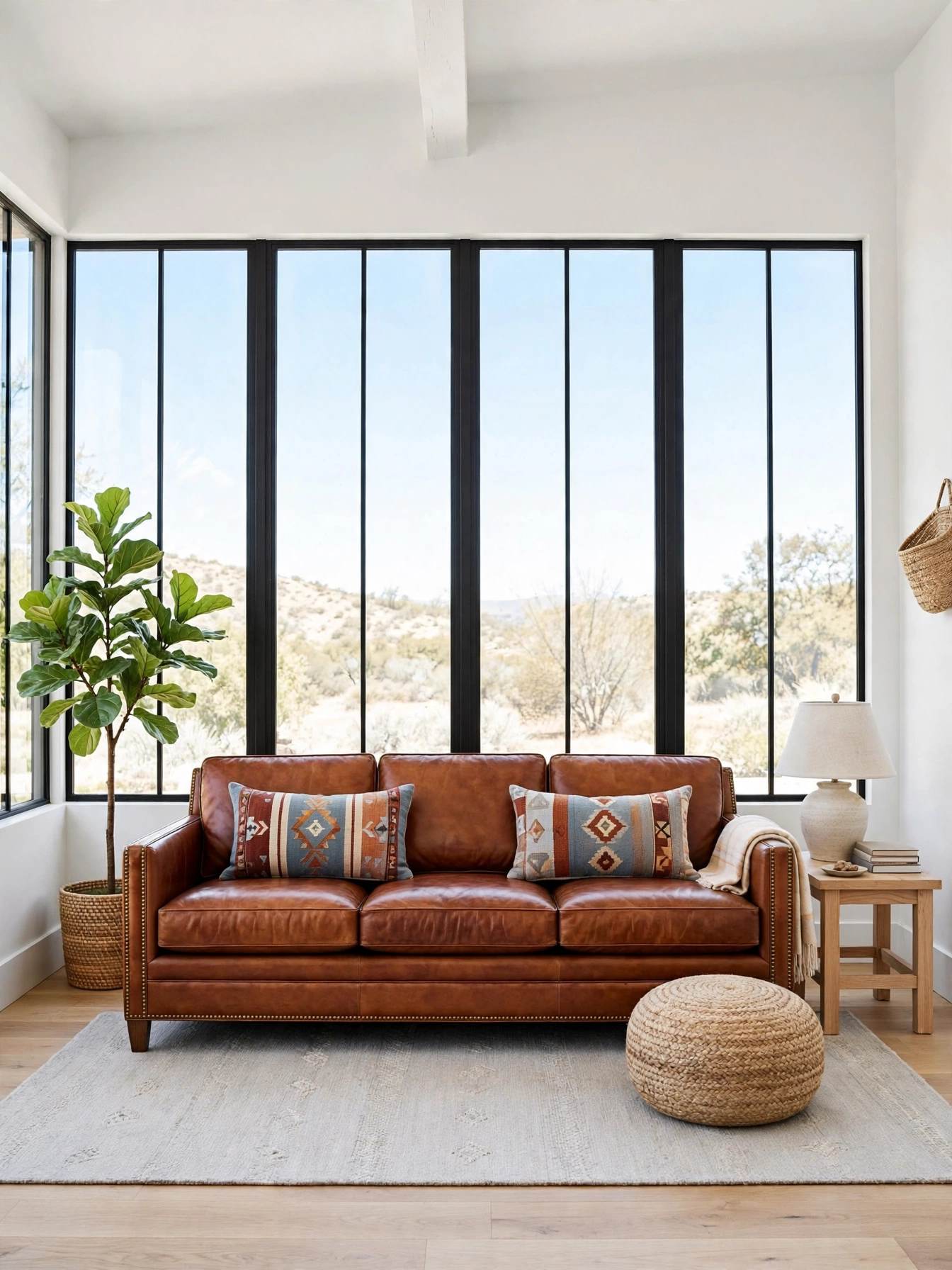
Why This Works:
- A leather sofa delivers western character in one furniture decision.
- Nailhead trim adds craft detail that suits both ranch and modern rooms.
- Cognac leather hides 5 years of wear better than light fabric.
- Clean track arms keep the silhouette current, not saloon style.
A standard 84 inch three seater suits rooms 12 by 16 feet and larger, while 72 inch apartment sofas fit 10 by 12 foot spaces. Seat depth of 22 to 24 inches works for lounging; under 20 inches feels upright and formal. Keep 36 inches of main walkway in front of the sofa and 18 inches between the sofa and coffee table. Avoid Chesterfield tufting with heavy western motifs nearby, since the two vintage styles fight each other. Top grain leather sofas run 1800 to 4000 dollars, while quality fabric sofas with western styling cost 900 to 2000 dollars.
Leather seating suits the main sofa, loveseats, and sectionals as the room’s anchor investment. It suits families with allergy sufferers too, since leather traps far less dust than fabric. One thing to weigh is break in time: new leather feels stiff for the first 3 to 6 months of daily use. Buy from makers that list the hide grade and frame warranty, ideally a kiln dried hardwood frame with a 10 year guarantee.
Pro Tip: Rotate seat cushions monthly and vacuum crevices every 2 weeks, since grit trapped in seams abrades leather 3 times faster than normal use.
Turquoise Accent Pieces
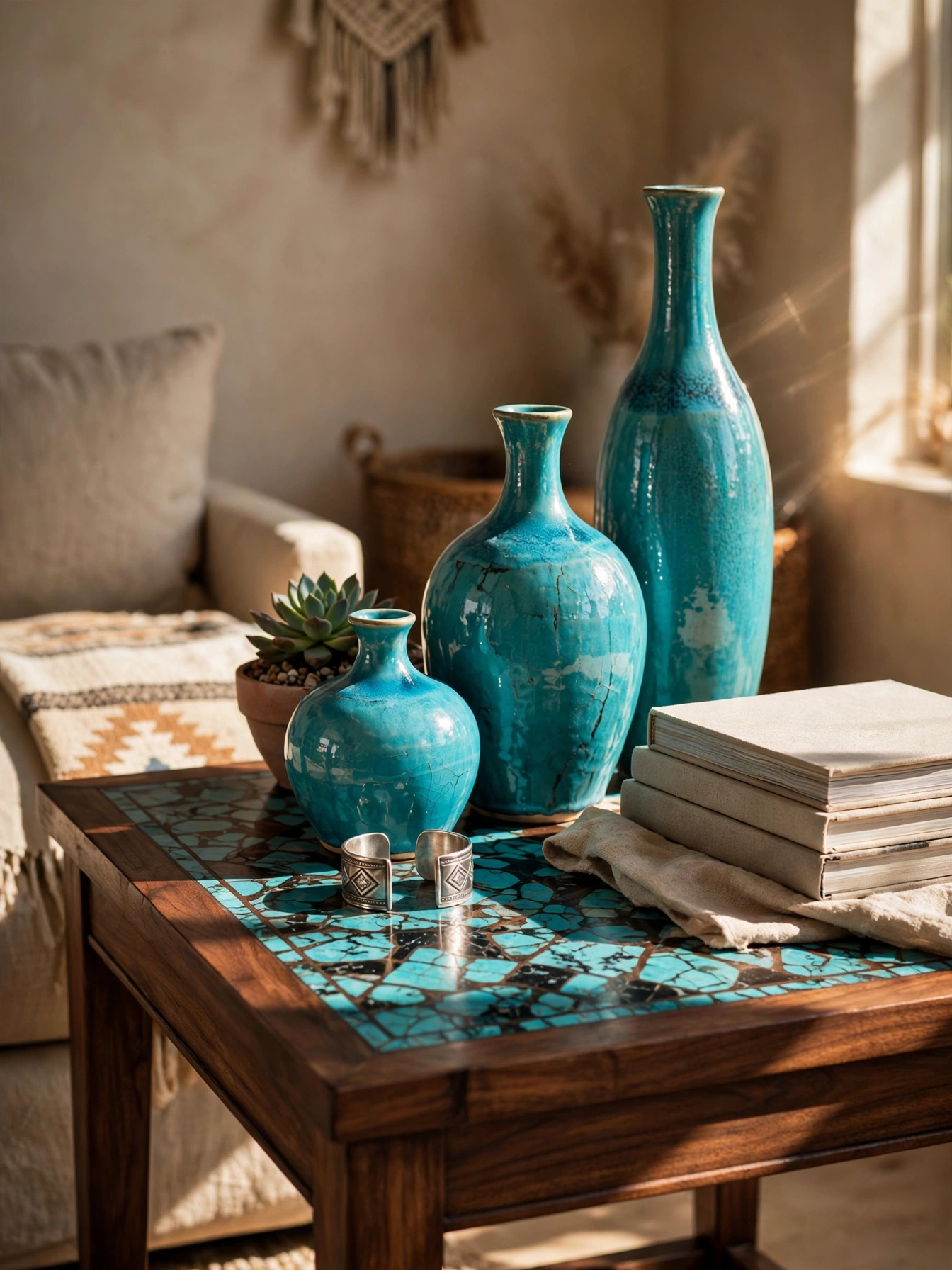
Why This Works:
- Turquoise is the signature gemstone of Southwestern style.
- Small accents add color without repainting a single wall.
- The blue green hue complements cognac leather perfectly.
- Stone and ceramic pieces double as collectible art.
Limit turquoise to 3 to 5 accent pieces per room: a side table, 2 vases, and a tray keeps the color intentional. Vary heights by at least 4 inches between grouped objects so the eye moves across the vignette. Real turquoise inlay furniture costs 400 to 1200 dollars, while glazed ceramic pieces run 30 to 90 dollars each. Avoid dyed howlite sold as turquoise; real stone shows natural matrix veining, while dyed fakes look flat blue. Test with a jeweler’s loupe if a piece costs over 200 dollars.
Turquoise suits side tables, vases, trays, and cabinet hardware in neutral rooms that need one lively color. It clashes with cool gray palettes, turning muddy against blue gray walls, so warm it up with beige or cream. A fair warning on vivid color: turquoise saturation peaked around 2015, so keep it in movable accents rather than tile or upholstery. Swap pieces seasonally to keep the look fresh.
Pro Tip: Group turquoise in odd numbers, 3 or 5 pieces, and space them 24 to 36 inches apart across the room so the color echoes without clustering.
Western Gallery Walls

Why This Works:
- Gallery walls tell a personal story no single canvas can.
- Mixed frame sizes create rhythm across a blank 10 foot wall.
- Vintage rodeo posters add authentic western history.
- Glass fronts protect paper art from sun and dust.
Plan the layout on the floor first, keeping 2 to 3 inches between frames for a tight salon look or 4 to 6 inches for an airy grid. Center the whole arrangement at 57 to 60 inches from the floor, the gallery standard for eye level viewing. Mix frame sizes from 8 by 10 inches up to 24 by 36 inches, with the largest piece anchoring the center. Avoid hanging art above 66 inches in rooms with 8 foot ceilings, since it floats disconnected from furniture. Budget 200 to 600 dollars for a 9 piece wall using quality prints, or 800 to 2000 dollars for original artwork.
Gallery walls suit long sofa walls, stairwells, and hallways that need personality. They demand commitment: rearranging 9 frames leaves a dozen nail holes to patch. Be aware of one drawback, dust: glass fronts in sunny rooms need wiping every 3 months. Use museum putty on frame bottoms in earthquake zones or homes with slamming doors.
Pro Tip: Photograph the floor layout with your phone before hanging, and use 2 picture hanging hooks rated for 30 pounds on any frame wider than 24 inches.
Stone Fireplace Surrounds
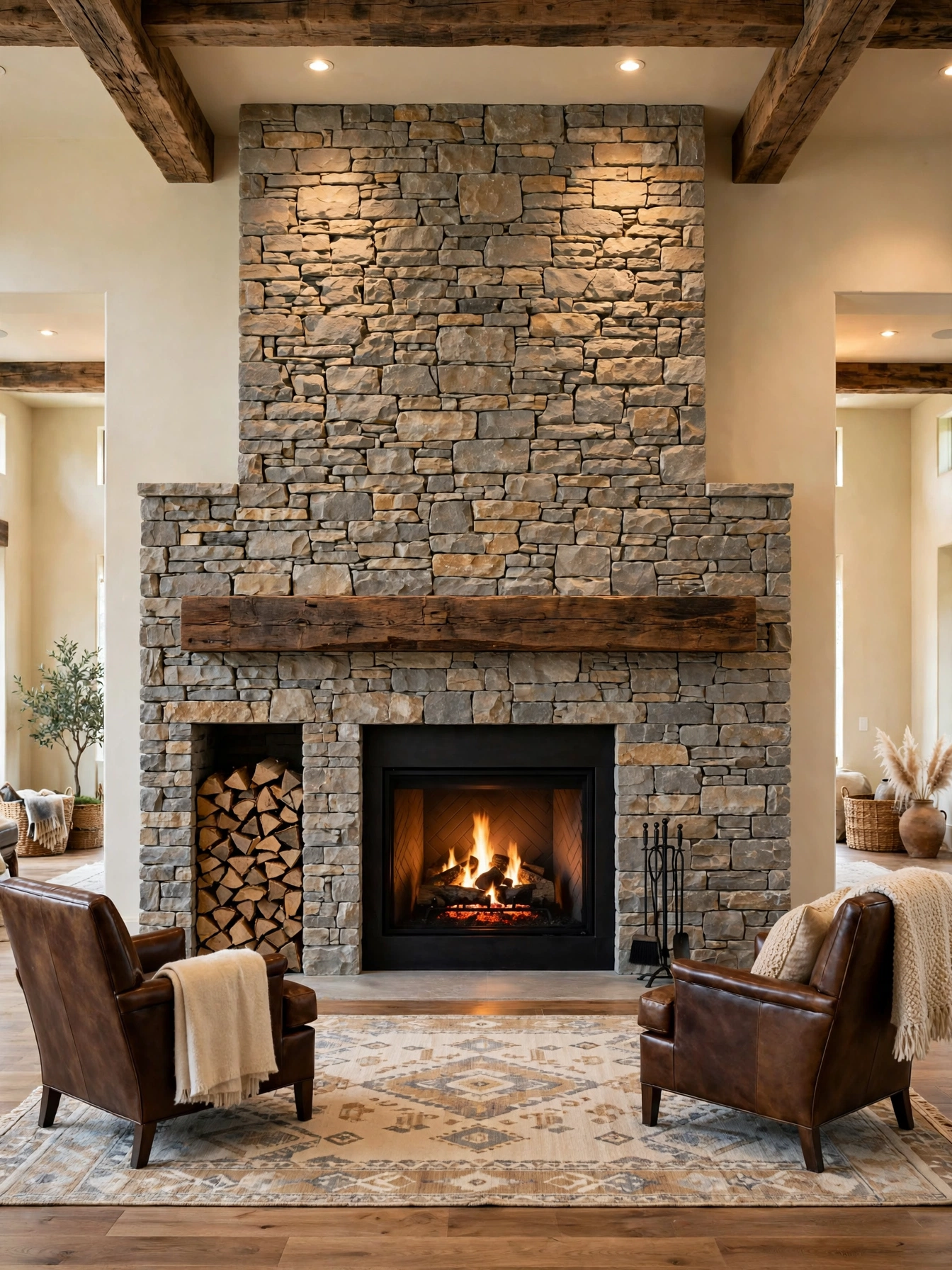
Why This Works:
- A stone fireplace becomes the natural focal point of any great room.
- Floor to ceiling stone emphasizes 10 foot plus ceiling height.
- Natural stone texture balances smooth modern furniture nearby.
- Stone veneer weighs 80 percent less than full thickness stone.
Natural stone veneer runs 1 to 2 inches thick and weighs 8 to 12 pounds per square foot, so most framed walls carry it without extra structure. Full thickness stone at 4 inches deep weighs 40 to 60 pounds per square foot and needs a concrete footing. Keep the mantel 12 inches above the firebox opening for wood burning units, following standard fire codes. Avoid painting natural stone white; the texture reads as cheap stucco and the paint traps moisture. Veneer installation costs 25 to 50 dollars per square foot, while full stone runs 60 to 120 dollars.
Stone surrounds suit great rooms, cabins, and any living room with a fireplace that currently looks builder grade. They dominate small rooms under 12 feet wide, where a 6 foot wide chimney breast eats the wall. One honest downside is dust: rough stone collects it, so vacuum with a brush attachment every 6 months. Seal the stone once with a penetrating sealer to prevent soot staining.
Pro Tip: Run the stone 6 inches past the mantel ends on each side for a finished look, and choose a honed limestone over polished granite for an authentic ranch feel.
Woven Serape Textiles

Why This Works:
- Handwoven stripes add the brightest pattern a western room can handle.
- Throw size pieces layer easily over sofas, chairs, and beds.
- Wool serapes regulate temperature, warm in winter and cool in summer.
- Authentic pieces support artisan weaving traditions.
Authentic handwoven serapes measure about 52 by 84 inches and cost 120 to 300 dollars; machine printed versions sell for 30 to 60 dollars and fade within 2 years. Drape throws with a 12 to 18 inch drop over the sofa arm so they read as intentional, not tossed. Layer a serape over solid upholstery rather than patterned fabric, since two bold patterns compete. Avoid washing wool serapes in hot water, which shrinks them up to 15 percent; hand wash cold or dry clean. Rotate folded throws monthly to prevent permanent crease lines.
Serape textiles suit sofas, armchairs, and ottomans in rooms that need color and pattern fast. They overwhelm minimalist rooms where every other surface is quiet, so commit to the folk art energy. The catch with authentic wool is itch: use a cotton liner throw underneath for bare skin comfort. Store extras folded in cedar chests to deter moths.
Pro Tip: Buy serapes with a tight even weave, at least 20 threads per inch, and check that stripe colors match on both faces for true handwoven quality.
Bronc Rider Artwork
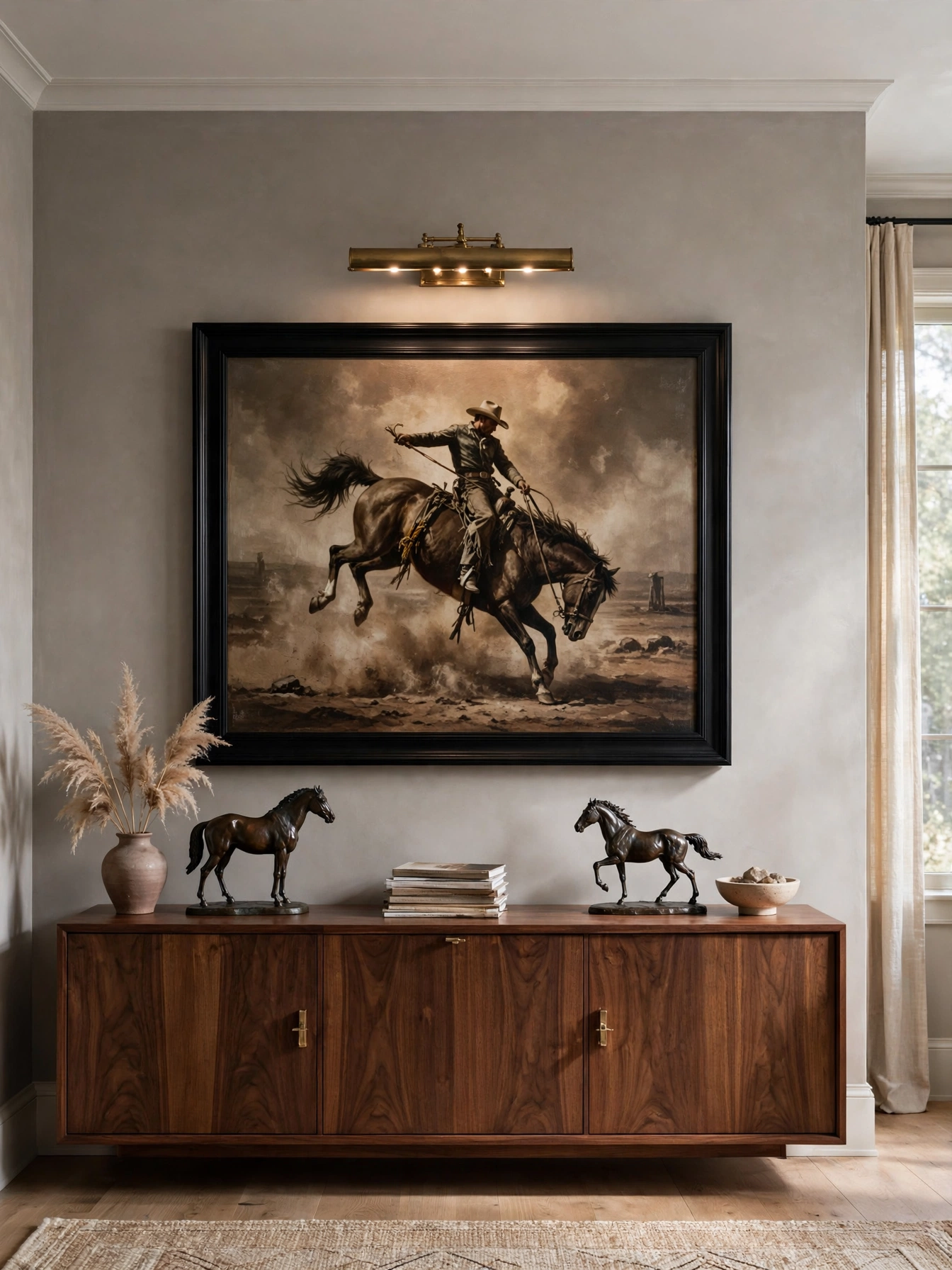
Why This Works:
- Western fine art anchors the style with cultural weight.
- Large scale canvases fill walls that prints cannot.
- Sepia palettes blend with both modern and rustic furniture.
- One statement piece replaces a dozen small decorations.
Scale art to the wall: a 36 by 48 inch canvas suits 10 to 12 foot walls, while 24 by 36 inches works over consoles and sideboards. Hang the center at 57 to 60 inches from the floor, and keep the bottom edge 6 to 8 inches above furniture. Add a picture light with a 2700 Kelvin bulb positioned 8 inches above the frame for gallery effect. Avoid mass produced canvas prints with visible pixelation; view them from 3 feet before buying. Original western paintings start at 800 dollars, while quality giclee prints run 150 to 400 dollars framed.
Bronc rider art suits entry walls, above mantels, and dining room focal walls where one strong image sets the tone. It can feel thematic in rooms that already carry heavy western motifs, so balance it with plain modern furniture. The limitation with originals is price and care: keep oils out of direct sun and maintain 40 to 60 percent humidity. Insure pieces over 1000 dollars on your homeowner policy.
Pro Tip: Light artwork with a 36 inch brass picture light for canvases up to 48 inches wide, and use museum glass to cut glare by 70 percent.
Longhorn Wall Mounts
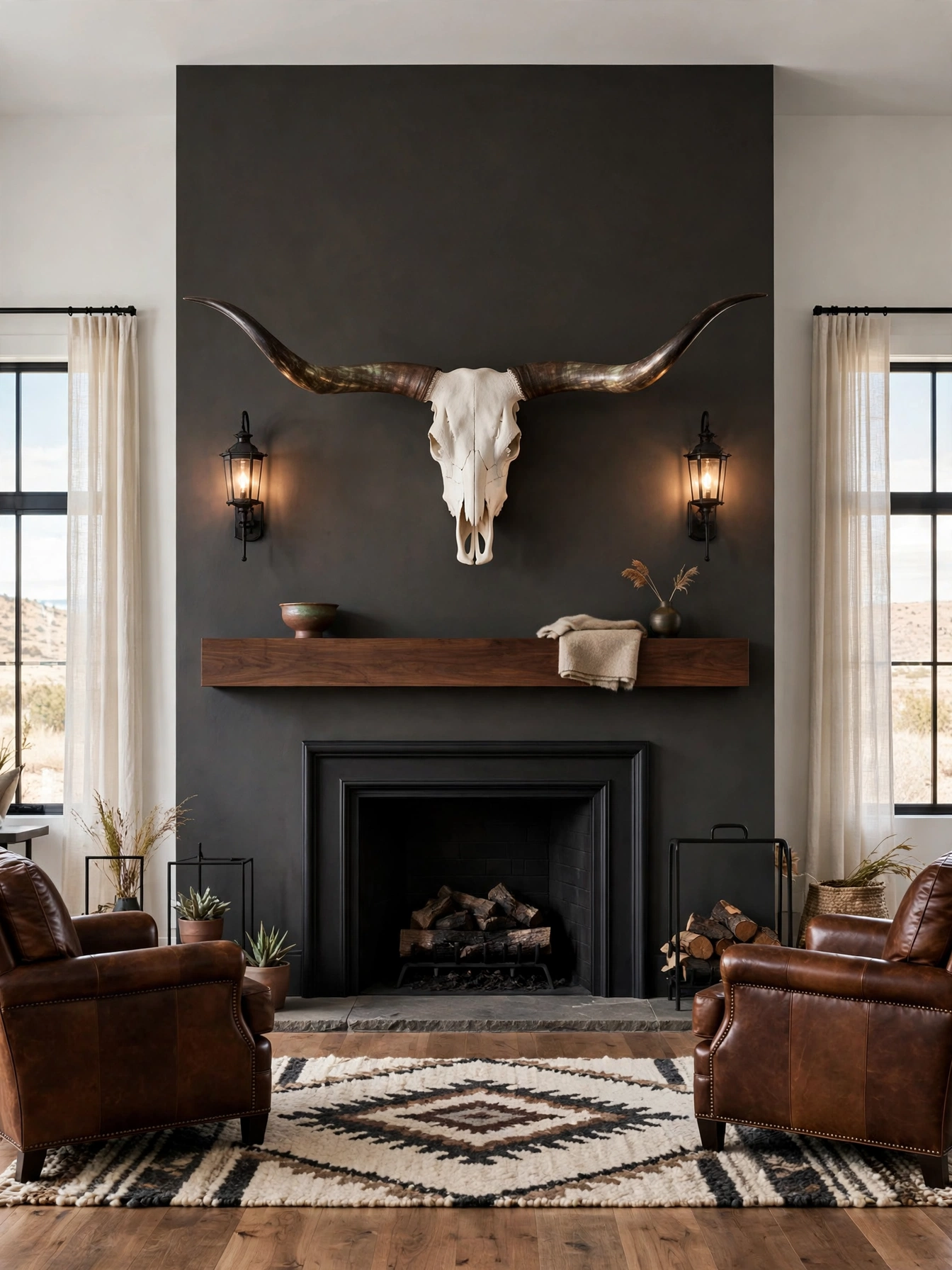
Why This Works:
- The longhorn silhouette is the single most recognized western icon.
- One mount fills a tall chimney breast with zero clutter.
- Resin casts look convincing from 6 feet away at half the cost.
- Symmetrical horns create a natural focal point above mantels.
Standard longhorn mounts span 28 to 36 inches tip to tip and weigh 8 to 15 pounds for resin, 20 to 35 pounds for genuine skull and horn. Mount into a wall stud with a 50 pound rated hanger, never drywall anchors alone. Center the mount 12 to 18 inches above the mantel shelf so it clears stockings and garlands. Avoid genuine skulls in humid climates without sealing; bone absorbs moisture and yellows within 2 years. Resin mounts cost 120 to 300 dollars, while authentic cleaned skulls run 250 to 600 dollars.
Longhorn mounts suit mantels, entry walls, and great rooms with 10 foot plus ceilings. They read as aggressive in small or low ceiling rooms, so scale down to a 20 inch steer skull for cozier spaces. The other side of the coin is taste: guests either love it or find it stark, so consider the household consensus first. Dust the horns with a dry brush every 3 months to keep the bone bright.
Pro Tip: Flank the mount with two 18 inch iron sconces set 24 inches to each side for a balanced composition that frames the horns.
Modern Western Living Room Ideas: Barn Doors

Why This Works:
- Barn doors save the 10 square feet a swinging door needs.
- Exposed black hardware doubles as wall sculpture.
- Reclaimed wood panels add texture to plain drywall openings.
- They close off media rooms and offices without construction.
Size each door to cover the opening plus 2 inches overlap on each side; a 48 inch opening needs two 26 inch doors on a 96 inch track. Mount the track into studs or a 1 by 4 inch header board lag bolted to studs, since doors weigh 60 to 120 pounds each. Leave 1 inch of floor clearance so doors glide over rugs. Avoid barn doors on bedrooms or bathrooms, since the 1 inch gap around the frame kills privacy and sound control. Complete kits cost 250 to 600 dollars, while custom reclaimed doors run 800 to 1800 dollars.
Barn doors suit closets, pantries, laundry rooms, and media nooks where swing space is tight. They never seal fully, so they fail wherever light blocking or noise matters. No solution is perfect, and here the price is wall space: you need a full door width of clear wall beside the opening for the door to slide onto. Soft close mechanisms, about 40 dollars per door, stop the slam that loosens tracks over time.
Pro Tip: Wax the track rollers twice a year with paraffin, and tighten the hanger bolts every 12 months, since 100 pound doors gradually loosen hardware.
Ranch Reading Corners
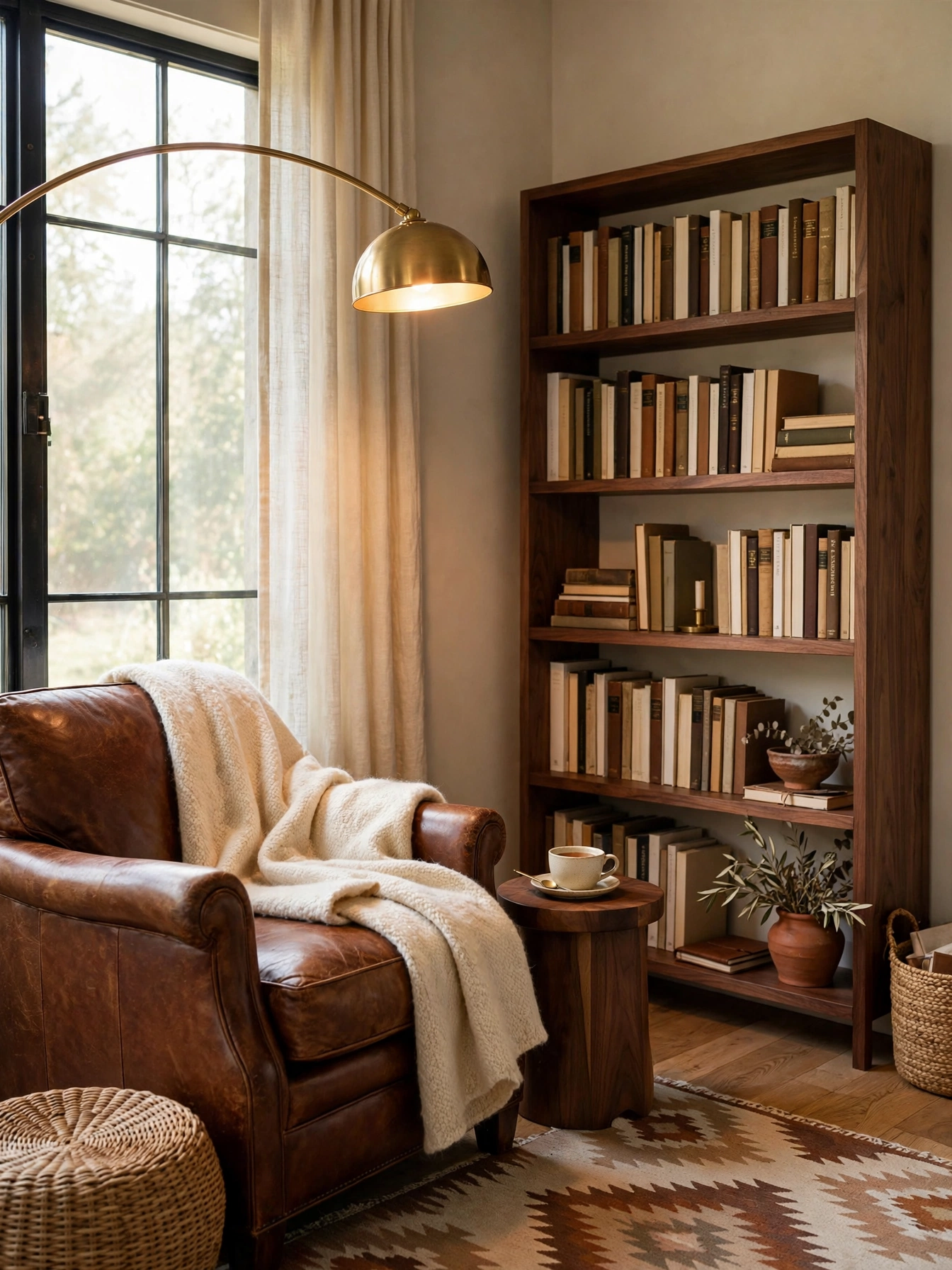
Why This Works:
- A dedicated corner turns dead space into the most used seat in the house.
- Task lighting at 450 lumens makes reading comfortable after dark.
- Leather and wool age gracefully under daily use.
- A small footprint, 6 by 8 feet, fits beside any window.
Build the corner around a chair with 18 inch seat height and a side table 22 to 24 inches tall, matching the chair arm within 2 inches. Position a reading lamp so the bulb sits 12 to 15 inches above the book page, roughly 40 inches from the floor beside the chair. Keep the bookcase within arm’s reach, under 30 inches from the chair side. Avoid overhead only lighting, which casts page shadows; the American Lighting Association recommends layered task plus ambient light for reading zones. Budget 300 to 700 dollars for chair, lamp, and table, or 1200 to 2500 dollars with a premium leather chair.
Reading corners suit window bays, fireplace sides, and any 6 by 8 foot patch that currently holds a lonely plant. They need a power outlet within 4 feet for the lamp, so plan cord routing before buying furniture. Here is the compromise: single purpose use means a reading chair rarely converts to party seating. Add a small ottoman, 16 by 20 inches, to make the corner the house favorite.
Pro Tip: Fit a 2700 Kelvin LED bulb at 800 lumens in the lamp, and angle the shade 30 degrees toward the chair to light pages without glare.
Copper Fixture Finishes
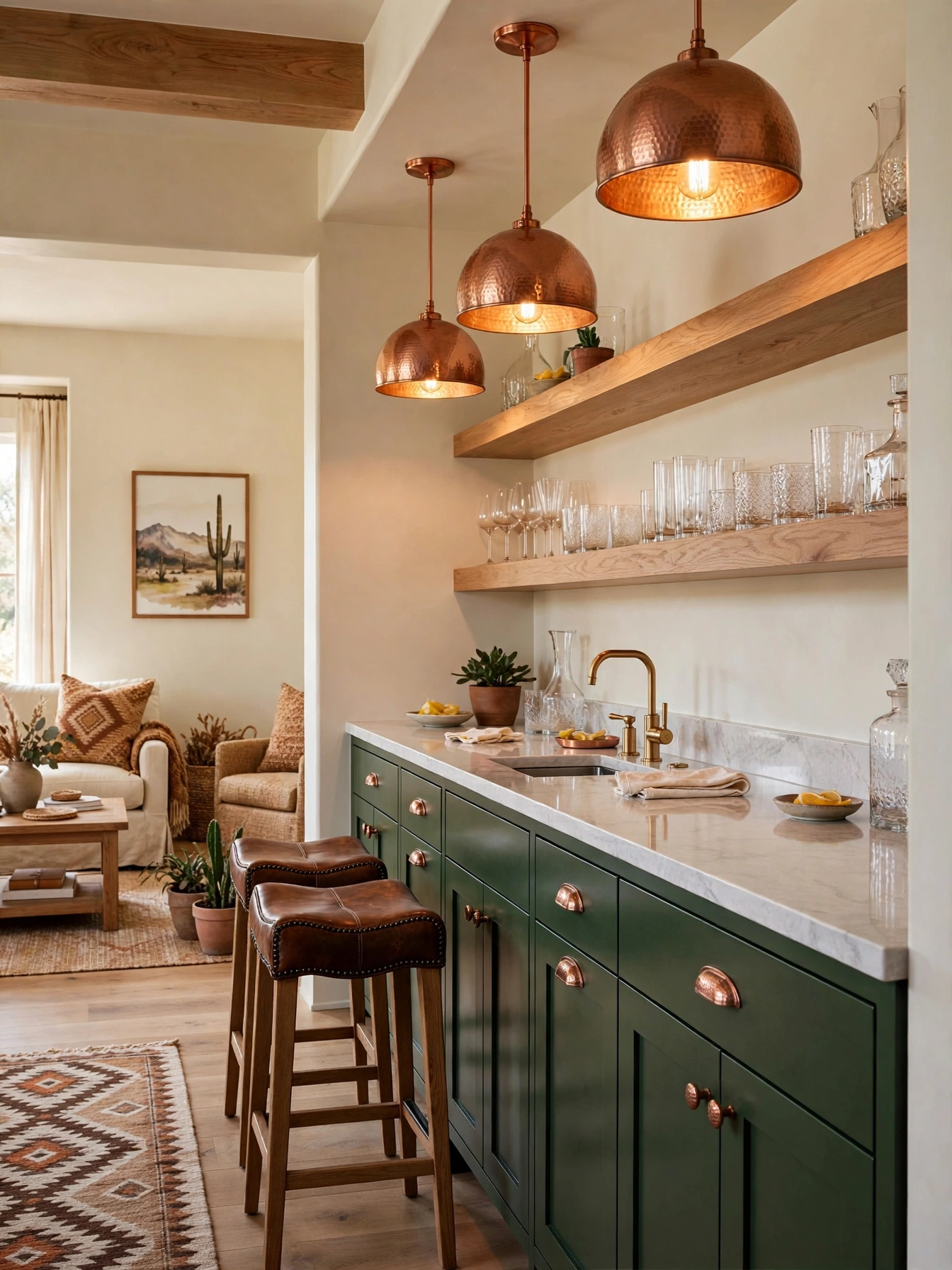
Why This Works:
- Copper glows warmer than chrome or nickel against wood tones.
- Living finishes develop a patina that suits the western story.
- Small fixtures update a room for under 300 dollars total.
- Copper pairs with both black iron and aged brass.
Hang pendants 30 to 34 inches above bar counters and space them 24 to 30 inches apart for even light. Choose sealed copper for a stable finish, or unlacquered living copper that darkens over 6 to 12 months. Match the metal across at least 3 elements, pendants, pulls, and a faucet, so it reads as a scheme. Avoid mixing copper with rose gold nearby; the two pink metals clash subtly. Pendant lights cost 80 to 250 dollars each, while cabinet pulls run 8 to 20 dollars apiece.
Copper suits kitchens, wet bars, and bathrooms inside western styled homes. It shows fingerprints on polished finishes, so choose brushed or hammered textures for high touch areas. One thing to weigh with living copper is unpredictability: patina develops unevenly near cooking grease. Sealed finishes avoid this but look less artisanal. Clean with a damp cloth only, never abrasive pads.
Pro Tip: Test one unlacquered copper pull for 30 days before committing, since patina speed varies with humidity and touch frequency.
Distressed Pine Flooring
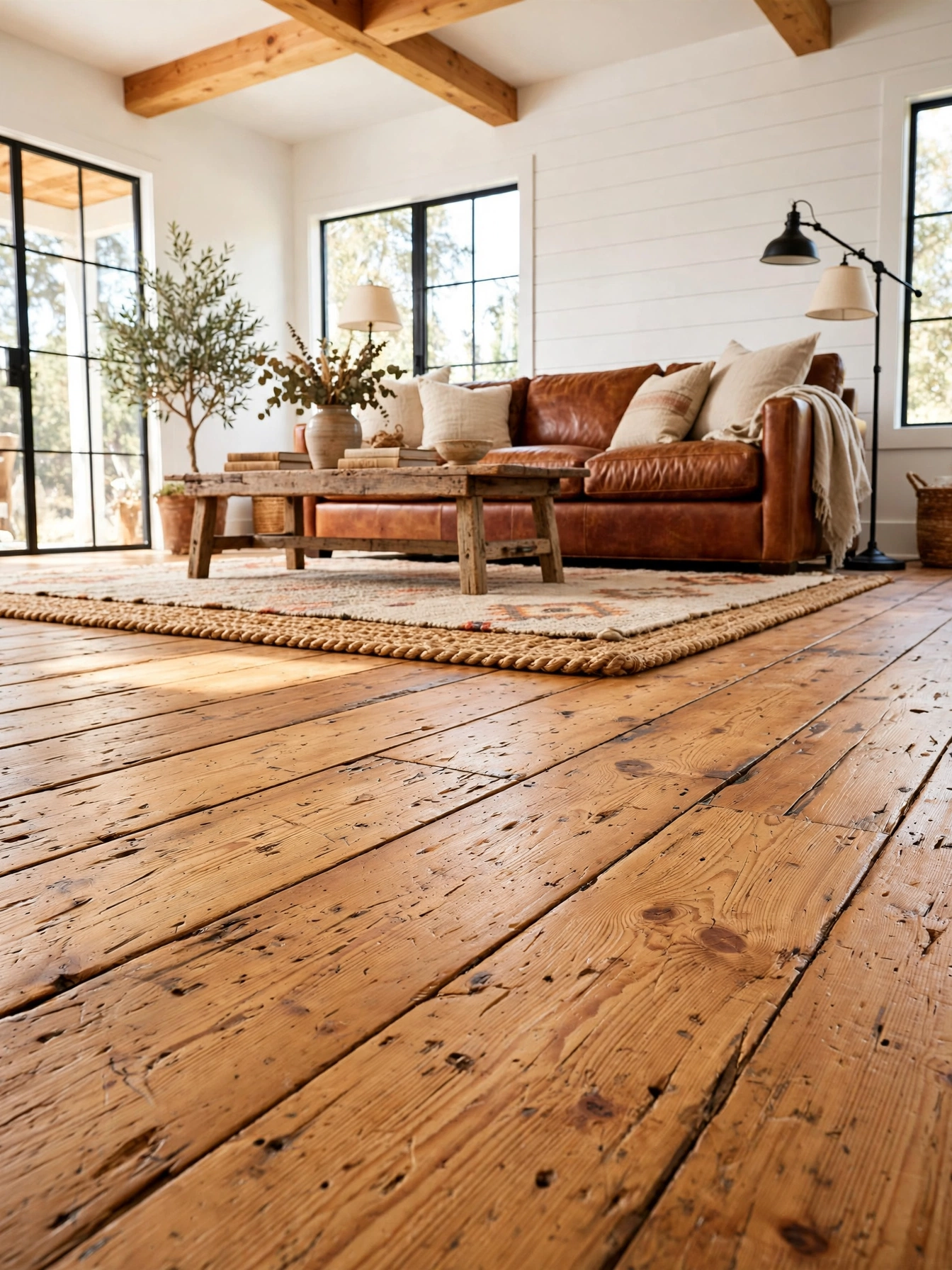
Why This Works:
- Wide planks, 7 to 9 inches, feel authentically old farmhouse.
- Distressing hides new dents, perfect for boots and dog claws.
- Pine costs 40 percent less than white oak flooring.
- Honey tones warm up north facing rooms with cool light.
Pine rates only 380 to 870 on the Janka scale depending on species, so choose a distressed grade where dents blend in. Planks should be at least 5 inches wide for the farmhouse look; 3 inch strips read as 1990s builder grade. Acclimate flooring on site for 72 hours before install, and leave a half inch expansion gap at walls. Avoid pine in kitchens and entries without a matte polyurethane, 3 coats minimum, since water stains soft pine within hours. Installed costs run 8 to 14 dollars per square foot, versus 12 to 22 dollars for white oak.
Distressed pine suits living rooms, bedrooms, and cabins where character beats perfection. It dents under stiletto heels and heavy furniture, so use felt pads on every leg. Every choice has a cost, and refinishing is pine’s: it sands unevenly, so a full refinish rarely looks as good as the original install. Embrace the wear as part of the story.
Pro Tip: Choose a matte water based finish in 3 coats, and sweep with a soft bristle broom weekly, since grit is the main enemy of soft pine floors.
Cactus Plant Corners
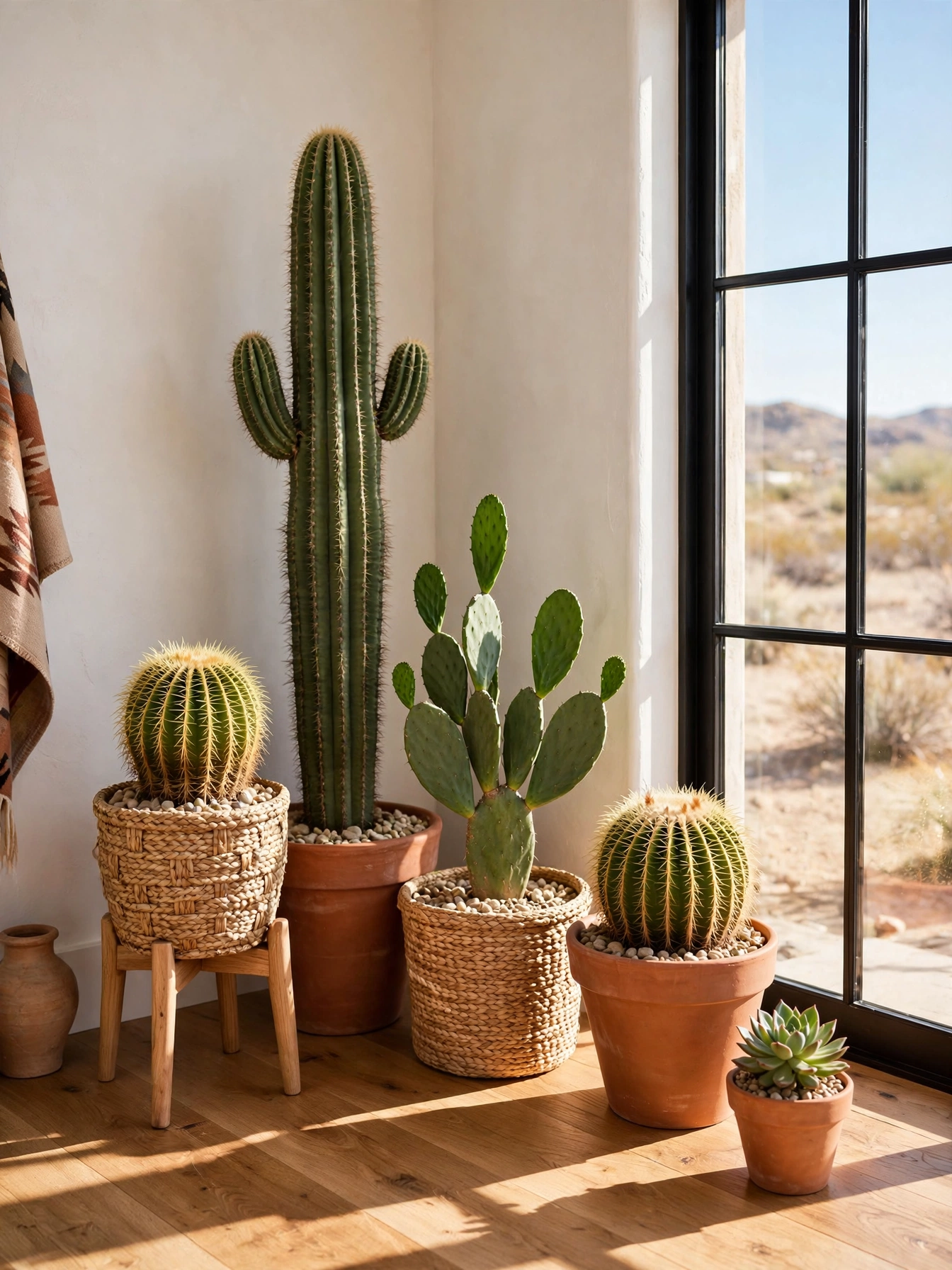
Why This Works:
- Cacti are the living version of desert landscape art.
- They thrive on neglect, needing water only every 3 to 4 weeks.
- Sculptural shapes add height without another furniture piece.
- Terracotta pots echo the desert palette of the whole room.
Group 5 to 7 plants in odd numbers, varying heights from 8 inches to 36 inches for a natural desert cluster. Use pots with drainage holes and a cactus soil mix of 50 percent perlite for fast drainage. Place the group within 3 feet of a south or west window, since most cacti need 4 to 6 hours of direct sun. Avoid overwatering, the killer of 90 percent of indoor cacti; let soil dry completely between waterings. Budget 60 to 150 dollars for a full corner grouping, with specimen cacti at 30 to 80 dollars each.
Cactus corners suit sunny windows, entry nooks, and homes where houseplants usually die. They fail in low light apartments and homes with curious toddlers, since spines and small hands mix badly. The honest downside is slow growth: a 12 inch saguaro type adds barely 1 inch per year indoors. Wear thick gloves when repotting, and repot only every 2 to 3 years.
Pro Tip: Top dress pots with a 1 inch layer of coarse sand or pebbles to keep soil from splashing and to discourage fungus gnats.
Modern Western Living Room Ideas: Desert Hues
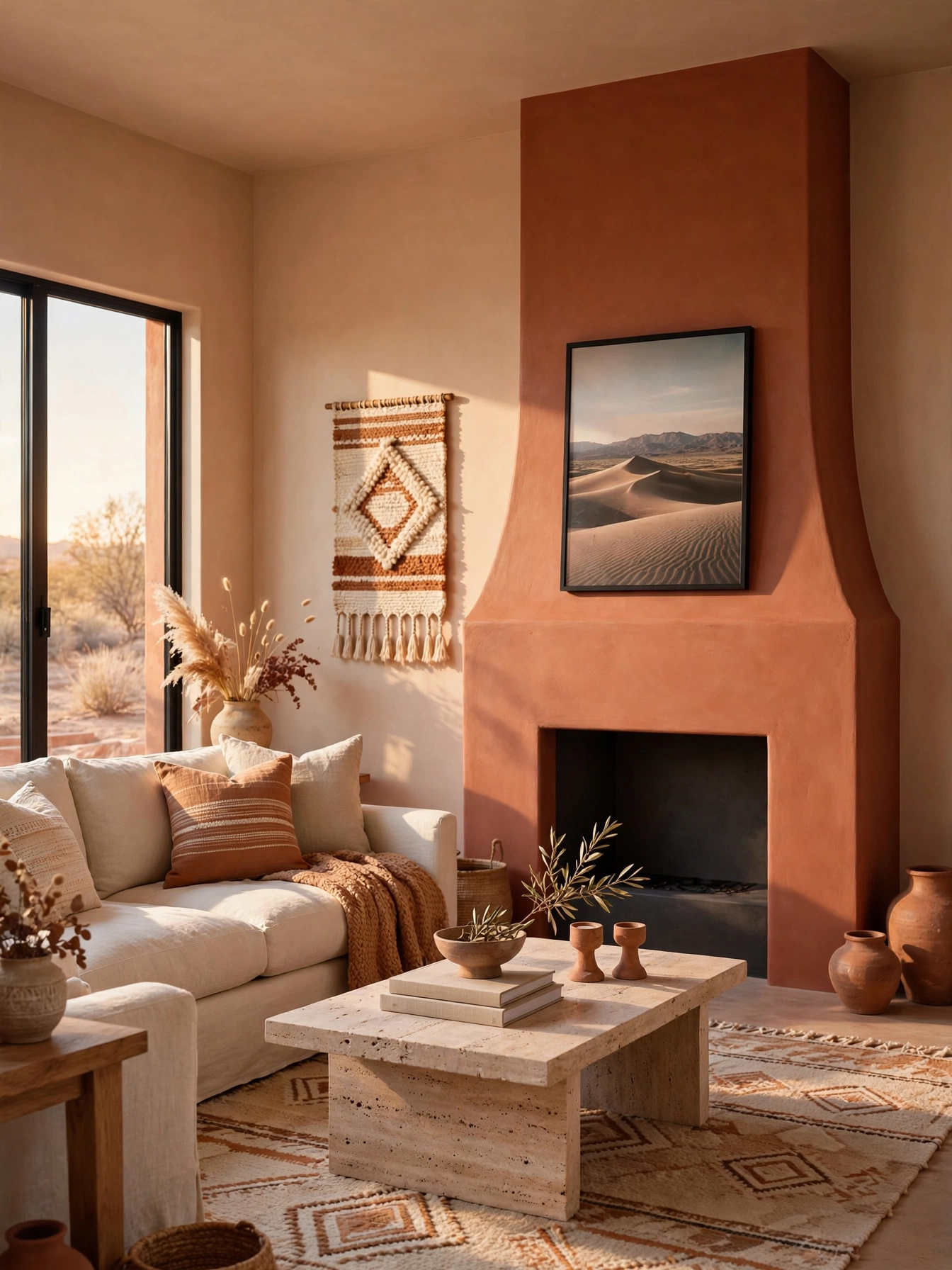
Why This Works:
- Desert hues, terracotta, sand, clay, feel warm without going orange.
- One accent wall delivers color for the price of 2 gallons of paint.
- Warm walls make leather and wood furniture look richer.
- Matte finishes hide wall imperfections better than eggshell.
Paint the accent wall in a muted terracotta with an LRV, light reflectance value, between 25 and 40, deep enough to read as color but light enough to keep the room bright. Test 2 by 2 foot swatches on 2 walls and view them at 3 times of day before committing. Keep remaining walls in a warm sand at LRV 65 to 75 so the contrast feels intentional. Avoid glossy finishes on textured walls; matte or flat paint hides flaws. Two gallons cover a 12 by 9 foot wall with 2 coats, costing 80 to 140 dollars for quality paint.
Desert hues suit living rooms, dining rooms, and bedrooms that face north or east and need warmth. They can darken small rooms under 120 square feet, so use them as wainscot or half walls there. A fair warning on bold color: terracotta is harder to cover than beige, needing a tinted primer plus 2 coats. Live with the swatch for a full week first.
Pro Tip: Paint the wall behind the sofa or fireplace, never a window wall, and carry the same hue into 2 small accessories for a pulled together look.
Stamped Tin Panels
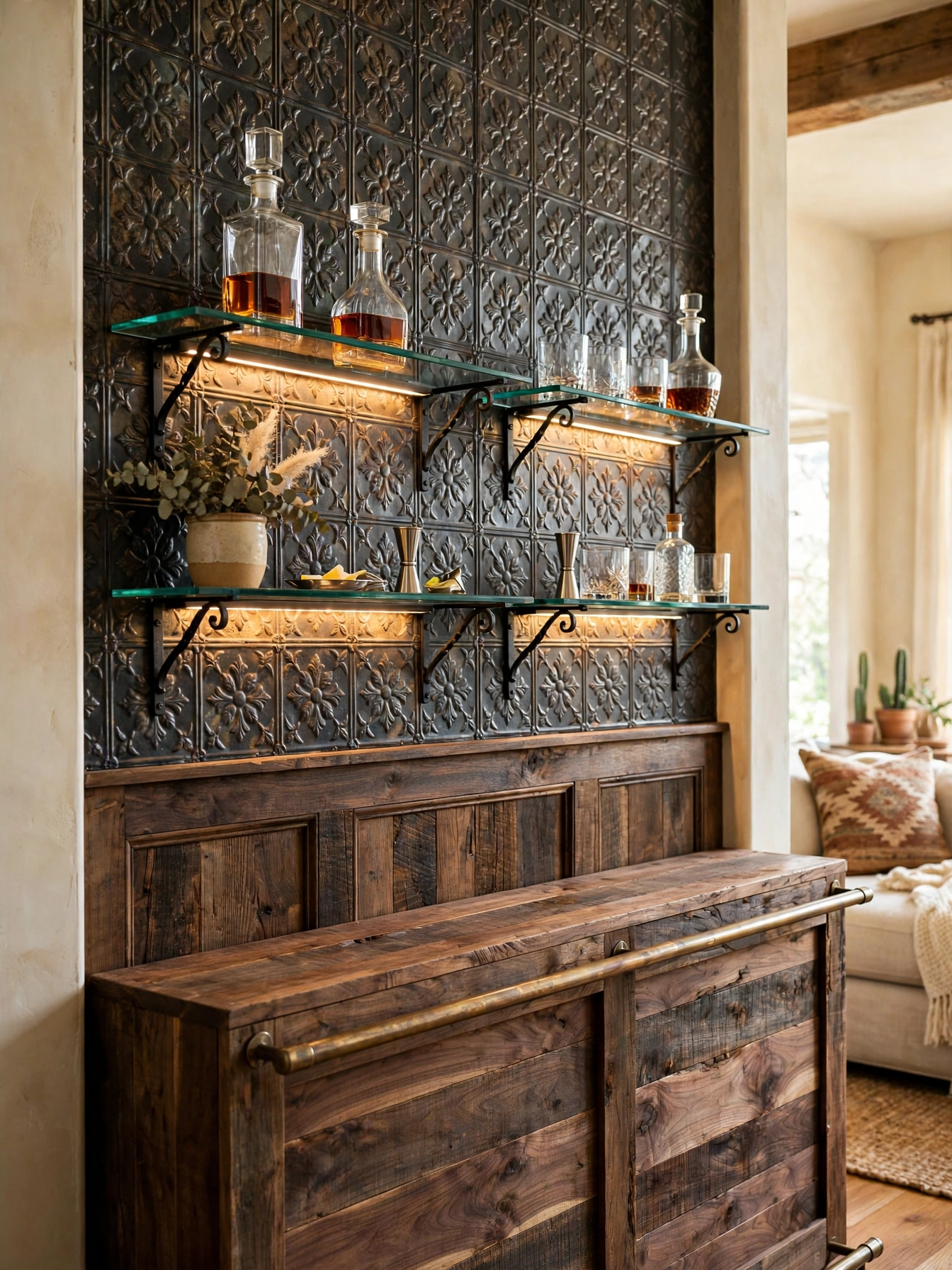
Why This Works:
- Pressed tin brings 19th century craft into a modern room.
- Metallic surfaces bounce light into dark corners.
- Panels install over drywall with construction adhesive, no demo needed.
- The repeating pattern reads as wallpaper with real depth.
Standard tin panels measure 24 by 24 inches or 24 by 48 inches and cost 12 to 30 dollars per panel. Apply them with a quarter inch bead of construction adhesive and finish edges with wood or metal trim. For a wainscot, run panels 36 to 42 inches high with a chair rail cap. Avoid tin in steamy bathrooms without sealing; moisture creeps behind panels and rusts the steel within 18 months. Seal with a clear matte lacquer, 2 coats, for kitchen and bar areas.
Stamped tin suits bar backsplashes, wainscots, and ceiling panels in western and farmhouse rooms. It dents easily, so keep it above chair rail height in high traffic zones. The flip side of the vintage look: it demands coordination, so pair it with simple modern furniture and the room will not slide into theme park territory. Order 10 percent extra for pattern matching and cuts.
Pro Tip: Rub dark paste wax into the pattern recesses to deepen the aged look, then buff the high points for contrast that reads from 10 feet away.
Horseshoe Shelf Brackets
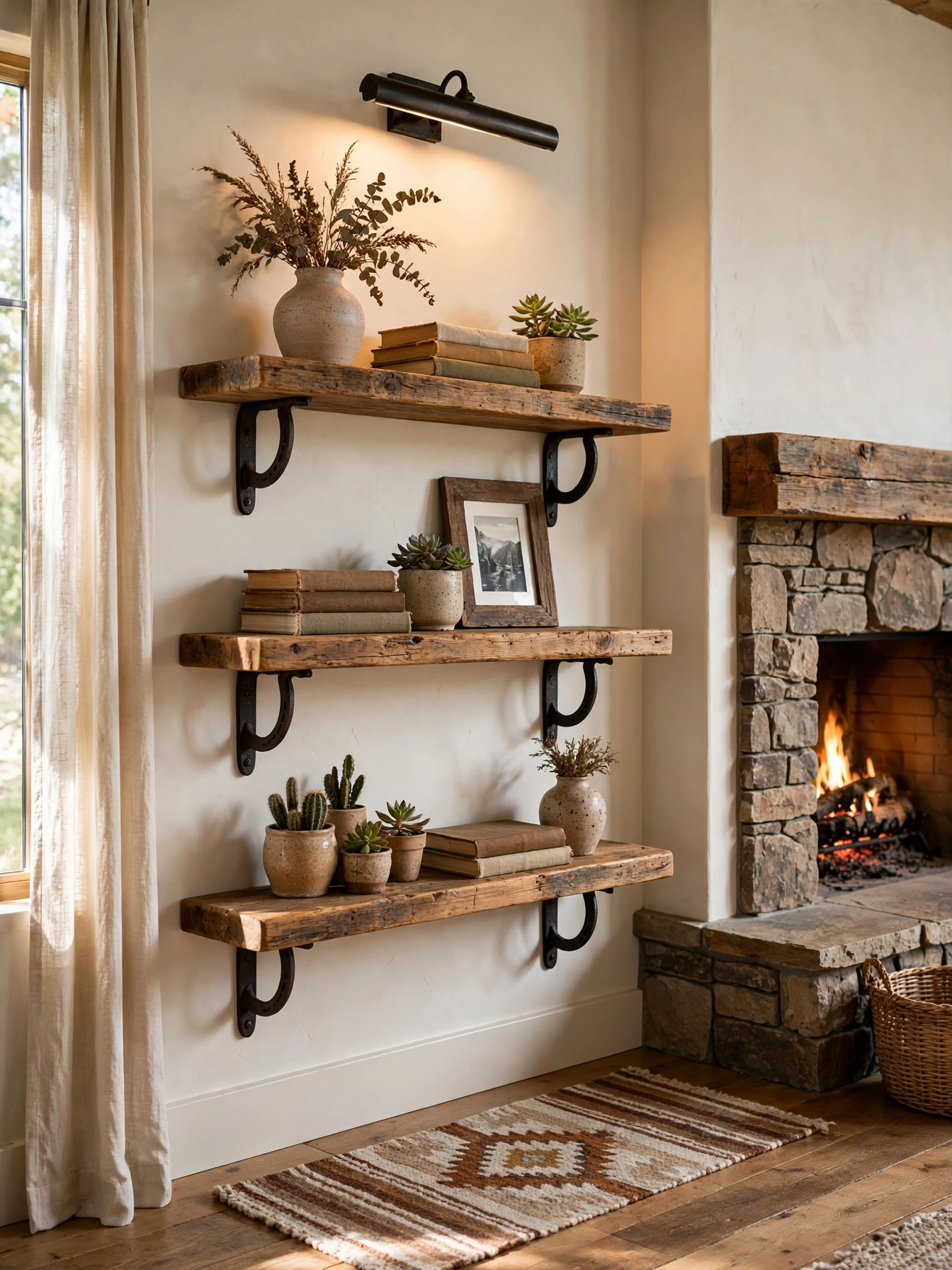
Why This Works:
- Horseshoe brackets turn plain shelves into a western moment.
- Cast iron holds 50 plus pounds per pair without flexing.
- Open shelves display collections that cabinets would hide.
- The motif is subtle enough for modern rooms.
Mount brackets into studs with 3 inch lag screws; drywall anchors alone fail under book loads within a year. Space brackets 24 to 32 inches apart, keeping them 4 inches from each shelf end. Shelves 10 to 12 inches deep hold books and decor, while 8 inch shelves suit small objects only. Avoid loading shelves past 40 pounds per linear foot on pine boards, which sag visibly within 6 months. Brackets cost 15 to 40 dollars per pair, with reclaimed boards at 20 to 50 dollars each.
Horseshoe brackets suit offices, reading walls, and kitchen open shelving in western homes. They collect dust on displayed objects, so this is not the system for minimalists who hate wiping. Be aware of one drawback with open shelves, visual noise: edit ruthlessly, leaving 30 percent of each shelf empty. Stagger shelf lengths by 6 inches for a casual collected feel.
Pro Tip: Seal reclaimed shelf boards with 2 coats of matte polyurethane before mounting, since finishing installed shelves drips onto the wall below.
Frontier Window Treatments
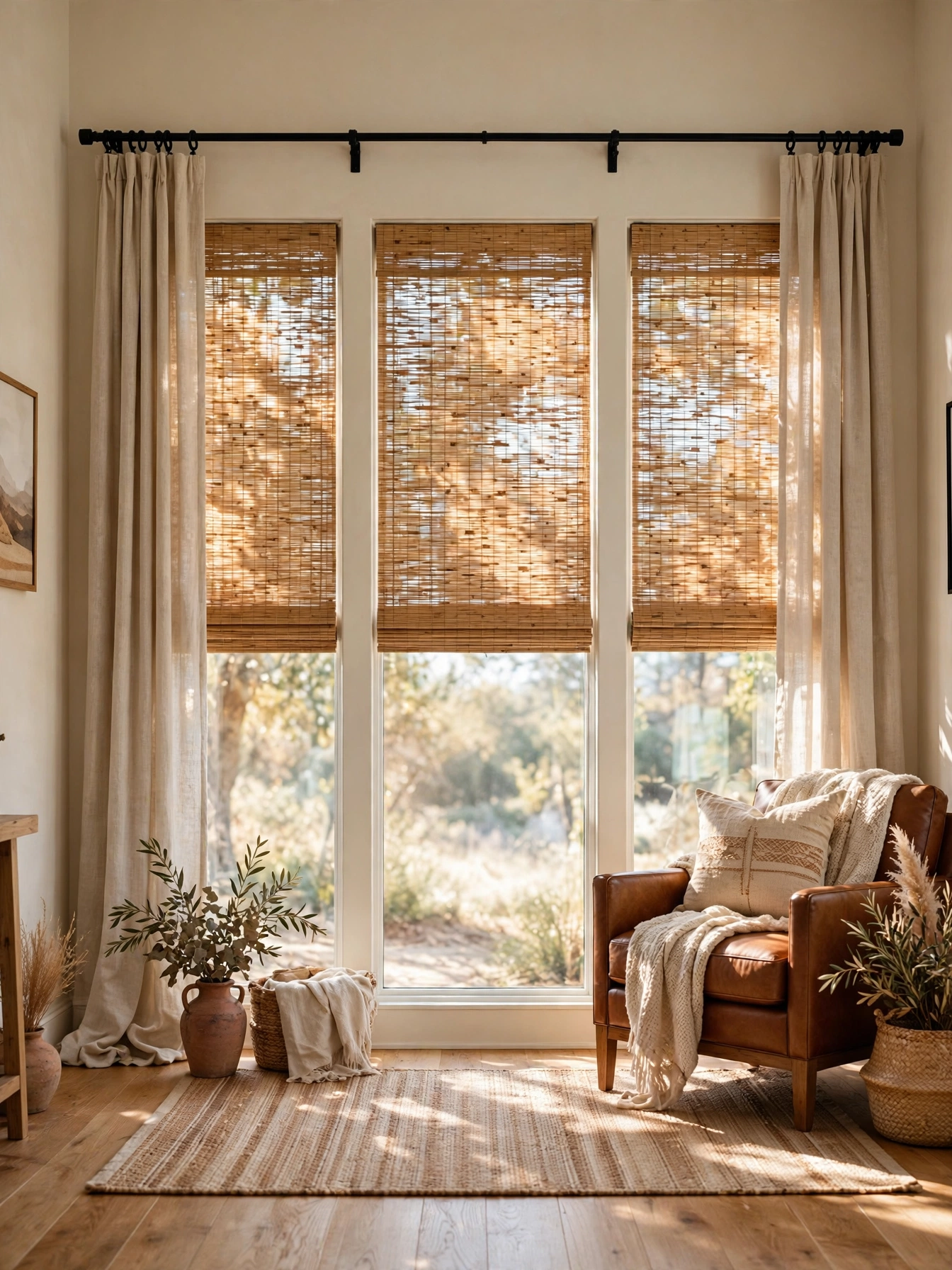
Why This Works:
- Layered linen and woven shades filter harsh desert sun beautifully.
- Natural textures soften the hard lines of leather and iron.
- Floor length drapes make 8 foot ceilings feel a foot taller.
- Neutral fabrics let bolder western art take center stage.
Mount curtain rods 4 to 6 inches above the window frame and extend them 8 to 12 inches past each side so drapes clear the glass fully. Panels should measure 1.5 to 2 times the window width for proper fullness; a 60 inch window needs 90 to 120 inches of fabric. Hem drapes to kiss the floor or puddle 2 inches, never hover 3 inches short. Avoid heavy velvet in western rooms; it reads Victorian, not ranch. Linen panels cost 40 to 120 dollars per panel, while woven wood shades run 80 to 200 dollars per window.
Frontier treatments suit living rooms, bedrooms, and dining rooms with strong daylight. They offer less insulation than lined drapes, so add a thermal liner in cold climates. The limitation with linen is wrinkling: embrace the relaxed look or choose a linen blend with 20 percent polyester. Vacuum woven shades with a brush attachment every 3 months.
Pro Tip: Choose cordless woven shades for child safety, and add blackout liners behind linen panels in bedrooms for 95 percent light blocking.
FAQs
What exactly defines modern western living room ideas?
Modern western living room ideas blend frontier materials like leather, reclaimed wood, and stone with clean contemporary lines and quiet palettes. The style keeps silhouettes simple and lets texture carry the theme. Houzz design editors note that restraint separates modern ranch from themed decor.
How much does it cost to furnish a western style living room?
A full room refresh runs 3000 to 8000 dollars using mid range pieces, while a single statement investment like a leather sofa costs 1800 to 4000 dollars. Budget rooms can start under 1000 dollars with cowhide rugs, serape throws, and turquoise accents layered over existing furniture.
Which woods work best in modern western living room ideas?
Mesquite, reclaimed oak, walnut, and distressed pine top the list for modern western living room ideas. Mesquite rates 2345 on the Janka hardness scale, making it the toughest choice for tables. The Spruce recommends testing wood samples against existing floors before committing to large pieces.
How do I keep a western living room from looking dated or kitschy?
Limit theme motifs to 3 statement pieces per room and keep everything else modern and simple. The NKBA style guidance principle applies here: one strong focal point beats a dozen small decorations. Swap heavy carvings for clean lined leather, stone, and iron.
Can I mix western pieces with my existing modern sofa?
Yes, and it often looks better than a full western set. Add a cowhide rug, 2 leather club chairs, and iron lighting around a gray or cream modern sofa. Keep the palette to 3 main colors so the mix feels intentional within a 2-week styling window.
Conclusion
The best modern western living room ideas share three traits: honest materials like leather and reclaimed wood, restrained color palettes built on desert hues, and clean modern silhouettes that keep the look current. Start with one anchor piece, a leather sofa or a stone fireplace wall, then layer in texture through rugs, lighting, and art. Measure twice before ordering, test every wood and paint sample in your own light, and hire a professional for any electrical or structural work. Follow HomelyCrafter on Pinterest for more ideas. Save this to your Pinterest boards so you can refer back to it!

Muhammad Israr is a home decor enthusiast and the writer behind Homely Crafter. He spends his days researching paint colors, layouts and budget-friendly styling ideas, then breaks them down into practical, easy-to-follow guides so you can decorate with confidence.