
Why does a beachy living room feel instantly relaxing, even hundreds of miles from the nearest shore? The answer behind beachy living room ideas is a recipe of sun-bleached color, natural texture, and generous daylight that tells your nervous system to exhale. Coastal design coverage from HGTV points to the same formula: pale woods, woven fibers, and ocean hues kept light enough to bounce light around the room. This guide gives you 21 crisp ideas with exact measurements, material notes, and pro tips, from slipcovered sofas to shell chandeliers. You will find honest trade-offs, budget to premium prices, and clear advice on what to skip.
Whitewash Slipcovered Sofas
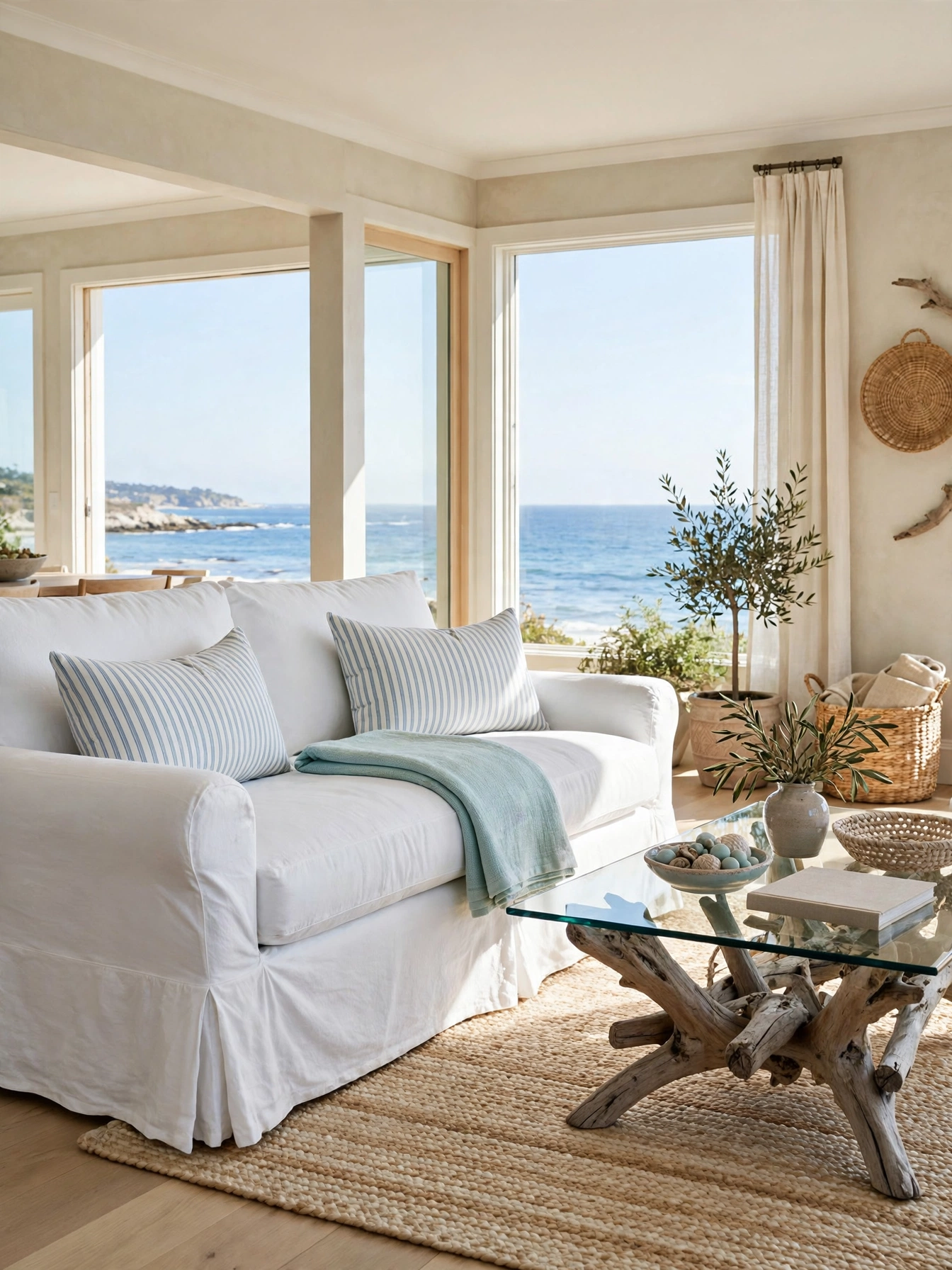
Why This Works:
- White slipcovers bounce daylight deeper into the room.
- Machine washable covers survive sandy feet and sunscreen.
- The relaxed skirt hides 4 inches of leg clutter underneath.
- White works as a blank canvas for seasonal pillow swaps.
Choose a cotton duck or linen blend slipcover in 8 to 10 ounce weight; lighter fabrics wrinkle within days. A standard 84 inch sofa needs a custom or tailored ready made cover, since loose universal covers shift 2 to 3 inches with use. Wash covers in cold water and line dry to limit shrinkage to under 3 percent. Avoid bleach, which yellows white cotton within 10 washes; use oxygen based brighteners instead. Quality slipcovered sofas cost 900 to 2200 dollars, while replacement covers run 200 to 500 dollars.
Slipcovered sofas suit beach houses, family rooms, and pet owners who need washable everything. They demand laundering every 6 to 8 weeks in high use homes, so buy a second cover set for 250 dollars to avoid downtime. The honest downside is the lived-in look: slipcovers never stay crisp like tailored upholstery. If you crave razor-sharp lines, this is not your sofa.
Pro Tip: Buy covers with a soil release finish and keep a spare set, so one can wash while the other stays on the sofa.
Sun-Bleached Rattan Chairs

Why This Works:
- Rattan reads as instant vacation without trying too hard.
- Open cane weave keeps chairs visually light in small rooms.
- Natural rattan costs half of synthetic outdoor weaves.
- Peacock silhouettes add sculptural height at 48 inches tall.
Check that rattan poles are at least three quarter inch thick at the frame; thinner poles crack under 200 pound loads within 2 years. Seat height of 17 to 18 inches pairs with standard 22 inch side tables. Keep natural rattan out of direct rain and hose it down only for cleaning, since soaking loosens the cane lashings. Versus teak outdoor chairs at 400 to 800 dollars, indoor rattan chairs cost 150 to 400 dollars each. Add 4 inch foam cushions with outdoor rated fabric for 60 to 120 dollars per chair.
Rattan chairs suit sunrooms, reading corners, and bedrooms that need a light accent seat. They creak under shifting weight, which bothers some sitters, and the open weave snags delicate fabrics. One limitation is sun fading: natural rattan darkens unevenly in strong sun, so rotate chairs every 3 months. A clear matte sealant slows the change.
Pro Tip: Tighten cane lashings yearly with a dab of wood glue, and keep chairs 24 inches from heating vents so the cane does not dry and split.
Beached Timber Coffee Tables
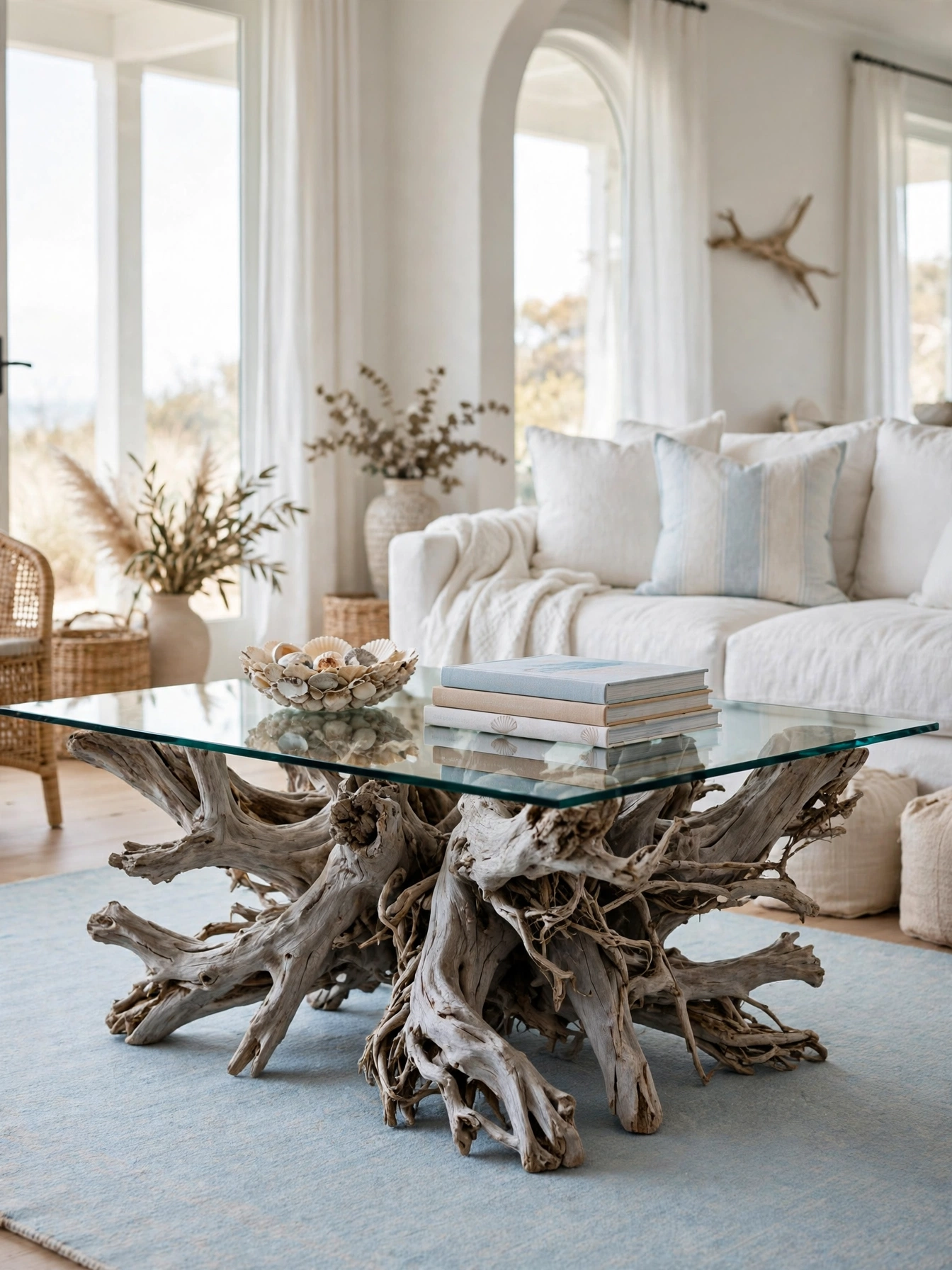
Why This Works:
- No two driftwood bases are alike, so the table is true art.
- Silvery gray tones match both warm and cool palettes.
- Glass tops keep the base visible from every angle.
- Root bases weigh enough to stay put around kids and dogs.
Size the table at two thirds the sofa length and 16 to 18 inches high, with 14 to 18 inches of clearance to the sofa. Genuine driftwood bases run 30 to 48 inches wide and need a tempered glass top at least three eighths inch thick for safety. Seal the wood with 2 coats of matte polyurethane to stop splinters and shedding. Avoid faux resin driftwood; it looks convincing in photos but feels plasticky and light at under 15 pounds. Real driftwood tables cost 600 to 1800 dollars, while driftwood style wood tables run 300 to 700 dollars.
Driftwood tables suit coastal living rooms, beach rentals, and anyone who wants a conversation piece. The irregular base makes storage underneath awkward, so this is not the table for blanket hoarders. Every piece is unique, which is the charm and the risk: you cannot reorder a matching side table. Inspect for salt residue and rinse before bringing pieces indoors.
Pro Tip: Place felt pads under the base contact points and dust the crevices with a soft brush monthly, since driftwood traps sand in its grooves.
Seafoam Accent Walls
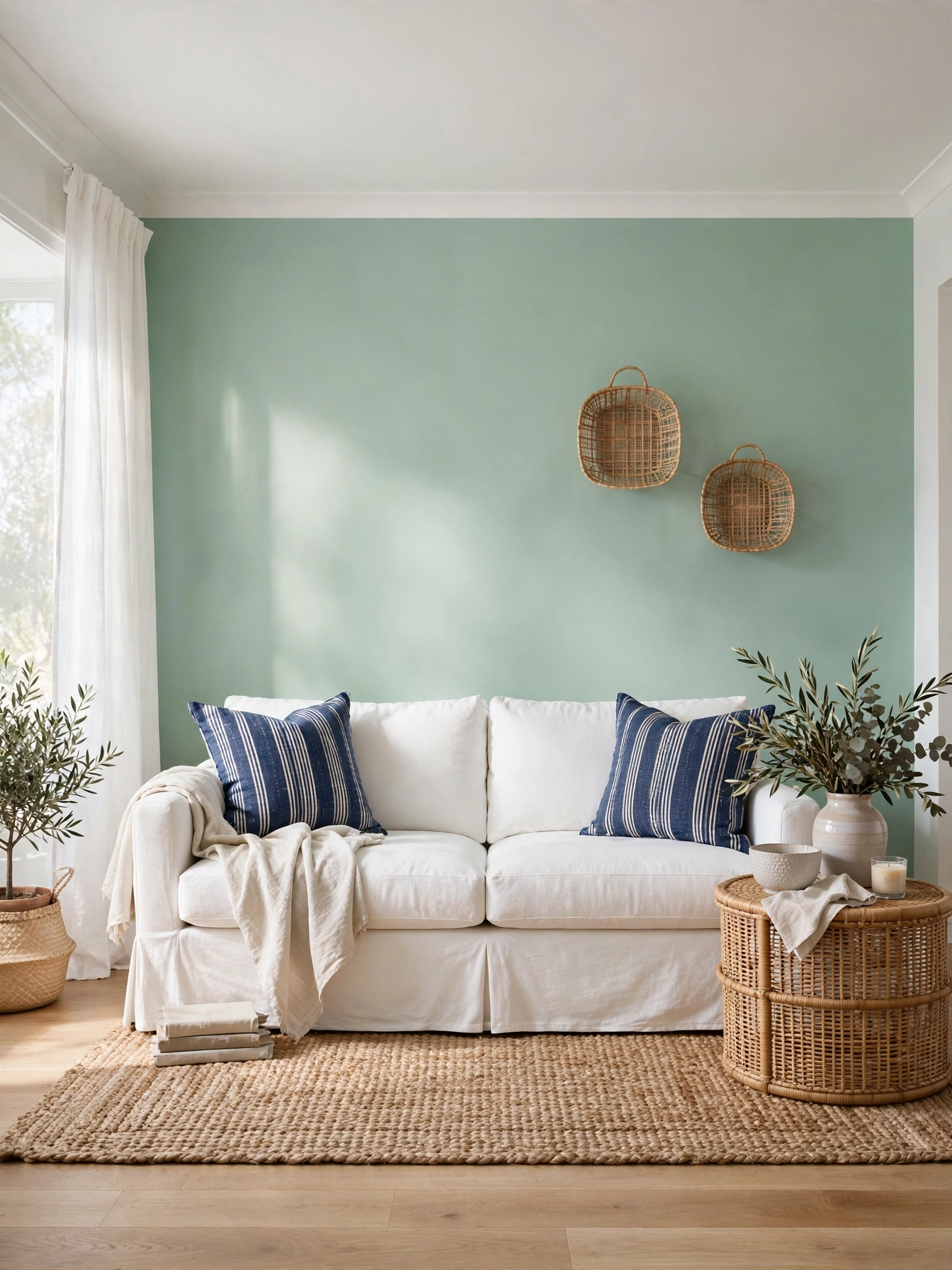
Why This Works:
- Seafoam adds color while staying light enough for small rooms.
- The green blue hue flatters both warm wood and white trim.
- One wall costs under 100 dollars in paint and supplies.
- Soft color recedes visually, making walls feel farther away.
Pick a seafoam with an LRV between 60 and 72 so it reads as color without darkening the room. Paint the wall behind the sofa or the fireplace, never the window wall where backlight washes it out. Apply 2 coats over a white primer for even coverage; pale greens show roller marks on the first coat. Avoid going darker than LRV 55, which turns minty and dated fast. Two gallons of quality paint cover a 12 by 9 foot wall for 80 to 140 dollars.
Seafoam suits living rooms, bedrooms, and bathrooms that need gentle color. It clashes with orange toned woods, turning muddy beside honey oak, so pair it with whitewashed or gray finishes. Here is the compromise on commitment: green is harder to repaint than white, needing a stain blocking primer. Live with large swatches for a week first.
Pro Tip: Test swatches at 2 by 2 feet on 2 different walls and check them at noon and at dusk, since seafoam shifts noticeably with light temperature.
Woven Jute Rugs

Why This Works:
- Jute adds beach texture at a fraction of wool rug prices.
- The golden tone warms up white and pale blue palettes.
- Flat weaves sit neatly under furniture without bunching.
- Natural fibers hide sand tracked in from outside.
Size the rug so the front legs of all seating rest on it: 8 by 10 feet for standard sofas, 9 by 12 feet for sectionals. Handwoven jute runs a quarter to half inch thick; choose a tight weave with at least 12 knots per inch so it does not shed excessively. Use a felt rug pad underneath to add cushioning and stop sliding on hard floors. Avoid jute in damp rooms or under dining tables where spills stain permanently within minutes. Jute rugs cost 150 to 500 dollars for 8 by 10 feet, versus 900 to 2500 dollars for wool.
Jute suits living rooms, bedrooms, and beach houses where texture matters more than softness. It feels rough under bare feet compared with wool, so layer a smaller soft rug on top in lounging zones. One honest downside is staining: jute absorbs liquids fast and most stains never fully lift. Keep a dry cleaning powder on hand for spot treatment.
Pro Tip: Vacuum jute on suction only, no beater bar, every week, and rotate the rug 180 degrees twice a year for even wear.
Shell Collection Displays
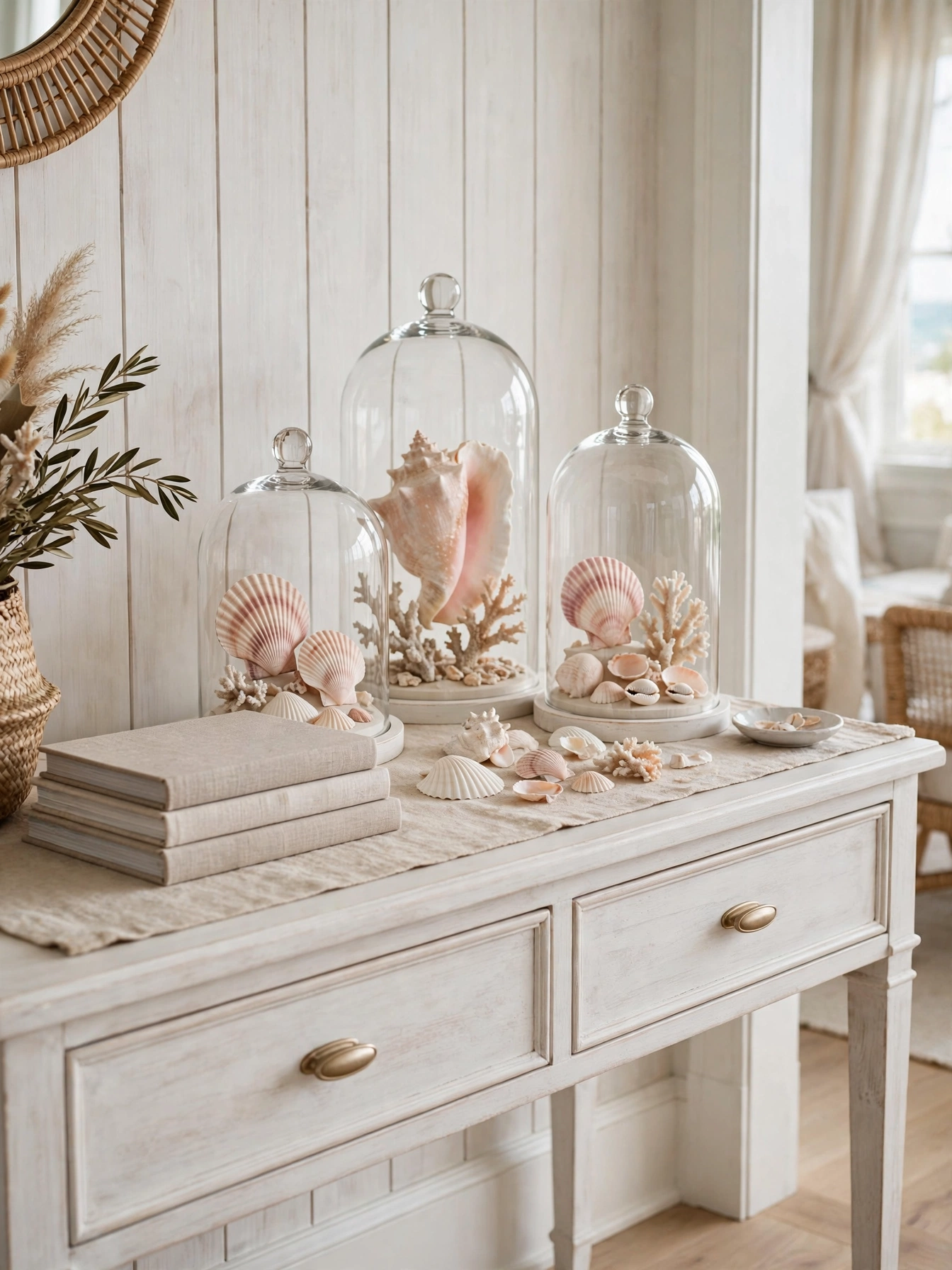
Why This Works:
- Glass cloches turn beach finds into deliberate art.
- Grouping by color keeps collections tidy, not cluttered.
- Shells cost nothing if you collect them yourself.
- Clear glass lets light pass through, keeping displays airy.
Limit displays to 3 to 5 cloches or trays; more than that reads as a gift shop. Vary cloche heights by 4 to 6 inches, from 8 inches to 16 inches tall, for visual rhythm. Soak collected shells in a 50/50 bleach water solution for 2 hours, then rinse and dry fully to kill odor. Avoid gluing shells to surfaces; museum wax holds them invisibly and reverses cleanly. Glass cloches cost 20 to 60 dollars each, with complete displays running 100 to 300 dollars.
Shell displays suit consoles, mantels, and bookshelves in coastal rooms. They collect dust inside the glass, so wipe cloches every 2 months. The limitation is fragility: thin shells chip if knocked, so keep displays above toddler reach at 36 inches plus. Rotate pieces seasonally to keep the arrangement feeling fresh.
Pro Tip: Line tray bottoms with a half inch of white sand to anchor shells, and mist the sand lightly so it sets without shifting.
Beachy Living Room Ideas: Nautical Stripes
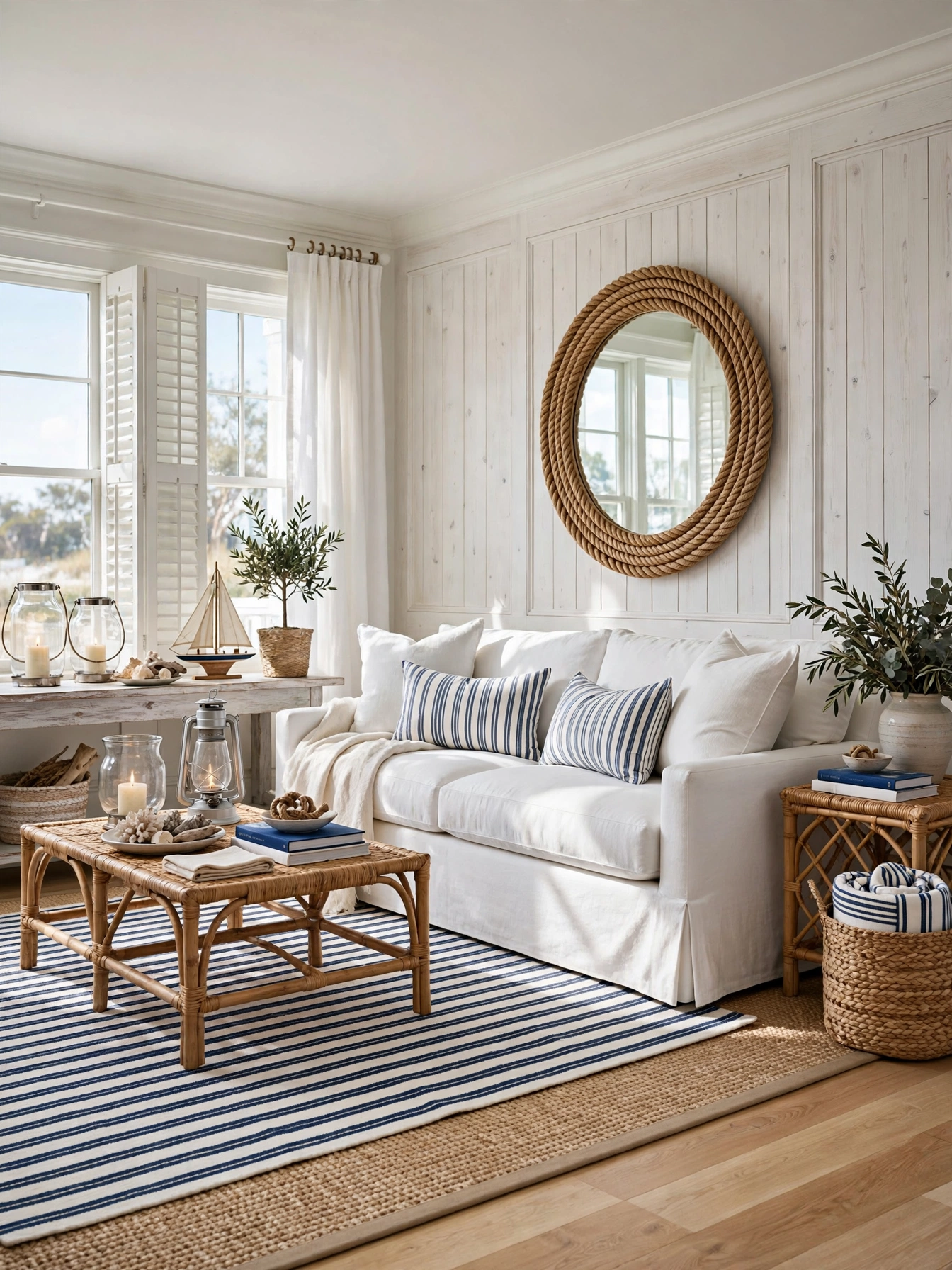
Why This Works:
- Navy stripes are the fastest shortcut to coastal style.
- Stripes in 2 inch repeats feel classic; thinner reads busy.
- Pillows and rugs swap in for under 200 dollars total.
- Navy grounds all white rooms with one strong color.
Mix stripe scales: pair 2 inch ticking stripes on pillows with 4 inch awning stripes on a rug so patterns do not vibrate against each other. Keep stripes to 3 elements maximum per room, for example pillows, rug, and one throw. Choose solution dyed acrylic fabrics for 40 dollars per yard if the room gets strong sun; they hold color 3 times longer than cotton. Avoid red, white, and blue together, which reads as patriotic rather than coastal. Striped pillows cost 25 to 60 dollars each, with striped rugs at 120 to 400 dollars.
Nautical stripes suit living rooms, kids rooms, and porches that want instant coastal identity. They can feel expected, so balance them with one surprising element like coral art or brass. The trade-off is trend fatigue: heavy nautical themes cycle in and out, so keep stripes in movable textiles. Swap pillow covers seasonally for 30 dollars a set.
Pro Tip: Align stripe direction horizontally on seat cushions and vertically on back pillows for a tailored look that reads as intentional.
Breezy Linen Curtains

Why This Works:
- Sheer linen filters harsh sun into a soft glow.
- White sheers keep sightlines open to outdoor views.
- Linen breathes, so rooms feel cooler in summer.
- Floor length panels add 12 inches of perceived height.
Mount rods 6 inches above the frame and 10 to 12 inches wider than the window so sheers stack clear of the glass. Use 2 to 2.5 times fullness for sheers; a 60 inch window needs 120 to 150 inches of fabric for proper gather. Hem panels to just kiss the floor, since sheers that puddle collect dust fast. Avoid heavy blackout linings behind sheers in living rooms; they kill the glow that makes linen magical. Linen sheer panels cost 50 to 130 dollars each.
Breezy curtains suit living rooms, bedrooms, and dining rooms with good views and moderate sun. They offer zero privacy at night with interior lights on, so layer them over blinds or shades. The flip side is wrinkling: linen sheers need steaming after every wash. Choose a linen polyester blend to cut wrinkles by half.
Pro Tip: Wash sheers in cold water on delicate and hang them damp on the rod, since the weight of the wet fabric pulls wrinkles out naturally.
Surfboard Wall Art

Why This Works:
- A real board brings authentic surf culture, not a poster of it.
- Horizontal mounting fills wide 12 foot walls effortlessly.
- Vintage boards with patina cost less than new wall art.
- The 7 foot length creates a natural focal point.
Mount boards with padded surfboard wall racks rated for 30 pounds, screwed into studs; drywall anchors fail under the 15 to 25 pound board weight. Center the board at 60 to 66 inches from the floor, keeping 8 to 10 inches above the sofa back. A 7 foot board suits walls 10 feet and wider; use a 5 foot 6 inch fish shape for smaller walls. Avoid foam boards as decor; they dent and yellow within a year. Vintage wooden boards cost 200 to 600 dollars, while new decorative boards run 150 to 400 dollars.
Surfboard art suits living rooms, game rooms, and teen bedrooms with surf energy. It dominates quiet rooms, so skip it if the vibe is serene spa. Worth noting: wax residue attracts dust, so strip old wax with a wax comb before hanging. Wipe the board with a damp cloth every 3 months.
Pro Tip: Angle the board 5 degrees nose up when mounting, which reads as dynamic and keeps the tail clear of the sofa back.
Coral Reef Prints
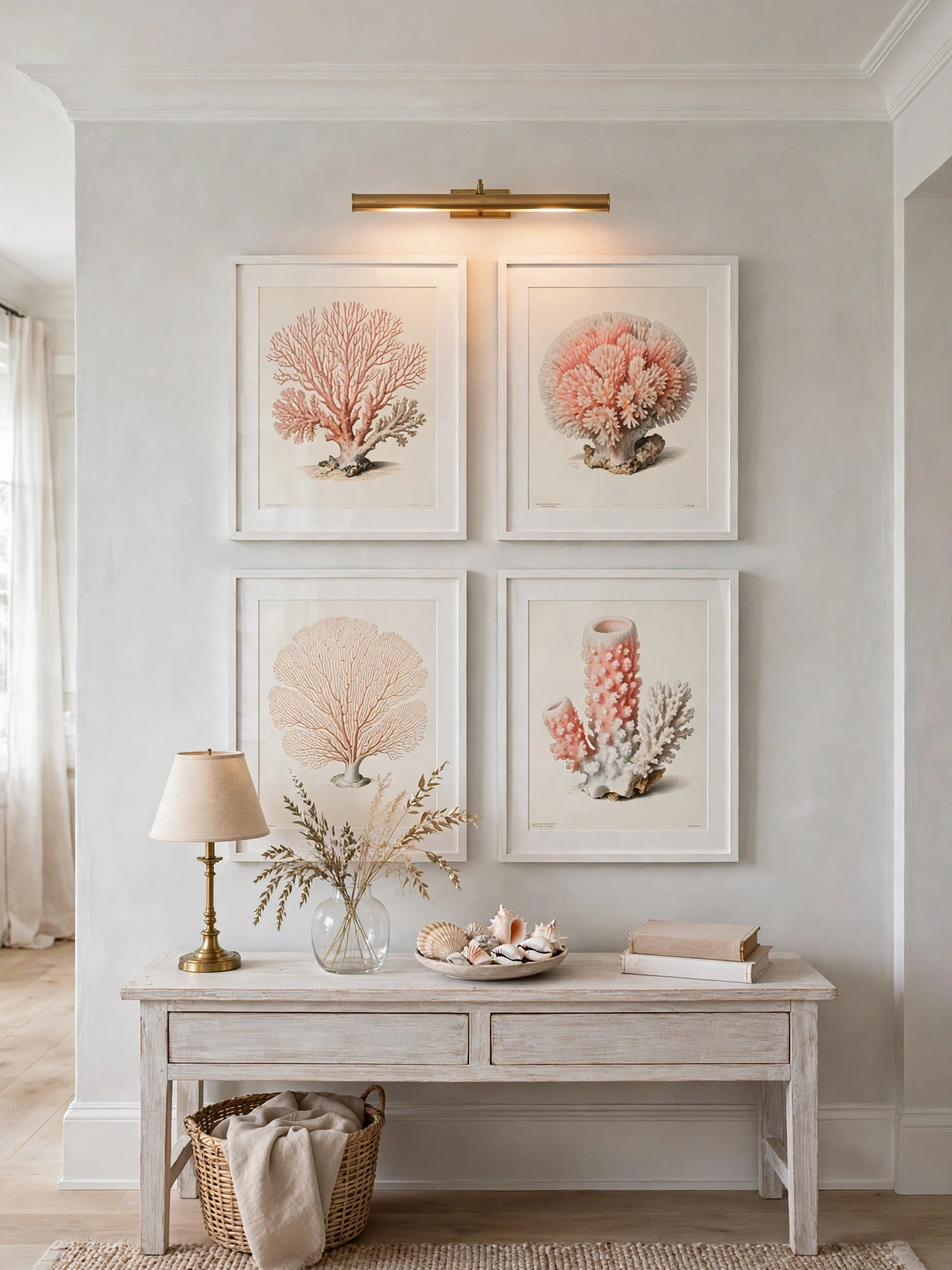
Why This Works:
- Vintage natural history prints feel collected, not decorated.
- Coral pinks warm up cool coastal palettes gently.
- Matching white frames keep a 4 print set cohesive.
- Archival inks resist fading for 75 plus years.
Hang sets in a grid with 3 inches between frames, centering the group at 57 to 60 inches from the floor. Choose 16 by 20 inch prints for walls 8 to 10 feet wide; scale up to 20 by 24 inches for larger walls. Use UV protective acrylic instead of glass, which cuts 98 percent of fading rays and weighs half as much. Avoid cheap inkjet prints on thin paper; they cockle in humidity within 6 months. Framed sets cost 160 to 400 dollars for 4 prints.
Coral prints suit hallways, bedrooms, and living room walls that need soft color. They fade in direct sun without UV glazing, so keep them on north or east walls. Be aware of one drawback, specificity: coral art commits the room to coastal style. Choose black and white versions if you want flexibility to restyle later.
Pro Tip: Buy all 4 frames from one batch so the whites match exactly, since white frame finishes vary noticeably between production runs.
Rope Lantern Pendants
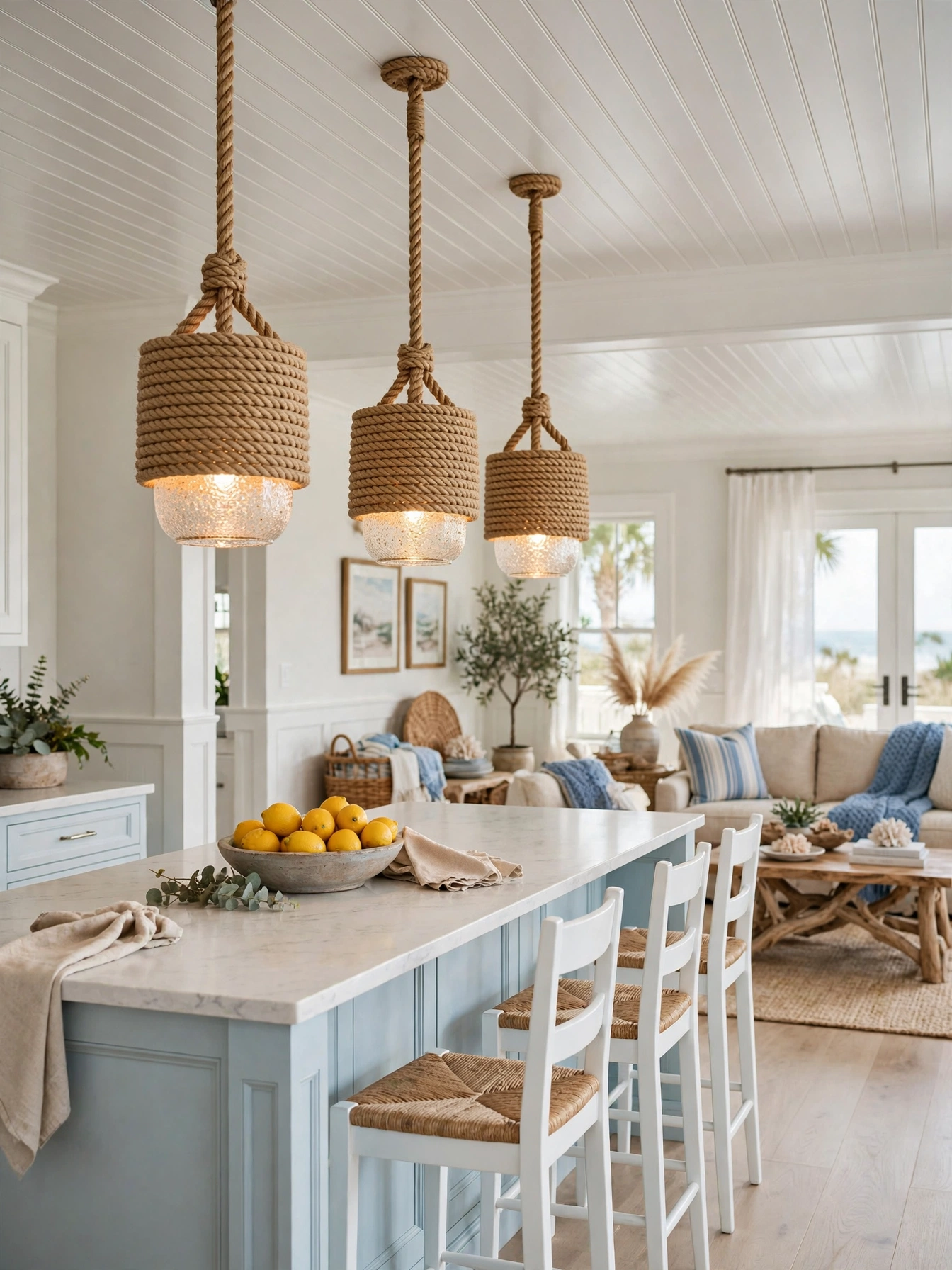
Why This Works:
- Rope texture delivers nautical character without anchors or wheels.
- Seeded glass softens LED light into a warm shimmer.
- Three pendants fill a 7 foot island with even light.
- Natural rope costs less than metal or glass designer pendants.
Hang pendants 30 to 34 inches above the island counter and space them 28 to 32 inches apart. Choose fixtures with E26 sockets so you can use standard dimmable LED bulbs at 800 lumens each. Keep rope shades at least 12 inches from range hoods, since cooking grease darkens natural fiber within a year. Avoid rope pendants in bathrooms; humidity loosens the twist and invites mildew. Pendants cost 90 to 220 dollars each.
Rope pendants suit kitchen islands, dining tables, and entry foyers in coastal homes. They shed tiny fibers for the first 6 months, so vacuum shades with a brush attachment monthly. One thing to weigh is dust: textured rope traps it faster than smooth metal. A quick wipe with a dry cloth every month keeps them fresh.
Pro Tip: Spray rope shades with a fabric protector before hanging, which cuts grease absorption by half in kitchen installations.
Sand-Tone Sectionals
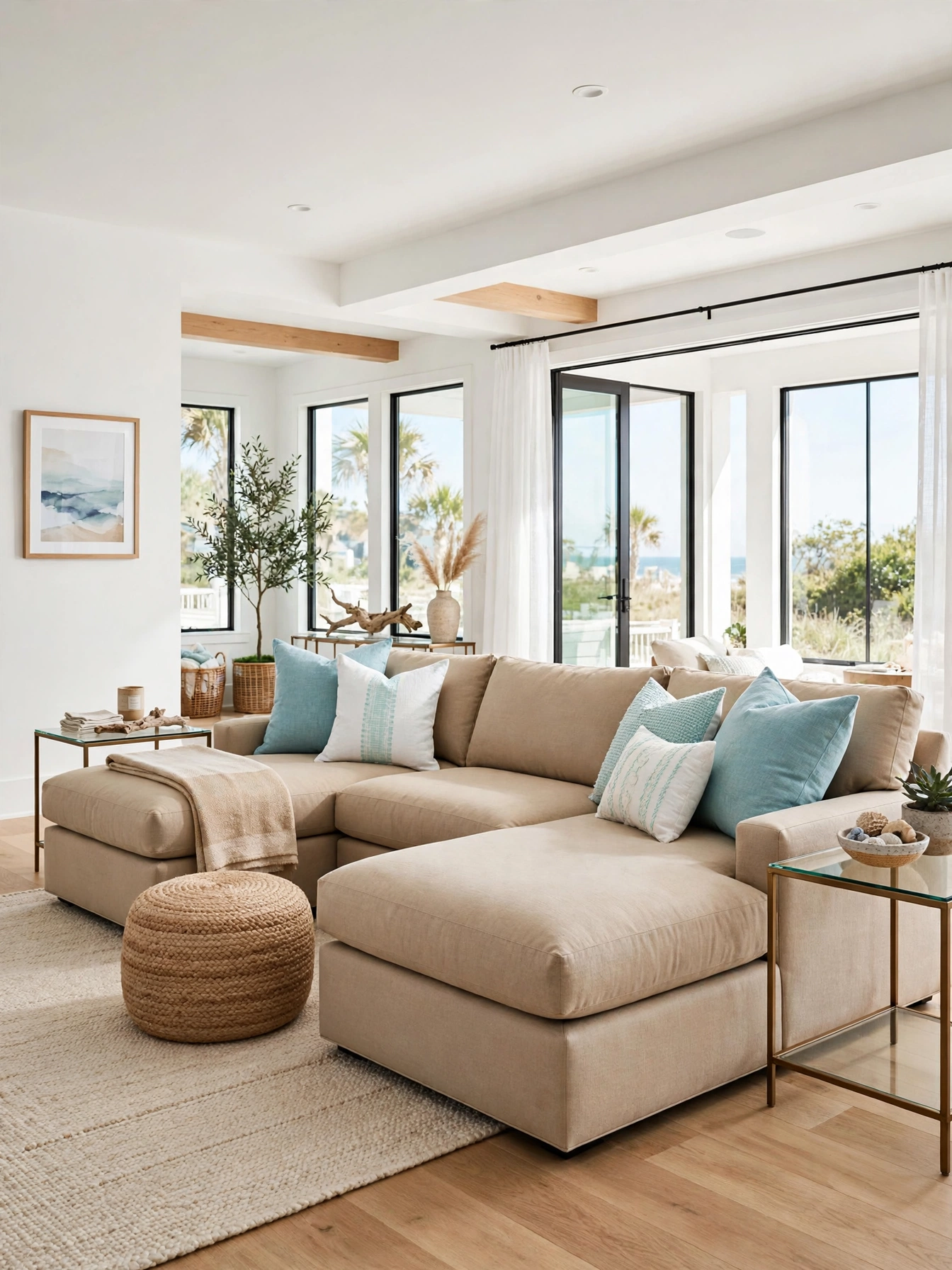
Why This Works:
- Sand tones hide 3 years of wear better than bright white.
- L shaped sectionals seat 6 without extra chairs.
- Performance fabrics resist stains from sunscreen and snacks.
- Warm neutrals bridge beach style and everyday living.
Measure the room first: a 120 inch sectional needs a wall at least 132 inches long, leaving 6 inches of breathing room each side. Seat depth of 23 to 25 inches suits lounging; under 21 inches feels upright. Choose performance fabrics rated at 50,000 plus double rubs for family use. Avoid dark sectionals in beachy rooms; they anchor the space too heavily and fight the airy goal. Sectionals cost 1800 to 4500 dollars in performance fabric.
Sand sectionals suit great rooms, media rooms, and families who live on their sofa. They dominate rooms under 14 feet wide, so measure twice. The honest downside is commitment: a 120 inch piece limits future layout changes. Buy modular sections that split into a sofa and loveseat for flexibility.
Pro Tip: Vacuum crevices weekly with an upholstery attachment, since sand and crumbs migrate into sectional joints within days at the beach.
Glass Float Accents

Why This Works:
- Real fishing floats carry genuine maritime history.
- Aqua glass catches sunlight like nothing else on the table.
- Small scale means zero commitment to the theme.
- Hand blown pieces vary, so each is one of a kind.
Group floats in odd numbers, 3, 5, or 7, varying diameters from 3 to 6 inches. Display them in a shallow bowl or tray so they do not roll; a 12 inch bowl holds 5 small floats. Real vintage floats cost 15 to 40 dollars each, while new hand blown versions run 10 to 25 dollars. Avoid plastic imitations; they scratch within months and look cloudy. Check estate sales and coastal antique shops for the best vintage finds under 20 dollars.
Glass floats suit coffee tables, bookshelves, and bathroom counters in coastal rooms. They roll on hard surfaces, so always contain them in a bowl or on a tray. The catch is breakage: thin vintage glass shatters on tile floors. Keep them away from table edges in homes with active kids.
Pro Tip: Clean floats with a 50/50 vinegar water soak for 30 minutes to dissolve salt haze, then buff dry with a microfiber cloth.
Beachy Living Room Ideas: Palm Greens

Why This Works:
- Palms add the tropical layer that paint cannot.
- Large plants fill empty corners better than furniture.
- Greenery contrasts beautifully with white and sand palettes.
- Live plants improve perceived air quality and calm.
Choose palms suited to indoor light: parlor palms tolerate low light, while kentia palms need bright indirect light for 6 plus hours. Keep plants in nursery pots inside decorative baskets for easy watering, and empty saucers so roots never sit in water. Water when the top 2 inches of soil feel dry, roughly every 7 to 10 days. Avoid placing palms within 3 feet of heating vents, which brown the fronds within weeks. Palms cost 30 to 120 dollars depending on height, with baskets at 20 to 50 dollars.
Palm groupings suit bright living rooms, sunrooms, and entry corners with 6 foot plus ceiling clearance. They demand consistent care; a neglected palm drops fronds and looks sad fast. One limitation is pets: sago palms are toxic to cats and dogs, so choose parlor or areca palms in pet homes. Dust large fronds monthly with a damp cloth.
Pro Tip: Rotate palms a quarter turn every 2 weeks so growth stays even, and mist fronds twice weekly in dry winter air.
Bleached Oak Floors
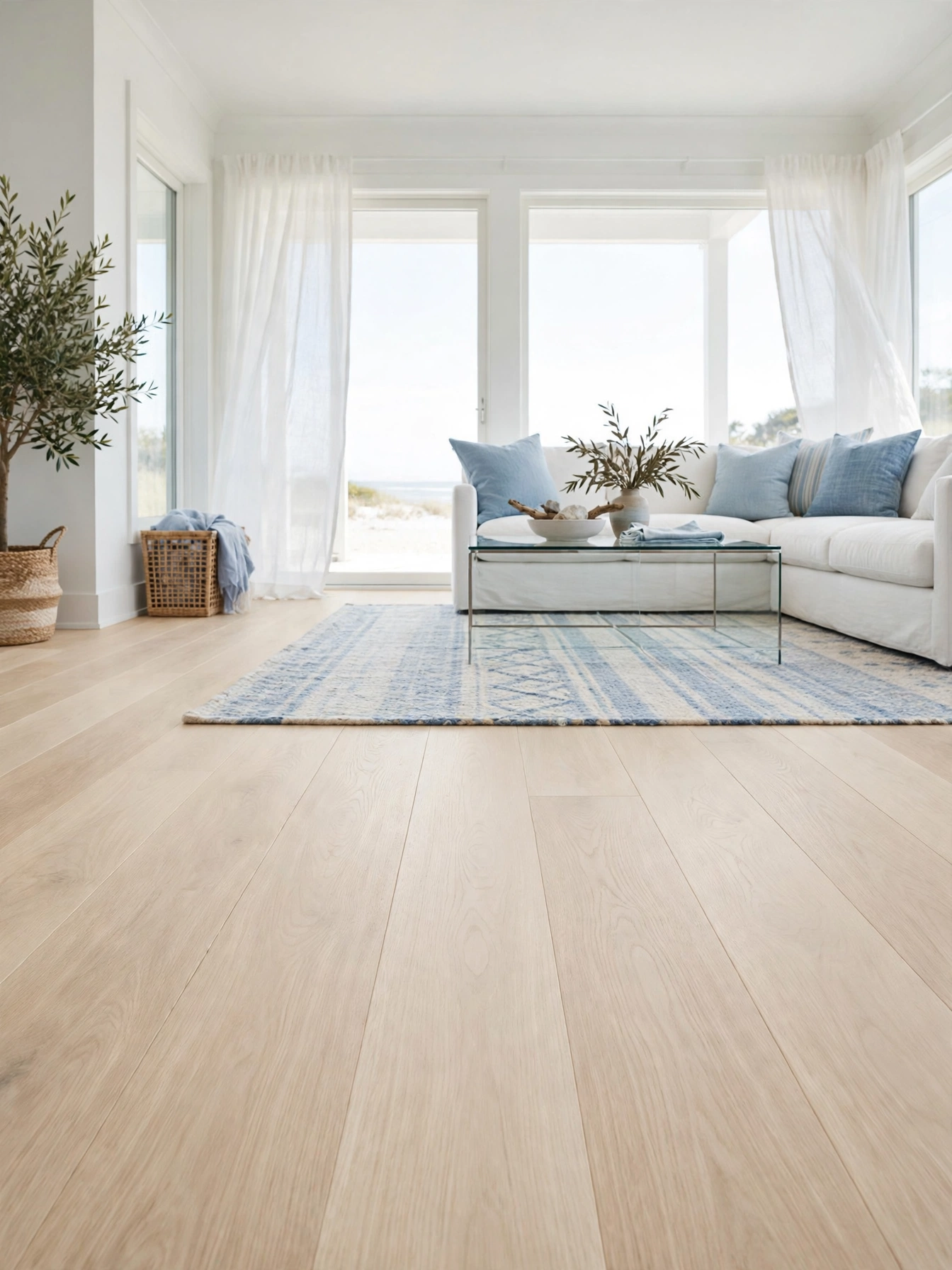
Why This Works:
- Pale floors reflect 20 percent more light than medium oak.
- Bleached tones make rooms feel 2 feet wider.
- Light floors hide dust and sand between cleanings.
- Blonde wood pairs with every coastal color scheme.
Bleached oak rates 1360 on the Janka scale, same as standard white oak, since bleaching affects color only. Choose 7 inch plus wide planks for a modern coastal look; narrow strips read traditional. Finish with a matte water based polyurethane in 3 coats to lock in the pale tone; oil finishes amber the wood within 2 years. Avoid bleaching floors yourself with two part wood bleach; the results streak without professional equipment. Installed bleached oak costs 12 to 20 dollars per square foot.
Bleached floors suit living rooms, bedrooms, and beach houses where brightness is the goal. They show dark pet hair and navy lint clearly, so they suit light colored pets best. The trade-off is refinishing cost: rebleaching runs 5 to 8 dollars per square foot on top of sanding. Use felt pads on all furniture to prevent scratches that expose darker wood.
Pro Tip: Clean with a pH neutral wood cleaner only, since vinegar and steam mops dull the matte finish within 6 months.
Hammock Reading Corners
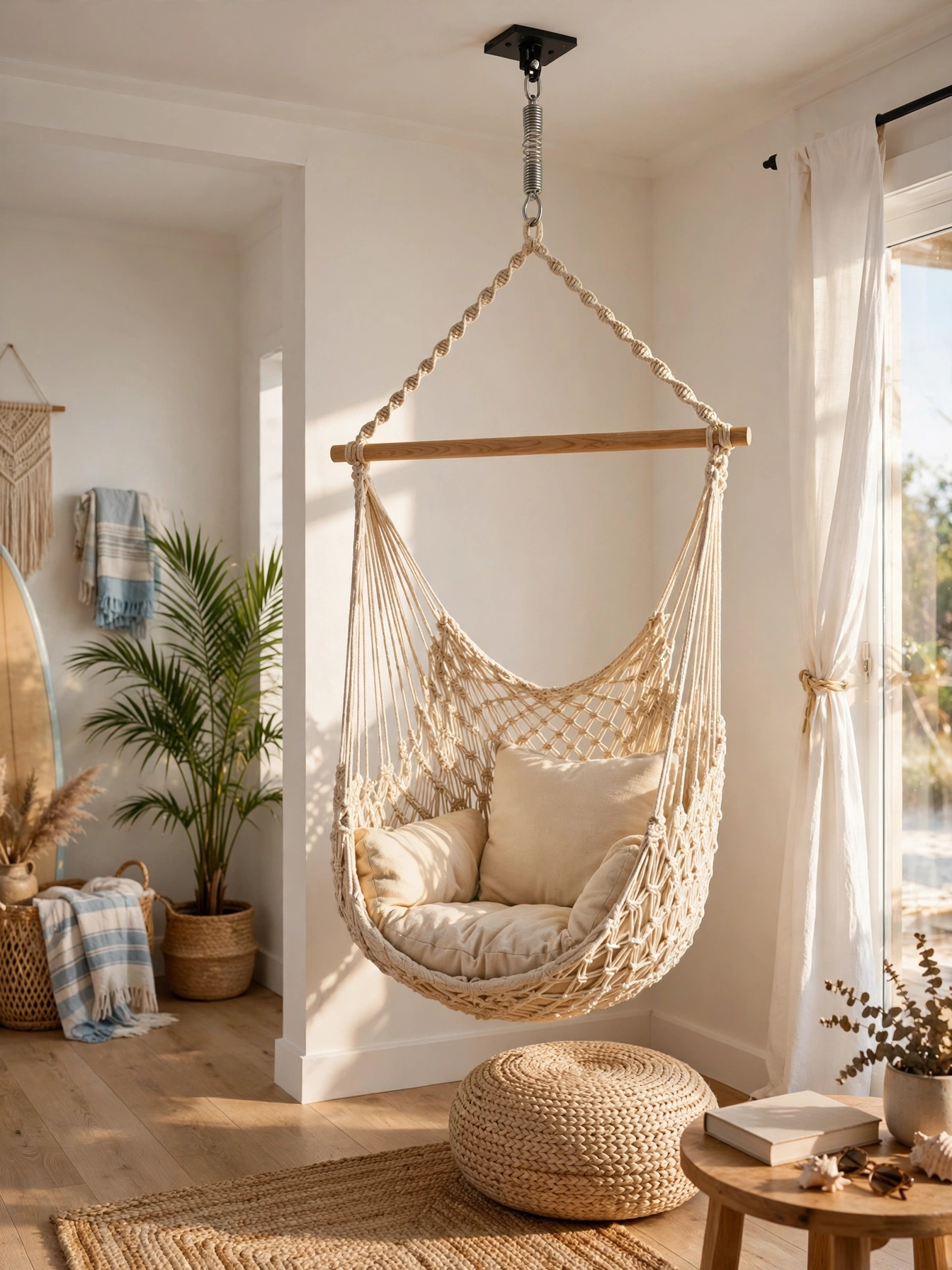
Why This Works:
- A hanging chair turns an unused corner into the favorite seat.
- Gentle swinging calms the nervous system within minutes.
- Macrame texture adds handmade warmth to minimal rooms.
- The chair lifts off the floor, keeping small spaces open.
Mount hammock chairs into a ceiling joist with a 400 pound rated hanging kit; drywall alone fails catastrophically. Hang the seat 18 to 20 inches off the floor so feet touch down easily. Leave a 4 foot diameter clear zone around the chair for safe swinging. Avoid cheap stands that wobble; a 200 dollar steel stand beats a 60 dollar one that tips. Hammock chairs cost 80 to 250 dollars, with quality hanging kits at 30 to 60 dollars.
Hammock corners suit bedrooms, sunrooms, and living room corners with 9 foot plus ceilings. They need a stud finder and 30 minutes of careful install; renters should use a stand instead. A fair warning on motion: swinging makes some readers queasy within 20 minutes. Test with a borrowed chair before drilling into your ceiling.
Pro Tip: Add a 360 degree swivel hook, about 15 dollars, so the chair turns freely without twisting the ropes into knots.
Seaside Gallery Walls
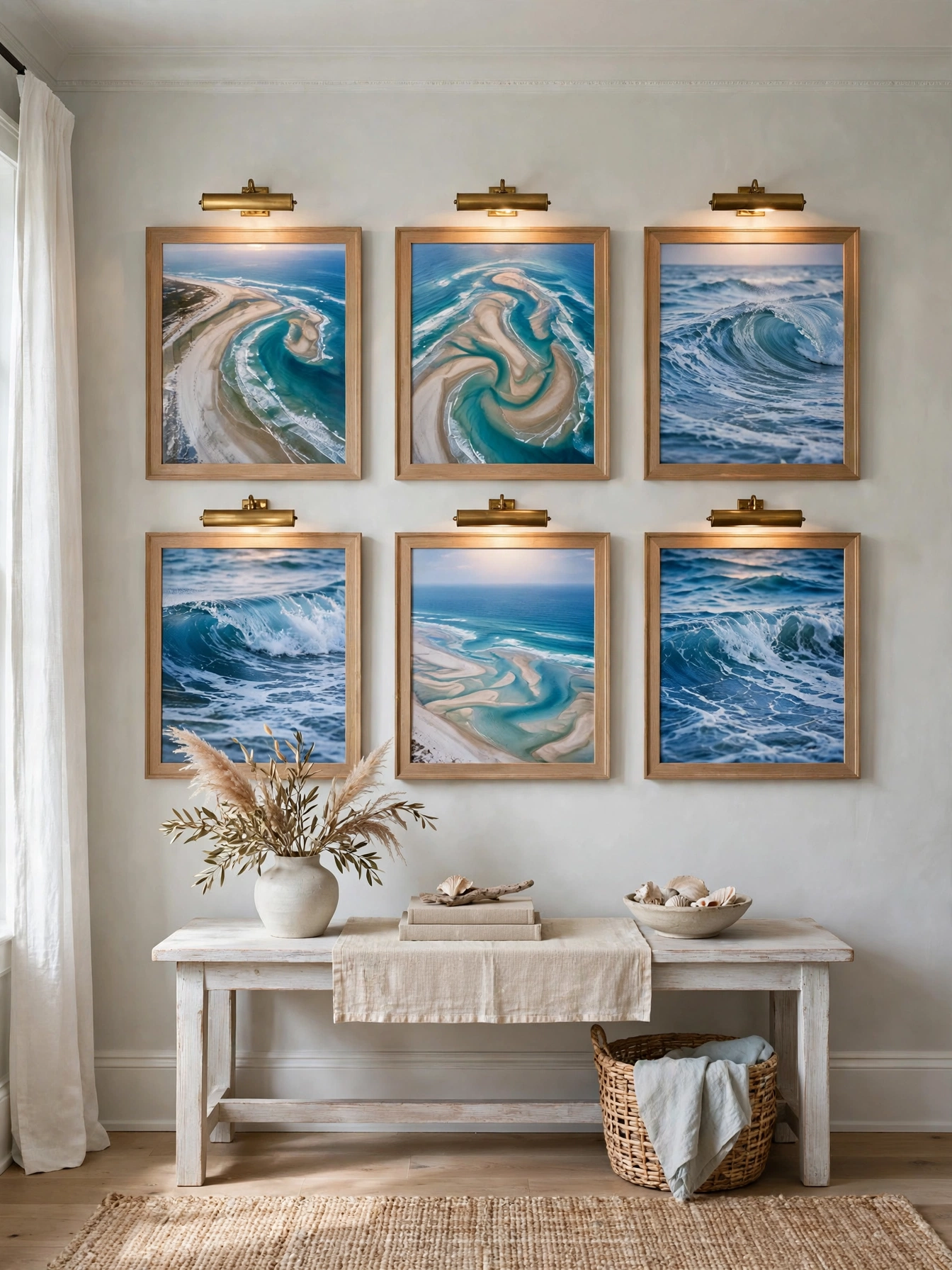
Why This Works:
- Ocean photography brings the horizon indoors.
- Matching light wood frames keep 6 prints cohesive.
- Aerial shots add abstract pattern, not just pretty views.
- Two rows of three fit perfectly over a 60 inch console.
Print photos at 16 by 20 inches minimum; smaller prints disappear on 12 foot walls. Keep 2 to 3 inches between frames and center the arrangement at 57 to 60 inches from the floor. Use the same frame profile and finish across all 6 for a collected but tidy look. Avoid mixing black frames with light wood in one wall; the contrast fights. Budget 240 to 600 dollars for 6 framed prints, or 80 to 150 dollars printing your own photos.
Seaside galleries suit stairwells, hallways, and living room walls that need a view. They demand decent source photos; phone shots under 2 megapixels pixelate at 16 by 20 inches. The limitation is sun: hang on walls that get under 3 hours of direct sun daily, or use UV acrylic. Rotate prints yearly to keep the wall feeling fresh.
Pro Tip: Print on matte fine art paper, not glossy, since matte kills reflections and makes ocean blues look 20 percent richer.
Capiz Shell Chandeliers
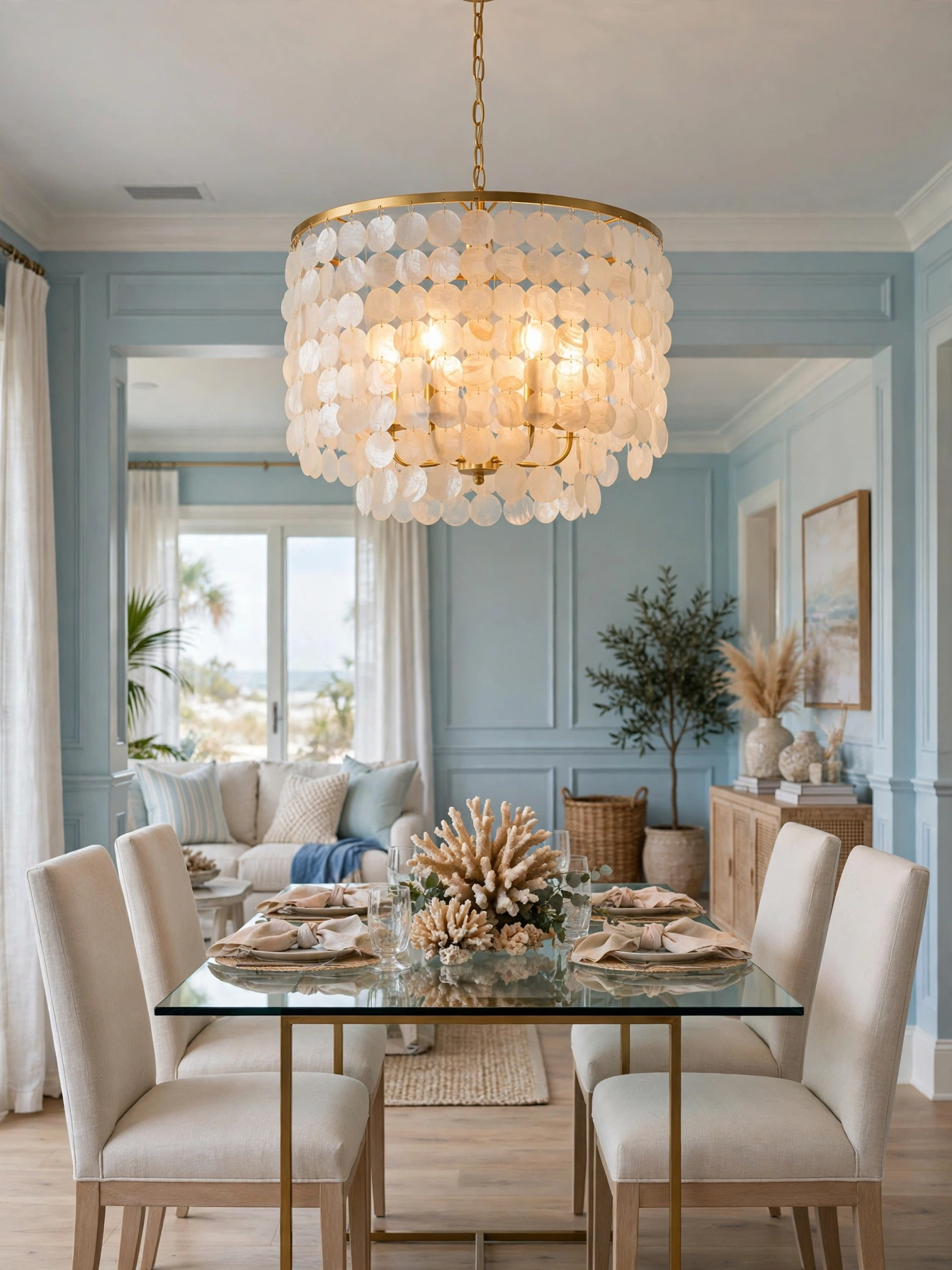
Why This Works:
- Capiz shells glow like mother of pearl when lit.
- The 24 inch drum scale suits 8 to 10 foot dining tables.
- Shells diffuse light softly with zero harsh shadows.
- Pearl tones bridge coastal and glamorous styles.
Hang the fixture 30 to 36 inches above the dining table and center it on the table, not the room. Capiz chandeliers weigh 15 to 30 pounds, so a standard ceiling box usually suffices, but adding a new circuit or relocating wiring is work for a licensed electrician. Choose LED bulbs at 2700 Kelvin and 400 lumens each to keep shells from yellowing. Avoid placing capiz in steamy bathrooms; moisture warps the thin shells within 2 years. Fixtures cost 250 to 700 dollars.
Capiz chandeliers suit dining rooms, bedrooms, and entry foyers that want soft glamour. They collect dust between shell layers, so blow them out with cool air every 3 months. One thing to weigh is fragility: shells chip if bumped during bulb changes. Keep a few spare shells from the manufacturer for repairs.
Pro Tip: Install a dimmer rated for LEDs, about 30 dollars, and run the chandelier at 40 percent for dinners to get the full pearl glow.
Boardwalk Window Trim
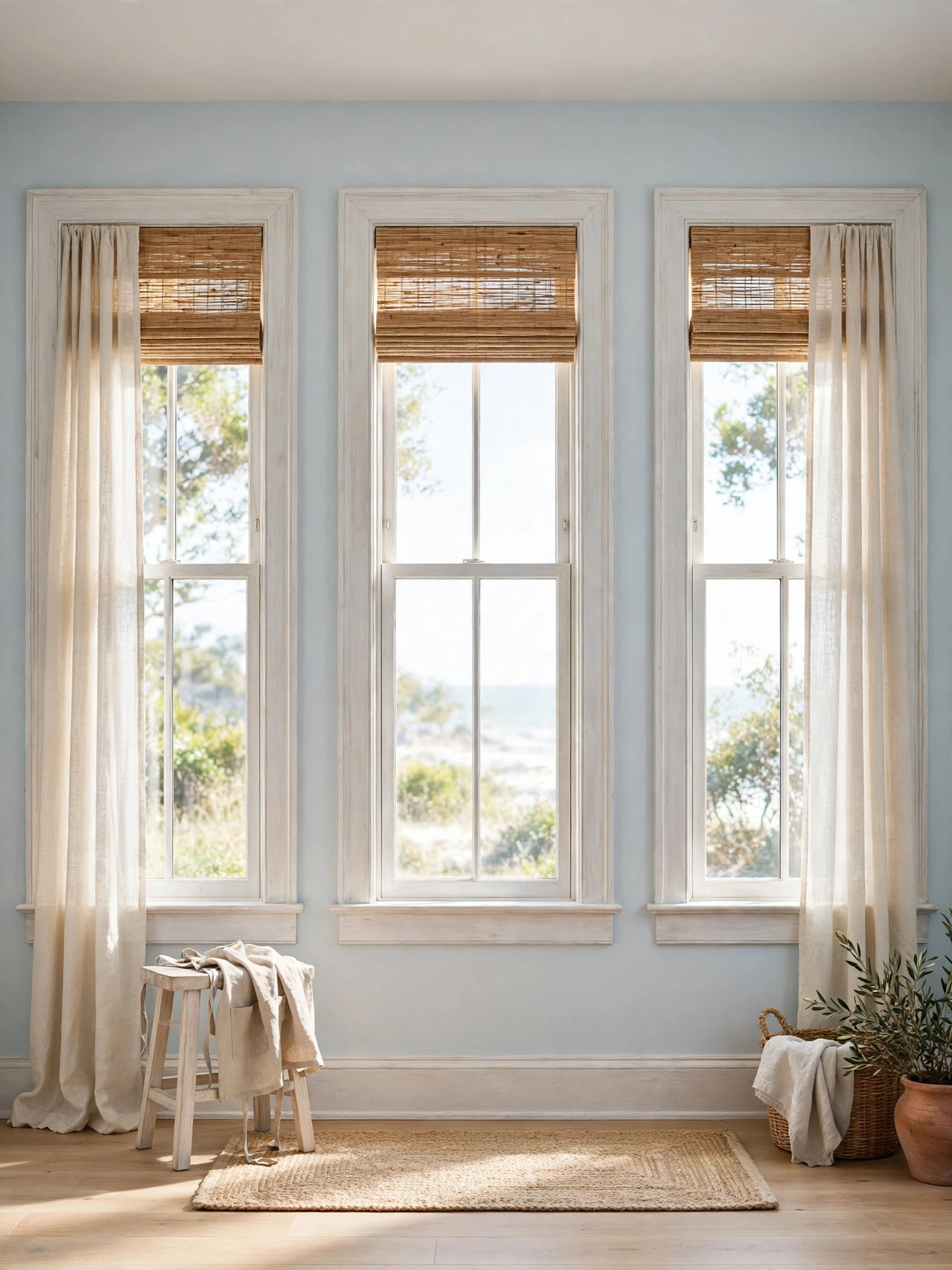
Why This Works:
- Wide trim frames windows like artwork.
- Whitewashed finishes add texture without color.
- Chunky casing hides imperfect drywall edges.
- The boardwalk look suits cottages and new builds alike.
Use 4 to 5 inch flat stock casing for the boardwalk look; standard 2.25 inch casing reads as builder grade. Whitewash with a 50/50 paint water mix, wiping back within 60 seconds so wood grain shows through. Miter corners at 45 degrees and fill nail holes with color matched putty. Avoid high gloss paint; satin or matte suits the casual style. Materials cost 3 to 6 dollars per linear foot, with professional install at 8 to 15 dollars per foot.
Boardwalk trim suits windows, doorways, and baseboards in coastal and cottage rooms. It adds visual weight, so skip it in rooms under 10 feet wide where chunky trim crowds the walls. The catch is dust: flat wide casing collects it on top edges. Wipe trim tops monthly with a damp cloth.
Pro Tip: Caulk the trim to wall joint with paintable caulk before painting, since the shadow gap is what makes DIY trim look amateur.
Beachy Living Room Ideas: Wave Patterns
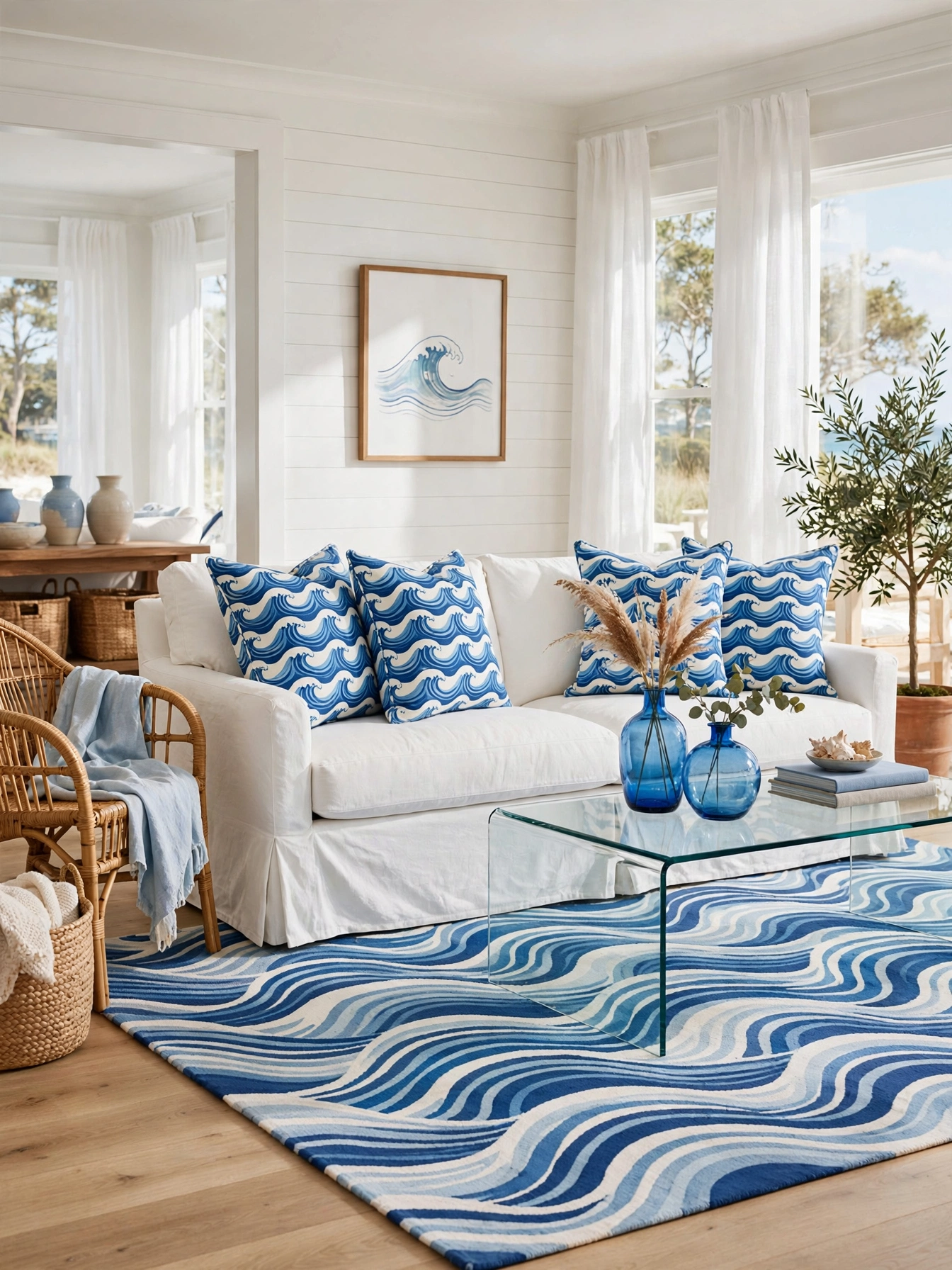
Why This Works:
- Wave motifs capture ocean movement in textile form.
- Repeating curves soften the straight lines of sofas.
- Blue on white patterns stay fresh for years.
- Pillows and rugs deliver the look for under 400 dollars.
Keep wave patterns to 2 scales: a large scale rug print plus small scale pillow prints, so they layer without competing. Choose rugs with a low pile under half an inch for easy cleaning. Match the deepest blue in the pattern to one solid accent, like a throw or vase, to anchor the scheme. Avoid wave wallpaper plus wave rugs together; the room starts to spin visually. Wave rugs cost 150 to 450 dollars, with pillows at 25 to 55 dollars each.
Wave patterns suit living rooms, kids rooms, and beach rentals that want playful energy. They read as youthful, so balance them with tailored furniture in adult spaces. One honest downside is pattern fatigue: bold waves tire faster than solids. Keep them in textiles you can swap in 2 years.
Pro Tip: Pull 3 blues from the rug pattern and repeat each in one small accessory, which makes the whole room feel designed, not random.
Sunny Yellow Pops
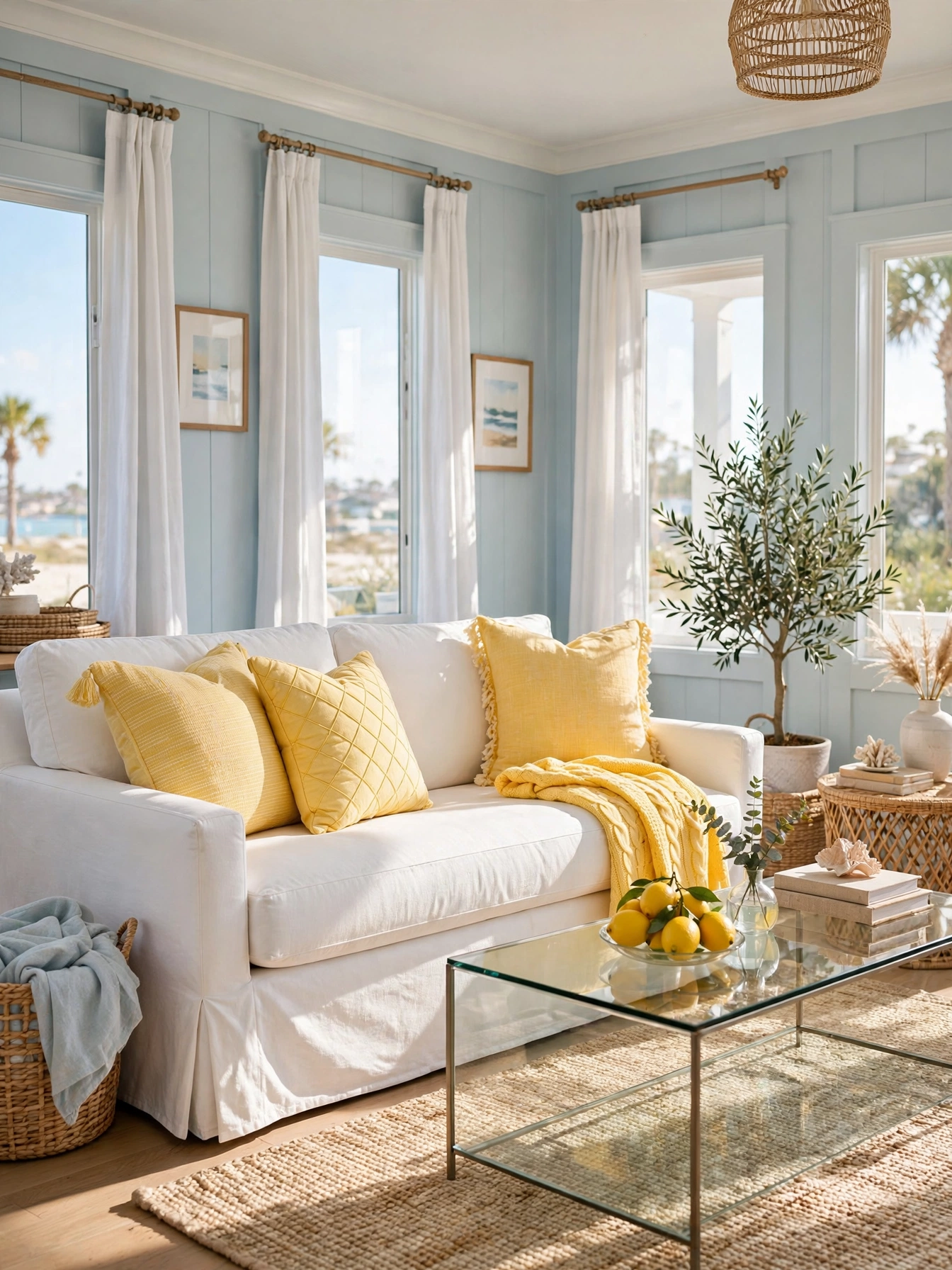
Why This Works:
- Yellow mimics sunlight on cloudy days.
- Small doses energize without overwhelming.
- Three textures, velvet, knit, and cotton, add depth.
- Yellow pairs with every coastal blue and green.
Limit yellow to 3 to 5 small pieces: pillows, a throw, and one vase keeps it sunny, not loud. Choose warm golden yellows with an LRV above 65; neon yellows vibrate against white. Mix textures so the color reads as layered rather than flat. Avoid yellow walls in beachy rooms; the color goes acidic in strong sun within a year. Pillows cost 25 to 50 dollars each, with throws at 40 to 90 dollars.
Yellow pops suit north facing rooms, gray climates, and anyone whose mood lifts with color. They fade in direct sun, so rotate pillows every 2 months in bright rooms. Every choice has a cost, and taste is yellow’s: it divides opinion, so keep it in pieces you can remove in 10 minutes. A bowl of real lemons gives the same effect for 5 dollars.
Pro Tip: Echo the yellow in 2 spots at least 6 feet apart, like a pillow and a vase, so the color travels through the room.
FAQs
What makes beachy living room ideas different from coastal style?
Beachy living room ideas lean bright, playful, and sun-bleached, with white slipcovers, rattan, and surf accents. Classic coastal runs more tailored with navy and polished finishes. HGTV designers describe beachy as the casual younger sibling of traditional coastal style.
How do I keep a white beachy living room clean with kids?
Choose machine washable slipcovers and performance fabrics rated at 50,000 plus double rubs. Wash slipcovers every 6 to 8 weeks and keep a second set on hand. The Spruce recommends soil release finishes on white upholstery in family homes.
Which colors work best in beachy living room ideas?
For beachy living room ideas, the best palette is white, sand, seafoam, aqua, and sunny yellow, all with light reflectance values above 60. Navy works as a single grounding accent. Houzz color guides suggest keeping the palette to 4 hues so the room stays serene.
Can I get the beachy look in a small apartment?
Yes, and small spaces suit the style since pale colors expand rooms visually. Use a 72 inch slipcovered loveseat, a 5 by 8 foot jute rug, and sheer linen curtains. Mirrors opposite windows double the daylight in rooms under 150 square feet.
How much does a beachy living room refresh cost?
A textile only refresh with slipcovers, pillows, curtains, and a rug costs 800 to 2000 dollars. Adding a rattan chair pair and lighting brings the total to 2500 to 4000 dollars. Full furniture replacement runs 6000 to 12000 dollars depending on quality.
Conclusion
The brightest beachy living room ideas share three traits: sun-bleached palettes that bounce light, natural textures like rattan and jute, and playful accents from surfboards to sunny yellow. Start with washable white upholstery, then layer in texture and one strong accent color. Measure your space before ordering, test paint swatches in your own light, and hire a professional for any new electrical work. Follow HomelyCrafter on Pinterest for more ideas. Save this to your Pinterest boards so you can refer back to it!

Muhammad Israr is a home decor enthusiast and the writer behind Homely Crafter. He spends his days researching paint colors, layouts and budget-friendly styling ideas, then breaks them down into practical, easy-to-follow guides so you can decorate with confidence.