
Does a neutral palette mean your living room has to feel flat and forgettable? Not even close. The best neutral living room ideas build depth through layers of texture, temperature, and tone instead of color, and that quiet restraint is exactly what makes them feel calm and expensive.
Across these 22 ideas, you will learn how to layer warm whites against cool grays, mix matte and sheen so light moves through the room, and anchor the whole palette with dark contrast pieces. Every section carries exact measurements, material grades, real price ranges, and the honest trade-offs most guides skip.
Whether your room is a sunlit open plan or a small north-facing box, these ideas show how to keep neutrals interesting without a single bold color. Read through, pick the three layers your space is missing, and start with the wall treatment first.
Warm White Walls

Why This Works:
- Warm whites reflect daylight without the cold glare of stark white paint.
- An undertone of cream keeps the room feeling soft at night under lamps.
- Light walls make a 16 by 20 foot room read larger than its actual footprint.
- White is the easiest backdrop to restyle when seasons or tastes change.
Choose a warm white with a Light Reflectance Value between 85 and 92, such as a creamy ivory or soft alabaster, and paint it in a flat or matte finish to hide wall imperfections. A gallon of quality interior paint covers about 400 square feet, so a 16 by 20 foot room with 9 foot ceilings needs roughly 3 gallons for two coats on the walls. Keep the ceiling one shade brighter than the walls, since ceilings in anything darker read as dingy under most recessed lighting. Avoid cool blue-whites in north-facing rooms, because that light already carries a blue cast and the combination can feel clinical. The industry standard from the Illuminating Engineering Society suggests walls reflect at least 50 percent of light for comfortable brightness, and warm whites easily clear that bar.
Families with kids and pets do well with warm white walls in a scrubbable matte or eggshell formula, since fingerprints wipe off and touch-ups blend invisibly. The honest trade-off is that warm whites show scuffs from furniture more than mid-tone grays, so plan felt pads on every chair leg and a 2 inch gap between sofas and walls. Versus saturated accent colors, warm white gives you the cheapest future restyle, since only accessories need swapping. Rooms with little natural light gain the most, gaining what designers describe as a lifted, breathable feel without adding a single new fixture.
Pro Tip: Paint a 24 by 24 inch test swatch on two different walls and view it at 10 AM, 3 PM, and 8 PM under lamps before committing.
Ivory Monochrome Seating
Why This Works:
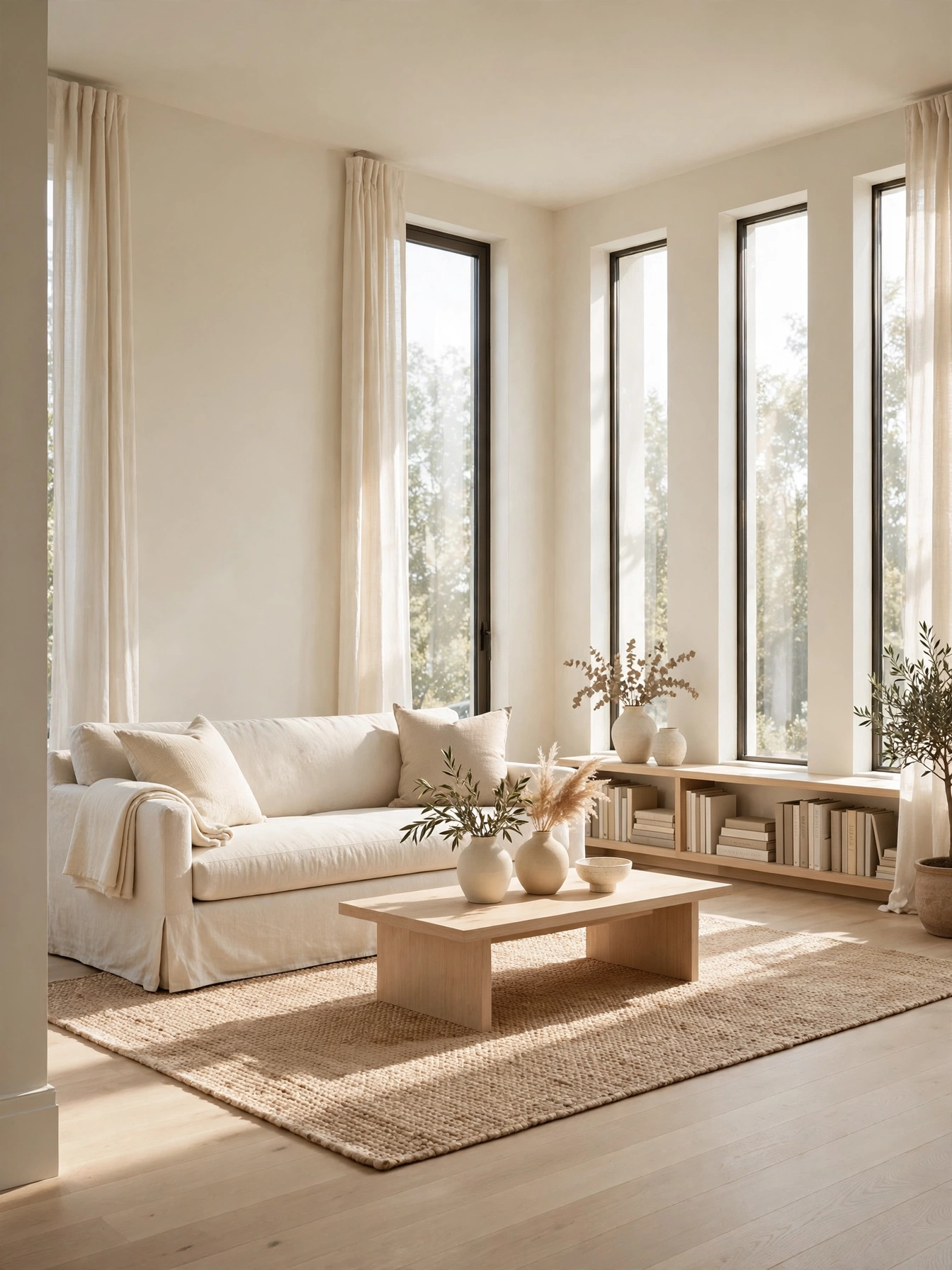
- A single upholstery color in two pieces makes the seating area feel unified.
- Slipcovered sofas in ivory can be removed and washed when life gets messy.
- Monochrome seating lets texture, not color, carry the visual interest.
- Ivory works with both warm wood floors and cool gray rugs underneath.
Pick performance linen or a linen-cotton blend with at least 30,000 double rubs on the Wyzenbeek test for a family sofa, which is the durability benchmark upholstery experts recommend for daily use. A standard 84 inch three-seat sofa in slipcovered linen runs $1,200 to $2,500 at mid-range retailers, while custom pieces climb past $4,000. Face the two sofas 7 to 9 feet apart so conversation feels close and a 36 inch walkway still fits behind them. Avoid loose-weave fabrics under 20,000 double rubs in a main living room, because pilling and thinning show fast on light colors. Against patterned upholstery, ivory monochrome hides lint and pet hair from light-colored animals far better than dark fabrics do.
Apartment dwellers and minimalists love this setup because two matching sofas read as one intentional composition, even in a rental. What you give up is honest: every spill shows on ivory, so keep a fabric cleaner and washable slipcovers as non-negotiables. Households that host often should choose darker ivory or oatmeal rather than bright white, since the deeper tone forgives a week of use between washes. The payoff is a seating area that photographs beautifully and never clashes with new accessories.
Pro Tip: Buy one extra slipcover set in the same dye lot so you can rotate washes without leaving a sofa bare.
Neutral Living Room Layers
Why This Works:
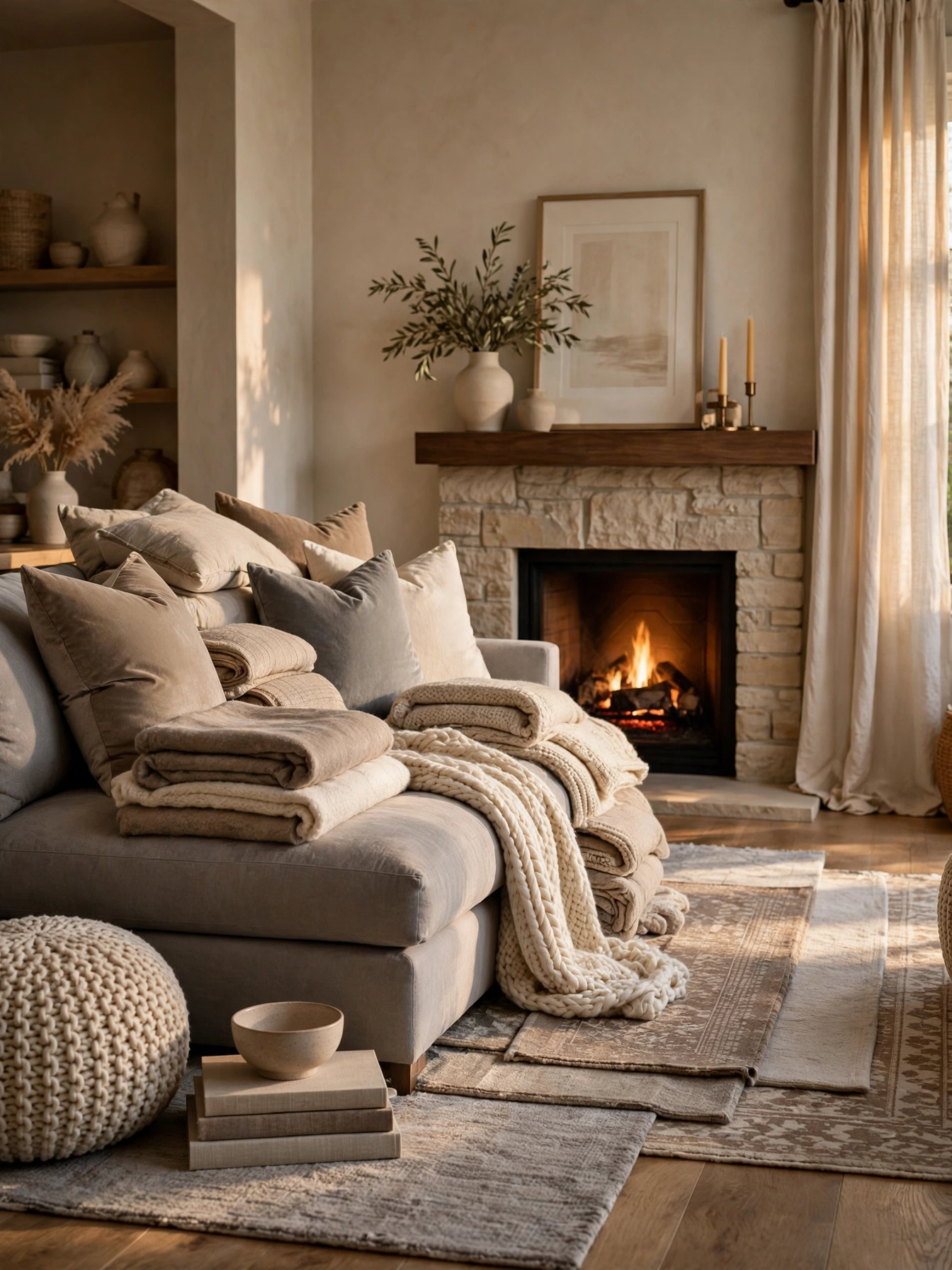
- Layering is the core skill behind every successful neutral living room ideas scheme.
- Three depths of tone (light, mid, dark) stop a neutral room from looking flat.
- Stacked textiles invite touch, which is how neutrals feel luxurious.
- Layers can be edited seasonally without buying new furniture.
Build the formula in this order: a mid-tone base (greige sofa or gray walls), then light layers (ivory throws, cream pillows), then one dark anchor (charcoal chair or black frame). Aim for at least 5 distinct textures in the main sightline, because The Spruce notes that texture variety is what keeps single-color rooms from reading as one-dimensional. A 90 by 90 inch throw draped over a sofa arm plus a 20 by 20 inch cushion and an 18 by 18 inch lumbar gives you the standard designer pillow stack for a three-seat sofa. Budget around $300 to $600 for a full textile refresh (throw, four pillows, one lumbar), compared with $3,000-plus for a new sofa. Avoid piling more than 7 pillows on a standard sofa, since the seating starts looking like a display bed and daily tidying becomes a chore.
Renters benefit most from layering because every element is portable and landlord-safe. One drawback is maintenance: stacked textiles collect dust and need shaking out weekly, and knit throws snag on jewelry and pet claws. Wool and performance fabrics survive this lifestyle far longer than loose chenille or silk blends. People who love changing their look will find layering the cheapest refresh in decorating, while minimalists should cap it at three layers so the calm they want survives the styling.
Pro Tip: Photograph your sofa, then count visible textures in the photo; add layers until you can name at least 5.
Greige Base Palette
Why This Works:
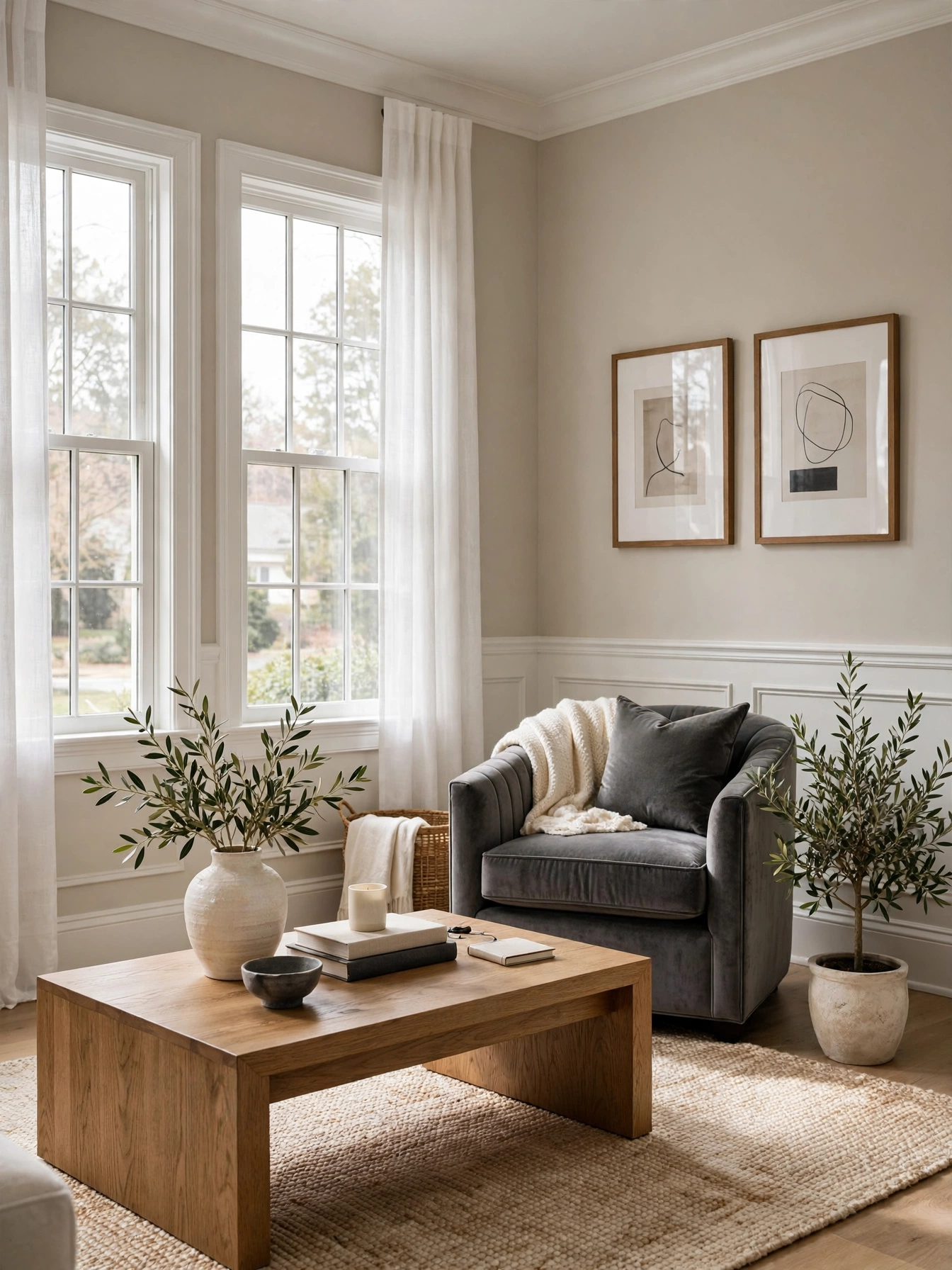
- Greige bridges warm beige and cool gray, so it flatters both wood tones.
- A mid-tone base hides scuffs far better than white or dark paint.
- It pairs with cream trim without the yellow clash beige can cause.
- Greige reads sophisticated in daylight and cozy under warm lamps.
Test greige samples with an LRV between 55 and 65, which is the sweet spot where walls have presence but still bounce light. Painters charge $300 to $800 per room for a standard living room, while a DIY job needs about 3 gallons at $45 to $70 per gallon for quality paint plus primer on any color change. Keep trim a crisp white with at least a 20-point LRV gap above the wall color, because close-value trim looks dirty rather than intentional. Avoid greiges that lean purple in your specific light, a common complaint with popular shades, by checking swatches at night under your actual bulbs. Relative to plain gray, greige shifts warmer at night, which flatters skin tones and wood furniture instead of draining them.
Homeowners updating a whole floor love greige because one color can run through the living room, hallway, and dining room without monotony. The honest downside is popularity fatigue: greige has been the default for a decade, so pair it with distinctive furniture if you want character. Small rooms should stay at the lighter end of the range (LRV 60-plus), while large rooms with high ceilings can carry the moodier mid-tones. Either way, the color forgives imperfect drywall better than flat white.
Pro Tip: Pair greige walls with 2700K warm bulbs, since 4000K-plus daylight bulbs can drag greige toward cold gray.
Charcoal Anchor Pieces
Why This Works:
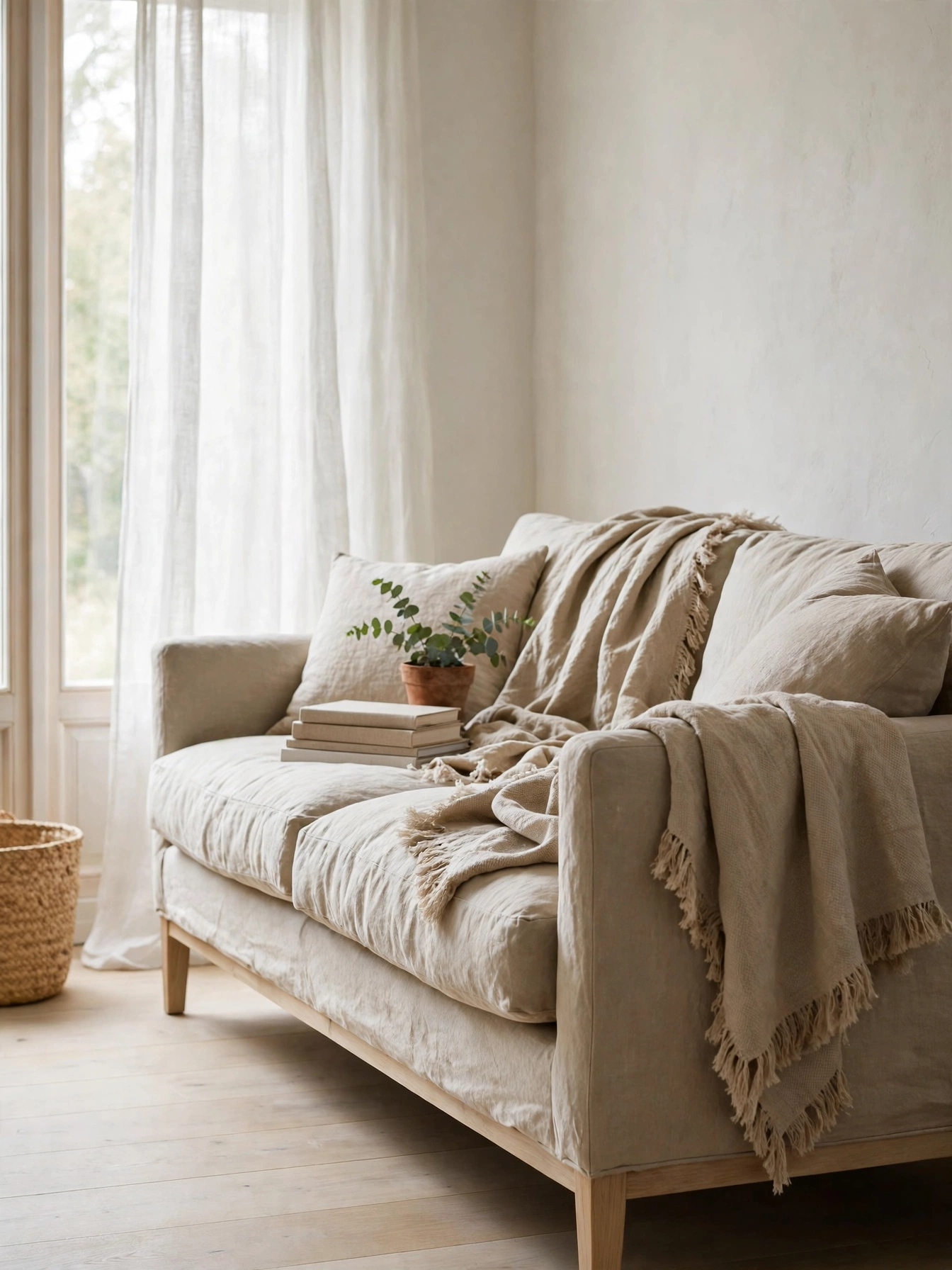
- One dark piece stops a pale room from floating without visual weight.
- Charcoal reads softer than pure black, so it suits calm neutral rooms.
- Dark anchors make light furniture look brighter by contrast.
- A single charcoal chair costs far less than repainting or reupholstering.
Limit dark anchors to about 10 percent of the room’s visual field, following the classic 60-30-10 color rule where the darkest tone takes the smallest share. A charcoal accent chair in velvet or performance fabric runs $400 to $1,100, while a black metal arc floor lamp adds $150 to $400. Place the dark piece at least 6 feet from the main light source so it reads as intentional shadow rather than a gloomy corner. Avoid scattering small black accessories everywhere, because five tiny dark objects read as clutter while one large one reads as design. In contrast to a dark accent wall, a charcoal chair is reversible in an afternoon and costs a tenth of a professional paint job.
Small living rooms gain the most from a single anchor, since contrast creates depth that pale-on-pale cannot. The price you pay is dust: dark velvet and black metal show every speck, so keep a lint roller within reach. Pet owners should pick dark performance fabrics over velvet, which traps hair in the pile. If the room already has a dark fireplace or TV wall, skip the extra anchor, since one strong dark note per room is the limit before the palette tips moody.
Pro Tip: Repeat the charcoal tone exactly twice (chair plus one small object) so the anchor feels deliberate, not random.
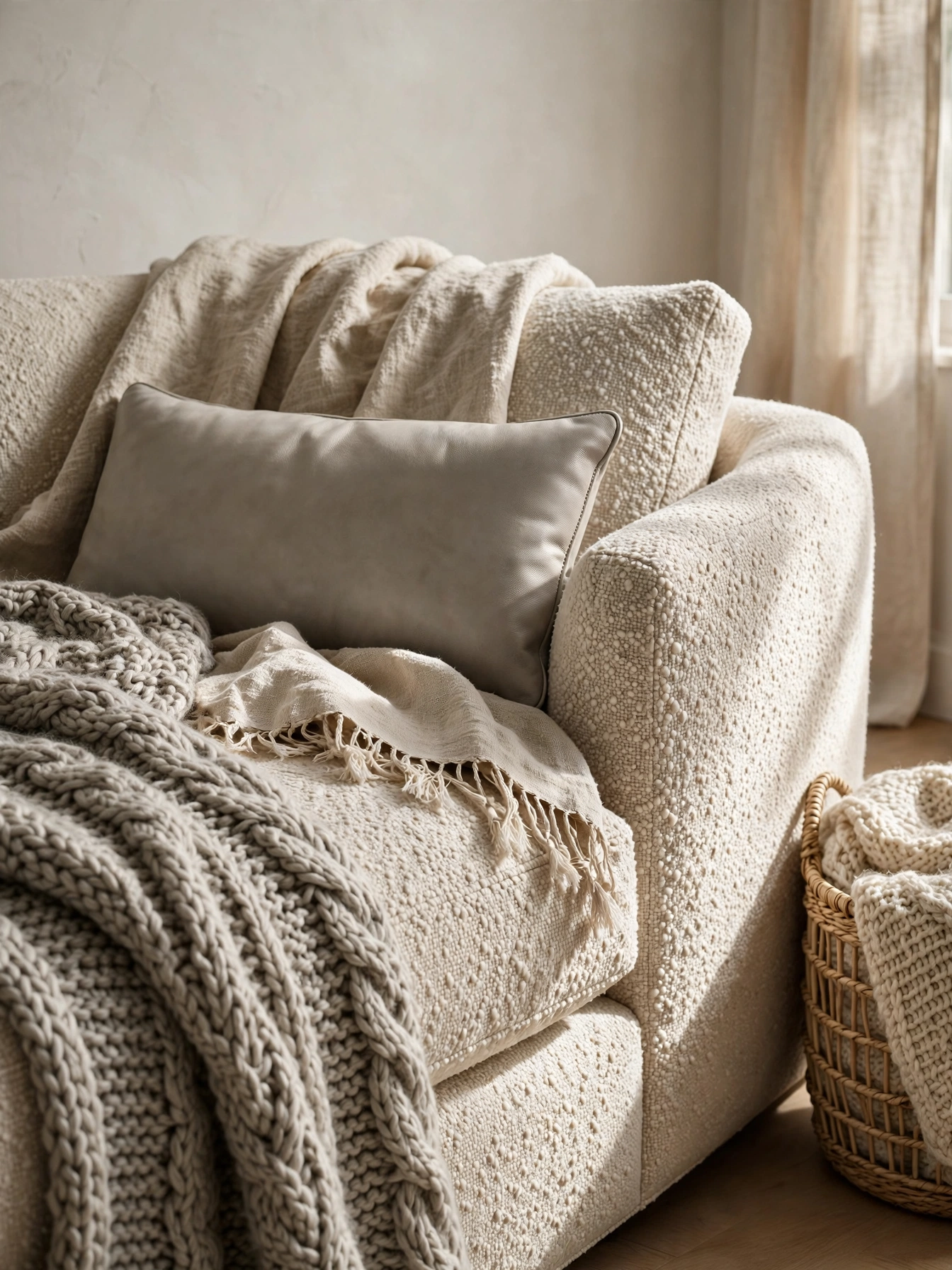
Texture Contrast Mix
Why This Works:
- Opposite textures (rough against smooth) create energy without any color.
- Side lighting makes nubby fabrics cast tiny shadows that read as pattern.
- Mixing matte and sheen stops neutral rooms from looking chalky.
- Texture is free visual interest once you own the pieces.
Pair one nubby texture (boucle, 8 to 12 mm pile loops) with one smooth surface (leather or silk) and one flat weave (linen) in every seating zone. Boucle accent pillows cost $25 to $60 each, while a leather lumbar runs $60 to $140, so a full texture mix on one sofa stays under $400. Houzz contributors consistently rank texture layering as the top fix for “boring beige rooms,” ahead of adding color. Avoid combining more than two high-pile textures in one spot, since shag plus boucle plus faux fur reads as a pet bed rather than a sofa. Stacked against adding artwork or color, texture contrast works at every budget because it uses pieces you already own, rearranged.
Anyone whose neutral room photographs well but feels dull in person needs this fix, since cameras flatten texture and the eye misses it. The catch is cleaning: nubby fabrics trap crumbs and need a vacuum brush attachment monthly, while leather needs conditioning twice a year. Households with cats should skip loosely looped boucle on scratching-height arms, since claws hook the loops. Done right, this is the difference between a room that looks neutral and one that feels neutral in the best way.
Pro Tip: Run your hand across each fabric with eyes closed; if two feel identical, swap one for an opposite texture.
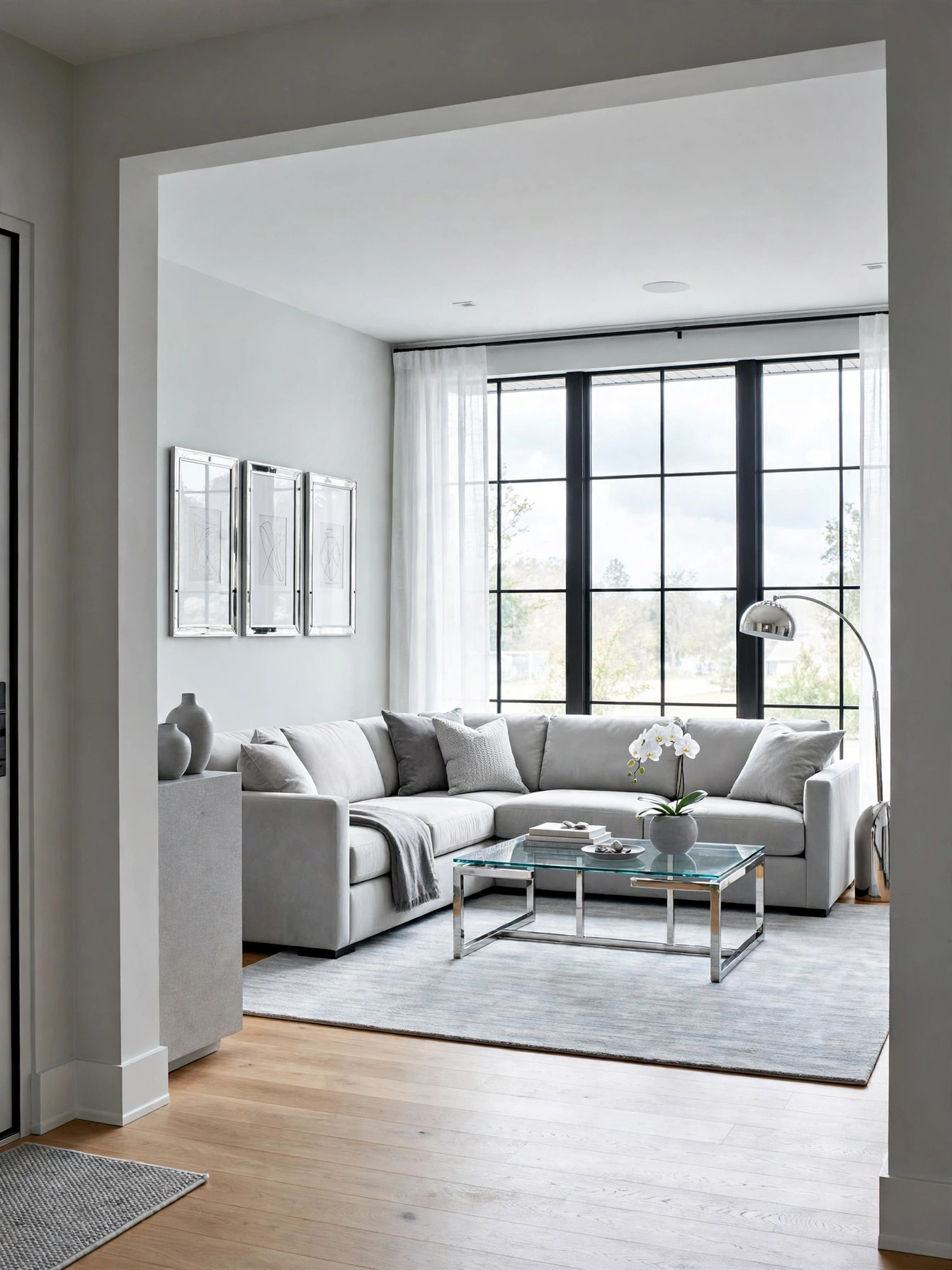
Cool Gray Neutral Living Room Ideas

Why This Works:
- Cool grays suit south-facing rooms where warm light needs balancing.
- A gray sectional hides everyday wear better than white or cream.
- Silver and chrome accents feel current against cool gray walls.
- Gray is the most forgiving neutral for mixed wood tones.
Choose cool grays with a blue or green undertone and an LRV of 60 to 75 for walls, keeping the temperature consistent from paint to upholstery. A quality gray sectional (96 to 110 inches) costs $1,500 to $3,500, and performance microfiber at 50,000-plus double rubs survives kids and dogs. The American Lighting Association recommends layering ambient, task, and accent light in every living room, which matters doubly here since cool rooms need warm 2700K lamps to avoid feeling sterile. Avoid pairing cool gray walls with warm beige carpet, because the temperature clash makes both look dirty. Put beside warm neutrals, cool gray photographs more consistently under mixed lighting, a real plus for anyone who shares their space online.
Modern-style homes and city apartments wear cool gray best, especially with concrete, glass, and metal in the mix. The honest trade-off is emotional temperature: cool rooms can feel less welcoming, so add at least two warm elements (a wood tray, a brass lamp) as counterpoints. North-facing rooms should skip this palette entirely and go warm instead, since they lack the sunlight that keeps cool gray lively. When the light is right, though, nothing looks sharper.
Pro Tip: Keep all grays within one undertone family; mixing blue-gray paint with green-gray fabric creates a muddy clash.
Oatmeal Linen Sofas
Why This Works:
- Oatmeal linen wrinkles gracefully, so the sofa always looks relaxed, not messy.
- The natural flax tone hides dust far better than bright white.
- Linen breathes, keeping the seat cool in summer and comfortable year-round.
- Its slubby weave adds texture that flat cotton upholstery lacks.
Look for Belgian or French linen with a weight of 12 to 14 ounces per square yard, which drapes well without stretching out of shape. A three-seat oatmeal linen sofa runs $1,800 to $3,800 from quality makers, roughly 20 percent more than the same frame in cotton. Vacuum with an upholstery attachment weekly, since linen’s open weave collects dust in the slubs. Avoid placing linen sofas in direct all-day sun, because natural fibers fade unevenly and oatmeal can bleach to patchy white within 2 years. When measured against velvet, linen suits casual households better: it forgives wrinkles while velvet punishes them, though velvet wins on stain resistance.
Relaxed, unfussy decorators get the most from oatmeal linen, since the fabric’s whole point is looking lived-in. The exchange is structure: linen stretches, so tight tailored cushions lose their edge faster than on synthetic blends. Rotate seat cushions monthly to even out wear, and expect professional cleaning every 18 to 24 months at $150 to $300. For the right household, no fabric photographs or feels quite like it.
Pro Tip: Choose a removable-cover style so the linen can be professionally cleaned without moving the whole sofa.
Slate Accent Wall

Why This Works:
- A single dark wall gives a neutral room a focal point without repainting everything.
- Slate gray keeps the mood neutral while adding real drama.
- Art and shelving pop against dark paint in a way white walls cannot match.
- One wall is a weekend project, not a whole-house commitment.
Pick a slate with an LRV of 10 to 20 for true depth, and use a matte finish so the wall absorbs light evenly. A single 12 by 9 foot accent wall needs about 1 gallon for two coats, costing $50 to $75 in quality paint, plus painter’s tape and drop cloths. Hire a professional painter for walls with damaged drywall or 10-foot-plus ceilings, since cutting clean lines at height is where DIY jobs visibly fail. Avoid dark walls in rooms under 120 square feet with one small window, because the light loss can make the space feel like a cave. Set against wallpaper, paint is cheaper ($75 versus $300-plus per wall) and far easier to reverse when tastes change.
Anyone craving contrast without leaving the neutral family should start here. A real downside is lighting: a slate wall absorbs up to 80 percent of light, so add picture lights or sconces on that wall to keep it from going dead. Rooms with a fireplace or media unit on the wall gain the most, since the dark paint visually recesses bulky elements. Test the color at night before committing, because slate shifts dramatically between daylight and lamplight.
Pro Tip: Use the accent color on the wall behind the sofa or fireplace, never on the wall with the main window, so daylight keeps working for you.
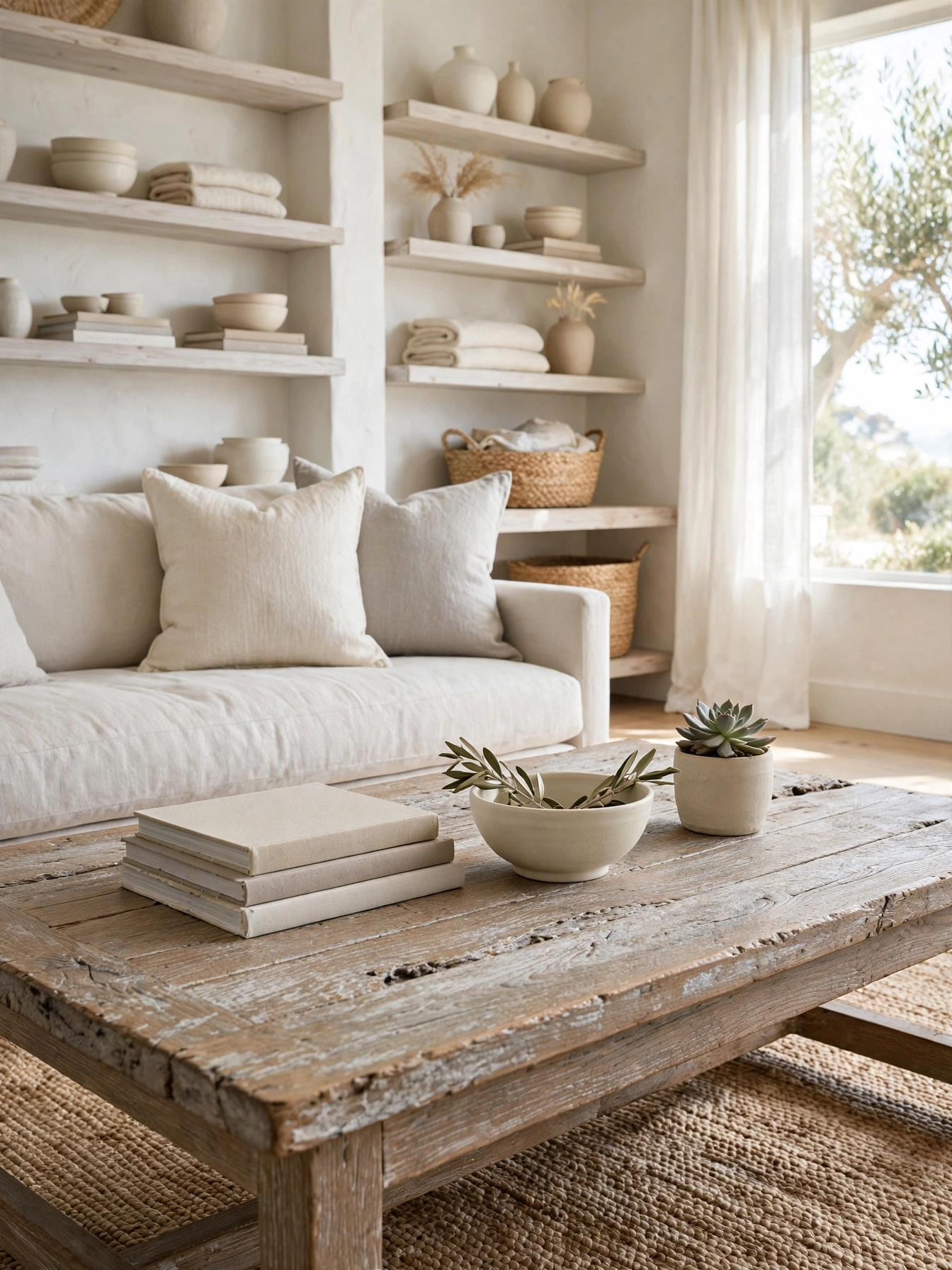
Driftwood Wood Tones
Why This Works:
- Weathered wood adds organic warmth that painted furniture cannot.
- Driftwood tones sit between gray and beige, bridging both palettes.
- Pale wood keeps the room light while adding natural grain interest.
- It brings nature indoors without any literal coastal theme.
Look for whitewashed or cerused oak with a matte lacquer, which protects the finish while keeping the weathered look. A solid driftwood coffee table (48 by 24 inches) costs $400 to $1,200, versus $150 to $400 for veneer versions that chip at the edges. Keep all wood tones within two steps of each other on the lightness scale, since pale driftwood next to dark walnut reads as a mistake rather than a mix. Avoid orange-toned “weathered” stains, which are just honey oak in disguise and will fight a gray palette. Measured against painted furniture, real wood grain ages gracefully: it gains character while paint just gains chips.
Nature lovers and anyone tired of matchy furniture sets thrive with driftwood tones. The balancing cost is maintenance: pale wood shows water rings and sun fading, so coasters are mandatory and pieces need rotating yearly if one side faces a window. Veneer versions suit tight budgets but cannot be refinished, while solid wood can be sanded and revived decades later. For a neutral room, driftwood is the warmest way to stay pale.
Pro Tip: Carry a wood sample when shopping, and reject any piece more than two shades darker or lighter than it.
Cream Boucle Chairs
Why This Works:
- Boucle’s nubby loops add the strongest texture punch of any neutral fabric.
- Cream keeps the chairs light enough to float in the middle of a room.
- A chair pair creates a conversation spot without a full furniture set.
- Swivel bases make small rooms feel flexible and interactive.
Choose boucle with tight, even loops and a rub count above 25,000 for seating, since loose loops snag. A pair of quality boucle swivel chairs costs $700 to $1,800, and a 36-inch round rug underneath should leave 24 inches of walkway on all sides. Keep the chairs 30 to 36 inches apart, angled slightly toward each other, which is the conversation distance recommended in residential design references. Avoid placing boucle next to rough brick or stone, because abrasion pills the loops within months. Contrasted with leather accent chairs, boucle feels warmer and softer but demands more careful cleaning, so match the fabric to your household’s reality.
Design lovers who want one trendy piece without redoing the room should buy the chairs. The honest limitation is longevity of the look: boucle is everywhere right now, so it may date faster than a classic linen chair. Pet owners with clawed cats should think twice, since loops and claws are natural enemies. For texture-obsessed neutrals fans, though, nothing beats that cloud-like sit.
Pro Tip: Vacuum boucle monthly with a brush attachment on low suction to keep the loops plump and crumb-free.
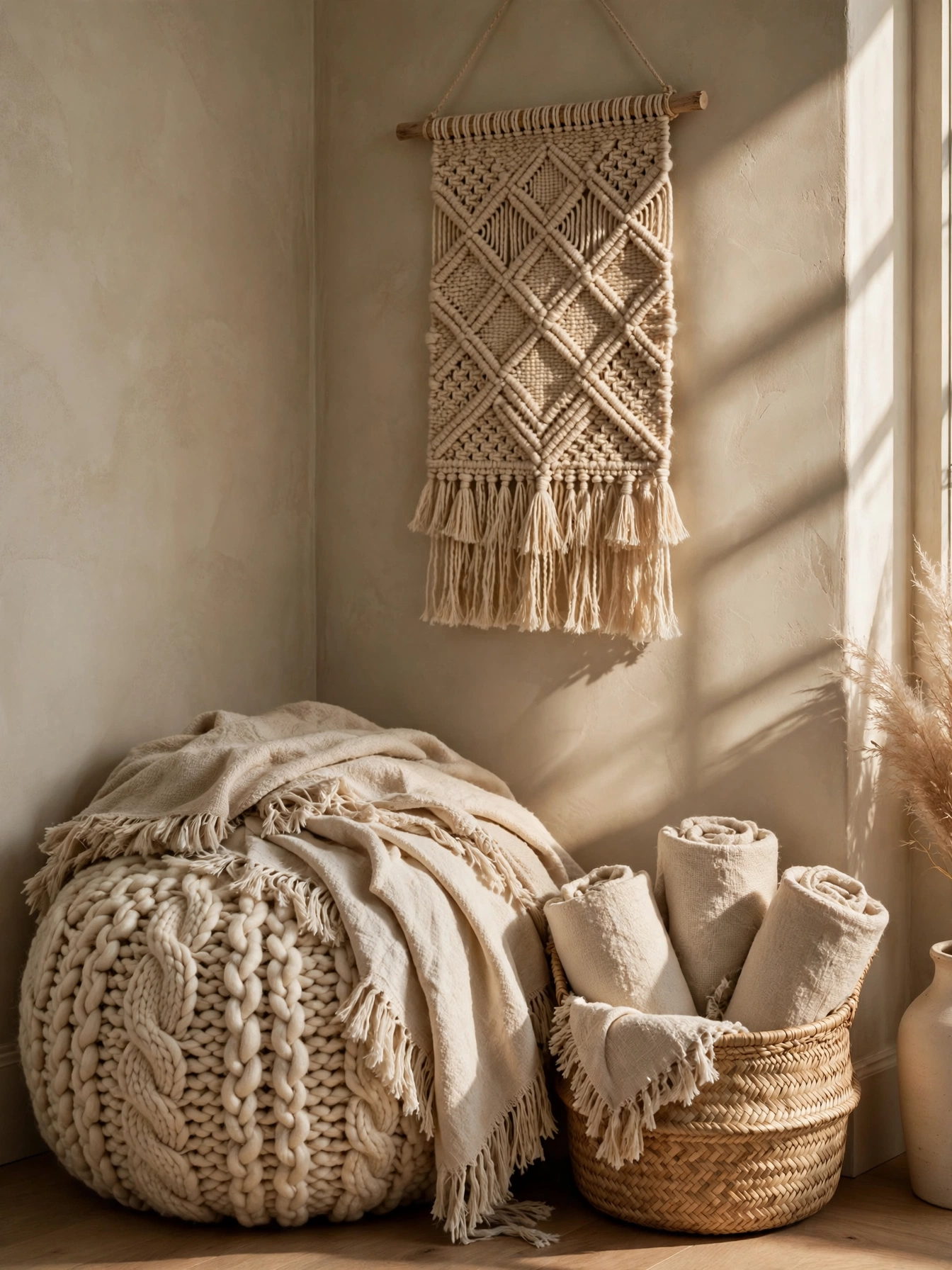
Neutral Living Room Texture

Why This Works:
- Handcrafted textures give neutral living room ideas a soulful, collected feel.
- A woven wall hanging adds large-scale texture without paint or wallpaper.
- Knit and woven pieces soften the hard edges of modern furniture.
- Artisan pieces make a neutral room feel personal, not showroom-staged.
Hang woven art so its center sits 57 to 60 inches from the floor, the gallery standard for comfortable viewing. A handwoven wall hanging (30 by 40 inches) costs $120 to $400 from artisan sellers, while a chunky knit pouf (18 to 22 inches wide) runs $80 to $200. Keep woven pieces at least 12 inches from heat sources like radiators, since natural fibers dry out and become brittle. Avoid machine-made “woven look” prints at this scale, because the flat pattern reads as fake next to real texture. Weighed against framed prints, textile art absorbs sound, a genuine acoustic bonus in hard-surfaced modern rooms.
Renters and commitment-phobes love textile art because it hangs on one nail and leaves no trace. The concession is dust: woven pieces need a gentle shake or low-suction vacuum every few months. Homes with moth issues should choose cotton or synthetic weaves over wool, or store wool pieces with cedar. For anyone whose neutral room feels cold, this is the warmest single addition.
Pro Tip: Layer two wall hangings of different sizes, offset by 6 inches, for a collected gallery feel.
Matte Black Contrasts
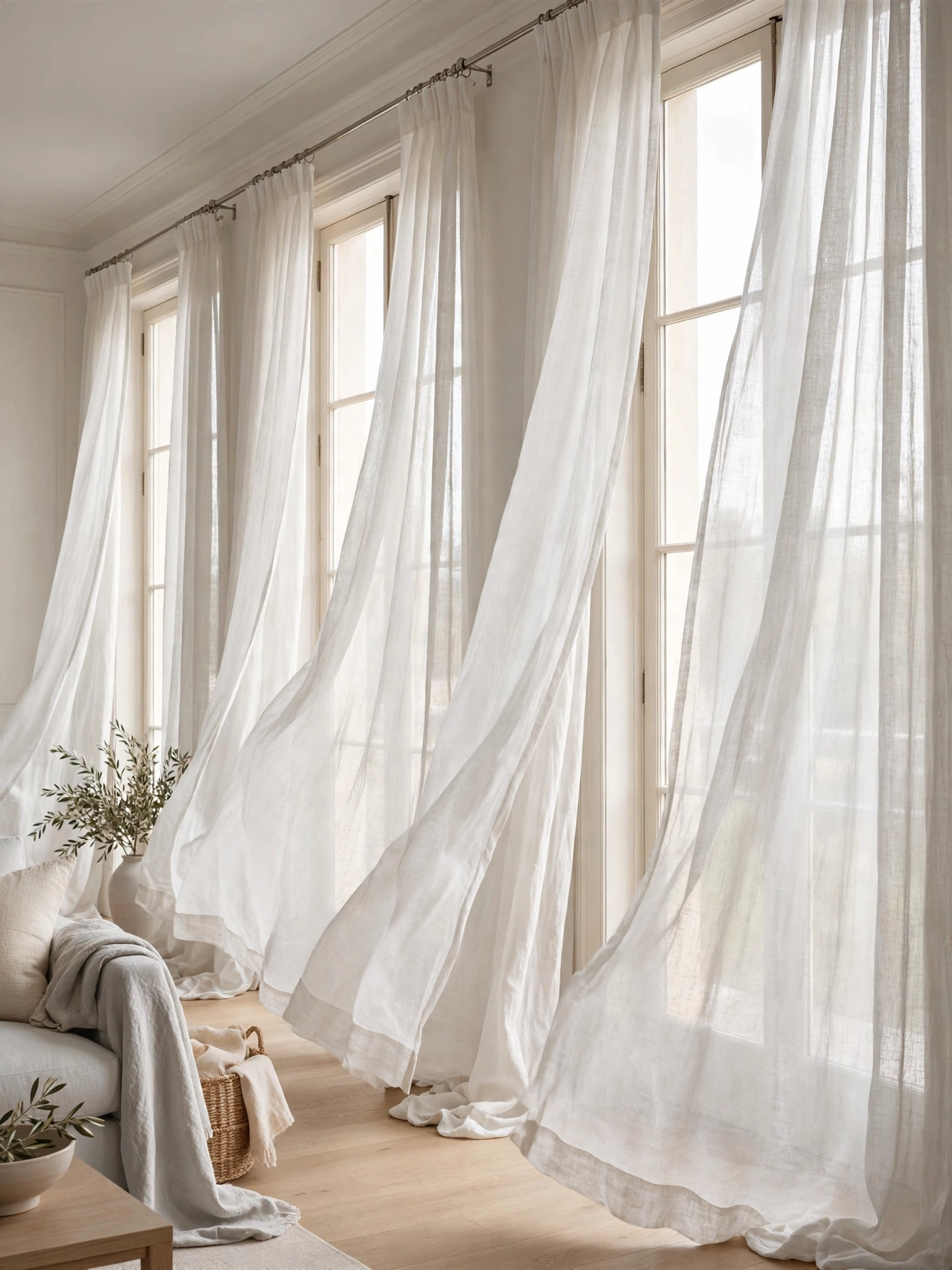
Why This Works:
- Black outlines give neutral rooms the crispness of a tailored suit.
- Matte finishes avoid the harsh glare of glossy black.
- Repeated black accents (frames, lighting, hardware) feel intentional.
- Black is the cheapest high-impact contrast in decorating.
Repeat black at least 3 times in the room, in three different materials if possible, since isolated black objects look like mistakes. A matte black pendant costs $120 to $350, black gallery frames run $15 to $40 each, and a black curtain rod is $30 to $80, so a full contrast pass stays under $600. Hang gallery frames with 2 to 3 inches between them for a tight, professional grid. Avoid glossy black plastic, which reads cheap next to matte metal and wood. Side by side with brass or gold accents, black suits more neutral palettes and never risks looking dated or gaudy.
Anyone whose neutral room feels blurry or undefined needs black outlines. The main risk is balance: more than 15 percent black in a small room tips from crisp to heavy. Dust shows on matte black within days, so microfiber cloths become part of the routine. Used sparingly, black is the exclamation point that makes every neutral around it look more expensive.
Pro Tip: Spray-paint mismatched frames matte black for a unified gallery wall under $100.
Soft White Neutral Living Room Ideas
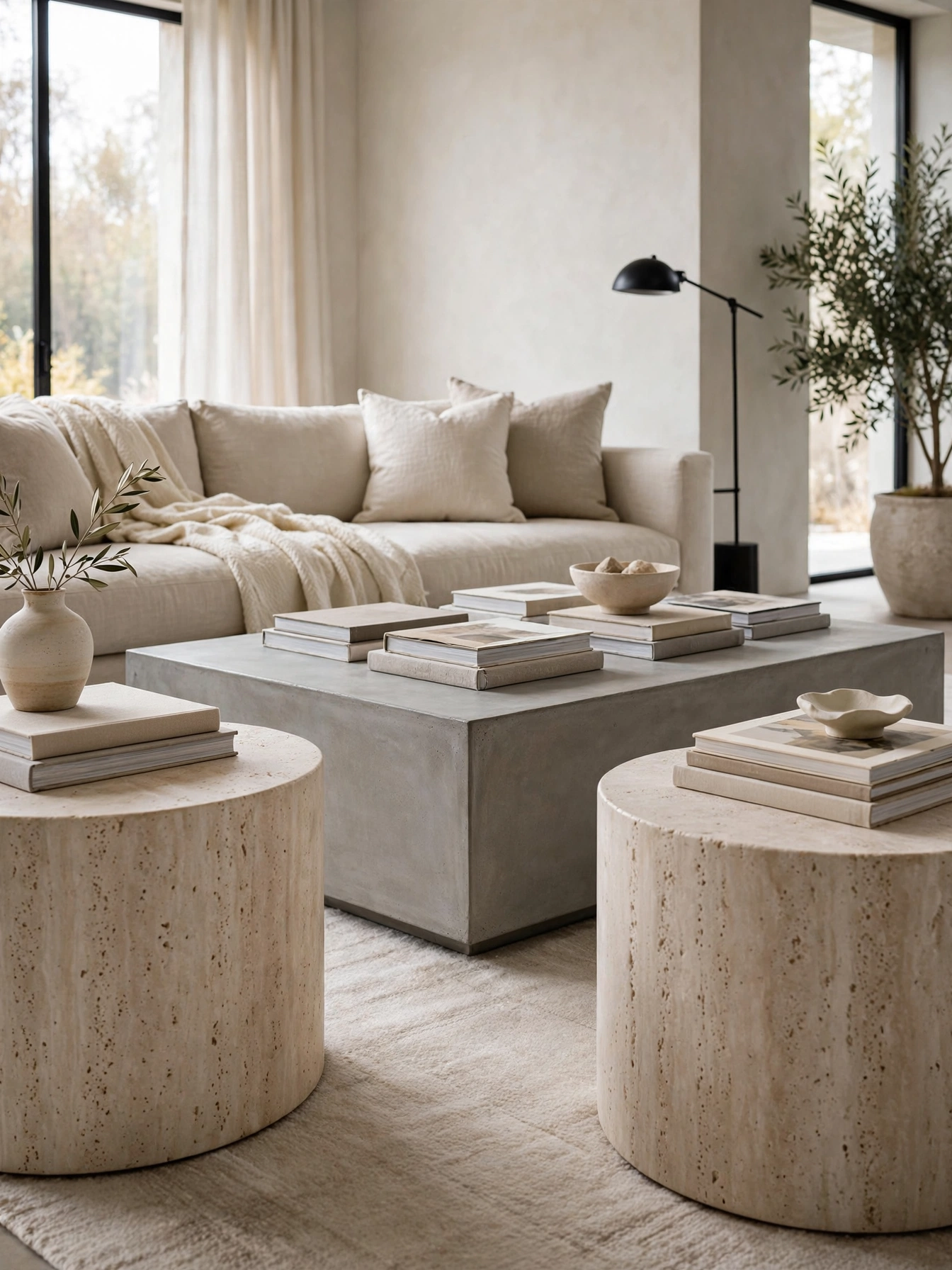
Why This Works:
- Full-height white curtains make ceilings look taller and windows grander.
- Sheer-weave linen filters light while keeping the room bright.
- Soft folds add vertical texture that flat blinds cannot.
- White drapery works with every future color scheme.
Mount the rod 4 to 6 inches above the window frame and 8 to 12 inches wider on each side, the standard that makes windows look larger. Choose panels that span 1.5 to 2 times the window width for proper fullness, and let them just kiss the floor or puddle 1 to 2 inches for a relaxed look. Quality linen-look panels (96 inches long) cost $40 to $120 per pair, while custom drapery runs $400-plus per window. Avoid mounting rods at the frame top, the most common mistake, since it visually shortens the wall. Next to blinds alone, layered drapery adds softness and sound absorption that hard window treatments miss.
Low-ceiling rooms gain the most drama from floor-to-ceiling white panels. What it costs you is upkeep: white curtains near windows collect dust and need washing every 6 to 12 months. Homes with radiators under windows should keep panels 3 inches clear of the heat source. For instant height and softness, no single purchase beats well-hung drapery.
Pro Tip: Steam panels while hanging, then train the folds with loose ties for 48 hours for perfect pleats.
Concrete Gray Tables
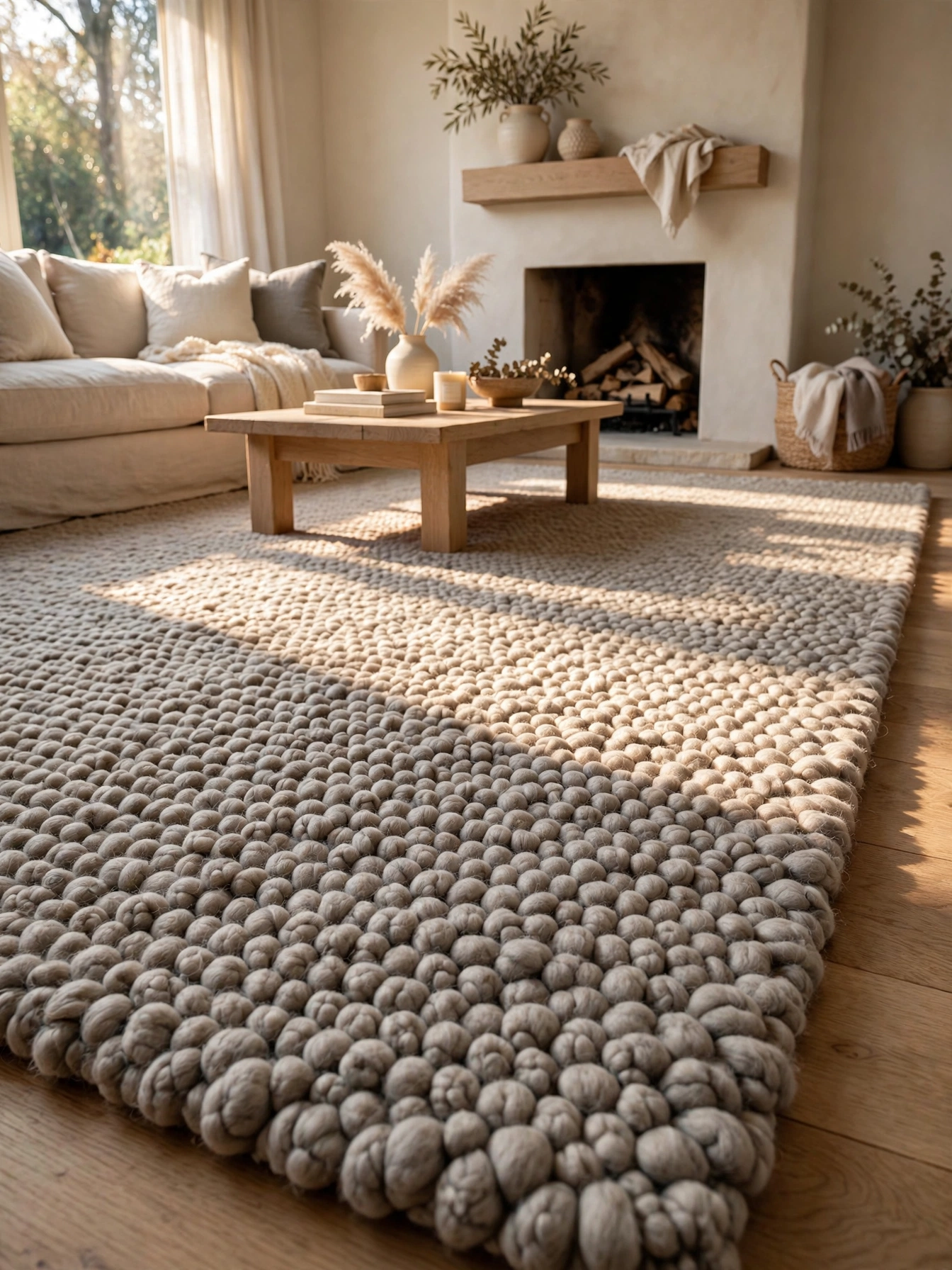
Why This Works:
- Stone tables add sculptural weight that wood cannot match.
- Concrete’s gray tone ties directly into a gray-based neutral palette.
- Sealed stone resists heat and scratches better than wood tops.
- One stone piece elevates the whole room’s material story.
Choose sealed or honed concrete with a matte sealer reapplied every 12 to 18 months, since unsealed concrete stains from a single coffee ring. A cast concrete coffee table (48 by 24 inches) weighs 80 to 150 pounds and costs $500 to $1,500, so check that your rug pad and floor can handle point loads. Keep stone tables 14 to 18 inches from the sofa edge, the standard reach distance for comfort. Avoid placing unsealed travertine under drinks, because its pits trap liquid and darken permanently. Holding it next to wood tables, stone needs less daily care but far more respect during moves, since chips are difficult to repair invisibly.
Modern and industrial-leaning homes wear concrete best, especially against soft linen upholstery. The genuine limitation is weight and coldness: stone feels cool to the touch and dominates small rooms. Pair it with warm textiles (a wool rug underneath, a wood tray on top) to keep the balance. One stone table per room is the rule; two starts looking like a quarry.
Pro Tip: Test any sealer on the table’s underside first, since some sealers darken concrete by a full shade.
Pebble Wool Rugs
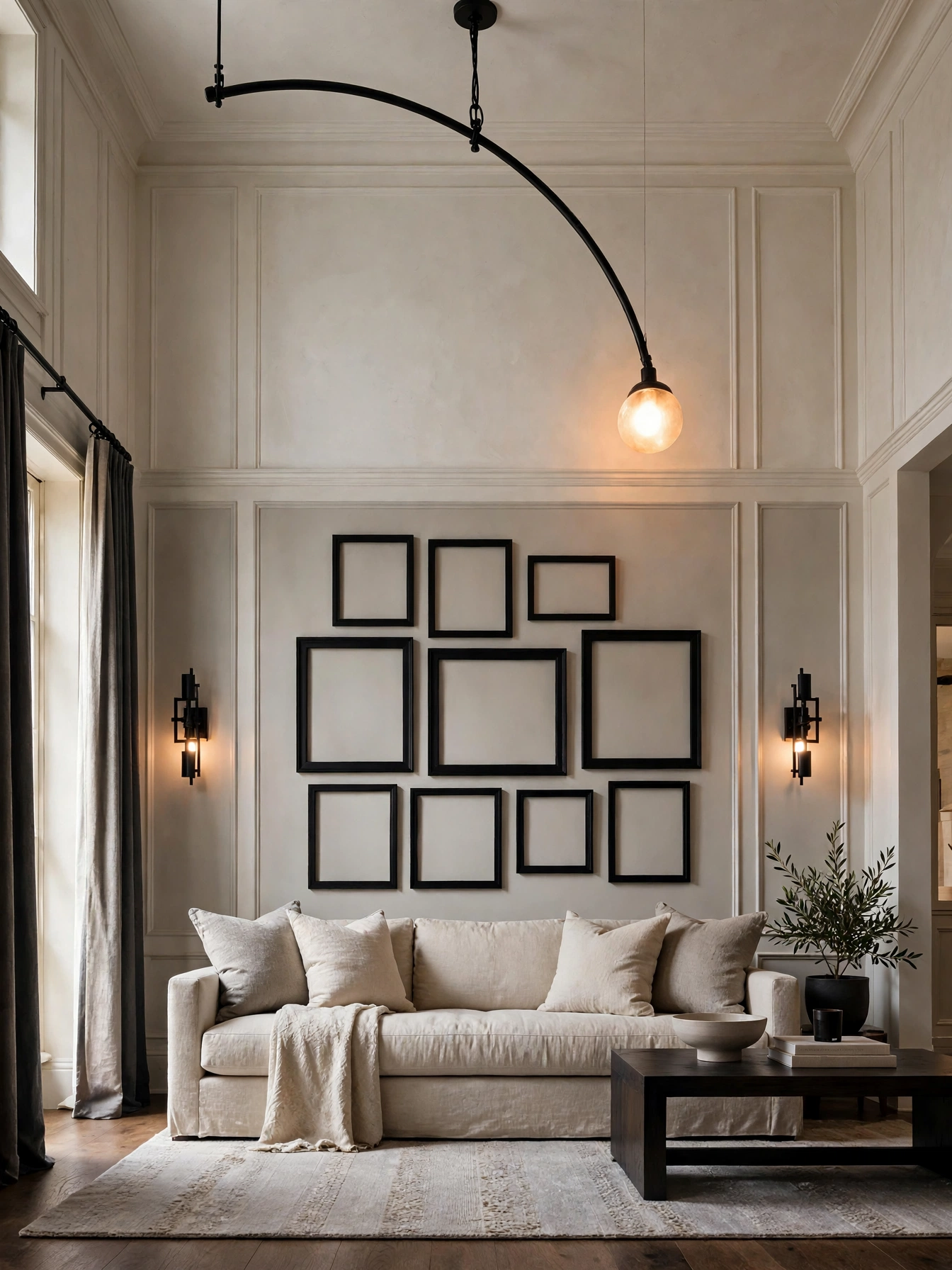
Why This Works:
- A high-pile wool rug is the fastest way to warm up hard floors.
- Pebble texture hides footprints and vacuum marks better than flat weaves.
- Wool naturally resists stains and regulates room humidity.
- The rug’s gray tone anchors every other neutral in the room.
Size the rug so the front legs of all seating sit on it: 8 by 10 feet for most sofas, 9 by 12 for sectionals, with 18 to 24 inches of bare floor showing at the room’s edges. A hand-tufted wool rug in 8 by 10 costs $600 to $1,800, while hand-knotted versions start around $2,500. The Carpet and Rug Institute recommends a quality rug pad (at least 1/4 inch felt or felt-rubber) to extend rug life by up to 50 percent. Avoid high-pile rugs under dining chairs or office chairs, since legs sink and casters cannot roll. Placing it beside synthetic rugs, wool costs 2 to 3 times more but lasts 15 to 20 years versus 3 to 5.
Barefoot households and cold-climate homes get the most joy from a deep wool pile. The flip side is shedding: new wool rugs shed fibers for 3 to 6 months, so vacuum (never use a beater bar) weekly during that period. Allergy sufferers should note that wool traps dust until vacuumed, though it releases fewer airborne particles than wall-to-wall carpet. As a foundation piece, few purchases matter more.
Pro Tip: Rotate the rug 180 degrees every 6 months so sunlight and foot traffic wear it evenly.
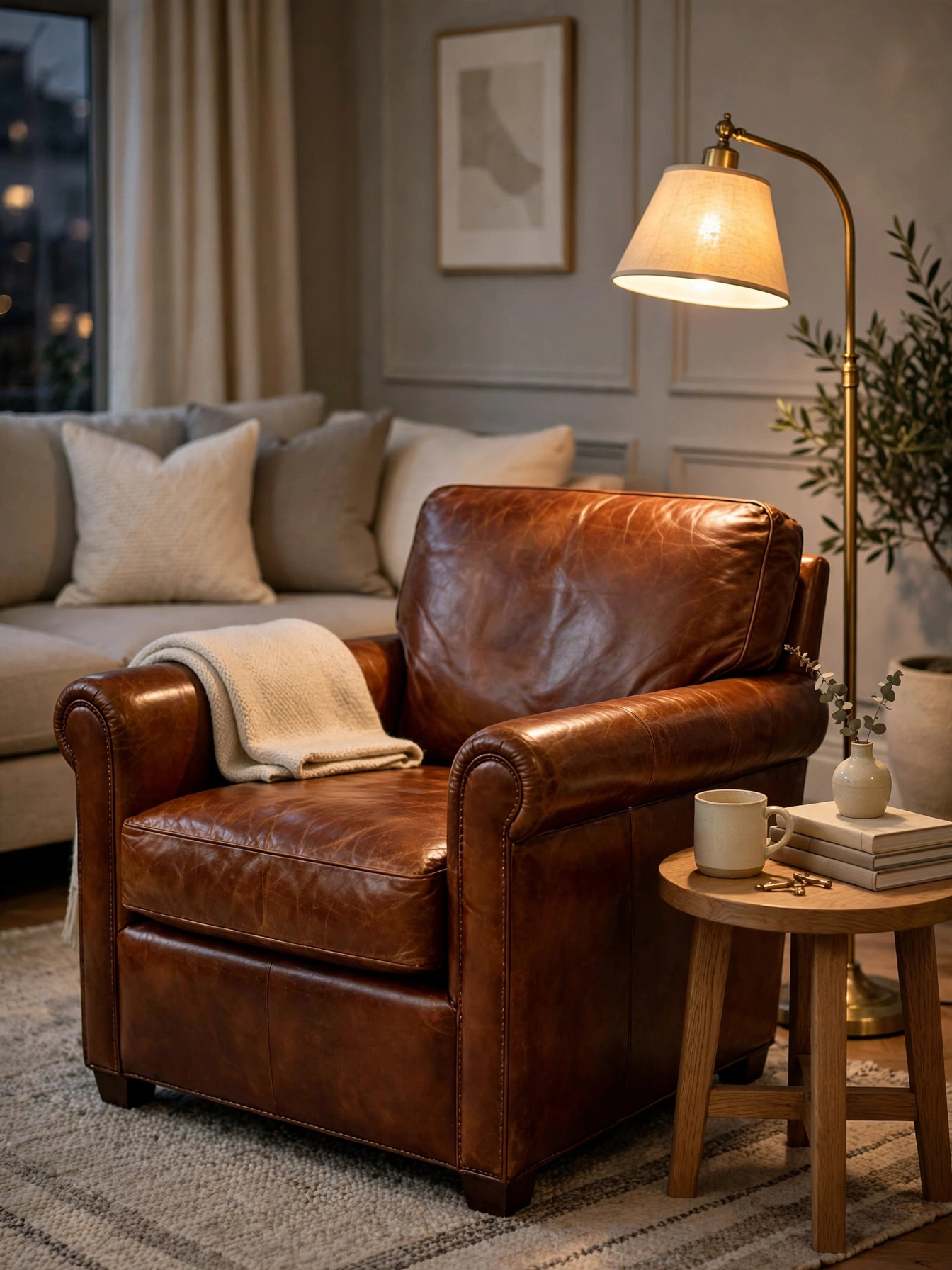
Cognac Leather Warmth
Why This Works:
- Cognac leather adds the one warm note a gray room needs to feel human.
- Leather develops a patina that makes the chair better looking with age.
- A single leather piece breaks up an all-fabric room beautifully.
- It bridges traditional and modern furniture styles effortlessly.
Buy full-grain or top-grain leather, since bonded leather peels within 2 to 4 years and cannot be repaired. A quality cognac leather armchair costs $900 to $2,200, and conditioning twice a year with a pH-balanced cream keeps it supple for decades. Keep leather at least 2 feet from radiators and out of direct sun, because heat and UV dry and crack the hide. Avoid placing leather chairs where cats scratch, since claw marks on leather are permanent. Up against fabric chairs at the same price, leather lasts 3 to 4 times longer but offers fewer color options and feels cold on first sit in winter.
Readers and anyone wanting a “grown-up” corner will love this chair. The weak point is comfort in extremes: leather sticks to bare skin in summer and feels cold in winter, so keep a throw on it year-round. Households with toddlers should know that leather wipes clean of most messes, which is a genuine advantage over light fabric. One cognac chair is a 20-year purchase, so choose the style carefully.
Pro Tip: Condition new leather within the first month, then every 6 months, to prevent the dryness that causes cracking.
Frosted Glass Lighting

Why This Works:
- Frosted glass diffuses light evenly, erasing harsh bulb glare.
- Glowing white shades become sculptural objects after dark.
- Soft light flatters both pale walls and human faces.
- Glass fixtures visually disappear by day, keeping the room airy.
Use 2700K LED bulbs at 800 lumens (60-watt equivalent) in living room lamps, which is the warm output designers specify for relaxing spaces. Hang pendants 30 to 36 inches above a coffee table or 7 feet from the floor in walkways, per standard clearance guidelines. A quality frosted glass pendant costs $150 to $450, and a matching table lamp runs $80 to $250. Avoid clear glass shades with visible filaments in a calm neutral room, since the bright points create visual noise. In a head-to-head with fabric shades, frosted glass never fades, never needs vacuuming, and spreads light more evenly.
Evening readers and anyone who entertains after dark benefit most from glare-free light. The give-and-take is brightness control: frosted shades soften output, so you need more fixtures (aim for 3 light sources per seating area). Dimmable LEDs solve this elegantly, letting one room shift from bright to moody. In a neutral palette, lighting is the jewelry, so invest here.
Pro Tip: Put every lamp on a dimmer, since dimmed 2700K light at 20 percent feels like candlelight.
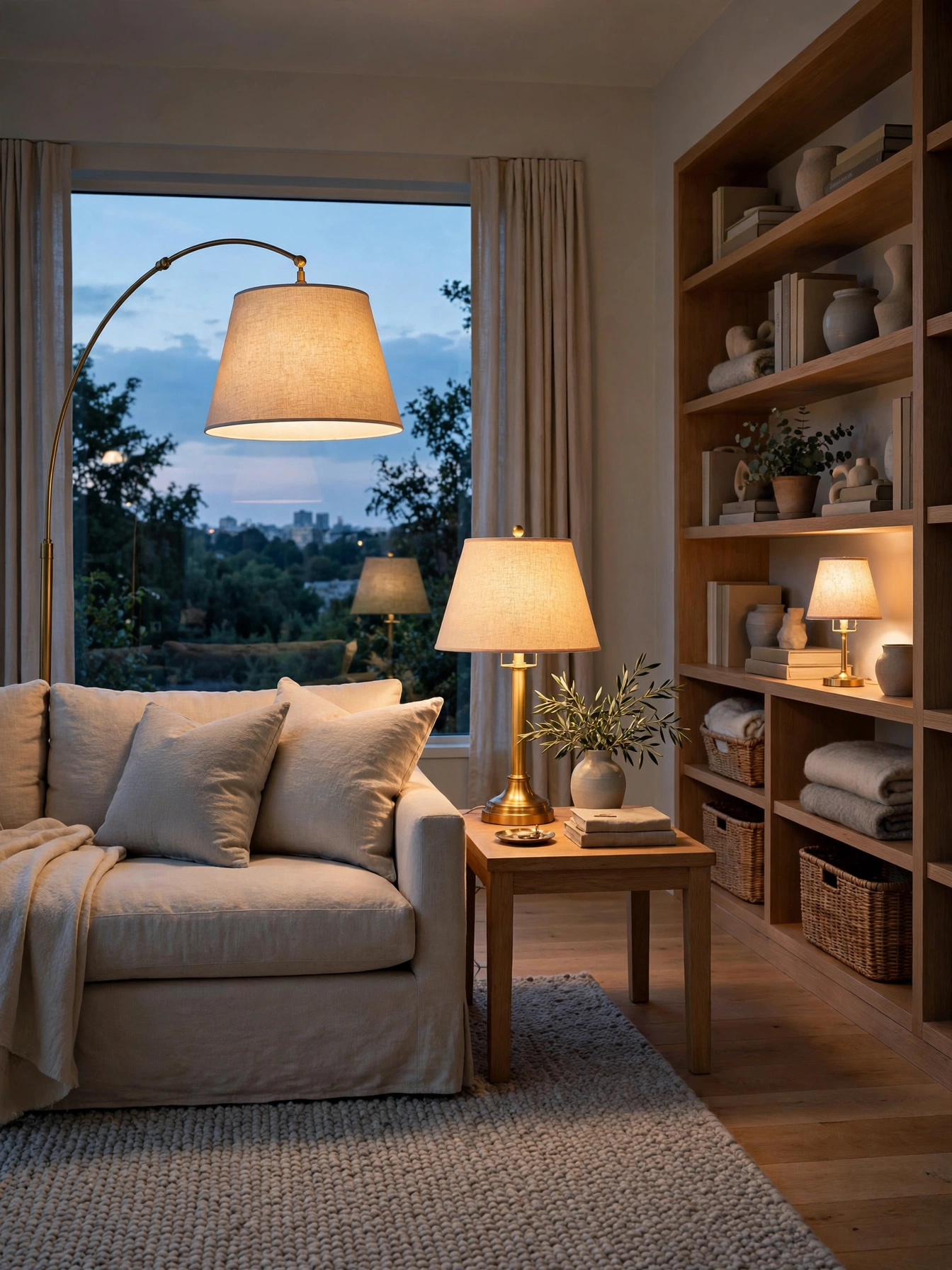
Marble Gray Veining
Why This Works:
- Natural stone veining is the one “pattern” a strict neutral palette allows.
- Gray veins tie white marble directly to gray walls and upholstery.
- Honed marble feels soft and modern, not flashy.
- A stone surround makes even a simple fireplace look architectural.
A marble fireplace surround (60 by 42 inches) costs $2,000 to $5,000 installed, while marble-look porcelain slabs achieve the effect for $800 to $1,800. Seal natural marble annually, since it etches from anything acidic and stains from oils. Keep the mantel shelf 12 inches deep and at least 54 inches from the floor, which is the comfortable height for styling and viewing. Avoid polished marble in casual rooms, because the high shine fights relaxed linen and wood textures. Lined up against painted surrounds, marble adds genuine material value to the home, though porcelain gives 90 percent of the look for far less money and zero sealing.
Homeowners planning to stay put get the best return from real stone. The honest limitation is maintenance: marble demands coasters, quick wipe-ups, and acceptance of patina. Anyone wanting the look without the upkeep should choose porcelain slabs, which even professionals struggle to distinguish from across the room. Either way, gray veining is the neutral palette’s natural artwork.
Pro Tip: Choose slabs with soft, feathery veining rather than bold dramatic veins for a calm neutral room.
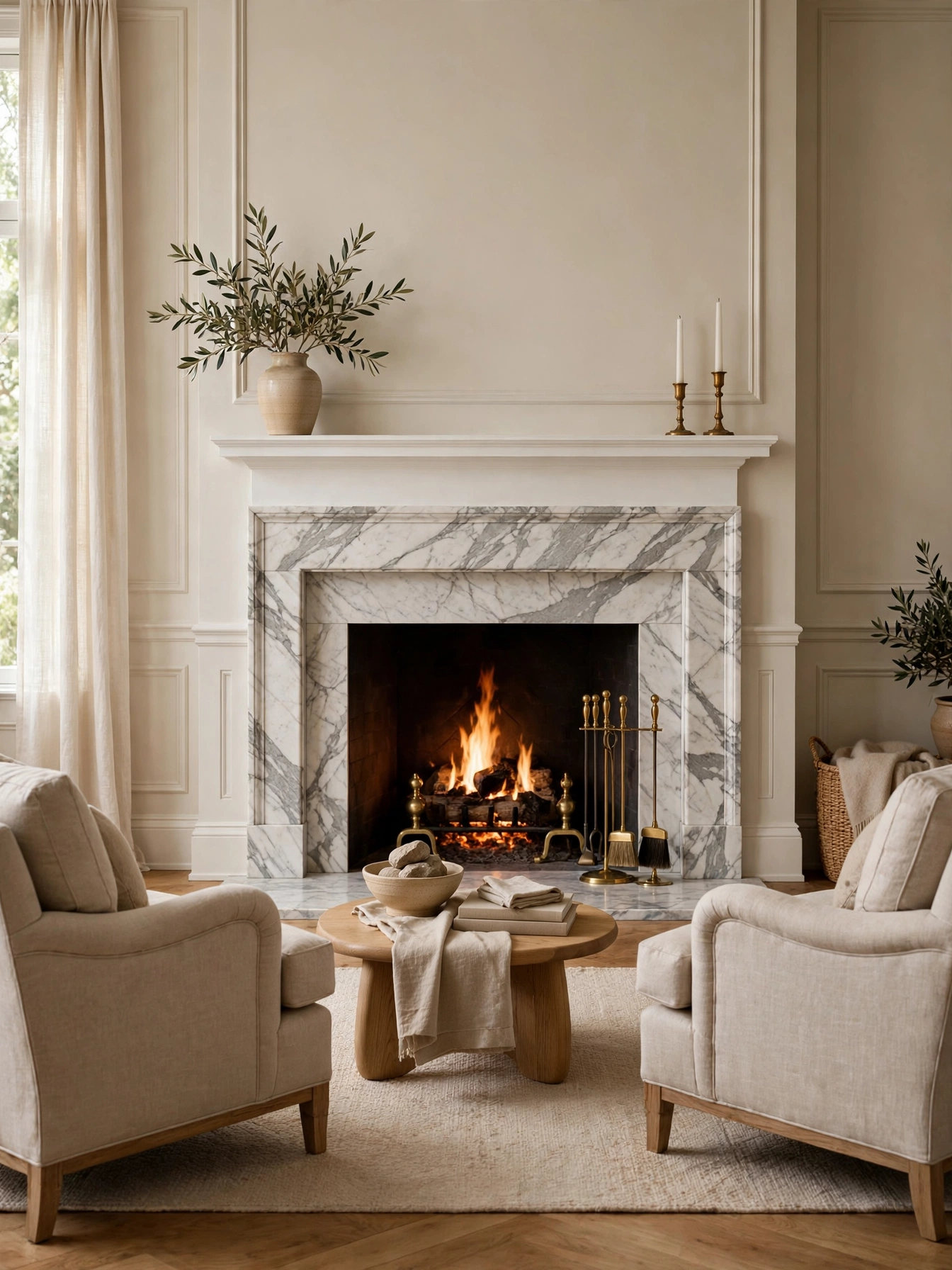
Neutral Living Room Ideas With Layered Lighting
Why This Works:
- Layered neutral living room lighting creates depth that one ceiling light cannot.
- Three heights (low, mid, high) make the room glow instead of glare.
- Warm pools of light make pale walls feel cozy after dark.
- Good lighting is what separates expensive-looking neutrals from flat ones.
Plan one light source per 100 square feet as a baseline, mixing floor lamps (58 to 64 inches tall), table lamps (24 to 32 inches), and accent lights. The American Lighting Association’s three-layer rule (ambient, task, accent) applies perfectly: overhead for general fill, a reading lamp at 48 inches beside the chair, and picture or shelf lights for sparkle. Budget $400 to $1,200 for a full layered scheme with dimmable LEDs. Hire a licensed electrician when adding new switched outlets or hardwired sconces, since new circuits must meet local code and permits. Avoid relying on a single overhead fixture, because top-down light casts unflattering shadows and flattens every texture you layered so carefully.
Everyone benefits from layered light, but neutral rooms depend on it most, since they lack color contrast to create interest. The offsetting cost is cost and cords: more lamps mean more outlets and cable management. Battery and rechargeable accent lights solve the outlet problem elegantly. Once the layers are in, the same room feels like three different rooms across the day.
Pro Tip: Aim for 3 distinct light heights in every sightline; the eye reads that variety as luxury.
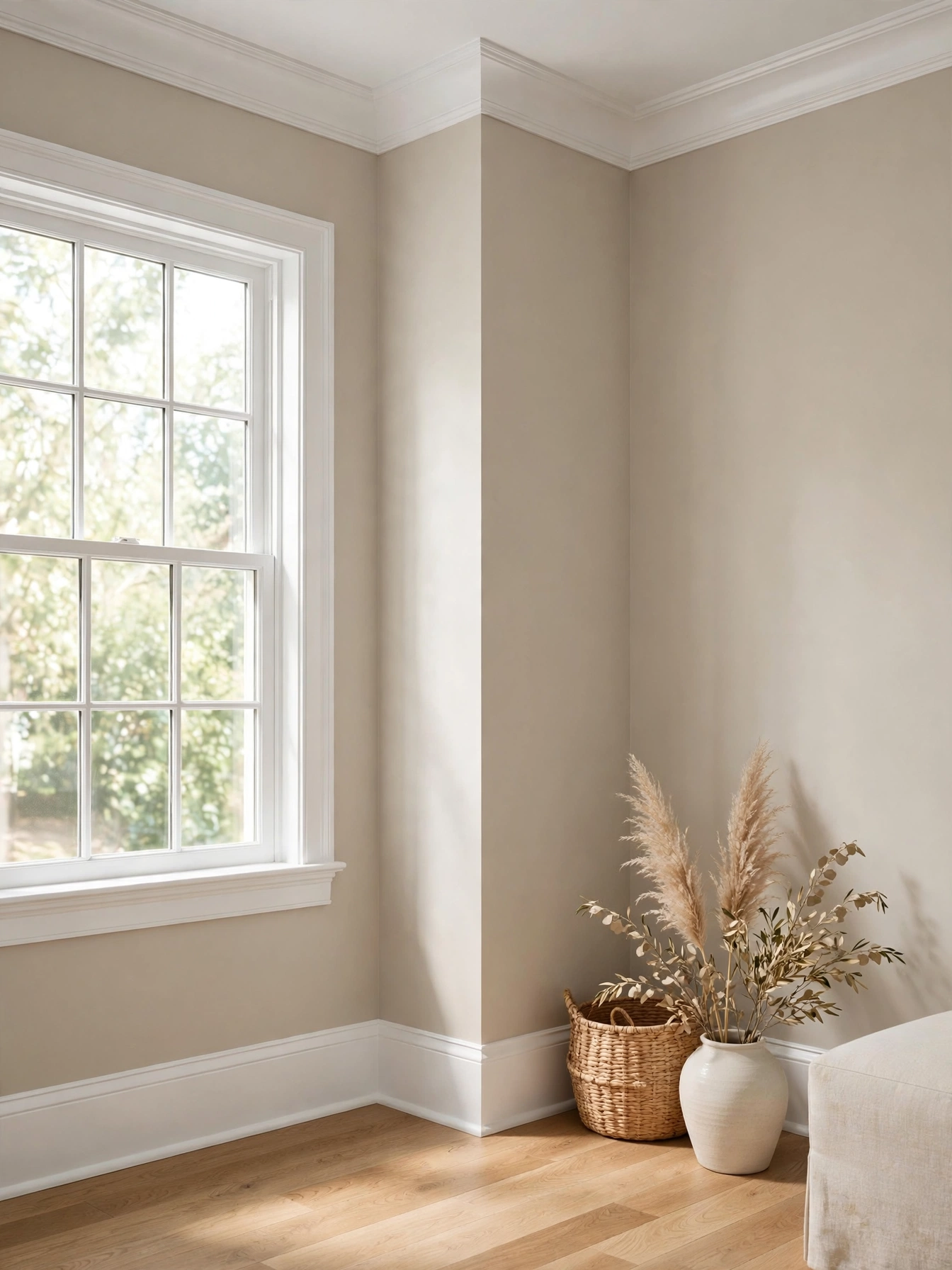
Chalk White Trim

Why This Works:
- Bright white trim draws a crisp outline around every neutral wall.
- Chalk white (not yellowed) keeps the contrast fresh and modern.
- Detailed millwork adds architecture that flat walls lack.
- White trim unifies rooms even when wall colors change.
Use a dedicated trim enamel in satin or semi-gloss, which resists scuffs far better than wall paint. Standard baseboards run 3 to 5 inches tall; upgrading to 5 or 7 inch profiles costs $3 to $8 per linear foot installed and transforms the room’s proportions. Keep the trim at least 15 LRV points brighter than the wall color for a visible, intentional line. Avoid flat paint on trim, since it marks from every shoe and vacuum bump. Versus repainting walls, refreshing trim is the highest-impact low-cost paint job: one gallon ($55 to $75) covers all the trim in an average living room.
Older homes with existing millwork gain the most, since crisp white trim shows off original details. One thing to watch is prep work: trim needs sanding, caulking, and two coats, roughly 6 to 10 hours for a living room. Skipping prep is why DIY trim jobs look wavy and amateur. Done properly, white trim is the frame that makes the neutral artwork sing.
Pro Tip: Caulk the top edge of baseboards before painting for a razor-sharp line against the wall.
Smoky Taupe Layers
Why This Works:
- Smoky taupe adds depth that lighter neutrals cannot reach.
- Velvet’s sheen keeps the dark tone luminous, not heavy.
- Taupe bridges gray and brown, suiting almost any wood floor.
- A deeper sofa color grounds the whole seating arrangement.
Choose cotton or performance velvet with a rub count above 40,000 for a main sofa, since velvet shows wear paths on lower grades. An 84-inch velvet sofa in smoky taupe costs $1,600 to $3,200, and the color hides pet hair from most animals remarkably well. Layer cushions in three values (cream, mid-taupe, charcoal) to keep the dark sofa from reading as a single block. Avoid placing dark velvet in direct sun, because fading shows as uneven patches within 18 months. Against a light sofa, taupe velvet needs vacuuming half as often to look clean, a practical win for busy households.
Evening loungers and anyone wanting a cocooning room will love this depth. The quid pro quo is daylight behavior: taupe velvet looks richest under warm lamps and can read flat in harsh noon sun, so window treatments matter. Small rooms can still carry it if the walls stay light, since one dark piece adds depth rather than shrinking the space. As a final layer, smoky taupe is the exclamation point of a neutral palette.
Pro Tip: Brush velvet weekly with a soft clothes brush in one direction to prevent crush marks.
FAQs
How do neutral living room ideas stay interesting without color?
They rely on texture, tone variation, and contrast instead of hue. Layer at least 5 distinct textures, work three depths of tone, and add one dark anchor piece. The Spruce notes that texture variety is the top fix for flat neutral rooms, keeping the palette grounded.
What is the best wall color for a neutral living room?
Greige with an LRV of 55 to 65 suits most rooms, since it bridges warm and cool furnishings. Warm whites (LRV 85 to 92) suit dark rooms, while cool grays need strong daylight. Test 24-inch swatches on two walls at three times of day first.
Do neutral living room ideas work in small spaces?
Yes, and small rooms often benefit most, since pale neutrals reflect light and expand tight footprints. Keep walls at LRV 60-plus, use one dark anchor for depth, and fit the rug under front furniture legs. Houzz data shows light palettes make compact rooms feel larger and calmer.
How much does a neutral living room refresh cost?
A textile-only refresh (throw, four pillows, lumbar) runs $300 to $600, while paint plus textiles lands between $800 and $1,800. New upholstery pushes the project past $3,000. Start with paint and textiles, since they deliver most of the transformation for a fraction of a full refurnish.
Will an all-neutral room feel cold?
Only if every neutral is cool-toned and the lighting is flat. Mix warm and cool neutrals, add wood or leather for organic warmth, and layer lighting at three heights with 2700K bulbs. The American Lighting Association recommends this three-layer approach for cozy rooms after dark.
Conclusion
Great neutral living room ideas come down to three moves: layer at least five textures so the eye always finds something new, work three depths of tone from light to dark, and anchor the palette with one confident dark piece. Start with paint and textiles, since they deliver the biggest change for the least money. Your first action is simple: photograph your room, count the textures you can name, and add layers until you reach five. Follow HomelyCrafter on Pinterest for more ideas. Save this to your Pinterest boards so you can refer back to it!

Muhammad Israr is a home decor enthusiast and the writer behind Homely Crafter. He spends his days researching paint colors, layouts and budget-friendly styling ideas, then breaks them down into practical, easy-to-follow guides so you can decorate with confidence.