
A UCLA study on family life found that mothers who described their homes as cluttered showed flatter daily cortisol slopes, a physiological marker of chronic stress. In plain terms, visual clutter keeps your nervous system on alert long after you sit down. Your living room might be working against your rest.
These simple living room ideas take the opposite approach: fewer pieces, honest materials, and clear surfaces that calm the eye. Below are 20 practical changes, each with exact measurements, budget-friendly price ranges, and what to avoid, so you can build a room that feels easy the moment you walk in.
Start with the five-minute wins like clearing surfaces and editing shelves, then move to the bigger shifts like the sofa and rug. Small, deliberate choices compound into genuine calm.
Neutral Sofa Anchors
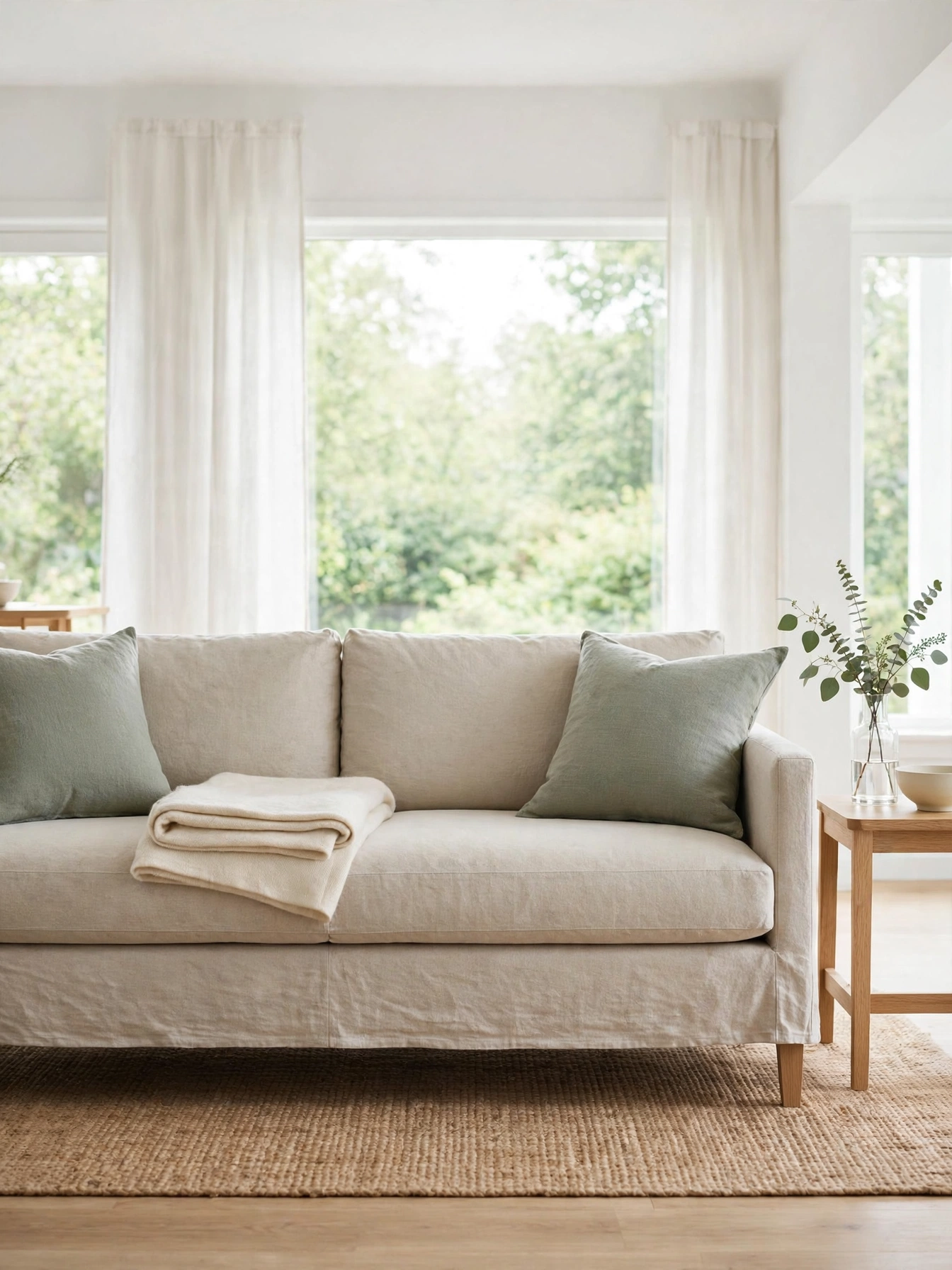
Why This Works:
- A sofa in oatmeal, greige, or warm white never fights with future decor changes.
- Light neutrals reflect daylight, making the whole room feel larger and airier.
- One calm anchor lets you rotate inexpensive accent pillows seasonally without clashing.
- Performance fabrics now resist stains for years, removing the old fear of light upholstery.
Choose a three-seater between 78 and 88 inches wide with a seat depth of 21 to 23 inches, which suits most adults without encouraging slouching. Look for performance fabrics rated above 50,000 double rubs with a stain-resistant finish; these wipe clean with water and cost 1,200 to 2,500 dollars, only slightly more than standard upholstery. Keep the back height under 34 inches so the sofa does not block window light. Leave 18 inches between the sofa front and the coffee table for comfortable legroom.
Neutral sofas suit anyone who redecorates often or shares the room with kids and pets, since the base never needs replacing. The trade-off is that light fabric shows wear faster at the armrests, so choose a slipcovered model if you want a 10-year lifespan. Versus a bold-colored sofa, the neutral version costs the same but adapts to three times as many styles. Add color through pillows and art, not the biggest piece in the room.
Pro Tip: Order free fabric swatches and tape them to the sofa spot for 3 full days; north-facing light can turn a warm greige noticeably gray.
Single Statement Art
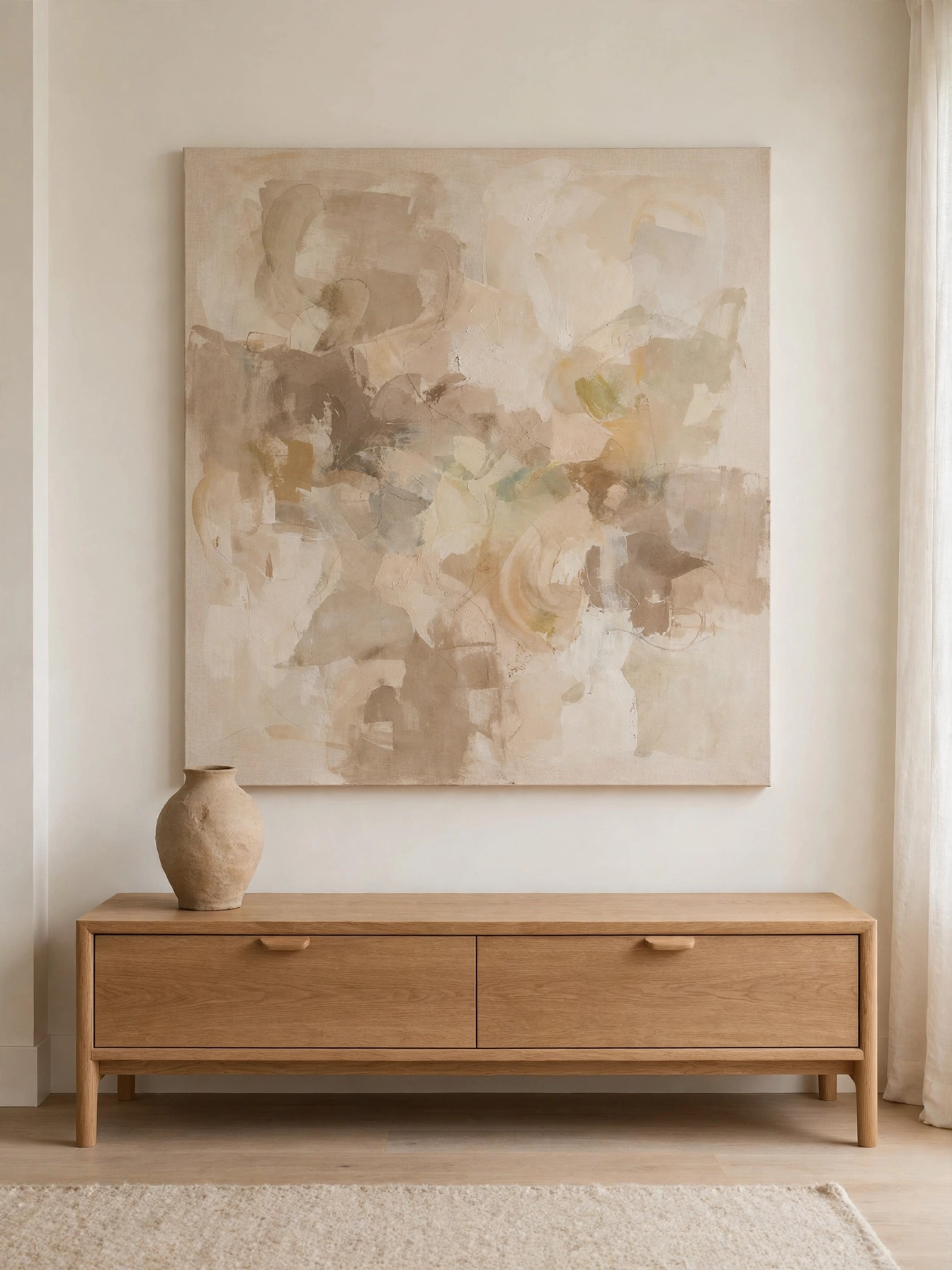
Why This Works:
- One large piece creates a focal point without the visual noise of a gallery wall.
- A 40 by 60 inch canvas fills a sofa wall in a single confident gesture.
- Buying one good print beats framing twelve small ones in both cost and calm.
- Negative space around the art lets the wall breathe, which is the whole point.
Size the art to cover 60 to 75 percent of the sofa’s width, and hang the center at 57 to 60 inches from the floor. A quality 40 by 60 inch giclée print with a simple oak frame runs 150 to 400 dollars, far less than a salon wall of small frames. Keep at least 6 to 8 inches between the sofa top and the frame bottom so the two read as separate layers. Choose abstract or landscape subjects in muted tones that rest the eye rather than demanding attention.
Single statement art suits renters and minimalists who want impact with one decision and one nail hole. If you love collecting small pieces, confine the gallery to a hallway and keep the living room to the single canvas. Against a mirror, art adds color and personality without doubling the room’s clutter in reflection. The Spruce notes that oversized art is one of the fastest ways to make a small room feel intentional.
Pro Tip: Mock the size with kraft paper taped to the wall for 48 hours; most people underestimate scale by 30 percent and buy art that looks lost.
Wooden Coffee Tables

Why This Works:
- Light oak or ash keeps the visual weight low while adding natural warmth.
- A round 36-inch table improves traffic flow compared with sharp-cornered rectangles.
- Wood hides daily wear gracefully, developing character instead of looking damaged.
- One well-chosen table eliminates the need for extra side tables in small rooms.
Pick a height of 16 to 18 inches to align with your sofa seat, and a diameter of 32 to 38 inches for rooms under 250 square feet. Solid oak tables in this size run 250 to 700 dollars, while oak veneer over engineered wood costs half that and looks identical from three feet away. Choose a lower shelf or drawer if you need hidden storage for remotes and coasters. Keep the tabletop styling to three items or fewer: a tray, a book, and one natural object.
Wooden coffee tables suit families and anyone who actually lives in their living room, since wood forgives bumps and rings. Glass tops look lighter but show every fingerprint and need daily wiping. Relative to upholstered ottomans, wood offers a stable surface for drinks and doubles as extra seating in a pinch. Oil the top once a year to keep it from drying out.
Pro Tip: Put felt pads on all four feet and check them every 6 months; a worn pad scratches oak floors in a single drag across the room.
Linen Sheer Drapes
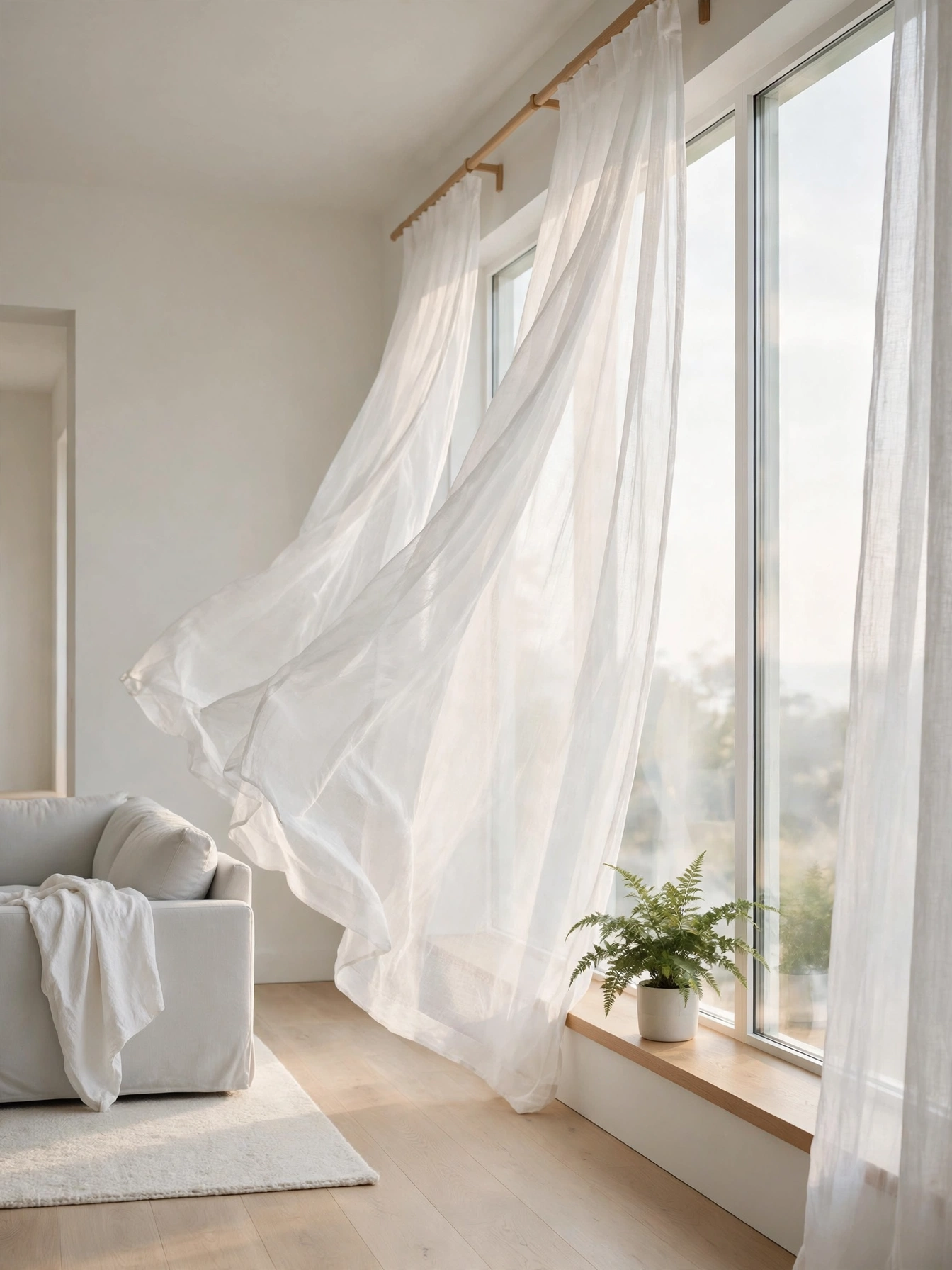
Why This Works:
- Sheers soften harsh sunlight into a gentle glow that flatters everything in the room.
- They provide daytime privacy without blocking the view or the light.
- White or ivory linen sheers disappear visually, keeping walls feeling open.
- A single pair costs a fraction of blackout drapes and needs no lining.
Mount the rod 4 to 6 inches above the frame and 6 to 10 inches wider on each side, and choose panels 1.5 to 2 times the rod width for gentle gathering. Ready-made linen-blend sheers run 30 to 80 dollars per panel, making a full window treatment achievable for under 200 dollars. Hem them to hover half an inch above the floor for easy vacuuming. Wash in cold water and hang damp to avoid ironing the linen wrinkles out completely.
Sheer curtains suit bright rooms where privacy matters less than light quality, and they layer beautifully under heavier drapes for evening. They offer no insulation and minimal night privacy, so add blinds if the window faces a street. In contrast to bare windows, sheers cut glare by roughly half while keeping the view. Choose a linen look over polyester for a softer drape.
Pro Tip: Buy one extra panel beyond what you need; sheers fade unevenly, and a spare lets you rotate the sunniest panel every 12 months.
Simple Living Room Palette

Why This Works:
- Limiting the room to three tones, white, wood, and one accent, removes decision fatigue.
- A restrained palette makes mismatched furniture look intentional instead of accidental.
- Light walls with warm wood floors suit every style from Scandinavian to coastal.
- When everything coordinates, cleaning and styling take half the time.
Build the palette on a 70-25-5 formula: 70 percent warm white or pale greige walls and large upholstery, 25 percent natural wood tones, 5 percent a single accent like sage or terracotta. Test paint in three spots and observe for 48 hours, since a color that looks beige at noon can read pink at dusk. A full room repaint in a quality matte finish costs 200 to 500 dollars in materials for a 300-square-foot room. Keep ceilings a half-tone lighter than walls to lift the room.
A disciplined palette suits chronic redecorators and small rooms where every color competes for attention. The risk is blandness, so vary texture aggressively: nubby linen, smooth oak, soft wool. Stacked against a colorful maximalist room, the simple palette costs less to maintain and photographs better. Houzz surveys repeatedly show neutral living rooms ranking highest for long-term satisfaction.
Pro Tip: Photograph the room in black and white; if the tones still read as distinct layers, your palette has enough contrast to avoid flatness.
Simple Living Room Ideas With Seagrass Storage

Why This Works:
- Baskets hide the everyday clutter that makes rooms feel chaotic in 60 seconds flat.
- Seagrass and rattan add organic texture without adding visual weight.
- A 20-inch basket holds six folded throws or a season of magazines.
- Unlike plastic bins, baskets look like decor even when doing storage duty.
Choose baskets 18 to 22 inches in diameter with handles, large enough to be useful but small enough to lift when full. Seagrass baskets in this size run 25 to 60 dollars each, and two or three handle a whole living room’s loose ends. Place one beside the sofa for throws, one near the media console for remotes and chargers, and one by the door for the daily drift of mail. Line baskets that hold plants with a plastic saucer to protect the weave from water.
Storage baskets suit every household, but they are essential where toys, crafts, or hobby supplies migrate daily. The honest limit is that baskets hide clutter rather than reducing it, so declutter first and store second. Put beside lidded boxes, open baskets invite use but need tidying to look good. Shake them out monthly; crumbs and dust collect at the bottom fast.
Pro Tip: Assign each basket one category and label the bottom in pencil; single-category baskets stay tidy, mixed ones become junk drawers within 2 weeks.
One Rug Rule
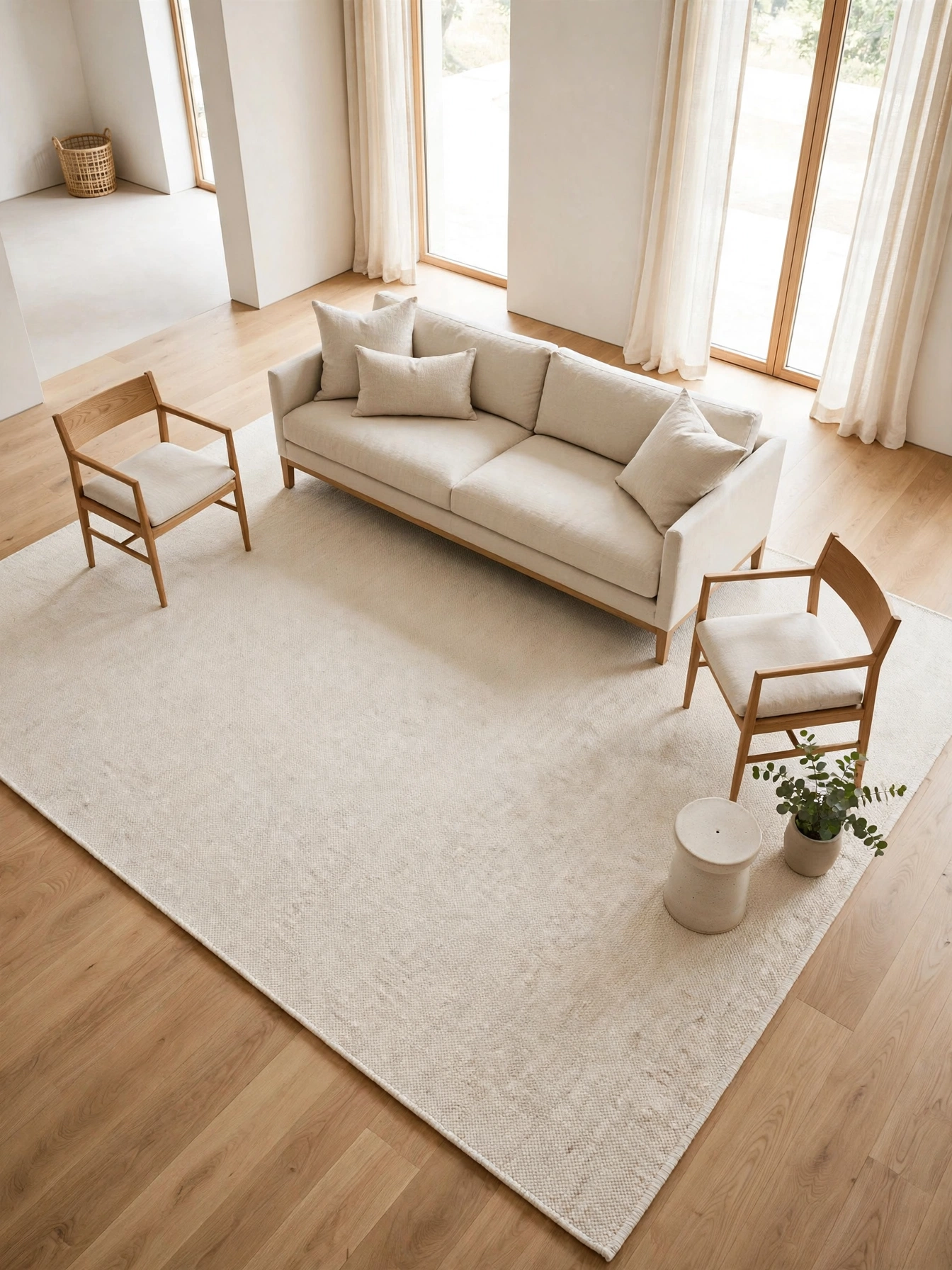
Why This Works:
- A single large rug unifies the seating area instead of chopping it into zones.
- Low-pile flatweaves in ivory or jute keep the floor feeling open and easy to clean.
- One 8 by 10 foot rug costs less than layering two smaller ones.
- A calm floor lets the furniture, not the pattern, carry the room.
Size the rug so the front legs of every seat rest on it: 8 by 10 feet for standard arrangements, 5 by 8 for apartment nooks. Flatweave cotton or jute rugs run 150 to 500 dollars at 8 by 10, a fraction of patterned wool. Use a thin 1/8-inch rug pad to stop sliding without adding height that catches door swings. In dining-adjacent spaces, extend the rug 24 inches beyond the table on all sides so chairs stay on it when pulled out.
The one-rug rule suits minimalists and anyone tired of busy floors competing with furniture. Pattern lovers can still use it by choosing a subtle tone-on-tone texture instead of a bold print. When measured against bare floors, a rug cuts echo noticeably and warms the room underfoot. Vacuum jute without a beater bar to avoid fraying the weave.
Pro Tip: Tape the rug outline on the floor with painter’s tape and live with it 3 days; this free test prevents the most common rug mistake, buying 2 feet too small.
Clear Surface Counters
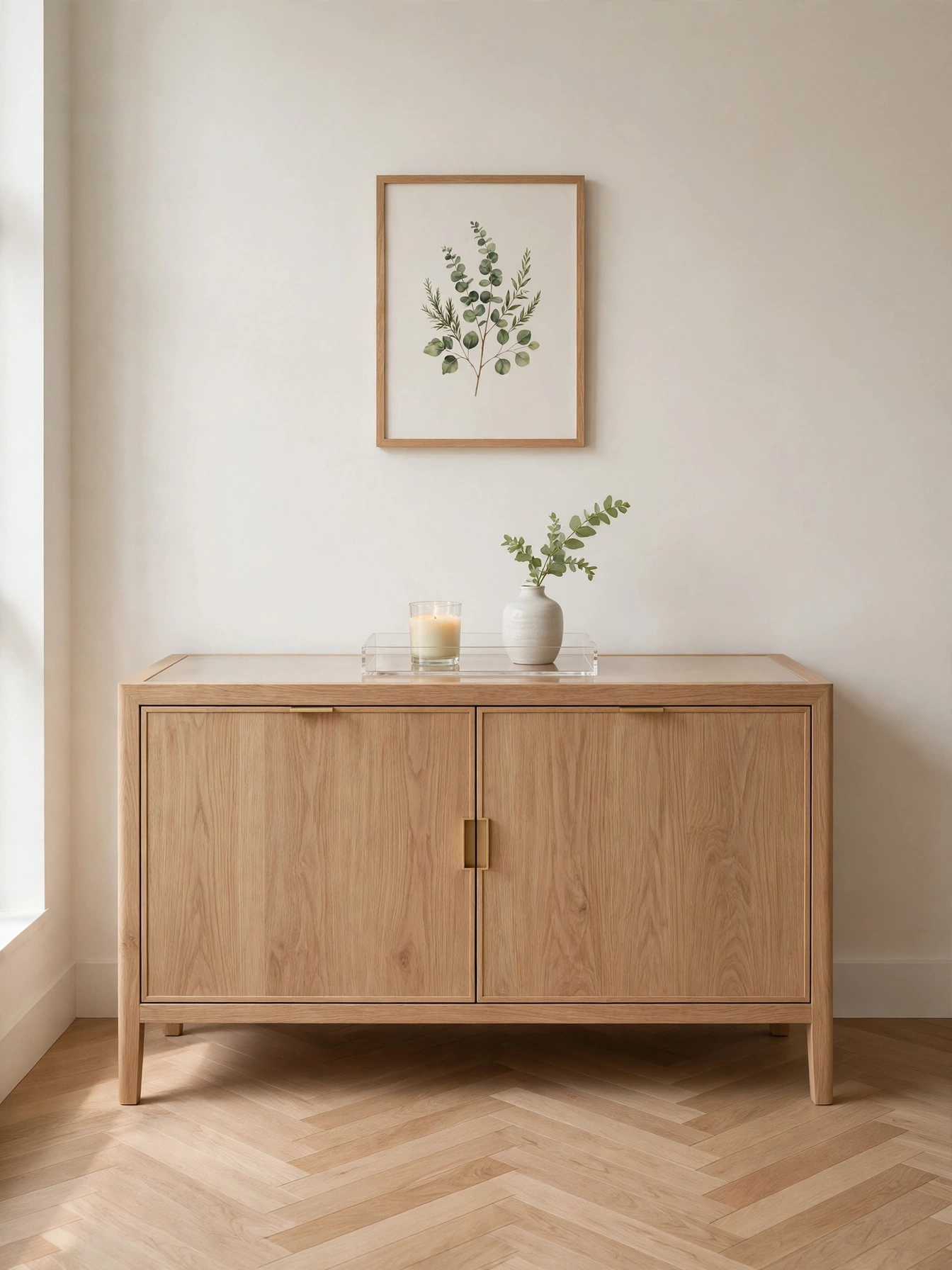
Why This Works:
- Clear surfaces signal calm instantly; the eye rests where there is nothing to process.
- Limiting each surface to three objects makes dusting a two-minute job.
- Empty space around objects makes the remaining pieces look more valuable.
- This costs nothing and changes the room’s feel more than new furniture.
Apply the rule of three: each table or console holds a maximum of three items in varied heights, with at least 12 inches of clear space between groupings. Corral small necessities like remotes and coasters on a single tray no larger than 16 by 12 inches. Do a 15-minute sweep weekly, returning drifted items to their homes before clutter recolonizes. The only cost is a 20 to 40 dollar tray if you do not own one.
Clear surfaces suit everyone, but they transform households where mail, keys, and gadgets colonize every flat plane. The challenge is maintenance, not setup; without a weekly reset, surfaces refill within days. Set against buying organizers, this approach removes rather than contains. The Spruce lists surface clearing among the top three changes professional organizers make first.
Pro Tip: Photograph each surface when it looks perfect; the photo becomes your 30-second reset reference when things drift.
Simple Living Room Storage

Why This Works:
- Closed storage keeps necessities accessible but invisible, which is the minimalist ideal.
- A 60-inch low credenza swallows games, chargers, and linens in one piece.
- White or light oak finishes recede visually instead of announcing themselves.
- One storage piece replaces three small organizers and looks better doing it.
Choose a credenza or storage bench 58 to 72 inches wide and 16 to 20 inches deep, with a mix of drawers and cabinets. Budget 300 to 900 dollars for solid construction with soft-close hardware; flat-pack versions cost half but wobble within two years under daily use. Inside, use 12-inch fabric bins to sort categories so the cabinet stays functional, not just full. Anchor any piece over 30 inches tall to the wall with anti-tip hardware, especially with climbers in the house.
Closed storage suits families and hobbyists whose supplies must live in the living room. Pure minimalists with few possessions can skip it, but most households need at least one honest cabinet. Versus open shelving, closed storage hides 90 percent more visual noise for the same footprint. Measure your largest items first; a cabinet that cannot fit the board games fails its purpose.
Pro Tip: Leave 20 percent of every cabinet empty on purpose; full-to-bursting storage stops working, while breathing room keeps the system usable.
Greenery Single Pots
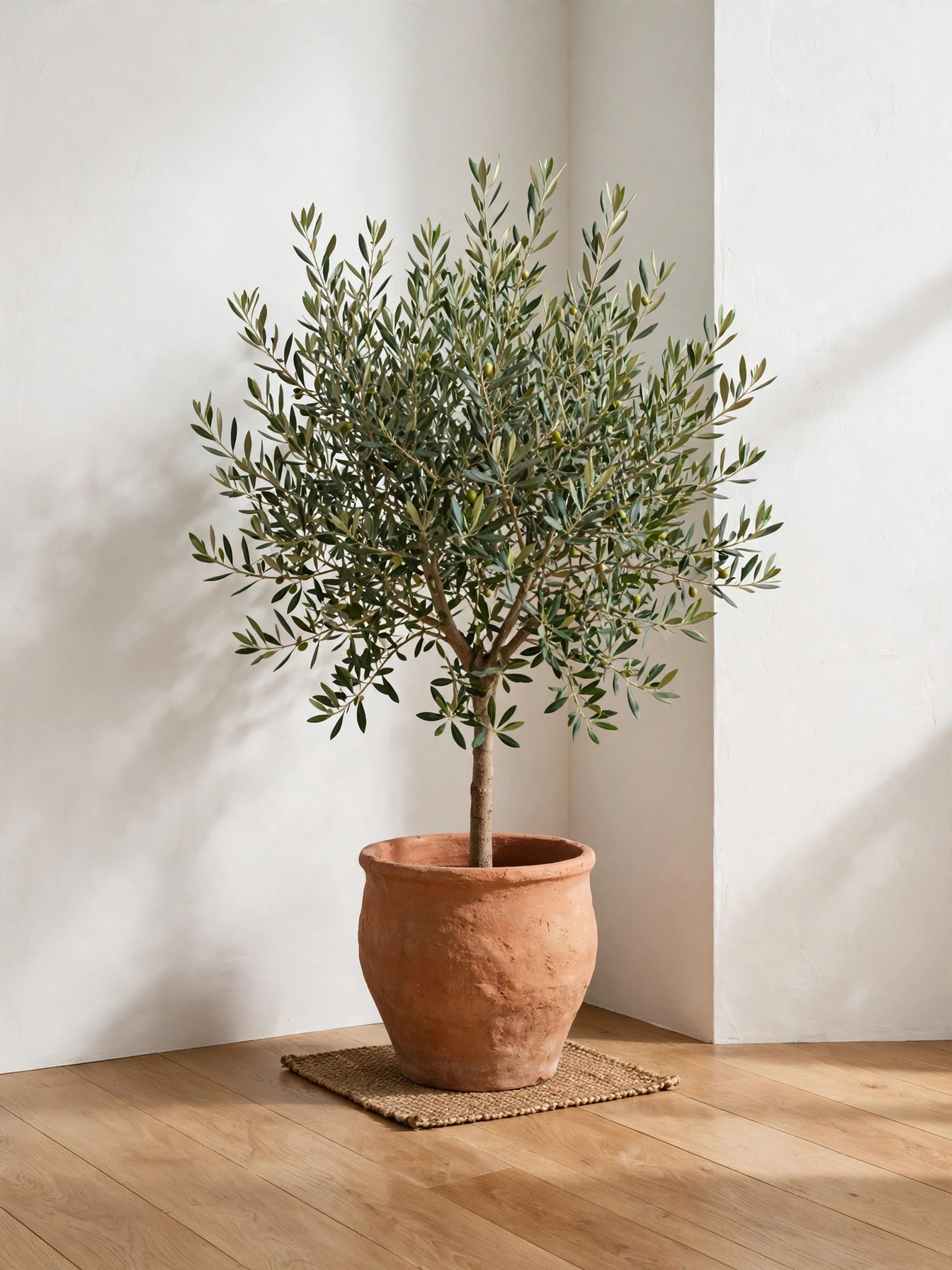
Why This Works:
- One healthy plant adds life and color without the maintenance of an indoor jungle.
- A 5-foot olive or fiddle leaf fig fills an empty corner at a fraction of furniture cost.
- Clay pots in a single finish keep the look calm instead of cluttered.
- Plants soften hard edges and improve the room’s air and mood.
Pick one statement plant 4 to 6 feet tall for corners, or a 12-inch potted plant for tables; a healthy olive tree runs 60 to 150 dollars. Match the plant to your light: south windows suit figs and olives, north windows suit snake plants and pothos. Water only when the top 2 inches of soil feel dry, and rotate the pot a quarter turn monthly for even growth. Use a single pot style in matte clay or white ceramic throughout the room for cohesion.
Single-plant styling suits beginners and anyone who has killed a windowsill herb garden; one plant is easy to learn on. Serial plant collectors should confine the jungle to one room and keep the living room to the single statement. Against cut flowers, a live plant costs less per month and never wilts on day five. Houzz designers rank a single large plant among the highest-impact low-cost additions.
Pro Tip: Set a phone reminder to check soil moisture every Sunday; 90 percent of houseplant deaths come from overwatering, not neglect.
White Wall Calm
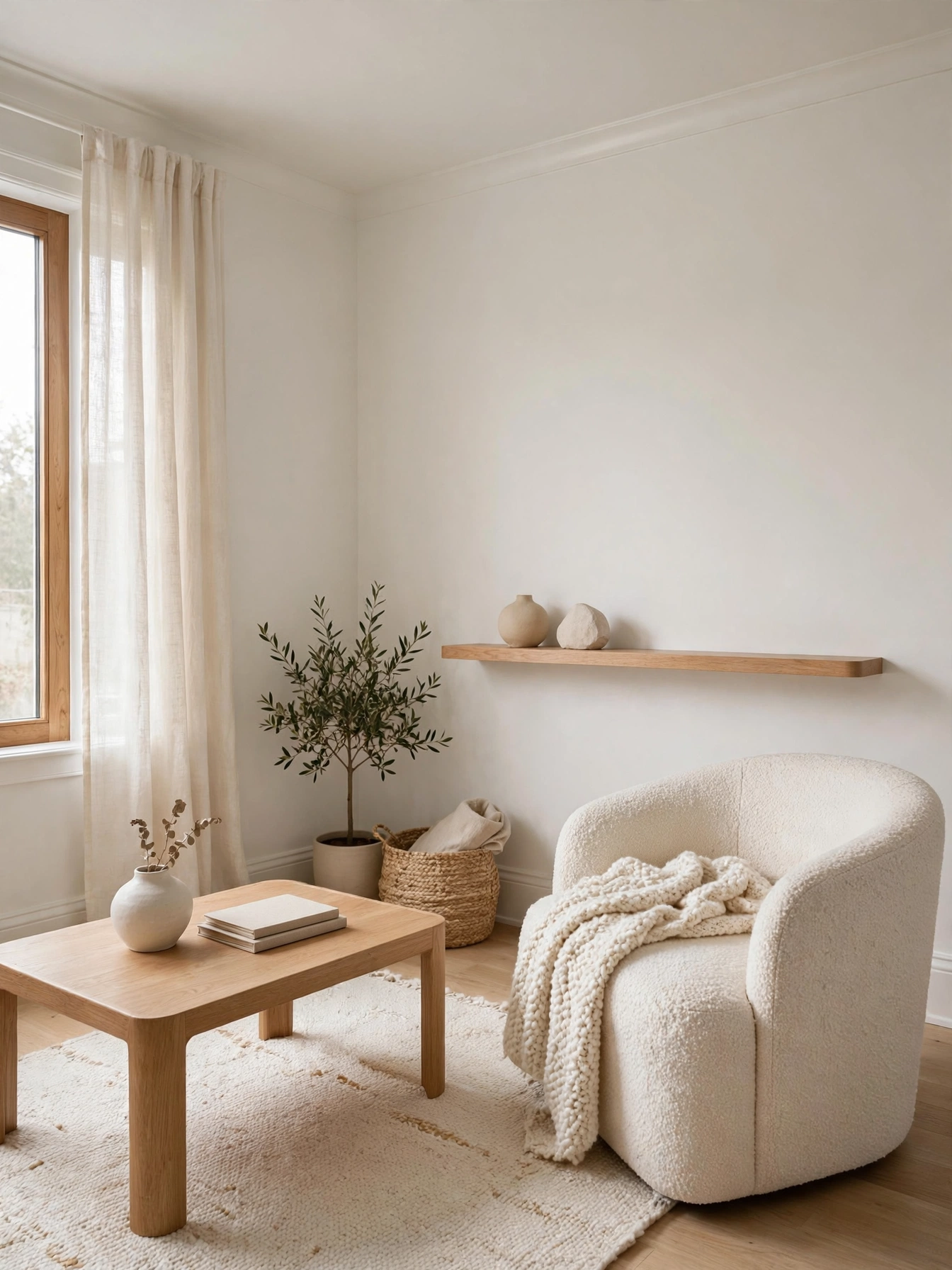
Why This Works:
- Warm white walls bounce daylight deep into the room, doubling the effect of windows.
- A pale backdrop makes wood floors and textiles the stars instead of competing with them.
- White walls forgive mismatched furniture by giving everything a common background.
- Repainting is the cheapest transformation per dollar in all of decorating.
Choose a warm white with a slight creamy undertone rather than stark blue-white, which feels clinical under LED light. A gallon of quality matte paint covers 350 to 400 square feet and costs 40 to 70 dollars; most living rooms need two gallons plus primer. Apply two coats with a 3/8-inch nap roller for smooth walls, and cut in edges with a 2.5-inch angled brush. Keep the finish matte or eggshell; flat white shows every scuff in high-traffic rooms.
White walls suit small, dark, or north-facing rooms most, where every reflected photon counts. In very bright south-facing rooms, an unshaded white can glare, so consider a soft greige instead. Relative to an accent wall, all-white feels calmer but demands more texture elsewhere to avoid flatness. Sample on a 2-foot square and check it at 8 a.m., noon, and 8 p.m. before committing.
Pro Tip: Paint the trim the same white in a satin finish; the subtle sheen shift defines edges without introducing a second color.
Floor Cushion Corners

Why This Works:
- A 26-inch square floor cushion creates seating that vanishes when stacked.
- Low seating suits kids, casual lounging, and rooms that double as play spaces.
- Cushions in washable covers cost 40 to 90 dollars each, the cheapest extra seat available.
- A cushion corner reads as intentional styling, not as missing furniture.
Choose cushions 24 to 28 inches square and 6 to 8 inches thick with a dense foam or buckwheat fill that does not bottom out. Look for removable, machine-washable covers in cotton canvas or outdoor fabric for durability. Stack two or three in a corner on a small 3 by 5 foot rug to define the spot, and store them in a closet when the room needs to look formal. Budget 120 to 270 dollars for a set of three quality cushions.
Floor cushions suit young families, casual households, and small rooms where a chair would block flow. They are poor primary seating for anyone with knee or back issues, since getting up from 8 inches is genuinely hard. In contrast to a pouf, square cushions stack tidier and seat more comfortably. Air the fills in sunlight twice a year to keep them fresh.
Pro Tip: Choose covers with hidden zippers on the bottom edge; side zippers snag clothing and break within a year of floor use.
Simple Living Room Ideas With Natural Light

Why This Works:
- One great floor lamp plus daylight covers 90 percent of a simple room’s needs.
- A slim arc or tripod lamp adds light without the visual clutter of multiple fixtures.
- Warm 2700K bulbs make white walls glow instead of glaring.
- A single dimmer transforms the same lamp from task light to evening mood.
Position one arc or tripod floor lamp with a 60 to 72 inch height beside the main seat, fitted with an 800-lumen 2700K LED. Add a plug-in dimmer for 15 to 25 dollars if the lamp lacks one; the mood shift is dramatic. When to hire a professional: call a licensed electrician, typically 150 to 300 dollars, to add a wall dimmer switch or a new outlet where cords currently stretch across walkways. Keep total lighting to three sources maximum in a simple room: window, floor lamp, and one small table lamp.
Simplified lighting suits minimalists and small rooms where five lamps would crowd every surface. Readers who need serious task light should add a dedicated reading lamp rather than straining under ambience. Stacked against recessed cans, a floor lamp costs a tenth as much and moves when the layout changes. The American Lighting Association still recommends layering, but in a simple room two thoughtful layers beat four random ones.
Pro Tip: Match all bulb temperatures in the room to 2700K; one rogue 5000K daylight bulb ruins the calm faster than any decor mistake.
Foldaway Throw Blankets
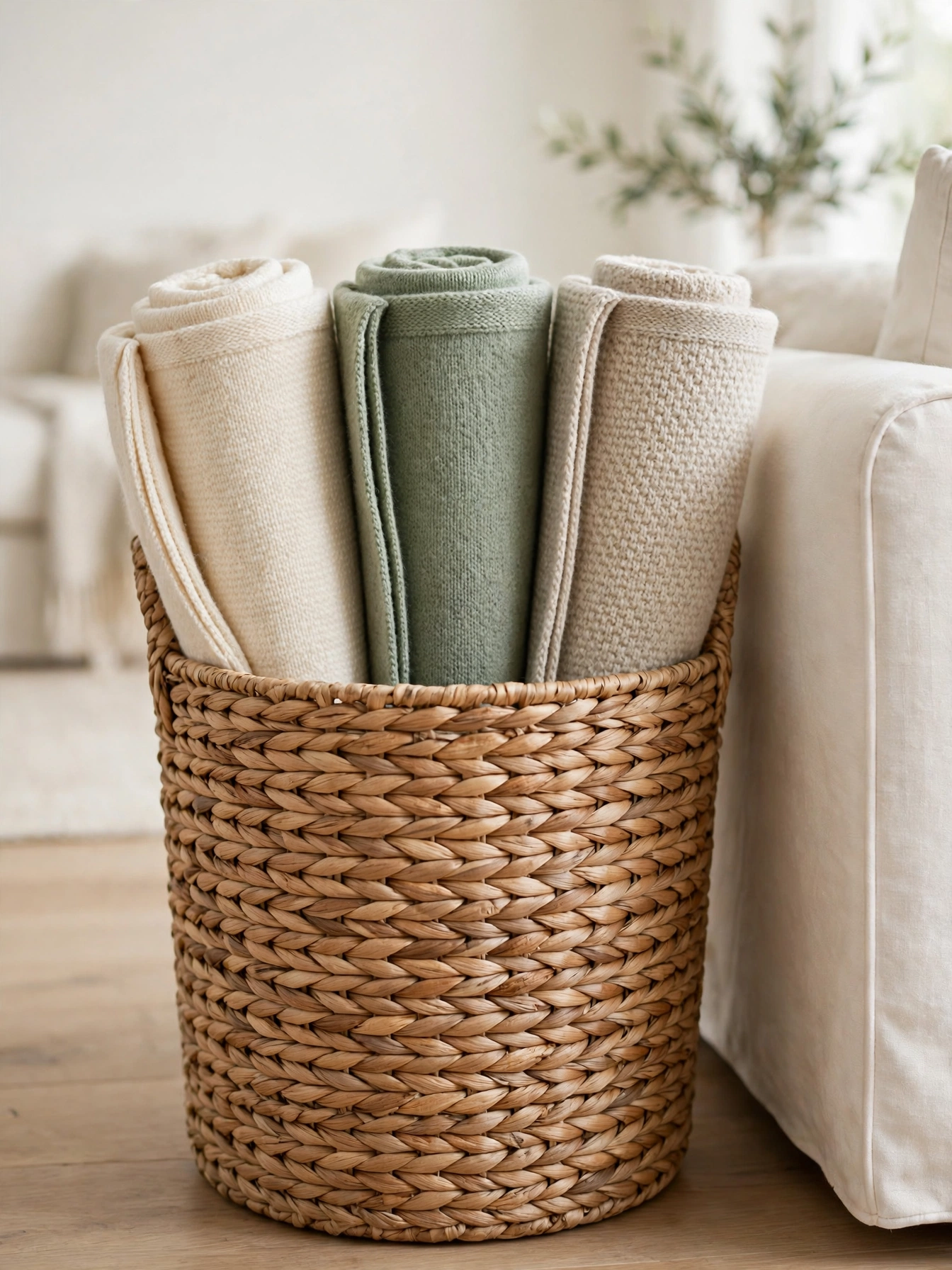
Why This Works:
- Throws in a basket deliver coziness on demand and vanish just as fast.
- Limiting the collection to three throws prevents the draped-everywhere look.
- Cotton and wool throws at 50 by 60 inches suit laps without swallowing sofas.
- Seasonal rotation, linen in summer and wool in winter, keeps the room feeling fresh.
Keep exactly three throws: one wool for winter, one cotton for summer, one guest spare, each 50 by 60 inches. Quality cotton throws run 40 to 90 dollars, wool 80 to 180 dollars. Fold each in thirds and store upright in a 20-inch basket so every option is visible and reachable. Wash cotton throws monthly in warm water; air wool throws outside twice a year instead of washing.
Foldaway throws suit anyone who loves coziness but hates visual clutter, since the basket corrals them between uses. Households that live draped in blankets may prefer one throw per seat left in place. Put beside leaving throws puddled on every seat, the basket habit takes 30 seconds and transforms the room’s tidiness. Retire pilled throws; a shabby blanket drags the whole room down.
Pro Tip: Roll throws instead of folding for basket storage; rolls show their colors, take 20 percent less space, and never develop crease lines.
Minimal Shelf Styling
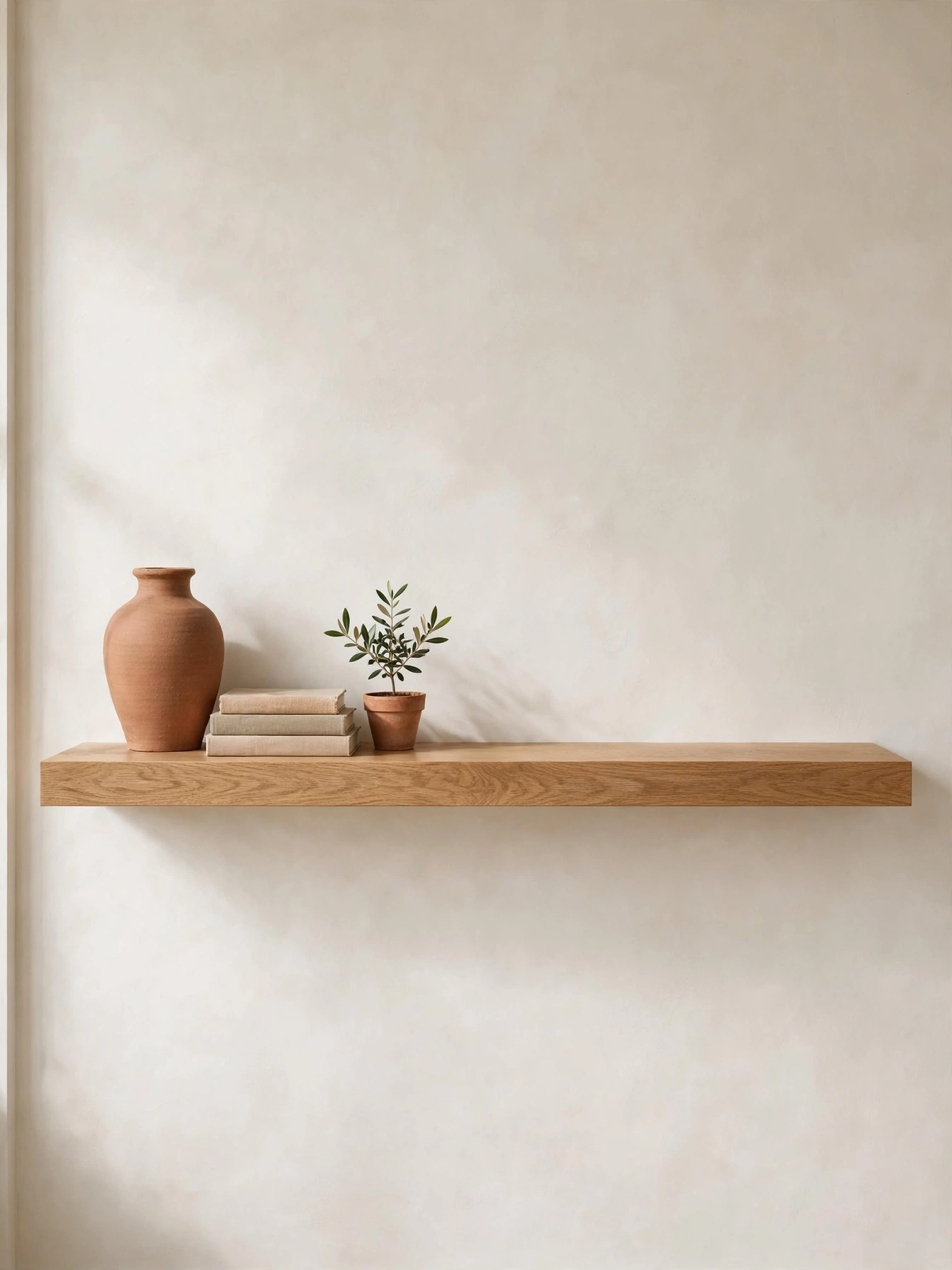
Why This Works:
- A single floating shelf with three objects adds personality without a bookcase’s bulk.
- Leaving 60 percent of the shelf empty makes the styled items look curated.
- One 48-inch oak shelf costs 60 to 120 dollars and installs in under an hour.
- Minimal shelves collect less dust and need restyling only seasonally.
Mount a 44 to 52 inch floating shelf at 60 to 66 inches high, using brackets rated for at least 50 pounds even if you display less. Style with the odd-number rule: three or five objects in varied heights, with the tallest at one end. Leave 12 inches of clear wall on each side so the shelf reads as a moment, not a stripe. Dust the shelf monthly; a single dusty shelf is more noticeable than a full bookcase.
Minimal shelves suit renters and anyone whose book collection lives elsewhere. Book lovers should skip this and embrace a real bookcase instead of starving one shelf. When measured against gallery walls, a shelf holds dimensional objects like ceramics that flat art cannot. The Spruce recommends editing shelves quarterly, removing anything that no longer earns its place.
Pro Tip: Style the shelf, then remove one object; the edit-everything-minus-one rule is what separates styled from stuffed.
Cotton Slipcovers
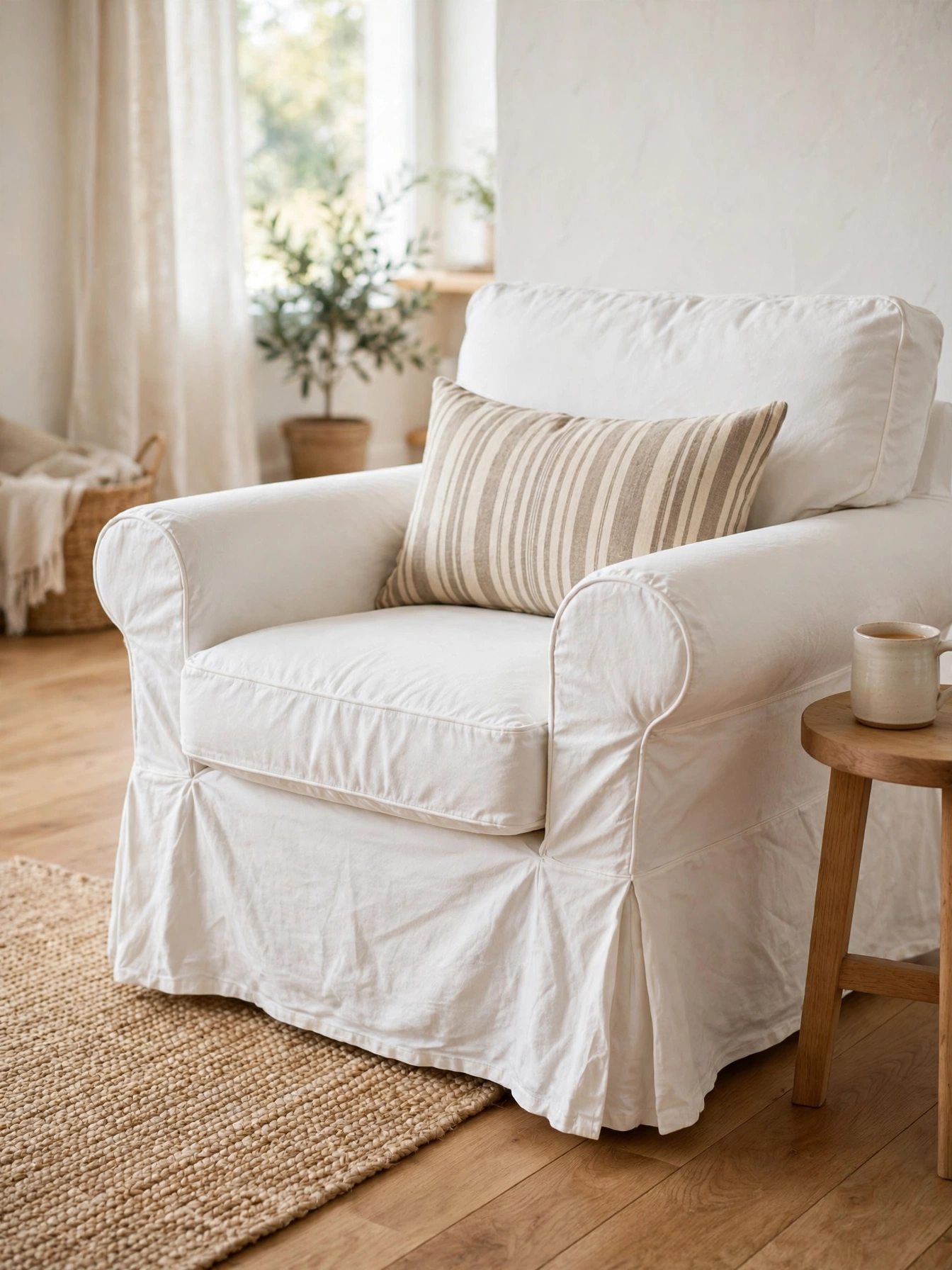
Why This Works:
- Slipcovers give a tired sofa a fresh start for a tenth of replacement cost.
- White or natural cotton reads relaxed and hides wrinkles as part of the look.
- Machine-washable covers survive kids, pets, and red wine with a single laundry cycle.
- A tailored slipcover updates the silhouette without buying new furniture.
Measure the sofa’s width, depth, and back height, then order a slipcover made for that size range; custom covers run 200 to 600 dollars, ready-made 80 to 200 dollars. Choose heavyweight cotton canvas or cotton-linen blend, which wrinkles gracefully instead of looking messy. Wash in cold water and put the cover back on slightly damp for the smoothest fit. Expect to tuck and smooth weekly; slipcovers are low-maintenance, not no-maintenance.
Slipcovers suit families with young kids, pet owners, and anyone renting with an ugly-but-comfortable sofa. They frustrate perfectionists, since lived-in slipcovers always show some softness. Set against reupholstery at 800 to 2,000 dollars, slipcovers deliver 70 percent of the refresh for 20 percent of the cost. Buy a second cover if you want one in the wash and one on the sofa.
Pro Tip: Tuck wooden spoons or foam noodles into the crevices after smoothing; the hidden fill keeps the cover crisp for weeks instead of days.
Decluttered Entry Flow
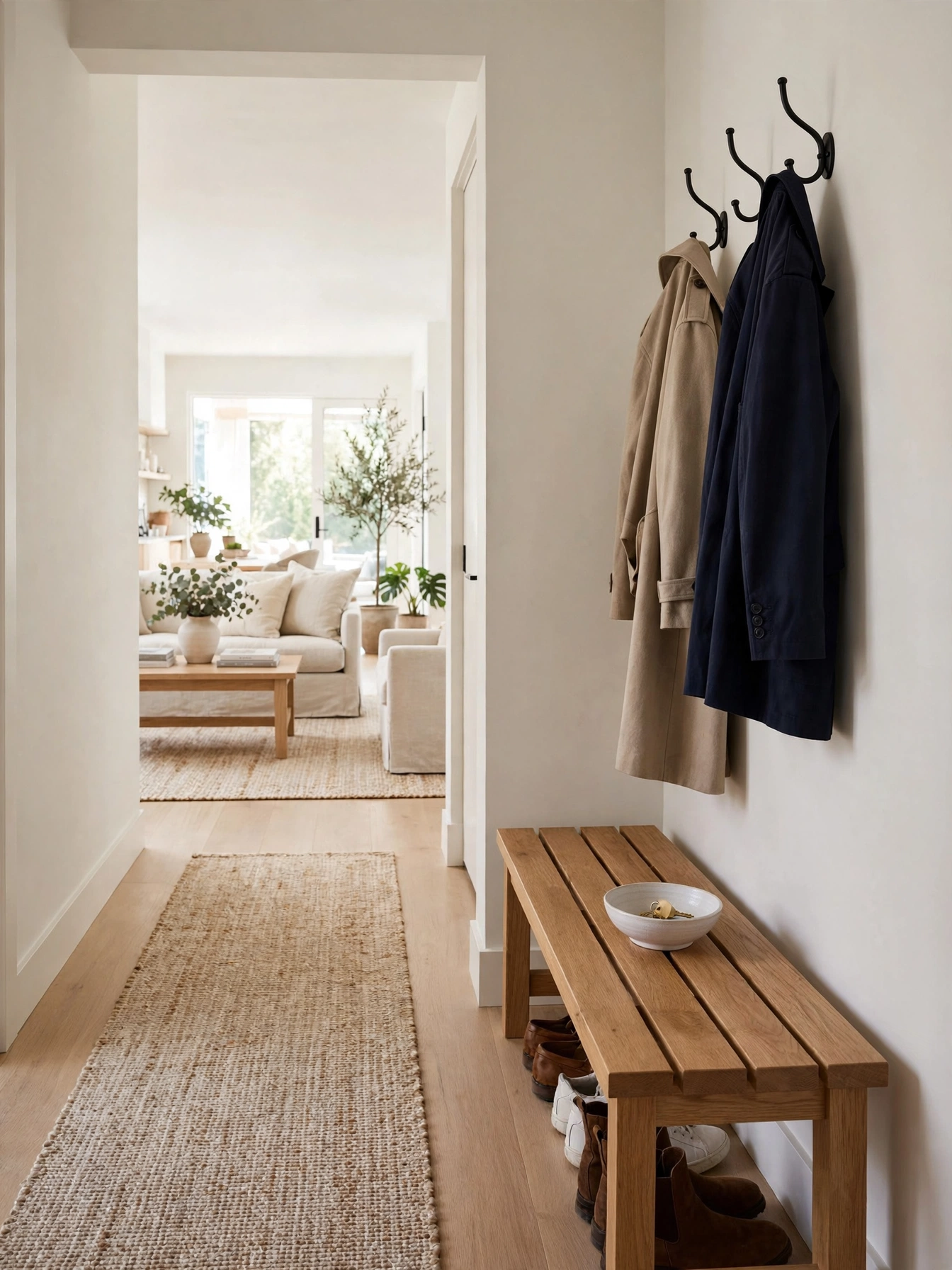
Why This Works:
- A clear 36-inch path from the door sets a calm tone before anyone sits down.
- One bench with shoe storage stops the pileup that migrates into the living room.
- Wall hooks at 60 inches keep coats off chairs and floors.
- The entry is the room’s first impression; tidiness here colors everything after.
Keep a minimum 36-inch clear walkway from the front door into the living area, per standard residential circulation guidelines. A 42-inch bench with a flip-top or cubbies holds 6 to 8 pairs of shoes and costs 120 to 300 dollars. Mount 3 to 5 sturdy hooks at 60 inches high, each rated for 15 pounds or more. Corral keys and sunglasses in a single 8-inch bowl by the door so the living room never becomes a drop zone.
Entry flow matters most in open-plan homes where the door opens straight into the living room. If you have a separate foyer, the same rules apply on a smaller scale. Contrasted with a full mudroom build, a bench and hooks achieve 80 percent of the function for under 400 dollars. Empty the bench seasonally; out-of-season shoes belong in closets, not the entry.
Pro Tip: Stand at your front door and photograph the sightline into the living room; whatever bothers you in the photo is what guests notice first.
Soft Wool Textures
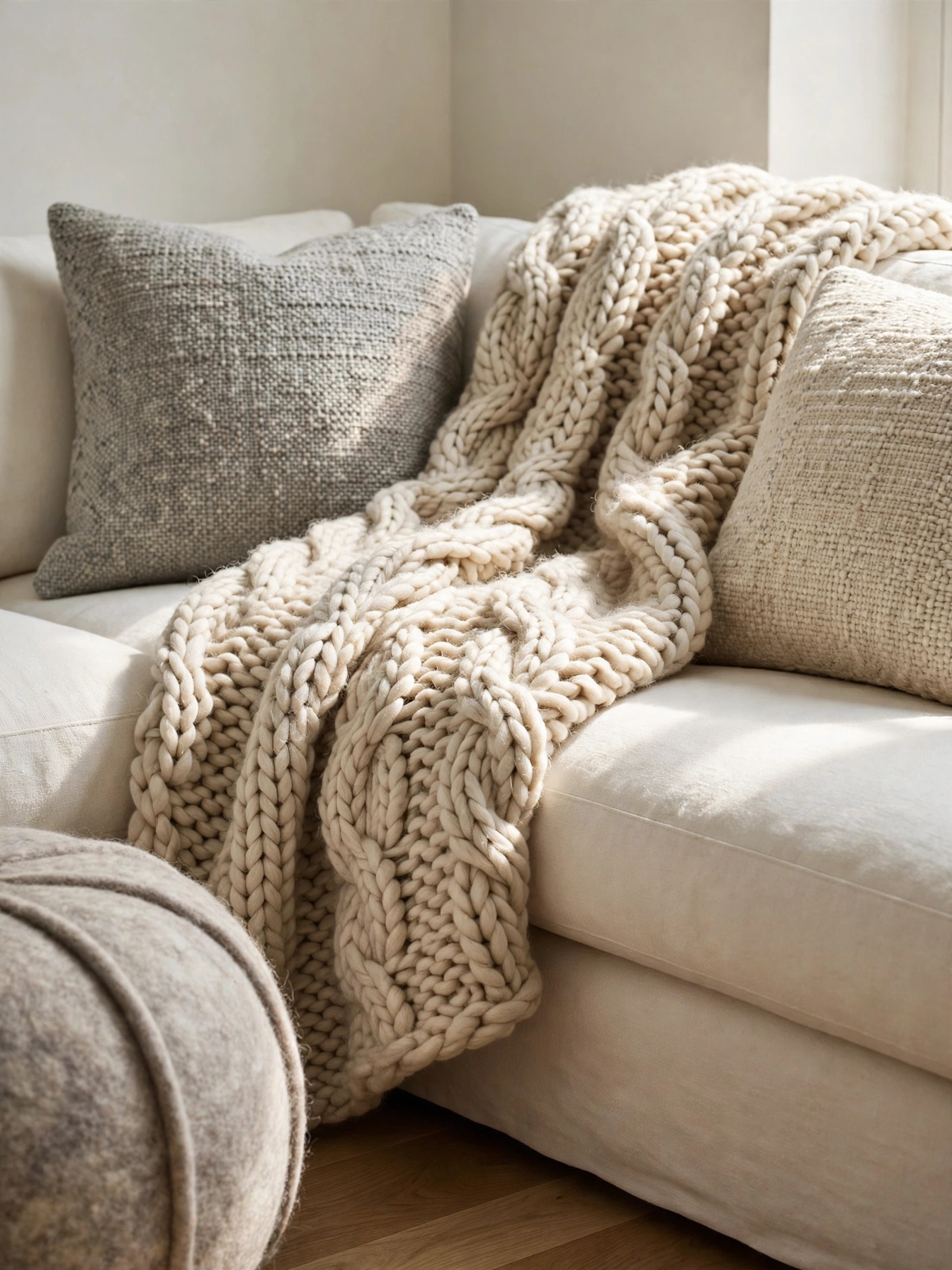
Why This Works:
- Wool adds warmth that keeps minimal rooms from feeling cold or sterile.
- Mixing knit, woven, and felted wool creates depth within a single color family.
- A 20-inch square wool cushion costs 30 to 70 dollars and transforms a plain sofa.
- Natural wool regulates temperature, staying comfortable in every season.
Layer three wool textures: a chunky knit throw, two woven cushions, and a felted pouf, all within two tones of each other. Choose machine-washable wool blends for everyday pieces to avoid dry-cleaning bills. A 50 by 60 inch wool throw runs 80 to 180 dollars and lasts a decade with basic care. Keep wool away from direct sunlight, which fades dyed fibers within a year, and store off-season pieces with cedar.
Wool textures suit minimalists who need warmth without color or pattern. Wool-sensitive households can substitute washable cotton knits for a similar effect. Weighed against synthetic throws, wool costs more upfront but looks better at year five and never pills into plastic nubs. The Spruce consistently rates wool among the best upholstery-adjacent fibers for longevity.
Pro Tip: De-pill wool with a sweater comb every 2 months; 5 minutes keeps the texture looking new for years.
Simple Living Room Ideas With Round Side Tables

Why This Works:
- A 20-inch round table holds a lamp and a book without claiming floor space.
- Round shapes ease movement around tight sofa ends where rectangles snag hips.
- Light oak or white finishes keep the piece visually quiet.
- At 100 to 250 dollars, it is the cheapest way to finish a seating arrangement.
Choose a table 20 to 24 inches in diameter and within 2 inches of your sofa arm height, so reaching for a drink feels natural. A lower shelf doubles the storage for books or a basket. Solid wood or metal frames at 100 to 250 dollars outlast flat-pack versions that wobble within a year. Keep the surface to two items, a lamp and one small object, so the table stays functional rather than decorative.
Round side tables suit small rooms and sectional ends where every inch matters. Large rooms may need a bigger 26-inch table to hold its own visually. Measured against nesting tables, a single round table is simpler and sturdier, though less flexible. Check stability in the store by pressing the edge; any wobble now becomes a spill later.
Pro Tip: Match the side table wood to your coffee table within one tone; matched woods read as a set even when the shapes differ.
Tidy Media Walls

Why This Works:
- A low white console under the TV hides cables and components in one move.
- Mounting the TV at 42 to 48 inches to center keeps necks comfortable.
- One plant and one object beside the screen is all the styling a media wall needs.
- Tucking cables out of sight removes the biggest visual distraction in the whole room.
Choose a media console 58 to 72 inches wide, at least 4 inches wider than the TV on each side, and 18 to 24 inches tall. Route cables through a 20-dollar cord cover painted to match the wall, or an in-wall kit for 40 to 60 dollars. Mount the TV so its center sits 42 to 48 inches from the floor, roughly seated eye level. A quality low console runs 250 to 700 dollars; add 100 to 200 dollars for professional TV mounting if the wall is masonry.
Tidy media walls suit everyone with a television in the living room, which is most households. Purists who hide the TV in a cabinet can apply the same cable discipline inside. Side by side with a full built-in media wall at 3,000 dollars or more, a console plus cord management achieves the calm look for under 800 dollars. Label cables at both ends before hiding them; future-you will be grateful.
Pro Tip: Plug everything into one surge-protected power strip inside the console; a single switch powers down the whole setup and kills standby draw.
FAQs
What are the easiest simple living room ideas to start with?
Start with the free wins: clear every surface to three objects or fewer, edit shelves to 60 percent empty, and fold throws into one basket. These steps take about 2 hours and change the room’s feel immediately. Then repaint in warm white for 200 to 500 dollars in materials.
How much does a simple living room makeover cost?
A surface-level refresh with paint, a rug, baskets, and textiles runs 800 to 2,000 dollars. Adding a neutral sofa and storage credenza brings the total to 2,500 to 5,000 dollars. The minimalist approach saves money naturally, since buying fewer, better pieces beats filling the room cheaply.
Do simple living room ideas work in small apartments?
They work best there. In rooms under 200 square feet, a neutral palette, one 5 by 8 foot rug, and closed storage make the space feel 30 percent larger. Keep furniture legs visible, maintain 30-inch walkways, and choose a loveseat over a full sofa to preserve breathing room.
How do I keep a simple living room from looking boring?
Layer texture, not color: nubby linen, smooth oak, soft wool, and woven seagrass in the same tonal family. The Spruce recommends at least three distinct textures per neutral room. One plant, one piece of art, and 4 to 5 textile weaves give the eye plenty to enjoy without any clutter.
What is the best lighting for a simple living room?
Maximize daylight with sheer curtains, then add one floor lamp at 2700K and 800 lumens beside the main seat. The American Lighting Association suggests two to three light layers even in minimal rooms. Keep fixtures slim and matching in finish so the lighting itself stays visually quiet.
Conclusion
Simple living room ideas come down to three habits: limit the palette to three tones, give everything a closed home, and clear surfaces to three objects or fewer. Keep the rug large, the lighting warm at 2700K, and the calm compounds week after week. Start tonight with the 15-minute surface sweep, then tackle the paint this weekend. Your first action is the easiest one: grab a basket and walk the room. Follow HomelyCrafter on Pinterest for more ideas. Save this to your Pinterest boards so you can refer back to it!

Muhammad Israr is a home decor enthusiast and the writer behind Homely Crafter. He spends his days researching paint colors, layouts and budget-friendly styling ideas, then breaks them down into practical, easy-to-follow guides so you can decorate with confidence.