
The most complimented Christmas decor in any house is usually the oldest thing in the room. A new ornament gets a glance, but a grandmother’s glass ball, a flea-market sled, or a tin from 1962 gets a story. That is why these vintage christmas decor ideas 2026 focus on pieces with a past, whether they came from your own attic, a thrift shop, or a careful reproduction.
You will get 22 complete vintage ideas, each with sourcing tips, honest prices, and what to avoid. Every idea treats vintage as a style with rules, not a pile of old things. A vintage room looks collected, not cluttered, because each piece earns its place.
Start with one hero piece, then build around it. A single aluminum tree, a box of Shiny Brite ornaments, or a sled by the door sets the era, and everything else follows that lead.
Shiny Brite Ornament Collection
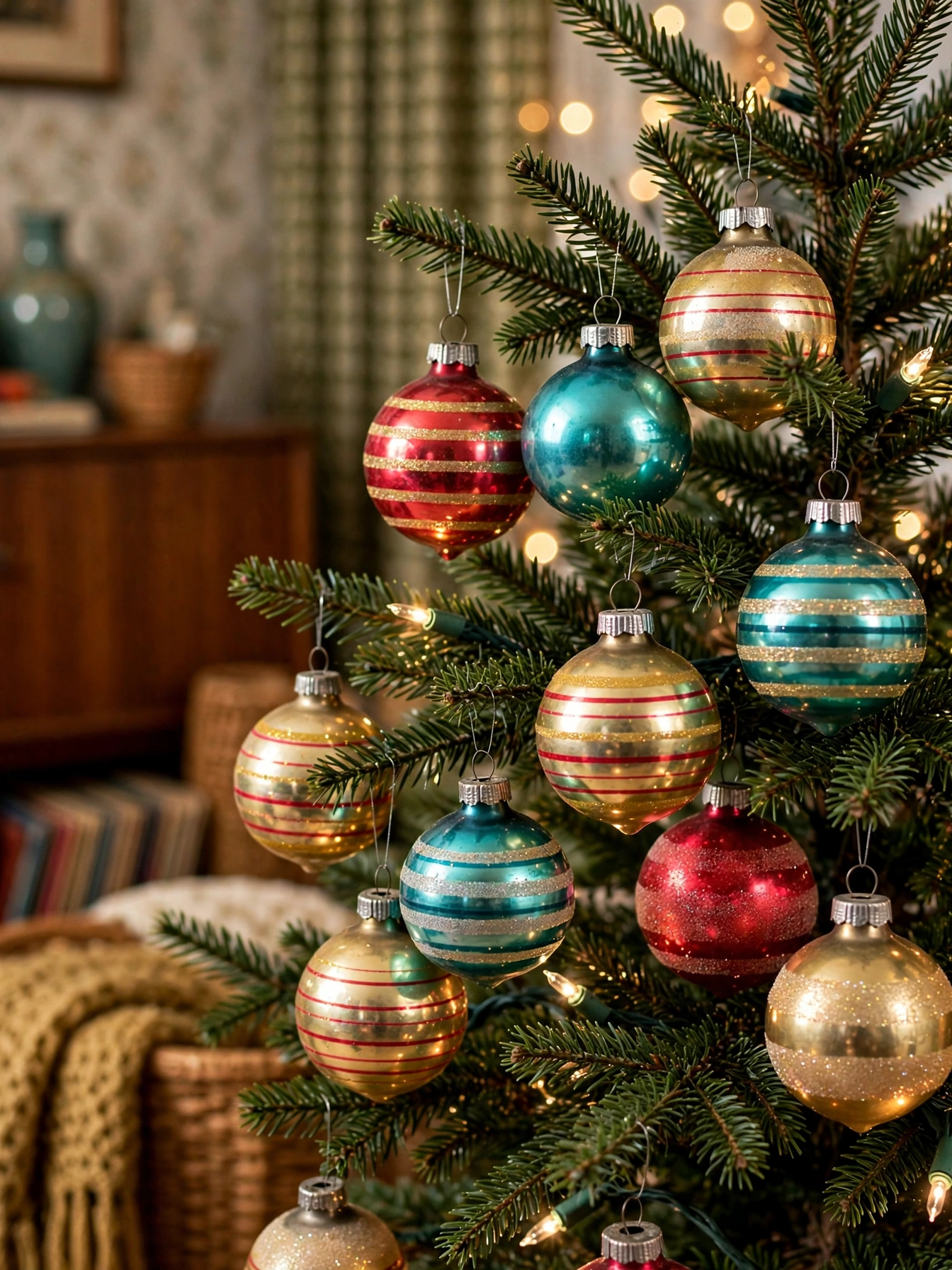
Why This Works:
- Shiny Brite ornaments at 3 inches across suit a 5- to 7-foot tree at the classic ornament scale
- Original metal caps and striped finishes prove authenticity in a way reproductions cannot
- A box of 12 vintage ornaments costs $25 to $60 at flea markets, a fraction of new glass
- Red, teal, and gold together define the mid-century palette in a single glance
Buy Shiny Brite ornaments by the box, not one at a time, since a full box of 12 with matching caps proves the set is genuine. Check each ornament for a tight cap and an unclouded interior; a loose cap means the ornament has been handled roughly. A box of 12 in good condition costs $25 to $60 at flea markets and $40 to $90 from vintage dealers. Hang the ornaments with short ornament hooks, not ribbon, since vintage glass is heavier than modern plastic. Compared with new glass ornaments at $4 to $8 each, vintage Shiny Brites cost less per piece and carry a history no new ornament can match. Shiny Brite ornaments are the most collected vintage Christmas item in America, with production running from the 1940s through the 1960s.
Shiny Brite collections suit trees decorated in a single era, where every ornament belongs to the same decade. The tree becomes a time capsule. The trade-off is fragility: vintage glass is thinner than modern glass, so one fall usually means a break. Hang the most valuable pieces on interior branches where they cannot be knocked. In a house with toddlers, place vintage ornaments above the 4-foot line and fill the lower branches with shatterproof copies. Store the ornaments in their original box with the cardboard dividers, since a loose box of glass chips within a season.
Pro Tip: Photograph the back of each ornament’s cap before hanging. The cap markings identify the production year, which matters if you ever sell or insure the collection.
Mercury Glass Candle Holders
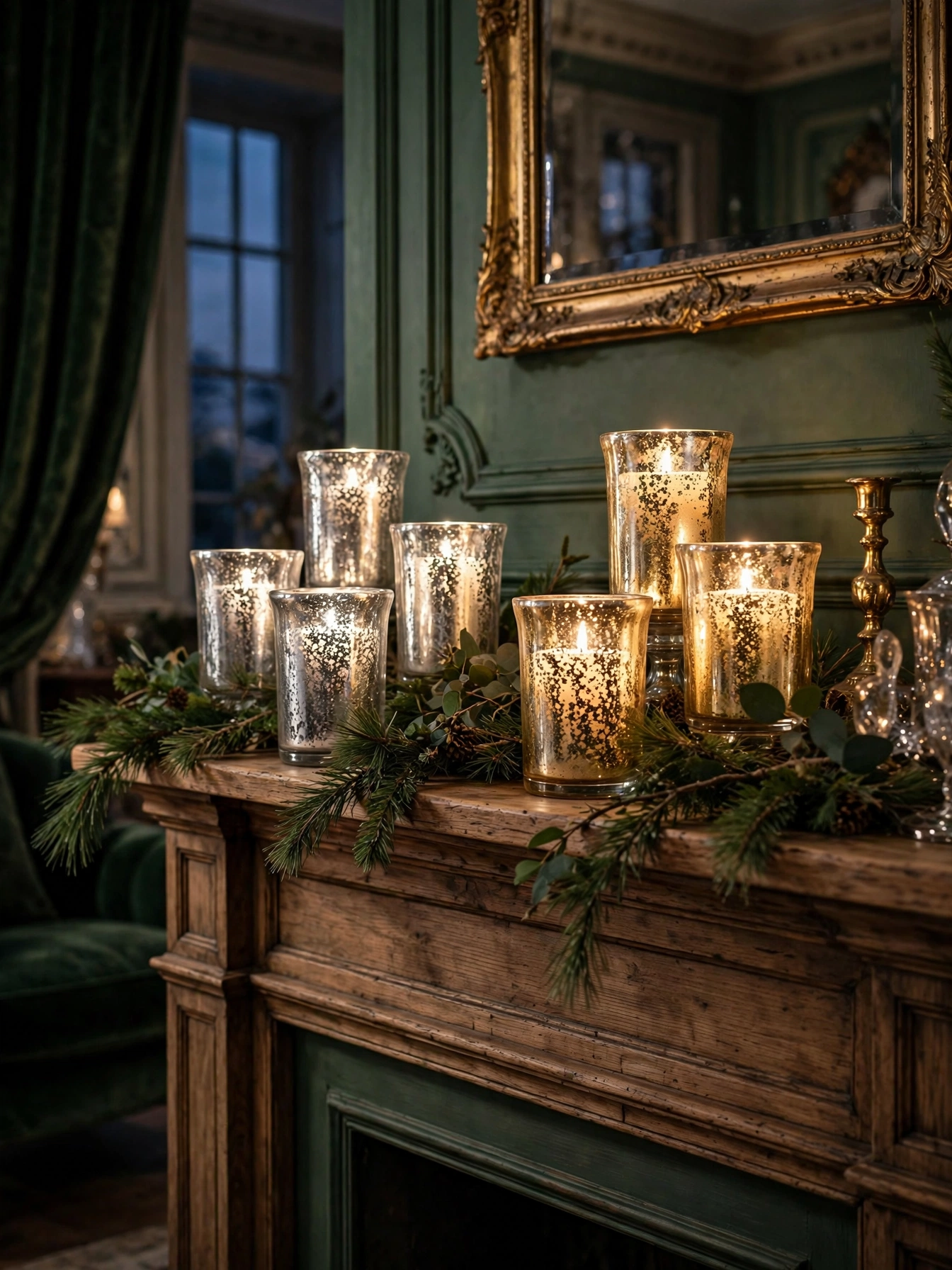
Why This Works:
- Mercury glass holders at 6 and 8 inches create a stepped pair that reads as styled
- The speckled finish hides dust and fingerprints far better than polished silver
- Vintage mercury glass costs $8 to $20 per holder, less than new reproductions
- Flameless candles inside run 300 hours on two C batteries each
Buy true mercury glass, not spray-painted silver. Real mercury glass is built with two walls and silvering sealed between them, which gives it depth; painted copies look flat under candlelight. A pair of vintage holders costs $15 to $40 at thrift shops; new reproductions run $12 to $25 each. Place the holders 8 inches apart on the mantel with a pine sprig between them. Compared with plain glass hurricanes, mercury glass reflects the candlelight and doubles the visible glow. Keep the holders 12 inches from the firebox opening on a working fireplace, since the silvering can discolor above 150 degrees Fahrenheit. Mercury glass is the easiest way to add vintage sparkle to a mantel because it works with every palette.
Mercury glass holders suit mantels, sideboards, and dining tables where a vintage glow beats a modern one. The holders become the room’s evening anchor. The limitation is the finish: mercury glass chips at the rim if stacked, so store each holder in its own cloth bag. In a house with toddlers, choose holders with a weighted base and keep them on a high mantel. If the silvering looks cloudy, wipe the outside with a dry cloth; never use water inside the holder, since moisture dulls the silvering.
Pro Tip: Place one warm white LED tea light inside each holder instead of a pillar candle. The small light reflects in the mercury glass and creates a glowing orb effect for under $1 per holder.
Bottle-Brush Tree Forest
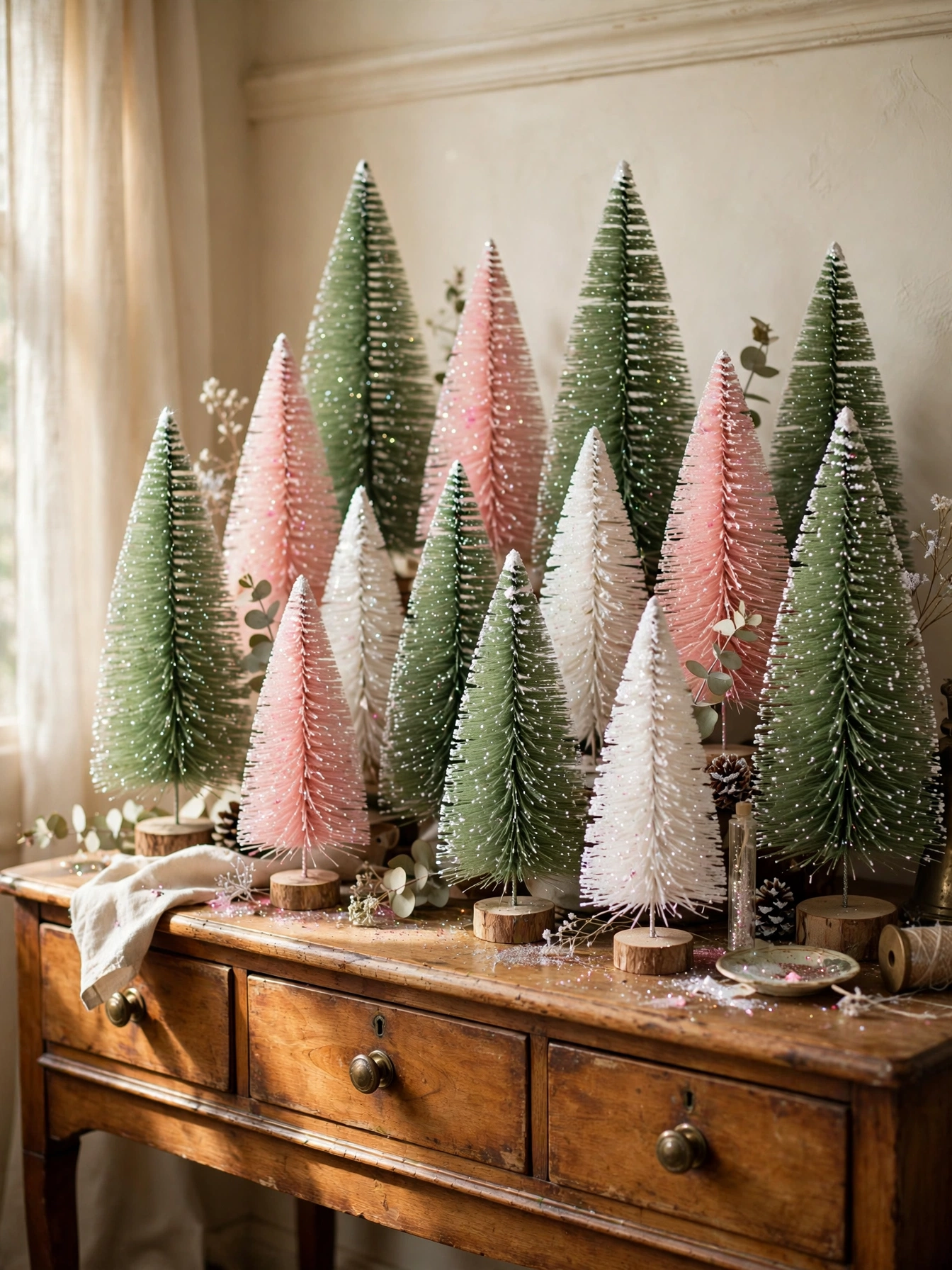
Why This Works:
- Trees at 4, 6, 8, 10, and 12 inches create a forest with natural height variation
- Bottle-brush trees cost $3 to $10 each, making a forest of ten cheaper than one large figurine
- Mixed colors (green, white, pink) read as a collected forest, not a matched set
- The forest fits a 36-inch sideboard with room for a candle beside it
Group the trees in clusters of three, tallest behind and shortest in front, leaving 2 inches between clusters. A set of ten bottle-brush trees costs $30 to $60 from vintage shops; new trees run $3 to $8 each from craft stores. Dust the tree tips with white glitter glue for a snow effect, or buy pre-flocked trees. Compared with a ceramic village, a bottle-brush forest costs a third as much, weighs almost nothing, and survives a fall that would shatter ceramic. Keep the forest 6 inches from the sideboard edge so a stray elbow cannot send it to the floor. Bottle-brush trees are the most collected vintage Christmas item after ornaments, with the pink and aqua versions commanding the highest prices.
Bottle-brush forests suit sideboards, mantels, and windowsills where a small display beats a large one. The forest becomes the room’s whimsical focal point. The trade-off is shedding: cheap bottle-brush trees drop bristles for the first week. Shake each tree outdoors before placing it, and vacuum the sideboard after day three. In a house with cats, expect batting; a forest on a high shelf survives better than one on a low sideboard. Store the trees upright in a shoebox with tissue paper between them to keep the bristles straight.
Pro Tip: Mix one pink or aqua tree into every group of five green ones. A single unexpected color makes the forest look collected over years instead of bought in one trip.
Vintage Christmas Decor Ideas 2026: Tinsel Garland, Done Right
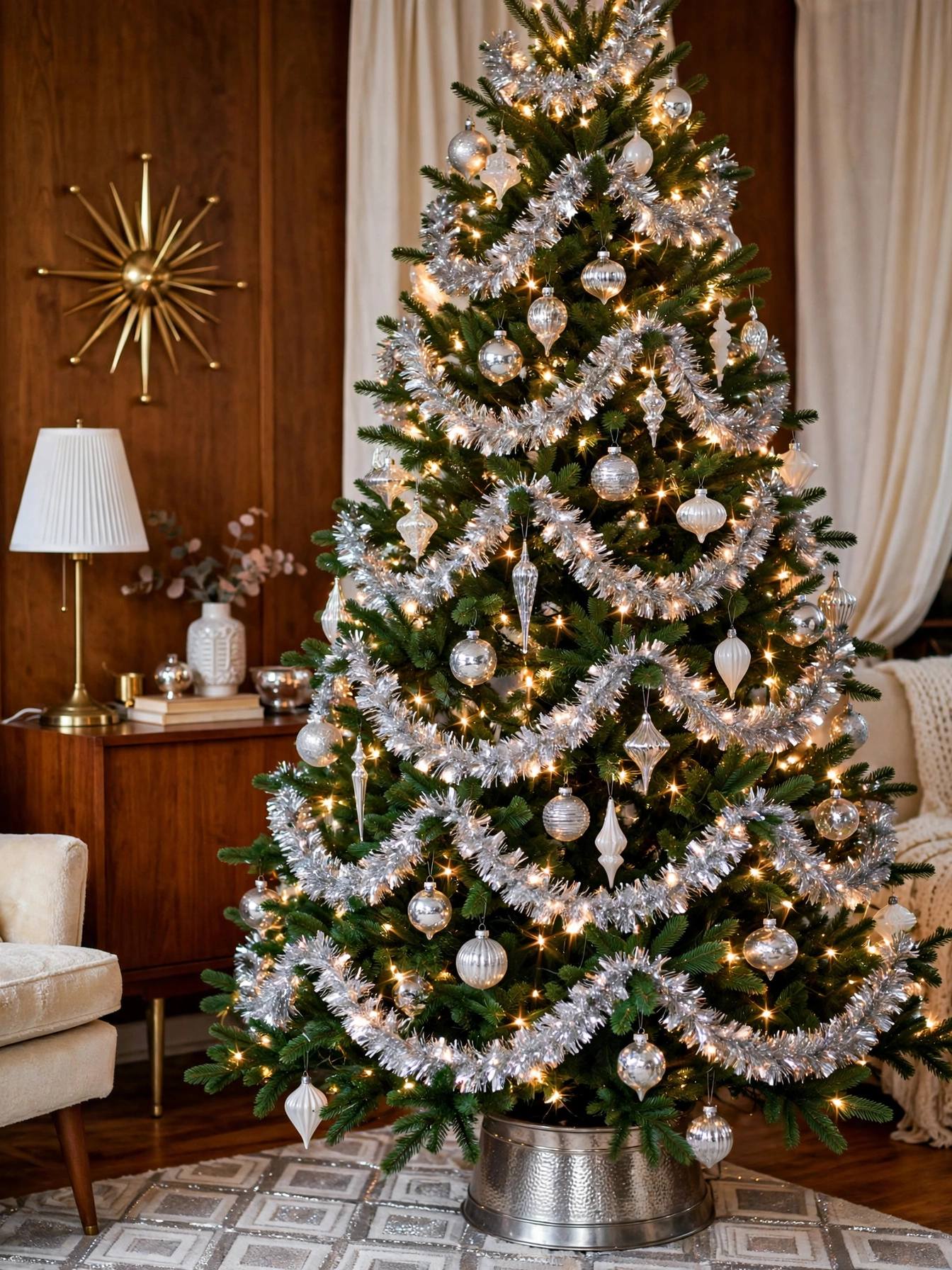
Why This Works:
- Tinsel garland draped in swags, not wrapped in spirals, reads as vintage rather than messy
- Lead-free tinsel at $5 to $10 per 10-foot strand costs less than any other tree garland
- Silver tinsel reflects tree lights, so the tree glows without extra bulbs
- A 10-foot strand covers a 7-foot tree with two swags per side
Drape the tinsel in loose swags between branches, letting it hang 4 inches below the branch line, instead of wrapping it in a tight spiral. Buy lead-free tinsel, since vintage lead tinsel is toxic and should never be used in a home with kids or pets. A 10-foot strand of lead-free tinsel costs $5 to $10; a full tree needs three strands. Compared with a bead garland, tinsel weighs almost nothing and catches light at every angle. Keep the tinsel 6 inches from the tree lights, since the metal strands can short a damaged bulb. Check every light string for frayed wires before decorating, since metal garland and damaged wiring are a fire risk together.
Tinsel garland suits mid-century trees with glass ornaments, aluminum trees, and anyone who wants maximum sparkle for minimum money. The tree becomes a mirror ball. The trade-off is the mess: tinsel sheds for the first 48 hours, so drape it last, after the ornaments, and vacuum the floor after day two. In a house with cats, tinsel is dangerous if eaten, so skip it entirely if a cat chews decorations. If the tree is in a bedroom, tinsel can feel too bright; use one strand instead of three for a quieter glow.
Pro Tip: Drape tinsel after the ornaments, not before. Ornaments hung through tinsel tangle the strands, while tinsel draped over ornaments falls cleanly into swags.
Antique Postcard Garland
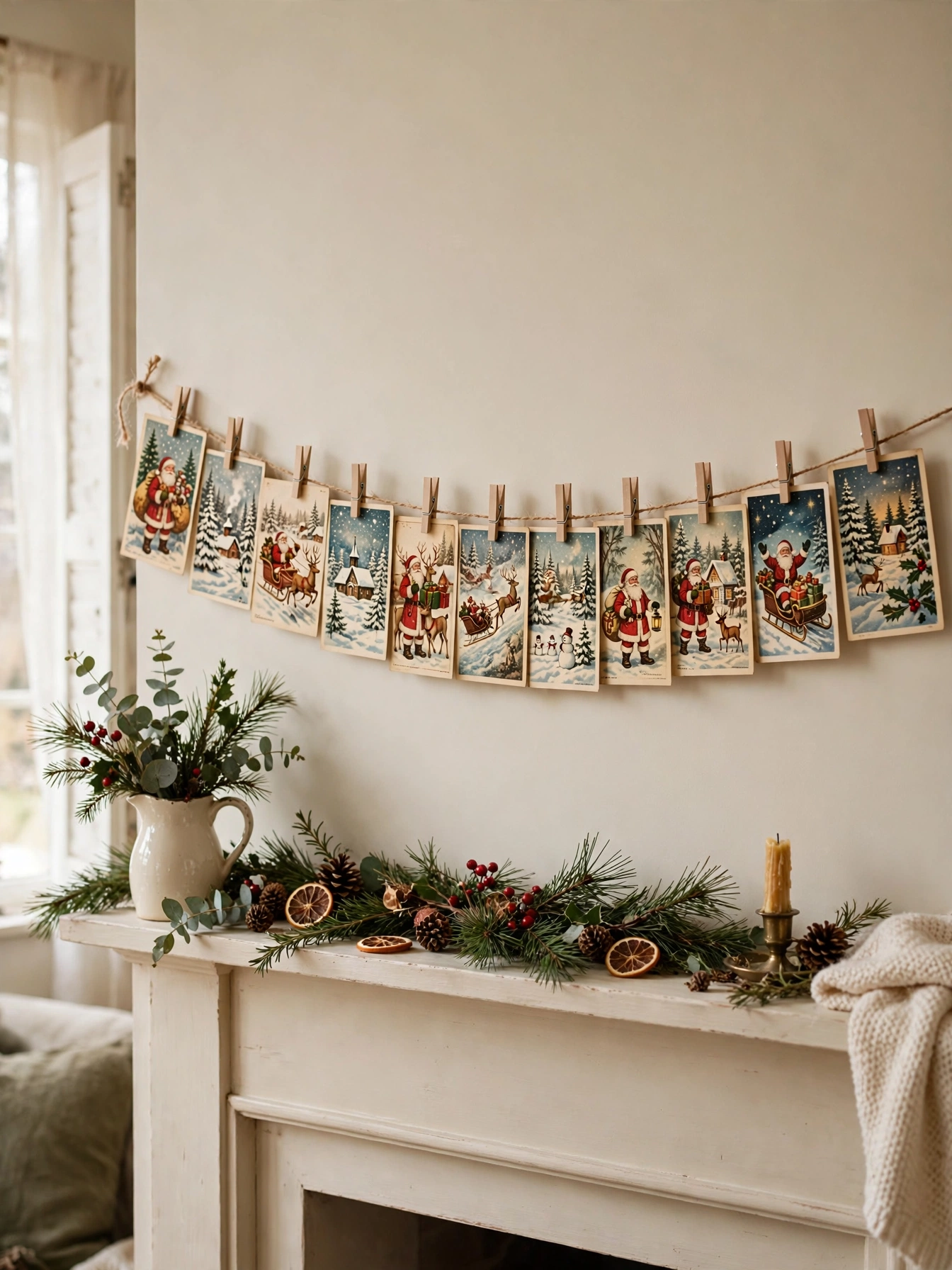
Why This Works:
- Twelve postcards at 4 by 6 inches clipped at 5-inch spacing fill a 6-foot mantel exactly
- Reproduction postcards at $1 to $2 each cost less than any other mantel garland
- Mini clothespins let the garland change in minutes, since each card swaps without restringing
- Postcard art from 1900 to 1950 gives the mantel a century of Christmas history
Buy reproduction postcards, not originals, for a garland that hangs in a living room. Originals fade in sunlight and cost $5 to $15 each, while reproductions run $1 to $2 each and look identical from 3 feet away. Clip twelve cards to a 6-foot length of twine with mini clothespins at 5-inch spacing. A full garland costs $12 to $25 in materials. Compared with a pine garland, a postcard garland weighs almost nothing, never sheds, and tells a story. Keep the garland 12 inches from the firebox opening on a working fireplace, since paper is flammable. Vintage paper is the most affordable way to add age to a room, since a single postcard carries more history than a whole shelf of new decor.
Postcard garlands suit mantels, bookshelves, and stair rails, where a featherweight garland wins over a heavy one. The whole display costs next to nothing and charms every age. The trade-off is fading: postcards in direct sun fade within two seasons, so hang the garland on a wall that gets indirect light. In a house with toddlers, hang the garland high, since paper cards tear if pulled. Store the cards flat in a zip bag with tissue paper between them to reuse them next year.
Pro Tip: Mix postcard eras in a 2-1 ratio (two cards from the 1940s, one from the 1910s). The mix reads as a collection built over years, not a single purchase.
Heirloom Quilt Tree Skirt
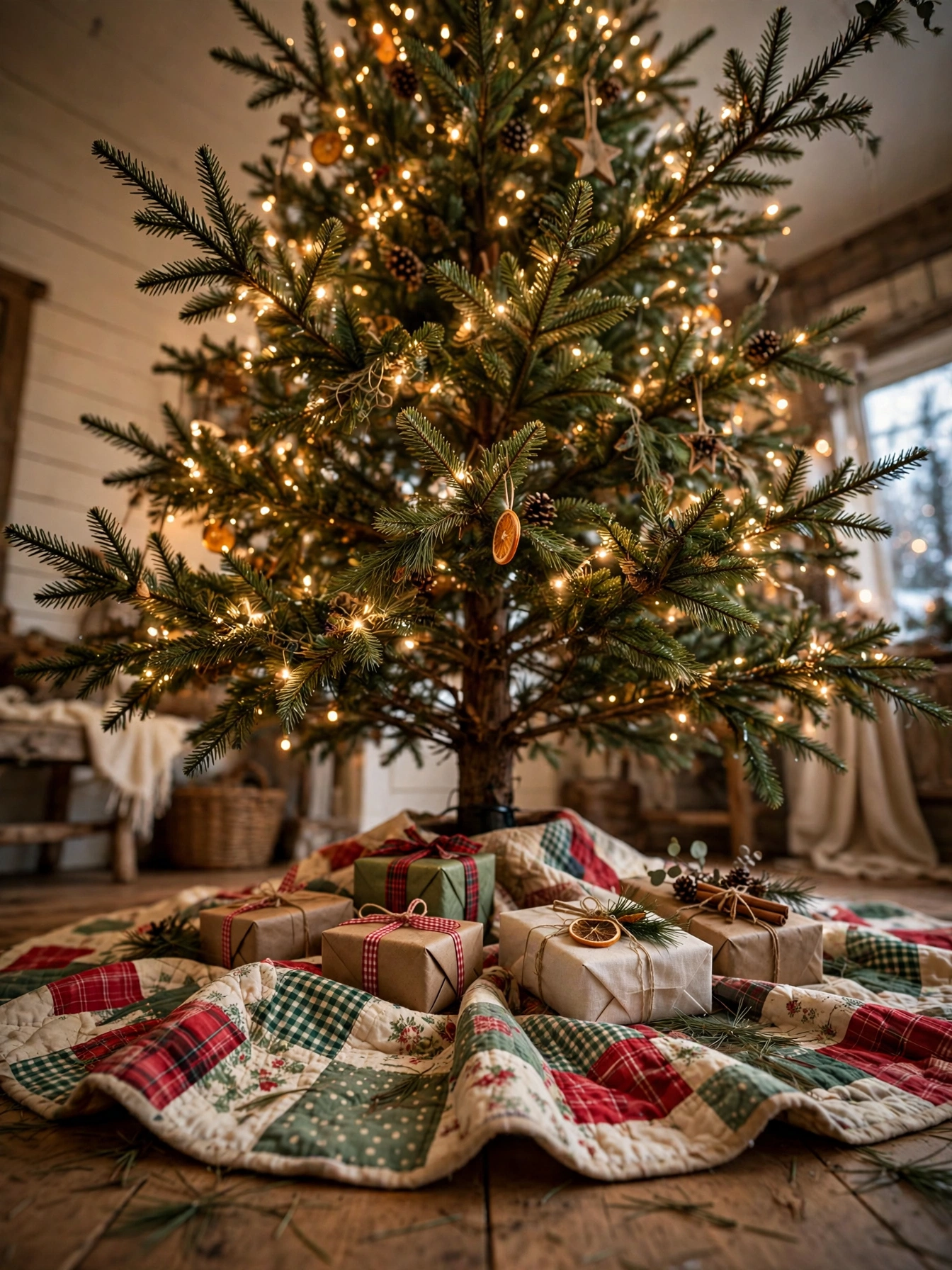
Why This Works:
- A 48-inch quilt folded into a skirt covers a standard tree stand completely
- Patchwork in red, green, and cream defines the tree’s palette without a single new purchase
- A quilt skirt costs $0 if you already own the quilt, making it the cheapest skirt in this article
- Cotton quilts wash easily, so pine sap and candle wax come out in one laundry cycle
Fold a 48-inch square quilt into a triangle, cut a small slit for the trunk if needed, and drape it around the tree stand. A vintage quilt tree skirt costs $0 to $30 if you already own a quilt; a new quilted tree skirt runs $35 to $60. Keep the quilt 2 inches from the tree stand’s water reservoir, since a wet quilt wicks water onto the floor. Compared with a store-bought tree skirt, a quilt carries family history: a grandmother’s patchwork under the tree tells a story no catalog can match. Quilts are the most durable textile for tree skirts because their three layers resist pine sap and wax better than a single-layer skirt.
Heirloom quilt skirts suit farmhouse, rustic, and traditional trees where the palette already runs red, green, and cream. The skirt becomes the tree’s foundation. The trade-off is the quilt itself: a genuinely valuable heirloom quilt should not sit under a tree where gifts, pets, and pine sap reach it. Use a reproduction quilt for the skirt and keep the heirloom on a bed. In a house with a real tree, place a plastic tray under the stand to catch water before it reaches the quilt. If the quilt is white, skip it; pine sap stains white cotton permanently.
Pro Tip: Place a 36-inch round plastic tray under the tree stand before laying the quilt. The tray catches water and sap, so the quilt stays clean all season.
Vintage Sleigh Bell Strand
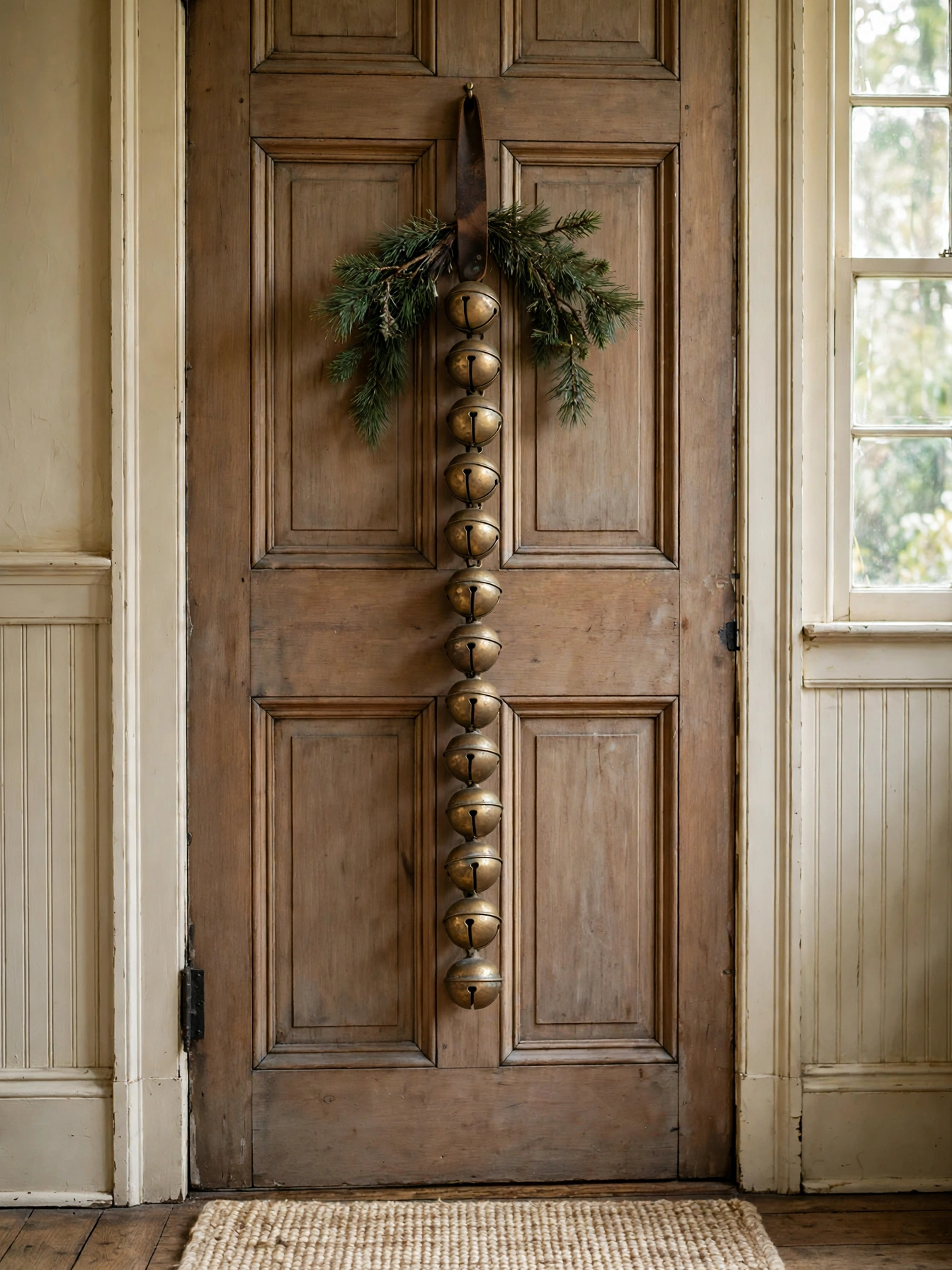
Why This Works:
- Twelve brass bells on a 30-inch strap give the front door sound as well as sight
- Aged brass with patina reads as genuinely old, unlike polished new brass
- A vintage sleigh bell strap costs $20 to $50 at flea markets, less than a new wreath
- The strap hangs from a single hook, so it needs zero installation
Hang the bell strap from the door’s existing wreath hook or a single adhesive hook rated for 3 pounds. Vintage sleigh bell straps cost $20 to $50 at flea markets; new reproductions run $15 to $30 and suit homes where authenticity matters less. Tie a pine sprig to the top of the strap for a finished look. Compared with a wreath, a bell strap takes 30 seconds to hang, weighs under 2 pounds, and announces every guest with a jingle. Keep the strap 6 inches above the doorknob so it never tangles with the handle. Sleigh bells are the oldest form of door decor, predating wreaths by centuries, since the sound warned households of visitors before doorbells existed.
Sleigh bell straps suit front doors, interior doors, and stair rails where a small display beats a large one. The strap becomes the house’s welcome sound. The limitation is the jingle: in a house with a sleeping baby, a bell strap on the front door wakes the baby with every delivery. Hang the strap on an interior door instead, or choose a strap with felt dampers between the bells. In a house with a dog who barks at sounds, expect excitement; a bell strap on a back door avoids the front-door frenzy.
Pro Tip: Rub the bells with a lemon-juice cloth before hanging. The lemon removes tarnish from the high points while leaving patina in the crevices, which makes the bells look old but cared for.
Retro Ceramic Tree
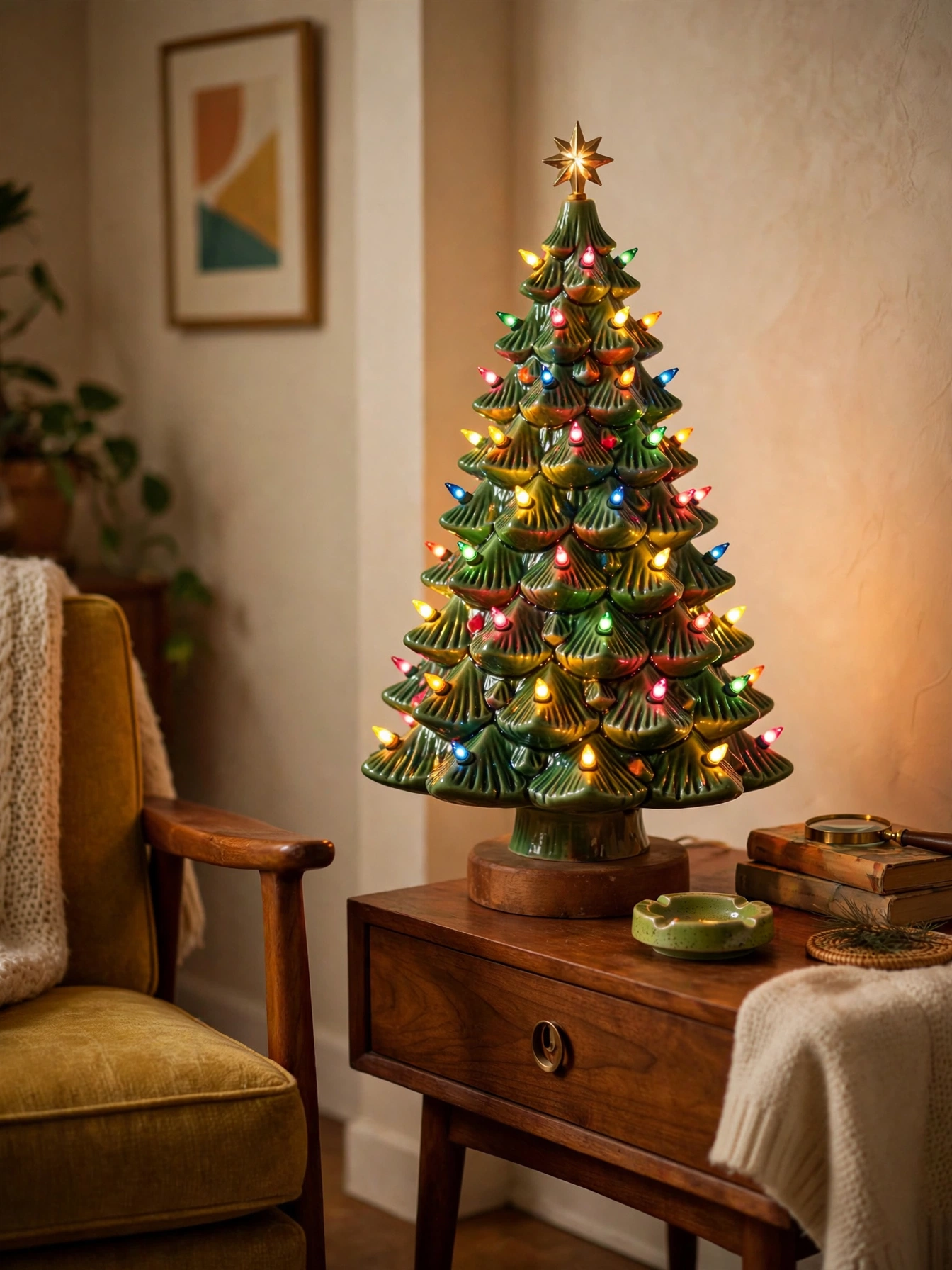
Why This Works:
- An 18-inch ceramic tree sits on a 20-inch side table, leaving room for a mug beside it
- Sixty tiny plastic lights in the ceramic holes glow in multicolor without a single wire
- Vintage ceramic trees cost $40 to $120 at thrift shops, less than a new reproduction
- The tree plugs into a standard outlet, so it needs no batteries and never dims
Buy a ceramic tree with a working light kit, not a tree with missing bulbs. Replacement bulb sets cost $8 to $12, but a tree with a cracked base is not worth buying. Vintage ceramic trees cost $40 to $120 depending on size and condition; new reproductions run $30 to $60 and suit homes where authenticity matters less. Place the tree on a side table or windowsill where the multicolor glow shows after dark. Compared with a mini fir tree, a ceramic tree needs no water, no needles, and no cleanup. Keep the tree 6 inches in from the table edge so a bumped elbow cannot knock it over. Ceramic trees are the most sought-after vintage Christmas item after ornaments, with the 1970s green glaze commanding the highest prices.
Ceramic trees work on side tables, desks, and in bedrooms where a full tree cannot fit. The tree becomes the room’s nostalgic focal point. The trade-off is the cord: a ceramic tree needs an outlet within 6 feet, so plan the placement before the tree goes on the table. In a house with toddlers, place the tree on a high shelf, since ceramic shatters on a hard floor. If the tree’s lights flicker, replace the bulb set rather than the tree; a $10 bulb set restores the full glow.
Pro Tip: Buy a spare bulb set when you buy the tree. Vintage bulb sets sell out by December, and a tree with three dark holes looks broken.
Wool Felt Ball Garland
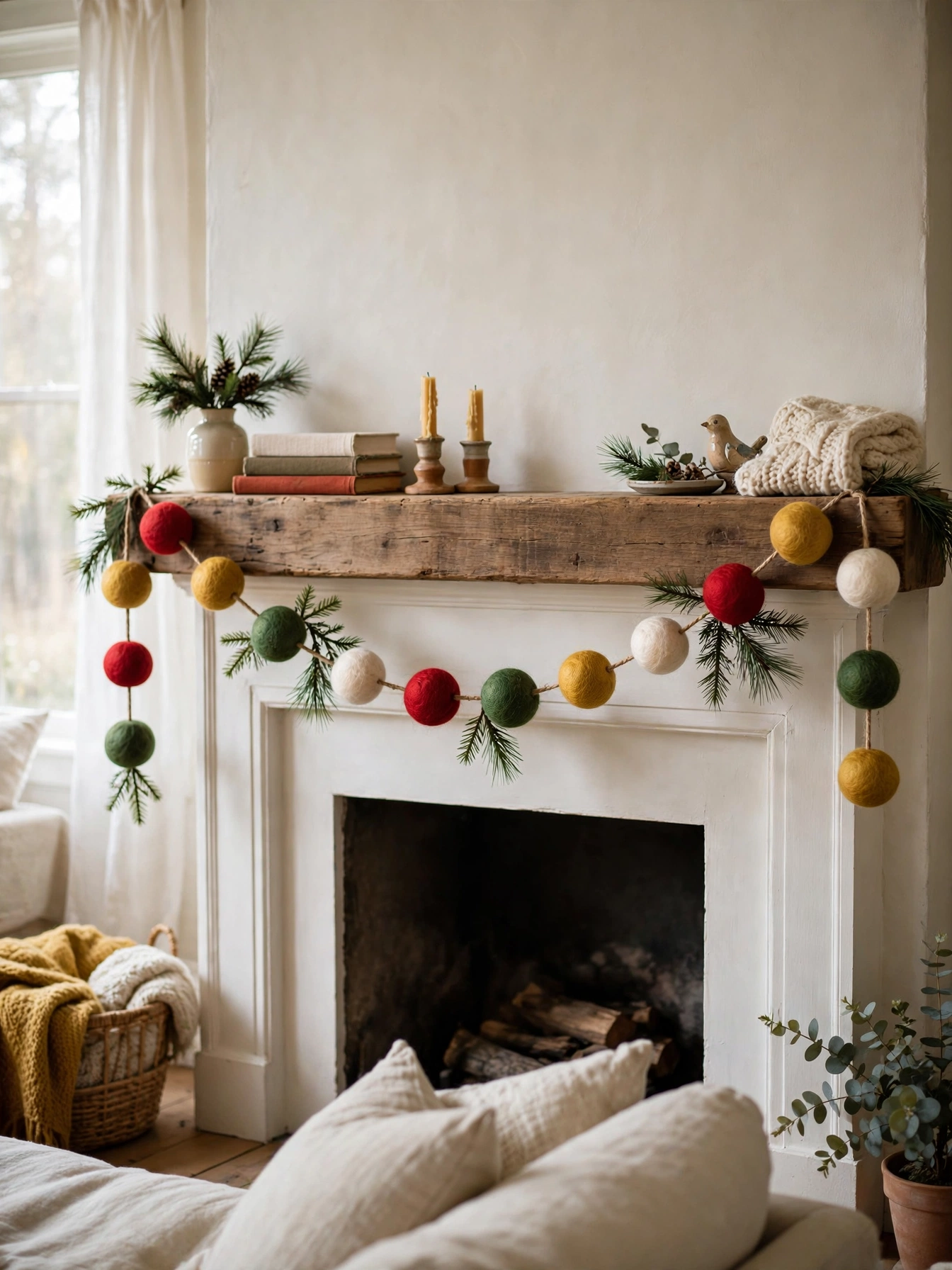
Why This Works:
- Felt balls at 1 inch across spaced 2 inches apart fill an 8-foot garland with 48 balls
- Wool felt balls cost $0.30 each, making a full garland cheaper than any other mantel garland
- At under 8 ounces, the garland hangs from a single adhesive hook
- Felt balls never shed, fade, or break, so the garland lasts for years
String 48 felt balls onto an 8-foot length of twine with a large needle, spacing them 2 inches apart and knotting the twine between every fourth ball to stop sliding. A bag of 50 wool felt balls costs $12 to $18; a ready-made garland runs $20 to $35. Hang the garland from two adhesive hooks rated for 2 pounds, letting it dip 6 inches in the center. Compared with a pine garland, a felt ball garland weighs a tenth as much, never sheds, and stores in a zip bag. Hold the garland 12 inches clear of a working firebox, since wool felt is flammable. Felt ball garlands are the most forgiving DIY project, since a crooked garland still looks handmade and charming.
Felt ball garlands suit mantels, stair rails, and windows, where a lightweight garland beats a heavy one. For a few dollars and an hour of stringing, the garland brings handmade charm to any mantel. The trade-off is the handmade look: a felt ball garland never reads as formal, so skip it on a white-and-gold tree. In a house with toddlers, felt balls are safe to touch, which makes the garland the only one in this article a child can handle. If the colors fade after three seasons, dye the balls with food coloring and water for a $2 refresh.
Pro Tip: Knot the twine between every fourth ball. Without knots, the balls slide to the center within a week and the garland looks bunched.
Flea-Market Frame Gallery
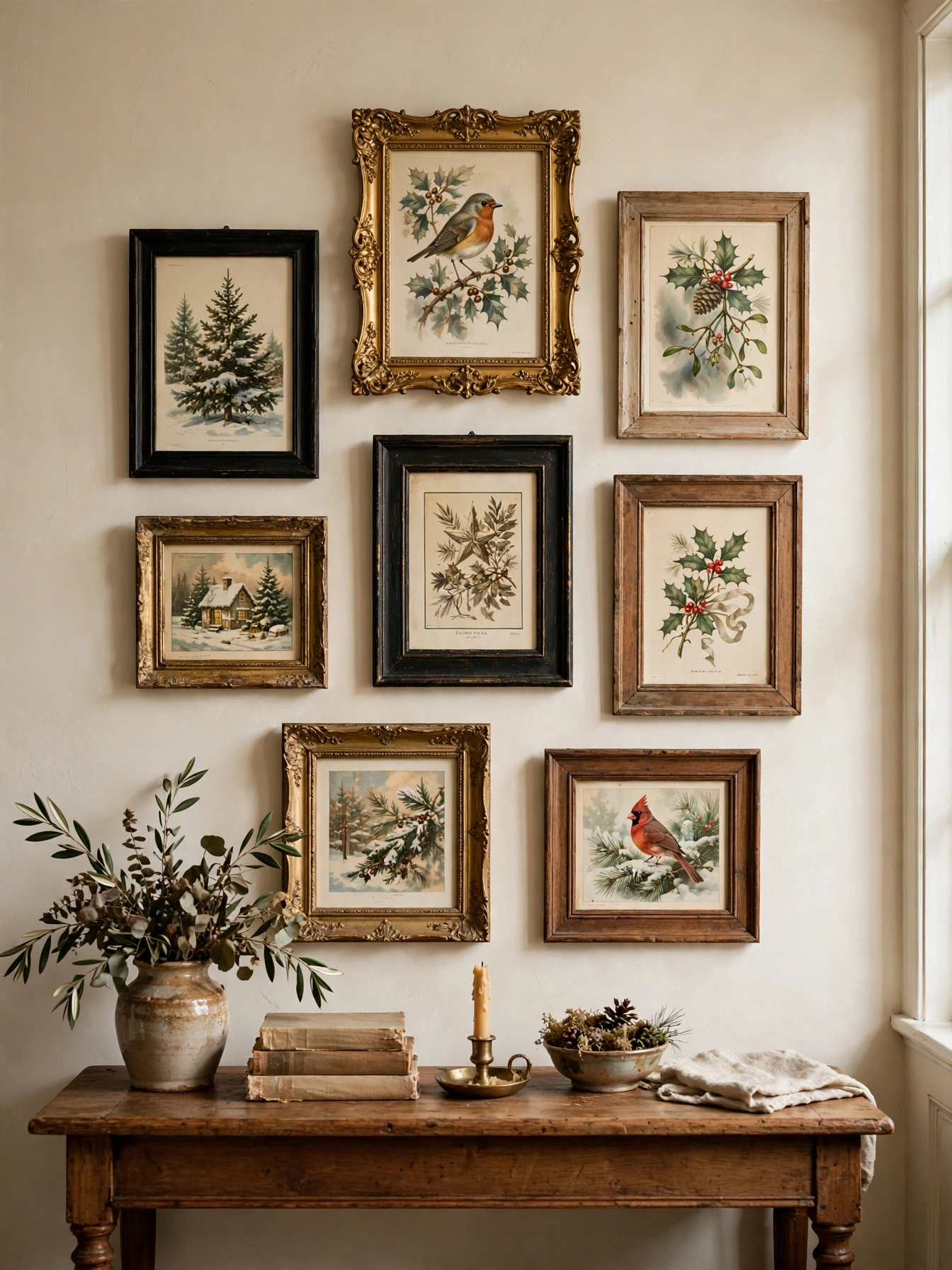
Why This Works:
- Eight frames in mixed sizes fill a 4-foot by 5-foot wall section without a grid
- Flea-market frames cost $2 to $8 each, making the gallery cheaper than one large print
- Mixed finishes (gold, black, wood) read as collected over years, not bought in one trip
- Christmas prints inside cost $1 to $3 each, so the whole gallery runs under $80
Collect eight frames in mixed sizes (5 by 7 to 11 by 14 inches) and mixed finishes, then fill them with vintage Christmas prints, postcards, and sheet music. A gallery of eight frames costs $40 to $80 total. Hang the largest frame first at eye level (57 inches to the center), then fill outward with the smaller frames. Compared with a single large print, a frame gallery tells eight stories and fills a wall that one print cannot. Keep the frames 2 inches apart for a salon-style hang, or 4 inches apart for a calmer look. Gallery walls read as more personal than a single print, since each frame carries its own story.
Frame galleries suit living room walls above a console, a sofa, or a sideboard where a single print would feel lost. The gallery becomes the room’s story wall. The limitation is the hanging: eight frames need eight nails and a level, so budget an hour for installation. In a rental, use adhesive strips rated for 5 pounds per frame to avoid holes. If the wall is textured, adhesive strips may fail; use two small nails per frame instead, since the holes hide behind the frames.
Pro Tip: Trace each frame onto kraft paper and tape the paper to the wall first. The paper template lets you perfect the layout before a single nail goes in.
Lace Hankie Ornament Trio
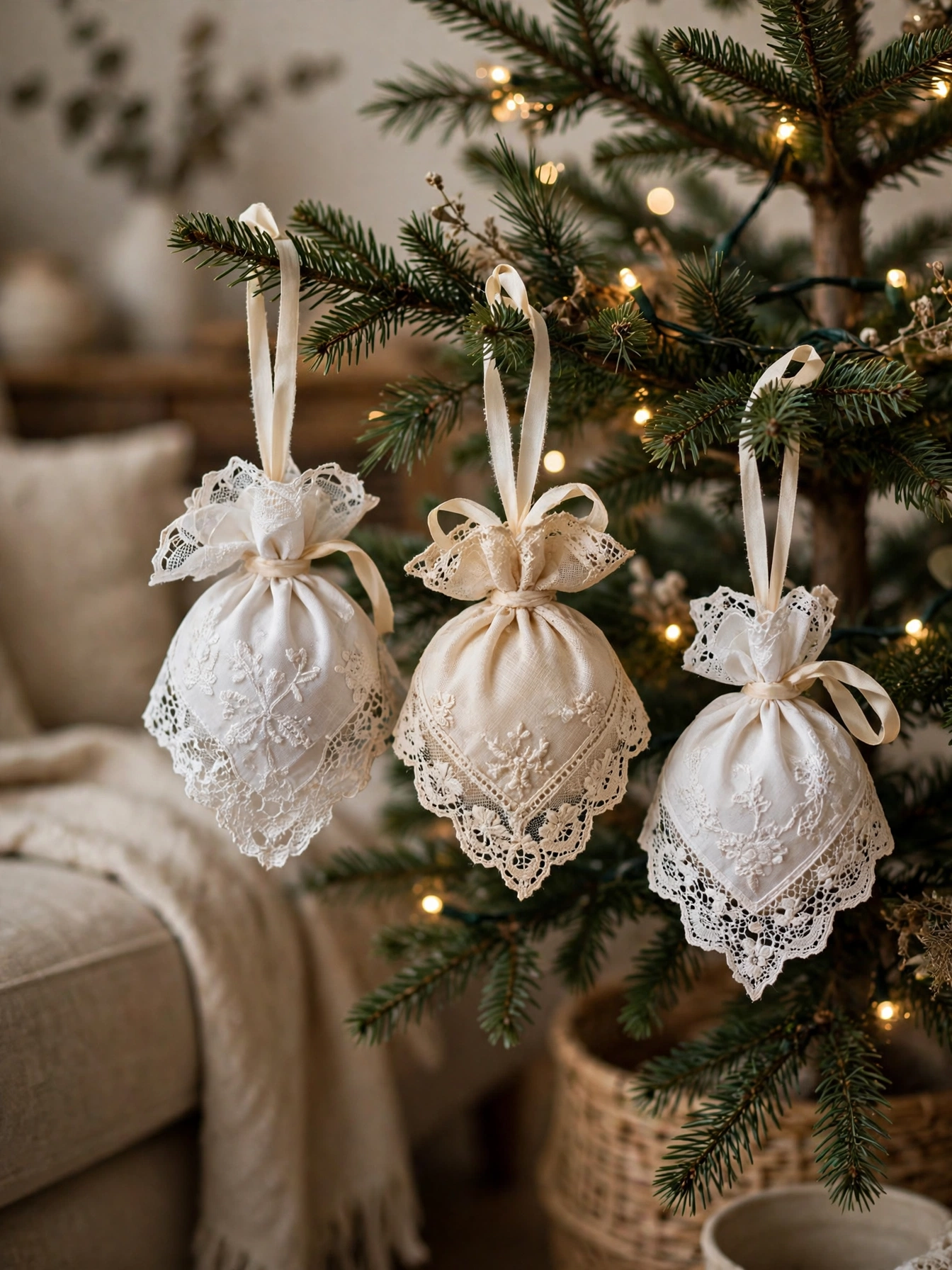
Why This Works:
- Three lace ornaments at 4 inches across add a delicate layer to a tree full of glass
- Vintage lace handkerchiefs cost $1 to $3 each at thrift shops, making the trio almost free
- Lace ornaments weigh under 1 ounce each, so they hang on the thinnest branch tips
- The trio uses a family heirloom (a grandmother’s hankie) in a way a drawer never could
Gather each handkerchief into a pouch around a cotton ball, tie the neck with a 12-inch satin ribbon, and hang the ornament by the ribbon loop. A trio of lace ornaments costs $3 to $9 in materials if you buy the hankies; a family heirloom hankie costs nothing. Keep the ornaments on the outer branches where the lace shows, since a lace ornament buried inside the tree vanishes. Compared with a glass ornament, a lace ornament never breaks, never scratches, and carries a family story. Textile ornaments are the safest choice for a tree in a house with toddlers, since they cannot shatter or cut.
Lace ornaments suit trees with a vintage or heirloom theme, where every ornament carries a story. The trio becomes the tree’s most personal detail. The trade-off is the lace itself: vintage lace yellows in sunlight, so hang the ornaments on the shaded side of the tree. In a house with a cat, lace ornaments are irresistible toys; hang them above the 5-foot line. If the hankie is genuinely valuable, use a reproduction lace square for the tree and keep the original in a drawer.
Pro Tip: Stiffen the lace with a light spray of fabric starch before gathering. Starched lace holds its pouch shape all season, while soft lace collapses within a week.
Vintage Christmas Decor Ideas 2026: Aluminum Tree with Color Wheel

Why This Works:
- A 6-foot aluminum tree with a color wheel needs zero string lights, since the wheel does the lighting
- The color wheel rotates through red, green, blue, and gold, painting the tree a new color every 30 seconds
- Vintage aluminum trees cost $100 to $300 at flea markets, less than a new premium fir
- Aluminum branches never drop needles, never need water, and store in a single box
Assemble the aluminum tree by inserting the branches into the pole slots from the bottom up, largest at the base. A 6-foot aluminum tree costs $100 to $300 vintage; a reproduction runs $150 to $250 and suits homes where authenticity matters less. Place the color wheel on the floor 3 feet from the tree, angled 45 degrees up toward the branches. A vintage color wheel costs $30 to $60; a new LED color wheel runs $25 to $40. Compared with a fir tree, an aluminum tree needs no lights, no water, and no cleanup, but it demands a color wheel to look alive. Never put string lights on an aluminum tree, since the metal branches conduct electricity. Aluminum trees and electric lights together are a shock risk, so the color wheel is the only safe light for this tree.
Aluminum trees suit mid-century homes, retro-themed rooms, and anyone who wants the most talked-about tree on the block. The tree becomes the room’s conversation piece. The trade-off is the space: an aluminum tree looks best alone in a corner with 3 feet of clear floor around it for the color wheel. In a small living room, a 4-foot aluminum tree at $80 to $150 gives the same effect in half the space. If the tree’s branches look sparse, add a second set of branches from a donor tree; aluminum branches from the same era fit most poles.
Pro Tip: Place the color wheel on a timer that switches it on at dusk. The tree lighting itself as the sky darkens feels like a nightly reveal.
Sheet Music Cone Ornaments
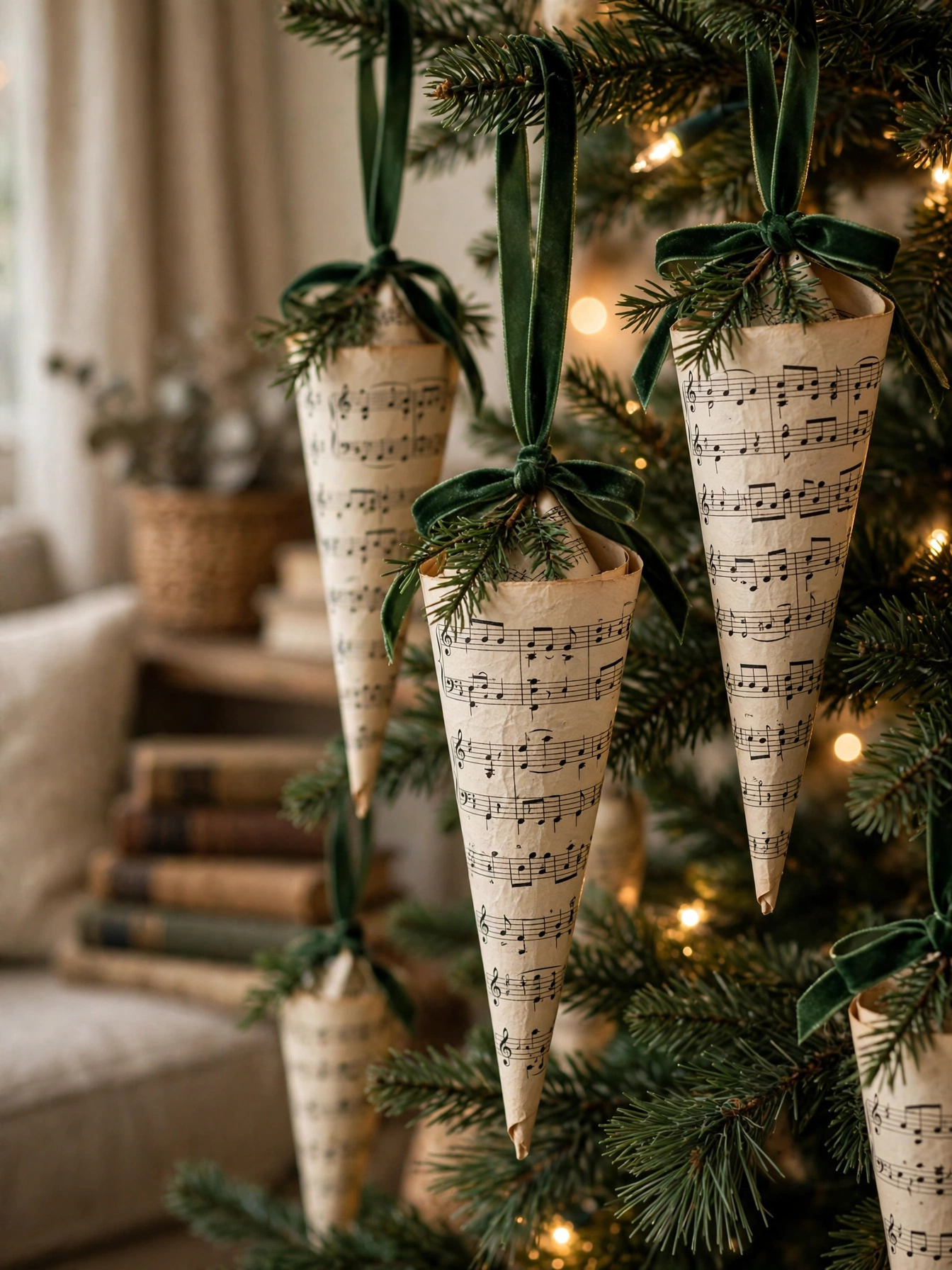
Why This Works:
- Sheet music cones at 5 inches tall add a paper layer to a tree full of glass and metal
- Vintage sheet music costs $1 to $3 per page at thrift shops, making a set of six cones almost free
- At under 1 ounce apiece, the cones hang from the finest twig tips
- The music notes give each ornament a pattern, so no two cones look alike
Roll each sheet music page into a cone, glue the seam, and tie a 10-inch ribbon loop through the top. A set of six cones costs $6 to $18 in materials if you buy the sheet music; a family hymnal costs nothing. Fill each cone with a small pine sprig for a finished look. Compared with a glass ornament, a paper cone never breaks, never scratches, and carries a story. Keep the cones on the outer branches where the music shows, since a paper cone buried inside the tree vanishes. Paper ornaments are the most affordable way to add vintage texture to a tree, since a single page of sheet music makes three cones.
Sheet music cones suit trees with a musical or literary theme, where every ornament carries a story. Three paper cones among glass ornaments catch the eye precisely because they are not glass. The trade-off is the paper: sheet music yellows in sunlight, so hang the cones on the side of the tree that never gets direct sun. In a house with a cat, paper cones are too tempting to leave low; hang them above the 5-foot line. If the sheet music is genuinely valuable, use a photocopy for the tree and keep the original in a frame.
Pro Tip: Roll the cones with the music facing out and the lyrics facing in. The notes read as a pattern from across the room, while the lyrics stay hidden inside.
Depression Glass Candy Dishes
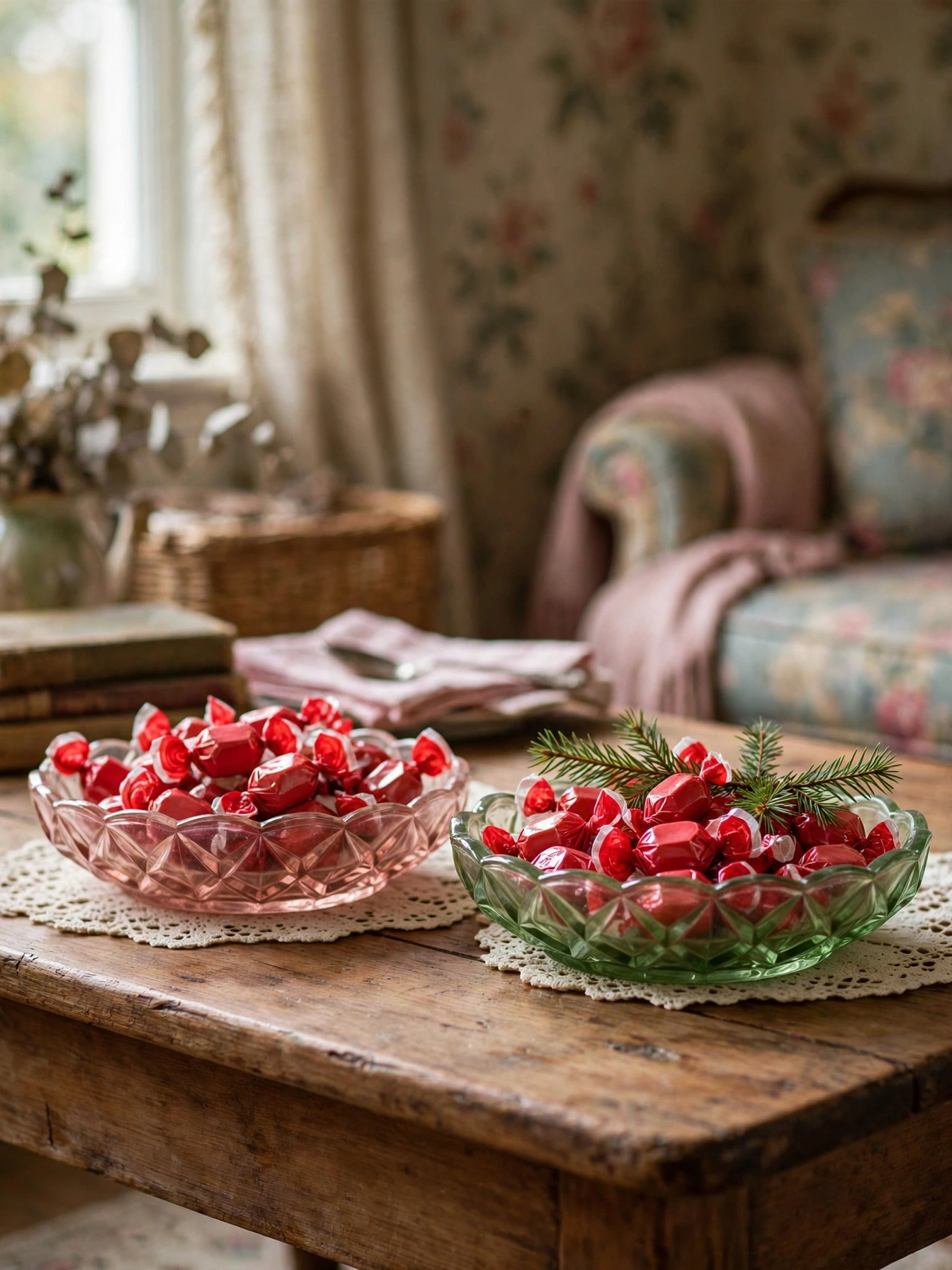
Why This Works:
- Depression glass dishes at 6 to 8 inches across hold a full bag of wrapped candies
- Pink and green glass cost $5 to $15 per dish at thrift shops, less than a new candy bowl
- The dishes double as decor, so they earn their table space even when empty
- Wrapped candies in red and gold wrappers turn the dish into a holiday centerpiece
Place two dishes on the coffee table, one pink and one green, with a pine sprig between them. Depression glass dishes cost $5 to $15 each at thrift shops; a full set of six runs $30 to $60. Fill each dish with wrapped candies in red and gold wrappers, keeping the wrappers on so the candy stays fresh. Compared with a new candy bowl, depression glass carries a history and a color no new bowl can match. Keep the dishes 6 inches from the table edge so a reaching guest cannot knock them over. Depression glass is the most affordable vintage collectible, since the pieces were mass-produced in the 1930s and still turn up at every thrift shop.
Candy dishes suit coffee tables, sideboards, and entry tables where a small display beats a large one. The dishes become the room’s sweet spot. The limitation is the candy: unwrapped candy in a dish melts and sticks, so keep the wrappers on. Where toddlers roam, keep the dishes on a high shelf instead of a low table, since glass dishes shatter on a hard floor. If the dish has a chip, keep it; a chipped dish still holds candy, and the chip proves the piece is genuinely old.
Pro Tip: Fill the dishes with candies in one color family (all red, or all gold). A single-color fill reads as designed, while a mixed fill reads as a candy jar.
Vintage Cookie Tin Display
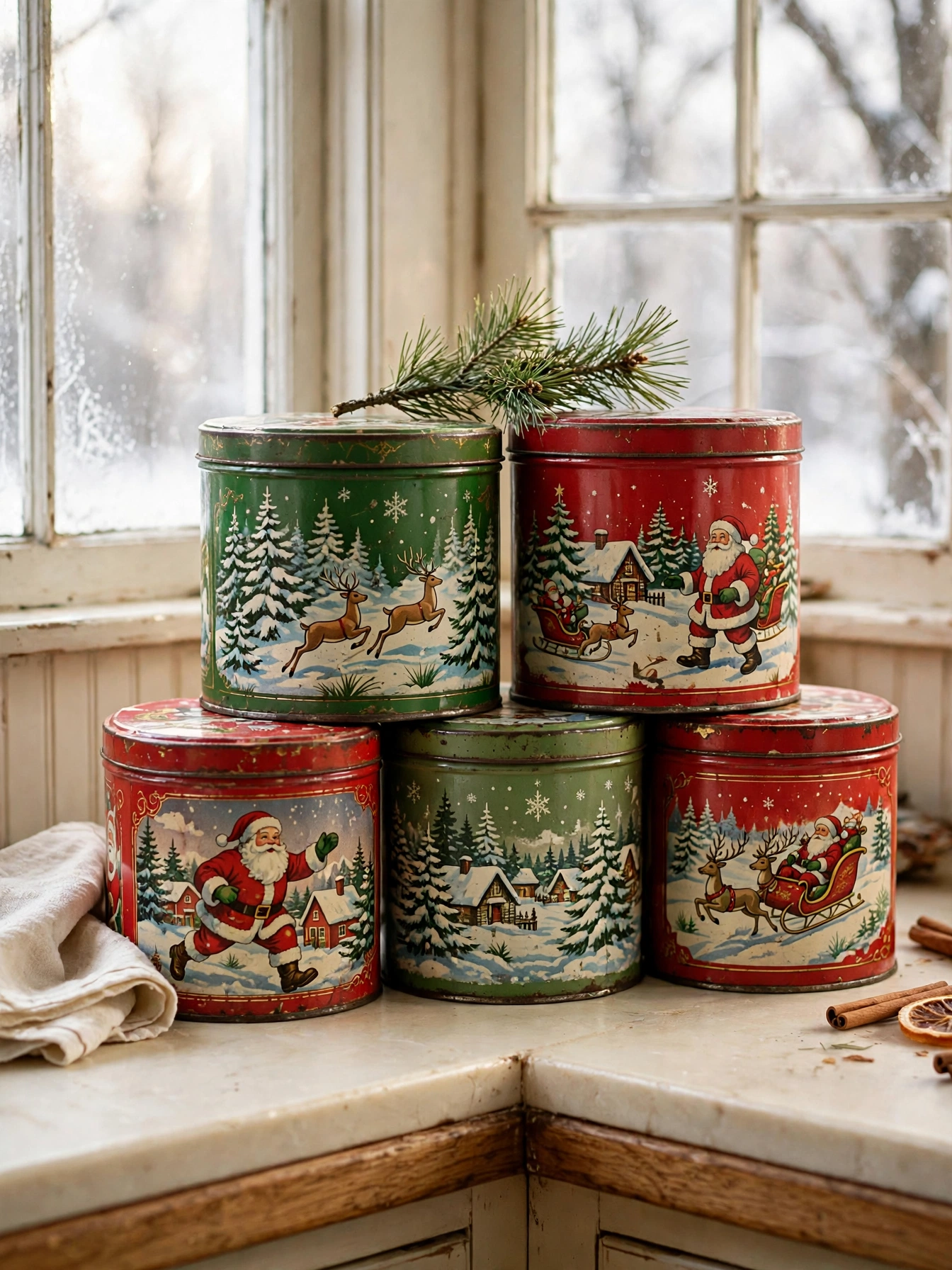
Why This Works:
- Five tins at 6 to 10 inches across stack into a display that fills a 24-inch counter section
- Vintage cookie tins cost $3 to $10 each at thrift shops, making the display almost free
- The tins hold actual cookies, so the display earns its counter space all month
- Santa and snow scenes on the tins give the kitchen a holiday signal without a single ornament
Stack the tins in a pyramid on the counter, largest at the bottom and smallest at the top, with a pine sprig on the peak. A set of five vintage tins costs $15 to $50 at thrift shops; a new tin set runs $20 to $35 and suits homes where authenticity matters less. Fill the bottom two tins with cookies and leave the top three empty for display. Compared with a cookie jar, a tin display holds five times the cookies and tells a story. Keep the tins 6 inches from the stove, since the heat softens the cookies inside. As a collectible, vintage tins are unusually practical, since they store food as well as they decorate.
Cookie tin displays suit kitchen counters, sideboards, and entry tables where a compact vignette outshines a big one. The tins become the room’s sweet spot. The trade-off is the lids: vintage tin lids dent if stacked roughly, so stack the tins with tissue paper between them. Where toddlers reach everything, keep the tins on a high shelf, since a falling tin dents the floor. If a tin has rust inside, line it with wax paper before filling it with cookies.
Pro Tip: Line each tin with a paper doily before adding cookies. The doily hides rust spots and makes the cookies look bakery-fresh.
Embroidered Linen Table Runner
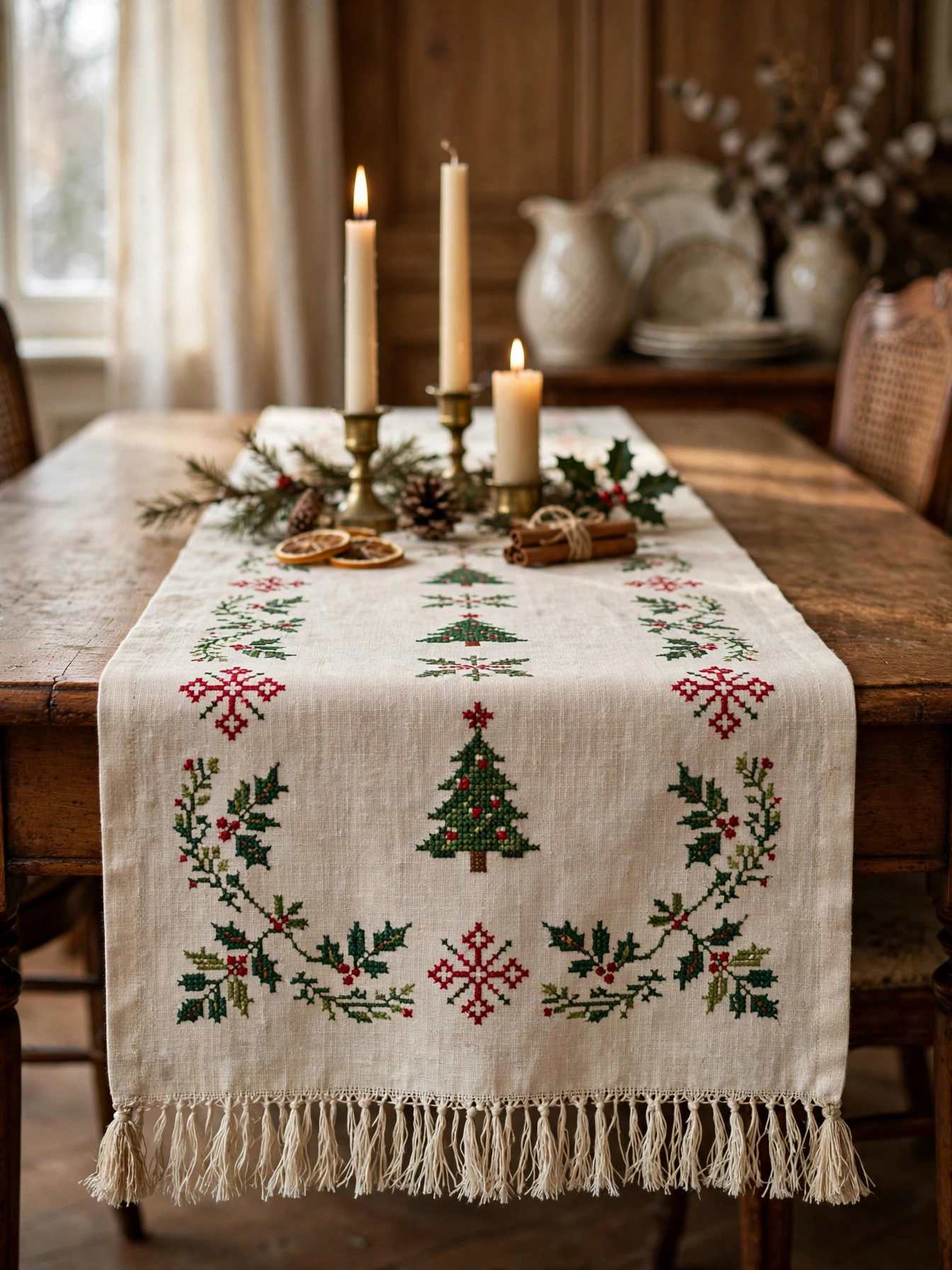
Why This Works:
- A 72-inch runner on a 6-foot table leaves 6 inches of overhang per end, the classic proportion
- Hand embroidery in red and green reads as heirloom, not craft-store, from 3 feet away
- A vintage runner costs $15 to $40 at thrift shops, less than a new linen runner
- The runner protects the table from candle wax and hot dishes while decorating it
Lay the runner down the center of the table, aligning it with the table’s long axis and centering the motifs. A vintage embroidered runner costs $15 to $40 at thrift shops; a new embroidered runner runs $30 to $60. Place two candles on the runner, one at each third, with a pine sprig between them. Compared with a plain tablecloth, a runner shows the wood table on both sides, which makes the dining room feel less formal. Keep the runner 2 inches from the table edge so it does not catch on a passing chair. A runner is the most versatile table dressing, since it works on a bare table, over a cloth, or on a sideboard.
Embroidered runners suit dining tables, sideboards, and consoles where a textile layer beats a hard surface. The runner becomes the table’s foundation. The limitation is the stain: a vintage runner with a gravy stain from 1985 cannot be bleached clean. Treat stains with cold water and mild soap, never hot water, which sets protein stains. In a house with kids, place a clear vinyl protector over the runner during meals to keep it clean. If the runner is white, skip it for the dining table; red wine stains white linen permanently.
Pro Tip: Iron the runner on the reverse side before laying it. Ironing the back protects the embroidery threads from heat damage and keeps the front crisp.
Retro C9 String Lights
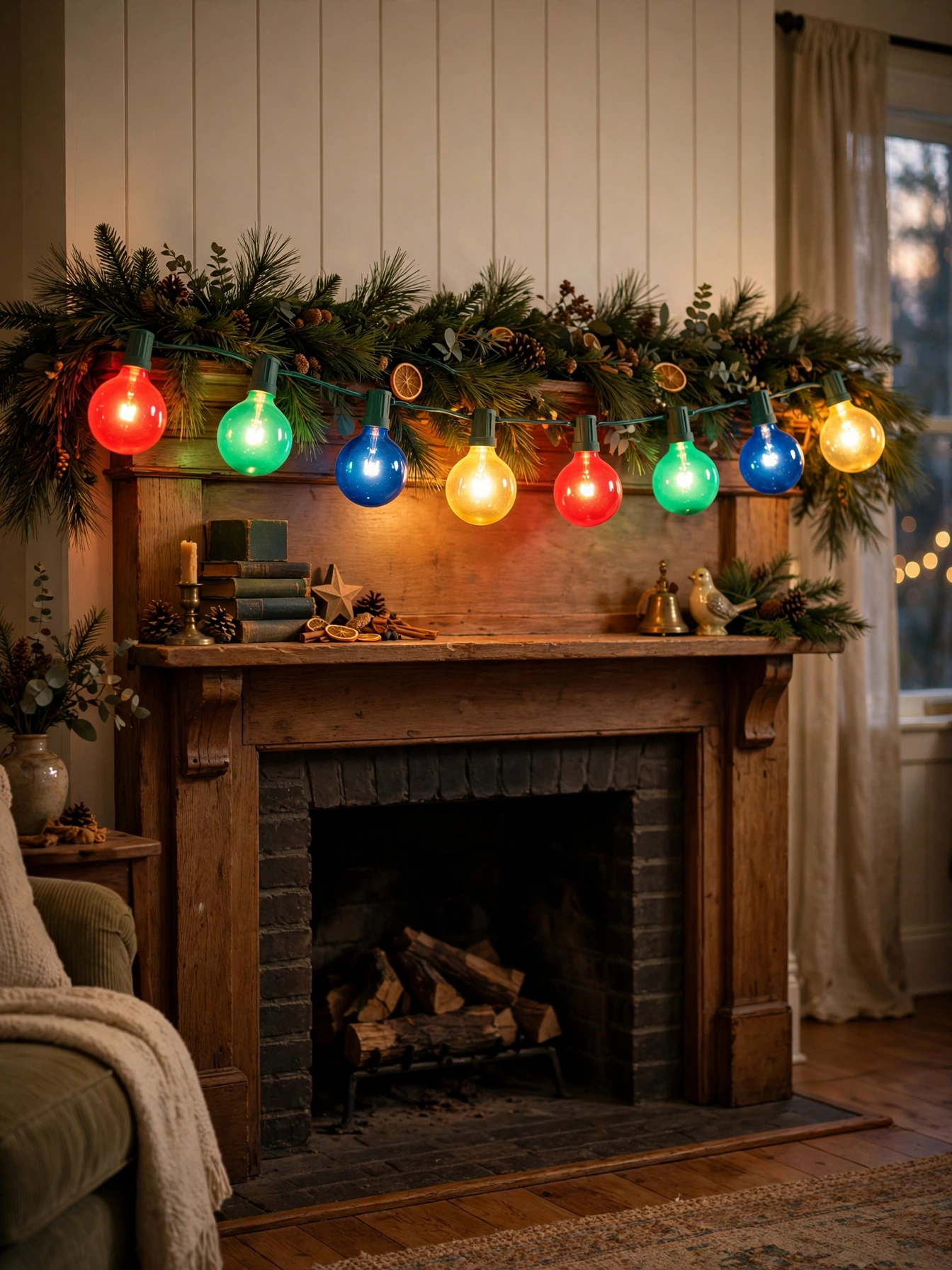
Why This Works:
- C9 bulbs at 1 inch across spaced 12 inches apart read as vintage, not miniature
- A 25-bulb C9 string costs $15 to $25 and covers a 6-foot mantel with one string
- LED C9 bulbs draw 1 watt each, so a full string uses less power than a single old bulb
- Multicolor C9 lights suit a vintage tree, since they match the era’s original lighting
Drape the C9 string along the mantel in a single swag, letting it dip 6 inches in the center. A 25-bulb LED C9 string costs $15 to $25; an incandescent C9 string runs $10 to $18 but uses ten times the power. Keep the bulbs 12 inches from any fabric, since incandescent C9 bulbs run hot. Compared with micro lights, C9 bulbs read as vintage because their size matches the original 1950s lighting. Inspect every light string for frayed wires before decorating; fire-safety guidance flags damaged wiring on a mantel as a serious risk. Use LED C9 bulbs for any string that will run more than 6 hours a day.
C9 string lights suit mantels, stair rails, and porches where a vintage glow beats a modern one. The lights become the room’s retro signal. The trade-off is the wire: green C9 wire shows against a white mantel, so choose a white-wire string for a white mantel. In a house with toddlers, keep the C9 string out of reach, since the large bulbs are tempting to pull. If the mantel is already crowded, drape the C9 string on the stair rail instead, where it has room to shine.
Pro Tip: Buy one spare bulb for every ten on the string. A dark socket in a C9 string shows from across the room, while a spare bulb fixes it in 30 seconds.
Vintage Toy Display
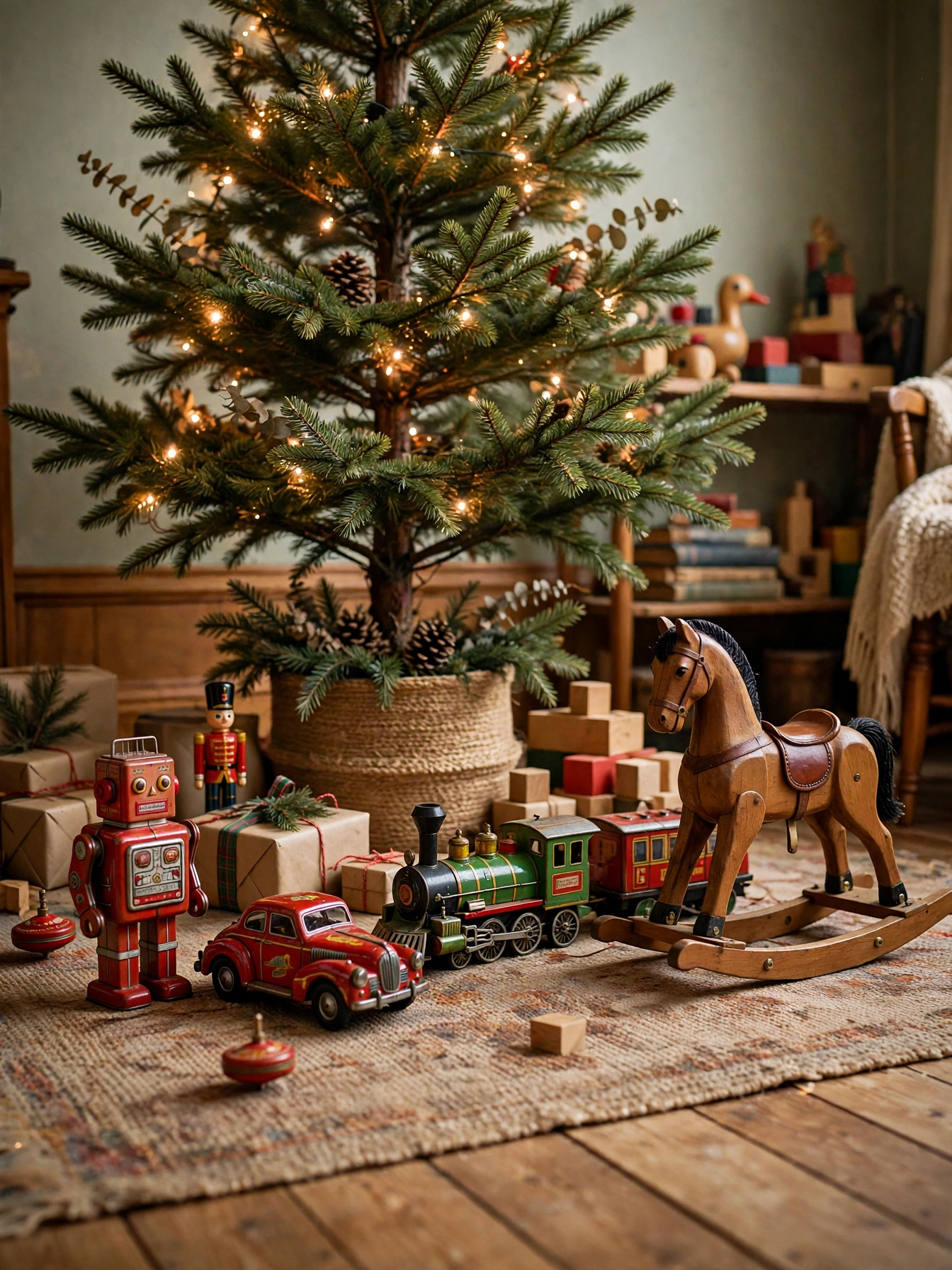
Why This Works:
- A toy train at 18 inches long and a rocking horse at 12 inches tall fill the space under a 5-foot tree
- Vintage tin toys cost $10 to $30 each at flea markets, making the display almost free
- The display gives the tree a base, so the skirt never sits bare
- Toys under the tree tell a story, which makes guests stop and look
Place the rocking horse on the left side of the tree and the toy train on the right, leaving the center open for gifts. A vintage toy train costs $30 to $80; a rocking horse runs $20 to $50 at flea markets. Tuck two small tin toys between the train and the horse for detail. Compared with a bare tree skirt, a toy display gives the tree a base and a story. Keep the toys 6 inches from the tree stand’s water reservoir, since a wet toy rusts. Vintage toys under a tree are the most photographed Christmas detail, since they trigger nostalgia in every generation.
Toy displays suit living rooms where the tree sits on the floor and the family gathers around it. The display becomes the tree’s foundation. The trade-off is the toys themselves: a genuinely valuable tin toy should not sit on the floor where it can be kicked. Use reproduction toys for the floor display and keep the originals on a shelf. In a house with toddlers, choose wooden toys over tin, since tin edges are sharp. If the tree is artificial, skip the water warning and place the toys directly on the skirt.
Pro Tip: Place the toys on a 36-inch round tray under the tree. The tray contains the display and lifts the whole scene off in one piece for vacuuming.
Antique Sled by the Door
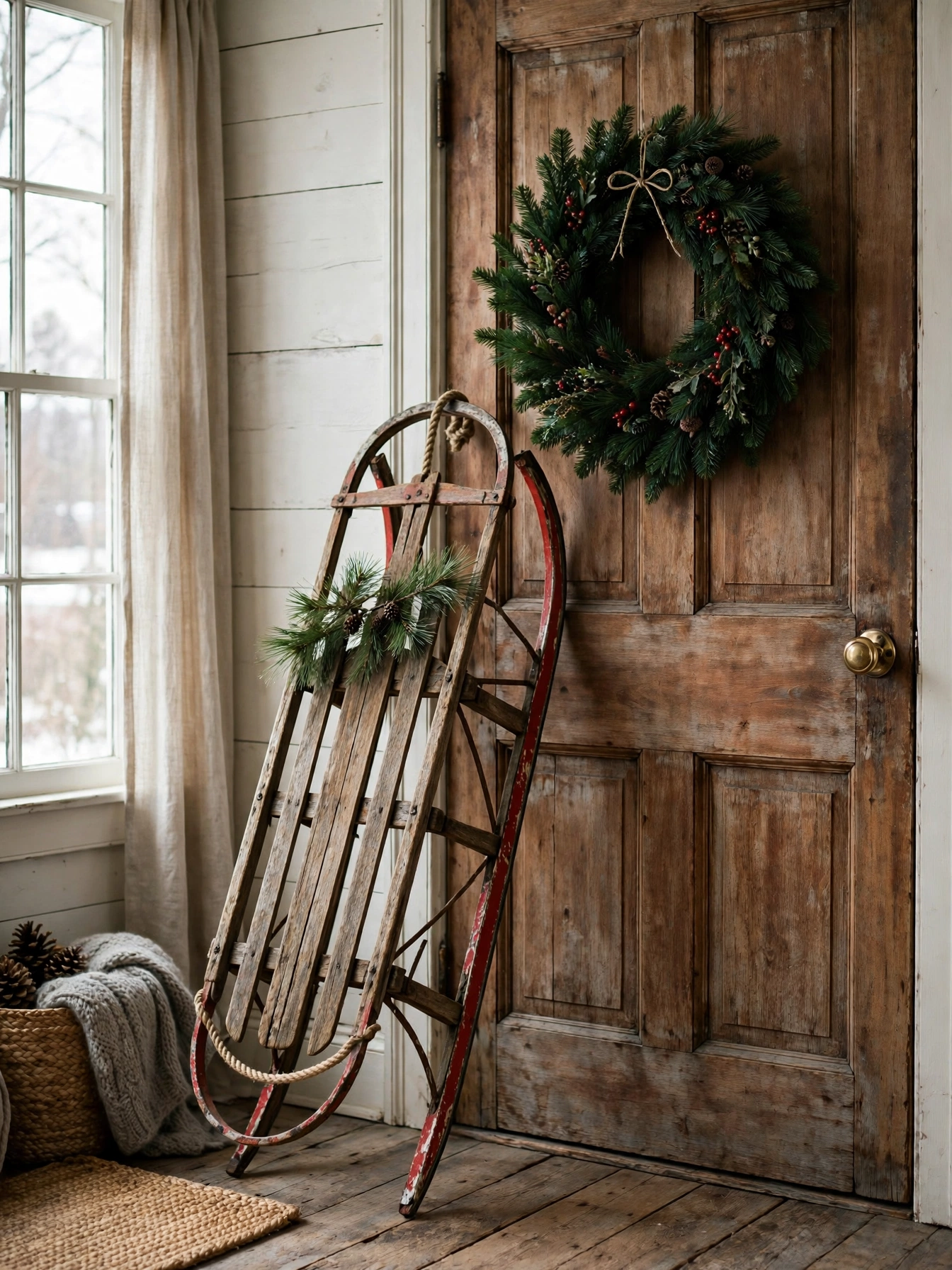
Why This Works:
- A 48-inch sled beside a 36-inch door fills the entryway without blocking it
- Antique sleds cost $40 to $100 at flea markets, less than a new porch display
- Red runners tie the sled to the wreath and the door in one color
- The sled leans against the wall, so it needs zero installation and zero floor space
Lean the sled against the wall beside the front door, runners facing out, with the rope draped over the top. An antique wooden sled costs $40 to $100 at flea markets; a reproduction runs $30 to $60 and suits homes where authenticity matters less. Fasten a pine sprig to the sled’s top rail for a finished look. Compared with a porch sign, a sled gives the entryway a three-dimensional display that reads as vintage rather than store-bought. Keep the sled 6 inches from the door frame so the door opens fully. Antique sleds are the most versatile winter porch decor, since they work indoors and outdoors with zero changes.
Antique sleds suit entryways, porches, and living room corners where a tall display beats a wide one. The sled becomes the house’s welcome sign. The limitation is the weight: a wooden sled weighs 8 to 12 pounds, so a leaning sled can slide on a slick floor. Place a felt pad under the runners to stop the slide. In a house with toddlers, anchor the sled to the wall with a single screw, since a climbing child can pull it down. If the sled is genuinely valuable, keep it indoors; rain and snow damage antique wood within one season.
Pro Tip: Lean the sled at a 10-degree angle, not flat against the wall. A slight lean reads as placed, while a flat sled looks like it is stored, not displayed.
Vintage Christmas Decor Ideas 2026: Thrifted Brass Candle Collection
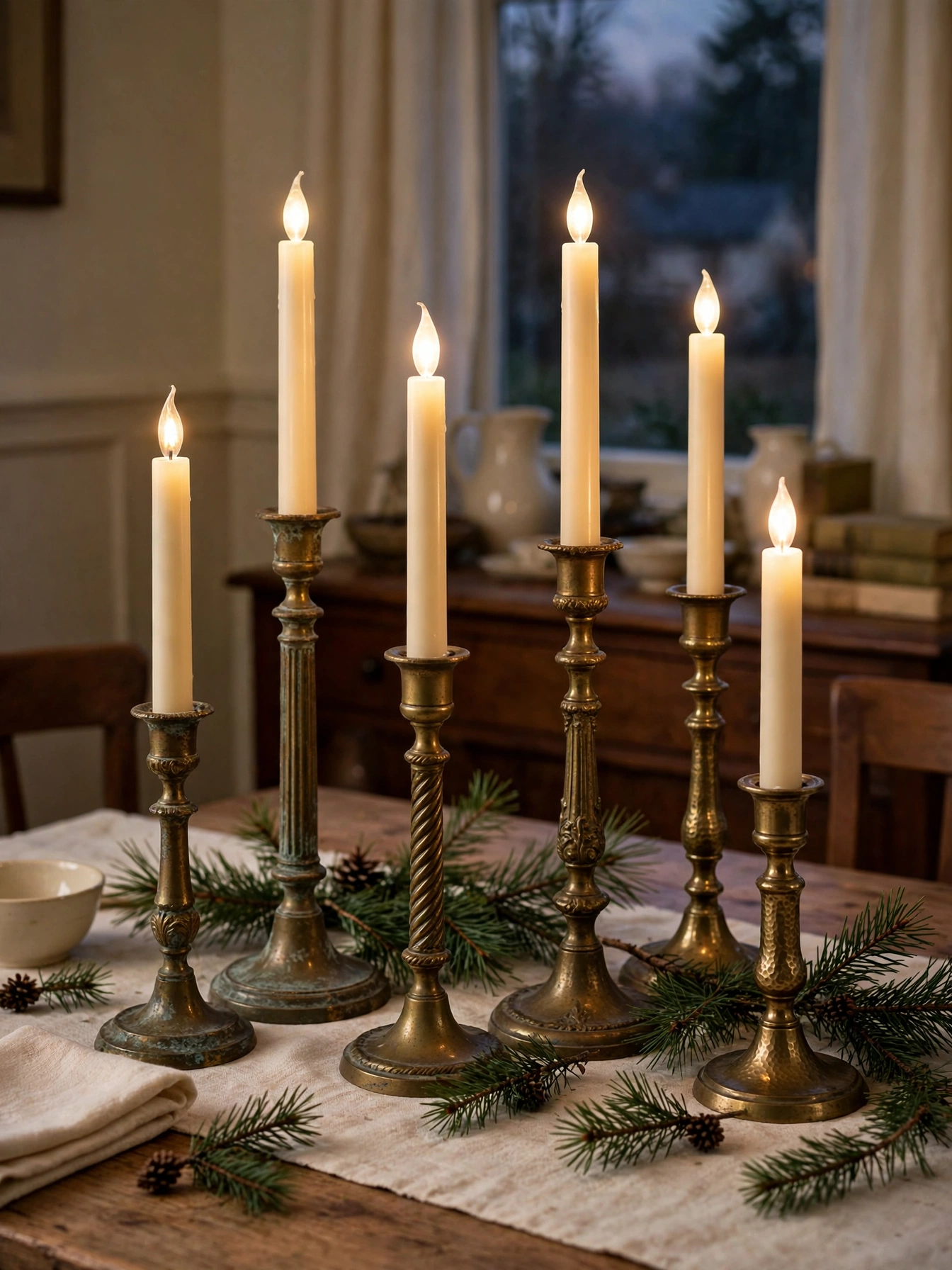
Why This Works:
- Candlesticks at 6, 8, 10, and 12 inches create a stepped collection that reads as curated
- Thrifted brass candlesticks cost $2 to $8 each, making a set of five cheaper than one new candlestick
- Mixed shapes (fluted, turned, plain) read as collected over years, not bought in one trip
- Flameless tapers inside run 100 hours on one AA battery each
Collect five candlesticks in mixed heights and shapes, then arrange them down the center of the table with 6 inches between each. Thrifted brass candlesticks cost $2 to $8 each; a set of five runs $10 to $40. Place a flameless taper in each, all set to the same 6-hour timer. Compared with a single candelabra, a collected set of candlesticks tells a story and costs a tenth as much. Set the candlesticks 6 inches in from the table edge so a stray elbow cannot topple them. Mixed brass is the easiest way to add age to a table, since the patina proves the pieces are genuinely old.
Brass candle collections suit dining tables, mantels, and sideboards where a vintage glow beats a modern one. The collection becomes the table’s centerpiece. The limitation is the patina: brass tarnishes, and a tarnished collection looks dirty rather than vintage. Rub the candlesticks with a lemon-juice cloth before the season to brighten the high points while leaving patina in the crevices. In a house with toddlers, pick candlesticks with a heavy foot and display them up on a high mantel. If the candlesticks wobble, add a felt pad under each base to level them.
Pro Tip: Polish only the raised ridges and leave the hollows dark. That contrast is what reads as age rather than neglect, and it takes half the time of a full polish.
Popcorn and Cranberry Garland

Why This Works:
- Popcorn every 2 inches on a 10-foot garland fills a 7-foot tree with two swags
- A popcorn garland costs $3 to $5 in materials, the cheapest tree garland in this article
- Popcorn and cranberry together give the tree a red-and-white rhythm that reads as vintage
- The garland weighs under 8 ounces, so it hangs on the thinnest branches
String air-popped popcorn and fresh cranberries on a needle and twine, alternating three popcorn kernels with one cranberry. A 10-foot garland takes about 2 hours to string and costs $3 to $5 in materials. Drape the garland in gentle swags between branches, leaving it to dangle 4 inches under the branch line. Compared with a bead garland, a popcorn garland costs a tenth as much, weighs less, and smells faintly of the kitchen. Keep the garland 6 inches from the tree lights, since popcorn dries out and becomes brittle near heat. Popcorn garlands keep 2 to 3 weeks indoors when kept dry, enough for the whole December display.
Popcorn garlands suit families with kids, who can string their own garland in an evening. A popcorn garland is a family-evening project: cheap, simple, and fun for every age. The trade-off is the popcorn itself: in a humid room, the kernels soften within days. Hang the garland in a dry room, and keep it away from any humidifier. In a house with pets, popcorn garlands are irresistible; hang the garland above the 4-foot line. If the garland sags after a week, restring the loose section rather than replacing the whole garland.
Pro Tip: Use day-old popcorn, not fresh. Fresh popcorn crumbles when threaded, while day-old popcorn firms up and holds the needle cleanly.
Vintage Christmas Card Display
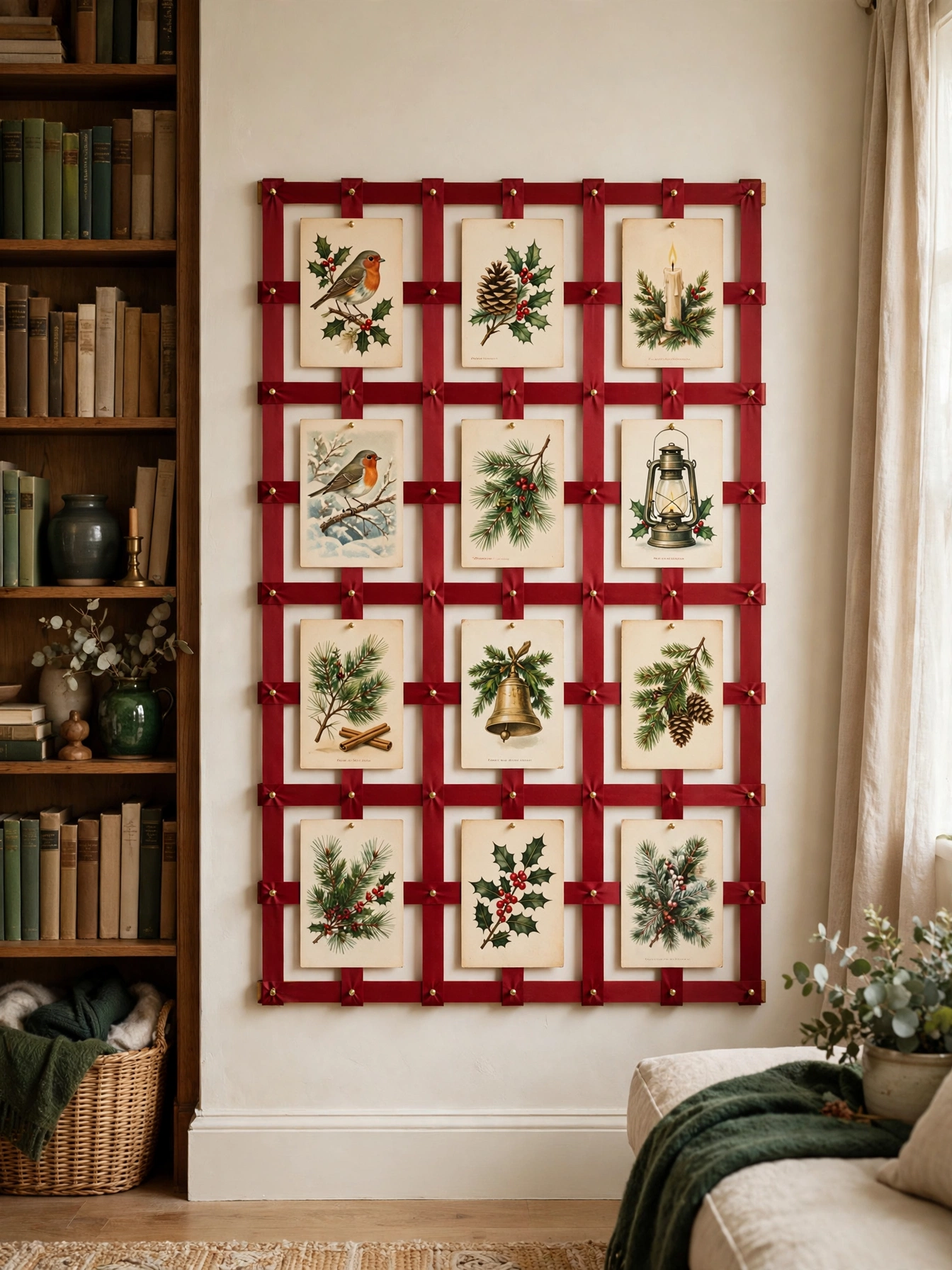
Why This Works:
- Twelve cards on a 24-by-36-inch board fill a wall section without a single nail
- Vintage Christmas cards cost $1 to $3 each at thrift shops, making the display almost free
- A ribbon board lets the display change daily, since each card swaps in seconds
- Cards from different decades give the board a century of Christmas history
Stretch red ribbon across a 24-by-36-inch corkboard in a lattice, then tuck twelve vintage Christmas cards into the ribbon. A corkboard costs $12 to $20; ribbon adds $3 to $5. Hang the board on two nails at 60 inches high, keeping the bottom edge 36 inches off the floor. Compared with framing each card, a ribbon board costs a tenth as much and changes in minutes. Keep the board out of direct sun, since vintage cards fade within two seasons. A card board is the most personal holiday display, since the cards carry messages from people the family knows.
Card displays suit living rooms, hallways, and entryways where a small display beats a large one. The board becomes the room’s story wall. The limitation is the cards themselves: vintage cards are paper, so they tear if handled roughly. Pin the cards through the ribbon, not through the card, to avoid holes. Where toddlers roam, hang the board high, since paper cards tear if pulled. If the board fills up, start a second board rather than crowding the first; twelve cards read as a collection, while twenty read as clutter.
Pro Tip: Sort the cards by era before pinning. A board with 1950s cards on top and 1980s cards below reads as a timeline, not a random pile.
FAQs
How do I start with vintage christmas decor ideas 2026 if I own no vintage pieces?
Start with one hero piece: a box of Shiny Brite ornaments ($25 to $60), a ceramic tree ($40 to $120), or an aluminum tree ($100 to $300). Add one supporting piece per week from thrift shops, since a room built over a month reads as collected. Reproductions fill gaps honestly; a $30 reproduction ceramic tree beside genuine ornaments still reads as vintage.
Are vintage Christmas lights safe to use?
No, vintage incandescent light strings should stay in a display box, not on a tree. Old wiring cracks, and pre-1970 light strings are a fire risk. Use new LED strings in a vintage style (C9 bulbs, warm white) for the look with modern safety. Keep the vintage string as a collectible, not a light source.
What is the best way to clean vintage christmas decor ideas 2026 pieces?
Use a dry microfiber cloth for glass, a lemon-juice cloth for brass, and cold water with mild soap for textiles. Never submerge mercury glass, since water dulls the silvering. Test any cleaner on a hidden spot first, since vintage finishes vary. Avoid ultrasonic cleaners for vintage glass, since the vibration can crack thin walls.
How do I mix vintage and modern decor without clashing?
Keep one era per zone: a vintage tree in the living room, a modern wreath on the door. Limit the palette to 3 colors across both styles, since color unifies what era divides. A vintage ornament on a modern tree works if the ornament’s color matches the tree’s palette. If a piece fights the room, move it to a smaller surface rather than forcing it.
Where is the best place to find vintage Christmas decor?
Thrift shops, estate sales, and flea markets offer the best prices, with ornaments at $2 to $5 each and trees at $40 to $120. Online marketplaces charge 2 to 3 times thrift prices for the same pieces. Shop estate sales on the last day, when dealers cut prices 50 percent to clear the house. Check every piece for chips, cracks, and working parts before paying.
Conclusion
These 22 vintage christmas decor ideas 2026 come back to three takeaways: start with one hero piece, buy genuine where it matters, and let each piece tell its story. Your first action tonight is simple: pick the one vintage piece you already own and give it the best spot in the room. Follow HomelyCrafter on Pinterest for more ideas. Save this to your Pinterest boards so you can refer back to it!

Muhammad Israr is a home decor enthusiast and the writer behind Homely Crafter. He spends his days researching paint colors, layouts and budget-friendly styling ideas, then breaks them down into practical, easy-to-follow guides so you can decorate with confidence.