
Zillow’s 2026 Paint Color Analysis found that homes with blue-painted bedrooms sold for about $1,491 more than expected, which tells you blue does more than look pretty. That calm, airy feeling translates perfectly to the room where everyone gathers, and these light blue living room ideas break down exactly how to get it. You will learn which shades read fresh instead of cold, how to pair blue with warm wood and brass, and the small light-boosting tricks that make pale walls glow.
From a single powder blue feature wall to a full coastal palette, every idea below includes exact paint names, measurements, and honest trade-offs. By the end, you will know the one change to make first this weekend.
Powder Blue Feature Wall
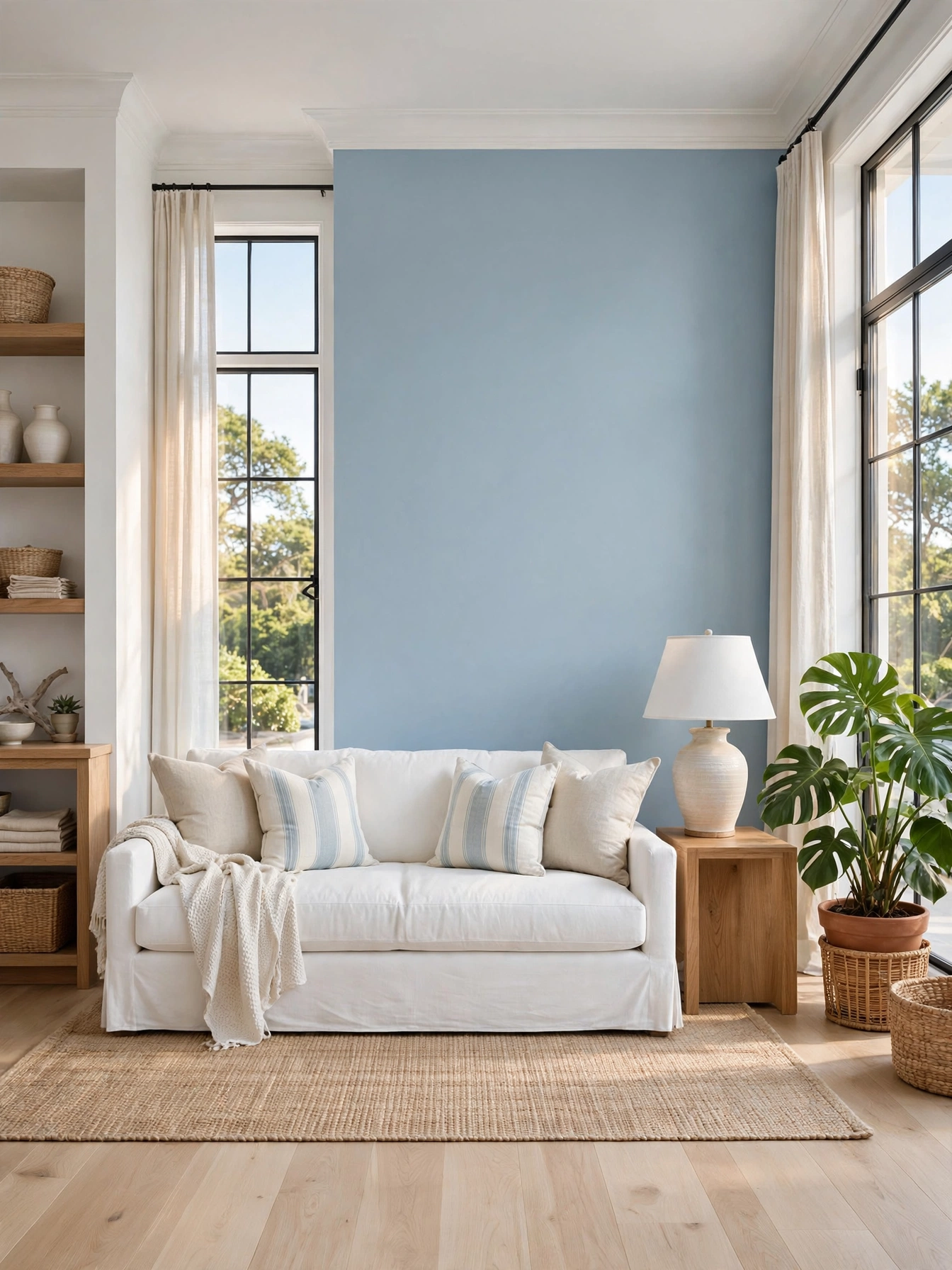
Why This Works:
- One painted wall delivers the full color impact for a fraction of a whole-room paint job.
- Powder blue has a high light reflectance value, so it keeps the room feeling bright.
- The white sofa and oak floor stop the blue from reading cold or flat.
- A single wall is easy to repaint if your taste changes in a few years.
A standard 12 by 9 foot wall covers about 108 square feet, and one gallon of quality paint covers 350 to 400 square feet, so a single gallon handles two full coats with paint to spare. Benjamin Moore “Palladian Blue HC-144” and Sherwin-Williams “Upward SW 6239” are reliable powder blue picks with light reflectance values near 65, meaning they bounce back roughly two-thirds of the light that hits them. Use a matte or eggshell finish, apply two coats with a 4-hour recoat window, and cut in the edges with a 2.5-inch angled brush. Skip painting all four walls in a north-facing room, because cool northern light strengthens blue undertones and the result can feel chilly rather than serene.
Renters and cautious decorators suit this idea best, since one wall commits little and changes the whole mood. One drawback is balance: if your sofa, rug, and curtains all lean blue-gray too, the room can wash out into one flat tone. Warm wood, brass, or creamy whites in the other 75 percent of the room keep the feature wall feeling intentional. Versus a full-room repaint at $300 or more in paint and supplies, a feature wall usually costs under $70 and finishes in a single weekend.
Pro Tip: Paint a 4 by 4 foot test swatch on the wall and study it at 10 a.m. and again at 6 p.m. before committing, because powder blue can shift two shades cooler under evening lamplight.
Sky Blue Ceiling Tint
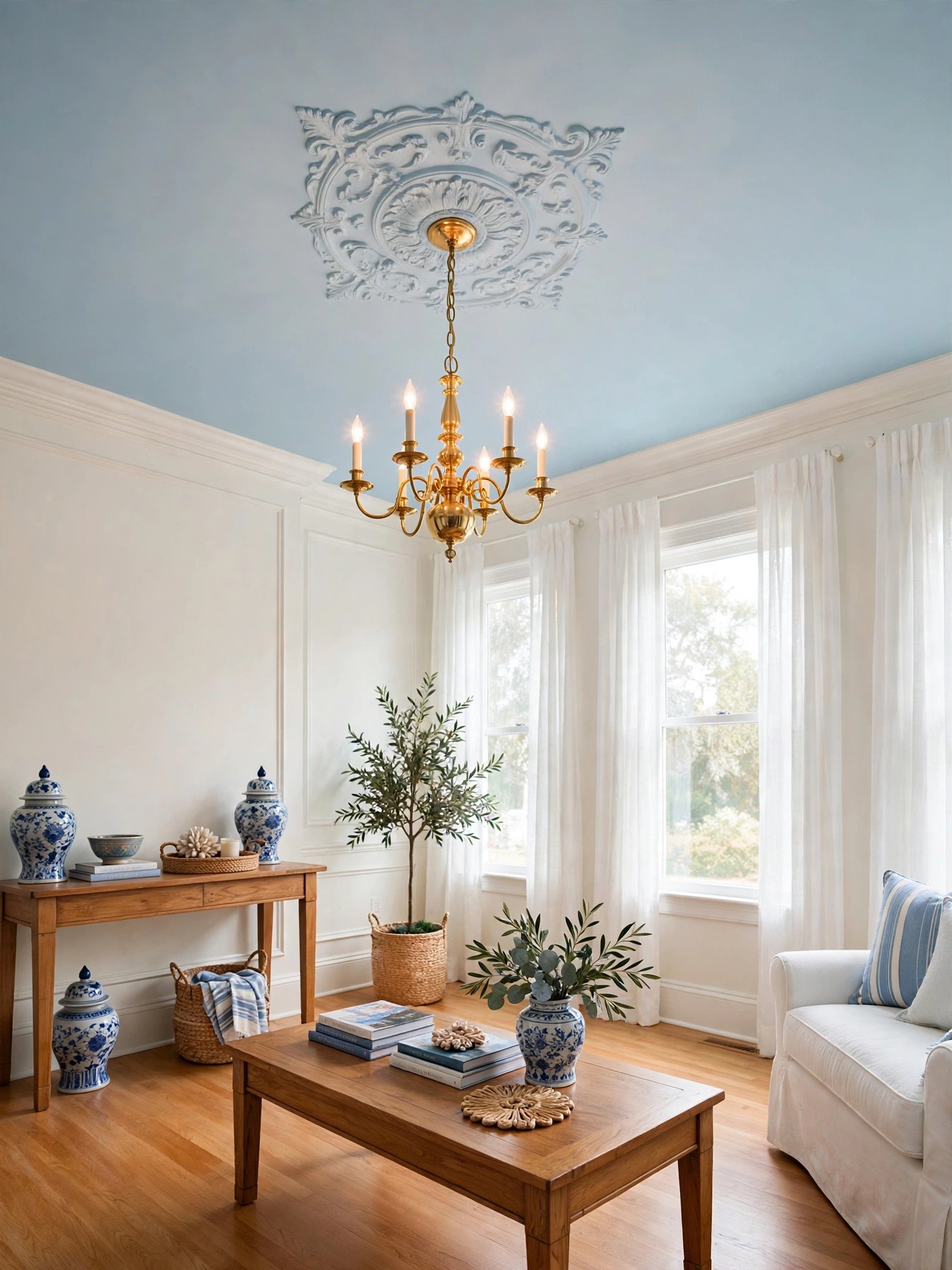
Why This Works:
- The ceiling is the forgotten fifth wall, and a blue tint makes it feel higher and lighter.
- Southern porch tradition used pale “haint blue” ceilings for exactly this airy effect.
- A flat finish hides minor ceiling imperfections better than any wall paint could.
- The color draws the eye upward, which makes modest 8-foot ceilings feel taller.
A 12 by 16 foot ceiling spans 192 square feet, so one gallon of ceiling paint at 350 square feet of coverage finishes two coats with room to spare. Farrow and Ball “Borrowed Light No. 235” and Sherwin-Williams “Rainwashed SW 6211” are proven sky tints that read blue in daylight and nearly white at night. Roll the paint in 3-foot sections with a 3/8-inch nap roller, keep a wet edge to avoid lap marks, and choose dead-flat finish so texture flaws disappear. Avoid semi-gloss on a textured or popcorn ceiling, since shine highlights every bump, and hire a licensed electrician if the project involves adding a new ceiling circuit or moving a fixture box rather than just painting around the existing one.
Low-ceiling rooms and traditional homes gain the most here, because the tint adds architecture without construction. What you give up is repainting effort: ceilings are physically demanding, with neck strain and ladder work, so budget a full day. White walls below keep the combination fresh, while a blue ceiling over already-blue walls can feel like too much sky. Next to a standard white ceiling, the tinted version photographs beautifully and guests notice it within seconds of entering.
Pro Tip: Cut the wall color with 50 percent white for the ceiling tint to get a custom pale shade that harmonizes perfectly, and test it on a 2-foot ceiling square first.
Coastal Linen Slipcovers
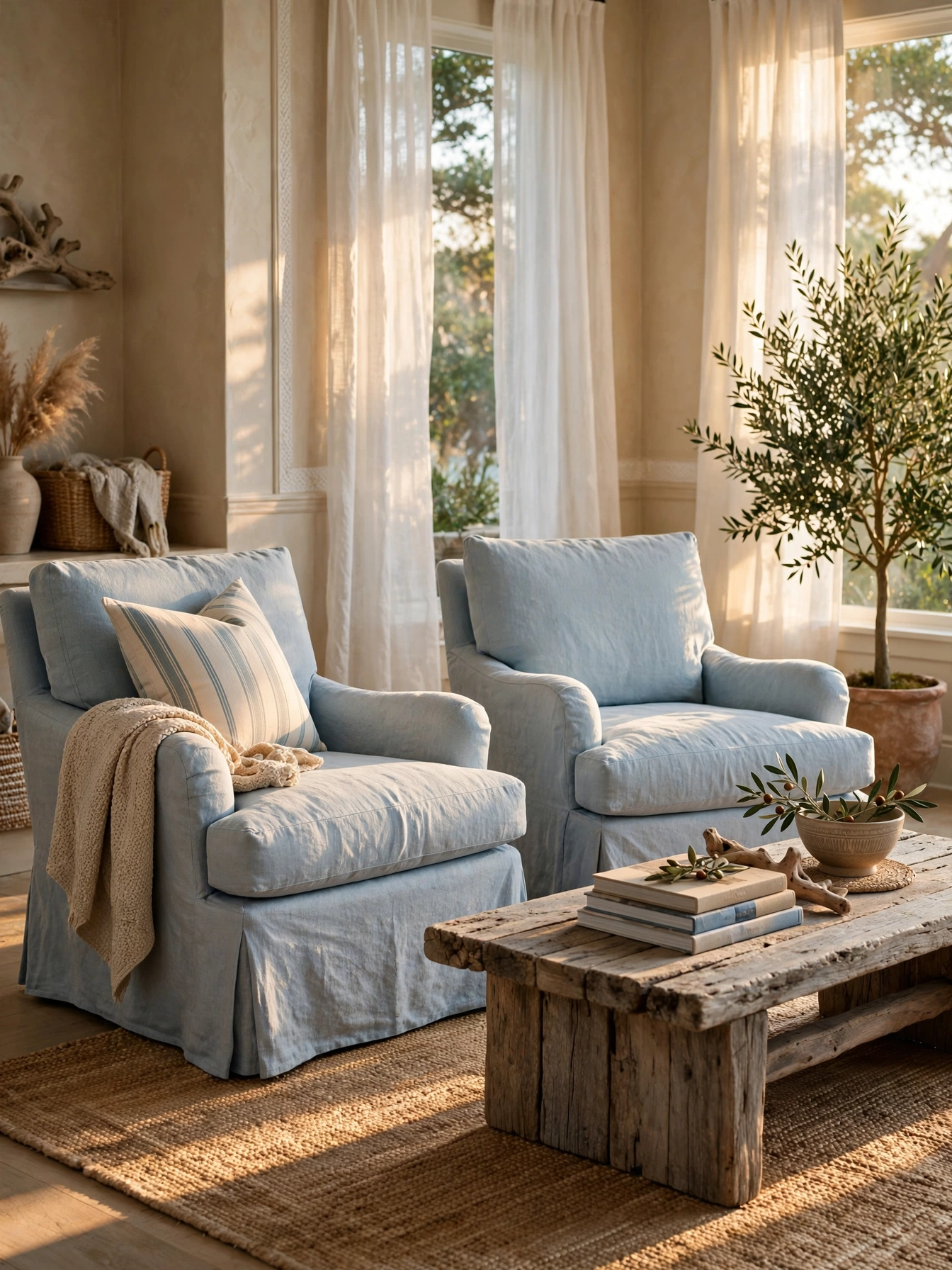
Why This Works:
- Slipcovers deliver a blue sofa look without replacing your existing furniture.
- Washed linen softens with every wash and hides wrinkles as part of its charm.
- Removable covers mean spills from kids or pets wash out in the machine.
- The relaxed fit suits coastal and farmhouse styles better than stiff upholstery.
Ready-made linen slipcovers run $80 to $150 per armchair and $150 to $300 per sofa, while custom-made covers from a workroom cost $400 to $900 per piece depending on fabric. Measure your seat width, seat depth, and back height before ordering, and look for OEKO-TEX certified linen, which is tested free of harmful substances. Choose covers with separate cushion casings rather than one-piece throws, because separate casings stay put through daily use. Avoid slipcovers on powered recliners, since loose fabric can catch in the mechanism, and skip them on leather if you want a crisp tailored look, because linen always reads casual.
Families with kids or pets suit this idea best, since the whole cover goes in the wash. The honest limitation is maintenance: linen wrinkles, and if you prefer a pressed look you will be steaming weekly. Against reupholstering a sofa at $800 to $1,500, slipcovers cost one-tenth and install in 20 minutes. Performance linen blends with a touch of polyester resist staining better than pure linen but feel slightly less breathable, so pick based on your household.
Pro Tip: Buy cushion inserts 2 inches larger than the cover dimensions, so a 20-inch cover gets a 22-inch insert, for a plump professional look with no sagging corners.
Ice Blue Shiplap Panels
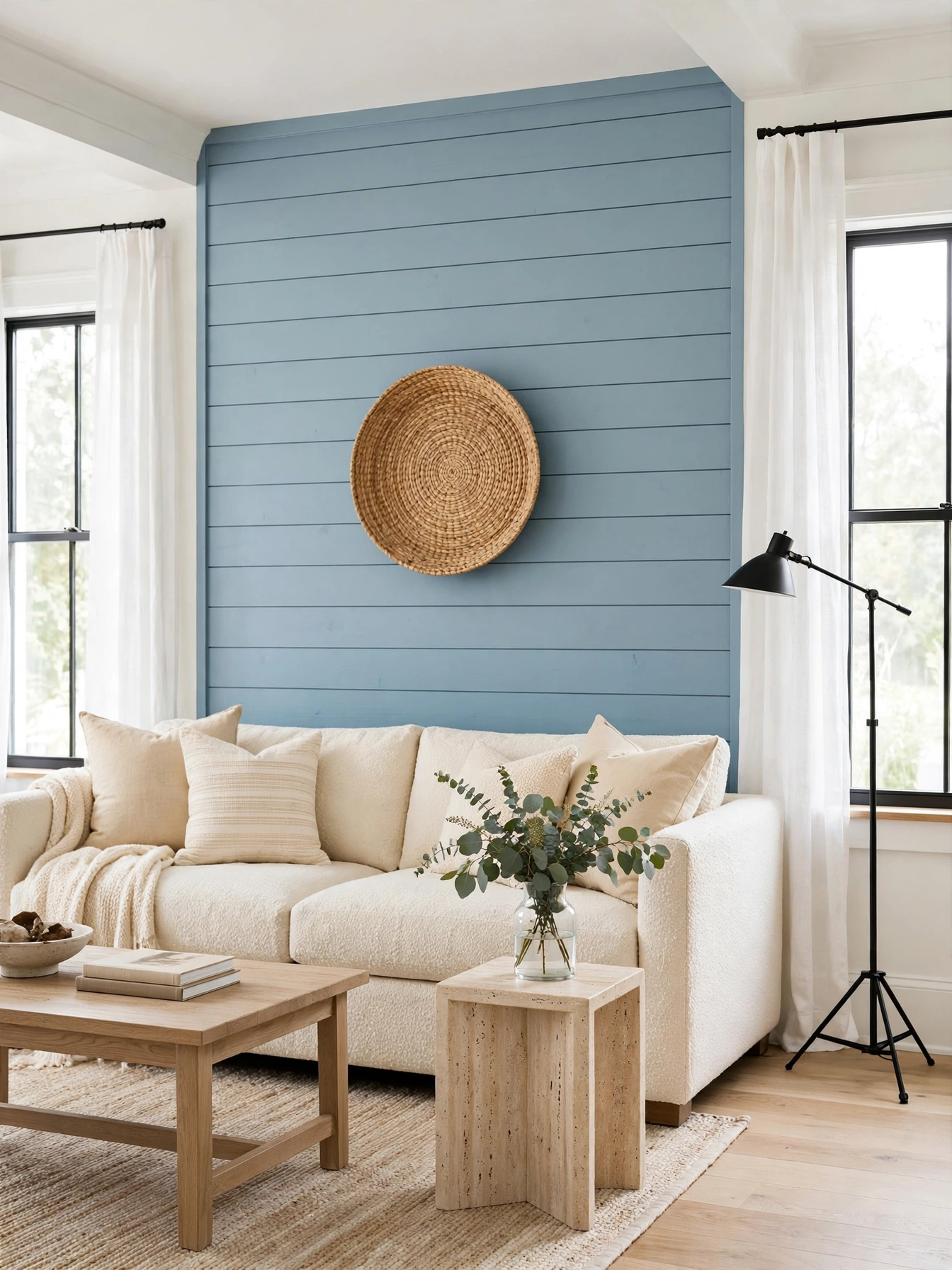
Why This Works:
- Horizontal boards add texture and shadow lines that flat paint cannot match.
- The narrow nickel gap between boards creates rhythm across a plain wall.
- Ice blue keeps the farmhouse look fresh instead of rustic and heavy.
- Real wood boards feel substantial and photograph beautifully for listings.
True pine shiplap costs $2 to $7 per square foot depending on grade, and a 12 by 8 foot wall needs about 96 square feet plus 10 percent waste, landing near $300 in materials for mid-grade boards. Fasten each board into wall studs, which sit 16 inches on center in most homes, using 2-inch brad nails, and paint after installation with a satin finish for wipeable durability. Standard 6-inch boards with a 1/8-inch nickel gap give the classic look. Avoid installing raw wood shiplap in damp rooms without sealing the backs, because moisture warps pine, and skip peel-and-stick foam panels if you want longevity, since they dent and peel within a couple of years while real boards last decades.
Blank, boring walls in newer builds suit this idea best, since shiplap adds the character the architecture lacks. The price you pay is dust: horizontal grooves collect it, so plan a quarterly wipe-down. Relative to wallpaper at $1 to $3 per square foot installed, shiplap costs more but survives kids, pets, and furniture bumps far better. Paint it ice blue rather than white for a coastal twist that still feels timeless.
Pro Tip: Start your first board perfectly level with a 4-foot level, because a 1-degree tilt at the bottom becomes a visible 2-inch gap by the top of an 8-foot wall.
Blue Velvet Accent Chairs
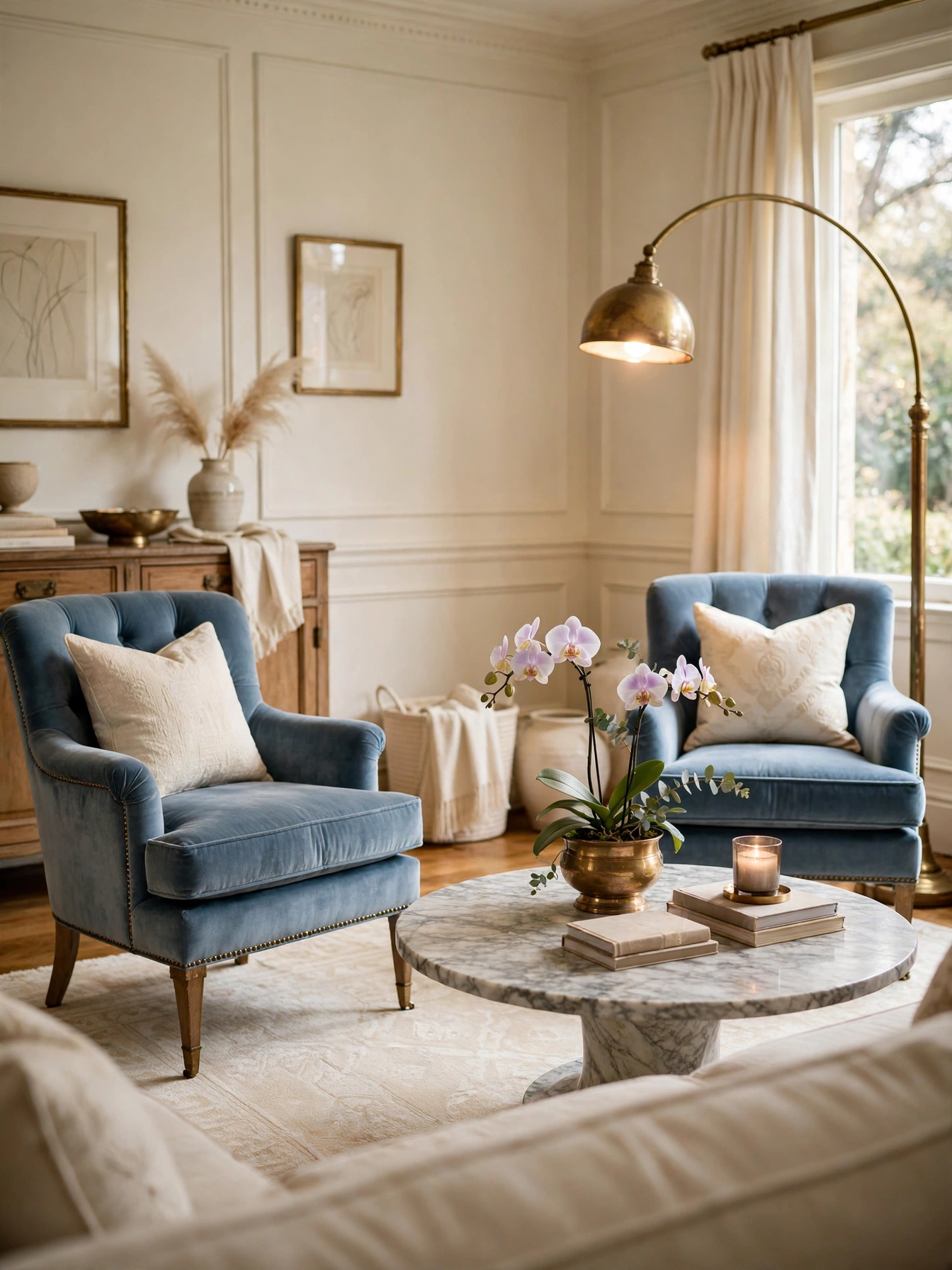
Why This Works:
- Velvet catches light differently from every angle, giving blue real depth.
- A pair of chairs adds symmetry, which reads as polished and intentional.
- Dusty blue works as a near-neutral, pairing with both warm and cool palettes.
- Chairs move easily, so you can rearrange for parties or quiet reading corners.
Look for upholstery rated at 50,000 or more double rubs on the Wyzenbeek test, the industry durability standard, which signals the fabric survives years of daily sitting. Seat height should fall between 17 and 19 inches to match standard sofa heights, and a 26 to 30 inch width fits most rooms without crowding. Budget velvet chairs run $150 to $250, mid-range performance velvet lands at $300 to $600, and designer pieces exceed $900. Choose performance velvet, a polyester blend, over cotton velvet for stain resistance, and avoid placing any velvet in harsh direct sun, because ultraviolet light fades blue dyes noticeably within 12 to 18 months.
Formal-leaning living rooms and small spaces suit this idea, since two chairs define a conversation zone without a bulky loveseat. The catch is comfort expectation: accent chairs prioritize looks, and deep reading sessions may want a plusher seat. In contrast to silk velvet at triple the price, performance velvet resists crushing and cleans with a damp cloth. Dusty blue specifically hides wear better than pale blue, making it the practical pick for busy households.
Pro Tip: Give velvet a weekly brush with a soft clothes brush in one direction, and steam out pressure marks for 30 seconds rather than ironing, which crushes the pile permanently.
Chambray Window Drapes
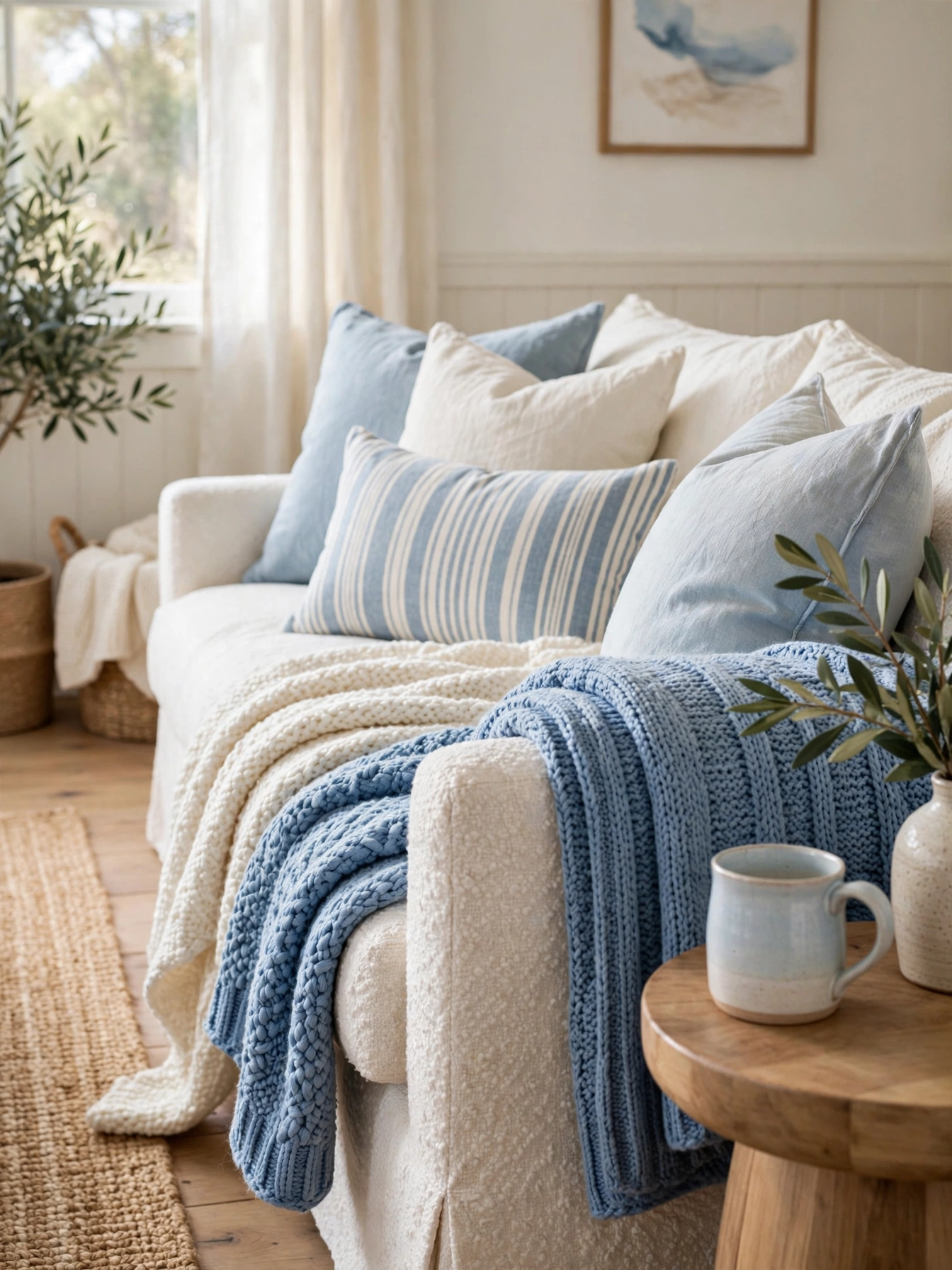
Why This Works:
- Chambray filters sunlight into a soft blue glow without darkening the room.
- The lightweight weave moves with breezes, adding life to still rooms.
- Blue fabric at the windows ties wall color to the whole space.
- Drapes hung high make standard 8-foot ceilings read a foot taller.
Install the rod 4 to 6 inches above the window frame and extend it 8 to 12 inches beyond each side, the standard guideline The Spruce recommends, so the window looks larger and panels clear the glass fully when open. For 8-foot ceilings, 96-inch panels just kiss the floor, and each panel needs 1.5 to 2 times the window width for proper fullness, meaning a 60-inch window needs two 50-inch panels. Chambray, a plain-weave cotton that reads like faded denim, costs $30 to $80 per panel ready-made. Avoid puddling extra fabric on the floor in high-traffic paths, because it collects dirt and trips feet, and skip unlined chambray on south-facing windows if fading worries you, since lining extends fabric life by years.
Sunny rooms with great views suit this idea, because the sheer-weight blue tints the light itself. The exchange is privacy: lightweight chambray offers little after dark, so layer it over a woven shade or blind. Stacked against heavy blackout drapes at double the price, chambray keeps rooms bright and casual. Wash panels twice a year on gentle to keep the blue crisp.
Pro Tip: Train new drapes by tying them loosely back with fabric sashes for 72 hours, which sets soft permanent folds and eliminates the flat just-unpacked look.
Textured Light Blue Living Room Ideas
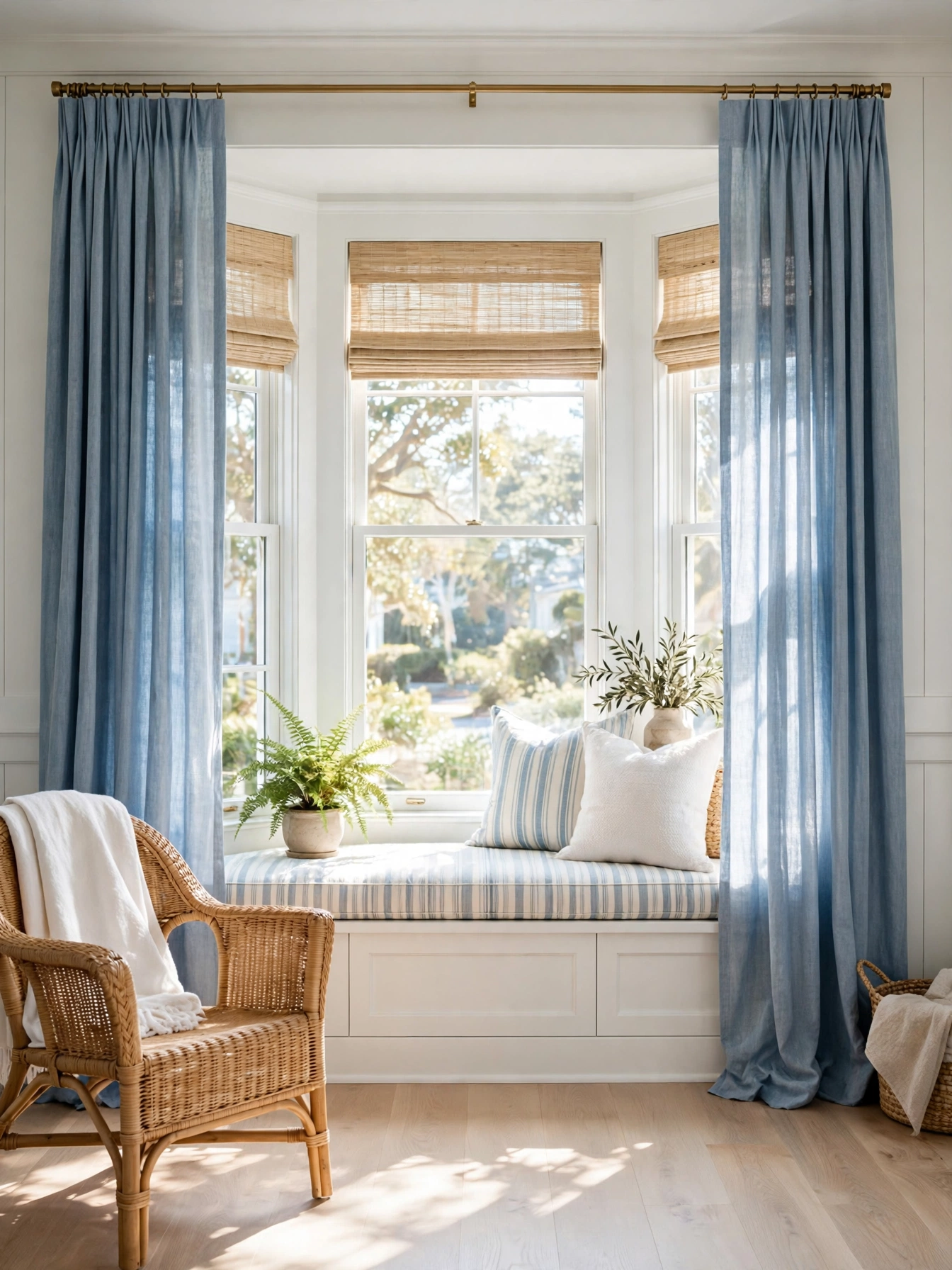
Why This Works:
- Layered textures keep a pale palette interesting without adding more colors.
- Touch is the secret luxury: boucle, linen, and knit each feel different.
- Textiles are the cheapest way to test blue before painting anything.
- Swapping throws seasonally refreshes the room for under $100.
Build the layers in odd numbers: three pillows on a loveseat, five on a full sofa, with the largest 22-inch squares at the back stepping down to a 14 by 20 inch lumbar in front. Buy inserts 2 inches larger than their covers for a full look, and layer a 5 by 8 foot flatweave rug over a 8 by 10 foot jute base, leaving 12 to 18 inches of the larger rug visible as a border. Limit the mix to three patterns maximum, such as a stripe, a small print, and a solid, to avoid visual chaos. Avoid more than two competing blues in one vignette, because near-miss shades clash instead of blending, and skip delicate silk pillows in homes with cats, since claws shred them in weeks.
Neutral rooms that feel flat suit this idea best, because texture adds the missing dimension. A real downside is upkeep: layered textiles need regular fluffing and seasonal washing. Put beside new furniture, a $200 textile refresh delivers similar visual change for one-tenth the cost. Start with the rug, then pillows, then throws, checking the mix from across the room after each addition.
Pro Tip: Karate-chop the top center of each pillow to create the designer dent, then pull the two top corners slightly forward for a styled look that holds for hours.
Blue and White Trim
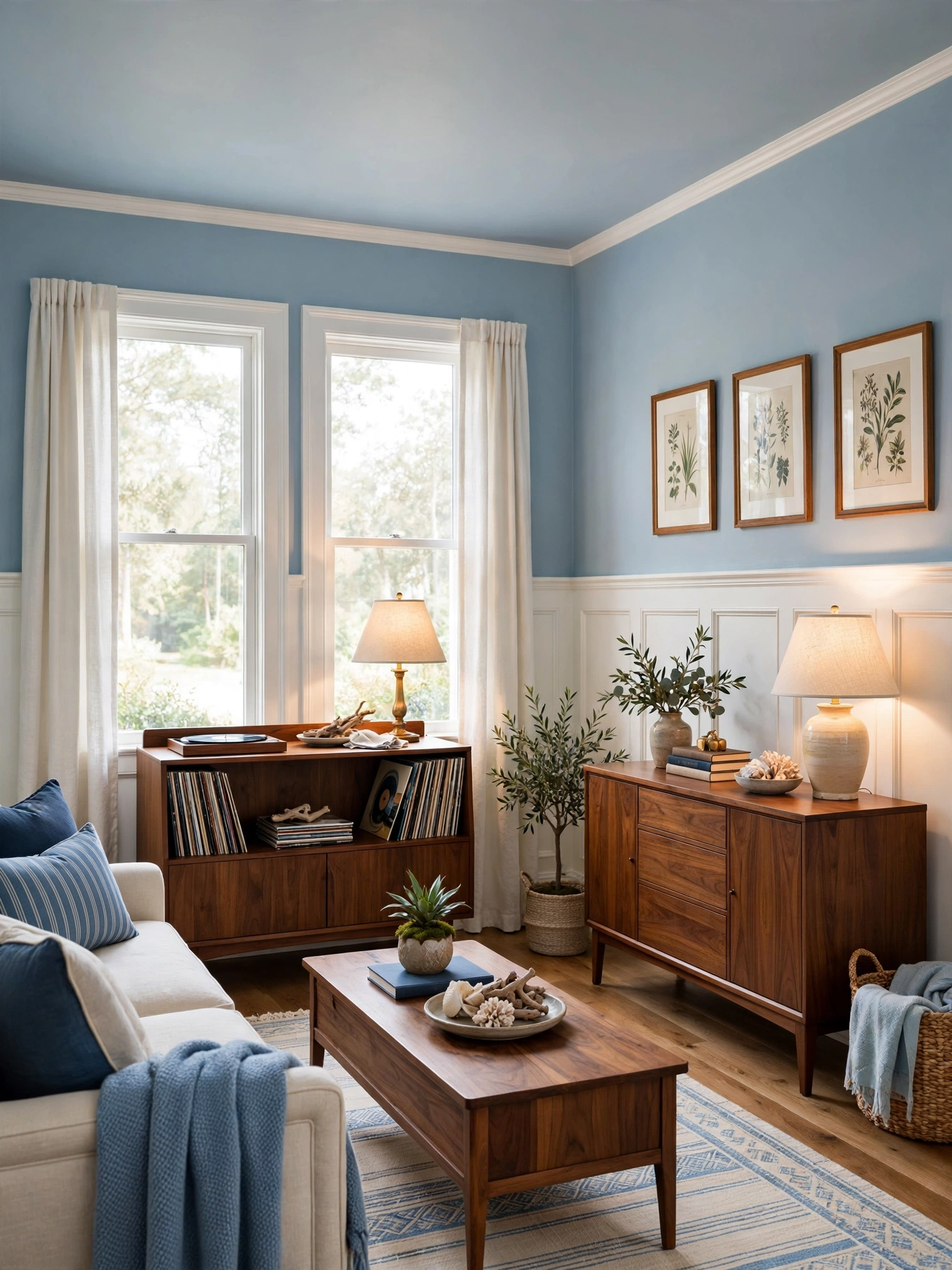
Why This Works:
- White trim frames blue walls like matting frames art, sharpening the color.
- Wainscoting adds architecture to flat drywall for a custom built-in feel.
- The two-tone split makes wall height feel generous and deliberate.
- White below the chair rail hides scuffs better than pale blue paint would.
Set the chair rail at 32 to 36 inches from the floor, the traditional proportion that suits standard 8 to 9 foot ceilings, and use 3.5-inch baseboards with 2.5-inch casing for balanced scale. Benjamin Moore “White Dove OC-17” in satin finish is the go-to warm white that keeps blue walls from feeling stark. Caulk every joint before painting, since uncaulked seams read as sloppy gaps within months, and budget $3 to $6 per linear foot for installed MDF wainscoting. Avoid glossy trim paint next to matte walls in bright rooms, because the sheen jump can look accidental, and skip dark grout-style caulk lines by using paintable white caulk only.
Plain drywall rooms in builder-grade homes suit this idea, since trim adds the character buyers pay for. The main risk is commitment: removing wainscoting later means drywall repair. When measured against full-height paneling, which doubles material and labor, chair-rail height delivers 80 percent of the look for half the cost. Paint the trim first, then the walls, so wall paint laps cleanly onto the taped trim edge.
Pro Tip: Run a thin bead of paintable caulk along the top edge of the chair rail after nailing, then paint, and the molding will look original to the house rather than added.
Sea Glass Accent Pieces
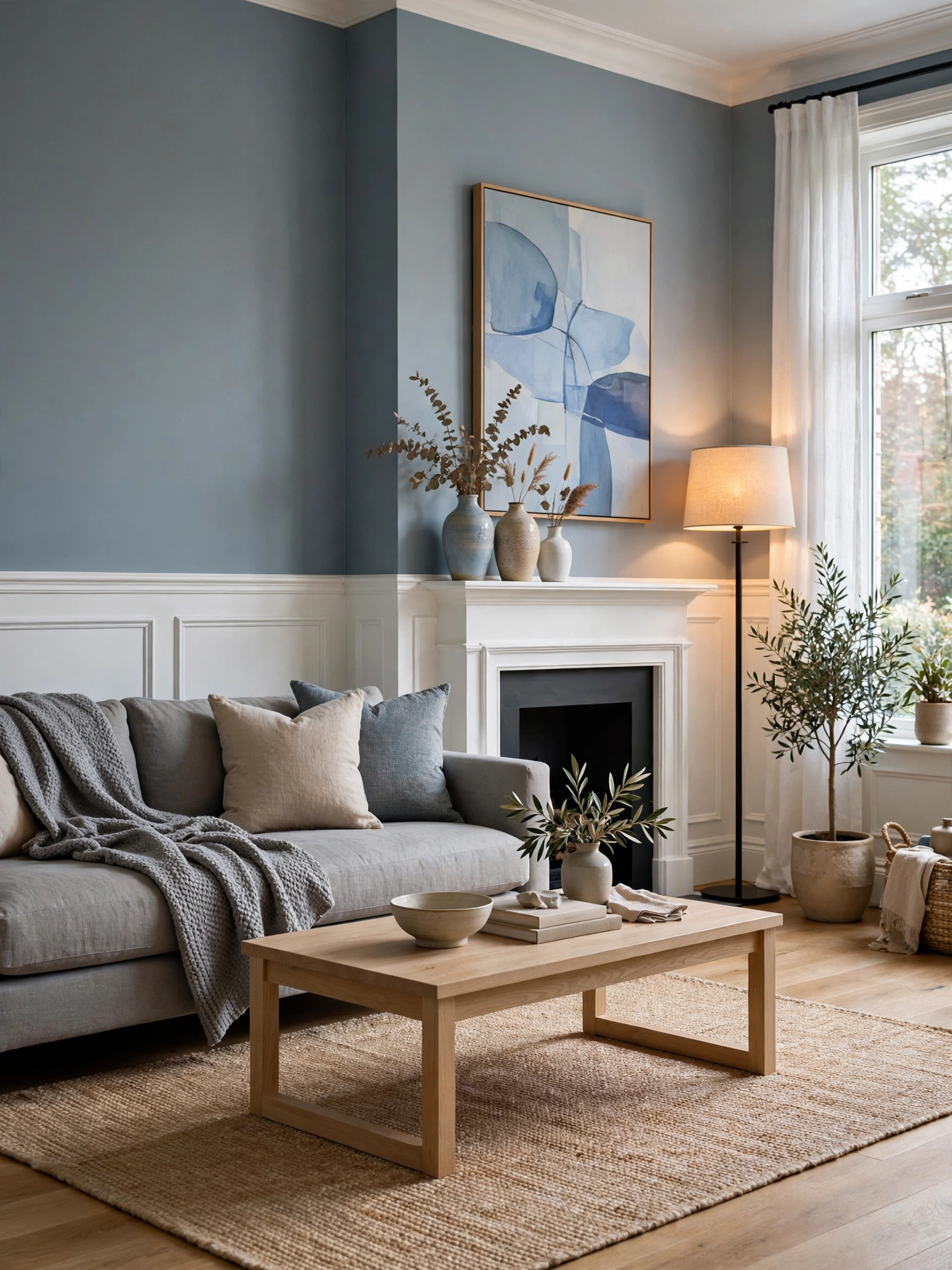
Why This Works:
- Sea glass tones echo light blue walls while adding green and aqua variety.
- Frosted glass glows when light passes through, creating natural sparkle.
- Small accessories let you test the palette for under $50 before bigger moves.
- Grouped in threes, they look curated rather than cluttered.
Style accessories using the rule of three: group a tall 12-inch vase, a medium 8-inch bowl, and a small 5-inch candle holder, varying heights by at least 3 inches so the eye travels. Genuine sea glass pieces run $15 to $40 each at artisan markets, while quality reproductions cost $8 to $20 at home stores. Leave 30 percent of any shelf or tabletop empty, because negative space is what makes collections read as styled. Avoid scattering single small items across a room, since lone pieces look like clutter rather than decor, and skip placing frosted glass in dark corners where no light reaches it, because the glow effect needs backlight or sidelight to work.
Cautious decorators and renters suit this idea, since accessories commit nothing. The weak point is dusting: glass shows every speck, so plan a monthly wipe. Set against a $500 art purchase, a $60 trio of sea glass delivers similar color impact on a shelf. Thrift stores often hide genuine pieces for a few dollars, making this the cheapest idea in the list.
Pro Tip: Place one piece where afternoon sun hits it directly, even a small 4-inch dish, and the whole vignette will glow for about an hour each day.
French Blue Interior Door
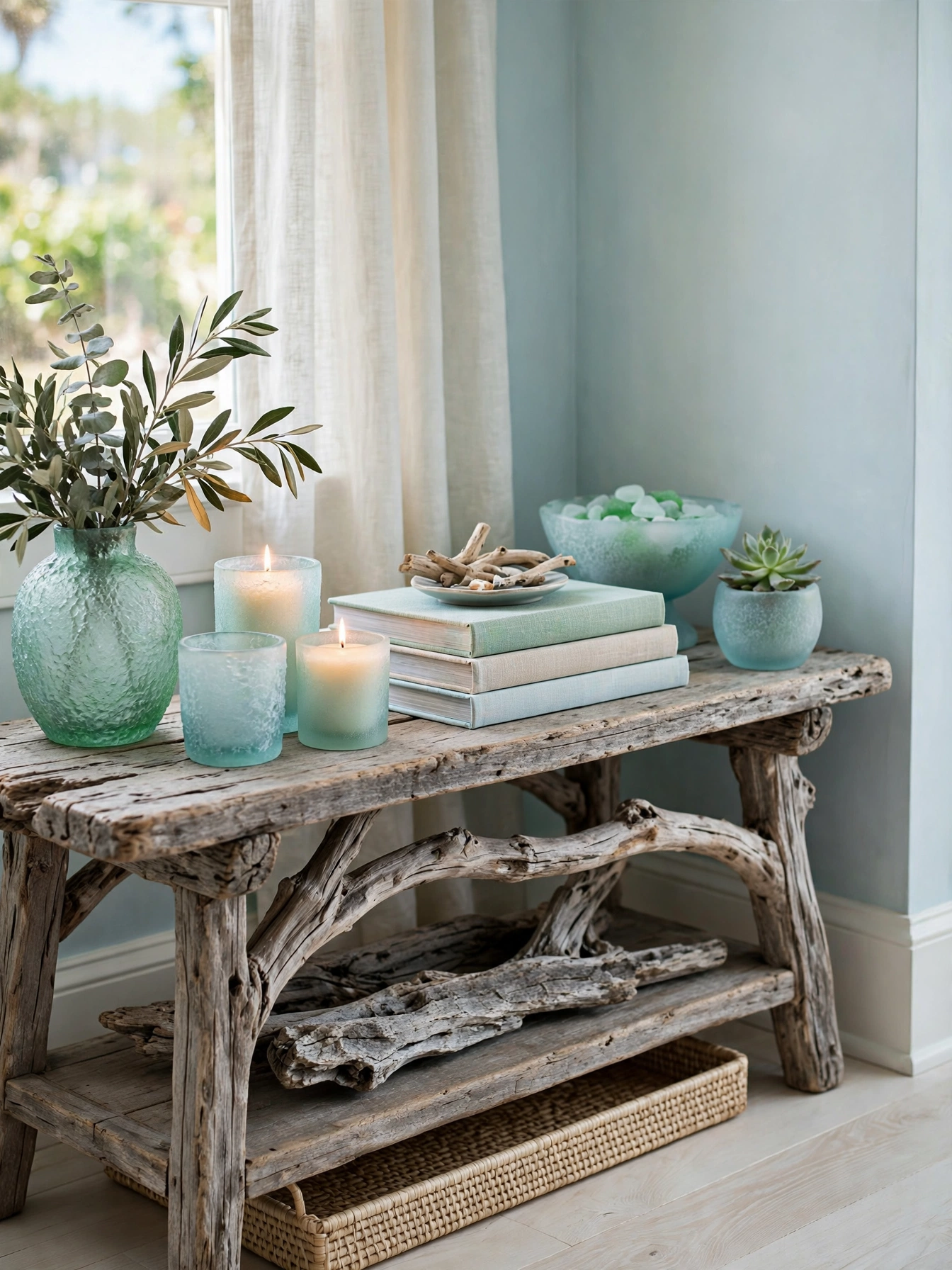
Why This Works:
- A saturated blue door against pale walls creates a jewel-box focal point.
- Doors are small, so bold color feels brave without overwhelming the room.
- The deep tone grounds all the lighter blues around it.
- Painting one door costs less than $40 and takes a single afternoon.
Remove the door from its hinges and lay it flat on sawhorses, then sand with 120-grit paper and apply a bonding primer before two coats of semi-gloss enamel such as Farrow and Ball “Stiffkey Blue No. 281”. A standard 30 by 80 inch interior door needs about one quart of paint for two coats. Let each coat dry a full 24 hours before rehanging to prevent sticking, and paint only when humidity sits below 70 percent, because damp air extends dry time and dulls the finish. Avoid painting over old glossy paint without sanding, since the new coat peels within months, and skip flat finishes on doors, because hands touch them constantly and flat paint marks permanently.
Neutral rooms needing one bold moment suit this idea best. One thing to watch is flow: a French blue door in every room feels repetitive, so reserve it for one or two statement doors. Measured against replacing a door at $200 or more, paint transforms it for under $40. Keep the trim cream or white so the blue reads as intentional art, not a mistake.
Pro Tip: Paint the door edges and top in the same blue, because unpainted edges flash pale wood every time the door moves and ruin the finished look.
Blue-Gray Paint Pairing
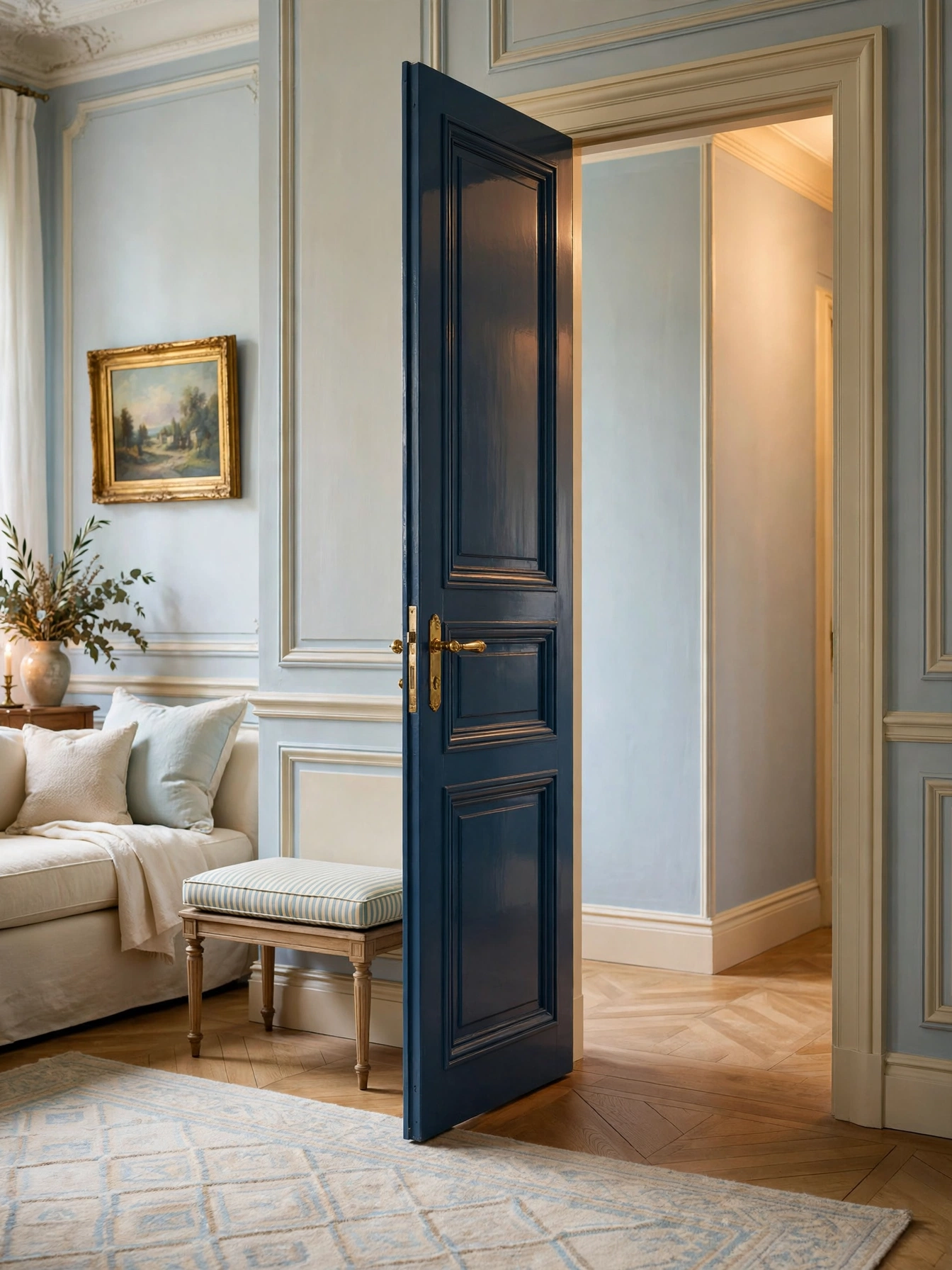
Why This Works:
- Blue-gray bridges cool and warm palettes, working with almost any furniture.
- The gray undertone keeps the blue from feeling beachy or juvenile.
- It photographs as a premium neutral in listing photos, unlike bolder blues.
- One color across walls simplifies every future decorating decision.
Sherwin-Williams “Sea Salt SW 6204” carries a light reflectance value near 63, placing it in the light-medium range that brightens without glaring. Paint the full wall in eggshell finish, which offers a soft sheen that wipes clean, unlike flat paint that marks easily. A 14 by 16 foot living room with 8-foot ceilings has roughly 450 square feet of wall, needing about 3 gallons for two coats at 350 square feet per gallon. Divide two-tone schemes at 60 inches or at an existing picture rail for natural proportions. Avoid pairing blue-gray walls with gray floors and gray furniture together, because the triple-gray stack reads flat and lifeless, and warm oak or walnut floors rescue the combination every time.
Indecisive decorators suit this idea, since blue-gray offends almost no one. A genuine concern is personality: it can feel safe to the point of bland without textured textiles or art. Contrasted with true gray, which many now find cold, blue-gray adds a whisper of color that keeps rooms current. Sample three candidates on one wall, because blue-grays shift dramatically between morning and evening light.
Pro Tip: Check the paint chip next to your largest furniture piece, not just the wall, because a blue-gray that matches the sofa exactly will make the whole room disappear into one tone.
Mirrored Light Reflection
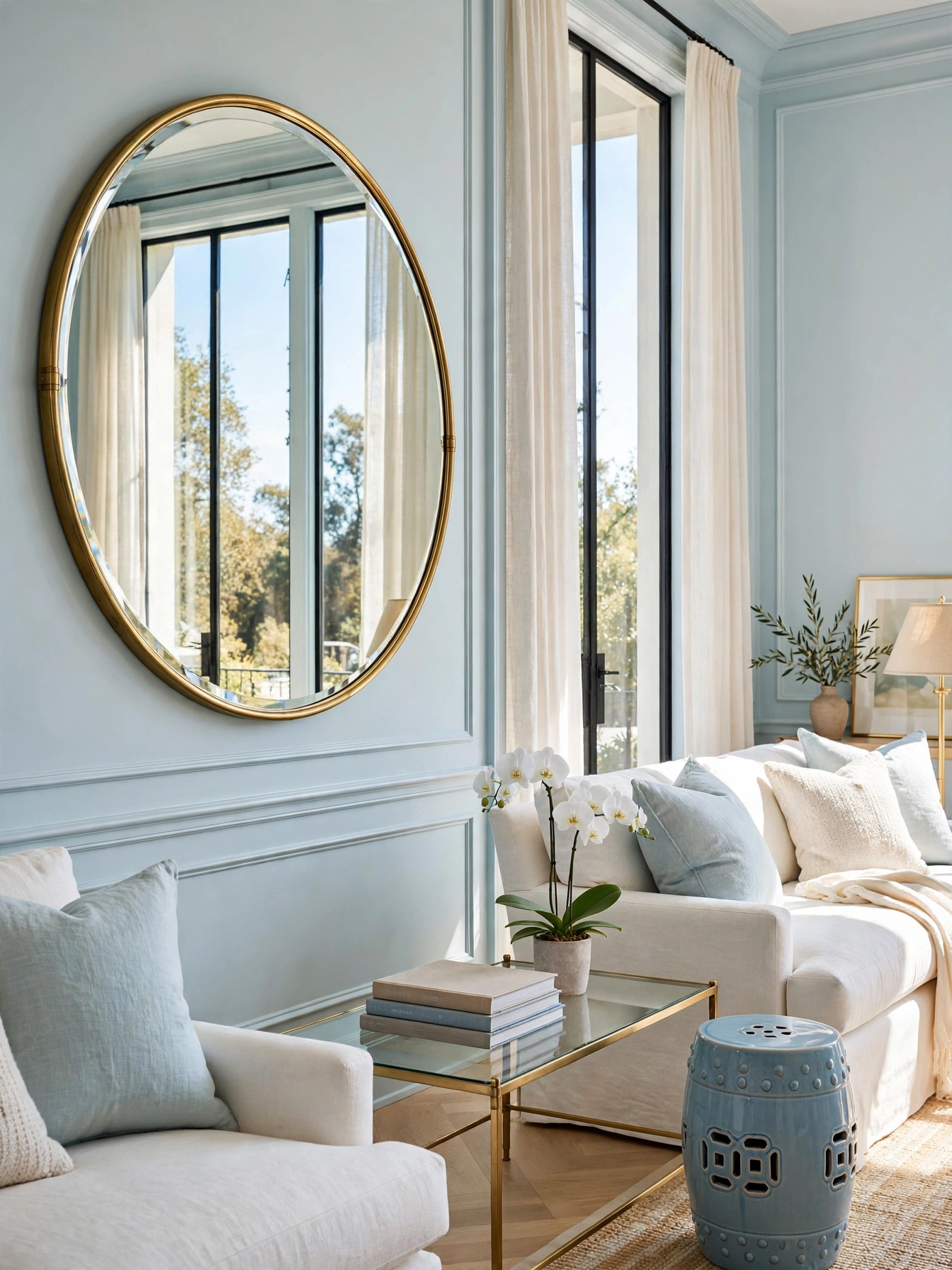
Why This Works:
- A mirror opposite windows doubles perceived daylight for the cost of one frame.
- Reflected blue walls deepen the color, making the palette feel richer.
- One large mirror reads as art while working harder than any wall decor.
- The American Lighting Association counts reflective surfaces as a light layer.
Size the mirror at roughly two-thirds the width of the furniture below it, so a 60-inch console gets a 40-inch mirror, and hang the center at 57 to 60 inches from the floor, the standard gallery height. A 36-inch round mirror in a thin brass frame costs $120 to $300 and visually doubles a 12-foot room. Anchor it with two D-rings and wall anchors rated for at least twice the mirror weight, since a 25-pound mirror needs 50-pound rated hardware for safety. Avoid hanging mirrors where they reflect clutter, blank walls, or the television, because they faithfully double whatever they face, and skip mirrored walls in bedrooms if morning glare bothers you.
Dark or north-facing living rooms gain the most, since borrowed light is free light. The downside is maintenance: mirrors show dust and fingerprints, so keep glass cleaner handy. Weighed against adding a new window at thousands of dollars, a $200 mirror delivers a similar brightness lift in an afternoon. Lean an oversized mirror against the wall for a casual look, but secure the top to the wall with a cleat if kids or pets roam.
Pro Tip: Angle a floor mirror 5 degrees toward the window rather than hanging it perfectly flat, and it will throw noticeably more daylight deep into the room.
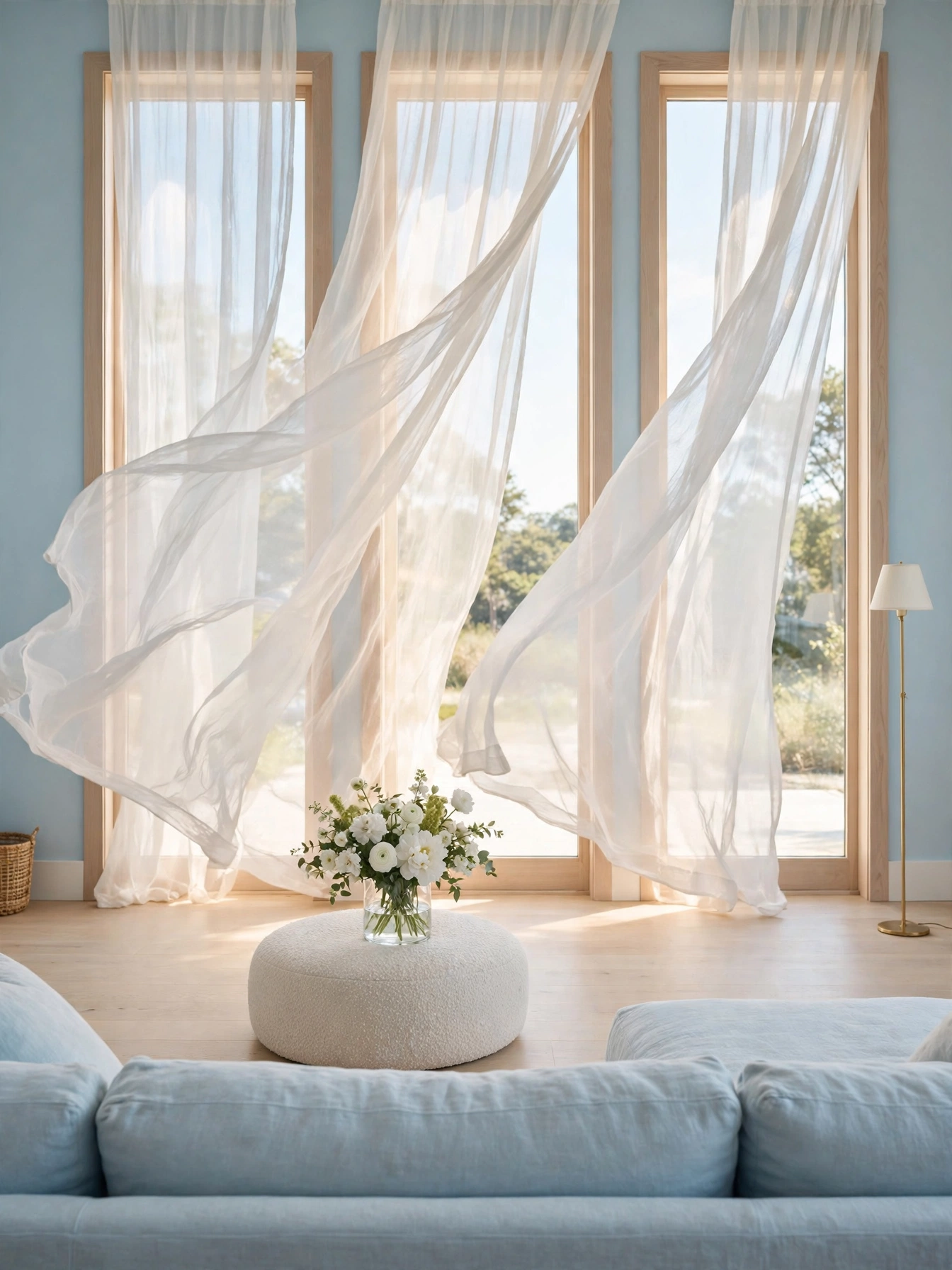
Light Blue Living Room Ideas With Sheer White Curtains
Why This Works:
- Sheers diffuse harsh sun into a soft glow that flatters blue walls.
- The translucent layers add depth without the weight of lined drapes.
- White sheers brighten blue rooms that lean toward the moody side.
- They cost a fraction of custom drapery while looking intentionally airy.
Hang sheer panels from a ceiling-mounted track or a rod set 2 inches below the ceiling, using 96-inch lengths for standard 8-foot ceilings so the fabric just grazes the floor. Budget $20 to $50 per voile panel ready-made, and allow 2 to 2.5 times the window width in total fabric for gentle gathering rather than flat stretched panels. Wash sheers every 3 to 6 months on delicate, because dust dulls the translucency that makes them beautiful. Avoid pairing sheers alone on street-facing ground-floor windows, since they offer zero nighttime privacy, and skip heavy pinch-pleat headings on sheers, because the stiff folds fight the soft fabric.
Bright south-facing rooms suit this idea best, since sheers tame glare while keeping the view. The caveat is insulation: sheers add nothing against drafts or summer heat. Side by side with linen drapes at triple the price, voile sheers deliver the airy look for less but wrinkle less and wash easier. Layer them under chambray or linen panels for day-to-night flexibility.
Pro Tip: Iron sheers while slightly damp on the synthetic setting, and they will hang ripple-free for months, since heat-setting the fibers trains permanent soft folds.
Light Blue Living Room Contrast
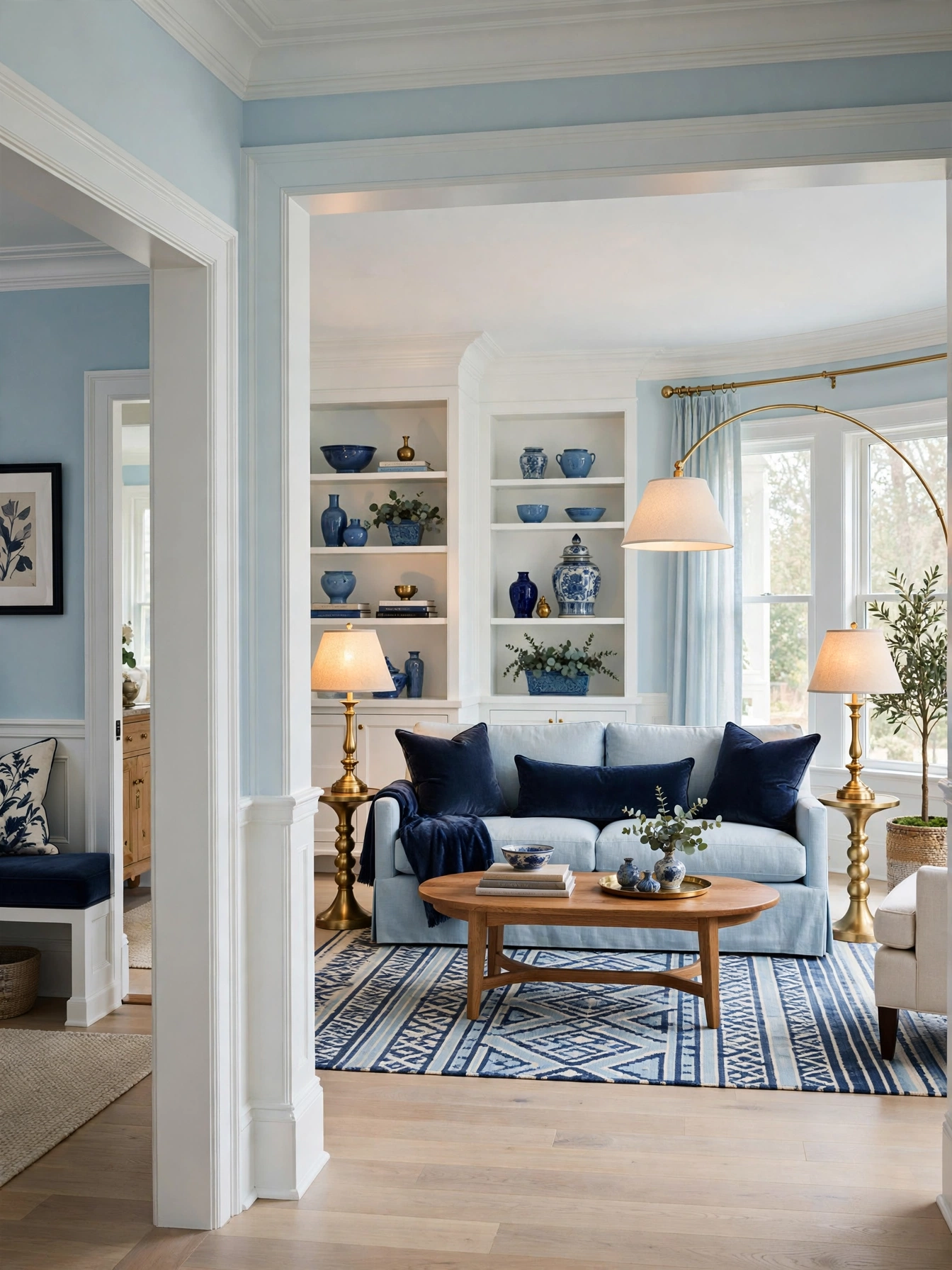
Why This Works:
- Deep navy anchors pale blue so the light shade looks deliberate, not washed out.
- The classic 60-30-10 rule keeps the contrast balanced instead of chaotic.
- Brass warms the cool pairing and stops it feeling icy.
- High contrast photographs dramatically, which Pinterest audiences reward.
Apply the 60-30-10 guideline: 60 percent light blue and white as the base, 30 percent mid-tone wood and textiles, and 10 percent navy in pillows, art, or a single chair. A 12 by 15 foot room needs roughly 6 to 8 navy accents, such as two 20-inch pillows, one throw, and two art frames, to hit that 10 percent without tipping heavy. Keep navy pieces at least 3 feet apart so the dark notes distribute evenly instead of clumping. Avoid splitting the room into equal halves of light and dark blue, because 50-50 contrast vibrates visually and feels unsettled, and skip navy on large upholstery in small rooms, since one dark sofa can dominate 150 square feet fast.
Timid all-pale rooms suit this idea, since contrast adds the backbone they lack. One honest drawback is discipline: every new purchase must respect the ratio or the scheme drifts. Next to an all-neutral room, the navy contrast version feels designed rather than default. Start with pillows and a throw, live with them for two weeks, then decide whether to add more.
Pro Tip: Photograph the room in black and white on your phone, and if the navy and pale blue turn into similar grays, you need stronger contrast between the two shades.
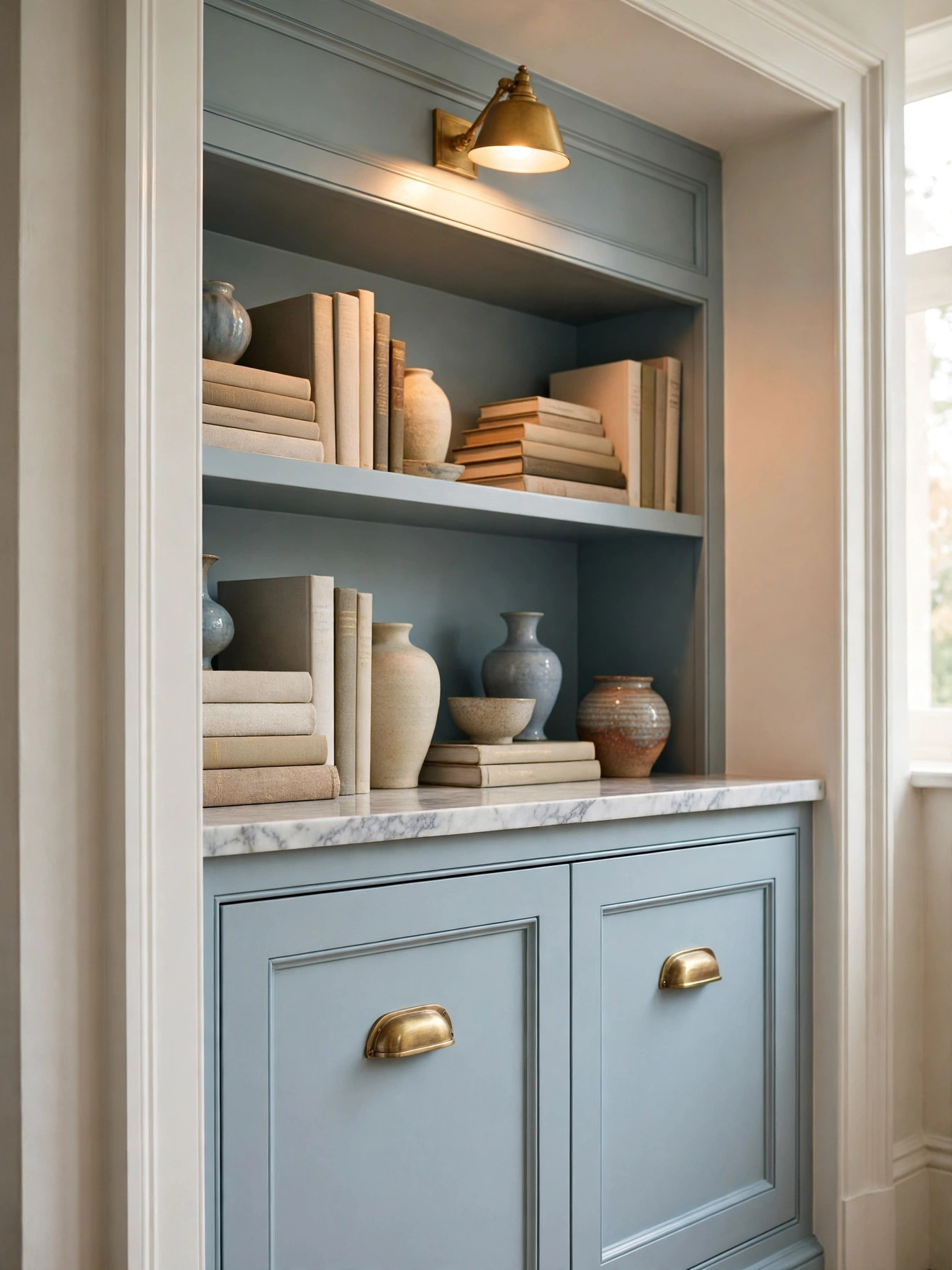
Brass Hardware Pairing
Why This Works:
- Warm brass against cool blue creates the temperature contrast designers love.
- Metallic hardware catches light and adds jewelry-like detail to plain cabinetry.
- Swapping knobs is a 30-minute upgrade with outsized visual return.
- Brass patinas gracefully, unlike chrome which just shows fingerprints.
Choose pulls with 3.75-inch hole spacing, the most common standard, so replacements fit existing holes without redrilling, and budget $6 to $15 per solid brass knob or $12 to $25 per pull. Limit the room to two or three metal finishes maximum, for example brass plus black, to keep the mix intentional. Unlacquered brass develops a natural patina within 6 to 12 months, while lacquered brass stays shiny for years, so pick based on whether you like living finishes. Avoid mixing polished brass, brushed brass, and antique brass all in one sightline, because the near-miss tones clash, and skip hollow lightweight pulls, since they feel cheap every time a drawer opens.
Blue built-ins, bookcases, or media cabinets suit this idea perfectly. The practical snag is cost creep: at $15 per pull, a 20-door built-in runs $300 in hardware alone. Holding it next to painting the cabinetry, which costs far more in labor, hardware swaps deliver the jewelry effect for one-tenth the price. Test one pull first, since brass undertones range from yellow to rosy.
Pro Tip: Bring a fabric swatch of your blue paint to the store, because brass looks dramatically different against powder blue versus navy, and phone photos lie about undertones.
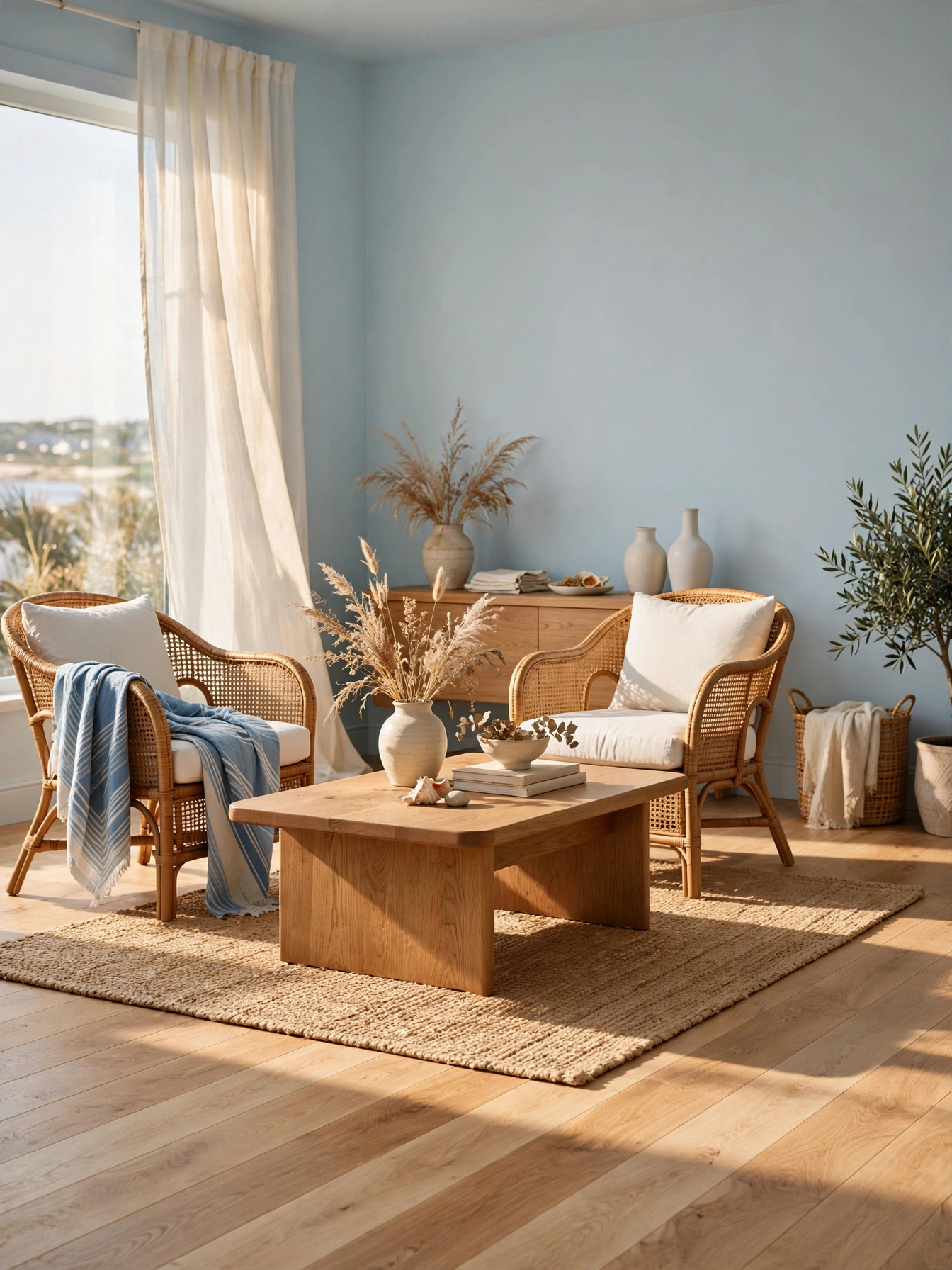
Natural Oak Balance
Why This Works:
- Wood grain adds organic warmth that stops blue rooms feeling sterile.
- White oak undertones stay neutral, unlike orange-toned red oak.
- Natural materials age gracefully, developing character instead of wear.
- The wood-blue pairing is timeless, safe from trend cycles.
Choose white oak over red oak for blue rooms, because white oak stains neutral while red oak pulls pink-orange that fights cool walls. A solid oak coffee table runs $400 to $900, while oak-look porcelain tile floors cost $4 to $8 per square foot installed versus $8 to $15 for real white oak hardwood. Keep wood tones within two shades of each other across the room, since matching exactly looks flat but clashing widely looks accidental. Aim for wood to cover 20 to 30 percent of the visual field through floors, tables, and frames. Avoid orange shellac-era wood with pale blue, because the 1990s honey-oak tone turns blue walls slightly green by contrast, and refinishing costs $3 to $6 per square foot if you must correct it.
Cool-toned rooms that feel chilly suit this idea best. The hidden cost is budget: real oak costs multiples of laminate lookalikes. Placing it beside painted furniture, natural oak needs only oiling every year or two rather than repainting. Rattan and cane count as wood tones too, so a $150 rattan chair can deliver the warmth without the hardwood price.
Pro Tip: Hold wood samples vertically against the blue wall in daylight, because wood laid flat on a table reads one full shade darker than it will on upright furniture.
Navy Anchor Touches
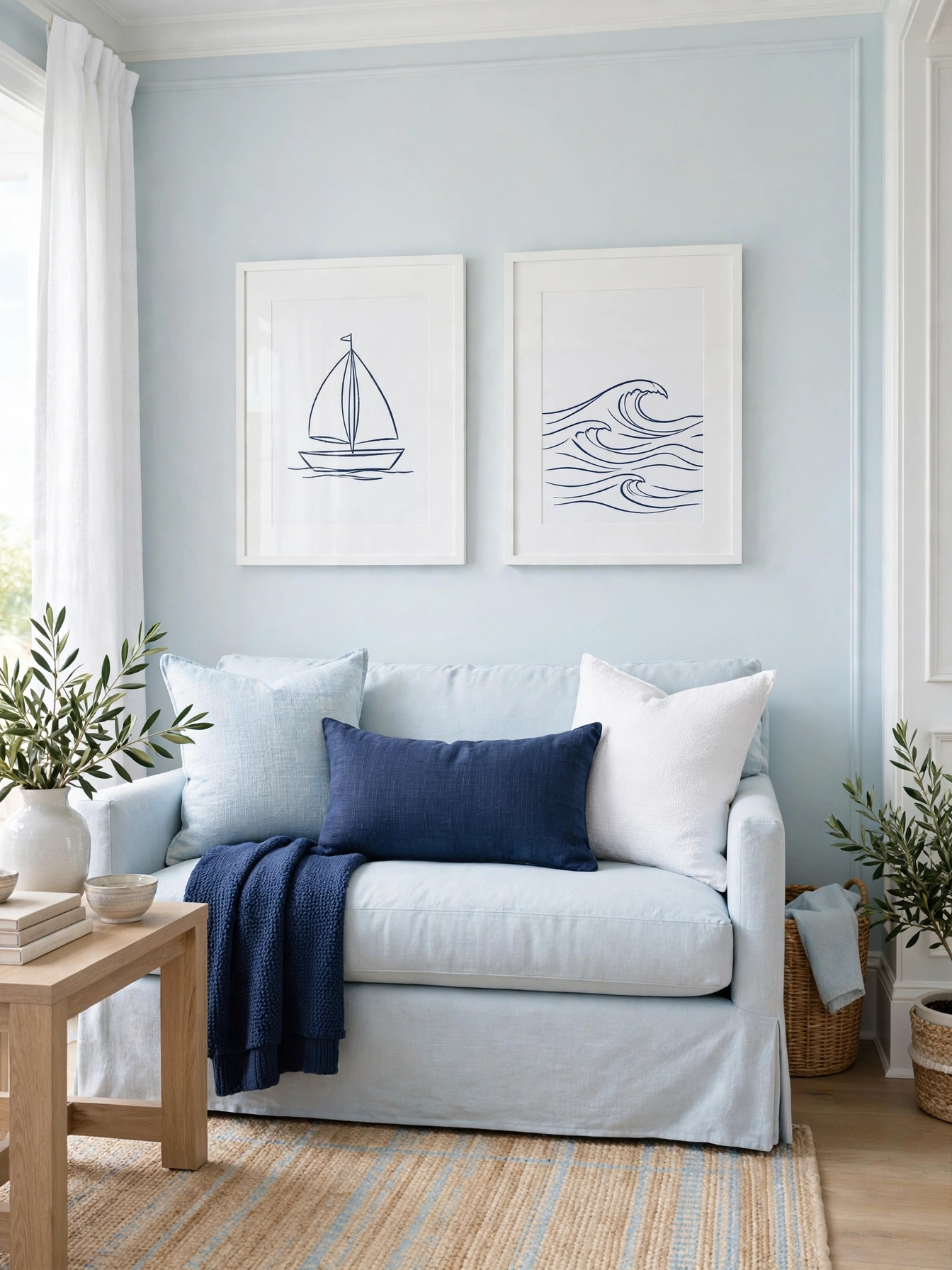
Why This Works:
- Small doses of navy give pale blue rooms a visual anchor point.
- Dark accents outline the light palette, like eyeliner defines eyes.
- Pillows and throws swap in minutes when seasons change.
- Navy reads classic, never trendy, so the look lasts years.
Limit navy to 5 to 10 percent of the room: two 20-inch pillows, one throw folded in thirds, and one or two art pieces in a 12 by 15 foot space. Quality linen pillow covers run $25 to $60 each, and a knit throw costs $40 to $90, so the whole anchor set lands under $200. Space the navy pieces in a loose triangle across the room rather than clustering them, because distributed dark notes balance better. Avoid navy lampshades, since they block light output by up to 40 percent compared with white shades, and skip navy rugs in small rooms, because a dark floor plane shrinks the perceived footprint.
Washy all-pale rooms suit this idea, since they need definition. The compromise here is restraint: navy tempts overuse, and each extra piece darkens the mood. Up against repainting an accent wall navy, which commits hard, textiles let you audition the contrast for a weekend. If the room still feels light after two weeks, add one more navy piece, not five.
Pro Tip: Squint at the room from the doorway, and the navy pieces should read as distinct dark punctuation marks, if they blur into the pale blue, they are too close in value.
Blue Art Gallery Wall
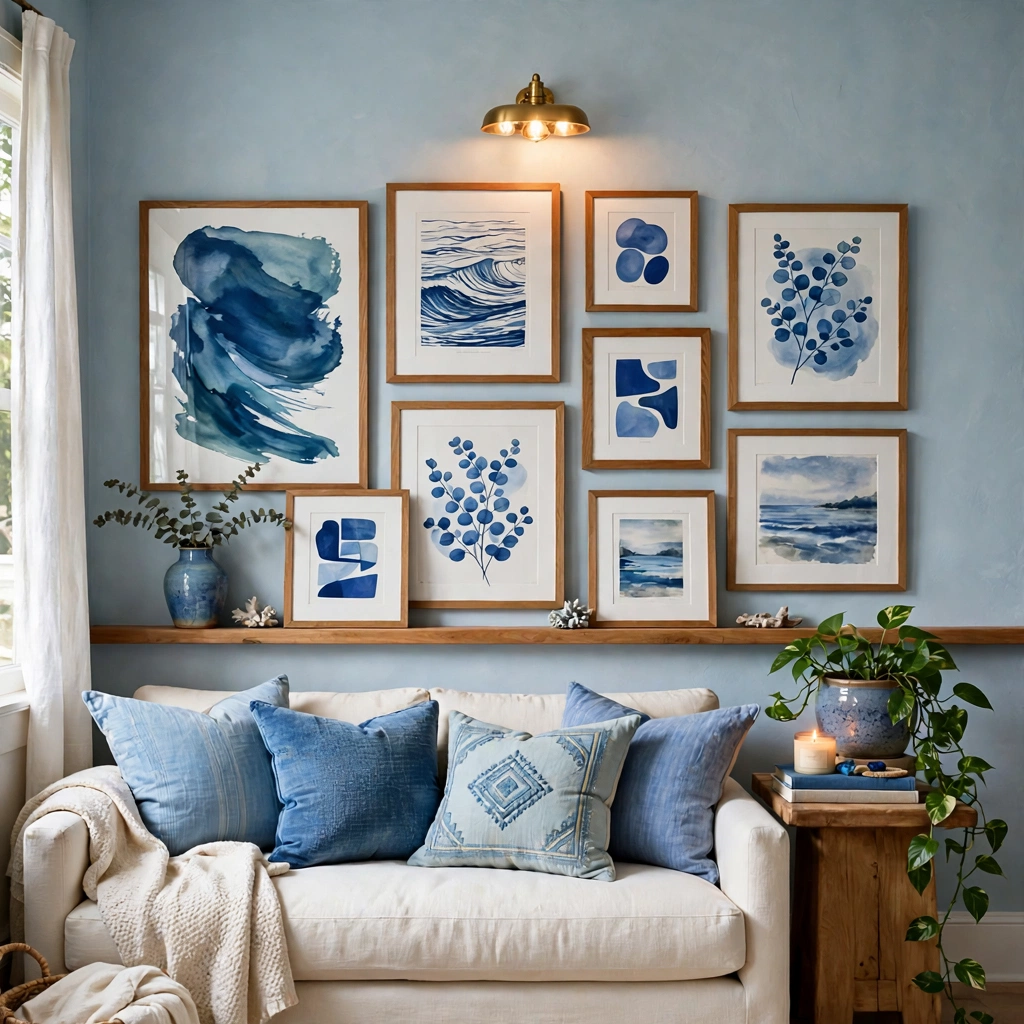
Why This Works:
- Art in blue tones turns the wall color into a curated collection.
- A gallery wall fills large blank walls cheaper than one oversized canvas.
- Mixed frames add personality that single matching sets cannot.
- The arrangement becomes a conversation piece guests actually study.
Hang the center of the arrangement at 57 to 60 inches from the floor, the museum standard, and space frames 2 to 3 inches apart for a cohesive cluster. Lay the layout on the floor first within a taped outline matching your wall space, typically 6 to 8 feet wide above a sofa, and transfer it using kraft paper templates. Budget $15 to $40 per frame plus $10 to $30 per print, so a nine-piece wall runs $200 to $500. Choose art with at least 30 percent blue content to tie into the walls. Avoid tiny 5 by 7 inch frames alone on a big wall, because they read as postage stamps, and skip hanging anything wider than the sofa below, since oversized art unbalances the furniture.
Big blank walls above sofas suit this idea perfectly. One drawback is commitment to holes: use picture ledges if you rearrange often, since ledges need only two brackets for unlimited restyling. In a head-to-head with one large canvas at $400 or more, a gallery of prints costs similar but offers far more visual interest. Start with the largest piece slightly off-center, then build outward.
Pro Tip: Photograph your floor layout from a step stool before hanging, because the top-down photo reveals spacing mistakes your standing eye misses.
Light Blue Living Room Ideas With Built-In Shelves
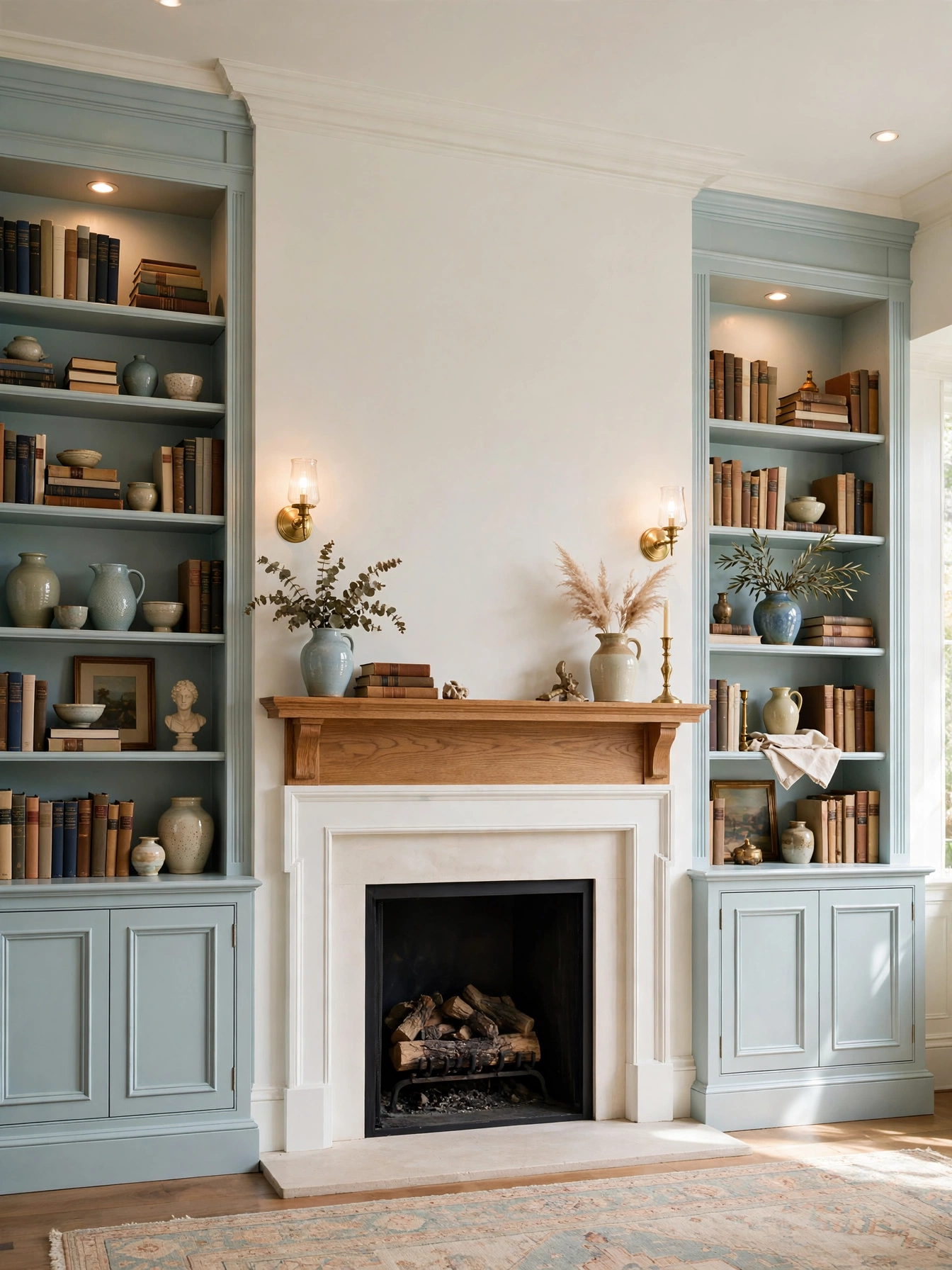
Why This Works:
- Painted built-ins look custom and expensive for the price of paint.
- Pale blue shelves display white ceramics and books beautifully.
- Flanking a fireplace, they create the symmetry buyers photograph.
- Enclosed lower cabinets hide clutter while open shelves show style.
Build or buy bookcases 10 to 12 inches deep, the standard that fits most books without wasting floor space, and keep any shelf span under 36 inches unless you add center supports, since loaded shelves sag visibly past that length. Style using thirds: one-third books, one-third decorative objects, one-third empty space, which keeps shelves breathable. A pair of stock bookcases with trim painted pale blue costs $400 to $900 total, versus $3,000 to $8,000 for true custom millwork. Use satin finish paint for wipeable durability. Avoid cramming every inch, because overloaded shelves read as storage units rather than design, and skip painting the shelf interiors a dark color, since it swallows light and hides your objects.
Fireplace walls and alcoves suit this idea, since built-ins finish awkward spaces. The catch is styling upkeep: styled shelves need seasonal editing. Lined up against freestanding bookcases, built-ins add perceived home value, though appraisers rarely credit them formally. Paint the backs of the shelves one shade deeper than the frames for subtle depth.
Pro Tip: Remove everything from one shelf each season and restyle only that shelf, which keeps the whole built-in feeling fresh with 20 minutes of effort.
Coastal Blue Table Styling
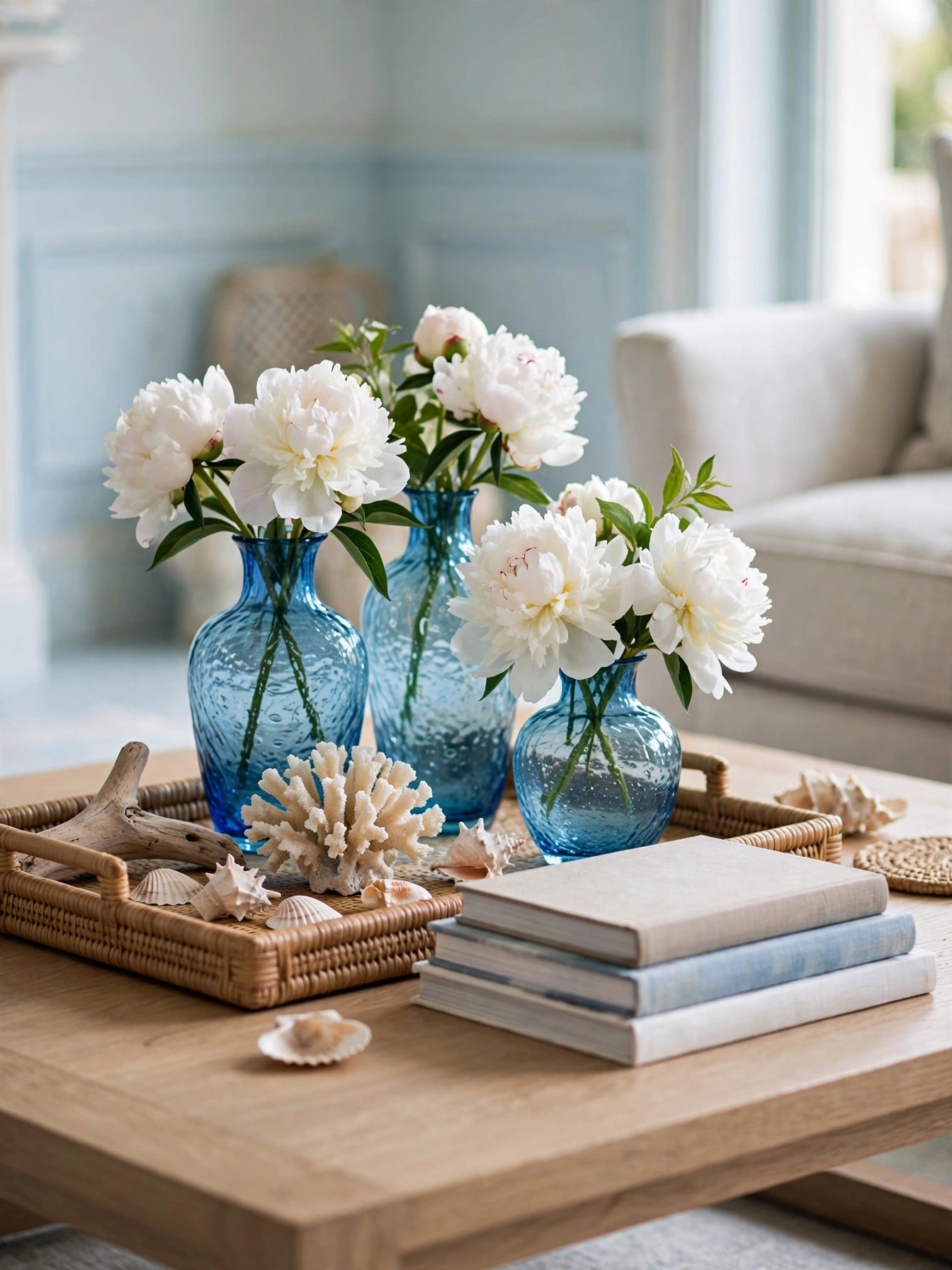
Why This Works:
- A styled coffee table is the finishing layer that makes rooms feel complete.
- The tray corrals small items into one intentional composition.
- Blue glass echoes the walls while white flowers keep it fresh.
- Styling costs under $100 but photographs like a designer visit.
Anchor the arrangement with a tray 18 to 24 inches long on a standard 48-inch coffee table, leaving at least 12 inches of clear surface on each side for drinks and feet. Build height variety from 6 to 18 inches: a low stack of books, a medium 10-inch vase, and one tall 16-inch stem arrangement. Follow the rule of three to five objects, since even numbers split the eye. Avoid centerpieces taller than 24 inches, because they block conversation sightlines across the table, and skip scented candles near fresh flowers, since competing fragrances overwhelm small rooms.
Finished rooms missing a final layer suit this idea. A real downside is daily life: styled tables need a quick reset after use. Versus buying new furniture, table styling is the highest-impact-per-dollar finish in decorating. Keep a lidded box nearby to sweep remotes into when guests arrive.
Pro Tip: Style the table, then remove one item, because the difference between styled and cluttered is almost always a single object too many.
FAQs
What are the best light blue living room ideas for small spaces?
Stick to paint with a light reflectance value above 65, one feature wall instead of four, and a mirror sized at two-thirds of your console width to double daylight. The Spruce notes that pale colors visually expand walls, so keep furniture 3 inches off walls for an airier feel.
What white paint pairs best with light blue walls?
Warm whites like Benjamin Moore White Dove OC-17 keep blue from feeling stark, while pure whites sharpen the contrast. Test a 2-foot swatch beside your blue at midday, since whites shift yellow or pink under different bulbs. HGTV designers suggest sampling at least three whites before committing.
Which light blue living room ideas work in north-facing rooms?
Choose blues with green undertones like Sea Salt SW 6204, which resist the gray cast of northern light. Add warm wood covering 20 percent of the room and 2700K bulbs for balance. Avoid flat all-blue schemes, since cool light strengthens blue undertones and the room can feel chilly.
How much does it cost to paint a living room light blue?
A DIY job for a 14 by 16 foot room needs 3 gallons at $35 to $70 each, plus $40 in supplies, totaling $150 to $250. Professional painters charge $2 to $6 per square foot, so the same room runs $900 to $2,700. Two coats remain the standard.
How do I stop a blue living room from feeling cold?
Layer warm textures covering at least 30 percent of surfaces: wood, brass, and knit throws. Switch bulbs to 2700K warm white and add one 5 by 8 foot natural rug. Keep one warm metal finish in every sightline so the eye always finds a warm note.
Conclusion
These light blue living room ideas reward restraint: one strong wall or ceiling move, warm wood and brass for balance, and layered textiles for depth. Those three choices carry 80 percent of the look, and everything else is garnish. Small rooms especially love this palette, since pale blue visually pushes walls outward. This weekend, paint a 4 by 4 foot test swatch of your favorite shade and watch it through a full day of light. Follow HomelyCrafter on Pinterest for more ideas. Save this to your Pinterest boards so you can refer back to it!

Muhammad Israr is a home decor enthusiast and the writer behind Homely Crafter. He spends his days researching paint colors, layouts and budget-friendly styling ideas, then breaks them down into practical, easy-to-follow guides so you can decorate with confidence.