
What do a Marrakech riad, a Joshua Tree cabin, and your favorite artisan market have in common? They all layer sun-baked clay, woven fiber, and hand-touched wood into rooms that feel grounded the moment you enter. These earthy boho living room ideas bring that same soulful warmth home, with exact measurements, honest costs, and real trade-offs for every look. You will learn how to mix terracotta with rattan, layer rugs without tripping hazards, and style artisan pieces so they read collected rather than cluttered.
Each of the 23 ideas below stands alone, so you can start with a single clay pot cluster this weekend or plan a full room refresh. Either way, you will finish knowing precisely what to buy, what to measure, and what to skip.
Terracotta Accent Wall
Why This Works:
- Terracotta radiates warmth that flat beige walls never achieve.
- The sun-baked tone flatters wood furniture and woven textures instantly.
- One wall delivers drama while keeping the room light and breathable.
- Earthy pigments hide scuffs far better than pale neutrals do.
A single gallon of quality paint covers 350 to 400 square feet, which is enough for two coats on a 12 by 9 foot wall (about 108 square feet) with plenty left for touch-ups. Look for clay-inspired shades like “Cavern Clay SW 7701” from Sherwin-Williams or “Terra Rosa” style pigments with a light reflectance value near 30, which keeps the color rich without darkening the room. Apply two coats in matte finish with a 4-hour recoat window, cutting in edges with a 2.5-inch angled brush. Avoid painting terracotta in rooms with orange-toned wood floors, because the double warmth turns muddy, and skip glossy finishes, since shine cheapens the earthy effect.
White-box rooms and beige rentals gain the most here, since one wall adds the soul the architecture lacks. One drawback is resale caution: bold walls narrow buyer appeal, so keep the other three walls warm white. Versus limewash at triple the material cost, standard matte paint delivers 90 percent of the look for under $70. Test a 3 by 3 foot swatch first, because terracotta shifts dramatically between morning and evening light.
Pro Tip: Paint the wall behind the sofa rather than the window wall, because sidelight rakes across the pigment and shows off its depth instead of flattening it.
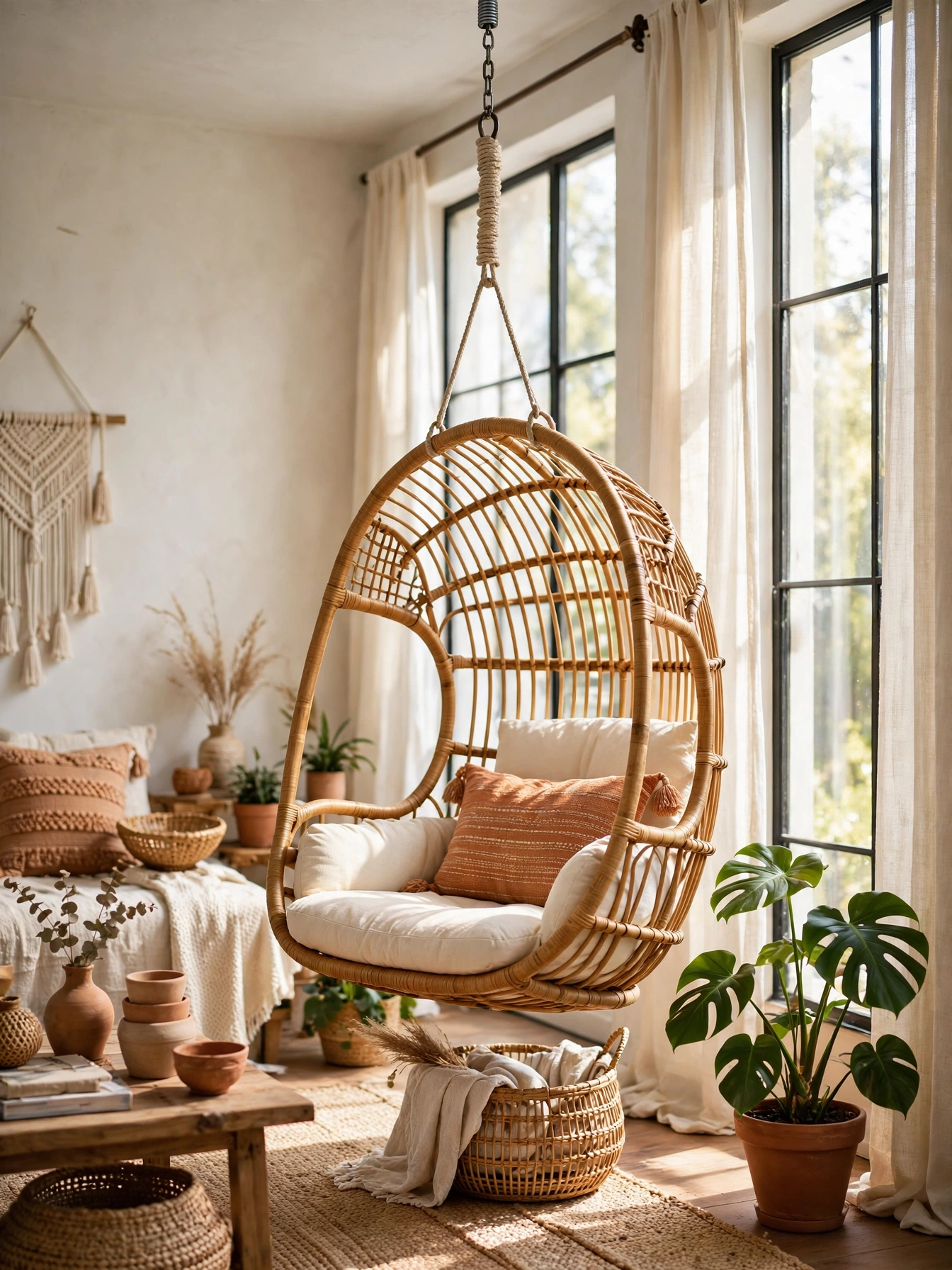
Rattan Hanging Chair

Why This Works:
- A floating chair adds sculptural drama no floor furniture can match.
- The open weave keeps sightlines clear, so small rooms stay airy.
- It creates an instant reading nook without building anything.
- Natural rattan introduces the organic texture boho rooms need.
Hang the chair only from a solid ceiling joist or a rated beam, never from drywall alone, using a heavy-duty swivel mount rated for at least 300 pounds even though most chairs list a 250-pound limit. Leave 30 inches of clear swing space in every direction and hang the seat 18 to 20 inches off the floor for easy sitting. Quality rattan hanging chairs run $150 to $350, while artisan-made versions reach $600 or more. Avoid hanging from a single toggle bolt in drywall, because the dynamic load of swinging can pull it free, and skip outdoor-grade resin versions indoors if you want the real natural look, since plastic reads flat up close.
Corner dead zones and bright window bays suit this idea, since the chair turns wasted space into a destination. The catch is commitment: the ceiling mount leaves a permanent anchor point. Against a $500 accent armchair, a hanging chair costs less and delivers far more personality. Check your ceiling structure with a stud finder across two joist bays before buying.
Pro Tip: Add a 6-foot cotton rope extension if your ceilings run 9 feet or higher, because chairs hung too high force an undignified climb and too low drag on the rug.
Clay Pot Clusters
Why This Works:
- Handmade pots carry fingerprints of the maker, which mass decor cannot fake.
- Grouped in odd numbers, they form a vignette that anchors empty corners.
- Unglazed clay absorbs light softly instead of reflecting it harshly.
- The whole cluster costs less than one framed print.
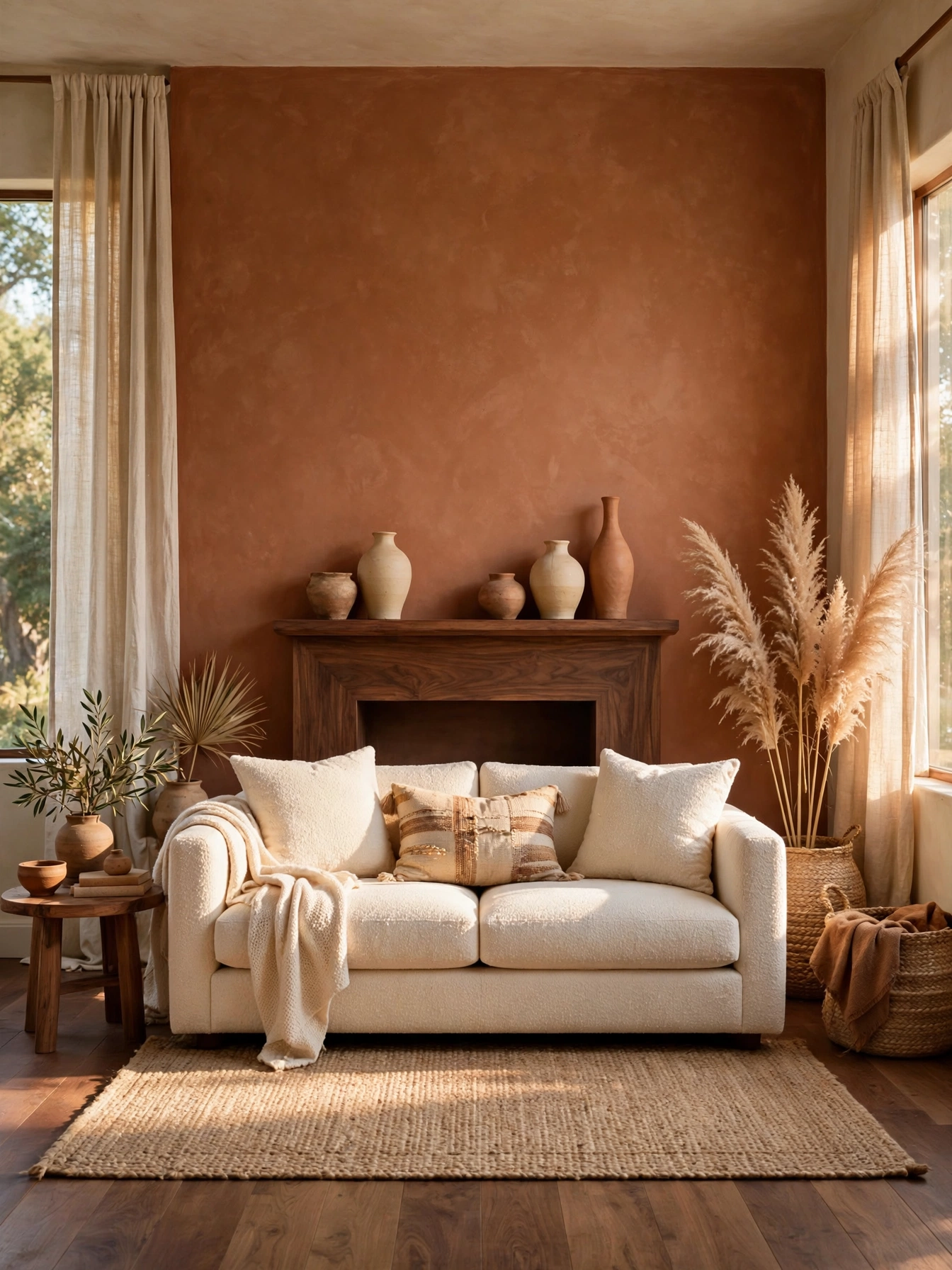
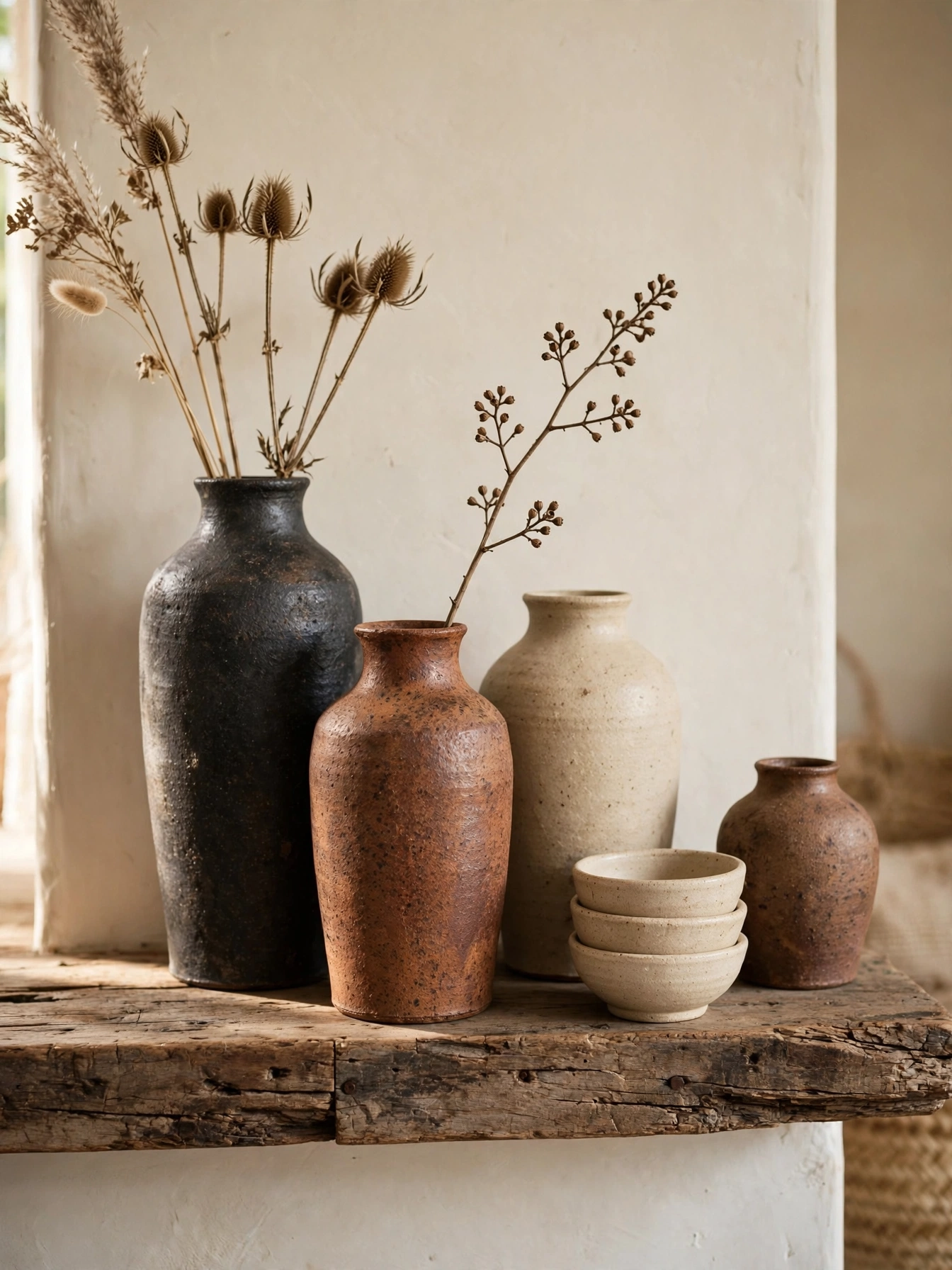
Build the cluster in threes or fives, varying heights from 6 inches to 24 inches so the eye moves through the group. Artisan terracotta pots run $20 to $60 each at markets, while garden-center basics cost $8 to $20 and age beautifully with a season outdoors. Group them within a 3-foot footprint so the cluster reads as one composition, and place the tallest piece at the back. Avoid single pots scattered around a room, because lone vessels look like leftovers rather than styling, and skip glazed bright colors if your palette stays earthy, since one glossy turquoise pot breaks the spell.
Empty fireplace hearths and bare corners suit this idea perfectly. A real downside is fragility: terracotta chips if knocked, so keep clusters away from play zones. Relative to a $300 floor vase, five $30 pots deliver richer texture for half the price. Fill one tall pot with dried stems for height without the watering.
Pro Tip: Seal the inside of unglazed pots with a clear matte sealer if you plant directly in them, because raw clay wicks moisture onto wood floors within days.
Jute Layered Rugs

Why This Works:
- Layering adds the collected-over-time feel that defines boho style.
- The jute base extends coverage cheaply under a smaller statement rug.
- Natural fiber underfoot feels grounding and looks expensive.
- Two rugs define zones in open-plan rooms without walls.
Start with an 8 by 10 foot jute base at $150 to $350, then layer a 5 by 8 foot patterned rug on top, leaving 12 to 18 inches of jute visible as a border on all sides. Use a rug pad under the base layer only, since double pads create a spongy trip hazard, and choose a pad 2 inches smaller than the rug on every side. Vacuum jute on suction-only mode, because beater bars shred natural fibers, and blot spills immediately, since jute stains permanently once liquid soaks in. Avoid layering in narrow walkways under 4 feet wide, because the stacked edges catch feet, and skip jute if your pets scratch, since claws unravel braided fibers fast.
Large open living rooms suit this idea, since layered rugs anchor floating furniture. The main risk is cleaning: crumbs hide between layers, so shake them out monthly. In contrast to one large patterned rug at $800 or more, the jute-plus-kilim combo costs half and looks more layered. Rotate the top rug 180 degrees twice a year for even wear.
Pro Tip: Offset the top rug 6 inches off-center rather than perfectly centered, because the casual angle is what makes layered rugs look styled instead of staged.
Woven Seagrass Baskets

Why This Works:
- Baskets hide clutter inside beautiful texture instead of plastic bins.
- Seagrass adds the woven layer every boho room needs.
- They work as planters, blanket storage, and side tables in one.
- At $20 to $60 each, they are the cheapest texture upgrade available.
Choose baskets 16 to 24 inches tall for blanket storage, since shorter ones spill throws onto the floor, and line plant baskets with a plastic saucer to protect floors from water. Large seagrass baskets run $30 to $70, medium $20 to $40, and lidded versions cost about 30 percent more but hide contents completely. Group two or three in varied heights within a 4-foot zone for a styled look. Avoid placing seagrass in damp spots, because the fibers mold in persistent humidity, and skip baskets with sharp protruding weavers near kids, since the stiff ends scratch.
Clutter-prone households suit this idea, since every basket earns its keep. The weak point is dust: woven textures trap it, so shake baskets outdoors quarterly. Stacked against a $200 storage ottoman, three baskets cost half and move anywhere. The Spruce recommends natural fiber storage for living rooms because it breathes, unlike sealed plastic that traps odors.
Pro Tip: Slip a tall basket over an ugly plastic plant pot, and the $25 basket instantly upgrades a $15 plant into a $100-looking statement.
Earthy Linen Slipcovers

Why This Works:
- Washed linen in clay and oatmeal tones softens any stiff sofa.
- The wrinkled texture is the point, so perfectionists can relax.
- Removable covers survive pets, kids, and red wine.
- Earthy neutrals let artisan accessories take the spotlight.
Ready-made linen slipcovers cost $150 to $300 per sofa and $80 to $150 per chair, while custom workrooms charge $500 to $1,000 per sofa for a tailored fit. Measure seat width, seat depth, back height, and arm height before ordering, and choose OEKO-TEX certified linen for verified low chemical content. Wash covers in cold water and line dry to prevent the 3 to 5 percent shrinkage linen suffers in hot dryers. Avoid dark clay dyes on white pets’ favorite seats, because the fading shows, and skip slipcovers on sleeper sofas, since the mechanism fights the fabric every time it opens.
Busy family rooms suit this idea, since the whole look goes in the wash. One thing to watch is the casual read: linen never looks formal, so skip it in traditional formal rooms. Put beside reupholstery at $1,200 or more per sofa, slipcovers cost one-fifth and install in under an hour. HGTV designers often recommend slipcovers as the fastest room transformation for the money.
Pro Tip: Tuck a 12-inch strip of non-slip rug pad between the seat cushion and the cover to stop the number one slipcover complaint, which is constant readjusting.
Macrame Wall Hanging
Why This Works:
- Hand-knotted texture fills large walls more warmly than flat art.
- The soft cotton absorbs sound, cutting echo in hard-floored rooms.
- Every piece is one of a kind, which is the heart of boho style.
- It hangs in minutes with a single nail or hook.
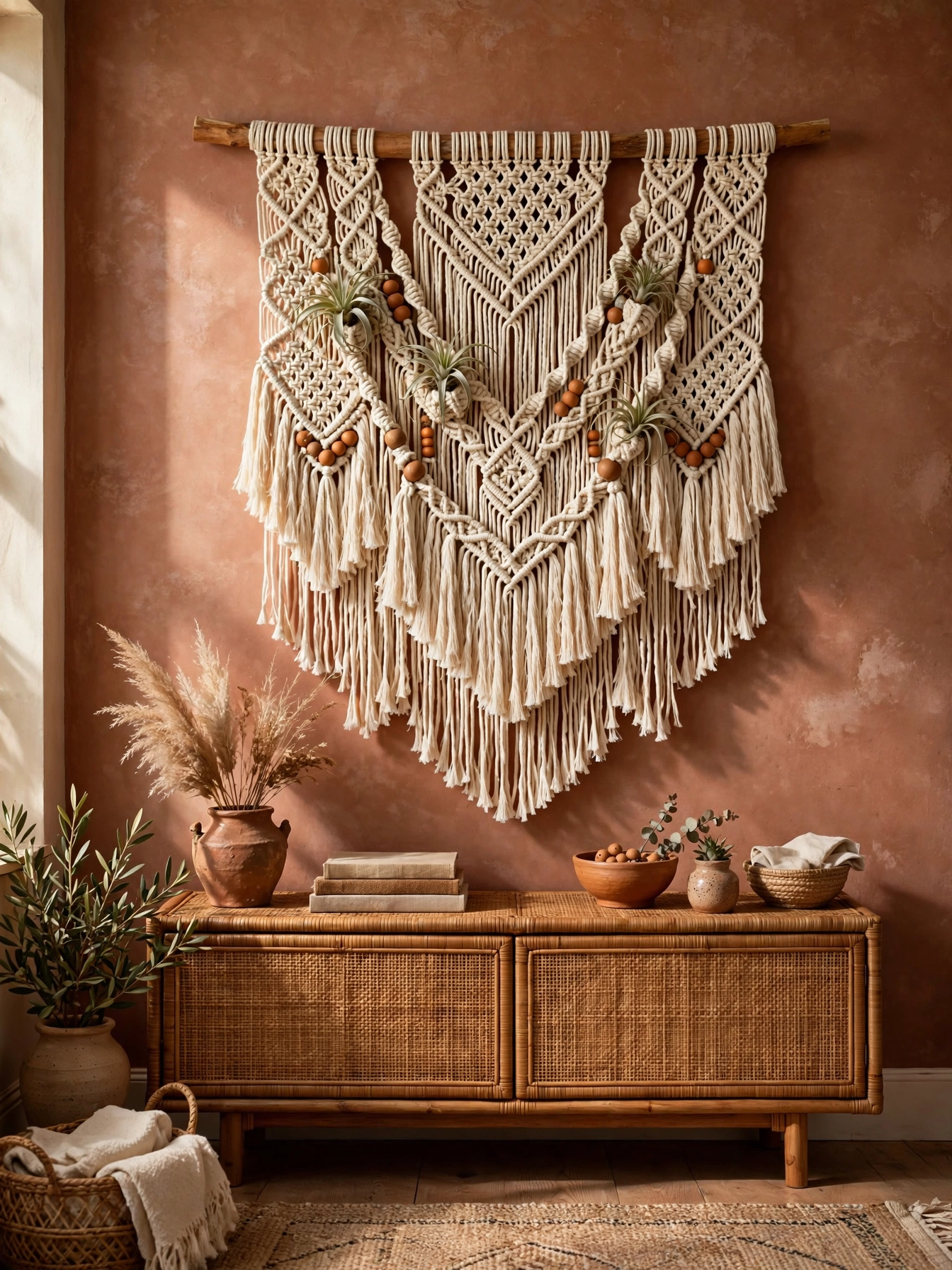
Size the hanging at two-thirds the width of the furniture below it, so a 48-inch console gets a 32-inch wide piece, and hang the top 6 to 8 inches above the furniture. Handmade macrame runs $60 to $250 depending on size and knot complexity, while DIY kits cost $25 to $50 plus 6 to 10 hours of knotting. Use 4 to 5mm cotton cord for wall pieces, since thinner cord looks stringy at large scale. Avoid hanging macrame in kitchens, because cooking grease coats the fibers permanently, and skip tiny 12-inch pieces alone on big walls, since they disappear past 10 feet of viewing distance.
Blank walls above consoles and beds suit this idea. A genuine concern is dusting: vacuum with a brush attachment twice a year. When measured against a $400 textile art piece from a gallery, artisan macrame costs half and carries the handmade story boho rooms celebrate. Steam the fringe once after hanging to release packing creases.
Pro Tip: Comb the fringe with a wide-tooth comb and trim it into a soft V shape, which takes a good macrame piece from homemade-looking to gallery-worthy.
Textured Earthy Boho Living Room Ideas
Why This Works:
- Boho style lives or dies on texture, and this is the fastest way in.
- Mixing wool, mudcloth, and kilim keeps the eye moving happily.
- Textiles cost far less than furniture for the same visual impact.
- Swapping one throw changes the whole mood in minutes.
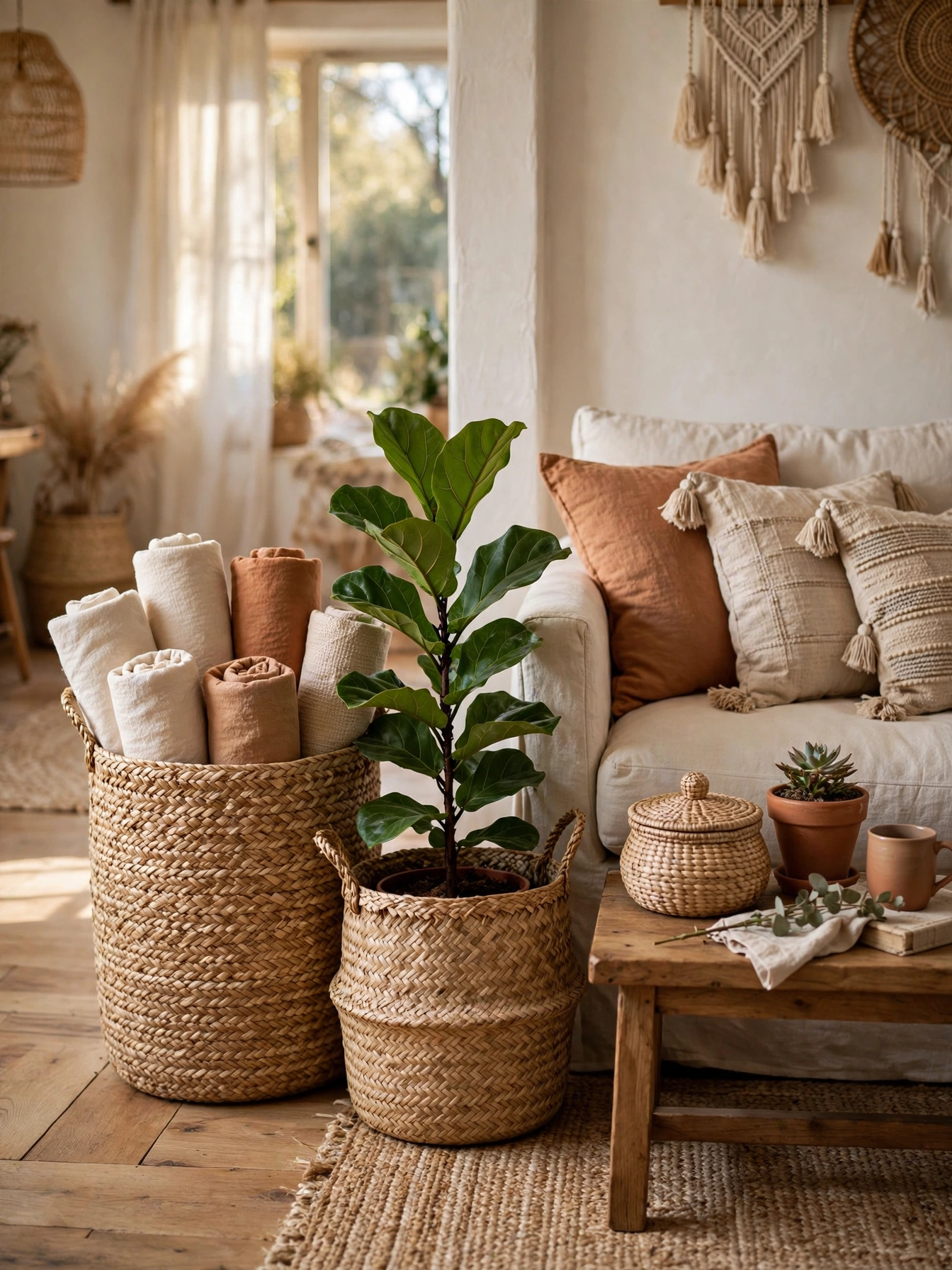
Layer five to seven pillows on a standard 84-inch sofa: two 24-inch squares at the back, two 20-inch in the middle, and one 14 by 24 inch lumbar in front, buying inserts 2 inches larger than each cover. Cap the pattern mix at three, such as mudcloth, kilim, and one solid, and keep every color inside the rust-ochre-cream family so the mix coheres. Budget $25 to $70 per handmade pillow cover. Avoid more than one shaggy texture per vignette, because competing high-pile fabrics look messy rather than lush, and skip polyester “boho” prints, since the plastic sheen betrays the earthy goal.
Plain sofas in neutral rooms suit this idea best. The downside is upkeep: seven pillows need daily plumping. Set against buying a patterned sofa at $1,500 or more, $300 of textiles delivers the same boho hit. Start with pillows, then add throws once the pillow story works.
Pro Tip: Fold throws in thirds lengthwise before draping them, because a neat fold reads intentional while a tossed throw reads messy in photos.
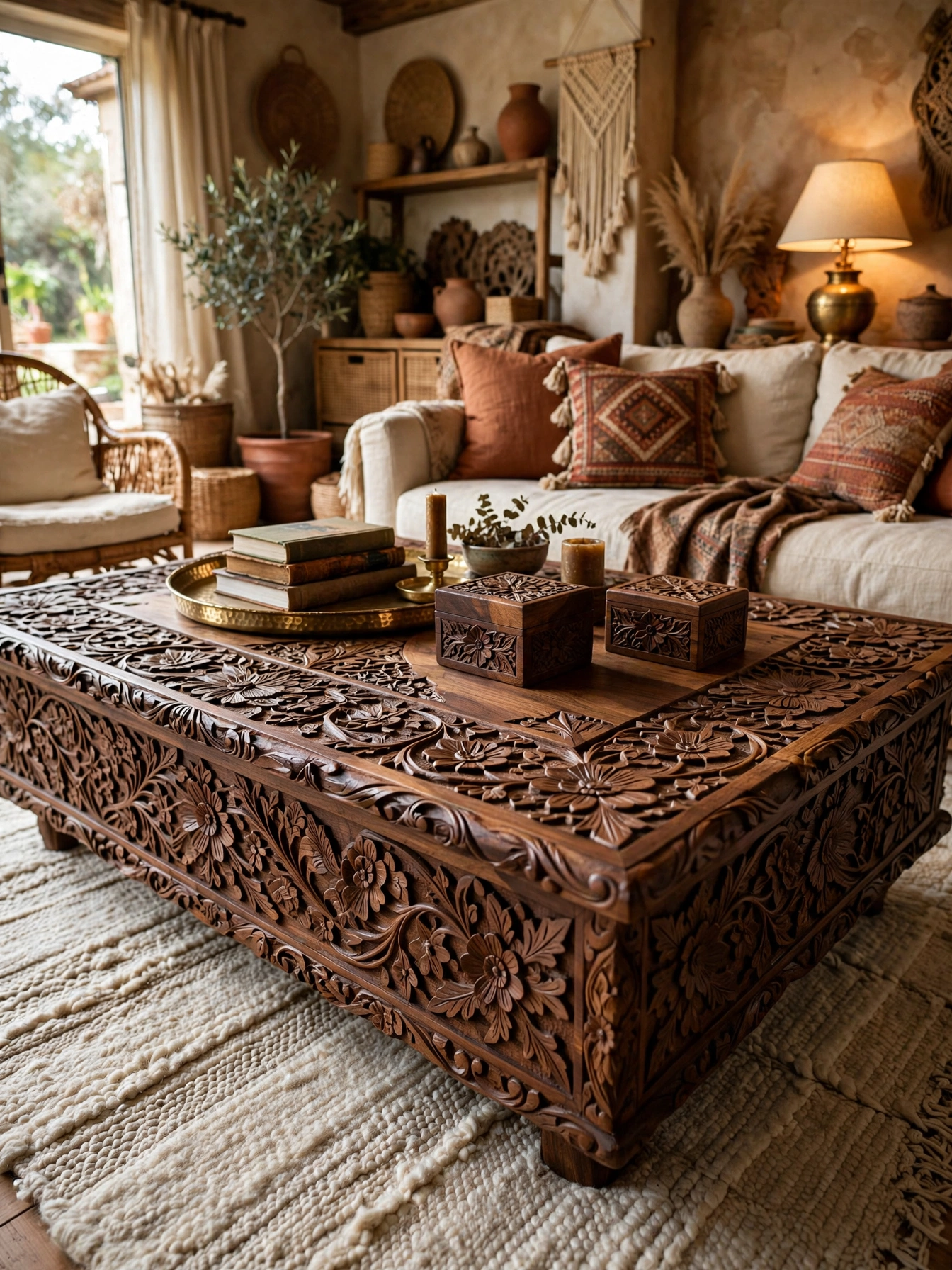
Carved Wood Coffee Table

Why This Works:
- A carved table is functional sculpture, the anchor of a boho room.
- Hand carving shows tool marks that make the piece feel alive.
- Dark wood grounds all the light textiles around it.
- It doubles as extra seating in a pinch during gatherings.
Size the table at two-thirds the sofa length, so an 84-inch sofa pairs with a 48 to 56 inch table, and keep the height within 2 inches of the seat height, usually 16 to 18 inches. Hand-carved mango or acacia tables run $300 to $800, while genuine antique carved pieces reach $1,500 or more. Check that carvings are sanded smooth on top surfaces, because rough carving snags sleeves and catches crumbs. Avoid glass tops on carved tables, since the glass hides the very carving you paid for, and skip placing them on thick shag rugs, because the legs sink and wobble.
Rooms with plain upholstery suit this idea, since the table supplies the pattern. The caveat is weight: solid carved tables can exceed 80 pounds, so rearranging is a two-person job. Versus a $200 flat-pack table, the carved version costs triple but becomes the heirloom piece guests ask about. Oil the wood twice a year to keep carvings from drying out.
Pro Tip: Style only half the table surface and leave the other half visibly carved, because covering the whole top wastes the detail that justifies the price.
Boho Floor Cushions
Why This Works:
- Floor cushions add seats without adding furniture bulk.
- The low profile keeps small rooms feeling open and airy.
- They stack in a corner when you need the floor back.
- Kids treat them as the best seats in the house.
Choose cushions 24 to 36 inches square and at least 6 inches thick, since thinner ones bottom out on hard floors within weeks. Quality floor cushions run $60 to $150 each, and a set of four around a 30-inch tray table seats a crowd for under $400. Look for removable washable covers, because floor-level fabric collects everything. Avoid placing them directly on damp concrete or near exterior doors, since ground moisture breeds mildew in the filling, and skip them as primary seating for elderly guests, because rising from floor height strains knees.
Small apartments and casual family rooms suit this idea. One honest drawback is formality: floor seating never suits dress-up entertaining. Against a $600 loveseat, four cushions cost less and store in one closet. Rotate which cushion takes the favorite spot, since compression evens out with rotation.
Pro Tip: Place a 2-inch foam topper inside a flat cushion cover to revive a tired cushion for $20 instead of replacing the whole $100 piece.
Artisan Throw Blankets
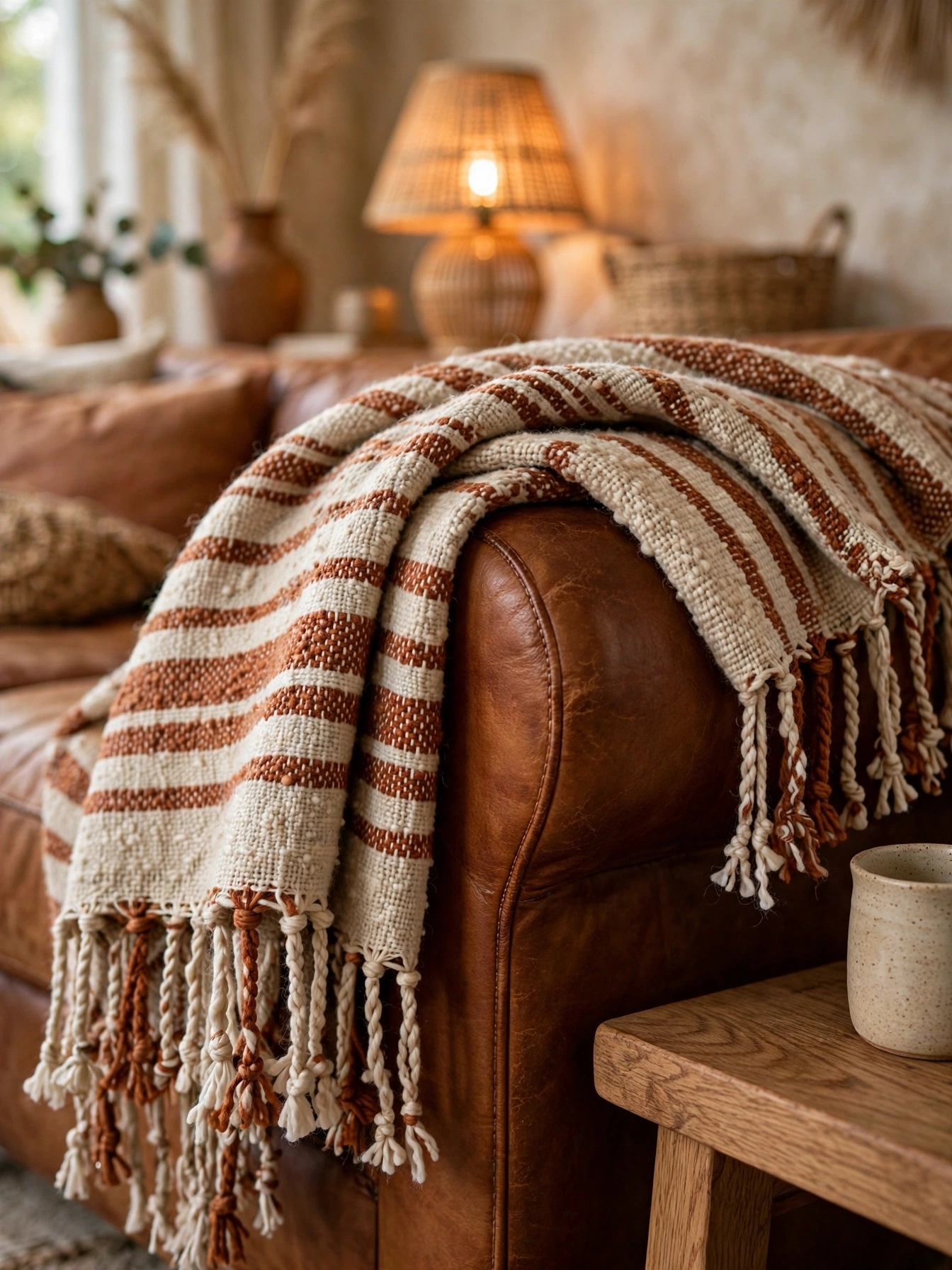
Why This Works:
- Handwoven throws carry slight irregularities that signal real craft.
- Wool regulates temperature, warming in winter and breathing in summer.
- Draped over furniture, they add color without any commitment.
- They make perfect meaningful gifts that get used daily.
Look for throws 50 by 60 inches or larger, since smaller ones barely cover a lap, and check for 100 percent wool or a wool-cotton blend rather than acrylic, which pills within months. Artisan handwoven throws run $80 to $200, while fair-trade certified pieces reach $250. Hand wash in cold water or dry clean only, because machine agitation felts wool permanently. Avoid draping wool throws on white bouclé in shedding season, since dark fibers transfer, and skip “handwoven-look” polyester at any price, because the plastic sheen and static defeat the purpose.
Leather and linen sofas suit this idea, since the throw softens firm upholstery. The practical snag is care: wool demands more attention than fleece. Relative to a $40 fast-fashion throw that pills by spring, an $120 artisan throw lasts a decade. Buy from artisan markets or fair-trade shops where the maker story is verifiable.
Pro Tip: Fold the throw in thirds and drape it over one sofa arm only, because symmetrical throws on both arms look staged while a single casual drape looks lived-in.
Pampas Grass Arrangement

Why This Works:
- Dried plumes add 4 feet of soft height for about $30.
- The feathery texture contrasts beautifully with hard furniture edges.
- Zero watering or light needs make them the easiest statement plant.
- Backlit plumes glow like a natural lamp in afternoon sun.
Buy 15 to 25 stems for a full arrangement in a 20 to 24 inch floor vase, trimming stems so plumes sit 12 to 18 inches above the vase rim. Dried pampas bundles run $20 to $40, and a good ceramic floor vase costs $40 to $90. Spray the plumes lightly with hairspray on arrival to cut shedding by half, and keep them away from open flames, since dried grass ignites fast. Avoid placing pampas in humid bathrooms, because moisture mats the plumes within weeks, and skip dyed neon versions, since the unnatural colors cheapen the organic look.
Empty corners and tall bare walls suit this idea. The hidden cost is lifespan: plumes look best for 12 to 18 months before shedding thins them. In contrast to a $150 fiddle leaf fig that needs constant care, pampas costs one-fifth and never drops a leaf. Shake the arrangement outdoors monthly to release dust.
Pro Tip: Place the vase where low afternoon sun backlights the plumes, because front-lit pampas looks flat while backlit plumes turn translucent gold.
Leather Pouf Seating
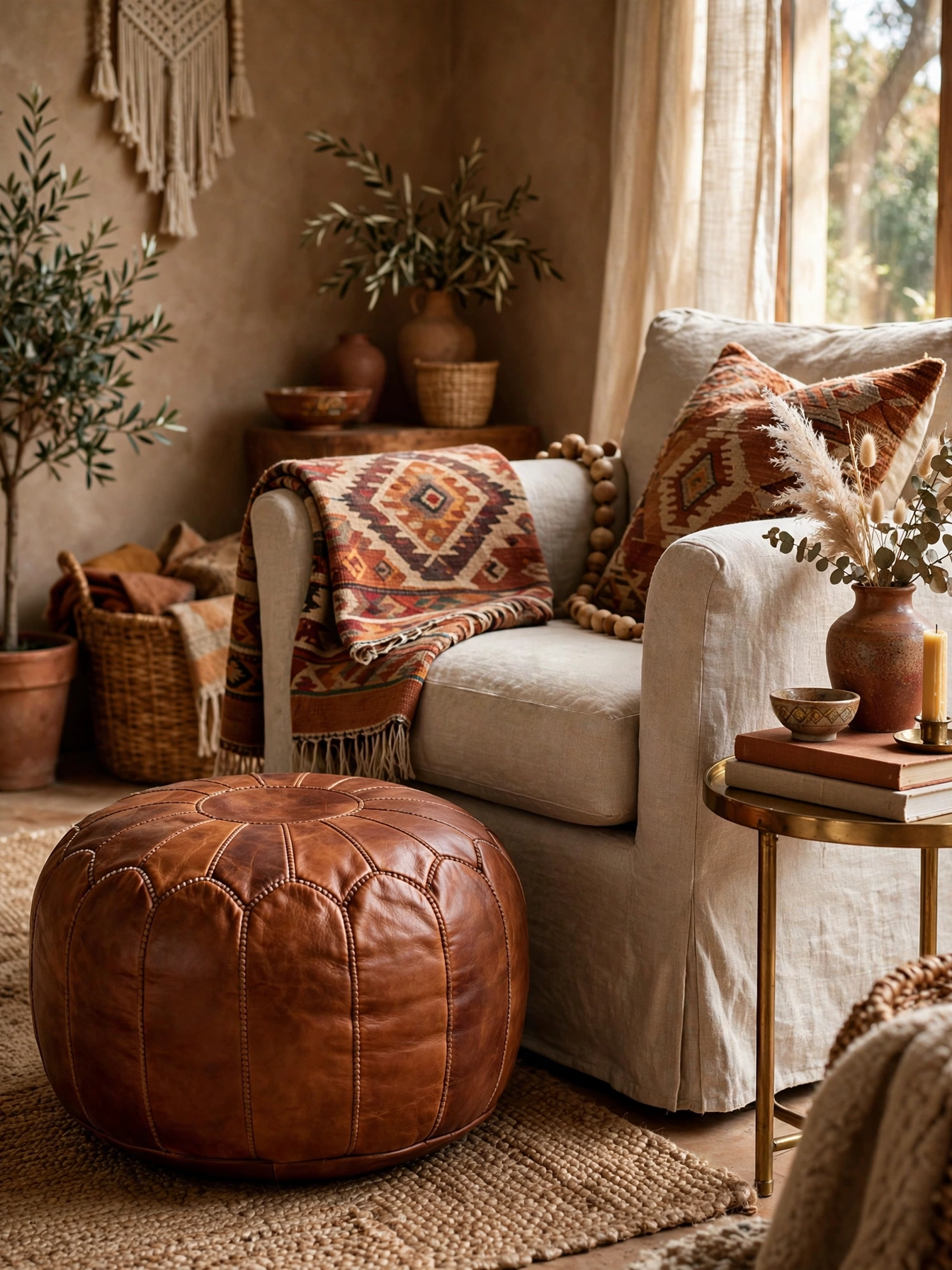
Why This Works:
- Leather adds the rich patina that only improves with age.
- A pouf serves as footrest, extra seat, and side table in one.
- Cognac tones bridge the gap between wood furniture and textiles.
- At 18 inches wide, it tucks anywhere a stool would go.
Choose poufs 18 to 22 inches in diameter and 14 to 16 inches high, the standard that works as both footrest and seat, and verify genuine leather rather than bonded leather, which peels within two years. Moroccan leather poufs run $80 to $180 handmade, while machine-made versions cost $50 to $100. Stuff firmly with shredded foam, refilling yearly as it compresses about 20 percent. Avoid placing leather poufs in direct sun, because UV dries and cracks the hide within a year, and skip white or pale leather in homes with denim wearers, since indigo transfers permanently.
Reading corners and sofa ends suit this idea. The compromise here is firmness: poufs never match a real ottoman for support. Stacked against a $300 leather ottoman, a $120 pouf delivers the material story for less and moves room to room. Condition the leather twice a year to keep it supple.
Pro Tip: Top the pouf with a 16-inch round wood tray to convert it into a stable side table for drinks in seconds.
Handmade Ceramic Vases
Why This Works:
- Handmade ceramics show glaze variations that catch light beautifully.
- Earthy glazes tie together terracotta, wood, and textile tones.
- A mantel trio costs less than one piece of wall art.
- Slight imperfections are the aesthetic, so nothing ever looks wrong.
Arrange three to five vases from 8 to 16 inches tall on a 60-inch mantel, leaving at least 6 inches between pieces so each reads individually. Studio pottery vases run $40 to $120 each, while artisan market finds cost $25 to $60. Check that vases sit flat without rocking, since handmade bottoms sometimes warp, and use museum putty under each piece if you live with earthquakes or toddlers. Avoid filling every vase with stems, because empty vessels are part of the look, and skip dishwasher cleaning for handmade glazes, since harsh detergents dull reactive finishes.
Mantels, consoles, and open shelves suit this idea. One drawback is fragility: stoneware survives bumps but shatters on tile floors. Put beside mass-produced vases at $15 each, handmade pieces cost triple but carry visible human touch. Buy directly from potters at markets to get the best prices and stories.
Pro Tip: Put one stem in only the tallest vase and leave the rest empty, because a single stem looks deliberate while stems in every vase look like a flower shop.
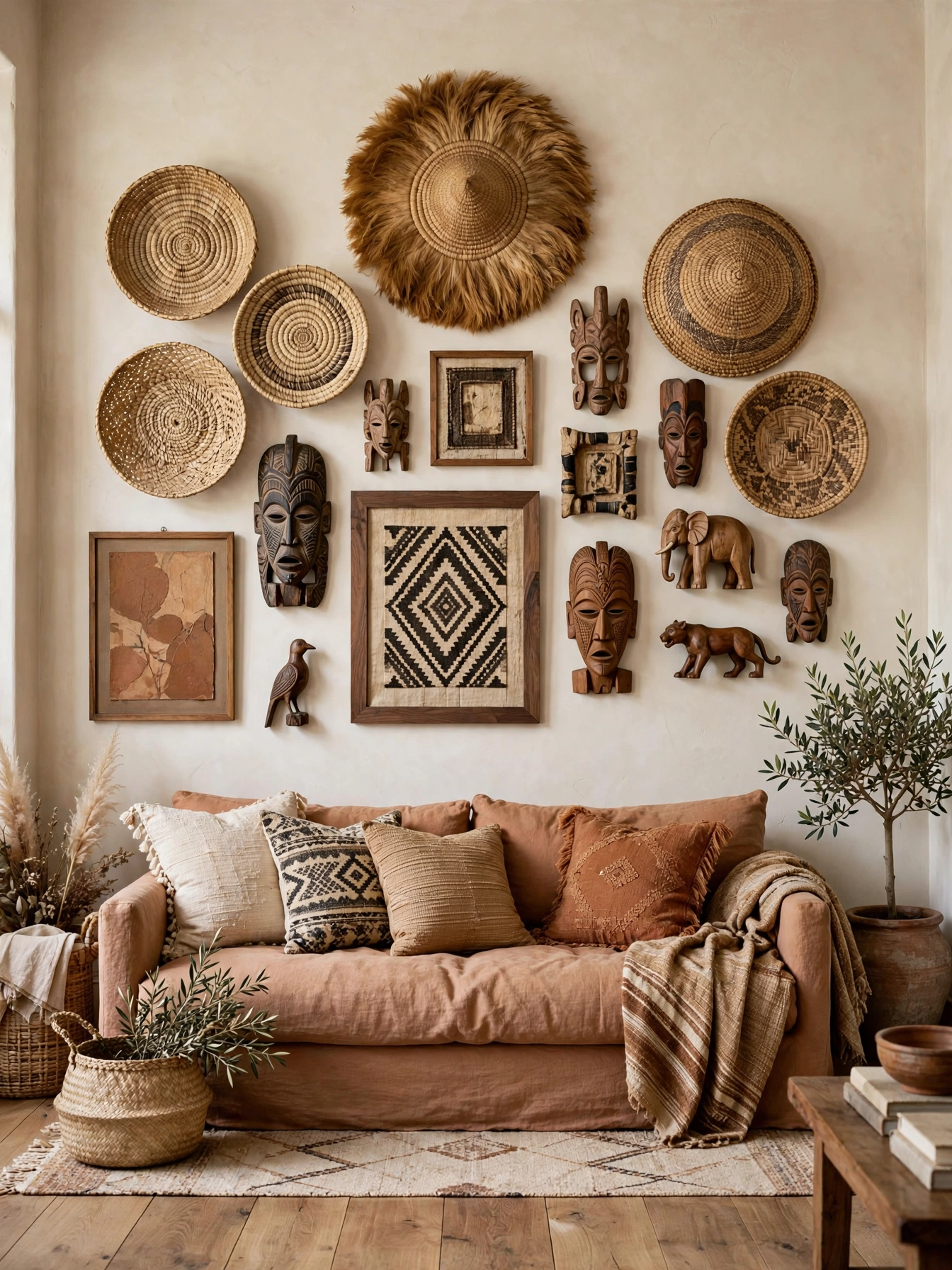
Earthy Boho Living Room Ideas With a Gallery Wall

Why This Works:
- Mixing baskets, carvings, and art breaks the flat framed-print formula.
- Three-dimensional pieces cast shadows that make walls feel alive.
- The collection tells your travel story better than any single artwork.
- Flat baskets hang with one nail and weigh almost nothing.
Plan the arrangement within a 7 by 5 foot zone above the sofa, keeping the center at 57 to 60 inches from the floor, the museum standard. Mix flat pieces like framed textiles with dimensional ones like 16 to 24 inch wall baskets, spacing everything 3 to 4 inches apart. Budget $20 to $50 per basket and $30 to $80 per carved piece, so a nine-piece wall runs $250 to $500. Anchor the composition with one large 30-inch piece slightly off-center. Avoid hanging heavy carvings on drywall anchors alone past 10 pounds, since they need stud mounting, and skip arranging without floor-planning first, because random nailing leaves a patchwork of holes.
Souvenir collectors and maximalists suit this idea. The catch is editing: collections grow, and walls fill. When measured against nine framed prints at similar cost, the mixed-material version delivers far more texture. Photograph the floor layout before hanging a single nail.
Pro Tip: Trace each piece on kraft paper, tape the papers to the wall, and live with the arrangement for 48 hours before committing to any nail.
Earthy Boho Living Layers
Why This Works:
- Layering is the master skill that turns separate purchases into one room.
- Every layer adds comfort, so the room invites lounging, not just looking.
- The collected look hides the fact that pieces came from different stores.
- Layers can be edited seasonally without buying anything new.
Build in this order: rug base first, then large furniture, then textiles, then plants, then small objects, checking the whole room from the doorway after each layer. Keep every color inside one warm family, terracotta through ochre to cream, and limit patterns to three so the abundance stays coherent. A full layered refresh using existing furniture typically costs $400 to $900 in textiles and accessories. Avoid adding a new layer when the room feels done, because the difference between layered and cluttered is one piece too many, and skip buying everything in one shopping trip, since real collected rooms accumulate over months.
Whole-room refreshers suit this idea. A real downside is restraint: boho tempts overfilling. Set against a designer room makeover at $5,000 or more, self-layering costs one-tenth and reflects your taste better. Step back and squint: if no single item screams for attention, the layers are balanced.
Pro Tip: Remove three items from the room, live with it for a week, then bring back only the one you truly missed, which is the fastest editing method designers use.
Cane Webbing Cabinet
Why This Works:
- Cane webbing breathes visually, so storage pieces feel light, not bulky.
- The retro weave nods to 1970s design without full vintage commitment.
- It hides media equipment while letting remote signals pass through.
- Warm cane flatters every wood tone from oak to walnut.
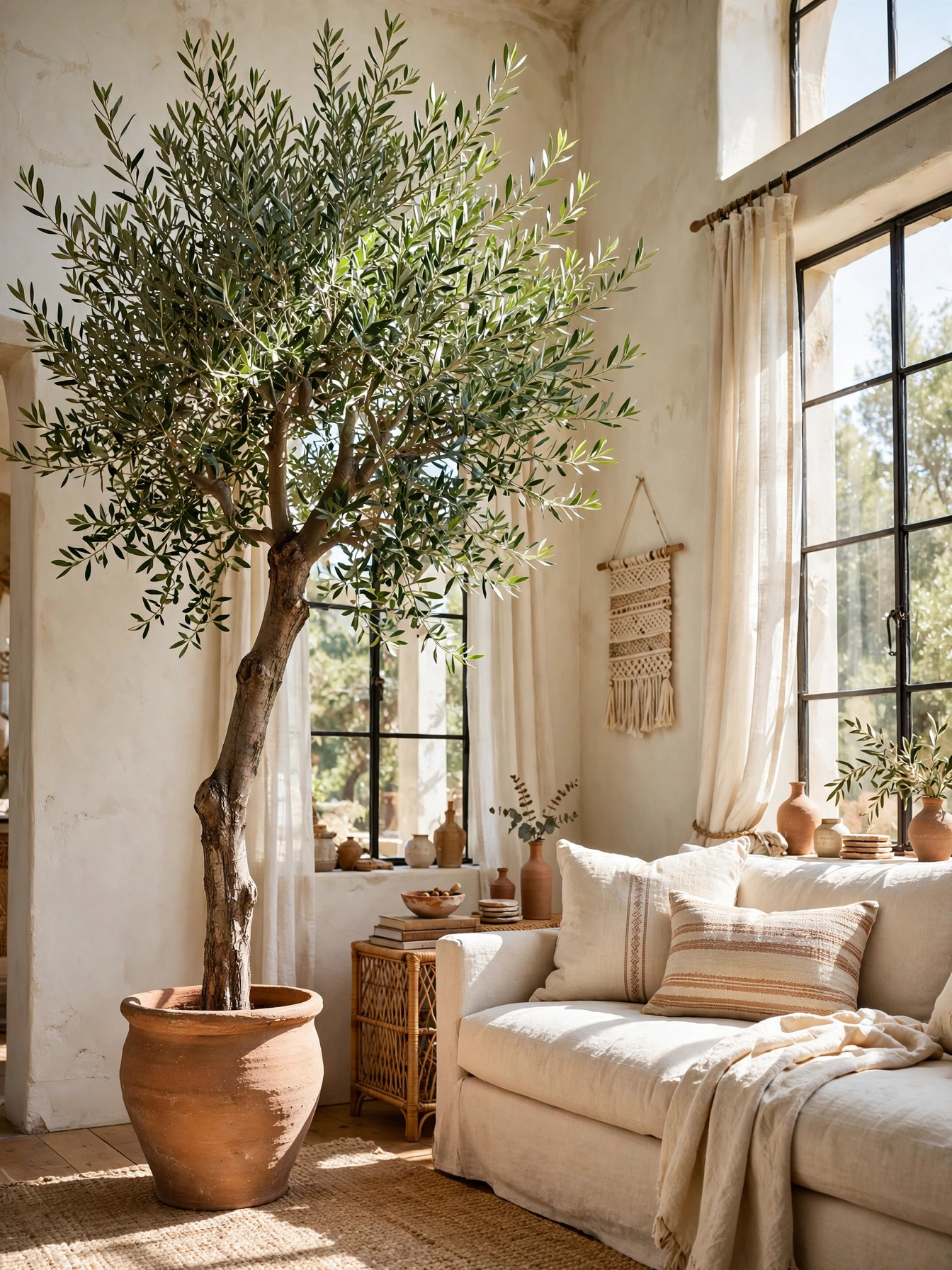
Look for credenzas 60 to 72 inches wide and 16 to 20 inches deep, the standard media-console scale, with genuine woven cane rather than printed imitation, which you can verify by feeling the texture from behind the panel. Quality cane credenzas run $400 to $1,200, while vintage finds cost $200 to $600 plus refinishing. Keep cane away from radiators and heating vents, because dry heat brittles the fibers and causes cracking within two seasons. Avoid placing heavy objects over 30 pounds on cane-front doors, since the panels flex, and skip spray-cleaning cane, because trapped moisture warps the weave.
Media walls and entry consoles suit this idea. The main risk is dusting the open weave, which needs a soft brush quarterly. Placing it beside a $300 flat-pack console, the cane version costs double but looks quadruple. Check door alignment in store, since cane panels magnify any warping.
Pro Tip: Wipe cane panels with a barely damp cloth twice a year, because light moisture keeps natural cane supple while soaking destroys it.
Warm Wood Beam Accents
Why This Works:
- Beams add architecture that makes even new builds feel storied.
- Faux beams deliver the look at a fraction of structural timber cost.
- Wood overhead warms the whole room like a visual blanket.
- They draw the eye up, making 8-foot ceilings feel intentional.
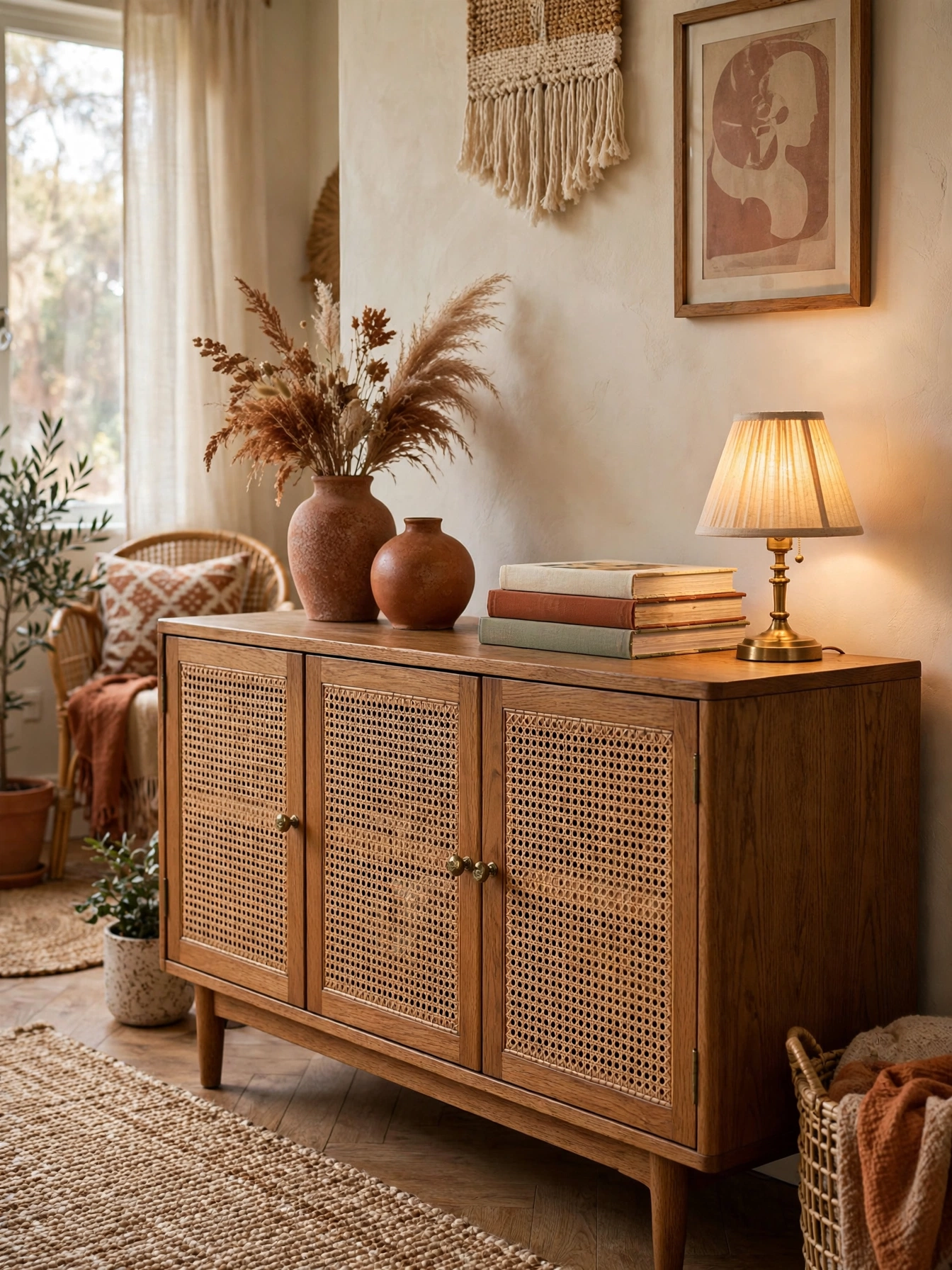
Faux wood beams cost $15 to $40 per linear foot installed, so a 14-foot room with three beams runs $600 to $1,700, versus $3,000 or more for real structural timber. Mount faux beams with construction adhesive plus screws into ceiling joists every 24 inches, since adhesive alone fails over time. Choose beam widths of 6 to 8 inches for standard rooms, because narrower beams look like trim and wider ones overwhelm. Avoid staining beams to match the floor exactly, since monochromatic wood flattens the room, and skip real reclaimed beams without checking for pests, because old barn wood can harbor powderpost beetles.
Plain drywall ceilings suit this idea best. The weak point is ceiling height: beams need at least 8-foot ceilings to avoid a looming feel. Contrasted with a full wood ceiling at triple the cost, three beams deliver the architectural hit for less. Stain samples on the actual beam material, since pine and cedar absorb color differently.
Pro Tip: Run beams parallel to the longest wall, because crosswise beams visually chop the room shorter while lengthwise beams stretch it.
Olive Tree in Terracotta
Why This Works:
- A living tree adds the one thing decor cannot fake: actual life.
- Silvery olive leaves complement terracotta and wood tones perfectly.
- Six feet of vertical green fills dead corners better than any furniture.
- The slender trunk keeps the footprint small for the height gained.
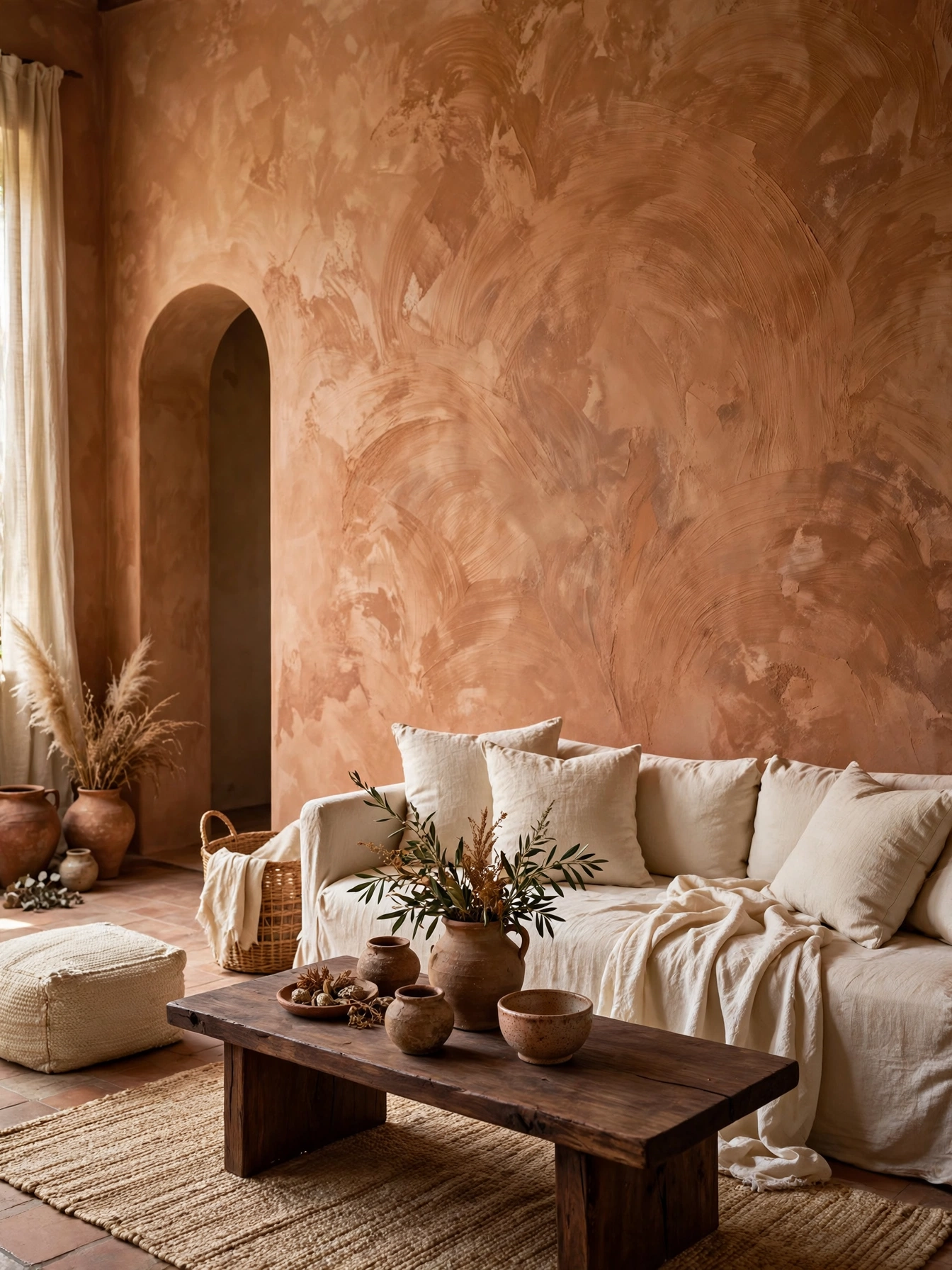
Buy a 5 to 6 foot olive tree for $80 to $200, and give it the brightest spot in the room, ideally within 3 feet of a south or west window delivering 6 or more hours of direct sun. Water deeply only when the top 2 inches of soil dry out, which usually means every 10 to 14 days indoors, and use a pot with drainage holes at least 16 inches wide. Rotate the tree a quarter turn monthly for even growth. Avoid placing olives near heating vents, because the dry blasts drop leaves within weeks, and skip misting the foliage, since olive trees prefer dry air and wet leaves invite scale insects.
Bright rooms with tall empty corners suit this idea. One thing to watch is light hunger: olives sulk and drop leaves in dim rooms. Weighed against a $150 faux tree, the real one costs similar but purifies air and grows. Houzz garden editors note that indoor olives thrive longest when owners resist overwatering, the number one killer.
Pro Tip: Prune the top 6 inches each spring to encourage bushier side growth, because unpruned indoor olives grow leggy and top-heavy within two years.
Textured Limewash Walls

Why This Works:
- Limewash creates cloud-like movement that flat paint cannot replicate.
- The mineral finish feels authentically old-world, not faux-finished.
- It hides minor wall imperfections inside its natural variation.
- The matte chalky surface absorbs light for incredible depth.
Apply limewash with a large block brush in random crisscross strokes over a primed wall, working in 4 by 4 foot sections and letting each coat dry 24 hours; two coats deliver full depth. A gallon covers 250 to 300 square feet, less than standard paint, and costs $60 to $120 per gallon for quality mineral paint. A 12 by 9 foot wall needs about one gallon for two coats. Avoid rolling limewash, because rollers erase the brush movement that makes it beautiful, and skip it in bathrooms without a mineral sealer, since raw limewash absorbs steam moisture.
Feature walls in living rooms and bedrooms suit this idea. A genuine concern is touch-ups: spot repairs show, so keep leftover paint for full-wall recoats. Measured against Venetian plaster at $10 or more per square foot installed, DIY limewash costs under $2 per square foot. Practice on a hidden closet wall first to learn the stroke rhythm.
Pro Tip: Work with a partner on walls wider than 10 feet, because limewash dries fast and visible stop-start lines appear if one person cannot keep a wet edge.
Earthy Boho Living Room Ideas With Woven Pendants
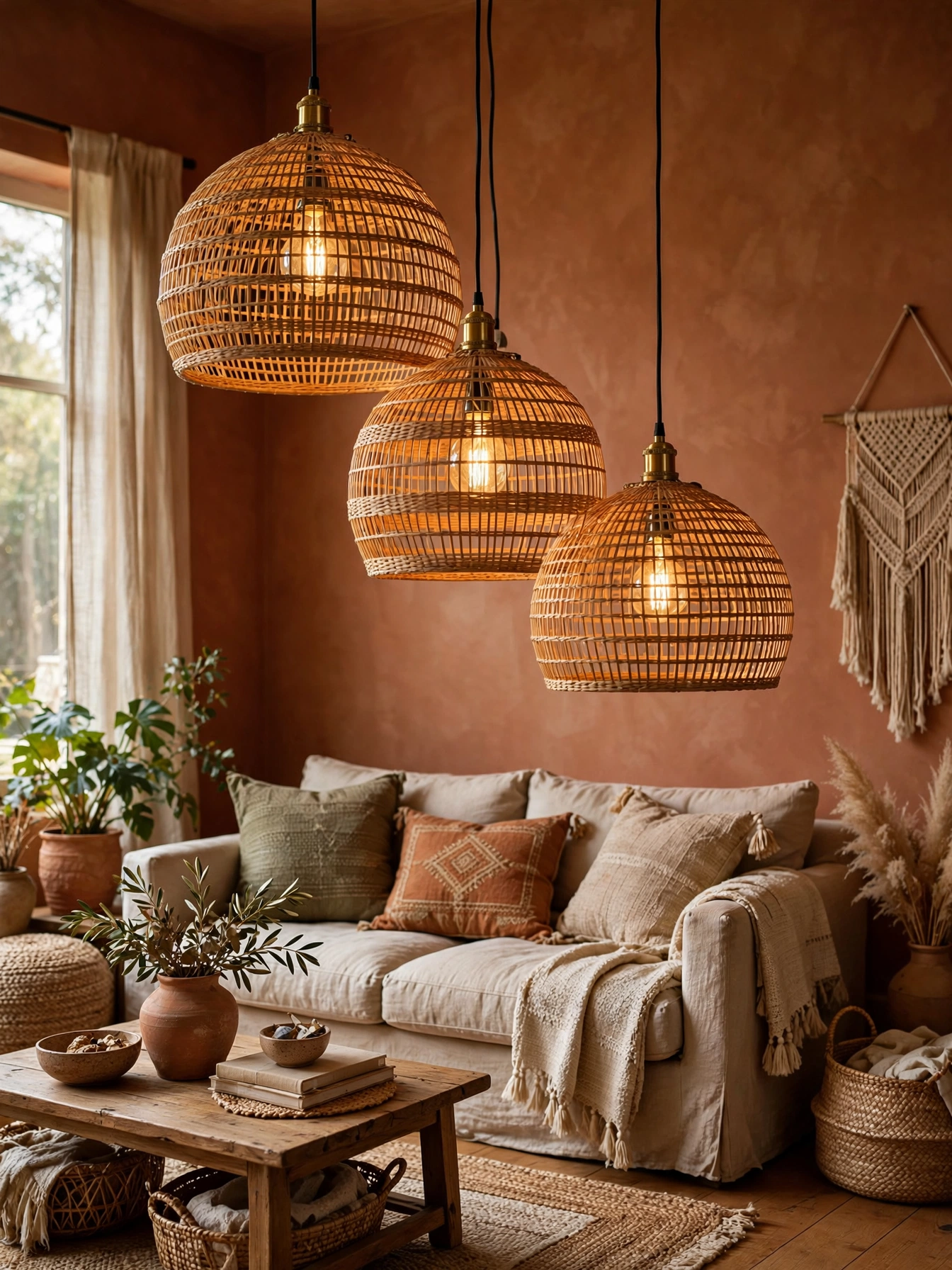
Why This Works:
- Woven shades sculpt light into patterned shadows on walls and ceilings.
- A pendant cluster defines the seating zone without any furniture.
- Natural fiber shades warm up cool LED bulbs beautifully.
- They hang from existing ceiling boxes with basic wiring skills.
Hang pendants 30 to 36 inches above a coffee table surface, or 7 feet from the floor in walk zones so tall guests clear them, and cluster three shades 12 to 18 inches apart for a designed grouping. Woven rattan pendants run $60 to $200 each, and dimmable 2700K LED bulbs cost $8 to $15 apiece. Hire a licensed electrician when adding new ceiling boxes or circuits, since fishing wire through finished ceilings and tying into panels is not DIY territory. Avoid open-weave shades directly over dining spots, because the patterned light strains reading eyes, and skip non-UL-listed imports, since uncertified wiring is a genuine fire risk.
Seating areas lacking overhead light suit this idea. The downside is dust: woven shades need quarterly dusting. Side by side with a $400 chandelier, three rattan pendants cost similar but suit boho rooms far better. Put them on a dimmer, because full brightness kills the mood these shades create.
Pro Tip: Stagger the three pendants at 6-inch height intervals rather than hanging them level, because the cascade looks custom while level rows look like a store display.
Layered Kilim Rugs
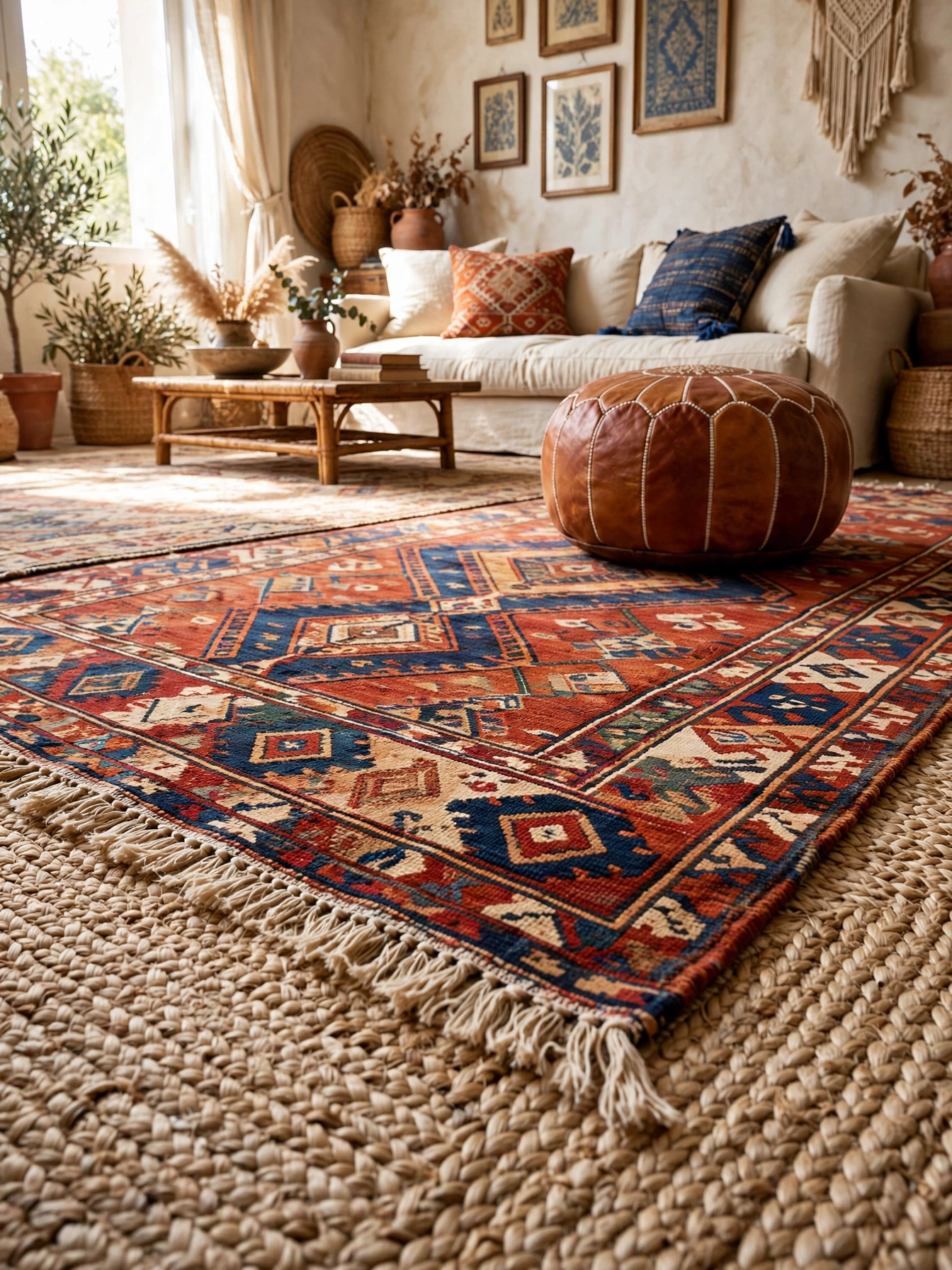
Why This Works:
- Kilim patterns deliver the color story of the whole room in one piece.
- Vintage-look weaves add history that new rugs cannot manufacture.
- Flatweave construction stays thin, so doors clear it easily.
- The busy pattern hides stains and wear for years.
Layer a 6 by 9 foot kilim over a 9 by 12 foot sisal or jute base, keeping 18 to 24 inches of the base visible as a frame. Authentic vintage kilims run $400 to $1,500 depending on age and size, while quality new kilim-look rugs cost $150 to $400. Check the back of any “vintage” rug: real hand-knotting shows the pattern clearly on the reverse, while printed fakes look blurry. Vacuum flatweave on suction-only to protect the fibers. Avoid placing kilims in entryways without a pad, because thin weaves wear through in high traffic within two years, and skip placing them under rolling office chairs, since casters shred flatweave.
Neutral rooms needing one bold pattern suit this idea. The caveat is authenticity cost: real vintage pieces price accordingly. Next to a Persian rug at triple the price, kilims deliver similar global character for less. Buy the best kilim you can afford, since it becomes the room’s heirloom.
Pro Tip: Flip the kilim to its back side for a faded vintage look when the front feels too bold, because the reverse of hand-knotted rugs reads one shade softer.
Global Textile Mix
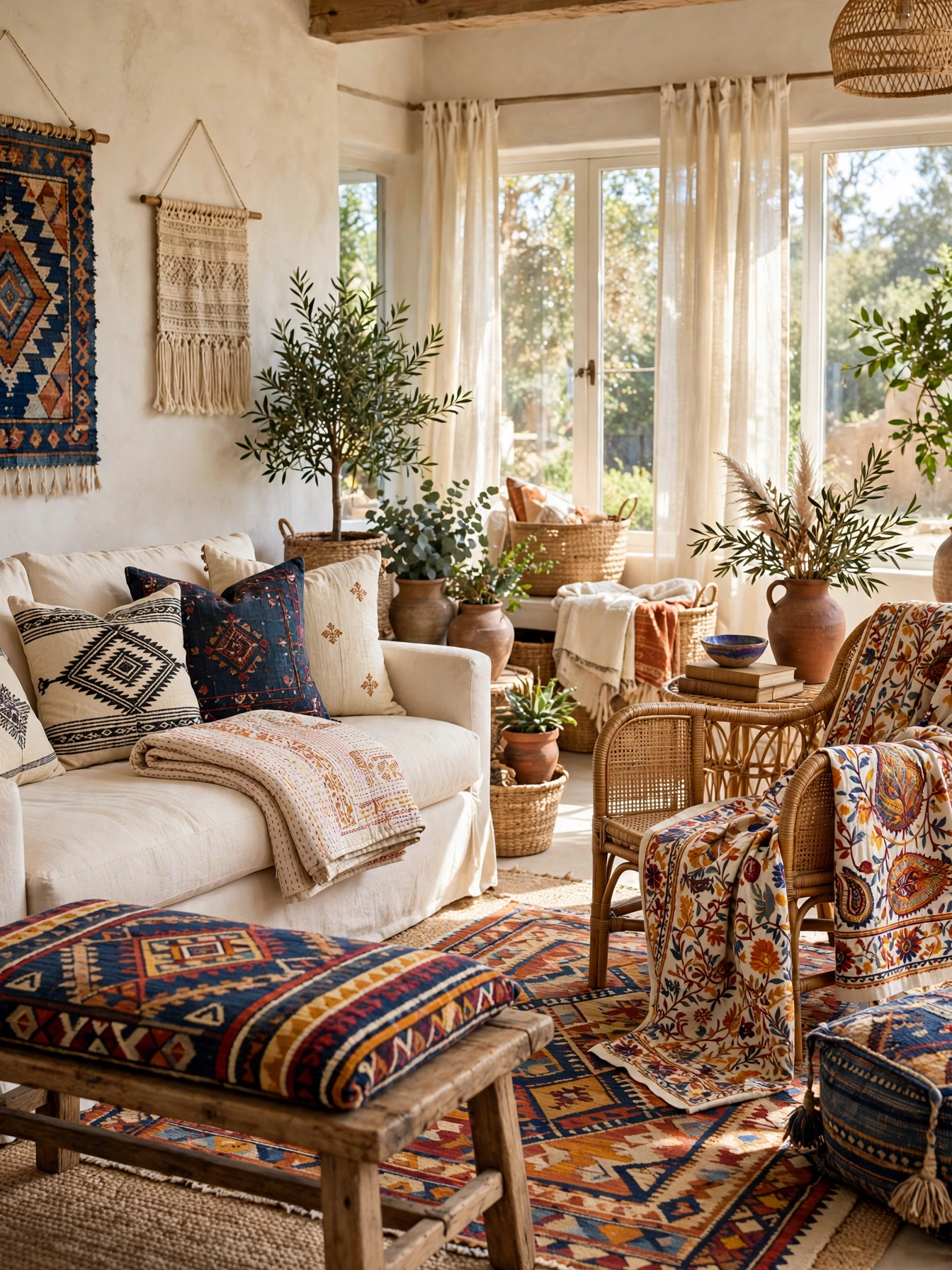
Why This Works:
- Mixing global textiles is the signature move of true boho style.
- Each textile carries a craft tradition that adds meaning to the room.
- The mix looks expensive because it cannot be bought as a set.
- Small pieces like lumbar pillows let you test the mix cheaply.
Unite the mix with one shared color, such as rust appearing in the mudcloth, kilim, and kantha, and keep the background 70 percent solid neutrals so the patterns breathe. Budget $30 to $80 per authentic textile piece at import shops, and verify handmade claims by checking for slight irregularities in the stitching. Layer no more than four global patterns in one sightline. Avoid mixing more than two cultural patterns with competing large scales, because dueling oversized prints fight rather than blend, and skip synthetic “ethnic print” polyester, since the sheen undermines the handmade story.
Confident decorators who love pattern suit this idea. One honest drawback is cohesion risk: without the shared color thread, the mix looks random. Holding it next to buying a matched set, the global mix costs similar but looks infinitely more personal. Start with two pieces sharing one color, then add a third.
Pro Tip: Photograph the mix in black and white, and if the patterns still read as distinct values of gray, the combination has enough contrast to work in color.
FAQs
What are the easiest earthy boho living room ideas for beginners?
Start with three textured pillows in rust and cream, one 5 by 8 foot jute rug, and a cluster of three clay pots. The Spruce suggests building boho rooms in layers, so add one element per week and stop when the room feels collected. Keep 30 percent of surfaces clear.
How do I keep a boho living room from looking cluttered?
Give every object a 6-inch breathing zone and cap open shelves at 70 percent full. Group small items on trays 18 inches wide so collections read as one piece. Edit ruthlessly: remove 5 items, live with it for a week, then return only what you missed.
Which earthy boho living room ideas work in small apartments?
Choose a hanging rattan chair instead of a bulky armchair to save 10 square feet of floor. Layer one 5 by 8 foot rug, use wall baskets for art, and pick a 48-inch cane credenza for storage. HGTV notes that vertical pieces make small rooms feel taller.
Is rattan furniture durable enough for daily use?
Quality rattan frames support 250 to 300 pounds and last 10 years indoors with basic care. Keep pieces 3 feet from heating vents, since dry heat brittles the fibers. Wipe monthly with a damp cloth and tighten the bindings yearly for the longest life.
What colors define the earthy boho palette?
Terracotta, ochre, clay, warm cream, and walnut brown form the core, with sage or indigo as accents. Keep walls in the lightest 20 percent of the palette and put the deepest tones in textiles. Test paint swatches at 10 a.m. and 6 p.m. before committing.
Conclusion
These earthy boho living room ideas share one secret: layer warm materials, keep every color in the clay family, and edit until nothing screams for attention. Those three habits build the collected-over-time look faster than any shopping spree. Small budgets love this style, since baskets, throws, and pots deliver the look for under $300. Start this weekend with a trio of clay pots in one corner and see how the room warms up. Follow HomelyCrafter on Pinterest for more ideas. Save this to your Pinterest boards so you can refer back to it!

Muhammad Israr is a home decor enthusiast and the writer behind Homely Crafter. He spends his days researching paint colors, layouts and budget-friendly styling ideas, then breaks them down into practical, easy-to-follow guides so you can decorate with confidence.