
Where would you go right now if you wanted one uninterrupted hour with a book? Most people picture the sofa, then remember the television, the foot traffic, and the phone charger glowing beside them. A real reading nook solves this by giving reading its own small territory, a place the rest of the house agrees to leave alone.
These cozy reading nooks are built from the spaces you already own: window seats, stair voids, closets, alcoves, and dead corners. Each of the 21 ideas below includes exact dimensions, lighting specs, and honest costs, with no chaise lounges and no generic armchair setups, just genuine nooks with walls, edges, and enclosure.
Pick the forgotten space nearest your favorite light, then build outward from the seat. A nook done well becomes the most fought-over square footage in the house.
Window Seat Cushions
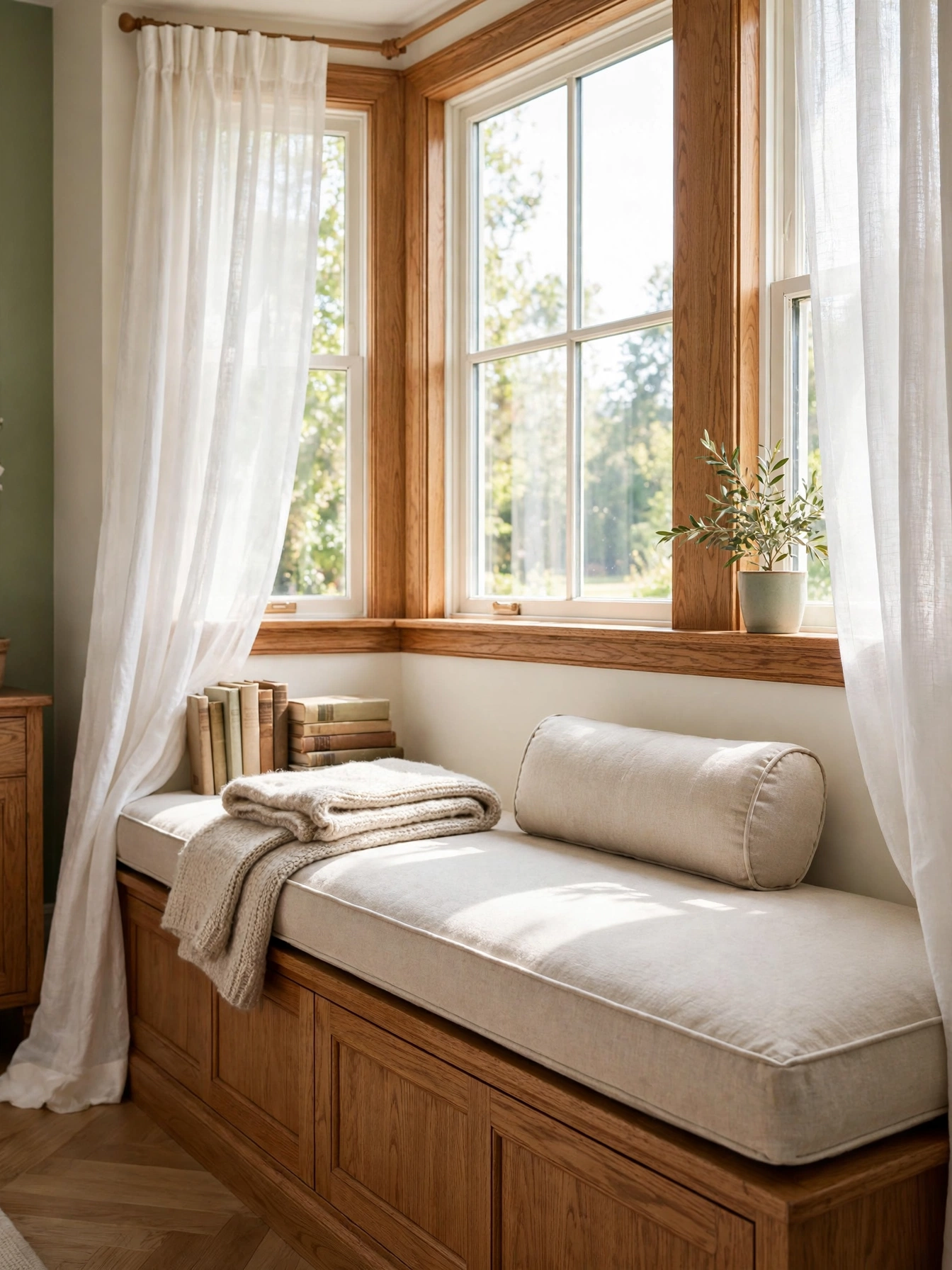
Why This Works:
- A window seat turns the brightest spot in the room into the default reading chair.
- A 4-inch foam cushion makes a hard bench comfortable for two-hour sessions.
- Built-in seating frees floor space that a chair and side table would consume.
- Daylight is the best reading light ever made, and it is free.
Size the cushion 18 to 22 inches deep to match standard window seat depths, with high-density foam at least 4 inches thick and a Dacron wrap for softness. A custom cushion in performance fabric runs 150 to 400 dollars; add 50 to 100 dollars for a washable cover with a hidden zipper. Leave 2 inches of clearance at the back for pillows, and choose a seat height of 18 to 20 inches including the cushion. If the bench lacks storage, add hinged lids to hide blankets and books inside.
Anyone with a deep sill or an existing bench under a bright window should start here. North-facing windows give the steadiest light without glare, while south glass needs a sheer to tame midday brightness. Versus a reading chair, the window seat costs less, seats two, and never blocks the view. The Spruce ranks window seats among the most requested built-ins in family homes.
Pro Tip: Add a 2-inch lumbar bolster along the window side; leaning against cold glass gets uncomfortable after 30 minutes, and the bolster fixes it for about 40 dollars.
Under-Stair Hideaways
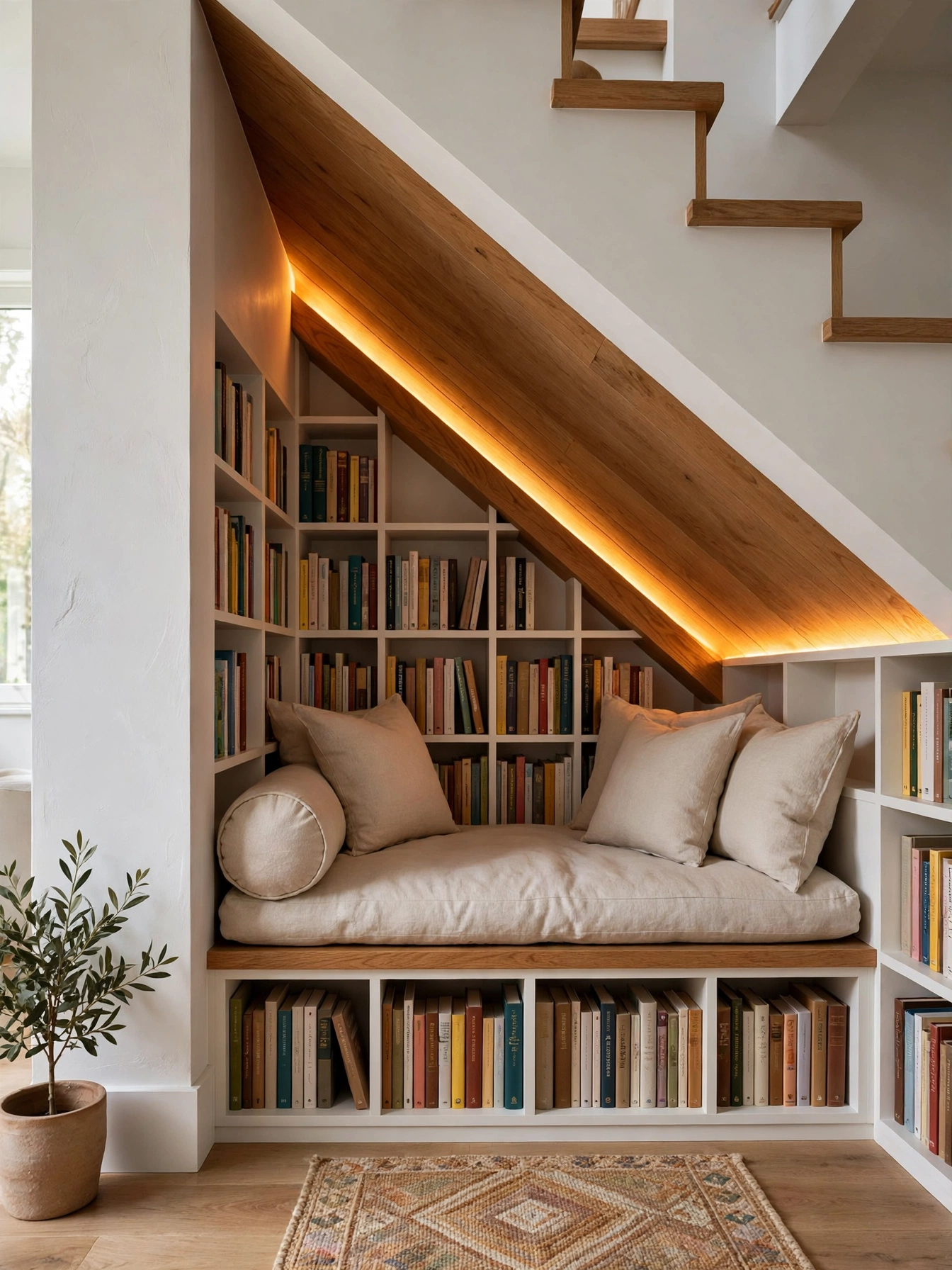
Why This Works:
- The triangular void under stairs is typically 30 to 50 square feet of wasted space.
- Sloped ceilings create natural enclosure, the defining feeling of a true nook.
- A built-in bench with book cubbies turns dead space into the home’s best seat.
- Kids and adults both gravitate to small enclosed spaces; the psychology is universal.
Plan a bench 18 inches deep and 20 inches high along the tallest wall of the void, leaving at least 48 inches of headroom at the seat for comfortable sitting. Line the back wall with 10-inch-deep cubbies for books, and run a 2700K LED strip under the stair slope for even light. A carpenter-built hideaway runs 1,500 to 4,000 dollars depending on finishes. When to hire a professional: consult a structural engineer, typically 300 to 600 dollars, before removing any framing under stairs, since stair stringers and supports often carry structural loads.
Homes with open risers or accessible understair closets are the prime candidates for this one. Low headroom under 42 inches limits the nook to kids or floor-cushion lounging only. Next to a freestanding reading chair, the hideaway feels like a secret room rather than furniture. Stash a small basket for the current book stack so the cubbies stay curated.
Pro Tip: Paint the inside of the nook one shade darker than the room; the contrast deepens the sense of enclosure and hides scuffs from shoes and bags.
Closet Reading Conversions
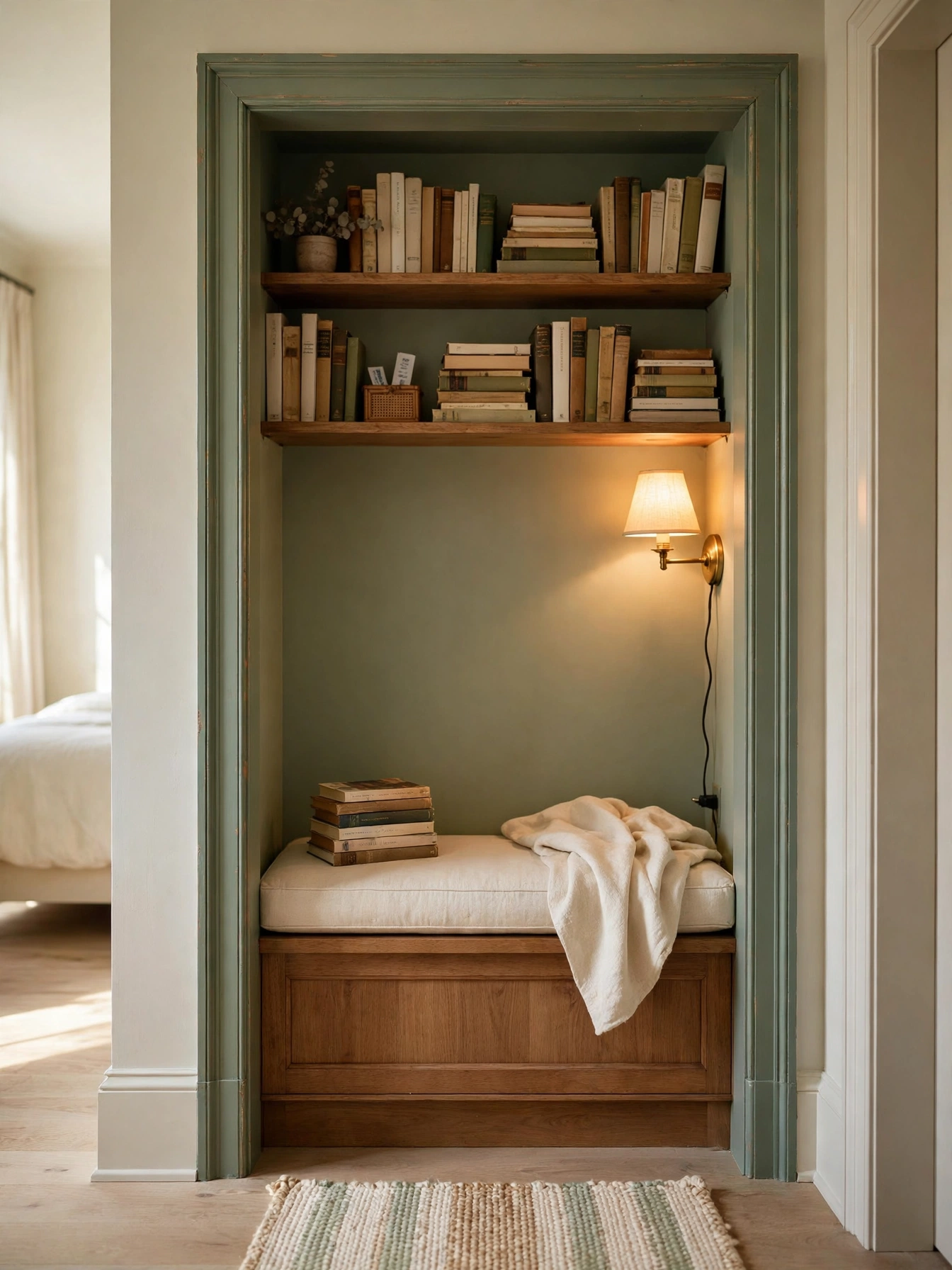
Why This Works:
- A standard 24-inch-deep reach-in closet is already the perfect nook dimension.
- Removing the doors instantly creates a framed alcove with built-in boundaries.
- The existing rod bracket holes patch in an afternoon with basic spackle.
- Closet conversions cost less than any other built-in nook on this list.
Remove the doors and rod, patch the walls, and install a bench seat 20 inches high spanning the closet width, usually 36 to 72 inches. Add a 12-inch-deep shelf above at 60 inches for books and a plug-in sconce or LED puck lights at 2700K. A DIY conversion runs 200 to 600 dollars in materials; hiring a carpenter for the bench adds 400 to 900 dollars. Keep 24 inches of clear depth for the seat so knees do not hit the back wall.
Renters with permission for minor changes, and homeowners with a spare closet, can pull this off in a weekend. Deep walk-ins work too, but the classic reach-in gives the best cozy proportions. Compared with buying a reading chair, the closet nook feels architecturally intentional rather than placed. Store displaced closet contents in under-bed bins before you start.
Pro Tip: Leave the closet’s interior trim and paint it an accent color; the frame effect makes the nook look designed instead of demolished.
Cozy Reading Nooks With Pro Lighting
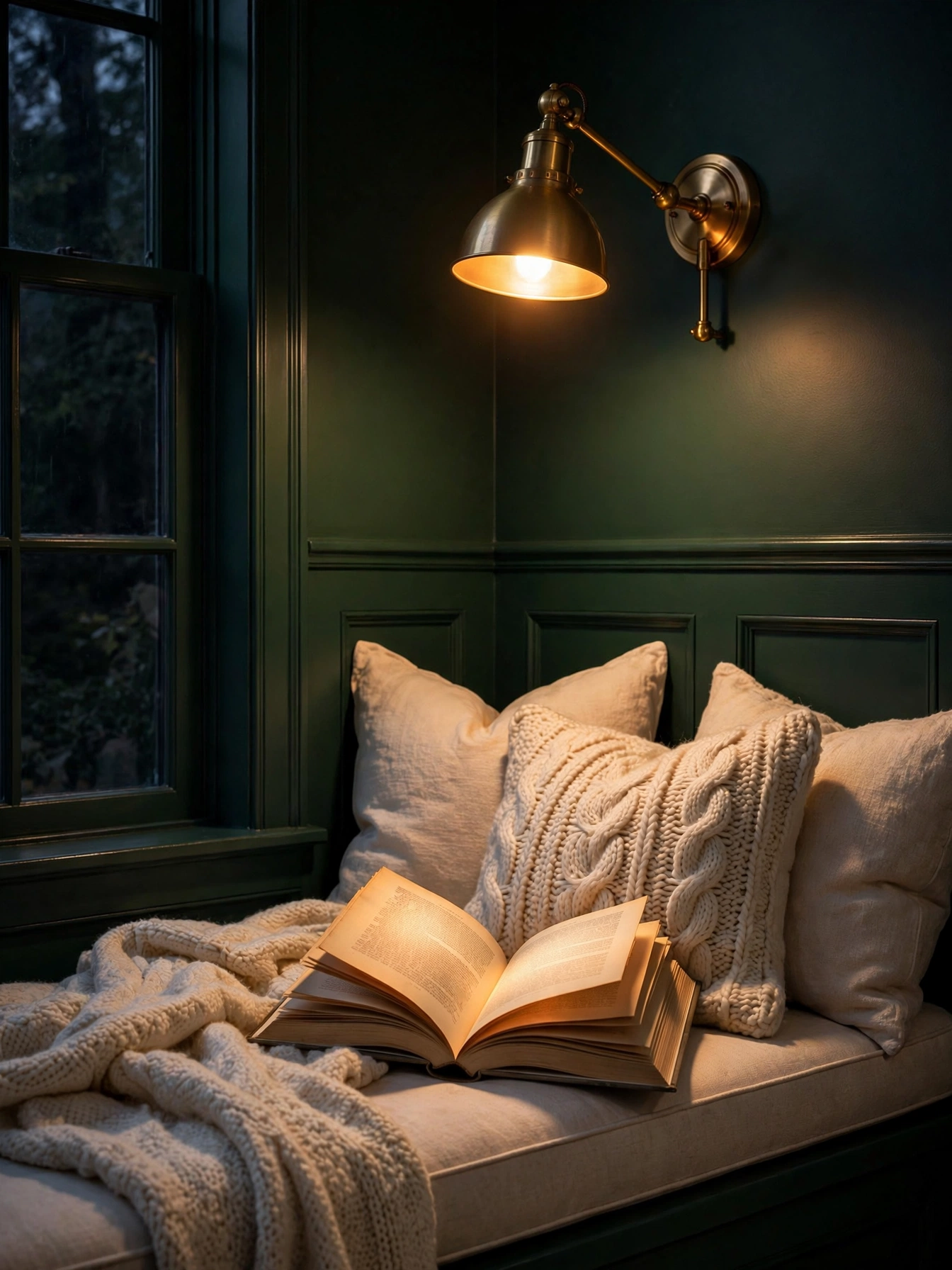
Why This Works:
- Proper nook lighting hits 300 to 500 lux on the page, the standard for comfortable reading.
- A wall-mounted sconce frees the limited surface space that table lamps would steal.
- Warm 2700K light keeps the enclosure feeling snug rather than clinical.
- A dedicated switch or smart bulb lets the nook glow invitingly from across the room.
Mount an adjustable sconce 48 to 54 inches above the seat, positioned to throw light over the reader’s shoulder and eliminate page shadows. Choose 400 to 800 lumens at 2700K with a CRI of 90 or higher for accurate, easy-on-the-eyes light. Plug-in sconces with cord covers cost 60 to 150 dollars and need no electrician; hardwired versions run 200 to 400 dollars installed. Add a dimmer so the same nook shifts from bright afternoon reading to low evening ambience.
Every nook type on this list benefits from this, since bad light ruins even the prettiest seat. Overhead room lighting alone creates head shadows on the page, which is why dedicated nook light matters. Stacked against a clip-on book light, a sconce lights the whole nook and looks like part of the architecture. The American Lighting Association recommends task lighting at the page, not just ambient room light, for reading comfort.
Pro Tip: Test the sconce position by holding a book in the seat at night; move the mount until no shadow falls on the page, then mark and install.
Corner Floor Cushions
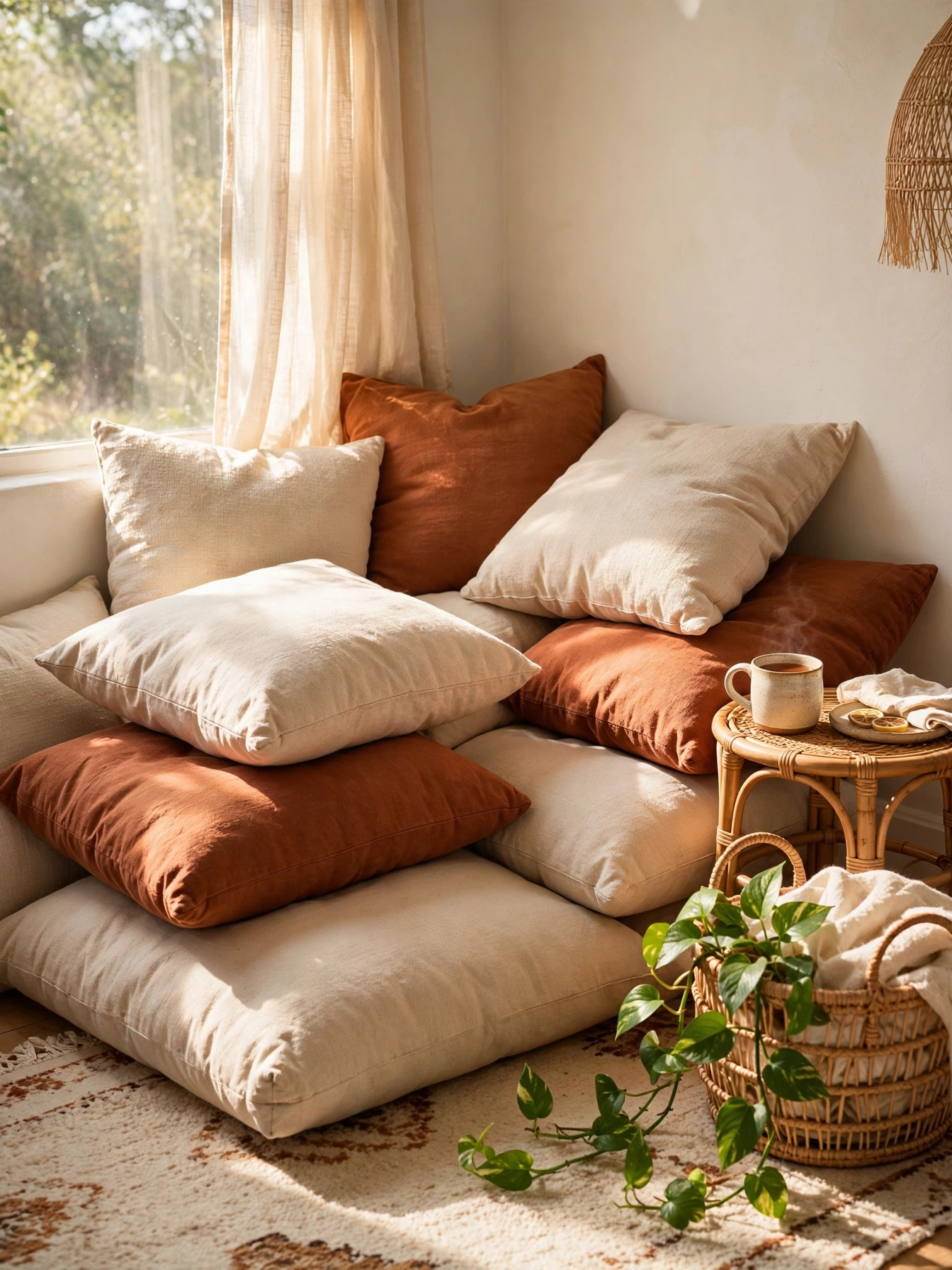
Why This Works:
- Two walls meeting at 90 degrees create instant enclosure with zero construction.
- A stack of 26-inch floor cushions builds a nest that molds to any sitting position.
- The whole setup costs under 300 dollars and moves in minutes.
- Low seating feels playful and relaxed, perfect for lazy weekend chapters.
Layer two or three 26-inch square cushions, each 6 to 8 inches thick, in a corner over a 4 by 6 foot low-pile rug. Choose dense foam or buckwheat hull fills that support weight without bottoming out, with washable covers at 40 to 90 dollars each. Add a small 14-inch side table or sturdy basket within arm’s reach for tea and the current book. Keep a throw nearby; floor level runs 3 to 5 degrees cooler than sofa height.
Kids, flexible households, and anyone testing whether they will actually use a reading spot get the most from this setup. They are hard on knees and backs for daily use by older readers, who should prefer a raised bench nook. Versus a beanbag, structured cushions stack neatly and look intentional. Fluff and rotate the cushions weekly to keep the fill even.
Pro Tip: Place a 1-inch foam mat under the rug; it insulates against cold floors and makes floor sitting comfortable for twice as long.
Built-In Bench Bookshelves
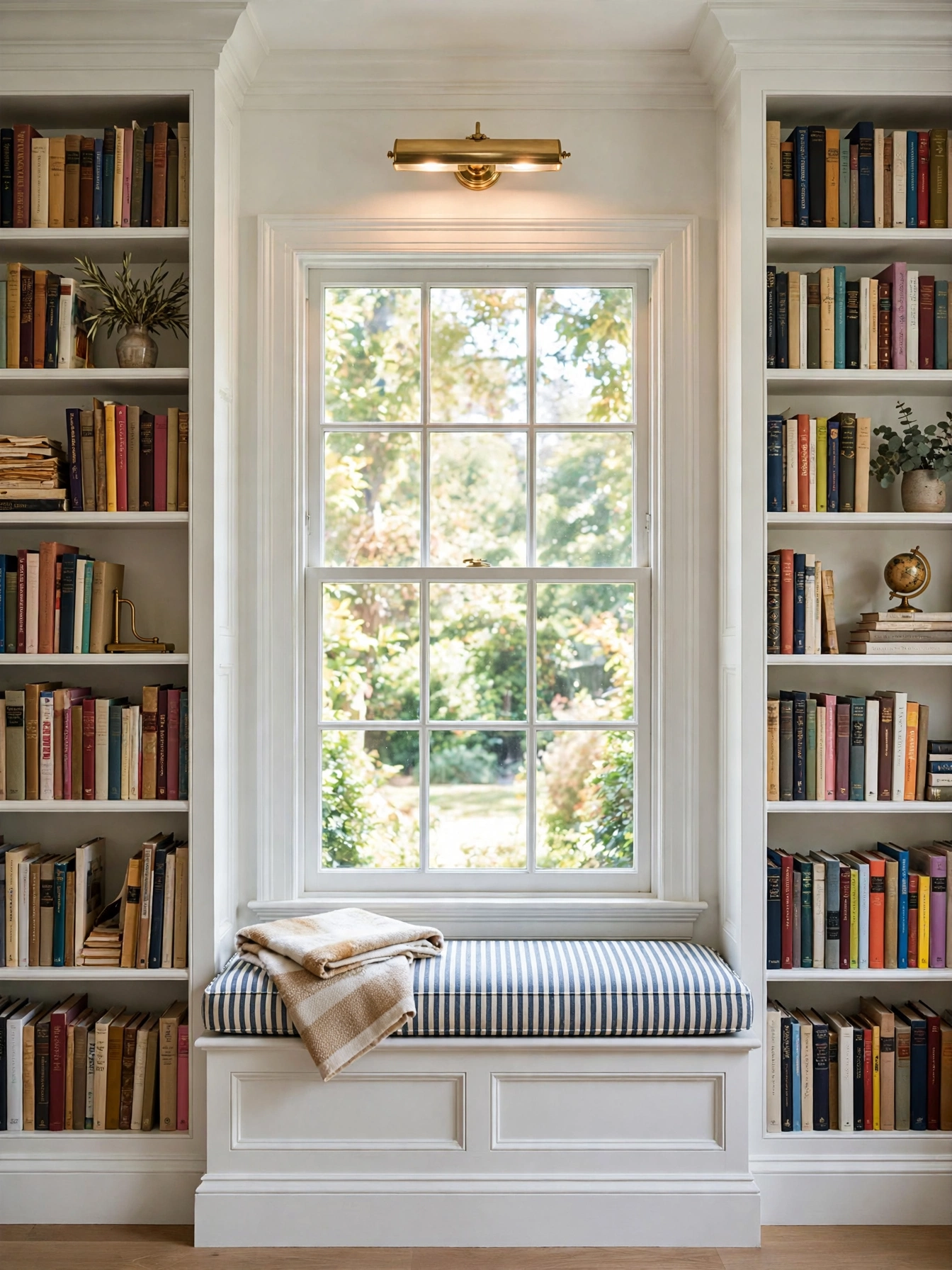
Why This Works:
- Flanking a bench with bookshelves puts the library within arm’s reach of the seat.
- A 72-inch bench with 12-inch-deep shelves holds 150 or more books.
- Built-ins look like architecture, adding perceived value to the whole room.
- The shelf walls deepen the nook’s enclosure on both sides.
Build the bench 18 to 20 inches high and 20 to 24 inches deep, with bookshelves 72 to 84 inches tall on each side and shelves spaced 10 to 12 inches apart for standard hardcovers. A carpenter charges 2,000 to 5,000 dollars for a full bench-plus-shelves built-in; stock bookcases flanking a simple bench achieve 80 percent of the look for 600 to 1,200 dollars. Anchor every tall unit to wall studs with anti-tip hardware. Leave the bench top clear except for the cushion so it stays inviting.
Serious readers whose collections deserve display will find this is the one to build. Small rooms should keep the shelves shallow at 10 inches to avoid a corridor feel. In contrast to a freestanding bookcase plus chair, the built-in reads as one calm composition. Houzz data shows built-in reading benches among the most saved small-space features.
Pro Tip: Face the lowest shelf’s books spine-out but leave one 12-inch gap; the breathing room keeps 200 books from reading as clutter.
Bay Window Daybeds
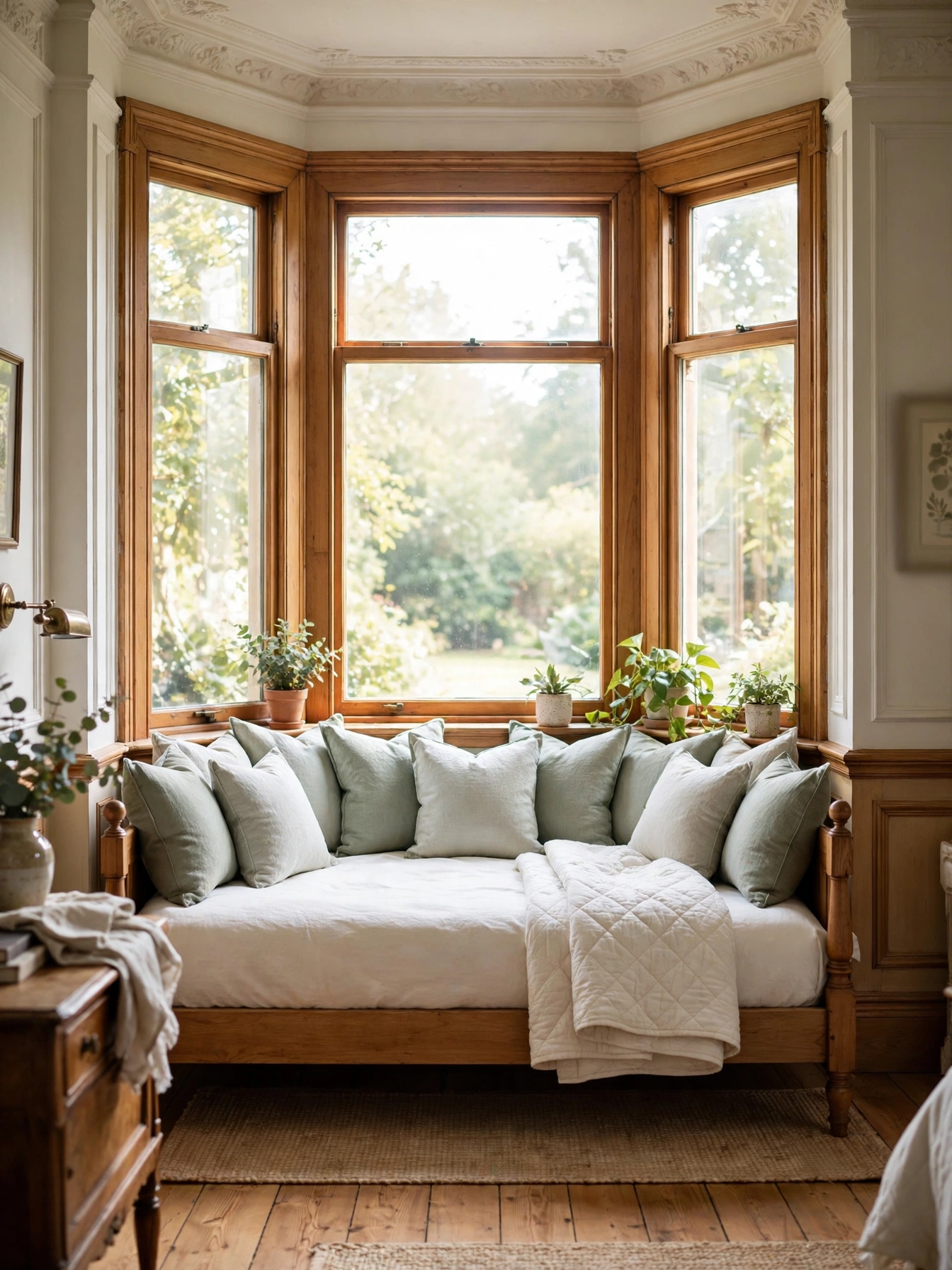
Why This Works:
- A bay window’s 45-degree angles wrap the seat in light from three directions.
- A twin-size 38 by 75 inch daybed mattress fits most bays perfectly.
- Daybeds seat three for conversation and sleep one for naps between chapters.
- The projection beyond the wall line makes the nook feel like a destination.
Measure the bay at the sill and at 18 inches above it, since bays taper; order the platform to the smaller dimension minus half an inch. A custom bay platform runs 800 to 2,000 dollars, while a standard twin daybed frame at 300 to 700 dollars works if the bay is at least 80 inches wide. Use a 6-inch medium-firm mattress so the seat stays supportive for sitting, not just sleeping. Add a row of 20-inch square pillows along the window for back support.
Lucky enough to have the architecture? The bay becomes the default lounge for the whole family. Without a bay, a deep 30-inch window seat gives a similar feel at lower cost. Next to a window cushion alone, the daybed’s full mattress depth invites sprawling. Rotate the mattress quarterly to prevent body impressions.
Pro Tip: Choose outdoor-rated fabric for the daybed cover; bay windows concentrate UV, and standard cotton fades visibly within 18 months.
Attic Eave Nooks
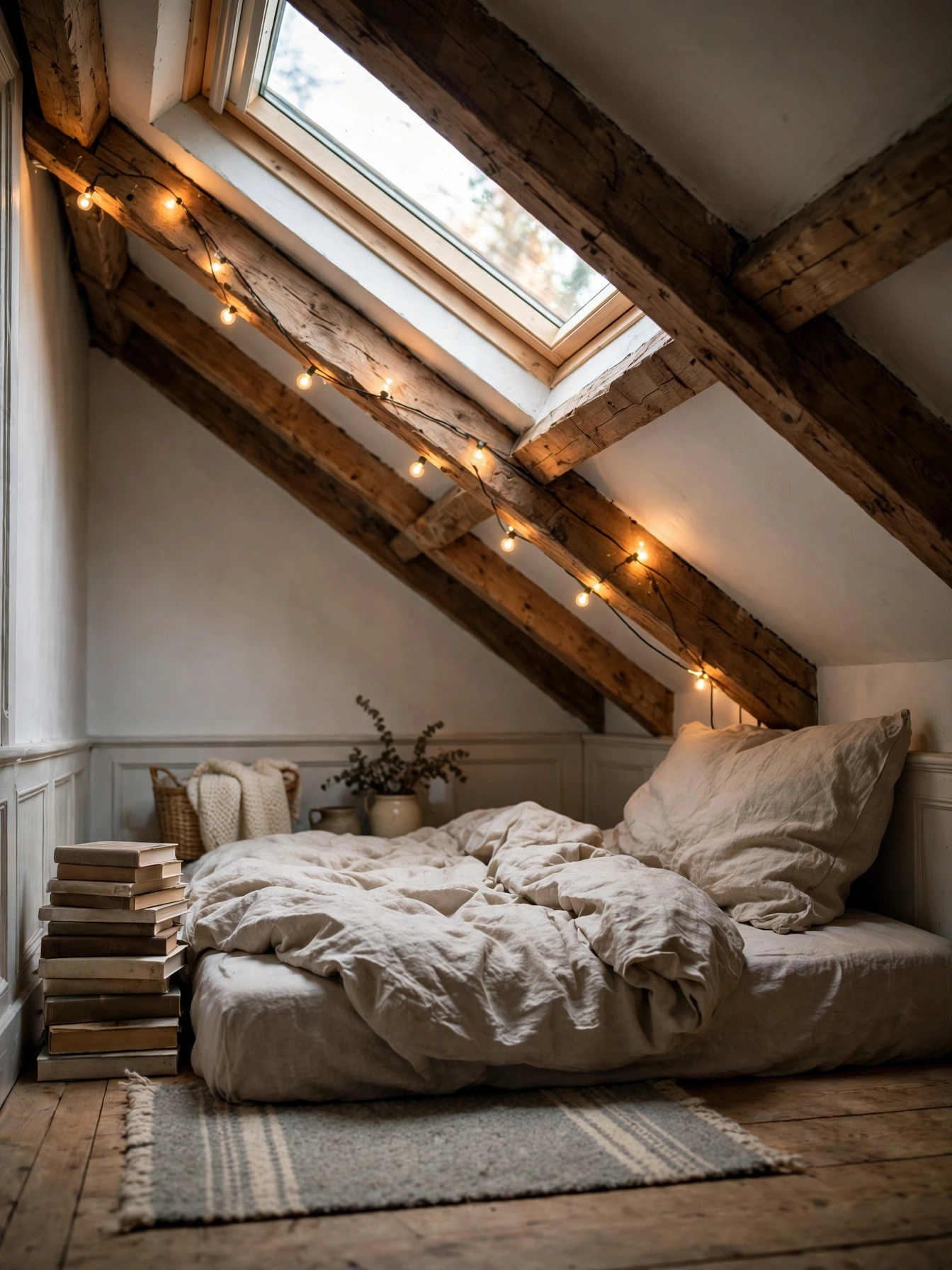
Why This Works:
- Sloped eaves create the most naturally cozy geometry in any house.
- A low platform bed or thick floor mattress fits where standing height runs out.
- Skylights above the nook give stargazing and cloud-watching between pages.
- The separation from main living areas guarantees uninterrupted reading time.
Place a 4 to 6 inch floor mattress or low platform in the zone where ceiling height runs 36 to 48 inches, keeping the reading position where you can sit upright. Add battery or plug-in LED strips along the ridge beam at 2700K, since attics rarely have good wiring. A simple eave nook with mattress, rug, and lighting costs 300 to 800 dollars. Check that the attic floor is rated for live loads; many attic floors are ceiling joists, not floor joists, and need reinforcement.
Finished or semi-finished attics, plus a reader who wants true escape, make the perfect match. Unfinished attics need insulation and ventilation first, which changes the budget entirely. Versus a bedroom reading corner, the eave nook feels like a hideout rather than furniture. Place a small fan nearby; attics run 5 to 10 degrees warmer than the floor below.
Pro Tip: Lay interlocking foam tiles under the rug; attic floors are often uneven, and the tiles level the surface for about 30 dollars.
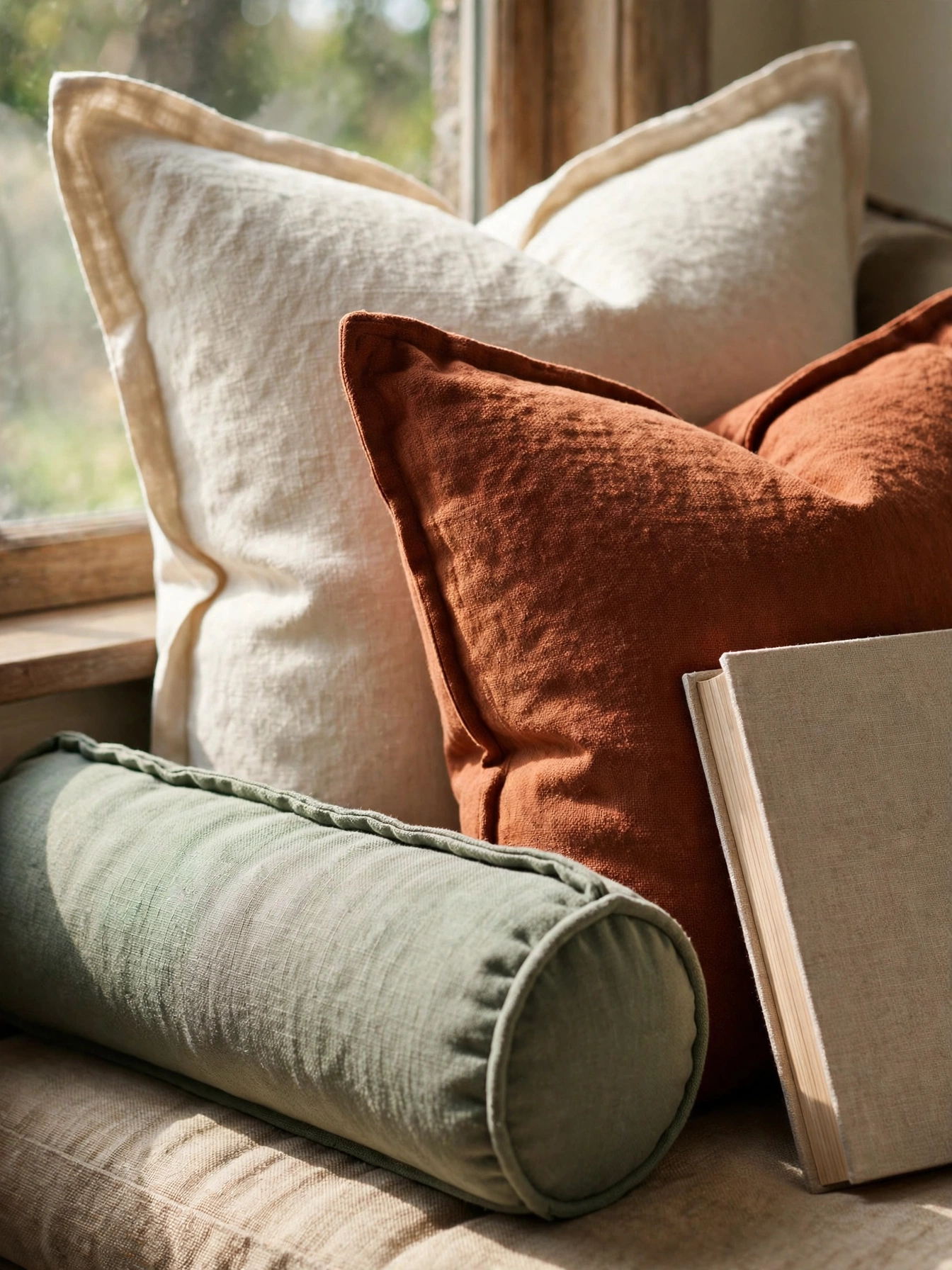
Cozy Reading Nooks With Plush Pillows
Why This Works:
- The right pillow stack turns any flat bench into an ergonomic reading seat.
- A 24-inch square Euro pillow plus a lumbar roll supports back, neck, and arms.
- Pillows are the cheapest nook upgrade, starting at 25 dollars each.
- Swapping covers seasonally refreshes the whole nook for the price of lunch.
Build the stack back to front: a 26-inch Euro pillow against the wall, a 20-inch square in front of it, and a 12 by 20 inch lumbar roll at the base. Choose feather-blend inserts for softness that holds shape, and covers with hidden zippers for washing. Budget 100 to 250 dollars for a full five-pillow nook stack. Keep one firm pillow in the mix; all-soft stacks collapse and strain the lower back within an hour.
Every nook type, from window seats to closet conversions, improves with a generous stack. Allergy sufferers should choose hypoallergenic down-alternative fills. Compared with buying a new cushion, a pillow restyle costs a fifth as much and takes ten minutes. The Spruce recommends testing pillow firmness by sitting, not squeezing, since hand feel misleads.
Pro Tip: Karate-chop the top of each square pillow after fluffing; the dent holds the shape and looks styled for days, not minutes.
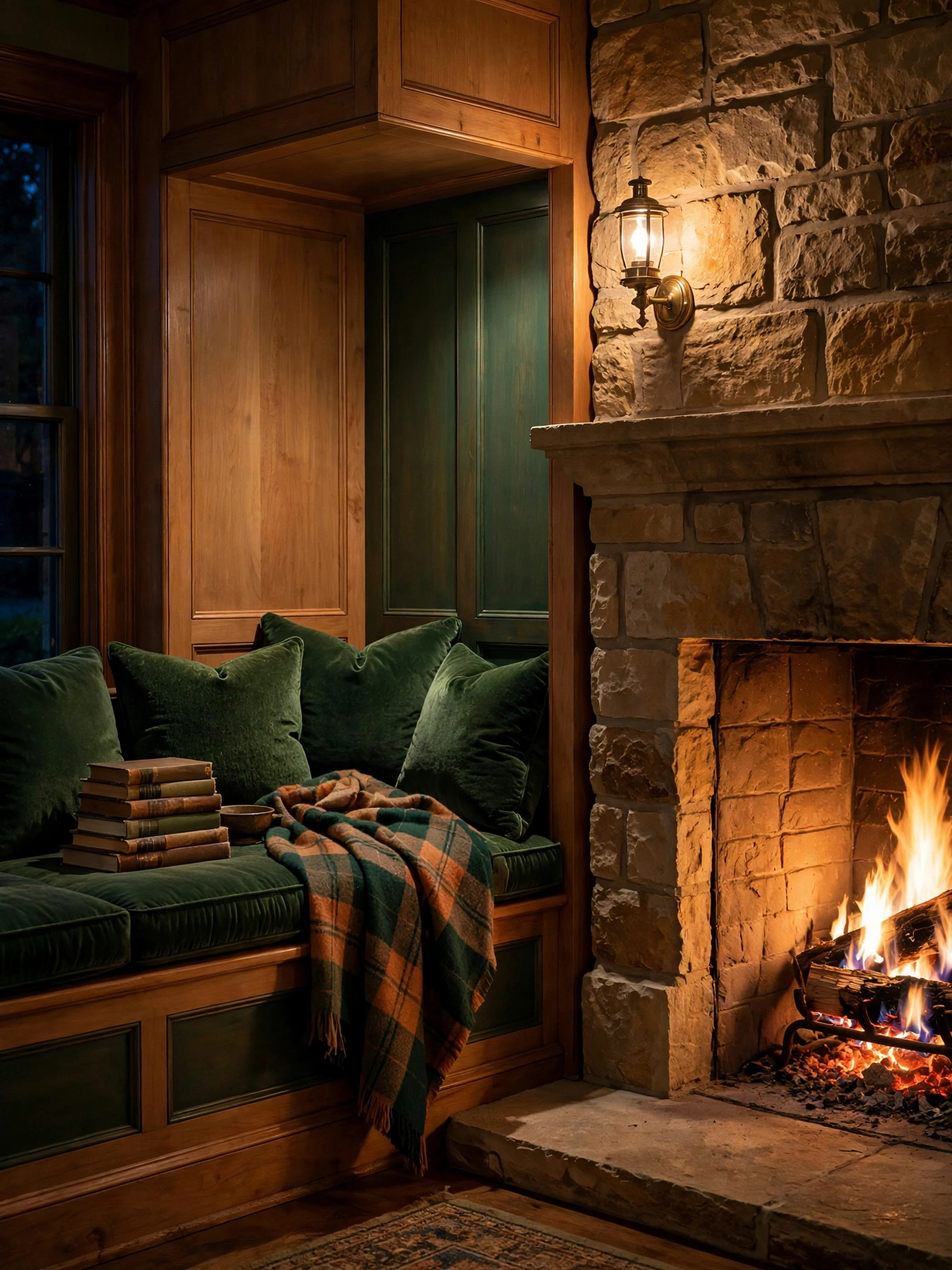
Fireside Cozy Reading Nooks
Why This Works:
- The 3 to 4 foot alcove beside most fireplaces is dead space with perfect nook proportions.
- Firelight plus a book is the oldest luxury pairing in home life.
- A built-in bench here borrows the fireplace’s warmth and its focal glow.
- The chimney breast gives the nook a solid back wall for shelves.
Build or place a bench 18 inches deep and 20 inches high in the alcove, typically 36 to 48 inches wide. Keep all fabrics and wood at least 36 inches from the firebox opening per standard clearance codes, and use a fireplace screen when the fire is lit. A simple bench with cushions costs 300 to 800 dollars; a built-in with shelves runs 1,200 to 2,500 dollars. Mount a small sconce on the chimney breast at 50 inches for reading light that does not compete with the flames.
Working fireplaces plus readers who love atmosphere above all make this a natural. Households with only a decorative electric fireplace get the look with less heat and no clearance worries. Compared with facing the fireplace from the sofa, the side alcove feels private and immersive. Never leave the fire unattended with the nook’s textiles nearby.
Pro Tip: Store the current read in a wall-mounted pocket on the chimney breast; reaching across hot hearth zones for a book is an accident waiting to happen.
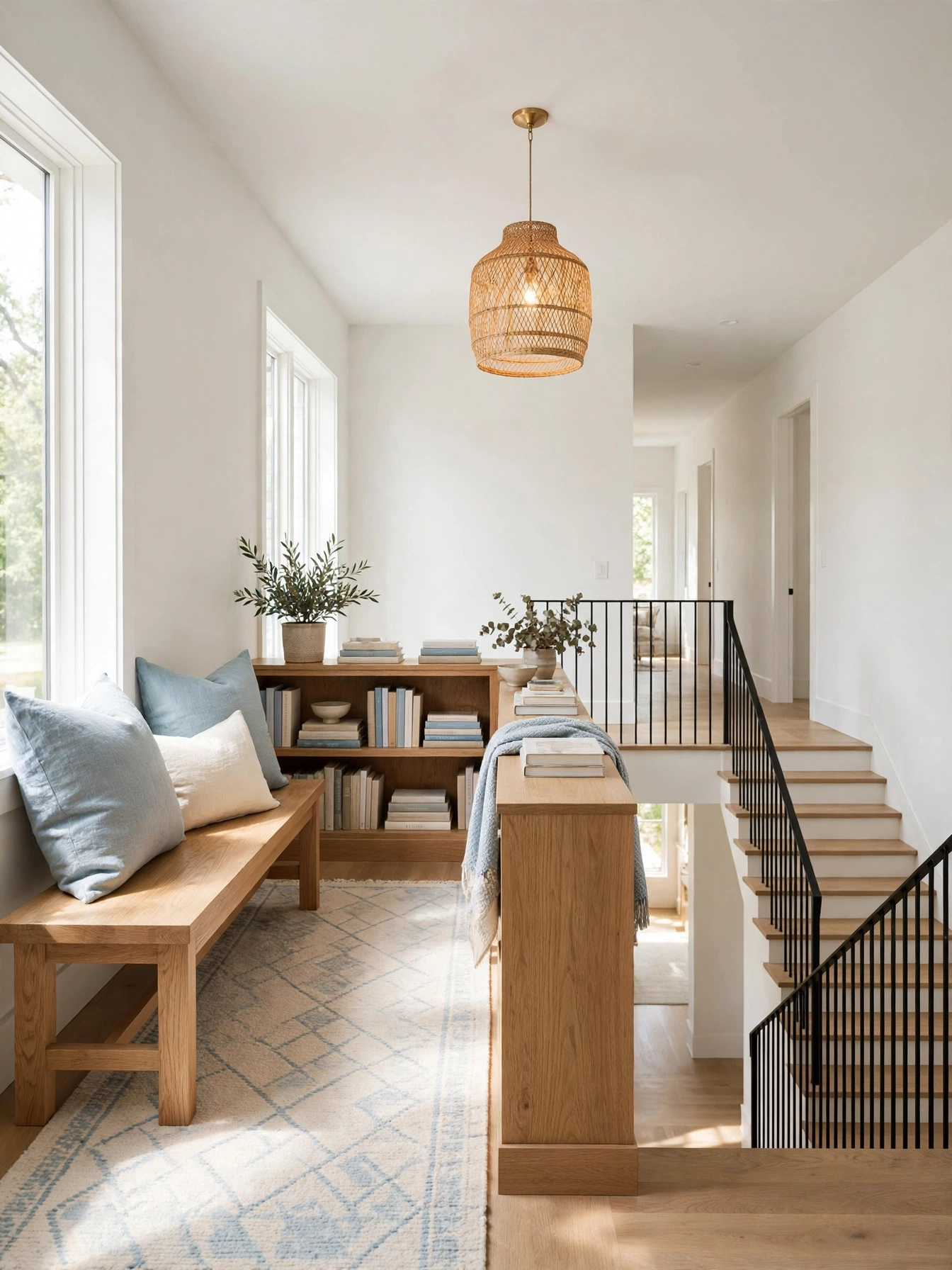
Loft Landing Libraries
Why This Works:
- Stair landings and loft edges are transitional space nobody claims, perfect for a nook.
- A railing-side bench keeps the landing functional while adding a destination.
- Upper-level light is often the best in the house, bright without ground-floor glare.
- Reading above the household’s bustle gives psychological distance with zero doors.
Place a 48 to 60 inch bench against the solid wall of the landing, keeping a clear 36-inch walking path to stairs and doors per code. Add a low bookcase 30 to 36 inches high as a room divider that doubles as a railing-side shelf. A landing setup with bench, cushions, and lighting runs 400 to 1,000 dollars. Secure the bookcase to the wall and keep the bench 12 inches from the railing so nobody climbs from seat to rail.
Two-story homes where the upstairs hallway feels wasted can finally claim it. Single-story homes can apply the same idea to a wide hallway. In contrast to a bedroom reading corner, the landing nook stays part of the home’s social flow while feeling separate. Add a small rug to define the spot and dampen stairwell echo.
Pro Tip: Put a pendant or sconce on a dimmer at the landing; a glowing nook visible from below draws readers up like a lighthouse.
Sliding Door Retreats

Why This Works:
- Sliding shoji-style doors let a nook open to the room or close into a private cell.
- A 6 by 6 foot framed recess with doors feels like a tiny room of its own.
- Translucent panels borrow light even when closed, so the nook never feels dark.
- The doors themselves become a design feature, not just a partition.
Frame a recess 72 inches wide with a ceiling track rated for 75 pounds per panel, using two 36-inch sliding doors. Frosted acrylic or rice-paper-style polycarbonate panels cost 150 to 400 dollars each and survive humidity better than real paper. Inside, a platform seat 16 inches high with cushions fills the 24-inch depth. Keep the track level within 1/8 inch over its length or the doors will drift.
Open-plan rooms that need a reading zone with optional privacy are the ideal setting. Renters can use a freestanding shoji screen for a similar effect at a tenth of the cost. Compared with curtains, rigid panels block more sound and look architectural. Oil the track rollers yearly to keep the glide silent.
Pro Tip: Fit a soft-close damper, about 15 dollars per door; sliding doors that slam destroy the tranquility the nook was built for.
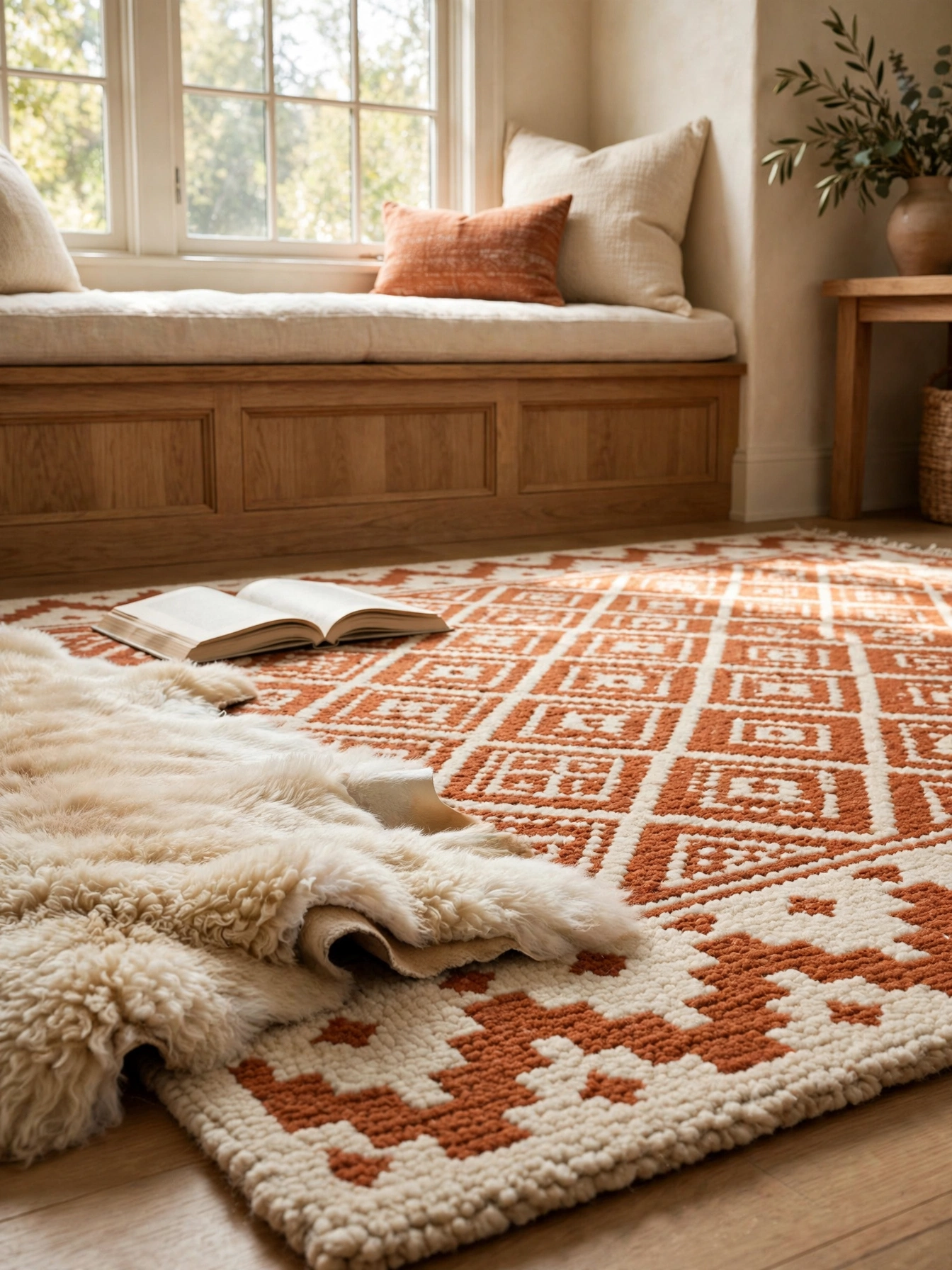
Cozy Reading Nook Rugs
Why This Works:
- A rug defines the nook’s territory even when walls do not exist.
- Thick 1/2-inch pile insulates cold floors and softens hard bench landings.
- A 4 by 6 foot rug fits most nooks and costs 80 to 250 dollars.
- Pattern and color in the rug let the nook have its own identity inside a neutral room.
Choose a rug that extends 12 inches beyond the seat on all open sides, typically 4 by 6 feet for bench nooks and 5 by 7 for daybed nooks. Pick a 1/2-inch wool or cotton pile for warmth underfoot, with a non-slip pad underneath on hard floors. Washable low-pile rugs suit nooks near entries or kitchens where spills happen. Budget 80 to 250 dollars, and rotate the rug 180 degrees yearly for even wear.
Open corners and alcoves that need visual boundaries are where a dedicated rug shines. Fully built-in nooks with finished floors can skip it, though warmth still helps. Compared with wall-to-wall carpet, a nook rug is replaceable, washable, and style-flexible. The Spruce notes that rugs are the fastest way to zone an open space without construction.
Pro Tip: Layer a small sheepskin over the rug at the seat edge; the extra 2 inches of loft is where long reading sessions get comfortable.
Wardrobe Wall Nooks
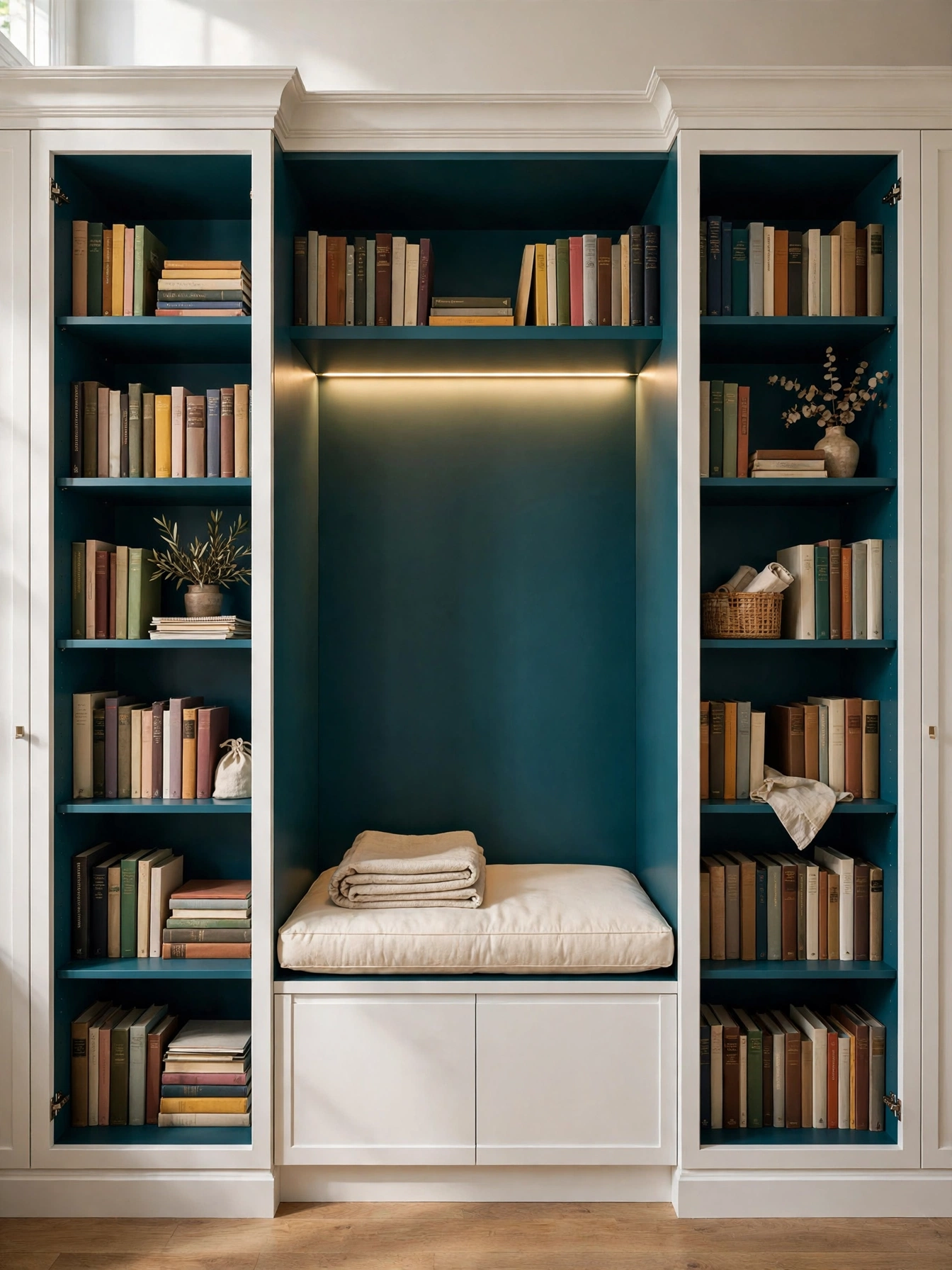
Why This Works:
- A 24-inch-deep wardrobe carcass without doors is a ready-made nook frame.
- PAX-style systems let you build the seat and shelves from standardized parts.
- The tall sides create the enclosure that makes nooks feel separate.
- Total cost stays under 800 dollars using off-the-shelf components.
Assemble two 24-inch-deep wardrobe frames flanking a 40-inch opening, and span the gap with a reinforced seat platform at 18 inches high. Use the side units for books and blankets with adjustable shelves every 12 inches. A two-frame setup with seat hardware runs 400 to 800 dollars. Anchor every frame to wall studs, since loaded wardrobes topple forward with surprising force.
DIYers who want built-in looks without carpentry skills get their wish here. Purists may find the standardized look less characterful than custom millwork. Compared with hiring a carpenter, the modular route costs a third and finishes in a weekend. Add crown trim across the top to make the units read as one built-in.
Pro Tip: Paint the wardrobe interiors a deep saturated color; the contrast makes the book spines pop and the nook feel custom.
Sunroom Corner Seats
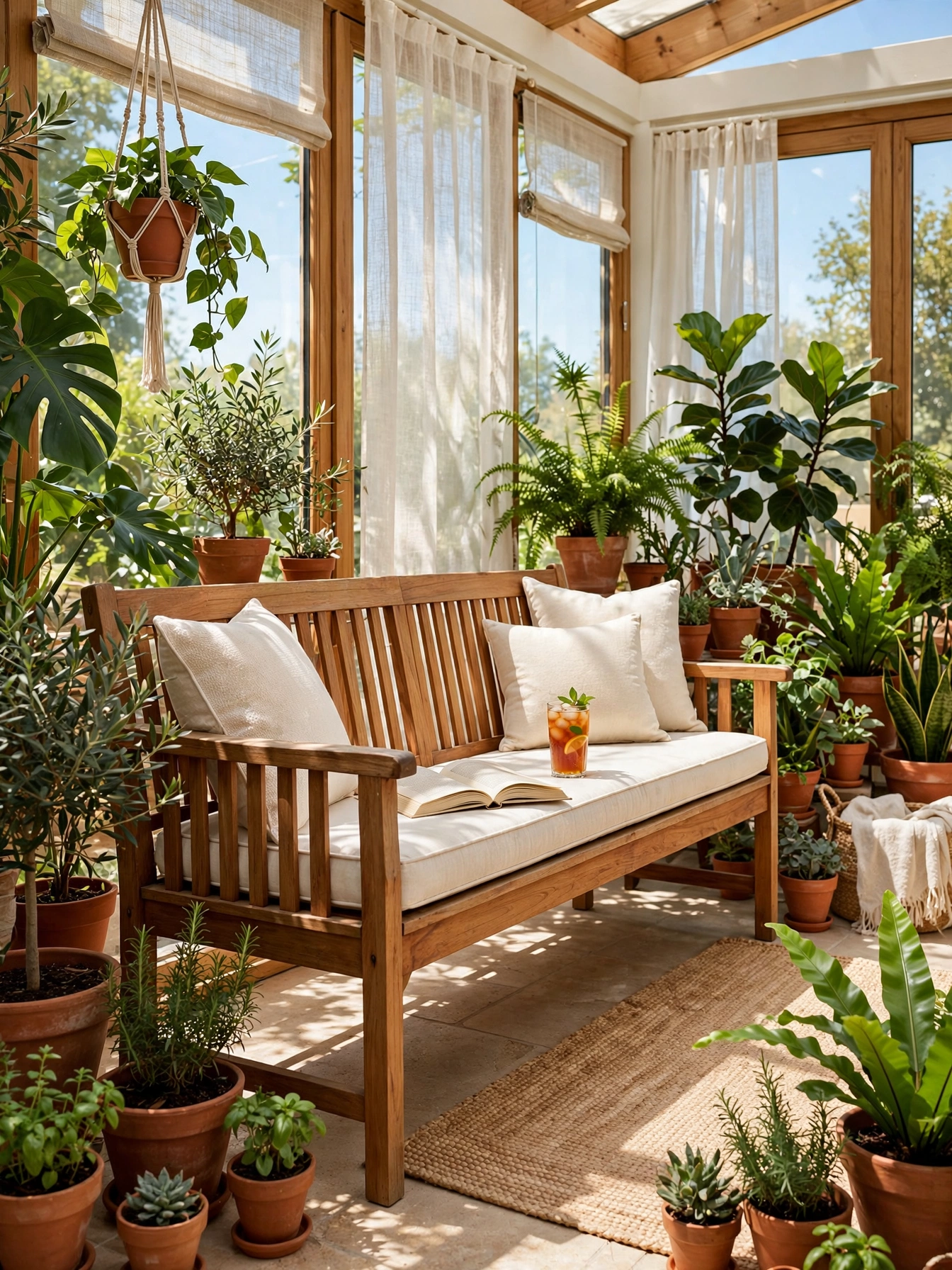
Why This Works:
- Sunrooms offer the most daylight per square foot of any room in the house.
- A simple bench with outdoor-grade cushions handles the UV and temperature swings.
- Plants and books coexist happily in the bright, humid microclimate.
- Morning sun plus coffee plus a novel is a ritual worth designing for.
Build or buy a bench 18 inches deep along the brightest wall, using teak or powder-coated aluminum rated for sun exposure. Choose solution-dyed acrylic cushions, 4 inches thick, which resist fading for 5 or more years; a bench plus cushions runs 400 to 1,000 dollars. Add a sheer shade on the brightest glass to cut midday glare to comfortable reading levels. Keep books out of direct sun or the spines fade within months.
Enclosed porches, solariums, and bright garden rooms are the natural home for this. Unheated sunrooms work spring through fall; winter reading needs the heated kind. Compared with an indoor window seat, the sunroom offers bigger views and more light but less climate control. Bring cushions inside during storms if the room is not fully weatherproof.
Pro Tip: Face the bench east for morning reading; west-facing sunrooms overheat by 3 p.m. and become unreadable on summer afternoons.
Staircase Landing Benches
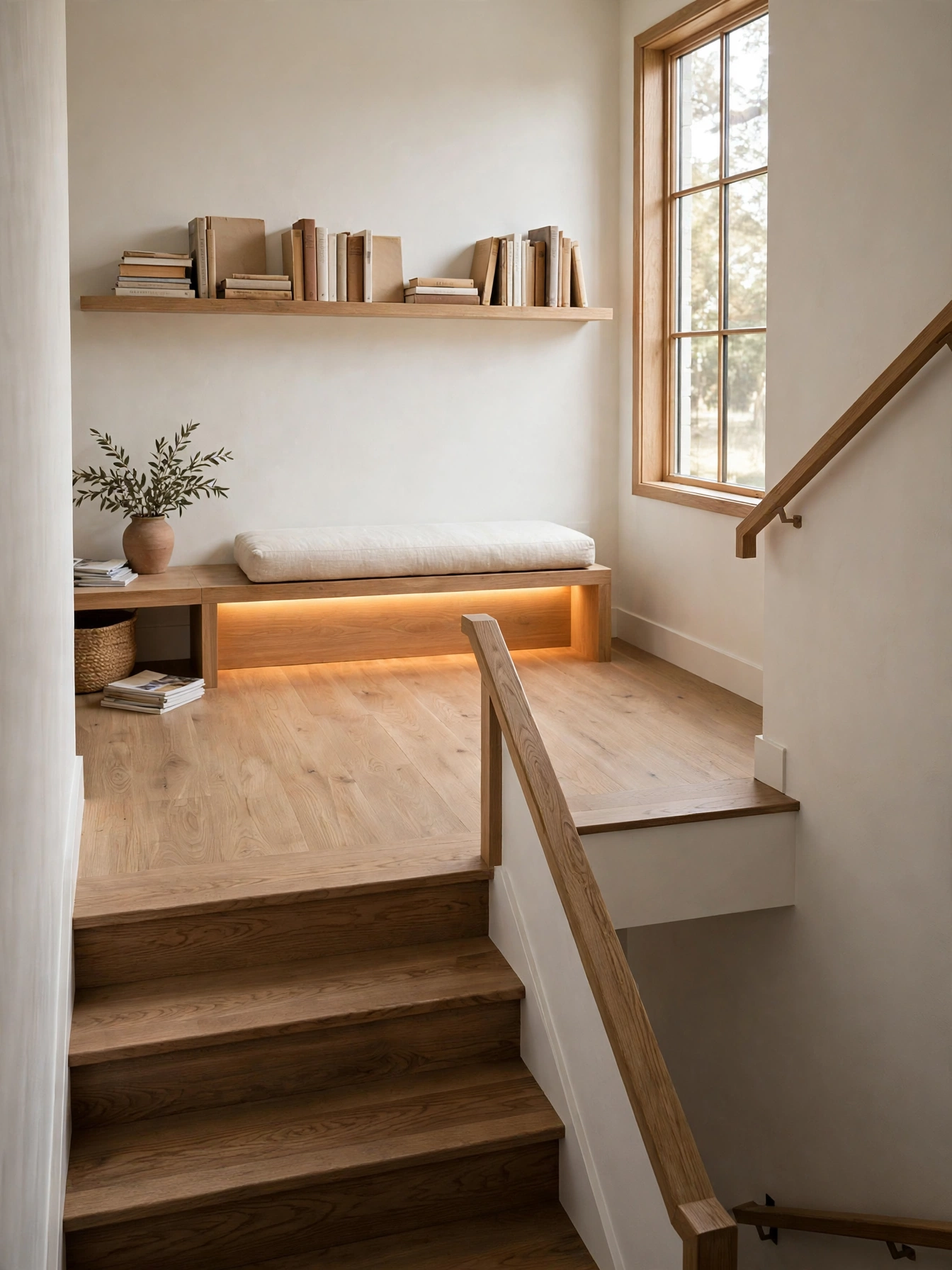
Why This Works:
- Wide landings on L-shaped stairs waste 15 to 25 square feet by default.
- A bench here catches the stairwell’s vertical light and the home’s best views.
- The slight elevation gives a pleasant prospect-over-refuge feeling readers love.
- It keeps the stairs clear while giving waiting family members a perch.
Fit a bench 16 to 18 inches deep along the landing’s solid wall, keeping the full 36-inch stair width clear per code. A simple oak bench with cushion costs 250 to 600 dollars; add a 10-inch-deep wall shelf above for books. Cushion the seat with 3-inch foam since landing benches get sat on with shoes nearby. Secure the bench to the wall so it cannot shift into the walking path.
Split-level and L-stair homes get a free perch where the turn creates a natural platform. Straight-run stairs without landings cannot use this idea. Compared with leaving the landing empty, the bench adds function without narrowing the required egress width. Keep the styling minimal so the stairwell stays a passage, not a storage zone.
Pro Tip: Add a motion-sensor LED strip under the bench; it lights the stair edge safely at night and makes the nook glow invitingly.
Curtain Canopy Corners
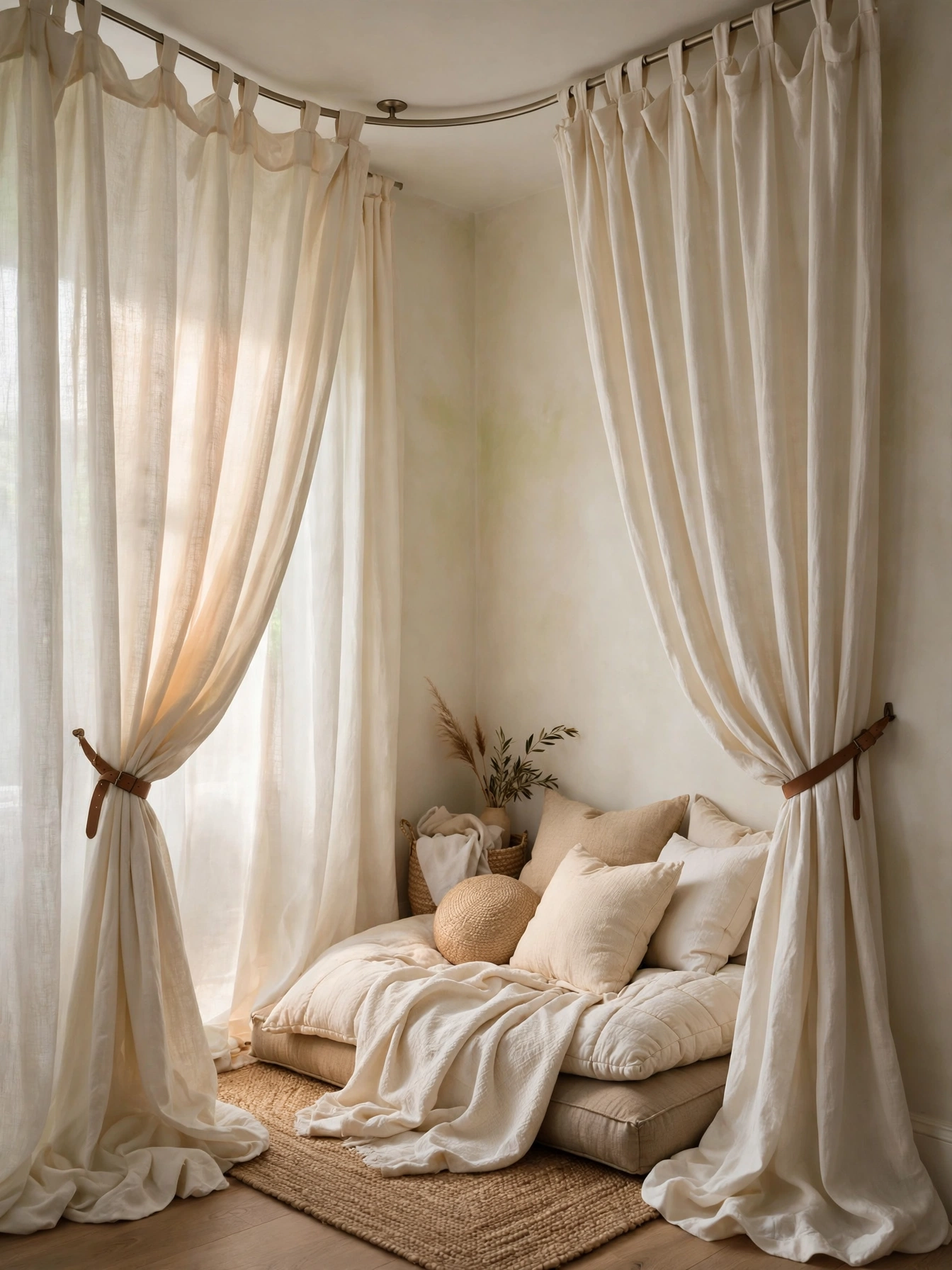
Why This Works:
- A ceiling-mounted curtain track turns any corner into a curtained hideaway.
- Drawing the curtain creates instant privacy and acoustic softening.
- Sheer or linen panels cost 100 to 250 dollars for the full canopy effect.
- The draped fabric adds the softness that hard-corner nooks lack.
Mount a curved or L-shaped curtain track on the ceiling, extending 24 to 30 inches from each wall to clear the seat. Hang linen or cotton panels 1.5 times the track length for soft gathering, hemmed to hover half an inch off the floor. A ceiling track kit plus panels runs 100 to 250 dollars and installs with basic tools. Inside, place floor cushions or a low bench with a 4 by 6 foot rug.
Renters and anyone who wants a nook without construction can have one up by Sunday. They offer visual privacy but almost no sound blocking. Against a freestanding canopy frame, the ceiling track looks cleaner and cannot tip over. Tie the curtains back with leather straps when the nook is open.
Pro Tip: Choose washable cotton over dry-clean-only linen; canopy curtains collect dust fast and need laundering every 3 months.
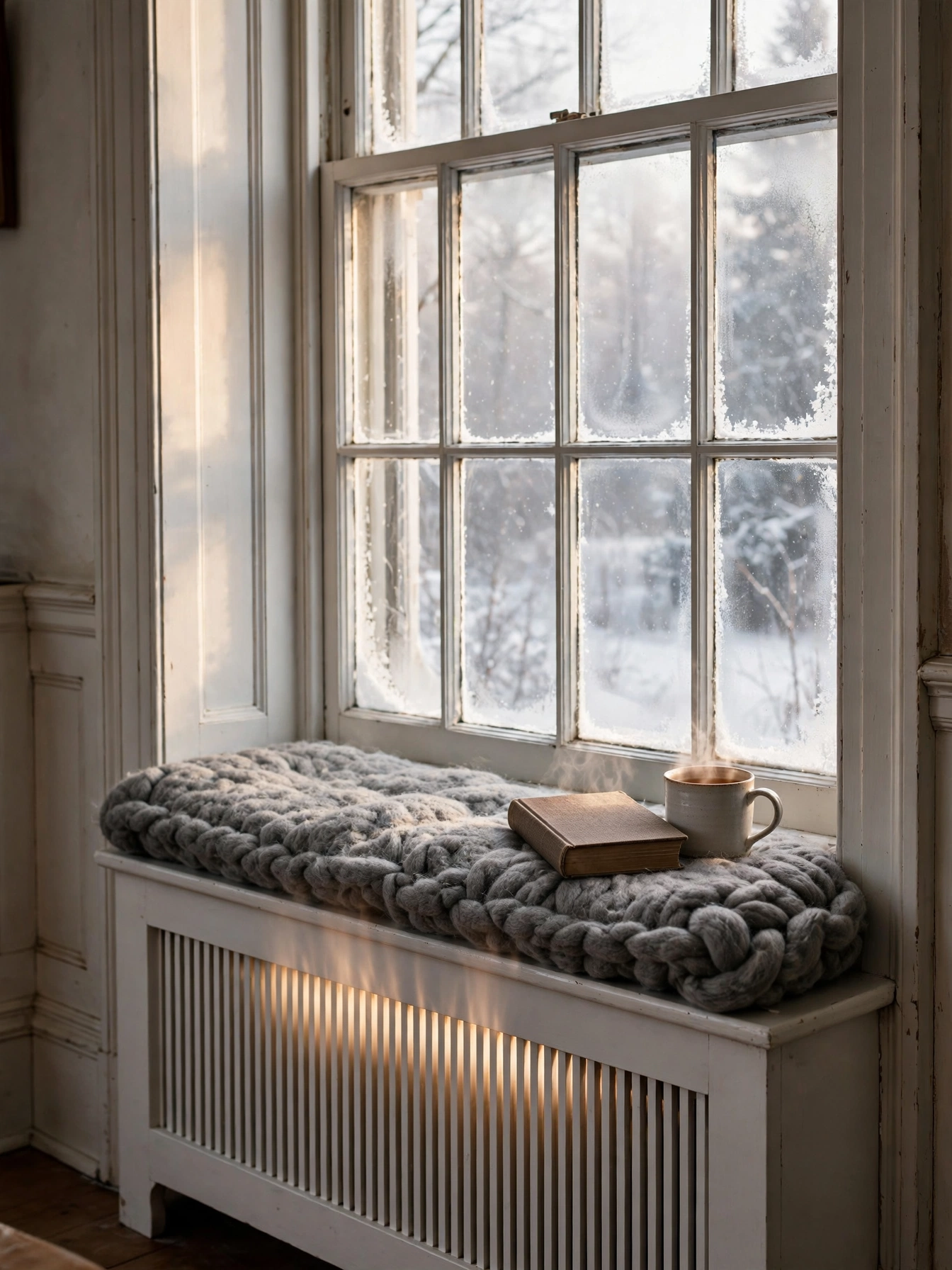
Radiator Cover Benches
Why This Works:
- A radiator cover at 20 to 24 inches high is already bench height.
- Adding a cushion top converts an eyesore into the warmest seat in the house.
- Covers with slatted fronts keep heat flowing while hiding ugly pipes.
- The radiant warmth makes this the most physically comfortable nook in winter.
Build or buy a cover that clears the radiator by 2 inches on the top and sides for airflow, with at least 40 percent open slat area on the front. A custom hardwood cover runs 300 to 800 dollars; add a 3-inch heat-resistant cushion in wool or cotton, never synthetics that can scorch. Keep the seat height at 20 to 22 inches including the cushion. Never block the thermostatic valve; heat regulation keeps the nook cozy instead of sweltering.
Older homes with hot-water radiators under windows already own the classic version. They do not apply to forced-air or underfloor-heated homes. Stacked against a window seat, the radiator bench adds free heat but needs the clearance discipline. Dust inside the cover monthly; radiators bake dust into a smell.
Pro Tip: Put a reflective foil panel behind the radiator inside the cover; it pushes 15 to 20 percent more heat into the room instead of the wall.
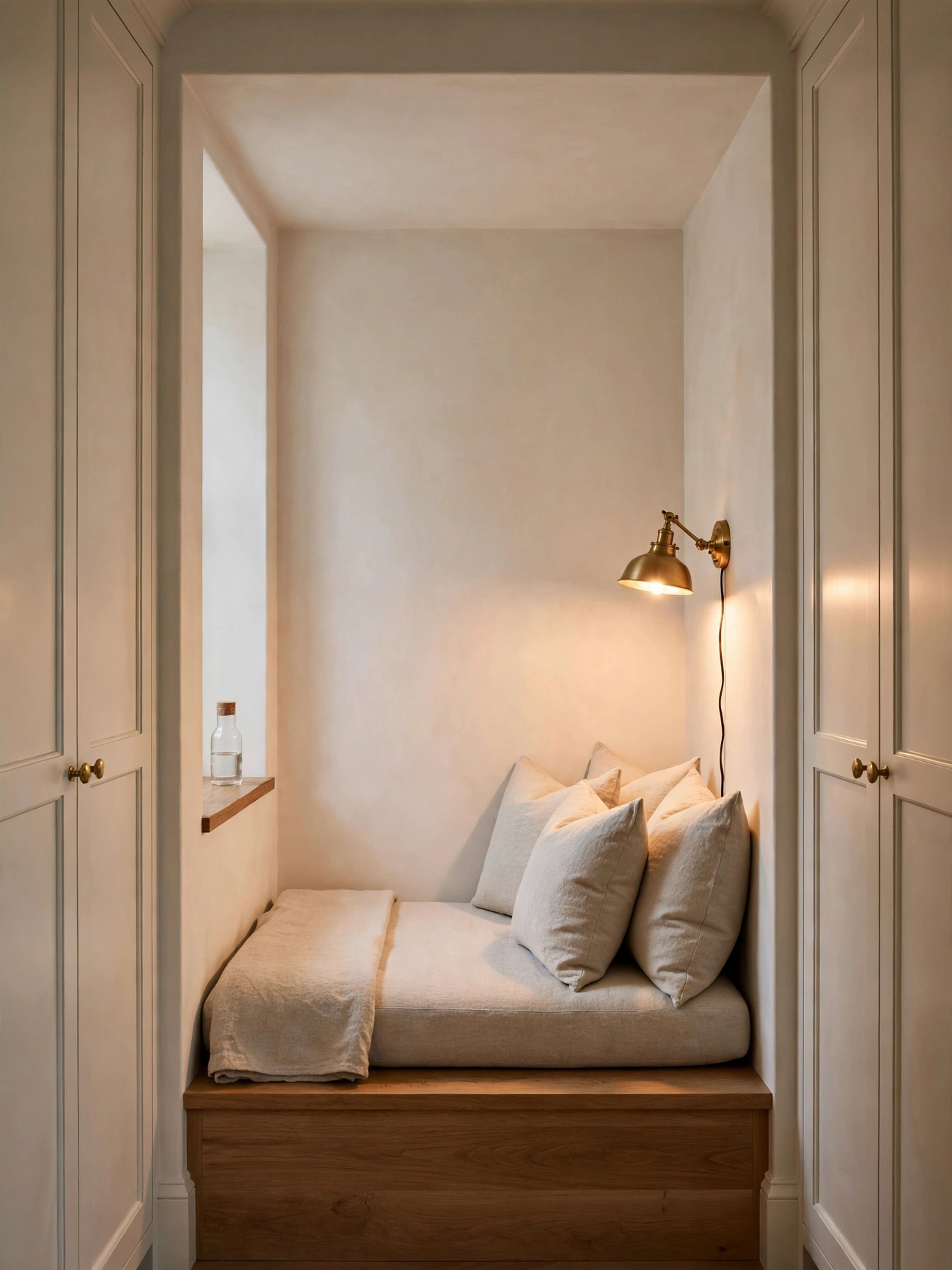
Bedroom Wall Recesses
Why This Works:
- A 24-inch-deep recess between closets or chimney breasts is a nook waiting to happen.
- Bedroom nooks keep late-night reading from disturbing a sleeping partner.
- The existing walls give enclosure on three sides for free.
- A recessed nook reads as architecture, not as added furniture.
Fit a platform seat 18 inches high into the recess, typically 48 to 72 inches wide, with a 4-inch cushion and back pillows. Run a plug-in sconce at 48 inches on one side wall for 300 to 500 lux on the page. A simple platform with cushions and lighting costs 300 to 700 dollars. If the recess is deeper than 30 inches, add back shelving so the depth works for storage instead of wasted space.
Bedrooms with awkward alcoves from old renovations finally get a use for them. Perfectly flat bedroom walls cannot use this idea without construction. Compared with reading in bed, the separate nook protects sleep hygiene by keeping the bed for sleep. Set a small carafe of water in the nook; midnight readers get thirsty.
Pro Tip: Wire the sconce to the bedroom’s existing switch loop if accessible; one switch by the door controlling the nook light is worth the electrician’s hour.
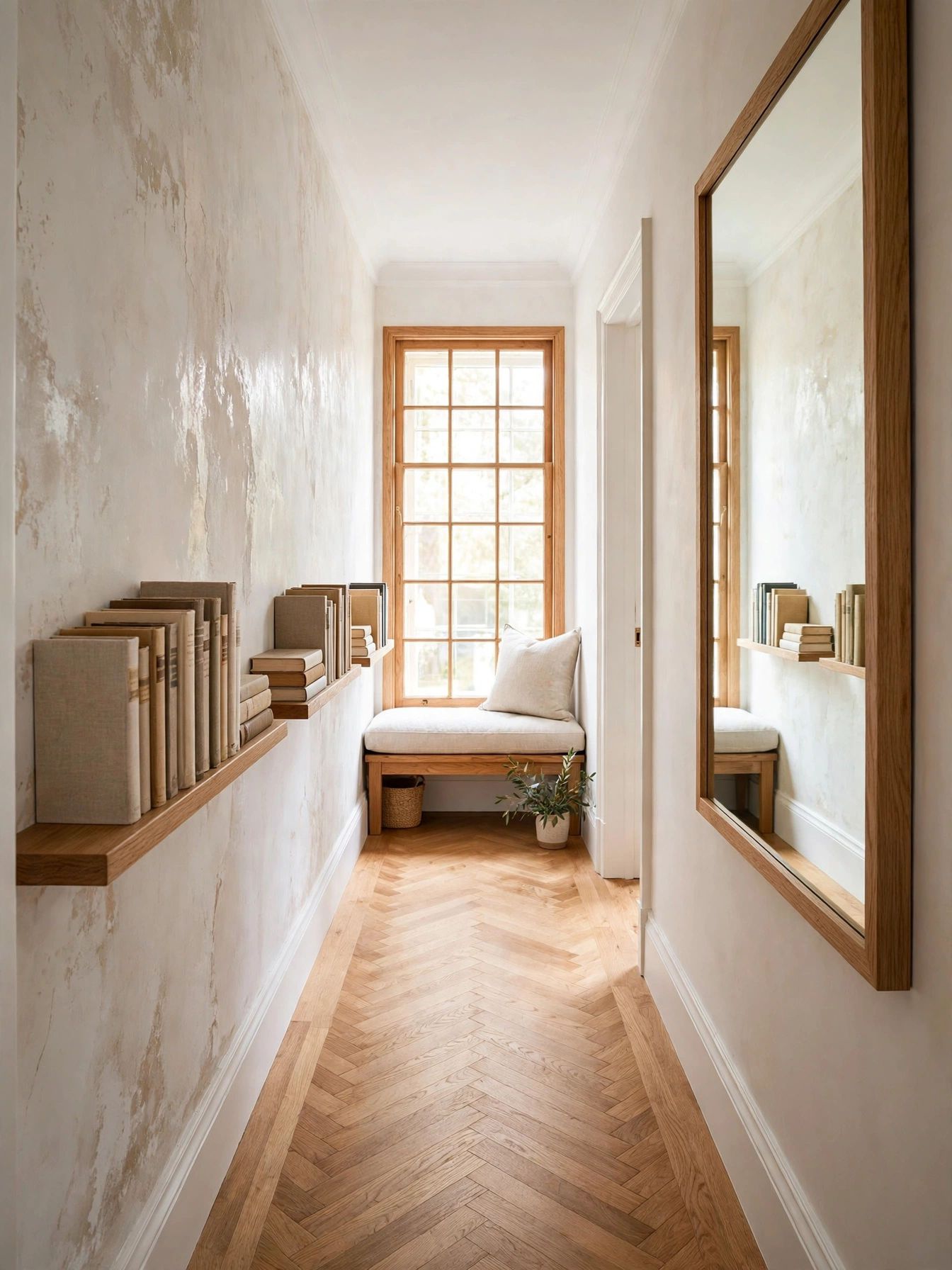
Hallway End Caps
Why This Works:
- Dead-end hallways typically waste a 3 by 3 foot square at their terminus.
- A window at the hallway end gives the nook natural light most hallways lack.
- The narrow approach makes arrival feel like entering a secret room.
- It reclaims circulation space as living space, the ultimate small-home win.
Place an 18-inch-deep bench across the hallway end, keeping the approach width at 36 inches minimum per code. A simple upholstered bench 48 inches wide costs 200 to 500 dollars; add wall-mounted book ledges 4 inches deep on one side. Light the nook with a flush-mount ceiling fixture or wall sconce at 2700K, since hallway ends are often dark. Keep the floor clear beyond the bench so the hallway still reads as a passage.
Long corridors in apartments and ranch homes hide this opportunity at the terminus. Hallways under 42 inches wide cannot spare the depth. Versus a console table at the hallway end, the bench invites use instead of just display. The Spruce highlights hallway ends as the most overlooked nook opportunity in small homes.
Pro Tip: Mount a mirror on the side wall opposite the bench; it doubles the window light and makes the 3-foot terminus feel twice as deep.
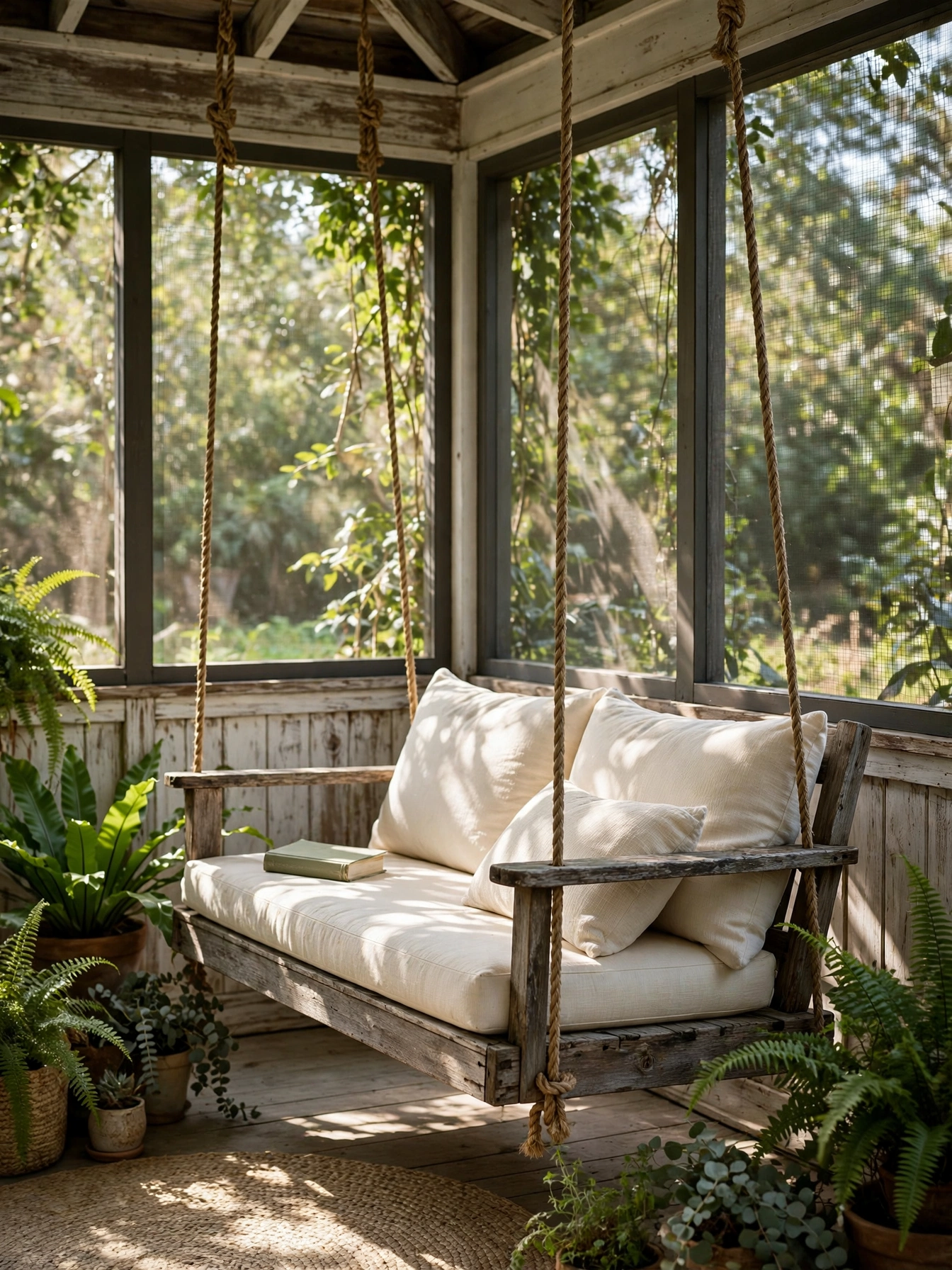
Porch Swing Corners
Why This Works:
- A hanging swing seat adds gentle motion that stills a restless reading mind.
- Corner-mounting the swing uses two walls for stability and enclosure.
- A 48-inch swing bench seats two readers side by side.
- Outdoor-adjacent reading gives fresh air without leaving the house.
Hang the swing from ceiling joists or a rated beam with 3/8-inch rope or chain, each anchor point rated for at least 300 pounds. Keep the seat 18 inches off the floor and 24 inches from each wall for safe swinging clearance. A quality hanging daybed or swing bench runs 300 to 900 dollars; add 4-inch outdoor-rated cushions for 100 to 250 dollars. Inspect the mounting hardware yearly, since constant motion loosens fasteners faster than static loads.
Enclosed porches, sunrooms, and covered patios with structural overhead support all qualify. Standard drywall ceilings cannot hold a swing without hitting joists. Beside a stationary bench, the gentle motion measurably aids relaxation, which is why porch sitters report the best naps. Bring fabric cushions inside during heavy rain unless fully covered.
Pro Tip: Hang the swing with a 2-inch height difference front to back; the slight recline makes reading posture effortless for hours.
FAQs
What makes cozy reading nooks different from just a reading chair?
Enclosure makes the difference. A nook has defined edges, a window seat, an alcove, a curtained corner, that tell the brain this 12-square-foot spot is for reading only. Environmental psychology links defined personal spaces to deeper focus. A chair in the open room never achieves the same retreat feeling.
How much space do I need for a reading nook?
A comfortable nook needs just 12 to 16 square feet: a 4 by 4 foot corner fits floor cushions, while a 3 by 6 foot window seat works for a bench. The smallest viable nook is a 24-inch-deep closet conversion. Measure your forgotten corners before assuming you lack the space.
Are cozy reading nooks expensive to build?
Most nooks cost 200 to 800 dollars using cushions, curtains, and ready-made parts. Carpenter-built window seats and under-stair hideaways run 1,500 to 4,000 dollars. Start with the 300-dollar corner cushion version to prove you will use it, then invest in the built-in version.
What is the best lighting for a reading nook?
Combine daylight with a dedicated 2700K sconce delivering 300 to 500 lux on the page. The American Lighting Association recommends task light aimed over the shoulder to prevent page shadows. Add a dimmer so the nook shifts from bright afternoon reading to soft evening glow.
How do I keep a small nook from feeling cramped?
Keep the palette light, the sightlines open, and every inch functional: 18-inch seat depth, 12-inch book ledges, one light source. The Spruce advises against overstuffing nooks, since one extra pillow can tip cozy into cluttered. Leave 20 percent of surfaces clear and the nook breathes.
Conclusion
The best cozy reading nooks share three traits: a defined edge that says this spot is for reading, light aimed at the page at 300 to 500 lux, and a seat you can sink into for two hours. Start this weekend by claiming your forgotten corner with cushions and a 60-dollar plug-in sconce. Your first action is simple: sit in the candidate spot tonight and read one chapter. Follow HomelyCrafter on Pinterest for more ideas. Save this to your Pinterest boards so you can refer back to it!

Muhammad Israr is a home decor enthusiast and the writer behind Homely Crafter. He spends his days researching paint colors, layouts and budget-friendly styling ideas, then breaks them down into practical, easy-to-follow guides so you can decorate with confidence.