
When was the last time your living room actually felt like a deep breath? Casual coastal living room ideas borrow that easy beach-cottage feeling: sun-bleached wood, rumpled linen, and nothing too precious to put your feet on. This is not the polished navy-and-white nautical look or a surf-shack explosion of color. It is relaxed, breezy, and unfussy, built for real life with sandy feet and salty air. Across 22 ideas, you will learn how to layer jute and linen, pick paint colors that glow in daylight, and style shelves that look collected rather than decorated. Every idea includes real measurements, honest trade-offs, and prices that respect a budget.
Breezy Linen Sofas
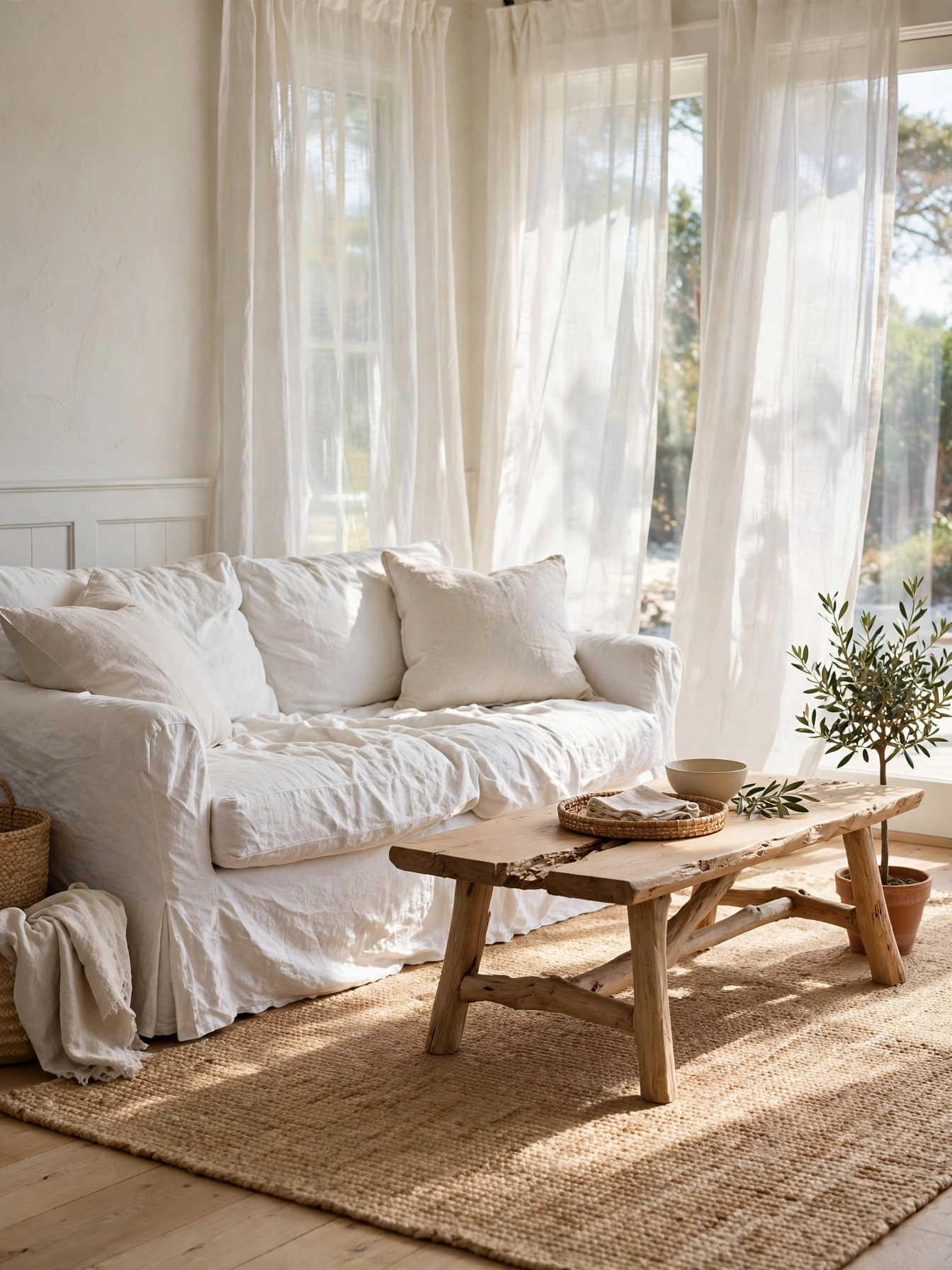
Why This Works:
- Washed linen wrinkles beautifully, so the sofa always looks relaxed, never messy.
- A slipcover washes in the machine, which matters with sandy feet and pets.
- White linen reflects daylight, making the room feel 20 percent brighter.
- The casual drape sets the tone for the entire coastal look.
Choose a slipcovered sofa 84-96 inches wide for standard living rooms, with a seat depth of 22-24 inches for true lounging. Performance linen blends (55-70 percent linen with cotton) resist wrinkling better than pure linen while keeping the relaxed texture. Wash slipcovers in cold water and line dry to prevent the 3-5 percent shrinkage that ruins the fit. Avoid dry-clean-only linen in homes with kids, since spot cleaning never fully works. Versus leather or velvet, linen suits the casual coastal mood better and costs less to maintain. Budget slipcovered sofas run 600-1,000 dollars, mid-range performance-linen versions cost 1,200-2,000 dollars, and premium Belgian linen pieces start near 3,000 dollars.
Beach-house owners and laid-back families get the most from this anchor piece. The honest trade-off is upkeep: white linen shows every mark, so keep a fabric-safe stain remover within reach. Re-slip the cover inside out every 6 months to even out sun fading. If the rumpled look bothers a tidy partner, compromise with a tailored slipcover that still washes easily.
Pro Tip: Buy one extra slipcover in a sand tone; rotating covers every 3 months halves the fading and doubles the sofa’s fresh life.
Casual Coastal Palette

Why This Works:
- Warm white walls (LRV 80-88) bounce daylight without the cold glare of stark white.
- One sea-glass accent color keeps the palette calm instead of theme-park coastal.
- Sandy neutrals hide beach dust far better than dark colors.
- The palette works year-round, not just in summer.
Paint main walls in a warm white like Benjamin Moore White Dove (LRV 85) and reserve muted sea-glass or pale aqua for one accent wall or the ceiling. Keep the total palette to 4 colors maximum: warm white, sand, sea-glass, and driftwood gray. Avoid saturated turquoise, which reads as 1990s beach theme rather than casual coastal. Against navy-and-white nautical schemes, this softer palette feels grown-up and photographs better in natural light. Test paint in 2×2 foot swatches and observe at morning, noon, and dusk, since coastal light shifts dramatically.
Anyone repainting a dark or dated living room gets the biggest transformation per dollar. One drawback is that pale walls mark easily; choose washable eggshell or satin finishes, never flat, in high-traffic homes. A gallon of quality paint covers 350-400 square feet and costs 45-70 dollars; most living rooms need 3-4 gallons. Repaint the accent wall every 4-5 years to keep the color fresh.
Pro Tip: Paint the ceiling the same warm white at 50 percent strength to lift the room without a visible color change.
Driftwood Coffee Tables
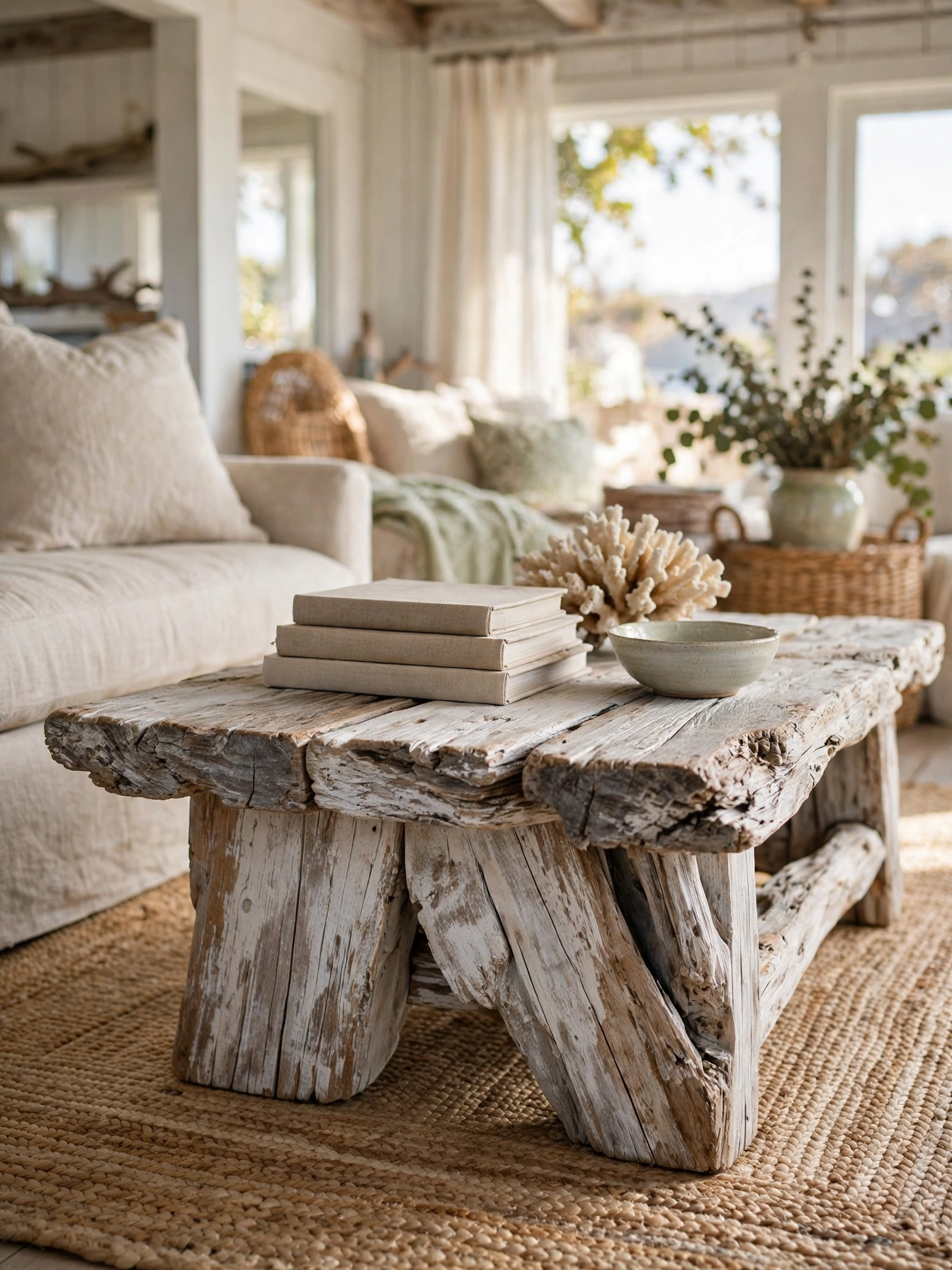
Why This Works:
- Weathered wood brings the beach indoors without a single seashell cliché.
- The whitewash finish lightens heavy wood so it suits small bright rooms.
- Every driftwood piece is unique, which gives the room a collected feel.
- Rough texture contrasts beautifully with smooth linen upholstery.
Size the coffee table at two-thirds the sofa’s length: a 90-inch sofa pairs with a 48-60 inch table, 16-18 inches tall. Keep 14-18 inches of clearance between the table edge and the sofa for comfortable leg room. Seal reclaimed wood with matte polyurethane, since raw driftwood sheds splinters and absorbs spills. Avoid glass-top driftwood tables in homes with toddlers; solid tops are safer and hide clutter. Relative to polished wood tables, whitewashed driftwood hides scratches and water rings far better. Budget driftwood-look tables run 150-350 dollars, genuine reclaimed pieces cost 400-900 dollars, and custom live-edge slabs start near 1,200 dollars.
Rustic-coastal lovers and anyone tired of matchy furniture sets will feel at home. What you give up is weight: solid reclaimed tables can exceed 80 pounds, so they are not easy to rearrange. Check reclaimed pieces for woodworm holes and musty smells before buying, since beach-salvaged wood sometimes carries both. A furniture wax reapplied yearly keeps the whitewash from yellowing.
Pro Tip: Style the table top in thirds: books on one end, a bowl in the middle, and one sculptural piece on the other end.
Stacked Jute Area Rugs
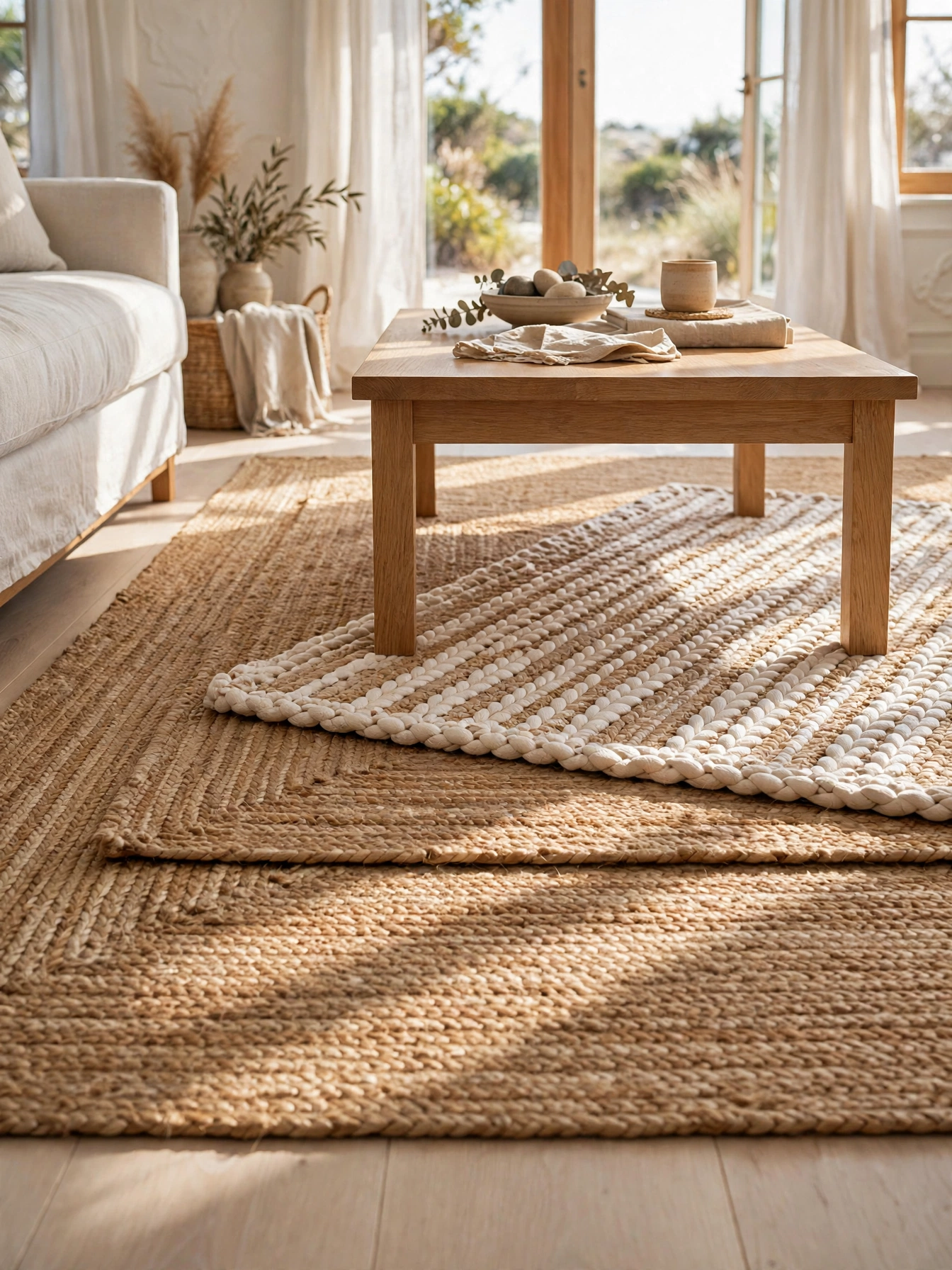
Why This Works:
- Layering two rugs adds the texture that makes coastal rooms feel rich, not flat.
- Jute’s nubby weave hides sand and crumbs between vacuuming.
- The top cotton rug softens jute’s roughness under bare feet.
- Offsetting the top rug creates a casual, unstaged look.
Start with a large jute rug 8×10 feet for standard rooms, then layer a 5×7 foot flatweave cotton rug on top, offset 6-8 inches to one side. All furniture front legs should sit on the bottom rug, which means measuring the seating area before buying. Avoid thick pile on top of jute, since doors and furniture wobble on stacked height over 1 inch total. In contrast to a single rug, layers cost more but let you swap the top rug seasonally for a fresh look. Vacuum jute without a beater bar, which snags the weave; suction-only mode preserves it for years.
Barefoot households and texture lovers get the coziest payoff. The catch is shedding: new jute rugs shed fibers for 2-3 months, so vacuum twice weekly at first. Jute 8×10 rugs cost 120-300 dollars, cotton flatweaves run 60-150 dollars, and a rug pad underneath adds 40-80 dollars but prevents slipping. Rotate the top rug quarterly for even wear.
Pro Tip: Choose a top rug with a subtle stripe or border; the pattern defines the seating zone inside the larger jute field.
Whitewashed Wood Floors

Why This Works:
- Pale floors reflect light upward, which brightens the whole room for free.
- Whitewash softens wood grain so floors feel calm, not busy.
- Light floors make small coastal rooms feel noticeably larger.
- Sand and dust show less on pale wood than on dark floors.
Whitewash existing floors with a 1:1 mix of white paint and water, applied with the grain and wiped back within 5 minutes for a translucent finish. Seal with 3 coats of matte water-based polyurethane, sanding lightly with 220-grit between coats. Avoid whitewashing over damaged or uneven stain, since the wash highlights flaws rather than hiding them. Stacked against full refinishing to a pale stain, whitewash costs 80 percent less and suits DIY weekends. This is a dusty, fume-heavy project, so bring in a pro floor refinisher if anyone in the home has respiratory issues or the area exceeds 400 square feet.
Renters can fake the effect with pale peel-and-stick planks at 1-3 dollars per square foot. The price you pay is durability: whitewash shows wear paths in 2-3 years in high-traffic homes, though touch-ups blend easily. Professional whitewashing costs 3-6 dollars per square foot. Keep a small jar of the wash mix for quick scuff repairs.
Pro Tip: Test the wash on a closet floor first; oak takes whitewash evenly while pine can turn pinkish without a gray-tinted base.
Slipcovered Armchairs

Why This Works:
- A pair of slipcovered chairs creates instant symmetry without stiffness.
- Machine-washable covers survive kids, dogs, and red wine.
- White chairs bounce light into the room’s darker corners.
- They cost half what upholstered accent chairs in performance fabric do.
Look for chairs 28-32 inches wide with seat heights of 17-19 inches to match standard sofa proportions. Cotton duck slipcovers (10-12 oz weight) hold their shape better than lightweight linen on chair frames. Wash in cold water every 2-3 months and put covers back on slightly damp for the smoothest fit. Avoid placing white chairs in direct all-day sun, since UV yellows cotton within 18-24 months. Put beside fixed upholstery, slipcovers let you change the room’s color for the price of new fabric. Budget slipcovered chairs run 200-450 dollars each, mid-range solid-wood-frame versions cost 500-900 dollars each.
Families and pet owners get seating that actually survives real life. A real downside is the casual wrinkle: if tailored looks matter to you, this style will always feel slightly undone. Buy chairs with removable cushion covers too, so every fabric surface washes. A handheld steamer smooths slipcovers in 5 minutes before guests arrive.
Pro Tip: Tuck the slipcover’s excess fabric into the chair’s crevices with a wooden spoon handle for a crisp, tailored finish.
Casual Coastal Living Room Ideas With Rattan Pendants

Why This Works:
- Woven shades cast dappled light patterns that feel like sun through palm leaves.
- Natural rattan adds the texture coastal rooms need at ceiling height.
- Two pendants over a coffee table create a focal point in rooms with high ceilings.
- They read expensive while costing far less than designer lighting.
Hang pendants 30-36 inches above the coffee table surface, spacing two shades 24-30 inches apart center to center. Choose shades 18-24 inches in diameter for standard 8-9 foot ceilings; larger rooms handle 28-inch shades. Use dimmable 2700K LED bulbs at 800 lumens each for warm evening light. Avoid hanging rattan pendants in rooms with ceiling fans nearby, since the swing can tangle; keep 24 inches of clearance. When measured against drum shades, rattan gives directional texture and hides dust better. Budget rattan pendants cost 40-90 dollars each, mid-range handwoven versions run 120-250 dollars each.
Homes with high or vaulted ceilings get the most drama per dollar. The exchange is cleaning: woven shades collect dust in their crevices, so vacuum with a brush attachment quarterly. If your ceiling lacks a junction box where you want the pendants, an electrician can add one for 150-300 dollars, which is money well spent for centered lighting.
Pro Tip: Install the pendants on a dimmer switch; rattan looks magical at 30 percent brightness in the evening.
Sea Glass Accents
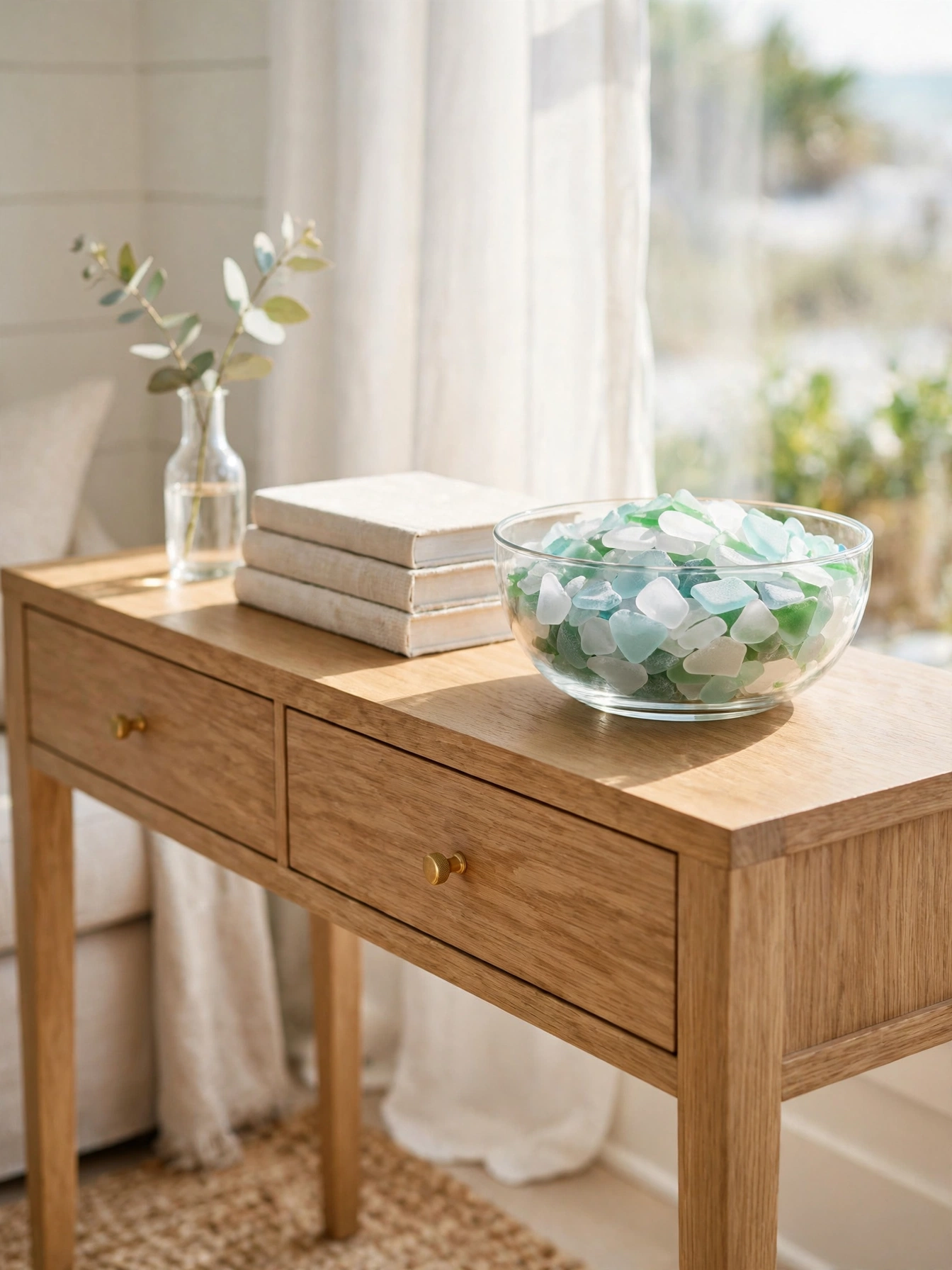
Why This Works:
- Sea glass adds authentic coastal color without themed kitsch.
- The frosted texture catches light beautifully on sunny shelves.
- One bowl delivers the accent; restraint keeps it classy.
- Genuine pieces cost little and carry real beach memories.
Fill a clear glass bowl 6-8 inches wide with 2-3 cups of tumbled sea glass in aqua, white, and pale green. Place the bowl where daylight hits it, since backlighting makes the colors glow. Avoid scattering sea glass across multiple surfaces, which reads as clutter; one contained display stays elegant. Set against coral or shells, sea glass suits modern coastal rooms better and never looks dusty. Genuine beach-found glass is free, while craft-store tumbled glass costs 8-15 dollars per bag.
Beachcombers finally have a use for their collections. The main risk is authenticity debates; nobody will know or care if yours is craft-store glass, so skip the worry. Keep the bowl away from table edges in homes with toddlers, since glass plus small pieces is a bad combination. A lidded apothecary jar works as a safer alternative.
Pro Tip: Mix in three or four cobalt blue pieces among the aqua; the deep contrast makes the whole bowl look richer.
Casual Coastal Textures

Why This Works:
- Layering 4-5 natural textures creates richness without adding a single color.
- Texture is what separates designed coastal rooms from plain white ones.
- Every texture invites touch, which makes the room feel welcoming.
- Natural fibers age gracefully, getting softer and better looking.
Combine at least four textures: smooth linen, nubby jute, chunky knit, and woven seagrass or rattan. Distribute them across seating, floor, and storage so no single zone feels flat. Avoid synthetic textures that mimic naturals poorly, like plastic “wicker”; the eye reads the difference instantly. Versus color-based decorating, texture layering works in any light and never clashes. The Spruce’s coastal guides consistently rank texture as the number-one element that makes beach style feel intentional rather than bare.
Minimalists who fear boring white rooms get depth without color commitment. The balancing cost is dust: textured surfaces trap it, so shake out throws weekly and vacuum upholstery monthly. Building a texture collection costs 80-200 dollars total if you shop sales: a knit throw, two jute pillows, and a seagrass basket. Rotate textures seasonally, storing off-season pieces in breathable cotton bags.
Pro Tip: Photograph the sofa in black and white; if the textures still look interesting, your layering is working.
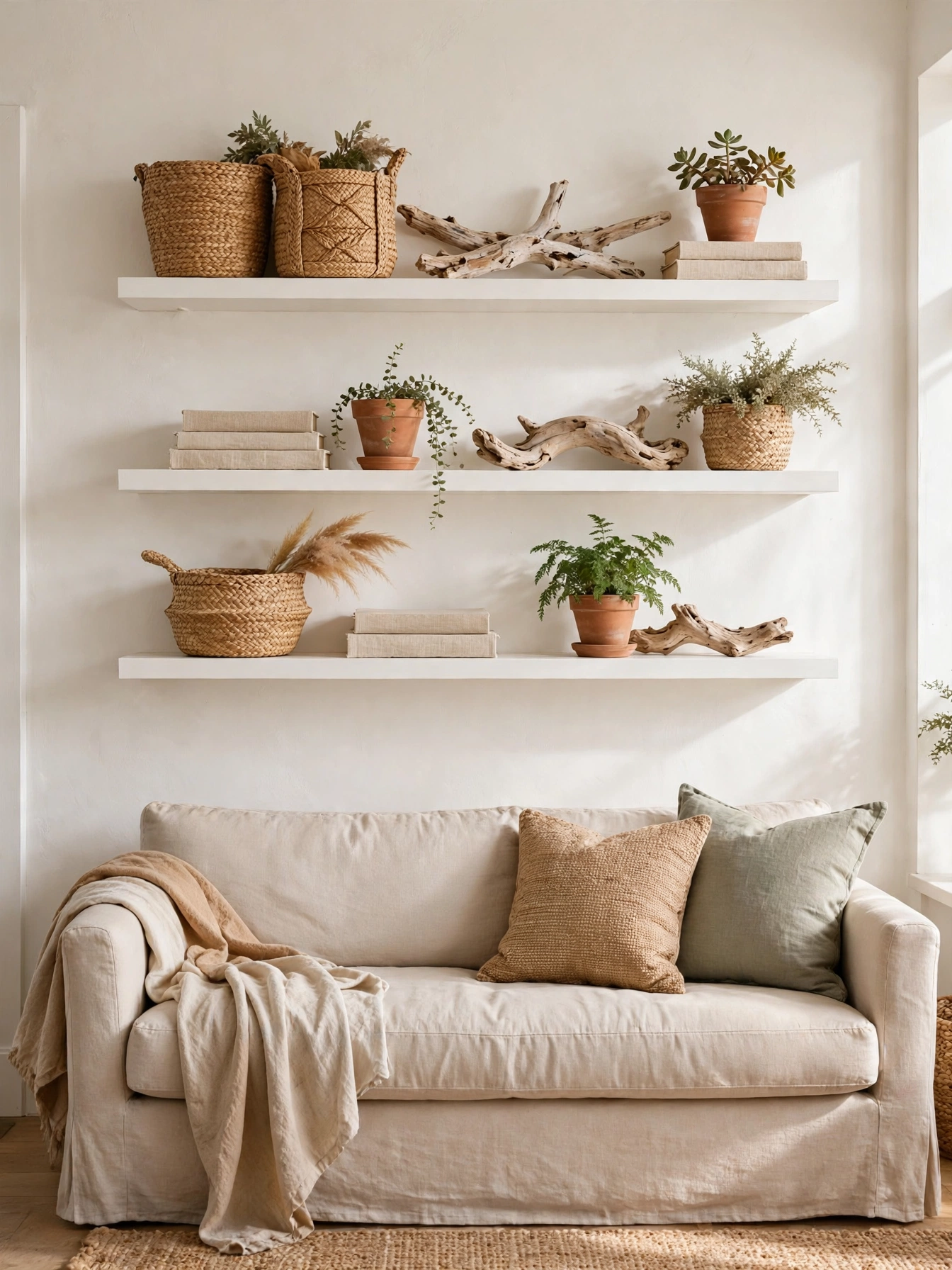
Open Shelving Displays
Why This Works:
- Open shelves show off collected coastal finds that closed cabinets would hide.
- Styling in odd-numbered groups looks natural and unforced.
- Breathing room between objects keeps shelves airy, not cluttered.
- Swapping one shelf’s contents refreshes the whole wall for free.
Mount shelves 12-16 inches apart vertically, keeping the lowest shelf 48-54 inches from the floor above sofa height. Style each shelf to 60 percent fullness maximum, grouping items in threes with varied heights. Anchor shelves into studs with brackets rated for 50+ pounds, since books get heavy fast. Avoid placing shelves where the TV’s glare hits them, because reflective ceramics will distract during movies. Against bookcases, floating shelves cost less and feel lighter in small rooms. Budget floating shelves run 20-45 dollars each, solid oak versions cost 60-120 dollars each.
Collectors and anyone with beach finds finally get a display home. The weak point is dust: open shelves in coastal homes collect it quickly, so a monthly wipe-down is non-negotiable. Keep everyday items off display shelves; these are for beautiful things only. A small step stool stored nearby makes restyling painless.
Pro Tip: Leave one shelf nearly empty with a single sculptural piece; the negative space makes the styled shelves look intentional.
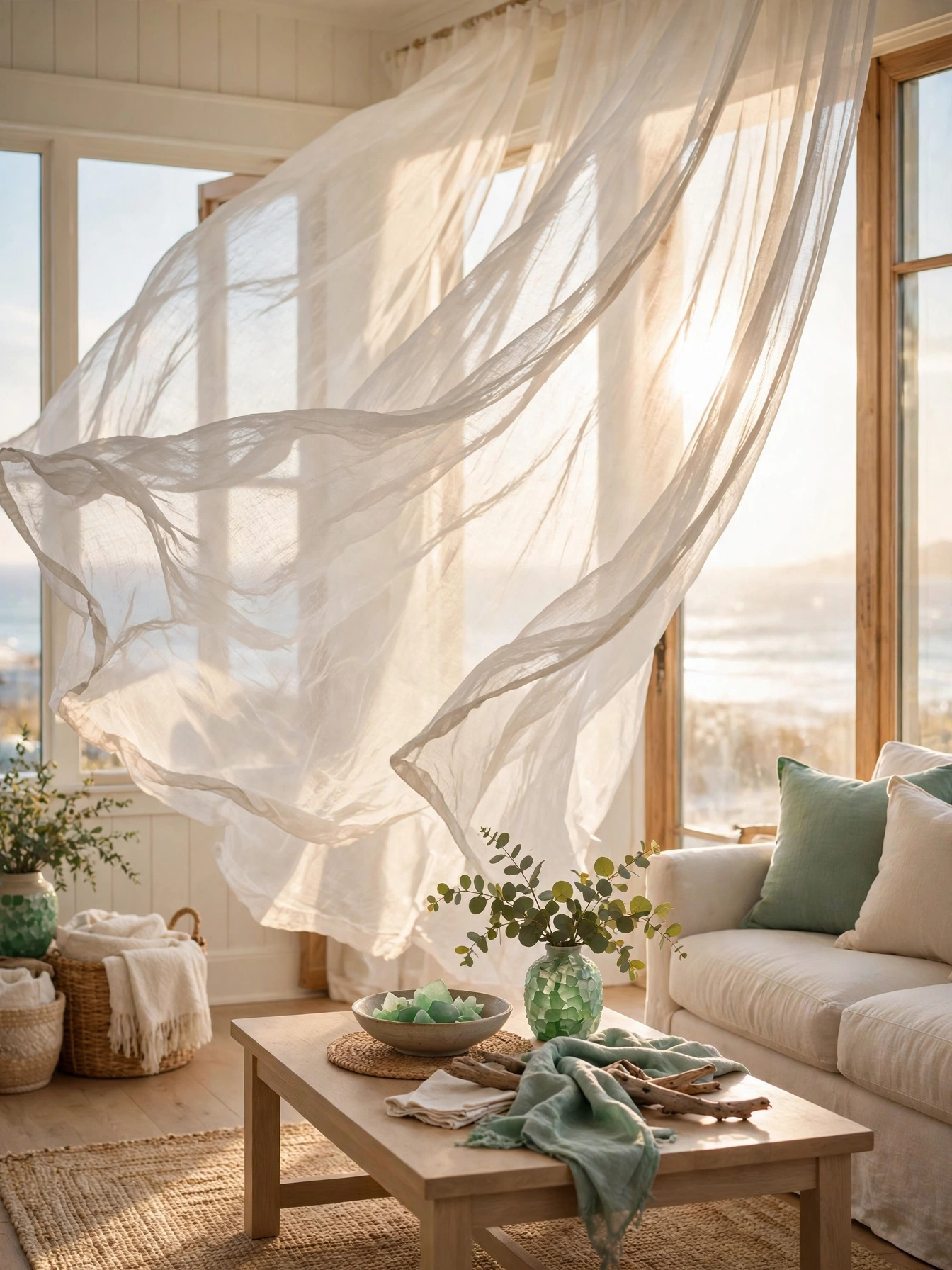
Sheer Curtain Breezes
Why This Works:
- Sheers diffuse harsh sunlight into a soft glow that flatters everything.
- The billowing fabric literally moves with the breeze, adding life.
- Floor-to-ceiling length makes 8-foot ceilings feel a foot taller.
- They provide daytime privacy without blocking the view.
Hang curtain rods 4-6 inches above the window frame and 8-12 inches wider on each side so sheers stack clear of the glass. Choose panels 2-2.5 times the window width for proper fullness; skimpy sheers look cheap. Linen sheers 108 inches long suit standard 8-foot ceilings with a 1-inch puddle. Avoid heavy blackout curtains as the main layer in coastal rooms, since they kill the breezy effect; layer them behind sheers if you need darkness. Relative to blinds, sheers soften the whole room and cost less. Budget linen-look sheers run 15-30 dollars per panel, real linen versions cost 40-80 dollars per panel.
Anyone with great natural light gets a free lighting upgrade. One thing to watch is nighttime privacy: sheers alone show silhouettes after dark, so add a roller shade behind them. Wash sheers every 3-4 months, since coastal dust dulls them. Iron or steam while slightly damp for a crisp hang.
Pro Tip: Leave windows cracked 2 inches on breezy days; the moving curtains become the room’s best decoration.
Weathered Beam Details

Why This Works:
- Beams add architecture to plain drywall ceilings for a fraction of real timber cost.
- The whitewash keeps them light so they never darken the room.
- They draw the eye up, which makes the whole space feel grander.
- Faux beams weigh 5-8 pounds each, so most ceilings handle them easily.
Space beams 4-6 feet apart across the ceiling’s shorter dimension, using hollow faux-wood boxes 6×8 inches in profile. Mount with construction adhesive plus screws into ceiling joists, never drywall alone. Whitewash with the same 1:1 paint-water mix used on floors for a cohesive finish. Avoid real reclaimed beams in standard homes, since they weigh 100+ pounds and need structural assessment. In contrast to a full ceiling redo, faux beams install in a weekend for 200-500 dollars total. Hire a professional if your ceiling has unknown wiring paths or you need new lighting routed between beams.
Owners of plain new-build living rooms get instant character. The concession is dust: beam tops collect it, so run a duster along them monthly. Faux beam kits cost 8-15 dollars per linear foot. In rooms under 8 feet, skip beams entirely; they lower the perceived ceiling.
Pro Tip: Run a string of warm fairy lights along the top of one beam for a subtle evening glow that highlights the texture.
Soft Blue Pillows

Why This Works:
- Soft blue is the one color every coastal room can handle without trying.
- Mixing pillow textures keeps the arrangement from looking like a set.
- Five pillows on a standard sofa hits the full-but-not-crowded sweet spot.
- Swapping pillow covers seasonally costs less than any other refresh.
Use the 2-2-1 formula: two 20-inch squares at the back, two 18-inch in front, one 16-inch lumbar centered. Choose down-alternative inserts 2 inches larger than the cover for a plump, designer look. Stick to 3 tones maximum (powder blue, sea-glass, sand) so the mix stays calm. Avoid tiny 12-inch pillows on full-size sofas, since they look lost and get buried. Stacked against patterned pillows, solids in varied textures age better and mix with future purchases. Budget pillow covers run 10-20 dollars each, quality linen covers cost 25-45 dollars each, and inserts add 12-25 dollars each.
Anyone nervous about color gets a safe entry point. A genuine concern is the karate-chop debate; fluff pillows by hand instead for a relaxed coastal look. Wash covers every 2-3 months, since light blues show oils from hands and hair. Store off-season covers flat in a drawer, not crammed in a bag.
Pro Tip: Put the darkest pillow in the center; the eye lands there first and the arrangement feels anchored.
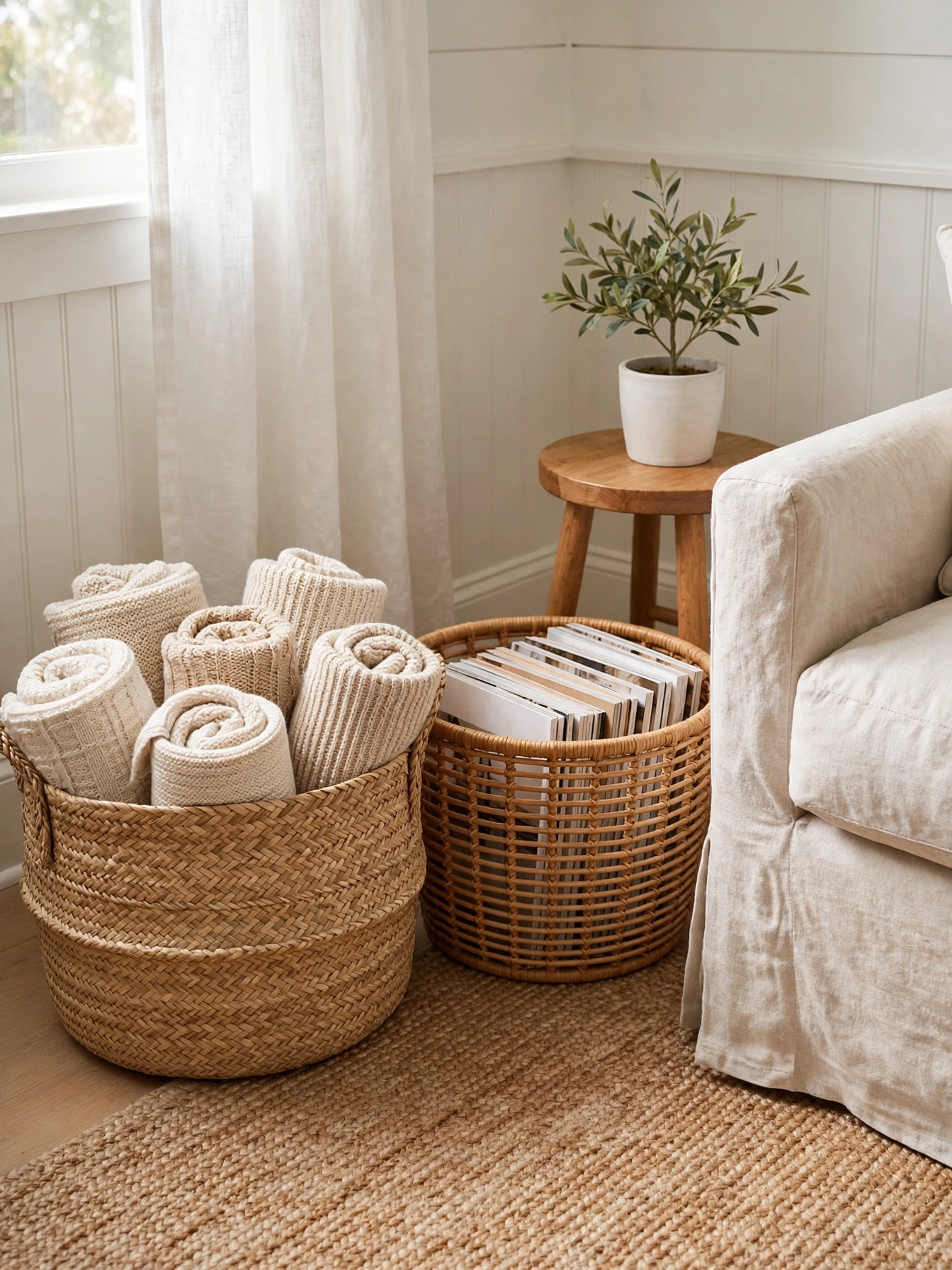
Casual Coastal Living Room Ideas With Woven Baskets
Why This Works:
- Big baskets swallow throws, toys, and magazines in seconds flat.
- The woven texture doubles as decor, so storage never looks utilitarian.
- Light seagrass tones keep storage from visually weighing down the room.
- Handles make them portable for quick whole-room resets.
Choose baskets 16-20 inches tall and 14-18 inches wide for sofa-side use; anything smaller holds nothing useful. Look for tight weaves that contain small items and reinforced rims that survive daily grabbing. Avoid lidded baskets for everyday throws, since lids become a barrier nobody bothers with. Put beside fabric bins, seagrass holds its shape for years and wipes clean. Budget baskets cost 15-30 dollars each, handwoven rattan versions run 35-70 dollars each. The Spruce lists woven baskets among the most versatile living room storage pieces for their dual decor function.
Households that hate visible clutter but love easy access win twice. The downside is capacity creep: baskets invite overfilling, so empty each one monthly and rehome strays. Keep one basket per seating zone maximum, or the room starts looking like a basket shop. Line the base with a cloth napkin to catch crumbs from snack-time throws.
Pro Tip: Roll throws instead of folding them; rolled throws fit 30 percent more per basket and look boutique-hotel tidy.
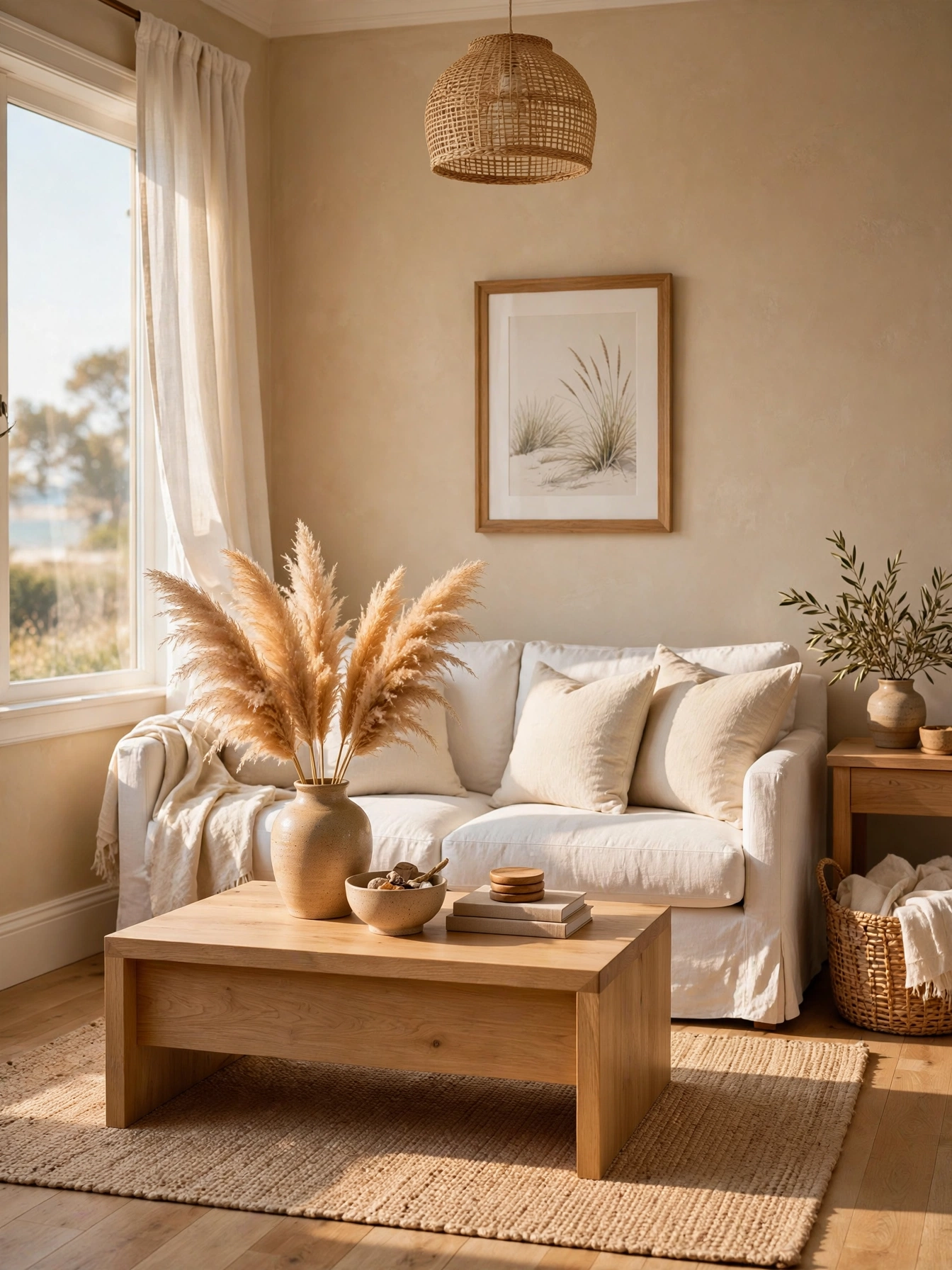
Sandy Neutral Walls
Why This Works:
- Sandy beige warms up rooms that white walls leave feeling stark.
- The tone echoes actual beach sand, which grounds the coastal theme.
- Warm neutrals make wood furniture look richer by contrast.
- It hides scuffs and marks far better than white paint.
Pick a sandy beige with an LRV of 60-70, like Benjamin Moore Manchester Tan, so walls stay light but warm. Pair with crisp white trim (a semi-gloss finish) for definition that keeps beige from looking muddy. Test the color on a 3×3 foot board moved around the room, since beige shifts dramatically under different light. Avoid pink-undertoned beiges in north-facing rooms, which turn them; yellow-green undertones stay truer. When measured against gray walls, sandy beige suits coastal rooms better because it harmonizes with jute, rattan, and oak. A gallon covers 350-400 square feet at 45-70 dollars.
Homes with cool gray floors or lots of white furniture get needed warmth. What it costs you is trend perception: beige had a bad decade, but today’s sandy tones read as intentional, not dated. Repaint every 5-7 years in normal conditions. Keep the ceiling bright white to prevent the room from feeling closed in.
Pro Tip: Paint a sample board and lean it against the sofa fabric; the wall color should be 2-3 shades deeper than your lightest upholstery.
Casual Coastal Corners

Why This Works:
- Every living room has a dead corner; a chair and table turn it into a destination.
- Rattan keeps the corner light so it never feels like an afterthought.
- A dedicated reading spot makes the room feel larger by adding function.
- The palm adds height that corners usually lack.
Fit the corner in a 4×4 foot zone: a 28-inch rattan chair angled 45 degrees, a 16-inch side table, and a floor cushion for feet. Place the arrangement within 3 feet of a window for natural reading light, adding a 3000K floor lamp for evenings. Avoid blocking walkways; keep 30-36 inches of clearance in front of the chair. Set against a full seating group, a corner nook costs under 300 dollars and takes an hour to style. Houzz’s small-space features often highlight reading corners as the highest-value use of awkward room corners.
Readers and anyone with an unused corner get a new favorite spot. The caveat is light: without a nearby window or lamp, the corner goes unused after dark. A rattan chair costs 120-280 dollars, driftwood side tables run 60-150 dollars, and a floor lamp adds 50-120 dollars. Rotate the chair’s cushion monthly for even wear.
Pro Tip: Drape a lightweight throw over the chair’s back; it signals “sit here” better than any styling trick.
Rope Detail Accents
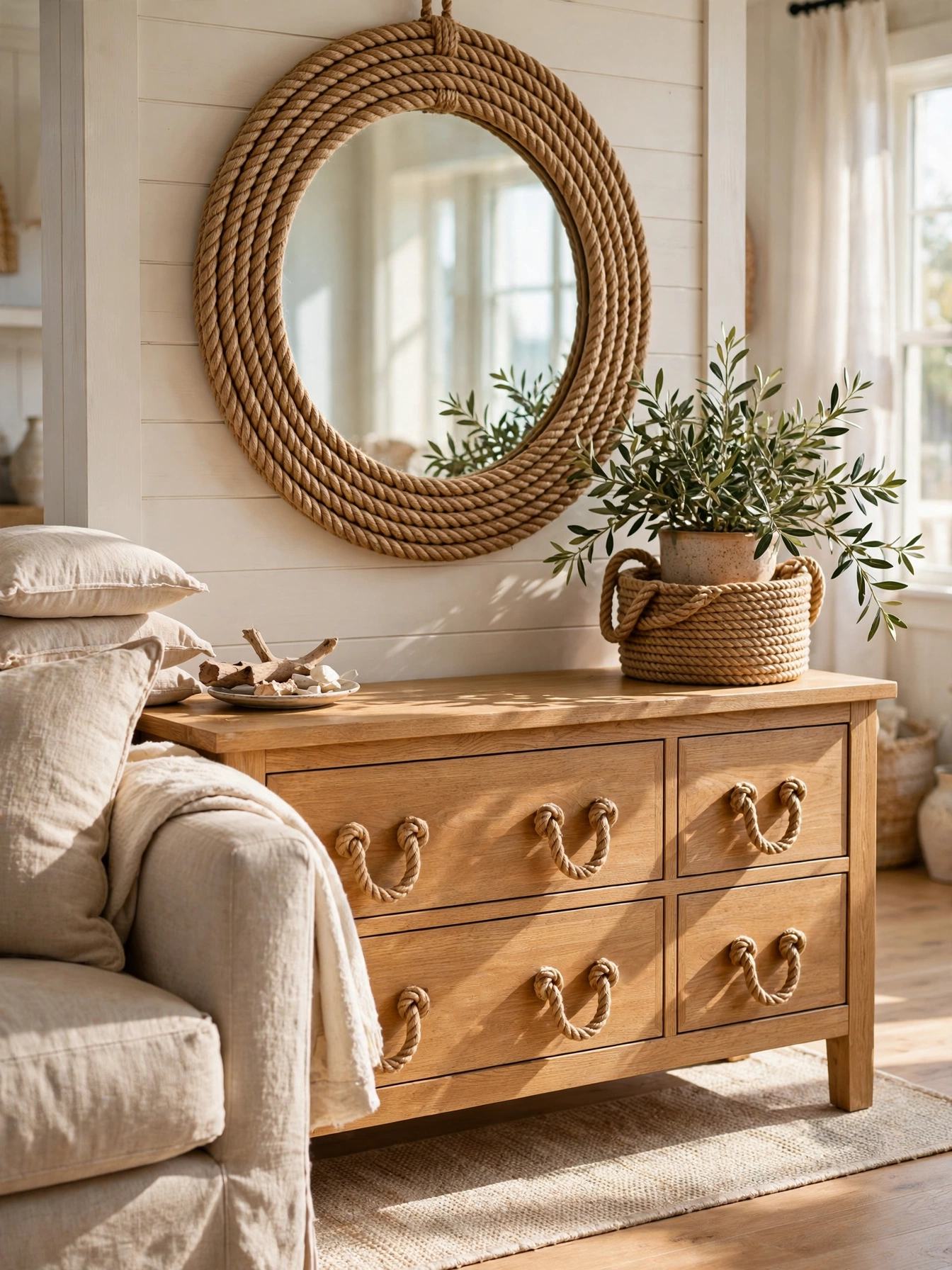
Why This Works:
- Rope nods to the seaside without anchors, wheels, or other clichés.
- Swapping drawer pulls is a 10-minute update with outsized impact.
- The chunky texture adds craft character to plain furniture.
- Natural rope costs almost nothing at hardware stores.
Wrap mirror frames with 3/8-inch manila rope using hot glue, overlapping each coil by a quarter inch for full coverage. Replace cabinet pulls with 6-inch rope loops threaded through existing holes and knotted inside. Buy rope by the foot at 0.50-1 dollar per foot; a mirror needs 15-20 feet. Avoid rope details in humid bathrooms-adjacent walls without sealing, since natural fiber absorbs moisture. Contrasted with new hardware, rope pulls cost 90 percent less and suit the casual mood better. A rope-frame mirror project totals 25-60 dollars including the mirror.
DIYers and renters get maximum style per dollar. The flip side is durability: rope pulls loosen over 1-2 years of daily use, so retie them annually. Keep rope away from open flames, since manila ignites easily. A dab of clear glue on each knot extends their life significantly.
Pro Tip: Soak rope ends in white glue before cutting to prevent fraying; the stiffened ends thread through holes easily.
Light Oak Furniture
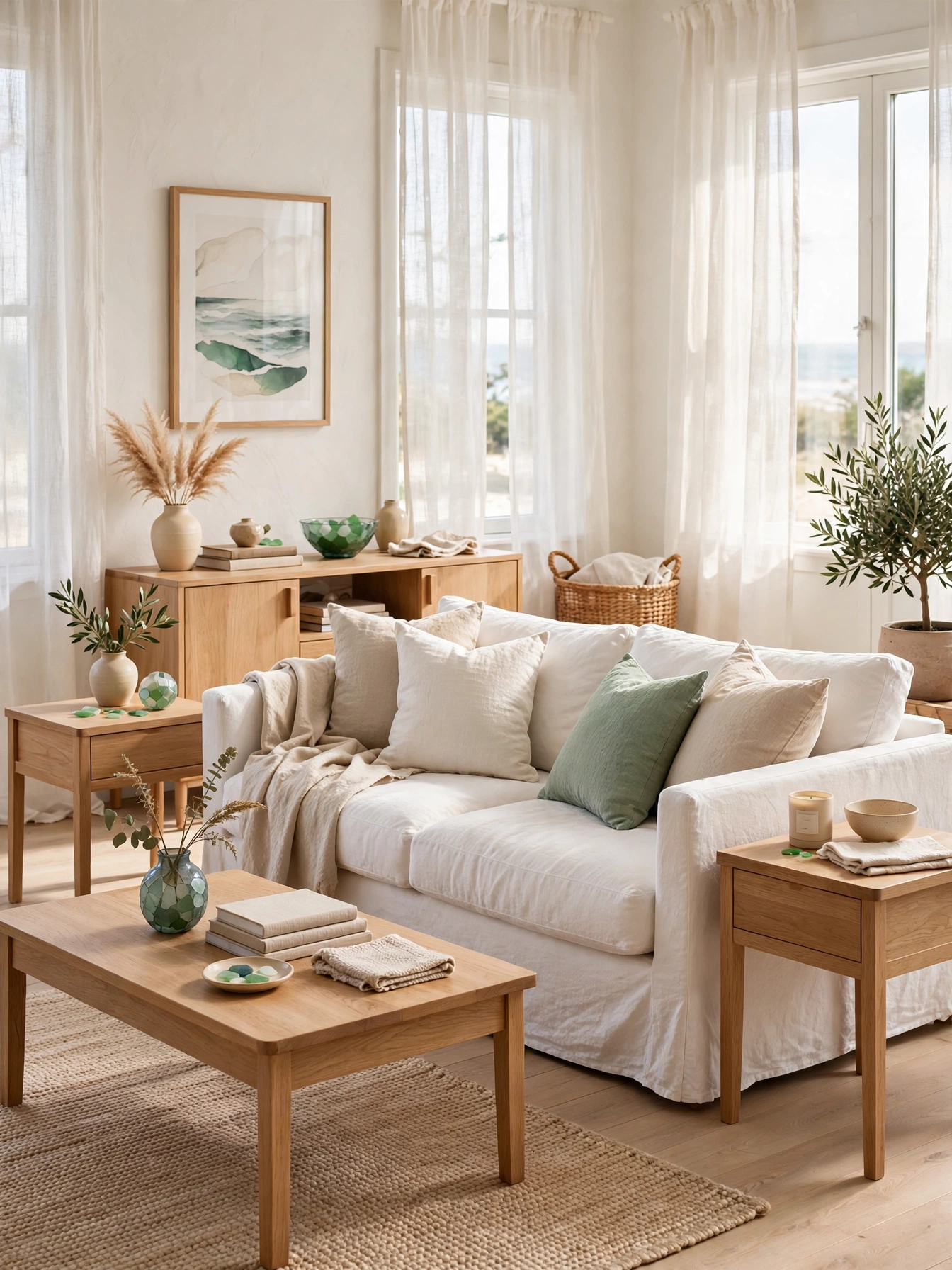
Why This Works:
- One wood tone across furniture creates calm cohesion instantly.
- Light oak reflects daylight, which keeps the room bright all day.
- Its subtle grain never fights with textured coastal fabrics.
- Oak’s hardness (1360 Janka) survives daily beach-life wear.
Commit to one oak finish across the 3-4 main wood pieces: console, coffee table, and side tables. Mixing light oak with dark walnut in the same sightline breaks the airy mood, so keep darker woods in other rooms. Choose pieces with simple lines, since ornate carving reads formal rather than casual. Weighed against painted white furniture, oak hides wear better and needs no touch-up paint. Budget light-oak-look pieces run 100-300 dollars each, solid oak furniture costs 300-800 dollars per piece, and custom pieces start near 1,000 dollars.
Anyone furnishing from scratch gets the simplest path to a cohesive room. One honest drawback is monotony: break up the wood with upholstered and woven pieces so it never feels like a showroom. Oil finished oak yearly with a hardwax oil to keep it glowing; polyurethane needs no maintenance but looks less natural.
Pro Tip: Photograph your wood pieces together before buying; the camera reveals finish mismatches the eye forgives in the store.
Airy Plant Greenery
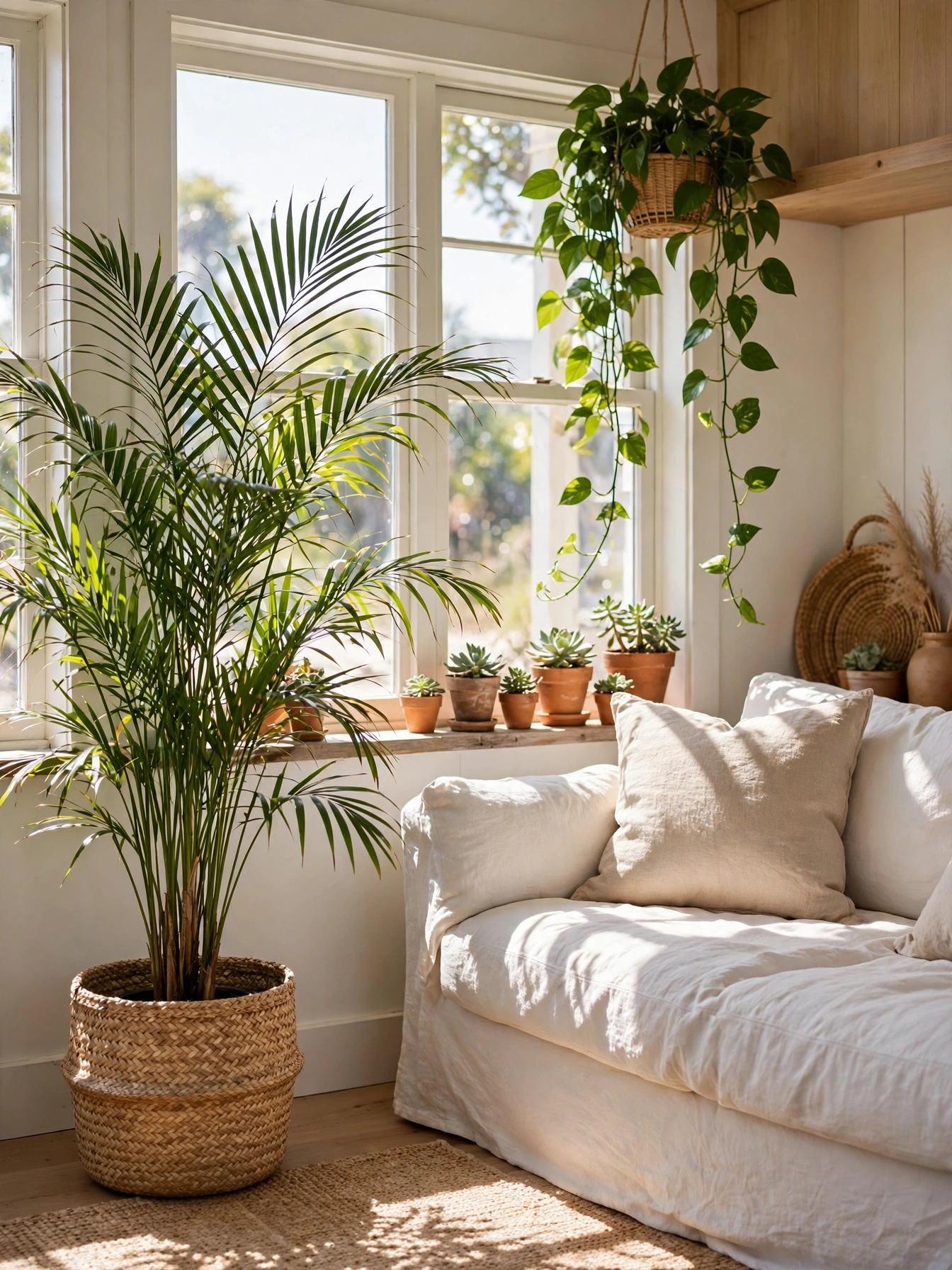
Why This Works:
- Tall palms echo beach vegetation and add the height coastal rooms need.
- Greenery is the only strong color a neutral coastal room requires.
- Plants in woven baskets look styled with zero extra effort.
- Three plant heights (floor, shelf, sill) create a natural rhythm.
Anchor with one 4-6 foot palm in a 12-14 inch basket planter, then add a trailing plant on a shelf and small succulents on the sill. Kentia palms tolerate the lower light of north-facing coastal rooms better than fiddle-leaf figs. Water palms when the top 2 inches dry out, roughly every 7-10 days, and mist leaves weekly in dry climates. Avoid placing plants where AC vents blow directly, since the dry air browns tips within weeks. Measured against cut flowers, living plants cost less over a year and never wilt mid-week. A Kentia palm costs 40-90 dollars, basket planters run 20-45 dollars, and succulents add 4-10 dollars each.
Plant lovers and anyone with great windows get a thriving indoor garden. The give-and-take is commitment: a 5-foot palm needs repotting every 2-3 years into a 16-inch pot. Rotate the basket quarterly so the palm grows straight. The Spruce ranks Kentia palms among the most forgiving indoor palms for beginners.
Pro Tip: Slip the nursery pot inside the basket on a 2-inch riser so water drains away from roots and the plant sits at the basket’s rim.
Vintage Coastal Finds
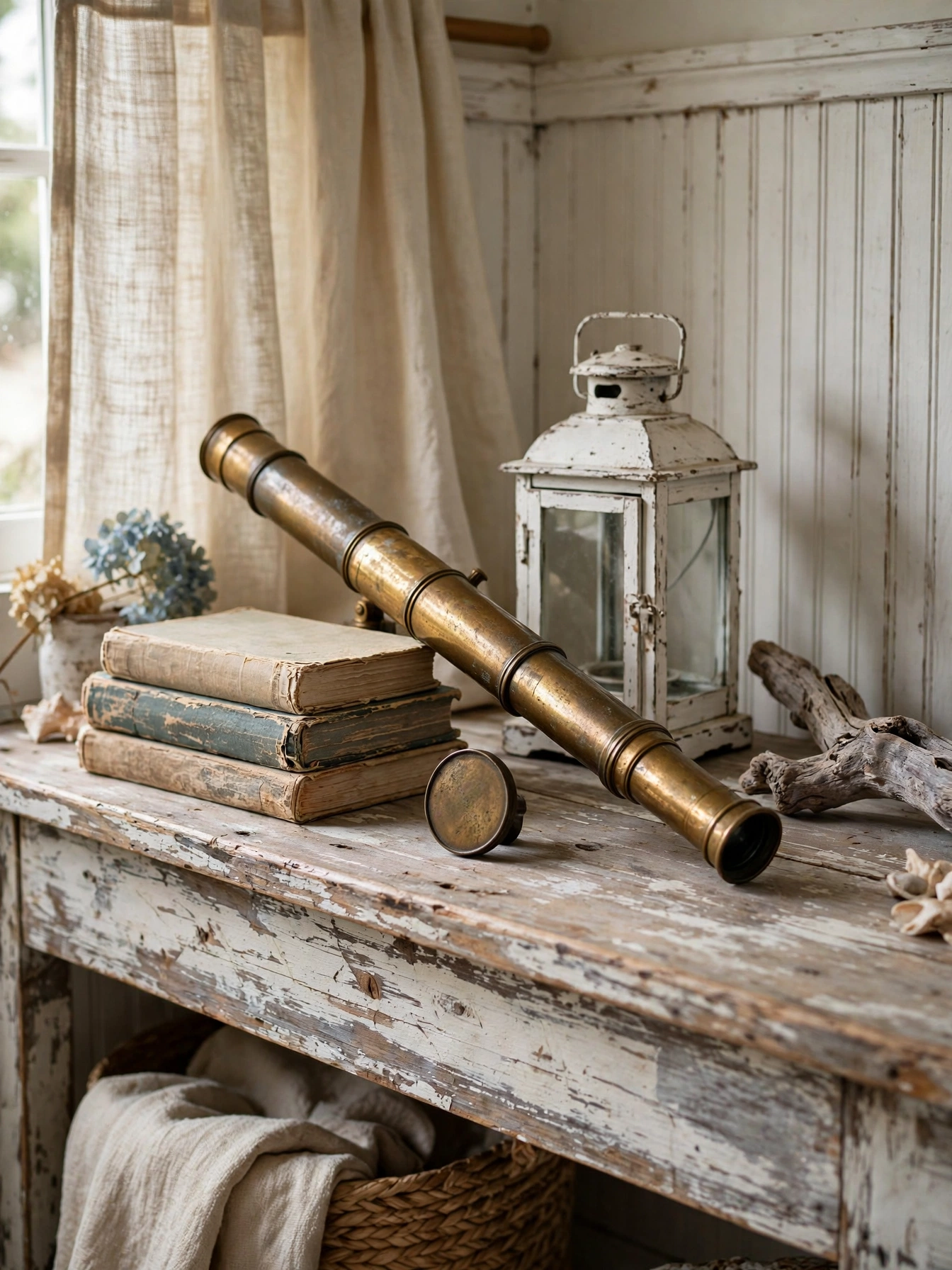
Why This Works:
- One or two vintage pieces give the room a history that new furniture cannot fake.
- Aged brass and worn wood add patina that balances all the fresh linen.
- Vintage finds become conversation pieces guests actually notice.
- Thrifted pieces cost a fraction of reproduction “vintage-look” decor.
Limit vintage to 2-3 statement pieces per room: a telescope, an old oar, or a chippy lantern. Hunt at flea markets and estate sales where brass telescopes run 30-80 dollars and vintage books cost 2-5 dollars each. Check old wood for active woodworm (fine dust piles) and brass for lead paint before bringing pieces indoors. Avoid filling the room with vintage, since the look tips from collected to cluttered fast. Side by side with new coastal decor, genuine vintage carries texture and wear patterns that reproductions only imitate. Clean brass with a lemon-salt paste, then seal with clear wax to slow retarnishing.
Treasure hunters and anyone bored with big-box decor get soul for the room. The practical snag is patience: the right piece takes months to find, so enjoy the hunt. Budget 50-150 dollars total for 2-3 finds; the thrill is in the search, not the spend. Photograph your room’s palette on your phone to check finds against it in the field.
Pro Tip: Buy the weird piece you love even if you have no spot for it; vintage finds earn their place within a week.
Sunlit Casual Coastal Living Room Ideas for Reading Nooks

Why This Works:
- A window seat turns dead window space into the home’s favorite seat.
- Built-in storage underneath hides blankets and board games.
- Striped linen cushions add classic coastal pattern without fuss.
- Natural light makes it the best reading spot in the house.
Build or buy a window seat 18-22 inches deep and 20-24 inches tall including a 4-inch cushion, which matches standard dining seat height. Add hinges to the top for storage access, with a 12-inch-deep interior that swallows throw blankets. Use outdoor-rated striped fabric for the cushion, since window seats get intense UV; solution-dyed acrylic resists fading for 5+ years. Avoid placing the seat where direct afternoon sun hits readers’ eyes; sheer curtains solve the glare. Next to a freestanding chair, a window seat uses zero floor space. Ready-made window seat benches cost 200-500 dollars, custom built-ins run 800-2,000 dollars.
Homes with deep windowsills or bay windows get a magical upgrade. The offsetting cost is cushion cost: quality 4-inch custom cushions run 150-300 dollars. Measure the window recess twice; a 1-inch gap looks sloppy. Add a small side table within arm’s reach for tea.
Pro Tip: Choose a cushion cover with a zipper and washable fabric; window seats collect more dust and sun than any other seat.
Barefoot Friendly Floors
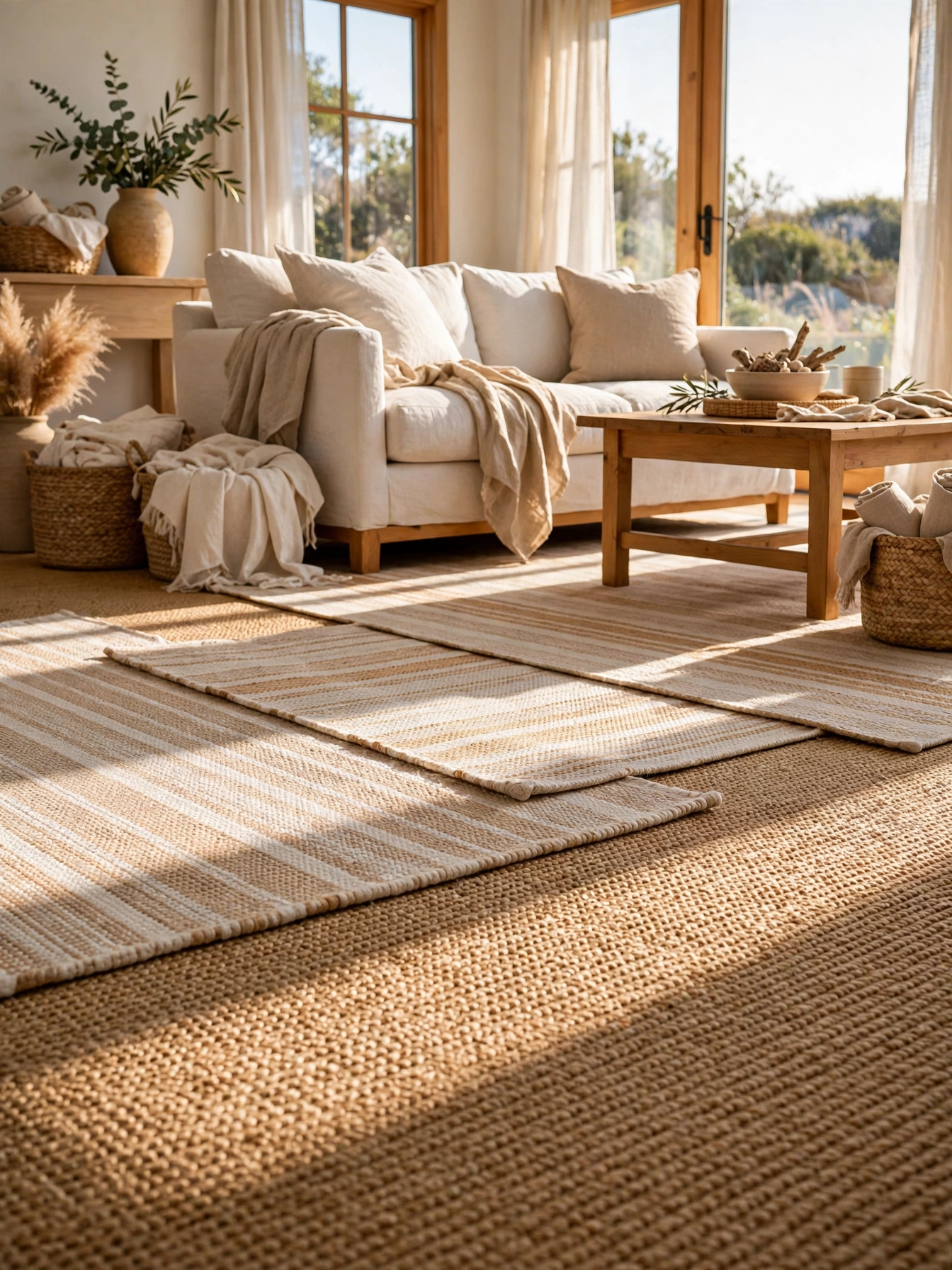
Why This Works:
- Natural-fiber floors invite bare feet, which is the whole point of coastal living.
- Flatweave rugs over hard floors give softness without trapping sand.
- Textured floors hide the daily debris beach life tracks in.
- The look stays cool in summer and layers warm in winter.
Choose low-pile natural-look flooring or layer flatweave cotton rugs (under 0.5 inch pile) over existing hard floors. Shake flatweaves outdoors weekly; sand falls through the weave instead of grinding in. Avoid high-pile rugs in sandy homes, since they trap grit that damages fibers. Holding it next to wall-to-wall carpet, flatweaves wash or replace cheaply when stained. Budget flatweave rugs run 80-200 dollars for 8×10, mid-range wool flatweaves cost 300-600 dollars. HGTV’s coastal guides note that easy-clean floors are the number-one practical feature of real beach houses.
Beach-adjacent homes and families with kids get floors that forgive everything. The hidden cost is comfort: natural fibers feel firm, so add cushioned rug pads (0.5 inch memory foam) underneath for 40-80 dollars. Rotate rugs seasonally to even out sun fading. A no-shoes rule at the door multiplies the floors’ lifespan.
Pro Tip: Keep a basket of rolled hand towels by the door; sandy feet get a quick wipe before hitting the rugs.
FAQs
What defines casual coastal living room ideas versus other coastal styles?
Casual coastal means relaxed and unfussy: washed linen, weathered wood, and sandy neutrals you can live with daily. HGTV describes it as beach-cottage comfort over nautical theme. Skip anchors and navy stripes; choose texture, light, and pieces that survive sandy feet and salty air.
What colors work best in a casual coastal living room?
Build on warm white walls with an LRV of 80-88, then layer sand, sea-glass green, and driftwood gray. Keep the palette to 4 colors maximum so the room stays calm. Powder blue pillows add the classic coastal note without overwhelming the neutrals.
How do I keep casual coastal living room ideas practical with kids and pets?
Choose machine-washable slipcovers, flatweave rugs under 0.5 inch pile, and woven baskets for fast toy pickup. The Spruce recommends performance linen blends for family homes. Shake rugs outdoors weekly and keep a fabric-safe stain remover handy for the inevitable spills.
Can I get the coastal look without painting everything white?
Yes. Sandy beige walls with an LRV of 60-70 warm up the room while staying coastal, and light oak furniture keeps things bright. The American Lighting Association notes warm neutrals flatter wood tones beautifully. Add sea-glass accents for color without committing whole walls to it.
What is the cheapest way to start a coastal refresh?
Begin with textiles: washed linen-look curtains at 15-30 dollars per panel, two jute pillows at 20-40 dollars each, and a seagrass basket at 15-30 dollars. This 100-dollar refresh changes the room’s feeling immediately. Add paint and furniture later as the budget allows.
Conclusion
A casual coastal living room is really three decisions: a breezy neutral palette, touchable natural textures, and furniture you never have to baby. These casual coastal living room ideas prove the look works far from the beach too, as long as light and texture lead. Take one first step this weekend: hang sheer linen curtains or layer a jute rug under your coffee table. Follow HomelyCrafter on Pinterest for more ideas. Once the room breathes easier, you will wonder why every space cannot feel this relaxed. Save this to your Pinterest boards so you can refer back to it!

Muhammad Israr is a home decor enthusiast and the writer behind Homely Crafter. He spends his days researching paint colors, layouts and budget-friendly styling ideas, then breaks them down into practical, easy-to-follow guides so you can decorate with confidence.