
Why do some homes feel like Christmas the moment you walk in, while others just have a decorated tree in the corner? The difference is rarely money. It is coordination: a little greenery in every room, one warm light color repeated from porch to bedroom, and a few handmade touches that make the whole house read as one story. These christmas home decor ideas follow that whole-home approach, room by room, so nothing feels like an afterthought.
You will find 24 ideas below, each with real measurements, material names, and honest price ranges, from a classic tree that anchors the living room to a small-space setup for apartments, plus kitchen, bedroom, bathroom, porch, and outdoor ideas. Safety basics matter too: the National Fire Protection Association advises keeping real trees watered and away from heat sources, a rule this guide builds into the tree and garland ideas below.
Classic Christmas Home Decor Ideas
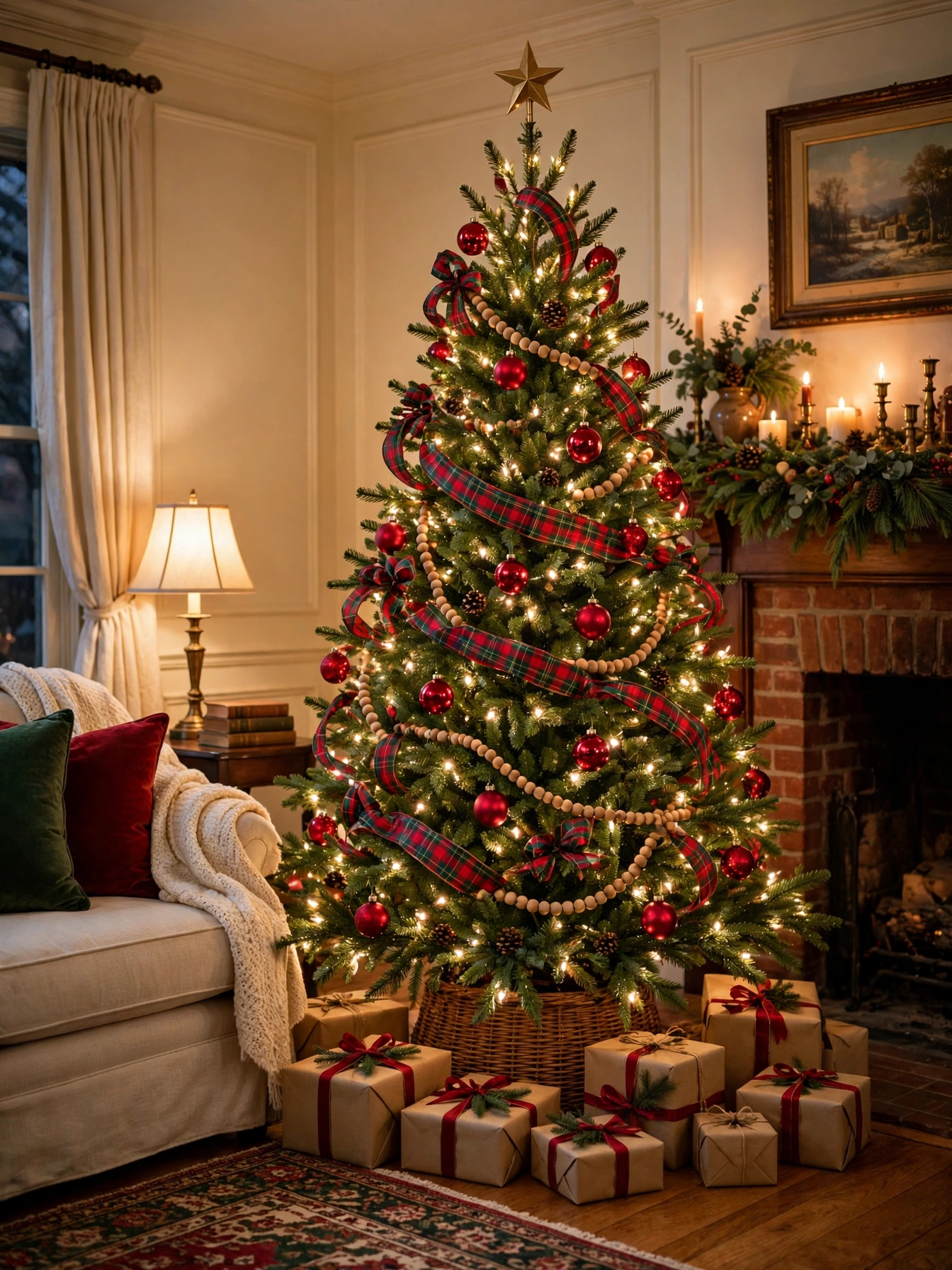
Why This Works:
- Red, green, and gold read as Christmas instantly, so the room needs no explanation.
- A single tree style repeated in small touches elsewhere ties the whole house together.
- Glass ornaments catch lamplight and make the tree glow after dark without extra lamps.
- Plaid ribbon costs little and hides bare spots better than tinsel.
A 7 foot tree suits ceilings of 8 feet or higher, with at least 12 inches of clearance above the topper. Choose a stand that holds 1 gallon of water and check the level every morning, because a fresh fir can drink up to 1 quart per day in a heated room. Hang heavier glass ornaments on lower, sturdier branches and keep shatterproof ornaments below 36 inches where pets and small children reach. A slim pencil tree takes far less floor space, while a full 48 to 54 inch diameter tree fills a corner properly but needs a 4 foot clear circle around the base. Never place the tree within 3 feet of a fireplace, radiator, or heat vent, and skip real candles on branches entirely.
Budget for a decent artificial tree runs 150 to 300 dollars, while a fresh cut fir runs 75 to 150 dollars depending on region, and both last longer when stored or watered correctly. One honest limitation is needle drop: even a well-watered fir sheds near the end of four weeks, so vacuum the skirt area twice a week in late December. The first thing to check before purchasing is the trunk diameter, because most stands accept trunks up to 6 inches, and an oversized trunk means an unstable tree. A classic palette also photographs well for holiday cards, which is a practical bonus for families who send them.
Warm White Light Canopy
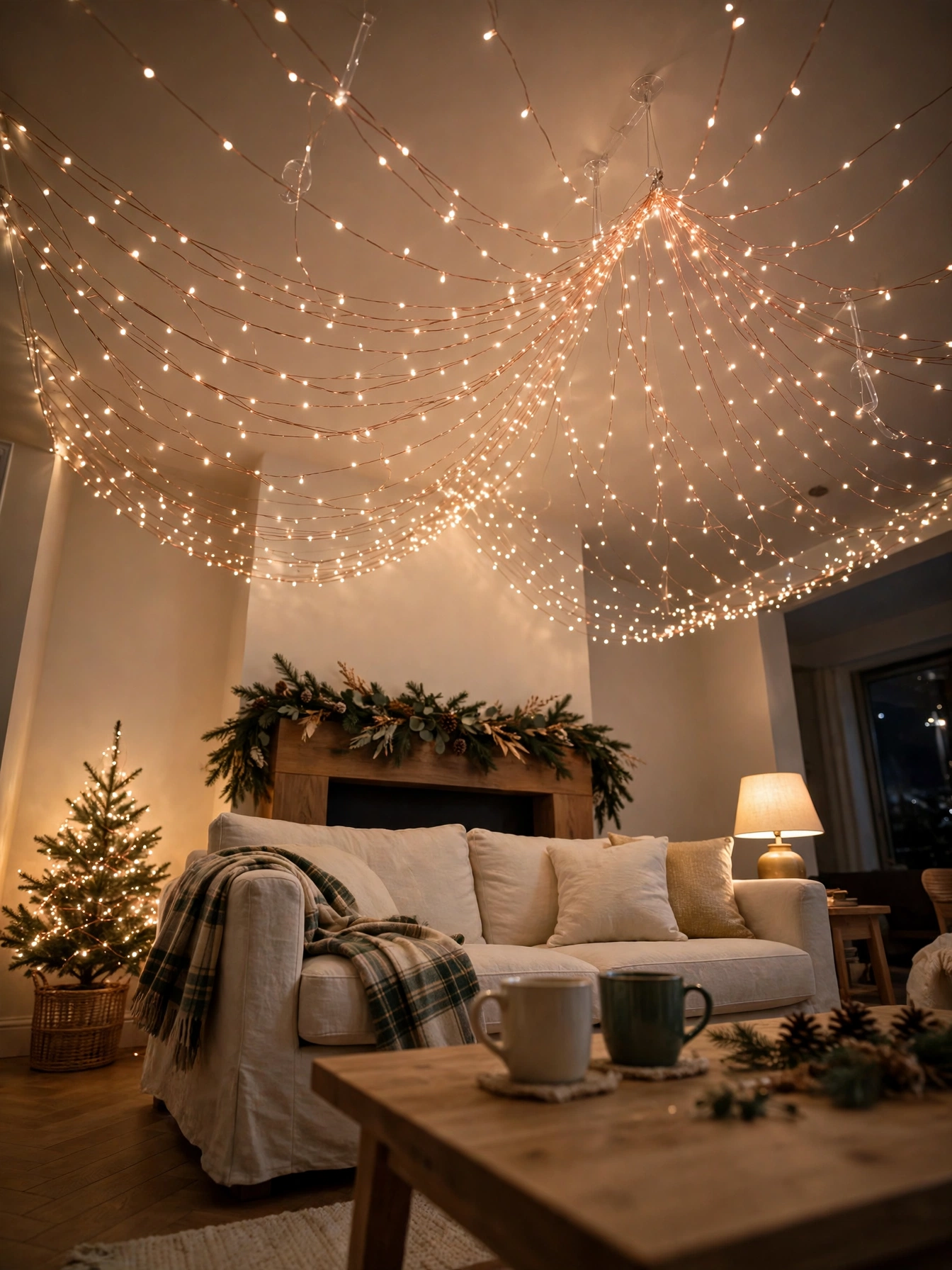
Why This Works:
- Overhead lights make a small room feel taller and warmer without new furniture.
- One light color across the whole room looks intentional, while mixed colors look busy.
- LED fairy lights stay cool, so they are safe near fabric and paper decorations.
- A dimmer or timer keeps the glow on in the evening and off overnight automatically.
Plan on 4 strands of 100 lights each for a 12 by 16 foot room, hung in gentle swags that dip 12 to 18 inches below the ceiling line. Use clear adhesive ceiling hooks rated for at least 1 pound each, spaced 24 inches apart, so the strands hold without damaging paint. LED fairy lights use roughly 80 percent less power than plug-in incandescent strings and stay cool to the touch, which matters when strands drape near curtains. Keep every strand at least 12 inches from open flames and check that the total wattage stays under the transformer rating printed on the plug. Never overload one outlet with more than 3 connected strands unless the packaging states a higher limit.
This idea suits renters best because adhesive hooks remove cleanly and no holes are needed, but the canopy does need a nearby outlet or a battery pack with a timer. Brightness has its limits: fairy lights set mood but do not replace task lighting, so keep a reading lamp for the sofa corner. Before finalizing the layout, test one strand at night, because warm white LEDs from different brands can look yellow or pink side by side, and matching brands keeps the color consistent.
Staircase Garland With Bells
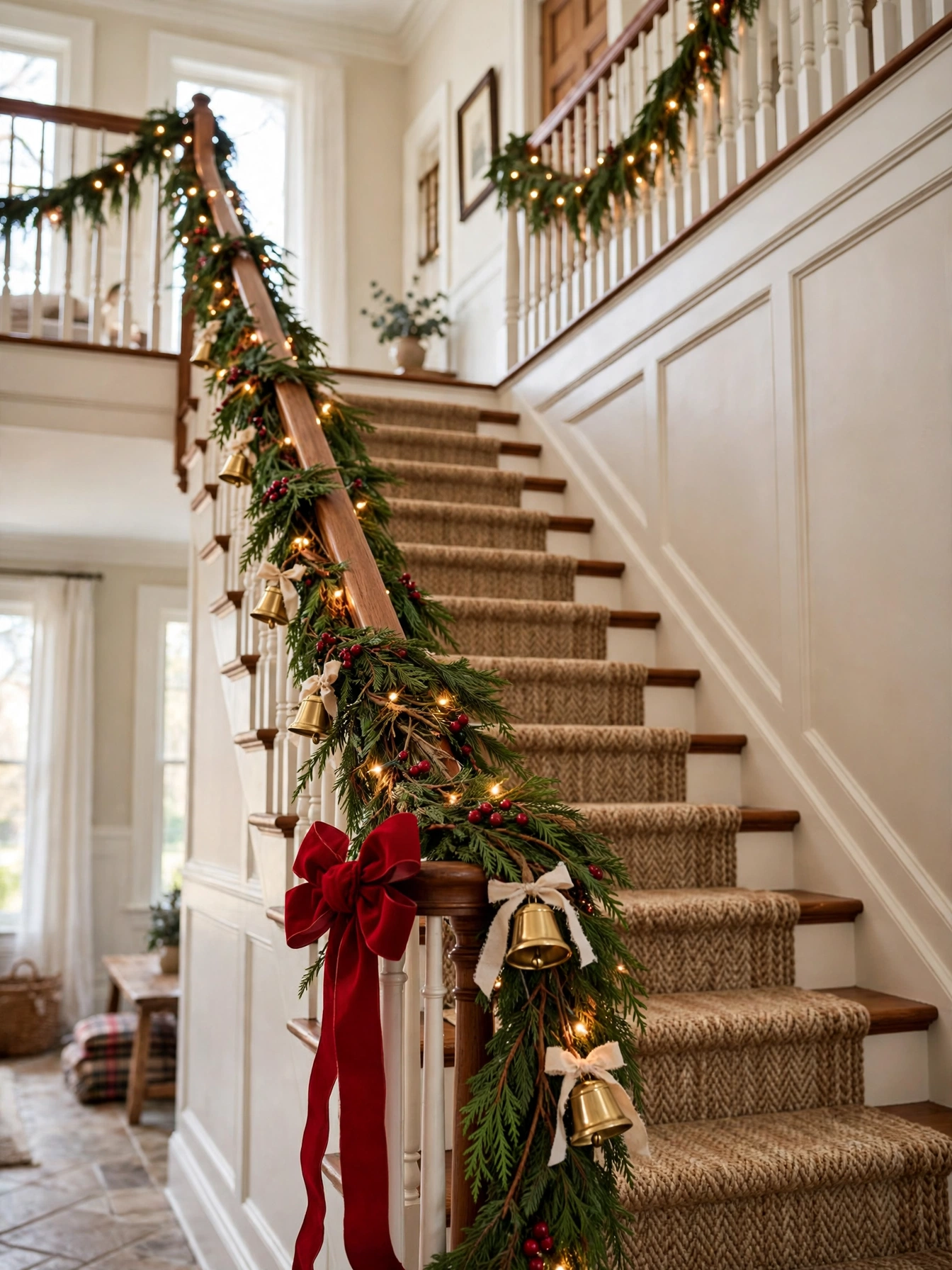
Why This Works:
- A staircase is the first large vertical surface guests see, so dressing it pays off immediately.
- Bells add sound to the decor, which makes the entry feel alive when people pass.
- Cedar holds its needles far longer than fir, so the garland survives the full season.
- Tying rather than wiring the garland protects the banister finish.
Measure the banister run first: a straight 13 step staircase usually needs 18 to 22 feet of garland, and you should buy 2 extra feet for a full swag at the newel post. Attach the garland with soft cotton ribbon or green zip ties every 24 inches, keeping the ties on the underside so they do not show. Fresh cedar smells wonderful, yet it drops needles on light carpet, unlike faux garland, so lay a narrow runner or vacuum the steps twice a week. Hang bells with short ribbon loops rather than wire, because wire can scratch wood, and keep the lowest bell at least 48 inches above the steps so children cannot pull the garland down. Never block the handrail grip: leave the top 3 inches of the rail clear so hands can hold it safely.
Expect to spend 40 to 80 dollars on fresh cedar garland for one staircase, versus 30 to 60 dollars for good faux garland that you can reuse for 5 years or more. Wet cedar is heavy, so test that the banister brackets hold firmly before loading the full length. The first thing to check before purchasing is whether anyone in the house is sensitive to cedar scent, since the fragrance fills a small hall quickly.
Fireplace Stocking Row
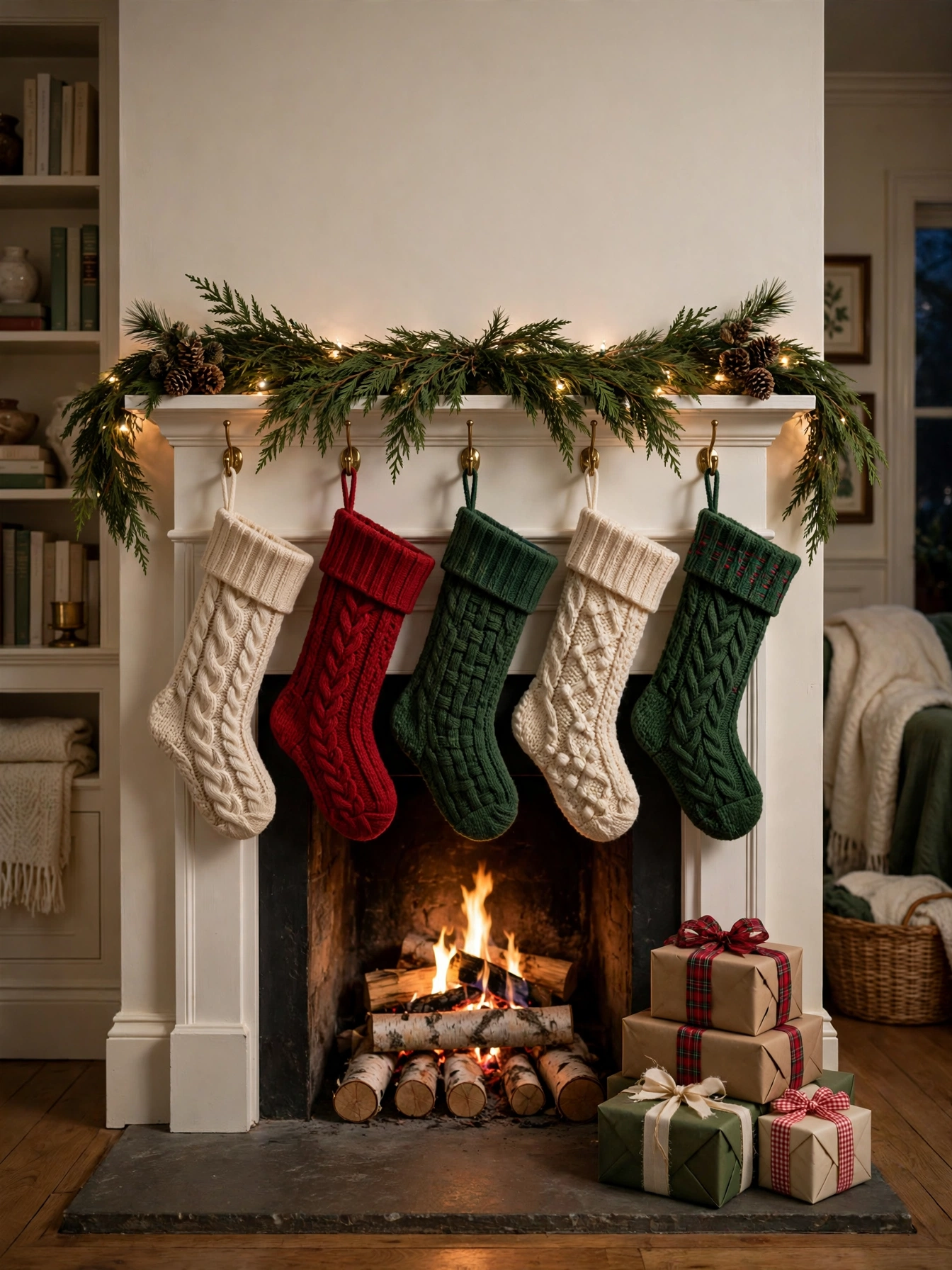
Why This Works:
- A row of stockings turns a plain mantel into the room’s emotional center in minutes.
- Mixing knit patterns in one color family looks collected, not matched, which feels personal.
- Brass hooks hold real weight, so stockings can actually be filled on Christmas Eve.
- The mantel sits at eye level, so this decor gets noticed more than any other single spot.
Space stockings 8 to 10 inches apart so each one hangs freely without overlapping the next, and use hooks rated for at least 5 pounds each, since a filled stocking can weigh 3 to 4 pounds. Clamp-on mantel hooks hold more weight than adhesive hooks and leave no residue, but they need a mantel shelf at least 1 inch thick to grip. Never hang stockings from a mantel while a fire is burning if the stockings hang below the shelf line, because fabric and heat are a dangerous combination; use a fire screen and keep stockings at least 12 inches above the firebox opening. When the fireplace is in use, move stockings to a nearby console or wall hooks instead. Keep the garland on the mantel top, not draped over the firebox, for the same reason.
A set of 5 quality knit stockings runs 40 to 90 dollars, while budget felt stockings run 15 to 30 dollars for the set and work fine for young children. Mantel length sets the limit: a 48 inch mantel fits 4 stockings comfortably, so larger families may need a second row on a nearby shelf. Before purchasing, measure the mantel depth too, because hooks need 2 to 3 inches of flat shelf to sit securely.
Kitchen Island Evergreen Runner
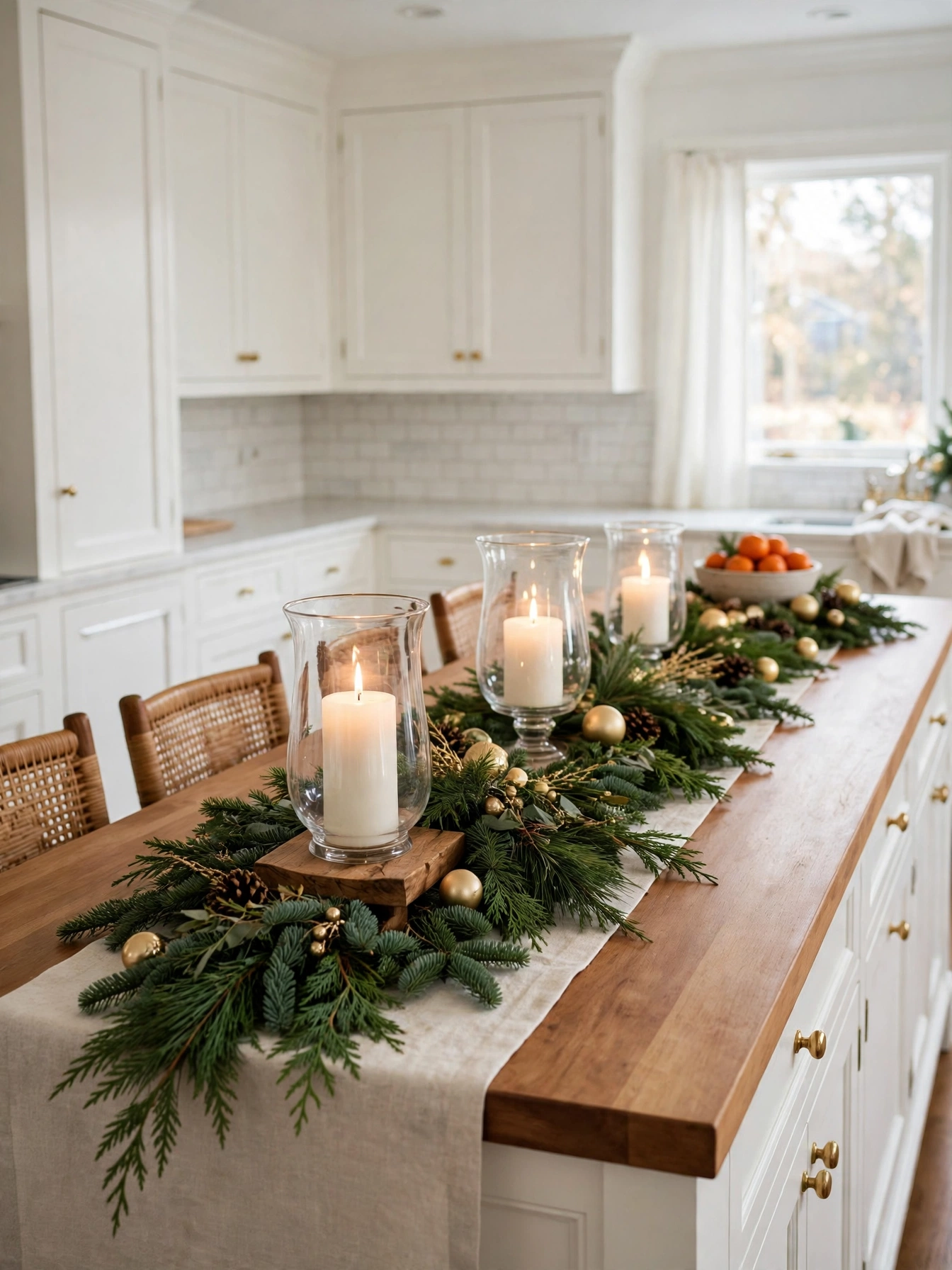
Why This Works:
- An island runner decorates the busiest work surface without blocking cooking space.
- Fresh greenery brings scent into the kitchen, where guests gather first.
- Glass hurricanes protect flames while keeping candlelight visible.
- The runner lifts off in one motion when serious cooking starts.
Size the runner to the island: for a 7 foot island, use a 5 foot runner so 12 inches of clear counter remain at each end for cutting boards and serving dishes. Lay a thin waterproof tray or folded linen under the greenery to catch dropped needles and protect the countertop from sap. A runner leaves the counter usable where a full tablecloth would cover it, but fresh branches shed, so shake the runner outside every 4 days. Keep candles at least 12 inches from the greenery ends and never leave burning candles unattended in a kitchen, where towels and paper are nearby. Battery-operated pillar candles with a 6 hour timer give the same glow with none of the risk, and most guests cannot tell the difference from 3 feet away.
Fresh evergreen runners cost 25 to 50 dollars at garden centers, while a quality faux runner costs 40 to 70 dollars and lasts for years. Kitchen heat works against this one: ovens and stovetops dry fresh branches faster, so a kitchen runner may look tired after 10 days while a living room garland lasts 4 weeks. Check the island overhang before buying hurricanes, because shades need a flat, stable base and should not sit where elbows pass.
Dining Table Candle Centerpiece
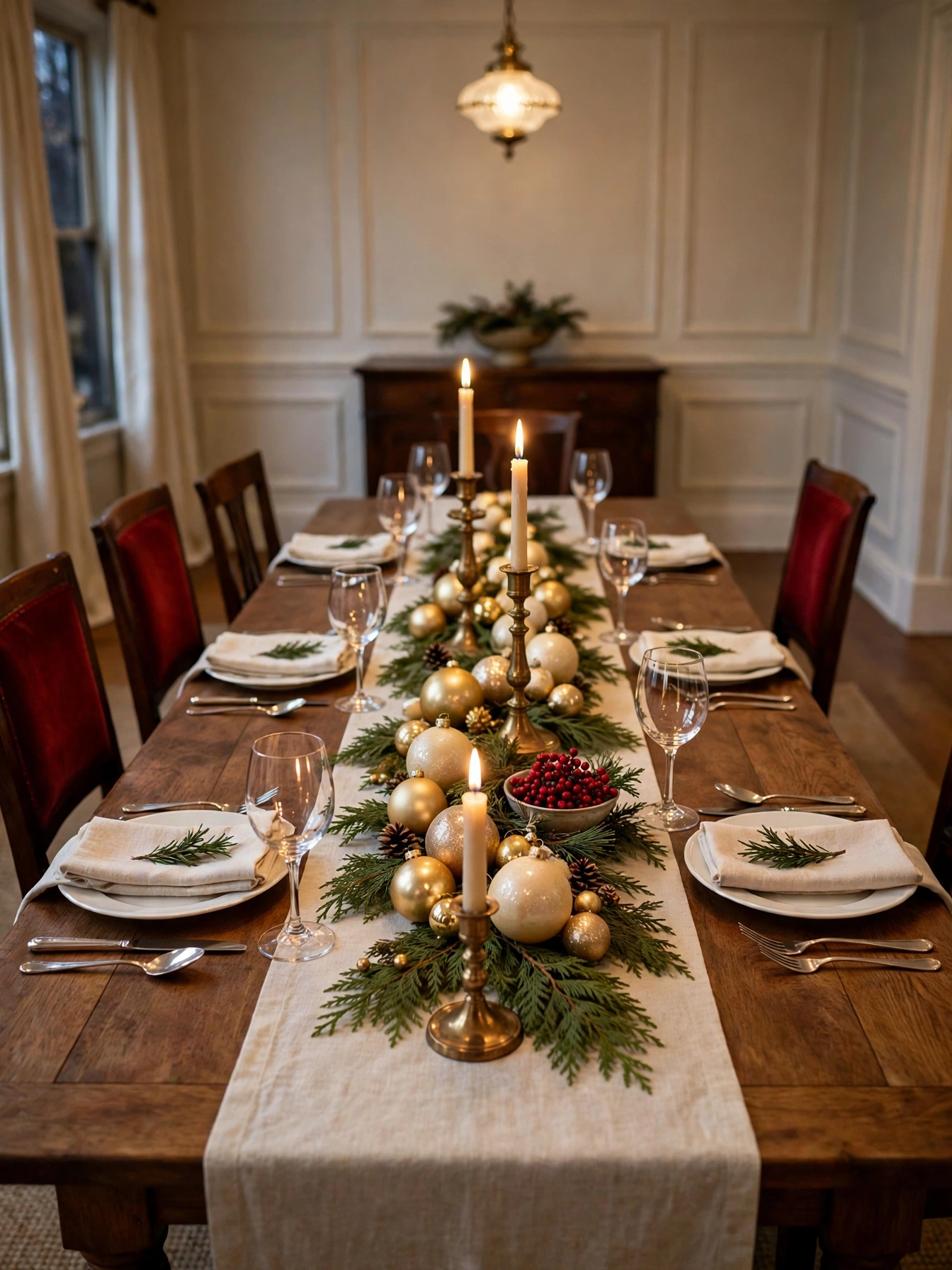
Why This Works:
- A low centerpiece keeps sightlines open, so guests can talk across the table.
- Brass and candlelight flatter everyone at the table, which is why restaurants use them.
- Cedar sprigs cost little and make the whole room smell like the season.
- The runner protects the table from wax and water rings all season.
Keep the centerpiece under 12 inches tall so diners can see each other, and leave at least 24 inches of table width clear for plates, glasses, and serving dishes. Use taper candles in weighted brass holders that will not tip, and trim wicks to 1/4 inch before lighting to reduce smoking. A low candle centerpiece costs less than a tall floral arrangement and never blocks faces in photos, but it does need attention: never leave burning tapers unattended, and keep them 12 inches from curtains and paper decorations. Battery tapers with a flicker setting solve the safety worry entirely and cost 15 to 25 dollars for a set of 6. For more on dressing the table itself, see the Christmas Dining Table Decor Ideas guide.
Brass candlestick sets run 30 to 80 dollars, cedar sprigs from a garden center run 8 to 15 dollars per bunch, and a linen runner runs 20 to 40 dollars. Fresh cedar needs upkeep on a dining table: it dries within a week near heating vents, so replace sprigs the day before a big dinner. Before buying candlesticks, check the table thickness and the holder base diameter, because narrow bases tip easily on a busy table.
Entryway Snow Village Console
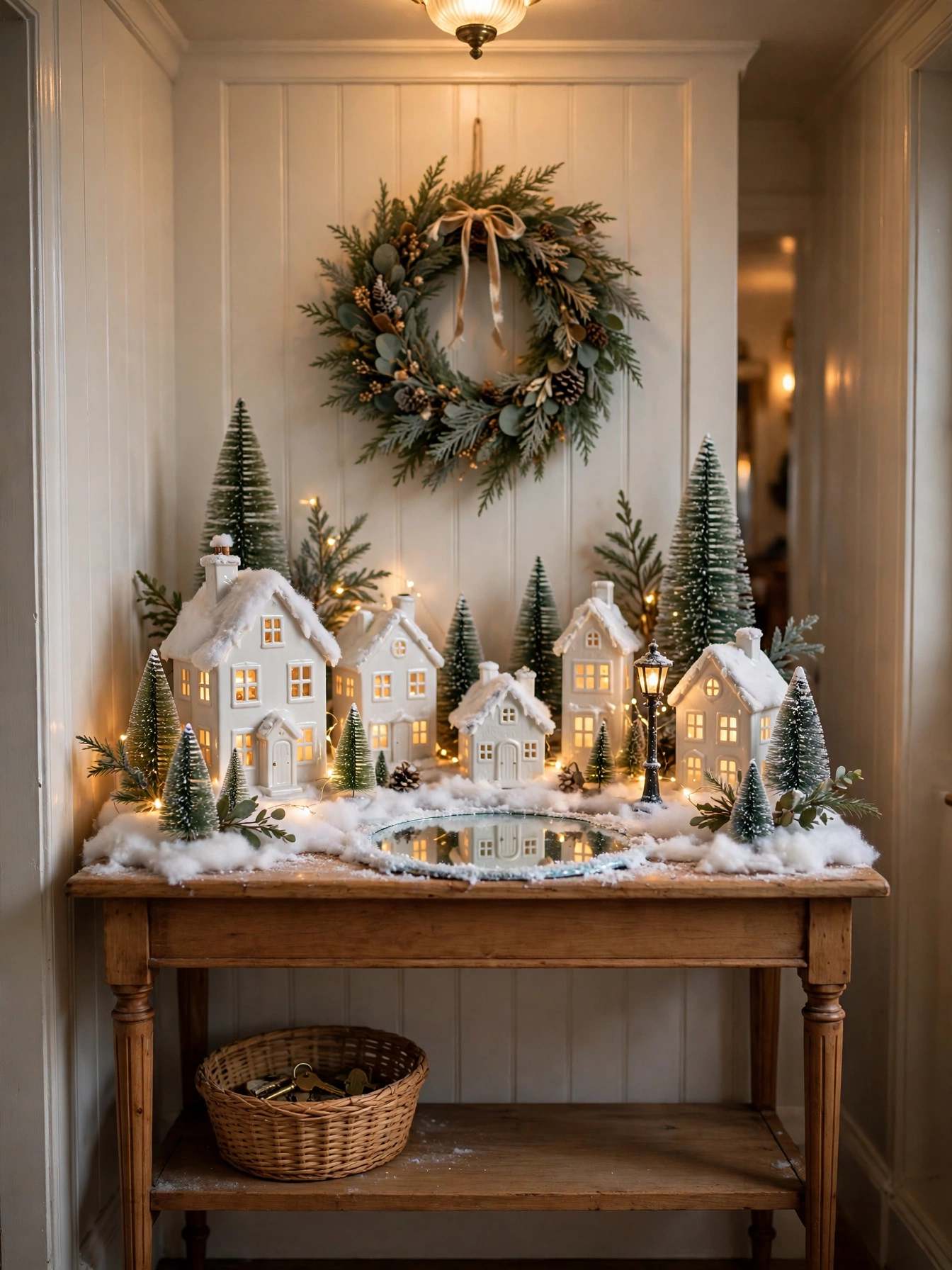
Why This Works:
- A snow village turns a forgotten console into the first thing guests stop to admire.
- Small houses scale perfectly to narrow tables that cannot hold a tree.
- White ceramic reads clean against any wall color, so it suits rented homes too.
- The village packs flat into one box, which makes January storage painless.
A 36 inch console fits 5 to 7 houses comfortably if the largest house is under 8 inches tall and houses sit 2 inches apart for breathing room. Lay cotton batting as snow, but keep it 3 inches back from the table edge so it does not snag coats and bags passing by. A ceramic village costs less per piece than a large nativity scene and breaks less often, since most houses are solid ceramic rather than detailed figurines. Battery fairy lights woven underneath the batting give a glow without a visible cord, and a 6 hour timer keeps them from running all night. Never place lit candles inside a village scene, because batting and paper trees catch fire fast.
Starter village sets run 30 to 60 dollars for 5 houses, while individual collector houses run 15 to 40 dollars each. Dust is the enemy here: batting collects it quickly in an entryway, so shake it outside once a week or swap it for a washable white felt sheet. Check the console weight limit before loading it, because ceramic houses are heavier than they look, and a full village can weigh 8 to 12 pounds.
Bedroom Plaid Throw Layers
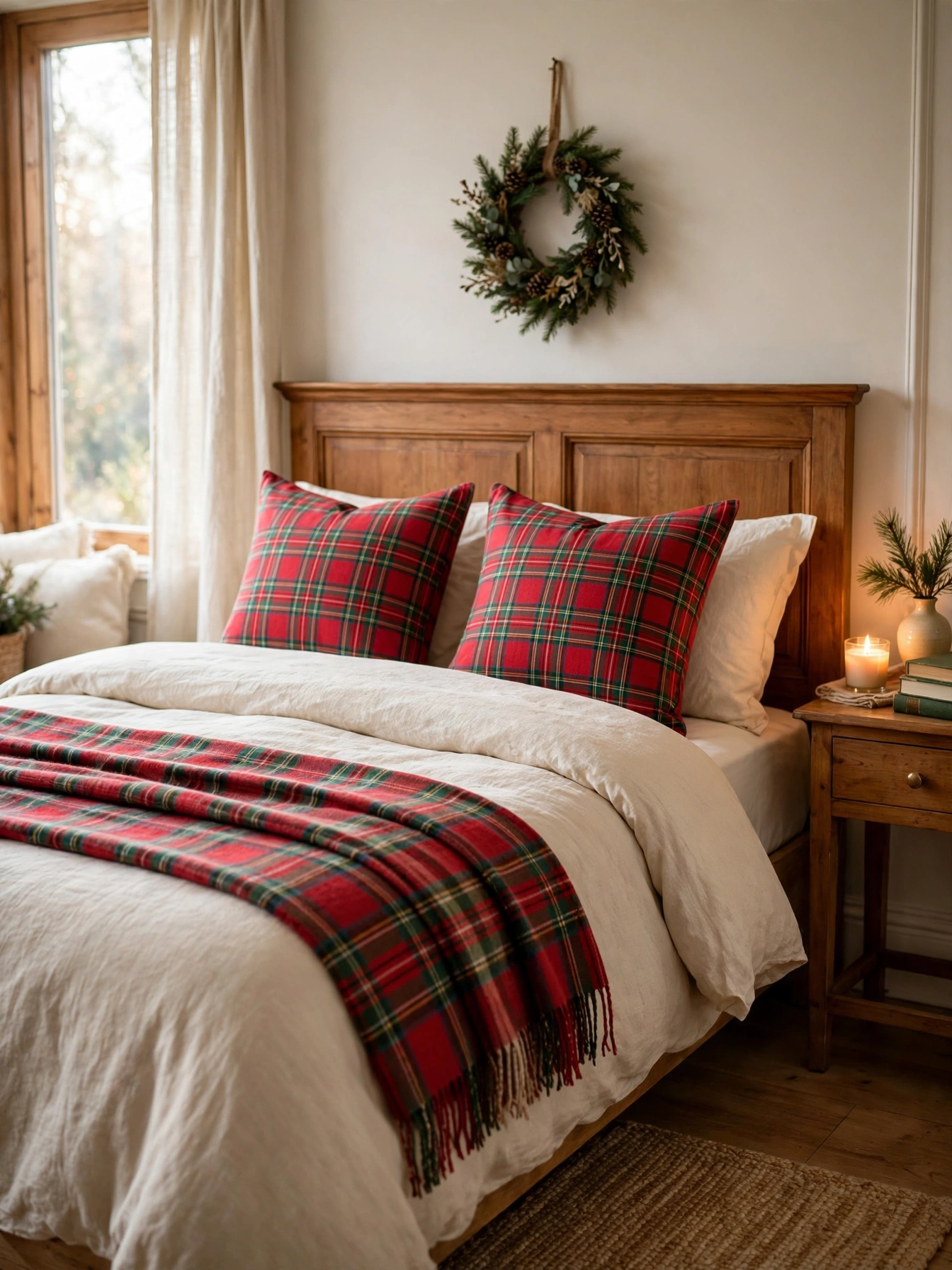
Why This Works:
- Throws and pillows change a bedroom for the season without moving any furniture.
- Plaid in red and green signals Christmas while still matching neutral bedding.
- Layers add warmth on cold nights, so the decor is useful, not just pretty.
- Everything washes easily in January, so the changeover takes one laundry load.
For a queen bed, choose a throw 50 by 60 inches so it covers the foot and drapes 10 inches down each side, and use 2 accent pillows in 18 inch and 20 inch sizes for a layered look. Throws and pillows cost 40 to 70 dollars total, while a full Christmas duvet cover runs 80 to 150 dollars, and they store in a single shelf bin. Keep the wreath on the wall above the headboard rather than on the headboard itself, so pine needles do not fall into the bed, and hang it with a removable hook rated for 3 pounds. Never drape string lights across pillows or bedding, because wires tangle during sleep and bulbs press against fabric all night.
Wool blend throws run 30 to 60 dollars, cotton pillow covers run 12 to 25 dollars each, and a small fresh wreath runs 15 to 25 dollars. New wool throws shed fibers for the first few washes, so wash before the first night. Before buying, check the throw weight, because a throw heavier than 3 pounds feels hot under a duvet, while a lighter knit layers better.
Bathroom Pine Candle Tray
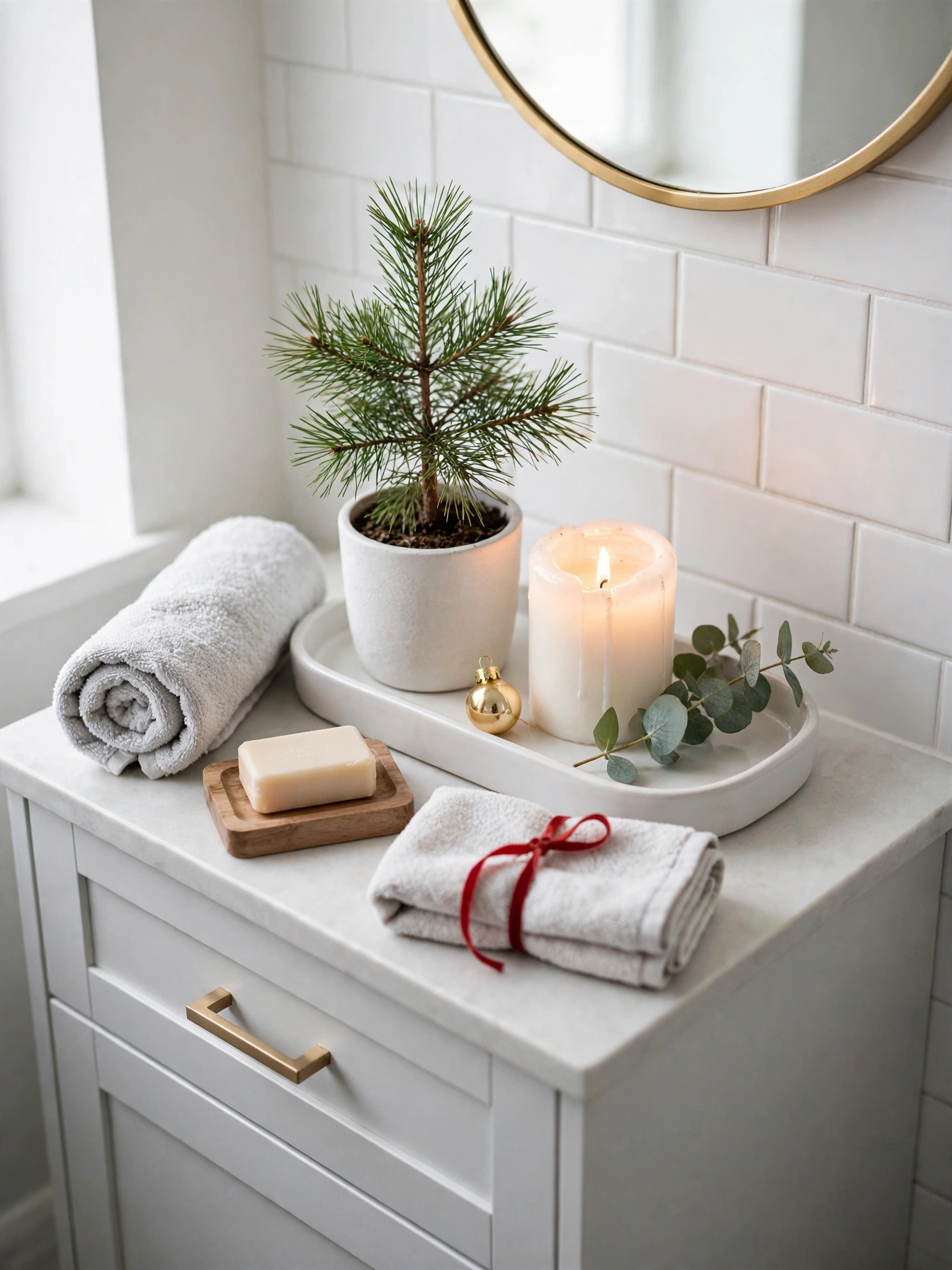
Why This Works:
- A tray contains the decor on one surface, so the rest of the counter stays usable.
- Pine scent in a bathroom feels fresh rather than heavy, unlike strong candles.
- A living pine seedling survives the season and can be planted outside later.
- The whole arrangement lifts off for cleaning, which matters in a small room.
Keep the tray under 14 inches long so it fits beside the sink without crowding toiletries, and choose a ceramic or stone tray that will not warp in humidity. A counter tray uses no wall space and avoids steam damage, unlike a large wreath on the bathroom door, but it does need wiping: condensation collects under trays, so lift and dry underneath twice a week. Never place a burning candle within 12 inches of towels or curtains, and prefer a battery candle in a bathroom where steam and splashes are constant. A potted pine needs bright indirect light and watering when the top inch of soil feels dry, roughly every 4 days indoors.
A ceramic tray runs 15 to 30 dollars, a potted pine seedling runs 8 to 15 dollars, and a pillar candle runs 10 to 20 dollars. Space is tight, though: a 36 inch vanity holds a tray plus soap and a toothbrush cup, but nothing more, so edit ruthlessly. Check the tray height before buying, because tall candles plus a mirror cabinet can crowd the reflection.
Front Porch Lantern Pair
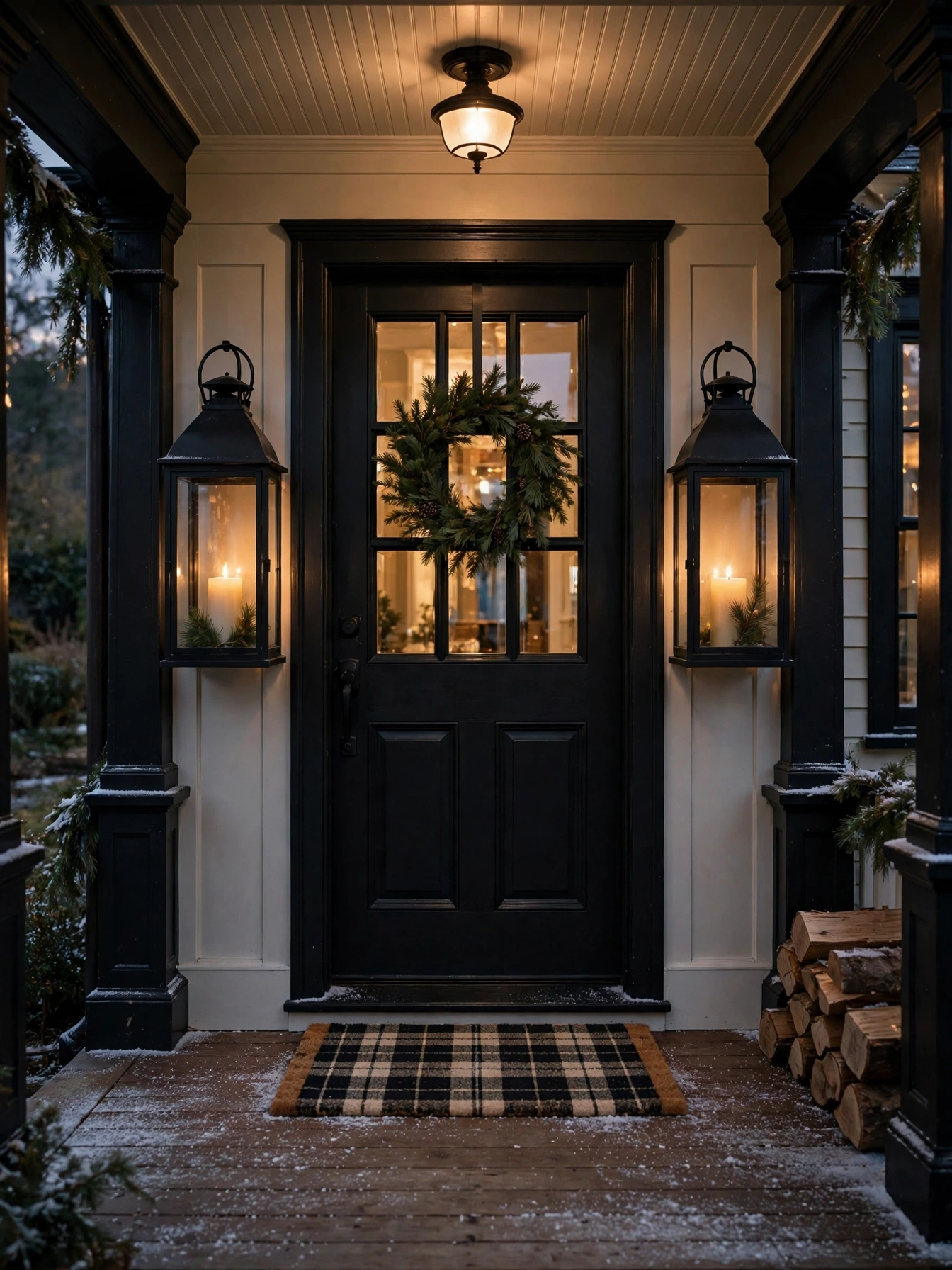
Why This Works:
- Matching lanterns frame the door symmetrically, which reads as cared for from the street.
- Candle glow at the entry makes guests feel expected before they knock.
- Lanterns work in any weather under a covered porch and store flat after the season.
- The pair costs far less than a full porch display but gives the same welcome.
Choose lanterns 14 to 18 inches tall for a standard 36 inch door, placed 12 inches from the door frame on each side so they do not block the swing. Lanterns give light at eye level where faces are, something string lights alone cannot do, but they need shelter: wind over 20 miles per hour blows out real candles, so battery pillars with timers are the practical choice for exposed porches. Glass panels should be at least 3 millimeters thick to survive a frosty night without cracking. If you replace hardwired porch fixtures as part of this look, hire a licensed electrician, because outdoor wiring and weatherproof boxes are not a beginner job. Never set lanterns on a walkway where they become a tripping hazard in the dark.
Metal lanterns run 25 to 50 dollars each, battery pillar candles run 10 to 18 dollars per pair, and a plaid coir doormat runs 20 to 35 dollars. Get the scale wrong and the look falls flat: lanterns under 12 inches tall disappear beside a large door, so measure the door before ordering. Check that the porch floor is level where lanterns sit, because a wobbling lantern on a sloped board tips easily.
Window Star Silhouettes
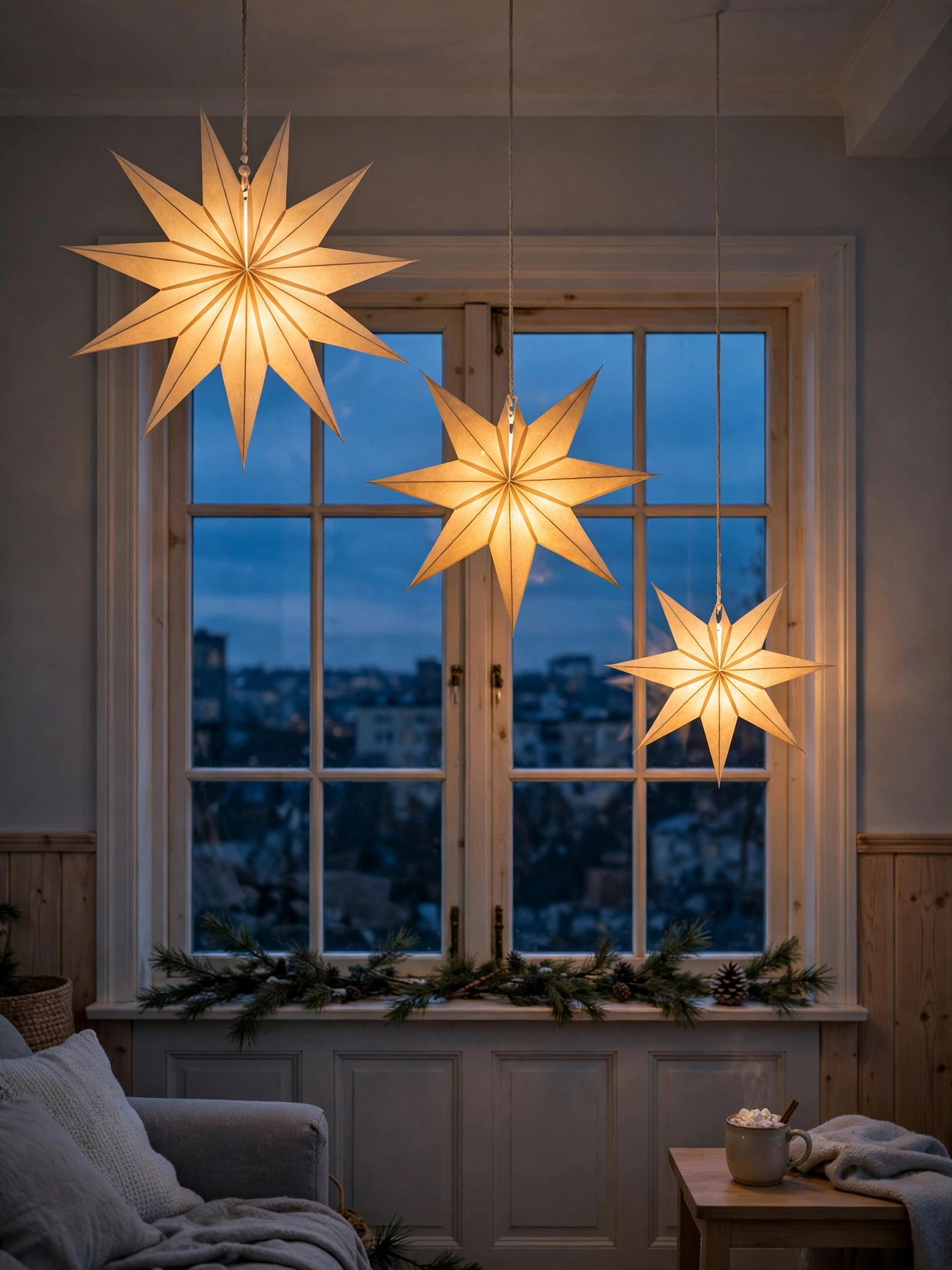
Why This Works:
- Window stars are visible from inside and outside, so one decoration serves two audiences.
- Paper stars cost little but look handmade and expensive when lit.
- Hanging at three heights creates depth that a single row never achieves.
- The glow replaces a table lamp in the evening, which saves energy and sets mood.
Hang the largest star, 20 inches across, in the center at 60 inches from the floor, with smaller 12 and 16 inch stars 8 inches higher and lower on each side. Use battery tea lights rated for at least 50 hours, and hang stars with clear cord from removable hooks rated for 1 pound, since a paper star weighs only a few ounces. Paper stars give a softer, larger glow than electric window candles but need care: keep them 12 inches from curtains and never use real flames inside paper. If the window gets direct afternoon sun, paper fades in 2 weeks, so choose a north or east facing window for the longest life. For more window dressing ideas, the Christmas Window Decor Ideas guide covers candles, garlands, and sill styling.
Paper star lanterns run 8 to 18 dollars each, battery tea lights run 5 to 10 dollars for a pack of 12, and cord plus hooks run under 5 dollars. Paper stars are fragile, so store them flat in a rigid box with tissue between layers, or they crush easily. Check the window latch clearance before hanging, because a star hanging over a latch blocks emergency opening.
Budget Christmas Home Decor Ideas
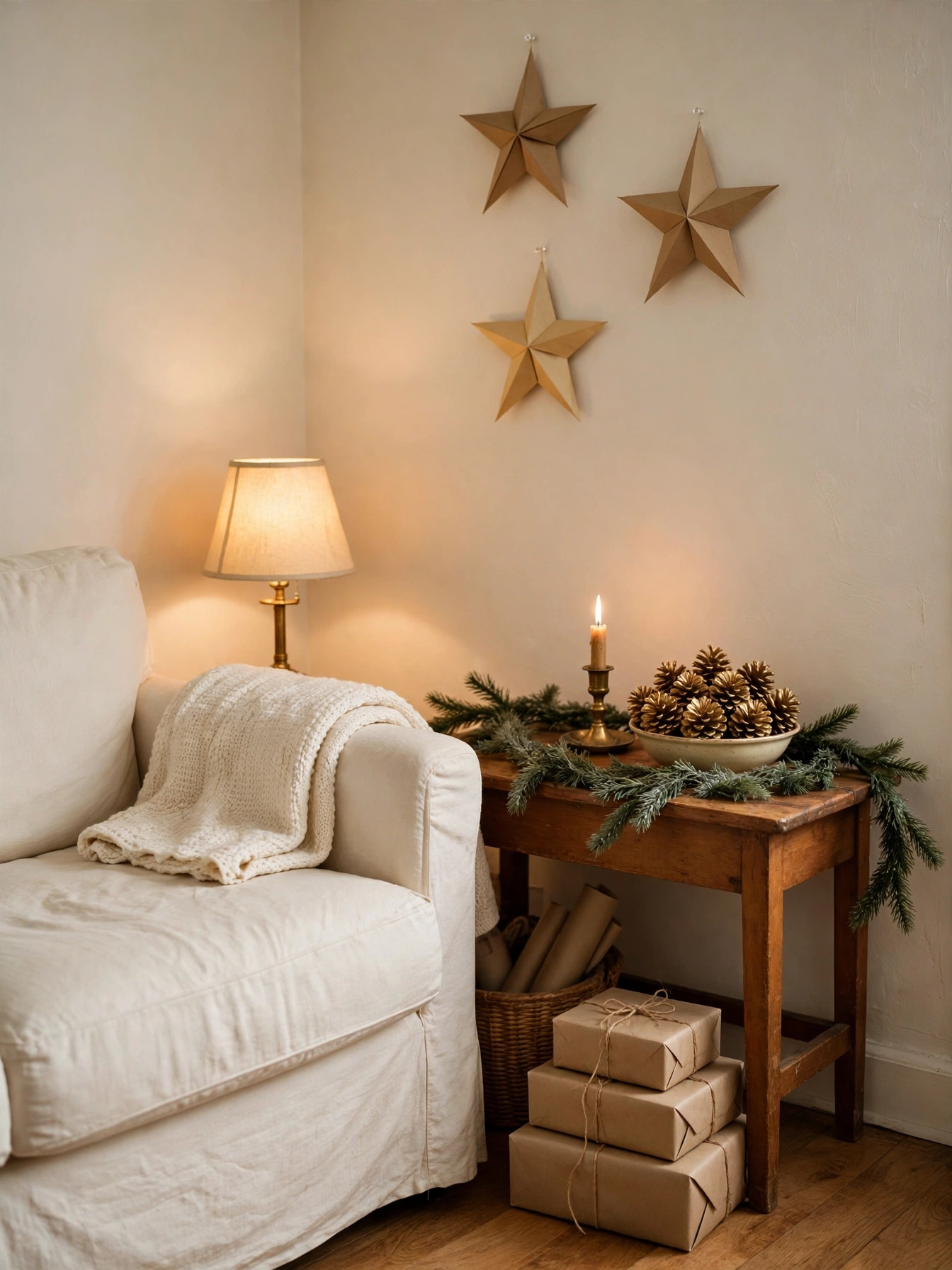
Why This Works:
- Budget decor proves the season is about arrangement, not spending, which relieves pressure.
- Paper and pinecones cost almost nothing yet fill a room when grouped generously.
- Thrifted brass pieces look expensive and can be reused for years.
- A tight color palette of gold, cream, and green makes cheap items look curated.
Set a hard total of 50 dollars for this corner: 12 dollars for paper stars, 8 dollars for gold spray paint and pinecones gathered free, 15 dollars for a thrifted brass holder, and 15 dollars for a faux garland. Buying a matching store set costs 200 dollars or more, so this approach saves at least 150 dollars and looks more personal, but it does take time: painting pinecones needs 2 coats and 24 hours of drying. Keep spray painting outdoors or in a ventilated garage, and never spray near an open flame or pilot light. Group items in odd numbers, 3 or 5 per cluster, because even groupings read as store displays while odd groupings read as styled. Skip glitter spray indoors, since glitter sheds onto floors and furniture for months.
Budget decor trades longevity for price: paper stars last one season in humid rooms, while store-bought ornaments last a decade. Check thrifted brass for lead solder before using it near food, and wash it with warm soapy water first. A budget corner also photographs beautifully, which matters if holiday cards or social posts are part of the plan.
Bookshelf Mini Tree Collection
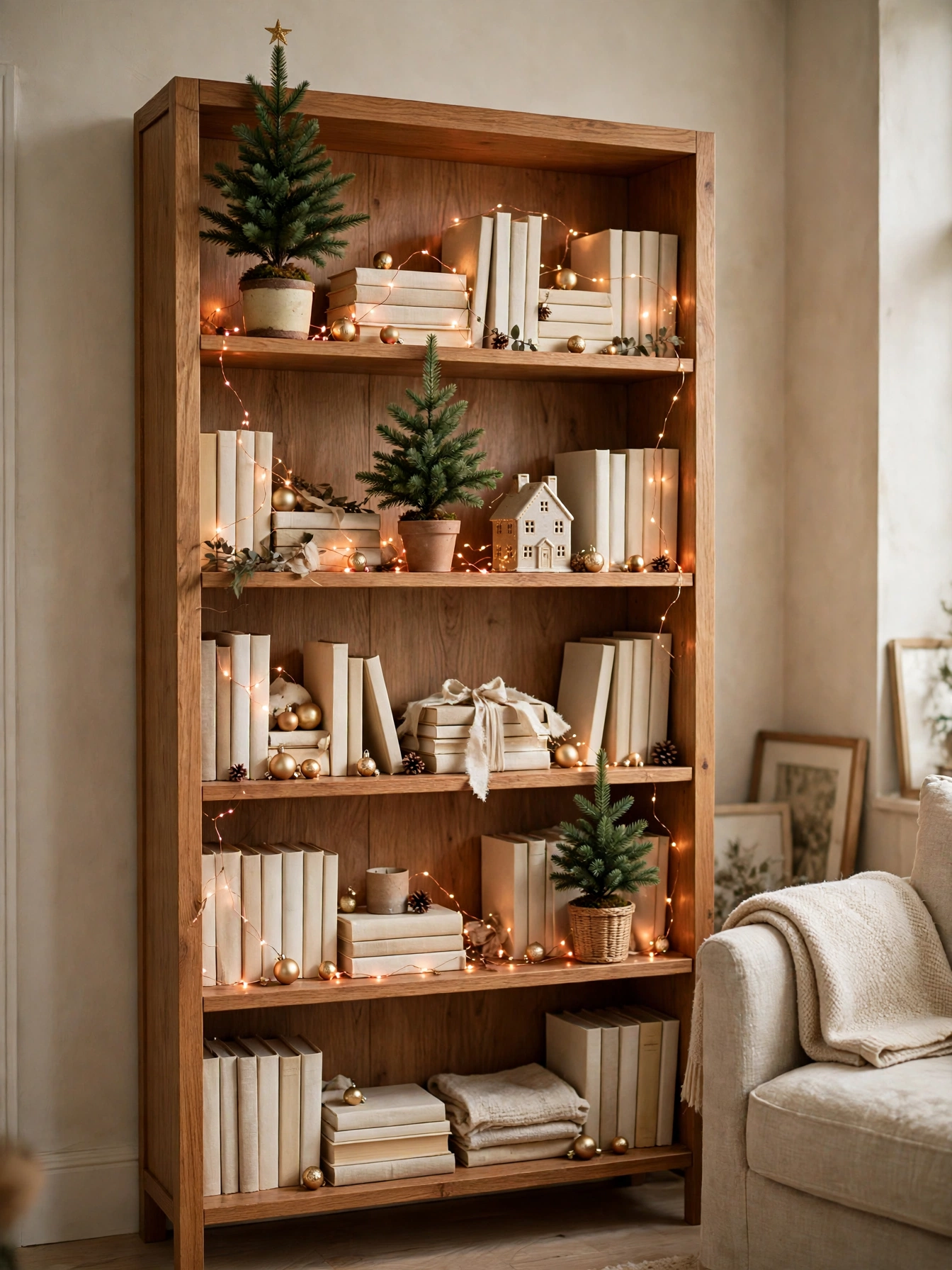
Why This Works:
- Mini trees bring Christmas to rooms that cannot fit a full tree, like offices and studies.
- Three heights on three shelves create a rhythm that looks designed rather than random.
- Books and trees together feel personal, because the shelf already tells the owner’s story.
- Potted trees can be replanted or kept growing after the season ends.
Use mini firs between 12 and 20 inches tall, and leave 6 inches of clearance above each tree so the star topper does not touch the shelf above. Potted trees cost 5 dollars more on average than cut mini trees but survive January, while cut trees dry out in 2 weeks near heating vents. Water potted firs when the top inch of soil feels dry, about every 5 days, and keep them out of direct radiator heat. Hang mini ornaments with short ribbon loops rather than wire hooks, because wire scratches shelf paint and slips off thin branches. Never overload a shelf: three mini trees plus books can weigh 15 to 20 pounds, so check that shelf brackets are rated for at least 25 pounds.
Mini potted firs run 12 to 25 dollars each, mini ornament sets run 8 to 15 dollars, and a 100-light fairy strand runs 10 to 18 dollars. Light runs short on interior walls: bookshelves there get little daylight, so firs may thin out by January, which is fine if the plan is composting rather than replanting. Before buying, measure shelf depth, because trees need a pot base of at least 6 inches to stand stable.
Coffee Table Ornament Bowl

Why This Works:
- A bowl centerpiece takes 5 minutes to assemble and changes the whole living room.
- Mixed ornament sizes look styled, while one size alone looks like a store bin.
- The bowl stays low, so it never blocks conversation or the television.
- Everything stores in the same bowl in January, which makes cleanup one step.
Choose a bowl 12 to 14 inches wide for a 48 inch table, so 17 inches of clear table remain on each side for drinks and books. Fill with 18 to 24 ornaments, mixing 3 inch, 2 inch, and 1.5 inch sizes in a ratio of roughly 1 large to 2 medium to 3 small. Ornaments last all season and cost nothing after the first year, unlike a floral centerpiece that wilts in a week, but glass ornaments break, so use shatterproof ornaments on the top layer where hands reach. Tuck 3 pine sprigs between ornaments for scent, and replace them every 7 days as they dry. Never place the bowl where toddlers pull up on the table edge, because a full bowl weighs 4 to 6 pounds and tips fast.
A ceramic bowl runs 20 to 40 dollars, an ornament assortment runs 15 to 30 dollars, and pine sprigs run free from a garden center trimmings bin in many towns. You do give up table space for it, so households that eat at the coffee table may prefer a smaller 10 inch bowl. Check the bowl weight empty first, because a heavy stoneware bowl plus ornaments can exceed 8 pounds and strain a glass tabletop.
Kids Paper Chain Craft
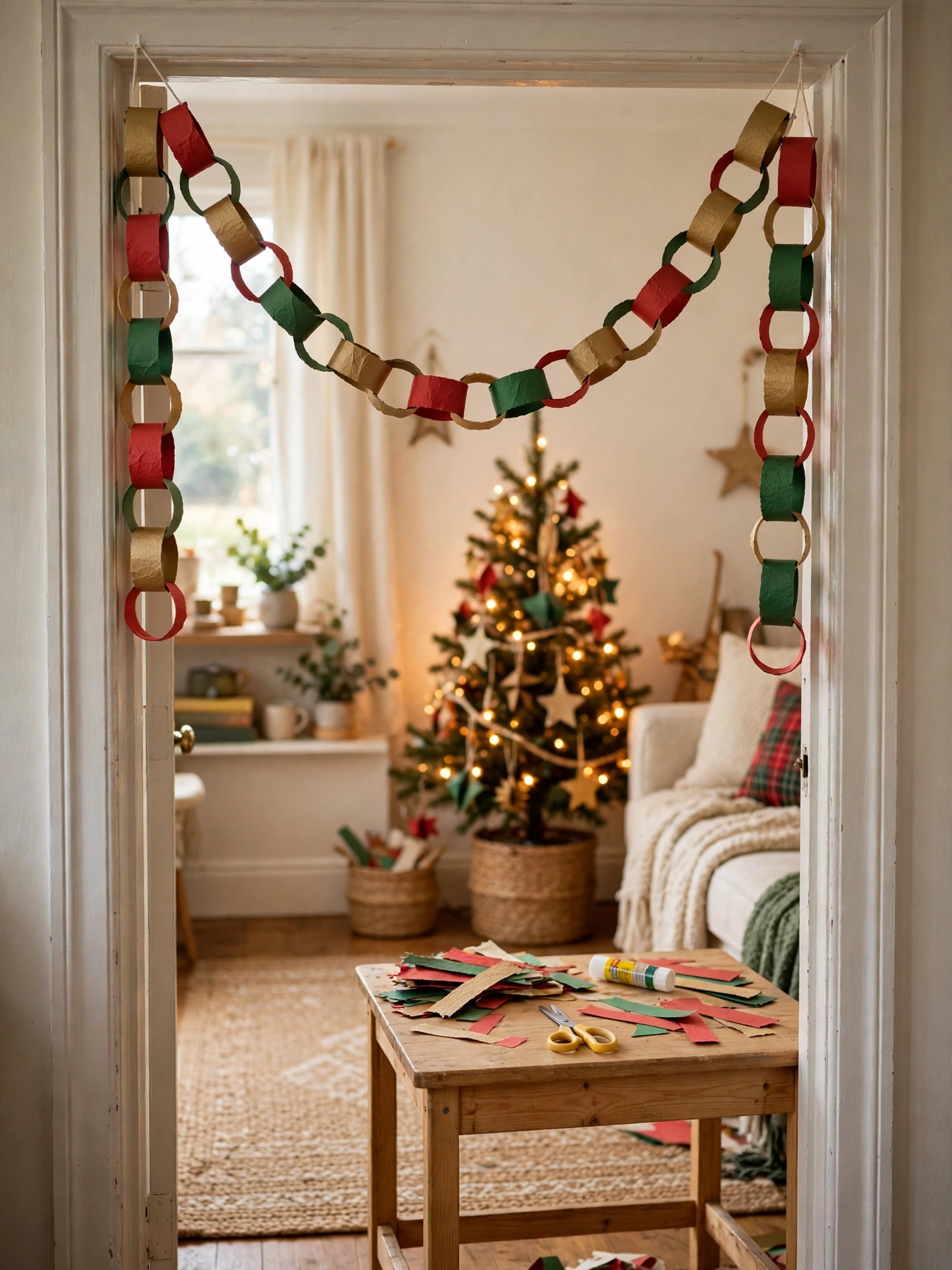
Why This Works:
- Paper chains let children decorate a real part of the house, which builds memories.
- The craft costs almost nothing and fills a doorway that adults usually ignore.
- Striped colors read as festive from across the room without any lights or wiring.
- Chains store flat in a folder, so next year starts with a head start.
Cut strips 1 inch wide and 6 inches long, and plan on 40 links for a single doorway swag that dips 18 inches in the center. Store-bought garland runs 20 to 40 dollars, while a paper chain costs under 5 dollars in paper and glue, but it lasts one season in humid rooms and tears if pulled, so hang it at 72 inches or higher where small hands cannot reach it during play. Use safety scissors for children under 8 and keep glue sticks capped when not in use. Alternate colors in a fixed pattern, like red, green, gold, green, which looks intentional rather than random. Never hang paper chains near radiators or candles, because construction paper ignites easily.
Construction paper packs run 4 to 8 dollars, glue sticks run 3 to 6 dollars for a pack of 6, and string runs 2 to 4 dollars. Paper does not last: it fades in direct sun within 2 weeks, so choose an interior doorway away from south-facing windows. Check the doorway trim before hanging, because tape pulls paint, while removable hooks rated for 1 pound hold a chain safely.
Rustic Wood Slice Ornaments
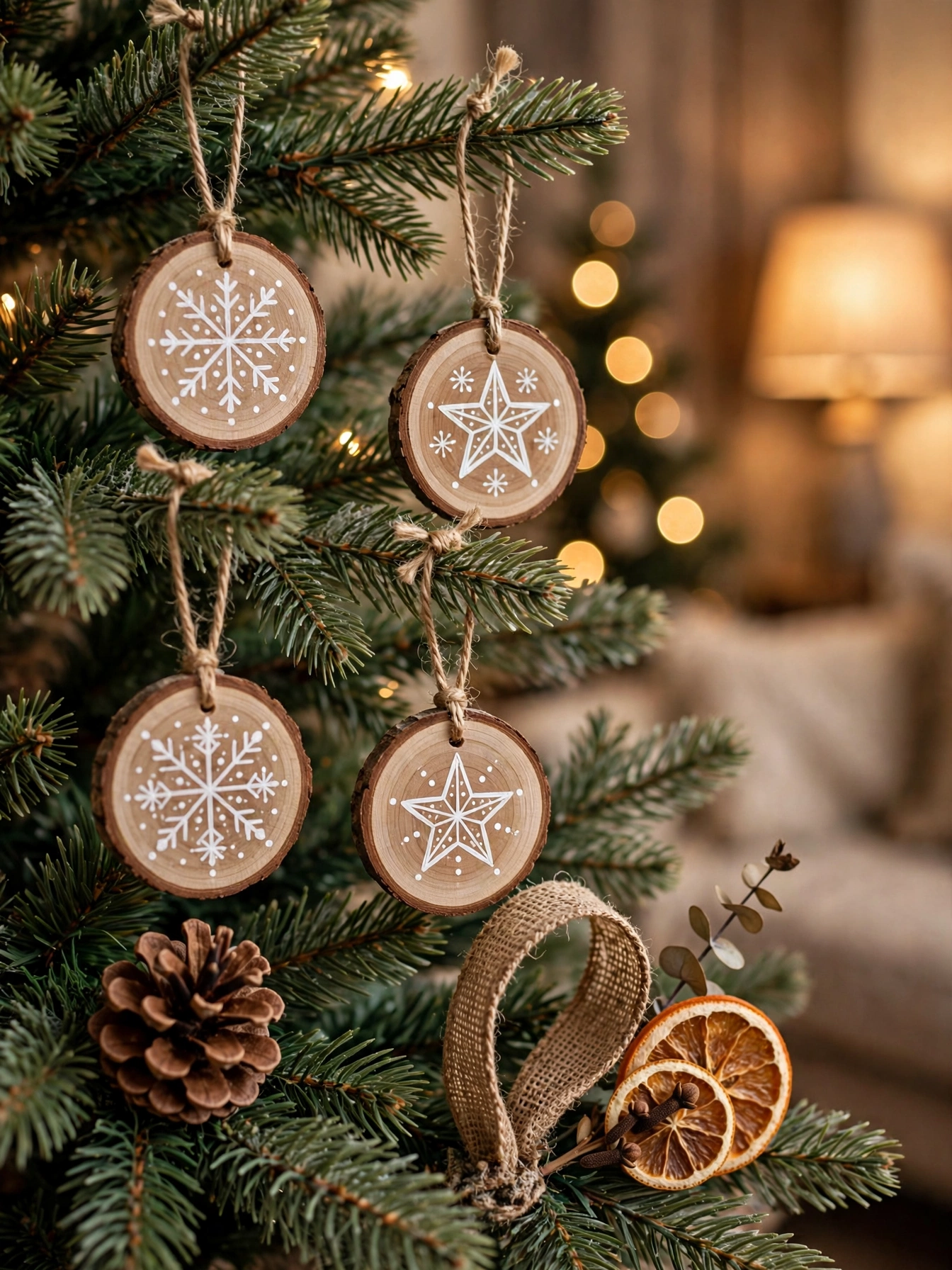
Why This Works:
- Wood slices look handmade and expensive while costing less than glass ornaments.
- Natural wood warms up a tree that otherwise looks all glass and plastic.
- Twine loops hang securely and never scratch branches the way wire hooks do.
- The ornaments survive drops, which matters in houses with pets and toddlers.
Buy kiln-dried slices 3 inches across and 1/4 inch thick, because green wood cracks as it dries on a warm tree, while kiln-dried slices stay flat. Glass ornaments run 2 to 5 dollars each, while wood slices cost 10 to 18 dollars for a pack of 24, and paint plus twine adds about 8 dollars total. Seal painted slices with a clear matte spray, applied outdoors, so paint does not chip in storage. Hang slices on outer branch tips where their flat faces catch light, spacing them 8 inches apart so the tree does not look crowded. Never hang wood slices above a heat vent, because repeated heat cycles loosen paint over the season.
Watch the weight: 24 wood slices weigh about 2 pounds total, which is fine for a full tree but too much for a small tabletop tree with thin branches. Check slice thickness before ordering, because slices thicker than 3/8 inch look clunky and hide the painted design. For a full rustic scheme, the Rustic Christmas Decor Ideas guide pairs wood tones with plaid and burlap throughout the house.
Gold Ivory Mantel
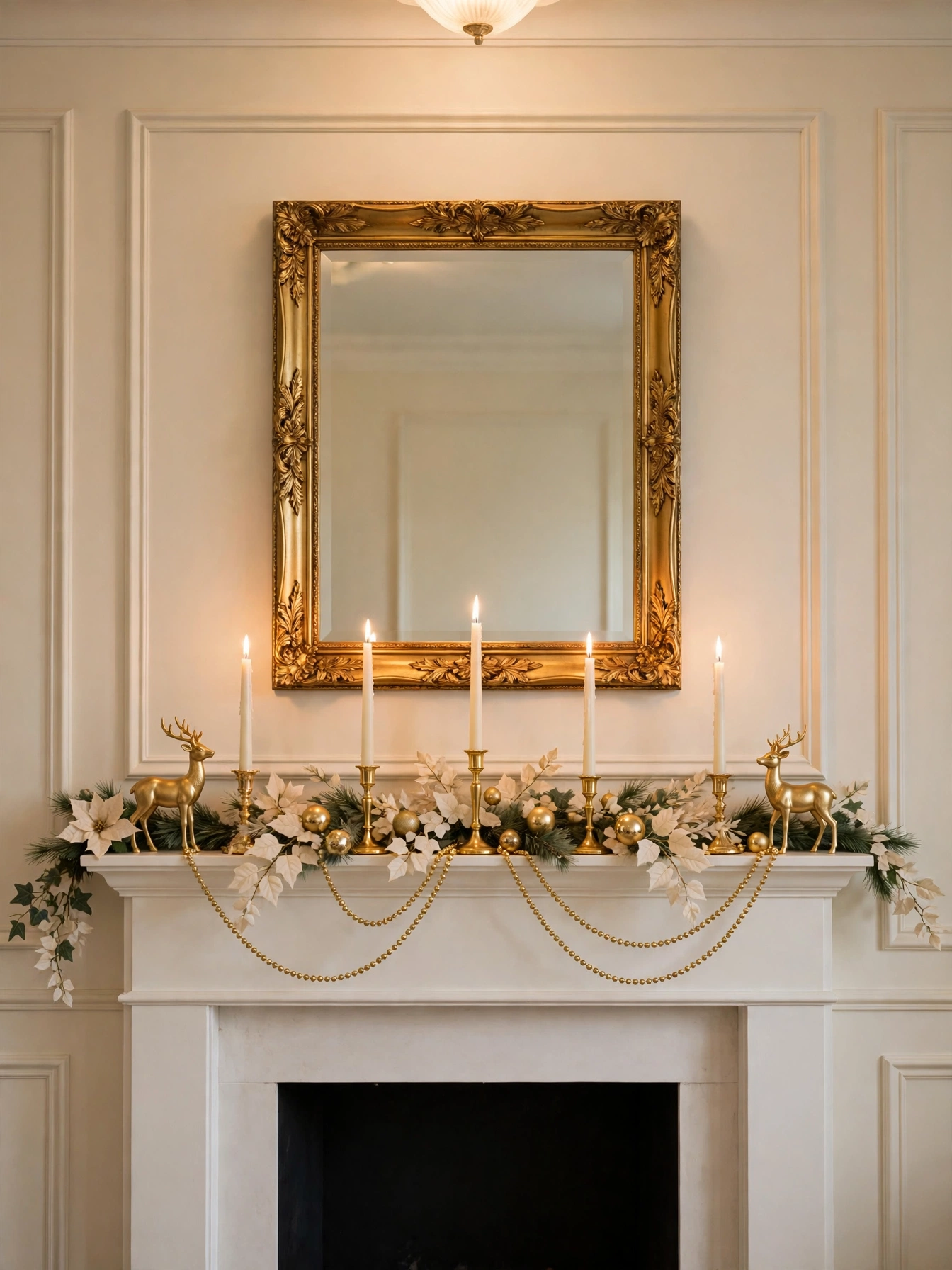
Why This Works:
- Gold and ivory suit homes where red and green feel too loud for the existing decor.
- A mirror above the mantel doubles the candlelight and makes the room feel larger.
- Tall candles draw the eye upward, which makes a standard 8 foot ceiling feel taller.
- The palette works from Thanksgiving through New Year without looking tired.
Place the tallest candles, 12 inches, at the outer ends and step down to 10 inch candles toward the center, keeping every flame at least 12 inches from the mirror frame and any draped fabric. Gold and ivory costs more per piece than a red and green mantel, roughly 60 to 120 dollars for holders and baubles versus 30 to 60 dollars, but the pieces work for weddings and dinner parties year-round, which spreads the cost. Use battery tapers if the mantel sits near curtains, because real flames plus fabric plus a busy holiday house is a risk not worth taking. Keep the garland to one swag depth of 10 inches so it does not hide the mirror reflection.
Gold finishes show dust within days, so wipe holders with a dry microfiber cloth once a week. Check the mantel weight limit before adding a heavy mirror, because a gold-framed mirror can weigh 20 to 30 pounds and needs wall anchors rated for at least 50 pounds. For mantel-specific styling, the Mantel Christmas Decor Ideas guide covers stockings, garlands, and candle placement in detail.
Navy Silver Bedroom
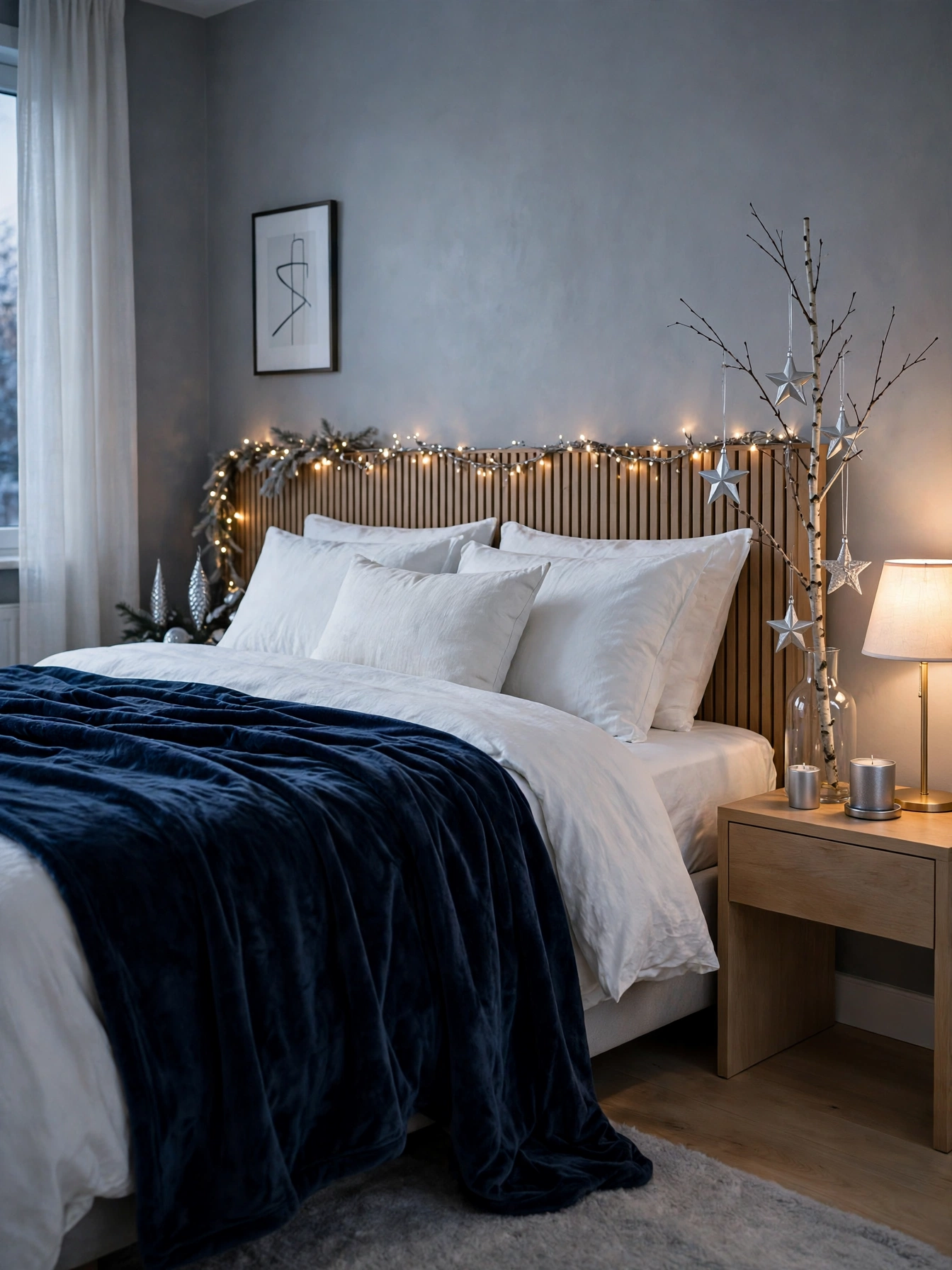
Why This Works:
- Navy and silver feel like winter without shouting Christmas, so the room stays restful.
- The palette suits bedrooms that already have gray or white walls, with no repainting.
- Silver reflects lamplight, which brightens a dark winter bedroom without extra lamps.
- A branch in a vase costs little and replaces a wreath where wall space is tight.
Drape a navy throw 50 by 60 inches across the foot of a queen bed, and hang 5 silver stars from a birch branch 24 inches tall in a weighted vase at least 5 inches wide at the base. Navy and silver runs cooler in tone than a red and green bedroom scheme, which suits people who sleep hot, but it can feel cold in a north-facing room, so add one warm white lamp to balance it. Keep fairy lights along the headboard, never across pillows, because wires tangle during sleep. Silver ornaments should be shatterproof in a bedroom, since they fall onto hard floors more often than onto carpet.
A navy velvet throw runs 35 to 65 dollars, silver star ornaments run 10 to 20 dollars for a set of 12, and a birch branch is free from many garden centers after pruning season. Navy and silver read as winter rather than Christmas specifically, so add one red accent, like a small pillow, if the room should read clearly as Christmas. Check the vase stability before placing it on a nightstand, because a top-heavy branch tips easily when reached for in the dark.
Vintage Ornament Ladder

Why This Works:
- A ladder displays ornaments that no longer fit on the tree, including heirlooms.
- Leaning decor needs no nails, which suits renters and plaster walls.
- Vintage glass catches light differently from new ornaments, with softer, deeper color.
- The ladder fills an empty corner that usually collects nothing but a plant.
Lean a 6 foot wooden ladder at a 75 degree angle, with the feet 18 inches from the wall, and hang ornaments from the rungs with cream ribbon loops 4 inches long. A second tree costs 150 dollars or more, while a ladder runs 30 to 60 dollars and stores flat against a garage wall in January. Anchor the top to the wall with a removable hook rated for 10 pounds if children or pets live in the house, because a ladder with glass ornaments tips dangerously. Hang the heaviest ornaments on the lowest rungs, where a fall breaks less, and keep the most fragile heirlooms above 48 inches. Never lean a ladder in a walkway where it blocks a path in the dark.
Vintage ornament lots run 20 to 50 dollars at thrift stores and estate sales, while reproduction vintage-style sets run 25 to 45 dollars new. True vintage glass breaks easily and cannot be replaced, so handle heirlooms with cotton gloves to protect both the ornament and its aging paint. Check each ornament cap before hanging, because loose caps drop ornaments without warning.
Breakfast Nook Wreath Trio
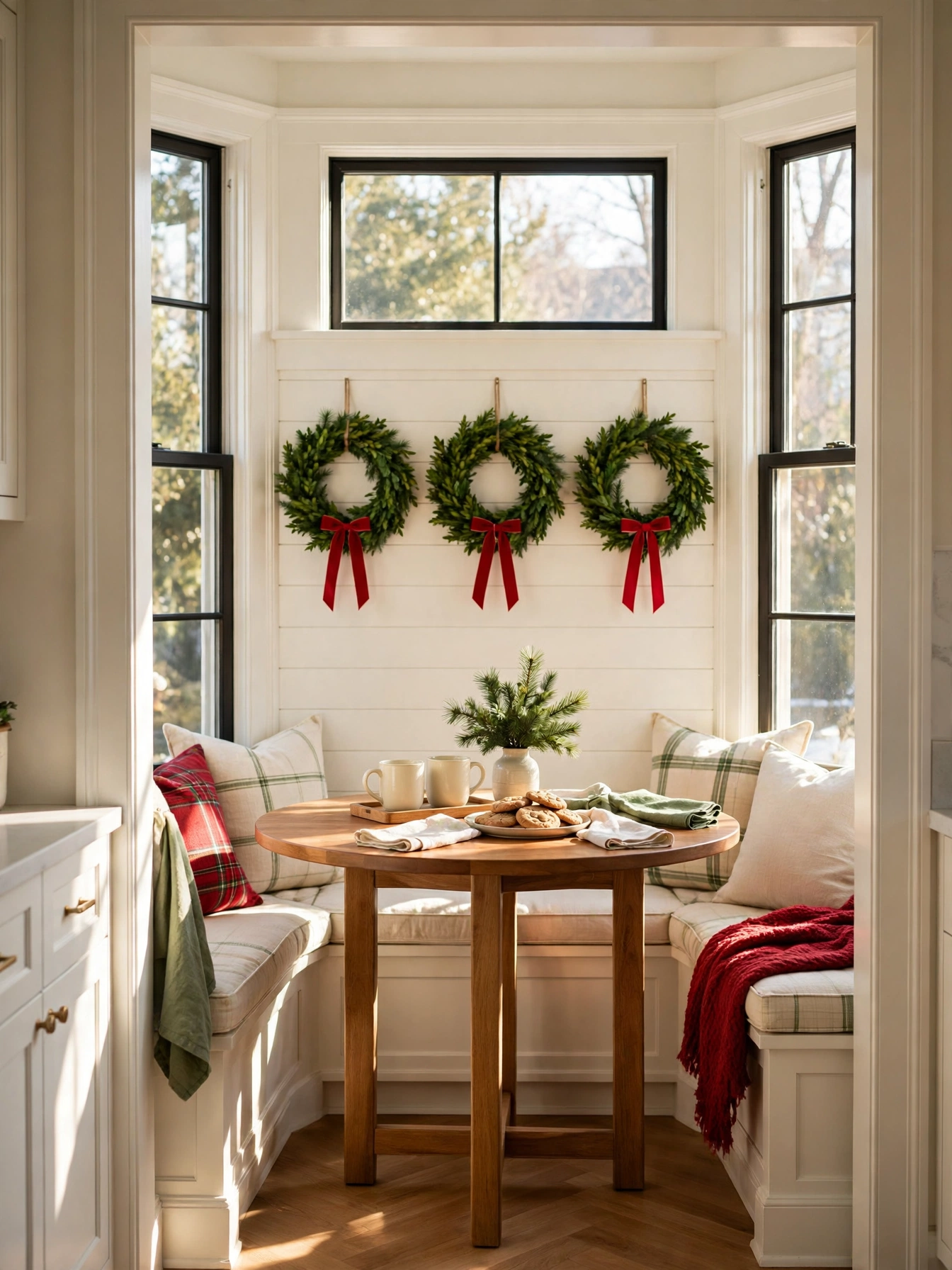
Why This Works:
- A wreath trio dresses a small eating spot that usually gets no holiday attention.
- Three small wreaths cost less than one large statement wreath and fill a wall better.
- Morning light on fresh boxwood smells wonderful during breakfast.
- The nook becomes a photo spot for holiday mornings, which families love.
Hang three 12 inch wreaths in a row, spaced 4 inches apart, centered 60 inches from the floor so they sit above eye level when seated. One 24 inch wreath costs 40 to 70 dollars fresh, while three small wreaths total 30 to 45 dollars and suit narrow walls better. Use removable hooks rated for 3 pounds each, because a fresh boxwood wreath weighs 1 to 2 pounds when new but dries lighter over 3 weeks. Mist boxwood every 3 days to slow browning, and keep wreaths away from the stove wall where cooking heat dries them in days. Never hang wreaths over a toaster or coffee maker, because rising heat and steam age them fast.
Fresh boxwood wreaths run 10 to 15 dollars each, ribbon runs 3 to 6 dollars per roll, and a small pine vase filler runs free from tree trimmings. Boxwood browns after 3 weeks indoors, so hang the trio in early December rather than late November for the best Christmas-week look. Check wall paint before using adhesive hooks, because some matte paints peel with adhesive.
Outdoor Pathway Luminaries
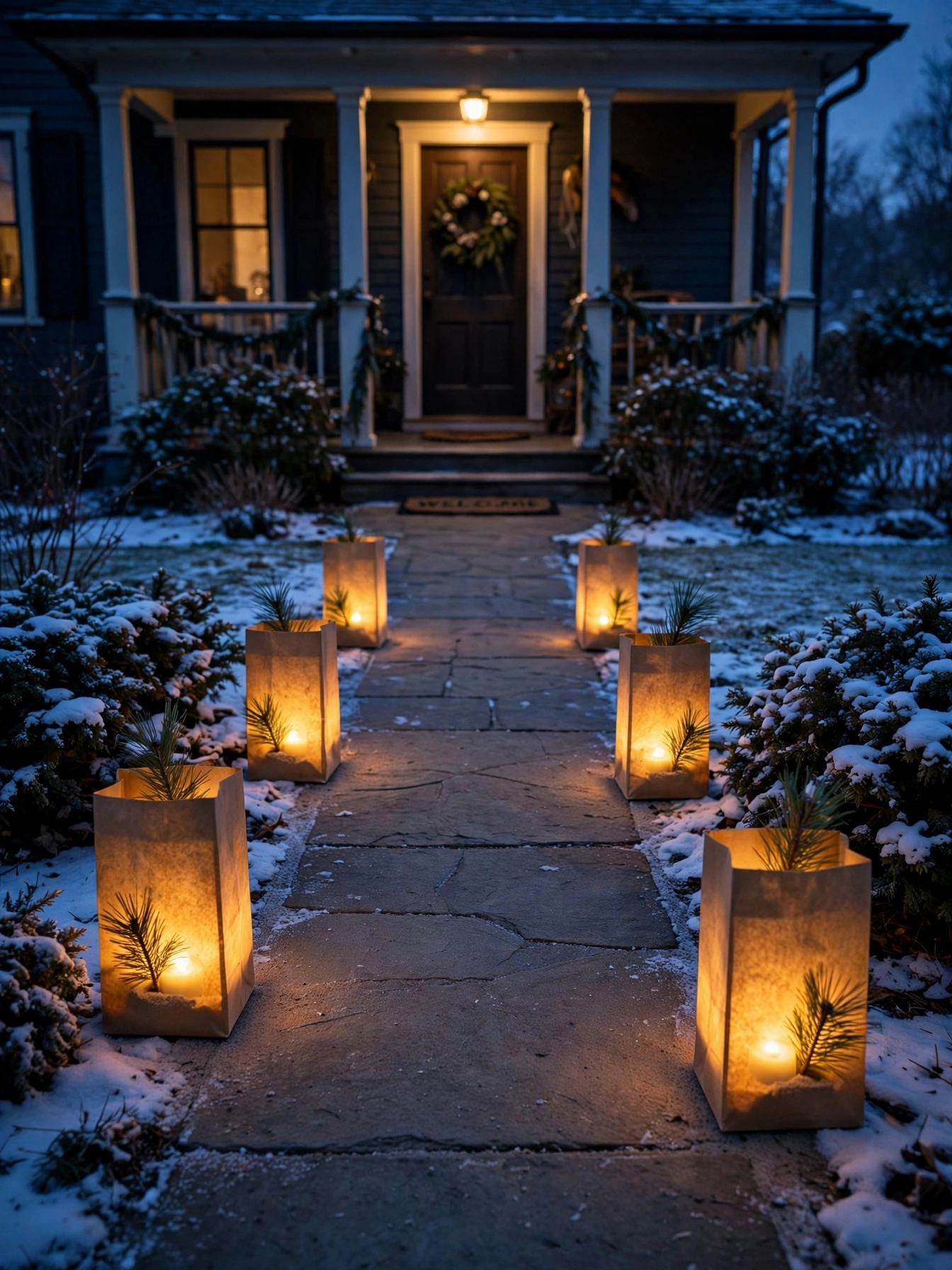
Why This Works:
- Luminaries guide guests safely to the door while looking far more special than porch lights alone.
- Paper bags and battery candles cost less than any wired outdoor lighting.
- The glow flatters snow, shrubs, and walkways equally, so the whole front yard benefits.
- Everything folds flat for storage, which beats bulky outdoor figures.
Fold the top 2 inches of each kraft bag outward for stability, add 2 inches of sand for weight, and set a battery candle in the center, spacing luminaries 3 feet apart on alternating sides of a 20 foot walkway, which needs about 7 bags per side, 14 total. Wired path lights cost 100 to 300 dollars installed, while luminaries total under 20 dollars, but they last one evening in rain, so check the forecast and skip them on wet nights. Battery candles with timers set for dusk to 10 PM last the whole season on one set of batteries. Never use real flames in paper bags outdoors, because wind gusts tip bags and dry leaves nearby catch quickly. If the walkway has steps, place luminaries on the flat ground beside steps, never on the steps themselves, where they become tripping hazards.
Kraft bags run 5 to 8 dollars for a pack of 20, sand runs 4 to 6 dollars per bag, and battery candles run 10 to 15 dollars for a set of 12. Weather decides whether this works: luminaries fail in rain and strong wind, so they suit calm, dry evenings best. Check local fire rules before using any open flame outdoors, since some neighborhoods restrict them in December.
Gift Wrap Station Corner
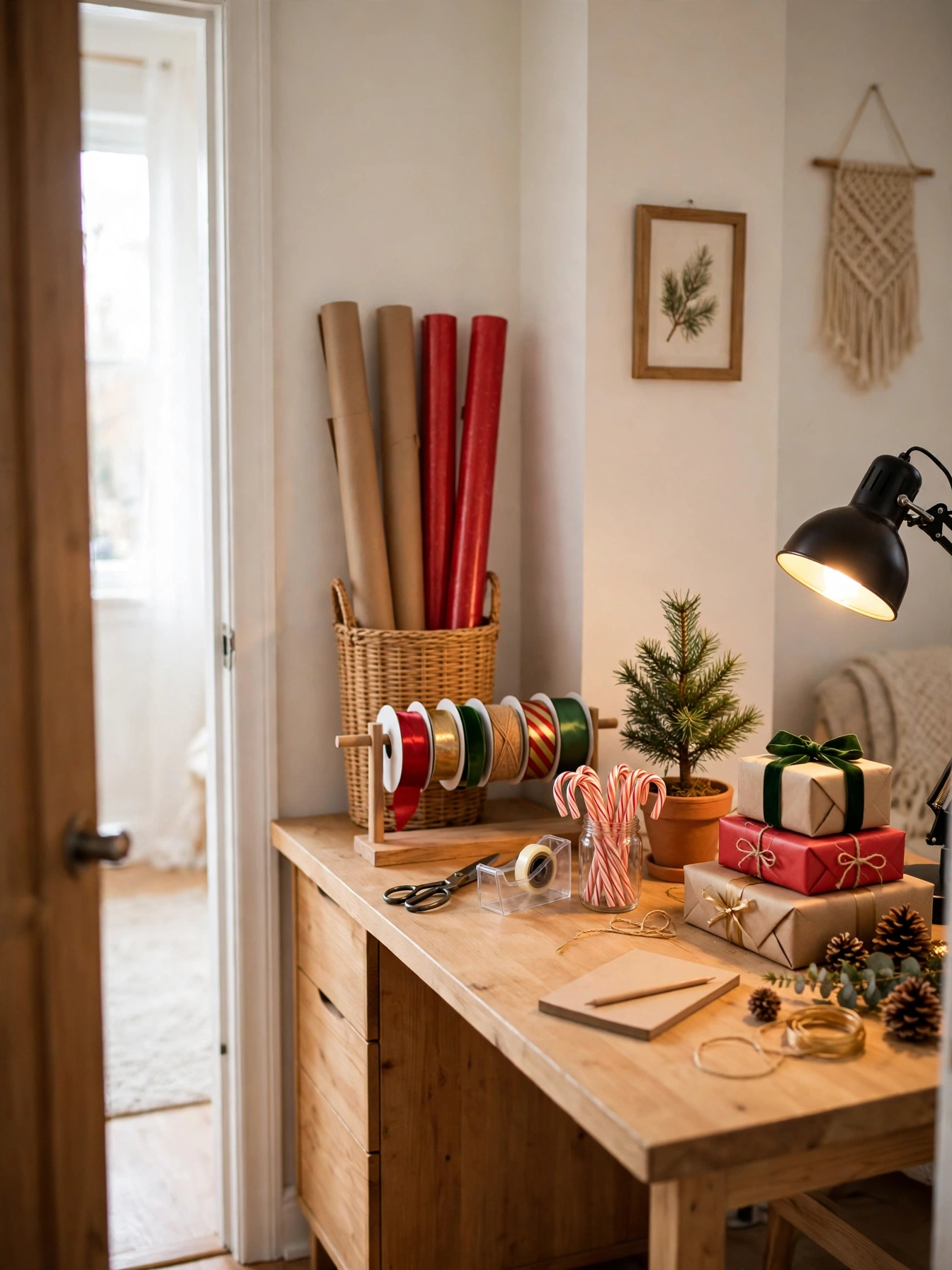
Why This Works:
- A dedicated wrap station stops wrapping paper from taking over the dining table.
- Vertical paper storage uses a corner that usually holds nothing but a chair.
- Ribbon on a dowel unrolls cleanly, which saves time and prevents tangles.
- The station doubles as decor, since paper rolls and ribbon look festive on their own.
Stand paper rolls upright in a tall basket at least 18 inches high so 30 inch rolls do not topple, and mount a wooden dowel 24 inches long across two brackets for ribbon spools, spaced 3 inches apart so spools spin freely. Wrapping on a bed or floor strains the back and scatters tools, while a desk station saves the back and keeps scissors and tape in one place, but it does need a dedicated corner for 4 weeks, so choose a spot that guests will not need. Keep scissors in a cup rather than loose on the desk, especially with children around, and store tape rolls on a weighted dispenser so one hand can pull tape while the other holds paper. Never leave a hot glue gun plugged in unattended at a wrap station, because paper and ribbon nearby ignite fast.
A tall basket runs 15 to 25 dollars, a dowel and brackets run under 10 dollars, and wrapping paper rolls run 3 to 8 dollars each. A full station needs a 48 inch desk plus floor space for the basket, so small apartments may need a rolling cart instead. Check the desk weight limit before stacking gifts on it, because a pile of wrapped boxes can exceed 20 pounds quickly.
Hallway Garland Arch
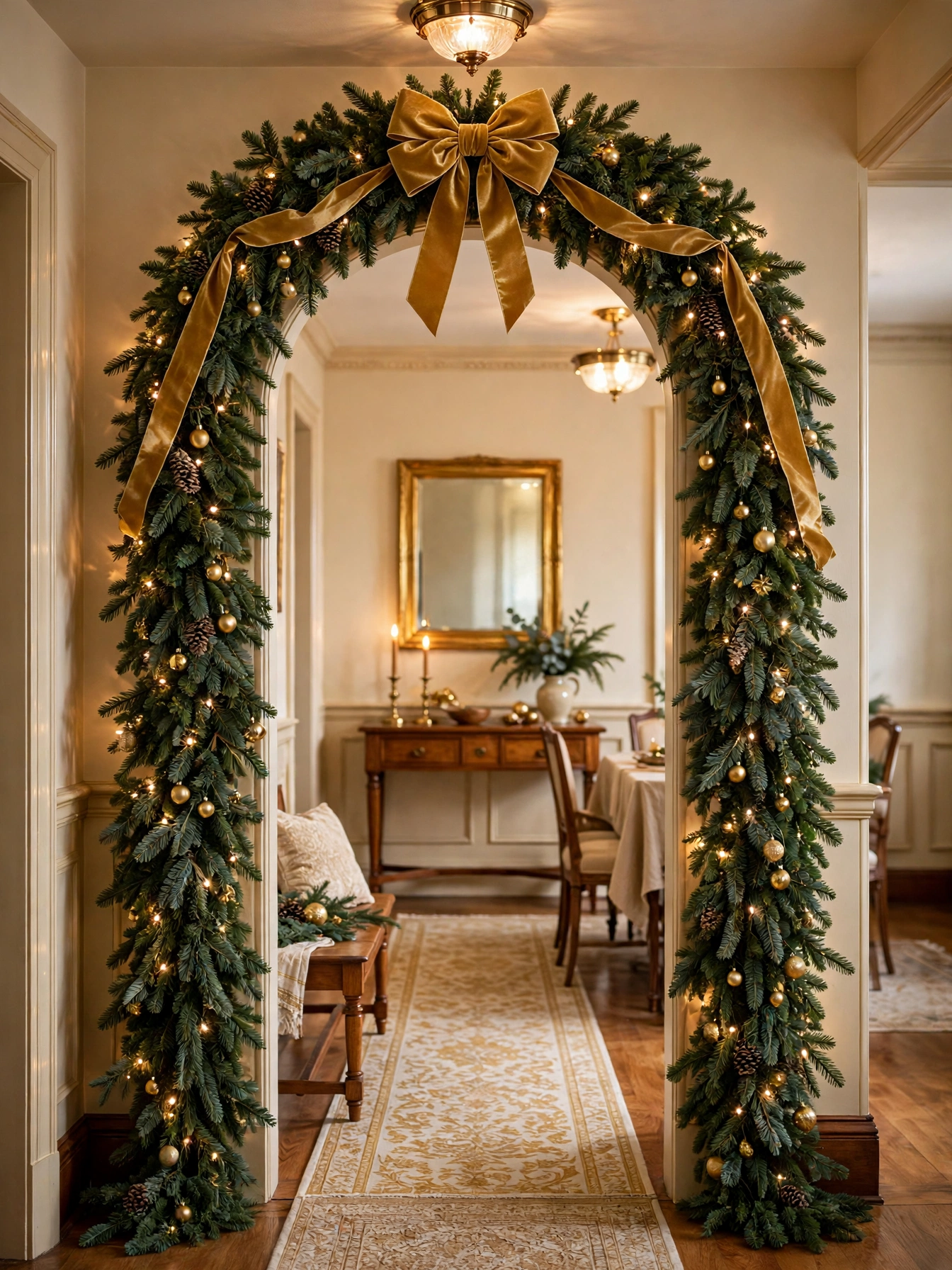
Why This Works:
- An arch turns a plain doorway into a moment guests walk through, not past.
- Garland overhead uses no floor or table space, which suits narrow halls.
- Gold ornaments on green read clearly from both rooms, so the arch serves two spaces.
- The arch photographs beautifully as a frame for family photos.
Measure the doorway first: a standard 36 inch wide by 80 inch tall doorway needs about 9 feet of garland for the two sides plus a gentle swag across the top. Attach the garland with removable hooks rated for 5 pounds, spaced 18 inches apart, and keep the lowest garland end at least 84 inches above the floor so tall guests do not brush it. Evergreen garland smells better and costs less than a balloon arch or fabric drape, roughly 25 to 45 dollars fresh versus 60 dollars or more for fabric, but it sheds needles onto the floor below, so vacuum the threshold twice a week. Weave lights through the garland before hanging it, because wiring an arch in place takes twice as long. Never hang an arch so low that it blocks the door swing or forces guests to duck.
Fresh fir garland runs 25 to 45 dollars for 9 feet, gold mini ornaments run 10 to 18 dollars for a set of 24, and hooks run under 8 dollars. Door clearance matters most: arches suit cased openings without doors best, since a swinging door catches garland daily. Check the casing depth before buying hooks, because shallow casings under 1 inch will not hold adhesive hooks reliably.
Small Space Christmas Home Decor Ideas
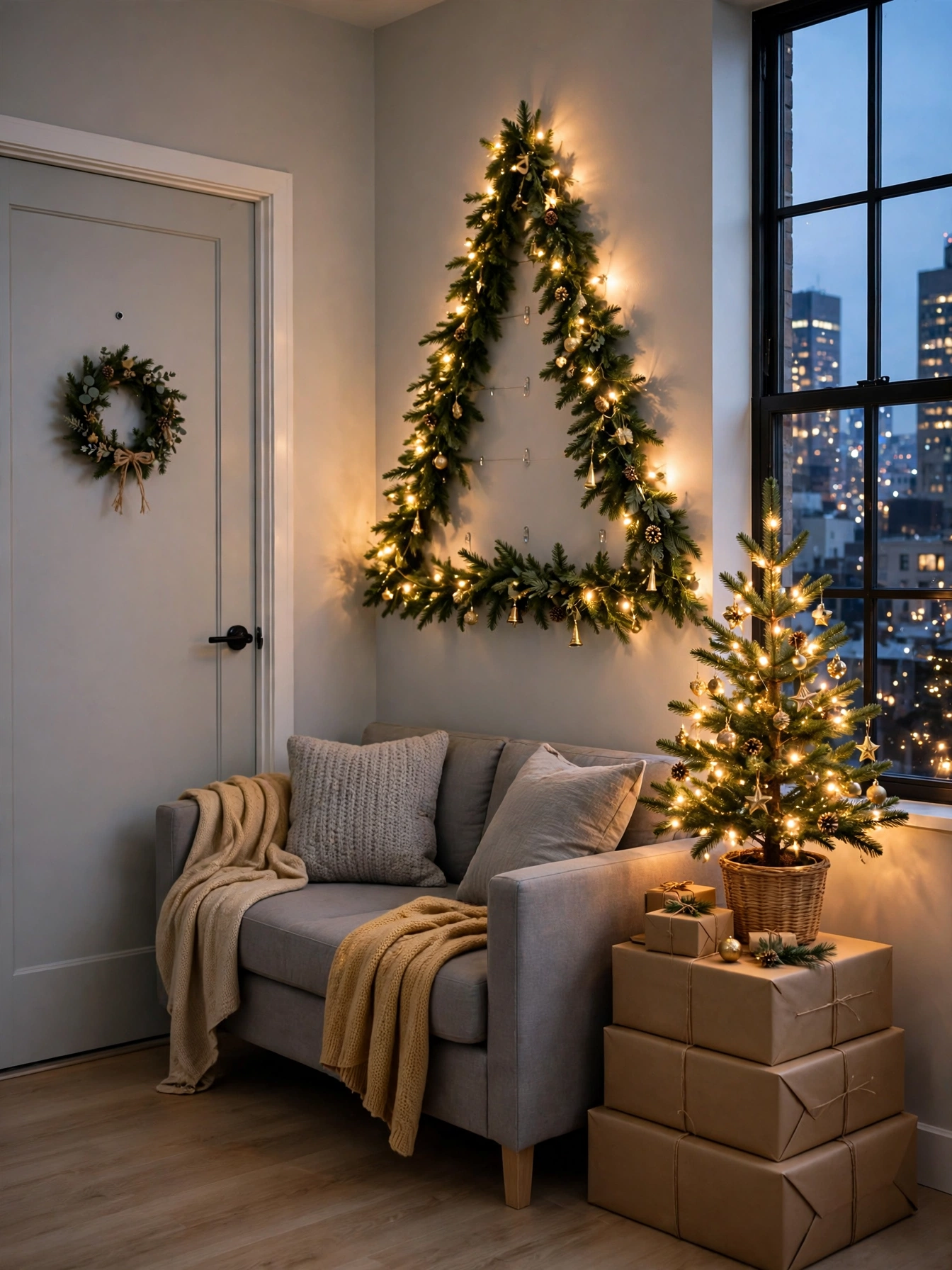
Why This Works:
- A tabletop tree plus a wall tree gives a small home two focal points without losing floor space.
- Wall-mounted greenery uses vertical space that apartments usually waste.
- Small-scale decor costs less and stores in one bin, which matters without a garage.
- The setup still photographs like a full Christmas room, so small does not mean lesser.
For a studio under 500 square feet, choose a tabletop tree 3 feet tall in a basket base 10 inches wide, and build a wall tree from 6 feet of garland shaped into 3 tiers on removable hooks rated for 3 pounds each. A full 6 foot tree needs a 4 foot floor circle, while this pair uses zero floor space beyond a side table, but the wall tree holds fewer ornaments, about 12 mini ornaments versus 60 on a full tree, so choose the prettiest ones. Battery lights with a 6 hour timer avoid cord runs across walkways, which is a tripping risk in small rooms. Never mount a wall tree over a radiator, because rising heat dries garland in days and loosens adhesive hooks.
A tabletop tree runs 30 to 60 dollars, wall garland runs 15 to 25 dollars, and mini ornaments run 10 to 18 dollars for a set of 24. A wall tree reads as clever decor rather than a traditional centerpiece, so households that want a classic tree experience may still prefer a slim pencil tree in a corner. Check wall paint before using adhesive hooks, since matte paint can peel on removal.
FAQs
What are the best christmas home decor ideas for a small living room?
Focus on vertical surfaces and one hero piece: a tabletop tree, a wall garland, and a single warm white light color. A 3 foot tree plus a 6 foot wall garland fills a 12 by 14 foot room without using floor space, and one light color keeps it looking curated.
How many lights do I need for a 7 foot Christmas tree?
Plan on about 700 mini lights, following the guideline of 100 lights per vertical foot, and add 100 more for a full 54 inch diameter tree. Use LED strings, keep wattage under the transformer rating, and choose UL listed lights, since that listing means the set passed safety testing.
How much should I budget for christmas home decor ideas across a whole house?
A whole-house budget runs 250 to 400 dollars when reusing a tree and buying greenery, lights, and accents fresh each year. First-year costs run higher, 500 to 800 dollars, since the tree, bins, and holders are bought once, while later years cost greenery and lights at 100 to 150 dollars.
When should I start decorating for Christmas?
Most households decorate the weekend after Thanksgiving, which leaves 4 full weeks to enjoy the decor before Christmas Day. Starting earlier than mid-November risks greenery drying out, since cut fir lasts about 4 weeks indoors, while starting after December 10 leaves little time to enjoy it.
How do I keep garlands and wreaths fresh through December?
Mist greenery every 3 days, keep it away from vents and fireplaces, and hang it after December 1 so it peaks at Christmas. The National Fire Protection Association advises keeping greenery watered and away from heat sources, and dry garland should come down, since dry greenery is a fire risk.
Conclusion
These christmas home decor ideas share one rule: decorate the whole house lightly rather than one room heavily, so every doorway, table, and windowsill carries a little of the season. Start with a classic tree and one warm light color, add greenery where guests actually look, and keep safety basics in mind with watered trees and cool LED lights. Your first action is simple: pick the one idea that fits the room you use most, set a 50 dollar budget for it, and hang it this weekend, because a finished corner beats a perfect plan that never leaves the store. Follow HomelyCrafter on Pinterest for more ideas. Save this to your Pinterest boards so you can refer back to it!

Muhammad Israr is a home decor enthusiast and the writer behind Homely Crafter. He spends his days researching paint colors, layouts and budget-friendly styling ideas, then breaks them down into practical, easy-to-follow guides so you can decorate with confidence.
4 thoughts on “24 Magical Christmas Home Decor Ideas You Will Love”