
At 7 in the morning, sunlight crosses the kitchen table while the coffee pot gurgles, and the room either feels like a warm farmhouse welcome or a plain white box that happens to hold a stove. It is a handful of honest materials, a sink deep enough for a stockpot, shelves that hold daily dishes, and light that lands softly on wood. Modern farmhouse kitchen ideas mix that old-fashioned warmth with clean lines and practical storage, so the room looks inviting and still works on a busy weeknight.
Warm wood, honest metal, and soft linen make that same room feel lived in. You will find 23 farmhouse ideas below, each with exact measurements, material grades, and real costs. Measure your own kitchen as you read, and pick the ideas that fit its size, light, and budget.
Apron Front Sinks
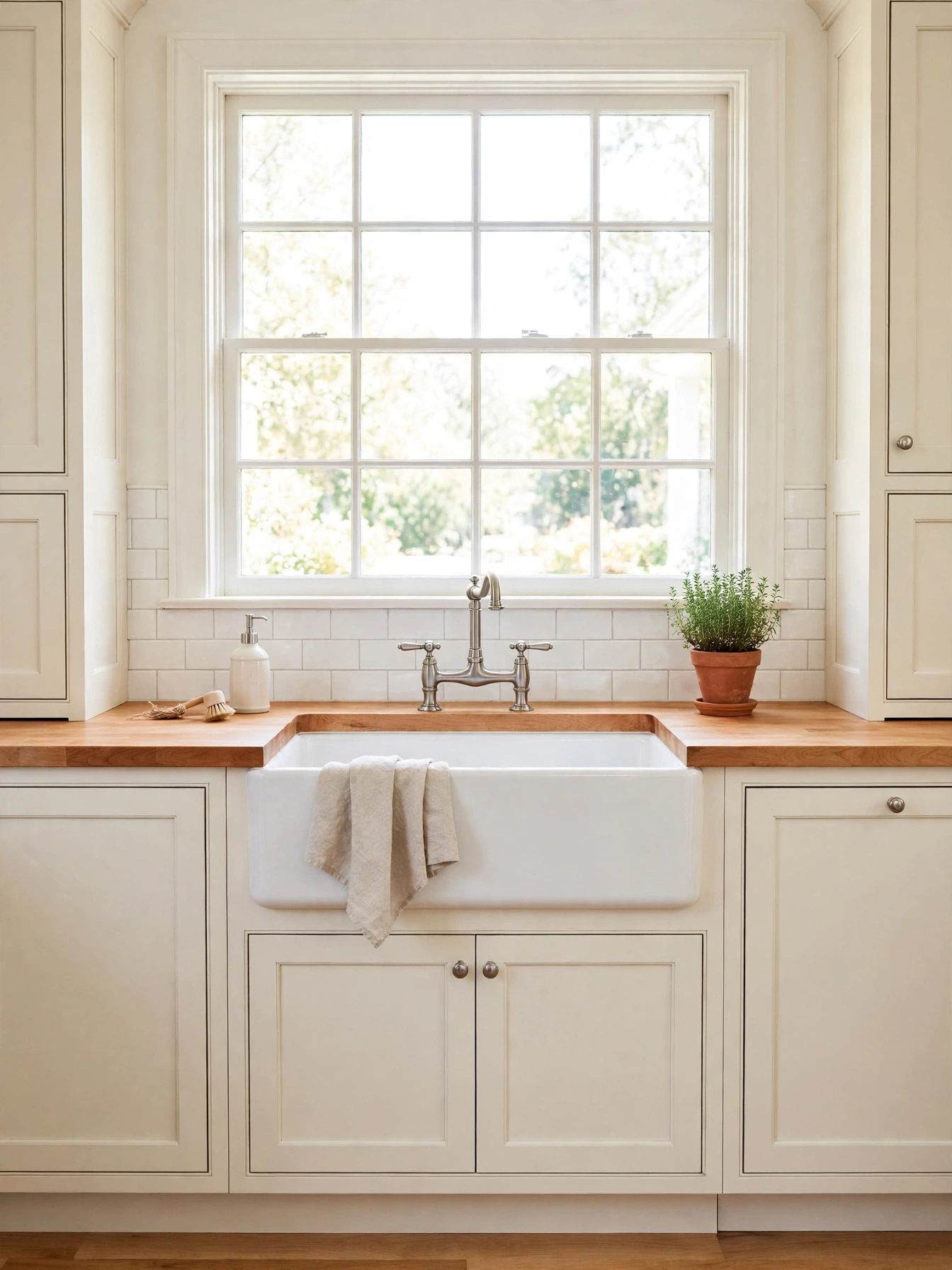
Why This Works:
- A 10 inch deep basin swallows stockpots and sheet pans without splashing
- The exposed front apron turns a workhorse fixture into the room’s focal point
- Fireclay resists stains from coffee, tomato sauce, and turmeric
- A forward-set basin shortens the reach, so backs stay comfortable during long washes
A standard apron front sink runs 30 to 36 inches wide, with a basin 9 to 10 inches deep and a front apron that extends 2 inches past the cabinet face. The sink needs a support frame rated for 150 pounds, since a fireclay model alone can weigh 90 pounds and a full basin adds far more. Never mount an apron sink on a standard cabinet without added support, because the weight will pull the cabinet frame out of square within months. The National Kitchen and Bath Association places the sink at the center of the work triangle, with 4 to 9 feet between sink and stove.
Fireclay shrugs off coffee, tomato sauce and turmeric without a stain. Stainless steel runs about half the price of fireclay. A dropped cast iron pan can chip the glaze, where stainless steel would only dent. Splashes land a little closer to the cook with a forward apron, so wipe the cabinet front after a heavy wash to keep the glaze bright. For a sink that faces daily stockpots, the chip risk is worth accepting when the apron gets dried after use.
Butcher Block Islands
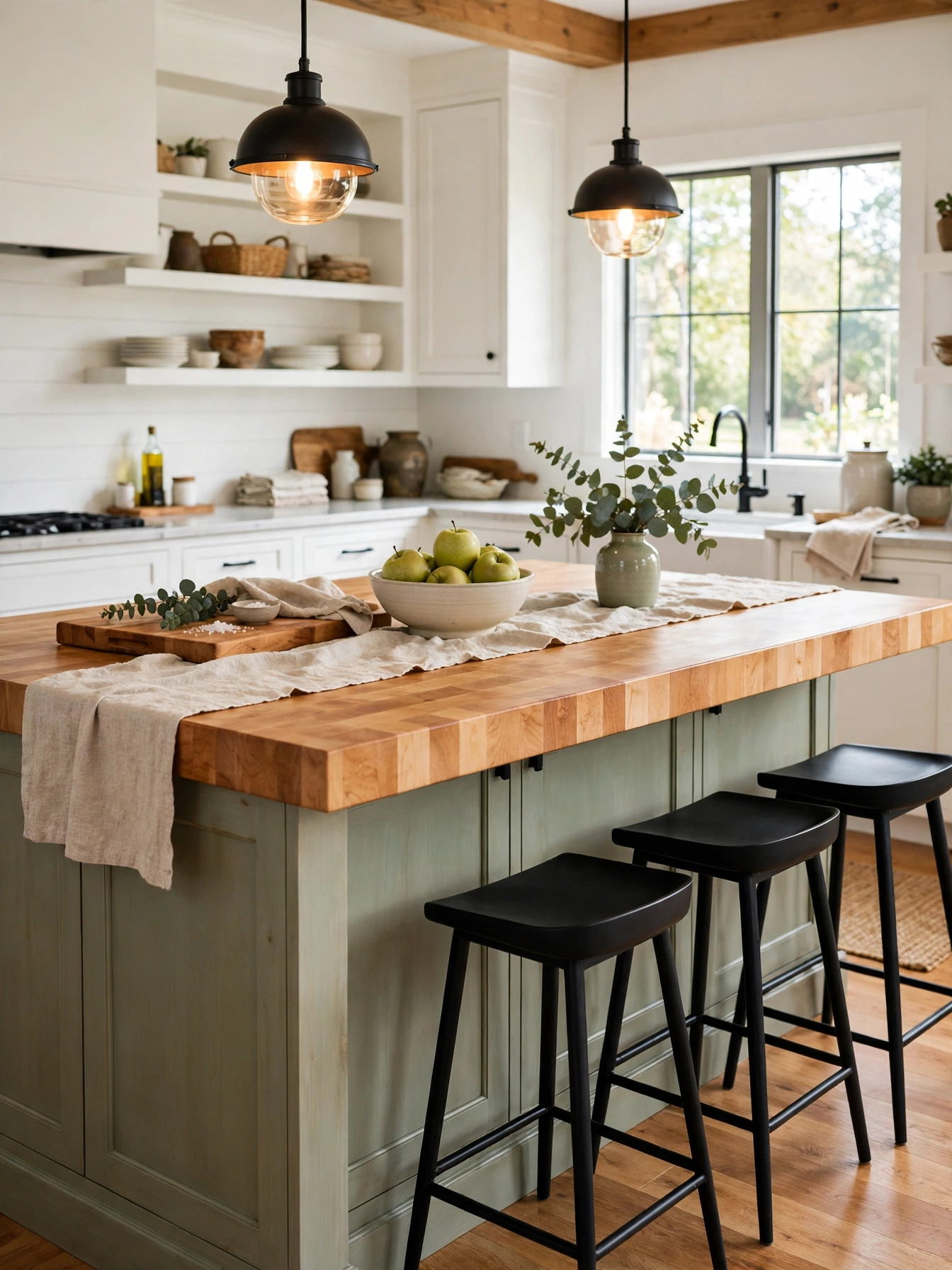
Why This Works:
- A 1.75 inch thick maple top takes knife marks and still sands smooth again
- The island adds 12 square feet of prep space in a medium kitchen
- Warm wood softens white cabinets and cold stone elsewhere in the room
- End grain construction resists cuts better than edge grain boards
A maple island top at least 36 inches wide and 60 inches long gives two cooks room to prep side by side, with a standard counter height of 36 inches and a 12 inch overhang on the seating side for knee room. Choose end grain maple at 1.5 to 2 inches thick, since thinner tops warp when one side dries faster than the other. Leave 42 to 48 inches of clearance on all sides of the island so two cooks pass without collision. Never let water pool on the surface, because standing water raises the grain and opens seams within weeks, and raw meat should be cut on a separate board rather than directly on the block.
Expect to pay 400 to 900 dollars for maple in this size. Keep the maple top sealed with regular oiling through its first year, since a top that misses that routine dries out and shows wear fast. Walnut costs roughly double the price of maple and marks more readily. Maple hides scuffs and sands clean. Quartz in the same size runs 1,500 to 3,000 dollars.
Barn Door Pantries
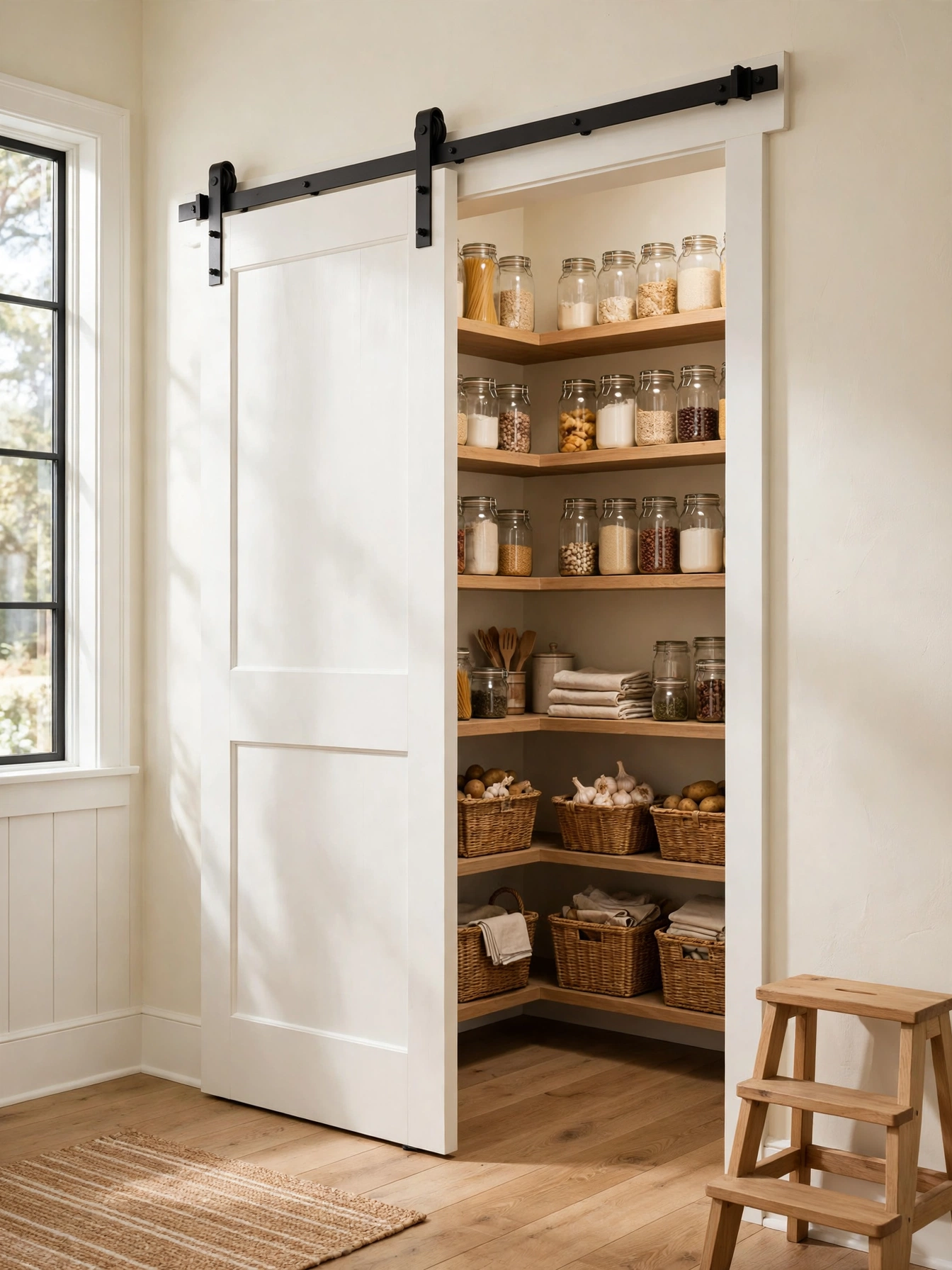
Why This Works:
- A sliding door saves the 36 inch swing arc a hinged door needs
- The black rail reads as a design feature, not just hardware
- A 36 inch wide door opens the full pantry in one motion
- Solid pine muffles sound better than a hollow-core door
A barn door pantry starts with a door 36 inches wide and 80 inches tall, hung on a steel rail rated for at least 200 pounds, since a solid pine door in this size weighs 60 to 80 pounds. Mount the rail 84 inches high on a header board screwed into wall studs spaced 16 inches on center, and leave 2 inches of clearance between the door bottom and the floor so it glides over a rug or uneven tile. Skip a barn door where the pantry sits beside a busy walkway, because the sliding panel blocks the opening while it moves and can catch a passing elbow. The rail must be level within 1/8 inch over its full length or the door will drift open on its own.
Plan on 400 to 800 dollars for a barn door with rail and hardware. A hinged door in the same opening comes in at 150 to 300 dollars. A 1 inch gap runs around a sliding panel, so pantry smells and light slip through where a hinged door would seal tight. A barn door earns its place where swing space is precious and the look carries the room. A hinged door stays the better buy where a tight seal matters more.
Reclaimed Wood Shelves
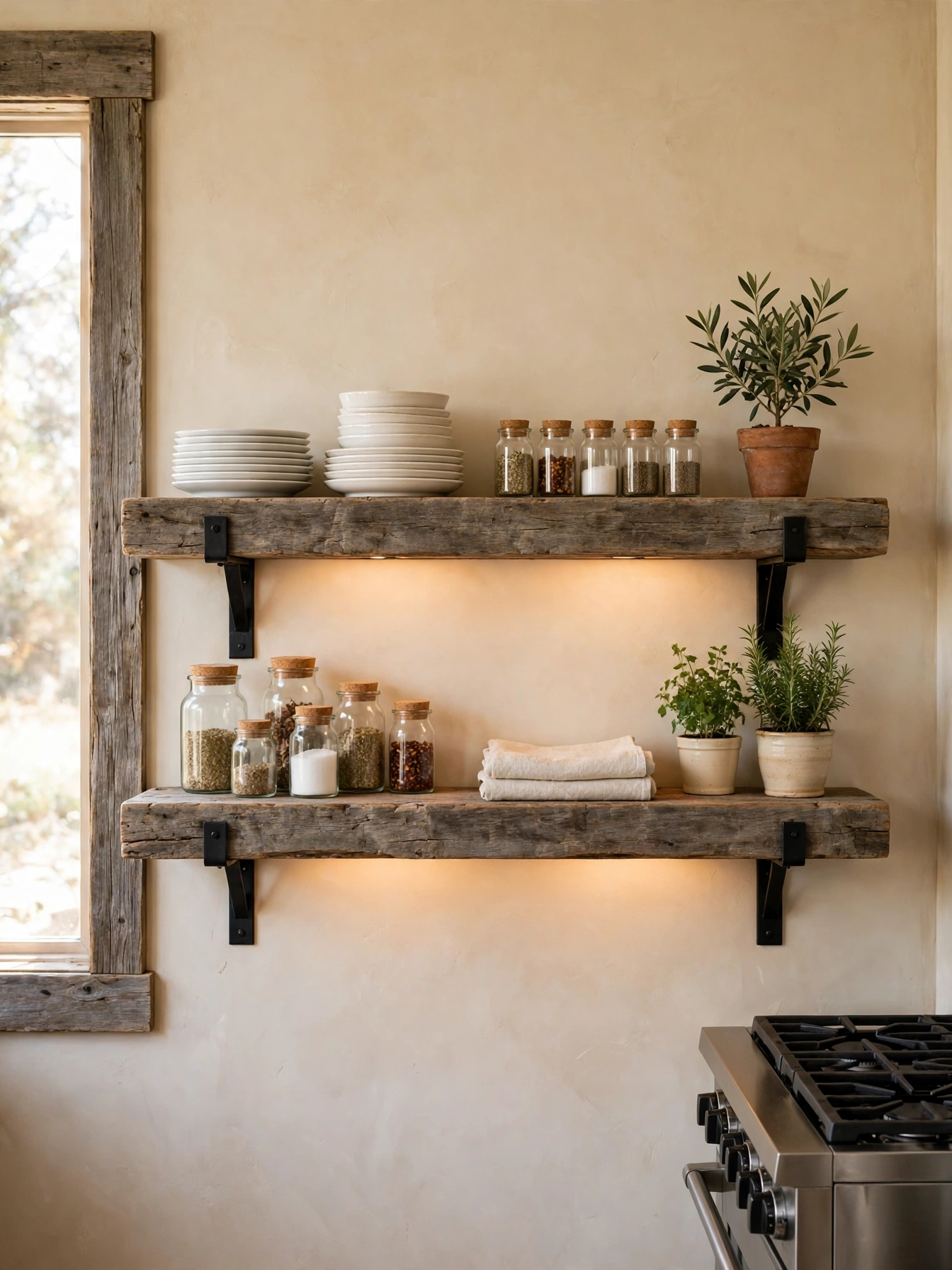
Why This Works:
- A 2 inch thick shelf holds a full stack of plates without bowing
- Reclaimed wood adds age and texture no new board can fake
- Open shelves put daily dishes within a 60 inch reach zone
- Steel brackets rated for 50 pounds each carry real weight safely
A 10 to 12 inch deep shelf at 24 to 36 inches long, 1.5 to 2 inches thick, holds a full stack of dishes without sagging. Mount each bracket into a wall stud, since studs sit 16 inches on center and drywall anchors alone will not hold 40 pounds of plates for long. Space shelves 15 to 18 inches apart vertically so tall glasses and pitchers fit without tilting. Avoid boards with active insect damage or soft rot, because no amount of sanding makes a compromised board safe for a loaded shelf.
Buy only from a supplier who kiln-dries the wood, which kills insects and drops moisture to 8 percent or less. Pine looks flat beside reclaimed wood and dents under a heavy stack. Dust settles on open plates, so a weekly wipe keeps them clean where closed cabinets would have shielded them for a month. Figure 8 to 15 dollars per board foot for reclaimed barn wood, against 3 to 5 dollars per board foot for new pine.
Matte Black Hardware

Why This Works:
- Matte black pulls outline cream cabinets and define each drawer front
- A 5 inch pull suits wide drawers better than a small knob
- Powder-coated finish resists fingerprints far better than polished chrome
- Black ties the faucet, lighting, and rail into one quiet color story
Cabinet pulls should match the drawer width: use 3.75 inch pulls on drawers under 18 inches wide, 5 inch pulls on drawers 18 to 24 inches wide, and 6.25 inch pulls on drawers wider than 24 inches. Door knobs run 1.25 inches in diameter, mounted 2.5 inches from the door edge and 3 inches up from the bottom corner on base cabinets. Choose powder-coated steel or solid brass with a matte black finish, since thin plated zinc chips within a year of daily use. Never mix more than two metal finishes in one kitchen, because a third finish turns a deliberate palette into a cluttered one.
Solid pulls rated for daily use stay rigid under a full drawer. Cheap hollow pulls flex and loosen within months. Matte black hides fingerprints better than polished nickel. Dust and water spots show on it sooner than on brushed brass, so a weekly wipe keeps it looking new. Match the black to the faucet finish so the two read as one decision, not two guesses.

Why This Works:
- A 32 ounce jar holds 2 pounds of rice, a two-week supply for most homes
- See-through glass shows the level at a glance, so jars get refilled before they run empty
- Wide-mouth jars take a measuring cup without a funnel
- Matching jars turn a jumble of bags into a calm, even row
Mason jars come in three useful sizes for a kitchen: pint jars at 16 ounces for spices and seeds, quart jars at 32 ounces for rice and oats, and half-gallon jars at 64 ounces for flour and sugar. A quart jar stands 7 inches tall and 3.5 inches wide, so a 12 inch deep shelf fits one row with 2 inches of finger space at the front. Choose jars with two-piece metal lids and a silicone ring, since a loose lid lets humidity in and clumps sugar within 3 weeks. Avoid jars wider than 4 inches on a 12 inch shelf, because two rows will not fit side by side and the back row hides.
Rinsing, drying and relabeling a dozen jars takes about 5 minutes once the system is set up. Keep the heavy half-gallon jars on a shelf below 48 inches, where a slip falls a shorter distance. Plastic weighs less and never shatters, and it scratches, clouds and holds odors over time. Glass stays clear and neutral for years. Twelve jars cost 25 to 55 dollars as a starter set.
Modern Farmhouse Kitchen Ideas With Shiplap
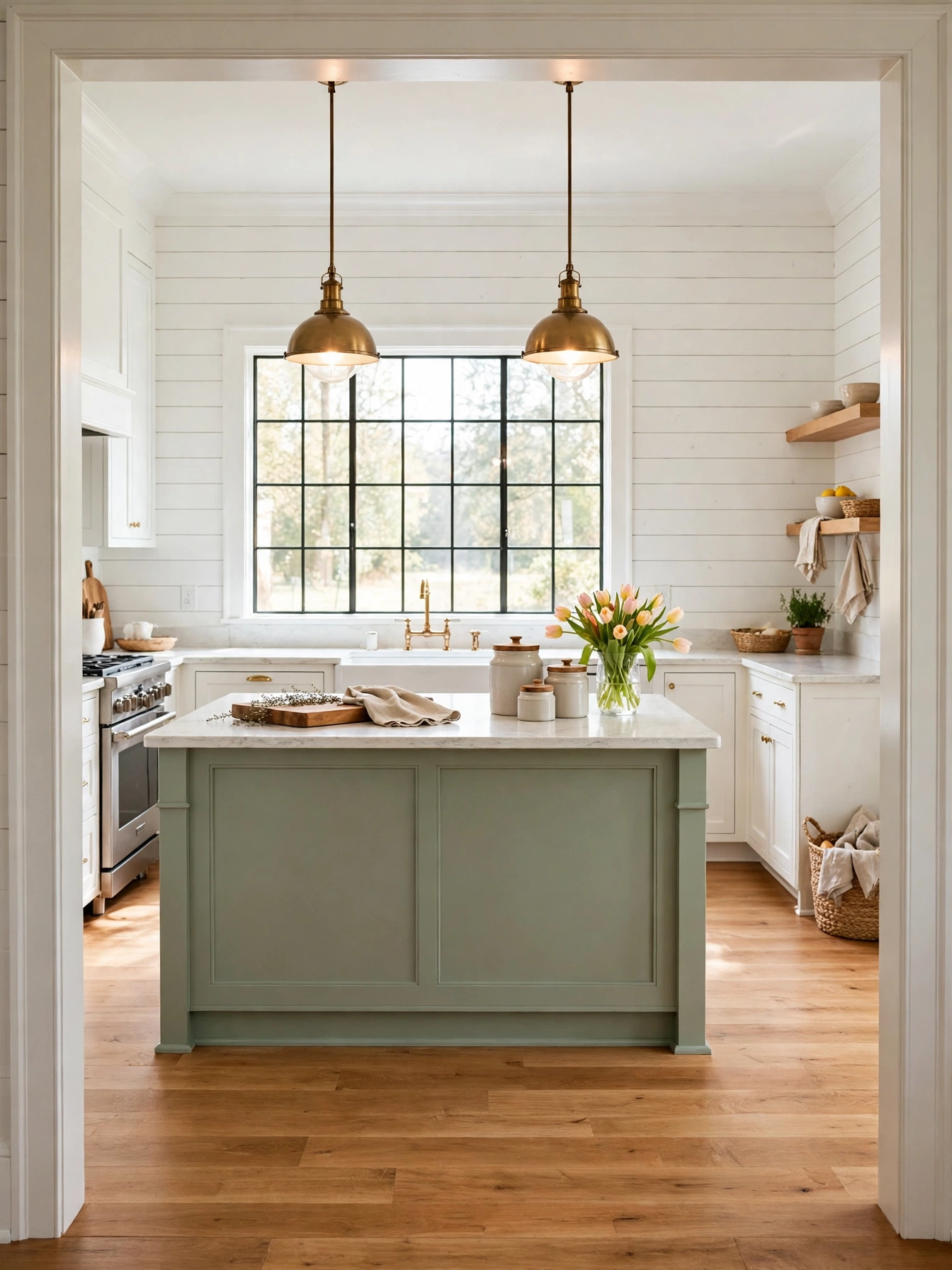
Why This Works:
- Shiplap adds texture to flat drywall without a full renovation
- White boards bounce daylight deeper into the room
- A 6 inch board width reads classic, never busy or fussy
- Painted pine wipes clean, so kitchen grime never settles into the grooves
Shiplap boards run 6 inches wide and 8 feet long, with a 1/8 inch reveal gap between boards that creates the signature shadow line. Install boards horizontally on one accent wall, usually the wall behind the range or the island, and keep the rest of the walls plain so the texture stays a feature rather than a flood. Never run raw wood shiplap directly behind a stove without a heat shield, because grease and heat will stain and warp it within a year. The National Kitchen and Bath Association recommends a backsplash height of 18 inches above the counter, and shiplap above that line stays clear of daily splashes.
Paint the boards before installation, since brushing paint into installed grooves takes twice as long and never covers as evenly. Installed pine shiplap lists for 5 to 8 dollars per square foot, and MDF undercuts it at 2 to 4 dollars per square foot, with beadboard at a similar price and a cottage look. Grooves collect dust, so a monthly pass with a microfiber cloth keeps the shadow lines crisp. One accent wall is enough to give a plain white kitchen instant character.
Gingham Linen Curtains

Why This Works:
- A cafe curtain covers the lower half, so light enters while the sink stays private
- Gingham reads farmhouse instantly without a single word of decor
- Linen softens hard tile and steel with a fabric the eye loves
- A 24 inch length clears the faucet and stays dry during dishwashing
At a sink window, a cafe curtain covers the lower half and leaves the top open to light. For a standard window, plan on 24 inches long, hung on a rod mounted 2 inches above the window midpoint, which usually lands 36 to 40 inches above the floor. Choose a linen or linen-blend fabric at 1.5 times the window width, so a 36 inch window needs 54 inches of fabric for gentle gathers. Avoid floor-length curtains at a sink window, because the fabric soaks up splashes and drags through dishwater within a week. Mount the rod 2 inches beyond the window frame on each side so the curtain stacks clear of the glass.
Pick a small 1/2 inch check for a calm look, and save large checks for a bolder room. Cooking grease reaches kitchen curtains fast, so a 4 to 6 week wash cycle is the upkeep that comes with fabric at the sink. Cotton gingham costs less than linen and holds its shape better in the wash. Linen drapes more softly and ages with a relaxed texture cotton never quite reaches. A pair of gingham curtains is priced at about 40 to 80 dollars.
Galvanized Metal Accents
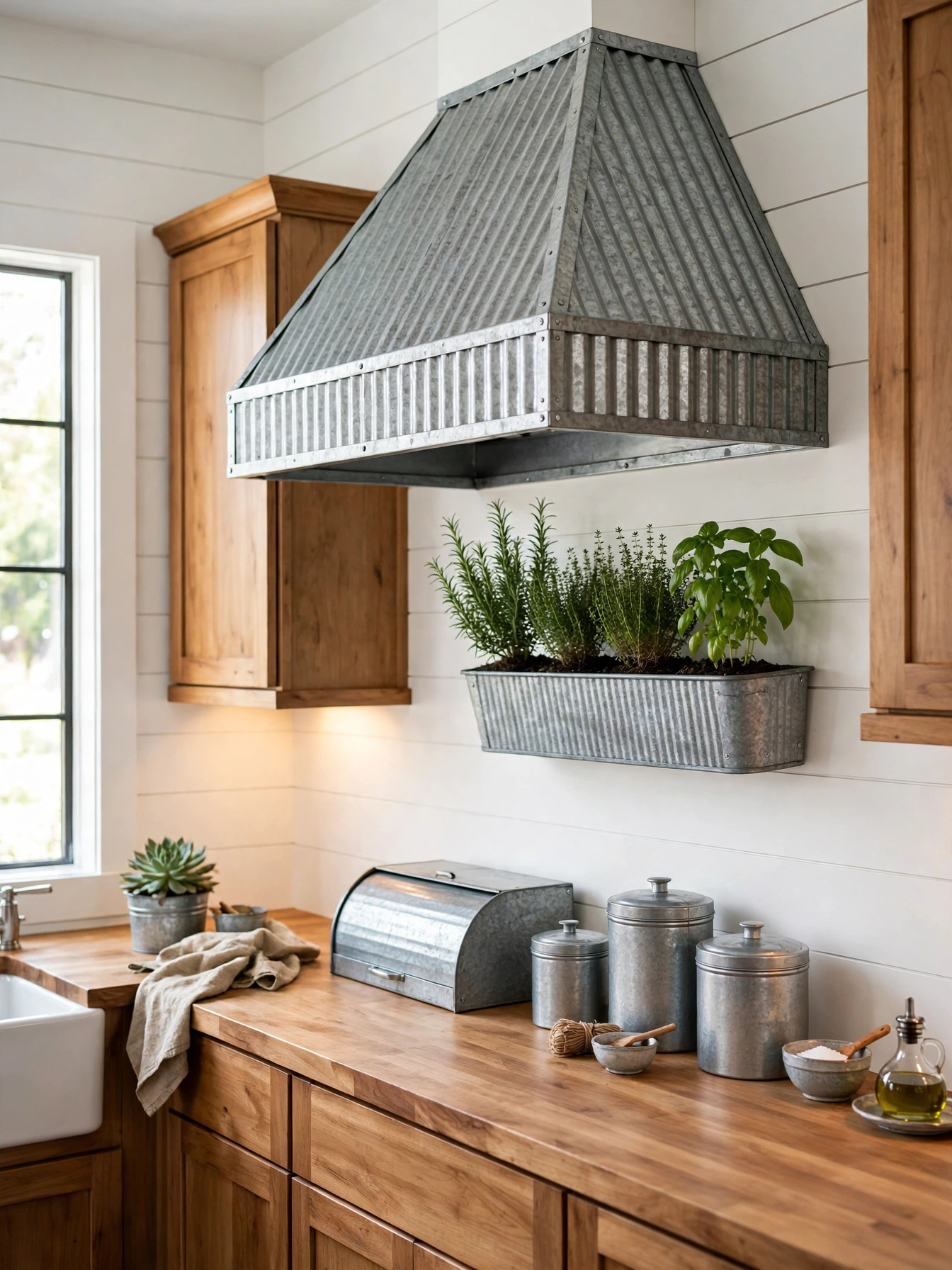
Why This Works:
- Galvanized steel adds a cool industrial note that warms up wood
- A metal planter drains well, so herbs stay alive longer than in ceramic
- The spangled zinc finish hides fingerprints and water spots
- Metal accents cost little yet change the whole mood of a shelf
Galvanized accents work in small doses: one planter, one bread box, and one set of canisters across a 12 foot kitchen is plenty. Choose 26 gauge steel for planters and canisters, since thinner metal dents when a heavy pot bumps it, and confirm the zinc coating is intact with no rust spots at the seams. Drill a drainage hole 1/4 inch wide in the bottom of any planter, and set it on a saucer 1 inch larger than the base to catch water. Keep galvanized metal away from acidic foods such as tomatoes and vinegar for long storage, because acid reacts with the zinc coating over time.
Inspect the seams before buying, since a chipped zinc layer lets moisture reach the steel beneath and rust follows within months. Reseal the edges yearly to keep the coating intact. Stainless steel never rusts and wipes cleaner, and it costs roughly double. Stainless steel reads sleek, and galvanized metal reads farmhouse. Budget 15 to 60 dollars each for galvanized pieces, so a full accent set stays under 200 dollars.
Barn Pendant Lights

Why This Works:
- A 14 inch shade spreads light across 36 inches of island without glare
- Barn shades direct light down, so the work surface stays bright
- Matte black shades anchor a pale kitchen the way a frame anchors a picture
- Warm 2700K bulbs keep the light golden, never cold or clinical
Hang barn pendants 30 to 36 inches above the island counter, measured from the countertop to the bottom of the shade, which keeps the light clear of sightlines while still lighting the work surface. Space two pendants 30 inches apart on an 8 foot island, and choose shades 12 to 14 inches in diameter for that length, stepping up to 16 inches on islands longer than 10 feet. Use LED bulbs at 2700K and 800 lumens each, and put them on a dimmer so the same lights shift from prep brightness to dinner softness. Never hang a pendant below 30 inches, because heads bump it and the glare lands straight in the eyes.
Over the island, a barn pendant adds both light and shape. Downlight flatters the island and leaves the perimeter dim, so under-cabinet strips at 2700K fill the gap along the counters. Recessed ceiling lights spread light more evenly across the whole room. They vanish into the ceiling and add no character. Plan on 80 to 200 dollars per pendant, plus 100 to 250 dollars for installation when a new junction box is needed.
Farmhouse Dining Nook

Why This Works:
- A built-in bench seats 4 people in the space a table and chairs need for 3
- The bench base hides storage for placemats, games, and seasonal linens
- A round table leaves no sharp corners in a tight walkway
- Morning light in a corner nook turns breakfast into the best hour of the day
A dining nook needs a footprint of at least 6 feet by 6 feet to work, with a bench 18 inches deep and 18 inches high, and a table 36 to 42 inches in diameter for a round top. Leave 36 inches of clearance between the table edge and the nearest counter so someone can slide onto the bench without turning sideways. Avoid a rectangular table in a nook under 7 feet wide, because the corners block the walkway and bruise hips daily. The National Kitchen and Bath Association recommends 24 inches of table width per person, which puts 4 seats on a 42 inch round table comfortably.
A built-in bench never moves, so rearranging the room for a party means working around it. Chairs eat more floor space and offer no hidden storage. Choose the built-in where the nook is permanent and the storage matters, and keep chairs where the layout may change. Set aside 800 to 1,500 dollars for a built-in bench. Freestanding chairs need only 100 to 200 dollars each.
Wood Beam Ceilings
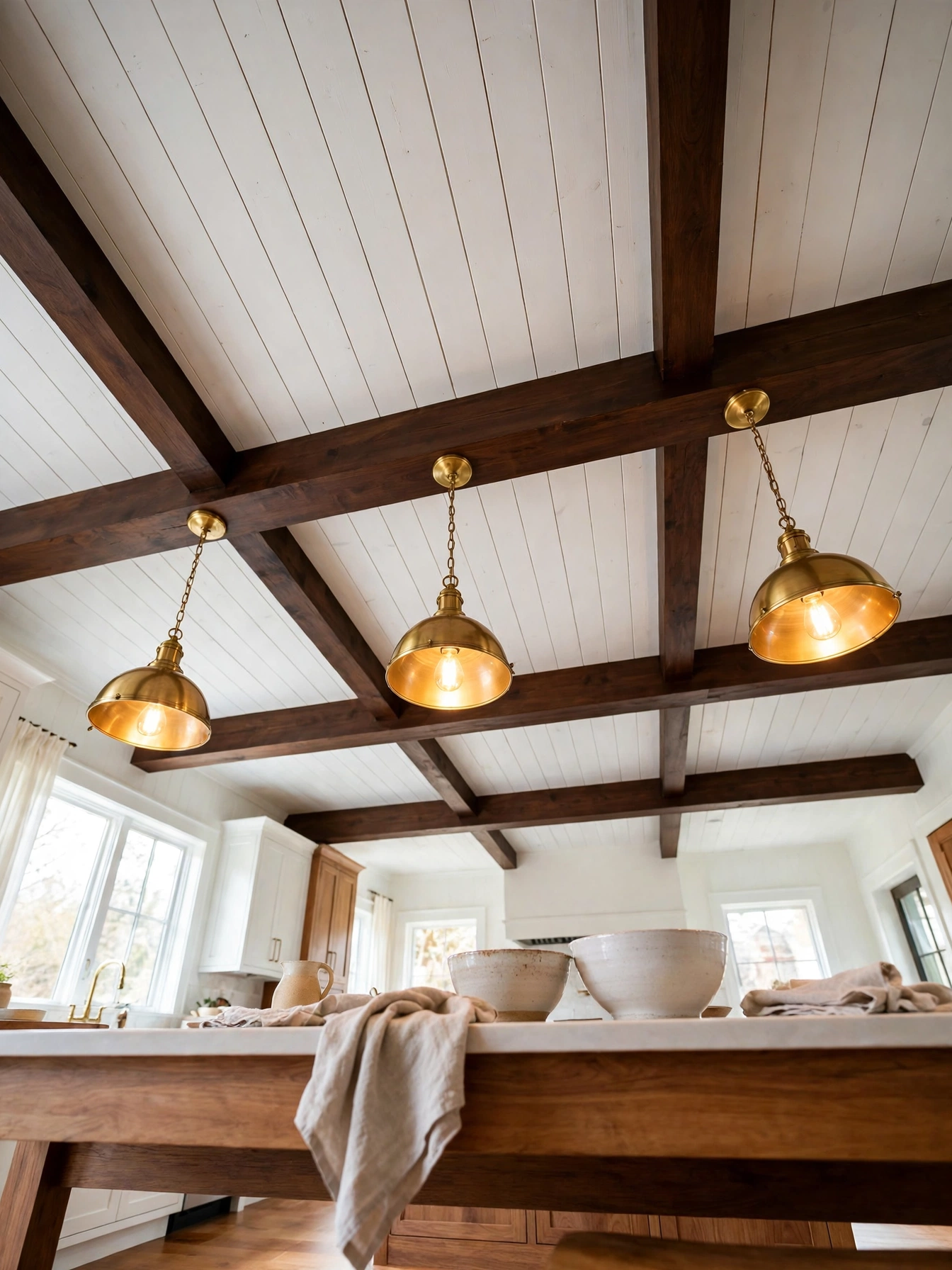
Why This Works:
- Beams break a flat white ceiling into a rhythm the eye follows
- Dark wood overhead warms a tall room that would otherwise feel cold
- A 9 foot ceiling gains presence without losing a single inch of height
- Beams hide the seam where ceiling planks meet, so the finish looks intentional
A tall room feels finished once beams run across it, so size them 6 inches wide and 8 inches deep for a 9 foot ceiling, spaced 4 feet apart across the shorter span of the room. Solid wood beams weigh 10 to 15 pounds per linear foot, so each one needs lag bolts into ceiling joists spaced 16 inches on center, never into drywall alone. Faux beams made from hollow polyurethane weigh under 2 pounds per foot and mount with construction adhesive plus screws, which suits a ceiling where the joist layout is unknown. Hire a professional carpenter or structural engineer for any work that cuts, moves, or loads a ceiling joist, since a mistake there affects the whole floor above.
In a tall room that echoes, beams give the ceiling a rhythm and the space a finished feel. Expect to pay 40 to 80 dollars per linear foot for solid wood beams installed, while faux beams are priced at 15 to 30 dollars per linear foot. Dust settles on their top edges, and dark wood absorbs light, so a north-facing kitchen can feel dimmer once they go in. Faux never cracks or checks the way real timber does, and close inspection shows the difference in grain. Paint the ceiling between the beams a warm white to keep the room bright.
Vintage Enamelware Displays
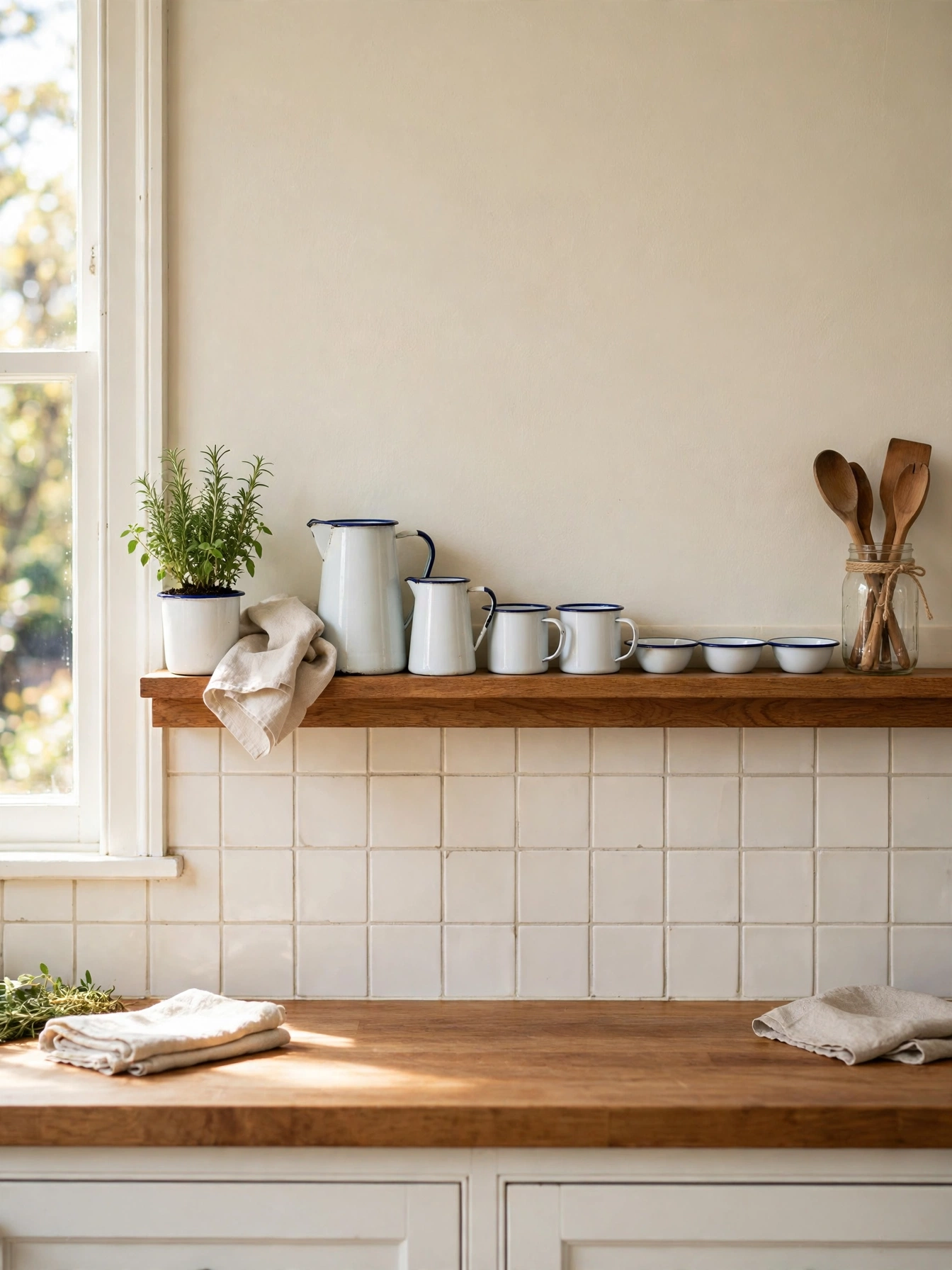
Why This Works:
- A plate rail turns everyday dishes into a display that costs nothing extra
- White enamel with a blue rim reads farmhouse from across the room
- The rail holds plates upright, so a full set fits in 8 feet of wall
- Enamelware chips gracefully, and the wear becomes part of its charm
A plate rail should sit 60 to 66 inches above the floor, with a ledge 2 inches deep and a lip 1 inch high to hold plates upright without slipping. Mount the rail into studs spaced 16 inches on center, since a full row of enamelware weighs 15 to 25 pounds and drywall anchors will sag over time. Keep plates 10 to 12 inches in diameter on the rail, and leave 1 inch between each piece so they lift out without clinking. Never stack enamelware more than 4 high in a cabinet, because the weight chips the rims of the lower pieces.
Enamelware handles a hot oven dish and a campfire alike. Chips are part of enamelware, so it suits display and light serving better than daily use by small children. Melamine looks similar and never chips, but it melts near heat and fades in the dishwasher. New reproductions cost 8 to 20 dollars and match each other perfectly. Genuine vintage pieces fetch 10 to 40 dollars each from antique shops.
Modern Farmhouse Kitchen Ideas for Small Spaces
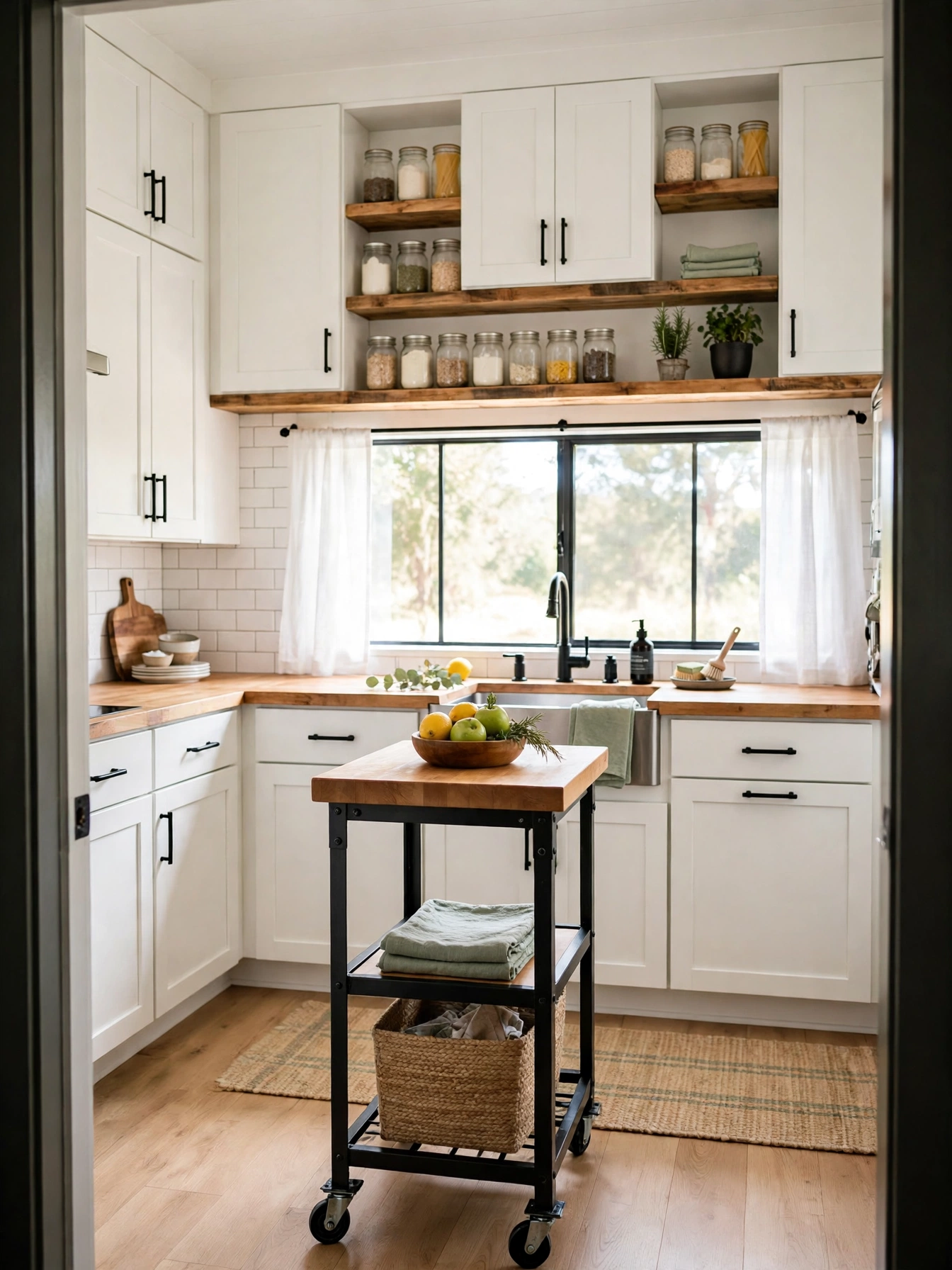
Why This Works:
- White cabinets and one wood tone make 80 square feet feel twice as large
- A rolling island adds prep space, then tucks away when dinner is served
- Open shelves replace upper cabinets and open up the whole wall
- One accent color keeps the small room calm instead of busy
A small farmhouse kitchen runs on tighter numbers than a large one. Keep the work triangle between 12 and 26 feet in total, with each leg 4 to 9 feet, and hold island clearance at 36 inches rather than the usual 42 to 48, which is the minimum a person needs to pass. Avoid a full-size range in a kitchen under 100 square feet, since a 24 inch apartment range frees 6 inches that matter more than a fifth burner. The Spruce notes that light colors reflect more daylight, which is why white and cream dominate small farmhouse kitchens.
A weekly shop becomes part of the routine, since a small kitchen cannot hold a month of goods. Bulk buying has no home here. A large farmhouse kitchen absorbs clutter gracefully. A small one shows every stray pan, so a one-in-one-out rule keeps the counters honest. Paint the ceiling the same white as the cabinets to blur the edges, and keep the palette to two colors plus wood for a calm finish.
Cast Iron Displays

Why This Works:
- Hanging skillets free a whole cabinet that once held a heavy stack
- Cast iron holds heat at 500 degrees, so searing stays even and deep
- A wall rail puts the right pan in hand within 3 seconds
- Black iron against warm wood is the farmhouse color story in one glance
A wall rail for cast iron should be a steel bar 36 inches long, mounted into studs spaced 16 inches on center, with hooks rated for 10 pounds each. A 12 inch cast iron skillet weighs 8 pounds, so three skillets plus utensils load the rail with about 30 pounds, well within a rail rated for 75 pounds. Space hooks 6 inches apart so pan handles do not clatter, and hang the rail 60 inches high so the lowest pan clears the counter by 24 inches. Season skillets with a thin coat of flaxseed oil baked at 450 degrees for 1 hour, and never soak cast iron in the sink, because standing water rusts the surface overnight.
Keep one 10 inch and one 12 inch skillet on the rail, and store the rest. An 8 pound skillet strains wrists, so mount the rail high enough that little hands cannot pull a pan down, and keep it clear of a toddler’s climbing route, with no hot skillet left hanging where a child can grab the handle. Stainless steel weighs half as much and goes in the dishwasher. It costs 3 to 4 times more per pan, and it never holds heat the way iron does.
Brick Backsplash Accents
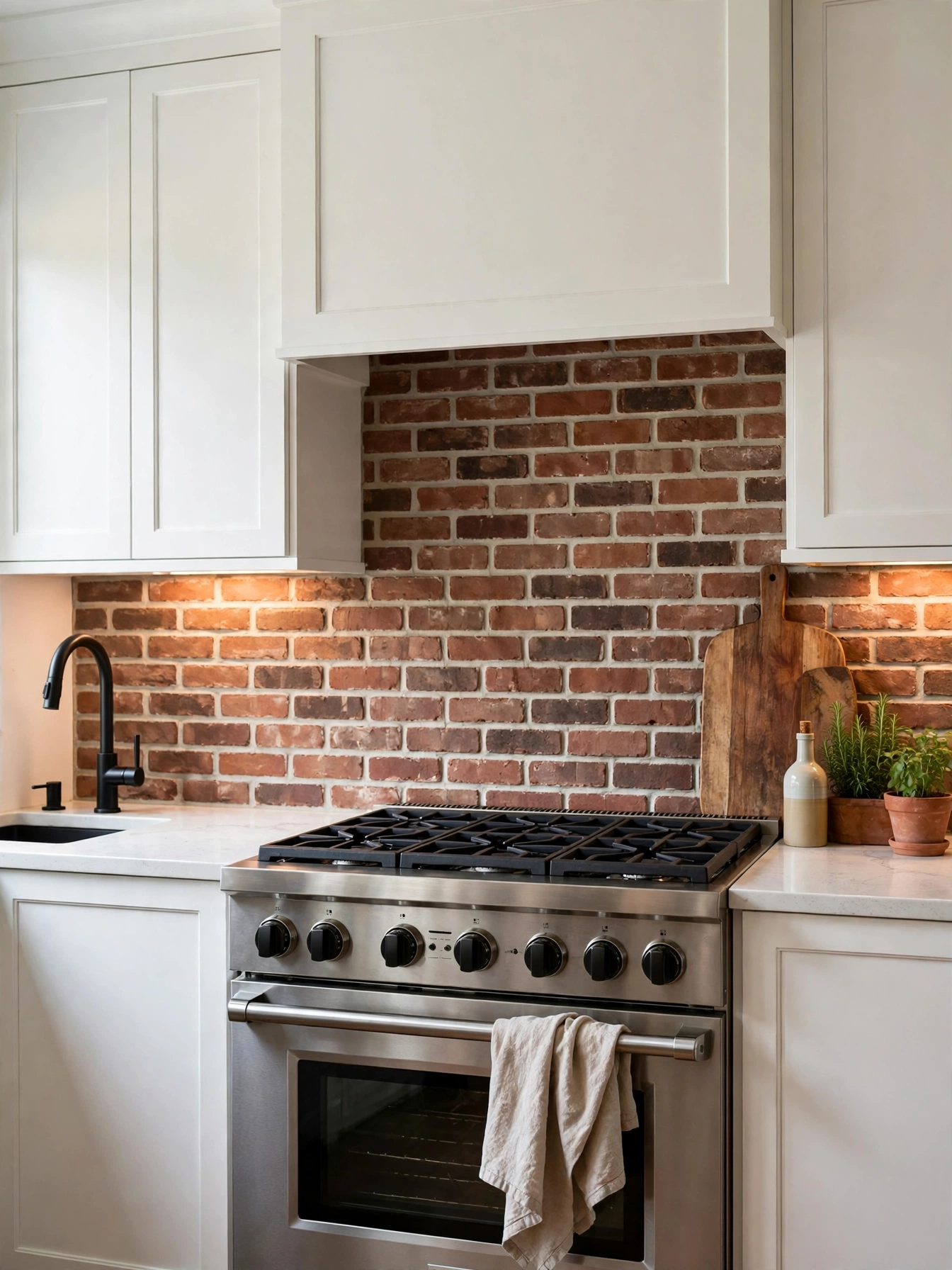
Why This Works:
- Brick adds age and texture that flat tile never manages
- A thin veneer gives the look without the weight of full brick
- Warm red-brown tones pull the whole wood palette together
- Sealed brick wipes clean, so it survives daily cooking splashes
For the range wall, thin brick veneer at 1/2 inch thick, each brick 2.25 inches high and 8 inches long, set with a 3/8 inch mortar joint, gives the look of full brick without the weight. Cover the range wall from the countertop to 30 inches high, or run it to the ceiling behind a statement hood for a full feature wall. Seal the finished brick with two coats of a matte penetrating sealer, and reapply once a year, since unsealed brick absorbs grease and tomato splashes within weeks. Never install raw brick directly behind a gas range without sealing, because heat and grease stain it permanently and no cleaner lifts the marks out.
Even sealed brick has a rough surface that catches dust, so a stiff brush once a month keeps the joints clear. That texture gives a fresh renovation instant history, and brick brings warmth and age to the wall. Limit brick to one wall so the texture stays a feature, and keep the other walls smooth. Count on 12 to 20 dollars per square foot for brick veneer; glazed ceramic tile, at 5 to 10 dollars per square foot installed, wipes clean in seconds.
Chalkboard Menu Walls
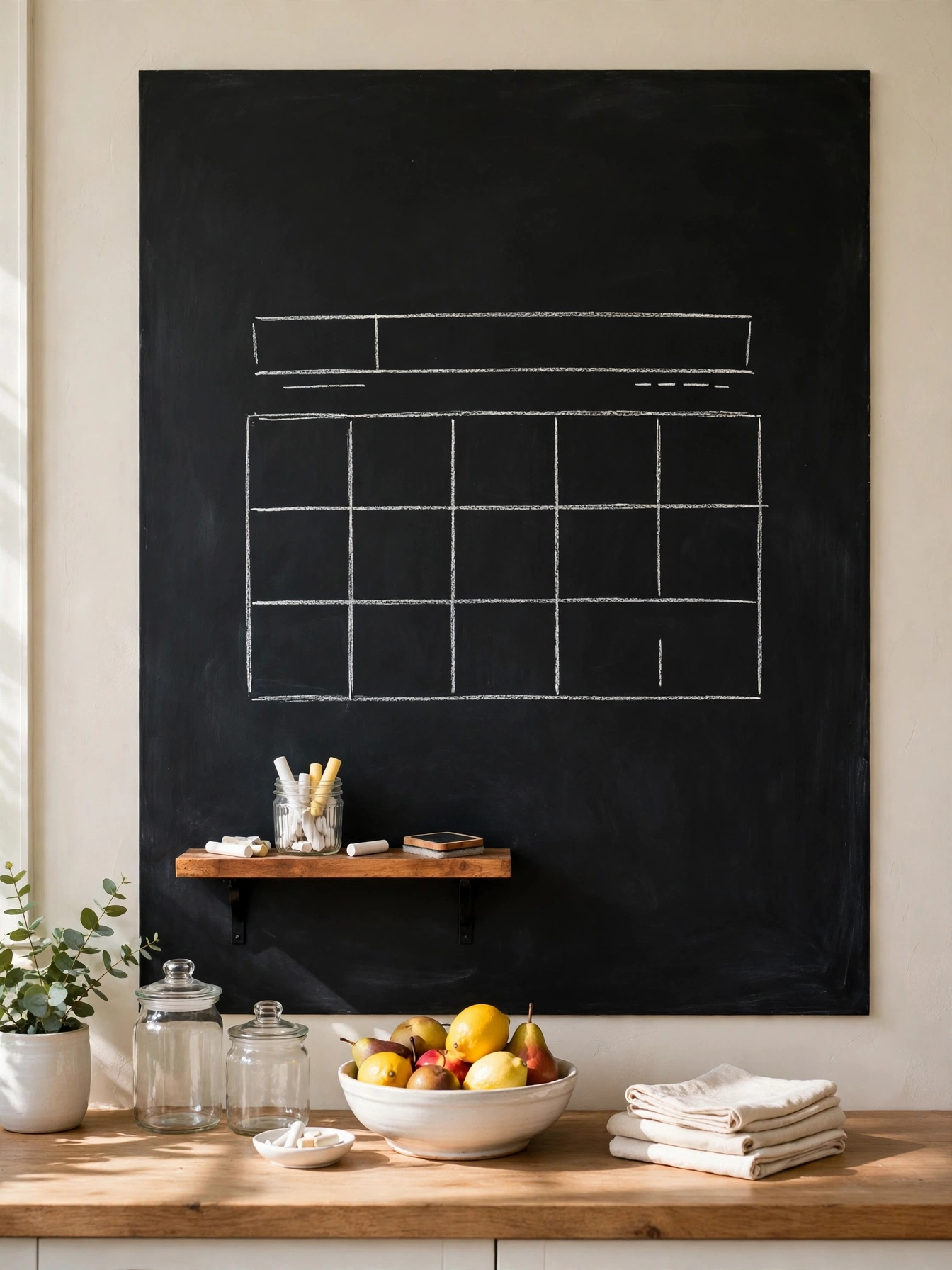
Why This Works:
- A weekly menu ends the daily question of what is for dinner
- Chalk wipes clean, so the wall changes with the season and the shop
- Black paint anchors a pale kitchen the way a rug anchors a floor
- The wall doubles as a shopping list, a reminder board, and a kids art spot
A 36 inch wide, 48 inch tall chalkboard wall gives the kitchen a menu, a shopping list, and a kids art spot in one place. Paint it on a smooth wall that has been sanded to 220 grit and primed first. Apply 2 coats of chalkboard paint with a foam roller, letting each coat dry 4 hours, then cure the surface for 3 days before the first writing. Season the board by rubbing chalk across the whole surface and wiping it off, which stops the first words from ghosting permanently. Avoid chalkboard paint on a textured wall, because the bumps catch chalk dust and the writing never wipes clean.
A fine film of chalk dust lands on the counter below, so a weekly wipe keeps it tidy, and the menu, the shopping list, and the week all live in one visible place. A framed cork board holds notes without dust. A weekend afternoon is enough to finish it, and the paint, trim, and chalk come to 30 to 60 dollars, which makes this one of the cheapest ideas in the guide. A whiteboard wipes cleaner and reads office, not farmhouse. A chalk wall carries the boldest graphic punch of the three.
Windsor Counter Stools

Why This Works:
- A spindle back supports the lower back during a long breakfast
- Round oak seats suit a farmhouse island better than flat metal
- Windsor stools slide under the counter, so the walkway stays clear
- Solid oak lasts decades, while cheap pine stools wobble within a year
For a 36 inch counter, a 24 inch stool height leaves 12 inches between the seat and the countertop for comfortable knees. Choose a seat 17 to 18 inches wide and 16 inches deep, with a footrest 8 inches above the floor, and space stools 24 inches apart center to center so elbows never bump. Skip backless stools for a family that eats at the island daily, because no backrest means no support during a 30 minute meal. Check the weight rating too, since a stool rated for 250 pounds stays steady under daily use, while a 150 pound rating flexes and loosens within a year.
Three stools with backs need 6 feet of island. Oak Windsor stools sell for 150 to 350 dollars each and warm the room with every grain line, and metal stools go for 80 to 150 dollars, wipe clean in seconds, and feel cold and hard. Backless stools tuck fully under and free the walkway, and a real backrest shows its worth over a 30 minute breakfast. Tie a washable linen cushion on each seat for comfort, and the stools stay inviting all day.
Two Tone Cabinets

Why This Works:
- White uppers bounce light, so the room feels taller and brighter
- A sage green base grounds the room and hides scuffs better than white
- Two colors add depth without a single extra piece of decor
- The 60-30-10 color rule keeps the palette calm instead of busy
White or cream on the upper cabinets, with a deeper color such as sage green, navy, or charcoal on the lower cabinets and island, is the split that works. Paint lower cabinets in a satin or semi-gloss finish, 2 coats, since the lower run takes kicks, splashes, and pet scuffs daily. Avoid a dark color on the uppers, because it presses the ceiling down and makes a 9 foot room feel like 8 feet. Satin finishes wipe clean more easily than flat paint, so the lower cabinets stay presentable with a quick wipe.
Test the lower color on one door first, and leave it up for a week before painting the whole run. The lower color hides the scuffs that show on white within weeks. A single-color kitchen in warm white never dates and never clashes. It can feel plain beside a two tone room. Budget 2,000 to 4,000 dollars for a professional job on a medium kitchen in a single color, and adding the second tone lifts the bill to roughly 3,000 to 6,000 dollars.
Vintage Rug Runners
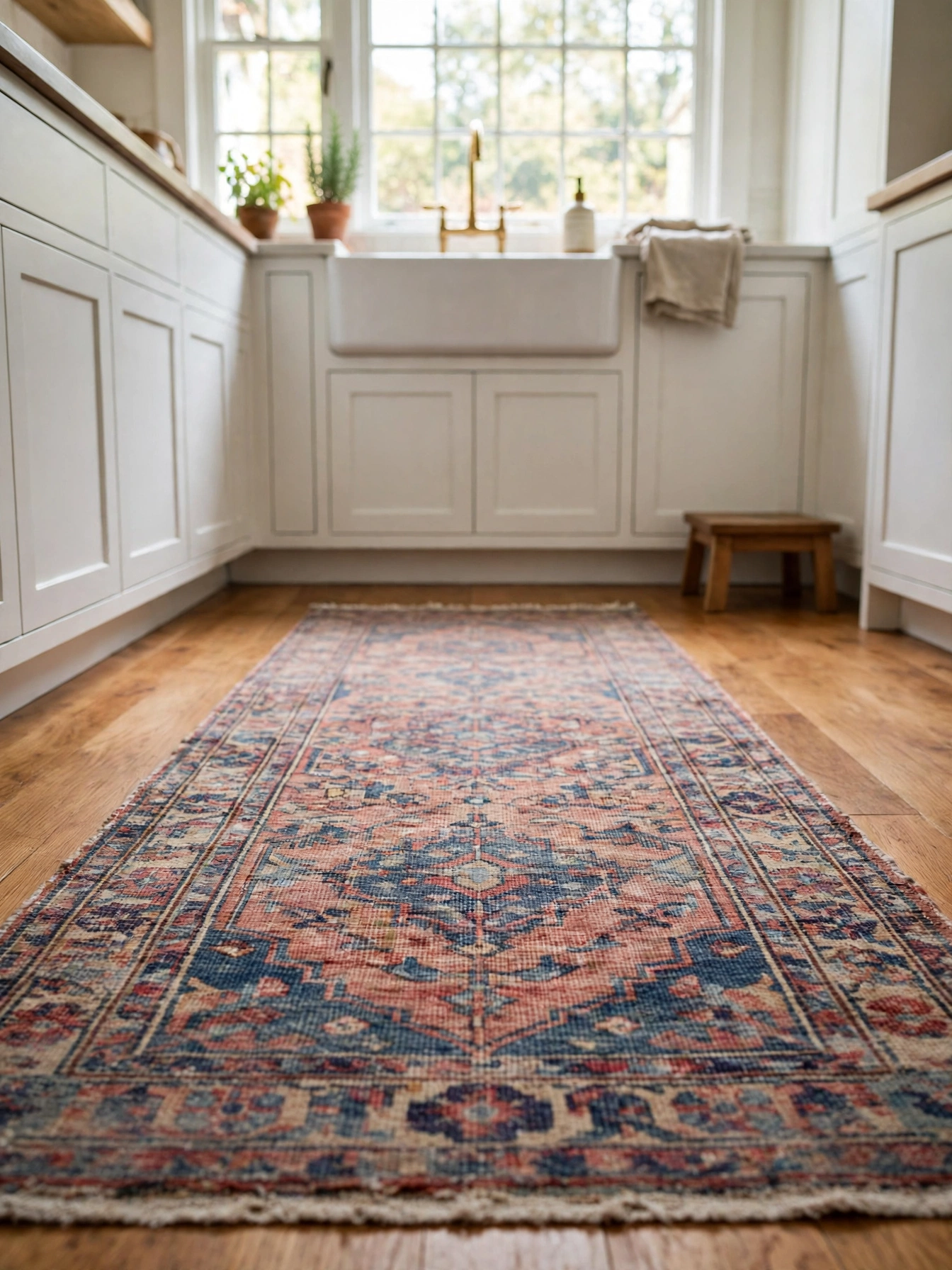
Why This Works:
- A runner softens a hard floor where a cook stands for an hour
- Muted vintage colors hide crumbs and splashes between cleanings
- Wool fibers bounce back underfoot, so the rug keeps its shape for years
- The pattern ties the sink, the stove, and the island into one story
Along the sink run, a runner 2.5 feet wide and 8 feet long leaves 6 inches of bare floor on each side so the rug never traps water against the cabinet toe kick. Choose a wool or wool-blend rug at least 1/4 inch thick, and lay a non-slip rug pad 1 inch smaller than the rug on every side so the edges never curl. Avoid a rug without a pad on a smooth wood floor, because it slides underfoot and becomes a trip hazard within days. Keep the runner 12 inches clear of the stove, since grease splatter near a burner stains wool permanently.
Wool runners cost 150 to 400 dollars and last a decade with care, while a cotton flatweave is priced at 60 to 120 dollars and washes easily. Washing a kitchen runner every 3 months is the upkeep bare tile never asks for, beyond a mop, and a padded runner eases knees and backs during a big wash-up. Cotton wears thin within 2 years. Choose muted colors and a busy pattern, so daily crumbs disappear into the design.
Modern Farmhouse Kitchen Ideas on a Budget

Why This Works:
- Paint and hardware refresh a kitchen for under 600 dollars
- A run of shelves costs less than new upper cabinets and looks better
- A thrifted table works as an island for a tenth of a custom price
- Small swaps add up, so the room feels new without a single wall moving
A budget farmhouse refresh follows three price tiers. The budget tier costs 500 to 1,500 dollars and covers paint, hardware, a runner, and open shelves. The mid tier comes to 1,500 to 5,000 dollars and adds a butcher block island top, a new faucet, and pendant lights. The premium tier is priced at 5,000 to 15,000 dollars and adds a farmhouse sink, new counters, and a backsplash. Never skip the primer on oak cabinets, because the tannin bleeds through white paint within months and turns it yellow.
Paint cannot fix a broken layout, and a kitchen with 24 inches of counter will still feel cramped after the prettiest paint job. The sensible move is to refresh the surfaces now and save the layout change for later. A full renovation solves the layout and costs 25,000 to 50,000 dollars. Spend the first 600 dollars on paint, hardware, and a runner, since those three swaps deliver the biggest visible change per dollar.
Antique Dough Bowls
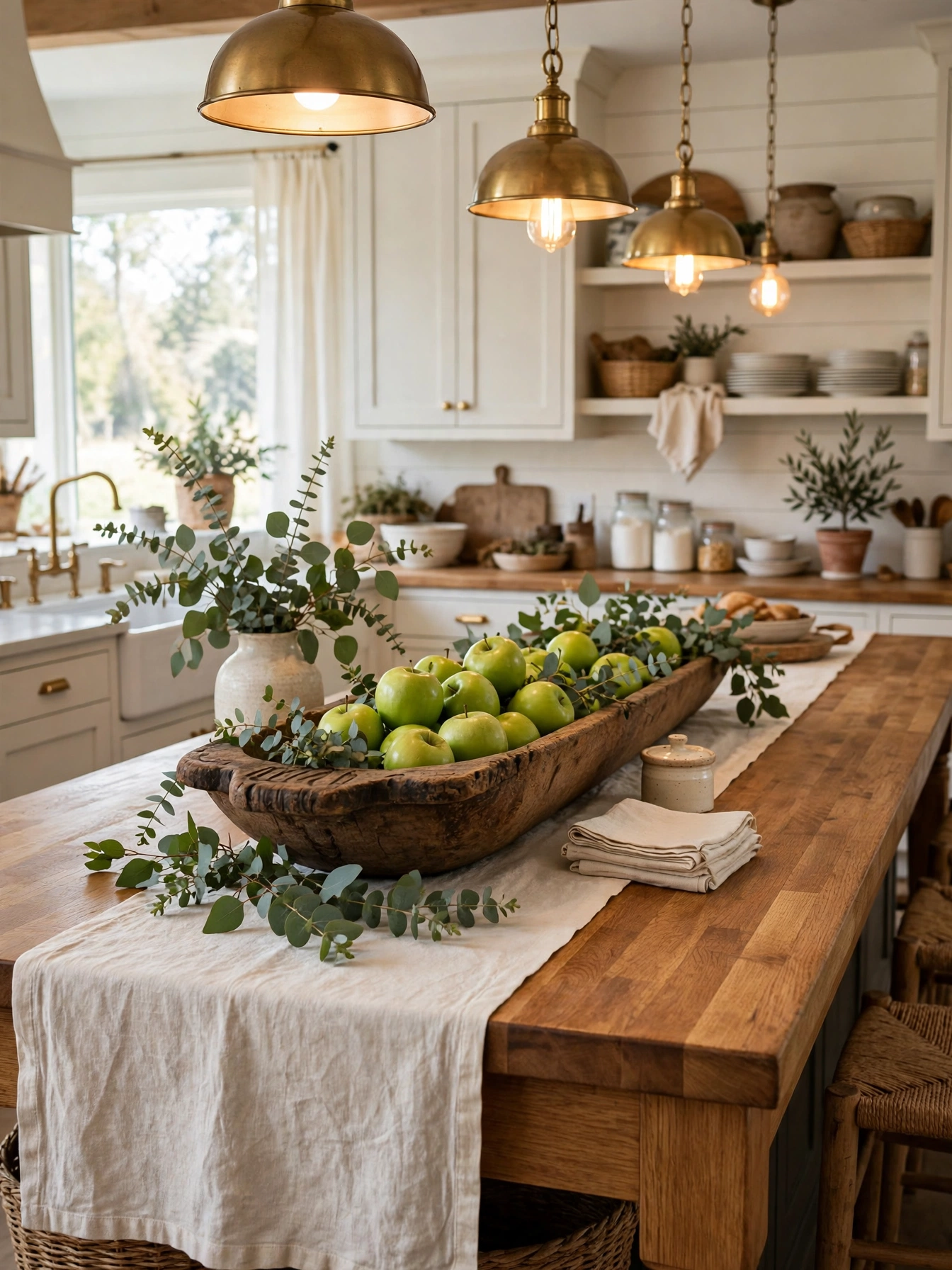
Why This Works:
- A 30 inch bowl fills an island centerpiece in one move, no styling degree needed
- Weathered wood adds age that new decor cannot copy
- The bowl holds fruit, greenery, or candles, so it changes with the season
- One large piece beats five small ones, which only collect dust
On an island, a dough bowl 24 to 36 inches long, 10 to 12 inches wide, and 4 to 6 inches deep sits comfortably without blocking sightlines. Choose a bowl carved from a single piece of wood, with no cracks wider than 1/8 inch, and check the base sits flat on a level surface before buying. Line the bowl with a linen cloth when holding fruit, since direct contact with raw wood stains apples within days. Never soak a dough bowl in water, because the wood swells and splits along the grain, and never use it for raw meat, since old wood cannot be sanitized the way a modern board can.
As decor, a dough bowl earns no points for function: it holds fruit and greenery, never a meal. Ceramic never carries the same history or warmth. Genuine antique bowls change hands for 60 to 200 dollars depending on size and age. Reproductions are listed at 30 to 80 dollars and look close at a glance. A ceramic fruit bowl is 20 to 40 dollars, holds the same apples, and goes in the dishwasher.
Weathered Wood Accents
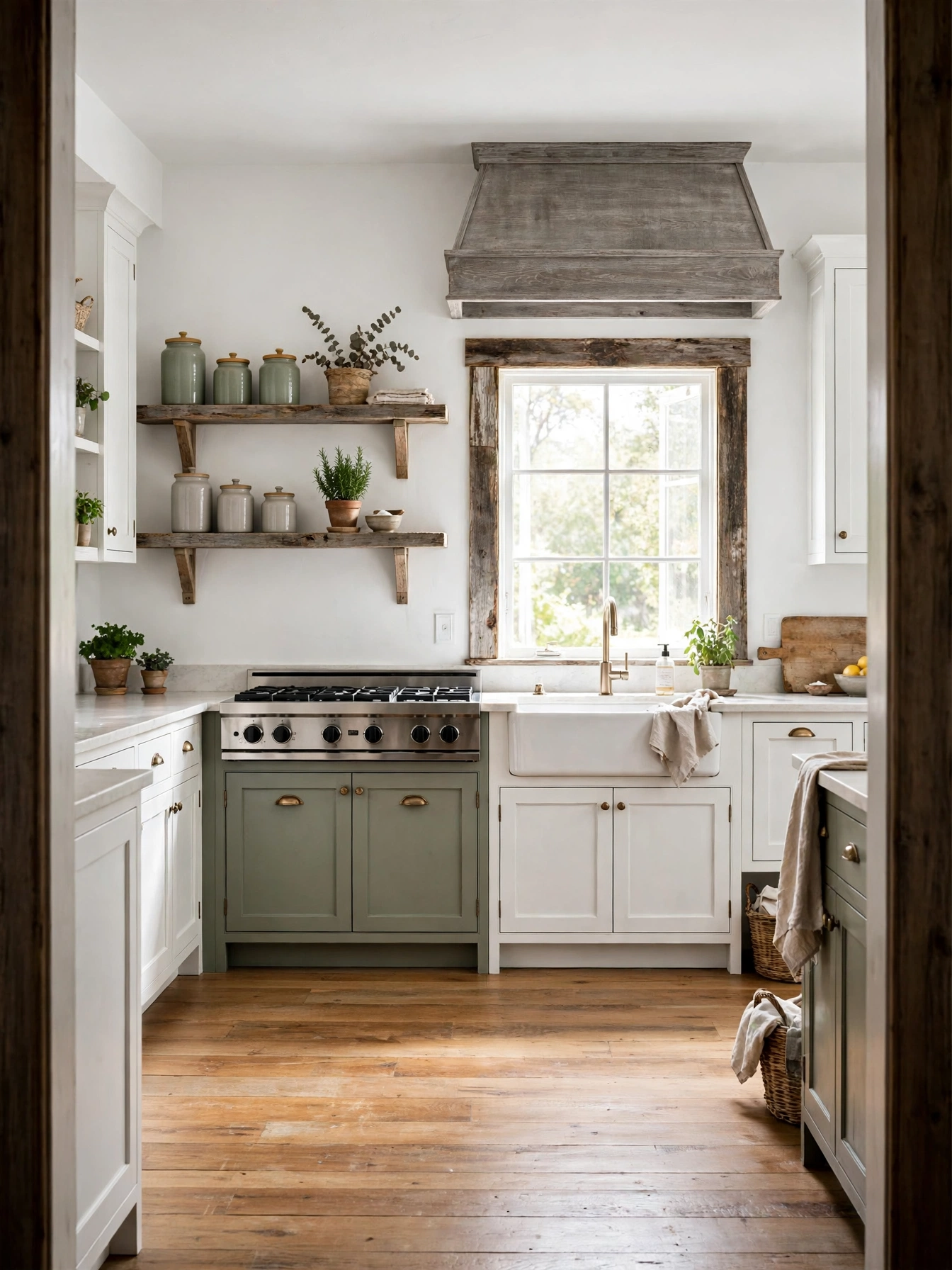
Why This Works:
- Weathered gray-brown wood cools a warm palette without feeling cold
- A wood hood cover turns a steel appliance into a furniture piece
- Gray wash lets the grain show, so the wood keeps its character
- Small accents spread the look around, so no single spot shouts
Weathered wood accents work best in three places: a hood cover, one floating shelf, and a window frame or corbel. A hood cover sized 36 inches wide for a 30 inch range, with 3 inches of overhang on each side, sits 30 to 36 inches above the cooktop. Avoid a full weathered wood ceiling in a small kitchen, because the gray tone absorbs light and makes a 10 by 12 foot room feel smaller. Better Homes and Gardens notes that mixing wood tones works when one tone dominates, so keep warm oak as the main wood and weathered gray as the accent.
Gray wash shows grease splatter sooner than a dark stain, so the hood cover needs a wipe every week. In a room with too much matching wood, a weathered accent breaks that match in the gentlest way. A wood hood cover lands between 500 and 1,200 dollars and shows grain no paint can copy. A painted hood in sage green is the cheaper route at 300 to 600 dollars and wipes clean faster. Shelves and corbels add 200 to 500 dollars. Keep the weathered wood to 20 percent of the room so the palette stays calm.
FAQs
What are the best modern farmhouse kitchen ideas for a warm and welcoming look?
Start with white shiplap, an apron sink, and a butcher block island, then add matte black hardware and warm wood shelves. The National Kitchen and Bath Association sets counters at 36 inches high, so keep that height while layering wood, linen, and vintage touches for warmth.
How much does a farmhouse kitchen refresh usually cost?
A paint and hardware refresh costs 500 to 1,500 dollars, a mid refresh with a new faucet and island top comes to 1,500 to 5,000 dollars, and a full update with sink and counters costs 5,000 to 15,000 dollars. Measure first, then spend on swaps with the biggest visible change.
Can modern farmhouse kitchen ideas work in a small kitchen under 100 square feet?
Yes, if the palette stays light and the island rolls away when not in use. Keep the work triangle under 26 feet total, hold island clearance at 36 inches in a small kitchen, and use a rolling island 24 by 36 inches with locking casters rated for 100 pounds.
What size apron front sink fits a standard 36 inch base cabinet?
A 33 inch apron sink fits a 36 inch base cabinet, with a basin 9 to 10 inches deep and a support frame rated for 150 pounds. The Spruce recommends measuring the cabinet opening first, since a fireclay sink alone can weigh 90 pounds before water goes in.
How high should barn pendant lights hang above a kitchen island?
Set the bottom of each shade 30 to 36 inches over the island counter. On an 8 foot island, leave 30 inches between the two pendants. Fit 2700K LED bulbs at 800 lumens each, and wire them to a dimmer switch for bright prep light or a softer dinner glow.
Conclusion
Modern farmhouse kitchen ideas come down to honest materials such as wood, iron, and linen, exact measurements that make the room work, from 36 inch counters to 42 to 48 inch island clearance, and one warm focal point, whether an apron sink, a shiplap wall, or a barn door. Start with the cheapest change first, paint and hardware, then add the bigger pieces one at a time. Follow HomelyCrafter on Pinterest for more ideas. Save this to your Pinterest boards so you can refer back to it!

Muhammad Israr is a home decor enthusiast and the writer behind Homely Crafter. He spends his days researching paint colors, layouts and budget-friendly styling ideas, then breaks them down into practical, easy-to-follow guides so you can decorate with confidence.
4 thoughts on “23 Sunny Modern Farmhouse Kitchen Ideas for Warm Homes”