
February feels like the longest month for a home. The Christmas tree is gone, the garlands are packed away, and the rooms that glowed in December suddenly look bare for the next 8 weeks until spring arrives. These 21 winter home decor ideas fill that gap with warm textiles, layered lighting, and small changes that make each room feel finished again.
Better Homes and Gardens notes that winter styling works best when texture does the heavy lifting, and this guide follows that lead. You will find exact blanket weights, curtain lengths, runner sizes, candle counts, and paint names for bedrooms, dining rooms, entryways, hallways, and bathrooms.
Start with the palette in idea one, then pick one room to finish first. A single entryway change or a warmer bedroom can shift how the whole house feels on a cold February evening, and the rest of the ideas build from there in the same order.
Winter Home Decor Ideas Palette
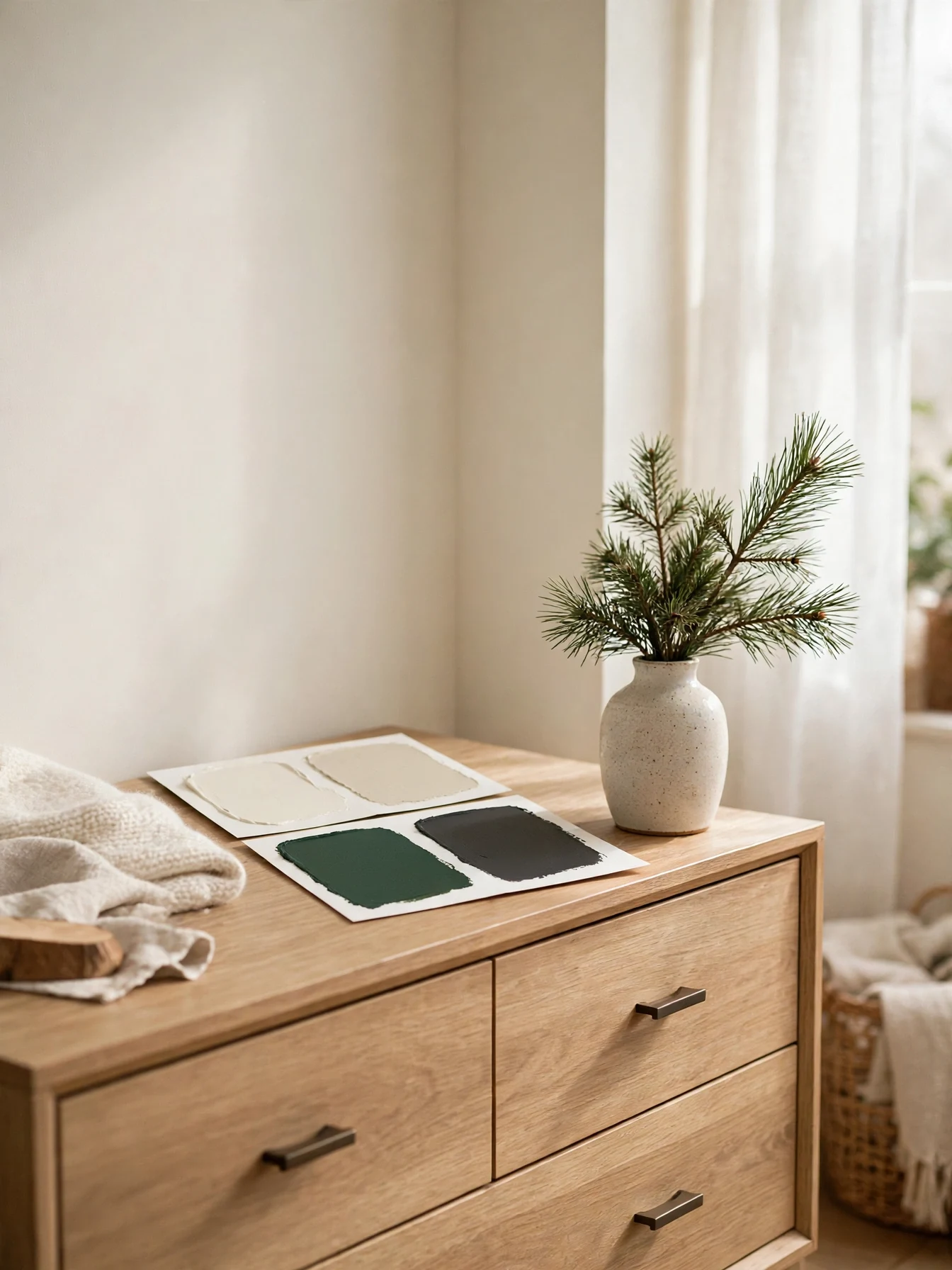
Why This Works:
- A fixed palette stops each room from drifting into a different color story.
- Cream and oatmeal warm up rooms that feel cold after the holidays.
- Forest green adds depth without the red and gold of December.
- Charcoal gives small accents enough weight to anchor pale furniture.
Build the palette on the 60-30-10 rule: 60 percent dominant cream or oatmeal, 30 percent secondary forest green, and 10 percent charcoal accent. Test paint in 12 inch squares on two walls and watch them for 48 hours in daylight and lamplight before committing. Choose matte or eggshell finishes for bedrooms because gloss reflects cold winter light and shows every wall flaw. One thing to leave out is adding a fifth color in February, since one extra shade is enough to turn a calm scheme into a cluttered one. Wool and linen hold color better than thin polyester, while flat paint hides flaws better than satin on older walls.
Carrying one palette through the entryway, bedroom, and dining room makes a small house feel larger, because the eye moves from room to room without a jolt. Budget paint samples cost 5 to 8 dollars each, midrange gallons run 45 to 65 dollars, and premium lines reach 80 to 110 dollars per gallon. The upkeep side is time: sampling and waiting 48 hours feels slow, yet repainting a wrong color costs far more. Keep the palette to soft furnishings if you rent, since throws and pillows change the color story without touching a wall.
Entryway Boot Tray Warmth
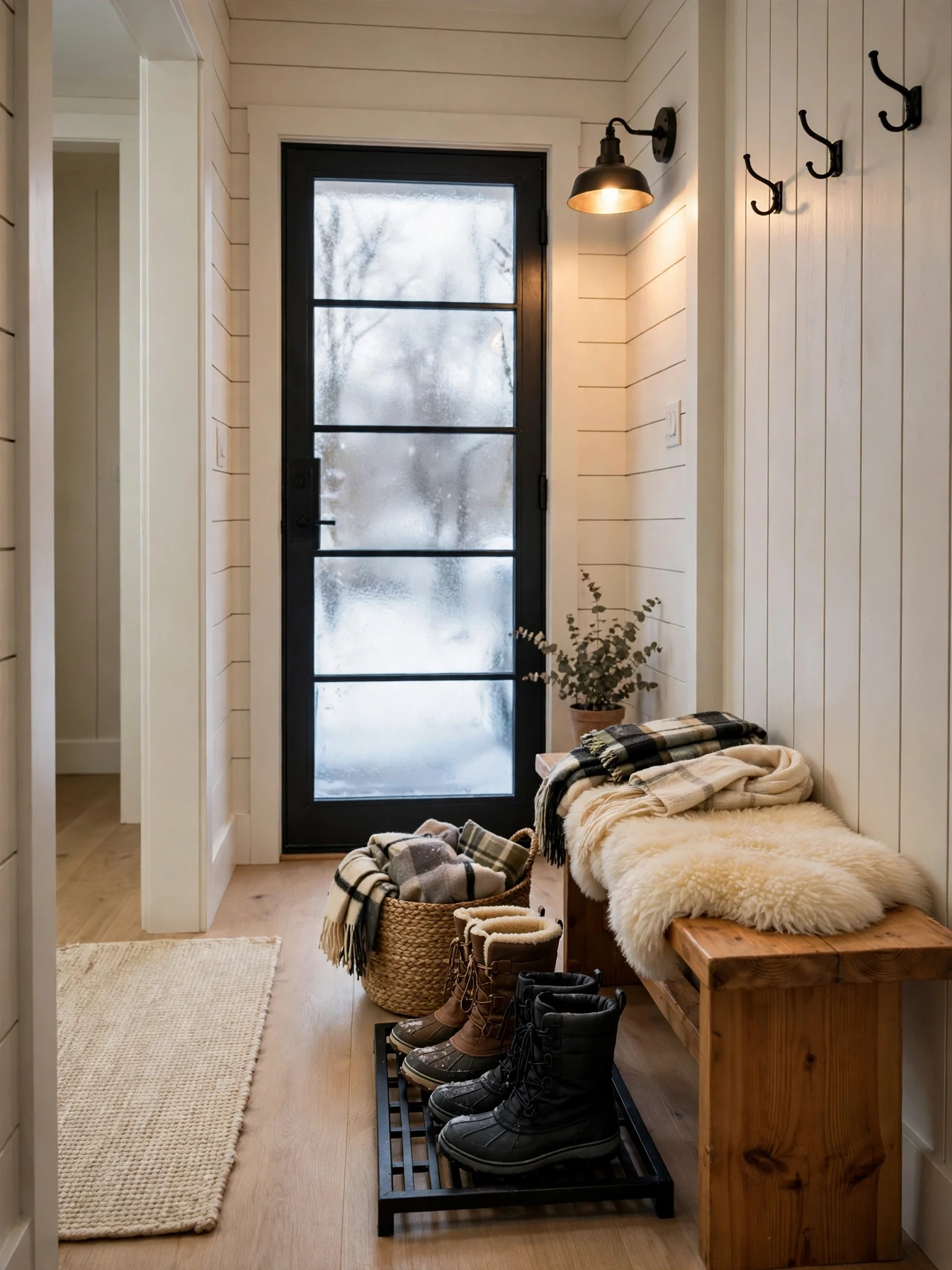
Why This Works:
- Wet boots stay in one place instead of spreading slush across the floor.
- A tray with a raised edge holds meltwater until you empty it.
- The bench gives everyone a seat for pulling boots on and off.
- Scarves and gloves in one basket end the morning hunt for missing pairs.
Choose a tray at least 30 inches wide and 15 inches deep with a 1 inch lip, which holds 2 pairs of adult boots plus one pair of kids boots. Place it 6 inches from the door swing so the door clears it, and set the bench 18 inches high so sitting down to lace boots feels natural. Use powder coated metal or heavy rubber for the tray, because painted wood swells after a season of meltwater. Do not risk a tray without a lip, since flat mats let salty water creep onto hardwood and leave white rings. Metal trays dry faster than rubber, while rubber grips the floor better on tile.
Entryway warmth starts at the floor, and a tidy boot zone is the first thing guests notice on a snowy day. Budget trays cost 15 to 25 dollars, midrange metal trays run 30 to 50 dollars, and a solid wood bench with storage costs 120 to 250 dollars. The small print is space: a tray plus bench needs at least 36 inches of clear entry width, so narrow halls should use a slim 12 inch tray instead. Empty the tray every 2 to 3 days, because standing salt water stains grout and dulls metal finishes.
Layered Bedroom Blankets
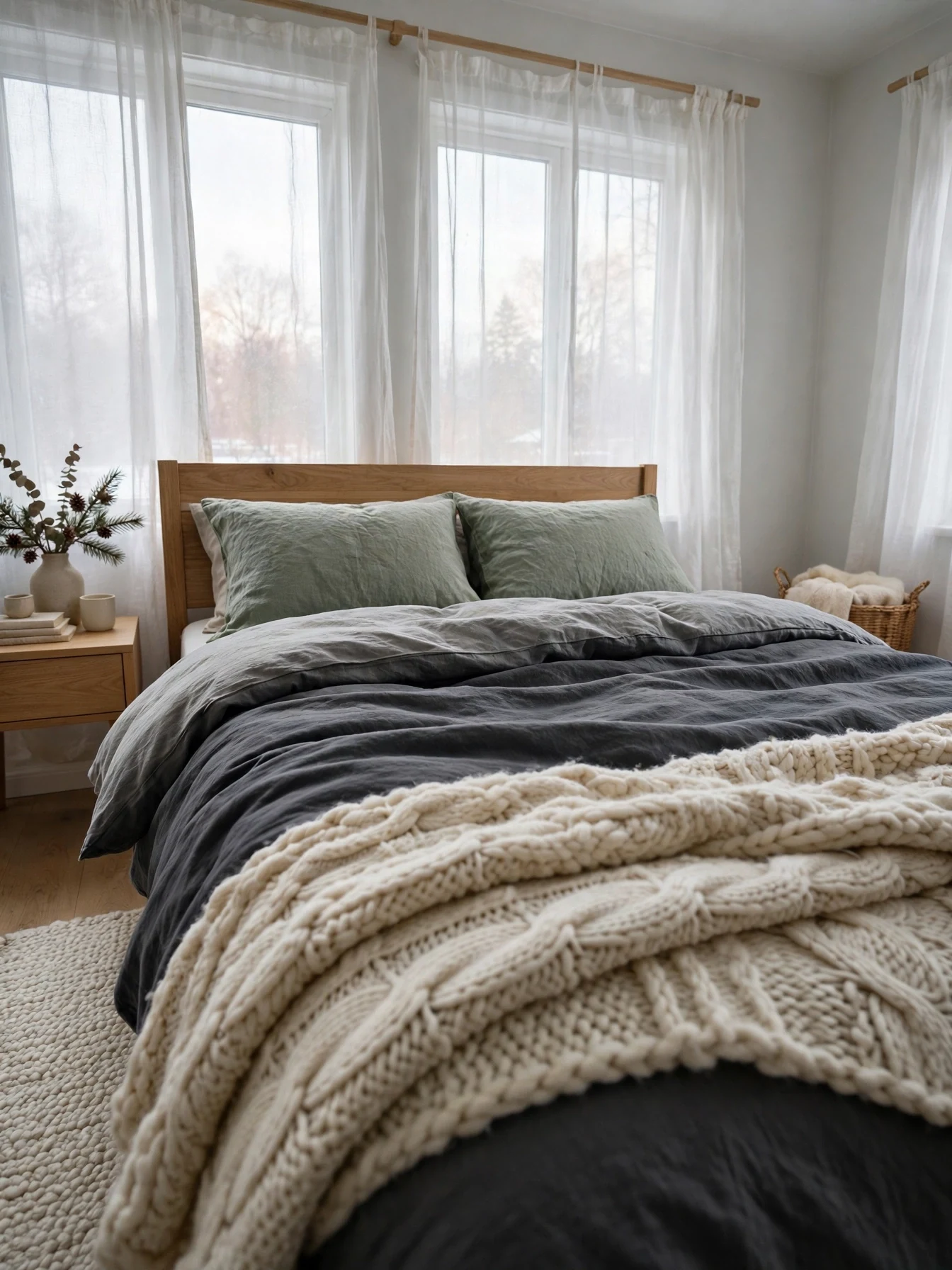
Why This Works:
- Three layers trap more warm air than one thick blanket alone.
- Layers let sleepers peel one off instead of overheating at 2 AM.
- Mixed textures make a plain bed look styled without extra decor.
- A folded throw at the foot adds color that is easy to swap in spring.
Layer a fitted sheet, a duvet rated for winter use, and a throw that weighs 3 to 5 pounds for real warmth. Fold the throw across the bottom third of the bed so it covers the feet, where cold settles first at night. Choose a duvet with a tog rating of 10.5 to 13.5 for winter bedrooms, and pick cotton percale sheets at 300 thread count or higher for a crisp feel. Pass over a heavy throw over the pillow zone, since weight near the face disrupts sleep and bunches up by morning. Wool throws insulate better than acrylic, while cotton throws wash more easily and suit allergy prone sleepers.
Bedrooms do the hardest winter work, because they must feel warm at 10 PM and still look inviting at 7 AM. Budget throws cost 20 to 35 dollars, midrange wool blends run 60 to 120 dollars, and a quality winter duvet costs 120 to 250 dollars. What holds this idea back is laundry: three layers mean three items to wash, so keep the top throw machine washable even if the duvet is dry clean only. Fluff the duvet for 2 minutes each morning, which restores loft that flattens overnight.
Candlelit Dining Table
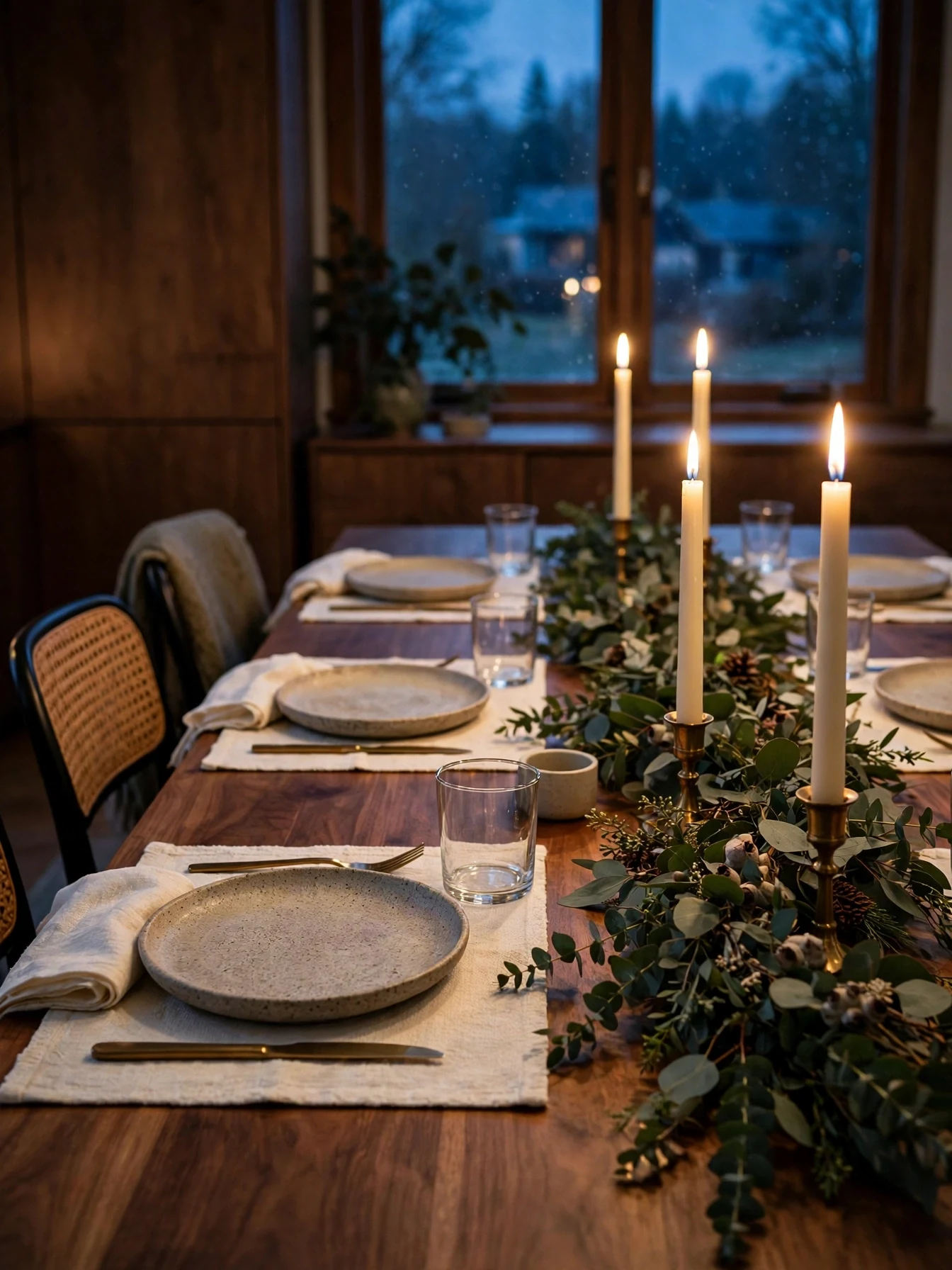
Why This Works:
- Candlelight at 2700K flatters food, faces, and wood tones at once.
- Taper candles add height without blocking the view across the table.
- A green garland runner brings winter outside in without a full centerpiece.
- Dimmed overhead light plus candles uses less energy than bright ceiling light.
Set 3 taper candles in brass holders at 10 to 12 inches tall down the center of a 72 inch table, spaced 18 inches apart so each place setting gets light. Keep every flame at least 12 inches from the garland and 24 inches from any curtain, following basic fire safety spacing. Use dripless tapers with a 7 to 8 hour burn time, and trim wicks to one quarter inch before lighting for a steady flame. Drop the idea of scented candles at the dinner table, since strong fragrance competes with food and dulls appetite. Beeswax tapers burn cleaner than paraffin, while LED flameless tapers suit homes with small children.
February dinners happen after dark, so the dining room earns its keep in the evening hours. Budget taper sets cost 8 to 15 dollars, midrange brass holders run 25 to 45 dollars each, and a fresh eucalyptus garland costs 20 to 35 dollars. Where it falls short is maintenance: real garlands dry out in 7 to 10 days near heating vents, so mist them lightly every 2 days or switch to a faux garland for the whole season. Never leave candles burning in an empty room, and blow them out before the last person leaves the table.
Hallway Runner Warmth
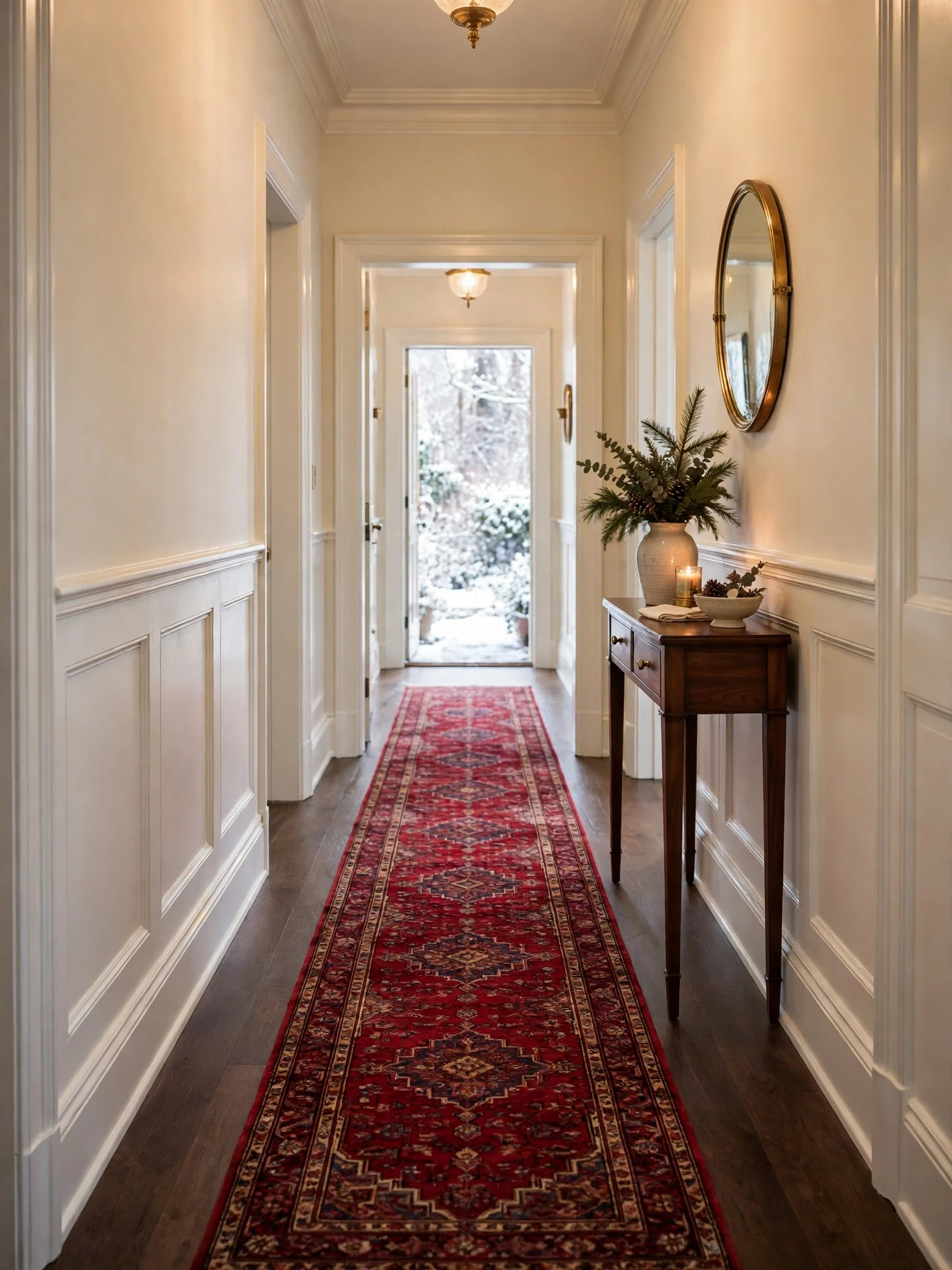
Why This Works:
- A runner warms cold hallway floors under bare feet in the morning.
- Pattern and color turn a plain passage into a designed space.
- Wool runners muffle footsteps and soften echo in long halls.
- A runner protects wood floors from grit tracked in on winter boots.
Measure the hallway first, then choose a runner 6 inches narrower than the hall on each side, so a 36 inch hall takes a 24 inch runner. Leave 4 to 6 inches of bare floor at each end so the rug does not bunch against door frames. Pick a wool runner with a pile height of 0.25 to 0.5 inches, which cleans well and stays flat under doors. Skip a runner that covers the full width, since edges curl against baseboards and create a trip hazard. Wool resists stains better than cotton, while a low pile synthetic runner costs less and dries faster after wet shoes.
Hallways get walked through a dozen times a day, so durability matters more here than in any other room. Budget runners cost 40 to 80 dollars, midrange wool runners run 120 to 250 dollars, and a custom cut runner reaches 300 to 500 dollars. The only awkward part is cleaning: a patterned runner hides dirt well, yet it still needs vacuuming twice a week in winter and a deep clean every 3 months. Use a non slip pad cut 1 inch smaller than the runner on all sides.
Heated Bathroom Towels
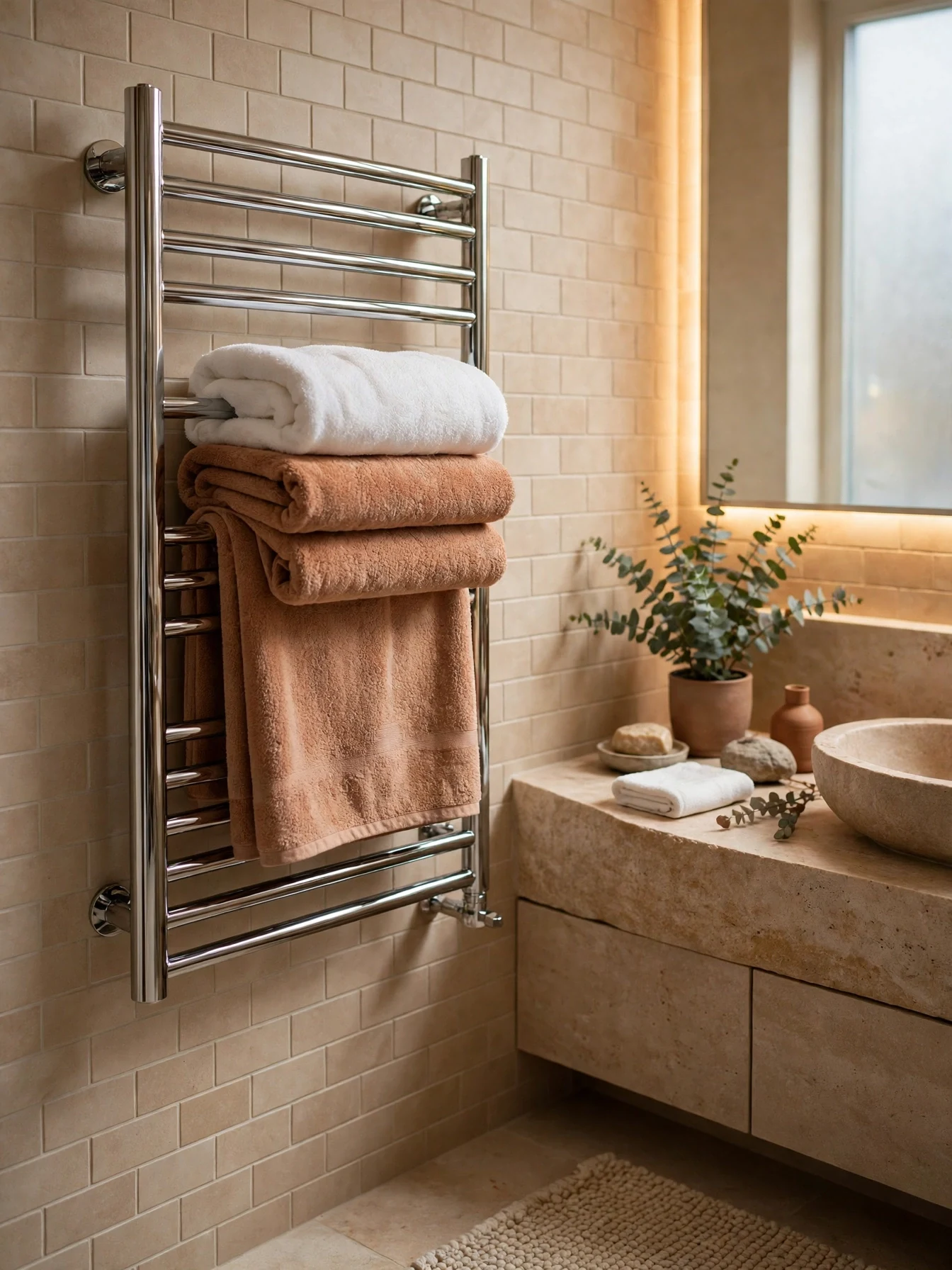
Why This Works:
- A warm towel after a shower changes the whole morning in February.
- Heated rails dry towels faster, so mildew has less time to grow.
- Thick towels in warm tones make a plain bathroom feel like a spa.
- The rail doubles as a drying rack for damp swim and gym gear.
Mount a heated rail 48 inches from the floor with at least 24 inches of clear wall width, and choose a model rated 100 to 150 watts for a standard bathroom. Hang towels folded in thirds so warm air reaches all layers, and give each towel 6 inches of rail space. Use 600 GSM cotton towels, which hold heat longer than thin 400 GSM towels and feel heavier in the hand. Steer clear of hanging a wet towel folded double on a cold rail, since the inner layers stay damp and smell musty within 2 days. A hardwired rail heats evenly and hides cords, while a plug in model costs less and suits renters.
Bathrooms feel colder than any other room because tile and porcelain hold the chill. Budget plug in rails cost 60 to 120 dollars, midrange models run 150 to 300 dollars, and a hardwired designer rail reaches 400 to 700 dollars. The one chore this adds is running cost: a 120 watt rail used 4 hours a day adds only a few dollars a month to the bill, yet it must be switched off when the house is empty. Check the bathroom circuit load before adding a rail, and keep the plug at least 36 inches from the shower spray zone.
Staircase Garland Glow
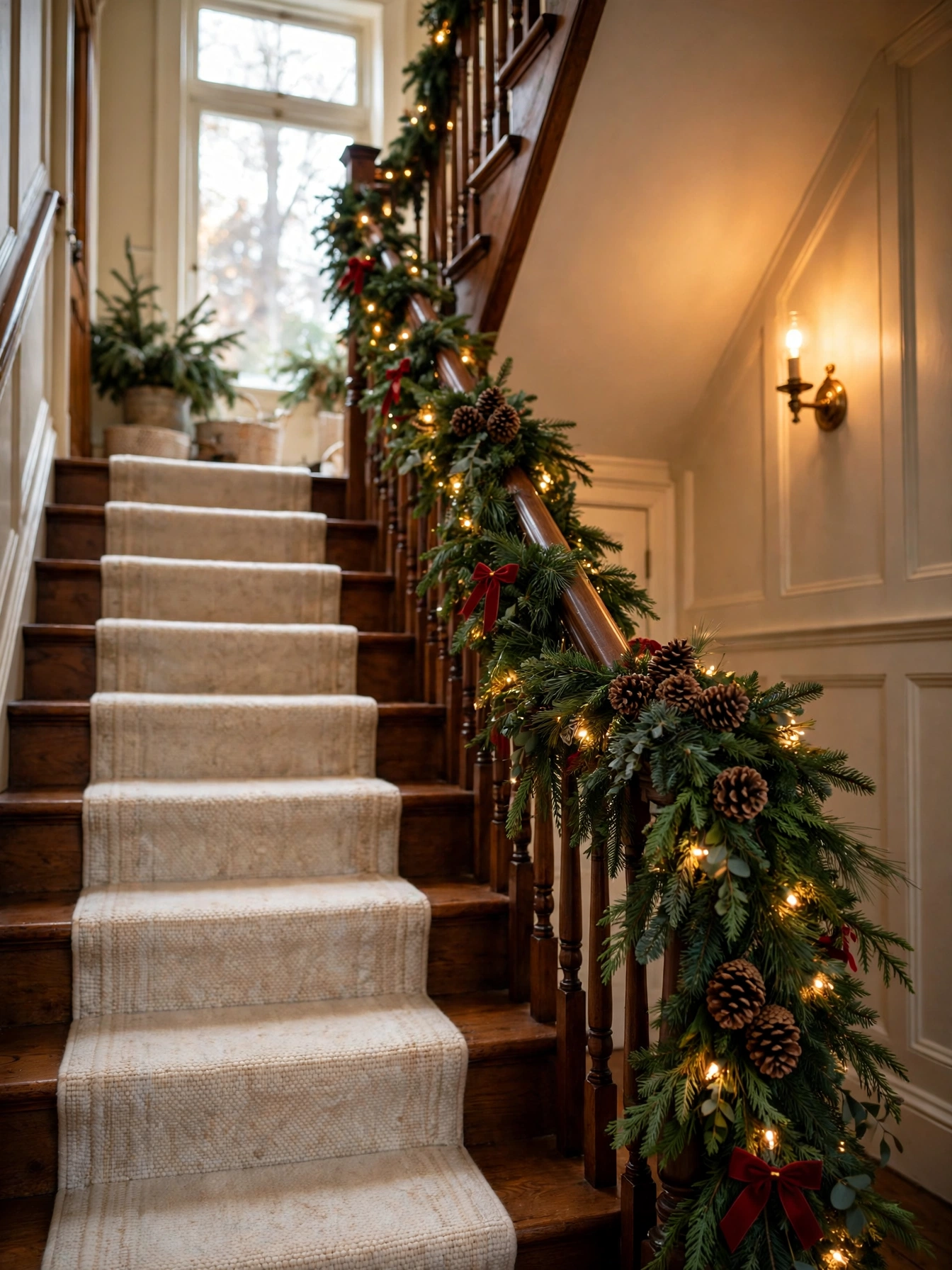
Why This Works:
- Garland turns a staircase from a walkway into the home’s winter centerpiece.
- Fairy lights on the banister add glow without a single new lamp.
- Fresh evergreen scents the entryway for 3 to 4 weeks.
- The banister is already there, so the project needs no new furniture.
Measure the banister first: a standard staircase run of 12 feet needs 18 feet of garland, since swags need 1.5 times the straight length to drape properly. Choose a 6 inch wide mixed evergreen garland with a wired core, which holds its shape around newel posts and bends without snapping. Weave one 100 light warm white LED fairy strand through every 3 feet of garland, keeping the battery pack hidden behind the newel post cap, since LEDs stay cool while plug-in mini lights run hotter and need an outlet nearby. Add 8 pinecone clusters and 4 velvet bows spaced 36 inches apart, which keeps the look even from the front door. Pass on real candles on the stairs, since a flame beside dry garland is a fire risk and most building codes ban open flames on stairways.
Two story homes and split level entries gain the most here, since the stairs are the first thing guests see. Fresh garland lasts 3 to 4 weeks indoors before needles drop, so buy it the second week of December for a January takedown, while faux garland costs 40 to 90 dollars and stores flat for years. The catch is weight: a heavy garland pulls on spindles, so tie it with floral wire every 24 inches instead of hanging it from hooks alone. Keep the walking side of the banister clear of bows and clusters, because anything that snags a sleeve on the way up is a tripping hazard.
Winter Porch Lanterns

Why This Works:
- Lanterns light the path for guests on the darkest evenings of the year.
- LED candles glow for weeks on one set of batteries.
- Black metal frames suit any door color without clashing.
- The display moves indoors in January, so nothing is wasted.
Place two lanterns flanking the front door, one 12 inch tall lantern on the left and one 16 inch tall lantern on the right, which frames the doorway without blocking the swing of the door. Choose powder coated steel lanterns rated IP44 or higher, since that rating keeps rain and snow out of the battery compartment through the season. Set each lantern with one LED pillar candle on a timer for 5 PM to 11 PM, which gives 6 hours of glow a night and stretches a set of AA batteries to 3 weeks. Add a 24 inch evergreen sprig and 3 pinecones beside each lantern base, keeping greenery 2 inches clear of the glass so it never touches a warm surface. Rule out glass lanterns on a porch that ices over, because a tipped glass lantern shatters on frozen stone while steel only dents, and steel costs 15 to 30 dollars less per piece than the same size in glass.
Any home with a covered entry can use them, and they matter most on streets without lamps, where the walkway is dark by 5 PM. Budget steel lanterns run 20 to 40 dollars each, midrange runs 45 to 80 dollars, and a pair with timers included reaches 100 to 140 dollars for the set. The snag is wind: a strong gust can topple a light lantern, so add a 2 pound bag of sand inside the base or set the lantern inside a heavier planter. Bring the lanterns inside in late January and use them on the dining table, which turns a porch purchase into year round decor.
Warm Wood Accents
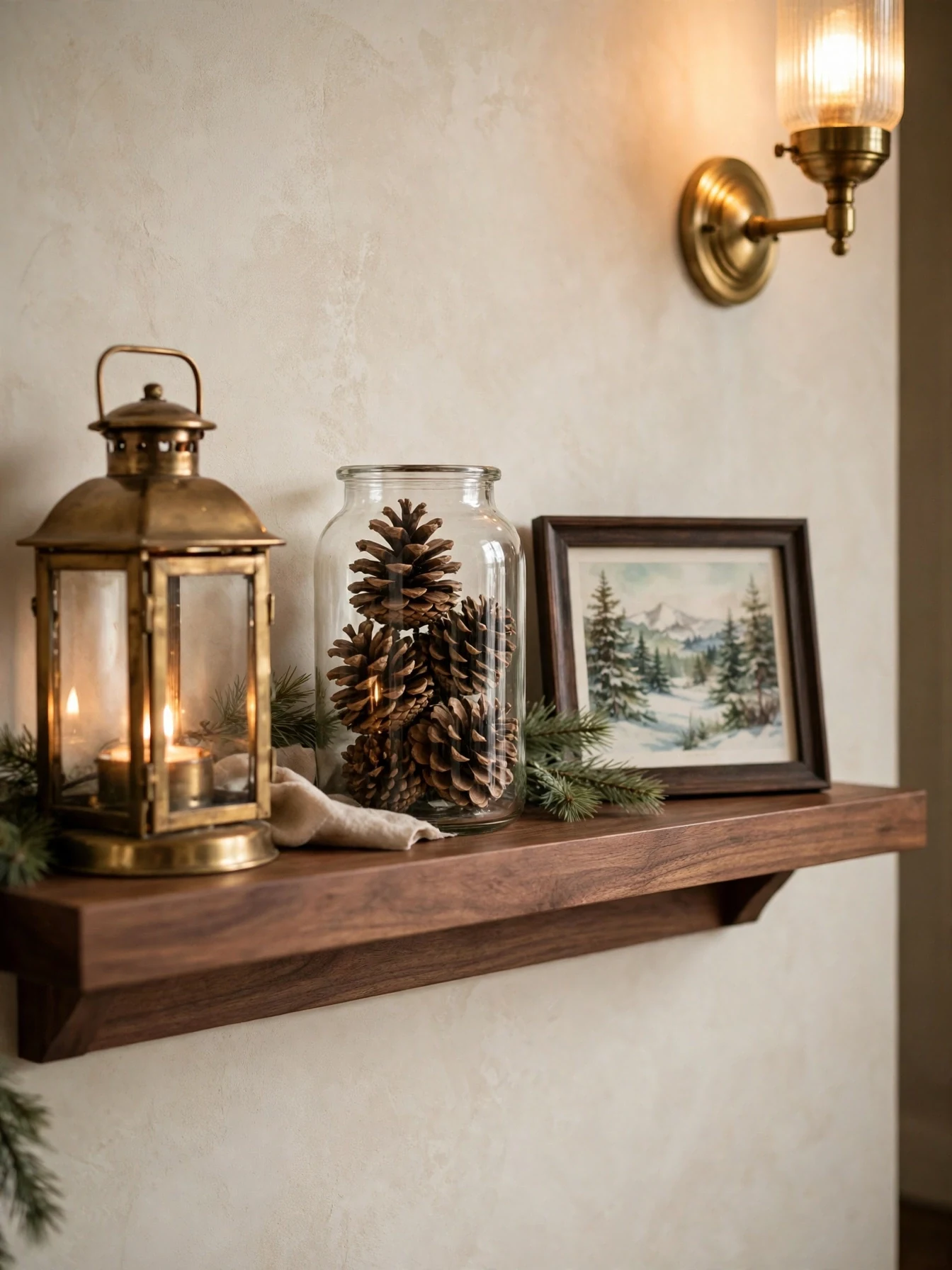
Why This Works:
- Warm wood tones counter the gray light of February days.
- Small wood pieces add warmth without replacing large furniture.
- Walnut and oak pair with every winter palette from cream to green.
- Natural grain gives flat painted walls a focal point.
Fit a floating shelf 48 to 60 inches from the floor, using brackets rated for at least 20 pounds per stud so the shelf holds a lantern and books safely. Keep the shelf 24 to 36 inches long in a hallway, which leaves walking room and avoids a cluttered look. Choose solid walnut or white oak with an oil finish, because oil deepens the grain while lacquer can look plastic under warm light. Keep clear of particleboard shelves with a thin wood veneer in damp entryways, since moisture lifts the veneer within one season. Solid wood costs more upfront but lasts decades, while a quality veneer shelf suits a dry bedroom wall.
Wood accents work in every room, yet a hallway shelf is the easiest place to start because it needs no floor space. Budget oak shelves cost 25 to 50 dollars, midrange walnut shelves run 70 to 140 dollars, and a custom solid shelf reaches 180 to 300 dollars. The hidden cost is load: a shelf rated for 20 pounds cannot hold a stack of heavy books, so keep books to 3 or 4 per shelf. Dust wood weekly with a dry cloth, because winter heating dust settles fast on horizontal surfaces.
Entryway Coat Hooks
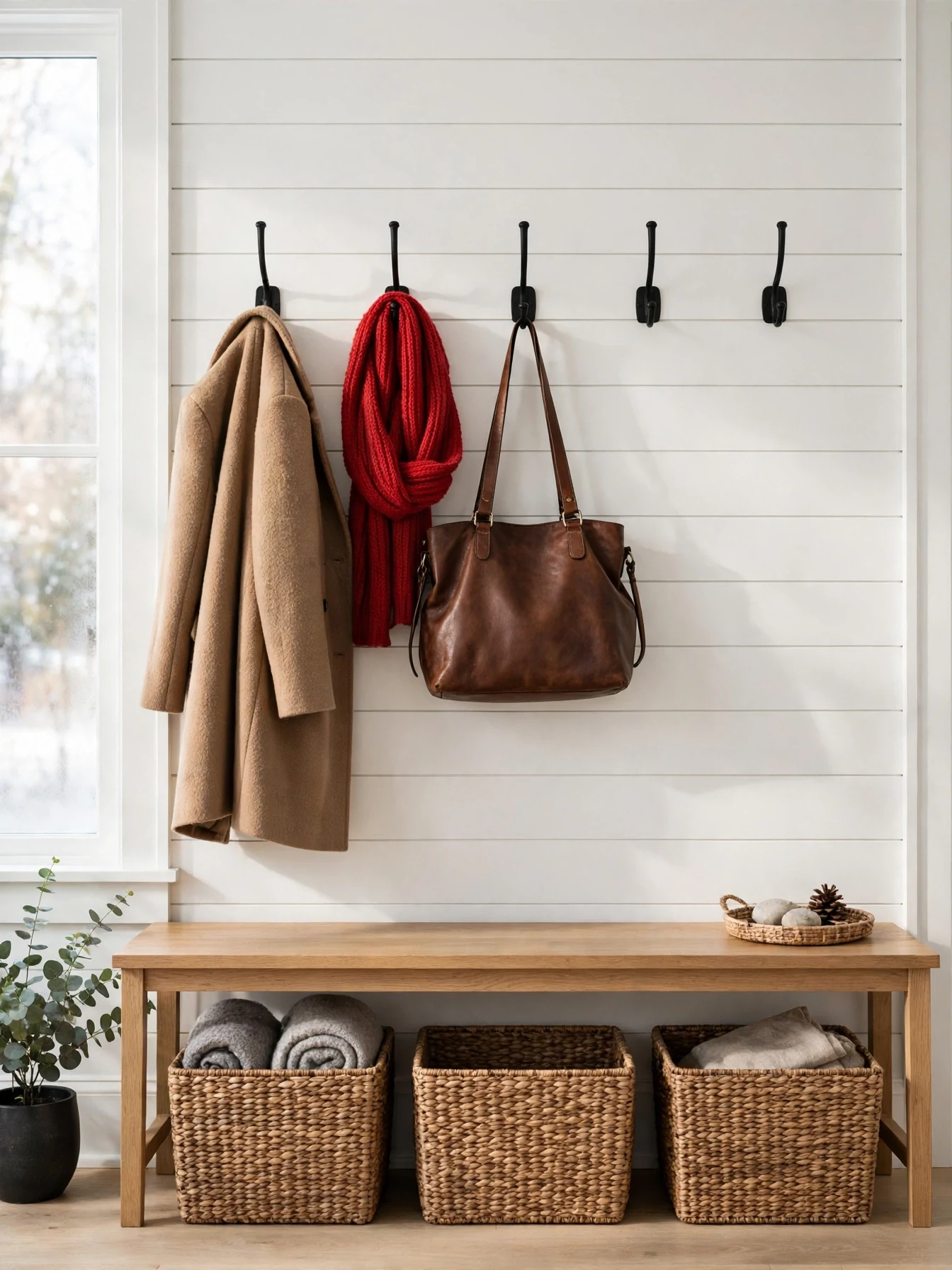
Why This Works:
- Hooks keep heavy winter coats off chairs and floors.
- Each person gets a hook, so coats stop piling on one chair.
- Open hooks dry damp coats faster than a closed closet.
- A hook row plus bench turns 5 square feet into a full mudroom.
Mount hooks at 60 to 66 inches from the floor, spaced 8 to 10 inches apart so bulky coats do not overlap. Anchor every hook into a wall stud or use toggle bolts rated for 25 pounds, because a wet wool coat weighs 4 to 6 pounds. Choose cast iron or solid brass hooks with a 3 inch projection, which holds a coat, scarf, and bag on one hook without slipping. Stay away from adhesive hooks for winter coats, since cold walls weaken the glue and a loaded hook can fall overnight. Cast iron costs less and suits rustic entries, while solid brass costs more and resists rust near wet doors.
Coat chaos peaks in February, when every family member wears the heaviest coat they own. Budget hook sets cost 15 to 30 dollars, midrange cast iron hooks run 8 to 15 dollars each, and solid brass hooks reach 20 to 35 dollars each. The weak spot is wall damage: each hook leaves screw holes, so plan the row once and avoid moving it in spring. Keep one hook free for guests, and hang a small basket below for gloves that fall off hooks.
Layered Winter Home Decor Ideas
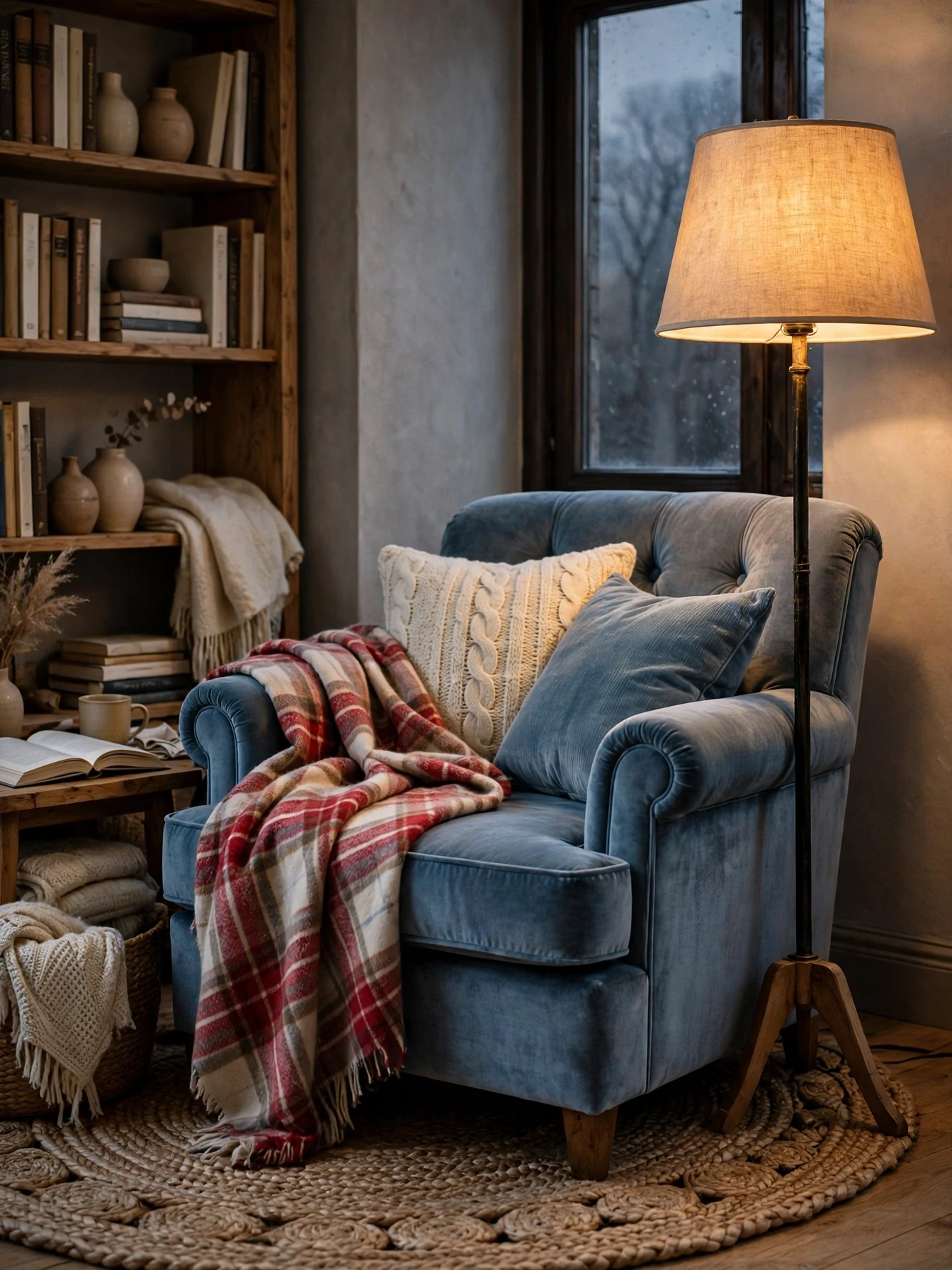
Why This Works:
- Layering three textures beats one flat surface every time in winter.
- Velvet, wool, and jute each catch light differently, which adds depth.
- A lamp plus textiles creates warmth that paint alone cannot give.
- Layers can be removed one by one as spring arrives.
Combine textures in one small corner: a velvet chair, a wool plaid throw of 50 by 60 inches, and a jute rug extending 12 inches past the chair on each side. Set the floor lamp 18 inches behind the chair so light washes over the shoulder without glare in the eyes. Use a bulb at 2700K and 800 lumens, which reads as warm evening light even at noon. Do not bother with pairing three shiny fabrics, since velvet plus satin plus silk reflects too much light and feels cold. Velvet gives depth, wool gives warmth, and jute gives a natural base that grounds both.
Texture layering suits renters best, because nothing here touches the walls or needs tools. Budget throws and rugs cost 40 to 90 dollars, midrange velvet chairs run 250 to 500 dollars, and a quality floor lamp costs 80 to 180 dollars. One flaw to plan around is dust: layered textiles collect more dust than bare furniture, so vacuum the rug twice a week and shake the throw outdoors weekly. Rotate the throw every 2 weeks so one side does not fade faster near the window.
Guest Bedroom Layers
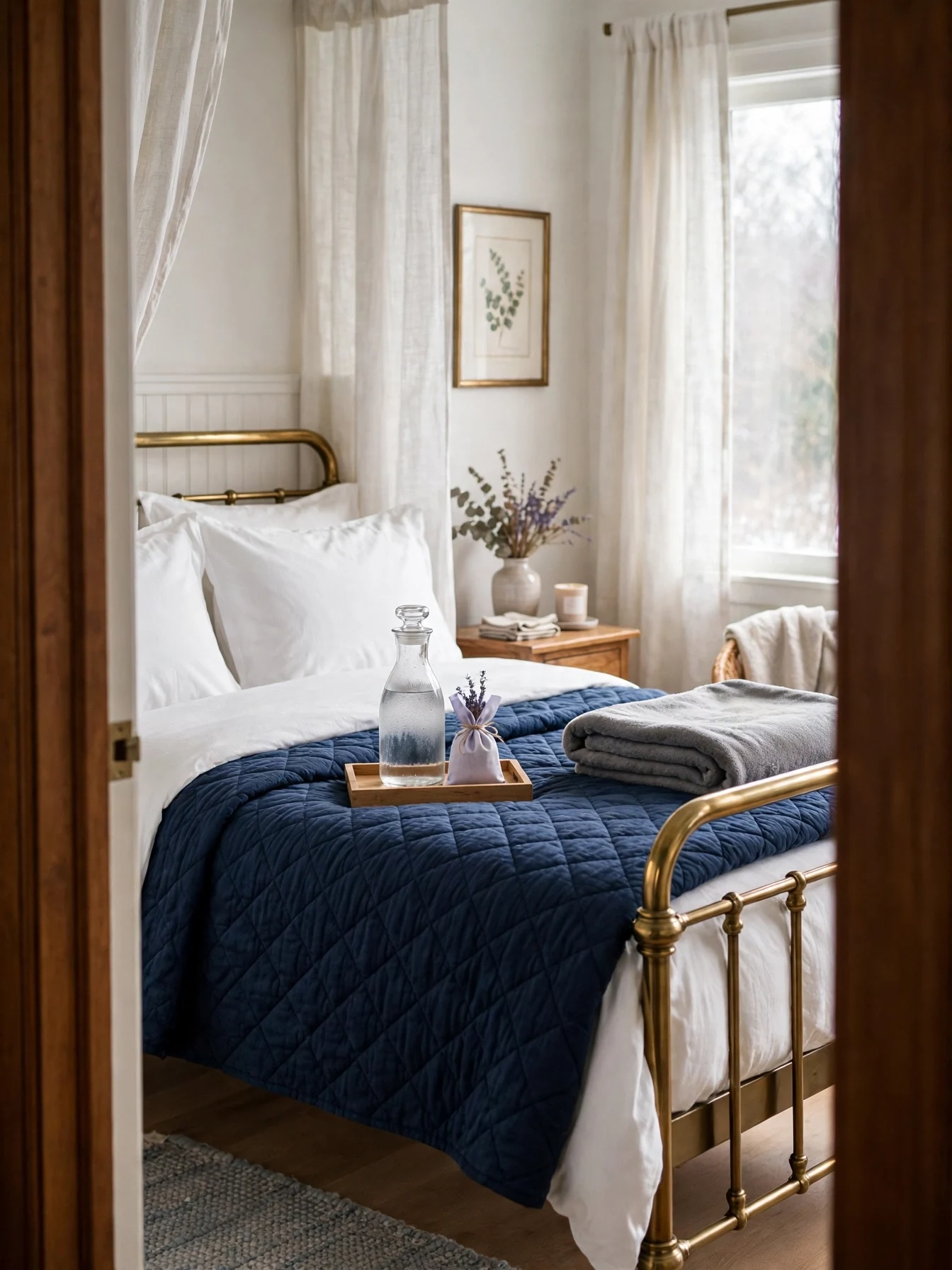
Why This Works:
- Guests judge a home by the guest bed more than any other spot.
- Extra layers let guests adjust warmth without asking for help.
- A tray with water and a sachet feels thoughtful without costing much.
- Navy and white look crisp even when the room is small.
Make the guest bed with a fitted sheet, a flat sheet, a quilt rated for 65 to 70 degree rooms, and a folded fleece blanket at the foot for extra warmth. Place a small tray on the bed with a 16 ounce carafe, one glass, and a lavender sachet, so guests settle in without a trip to the kitchen. Use a mattress topper of 2 to 3 inches if the guest mattress is firm, and add 2 pillows per sleeper in different firmness levels. Say no to a single thin blanket as the only cover, since guests will feel cold by 3 AM and will not want to wake the host. A quilt plus fleece covers a 10 degree range, while a heavy duvet alone suits only the coldest rooms.
Winter guests arrive with coats, bags, and cold hands, so the guest room should feel ready before they open the door. Budget fleece blankets cost 15 to 30 dollars, midrange quilts run 70 to 140 dollars, and a good mattress topper costs 80 to 180 dollars. The wrinkle is storage: guest bedding for two sleepers fills a full closet shelf, so use vacuum bags in summer. Air the room for 30 minutes before guests arrive, then close the window so the bedding stays warm.
Bathroom Candle Glow
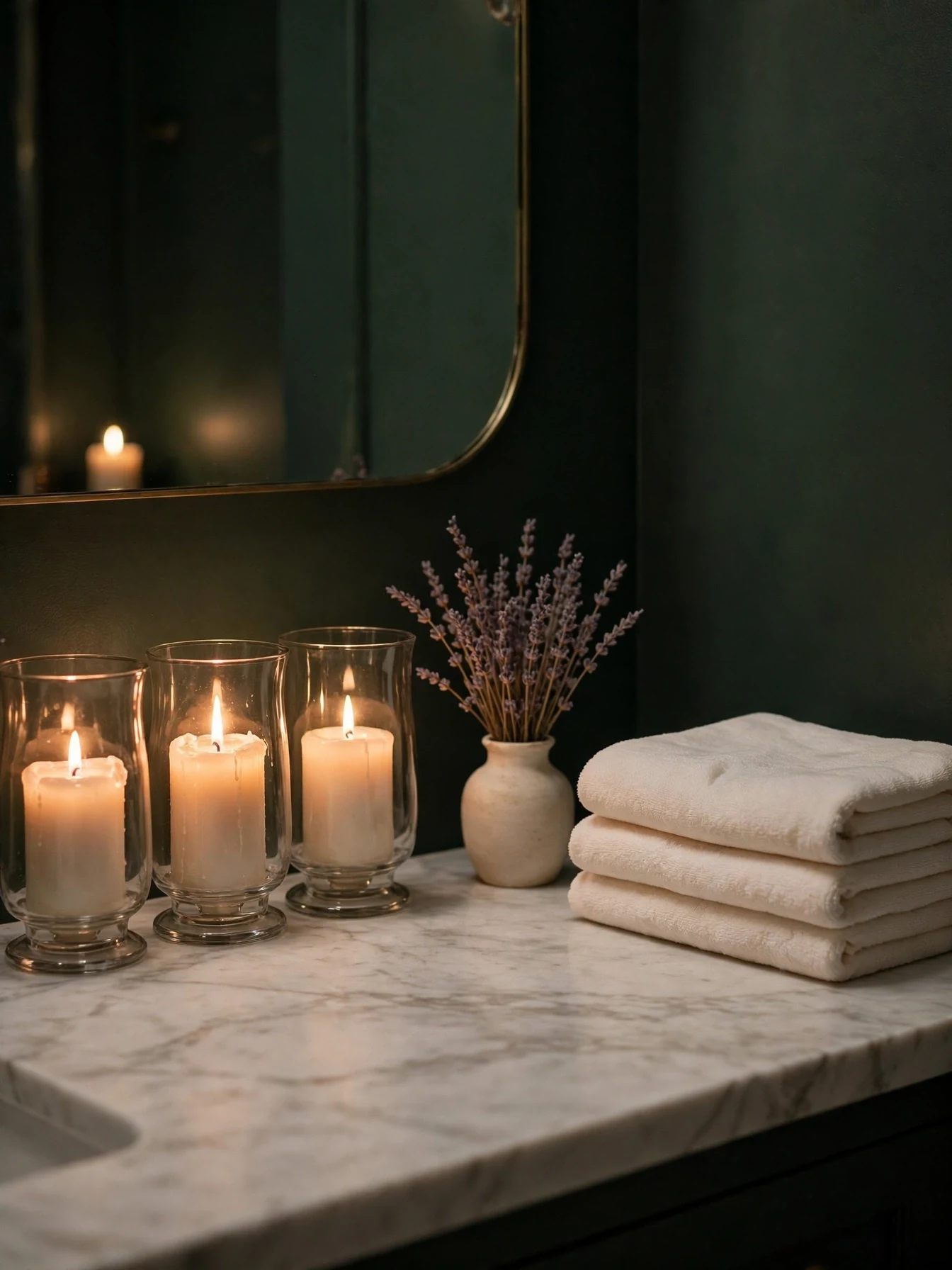
Why This Works:
- Candlelight turns a plain bathroom into a calm evening retreat.
- Glass hurricanes shield flames from drafts near vents.
- Warm light softens tile and chrome that look harsh under ceiling lights.
- Three candles at different heights look styled without effort.
Group 3 pillar candles at 4, 6, and 8 inches tall on a marble tray at least 12 inches wide, placed 18 inches from the faucet so splashes cannot reach the flames. Use unscented pillars with a burn time of 40 to 60 hours, and trim wicks to one quarter inch before each lighting. Keep the tray on a stone or ceramic surface, never on a wooden vanity without a heat proof base. Take care with leaving candles lit during a long bath with the door closed, since oxygen drops and soot builds up faster in a small room. Pillar candles give steady light for hours, while tea lights burn out in 4 hours and need constant replacing.
Bathroom candlelight suits evenings best, when the room shifts from functional to restful. Budget pillar sets cost 12 to 25 dollars, midrange glass hurricanes run 15 to 30 dollars each, and a marble tray costs 25 to 50 dollars. The only real downside is safety in small rooms: a bathroom under 40 square feet heats up fast, so limit candles to 30 minutes per session and ventilate for 10 minutes after. Store matches in a sealed jar, because bathroom humidity dampens match heads within weeks.
Dining Room Placemats
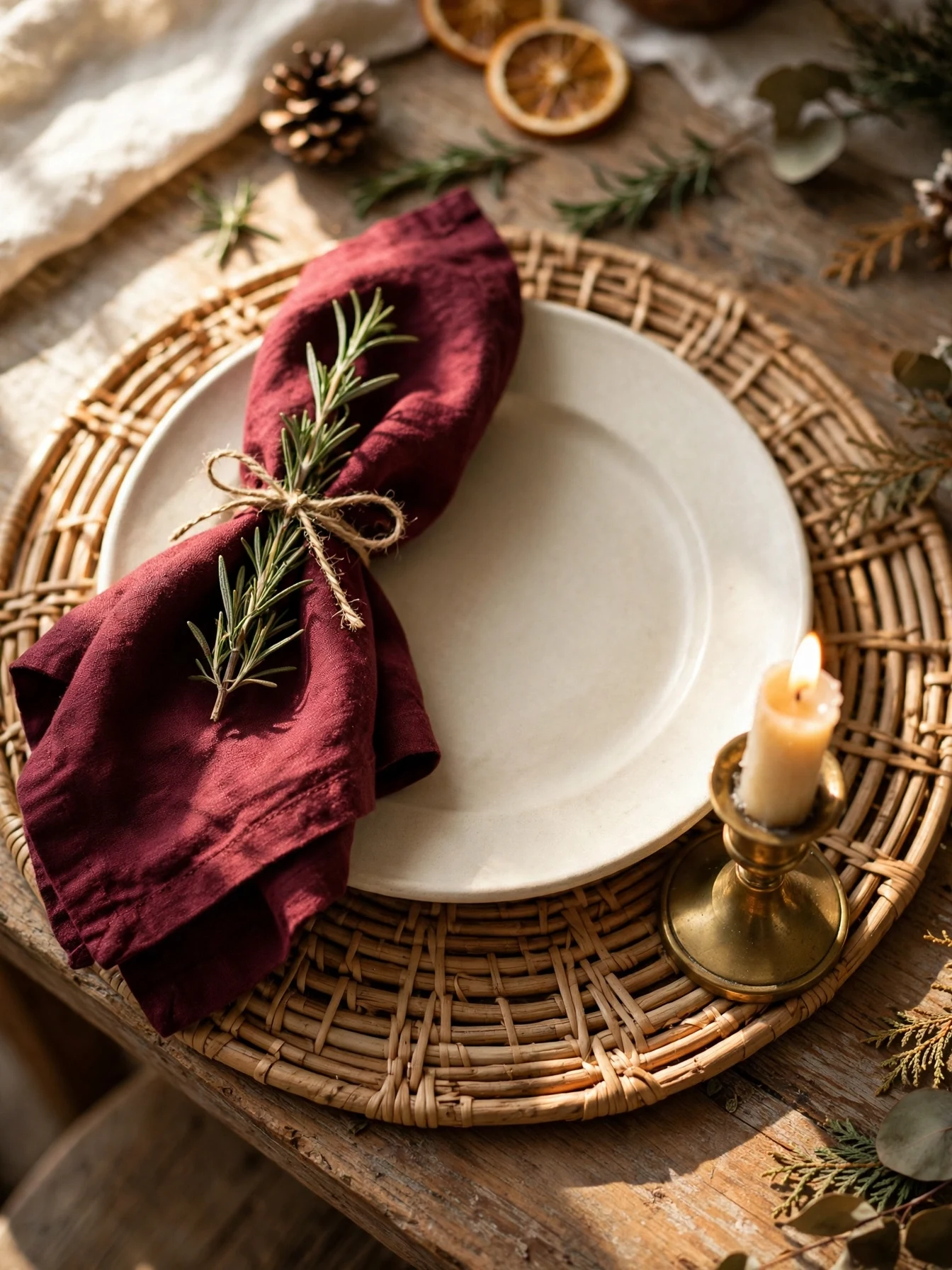
Why This Works:
- Placemats define each seat and make a bare table look finished.
- Woven texture warms a hard wood table in winter.
- A napkin tied with rosemary adds scent and color for almost nothing.
- Placemats protect the table from hot plates and winter stew spills.
Choose round placemats 15 inches wide for a 72 inch table, leaving 6 inches between settings so elbows do not clash. Layer a linen napkin of 18 by 18 inches under the plate, tied with 12 inches of twine and a 4 inch rosemary sprig. Use rattan or woven seagrass for texture, and keep the placemat flat, since a curled edge catches plates and glasses. One thing to leave out is plastic placemats that melt under a hot casserole dish, since a 400 degree dish will warp thin vinyl in seconds. Woven natural placemats breathe and handle heat better, while cotton placemats wash easily but stain faster.
Table settings matter most in February, when most meals happen indoors and the dining room gets daily use. Budget woven placemats cost 4 to 8 dollars each, midrange sets run 30 to 60 dollars for 6, and linen napkins cost 3 to 6 dollars each. The compromise is upkeep: rattan needs a damp wipe after each meal, while fabric placemats go in the wash but need ironing. Replace rosemary sprigs every 3 to 4 days, because dried sprigs shed needles onto the table.
Entryway Mirror Light
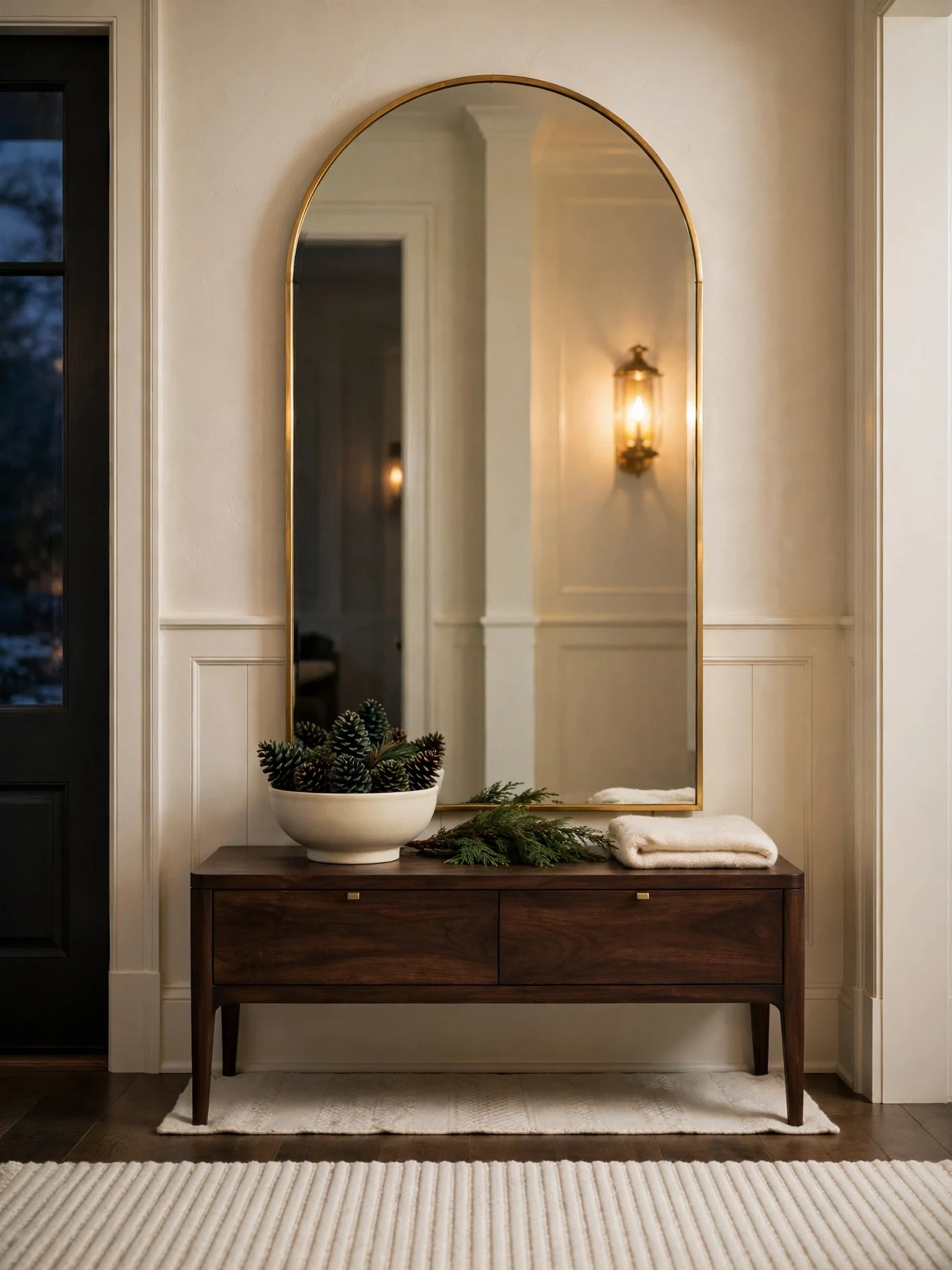
Why This Works:
- A mirror doubles the light from one lantern in a dark entryway.
- An arched shape softens the straight lines of doors and benches.
- Guests check their coat and hair in one glance before leaving.
- The reflection makes a narrow entry feel twice as wide.
Hang an arched mirror 60 inches tall and 24 inches wide with its center at 57 to 60 inches from the floor, which matches average eye level. Mount it with two wall anchors rated for 30 pounds, because a mirror this size weighs 15 to 25 pounds. Place a wall lantern 12 inches to one side of the mirror, not directly in front, so the reflection glows without glare. Do not risk a mirror opposite the front door, since it reflects the open door and the cold air outside. A gold frame warms the reflection, while a black frame suits modern entries and hides fingerprints better.
February entryways get dark by 5 PM, so reflected light matters more than a second lamp. Budget arched mirrors cost 60 to 120 dollars, midrange mirrors run 150 to 300 dollars, and a brass lantern costs 30 to 70 dollars. If the entryway has no outlet near the console, hire a licensed electrician to add one rather than running an extension cord across the floor, which is a trip hazard in a busy entry. The not-so-good part is cleaning: mirrors show dust in winter light, so wipe the glass once a week with a microfiber cloth.
Seasonal Bookshelf Styling
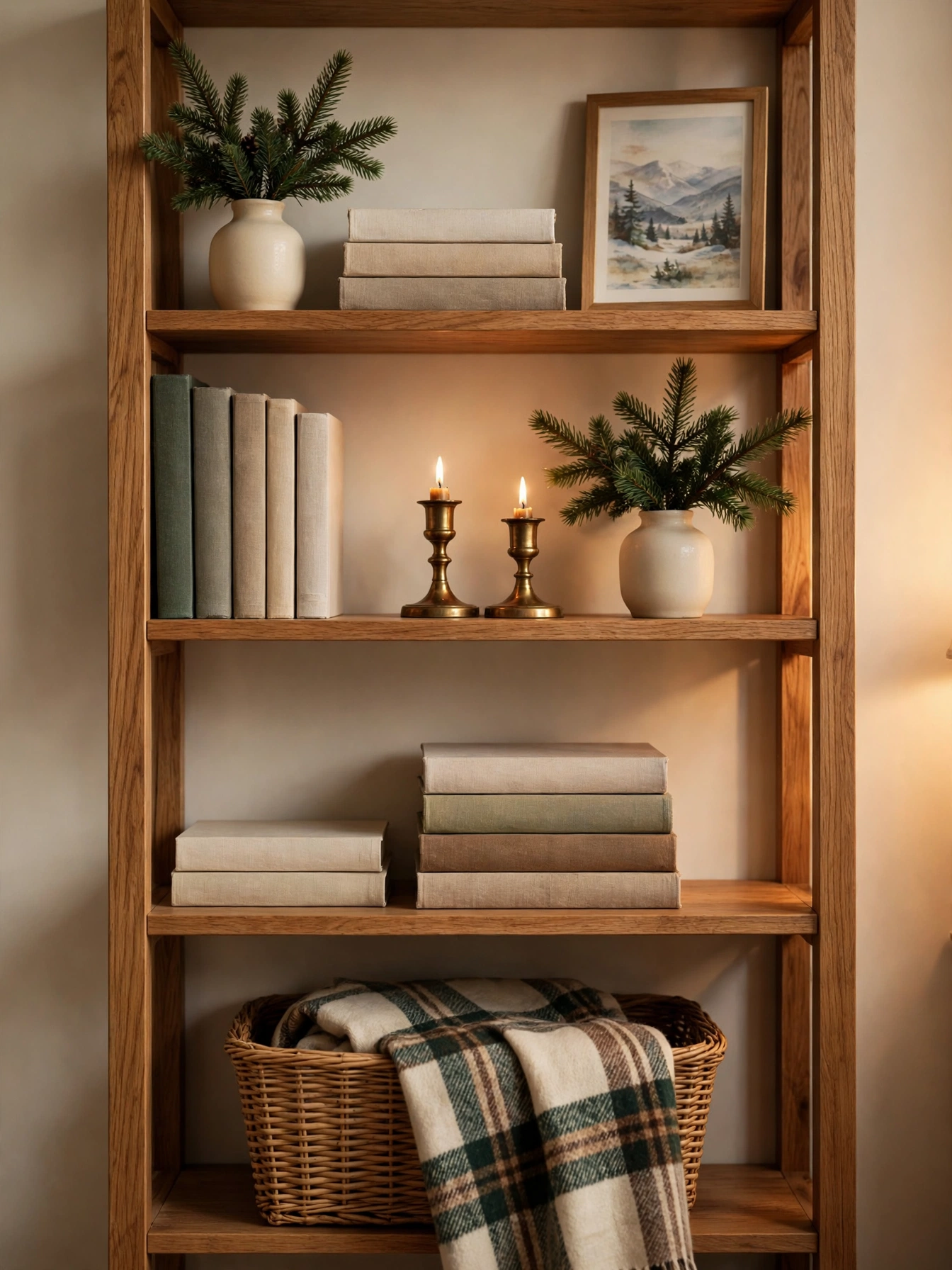
Why This Works:
- A styled shelf warms a room faster than any new furniture purchase.
- Books already on the shelf cost nothing to rearrange.
- Small evergreen sprigs add winter without a full decoration box.
- One shelf can change with the month while the rest of the room stays put.
Clear one shelf completely first, then rebuild it in three layers: tall books at the back, a medium vase in the middle, and a small candle at the front, with 2 inches of breathing room between groups. Stack books horizontally in piles of 3 to 5, keeping spines in muted winter tones like forest, cream, and charcoal, and turn one pile spine-in for a calm block of color. Tuck 6 inch evergreen sprigs into ceramic vases on two shelves only, since greenery on every shelf reads as clutter rather than a theme. Add one brass candle holder per shelf, keeping candles 12 inches from books and paper, because paper ignites fast and a shelf fire spreads before anyone smells smoke. Pass over overfilling the shelf, since a shelf loaded past 70 percent of its width looks like storage, while a shelf at 50 to 60 percent full reads as styled.
Living rooms, hallways, and bedrooms with any size shelf can use this, and it is the cheapest idea in this guide because it uses what the house already owns. A new ceramic vase costs 12 to 25 dollars, a brass candle holder runs 10 to 20 dollars, and the evergreen sprigs are free from the yard or 5 dollars a bunch at the market. The maintenance angle is dust: styled shelves show dust faster than packed ones, so a quick wipe once a week keeps the display looking deliberate. Restyle the top shelf only in late January, swapping evergreen for bare branches, which refreshes the whole wall for 10 minutes of work.
Bedroom Reading Corner
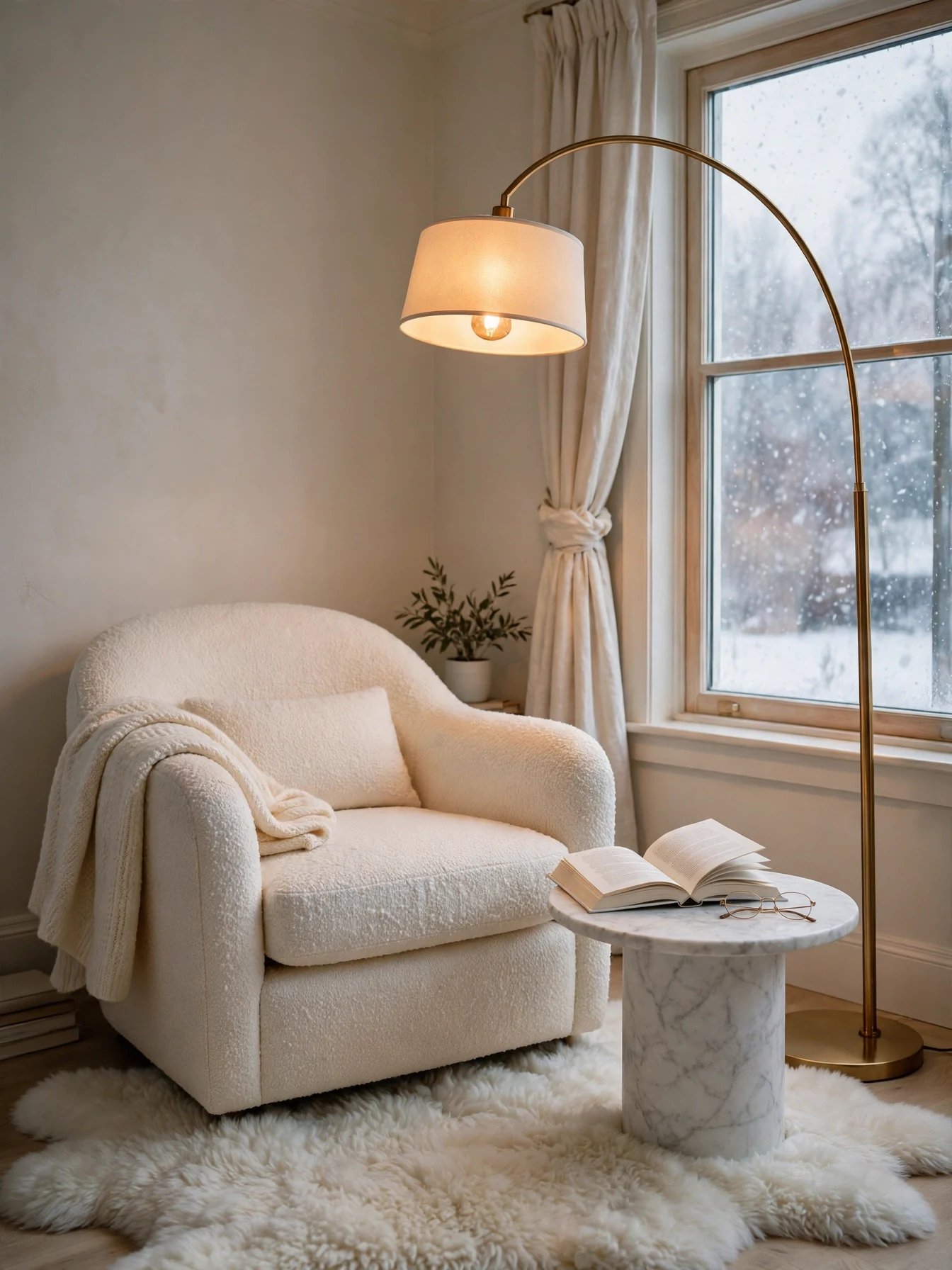
Why This Works:
- A dedicated reading spot makes winter evenings feel intentional.
- An arc lamp puts light over the page without a harsh ceiling light.
- Boucle fabric looks soft and invites sitting down with a book.
- A sheepskin rug keeps feet warm on cold bedroom floors.
Place the chair 24 inches from the wall with a side table of 16 to 18 inches high within arm’s reach, so a book and mug sit close without stretching. Choose an arc lamp with a shade 12 inches wide and a bulb at 2700K and 800 lumens, positioned 18 inches above the shoulder for reading light. Lay a sheepskin rug at least 24 by 36 inches under the chair front legs, which anchors the corner on hard floors. Drop the idea of a chair deeper than 38 inches in a small bedroom, since it eats floor space needed for the bed and wardrobe. Boucle reads as softer than leather, while leather wipes clean faster in a room where mugs get carried in.
Reading corners suit anyone who reads before bed, because the ritual replaces screen time with a calmer hour. Budget boucle chairs cost 180 to 350 dollars, midrange chairs run 400 to 700 dollars, and an arc lamp costs 70 to 150 dollars. The part that needs extra work is space: a full corner needs at least 36 by 48 inches, so a bedroom under 120 square feet should use a slim chair of 28 inches wide instead. Keep the side table clear of more than 3 items, because clutter breaks the calm the corner is meant to give.
Hallway Sconce Glow
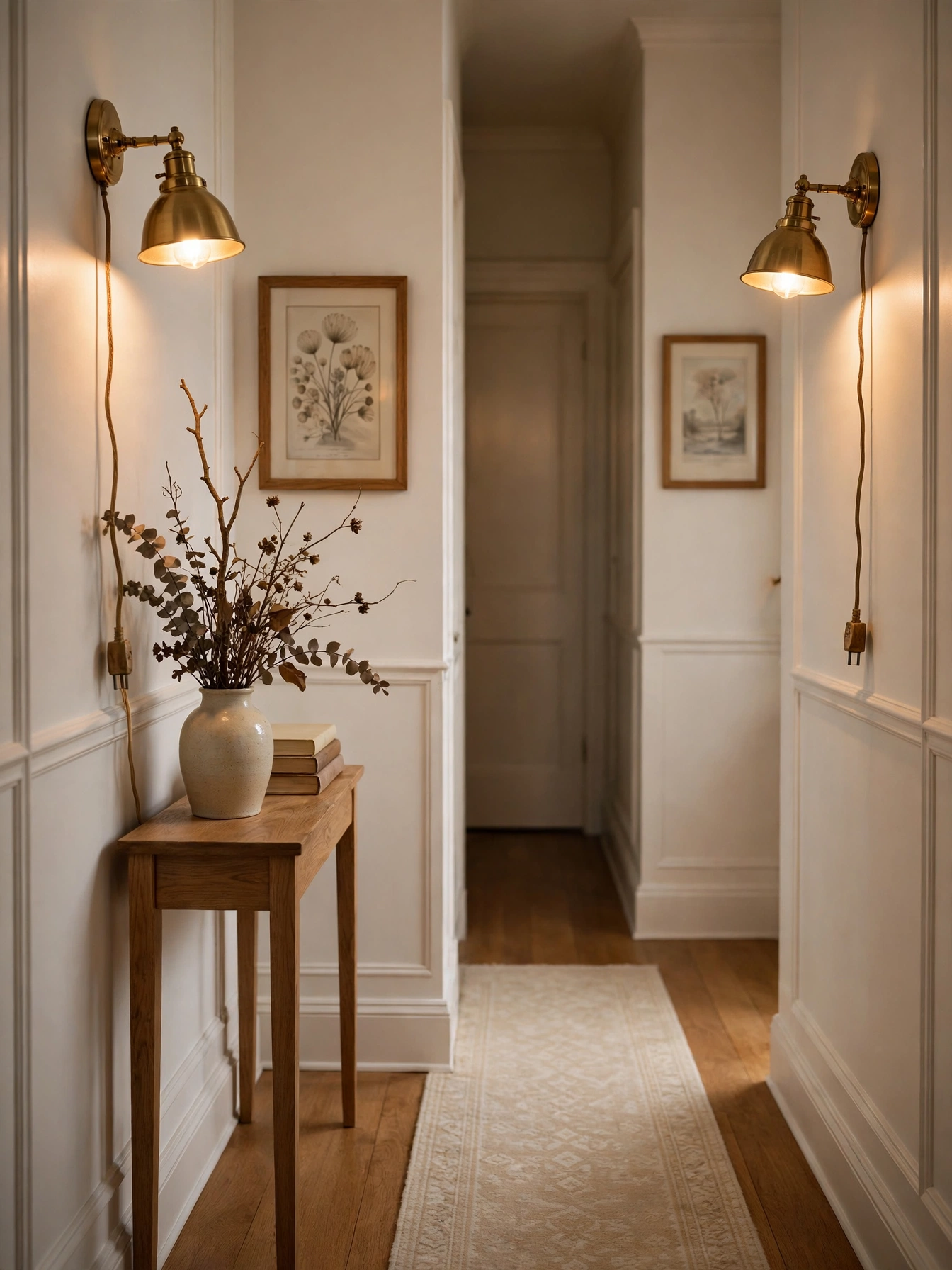
Why This Works:
- Sconces light a hallway without taking a single inch of floor space.
- Warm 2700K bulbs make narrow walls feel wider after dark.
- Plug-in sconces need no wiring and no electrician visit.
- Two sconces turn a passage into a room worth walking through slowly.
Mount two plug-in sconces 60 inches from the floor and 8 to 10 feet apart along the hallway, which puts the light at eye level and spaces the glow evenly down the passage. Choose fixtures with a 2700K LED bulb rated at 400 to 600 lumens, since that warm output flatters skin tones and wood floors without glare. Run the cord down the wall inside a paintable cord cover, and plug into an outlet with a timer set for 5 PM to 11 PM, which keeps the hall lit for 6 hours a night. Skip battery sconces for a hallway used daily, because the batteries last 2 to 3 weeks at most, while a plug-in sconce costs 2 to 3 dollars a year in electricity and never dims midweek. Check the fixture weight before buying, since a sconce over 3 pounds needs a wall anchor rated for 10 pounds, while lighter shades hold fine on a standard picture hook.
Any narrow passage can use them, and they help most in homes where the hallway has no windows and stays dark all day. Budget plug-in sconces run 25 to 45 dollars each, midrange brass runs 60 to 110 dollars, and a pair with dimmers reaches 150 to 220 dollars. The one thing to watch is cord visibility: even a painted cover shows on a light wall, so mount the sconce within 12 inches of an outlet to keep the run short. If the hallway already has a ceiling light, keep it on a dimmer at 30 percent and let the sconces carry the warmth, which layers the light instead of doubling it.
Dining Room Centerpiece
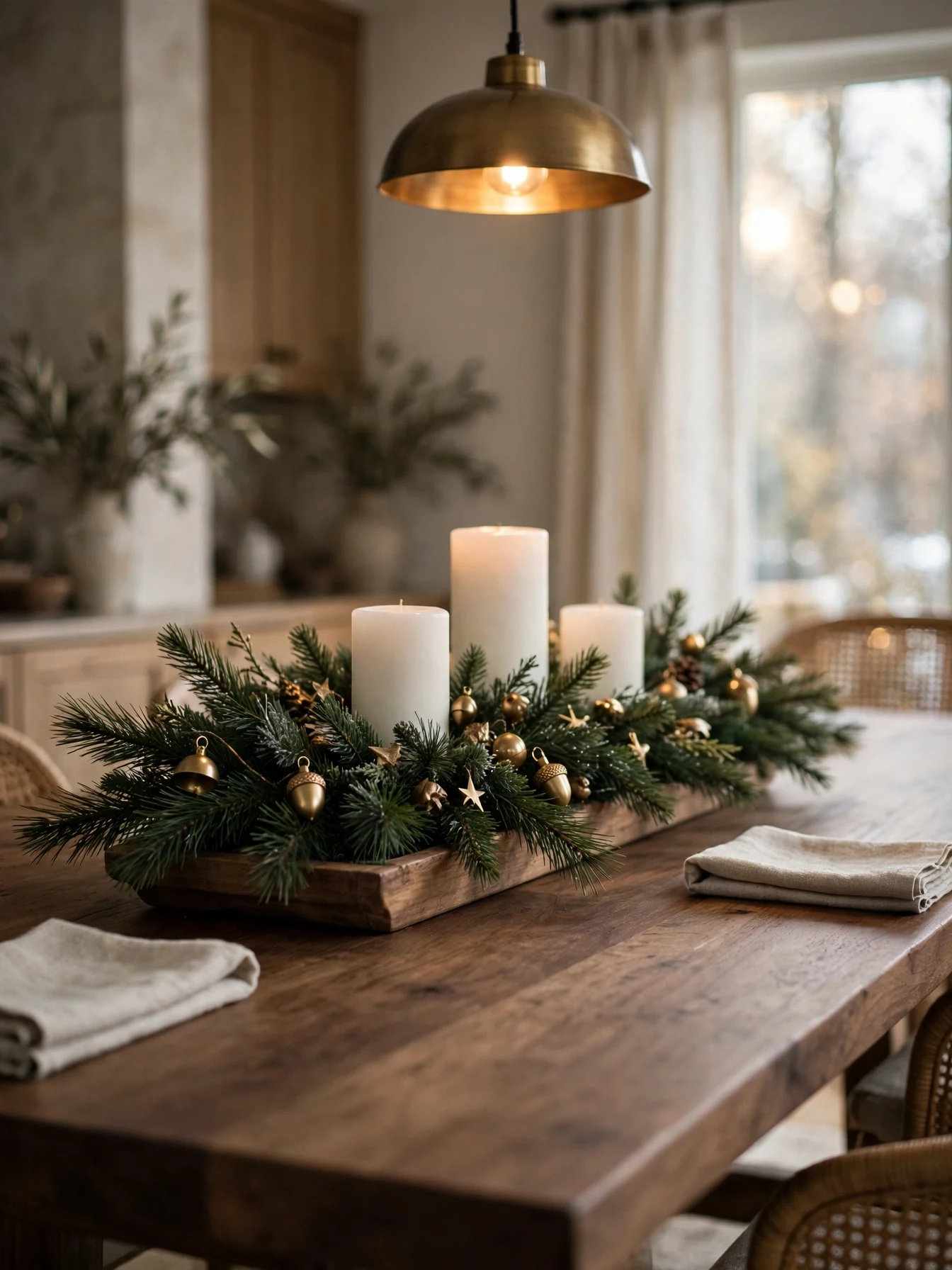
Why This Works:
- A low centerpiece adds winter greenery without blocking conversation.
- Pine branches last 2 to 3 weeks indoors with light misting.
- Three candle heights create a glow that one candle cannot match.
- A wooden tray keeps needles and wax off the table surface.
Build the centerpiece on a tray 24 to 30 inches long and 8 to 10 inches wide, centered on a 72 inch table with 18 inches of clear space at each end. Lay pine branches cut to 12 inch lengths along the tray, then set 3 white pillar candles at 4, 6, and 8 inches tall among the branches. Keep every flame 12 inches from the pine, and mist the branches with water every 2 days to slow drying. Steer clear of tall centerpieces above 12 inches, since they block the view across the table and force guests to lean around them. Fresh pine smells better than faux, while a faux garland lasts the whole season and needs no misting.
Dining rooms host the longest winter meals, so the centerpiece earns its place at every dinner. Budget trays cost 20 to 40 dollars, midrange pillar sets run 15 to 30 dollars, and fresh pine branches cost 10 to 20 dollars per bunch. The upkeep side is upkeep: real pine sheds needles after 14 days, so plan a refresh every 2 weeks or switch to faux in March. Store the tray in the sideboard between meals if the table doubles as a workspace.
Bathroom Rug Warmth
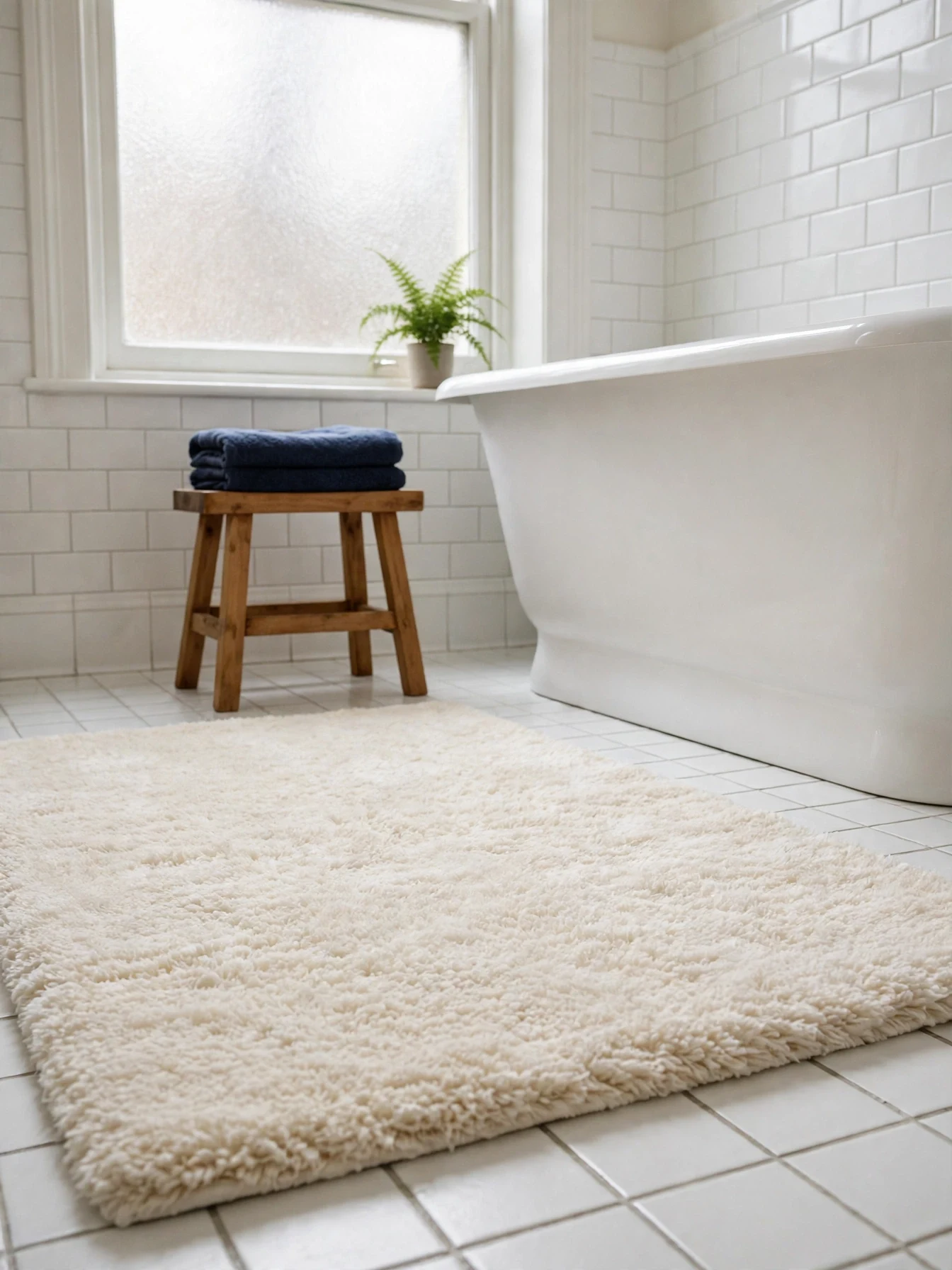
Why This Works:
- A plush rug is the first warm thing feet touch after a shower.
- Thick cotton absorbs water fast and dries quicker than a thin mat.
- Cream color brightens a bathroom that gets little winter sun.
- A rug sized to the tub makes the whole bathroom feel designed.
Choose a bath rug 24 by 36 inches for a standard tub, with a pile height of 1 to 1.5 inches for real cushion underfoot. Look for a cotton rug at 900 GSM or higher, which absorbs more water per step than a thin 500 GSM mat. Place the rug 2 inches from the tub edge so it catches drips without sliding under the tub. Pass on rubber backed rugs on heated bathroom floors, since heat degrades the backing within a year. Cotton rugs wash well and feel softer, while memory foam rugs cushion better but take 24 hours to dry fully.
Bathroom rugs take daily abuse in winter, from wet feet to dropped shampoo bottles. Budget plush rugs cost 15 to 30 dollars, midrange cotton rugs run 35 to 60 dollars, and a premium quick dry rug reaches 70 to 110 dollars. The small print is washing: a thick rug needs washing every week in winter, and a rug that is too large will not fit a standard washer. Buy two rugs so one can dry while the other is in use, which keeps the bathroom warm every morning.
Simple Winter Home Decor Ideas
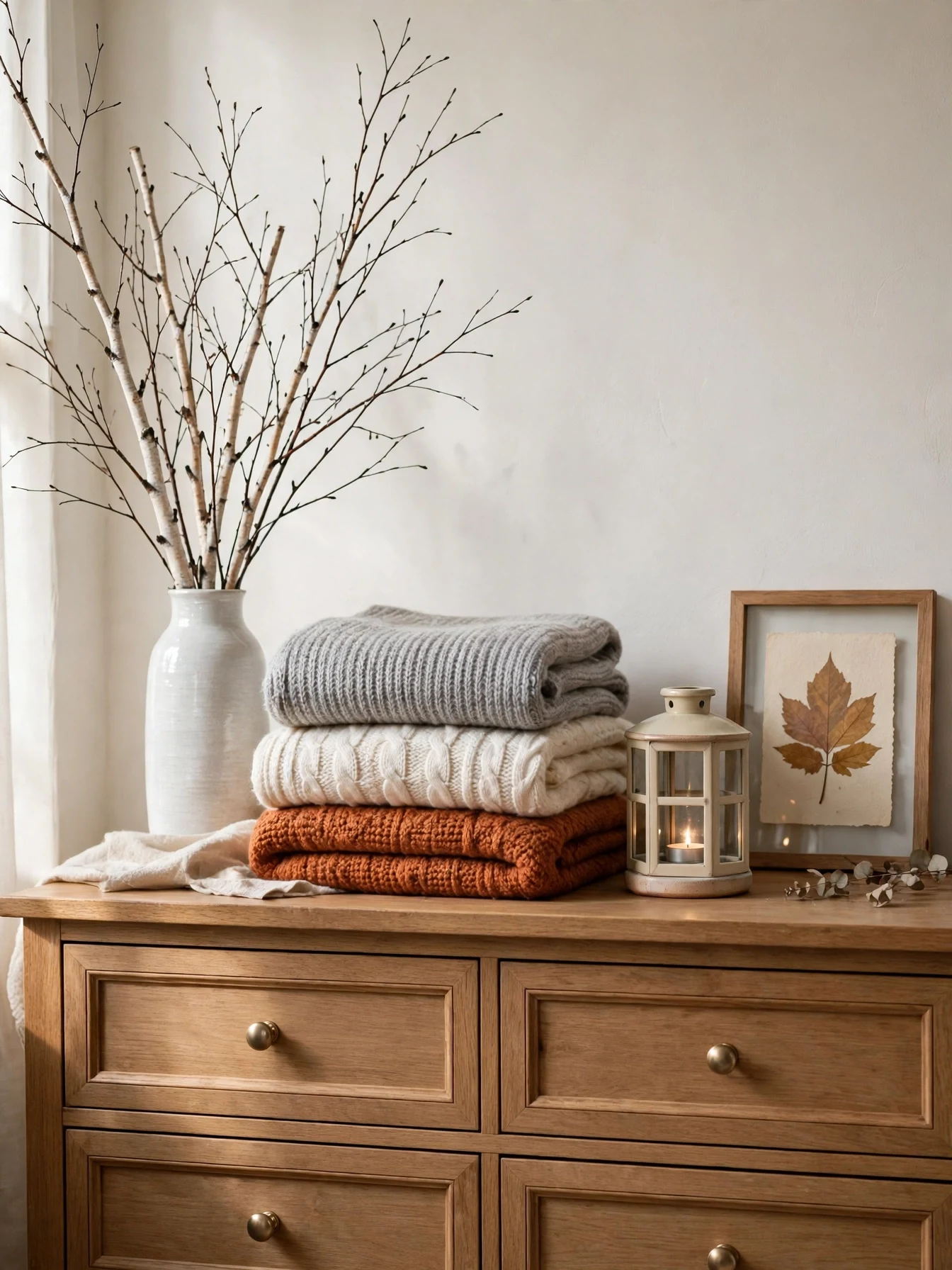
Why This Works:
- One styled dresser top finishes a bedroom without a full makeover.
- Birch branches add height and a natural shape for almost no cost.
- Folded blankets show the winter palette in one glance.
- Simple styling is easy to remove when spring arrives.
Style a dresser top in three zones across 48 inches: a tall vase of birch branches at 24 to 30 inches high on the left, a stack of 3 folded knit blankets in the center, and a ceramic lantern 10 inches tall on the right. Keep 6 inches of clear space between zones so each piece reads on its own. Use branches cut to 24 inches, which fit a standard vase without tipping it forward. Rule out filling every inch of the dresser, since a crowded top looks messy and hides the pieces you chose. Birch branches cost less than a floral arrangement and last 2 months, while a faux branch set costs more upfront but returns every winter.
Simple styling suits busy February weeks, when a full room makeover is not realistic. Budget birch branches cost 8 to 15 dollars per bunch, midrange ceramic lanterns run 20 to 40 dollars, and knit blankets cost 25 to 50 dollars each. What holds this idea back is impact: one vignette will not change a whole room, so place it where the eye lands first, such as opposite the bedroom door. Dust the branches weekly, because bare twigs show dust faster than leafy stems.
FAQs
What are the best winter home decor ideas for a small home?
Better Homes and Gardens notes that texture does the heavy lifting, so start with textiles and lighting. Add a 50 by 60 inch throw, 2 velvet cushions, and 3 candles at 2700K, then a 24 inch hallway runner. These 7 pieces warm a home under 1,000 square feet.
How much should I budget for winter decor in February?
Plan 100 to 200 dollars for a single room and 300 to 500 dollars for a whole home refresh. Budget pieces like throws and candles cost 15 to 30 dollars each, while a quality runner or heated towel rail runs 120 to 300 dollars.
How do I keep winter decor from looking like Christmas?
Remove red, gold, and pinecones, then rebuild with cream, forest green, and charcoal instead. Swap tree ornaments for birch branches, use plain white candles, and keep only 2 winter textures per room so the look reads as February, not December.
Which winter home decor ideas work best in a rental?
Choose removable changes: throws, rugs, curtains on tension rods, and battery candles. The Spruce recommends checking lease rules before drilling, and a 24 inch runner plus 2 curtain panels can transform a rental for under 150 dollars with no holes.
When should winter decor come down?
Remove heavy layers in mid March, when daylight passes 12 hours a day in most US states. Keep the palette but swap wool throws for cotton, store the heated rail cover, and pack candles once evening temperatures stay above 50 degrees Fahrenheit.
Conclusion
These 21 ideas share three rules: pick one palette for the whole home, layer texture before buying new furniture, and add warm light in every room you use after dark. Start with the palette, then warm the entryway or bedroom first, since those rooms shape how the whole house feels in February. Measure your entryway, hallway, and bedroom today, then buy the throw, runner, and candles to match, because exact sizes keep every winter home decor ideas choice simple and calm. Follow HomelyCrafter on Pinterest for more ideas. Save this to your Pinterest boards so you can refer back to it!

Muhammad Israr is a home decor enthusiast and the writer behind Homely Crafter. He spends his days researching paint colors, layouts and budget-friendly styling ideas, then breaks them down into practical, easy-to-follow guides so you can decorate with confidence.
1 thought on “21 Glistening Winter Home Decor Ideas for Warm Days”