
Every living room has a coldest seat, and it is almost always the sofa cushion nearest the window. On a January evening that one spot can feel 5 to 8 degrees colder than the rest of the room, because glass loses heat faster than any wall in the house. These 22 winter living room decor cozy ideas fix that seat first, then work outward across the room. Better Homes and Gardens has long treated layered textiles and warm light as the two fastest ways to make a room feel warmer, and the ideas below put exact numbers on both.
You will find measurements for rugs, curtains, mantels, and lamps, plus material names, price ranges, and honest trade-offs. Nothing here needs a renovation, and most ideas take under an hour. Start with the window seat fix, add one warm layer at a time, and stop when the room feels right on a cold night.
Winter Living Room Decor Cozy Foundations
Why This Works:
- Fixing the coldest seat first gives the biggest comfort gain for the least money.
- The 60/30/10 color rule keeps warm layers looking planned instead of piled on.
- Curtains, throws, and a draft stopper need no tools and no landlord approval.
- Every layer added here supports the ideas that follow in the room.
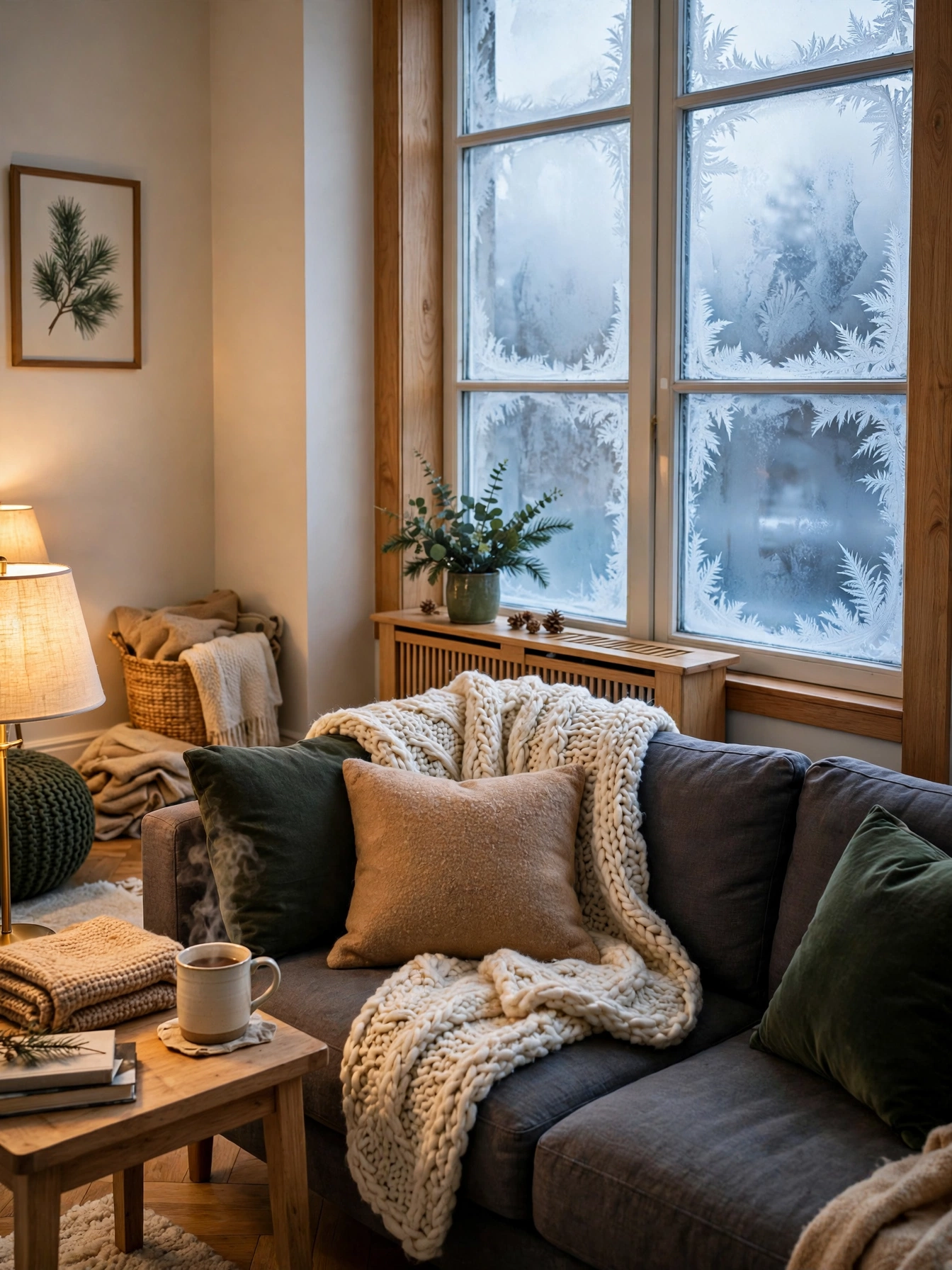
Measure the window wall first and note which sofa cushion sits within 36 inches of the glass, since that seat loses the most heat. A thermal curtain panel 2 to 2.5 times the window width, hung on a rod 4 to 6 inches above the frame, cuts the draft at the source. Add a 50 by 60 inch wool throw folded in half over that cushion, which puts two layers exactly where the cold lands, and wool holds warmth better than fleece when the room cools overnight. Follow the 60/30/10 color rule: 60 percent dominant warm neutral, 30 percent secondary color, 10 percent accent. Skip a single oversized space heater pointed at the sofa, because hot dry air near fabric raises fire risk while the window still leaks cold.
Renters get the most from this approach, since curtains, throws, and a draft stopper need no drilling and no landlord approval. The whole fix costs 60 to 150 dollars at mid range, against 400 dollars or more for new double glazing on one window. The catch is that textiles warm the seat, not the room, so the thermostat may still read 68 degrees while the cushion finally feels comfortable. If the window frame itself is cracked or the glass rattles in its frame, a glazier should repair it before any decor goes up. Test the result on the next cold evening by sitting in that seat for 10 minutes with a book, which tells you more than any thermometer reading.
Chunky Knit Throws
Why This Works:
- Thick knit stitches trap air, which is what actually keeps a body warm.
- One throw changes the look of a whole sofa in under a minute.
- Chunky texture reads as winter instantly, even in a pale room.
- Throws move from sofa to chair to lap without any installation.
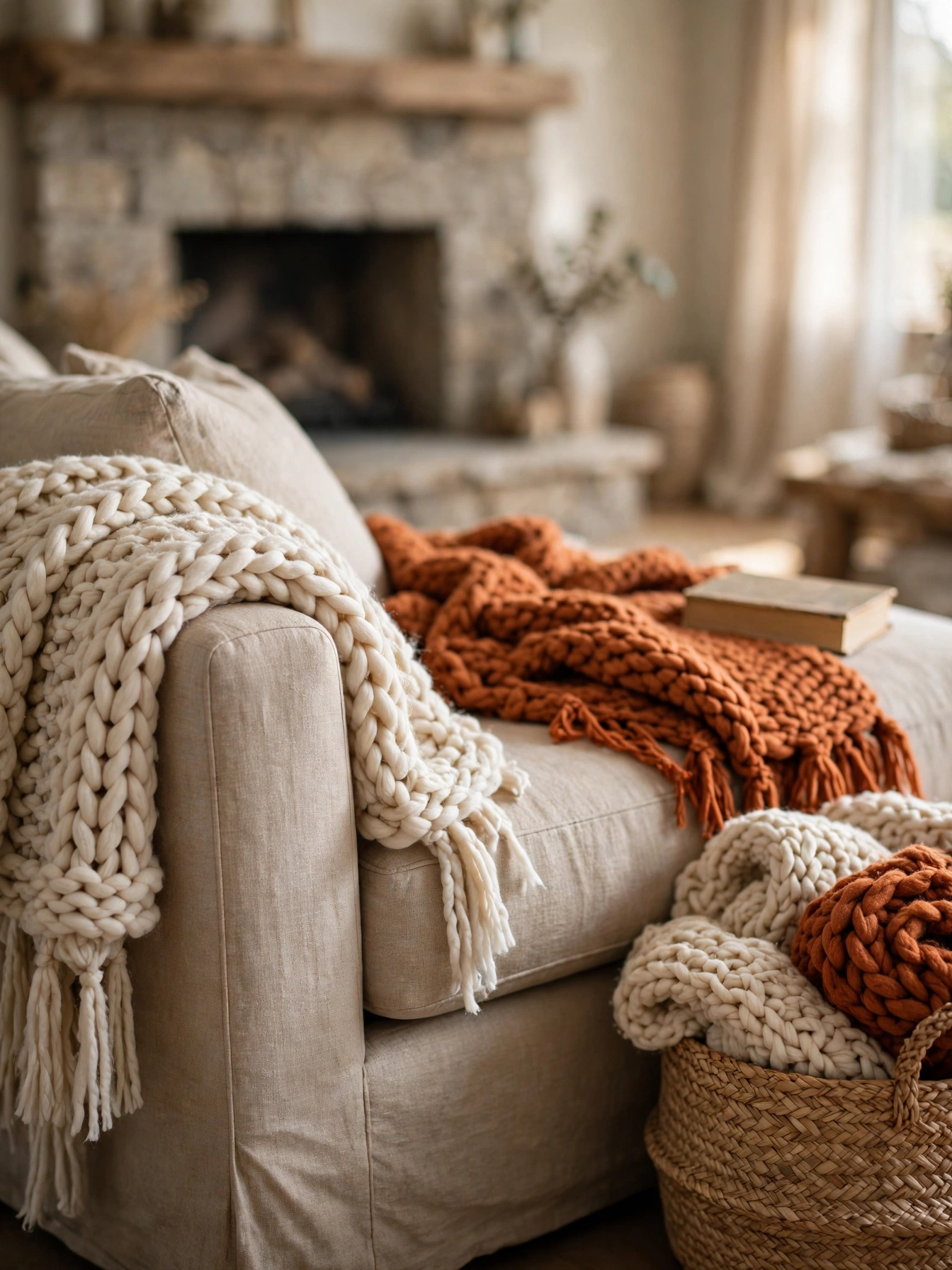
A 50 by 60 inch throw suits a standard 84 inch sofa, while a 60 by 70 inch throw fits a deep 40 inch seat sofa or two people sharing. Choose merino wool at 400 to 600 grams per square meter for real warmth, and check the label for a tight twist yarn, which pills less than loose spun yarn. Budget acrylic throws run 25 to 40 dollars, mid range wool blends run 80 to 140 dollars, and premium pure merino runs 180 to 300 dollars. Steer clear of washing a wool throw on a hot cycle, because water above 86 degrees Fahrenheit can shrink it by 20 percent or more in one wash. Wool costs more than acrylic up front, yet it keeps its loft for years, while acrylic flattens after a season of daily use.
Families with kids reach for the throw on the armrest first, so keep that one washable and save the premium merino for the back of the sofa. A throw also hides a worn cushion for a season, which buys time before reupholstering. The snag is bulk: a chunky knit throw weighs 4 to 6 pounds, so it slides off a leather sofa unless one end is tucked under a cushion. Fold it in thirds lengthwise before draping it, which keeps the knit from stretching out of shape between uses.
Layered Rug Warmth
Why This Works:
- Two rug layers insulate a cold wood floor far better than one thin rug.
- Layering lets a small patterned rug shine over a large plain base.
- Soft pile under bare feet makes the whole room feel warmer at once.
- A rug pad adds cushioning that a rug alone cannot give.
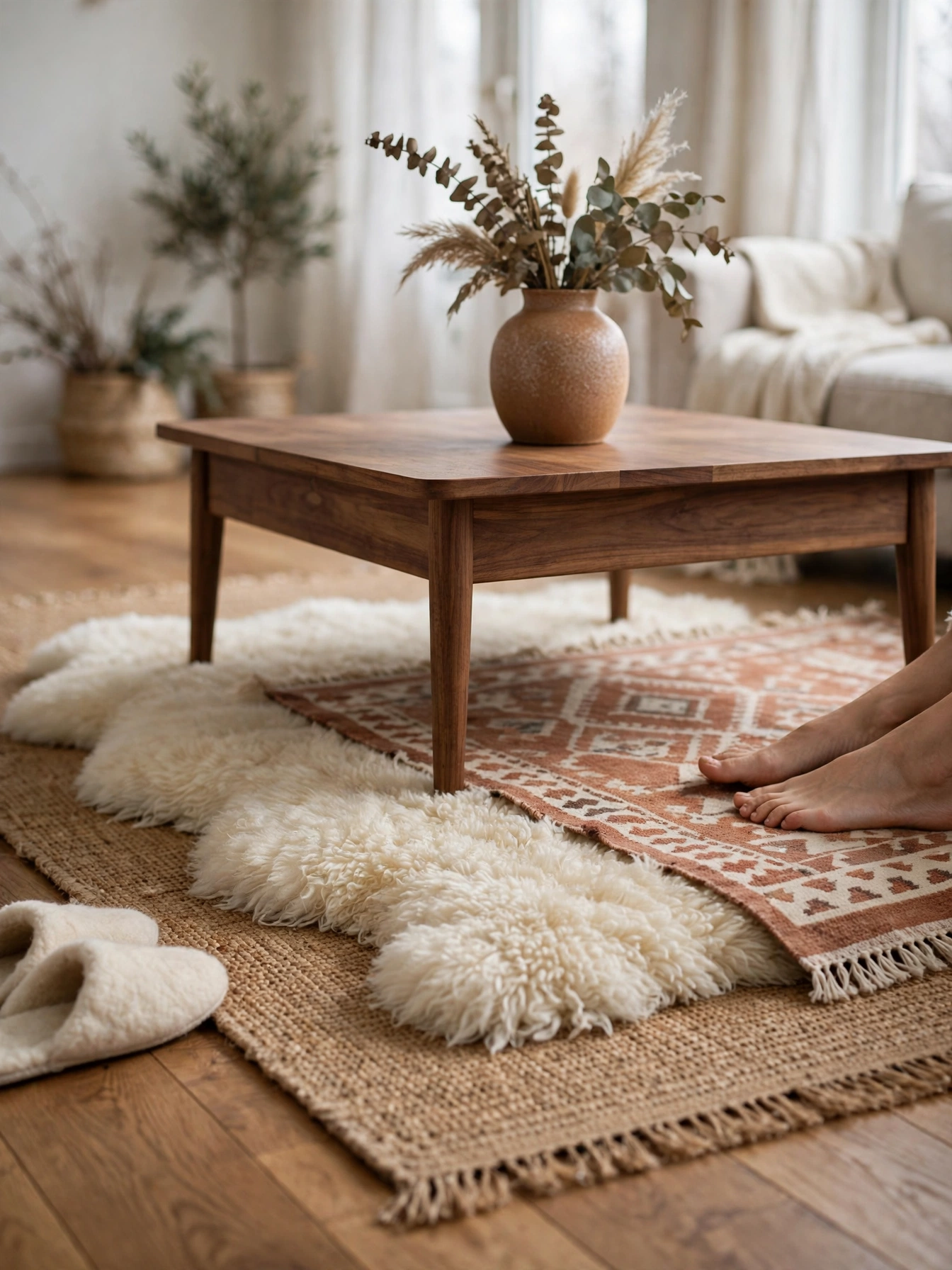
Start with a 9 by 12 foot flatweave base rug for a large room, or an 8 by 10 foot base for a medium room, then layer a 5 by 7 foot wool rug on top, centered under the coffee table. Add a quarter inch felt rug pad under the base layer, which adds insulation and stops both layers from sliding. Keep the front legs of the sofa and chairs on the rug, with at least 18 inches of rug extending past the sofa on each side. Pass on layering two thick pile rugs, because the top rug ripples and becomes a trip hazard within a week. A wool top layer costs more than a cotton one, but wool resists crushing under table legs, while cotton flattens and shows dents after a month.
Barefoot households notice this change on the first morning, since cold floors are the first thing feet meet in winter. Layered rugs also soften echo in rooms with hard floors, which makes conversation easier. The hidden cost is cleaning: two layers mean lifting the top rug to vacuum the base every 2 weeks, and pet hair collects at the edges. Shake the top rug outside once a month, which takes 5 minutes and keeps the layers fresh through the season.
Fireplace Mantel Styling
Why This Works:
- The mantel is the eye level focal point of most living rooms.
- Cedar garland adds scent and color without a single nail hole.
- Brass candlesticks reflect firelight and double the glow.
- A mirror above the mantel bounces light into the whole room.
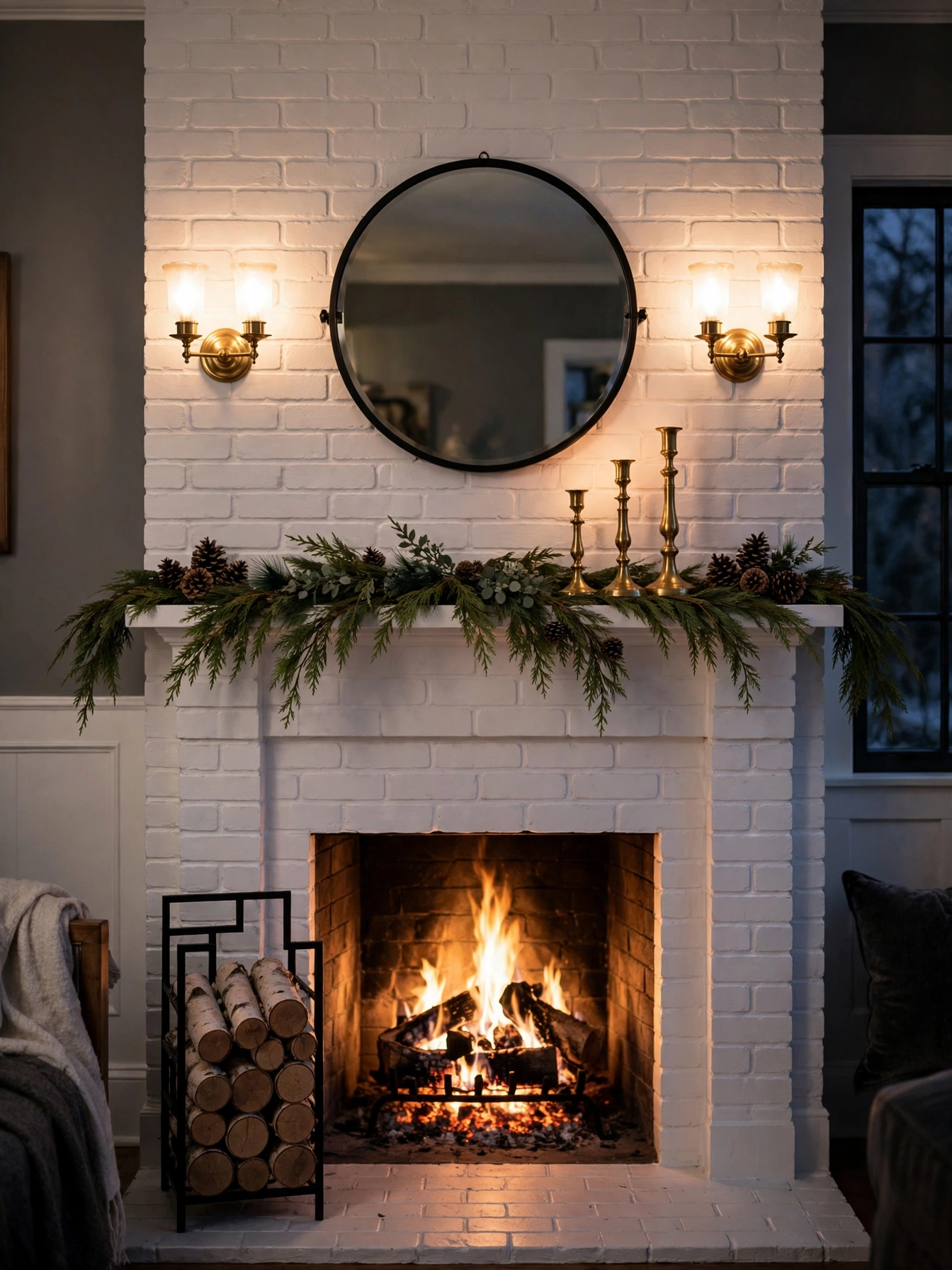
Hang a 6 to 9 foot cedar garland across the mantel, letting the ends drop 12 inches down each side for a finished look. Place three candlesticks at 8, 10, and 12 inches tall in a triangle, and center a 24 to 30 inch round mirror 57 to 60 inches from the floor, which is standard eye level for wall art. Keep every decoration at least 12 inches from the firebox opening, and follow the National Fire Protection Association guidance to keep combustibles 3 feet from the fire. Rule out real garland draped over a working gas fireplace vent, because dried needles near heat are a fire risk. Fresh cedar lasts 3 to 4 weeks indoors and smells stronger than faux garland, while faux garland costs 30 to 60 dollars once and stores flat for years.
Homes with a working fireplace get a double benefit, since the mantel styling and the fire itself share one focal wall. Guests gather near the hearth first, so this is the styling they actually see. The weak spot is upkeep: fresh garland sheds needles daily, so plan on sweeping the hearth twice a week, and brass needs a 10 minute polish every month to stay bright. Check the mantel for heat damage each spring, since repeated heat cycles can crack paint over 2 to 3 seasons.
Draft Proof Window Dressing
Why This Works:
- Heavy curtains are the cheapest insulation most rooms will ever get.
- Thermal lining blocks both cold air and winter glare at once.
- Floor length curtains make windows look taller and rooms feel finished.
- A lined shade underneath adds a second barrier on the coldest nights.
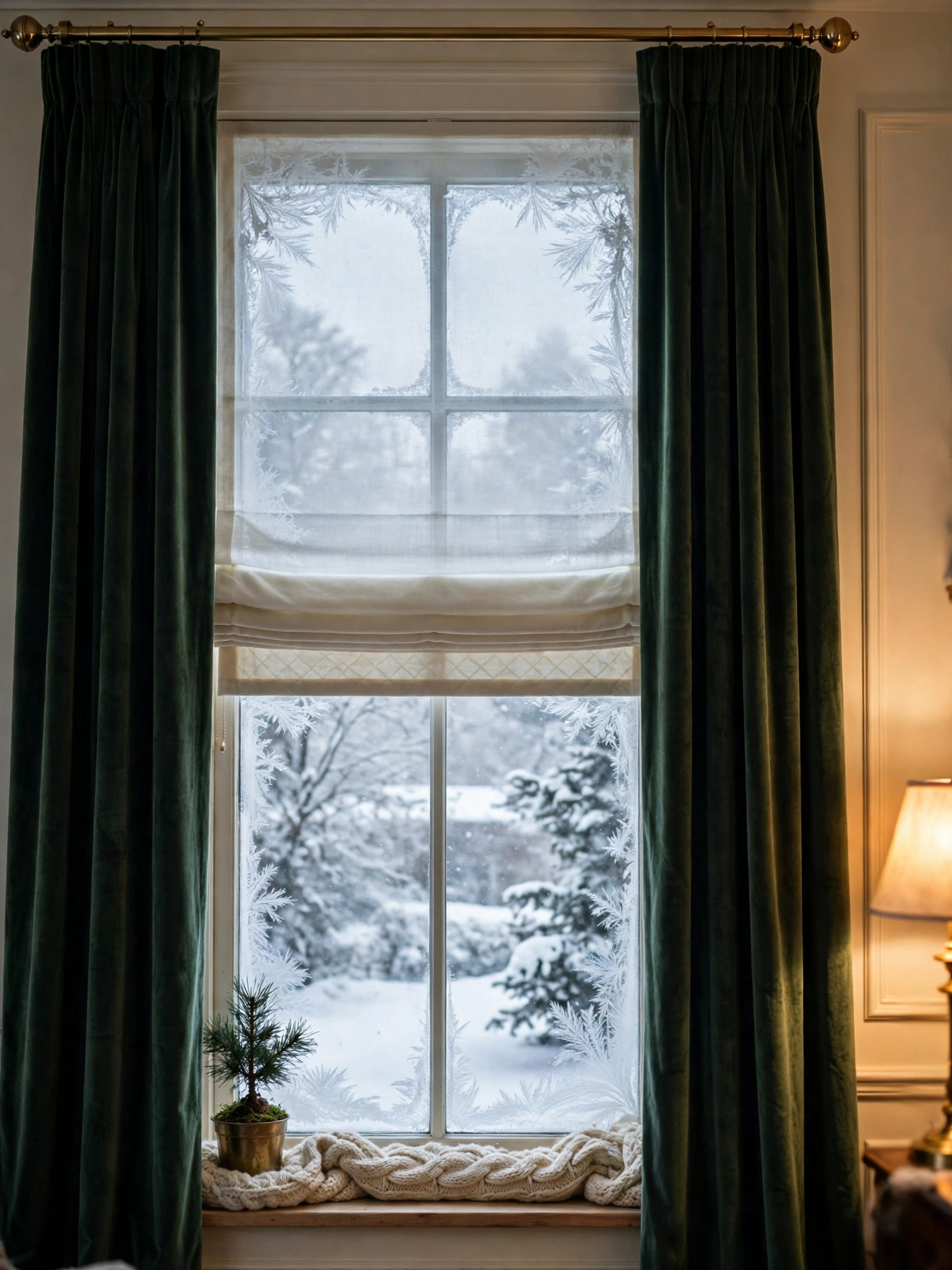
Choose curtain panels 2 to 2.5 times the window width so the fabric hangs in full folds even when closed. Hang the rod 4 to 6 inches above the window frame and extend it 8 to 12 inches past each side, which lets the panels clear the glass fully by day. Add a thermal lined Roman shade inside the frame, and a 36 inch knitted draft stopper along the sill for the gap curtains cannot seal. Keep clear of sheer panels as the only window dressing in winter, since a single sheer layer stops almost no cold air. Velvet costs 60 to 120 dollars per panel at mid range, while thermal lined cotton runs 40 to 80 dollars and washes more easily.
Anyone who sits near a window will feel this change within an hour of hanging the curtains, because the cold radiating off the glass drops sharply. The room also gets quieter, since heavy fabric absorbs street noise. One flaw to plan around is light: lined curtains cut daylight by about half when drawn, so open them fully on sunny mornings and close them 30 minutes before sunset. Wash lined panels on a gentle cycle twice a season, which keeps dust from building up in the thermal layer.
Candle Cluster Glow
Why This Works:
- Flickering flame light flatters every other texture in the room.
- A cluster of three heights looks styled, while one candle looks forgotten.
- Candles cost little and move anywhere in seconds.
- Warm flame light fills the hour after sunset better than a ceiling bulb.
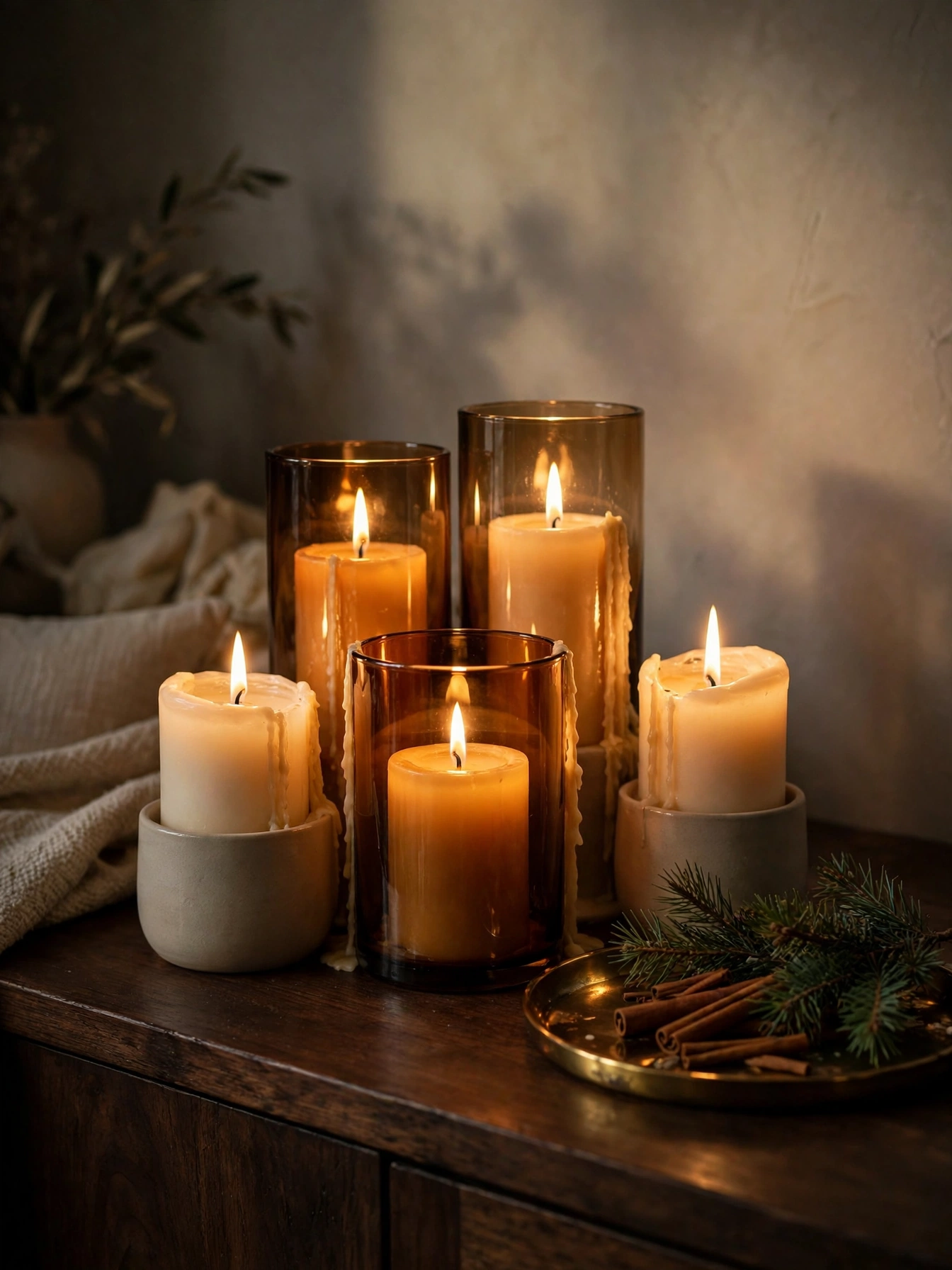
Group pillar candles at 3, 6, and 9 inches tall in an odd numbered cluster of 3 or 5, spaced 3 to 4 inches apart on a heatproof tray at least 18 inches wide. Choose unscented pillars for the cluster and save scent for a single jar candle, since three scented candles in one spot can overwhelm a 200 square foot room. A 3 by 6 inch pillar burns 40 to 60 hours, which works out to about 2 weeks of evening use. Stay away from placing any candle within 12 inches of curtains, throws, or paper, and never leave a lit cluster burning in an empty room. Real wax gives a warmer flicker than LED candles, while battery candles with a 6 hour timer are the safer pick for homes with pets.
Evening readers and movie watchers get the most from this idea, since low flame light relaxes the room without killing visibility. The glow also photographs well, which matters for anyone who shares their room online. The wrinkle is maintenance: wicks need trimming to a quarter inch before each lighting, and soot builds on glass hurricanes after 3 or 4 burns. Wipe the glass with a damp cloth once a week, which keeps the light clear all season.
Faux Fur Accents
Why This Works:
- Long pile faux fur looks and feels warmer than any flat fabric.
- One throw over a chair arm changes the whole corner.
- Faux fur is washable, unlike real fur or sheepskin.
- White fur brightens dark winter rooms without adding color.
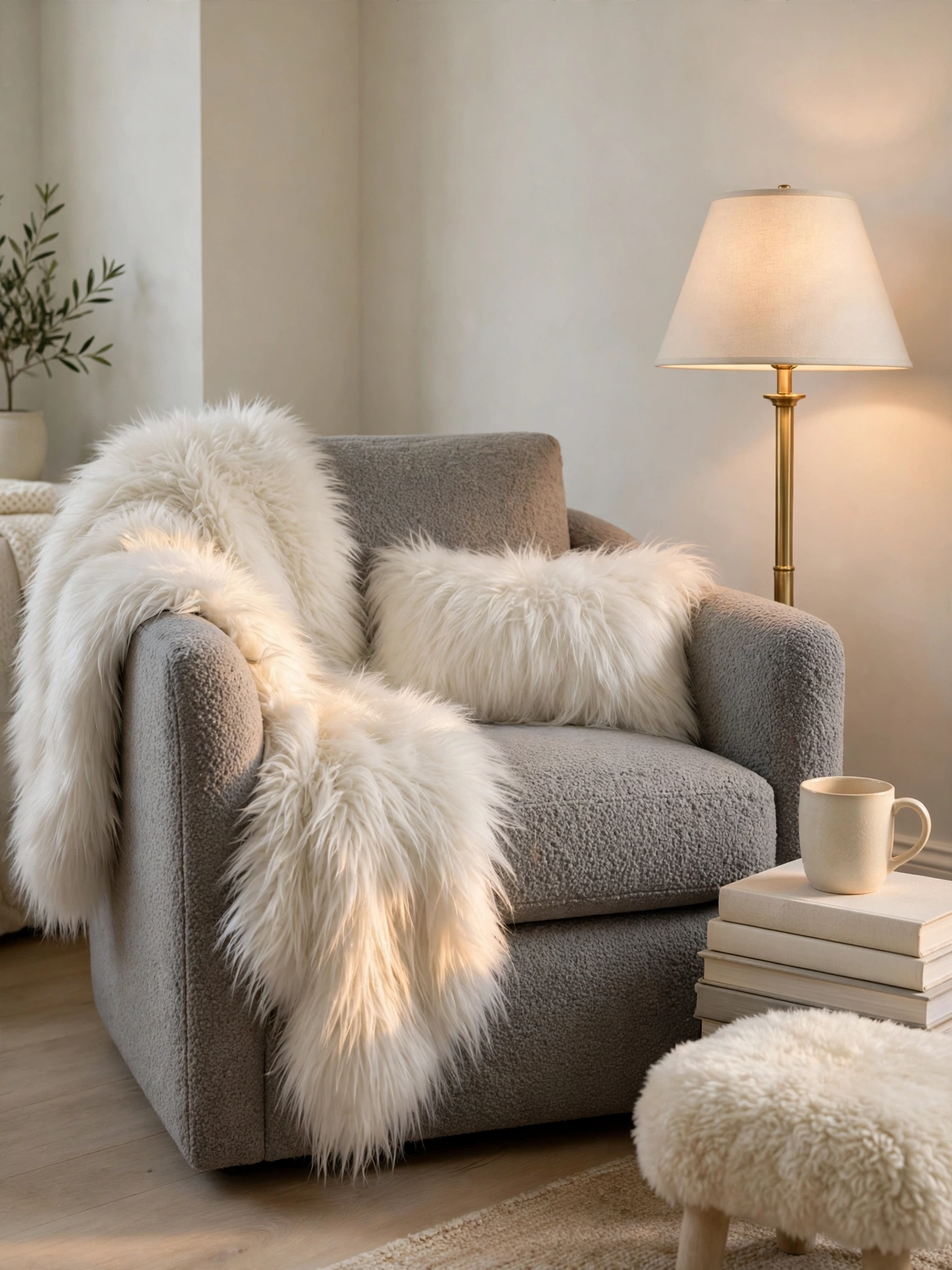
Drape a 50 by 60 inch faux fur throw over one armchair arm, letting 18 inches hang down the front so the pile catches the light. Add a 14 by 24 inch faux fur lumbar pillow on the same chair, which repeats the texture without covering the whole seat. Look for a pile length of 1.5 to 2 inches and a dense woven backing, since thin backing sheds fibers within a month. Do not bother with drying faux fur on high heat, because temperatures above 120 degrees Fahrenheit can melt the fibers into stiff clumps. Budget throws run 30 to 50 dollars, mid range runs 70 to 110 dollars, and premium long pile runs 140 to 200 dollars, with the difference mostly in pile density.
Pet owners should know that faux fur attracts pet hair faster than any other textile in the room, so a quick brush with a lint roller twice a week keeps it presentable. The texture suits reading chairs and accent chairs best, where it gets admired more than sat on daily. The only real downside is static: faux fur builds a charge in dry heated rooms, so a light mist of water from a spray bottle once a week tames the cling. Shake the throw outside every 2 weeks, which restores the pile faster than any wash.
Window Seat Cushions
Why This Works:
- A window seat turns the coldest wall into the favorite spot in the room.
- Thick foam cushions insulate against the cold sill underneath.
- Built-in storage drawers below hide throws and books neatly.
- Plaid pillows add winter color exactly where daylight hits first.
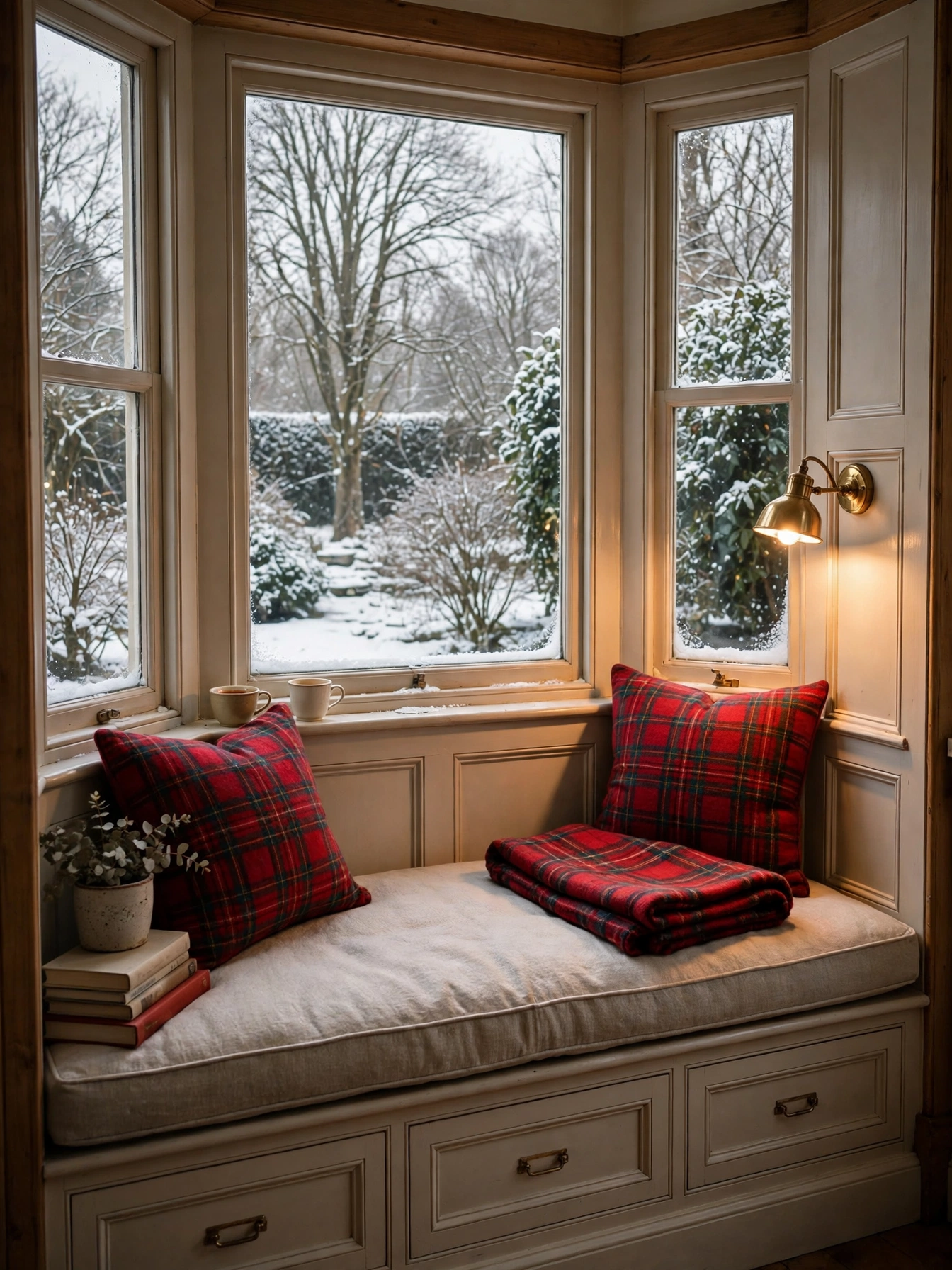
Order a cushion 4 inches thick in high density foam rated at 2.5 pounds per cubic foot, which holds its shape under daily sitting. Measure the seat depth, usually 18 to 20 inches, and cut the cushion a quarter inch short on each side so the cover slides on without bunching. Add two 18 by 18 inch plaid wool pillows and one 12 by 20 inch lumbar pillow, which fills the backrest without blocking the window. Say no to thin 2 inch foam here, because it compresses to the hard wood base within weeks and the seat feels cold again. Custom cushions run 90 to 180 dollars, while a ready made bench pad runs 40 to 70 dollars and fits standard 36 inch seats.
Readers and kids claim window seats first, so this idea pays off daily in homes where someone loves a sunny corner. The seat also doubles as extra guest seating, which helps in small rooms. The compromise is condensation: warm room air meeting cold glass can dampen the cushion edge, so air the seat out for 10 minutes each morning in winter. Wipe the sill dry once a week, which stops mildew from forming under the cushion.
Reading Nook Corner
Why This Works:
- A dedicated corner makes reading a habit instead of a wish.
- A wingback chair blocks drafts from behind the reader.
- One focused lamp gives better reading light than a bright ceiling.
- A small footprint, about 9 square feet, fits corners that hold nothing else.
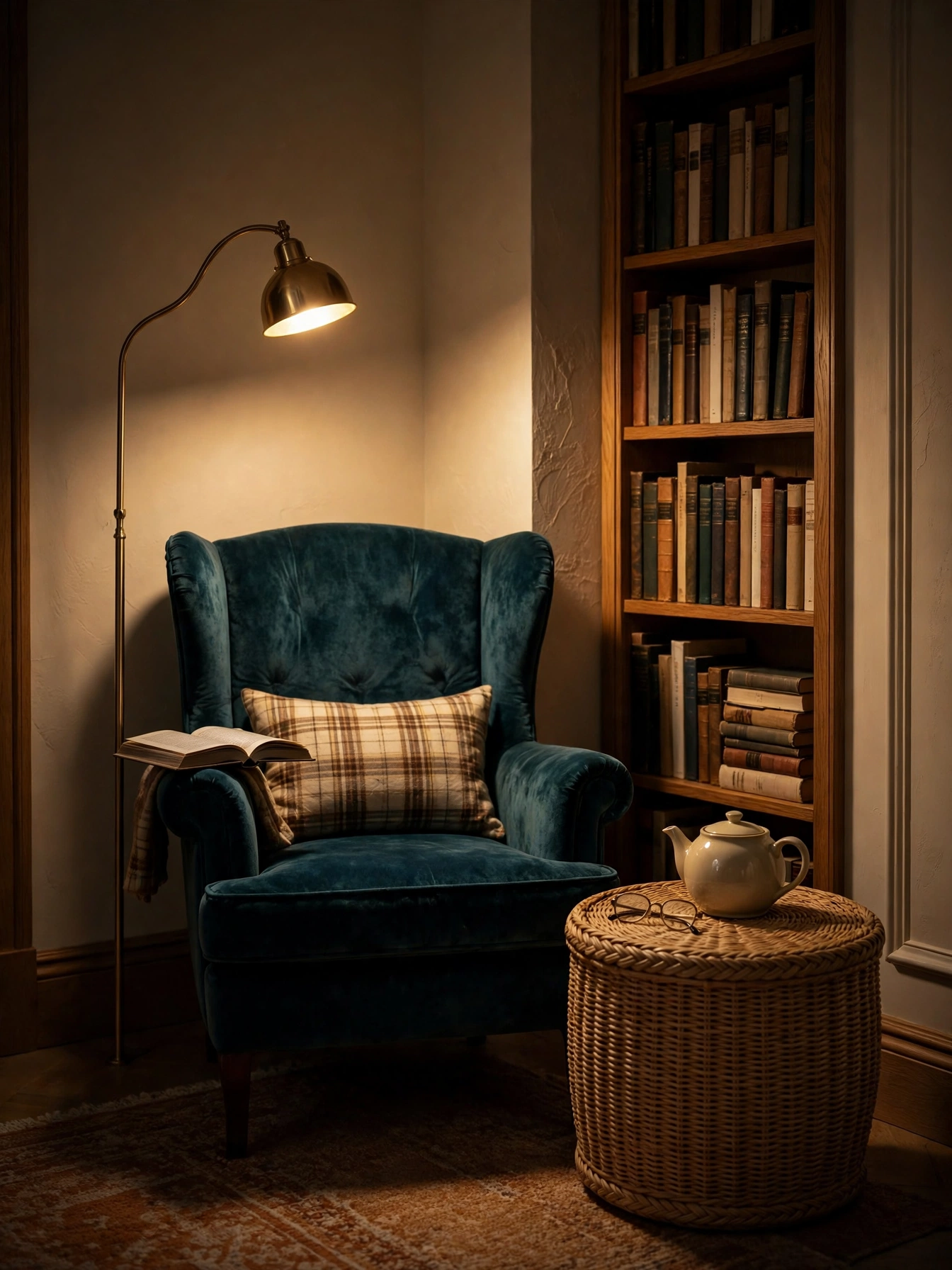
Place a wingback chair 30 to 34 inches wide in the corner, angled 45 degrees so the reader faces into the room. Set a brass floor lamp 58 to 64 inches tall behind the chair shoulder, with the shade bottom 12 inches above the reader’s eye level when seated. Add a round side table 22 to 24 inches high within 12 inches of the chair arm, which keeps a book and a mug in easy reach. Take care with a chair with a seat depth under 20 inches, since shallow seats force the knees up and tire the reader in 30 minutes. A wingback in velvet runs 250 to 500 dollars at mid range, while a solid wood bookshelf for the corner runs 80 to 200 dollars.
Winter evenings are when this corner earns its keep, since the rest of the room can stay dim while the nook glows. It suits anyone who reads before bed, and the chair doubles as a quiet spot for phone calls. The not-so-good part is that a nook collects clutter fast: books, mugs, and blankets pile up in a week. Clear the side table every night, which takes 2 minutes and keeps the corner inviting instead of messy.
Velvet Cushion Mix

Why This Works:
- Velvet catches light differently from every angle, which adds depth.
- Jewel tones warm up gray and beige sofas instantly.
- Mixed sizes look styled, while matched sets look like a showroom.
- Cushion covers swap out in minutes when the season changes.
Mix three sizes on a standard sofa: two 22 inch squares at the corners, two 20 inch squares inside them, and one 14 by 24 inch lumbar cushion in the center. Buy inserts 2 inches larger than the covers, so a 20 inch cover gets a 22 inch insert, which keeps corners plump instead of flat. Choose cotton velvet with a rub count of 30,000 or higher for daily use, since lighter velvet crushes permanently within a season. One thing to leave out is placing velvet cushions in direct sun, because the nap fades unevenly in 6 to 8 weeks on a south facing sofa. Velvet covers run 15 to 35 dollars each at mid range, while linen covers run 10 to 25 dollars and wash more easily.
Anyone who changes decor with the seasons will love this idea, since five covers store in one small box. The mix also lets a bold color like burgundy work in a neutral room without repainting anything. The maintenance angle is upkeep: velvet shows every crease and pet hair, so a weekly brush with a clothes brush keeps the nap even. Steam a creased cushion for 30 seconds before guests arrive, which restores the pile faster than ironing.
Winter Living Room Decor Cozy Lighting
Why This Works:
- Three light layers beat one bright ceiling light on every winter evening.
- Warm 2700K bulbs make skin tones and wood look richer after dark.
- A dimmer lets the same room shift from reading bright to movie dim.
- Layered lighting hides the early sunset instead of fighting it.
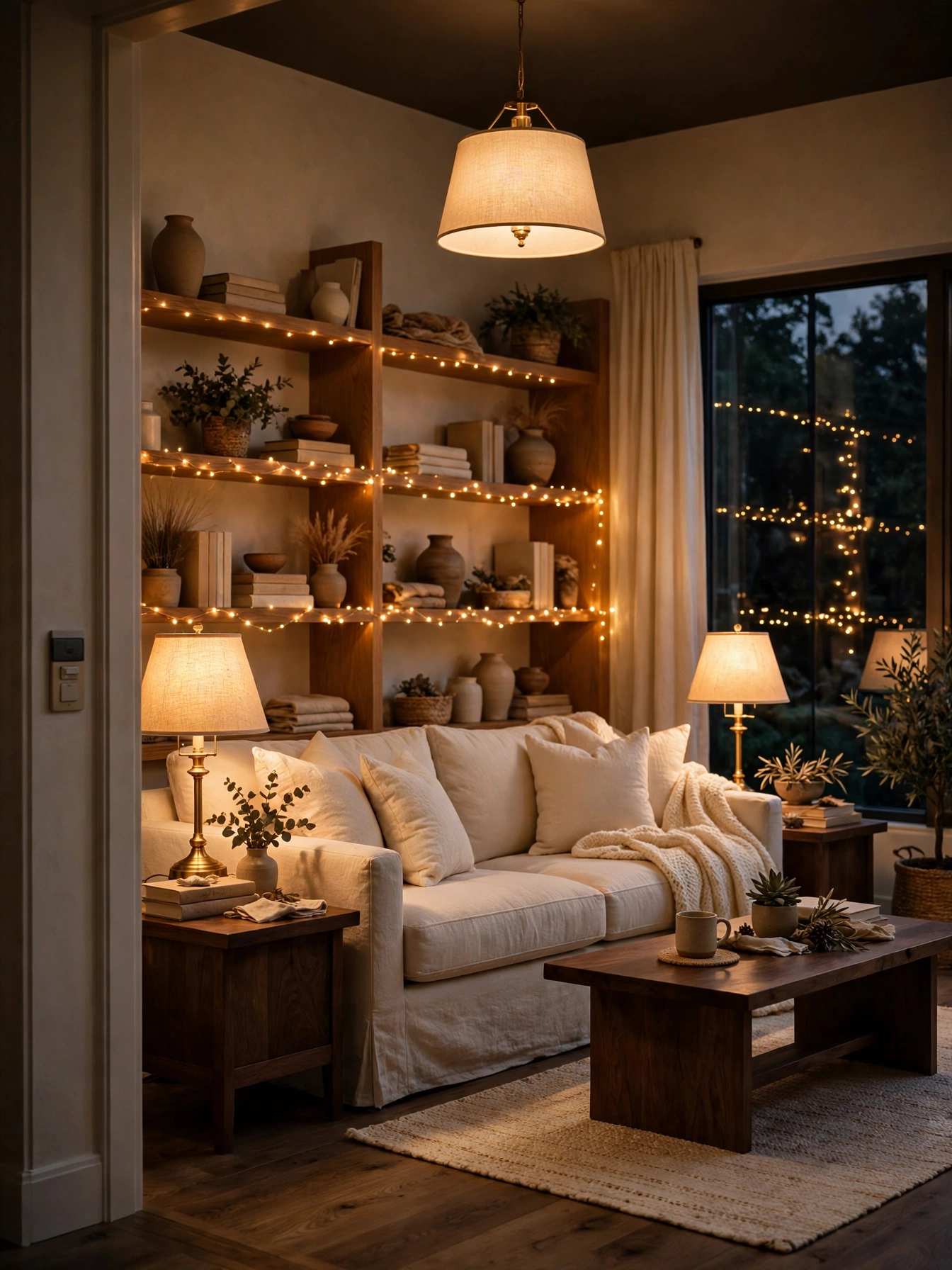
The American Lighting Association recommends three distinct layers of light in every living room, and winter is when the rule matters most. Set the ceiling pendant on a dimmer at 40 percent for evenings, add two table lamps with 800 lumen bulbs at 2700K on either side of the sofa, and weave one 20 foot string of warm fairy lights along a shelf for the third layer. Keep lamp shades 12 to 14 inches in diameter so the light spreads softly instead of glaring. Do not risk a single overhead bulb above 3000K, because cool white light makes a winter room feel like an office. LED bulbs cost 8 to 15 dollars each and last 15,000 hours, while a plug-in dimmer runs 12 to 25 dollars and needs no wiring.
Movie nights and long dinners benefit most, since the room can stay warm and dim without anyone squinting. The setup also flatters the textiles added earlier, because warm light deepens velvet and wool tones. Leave the wiring to a professional: hire a licensed electrician to add a new outlet or a wired dimmer switch, rather than running extension cords across walkways, which is a trip hazard. Check that no lamp sits within 12 inches of a curtain, and replace any bulb that flickers, which usually means a loose socket.
Heated Throw Blankets
Why This Works:
- Warmth on demand beats heating a whole empty room.
- A heated throw warms the sitter in 10 minutes flat.
- Modern throws look like normal fleece, not medical equipment.
- Auto shutoff makes them safer than old electric blankets.
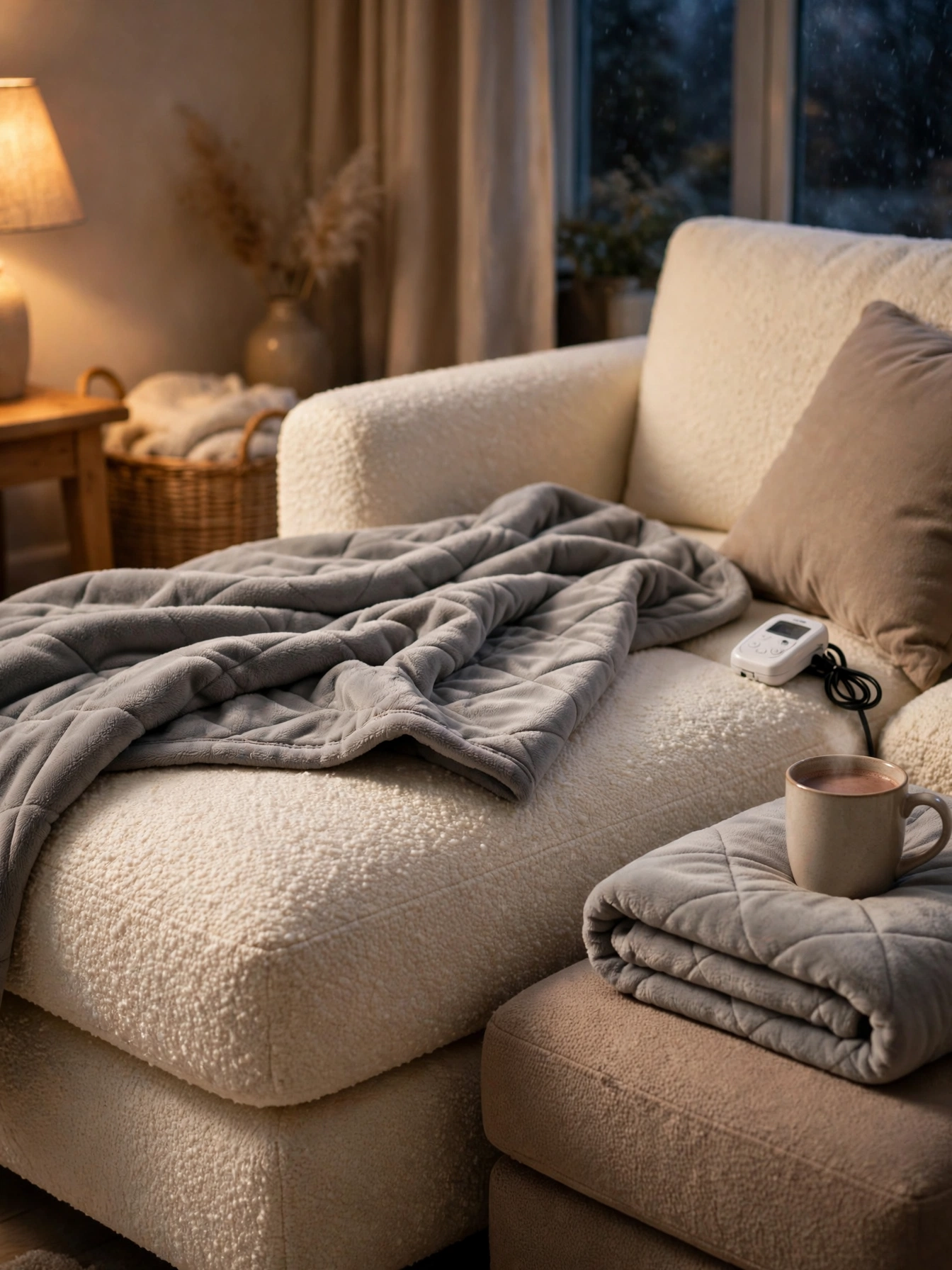
Pick a 50 by 60 inch heated throw rated at 100 to 150 watts, with at least 5 heat settings and an auto shutoff at 3 hours. Drape it flat across the lap rather than folding it double, since folded heating wires can overheat in one spot. Look for a controller with large buttons and a 9 foot cord, which reaches the nearest outlet without an extension lead. Pass over using a heated throw while it is folded, bunched, or tucked under a heavy cushion, because trapped heat damages the wires. Budget throws run 40 to 60 dollars, mid range runs 70 to 120 dollars, and premium throws with dual zones run 150 dollars or more.
People who feel the cold first, including older family members, will use this throw every evening, so keep it on the sofa arm they sit nearest. It also cuts heating bills slightly, since one person can stay warm while the thermostat sits 2 degrees lower. The part that needs extra work is washing: most heated throws need the controller removed and a gentle cold wash, and they take 24 hours to air dry. Keep a second plain throw nearby for wash days, which avoids a cold gap in the routine.
Wood Stack Display
Why This Works:
- Stacked logs add natural texture no store bought decor can copy.
- A full log holder signals a working fireplace, even before it is lit.
- Bark and cut ends bring warm brown tones into pale rooms.
- The stack doubles as practical fuel storage for the week.
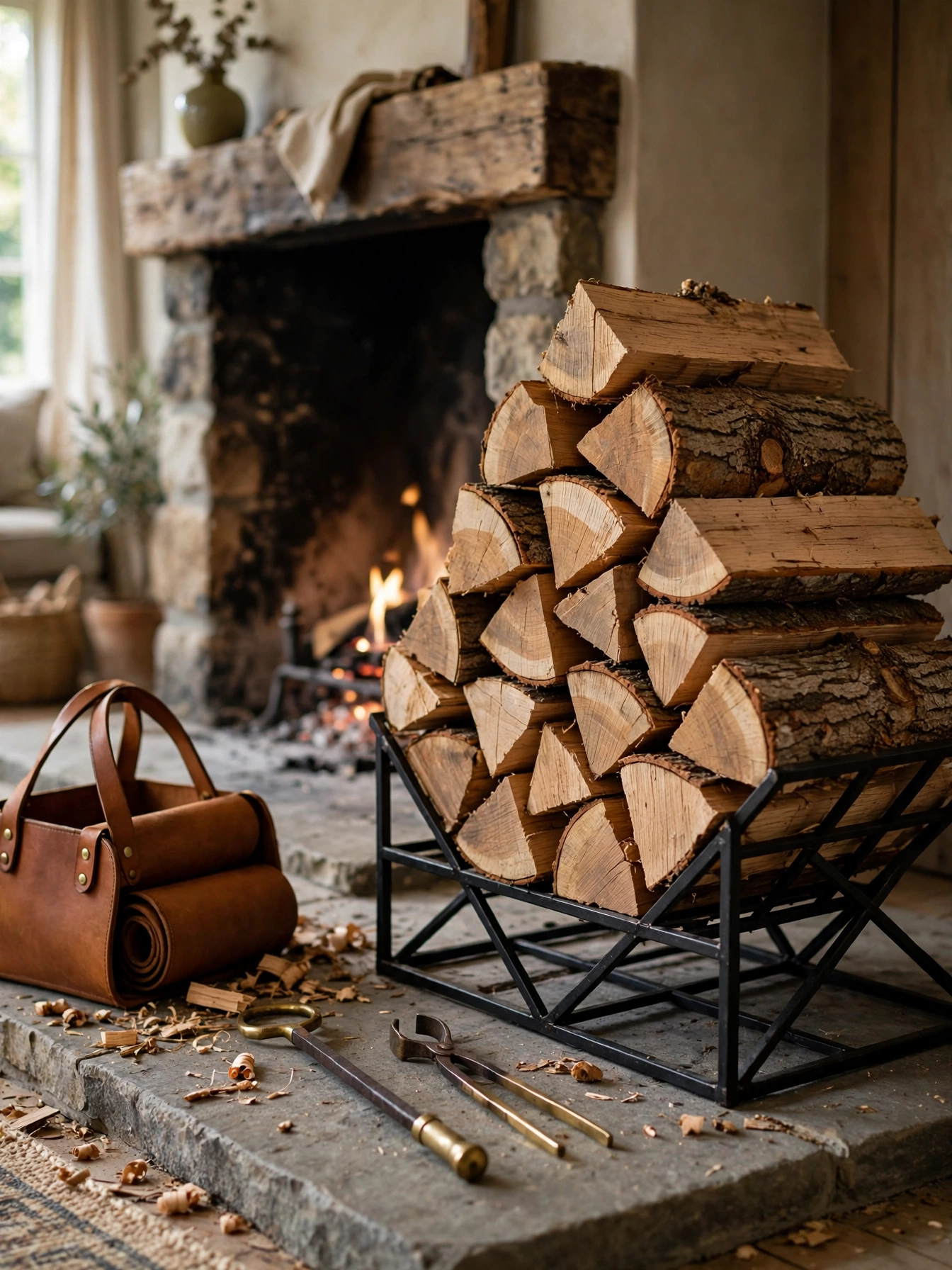
Choose a log holder 24 inches wide and 16 inches deep, and stack split oak logs cut to 16 inches long in a tight pyramid that stays below the holder rim. Keep the holder at least 12 inches from the firebox opening and 36 inches from any curtain, following standard hearth clearance guidance. Use only seasoned wood with moisture under 20 percent, which burns cleanly, while green wood above 30 percent moisture smokes and coats the chimney with creosote. Drop the idea of stacking logs against a painted wall, since bark rubs off and sap can stain paint over a season. A steel holder runs 40 to 90 dollars, while a leather log carrier runs 25 to 45 dollars and saves the floor from bark.
Homes without a working fireplace can still use this idea, since a log stack beside an electric fire or a candle cluster looks just as intentional. The stack also fills an awkward gap beside the hearth that nothing else fits. The one thing to watch is mess: bark chips and wood dust land on the floor daily, so sweep the hearth twice a week. Check the stack monthly for insects in stored wood, and keep only one week of logs indoors at a time.
Warm Textile Baskets
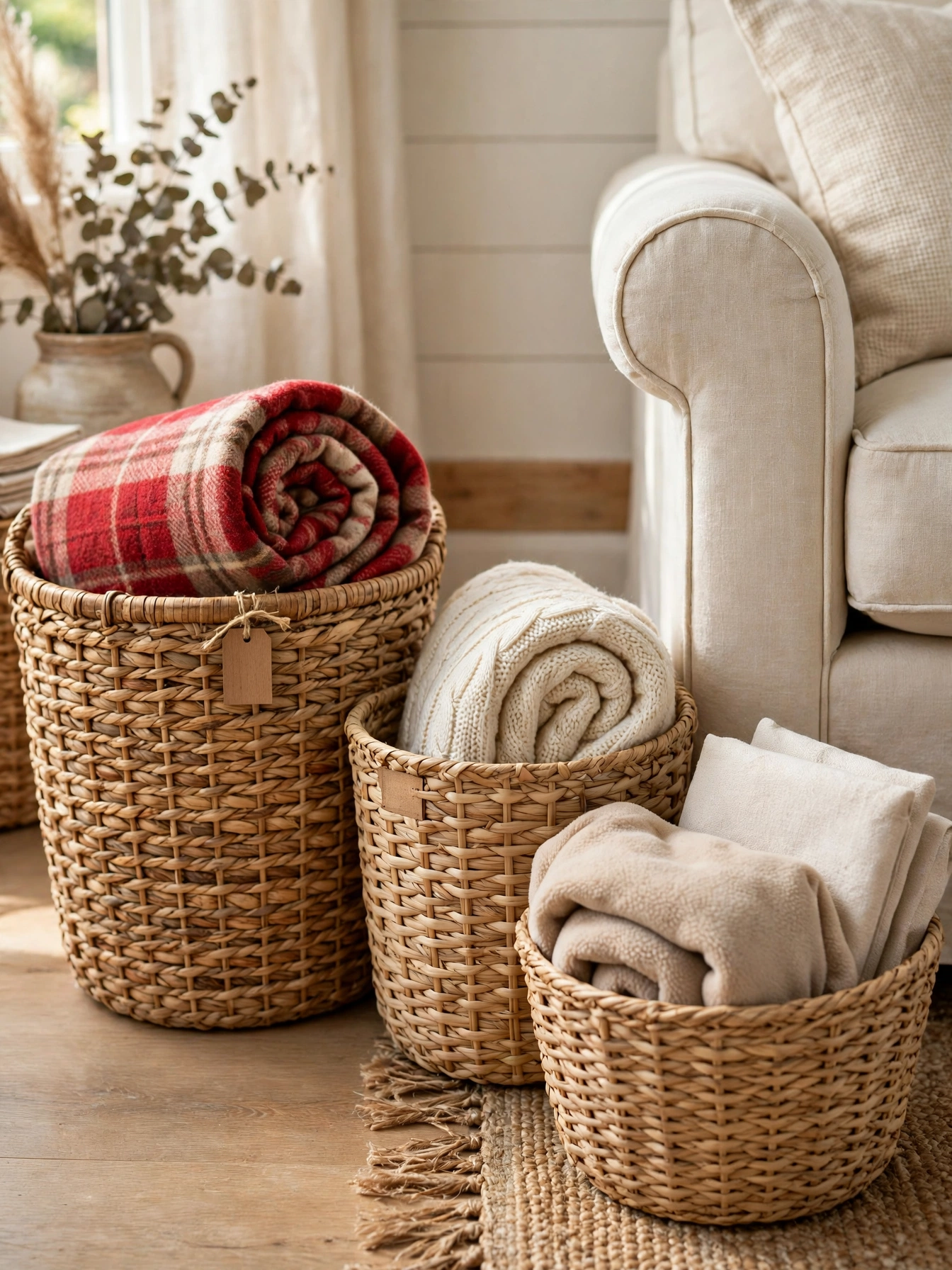
Why This Works:
- Baskets keep throws within reach instead of draped over every chair.
- Rolled textiles in a basket look styled, while a pile on the sofa looks messy.
- Three sizes grouped together fill an empty corner with texture.
- Natural fibers soften rooms full of hard furniture and screens.
Group three baskets at 18, 14, and 10 inches in diameter beside the sofa, and roll one throw per basket so the ends show at the top. Fill the largest with a plaid wool blanket, the middle with a cream knit throw, and the smallest with spare cushion covers. Choose seagrass for a soft matte look, or rattan for a sturdier basket that holds its shape when full. Skip overstuffing any basket past 2 inches above the rim, because the throws spill out and the group looks untidy. Basket sets run 35 to 70 dollars, while single large seagrass baskets run 20 to 40 dollars each.
Guests help themselves to a throw without asking, which makes the room feel welcoming from the first minute. The baskets also solve the daily throw storage problem in one move. The upkeep side is dust: open baskets collect dust on the top roll, so shake the top throw outside once every 2 weeks. Wipe the basket rims with a damp cloth monthly, which stops dust from settling into the weave.
Hygge Coffee Table

Why This Works:
- A hygge table invites people to sit down instead of walking past.
- One tray holds the whole ritual: candle, drink, and book.
- Warm drinks and candlelight slow the room down after a long day.
- Natural materials on the table echo the textiles around it.
Size the table to the sofa first: The Spruce recommends a coffee table about two thirds the length of the sofa, so an 84 inch sofa takes a 48 to 56 inch table. Keep the height at 16 to 18 inches, which matches a standard 18 inch seat height and lets mugs sit within easy reach. Set an 18 inch linen tray in the center with one stoneware candle, two ceramic mugs, and a small bud vase holding a eucalyptus sprig. Steer clear of covering the whole tabletop, since a crowded table leaves nowhere to set a book or a plate. A round oak table runs 120 to 300 dollars at mid range, while a linen tray runs 20 to 40 dollars.
Families who gather for evening drinks will use this table more than any other surface in the room. The ritual also gives the room a purpose after dinner, which matters in dark winter months. The small print is fragility: ceramic mugs chip when knocked against a wood edge, so use a tray with a raised lip to contain them. Wipe the tray weekly, since candle soot and cocoa rings build up fast in daily use.
Leather Ottoman Warmth
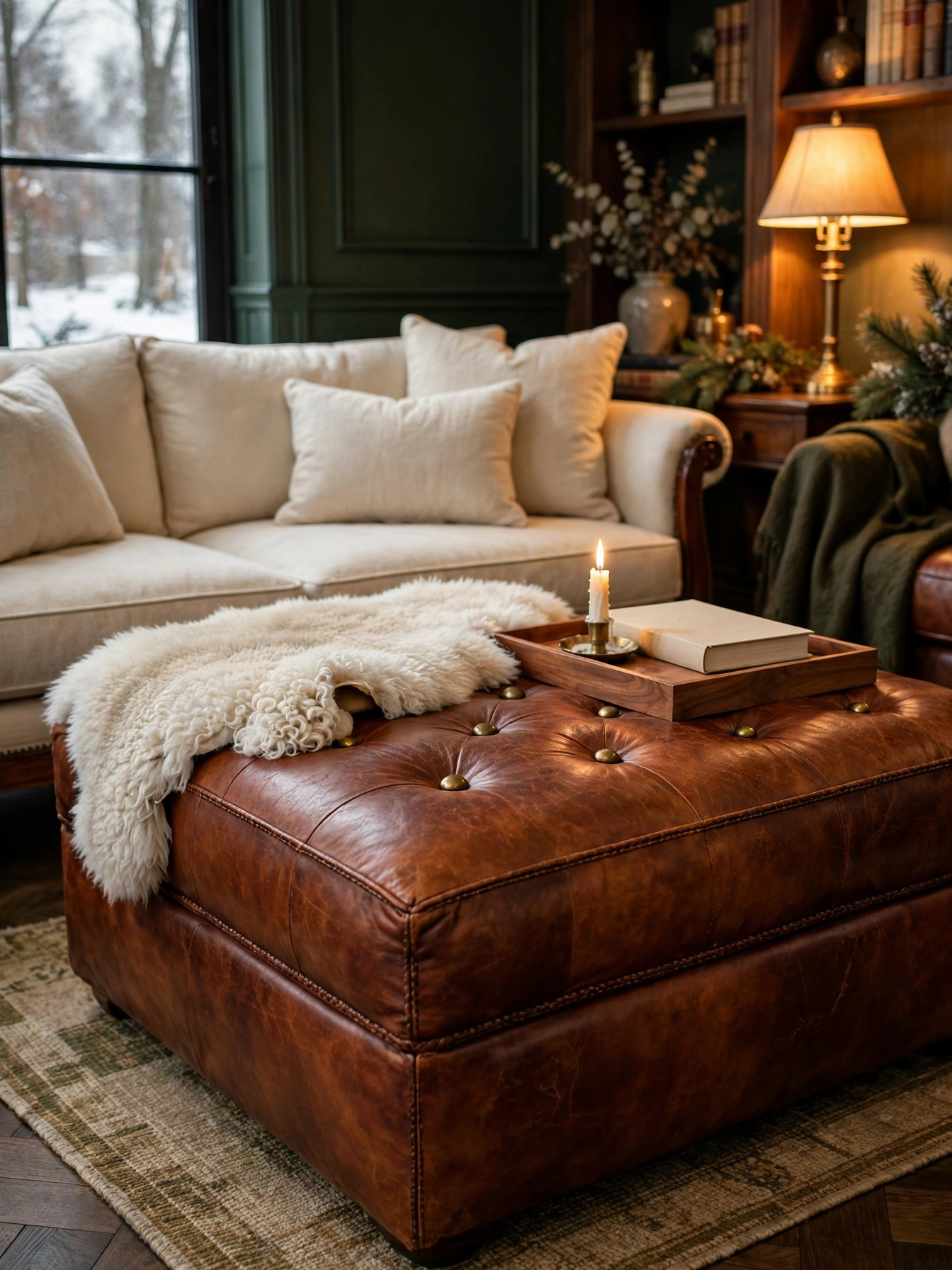
Why This Works:
- One ottoman works as a footrest, a coffee table, and extra seating.
- Cognac leather adds a warm brown tone that cold rooms lack.
- Leather ages well, so the ottoman looks better after two winters.
- A sheepskin drape softens leather that feels cold at first touch.
Pick an ottoman 36 by 24 inches and 16 to 18 inches high, which matches standard seat height and lets feet rest flat. Choose full grain leather with a thickness of 1.2 to 1.4 millimeters, since thinner bonded leather cracks within 2 years of daily use. Drape a sheepskin over one corner and set a 20 inch walnut tray on the other end for mugs and books. Pass on placing a leather ottoman within 3 feet of a radiator, because sustained heat dries the leather and causes cracking. Budget faux leather ottomans run 120 to 200 dollars, mid range genuine leather runs 300 to 550 dollars, and premium full grain runs 600 dollars or more.
Anyone who puts their feet up while reading will choose this seat first, and guests use it as a spare chair when the room fills up. The tray keeps it useful as a table without scratching the leather. What holds this idea back is temperature: bare leather feels cold for the first minute, so the sheepskin earns its place. Condition the leather every 6 months with a small amount of conditioner, which takes 15 minutes and prevents drying.
Gallery Wall Warmth

Why This Works:
- Warm toned art replaces blank walls that make winter rooms feel stark.
- A gallery wall tells a story, which makes a room feel lived in.
- Mixed frame sizes look collected over time, not bought in one box.
- A picture light adds a fourth glow point after dark.
Arrange six frames above the sofa, with the center of the whole group at 57 to 60 inches from the floor, which is standard eye level. Space frames 2 to 3 inches apart and keep the total width to about two thirds of the sofa width, so a 84 inch sofa takes a 56 inch gallery. Mix two 16 by 20 inch frames, two 11 by 14 inch frames, and two 8 by 10 inch frames for a balanced grid. Rule out hanging frames higher than 8 inches above the sofa back, since a gap that wide disconnects the art from the furniture. Walnut frames run 20 to 45 dollars each, while a battery picture light runs 30 to 60 dollars and needs no wiring.
Renters can build this wall with picture hanging strips rated for 3 pounds per pair, which leaves no holes behind. The art also gives guests something to look at, which makes the room feel personal fast. Where it falls short is commitment: a gallery wall takes 2 hours to plan and hang, and moving one frame means rebalancing the whole group. Lay the arrangement on the floor first and photograph it, which saves an hour of trial and error on the wall.
Sheepskin Chair Drape
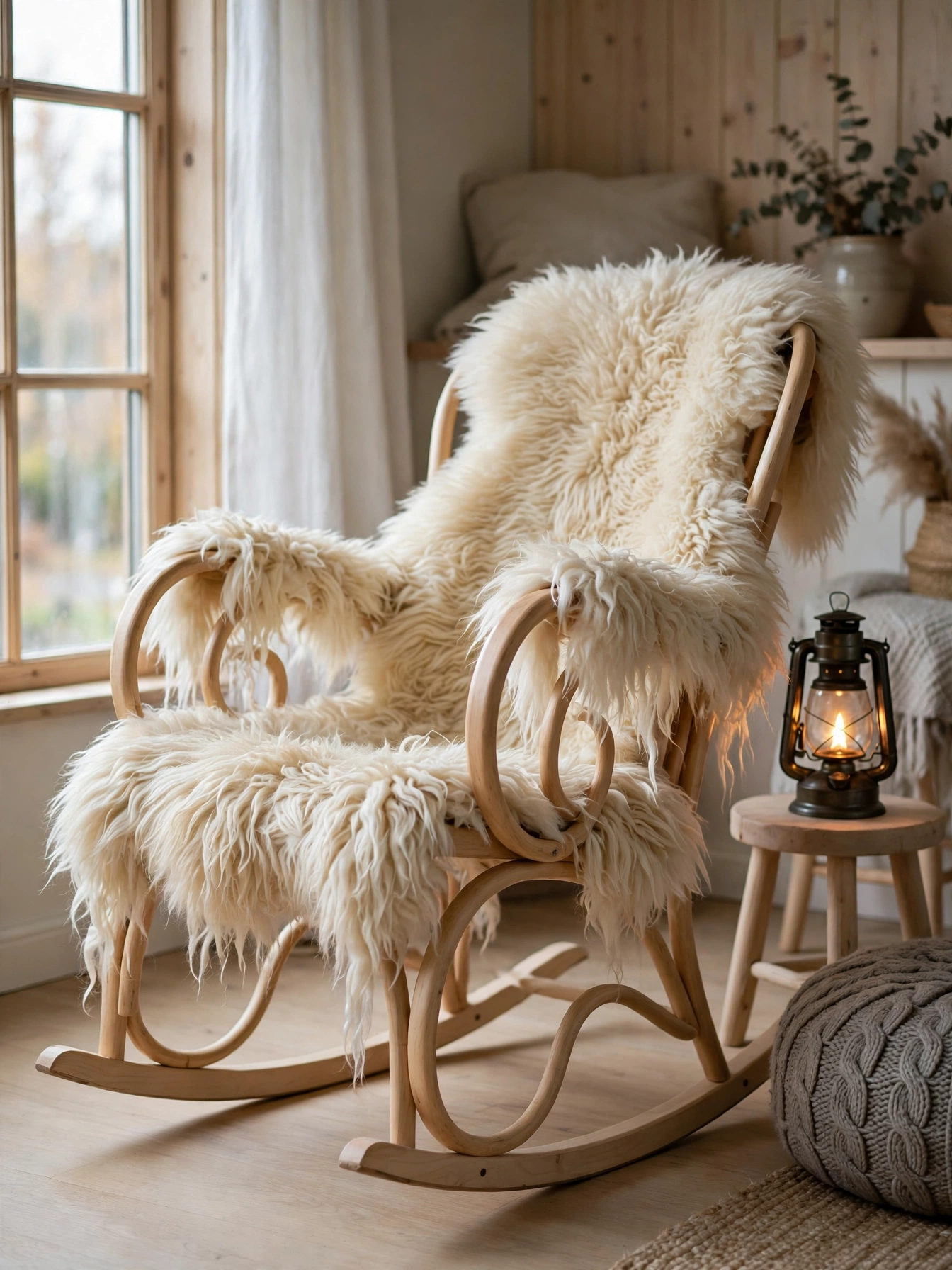
Why This Works:
- A sheepskin turns a hard chair into the warmest seat in the room.
- Long wool fibers insulate better than any flat cushion.
- Natural cream tones brighten dark corners without paint.
- The drape works on chairs, benches, and even dining seats.
Choose an Icelandic sheepskin 2 by 3 feet or larger, with a pile length of 3 to 4 inches, which drapes over a chair back without sliding off. Lay it over the seat and back of a wooden chair, letting 6 inches hang over the front edge so the fibers cushion the knees. Look for a skin with a supple leather backing, since stiff backing cracks when folded for storage. Keep clear of placing sheepskin in direct sun, because ultraviolet light yellows the cream fibers in 2 to 3 months. Budget Mongolian style throws run 40 to 70 dollars, mid range Icelandic skins run 90 to 160 dollars, and premium single skins run 180 dollars or more.
Rocking chair owners get the best return here, since the chair is already the relaxing seat and the skin makes it warmer. The drape also protects wooden chair seats from scratches. The only awkward part is shedding: new skins shed loose fibers for the first 3 weeks, so shake the skin outside twice a week at first. Brush it monthly with a wide tooth comb, which restores the loft that sitting flattens.
Floor Lamp Corners
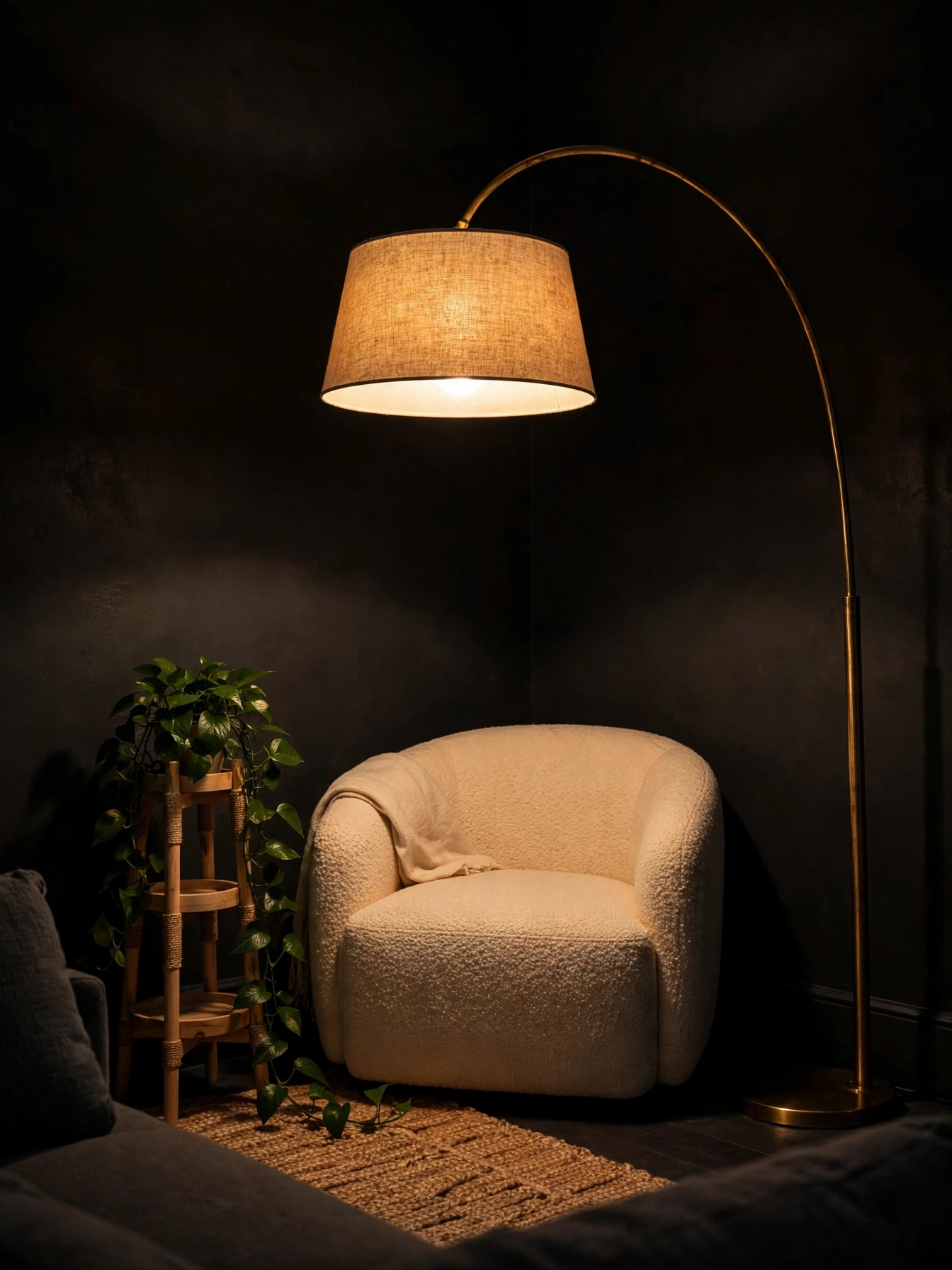
Why This Works:
- Dark corners make a whole room feel smaller in winter.
- One tall lamp turns dead space into a usable reading spot.
- Arched lamps light a chair without a table underneath.
- Warm light in a corner balances the cold window wall.
Stand an arched floor lamp 58 to 64 inches tall in the corner, with the shade hanging 12 inches above the chair arm and 36 inches from the seat center. Fit a linen drum shade 12 to 14 inches in diameter and a 2700K LED bulb at 800 lumens, which gives warm light without glare. Place the lamp base at least 6 inches from the wall so the cord runs straight down instead of stretching. Stay away from a bare bulb in an open shade, since the exposed filament glares at eye level from across the room. Arched lamps run 80 to 180 dollars at mid range, while a simple straight floor lamp runs 50 to 100 dollars.
Small rooms gain the most, since a lit corner reads as extra space after dark. The lamp also gives the room a second light source for evenings when the ceiling light feels too harsh. The one chore this adds is stability: a tall arched lamp tips easily if a child or pet bumps the base, so choose a base weighing at least 15 pounds. Run the cord along the skirting board with two clips, which keeps it off the walkway.
Seasonal Pillow Swap
Why This Works:
- Swapping covers changes the season for the price of a takeaway dinner.
- Corduroy and velvet read as winter, while linen reads as summer.
- Covers store flat, so a whole seasonal set fits in one drawer.
- One afternoon of swapping refreshes the room without shopping for furniture.
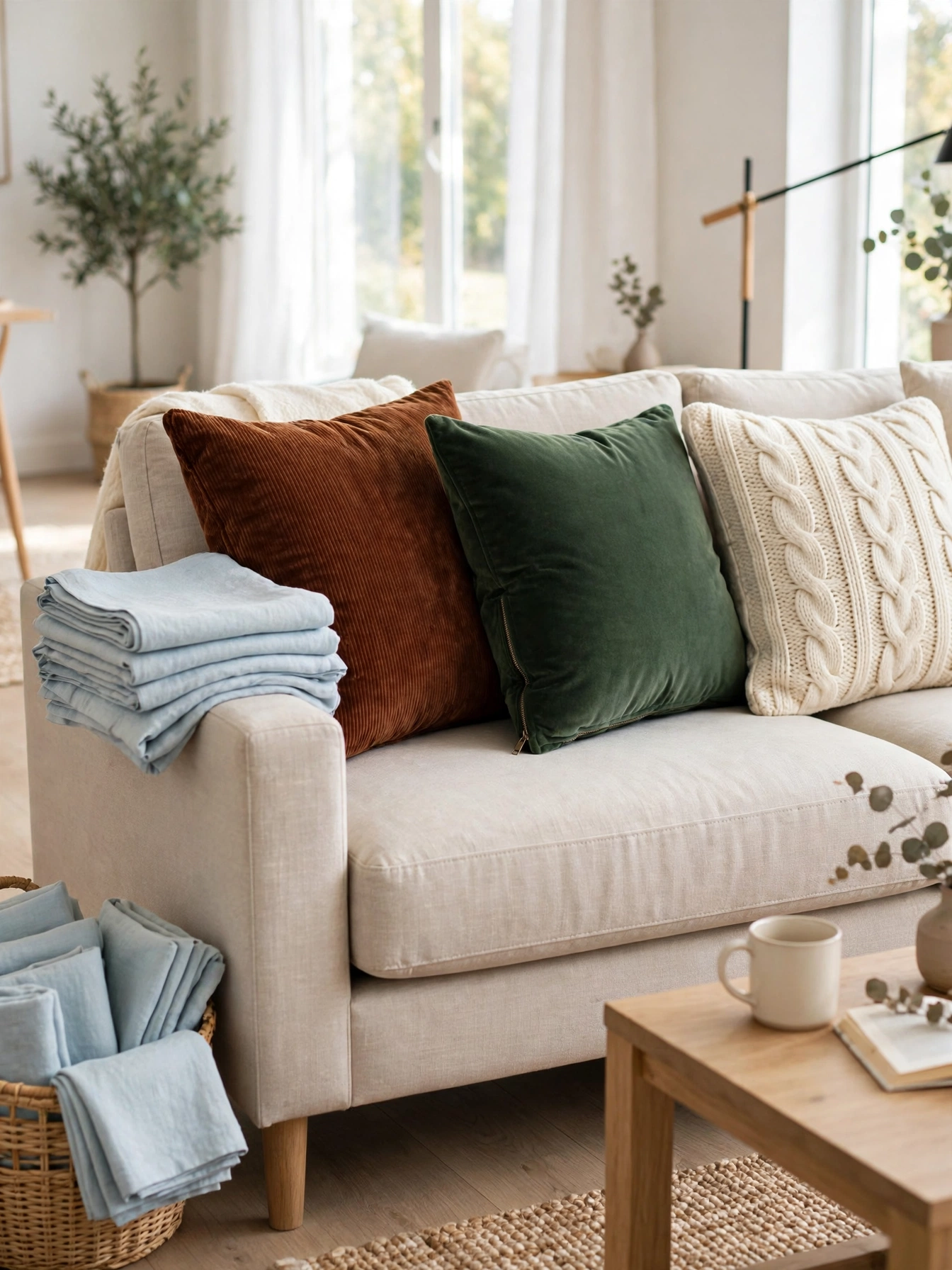
Swap in covers sized 20 by 20 inches for the corners and 18 by 18 inches for the inner cushions, keeping the same inserts from summer. Choose rust corduroy with a rib count of 8 to 10 wales per inch for texture, and pair it with forest green velvet and one cream cable knit cover. Use covers with a hidden zipper at least 12 inches long, which slides over a plump insert without tearing a seam. Do not bother with buying covers smaller than the insert, since a tight cover flattens the corners and looks cheap. Winter covers run 12 to 35 dollars each at mid range, so a set of five costs 60 to 175 dollars.
Households that change decor twice a year will repeat this swap every November, and the ritual itself marks the season changing. The covers also protect inserts from winter dust and pet hair. The catch is storage: summer covers need a clean dry box, and vacuum bags can crush velvet nap if left sealed for 6 months. Store velvet covers flat in a cotton bag instead, which keeps the pile safe until spring.
Warm Scent Styling

Why This Works:
- Scent is the sense that makes a room feel warm before anyone touches a throw.
- Cinnamon and orange read as winter without any visual clutter.
- A diffuser adds gentle humidity to dry heated air.
- Scent styling costs little and changes with the month.
Set a 200 milliliter ceramic diffuser on a side table at least 12 inches from the sofa arm, and run it for 3 to 4 hours in the evening. Add a wooden bowl of dried orange slices and star anise, plus a reed diffuser in an amber bottle that lasts 4 to 6 weeks per fill. Choose cedar, cinnamon, or clove oils, which suit winter rooms, and use 5 to 8 drops per 200 milliliters of water. Say no to placing any scent source within 12 inches of curtains, since oils can stain fabric over time. A ceramic diffuser runs 25 to 50 dollars, while a reed diffuser refill costs 10 to 20 dollars.
Guests notice scent within seconds of walking in, so this idea shapes first impressions more than any cushion. The diffuser also helps in rooms where winter heating dries the air below 30 percent humidity. The snag is sensitivity: strong scents trigger headaches for some people, so start with half the recommended drops and increase slowly. Keep oils away from pets, since several common oils are unsafe for cats and dogs.
Winter Living Room Decor Cozy Finishing Touches
Why This Works:
- A final walkthrough catches the one gap every room still has.
- Small touches, like a folded throw, make finished rooms look lived in.
- Checking light levels at 7 PM shows what daylight hides.
- A finished room needs no more shopping, only small adjustments.
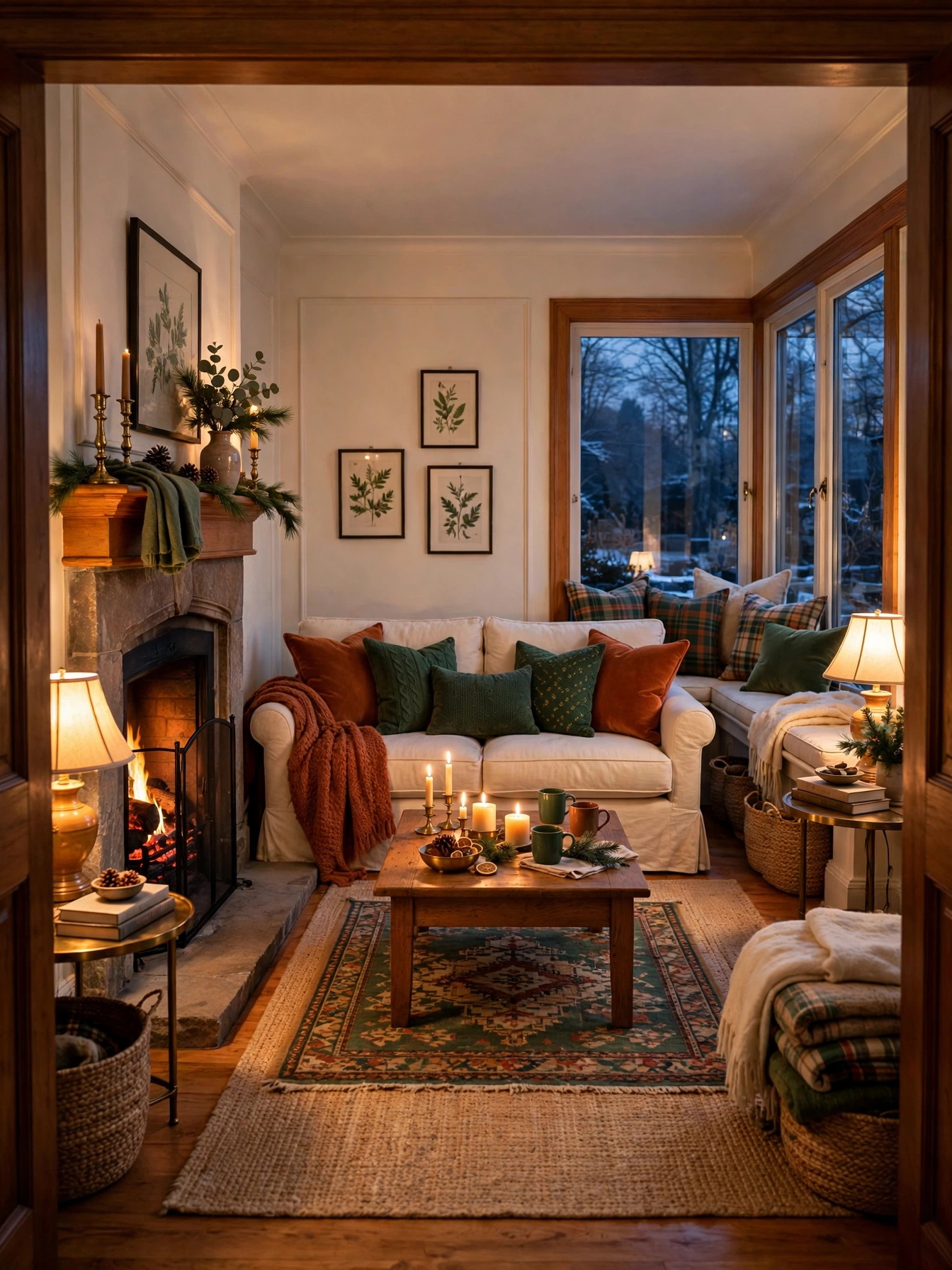
Walk the room at 7 PM with the lights on and look for three things: a dark corner, a bare surface, and a cold seat. Fix the dark corner with a lamp, the bare surface with a candle or a book, and the cold seat with a folded throw, which takes 10 minutes total. Step back 10 feet from the sofa and check the color balance, aiming for 60 percent warm neutral, 30 percent secondary, and 10 percent accent. Take care with adding a 23rd idea just because the room has space, since one extra object often tips a finished room into clutter. A final styling pass costs nothing, while one more purchase typically runs 30 to 80 dollars and rarely fixes the real gap.
Rooms finished this way hold up through the whole season, because every layer was chosen for a real spot, not for a shelf. The walkthrough also reveals which ideas get used daily and which ones only look good, so next winter starts with the winners. The hidden cost is taste: a room can be technically complete and still feel off, so live with it for 3 days before changing anything. Move one object per day, which shows clearly what each change does.
FAQs
What makes winter living room decor cozy work in a small room?
Start with the coldest seat by the window, using a 50 by 60 inch wool throw, a thermal curtain panel, and a 36 inch draft stopper. The Spruce notes that layering textiles warms a seat quickly, and a small room needs only 3 layers to feel different.
How many layers of light does a winter living room need?
Three layers work best: a dimmed ceiling light, two table lamps at 2700K, and one accent such as fairy lights or candles. The American Lighting Association recommends three distinct layers in every living room, and 800 lumen bulbs give enough brightness without glare.
Which throw material is warmest for the price?
Wool wins for warmth per dollar, since a mid range wool blend throw at 80 to 140 dollars holds heat far longer than acrylic. Acrylic costs 25 to 40 dollars and feels soft at first, but it flattens after one season of daily use and needs replacing sooner.
How much does winter living room decor cozy styling cost to start?
A starter set costs 60 to 150 dollars: one wool throw, two cushion covers, and a draft stopper. Mid range rooms add a rug layer and lamps for 200 to 400 dollars total, while premium leather and lighting can pass 800 dollars across a season.
How do I keep candles and heaters safe in a living room?
Keep candles and heaters at least 3 feet from curtains, throws, and furniture, following National Fire Protection Association guidance for clear space. Never leave a flame burning in an empty room, and unplug heaters when the room is empty for more than 1 hour.
Conclusion
These 22 winter living room decor cozy ideas share three rules: fix the coldest seat first, layer textiles before buying heaters, and light the room in three warm layers. The fastest first action is simple: measure the window beside your sofa tonight, then hang a thermal curtain and fold a wool throw over that one cushion. A 50 by 60 inch throw, a 36 inch draft stopper, and two 2700K lamps can turn a chilly room into the warmest spot in the house. Follow HomelyCrafter on Pinterest for more ideas. Save this to your Pinterest boards so you can refer back to it!

Muhammad Israr is a home decor enthusiast and the writer behind Homely Crafter. He spends his days researching paint colors, layouts and budget-friendly styling ideas, then breaks them down into practical, easy-to-follow guides so you can decorate with confidence.
2 thoughts on “22 Toasty Winter Living Room Decor Cozy Ideas to Try”