
At 6 AM on a January morning, the kitchen floor is the coldest surface in the house. Bare feet meet tile that spent the night losing heat, and the room where every winter day begins feels like the last place anyone wants to stand. These 24 winter kitchen decor ideas warm that room first, with light, texture, and color that work before the coffee brews.
Better Homes and Gardens notes that the kitchen carries the hardest working surfaces in the home, so winter styling here has to survive steam, splashes, and daily cooking. Below you will find exact measurements for pendant heights, island clearances, and garland lengths, plus real prices and honest trade-offs.
Start with the coldest spots, the floor and the window, then add light and scent, and finish with the small touches guests notice. Work through the list in order, or pick the three ideas that fix your biggest winter complaint.
Sparkling Winter Kitchen Decor Ideas
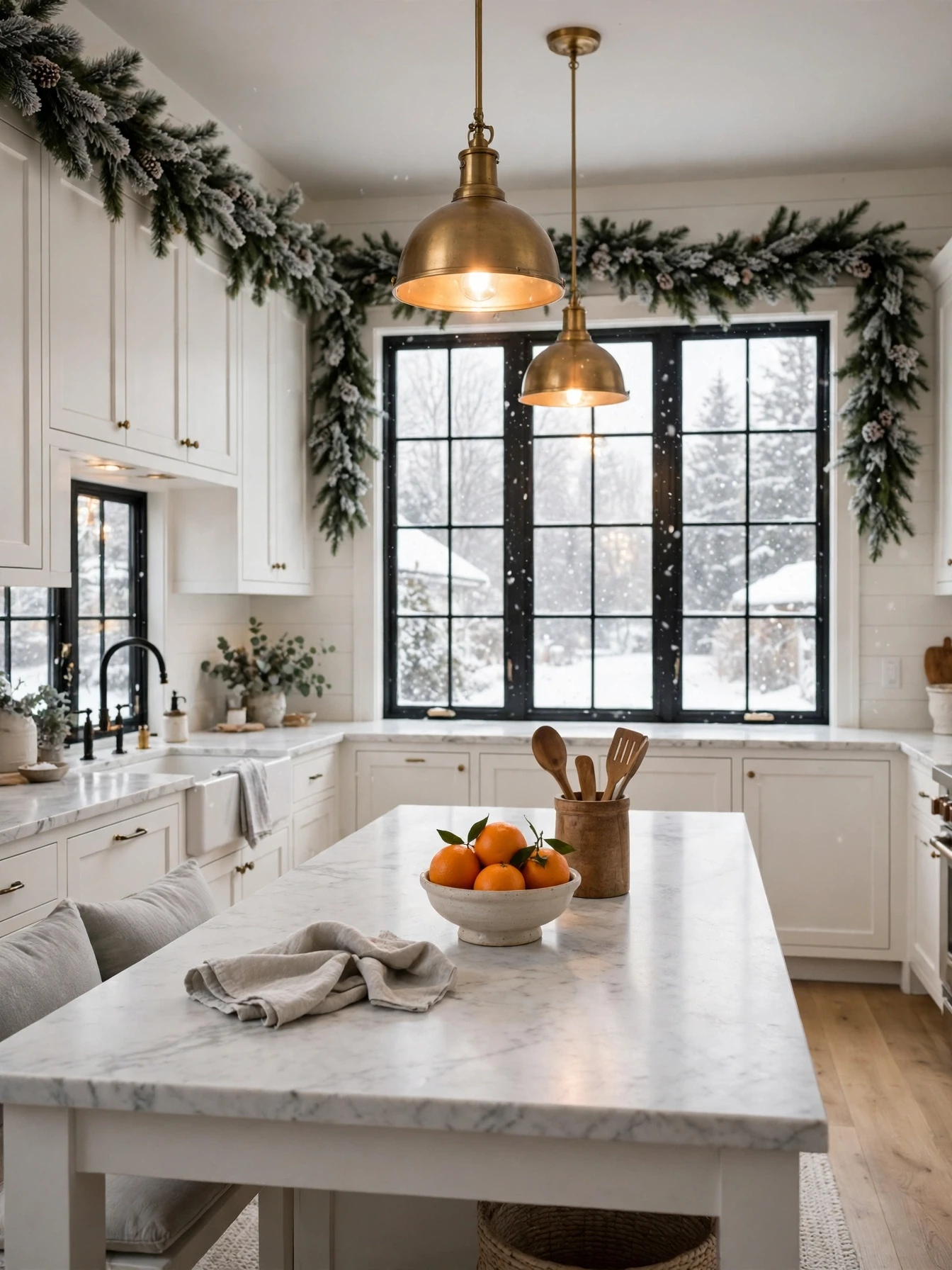
Why This Works:
- Light, greenery, and one warm metal together change the whole room in a single afternoon.
- Warm LEDs at 2700K cancel the blue cast that winter daylight brings through the window.
- Frosted garland adds winter texture without blocking a single cabinet or drawer.
- Brass reflects the new light, so the room looks brighter without adding fixtures.
A full winter refresh starts with three layers applied at once: light, greenery, and one warm metal. Hang pendants 30 to 36 inches above the island counter, run 6 to 9 feet of frosted garland along the top of the upper cabinets, and add two brass accents, such as a fruit bowl and a utensil crock, to bounce the light around. Keep the island walkways at 42 to 48 inches clear on all sides, which matches the National Kitchen and Bath Association guidance: 42 inches for a one cook kitchen and 48 inches when two cooks share the space. Stay away from hanging real garland within 12 inches of the stove burners, since heat dries the needles and drops them into food. LED strips use about 75 percent less energy than old incandescent rope light, and they stay cool enough to sit against wood trim safely.
Families who cook daily get the most from this layered approach because every piece earns its place during breakfast, homework, and dinner prep. The compromise is time: a full layered refresh takes 2 to 3 hours including a deep clean of the surfaces first, and real garland sheds needles for the first week. Faux garland skips the shedding and lasts 5 to 7 seasons, though it never smells like fresh pine. A basic version runs 80 to 150 dollars, a mid range version with better garland and brass pieces runs 150 to 300 dollars, and a premium version with real brass fixtures runs 400 dollars and up.
Frosted Island Centerpiece

Why This Works:
- The island is the first surface the eye finds, so a centerpiece there sets the tone for the whole kitchen.
- A low tray keeps the decor contained and leaves the rest of the counter free for cooking.
- Frosted eucalyptus looks wintry for weeks without dropping a single needle.
- White candles add evening glow without adding another color to manage.
Build the centerpiece on a wooden tray 24 to 30 inches long and 12 inches wide, which fits a standard 36 inch wide island with room to spare on each side. Lay a 4 foot frosted eucalyptus garland down the middle, add three pillar candles at 4, 6, and 8 inches tall, and tuck 8 to 10 small pinecones between them. Keep the tallest candle under 12 inches so sightlines across the island stay open while people sit on both sides. Do not bother with placing the tray within 18 inches of the cooktop edge, since steam and splatter reach further than most people expect. Flameless LED pillar candles cost 15 to 30 dollars for a set of three and run 200 hours on two AA batteries each, while real wax pillars cost less upfront but need replacing every season.
Busy households benefit most here because the tray lifts off in one move when the island becomes a homework table or a buffet line. The not-so-good part is counter space: islands under 6 feet long lose a quarter of their work surface to a 30 inch tray, so measure first. Eucalyptus holds its frosted look for 6 to 8 weeks indoors, which covers the whole season, and a tray with raised edges stops pinecones from rolling onto the floor. Budget versions run 25 to 40 dollars, mid range versions with a solid wood tray run 50 to 90 dollars, and premium versions with a handmade tray run 120 dollars and up.
Evergreen Open Shelving
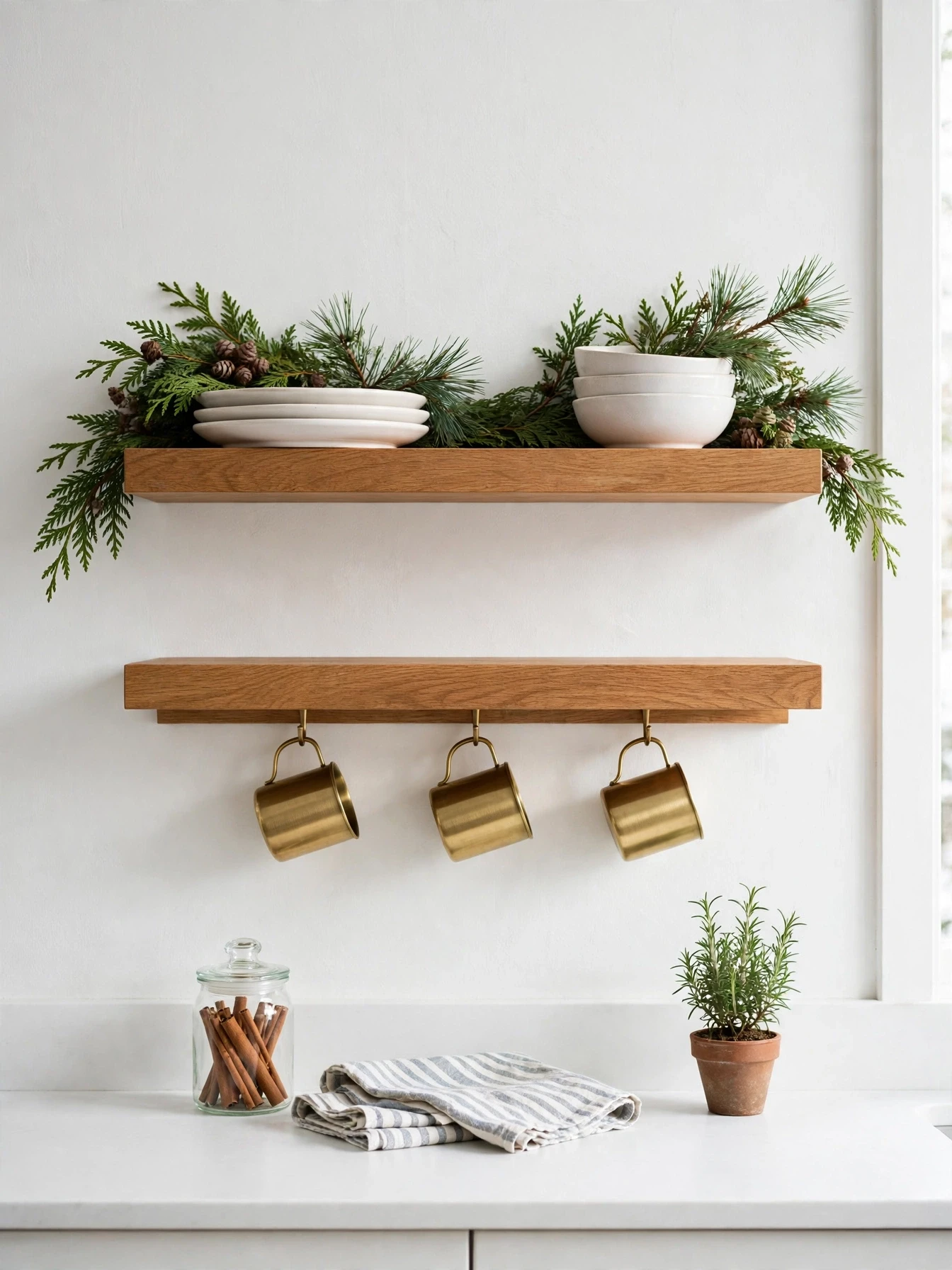
Why This Works:
- Open shelves put evergreen at eye level, where guests actually look.
- White dishes against green sprigs read as winter without any red or gold.
- Shelves use wall space that cabinets waste, so small kitchens gain display room.
- Swapping one shelf of dishes per season keeps the look fresh for almost no money.
Mount open shelves with brackets screwed into wall studs every 16 inches, since a loaded shelf of dishes can weigh 15 to 20 pounds per linear foot. Space shelves 12 to 14 inches apart vertically, and keep the lowest shelf 54 to 60 inches from the floor so plates sit at comfortable reach height. Tuck 3 to 4 sprigs of cedar or pine behind the plates on each shelf, and leave 2 inches of breathing room between stacks so the display does not look crowded. Say no to hanging shelves above the stove, where steam wilts fresh greenery in 2 to 3 days and grease coats the dishes. Solid wood shelves cost 40 to 80 dollars per 36 inch length, while metal bracket shelves run 25 to 50 dollars and hold the same weight when anchored into studs.
Renters and small kitchen owners get real value from this idea because two shelves change the whole wall for less than the price of one new cabinet door. The maintenance angle is dust: open shelves collect it weekly, and dishes stored there need a rinse before use if they sit for more than 7 days. Fresh sprigs last 10 to 14 days indoors before they dry out, while faux sprigs last for years but need a shake outside at takedown. Keep the shelf styling to three items per foot of shelf, and the display stays calm instead of cluttered.
Warm Pendant Glow
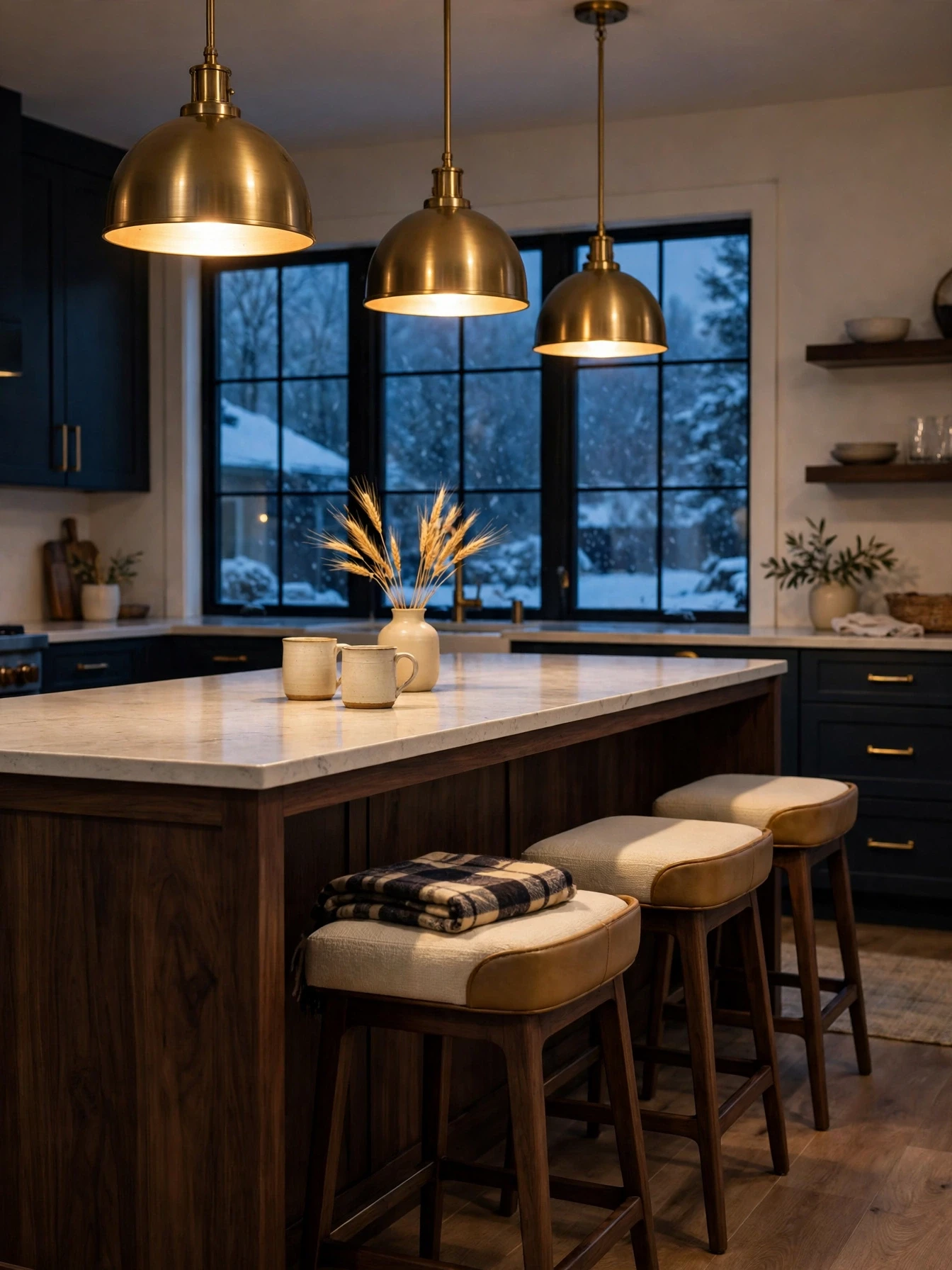
Why This Works:
- Pendant lighting adds focused task light exactly where chopping and reading recipes happen.
- Warm 2700K bulbs cancel the cold blue tone of January daylight.
- Brass shades reflect light downward, so the island glows without glare.
- Three small pendants cost less than one large chandelier and light the island more evenly.
Hang each pendant 30 to 36 inches above the island counter, which the American Lighting Association lists as the standard height for task lighting over a 36 inch high surface. Space three pendants 24 to 30 inches apart center to center, and choose shades 12 to 16 inches wide so they cover a 6 to 8 foot island without crowding it. Use dimmable LED bulbs at 2700K to 3000K, and keep the total wattage under 40 watts per fixture for LEDs. Take care with cool white bulbs at 5000K here, since their blue cast makes food look gray and the room feel colder. Brass shades cost 60 to 120 dollars each, while matte black shades run 40 to 80 dollars and suit modern kitchens just as well.
Anyone who cooks after dark feels the difference first, because winter sunsets arrive before dinner prep even starts. The part that needs extra work is wiring: swapping a shade is a 20 minute job, but adding a new pendant where no junction box exists means hiring a licensed electrician to run a new circuit, which typically costs 150 to 300 dollars. Pendant cords also collect cooking grease over time, so wipe them monthly with a damp cloth. If the ceiling is over 9 feet high, add 3 inches of cord length for every extra foot of ceiling so the light still lands on the counter.
Cocoa Station Corner

Why This Works:
- A cocoa corner turns a dead stretch of counter into the most visited spot in the kitchen.
- Everything for one drink sits in one place, so mornings run faster.
- Glass jars of marshmallows and cocoa double as decoration and storage.
- Kids can serve themselves safely when the station sits away from the stove.
Set the station on a tray 18 by 12 inches, placed at least 24 inches from the stove and 12 inches from the sink edge so steam and splashes stay away. Fill two 32 ounce glass jars with cocoa mix and mini marshmallows, stack four 12 ounce ceramic mugs, and add a small jar of candy canes for stirring. Keep the whole station inside a 24 inch wide zone so it never creeps across the counter. One thing to leave out is storing cocoa mix in an open bowl, since kitchen humidity clumps it within a week. A tiered stand costs 20 to 35 dollars and holds twice as much as a flat tray in the same footprint, while a single wooden tray runs 15 to 25 dollars and is easier to wipe clean.
Homes with kids or regular guests get the most use from this corner, since it answers the afternoon cocoa request without opening five cabinets. The one thing to watch is counter space: a 24 inch station is a real commitment in a kitchen with less than 6 feet of counter, so measure the stretch before buying jars. Glass jars need a wash every 2 weeks to stay clear, and cocoa mix stored in a sealed jar stays fresh for 3 to 4 months. Budget stations run 30 to 50 dollars, mid range versions with ceramic canisters run 60 to 100 dollars, and premium versions with a dedicated shelf run 150 dollars and up.
Snowy Window Herbs
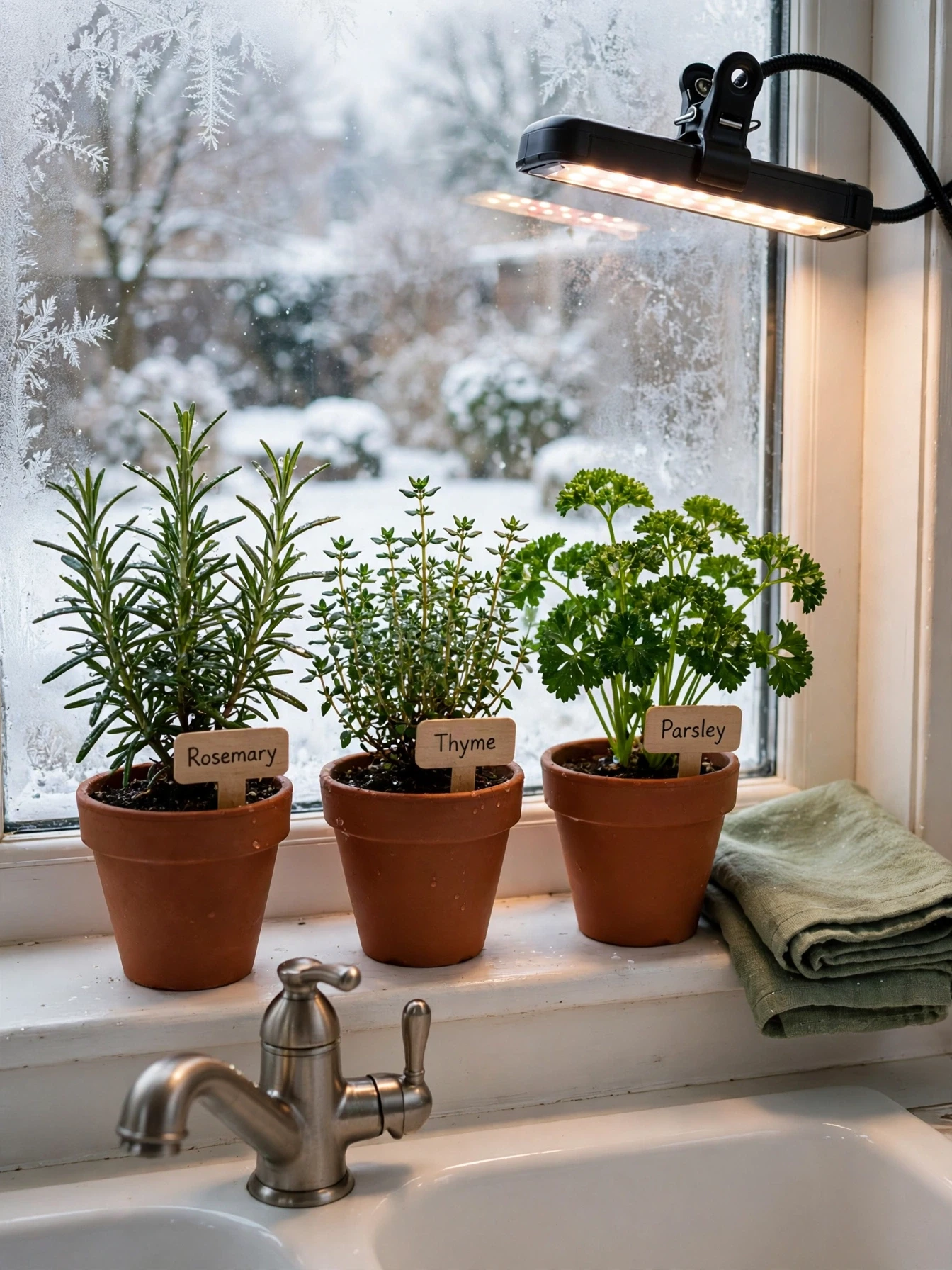
Why This Works:
- Herbs put living green at the brightest spot in the kitchen, even in January.
- Fresh rosemary and thyme sit within arm’s reach of the stove.
- Terracotta pots add warm earthy color against white snow outside.
- One small grow light keeps the herbs alive through the darkest weeks.
Choose pots 4 to 6 inches wide for a standard windowsill, which is usually 5 to 7 inches deep, and leave 1 inch of space between pots for air circulation. Water each pot with 4 to 6 ounces once a week, and rotate the pots a quarter turn every 3 days so the plants grow evenly toward the light. Add a clip on LED grow light on a timer set for 12 to 14 hours a day when the window gets less than 6 hours of sun. Do not risk placing pots against the glass on nights below 20 degrees Fahrenheit, since the cold radiates through and can damage the leaves. Terracotta pots cost 3 to 6 dollars each and breathe better than plastic, while self watering pots run 8 to 15 dollars and forgive a missed watering.
Weeknight cooks notice the payoff fastest, because snipping fresh herbs beats opening a dried jar when a soup needs finishing. The upkeep side is light: north facing windows grow rosemary and thyme well but struggle with basil, which wants 6 to 8 hours of direct sun. Expect to replace basil every 6 to 8 weeks in winter, while rosemary can last the whole season indoors. Keep a small tray under the pots to catch drips, and wipe the sill weekly so water stains never set into the paint.
Plaid Breakfast Nook

Why This Works:
- A plaid cushion and a wool throw make a bare nook feel like a cabin corner in one afternoon.
- Pattern on the seats draws the eye away from plain walls.
- Thick cushions make a hard wooden bench comfortable for long breakfasts.
- The nook becomes the warmest seat in the house on snowy mornings.
Dress the bench with cushions 18 by 18 inches and 4 inches thick, which fit a standard 36 inch deep breakfast nook bench without overhang. Drape one wool throw 50 by 60 inches over the back of the bench, and add two lumbar pillows 14 by 24 inches at each end. Choose indoor outdoor fabric for the seat cushions, since it resists stains from coffee and jam far better than plain cotton. Pass over light colored fabric on eating seats, because one spill stains it for the season. Indoor outdoor cushions cost 25 to 45 dollars each and survive machine washing, while plain cotton cushions run 15 to 25 dollars but show every mark.
Slow weekend mornings are where this idea pays off, since the nook becomes the place where the household actually sits instead of eating at the counter. The small print is washing: plaid seat cushions need a wash every 2 to 3 weeks in a house with kids, so buy a second set of covers if the budget allows. Wool throws shed a little in the first month, so shake them outside weekly. A basic nook refresh runs 60 to 100 dollars, a mid range version with better foam runs 120 to 200 dollars, and a premium version with custom covers runs 250 dollars and up.
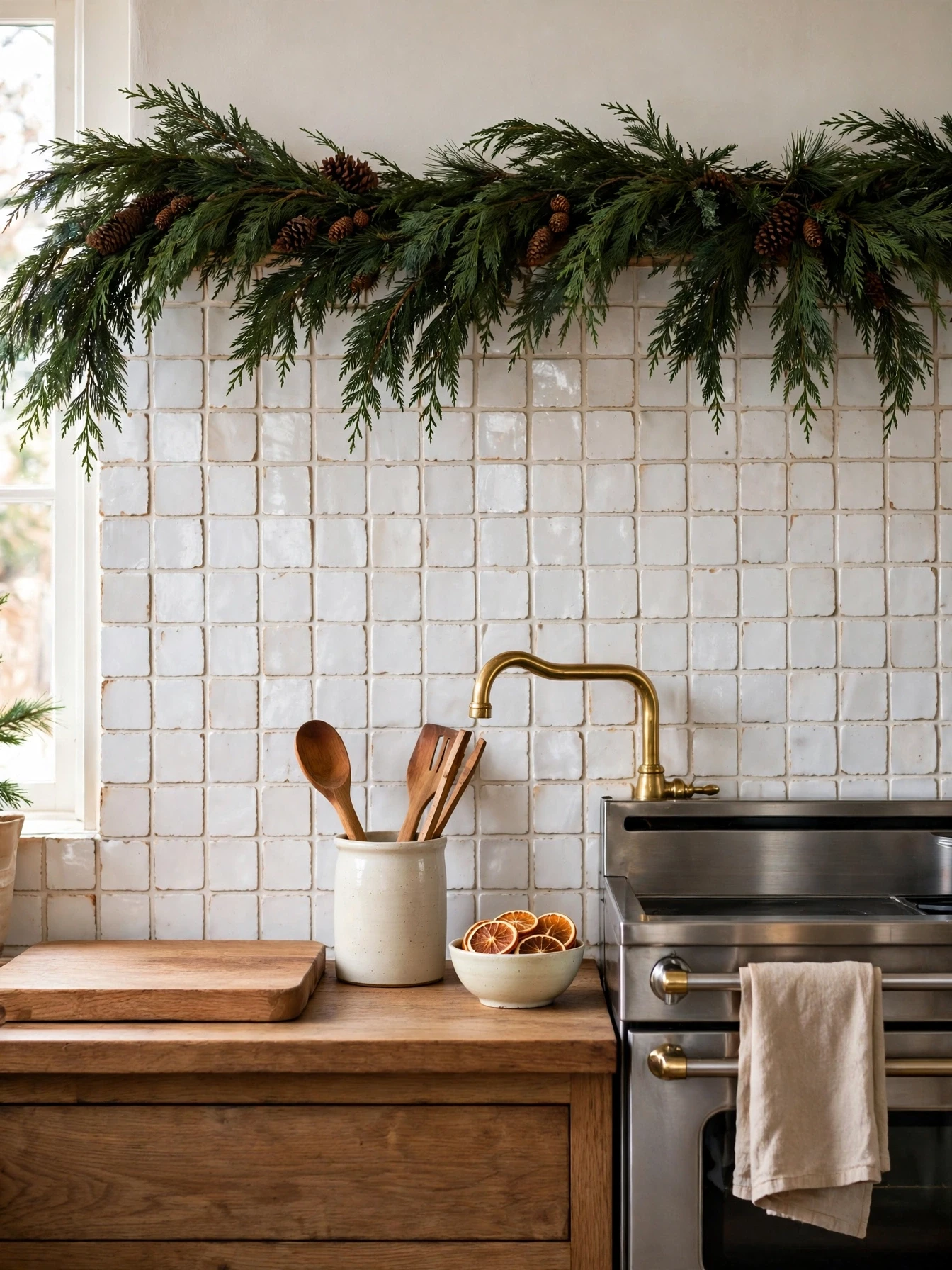
Pinecone Backsplash Accents
Why This Works:
- A thin garland along the top of the backsplash adds winter texture without touching a cooking surface.
- Pinecones cost almost nothing and look gathered rather than bought.
- The garland frames the tile instead of covering it, so the kitchen still reads as a kitchen.
- It comes down in 10 minutes when the season ends.
Run a 6 foot pinecone and cedar garland along the top edge of the backsplash, which is usually 18 inches high, and secure it with 5 adhesive hooks rated for 3 pounds each, spaced 18 inches apart. Tuck 10 to 12 small pinecones into the garland at 6 inch intervals, and keep the whole arrangement at least 12 inches above the stove burners. Drop the idea of adhesive hooks on fresh grout or unsealed stone, since the bond can pull the finish loose at removal. Faux pinecone garland costs 15 to 25 dollars for 6 feet and lasts 4 to 5 seasons, while a real pinecone garland runs 10 to 20 dollars but sheds scales onto the counter weekly.
Small kitchens suit this idea best, because the backsplash is often the largest empty surface and the garland fills it without taking counter space. What holds this idea back is grease: garland near the stove collects a thin film within 3 weeks, so wipe faux pieces with a damp cloth at takedown before storing. Real pinecones should stay 24 inches from any open flame, and they need a shake outside before hanging to drop loose scales. Budget versions run 15 to 25 dollars, mid range versions with wired cedar run 30 to 50 dollars, and premium versions with dried citrus mixed in run 60 dollars and up.
Copper Pot Display

Why This Works:
- Copper catches the low winter light and turns a plain wall into a warm focal point.
- Hanging pots frees a full cabinet shelf for lids and baking sheets.
- The display puts the most used pans within one step of the stove.
- Copper ages gracefully, so the look improves instead of wearing out.
Mount a wall rail 36 to 48 inches long on studs, with S hooks spaced 6 inches apart, and hang pots 8 to 12 inches in diameter from the lowest hooks. Keep the bottom of the lowest pot at least 72 inches from the floor so nobody bumps their head walking past, and leave 42 inches of clear walkway in front of the rail. Skip hanging the heaviest stockpot, anything over 8 pounds, on a single hook, since it bends the hook and swings into the wall. Copper conducts heat many times faster than stainless steel, which is why it cooks evenly, but it also tarnishes in 4 to 6 weeks without polishing.
Serious cooks love this display because the right pan is always visible instead of buried in a stack. Where it falls short is upkeep: copper needs a polish every 6 weeks to stay bright, or it develops a dark patina that some owners love and others hate. A wall rail system costs 40 to 80 dollars, S hooks run 1 to 2 dollars each, and a set of three copper pans runs 120 to 250 dollars. Lacquered copper stays shiny longer but cannot go in the dishwasher, while unlacquered copper needs hand washing and a polish with lemon and salt.
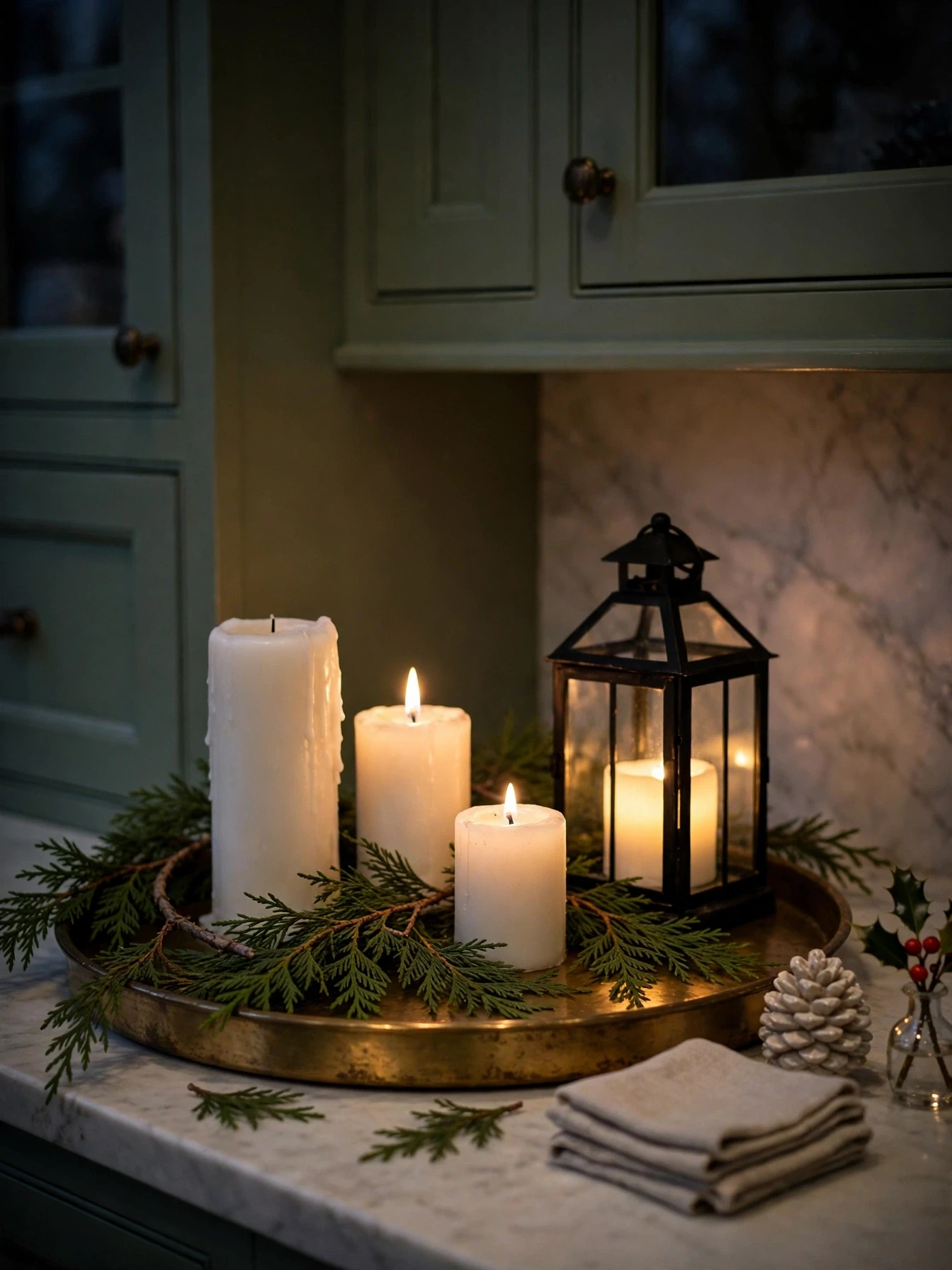
Candlelit Countertop Vignette
Why This Works:
- Three candles at different heights change a flat countertop into a vignette with depth.
- Candlelight makes the kitchen feel warm at 5 PM when the sun has already set.
- A tray keeps the grouping tidy and protects the counter from wax.
- The vignette works in a corner that is too small for anything else.
Arrange the vignette on a round tray 16 inches wide, placed in a corner at least 12 inches from curtains, dish towels, and paper towel holders. Use pillar candles at 4, 6, and 8 inches tall, plus one lantern 10 inches high with an LED candle inside, and fill the gaps with 3 sprigs of cedar. Keep the tallest flame under 10 inches so it stays well below the upper cabinets, which sit 18 inches above the counter. Steer clear of real flames on a countertop where children reach, since a tipped candle can start a fire fast. LED pillar candles cost 12 to 25 dollars for a set of three with a remote and a 6 hour timer, while real wax pillars run 5 to 10 dollars each and burn 40 to 60 hours.
Evening hosts value this corner most, because it gives the kitchen a glow that overhead lights cannot match. The only awkward part is safety: never leave real candles burning in an empty kitchen, and keep a 12 inch clear zone around every flame. LED candles solve the safety worry but never smell like wax, so add a sprig of fresh cedar for scent if the fake flame feels too plain. Budget vignettes run 25 to 45 dollars, mid range versions with a brass lantern run 60 to 100 dollars, and premium versions with a handmade tray run 130 dollars and up.
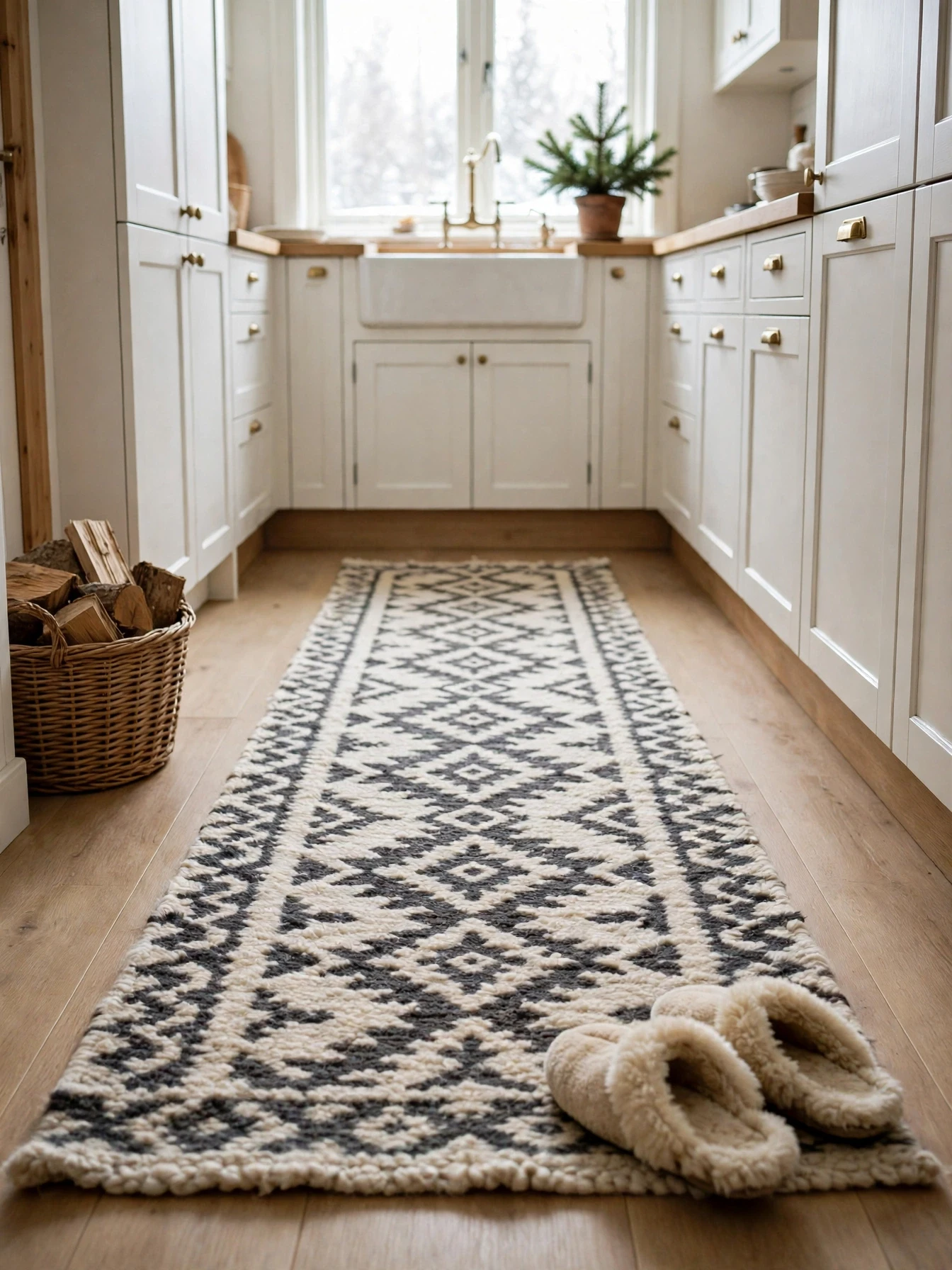
Wool Runner Warmth
Why This Works:
- A wool runner is the fastest fix for the 6 AM cold floor that opens this guide.
- Wool insulates better than cotton, so bare feet feel the difference at once.
- The runner adds pattern and color to the largest empty surface in the kitchen.
- It also softens footsteps, which matters in open plan homes.
Choose a runner 2 by 6 feet for a galley kitchen or 2.5 by 8 feet for a longer run, and place it 6 inches from the cabinet toe kicks so the edges never catch on doors. Use a non slip rug pad 0.25 inch thick cut 1 inch smaller than the runner on all sides, which stops the rug from bunching underfoot. Pick a wool pile 0.5 inch high, since anything thicker snags on chair legs and anything thinner feels flat under bare feet. Pass on placing the runner across the main walkway without a pad, because a sliding rug on tile is a fall risk. Wool runners cost 80 to 150 dollars for a 2 by 6 foot size, while cotton flatweave runners run 40 to 80 dollars but insulate far less.
Early risers feel this idea before anyone else, since the first step out of bed lands on wool instead of cold tile. The one chore this adds is cleaning: wool runners need vacuuming twice a week in winter and a shake outside monthly, and they absorb spills faster than synthetic rugs. The Spruce recommends blotting spills at once rather than rubbing them, which pushes liquid deeper into wool fibers. Keep the runner at least 36 inches from the stove so cooking splashes never reach it, and the rug will last 5 to 7 years with normal care.
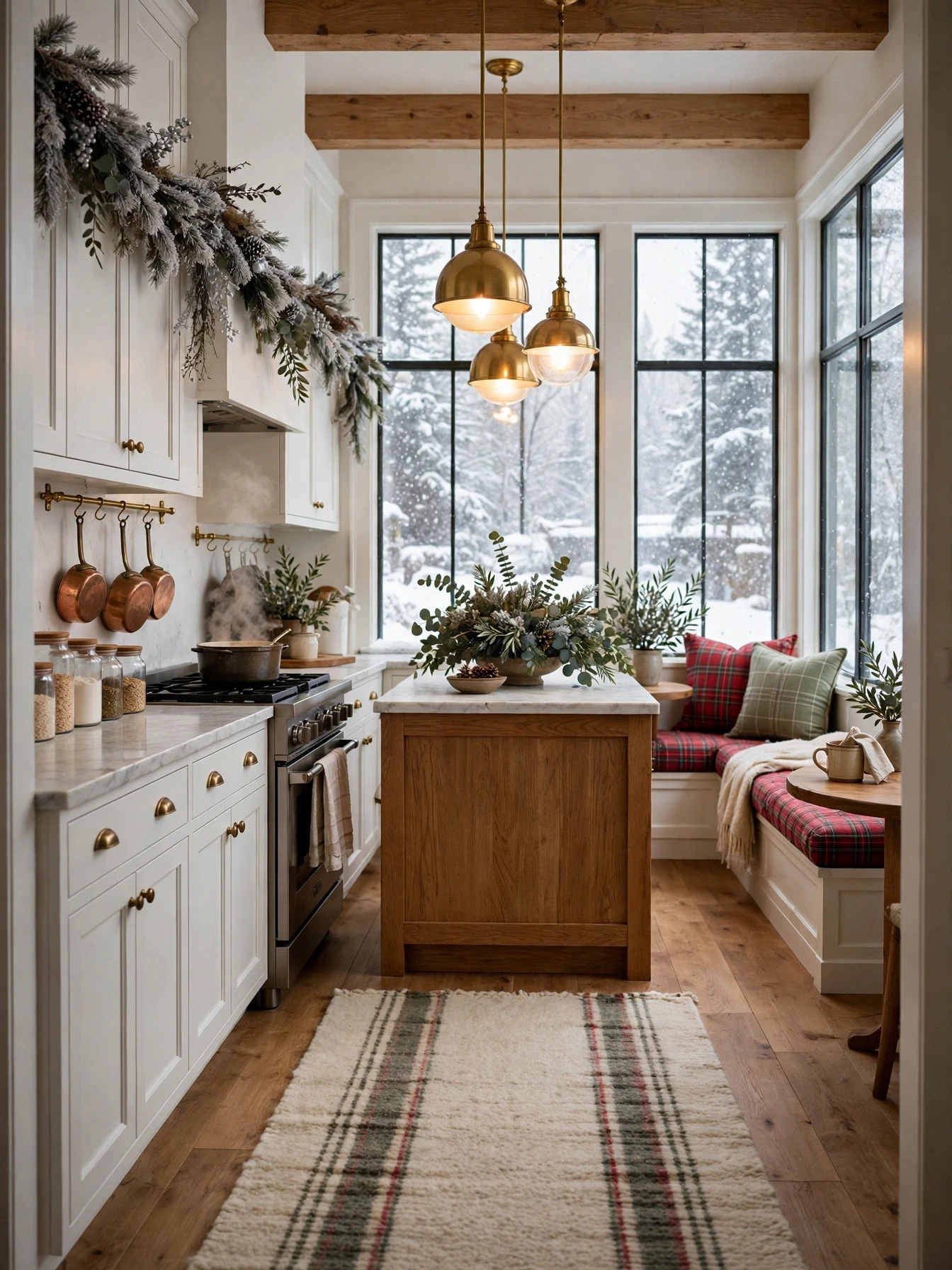
Winter Kitchen Decor Ideas
Why This Works:
- A whole room plan beats random purchases, since every piece supports the same warm palette.
- Three layers, light, textile, and greenery, cover every cold surface at once.
- One palette across the room makes even budget pieces look intentional.
- The plan works in any kitchen size, from a galley to an open plan great room.
When the whole room gets the winter treatment at once, the order matters more than the budget. Start with light by setting every bulb to 2700K, then add greenery along the cabinets, then lay textiles on the floor and the stools, and finish with scent from a simmer pot. Keep the walkways at least 42 inches clear and the counters at 36 inches high for comfortable work, which are the standards the National Kitchen and Bath Association publishes for kitchen planning. Rule out buying decor before measuring the island, the windows, and the wall space, since a garland 3 feet too short looks worse than no garland at all. A full room refresh in budget materials runs 200 to 400 dollars, while premium materials run 600 to 900 dollars for the same footprint.
Households that host through the holidays benefit most from a whole room plan, because the kitchen becomes the gathering spot by default. The snag is storage in January: a full room of decor fills 3 to 4 large bins, so measure the attic or garage shelf before buying. Faux greenery and wool textiles store best in sealed bins with cedar blocks, which keep moths away for the 9 months they sit unused. Work in one zone per day, floor and windows first, then light, then the small touches, and the kitchen never feels torn apart mid project.
Frosted Glass Cabinets

Why This Works:
- Glass front cabinets turn stored dishes into decoration at no extra cost.
- A little frosted greenery inside makes the cabinets seasonal without touching the doors.
- Warm fairy lights inside the cabinet glow through the glass after dark.
- The display changes with the dishes, so it never looks stale.
Style each glass cabinet with three shelves spaced 12 to 14 inches apart, and place one small frosted sprig behind the front row of dishes on each shelf. Run a 6 foot strand of 20 micro LED fairy lights along the back edge of the top shelf, and keep the battery pack hidden behind a stack of bowls. Limit each shelf to 8 to 10 pieces so the display breathes instead of crowding. Keep clear of overfilling the cabinet, since a packed shelf hides the greenery and the lights behind it. Clear glass shows the display best, while frosted glass softens it and hides mismatched dishes better.
Collectors of pretty dishes get the most joy from this idea, since the cabinet finally shows off the pieces that usually hide behind solid doors. The hidden cost is tidiness: glass cabinets show every fingerprint and every crooked stack, so wipe the glass weekly and straighten the shelves monthly. Battery fairy lights last 48 to 72 hours on a timer set for 6 hours a day, which is about 8 to 12 days on one set of batteries, so keep a spare set nearby. Budget styling runs 20 to 40 dollars, mid range versions with better lights run 50 to 80 dollars, and premium versions with hardwired cabinet lighting run 150 dollars and up.
Cranberry Garland Trim

Why This Works:
- Cranberry garland brings a deep red line across the top of the cabinets, exactly where the eye travels.
- Red against white cabinets reads as winter without a single ornament.
- The garland uses dead space above the cabinets that nothing else fills.
- One strand dresses the whole wall, so the cost stays low.
Drape 9 to 12 feet of cranberry and cedar garland along the top of the upper cabinets, letting it swag down 6 to 8 inches every 24 inches for a soft rhythm. Secure it with adhesive hooks rated for 3 pounds, placed 24 inches apart on the cabinet faces, and keep the garland at least 12 inches from any recessed light, since heat dries the cedar fast. Mix 40 to 50 faux cranberries per 6 foot strand, which gives a full look without weighing the garland down. Stay away from real cranberries above the cabinets, since they dry out in 2 weeks and drop onto the counter below. Faux cranberry garland costs 20 to 35 dollars for 6 feet and lasts 4 to 6 seasons, while fresh cedar garland runs 15 to 25 dollars but lasts only 3 to 4 weeks indoors.
White and light gray kitchens suit this idea best, because the red pops against pale cabinets instead of blending in. The weak spot is dust: garland above the cabinets collects it all season, so vacuum it with a brush attachment at takedown before storing. Cranberry garland also fades in direct sun, so keep it off the window wall if the kitchen faces south. A basic strand runs 20 to 35 dollars, a mid range version with mixed berries runs 40 to 60 dollars, and a premium version with dried orange slices mixed in runs 75 dollars and up.
Hearty Soup Pot Styling
Why This Works:
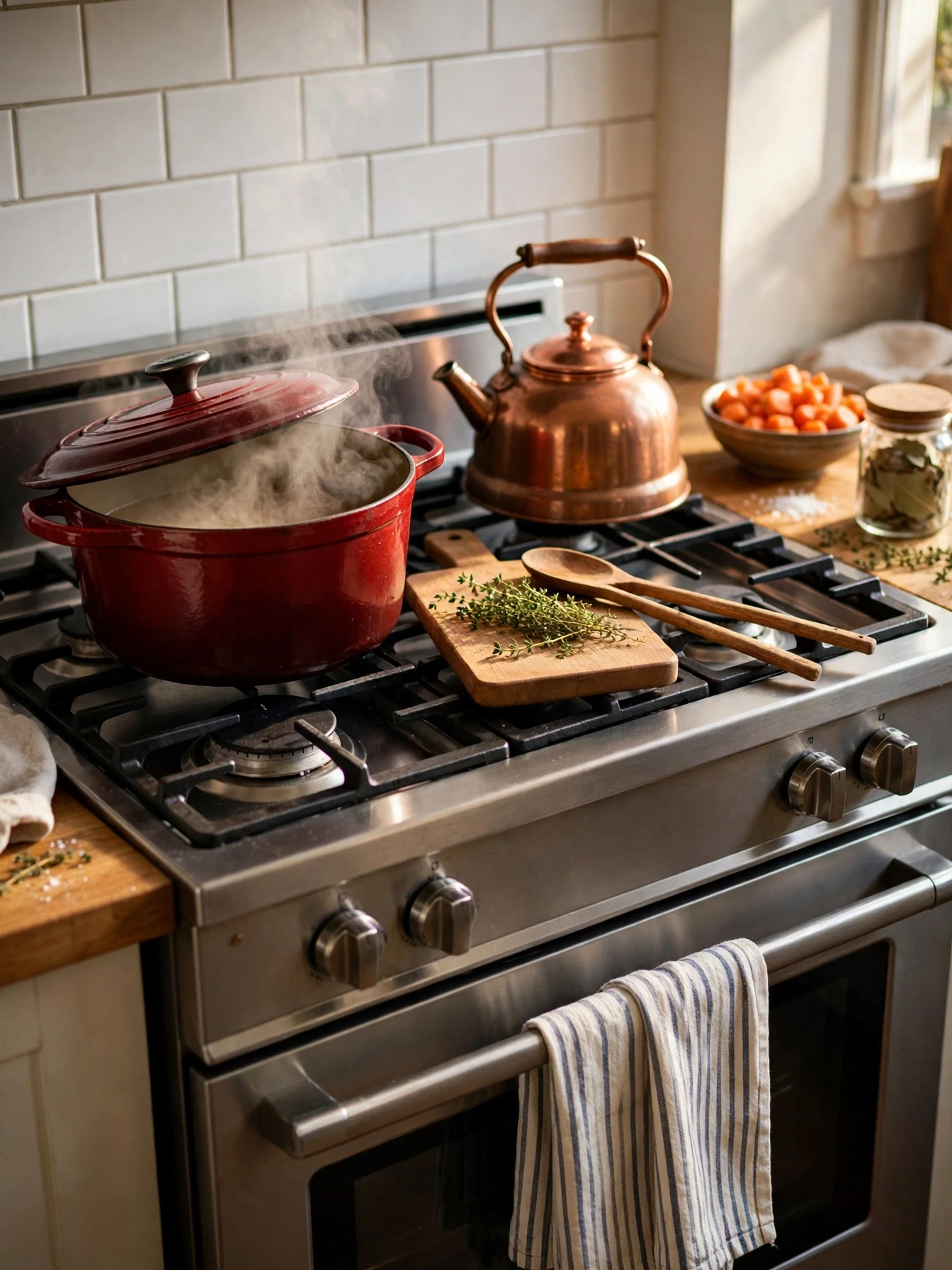
- A heavy Dutch oven left on the stove signals that the kitchen is in soup season.
- The pot earns its place, since it cooks dinner and decorates the stove at once.
- One bold color on the stove anchors the whole winter palette.
- Wooden spoons and fresh herbs beside it complete the look for free.
Choose a 5.5 quart enameled Dutch oven, about 12 inches in diameter, which serves 6 to 8 bowls of soup and fits a standard 30 inch range without crowding the neighboring burner. Set it on the back burner with the lid slightly ajar, and place two wooden spoons 12 to 14 inches long and a small cutting board beside it. Keep the pot handles turned inward, never over the walkway edge, so nobody catches a sleeve on a hot handle. Never put a cold enamel pot into a preheated oven, and never plunge a hot one into cold water, since a sudden temperature change can chip the enamel. Enameled cast iron costs 60 to 350 dollars depending on the brand, while a stainless steel stockpot runs 40 to 80 dollars and weighs half as much.
Weekend soup makers get the most from this idea, since the pot stays out all season and gets used 2 to 3 times a week. The catch is the weight: an empty 5.5 quart pot already weighs about 12 pounds, and filled with soup it tops 20 pounds, so lift it with both hands and keep it off the front burner when kids are near. Cast iron holds heat 20 minutes longer than stainless steel, which keeps soup warm through a long dinner, but it also takes 10 minutes longer to heat up. Wash it by hand and dry it at once to protect the enamel rim from chips.
Brass Hardware Swap

Why This Works:
- Swapping cabinet knobs takes an hour and changes the kitchen more than new paint in some rooms.
- Brass warms up white, navy, and green cabinets alike.
- The swap is fully reversible, so renters can take the knobs with them.
- One metal across every door makes the kitchen look professionally finished.
Measure first: knobs are usually 1.25 inches in diameter, and pulls are usually 5 inches center to center, so count the doors and drawers before ordering. Use a drilling template to mark new holes, and keep the screw length matched to the door thickness, which is usually 0.75 inch for standard cabinet doors. Replace all the hardware in the room, 20 to 30 pieces in an average kitchen, so no old nickel knob breaks the new palette. Do not bother with mixing brass with chrome in the same room, since two metals compete and the kitchen looks unfinished. Solid brass knobs cost 4 to 8 dollars each, while brass finished zinc knobs run 2 to 4 dollars each and look nearly identical at arm’s length.
Renters and budget refreshers love this swap because it delivers a visible change for under 150 dollars in most kitchens. One flaw to plan around is hole spacing: if the old pulls were 3 inches center to center and the new ones are 5 inches, the old holes show and need filling with wood putty and touch up paint. Keep the original hardware in a labeled bag so the swap reverses in 30 minutes at move out. Brass also shows fingerprints in the first weeks, so wipe the pulls weekly until the finish settles into a soft patina.
Snow Globe Shelf

Why This Works:
- A narrow shelf of snow globes gives the kitchen a playful corner that costs almost nothing to build.
- The globes catch light and sparkle from across the room.
- Mini trees beside them fill the shelf without a single large piece.
- Kids love shaking the globes, which makes the kitchen feel fun instead of formal.
Mount a floating shelf 36 inches long and 6 inches deep on a side wall, at 60 inches from the floor so the globes sit at eye level. Place 3 to 4 snow globes 4 to 6 inches tall, spaced 2 inches apart, with two mini bottle brush trees 6 to 8 inches tall between them. Run a 3 foot strand of 10 micro LED fairy lights along the back edge of the shelf for evening glow. Say no to mounting the shelf above the stove, where steam clouds the glass within a week and heat can crack the seals. Glass snow globes cost 8 to 20 dollars each and last for years, while plastic globes run 3 to 8 dollars and survive a fall off the shelf.
Families with young kids enjoy this corner most, since the globes invite a shake every time someone passes. The wrinkle is fragility: glass globes break into water and glitter on a hard tile floor, so keep them on a shelf with a raised lip or choose plastic for the lowest shelf. Dust settles on the glass fast, so wipe each globe weekly with a microfiber cloth. A basic shelf display runs 30 to 60 dollars, a mid range version with better globes runs 70 to 120 dollars, and a premium version with hand painted globes runs 150 dollars and up.
Warm Wood Cutting Boards

Why This Works:
- Leaning boards against the backsplash layers warm wood tones into a room full of hard surfaces.
- The boards are already in the kitchen, so the decor costs nothing new.
- Different wood tones add depth without adding a color.
- They come down in seconds when the counter needs full use.
Lean three boards against the backsplash in graduated sizes: one 12 by 18 inches, one 10 by 14 inches, and one 8 by 12 inches, each 0.75 to 1 inch thick so they stand without sliding. Overlap them by 2 inches and angle the tallest board at 75 degrees so it rests firmly against the tile. Keep the boards at least 6 inches from the stove edge and never in front of an outlet you use daily. Take care with leaning boards against a backsplash with loose grout, since the weight can crack a weak tile. Walnut boards cost 30 to 60 dollars each and score about 1,010 on the Janka hardness scale, while maple boards run 25 to 50 dollars and score about 1,450, which makes maple harder and more durable for daily chopping.
Minimalists and renters favor this idea because it uses what the kitchen already owns and changes nothing permanent. The only real downside is function: display boards should stay separate from daily chopping boards, since knife marks show fast and the display loses its clean look. Oil the display boards once a month with food safe mineral oil, which keeps the wood from drying out in heated winter air. A basic set runs 60 to 100 dollars, a mid range set with mixed woods runs 120 to 180 dollars, and a premium set with handmade boards runs 200 dollars and up.
Spiced Tea Tray
Why This Works:
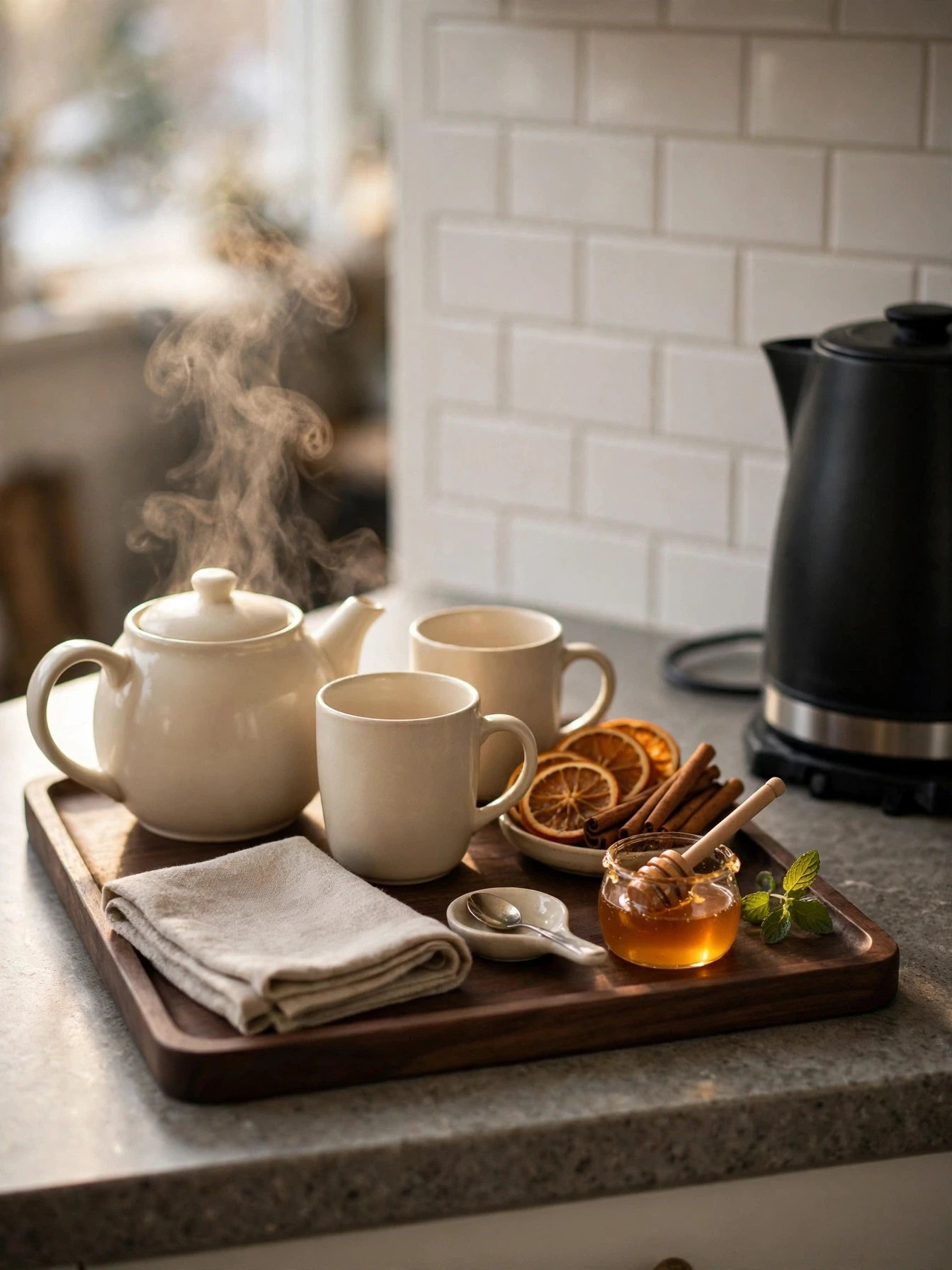
- A tea tray by the kettle gathers everything for a winter afternoon into one portable square.
- Cinnamon sticks and dried orange slices scent the tray without a candle.
- The tray moves from counter to table in one lift when guests arrive.
- It fills a small counter gap that is too narrow for appliances.
Build the tray on a wooden base 16 by 12 inches, placed within 12 inches of the kettle so the walk to the sink stays short. Set a 32 ounce ceramic teapot in the center, two 10 ounce mugs on one side, and a small dish of cinnamon sticks and dried orange slices on the other. Keep the whole tray at least 12 inches from the sink edge so splashes never reach the tea. One thing to leave out is cast iron teapots on a glass tray, since the weight can crack it; ceramic is the safer match. Ceramic teapots cost 25 to 50 dollars and pour easily, while cast iron teapots run 40 to 90 dollars and keep tea hot 30 minutes longer.
Afternoon tea drinkers use this tray daily, since it turns a 10 minute break into a small ritual instead of a rushed mug at the sink. The compromise is space: a 16 inch tray is a real piece of counter in a kitchen with less than 5 feet of work surface, so measure the gap first. Dried orange slices last 4 to 6 weeks before they fade, and cinnamon sticks keep their scent for 2 to 3 months in a closed jar. Budget trays run 30 to 55 dollars, mid range versions with ceramic canisters run 70 to 110 dollars, and premium versions with a brass tray run 140 dollars and up.
Cozy Winter Kitchen Decor Ideas
Why This Works:
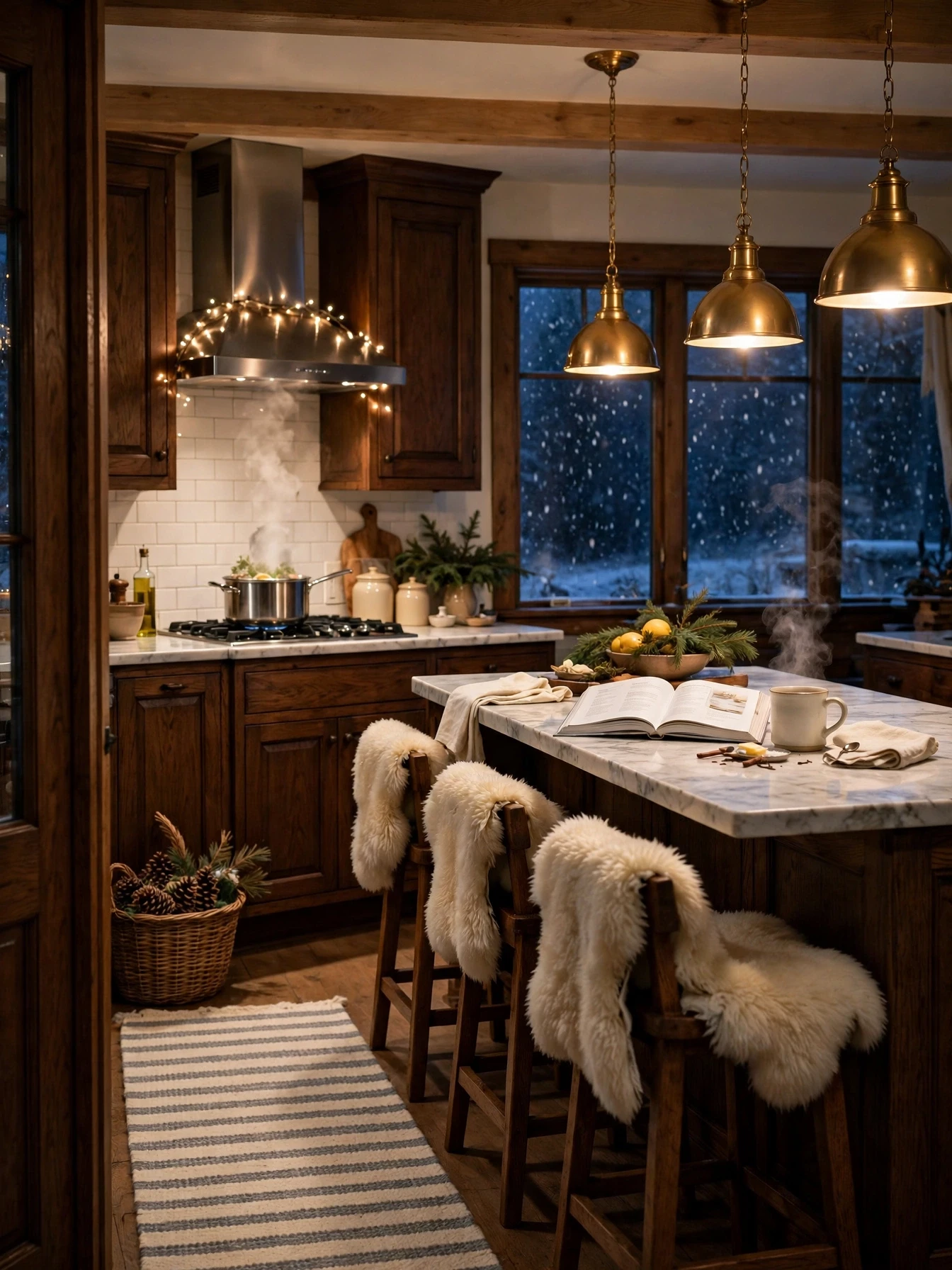
- The coziest kitchens balance three things at once: warm light, soft textiles, and one winter scent.
- Evening light at 2700K makes the room feel like a cabin after dark.
- Sheepskin on the stools warms the seat before anyone sits down.
- One scent, from a simmer pot or a cedar sprig, ties the whole room together.
Layer the room in this order: set the lights to 2700K, drape a sheepskin throw 24 by 36 inches over each island stool, and place a wool runner 2 by 6 feet along the main walkway. Keep stool seats at 24 inches high for a 36 inch counter, and leave 42 inches of clear space behind the stools so people can slide out without hitting the cabinets. Do not risk piling textiles near the stove, since a throw within 12 inches of a burner is a fire risk. Sheepskin throws cost 40 to 80 dollars each and insulate better than fleece, while fleece throws run 15 to 30 dollars and survive machine washing.
Households that gather in the kitchen after dinner feel this idea most, because the room stays inviting long after the cooking ends. The not-so-good part is upkeep: sheepskin needs brushing weekly and a shake outside monthly, and it should never go in a washing machine. Wool runners and throws together hold dust, so vacuum the runner twice a week. A basic cozy layer runs 100 to 180 dollars, a mid range version with real sheepskin runs 200 to 350 dollars, and a premium version with custom stool covers runs 450 dollars and up.
Flannel Chair Cushions

Why This Works:
- Flannel cushions on the island stools add color and padding to the hardest seats in the house.
- Red flannel reads as winter at a glance, with no other decoration needed.
- Cushions make long breakfasts comfortable, so the family actually sits down.
- Ties keep the cushions in place, even when kids slide on and off.
Fit each stool with a cushion 17 by 17 inches and 2 inches thick, tied with two 12 inch fabric ties around the back legs. Choose brushed flannel with a tight weave, since loose flannel pills within 3 weeks of daily use. Match the cushion color to one other red piece in the room, such as a tea towel or a Dutch oven, so the color repeats instead of floating alone. Pass over loose ties longer than 12 inches, since they dangle into the stool legs and snag. Flannel cushions cost 15 to 30 dollars each, while linen cushions run 20 to 35 dollars but feel colder to sit on in January.
Households that eat at the island daily notice this change at the first breakfast, since the seats stop feeling like cold wood. The maintenance angle is washing: flannel seat cushions need a wash every 2 weeks, so buy covers that unzip rather than sewn cushions. Foam inserts flatten after 6 to 8 weeks of daily sitting, so choose high density foam 2 inches thick that springs back. A basic set of four runs 60 to 120 dollars, a mid range set with better foam runs 130 to 200 dollars, and a premium set with custom plaid runs 220 dollars and up.
Twinkling Range Hood

Why This Works:
- A short strand of fairy lights around the range hood turns the busiest appliance into a winter focal point.
- The hood sits at eye level, so the lights show from every seat in the room.
- Micro LEDs add sparkle without adding heat near the stove.
- The strand comes down in minutes when cooking season gets serious.
Wrap a 6 foot strand of 50 warm white micro LEDs around the front edge of the range hood, keeping the lights at least 18 inches above the burners and 6 inches from the vent opening. Secure the strand with 4 small adhesive clips rated for 1 pound each, and run the battery pack to the side of the hood where steam never reaches. Use battery powered LEDs with a 6 hour timer, which avoids a cord near the cooktop entirely. Drop the idea of plug in strands here, since a cord draped near a hot stove is a hazard. Battery micro LED strands cost 8 to 15 dollars for 6 feet, while plug in strands run 12 to 20 dollars and need an outlet within 3 feet.
Evening cooks enjoy this glow most, because the hood lights up the stove area after dark without switching on the harsh overheads. The part that needs extra work is grease: lights near the stove collect a film within 2 weeks, so wipe the strand weekly with a damp cloth and replace it yearly. Micro LEDs stay cool to the touch, which makes them safer than old incandescent mini lights near a heat source. A basic strand runs 8 to 15 dollars, a mid range version with a remote timer runs 18 to 30 dollars, and a premium version with copper wire runs 35 dollars and up.
Citrus Simmer Pots
Why This Works:
- A simmer pot on the back burner scents the whole kitchen for the price of one orange and a cinnamon stick.
- The scent reaches the hallway and the living room within 20 minutes.
- It uses ingredients already in the kitchen, so the cost is almost zero.
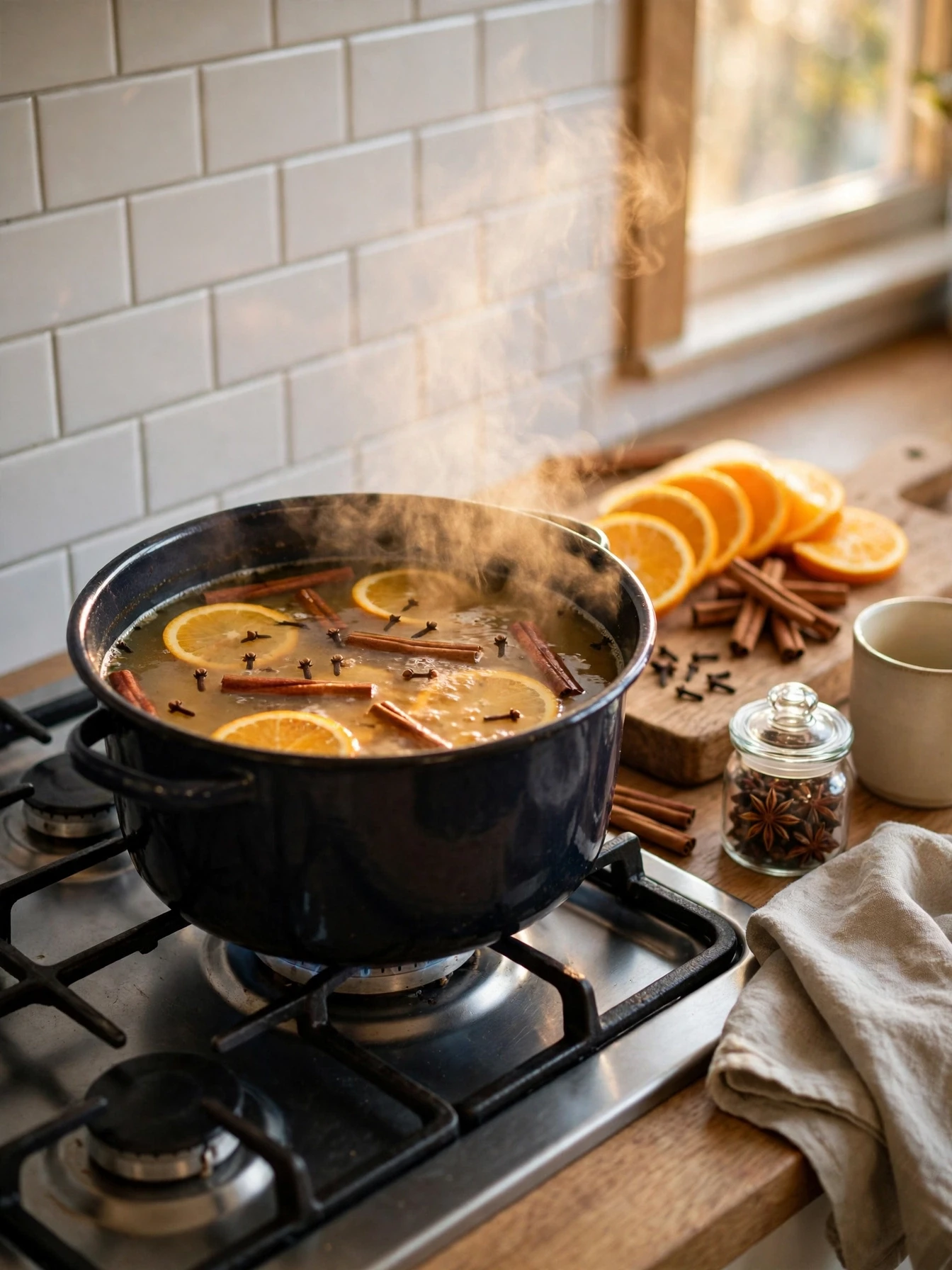
- The pot doubles as decor, with orange slices and spices visible through the steam.
Fill a 2 quart pot with 6 cups of water, add one sliced orange, two cinnamon sticks, and 1 tablespoon of whole cloves, then simmer on the lowest heat for 2 to 3 hours. Top up the water with 2 cups every 45 minutes, since a pot that boils dry scorches in under 10 minutes and ruins the pot. Keep the pot on the back burner, at least 12 inches from the front edge, so nobody bumps it while cooking. Skip leaving a simmer pot unattended for more than 30 minutes, and never let the water level drop below 2 inches. A stovetop pot costs nothing extra if you own one, while a slow cooker version runs 25 to 40 dollars and holds heat safely for 8 hours.
Hosts love simmer pots because the kitchen smells welcoming before guests even take off their coats. The one thing to watch is attention: a simmer pot needs a top up every 45 minutes, so it suits days at home better than days out. Orange and cinnamon last 2 to 3 days in the fridge for a second use, and the pot needs a wash after each batch to stop the spices from staining. A basic simmer pot costs 2 to 5 dollars in ingredients, a mid range version with dried orange and star anise runs 8 to 12 dollars, and a premium gift set runs 20 dollars and up.
Cozy Pantry Door
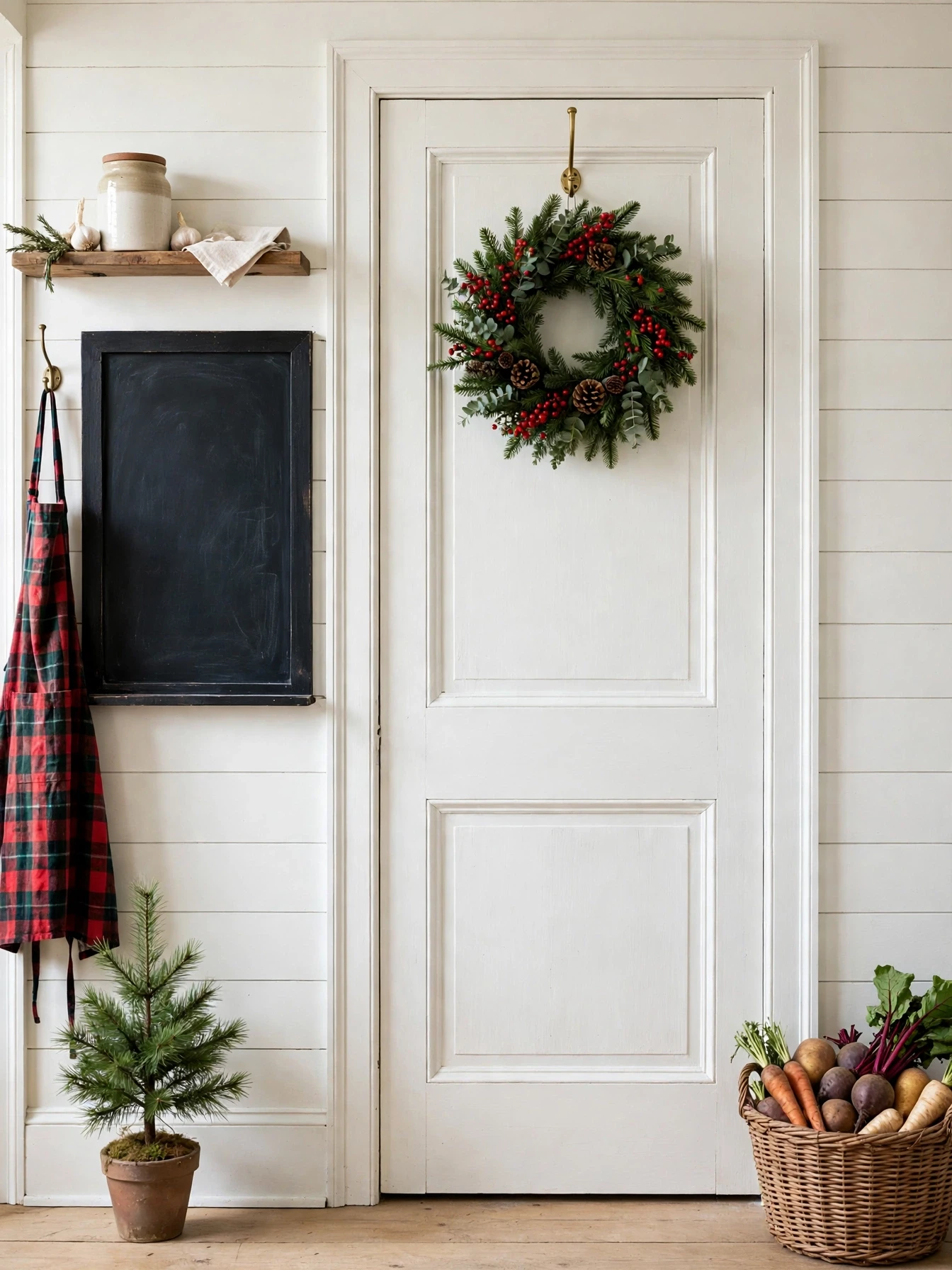
Why This Works:
- The pantry door is the most passed surface in the kitchen, and a small wreath there gets seen a dozen times a day.
- One wreath dresses a whole wall without taking a single inch of counter.
- A chalkboard beside it adds a useful note spot for shopping lists.
- The door decor comes down with one hook when the season ends.
Hang an 18 to 20 inch evergreen wreath on the pantry door with an over the door hook rated for 5 pounds, centered at 60 inches from the floor so it sits at eye level. Add a small chalkboard 12 by 18 inches on the wall beside the door, mounted with two screws into a stud for a firm hold. Keep the wreath flat against the door, no more than 4 inches deep, so it never catches on the door frame when the door swings. Steer clear of wreaths with loose berries near the floor, since dropped berries roll underfoot on tile. Faux wreaths cost 20 to 40 dollars and last 5 to 7 seasons, while fresh wreaths run 25 to 45 dollars and last 3 to 4 weeks indoors.
Busy households get real use from this spot, since the chalkboard holds the shopping list where everyone sees it before leaving. The upkeep side is door swing: a wreath deeper than 4 inches hits the frame on a standard 36 inch door, so measure the clearance first. Faux wreaths need a shake outside at takedown to drop dust, and fresh wreaths should go out before they shed needles onto the floor. A basic door display runs 30 to 55 dollars, a mid range version with a framed chalkboard runs 60 to 100 dollars, and a premium version with a handmade wreath runs 120 dollars and up.
FAQs
What are the best winter kitchen decor ideas for a small kitchen?
Start with the floor and the light, since those two changes warm the room fastest. Add a wool runner 2 by 6 feet, swap the bulbs to 2700K, and style one open shelf with evergreen. Keep decor to 3 focal points so a kitchen under 100 square feet stays calm.
How do I keep winter kitchen decor safe around the stove?
Keep every flammable item at least 3 feet from the stove, including garland, towels, and paper decorations. The National Fire Protection Association lists this 3 foot clearance as a basic kitchen fire safety rule. Use LED candles near the cooktop, and keep pot handles turned inward.
How much should I budget for winter kitchen decor ideas?
A single focal point, such as a cocoa station or a wool runner, costs 30 to 80 dollars. A full room refresh with greenery, lighting, and textiles runs 200 to 400 dollars. Start with one zone, measure it, and add a second zone after the first one works.
Which lights work best in a winter kitchen?
Warm white LEDs at 2700K to 3000K work best, since they cancel the blue cast of winter daylight. The American Lighting Association recommends pendants 30 to 36 inches above the island counter for task lighting. Add a dimmer switch so evening light stays soft after sunset.
How do I stop winter kitchen decor from looking cluttered?
Limit the room to 3 focal points, the island, the window, and one shelf, and leave every other surface clear. Keep each display inside a tray or a 24 inch zone so pieces never spread across the counter. Step back 10 feet and remove one item from each display.
Conclusion
These 24 winter kitchen decor ideas share three rules: warm the floor first, light the room at 2700K, and keep every display inside one clear zone. Pick one idea that fixes your coldest morning complaint, measure the space before buying anything, and start with the wool runner or the pendant bulbs for the fastest change. The kitchen is where winter days start in January and February, so warming it first changes every morning that follows. Follow HomelyCrafter on Pinterest for more ideas. Save this to your Pinterest boards so you can refer back to it!

Muhammad Israr is a home decor enthusiast and the writer behind Homely Crafter. He spends his days researching paint colors, layouts and budget-friendly styling ideas, then breaks them down into practical, easy-to-follow guides so you can decorate with confidence.