
Yellow ruled the cheerful 1950s kitchen, splashed across cabinets, fridges and gingham curtains, and then it quietly vanished for decades while white, gray and navy took over. Vintage yellow kitchen ideas are back in 2026, and the new version keeps the warmth while dropping the kitsch, swapping plastic shine for painted wood, soft brass and honest tile. The National Kitchen and Bath Association sets the 18 inch gap between counter and upper cabinets as the standard, and that kind of clear rule is what keeps a sunny yellow kitchen practical as well as pretty.
The 21 ideas below pair paint names with finish choices, hardware sizes and the measurements that keep yellow balanced, and they give upkeep and the rooms where yellow struggles an honest look too. Every idea names the exact shade, the material worth asking for, and the small detail that stops the color feeling like a costume.
Butter Yellow Cabinets
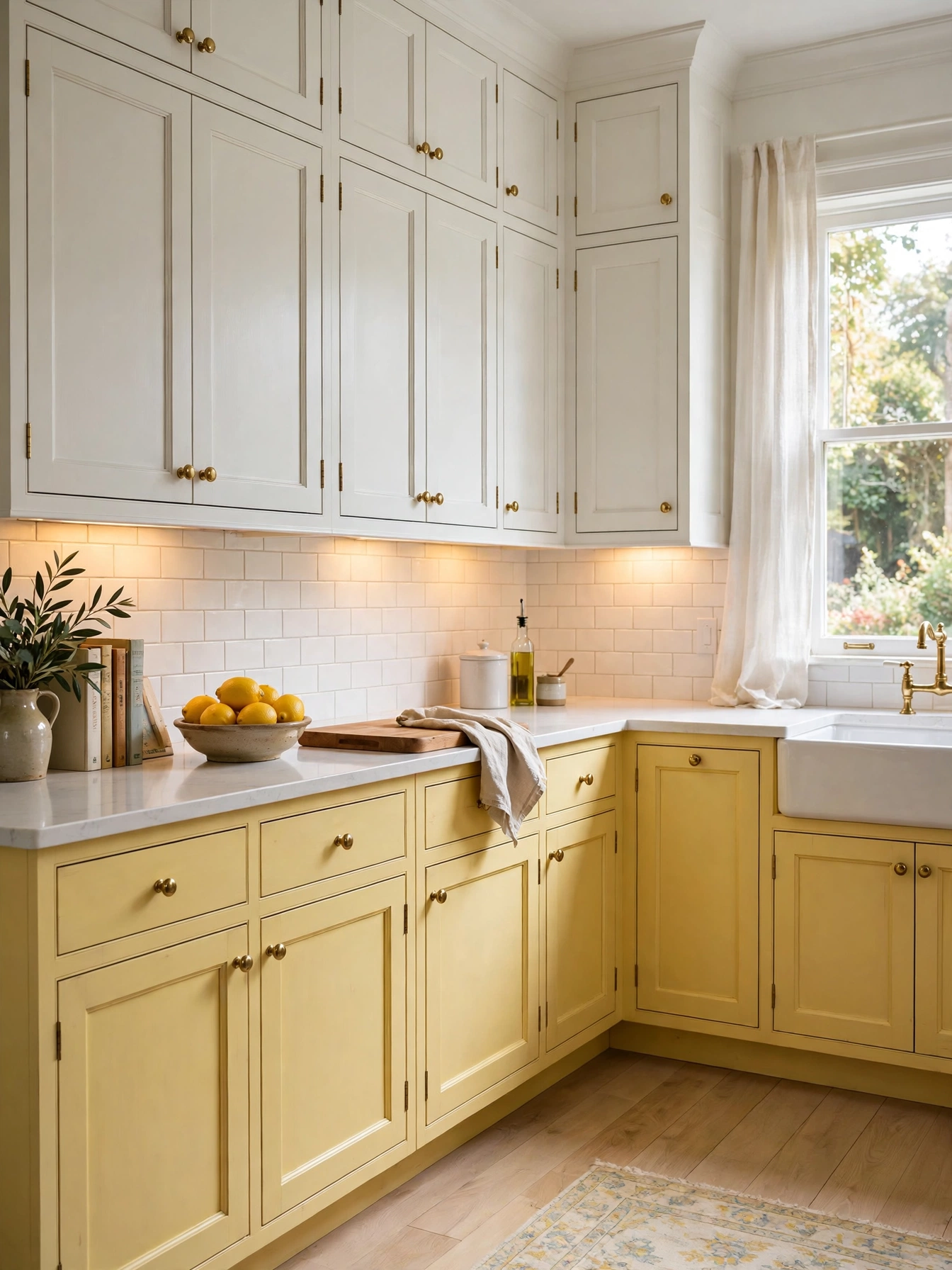
Why This Works:
- Butter yellow lowers add sunshine without painting the whole room
- White uppers keep the ceiling line bright and airy
- Satin enamel stands up to splashes from daily cooking
- Brass knobs warm the pale yellow tone
Benjamin Moore Buttercream or Sherwin-Williams Banana Cream, brushed onto lower cabinets, sets a soft sunny base. Paint maple doors in satin acrylic enamel over primer, with uppers kept white so the yellow stays at counter level where hands and eyes meet it daily. Upper cabinets sit 18 inches above the 36 inch countertop, which is the National Kitchen and Bath Association guideline, and door thickness measures 3/4 inch with soft-close hinges rated for 100 pounds per pair. Avoid a bright school bus yellow on full cabinet runs, because the vivid tone tires the eye within weeks and fights every other color in the room.
A butter yellow base hides small scuffs. The color pairs with oak, walnut and cream tile without a clash. Laminate doors wipe clean with a damp cloth. Painted maple takes touch ups with a small brush when a corner chips. Keep the backsplash white subway tile 3 by 6 inches and the countertop white quartz 3 centimeters thick, so the yellow has a calm frame. One gallon of good cabinet paint stretches across roughly 350 square feet, so base cabinets alone usually call for 2 gallons on top of primer.
Mustard Accent Wall
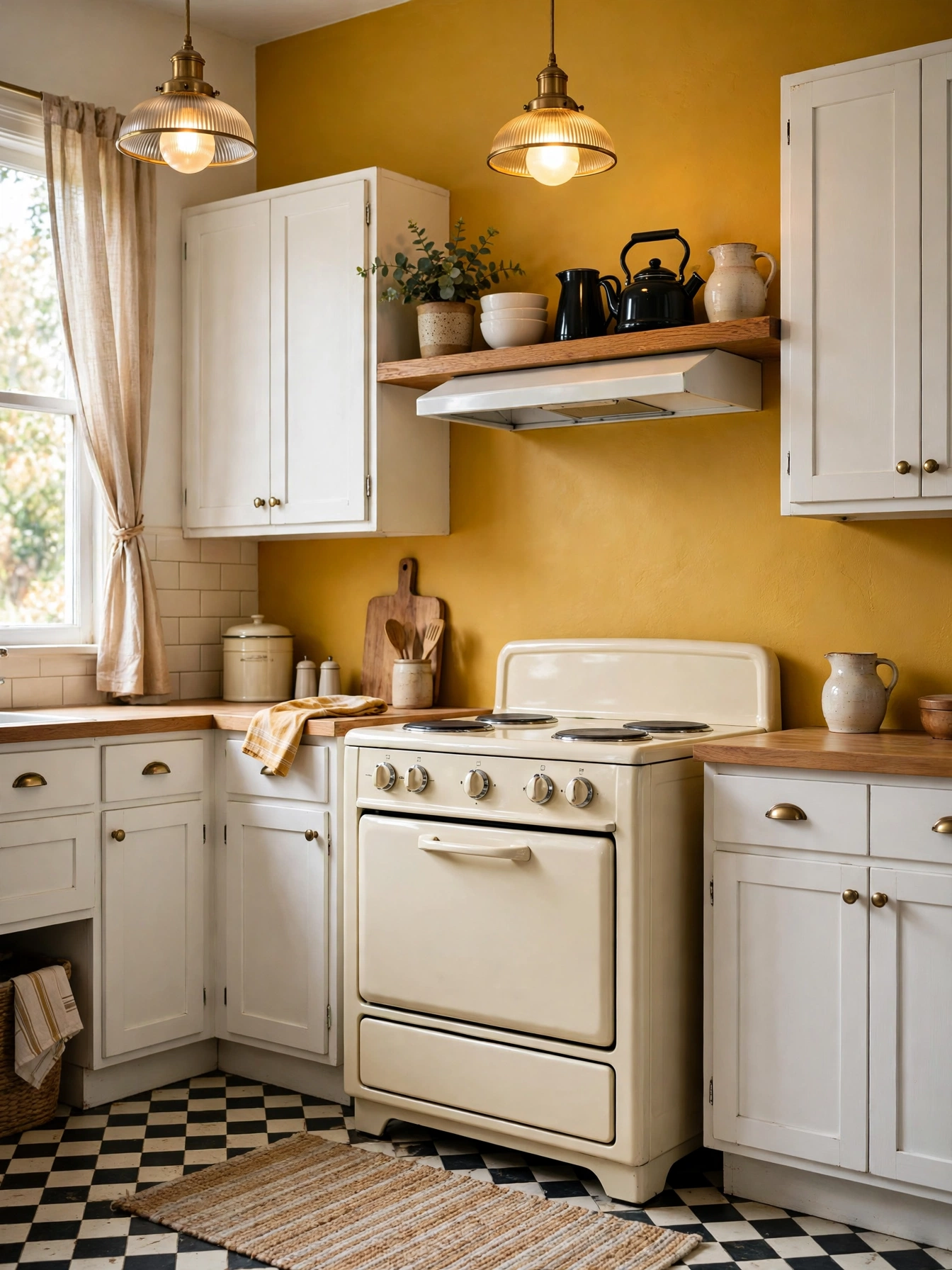
Why This Works:
- One mustard wall adds drama without repainting cabinets
- Cream range softens the strong wall color
- Pale cabinets keep the bold wall from closing the room in
- A wood shelf repeats the warm tone at eye level
Behind the range, a mustard wall turns one stretch of plaster into the focal point. Paint the wall in Farrow and Ball India Yellow, in a washable eggshell finish, applied in two coats on primed plaster, since steam and grease reach the wall behind every range. Keep the range wall 18 inches of backsplash tile above the 36 inch counter, with the mustard paint starting above the tile line so splashes never touch the paint. The wall behind the range should measure at least 30 inches wide for a standard range, and 36 inches wide for a wider model. Skip mustard on all four walls, because the strong tone darkens corners by evening and the room feels smaller than it is.
The mustard stays on the range wall only. The other three walls stay warm white. Eggshell paint sheds steam and grease near the range. Flat paint soaks both in and marks within months. Pair the mustard wall with cream or white cabinets, pale oak floors and black or brass hardware, and keep the other walls warm white. A 10 foot by 12 foot kitchen needs about 1 gallon for one wall, with a roller frame 9 inches wide for even coverage.
Retro Range Revival
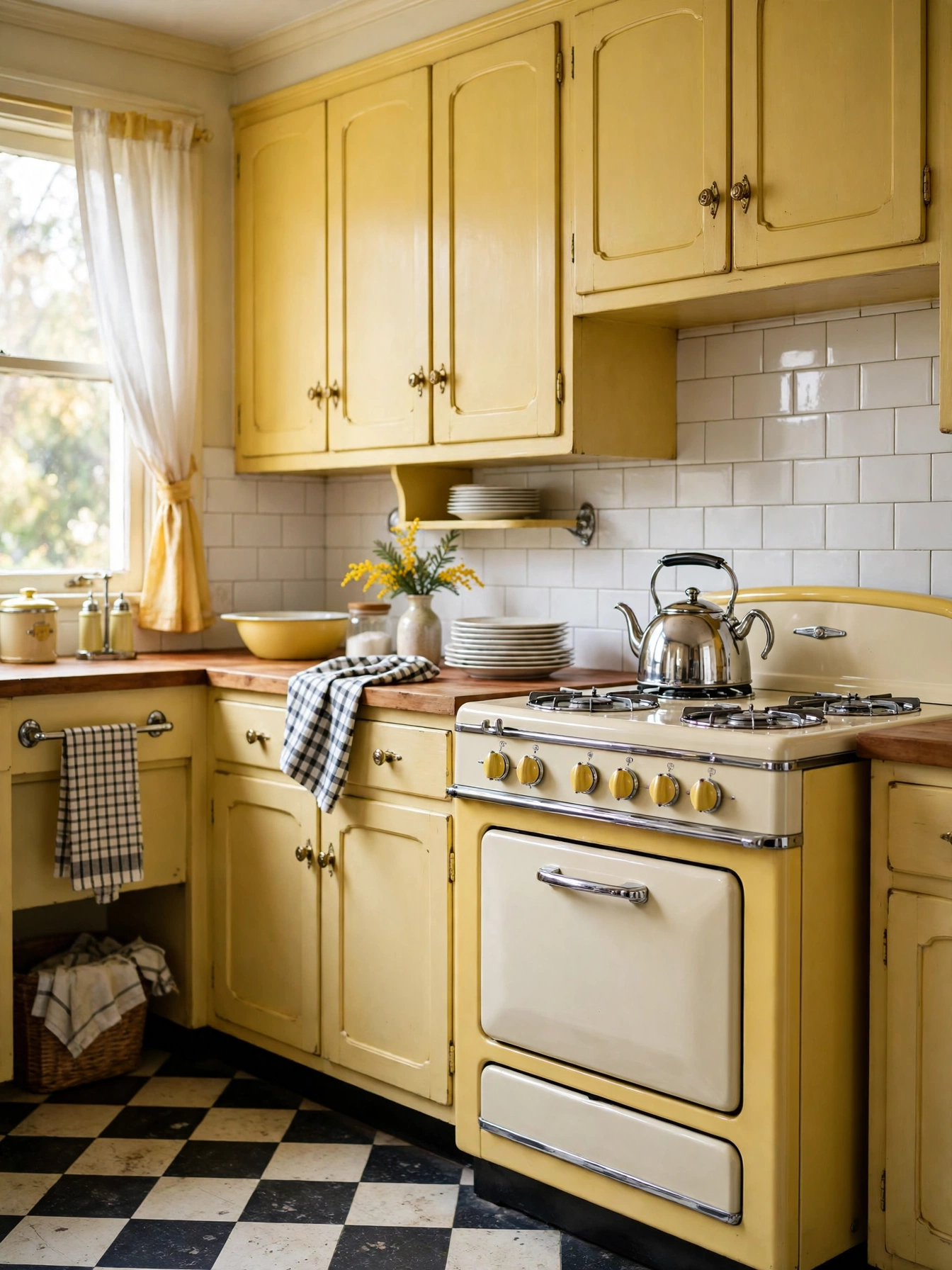
Why This Works:
- A retro range sets the vintage tone in one appliance
- Cream enamel pairs with yellow cabinets without glare
- Chrome details echo the 1950s originals
- One statement appliance avoids a themed room
Cream enamel with yellow trim hides a current oven behind a 1950s stove look. Choose a 30 inch wide range with a 5 cubic foot oven and 4 burners, which fits the standard 30 inch opening and the 36 inch counter height on each side. Leave 4 to 9 feet between sink, range and fridge, which is the work triangle guideline from the National Kitchen and Bath Association, so cooking steps stay short. Fit a range hood 30 inches wide above it, mounted 30 to 36 inches above the cooktop, with a fan rated at 300 cubic feet per minute for a standard gas range. Do not place a retro range beside a tall fridge with no landing space, since hot pans need a 15 inch counter stretch on at least one side.
Modern retro ranges carry the same safety features as any new cooker, with electronic ignition and sealed burners that wipe clean. The enamel finish resists stains. It chips when a heavy pot drops on an edge. Lift pans to move them. Keep the surrounding cabinets butter yellow and the backsplash white. The range reads as the star of the room. A licensed electrician or gas fitter should connect a new range, because gas lines and 240 volt circuits are not a DIY job.
Sunny Breakfast Nook
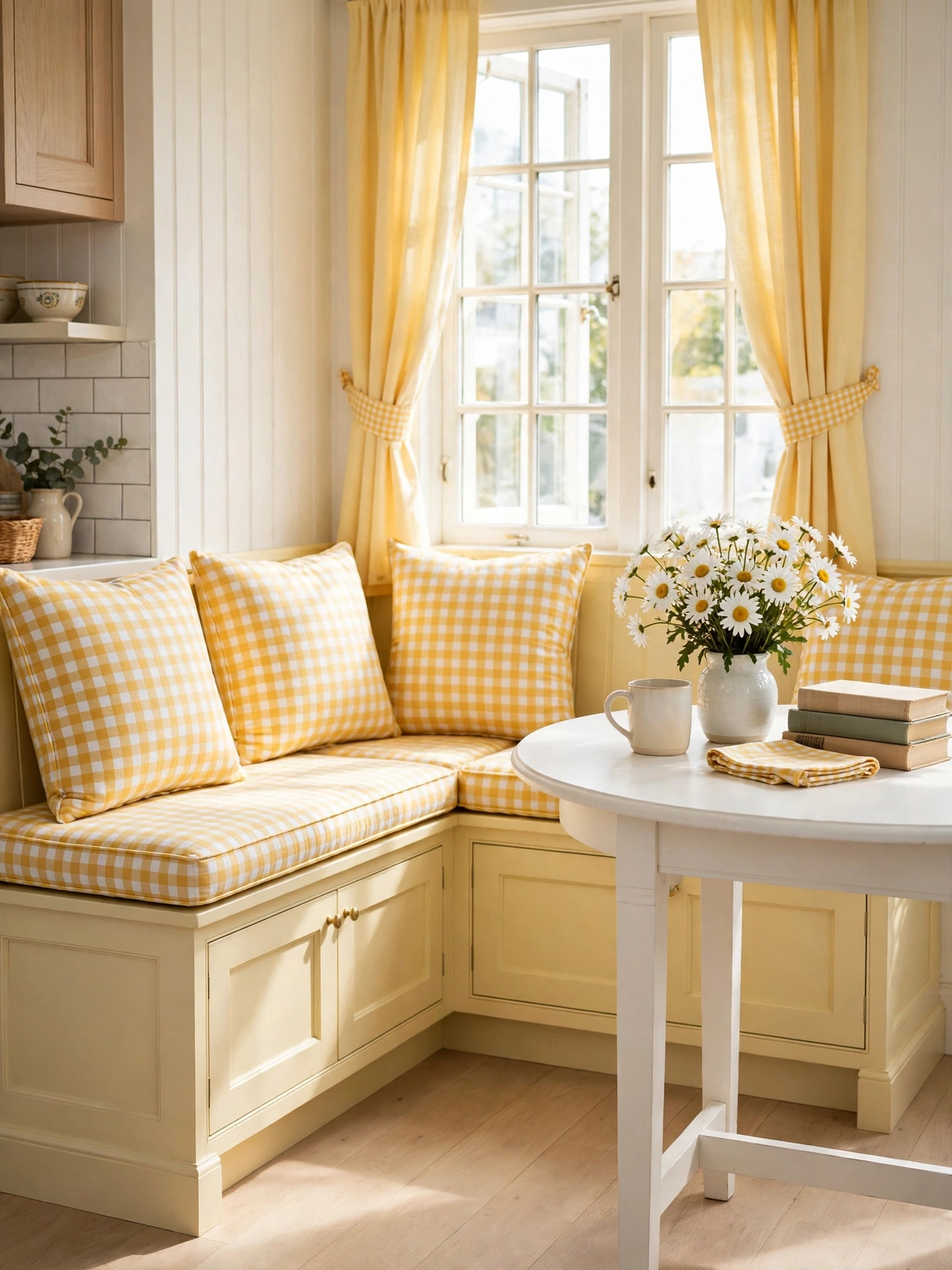
Why This Works:
- A yellow bench turns an empty corner into the favorite seat
- Built-in seating saves floor space in a small kitchen
- Gingham cushions add pattern without painting more walls
- Morning light makes the pale yellow glow
A butter yellow bench turns the smallest corner into the gathering spot. Build the bench 18 inches high and 16 inches deep, with a table 36 inches across set 15 inches from the bench edge, so knees clear the table apron. Leave 24 inches of elbow room per seat and 36 inches of walkway behind the table, which keeps one cook moving past seated eaters. Cushions should measure 3 inches thick with washable covers, since breakfast spills reach fabric within days. Avoid a bench deeper than 18 inches, because the seat pushes the table too far into the room and the walkway disappears.
The bench holds bags, books and the morning paper out of the way. Painted plywood bench boxes shrug off daily knocks. Softwood dents under the same use, and a solid wood tabletop resists heat rings that mark laminate. Keep the wall behind the bench pale yellow and the rest of the kitchen white, so the corner glows without overwhelming the room. A bench with a hinged lid adds storage for table linens, and the lid needs a soft-close stay so fingers never get caught.
Checkerboard Floor Charm
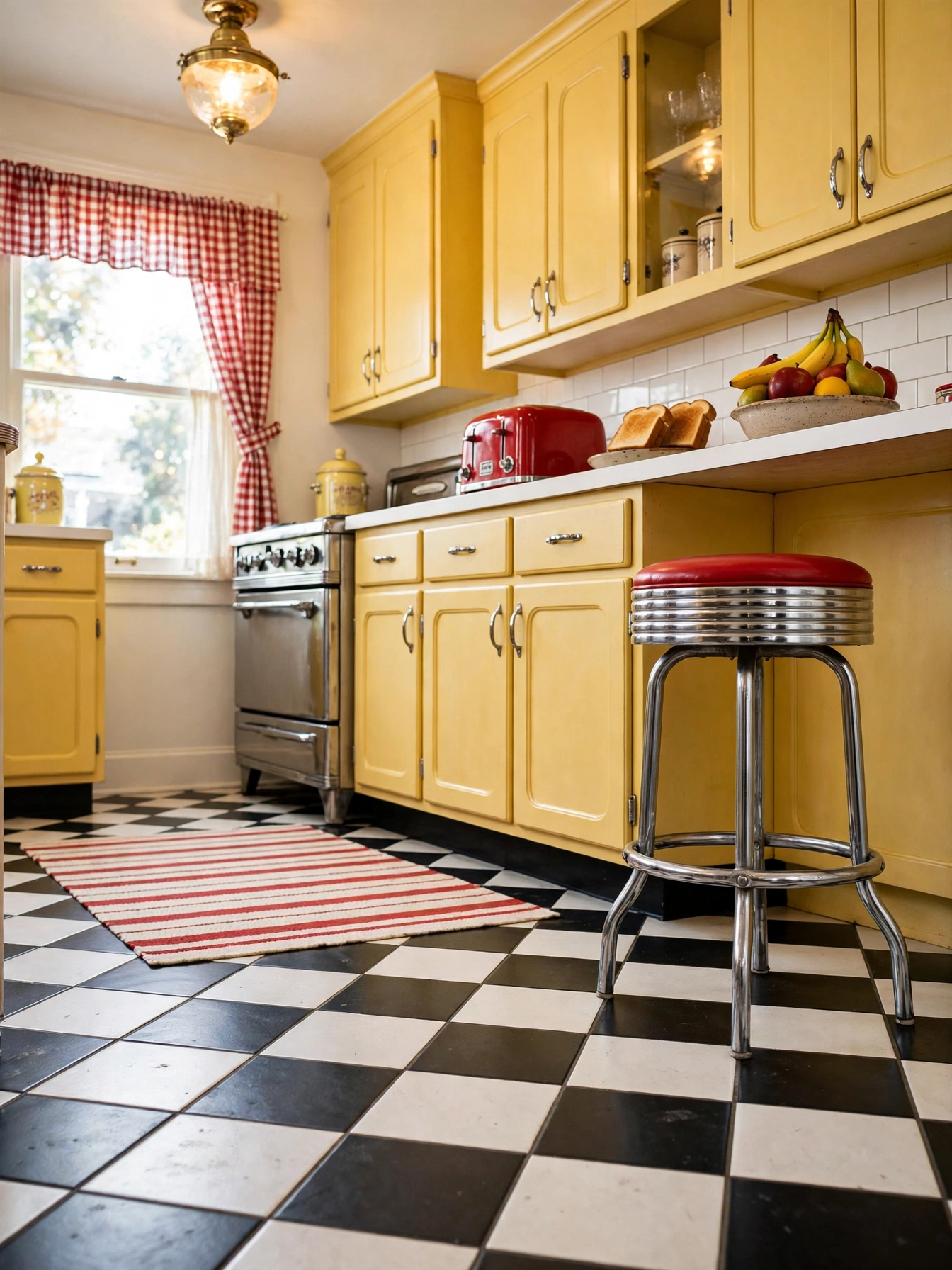
Why This Works:
- Checkerboard tile gives instant 1950s character underfoot
- Black and white floor grounds the yellow cabinets
- Ceramic tile handles spills and heavy foot traffic
- The pattern hides crumbs better than a plain floor
Black and white checkerboard under butter yellow cabinets revives the 1950s diner floor. Lay 12 inch by 12 inch ceramic tiles in a straight grid, with grout lines 1/8 inch wide in pale gray, and seal the grout every 12 months so kitchen spills never stain it. Keep the subfloor level within 1/8 inch over 10 feet, since uneven boards crack tile corners within a year. Tile should run under the cabinets as well as the open floor, so a future layout change never exposes a bare strip. Skip peel and stick squares in a kitchen with a dishwasher, because steam and leaks lift the edges within months.
Checkerboard vinyl tile runs 3 to 7 dollars per square foot. Ceramic tile runs 8 to 18 dollars per square foot. Ceramic tile survives decades of chairs and pet claws. The bold floor pairs with pale yellow cabinets and white counters. Keep the rest of the palette pale. A matte tile finish grips when the floor gets wet. Grout in pale gray hides crumbs that white grout shows by lunchtime. Sweep daily and mop weekly, and the pattern still looks sharp in 10 years.
Cream And Yellow
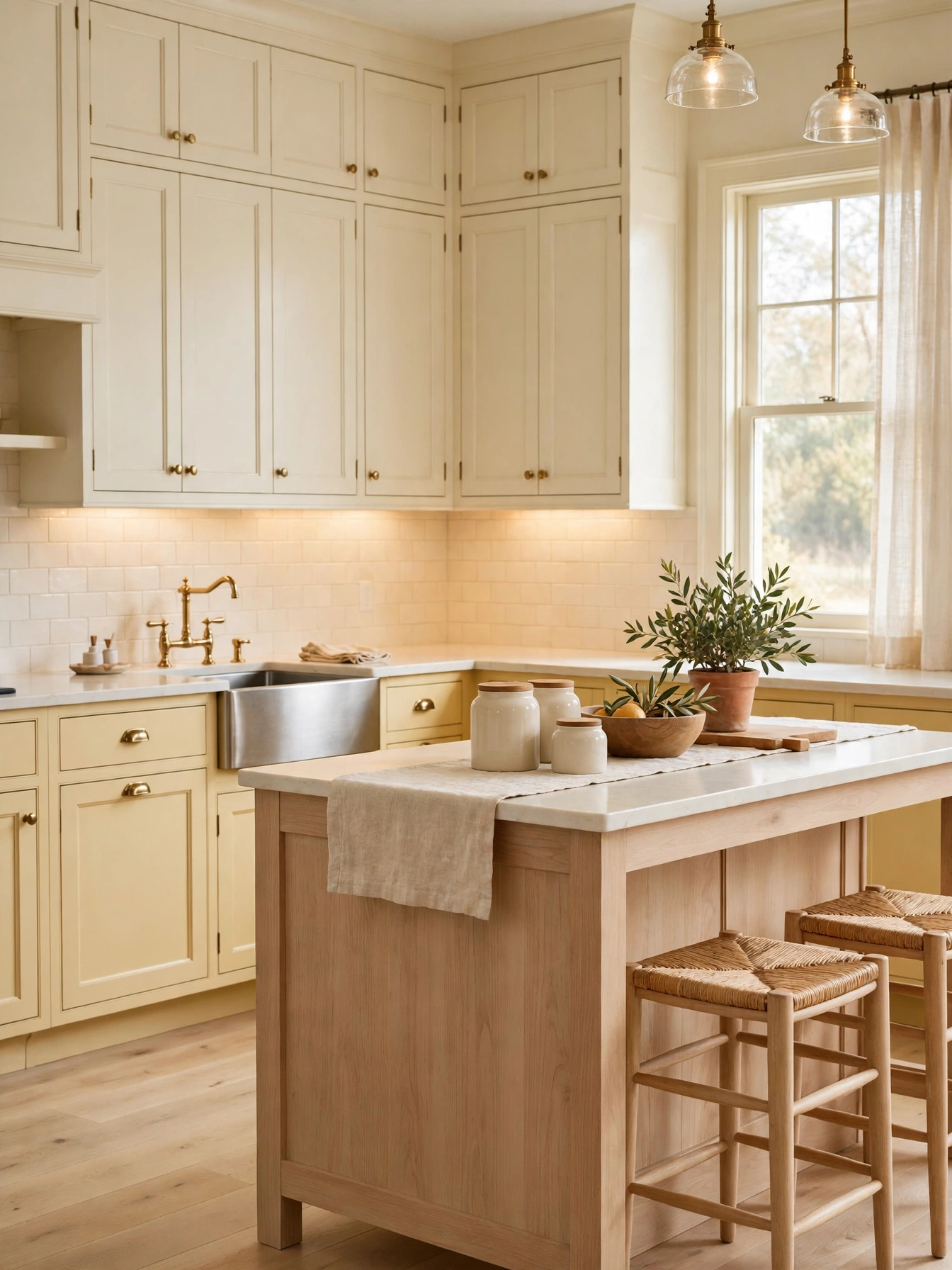
Why This Works:
- Cream uppers soften yellow lowers into one calm palette
- Warm cream and butter sit close enough to read as one palette
- Pale wood island repeats the warmth at floor level
- Cream tile bridges the two cabinet colors
Butter yellow below and warm cream above read as one family when the tones sit close. Brush the lowers satin and repeat the same sheen up top, with primer underneath, for one even glow across the room. Keep upper cabinets 12 inches deep and 18 inches above the 36 inch counter, and use the same hardware on both runs, with 5 inch bar pulls on drawers and knobs 1.25 inches in diameter on doors. Choose a cream with a yellow undertone, since a warm cream keeps the yellow looking clean and bright. Avoid two yellows that sit only 1 step apart on the paint card, because the difference reads as a fading mistake to the eye.
The yellow stops at counter level. Cream takes over above it. The palette works well in rooms with modest daylight. Satin paint on both runs wipes clean the same way. Flat paint on uppers absorbs steam and grease near the range. Keep the countertop white quartz 3 centimeters thick and the backsplash cream subway tile 3 by 6 inches, so the palette stays in one warm family. A wood island top in pale oak adds a third warm note, and it needs oiling four times a year to stay sealed.
Soft Vintage Yellow Kitchen Ideas
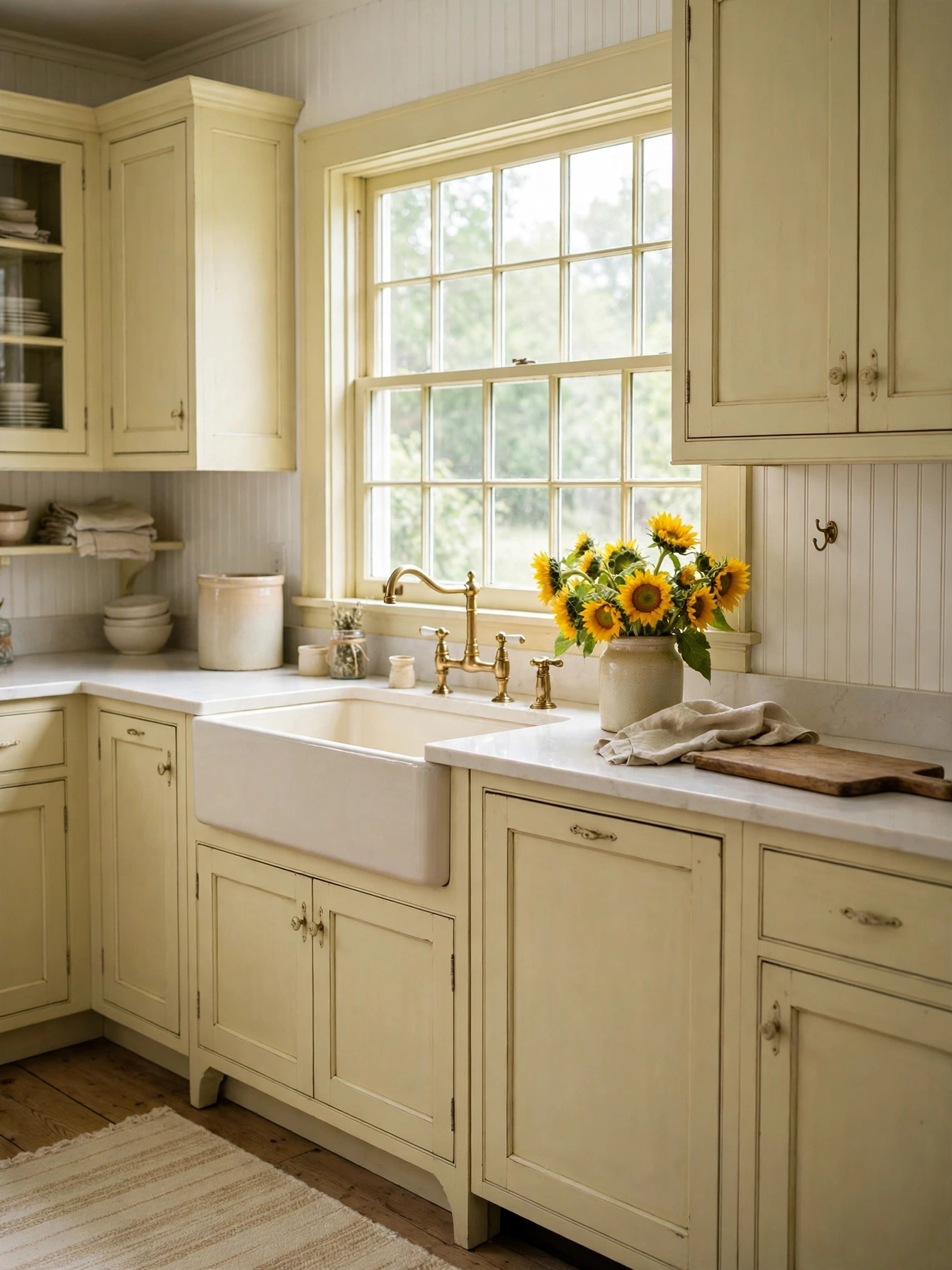
Why This Works:
- Pale butter reads as sunshine without shouting
- White beadboard adds texture behind the soft color
- A farmhouse sink gives the pale room a bright center
- Sunflower accents repeat the yellow in small doses
The 2026 version of a vintage yellow kitchen starts pale, with butter tones that carry a hint of cream rather than the saturated yellow of a 1950s diner. Choose a pale shade such as Benjamin Moore Hawthorne Yellow, in a satin finish, and brush it onto primed maple or wood doors 3/4 inch thick. Pair the cabinets with a white beadboard backsplash made from 3 inch boards, set 18 inches high between counter and uppers, and keep the countertop white quartz. Cabinet hardware in brushed brass flatters the soft tone. Chrome can make pale yellow look cold. Do not pair pale yellow with a gray floor, since the cool gray drains the warmth and the cabinets look faded by afternoon.
A pale yellow kitchen feels open and bright. The color reflects daylight into corners that white sometimes leaves flat. Better Homes and Gardens notes that warm pale colors help kitchens feel welcoming when paired with natural wood and good light. Keep the floor pale oak. Pale oak reflects light into the room. Limit strong yellow to one or two accents such as a sunflower vase or a striped runner. The soft palette also forgives small paint chips. A pale tone shows little contrast against primer.
Gingham Curtain Corners
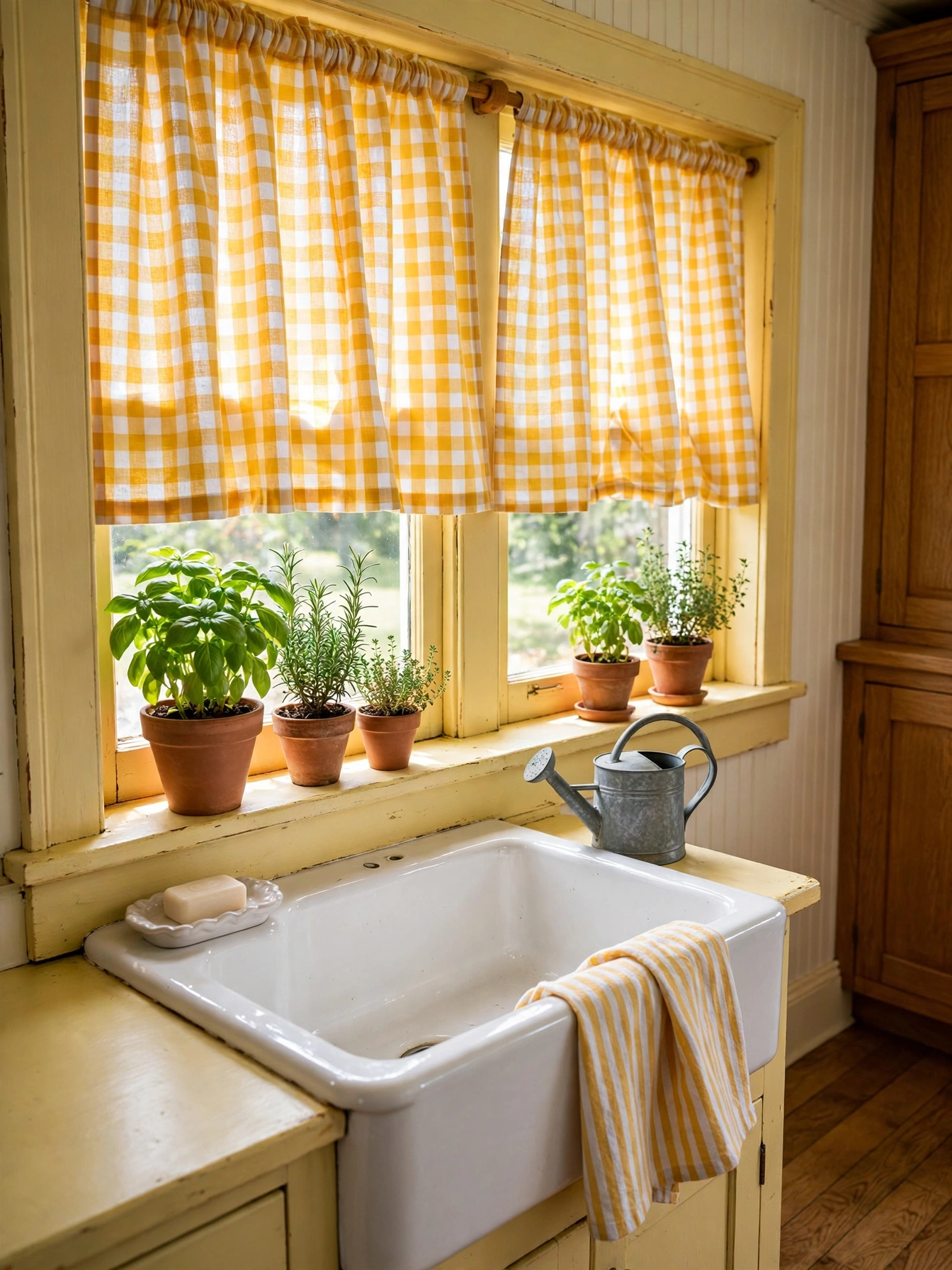
Why This Works:
- Gingham curtains add vintage pattern at the window
- Cafe length keeps the sill clear for herbs
- Yellow checks echo the cabinets without more paint
- Cotton fabric washes easily after cooking splashes
Yellow and white gingham, hung as cafe curtains, dresses a kitchen window with a small vintage check. Hang cafe curtains that cover the lower half of the window, with the rod mounted 14 inches above the sill and the fabric falling 12 inches below the rod. Choose a cotton gingham with a 1 inch check, hemmed to sit 2 inches above the sill so steam and splashes never reach the hem. Keep the curtain rod 1 inch in diameter in brass or black, mounted 2 inches beyond the window frame on each side. Avoid full length curtains beside the sink, since the fabric soaks up splashes and blocks the light a small kitchen needs.
Cafe curtains flatter a kitchen where the window sits over the sink. The upper half stays open for daylight. The lower half gives privacy. Cotton gingham washes in a normal cycle and dries fast. Linen gingham wrinkles after every wash and needs ironing. Pair the curtains with a butter yellow sill and white cabinets, and keep the rest of the room plain so the pattern stays the single print. A 36 inch wide window needs 72 inches of fabric width, which is twice the window width for a proper gather.
Brass Fixture Glow
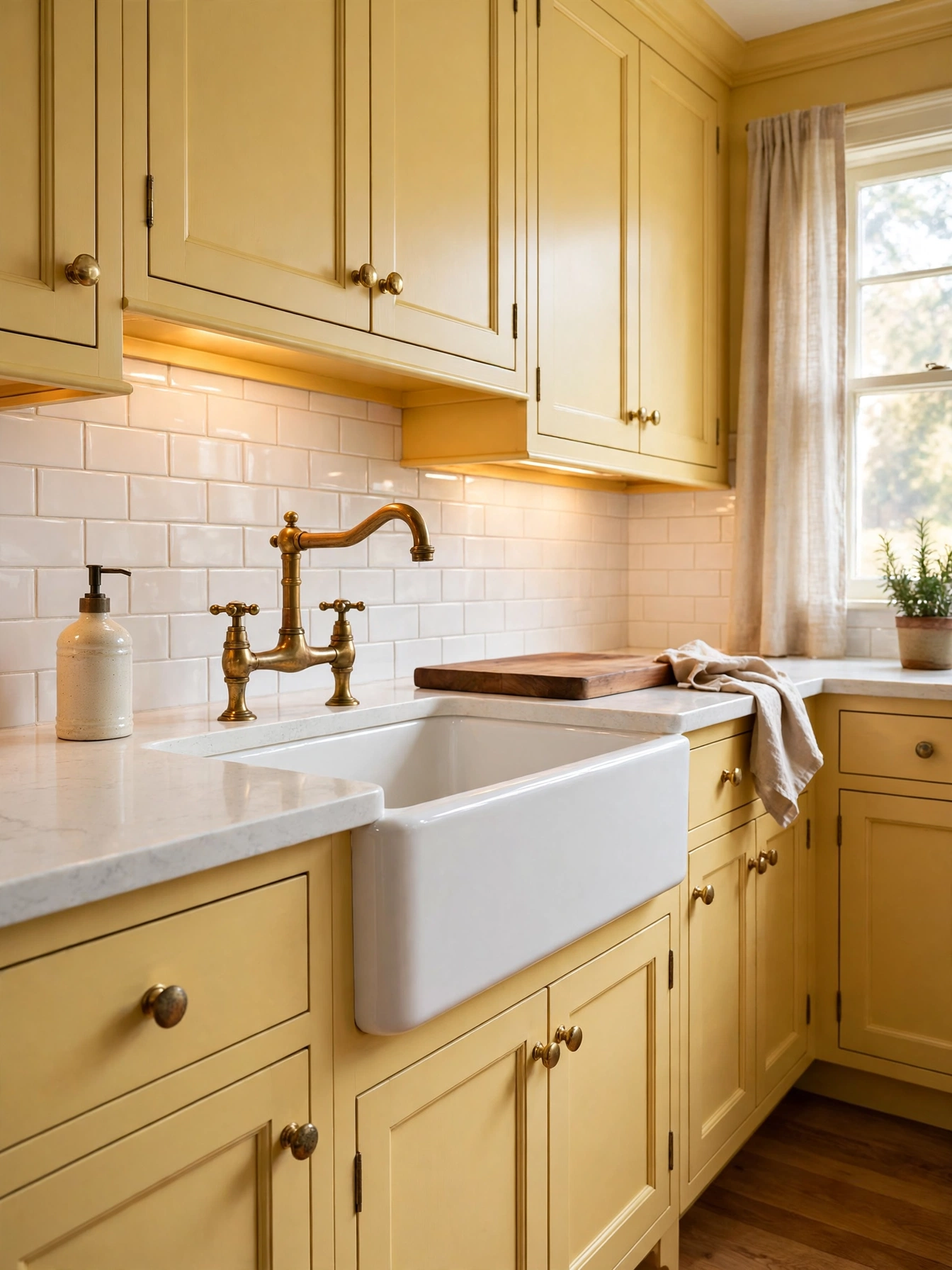
Why This Works:
- Brass warms yellow cabinets in a way chrome cannot
- One metal finish across faucet and knobs ties the room together
- Bare brass mellows with handling and grows more characterful
- Warm metal echoes the golden tone of the paint
Beside butter yellow cabinets, unlacquered brass puts warm metal and warm paint into one glow. Faucet, knobs and pulls share one brass tone. Drawers over 24 inches wide take 5 inch bar pulls. Doors take 1.25 inch knobs. Center each pull 2.5 inches in from the drawer edge, so knuckles never catch the door frame. Cabinet doors measure 3/4 inch thick, and screws must suit that thickness or the hardware works loose within a year. Mixing polished chrome and brushed nickel with brass looks unfinished. Leave chrome and nickel out of a brass kitchen.
Solid brass keeps its finish through years of daily use. Thin plated hardware loses its finish around the grip points after a few seasons of daily pulls. Lacquered brass stays bright with a weekly wipe. Unlacquered brass darkens with touch and gains a soft patina over months. A bridge faucet in brass matches a vintage sink wall. A single lever faucet matches a modern one. Both need the same 8 inch spread or single hole fitting as the sink allows. A white countertop leaves yellow and brass as the clear focus of the room.
Open Shelf Sunshine
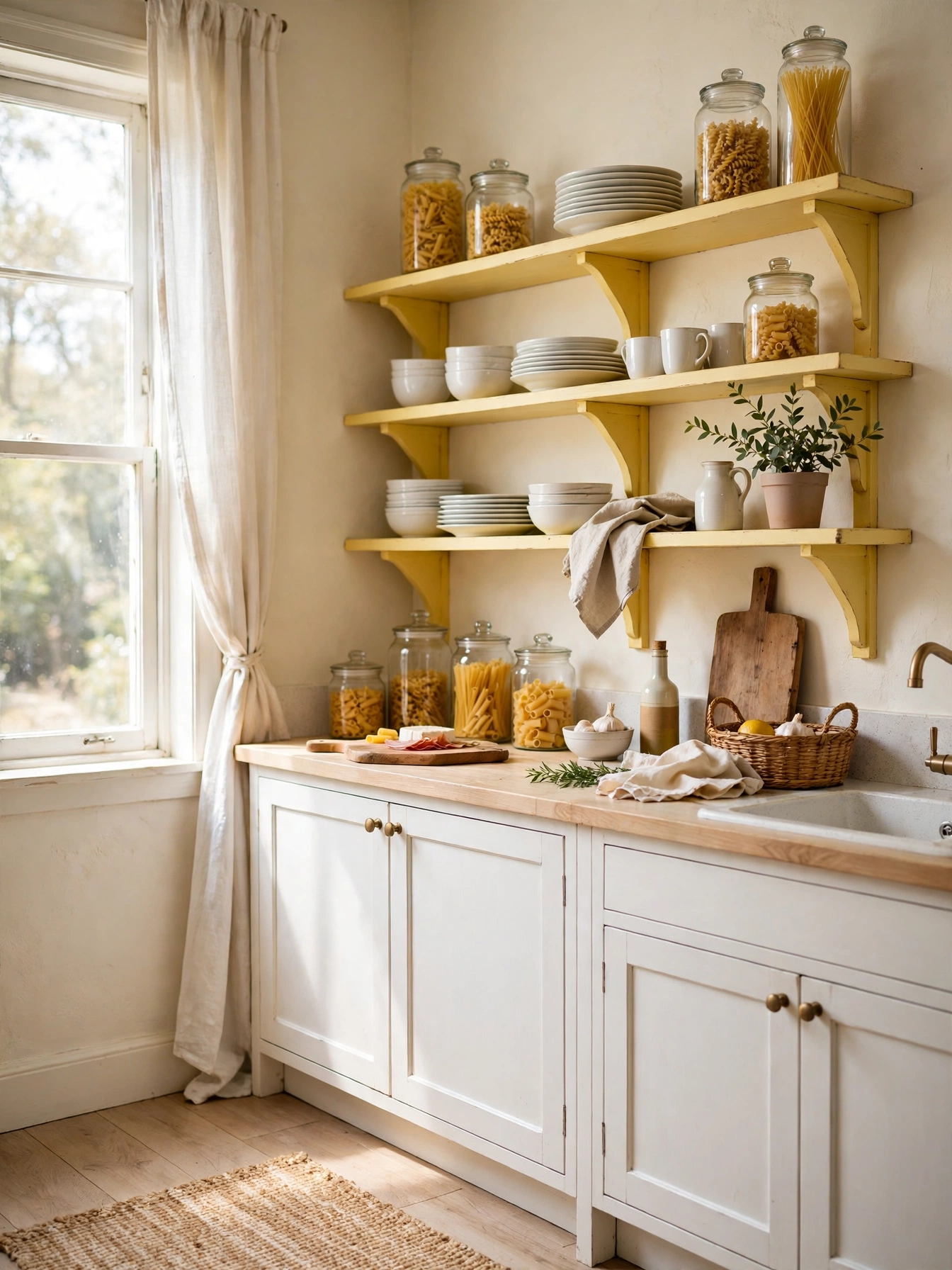
Why This Works:
- Yellow shelves lift a white cabinet run with one color
- Everyday dishes wait on open boards above the counter
- White plates glow against the butter yellow boards
- Two shelves add color in one short weekend project
Before any yellow paint goes on, the fixing above white lowers must hold a loaded shelf. Screw painted wood boards 12 inches deep and 1.5 inches thick to steel brackets rated for 50 pounds per shelf, with every bracket driven into a stud 16 inches apart. Set the boards 18 inches above the counter, the same gap as above the uppers, and give plates one shelf and glasses the next. Paint the shelves butter yellow in satin acrylic enamel over primer, so the color survives daily handling. Heavy cast iron stays off these boards, since a flexing bracket lets a shelf bow within months.
Two yellow shelves give a white kitchen its sunny accent. The lowers stay neutral, and the display stays calm when dishes are kept tidy and matching. Open boards collect dust every week, so anyone who dislikes tidying will find two shelves enough of a chore already. Glass jars with pasta and grains add a second texture. White plates keep the display calm. Keep the shelf count at 2, since any more pushes the yellow from accent to main event and the wall loses its calm.
Butcher Block Warmth
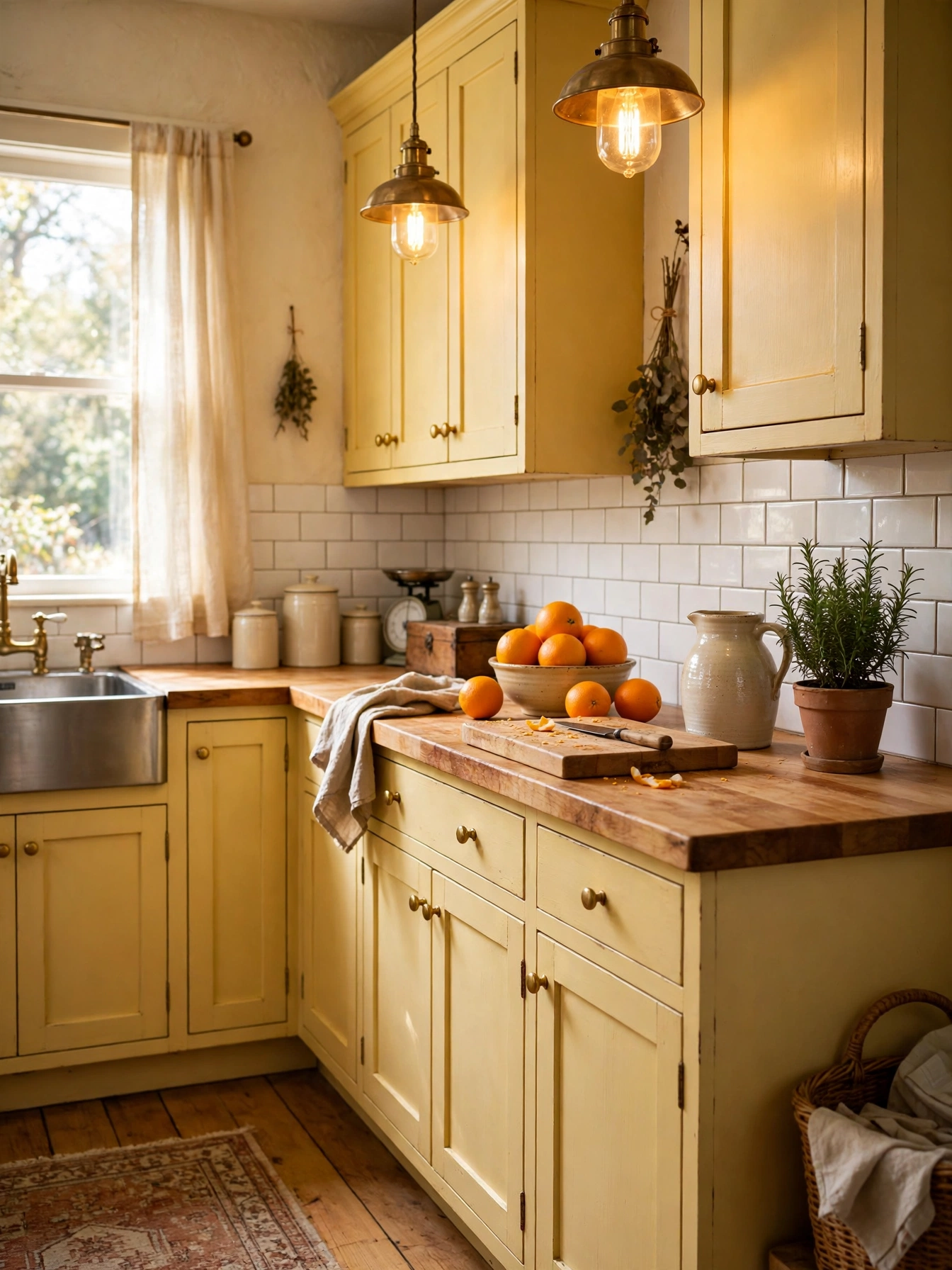
Why This Works:
- Warm wood counters balance cool yellow paint
- Butcher block adds a natural texture beside painted cabinets
- The wood top invites chopping and prep right on the surface
- Pale maple keeps the room light under the yellow
Thickness decides how solid a pale maple butcher block feels beside butter yellow cabinets. Choose a block 1.5 inches thick and 25 inches deep, set at the standard 36 inch counter height, with a food safe oil finish applied in 3 coats. Oil the top every 3 months, since a dry block absorbs water and stains near the sink within weeks. Keep the sink area sealed with a beeswax top coat, and wipe spills at once rather than letting citrus sit on the wood. Skip a dark walnut block with pale yellow cabinets, because the heavy wood and light paint fight each other and the room loses its balance.
Maple block takes knife marks in stride and keeps its pale tone. Pine dents under a heavy pot, and walnut reads darker against yellow before deepening over time. Quartz needs no oiling and asks almost nothing afterward. The wood brings a warm tone to the room. Keep the backsplash white subway tile 3 by 6 inches and the hardware brass, so the palette stays in one warm family. Sand out light knife marks with 220 grit paper, then re-oil the spot and let it dry for 24 hours.
Bold Vintage Yellow Kitchen Ideas
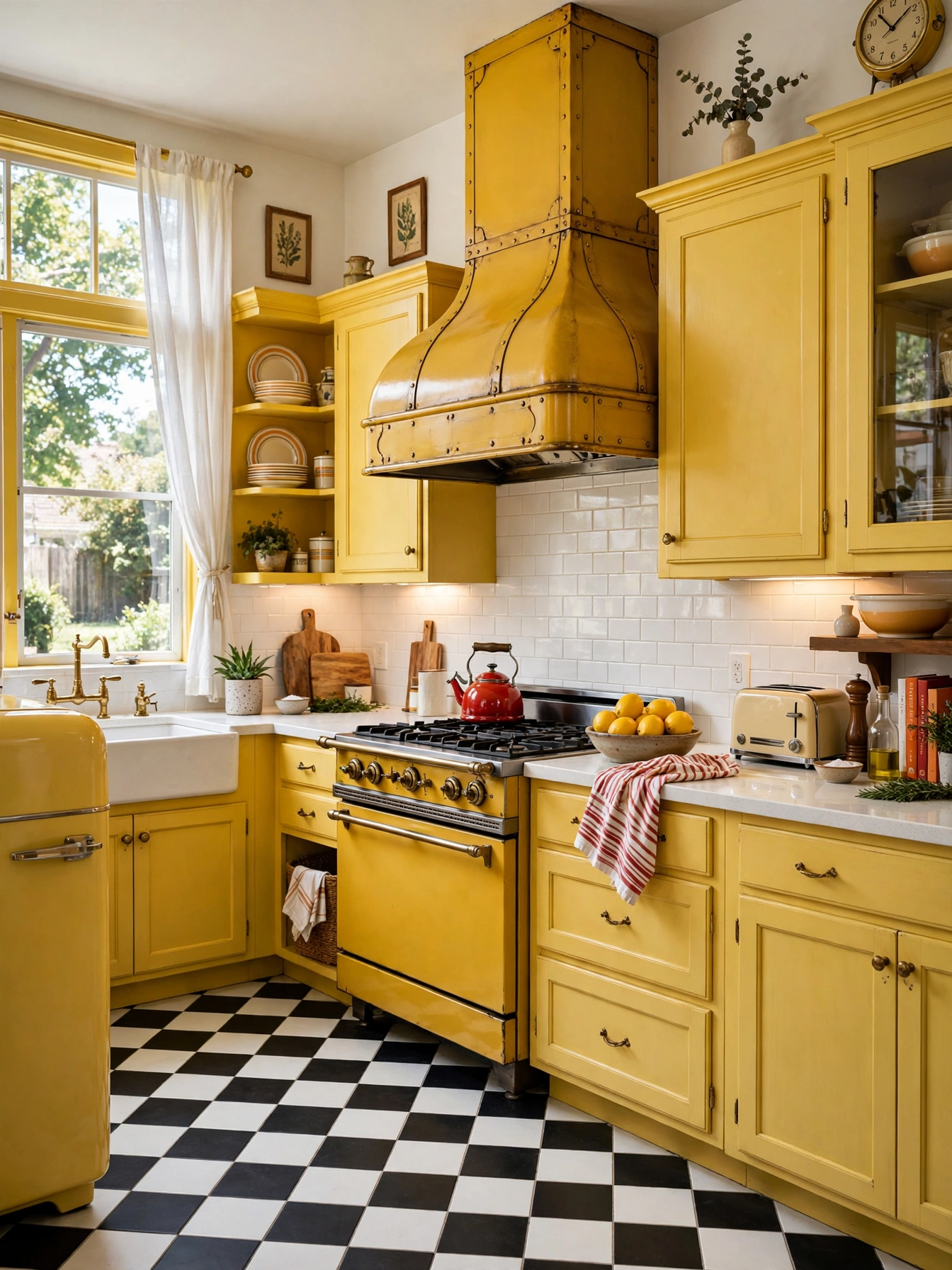
Why This Works:
- A mustard hood turns the range wall into a statement
- Bold yellow above the range draws the eye upward
- White counters keep the strong color from overwhelming the room
- Black and white floor anchors the lively palette
Calm cabinets let one bold yellow hood carry the whole range wall. Choose a hood 30 inches wide for a 30 inch range, mounted 30 to 36 inches above the cooktop, with a fan rated at 300 cubic feet per minute for a standard gas range. Paint the hood mustard yellow in a heat resistant satin enamel, applied over primer on steel in two coats, since ordinary paint yellows further near heat. Keep the duct run short, under 10 feet with no more than 2 bends, so the fan still clears steam at full power. Avoid a bold hood in a kitchen with a low 8 foot ceiling and dark cabinets, because the strong color drops the ceiling visually and the room feels tight.
The hood becomes the one playful note in an otherwise practical kitchen. The mustard tone pairs with butter cabinets. Steel hoods wipe clean with a damp cloth. A wood hood absorbs grease and needs a washable finish. Keep the backsplash white and the floor black and white tile, so the hood has a quiet frame. A charcoal filter needs changing every 3 months when the hood vents back into the room. A ducted hood needs only a grease filter wash every month.
Beadboard Backsplash Pop
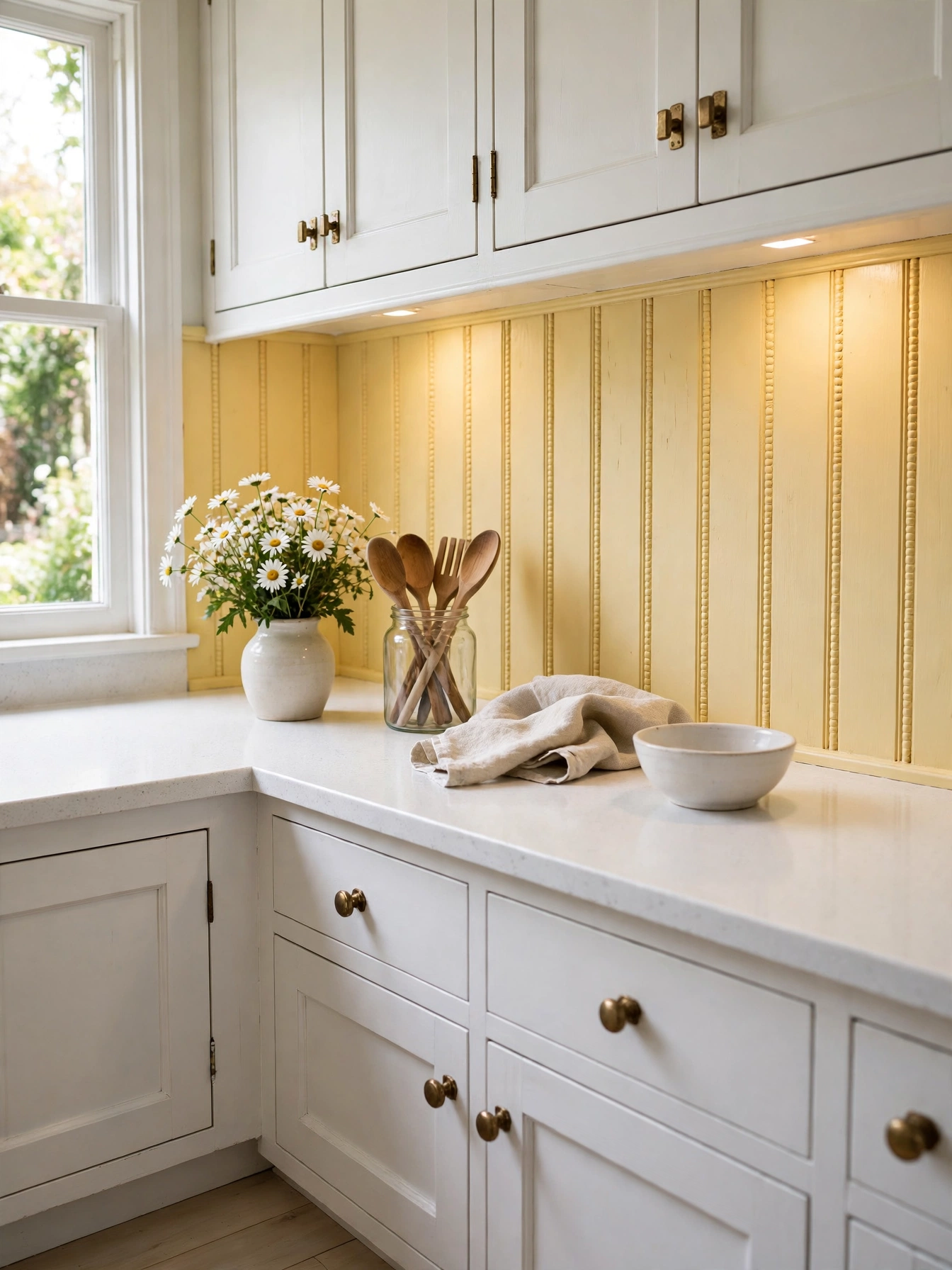
Why This Works:
- Yellow beadboard adds color in one slim band
- The 3 inch boards bring texture to a plain wall
- White cabinets keep the yellow band from dominating
- Beadboard paints easily to match any yellow
A slim band of butter yellow beadboard stripes a white kitchen with sunshine. Fit beadboard made from 3 inch boards, set 18 inches high between the 36 inch counter and the uppers, with a chair rail cap 1 inch thick along the top edge. Paint it in a washable satin finish over primer, since the band behind the range catches steam and grease daily. Seal the seams with paintable caulk before painting, so moisture never reaches the board edges. Do not use raw MDF beadboard behind the sink, because water swells the board within months unless every edge is sealed.
The yellow band flatters a cottage kitchen with white cabinets and pale wood floors, and it pairs with brass or black hardware. Tile shrugs off water at the sink. Beadboard brings a softness that tile cannot copy. A hand painted tile mural sells for 400 to 900 dollars, against 150 to 350 dollars for a plain tile run, and beadboard sits below both, with a full band fitted from boards, paint and a weekend of work. Wipe the band weekly with a damp cloth, and touch up chips with a small brush before moisture reaches the wood.
Farmhouse Sink Sunshine
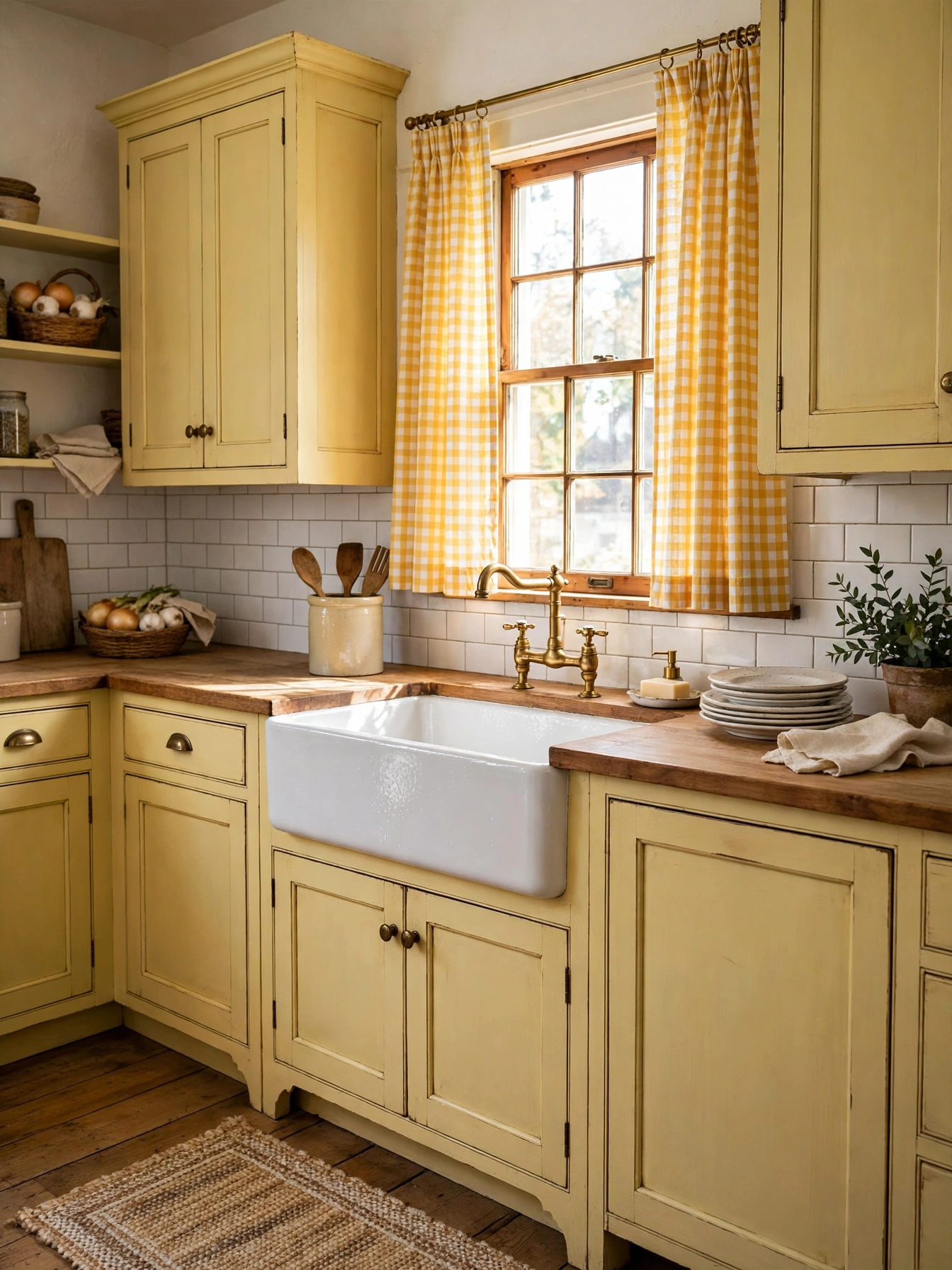
Why This Works:
- A white apron sink gives yellow cabinets a bright center
- The deep basin handles large pots without splashing
- Brass faucet warms the white and yellow pairing
- Gingham curtains repeat the yellow above the sink
White fireclay, set as an apron sink, centers butter yellow cabinets in brightness. Choose a sink 30 inches wide with a 10 inch deep basin, set in a base cabinet 33 inches wide that supports its 80 pound weight. Keep the countertop white quartz 3 centimeters thick on each side, with a 15 inch landing stretch beside the sink for wet dishes. The faucet should reach 8 inches above the sink rim, with a spout that swings 360 degrees so the basin fills evenly. Avoid a farmhouse sink in a base cabinet under 33 inches wide, because the apron overhangs the frame and the cabinet doors never close square.
Fireclay shrugs off chips from a dropped pot. Enamel steel dents under the same knock, and stainless steel belongs in a more modern room. The white apron brightens the yellow run, and the deep basin keeps splashes inside when washing large pans. A sink grid in stainless steel protects the fireclay base from scratches, and the grid needs a weekly wash so food never dries on it. Keep the window above the sink clear of full curtains, since daylight over the basin helps with washing up.
Vintage Pendant Lights
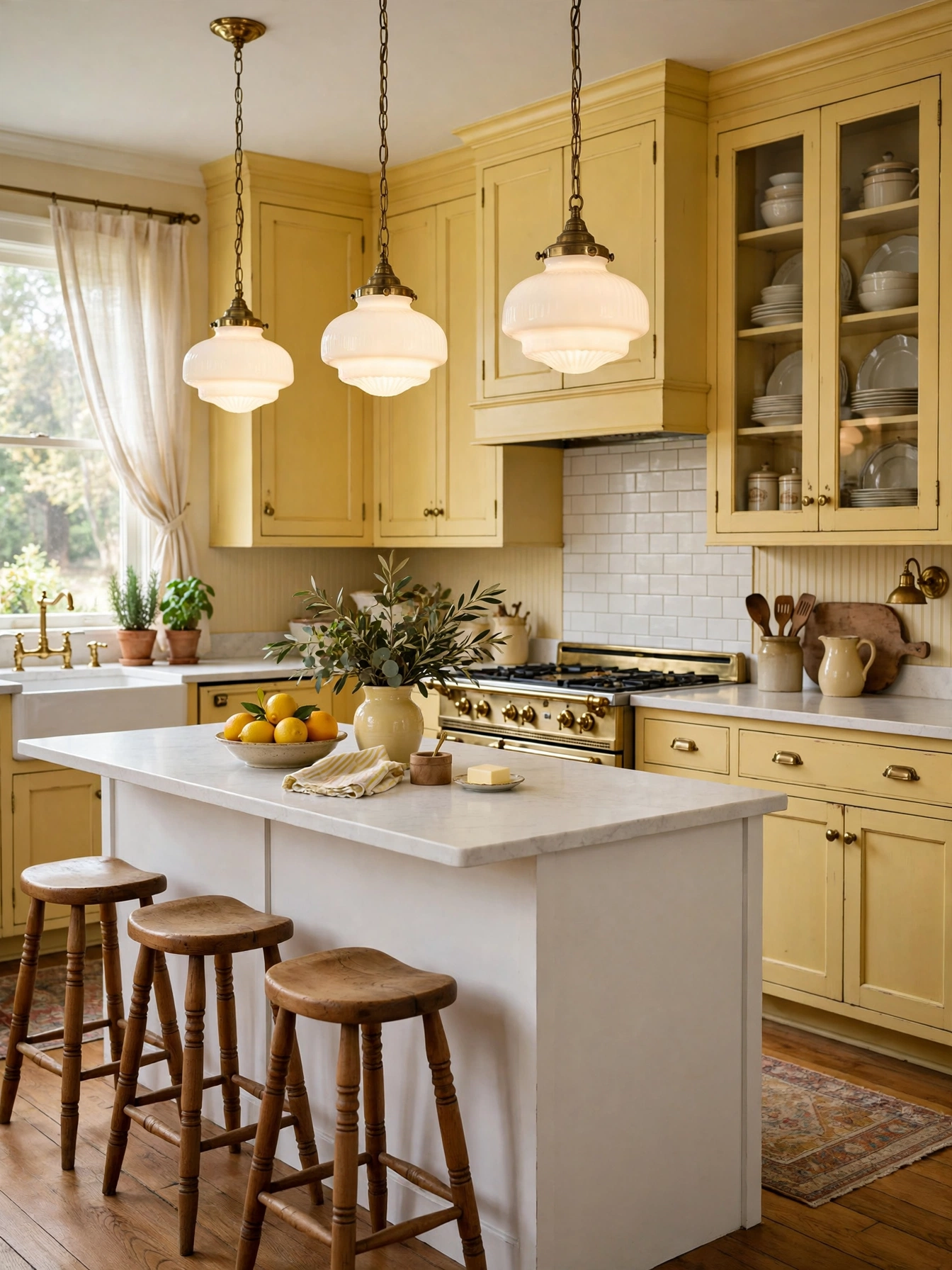
Why This Works:
- Milk glass pendants soften the light over yellow cabinets
- Three pendants give the island even light without glare
- Brass fittings repeat the hardware tone across the room
- Warm 2700K light keeps yellow glowing after dark
Over a yellow kitchen, milk glass pendants restore the 1950s glow. Hang pendants 30 to 36 inches above the countertop, spaced 24 to 30 inches apart, with shades 12 inches across for a standard island. Choose bulbs at 2700K to 3000K. That warm range keeps butter yellow glowing and holds its depth after dark. Fit a dimmer switch rated for LED bulbs, so the light drops low for evening meals. Do not hang pendants lower than 30 inches above the counter, because the shades block sightlines across the island and glare hits seated eyes.
Milk glass spreads the light evenly across the counter. Clear glass throws hard spots, and metal shades focus downward and leave the ceiling dark. A licensed electrician should fit new pendant circuits, because a new junction box and dimmer are not a DIY job in most homes. People walk around the island freely, with 42 to 48 inches of clearance on every side under the pendants. Clean milk glass shades monthly with a damp cloth, since kitchen grease dulls the glow within weeks.
Yellow Island Anchor
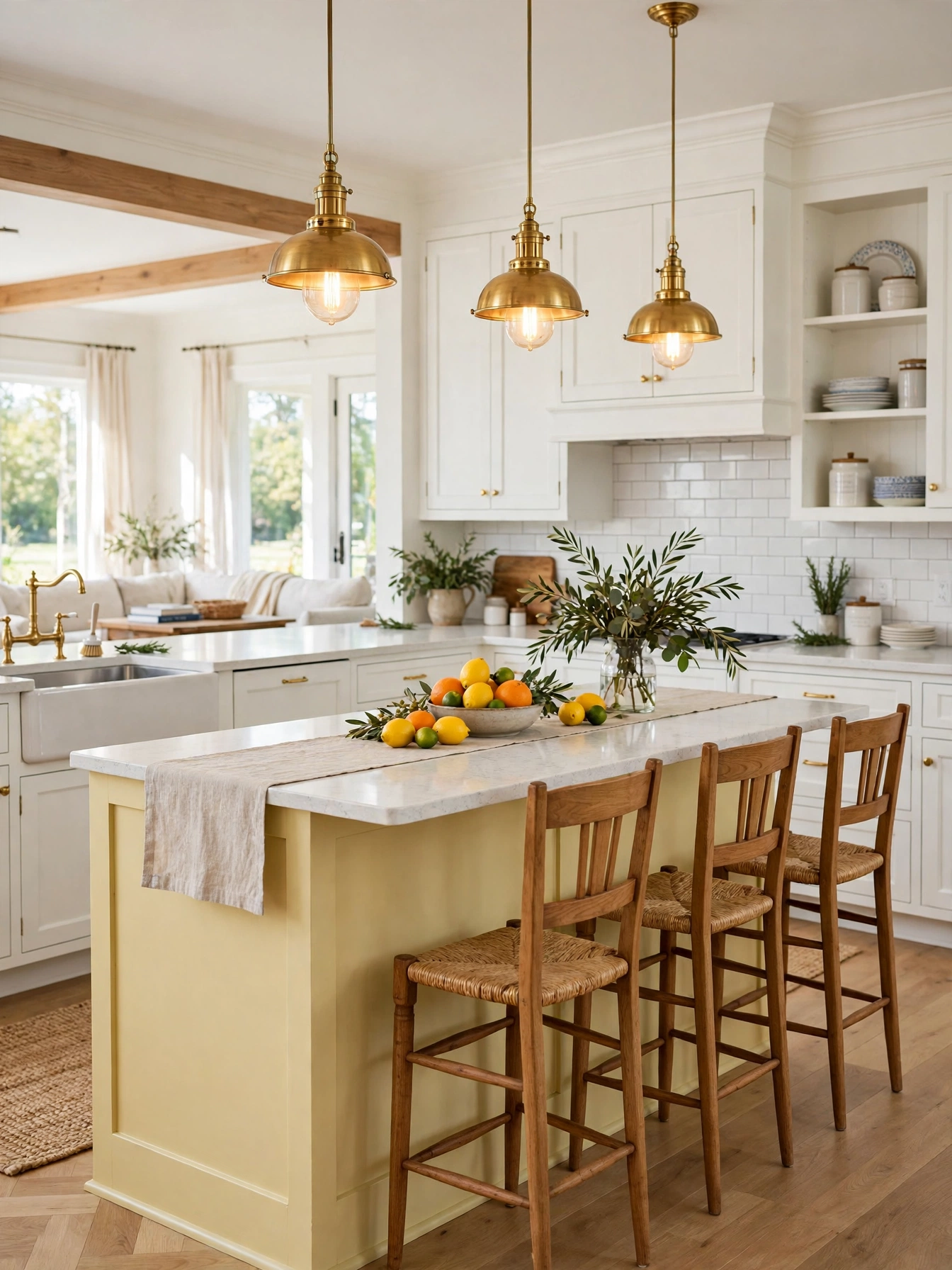
Why This Works:
- One yellow island adds color without repainting the room
- The white perimeter bounces light across the room
- A deep overhang leaves knees room at every stool
- Brass pendants tie the island into the wider room
Seventy-two to 96 inches of yellow island anchor a white perimeter room. The island measures 72 to 96 inches in length. Its width is 36 inches. A seating-side overhang of 12 to 15 inches leaves 24 inches of width for each stool. A walkway of 42 to 48 inches runs around the island on every side, with room for two cooks to pass. Pendants hang 30 to 36 inches above the island countertop. Spacing of 24 to 30 inches between pendants gives even light. An island shorter than 60 inches in yellow reads as a small accent. It needs 72 inches or more to anchor the room.
The seating side holds three stools. The working side stays clear for cooking. Painting only the island takes a weekend. The change needs only 1 gallon of paint plus primer. The island holds a fruit bowl, a vase and a chopping board during the day. A stone waterfall edge adds drama, so a simple eased edge keeps the yellow as the focus in most rooms. Pick satin for the island base. Kicked toes and stool legs punish the base every day.
Floral Tile Touches
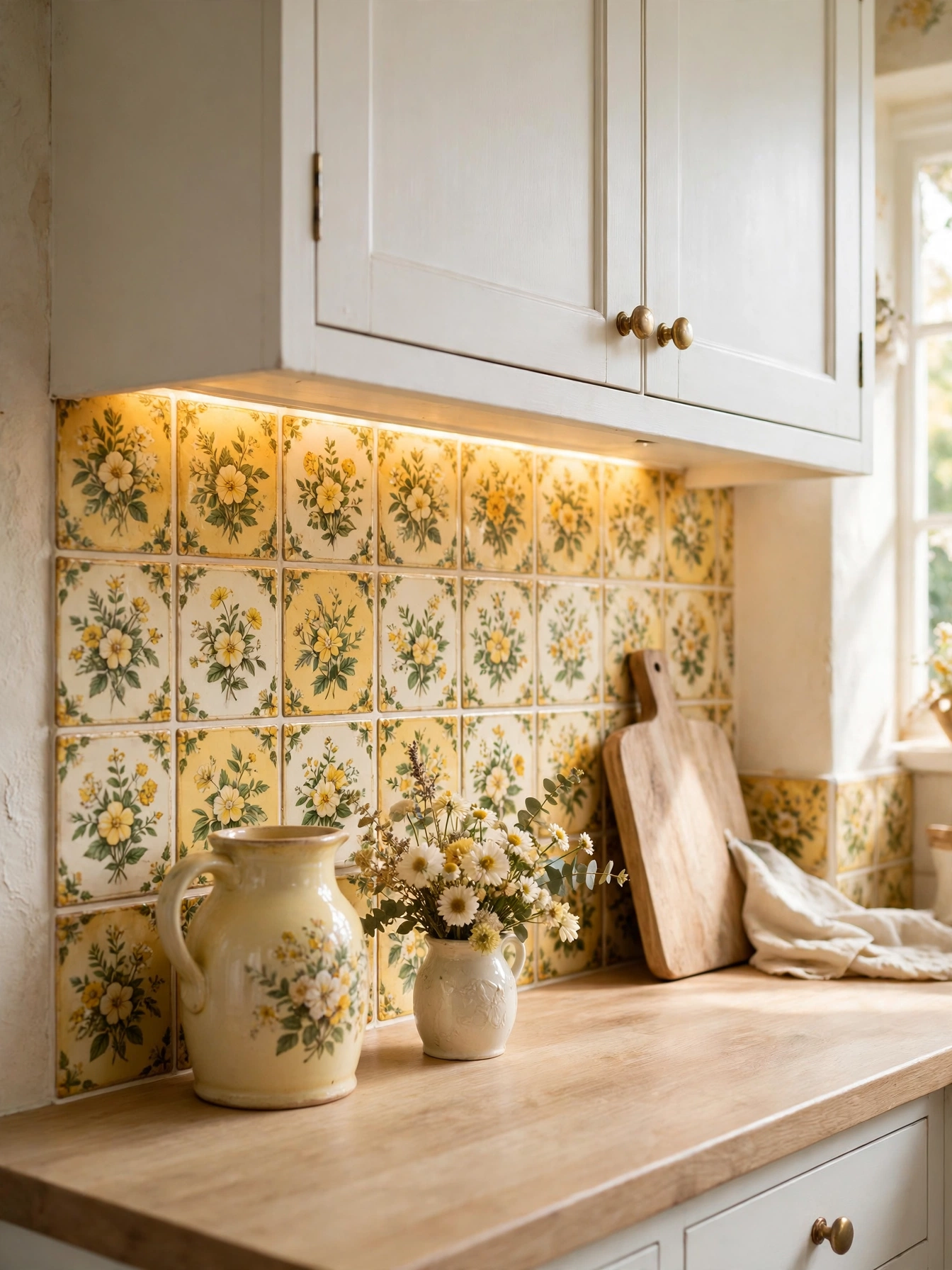
Why This Works:
- Floral tile adds vintage pattern in one slim band
- Yellow flowers repeat the cabinet color at eye level
- White cabinets keep the patterned tile from overwhelming the room
- Ceramic tile handles steam and splashes beside the range
Yellow and cream floral tile brings a vintage pattern to the backsplash. Pick patterned ceramic tile in 4 by 4 inch or 6 by 6 inch squares for the 18 inch band between counter and uppers, and bed it in pale cream grout that hides stains. White or pale butter cabinets in satin, with a pale wood or white quartz countertop, leave the tile as the one pattern in the room. Brush grout sealer over the tile joints annually, since kitchen grease soaks into unsealed grout near the range. Patterned counters beside a busy floral tile crowd the room, so keep the counter plain.
A floral backsplash gives a plain white kitchen its vintage heart, and the pattern brightens a cottage room with wood floors and brass hardware. Plain yellow subway tile calms a quieter room. Floral tile adds one lively element to the backsplash. Leave the flowers on the backsplash alone, and keep every other surface plain so they stay the focus. A standard backsplash runs 30 square feet, and a patterned tile layout needs 10 percent extra for cuts around outlets and corners.
Walnut Wood Balance
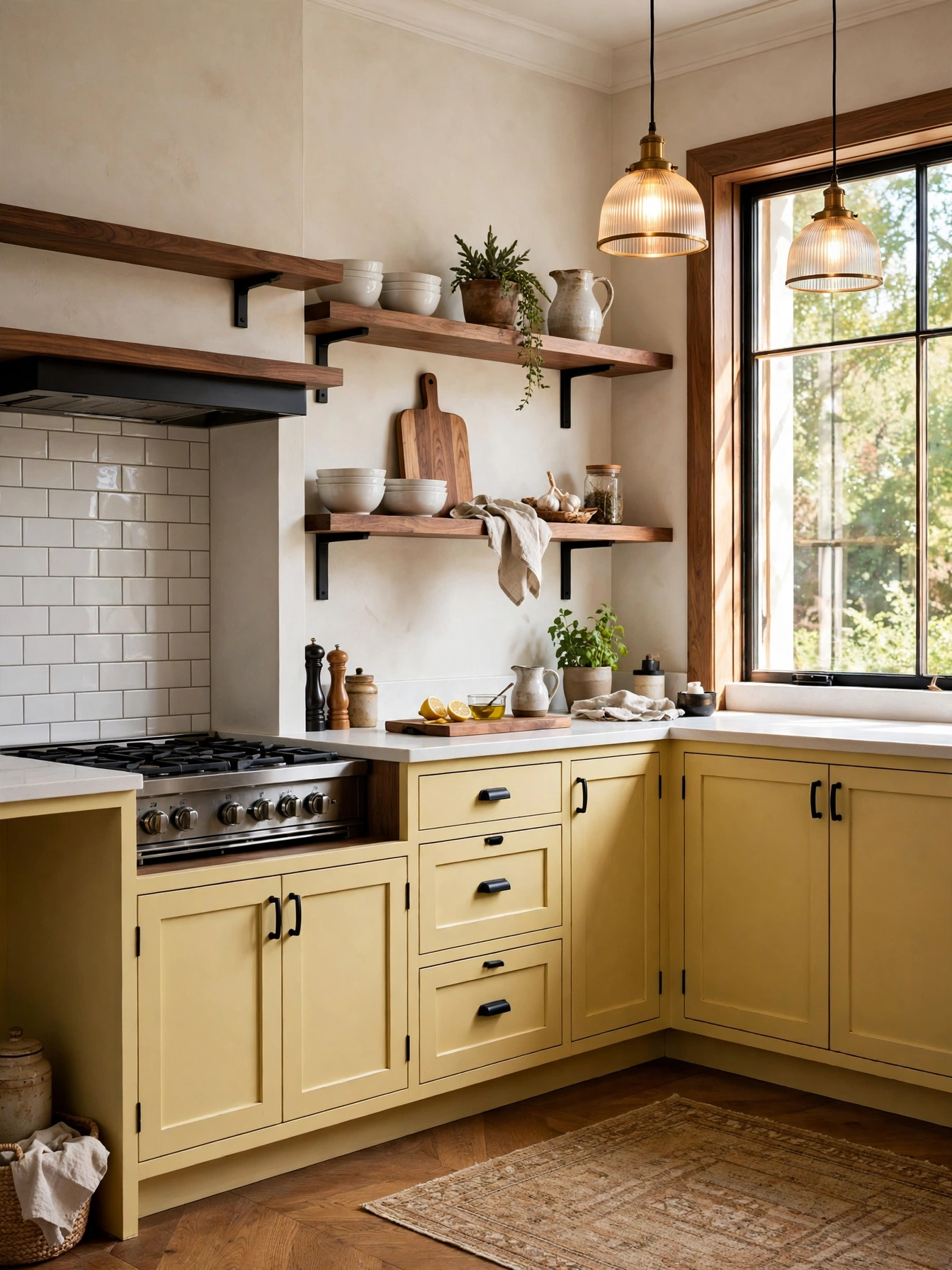
Why This Works:
- Walnut wood deepens pale yellow without darkening the room
- Wood shelves repeat the floor tone at eye level
- White counters keep the wood and yellow balanced
- Matte black pulls sharpen the warm wood-and-yellow pairing
A dark walnut note stops a pale butter yellow room feeling washed out. Use walnut for open shelves and a small island top, finished with a clear matte oil, and pair it with butter yellow cabinets in a satin finish. Keep the walnut shelves 12 inches deep and 1.5 inches thick, set 18 inches above the counter, with steel brackets rated for 50 pounds per shelf. For the island top, a 1.5 inch thick slab at 36 inches high lines up with the perimeter counters, and its 12 inch overhang seats a stool. Avoid a dark walnut floor with butter yellow cabinets and walnut shelves together, because three dark wood surfaces push the yellow out of focus.
The pairing brings a warmth that pale oak cannot copy, and walnut ages into a deeper tone over years. White oak stays pale and light. Walnut adds a deep note to a soft yellow room. Oil the wood shelf top each season. The quartz perimeter asks for no upkeep at all. Warmth sits where hands rest and easy care where cooking happens. Keep hardware black and simple, with 5 inch bar pulls on drawers, so the metal never fights the wood.
Cottage Pantry Doors
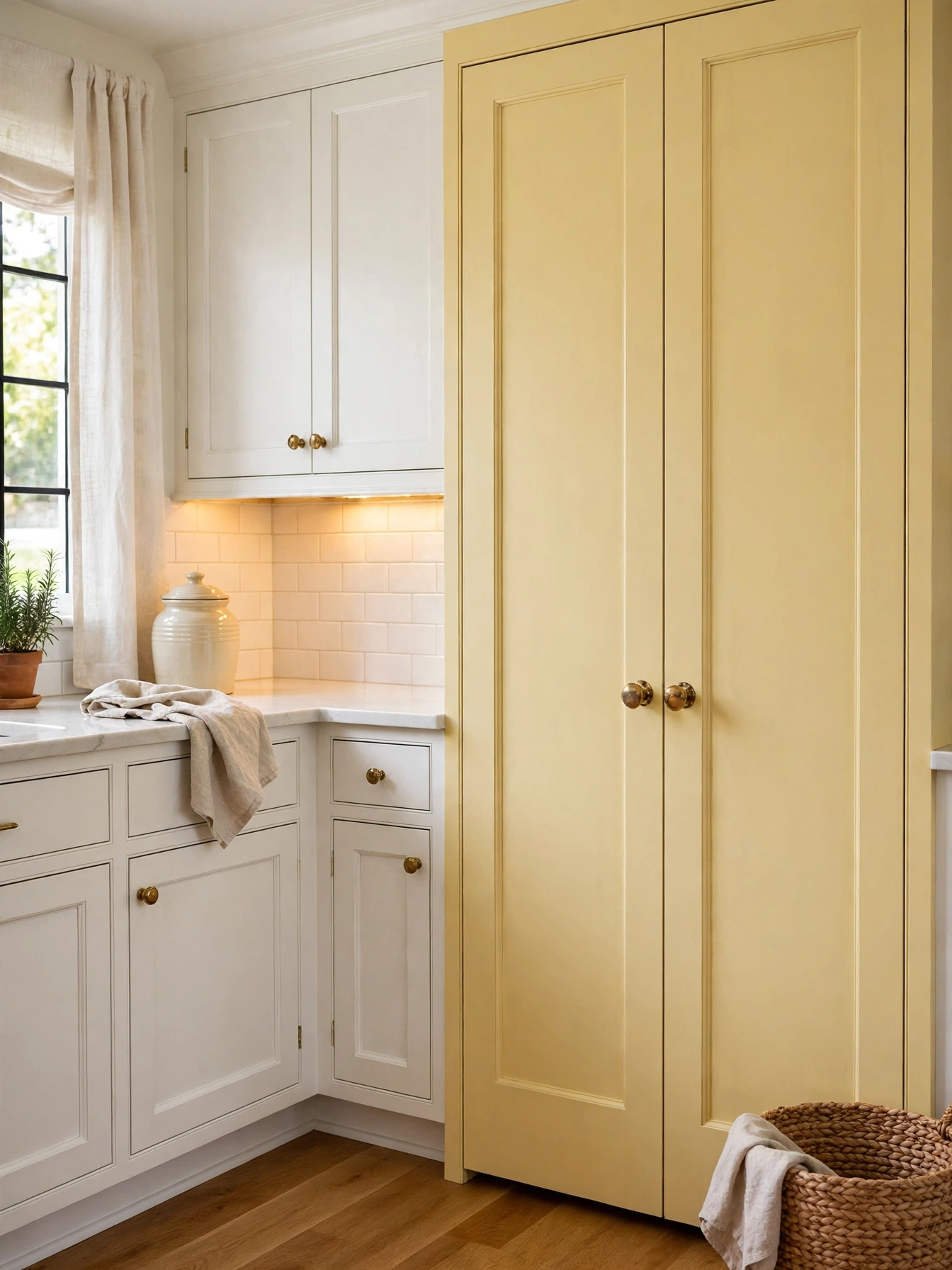
Why This Works:
- A full-height yellow run gives a white wall its color in one move
- Tall doors close over a week’s worth of food and dry goods
- Brass pulls on the pantry match the knobs across the room
- One strong yellow block is plenty beside white cabinets
Tall butter yellow doors make a single color statement in a mostly white kitchen. Tall doors 84 inches high and 24 inches wide take butter yellow in satin on primed maple. Tall doors are heavy. Fit soft-close hinges rated at 100 pounds per pair. Cereal boxes and jars stand upright inside the pantry. The shelves sit 14 inches apart and run 12 inches deep, so nothing needs stacking. A yellow pantry beside a yellow island crowds the room, since two large yellow blocks compete and the balance goes.
A week of food fits behind those tall closed doors, with the yellow lending character to a plain wall. Fixed shelves hold a full row of jars on each shelf. Pull-out shelves bring every jar forward so nothing hides at the back. Sort the shelves by category, and the family can find food without opening every door. Keep the pantry interior white, since pale shelves make jars and boxes easy to spot, and fit a small LED strip at 2700K inside so the back corners never sit dark.
Lemon Grove Details
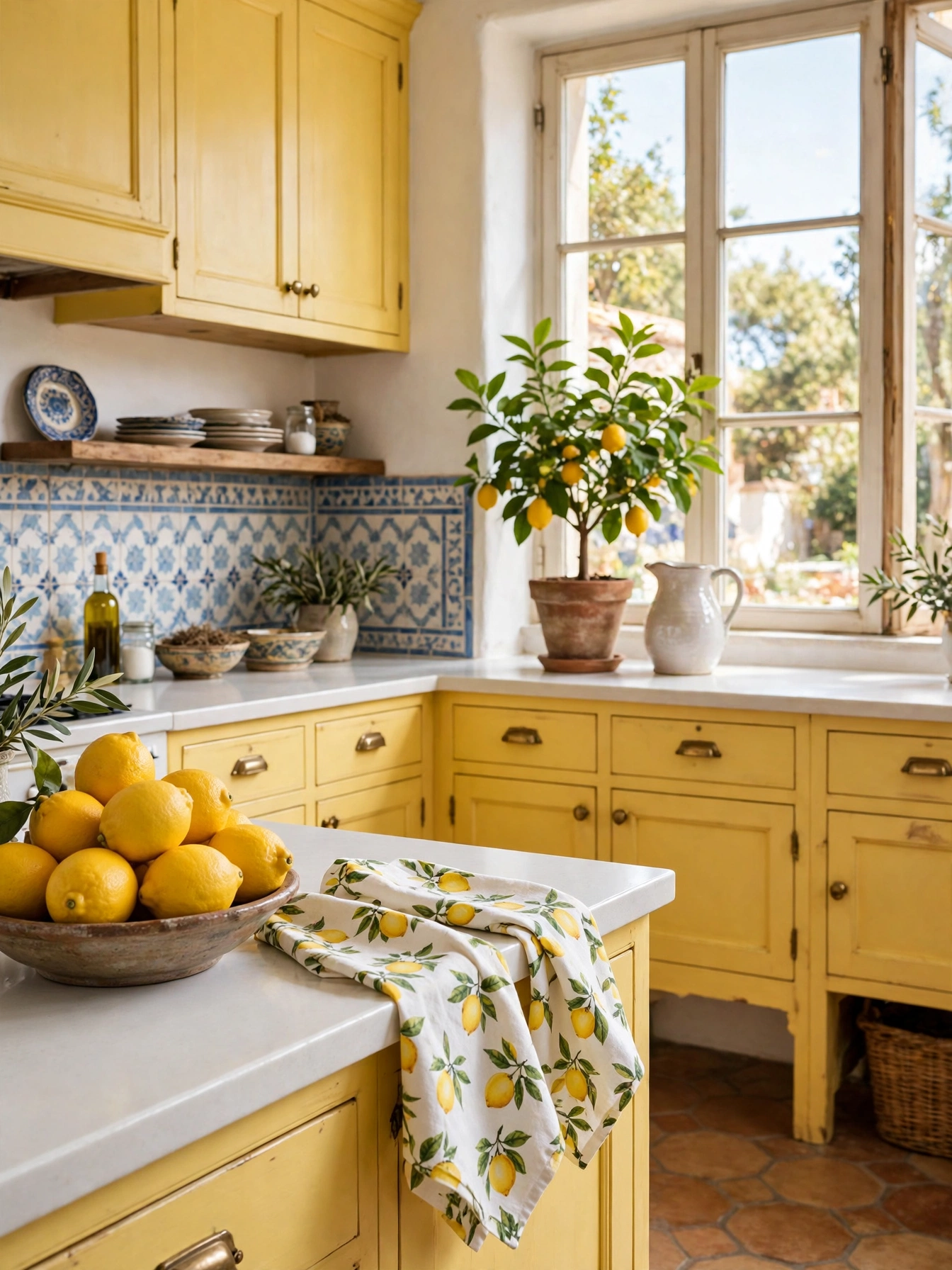
Why This Works:
- Fresh lemons add real color that paint cannot copy
- Lemon print towels repeat the yellow in soft fabric
- A potted lemon tree brings green life to the window
- Small details change with the seasons for free
Real fruit and small prints finish a yellow kitchen without turning it into a theme. Set a bowl of fresh lemons on the counter, 12 inches across, and replace the fruit every 2 weeks so it never softens or spots. Hang lemon print tea towels on the oven handle, with the print kept to one towel at a time so the pattern never crowds the room. Keep a potted lemon tree by the window in a pot 12 inches wide, with 6 hours of direct sun a day and water when the top 2 inches of soil feel dry. Avoid plastic lemons and large lemon wallpaper, since fake fruit reads as a theme park and a full wall of print dates the room fast.
Fresh lemons also serve the cooking, with juice for dressings and zest for baking. A printed towel dries hands and wipes counters. Cotton towels dry fast after a normal wash. Linen towels wrinkle in the wash and need ironing every time. Keep the rest of the kitchen calm, with white counters and butter cabinets. The lemon details read as a fresh accent. A small ceramic pitcher with a lemon branch on the table repeats the theme without another purchase.
Warm Evening Glow
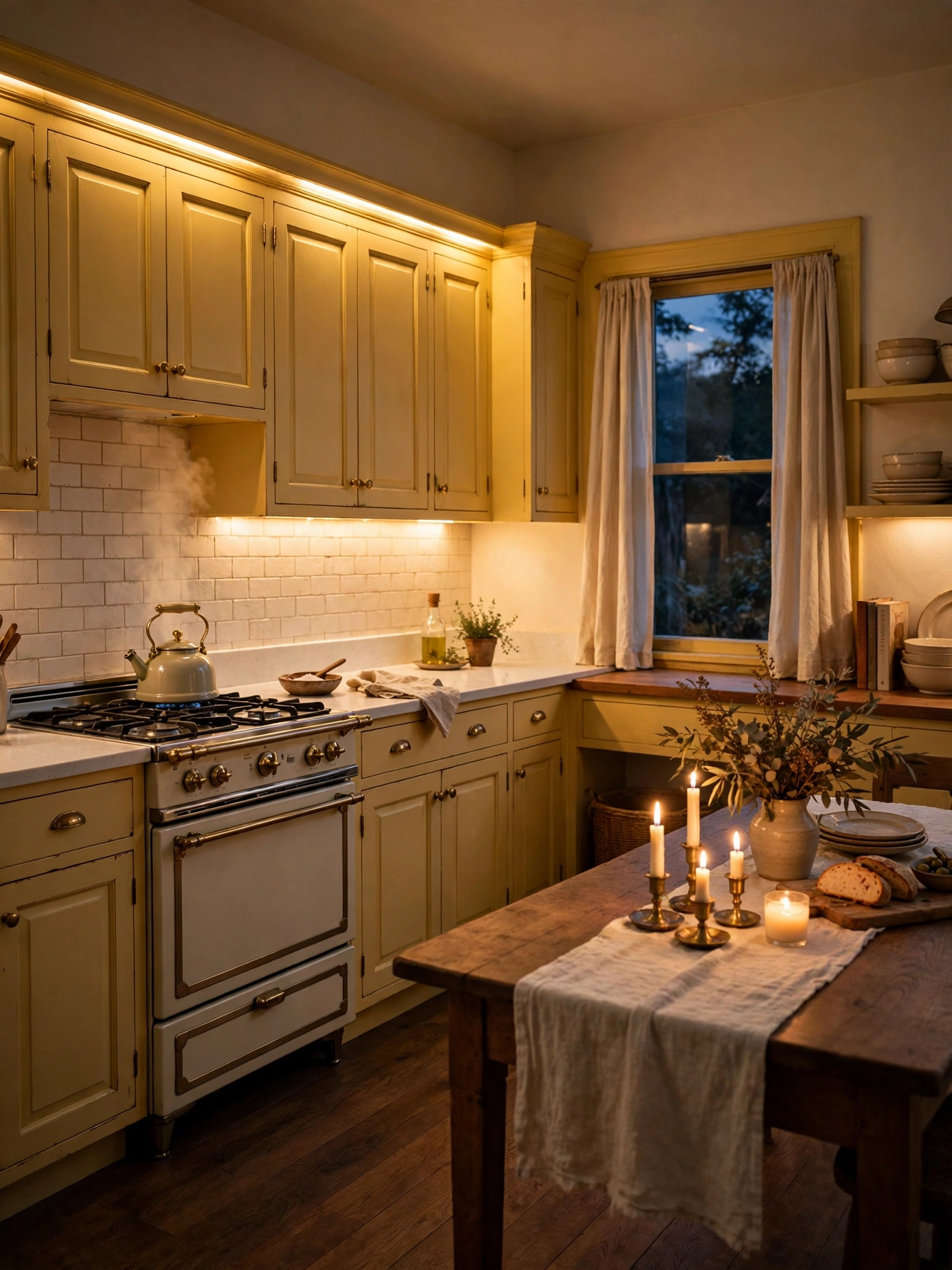
Why This Works:
- Low amber light turns the butter cabinets golden at dusk
- Under-cabinet strips light the worktop without glare
- Amber evening light deepens the butter tone gently
- A calm evening kitchen invites slow cooking and talk
At dusk, warm light shifts butter yellow cabinets from sunny to golden. Fit under-cabinet LED strips at 2700K to 3000K, mounted 2 inches back from the front edge of uppers that sit 18 inches above the 36 inch counter. Choose strips rated at 300 lumens per foot, with a dimmer so the light drops low for evening meals. Keep the ceiling light on a separate dimmer, since one bright overhead flattens the yellow and kills the evening mood. Skip cool white bulbs above 4000K in a yellow kitchen, because the cold light turns butter yellow gray by evening and the room feels like an office.
Dinner light comes from the 2700K strips under the uppers. The table stays lit after dark. LED strips use about 5 watts per foot and last 25,000 hours. Old halogen pucks run hot and need changing yearly. A dimmer on the under-cabinet run lets the cook raise the light for chopping and lower it for eating, and the same warm tone carries through pendants at 2700K. Keep candles on the table away from curtains, and blow them out before leaving the room.
FAQs
What makes vintage yellow kitchen ideas work in a small kitchen?
Pale butter yellow reflects daylight, so a small kitchen feels brighter without a full remodel. Paint only the lower cabinets, keep uppers white, leave 18 inches above the 36 inch counter, and use white counters. The Spruce notes that light warm colors help compact rooms feel larger and open.
Which yellow paint shade hides cooking marks best?
A mid-tone butter yellow in a satin finish hides cooking marks well, since the warm tone softens splashes. Roll the paint over primer on doors 3/4 inch thick, wipe with a damp cloth weekly, and avoid flat paint, which absorbs grease near the range within weeks.
How much yellow is too much in vintage yellow kitchen ideas?
Keep yellow to about 30 percent of the room, with 60 percent white or cream and 10 percent wood or brass. Paint lowers yellow and uppers white, or use one mustard wall. Better Homes and Gardens notes that a clear dominant color keeps a bold accent from taking over.
Do yellow cabinets need a special finish near the range?
Yes, cabinets beside the range need a washable satin or semi-gloss acrylic enamel, since steam and grease reach them daily. HGTV notes that a durable cabinet finish matters more than the paint brand, so let the enamel dry a full 24 hours before the cabinets go back into daily use.
What lighting keeps a yellow kitchen warm at night?
Use warm bulbs at 2700K to 3000K in pendants and under-cabinet strips, with pendants hung 30 to 36 inches above the counter. The National Kitchen and Bath Association recommends that pendant height for clear sightlines, and a dimmer lets the light drop low for evening meals.
Conclusion
Vintage yellow kitchen ideas earn their place by warming a room that white alone leaves flat, and the 2026 version does it with soft butter tones and honest materials rather than plastic kitsch. Start by painting one full door in the shade you like, checking it in morning and evening light, then set the 18 inch gap above the counter and the 30 to 36 inch pendant height before committing. Pick the shade in daylight, keep the finish satin, and let brass hardware give the yellow its glow. Follow HomelyCrafter on Pinterest for more ideas. Save this to your Pinterest boards so you can refer back to it!

Muhammad Israr is a home decor enthusiast and the writer behind Homely Crafter. He spends his days researching paint colors, layouts and budget-friendly styling ideas, then breaks them down into practical, easy-to-follow guides so you can decorate with confidence.
1 thought on “21 Playful Vintage Yellow Kitchen Ideas You Will Love”