
Why does one tree look full and intentional while another looks like ornaments hung on a bare frame? The difference is rarely money. It comes down to three decisions: how many lights per foot, how ornaments are spaced by size, and where the largest pieces sit. These 23 christmas tree decor ideas turn them into exact numbers you can follow.
You will find ornament counts for 6, 7, and 9 foot trees, lighting plans, ribbon lengths, and palettes with real color names. Each idea includes what to avoid, honest trade-offs, and one pro tip with a measurement.
Whether your tree is a slim pencil in a studio corner or a 9 foot fir in a two story living room, start with lights, build outward by ornament size, and finish with the topper. The ideas below follow that order, so you can stop anywhere and still have a finished looking tree.
Classic Christmas Tree Decor Ideas
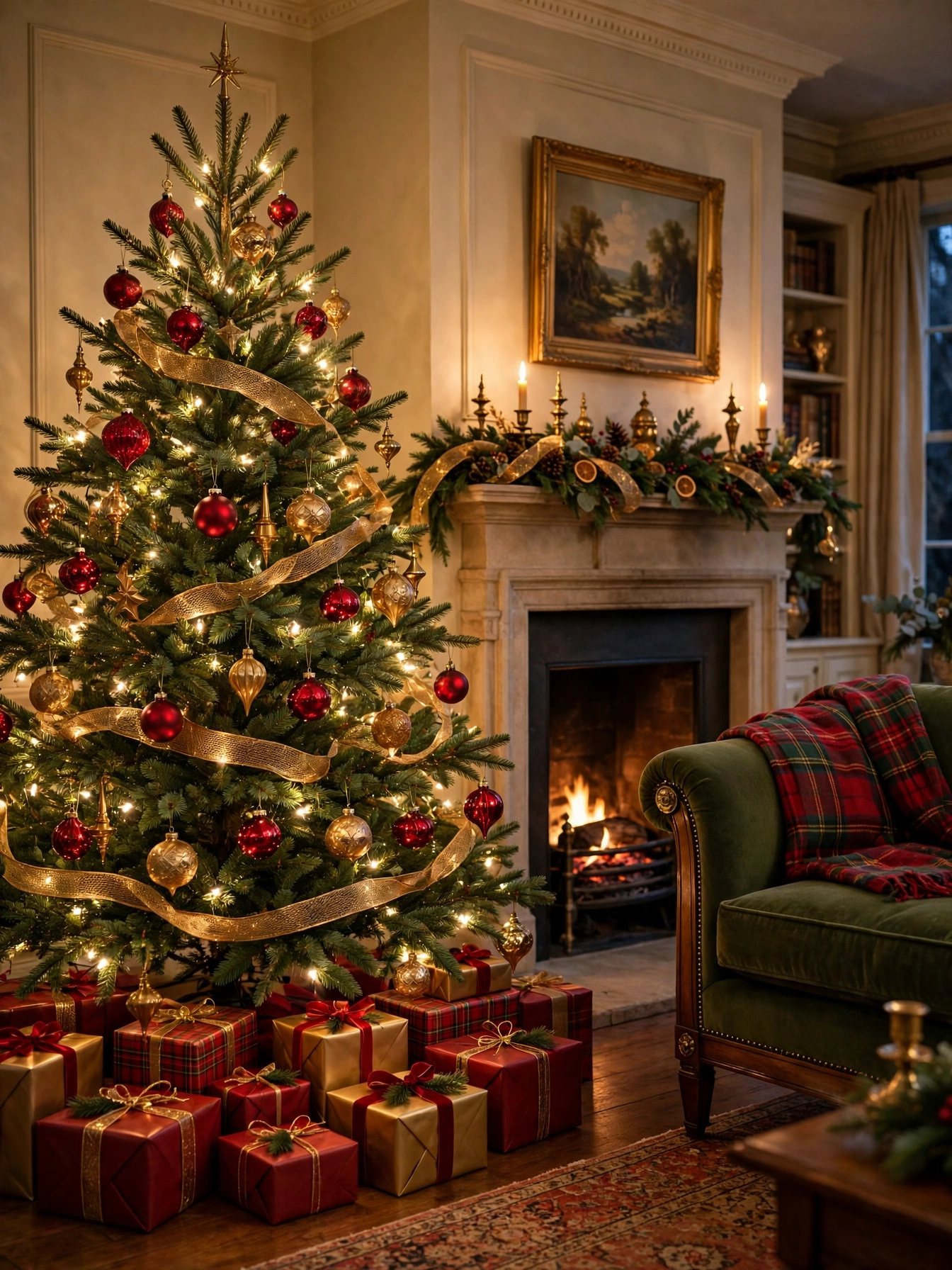
Why This Works:
- Red and gold is the most forgiving palette for mixed ornament collections.
- Warm white lights make gold reflect instead of washing it out.
- The colors suit traditional furniture and wood floors without clashing.
- Ornaments in these colors are easy to find at every price point.
Start with a 7 foot tree and 700 warm white mini lights, which works out to 100 lights per foot of height. Add 60 to 80 ornaments in a mix of 3 inch and 4 inch sizes, with the larger pieces placed lower and toward the inside of the branches. Finish with 10 yards of 2.5 inch wired gold ribbon cut into 18 inch lengths and tucked into the branches in loose loops. Avoid cool white lights here because their blue cast turns gold ornaments flat and gray. Use only UL-listed light strings and check that each string is rated for indoor use.
This look suits family rooms where the tree also carries kids’ handmade ornaments, since red and gold absorb a few mismatched pieces without looking messy. Glass baubles reflect light better than plastic, but shatterproof ornaments are the safer choice when toddlers or large dogs share the room. One honest limitation is that deep red can dominate a small room, so in spaces under 120 square feet, keep red to about 40 percent of the ornaments and let gold carry the rest.
Silver Frosted Branches
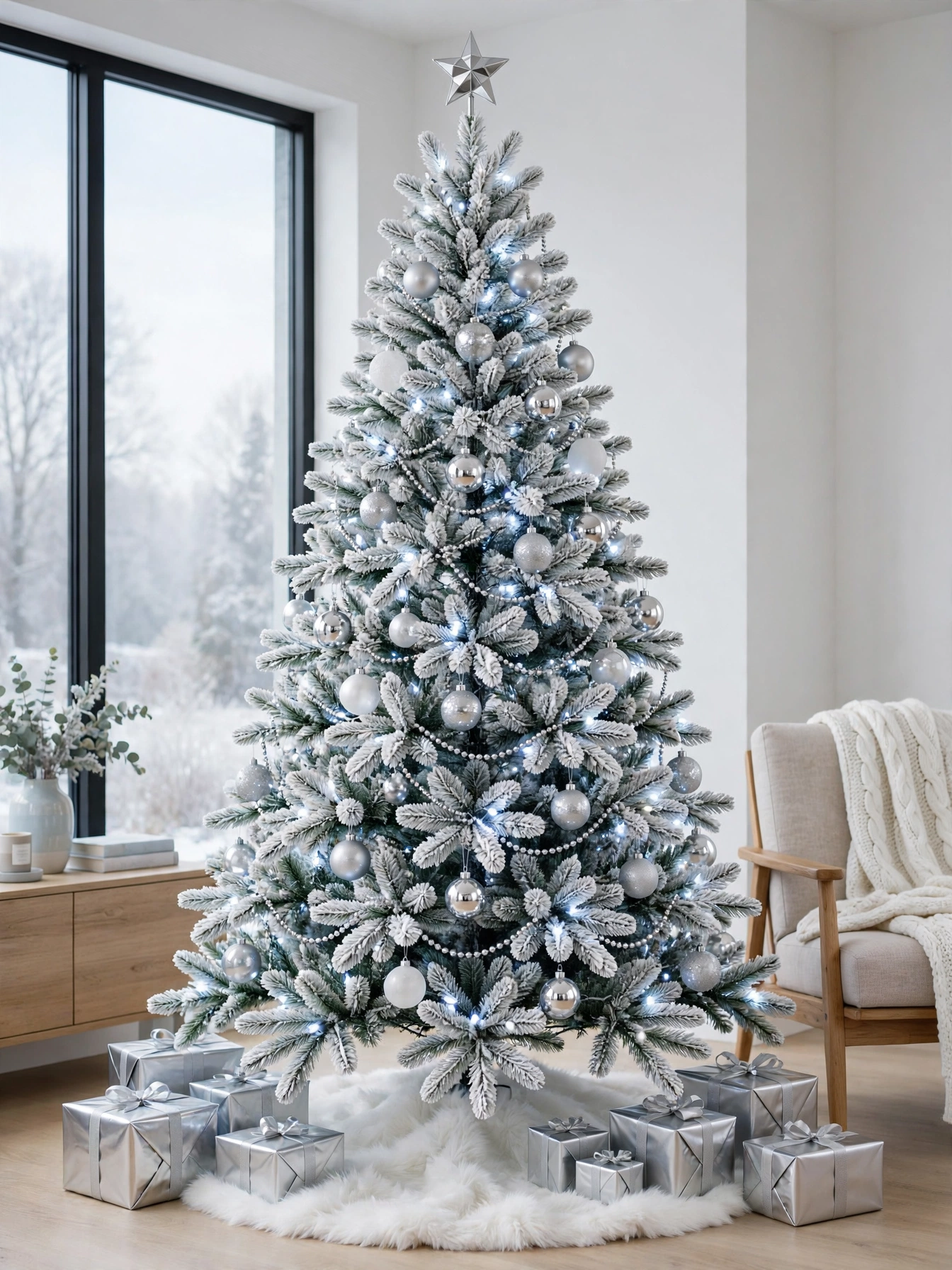
Why This Works:
- Frosted tips already supply visual texture, so fewer ornaments are needed.
- Silver reflects cool light and makes the tree glow after dark.
- The palette pairs with gray sofas, white walls, and chrome fixtures.
- A frosted tree looks finished even before ornaments go on.
Choose a 7.5 foot frosted artificial tree with at least 1,000 branch tips, then add 800 cool white LEDs across 4 strands of 200. Use 50 to 70 silver ornaments in matte, shiny, and mercury glass finishes, plus 9 feet of silver bead garland draped in two loose swags. Avoid heavy ornaments on frosted branch tips because the flocking adds weight and tips bend under anything over 3 ounces. A pre-lit tree saves about 45 minutes of stringing time compared with an unlit tree, but check each built-in strand before you start decorating.
Frosted trees suit modern rooms and renters who want a strong look with a smaller ornament box. One thing to watch: flocking sheds fine particles through the first two seasons, so plan on vacuuming around the base every week in December, and steer clear of this style if anyone at home has dust sensitivity. Silver also shows fingerprints fast, so handle mercury glass balls by their caps and keep a microfiber cloth nearby during decorating.
Woodland Rustic Charm
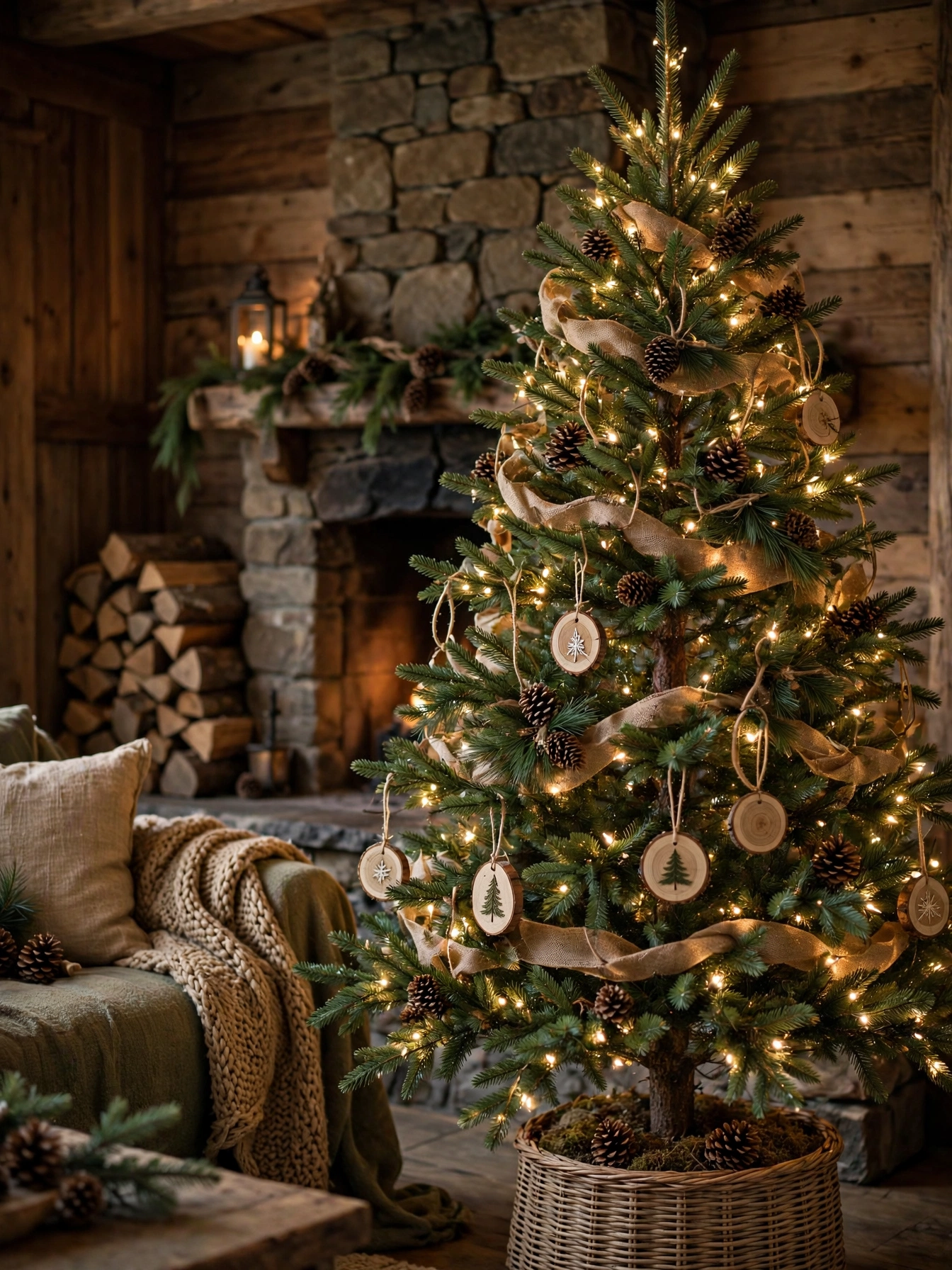
Why This Works:
- Natural materials cost little and age well from year to year.
- Pinecones and wood add texture that shiny ornaments cannot match.
- The palette works with stone, leather, and dark wood furniture.
- Burlap ribbon is forgiving for beginners because it holds its shape.
Work with a 6 foot tree and 600 warm white lights, then add 40 pinecones wired to branches with 24 gauge floral wire. Cut 8 yards of 4 inch burlap ribbon into 24 inch lengths and weave them vertically through the branches. Hang 30 wood slice ornaments between 2 and 3 inches wide, and finish with a simple twine bow at the top. Avoid placing real pinecones near open flames or candle arrangements, since dried cones catch fire fast. Natural pinecones are cheaper and smell better, while faux pinecones are lighter, sap free, and safe to store in sealed bins.
This style fits cabins, lodges, and rooms with exposed beams, and it is a good pick when the rest of the house already leans rustic. Expect a bit of mess here: burlap fibers and pinecone scales land on the floor, which means sweeping around the tree twice a week. Keep small pinecones out of reach of pets that chew, and skip real cones entirely if anyone in the home has a pine allergy.
Buffalo Plaid Farmhouse
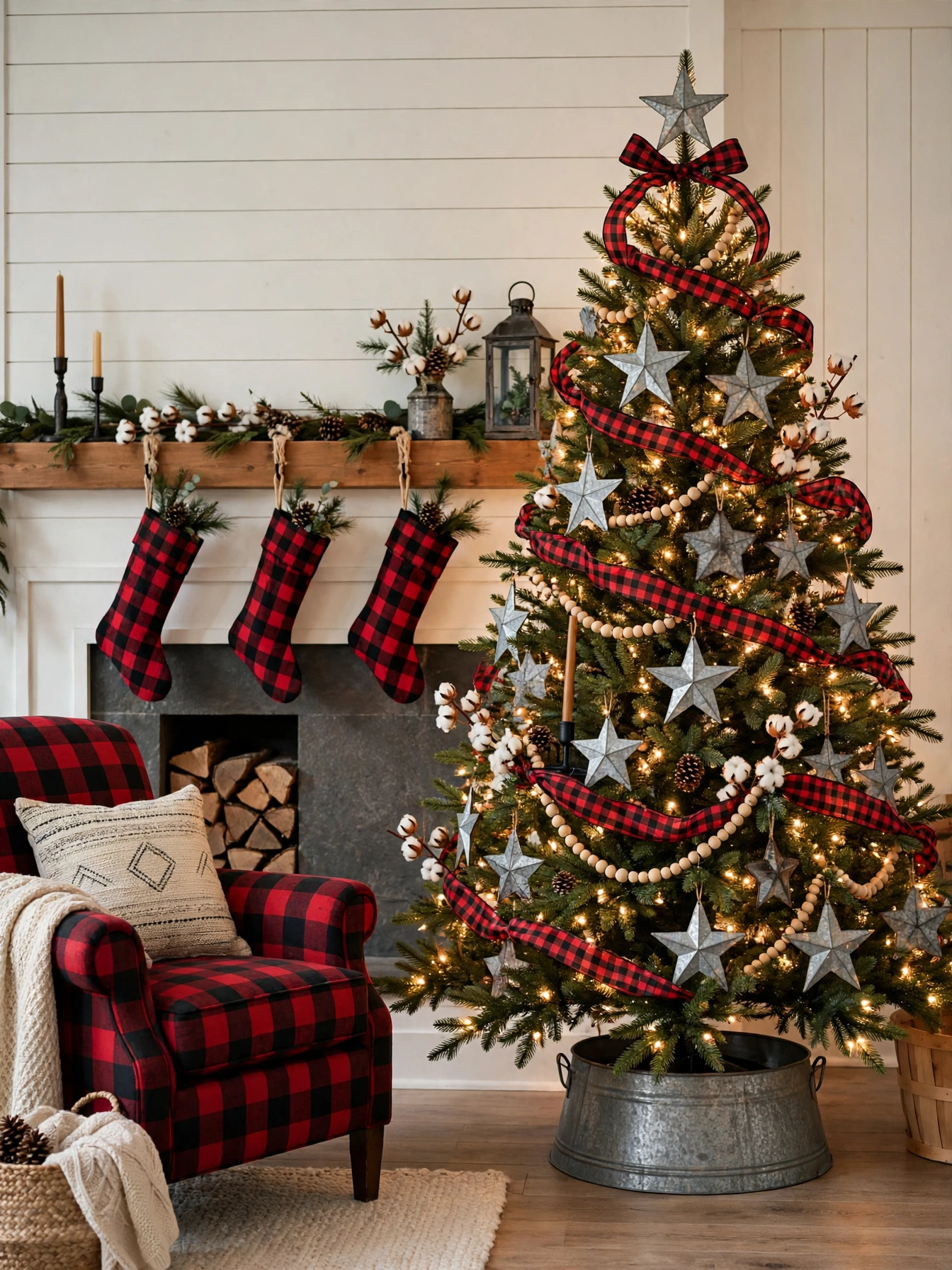
Why This Works:
- Buffalo plaid reads as Christmas from across the room with very little effort.
- Black and white ornaments keep the red from feeling loud.
- Galvanized metal adds a matte texture that balances shiny baubles.
- The style matches shiplap, barn doors, and farmhouse furniture already in the room.
Wrap a 7 foot tree in 700 warm white lights, then run 12 yards of 2.5 inch buffalo plaid ribbon in three vertical cascades from top to bottom. Add 45 ornaments split between matte black balls, white ceramic pieces, and 10 galvanized metal stars at 4 inches wide. String 6 feet of wooden bead garland around the lower third only, where beads read best. Avoid mixing buffalo plaid with a second bold pattern like stripes or gingham, since two strong patterns compete and the tree looks busy. Wired ribbon holds its loops far better than unwired ribbon, so pay the extra 2 to 3 dollars per roll for the wired version.
Farmhouse trees suit open plan living rooms and homes where Christmas decor leans casual rather than formal. Watch the light levels, though: black ornaments vanish against dark green branches once the room dims, so keep white or red at a third of the total for contrast. Galvanized metal is light and safe around kids, but thin metal stars bend if stored loose, so wrap each one in tissue before boxing it in January.
Scandinavian Simplicity
Why This Works:
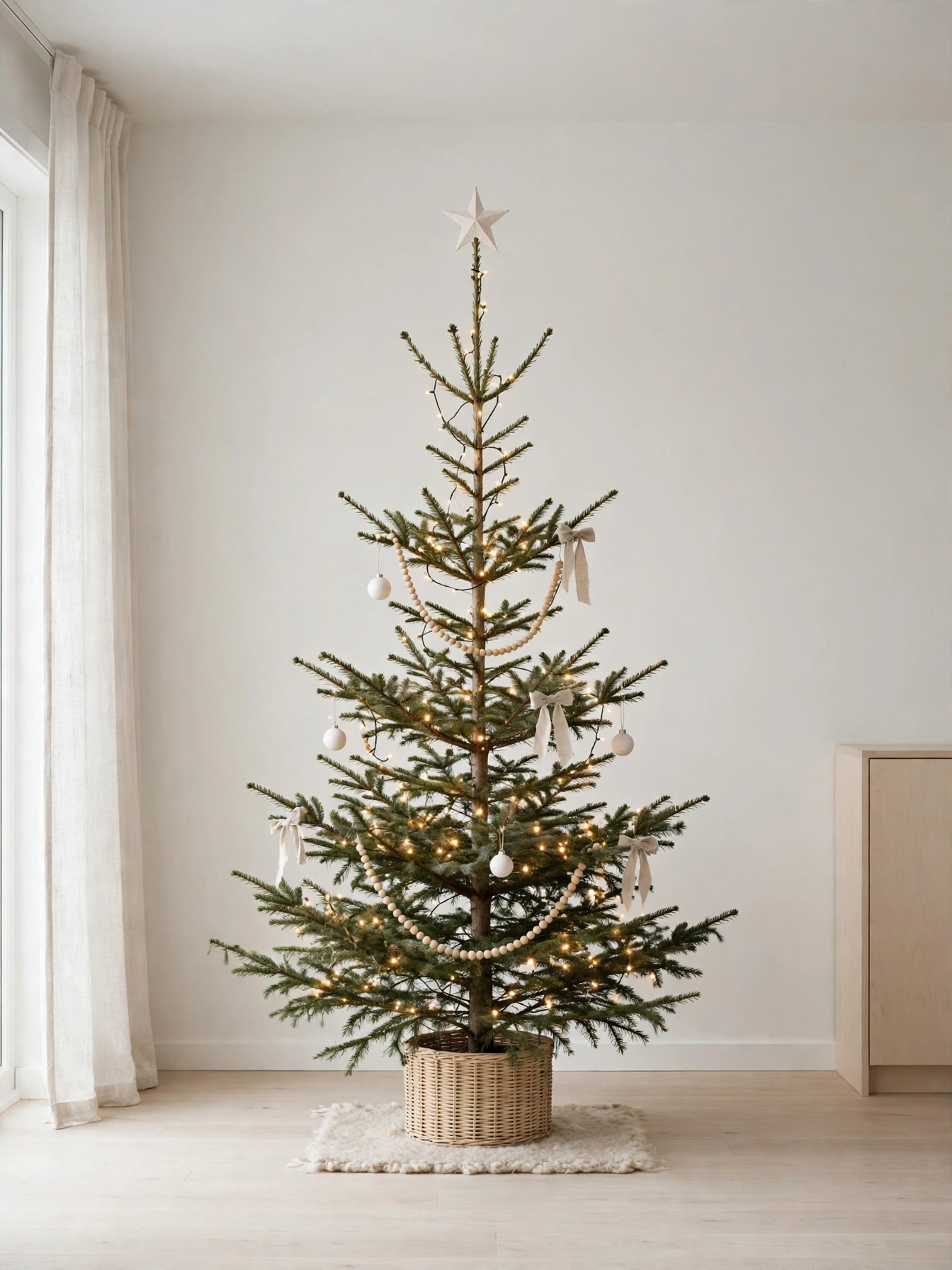
- Negative space between ornaments is the decoration, not a flaw.
- Pale wood and white keep a small room feeling open.
- The look costs less because it uses 30 ornaments instead of 80.
- Minimal trees photograph beautifully against white walls.
Use a 6.5 foot slim tree with a 32 inch base diameter, which fits corners that a full 48 inch tree cannot. Go with 500 warm white lights and only 30 ornaments: 15 plain white ceramic balls at 3 inches, 10 light wood beads on twine, and 5 white paper stars. Keep 4 to 6 inches of empty branch between ornament clusters so the green shows through. Avoid colored lights and tinsel here, since one bright color breaks the whole palette. A restrained palette reads as intentional only when the tree itself is full, so fluff every branch before hanging a single ornament.
This style suits apartments, minimalist homes, and anyone who finds traditional trees visually noisy. Sparse decorating has a catch: every gap shows, so a thin or patchy artificial tree actually looks worse this way than a full one would. Real Nordic spruce trees work well here because their natural shape is already even, but they drop needles faster in heated rooms, so water daily and keep the room below 70 degrees Fahrenheit.
Vintage Glass Treasures
Why This Works:
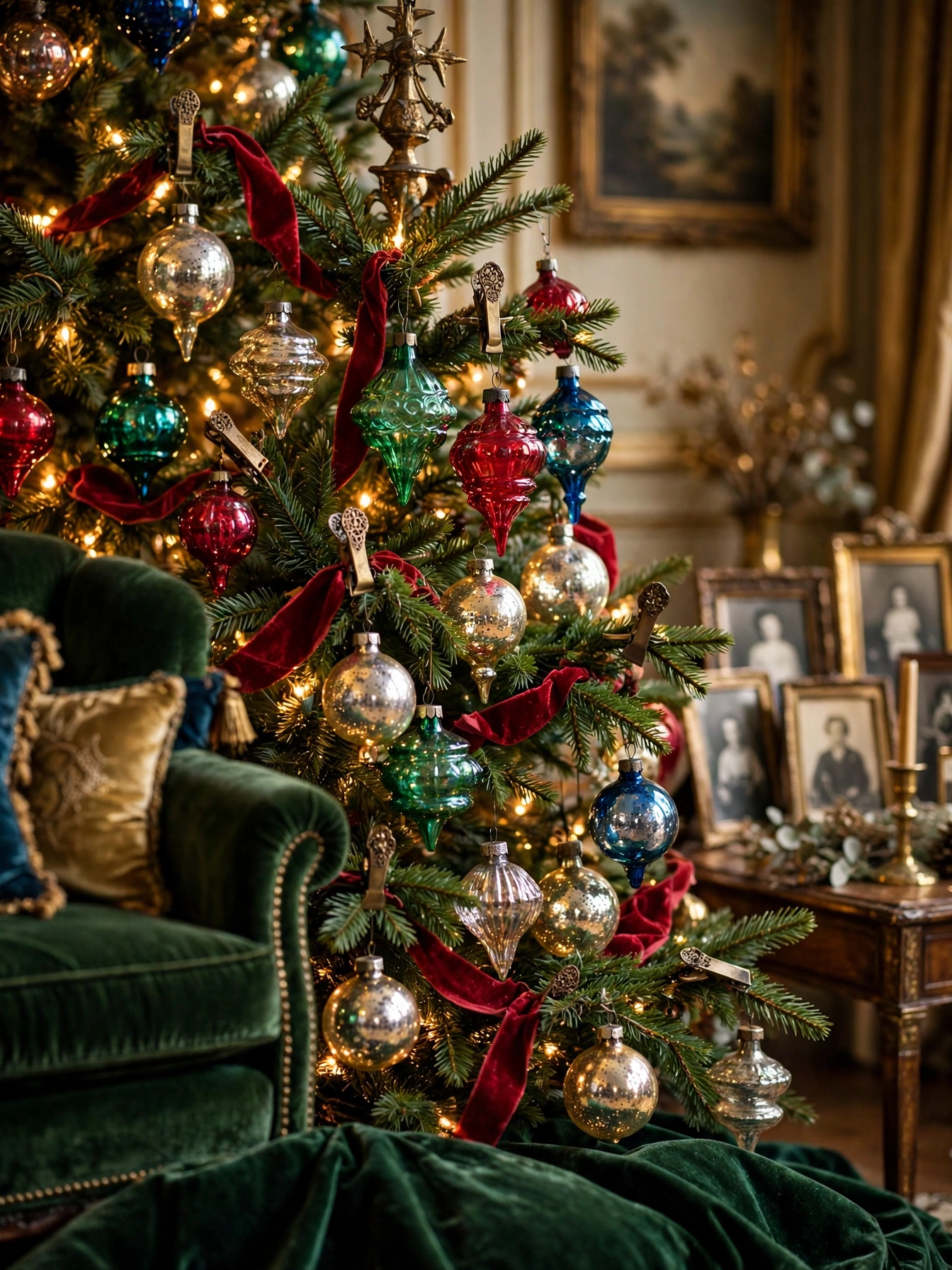
- Jewel tones glow under warm light in a way pastels cannot.
- Mixed vintage shapes look collected over years, not bought in one box.
- Glass reflects light from every angle, so the tree sparkles with fewer lights.
- The style gives heirloom ornaments a proper showcase.
Plan on 70 ornaments for a 7 foot tree: 40 glass balls in ruby, emerald, and sapphire, 20 shaped pieces like finials and teardrops, and 10 mercury glass balls for shine. Use 600 warm white lights, which is slightly fewer than average because glass does the reflecting work. Hang shaped ornaments at eye level between 48 and 60 inches from the floor, where guests actually look. Avoid hanging genuine antique glass on the lowest 24 inches of the tree, since that zone takes the most bumps from feet, pets, and vacuum cleaners. Glass reflects about twice as much light as matte plastic, which is why vintage trees look bright on fewer strands, but every glass piece needs its own tissue wrap at takedown.
This look suits collectors and homes with traditional furniture, and it pairs beautifully with the rest of a vintage holiday room. Fragility is the price of glass: with regular handling, plan on 2 to 3 breakages a season, and keep spare caps and hooks in a small bag inside the ornament box. If small children live in the home, hang glass only above 36 inches and fill the lower branches with shatterproof lookalikes in the same colors. For more old-world inspiration, see the Vintage Christmas Decor Ideas 2026 guide.
Coastal Blues
Why This Works:
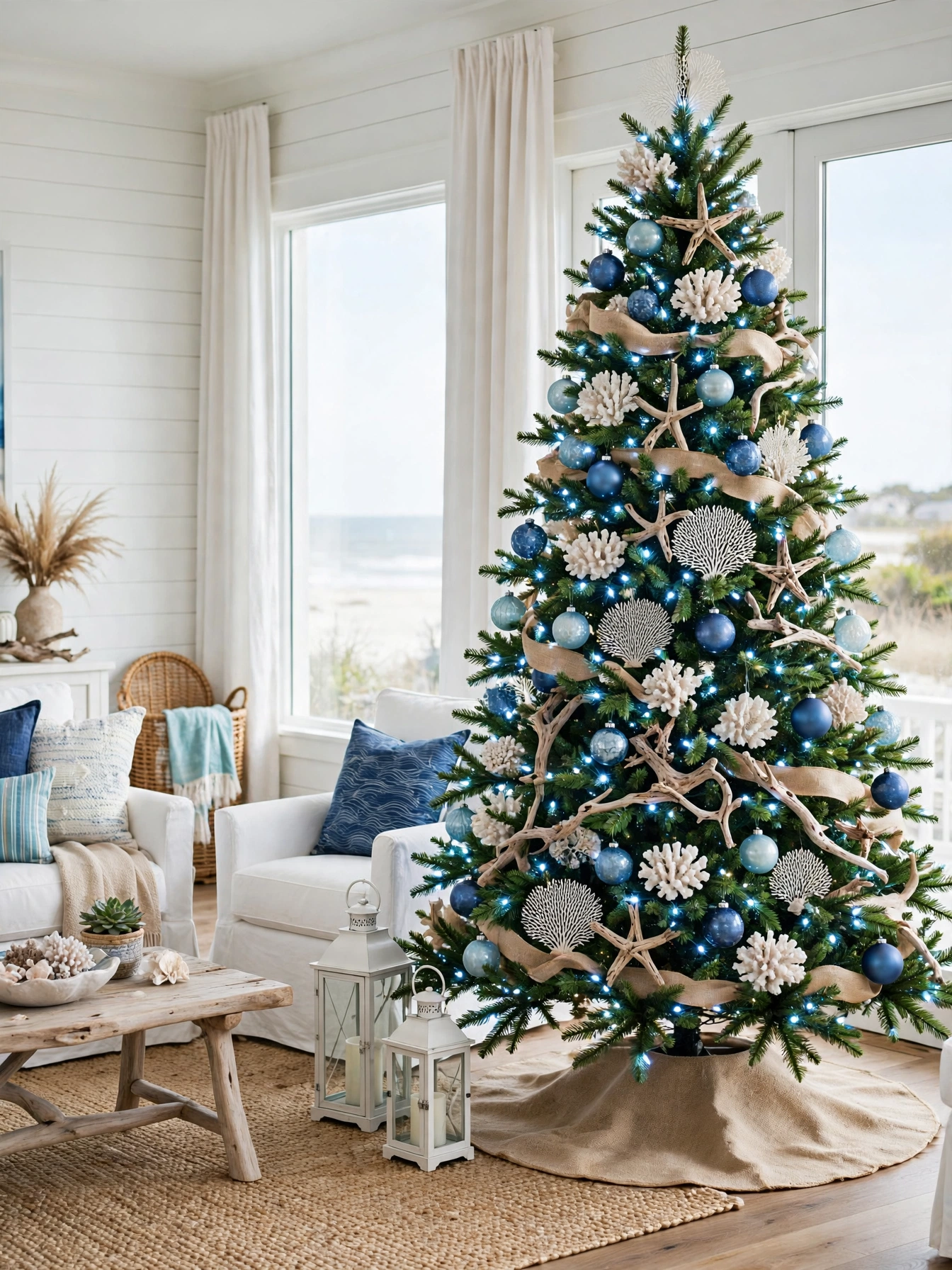
- Blue and white feels cool and calm in rooms that already lean coastal.
- White coral and driftwood shapes add texture without red and green cliches.
- The palette works in warm climates where a snowy look feels out of place.
- Navy anchors the tree so the lighter blues do not float away visually.
Dress a 7 foot tree in 700 cool white lights, then layer 65 ornaments: 30 navy and aqua glass balls, 15 white pieces, 10 driftwood stars, and 10 sand colored matte balls. Add 9 feet of white linen ribbon in two swags and a white star topper. Keep navy to about 45 percent of the ornaments so the tree does not turn dark in the evening. Avoid red accents here, since even a few red balls pull the whole tree back toward traditional and break the coastal spell. Glass balls suit this palette best, while shatterproof versions in the same blues are the practical pick for homes with kids.
Coastal trees suit beach houses, sunrooms, and any room with white furniture and natural light. One limitation is that aqua ornaments can look pale under warm white lights, so cool white is the better match even though it feels less traditional. Real driftwood pieces are light but brittle, so glue each star to a small ornament hook rather than hanging it by a drilled hole that can split.
Champagne Gold Glamour
Why This Works:
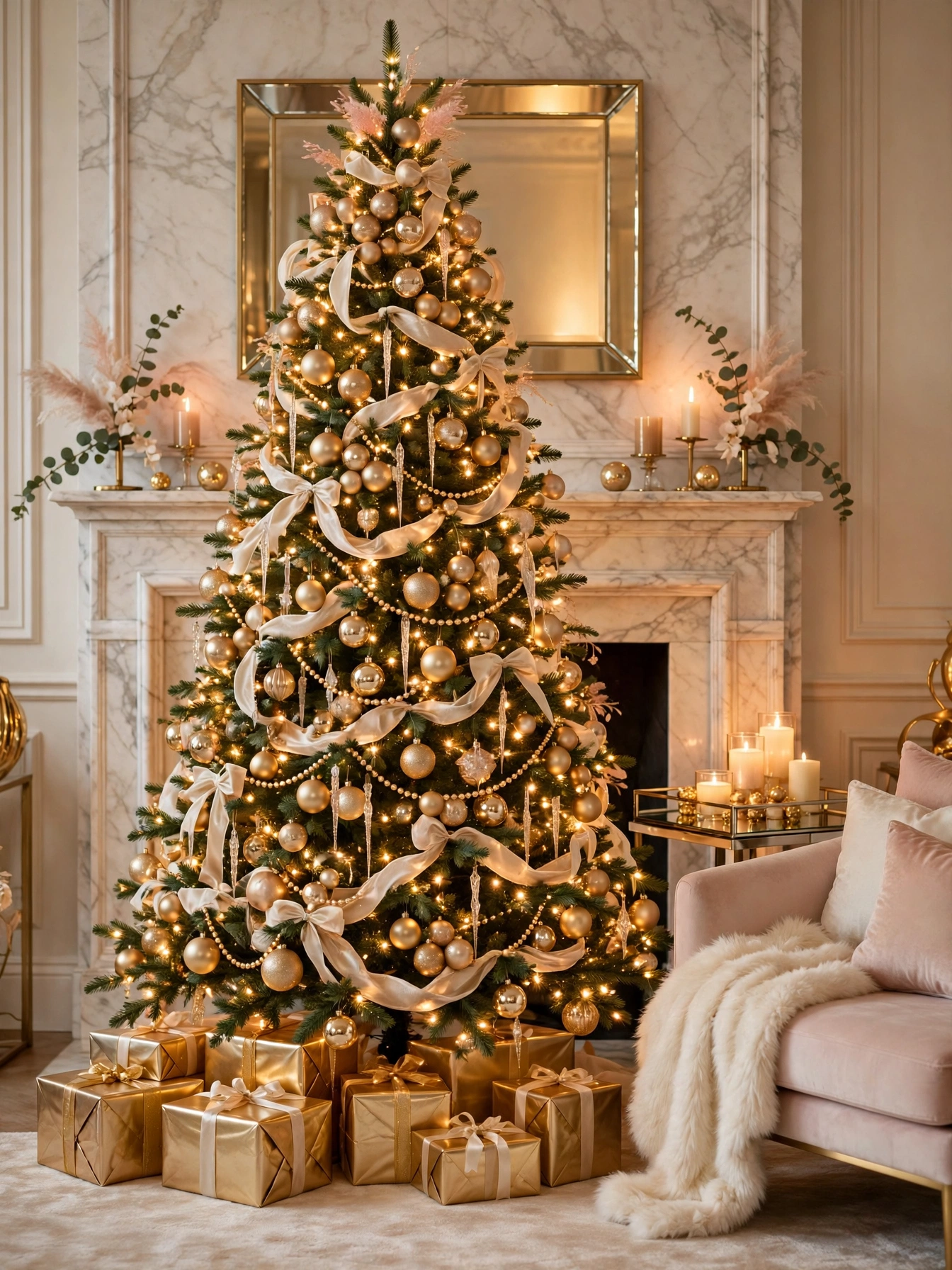
- A single metallic family looks expensive without needing rare ornaments.
- Ivory softens gold so the tree glows instead of glaring.
- Crystal drops scatter light across the whole room.
- The palette matches brass fixtures, marble, and cream furniture.
Use an 8 foot tree with 900 warm white lights, which is 100 per foot plus one extra strand for the fuller top section. Hang 85 ornaments: 50 champagne gold balls in mixed finishes, 20 ivory pieces, and 15 crystal drops. Drape 12 yards of 4 inch ivory velvet ribbon in wide loops, and add 6 feet of gold bead garland near the top where beads catch the light. Avoid silver ornaments in this scheme, since silver cools the gold and the two metals compete. Metallic plastic balls cost about one third of glass and look nearly identical at 6 feet away, so save glass for the 15 crystal drops that sit at eye level.
Glamour trees suit formal living rooms and homes with brass or gold fixtures, and they photograph well for holiday cards. Metallic finishes have one weakness: dust shows on them within days, so give the eye-level ornaments a quick wipe once a week through December. Velvet ribbon also crushes in storage, so roll it around a cardboard tube instead of folding it, which preserves the nap for next year.
Snow Flocked Fullness
Why This Works:
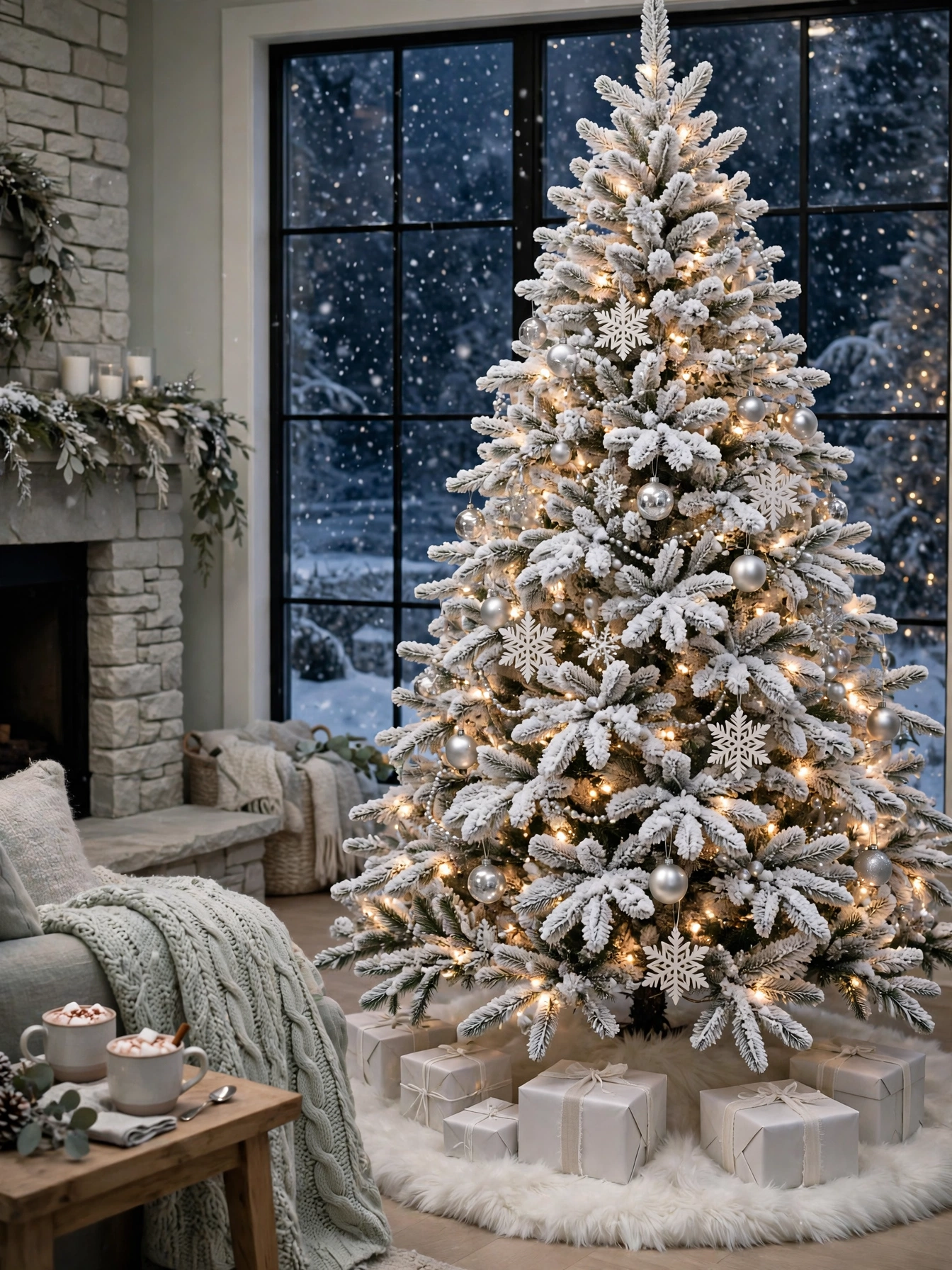
- Heavy flocking makes even a thin artificial tree look lush and full.
- White and silver ornaments disappear into the snow effect in a good way, adding sparkle without clutter.
- Warm lights glowing through flocking look like light through real snowfall.
- The style needs fewer ornaments, which saves decorating time.
Pick a 7.5 foot tree with heavy flocking rated at 2 pounds of flock per foot or more, then add 750 warm white lights. Hang just 45 ornaments: 30 silver balls and 15 white snowflakes at 4 to 5 inches wide. Skip garland entirely, since flocking already fills the gaps that garland usually covers. Avoid shaking or flipping the tree after setup, because each shake drops a visible pile of flocking that is hard to clean from carpet. Pre-flocked trees cost 40 to 80 dollars more than the same unflocked tree, but they save the 60 to 90 minutes that hand flocking with spray would take.
Flocked trees suit snowy climates and homes that want a winter wonderland without real snow, and they are a strong pick for first time decorators. Be ready for cleanup: flocking sheds heaviest in the first season, so spread a washable tree skirt 12 inches past the branch tips and vacuum once a week. Flocked branches also hide light strings, so test every strand before decorating because finding a dead bulb inside flocking takes twice as long.
Peppermint Candy Brights
Why This Works:
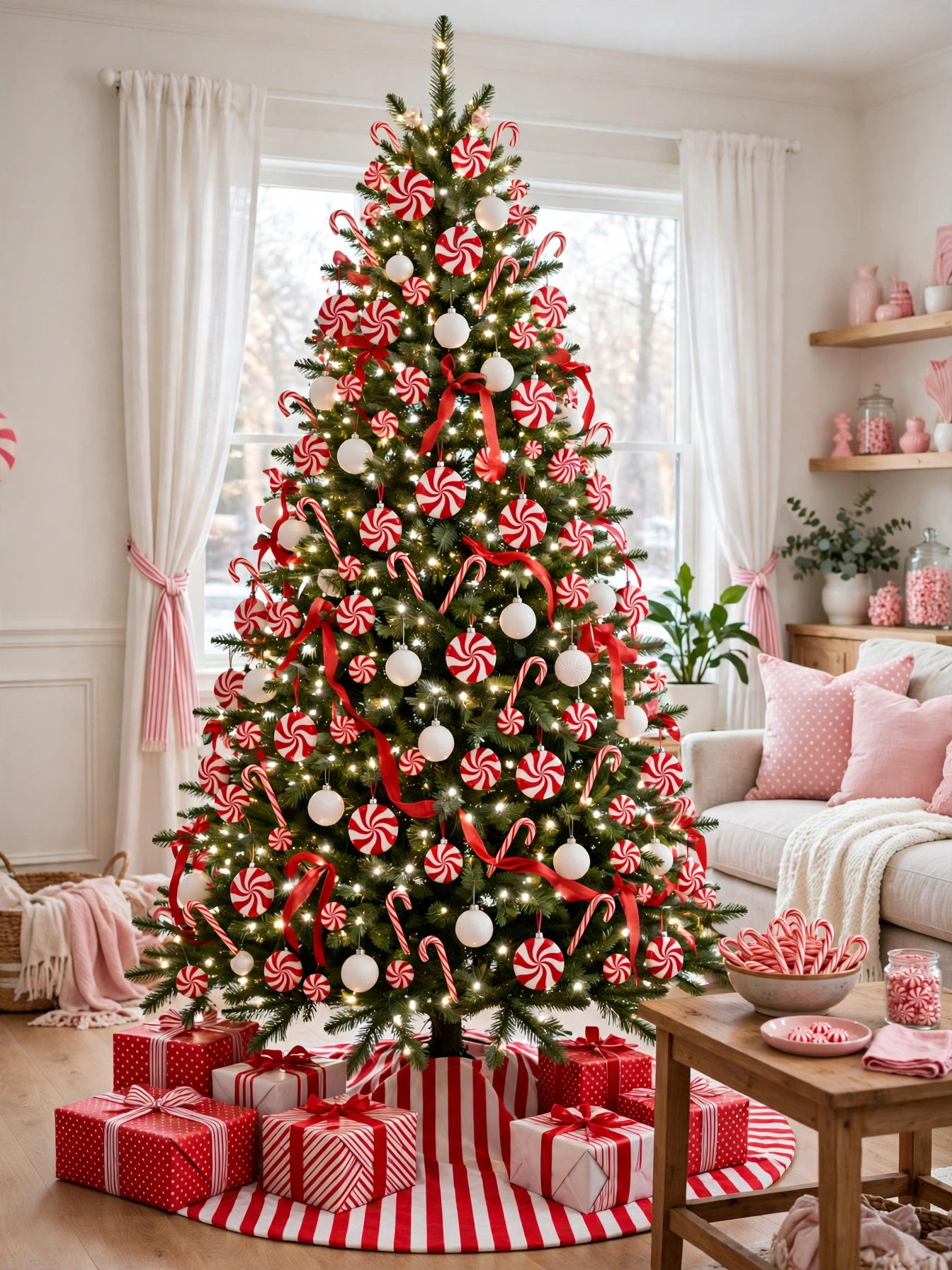
- Red and white reads instantly as candy, so the theme needs no explanation.
- Candy shapes delight kids and give the tree a playful personality.
- White ornaments keep the red from overwhelming the room.
- Peppermint picks are cheap and fill gaps faster than balls alone.
Start with a 7 foot tree and 700 bright white lights, then hang 55 ornaments: 25 peppermint swirl balls, 15 plain white balls, and 15 red matte balls. Push 20 candy cane picks into the branches at 12 inch intervals, angled upward like growing candy. Wrap 10 yards of 1.5 inch red grosgrain ribbon in a spiral from top to bottom. Avoid real candy canes as ornaments, since they attract ants, absorb humidity, and go sticky within a week. Plastic candy ornaments cost 1 to 3 dollars each and last for years, while real candy needs replacing every season.
Peppermint trees suit family rooms and homes with young kids, and they work well as a second tree in a playroom. Think ahead before going all-in: kids outgrow candy themes fast, so stick to one color family of peppermint balls that can blend into a traditional red and white tree later. Bright white lights suit this palette better than warm white, because warm light turns the white ornaments creamy and dulls the candy contrast.
Dried Citrus Naturals
Why This Works:
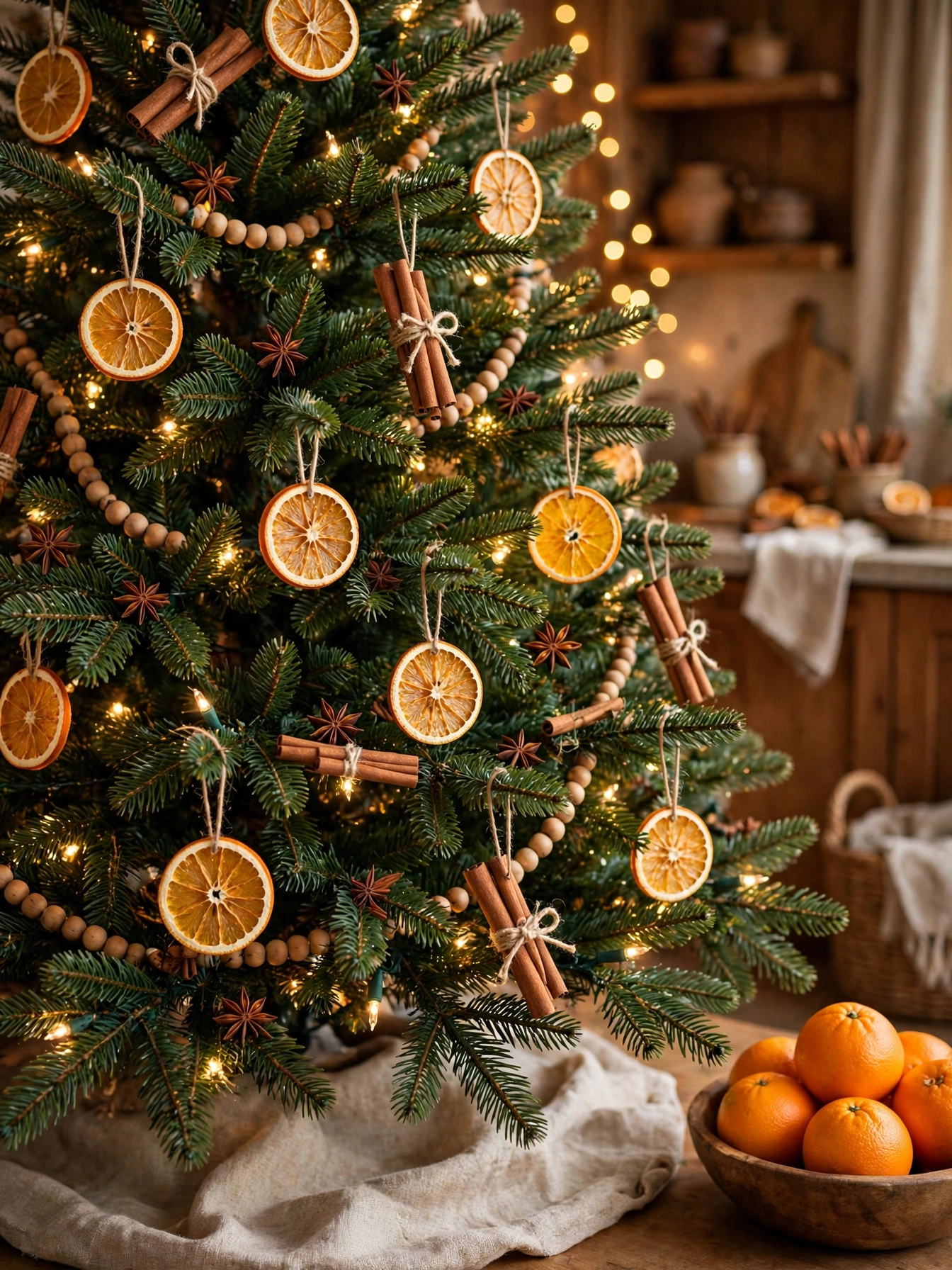
- Dried citrus adds real scent that no plugin can imitate.
- Orange slices cost pennies when dried at home in the oven.
- The warm tones suit wood kitchens and farmhouse rooms.
- Natural ornaments make the tree feel handmade rather than store bought.
Dry orange slices at 200 degrees Fahrenheit for 3 hours, flipping once, until they feel crisp and dry. Hang 30 slices on a 6.5 foot tree with 650 warm white lights, plus 20 cinnamon stick bundles tied with twine and 15 wooden bead strands. Add 25 plain gold balls to reflect light, since natural materials absorb light and the tree can look dark without them. Avoid hanging citrus slices on a real tree that will stay up past 4 weeks, since the slices darken and curl further with age. Home dried slices last one season, while store bought dried slices sealed with a clear craft spray last 2 to 3 seasons.
Citrus trees suit kitchens, farmhouse dining rooms, and anyone who likes a scented home without candles. This one costs time rather than money: slicing and drying 30 oranges takes about 4 hours with oven time included, so start a week before decorating day. Citrus slices are also fragile and snap if pressed, so hang them on outer branch tips where they will not be bumped, and keep them away from pets that chew.
Monochrome Black White
Why This Works:
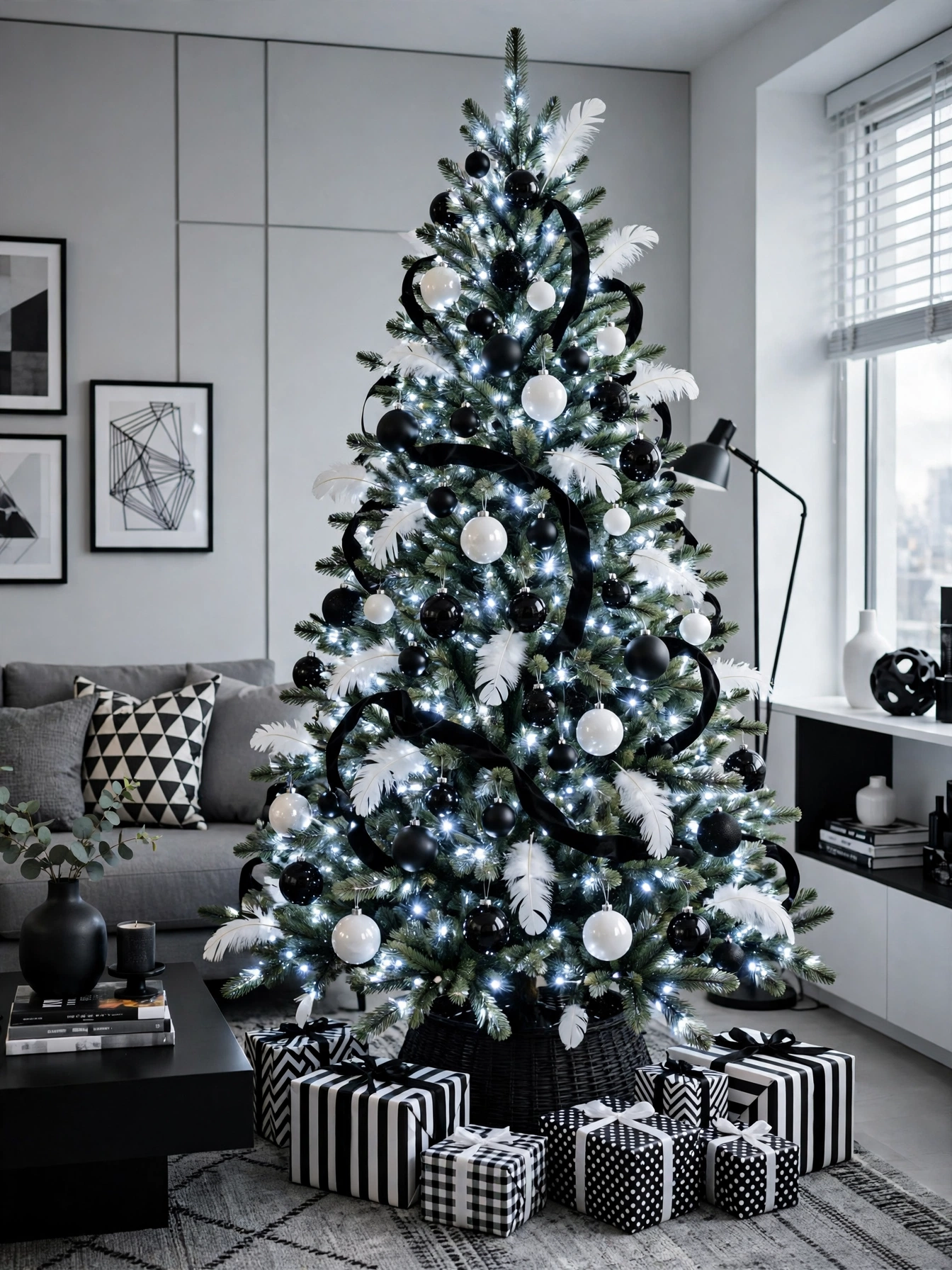
- Two colors only make the tree look deliberate and gallery worthy.
- Black ornaments create depth that all-light trees lack.
- The scheme matches modern furniture without competing with it.
- White feather picks add softness so the black does not feel harsh.
Hang 70 ornaments on a 7 foot tree: 35 matte black balls and 35 glossy white balls, all at 3 inches for a uniform rhythm. String 700 cool white lights and add 12 white feather picks pushed into the top third of the tree. Use 10 yards of 2 inch black satin ribbon in vertical cascades. Avoid mixing in gold or silver, since one metallic accent breaks the monochrome rule and the eye goes straight to it. Matte black balls hide dust better than glossy black, so choose matte for the lower half where hands and pets reach most.
Monochrome trees suit modern apartments and rooms with black framed art or black kitchen fixtures. Evenings are the weak point: black ornaments disappear against dark green branches in low light, so hold whites at 50 percent of the total and push them out to the branch tips. A black tree collar instead of a skirt sharpens the graphic look, and it also hides the stand better than fabric in a minimalist room.
Pastel Pink Mint
Why This Works:
- Pastels stand out in a season dominated by red and green.
- Pink and mint flatter light rooms and white furniture.
- The palette feels fresh for families tired of traditional colors.
- Pompom picks add texture that flat pastel balls lack.
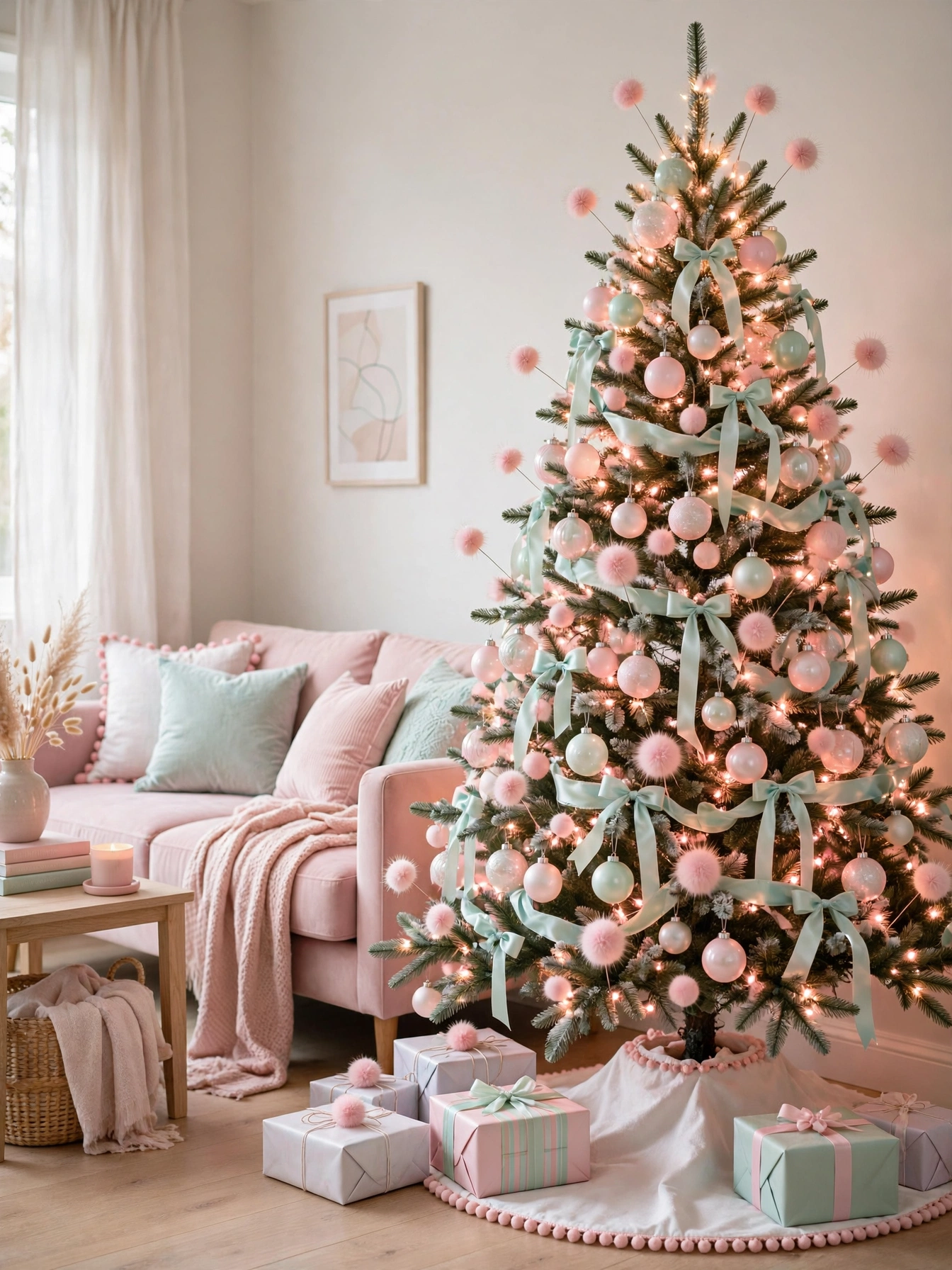
Cover a 7 foot tree with 700 warm white lights, then hang 60 ornaments: 25 blush pink balls, 20 mint balls, and 15 white balls. Push 15 pink pompom picks into the upper half of the tree and wrap 10 yards of 1.5 inch mint satin ribbon in a loose spiral. Keep the pink to mint ratio at roughly 3 to 2 so the tree reads pink first and mint second. Avoid deep red or burgundy additions, since one dark ornament drags the whole pastel palette down. Pastel glass costs the same as standard colors, but pastel plastic balls fade faster in storage, so keep them in a dark bin away from attic heat.
Pastel trees suit nurseries, teen rooms, and light modern living rooms, and they make a lovely second tree in a bedroom. Lighting can undo this palette: pastels wash out under cool white bulbs, so warm white is a must even if it feels less modern. Mint ribbon also wrinkles easily, so steam it for 2 minutes before decorating and it will hang smooth all season.
Felt Forest Friends
Why This Works:
- Felt animals give kids a reason to look closely at the tree.
- Soft ornaments are safe for low branches where little hands reach.
- The woodland palette blends with rustic and farmhouse rooms.
- Felt pieces are light, so even thin branches hold them easily.
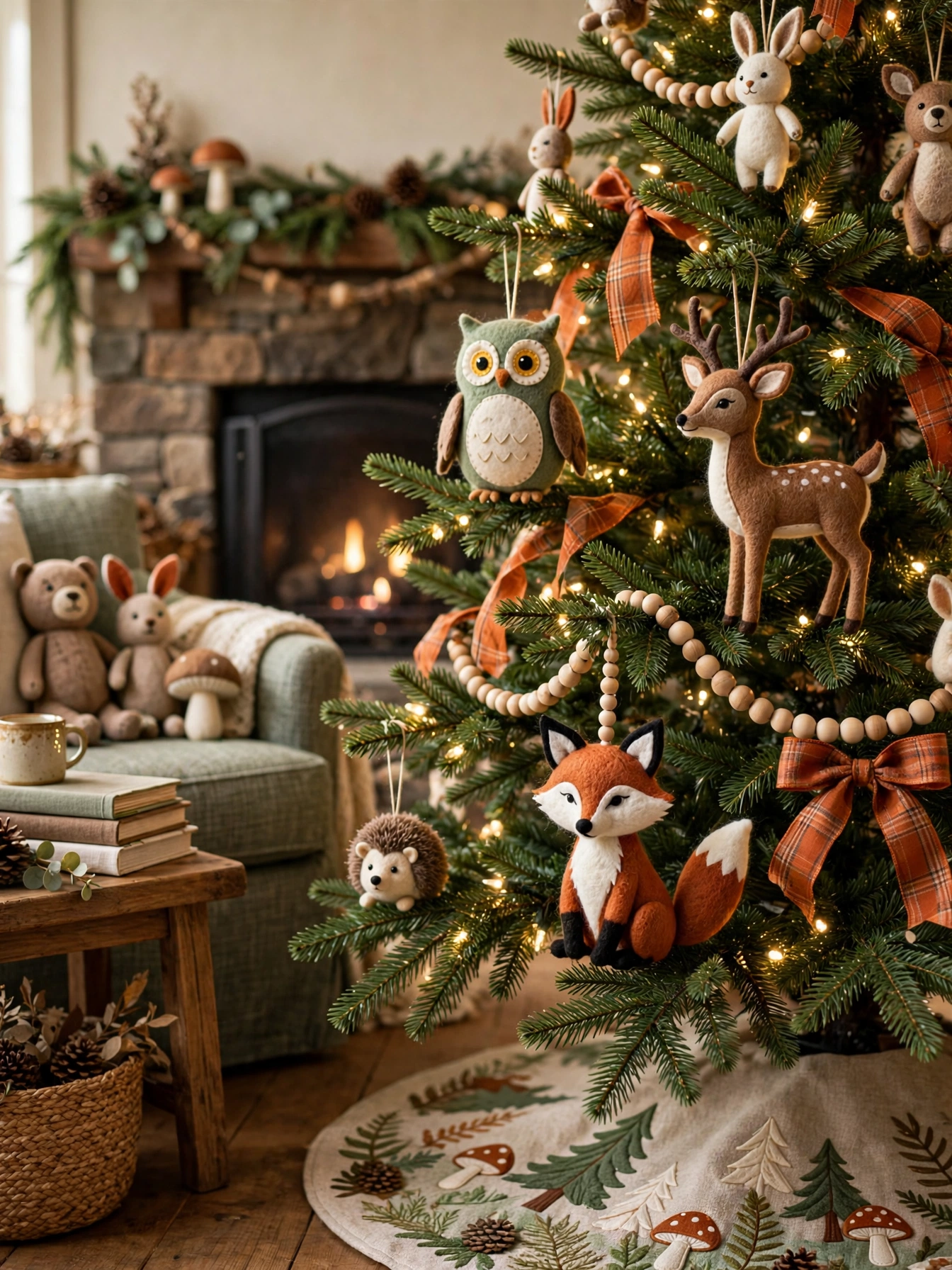
Hang 40 felt animals on a 6.5 foot tree with 650 warm white lights: foxes, owls, deer, and hedgehogs at 4 to 5 inches tall. Fill the gaps with 30 wooden bead ornaments and 10 plain cream balls, then add 8 yards of 2 inch plaid ribbon. Space the animals 10 to 12 inches apart so each one gets its own visual spot instead of crowding into a busy cluster. Avoid hanging felt ornaments on a real tree that drips sap, since sap stains felt permanently. Handmade felt animals run 5 to 12 dollars each, while machine made sets of 12 cost 15 to 25 dollars and look nearly as good from 3 feet away.
Felt trees suit homes with young children and anyone who wants a storybook feel without a cartoon look. Sunlight is felt’s enemy: the fabric fades in direct sun, so keep the tree away from south facing windows or the rust orange foxes will pale within two seasons. Felt also attracts dust, so shake each piece gently outdoors at takedown before boxing.
Cascading Wired Ribbons
Why This Works:
- Wide ribbon covers bare spots faster than any ornament can.
- Vertical cascades draw the eye up and make the tree look taller.
- Ribbon adds a fabric softness that hard ornaments lack.
- One technique, repeated well, looks more polished than mixed tricks.
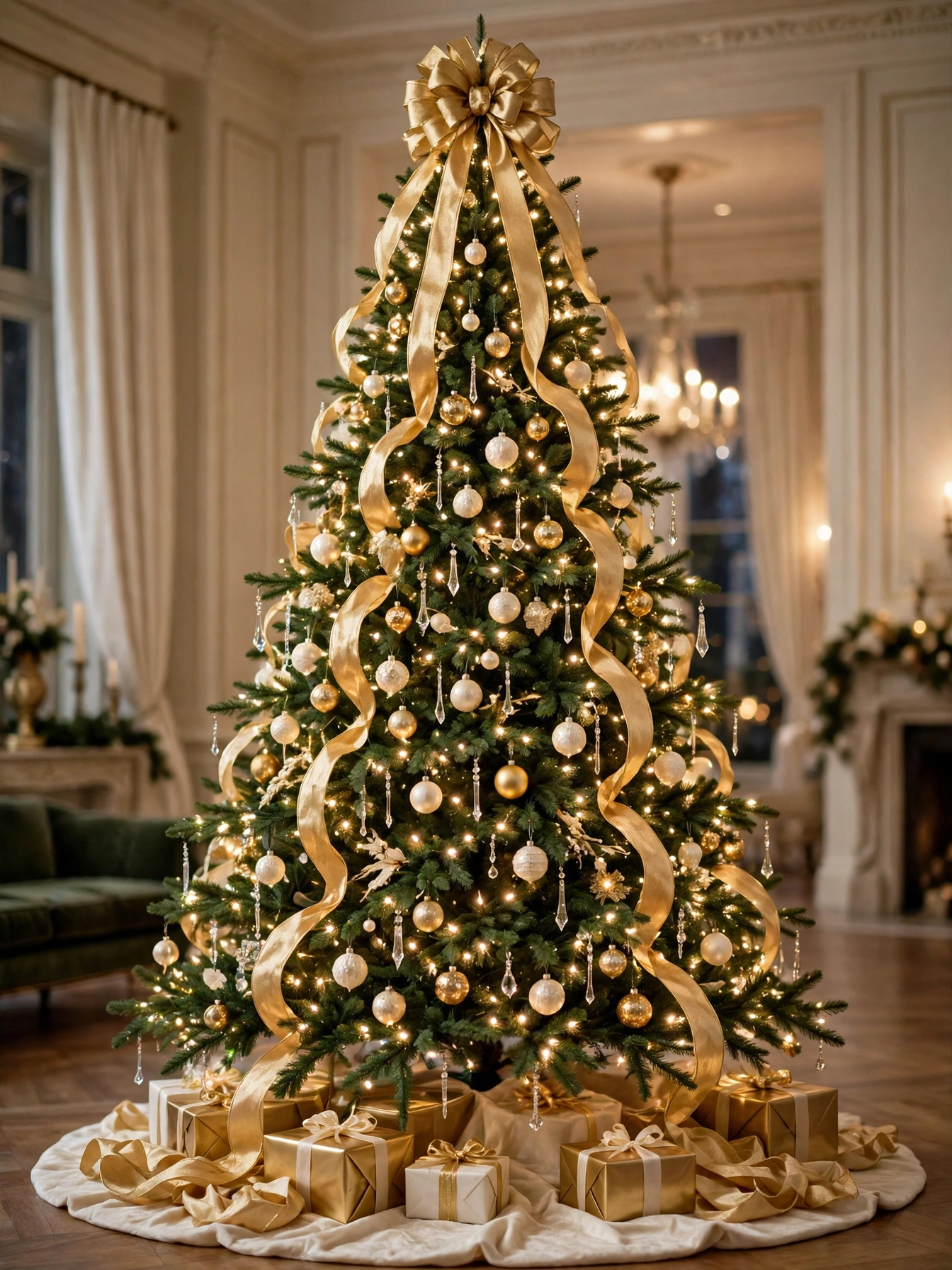
Start with an 8 foot tree and 900 warm white lights, then hang 50 ornaments in gold and ivory before adding any ribbon. Cut 4 inch wired ribbon into 36 inch lengths and tuck one end deep into the top branches, letting each length fall 2 to 3 feet down the tree in a loose wave. Use 20 yards total across 6 cascades, spaced evenly around the tree. Avoid thin unwired ribbon for this technique, since it collapses within days and looks limp. Wired ribbon costs 8 to 15 dollars per 10 yard roll, and 2 rolls cover an 8 foot tree, which is cheaper than 30 extra ornaments for the same coverage.
Ribbon cascade trees suit tall rooms and formal living spaces, and they rescue artificial trees with thin spots. Storage takes a little care: wired ribbon kinks when folded, so wind each length around a paper towel tube at takedown. Ribbon also catches on ornament hooks, so hang the ornaments first and add ribbon last, tucking each tail behind at least one ornament so it cannot slide.
Clustered Ornament Layers
Why This Works:
- Clusters look like a stylist arranged the tree, not a box emptied onto it.
- Grouping small ornaments makes them visible instead of lost in branches.
- The technique fills a tree with 30 percent fewer ornaments.
- Clusters create focal points that guide the eye around the tree.
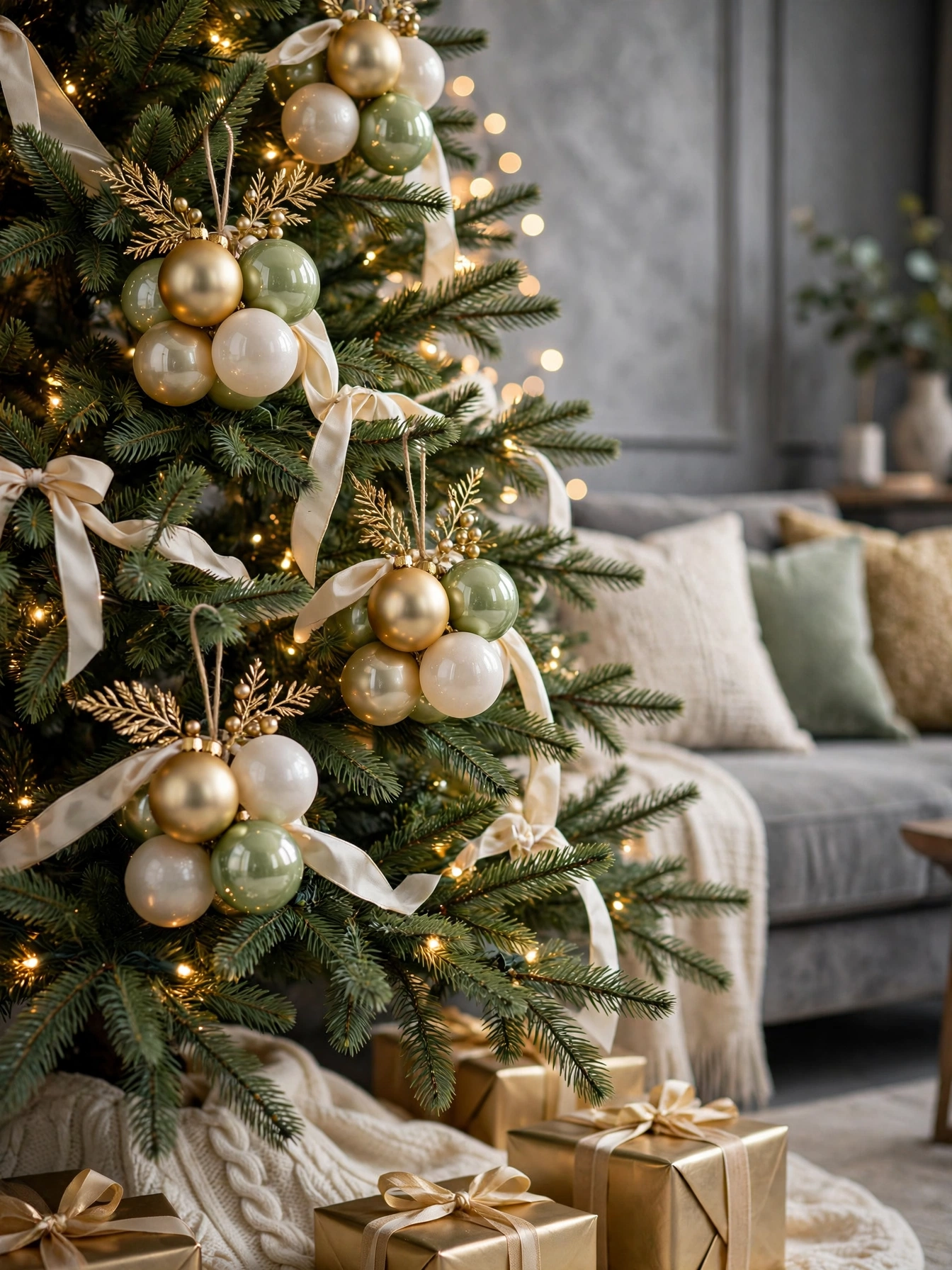
Hang ornaments in groups of 3 on a 7.5 foot tree with 750 warm white lights: one 4 inch ball, one 3 inch ball, and one pick or sprig wired together at a single branch point. Make 25 clusters spaced 14 inches apart, which totals 75 pieces but reads as 25 design moments. Wire each cluster with 22 gauge floral wire so the pieces stay together when the tree is bumped. Avoid hanging single ornaments between clusters, since strays break the pattern and the tree starts looking random again. Cluster wiring adds about 30 minutes to decorating time compared with hanging singles, but it saves money because small ornaments in clusters look larger than they are.
Clustered trees suit design lovers and anyone with a big ornament box of small pieces. Takedown is the fiddly part: clusters have to be unwired or stored whole, so label each bag by color family in January. This technique also hides thin branch spots well, which makes it a good rescue for older artificial trees that have lost fullness.
Slim Pencil Spaces
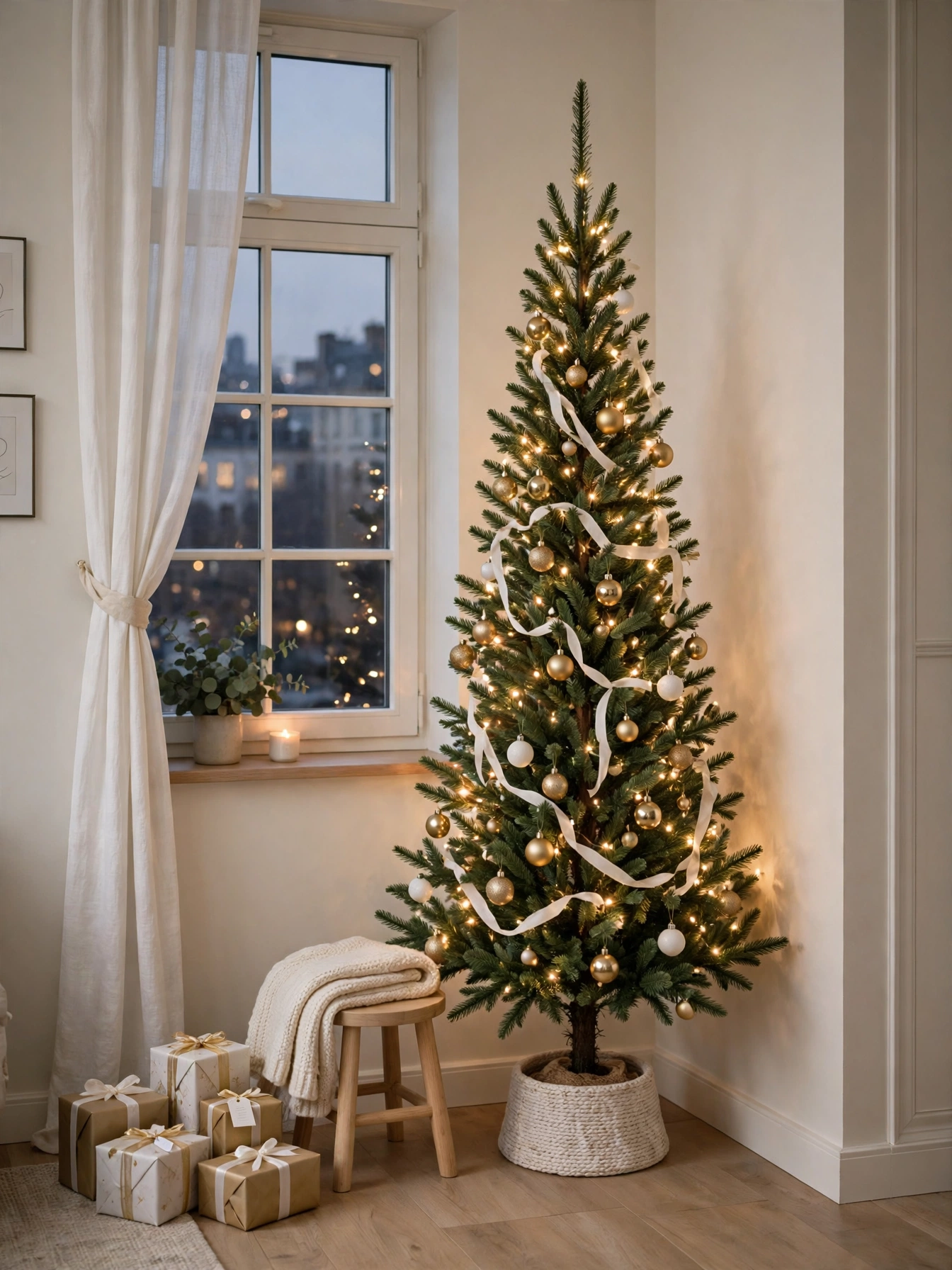
Why This Works:
- A 24 inch base fits corners, hallways, and studio apartments.
- Slim trees still reach full height, so the room keeps its vertical drama.
- Fewer ornaments are needed, which keeps the budget low.
- The narrow shape leaves floor space for gifts and foot traffic.
Choose a 6 foot pencil tree with a base diameter of 22 to 26 inches and at least 500 branch tips for density. Four hundred warm white lights will do, which is fewer per foot because slim branches hold less. Hang 40 ornaments at 2 to 3 inches only, since 4 inch balls overwhelm a narrow profile. Keep the topper under 8 inches tall so the total height stays below 6 feet 8 inches and clears standard 8 foot ceilings with room to spare. Avoid garland on pencil trees, since a 6 inch garland swag eats a third of the visible width. Pencil trees cost 60 to 120 dollars for a good 6 foot model, which is 30 to 50 dollars less than a full tree of the same height.
Slim trees suit apartments, dorms, and narrow corners beside fireplaces. Room for ornaments runs short: a pencil tree holds roughly half what a full tree does, so pick favorites only. Slim trees also tip more easily because the base is narrow, so add a 10 pound sandbag inside the tree skirt for stability if pets or toddlers share the room.
Tabletop Mini Magic
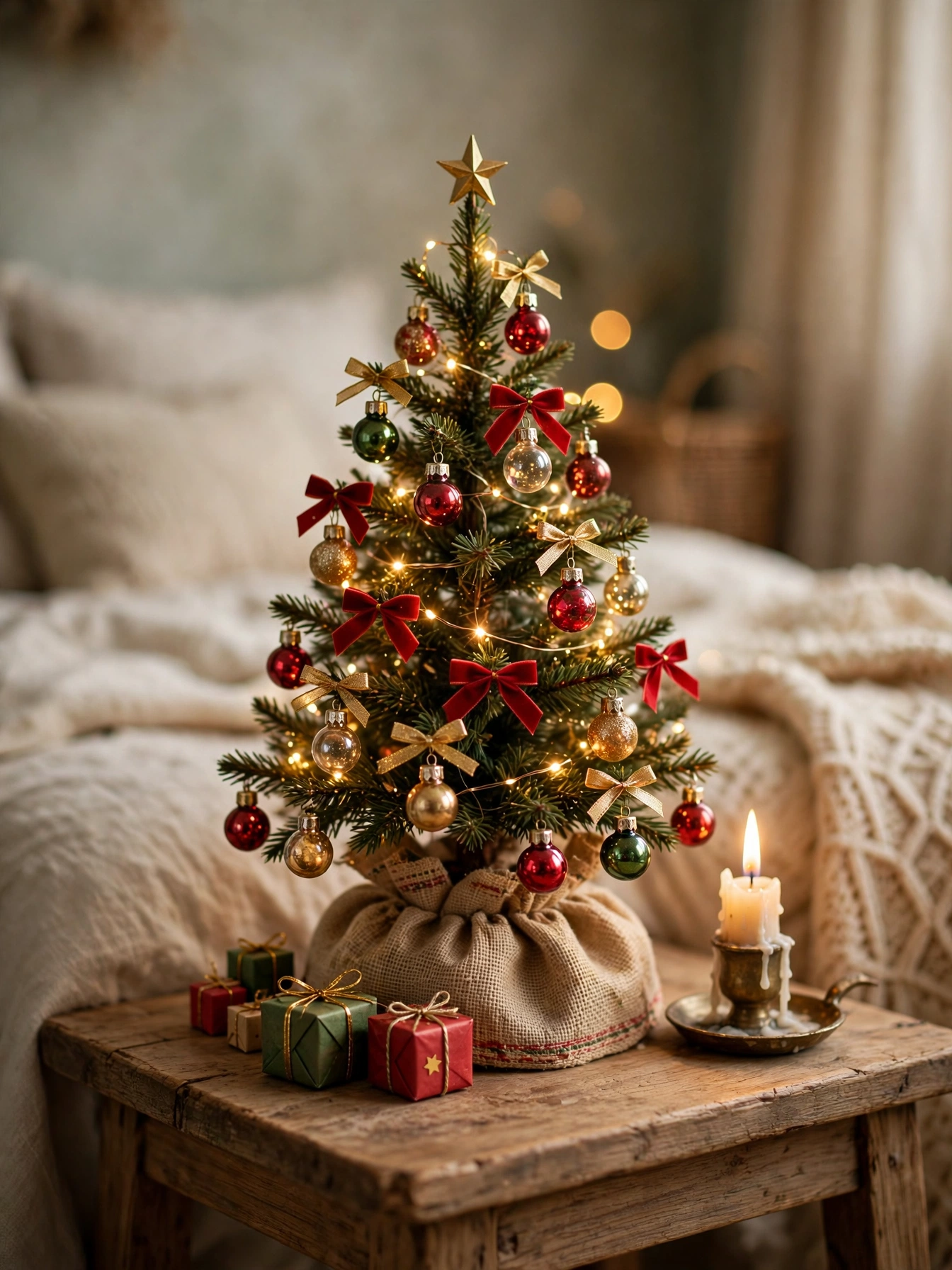
Why This Works:
- A 3 foot tree brings Christmas to rooms that cannot hold a full tree.
- Mini trees cost little and store in a single small box.
- Tiny ornaments feel special because they are scaled to the tree.
- Tabletop trees work as a second tree for bedrooms and offices.
Set a 3 foot tree on a sturdy table rated for at least 15 pounds, since a potted mini tree plus ornaments weighs 8 to 12 pounds. String one 100 light fairy strand and hang 25 ornaments at 1 to 2 inches, which is the right scale for a 36 inch tree. Use a 4 inch star topper and a 12 inch round tree skirt, which fits the table without hanging over the edge. Avoid full size ornaments here, since a single 4 inch ball covers a quarter of a mini tree and throws off the scale. Mini trees run 25 to 60 dollars, and a full set of mini ornaments costs 10 to 20 dollars, so the whole project stays under 80 dollars.
Tabletop trees suit bedrooms, dorms, offices, and kids’ rooms, and they make good gifts. Scale is the constraint: a mini tree cannot anchor a living room, so treat it as an accent piece rather than the main event. Battery fairy lights last 48 to 72 hours on a timer setting of 6 hours per day, so set the timer at setup and the lights will run the whole season on one set of batteries.
Second Tree Surprises
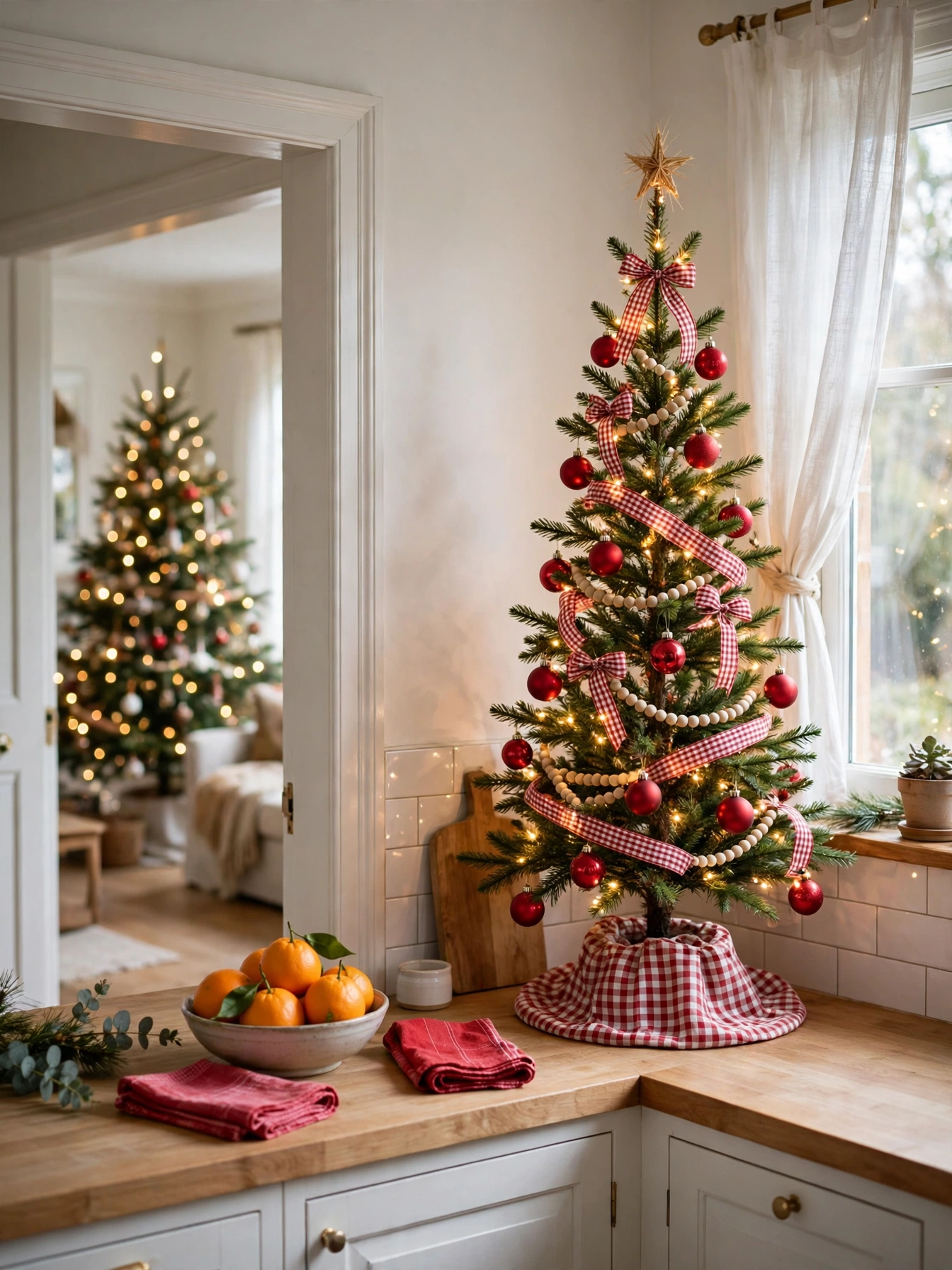
Why This Works:
- A second tree spreads Christmas cheer beyond the living room.
- Kitchens get the most foot traffic in December, so a tree there gets seen.
- A simpler second tree takes half the decorating time of the main tree.
- Kids love having a tree they can decorate themselves.
Place a 5 foot slim tree in a kitchen corner at least 36 inches from the stove and oven, since heat dries branches and fades ornaments. Add 500 warm white lights and 35 ornaments in red and white only, which keeps the second tree visually distinct from the main tree. Use a 20 inch base diameter so the tree does not block walkways, which need 36 inches of clear width per kitchen safety guidance. Avoid glass ornaments on a kitchen tree, since a dropped ball near food prep areas creates a cleanup problem. Shatterproof balls at 1 to 2 dollars each keep the whole second tree under 100 dollars including lights.
Second trees suit large homes, open plan kitchens, and families where kids want their own decorating project. Storage doubles with a second tree: two trees mean two boxes and two stands, so measure the spare space before buying. A kitchen tree also collects cooking grease over the season, so wipe the ornaments with a damp cloth at takedown before boxing them.
Memory Filled Branches
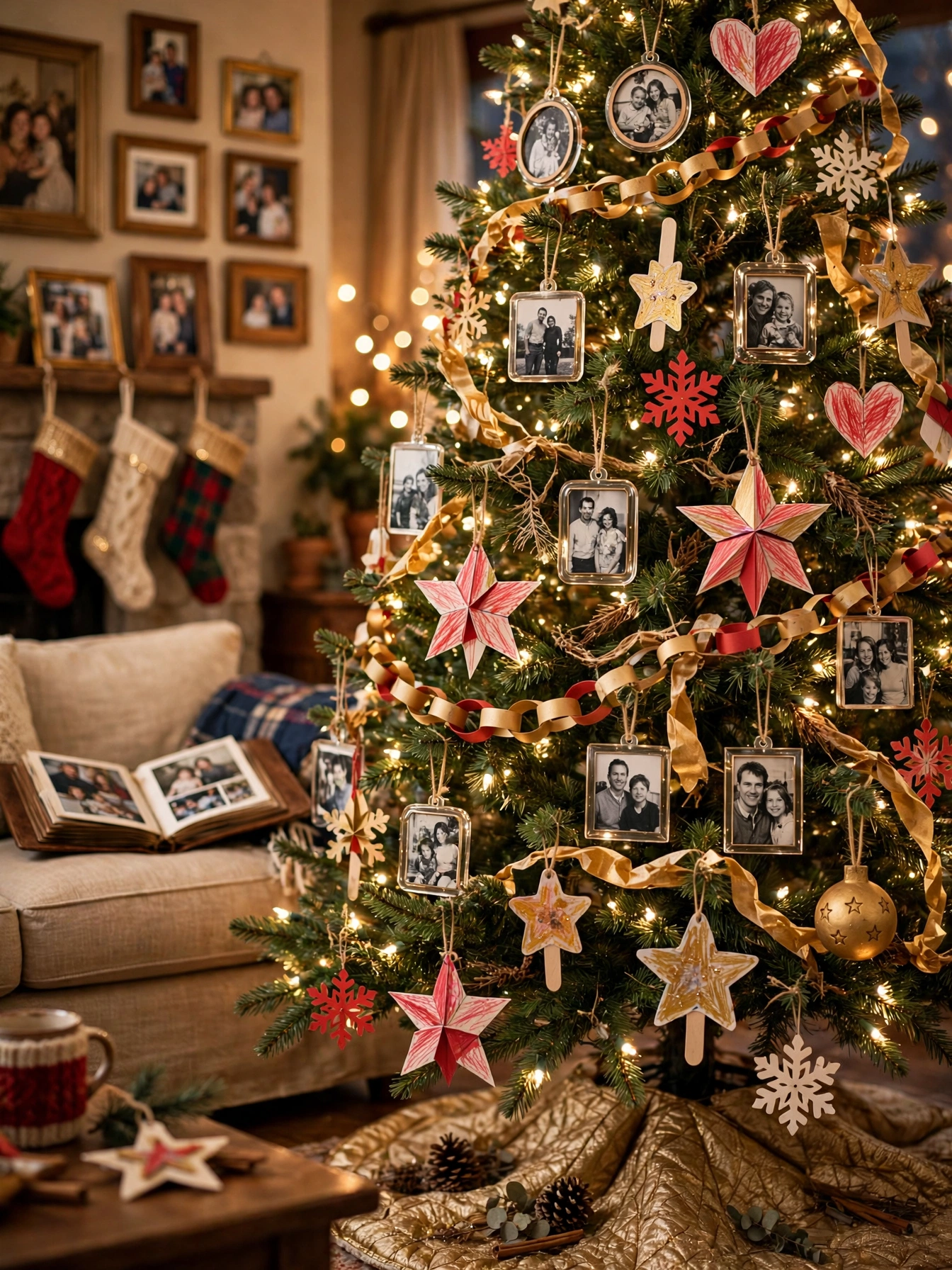
Why This Works:
- Photo ornaments turn the tree into a family timeline guests actually study.
- Handmade crafts give kids a yearly tradition they look forward to.
- Mixed colors feel personal rather than decorated by a store.
- Gold ribbon ties mismatched pieces together into one look.
Hang 30 photo ornaments printed on 3 inch acrylic rounds, which weigh under 1 ounce each and will not drag branches down. Mix in 20 handmade paper crafts and fill the remaining gaps with 30 gold balls at 3 inches. Wrap 10 yards of 2 inch gold ribbon in a spiral around 700 warm white lights. Keep photo ornaments at eye level between 48 and 60 inches, where family members can actually see the faces. Avoid laminating photos with glossy pouches, since glare makes faces hard to see under lights; matte finish prints read better. Acrylic photo rounds cost 8 to 15 dollars for a set of 12, and printing new photos each year costs about 50 cents per print at a drugstore kiosk.
Memory trees suit families with kids and anyone who values tradition over a styled look. With 50 personal pieces in mixed colors, clutter is a real risk, so the gold ribbon and gold balls earn their keep as unifiers. Paper crafts also fade in sunlight, so keep the tree away from south facing windows or accept replacing the crafts every 2 to 3 years.
Glowing Christmas Tree Decor Ideas
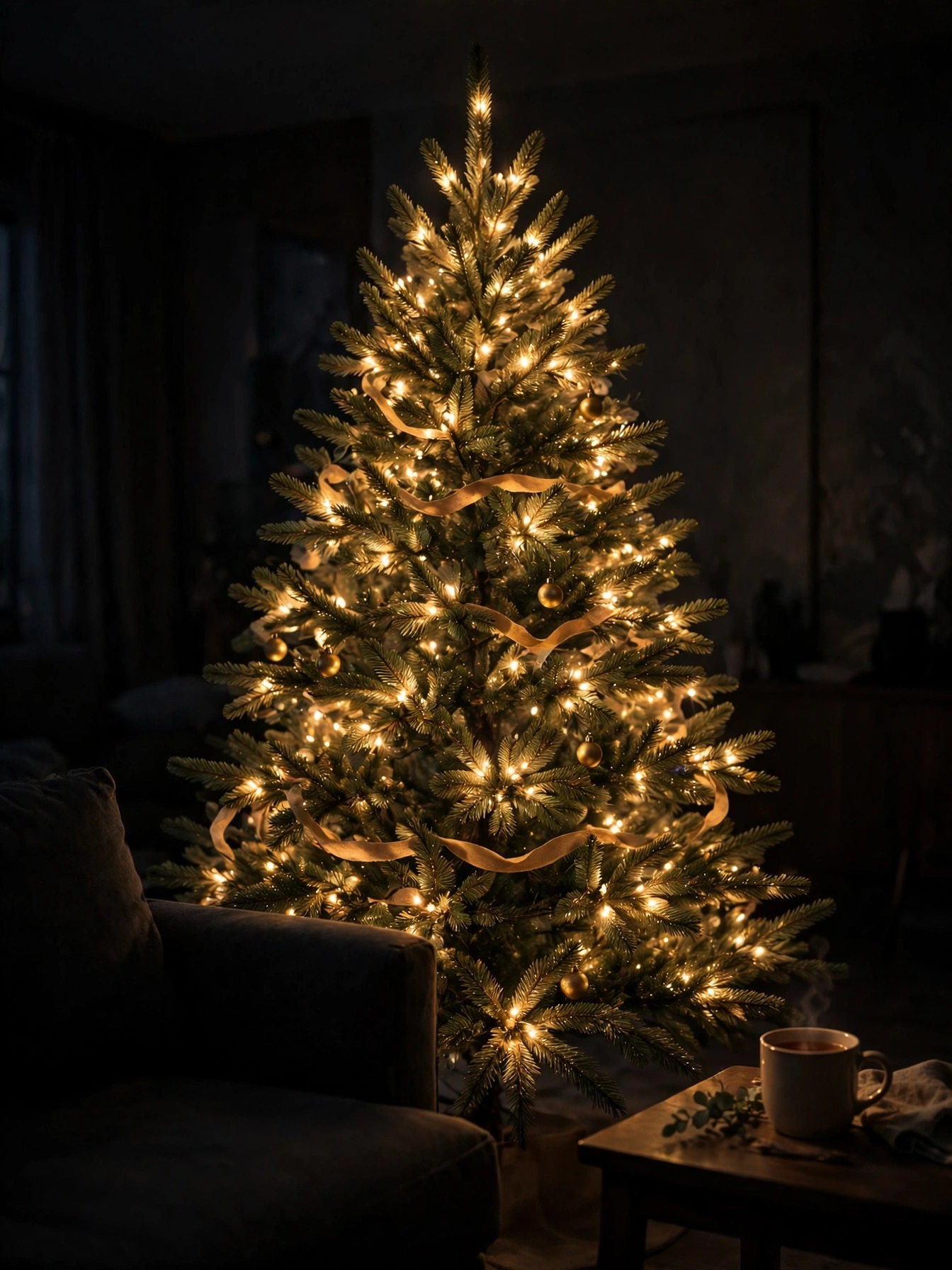
Why This Works:
- Light alone creates drama that ornaments cannot match after dark.
- Fewer ornaments mean the glow itself becomes the decoration.
- Warm LEDs use 80 percent less energy than old incandescent strings.
- A light focused tree looks stunning in evening photos.
Plan the lighting in layers on a 7.5 foot tree: 3 strands of 200 warm white LEDs wrapped inside the branches near the trunk, plus 2 strands of 200 on the outer tips, for 1,000 lights total. Add only 30 gold balls to catch the light, and skip garland so nothing blocks the glow. Keep the total wattage under 60 watts for LEDs, which lets you connect 5 strands end to end safely on one outlet. Avoid mixing warm white and cool white on the same tree, since the color clash is visible from across the room. LED strings cost 12 to 25 dollars per 200 light strand and last 25,000 hours, while incandescent strings cost less upfront but burn out faster and run hot.
Light focused trees suit evening entertainers and homes where the tree is the main December light source. By day, though, this tree looks plain: with so few ornaments, the style only comes alive after sunset. If the room lacks an outlet near the tree, hire a licensed electrician to add one rather than running an extension cord across a walkway, which is a trip hazard and a fire risk. For more indoor lighting inspiration, see the Indoor Christmas Decor Ideas 2026 guide.
Styled Tree Bases
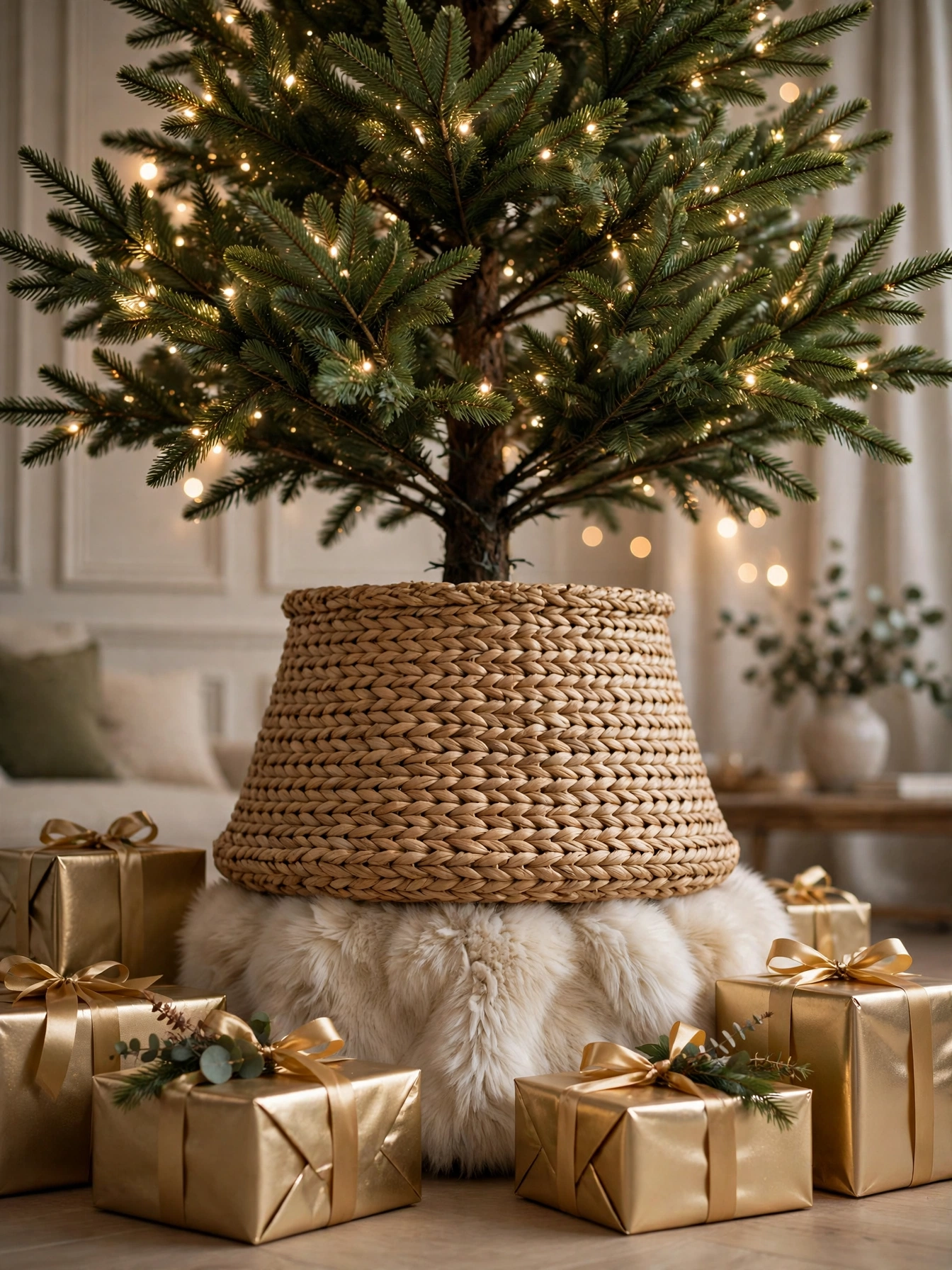
Why This Works:
- The base is the most photographed part of the tree after the topper.
- A basket or collar hides the stand and cords completely.
- Styling the base makes the whole tree look finished from every angle.
- Gifts arranged as decor fill the empty floor space under the tree.
Measure the tree stand first: a standard 7 foot tree stand is 20 to 24 inches wide, so choose a basket collar at least 26 inches wide to cover it. Place a 48 inch round tree skirt under the basket, then arrange 8 to 12 wrapped empty boxes in matching paper as a base layer before real gifts arrive. Keep the basket 2 inches away from the trunk so air circulates and the stand stays accessible for watering a real tree. Avoid metal collars on real trees without a waterproof tray inside, since watering spills rust the collar and stain the floor. Woven baskets cost 25 to 45 dollars, while metal collars run 30 to 60 dollars and last longer.
Styled bases suit formal rooms and anyone who photographs the tree, since the base appears in every full tree photo. A tall basket gets in the way of watering: reaching the stand reservoir on a real tree takes a funnel with a 12 inch spout. Baskets also collect pine needles inside the weave, so shake the basket outdoors at takedown.
Statement Tree Toppers
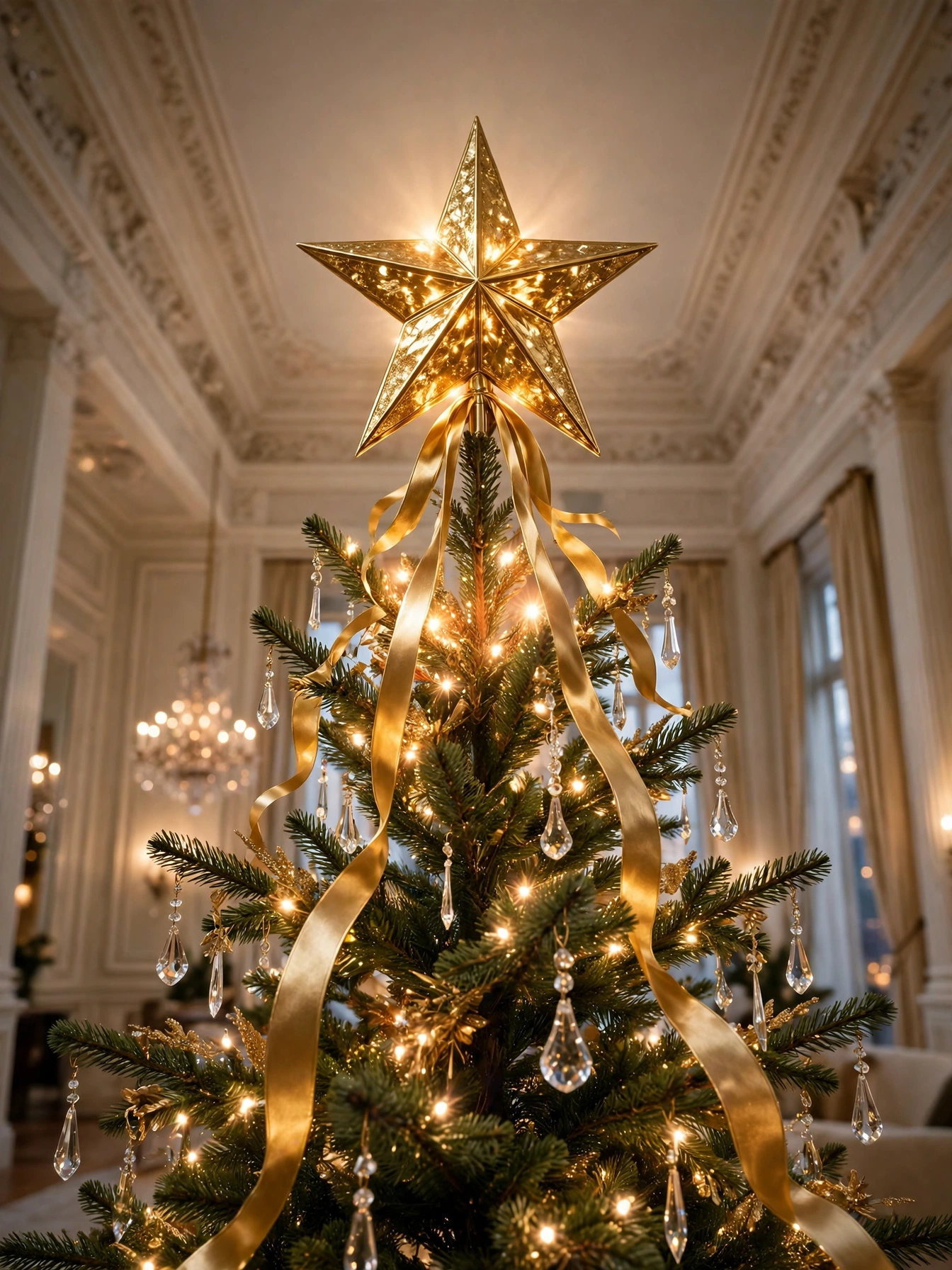
Why This Works:
- The topper is the first thing the eye finds on a tall tree.
- A large topper balances a wide tree that a small star would disappear on.
- Ribbon tails from the topper connect the crown to the rest of the tree.
- One strong topper removes the need for heavy top branch decorating.
Scale the topper to the tree: a 7 foot tree needs a 10 inch topper, while an 8 to 9 foot tree needs a 12 to 14 inch topper. Secure the topper to the top 6 inches of the trunk with floral wire, not just the tip branch, which bends under a topper heavier than 8 ounces. Add 2 ribbon tails of 36 inches each flowing down from the topper base, and place 10 crystal drops on the top 24 inches of branches to carry the sparkle downward. Avoid toppers that light up with their own plug unless the tree has a spare outlet at the top, since running a second cord down the tree looks messy. Star toppers run 15 to 40 dollars, while handcrafted angel toppers run 40 to 90 dollars.
Statement toppers suit tall rooms and traditional trees where the crown is visible from the stairs or a second floor. Weight works against you over time: a heavy topper slowly tilts the trunk, so check it weekly and straighten it before the lean sets in. For more topper styles, see the Christmas Tree Toppers Ideas 2026 guide.
FAQs
What is the best starting point for christmas tree decor ideas?
Start with lights before any ornament goes on, using 100 mini lights per foot of tree height, so a 7 foot tree needs 700 lights. Test every strand on the floor first, and check each one for frayed wires before hanging.
How do I keep a real tree fresh through the season?
Cut 1 inch off the trunk base before placing it in the stand, then water daily, 1 quart per inch of trunk diameter. Keep the room below 72 degrees Fahrenheit and the tree 3 feet from heat vents. A fresh cut trunk absorbs far more water than an uncut one.
Do christmas tree decor ideas work on artificial trees?
Yes, and artificial trees make counting easier because the branch tips are fixed. A 7.5 foot artificial tree with 1,200 branch tips holds 80 ornaments without drooping. Spend 2 to 3 hours fluffing the branches first, since an unfluffed artificial tree shows gaps that no ornament can hide.
How far should a tree stand from heat sources?
Keep the tree at least 3 feet from fireplaces, radiators, space heaters, and candles at all times. The National Fire Protection Association lists this 3 foot clearance as a basic holiday fire safety rule. Check the distance again after moving furniture for parties, since trees shift during the season.
How many ornaments does a 9 foot tree need?
A 9 foot tree needs 110 to 130 ornaments for a full look, split into 60 percent 3 inch balls, 30 percent 4 inch pieces, and 10 percent statement ornaments. Add 900 lights, which is 100 per foot, and one topper between 12 and 14 inches to match the height.
Conclusion
These 23 ideas share three rules that work on any tree: light first at 100 lights per foot, ornaments sized from large inside to small outside, and a topper scaled to the tree height. Pick one palette that matches your room, count your ornaments before you start, and stop decorating when the tree looks full from 10 feet away. The best first action is simple: measure your tree height and ceiling clearance today, then buy lights to match before choosing a single ornament, since the right light count shapes every christmas tree decor ideas decision that follows. Follow HomelyCrafter on Pinterest for more ideas. Save this to your Pinterest boards so you can refer back to it!

Muhammad Israr is a home decor enthusiast and the writer behind Homely Crafter. He spends his days researching paint colors, layouts and budget-friendly styling ideas, then breaks them down into practical, easy-to-follow guides so you can decorate with confidence.
2 thoughts on “23 Glowing Christmas Tree Decor Ideas for a Warm Home”