
What if the same sofa, shelf, and table could look brand new four times a year without buying a single piece of furniture? These 21 timeless seasonal home decor ideas build a swap system that does exactly that, with one storage box and a calendar instead of a shopping list. A simple rule that works well is rotating textiles and accessories with the seasons, since a pillow swap changes a room faster than any paint job, and the ideas below put exact numbers on that swap.
You will find measurements for pillow systems, wreath rotations, table runners, and entryway swaps, plus material names, price ranges, and honest trade-offs. Most swaps here run under an hour apiece, and the house itself never needs to change, only the pieces on its surfaces. Start with the entryway, since it is the first room every guest sees, then let the living room and bedroom follow the same rotation.
Seasonal Home Decor Ideas Foundations

Why This Works:
- One storage box holds all four seasons, so nothing gets lost between swaps.
- Swapping textiles changes a room faster than any paint or furniture buy.
- A calendar keeps the swap on schedule instead of forgotten until guests arrive.
- Every swap below works alone, so one room can change without the rest of the house.
Take stock of the storage first and buy one 24 by 24 inch box with a lid for each season, which holds 4 pillow covers, 1 runner, and 1 wreath without crushing anything. Pick three colors per season and repeat them in at least 3 spots per room so each room looks deliberate instead of thrown together. Set the swap dates on a calendar, such as March 1, June 1, September 1, and December 1, and keep each swap under 2 hours from box to finished room. Buying a matched set for every season costs far more than mixing pieces, and identical pieces in every room read as a store display. A full four season system runs 150 to 300 dollars, against 600 dollars or more for a matched collection per season.
A house with 4 distinct seasons shows the payoff first, since the swap keeps the home feeling current without a single new purchase. The same system works in a small apartment, where one box and 3 pillow covers carry the whole look. Four boxes stack two high on a closet shelf 48 inches wide, so keep the count under 20 items per season. Try the system with one season first, using a runner and 2 pillow covers, a 30 minute test that shows whether the rotation feels fresh or fussy before you buy the rest.
Four Season Entryway Rotation

Why This Works:
- One wreath and one cushion at the door tell guests the season changed before they step inside.
- Two small pieces at the door announce the new season while the path stays clear.
- Rotating the entry keeps the whole house feeling current for guests.
- Bags and coats hang by the door, leaving the living room uncluttered for the season.
Put a 20 to 24 inch wreath on the front door so its center sits 60 inches off the floor, a height most adults meet at eye level and drivers can spot from the street. A 36 to 48 inch bench belongs against the entry wall, with 2 cushions in 18 inch seasonal covers on top and a 14 inch woven basket standing beside it for the current season. Swap the wreath and the cushion covers on the first Saturday of each season, a 15 minute job when the box is labeled. A 36 inch route from the door to the living room stays open at all times, so visitors never have to squeeze past furniture. Pass on any rug wider than the entry itself, since curled edges turn into a trip hazard when guests walk in with bags. A wreath runs 25 to 45 dollars per season, and 2 cushion covers cost 20 to 30 dollars a set.
A host who welcomes guests in every season feels this change at once, since the entryway is the first room they see and the last one they remember. The rotation also hides the clutter: coats, shoes, and bags land on the bench instead of the sofa. A narrow entry under 36 inches wide fits a wreath and a wall hook only, so measure the wall before buying a bench. Wipe the bench once a month, a 2 minute wipe that leaves the wood looking fresh through all four seasons.
Swap Ready Pillow System

Why This Works:
- Covers come off in minutes and stack flat until the next season calls for them.
- Three colors per season carry the whole room without new furniture.
- Covers cost a fraction of new pillows and wash easily.
- Five covers in two sizes refresh the whole sofa without buying a single new pillow.
Buy 4 sets of covers for a standard 84 inch sofa: two 20 inch squares, two 18 inch squares, and one 14 by 24 inch lumbar per set, so each season gets a full look. Stuff them with feather inserts 2 inches larger than the cover, so the corners keep their shape instead of flattening, and store each set in a labeled zip bag inside the season box. Change the covers on the first Saturday of each season, a 10 minute job when the inserts stay in the covers. Keep the pillow count at 5 per sofa, because 7 or more pillows leave no room to sit. A cover costs 15 to 25 dollars each in most stores, and a feather insert costs 10 to 18 dollars apiece.
A tired sofa changes fastest here, since 5 covers refresh the whole room in 10 minutes. The covers also look rich in daylight, which flatters the living room in every season. Covers need washing once a season, so wash them the week before the swap and fold them flat for storage. Fold the covers flat with tissue between them for storage, so the fabric never creases over the year.
Seasonal Wreath Rotation

Why This Works:
- One wreath alone dresses an empty door or wall in minutes, and the job needs no tools.
- Four wreaths cover the whole year for the price of one new piece.
- Dried and faux wreaths keep their color for the full season.
- That hook works for all four, so the swap needs no tools.
Buy or make 4 wreaths, each 20 to 24 inches across, one per season, and hang them on a single nail or adhesive hook rated for 3 pounds at 60 inches from the floor. Choose spring flowers, summer greenery, autumn wheat, and winter evergreen, so each wreath reads clearly as its season. Store the off season wreaths flat in a 24 inch box with tissue between them, so the shape stays intact for 2 to 3 years. Keep a dried wreath off any door that gets direct rain, since wet stems mold in 2 to 3 days and the smell lingers for weeks. A ready-made wreath costs 30 to 55 dollars each, but a DIY version needs only 12 to 20 dollars of materials and 30 minutes of your time.
A door that otherwise holds nothing is where this rotation pays off, and small homes notice it most. Inside the house, a pantry door or a mirror carries the wreath where weather cannot reach it. Leaves fall from dried wreaths daily, so a small dustpan nearby and a sweep every few days are part of the deal. Once a season, test the hook: one that slips drops the wreath and breaks the frame.
Table Runner Seasonal Swap
Why This Works:
- A runner changes the dining table in 2 minutes flat.
- Four runners cost less than one new tablecloth set.
- Under every hot dish sits a layer of cloth, which keeps rings and scorch marks off the wood.
- Dining table, sideboard, bench: the same piece fits all three without a single change.
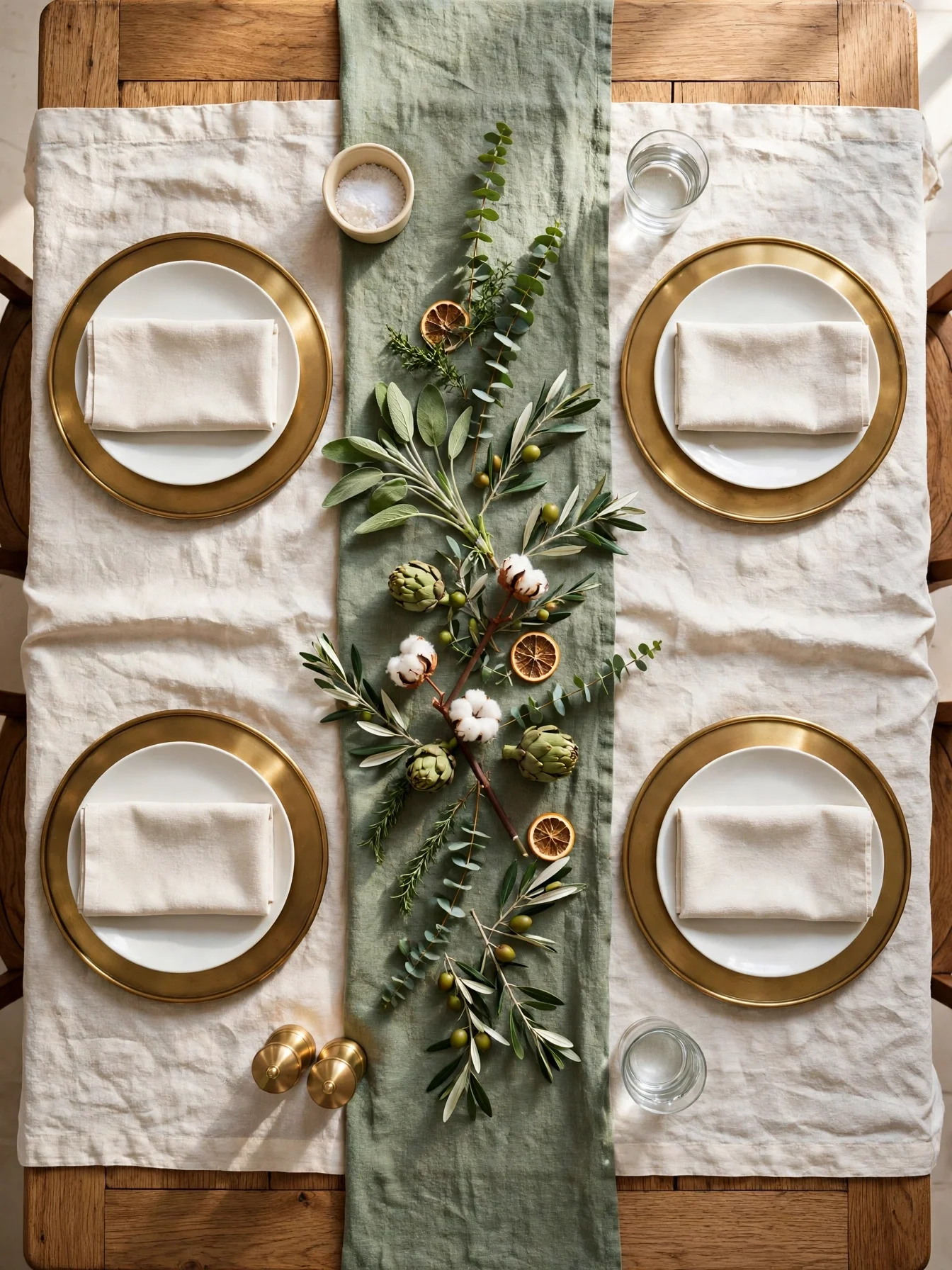
Drape a 72 inch solid linen cloth under everything first, then run an 84 inch runner down the middle of the 72 inch table, letting 6 inches spill over both ends for contrast. Go for a runner 14 to 16 inches wide: plates then rest on the cloth rather than the runner, and a single ironing before its season erases the fold lines. Match the print to the table: bold patterns need width, so save the large prints for wide tables and use small prints on tables under 48 inches long. A runner in the exact curtain fabric is one match too many, and the room starts to look like a themed display instead of a home. Cotton runners run 20 to 40 dollars each, linen blends 45 to 80 dollars, and a set of 4 costs 80 to 160 dollars.
A table set the night before suits this swap, since the runner holds its shape overnight and hides any crumbs from prep. Overhead shots flatter the runner as well, and that counts when the table is the most photographed spot in the house. An 84 inch runner fits a home washer, so wash it the week after its season ends. When the season ends, fold each runner lengthwise in thirds before putting it away, which keeps the creases soft for next year.
Candle Scent Season Calendar

Why This Works:
- Scent reaches guests before they see a single decoration.
- One candle per season costs under 15 dollars and scents a whole room.
- Rotating scents keeps the house from smelling the same all year.
- The candles double as decor on a tray when they are not lit.
Set 4 candles on a 14 inch wooden tray, one per season: citrus for spring, coconut for summer, cinnamon for autumn, and pine for winter, each in a 3 inch glass jar. Burn one candle at a time for 2 to 3 hours, which scents a 12 by 15 foot room without overwhelming it, and trim the wick to a quarter inch before each lighting. Every candle needs 12 inches of space from curtains and anything else flammable, which follows the National Fire Protection Association guidance for candles. Skip lighting 2 strong scents at once, because the mix smells confused and guests catch the clash at the door. Candles run 10 to 20 dollars each in most stores, and a set of 4 costs 40 to 80 dollars.
Cleaning product smells still hanging in the air when guests arrive are exactly what this calendar fixes, swapping that smell for something warm within an hour. The same candle takes the edge off a kitchen that has cooked all day. Five hours of burning tunnels a candle down the middle and wastes half the wax, so set a timer for 3 hours. Lids on for off season candles keeps the scent strong for 12 months.
Seasonal Home Decor Ideas Lighting

Why This Works:
- Dusk is when the layered glow does its work, warming the whole house.
- A half-lit ceiling with lamps on makes people and wood tones glow instead of glare.
- Adjusting light with the seasons keeps the room bright in winter and soft in summer.
- The 2700K glow blends with real candles instead of washing them out.
On the sideboard, a table lamp with a 60 watt equivalent bulb at 2700K stands at each end, and the overhead fixture drops to half so the pair carries the room. For winter, fix a 25 foot warm white string light beside the window, a bulb every 12 inches, and make sure the plug reaches an outlet within 6 feet. In summer, open the curtains fully and switch the lamps off by 7 PM, since daylight lasts until 8:30 PM and the room needs less help. In the living room, skip cool white bulbs above 4000K: they flatten warm colors and leave the space feeling like an office. The hardware store tag on a string light set reads $15 to $30, depending on length and bulb count. On top of the set, warm bulbs add $8 to $12 for a four-pack, and a dimmer switch adds $20 to $35 for full control of the glow.
Plug count comes first every season: a living room with 2 outlets cannot feed 4 lamps and a string light without a power strip. When the wall runs out of sockets, a single rated power strip does the job; extension cords snaking under a rug do not. On the first evening of each season, run the whole setup for 15 minutes and walk the room, so dark corners show up before the shops close. Light follows the calendar here: in winter the string lights come out, in summer the lamps switch off by 7 PM, and the room stays bright either way. Under that layered glow, guests linger longer and the photos come out fine with no flash.
Vase Filler Rotation Plan

Why This Works:
- One vase and four fillers decorate a table all year for under 20 dollars.
- Swapping the filler takes 3 minutes and changes the whole table.
- Dried stems and seed pods roughen a smooth display in a way cloth and metal never do.
- The vase stays in place, so the swap never disturbs the table layout.
Fill a 12 inch tall glass vase with one seasonal filler at a time: tulips in spring, seashells in summer, pinecones in autumn, and ornaments in winter, using 2 cups of filler per season. Center the vase on a console 30 inches high, with 8 inches of clear space on each side for books and candles. Before pinecones go on display, bake them at 200 degrees Fahrenheit for 30 minutes, which kills insects and spreads the scales wider. Leave the vase two thirds full and no higher, since pieces spill each time a book is set down, and a vase at that level looks better anyway. A glass vase runs 15 to 30 dollars, and each filler costs 3 to 8 dollars per season.
With small children around, this vase is a safe pick: nothing in it breaks when it gets knocked over. The vase also fills a console that otherwise sits empty between seasons. Shells and pinecones collect dust in their cracks, so rinse the filler once a season, a 5 minute rinse. Pack off season fillers in labeled zip bags inside the season box, so they stay dry for next year.
Throw Blanket Seasonal Swap
Why This Works:
- A throw changes the look of a whole sofa in under a minute.
- Four throws cost less than one new sofa cover.
- Light cotton in summer and heavy wool in winter match the weather.
- Throws move from sofa to chair to lap without any installation.
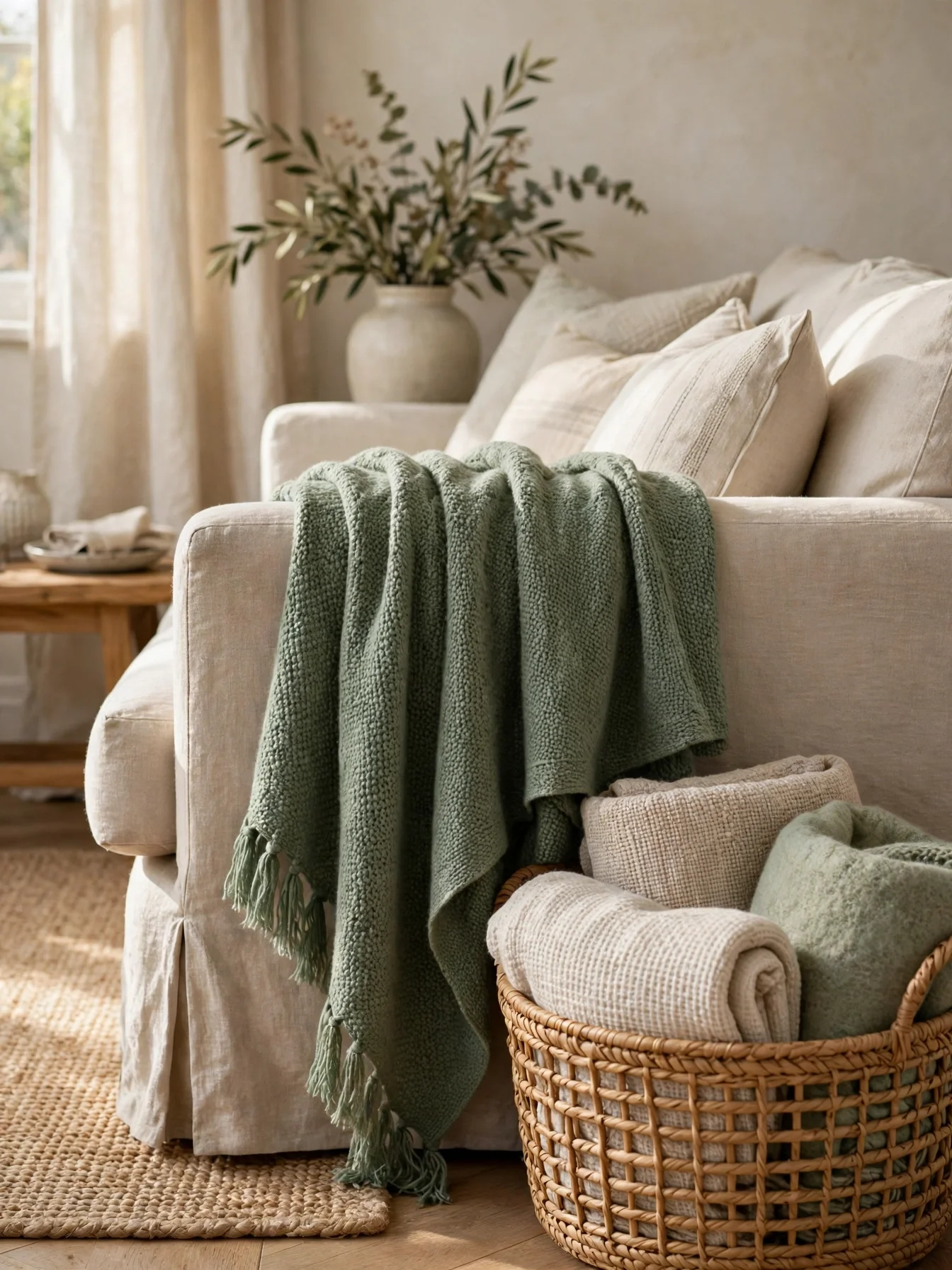
Drape one 50 by 60 inch throw over the arm of a standard 84 inch sofa each season: light cotton in spring, linen in summer, plaid wool in autumn, and chunky knit in winter. Fold the throw in thirds lengthwise before draping it, so the fabric never stretches out of shape between uses, and store the off season throws in a 16 inch woven basket at the foot of the sofa. Choose wool at 400 to 600 grams per square meter for real winter warmth, and check the label for a tight twist yarn, which pills less than loose spun yarn. Wash wool throws cold and gentle, since hot water above 104 degrees Fahrenheit with rough agitation can felt and shrink wool. Cotton throws run 25 to 40 dollars, linen 40 to 70 dollars, and wool 80 to 140 dollars in most stores.
The throw on the armrest gets reached for first, so keep that one washable and save the premium wool for the back of the sofa. A throw also hides a worn cushion for a season, which buys time before reupholstering. The snag is bulk: a chunky knit throw weighs 4 to 6 pounds, so it slides off a leather sofa unless one end is tucked under a cushion. Wash each throw the week before its season starts, so it stays fresh for 3 months of use.
Bookshelf Seasonal Refresh
Why This Works:
- Bookshelves hold a full season of decor and leave every inch of floor open.
- Grouped by color, the books make the shelf feel part of the room, not an afterthought.
- Small pieces fill gaps between books and change with one swap.
- The shelf refreshes with one piece per shelf, so it never feels stale.
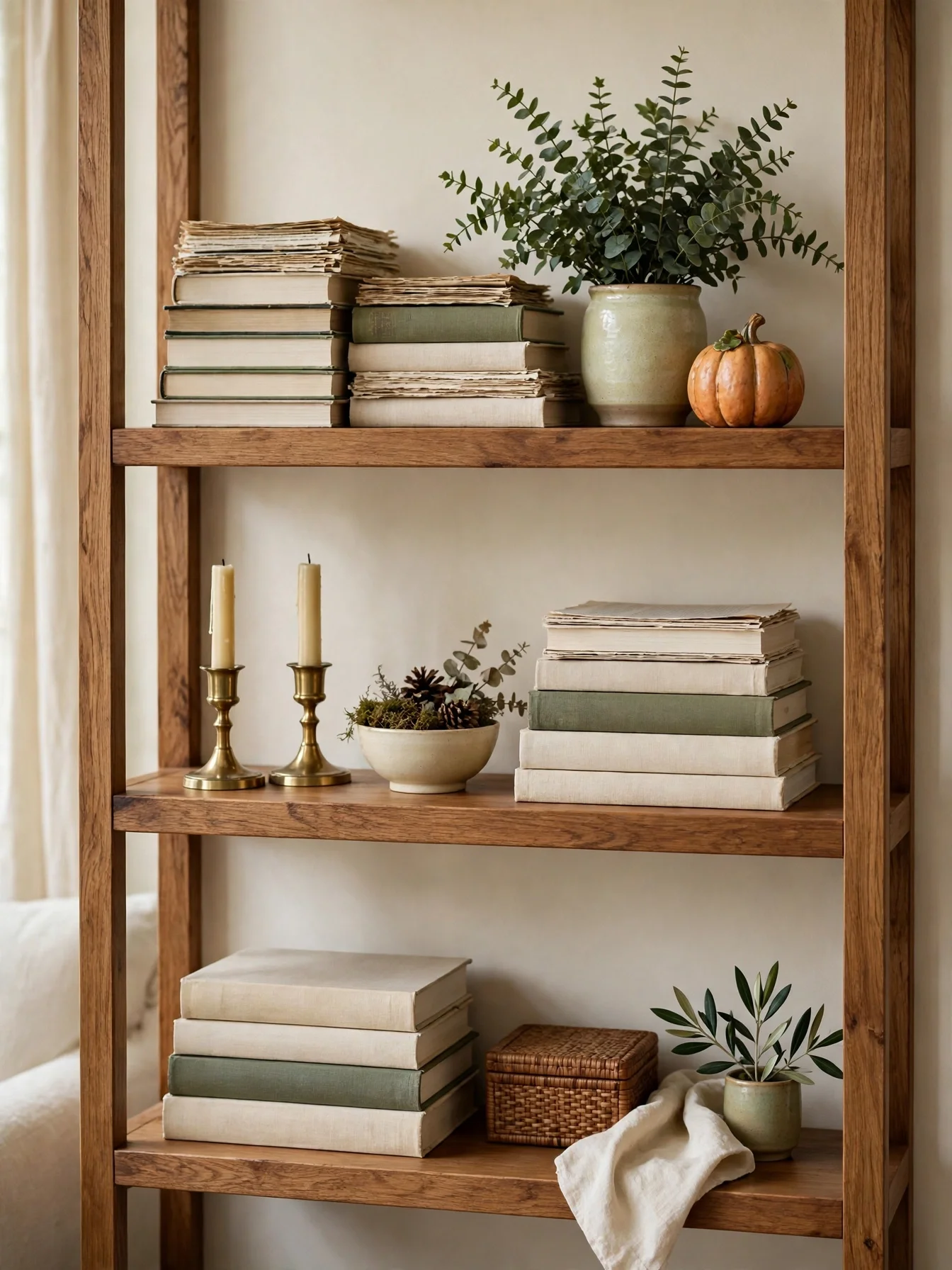
Dress the middle shelf with 2 upright books in seasonal covers, a 6 inch potted herb beside them, and a 5 inch ceramic bird on the other side. Keep one third of each shelf empty, so the styling breathes, and group pieces in odd numbers of 3 or 5. Face the seasonal books spine out and turn the rest spine in for a calm background. A shelf packed edge to edge works against you: once it reads as storage, the seasonal pieces disappear into the clutter. Brass holders run 10 to 18 dollars each, and a ceramic bird costs 8 to 15 dollars.
A reader already owns this shelf, so the refresh costs 15 minutes and nothing more. A lived in feel comes free with the books, and new pieces alone cannot fake it. Plan a monthly wipe: a dry cloth over each open shelf keeps dust off the books. From 6 feet back, the shelf reads as one picture, and the color balance is obvious at that distance.
Front Porch Seasonal Layers

Why This Works:
- The porch greets guests first and waves them off last.
- A doormat and two planters need no tools and no drilling.
- Seasonal layers make the house look cared for from the street.
- The display reads clearly from the sidewalk in every season.
Layer the porch with a 30 by 48 inch doormat at the door, 2 planters 12 inches across on each side, and a 12 inch lantern with a battery candle beside the step. Refresh the doormat and the planter fill each season: tulips in spring, ferns in summer, mums in autumn, and evergreen in winter. Keep 36 inches of open floor along the walkway so guests carrying bags can pass the display without squeezing past it. Real plants pressed against the house spell trouble in a wet climate, since 1 week of rain molds them and stains the siding. Planters run 15 to 30 dollars each, a doormat costs 20 to 35 dollars, and seasonal plants are 8 to 15 dollars a pot.
Fifty feet down the street is far enough to read the layers, which is the whole point of a porch display. Planters hold the display steady through a windy week, 10 to 15 pounds together, where a wreath would swing. Summer heat wilts real plants in 2 weeks, so water them every few days and bring them in before the first frost. Soil and leaves drop daily, so the porch needs a weekly sweep.
Dining Centerpiece Season Cycle
Why This Works:
- One tray and four centerpieces cover the whole year.
- Seasonal produce costs less than a floral arrangement and lasts longer.
- It lifts off in one move when the main dish needs the space.
- Real seasonal pieces look gathered, not bought.
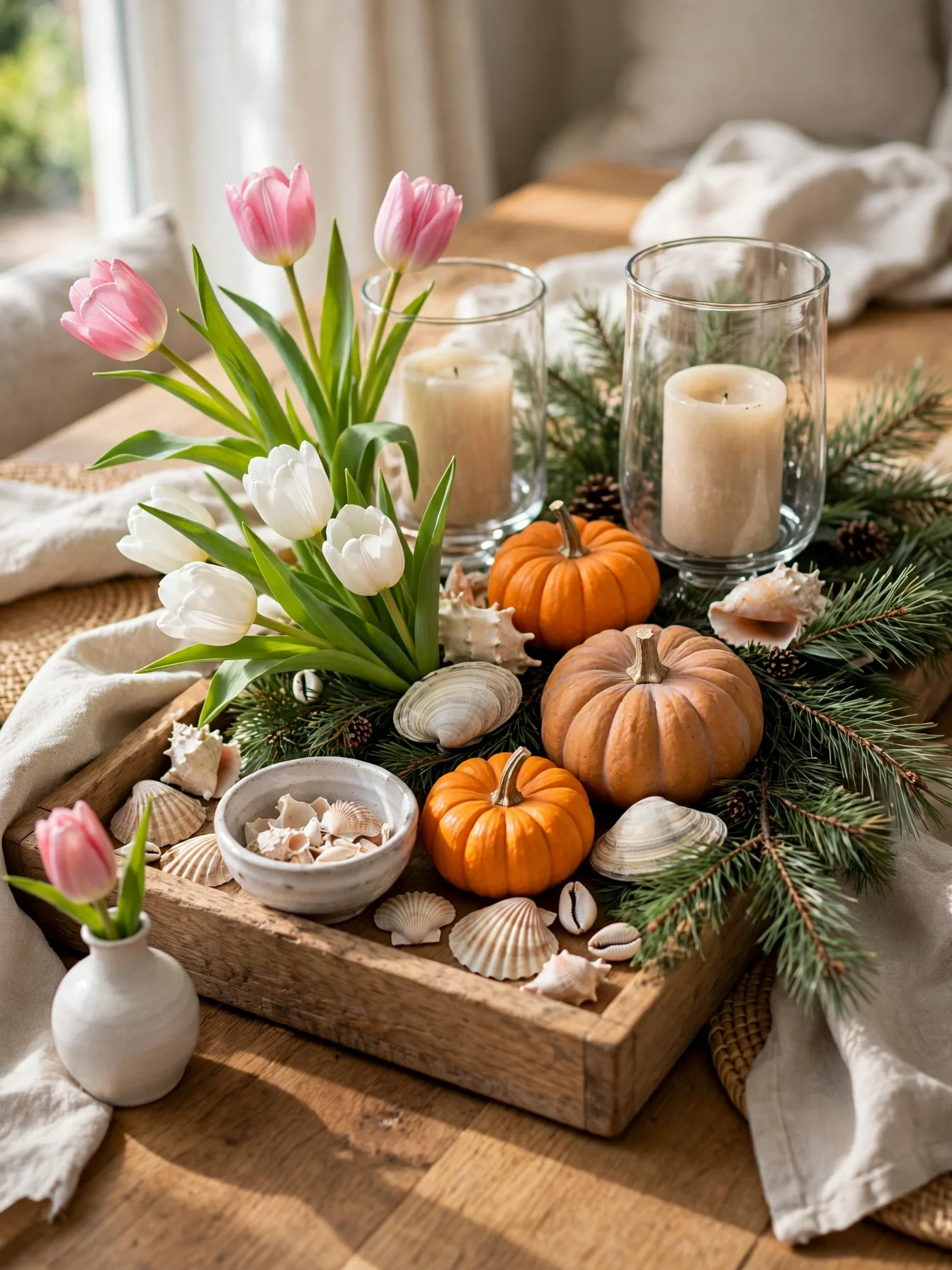
Anchor every season with a 36 inch wooden tray; a 72 inch table keeps 3 place settings clear along each side. Set 3 seasonal pieces along the center, such as tulips in spring, seashells in summer, pumpkins in autumn, and pine branches in winter, then add 2 pillar candles in glass hurricanes at 6 and 8 inches tall, spaced 12 inches apart. Keep the whole arrangement under 12 inches tall, so nobody peers around it to see the guest opposite. Dried pieces and real flames need a full 12 inches between them, so battery candles are the safer pick for a crowded tray. Let the centerpiece stay narrower than one third of the table, or guests lean around it all evening and the table feels divided in half. A wooden tray runs 25 to 45 dollars, and each seasonal fill costs 10 to 20 dollars.
Serving family style works when the tray can move: push it to one end for the main dish, then slide it back for dessert, and the table never gets cleared twice. The Spruce allows two feet of elbow room for each guest, and a slim tray respects that gap where a broad floral spread would eat it. A tray loaded for dinner weighs 8 to 12 pounds, so place it early and let guests come to it. Thirty minutes out, check the candles: a vent draft can push a flame into a dry branch.
Bedroom Seasonal Bedding Swap

Why This Works:
- Bedding sets the mood of the bedroom more than any other piece.
- Light linen in summer and heavy flannel in winter match the weather.
- A swap takes 20 minutes and changes the whole room.
- Two sets per season cover washing day without a bare bed.
Rotate the bedding on the first Saturday of each season: light cotton sheets in spring, linen in summer, flannel in autumn, and a heavy duvet in winter, with a 50 by 60 inch throw folded across the foot. Add 2 standard pillows and 1 lumbar pillow in a 14 by 24 inch seasonal cover, and keep a spare blanket folded on a chair within 6 feet of the bed. Wash each set the week before its season starts, so it stays fresh for 3 months of wear. Sleepers with allergies do better without a heavy down comforter, because feather fill can bother sensitive sleepers and a cotton quilt avoids the problem entirely. A cotton set runs 60 to 120 dollars, linen 90 to 160 dollars, and flannel 50 to 90 dollars in most stores.
A sleeper who runs hot in summer and cold in winter gains the most from this swap, since the bedding matches the season instead of fighting it. In a cold bedroom, the layers add real warmth, and the room usually runs 3 to 5 degrees cooler than the rest of the home. The limit is closet space: 4 sets need a shelf 24 inches wide, so store them in labeled zip bags inside one box. Give the room 30 minutes of fresh air before making the bed, which sweeps out the stale smell of a room that sat closed all week.
Bathroom Seasonal Towel Rotation

Why This Works:
- Towels are the cheapest seasonal swap in the whole house.
- Three colors per season tie the bathroom to the rest of the home.
- Folded towels on a ladder look styled without any effort.
- The swap takes 5 minutes and needs no tools.
Rotate 3 hand towels and 2 bath towels per season in the current palette, folding them in thirds and stacking them on a 16 inch wooden ladder or a shelf 24 inches wide. Hang one hand towel on a bar 48 inches from the floor, which is the standard height for easy reach, and keep a spare set in the linen closet for washing day. Choose Turkish cotton at 600 to 700 grams per square meter for real absorbency, and wash new towels once before first use to remove the factory finish. Skip dark towels in a bathroom with hard water, because mineral deposits leave white marks within 2 weeks. Towels in most stores run 8 to 15 dollars each, and a full seasonal set costs 40 to 75 dollars.
The bathroom is the one room every visitor uses, so this swap gets noticed first. The towels also forgive a plain bathroom, which often has no other decor at all. Laundry is the chore here: 5 towels per season need washing every week, so keep 2 sets per season and rotate them. Keep off season towels in a labeled box on the linen closet shelf, so they stay dry and ready.
Kitchen Seasonal Counter Vignette

Why This Works:
- A counter vignette decorates the busiest room without losing work space.
- Small pieces carry the season without a single big buy.
- The vignette moves aside in seconds when cooking starts.
- One cutting board, one plant, and one jar suit every season.
Style a 24 inch stretch of counter with 3 pieces: a 12 inch wooden cutting board leaning against the backsplash, a 6 inch potted herb, and a 10 inch ceramic jar holding wooden spoons. Change the herb and the jar color each season, keeping the board the same all year, and leave 18 inches of clear counter on each side for prep work. Hold the vignette at least 12 inches from the stove, because heat dries out herbs in 2 days and splatter stains the jar. Leave out anything taller than 14 inches on the counter, since it blocks the view across the kitchen and gets knocked over. A cutting board runs 25 to 45 dollars, a potted herb costs 5 to 10 dollars, and a ceramic jar is 15 to 25 dollars.
An hour a day in the kitchen makes this vignette the decor a cook actually sees while working. The herb also earns its place, since fresh basil and mint go straight into dinner. A vignette eats 24 inches of prep room, so keep it on a stretch that never holds the cutting board. Water the herb every few days, a 1 minute habit that keeps it alive for 3 months.
Wall Art Seasonal Swap
Why This Works:
- One framed print changes a whole wall in 2 minutes.
- Four prints cost less than one large canvas.
- Swapping art keeps the room feeling current without repainting.
- That frame works for all four seasons, so nothing new is needed.
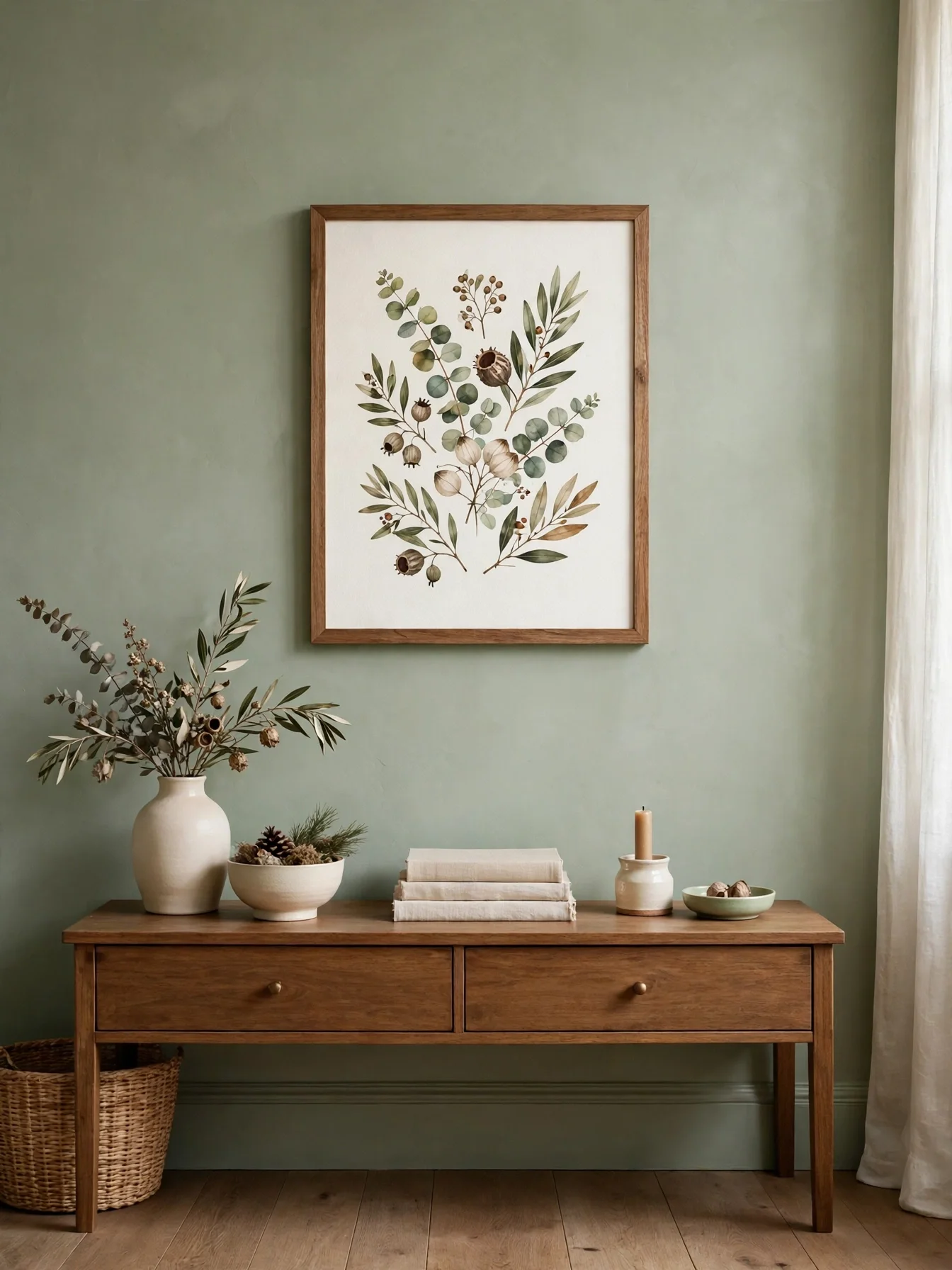
Hang one framed print, 16 by 20 inches, centered 57 to 60 inches from the floor, which is the standard eye level height for wall art. Trade the print each season, keeping the same wooden frame, and store the off season prints flat in a 20 by 24 inch portfolio sleeve. Choose one subject per season, such as blossoms in spring, coast in summer, harvest in autumn, and snow in winter, so each print reads clearly as its season. Do not hang art above 66 inches, because guests look up and the piece feels disconnected from the furniture below. A frame runs 20 to 40 dollars, and prints cost 10 to 25 dollars each in most stores.
A rented home suits this swap, since one nail or adhesive hook holds the frame all year and the print changes without any new holes. The art also gives the room a focal point that furniture alone cannot provide. A print in direct sun fades in 6 months, so hang it on a wall that gets indirect light only. Inspect the hook once a season, since a hook that slips drops the frame and cracks the glass.
Plant Rotation by Season

Why This Works:
- Plants are the only decor that grows and changes on its own.
- Rotating plants matches the light each season actually gives.
- Three small pots fill a bare windowsill without taking any floor space.
- Greenery softens hard furniture lines in every season.
Rotate 3 plants per season on a windowsill 36 inches long: herbs in spring, a fern in summer, a mum in autumn, and an evergreen in winter, each in a 6 inch ceramic pot. Space the pots 6 inches apart so air flows between them, and water each one every few days with half a cup, since overwatering kills more houseplants than drought. Move light hungry plants close to a south facing window in winter, when daylight is shortest, and pull them back from the glass in summer to avoid leaf burn. Avoid a plant taller than 7 feet in a room with an 8 foot ceiling, because it crowds the ceiling and looks cramped. Plants run 15 to 30 dollars each in most stores, and ceramic pots cost 10 to 20 dollars apiece.
A sunny windowsill suits this rotation, since the plants thrive with almost no effort. The greenery also cleans the air and softens the room in every season. Plants need water every few days without fail, so set a phone reminder and keep a watering can by the sink. Look at the leaves once a month for pests, since a single infested plant spreads to the rest in 2 weeks.
Mantel Seasonal Refresh
Why This Works:
- The mantel carries the season at eye level, so guests see the swap at once.
- One garland swap changes the whole fireplace in 10 minutes.
- Candlesticks and mirror bounce firelight into the whole room in winter.
- A round mirror suits every season, so it never needs swapping.
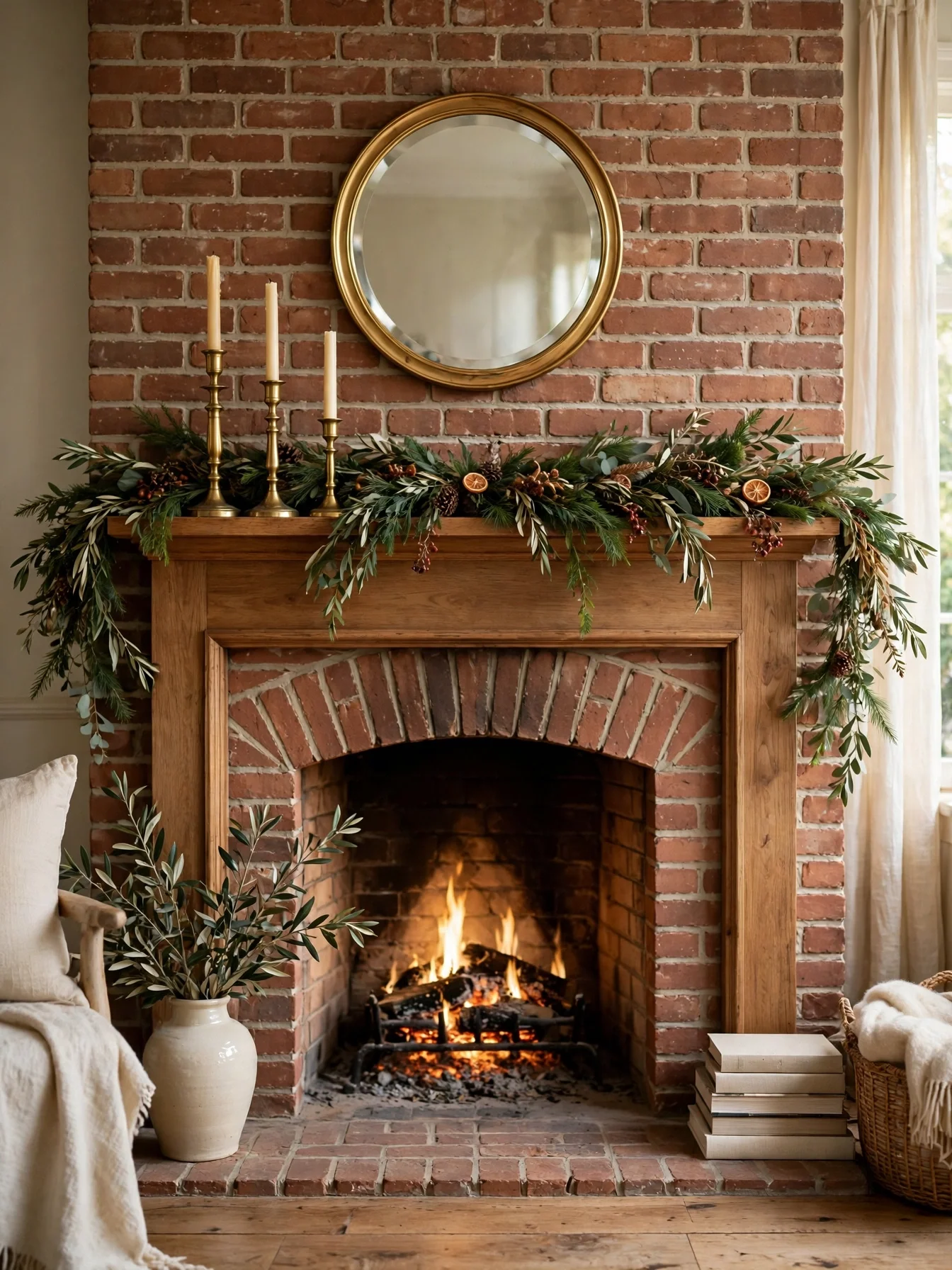
Refresh the mantel each season with a fresh garland along the front edge, letting the ends drop 8 inches down each side, and a pair of candlesticks at 10 and 12 inches tall on one end. Hang a 24 inch round mirror above the mantel, centered 57 to 60 inches from the floor, and swap the garland only, keeping the mirror and candlesticks all year. Keep every decoration at least 12 inches from the firebox opening, and follow the National Fire Protection Association guidance to keep combustibles 3 feet from the fire. Keep real garland away from a working gas fireplace vent, because dried leaves near heat are a fire risk. A garland runs 20 to 40 dollars per season, and brass candlesticks cost 15 to 30 dollars each.
Everyone drifts toward the fireplace first, so this refresh gets seen while dinner cooks. In photos the mirror and brass earn their keep, bouncing light from one side of the room to the other. Fresh garland sheds leaves daily, so plan on sweeping the hearth every few days, and brass needs a 10 minute polish every month to stay bright. Each spring, run a hand along the mantel paint and look for fine cracks, because two or three seasons of heat cycles are enough to split it.
Coffee Table Seasonal Tray
Why This Works:
- A tray contains the styling and keeps the table usable.
- Those three pieces change the whole table in 3 minutes.
- It lifts off in one move when guests need the space.
- One tray suits every season, so the swap costs almost nothing.
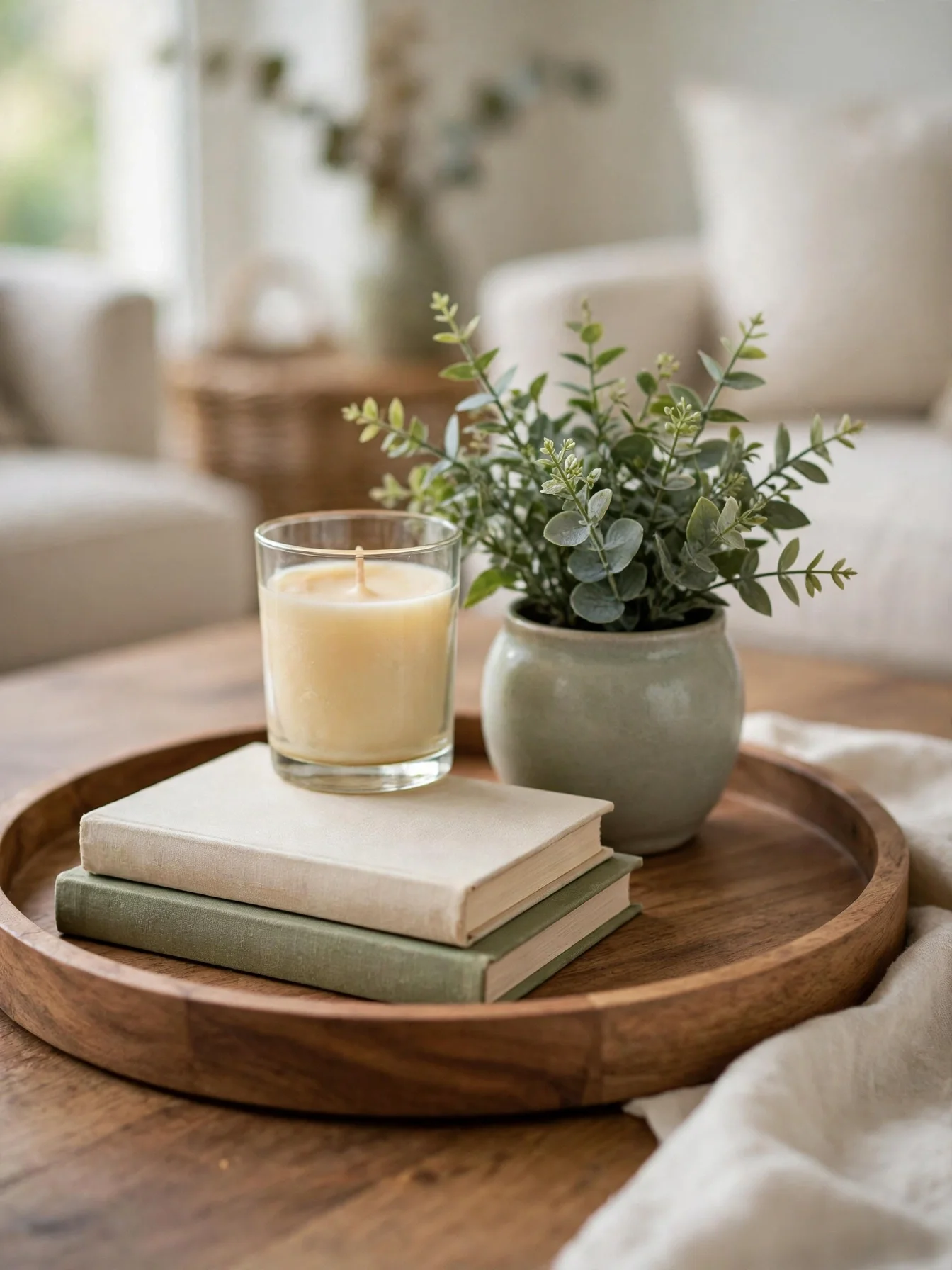
Arrange a 16 inch round tray on a coffee table 36 to 48 inches long, with 3 pieces inside: a 6 inch candle, a 4 inch potted plant, and 2 stacked books. Swap the candle scent and the plant each season, keeping the tray and the books all year, and leave 8 inches of clear table on each side for mugs. Keep the candle at least 12 inches from the plant, or use a battery candle when the tray sits tight, since a flame near dry leaves is a fire risk. A tray filled to the brim is asking for trouble, because pieces slide whenever a mug is set down; two thirds full looks better anyway. A round tray runs 20 to 35 dollars, a candle costs 10 to 20 dollars, and a small plant is 8 to 15 dollars.
A coffee table used every evening suits this tray, since it keeps the styling contained and the table clear for mugs and books. It also protects the table from candle wax and water rings. A tray collects dust fast, so wipe it with a dry cloth once a week. Store off season candles with their lids on, so the scent holds strong for 12 months.
Window Sill Seasonal Display

Why This Works:
- A window sill is free display space in every room.
- Daylight makes small seasonal pieces look bigger and brighter.
- The display changes with one swap and needs no tools.
- Three pieces suit a sill that holds nothing else.
Style a window sill 36 inches long with 3 pieces: a 6 inch vase with seasonal stems, a 4 inch candle in a glass holder, and a 5 inch ceramic figurine. Keep each piece 4 inches from the glass, since condensation drips down the window and stains wood and paper. Rotate the stems and the figurine each season, keeping the candle holder all year, and wipe the sill once a week, a 2 minute wipe that stops dust building up. Drop a display on a sill narrower than 4 inches, because pieces tip when the window opens and fall 3 feet to the floor. A vase runs 10 to 20 dollars, a candle holder costs 8 to 15 dollars, and a figurine is 8 to 15 dollars.
A sunny kitchen window suits this display, since the daylight does half the styling work. The sill also gives herbs a home, since they grow best within 12 inches of the glass. A south facing sill gets very hot in summer, so keep candles off it in July and August. Look for water damage on the sill each spring, since condensation over 2 to 3 seasons can stain the paint.
Seasonal Home Decor Ideas Finishing Touches

Why This Works:
- A short walk on swap day catches what the eye misses during the changeover.
- One box, three colors, and a labeled lid decide the order of the season, not the decor.
- A photographed room gives next year a reference instead of a guessing game.
- The last check happens while the boxes are still open, not after they are stored.
On swap day, carry a notepad through every room and tick off four items: a seasonal color showing 3 times, a clear surface, a spare hook for coats, and a path 36 inches wide. Fluff every pillow for 30 seconds, smooth each runner so 6 inches hang evenly at both ends, and replace any candle burned below 2 inches. Keep a small basket by the door with 3 spare hooks, 2 extra candles, and a lighter, so the next swap starts stocked. A fourth color added at the last minute throws the whole palette off, so leave that errand for another day. The walk runs 30 minutes and uses only pieces already out of the boxes.
Rooms stay set for 3 months instead of 3 days when the walk comes first, and the house feels finished. A bulb that died over winter or a frame that tilted during the swap turns up here, before the boxes go back. A 30 minute walk after a 2 hour swap feels long, so do it while the boxes are still open, not after. Labeling each box before it goes away saves 20 minutes at the next swap.
FAQs
How many seasonal home decor ideas do I need for one room?
Four to 6 ideas open one living room well: a pillow swap on the sofa, a wreath at the entryway, and a tray on the coffee table. One strong piece per surface is the rule, and the room stays calm instead of crowded.
What is the cheapest way to change decor each season?
Pillow covers and a table runner cost the least, since 5 covers at 15 to 25 dollars each change a whole sofa. A 20 dollar runner changes the dining table in 2 minutes, and both store flat in one box between seasons.
How do I start a seasonal home decor ideas rotation?
Pick one room and one season first, then buy a single storage box 24 by 24 inches and fill it with 4 pillow covers, 1 runner, and 1 wreath. Swap on the first Saturday of the season, under 2 hours when the box is labeled.
How much storage do I need for four seasons of decor?
Four seasons need 4 boxes, each 24 by 24 inches, stacked two high on one closet shelf 48 inches wide. Cap the count at 20 items per season, since more pieces mean longer swaps and a shelf that overflows by the second year.
How do I keep candles safe when I swap them each season?
Trim the wick to a quarter inch before each lighting, and never burn a candle for more than 3 hours at a time. Fire safety guidance sets the gap at 12 inches between an open flame and anything that can burn, so keep curtains, dried leaves, and garland well back.
Conclusion
One box per season, three colors, and the entryway first: that is the whole system behind these 21 timeless seasonal home decor ideas. The short version runs like this. Start with one room and one season, because a small swap proves the system. Three colors carry through every room, so the seasons change without the house losing its thread. Keep every swap under 2 hours, so the rotation stays a pleasure instead of a chore. Tonight, buy one storage box and fill it with 4 pillow covers: 20 minutes now sets up the whole year. Follow HomelyCrafter on Pinterest for more ideas. Save this to your Pinterest boards so you can refer back to it!

Muhammad Israr is a home decor enthusiast and the writer behind Homely Crafter. He spends his days researching paint colors, layouts and budget-friendly styling ideas, then breaks them down into practical, easy-to-follow guides so you can decorate with confidence.