
A kitchen countertop works harder between 6 in the morning and 9 at night than any other surface in a home. The first coffee mug lands there before sunrise, lunch prep spreads across it by noon, and a cutting board returns to it for dinner, so the way it looks shapes the mood of the whole day. These kitchen countertop decor ideas focus on that daily rhythm, with trays, canisters, plants, lamps and small vignettes that stay useful while they look good. According to the National Kitchen and Bath Association, the standard counter height is 36 inches, and that single measurement guides almost every styling choice in this guide, from lamp height to tray depth. Each idea below gives exact sizes, real materials, honest trade offs and a practical tip, so readers can style a counter that cooks well and photographs well.
Wooden Tray Vignette
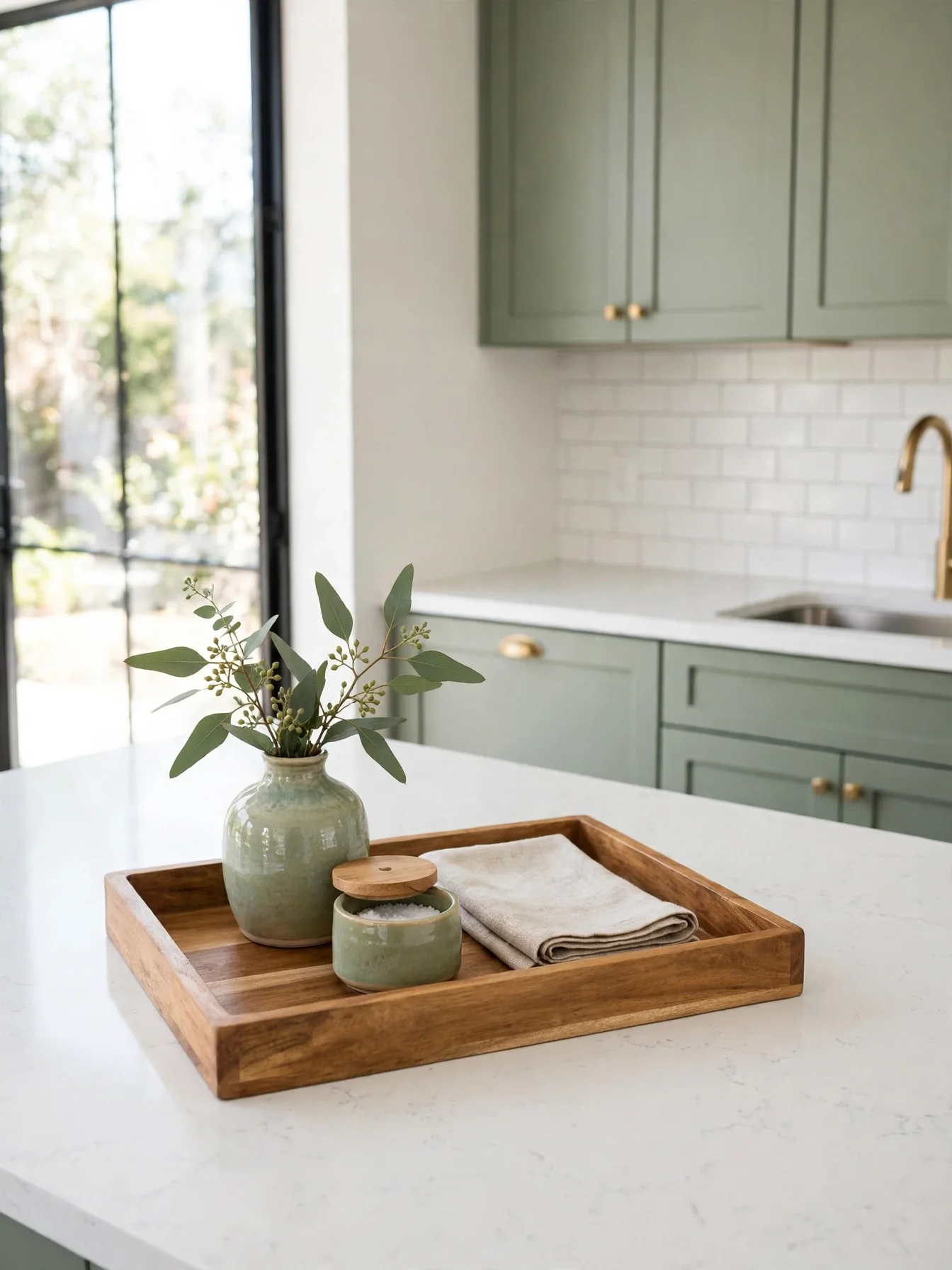
Why This Works:
- A tray groups loose items into one intentional shape instead of scattered clutter
- Wood adds warmth that cool quartz and steel appliances often lack
- The 18 inch length fits beside a sink without blocking the faucet
- Everything inside lifts out in seconds when the counter needs wiping
On most standard counters, an 18 by 12 inch tray leaves at least 12 inches of clear workspace beside it for chopping and prep. Acacia wood resists moisture better than pine, yet it still needs a food safe oil finish refreshed every 3 months if it sits near the sink. A 6 inch gap between the tray and the cooktop edge protects it, because sustained heat above 150 degrees Fahrenheit can dry and crack the wood over time. At the usual 36 inch counter height, a tray with a 1.5 inch rim stays easy to reach and easy to see over. Skip any tray deeper than 14 inches on a narrow 25 inch deep counter, because it eats into the working zone and forces cutting boards toward the edge.
One tray replaces three separate objects that would otherwise drift across a small kitchen surface, which is why compact kitchens get the most from this setup. Tomato or beet juice stains the wood if left sitting, so wipe spills right away. A sealed stone tray costs 40 to 60 percent more, and the extra money buys a surface that wipes clean in seconds. An herb pot in spring and a pinecone in winter keep the same tray reading fresh all year. Renters like it because nothing is screwed down, and the whole vignette moves to an island or a dining table in under a minute.
Marble Cutting Board Display
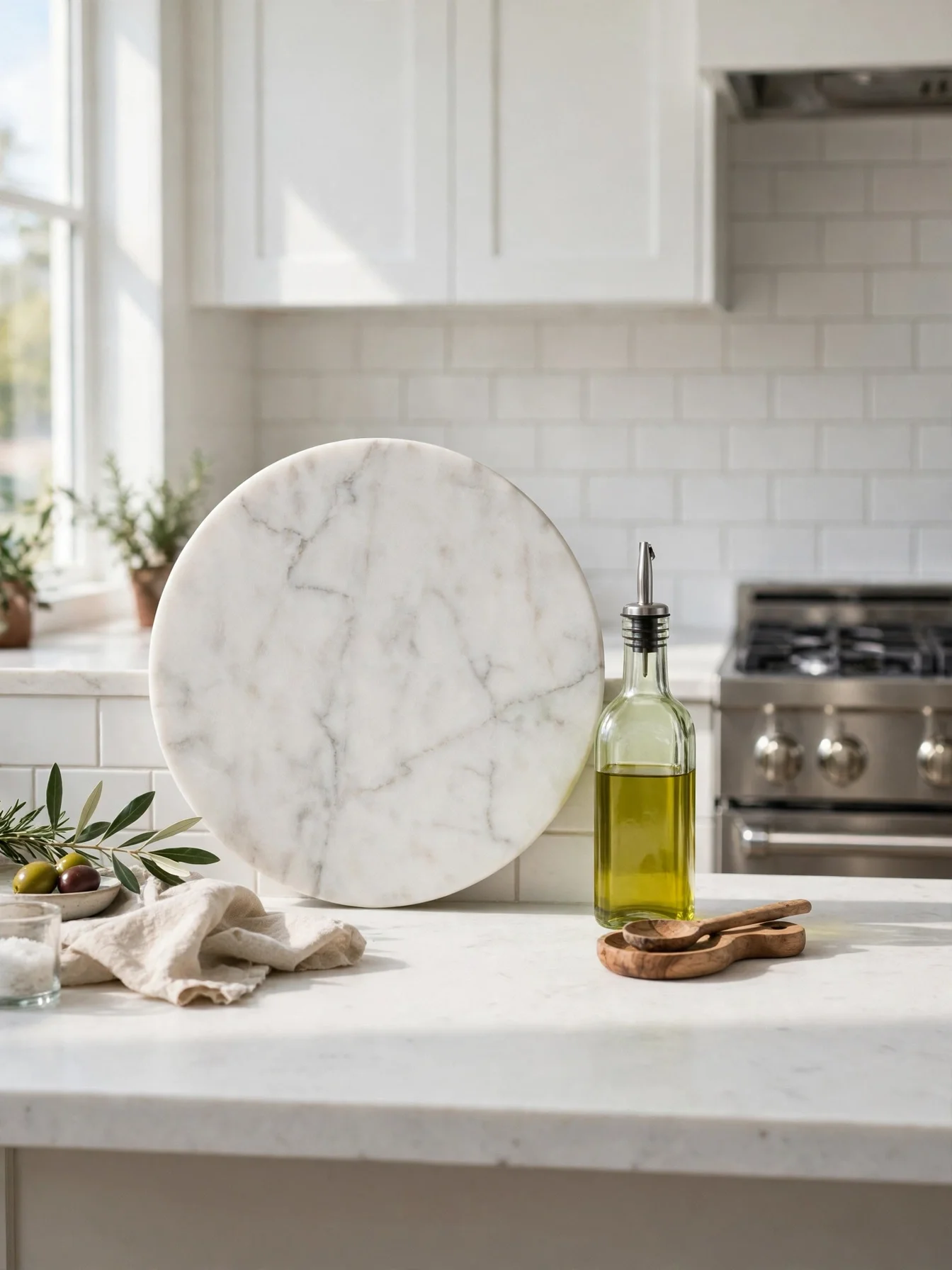
Why This Works:
- Marble brings a cool, high end surface that contrasts with warm wood nearby
- A board leaned upright uses vertical space and frees the counter below
- The 12 inch round size reads as decor, not as a bulky work tool
- Gray veining ties the board to gray grout, steel and stone in the room
Resting at a 75 degree angle against the backsplash, a 12 inch round marble board stays put, helped by its weight of about 5 pounds. Honed marble hides fingerprints better than polished marble, and it needs sealing every 6 months because its porous surface absorbs oil and lemon juice quickly if spills sit. Use it for serving cheese and bread rather than chopping raw meat, because marble dulls knife edges faster than wood and can harbor bacteria in tiny pores. The standard 18 inch backsplash height gives plenty of room for a 12 inch board plus a 3 inch gap above it. Do not place marble within 12 inches of a hot pan, since sudden temperature change can crack a thin slab.
Used for serving cheese and bread, the same marble board earns its place in a small kitchen instead of sitting out as pure decoration. A 16 inch marble board can weigh 9 pounds, too heavy to hang on a weak adhesive hook and awkward to move daily. For looks and for keeping pastry dough cool, marble is still the better pick. Wood boards cost less and weigh about half as much, and they forgive knife marks. Wipe it with a damp cloth and mild soap, never vinegar, because acid can etch the surface.
Glass Canister Trio
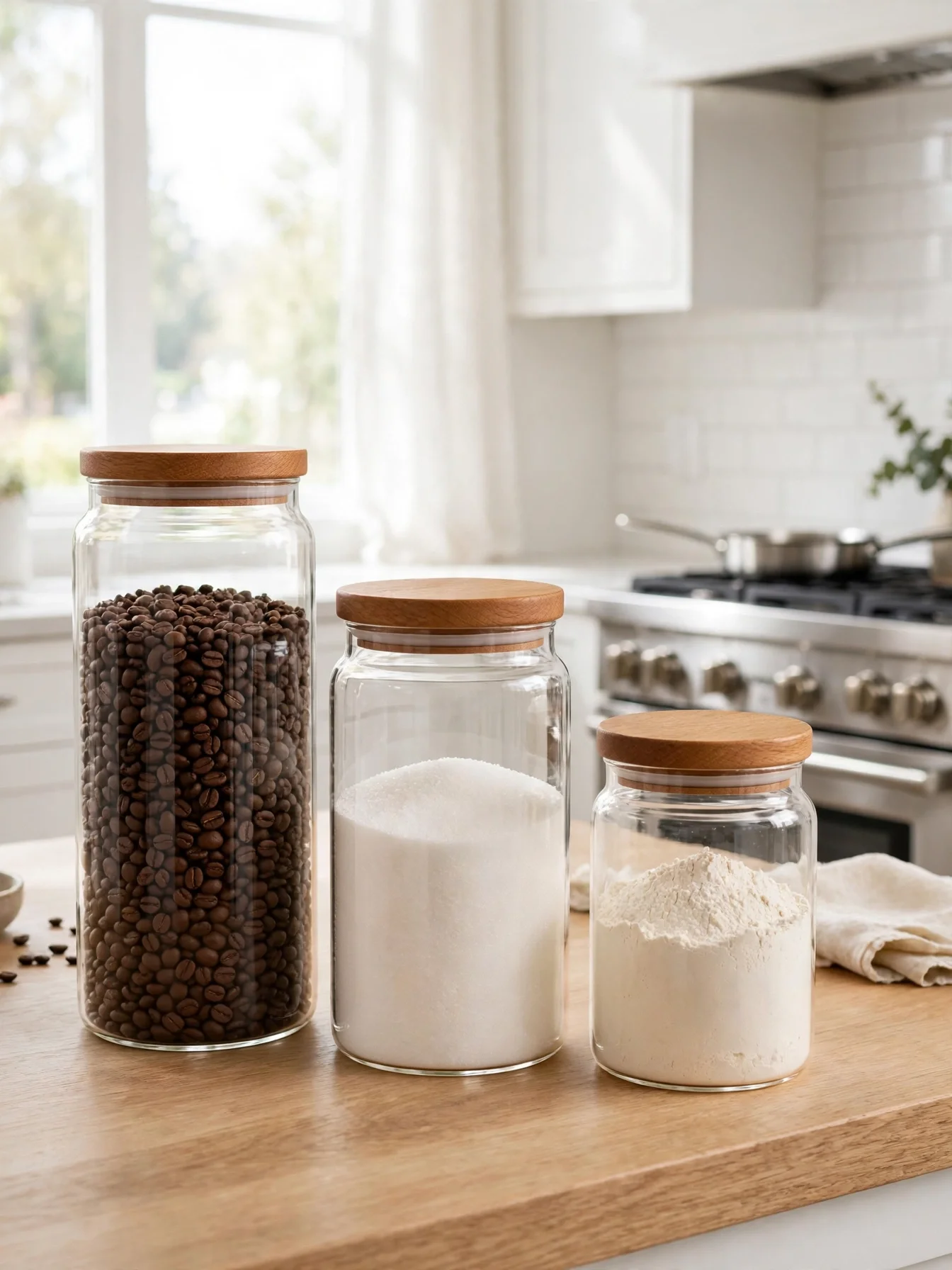
Why This Works:
- Clear glass turns everyday staples into a tidy display with zero extra objects
- Graduated heights of 6, 8 and 10 inches create a natural stepped silhouette
- Airtight lids keep flour fresh for 6 months and coffee beans fresh for 3 weeks
- The trio fills a 14 inch stretch of counter that often sits empty
Glass canisters in 32, 48 and 64 ounce sizes hold about 3.5 pounds of flour across the trio, with room to spare for scooping, so a full 5 pound bag needs an extra container. Borosilicate glass handles temperature swings better than soda lime glass, and a silicone gasket seal keeps moisture out far better than a loose wooden lid. Wooden lids swell within a few weeks when water reaches them again and again, so the trio needs 18 inches of dry counter between the jars and the sink splash zone. The tallest 10 inch canister reaches 46 inches, still easy to open without a step stool. Steer clear of storing canisters in direct sun for more than 4 hours a day, since light fades spices and warms coffee beans.
When the contents stay visible, nothing gets bought twice by mistake, which busy cooks appreciate. Glass shows every fingerprint and flour dust, so the jars need a weekly wipe, about 5 minutes for all three. Plastic canisters weigh less and never shatter. Within a year they scratch and cloud over, and glass stays clear for a decade. Label the lids on the underside with a small sticker to keep the front view clean.
Fresh Herb Garden

Why This Works:
- Living herbs add green that no fake plant matches, plus real cooking value
- Three 4 inch pots fit a 14 inch windowsill without crowding the faucet
- Terracotta breathes, so roots stay drier than in sealed ceramic pots
- Snipping herbs at the counter saves trips to the garden or store
Basil, mint and parsley each do best in a 4 inch wide, 5 inch tall pot with a drainage hole and a saucer at least 0.5 inches deep to catch overflow. Basil needs 6 to 8 hours of direct sun and about 1 inch of water per week, while mint needs the same light but spreads fast, so it must stay in its own pot. Keep pots 4 inches apart so air moves between leaves and mold does not form in humid kitchens. A 4 inch pot puts the leaves at 40 inches from the floor, right at hand height for snipping. Never place herbs within 12 inches of the stove, because heat above 90 degrees Fahrenheit wilts basil in a single afternoon.
If herbs go into cooking at least twice a week, a windowsill garden pays off; occasional cooks may find the watering routine a chore. One messy part is repotting, when soil can spill, so a tray under the pots catches stray bits and saves 10 minutes of cleanup. Terracotta dries in 4 to 5 days, so it suits people who tend to overwater. Plastic pots hold moisture longer and need water only every 10 days. Rotate pots a quarter turn every 3 days so stems grow straight instead of leaning toward the glass.
Brass Counter Lamp
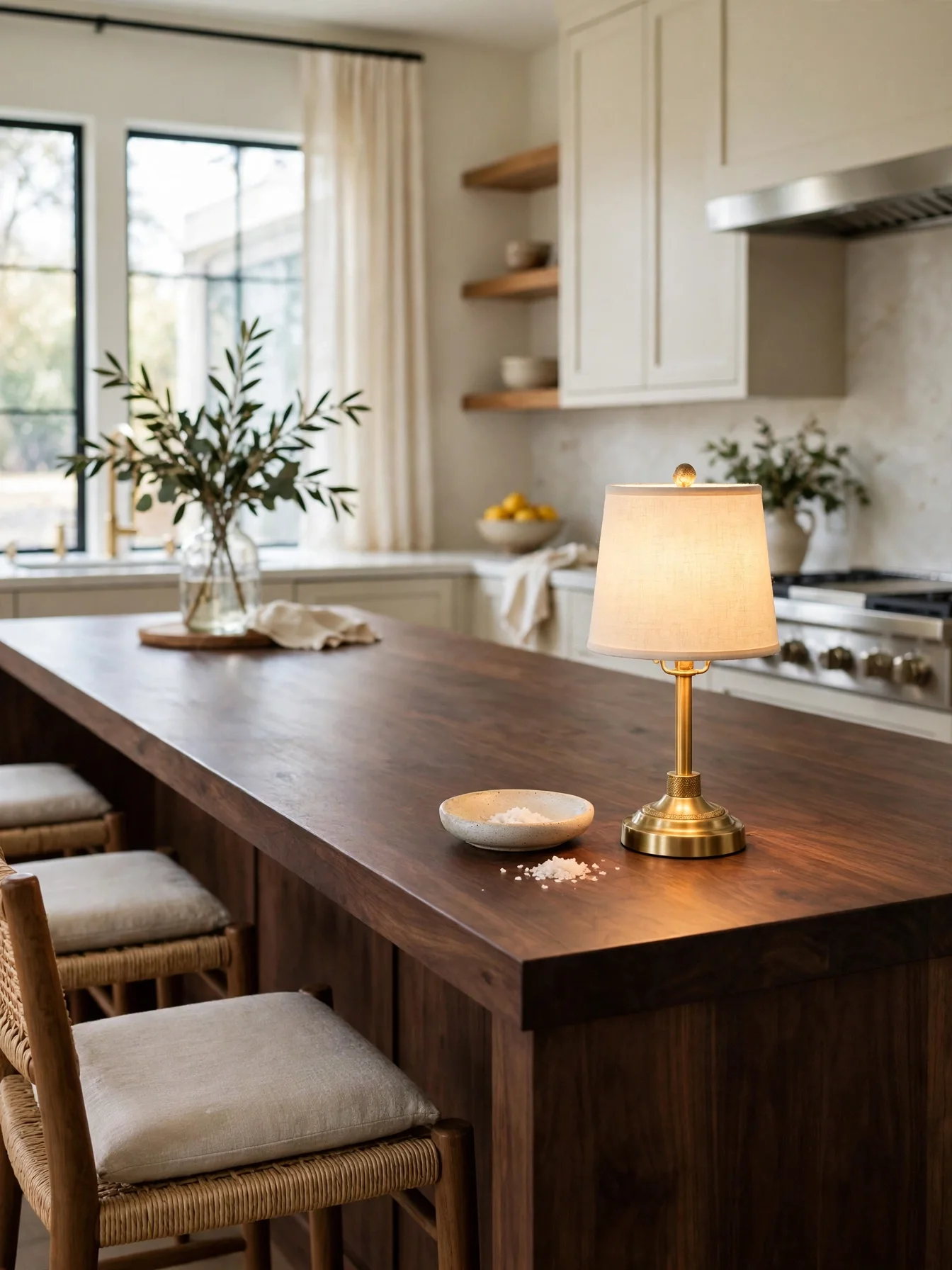
Why This Works:
- A lamp adds a warm layer of light that ceiling fixtures alone cannot give
- Brass echoes faucet and cabinet hardware, tying the room together
- At 14 inches high, it sits below eye level, so it never blocks conversation
- Soft 2700K light makes evening kitchens feel calm instead of clinical
For a 25 inch deep counter, a lamp between 12 and 16 inches tall with a 7 to 8 inch wide shade works best without dominating the surface. Choose an LED bulb rated 2700K to 3000K and 400 lumens, roughly a 40 watt equivalent, for a glow that flatters food and faces. Water from the sink and heat from the cooktop both shorten the life of the socket, so the lamp base sits 12 inches from the sink and 18 inches from the cooktop. Island clearance of 42 to 48 inches around the island leaves room to walk past the lamp without brushing the shade. A common mistake is choosing a lamp taller than 18 inches on a standard counter, since it blocks sightlines across the island and crowds the pendant lights above.
Before the overheads come on, this lamp lights the counter for evening cooks and early risers. The lamp takes up about 64 square inches of prep space, and its cord needs a nearby outlet within 24 inches to avoid trailing across the worktop. Plug-in lamps run indefinitely. Battery lamps remove the cord problem and free the lamp from the outlet, at the price of charging every 8 to 10 hours of use. A dimmer switch on the lamp lets the same light serve both task work and dinner mood. Adding a new outlet for the lamp is the one job here that calls for a licensed electrician, since counter circuits must stay code compliant.
Minimal Kitchen Countertop Decor Ideas

Why This Works:
- Clear space makes a small kitchen feel noticeably larger
- One vase and one bowl give the eye a rest instead of competing objects
- A 70 percent clear counter keeps daily cooking fast and frustration free
- Neutral tones let the stone and cabinetry carry the room
Keeping at least 70 percent of the counter surface clear is the core of minimal styling, which on a 10 foot run leaves 7 feet open for cooking. A single vase 8 inches tall and a bowl 10 inches wide fill a 24 inch zone at one end, leaving the rest free. With 18 inches between the counter and the upper cabinets, the display never feels squeezed, and the small group is easy to see from across the room at standard counter height. Choose matte ceramic over glossy for the vase, because matte hides water spots for 2 to 3 days longer. Watch out for adding a third or fourth object to the same zone, since each extra piece cuts the calm effect and the counter starts reading as storage again.
Wiping the counter takes under 2 minutes with only two objects to lift, which daily cooks who dislike clutter will love. A bare counter can feel cold in a large kitchen, so a warm wood bowl or a linen towel adds the missing softness without adding clutter. Renters, small kitchens and anyone who values a fast cleanup get the most from minimal styling. Maximalist styling suits collectors and large islands better. Change the vase stems monthly for a fresh look at almost no cost.
Citrus Fruit Bowl

Why This Works:
- Fresh citrus adds color that costs under 5 dollars and changes weekly
- A 12 inch bowl anchors the island center without blocking walkways
- Fruit at room temperature ripens evenly and stays easy to grab
- Yellow and orange pop against gray, white and navy kitchens alike
Eight pieces of citrus fill a 12 inch wide, 3 inch deep bowl enough to look full without stacking fruit 3 layers high. Centered on the island, the bowl gets 18 inches of clear counter on each side, or it will start crowding the prep zone and the seating edge. Citrus lasts 7 to 10 days at room temperature and up to 3 weeks in the fridge, so swap the fruit weekly to avoid soft spots. Set in the center of the island, the bowl stays visible from every approach around the kitchen. Skip any bowl deeper than 4 inches, because fruit at the bottom bruises under the weight and rots within 5 days.
Fruit at hand level gets eaten instead of forgotten in a drawer, which makes this a hit with families with children. A bowl left full for 2 weeks will lose at least 2 pieces to mold, so buy only what the household eats in 7 days. A ceramic bowl costs 15 to 30 dollars, shows color better, and chips if dropped. A wooden bowl hides stains. It costs 20 to 40 dollars. Wash the fruit before placing it in the bowl, and line the base with a paper towel to absorb moisture.
Open Cookbook Stand
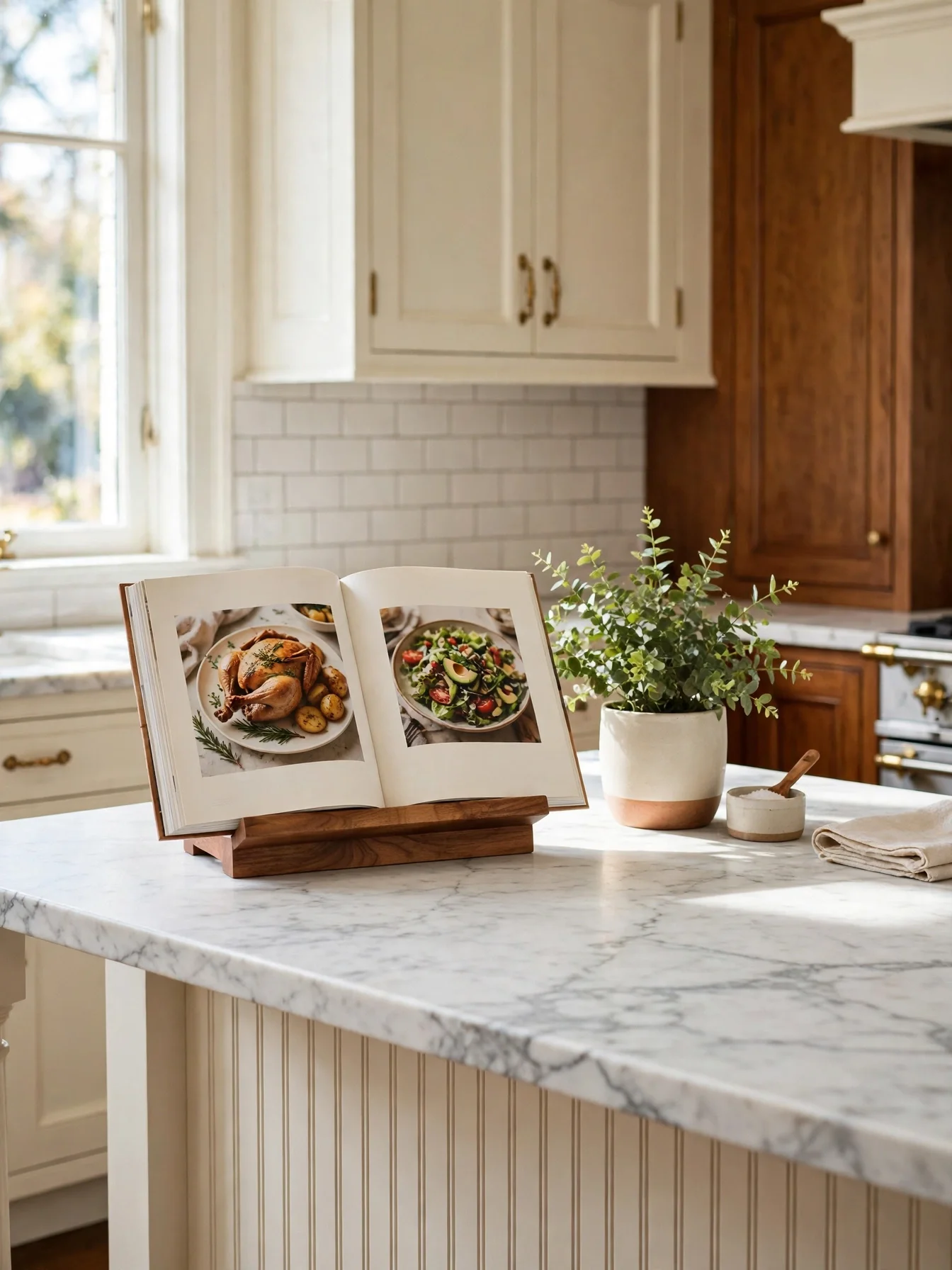
Why This Works:
- An open book adds a personal, lived in layer that plain decor cannot
- The stand holds the book at a 60 degree angle, easy to read while cooking
- A 12 inch wide stand fits books up to 400 pages without tipping
- It turns a favorite recipe into a rotating display that changes weekly
Most hardcover cookbooks measure 9 to 11 inches tall, so a stand 12 inches wide and 10 inches tall suits them. Walnut stands weigh about 2 pounds and stay stable, while acrylic stands weigh under 1 pound and slide on smooth quartz unless they have rubber feet. Give the stand an 18 inch buffer from the sink so splashes never reach the pages, and let 12 inches separate it from the stove edge to keep steam damage away. An 18 inch backsplash leaves room for the stand plus a small plant behind it. Keep rare or signed books out of the display, because kitchen steam and grease spots build up within 2 months.
Using the stand daily and enjoying it as decor between meals gives regular recipe followers double value here. The stand plus an open book covers about 120 square inches, so small counters may feel it. A tablet holder takes half the footprint and holds thousands of recipes. Paper still feels warmer, and it never needs charging. Wipe the stand weekly with a damp cloth, and swap the displayed book every 2 weeks to keep the counter feeling fresh.
Ceramic Vase Stems

Why This Works:
- One tall vase draws the eye upward and balances low horizontal counters
- Dried stems last 12 months with no water, feeding or sunlight needs
- A 10 inch vase sits comfortably under most upper cabinets
- Matte white works with every cabinet color from navy to sage
A vase 10 inches tall and 5 inches wide leaves 8 inches of breathing room above it in the 18 inches between counter and upper cabinet. Pampas stems should measure 14 to 16 inches long, trimmed so the plumes sit 4 to 6 inches above the vase rim, keeping the whole arrangement under 16 inches tall. The stems brush the tile when the vase crowds the backsplash, so 6 inches of breathing room keeps them clear, and a cork pad 0.25 inches thick underneath protects the counter from scratches. A 10 inch vase tops out at 46 inches from the floor, a comfortable eye level from across the room. It is tempting to swap in fresh flowers here, but skip them if the kitchen runs hot, because stems wilt within 48 hours above 80 degrees Fahrenheit.
Dusting only once a month makes dried stems a win for low maintenance households. Pampas drops fine fibers for the first 2 weeks, so shake the stems outside before bringing them in. Dried stems cost 15 to 25 dollars once and last a year. Fresh flowers need water changes every 2 days and run 10 to 20 dollars a week. Spray the plumes lightly with hairspray to cut shedding by half.
Woven Basket Storage
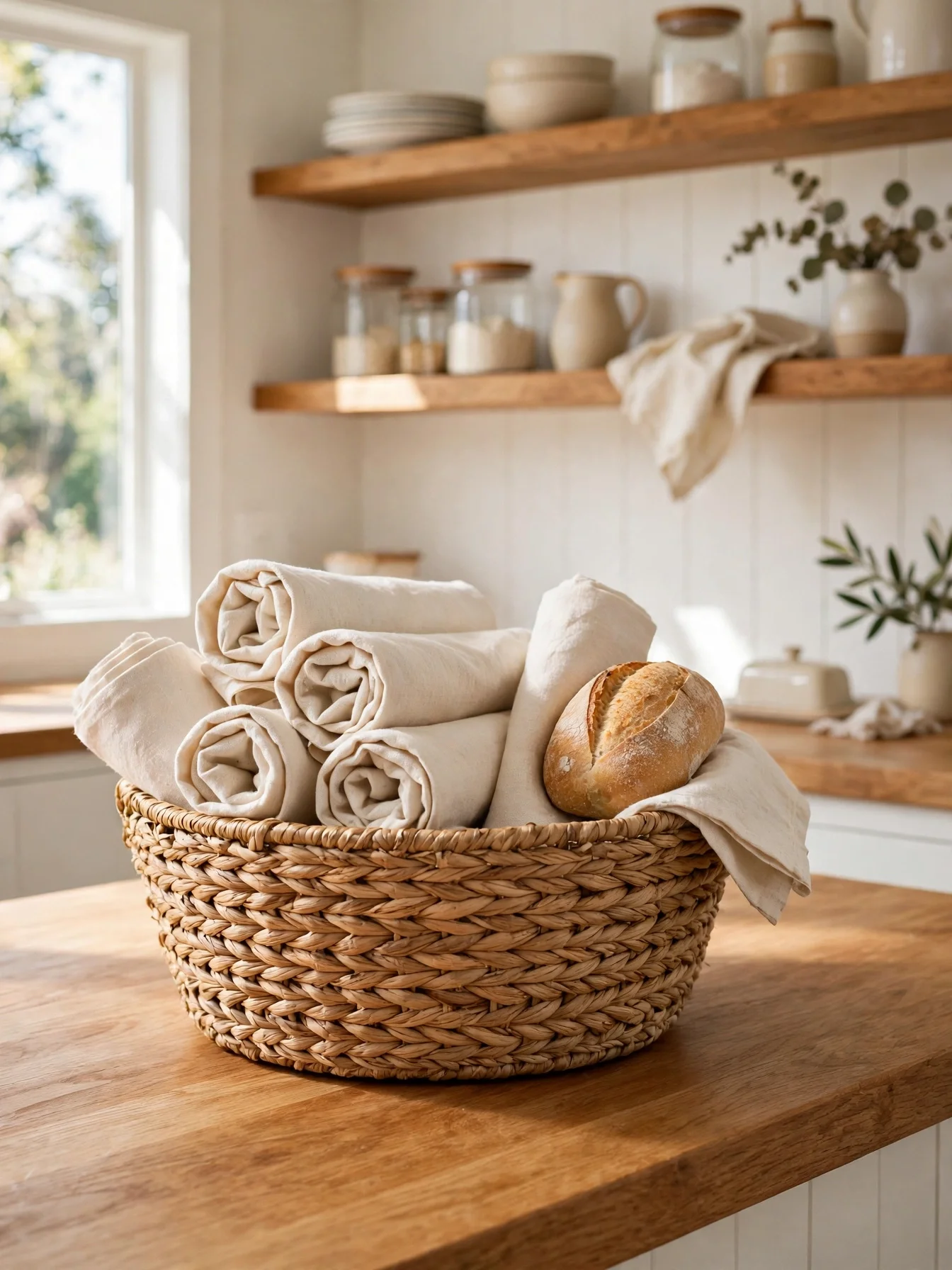
Why This Works:
- A basket hides everyday clutter inside a texture that looks intentional
- Seagrass adds a natural fiber that softens stone, steel and tile
- The 14 inch size holds napkins, bread or fruit without looking like storage
- It moves easily from counter to table when guests arrive
Eight rolled napkins plus a small loaf, or about 6 pounds of produce, fit in a basket 14 inches long, 10 inches wide and 6 inches deep. Expect 15 to 35 dollars for a seagrass basket. Rattan sits higher at 25 to 50 dollars, and it lasts 2 to 3 years longer with daily use. A 12 inch gap between the basket and the sink keeps damp seagrass from developing mildew within 10 days. The 25 inch counter depth leaves 11 inches of workspace in front of a 14 inch basket placed against the backsplash. Overfilling past the rim by more than 2 inches invites a mess, since the contents tumble out when the basket is lifted.
Because a basket lets air circulate, it keeps a loaf fresh for 3 days, a day longer than a sealed plastic bag, making bread storage the smartest use here. Crumbs collect in the weave, so shake the basket outside every 3 days. A lidded bread box keeps bread fresh for 4 days and hides crumbs better. The trade off is counter space: it takes up 30 percent more. Line the basket with a linen cloth that washes weekly to keep the base clean.
Coffee Station Corner
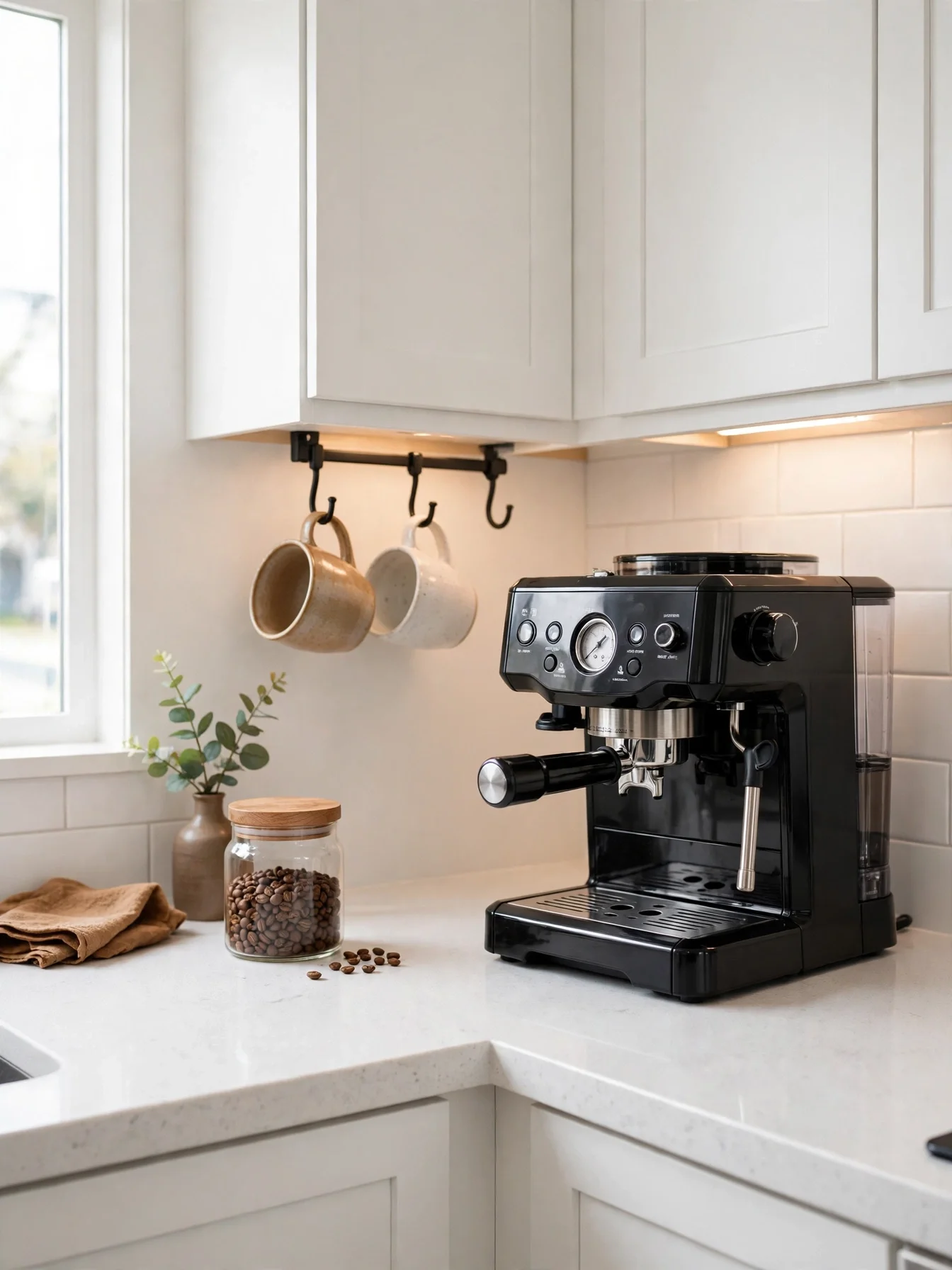
Why This Works:
- A dedicated corner keeps coffee gear in one 24 inch zone instead of spread out
- Mugs on hooks free the shelf and keep cups within 12 inches of the machine
- The station cuts morning prep time by about 3 minutes a day
- Black steel and warm beans add contrast to pale counters
A machine 12 inches wide, a grinder 6 inches wide and a bean jar 4 inches wide all fit in a 24 inch wide by 18 inch deep zone. The machine needs to be short enough that its height plus the clearance needed to open the water tank fits the standard 18 inch gap under upper cabinets. If it does not fit, place the station where no upper cabinet hangs above it. Use LED strips at 2700K to 3000K under the cabinet, because warm light flatters the coffee tones and lights the worktop without glare. Steam needs room to escape, so back the machine 6 inches off the wall, with a silicone mat 0.25 inches thick underneath to catch drips. Steer clear of a station wider than 30 inches on a small counter, since it steals space from food prep and the machine becomes a barrier.
Saving roughly 20 minutes a week in setup and cleanup makes this corner pay off for daily coffee drinkers. A grinder runs at about 70 decibels for 15 seconds, and the machine warms the corner by 3 to 5 degrees during use. A pour over setup runs silent for 30 to 60 dollars. The price is time: 5 minutes per cup versus 90 seconds for a machine. Descale the machine every 2 months if the local water is hard, and wipe the mat daily.
Layered Cutting Boards
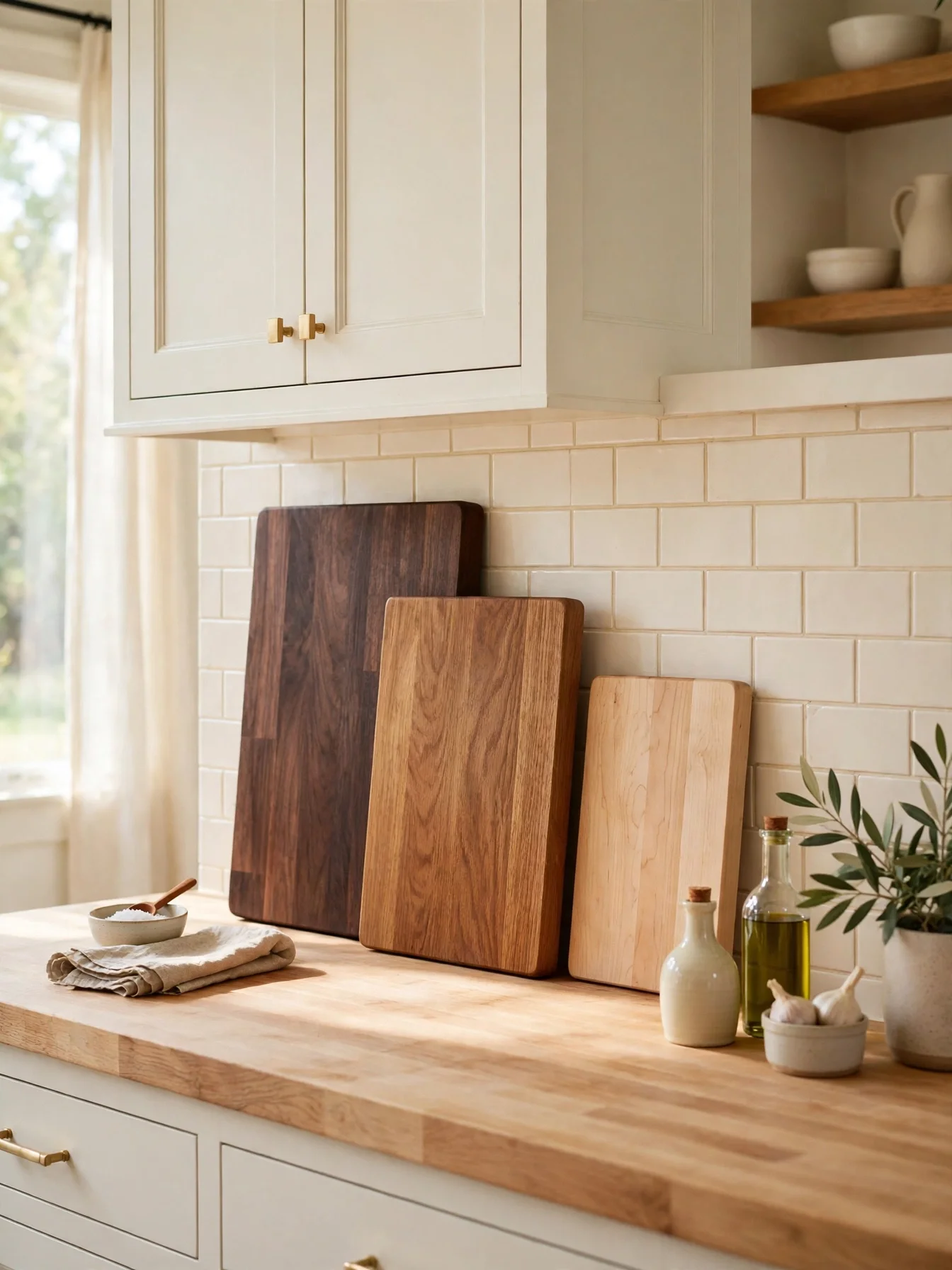
Why This Works:
- Three boards in graduated sizes create depth that a single board cannot
- Wood tones layer warmth against cool tile and stone
- The boards stay in daily use, so the display never feels purely decorative
- Leaning them upright frees 90 percent of the counter below
Leaned at a 70 degree angle against an 18 inch backsplash, boards measuring 10, 13 and 16 inches long, each 0.75 inches thick, sit best. Hard maple resists knife marks better than pine, while walnut costs 30 to 50 percent more but adds a dark tone that anchors pale kitchens. Oil wooden boards every 4 weeks with food safe mineral oil, using about 1 tablespoon per board, to stop cracking and warping. Heat dries the wood, so the boards stay safe with 12 inches between them and the stove, and the smallest board goes in front so all three edges show. Do not soak boards in water for more than 10 minutes, because the wood swells and the glue joints fail within a year.
With the right board always at hand, daily choppers save about 2 minutes per meal in fetching and putting away. Oiling three boards takes 15 minutes a month, while a single plastic board needs only a dishwasher cycle. Plastic boards go in the dishwasher; each one costs 10 to 20 dollars. They scar within 6 months, and they never bring the warmth of wood. Sand any deep cuts with 220 grit sandpaper before reoiling.
Cozy Kitchen Countertop Decor Ideas
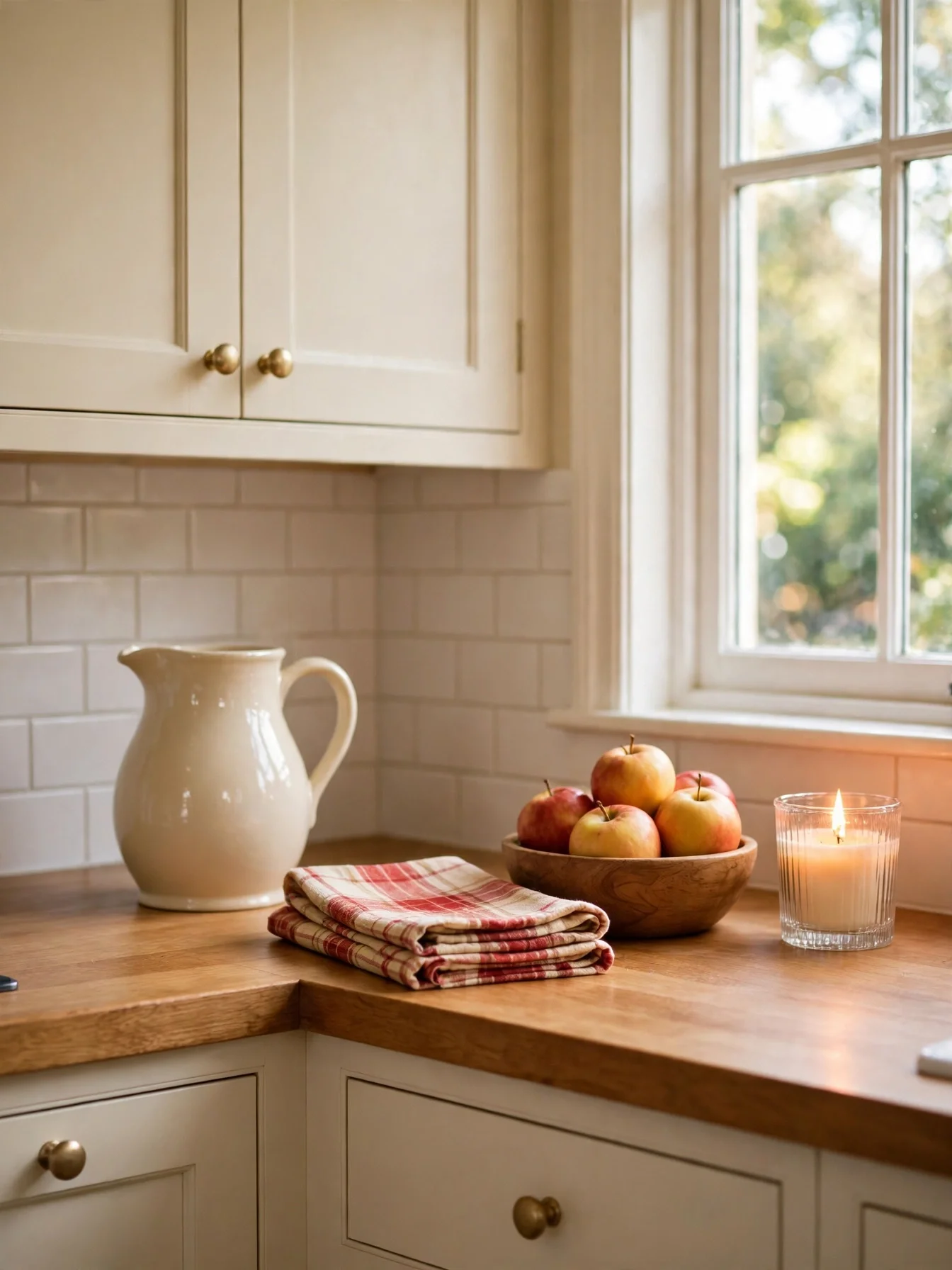
Why This Works:
- Warm textiles and candlelight soften hard stone and steel in minutes
- A pitcher, towel and bowl form a triangle that reads as one group
- The 20 inch group fits a counter corner that often stays bare
- Amber candlelight at 2700K makes the kitchen feel welcoming after dark
In a 20 inch wide zone, the pitcher stands 9 inches tall at the back, the bowl sits 10 inches wide in front and the towel folds to 12 inches long beside them. Cotton tea towels run 5 to 12 dollars each and wash weekly. Linen towels sit at 12 to 20 dollars, and they soften with every wash over 6 months. A flame near fabric is a real fire risk, so a lit candle should sit 12 inches clear of the towel and 18 inches below the upper cabinets. At standard counter height, the candle flame sits at 40 inches, easy to see and easy to blow out. Never leave a candle burning for more than 4 hours, since the glass holder heats up and the wax pool can spill.
Evening meals and autumn weekends are when this styling shines best, when the kitchen becomes the gathering spot for 2 to 3 hours at a time. Towels stain within a week in a busy kitchen, and candles need trimming to 0.25 inches before each burn to avoid soot. Battery candles give the same glow with zero fire risk and last 100 hours per set of batteries. Only a real candle brings the scent. Swap the plaid towel for a plain linen one in summer to keep the look light.
Stone Mortar Display
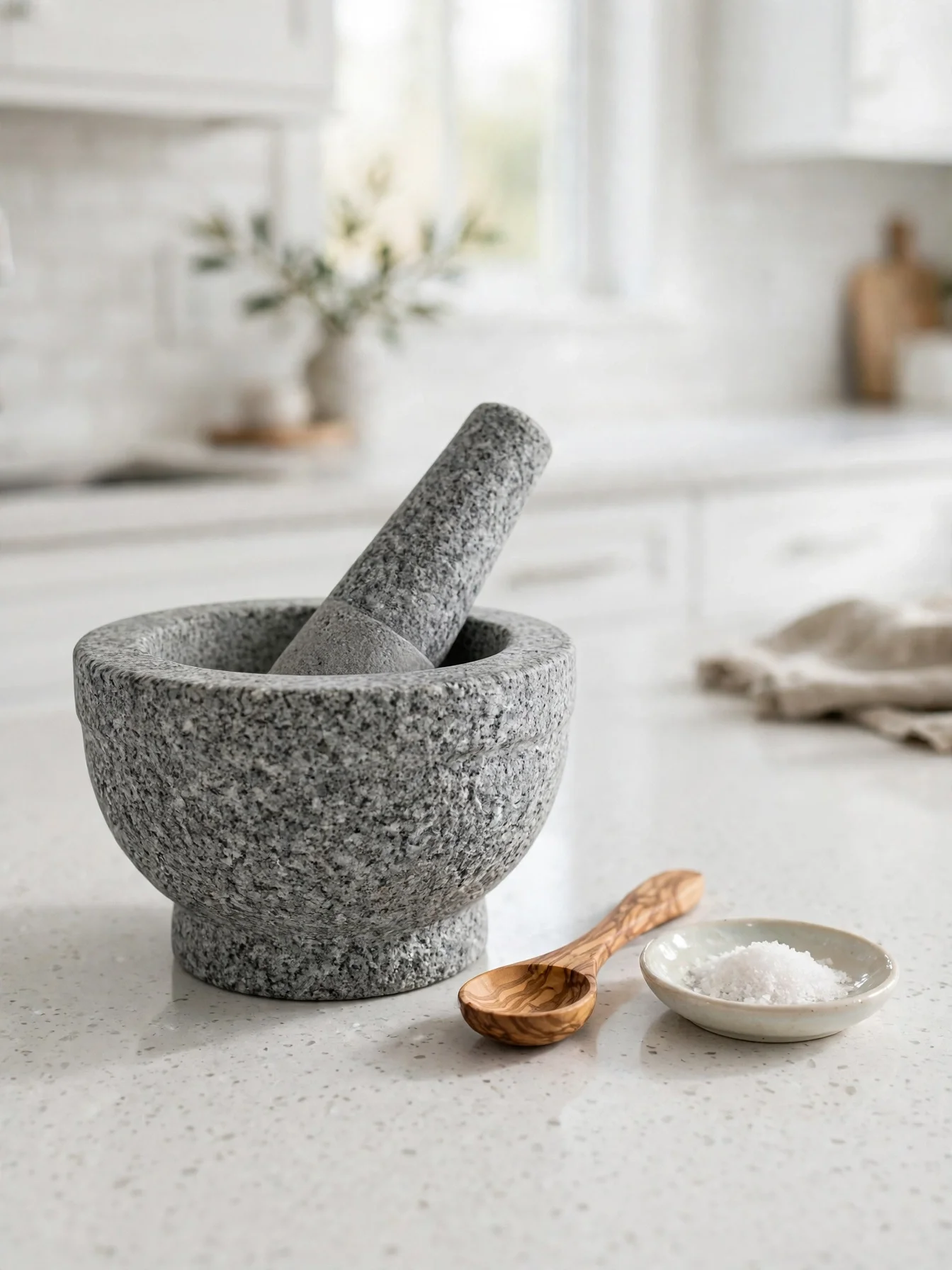
Why This Works:
- A stone mortar adds a sculptural, handcrafted object to a flat counter
- Granite weighs enough to stay steady while grinding spices
- The 6 inch size fits a corner that is too small for a tray
- Salt, spoon and stone together tell a cooking story in 12 inches
Two tablespoons of spice at a time grind cleanly in a mortar 6 inches wide and 4 inches tall, weighing about 4 pounds, without tipping. Granite costs 25 to 45 dollars, while marble mortars cost 35 to 60 dollars and chip more easily at the rim. Season a new granite mortar by grinding 2 tablespoons of white rice, which removes stone dust in about 5 minutes. A bump sends 4 pounds of stone to the floor when the mortar sits too close to the edge, so 6 inches back from the edge is the safe minimum. An 18 inch backsplash leaves plenty of room above the 4 inch mortar. Watch out for grinding turmeric in a light stone mortar, because the yellow stain sets within 24 hours and never fully lifts.
Grinding cumin, pepper and herbs fresh gives stronger flavor, so spice lovers and bakers reach for this piece weekly. Granite needs rinsing and air drying for 30 minutes, and it cannot go in the dishwasher. A small electric spice grinder works in 10 seconds and costs 20 to 35 dollars. Stone still gives more control and more visual charm. Keep the pestle inside the bowl so the pair reads as one object.
Art Leaned Backsplash
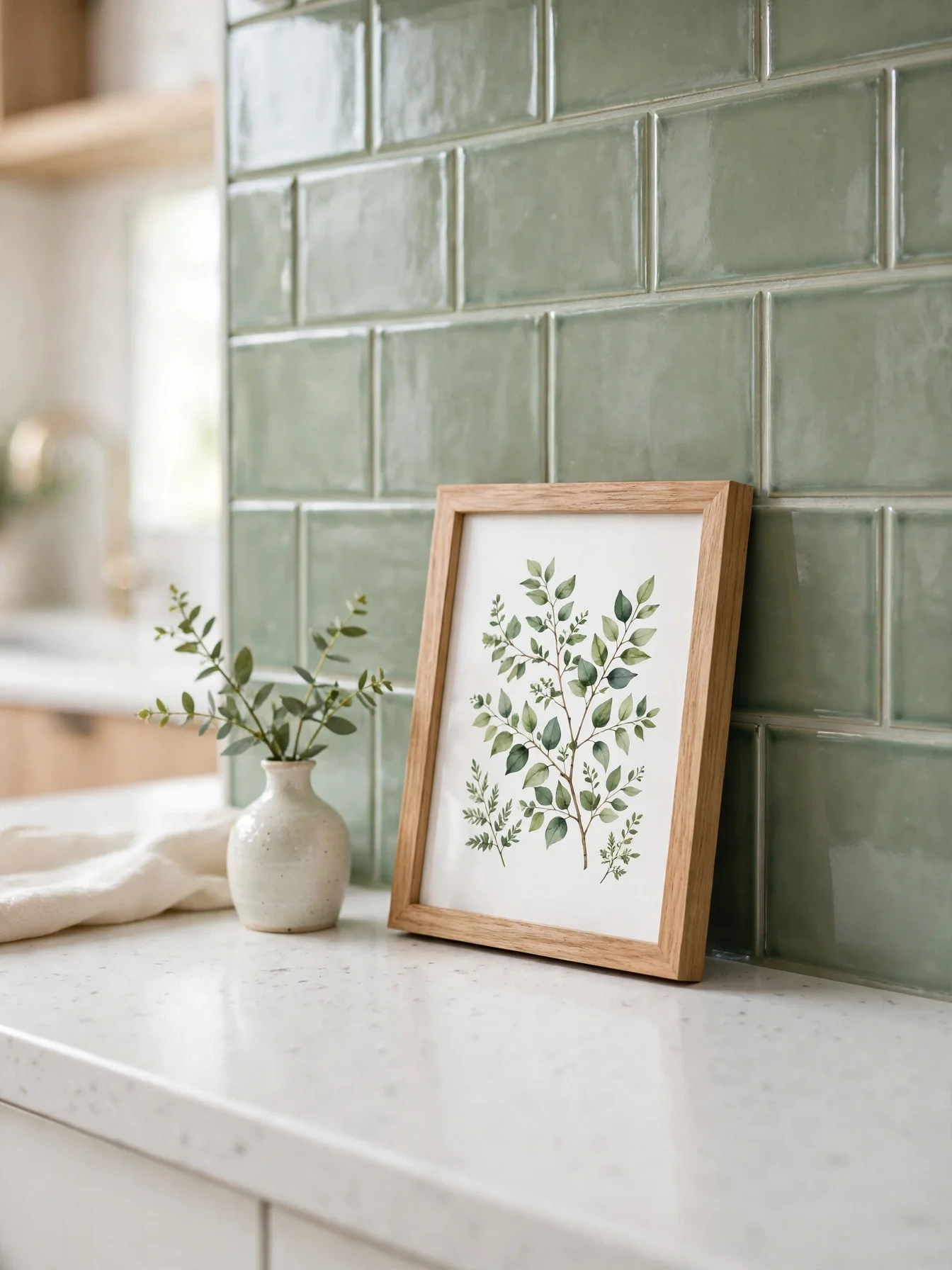
Why This Works:
- Framed art lifts a kitchen from purely functional to personally styled
- A print 8 by 10 inches fits the backsplash zone without covering tile
- Glass protects the print from steam, splashes and grease
- The frame color can echo cabinet hardware for a pulled together look
Leaned at 80 degrees, a frame 8 inches wide by 10 inches tall suits the 18 inch backsplash height with 8 inches to spare. Choose a frame with a 1 inch wide molding in oak or black metal, and use acrylic glazing instead of glass, because acrylic weighs 50 percent less and will not shatter if it falls. The frame fogs when steam reaches the glazing, so 12 inches stands between the frame and the stove, with the bud vase 4 inches in front of it for depth. The print center sits at about 41 inches from the floor, well below the usual 57 inch hanging height, which suits a countertop view. Paper prints without glazing have no place near the sink, because humidity warps unprotected paper within 3 weeks.
Leaning a frame needs no nails and no landlord permission, which suits art lovers and renters. Even glazed art needs wiping every 2 weeks in a kitchen that cooks daily. For 80 to 150 dollars, a tile mural handles steam forever. The framed print stays flexible, since it moves when tastes change. Swap the print seasonally, using a botanical in spring and a harvest scene in autumn, for a fresh look at under 15 dollars.
Tiered Stand Produce
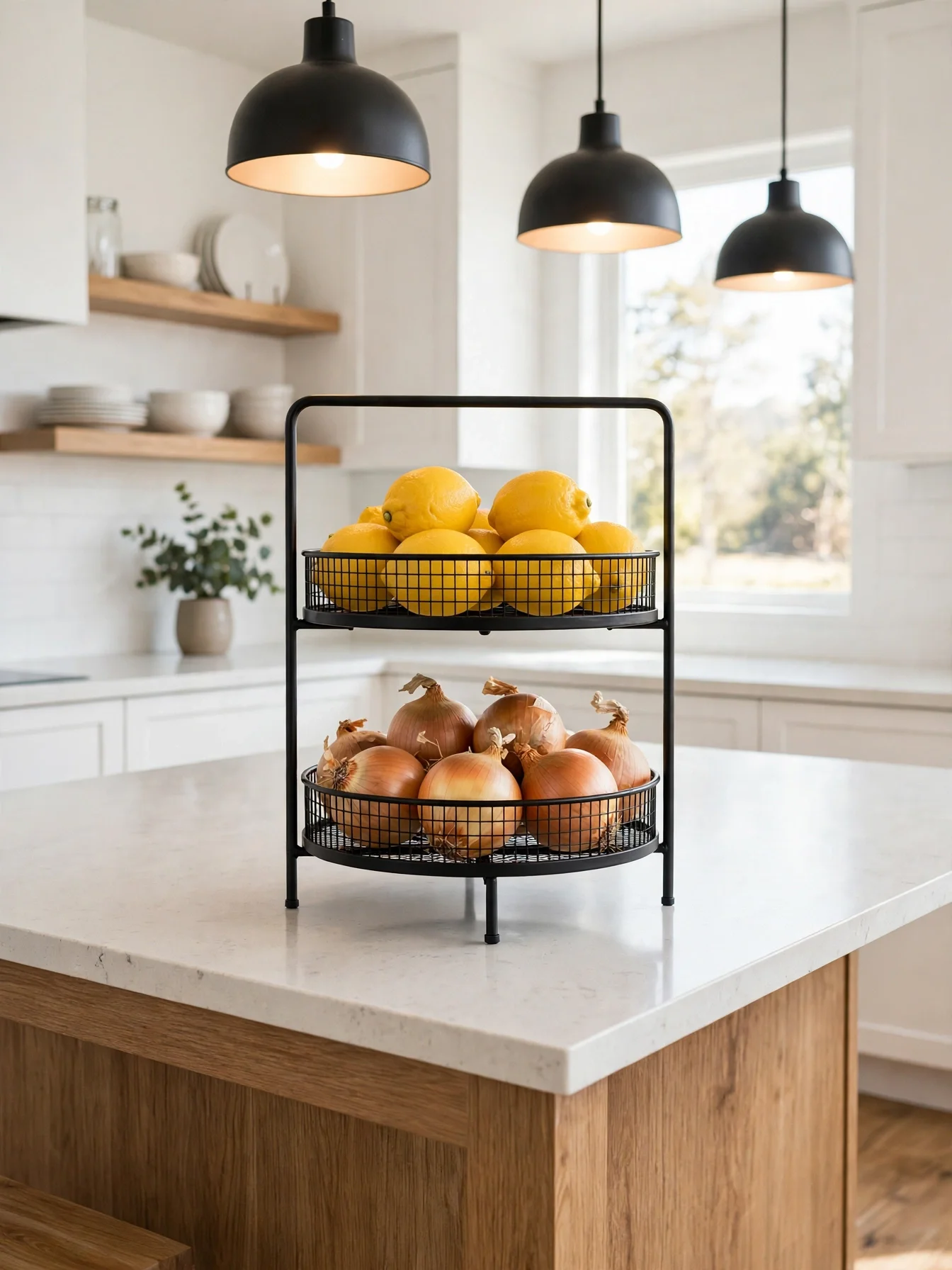
Why This Works:
- Two tiers double storage in the same 12 inch footprint
- Vertical display keeps produce visible so it gets used before it spoils
- Black metal contrasts with pale counters and ties to dark hardware
- It sits well below pendant lights hung 30 inches above the counter
About 4 pounds of produce per tier fit on a two tier stand 12 inches wide and 14 inches tall, with 7 inches between tiers for easy grabbing. Powder coated metal resists rust for 3 to 5 years, while untreated steel rusts within 6 months in a humid kitchen. Water stays out of the lower tier when the stand sits 18 inches from the sink, and centering it on the island leaves 24 inches of clear counter on each side. Pendant lights hung 30 to 36 inches above the counter clear the 14 inch stand by 16 to 22 inches. A common mistake is storing tomatoes and onions together on the same tier, because onions release gases that ripen tomatoes 2 days faster and spoil them sooner.
Replacing a flat bowl that would spread produce across 18 inches makes this stand a win for small island kitchens. A top heavy stand can tip if a child pulls at it, so choose a base at least 10 inches wide. For 15 to 25 dollars, a single wide bowl never tips. It uses twice the counter space for the same produce, so the stand suits a small kitchen better. Wipe the tiers weekly, since onion skins collect in the corners.
Copper Pot Accent
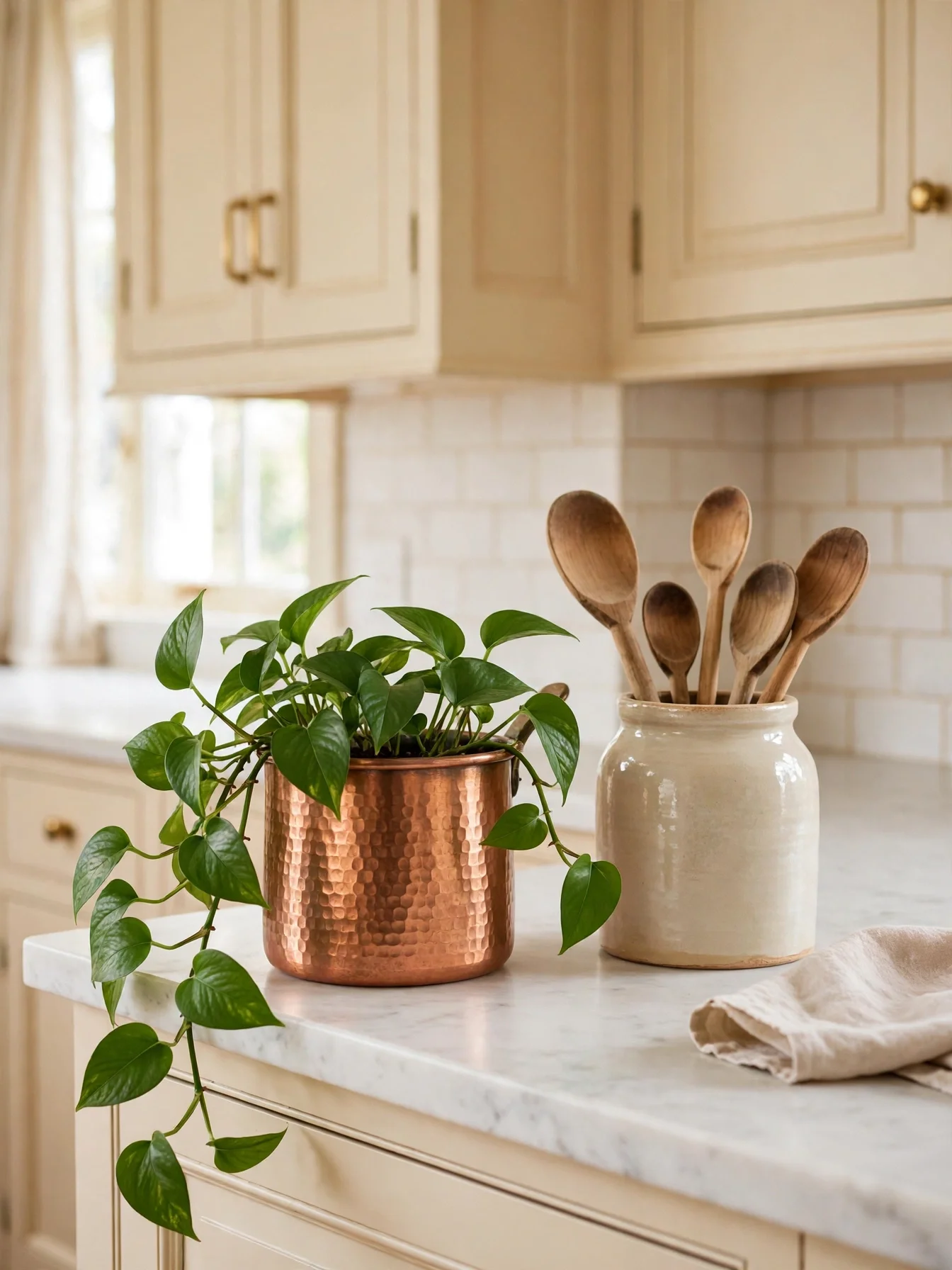
Why This Works:
- Copper adds a warm metallic glow that brass and steel cannot match
- A small pot turns a plant into a focal point instead of a plain green blob
- The 6 inch size fits a corner beside the stove without crowding it
- Hammered texture hides fingerprints and water spots for days
A 4 inch nursery plant fits in a copper pot 6 inches wide and 5 inches tall, with a 1 inch gap for a plastic liner. Solid copper costs 40 to 70 dollars, while copper plated pots cost 20 to 35 dollars but the plating wears through in 2 years near the sink. Direct heat above 200 degrees Fahrenheit discolors the metal, so 12 inches is the closest the pot should ever come to the stove. Polish with a lemon and salt mix every 6 weeks, about 5 minutes of work, or let it develop a patina that many cooks prefer. The plant leaves sit at 44 inches from the floor, easy to water without lifting the pot. It is tempting to skip the liner, but soil moisture corrodes the base within 3 months, so always use one.
Where copper pans already hang nearby, classic and farmhouse kitchens suit copper best. Polished copper needs attention every 6 weeks, while a ceramic pot needs none, so upkeep is the price of the glow. A stainless steel pot costs half as much and never tarnishes. Next to warm wood it reads cold, which is where copper earns its keep. Use a trailing plant like pothos, which grows 12 inches in 3 months and needs water only every 10 days.
Linen Runner Strip
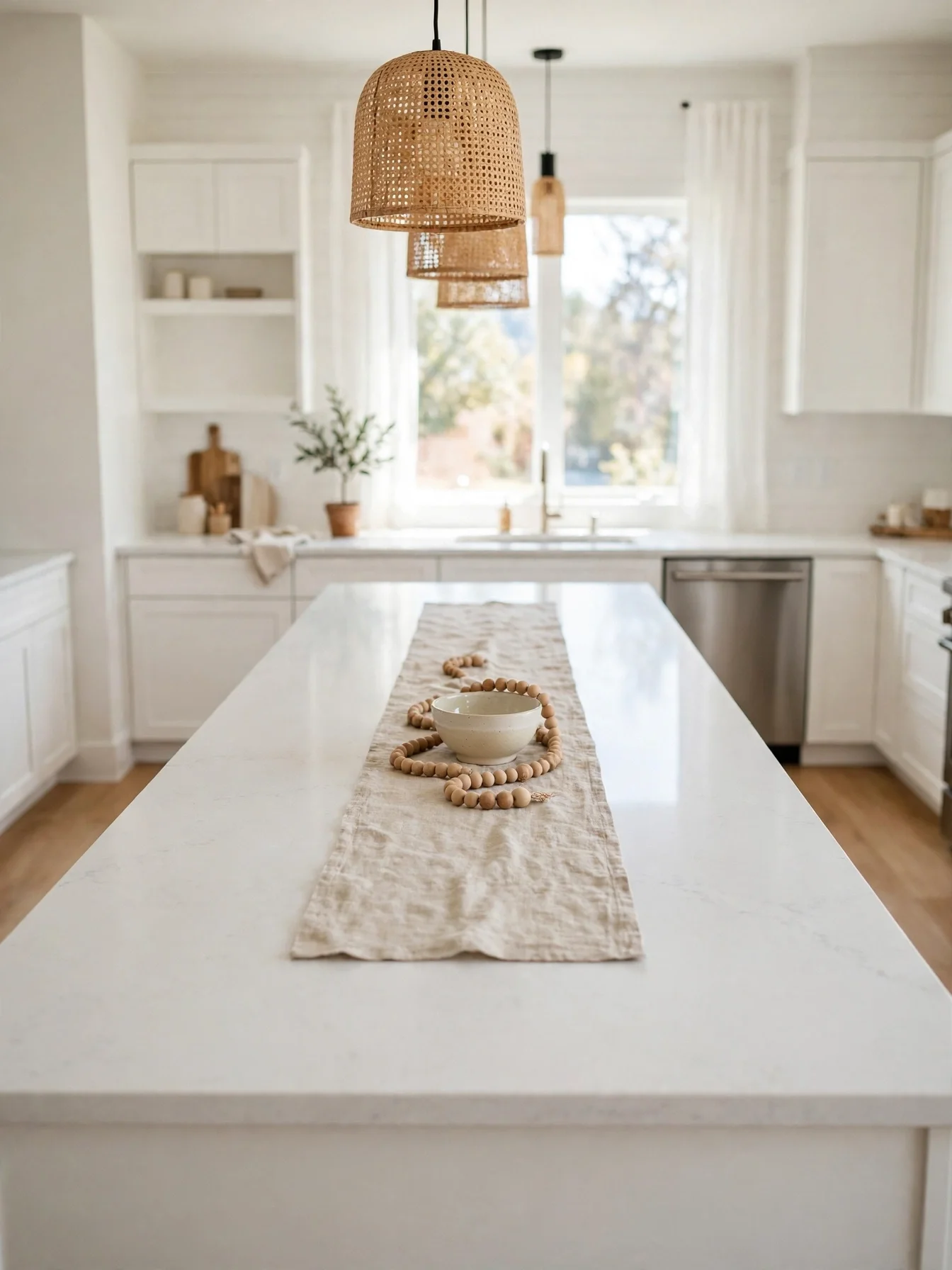
Why This Works:
- A runner softens a long hard island and defines a styling zone
- Linen adds texture that stone and steel lack, without adding bulk
- The 14 inch width leaves about 11 inches of stone visible on each side of a standard 36 inch deep island
- It protects the counter from hot dishes and small scratches
For a 12 foot island, a runner 14 inches wide and 48 inches long leaves 48 inches of clear stone at each end for prep. A natural linen runner is priced at 25 to 45 dollars. Cotton runners come in lower at 15 to 30 dollars, but they wrinkle more after washing. Wash the runner every 2 weeks in cold water, because kitchen grease builds up within 10 days and yellows pale linen. Daily splashes soak linen in no time, so the runner stays dry only with 12 inches between it and the sink edge. The island clearance of 42 to 48 inches means the runner stays visible from the seating side without blocking walkways. A runner longer than 60 inches on a standard island is too much, since the ends droop over the edge and catch on clothing.
Breaking a 12 foot stone slab into a styled center and two work zones is why long islands and open plan kitchens gain the most. A runner needs washing twice a month, about 10 minutes of effort. A bare counter needs only a wipe. A silicone mat protects better against heat up to 400 degrees Fahrenheit. Linen still looks softer and more finished on the island. Iron the runner on a medium setting for 3 minutes to keep it crisp.
Small Potted Olive

Why This Works:
- An olive tree brings a sculptural shape that small herbs cannot
- Silvery green leaves suit gray, white and sage kitchens perfectly
- Its 12 to 14 inch height fits under upper cabinets with room to spare
- A single tree anchors a corner that trays and bowls leave empty
In a 6 inch ceramic pot, a potted olive 12 to 14 inches tall needs 6 hours of direct sun and about 8 ounces of water every 10 days, so it fits an 18 inch gap with room for its leaves. At 12 to 14 inches, olive trees sell for 25 to 50 dollars. A faux olive goes for 30 to 60 dollars and needs no water at all. The pot sits 4 inches out from the backsplash so the leaves never touch the tile, on a saucer 0.5 inches deep that protects the counter. With 18 inches between counter and upper cabinet, a 12 to 14 inch tree leaves breathing room, so measure before buying, since a 24 inch tree will bend against the cabinet. Overwatering is the one habit to drop, because olive roots rot within 2 weeks in soggy soil, and the leaves drop within days.
Where gray stone and white cabinets need a living accent, Mediterranean and modern kitchens suit this plant best. A north facing kitchen with under 4 hours of sun will see the tree drop leaves within a month. A snake plant needs only 2 hours of indirect light and water every 3 weeks. It never gives the olive tree shape, so pick it for easy care, not for looks. Prune the olive twice a year, cutting back 2 inches of growth to keep it compact.
Modern Kitchen Countertop Decor Ideas

Why This Works:
- Three objects in black, white and steel create a gallery look on a plain counter
- Matte finishes hide fingerprints better than gloss in a busy kitchen
- A group spanning 18 inches leaves the rest of the counter free for cooking
- Sculptural shapes add interest without adding color clutter
Groups of 3 create the stepped line modern styling needs, with objects at 8, 11 and 14 inches tall. A matte black vase costs 20 to 40 dollars, a ceramic sculpture costs 25 to 50 dollars, and a steel tray costs 15 to 30 dollars, so the whole group stays up to 120 dollars. Water spots ruin matte finishes, so keep the group 18 inches from the sink and 12 inches from the stove edge. The tallest piece, a 14 inch vase, tops out at 50 inches, still below the 57 inch eye level mark. A fourth color is where modern groups go wrong, because it breaks the clean look and muddies the palette.
Since the decor echoes the architecture, contemporary kitchens with handleless cabinets and gray stone suit this style best. A purely black and white group can feel stark, so a single wood accent, like a 6 inch oak board, warms it for under 20 dollars. Modern styling fits renters who want a look that moves easily. Traditional styling suits warm wood and brass better. Dust the matte pieces weekly, because dust shows on black within 3 days.
Soap Dispenser Duo
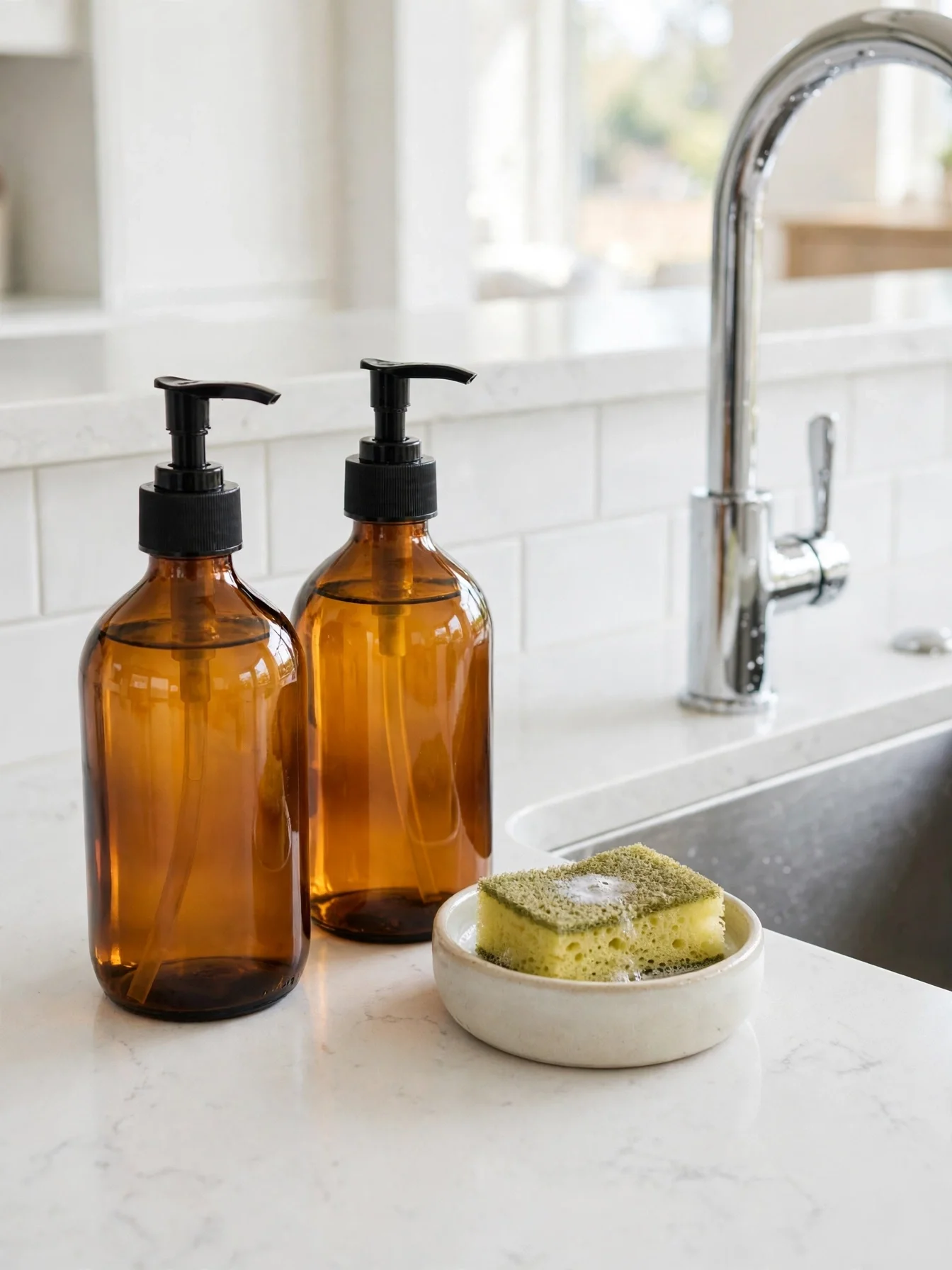
Why This Works:
- Matching dispensers replace mismatched plastic bottles that clutter the sink
- Amber glass hides soap color and looks good with every faucet finish
- The pair covers hand soap and dish soap in 8 inches of space
- A ceramic dish keeps the sponge off the counter and drying fast
Each dispenser holds 16 ounces, enough for about 3 weeks of daily hand washing, in a bottle 3 inches wide and 7 inches tall. Amber glass costs 12 to 20 dollars per dispenser, while clear glass costs 8 to 15 dollars but shows soap level and color. Soap stays in reach when the duo sits close to the faucet, within 6 inches, and the sponge dish stays 2 inches beside them to catch drips. The pump top sits at 43 inches from the floor, a comfortable press height. Dispensers taller than 8 inches cause trouble under a low cabinet, since the pump needs 2 inches of clearance to press fully.
This swap makes sink areas look instantly tidier, and the cost stays under 40 dollars for the pair. Refilling a 16 ounce bottle takes about 2 minutes every 3 weeks. A store bottle lasts 6 weeks and skips the refill, at the cost of looking worse on the counter. Buy soap in a 32 ounce refill jug to cut plastic waste by half and save about 20 percent per ounce. Clean the pumps monthly by running warm water through them for 30 seconds to stop clogging.
Vintage Scale Accent
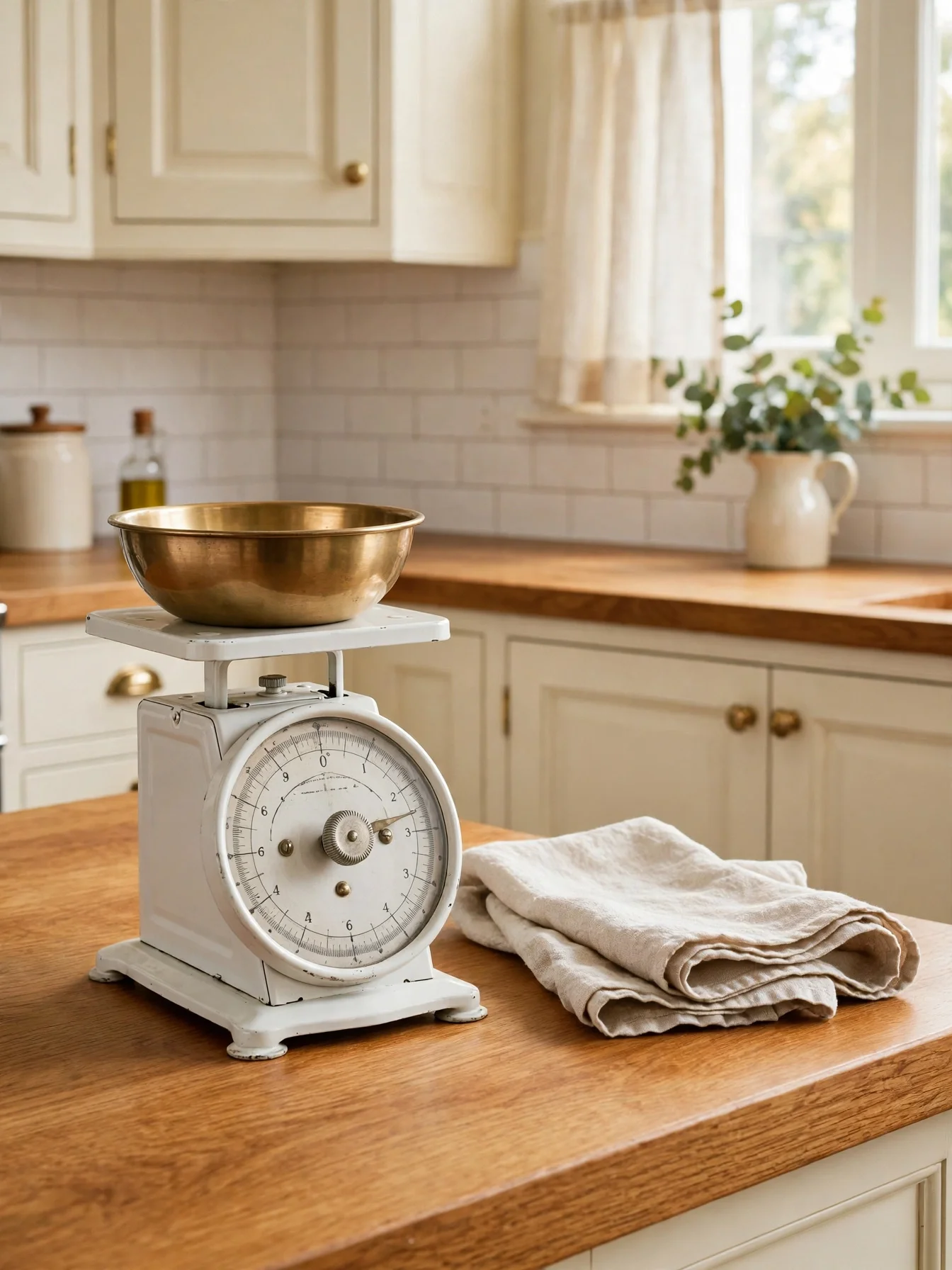
Why This Works:
- A vintage scale adds history and a story to a brand new kitchen
- The round dial and brass bowl create a shape no modern object copies
- The 10 inch size fits a corner that is too small for a lamp
- It works as decor and as a real tool for baking by weight
Ingredients up to 5 pounds weigh out with an accuracy of about 0.25 ounces on a vintage scale 10 inches wide and 8 inches tall, with a bowl 7 inches wide. Real vintage scales sell for 40 to 80 dollars at antique shops. Reproductions go for 25 to 45 dollars and look nearly identical. Rust reaches the metal base within a month of regular sink spray, so the scale goes on the dry end of the counter, 12 inches from the sink. Keep the bowl on top so the piece reads as one object, and store it 6 inches from the backsplash so the dial stays visible. The dial sits at 44 inches from the floor, easy to read while standing. A scale with a cracked dial glass has no place near food, because glass shards can fall into the bowl.
Since 120 grams of flour measures more accurately than any cup, bakers who weigh flour love this piece. A digital scale reads to 0.05 ounces and costs 20 to 30 dollars. The vintage dial scale trades precision for looks, and it is far prettier on the counter. Check the zero setting before each use, turning the dial knob until the needle rests at 0. Dust the dial weekly, because dust settles on the glass within 4 days in a busy kitchen.
Tea Kettle Corner
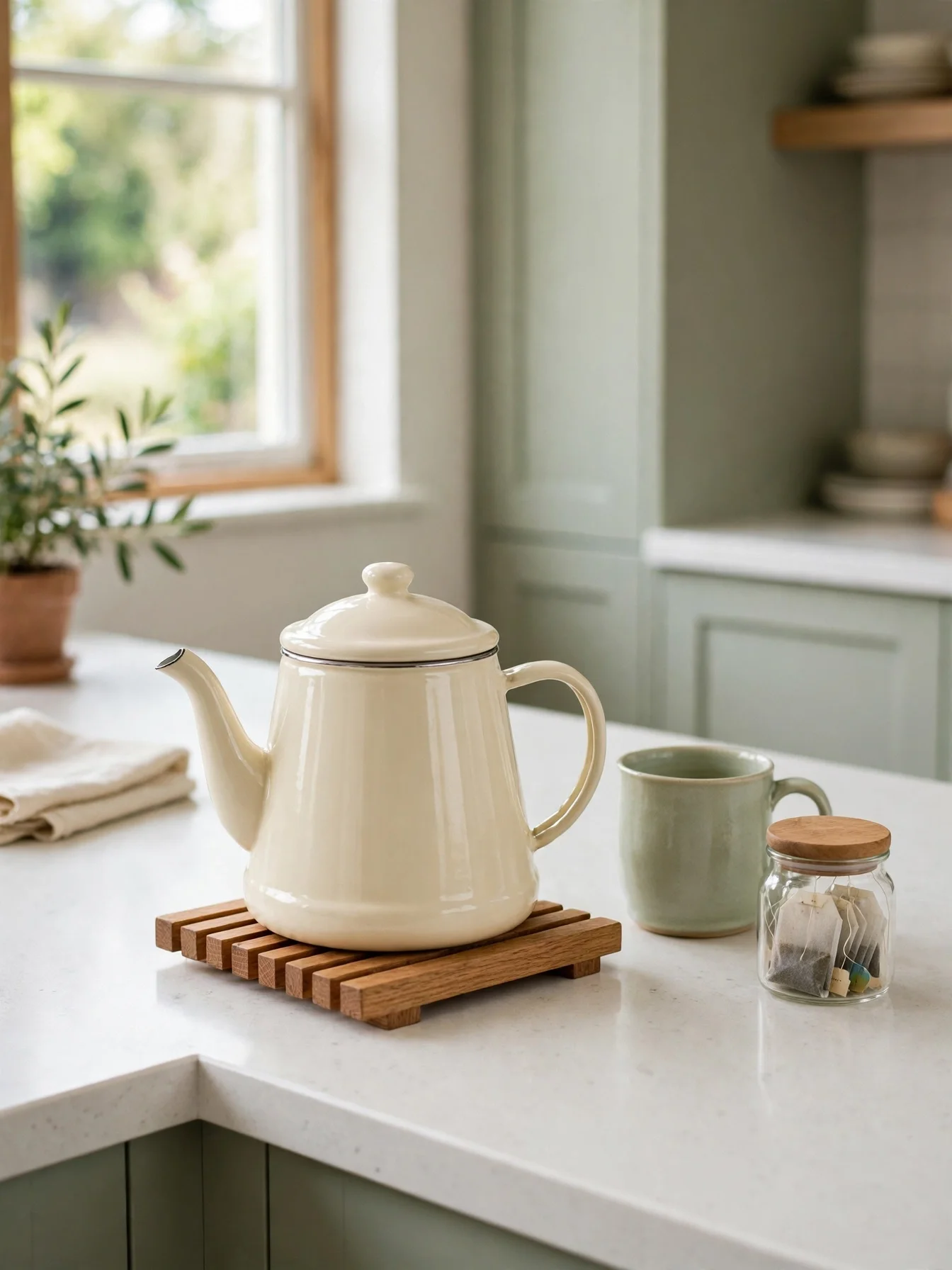
Why This Works:
- A kettle left out signals a kitchen that welcomes a slow cup of tea
- Cream enamel softens steel appliances and suits cream cabinets
- The 18 inch corner group uses space that is hard to cook in anyway
- A trivet protects the counter from heat up to 300 degrees Fahrenheit
A kettle 8 inches tall and 7 inches wide holds two liters, enough for about 8 mugs of tea at 8 ounces each. Enamel kettles cost 30 to 60 dollars, while stainless steel kettles cost 25 to 50 dollars and heat water about 1 minute faster. Set the kettle on a trivet 8 inches wide and 0.5 inches thick, and leave 12 inches behind it so the handle swings free. The whole ritual stays in one spot when the mug and tea jar sit no more than 6 inches from the kettle. The kettle spout sits at 44 inches from the floor, easy to lift and pour. A kettle wider than 8 inches will not work in a corner, since the handle will hit the backsplash and the lid will not open fully.
Brewing 2 to 3 cups a day saves about 5 minutes a day in fetching gear, which is why tea drinkers get the most from this corner. A kettle plus trivet covers about 64 square inches permanently, even when not in use. An electric kettle boils water in 3 minutes versus 6 minutes on the stove. It needs an outlet within 24 inches, and it adds a cord to the counter. Descale the kettle every month with a mix of 1 part vinegar to 3 parts water if the water is hard.
Eucalyptus Jar Arrangement
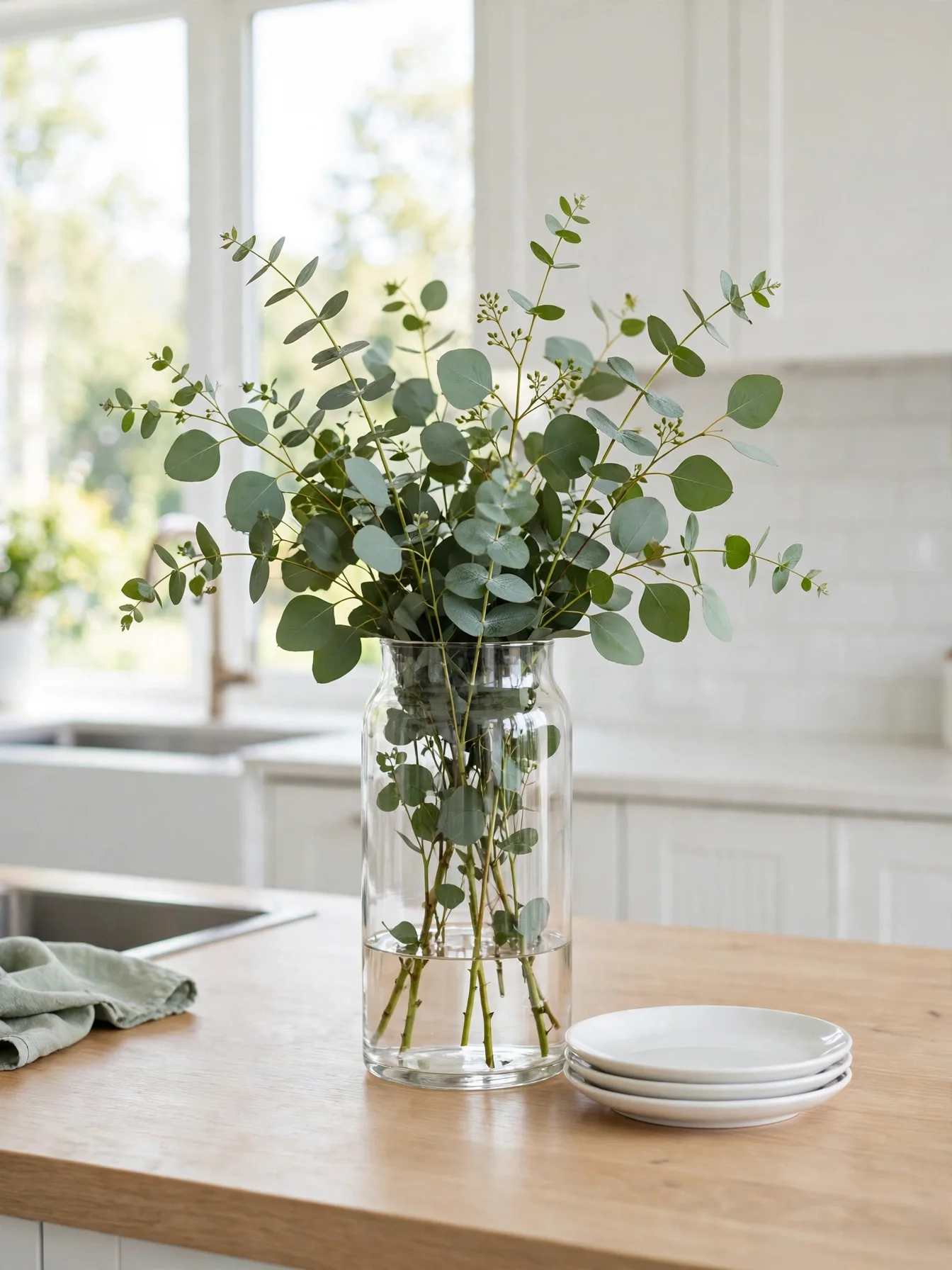
Why This Works:
- Eucalyptus adds a soft scent that freshens the kitchen without a plug in
- A clear jar shows the stems and water, adding a light, airy layer
- The 12 inch height fits under upper cabinets with room to spare
- Sage green leaves suit almost every kitchen color scheme
Five to 7 eucalyptus stems, each 18 to 20 inches long, fit in a jar 6 inches wide and 12 inches tall, trimmed so the leaves sit 6 inches above the rim. Fresh eucalyptus costs 8 to 15 dollars per bunch and lasts 3 weeks in water, then dries naturally and lasts another 3 months as a dried arrangement. Change the water every 3 days to stop bacteria, and a 6 inch standoff from the backsplash keeps the leaves off the tile. Under upper cabinets 18 inches above the counter, the jar still leaves 6 inches of clearance above it. Eucalyptus placed within 12 inches of the stove dries out fast, because heat dries the leaves in 2 days and the scent fades fast.
Since the jar needs no soil and no daily care, kitchens that lack a window plant love this idea. A jar needs refilling every 3 days, about 1 minute of work, while a dried arrangement needs nothing at all. A faux eucalyptus bunch lasts years. The one-time cost is 12 to 20 dollars. For scent, nothing beats the real thing. Trim the stems at a 45 degree angle before placing them in water so they drink better.
FAQs
What are the best kitchen countertop decor ideas for a small kitchen?
Use one tray, one plant and one canister in a 24 inch zone, keeping 70 percent of the counter clear. A tray 18 inches long groups items, and a 4 inch herb pot adds green. The National Kitchen and Bath Association lists 36 inches as standard counter height.
How much counter space should I leave clear for cooking?
Leave at least 70 percent clear, which means 7 feet open on a 10 foot run. Keep a 12 inch prep zone beside the sink and 18 inches beside the stove free. The Spruce recommends at least 15 inches of landing space beside a cooktop for safe pan handling.
How do I style kitchen countertop decor ideas without clutter?
Group objects in threes, limit each group to a 24 inch zone, and leave 12 inches of empty counter between groups. A single tray 18 inches long holds 3 small items neatly. Remove one object from any group that looks crowded, then wait 3 days before adding anything back.
What height should a countertop lamp or vase be?
Keep lamps 12 to 16 inches tall and vases 8 to 12 inches tall, so they fit the 18 inch gap under cabinets. A 14 inch lamp with a 2700K bulb gives light without blocking sightlines. Measure the gap before buying, because a 20 inch piece will hit the cabinet.
Can I put decor near the stove or sink?
Keep decor at least 18 inches from the stove edge and 12 inches from the sink splash zone to protect wood, paper and fabric. Heat above 150 degrees Fahrenheit cracks wood, and water swells seagrass within 10 days. Use stone, glass or metal close to heat instead.
Conclusion
These kitchen countertop decor ideas work best when three rules stay in mind: keep 70 percent of the counter clear, group decor in 24 inch zones, and choose materials that survive heat, water and daily wiping. A tray, a plant and a lamp can change the whole room for under 100 dollars, and each piece earns its place by being useful as well as pretty. Start with one change today, clear a single 24 inch zone and style it with a tray and two small objects, then live with it for a week before adding more. Follow HomelyCrafter on Pinterest for more ideas. Save this to your Pinterest boards so you can refer back to it!

Muhammad Israr is a home decor enthusiast and the writer behind Homely Crafter. He spends his days researching paint colors, layouts and budget-friendly styling ideas, then breaks them down into practical, easy-to-follow guides so you can decorate with confidence.
7 thoughts on “24 Pretty Kitchen Countertop Decor Ideas to Try Today”